Jordan Tourist Attractions – Petra, Wadi Rum, Jerash and the Dead Sea
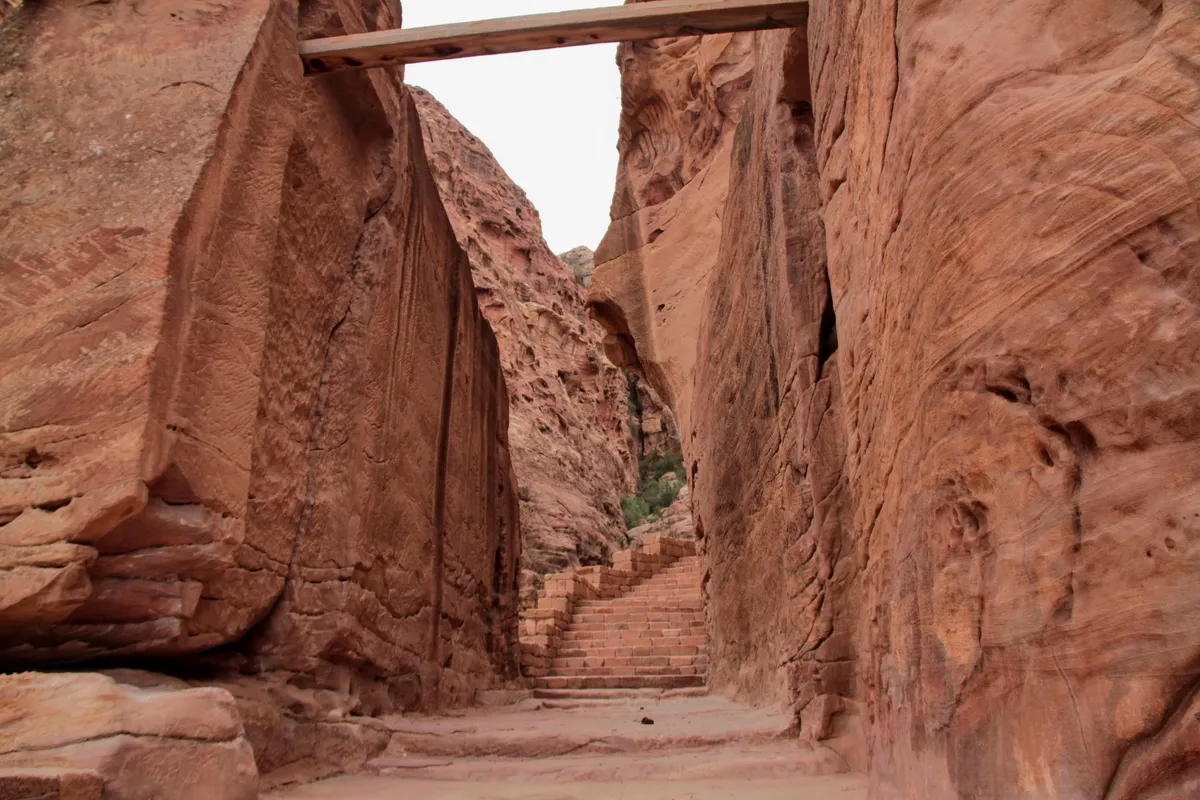
Jordan packs an unreasonable amount of history into a country you can drive end to end in a day. A Nabataean capital carved into rose-red rock, a Roman city with its streets still paved, a Crusader castle on a ridge, the lowest shoreline on Earth and a desert that has played Mars in the movies all sit inside one small, orderly kingdom — and that density creates the real planning problem. It is not finding things to do in Jordan. It is deciding what to leave out, because almost every list of jordan tourist attractions pretends you can do all of it, and almost every traveller who tries ends up seeing the famous five through a coach window and the rest not at all.
This guide is built differently. The fourteen attractions below each get a full section — what the place actually is, what a visit feels like, and the honest catch nobody mentions. They are grouped the way the roads group them, because Jordan is travelled as one long line: the Roman north around Jerash and Umm Qais, the Amman hub with Madaba, Mount Nebo and the Dead Sea below it, the King’s Highway running south past Kerak and Dana to Petra, and the deep south of Wadi Rum and Aqaba. Read the sections for the places, then read the prioritisation section near the end for the part other guides skip — what to cut, in what order, when your trip is three days rather than ten. One practical note before the list: many of these sites are covered by the Jordan Pass, the official sightseeing pass sold online before you travel, which bundles entry to dozens of attractions and can also cover the tourist visa fee when bought in advance. This guide prints no pass prices — they change, and the official Jordan Pass site is the only figure worth trusting — but keep the pass in mind as you count up the entries below.
At a Glance
| Attraction | Region | Time needed |
|---|---|---|
| Petra | South – Ma’an | One full day minimum, two if you can |
| Wadi Rum | Deep south | Half a day by jeep, far better with a night |
| Jerash | North | Half a day |
| The Dead Sea | Jordan Valley, below Amman | Half a day to a full slow day |
| Amman – the Citadel and Roman Theatre | The capital | Half a day to a day |
| Madaba | King’s Highway, near Amman | Two to three hours |
| Mount Nebo | King’s Highway, near Madaba | One to two hours |
| Bethany Beyond the Jordan | Jordan Valley | Half a day |
| Wadi Mujib | Dead Sea highway | Half a day, seasonal |
| Kerak Castle | King’s Highway | Two to three hours |
| Dana Biosphere Reserve | King’s Highway, above the rift | Half a day to two days of hiking |
| Aqaba and the Red Sea | The far south coast | One to three days |
| Umm Qais | Far north | Half a day, paired with Jerash |
| The Desert Castles | East of Amman | Half a day as a loop |
The table hides the one judgement that matters, so here it is plainly. Petra, Wadi Rum and Jerash are the three attractions that justify the flight on their own, and the Dead Sea is the fourth because there is nothing else like it anywhere. Everything after those four is ranked by how much it adds to a route you are already driving — which is why Madaba and Mount Nebo, an hour from Amman and twenty minutes apart, outrank finer places that demand a detour. Geography, not fame, is what should order a Jordan trip.
Petra – the Rose-Red City
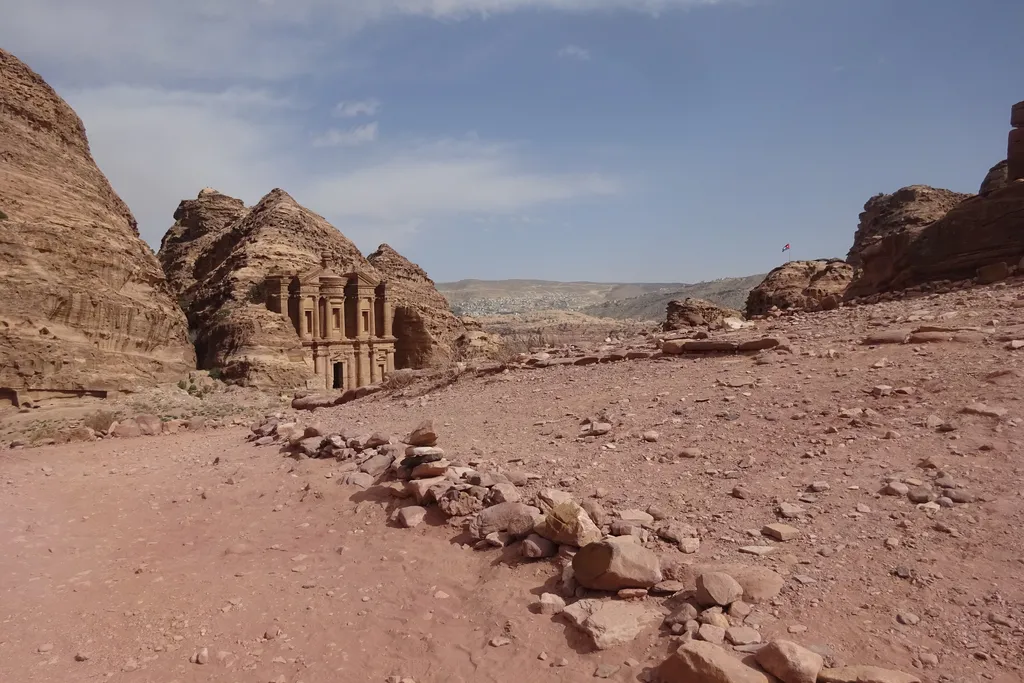
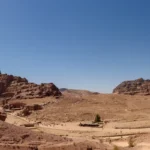
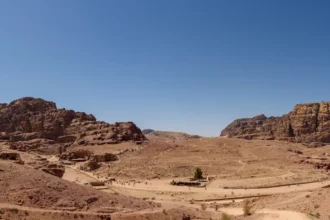
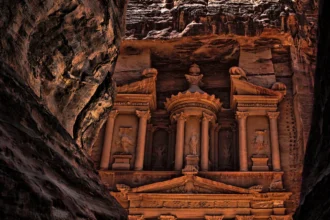
Petra is the capital the Nabataeans — Arab traders who grew rich taxing the frankincense and spice caravans crossing their desert — carved into the sandstone mountains of southern Jordan, and it has been a UNESCO World Heritage Site since 1985. The famous photograph, the Treasury’s facade glowing at the end of the dark Siq gorge, is genuinely the least of it. The Siq itself, more than a kilometre of slot canyon with water channels carved along its walls, is one of the great entrances in world travel. Beyond the Treasury the site opens into a whole city: a Roman-style theatre cut into the rock, the cliff of the Royal Tombs, a colonnaded street, temples, churches and hundreds of facades spread across a basin big enough to swallow a full day without repeating itself. UNESCO’s own description of the property is at whc.unesco.org, and our dedicated petra travel guide walks the site route by route.
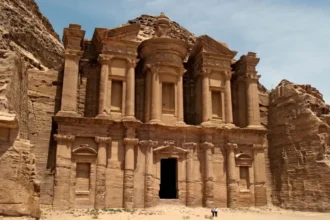
The honest catches are three. First, scale: the walk from the visitor centre to the Monastery — the vast facade in the photograph above, reached by a stair of some 850 rock-cut steps — and back is a long, hot day on foot, and travellers who budget Petra as a half-day side trip from the Dead Sea or Aqaba see the Treasury and leave believing they have seen Petra. Second, the light: the Treasury facade catches its famous glow in the morning, which is when the day-trip groups also arrive, so the quietest famous view is early and the quietest site overall is late, when the basin empties and the tombs turn the colour the “rose-red city” nickname promises. Third, the animals: horse and donkey rides are pushed hard at the entrance, and the walk is manageable for most people — the site is better experienced at walking pace, and the animals are better left out of it.
Give Petra a full day at minimum and stay in Wadi Musa, the town on its doorstep, rather than visiting on a there-and-back drive. Two days is not indulgence; it is the difference between the Treasury and the city around it — the Monastery trail, the Royal Tombs terrace and Little Petra, the smaller carved suburb a short drive away, which many one-day visitors never learn exists.
Wadi Rum – the Valley of the Moon
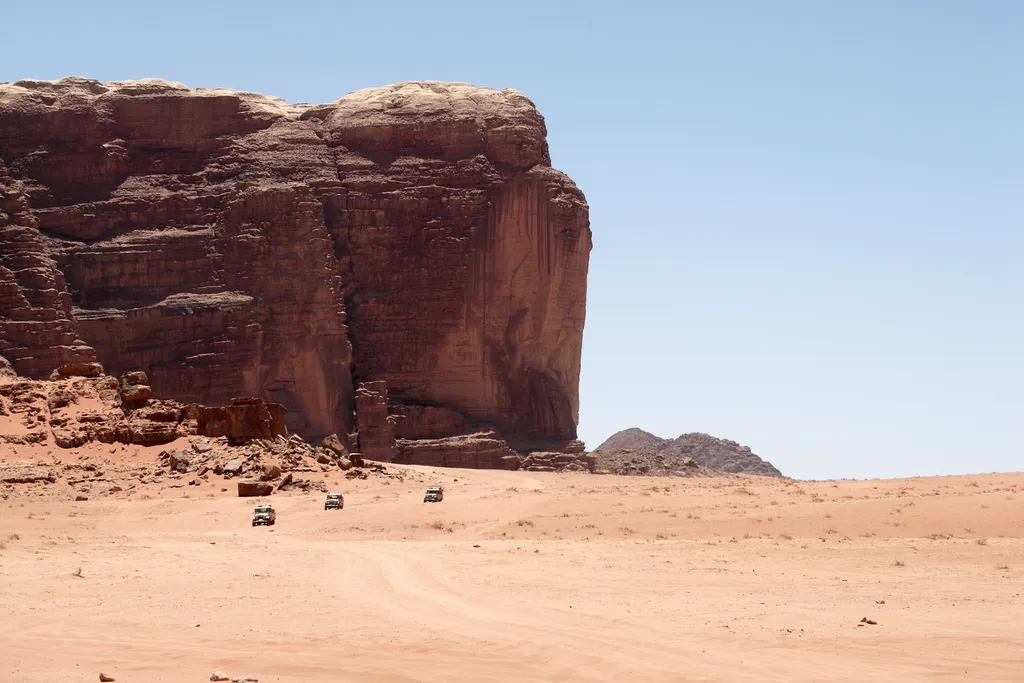
South of Petra, the road ends at one of the world’s great desert landscapes. Wadi Rum is a protected area of roughly 74,000 hectares where granite and sandstone massifs rise straight out of red sand valleys — a mixed natural and cultural UNESCO World Heritage Site since 2011, inscribed as much for the thousands of years of petroglyphs and inscriptions scratched onto its rocks as for the scenery itself. This is the desert T.E. Lawrence rode through and wrote about in Seven Pillars of Wisdom, the desert that stood in for Mars in The Martian and for alien worlds in a string of films since, and the rare famous landscape that is not oversold. The standard visit is a jeep tour between named sights — Lawrence’s Spring, the Khazali Canyon with its rock inscriptions, a natural rock bridge, dunes you can sandboard or simply slide down — run by the local Bedouin of Rum village, whose families have worked this desert for generations.
The single decision that defines a Rum visit is whether to sleep there, and the answer should be yes. A day tour gives you the shapes; a night gives you the place — dinner cooked in a sand oven, a sky with no light in it at all, and the massifs at dawn before the day jeeps arrive. The camps range from simple Bedouin tents to the transparent-domed “Martian” pods in every brochure, and honesty requires saying the domes are the least traditional and often the least peaceful option, sited in rows and lit like a small town. A small camp further into the protected area, with lamps you can switch off, is worth more than a dome with a view of its neighbours.
Two practical notes. The jeep tours are sold in set lengths, and the short two-hour version mostly shuttles between photo stops — four hours is the honest minimum to reach the quieter canyons. And Rum pairs naturally with Petra, an hour and a half apart by road, which is why the classic Jordan week runs Amman to Petra to Rum to Aqaba or back to the Dead Sea. Do not reverse that logic and day-trip Rum from Aqaba unless the desert is genuinely all you want; the place earns its night.
Jerash – the Roman City That Kept Its Streets
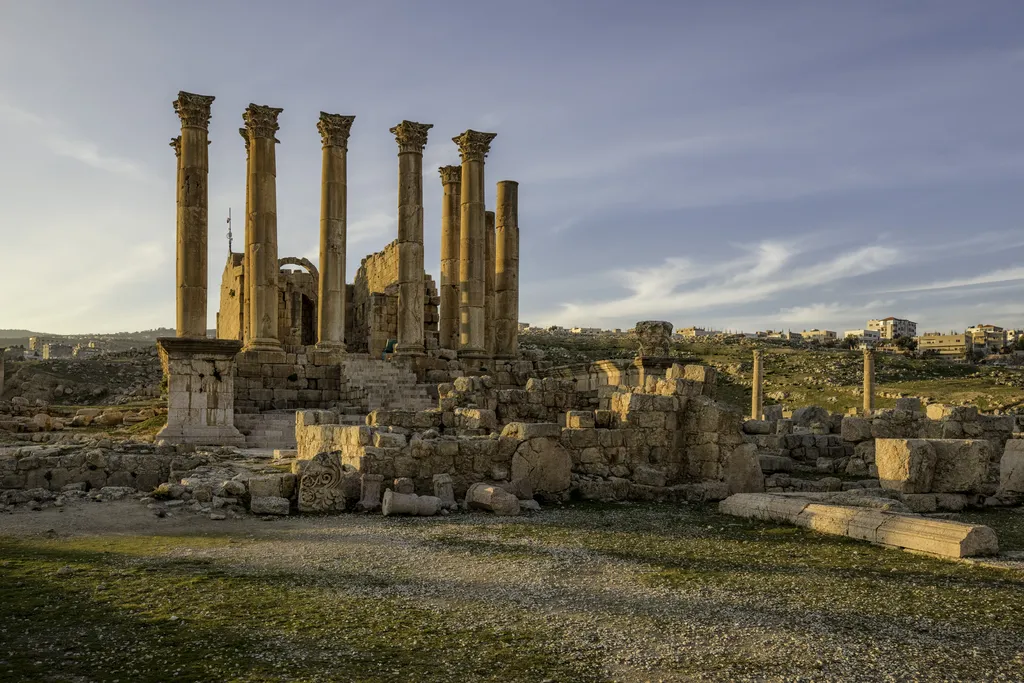
An hour north of Amman stands the most complete Roman city most travellers will ever walk. Jerash — ancient Gerasa, one of the Decapolis league of cities — was buried by earthquake and landslide and dug out again with its street plan intact: a colonnaded main street with the original paving and wheel ruts still in it, an oval plaza ringed by columns that is unique in the Roman world, two theatres, temples to Zeus and Artemis, churches with mosaic floors, and Hadrian’s Arch standing at the southern entrance where it was raised for an emperor’s visit in the second century. Walk the Cardo from end to end and you are not imagining a Roman city from fragments; you are standing in one, roofless but otherwise legible down to its shopfronts and drainage channels.
One accuracy point matters here, because other sources blur it: Jerash is not yet a UNESCO World Heritage Site. It has sat on UNESCO’s Tentative List since 2004 — the official inventory of sites a country intends to nominate — as the UNESCO Jordan page at whc.unesco.org confirms. That is a statement about paperwork, not quality; travellers who have seen both routinely rate Jerash alongside inscribed Roman sites anywhere. But a guide that calls it inscribed is a guide that has not checked, and the distinction is worth printing precisely because so many pages get it wrong.
Jerash is an easy half-day from Amman and pairs with two northern add-ons the prioritisation section weighs properly: Ajloun Castle, a twelfth-century Muslim fortress in the green hills half an hour west, built to watch the Crusader roads, and Umm Qais, given its own section below. The site is mostly shadeless and the stone reflects the heat, so a morning start beats a midday one; the South Theatre, where musicians sometimes play among the columns, and the view back over the Oval Plaza from the Temple of Zeus terrace are the two moments not to rush.
The Dead Sea – Floating at the Bottom of the World
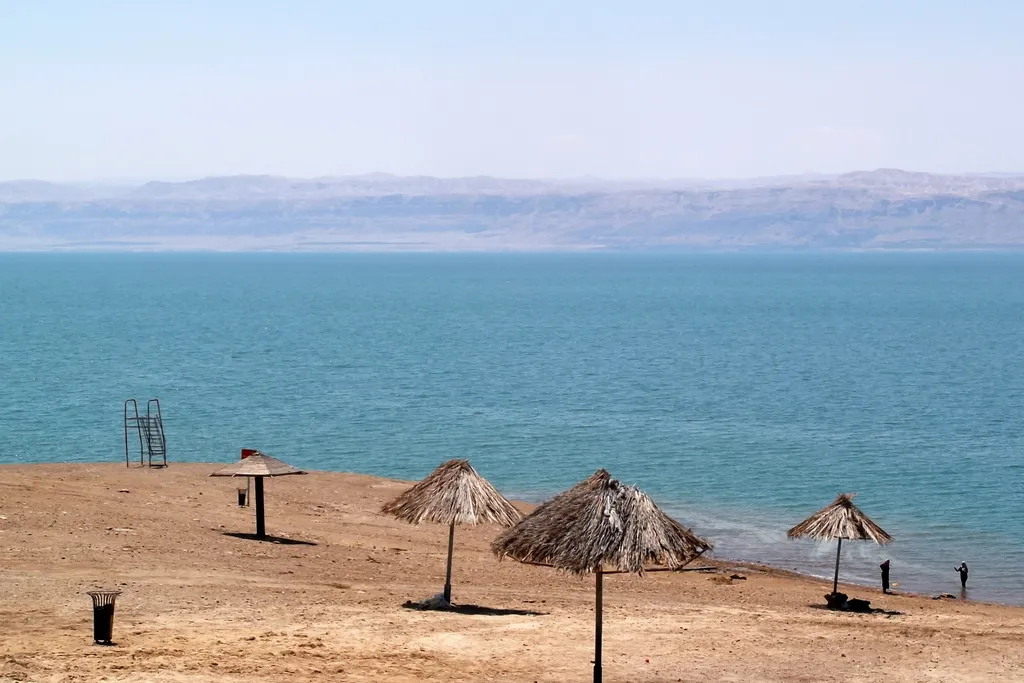
The Dead Sea is not a sea and not quite like anything else on the list: a hypersaline lake on the Jordan Rift whose shoreline, more than 400 metres below sea level, is the lowest exposed land on Earth, and whose water is so dense — roughly ten times saltier than the ocean — that swimming in it is impossible in the ordinary sense. You do not swim in the Dead Sea. You sit down in it, and it holds you up like a chair, and within a minute everyone in the water is laughing, because the physics is genuinely absurd. The Jordanian shore runs down the King’s basin in a line of resort hotels and public beaches, and a float is the soft landing at the start or end of most Jordan itineraries.
The honest version of the experience comes with small print. The water stings any cut or shaved skin, is genuinely dangerous to get in your eyes, and should never go near your mouth; ten to twenty minutes at a time is enough, and the pleasure is real but brief. The famous mud is the other half of the ritual — coat yourself at the shoreline, bake in the sun, rinse in the sea — and the salt formations crusting the shore at the southern end of the public beaches are stranger and prettier than the float itself. What the brochures do not say is that the sea is shrinking, measurably, year by year, as the Jordan River is diverted upstream; the sinkholes and retreating shorelines along the road are part of the place now, and seeing it sooner is better advice than any hotel recommendation.
Access works two ways. The resort hotels sell day passes with pools, private beach, showers and lunch — the comfortable version, at hotel prices this guide will not print because they change constantly. The public beach further south is the budget version with the same water and fewer frills. Either way, come in the late afternoon if you can: the heat off the water eases, the hills across in the West Bank turn gold, and a Dead Sea sunset watched from the lowest point on Earth is a better souvenir than the float photograph everyone takes at noon.
Amman – the Citadel and the Roman Theatre
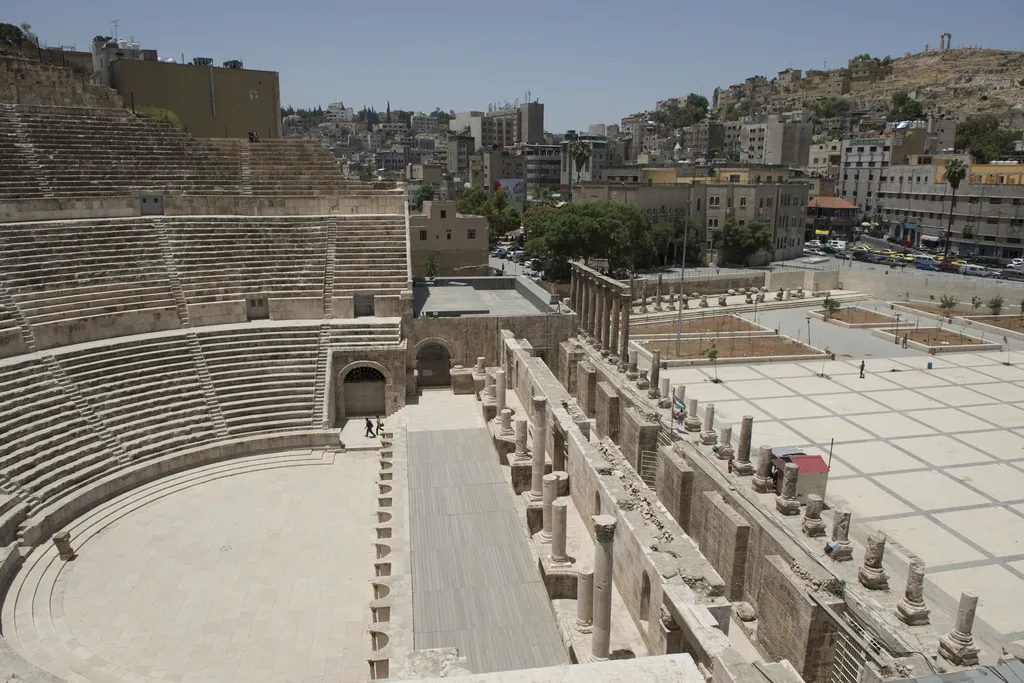
Amman is where Jordan trips begin, and too many travellers treat the capital as an airport with hotels attached. That wastes the easiest half-day in the country. The city is built across hills the locals count differently every time you ask, and its two great ancient sites sit five minutes apart in the downtown bowl. On the highest hill, the Citadel has been occupied since the Bronze Age and carries the full stack of Jordan’s history in one walled enclosure: the towering columns of a Roman Temple of Hercules, a Byzantine church, the domed audience hall of an Umayyad palace, and a small, excellent archaeological museum whose finds run from Neolithic plaster statues to Dead Sea Scrolls copper. The view from the Citadel walls — white houses pouring over every hill to the horizon — is also the single best orientation to what Amman actually is.
Below it, the Roman Theatre does the opposite job: where the Citadel is a viewpoint, the theatre is a plunge. Cut into the hillside in the second century for around 6,000 spectators, it is restored enough to host concerts again and steep enough that climbing to the top rows is a small workout with a large reward — the stage, the plaza and the downtown souks laid out below. Two small museums of folklore and popular traditions sit in its side chambers, included and usually empty. Around the theatre, downtown Amman — the balad — is the real third attraction: gold souks, fabric shops, the smell of cardamom coffee, and a working city centre that has not been tidied for tourists.
Give the capital the half-day between arrival and the road south, or a full day if food is one of your reasons for travelling: Amman’s restaurant streets, from Rainbow Street’s cafes in Jabal Amman to the shawarma and knafeh counters downtown, are where most travellers end up having their favourite meal of the trip. Amman is not a beautiful capital in the postcard sense. It is a hospitable, lived-in one, and an afternoon on the Citadel at golden hour has converted many visitors who planned to skip it entirely.
Madaba – the Town of Mosaics
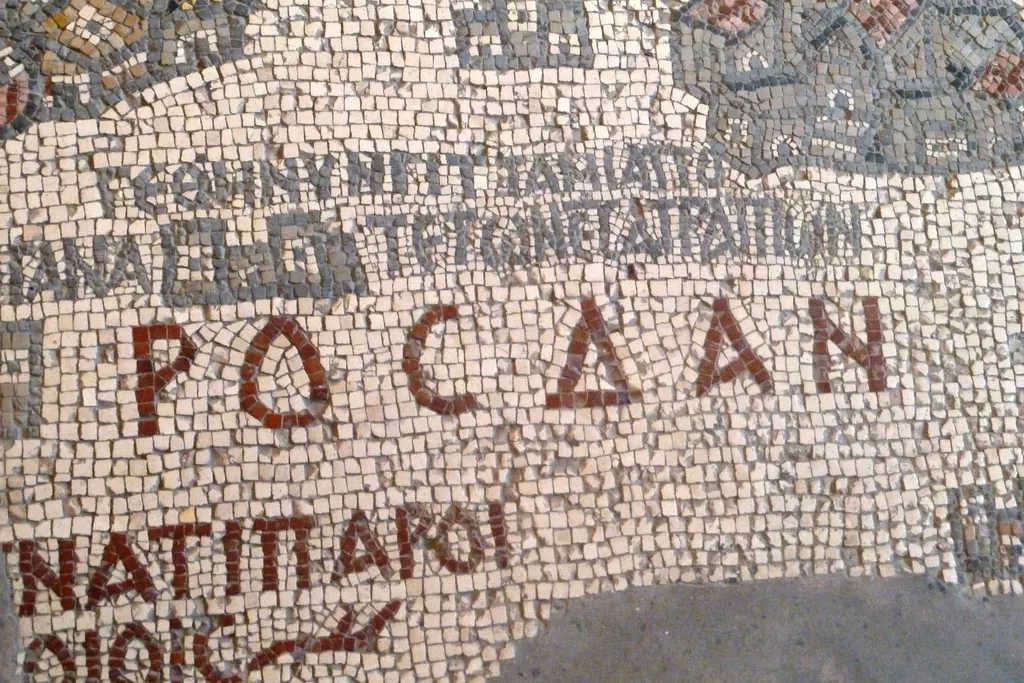
Half an hour south of Amman, the market town of Madaba holds the most remarkable map to survive from the ancient world — not drawn on parchment, but laid in mosaic cubes in the floor of a church. The Madaba Map, made in the second half of the sixth century, originally depicted the whole of the biblical world from Egypt to Mesopotamia in some two million tesserae; the surviving fragment, uncovered in the 1880s when the Church of St George was being built over it, preserves the oldest known map of Jerusalem, its streets and churches rendered in plan with Greek labels, the Dead Sea with boats on it, and the Jordan River running down through the centre. It is, among other things, a working archaeological document — scholars still use it to locate lost sites — and standing over it in a small, active Greek Orthodox church is a stranger and better experience than any museum vitrine.
Madaba’s second act is that the map is not a one-off. The town was a mosaic workshop city in the Byzantine centuries and floors keep turning up everywhere: the Archaeological Park in the centre preserves whole church and house floors under one shelter, including a mosaic of the four seasons; the Church of the Apostles, a short walk away, holds a vast floor centred on a personification of the Sea; and modern Madaba still teaches the craft in workshops where you can watch a mosaic being laid cube by cube. The honest scale of the place is small — the church, the park and one more floor are a two-to-three-hour visit, not a day — and that is exactly its role in a Jordan trip.
That role is bundling. Madaba sits on the King’s Highway a short drive from Mount Nebo, below, and the two together, with a Dead Sea float or a Bethany visit, make the classic full day out of Amman that costs no backtracking at all. The town also has the practical virtues of a real place rather than a resort strip: proper restaurants, a walkable centre of mosaic and souvenir workshops of noticeably better quality than the site shops, and some of the friendliest, least hurried selling in Jordan. Stop, do not just pass through.
Mount Nebo – Where Moses Saw the Promised Land
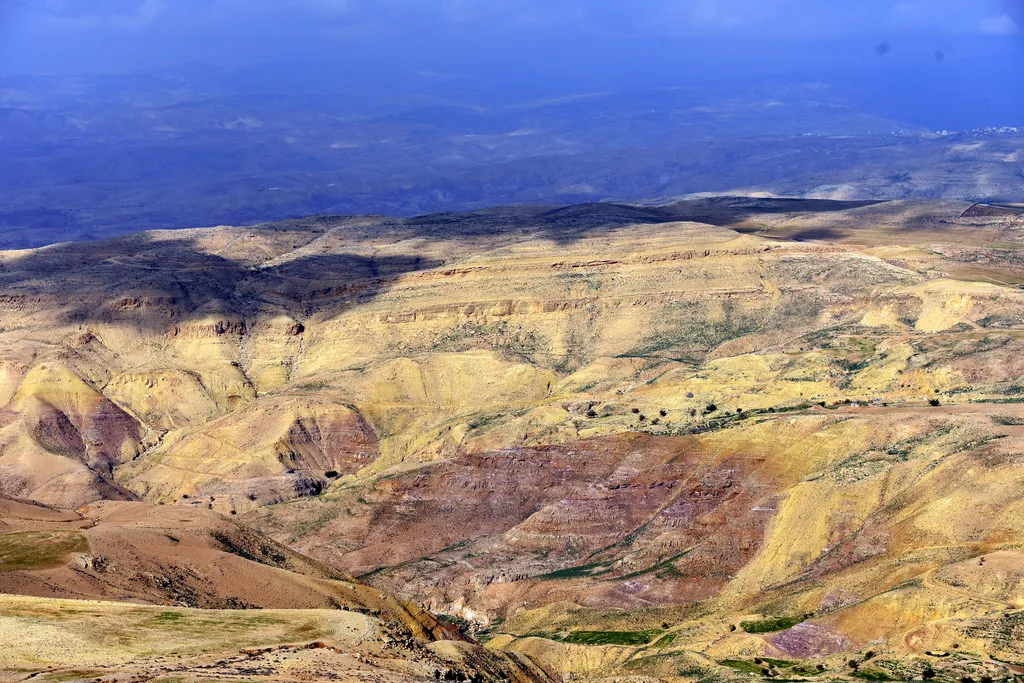
Ten minutes west of Madaba, a ridge of the Abarim mountains carries one of the Bible’s defining scenes. Mount Nebo, rising to around 700 metres above the Jordan Valley — and well over a thousand above the Dead Sea below — is where the Book of Deuteronomy places Moses at the end of his life, shown the Promised Land he would not enter, “from Gilead to Dan,” before dying on the mountain. What stands there now is a memorial church tended by Franciscan friars, built over and around a fourth-century Byzantine church whose mosaic floors survive in remarkable condition — hunting and pastoral scenes, animals and harvests, preserved under the modern shelter church whose clean lines frame the view Moses was shown.
The view is the attraction, and it does not need the story to justify it, though the story is what makes people quiet at the railing. On a clear day the panorama runs from the Dead Sea glittering below, up the Jordan Valley to Jericho — one of the oldest cities on Earth, visible across the river — and on the clearest winter days to the hills of Jerusalem itself. Most days give you the valley and the sea through a kind shimmer of haze, which is its own kind of accuracy. Near the church door stands the Serpentine Cross, a modern sculpture of bronze twisting the serpent of Moses around the cross, and it has become the site’s emblem and its photograph.
Nebo asks little of you and should be given little: an hour, two at a slow pace, combined with Madaba on the same morning or afternoon. Come early or late for the clearest air, read the mosaics properly — they are finer than the site’s fame suggests, and the baptistery floor in particular repays ten quiet minutes — and keep expectations of the modern church modest. It is a shelter for the floors and the view, not a monument in itself. As part of the Amman day-bundle with Madaba, Nebo is close to free in route terms; as a standalone detour on a rushed trip, it is the first thing the prioritisation section cuts, and it is better to know that than to arrive resentful.
Bethany Beyond the Jordan – the Baptism Site
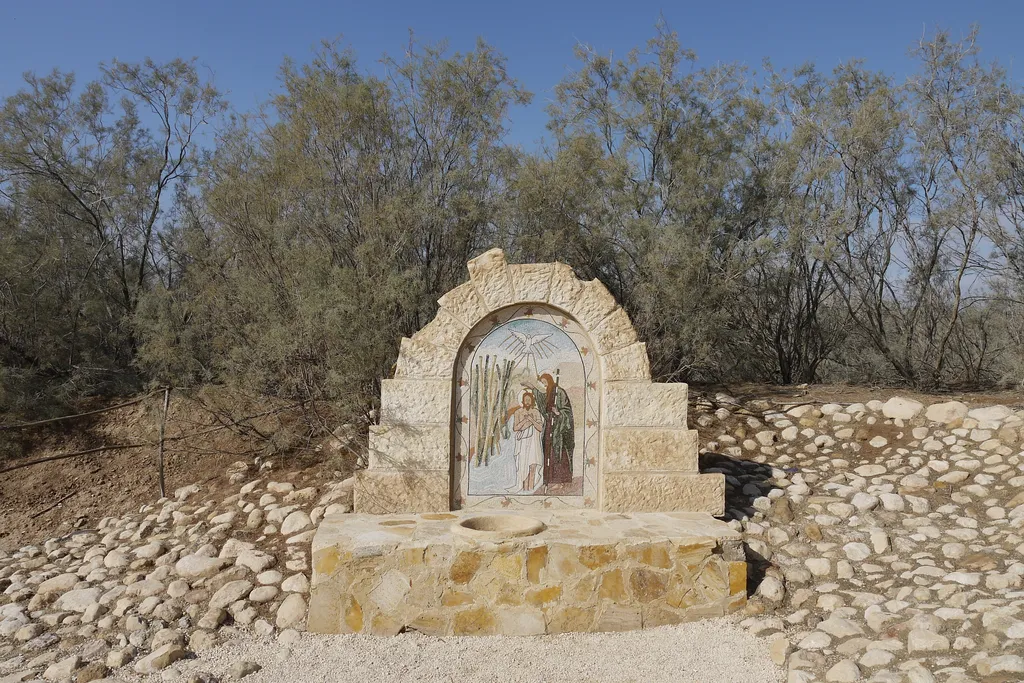
Down in the Jordan Valley, a few kilometres north of the Dead Sea, a reed-lined archaeological park protects the place where Christian tradition and a strong body of Byzantine evidence locate the baptism of Jesus by John the Baptist. Bethany Beyond the Jordan — Al-Maghtas, “the immersion,” in Arabic — was inscribed as a UNESCO World Heritage Site in 2015, and its archaeology is genuinely persuasive: on and around Elijah’s Hill, excavations after the area’s demining in the 1990s uncovered Byzantine churches, baptismal pools, hermit caves and pilgrim hostels clustered exactly where early pilgrim accounts said they should be, on the east bank wilderness where John was preaching “beyond the Jordan.”
The visit runs on a shuttle from the visitor centre — the site sits in a sensitive border zone, and wandering is not an option — through dry, tamarisk-dotted country that feels properly like wilderness, to the excavated hill, the remains of the churches, and finally the river itself. And here is the honest adjustment every visitor makes: the Jordan River at Bethany today is a modest, green, slow-moving stream, nothing like the torrent of the hymns. The river has shrunk with upstream diversion on all sides, and the actual baptismal reach is a quiet channel where pilgrims on both banks — the Israeli-administered site faces this one across a few metres of water — descend steps to the water for blessings. Set the expectation correctly and the smallness stops mattering; the power of the place was never hydraulic.
Bethany is a half-day that combines cleanly with the Dead Sea, twenty minutes south, and it divides visitors cleanly too. For pilgrims and anyone travelling for the biblical map of Jordan, it is unmissable and often the emotional centre of the trip. For a traveller on a tight itinerary with no particular pull towards the story, it is the most droppable of the Amman-area four — Madaba’s map, Nebo’s view and the Dead Sea float all deliver more per hour to the general visitor. That is not a slight on the site, which is beautifully and honestly presented. It is the arithmetic of short trips, and this guide’s prioritisation section applies it openly rather than pretending otherwise.
Wadi Mujib – the Grand Canyon of Jordan
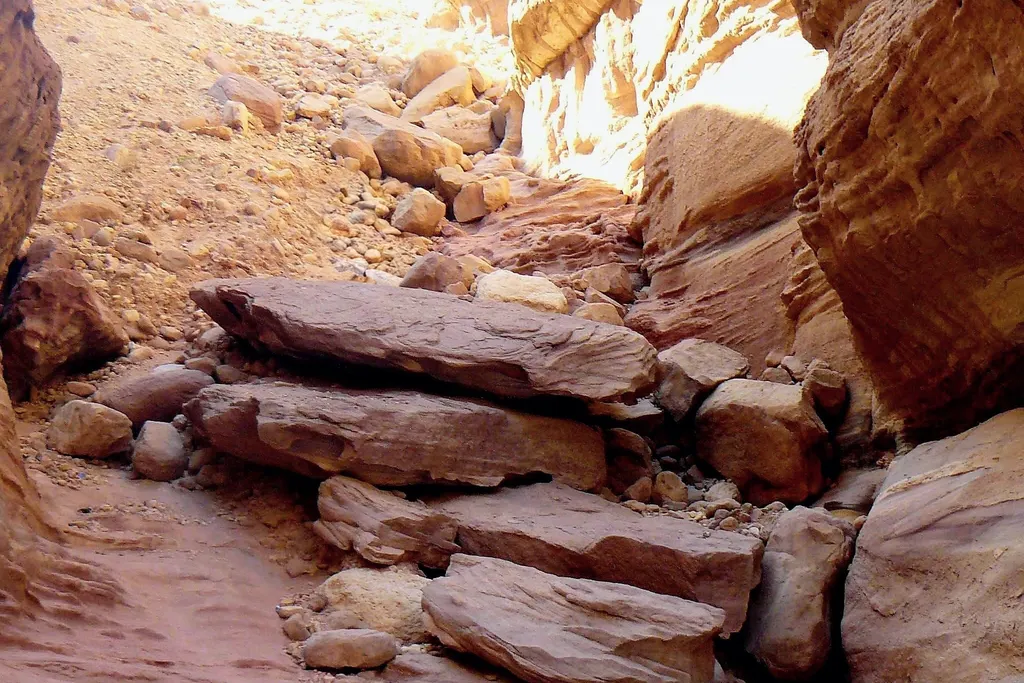
Halfway down the Dead Sea highway, a crack in the plateau pours a river through a slot canyon into the sea — and the Mujib Biosphere Reserve lets you wade up it. Wadi Mujib is routinely billed as the lowest nature reserve on Earth, its canyon dropping from the King’s Highway plateau to the Dead Sea shore, and its signature experience, the Siq Trail, is unlike anything else in Jordan: a self-guided river walk of a few hours, scrambling over boulders, hauling on fixed ropes, swimming short pools and ducking under waterfalls, between red sandstone walls that narrow to a corridor in places. It is canyoning at its most accessible — no abseils on the standard trail, rangers at the start, life jackets issued — and on a hot day it is the most fun hour-for-hour of any attraction in this guide. The reserve also sits on UNESCO’s Tentative List, since 2007, for the wider protected landscape the gorge cuts through.
The catches are seasonal and absolute, and this is where most lists fail their readers by printing the attraction without the calendar. The water trails run in the warmer months only — roughly spring to autumn, with exact opening set by conditions each year — and they close without argument when rain threatens upstream, because a desert gorge in flash flood is lethal and the reserve manages that risk properly. In winter the Siq Trail is simply not available, full stop; a December itinerary that includes “canyoning at Wadi Mujib” is a fantasy copied from a page that never checked. Check the reserve’s current status for your dates before you build a day around it, and treat any closure as the system working, not bad luck.
For travellers who get the season right, Mujib bundles perfectly: the reserve centre sits directly on the Dead Sea road, so the natural day is a morning in the canyon and a late-afternoon float at a beach or resort further north, adrenaline followed by the laziest water on Earth. Longer trails, including guided canyon routes with abseils and the multi-day treks through the reserve’s upper reaches, exist for the committed — but note that the upper reserve is also ibex country, one of Jordan’s conservation successes, and the gorge most visitors splash through is the friendly front door of a much wilder protected area behind it.
Kerak Castle – the Crusader Fortress on the King’s Highway
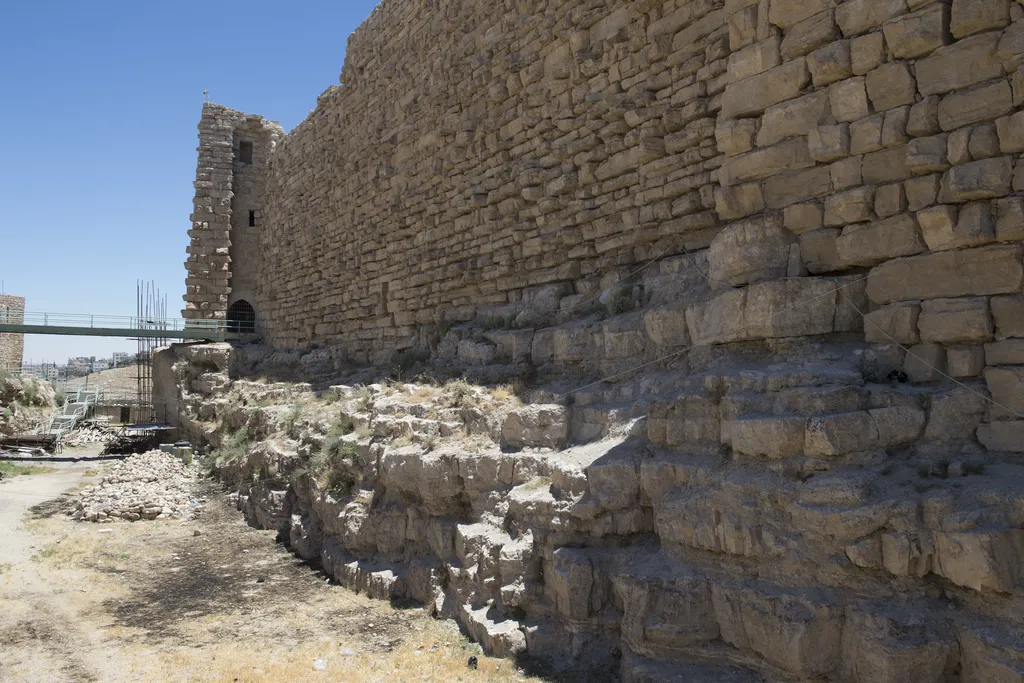
The King’s Highway, the ancient trade road running the length of Jordan’s plateau, was worth taxing and worth defending, and at Kerak the Crusaders built the lock for its southern half. Raised in the 1140s by the lords of Oultrejordain, Kerak Castle sprawls along a narrow ridge above the modern town of Al-Karak — a fortress of massive curtain walls, a keep, chapels, stables and two levels of vaulted galleries sunk into the rock, big enough to hold a small town and grim enough to have held out against Saladin more than once. Its most notorious lord, Reynald de Châtillon, used it as a base to raid caravans under truce and even launched ships on the Red Sea to threaten Mecca — provocations that helped bring Saladin’s armies down on the kingdom. After a long siege the castle finally fell in 1188, and it passed through Ayyubid and Mamluk hands, each adding walls and towers to the pile you explore today.
What makes Kerak more than a ruin with a story is how much of it is interior. The upper castle has the views — across the town’s rooftops to the Dead Sea depression on a clear day — but the lower levels are the experience: long, cool, vaulted passages and halls running inside the ridge, kitchens and stables and storerooms in near darkness, the working guts of a Crusader garrison preserved because they were built like bunkers. Bring a phone light and take them slowly. The small museum in the lower courtyard covers the castle’s layers, including the town’s sobering modern history, and deserves its twenty minutes.
Kerak is the natural King’s Highway stop — an hour and a half south of Madaba, two to three hours on site, on exactly the road you are driving between Amman and Petra if you take the scenic route rather than the Desert Highway. That routing is the point: Kerak is rarely worth a dedicated detour, but on the King’s Highway day it is close to unmissable, and it pairs with its smaller southern sibling, Shobak Castle, another Crusader fortress on a cone of rock an hour further south, which gets the honest hearing it deserves in the prioritisation section. Stop at one; if the day and the light allow, stop at both.
Dana Biosphere Reserve – Jordan’s Great Walking Country
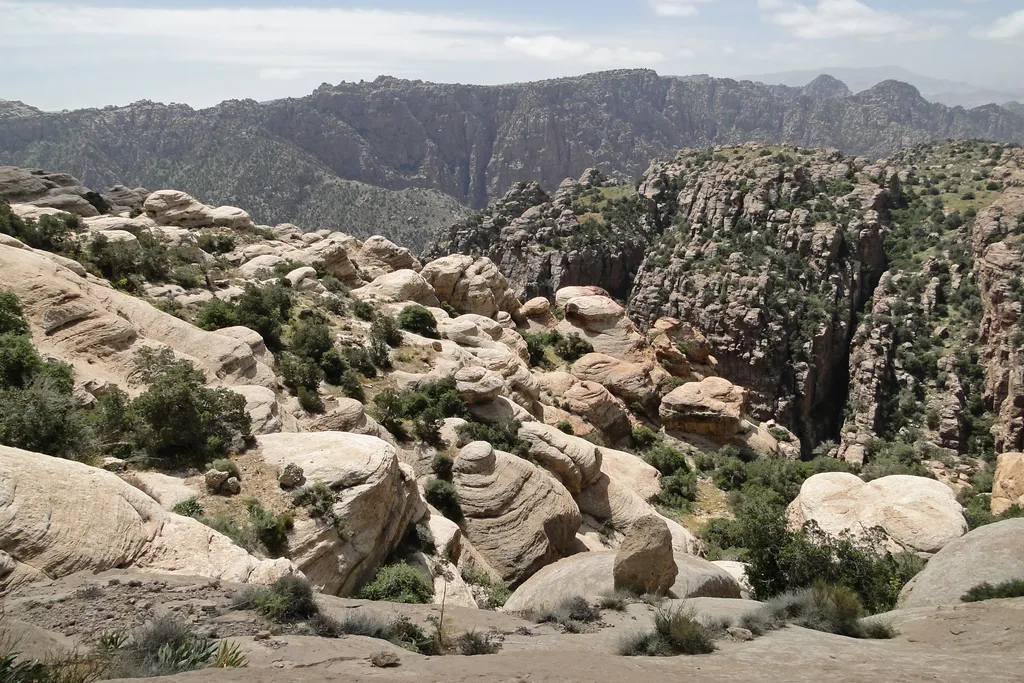
South of Kerak, the plateau edge breaks into the finest walking landscape in Jordan. The Dana Biosphere Reserve — Jordan’s largest nature reserve, at roughly 300 square kilometres, and on UNESCO’s Tentative List since 2007 — protects a cross-section of the whole country’s geography in one protected sweep, from the 1,500-metre plateau at the restored Ottoman village of Dana, down through sandstone canyons and four distinct bio-geographical zones, to the desert floor of Wadi Araba far below. That compression is why the reserve’s species lists are so long: Mediterranean, desert and Sudanese-zone plants and animals overlap here, and the reserve is a serious birding site on the great Rift Valley migration route, as well as a refuge for ibex and other mountain wildlife.
The classic Dana experience starts at the village itself, a small stone settlement on the canyon rim that the Royal Society for the Conservation of Nature rebuilt as the reserve’s gateway, with a guesthouse in its old houses and trailheads at its door. From the rim the signature walk drops away below you: the Wadi Dana Trail, a long, mostly downhill day’s walk of some 14 kilometres through the widening canyon to the Feynan area at its foot, where an off-grid ecolodge and an archaeological landscape of ancient copper mines wait at the bottom. Shorter rim and canyon trails run from an hour upward, and the Rummana campsite area, a short drive north, has its own tower-top views and family-length walks. This is not a viewpoint you tick off. It is a place that asks for a night, a dawn and a pair of boots.
Honesty about effort is the Dana section’s duty. The big trail is a real hike — unshaded in its lower half, waterless, and usually walked one-way with transport arranged at the far end — and in high summer the valley floor is furnace-hot by midday. Spring brings the reserve’s wildflower season and its best walking weather; autumn is the gentler second window. Travellers who give Dana a night on the King’s Highway run almost always rank it with Petra and Rum afterwards, precisely because it is the one famous Jordan experience with no queue in it. Travellers passing at midday for a photograph get a fine view and miss the point entirely.
Aqaba and the Red Sea – Jordan’s Window on the Coral Sea
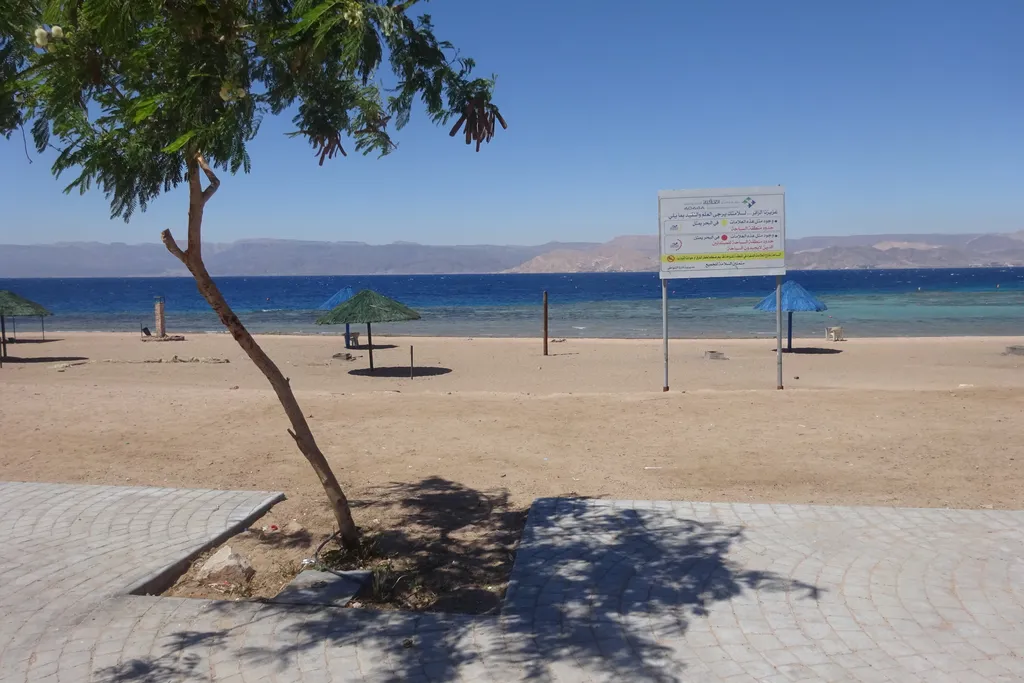
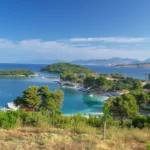
Jordan is nearly landlocked, and its one window on the sea is a coastline of barely 27 kilometres at the head of the Gulf of Aqaba — which makes what is packed into it remarkable. Aqaba, the port city at the country’s southern tip, faces Eilat across the water and the mountains of Sinai across the gulf, and its warm, clear, reliably calm sea protects coral reefs that are among the northernmost and most climate-resilient in the world. The reefs south of the port, in and around the Aqaba Marine Reserve, run close to shore: a snorkeller can float from a jetty over coral gardens, turtles and dense fish life in a few metres of water, and the diving goes deeper — most famously to the Cedar Pride, a freighter deliberately sunk in 1985 as an artificial reef and now a coral-covered wreck sitting upright within recreational depths, alongside a scuttled tank and an underwater military museum of decommissioned vehicles. The marine reserve’s significance was recognised at the highest level when it was inscribed on UNESCO’s World Heritage List in 2026, as UNESCO’s Jordan listing records.
The city above the water is a working port and a resort town sharing one corniche, and it divides by beach. The city beaches are lively, local and free; the South Beach strip, where the photo above was taken, is the snorkelling and diving shore, a line of dive centres, public beach and reef entries; and Tala Bay, furthest south, is the gated resort enclave. Aqaba also has an older story under the resorts — a Mamluk-era fort by the shore, the excavated early Islamic city of Ayla next to the modern centre, and a giant flagpole on the waterfront flying the flag of the Arab Revolt, in the port where Lawrence’s forces arrived in 1917.
Aqaba’s role in an itinerary is the exhale. It sits half an hour from Wadi Rum and under two hours from Petra, so it works as the trip’s warm ending — a day or two of reef, grilled fish and doing nothing, with a flight home from its own small airport or the drive back north. It is also the most skippable stop on this list for a short, history-first trip: Jordan’s coast is lovely, but the Red Sea is not what Jordan uniquely offers the world, and the prioritisation section is honest about trading Aqaba days for Petra and Dana time when the calendar gets tight.
Umm Qais – Gadara Above the Sea of Galilee
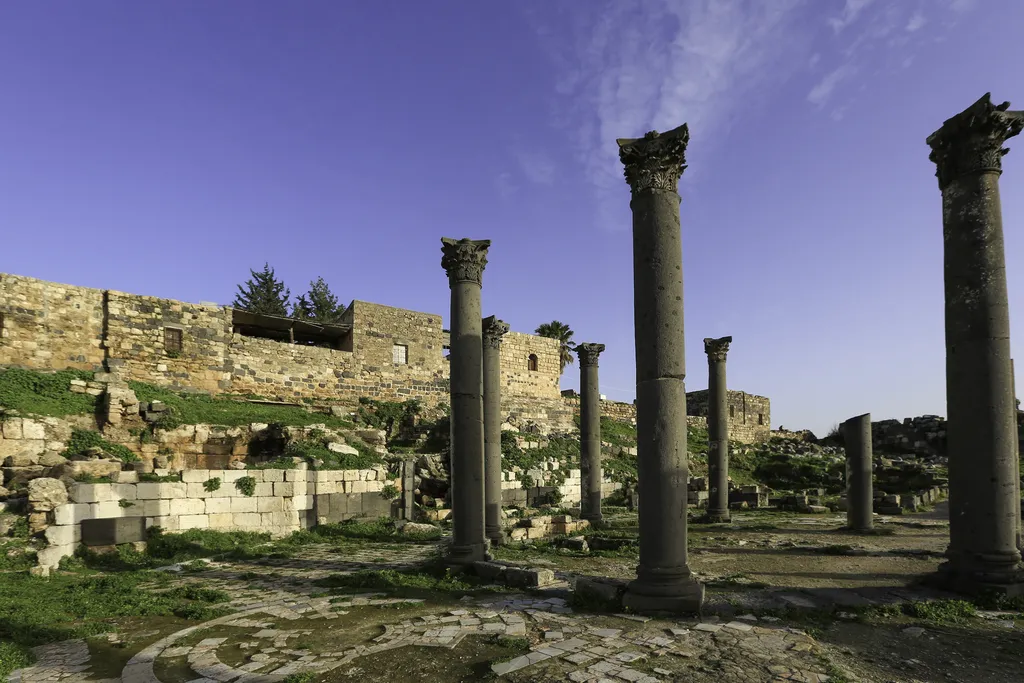
In the far north-west corner of the country, on a basalt plateau above the Yarmouk gorge, Jordan keeps its most under-visited great ruin. Umm Qais is ancient Gadara, another Decapolis city, and it was built differently from Jerash: where Gerasa is white limestone, Gadara is black basalt, and its theatres, colonnades and vaulted terrace stand in dramatic dark stone against the greenest landscape in Jordan. Gadara was a cultural address in the Roman world — a city of philosophers and poets, where the philosopher Philodemus taught and the poet Meleager wrote — and its position was its fortune: below the plateau, the view runs across the Jordan Valley to the Sea of Galilee, with the Golan Heights beyond and, on a clear day, the white cap of Mount Hermon closing the horizon. Three modern countries sit inside a single photograph, with the ruins in the foreground.
The site itself is a pleasure precisely because the tour buses mostly do not come. There is a black basalt West Theatre that once seated thousands, a colonnaded main street, an underground mausoleum, a vaulted terrace that carried a temple and later a Byzantine church with an octagonal plan — and, woven through the ruins, the abandoned stone houses of an Ottoman-era village, built partly from the Roman stone and now holding a resthouse and a small museum in the old Ottoman governor’s house. Gadara also sits on UNESCO’s Tentative List (since 2001), like its northern neighbour: the north of Jordan is, in heritage terms, one long pending nomination. The whole visit takes two to three unhurried hours, and the resthouse terrace at the edge of the site, with that valley view in front of a mint tea, is one of the great cheap seats in Jordanian travel.
Getting there is the only real cost, and it is a route question, not a distance one. Umm Qais lies beyond Irbid, roughly two hours north of Amman, and it never sits on the way to anything else in this guide except the north itself. So bundle it: Jerash in the morning, Ajloun’s green hills and castle at midday, and Umm Qais in the late afternoon when the light comes across the valley — a full northern day that regular visitors argue is the best single day in the country after Petra. On a first trip of five days or fewer it will probably not survive the prioritisation cut below. On a second trip, or a long one, it should be near the top of the page.
The Desert Castles – Umayyad Palaces in the Eastern Desert
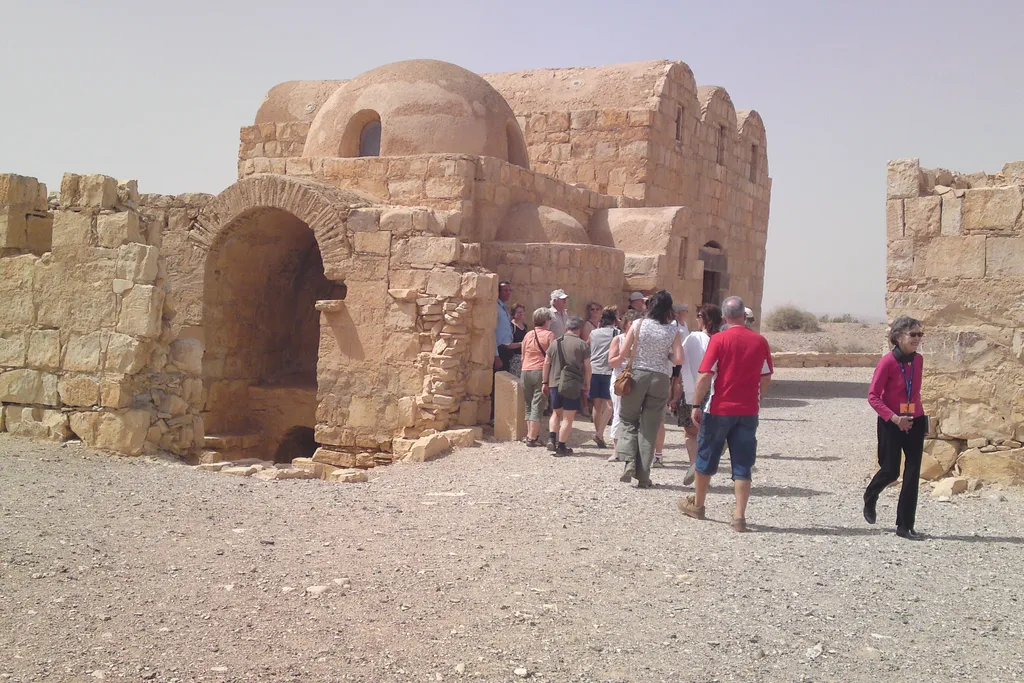
East of Amman, the city gives way abruptly to a flat basalt desert, and scattered through it stand the strangest and least-visited monuments of early Islam — the so-called Desert Castles, a loose family of eighth-century Umayyad lodges, bath houses, caravanserais and fortified farms, raised by the caliphs of Damascus within a day’s ride of their capital. The standard visit is a half-day loop from Amman taking in three of them, and the loop’s star is beyond argument: Quseir Amra, inscribed on UNESCO’s World Heritage List in 1985, a small, domed bath house whose interior is painted floor to ceiling with frescoes — hunting scenes, bathers, musicians, a zodiac mapped across a hemispherical dome — that are among the most famous, and most startlingly un-monumental, artworks of the early Islamic world. From outside it is a plain stone shed in an empty plain. Inside, it is a party that has been going on for thirteen centuries.
The loop’s other two anchors give the frescoes their context. Qasr Kharana, the most castle-looking of the group, is a severe, square, two-storey fort of uncertain purpose — hunting lodge, meeting place, way station — whose slit windows turn out on inspection to be ventilation rather than arrow loops, a small lesson in how little the desert castles were really castles. And Qasr Azraq, built of black basalt at an oasis that was once the desert’s great water source, carries a second fame: T.E. Lawrence made it his headquarters in the winter of 1917-18 during the Arab Revolt, and the room above its gate is still shown as his. The oasis itself, an Azraq wetlands reserve nearby, was once a vast marsh and is now a poignant, partially restored fragment — worth the stop if birds or conservation interest you at all.
The honest assessment of the Desert Castles is that they are a connoisseur’s half-day, not a headline. Amra’s frescoes alone justify the loop for anyone interested in art or early Islam, and the eastern desert has a stark, empty beauty of its own — but the driving between sites is featureless, the buildings are small, and on a short trip this is the first whole excursion the prioritisation section cuts, without apology. What is not acceptable is what several rival lists do, which is to include the castles as a photo and a sentence. Either give Amra its paragraph or leave the loop out entirely; this guide has chosen the paragraph.
If Your Days Are Short – What to Keep and What to Drop
Every Jordan itinerary is an act of triage, so here is the triage done openly. With three days, the country reduces to its spine: one full day for Petra and nothing else, one day split between Jerash in the morning and the Amman Citadel in the afternoon, and one day for Wadi Rum with a night in the desert if the flight times allow, or the Dead Sea if they do not. Everything else on this page is dropped, and that is fine — those three days contain the gorge, the Roman streets and the desert, which is a better trip than seven rushed ones. With five days, add the Amman bundle as a full day — Madaba and Mount Nebo in the morning, a Dead Sea float in the afternoon — and a second night at Petra, arriving via the King’s Highway with Kerak on the way. Five days is the shortest trip that feels like Jordan rather than like Petra with appendages.
With a week, the south opens up properly: add Aqaba for a reef day and a rest, take Dana as an overnight on the King’s Highway instead of a photograph, and consider the northern day — Jerash, Ajloun and Umm Qais — which by this length of trip has earned its drive. With ten days or more, stop dropping things entirely: the Desert Castles loop, Shobak Castle between Kerak and Petra, Bethany at pilgrimage pace, the Wadi Mujib canyon in season, and the old town of As-Salt — a UNESCO-listed hillside town of golden stone an easy half-hour from Amman, and the most likeable small town in the country — all come into play, and Jordan starts to feel unhurried.
The drop order, stated once and plainly, runs like this. First to go is the Desert Castles loop — real art, real detour. Next is Aqaba, lovely and generic in a way nothing else here is. Next is Bethany, for any traveller it does not personally call to. Next is Umm Qais, with genuine regret, because its cost is a day and not an hour. What should never be dropped to save a few hours is the second Petra day traded for a rushed extra stop, or the night in Wadi Rum traded for a day-trip — those two trades are how good Jordan itineraries quietly become mediocre ones. And one negative rule, worth more than any addition: never try to do Petra as a day trip from Amman. The drive eats four hours of the day, the site gets your worst hours, and you will leave believing the place is a single facade. It is a city. Sleep next to it.
Frequently Asked Questions
How many days do you need to see Jordan’s main attractions?
Five days is the honest minimum for the core of the country — Petra with a proper full day, Wadi Rum with a night, Jerash, the Amman sights and the Madaba, Nebo and Dead Sea bundle — and seven to ten days is the comfortable version that adds Dana, Aqaba and the far north without rushing any of them. Three days can hold Petra, Jerash and one of Rum or the Dead Sea, but it is a highlights reel, not a trip, and anything shorter should drop whole regions rather than shaving hours off every site.
What is the number one tourist attraction in Jordan?
Petra, and not by a small margin — it is the country’s most visited site, a UNESCO World Heritage Site since 1985 and a fixture on modern wonders-of-the-world lists. But the travellers’ verdict after the trip is usually more interesting than the ranking before it: Wadi Rum’s desert night and Jerash’s completeness are the two experiences most often named alongside Petra as the reason to come back, and Dana is the one most often named as the surprise of the trip.
Is Jerash a UNESCO World Heritage Site?
Not yet — and this is widely misreported. Jerash has been on UNESCO’s Tentative List since 2004, which is the official list of sites Jordan intends to nominate, but it has not been inscribed on the World Heritage List itself. Jordan’s inscribed sites include Petra, Quseir Amra, Um er-Rasas, the Baptism Site at Bethany, Wadi Rum, As-Salt, Umm Al-Jimal and the Aqaba Marine Reserve, as UNESCO’s Jordan country page records. Jerash’s tentative status is an administrative fact only; it takes nothing away from the ruins, which are among the finest Roman remains anywhere.
When is the best time of year to visit Jordan’s attractions?
Spring — roughly March to May — is the consensus best season, with mild temperatures, green hills in the north and wildflowers in the reserves, and autumn, from late September into November, runs it close with warm seas and soft light. Summer is genuinely hot at the Dead Sea, in Aqaba and on Petra’s exposed trails, though the plateau sites stay manageable and Wadi Rum’s nights cool down. Winter brings cold rain to Amman and the highlands, snow is possible on the plateau, and the Wadi Mujib water trails are closed — but Petra in winter, between the weather, is the emptiest you will ever see it.
Is the Jordan Pass worth buying?
For most visitors doing the classic route, yes — it bundles entry to dozens of attractions, Petra included, at a level where visiting Petra, Jerash, Wadi Rum and a handful of the smaller sites usually justifies it on entries alone, and buying it in advance can also cover the tourist visa fee for many nationalities, subject to the current terms. This guide deliberately prints no pass prices or savings figures, because both change; check the official Jordan Pass site for your dates, and count your own planned entries against it honestly — a trip built around two sites may not need it at all.
Can you visit Petra and Wadi Rum in one day?
Technically, tours will sell it to you; honestly, no. The two sites sit about an hour and a half apart, and each deserves the hours the other would steal: Petra needs a full day on foot, and Wadi Rum’s whole point is the desert evening and night. A combined day gives you the Treasury, a two-hour jeep shuttle and two very long transfers — the postcards of both and the experience of neither. If one day is truly all you have in the south, choose Petra, start at opening, and let Rum wait for a trip that can sleep in it.
The Short Version
Fourteen attractions, one small country, and a ranking this guide is willing to sign: Petra first, because nothing else on Earth is Petra; Wadi Rum with a night in it, because the desert is the trip’s soul; Jerash for the most complete Roman walk anywhere; and the Dead Sea because the bottom of the world turns out to be a place you can float in. Then let the roads decide the rest — Madaba and Nebo together out of Amman, Kerak and Dana down the King’s Highway, Bethany and Mujib in the valley, Aqaba as the warm ending, and Umm Qais and the Desert Castles as the connoisseur’s extras that a longer trip rewards. Jordan’s gift to travellers is density; its trap is the same density, tempting every itinerary into a sprint. Walk the Siq slowly, sleep in the desert, and drop things on purpose. The official Jordan Tourism Board site, visitjordan.com, is the place to confirm the practical details for your dates — and the rest, as the sections above argue, is mostly a matter of giving each place the time its section asked for.