
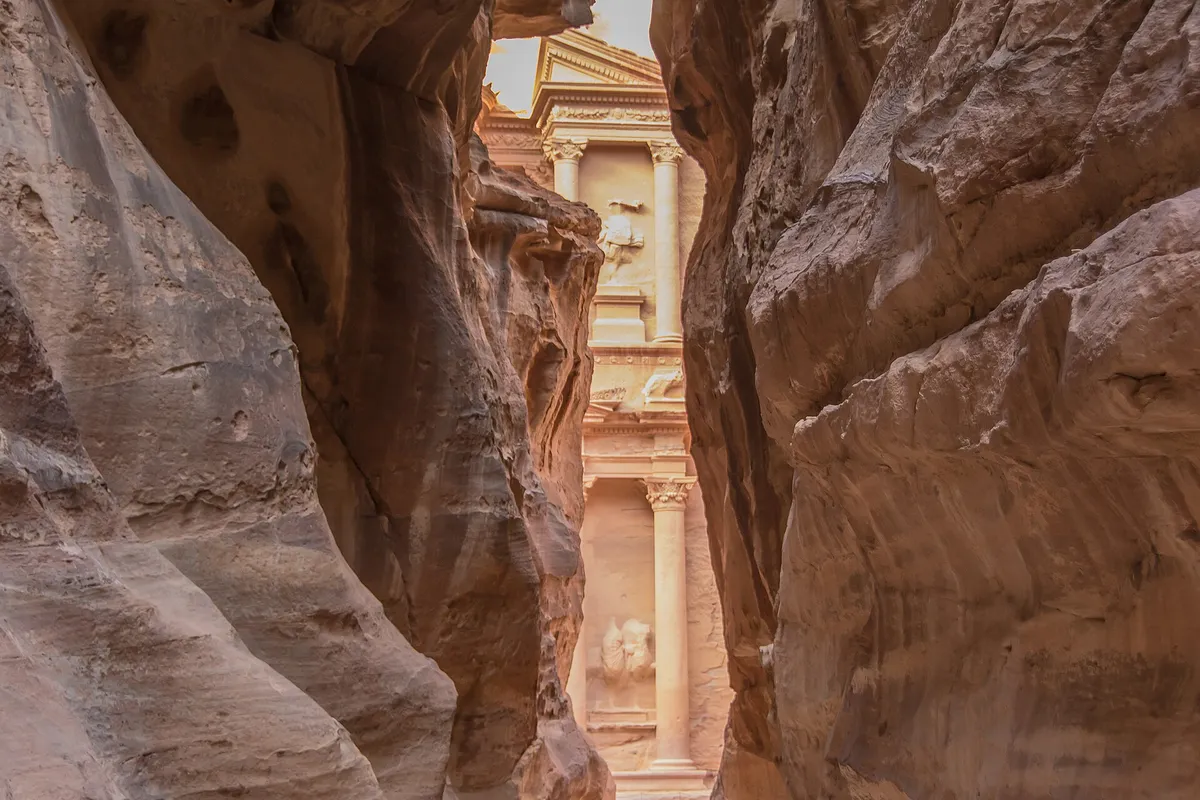
Almost everyone arrives at Petra with the same photograph in their head: a sunlit facade glimpsed through a crack of dark rock. That photograph is real, and you will take it. But if it is all you plan for, Petra will defeat you — not with difficulty, but with scale. The Treasury is the doorway, not the destination. Behind it lies a whole ancient city: tombs, temples, a theatre, a colonnaded street and a second, larger facade at the top of some 850 steps, spread across a basin you cross on foot, in the sun, with no shortcut back.
This petra travel guide is built around that walk. It follows the route in the order you will actually walk it, explains the one alternative entrance most visitors never use, and is honest about the two things that catch people out: how many days the place genuinely needs, and how its ticket pricing really works.
At a Glance
| Question | Short answer |
|---|---|
| What is it? | The rock-cut Nabataean capital — a city of roughly 2,000 acres, UNESCO-listed since 1985, not a single monument |
| The walk | Visitor Centre → the Siq → the Treasury → Royal Tombs → Colonnaded Street → the Monastery; one long route, walked back the same way unless you use the back door |
| How long? | One long day for the highlights; two days to do it properly; three for the side trails |
| Base town | Wadi Musa, immediately outside the Visitor Centre |
| Tickets | Buy at the Visitor Centre, or enter on the Jordan Pass; day visitors who don’t sleep in Jordan pay far more — see the tickets section |
| Best months | March–May and September–November; enter at opening time in any month |
| Don’t miss | The Monastery (Ad Deir) — half of one-day visitors never reach it |
| The smart alternative | Enter via the back-door trail from Little Petra and walk the site in reverse |
First, understand what Petra actually is
Petra was a capital city. The Nabataeans — Arab traders who grew rich moving incense, silk and spices between Arabia, Egypt and the Mediterranean — built their headquarters here in the centuries around the birth of Christ, half constructing it in stone and half carving it directly out of the sandstone cliffs. Rome annexed the kingdom in AD 106 and added its own layer: the colonnaded street, the theatre’s expansion, temples and gates. Earthquakes and shifting trade routes emptied the city slowly; by the time the Swiss explorer Burckhardt reached it in disguise in 1812, Petra had been effectively unknown to the Western world for centuries, though never to the Bedouin who lived among its caves.
Two things made the city possible, and both are still visible. The first is the rock itself — banded red, purple and gold sandstone soft enough to carve and hard enough to keep a carved facade crisp for two thousand years. The second is water. The Nabataeans dammed flash floods, channelled them through the Siq in ceramic pipes and stored winter rain in cisterns across the city. UNESCO, which inscribed Petra in 1985, singles out that water system as much as the tombs: this was engineering first and decoration second.
Hold onto the scale. The visitor area covers on the order of 2,000 acres. From the entrance gate to the Monastery is a walk of roughly an hour and a half to two hours each way before you stop to look at anything — and you will stop constantly. Travellers who treat Petra as a photo stop give it three hours and leave having seen perhaps a fifth of it. Travellers who treat it as a city give it days. Our round-up of the best places to visit in Jordan puts Petra in its national context; this guide stays inside the park.
The route through Petra, in the order you will walk it
There is one main trail, and nearly everything hangs off it. Read this section as your day in sequence.
The Visitor Centre and Bab as-Siq
Everything starts at the Petra Visitor Centre in Wadi Musa: ticket windows, the pass scanners, guide hire, toilets, and the small but worthwhile Petra Museum nearby. Buy or validate your ticket here even if you plan to use the back-door trail later — you need a valid ticket for the day, and checks happen inside the site.
From the gate, the path descends gently through Bab as-Siq, an open valley of early tombs — the Djinn Blocks, huge free-standing stone cubes, and the Obelisk Tomb. This stretch is about a kilometre of easy, exposed walking. Horses and carriages work this section and the Siq; the walk is not hard, and the reveal at the end of the Siq is something no ride can give you. Go on foot if you possibly can.
The Siq: the entrance is the first monument
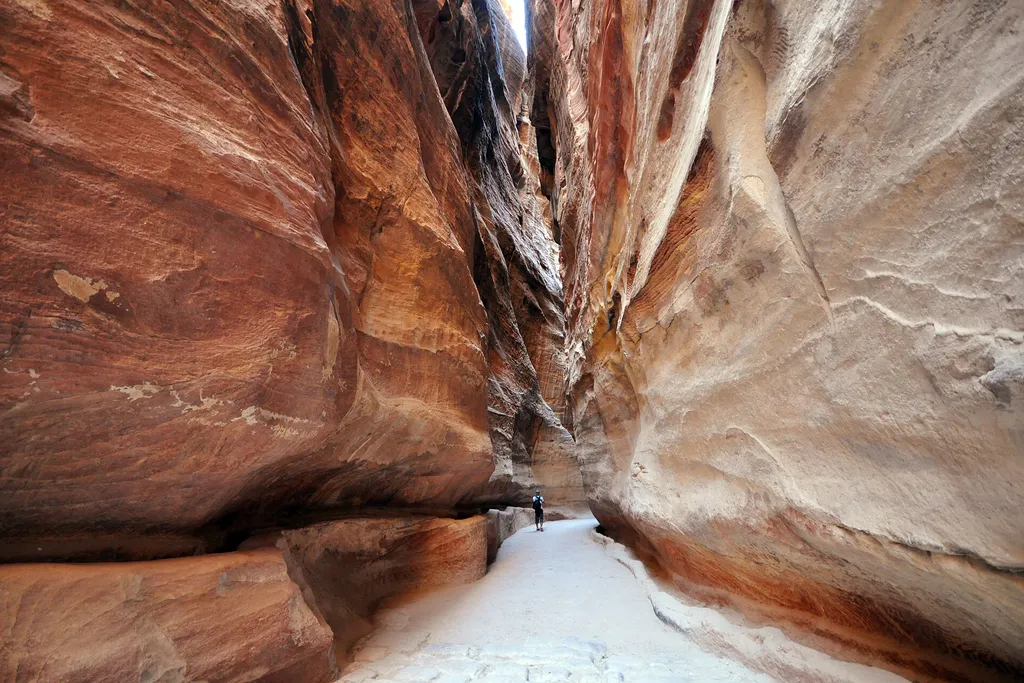
The Siq is a natural gorge — a crack in the sandstone a little over a kilometre long, in places only a few metres wide, with walls rising a hundred metres and more on both sides. The Nabataeans paved it, dammed its entrance against floods and ran water channels along its walls; look for the channel carved into the rock at ankle-to-waist height, and for niches holding worn carvings of gods and camel caravans.
Walk it slowly and early. In the first hour after opening, the Siq is shaded, cool and nearly silent, and the colours change as the light works its way down the walls. By mid-morning it is a procession. Then, near the end, the gorge narrows to its tightest point, the light ahead brightens — and the Treasury appears in slices, exactly as promised, except that no photograph prepares you for the scale of it.
The Treasury (Al-Khazneh)
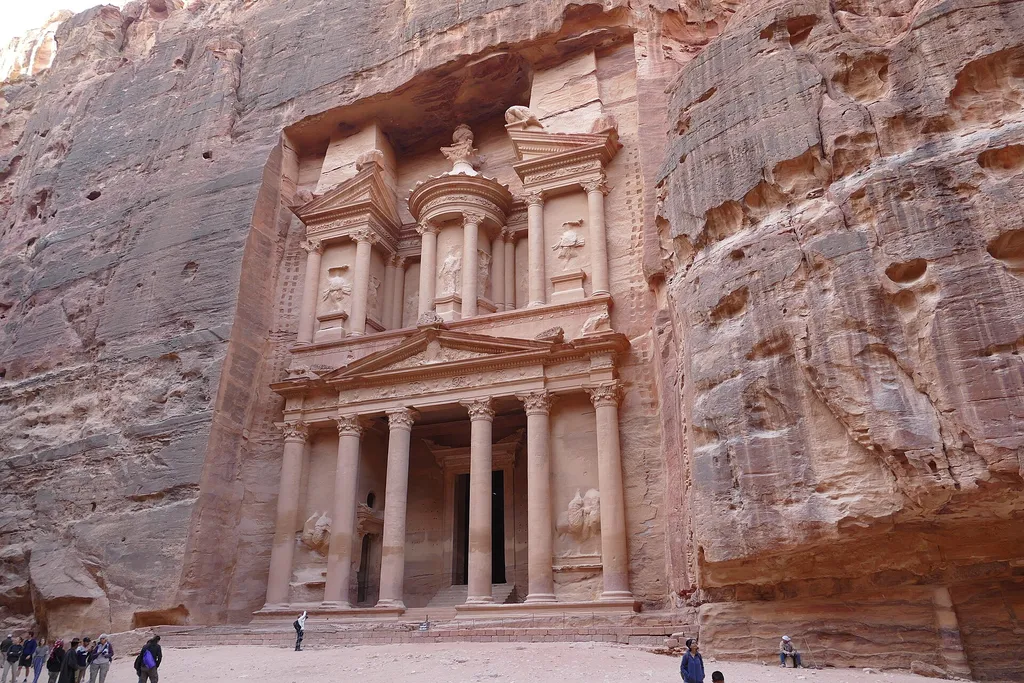
The famous facade — nearly forty metres of carved columns, pediments and figures — is not a treasury and never held gold. Al-Khazneh is generally understood to be a royal tomb, most often linked to the Nabataean king Aretas IV in the first century BC; the “treasure” is a Bedouin legend attached to the urn at its top, whose surface still carries bullet marks from attempts to crack it open.
You cannot enter — the interior is a plain, mostly closed chamber system, and the wonder is the facade itself. Two practical notes. First, the facade faces east: early in the day it sits in shadow, and the full sunlit postcard light arrives later in the morning, so photographers should plan a second pass on the way back. Second, the small trails climbing to viewpoints above the Treasury are steep, unofficial-feeling and usually involve a local guide appearing at exactly the right moment; the Treasury from above is a fine view, but agree any price before you climb, not at the top.
The Street of Facades and the Royal Tombs
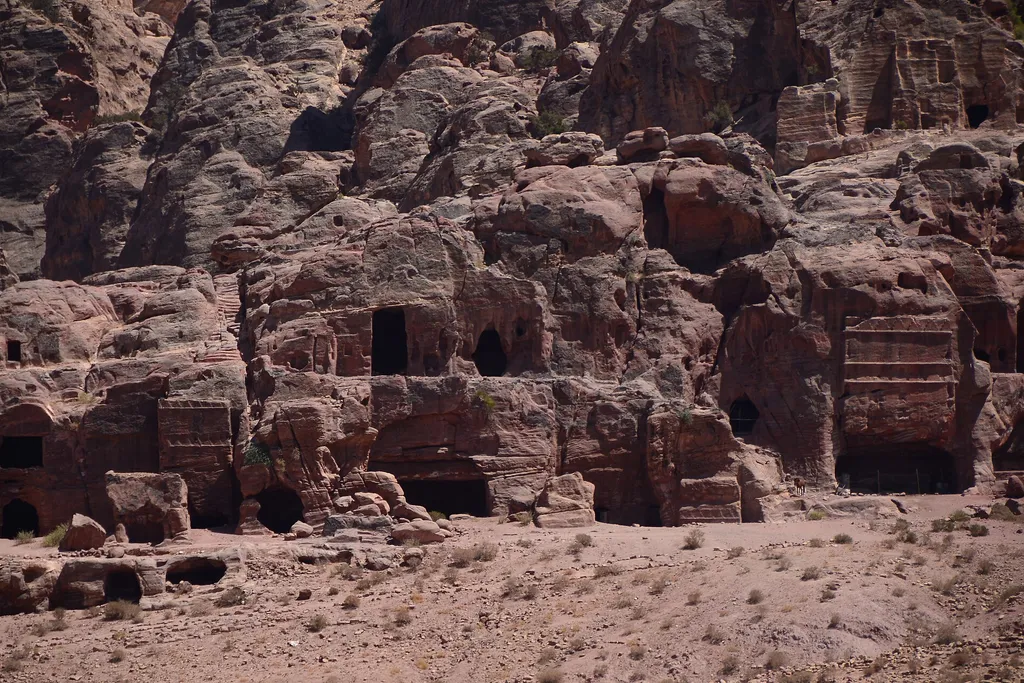
Beyond the Treasury the gorge opens into the Outer Siq, lined on both sides with tomb facades — the Street of Facades, a whole neighbourhood of the dead passed in minutes by most visitors hurrying onwards. Slow down here on at least one pass.
Above the path on the right, cut into the cliff of Jebel al-Khubtha, stand the Royal Tombs: the Urn Tomb, vast enough to have served later as a Byzantine church; the Silk Tomb, its stone swirled in bands of colour that need no carving at all; the Corinthian Tomb, like the Treasury reworked by weather; and the long Palace Tomb, built out from the cliff as much as into it. A stepped path climbs to them, and the Urn Tomb’s terrace gives you the classic elevated view back over the theatre. If you have a second day, the trail continuing around al-Khubtha to a Treasury viewpoint from above starts in this area — one of the great half-day walks in the park.
The Theatre and the Colonnaded Street
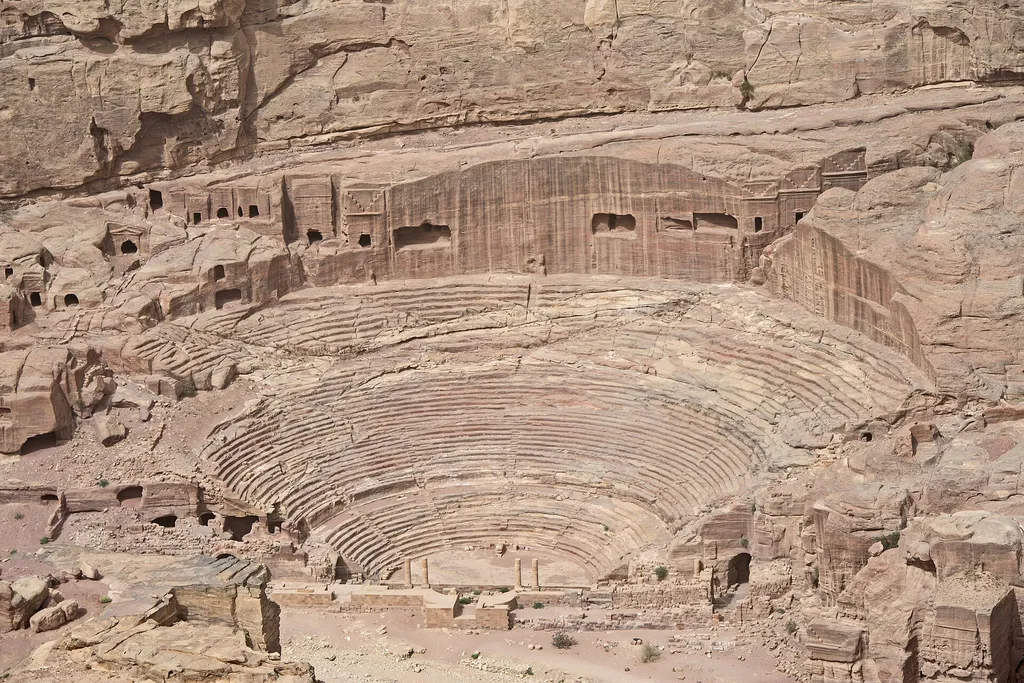
The path bends and the basin opens: suddenly you are standing in a city centre. The Theatre, first carved by the Nabataeans and later enlarged in the Roman period to hold several thousand spectators, is cut into the rock at the foot of the tomb cliffs — its builders sliced straight through earlier facades to make room, which tells you something about both civilisations.
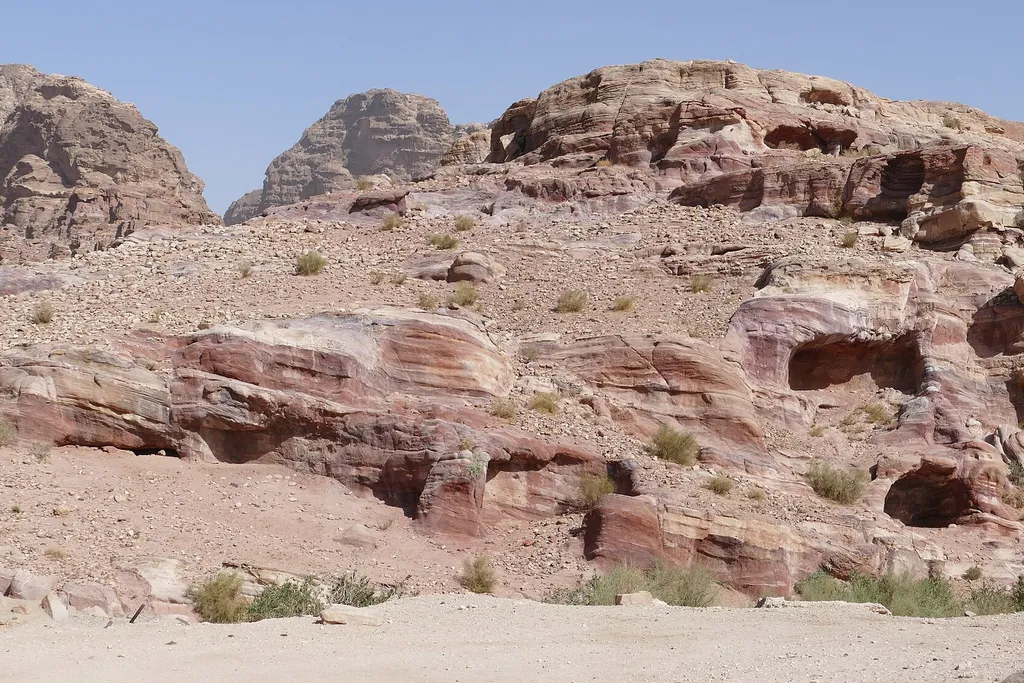
Beyond it runs the Colonnaded Street, Roman Petra’s main avenue: paving, column stumps, the remains of a nymphaeum fountain, and on either side the two great free-standing complexes — the Great Temple on one side and the Temenos Gate and Qasr al-Bint, the city’s principal temple, on the other. Almost everything famous at Petra is carved; Qasr al-Bint is built, and it has stood for two thousand years. This basin is also where the day’s practicalities live: the Basin restaurant area, drinks stalls and the last easy shade before the Monastery climb. Eat, refill your water, and decide honestly whether your legs are up for what comes next.
The Monastery (Ad Deir): the climb that halves the crowds
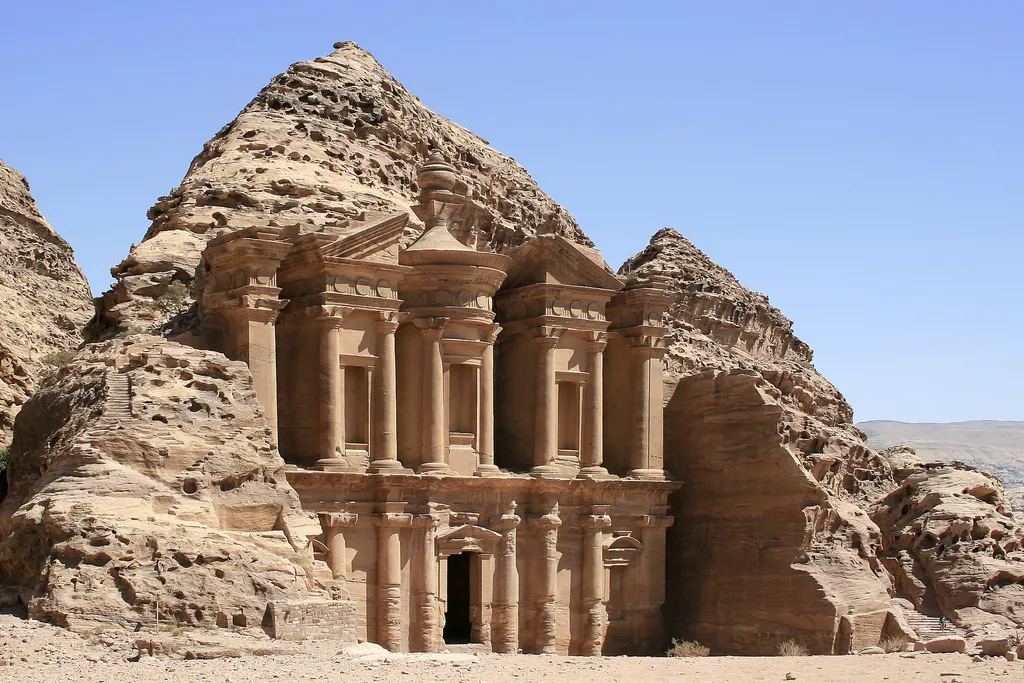
From the Basin, a rough stairway of around 850 worn rock steps (you will also see 800 quoted) climbs through a side valley to Ad Deir, the Monastery. Allow forty minutes to an hour up, in shade that comes and goes; small stalls line the route, and donkeys work the steps — step aside for them, and think carefully before riding one, as their treatment on this trail is a long-running local welfare concern.
The Monastery repays every step. Its facade is larger than the Treasury’s — broader, simpler, and somehow more imposing for it — and it stands on an open plateau rather than in a plaza, so the crowds thin to almost nothing. (“Monastery” is another misnomer: it was likely a temple or royal memorial hall, later used by Christians, hence the crosses carved inside.) A few minutes’ walk beyond it, signed viewpoints open over the Wadi Araba rift and the mountains towards Jebel Haroun. Sunset from up here is the finest hour in Petra — but only if you have the light, the water and the legs for the long walk back, or a plan that doesn’t require one. Which brings us to the back door.
The back door: Little Petra to the Monastery
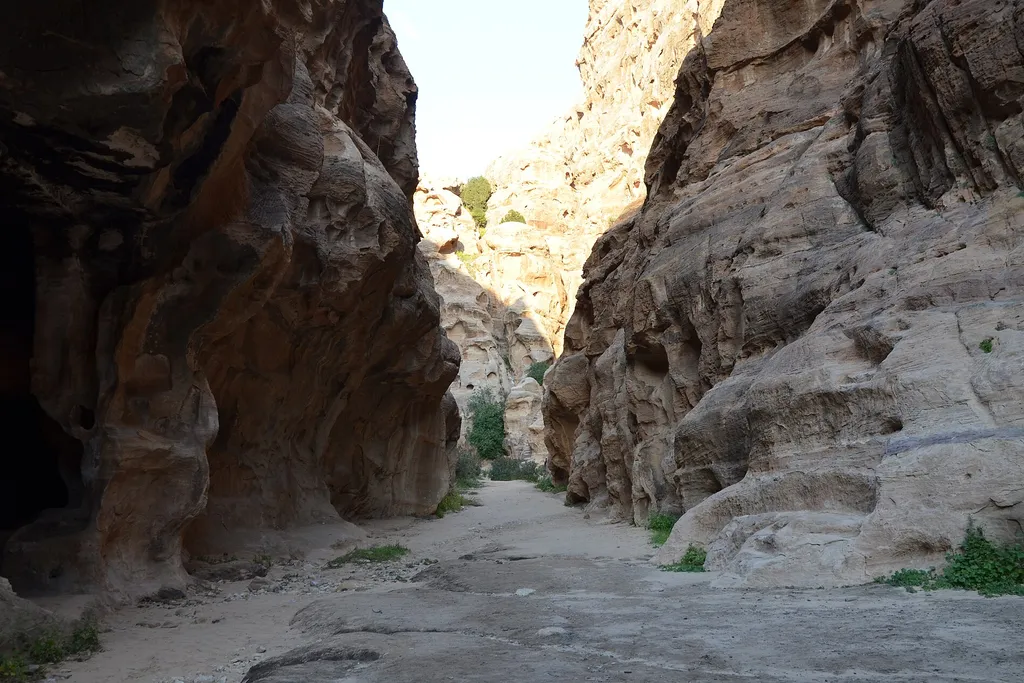
There is a second way in. Little Petra — Siq al-Barid, a miniature gorge of facades, cisterns and a rare painted dining room a short drive north of the Visitor Centre — was likely a suburb and caravan station of the main city. From its car park area, local 4x4s and shuttles run visitors a few kilometres to a trailhead, from which a marked mountain path, roughly an hour and a half to two hours of walking, contours around to arrive behind the Monastery.
Used well, this rearranges the whole day. Instead of walking the main trail out-and-back and finishing with the climb, you start at the Monastery in the morning quiet, descend the 850 steps (downhill is its own punishment, but a lesser one), and walk the city in reverse — Basin, Colonnaded Street, Theatre, Royal Tombs, Treasury, Siq — exiting at the Visitor Centre. One direction, no backtracking, and the Treasury reveal still works, just at the end of the day instead of the start.
The caveats matter, so read them before you build a day on this:
- You still need a valid ticket for that day. Buy it at the Visitor Centre first, or hold a Jordan Pass covering that day; tickets are checked, including at the Monastery end of the trail. Arriving at a checkpoint with no ticket is not a shortcut, it’s a long walk back.
- The shuttle is a local arrangement, not a park service. Agree the price and the pickup point before you set off, carry cash, and get the driver’s phone number.
- The trail is a mountain path. Mostly clear and waymarked, but exposed, with drop-offs in places; it is not the choice in high wind, extreme heat or after heavy rain.
- Little Petra itself deserves its half hour — go through its little siq before or after the trail rather than treating it as a car park.
How many days do you actually need?
One day is the version in most itineraries, and it works — barely, and only with discipline. Through the gate at opening, Siq and Treasury before the crowds, Royal Tombs from below, theatre and colonnaded street at a walk, lunch at the Basin, Monastery by mid-afternoon, and the long walk back out. You will cover the main trail and little else, walk something like 15–18 kilometres, and feel the last hour of it. If one day is genuinely all you have, take it — but start at opening time, not after a hotel breakfast.
Two days is the honest recommendation, and the shape of the second day is what makes it: day one on the main trail with the Monastery, day two slower — the Royal Tombs climbed properly, the al-Khubtha viewpoint above the Treasury, the back-door trail, Little Petra, or the High Place of Sacrifice, a steep climb to a Nabataean altar with the whole city laid out below. Two days converts Petra from a checklist into a place.
Three days is for walkers and the genuinely hooked: add the longer trails — to Jebel Haroun’s summit shrine, or the full back-country routes — and repeat the Treasury at different lights. Almost nobody regrets the third day; they regret the flight home booked too tight against it.
Note how the tickets push you the same way. Multi-day gate tickets cost only slightly more than a single day (see below), and the Jordan Pass tiers are built on exactly this logic — its Explorer tier, the middle one, includes two consecutive days at Petra for only a few dinars more than the one-day tier. The pricing, for once, is telling you the truth about the place.
Tickets, without the fiction
Petra’s ticket pricing has a shape, and the shape matters more than any single number, because the numbers change. Here is the shape, which has been stable for years:
- Tickets are sold by days: one, two or three. The second and third days cost only a little more than the first — the multi-day ticket is deliberately priced to tempt you into staying, and you should let it.
- Where you sleep changes what you pay. The standard rates are for visitors staying at least a night in Jordan. Visitors who enter Petra on a day trip without staying overnight in the country pay a much higher flat rate — reported at roughly double the one-day ticket. This single rule is responsible for most “Petra is a rip-off” stories: they are usually written by people who crossed the border for the day.
- Residents pay far less, and children under 12 are widely reported to enter free in the daytime.
- Widely reported current figures (October 2026 guides, consistent across several independent sources) put the overnight-visitor tickets at around 50 JOD for one day, 55 for two and 60 for three, with the no-overnight day-visitor rate around 90 JOD. Treat those as reported figures to confirm, not as a quote from this page: the official channels — the Visitor Centre and visitpetra.jo — carry the current table, and it is the table in force on the day you buy that applies.
Or skip the gate maths entirely. If Petra sits inside a wider Jordan trip, the Jordan Pass almost certainly covers it better: the pass bundles entry to Petra and over 40 other sites with your tourist visa cost, in three tiers that differ only in Petra days — reported at around 70, 75 and 80 JOD, to be confirmed on the official site, jordanpass.jo, which is the only place you should buy one. Buy the pass before you arrive in Jordan; buy gate tickets at the Visitor Centre on the day. And note what no ticket includes: Petra by Night is a separate event with its own ticket, below.
When to go: season and hour
Season. The consensus is real and worth following: March to May and September to November give you walking weather — warm days, cool evenings, light that flatters red rock. Summer is entirely possible but reorganises the day around heat: in at opening, long shade break at midday, Monastery early or late, and more water than you think. Winter is the quiet season and can be beautiful — cold mornings, empty tombs, occasional dramatic rain — with one serious caveat: heavy rain can bring flash floods down the wadis, and the Siq can close at short notice for safety. If your visit follows storms, check conditions at the Visitor Centre before planning around specific trails.
Hour. Whatever the month, the single best decision is to be at the gate at opening time. Reported opening is around 6 a.m. in summer and slightly later in winter (confirm current hours on visitpetra.jo — closing follows the season and the light). The first two hours buy you the Siq in silence, the Treasury before the plaza fills, and a head start on every day-trip group arriving from Amman and Aqaba. The Treasury’s facade takes direct sun later in the morning; the Monastery glows in the late afternoon. A two-day visit lets you have both, which is yet another argument for it.
Where to stay: Wadi Musa
Everyone sleeps in Wadi Musa, the town that wraps around the park entrance — the only real choice is how close to the gate. Hotels line the road down to the Visitor Centre, and the nearer you are, the later your alarm can be: for a gate-at-opening strategy, walking distance to the Visitor Centre is worth more than a star rating. The town runs uphill from the gate, and the walk back up after a full Petra day is a small climb in its own right — check where a hotel actually sits on that hill, not just its distance figure. Higher up in Wadi Musa you get more choice, local restaurants and lower prices; the village of Taybeh, a few kilometres south, is the quiet alternative with views over the park, at the cost of a short drive each way. Book ahead for spring and autumn, when the town fills; in winter you can be choosier. Sleep in Wadi Musa the night before your big day, not just after it — arriving from Amman the same morning costs you the best hours of the site.
Getting there
From Amman. About 235 km — roughly three hours by the Desert Highway, longer and far more scenic via the King’s Highway, which strings together Madaba, Karak and the canyon country and turns the transfer into a touring day. A public JETT bus links Amman with Petra for budget travellers (check the current timetable before relying on it), and private drivers and shared tours fill the rest of the market. Day trips from Amman exist and are everywhere; understand what one is — three hours each way wrapped around the hottest, busiest middle of the site — before you book it instead of a night in Wadi Musa.
From Aqaba. Around two hours north by road. Aqaba’s airport and the border crossings there make Petra the natural first or last stop of a southern Jordan loop: land, sleep in Wadi Musa, walk Petra, drive on.
From Wadi Rum. About an hour and a half to two hours. Petra and Wadi Rum are the twin anchors of almost every Jordan itinerary and pair in either order; the standard pattern is Petra’s walking days first, then a night under Rum’s sky, or the reverse if your flight times prefer it. Taxis and drivers cover the route daily — agree the fare before you set off.
Petra by Night
On selected evenings the Siq is lined with candles and the Treasury plaza fills with them too, for Petra by Night — a walk down the dark gorge to music and storytelling in front of the facade. The event was relaunched in 2025 with projection effects added to the candles. The official event page currently lists it running Sunday to Thursday evenings, starting 20:30, with its own ticket (children under ten free, per the same page) — and, critically, it is not included in your day ticket or in the Jordan Pass. Buy it separately at the Visitor Centre, and confirm the current nights and price on visitpetra.jo before promising yourself the evening, because the schedule has changed more than once in recent years.
Set expectations honestly and it is a good evening: you see only the Siq and the Treasury, in the dark, in company. It is an atmosphere, not a second visit. It works best as the end of a day when you have already seen the Treasury properly — ideally the night before a second day, walking in by candlelight to a facade you will meet again at dawn.
Mistakes to avoid
Arriving at ten. The day-trip coaches, the heat and the full Siq all arrive together mid-morning. Every version of a good Petra day starts at or near opening time.
Planning to “do” Petra in three hours. You can reach the Treasury and back in three hours. You will have visited a facade, not a city — and the Monastery, the Royal Tombs and the city centre will be things you walked past.
Buying the one-day everything. The one-day ticket when you have two days, the one-day pass tier to save a few dinars, the day trip without an overnight stay that quietly doubles your entry price — Petra’s pricing punishes rushing at every level. Match the ticket to the days you actually have, and give yourself the days.
Turning up at the back door without a ticket. The Little Petra trail is not a free entrance. Valid ticket for the day, bought beforehand or a pass — checks happen at the Monastery.
Underestimating the walk out. Everything you walk in, you walk back (back door excepted) — uphill, at the end of the day, often in the heat. Keep water, light and energy for it. The last drinks stall is a long way from the gate when you are tired.
Skipping the museum and the town. The Petra Museum beside the Visitor Centre makes sense of what you have just walked through, and Wadi Musa’s ordinary restaurants, a street back from the gate road, feed you better than the places banking on your exhaustion.
Frequently Asked Questions
Can you see Petra in one day?
The main trail, yes — Treasury, Royal Tombs, theatre, colonnaded street and the Monastery fit into one long day if you start at opening time and keep moving. What one day cannot hold is any of the side trails, the tombs climbed properly, or a second look at anything. Two days is the comfortable answer; the ticket pricing is designed to nudge you there.
Is the back-door trail difficult?
It is a mountain path of roughly one and a half to two hours — uneven, exposed in places, but not technical and not a climb in the way the Monastery steps are. You need reasonable fitness, proper shoes and a head for mild exposure. It is not suitable in high wind, extreme heat or after heavy rain, and you must already hold a valid ticket for the day.
How do I avoid the crowds at the Treasury?
Be there twice: once in the first hour, when the plaza is nearly empty and the facade is in cool shadow, and once on your way back out in the late morning, when the sun reaches it. The mid-morning crush in between belongs to the day trips. The view from the Royal Tombs side, and the Monastery at any hour, are the crowd-free counterparts.
Is Petra by Night worth it?
As an addition, yes; as a substitute, no. It shows you one gorge and one facade, by candlelight, and it costs a separate ticket that no pass covers. If you have two nights in Wadi Musa, it makes a fine first evening. If you have one night and limited energy, spend both on early starts instead.
Do I need a guide?
No — the main trail is unmissable and this guide plus the Visitor Centre map will carry you. A licensed guide earns their fee on the history, which the site’s minimal signage will not give you, and on the side trails, where routes are easy to lose. Hire through the Visitor Centre, where guides are licensed and rates are posted, and agree exactly what is included before you start.
Is Petra safe to walk in the heat?
Petra is walked safely by thousands of people a week, and the heat is the main hazard: there is little shade beyond the Siq and the tombs, distances are long, and water inside the site is sold at captive prices. Carry more than you expect to drink, wear a hat, start early, and in summer give the Monastery climb the cool end of the day. In winter the equivalent hazard is the opposite one — flood closures after rain — so check at the gate.


One Comment