Seven days in Jordan sounds generous until you look at the map. The famous places run in a long north–south line — Roman Jerash above Amman, Petra and Wadi Rum far below it — and the week fails or succeeds on one decision: whether you treat that line as a route or as a list. Treated as a list, it becomes a zigzag of returns to Amman and motorway runs in the dark. Treated as a route, it is one of the most satisfying weeks in travel: start in the capital, walk a Roman city and float in the Dead Sea, then take the slow King’s Highway south through Madaba, Mount Nebo and Karak Castle, give Petra the two days it actually needs, sleep a night in Wadi Rum, and finish at the Red Sea in Aqaba — or turn for Amman and home, your call, made honestly on the last day.
The shape matters more than any single sight on it. No leg doubles back on itself until the very end, and even that return is a choice rather than a trap. The two heavy walking days sit in the middle, where your legs are warmed up and the trip still has energy. The desert night comes after Petra, not before, so the week’s loudest wonder is followed by its quietest. And the hardest transfer — the last day’s run back to Amman, if you choose it — is named as a transfer below rather than dressed up as sightseeing. What follows is the day-by-day version: what each day contains, where you sleep, how you move, and what has to be booked before you land.
At a Glance
| Day | Route | Sleep |
|---|---|---|
| Day 1 | Arrive Amman — Citadel, Roman Theatre, downtown | Amman |
| Day 2 | Jerash in the morning → Dead Sea float in the afternoon | Dead Sea shore (or Amman) |
| Day 3 | King’s Highway — Madaba → Mount Nebo → Wadi Mujib → Karak Castle → Petra | Wadi Musa (Petra) |
| Day 4 | Petra, day one — Siq, Treasury, Royal Tombs, the city centre, Monastery | Wadi Musa |
| Day 5 | Petra, day two — back door from Little Petra, viewpoints, slower trails | Wadi Musa |
| Day 6 | Wadi Musa → Wadi Rum — jeep tour, sunset, desert camp | Wadi Rum camp |
| Day 7 | Aqaba for the Red Sea — or the road back to Amman and home | Depart |
| Question | Short answer |
|---|---|
| The one rule | Move in one direction — south. Never sleep in Amman twice by accident |
| Hardest day | Day 3 — a full scenic driving day; Day 7 if you drive back to Amman |
| Petra | Two full days. One day is the mistake this route exists to fix |
| Transport | Hire car or private driver for the line south; buses work at the ends, not between the sights |
| The pass | The Jordan Pass’s middle tier matches this route’s two Petra days — reported prices, confirm on jordanpass.jo |
| Book first | Jordan Pass, Wadi Musa hotel, Wadi Rum camp, King’s Highway day transport |
| Visa | Mostly handled by the Jordan Pass waiver — check your nationality on jordanpass.jo and visitjordan.com |
Day 1 – Amman, the Slow Start
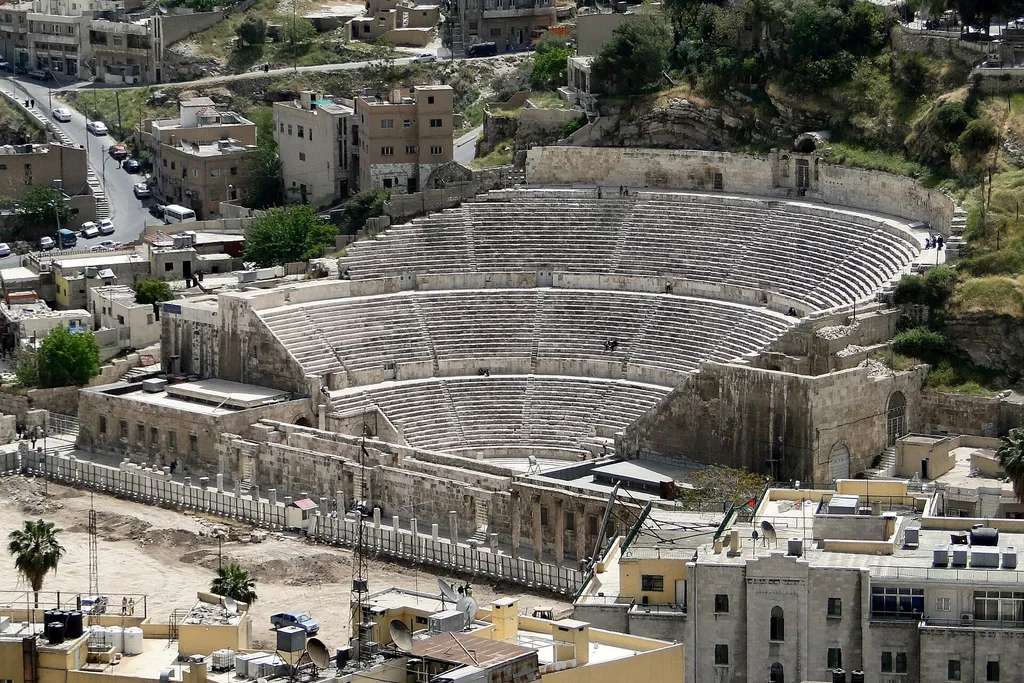
Land at Queen Alia International Airport, get to your hotel, and give the capital a gentle half-day rather than a heroic one. Amman is a hillside city of limestone houses stacked over Roman Philadelphia, and its two headline sights stand minutes apart downtown. The Citadel, on the hill above, layers a Roman Temple of Hercules, a Byzantine church and an Umayyad palace over one of the oldest continuously occupied spots in the city — and its real gift is the panorama: the whole white, hilly sprawl laid out at your feet, which orients you for the week better than any map.
Below it, cut into the same hillside, the Roman Theatre seats its roughly six thousand spectators in steep tiers and still hosts performances; the small folklore and popular-traditions collections in its wings are worth twenty minutes. Then stop sightseeing. Day 1’s second job is logistical and pleasurable in equal measure: eat well in the downtown streets or up on Rainbow Street, buy water and snacks for the road days ahead, confirm tomorrow’s start time with your driver or collect the hire car, and sleep early. Our round-up of the best places to visit in Jordan covers the capital’s wider list; on this route, Amman is the prologue, not a chapter.
One honest warning about the capital’s shape: Amman is built over steep hills and its walking distances are never what the map promises. Cluster the day — Citadel, theatre, one neighbourhood for the evening — and take taxis for everything between clusters. Travellers who try to walk Amman like a flat European capital arrive at Day 2 already tired, and Day 2 starts at a Roman city’s opening time.
Sleep: Amman — downtown or the Jabal Amman / Rainbow Street area keeps the Citadel, the theatre and the evening food within walking distance of each other.
Day 2 – Jerash in the Morning, the Dead Sea by Afternoon
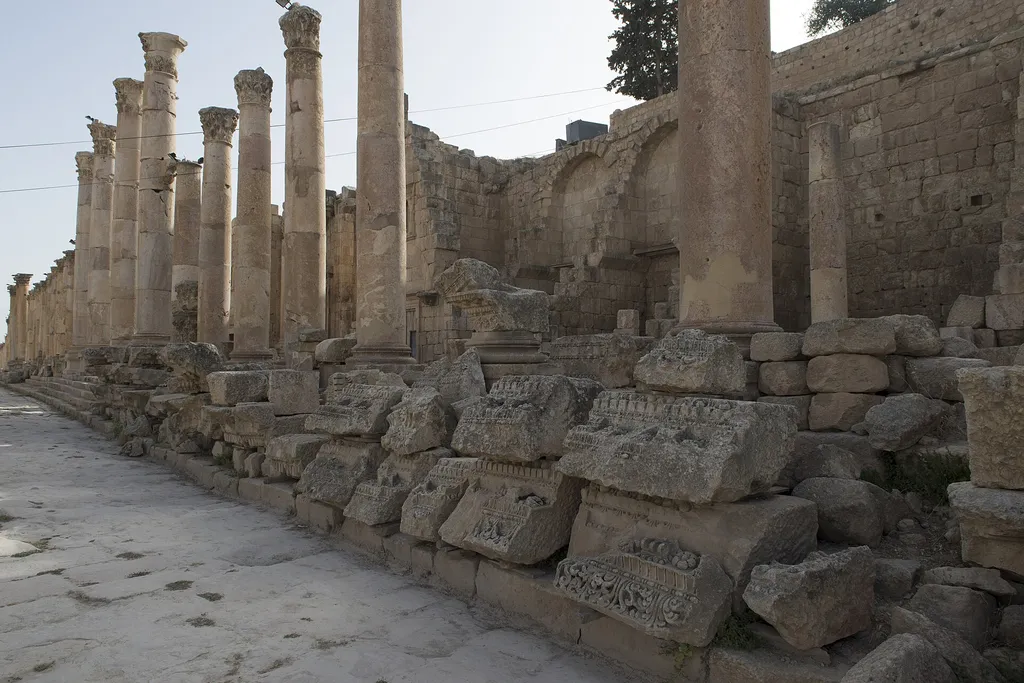
The week’s cleverest pairing looks wrong on the map: Jerash is north of Amman, the Dead Sea is south-west, and Day 2 visits both. It works because each half wants a different time of day. Jerash — Gerasa, a Decapolis city and one of the best-preserved Roman cities anywhere, currently on UNESCO’s Tentative List rather than the World Heritage List itself — is an exposed hillside of stone that punishes the afternoon. Go at opening: Hadrian’s Arch, the hippodrome, the Oval Plaza’s ring of columns, then the Cardo Maximus, the colonnaded main street whose paving still carries chariot ruts, up to the Temple of Artemis. Two to three hours in the cool of the morning is Jerash done properly.
Drive back through Amman at midday — eat in the car culture’s way, at a roadside stop — and descend west as the light softens to the shore of the Dead Sea, the lowest land on Earth, more than 400 metres below sea level. The float itself needs no instruction beyond the honest warnings: the water holds you whether you can swim or not, it stings any cut or freshly shaved skin, it will ruin your eyes’ afternoon if it splashes into them, and ten to fifteen minutes at a time is plenty. Most visitors use a resort beach or a managed public beach for the showers and the shade, because the salt has to come off before the drive anywhere. Stay for the sunset if you sleep on the shore — the light across to the far hills is the day’s second show.
The Dead Sea by Afternoon
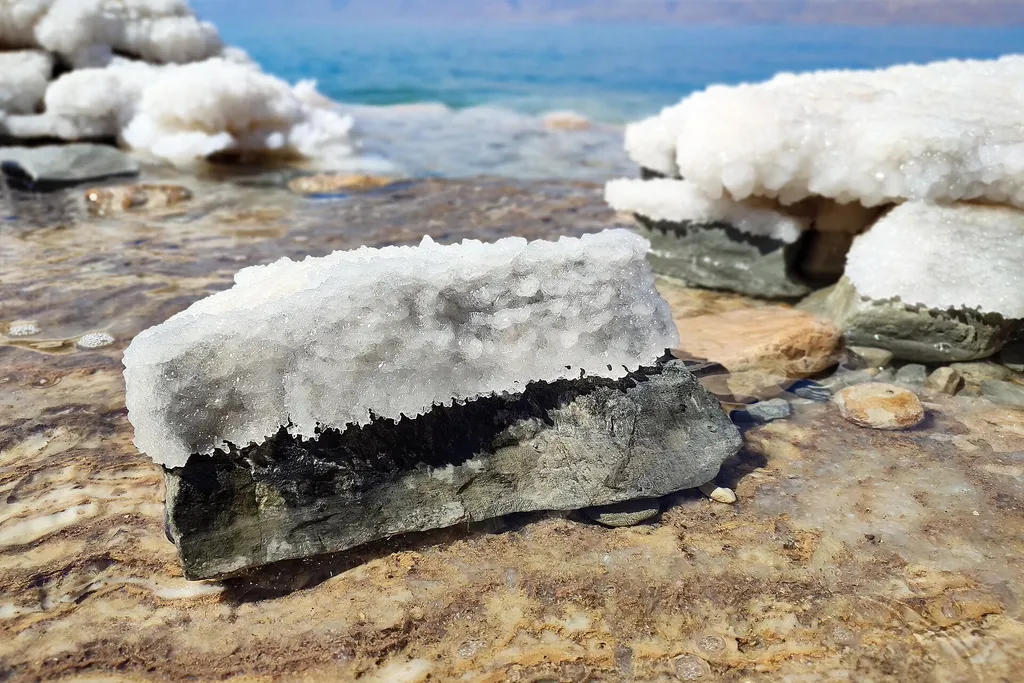
Sleeping on the Dead Sea shore tonight is the choice that makes Day 3 short at the front end: Madaba is just up the escarpment from the northern shore, so the King’s Highway day starts almost where you float. The shore’s resort strip is a line of hotels sharing one beach logic — choose on facilities, not on claims of exclusivity, because the water and the mud are the same for everyone. The alternative is to return to Amman for the night, which some travellers prefer for the restaurants and a cheaper bed; it costs you a dawn start tomorrow instead of a shoreline one.
Either way, do the float today, and do it in the order the shore rewards: into the water while the afternoon light is still strong, out for the black mud if you want it, shower the salt off properly, and then the shore’s stillness as the sun drops behind the far hills. The Dead Sea appears on weaker itineraries as a final-day afterthought bolted onto a departure, where it gets an hour and a queue; here it gets an afternoon, which is what it deserves.
Sleep: the Dead Sea shore (recommended, for Day 3’s start) or Amman.
Day 3 – The King’s Highway to Petra
Jordan has two roads south. The Desert Highway is a fast, flat motorway that exists to get trucks to Aqaba. The King’s Highway is one of the oldest trade routes in the world — the road of kings, caravans and crusaders — winding along the plateau through biblical towns and castle country, and it is the single best decision in this itinerary. It takes the whole day, and it earns the whole day: this is not the transfer to Petra with stops, it is a day of the trip that happens to end at Petra.
Leave after breakfast, and protect the day’s shape: two stops in the morning while you are fresh, the canyon in the middle, the castle after lunch, and the run south in the evening light. Do not let anyone sell you the motorway version with a Madaba photo stop slipped into it — that is a different, lesser day wearing this one’s clothes, and it is the version most Petra day-trippers are quietly given.
Madaba and Mount Nebo
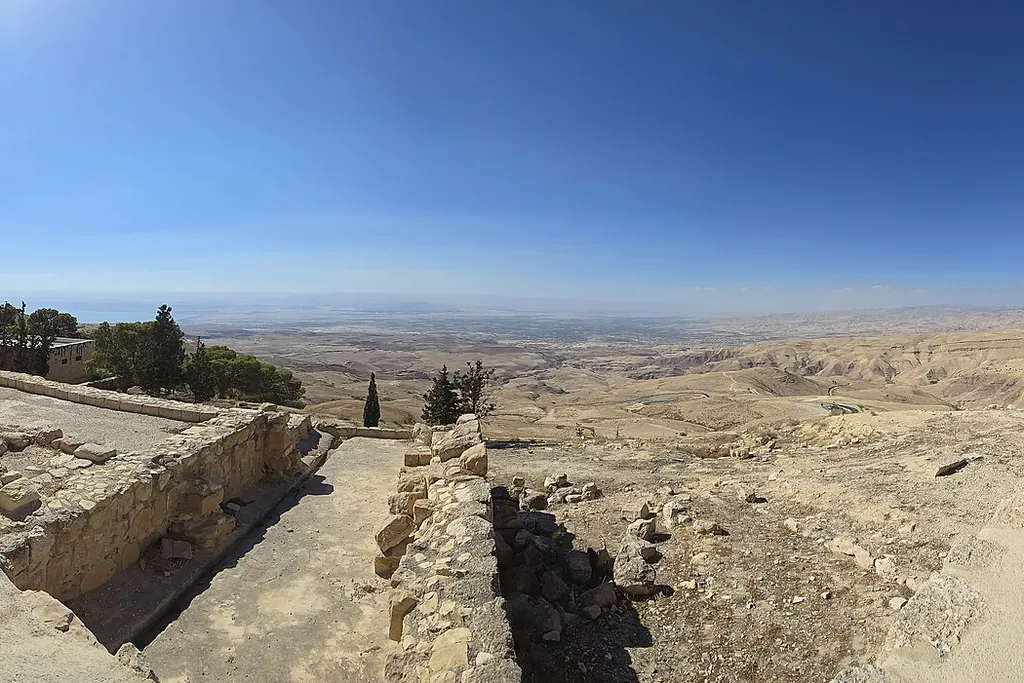
The first stops are a pair. Madaba, a market town famous for its Byzantine and Umayyad mosaics, holds the one that matters most: the Madaba Map, a sixth-century mosaic floor in St George’s Church that is the oldest surviving map of the Holy Land, made by craftsmen who had walked the land it shows. Give the church and the town’s other mosaic floors an unhurried hour.
Ten minutes away, Mount Nebo is where tradition holds that Moses stood and looked over the Promised Land he would not enter — and the view does the story justice on a clear morning: the Dead Sea below, the Jordan Valley, and Jericho and the hills beyond picked out in the haze. The memorial church on the summit shelters more fine mosaics. Come early, before the tour groups and the heat haze thicken; by late morning on a poor day the view can close down to a white glare, which is the honest risk of every famous viewpoint.
Karak and the Long View South
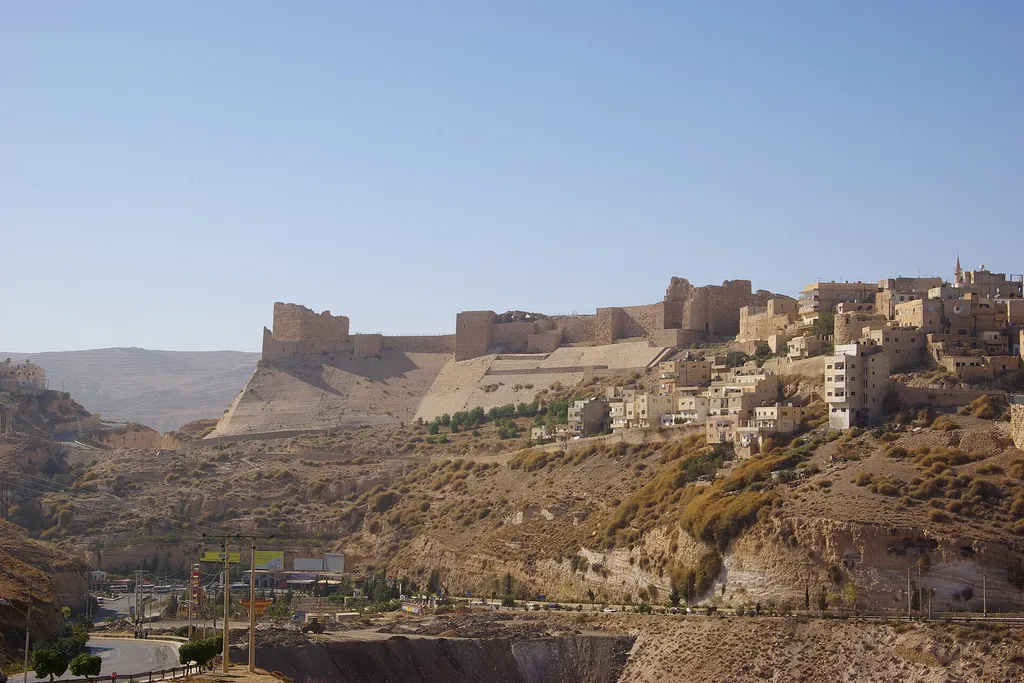
South of Nebo the road does its real work. It drops into Wadi Mujib — Jordan’s grand canyon — on a switchback descent with a dam and a reservoir at its floor, climbs the far wall, and runs on across the plateau to Karak. Kerak Castle is a Crusader stronghold of the twelfth century, built to command this road and the valley below, held by the notorious Reynald de Châtillon, and taken by Saladin’s forces after his death. It is a warren rather than a postcard: vaulted galleries, a chapel, stables and passages running under the courtyard, and walls that end in a sheer glacis above the town. An hour to ninety minutes is right; the castle rewards wandering and punishes rushing less than most, because its pleasure is the maze itself. Then the last leg south through the plateau towns to Wadi Musa, arriving by evening — fed, tired, and positioned at Petra’s gate for the morning. Eat dinner, lay out walking clothes, and be done: tomorrow is the biggest walking day of the week.
Sleep: Wadi Musa, the town at Petra’s gate — for the first of three nights. Walking distance to the Visitor Centre beats a star rating (see the Petra days for why).
Days 4-5 – Petra, Twice
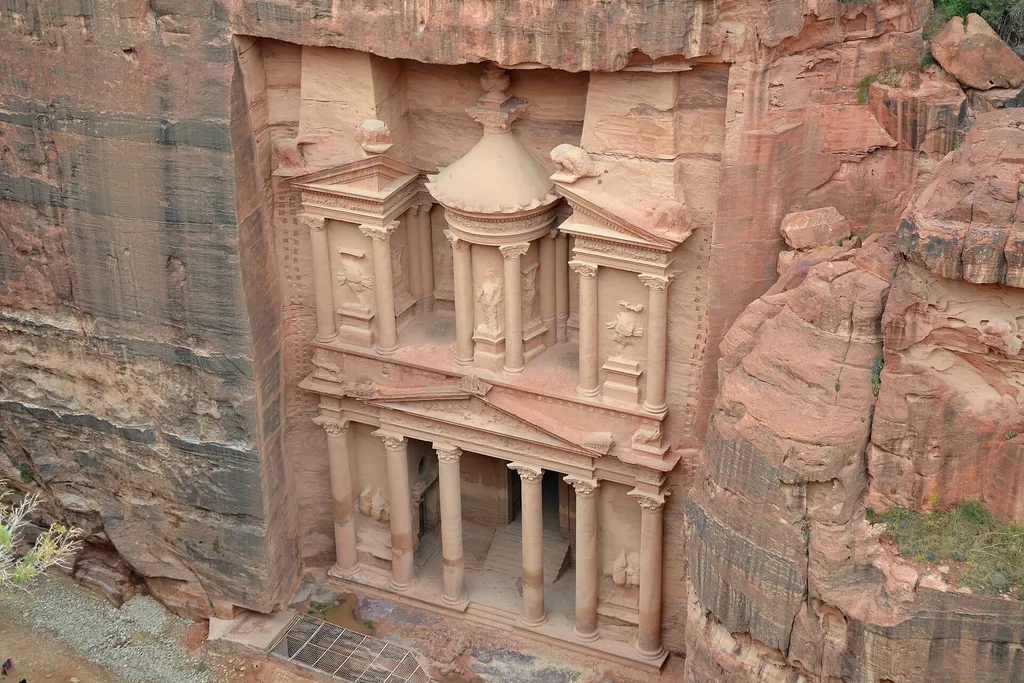
Here is the choice this whole itinerary is built around: Petra gets two full days, not one. The single-day version — the one most tours sell and most itineraries print — fits the Siq, the Treasury and a race to the Monastery into the hottest, busiest middle of the site, and leaves the Royal Tombs unclimbed, the viewpoints unvisited and the visitor permanently aware of the clock. Two days changes the character of the place. Day 4 is the classic line walked at a human pace; Day 5 is the Petra that day-trippers never see — quieter trails, higher views, a second entrance.
Our full Petra travel guide walks the site monument by monument; what follows is how the two days divide, and how to hold them together — because the second day is not a repeat with leftovers, it is a different walk through the same city, in the opposite direction and at the opposite tempo.
Day 4 – The Main Trail, in Order
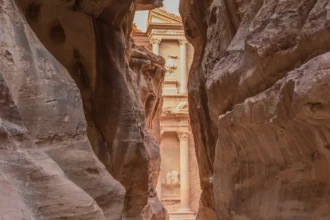
Be at the Visitor Centre at opening time — this is the morning the whole week has been arranged around. Walk Bab as-Siq to the Siq, the kilometre-plus gorge whose walls close to a few metres and then open, in slices, onto the Treasury. Take the famous facade twice today: once now, in the cool shadow of the first hour with the plaza nearly empty, and once on your way back in the late morning when the sun reaches it. Continue through the Street of Facades to the Royal Tombs — climb at least to the Urn Tomb’s terrace for the view over the theatre — then the Theatre itself and the Colonnaded Street into the basin: Great Temple, Qasr al-Bint, lunch and water at the Basin.
Then the climb of roughly 850 steps to the Monastery, Ad Deir, in the cooler late afternoon, when its facade takes the best light of the day and the crowds have thinned to almost nobody. Walk back out as the light drops. This is a long day on foot — treat water, shade and the walk out with respect, and keep nothing in reserve for the evening beyond dinner.
Day 5 – The Back Door and the High Places
Day 5 starts at Little Petra, the small sister gorge a short drive from Wadi Musa, and takes the back-door trail — a mountain path of roughly one and a half to two hours — around to arrive behind the Monastery in the morning quiet, seeing first what yesterday ended with, empty. Descend the steps and walk the city in reverse at sightseeing pace: this is the day for the things Day 4 walked past — the Royal Tombs climbed properly, the al-Khubtha trail to the Treasury viewpoint from above (the photograph that proves you gave Petra a second day), or the steep climb to the High Place of Sacrifice above the theatre. Two conditions are absolute: you need a valid ticket for today — your multi-day gate ticket or the Jordan Pass tier that covers two Petra days — because tickets are checked at the Monastery end of the trail; and the trail is a real mountain path, exposed in places, not to be attempted in high wind, extreme heat or after heavy rain. If Petra by Night runs on one of your Wadi Musa evenings — it is a separate ticket, not included in any pass — tonight after dinner is when it fits, walking the candlelit Siq to a facade you now know in daylight.
Sleep: Wadi Musa, nights two and three of three.
Day 6 – Wadi Rum, the Quiet After the Noise
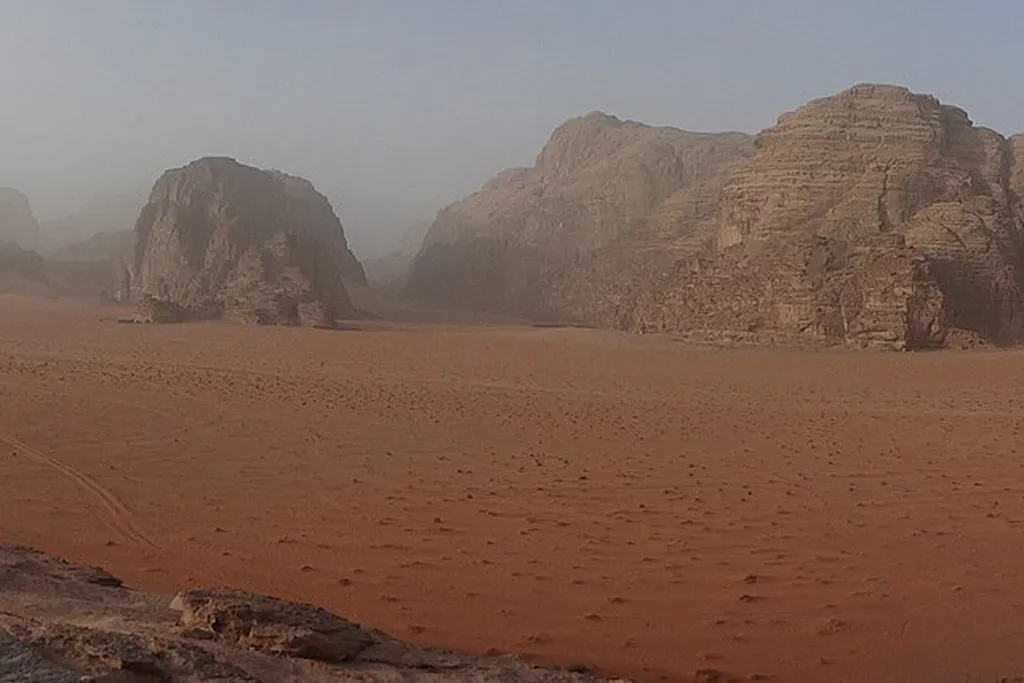
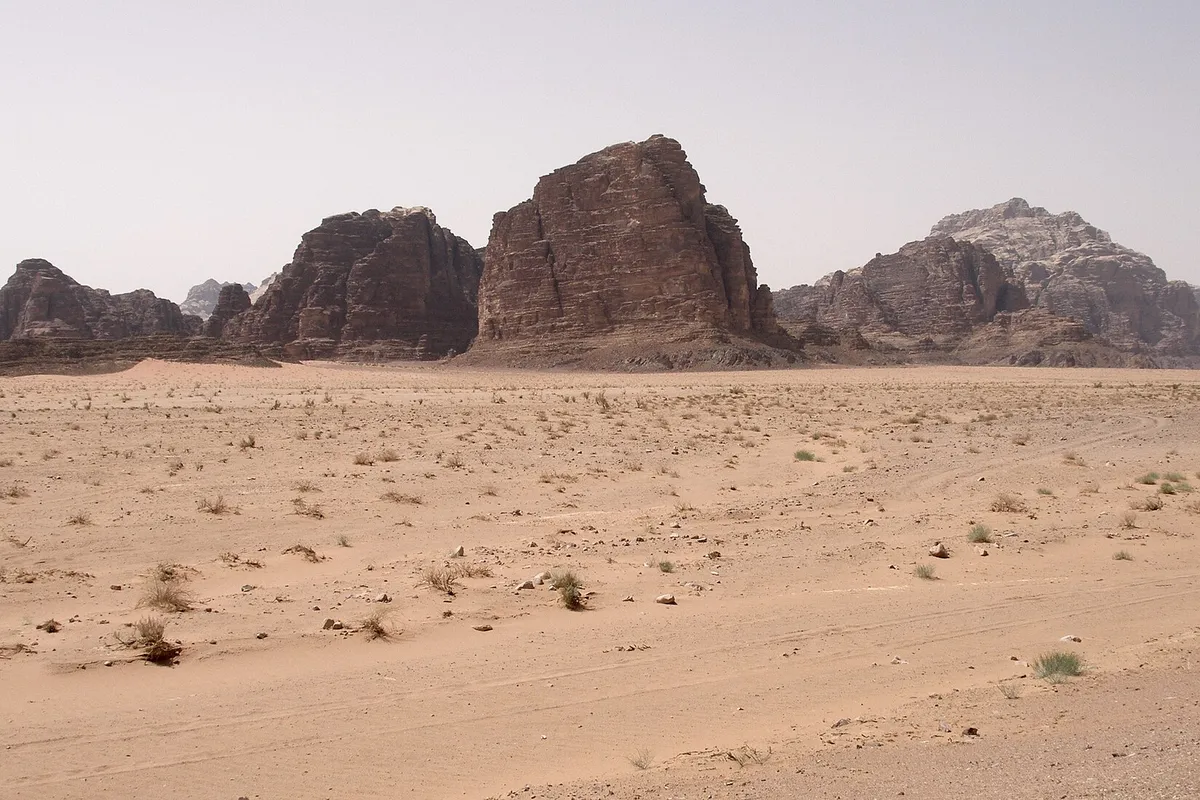
After two days inside Petra’s crowds and stone, Day 6 changes the element entirely. The drive from Wadi Musa to Wadi Rum village is the shortest leg of the week, and by late morning you are at the visitor centre of a protected desert wilderness — UNESCO-listed since 2011 — of red sand valleys running between vast sandstone massifs. Rum is experienced the way it has always been experienced: from the back of a Bedouin-driven jeep, on a tour booked through the visitor centre system or arranged with your camp. A half-day tour takes in the standard constellation — Lawrence’s Spring, the Khazali Canyon with its inscriptions, the red dune, the rock bridges — with tea at every stop and no hurry anywhere. A full day goes further and quieter. Choose by temperament, but choose the afternoon either way: the desert’s colours are a morning rumour and an evening fact.
The night is the point. The camps strung along the protected area’s edge range from simple Bedouin tents to en-suite domes, and every one of them sells the same three things no hotel in Jordan can: zarb, dinner cooked in a pit in the sand; silence of a completeness that feels physical after six days of towns; and a sky with no light pollution worth the name. Book a camp inside or at the edge of the protected area rather than a lookalike on the highway — “Wadi Rum camp” is a description some properties outside the reserve use generously — and confirm whether your jeep tour, dinner and breakfast are inside the price you agreed, in writing, before you arrive. Tomorrow starts with desert sunrise whether you plan it or not; the camps wake early, and so will you.
Sleep: a Bedouin camp in or beside the Wadi Rum protected area — the week’s one night that is an experience rather than a base.
Day 7 – Aqaba, or the Road Home
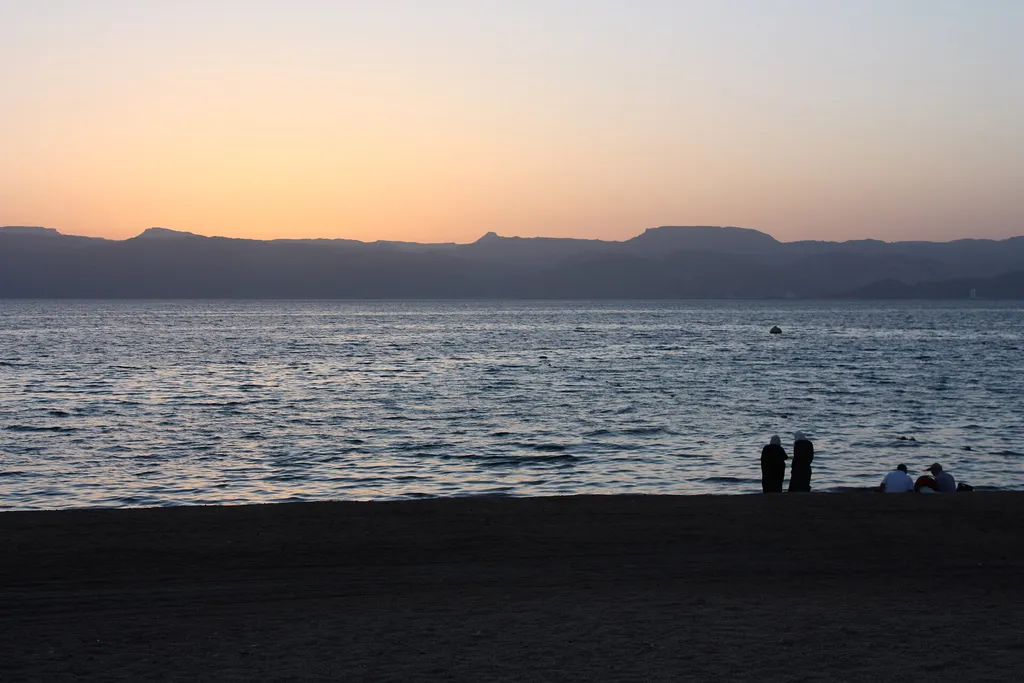
The last day forks, and the fork is decided by your flight, not by preference — so decide it when you book, not at breakfast. South of Wadi Rum, barely an hour away, is Aqaba: Jordan’s only coastline, a working port and resort town on the Gulf of Aqaba with the Red Sea’s coral reefs beginning at its southern beaches. If your trip home leaves from Aqaba’s King Hussein International Airport — or connects through Amman on the short domestic flight — then Day 7 is the week’s reward day: a slow morning out of the desert, a swim or a snorkel over the reef at the marine park beaches south of town, a long seafood lunch, and a gentle end to a week that has earned one. Aqaba is not a sight to be ticked; it is a decompression chamber between the desert and the departure lounge.
The other ending is the honest transfer. If your flight leaves from Queen Alia in Amman, Day 7 is a travel day and should be planned as one: the Desert Highway run north is the longest drive of the week, several hours of motorway with the trip effectively over when you leave Rum — so leave early, put the float of a Dead Sea stop out of your mind (it sits off this road and belongs to Day 2), and aim to be at the airport with the evening to spare rather than the traffic to fear. Neither ending is the wrong one. The wrong ending is the undecided one — a morning spent negotiating with drivers while both options decay. Pick the fork when the flights are booked, and the week closes as cleanly as it opened.
Sleep: none — departure day. If your home flight is a morning one, sleep the night before in Aqaba or Amman accordingly, not in the desert.
Transport, Leg by Leg
Arrival and departure. Almost everyone lands at Queen Alia International Airport south of Amman; the Aqaba ending uses King Hussein International Airport in Aqaba, or the short domestic flight between the two. Fix the out-bound airport first — it decides Day 7 and, with it, the shape of the whole week.
The line south is a road problem, and it has three solutions. A private driver for the driving days — Day 2, the King’s Highway day, the Rum hop — is the default for most visitors on this route: no navigation, no parking, local knowledge of which viewpoint is worth the stop, and a car that waits while you walk Jerash. A hire car gives the most freedom and the most work — Jordanian driving is assertive, the King’s Highway is a winding plateau road that deserves your full attention rather than your camera’s, and you are the navigator in towns with minimal signage; take it only if that sounds like a holiday. An organised small-group tour covers the same ground with the driving solved and the timing fixed — you gain company and lose the right to linger at Karak. What does not work is stitching this route together from public buses: Jordan’s buses serve towns, not itineraries. A public JETT bus does link Amman with Petra directly and with Aqaba, and it is a legitimate budget tool for getting to or from the ends of this route — check the current timetable on JETT’s official channels before relying on it — but no bus runs the King’s Highway day, and the Dead Sea and Jerash legs by bus would eat the week they were meant to save.
Inside the sights. Amman is walked and taxi’d. Jerash and Petra are entirely on foot — Petra brutally so. Wadi Rum belongs to the camp jeeps. Agree every fare, every pickup point and every “included” before the wheels move; the week’s transport arguments all happen in the first five minutes or not at all.
Where You Sleep, Night by Night
- Night 1 — Amman. Downtown or Jabal Amman. Chosen for the Citadel, the theatre and dinner within walking distance, and a fast exit north in the morning.
- Night 2 — Dead Sea shore (or Amman). The shore puts Madaba at the top of a short morning climb and starts the King’s Highway day where it should start.
- Nights 3–5 — Wadi Musa. Three nights in one base beside Petra’s gate. Walking distance to the Visitor Centre is worth more than facilities: the gate-at-opening strategy is this itinerary’s engine.
- Night 6 — Wadi Rum camp. Inside or at the edge of the protected area, dinner and jeep tour confirmed in the booking.
- Night 7 — none. Departure from Aqaba or Amman; if the flight is an early one, the night before belongs in that city, not the desert.
What to Book Ahead
- The Jordan Pass — before you land. The pass bundles access to Petra and more than 40 other attractions with the cost of the tourist visa, in three tiers that differ mainly in how many consecutive days at Petra they include. Reported prices put the tiers at around 70, 75 and 80 JOD, with the middle tier — the one built around two days at Petra — matching this itinerary exactly; treat those figures as reported, not quoted, and confirm the current prices, the covered sites and the visa-waiver conditions on the only official source, jordanpass.jo. Buy it before you arrive in Jordan: the visa-fee waiver depends on buying in advance and on staying a minimum number of nights, and published sources disagree on whether that minimum is two nights or three — the official site’s own FAQ is the deciding source, so read it before you count on the waiver. Beware look-alike resellers; if the address is not jordanpass.jo, it is not the pass.
- The Wadi Musa hotel. Three nights beside the gate, in spring and autumn booked well ahead — the town fills exactly when the weather is best.
- The Wadi Rum camp. Book the camp, and inside the same conversation confirm the jeep tour’s length, whether dinner and breakfast are included, and where exactly the camp sits relative to the protected area.
- The King’s Highway day. Whether it is a driver, a hire car or a tour seat, Day 3 is the leg that cannot be improvised on the morning — it is a full day with four stops and a mountain canyon in the middle.
- Petra’s second day. Nothing to book — everything to decide. Know before you arrive whether your pass tier or gate ticket covers two days; the reported gate pattern (around 50 JOD for one day, only slightly more for two and three — confirm the current table at the Visitor Centre or on visitpetra.jo) is designed to tempt you into staying, and on this route you should already have let it.
Variations
Run it in reverse. Fly into Aqaba, start with Rum and Petra while your legs are freshest, and come up the King’s Highway to finish with Jerash, the Dead Sea and a last night in Amman. It works — with two cautions. The King’s Highway is a better reveal going south, when Petra waits at the end of it, than coming north away from the wonder; and the Dead Sea float makes a better second day than a sixth, when sunburn and tiredness have accumulated. Choose the direction your flights price better; the route survives either way.
Add a day — spend it inside the route, not beside it. With eight days, the honest additions are: a second night in Wadi Rum, for a full-day jeep tour into the reserve’s quieter south instead of the standard constellation; a night in Madaba after the float, slowing Day 3’s front end into a mosaic town evening; or a third Petra day for the long trails — Jebel Haroun, the full back country. What not to add is a dash east to the Desert Castles or north to Umm Qais as a same-day bolt-on from Amman; both are good trips that belong to a different week’s shape.
Short on days? Do not compress this route — amputate it cleanly. Five days does Amman, Jerash, the King’s Highway and two days of Petra, dropping Rum and Aqaba, and is a genuinely good trip. Four days is Amman, the highway and Petra alone. What fails is the full line at double speed: Petra cut to a day and Rum to a sunset produces the worst version of both, and it is the version most people who “did Jordan in a week” on a package actually got.
Common Mistakes
Giving Petra one day. The defining error of the Jordan week, repeated by most packages. The Monastery climb at midday in a crowd, the Royal Tombs as a backdrop, the back door untried — if your itinerary has one Petra day, it is not this itinerary, whatever its title says.
Driving the Desert Highway to Petra. It saves hours and loses the day. Madaba, Nebo, Wadi Mujib and Karak are not stops on the way to the trip; on this route they are the trip, and the motorway version arrives at Petra having seen a service station.
Sleeping in Amman every night. Jordan’s sights are sold as day trips from the capital because hotels like it that way. It converts a one-way route into three return journeys and puts you on the road at every dawn. Sleep where the day ends.
Bolting the Dead Sea onto departure day. The float needs an afternoon, a shower and no clock. On Day 2 it is a pleasure; on Day 7, between a checkout and a check-in, it is an errand — and geographically it does not even sit on the Amman airport road from the south.
Treating Wadi Rum as a photo stop between Petra and Aqaba. An hour at the visitor centre and a sunset photograph is not the desert. Rum’s value is the night — the food, the silence, the sky — and a route that does not sleep there has not been there.
Buying the Jordan Pass at the airport, or not at all. Bought late, the visa waiver may not apply; skipped entirely, two days of Petra plus Jerash and Karak on single tickets usually costs more than the middle tier. Do the small maths before you land, on the official site.
Frequently Asked Questions
Is 7 days enough for Jordan, or is it rushed?
It is full, and it is enough — for this line. One week covers the country’s classic north-to-south route properly: a Roman city, the Dead Sea, the King’s Highway, two days in Petra and a desert night, with no day asked to hold two wonders. What seven days is not enough for is this route plus the Desert Castles, plus Umm Qais, plus a second beach day in Aqaba. The week feels rushed exactly when travellers or tour companies keep adding to it; the line itself is honestly sized.
If your week has a fixed shape — flights in and out of Amman on set days — protect Days 4 and 5 first and let everything else flex around them. Petra’s two days are the load-bearing wall of the itinerary; Amman’s sightseeing and even Jerash can shrink by an hour without the trip noticing, but a Petra day cannot.
Do I need a car, or can I do this by bus and taxi?
You need wheels with a plan, but not necessarily your own. A private driver for the driving days is the most common solution and the one this itinerary is written around; a hire car suits confident drivers who want control of the stops. Buses alone cannot build this week — there is no bus along the King’s Highway sights, and Jerash and the Dead Sea by public transport would consume the days they were meant to fill. Use the JETT bus, if at all, for the plain transfers at the ends of the trip, Amman to Petra or Aqaba, and check its current timetable first.
Taxis fill gaps inside Amman and Wadi Musa happily. What they do not do is wait at Kerak Castle while you explore, or appear at the Wadi Rum visitor centre on demand — the intercity legs need to be arranged, not hailed.
Which Jordan Pass tier fits this itinerary?
The middle one, in the reported line-up — the tier that includes two consecutive days at Petra, because this route’s whole design is two Petra days. The tiers are generally reported at around 70, 75 and 80 JOD, differing mainly in Petra days, and the step from the one-day tier to the two-day tier is reported to be only a few dinars — the same deliberate pricing nudge as Petra’s own multi-day gate tickets. Treat every figure in this answer as reported rather than quoted: prices and inclusions change, and the official site, jordanpass.jo, is the only place to confirm them and the only place to buy.
Run the comparison the other way, too. If your version of the week drops the second Petra day — don’t — the one-day tier exists for it. And if your trip is shorter than the pass’s minimum-stay condition for the visa waiver, price the pass on its site entries alone before deciding; the official FAQ settles whether the waiver applies to you.
When is the best time of year for this route?
Spring (March to May) and autumn (September to November) are the consensus windows, and this route shows why: the King’s Highway and Petra are walking-and-driving days that summer heat reorganises around dawn starts and midday retreats, while winter brings the real risk of the season — heavy rain can send flash floods down the wadis, and both the Siq and desert roads can close at short notice. Any month can be made to work by someone who plans around its terms, but a first trip on this line is best spent in the kind months, when every day works at full length.
Within those windows, choose by crowd rather than by weather: the weeks around Easter and the October peak fill Wadi Musa and the Siq, while the shoulders of March and November give the same light with room to breathe. The desert night is coldest in winter and most comfortable in the same spring and autumn windows — one more argument arriving at the same answer.
Can I swap the Aqaba ending for a second Dead Sea day?
You can, but understand what you are trading. Aqaba’s day is the week’s only water-and-rest day at the end of the line; a second Dead Sea day means travelling back north on Day 6 or 7, re-entering the Amman orbit early, and giving the trip a resort ending instead of a Red Sea one. If floating is your priority and snorkelling is not, the swap is respectable — the Dead Sea shore has the hotels for it. Just do not try to hold both: Aqaba and the Dead Sea in the same final two days converts the week’s clean ending into its only zigzag.
Run it in this order: flights first (they decide Day 7), Jordan Pass second, Wadi Musa and the Rum camp third, the King’s Highway transport last. Then let the week run south and don’t look back. The full country picture — every place on this route in its own right — is in our round-up of the best places to visit in Jordan, and more routes and city guides live on the Traveling Advisior homepage.