The best places to visit in Jordan fit into a single, compact country — and that is Jordan’s great advantage. In a week to ten days you can walk through a city carved into rose-red rock, sleep in a desert under some of the clearest skies on earth, float in the lowest place on earth, walk Roman streets that are still standing, and finish with Red Sea diving. This is a full country guide, not just a Petra list: it covers Amman, Jerash, Madaba, Mount Nebo, Petra, Wadi Rum, the Dead Sea, and Aqaba, in an order that works on the ground, with honest advice on where to linger and where a short stop is enough.
Jordan also combines well with Egypt. If you want to compare the two countries’ ancient sites and desert landscapes, see our guides to places to visit in Egypt and tourist attractions in Egypt — Petra and the Pyramids of Giza are very different answers to the same human impulse to build something lasting in the desert.
At a Glance
| Place | Highlight | Suggested stay | Best for |
|---|---|---|---|
| Amman | Citadel, Roman Theatre, Rainbow Street | 1–2 days | Arrival, food, city life |
| Jerash | Oval Plaza, colonnaded streets, theatres | Half to 1 day | Roman history |
| Madaba and Mount Nebo | Mosaic map, panoramic views | Half day, en route south | Mosaics, pilgrimage, views |
| Petra | Siq, Treasury, Monastery, Royal Tombs | 2 days | The unmissable highlight |
| Wadi Rum | Jeep tour, Bedouin camp, stargazing | 1 night minimum | Desert, photography |
| Dead Sea | Floating, mineral mud, resort rest | 1 day | Relaxation, wellness |
| Aqaba | Red Sea diving and snorkelling | 2–3 days | Beaches, diving, finish |
The table above is designed to be read as a north-to-south journey rather than as a ranking of importance, because that is how Jordan works best on the ground. Most travellers arrive in Amman in the north, and the natural line then runs to Jerash, back through Amman and south along the King’s Highway through Madaba and Mount Nebo, on to Petra, then to Wadi Rum and Aqaba in the far south, with the Dead Sea fitting either on the way south or as a restful return leg towards Amman. That order matters for practical reasons as well as for storytelling: it builds from the familiar scale of a living capital city to the astonishing scale of Petra, then lets the desert and the sea slow the pace down again, instead of forcing long backtracking across the country. It also helps with planning time honestly. Amman and Jerash reward a slower look at city life and Roman streets, Madaba and Mount Nebo are best treated as a rich half-day rather than a rushed photo stop, and Petra genuinely needs two days, not a single hurried walk to the Treasury and back. Wadi Rum, similarly, is transformed by a night in the desert, while the Dead Sea and Aqaba are where a trip recovers its energy. If your flights force a different order, the same places still work, but try to protect the two non-negotiables in this guide: two days for Petra and one night in Wadi Rum, because cutting either one is the most common reason travellers say Jordan felt rushed. Families with children, older travellers, and anyone with limited mobility should also use the table to judge walking distances honestly, since Petra and Jerash involve uneven ground, while the Dead Sea and Aqaba offer easier, more restful days.
Jordan Pass information, visa rules, and site opening hours can change, so check the official site before visiting and confirm prices before booking any pass, ticket, tour, or camp. Competitor guides consistently recommend buying the Jordan Pass before departure if you plan to stay at least three nights, since it can cover the visa fee and entry to many sites including Petra, but the exact terms, included sites, and prices must be verified on the official site before you buy, as they are not fixed for every traveller or every season. The same caution applies to opening hours and to special events such as Petra by Night, which is offered on selected evenings only. A little advance checking also helps with the practical choices that shape the trip: whether to hire a car, book a private driver, or join day tours from Amman; which desert camp style suits you; and whether a Dead Sea resort with direct beach access is worth the cost compared with a public access point. Jordan is a compact and welcoming country to travel in, but its headline sites are spread across desert roads, hilltop cities, and a deep valley, so the difference between a smooth trip and a tiring one is usually planning, not luck. Use the sections below in order, note the suggested stays in the table, and keep the wider regional context in mind too — our Egypt Travel Guide is useful if you are weighing a combined Jordan and Egypt journey, since the two countries share Red Sea diving, desert landscapes, and ancient monuments, yet reward quite different pacing and transport choices. Booking accommodation early in Wadi Musa near Petra and in Aqaba during peak spring and autumn weeks is especially wise, since the best-located hotels and desert camps fill first and last-minute choices often add long transfers.
History and Built Dates: From Nabataeans to Modern Jordan
Jordan’s history is a layering of civilisations along ancient trade routes, and that layering is visible in the stones themselves if you know what to look for. Petra was built by the Nabataeans, Arab traders who mastered desert water engineering, in the 3rd to 2nd century BC — around 300 BCE — and made it the capital of a kingdom grown rich on incense and spice trade. Their achievement was not only architectural but hydraulic: in a dry landscape, they collected, stored, and channelled rainwater through cisterns, dams, and channels carved into rock, allowing a large city to thrive where a casual visitor today might see only desert. That water system explains why Petra could grow so large and so wealthy, and why its tombs and facades, cut directly into rose-red sandstone, still dominate the valley. Rome annexed Nabataea in 106 AD, and Roman cities such as Jerash flourished as part of the Decapolis, a group of cities linked by trade, roads, and Roman administration. A major earthquake in 363 AD damaged much of Petra, and later shifts in trade routes reduced its importance, but the city was never simply a single-period site. Its later history, including Byzantine churches and later occupation, adds further layers to a place that many visitors mistakenly treat as frozen in one moment. Understanding that Petra was a working capital, a trading hub, and a place of continuous use makes its quieter corners — the back trails, the smaller tombs, the water channels still visible in the Siq — far more interesting than a single photograph of the Treasury alone. The Nabataeans also traded frankincense, myrrh, and spices that arrived by caravan from southern Arabia, and their control of water and trade routes helps explain why Petra’s tombs are so grand: wealth was displayed in stone, not merely stored.
Later, Byzantine churches left superb mosaics, including the famous 6th-century map of the Holy Land in Madaba, and Umayyad rulers built desert castles in the 8th century, extending a story that runs from desert trade through empire to early Islamic rule. Modern Jordan traces its story to 1921, with full independence in 1946, and Amman itself carries that whole timeline in miniature: its Citadel shows Bronze Age, Roman, Byzantine, and Umayyad remains on a single hilltop, while the Roman Theatre below anchors the city to its classical past. Knowing this timeline helps on the ground in a very practical way: Petra is Nabataean, Jerash is Roman, Madaba is Byzantine, and Amman’s Citadel shows all of these layers in one hilltop, so each stop adds a different chapter rather than repeating the same one. It also helps travellers avoid a common misunderstanding, which is to treat Jordan as only Petra. Jerash shows what a Roman provincial city actually felt like to walk through, Madaba shows how Byzantine Christians mapped their sacred geography in stone, and the desert castles and later history show how the region kept changing after Rome. For more on Jordan’s history, see History and Culture — Visit Jordan and Jordan History and Culture, and check the official site before visiting for current museum and site information, since displays, access, and opening hours can change. Visitors who want to deepen this history should allow time for site museums and for Amman’s Citadel museum, where smaller objects, inscriptions, and models explain daily life, trade, and religion in ways that monumental facades alone cannot show. That continuity, from Nabataean trade to Roman administration and Byzantine faith, is what makes Jordan’s sites feel connected rather than isolated.
Amman: The Capital That Mixes Old and New
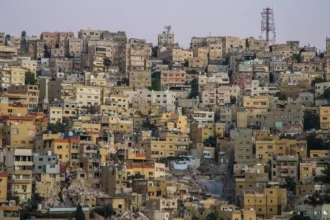
Most visitors arrive in Amman, and it deserves more than a transit night, because it is the place where Jordan’s layers and its present-day life meet most clearly. The Citadel, on the city’s highest hill, holds remains from the Bronze Age through Roman, Byzantine, and Umayyad periods, with views over downtown’s crowded hills, and it is best visited in the morning or late afternoon, when the light softens the stone and the heat eases. The site rewards unhurried looking: the Temple of Hercules columns, the Umayyad Palace remains, and the small museum together tell a story that spans thousands of years, while the panorama itself explains Amman’s geography — a city spread across hills, or jabals, with valleys and stairways between them. Below the Citadel, the Roman Theatre, built into the hillside, still hosts performances, and its scale is a useful corrective to any idea that Amman is only a modern capital. From there, downtown Amman is for walking: old shops, juice stands, falafel counters, and markets that have served local residents for generations, alongside newer cafés and galleries. That contrast, between an ancient hilltop and a busy working downtown, is the point of spending time here rather than passing straight through to Petra, and it gives first-time visitors a grounding in how Jordanians actually live, shop, and eat today. Downtown markets are also a good place to buy simple souvenirs, spices, and sweets directly from local shops, and taking time to bargain politely, to ask about products, and to sample before buying makes shopping part of the cultural experience. The Citadel’s museum, though small, helps visitors place these layers in order before walking down into the busier streets below.
Amman is also Jordan’s best food city for a first-timer, and its food is a practical reason to stay an extra night rather than treat the capital as an airport stop. Try mansaf, Jordan’s national dish of lamb, rice, and yoghurt sauce, alongside mezze, freshly baked bread, and kunafa for dessert, and use downtown and Rainbow Street as your two poles: downtown for traditional counters, markets, and street food, and Rainbow Street and the Jabal Amman area for cafés, galleries, bookshops, and restaurants with terraces. Rainbow Street, in particular, is a good evening walk, with a livelier, more relaxed atmosphere than the formal sightseeing circuit, and it is where many travellers first get a sense of Amman’s younger, creative side. Stay in or near downtown or Jabal Amman if you want to explore on foot; the city is hilly, so plan for climbs or short taxi rides between districts, wear comfortable shoes, and allow extra time for hills and traffic when you have a timed departure. If you are combining Jordan with Egypt, Amman also makes a useful point of comparison: where Cairo overwhelms with scale, Amman rewards walking, looking, and eating at a more manageable pace, and our places to visit in Egypt guide shows how a capital city can anchor a whole country itinerary in a different but complementary way. Travellers who stay two nights in Amman can also use the second day for Jerash without rushing, for a slower downtown walk, or for a visit to the Jordan Museum, which gives a national overview that makes later sites easier to understand. Evening is also a good time for Rainbow Street, when cafés fill, the air cools, and the city’s social life becomes most visible.
Jerash: One of the Best-Preserved Roman Cities Outside Italy
Jerash, about an hour north of Amman, is the surprise of many Jordan trips, because visitors arrive expecting a minor stop and find a whole Roman city instead. Hadrian’s Arch marks the entrance, the Oval Plaza opens onto the Cardo Maximus, a colonnaded main street, and the site includes two theatres, temples to Zeus and Artemis, a nymphaeum, and a hippodrome, all set within a landscape that still feels like a city plan rather than a scattering of ruins. Unlike many archaeological sites, Jerash is walkable as a city: you can follow streets, stand in a theatre, trace the ruts worn into paving stones by ancient carts, and imagine the place inhabited rather than just admire isolated columns. That walkability is what makes Jerash so valuable in a Jordan itinerary, because it gives travellers a physical sense of Roman urban life — where people gathered, worshipped, performed, bathed, and traded — that a museum display alone cannot provide. Settlement here goes back far earlier than Rome, with evidence of habitation dating to the Neolithic period, but the Roman layer is what dominates today, and it is remarkably complete. The Oval Plaza, with its unusual elliptical shape and surrounding columns, is the site’s signature view, and it works best in early morning light, before heat and tour groups build up and before the stone loses its warm colour in harsh midday sun. The hippodrome at Jerash, where chariot races were once held, is worth seeking out specifically, because it shows the entertainment side of Roman life and helps visitors imagine crowds, noise, and spectacle, not only temples and columns. The site’s scale rewards a map or guide, since its streets and buildings spread well beyond the first plaza and theatre.
Jerash works as a half-day trip from Amman or as a stop on the way north, and the choice depends on how much time you want to give the site rather than on transport alone. A half-day visit is enough to walk the main circuit — Hadrian’s Arch, Oval Plaza, Cardo Maximus, the theatres, the temples, and the nymphaeum — at a comfortable pace, with time to sit in a theatre and take in the scale of the place. A full day allows a slower visit, including the less-visited northern sections and the small museum, and it suits travellers who enjoy reading the site in detail rather than ticking off viewpoints. Arrive early to enjoy the site before the heat and tour groups build up, carry water, wear a hat and sturdy shoes, and check the official site before visiting for opening hours, since times can change by season. It is also worth thinking about Jerash in relation to Petra: where Petra astonishes through carving and landscape, Jerash impresses through urban completeness, and together they show two very different kinds of ancient city in one small country. Travellers who have visited Roman sites elsewhere will notice both the similarities, in street grids and public buildings, and the differences, in Jerash’s setting, its preservation, and the way its ruins sit within a modern town, and that comparison is part of the pleasure of the visit. Guided explanations, whether from a licensed guide or a good guidebook, add a great deal at Jerash, because the site’s streets, water systems, and public buildings are easier to appreciate when someone explains how they functioned together as a city. A guide or detailed map also helps visitors find the northern theatre and the less crowded corners that many day-trippers miss.
Madaba and Mount Nebo: Mosaics and a View Across History
South of Amman on the King’s Highway route, Madaba is known as the City of Mosaics, and its reputation rests on work that is both beautiful and historically important. Its most famous work is the 6th-century mosaic map of the Holy Land in St. George’s Church — the oldest surviving map of the region in this form, showing Jerusalem, the Dead Sea, and the surrounding lands in coloured stone. The map is not a modern-style cartographic document, and that is precisely why it rewards close looking: it combines geography with theology, labelling biblical places and landscapes in a way that reflects how Byzantine Christians understood the Holy Land. Visitors should take time to study it with the help of the church’s explanations, rather than glancing at it as a single artwork, because its details — the Dead Sea with its fish, the walled city of Jerusalem, the river and surrounding towns — reveal a worldview as much as a coastline. The town has other mosaic-filled churches and a small archaeological park, and together they show that Madaba was not a one-work town but a centre of mosaic production, with workshops and churches that used stone tesserae to decorate floors with geometric patterns, animals, and scenes. Madaba also makes a good lunch stop, with restaurants and cafés in the town centre, and its compact size means it can be explored on foot without the scale or crowds of Petra or Jerash. Madaba’s archaeological park and its mosaic workshops also deserve attention, because they show how mosaics were made, restored, and preserved, and they help visitors understand why so many floors survived in churches and houses across the region. Take your time here, and enjoy it properly.
A short drive away, Mount Nebo is traditionally the place where Moses viewed the Promised Land, and whether or not you come for religious reasons, the viewpoint across the Jordan Valley to the Dead Sea is one of the best panoramas in the country, especially in clear morning light. On a clear day, the view stretches across the valley towards the Dead Sea and beyond, and the sense of distance and history is immediate: this is a landscape that has been looked at, written about, and travelled through for thousands of years. The site includes a church with its own mosaics and a modern sculpture, and it is worth combining the viewpoint with a short look inside, rather than treating Mount Nebo as a viewpoint alone. Together, Madaba and Mount Nebo take half a day and fit naturally between Amman and Petra, forming a bridge between the capital and the south that is both geographical and historical. They also work as a gentler counterpoint to the desert and rock architecture that dominate the rest of the trip, offering colour, detail, and a human scale that complements Petra’s monumentality. For travellers with limited time, this half-day is the easiest part of the itinerary to protect, because it requires no extra overnight stay, yet it adds a layer of Byzantine and biblical history that no other stop in Jordan provides in quite the same form. For pilgrims and for secular travellers alike, Mount Nebo’s memorial church and its views are best enjoyed slowly, with time to read the site’s explanations, to look across the valley in different light, and to reflect on a landscape shared by several faiths. Take your time here, and enjoy it properly.
Petra: The Rose-Red City
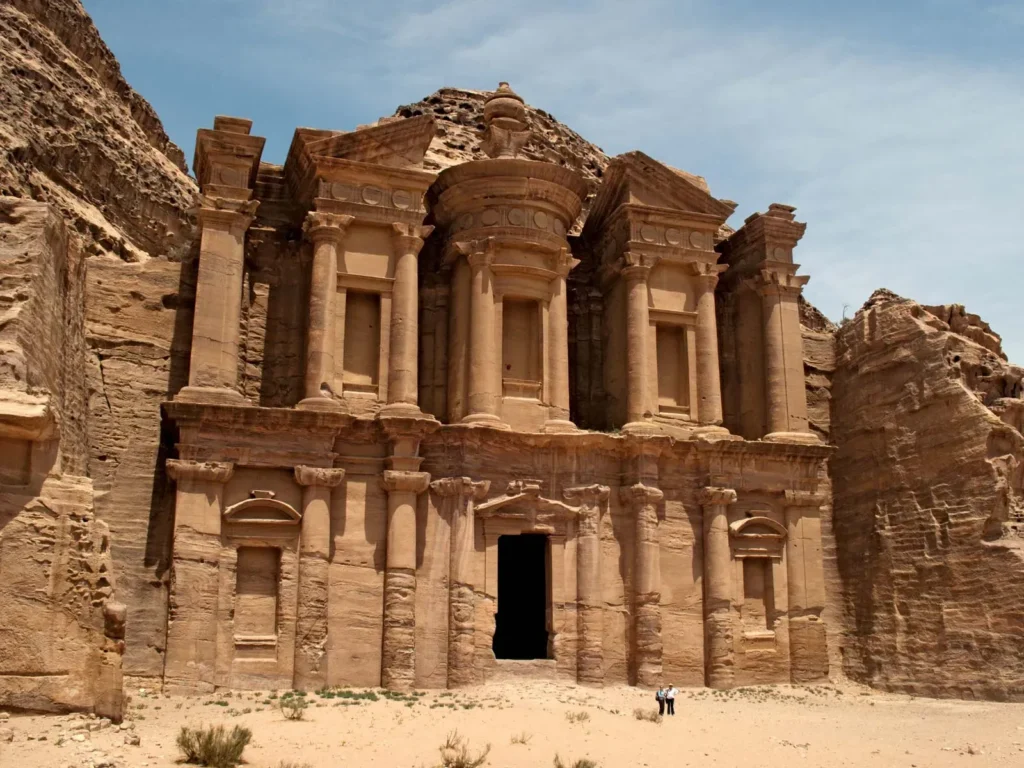
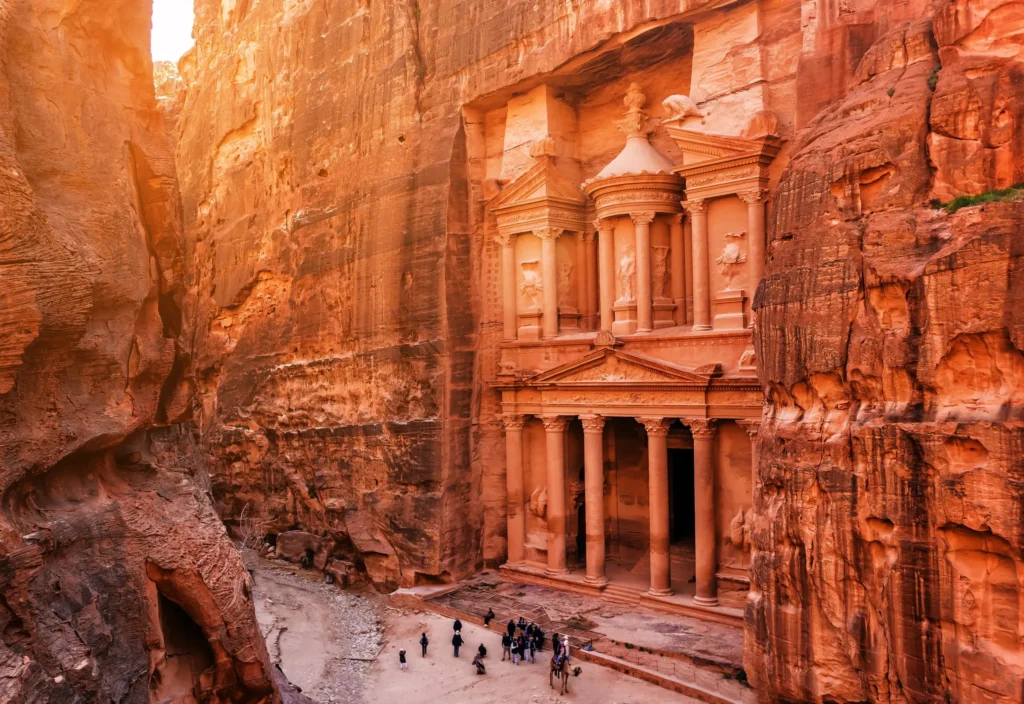
Petra needs two days, not one, and the reason becomes clear as soon as you walk the site. On day one, walk the Siq — the narrow, winding gorge that is itself an experience, with water channels and niches carved into its walls — until the Treasury (Al-Khazneh) appears through the final bend. It is one of travel’s great reveals, and it is better at opening time, before crowds fill the gorge, when the light in the Siq is softer and the approach feels closer to the quiet, monumental experience the place deserves. The Treasury itself, with its elaborate facade carved into the cliff, is often photographed as if it were Petra, but it is only the entrance to a much larger city, and day one should continue beyond it to the Street of Facades, the Royal Tombs, and the Theatre, which together show Petra as an urban landscape rather than a single monument. The Royal Tombs, in particular, reward a slower look, because their scale, their carved interiors, and their position above the valley floor reveal how Nabataean elites displayed wealth and status. Wear sturdy shoes, carry water, and plan for walking on uneven ground, because Petra’s distances are larger than they appear on a map, and the heat, especially in summer, makes a rushed visit both tiring and less rewarding. A single day that tries to cover everything will inevitably skip the quieter corners that make Petra memorable. Petra’s Theatre, cut into rock and later enlarged under Rome, is another reminder that Petra was a living city with public entertainment, and its position beside the Royal Tombs shows how civic, funerary, and religious spaces sat close together. Take your time here, and enjoy it properly.
On day two, climb to the Monastery (Ad Deir), a facade larger than the Treasury and far quieter, reached by hundreds of steps, and the viewpoint above it, over the surrounding desert, is worth the effort. The climb is demanding, but it changes the experience of Petra completely: where day one is about the gorge and the central valley, day two is about height, distance, and the desert beyond the city, and the Monastery itself, set in a more open landscape, feels less like a photo stop and more like a destination. Petra by Night, when the Siq and Treasury are lit by candles, is offered on selected evenings — check the official site before visiting for current days and booking, and confirm prices before booking, since this is a separate ticketed event and not included in a standard day entry. Practical advice matters here as much as sightseeing advice: do not try to see everything in a single rushed day, start early, rest in the shade during the hottest hours, and use the second day for back trails, smaller tombs, and views from above. Petra is a city, not a single monument, and its quieter corners — the back trails, the smaller tombs, the views from above — are what turn a famous photo into a real visit. If you are weighing Petra against other world-famous ancient sites, our tourist attractions in Egypt guide and the Egypt Travel Guide show how Egypt’s monuments demand a different kind of planning, with Nile transport and museum time, while Petra rewards walking, climbing, and time spent inside one extraordinary landscape. Travellers with a second day can also explore the High Place of Sacrifice trail, the Garden Temple area, and the back route to the Monastery, which offer quieter paths, different viewpoints, and a sense of Petra beyond the main valley walk.
Wadi Rum: The Valley of the Moon
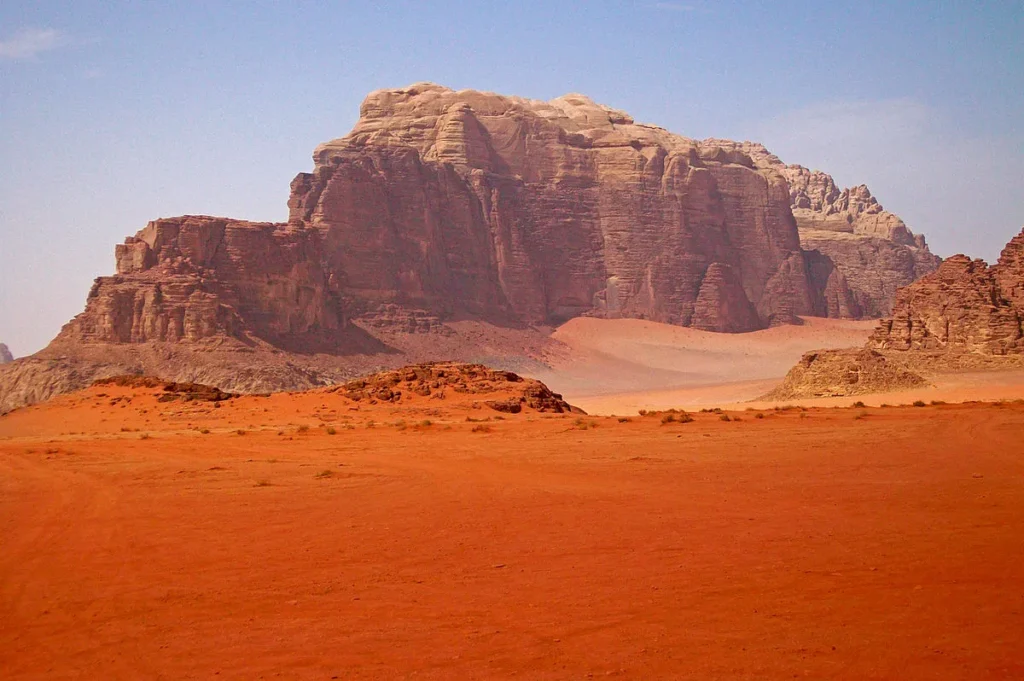
South of Petra, Wadi Rum is a protected desert wilderness of red sand, towering sandstone and granite mountains, narrow canyons, and ancient petroglyphs, and it is one of the few places in the world where the landscape itself feels like the attraction. The classic experience is a half-day or full-day jeep tour with a Bedouin guide, followed by a night in a desert camp, and the balance between those two parts matters more than many travellers expect. The jeep tour covers the main viewpoints, arches, and inscriptions, and it is the best way to see the scale of the desert, because distances are large, the terrain is unmarked in places, and a local guide knows both the routes and the stories attached to them. Petroglyphs and inscriptions, some thousands of years old, are easy to miss without a guide, and the same is true of the smaller canyons and water sources that reveal how people have lived in and travelled through this desert for millennia. A full-day tour allows a slower pace, with time for a canyon walk, a sunset viewpoint, and a proper lunch stop, while a half-day tour suits travellers who are short on time but still want to see the main sights. Either way, the jeep tour should be booked with a reputable local operator, and travellers should confirm prices before booking, check what is included, and be clear about pick-up, drop-off, and camp arrangements before setting out. Camel rides, short hikes, and sunset viewpoints can be added to a jeep tour, but they should be agreed in advance with the operator, including duration and price, so that the day’s pace matches your energy and interests rather than a fixed template.
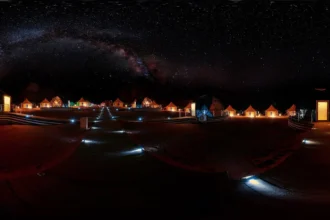
The night is the point, and that is why a day trip that returns to Petra or Aqaba misses the heart of Wadi Rum. After sunset, the desert cools, the sky fills with stars, and camp life — tea, bread baked in the sand, stories — becomes the experience, offering a quiet and scale that no daytime tour can match. Choose your camp carefully: some are closer to luxury bubble tents with full facilities, others are simpler Bedouin-style camps, and both can be good, but what matters is a reputable local operator, a camp location that is actually in the desert rather than on its edge, and realistic expectations about desert temperatures, which swing sharply between day and night. Pack warm layers even in warmer months, because desert nights can be cold, and check what the camp provides in terms of bedding, meals, and facilities before you book. See Jordan holidays — Petra, Wadi Rum and the Dead Sea for how other guides balance jeep time against camp time, and use that comparison to decide whether you want a longer jeep day, a shorter tour with more camp time, or a combination that includes a camel ride or a hike. Wadi Rum is also a place where photography rewards patience: sunrise and sunset transform the red rock, midday light flattens it, and the clearest night skies come when there is little moonlight, so timing your visit around light, not just around transport, will improve both photographs and memories. Stargazing in Wadi Rum is best enjoyed away from camp lights, with warm clothing, patience, and time for your eyes to adjust, and on clear, moonless nights the Milky Way and desert silence together create one of Jordan’s most memorable experiences.
Dead Sea: The Lowest Place on Earth
The Dead Sea, about 430 metres below sea level, is the lowest exposed land elevation on earth, and its hyper-saline water makes floating effortless, which is why it draws visitors who might otherwise have no interest in a beach holiday. That floating — and the mineral-rich mud that visitors apply as a natural spa treatment — is the attraction, rather than swimming in the usual sense, and it is best approached as a short, relaxed experience rather than as a long swim. The water’s extreme saltiness supports the body in a way that feels strange at first, and many first-time visitors are surprised by how little effort floating requires, and by how quickly the salt dries on the skin afterwards. The surrounding landscape adds to the experience: the deep valley, the desert hills on both sides, and the sense of being below sea level in a place that has been known since antiquity for its minerals and its harsh beauty. The Dead Sea works well as a rest day between Petra and Wadi Rum or at the end of a trip, especially if you stay at a resort with direct beach access, because a resort stay removes the uncertainty around access, showers, and facilities that can affect a shorter visit. Public access points vary, so check the official site before visiting, and confirm prices before booking a resort day pass or an overnight stay. The Dead Sea’s mineral mud is sold in many forms, but the simplest experience is to apply mud at the shore, let it dry briefly, and rinse in the sea or showers, following local guidance and avoiding the eyes, mouth, and any broken skin. Take your time here, and enjoy it properly.
Practical tips from experienced guides are worth following closely, because the Dead Sea’s saltiness makes it less forgiving than ordinary seawater. Float for a short time rather than a long swim, avoid getting water in your eyes or mouth, do not shave on the morning of your visit, and shower afterwards, and keep any cuts covered if possible, since salt water can sting. Bring fresh water, a towel, and sandals for the shore, which can be hot and rough underfoot, and avoid wearing jewellery or clothing that might be damaged by salt and mud. Early morning or late afternoon visits are cooler and quieter than midday, and they also give better light for photographs of the valley and the water. If you are travelling with children or with anyone who has sensitive skin, keep the visit short, supervise floating closely, and plan a shower and rest afterwards rather than a long onward drive. The Dead Sea is also a useful place to think about pacing: after the walking and climbing of Petra and the desert night in Wadi Rum, a day of floating, mud, and resort rest restores energy before Aqaba or the return to Amman. Treat it as recovery, not as a checklist item, and it will feel like one of the most distinctive experiences in Jordan, rather than a brief photo stop on the way somewhere else. A Dead Sea day also pairs well with a visit to nearby hot springs or to a quiet resort spa, but travellers should confirm prices before booking, since day passes, treatments, and access vary considerably between resorts and public beaches. Keep valuables, phones, and cameras away from salt water, and rinse equipment afterwards to avoid salt damage.
Aqaba and Dana: The Red Sea Finish and a Nature Detour
Aqaba, Jordan’s only seaport, sits at the northern tip of the Red Sea and is the natural finish to a Jordan trip: diving and snorkelling on coral reefs, beach time, and a slower pace after days of ruins and desert. It shares the same reef system as Egypt’s Red Sea coast, and it suits both first-time divers and experienced divers, because its sites range from shallow snorkelling reefs to deeper dives, and its dive centres offer introductory experiences as well as certified dives. For travellers who have never dived, Aqaba is a good place to try, because the water is generally calm, visibility is often good, and the reefs are close to shore, while experienced divers will find wrecks, gardens, and wall dives that reward a longer stay. Beyond diving, Aqaba offers beaches, a waterfront promenade, markets, and restaurants, and its slower, coastal atmosphere is a deliberate contrast to the inland itinerary. Two nights there turn a hectic Jordan circuit into a trip that ends rested, not exhausted, and they allow time for both a dive day and a beach day without rushing. If you are combining Jordan with Egypt, Aqaba is also a practical gateway, since it sits close to Egypt’s Red Sea coast by air and by regional routes, and our Egypt Travel Guide helps compare Red Sea bases, transport, and diving seasons across the two countries. Aqaba’s old town, castle, and fish restaurants offer a different side of the city from its beaches and dive centres, and an evening walk through markets and the waterfront gives a sense of Aqaba as a working port, not only as a resort. Aqaba’s dive centres vary in style and price, so compare inclusions, group sizes, and safety briefings before booking.
If you prefer mountains to sea, consider Dana Biosphere Reserve instead or as well: Jordan’s largest nature reserve, with hiking trails through canyons and villages, and the multi-day Dana to Feynan trail for serious walkers. Dana’s eco-lodges are a model of community-based tourism, employing local people, supporting village economies, and giving walkers a base that is part of the landscape rather than separate from it. The reserve covers a dramatic range of elevations and habitats, from high mountains to low desert valleys, and its trails vary from short village walks to the demanding multi-day route to Feynan, which requires planning, fitness, and advance booking. Shorter walks around Dana village, with its stone houses and views over the canyon, suit travellers who want nature without a multi-day commitment, while the longer trail suits experienced hikers who have prepared for desert walking, water, and heat. Either way, do not treat Aqaba as a mere departure point, and do not treat Dana as an afterthought if you choose it: both places deserve their own time, and both change the character of a Jordan trip. Aqaba adds sea, rest, and diving to a journey dominated by rock and desert, while Dana adds walking, wildlife, and village life, and choosing between them, or combining a shorter version of both, is one of the most personal decisions in a Jordan itinerary. Hikers planning the Dana to Feynan trail should check fitness, water, guiding, and accommodation well in advance, since the multi-day route crosses remote terrain, requires overnight stops, and is best undertaken with local support and clear planning. Dana village itself, with its restored stone houses and canyon views, is worth an overnight stay even for short walks.
Practical Itinerary: Route, Seasons, and How to Get Around
| Day | Route | Notes |
|---|---|---|
| 1–2 | Arrive Amman, explore Citadel and downtown; day trip to Jerash | Base in Amman for the north |
| 3 | Amman → Madaba → Mount Nebo → Petra (Wadi Musa) | Drive the King’s Highway section if time allows |
| 4–5 | Petra, two full days | Day 1: Siq and Treasury. Day 2: Monastery and viewpoints |
| 6 | Petra → Wadi Rum, jeep tour and desert camp night | Book camp and guide in advance |
| 7 | Wadi Rum → Aqaba, Red Sea rest or diving | Or return north via the Dead Sea |
| 8 | Dead Sea floating and resort rest, return to Amman | Check the official site before visiting for access and hours |
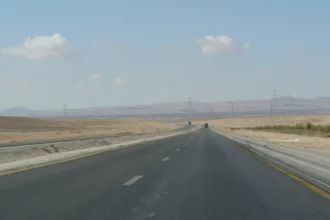
The table above gives a workable eight-day framework, but the best Jordan itinerary is one that protects its slow parts rather than one that tries to add extra stops. The best months are generally March to May and September to November, when temperatures are pleasant for walking in Petra and Jerash, and when the desert and the Dead Sea valley are more comfortable than in high summer. Summer is hot in the desert and the Jordan Valley, while winter can be cold at night in Wadi Rum and Petra, and those seasonal differences should shape packing as much as sightseeing: layers for desert nights, sun protection and water for daytime walking, and sturdy shoes throughout. If you travel in summer, plan early starts, shade breaks, and shorter walking days, and if you travel in winter, pack warm clothing for Wadi Rum and Petra evenings, and check road and site conditions before setting out. The King’s Highway, the historic route south from Amman through Madaba towards Petra, is worth driving in part if time allows, because it offers village, valley, and castle views that the faster desert highway does not, but it is slower, so use it for the Madaba to Petra leg rather than for the whole journey if your schedule is tight. Getting around is easiest by rental car or private driver, since both give the flexibility to stop at Madaba, Mount Nebo, and viewpoints, and to adjust timing around heat and light. The desert highway south is faster and more direct, while the King’s Highway is slower and more scenic, so many travellers use one route south and the other north, gaining both efficiency and scenery across a round trip without repeating the same road.
Public transport exists but is less flexible for a multi-stop route, and that limitation is worth understanding before you choose it. Buses and shared transport can connect major cities, but they are less reliable for reaching Wadi Rum camps, for early starts at Petra, or for combining Madaba, Mount Nebo, and Petra in a single day, and they can turn a straightforward drive into a day of waiting and transfers. For that reason, many travellers combine a rental car or driver for the south with day tours from Amman for Jerash, which balances cost, flexibility, and local knowledge. Whatever transport you choose, book the essentials in advance: Petra accommodation in Wadi Musa, a Wadi Rum camp and guide, and any diving or special event such as Petra by Night, since these are the parts of the trip where availability, not just price, can limit your plans. For a concise overview of the same five headline sights, see 5 Best Sights in Jordan, and use it as a check against your own route rather than as a replacement for it. Check the official site before visiting for Jordan Pass terms, visa requirements, and site hours, confirm prices before booking, and travel with respect for local customs, especially in religious sites and conservative communities, where modest dress and quiet behaviour are appreciated and expected. Travellers should also carry cash for small purchases, keep passports and booking confirmations accessible, and download offline maps, because rural roads, desert camps, and smaller towns may have limited connectivity or card payment options. Check road conditions and daylight hours in winter, when shorter days and cold desert nights change driving and walking plans. Take your time here, and enjoy it properly.
Conclusion
Jordan’s strength is concentration: in one small, welcoming country you get a Nabataean city carved from rock, a Roman city you can walk through, Byzantine mosaics, a desert of red mountains, the lowest sea on earth, and a Red Sea coast, all within a journey that can be completed in a week to ten days without constant long-haul flights. That concentration is also what makes pacing so important, because it is tempting to treat each place as a photo stop and to move on, when each place actually rewards time, walking, and attention. The mistake is to rush it — Petra in a few hours, Wadi Rum without a night, the Dead Sea as a photo stop — because rushing turns a journey through civilisations into a checklist, and it leaves travellers with photographs but without the sense of place that Jordan offers so generously. Give Petra two days, sleep in Wadi Rum, float properly in the Dead Sea, and let Amman and Jerash set the historical context, and the trip changes character completely. Amman gives the present, Jerash gives Rome, Madaba gives Byzantium, Petra gives the Nabataeans, Wadi Rum gives the desert, and Aqaba gives the sea, and together they form a story that is both coherent and varied, rather than a series of disconnected highlights. Jordan’s hospitality, from Bedouin tea in Wadi Rum to family-run restaurants in Amman, is part of the journey, and accepting tea, asking questions respectfully, and learning a few Arabic greetings will enrich encounters far beyond the sightseeing itself. Protecting those slow parts, rather than adding extra stops, is the simplest way to keep a Jordan trip enjoyable and memorable. Take your time here, and enjoy it properly.
Do that, and Jordan will feel less like a checklist and more like a journey through several civilisations in a single week, with time for food, for conversation, for desert stars, and for the quiet moments between sights that often become the most lasting memories. Practical preparation supports that experience rather than replacing it: check the official site before visiting for current practical details, confirm prices before booking passes, camps, dives, and tours, pack for both heat and cold desert nights, and allow flexibility for weather, road conditions, and opening hours. Travel with respect for local customs, especially in religious sites and conservative communities, and support local guides, camps, and eco-lodges where you can, because they are the people who make Jordan’s desert, villages, and historic sites accessible and meaningful. If Jordan is part of a wider Middle East trip, use our Egypt Travel Guide and our guides to places to visit in Egypt to plan the order, the transport, and the pacing that suit your flights, rather than trying to force two countries into a single rushed circuit. Done well, Jordan does not need to be the longest trip you take to be one of the most complete, because few countries pack so much history, landscape, and hospitality into so compact and welcoming a journey. With careful pacing, advance booking for the essentials, and respect for local customs, Jordan rewards travellers with a journey that feels complete rather than hurried, and that stays in memory long after the photographs have been filed away. That balance of history, landscape, and hospitality is why so many travellers plan a return visit after their first Jordan journey. Take your time here, and enjoy it properly.
FAQs
Q: How many days do I need in Jordan?
A: Seven to ten days covers Amman, Jerash, Madaba, Petra, Wadi Rum, the Dead Sea, and Aqaba at a comfortable pace. Five days can cover the Petra–Wadi Rum–Dead Sea core, but with less time in the north.
Q: Is Petra worth two days?
A: Yes. One day covers the Siq, Treasury, and Royal Tombs; a second day is needed for the Monastery, viewpoints, and quieter trails without rushing.
Q: What is the Jordan Pass, and should I buy it?
A: The Jordan Pass is a package that can cover the visa fee and entry to many sites, including Petra, if bought before arrival and if you stay at least three nights. Check the official site before visiting for current prices, terms, and included sites.
Q: What is the best time to visit Jordan?
A: March to May and September to November are generally best for walking and sightseeing. Summer is hot in the desert and Dead Sea area; winter nights in Wadi Rum and Petra can be cold.
Q: Is Wadi Rum safe, and do I need a guide?
A: Wadi Rum should be explored with a local Bedouin guide. The desert is vast, routes are unmarked in places, and a guide provides transport, navigation, and camp arrangements.
Q: Can I combine Jordan with Egypt?
A: Yes. Many travellers pair Jordan with Egypt’s Red Sea coast or Cairo, via Aqaba or by air. Compare routes in our Egypt guides before deciding the order that suits your flights.