Istanbul does not suffer from a shortage of sights. It suffers from a shortage of honest ordering. The famous names stand in a tight cluster on one hill, the second tier of wonders hides in working neighbourhoods across two stretches of water, and almost everything a visitor wants is governed by rules – prayer times, a weekly closing day, a pass that covers less than its name promises – that most lists of things to do in istanbul never mention. This guide is built differently. It takes the experiences in the order a real trip meets them, says plainly what each one costs you in time and effort, and names the catch before you are standing in it.
Two pieces of housekeeping before the list. First, money: we print no ticket prices here, deliberately. Istanbul’s entrance fees are revised too often for a printed figure to stay true, and the pages that do print them contradict each other. Where money matters we explain the mechanism – what is ticketed, what is free, which pass covers what – and point you to the official source that settles the current figure. Second, geography: the city divides itself by water into three day-sized pieces, the historic peninsula, Beyoğlu across the Golden Horn, and the Asian shore across the Bosphorus. Nearly every good Istanbul day stays inside one piece. Nearly every bad one zig-zags between all three.
This page is the experience list. For day-by-day sequencing, bases and the Istanbulkart mechanics, it sits alongside our Istanbul travel guide, and for the wider route around the country, our Turkey travel guide. What follows is what to fill those days with – the icons first, because they earn it, then the water, the far shore and the islands. Taken together, the things to do in istanbul below add up to more than any single trip can hold, and that is the point of writing them down honestly: a list you can cut from, in the right order, without cutting the wrong thing.
Things to Do in Istanbul at a Glance – The Shortlist by Area
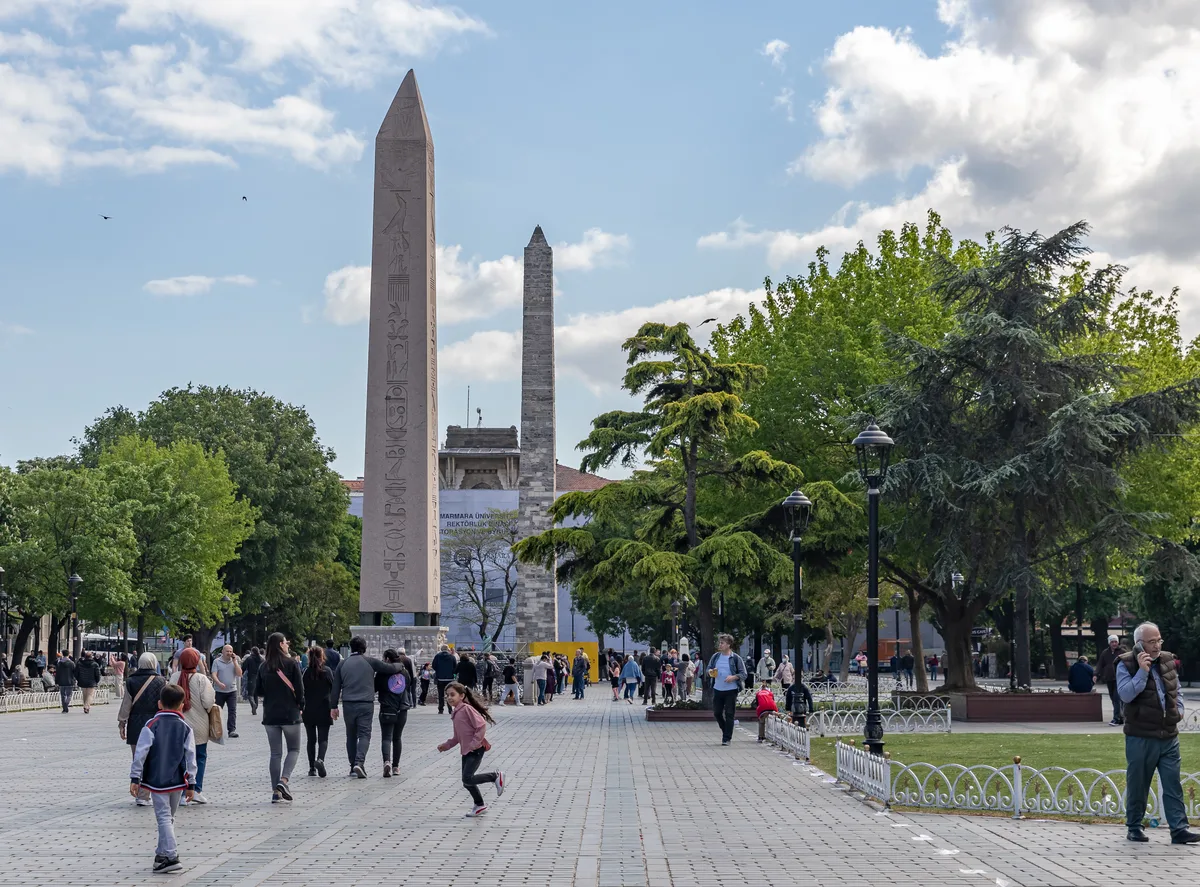
Read the table as a planning tool, not a ranking. The headline things to do in istanbul cluster so tightly that the real skill is not choosing them – it is grouping them, and knowing which rule governs each group before you build a day on top of it.
| Area | Headline experiences | Time to allow | The governing rule |
|---|---|---|---|
| Sultanahmet | Hagia Sophia, Blue Mosque, Topkapı Palace, Basilica Cistern, Archaeology Museums | Two days, unhurried | Prayer times at the mosques; Topkapı’s weekly closing day |
| The bazaar quarter | Grand Bazaar, Spice Bazaar, the Eminönü waterfront | Half a day to a day | The Grand Bazaar closes on Sundays in current practice |
| The Bosphorus | City-ferry tour, waterfront palaces, fortress views | Half a day to a full day | Ferry timetables, not ticket offices, set the pace |
| Beyoğlu | Galata Tower, Karaköy, İstiklal Avenue | Half a day plus an evening | The tower’s lift queue – go early or late |
| The palace shore | Dolmabahçe Palace and the Beşiktaş waterfront | Half a day | Guided-group entry only, at the palace’s pace |
| The Asian shore | Üsküdar, the Maiden’s Tower, Kadıköy and Moda | A full day | Sunset faces the old city – be there for it |
| The Golden Horn quarters | Balat and Fener’s painted streets | Half a day | Working neighbourhoods, not a film set – tread gently |
| The Princes’ Islands | Büyükada’s mansions, lanes and swimming spots | A full day | The ferry out decides the day; the last ferry back ends it |
Notice what the table leaves out: nothing above requires a tour bus, a booked “experience” or a skip-the-line product sold on the street. Istanbul’s sightseeing infrastructure – the tram, the ferries, the museum portal – is genuinely good, and the experiences below assume you use it the way the city does. Where a commercial shortcut actually adds something, the relevant section says so; mostly, it does not.
Hagia Sophia – Sixteen Centuries in One Building
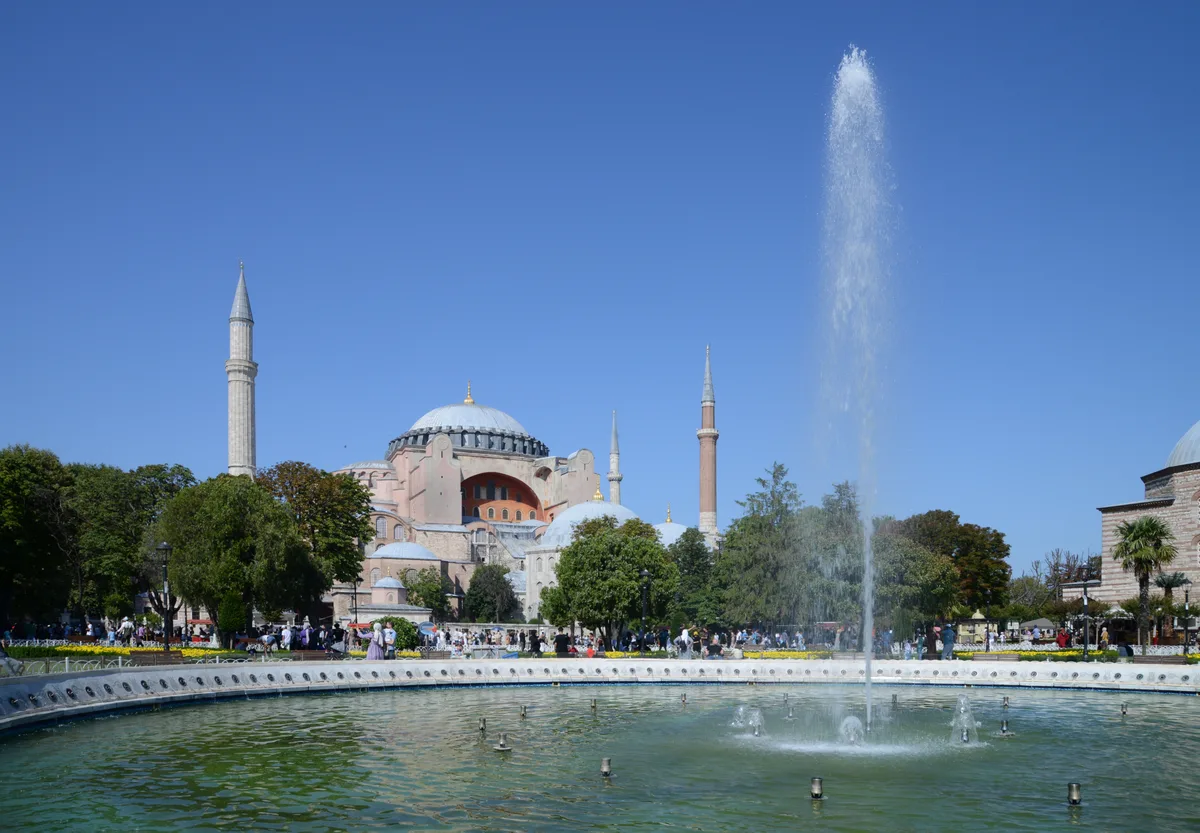
Of all the things to do in istanbul, this is the one to build the trip around. Completed in 537 under the emperor Justinian I, Hagia Sophia was the largest cathedral in the world for nearly a thousand years, became a mosque after 1453, spent most of the twentieth century as a museum, and has been a working mosque again since 2020. The dome still does what it did when it was new: it makes a crowd of hardened sightseers go quiet. Our dedicated Hagia Sophia guide walks the building in detail; this is the visiting logic in brief.
The arrangement changed completely in January 2024, and much of what search results still tell you predates it. Foreign visitors no longer walk in through the prayer hall. They use a separate visitors’ entrance on the Topkapı side of the building, buy a ticket through the official channel, and follow a one-way route through the upper gallery – which happens to be where the great Byzantine mosaics are, and where the view down into the vast main space is at its most dramatic. The ground floor is reserved for worship, and the visitor route closes during prayer times, with a longer closure around the Friday midday prayer. It is a mosque throughout: covered shoulders and knees, a headscarf for women, no exceptions negotiated at the door.
Two consequences follow. The Museum Pass does not cover this visit – Hagia Sophia’s gallery ticket is separate, whatever a tout outside implies – and the current fee and hours belong to the official museum portal, muze.gov.tr, not to any guide, this one included: check them in the week you travel. And long-running restoration means parts of the building may be screened at any given time. Neither fact diminishes the visit. The gallery route is arguably the better vantage on the architecture, and standing in Justinian’s building while it works as a mosque again is a truer encounter with its history than the museum decades ever offered.
The Blue Mosque – A Working Mosque That Welcomes Visitors
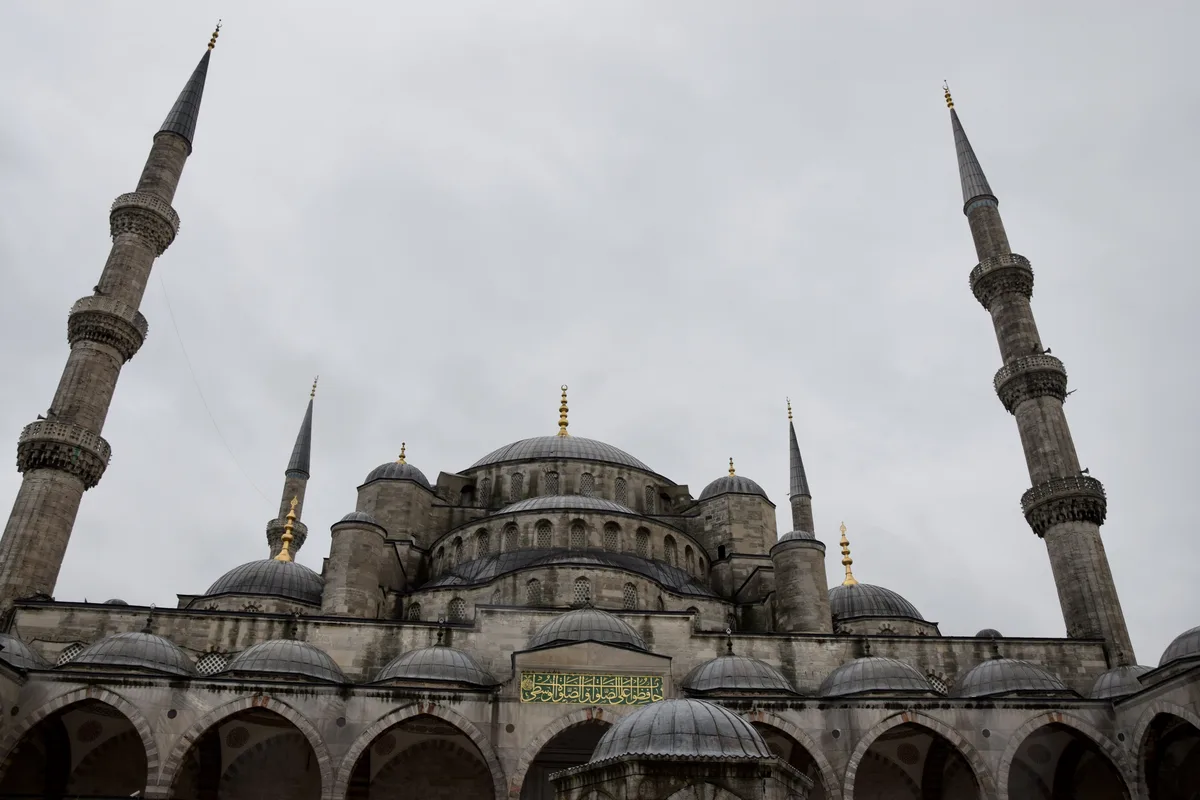
Across Sultanahmet Square stands the Ottoman answer to Hagia Sophia: the Sultan Ahmed Mosque, built between 1609 and 1616 for the young Sultan Ahmed I and known to every visitor as the Blue Mosque, for the İznik tiles that line its interior in their thousands. Six minarets – a number that caused a diplomatic incident with Mecca at the time – a cascade of domes, and a courtyard nearly as large as the prayer hall itself. It is the second half of the old city’s essential pair, and our Blue Mosque guide covers its history and tiles in full.
The visiting logic is the mirror image of its neighbour’s. The Blue Mosque is a working mosque with free visitor entry – no ticket, no pass, no fee – but visitors come in only between prayer times, through a designated entrance, and sightseeing closes during each prayer and on Friday mornings until after the midday prayer. The same dress code applies, and wraps are not something to rely on being handed to you; bring a scarf if you need one. In return you get what Hagia Sophia’s gallery route cannot give: the floor-level experience of a great Ottoman prayer hall, the tiles at eye level, the space doing the job it was built for.
Of the free things to do in istanbul, none is grander than this. Sequence the pair intelligently and the two buildings cost you one morning, not two. Check the day’s prayer times once, then take whichever mosque is open to visitors first and the other second, with the square, the Hippodrome’s obelisks and a tea in between. Late afternoon, when the day groups have gone and the light drops across the square, is when the Blue Mosque is at its best – and when the call to prayer from two minaret sets across one square reminds you that none of this is a museum piece.
Topkapı Palace – Give It Half a Day, Not an Hour
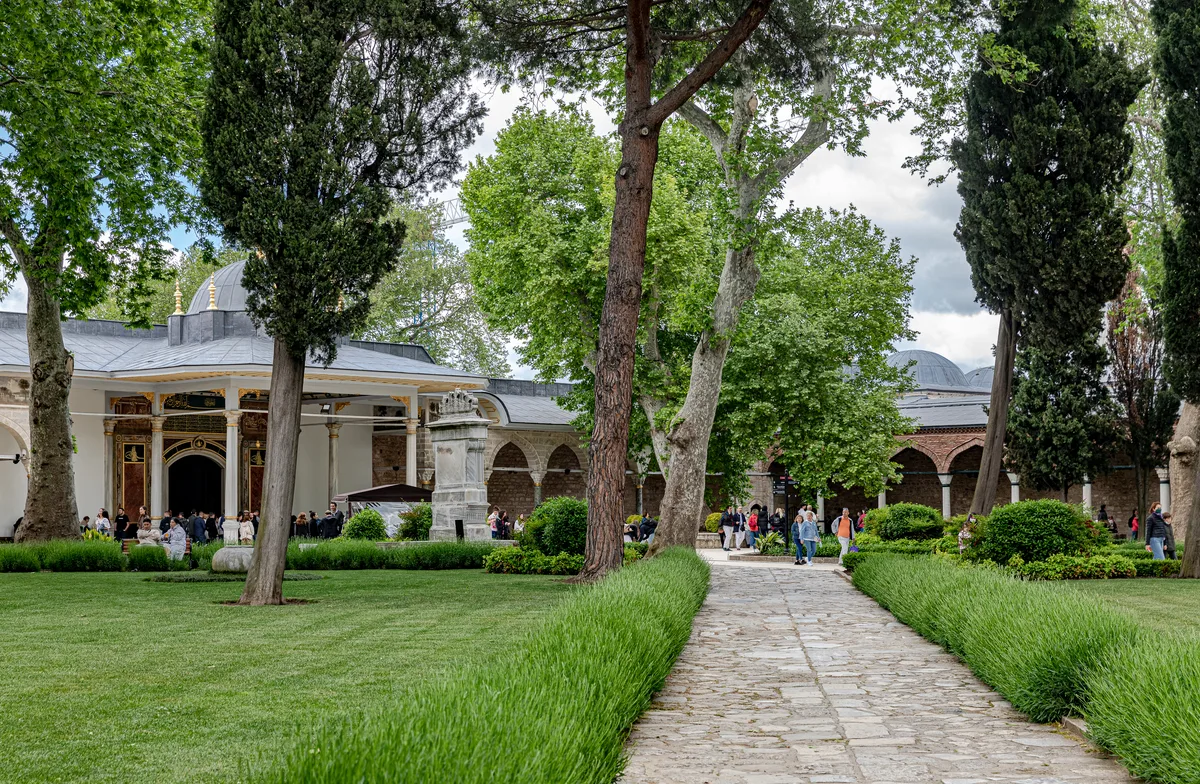
Behind Hagia Sophia, on the point where the Golden Horn meets the Bosphorus, Topkapı was the seat of the Ottoman sultans from the 1470s until the court moved to Dolmabahçe in the 1850s. It is less a palace than a walled small town: four courtyards descending towards the water, kitchens that fed a court of thousands, a treasury of almost absurd richness, and the Harem, the private world behind the public ceremony. It has been a museum since 1924, and it is the one Sultanahmet sight that punishes hurrying. Our Topkapı Palace guide maps the courtyards one by one.
What fills the half day is variety. The Imperial Treasury holds the Spoonmaker’s Diamond and the Topkapı Dagger; the kitchens hold a porcelain collection that tracks centuries of trade with China; the fourth courtyard’s pavilions and terraces hold the finest free view in the old city, straight across the Bosphorus to Asia. The Harem is a separate section within the complex and the part most visitors underrate – a tiled, domed labyrinth that explains the court’s domestic machinery better than any throne room. Give the whole complex the morning it asks for, enter near opening, and work the courtyards in order while the cruise groups are still at breakfast.
One planning fact governs everything: Topkapı keeps a weekly closing day – Tuesdays in current arrangements – so never anchor a Tuesday to it, and confirm the current closing day on muze.gov.tr when you fix your dates. Topkapı is one of the few things to do in istanbul that you schedule the other sights around, not the other way round.
Start in the first courtyard, which most visitors march through as a queue with trees. It holds the Hagia Irene, a Byzantine church older than Hagia Sophia’s present building in its origins and now an occasional concert space, and it sets the palace’s scale before the ticketed courtyards begin: this was a walled district with its own mint, bakery and hospital, not a single residence. Letting that sink in – that the “palace” is really the Ottoman state in miniature, arranged along a slope – is what turns the Treasury’s jewels and the Harem’s tiles from a cabinet of wonders into an explanation. The palace is a Ministry of Culture museum, which makes it the anchor sight of the Museum Pass calculation: if your days include Topkapı, the Archaeology Museums and several more Ministry museums, the pass starts to earn its keep. If your Istanbul is mostly mosques, bazaars and ferries, it does not. The pass covers a defined list of Ministry museums for a run of days from first entry; it does not cover Hagia Sophia’s gallery, the Basilica Cistern or Dolmabahçe, and the current price and inclusion list live on the portal, not here.
The Basilica Cistern – Byzantine Istanbul, Underground
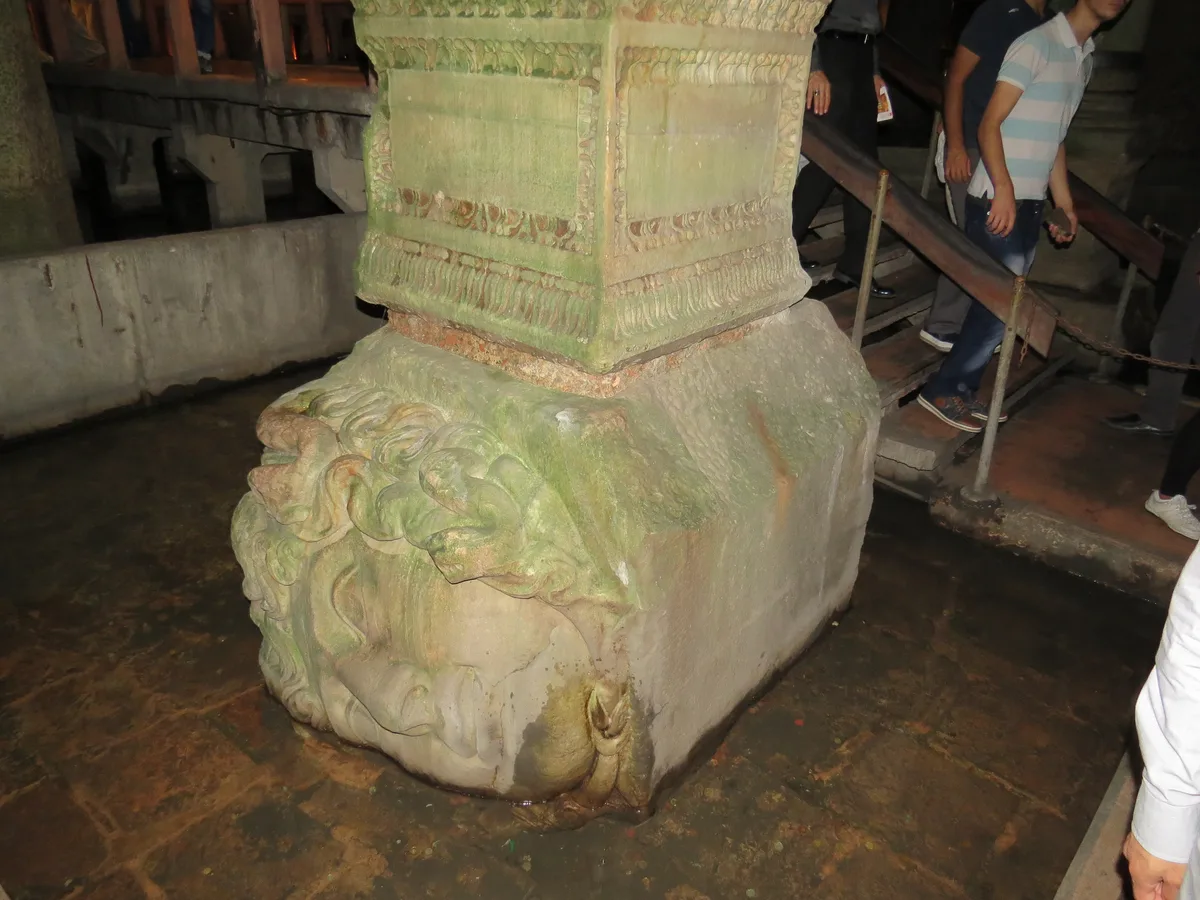
A few minutes from Hagia Sophia, a modest doorway leads down into the largest surviving Byzantine cistern in the city, built in the sixth century under Justinian I to store water for the palace district above. What waits below is a vaulted underground hall the size of a cathedral, carried on 336 columns standing in shallow water, lit low and theatrical since its restoration. Two columns at the far corner stand on carved Medusa heads recycled from older Roman stonework – one sideways, one upside down, for reasons nobody recorded. Our Basilica Cistern guide covers its history and its smaller sister cisterns.
As an experience it is the opposite of Topkapı: short, dense and atmospheric rather than sprawling. Most visits run well under an hour, which makes the cistern the perfect piece to slot between bigger sights – the cool, dark interval in a Sultanahmet day – rather than a headline to build one around. On a short trip it is one of the most efficient things to do in istanbul: a whole Byzantine world in the time a palace courtyard takes. Walk the raised walkways slowly, go to the far corner for the Medusa heads, and look back along the column rows before you climb back into the daylight; that view down the hall is the photograph everyone is quietly queuing for.
Look at the columns as you pass, because the cistern is also a museum of recycling. No two capitals quite match: the builders of the sixth century roofed their water tank with the salvaged stonework of earlier temples and monuments, and one famous column, carved with tear-like and peacock-eye motifs, is pointed out by every guide as the “weeping column” – said, in the folklore that accretes around such places, to mourn the slaves who built the hall. The restoration has added walkways, shifting coloured light and occasional contemporary art set among the columns; purists grumble, but the cistern has been reimagined by every century that owned it, and this one is entitled to its layer too.
The ticketing fact that matters is administrative, not scenic: the cistern is run by the Istanbul Metropolitan Municipality, not the Ministry of Culture, so it is separately ticketed and is not in the Museum Pass – the small-print point that catches pass holders at its door every day. Evening openings are sometimes run as separate sessions, which change the lighting and the mood entirely; if an after-dark visit appeals, the cistern’s own channels carry the current arrangements.
The Archaeology Museums – The Quiet Neighbour Nobody Queues For
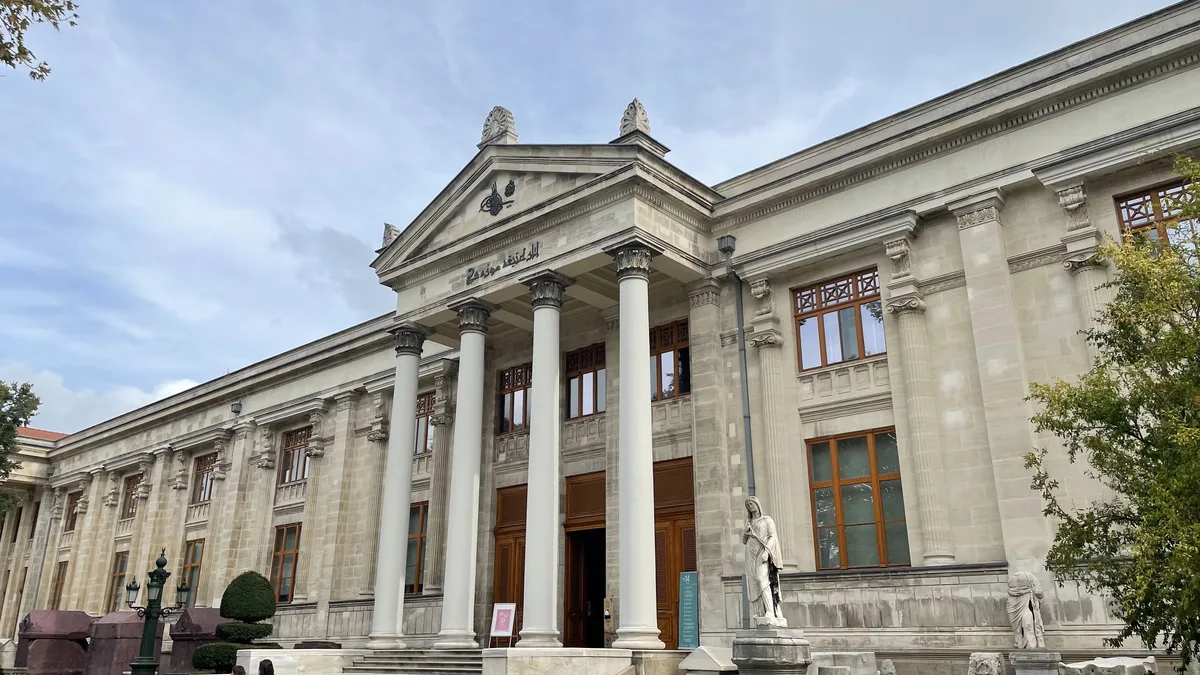
In the grounds below Topkapı’s first courtyard stands the sight that turns a good Sultanahmet day into a great one, and that half the square’s visitors never enter: the Istanbul Archaeological Museums, a complex of three buildings founded under the painter and archaeologist Osman Hamdi Bey, with the main building opened in 1891. This is one of the world’s great antiquities collections, assembled when the Ottoman Empire still contained most of the ancient Near East – and it is usually, inexplicably, calm inside.
The headline object is the Alexander Sarcophagus, a fourth-century BC marble masterpiece carved with battle and hunt scenes in such high relief that traces of its original paint survive, recovered from the royal necropolis at Sidon. Around it sit sarcophagi, statues, inscriptions and everyday objects running from Egypt and Mesopotamia through Greece and Rome to Byzantium, plus the Tiled Kiosk of 1472 in the grounds – among the oldest Ottoman buildings in the city. The collection rewards the same approach as the city itself: pick a thread – the sarcophagus halls, say – and follow it properly, rather than marching every gallery at reading-the-labels pace. Our round-up of the best museums in Istanbul places the complex in the city’s full museum league table.
Practically, the museums pair with Topkapı the way the cistern pairs with Hagia Sophia: same grounds, same ticket logic – they are Ministry of Culture museums, inside the Museum Pass’s world – and a natural order of palace first, museums after, when the courtyards fill and you want the quieter building. Travellers who skip them for one more bazaar lap consistently rank among the city’s great misjudgements. Do not join them.
There is a story in the building, too, worth the two minutes it takes to absorb. Osman Hamdi Bey – painter of The Tortoise Trainer, archaeologist, and the museum’s founding director – spent his career arguing that the empire’s antiquities should stop travelling to Europe’s museums and be excavated, kept and displayed at home; the sarcophagi he brought from Sidon, the Alexander Sarcophagus among them, were his proof and his argument in marble. The third building of the complex, the Museum of the Ancient Orient, carries the story further back still, into Egypt, Mesopotamia and Anatolia before Greece enters the tale. Of the indoor things to do in istanbul, this complex is the one that most changes what the outdoor ones mean.
The Grand Bazaar – Shopping as Sightseeing
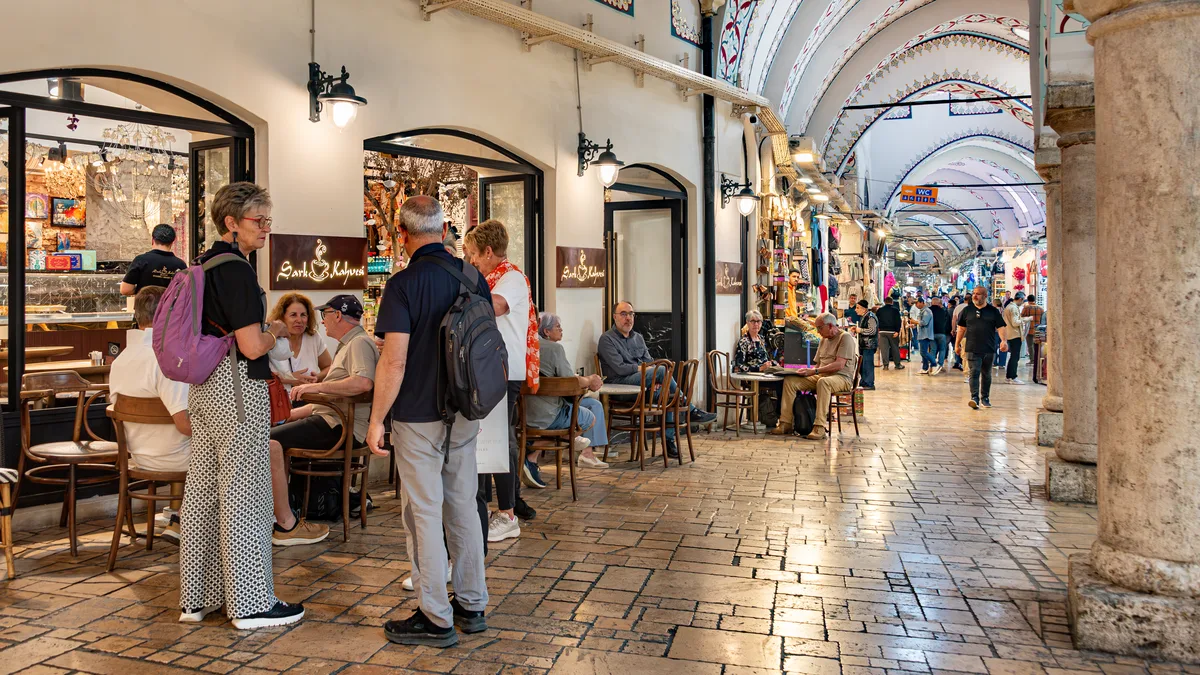
Uphill west of Sultanahmet, the Grand Bazaar began in the mid-1400s under Mehmed II and grew into one of the world’s oldest and largest covered markets – dozens of vaulted streets and thousands of shops, still organised by trade in a geography older than most of the goods: gold in one glittering run, carpets in another, ceramics, leather, lamps and luggage between. Treat it as a sight first and a shop second. Walking its streets with no intention of buying is a completely respectable use of a morning, and the building itself – painted vaults, old bedestens at its core, hans tucked behind courtyards – is a monument that happens to sell things. Our Grand Bazaar guide maps its streets and gates.
Learn the bazaar’s skeleton and the wandering becomes navigation. The two old bedestens – the domed, fireproof market halls at its core – are where the valuable trades settled first, and the streets still announce their trades in their names and their goods: the goldsmiths’ street runs with window after window of gold, the carpet dealers occupy their han and their runs, and the Zincirli Han, a restored caravanserai courtyard just inside the market’s edge, is the bazaar’s quietest and most beautiful corner, all brick arches and a single tree. Finding it, and the coffee being carried on trays through the lanes to shopkeepers who never leave their counters, is worth more than most purchases.
If you do buy, understand the ritual. Where prices are untagged, the first figure is an opening bid, and the negotiation that follows is expected, unhurried and usually good-humoured; walk-away power is real only if you are genuinely willing to walk away. Tea offered in a shop is part of the ceremony, not a contract. Set your own ceiling before you enter the conversation, especially for carpets, where the gap between the first and final figure can be wide, and where shipping promises deserve the same calm scepticism as the prices. None of this is a trap; it is a market culture older than the republic, and meeting it on its own terms is half the pleasure.
Two practicalities. The bazaar is closed on Sundays in current practice, so give it a weekday or a Saturday, and check its current status before building a Sunday around it. And plan the walk out as carefully as the walk in: downhill from the bazaar’s western gates, the market streets spill through the wholesale districts to Eminönü and the Spice Bazaar in one continuous, fascinating descent. Of all the free things to do in istanbul, that hour-long walk, markets thinning into streets into waterfront, may be the best value in the city.
The Spice Bazaar and Eminönü – Where the City Eats First
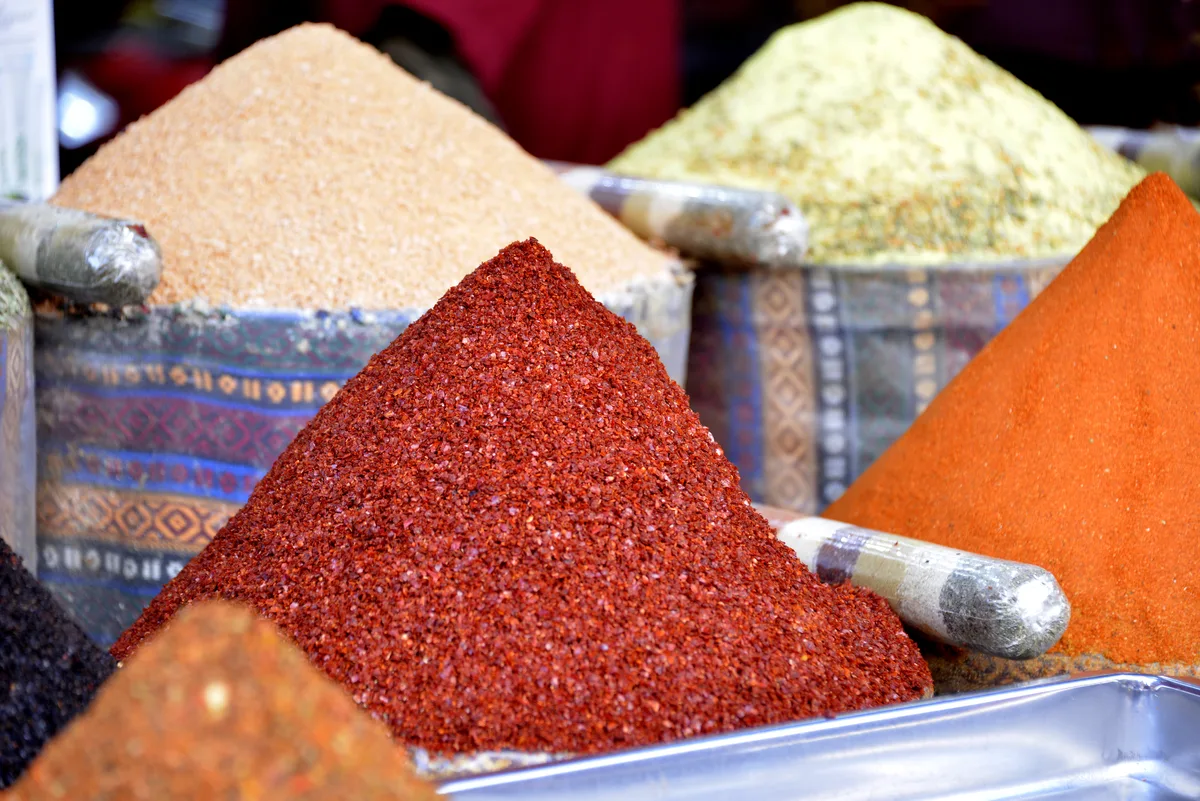
At the foot of the bazaar hill, beside the Galata Bridge, stands the Grand Bazaar’s smaller, edible sibling: the Spice Bazaar, also called the Egyptian Bazaar, built in the 1660s as part of the New Mosque complex and funded, in its day, by taxes from Egypt – hence both its names. It is an L-shaped hall of spice mounds in traffic-light colours, dried fruits and nuts in polished piles, lokum stacked like masonry, teas, herbs and a handful of shops that still sell the henna, soaps and oddments of an older apothecary trade.
The Spice Bazaar is the rare famous market where the sensible move is to buy the consumables and skip the souvenirs. Spices here are sold by weight from the mound, vacuum-packed for travel if you ask; dried apricots, figs and roasted nuts are priced for a local clientele as much as for visitors, because this is still a working provisions market for the city around it. Taste before you commit – a sample offered is normal, not a sales ambush – and compare two or three stalls before buying the saffron, because quality and price both vary more than the displays suggest.
Step outside and you are in Eminönü, the city’s great interchange: ferries docking and departing in rotation, the tram crossing the bridge, simit sellers and chestnut carts working the crowds, and the New Mosque – the bazaar’s parent building – dominating the square with its cascade of domes. Give the waterfront half an hour of pure standing and watching. Eminönü is where Istanbul’s systems visibly mesh, and understanding it – which pier, which tram, which bridge – pays off for the rest of the trip.
Do not leave the quarter without following your nose one street further. In the lanes behind the bazaar, the city’s famous coffee roaster grinds and sells Turkish coffee in a queue that forms from opening time, and the surrounding streets hold the working city’s provisions trade – dried fruits, cheeses, olives, coffee – at prices the postcards never mention. Put together, the two bazaars and the streets between them are among the most satisfying morning things to do in istanbul: enclosed, edible, and entirely indifferent to whether you buy anything at all.
The Bosphorus – Take the Ferry, Skip the Sales Pitch
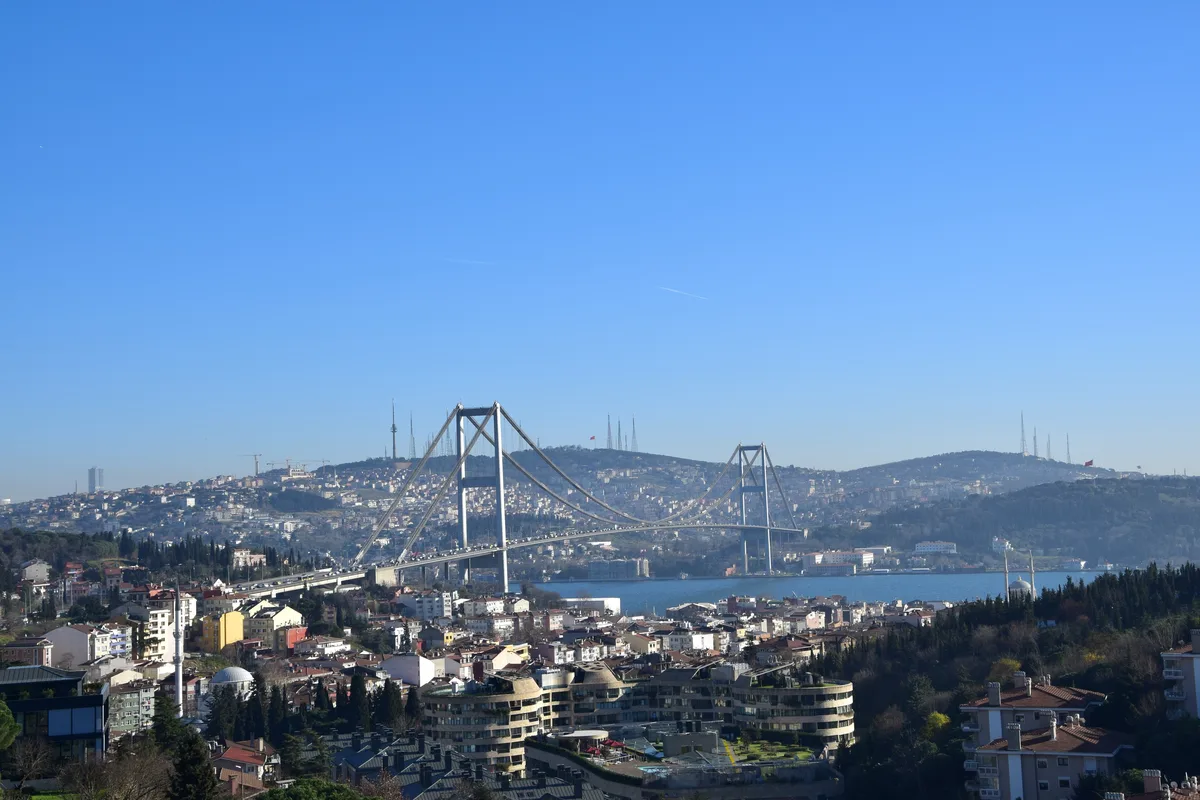
Every list of things to do in istanbul should contain one day organised by water, because the Bosphorus is not the gap between the sights – it is one of them. The strait carries the city’s whole story along its shores: waterfront palaces and wooden mansions, two great suspension bridges, the fortress of Rumeli Hisarı that Mehmed II built in 1452 to strangle Constantinople’s supply line, and the working traffic of one of the world’s busiest shipping channels threading between it all. Seen from a deck, Istanbul stops being a list and becomes a place.
The city’s own operator, Şehir Hatları, runs the classic Bosphorus tour from Eminönü up the strait towards the Black Sea, ending at Anadolu Kavağı, a fishing village under a ruined castle on the Asian shore, where the boats pause long enough for a fish lunch before the return. Taken in full it is most of a day; a shorter loop version turns back partway and suits tighter schedules. Both are paid as ferry fares, not cruise tickets. Alongside them, the ordinary commuter crossings – Eminönü or Karaköy to Üsküdar or Kadıköy, about twenty minutes – deliver the full skyline for the price of a journey you wanted to make anyway; time one for the late afternoon and the light does the rest.
What to skip is the middle market. The waterfront touts selling sunset cruises, dinner cruises and “Bosphorus tours” at many times the ferry fare are selling the same water and, in most cases, a lesser boat. A private yacht makes sense for an occasion; nothing about the view is exclusive to it. Choose the city ferry, sit on the side facing the shore you have not yet explored, buy tea from the onboard seller when he passes, and let the strait unroll. Sequence the day around it rather than bolting it onto a museum morning – water days and monument days run on different clocks, and the Bosphorus deserves its own.
Read the shores as you pass them, because the strait is also an architecture tour. The wooden waterfront mansions – the yalı – are the Ottoman elite’s summer palaces translated into timber, some grand, some gently collapsing into the water that made them desirable. The two fortresses face each other at the strait’s narrowest point like the jaws of a trap, which is exactly what they were. And the villages the ferry calls at – Ortaköy with its mosque under the bridge, Arnavutköy’s painted houses, Kanlıca on the Asian shore, famous for its yoghurt – are each a small Istanbul of their own, any one of them a legitimate place to hop off, wander, and catch the next boat. Of all the things to do in istanbul that require no booking, no queue and no plan, this floating survey of two continents is the best.
Galata Tower and Karaköy – Across the Golden Horn
Cross the Galata Bridge – fishermen shoulder to shoulder along its rails, the smell of grilled fish rising from below – and you are in Beyoğlu, the nineteenth-century city on the Golden Horn’s northern shore. Karaköy, at the bridge’s foot, has spent two decades converting its hardware-store streets into the city’s café, gallery and design quarter without sanding off the edges: you can still buy rope, anchors and industrial paint between the flat whites. It is the natural lunch stop of a cross-the-water day and the base of the hill that everything here climbs.
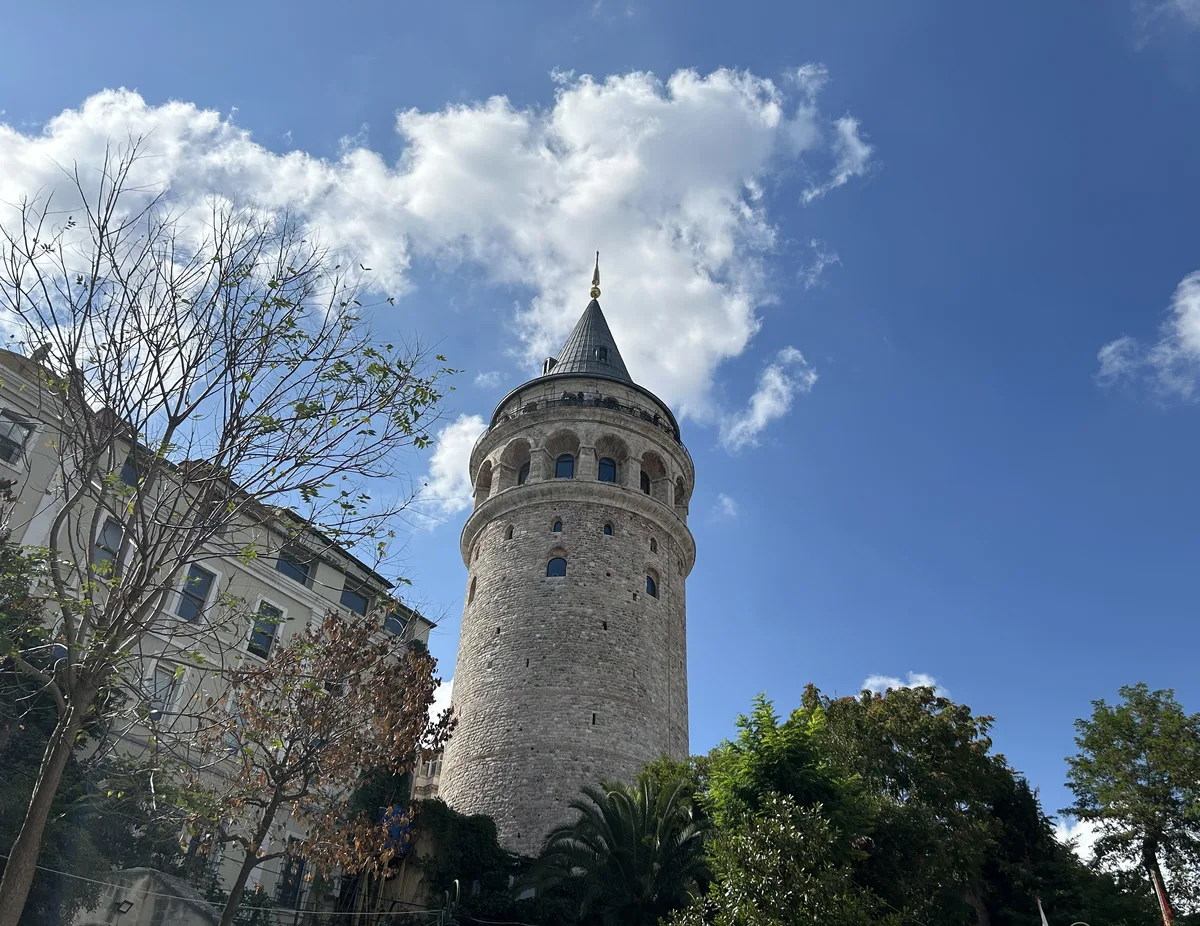
Above Karaköy rises the quarter’s landmark, the Galata Tower: a stone cylinder built by the Genoese in 1348, when this shore was their fortified colony, and in current arrangements run as a museum with a viewing gallery near its top. The gallery earns its fame honestly – the panorama takes in the Golden Horn, the Bosphorus mouth, the old city skyline and the Asian shore in one slow turn, and it is the best single orientation device in Istanbul: go up once, early in the trip, and the city’s geography clicks into place. The bottleneck is the lift and the gallery’s modest size, so go early or late rather than at the midday peak, and treat any queue as the price of a small medieval tower doing a big modern job.
Pair the tower with the streets below and above it. Below: Karaköy’s lanes, its converted warehouses, the waterfront promenade taking shape along the shore. Above: the steep, cafe-lined climb past the tower towards İstiklal, through streets of music shops, antique dealers and old apartment houses with Parisian bones. A few streets from the tower stands the Galata Mevlevihanesi, the city’s oldest whirling-dervish lodge, founded in 1491 and now a small museum – the quiet, contemplative counterpoint to the tower’s panorama, and the place to understand the Sufi order whose ceremony Istanbul’s visitors so often encounter only as a show. This is the district that pairs naturally with a bazaar morning – cross the bridge on foot, eat in Karaköy, climb to the tower, and let the afternoon become an evening in Beyoğlu. For orientation alone, the tower earns its place among the essential things to do in istanbul.
İstiklal Avenue – The City’s Living Room
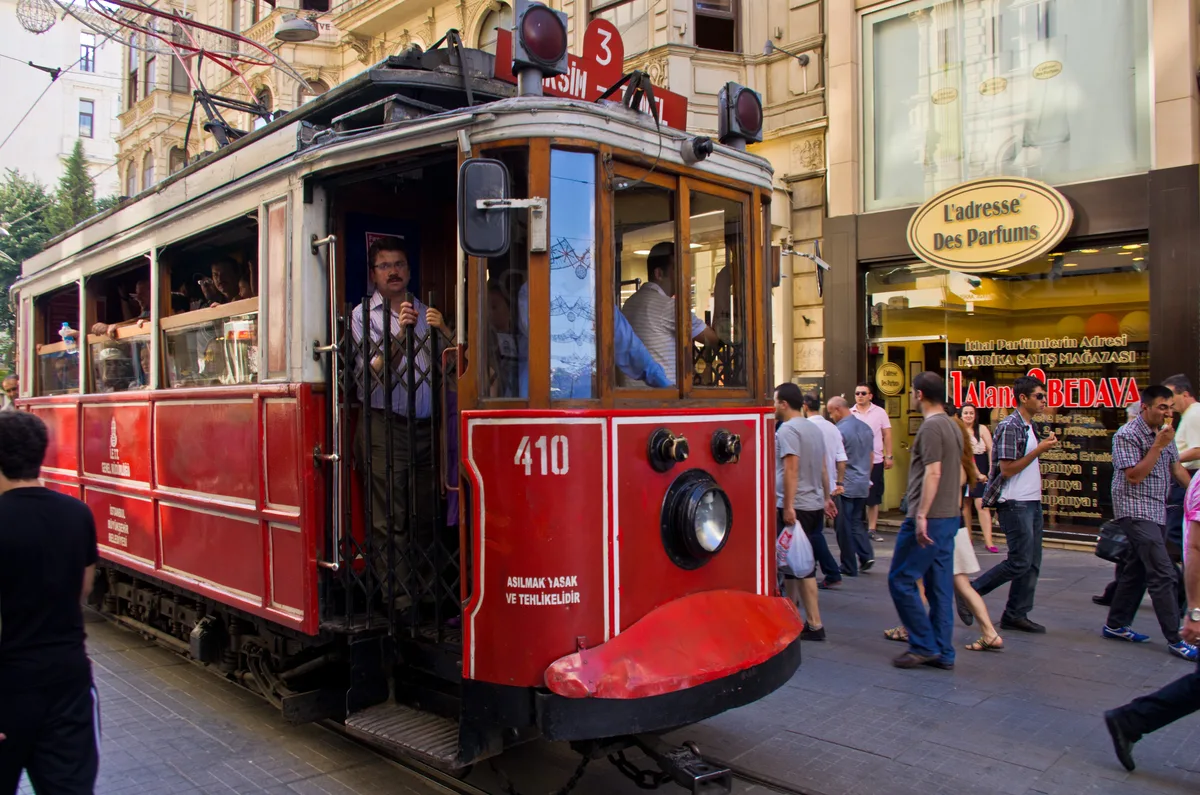
From the top of the Galata hill, İstiklal Avenue runs for a long, straight, pedestrianised sweep to Taksim Square – the grand nineteenth-century artery of Beyoğlu, lined with the facades of old embassies, arcades, churches, cinemas and bookshops, and walked daily by a fair cross-section of the entire city. İstiklal is not a sight you visit so much as a current you step into. The red nostalgic tram that rings its bell down the avenue’s centre is its moving emblem: part transport, part ceremony, wholly in the way, and all the more loved for it.
Walk it properly, which means wandering off it. The arcades that pierce its buildings – flower passages turned restaurant courts, old shopping galleries with tiled floors and sleepy cats – hold the avenue’s older character better than the flagship stores on its face. The side streets drop steeply towards Karaköy on one side and climb into Cihangir’s café streets on the other, where the city’s journalists, actors and priced-out romantics have layered their own Istanbul over the grand one. Duck into a church courtyard, a historic patisserie, a record shop; İstiklal rewards browsers and punishes marchers.
Timing is the whole trick. By day İstiklal is a shopping street with good bones; after dark it becomes the city’s living room, the bookshops and meyhane spilling out, buskers at the corners, the tram inching through a crowd that treats it as furniture. Build Beyoğlu days to end here rather than start here – tower and Karaköy in the daylight, İstiklal as the light fails, dinner in a side street – and you have understood the district the way its residents arrange it themselves.
Two ends, two anchors. At the Taksim end stands the square and its Republic Monument, the ceremonial centre of the modern city; at the other, the Tünel – the short funicular that has hauled passengers up and down this hill since 1875 and ranks among the world’s oldest underground urban railways – drops you back to Karaköy in a couple of minutes. Ride it once, not for the time saved but for the continuity: the same hill, the same journey, a century and a half of Istanbulites. Of the after-dark things to do in istanbul, an evening that starts with the Tünel, walks İstiklal end to end and ends in a meyhane side street is the least missable.
Dolmabahçe Palace – The Empire Learns a New Language
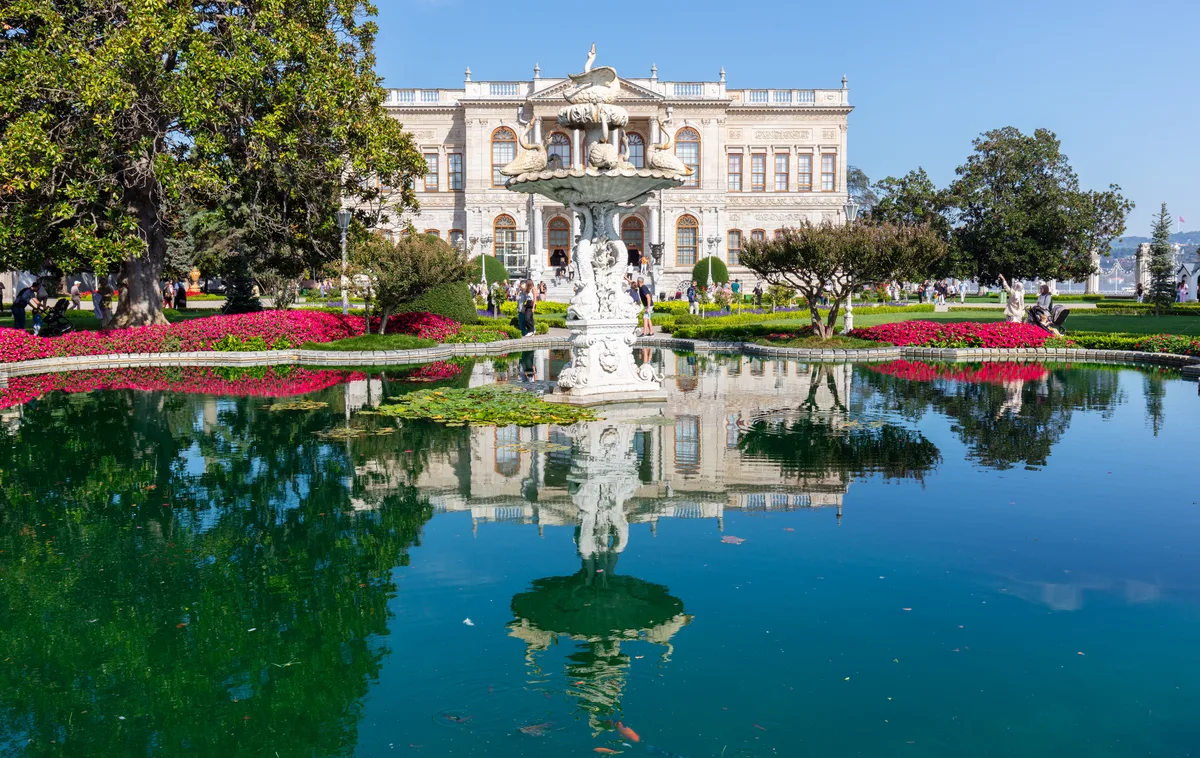
Half an hour’s walk or a short tram ride north of the Galata Bridge, along the Bosphorus shore at Beşiktaş, Dolmabahçe is the palace Topkapı’s sultans left for: a long, white, baroque-and-neoclassical facade built in the 1840s and 1850s for Sultan Abdülmecid I, facing the water like a European royal residence that happens to be in Istanbul. Where Topkapı is a gardened town of pavilions, Dolmabahçe is a single statement building – hundreds of rooms along one axis, a ceremonial hall of chandeliers and columns, crystal staircases, and the full nineteenth-century apparatus of an empire presenting itself to Europe in Europe’s own architectural language.
The visiting arrangement matches the building’s formality. Dolmabahçe is run by the National Palaces administration, not the Ministry of Culture – which is why it sits outside the Museum Pass, a fact worth knowing before you wave one at its gate – and entry is in guided groups, at the palace’s pace rather than yours. The tour carries you through the state rooms to the great ceremonial hall; the Harem section and the grounds, with their fountains, ponds and water gates, complete the picture of a court that had traded Topkapı’s layered privacy for display. Atatürk used the palace as his Istanbul residence and died here in 1938; the room is kept as it was, which adds a republican layer to the imperial one.
Set expectations honestly and Dolmabahçe rewards them. You will not wander, linger or double back; the group moves, and photography rules apply as the administration sets them. What you get instead is the single most complete interior in the city and the essential counterweight to Topkapı – the before and after of Ottoman monarchy, two palaces an hour apart. Do both, on different days, and the old city’s sections suddenly read as one long story about how an empire changed its mind. Ranked side by side, the two palaces are the grandest indoor things to do in istanbul, and the contrast between them – pavilions versus palace, garden versus facade, privacy versus display – is the nineteenth century explained in buildings. Allow time after the tour for the grounds and the ornate clock tower by the gate, and for the shore itself: the palace’s water gates open straight onto the Bosphorus, and the view back across to Asia is the one its builders placed above every room.
Üsküdar and the Maiden’s Tower – The Asian Shore at Sunset
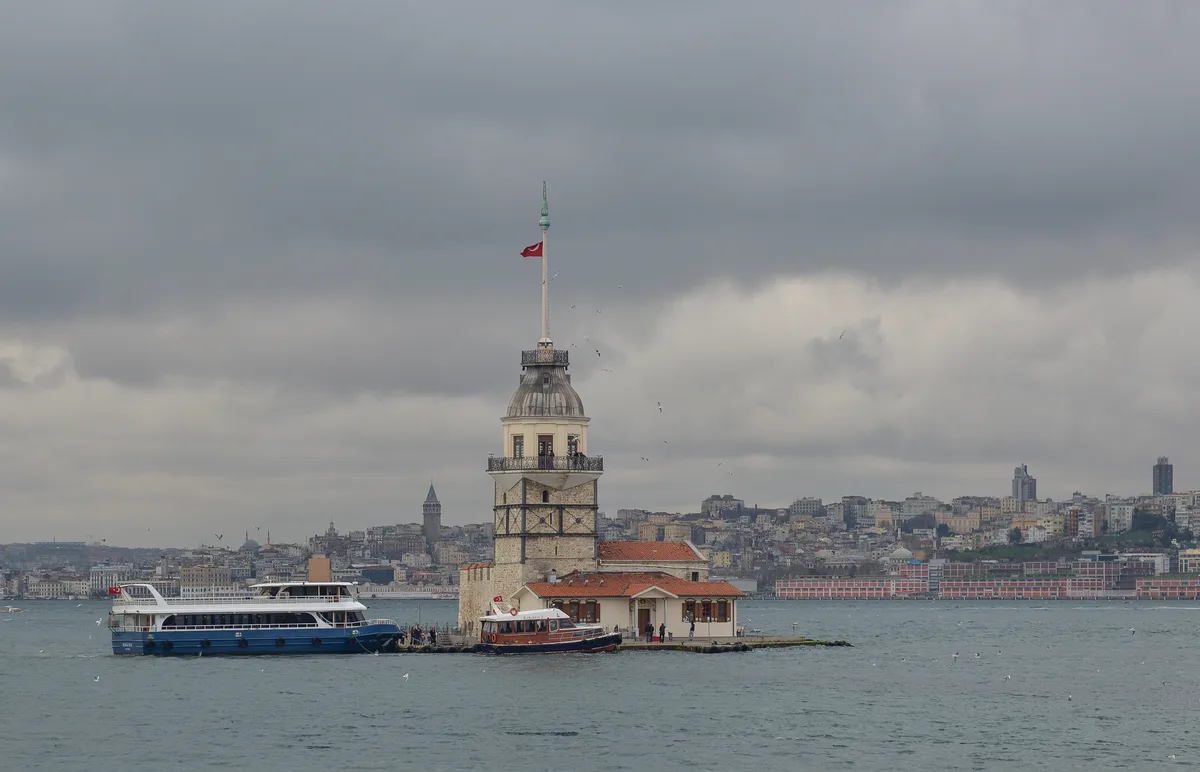
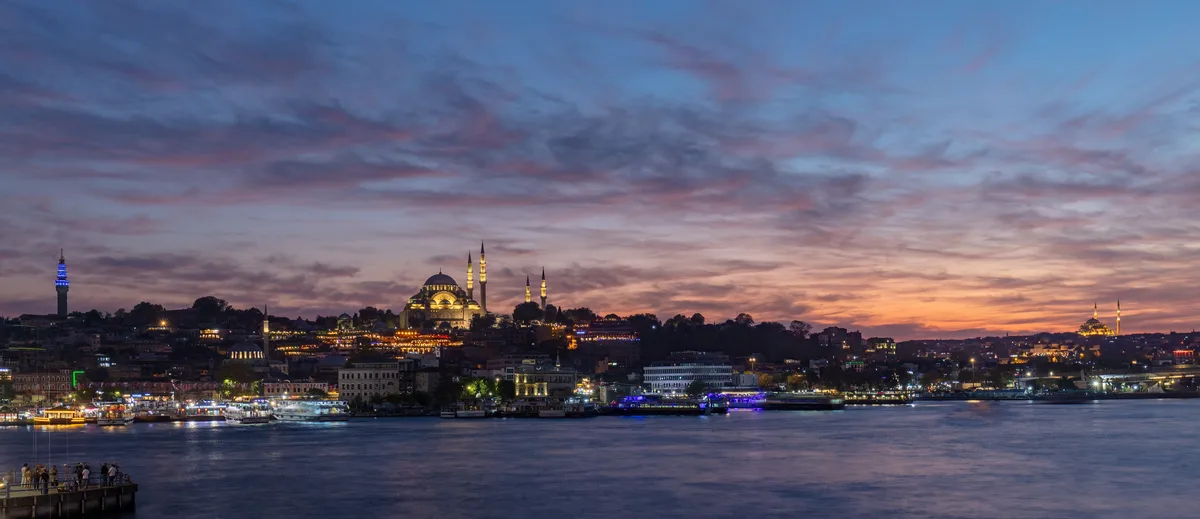
The twenty-minute ferry from Eminönü or Karaköy to Üsküdar is the cheapest ticket to the city’s best daily performance: Istanbul looking at itself. Üsküdar is the conservative, handsome elder of the Asian shore – a ferry square framed by Sinan’s Mihrimah Sultan Mosque, tea gardens along the waterfront promenade, and a local rhythm that treats the tourist tide across the water with polite indifference. Come in the late afternoon, because Üsküdar faces west, across the Bosphorus mouth, straight at the Sultanahmet skyline – and sunset here is not an activity, it is the town’s standing appointment.
On its islet a few hundred metres offshore stands the district’s emblem, the Maiden’s Tower – Kız Kulesi – a small tower with Byzantine bones and an Ottoman silhouette, wrapped in two legends (a princess, a prophecy, a basket of figs and an asp) that the city retells without insisting on either. Restored and reopened as a monument in recent years under the Ministry of Culture, it is reached by boat from the Üsküdar shore at Salacak in current arrangements; whether you cross to it or admire it from the promenade with a tea, it performs the same service – the foreground object that turns the skyline into a composition.
Üsküdar is also the shore’s front door. The Marmaray rail tunnel and the metro radiate from its square, the Kadıköy-bound buses and minibuses run along the coast road, and the waterfront walk south towards Salacak and Harem is one of the city’s great evening promenades. On that walk you pass the Şemsi Pasha Mosque, a small, perfect Sinan complex pressed between the road and the water, its library and tomb riding out the Bosphorus spray – the connoisseur’s Üsküdar sight, free, calm and usually nearly empty while the square behind it bustles. If the Asian side gets only half a day of your trip – and it deserves a whole one – spend it here, at this hour, in this order: ferry over, mosque square, promenade, tea, tower, sunset, ferry back through the lit water. As free things to do in istanbul go, that sunset crossing home has no serious rival.
Kadıköy and Moda – The Larder and the Day Off
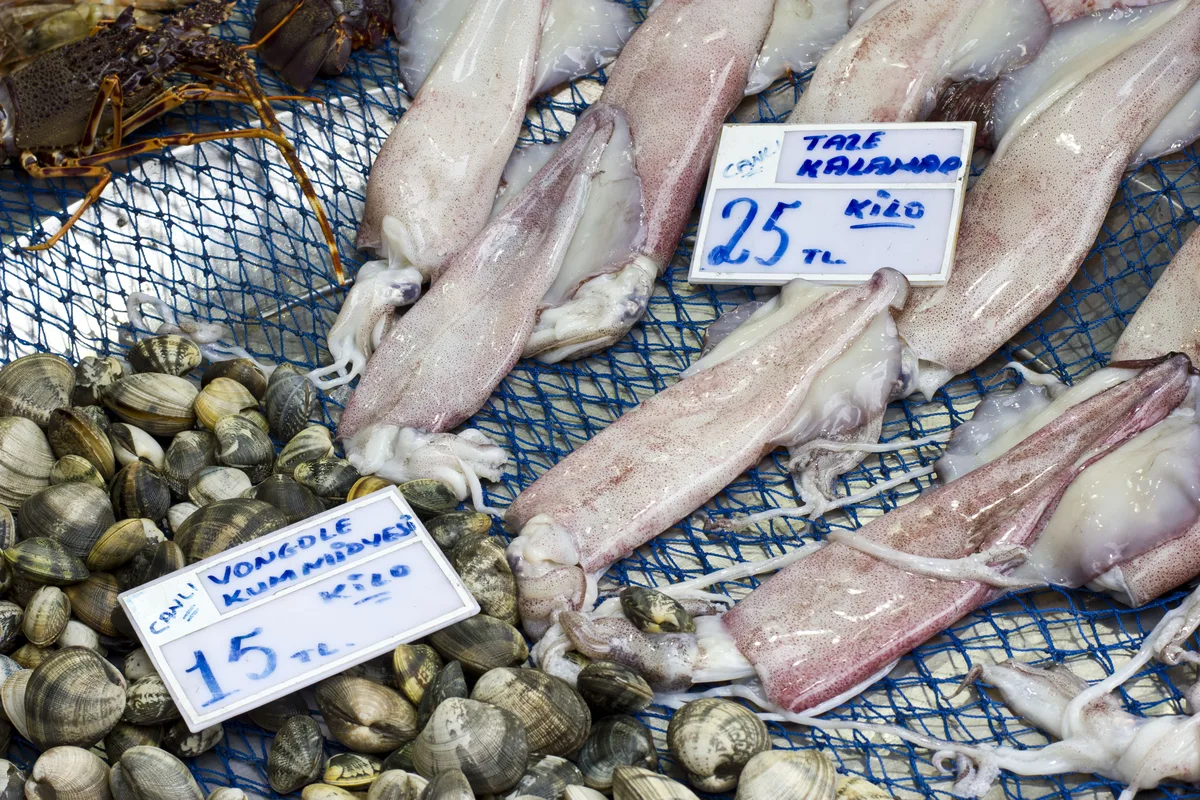
One stop down the Asian shore from Üsküdar – or a direct ferry from Karaköy, Eminönü or Beşiktaş – Kadıköy is where the things to do in istanbul stop being monuments and start being lunch. Its market quarter, a dense grid behind the ferry pier, is the city’s finest food shopping: fishmongers icing the morning’s catch, pickle shops in violent greens and pinks, olive and cheese counters, bakeries, spice stalls, coffee roasters, and restaurants of every register from workers’ canteens to long-established meyhane where the raki-and-meze ritual runs all evening. The crucial difference from the Spice Bazaar is the clientele: this market feeds a neighbourhood, and it prices and behaves like it.
Graze it with intent. A Turkish breakfast done properly – cheeses, olives, eggs, honey, warm bread, tea that keeps arriving – is Kadıköy’s opening argument, and it takes the time it takes. Then the market itself, then the surrounding streets, where the quarter has grown a second life of vintage shops, record stores, street art and third-wave coffee in the lanes around the old Moda road. The nostalgic tram loop that circles out to Moda is Kadıköy’s own smaller echo of İstiklal’s: ride it once around to get your bearings, then walk back. The quarter’s unofficial headquarters is the bull statue at Altıyol, where six roads meet – every Kadıköy arrangement begins “at the bull”, and standing there watching the crossings swirl is as good an introduction to the Asian side’s energy as any sight on this list. The market is one of the things to do in istanbul that needs no occasion, no ticket and no plan beyond appetite.
Moda, the leafy headland a short stroll south, is where the district exhales: tea gardens on the point, families on the grass, swimmers off the rocks in season, and the Bosphorus traffic sliding past at conversational distance. There is nothing to tick off here, and that is the point. Kadıköy and Moda together are the strongest argument for giving the Asian side a full day rather than a sunset raid – the day that converts Istanbul from a monument list into a city you could imagine living in.
Balat and Fener – The Golden Horn’s Old Quarters
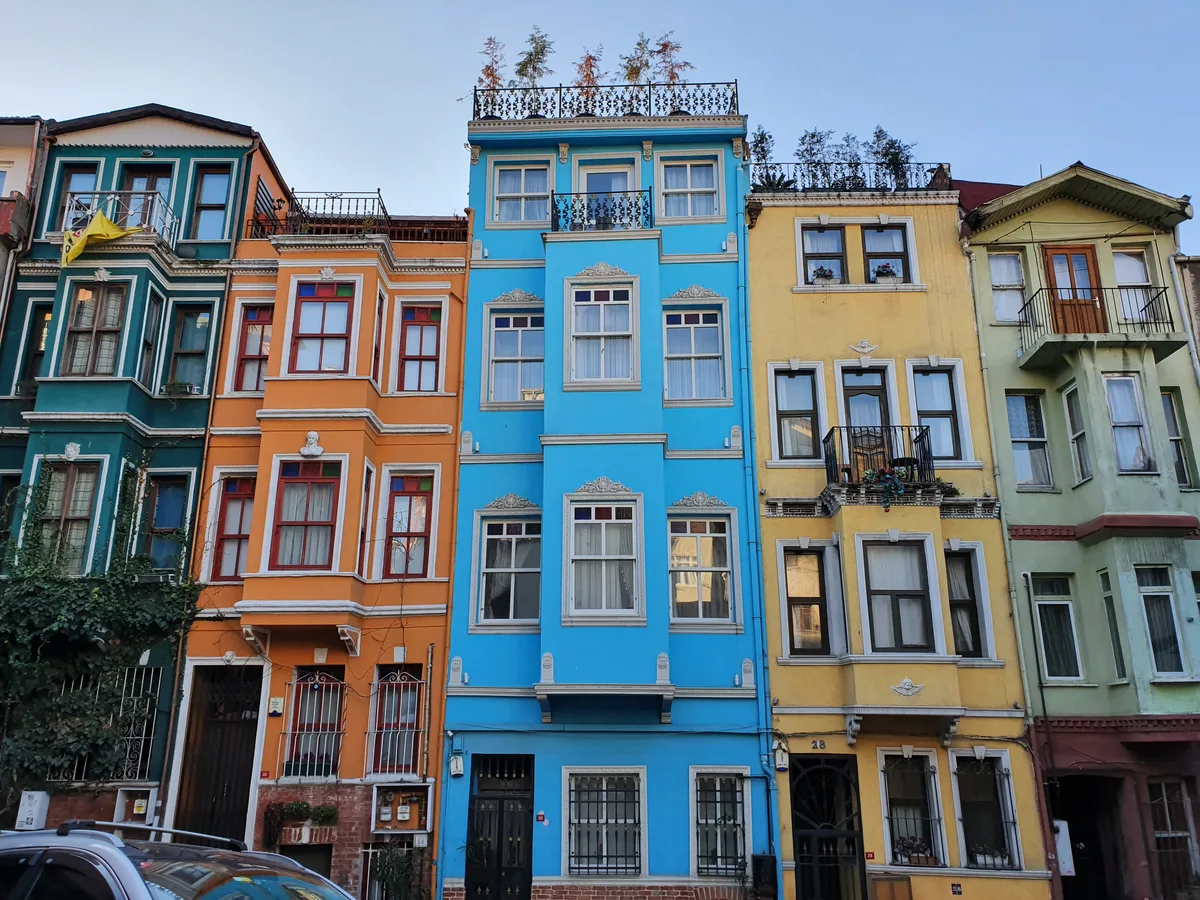
Back on the European shore, up the Golden Horn from Eminönü, the quarters of Fener and Balat hold the city’s other past: Fener the historic seat of the Greek Orthodox Patriarchate, whose cathedral still stands behind its walls, and of grand Greek merchant houses and a great red-brick Greek school that looms over the shore like a castle; Balat its historically Jewish neighbour, of synagogues, small workshops and steep lanes. For centuries these were among the most cosmopolitan streets in the empire, and their layered, slightly crumbling fabric still says so.
What draws visitors now is the colour. Rows of painted houses – blues, ochres, greens – climb Balat’s slopes, antique shops and design cafés have moved into the ground floors, and the quarter has become one of the city’s most photographed walks. Go with the right spirit: this is a living, working-class neighbourhood negotiating a fast rise in visitors, not a set. Photograph the streets, spend money in the cafés and shops that make the colour worth keeping up, keep voices down on the residential lanes, and treat the synagogues, churches and the Patriarchate as the working religious sites they are.
Anchor the wandering to the quarter’s real monuments, because they repay it. In Fener, the Patriarchal Church of St George holds the seat of the Ecumenical Patriarchate behind an unassuming wall – a modest exterior guarding a gilded interior and a weight of history out of all proportion to its size. Above it looms the great red-brick mass of the Greek Orthodox College, founded in the fifteenth century and still the hill’s unmistakable landmark. In Balat, the Ahrida Synagogue, among the city’s oldest, carries the quarter’s Jewish centuries in the same few streets. Seen together – patriarchate, school, synagogue, mosque, market – Fener and Balat compress the Ottoman city’s whole plural experiment into one walkable hillside, which is why historians love these quarters at least as much as photographers do.
Balat pairs naturally with the Bosphorus ferry’s Golden Horn route or with a walk up the shore from Eminönü, and it fills a half day comfortably alongside Fener. It is also the gentlest of the things to do in istanbul for travellers tiring of queues: no ticket, no closing day, no dress code beyond ordinary respect – just steep lanes, strong coffee and the Golden Horn widening below.
The Princes’ Islands – The City’s Pressure Valve
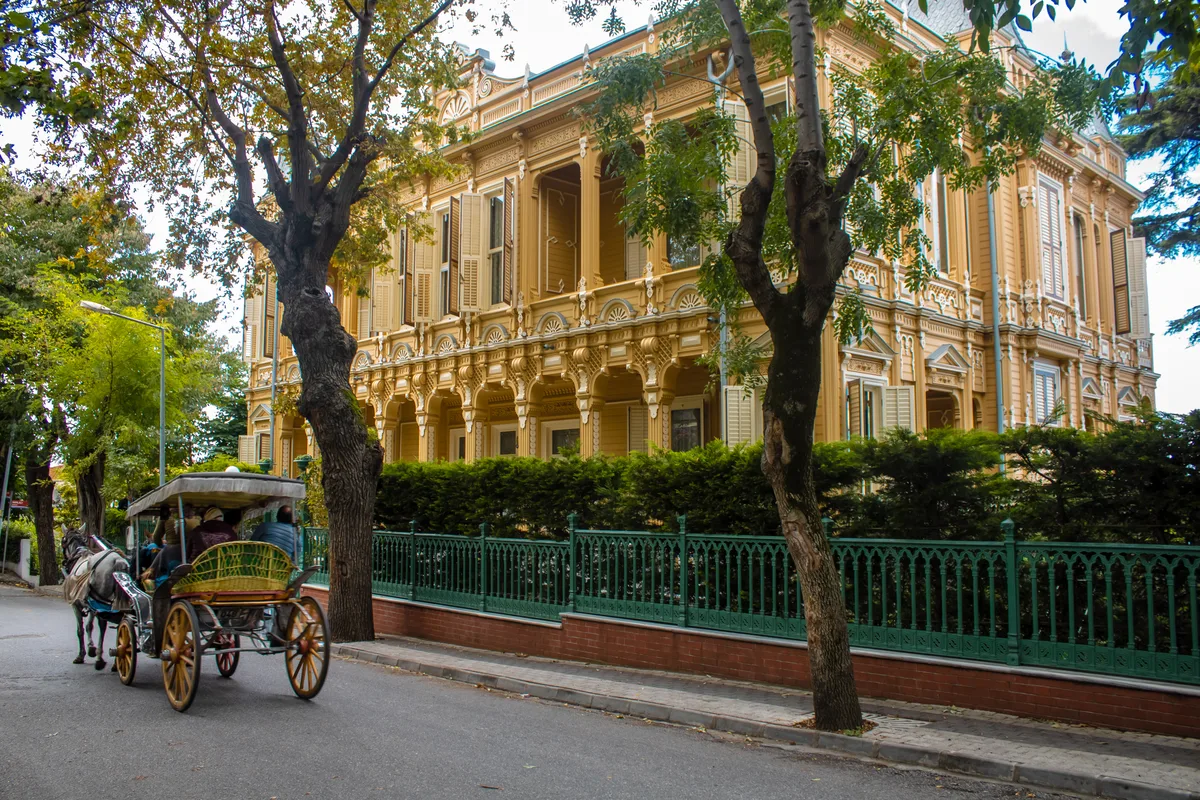
When Istanbul wants a weekend, it takes the ferry to the Princes’ Islands: an archipelago of nine islands in the Sea of Marmara, an hour or so by city ferry from Kabataş, Eminönü or Kadıköy, where the air changes, the traffic noise stops, and the nineteenth century lingers in the form of wooden summer mansions along pine-shaded lanes. Four islands take regular ferries; Büyükada, the largest, takes most visitors, and it is the one to choose for a first island day. The others – Heybeliada, Burgazada, Kınalıada – are quieter rungs on the same ladder.
The islands’ defining rule is the absence in the photograph above: motor traffic never ruled here, the horse-drawn carriages that did were retired in 2020, and in current arrangements electric vehicles and bicycles do the carrying. So an island day arranges itself around walking and cycling: rent a bicycle near the pier if the hills do not frighten you, walk the mansion streets if they do, climb to the Monastery of St George on Büyükada’s summit for the panorama if the day is clear, and build in the sea – the islands’ swimming spots, from public shores to beach clubs, are the summer point of the whole exercise. The town squares do a brisk trade in ice cream, fish restaurants and waffle stands calibrated precisely to ferry arrivals.
The discipline is the timetable. The ferry out is the day’s first pleasure and its framing device – sit outside, watch the city shrink and the islands grow – and the last ferry back is a hard edge, not a suggestion: miss the comfortable one and you join the whole island queueing for the late boat. The crossing also doles out the archipelago in order: Kınalıada first and closest, then Heybeliada, where the great theological school on its hill has stood closed since 1971 and the island keeps its quieter, greener character, then Burgazada, the writers’ island, and finally Büyükada. Check the Şehir Hatları island schedule when you plan the day, choose a weekday if you can (summer Sundays are the city’s day off taken en masse), and let the islands do what they have done for a century and a half – give Istanbul back to its residents, and its visitors back their calm. When the monuments begin to blur together, the islands are the things to do in istanbul that cure it.
Eating and Drinking – The Other Sightseeing
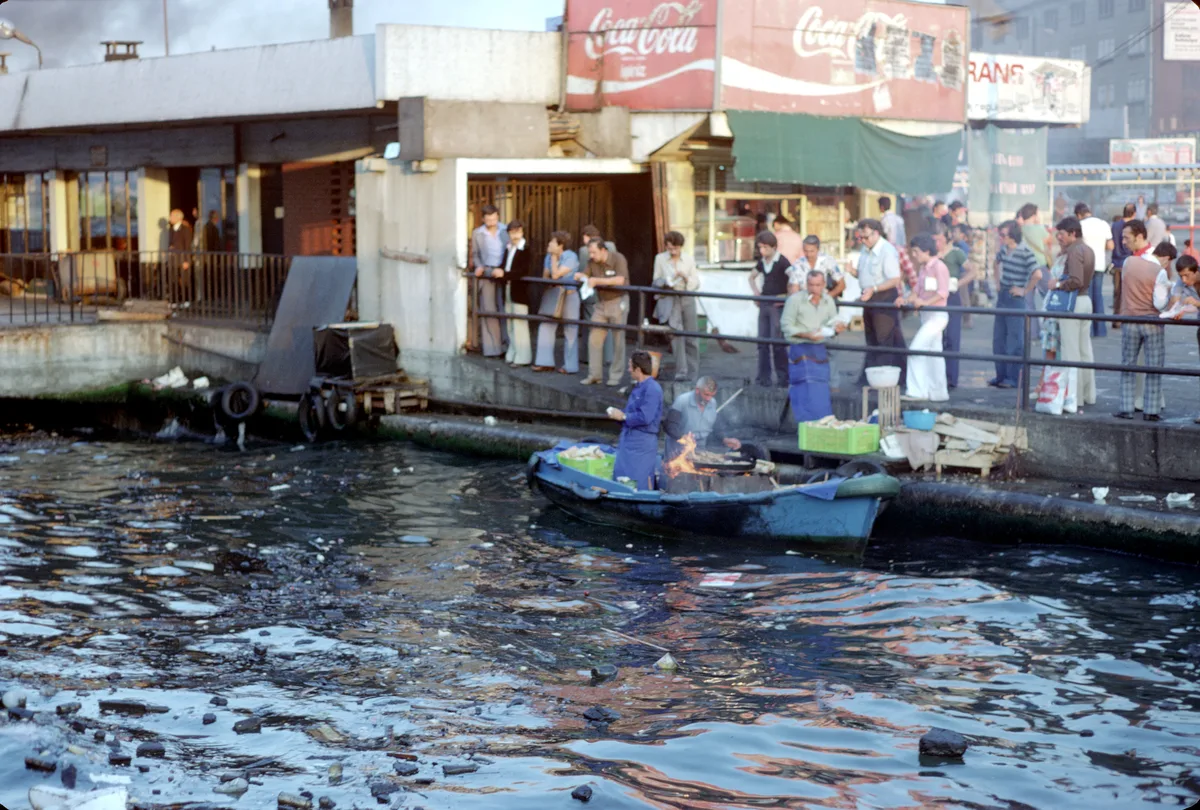
No honest list of things to do in istanbul can treat eating as fuel. This is one of the world’s great food cities, and its signature experiences are as visitable as its palaces. Start at Eminönü, where the rocking boats at the Galata Bridge grill fish for the balık ekmek – a grilled-fish sandwich with onion and lettuce, eaten on the quay with pickles and turnip juice from the stalls beside. It is theatre, lunch and waterfront in one transaction, and it belongs to the same Eminönü half hour as the Spice Bazaar and the ferry piers.
Build the rest of the city’s edible geography around it. The meyhane evening – raki, meze arriving in waves, grilled fish, no hurry – is the classic Istanbul night out, done best in Beyoğlu and Kadıköy where the locals do it. Breakfast is a meal the city refuses to rush, and deserves a slow morning of its own. Simit from a street cart, tea in a tulip glass anywhere with a view, Turkish coffee cooked slowly and read by optimists, baklava in small quantities and often, kebabs in the places that do one thing only – each of these is a small appointment with how Istanbul actually lives, and most cost less than the sights’ audio guides.
The honest catch is only this: the restaurant rows immediately around Sultanahmet Square are priced and pitched for visitors, and the city’s best eating sits, like its best everything, one neighbourhood away – across the bridge in Karaköy and Beyoğlu, across the strait in Kadıköy, uphill in Balat. Treat meals as destinations and schedule them like sights; a trip that eats where it sleeps will remember the food as an afterthought, and in Istanbul that is a waste of a sense.
Add the institutions to the grazing. The historic lokanta – the tradesmen’s restaurant serving ready dishes from steam trays, eaten shoulder to shoulder at speed – is Istanbul’s democratic dining room, and the old pudding shops, the muhallebici, are its sweet counterpart, serving milk puddings and chicken-breast dessert to the same families for generations. Neither performs for visitors; both explain the city faster than a museum label. It is a cliché because it is true: several of the best things to do in istanbul are eaten, not visited, and the traveller who plans the meals with the same care as the monuments comes home with the fuller trip.
Things to Do in Istanbul – Questions, Answered
How many days do you need for the things to do in istanbul? Three full days covers the core honestly: one for Sultanahmet’s icons, one for the bazaars and Beyoğlu, one for the Bosphorus and the Asian shore. A fourth day buys the Princes’ Islands or a slower repeat of whatever won the first round. Five days lets the city breathe. Fewer than three means choosing, not seeing – and with two, choose Sultanahmet plus one water day and leave the rest for a return trip you will probably start planning on the ferry back to the airport.
What should you do with only one day in Istanbul? Spend it on the historic peninsula and accept the discipline: Hagia Sophia and the Blue Mosque ordered around the prayer times, Topkapı if the day is not its closing day, the Basilica Cistern as the interval, and the late afternoon on a commuter ferry across to Üsküdar or Kadıköy and back for the skyline. That single day holds both continents, three empires and the city’s essential trick – the monument in the morning, the water at dusk. Everything else is a promise to return. If the day allows one indulgence, make it an edible one: a balık ekmek at Eminönü between the cistern and the ferry is the most Istanbul of the quick things to do in istanbul, and it costs less time than the queue for most second-tier sights.
How do you visit Hagia Sophia now? As a ticketed visitor, not a museum walk-in. Since January 2024 foreign visitors use a separate entrance on the Topkapı side of the building and follow a route through the upper gallery; the prayer hall is reserved for worship, the route closes during prayer times with a longer Friday-midday closure, and mosque dress applies throughout. The Museum Pass does not cover the ticket. The current fee, hours and closure pattern are published on the official museum portal, muze.gov.tr – check there in the week you travel, because they change and guidebooks lag.
Is the Museum Pass worth it? It depends entirely on your mix. The pass, sold by the Ministry of Culture and Tourism through muze.gov.tr, covers a defined list of Ministry museums – Topkapı and the Archaeology Museums among them – for a run of days from first entry. It does not cover Hagia Sophia’s gallery ticket, the Basilica Cistern (run by the municipality) or Dolmabahçe (run by the National Palaces). If your days are museum-dense, do the arithmetic on the portal and the pass often wins; if they are mosques, bazaars, ferries and neighbourhoods, it cannot, because those are free or separately priced anyway.
Which side of the city is better, Europe or Asia? They are different trips sharing a ferry. The European side holds the monuments: Sultanahmet, the bazaars, Beyoğlu. The Asian side holds the city’s daily life at its most enjoyable: Üsküdar’s sunset shore, Kadıköy’s market and Moda’s tea gardens, at prices set for residents. Base on the European side for a first trip unless you already know you prefer the local end of a city, and cross to Asia for at least one full day – the visitors who skip it are the ones who describe Istanbul as a museum, and they are describing their itinerary, not the city.
When is the best time of year for Istanbul sightseeing? Spring and autumn are the city’s generous seasons – walkable temperatures, clearer light, the full ferry network in its element. Summer brings heat and the thickest crowds to the Sultanahmet core, though the Bosphorus and the islands handle it best. Winter is cold, grey and genuinely atmospheric, with quiet museums and short days that reward an early start; the monuments are the same monuments, and the queues are not. Ramadan and the major holidays shift by the lunar calendar each year and affect opening arrangements and domestic travel – check your travel year’s dates before fixing a route.
Are the Princes’ Islands worth a day of a short trip? On a trip of four days or more, yes – they are the city’s pressure valve and its most complete change of pace, and the ferry ride is itself one of the great crossings. On a three-day trip, they are the first thing to cut, because the day they cost is the day the bazaars, Beyoğlu or the Asian shore needed. If you go, go on a weekday, rent the bicycle or take the electric shuttle without nostalgia for the retired carriages, and guard the last comfortable ferry home like a flight.
The Short Version
Istanbul rewards order over appetite. Do the icons properly – Hagia Sophia in its new visitor arrangement, the Blue Mosque between prayers, Topkapı at half-day length, the cistern as the cool interval, the Archaeology Museums as the quiet masterpiece – and give the bazaars a weekday. Cross every piece of water the city offers: the Golden Horn on foot, the Bosphorus by city ferry, the strait to an Asian shore that eats better than it photographs. Climb the Galata Tower once, early in the trip, and let the panorama organise everything after. Save a day for the islands if you have it, eat as if it counted as sightseeing – because here it does – and check every changeable fact, from closing days to the pass’s small print, on the official portal before you build a day on it. That is the whole method; the city supplies the rest. And if the list above looks longer than your trip, relax into the arithmetic: the things to do in istanbul outlast every itinerary ever written for them, which is why the city, alone in this guide, is best measured not in days but in returns.