Ölüdeniz is two beaches sharing one famous name, and almost everything that confuses first-time visitors follows from that. Behind a curling spit of sand sits the Blue Lagoon, a sheltered, shallow, almost impossibly turquoise sheet of water that appears on a generation of Turkish tourism posters. In front of the spit, facing the open Mediterranean, runs Belcekız, the long town beach where the sunbeds stand in rows, the tour boats board, and the paragliders spiral down to land. They are a few minutes’ walk apart and they are not the same day out at all. This oludeniz beach guide treats them separately throughout, because a traveller who plans for the lagoon and arrives at Belcekız – or the other way round – will spend the first morning wondering what went wrong.
The setting explains the fame. Ölüdeniz is a small resort neighbourhood in the Fethiye district of Muğla province, on the Turquoise Coast where the Aegean gives way to the Mediterranean, and it sits in an amphitheatre of mountains. Babadağ, the great forested massif that rises to just under 2,000 metres almost directly from the shore, closes the view inland and gives the resort its second claim on the world’s attention. On any clear day in season the sky above the beach is dotted with paraglider canopies, launched from the mountain and landing on the sand. Add the lagoon, the boat trips to Butterfly Valley and St Nicholas Island, the start of the Lycian Way walking route above the resort, and a quiet nature-park cove at Kıdrak, and Ölüdeniz stops being a single beach and becomes a small holiday system. This guide takes it piece by piece – the water, the mountain, the boats, the walking, the staying and eating – and says plainly where each piece disappoints as well as where it shines.
One promise before the detail. This oludeniz beach guide prints no prices, because the figures that matter here – the nature park entry charge, sunbed rental, a tandem flight, a boat ticket, the cable car – change by the season and sometimes within it, and a price printed in a guide like this would be a guess wearing a fact’s clothes. What it gives instead is the mechanism: what is charged, how it is charged, and where to check the current figure on the day. It also prints no opening hours for the same reason. What it does not stint on is the honest sorting that a famous beach needs most: which water suits a nervous swimmer and which suits a confident one, when the crowds are at their worst, what the lagoon looks like when it is not posing for the poster, and who should take their holiday somewhere else entirely.
Oludeniz Beach Guide at a Glance – Two Beaches, One Mountain, One Very Famous Photograph
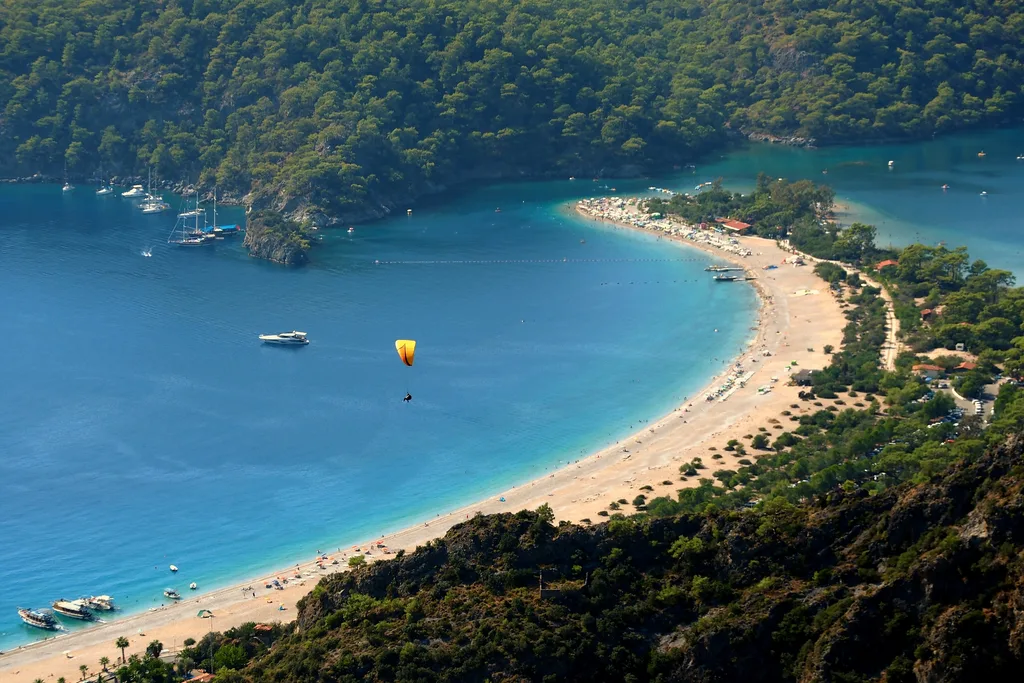
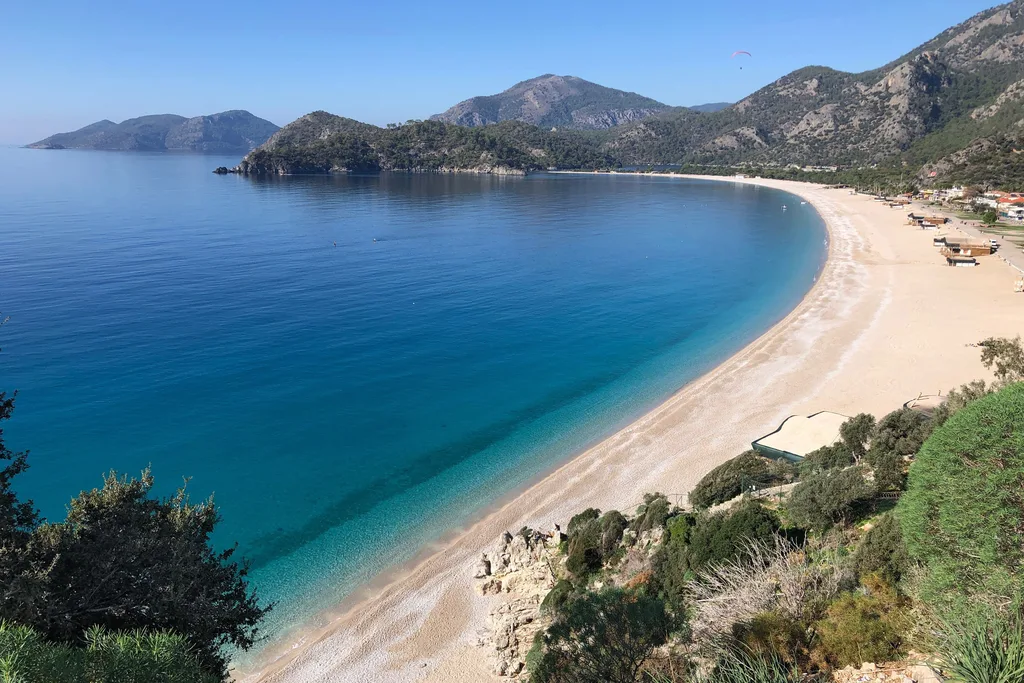
Start with the geography, because at Ölüdeniz the geography is the holiday. The resort street runs down from the hillside villages of Ovacık and Hisarönü to a promenade on Belcekız beach, the open-sea shore. Walk north along that promenade and the beach curves away toward the lagoon entrance. The lagoon itself – the Blue Lagoon of the posters – lies behind the Kumburnu sand spit, a narrow hook of sand and shingle that shelters a broad, shallow basin of still water from the open sea. The whole lagoon shore, the spit and the pine slopes behind them sit inside the Ölüdeniz-Kıdrak Nature Park, the protected area that has kept this stretch of coast free of the building that lines so much of the Mediterranean. That single fact – protection – is why the photograph still resembles the place.
The name needs one sentence, because it causes real confusion. Ölüdeniz means “dead sea” in Turkish, traditionally explained by water that stays calm even when the open coast is rough – the lagoon’s stillness, not the salt desert lake of the same English name in Jordan and Israel, with which it has nothing to do. The “Blue Lagoon” is the same place under its marketing name, used by GoTürkiye, the country’s official tourism platform, which calls Ölüdeniz Beach “otherwise known as Blue Lagoon” and places it about twenty minutes by car from Fethiye. Both names mean the resort and its lagoon together; neither name belongs to Belcekız alone, whatever the brochures imply.
Who is Ölüdeniz for? Swimmers who want calm, warm, shallow water and are happy to pay a park entrance and a sunbed charge for it. Active travellers who want a world-famous tandem paraglide, a boat day and a serious walking trail inside one small resort. Families who want everything – sand, food, boats, a promenade – within a short stroll. Who is it not for? Anyone whose idea of a beach is an empty one, at least in July and August; anyone on a tight budget who resents paying to reach sand; and anyone who wants a working Turkish town rather than a purpose-built resort strip – that traveller should base in Fethiye itself and visit Ölüdeniz as a day trip. The rest of this oludeniz beach guide works through the evidence for each of those judgements, section by section.
The Blue Lagoon – Inside the Kumburnu Spit
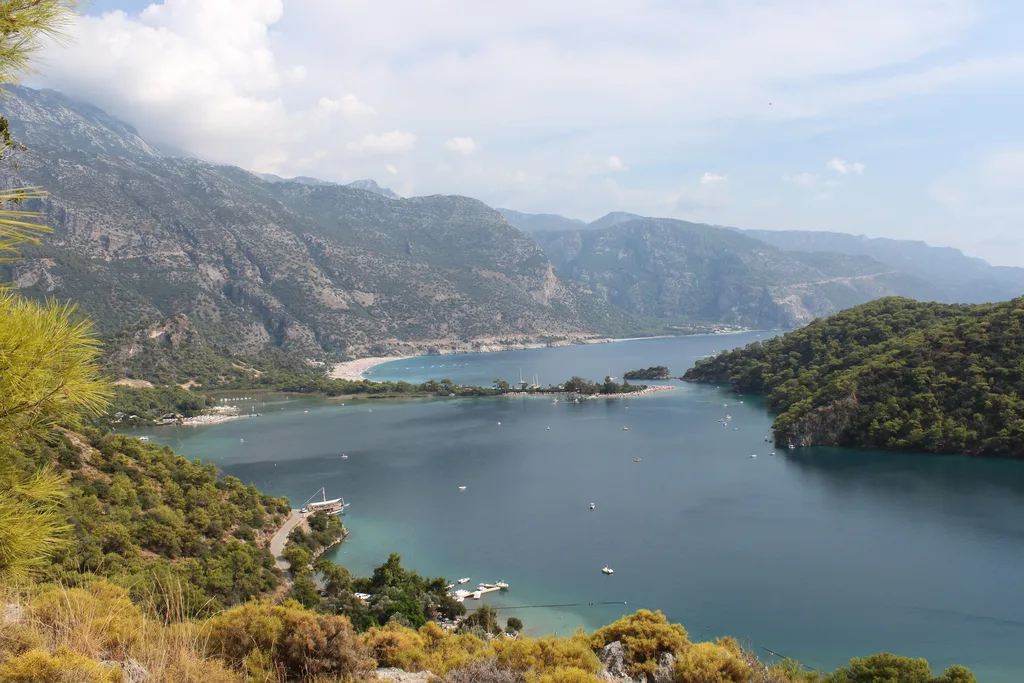
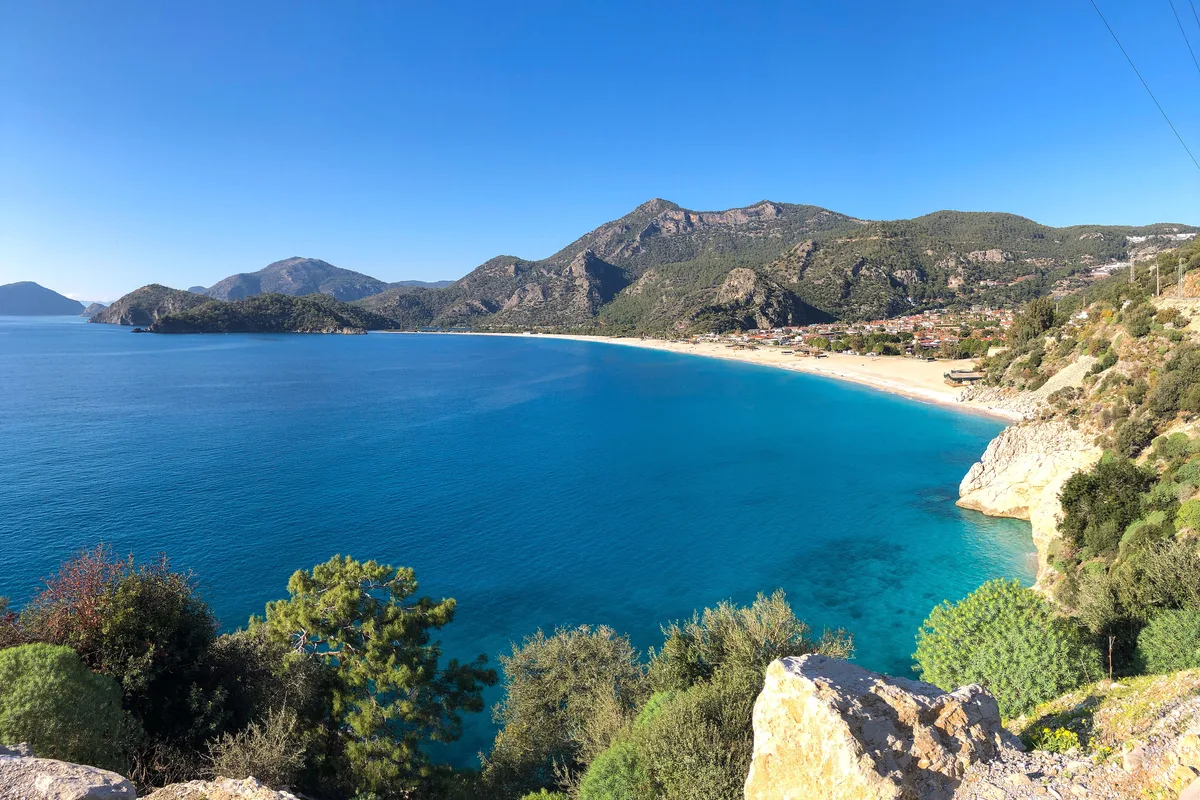
The lagoon is the reason Ölüdeniz is famous, and seen from the slope above – the view in the photograph at the top of this section – it earns the fame honestly. The Kumburnu spit hooks around a basin of water that shades from pale aquamarine at the sand to a deep turquoise in the middle, backed by pine-covered slopes and closed at its far end by wooded hills. The water is sheltered from the open sea by the spit itself, so it stays calm in weather that puts white horses on Belcekız, and it warms earlier and stays warm later than the open coast because the basin is shallow. This is the water in which nervous swimmers, children and anyone who simply wants to float and look at mountains will be happiest, and no oludeniz beach guide should pretend otherwise: for a gentle swim, the lagoon beats the open beach by a distance.
Reaching it works like this. The lagoon shore lies inside the nature park, and entry is through the park gate, where a charge is made – per person on foot and per vehicle, at rates set for the season and displayed at the gate. Inside, the shore is run as a serviced beach: rows of sunbeds and umbrellas for rent, cafes and beach bars behind the sand, showers and changing facilities, and the spit itself narrowing as you walk out along it to quieter sand at the far end. The further you walk from the gate, the thinner the crowd and the fewer the facilities, which is the lagoon’s own built-in sorting system. Arrive early in high season if you want a choice of spot; by midday in August the shore near the facilities is full in a way the poster never shows.
Two honest qualifications belong here. First, the lagoon is a living, shallow basin, not a swimming pool: its famous clarity is at its best in the morning and in the quieter months, and on the busiest afternoons the water near the shore can cloud with stirred-up sand and sunscreen, and patches of the shallows carry the green tint of a warm enclosed lagoon rather than the glass-blue of the photographs. It remains beautiful; it is not always the aquarium of the brochures. Second, the shore underfoot is a mixture – sand at the waterline in places, shingle and pebble in others – so swim shoes earn their place in the bag here as much as on the open beach. Neither point spoils the lagoon. Both are the difference between the place as it is and the place as it is sold, and a useful oludeniz beach guide should trade in the former.
Belcekız Beach – the Open Sea Side
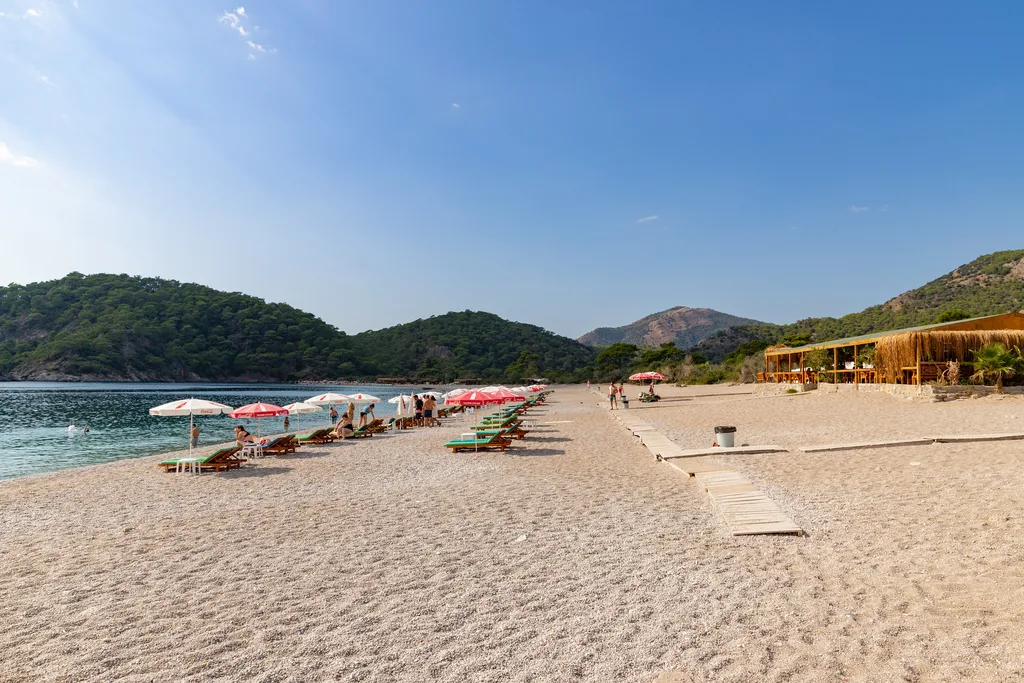
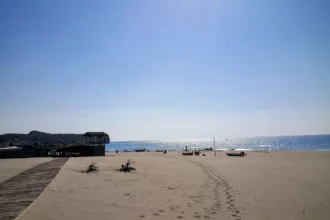
Belcekız – also spelled Belceğiz on some signs – is Ölüdeniz’s front door: the long, curving town beach that faces the open Mediterranean and backs onto the resort promenade. This is the beach you arrive at, the beach the dolmuş drops you beside, and the beach in the foreground of every view from the water. It is a beach of coarse sand and shingle rather than soft sand, shelving into real sea – clear, blue and refreshing, but with a seabed that drops away more decisively than the lagoon’s and a shore break that can be lively when the afternoon breeze gets up. Confident swimmers tend to prefer it to the lagoon precisely because it feels like the sea. Weak swimmers should respect the shelving and the waves on breezy days, and everyone should expect pebbles underfoot at the waterline.
Belcekız is also the resort’s stage. The paragliders land here, on and beside the beach, all through the flying day – a free spectacle that never quite gets old, as canopies spiral down out of a clear sky and flare onto the sand. The day boats board from this shore, the beach bars and cafes line the promenade behind it, and the serviced stretches rent sunbeds and umbrellas in rows, with freer, less serviced sand toward the lagoon end. Because it is the town beach, it asks no park entrance fee to walk onto – the charges here are the optional ones, for beds, umbrellas, food and drink – and it stays lively into the evening, when the promenade fills for the sunset walk and the bars take over from the swimming.
The catches are the catches of any successful resort beach. In high season Belcekız is busy from mid-morning, the serviced rows pack tight, and the music from the beach bars is part of the soundscape whether you ordered it or not. The shingle makes barefoot purists wince, and the sea, for all its clarity, is not the bathtub of the lagoon – toddlers and nervous swimmers will have a better day inside the spit. Read this oludeniz beach guide’s rule of thumb: lagoon for swimming, Belcekız for spectacle, sea air and the evening – and do not judge either beach by the other’s standards.
Swimming at Ölüdeniz – Lagoon Water Versus Open Sea
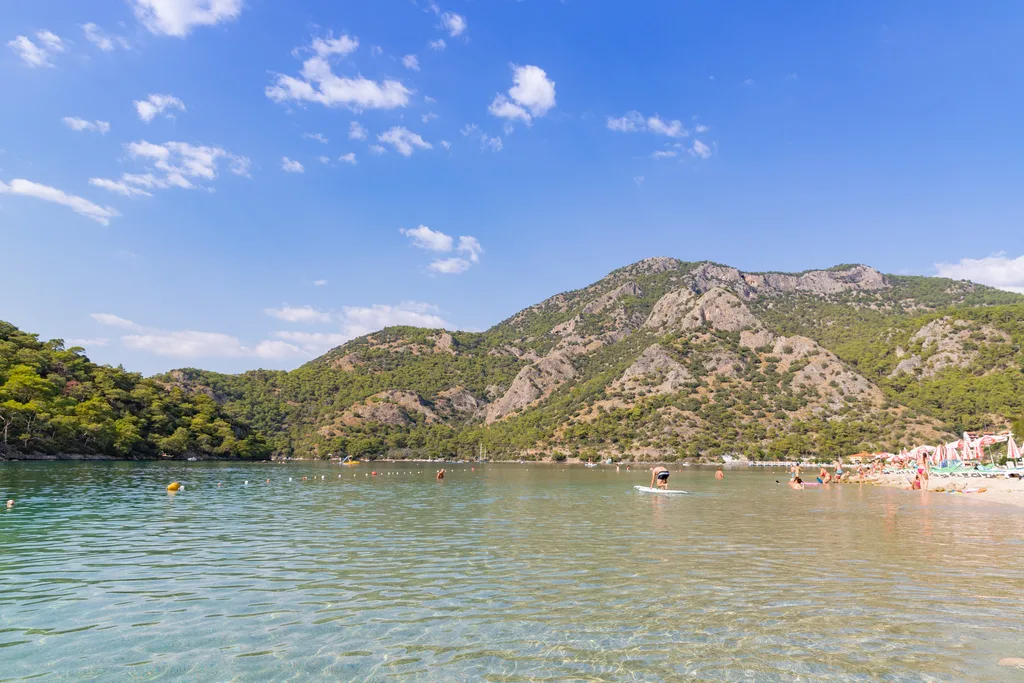
An oludeniz beach guide has to be precise about the swimming, because the two waters on offer suit opposite swimmers. The lagoon is the gentle option: shallow for a long way out, warm, and calm in almost all weathers, with the swimming areas in front of the serviced shore. It is the place for children, for learners, for anyone who treats swimming as floating with ambitions, and for the early and late hours when the open sea is at its coolest. Paddle craft belong to this water too – GoTürkiye lists paddleboard hire among the things to do at Ölüdeniz, and kayaks and pedalos are rented on the lagoon shore, which tells you the character of the place: this is a paddling and floating basin, kept for swimmers and muscle-powered craft rather than speedboats, and it is all the better for it.
Belcekız is the grown-up swim: open Mediterranean, a shore that shelves into depth, water that stays cooler and clearer in the busy weeks because the sea renews it, and on breezy afternoons a genuine shore break to play in or to respect. Strong swimmers who find the lagoon tepid and tame will migrate here and stay. The honest cautions are the usual open-sea ones, sharpened by local geography: the seabed is shingle and pebble at the entry, the depth comes sooner than lagoon swimmers expect, and the landing paragliders are a reason to swim in the marked areas rather than directly under the final approach path at the beach’s landing zone. None of this is hidden danger; all of it is the normal contract of a real sea beach.
Kıdrak, covered in its own section below, splits the difference: open-sea water like Belcekız, but in a small cove with a fraction of the crowd. And a final practical note that applies everywhere at Ölüdeniz: the summer sun on this coast is fierce and the light off pale shingle doubles it, so the swimming day runs best early and late, with the middle hours given to shade, lunch and the siesta logic the locals never abandoned. The water will still be there at five o’clock, warmer than it was at nine, and the beaches will be emptying as the day boats come home.
Paragliding from Babadağ – the Flight Above the Lagoon
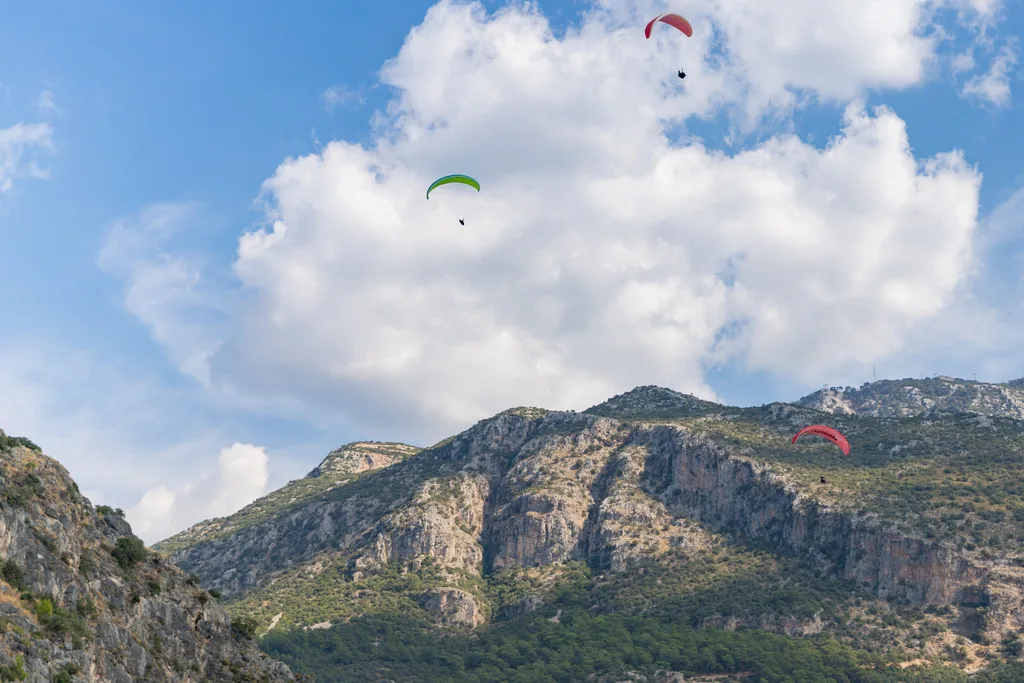
If the lagoon is Ölüdeniz’s postcard, paragliding is its signature. Babadağ rises almost straight from the shore to just under 2,000 metres, and a mountain that high, that close to a wide sandy landing beach, with the lagoon spread below as the view, is a combination the paragliding world has few equals for. The result is one of the most famous tandem flight sites anywhere: on a clear in-season day the sky above Belcekız carries dozens of canopies at once, and watching them is the resort’s permanent free show. Any oludeniz beach guide has to say clearly what the experience is and is not. It is a tandem flight: you fly strapped in front of a licensed pilot, from one of the mountain’s prepared take-off slopes, in a flight that is mostly a long, gentle glide – the pilot handles take-off, steering and landing, and the passenger’s job is to run a few steps at launch, then sit back and look. It is not a jump, and it does not require experience, fitness beyond the basics, or courage of an unusual order. Turkey offers its scenery from the air in two registers – the silent balloon drift over Cappadocia’s fairy chimneys at dawn, and this: a beach, a lagoon and a mountain, all turning slowly beneath your feet.
The mechanism is standardised, and understanding it removes the mystery. You book with one of the licensed tandem operators whose offices line the resort streets – choose on licence, reputation and what is included rather than on the loudest tout. The operator takes you up the mountain road to the take-off in use that day; the Babadağ cable car company’s own site names launch areas at its 1700 and 1800 metre stations and the Patara and Kuzey take-offs at the 1900 metre peak station, and which slope is used depends on the wind, which is the pilot’s call, not yours. After a briefing you are clipped in, the canopy is laid out behind you, and when the pilot says run, you run – a few committed steps down the slope and the ground simply leaves. The flight drifts over the forested slopes, out across the lagoon and the spit, and ends with a landing on or beside Belcekız beach, where the ground crews and the beach bars carry on as if people dropping out of the sky were the most normal thing in the world, which here it is.
The honest catches: flights are weather-dependent, and a booking moved or cancelled for wind is the system working, not failing – never pressure an operator to fly in conditions they dislike. Prices vary by operator and season and by what is bundled – transport, park and take-off fees, photos and video are separated out by some operators and included by others – so this guide prints no figure and advises comparing the full package, in writing, before you pay. Photos and video of your flight are an extra economy of their own. And if you simply cannot decide whether to fly, ride the cable car up (next section) and watch a dozen launches from the terrace: half the resort’s visitors conclude that the watching, with coffee, was the right altitude after all, and the other half book at the bottom before their drinks arrive.
Babadağ by Cable Car – the Mountain Without the Jump
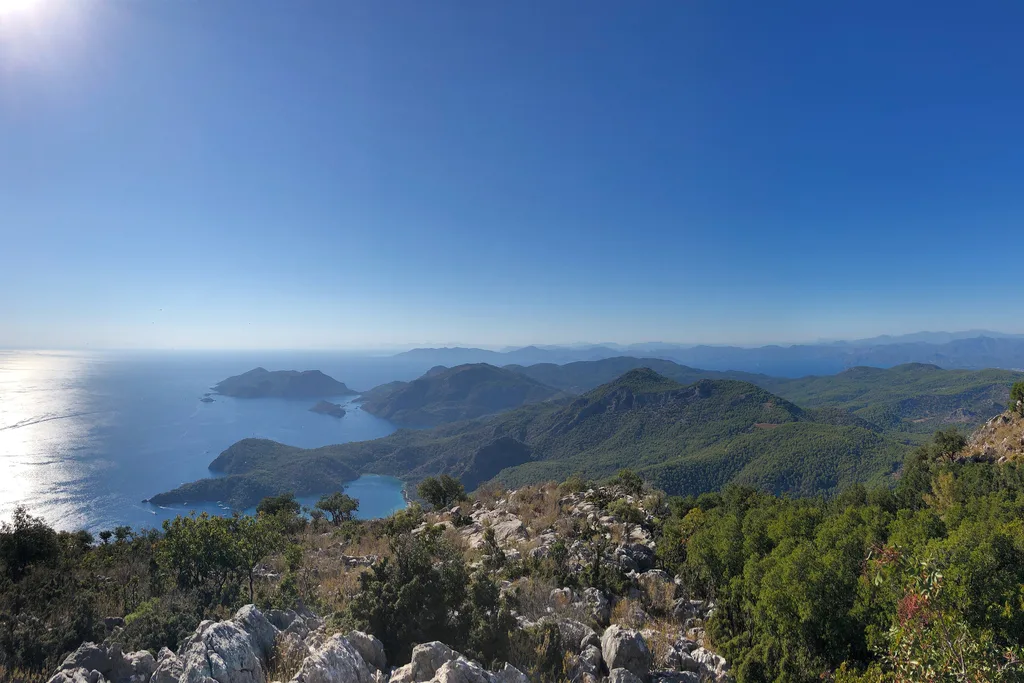
The Babadağ cable car – the teleferik – has quietly changed Ölüdeniz, because it gives the mountain to everyone. Before it, Babadağ belonged to paragliders, their transfer minibuses and determined walkers; now the summit experience – the terraces, the restaurants and above all the view – is a ride away for any visitor. The operator’s own site sets out the shape of it, and this oludeniz beach guide follows that official account: the main station stands on the Ölüdeniz main road at 226 metres, and the line climbs through stations at 1200 and 1700 metres, with a chairlift link onward to 1800 and the peak station at 1900 metres. There are restaurants and viewing terraces at the stations, paragliders launching beside the 1700 and 1800 metre terraces – close enough to watch the whole ritual of layout, inflation, launch and the sudden quiet glide – and at the top the Patara and Kuzey take-off areas and a panorama that takes in the lagoon, the resort, Gemiler Island and the indented coast in both directions.
As a piece of trip planning, the cable car does three jobs. It is the spectator’s grandstand for paragliding, far better than craning from the beach. It is the sunset trip: the late-afternoon ride up, a drink on a terrace while the light goes gold over the lagoon, and the ride down to a resort lighting up for the evening is one of the best half-days in Ölüdeniz, and the one most visitors nearly skip. And it is the mountain-lover’s taster – the cedar and pine slopes, the nature trail the operator describes beside the 1700 station’s pond, the sense of how high just under 2,000 metres is when the sea is at the bottom of it. Sunset seats and terrace tables are finite, so in high season the late ride up is the one to plan rather than improvise.
The catches are modest but real. The ticket is another of Ölüdeniz’s changeable prices, so check the current figure at the station or on the operator’s site rather than trusting any guide, this one included. The upper chairlift sections are weather-dependent in a way the main gondola is not, and cloud can sit on the summit on days when the beach is in full sun – the mountain makes its own weather, and a whiteout terrace is a real possibility outside the settled summer weeks. And the cable car, for all its convenience, delivers a managed summit: restaurants, terraces, an events lawn. Travellers who want the mountain raw should walk the Lycian Way instead and earn the view at walking pace.
Kidrak Beach – the Quiet Cove Next Door
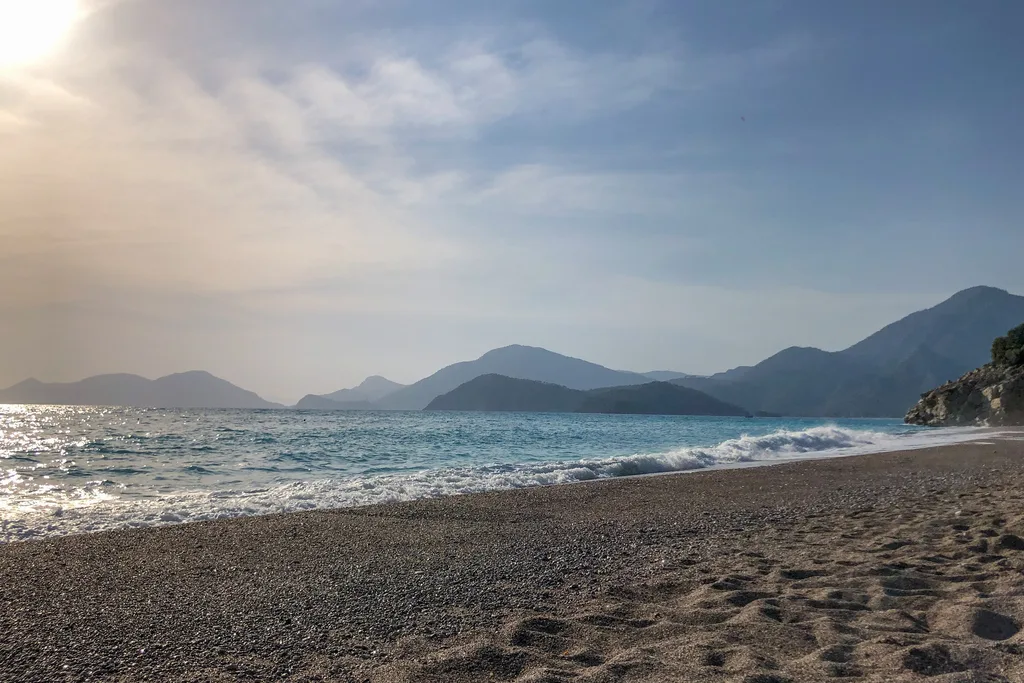
Every famous beach needs an escape hatch, and at Ölüdeniz it is Kıdrak. A short distance south of the lagoon, inside the same Ölüdeniz-Kıdrak Nature Park, Kıdrak is a single cove of sand and shingle backed by pines, facing the open sea, with a serviced core – sunbeds, umbrellas, a cafe, parking – inside a park gate, and a completely different register from the parent resort. The water is open-sea water, clear and cooler than the lagoon’s, the shore shelves like Belcekız’s, and the crowd is a fraction of either main beach. On the evidence of any honest oludeniz beach guide, this is where Ölüdeniz’s own residents and repeat visitors go when the lagoon fills up, and where a first-time visitor who has done the famous beaches should spend the second or third day.
The character of the place is the pine forest as much as the water. The cove backs onto woodland rather than a promenade, so the day runs at picnic pace: shade is natural, the noise is wind and water, and the sunset – Kıdrak faces the evening light – is the cove’s best hour, the one the day-trippers who leave at four never see. The park gate charges entry on the same seasonal mechanism as the lagoon, and the facilities, while real, are a cove’s facilities, not a resort’s: come with what you need for the day rather than expecting a street of shops behind the beach. Walkers can reach Kıdrak along the coast path from the lagoon side, which turns the transfer into part of the pleasure, and drivers will find it the easiest park-and-swim in the area.
Who should skip Kıdrak? Anyone whose beach day needs the full apparatus – bars, music, people-watching, a landing-paraglider show – because Kıdrak’s whole point is the absence of apparatus. Very small children may also be better served by the lagoon’s shallows, since Kıdrak’s open-sea shelving is a confident swimmer’s profile. But for couples, readers, picnickers and anyone whose favourite sound at the beach is the beach, Kıdrak is the section of this coastline to underline. It is also the standing proof of what the nature park protection buys: two famous, busy beaches, and five minutes away a cove that still feels like the coast before the posters.
Boat Trips from Ölüdeniz – Pirate Ships, Swim Stops and St Nicholas Island
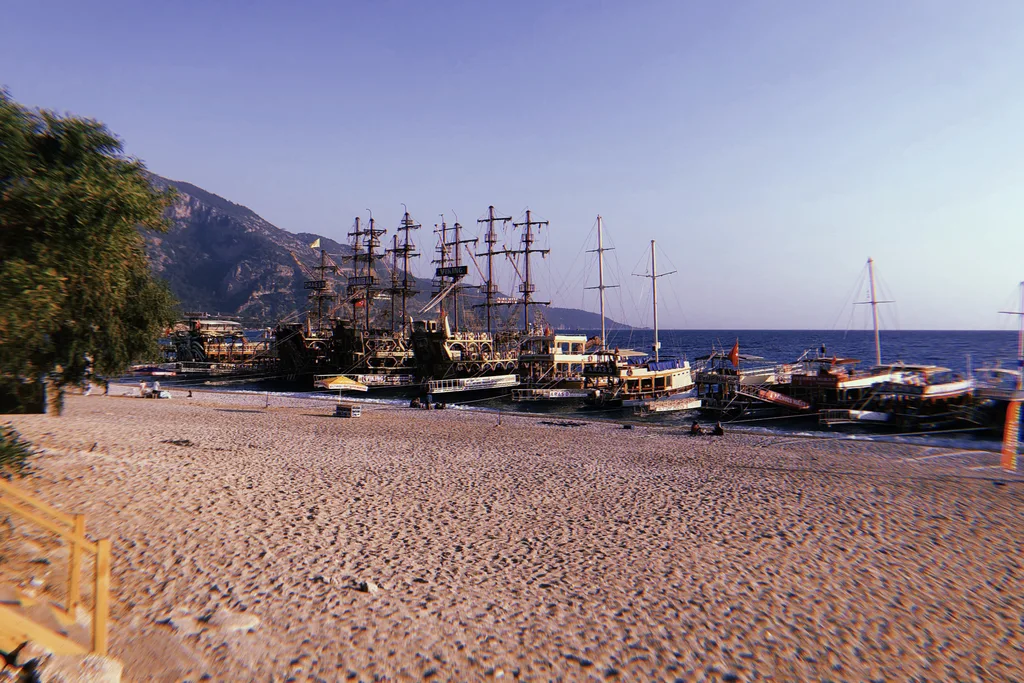
The third way to spend an Ölüdeniz day is to leave it – by boat. The day boats board from the Belcekız shore in the morning, and the standard circuit is one of the Turkish coast’s classic days out: out along the cliff coast to Butterfly Valley, then across to St Nicholas Island – Gemiler Island – with its Byzantine church ruins, with swim stops in clear coves on the way and the way back, lunch cooked on board, and the return to Ölüdeniz in the late afternoon as the light turns. The boats themselves divide into tribes, and choosing between them matters more than choosing between routes, because the routes are broadly the same. There are the big pirate-themed ships, all water slides, music and foam-party energy, which families with teenagers often love and quiet-seekers should board with their eyes open. And there are smaller, calmer boats running the same coastline at a lower volume. Every oludeniz beach guide should give the same advice: walk the shore the evening before, look at the actual boats, ask what the day includes and how many passengers the boat carries, and book the boat whose atmosphere you want to spend six hours inside.
St Nicholas Island deserves its own paragraph because it is the day’s one piece of real history. The island – Gemiler Adası – was a Byzantine religious settlement, and its slopes carry the remains of churches and a covered processional corridor running down toward the water; standard accounts name it for St Nicholas, the Lycian bishop of nearby Myra, whose cult spread from this coast to the world. Boats land passengers for a scramble among the ruins, and there is a small site entry charged on the same changeable logic as everything else here – carry cash and expect the figure at the landing, not in a guide. The view back to Babadağ and the lagoon from the island’s top is worth the climb in the heat. Combined with the swim stops – the cold spring water at the cove the boats call Cold Water Bay is the bracing highlight – the island turns a boat day from a float into a day with a plot.
The honest catches are about popularity, not quality. In high season the circuit is a procession: the same stops fill with the same boats, Butterfly Valley’s small beach carries every boat’s passengers at once in the middle of the day, and the swim stops are shared. It remains a good day – the coast is genuinely beautiful and the water at the stops is the clearest many visitors swim in all week – but solitude is not on the itinerary, and anyone who wants it should look at the smaller boats, sail outside the peak weeks, or take the water taxi to Butterfly Valley early rather than the full circuit. Seasickness, sun and the long exposed middle of the day are the other practical trio: the crossing to the island is open water, and a hat and a bottle of water are worth more on board than any photograph.
Butterfly Valley – the Gorge at the End of the Boat Ride
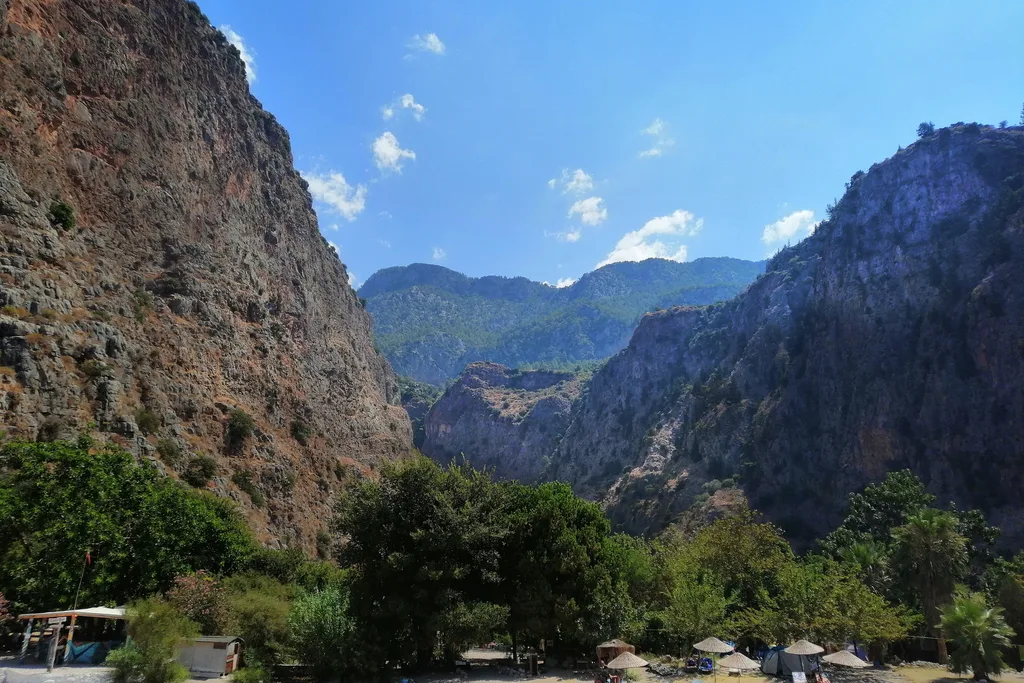
Butterfly Valley – Kelebekler Vadisi – is the coast’s beautiful rumour: a deep gorge cut into the cliffs west of Ölüdeniz, opening onto a small beach between walls of rock, with no road reaching it. GoTürkiye’s own beach writing confirms the standard access – boats from Ölüdeniz and Fethiye – and the waterfall at the end of the hiking trail up the valley floor, and both are the honest way to frame it. The valley is reached by sea, on the day boats or the shuttle boats that run from Ölüdeniz in season, or on foot down a path from the village of Faralya on the cliff top that this guide will describe exactly once and carefully: the Faralya descent is steep, exposed in places, has been the scene of serious accidents, and is not a casual alternative to the boat for anyone without proper footwear, a head for heights and a clear understanding of what they are taking on. Take the boat. The view of the gorge from the Lycian Way above, which costs nothing and risks nothing, is in the next section but one.
What is actually there? A beach of sand and pebble between the gorge walls, a small seasonal settlement of simple places to eat, drink and stay in basic cabins and tents behind the beach, and the valley itself running inland – a green cleft with a stream, and the walk up the valley floor to the waterfall that is the valley’s second act and the one most day-boat visitors, beached for an hour, never reach. The butterflies that name the place are real but seasonal and species-specific – the Jersey tiger moth is the famous resident – and no visitor should arrive expecting clouds of them in all months; the valley’s reliable glories are the gorge itself, the water, and the feeling of a beach that the road network gave up on. It is protected, fragile country, and the camping and simple living behind the beach run on deliberately low-impact lines.
As part of an Ölüdeniz holiday, Butterfly Valley works best as its own expedition rather than as one stop among five. The day-boat version gives you the photograph and a swim; a shuttle boat out in the morning and back in the late afternoon gives you the waterfall walk, the quiet middle of the day when the big boats leave, and the gorge in its best light. Either way it belongs in an oludeniz beach guide with a warning label as well as a recommendation: there is no road out if the weather turns or you miss the last boat, facilities are a beach settlement’s and not a resort’s, and the valley deserves the same leave-no-trace respect as the nature park it neighbours.
The Lycian Way – Walking Out of Ölüdeniz
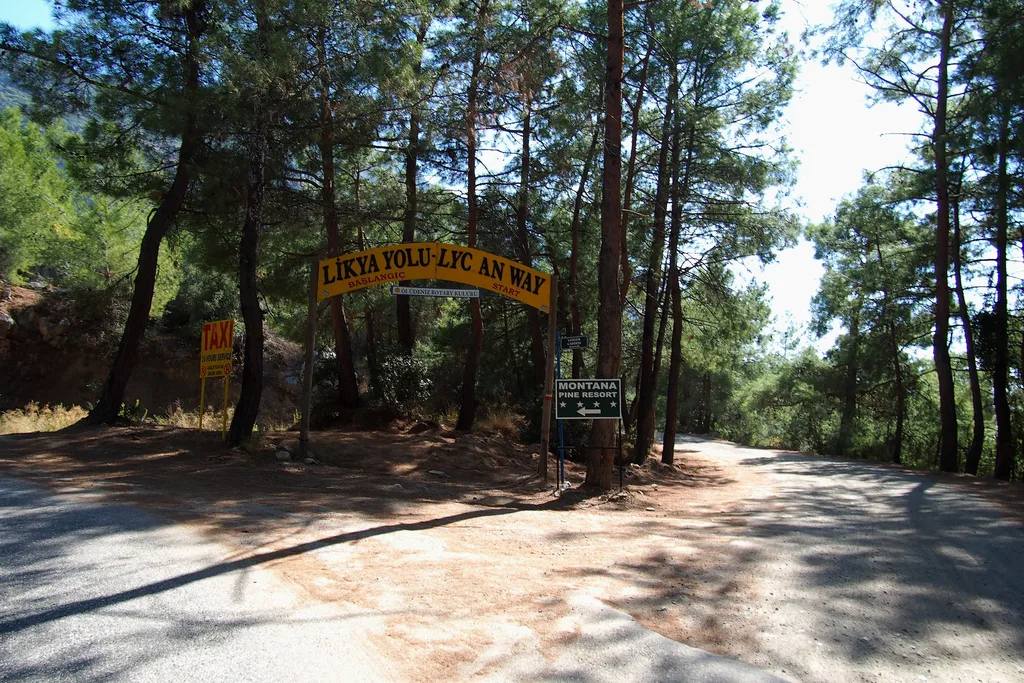
Above the resort, in the village of Ovacık, stands the start arch of the Lycian Way – one of the world’s great long-distance walks, waymarked in red and white for roughly 540 kilometres along the coast to Antalya. For an Ölüdeniz holiday the whole trail is beside the point; what matters is that its opening stages are the best walking in the district and begin at the resort’s door. The first stage climbs from Ovacık through Faralya – the village on the cliff above Butterfly Valley – with the lagoon, the spit and the open coast unrolling below in the walk’s signature view: the whole geography of this oludeniz beach guide laid out under your boots, paragliders circling at eye level. As a morning or a spring-and-autumn day walk, out to Faralya and back or down to a boat pickup, it is the single best free thing to do in Ölüdeniz.
The walking is honest mountain-coast walking, and the guide should be honest back. The path is rough in places, the shade comes and goes, the climb out of Ovacık in July heat is a serious undertaking, and water must be carried – there is none on the ridge to buy. Spring and autumn are the classic walking seasons precisely because the coast path is exposed; in high summer the same stage is a dawn start and a finish by lunch. Footwear means shoes or boots with grip, not beach sandals, and the red-and-white waymarks, while good, reward a walker who also carries the route on a phone for the junctions in the villages. None of this needs a guide, a permit or a fee: the Lycian Way is a public waymarked route, and the arch at Ovacık is an open door.
For the full-distance walker, Ölüdeniz is the trail’s ceremonial start, and the resort’s pensions and the hillside villages above it do a quiet trade in first nights, bag transfers and advice. For the beach holidaymaker, the recommendation of this oludeniz beach guide is simpler: give one cool morning to the walk up to the Faralya viewpoint. It reorders your whole sense of the place – after it, the lagoon is a map you have read from above, the boats are toys on water you have watched from a cliff, and Babadağ is not a backdrop but a neighbour. Every beach resort has a viewpoint; very few have the start of a 540-kilometre classic outside the door.
Where to Stay – the Strip, Hisarönü and Ovacık
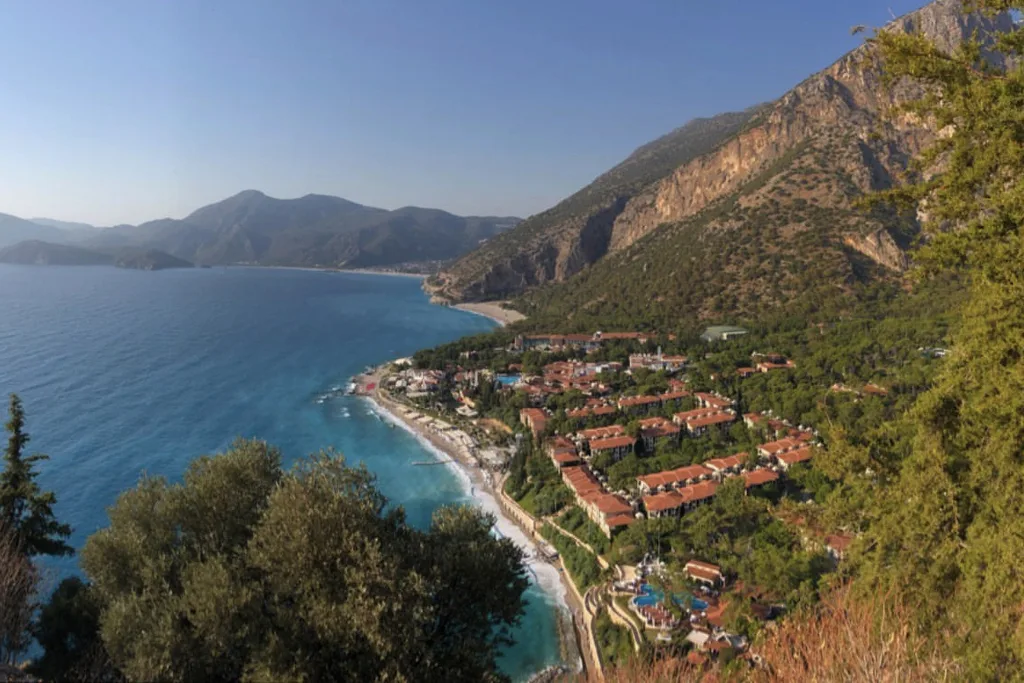
Where to stay at Ölüdeniz is a choice between three neighbourhoods stacked between the sea and the mountain, and the right answer depends on the holiday you want. The Ölüdeniz strip itself – the flat resort streets behind Belcekız and along the road to the lagoon – puts you walking distance from everything this guide describes: the beaches, the boats, the restaurants, the cable car station. It is the convenient choice and the expensive, busy one, a purpose-built resort of hotels large and small, apartment blocks and a few villa complexes, with the strip’s bars and restaurants as your evening. Choose it if the beach is the holiday and you want no logistics at all. Choose it knowing that in high season you are sleeping inside the crowd you spent the day inside, and that the strip’s character is international-resort rather than Turkish-town.
Hisarönü, the livelier village a few minutes up the hill road, grew up as Ölüdeniz’s overflow and has become a resort in its own right: a dense strip of hotels, bars, restaurants and shops, generally cheaper than the beachfront, with a famously full-on nightlife scene and a dolmuş ride or a hot uphill walk between you and the sea. Ovacık, spreading along the plateau between Hisarönü and the mountain, is quieter and more residential – villas, small hotels and apartments among the pines, the Lycian Way arch at its edge, and the same bargain: lower prices and cooler air against a daily journey down to the beach. Families in villas and walkers tend to land in Ovacık; party-first holidays land in Hisarönü; beach-first holidays pay for the strip.
The honest summary: the sea does not change between the three, but the holiday does. Stay at the beach if the budget allows and the days are few – the lagoon at eight in the morning, before the day visitors arrive, is a privilege of people sleeping beside it. Stay up the hill if the days are many, the budget matters, or the evenings matter as much as the beach – the dolmuş link is frequent enough in season that the hill bases work, and the mountain air at night is a genuine compensation. What this oludeniz beach guide would not do is stay in Fethiye town and commute daily unless the town itself is the point: Fethiye is the better base for the wider district, Ölüdeniz the better base for Ölüdeniz, and splitting the difference daily satisfies neither.
Eating and Drinking in Ölüdeniz – the Promenade Economy
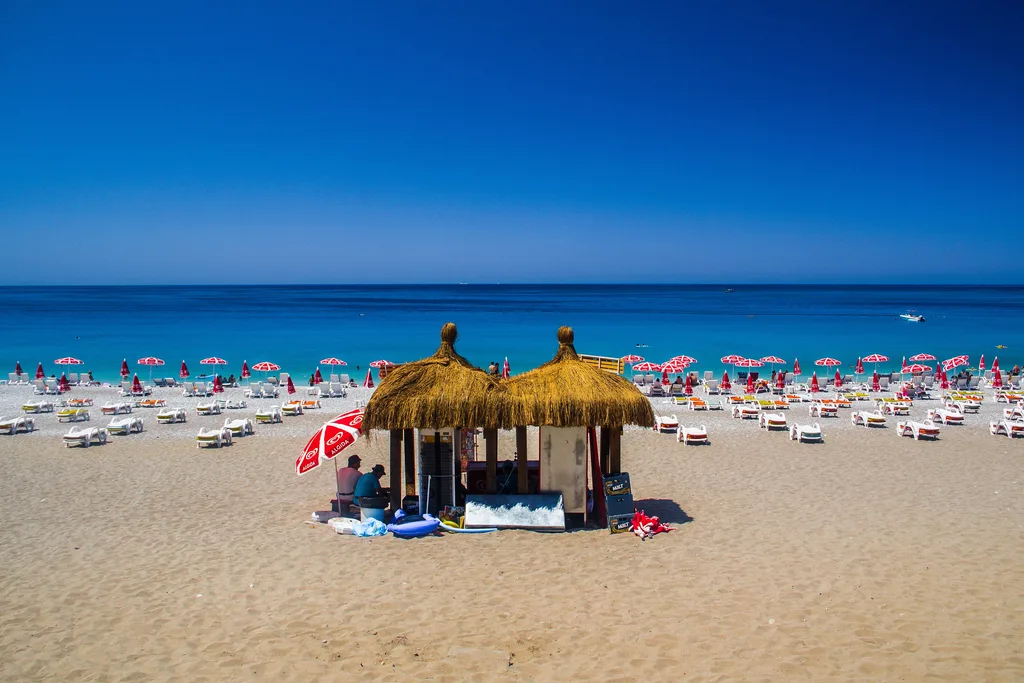
Nobody starves at Ölüdeniz, and nobody should expect a foodie pilgrimage either. The resort’s eating runs on three levels. The beach level: bars and cafes behind Belcekız and inside the lagoon gate, serving the beach day – breakfasts, grills, fish, salads, ice cream, cold drinks at beach prices, with the sunset hour as their daily peak and the paragliders landing as the floorshow. The strip level: the resort streets’ restaurants, a competitive row of Turkish and international kitchens – kebab and pide houses, fish restaurants, steak and curry and pasta for the resort’s international crowd – where the touts are part of the theatre and the set menus are aimed squarely at the holiday appetite. And the hill level: Hisarönü’s and Ovacık’s restaurants, where the same kitchens charge a little less for an audience of villa streets rather than beachfronts. The mechanism everywhere is the resort mechanism: walk the row, read the menus, note where the tables fill with people who look like they chose rather than were captured, and eat there.
Two things are worth seeking out. Turkish breakfast – the spread of cheeses, olives, eggs, honey, tomatoes and endless tea – is done properly by the smaller places on the strip and up in Ovacık, and it sets up a beach day better than any buffet queue. And the fish restaurants earn their place on a coast where the boats you watched all day are not merely decorative: ask what came in, and let the answer pick the dish. Beyond that, this oludeniz beach guide’s advice is expectation management. Ölüdeniz feeds a resort, generously and variously, at resort prices on the front line and better value a street or a hill back. The memorable meal of a Fethiye-district holiday is as likely to be in Fethiye’s fish market courtyard as on this promenade – which is an argument for a town evening during a longer stay, not an insult to the strip.
Evenings have their own geography. The promenade at sunset, when the light goes and the beach bars turn their music toward the sea, is the resort’s daily ceremony, and the landing of the last paragliders draws a crowd of its own. Later, the strip’s bars carry the night in Ölüdeniz itself, while Hisarönü up the hill runs louder and later. Families tend to settle into the promenade rhythm – dinner, a walk, an ice cream, bed – and find it enough. It is also worth one line for the self-caterers: the hillside villages and the strip both have proper supermarkets and bakeries, and a villa breakfast on a terrace above the resort is one of the quiet luxuries this coastline does well.
When to Go – Season, Crowds and the Quiet Months
Ölüdeniz has a long season and a sharp peak, and choosing your month is the single biggest decision in the whole holiday. The core season runs from May to October: the sea warms through late spring, the boats and the full flight schedule run, and the resort is fully awake. July and August are the peak inside the peak – the hottest weather, the warmest lagoon, the fullest beaches, the highest prices and the crowds at their maximum, with the lagoon shore and Belcekız both filling by late morning and the boats and cable car at their busiest. If your holiday is fixed to those months, this oludeniz beach guide’s counsel is tactical: swim early, book boats and flights ahead, take Kıdrak and the Lycian Way as your pressure valves, and let the middle of the day go to shade and lunch.
The connoisseur’s months are the shoulders. May and June bring a green, flower-covered coast, a lagoon still fresh from spring, long days and a resort awake but not yet full – the sea is cooler, especially in May, which swimmers divide on. September and October are the locals’ favourite: the sea at its warmest after the summer’s heating, the crowds draining away week by week, the light going golden, and the walking coming back into its own as the heat breaks. October is also when the paragliding community has traditionally gathered in Ölüdeniz in force, and the sky can be at its most spectacular even as the beaches empty. Late October shades into the season’s end: most things still run, some things stop, and the weather starts to deal in possibilities rather than guarantees.
Winter is the honest footnote. From November to April the resort largely closes down – most hotels, restaurants and boats stop, the flights thin to the weather’s mercy, and Ölüdeniz becomes a beautiful, quiet, half-shut village under a green mountain. For a walker based in Fethiye that is no obstacle at all, and the lagoon on a bright winter morning, empty but for the gulls, is a sight worth a day trip. But a beach holiday it is not, and any oludeniz beach guide that sells the winter as a swimming season is selling. Match the month to the mission: peak summer for the full machine, the shoulders for the connoisseur’s version, and winter only if the machine being switched off is what you came for.
Getting to Ölüdeniz – Dalaman, Fethiye and the Dolmuş Road
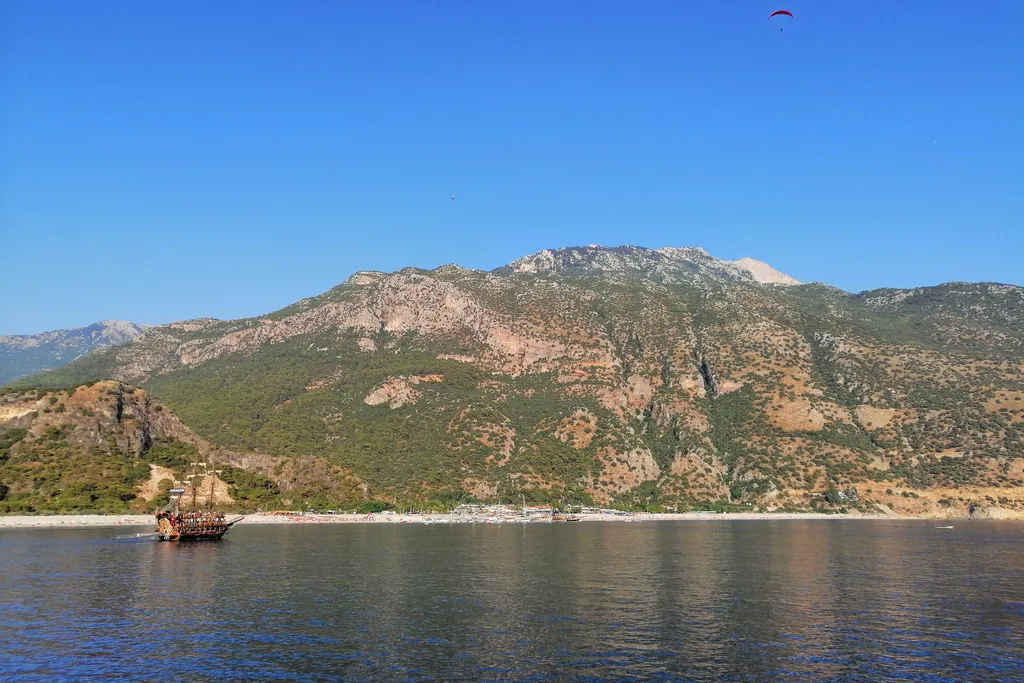
Ölüdeniz is reached, for almost everyone, through Dalaman Airport, the international airport serving this coast, which sits roughly an hour’s drive away by the transfer roads. The transfer mechanism is the standard Turkish resort one, in descending order of ease and cost: the pre-booked private transfer that meets your flight; the shared shuttle booked with a flight or a package; the airport coach services that run to Fethiye in season, with a change there; and the taxi rank. However you land, the last stretch is the same – the road from Fethiye climbing over the hill through Hisarönü and Ovacık and dropping to the resort – and it is worth being awake for: the first view down to the lagoon from the hill road is the holiday’s opening shot. GoTürkiye puts the Fethiye to Ölüdeniz leg at about twenty minutes by car, and the town is the hub for everything: intercity buses from across Turkey terminate at Fethiye’s bus station, not at the beach, so Fethiye is the pivot of every arrival.
Once based anywhere in the district, the dolmuş – the shared minibus – is the transport that matters. Dolmuşes run the Fethiye to Ölüdeniz road through Hisarönü and Ovacık frequently through the day in season, are flagged down and paid on board, and connect the resort with Fethiye’s harbour, shops and bus station for the price of a coffee. They are how the hill villages stay practical as bases, how a beach day from Fethiye works, and how an evening in town ends without a taxi negotiation. Frequencies thin late at night and out of season, and the last dolmuş of the evening is a fact worth learning on day one rather than day six. Taxis cover the gaps, and hire cars open the wider district – Kayaköy, the coast road south, the inland antiquities – for travellers who want them, with the warning that parking at the lagoon end on a peak-season day is its own competitive sport.
A last orientation note, because the geography confuses arrivals: “Ölüdeniz” on a hotel address can mean the beachfront strip, Hisarönü or Ovacık, three different altitudes of holiday sharing one postcode of the imagination. Check the map, not the name, before booking – the dolmuş makes all three workable, but the walk home from the beach differs by a hill. This oludeniz beach guide has treated the three as one resort system throughout, because on holiday they behave as one; just know which floor of it you are sleeping on.
The Honest Catches – Crowds, Charges and Who Should Skip Ölüdeniz
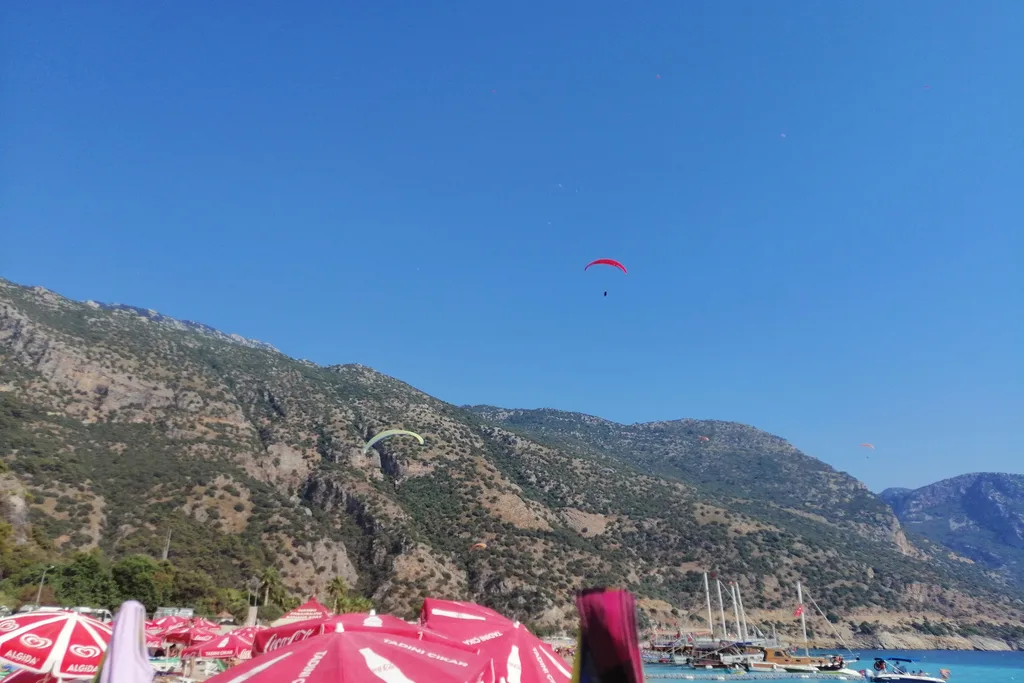
An oludeniz beach guide earns its keep in this section, so here it is without varnish. Ölüdeniz in high season is crowded in the way that only a genuinely famous place is crowded: the lagoon’s serviced shore fills, Belcekız’s rows pack out, the boats run full, the cable car queues at sunset, and the promenade at dusk is a gentle river of people. It earns a place in most first Turkey itineraries alongside Istanbul and Cappadocia – and unlike a city, it cannot spread its visitors across a hundred streets. None of it is chaos, and the resort handles its popularity well, but a traveller picturing the empty turquoise of the poster should come in May or October, come early in the day, or walk to Kıdrak. The fame also prices itself: between the park gate, the sunbeds, the boat, the flight and the cable car, Ölüdeniz is a resort of paid components, each individually reasonable and collectively a budget line of their own. A holiday here costs more than the same week on a quieter Turkish beach, and pretending otherwise helps nobody.
The water, too, should be described as it is. The lagoon at its August busiest is not the gin-clear aquarium of the aerial photographs – the shallows cloud with use, the famous colour is a morning and shoulder-season colour at its best, and the enclosed basin can feel tepid to swimmers who like their sea with an edge. Belcekız answers with real sea and real shingle: the pebbles at the waterline punish bare feet, the shelf drops honestly, and on windy afternoons the shore break is not a toddler’s friend. And the resort itself is a resort – an international, purpose-built strip of hotels, bars and excursion shops. Travellers hunting for an authentic working Turkish town, a quiet village or an untouched coast will find all three within an hour of Ölüdeniz, but they will not find them in it.
So who should skip it? Solitude-seekers in July and August, unless Kıdrak and dawn swims can carry the whole holiday. Budget travellers who resent a gate between them and the sand – the open coast has free beaches in every direction. Purists about soft sand, who will spend the week in swim shoes resenting the shingle. And anyone whose nightmare is a lively promenade. Who should absolutely come? Everyone else – and especially swimmers who want a choice of waters, families who want the machine to work, first-time visitors to the Turquoise Coast who want its greatest hits in one small resort, and any traveller who has ever looked at a paraglider and thought “one day”. Ölüdeniz’s fame is not a conspiracy of brochures. It is what happens when a lagoon, a mountain and a boat coast share one small bay – and crowds, in the end, are what beauty of that order attracts.
Oludeniz Beach Guide – Questions Travellers Actually Ask
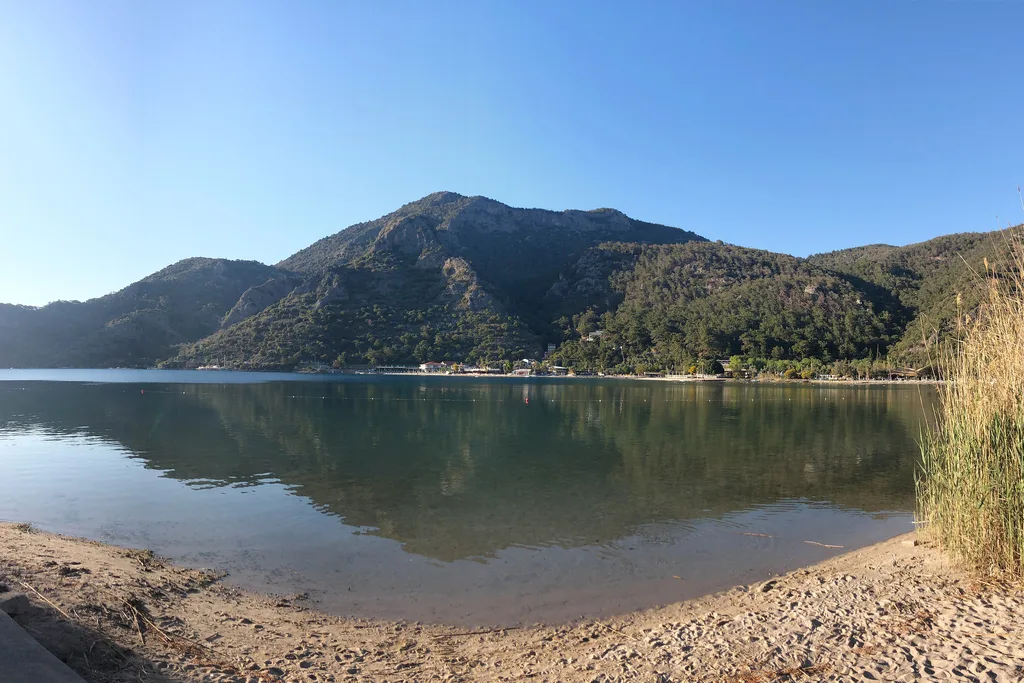
Is the Blue Lagoon the same place as Ölüdeniz beach? Almost, and the distinction is the key to the resort. Ölüdeniz is the whole resort; the Blue Lagoon is the sheltered water behind the Kumburnu sand spit, reached through the nature park gate, while Belcekız is the open-sea town beach in front of it. This oludeniz beach guide’s one-sentence version: swim in the lagoon, watch the paragliders land on Belcekız, and walk between the two in minutes.
Do you have to pay to use the lagoon? Yes – the lagoon shore is inside the Ölüdeniz-Kıdrak Nature Park, and entry is charged at the gate, per person and per vehicle, at rates set for the season and displayed there. Sunbeds and umbrellas inside are rented separately. This guide prints no figure because the charge changes; Belcekız beach outside the gate asks no entry fee, and its charges are the optional ones for beds, food and drink.
Is Ölüdeniz good for children and nervous swimmers? It is one of the best choices on this coast for them – provided you pick the right water. The lagoon is shallow, warm and calm in nearly all weathers, which is why families colonise it; Belcekız shelves into open sea and can have a shore break on breezy days, so it suits confident swimmers better. Swim shoes help everywhere, because both shores mix sand with shingle.
Do I need to book paragliding in advance, and is it suitable for beginners? Tandem paragliding is designed for beginners – you fly with a licensed pilot who does everything technical – but in high season the good operators on good-weather days fill up, so booking a day or two ahead is sensible, and keeping a spare day in the plan is wiser still because flights move with the wind. Compare what the price includes – transport, fees, photos – in writing, since packages differ; this oludeniz beach guide prints no prices for exactly that reason.
What is the best month to visit Ölüdeniz? For the full resort with bearable crowds, June and September are the sweet spot, with September’s sea the warmest of the year. May and October are the quiet connoisseur’s months – October trades a little certainty for golden light and empty beaches – while July and August give you everything at full volume and full price. Winter is for walkers based in Fethiye, not for a beach holiday.
Can I visit Butterfly Valley without the big boat trip? Yes. Shuttle boats run from Ölüdeniz to the valley in season and give you the day there – time for the waterfall walk that the circuit boats rarely allow. What you should not do is treat the cliff path down from Faralya as the casual option: it is steep and exposed, and the boat exists precisely because the valley has no road. The view of the gorge from the Lycian Way above Faralya is free, safe and superb.
Is one day enough for Ölüdeniz, or should I stay? A day trip from Fethiye shows you the lagoon and the beach, and plenty of people do exactly that. But Ölüdeniz repays staying: the lagoon before the day visitors arrive, a boat day, a flight or a cable car sunset, a Kıdrak day and a Lycian Way morning add up to the resort’s real substance, and that is three to five days of holiday, not one. Stay if you can; day-trip if you must; either way, start at the lagoon early.
The Short Version of This Oludeniz Beach Guide
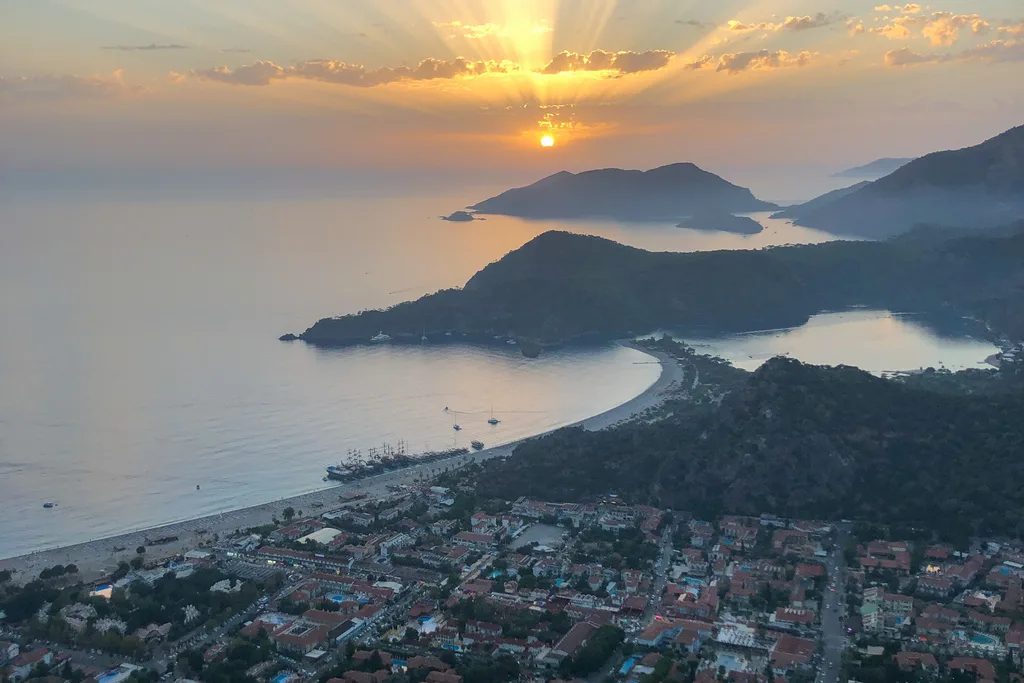
Ölüdeniz is a famous beach that survives its fame, because the fame rests on geography rather than marketing: a lagoon of still turquoise water behind a sand spit, an open-sea beach in front of it, and a mountain just under 2,000 metres high launching paragliders over both. This oludeniz beach guide’s whole argument fits in one paragraph. Swim in the lagoon in the morning, when the colour is the colour of the posters. Watch the paragliders land on Belcekız and then decide, from the cable car terrace if not from a harness, whether the sky is for you. Give a day to the boats – Butterfly Valley and the ruins on St Nicholas Island – and a quieter day to Kıdrak, where the nature park keeps the coast as it was. Walk one morning of the Lycian Way above it all. Come in June or September if the calendar is yours to choose, stay on the strip if the days are few and up the hill if they are many, and budget honestly for a resort whose best things – the gate, the bed, the boat, the flight – each carry a charge.
Do that, and Ölüdeniz stops being a photograph you once saw and becomes what it actually is: one of the Mediterranean’s great natural beach systems, busy because it deserves to be, and still – on a still morning, in the lagoon, with the mountain turning gold above it – capable of silencing a whole beach. That is the test this guide would set any famous beach: not whether the poster is true, but whether the place survives being known. Ölüdeniz, used the way this guide sets out – lagoon early, mountain once, boats once, Kıdrak for the quiet, the shoulders of the season if you can – passes it with room to spare.