Jordan has exactly one coastline, and it is short enough to drive in under half an hour. The whole of the country’s Red Sea shore runs to about 27 kilometres, from the port in the north to the Saudi border in the south, and every beach in Jordan is somewhere along that single strip. That smallness is the first thing this aqaba beaches guide wants you to understand, because it shapes everything that follows. There is no long coast to explore and no string of resort towns to choose between. There is one city, one gulf, one fringing coral reef, and a shore that changes character completely three or four times between the harbour and the border.
The second thing to understand is that Aqaba’s beaches are not one product sold at different prices. They are genuinely different places that happen to share a sea. The town beaches are free, public and local, used by Jordanian families the way a city park is used. The South Beach strip is where the coral begins, a working shoreline of public access points, dive centres and beach clubs sharing the same reef. The far ends of the coast, Ayla in the north and Tala Bay in the south, are private and polished, built for hotel guests and paying day visitors. An aqaba beaches guide that pretended these were interchangeable would send you to the wrong shore with the wrong expectations, so this one treats each stretch on its own terms: what the sand is like, what the water gives you, what it costs in effort rather than money, and who should honestly skip it.
This guide is the beach companion to our Aqaba city guide, and it stays on the sand and in the water. It covers the public beaches in depth, explains how the private beach clubs actually work, walks the protected shoreline of the Aqaba Marine Reserve, and deals plainly with the practical questions the brochures skip: how good the snorkelling really is from the shore, what the etiquette is on a local beach, when the wind ruins a morning, and which beach suits which traveller. Where a fact matters and can be checked, it is checked against the bodies that run this coast, above all ASEZA, the Aqaba Special Economic Zone Authority, which manages the marine reserve. Where a figure is not printed, it is because the honest answer is a mechanism, not a number.
Aqaba Beaches at a Glance – One Short Coast, Three Different Shores
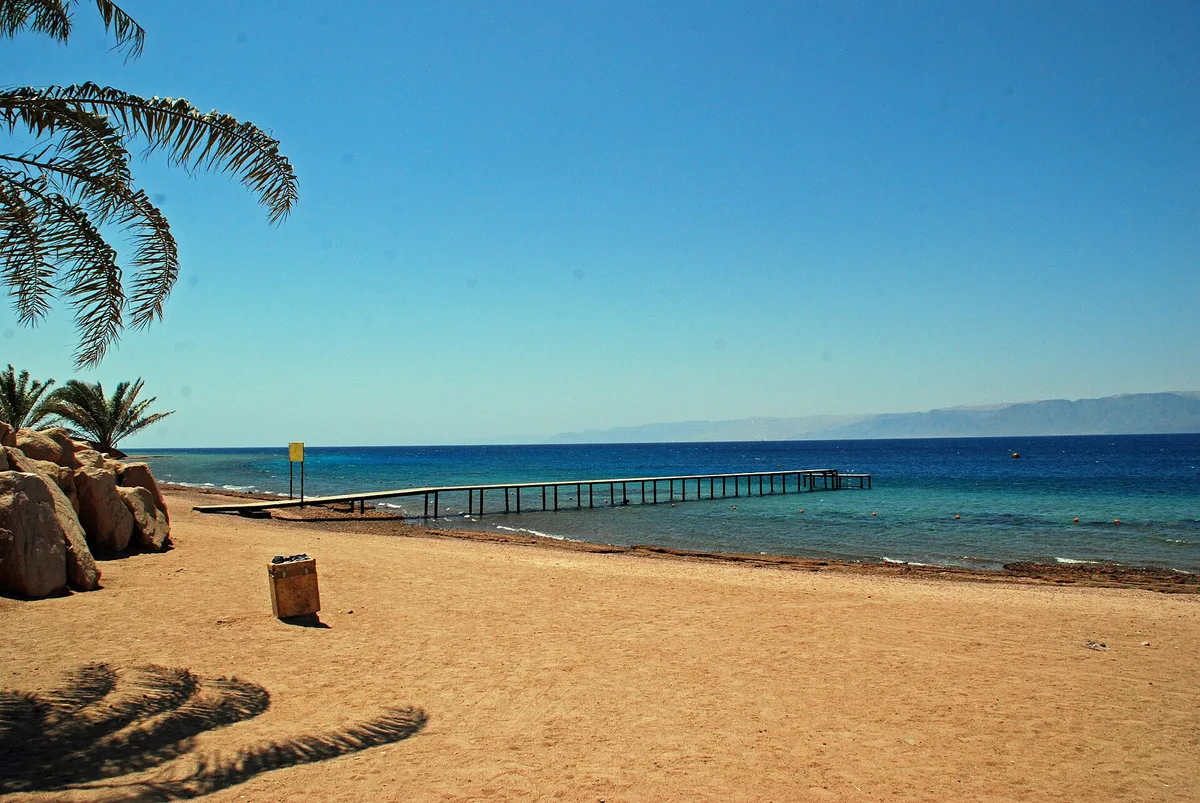
Read the coast from north to south and it falls into three shores. The northern shore is the city’s: the port, the corniche promenade, the old town, and the public beaches of Al Hafayer and Al Ghandour, with the big resort hotels holding their own private strips of sand between them. The middle shore, running south from the passenger port, is South Beach: a looser, more open strip where the fringing reef comes close to land, most of it inside the Aqaba Marine Reserve, shared between public access points, dive centres and beach clubs. The southern shore ends at Tala Bay, a purpose-built resort enclave, beyond which the coast runs out at the Saudi border. In the north, Ayla sits slightly apart: a large private development of man-made lagoons and marina water, with beach clubs instead of public sand.
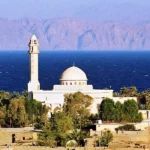
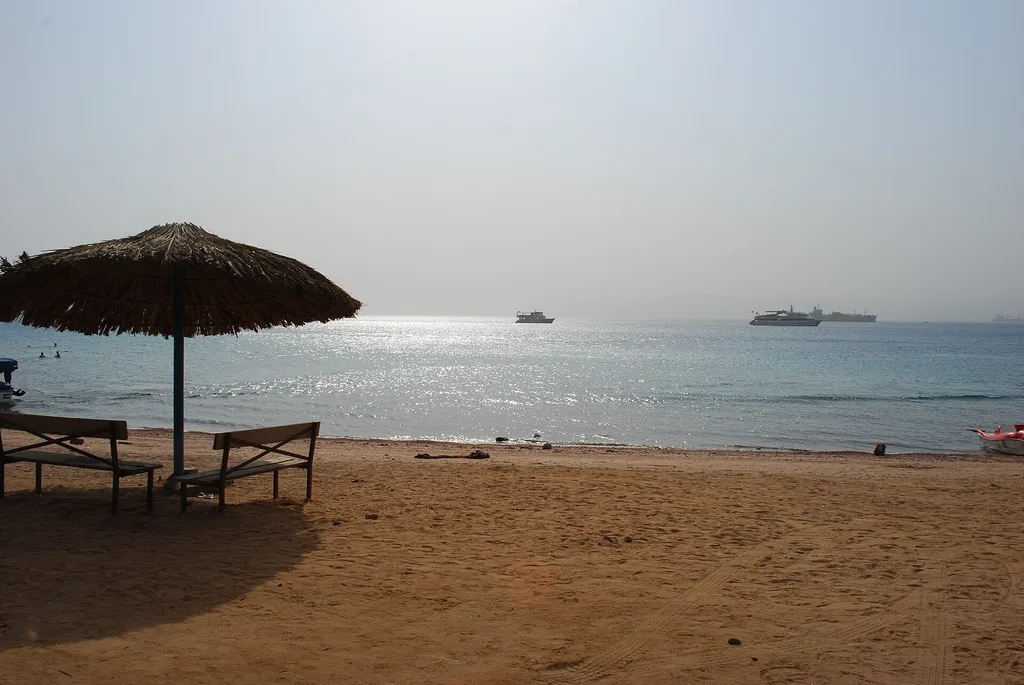
The view across the water explains the geography better than any map. The gulf here is narrow, and the mountains you see on the far shore are not Jordan’s. To the west is Eilat, the Israeli resort city at the head of the gulf, and beyond it the Egyptian Sinai coast; Jordan’s own mountains rise behind the city instead. First-time visitors regularly photograph the wrong shore, and more than one aqaba beaches guide online illustrates Aqaba with pictures of Eilat. Everything described in this guide is on the Jordanian, eastern shore, and the tell is simple: in Aqaba the sun sets across the water, over the far shore, which is why the evenings on this coast are so good.
| Beach or shore | Type | Go for | The honest catch |
|---|---|---|---|
| Al Hafayer | Public town beach | A free swim in the centre, local atmosphere | Coarse sand, busy at weekends, few facilities |
| Al Ghandour | Public town beach | Shade shelters, families, boat trips | Gravelly in places, the town’s working shore |
| South Beach public strip | Public, inside the reserve | Snorkelling over the reef from the sand | Rocky entries, reef rules apply, shade is scarce |
| The reserve beaches | Public, protected | The clearest water, coral and quiet | No camping, no fires, designated entry points only |
| Berenice Beach Club | Private club | Loungers, pools, easy reef access, one simple day | Paid entry, set policies, busier than it looks in photos |
| Hotel beaches | Private, guests first | Maintained sand and full service | Mostly for guests; day use is at the hotel’s discretion |
| Ayla beach clubs | Private, lagoon | Polished clubs, calm lagoon water, dining | Man-made lagoons, not the open reef |
| Tala Bay | Resort enclave | Resort comfort at the quiet end of the coast | Hotel-front beaches; a drive from everything else |
Use the table as a first filter, because the mistake most visitors make is choosing by name rather than by kind. A traveller who wants coral should not start at a town beach, however convenient it is, and a traveller who wants a free, local, end-of-the-day swim should not pay for a club whose main product is a sun lounger. The sections below give each shore its evidence, and the choosing section at the end of this aqaba beaches guide turns that evidence into decisions by traveller type.
Al Hafayer and Al Ghandour – the Town Beaches
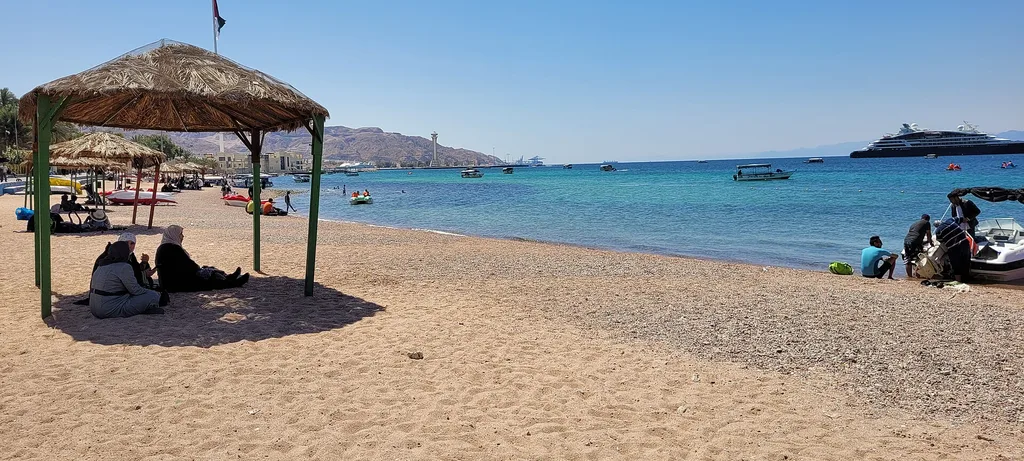
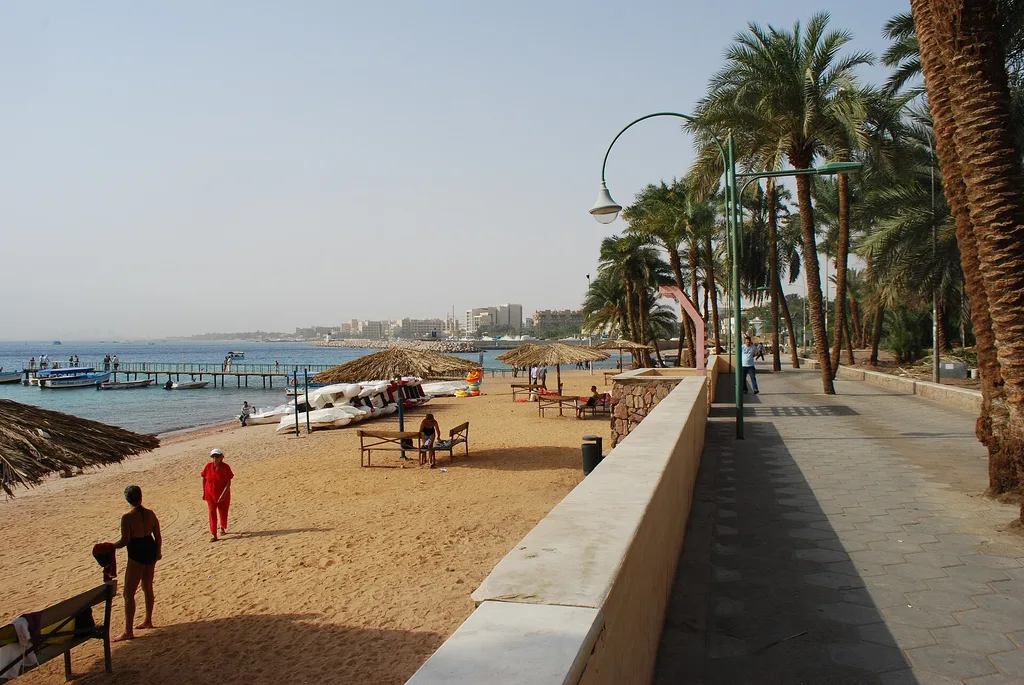
The town beaches are where Aqaba itself goes to the sea, and they are the most honest beaches in this aqaba beaches guide. Al Hafayer, the older of the two, sits in the centre by the fort and the Arab Revolt plaza, a short walk from the old town’s cafes and markets. Al Ghandour runs north from there along the corniche, a wider stretch of sand with thatched shade shelters, benches and the small boats of the glass-bottom fleet pulled up along its edge. Both are public and free, both are used daily by local families, school groups and off-duty workers, and both put you in the middle of Jordanian seaside life rather than in a resort version of it. If you want to understand how this city relaxes, an hour on Al Ghandour at the end of the afternoon teaches more than a day at a club.
The sand needs a plain description, because it is the first disappointment for visitors who arrive expecting the Red Sea of the brochures. This is not soft white sand. The town beaches are coarse, gritty sand mixed with fine gravel, comfortable enough to sit on with a mat or towel and hard on bare feet in the wrong patch. The water, though, is the same gulf water as everywhere on this coast: clear, calm most days, and deep enough for a real swim a short way out. There is no coral reef to speak of off the town beaches, which is precisely why they work as swimming beaches; you can wade in and swim without picking your way over a reef flat. Pedalos and small boats work from the shore, tea and coffee sellers work the sand, and the corniche above Al Ghandour gives you the evening promenade when the swimming is done.
The honest catches belong in the open. Facilities are basic: shade shelters and benches rather than serviced loungers, and you should not count on showers or changing rooms being where a guidebook once said they were. The town beaches get genuinely busy on Friday and Saturday, when Jordan’s weekend brings families down in force, and the water’s edge can feel crowded by late afternoon even though the beaches are long. The port and its shipping sit at the northern end of the shore, which some visitors read as atmosphere and others as a flaw; both readings are fair. And the town beaches are local, conservative spaces, which affects what swimwear feels comfortable here, a subject this guide deals with properly in the etiquette section below.
Who should use the town beaches? Anyone staying in the centre who wants a swim without organising a trip, travellers on a budget who would rather spend on diving than on a lounger, and anyone who enjoys the company of a real city at its leisure. Who should skip them? Snorkellers, because there is nothing to see under the town water but sand and seagrass; travellers who need facilities and service to enjoy a beach; and anyone whose idea of a beach day requires a bar. For those readers, the coast south of the port is where this aqaba beaches guide is heading next.
South Beach – the Public Strip South of Town
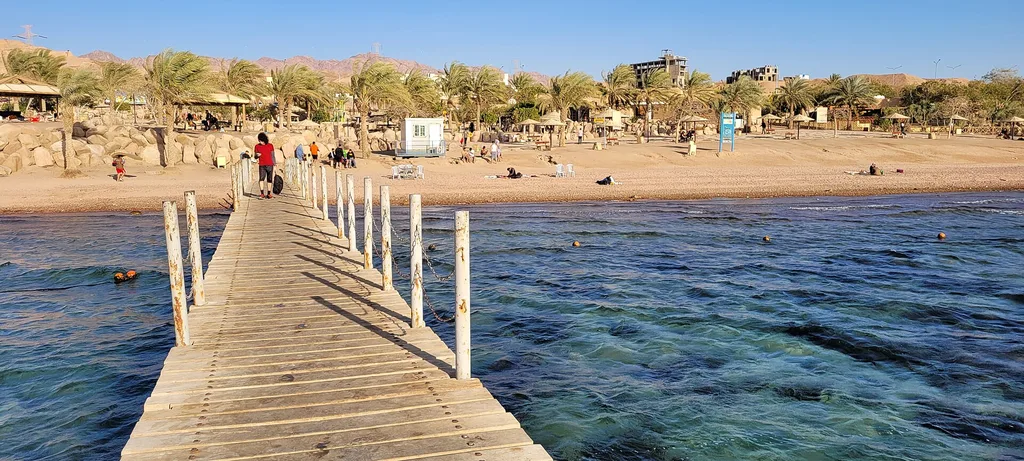
South Beach is not one beach but a strip: the run of shore that begins below the passenger port and follows the coastal highway south toward Tala Bay and the border. Along it, public access points, dive centres, small cafes and beach clubs alternate, and the same fringing reef runs offshore the whole way. This is the shore most visitors mean when they talk about Aqaba’s beaches, and it is where this aqaba beaches guide spends most of its time, because South Beach is where the swimming, the snorkelling and the diving all happen. Getting there is simple in principle: it is a short drive or taxi ride south from the centre, and the strip is best treated as a series of named stops rather than a single destination, so decide which access point you are aiming for before you set out.
The public parts of South Beach are genuinely public, and they have their own character. The sand is the same coarse Red Sea sand as in town, the facilities run to shade shelters, small piers and jetties, and a first-aid presence on the busiest stretch, and the crowd is a mixture of Jordanian families, groups of young swimmers, and visitors walking down from the dive centres. What the public strip does not have is space between you and the reef’s rules, because almost everything south of the port lies inside the Aqaba Marine Reserve. The water entry is the real difference from the town beaches: in many places the shoreline is reef rock and coral rubble rather than sand, the reef flat begins within metres, and the sensible way in is at a marked entry point or off a jetty, wearing reef shoes. Treat the public strip as a reef with beaches attached, not a beach with a reef attached, and it will reward you.
The honest catch of South Beach is that its best water takes a little knowledge. The shore is long, the access points look similar from the road, and a visitor dropped at a random point can find themselves on a rocky, exposed stretch wondering where the postcards were taken. The answer is that the postcard water is at the recognised entries near the dive centres and clubs, where the channels through the reef flat are kept clear and the snorkelling starts immediately. Weekends fill the public shelters early, the wind can pick up across the open strip by afternoon, and there is less natural shade than any photograph admits. None of this is a reason to skip South Beach. It is a reason to arrive with a plan, which is what the next three sections of this aqaba beaches guide provide: the reserve that protects this shore, the coral that grows on it, and how to snorkel it well.
Inside the Aqaba Marine Reserve – the Protected Beaches
Most of the South Beach shore is not just a beach; it is a protected area, and the protection is recent, formal and, since 2026, world-recognised. The Aqaba Marine Reserve was officially declared on 8 December 2020, Jordan’s first marine reserve, taking over a shoreline that had been protected as a marine park since 1997. It is managed by ASEZA, the Aqaba Special Economic Zone Authority, and it runs for about 7 kilometres along the southern coast, from the southern boundary of the passenger port in the north to the Royal Diving Club in the south. In 2026 UNESCO inscribed the reserve on the World Heritage List, Jordan’s first natural World Heritage site, recognising reefs that sit at the northernmost limit of tropical coral distribution in the world and corals with an unusual, studied resilience to warming water. The reserve was also added to the IUCN Green List in 2025. None of that is decoration for a guide like this one; it is the reason the reef in front of the public beaches is alive at all.
Within the reserve, ASEZA names four beaches: Al Yamanyah, Al Azraq (the name means blue, and it is the reserve beach that has flown the Blue Flag eco-label), Coral Beach and Palm Beach. These are the managed public faces of the protected shore, the places where the reserve expects swimmers and snorkellers to enter the water, and they are the best answer this aqaba beaches guide can give to the question of where exactly to go on South Beach. Around them, the reserve’s landward edge takes in the beach facilities and a buffer strip behind the shore, and its seaward edge reaches out over the reef, so the whole system, sand, flat and slope, is managed as one piece.
The rules are the price of entry, and ASEZA publishes them plainly, so this guide prints them plainly too. Enter the sea only at the designated entry points. Do not touch, stand on, collect or feed the coral and marine life, and do not walk on the seagrass. Take your rubbish back with you, keep glass containers out of the sea, and do not use soaps or detergents in the water. Follow the buoy lines and the staff’s instructions, wear a life jacket where one is required, and do not fish or remove shells, rocks or sand. There is no overnight camping and no fires on the reserve’s beaches. Read quickly, that list can sound restrictive; read properly, it is the operating manual of every good reef beach in the world, and the rangers who enforce it are the reason a family can still snorkel over living coral a few minutes from a port city. Visitors who find rules on a beach tiresome should know that the alternative is visible in plenty of unprotected Red Sea shoreline, and it is not better.
The Coral – a Fringing Reef Metres From the Sand
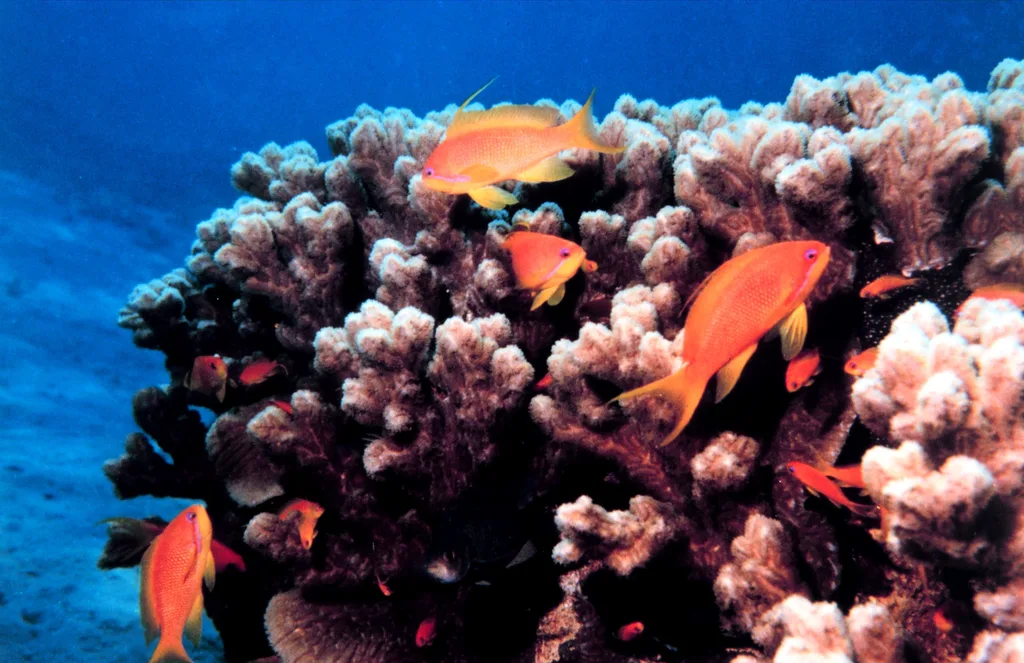
The reef at Aqaba is a fringing reef, which is the single most useful piece of geology in this aqaba beaches guide. A fringing reef grows directly against the shore, so the sequence a swimmer crosses is always the same: sand and rubble at the waterline, then a shallow reef flat where coral heads, seagrass and rock sit in water you can stand in, then the reef edge, where the bottom falls away down a slope of larger corals into deeper blue. There is no boat ride and no long swim to reach it. At the recognised entries on South Beach, the flat is a few fin-kicks wide, and the edge, where the life concentrates, begins almost immediately. That is why Aqaba’s reputation rests on shore diving and shore snorkelling rather than on boat trips: the reef comes to the beach.
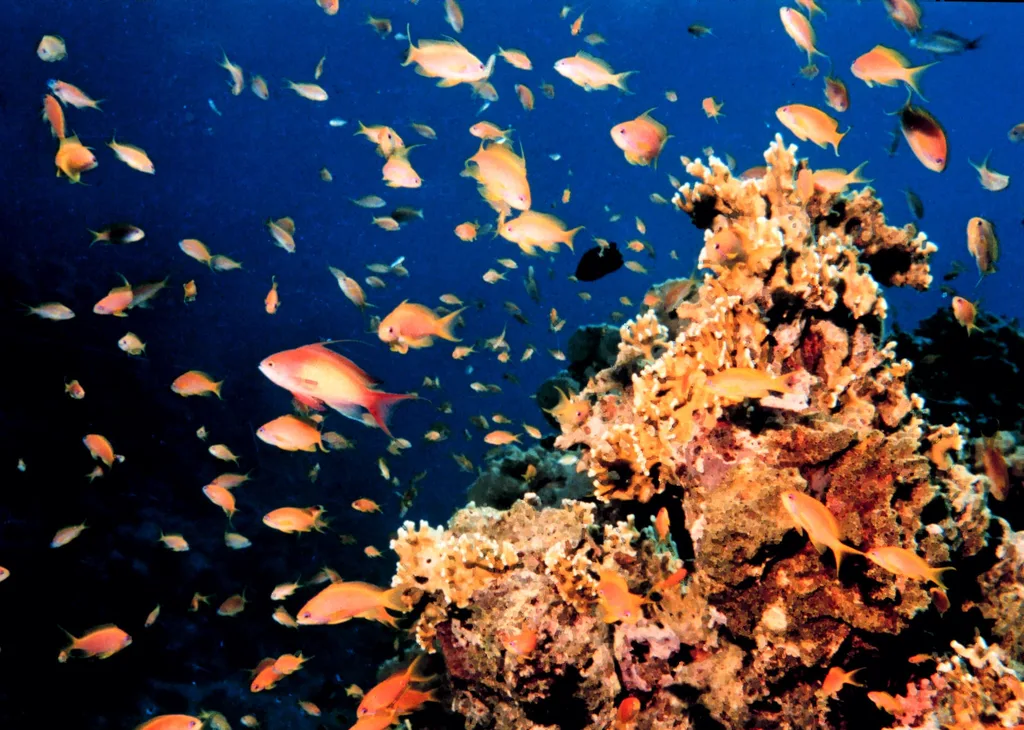
The life on it is documented by the people who manage it. ASEZA counts more than 157 species of hard coral and 512 species of fish in the reserve, with three seagrass species in the shallows and hawksbill and green turtles among its larger residents; UNESCO’s inscription assessment records over 150 hard coral species, of which 40 were assessed as globally threatened at the time of inscription, over 500 fish species and around 1,000 species of mollusc, and notes that the reserve holds a remarkable share of the Red Sea’s endemic hard corals. This guide prints those figures with their sources attached because they are the reserve’s own, and it prints no others: you will find no coral-coverage percentages or fish counts from tour marketing here, because nobody honest can stand on the beach and verify them.
What those numbers feel like from the surface is a reef that is busy rather than vast. Aqaba’s coral does not build the walls and caverns of the great offshore Red Sea sites; it builds gardens: coral heads and tables crowded with small, coloured, territorial fish, in water clear enough that the pattern of the garden reads from a snorkel at the surface. The much-studied point about these corals is their toughness. Gulf of Aqaba corals tolerate temperatures that bleach reefs elsewhere, which is why scientists treat this short Jordanian shore as a refuge worth protecting for the whole Red Sea’s future, and why UNESCO’s experts described the reserve’s corals as among the most likely to survive the century. A snorkeller does not need the science to enjoy the garden, but it changes the visit to know that the reef under your mask is not just pretty; it is, by the standards of a warming ocean, important.
Snorkelling From the Shore – the Reef Without a Boat
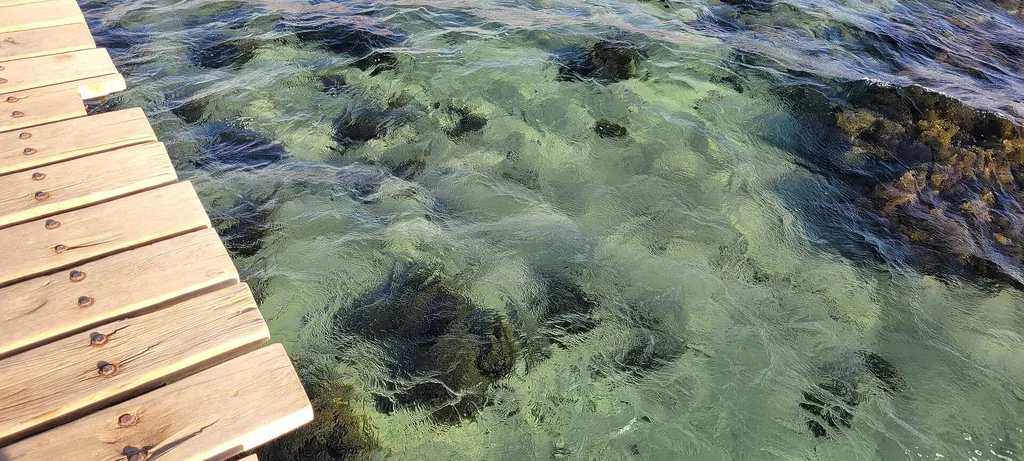
Snorkelling is the best-value experience on this coast, and the version this aqaba beaches guide recommends needs no boat, no tour and no particular fitness: a mask, a snorkel, reef shoes, and the discipline to enter at a marked point and float rather than stand. The technique that works here is simple. Walk in at a designated entry or slip off a jetty, get horizontal early, and fin gently along the reef edge where the flat drops away, because that edge is the aquarium wall: coral on one side, open water on the other, and the fish traffic running along the boundary. Morning is the best time, before the wind freshens and while the light is still raking across the coral rather than bouncing off the surface. The named snorkelling ground most guides and dive centres point to is the Japanese Garden, a shallow coral garden on the South Beach strip whose name tells you what to expect, ordered coral and dense small life in water a confident swimmer can cover from the shore.
Equipment is a mechanism, not a mystery. The dive centres strung along South Beach hire masks, snorkels and fins by the session or the day, and the beach clubs keep gear for their day guests; sizes for children are less reliably stocked than adult sizes, so families with small snorkellers do better bringing their own masks. A rash vest or an old t-shirt solves two problems at once: the Red Sea sun on a floating back, which burns faster than visitors expect, and the reserve’s rule-conscious culture, since shoulders covered in the water reads as respect as well as sense. What you should not do is treat the reef flat as a floor. Standing on coral kills it and cuts feet; the flat is for floating over, and the places to rest are the sand channels and the jetties.
Who should snorkel here, and who should not? Confident swimmers who can float calmly will get the full garden in their first session. Weaker swimmers can still snorkel happily in the shallows over the sand channels with a buoyancy vest, staying where the bottom is sand and the coral is beside rather than beneath them, but should not drift out along the edge alone. Non-swimmers should not be talked into it at all; the glass-bottom boats in a later section of this aqaba beaches guide exist precisely for them, and they see more of the reef dry than they would nervous and vertical in the water. Children take to Aqaba’s snorkelling quickly because the reward is instant and the entry is gentle, but they tire and chill faster than they admit, and the session should end while it is still fun.
The Reef’s Residents – What Swims Past the Mask
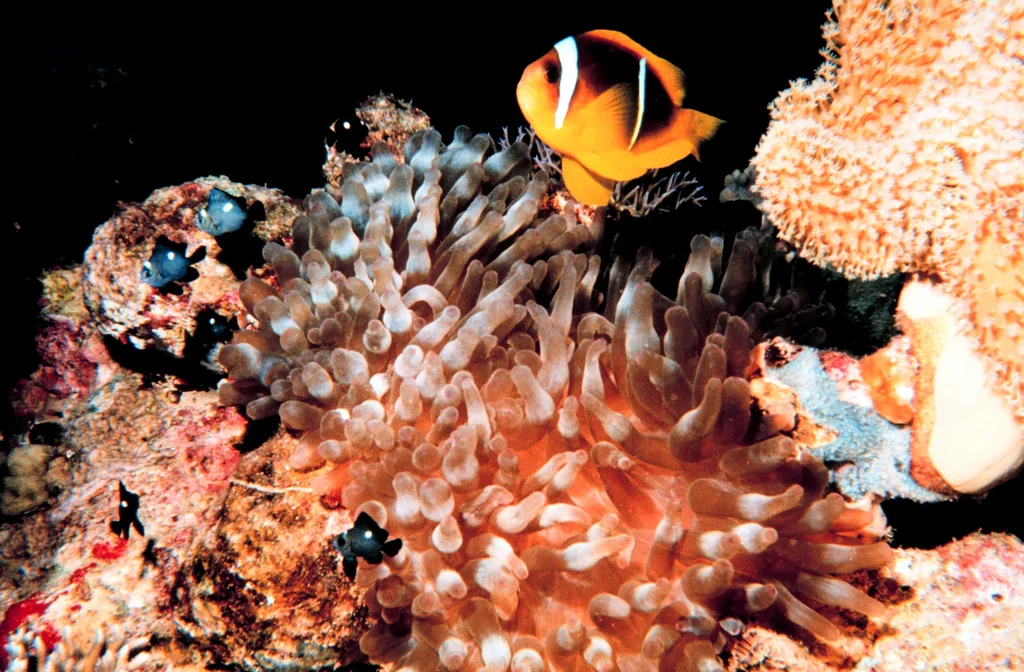
A snorkel session on this coast has a reliable cast, and knowing it in advance turns looking into finding. The orange clouds hanging over the coral heads are anthias, the reef’s background hum, present in their hundreds wherever the coral is healthy. The anemones wedged into the flat hold two-banded anemonefish, Aqaba’s version of the clownfish, which will face you down from their tentacles with more courage than size justifies. Butterflyfish work the coral in pairs, parrotfish graze audibly on it, and the blue-green chromis flicker over the shallows like light. This aqaba beaches guide lists these because they are the reef’s everyday citizens, the fish a first-time snorkeller is genuinely likely to meet within minutes at a good entry, not because they make a colourful paragraph.
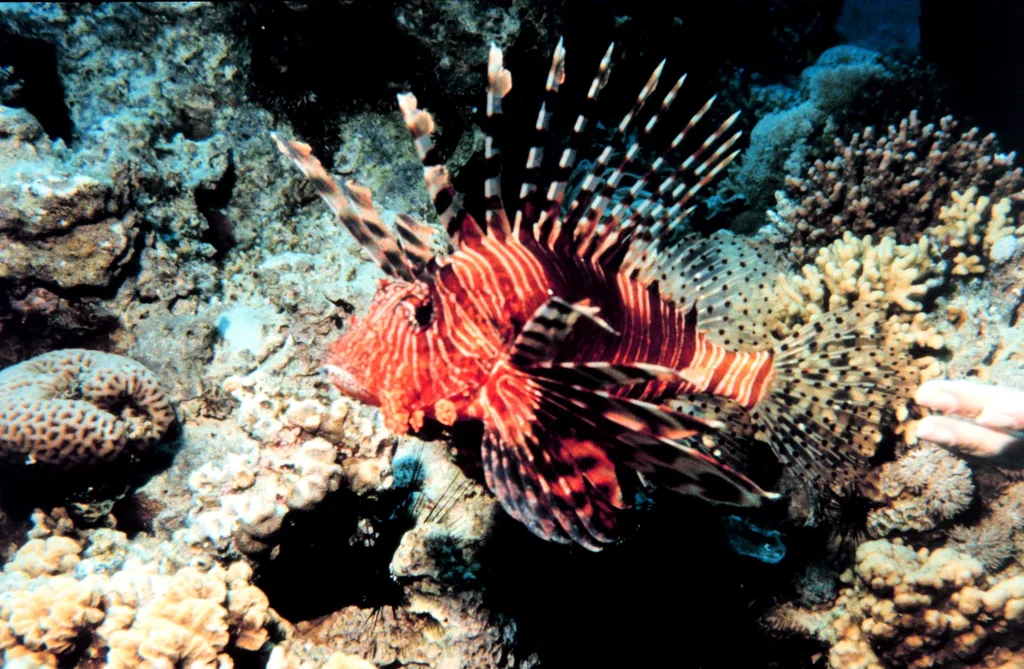
The larger residents take more luck and more honesty. Moray eels live in the reef’s holes and are seen mostly as a head and a judgemental stare. Lionfish hang motionless under ledges and over coral, magnificent and venomous in equal measure. ASEZA lists hawksbill and green turtles among the reserve’s marine life, and turtles are sighted along this shore, but they keep their own schedule, and any guide or boatman who guarantees you a turtle is selling something. The same applies to the reef’s occasional visitors: rays rest on the sand channels, and octopus are there for the patient and the sharp-eyed, mostly at dawn and dusk. The right expectation for Aqaba is a garden that is always busy and occasionally surprising, which is a better promise than a checklist, because it happens to be true.
One habit separates the snorkellers who see all this from the ones who see a blur: slowness. The reef’s life is territorial and small, and it hides from splashing. A swimmer who fins gently along the edge, stops often, and lets the fish forget about them will watch the garden resume around their mask: the anemonefish back out, the parrotfish back to grazing, the shy species out of their holes. Aqaba rewards that stillness more than most reefs because so much of its life is in the first few metres, exactly where a hurried swimmer churns through looking for something bigger further out. There is nothing bigger further out that is worth missing the garden for.
Diving in Aqaba – Shore Dives, Wrecks and First Breaths Underwater
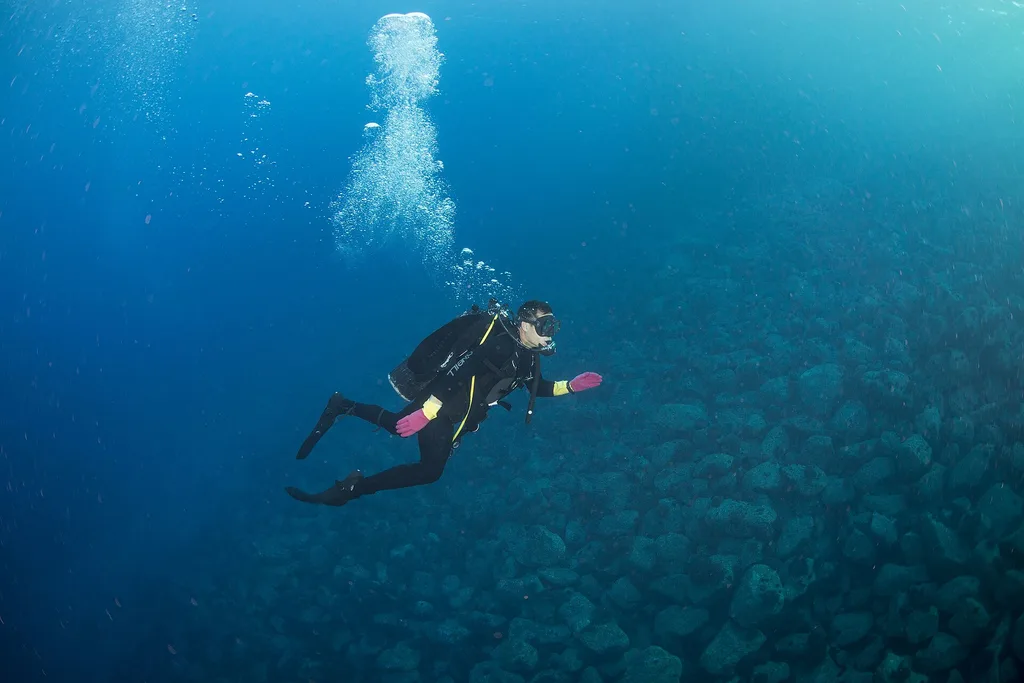
Diving built Aqaba’s reputation, and its defining fact is the one this aqaba beaches guide keeps returning to: you walk in. Most of Aqaba’s diving is shore diving, entered from the same South Beach entries the snorkellers use, which removes the boat schedule, the long surface ride and much of the cost structure of diving elsewhere. The dive centres along the strip run the system: guided shore dives for the certified, discover-scuba sessions in the shallow garden for the curious, and full beginner courses that use the reef flat as a classroom and the edge as the reward. For a traveller who has always meant to try diving, a calm gulf, a walk-in reef and patient centres make Aqaba one of the easier places in the region to start, and for certified divers the pleasure is the opposite of expedition diving: many sites, short transfers, and the day organised around the water rather than the journey to it.
The famous sites are the sunken ones. The Cedar Pride, a Lebanese freighter scuttled in 1985 to make an artificial reef, is the coast’s signature wreck, now a coral-covered hull lying within range of experienced recreational divers and visible in part to those above it. A sunken anti-aircraft tank sits in shallow water off South Beach, close enough to the surface world that snorkellers can see it from above, and a C-130 Hercules aircraft was sunk as another artificial reef. The Jordan Tourism Board also points visitors to an underwater military museum, a collection of decommissioned military hardware placed on the seabed as a dive attraction. This guide names these because they are real, famous and verified against official sources; it does not print depths, penetration advice or site grades, because those belong to the dive centre that will assess you, check your certification and choose the day’s sites against the conditions. Any centre that skips that conversation is the wrong centre.
Two honest notes for divers. First, Aqaba’s diving is gentle rather than dramatic: the walls are modest, the currents usually kind, and the pleasure is density of life and ease of access, so a diver arriving hungry for the big drop-offs and shark water of the offshore Egyptian sites should adjust the appetite, not the destination. Second, the reserve’s rules bind divers exactly as they bind snorkellers: no touching, no collecting, no feeding, entries and exits at the proper points, and buoyancy control that keeps fins off the coral is not a courtesy here, it is the condition of the reef surviving the attention it gets. Dive it that way and this aqaba beaches guide has nothing to add; the reef will do the talking.
Berenice and the Beach Clubs – How Private Beach Days Work
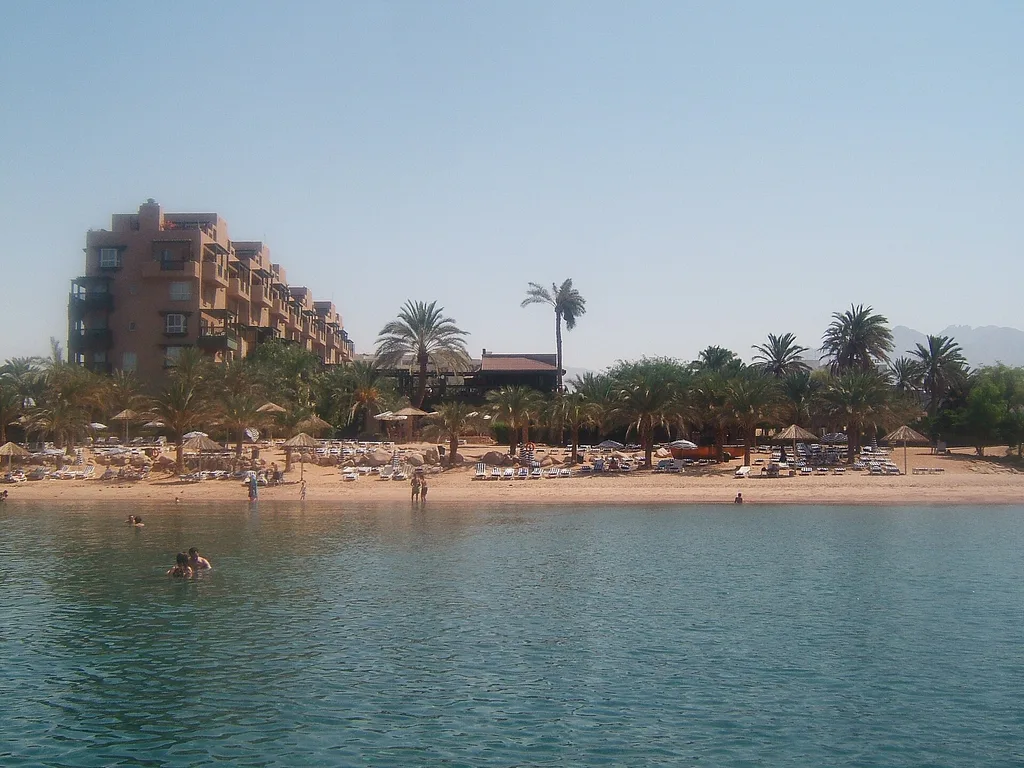
Between the public sand and the hotel strips sits the mechanism most Aqaba visitors actually use: the beach club. A beach club sells you a day, not a room. In exchange for its entry fee you get the things the public beaches do not provide: a lounger and shade that are yours for the day, towels, showers and changing rooms, a pool or two, a restaurant and bar that serve to your seat, maintained sand, and, at the good ones, a managed entry into the reef with gear hire on the spot. This aqaba beaches guide prints no club prices, and the omission is deliberate: day rates change by season, by day of the week and by what is bundled, and a figure printed here would be wrong by the time it mattered. What can be said, and what actually helps, is what the money buys and how to judge it: you are paying for facilities, certainty and service on a coast where the free alternative asks you to bring everything yourself.
Berenice Beach Club is the name most visitors meet first, and it earns the mention: a long-established private club on the South Beach shore, inside the marine park’s stretch of coast, with its own beach, pools and restaurants and a dive centre on site, so a group can split between divers, snorkellers and loungers without splitting up. Its reef access is its real asset, because the water in front of the club is the same protected reef as the public entries, reached with a towel and a shower waiting behind you. The city also has its club-style hotel beaches along the northern shore, where the big resort hotels hold the sand in front of their towers; those are for guests first, and day access for non-guests, where it is offered at all, is at the hotel’s discretion and on the day. Ask before you set out, not at the gate.
Clubs run policies, and a first-time visitor should know the shape of them before arriving. Entry is at the club’s terms: some clubs admit families, couples and mixed groups rather than unaccompanied single men, most have rules about outside food and drink, and all of them expect the reef rules to be followed on their stretch of water. None of this is hidden; it is simply the difference between a managed product and a public beach, and the travellers who enjoy clubs most are the ones who wanted exactly that trade. Who should skip the clubs? Budget travellers, who get the same sea free a short walk away; reef purists who would rather enter at a quiet reserve beach than beside a pool; and anyone who dislikes being organised. Who should choose them without hesitation? Families who need showers, shade and food in one place, mixed groups of swimmers and non-swimmers, and any traveller with one beach day in Aqaba who wants it to work without research. For that reader, a club day is not a compromise in this aqaba beaches guide’s judgement; it is the sensible product.
Ayla and Tala Bay – the Polished, Private Ends of the Coast
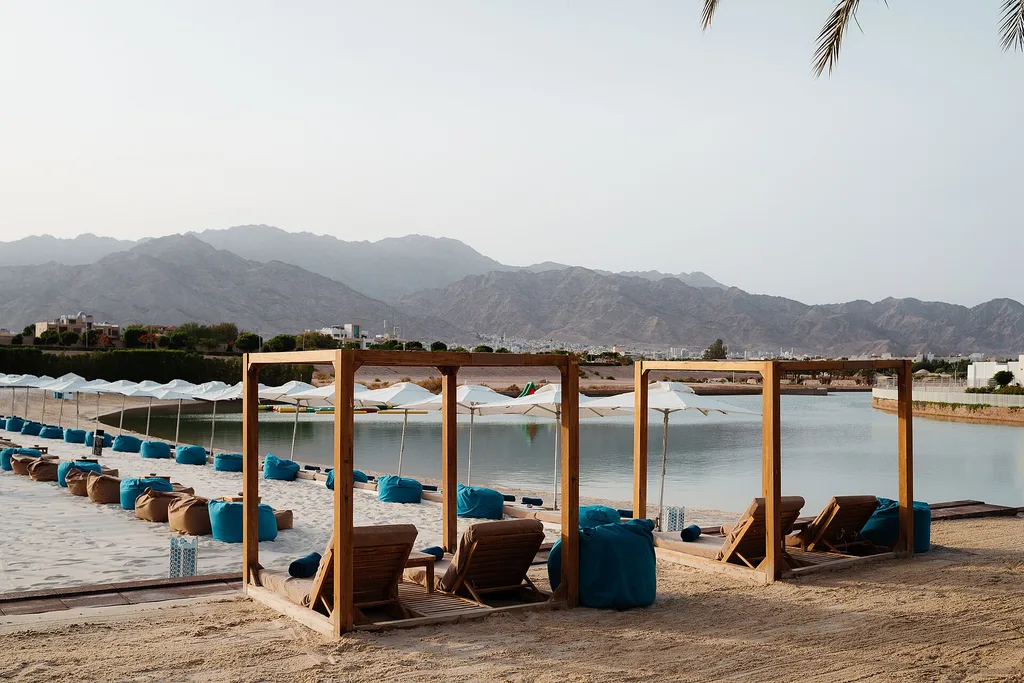
At the northern end of the city, Ayla is a different idea of the seaside altogether: a large private development built around man-made lagoons and a marina, with residences, a golf course, shopping streets and a set of beach clubs along its engineered water. The clubs are the visitor’s way in: La Plage, the beach club of the Hyatt Regency, spreads cabanas and daybeds along the lagoon sand; B12 runs a livelier club with a wake park on the lagoon; Mama Gaia adds a restaurant-led beach club of its own. The water at Ayla is lagoon water, calm, warm and managed, excellent for children, for floating, and for a day built around food and comfort. What it is not is the reef. Ayla’s lagoons were dug, not grown, and a traveller whose Aqaba plan centres on coral should treat Ayla as the comfort day in the trip, not the nature day.
At the coast’s far southern end, Tala Bay tells a similar story in a quieter voice: a resort enclave of big hotels, each holding its own beach, pools and gardens, at the end of the road past the marine reserve. Tala Bay’s beaches are hotel beaches, for guests in the first instance, and they offer the most conventional resort product on the coast: serviced sand, water sports desks, and the sea a few steps from the room. Its position is both its point and its catch. It is the calmest, most self-contained shore in Jordan, and it is a drive from the town, the public beaches and everything else in this aqaba beaches guide; a traveller based there samples Aqaba rather than living in it, while a traveller based in town treats Tala Bay as a glimpse of how the other end lives.
Neither end of the coast needs defending or apologising for; they need describing accurately, which is rarer. Ayla and Tala Bay are private, and their beaches are not public rights of way with better furniture; access runs through the clubs and hotels, on their terms. They are also genuinely good at what they do, and for a honeymoon day, a family that wants everything handled, or a winter weekend built around a pool and a warm lagoon, they may be the right Aqaba. The mistake is only confusion: booking the polish and expecting the wilderness, or dismissing the polish and missing an easy, pleasurable day. This aqaba beaches guide’s advice is to use each shore for what it is, and to make sure at least one day belongs to the reef, which is the thing Aqaba has that nowhere else on your trip will repeat.
Glass-Bottom Boats – the Reef for Non-Swimmers
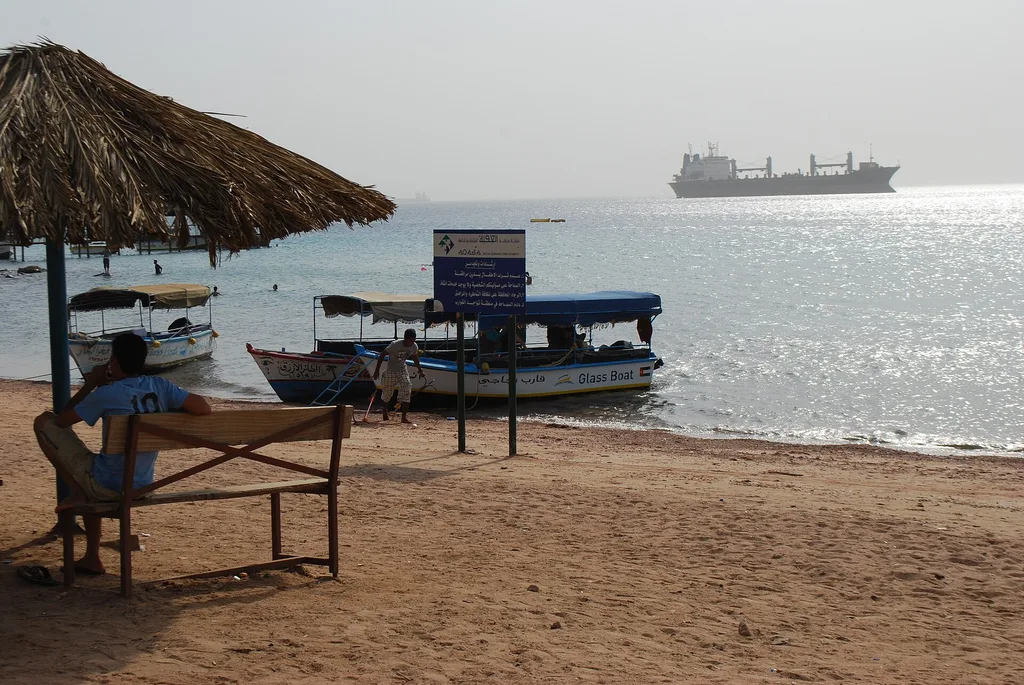
Not everyone in a group swims, and Aqaba’s oldest answer to that problem is still its most charming: the glass-bottom boat. The boats work from the town shore at Al Ghandour and from points along South Beach, taking passengers out over the reef flat and the edge to watch the coral gardens through the glass panels in the hull. You see the same reef the snorkellers see, from above and dry: the coral heads, the anthias clouds thinned by the glass into something dreamier, the anemonefish in their anemones, and, on a lucky pass, a turtle going about its business below the boat. For non-swimmers, for grandparents, for small children not yet ready for a mask, and for anyone visiting in the cooler months who wants the reef without the immersion, this is not a lesser experience in this aqaba beaches guide’s view; it is a different seat in the same theatre.
The practicalities are a mechanism again. Trips are arranged at the shore, with the boatmen where the boats are moored, or through hotels and tour desks for the organised versions; they vary in length from short hops over the nearest garden to longer runs along the South Beach sites, and the sunken tank off South Beach is a favourite stop because it reads perfectly through glass. Go in the morning if you can, when the light comes down through the water rather than skimming off it, and take the boatman’s word about the day’s clarity, because a windy afternoon that merely inconveniences a snorkeller can turn the glass into frosted plastic. A hat matters more than you expect, since the boats are open and the gulf sun does not negotiate.
Who should skip the boats? Swimmers, mostly: if you can snorkel, the mask beats the window every time, and the money and the hour are better spent in the water. The boats are also a poor choice in a chop for anyone prone to seasickness, because the motion is small, constant and spent staring downwards. But as the group’s common ground, the outing that lets the diver, the grandmother and the five-year-old share the same reef on the same morning, the glass-bottom boat earns its place in this aqaba beaches guide, and its long survival on this shore is the proof of it.
Water Conditions and Staying Safe on the Reef
Aqaba’s water is, by Red Sea standards, gentle, and this aqaba beaches guide will describe it without numbers, because the numbers printed elsewhere for temperature and visibility are copied from each other rather than measured, and a traveller needs the shape of the truth more than a borrowed figure. The shape is this: the gulf is narrow and sheltered, the sea is calm on most mornings of the year, the water is clear in a way that regularly surprises first-time visitors, and it stays swimmable in every month, cooling in winter to a level most northern Europeans find brisk rather than prohibitive and warming through the summer to bath-like comfort. Wind is the variable that matters day to day: a fresh afternoon wind, commonest in spring, chops the surface, clouds the shallows and turns a snorkel session into work, which is why this guide keeps steering you to the mornings.
The reef itself sets the safety rules, and they are mostly about feet and hands. Enter at the designated points, because the channels through the reef flat are kept clear and the rest of the flat is coral, rock and sea urchins; wear reef shoes until you are deep enough to float. Urchins sit in the rocky shallows with their spines up, and a stood-on urchin is the commonest injury on this coast, painful and entirely avoidable. Lionfish and stonefish are venomous and are protected by their own camouflage and your distance: look, photograph, never touch, and teach children the same rule as a game rather than a fear. Jellyfish appear occasionally and unpredictably, as they do anywhere in the Red Sea; a long-sleeved rash vest is a snorkeller’s best insurance against both jellyfish and the sun. On boats, the reserve’s rules ask for life jackets where required, and weak swimmers should wear one in the water without embarrassment, because the reef edge drops away and confidence is not a flotation device.
The last safety item is the sun, which visitors consistently underrate because the water keeps them cool. Aqaba sits at the top of a desert gulf, the light reflects off pale sand and clear water, and a snorkeller’s back, shoulders and the parting of their hair burn in a single session. Cover up in the water, use the shade shelters without shame at midday, and drink more water than feels necessary; the town’s cafes exist in their thousands partly because this coast runs on tea, coffee and shade. None of this is alarm: Aqaba is a forgiving place to swim, and its accident pattern is dominated by sunburn, urchin spines and stood-on coral, all three of which are choices rather than luck. Make the other choices and the water in this aqaba beaches guide is as safe as holiday water gets.
Beach Etiquette in Jordan – Reading the Public Sand
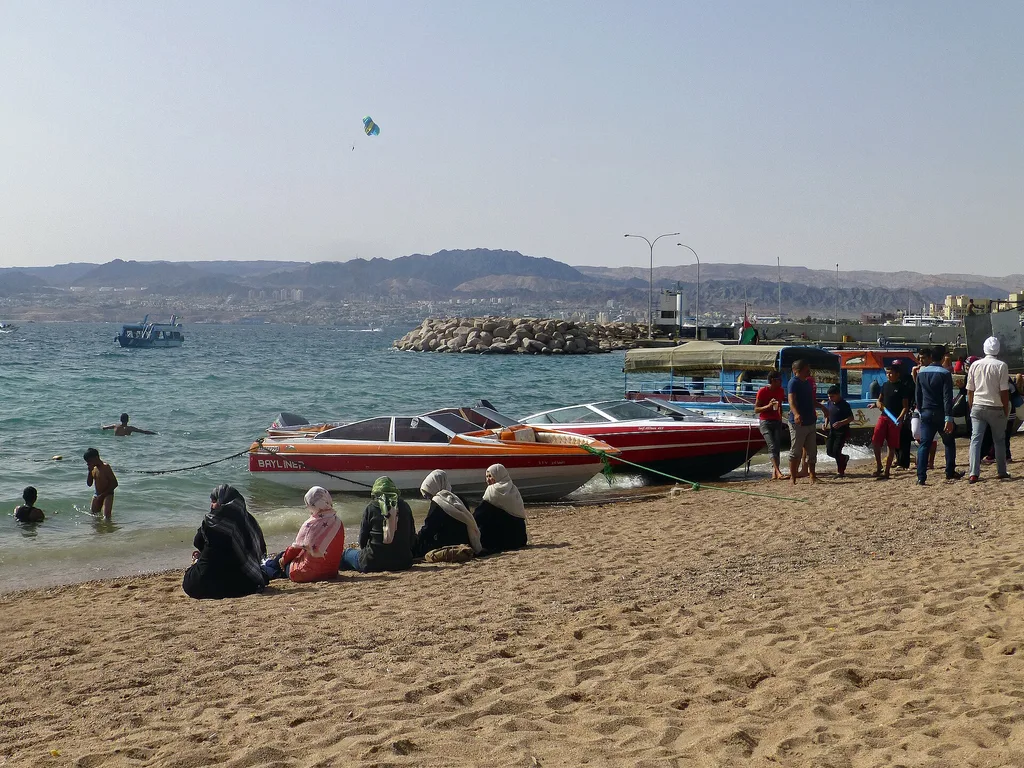
Aqaba is a Jordanian city before it is a resort, and its public beaches are family spaces in a conservative culture. That single fact, understood kindly, explains every etiquette question a visitor brings to this aqaba beaches guide. On the town beaches and the public stretches of South Beach, most local women swim covered, many in full dress or purpose-made modest swimwear, and families spread their mats in groups that are sociable among themselves and private toward strangers. Standard resort swimwear is completely unremarkable at the beach clubs, the hotel beaches and Ayla, where the crowd is international and the norms are the norms of resorts everywhere. On the public sand, visitors, especially women, generally find that a more modest swimsuit, or a t-shirt over it for the walk to the water, draws less attention and feels more comfortable, not because a rule demands it but because blending in is a courtesy that costs nothing and buys an easier day.
The rest of the etiquette is the ordinary grammar of being a guest. Ask before photographing people, and accept a refusal as final, particularly with families and women; the reef and the sunset photograph beautifully without anyone’s children in the frame. Friday is the week’s high day on the public beaches, when Jordanian families take the shore in force, and a visitor who wants quiet should choose a weekday morning, while a visitor who wants the full local scene should choose exactly that Friday afternoon. Alcohol is served in the hotels and clubs and is not part of the public-beach picture at all; drinking on the public sand would be read as disrespect, and during Ramadan, eating and drinking discreetly in public during the day is the same small courtesy extended ashore. None of this restricts a visitor’s holiday in any real way. It describes a shore that belongs to a city, and a traveller who reads it that way will be repaid with the thing Aqaba’s public beaches offer that no club can sell: the feeling of being somewhere real.
When to Come – Seasons on the Gulf
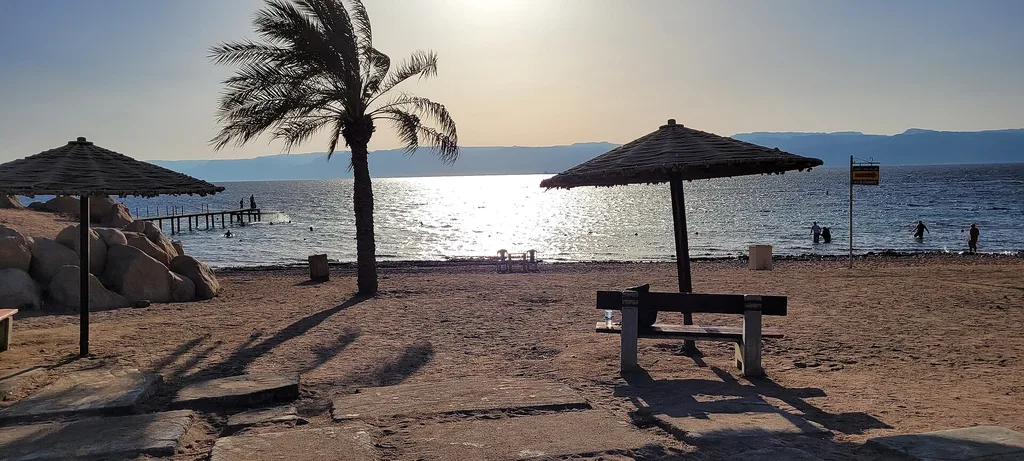
Aqaba’s seasons are the reverse of the Mediterranean’s logic, and planning by them matters more than any other choice in this aqaba beaches guide. Spring and autumn are the sweet spots: the air is warm without being violent, the sea is at its most inviting, the light is long, and the beaches run at a pleasant fullness rather than a crush. These are the months to combine the reef with Petra and Wadi Rum, when the whole golden triangle of the south can be done in one trip without any of it hurting. If you can choose freely, choose these shoulders, and choose weekday mornings inside them for the quietest water.
Summer is the honest test. The air temperature in Aqaba in high summer is fierce, the sand at midday is a punishment, and the entire rhythm of the coast moves to the edges of the day: into the water early, into the shade or indoors by late morning, back to the beach for the long evening, when the sun drops across the gulf and the town beaches fill with families doing exactly the same calculation. The sea itself is at its warmest and the snorkelling is superb, so a summer trip is not a mistake; it is a trip that must be run on local time. Winter is the opposite bargain, and it is Aqaba’s open secret within Jordan: while Amman shivers, Aqaba’s days stay mild, the sun shines, the beaches are quiet, and Jordanians come south for weekends of winter warmth. The water is at its coolest and a short wetsuit or a brave disposition helps for long snorkel sessions, but for a northern visitor escaping a grey January, a mild beach, a working reef and an empty shore is a powerful combination.
Two timing notes cut across the seasons. The first is the weekend: Jordan’s weekend is Friday and Saturday, and the public beaches and the road south fill on both, so a traveller who values space should dive and snorkel on weekday mornings and give the weekend afternoons to the town. The second is the wind, which has its own calendar, freshening on spring afternoons and flattening the gulf on still autumn mornings; it cannot be booked around, only read on the day, and the coast’s answer is always the same: get the water done in the morning, and let the afternoons be for shade, cafes and the corniche. A traveller who builds the trip that way will find that Aqaba’s climate, which looks like a problem in a table of averages, is in practice a schedule that runs itself.
Choosing Your Beach – and Who Should Skip Aqaba’s Sand
The choosing, then, by traveller rather than by map, which is how this aqaba beaches guide promised to end. Families on a budget should base themselves on the public shore: Al Ghandour for shade shelters and the town at their back, or the public entries on South Beach where the children can graduate from the sand channels to the reef edge as their confidence grows, with a glass-bottom boat morning as the shared treat. Snorkellers should go straight to the reserve: the managed beaches and designated entries on South Beach, early, on a weekday if the calendar allows, and should build the whole Aqaba stay around morning water. Divers should lodge near the South Beach strip or book with its centres, dive the wrecks and gardens by day, and let the town feed them at night. Travellers who want the day handled should buy it: Berenice for the reef with facilities, Ayla for the lagoon polish, a Tala Bay hotel for the full resort removal from care.
The skips matter as much. Skip the town beaches if what you want from a beach is beauty, because their beauty is social rather than scenic. Skip the public strip at Friday lunchtime if crowds undo you, and skip the clubs if entrance policies and organised leisure undo you just as much. Skip Ayla’s lagoons as your only water if you came for coral, and skip the open reef entries if you cannot swim, because the boats exist for you and are better. And one traveller should skip Aqaba’s beaches altogether, or at least arrive with adjusted eyes: the soft-white-sand seeker. Jordan’s shore is coarse sand, reef rock and gravel in places, beautiful for what grows and swims on it rather than for what it feels like under a towel. If the sand itself is the holiday, the Red Sea’s Egyptian resorts do it better; if the life in the water is the holiday, few shores anywhere do it better than this one, and that trade is the whole argument of this aqaba beaches guide in a single paragraph.
Aqaba Beaches Guide – Questions Travellers Actually Ask
Are Aqaba’s public beaches really free? Yes. Al Hafayer and Al Ghandour in town and the public access points along South Beach are public beaches, and the Aqaba Marine Reserve’s managed beaches are open to visitors who follow the reserve’s rules. What you pay for on this coast is never the sea; it is facilities, privacy and service, which is what the beach clubs and hotels sell. That is why this aqaba beaches guide compares shores by what they give you rather than by what they charge.
Which Aqaba beach is best for snorkelling? The South Beach shore inside the Aqaba Marine Reserve, entered at the designated entry points near the dive centres and the reserve’s managed beaches, because the fringing reef reaches the shore there and the coral garden begins within metres. The Japanese Garden is the name to ask for first. The town beaches have no reef to speak of and are for swimming, not snorkelling.
Can I snorkel in Aqaba without a tour or a boat? Yes, and it is the normal way to do it. The reef is a fringing reef that grows against the shore, so you enter from the beach at a marked entry, float over the flat and follow the reef edge. Gear is hired from the dive centres along South Beach and kept by the beach clubs for day guests. The discipline that matters is the reserve’s: enter at the designated points, do not stand on the coral, and take everything back with you.
What should I wear on Aqaba’s public beaches? On the public beaches, expect a local, family scene in which most Jordanian women swim covered; visitors in standard swimwear will feel most comfortable in something a little more modest, or with a t-shirt or cover-up for time out of the water. At the beach clubs, hotel beaches and Ayla, ordinary resort swimwear is the norm and nobody will look twice. A rash vest is worth packing either way, for the sun during long snorkel sessions as much as for modesty.
Is the Aqaba Marine Reserve a UNESCO site, and does that change a beach visit? Yes: UNESCO inscribed the Aqaba Marine Reserve on the World Heritage List in 2026, as Jordan’s first natural World Heritage site, recognising the northernmost tropical coral reef system in the world and its unusually heat-resilient corals. For a beach visitor the practical change is small but real: the shore is managed by ASEZA with published rules, designated entry points, buoy lines and no camping or fires on the reserve’s beaches, and those rules are the reason the reef in front of a public beach is still alive.
When is the best time of year for Aqaba’s beaches? Spring and autumn, when the air is warm rather than fierce, the sea is inviting and the beaches are lively without being overwhelmed. Summer offers the warmest water and superb snorkelling but demands a local rhythm of early water, midday shade and long evenings. Winter is mild, sunny and quiet, and Aqaba is where Jordanians themselves escape the cold; the sea is at its coolest then, fine for swims and workable for snorkelling with a little insulation.
I cannot swim. Is there anything for me on Aqaba’s beaches? Yes: the glass-bottom boats, which run from the town shore at Al Ghandour and from South Beach over the reef, and show you the coral gardens, the fish and sometimes turtles through the hull without your getting wet. Go in the morning for the clearest view through the glass. Aqaba’s aquarium, at the Marine Science Station, is the other dry window on the same reef.
Aqaba Beaches – the Short Version
Aqaba gives Jordan 27 kilometres of Red Sea and packs into them a whole education in beaches: free town sand where a city relaxes, a protected fringing reef you can snorkel from the shore inside a World Heritage reserve, beach clubs that sell the same sea with better furniture, and two polished private ends at Ayla and Tala Bay. No single one of them is the best beach in Aqaba, because each is the best at a different thing, and the only real mistake available is choosing one while expecting another. Swim in town for the company, snorkel South Beach for the garden, buy a club day for the ease, and take the glass-bottom boat when the group includes everyone. Do it in the morning, respect the reef’s few rules and the shore’s few courtesies, and this short coast will give you more kinds of beach day than coasts ten times its length manage. That is the promise this aqaba beaches guide set out to test, and Aqaba keeps it.
One last piece of practical honesty to carry onto the sand: almost everything good on this coast happens in the morning and almost everything crowded happens on Friday and Saturday afternoons, so the traveller who plans water early and weekends carefully has effectively doubled the quality of the same beaches without spending anything. Bring reef shoes, bring a rash vest, enter where the reserve tells you to enter, and leave every beach with nothing of yours on it and nothing of its in your bag. Jordan’s whole sea fits along one short road south of a small city, and it asks very little of the people who swim in it. Give it that little, and it gives back a reef, a gulf and a city’s worth of evenings that trips three times as long often fail to match.