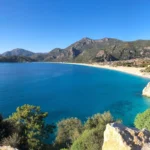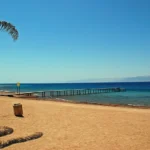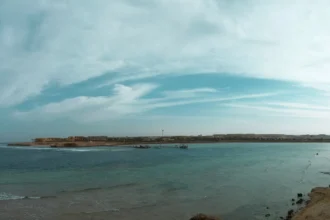
Dahab is the Red Sea town for travellers who look at Sharm el Sheikh’s polished resort strip and feel tired before they have even arrived. It sits on the southeast coast of the Sinai Peninsula, facing Saudi Arabia across the Gulf of Aqaba, and it runs at a completely different speed – low-rise, a bit scruffy, and organised almost entirely around the reef that begins a few steps from its cafes. Experience Egypt, the country’s official tourism portal, places Dahab 90 km north of Sharm al-Sheikh and describes it in one breath as formerly a Bedouin fishing village and now one of Egypt’s top diving and windsurfing hotspots. Both halves of that sentence are still visible in the town today, and this dahab travel guide is built around them.
The practical shape of a Dahab day is simple. You eat a slow breakfast on a cushion platform at the water’s edge, walk a few metres, and put your face in some of the clearest, most life-packed water in the northern Red Sea. The diving and snorkelling here is overwhelmingly done from the shore, which changes everything – no 6am boat queues, no rigid schedules, just entries from cafe decks and rocky points strung along the coast. Between swims, the town’s other engines take over – wind filling sails on the lagoon, freedivers training on lines in deep blue water, and the mountains turning pink in the evening. If you are planning a wider trip through the country around it, read this alongside our full Egypt travel guide, because Dahab pairs naturally with Cairo, the Nile valley and the other Red Sea towns.
This dahab travel guide is deliberately honest about the trade-offs. Dahab is not a sandy-beach resort town, its nightlife is a shisha and a second tea rather than a club, and a handful of its famous places – the Blue Hole above all – deserve respect rather than bravado. What it offers instead is rare – a genuinely slow seaside town where the reef is the main street, a month costs what a week costs in the big resorts by structure rather than by discount, and people who planned four days are still there in week six. The sections below cover the town piece by piece – the diving, the wind, the desert behind it, the trips to Mount Sinai and Ras Mohammed, where to sleep, what to eat, and the downsides nobody puts in the brochure.
The Short Version – Dahab in Ten Minutes
If you read nothing else in this dahab travel guide, read this. Dahab is a small, low-rise town on Sinai’s Gulf of Aqaba coast whose entire personality comes from three things sitting side by side – a fringing coral reef you reach from the shore, a lagoon that fills with wind most afternoons, and a ring of bare desert mountains that cut it off from the rest of Egypt. Divers, snorkellers, freedivers and windsurfers base themselves here for weeks at a time, and the town has shaped itself around them – dive centres instead of malls, beach cafes instead of beach clubs, camps and small hotels instead of towers.
The famous names are all close. The Blue Hole, a deep sinkhole in the reef that is one of the world’s best-known dive sites, lies a short drive north of town. The roadless protected coast of Ras Abu Galum begins just beyond it. Mount Sinai and Saint Catherine’s Monastery are the big inland trip, and Ras Mohammed National Park is the big southern one. In between, the everyday Dahab of house reefs, lagoon sessions, desert teas and long cafe evenings fills whatever time you give it – which is why the single most common Dahab story is a short trip quietly becoming a long one, something the official portal nods at when it recommends the town for a low-tempo vacation and extended stays.
Now the warnings, because they decide whether Dahab is for you. The town’s own shoreline is mostly rocky reef, not soft sand – swimmers who want a classic beach holiday are better served elsewhere, though the lagoon has sand and the northern camps sit on quieter shores. Evenings are gentle to the point of silence. Development is unfinished in places, with half-built shells and dusty back streets behind the pretty corniche. None of that bothers the people who love Dahab – it is rather the point – but a dahab travel guide that skipped it would be setting you up for the wrong holiday.
From Bedouin Fishing Village to Bohemian Retreat
Start with the version of Dahab that existed before any traveller arrived. For generations this was a Bedouin village on a hard coast – fishing in the gulf, herding in the wadis, and hosting passing movement along the shore. The official Experience Egypt portal, which calls Dahab “a bohemian retreat on the Red Sea coast”, notes that the town was formerly a Bedouin fishing village, and its own search material adds an older layer – this stretch of coast reportedly served as a resting spot for pilgrims travelling to and from Mecca. Look at the geography and it makes sense. Dahab is one of the few natural pauses on a mountainous shoreline, with water, a bay and a route inland towards Saint Catherine.
Travellers found it in the era when Sinai was the cheap end of the Red Sea. Word spread about a reef you could dive from the beach, camps of simple huts where you slept metres from the water, and a pace of life that suited divers between seasons and travellers between countries. The camps came first, then small hotels, then the dive centres, freediving schools and wind centres that now line the shore. Crucially, Dahab never got its master-planned resort moment. Growth happened plot by plot along the corniche, which is why the town still feels handmade – charming in one street, half-finished in the next.
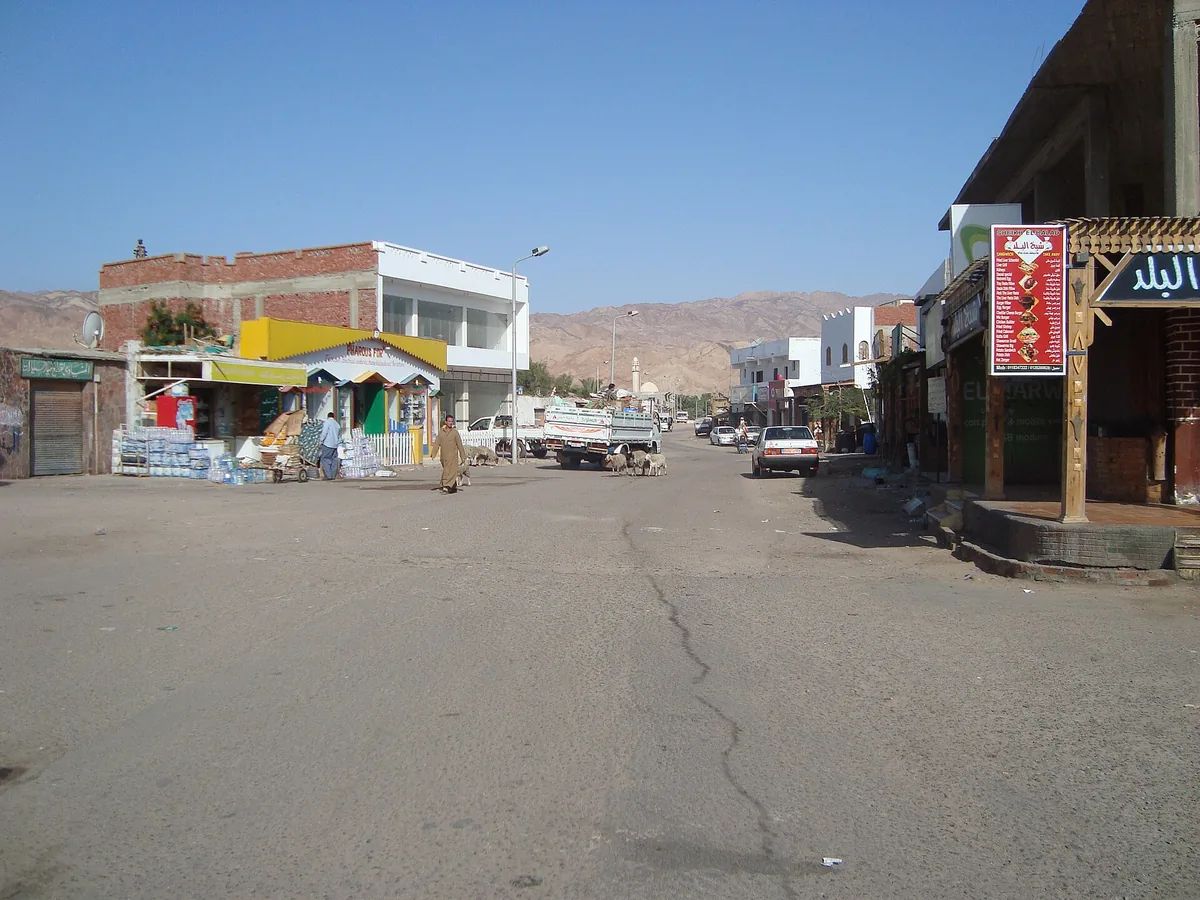
What Dahab became, and what this dahab travel guide keeps returning to, is a meeting point. The Bedouin families who were here first still run camps, boats, camels and cafes. Egyptian divers, instructors and digital workers moved in alongside European ones. The portal describes a diverse local community, and that is the honest summary – Dahab is not a resort enclave sealed off from Egypt, but a working Sinai town with tourism woven through it. Travel a street back from the sea and you are in Assalah, among bakeries, workshops, apartment blocks and goats, and that everyday town is as much the real Dahab as the cushion cafes on the promenade.
The Shape of Dahab – Masbat, Assalah and the Lagoon
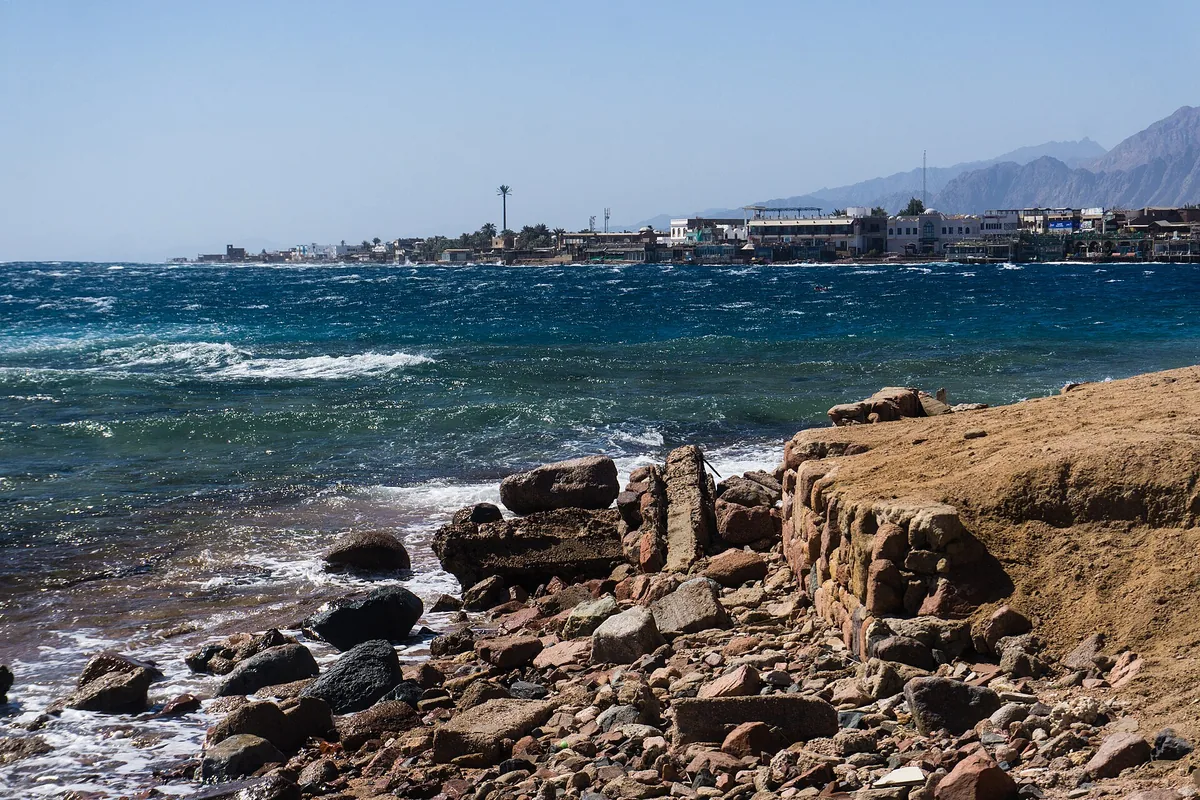
Dahab makes sense once you walk it end to end, and you can, because the whole town is one curving strip of coast. Begin at the northern end at the Lighthouse, the point where the reef forms a small headland and the town’s diving effectively starts. From there the shore bends south through Masbat, the bay that holds the classic Dahab waterfront – a pedestrian corniche of cafes, dive centres and small hotels whose wooden decks and cushion platforms hang over a rocky shore. This is the postcard strip, the social centre, and the place most first-time visitors should sleep if they want the reef and the cafes on their doorstep.
Keep walking south and the corniche runs out into Assalah, the original village turned local town. Assalah is where Dahab shops, fixes things and lives – the mosque, the market streets, the supermarkets, the apartment blocks where long-stay divers and instructors rent by the month. It is less pretty than Masbat and more useful; many repeat visitors end up basing here precisely because it feels like a town rather than a strip. A dahab travel guide should be clear that neither end is better – Masbat is for the holiday version of Dahab, Assalah for the living-in-it version, and the walk between them along the shore is one of the town’s daily pleasures.
South of Assalah the coast changes again into the lagoon – a broad, shallow, sandy bay sheltered by a reef and a spit, backed by the town’s largest hotels and its windsurfing and kitesurfing centres. This is Dahab’s sandy face and its sporting engine room. North of the Lighthouse, meanwhile, the coast road runs the other way towards the Blue Hole and the camps, through a string of quieter beaches and dive sites. Keep that mental map – Lighthouse and Masbat for reef and cafes, Assalah for real life, the lagoon for wind and sand, the northern road for space and the famous hole in the reef – and every recommendation in the rest of this guide will fall into place.
Shore Diving and Snorkelling – the Reef on Your Doorstep
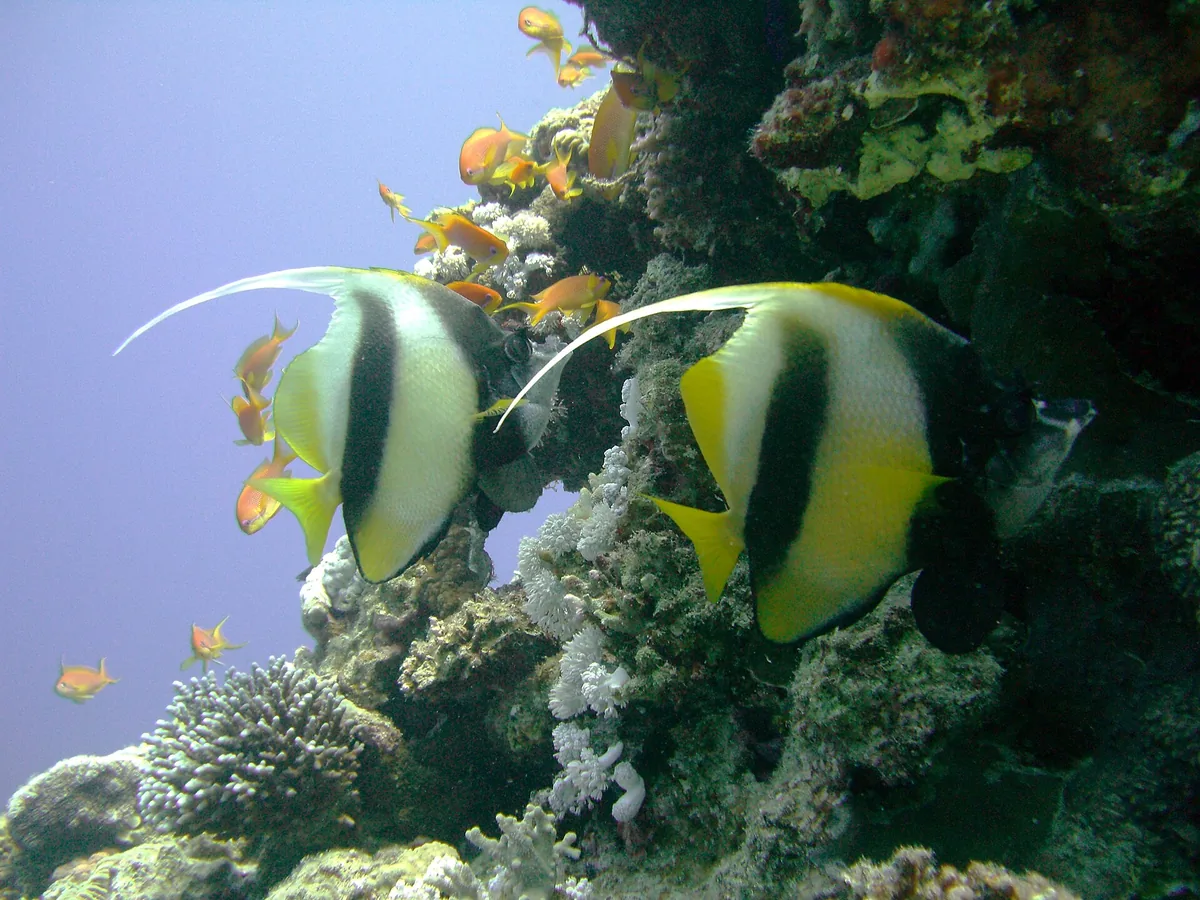
The single fact that organises everything in this dahab travel guide is that Dahab’s reef comes to meet you. A fringing reef runs along almost the whole coast, dropping from a shallow flat into coral gardens and walls, and because the town grew around it, the dive sites are simply addresses on the shore. You kit up at a dive centre or cafe, walk to the entry point, and wade or fin out over the reef flat at a marked spot. No harbour, no boat list, no seasickness. It makes diving cheaper in structure – you are paying for guiding, kit and tanks, not for fuel and a captain – and it makes it flexible in a way boat diving never is. Two dives before lunch and one at sunset is a normal Dahab day, and night dives are a stroll rather than an expedition.
The sites string along the coast like stops on a slow train. Lighthouse Reef, at the town’s northern point, is the training ground and social hub – a gentle slope of coral used for courses, refreshers and easy guided dives, busy in the best way. Beyond it, Eel Garden is named for its sandy patch where garden eels sway in the current, hundreds of thin ribbons vanishing into the sand as you approach. Further north, the Canyon is a long crack in the reef flat that divers drop into and swim through beneath the surface, and the Islands offer coral mazes offshore. South of town, the Three Pools are natural lagoon-like pools in the reef flat that suit snorkellers and nervous beginners. A dahab travel guide cannot rank them honestly for you – the right site depends on wind, current and your level on the day, which is exactly what the local centres are for.
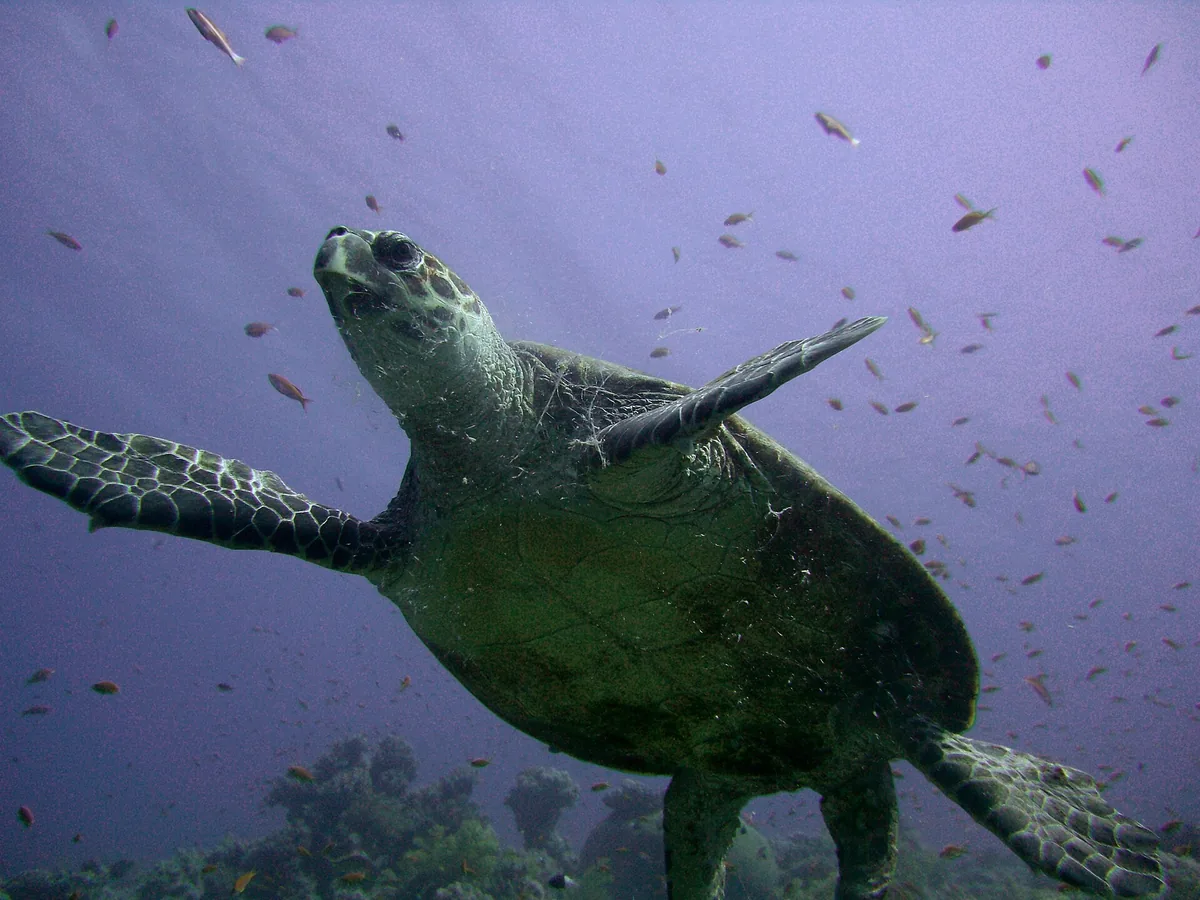
Snorkellers are not second-class citizens here, and that is rarer on the Red Sea than it should be. The same house reefs that divers enter from the cafes reward a mask and fins – turtles, rays, lionfish, clouds of anthias and the occasional octopus all live in snorkelling depth, and the coral starts before the water reaches your waist. Three honest cautions apply everywhere on this coast. Enter at the marked channels rather than over the coral, both to protect the reef and your feet. Wear something on your feet for the rocky entries. And respect the afternoon chop – when the wind builds, exposed sites get rough and the sheltered bay sites are the sensible choice. Do that and Dahab’s shore reef is the most accessible big-reef experience in Egypt.
The Blue Hole – Famous, Beautiful and Unforgiving
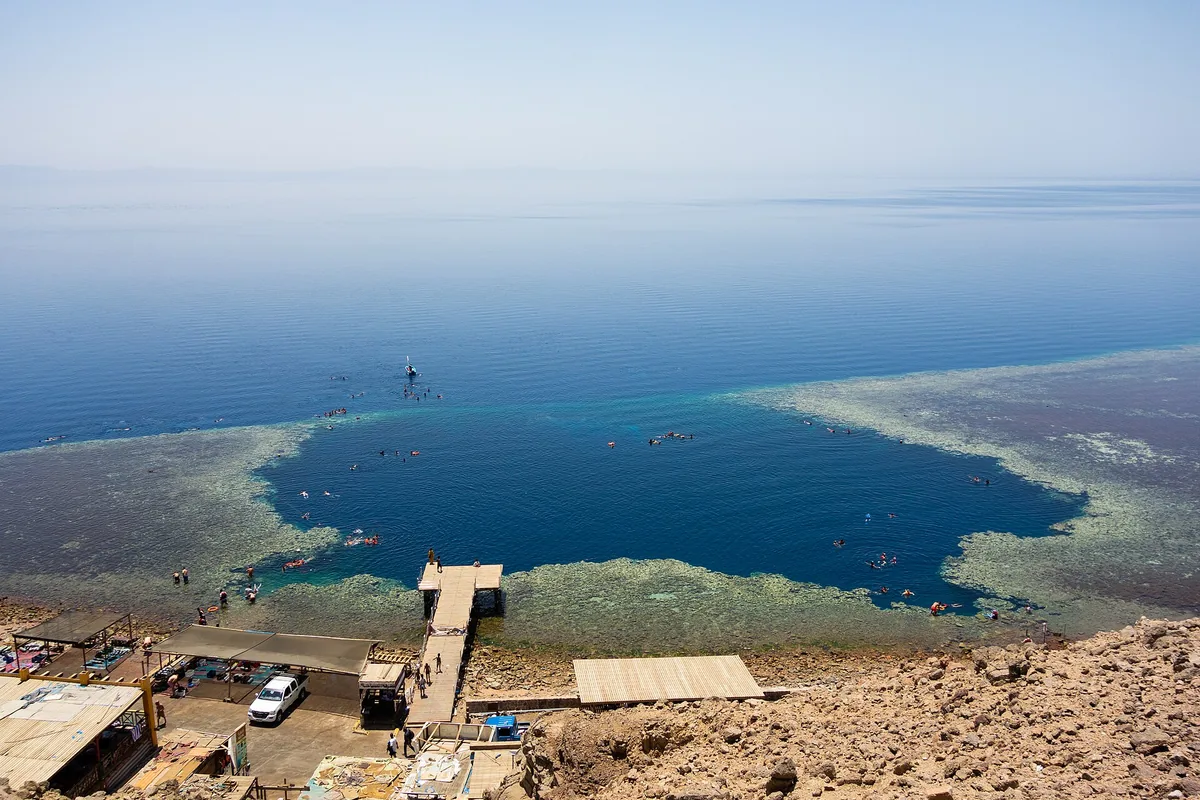
A short drive north of town, the reef flat opens into a circle of impossibly dark blue. The Blue Hole is a natural sinkhole in the coral just offshore – a deep shaft whose rim sits near the surface and whose bottom falls far beyond anything recreational equipment can reach. It lies inside the Ras Abu Galum protected area, which the United Nations Development Programme in Egypt describes as home to the famous Blue Hole dive site, and from the hillside above it looks almost gentle – snorkellers circling the rim, a wooden jetty, a row of cafes, camels resting in the dust. Every dahab travel guide has to explain why this beautiful place also carries the darkest reputation in Red Sea diving.
The danger is structural, and it is worth understanding rather than just fearing. Snorkellers and shallow divers enter through a low saddle in the rim and enjoy coral walls in bright, safe water. But deep inside the hole, a tunnel – the Arch – cuts through the reef wall to the open sea at a depth far below the limits of a single tank of air. The accidents that built the Blue Hole’s reputation follow a pattern that diving media have documented for years – divers attempting that deep arch on ordinary recreational gear, overcome by narcosis, gas limits or disorientation, in water with no margin for a slow ascent. Memorial plaques set into the shore rock commemorate divers who died here. None of this is a reason to stay away. It is a reason to do the Blue Hole the way the good local centres insist on – the rim and the outer wall within your training, with a guide, and the deep interior left to properly equipped technical teams.
Used properly, the site is magnificent and democratic. Snorkelling the rim is one of the great free experiences of the Sinai coast – a slow circle over coral with the abyss glowing dark beneath you. Divers commonly enter at the Bells, a chimney in the reef just north, and drift along the outer wall to exit across the saddle. Freedivers train here on lines, in their own section below. What the Blue Hole asks of everyone is the humility Dahab itself teaches – the sea here is generous right up to the line, and entirely indifferent beyond it.
Freediving in Dahab – One Breath, Deep Water
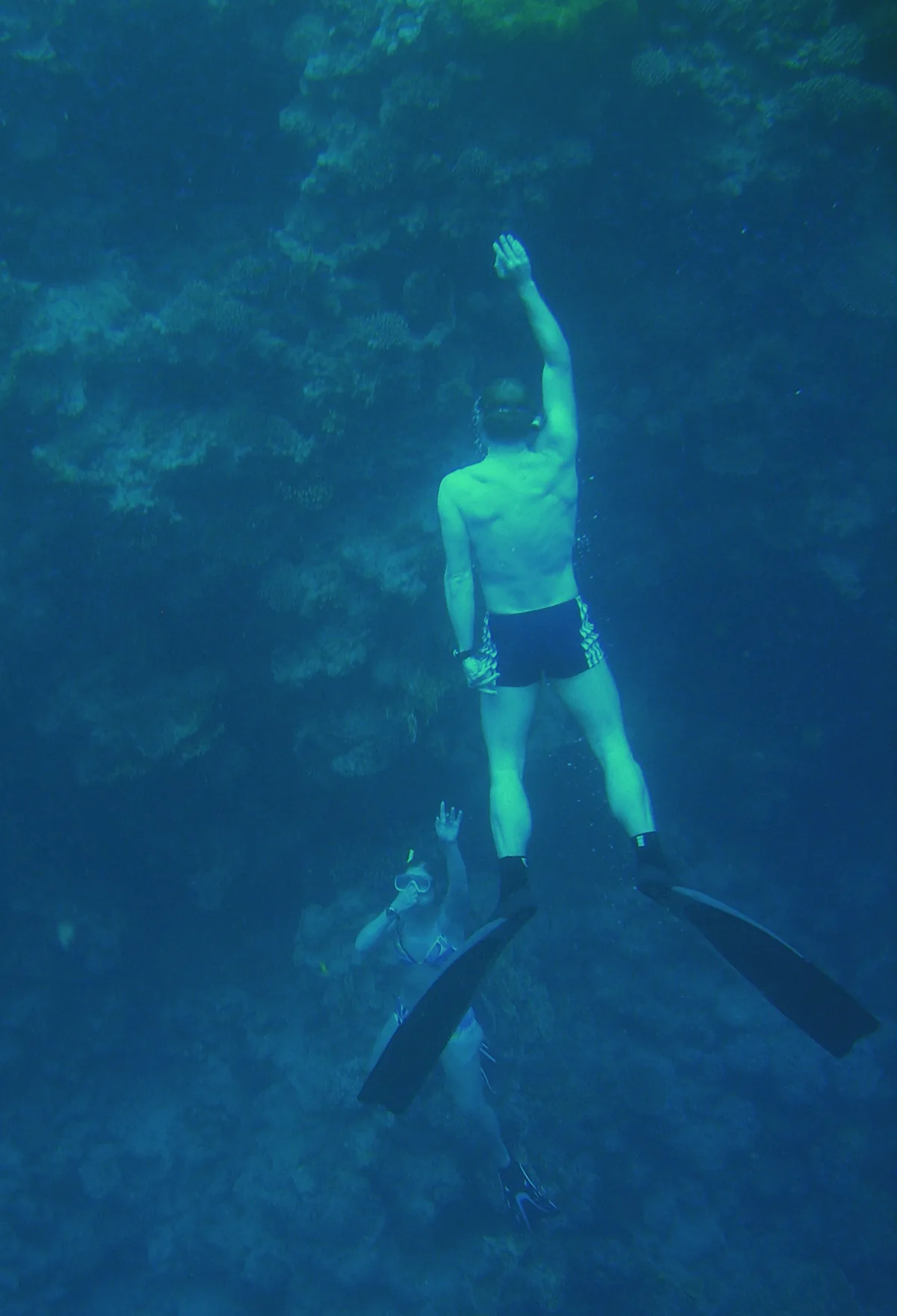
If you notice people in Dahab carrying very long fins and very little else, you have met the town’s quietest tribe. Dahab is one of the world’s natural freediving bases, and the reason is the same geography this dahab travel guide keeps returning to – deep water, immediately offshore, with a sheltered entry. At the Blue Hole a freediver can clip onto a line, warm up in water calm enough to breathe up properly, and descend a coral wall into serious depth without a boat, a long swim or a swell. Competition events and record attempts have used the Blue Hole as a venue for years for exactly those reasons.
The result is an established freediving scene rather than a novelty activity. Dedicated schools run courses from first breath-holds to instructor level, training happens daily, and visiting freedivers slot into a community that takes safety culture seriously – lines, lanyards, safety divers and honest depth progression are simply how it is done here. Beginners are genuinely welcome in that system; a first course in warm, clear, calm water with patient instructors is about the kindest introduction to the sport anywhere. What is not part of the culture, and never should be, is solo experimentation in deep water. Freediving’s one absolute rule – never dive alone – is written into every session in Dahab, and the town’s schools enforce it as a condition of joining, not a suggestion.
The daily rhythm suits the town. Training sessions run in the morning, when the Blue Hole is calmest and the light on the wall is at its best, and the rest of the day dissolves into the usual Dahab pattern of cafe breakfasts, yoga on rooftops and easy snorkels over the house reef. Non-freediving partners are not stranded by any of it – the Blue Hole’s rim is a snorkelling site in its own right, and the cafes above it have hosted a thousand patient surface intervals. If you are curious but uncommitted, most schools will let you watch a session or join a beginner day before you sign up for a full course, which is the right way round – freediving sells itself, at about ten metres, in silence, on one breath.
The Lagoon – Windsurfing and Kitesurfing
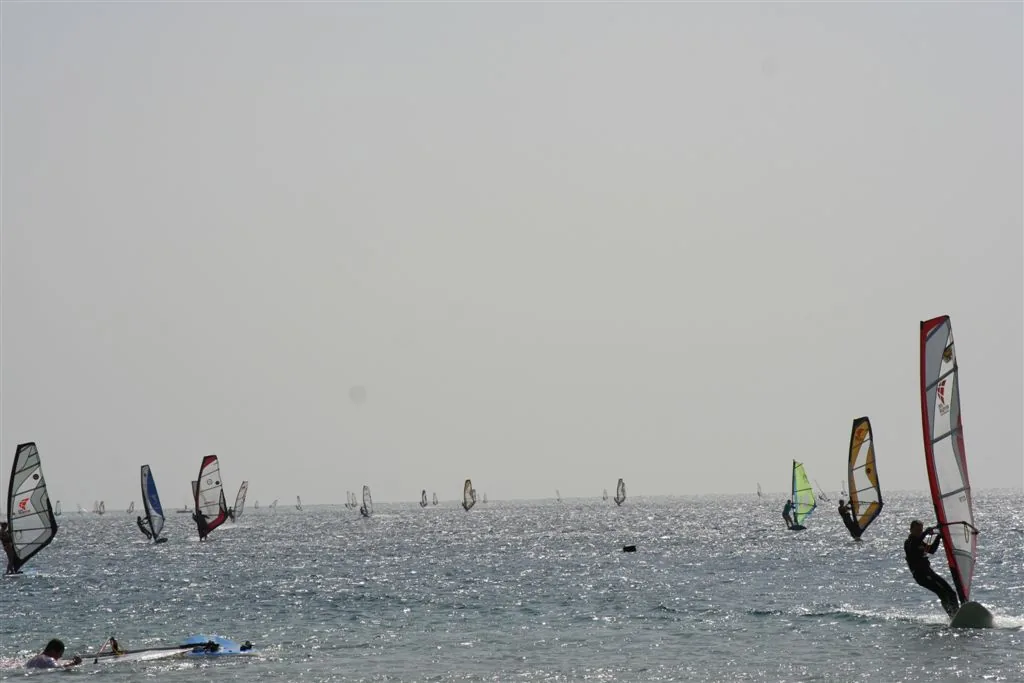
South of the town the mountains pull back, the shore turns to sand, and Dahab changes sport. The lagoon is a broad, shallow bay held inside a reef and a curving spit, and it fills with wind on most afternoons as air heats over the desert and funnels down the gulf. Experience Egypt lists windsurfing alongside diving as one of the town’s headline activities, and on a good afternoon the lagoon proves it – dozens of sails planing across flat, waist-deep water in a natural stadium. The shallowness is the point for learners, who can stand up almost anywhere, while the strip of flatter, faster water along the sandbar keeps advanced sailors and speed riders occupied further out.
Kitesurfing shares the lagoon, mostly in its own zones, with the same rhythm – calm mornings, building wind, the best hours from late morning into the afternoon, and a beach that turns social as the light goes. Centres along the shore rent equipment and run lessons for both sports, which matters more than it sounds – wind sports punish borrowed, badly sized gear, and the lagoon’s popularity means good rental fleets exist at every level. This dahab travel guide will not quote you lesson prices, because they change and haggling is half the system, but the structure is traveller-friendly – try a taster, and the centre will usually build a package around whatever days the wind gives you.
One honest division of the town falls out of the wind. If you are coming to sail or kite, base at the lagoon and accept the walk or short ride into Masbat for dinner. If you are coming to dive and hate the idea of choppy entries and sand in everything, base in Masbat and visit the lagoon on calm mornings. Plenty of people do both sports and split the difference – but nobody should book a lagoon hotel expecting the still, aquarium water of the northern house reefs at three in the afternoon. In Dahab the wind is a feature. Book it as one.
Ras Abu Galum – the Roadless Coast North
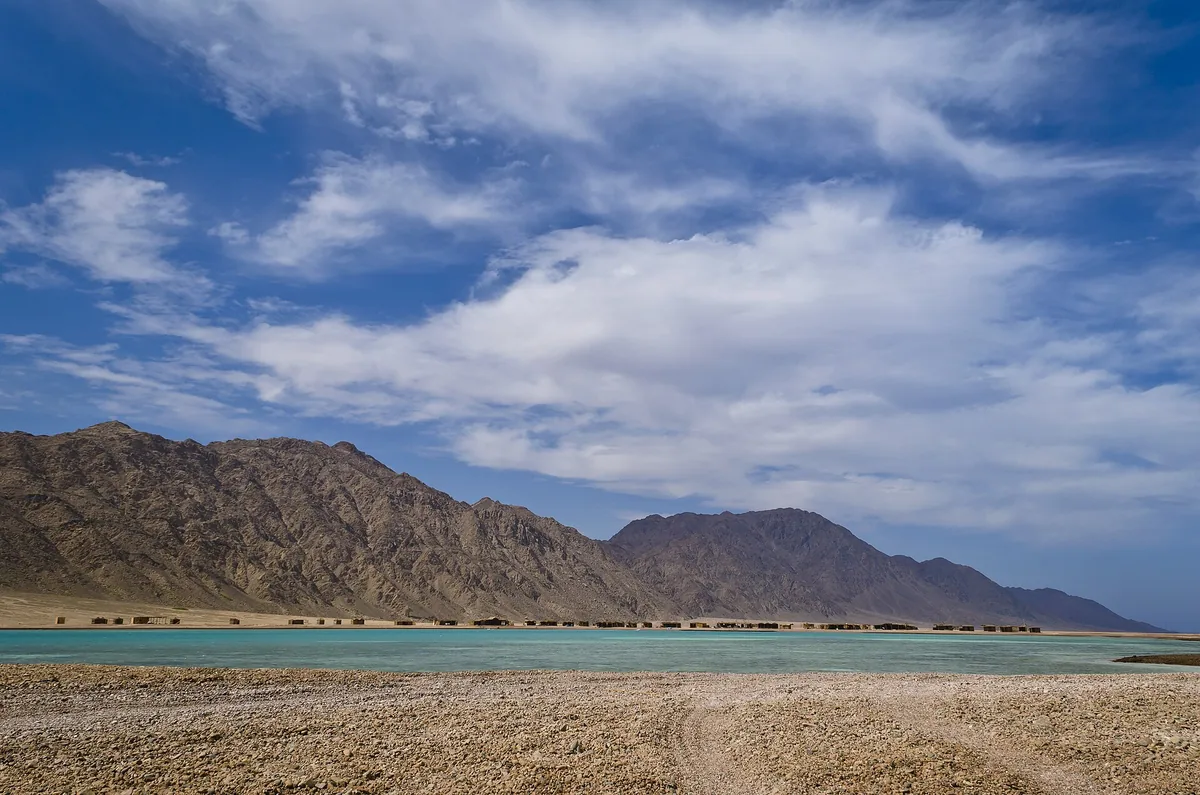
North of the Blue Hole the road simply gives up, and that is where Dahab’s best excursion begins. Ras Abu Galum is a protected stretch of coast where the mountains meet a reef-rich sea and the only ways in are by boat, on foot along the shore path, or by camel. The protection is formal, not decorative – Egypt’s environmental action plan for South Sinai records that Abu Galum was declared a Managed Resource Protected Area in 1992, and the UNDP in Egypt gives the protectorate’s area as some 500 square kilometres of mountain, wadi and coast. What that buys the visitor is a coastline that still works the old way – Bedouin camps of simple huts on the sand at Ras Abu Galum itself, and further north the Blue Lagoon, a pale turquoise strip of sheltered water lined with more huts and almost nothing else.
People come for the snorkelling and stay for the silence. The reef here is healthy, the water is that layered blue the northern gulf does so well, and the camp routine is the distilled Dahab day – swim, tea, shade, swim, fish for dinner, and a ceiling of stars that the town’s lights never reach. A day trip is possible and worthwhile, but the overnight version is the one people talk about for years, because Abu Galum after the day boats leave is a different country. This dahab travel guide’s advice is simple – if your trip has one spare night, spend it here rather than adding a second organised excursion.
Practical honesty, because the remoteness is real. The huts are simple – mattress, blanket, mosquito net, shared facilities, and electricity that comes and goes. Bring cash, water, a torch and whatever you need to be unreachable happily. Boats from the Blue Hole area are the fast option; the camel trek along the coast is the slow, memorable one; and the walking path suits the fit in cooler months. If you need a hot shower, a menu and a phone signal to enjoy a place, Abu Galum will not convert you. If you suspect you might love the opposite, it probably already has.
Desert Valleys, Camels and Bedouin Evenings
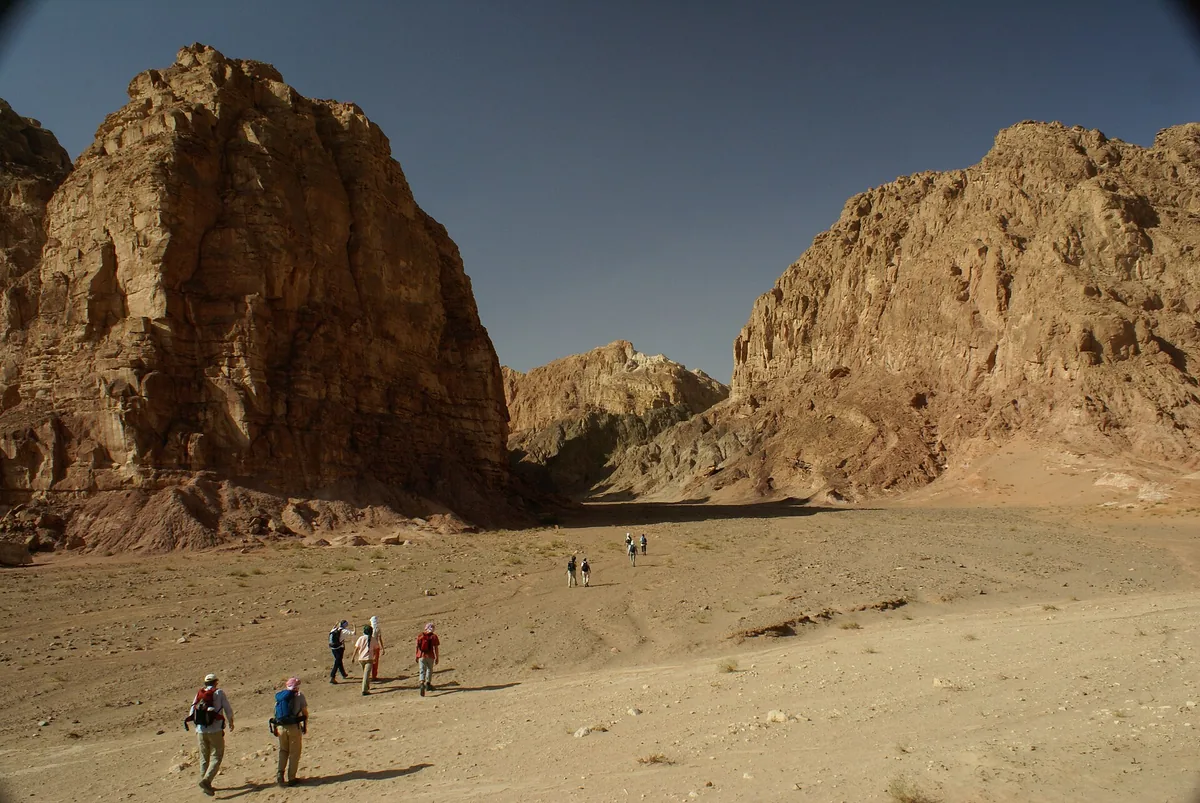
Turn your back on the sea in Dahab and a second landscape is waiting – the wadis, dry valleys that cut into the granite and sandstone mountains behind the town. The desert trips sold along the corniche all work from the same ingredients, and this dahab travel guide sees no reason to dress them up as anything fancier. A jeep or a camel takes you up a valley, the rock closes in and changes colour, you walk in silence that genuinely rings, and somewhere in the shade a Bedouin guide is making tea on a small fire with a kettle blackened by a thousand previous teas. As experiences go it is simple to the point of austerity, and it is the part of a Dahab trip that surprises people most.
The variations are about time and depth. Short trips run a few hours into the nearest valleys and suit a spare afternoon. Longer ones push towards oases and coloured rock formations, and full desert dinners add the evening version – food cooked over the fire, singing if the group is lucky, and the kind of star field that makes seaside sunsets feel like a warm-up act. The famous Coloured Canyon, a narrow slot of swirled sandstone further north near Nuweiba, is usually sold as its own day trip and combines well with the coast. What matters in all of them is the guiding. These valleys belong to the Bedouin families who work them, trips run through local guides by design and by law in the protected areas, and the difference between a conveyor-belt version and a good one is almost always the man making the tea.
Two honest notes. The desert here is beautiful and completely unsentimental – summer midday trips are a punishment, so in the hot months take the early or sunset slots and treat any operator who shrugs at noon heat as one to avoid. And keep expectations calibrated – this is not the dune sea of the Western Desert. Sinai’s desert near Dahab is mountain desert, all rock, gravel and wadi shadow. People who come wanting Lawrence-of-Arabia sand seas leave confused; people who come wanting mountains, silence and tea leave converted.
Mount Sinai and Saint Catherine’s Monastery
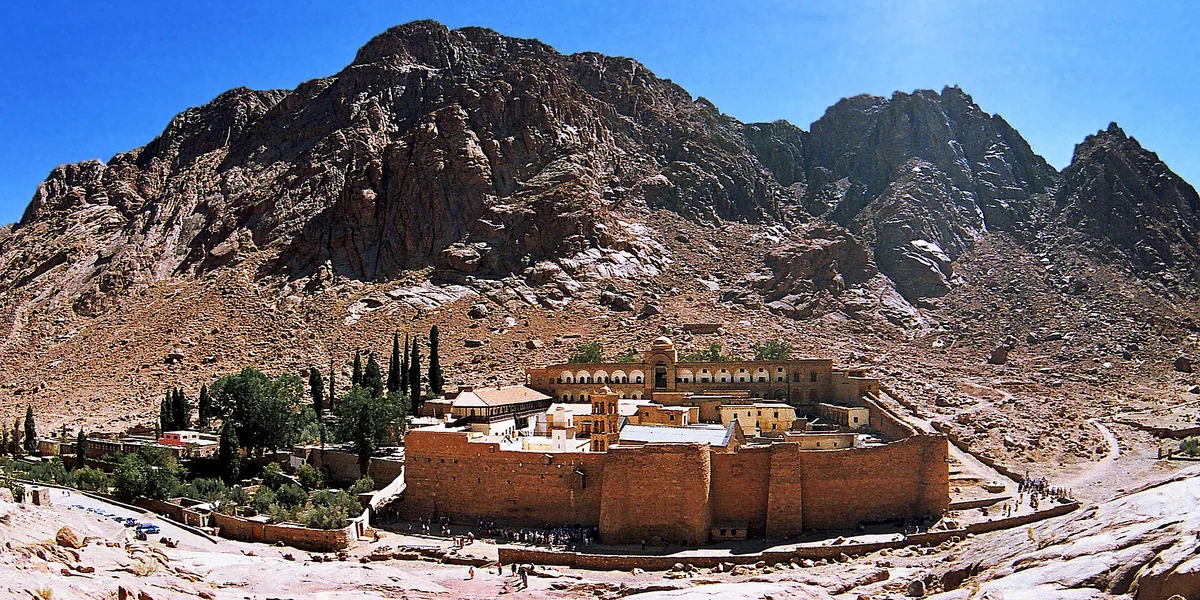
Every dahab travel guide has to deal with the mountain on the horizon of the whole region’s imagination. Dahab is one of the main bases for visiting Mount Sinai and Saint Catherine’s Monastery, around two hours inland by road, and the pairing of the two – a night climb for sunrise, then the monastery in the morning – is the classic Sinai excursion. UNESCO’s World Heritage listing for the Saint Catherine Area explains why the place carries such weight. The monastery, founded in the sixth century, is the oldest Christian monastery still in use for its initial function anywhere in the world. It stands at the foot of Mount Horeb – Jebel Musa – where, in the Old Testament account UNESCO records, Moses received the Tablets of the Law, and the whole area is sacred to Christianity, Islam and Judaism alike. The surrounding mountains and valleys have been a formal protectorate since a prime ministerial decree in 1988.
The trip itself is a study in contrasts. The climb is usually made at night, in a slow procession of torches and headlamps up a well-worn path, guided as the rules require by local Bedouin guides, so that you reach the summit in the cold dark and watch the sun come up over a sea of granite peaks. It is genuinely moving and genuinely crowded, often on the same morning. Then the descent, breakfast, and the monastery – fortress walls, the famous basilica, and a garden calm that feels impossible at the end of that climb. Dress modestly for the monastery, carry layers for a summit that is bitter before dawn in any season, and check the monastery’s visiting pattern before you fix the day, because it closes to visitors on a rhythm of its own that this guide will not print as hours – they change, and tour desks in Dahab know the current one.
Who should skip it? Anyone whose knees rule out a long stepped descent, anyone on a very short trip whose priority is the reef, and anyone who will resent sharing a famous sunrise with a few hundred strangers. Who should absolutely go is everyone else – ideally not on your first or last day, and ideally with a night’s sleep banked on either side. It is the one excursion from Dahab that operates at the scale of world heritage rather than beach holiday, and it will reorganise what you think the town is a base for.
Day Trip South – Ras Mohammed National Park
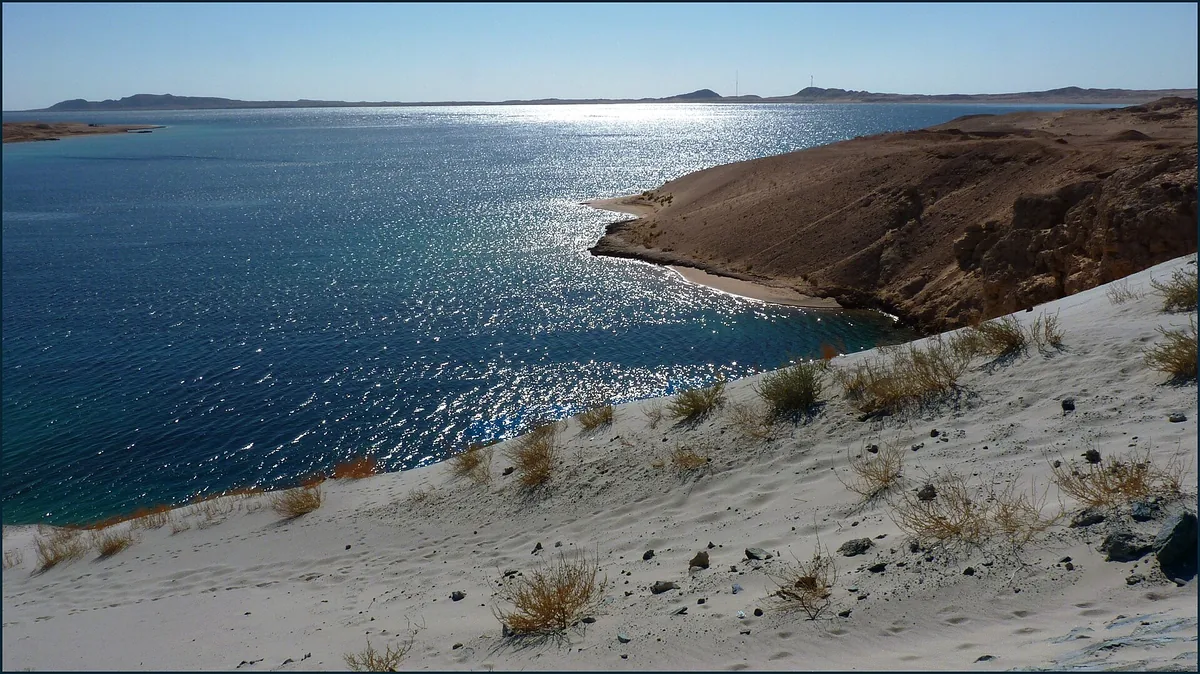
The other big pin on the Sinai map sits at the opposite end of the peninsula. Ras Mohammed, the headland where the Gulfs of Aqaba and Suez divide, was established in 1983 as Egypt’s first national park, according to the Egyptian Environmental Affairs Agency’s own action plan for South Sinai – a status that has guarded its reefs ever since. From Dahab it is the long way round, past Sharm el Sheikh to the tip of the peninsula, and trips run both by boat and by land into the park’s bays, mangroves and famous dive sites. This dahab travel guide treats it as the connoisseur’s day trip – the one you take when Dahab’s own reef has already won you over and you want to see the region’s flagship.
What the park adds is scale and drama. The walls at sites like Shark and Yolanda reefs drop into blue water where two gulfs’ currents collide, and even snorkellers on the land-based trips get bays of exceptional clarity, a mangrove channel, salt marshes and the earthquake crack – a fissure in the rock filled with seawater – as the land-side highlights. Standards of protection are visibly higher than on open coast, and the fish life knows it. If you dive one famous name on a Sinai trip and it is not the Blue Hole, this is the one.
The honest calculation is time. Ras Mohammed from Dahab is a full day with real road hours in it, and it duplicates, at higher intensity, pleasures Dahab serves at its own doorstep. Travellers with a week should go. Travellers with three days should not spend one of them in a minibus – and travellers based in Sharm for part of the trip will find the park far closer from there. Dahab’s gift is that its own reef forgives the decision either way.
Where to Stay – Camps, Small Hotels and Long Stays
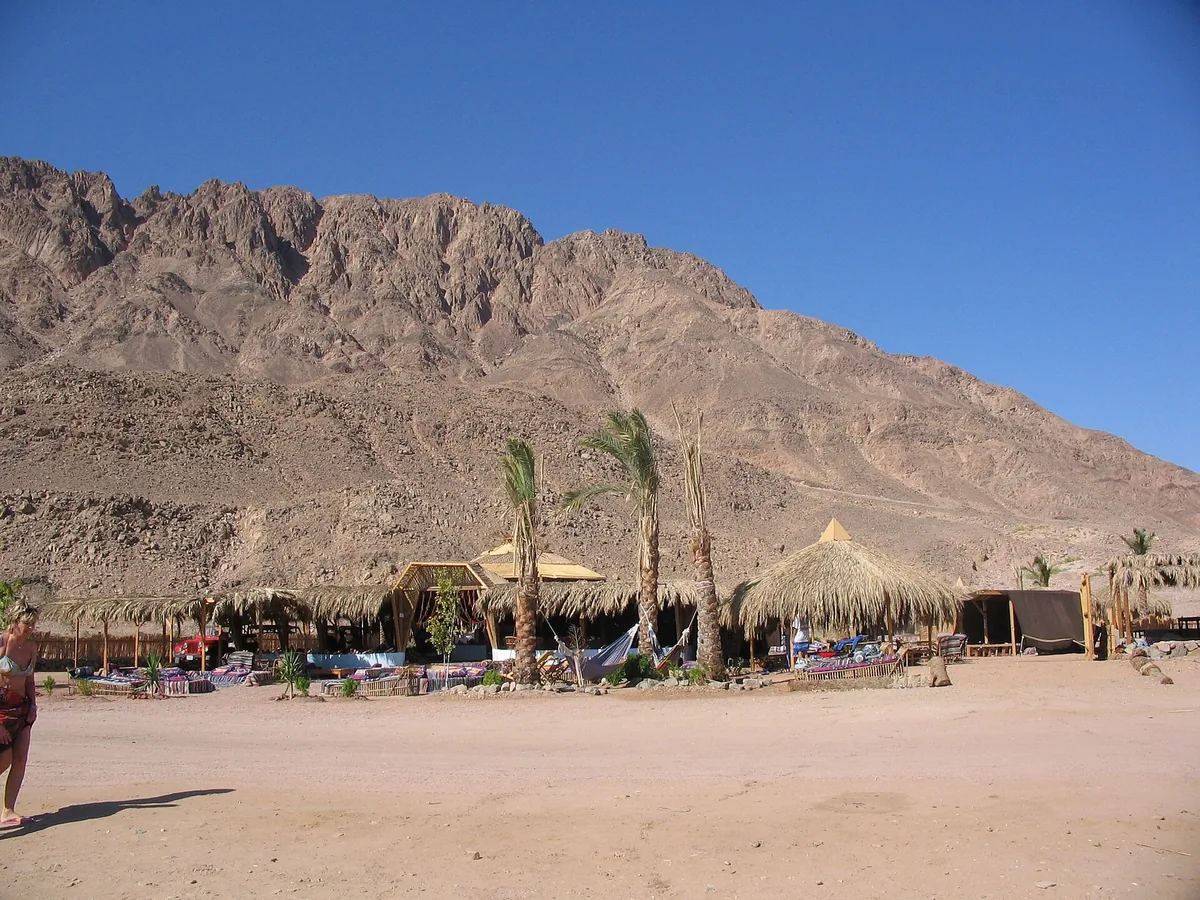
Dahab’s accommodation ladder has more rungs than its size suggests, and this dahab travel guide will describe the rungs rather than quote prices, because Dahab prices move with season, haggling and length of stay faster than any guide can chase them. At the traditional bottom rung is the camp – the form Dahab invented for itself. A camp room ranges from a palm-frond hut with a mattress and a shared bathroom to a simple ensuite room around a sandy courtyard, and the good ones are loved precisely for what they leave out. Read recent reviews for the specific camp, because the spread between charming-simple and neglected-simple is the widest in town.
The middle rungs are the small hotels and dive lodges of Masbat and Assalah – family-run, rarely more than a few storeys, often attached to a dive centre, and the natural choice for most first-time visitors who want a lockable door, air conditioning and the reef two minutes away. Assalah adds the long-stay rung – apartments rented by the month, which is how the instructors, freedivers and remote workers the official portal’s “extended stays” line refers to actually live here. At the top, the lagoon holds the town’s full-service resorts, with the sand, pools and buffets that the rest of Dahab cheerfully does without.
Choosing is mostly choosing a version of Dahab. Stay in Masbat for the classic first trip – cafes, centres and reef in a five-minute web. Stay at a northern camp for quiet, stars and the Blue Hole as your local. Stay in Assalah if you are settling in for weeks and want a kitchen, a supermarket and a neighbourhood. Stay at the lagoon if wind sports are the trip, or if travelling with small children makes sand and shallow water the deciding facts. The dahab travel guide rule of thumb – divers north-centre, sailors south, settlers in Assalah – will put most people in the right bed.
Eating in Dahab – Cushions, Grills and Slow Breakfasts
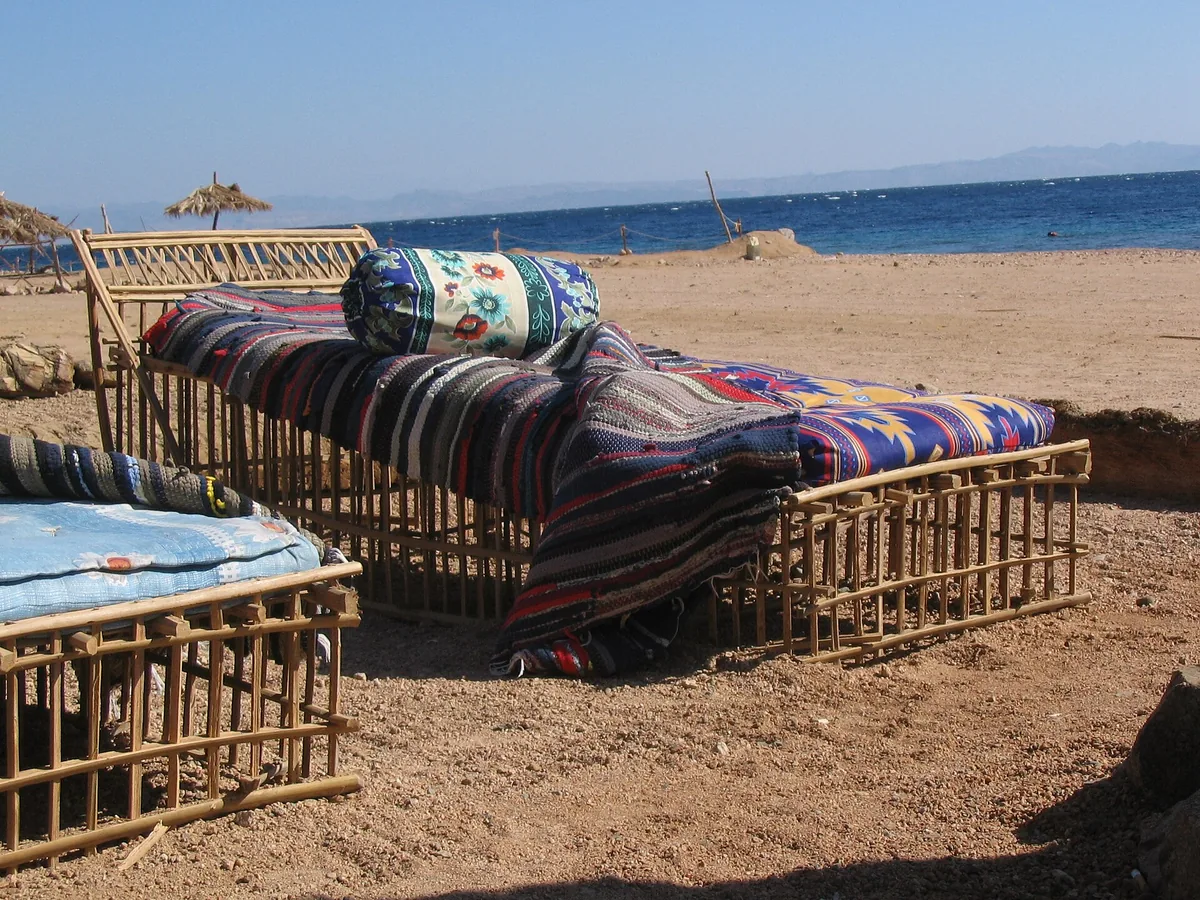
You will not eat standing up in Dahab, and you will rarely eat indoors. The town’s restaurant is the seafront cafe – a wooden deck or a patch of sand furnished with low tables and the famous cushion platforms, half bed and half sofa, on which entire days are spent in instalments. Your cafe becomes your beach base, your office, your dive debriefing room and your sunset seat, and choosing a favourite in the first two days is a genuine Dahab ritual. Menus across the strip are variations on a shared theme – grilled fish and seafood from the gulf, chicken and kofta from the grill, big salads, tahini and flatbread, and juices that arrive in glasses the size of small buckets.
Seafood works the way it does all along this coast – the day’s catch displayed, chosen, weighed and grilled, with the price following the weight, which is why this dahab travel guide quotes no fish prices and you should confirm yours before the fish meets the grill rather than after. Egyptian staples are easier to find and cheaper in structure a street back in Assalah, where bakeries, falafel stands and canteens feed the town itself, and a long-stay pattern quickly forms – cafe breakfasts by the sea, Assalah for supplies and snacks, cafe again for the evening. Bedouin tea, sweet and herbed, appears at every pause in the day and should never be refused at speed – it is less a drink than a unit of Dahab time.
Set expectations by category. Dahab does grilled fish, breakfasts and slow cafe food very well, does international menus unevenly, and does fine dining not at all. Vegetarians eat happily on Egyptian staples. Almost everywhere is casual to a degree that startles people arriving from resort towns – shoes optional, dogs asleep under tables, and a bill that arrives when you eventually ask for it. The travellers who eat best in Dahab are the ones who stop trying to schedule it.
When to Go – Seasons, Wind and Water
Dahab has no bad season, only seasons that favour different versions of the town, and any dahab travel guide that promises you a single best month is selling something. The pattern to understand is a three-way trade between air temperature, water temperature and wind, because every Dahab activity leans on a different corner of that triangle. Winter, roughly December to February, brings the mildest, sunniest days and the coolest sea – divers add thick wetsuits, snorkellers keep sessions shorter, but hikers get the Sinai mountains at their kindest and the town at its calmest. Evenings turn properly chilly once the sun drops behind the ridge, which in winter happens early enough to organise dinner around it.
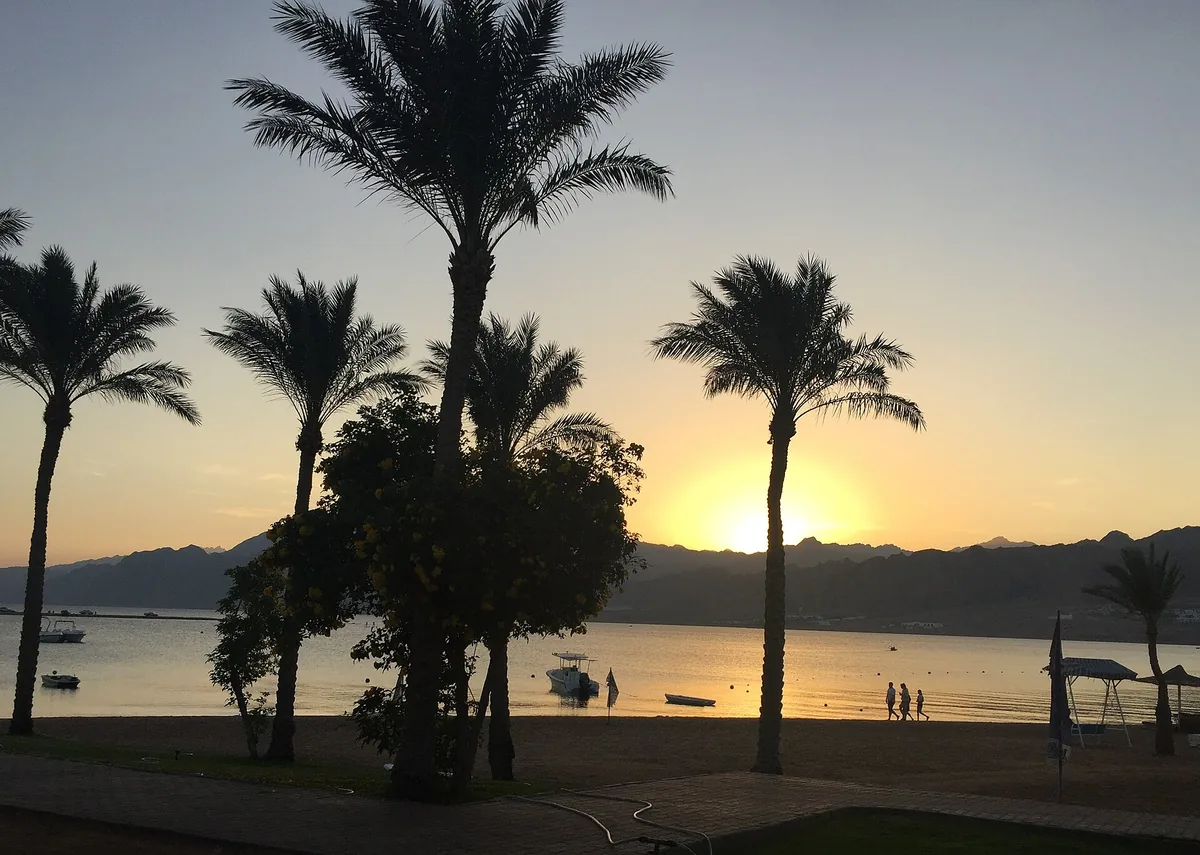
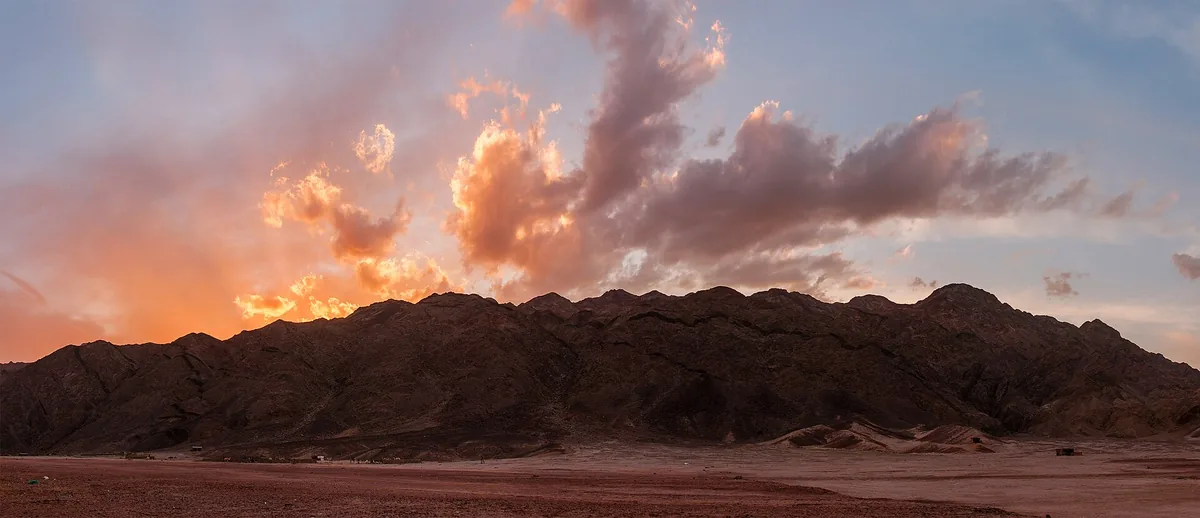
Spring warms everything up – the sea becomes friendly again, the light is superb, and the town fills without crowding. The one spring caveat is the khamsin, the hot desert wind that can blow dust across the coast for a day or two at a time and flatten everyone’s plans equally. Summer is the extreme season and this dahab travel guide will not soften it – midday heat inland is fierce, life moves to mornings, evenings and the water, but in exchange the sea is at its warmest and the lagoon’s afternoon wind is at its most reliable, which is why high summer belongs to the windsurfers and the heat-proof. Autumn, roughly September to November, is the connoisseur’s compromise – the sea keeps its summer warmth, the air loses its edge, the crowds thin, and the mountains turn that evening pink you see in the photograph above. If you can only come once and want every Dahab at once, come in autumn. If you sail, come when the wind does. If you climb, come when the cold does. The town will be there, being Dahab, in all of them.
Getting to Dahab and Getting Around
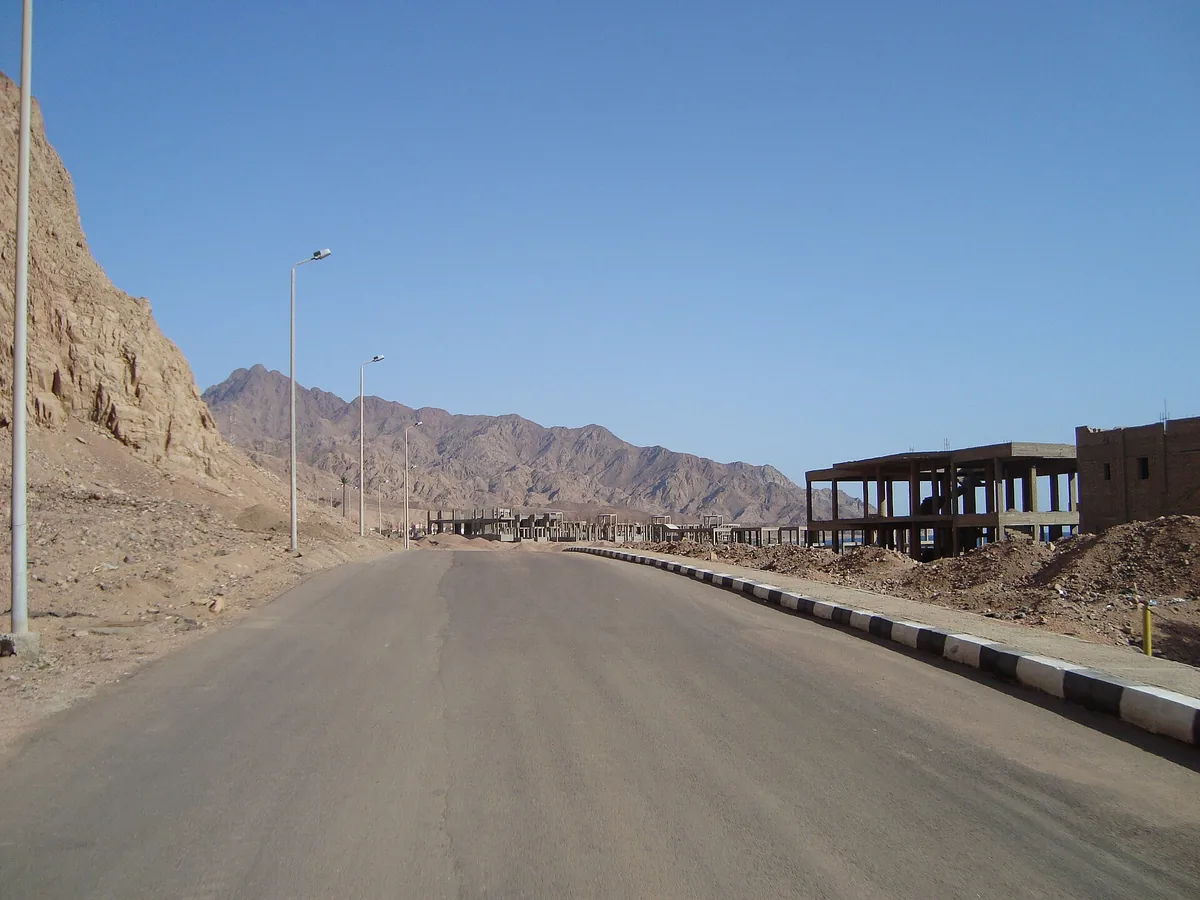
Almost every visitor arrives the same way – through Sharm el Sheikh’s airport, then north by road. Experience Egypt puts Dahab 90 km from Sharm, and in practice the transfer runs roughly an hour to an hour and a half depending on checkpoints and drop-offs, on a good road through the mountains that is a sightseeing trip in its own right. The standard arrangements are simple. Most hotels, camps and dive centres will send a car if you ask when booking, which is the option this dahab travel guide recommends for a first arrival, especially at night. Independent taxis wait at the airport – agree the full price before the boot closes, as meters are not how this works. Shared and budget options exist for the patient, and every Dahab business you book with afterwards can arrange the return.
The overland alternative from Cairo is a commitment – the best part of a day or a night on the road, crossing to Sinai and down the coast – and it makes sense mainly for travellers already touring the mainland. If that is you, build the capital properly into the trip first, including the Grand Egyptian Museum, and treat Dahab as the decompression at the end of the itinerary rather than a detour in the middle of it. Within Dahab itself, transport mostly dissolves. The corniche is walked, bicycles are hired by the day, battered pickups work as the town’s taxis for the Assalah-to-lagoon hop, and the Blue Hole runs by pickup or by boat. A dahab travel guide can honestly promise this – you will not need a car, a plan, or usually even shoes, for any day you spend inside the town.
The Honest Downsides – Read This Before You Book
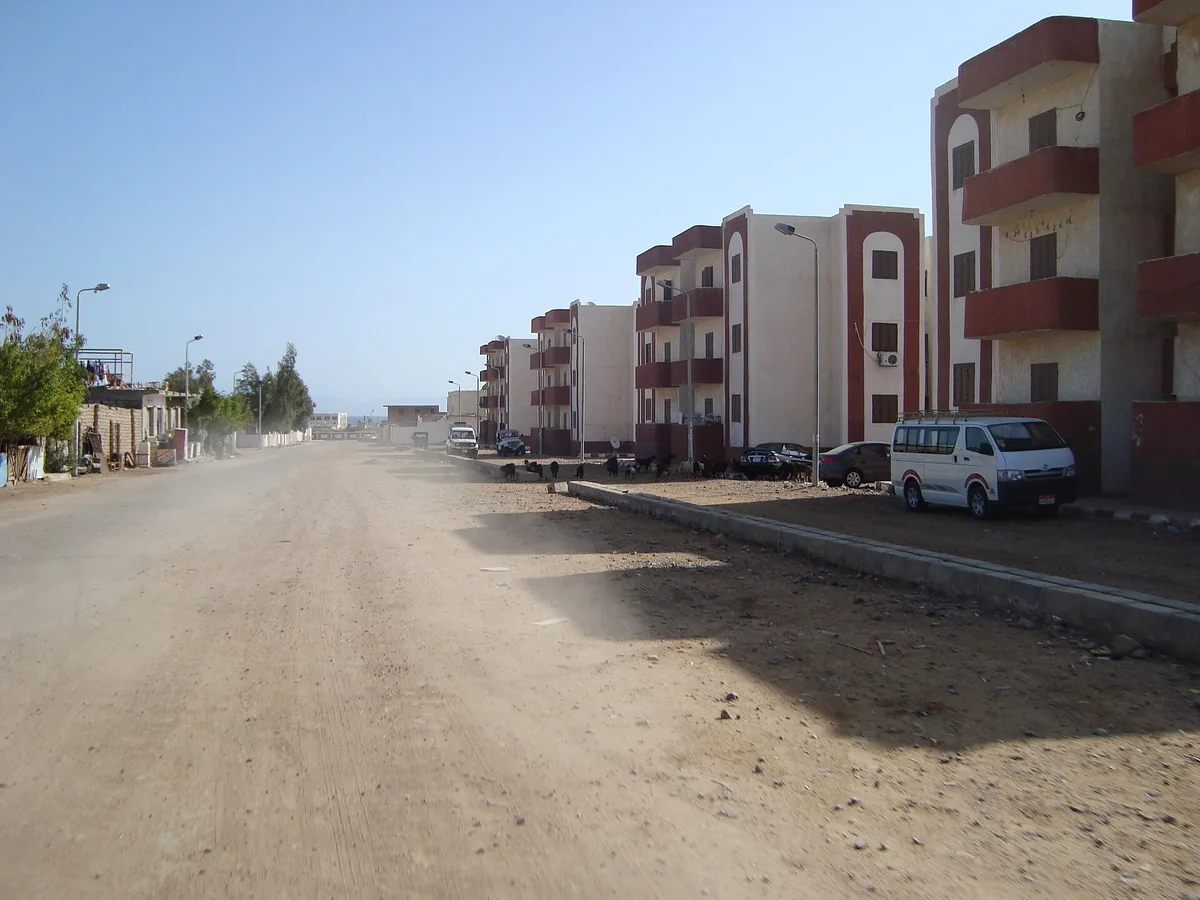
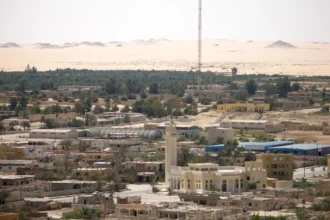
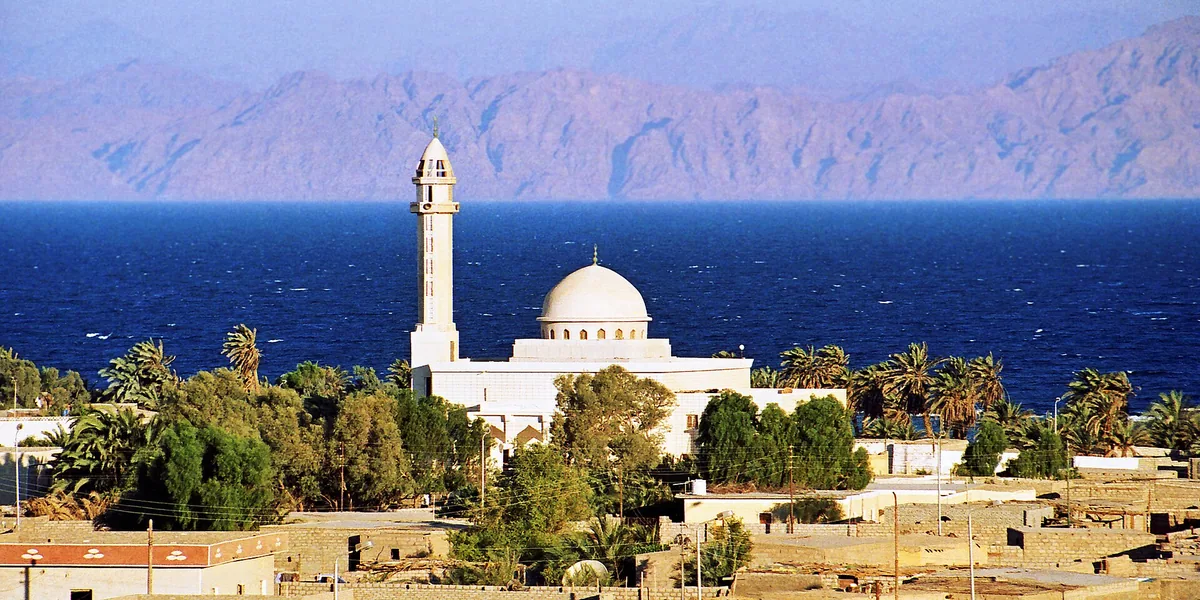
This dahab travel guide has praised the town for several thousand words, so here is the section that balances the books. Dahab’s shore is mostly reef rock, and the classic soft-sand beach exists mainly at the lagoon and in patches – families picturing toddlers on a broad sandy bay should picture the lagoon resorts specifically, or choose another town. Behind the corniche the town is unfinished in the way of much of Egypt’s coast – dusty streets, half-built shells standing for years, goats on the building plots. Some visitors read it as authenticity. Some read it as neglect. Both are looking at the same streets, including the apartment blocks in the photograph above, and no honest guide should crop them out of the picture.
The human frictions are real too. Cafe and shop owners along the strip tout for business with an persistence that wears on some visitors, though it is gentler here than in Egypt’s bigger resorts. Cash still runs much of the town and the machines do not always cooperate, so carry a buffer. Medical care in Dahab is basic – fine for cuts and ear infections, with anything serious meaning a transfer to Sharm el Sheikh, which makes real travel insurance, including diving cover for divers, non-negotiable rather than sensible. And the wind that powers the lagoon can close down exposed dive sites and snorkel plans for a day at a time, which short trips feel keenly. Finally, the quiet itself is a downside for some – if your holiday needs a party scene, Dahab will feel like a library with a reef.
None of this is hidden, and none of it stops the town’s devotees extending their stays. But a dahab travel guide exists to match people to places, so the rule is simple – come to Dahab for water, wind, desert and slowness, and its flaws will read as texture. Come for polish, sand and nightlife, and they will read as the whole story, because for you they would be.
Questions Travellers Actually Ask About Dahab
Is Dahab safe for tourists? Start with the official picture, because it is more nuanced than either the headlines or the brochures. Checking the UK Foreign Office’s Egypt advice while researching this dahab travel guide, it advises against all travel to the North Sinai Governorate, and against all but essential travel to the northern part of South Sinai inland beyond the St Catherine-Nuweiba road – with the peninsula’s coastal areas specifically excepted from that warning, and Dahab sits on that eastern coast. Advice changes with events, so read your own government’s current page before booking rather than trusting any guide, including this one. Day to day, Dahab feels like what it is – a sleepy, tourism-dependent town – and the risks that actually injure visitors here are water risks. Dive and freedive within your training, with established centres, and the sea will treat you as well as it treats anyone.
Do I need a visa for Dahab? It depends on your nationality and on whether you are staying within the Sinai resort area or travelling onward into mainland Egypt, and the arrangements differ between those cases. Rules and the list of eligible nationalities also change, so this guide deliberately prints no visa recipe – check the official Egyptian e-Visa portal and your airline’s requirements before you book, and if your trip includes Cairo or the Nile valley, make sure your paperwork covers the mainland and not only the peninsula.
Can non-divers enjoy Dahab? Yes – and this matters, because Dahab sells itself so hard to divers that partners and families sometimes write it off wrongly. The house reefs are snorkelling reefs as much as diving ones, the lagoon gives beginners windsurfing and kitesurfing in standing depth, and the camp evenings, desert trips, Abu Galum overnights and slow cafe days are nobody’s consolation prizes. The one honest caveat is the beach itself – if your non-diving dream is a broad sandy swimming beach, base at the lagoon end of town rather than on the rocky Masbat shore.
Dahab or Sharm el Sheikh – which should I choose? Choose Sharm el Sheikh for big resorts, organised animation, nightlife and the shortest possible airport transfer, and choose Dahab for a low-rise town you can walk, shore diving outside your cafe door, freediving and wind sports, and stays measured in weeks. They are ninety minutes apart and opposite in spirit, and plenty of travellers split a trip between them – resort first, Dahab after, is the order most people are glad they chose. Any dahab travel guide will have its bias, and this one’s is visible on every page – but it is genuinely a choice of holiday, not of quality.
How many days do I need in Dahab? Three or four days is the honest minimum – enough to settle into a cafe, dive or snorkel the house reefs and take one trip. A week is the comfortable version, adding the Mount Sinai overnight, a night in Abu Galum and days with nothing in them, which are the point. Longer is not self-indulgence here; the town is built for the extended stays the official portal mentions, prices soften in structure as stays lengthen, and the most common Dahab itinerary amendment happens at the airport, on the way out, reluctantly.
Can I swim or snorkel at the Blue Hole, or is it only for experts? You can, and on a calm day the snorkelling over its rim and coral walls is one of the great free swims of the Red Sea – enter at the saddle, stay over the reef edge, and keep clear of divers surfacing below you. Scuba diving on the outer wall and at the Bells is normal guided diving within ordinary certification limits. What is expert-only is the deep interior and the Arch far below recreational depth, which belongs to technical divers with technical equipment and planning – no exceptions for confidence, experience elsewhere or a charismatic guide who offers. And like everywhere in Dahab, never dive or freedive there alone.
When is the best month to visit Dahab? There is no single answer, and distrust any dahab travel guide that gives you one without asking what you are coming for. Divers generally love the warm, settled water of autumn. Windsurfers and kiters chase the reliable afternoon winds of the warmer half of the year. Hikers and monastery-trippers want winter’s cool mountains and accept a colder sea. Families often do best in spring and autumn, between the extremes. Dahab’s real trick is that the same town serves all four calendars – pick the month that fits your sport, and the rest of the town will arrange itself around you.