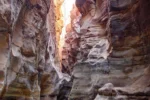
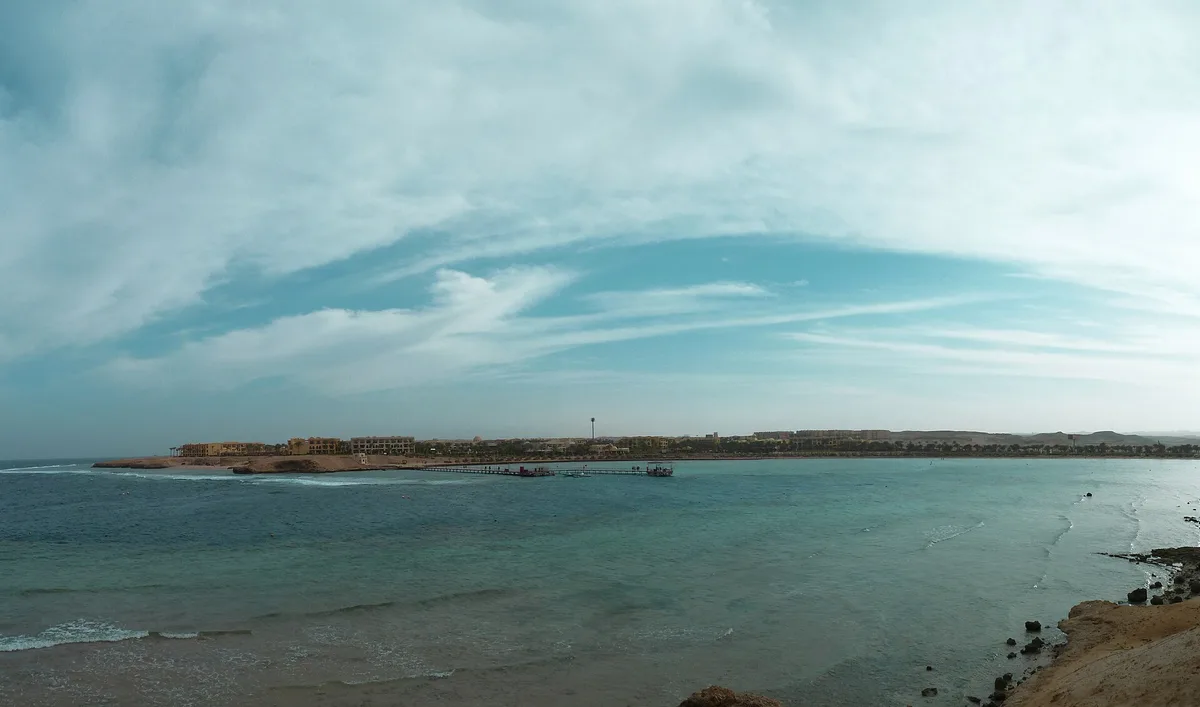
Marsa Alam is where Egypt’s Red Sea runs out of towns. South of Hurghada the coast empties, the desert comes down to the water with almost nothing in between, and the resorts that do exist sit scattered along roughly a hundred kilometres of shoreline rather than packed into one strip. This marsa alam travel guide is built around that simple fact, because it explains everything else about the place: the quiet, the distances, the house reefs you can walk into from a jetty, and the animals – turtles, dugongs, resting dolphins – that a busier coast has largely lost.
The name itself needs unpacking before anything else. “Marsa Alam” is a small town of a few thousand people at the junction of the coast road and the desert road to Edfu, but travellers use the name for the whole southern stretch of Egypt’s Red Sea Riviera: Port Ghalib and the airport in the north, the town and Abu Dabbab in the middle, and the mangroves, islands and national park coast running south toward Hamata. Nobody visits all of it in one trip, and nobody needs to. What you choose is a base – one bay, one house reef – and the rest of the coast becomes day trips.
The reason to come is the sea, stated plainly. Marsa Alam’s reefs are in better shape than those further north, its bays still hold seagrass meadows where green turtles feed in waist-deep water, and its offshore reefs are serious diving – the kind of walls and shark water that experienced divers cross the world for. Set against that, the honest debits: there is almost no nightlife, the town itself is a modest service centre rather than a sight, distances between everything are long, and the wind that makes this a fine kitesurfing coast can chop up boat trips in winter. This guide covers both sides, because a marsa alam travel guide that only sells the reef is not much use when you are deciding where to sleep.
If you are still at the stage of deciding whether the southern Red Sea fits your trip at all, start with our Egypt travel guide, which puts Marsa Alam in the context of the Nile Valley route it is usually paired with. This marsa alam travel guide assumes you are coming, and spends its length on the questions that follow: which stretch of coast, which bay, which reef, and how to read the rules – park fees, dolphin zoning, diver-only sites – that govern the best of it.
Marsa Alam Travel Guide – the Short Version
| Question | Short answer |
|---|---|
| Where is it? | Egypt’s southern Red Sea coast – about 274 km south of Hurghada and 134 km south of El Quseir, in the Red Sea Governorate |
| What is “Marsa Alam”? | A small town plus the resort coast named after it – roughly 100 km of bays, resorts and reef from Port Ghalib in the north to Hamata in the south |
| Why come? | House reefs off the beach, seagrass bays with turtles and dugongs, the protected Samadai dolphin reef, and offshore diving of Elphinstone’s calibre |
| Who is it for? | Snorkellers, divers, kitesurfers and anyone who wants the Red Sea quiet rather than social |
| Who should skip it? | Nightlife seekers and travellers who want a walkable town with restaurants outside the hotel gate |
| How do you arrive? | Marsa Alam International Airport (RMF), about 60 km north-west of the town by Port Ghalib, or a road transfer of roughly three hours from Hurghada |
| The one planning rule | Pick your bay before your hotel – on this coast, the house reef in front of the resort matters more than the resort itself |
That table is the whole argument of this marsa alam travel guide in miniature. Marsa Alam is not a town break with a beach attached; it is a reef system with rooms attached, spread along a desert highway. Everything that follows – the where-to-stay geography, the bay-by-bay account, the park and dolphin rules – is really about matching you to the right few kilometres of that coast.
It also explains the mistake first-timers make here, which is booking by hotel star rating and discovering on day one that their chosen resort fronts a windswept reef flat while the bay they actually wanted is an hour’s drive south. On this coast the geography is the itinerary. Read the coast sections before you book anything, and let the snorkelling and diving sections tell you which water you want outside your door.
Why Marsa Alam Feels Different – the Quiet End of the Red Sea
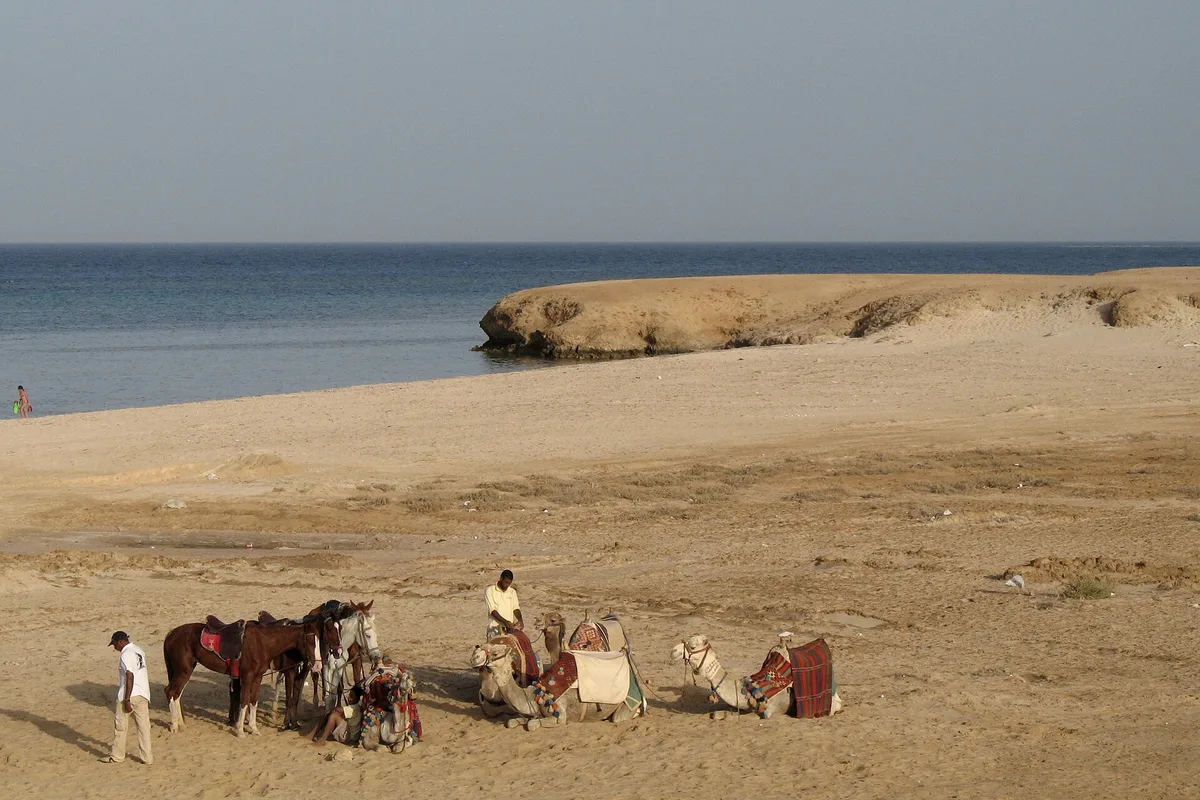
Stand on almost any beach here at eight in the morning and the difference from the northern resorts is physical. There is no marina traffic queueing for the reef, no music from the next hotel, often nobody at all – just a jetty, a reef flat shining in the shallows, and the Eastern Desert mountains standing bare behind the coast road. Marsa Alam never had its boom decade. Development only began in 1995, when the Kuwaiti Al-Kharafi Group started building the town’s first facilities, and the airport that made international tourism possible opened in the early 2000s. By then Egypt’s mass-market beach machine was already entrenched around Hurghada, and Marsa Alam grew up as the alternative rather than the copy.
That late start is now its greatest asset. The coast was developed under a stricter environmental eye than the 1980s and 1990s free-for-all further north, the bay systems were surveyed before they were built on, and two of the area’s crown jewels – the Samadai dolphin reef and Wadi el Gemal – sit inside formal protection regimes described later in this guide. The result is a coast where the famous Red Sea encounters that brochures elsewhere promise from memory – a turtle on the house reef, a dugong over the seagrass, dolphins resting in a sheltered lagoon – still happen in the present tense, on ordinary mornings, in front of ordinary mid-range resorts.
The quiet has a texture worth understanding before you book, though, because it is not the sociable quiet of a Greek island village. It is the quiet of distance. Resorts here are self-contained worlds separated by empty desert, most guests eat where they sleep, and outside Port Ghalib there is effectively no promenade life at all. Travellers who thrive on that – early swims, long reef sessions, a book, an early night – tend to rate Marsa Alam the best of Egypt’s beach coasts. Travellers who need a town to wander in the evening should read the Port Ghalib and town sections of this marsa alam travel guide with clear eyes, and may honestly be happier further north.
There is one more difference, and regulars mention it first: the wildlife is the entertainment programme. A good day here is measured in animals, not activities – the turtle count on the morning snorkel, whether the dugong was on the seagrass, what the boat found at the outer reef. If that sounds like your definition of a holiday, this coast will suit you better than anywhere else on the Egyptian Red Sea, and the rest of this marsa alam travel guide is written for you.
Getting to Marsa Alam – One Small Airport and a Long Coast Road
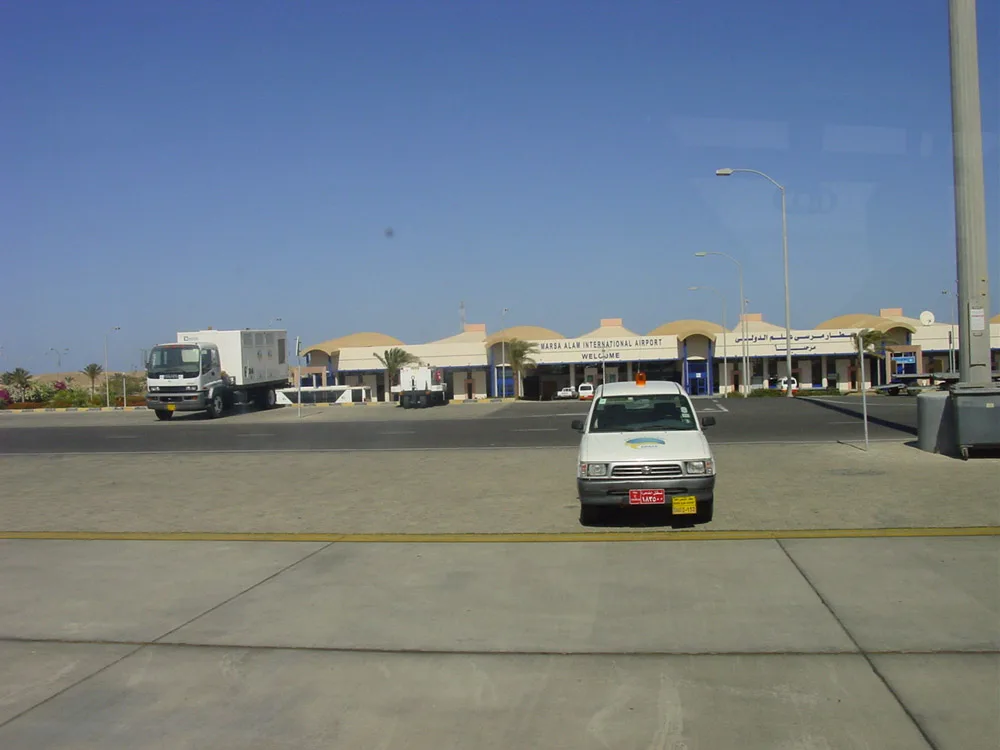
Almost everyone arrives one of two ways, and – as this marsa alam travel guide will keep insisting – the choice shapes the trip more than it does elsewhere in Egypt. Marsa Alam International Airport (code RMF) sits about 60 km north-west of the town, next to Port Ghalib – which means “Marsa Alam airport” is really the airport for the northern half of the coast, and if your resort is in the far south your transfer is still a drive. The airport opened to commercial flights in October 2001 and was officially inaugurated in 2003; it was built specifically to serve this southern coast, which until then meant a punishing road journey. Its traffic is heavily European and heavily seasonal – charter and scheduled services from Italy, Germany, France, Britain and elsewhere that swell in the winter sun season and thin out in summer – plus domestic connections through Cairo. Check your exact route before assuming a direct flight exists in your month.
The alternative is Hurghada. Its airport, about 210 km north of RMF, has far more flights from far more cities, and the coastal highway south is a good, straight desert road. The transfer to the Marsa Alam area takes roughly three hours depending on how far south your resort sits – less for Port Ghalib, more for the town, longer still for Hamata. That is a real cost in holiday time, but it buys flight choice and often lower fares, and the drive itself is no hardship: sea on one side, mountains on the other, and the resorts of El Quseir slipping past at the halfway mark. Many divers heading for liveaboards build the Hurghada arrival in deliberately and treat the drive as the trip’s decompression.
Once you are on the coast, movement is vehicle-based and there is no way around it. The sights of this guide – Abu Dabbab, the Samadai boats, the Wadi el Gemal gates, El Quseir – are spread over more than a hundred kilometres of highway, and public transport along it is built for residents, not for hopping between bays. In practice visitors move by hotel shuttle, by taxi arranged through the resort, or on organised excursions where the boat or the park gate is the destination and transport is bundled in. That is not a complaint, just the operating system of the place: budget for transfers and trips as part of the holiday, not as an afterthought, and confirm pickup points and times the day before, because on this coast a missed shuttle is not replaced by the next bus in twenty minutes.
One historical footnote explains the road pattern. The town of Marsa Alam grew up where the coast highway meets the desert road west to Edfu on the Nile – a mining and fishing settlement long before it was a resort name, on a route that passes ancient emerald-mining country and the Temple of Seti I at Khanais. That Edfu road is also why Luxor day trips are sold here, though “day trip” is doing heavy lifting: it is a very long day, and the planning section below treats it honestly.
The Shape of the Coast – 100 Kilometres, Not One Resort Strip
Read a map of the Marsa Alam coast from north to south and you get four distinct zones, each with its own character and its own reason to exist. Choosing between them is the single most important decision in this marsa alam travel guide, because once you are installed, the other zones are excursions, not neighbourhoods.
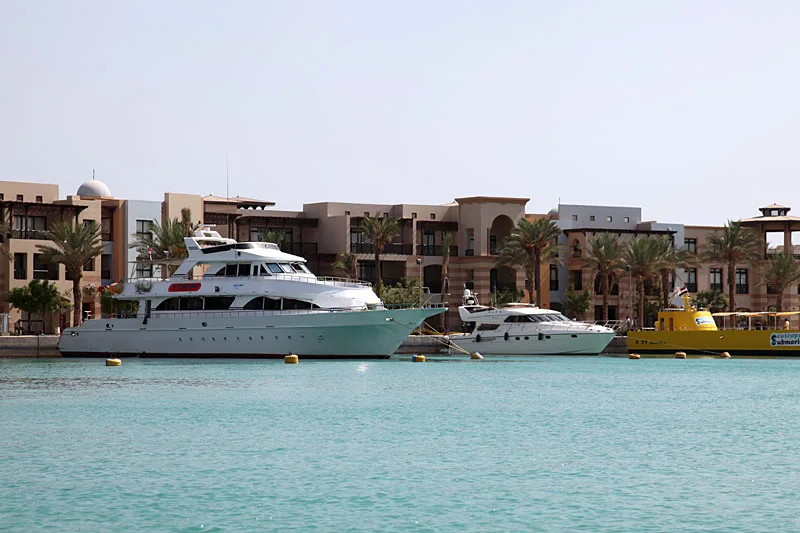
The northern zone is Port Ghalib and the airport corridor. This is the coast’s one piece of deliberate resort urbanism – a marina town built around a yacht harbour with berths for around a thousand boats, a corniche of cafes and restaurants, dive centres and the area’s main liveaboard departure point. The resorts around Coraya Bay just south of it share the same easy-access logic: short airport transfer, sheltered bay water, organised everything. If you want the maximum infrastructure and the minimum friction – or you are boarding a boat – this is your zone.
The middle zone is the town and the Abu Dabbab stretch. Marsa Alam town itself holds the coast’s working population, its bus station, its fish restaurants and its cheapest beds, mostly in simple hotels and dive lodges rather than big resorts. North of town the coast’s most famous snorkelling bay, Abu Dabbab, anchors a cluster of resorts whose guests come specifically for its seagrass meadows and turtles. This zone suits independent travellers and repeat visitors who are past needing a resort to be a destination in itself.
The southern zone runs from the town toward Wadi el Gemal and Hamata, and it is the wild end of the coast: scattered low-key resorts and dive camps, long empty beaches, the national park’s gates, the mangrove lagoons of Qulaan and some of the least-developed reef in Egypt. Transfers are longer, evenings are quieter, and the desert-and-sea landscape is the luxury on offer. Divers chasing the southern sites and travellers who want the coast at its emptiest base themselves here or at Hamata, the jumping-off point for the Fury Shoals.
Two practical consequences follow. First, “beachfront” means almost nothing on this coast – what matters is what the water in front of the hotel holds: a seagrass bay, a jetty over a reef wall, or a shallow flat you cross to reach swimmable depth. Second, the zones are far enough apart that a cheap room in the wrong zone is expensive in taxis and lost mornings. Pick the water first – turtles, dolphins, park, marina life – and let the hotel shortlist follow from the map, not the other way round. Everything after this section of the marsa alam travel guide is the detail behind that one decision.
House Reefs – Snorkelling Straight off the Jetty
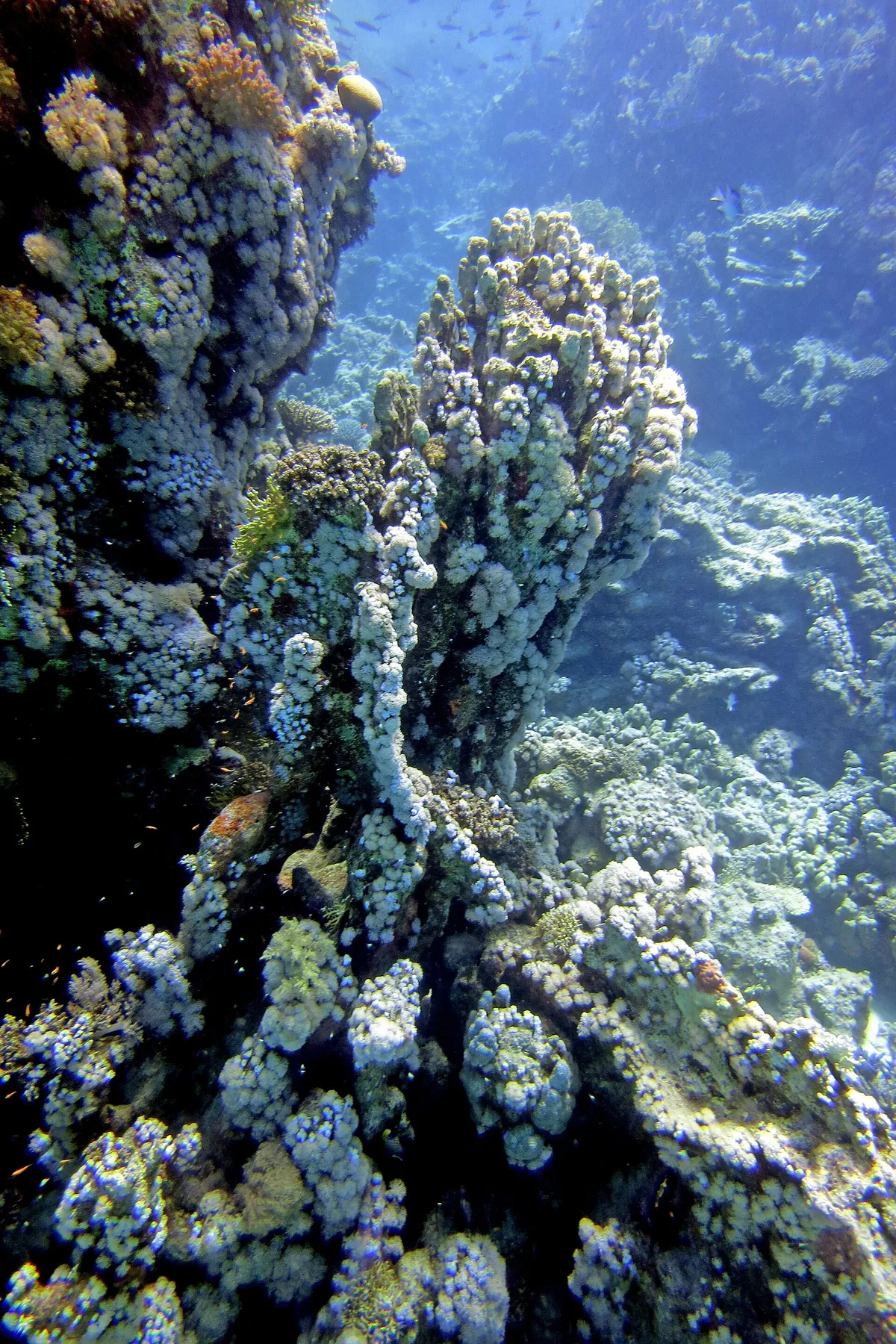
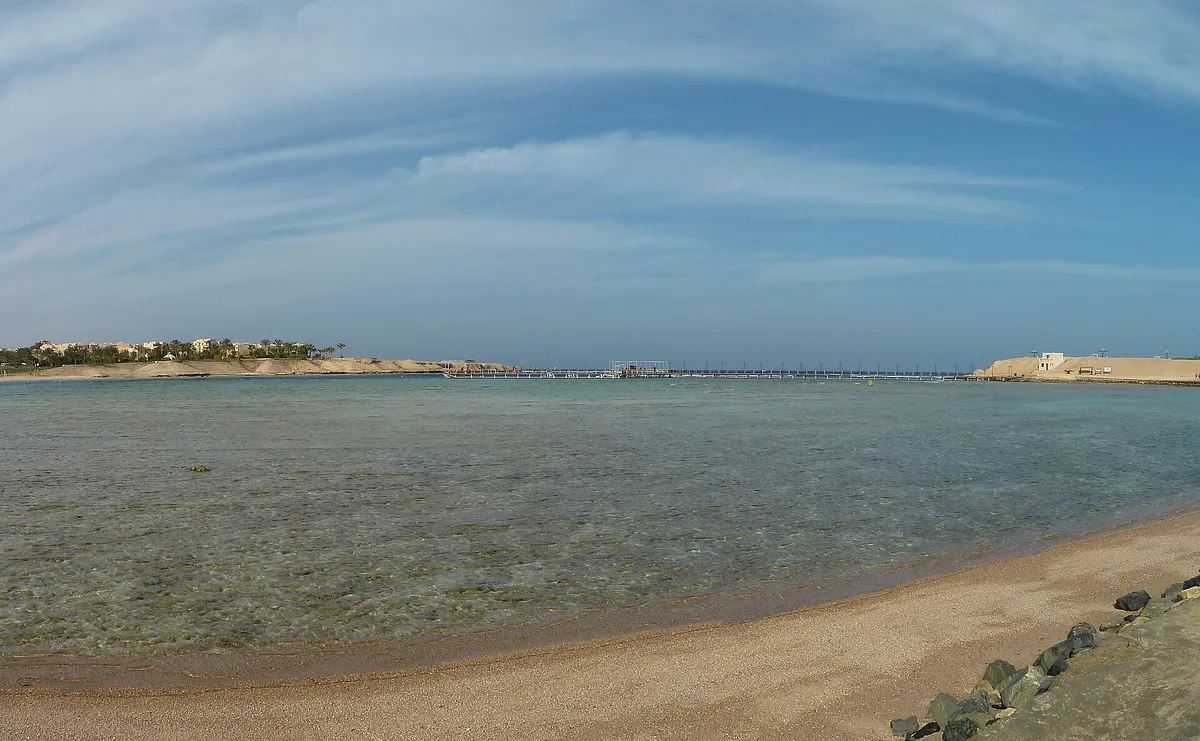
The house reef is the institution that defines a Marsa Alam holiday, and it works differently from the boat-centred snorkelling of the northern resorts. Most resorts here front a fringing reef: a shallow reef flat, bright and warm, that runs out from the beach until it drops – sometimes gently, sometimes in a proper wall – into deep blue water. Because wading across living coral flat is both miserable and destructive, hotels build jetties out over the flat to the reef edge, and the daily ritual of the coast is the walk down that jetty with mask in hand, a descent off the ladder, and an hour along the drop-off with nobody else in sight. If one image anchors this marsa alam travel guide, it is that walk.
The edge is where the life concentrates. In the first metres you are in aquarium water: clouds of anthias over coral heads, parrotfish grazing, butterflyfish and angelfish working the wall, moray eels in the crevices, blue-spotted rays on the sand patches below. Turtles commute along these edges in a way that makes them a daily expectation rather than a lucky sighting at the better bays, and in the early morning and late afternoon – when the light is low and the day boats are absent – the reef belongs to the house guests alone. Snorkellers who time their sessions for those hours consistently see more than those who go out at midday, and the difference costs nothing.
A few honest mechanics make the system work. Entry and exit are at the jetty or a marked sandy channel – never by walking the reef flat, which kills coral underfoot and ends with urchin spines in yours. Most resorts fly a flag system for conditions, and the flag matters here: this coast’s winter wind can make an exposed reef edge rough and its currents genuinely strong even when the bay looks calm from breakfast. Fins are not optional at the exposed sites, weak swimmers should stay in the sheltered bay water and say so at the dive desk rather than discovering it at the drop-off, and nobody should touch anything, ever – the reef’s condition, the whole point of coming this far south, is a direct product of thousands of visitors not touching it.
Judge any resort in this guide by its reef before its pool deck. Ask which side of the bay the jetty is on, whether the reef is a wall or a garden, and what the house reef is known for – turtles, rays, a resident school of something. The answers exist for every serious property on this coast, and a hotel that cannot answer them is telling you what its guests come for instead.
Abu Dabbab – Seagrass, Green Turtles and the Dugong Question
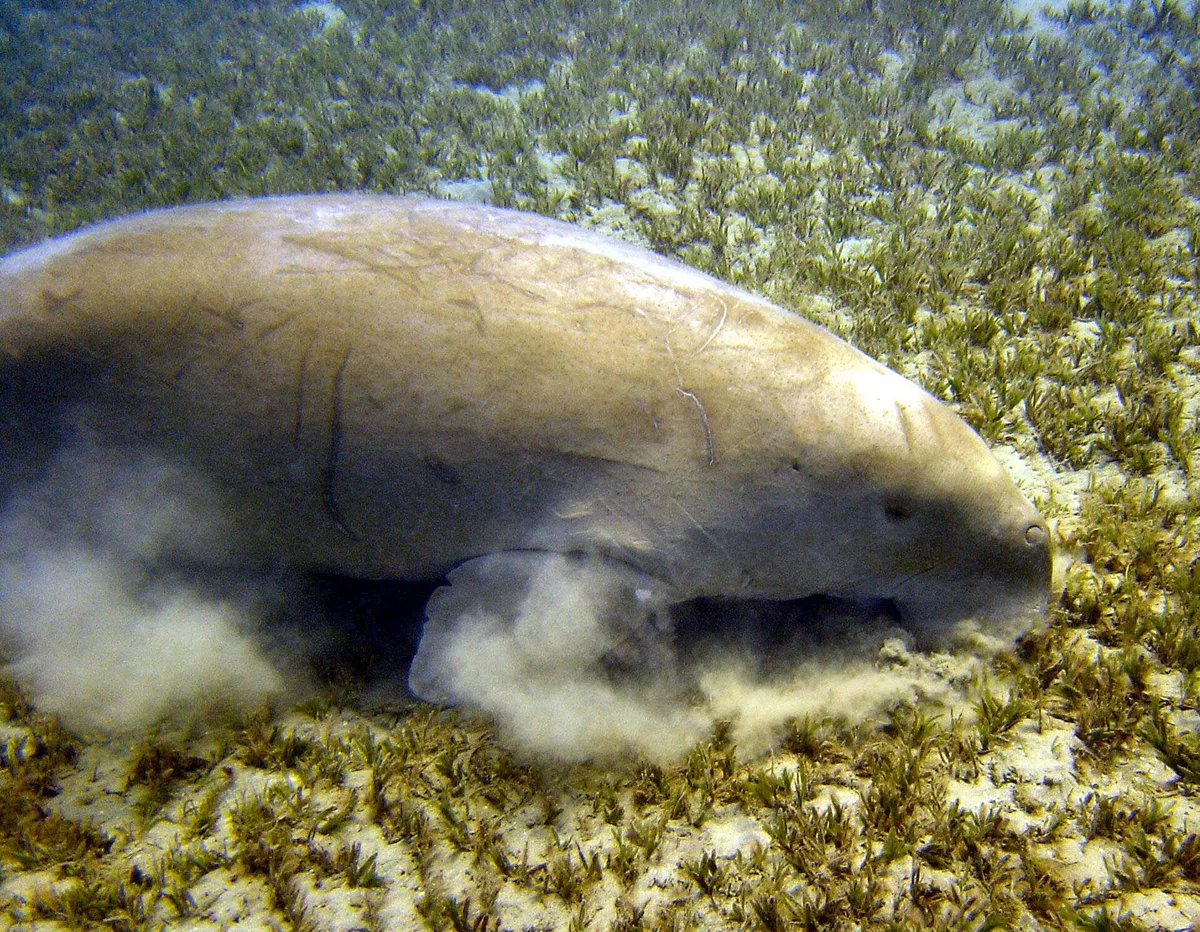
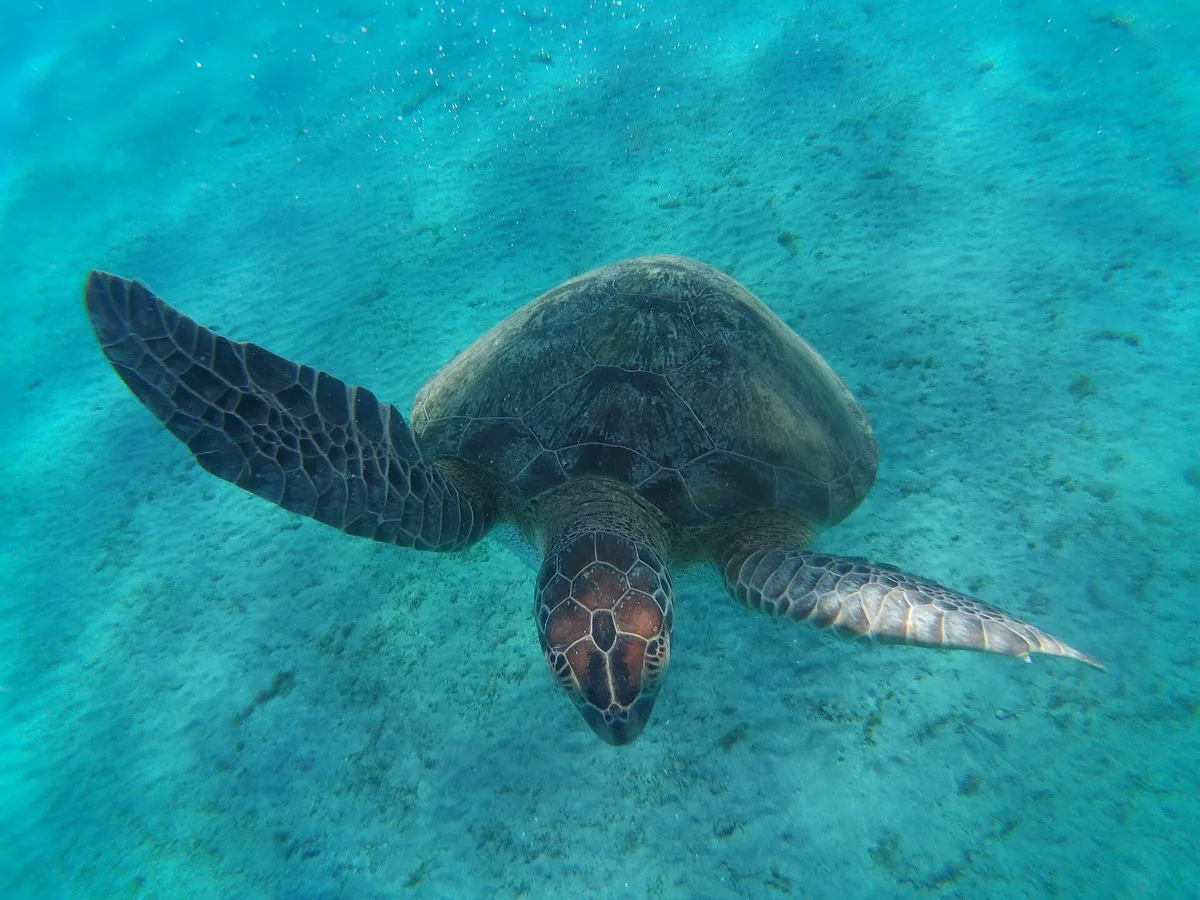
North of the town, Abu Dabbab is the bay this coast is famous for, and unusually for a famous bay, the reason is not coral. Abu Dabbab’s centre is a broad meadow of seagrass on sand, sloping gently from a beach entry – and seagrass, unglamorous as it sounds, is a pasture. Green turtles graze it methodically, heads down in the grass like cattle, largely indifferent to a respectful snorkeller floating a few metres away. Giant guitarfish and rays rest on the sand around the meadow’s edge, reef fish hunt its borders, and the coral gardens on the bay’s northern and southern sides give the day a second act once you have had your fill of the grass.
Then there is the dugong. Abu Dabbab is one of the very few places in Egypt where this shy, seagrass-dependent sea mammal – a relative of the manatee, fully protected and genuinely rare – is resident and regularly reported by snorkellers and divers. A small number of individuals use these southern seagrass bays, and on the right morning one may be down there hoovering up seagrass with a attendant crowd of remoras and a dust cloud of disturbed sand. It has to be said exactly as the honest operators here say it: a dugong is a possibility at Abu Dabbab, never a promise. Some visitors meet one on their first snorkel; others spend a week on the bay and see only the turtles. Any guide or seller who guarantees you a dugong is selling you something, and this marsa alam travel guide would rather you arrived hopeful than arrived misled.
The ethics are part of the visit, and the bay’s regulars enforce them socially as much as any ranger does. You do not chase, touch, ride or crowd a dugong or a turtle; you float, you let the animal set the distance, and if it moves away you let it go. Photographers take their turn rather than mobbing. These are wild animals in one of the last Egyptian bays that still works for them, and their tolerance is a renewable resource only if visitors renew it. The bay’s main beach is a managed stretch with shade and facilities, entered through the hotels and operators on site – what that buys is an organised shore and a briefed crowd; treat the animal rules as the real price of admission.
Practically: go early, before the day-trip minibuses from as far as Hurghada build up the late-morning crowd on the grass, and snorkel the meadow first while it is quiet. The coral sides of the bay reward a second session after lunch. If the dugong matters to you above everything, base yourself at a hotel on or near the bay for several mornings rather than betting the trip on one day visit – probability, here, is just a matter of mornings spent on the water.
Marsa Mubarak and the Bays in Between
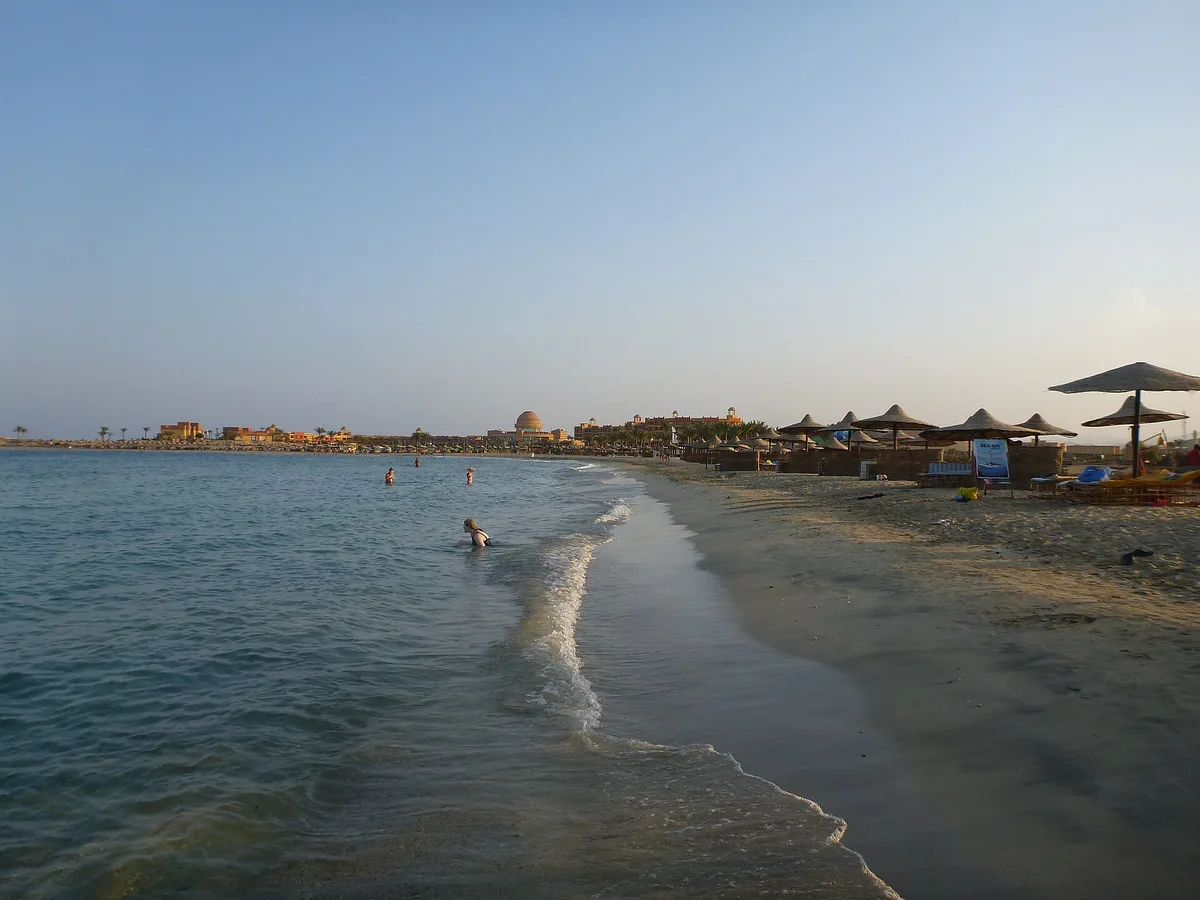
If Abu Dabbab is the headline, Marsa Mubarak is the connoisseur’s answer to it – a deep, sheltered bay just south of Port Ghalib (many dive centres list it as Marsa Murena) built on the same winning formula: a seagrass heart, turtles in residence, coral slopes on its flanks. It draws a fraction of Abu Dabbab’s day-trip traffic because it sits in the northern zone where most visitors are boat-based, and snorkellers who make the short trip here often find the grass quieter and the turtles just as obliging. Dugongs are reported here too, on the same honest terms as at Abu Dabbab – possible, prized, never owed to you.
What the bay teaches you is how to read this whole coastline, because between the famous names lies a string of smaller marsas – a marsa is simply a natural anchorage, a bite taken out of the reef coast – and each has its own character. Some are pure coral gardens, all wall and colour. Some are turtle bays. Some, like the shallow lagoons scattered down the southern coast, are nurseries: baby blacktips in the mangrove edges, young rays on the sand, nothing dramatic and everything alive. The boat trips sold along the coast are essentially a tasting menu of these bays, usually two stops with lunch aboard, and for a first visit they are the most efficient way to learn which kind of water you like before committing your mornings to one house reef.
Two habits separate a good bay day from a mediocre one here. The first is wind sense: this coast’s prevailing wind is from the north, and a bay that is glassy at breakfast can be chopped by early afternoon, so boat crews sequence stops by exposure and you should let them. The second is expectation management about boats themselves. The better operators cap numbers, brief the no-touch rules and keep the group together at sensitive sites; the floating scrum around a single turtle, when it happens, is a sign to hang back rather than join – the animal will still be there when the scrum gives up, and your photograph will be better for the empty water in it.
Marsa Mubarak also makes a neat half-day pairing with Port Ghalib, covered below – reef in the morning, marina lunch after – and it is the bay this marsa alam travel guide sends a snorkeller to first if Abu Dabbab’s fame is fully booked out. On a coast this empty, “second-best bay” is a title with very little drop in quality behind it.
Samadai Reef – Dolphin House and the Rules That Protect It
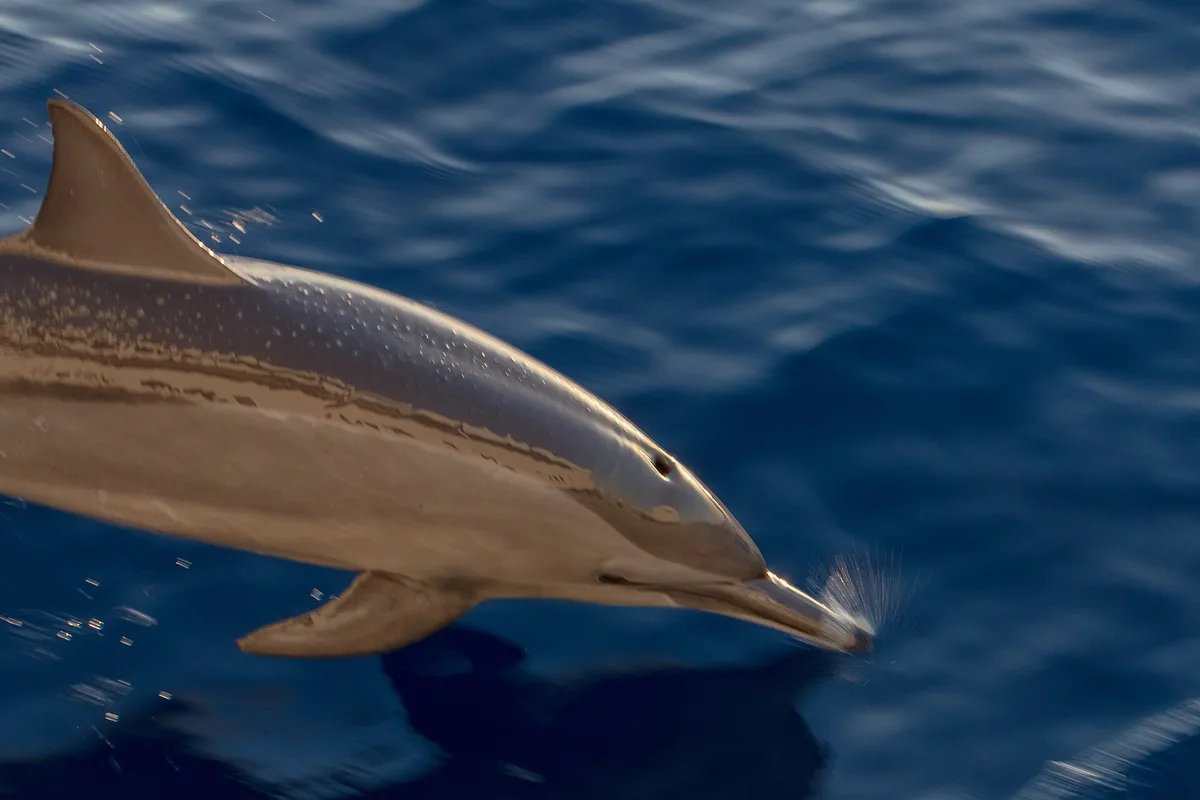
A short boat ride south-east of the town, the reef of Shaab Samadai curves in a great horseshoe – roughly 900 metres long and 500 wide – around a shallow, sheltered lagoon. By day, that lagoon is a dormitory: a resident pod of spinner dolphins comes in from a night’s feeding offshore to rest, socialise and raise calves in the calm water. It is one of the most reliable places in the Red Sea to be in the water near wild dolphins, and it was very nearly loved to death. In 2001, after a frenzy of uncontrolled visits – boats arriving from as far as Hurghada, hundreds of people in the water, even a boat fire at the reef – the site was closed outright while the Egyptian Environmental Affairs Agency, the Red Sea protectorate, HEPCA and the local diving community wrote a management plan. Samadai reopened only under rules, and the rules are why it still works.
The system you will meet today is that plan in daily operation. The reef is divided by marker buoys into zones: Zone A, the inner lagoon, is for the dolphins alone – no boats, no swimmers, no exceptions. Zone B is the snorkelling area, entered in a life jacket, where you may watch dolphins if they choose to swim out of the sanctuary; Zone C is where boats moor; Zone D, on the outer reef, is the diving area. Visitor numbers are capped, the visiting window is restricted – under the management plan, in-water visiting runs in a limited late-morning-to-early-afternoon window – and a per-visitor service fee, collected through your operator as part of the trip, funds the ranger presence and monitoring that keep the system real. The area was declared a special protection area by Red Sea Governorate decree in 2004, and rangers patrol it. When your guide recites the rules on the boat, this is the machinery behind the recital.
The experience itself, done right, is quiet rather than theatrical. You enter Zone B in your life jacket – which keeps you floating high and stops any temptation to dive down at the animals – and you wait. If the pod is resting deep in Zone A, you may see only distant fins and the reef itself, which is a fine dive and snorkel in its own right. If dolphins drift out through the snorkelling zone, you hold your position, keep your arms still, and let a wild animal decide how close the encounter gets. Chasing is prohibited and ends trips; boats that break the zoning lose access. Sightings are frequent but, as with Abu Dabbab’s dugong, the honest word is likely, not guaranteed – the dolphins owe their presence to the sanctuary zone, and the days they stay in it are the price of all the other days.
Book Samadai through a reputable operator, expect the fee and the briefing as part of the product, and go on a weekday if you can, when the boat cap is less contested. Of all the trips sold along this coast, it is the one this marsa alam travel guide would book first. There is a second dolphin reef far to the south – Sataya, in the Fury Shoals off Hamata – run on similar protective principles and usually reached on longer boat days or liveaboards; between the two, this coast holds the Red Sea’s best argument that dolphin tourism can be built to leave the dolphins alone.
Diving Marsa Alam – House Reefs, Boat Days and Big Water
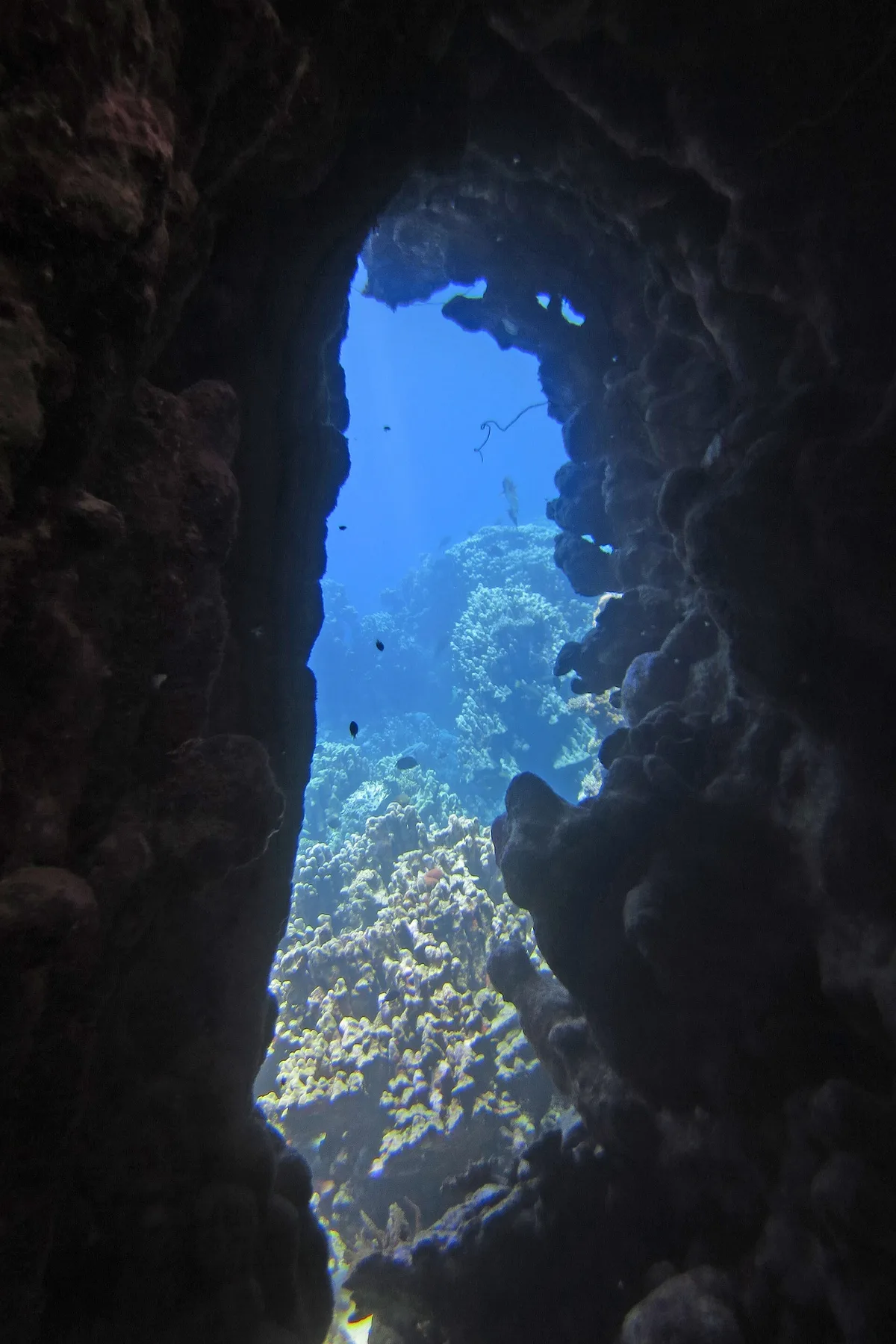
Diving is the industry this coast was built on, and its structure is a ladder. The bottom rung is the house reef: unlimited, unguided-feeling shore diving off the hotel jetty, where a certified diver can spend a week of twice-daily dives on one wall and keep finding new tenants. Above that sit the daily boats to the offshore reefs and bay systems – the Samadai outer reef, the coral gardens and pinnacles scattered along the coast, sites chosen each morning by wind and by the group’s experience. Above that again is Elphinstone, given its own section below, and at the top the liveaboards, which leave this coast behind entirely for the deep south. A diver can arrive a beginner – most resorts run full course programmes in sheltered bay water – and leave, seasons later, qualified for everything the southern Red Sea offers, without ever changing base.
The character of the diving changes with the latitude, and regulars plan around it. The northern sites near Port Ghalib are the most dived and the most forgiving: coral gardens, turtles, easy profiles. The middle coast adds the seagrass specialties and Samadai’s outer reef. The south – the sites off Wadi el Gemal and Hamata, and the Fury Shoals system – is wilder water: bigger pelagic traffic, stronger currents, reefs that see a handful of boats a week. What unifies all of it is coral condition a clear grade above the northern resorts, a function of fewer divers, protected-area status along much of the coast, and mooring systems that keep anchors off the reef.
The working mechanics are standard Egyptian Red Sea, done properly: dive centres in or beside every serious resort, day boats with lunch and tanks included in the day’s structure, equipment rental for those not bringing their own, and park or reef fees at protected sites collected through the centre as part of the bill – ask for them to be itemised rather than discovering them at checkout. Medical infrastructure is the one thing to arrange with open eyes: this is a remote coast, the nearest serious facilities are up the road toward El Quseir and Hurghada, and diving insurance that covers evacuation is not a bureaucratic nicety here but part of the kit list. Any centre that does not ask to see your certification card and logbook before selling you the advanced sites is telling you something; the centres around this coast that guard Elphinstone’s gate are, by the same token, the ones to trust with everything else.
Non-diving partners are better served here than the brochures admit, because the same bays that divers descend from are the snorkelling sites above: at most sites in this guide the boat carries both, the reef flat belongs to the snorkellers and the wall to the divers, and lunch is shared. A mixed couple can spend the whole week this marsa alam travel guide describes on the same water at different depths.
Elphinstone Reef – Advanced Divers Only, and Proud of It
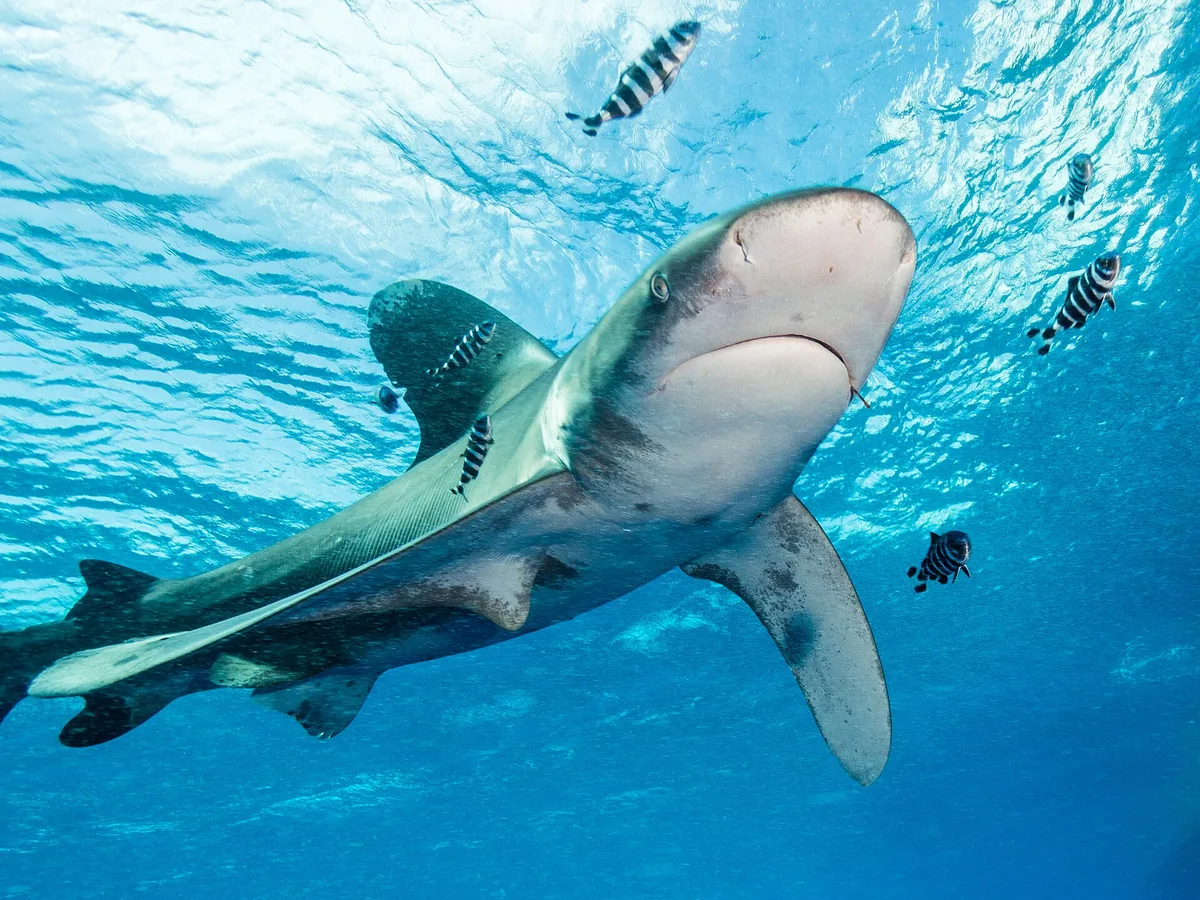
Every serious diving coast has a gatekeeper site, and on this one it is Elphinstone: an offshore reef lying roughly ten kilometres out to sea, a narrow ridge a few hundred metres long whose walls fall away on both sides into water more than a hundred metres deep. There is no island, no beach, no shallow teaching corner – just a buoy, a boat, and a wall that starts at the surface and does not stop. The reef’s north and south plateaux are the stages: divers hang in the blue off the plateaux edges and watch the open ocean file past – oceanic whitetip sharks cruising inquisitively close, hammerheads schooling seasonally deeper down, tuna, trevally, barracuda, and the whole pelagic cast that a fringing reef never sees.
The gating is real and it is enforced by the dive centres, not by a sign on the water. To be sold an Elphinstone trip you will typically need an advanced-level certification, a logbook showing recent experience in depth and current – operators commonly talk in terms of dozens of logged dives, with recent diving among them – and a check-out dive on a local site first if the centre does not know you. Drift conditions here can be fierce, entries and exits are in open sea, profiles are deep, and the nearest shore is a boat ride away in every sense. This is not false modesty in the marketing: the site has a genuine accident history, and the centres that police it are protecting both their customers and their own access to a reef the authorities watch closely.
For the diver who qualifies, it is usually the dive of the trip – the one written up in the logbook in full sentences. For everyone else, the honest advice in this marsa alam travel guide is to treat Elphinstone as a target rather than an entitlement: come, dive the coast’s superb training and intermediate water, build the logbook, and let this reef be the reason for the return trip. The snorkelling boats do not go there, there is nothing for a snorkeller on a surface ridge in open ocean, and a partner day is better spent at Marsa Mubarak or on the Samadai boat.
A word on the sharks, because this coast’s honesty requires it. Elphinstone’s whitetips are wild, curious, large animals encountered on their terms, and briefings about behaviour – stay vertical, stay calm, keep hands in, leave the water if told – are to be followed exactly. More broadly, in December 2024 a fatal shark incident involving a swimmer in deep water outside a designated swimming area north of Marsa Alam town made international news and led to a short temporary closure of the affected stretch while the authorities reviewed safety. Incidents of that kind are extraordinarily rare against the millions of swims this coast hosts, and the local response – closures, reviews, tightened rules about swimming outside marked areas and feeding – is the system working as it should. Respect designated swimming zones, never swim beyond reef markers at dusk, and the statistics of this coast remain overwhelmingly on your side.
Port Ghalib – the Marina Town
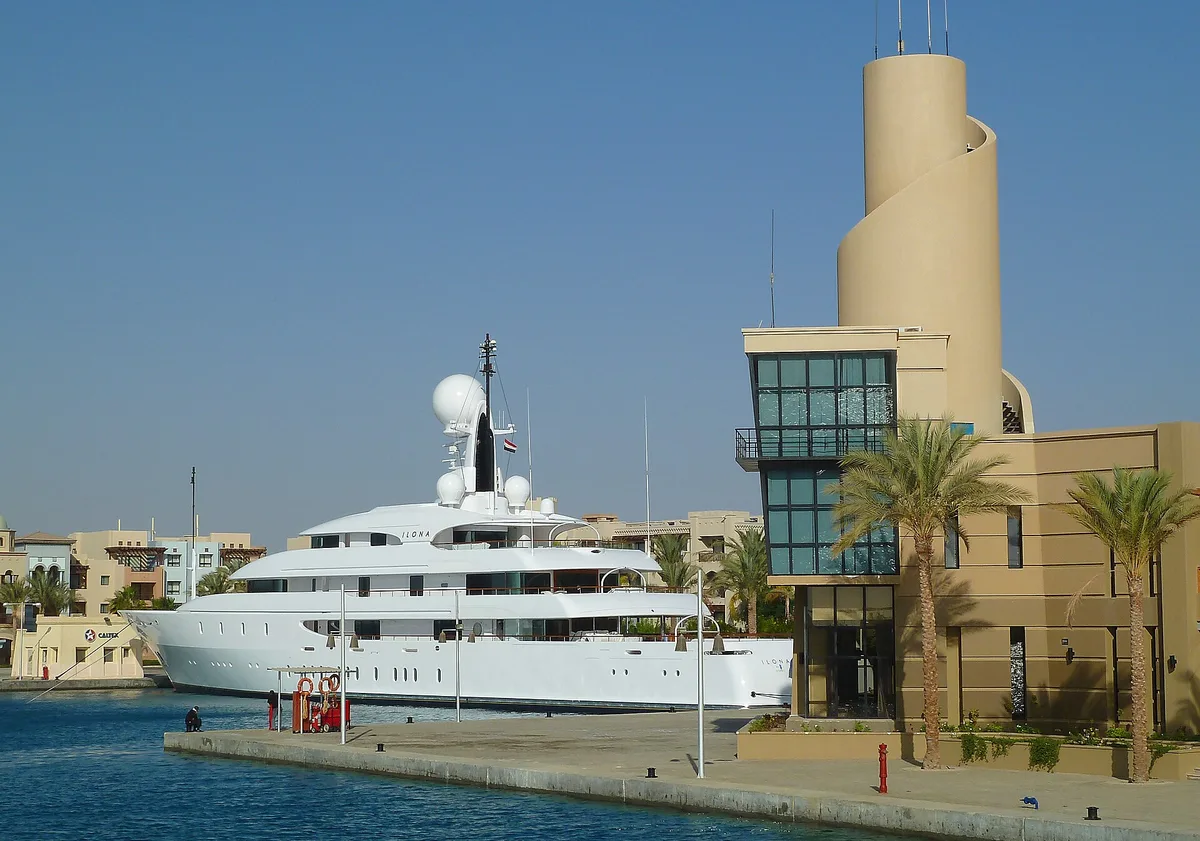
Sixty-five kilometres north of Marsa Alam town and a few minutes from the airport, Port Ghalib is the coast’s one attempt at a resort town in the full sense – and for many visitors it is the most liveable base on the southern Red Sea. A marina with berthing for around a thousand yachts forms its heart, wrapped by a corniche of cafes, restaurants and shops, with hotels and apartment resorts stacked behind. Dive centres run their day boats from its jetties, the liveaboard fleet loads here for the southern itineraries, and in the evening – uniquely on this coast – there is a promenade to walk, a choice of where to eat, and something resembling a holiday town’s hum.
That convenience comes with a character note: Port Ghalib is a purpose-built marina development, not a grown Egyptian town, and its pleasures are the marina pleasures anywhere – boats, terraces, seafood restaurants, a khan-style shopping quarter built for visitors. Travellers hunting for the “real Egypt” will not find it here and should look to the town and El Quseir in the sections below. Travellers who want a base that works – short transfer, boats at the dock, dinner options that do not require the hotel buffet’s permission – will find Port Ghalib the most practical square on the board.
The water side of the bargain is Coraya Bay, immediately south: a sheltered, sandy bay with resort house reefs that serves the Port Ghalib hotels as beach and snorkelling ground, calm when exposed stretches are blown out. Between the marina, Coraya and Marsa Mubarak just beyond, the northern zone assembles the coast’s easiest all-round package – which is exactly why it is also its busiest, busy being a relative term that would make Hurghada laugh. If your trip is short, your party mixed, or your priority a liveaboard week with a hotel night either side, base here. If your trip is long and your heart is set on the emptiest water in this marsa alam travel guide, read on south.
Marsa Alam Town – Small, Dusty and Honestly Not the Point
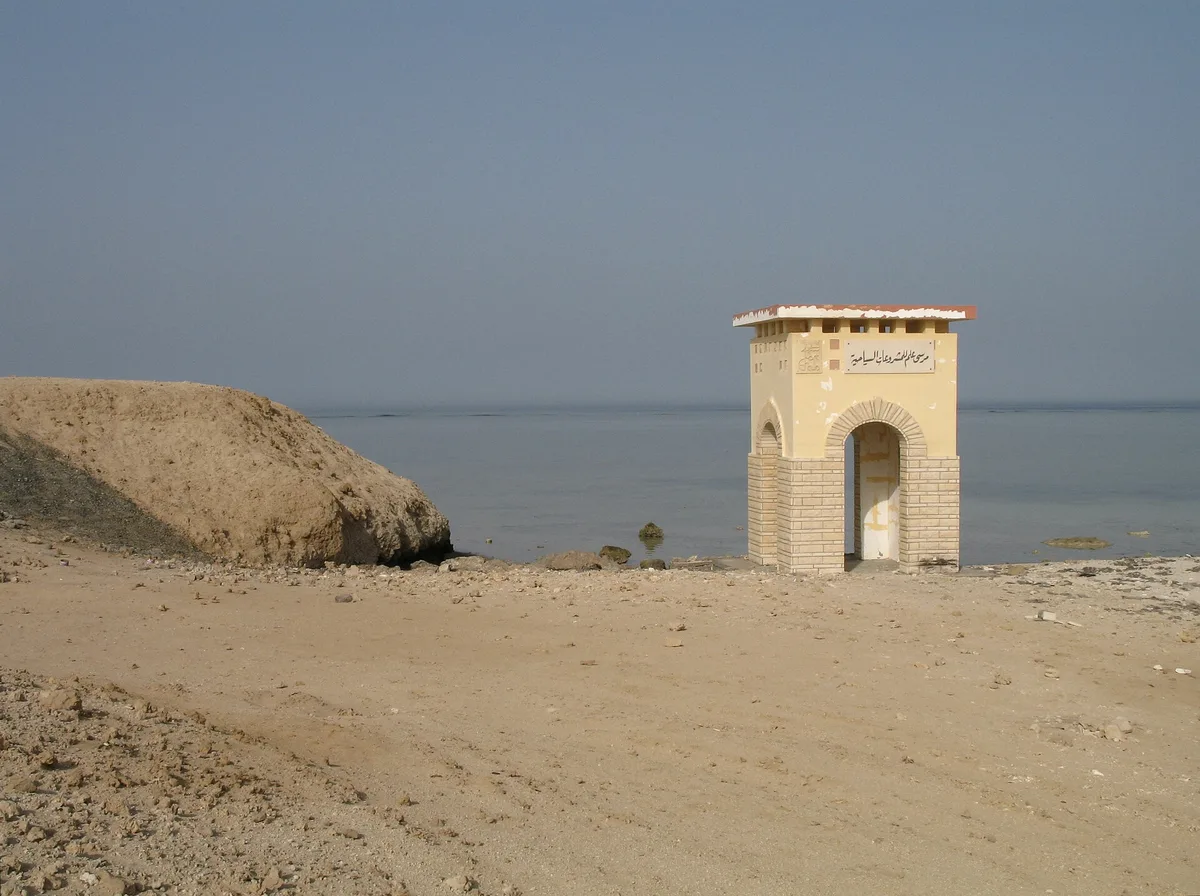
Most resort coasts hide their working town; Marsa Alam’s is simply there, strung along the highway at the Edfu road junction – a grid of low blocks housing the coast’s drivers, dive crews, fishermen and shopkeepers, with a fish market’s logic, a bus station, local restaurants, a mosque or two and a population in the low thousands. Before the airport it was a fishing and mining settlement, emerald and granite country behind it, and tourism has added a service economy without ever giving it a resort’s face. Visitors divide sharply on it: some find the town a welcome dose of unvarnished Egypt between resort days; others drive through in four minutes and see nothing to stop for.
The honest position is that both are right, and this marsa alam travel guide will not inflate the town into a sight it is not. There is no old medina, no monument row, no museum. What a stop here does give you is the coast’s best-value eating – grilled fish at local prices in restaurants that cook for residents, bakeries and juice stalls doing the same – a look at the harbour life that supplies the resorts, and the practical services of a real town: pharmacies, mechanics, the bus station for the long road north or the desert road west to Edfu and the Nile. Travellers based in town’s simple hotels and dive lodges – the coast’s budget spine – treat the resorts purely as boat and bay access, and for a diving-focused trip that arithmetic is hard to beat.
Give the town an evening if you are based nearby: eat fish where the boats come in, drink tea, watch the highway’s long-haul traffic roll through toward Sudan or swing west for the Nile. Then accept the resort coast’s basic truth, that here the town is the support act and the sea is the headline – and plan your days accordingly.
Wadi el Gemal National Park – Where the Desert Takes Over
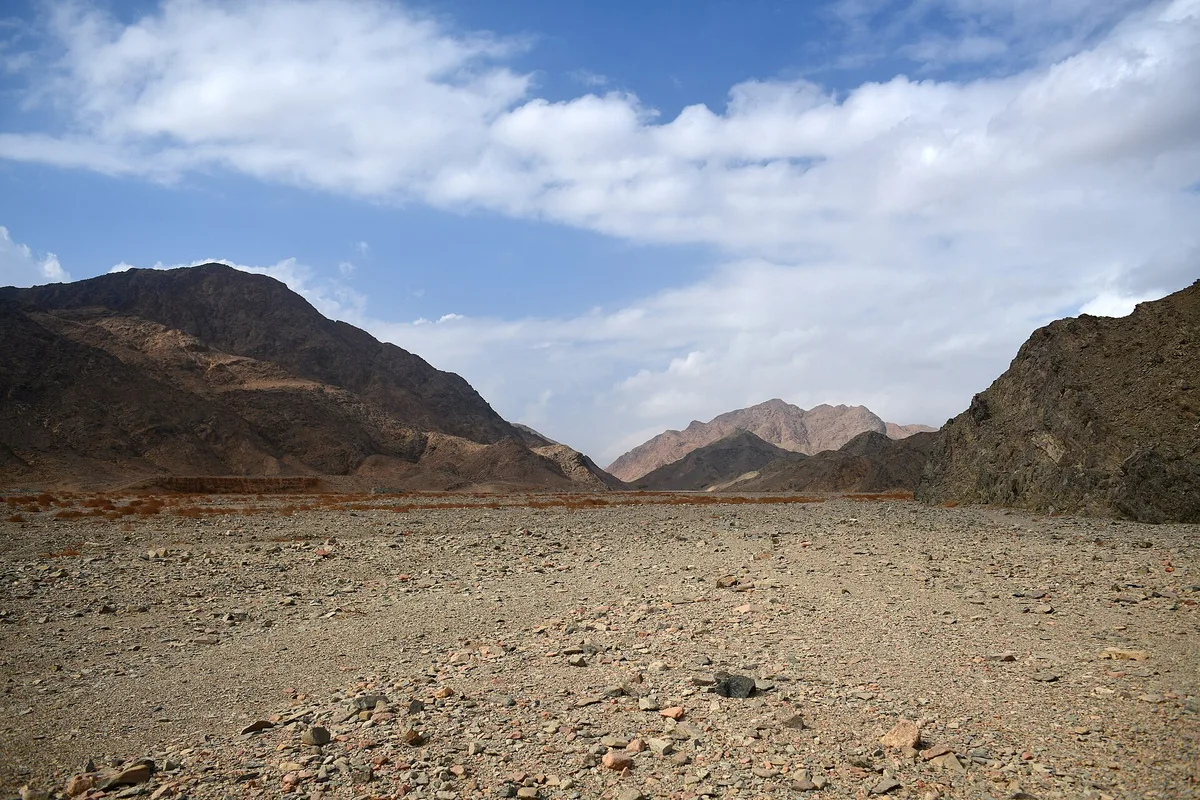
About 50 km south of the town, the coast changes legal status. Wadi el Gemal–Hamata National Park, declared in January 2003 under Egypt’s protected-areas law and managed by the Egyptian Environmental Affairs Agency’s Nature Conservation Sector, protects some 7,450 square kilometres in total – around 4,770 of land and 2,100 of sea – running from the reefs and islands offshore deep into the Eastern Desert. It is one of the 30 protectorates the official Experience Egypt portal counts across the country, and it is the reason the southern half of this coast still looks the way it does: no resort strip, ranger-patrolled beaches, and a wadi system that carries the desert’s rare rain down to a mangrove coast.
The park works on two levels, and most visitors only meet the first: the shore. Its beaches and bays – the white curve of Sharm el Luli at Hankorab, the mangrove lagoons of Qulaan with their boardwalks and shallows, the island-dotted water toward Hamata – are the park as a beach day, and a superb one. Entry at the managed gates runs on the protected-area model: a per-visitor park fee, collected at the gate or bundled by the operator who brought you, funding the ranger system. The second level is the interior, and it deserves a day of its own: Wadi el Gemal itself, the “Valley of the Camels”, a broad gravel wadi running between granite mountains, with acacia trees, wells, Roman-era remains along the old routes that crossed this desert toward the emerald-mining country, and the living culture of the Ababda, the Beja people whose homeland this is and whose guides, camel handlers and handicraft sellers are the park’s human face. Ibex and dorcas gazelle live in these mountains, sooty falcons nest on the offshore islands, and the park’s bird list – herons and egrets in the mangroves, migrants on passage – rewards anyone who brings binoculars to a beach holiday.
Practical honesty: the park is vast, its sights are spread over hours of track, and it is not a place to improvise on foot in summer heat. Go with a licensed operator or an Ababda-guided programme, carry far more water than feels necessary, and treat the desert half as a safari – jeep, stops, shade, a Bedouin lunch – rather than a hike. Camping and specialist activities inside the park need prior permission from the park authorities; day visits through the gates are the standard product. Of everything in this marsa alam travel guide, the park day is the one that most changes what travellers think they came for: they arrive for the reef and leave talking about the wadi.
Sharm el Luli, Qulaan and the Far Southern Beaches
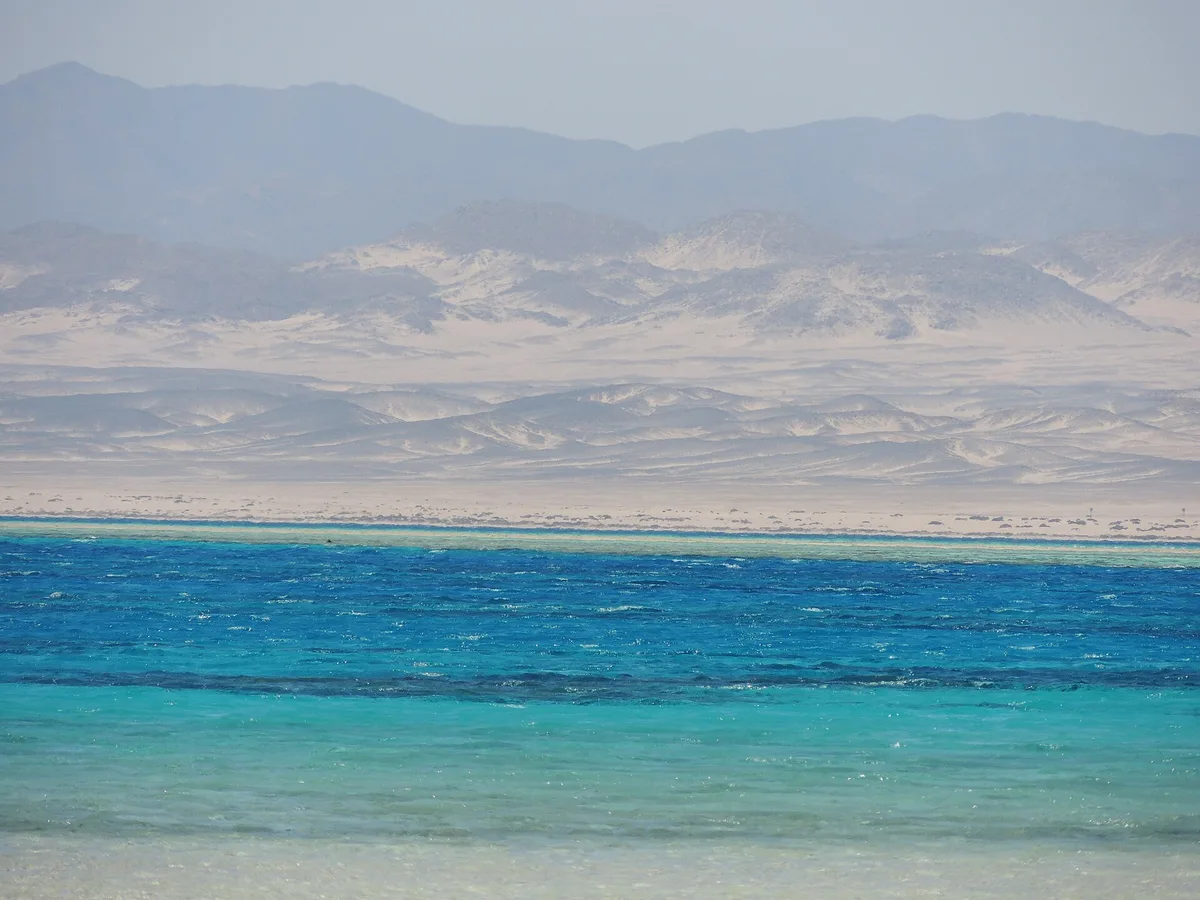
Ask returning visitors to name the single most beautiful beach on this coast and the argument usually ends at Sharm el Luli: a near-perfect crescent of white sand inside Wadi el Gemal’s boundary at Hankorab, shelving into water that grades from milk-turquoise over the sand to deep reef blue at the edges. It has no resort, no jetty circus, no music – a small managed entrance under the park’s system, some shade, and a reef at each end of the bay that snorkels like an aquarium. It is the postcard of the southern coast, and the management’s deliberate refusal to develop it is precisely why it survives as one.
A little further along, Qulaan offers the coast’s other mood: a chain of shallow lagoons fringed with mangroves, warm as a bath, where you wade out through soft light to sandbars and watch young fish and rays work the mangrove roots. It is a place for floating rather than snorkelling, for children and for the last slow hour of a park day, and its boardwalks and simple facilities are the national park showing its gentlest face. Between and beyond these two, the road south passes beach after unnamed beach – some with a dive camp, most with nothing at all – down to Hamata, the coast’s last real settlement, where the road’s purpose becomes the harbour: boats for the Fury Shoals and the Hamata islands, and the liveaboard and day-diving scene of the deep south.
The southern run makes a natural full day from the town or a half-day from a southern resort, and the combination this marsa alam travel guide recommends writes itself: Sharm el Luli for the morning snorkel while the light is on the reef, Qulaan for the float and the mangroves after, and the long golden drive back up the coast. What it needs is only the park-day discipline from the section above – entry through the managed gates, fees through the operator or at the gate, no collecting, no off-track driving on a shore where turtles nest. Emptiness this good is a managed product, and the management is the entrance fee’s whole justification.
El Quseir – a Working Port With Millennia Behind It
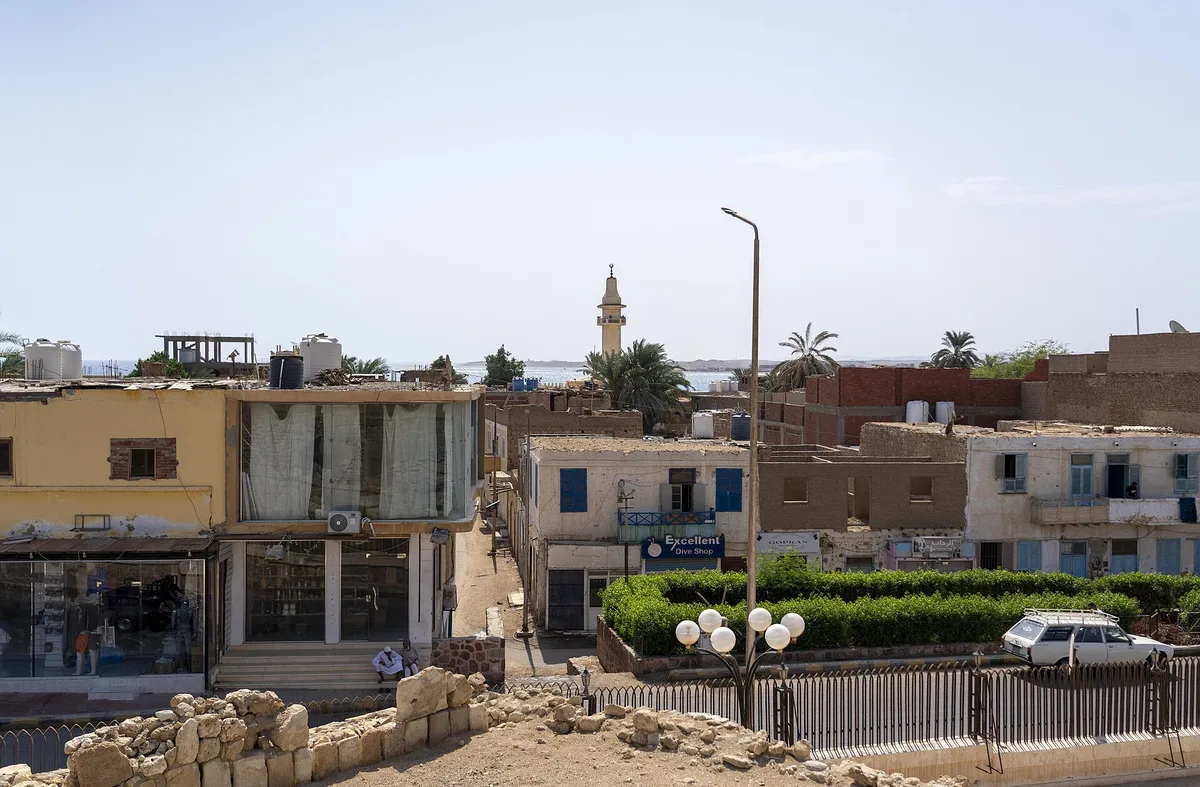
Halfway to Hurghada, 134 km north of Marsa Alam town, El Quseir is everything the resort coast is not: a real Red Sea port town with a corniche, a fishing fleet, crumbling merchant houses and a history that runs from Pharaonic expeditions through the Roman port of Myos Hormos – whose remains lie just north at Quseir al-Qadim – to the Ottoman fortress that still guards the harbour and the centuries when this was the Nile Valley’s great embarkation port for the Hajj and the spice trade. For most of Egypt’s history, the road from Quseir west across the desert to the Nile was one of the hinges of the country’s geography, and the town’s faded grandeur is that history’s residue.
As a day trip it offers a deliberate change of register. Walk the corniche and the old quarter’s carved wooden balconies, look in on the Ottoman fort, eat where the port eats, and feel the temperature of an Egyptian town that tourism seasons but does not define. Divers know a different Quseir – the house reefs and dive camps along its shore road are among the oldest on the coast, quieter even than Marsa Alam’s, and some travellers base here entirely for that reason. Either way, Quseir puts the resort strip in perspective: an hour or two in a town that existed for three thousand years before the first charter flight is a useful corrective to a week of resort time.
Logistically it sits naturally on the Hurghada transfer day – a stop that breaks the three-hour drive into a journey – or as a half-day excursion from Port Ghalib, an hour up the coast – the easiest history stop in this marsa alam travel guide. Combine it with nothing else; Quseir’s pleasure is precisely that it is not another reef, and giving it an unhurried lunch hour is the whole point of going.
When to Go – Seasons, Wind and Warm Water
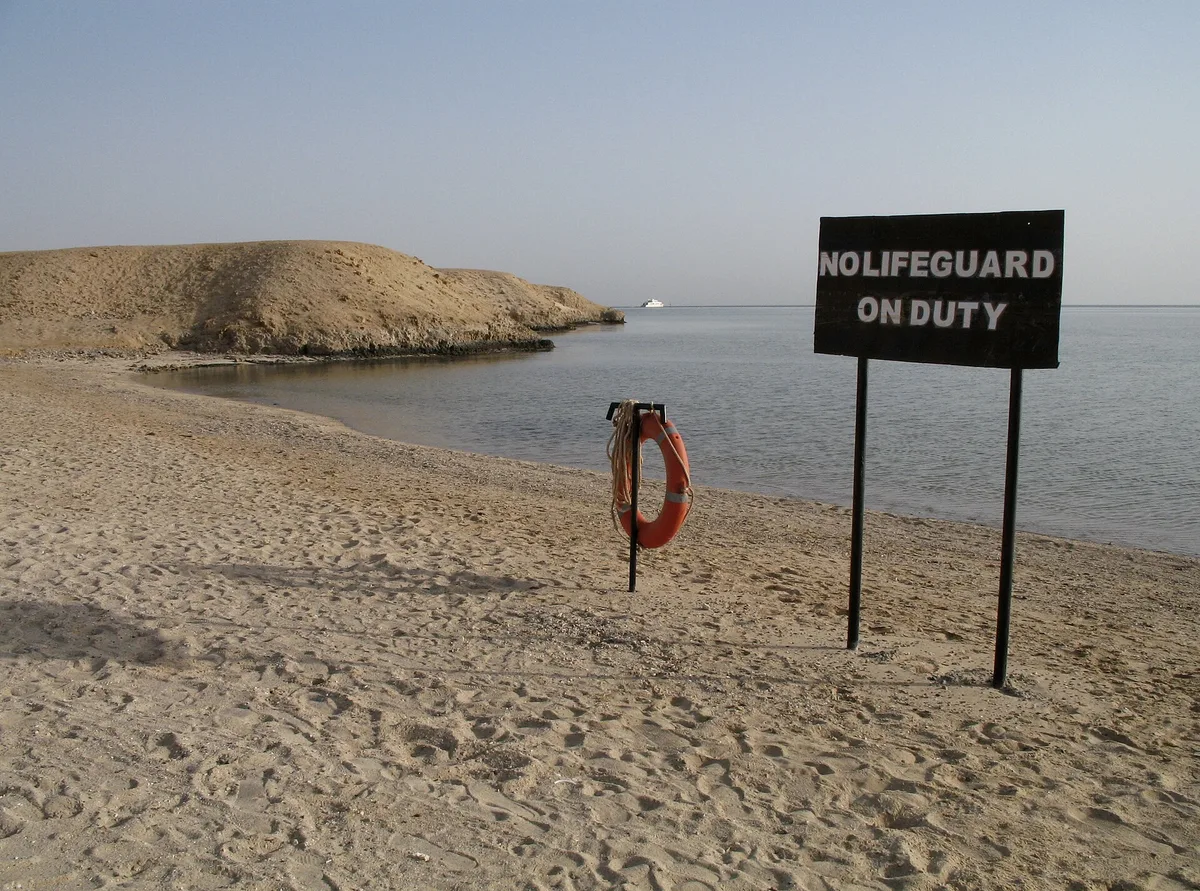
Marsa Alam’s climate is the southern Red Sea’s steady version: hot desert, negligible rain, and a sea that never gets cold by northern standards. Air temperatures run from average highs around 24°C in January to the mid-30s in August, with summer spikes well beyond that inland; the sea tracks from about 22°C in late winter to 29°C in late summer. What that produces is not one season but a rotation of specialities, and the best month for your trip depends on which animal, sport or temperature you are chasing.
The classic window is October to November and March to April: warm but not fierce air, sea temperatures in the comfortable mid-to-high twenties, the best balance of calm days for the offshore boats, and – in autumn especially – prime conditions at Elphinstone, whose shark season peaks as the water begins to cool from its summer high. Winter proper, December to February, is the European escape season: the town’s warmest-in-Egypt nights are a genuine asset, snorkelling stays pleasant in a short wetsuit, and the trade-off is wind – the north wind that can ruffle exposed reefs, close the more weather-dependent boat trips on rough days and make a beach day a matter of finding the sheltered side of a bay. Summer, June to September, inverts everything: the sea is bath-warm and often glassy in the mornings, the diving superb, the desert excursions off the table by midday, and the heat a serious physical fact that schedules the day around dawn and dusk. Summer is also when the south’s turtle nesting and hatching season runs on these beaches – a privilege for visitors at the park’s managed sites, handled under ranger rules.
Wind deserves its own sentence because it is this coast’s second product. The same reliable airflow that troubles winter boats makes Marsa Alam a named kitesurfing and windsurfing coast – the official Experience Egypt portal lists it among the country’s main draws for both – with the flat-water lagoon at Wadi Lahami, far south near Hamata, as the connoisseurs’ base. Kiters come in the windy months precisely when snorkellers curse the chop, which is as neat a division of the calendar as any resort coast manages. Whatever your month, build one flexible day into the plan this marsa alam travel guide lays out: on a coast governed by wind and boat logistics, the traveller with a spare day gets the reef the timetable promised; the traveller without one gets the apology.
How Long to Stay – and How to Split the Days
Marsa Alam rewards a week and tolerates a long weekend; it punishes the two-night stop, which spends its margin on transfers and leaves the coast’s rhythm – early reef, slow afternoon, early night – no time to take hold. For a first visit built on this marsa alam travel guide, seven nights in one base is the sweet spot: two days on the house reef and the nearest bays, a Samadai boat day, a Wadi el Gemal park day with Sharm el Luli, one big excursion – El Quseir north or the far south – and a spare day held against the wind, spent on whichever plan the weather cancelled earlier in the week. Divers add their boat ladder inside the same frame; a check-out dive, two boat days, and Elphinstone or a southern site as the week’s summit, with the last day kept shallow for the flight home.
Splitting the stay between two bases is the local connoisseur’s move and worth considering on a ten-night trip: four or five nights in the northern zone for Port Ghalib’s ease, Coraya and Marsa Mubarak, then the move south to a quiet resort near the park for Abu Dabbab mornings, the park itself and the empty beaches. The transfer between zones is an hour or so of coast road, the change of water is total, and the trip gains the one thing a single base cannot give it – both ends of a 100-kilometre coast lived in, rather than driven through. What not to do is split by the night, hotel-hopping down the highway: every move costs a morning, and on this coast mornings are the currency everything is priced in.
The liveaboard question belongs in this section because it competes for the same days. The southern Red Sea’s famous offshore system – the Fury Shoals’ reef maze, and on longer itineraries the deep-south islands – is served by boats departing Port Ghalib and Hamata, typically for a week, and for experienced divers it is the region’s definitive product: sites no day boat reaches, dived three or four times a day, with Sataya’s dolphin lagoon often on the route. If you qualify and the budget stretches, a week aboard followed by three or four slow nights ashore at a house reef is arguably the finest Marsa Alam trip there is. If you do not dive, the boats are simply not your product, and nothing is lost: everything they sail past on the way out is in the sections above, at snorkel depth.
Marsa Alam Travel Guide – Questions, Answered
Is Marsa Alam better than Hurghada or Sharm El Sheikh?
Better is the wrong word – it is quieter, and everything follows from that. Hurghada offers a city, nightlife and the widest flight choice; Sharm El Sheikh offers resort polish and Ras Mohammed. Marsa Alam offers emptier water, turtles and dugongs on the house reef, and evenings that end early. Our Hurghada and Sharm El Sheikh guides are planned companions to this marsa alam travel guide; choose on the holiday you want, not on a league table.
Will I definitely see a dugong or dolphins?
No, and any guide that promises either is misleading you. Dugongs at Abu Dabbab and Marsa Mubarak are resident but wild and few – a real chance across several mornings, not a certainty on one. Samadai’s spinner dolphins use the lagoon on most days, under a zoning system that puts their rest ahead of your photograph; some visits watch from a respectful distance, some see fins only. The turtles, by contrast, are as close to a sure thing as wildlife gets on this coast.
Can beginners and non-divers enjoy Marsa Alam?
Yes – arguably it suits them better than the diving fame suggests. The famous encounters here happen at snorkel depth – turtles over seagrass, dolphins watched from the surface under the Samadai rules, house reefs off the jetty – a point this marsa alam travel guide makes in bay after bay. Dive centres run beginner courses in sheltered bays for those who want more, and the park, beaches and El Quseir fill the days for those who want less.
Is it safe to swim and snorkel there?
Within the system, yes: swim in designated areas, obey the resort flag system and the guides, do not swim beyond reef markers or in open deep water outside marked zones, and never feed or touch marine life. In December 2024 a fatal shark incident north of the town, involving a swimmer in deep water outside a designated swimming area, prompted a temporary closure and a safety review – the rules above are the practical legacy of that event, and incidents remain extremely rare against the coast’s visitor numbers.
What does the Samadai fee pay for, and do I need a permit?
As a visitor you need no paperwork of your own: licensed operators run the trip under the reef’s management plan, and the per-visitor service fee collected through your operator funds the ranger patrols, moorings and monitoring that keep the zoning system – sanctuary zone for the dolphins, capped numbers, restricted hours – functioning. The same mechanism applies in Wadi el Gemal, where park entry fees support the protectorate’s rangers. Figures change and are set by the authorities rather than the operators; this marsa alam travel guide treats any exact price quoted away from an official source as provisional.
Can I do a day trip to Luxor from Marsa Alam?
You can, and people do – the desert road west from the town reaches the Nile at Edfu, and tours run on to Luxor – but it is one of the longest day trips sold anywhere in Egypt, with most of the day on the road. If the Valley of the Kings matters to you, a night or two in Luxor inside a wider Egypt itinerary beats the day return; the coast will still be here when you get back.
When is the single best month to come?
For the classic combination – warm sea, calm boats, Elphinstone season and humane temperatures – late October into November is this guide’s pick, with March and April close behind. Kiters should reverse the logic and come for the windy months; divers chasing the southern sites will find their own favourites in the season section above. There is no bad month here, only mismatched ones.