Is Albania safe? On the current official advice, the short answer is yes for most trips – with the sharpest warnings aimed not at crime but at the roads, the mountains in bad weather, and, this autumn, demonstrations in Tirana. The UK Foreign, Commonwealth and Development Office (FCDO), whose Albania travel advice page was updated on 15 October 2026, does not advise against travel to any part of Albania. The US State Department, in its advisory issued on 27 August 2026, rates Albania Level 2 – exercise increased caution – and ties that rating to crime, not to terrorism or unrest.
Read both pages in full and a pattern emerges that surprises people who arrive expecting a crime story. The FCDO says reports of crime targeting foreigners are rare, and the State Department says foreigners are rarely the intended targets of the violent crime that does occur. What both pages return to, at length and in their strongest language, is driving: the FCDO calls it very hazardous, and the State Department warns of a high rate of traffic accidents on winding, poorly lit mountain roads. The honest answer to is albania safe is therefore a routed one – which risks apply to you depends on whether you are walking Tirana’s cafe streets, driving the Riviera corniche at night, or hiking between Theth and Valbona in October.
This guide follows the two official pages section by section, in your order of concern rather than theirs, and attributes everything to them – if a claim below is not credited to the FCDO or the State Department, it is not a safety claim at all. Check both pages again before you travel, because both change: the FCDO page was updated in October 2026 specifically to flag demonstrations in the capital. For routes, regions and trip planning once the safety picture is clear, start with our Albania travel guide.
One more framing point before the detail. Is albania safe is a question with a date on it: the answer below is the answer the official pages give in the autumn of 2026, with a live demonstration warning in force and a two-month-old US advisory behind it. A traveller asking is albania safe in a quieter season, or after the FCDO’s next update, may get a shorter list of cautions. The structure of the answer – crime rarely aimed at you, roads first, water bottled, mountains prepared for – is the durable part, and it is the part both governments have repeated across updates.
Is Albania Safe – The Short Answer
| Question | Short answer |
|---|---|
| Is Albania safe overall? | Yes for most visits, on the current advice – the FCDO advises against travel to no part of Albania, and the US rates it Level 2, its second-lowest tier. |
| What is the current US advisory level? | Level 2 – exercise increased caution, issued 27 August 2026 and tied to crime (risk indicator C), per the US State Department. |
| Does the UK advise against travel anywhere in Albania? | No. The FCDO page (updated 15 October 2026) carries no advise-against warning for any region. |
| Is crime against tourists a major problem? | No, on both pages – the FCDO says reports of crime targeting foreigners are rare; the State Department says foreigners are rarely the intended targets of violent crime. |
| Where do pickpockets operate? | Tourist areas, buses and trains, and major transport hubs including airports, per the FCDO; the State Department lists pickpocketing in tourist areas too. |
| Is Albania safe to drive? | This is the weakest point in both pages – the FCDO calls driving very hazardous, with road deaths amongst the highest in Europe. |
| Is it safe to drive at night? | Both pages argue against it outside cities – unlit roads and vehicles, potholes and unmarked roadworks (FCDO); no lighting or guardrails and stray animals on rural roads (State Department). |
| Is Albania safe for hiking? | Yes with preparation, but the State Department warns the tourism industry is not well regulated, hazards are not always marked and first responders cannot reach remote areas. |
| Are there landmines in Albania? | In some remote areas around the northern border with Kosovo, yes – the FCDO says unexploded landmines remain there; stay on marked paths and heed warning signs. |
| Is the sea safe for swimming? | Generally, with specific cautions – the FCDO relays reports that rented jet skis and boats may lack adequate safety precautions, and says to heed flags, lifeguards and local advice on jellyfish and sea urchins. |
| Can you drink the tap water? | No – the FCDO says do not drink it and to use bottled water; the State Department says tap water is not safe to drink. |
| What about demonstrations? | Avoid them. The FCDO’s current warning covers demonstrations in central Tirana, some with violence and property damage; a US Embassy alert of 15 October 2026 covers seven cities. |
| Is Albania safe for solo travellers and women? | Neither page publishes Albania-specific warnings for either group; the specific points that bear on solo travel are covered in the women and solo section below. |
| What if there is an earthquake? | Albania is seismically active – the FCDO says tremors are common and serious earthquakes less frequent but do happen; the State Department says moderate to severe earthquakes can occur year-round without warning. |
Two things in that table deserve emphasis before the detail. First, the two governments do not fully agree in tone: Washington’s Level 2 headline is driven by organised-crime violence that both pages say is aimed within criminal networks, while London’s page, read whole, is closer to business as usual with a demonstrations warning on top. Second, neither page supports the two laziest conclusions – that Albania is dangerous, or that it is risk-free. Both support a specific, manageable list, and the rest of this article works through it.
What the Official Advice Actually Says
Two documents carry the official weight for English-speaking visitors, and this article is built on them and nothing else. The UK FCDO travel advice for Albania is a rolling page – advice, entry requirements, safety and security, health and a getting-help section – updated on 15 October 2026 at the time of writing. The US State Department’s Albania travel advisory, issued on 27 August 2026, sets the headline level and then links a long country information page covering everything from road conditions to local laws. Where the two disagree in emphasis, we say so rather than averaging them.
The State Department’s Level 2 is the second of its four levels, and for Albania the stated reason is crime, flagged with its C risk indicator. The summary Washington publishes is specific about what kind of crime it means: law enforcement’s ability to protect or help you is limited in some areas, especially remote regions; violent crime connected to illicit drug networks and organised crime occurs across the country; and large-scale demonstrations linked to the local political situation may occur with little notice. That framing matters – the level is not a verdict on street safety for tourists, and the same page describes the overall crime rate as moderate.
The FCDO does not use levels. Its page leads, at the moment, with demonstrations in Tirana, then works through terrorism, crime, laws, outdoor activities, transport risks and natural disasters. On terrorism it says attacks cannot be ruled out and could be indiscriminate, including in places visited by foreigners – its standard formulation – while noting that inter-ethnic relations are generally good and extremist or anti-western expression is very rare. On crime, its first sentence sets the balance for the whole page: there is crime and violence in some areas, but reports of crime targeting foreigners are rare. Hold those two sentences together and you have the official picture in miniature – a country with real internal problems that mostly do not point at visitors, plus a short list of ordinary risks that do.
A note on dates, because safety pages decay. Everything in this article is the position as read on 1 November 2026, from an FCDO page updated on 15 October 2026 and a State Department advisory issued on 27 August 2026. The FCDO updated its page in mid-October precisely because the demonstration situation changed – which is the strongest argument for treating this article as a map of what to check, not a substitute for checking. Both governments also maintain embassy channels: the US Embassy in Tirana published its own demonstration alert on 15 October 2026, covered in the demonstrations section below.
There is also a third layer worth knowing about, because it is where changes appear first. Embassy alerts – like the Tirana demonstration alert – are issued for citizens already in the country and are narrower and faster-moving than the standing advice pages. The FCDO maintains its own consular presence in Tirana, whose contact numbers appear in the practical section below, and its page carries the standing instruction to follow local authorities and local media when a situation is moving. None of this changes the hierarchy: the two advice pages are the considered position, the alerts are the weather report on top of it, and when travellers ask is albania safe this month rather than in general, the alerts are what they are really asking about.
Crime, Pickpocketing and Scams – What Tourists Actually Meet
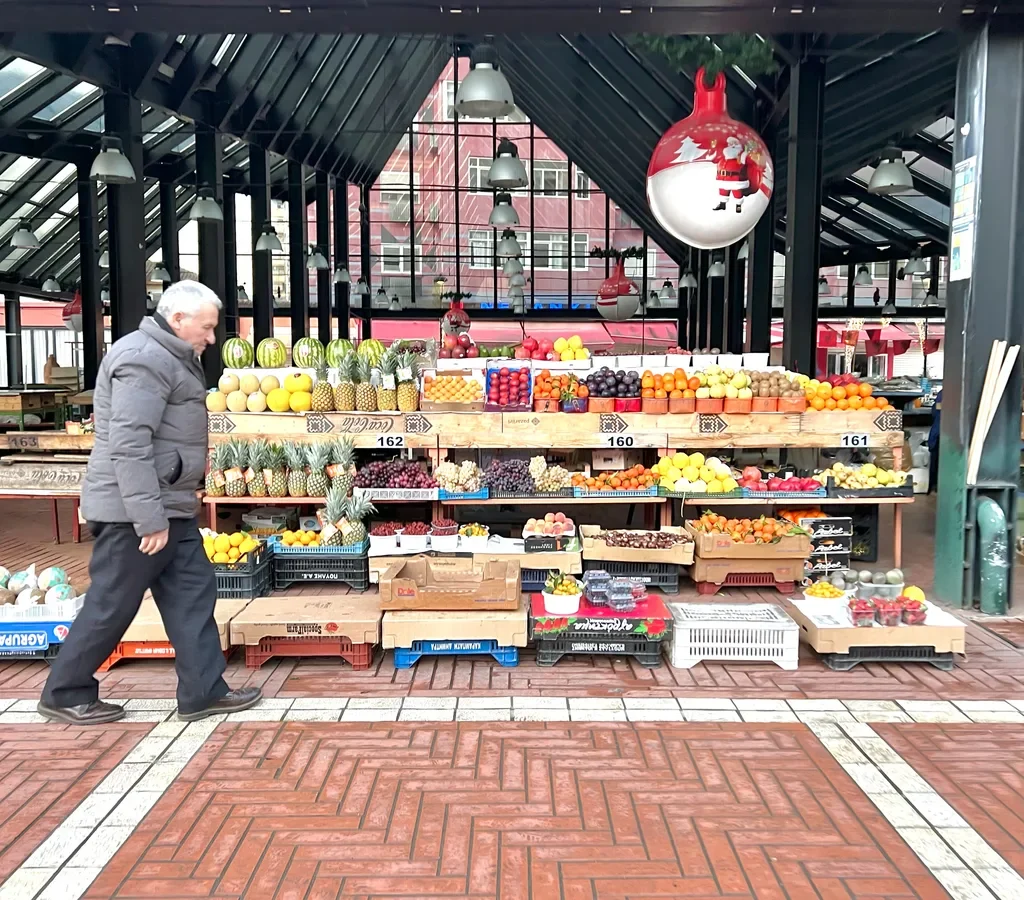
Start with scale. The State Department describes Albania’s overall crime rate as moderate, with a moderate rate of property crime, and lists the activities visitors are most likely to encounter: robberies, vehicle break-ins, theft and pickpocketing in tourist areas. The FCDO’s list of places is more granular – pickpockets and bag thieves operate in tourist areas, on buses and trains and at major transport hubs including airports – and its advice is the standard big-city set: keep valuables out of sight, and take sensible precautions particularly in larger cities and late at night. Neither page describes street robbery of tourists as a pattern, and both are explicit that the violent end of Albanian crime is aimed elsewhere.
The violence that drives the US rating is real, and both pages describe the same mechanism. The FCDO says occasional shootings and small explosions result from internal disputes over criminal, business or political interests. The State Department says criminals sometimes use guns and explosives to settle disputes, that most explosive incidents happen at night, and that while foreigners are rarely the intended targets, bystanders can be harmed. It also names four venues – Juvenilja, Juvenilja Castle, Pastiçeri Venezia and Magic Club – that are off-limits to US Embassy personnel because of the potential for retaliatory violence and reports of unfair business practices and safety concerns. The practical translation for a visitor is narrow: you are not the target, the events are episodic and localised, and there is no tourist district either page tells you to avoid because of them.
The scams material on the State Department page is the part most likely to save you money. It says financial scams and internet romance scams are common, and its examples include taxi overcharging and inflated bar and club bills – check a bill before you pay it, and treat a surprisingly large one as a known pattern rather than a misunderstanding. It also warns that criminals may use dating apps to target victims for robbery or assault, which is the single most specific personal-safety warning on either page for someone travelling alone and meeting strangers. The FCDO adds the transport angle: the same hubs where pickpockets work are where you should keep a hand on your bag.
On taxis, the State Department is reassuringly specific. Licensed, officially marked taxis are heavily regulated, generally safe and widely available in major cities, it says – do not get into unmarked or unlicensed ones. Make sure the meter is switched on; if the driver says it is broken, get out. Most taxis take cash only, in local currency, so carry small bills. Followed literally, those sentences remove the commonest visitor rip-off from your trip. Is albania safe from everyday scams, then? No official page anywhere promises that – but on the official record the exposure is petty, financial and largely avoidable, which is a very different thing from dangerous.
One item on the State Department’s list deserves its own sentence because drivers control it completely: vehicle break-ins. It names them among the most common criminal activities, alongside theft and pickpocketing, which makes the rental car the one place a visitor reliably presents a target. The countermeasure is the unglamorous one the FCDO’s general precautions imply – nothing visible, nothing valuable left inside, and the car treated as a glass box rather than a safe. It is also worth noticing what neither page does: neither divides the country into safe and unsafe districts for crime, and neither names a city or neighbourhood tourists should avoid. Their unit of analysis is the type of offence, not the map – which is why this section is organised by offence too.
Demonstrations – The One Current Warning to Act On
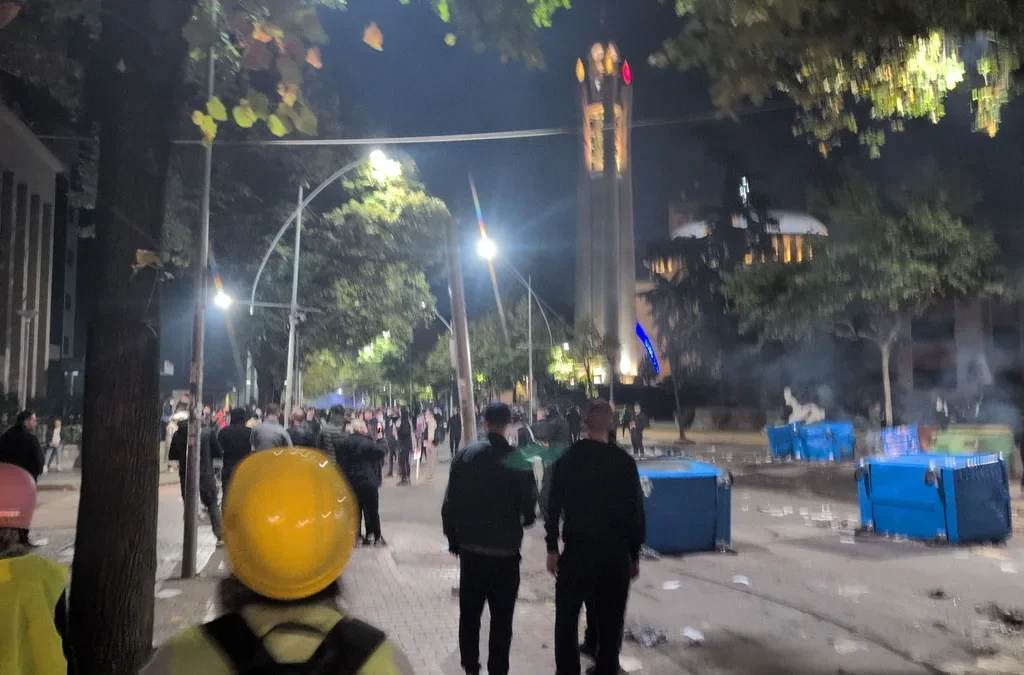
If the FCDO page has a headline as this article is written, it is demonstrations. Its current warning, added in the period when the page was updated on 15 October 2026, is that demonstrations are taking place in central Tirana and that some have seen incidents of violence and property damage. Its advice is unambiguous: avoid demonstrations, large gatherings and political rallies, check local media for the latest information, and follow the instructions of local authorities. This is a live, dated warning rather than boilerplate, and it should be treated as the first thing to re-check before any trip to the capital.
The US Embassy in Tirana’s demonstration alert of 15 October 2026 widens the geography. It lists demonstrations in Tirana, Shkodër, Durrës, Vlorë, Korçë, Kukës and Elbasan, especially in city centres and around government buildings; it says some have turned violent, with incendiary devices used, rocks thrown and public and private property damaged; and it records that embassy personnel have been told to avoid all demonstration areas. It also warns of closures or reduced services, including public transport, government offices and schools – the disruption, as much as the disorder, is what touches a visitor.
The State Department’s standing text adds the longer pattern: demonstrations in Albania are common and unpredictable, may occur with little notice, and may disrupt transportation and other essential services. Put the three together and the working rules are simple. Do not build a day around the government quarter of Tirana – the boulevard between Skanderbeg Square and the ministries – without checking local media that morning. If you find a crowd forming, leave; demonstrations here are political events, not spectator ones, and both governments’ instruction to avoid them is unqualified. And keep your plans loose on demonstration days, because the embassy’s expectation of transport closures and detours is the part most likely to reach you. None of this is a reason to skip Tirana – it is a reason to route around one moving obstacle in it.
Is Albania Safe to Drive – The Risk Both Pages Put First
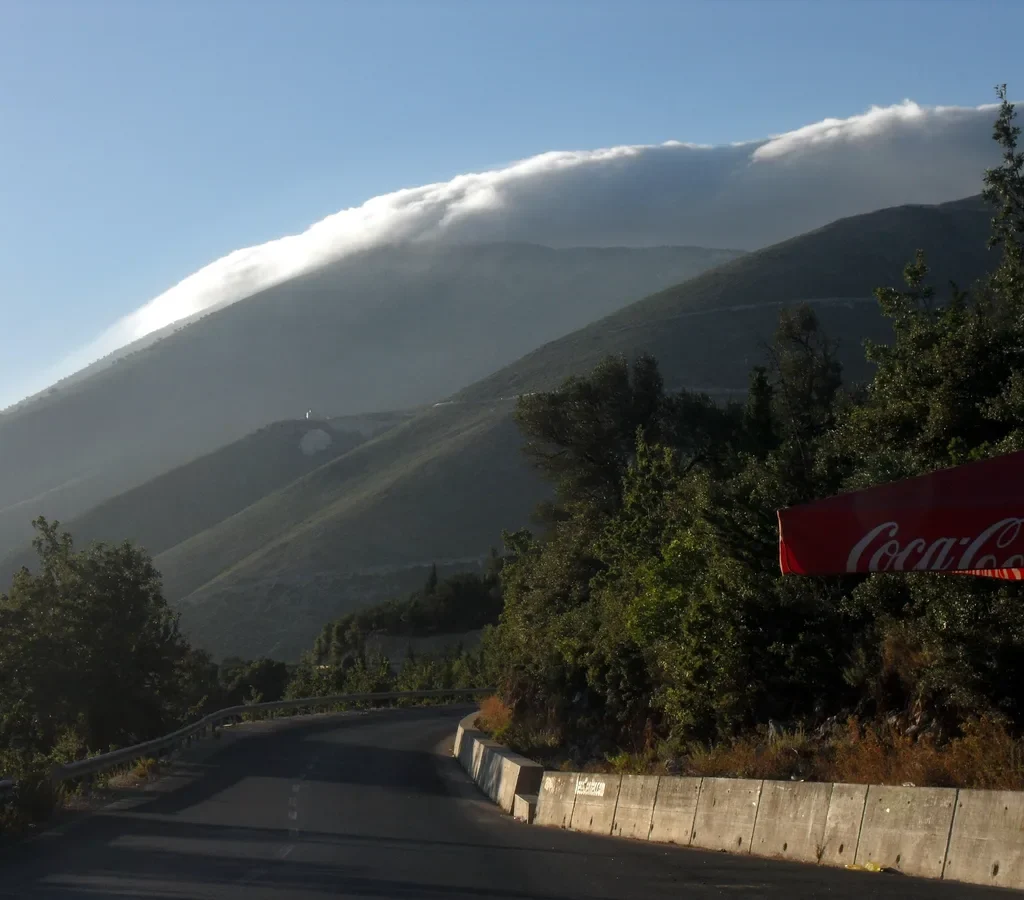
Ask the two official pages what is most likely to go wrong on an Albania trip and both, unusually, agree – and it is not crime. The FCDO’s transport section opens by saying driving in Albania can be very hazardous and often aggressive and erratic, and that deaths from road traffic accidents are amongst the highest in Europe. The State Department says Albania has a high rate of traffic accidents, on a road system of two-lane roads winding through steep mountain passes and deep river canyons. Between them they then write what amounts to a short manual of everything that makes the driving hard, and it deserves to be read as the centre of gravity of the whole safety question.
The physical picture first. The FCDO says road surfaces are poor, especially in rural areas, and that at night you should watch for unmarked roadworks, potholes and vehicles without lights; power cuts can knock out street lighting in towns and cities, and elsewhere even major routes have no street lighting. The State Department adds that many roads are poorly maintained and may be blocked by landslides, public gatherings or accidents; that signage on secondary and rural roads is poor or non-existent; and the FCDO suggests a four-wheel drive is more practical on rural and minor roads. Both pages converge on the same night rule: the State Department says avoid driving at night outside major cities, where rural and mountain roads lack lighting and guardrails and you may meet stray animals, unlit horse-drawn carts and slow farm vehicles.
The behavioural picture is blunter. The State Department tells drivers to be alert for others overtaking on blind turns, driving intoxicated or speeding, and notes that traffic law enforcement is inconsistent. The FCDO covers the confrontation that can follow a scrape: minor traffic disputes can escalate quickly, it warns, especially as some motorists could be armed, so avoid reacting to provocation. And if you are in an accident, both pages give the same instruction in different words – wait for the police. The FCDO says remain at the scene until police arrive (they are usually quick in built-up areas) and that failing to wait could bring charges under the Penal Code and a fine; the State Department says call the police and wait for a report before moving the vehicle, unless it creates an immediate serious danger.
The formal rules are strict where they exist. The State Department gives the legal blood alcohol limit as 0.01 percent – effectively zero tolerance – and says seat belts are mandatory, mobile phone use while driving is illegal, and snow tires are required from November to April. Visitors driving on a US licence must also carry an International Driving Permit; the FCDO says a 1968 IDP may be useful for British visitors and that the 1949 version is no longer accepted, and that anyone bringing their own car needs a green card as proof of insurance. At police checkpoints, which the State Department says are frequent, it offers one of the most practical sentences on either page: if an officer asks for a bribe instead of issuing a formal ticket, politely decline and ask for an official written citation, payable at a bank or post office. Roadside assistance, it adds, is generally reliable but may be slow to reach remote mountain areas – one more reason the night rule matters. Is albania safe to drive? On the official evidence: in daylight, defensively, at moderate speed, by a confident driver – manageable. As a casual afterthought at midnight on a mountain road, no – and both governments say so in almost those terms.
Season splits the driving question in two. In summer the exposure is volume and behaviour – the Riviera roads at their busiest, the overtaking and speed the State Department warns about, on the same bends the tour buses use. In winter, between November and April, its warning changes character: heavy snow, black ice and sudden dense fog, worst on the mountain roads, with the snow-tire requirement running for exactly those months. The FCDO’s weather material adds heavy mountain snowfall disrupting transport and services in the December to February window. So is albania safe to drive in winter? The official answer is conditional in a way the summer answer is not – the right vehicle, the right tires, daylight hours and a willingness to abandon a mountain leg entirely when the weather closes in. A winter itinerary that cannot flex is the risk; the season itself is manageable.
Mountains, Hiking and the Northern Border
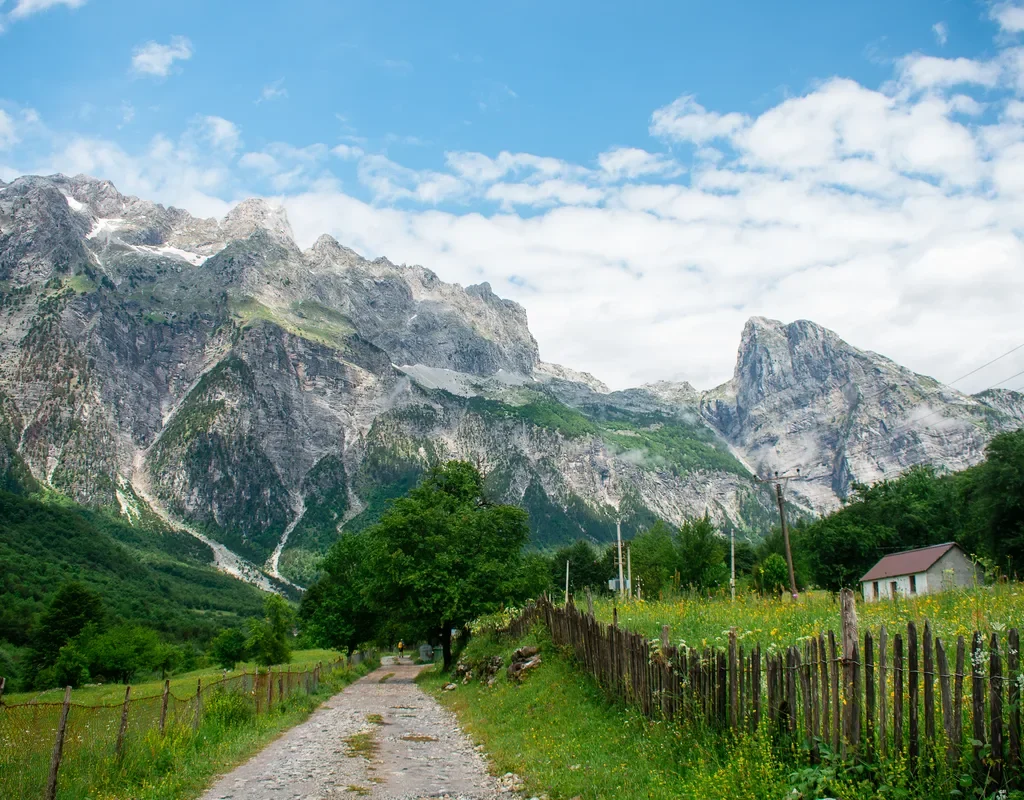
Albania’s mountains are the reason many visitors come, and the official pages treat them as a preparation question rather than a danger zone. The State Department’s tourism section is the key text: it says Albania’s tourism industry is not well regulated, that safety inspections are rare, that dangerous areas and activities are not always identified with warning signs, and that staff may not be properly trained or certified by a governing regulatory body. Translated to a hiking trip, that means the infrastructure of reassurance you may be used to – graded trails, inspected operators, signed hazards – cannot be assumed. It also says first responders cannot reach remote areas, and that if you are injured you will likely need to travel to a major city for appropriate care.
One hazard is specific, localised and stated plainly by the FCDO: there are still unexploded landmines in some remote areas around the hill towns on Albania’s northern border with Kosovo. Its instructions are exact – take care particularly if hiking, follow local warning signs, do not walk on uncultivated land or step off marked paths, and seek local advice if in doubt. This is a narrow warning about a defined strip of remote border country, not a general comment on the Albanian Alps, and the correct response is equally narrow: in that border zone, stay on the path, full stop. The popular Theth to Valbona crossing is a marked, heavily walked trail; the FCDO’s wording is about uncultivated land off marked routes in the border hills, and treating the two as the same thing would misread it in both directions.
Weather is the mountains’ everyday risk. The FCDO’s health advice notes that altitude sickness is a risk in parts of Albania – worth knowing before sleeping high in the Accursed Mountains straight off a sea-level flight. The State Department’s weather sections, covered in the natural risks section below, add heavy snow, black ice and sudden dense fog to winter driving between November and April, and severe avalanche risk for backcountry skiers and hikers in the same season. Summer has its own version: the FCDO puts wildfires from April to October, and the State Department says summer fires can destroy hiking trails – a route that existed in June may not exist in August. The base towns for the classic northern routes are collected in our best places to visit in Albania guide, in route order.
Underneath all of it sits one sentence from the State Department’s advisory summary that every mountain traveller should absorb: law enforcement’s ability to protect or help you is limited in some areas, especially remote regions. That is not a warning about people – it is a statement about distance, and it reframes what preparation means here. File a route plan with your accommodation, carry the insurance the practical section below argues for, and treat a turned ankle two valleys from the road as the serious event the State Department’s first-responder warning says it is. Asked plainly, is albania safe for hikers? The official answer is that the mountains are open and walked by thousands, but the safety net under them is thinner than the scenery suggests, and you are expected to bring your own margin.
Travellers often want the regional version of the question – is albania safe in the north, is albania safe on the Riviera, is Tirana different from the rest? The official pages mostly refuse that framing, and the refusal is informative. Neither page carries a regional travel warning. The regional distinctions they do draw are functional, not reputational: the northern border hills carry the landmine warning; remote areas generally are where law enforcement’s ability to help is limited and first responders cannot reach; outside Tirana is where medical facilities fall away; and the capital is where demonstrations concentrate. Safety in Albania, on the official record, tracks distance from services and the activity you are doing – not which province you are standing in.
The Coast – Swimming, Boats and Beach Safety
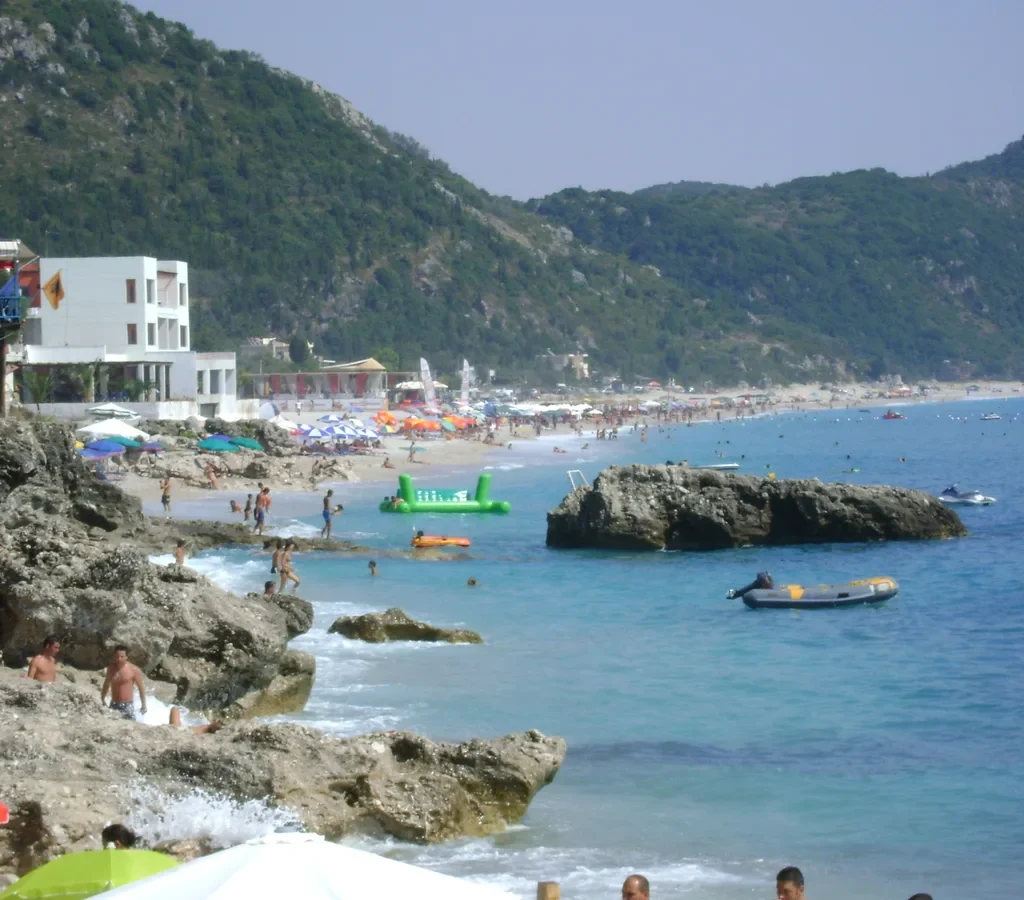
The coast gets the shortest official treatment of any section here, which is itself information: neither page treats the Riviera as a safety problem. What the FCDO does say is specific and practical. It reports that local press has carried accounts of jet skis and boats rented along the coasts that may lack adequate safety precautions and equipment, and its advice is to use licensed water-sports centres and to complete the paperwork before taking any vehicle or vessel out. That pairing – unregulated supply, licensed-centre solution – matches the State Department’s general line that Albania’s tourism industry is not well regulated and inspections are rare.
For swimming, the FCDO says to heed local warning signs, lifeguards and the beach safety flags in use, and to take local advice about hazards such as jellyfish and sea urchins. It also notes that a 2023 report by the European Environment Agency recorded a small number of Albanian beaches polluted because of inadequate sewage disposal and treatment – a reason to pay attention to local information about a specific cove rather than to write off a coastline. Nothing on either page suggests avoiding the sea; the consistent theme is that conditions and standards vary by beach and by operator, so the choice of where and with whom carries the risk decision.
Two connected cautions complete the coastal picture. The first is the drive there: the Riviera is reached by exactly the mountain and corniche roads the driving section covers, including the Llogara descent, and the FCDO’s night warnings apply to the road above the beach as much as anywhere in the country. The second is medical distance. The State Department’s warning that an injured traveller will likely need to travel to a major city for appropriate care, and the FCDO’s verdict on facilities outside Tirana, mean a serious water-sports injury on a remote beach starts with a long journey. Swim and ride accordingly – licensed operator, paperwork done, flags obeyed – and the coast becomes what the visitor pattern suggests: the least worrying part of the trip.
So is albania safe at the beach? On the official record, the beach itself is close to a non-issue – no page warns against swimming, names a dangerous resort or reports a pattern of beach crime beyond the pickpocketing already covered. Every coastal caution in the sources is about the activities layered on top of the sand: the rented jet ski, the unlicensed boat, the ignored flag, the long road home after dark. Choose the operator and the hour with the official warnings in mind and the Riviera asks very little of you.
Health – Tap Water, Air, Altitude and Medical Care
The health picture on both pages is the bluntest in this article, and it starts with the FCDO’s verdict, paraphrased exactly: medical and dental facilities in Albania, including accident and emergency facilities, are very poor, particularly outside Tirana. The State Department’s version is that medical facilities are available in Tirana and other major cities but adequate care is harder to find in rural areas, that public clinics lack basic resources, equipment and supplies, and that staff may speak little or no English. Neither page is describing a system that will catch you; both are describing one you should plan around with insurance and cash, which the final practical section covers.
On water there is no daylight between the two governments. The FCDO says simply: do not drink the tap water – bottled water only. The State Department says the local tap water is not safe to drink, that bottled water is generally safe, and advises requesting no ice outside major cities. The FCDO adds a food note in the same practical register – drink only UHT or pasteurised milk. Travellers used to treating tap water as a matter of stomach roulette should note that here it is a flat instruction from both official sources, and an easy one to follow: bottled water is the default everywhere in Albania.
The emergency end of the system gets equal honesty. The FCDO gives 127 as the number for an ambulance. The State Department warns that ambulance services and their staff training may be poor, response times may be slow, and ambulances may lack advanced life-saving equipment – one more reason its country page encourages medical evacuation insurance. Two slower health factors round out the picture: the FCDO says air pollution can be high, and the State Department calls air pollution a significant problem in most Albanian cities, worst in winter, which matters to travellers with asthma spending a winter week in Tirana. Altitude sickness, flagged by the FCDO for parts of the country, is covered in the mountains section above. Finally, timing: the FCDO advises checking vaccine recommendations at least eight weeks before travel, via TravelHealthPro – a lead time that argues for starting health preparation when you book, not when you pack.
Women Travellers and Solo Travel – What the Sources Do and Do Not Say
Honesty about sources matters most in this section, so start there: neither the FCDO’s Albania page nor the State Department’s Albania page publishes advice written specifically for women travellers in Albania, and neither reports a pattern of offences against women visitors. The FCDO page links out to its general advice for women travellers and for solo travel, which applies worldwide; its Albania text itself contains no women-specific warning. Anyone who tells you the official advice singles Albania out on this question – in either direction – is adding something the pages do not contain. What the pages do contain is a set of general points that bear directly on travelling alone, and they are worth collecting in one place.
The first is the crime framing already covered: both pages say crime targeting foreigners is rare and that foreigners are rarely the intended targets of violence, and neither qualifies that by gender. The second is the FCDO’s standing precaution – sensible care particularly in larger cities and late at night – which applies to anyone walking back across Tirana after dinner, and its pickpocket geography of tourist areas, buses, trains and transport hubs. The third is the State Department’s dating-app warning: criminals may use dating or social media apps to target victims for robbery or assault, and its scams section treats internet romance fraud as common. For a solo traveller meeting people, that is the most concrete official caution available, and it deserves more weight than generic reassurance.
Two further Albania-specific notes belong here. The FCDO’s material on local laws and customs records that same-sex relationships are legal in Albania, that anti-discrimination and hate-crime legislation is in place, and that Tirana has gay-friendly bars and support groups – relevant reassurance for LGBT+ travellers deciding whether the country is for them, stated as plainly as the page states it. And the demonstrations warning cuts across every group equally: a solo traveller has no group to absorb a transport shutdown or a road closure, so the embassy alert’s expectation of disrupted public transport on demonstration days is worth a solo traveller’s particular attention. So – is albania safe for women, and is albania safe for solo travellers generally? The official pages give no reason to single either group out for extra alarm in Albania, and equally offer no blanket all-clear beyond their general advice. That measured non-answer is the true one, and this guide will not dress it up as anything stronger.
The Laws That Carry Real Sentences – Drugs, Photography and Drones
Albania’s legal risks for visitors are concentrated in one area, and the FCDO states the numbers without decoration: possession of illegal drugs carries prison sentences of 5 to 10 years, and supplying drugs up to 15 years. It adds that detection technology is in place at airports, including scanning the baggage of transit passengers – you do not have to be entering Albania to be caught by it. The State Department’s version is that penalties for possessing, using or trafficking illegal drugs are severe, including long jail sentences and heavy fines, and it is explicit that importing CBD oil or marijuana is illegal even with a prescription from another country. There is no medical-cannabis traveller exception to plan around, and no ambiguity to hide in.
Photography has its own hard rule. The State Department says it is illegal to photograph military or secure installations and infrastructure – and its list is broad: airports, military equipment, bridges and infrastructure, government checkpoints, troops and embassies. It also warns that travellers who accidentally break local laws can be detained, sometimes for a long time, and describes prison conditions as difficult. Drone users get a specific threshold: under the State Department’s account, prior authorisation from Albania’s Civil Aviation Authority is required to fly a drone weighing more than 250 grams. The common thread is that these are traps for the unwary that turn on the act rather than the intention – so the camera and the drone need the same care as the luggage.
The arrest process itself holds one procedural point every British traveller should know before they need it. The FCDO says the Albanian authorities do not always inform the British Embassy in Tirana when a British national is arrested, and that detainees may therefore need to insist on their right to contact the embassy themselves. Its consular numbers are +355 4 223 4973/4/5 in working hours and +44 207 008 5000 out of hours – save them before you travel, alongside the FCDO London line of 020 7008 5000. The wider lesson of this section is the one the State Department generalises: visitors are subject to local laws, unfamiliarity is not a defence the system recognises, and in Albania the gap between a tourist mistake and a criminal process is at its narrowest exactly where drugs and cameras are involved.
Natural Risks – Earthquakes, Floods, Wildfires and Winter
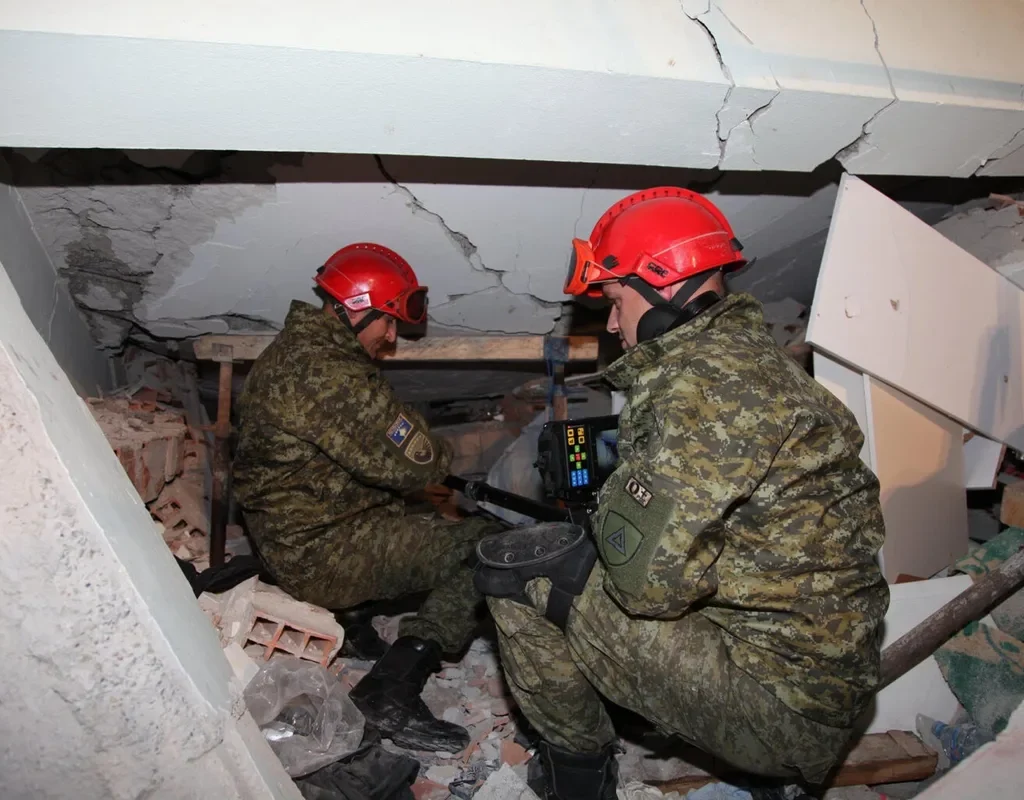
Albania’s natural risk profile is seasonal and mappable, and the two pages divide it cleanly. On earthquakes there is no disagreement: the FCDO says Albania is at risk, that tremors are common and that serious earthquakes are less frequent but do happen; the State Department says the country sits in a seismically active zone where moderate to severe earthquakes can occur year-round without warning. There is no preparedness ritual either page asks of tourists beyond awareness – know that the risk exists, and know your building’s way out, in the same spirit as anywhere on the Mediterranean’s seismic belts. The photograph above, of rescuers working inside a collapsed building after the November 2019 earthquake, is what the serious end of that sentence looks like; the pages’ point is probability, not prediction.
Water and fire trade places across the year. The State Department dates the flood and landslide risk in two windows – April to June and October to November, when heavy rain and rapid snowmelt combine – and says landslides can block roads; the FCDO adds that severe weather between December and February may cause flooding particularly in northern Albania, with heavy mountain snowfall disrupting transport and services. For fire, the FCDO gives the wider season – wildfires are common from April to October, highly dangerous and unpredictable – and the State Department the peak, July to September, when fires can close roads, destroy hiking trails and degrade air quality. The FCDO also makes causing a wildfire a legal matter, not just a safety one: it is a criminal offence carrying penalties from fines to imprisonment, and in a wildfire you should call 112.
Winter closes the loop back to the roads. The State Department’s winter window runs November to April: heavy snow, black ice and sudden dense fog make mountain driving especially dangerous, and backcountry skiers and hikers face severe avalanche risk in the high Alps. Its entry information adds a quieter winter footnote – flights at Tirana airport are frequently delayed or cancelled in winter because of heavy fog – worth building into any January itinerary with a tight connection. None of these risks is exotic; all of them are dated, placed and reducible with timing and information, which is precisely how the official pages present them. Check the season against your route before you book, and the natural-risk part of your trip largely manages itself.
Insurance, Emergency Numbers and Paperwork
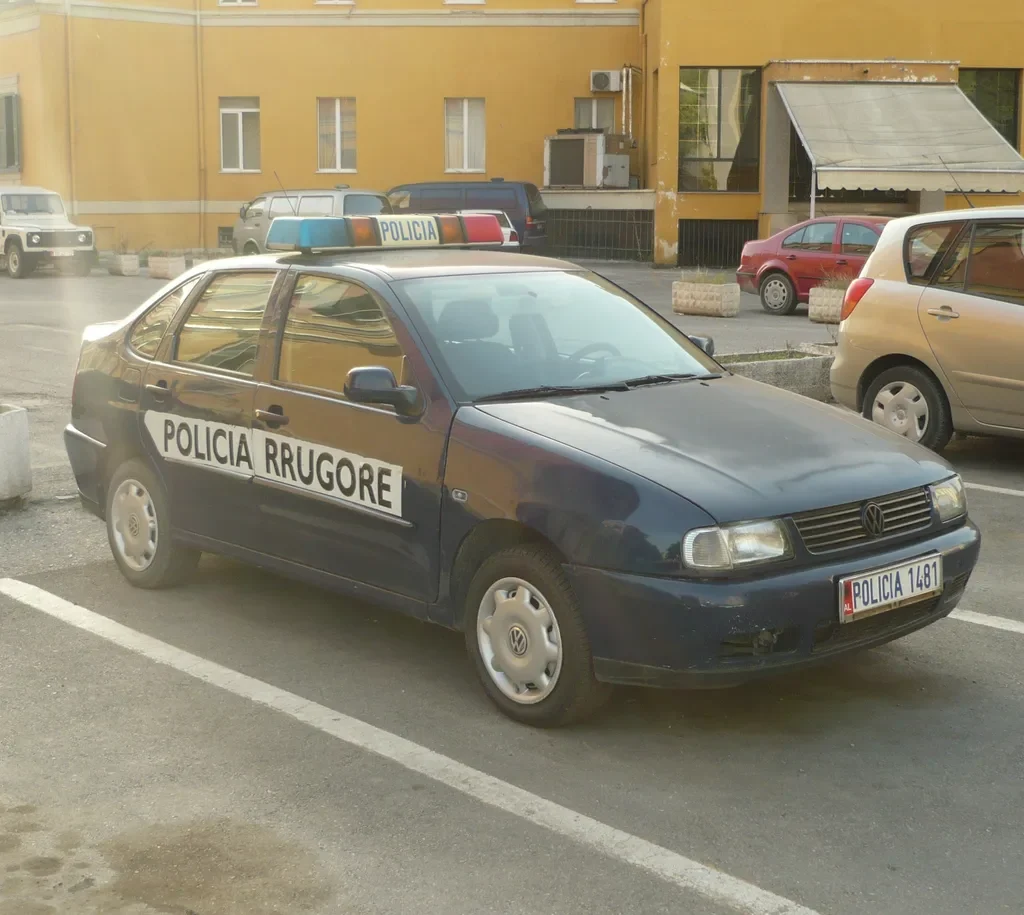
Save these before you go, in the form the official pages give them. The FCDO lists Albania’s emergency services as 112 for the police, 127 for an ambulance and 128 for the fire service. The State Department’s page gives 112 as the national emergency line and 127 for ambulance services, and its victims-of-crime section also lists 129 as a direct number for the police. The overlap is reassuring – 112 works as the single number to remember, with 127 doubling as the ambulance line on both pages – and the one-page difference over a dedicated police line is worth knowing about rather than resolving: dial 112 and you are in the system both governments describe.
Insurance is where the two pages’ warnings cash out. The FCDO advises adequate travel health insurance and accessible funds to cover the cost of medical treatment, including emergency travel home or an air-ambulance evacuation, and repatriation in the event of death. The State Department encourages medical evacuation insurance outright, in a health section that describes public clinics lacking basic supplies and ambulances that may lack advanced equipment. Add the State Department’s payments warning – hospitals may require payment upfront, in cash, in lek or sometimes euros, and credit cards are not always accepted, especially in rural areas – and the preparation writes itself: a policy that includes medical evacuation, a payment method that works offline, and funds you can reach without a card terminal. Its note that travellers on US-controlled medications may be limited to a 7-day supply is worth a line for anyone travelling on prescription medicines.
Entry paperwork, briefly, because it frames everything else. The FCDO says British visitors’ passports must be valid for at least 3 months after the planned departure date, and that British citizens can enter visa-free for up to 90 days in any 180-day period. The State Department says US citizens may enter without a visa for stays of up to 1 year. Drivers need the licence and permit combination set out in the driving section, plus a green card if the car is their own. None of this is onerous, and none of it should be left to the airport: the same pages that clear you to enter in a sentence are the ones whose warnings fill this article, and reading them whole – the FCDO page and the State Department page – in the week before you fly is the cheapest safety measure available. If you are stitching the north and the Riviera into one trip, our 7 day Albania itinerary keeps the driving days in daylight, which the advice above argues for on every mountain leg.
Frequently Asked Questions
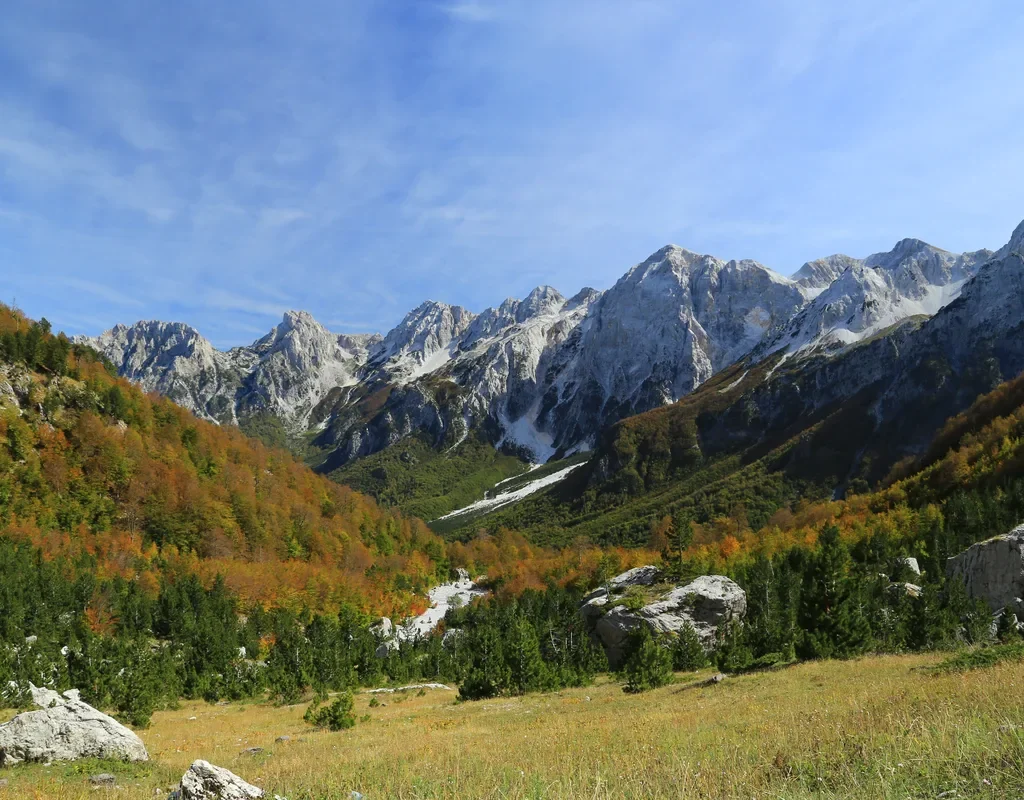
Is Albania safe for tourists in 2026? On the advice current as this article is published, yes for most trips – the FCDO (updated 15 October 2026) advises against travel to no part of the country, and the US State Department’s Level 2 advisory of 27 August 2026 is tied to crime that both pages say rarely targets foreigners. The live cautions are demonstrations in Tirana, road safety, and preparation for the mountains.
What is the emergency number in Albania? 112 is the number both pages support – the FCDO lists it for the police and the State Department as the national emergency line. The FCDO also lists 127 for an ambulance and 128 for the fire service; the State Department’s victims-of-crime section lists 129 as a direct police number.
Is Albania safe to drive at night? Neither official page recommends it outside cities. The FCDO warns of unlit vehicles, potholes and unmarked roadworks after dark and notes that even major routes outside towns have no street lighting; the State Department advises avoiding night driving outside major cities altogether, citing unlit mountain roads, missing guardrails and stray animals.
Is Albania safe at night in towns and cities? The official pages set no curfew and report no pattern of night-time offences against visitors; what they advise is the standing precaution the FCDO phrases as sensible care particularly in larger cities and late at night, plus avoiding demonstration areas after dark – the US Embassy’s October 2026 alert describes demonstrations that continued into the evening in central Tirana. Ordinary city-night care, demonstration avoidance and a licensed taxi home cover what the sources actually say.
Can I drink the tap water in Albania? No – both governments say so directly. The FCDO instructs travellers not to drink the tap water and to use bottled water; the State Department says tap water is not safe to drink, bottled water is generally safe, and to ask for no ice outside major cities.
Are there any areas of Albania that tourists should avoid? No region carries an advise-against warning on the FCDO page. The specific avoidances the official pages do name are demonstrations and large gatherings (FCDO and the US Embassy), uncultivated land off marked paths in the remote northern border hills where landmines remain (FCDO), and four Tirana venues that are off-limits to US Embassy personnel – Juvenilja, Juvenilja Castle, Pastiçeri Venezia and Magic Club (State Department).
Is Albania safe for solo female travellers? Neither official page publishes Albania-specific warnings for women travellers or reports a pattern of offences against them; both publish general crime advice in which foreigners are rarely targeted. The Albania-specific cautions that bear on anyone travelling alone are the FCDO’s late-night precautions in larger cities and the State Department’s warning about dating-app targeting and romance scams.
What happens if I am arrested in Albania? Expect local law to apply in full – the State Department warns that travellers who break local laws, even accidentally, have been detained, sometimes for a long time. The FCDO adds that Albanian authorities do not always inform the British Embassy of an arrest, so detainees may need to insist on their right to contact it; its Tirana consular line is +355 4 223 4973/4/5 in working hours.
Do I need travel insurance for Albania? Both pages treat it as essential rather than optional. The FCDO calls for adequate insurance and accessible funds covering treatment and possible air-ambulance evacuation; the State Department encourages medical evacuation insurance, noting that facilities outside the main cities are limited and payment is often required upfront in cash.
Is Albania Safe – The Short Version
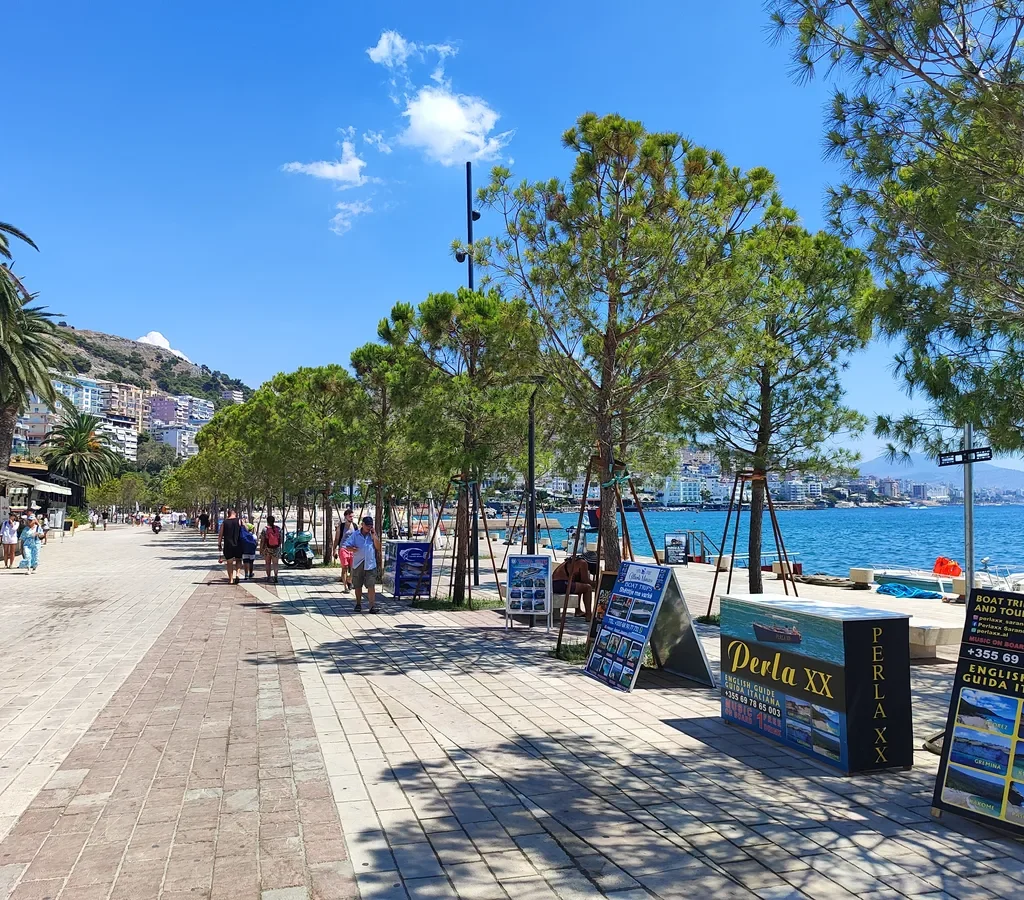
Is albania safe? On the current official advice: yes, for the trip most people are planning – provided you drive it the way the FCDO and the State Department describe, because in their pages the road, not the street, is where Albania’s risk lives. The UK advises against travel to no part of the country; the US Level 2 rating is a crime rating aimed at organised-crime violence that both governments say rarely touches foreigners; pickpocketing in the usual crowded places and taxi and bar scams are the realistic everyday exposure, and both are manageable with ordinary care.
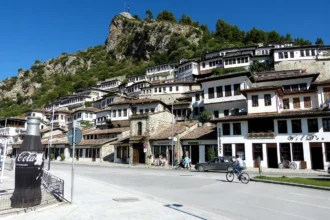
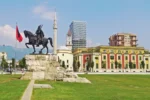
The working list is short. Avoid demonstrations while the current Tirana warning stands, and check local media in the capital. Drive in daylight, slowly, and stay at the scene if anything happens. In the northern mountains, stay on marked paths – for the landmines the FCDO locates in the border hills and for the rescue distances the State Department warns about. Drink bottled water, use licensed water-sports operators, carry insurance that can fly you home, and save 112 and 127 in your phone. Do those things and the Albania you meet is the one in the photograph above – which is, on the official record, the normal one.