Seven days in Albania goes wrong in one predictable way. The week gets drawn on a map as a small country, so the whole country gets invited — the capital, two old towns, the far-south beaches, and somewhere near the end, almost as an afterthought, a famous mountain hike in the far north. Then the week arrives, the roads turn out to wind the way Balkan roads do, and the trip becomes a sequence of windscreens interrupted by check-ins. This itinerary refuses that version. It spends its seven days on one connected piece of Albania — the southern loop — and it spends them properly.
The route is a circle, and circles are kind. You land in Tirana and give the capital its day. Then the road runs south to Berat for a night, on to sterner Gjirokaster for another, and down to Sarande, which you keep for two nights while Butrint and Ksamil happen as day trips rather than new addresses. From Sarande the week turns for home along the water — a slow Riviera day, the climb over the Llogara Pass, a night in Vlore — and the last day rolls back to Tirana with Roman ruins on the way if the timing is honest. No leg retraces another. Every night is earned by the day before it.
One more piece of honesty before the days themselves, because it decides whether this is even the right itinerary for you. The southern loop works in almost every month of the year, with the old towns at their best in spring and autumn and the sea at its best from late spring into September. The Albanian Alps, by contrast, open for one season only — broadly mid-June to late September — and bolting them onto this week is treated below as what it is: a summer swap that costs you part of the south, set out in the Variations section, not a free extra. Our wider Albania travel guide covers the regions and the seasons in full; this page is the week itself, day by day.
At a Glance
Read the week on one screen first. The shape to notice is the middle: two consecutive nights in Sarande. That single decision — a base instead of a new bed — is what stops a seven-day loop feeling like a relay race, and it is why the far south, the part of Albania most visitors came for, gets a full unhurried day instead of a rushed afternoon between drives.
| Day | Route | Sleep |
|---|---|---|
| Day 1 | Tirana — Skanderbeg Square, the Pyramid, Blloku and the bunker museums | Tirana |
| Day 2 | Tirana to Berat — castle quarter, Mangalem and Gorica | Berat |
| Day 3 | Berat to Gjirokaster — the stone town under its castle | Gjirokaster |
| Day 4 | Gjirokaster to Sarande — the Blue Eye spring on the way down | Sarande |
| Day 5 | Butrint in the morning, Ksamil in the afternoon, back to the same bed | Sarande |
| Day 6 | Sarande to Vlore — the Riviera road, Dhermi and Himara, the Llogara Pass | Vlore |
| Day 7 | Vlore to Tirana — Apollonia if the day honestly allows | Tirana (or depart) |
| Question | Short answer |
|---|---|
| The one rule | One loop, one direction — south inland, home along the coast, never backtracking |
| Hardest day | Day 6 — the Riviera road is slow because it is beautiful; start it early and unhurried |
| The base that matters | Sarande, two nights — Butrint and Ksamil work as day trips, not as new addresses |
| Transport | A rental car makes this loop sing; buses and furgons cover it with more patience |
| Season, honestly | The loop works most of the year; the Alps hike exists only from mid-June to late September |
| Book first | Flights, the car, the two old-town guesthouses and the Sarande base |
| Visa | Check your own nationality on one site only — the official e-Visa portal, e-visa.al |
Two small warnings belong up here rather than buried in the days. Albania has two famous Blue Eye springs, hours apart — the one on this route is the southern spring near Sarande, not the Blue Eye of Theth in the Alps — and any map pin or tip that does not say which one it means is a trap. And if you are choosing the individual stops rather than the days, our list of the best places to visit in Albania argues each place on its own merits; this itinerary is about how those places join up into a week that flows.
Day 1 – Tirana Without the Rush
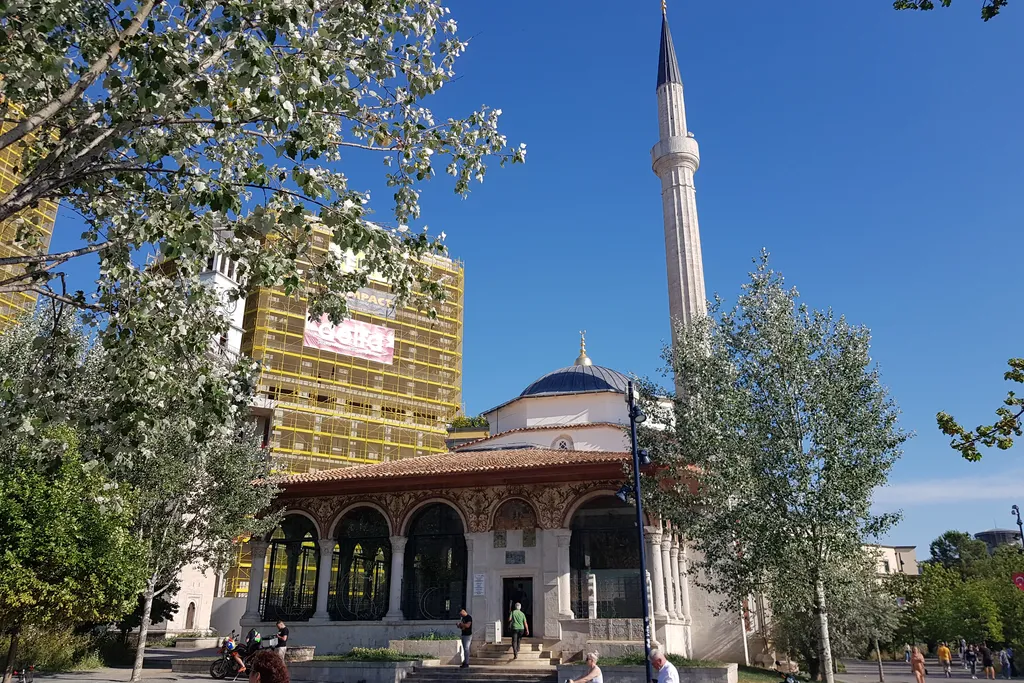
Arrive, and resist the urge to collect the capital in an afternoon. Tirana is not the headline of this week, but it is the context for everything after it, and a calm first day buys you that context cheaply. Start at Skanderbeg Square, the wide ceremonial heart of the city — the equestrian statue, the Et’hem Bey Mosque with its painted frescoes of trees and waterfalls, the Clock Tower beside it, and across the square the National History Museum’s vast mosaic facing the traffic. Read the square properly and you have read Albania’s layers in one turning circle: Ottoman, early-republic, communist, and the cheerful untidiness of everything since.
Spend the rest of the day on the strangest and most instructive sights, which are the communist ones. The Pyramid, raised as a museum to Enver Hoxha and reinvented in the years since as a youth and technology centre, is a short walk away and best understood from outside first, as a monument arguing with itself. The bunker museums — Bunk’Art and the House of Leaves — document the surveillance state from inside its own rooms, and an hour in either will change how you look at every quiet old town that follows. One firm caution belongs here: reporting suggests the National History Museum may be closed for an extended renovation, so admire its mosaic from the square and verify its status before building any plan around walking inside.
End the day the Albanian way. As the light softens, join the xhiro — the unhurried evening promenade that every town on this route will repeat for you — and drift into Blloku, the quarter once reserved for the communist elite and now the city’s cafe and dining heart. Eat early, sleep early, and keep the day deliberately light. Nothing today requires an alarm, a booking or a queue, and that is by design: the road starts tomorrow, and a rested driver, or a rested bus passenger, enjoys Albania considerably more than a frazzled one.
Sleep: Tirana, centrally — around Skanderbeg Square or Blloku, where the evening happens at your door.
Day 2 – Tirana to Berat, the Gentle First Night
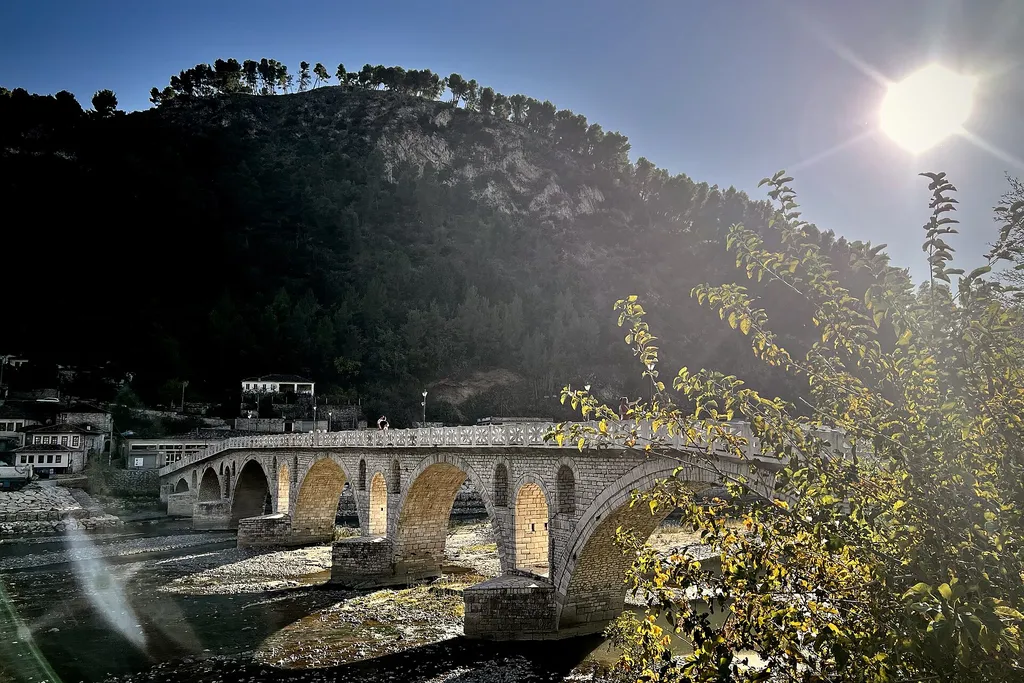
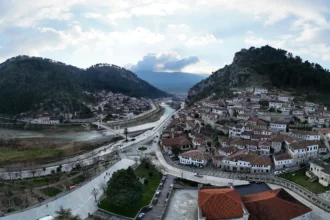
Leave Tirana after breakfast rather than before it. The road south to Berat is one of the week’s easier legs — a main corridor out of the capital and into the central hills — and there is no prize for arriving at noon instead of mid-afternoon. What Berat rewards is not speed but light: the famous view of the Mangalem quarter, tier upon tier of white Ottoman windows climbing the hill, is at its best in the later afternoon, and the castle above it is a far kinder place in cooling air than under a midday sun. Travel down unhurried, settle into your guesthouse, and let the town introduce itself at walking pace.
Give the castle the late afternoon and the early evening. Inside its walls the quarter is still a living village — families in stone houses among Byzantine churches and ruined mosques — and the Onufri Museum, set inside the Church of the Dormition, holds the red-and-gold icons of Onufri, the sixteenth-century painter whose particular shade of red is said to exist nowhere else. Come down as the heat leaves the stone, cross the Osum on the Gorica Bridge, and look back from the Gorica side: the thousand windows are Mangalem’s facades staring across the river at you, and the postcard finally explains itself. Below the castle, the Ethnographic Museum fills in how these grand houses were actually lived in, room by room.
Dinner in Berat sets the week’s food pattern, so start it well. The cooking here is central-Albanian and unpretentious — byrek still warm from the bakery, salads with proper olive oil, grilled meats, and the local white wine from the vineyard hills around town if you drink. Then take the xhiro along the boulevard with the whole town, because Berat’s evening stroll is one of the loveliest in the country, locals of three generations doing slow laps in the cooling air. Tomorrow’s leg is longer, so let tonight end when the boulevard empties rather than when the last bar closes.
Sleep: Berat, in a traditional guesthouse inside or just below the old quarters — the stone house is part of the experience here.
Day 3 – Berat to Gjirokaster, Soft Town to Stone Town
Today is the week’s hinge, and it is a full road day — accept it as one. The route leaves the central hills and runs south through the Memaliaj and Tepelene country into the Drino valley, and the landscape hardens as you go: greener and softer behind you, drier and more mountainous ahead. This is the leg where Albania stops looking gentle, and it is also the leg with nothing that needs bolting onto it. No detour competes with arriving in Gjirokaster with daylight and energy left, because the town itself is steep, and everything in it is uphill.
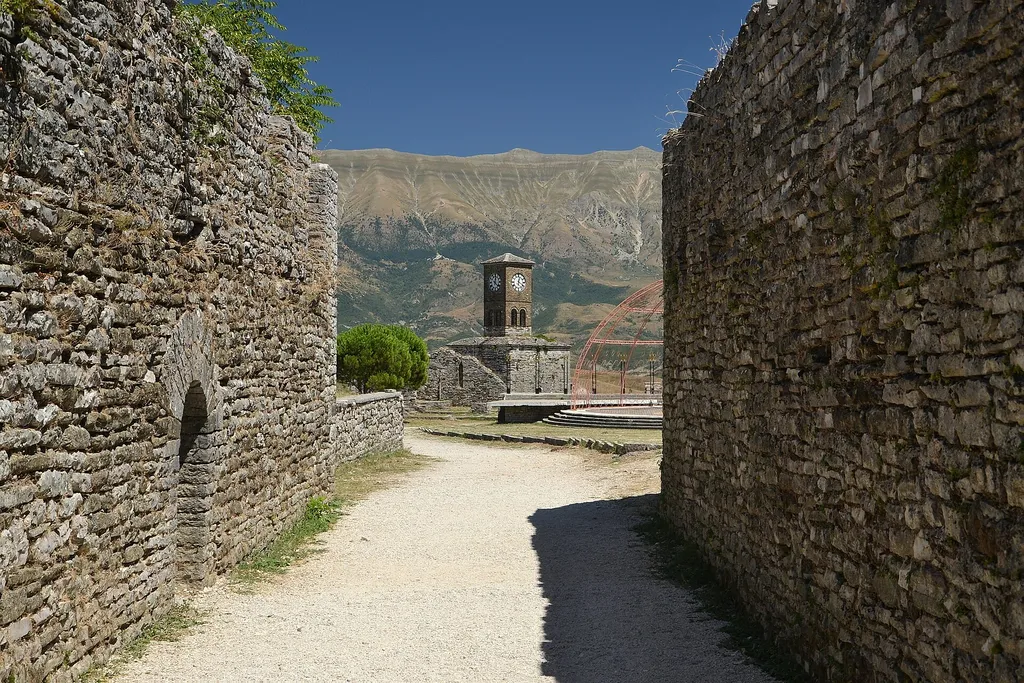
The contrast with Berat is the point of the day, and it lands the moment you arrive. Where Berat is white and soft, Gjirokaster is grey and stern — steep cobbled lanes, slate-roofed stone houses stacked in tiers, and above everything one of the largest castles in the Balkans, holding a military museum, the stage of the National Folklore Festival, and a Cold War American aircraft displayed as a trophy, about which local guides tell several competing and equally entertaining versions. In the old bazaar quarter below, the traditional houses opened as museums — the Zekate House above all — show the wealth this town once commanded: carved ceilings, tower rooms, and views down the whole Drino valley.
Gjirokaster also carries two famous sons, and the town makes more sense once you know them. Ismail Kadare, Albania’s best-known writer, was born here, and his novel Chronicle in Stone is quite literally this place — its houses, its castle, its wartime years; his childhood home is now a museum. Enver Hoxha, the dictator who ruled the country for four decades, was born here too, and the writer’s house and the dictator’s standing in the same few lanes is the town in miniature: beautiful, literary and shadowed. At dinner, look for qifqi, the herbed rice balls found almost nowhere else in Albania, and eat them where the menu is short.
Sleep: Gjirokaster, in the old bazaar quarter if your knees allow — and read the caveat the whole town carries: these cobbles are genuinely steep and slippery when wet, so arrive in daylight and wear real shoes.
Day 4 – Gjirokaster to Sarande, Down to the Sea
After three days of stone towns, today the week changes element. The road climbs out of the Drino valley, crosses the pass country above the coast, and then — the moment the whole inland half of the trip has been aiming at — the Ionian appears, with Corfu lying close across the strait. The drive down to Sarande is the shortest-feeling leg of the week precisely because the scenery keeps changing its mind, from mountain pasture to olive terraces to the first glitter of sea. Keep the day loose: today’s only scheduled stop sits beside the road itself, roughly halfway down.
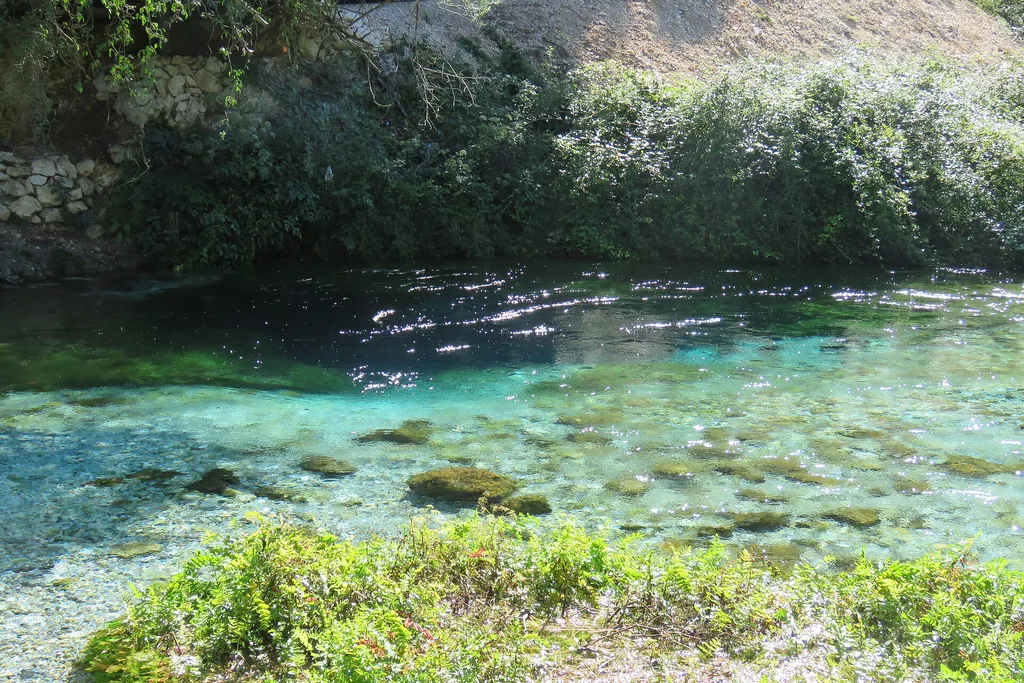
That stop is the Blue Eye — Syri i Kalter — the southern one, and the distinction matters enough to repeat. A deep spring pushes ice-blue water up from far underground into a pool the colour of bottled glass, ringed by oak and plane trees, and it is one of the most quietly astonishing natural sights in the country. It is also, in high summer, a popular one, so treat it the way this itinerary treats everything famous: arrive as early in the day as the drive allows, walk down to the spring, take it in slowly, and leave before the excursion crowds peak. And check any other Blue Eye reference you meet this week with suspicion — the Blue Eye of Theth is a different spring in the far north, hours away, and confusing the two has bent more Albanian itineraries out of shape than any road in the country.
Sarande itself will not charm you the way the old towns did, and it is not trying to. It is a working seaside city — a long promenade, a town beach that does its job, the ferry port for Corfu, and the widest choice of beds and dinners in the far south. Judge it as the week’s logistics hub and it performs beautifully. Use the afternoon lightly: a swim off the town beach, a slow coffee on the promenade, an early wander up to Lekuresi Castle above the bay for the sunset if the sky is clear, when the light runs across the water to Corfu and the whole strait turns gold. Then rest. Tomorrow is the fullest day of the week, and it starts early.
Sleep: Sarande — the first of two nights in the same bed. Unpack properly; the base is the point.
Day 5 – The Sarande Base, Butrint in the Morning and Ksamil After
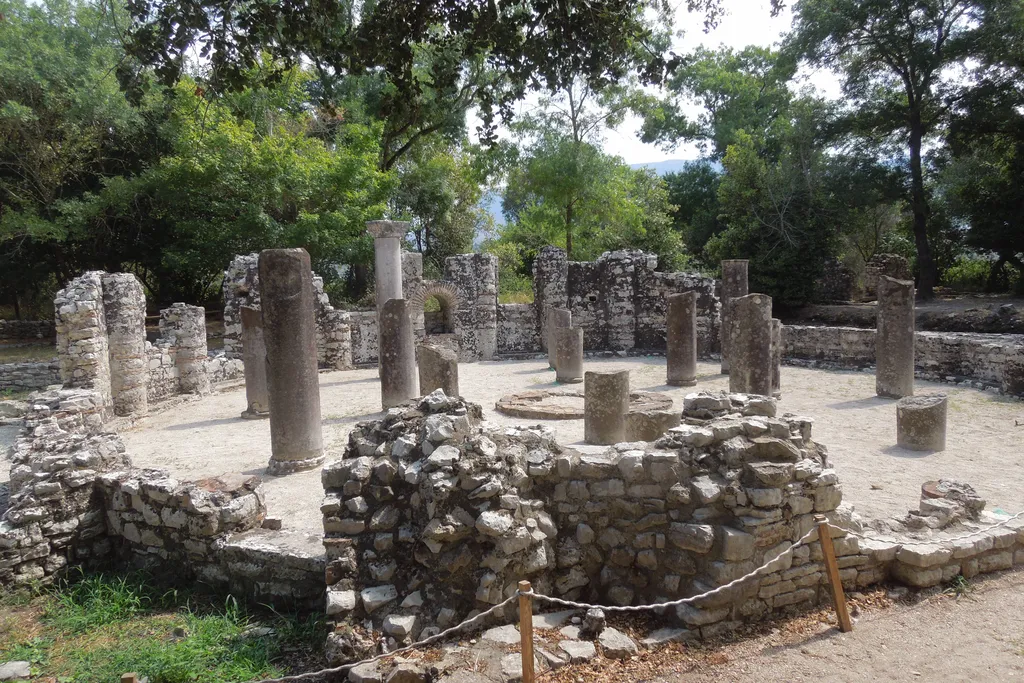
Start early and go to Butrint first, while the park is cool, shaded and nearly empty. Butrint is the heavyweight sight of the far south: a UNESCO-listed archaeological park in a wooded, lagoon-side setting where a Greek sanctuary and theatre, a Roman colony, a great Byzantine baptistery and basilicas, and Venetian fortifications at the mouth of the Vivari Channel all layer over one another inside what feels as much nature reserve as ruin. Virgil has Aeneas stop at Buthrotum in the Aeneid and call it a little Troy, and walking the site at opening time, with the channel sliding past and the trees full of birdsong, the layers make sense in a way no rushed midday visit manages. One expectation to set honestly: the baptistery’s famous mosaic floor spends most of the year protected under sand and is fully uncovered only rarely — the setting, the theatre and the small, good museum in the Venetian castle on the acropolis hill are what is always on show.
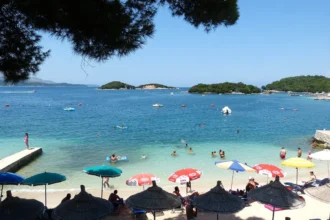
Then reverse the day’s temperature. Late morning, as the park warms and the day-trip groups arrive, leave — your reward is twenty minutes up the road at Ksamil, the beach on Albania’s posters: a cluster of small, pale-sand bays facing tiny offshore islands, in water that holds the clear, graded blue-green the photographs promise. Swim out towards the nearer islands, eat lunch where the menu runs to the mussels farmed in the lake behind the village, and give the afternoon to the water without apology. This pairing — ancient stones in the cool of the morning, the famous beach while the day is at its height — is the best single day this itinerary owns, and it only works because you are based in Sarande rather than relocating.
The honest caveat travels with the pleasure: in July and especially August, Ksamil is crowded and heavily commercialised, its bays lined with beach-club loungers, and no itinerary can wish that away. The defences are timing and temperament — Butrint first means you reach Ksamil before its peak, a weekday is kinder than a weekend, and May, June and September deliver the calmer version of the same water. Either way, drift back to Sarande as the light drops, eat fish on the promenade, and sleep in the bed you already know. Two nights in one base is not a detail of this week; it is the mechanism that makes days like this one feel like a holiday instead of a transfer with swimming.
Sleep: Sarande, second night — same room, same street, no repacking.
Day 6 – The Riviera North, and Over the Llogara Pass to Vlore
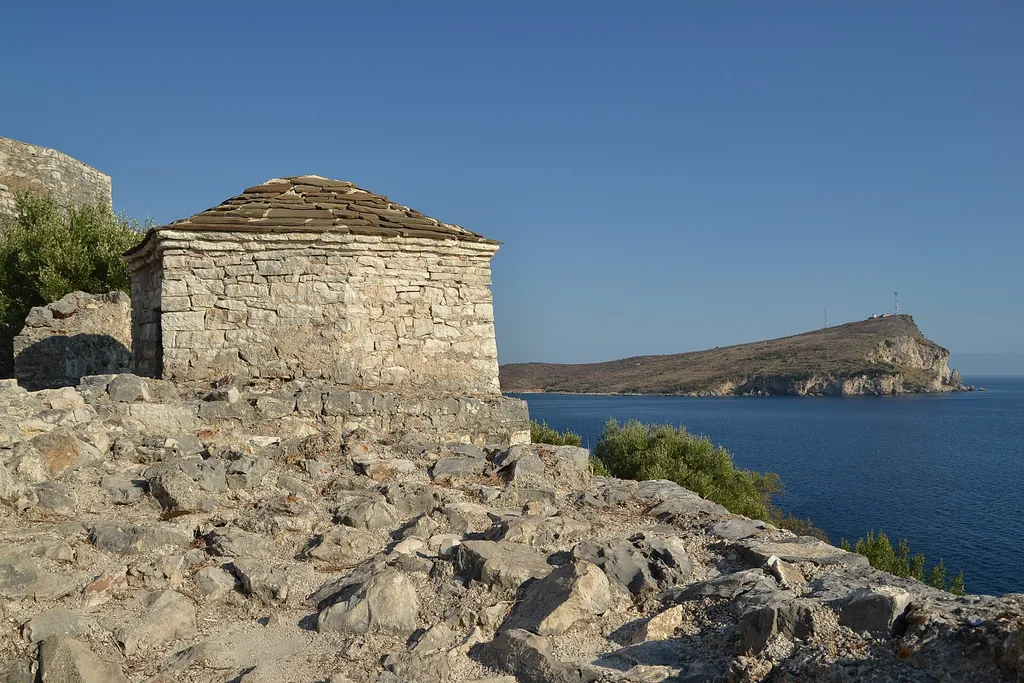
Leave Sarande after breakfast and give today entirely to the road, because today the road is the sight. North of Sarande the coastal road threads the Albanian Riviera village by village, and the correct pace for it is the pace it imposes: slow, winding, and interrupted by views that make stopping compulsory. The string of names reads south to north — Borsh first, its long beach running under a castle hill; then Qeparo; then Himara, a small working town with its own castle hill and beaches either side; then Vuno on its ridge; then Dhermi, white lanes spread above a long bay; and Palasa last, under the pass. None of it needs planning beyond stopping where the water looks best, which is rather the point.
Two stops earn deliberate pauses rather than drive-by admiration. Porto Palermo, where Ali Pasha’s small, perfect fortress stands on its own little peninsula in the middle of a calm bay, is the Riviera in miniature — one strong building, one beautiful anchorage, almost no fuss. And somewhere along the string of bays, claim your Riviera swim: the beaches here are mostly pebble and shingle between headlands rather than one continuous resort strip, thinner on facilities than Ksamil and all the better for it, with Gjipe — a beach at the mouth of a canyon the road never reaches, so the last stretch is walked — as the option for anyone who packed proper shoes and a free hour. Eat lunch late and locally, in Himara or Dhermi, wherever the room is full and the menu is short.
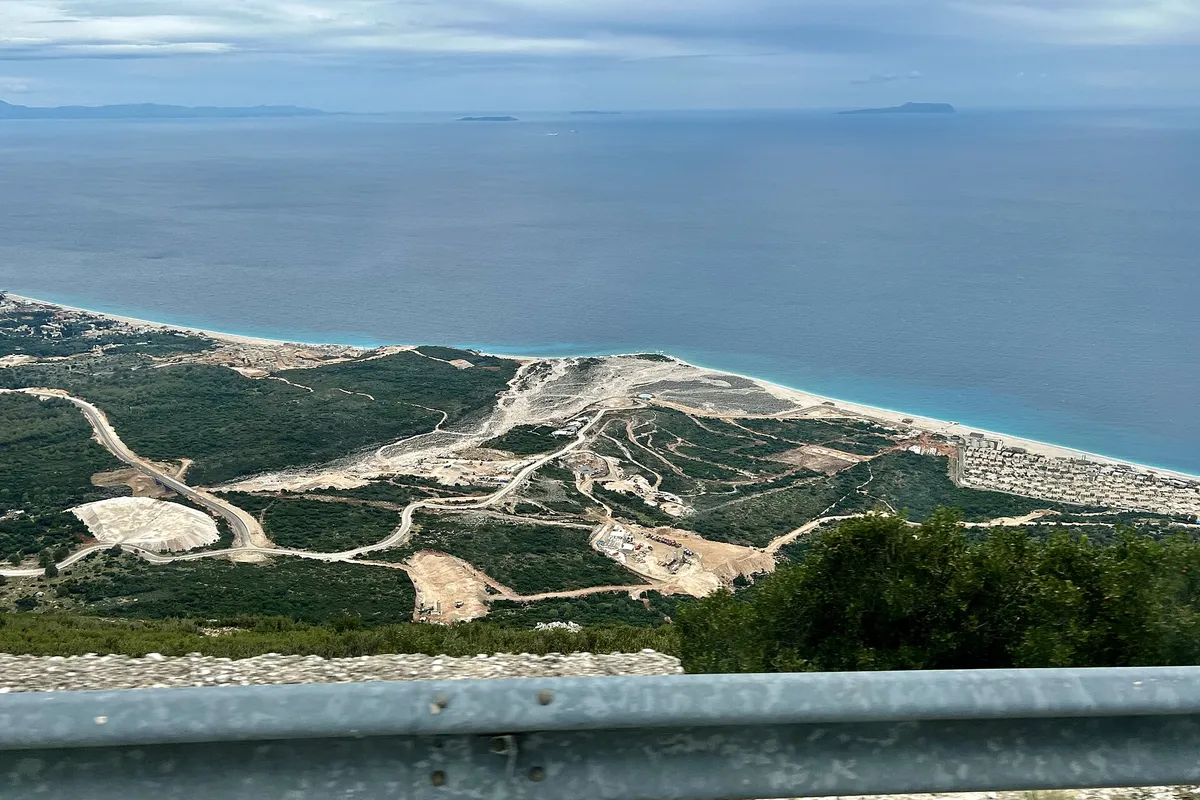
The day ends with the week’s great piece of road: the climb from the coast up over the Llogara Pass, a little over a thousand metres up inside a national park of wind-bent pines — one famous specimen, the Flag Pine, has grown sideways into the shape the wind dictates — while the whole Ionian coast falls away below and paragliders ride the same updraft that carries the view. Drive it in daylight, without exception: in low cloud it is simply a mountain road, and at dusk it is a chore, but in a clear late afternoon it is the single most dramatic half-hour of the week. Then the road drops to Vlore, the gateway where the Adriatic becomes the Ionian, and the loop’s last night is a practical, pleasant one — a long bay, a growing promenade, and the knowledge that tomorrow’s drive home is the easiest of the trip.
Sleep: Vlore — chosen for position, not drama: it breaks the coast run kindly and puts Tirana within a comfortable final morning.
Day 7 – Vlore to Tirana, With Apollonia if the Day Honestly Allows
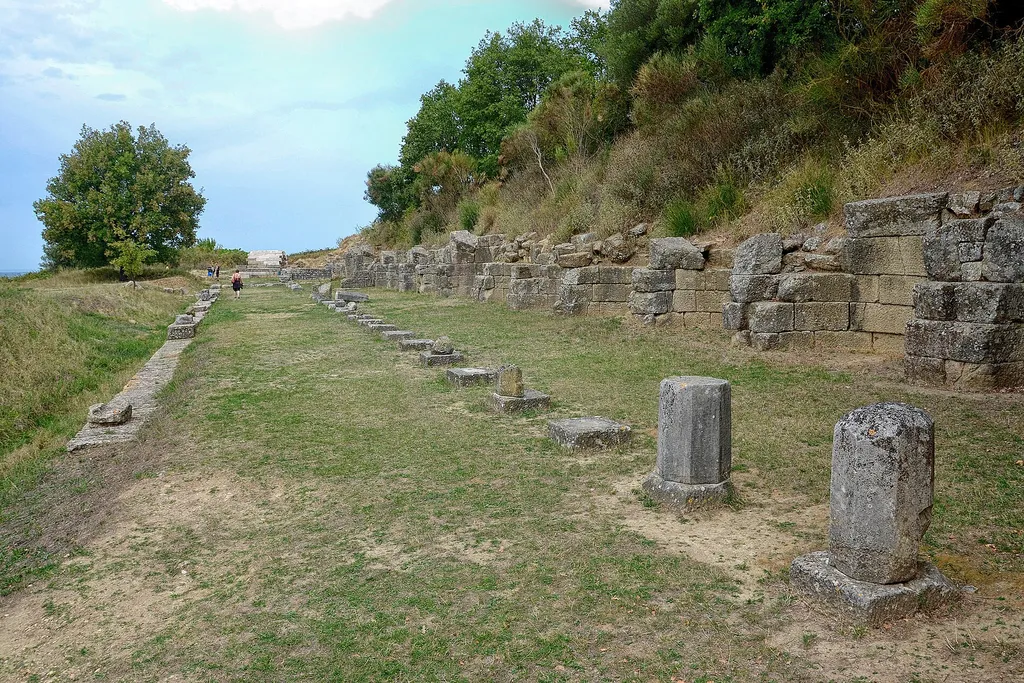
The last day runs north up the Adriatic side of the country, and it has one gift to offer if — and only if — your timing is honest: Apollonia, near Fier, a genuinely fine archaeological park that sits naturally on the drive back rather than demanding a detour. A Greek colony city that Rome later prized, it keeps its monumental centre on a green hill above the coastal plain — the Great Stoa, the facade of the bouleuterion, an odeon, a monastery church with Byzantine frescoes — in a setting so open and quiet that it feels like the week’s deep breath. Give it the morning if your departure is late in the day or the following morning; walk it slowly, and let it close the trip’s long historical arc, from Tirana’s twentieth century back to a city that was old when Rome was young.
If your timing is not honest — an early flight, a ferry to catch, a long onward journey — then skip Apollonia without a flicker of guilt and drive straight back to Tirana. This is the itinerary’s final piece of discipline, and it generalises: a final day spent watching the clock in a beautiful ruin is worse than the ruin unvisited, and Apollonia, unlike a flight, will keep. The version of this mistake that ruins last days everywhere is treating an optional sight as an obligation because it appeared in a plan. It appears in this plan as an option, labelled as one, and the correct number of travellers who should force it is zero.
Back in Tirana, the week closes the way it opened — with the capital’s second shift. Use whatever hours remain for the Tirana you deferred on Day 1: the Blloku cafes in daylight, a last byrek, the souvenir-free pleasure of the evening xhiro in a city that now reads as familiar rather than foreign. If you are sleeping in Tirana tonight before a morning departure, the loop has done something quietly satisfying: it ends where it began, with no backtracking debt, no missed region nagging at you, and the north — Shkoder, the Koman ferry, the Alps — sitting there intact as the honest reason for a second, longer trip rather than the casualty of this one.
Transport, Leg by Leg
Arrival and departure. Almost every version of this week begins and ends in Tirana, whose airport is the country’s main gateway; the loop is drawn as a circle precisely so that one gateway serves both ends. Two alternatives exist for travellers whose wider plans point elsewhere — ferries link Sarande with Corfu, which can serve as an entry or exit at the southern end of the loop, and Durres takes ferries on the Adriatic — but treat both as variations for a specific trip, not the default. The default is simple and it works: in through Tirana, round the circle, out through Tirana.
The rental car is this itinerary’s natural transport. The southern loop strings together places that public transport serves thinly or indirectly — the Riviera’s bays sit between bus stops, Butrint rewards an early arrival that a driver’s timetable guarantees and a minibus timetable may not, and the freedom to stop where the coast looks best is half of Day 6. Roads on the main corridors are generally good; mountain and village roads are narrower, slower and occasionally rough, and local driving is assertive rather than chaotic. Book with a reputable company, confirm what the insurance actually covers before you sign, and hold one rule without exception: the Llogara crossing and every mountain leg are daylight driving, not from fear but because the views are the reason you came.
Buses and furgons cover the loop honestly, with patience. The furgon — the shared minibus that is Albania’s real transport network — and the intercity coaches between them link Tirana, Berat, Gjirokaster, Sarande and Vlore, and a car-free version of this week is entirely possible. What changes is the texture: furgons often leave from informal, different points in each town, run to habit rather than published timetables, and may depart when full. Your accommodation host’s knowledge of the current departure point and hour is worth more than any timetable screenshot, so ask on arrival in each place, travel in the morning when services are thickest, and accept that the Riviera day becomes a choice of one or two stops reached by bus rather than the whole string savoured by car.
Distances deceive, in both directions. The whole loop is on the order of 600–650 kilometres, which sounds like nothing across seven days — and on the main corridors much of it rolls easily. But the legs that define the week are the winding ones: the descent to the coast on Day 4, the Riviera thread on Day 6, and the Llogara climb that ends it. This article prints no hour-by-hour drive times on purpose, because the honest figure for any Albanian leg depends on season, weather, roadworks and how often you stop for the view, and a confident number copied from another site would be precision without truth. Plan each leg as a morning or an afternoon, arrive when you arrive, and the week stays relaxed — which is the entire design.
Where You Sleep, Night by Night
Five addresses in seven nights sounds busy until you look at the pattern: only one move is long, the bases do the heavy lifting, and the two-night stand in Sarande sits exactly where the week’s fullest day needs it. Sleep in the order the road does, in the smallest, most local version of each place your budget allows — across Albania, family-run guesthouses and small hotels consistently deliver more warmth, better local knowledge and better breakfasts than their star ratings suggest.
- Night 1 — Tirana. Central — Skanderbeg Square or Blloku — for walkability on a day with no driving in it.
- Night 2 — Berat. A traditional guesthouse in or below the old quarters; the stone house, the host and the home cooking are the experience.
- Night 3 — Gjirokaster. The old bazaar quarter, accepting the steep lanes as the price of waking up inside the town rather than below it.
- Nights 4–5 — Sarande. The base. The widest choice in the far south; pick for quiet and breakfast rather than a sea-view premium, because your days here are spent out of the room.
- Night 6 — Vlore. A gateway night near the bay and the promenade, positioned for the easiest final morning of the week.
- Night 7 — Tirana again, or depart. The loop closes where it opened; a late departure buys Apollonia, an early one makes Night 6 the last.
In the old towns, one practical truth matters more than any amenity: parking and luggage. Streets inside Berat’s and Gjirokaster’s historic quarters were not built for cars, and the charming lane-side guesthouse may mean a steep walk with your bags. Ask the host, before you book, where a car actually stops and whether help with luggage exists — the good ones will answer precisely and meet you, and that small exchange tells you more about the stay ahead than any photograph of the room.
What to Book Ahead
Not much in Albania needs booking far in advance outside the high-summer peak — which is exactly why the few things that do matter deserve a list of their own. Book these first, in this order, and let everything else — restaurants, day-by-day timings, which beach on which afternoon — be decided by the weather and your mood once the week is running. Albania rewards a firm skeleton and loose flesh on it.
- Flights, and the car. The gateway decision and the loop’s transport, booked together: cross-border permissions are not automatic if your wider trip enters Greece, Montenegro or Kosovo, so confirm them with the rental company in writing if they apply.
- The two old-town guesthouses. Berat and Gjirokaster have a finite stock of traditional houses inside the historic quarters, and they are the stays this week is remembered by; in season, they fill first.
- The Sarande base. Two nights in the far south’s best-located small hotels go early in July and August; outside the peak, choice is wide and prices kinder.
- Your visa position. Check it before booking anything non-refundable, on one site only: e-visa.al, the official Albanian e-Visa portal. Rules depend on nationality; search results for Albanian visas attract commercial lookalikes, and if the address is not e-visa.al, it is not the source. This article prints no exemption list, because yours depends on your passport.
- Alps-season extras, only if you take the summer swap below. Valbona and Theth guesthouses are small, family-run and finite, and in the mid-June to late September window they are the most book-ahead beds in the country.
Everything else on this route — Butrint, the Blue Eye, Apollonia, the bunker museums — is visited by turning up, with the single tactic that improves all of them being the one this itinerary keeps repeating: go early in the day, before the excursion pattern peaks, and let the crowds have the places after you have had them quiet.
Variations
The loop above is the default because it works in the most months for the most travellers, but it is not the only honest shape a week can take. Three variations follow — a summer swap, a longer trip, and a shorter one — and each is stated with its cost attached, because an itinerary variation that hides what it takes away is just a second, worse itinerary wearing the first one’s clothes. Choose by season first and appetite second; the route itself is forgiving of almost everything except a calendar that lies.
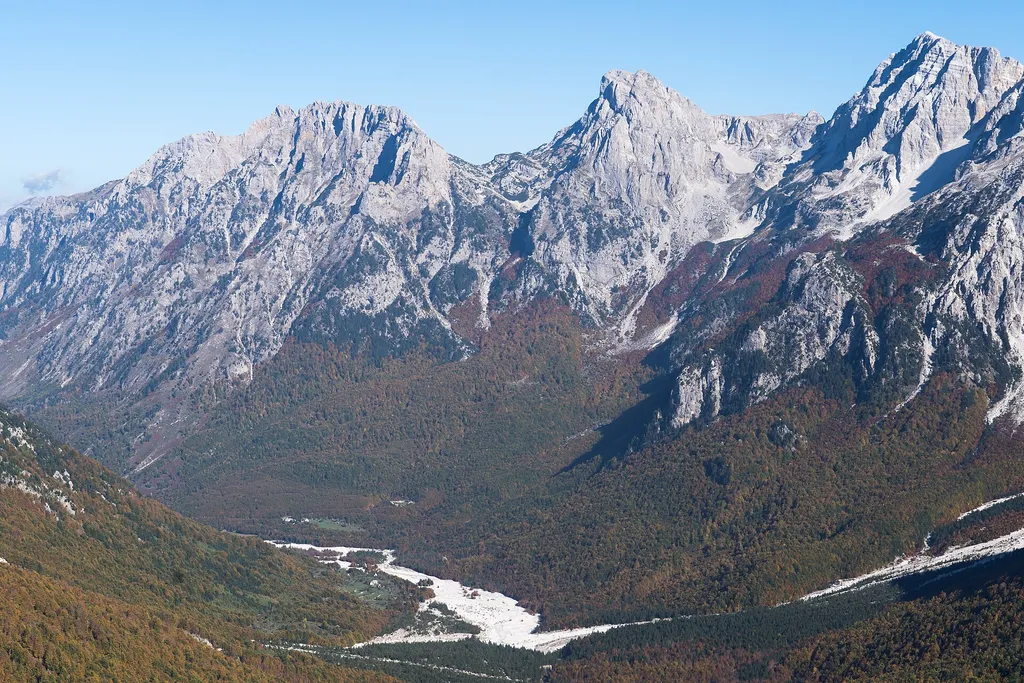
The summer swap — the Alps instead of part of the south. Between mid-June and late September only, the Valbona-to-Theth pass hike is open: the chain runs Shkoder, the Koman Lake ferry, a night in Valbona, the crossing on foot — sources give roughly 14–18 kilometres and about 6–9 hours, so treat any single figure with caution and check current trail and weather information before setting out — a night in Theth, and the journey back. Swapped into seven days, it must displace something real: the honest exchange is the Riviera night and a leaner far south, keeping Tirana, one old town done properly, Sarande with Butrint, and giving the mountains their three days. What you may not do is keep everything and add the hike; outside its season the swap does not exist at all, because snow closes the pass and many guesthouses shut, and no version of this itinerary will pretend otherwise.
With ten to twelve days — add the north, do not stretch the south. The grown-up version of this trip keeps the loop intact and then goes north properly: back to Shkoder for a night in its own right — Rozafa Castle at golden hour, the lake plain, the old centre’s bicycles and cafes — then the ferry and the Alps chain at full length, with a spare day for weather. Eleven to twelve days is the honest total, and the extra days buy the thing seven days cannot hold at any speed: a second, completely different Albania. With merely one extra day inside the loop instead, spend it on depth — a second Riviera night, a slower Berat — rather than on a new pin in the map.
Run it in reverse, or cut it to five days. The loop reverses cleanly: Tirana to Vlore and down the Riviera to Sarande first, then inland home through Gjirokaster and Berat, which suits travellers who want the sea early or whose Sarande arrival comes off the Corfu ferry. And if five days is what you truly have, shrink the loop rather than compressing it: Tirana, Berat, and a Sarande base for Butrint and Ksamil, skipping Gjirokaster and the Riviera night. Five honest days on part of the loop beat seven frantic ones across all of it, every time, and the places you skip remain exactly where they were — Albania’s geography is patient even when itineraries are not.
Common Mistakes
Bolting the Alps onto the south inside one week. The signature Albania error. The hike is seasonal, the chain to reach it takes days, and the attempt converts the whole trip into transfers. Seven days is the south; the north is a longer trip or a summer swap that pays its price openly, as above.
A new bed every night. Six addresses in seven nights feels efficient and feels, by Day 4, like a commute. This loop’s two-night Sarande base is not a luxury; it is what makes the far south a place you experienced rather than a set of car parks you photographed.
Trusting the map’s distances. Albania is small and slow in the specific places this week is best — the coast road, the Llogara climb, the mountain descent to Sarande. Any plan built on precise drive times copied from a confident website is a plan built on a number nobody measured for your day, your season and your weather.
Confusing the two Blue Eyes. The spring near Sarande and the Blue Eye of Theth are different places, hours apart, sharing a name and a colour. Every season, travellers navigate to the wrong one. Check which Blue Eye any pin, tip or driver means before it enters your day.
Building a day on the National History Museum. Its status needs verifying — reporting suggests an extended renovation closure — and a Day 1 planned around its interior may collapse on arrival. Admire the mosaic from Skanderbeg Square, check the current position, and hold the day loosely.
Driving Llogara at dusk to save an hour. The pass in fading light is the week’s best scenery spent as a chore, with mountain-road concentration demanded exactly when you are tiredest. The Vlore night exists so that nobody has to. Sleep where the day ends; drive the great road in the light it deserves.
FAQs
Five questions decide most versions of this trip, and they are answered here the way the days above argue them — briefly, and with the season attached, because in Albania the season is half of every answer. Where a figure appears, it is given as the range the sources support, not as a promise: Albanian roads, ferries and mountain weather all reward travellers who treat suspicious precision about this country as a warning sign rather than a service.
If your question is really about the individual places — which beach, which old town, which single stop — the day sections above carry the detail, and the wider country picture, the regions and their seasons, sits in our country guide. What follows is deliberately narrow: the week, its shape, and the decisions that make or break it.
One habit is worth adopting before you read on. Whenever an answer below — or anywhere else — depends on something that changes, treat the current, official version of that thing as the only version that counts: the e-Visa portal for entry rules, your rental company for cross-border cover, the ferry operators for crossings, and local hosts for furgon times. Itineraries, this one included, are for the shape of a trip. The live details belong to the week you actually travel, and Albania is a country where checking them once, properly, beats assuming them twice.
Can I do the Alps and the south in 7 days?
Not properly, and the arithmetic is not close. The Alps chain — Shkoder, the Koman ferry, Valbona, the pass hike, Theth, the return — needs three days by itself once you are in the north, and the transfer to Shkoder is the better part of another. Set that against a southern loop that fills seven days comfortably and the sum is a trip of transfers: four of your seven days spent getting somewhere, with both regions experienced at their entrances. Itineraries that promise both in a week exist, and their reviews, read closely, are about the driving.
The honest choices are the two this article is built on. Take the southern loop as written and let the north wait for a longer trip, or, in the mid-June to late September window only, take the summer swap in the Variations section and pay for the mountains openly with part of the south. What both choices share is a refusal to hollow out a good week into a complete one. Albania keeps; the Alps will be there, in season, when you come back with the days they deserve.
There is also a middle temptation worth naming, because it sounds so reasonable: one night in Shkoder and a day trip towards the mountains, without the hike. As a taster it is harmless — the Koman ferry alone is a magnificent ride — but be clear about what it is. The Alps experience is the crossing, the two valley villages and the guesthouse nights at either end; a glimpse from a road is not a cheaper version of it, just a different, smaller thing wearing its name.
When is the best month for this exact itinerary?
For the loop as written, the kindest windows are late spring and September. May and June give you walking weather in the old towns, a warming sea, and the coast before its peak; September gives you the warmest water of the year, thinning crowds at Ksamil, and old towns you can move in. Both windows keep every day of the itinerary available at something close to its best, which is the real test — a great month for the beach that ruins the towns, or vice versa, is only a great month for half the week.
July and August work, with eyes open: the sea is glorious and the far south is at full noise — Ksamil crowded and commercialised, Sarande busy, the Riviera’s roads at their slowest. Winter works too, as a different trip: mild on the coast, cold inland, some coastal businesses closed, and the week becoming a Tirana-and-historic-towns loop with the sea as scenery rather than swimming. The one combination with no window at all is the Alps in this itinerary outside mid-June to late September — the pass closes, and no month-shuffling inside a southern week changes that.
If you are tied to a specific month by work or school holidays, reverse the usual planning order: fix the month first, then choose the version of the week that month does best, rather than choosing the fullest version and hoping the calendar cooperates. An August trip planned as an August trip — early starts, Ksamil on a weekday, the old towns in the cool of the day — is a good trip. A September trip attempted in August usually is not.
Do I need a car for this itinerary?
Need is too strong a word; want, honestly assessed, is the right one. Buses and furgon minibuses link every overnight stop on the loop — Tirana, Berat, Gjirokaster, Sarande, Vlore — and a public-transport version of the week is real, cheaper, and arguably more Albanian, since the furgon is how the country itself moves. Travellers who do not drive should base exactly as the itinerary does, travel between towns in the morning, and ask each host for the current departure point, because furgons run on local knowledge rather than published timetables.
What the car buys is specific, and worth pricing honestly against its hassle: Butrint at opening time rather than at a bus’s convenience, the whole Riviera string on Day 6 instead of one or two stops, Gjipe and the smaller bays that sit between bus routes, and luggage that moves itself. What it costs is equally specific: assertive local driving, old-town parking that ranges from awkward to impossible, and the discipline of daylight-only mountain legs. Neither answer is the correct one — but choosing the car while expecting rail-network convenience, or the furgon while expecting a driver’s freedom, is how this week disappoints people.
A hybrid suits many travellers best, and it is easy to arrange in the doing if not in a single booking: public transport for the Tirana end of the trip, where a car is a parking problem with seats, and a rental collected for the southern loop alone, where it earns its money on the Riviera, at Butrint and on the early starts. If you drive only part of the week, make it that part — the days where the timetable, rather than the road, would otherwise be setting your pace.
How rushed is this itinerary, really?
One move most days, one two-night base, one genuinely full sightseeing day and one day — the Riviera — where the journey itself is the activity. By the standards of seven-day itineraries it is deliberately unambitious, and that is the compliment to take from it: the loop assumes a slow breakfast, a wrong turn, a swim that runs long, and still works. Travellers who like their days denser can tighten it — both old towns are compact, and a fast party will find slack on Days 1 and 7 — but the slack is load-bearing, not accidental.
The rush test worth applying to any Albania week, including this one, is counting beds and counting transfers disguised as sights. This version sleeps in five places and never drives the same road twice; the days it asks the most of you — Day 5’s early start, Day 6’s long beautiful road — are each followed by an evening in a base or a gateway town rather than another dawn departure. If even that sounds full, the fix is subtraction, not acceleration: drop the Riviera night or Gjirokaster’s night, keep the base, and let the week breathe at its smaller size.
Judge the pace by evenings, finally, rather than by sights. Every night of this loop ends somewhere worth an evening — a boulevard xhiro in Berat, a bazaar-quarter dinner in Gjirokaster, fish on Sarande’s promenade, the bay at Vlore — and no day is planned so full that the evening becomes recovery. A week whose evenings are all still available for pleasure is not a rushed week, whatever its map looks like; a week that spends them repacking is, whatever its author claims.
Can I start this itinerary from Corfu or end it there?
Yes, and for some travellers it is the smartest version of the week. Ferries link Corfu with Sarande, so a trip can enter Albania at its southern tip, run the loop in reverse — Sarande base first, the Riviera northbound, Vlore, then inland through Gjirokaster and Berat to Tirana — and finish at the capital’s airport, or do the whole thing backwards and leave by the ferry. Either way the loop’s logic survives intact, because a circle reversed is still a circle: no backtracking, the base in the middle where the fullest day needs it.
Two cautions keep the variation honest. Ferry arrangements are seasonal and operator-run, so confirm the current crossing pattern for your exact dates through the operators rather than assuming a year-round timetable — this article states the connection exists, not its schedule. And if a rental car is involved, cross-border permission between Greece and Albania is not automatic: a car collected in one country may not be insured for the other. Sort the paperwork before the route, and the Corfu door becomes what it should be — a convenience, not a complication discovered at a dock.
The same door works for a gentler variation, too: travellers who have already done Tirana on an earlier trip can fly into Corfu, cross to Sarande, and run the loop as an open jaw — coast first, inland towns after, home from Tirana — without repeating the capital days. It is the one version of this week where Day 1 is a beach rather than a museum quarter, and for a second visit to Albania, that may be exactly the right shape.
The Short Version
Take the circle. Land in Tirana and give the capital a calm day; run south to Berat and Gjirokaster for a night each; keep Sarande for two nights while Butrint and Ksamil happen as day trips; then ride the Riviera home — Porto Palermo, Dhermi, the Llogara Pass in daylight — sleep in Vlore, and roll back to Tirana with Apollonia as a bonus, never an obligation. The full routes, regions and seasons behind this week are in our Albania travel guide, and the stops themselves are argued one by one in our round-up of the best places to visit in Albania.
Two decisions decide whether the week sings. The first is the base: two nights in Sarande, unpacked and unhurried, is the mechanism that turns the far south from a checklist into a stay — protect it against every suggestion to move on sooner. The second is the season: the loop as written in late spring or September, the sea at full strength in high summer with its crowds accepted knowingly, and the Alps left out of a seven-day plan in every month except as the openly-priced summer swap. Everything else — which bay, which guesthouse, qifqi or fish for dinner — can safely be settled on the day, in the place, with local advice.
Beyond that, let the week be a little loose. Albania’s southern loop is compact, connected and forgiving: a slow morning costs nothing, a beach that looks better than the plan can simply become the plan, and the xhiro will be waiting in every town at dusk regardless of what the afternoon did. Build the skeleton firmly — flights, car, guesthouses, base — and then travel the way the country itself seems to: attentively, unhurriedly, and always in time for the evening stroll.