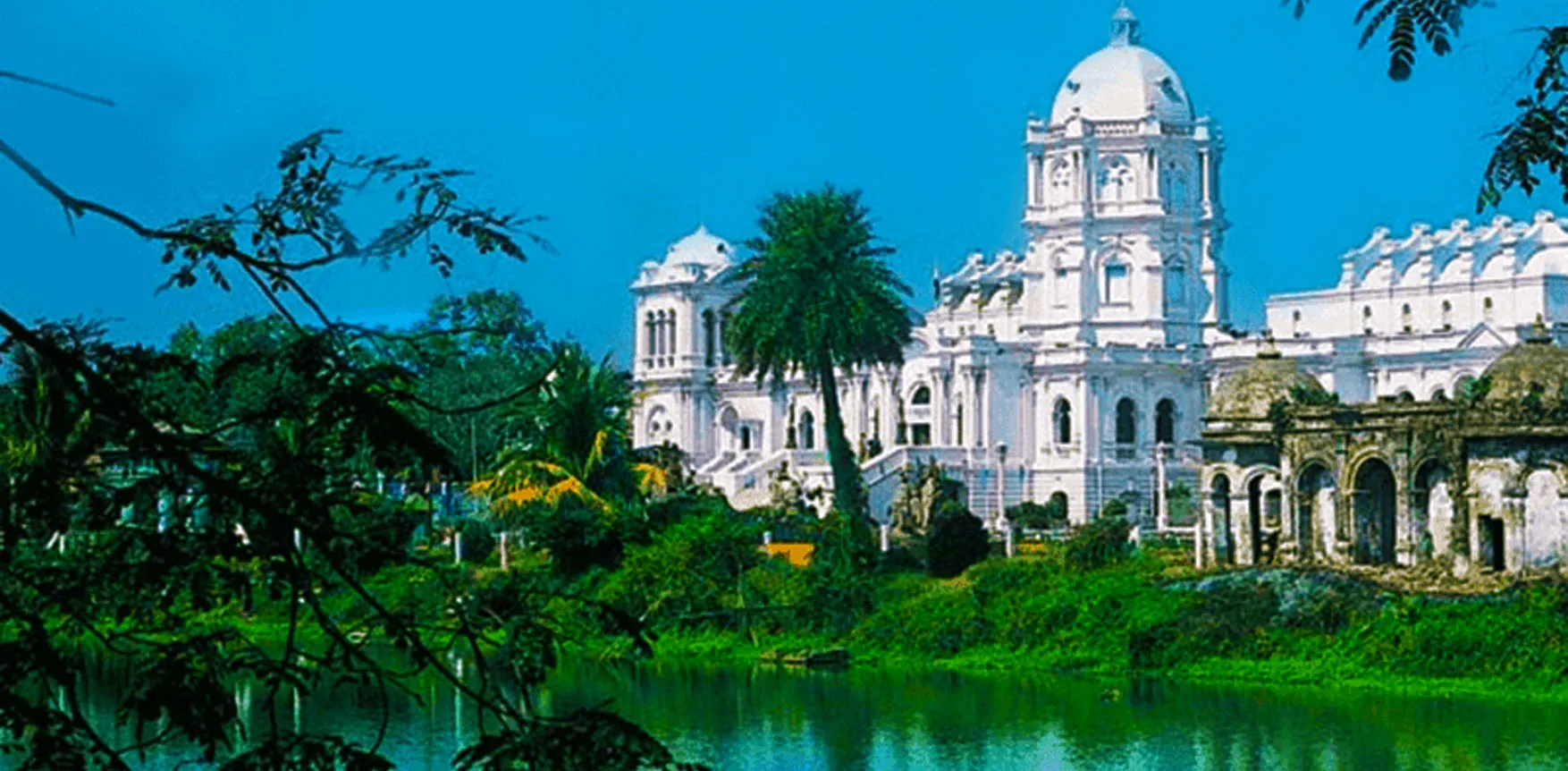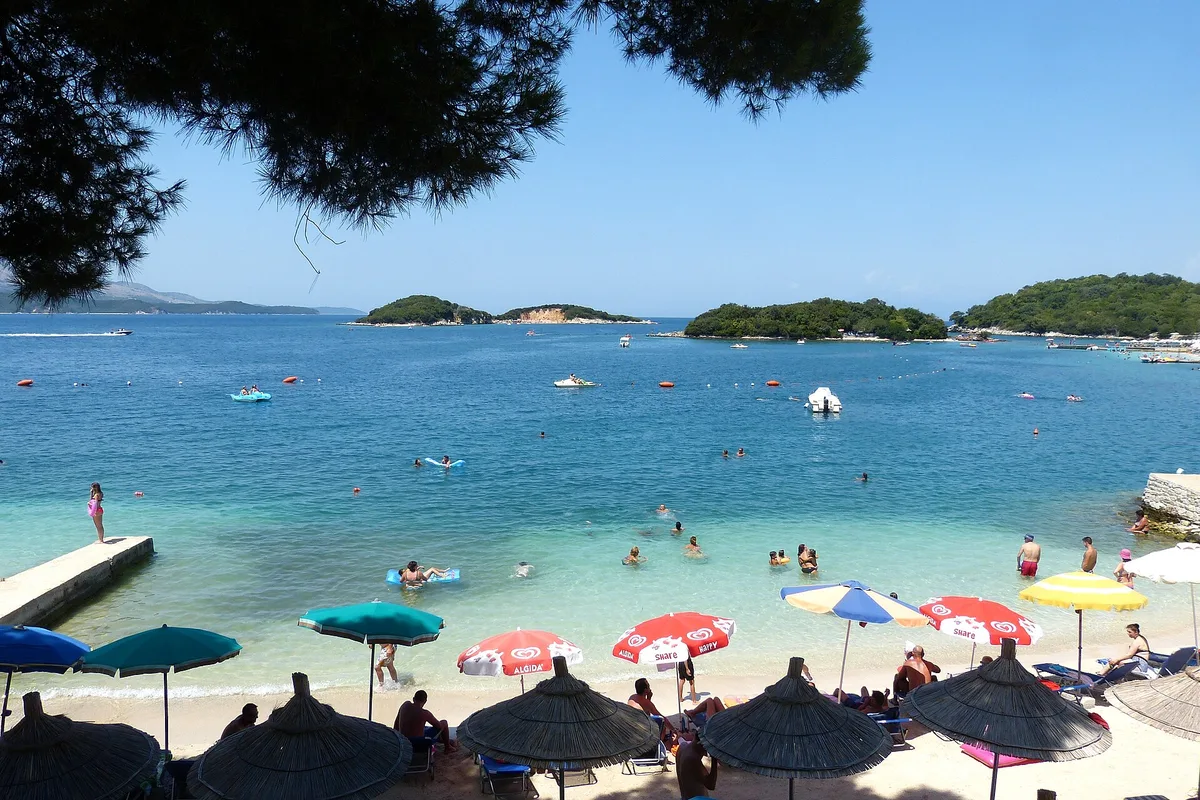
Albania is the European trip many travellers still plan last and remember first — a small country where an Ottoman old town, a Roman-era archaeological park, a mountain village and a clear Ionian beach can all sit inside one unhurried week. It is not, however, a country that rewards copying someone else’s packed itinerary. Albania’s best places fall into three very different regions — the Albanian Riviera in the south, the historic towns of the centre and south, and the Albanian Alps in the north — and the single most useful planning decision is choosing which of them your trip is actually about.
This albania travel guide is built around that decision. It explains how the country fits together, what each region does best, when to go, and how to move between places without pretending the distances are shorter than they are.
At a Glance
| Question | Short answer |
|---|---|
| Best first trip | 7 days in the south: Tirana, Berat, Gjirokaster, Sarande/Ksamil and the Riviera |
| Add the Alps when… | You have 10+ days, travel mid-June to late September, and want hiking |
| Best overall months | May–June and September for combining beaches and towns |
| Main gateway | Tirana; also ferry arrivals at Durres and Sarande |
| Getting around | Rental car gives the most control; intercity buses and furgon minibuses cover main routes |
| Currency | Albanian lek (ALL); cards work in cities, cash matters in villages and mountains |
| Visa starting point | Check your nationality on the official e-Visa portal before assuming you are visa-free |
Why Albania, and Why Now — Honestly
Albania’s rise is not a secret anymore, and this guide will not pretend you will have the Riviera or Berat to yourself in August. What remains true is more specific. Albania still offers a combination that is hard to find elsewhere in Europe: UNESCO-listed old towns that are living neighbourhoods rather than museum pieces, a coastline where small bays sit between headlands instead of one continuous resort strip, and a mountain north where village guesthouses and a famous point-to-point hike anchor a completely different kind of trip.
It also remains a country where travel takes a little more initiative. Signage, schedules and booking systems are improving but are not uniformly slick; mountain roads demand respect; and some headline sights need decisions made in advance. Travellers who enjoy that slight roughness — and plan around it rather than being surprised by it — tend to love Albania. Travellers who want everything pre-packaged on one resort strip usually prefer somewhere else. Neither reaction is wrong, and knowing which traveller you are is the real starting point.
Overview and Geography: Three Albanias
Albania sits on the western Balkan Peninsula, bordered by Montenegro, Kosovo, North Macedonia and Greece, with coastline on both the Adriatic and the Ionian Sea. Tirana, the capital, lies roughly in the centre and is where most trips begin and end.
The south is the classic first trip. From Vlore southwards, the coast becomes the Albanian Riviera: the road climbs over the Llogara Pass and then threads through Dhermi, Himara and Borsh down to Sarande and Ksamil, with the archaeological park of Butrint just beyond. Inland from the coast sit the two great historic towns, Berat and Gjirokaster, both UNESCO-listed, both reachable on the same southern loop.
The centre is Tirana itself plus day-trip country: the port city of Durres on the Adriatic, the castle town of Kruja, and the cable-car mountain of Dajti above the capital.
The north is a different journey. Shkoder, a relaxed city beside its lake and castle, is the gateway. Beyond it, the Koman Lake ferry and the mountain roads lead into the Albanian Alps — the villages of Valbona and Theth, linked by the well-known pass hike. The north is seasonal, slower and more weather-dependent than the south, which is exactly why it deserves its own days rather than being bolted onto a beach week.
Where to Go on a First Trip
Tirana
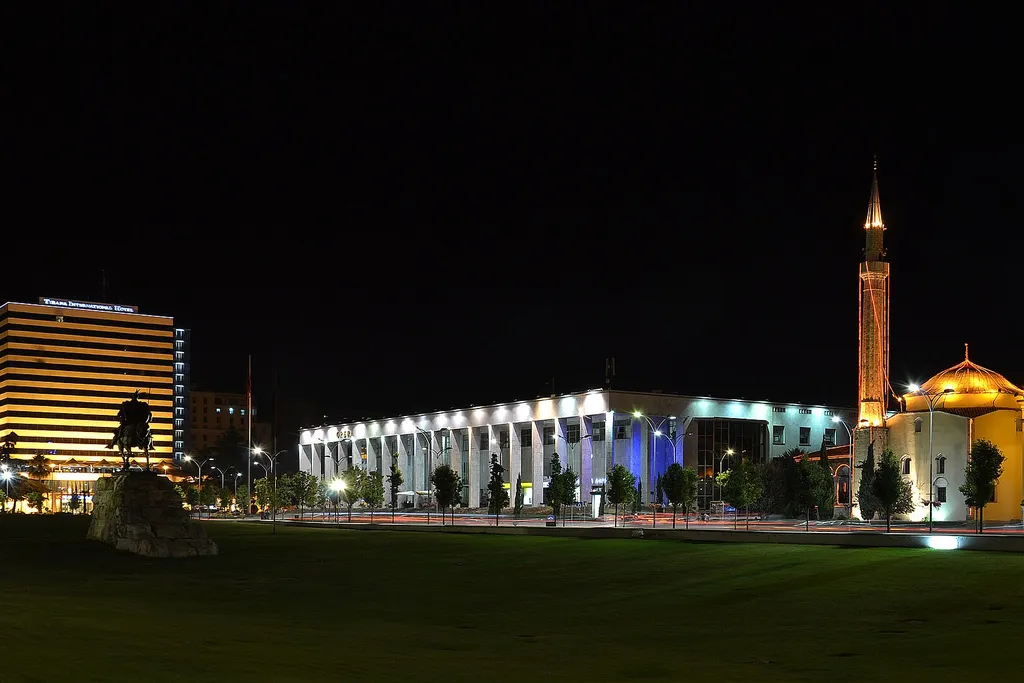
Photo: Pudelek / Wikimedia Commons, CC BY-SA 3.0
Give the capital at least a full day, ideally split between arrival and departure. Skanderbeg Square, the Et’hem Bey Mosque, the Pyramid and the Blloku district — once reserved for the communist elite, now the cafe and nightlife quarter — give Tirana a character unlike anywhere else on the trip. Its museums cover Albania’s Ottoman, independence and communist periods, and they supply the context that makes the rest of the country make more sense. One caution: reporting in our research suggests Tirana’s National History Museum may be closed for an extended renovation. That status must be re-verified before you plan around it — do not build a day on the assumption it is open.
Berat
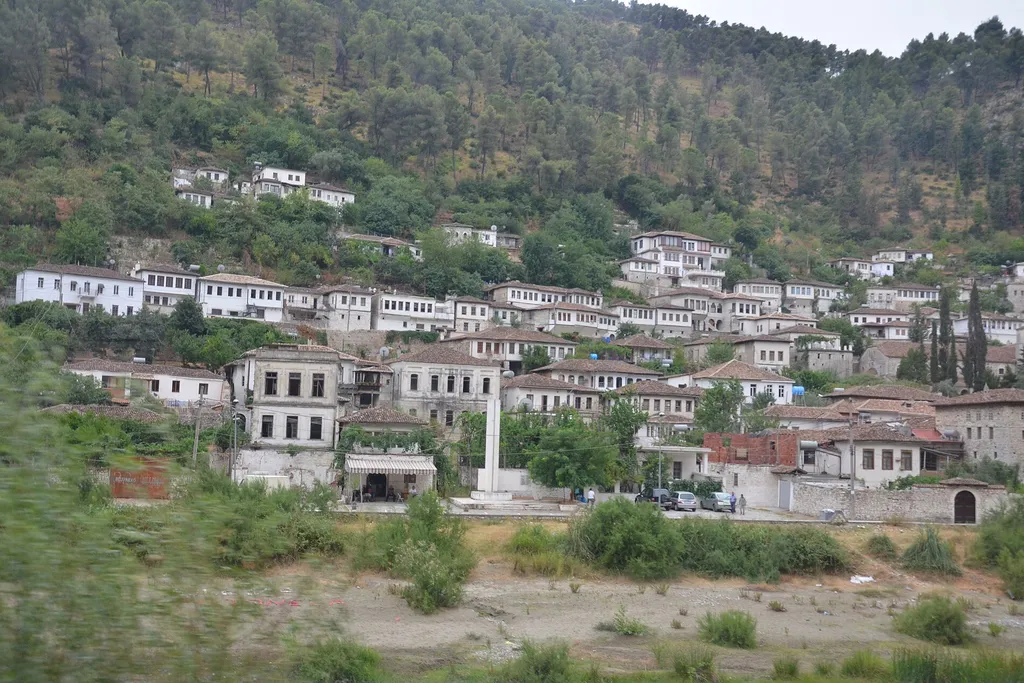
Berat, the “city of a thousand windows,” is a UNESCO-listed old town of white Ottoman houses climbing towards a still-inhabited castle quarter. It is the gentlest of the big stops: a morning in the castle, an afternoon in the Mangalem and Gorica quarters either side of the Osum River, and an evening stroll — the xhiro — along the boulevard. Berat also works as the natural first night of the southern loop, close enough to Tirana to reach easily, different enough to feel like the trip has begun.
Gjirokaster
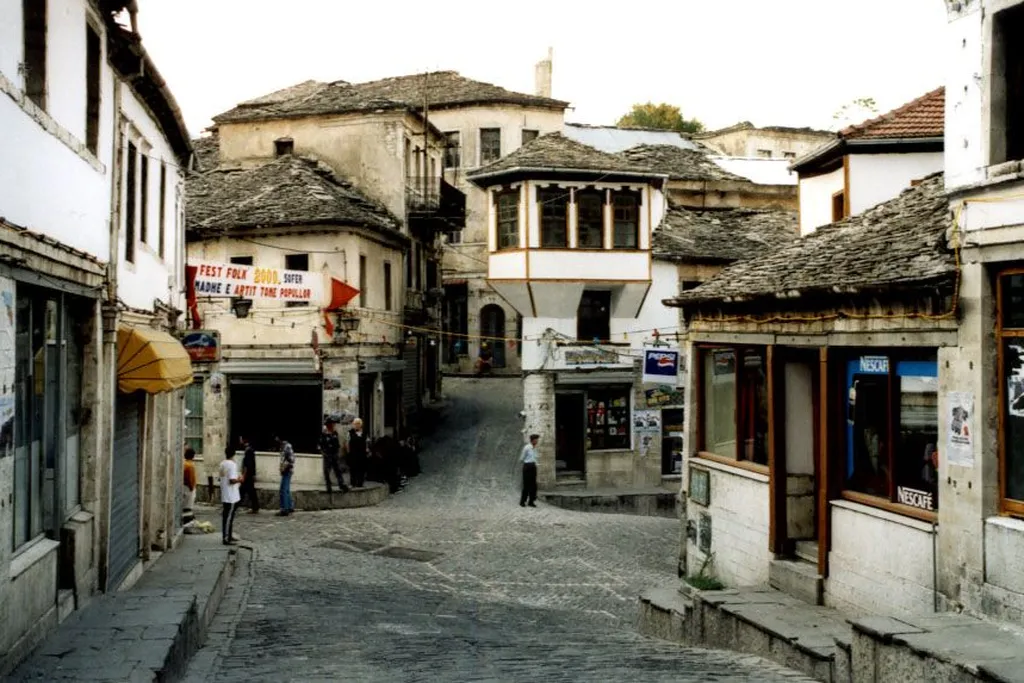
Photo: Stefan Kühn / Wikimedia Commons, CC BY-SA 3.0
Gjirokaster is Berat’s sterner southern counterpart: a UNESCO-listed town of steep cobbled lanes and grey stone-roofed houses under an enormous castle. The old bazaar quarter, the castle and its views over the Drino valley, and traditional houses opened as museums make it worth a night rather than a rushed stop. It also pairs naturally with the Blue Eye spring (Syri i Kalter) near Sarande — see the disambiguation note under Sarande below, because Albania has two famous Blue Eyes and they are hours apart.
Sarande and Ksamil
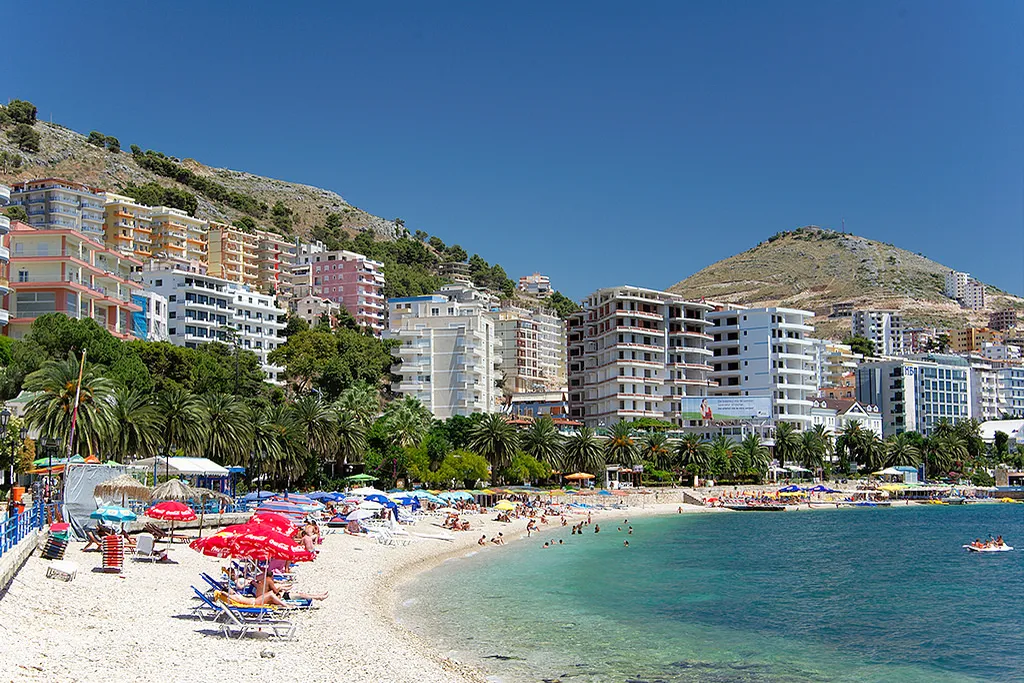
Photo: Artur Malinowski / Wikimedia Commons, CC BY 2.0
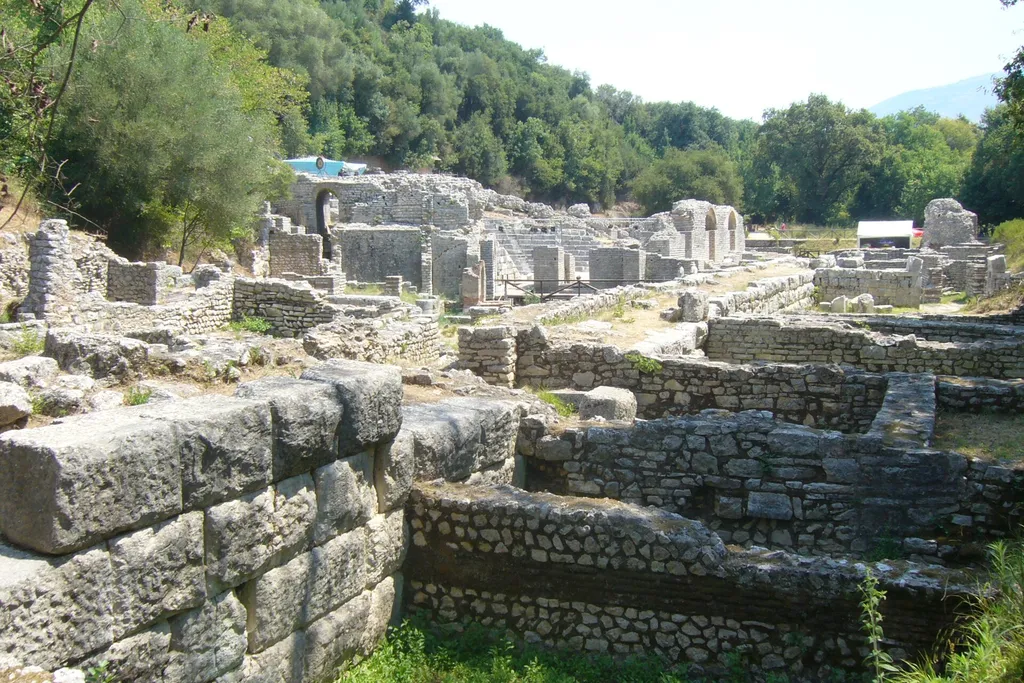
Sarande is the Riviera’s southern hub: a working seaside city with a promenade, ferry connections to Corfu, and the easiest base for Butrint. Twenty minutes south, Ksamil is the beach name everyone knows — a cluster of small bays facing tiny offshore islands, beautiful and, in high summer, busy and heavily commercialised with beach-club loungers. The honest advice is to visit Ksamil, enjoy it early in the day, and also give time to quieter Riviera beaches further north. From Sarande, Butrint is the essential excursion: a UNESCO-listed archaeological park in a wooded, lagoon-side setting, layered with Greek, Roman, Byzantine and Venetian remains.
Shkoder and the Albanian Alps
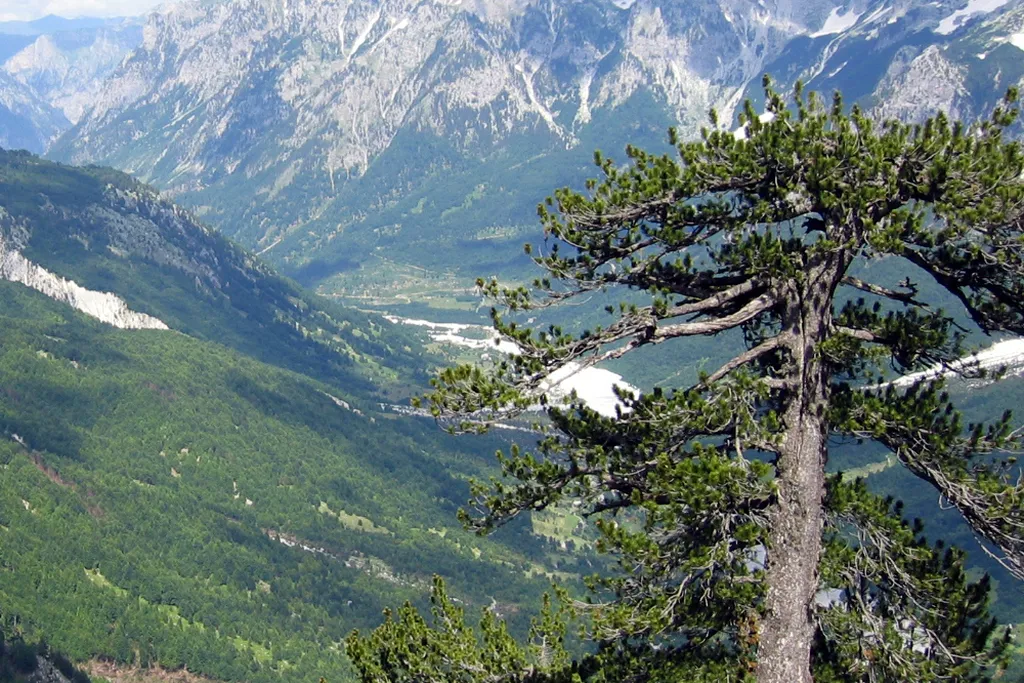
Photo: Albinfo / Wikimedia Commons, CC BY-SA 2.5
Shkoder earns a night in its own right — Rozafa Castle above the lake plain, a likeable old centre, and the role of staging post for the mountains. The classic Alps route runs Shkoder to the Koman Lake ferry, on to Valbona, then over the pass on foot to Theth (sources give roughly 14–18 km and about 6–9 hours for the hike; treat any single figure with caution and check current trail and weather information before setting out), and back to Shkoder. Guesthouses in both villages are a highlight of Albanian travel. This route is seasonal — broadly mid-June to late September — and should never be attempted in snow or bad weather. Note that the Blue Eye of Theth, near Kaprre village, is a completely different spring from the Blue Eye near Sarande mentioned above; mixing them up has ruined more than one itinerary.
Vlore
Vlore is where the Adriatic becomes the Ionian, and the practical gateway to the Riviera: the Llogara Pass rises just south of the city. It works well as a first or last coastal night — a long bay, a growing promenade scene, and an easier drive back to Tirana than from the far south. Offshore Sazan Island and the Karaburun Peninsula, reached by boat trips in season, add a wilder coastal option for travellers with a spare day.
Best Time to Visit, by Region
Albania’s regions do not share one best season, which is why single-month recommendations mislead.
- Riviera beaches: Late May to June and September offer warm sea conditions with thinner crowds. July and August are hottest and busiest, with prices and traffic at their peak.
- Historic towns and cities: Spring (April–June) and autumn (September–October) suit Berat, Gjirokaster and Tirana best — walking weather without summer heat.
- Albanian Alps: The Theth–Valbona season is broadly mid-June to late September. Outside it, snow can close the pass and many guesthouses shut.
- Cheapest and quietest: Winter is mild on the coast but cold inland, some coastal businesses close, and the north is largely off-season. Winter suits a Tirana-and-towns trip, not a beach or Alps trip.
Two Routes That Actually Work
The 7-Day Southern Loop
Day 1: Arrive in Tirana, light sightseeing. Day 2: Tirana museums and Blloku; drive or bus to Berat for the night. Day 3: Berat castle and old quarters; continue to Gjirokaster. Day 4: Gjirokaster; drive to Sarande, stopping at the Blue Eye (Sarande) if time and conditions allow. Day 5: Butrint in the morning, Ksamil beaches in the afternoon. Day 6: Drive the Riviera north — Himara or Dhermi — over the Llogara Pass to Vlore. Day 7: Return to Tirana, via Apollonia’s archaeological park if your schedule allows. This loop is roughly 600–650 km of driving spread sensibly; it is a full week, not a lazy one.
The 10-Day North-and-South Trip
Follow the 7-day loop, then add: Day 8: Return to Shkoder via Tirana (a long transfer day — accept it rather than disguising it). Day 9: Koman Lake ferry to the Valbona side, afternoon in Valbona. Day 10 in this outline is really the start of the Alps finish — hike Valbona to Theth, night in Theth, and return to Shkoder the following day, which is why an honest north-and-south trip is really 11–12 days. Any itinerary promising the Alps and the full south inside 7 days is selling you transfers, not travel.
Getting Around: The Honest Version
Renting a car is how most first-timers get the most from Albania, because the southern loop and the Alps approaches involve places buses serve thinly. Roads on main corridors are generally good; mountain and village roads are narrower, slower and occasionally rough, and driving standards can be assertive. Book with a reputable company, confirm what the insurance actually covers, and never plan mountain driving after dark.
Buses and furgons — the minibuses that run between towns — are inexpensive and cover the main intercity routes, but they often leave from different, informal points in each city, run to habit rather than published timetables, and may depart when full. Ask your accommodation host for the current departure point and time; that advice is worth more than any timetable screenshot.
Distances deceive. Albania looks small on a map, but coastal and mountain roads wind. Tirana to Sarande is a half-day’s travel, not a quick hop, and the Riviera road over Llogara should be driven slowly and enjoyed, not rushed between beach stops. Build the transfer time into the plan and most frustrations disappear.
Where to Stay
Albania’s accommodation strength is its small, family-run stock. In Tirana, stay centrally around Skanderbeg Square or Blloku for walkability. In Berat and Gjirokaster, traditional guesthouses inside the old towns are the experience itself — stone houses, home cooking, hosts who know the local answers — balanced against steep lanes and parking that is easier outside the old cores. On the Riviera, Sarande offers the most services and the easiest logistics; Himara and Dhermi offer a quieter, more beach-led stay with less infrastructure. In the Alps, village guesthouses in Theth and Valbona are effectively the only option and one of the trip’s highlights; book ahead in season and expect cash payment. Across the country, family guesthouses consistently punch above conventional hotels for warmth and local knowledge.
Food: What to Order First
Albanian cooking is Balkan, Mediterranean and Ottoman in its layers, and eating well is one of the trip’s reliable pleasures. Start with byrek, the flaky filled pastry sold everywhere for breakfast and snacks. In central Albania try tave kosi, baked lamb in a yoghurt sauce associated with Elbasan. Fergese, a baked dish of peppers, tomatoes and cheese, appears on menus across the centre and south. In Gjirokaster, look for qifqi, the town’s herbed rice balls. Grilled meats, fresh salads with proper olive oil, Ionian seafood on the coast and lake fish around Shkoder and Ohrid round out the table, and a meal often ends with baklava or revani and a small, strong raki. Vegetarians eat better than they might expect — beans, grilled vegetables, cheeses and salads are staples, not afterthoughts — but say so clearly when ordering, as meat stock appears quietly in many kitchens.
Costs: Good Value, With Eyes Open
Albania is, by general European standards, a good-value destination: family guesthouses, local restaurants and intercity buses cost noticeably less than equivalents on most Mediterranean coasts. This guide deliberately gives no price list. Prices have been moving as Albania’s popularity grows, beach-club and August pricing on the Riviera behaves very differently from a village guesthouse in October, and any figures copied here would age badly and could mislead your budget. The practical approach: check current prices on booking platforms and operator sites for your exact dates, keep a cash buffer in lek for villages, ferries and mountain areas, and assume high-summer Riviera costs will be closer to mainstream Mediterranean levels than to Albania’s budget reputation.
Visa and Practical Basics
Do not assume you are visa-free — check. Albania’s rules depend on nationality. The research behind this guide records the general framework that short stays follow a Type C pattern of up to 90 days within 180 days, and that holders of a valid multiple-entry Schengen visa or residence permit may enter visa-free within its validity — but the only safe step is to confirm your own nationality’s position on the official e-Visa portal, e-visa.al, before booking anything non-refundable. Apply only through that official portal, not through commercial lookalike sites.
Practically: the currency is the Albanian lek (ALL); euros are sometimes accepted in tourist settings but lek is the reliable money, and cash matters outside the cities. Albania uses European-style two-pin plugs. Tap water practice varies — many travellers drink it in Tirana, many hosts will advise bottled in villages; follow local advice. English is widely spoken by younger Albanians and in tourism; learning a few words of Albanian is visibly appreciated.
Culture and Etiquette
Albanians are famously hospitable — the traditional code of besa, a kept word of honour, still shapes how guests are treated, and a coffee accepted slowly is rarely just a coffee. Dress modestly when visiting mosques and churches, ask before photographing people, and greet with a handshake and eye contact. In the evening, join the xhiro: the unhurried promenade everyone takes through the town centre, which is the best free entertainment in every Albanian town. Albania is religiously mixed and notably tolerant; respect at each community’s sites is returned warmly. Tipping in restaurants is appreciated rather than rigidly obligatory — rounding up or leaving a modest amount for good service is normal practice.
Frequently Asked Questions
Is Albania safe for tourists?
Albania is generally regarded as a safe country for visitors, with the usual big-city and road-safety cautions: the most realistic risk on an Albanian trip is driving, not crime. Use normal care with belongings in crowded places, take mountain roads slowly, and check your own government’s current travel advice before departure.
How many days do I need for Albania?
Seven days suits a southern loop of Tirana, Berat, Gjirokaster, Sarande/Ksamil and the Riviera. Adding the Albanian Alps honestly takes the trip to 11–12 days. A long weekend works for Tirana plus one of Berat or Kruja.
Do I need a car in Albania?
Not strictly — buses and furgon minibuses cover the main towns — but a rental car makes the Riviera stops, Butrint timing and the Alps approaches far easier. If you do not drive, base yourself in fewer places and use day tours for Butrint and the coast.
Which Blue Eye should I visit?
There are two. The Blue Eye (Syri i Kalter) near Sarande belongs on a southern itinerary. The Blue Eye of Theth belongs on an Alps itinerary. They are in different regions, hours apart — check which one any guide or map pin refers to before planning around it.
When should I avoid Albania?
Only in the sense of matching season to purpose: avoid the Alps outside mid-June to late September, and expect the Riviera to be crowded and pricier in late July and August. There is no bad month for a Tirana-and-historic-towns trip.
Can I combine Albania with Greece or Montenegro?
Yes — Sarande connects by ferry to Corfu, and Shkoder sits close to the Montenegrin border. Cross-border rental-car permission must be confirmed with your rental company in advance, as it is not automatic.