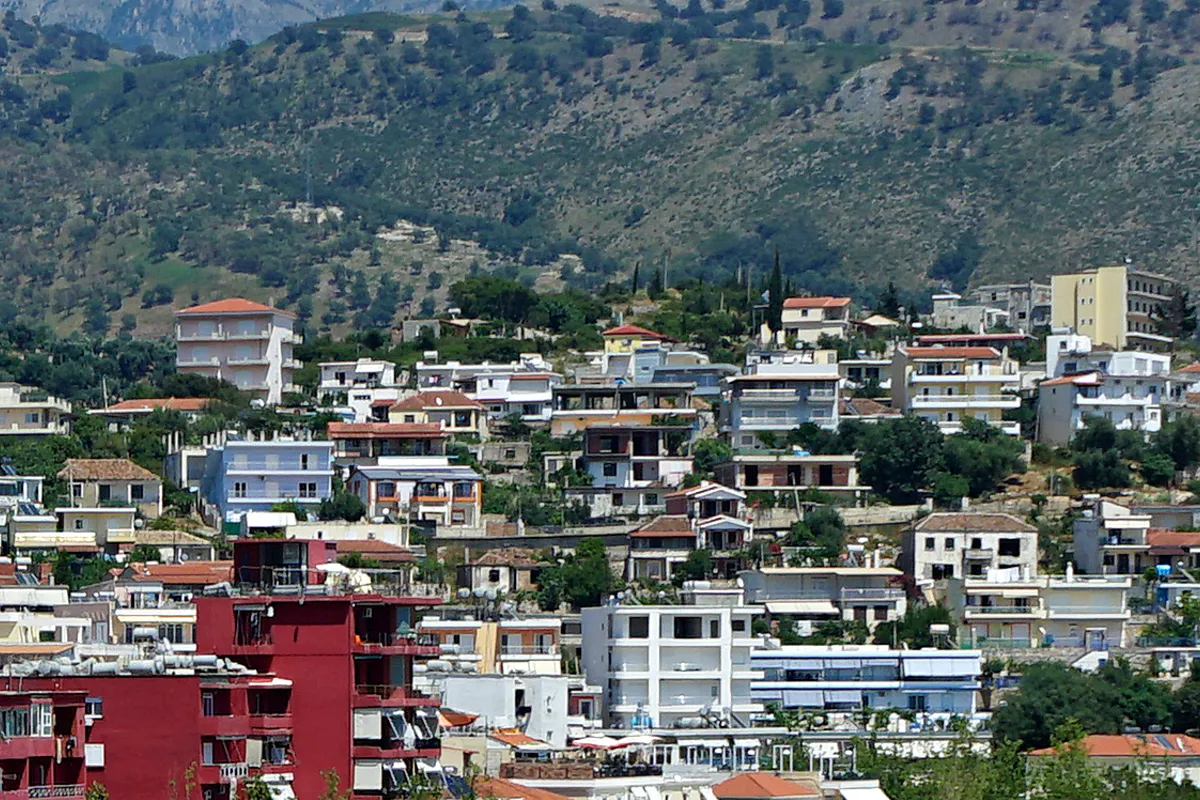
Albania does not have one best time to visit. It has several, and they barely overlap. The beach towns of the south are at their warmest when the high mountain trails of the north are also open, which sounds like agreement until you look closer: the Riviera is already lovely in late May, when the high pass between Valbona and Theth can still hold snow, and the Alps are still walkable in late September, when the beach clubs are packing up. The old stone towns of the south and the capital, Tirana, play by a third calendar altogether, at their best in the mild months when the coast is either too cool for swimming or too crowded for walking. Ask for a single best month and you get a compromise that serves nobody well. Ask what the trip is for, and the answer sharpens at once.
That is why this guide is organised the way it is. It starts with the short answer and a month-by-month table, then works through the year season by season, then splits the country by region — the Riviera and coast, the Albanian Alps and the north, Tirana and the historic south — and finally by activity: hiking, beaches and festivals. The through-line is the one fact that governs every Albanian itinerary: the Alps hiking window and the Riviera beach window peak in almost opposite windows, and September is the one month the full country works. For routes, transport and the full planning picture, this guide sits inside our Albania travel guide; here, the focus is timing alone.
One note on the weather figures used below, because seasonal guides are where invented precision usually creeps in. The temperature figures quoted are Tirana monthly averages for 1991–2020 as published by Climate to Travel, checked 29 October 2026: January mean 7.1°C, February 8.3°C, March 11.3°C, April 14.6°C, May 18.7°C, June 23.0°C, July 25.3°C, August 25.5°C, September 21.6°C, October 17.1°C, November 12.6°C and December 8.6°C, with average highs running from 12.5°C in January to 32.7°C in August. Treat those as a lowland baseline, not a national forecast. The coast runs milder in winter and the mountains run colder all year, and a single Tirana number says nothing about snow on a high pass or wind on an exposed coastal road. Where this guide gives a season rather than a number, that is deliberate: seasons are the honest unit for a country this geographically compressed.
The Short Answer – When to Go
If the trip has to be one sentence, it is this: come in September if you want all of Albania, come in late May or June if you want the south at its freshest, and come between mid-June and late September if the Albanian Alps are the reason for the trip. September earns the top recommendation for a specific, checkable reason rather than a vague feeling: it is the only month in which the sea is still warm from summer, the high trails are still open, the old towns are walkable without summer heat, and the crowds have thinned. No other month holds all four at once. May comes close for the south and fails only in the north, where the high pass may still be shut. June is the mirror image of September in one respect — long days, green mountains, a sea still warming — and the better month for travellers who prefer their beaches half-empty to warm.
The table below is the whole guide in miniature. Read it as a set of trade-offs, not a ranking: every month buys something and gives something up, and the right choice depends on which row matters most to the trip being planned. A beach trip and a hiking trip simply do not want the same month, and the table makes that disagreement visible instead of smoothing it over.
| Month | Lowland feel (Tirana mean) | Coast | Alps | Old towns and Tirana |
|---|---|---|---|---|
| January | 7.1°C, wettest season | Quiet, many businesses shut | Snowbound, high routes closed | Museums and cafes, empty lanes |
| February | 8.3°C, still wet | Quiet, first signs of spring | Snowbound, high routes closed | Carnival season in Shkoder |
| March | 11.3°C, changeable | Stirring, still cool for swimming | Snow on high ground, valley walks only | Summer Day on 14 March, Nevruz on 22 March |
| April | 14.6°C, green | Pleasant, sea still cool | Lower trails opening, pass shut | Excellent walking weather |
| May | 18.7°C, warm days | Lovely, sea warming | Valleys open, high pass uncertain | Arguably the finest old-town month |
| June | 23.0°C, long days | Beach season begins properly | Pass opens around mid-June | Warm but very walkable |
| July | 25.3°C, hot and dry | Peak beach season, busiest | Fully open, busiest trails | Hot midday, evenings best |
| August | 25.5°C, hottest | Peak beach season, most crowded | Fully open | Hottest, most crowded |
| September | 21.6°C, warm sea | Warmest water, thinning crowds | Still open, quieter trails | Excellent, harvest season |
| October | 17.1°C, cooling | Cooling, many businesses closing | Pass closing, lower walks remain | Wine and harvest, golden light |
| November | 12.6°C, wettest season | Quiet, wet | Closed or closing, snow returns | Quiet, rainy, cheapest |
| December | 8.6°C, short days | Quiet, wet | Snowbound | Festive cities, empty sights |
The pattern to carry into the rest of the guide is the offset between the coast and the mountains. The Riviera’s beach season runs roughly from late May into September, with its best swimming from June to early September; the Alps’ high-trail season runs roughly from mid-June to late September. They overlap for about three months, and only September combines the warmest sea of the overlap with the thinnest crowds. Everything else in this guide is that pattern worked out month by month, region by region, with the exceptions and edge cases stated rather than hidden.
Winter in Albania – December, January and February
Winter is Albania’s honest low season, and it suits a particular kind of trip far better than the guides that dismiss it outright. Tirana in January averages 7.1°C, with average highs of 12.5°C — mild by northern European standards, wet rather than frozen — and the lowland cities stay open, walkable and almost empty of visitors. The museums, the cafe culture of the Blloku district, the bunkers-turned-museums and the long lunches that are Tirana’s real social life all work in winter, arguably better than in August, when the same streets are hot and crowded. Berat and Gjirokaster, the two great stone towns of the south, are at their most atmospheric with their lanes to yourself, and their stone houses and castle views lose nothing to cold weather. What winter cannot offer is the coast as a beach destination or the mountains as a walking destination, and a winter trip that pretends otherwise will be disappointed twice.
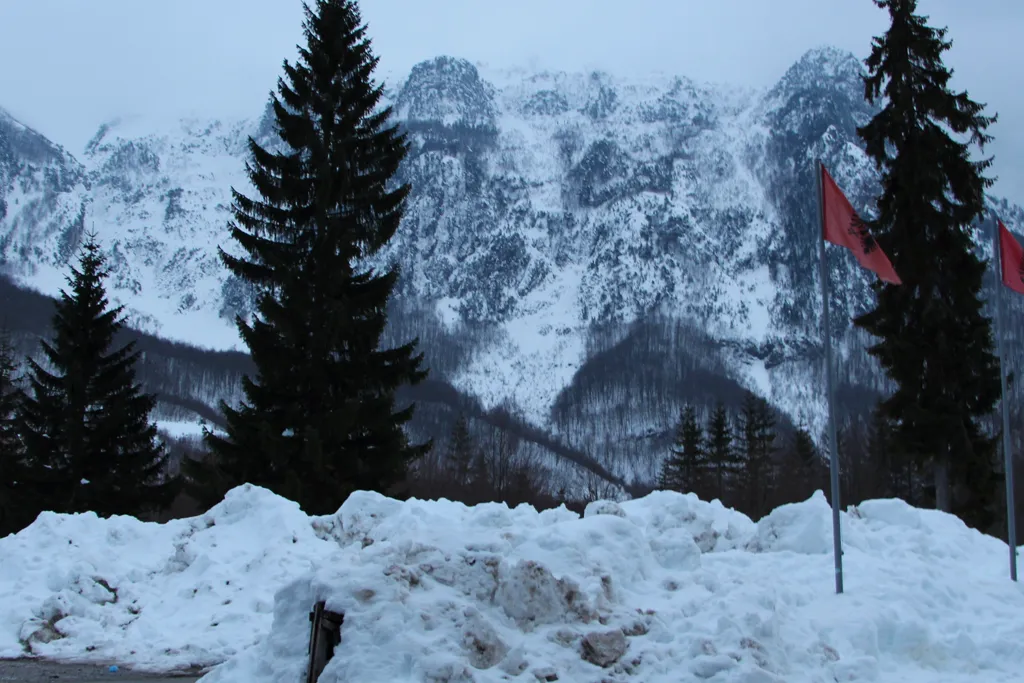
The coast in winter is a different place from the coast in summer, and the difference is structural rather than cosmetic. Many beach businesses along the Riviera close for the season, resort strips go quiet, and the weather turns wet and windy — this is the wettest stretch of the year on the lowlands, and the sea is not a swimming proposition. That does not make the coast worthless in winter: Sarande and Vlore are working towns with year-round life, the promenades are walkable, and the winter light on the Ionian is famously clear between storms. But a traveller booking a winter beach holiday in Ksamil or Dhermi has booked the wrong country in the wrong month, and no amount of optimism about a sunny day changes the seasonal fact. The Alps, meanwhile, are simply out of the walking equation: high routes are snowbound, many guesthouses shut, and the Valbona-to-Theth crossing should not be attempted in snow or bad weather at any point in this season.
What winter does offer, beyond the cities, is the country’s small-scale winter life. Shkoder hosts a winter carnival, and the ski areas around Dajti and near Korce give the season its own modest mountain answer — small-scale skiing, not an Alpine resort proposition, and best treated as a day out from a city rather than the spine of a trip. December brings festive city life and short days; February, the coldest-feeling month for many travellers despite January’s lower averages, because the damp gets into everything. Pack for rain rather than for postcard snow, keep the itinerary urban and southern, and winter repays the traveller who came for Albania itself rather than for its summer. The reward is the one thing summer cannot sell at any price: the country to yourself.
Spring in Albania – March, April and May
Spring is the season this guide is most tempted to oversell, so it is worth stating its limits first. March is changeable: Tirana averages 11.3°C, the countryside greens quickly, and the festivals begin — Dita e Veres, Summer Day, on 14 March, centred on Elbasan, and Nevruz Day on 22 March — but rain is still frequent, the sea is cool, and the high mountains are still in winter. April is the month when spring becomes a promise you can plan around: 14.6°C on average in Tirana, wildflowers across the hills, rivers running full with meltwater, and archaeological sites such as Butrint and Apollonia at their quietest. May is the month when the south becomes genuinely glorious — 18.7°C on average, warm days, empty beaches, old towns in perfect walking weather — and it is the strongest single-month candidate for a trip that does not need the high Alps.
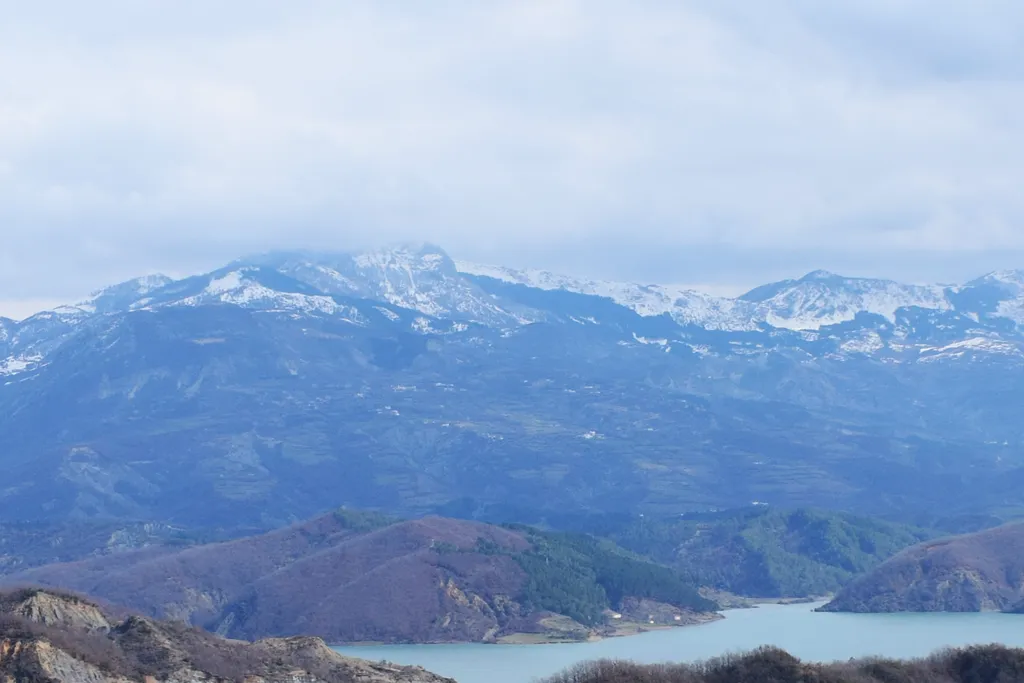
The catch, and it is the same catch all spring, is altitude. The valleys of the north open weeks before the high pass does. Lower trails around Shkoder, the Bovilla Lake area outside Tirana and the Llogara hills are walkable through spring, and the Alps’ villages can be visited as places even when the crossing between them cannot be walked. But the Valbona-to-Theth pass itself is a summer route, broadly mid-June to late September, and a May trip that builds its centre on that crossing is building on snow. The honest way to use May is as a southern trip with a northern bonus: plan Berat, Gjirokaster, the Riviera and Tirana properly, and treat any Alps day the weather grants as a gift rather than a fixture. Travellers who accept that framing get the best of spring — green hills, empty sights, mild days — without the disappointment of a closed pass.
Spring also has a practical advantage the other seasons lack: it is the season of the fewest compromises for sightseeing. The old towns are at their best in April and May, when stone lanes are warm but not baking and the evening promenade, the xhiro, is a local ritual rather than a tourist performance. The coast is beautiful to walk in spring even when it is too cool to swim, and the coastal road over the Llogara Pass is at its greenest. Prices and crowds stay low until late June, when the coast starts filling. If the trip is about places rather than beaches or high trails — history, food, walking in towns, long lunches — spring, and May above all, is the finest season Albania offers. Only the swimmer and the high hiker need to wait.
Summer in Albania – June, July and August
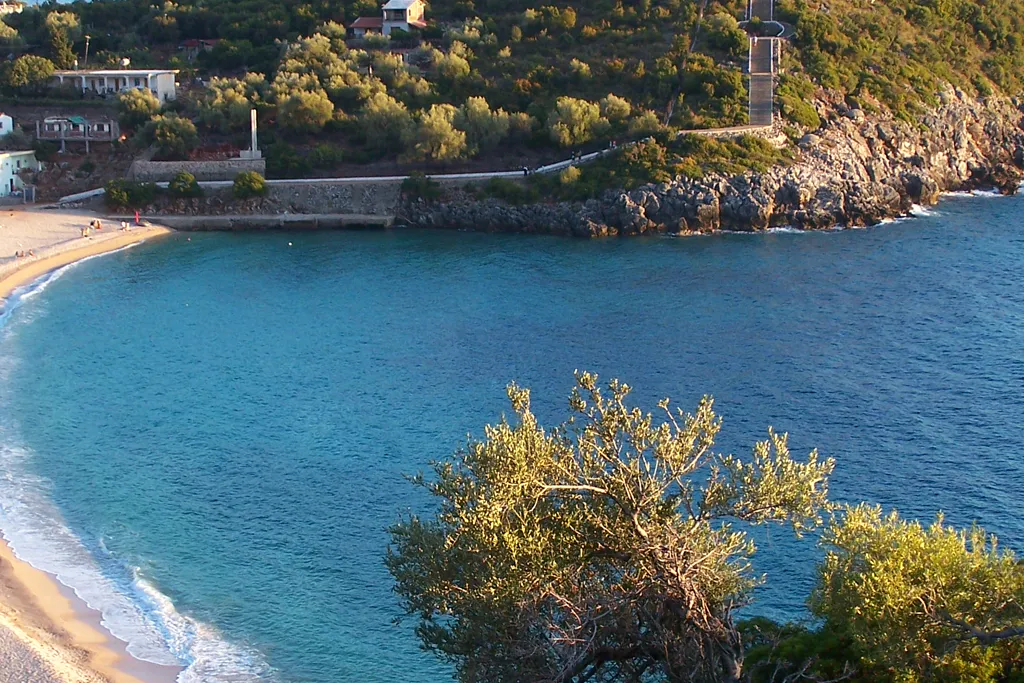
Summer is when Albania becomes the country on the posters, and the season divides sharply into two halves that should not be confused. June is the kind month: Tirana averages 23.0°C, the days are at their longest, the sea has warmed enough for swimming, the Riviera is lively without being overwhelmed, and the high pass opens around mid-June, bringing the Alps into the trip for the first time in the year. Albania in June is the closest the country comes to having everything at once before September — the one thing missing is the warmest sea water, which arrives later, and the long evenings and green hills more than compensate. For travellers choosing between June and August, June wins on almost every measure except raw heat, and heat is rarely what a good trip is made of.
July and August are the high season in the full sense, and they should be chosen with eyes open. Tirana averages 25.3°C in July and 25.5°C in August, with average highs around 32°C in both months, and inland cities and stone towns bake at midday; sightseeing belongs to the morning and the evening, and the middle of the day belongs to shade, water or a long lunch. On the coast, July and especially August bring the crowds the rest of the year avoids: Ksamil’s small bays fill with beach-club loungers, the Riviera’s popular beaches are at their busiest, and the working resort strips of Sarande and Vlore run at full stretch. The Alps, by contrast, are at their best and their busiest — the trails fully open, the guesthouses full, the crossing walked by more people than in any other month. Summer is also festival season on the coast, with beach towns at their liveliest, and for travellers who want that energy, July and August deliver it without apology.
The practical advice for summer is about timing within the day and within the season rather than about avoiding the season. Go early to the beaches and the archaeological sites, keep the middle of the day for shade or swimming, and put the old towns in the evening when their stone lanes cool and the light does its best work. Book the Alps guesthouses ahead — they are small, family-run and finite, and in season they fill. And if the trip can slide by even a few weeks, slide it: late August into September keeps the warm sea and loses the worst of the crowds, while early June keeps the green hills and loses the heat. Summer is a fine season in Albania. It is simply the season that most rewards a traveller who refuses to do everything at midday in August.
September – The One Month the Whole Country Works
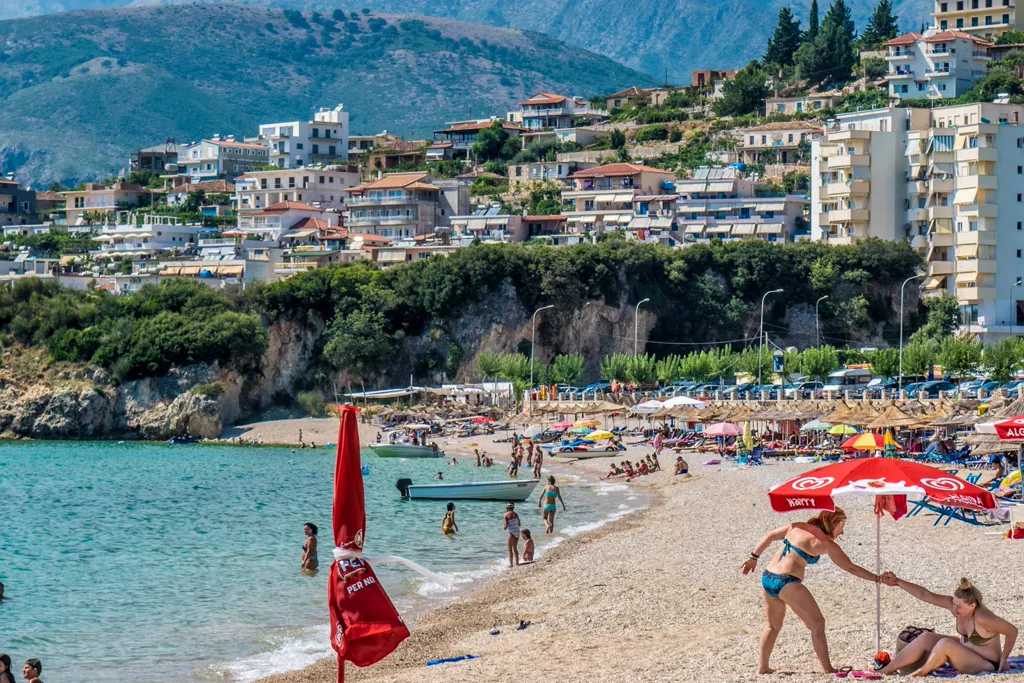
September is the month this guide keeps returning to, and it deserves a section of its own because its claim is specific. Tirana averages 21.6°C in September, with average highs of 28.1°C — warm without the baking heat of July and August — and the sea, warmed through the summer, is at its most inviting just as the crowds thin. The high trails are still open: the Alps season runs to late September, so the Valbona-to-Theth crossing, the valley walks and the guesthouse nights are all still available, with fewer walkers on them. The old towns, which suffer most in August heat, become walkable again, and the harvest season brings the wine regions and the southern countryside into their own. No other month puts all four of Albania’s pleasures — beach, mountains, old towns and cities — at their best simultaneously. May offers three of the four and September offers all of them.
Albania in September also has a character the other months lack: it is the month when the country exhales. The beach clubs thin out, the Riviera’s bays regain their quiet, the restaurants that spent August serving crowds start serving locals again, and the light softens into the golden quality that photographers chase all year. Mother Teresa Day on 7 September is a public holiday, worth knowing about because some businesses close, but it does not interrupt a trip — it is a day when families gather and the cities slow down, which is a pleasant thing to witness rather than an obstacle. The grape harvest runs from late September into mid-October, so a September trip that stretches into the month’s end catches the wine country at work. For a first trip that wants the whole country — south and north, coast and mountains, towns and trails — September is not merely the best month. It is the only month that does not ask the traveller to give something up.
There is one caution, and it matters for planning. Late September is the Alps season’s end, not its middle. The pass window closes around the end of the month, guesthouses begin to shut, and a trip that puts the Alps in the final days of September should build in flexibility for weather and for a crossing that may already be done for the year. The fix is simple: put the mountains early in a September trip and the beach late, so that the most weather-dependent days are not the last thing that can go wrong. Planned that way, September delivers what no other month can — the full country, warm sea, open trails, walkable towns and thinner crowds — and it is the month this guide would choose for a first trip without hesitation. The routes that make that month work, south and north together, are set out in our Albania travel guide.
Autumn After September – October and November
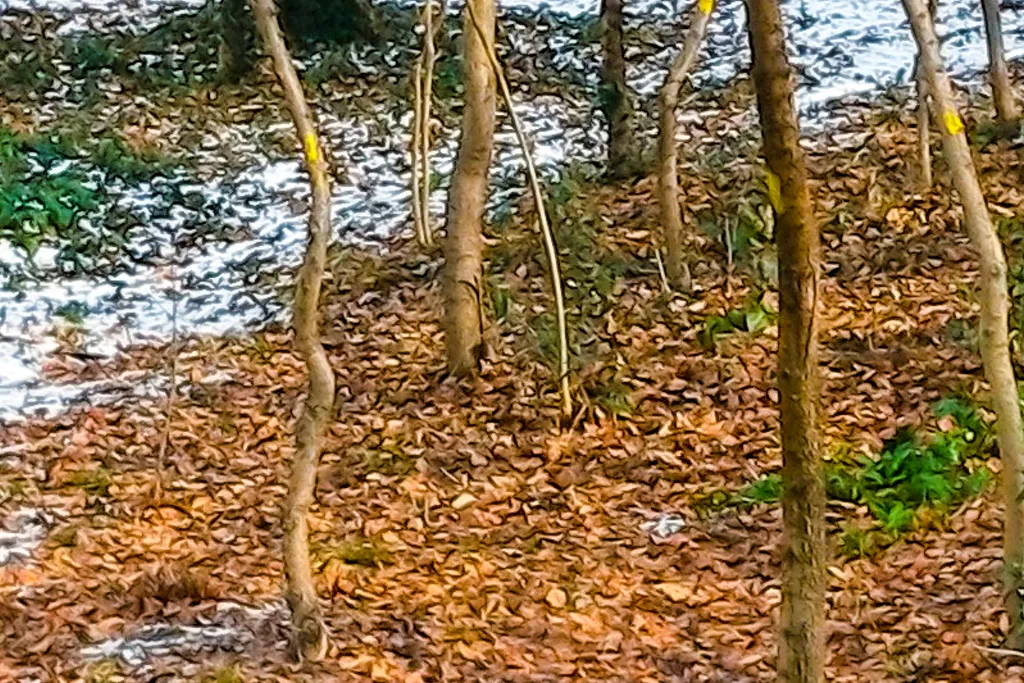
October is September’s quieter sibling, and for some travellers it is the better month. Tirana averages 17.1°C, the light turns golden, the wine and harvest season is in full swing, and the cities and old towns are at their most comfortable — warm days, cool evenings, empty lanes. The coast cools steadily through October: early October can still offer swimming on the warmest southern beaches, but the season is ending, beach businesses close through the month, and by its end the Riviera has returned to its villages. The Alps close in the same movement: the high pass shuts, guesthouses shut with it, and the mountains revert to the lower walks and the valley villages that stay open longer. October is therefore a month of two halves — a first half that still holds a little of September’s magic, and a second half that belongs to cities, food and wine.
November is the month to be honest about. Tirana averages 12.6°C, rain returns in earnest, and this is, with January, the wettest stretch of the year. The coast is quiet and wet, the mountains are closing or closed, and the trip that works in November is the urban and southern one: Tirana’s museums and cafes, Berat and Gjirokaster in the rain-polished stone, Korce and the eastern towns for travellers who like their Albania empty. November has one genuine virtue, and it is not nothing: it is the cheapest and quietest month, and a traveller who wants Albania without anyone else in the frame will find it here. But it is not a month for beaches, high trails or first trips, and this guide does not pretend otherwise. October rewards the traveller who came for harvest and history; November rewards the traveller who came for solitude and does not mind rain.
The practical shape of an autumn trip follows from that split. October suits a southern trip with a harvest thread — Tirana, Berat, Gjirokaster, the wine country around Permet and the southern valleys, with a Riviera drive for the light rather than the swimming. November suits a short city break, or a return trip to places already loved, rather than a first exploration. Both months share autumn’s one constant advantage: the light. Low sun on stone towns, on the Grand Park’s trees, on the Riviera’s cliffs, makes October and November the photographers’ months, even when the swimming and the high trails are gone. Come for that, and autumn pays.
The Riviera and the Coast, Season by Season
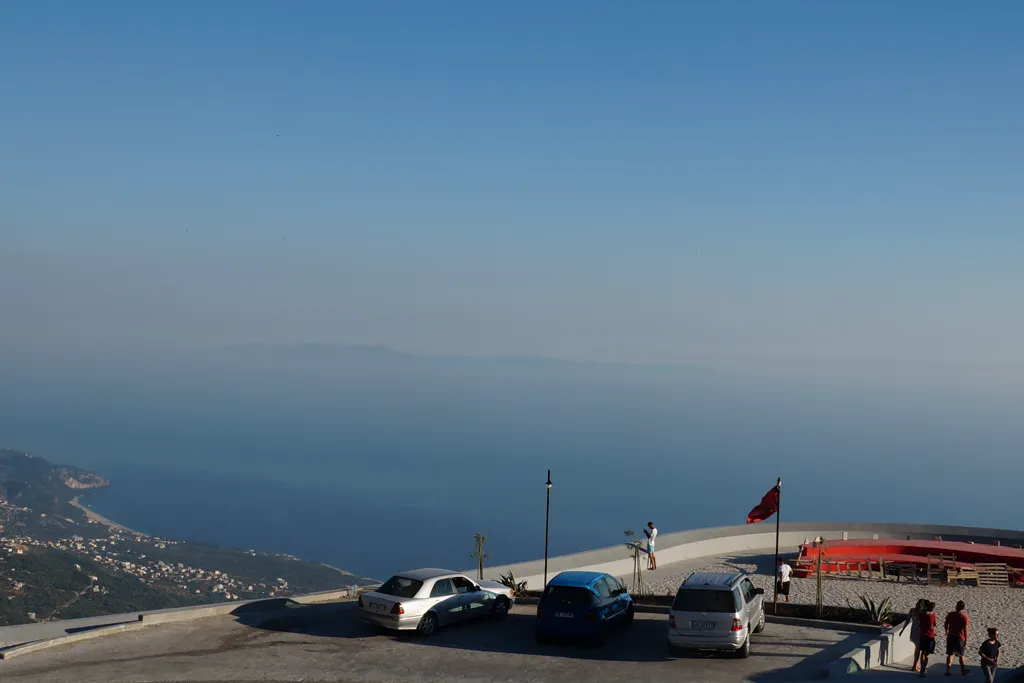
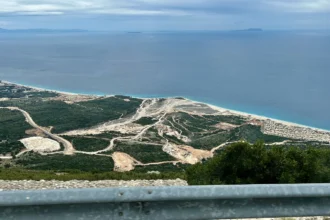
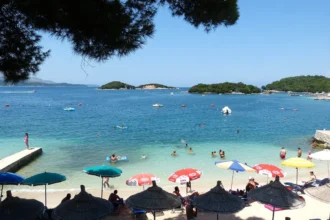
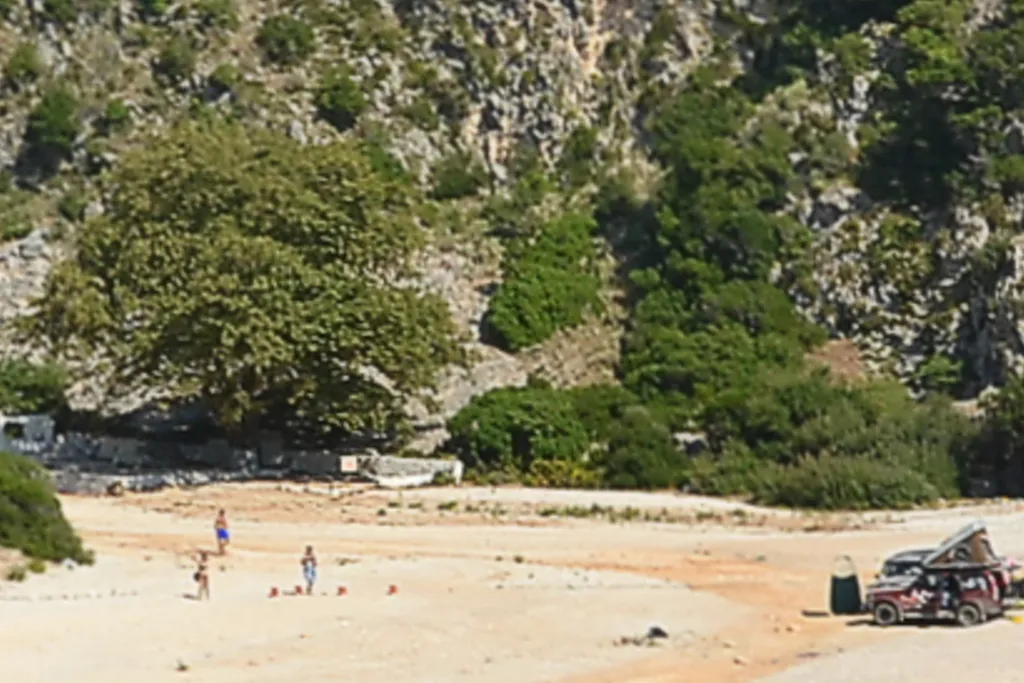
The Albanian Riviera runs on a longer, warmer calendar than the rest of the country, and understanding its shape is the key to the whole guide. The beach season begins properly in June, when the sea has warmed and the beach businesses are open, and runs through to early September, with September’s warm water and thinning crowds as its finest weeks. Late May is the Riviera’s secret season: the bays are lovely, the road is quiet, the villages are themselves again, and only the sea temperature — still warming — keeps it from being perfect. July and August are the peak, and the peak has a price: Ksamil’s small bays and the most famous Riviera beaches fill, the resort strips run hot and loud, and the quiet coves that make the coast special require an early start and a willingness to walk. The Riviera rewards the traveller who treats its famous beaches as a starting point and its quieter bays — Gjipe at the mouth of its canyon, the pebble coves between the villages — as the real prize.
Winter and spring on the coast are a different proposition, and the difference is about businesses as much as weather. From November to March, many coastal businesses close, the resort strips go quiet, and the coast belongs to its working towns — Sarande, Vlore, Himara — rather than to its beaches. That is not a failure of the season; it is the coast’s real life, and a winter or spring coastal drive, with the Llogara Pass in clear weather and the villages empty, is a beautiful trip of its own. But it is a walking and driving trip, not a beach trip, and the distinction matters. Spring, from April onward, is the coast’s walking season: the road over Llogara is green, the villages are stirring, the archaeological site at Butrint is at its quietest, and the sea is a view rather than a swim. By late May the transformation is complete, and the beach season begins.
Two coastal cautions belong in any seasonal guide. The first is the August reality of the famous beaches: Ksamil in August is crowded and heavily commercialised, and the traveller who wants it at its best should come in June or September instead. The second is the weather’s edge: the coast road and the Llogara Pass are weather-dependent, and in low cloud the great drive becomes simply a mountain road. Plan the coastal days with flexibility — a cloudy day for the towns, a clear day for the pass — and the Riviera gives its best in every season it is visited honestly. The full coastal route, with its stops and its timing, is set out in our Albania travel guide.
The Albanian Alps and the North, Season by Season
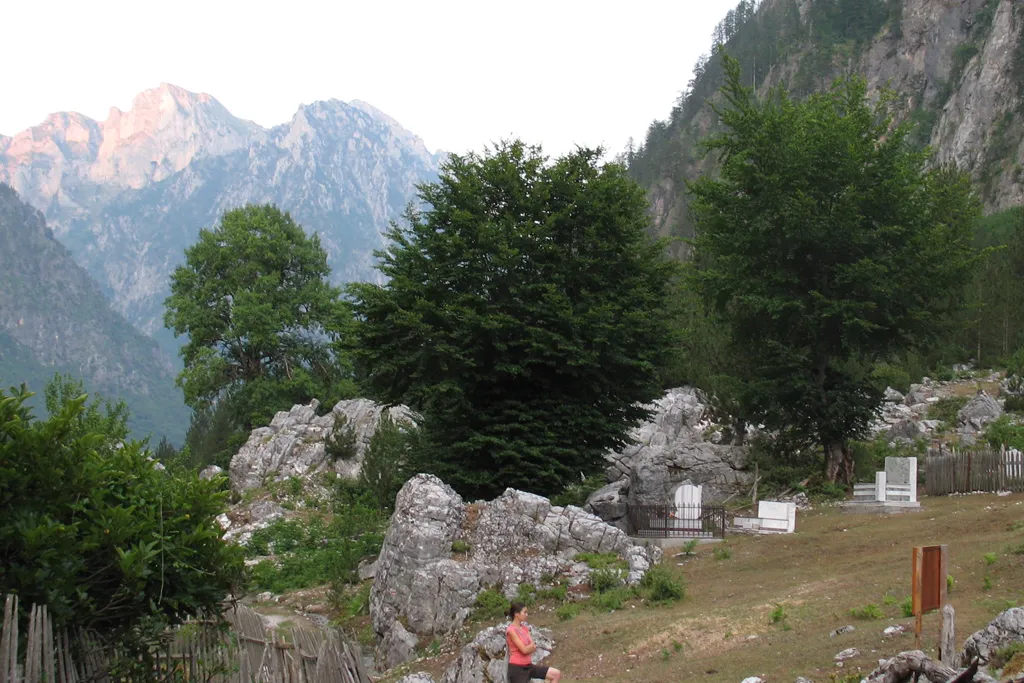
The Albanian Alps are the most seasonal place in the country, and their season is the shortest and the most absolute. The high trails, including the classic Valbona-to-Theth crossing, are a summer proposition, broadly mid-June to late September, when the pass is snow-free and the guesthouses at both ends are open. Outside that window the pass closes, many guesthouses shut, and the crossing should not be attempted in snow or bad weather. Within the window, the character changes month by month: late June brings the longest days and the greenest valleys, with the sea still warming far below; July and August bring the fullest trails and the fullest guesthouses; September brings quieter trails, warm days and the season’s end, with the crossing still open but the margin for bad weather narrowing. For the Alps, September’s virtue is quiet, and June’s virtue is length of day — and the choice between them is a matter of taste rather than of quality.
The north beyond the high trails has a longer season than the crossing itself, and that matters for trips that want the mountains without the pass. Shkoder, the northern gateway city, works year-round: its lake plain, its castle hill and its cycling old centre belong to no season, and its winter carnival gives the cold months their own reason to visit. The valley villages of Valbona and Theth can be visited as places outside the crossing season, and the lower walks — the Grunas waterfall walk from Theth, the valley paths, the Koman Lake ferry as a day trip through the fjord-like lake — extend the mountain season on both sides of the high window. What does not extend is the crossing itself, and the distinction between visiting the Alps and crossing them is the most useful seasonal distinction in the north. A spring or autumn trip can have the mountains as a backdrop and a valley walk; only a summer trip can have the pass.
The practical rules for the Alps season follow from its brevity. Book the guesthouses ahead — they are small, family-run and finite, and in season they fill. Build flexibility for weather into the mountain days, because a single storm can close a pass that was open the day before, and put the mountain days early in a trip rather than last, so that a delay does not cascade into a missed departure. And respect the season’s edges: a May trip should plan the south and treat any Alps day as a bonus, while an October trip should plan the valleys and treat the crossing as already done for the year. The Alps reward the traveller who meets them on their own terms, in their own window, and no other season in Albania punishes the traveller who ignores its calendar quite so firmly.
Tirana and the Historic South Through the Year
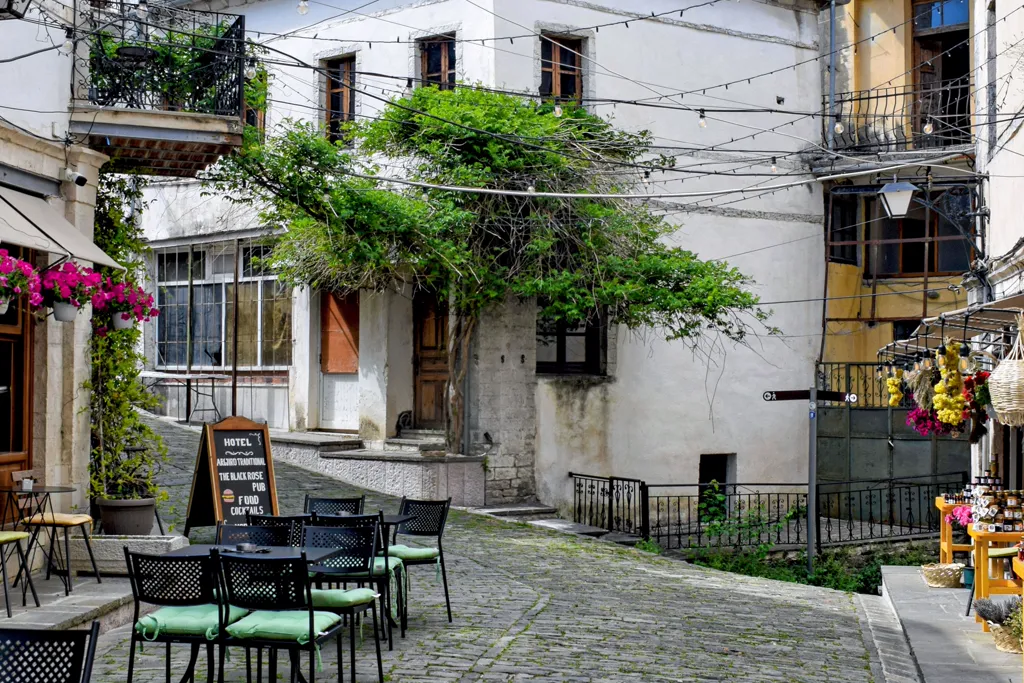
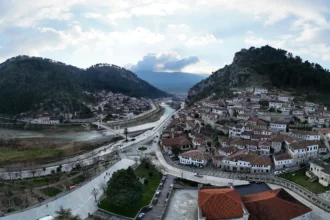
Tirana and the historic south — Berat, Gjirokaster, and the archaeological sites of the far south — are the least seasonal part of Albania, and that is precisely their value. Tirana works in every month: its museums, its cafe culture, its Blloku district and its cable car up Mount Dajti belong to no season, and the city’s character shifts rather than closes with the weather. In winter Tirana is mild and empty, with January averaging 7.1°C; in spring it is green and lively; in summer it is hot at midday and best in the mornings and evenings; in autumn it is golden and comfortable. The same is broadly true of Berat and Gjirokaster, whose stone lanes are walkable in every month and at their best in the mild months — April, May, September and October — when the stone holds warmth without baking and the evening promenade is at its most local. For a trip built on places rather than beaches or trails, the old towns remove the seasonal gamble altogether.
That does not mean the south has no seasonal shape. The archaeological sites have their own rhythm: Butrint, in its wooded lagoon-side setting, is at its best in spring and autumn, when the shade is a pleasure rather than a refuge and the crowds are thin; in July and August it is hot, exposed in parts, and best visited first thing in the morning. The wine country of the south — the hills around Berat and Permet — comes alive in the harvest season from late September into October, when the vineyards are working and the food is at its seasonal best. And the southern towns share the coast’s winter quiet without sharing the coast’s winter closure: their restaurants, guesthouses and museums stay open through the year in a way the beach businesses do not. A winter trip built on Tirana, Berat and Gjirokaster is not a consolation trip. It is a complete trip of a different kind, and for travellers who prefer their history without crowds, it may be the better one.
The seasonal advice for the south is therefore simple, and it inverts the advice for the coast and the mountains. Come in spring or autumn for the towns at their finest, come in winter for the towns to yourself, and come in summer prepared to sightsee in the mornings and evenings while the middle of the day belongs to shade. The old towns are the ballast of any Albanian itinerary: they hold the trip steady when the beach season or the mountain season is not cooperating, and they are the reason a trip in any month can still be a good trip. Build the itinerary around them, and the season becomes a flavour rather than a fate.
Choosing by Activity – Hiking, Beaches and Festivals
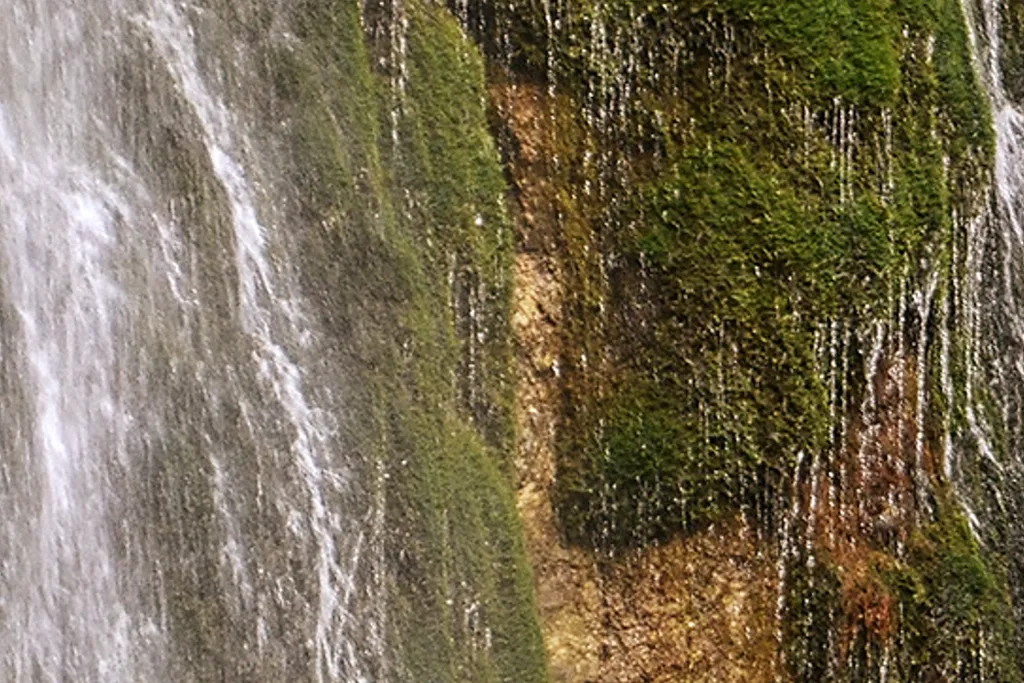
If the guide so far has argued by month and by region, this section argues by activity, because most trips are really organised around one thing the traveller wants to do. For hiking, the answer splits by altitude. High hiking — the Valbona-to-Theth crossing and the high routes of the Albanian Alps — belongs to mid-June to late September, with September the quietest and June the greenest of those months. Lower hiking — the Llogara hills, the Bovilla Lake trails outside Tirana, the valley walks around Theth and Valbona, the coastal paths between Riviera villages — belongs to a much longer season, from April through October, with spring and autumn the finest months for it. The mistake is to treat “hiking in Albania” as one activity with one season: the high routes and the low routes are different sports with different calendars, and a trip that wants both should come in September, when both are open, or in June, when both are green.
For beaches and swimming, the answer is simpler and shorter. The sea is a swimming proposition from June to early September, with the warmest water in late August and September and the quietest beaches in June and September. May offers beautiful bays and a sea still warming; October offers warm days and a sea cooling, with the beach businesses closing through the month. The best beach month depends on what the traveller values more: June for space and green hills, September for warm water and thin crowds, July and August for energy and full resort life. Ksamil’s famous bays are at their best out of August, and the Riviera’s quieter coves reward the early starter in every month of the season. For a beach trip alone, without mountains or old towns attached, the choice narrows to June or September, and September’s warm water gives it the edge.
For festivals and cultural life, the calendar is the most scattered of the three, and it rewards a traveller who plans around a date rather than a season. Summer Day on 14 March and Nevruz on 22 March open the spring; the National Folklore Festival takes place in Gjirokaster’s castle, a gathering of the country’s folk traditions in the town that best displays them; Shkoder’s winter carnival gives the cold months their celebration; and the grape harvest from late September into October turns the wine country into a working landscape rather than a view. None of these alone justifies a trip, and all of them enrich one — which is the right way to use festivals in planning. Pick the season for the trip’s main purpose, then check whether a festival falls inside it, and let the festival colour the days rather than dictate them. The one exception is the harvest: a September trip that stretches into October catches it naturally, and it is the seasonal event most worth stretching a trip to meet.
The Short Version
Pick the trip by its purpose, not by a single best month. September if you want the whole country at once — warm sea, open trails, walkable towns, thinner crowds. Late May or June if you want the south at its freshest and greenest, with the Alps as a bonus rather than a promise. Mid-June to late September if the high trails are the reason for the trip, with the beach as the reward afterwards. Spring or autumn if the old towns and the cities are the trip, winter if you want those same towns to yourself. And never the Alps outside their summer window, never the beach in winter, and never August in Ksamil without an early start and a quieter bay in reserve.
Two decisions matter more than everything else combined. The first is the honesty about what the trip is for — beach, trail, town or festival — because Albania’s seasons serve those purposes in almost opposite months. The second is the placement of the weather-dependent days: mountains early in the trip, beach late, and the whole plan built with enough slack for a storm, a closed pass or a cloudy day on the coast road. Everything else — which beach, which guesthouse, what order inside a town — can safely be settled on the day. The routes, seasons and transport that turn this timing into a trip are set out in full in our Albania travel guide.