Three days is the most common length of a first Marrakech trip, and the most commonly wasted. A good marrakech itinerary 3 days is not a shorter version of a week – it is a different shape of trip, one that accepts from the start that the city cannot be completed, only understood. Marrakech rewards understanding disproportionately: one medina day done slowly teaches you how the old city works, one garden day shows you the Marrakech Moroccans built for pleasure, and one day of choice – mountains or a second, slower medina day – tells you which traveller you actually are. This plan is built on that logic, and it is honest about the cost of every choice it makes.
The honesty matters because Marrakech is a city that punishes over-scheduling physically. The medina is dense, hot for much of the year, and navigated on foot through lanes that do not run straight; the headline sights sit in two clusters a real distance apart; and the single most famous experience in the city – Jemaa el-Fnaa at dusk – happens at a fixed hour that organises everything before it. An itinerary that ignores those facts produces the classic failed Marrakech trip: five monuments a day, each seen through exhaustion, and a traveller who leaves describing the city as an ordeal. The marrakech itinerary 3 days below is sequenced so that no day asks that of you. Each day has one centre of gravity, one deliberate rest built into it, and one evening worth remembering.
Two ground rules before the days themselves. This guide prints no prices – not for tickets, taxis, tours or meals – because Marrakech prices move with season and negotiation, and a printed figure copied from page to page is how misinformation reproduces; where a venue’s own official site settles a practical question (how its tickets are sold, which day it closes), the guide says so and names the source. And it works as a standalone city break or as the opening of a longer route: readers building a week or more should start with our Morocco travel guide, which covers the country’s regions and onward routes; this page assumes Marrakech itself is the destination, and spends all three days earning that assumption.
Marrakech Itinerary 3 Days at a Glance
| Day | Centre of gravity | The day in one line | Evening |
|---|---|---|---|
| Day 1 | The medina core | Koutoubia and the square by day, the souks, Bahia Palace, the Saadian Tombs and Ben Youssef Madrasa | Jemaa el-Fnaa at dusk and the night stalls |
| Day 2 | Gardens and the new city | Jardin Majorelle and the YSL Museum in the morning, Menara and Gueliz at an easy pace | A hammam, then an unhurried dinner |
| Day 3 | Your choice | Option A – the High Atlas and the Ourika Valley as a full day trip. Option B – a slow second medina day – the Mellah, El Badi and a cooking class | A last rooftop evening, or an early night before departure |
Read the table as a rhythm, not a checklist. Day 1 is the intense day – the medina at full strength, taken while your energy and curiosity are at their peak. Day 2 is deliberately lighter in texture: gardens, water, modern avenues, a bathhouse – the counterweight the first day earns. Day 3 belongs to you, and the choice is real rather than decorative: the mountains change the trip’s subject entirely, while the slow medina day deepens the one you have been having. Either completes a marrakech itinerary 3 days honourably; trying to do both in one day completes neither.
One structural warning belongs in the glance, because it shapes the days below. This plan assumes three full days in the city – arriving the evening before day 1, or early enough on day 1 that the morning still exists. If your flights give you two and a half days, the honest cut is not to compress each day but to drop one element whole: day 3’s options both survive being halved badly, so choose the slow medina morning from option B and let the mountains go, or protect the Atlas day and merge days 1 and 2’s evenings. The arrival section below works through the arithmetic properly.
Where to Base Yourself for Three Short Days
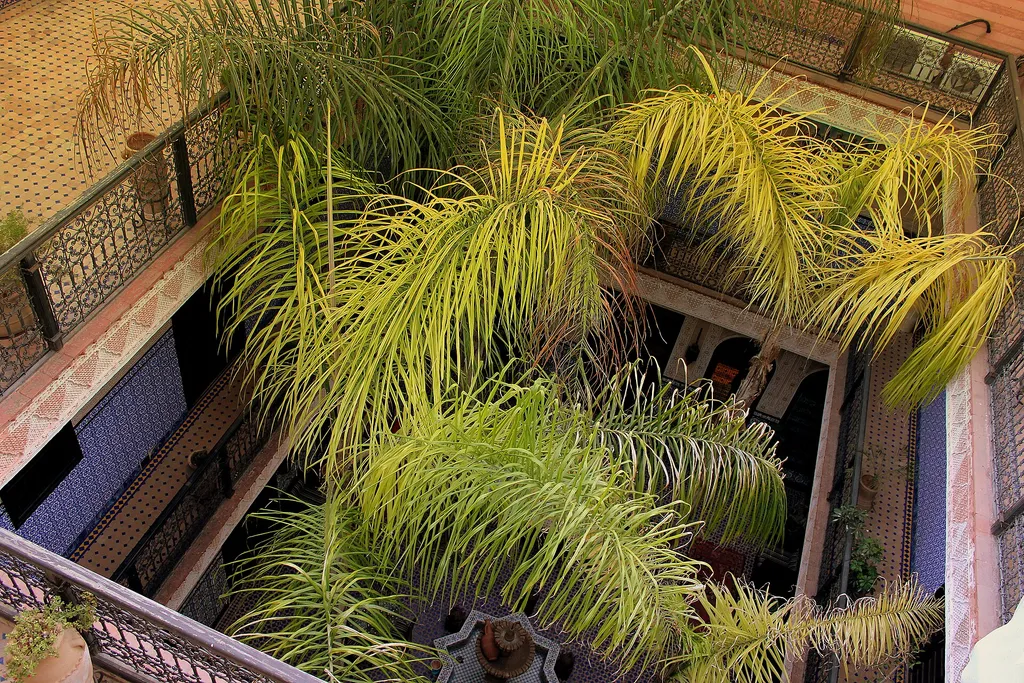
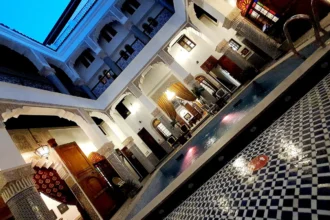
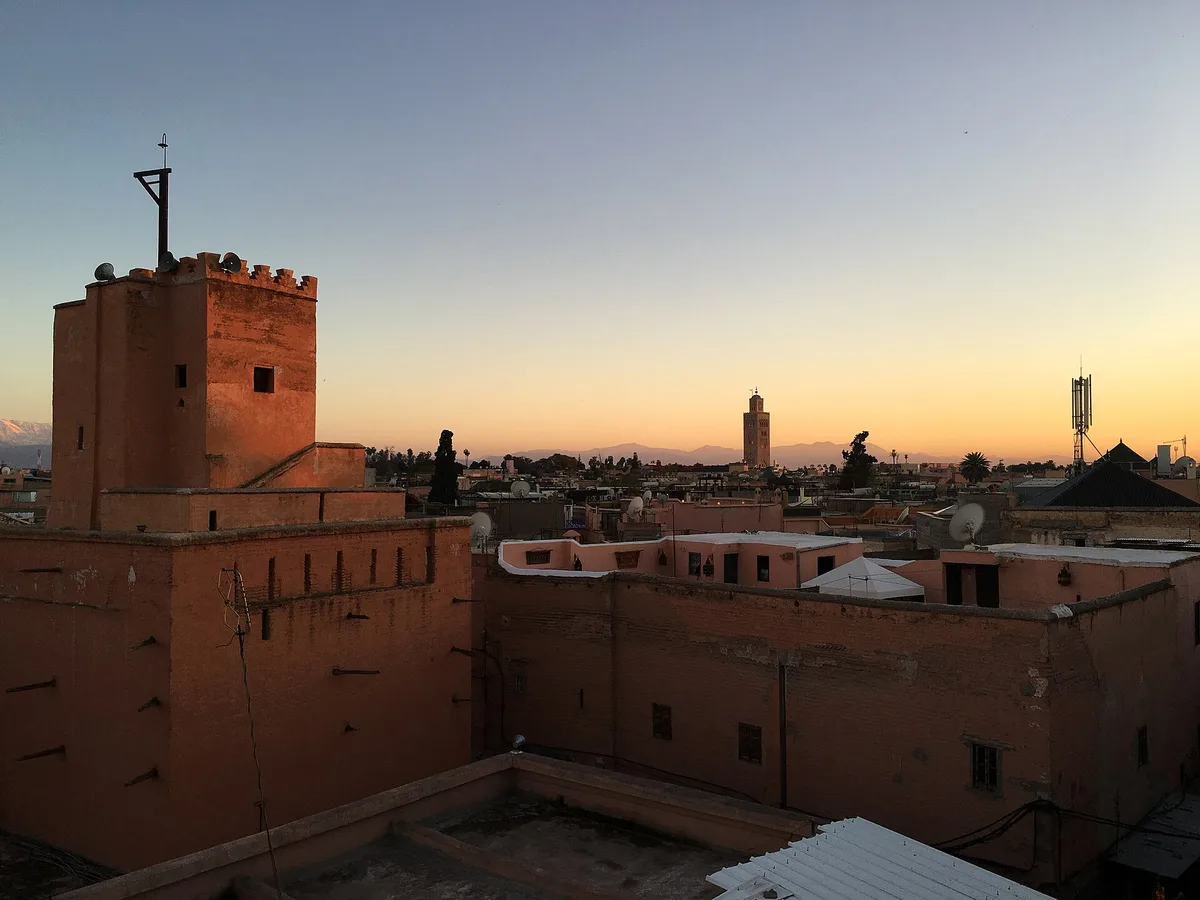
With three days, your address is a tactical decision, because every transfer across Marrakech is time taken from a short trip. The choice is between the medina and the new city, and each has a clean logic. The medina – in a riad, the traditional courtyard house converted to a guesthouse – puts day 1 entirely on foot: the square, the souks and the palace quarter all radiate from where you sleep, and the evening walk home from Jemaa el-Fnaa is through lamplit lanes rather than in a taxi queue. The price of that immersion is navigation: riads hide down derbs, the narrow residential alleys that cars cannot enter, so your last stretch is always on foot, with luggage carried or carted from the nearest drop point. For a three-day trip, arrange the riad’s own transfer or escort for arrival; after the first walk, the route home becomes familiar faster than you expect.
Gueliz, the new city built west of the medina walls, offers the opposite trade: conventional hotels on wide avenues, easy taxi access, cafés and the railway station quarter, and the Majorelle garden within a short ride. What it costs is atmosphere and footsteps – every medina sight becomes a journey in and out, and the city you experience between sights is the modern one. Hivernage, the hotel district south-west of the medina near the Koutoubia, splits the difference for larger hotels: walkable to the square, taxi-simple for everything else.
For most first-time visitors on a marrakech itinerary 3 days, the medina riad wins – days 1 and 3B are the heart of the trip and both are medina days – with one exception: travellers who know that intense old-city streets at night are not their pleasure, or who arrive and depart at awkward hours with heavy luggage, will be happier in Gueliz or Hivernage and should take the taxi time as a fair price. Whichever you choose, choose once and stay put: with three nights, changing hotels costs half a day in packing, transfers and re-orientation, and no upgrade of room is worth a sixth of your trip.
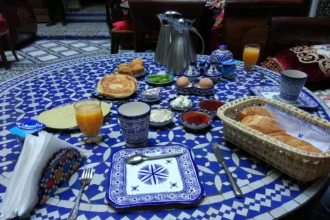
Breakfast deserves a sentence in any base discussion, because it sets each day’s clock. Riad breakfasts are served in the courtyard or on the roof – msemen and baghrir flatbreads, eggs, olives, cheese, honey and mint tea – and are unhurried by design; if your day has a timed ticket, as day 2 does, tell the riad the evening before and breakfast will move earlier without drama. Hotel breakfasts in the new city are faster and earlier by default. Either way, eat it: the medina does not offer a convenient second chance before midday.
Arrival and Departure Without Losing Half a Day
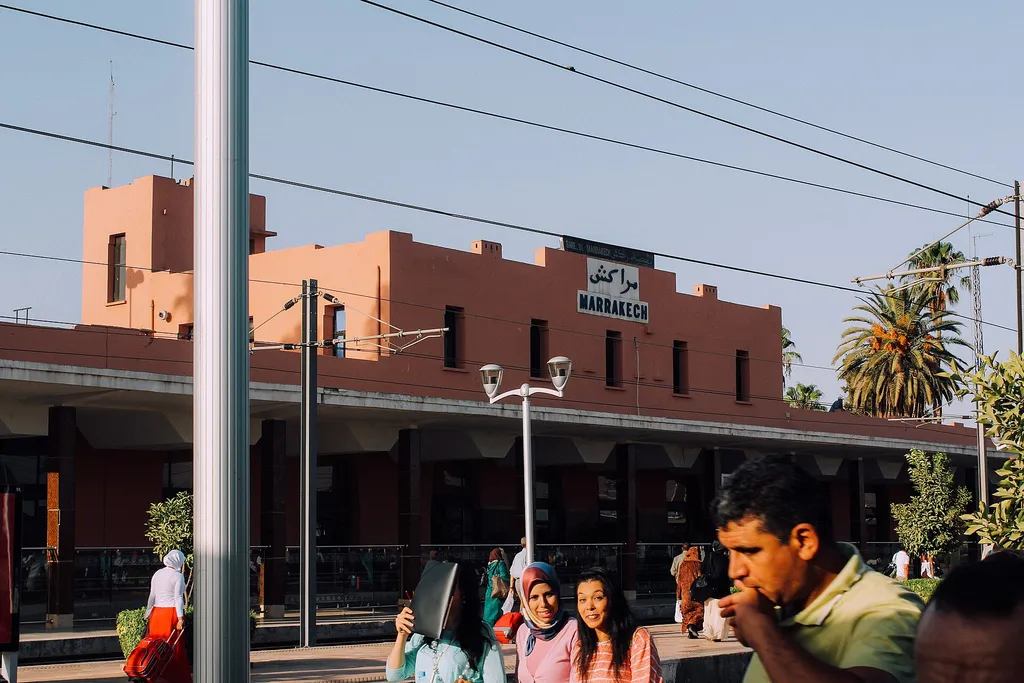
Most visitors arrive through Marrakech Menara Airport, west of the city, or by train at the station in Gueliz – the building in the photograph, all ochre render and shaded platforms, is the terminus for travellers coming down from Casablanca or up from the south. Either way, the arrival that protects a short trip is the pre-arranged one. If you are sleeping in the medina, have the riad send its driver or a trusted transfer: the driver meets you, the car stops at the medina edge, and someone who knows the derbs walks you the last stretch to a door you could not have found alone. That escort is not a luxury on a three-day trip; it is the difference between starting day 1 rested and starting it after a hot, lost hour with luggage.
Taxis are the other mechanism, and they work by two rules a first-timer should know. Marrakech’s small taxis – the petits taxis you will use for the Gueliz and Majorelle runs – are metered, and the meter is the fair price; if a driver prefers a fixed fare, agree the amount before the car moves, calmly and with the destination named, or take the next taxi. At the airport and station, ranks are organised and the system functions; the travellers who overpay are the ones who accept the first offer made inside the terminal. None of this requires suspicion – it requires one sentence of clarity before the journey, which is the whole of Moroccan taxi craft.
Departure logic is the mirror. On your last day, the question is whether the flight or train leaves you a usable morning. A late departure turns day 3 into a genuine third day, and either option in this plan can be taken whole. A midday departure quietly converts day 3 into a morning: take option B’s slow medina start – one palace, one long breakfast, the souks for the shopping you deferred – and leave the Atlas for a longer trip, because a mountain day with a departure hanging over it is neither. An early departure means the trip is really two days plus evenings, and the honest adjustment is to move day 2’s garden morning into the day-1 slot’s afternoon only if you must; better is to accept two full days done well, which is more of Marrakech than most visitors ever get.
Finally, build the buffer the city asks for. Medina traffic, a taxi negotiation, a lane that ends at a closed gate for prayers – small frictions are the texture of the place, and an itinerary with no slack experiences them as failures. The days of this marrakech itinerary 3 days are sequenced loosely on purpose – sights within each day can swap order without breaking anything except day 2’s ticketed morning, and every day ends somewhere worth being if the last sight is skipped entirely.
Day 1 Morning – Koutoubia and the Square Before the Heat
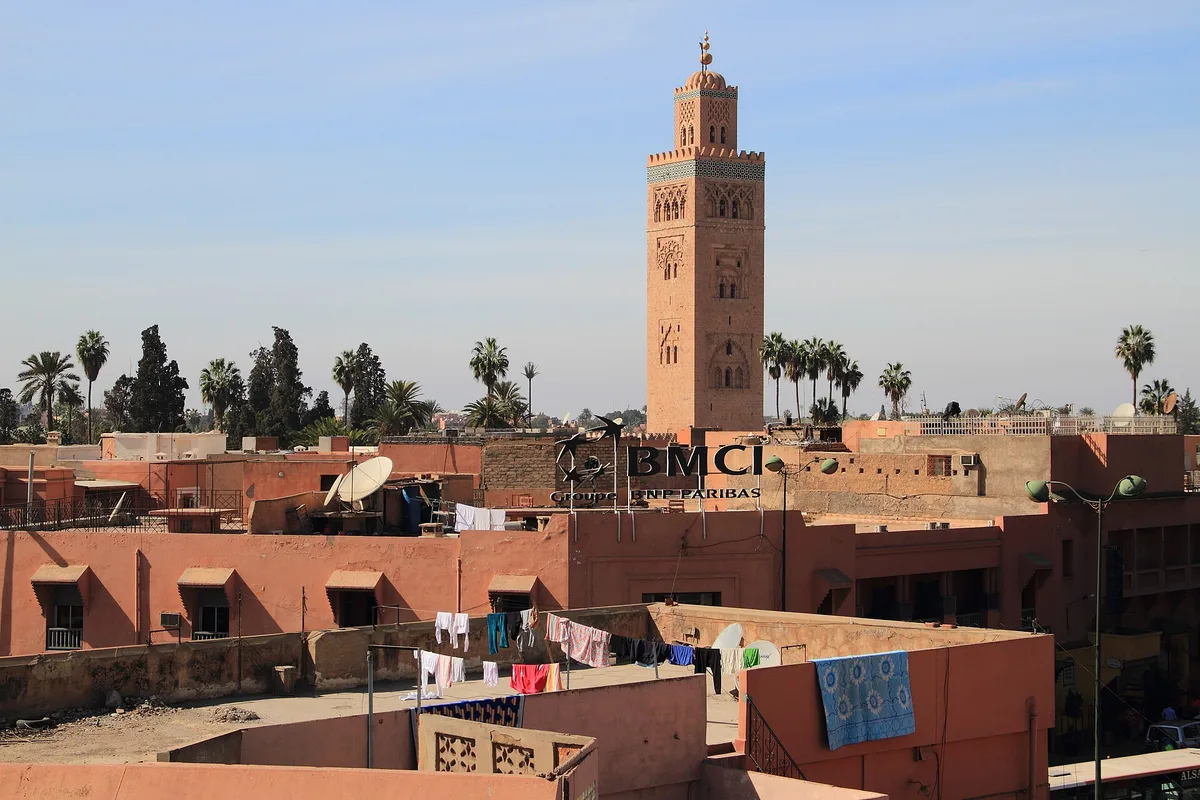
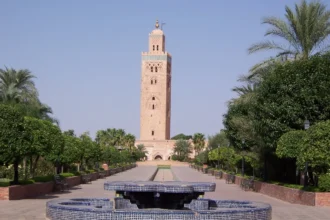
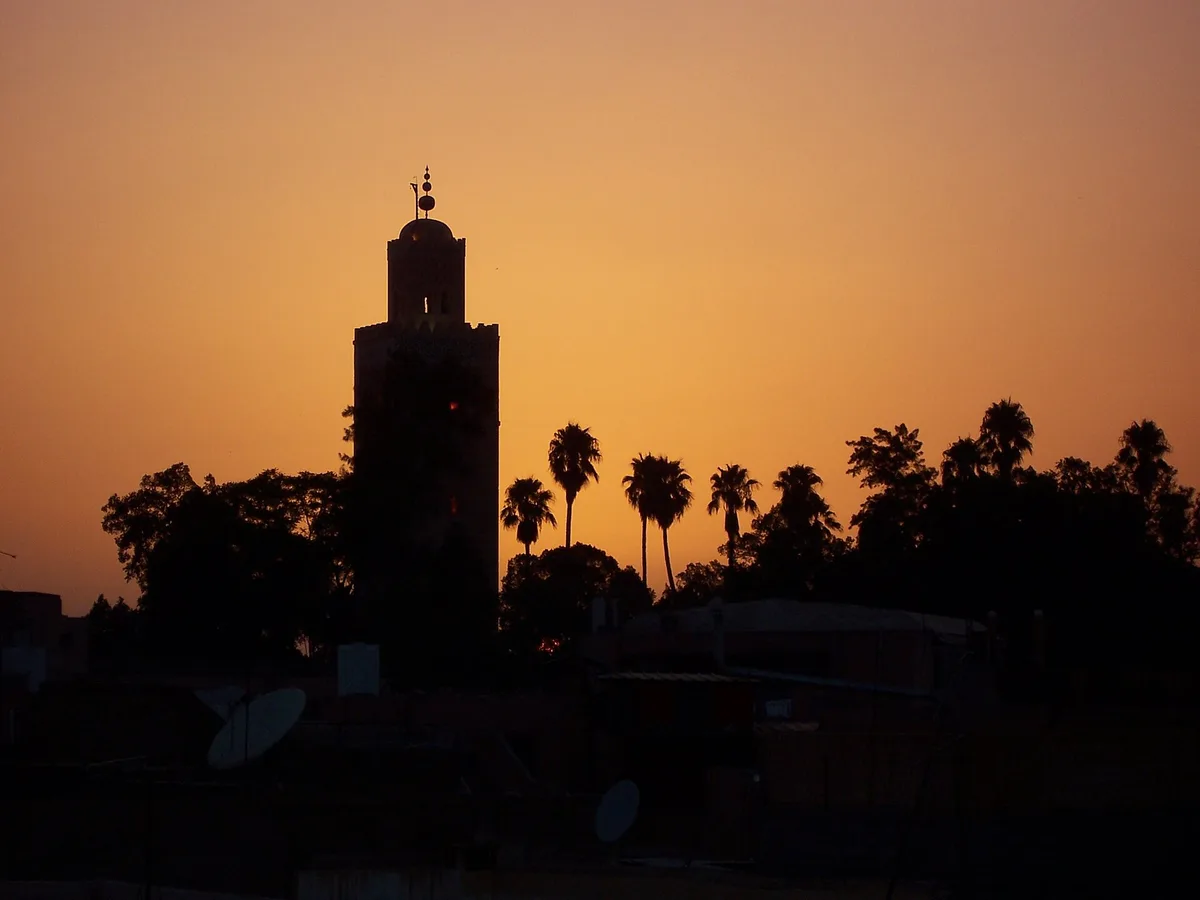
Start day 1 at the Koutoubia, and start it early. The mosque stands at the medina’s western edge, a short walk from Jemaa el-Fnaa, and its minaret – the tower in the photograph, rising over the rooftops – is the reference point for the whole old city: every time you surface from the souks disoriented today, it tells you where west is. UNESCO’s listing for the Medina of Marrakesh, inscribed as a World Heritage Site in 1985, describes a city founded in 1070-72 by the Almoravids and names the Koutoubia among its defining monuments, its minaret given there as 77 metres – the Almohad tower that later minarets across the Maghreb were modelled on. Non-Muslims do not enter Moroccan mosques, the Hassan II Mosque in Casablanca being the country’s famous exception, so the Koutoubia is an exterior sight: walk its gardens, read the tower from several angles, and let the visit be a calibration rather than a tour. That is the right register for a first morning – Marrakech announces itself from outside its monuments before it lets you inside them.
From the Koutoubia, cross to Jemaa el-Fnaa while it is still itself. In the morning the great square is a working space rather than a spectacle – juice carts setting up, café terraces filling with the day’s first tea, the edges given to ordinary traffic – and seeing it quiet is what makes the evening transformation intelligible. Take a coffee or a juice at a terrace on the square’s edge and use the pause properly: look north into the souk entrances, south towards the Kasbah, and fix the geography in your head. Day 1 moves in a rough loop from this point – north into the souks, then south to the palaces, then north again to Ben Youssef, then back here for dusk – and the loop only feels manageable if you have seen its centre calmly first.
Do not try to shop, sightsee and orient all in this first hour. The morning’s work is sequence, not coverage: Koutoubia, square, coffee, bearings. Everything else in the medina runs more smoothly for the rest of the marrakech itinerary 3 days once the map is in your legs rather than on your phone – the medina’s lanes defeat satellite navigation politely and often, and a traveller who knows that the square is downhill and the minaret is west navigates better than one following a blue dot down a dead-end derb.
Day 1 Late Morning – Reading the Souks Without Drowning in Them
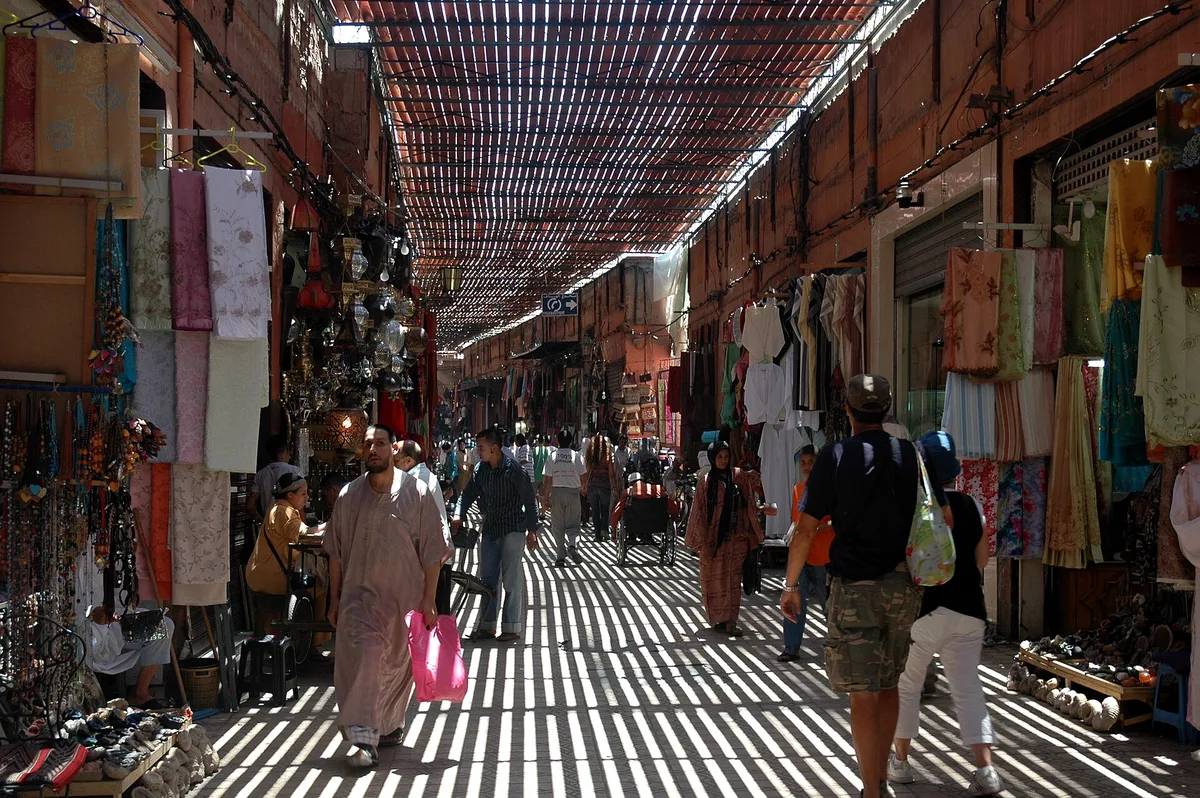
North of Jemaa el-Fnaa, the souks begin – and “the souks” is the first thing to unlearn. This is not one market but a city of specialised streets, organised by trade as medina markets have been for centuries: the covered Souk Semmarine, the lane in the photograph, runs as the main artery with textiles and general goods, and around it the trades separate – dyers with their coloured skeins, metalworkers around Souk Haddadine, leather in one quarter, carpets, slippers, spices and lanterns each in their own ground. The logic matters practically: if you want ceramics, you are walking to a particular district, not browsing randomly, and a shopkeeper’s directions to another trade’s street are usually genuine geography rather than deflection.
With one late morning, give the souks structure rather than hours. Walk Semmarine end to end as the spine, branch once into a trade street that matches something you actually want, and treat the rest as scenery to be read – the workshops behind the shops, goods being made in the lanes where they are sold, are the souks’ real exhibit and they are free. Save serious buying for day 3’s slow morning, when you will know prices’ shape, your luggage’s limits and your own resolve; day 1 purchases are how travellers come to own a carpet by accident. If you do buy, buy the small perfect thing rather than the large negotiable one, and understand the negotiation for what it is – a social form with rules: counter calmly, walk away smiling if the gap is real, and never begin bargaining for something you do not want at the price you are about to name.
Getting lost is part of the morning and should be budgeted as such. The lanes loop, rename themselves and deliver you to small squares you have never seen; the recovery method is always the same – walk towards busier lanes, ask for Jemaa el-Fnaa or a landmark, and accept the escort of the helpful stranger with the awareness that a shop may feature at the journey’s end. None of this is dangerous; it is the medina’s ordinary weather. What the souks ask of a traveller on a short trip is not mastery but tempo: slow enough to see the making, brisk enough to be out before the midday heat and the crowds peak together.
Day 1 Afternoon – Bahia Palace and the Saadian Tombs in the South Medina
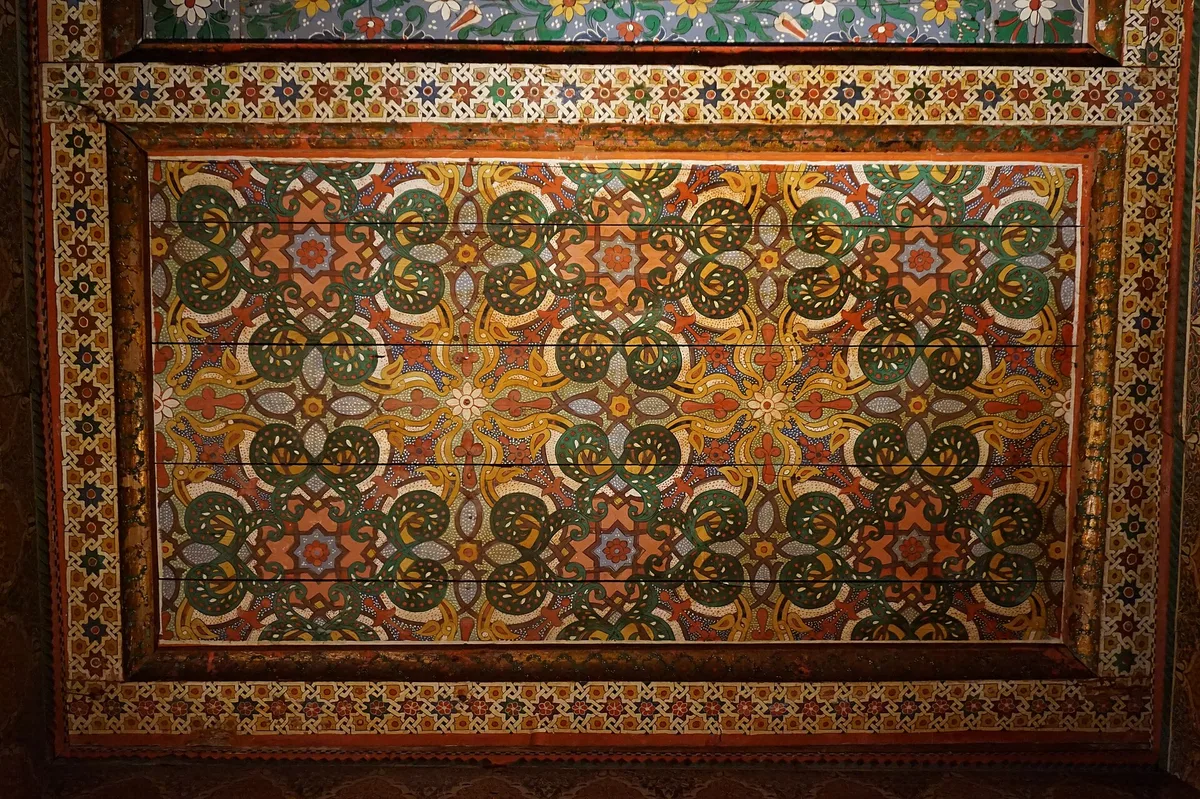
After lunch and a rest out of the heat, walk south. The Bahia Palace is the medina’s grand interior: a 19th-century palace built for the vizier Si Moussa and expanded by his son Ahmed ben Moussa, known as Ba Ahmed, who effectively ruled Morocco in the 1890s. What survives is a procession of courtyards and reception rooms layered with the full vocabulary of Moroccan craft – zellige tilework like the panel in the photograph, carved and painted cedar, sculpted plaster, marble underfoot. Go in the afternoon, when the morning’s tour groups have thinned, and give it unhurried time: the palace rewards slow looking at surfaces more than fast coverage of rooms, and its shaded courtyards are a genuine rest in the middle of a walking day. Tickets are bought at the palace through its official channels – at the entrance or the official online route where offered; this guide prints no figure, because palace admission is set officially and changes, and the amount is a small part of any trip budget in any case.
A short walk west, in the Kasbah quarter, the Saadian Tombs hold the opposite register: the medina’s grand exterior gives way to its most intimate interior. The tombs are the burial ground of the Saadian dynasty, centred on the mausoleum of Sultan Ahmad al-Mansur, who reigned from 1578 to 1603 – the sultan who built El Badi, which you will meet on day 3. The main chamber, ringed by twelve marble columns under carved cedar and stucco, is small, exquisite and seen from a doorway rather than entered, which makes the visit short and the queue the variable: the tombs are the one day-1 sight where arriving mid-afternoon, as the day’s crowds drain, changes the experience entirely. The gardens around the lesser tombs are quiet, green and stork-patrolled – take the ten unplanned minutes there; day 1 is long, and this is its still point.
The two visits pair deliberately. Bahia shows the Moroccan palace as the 19th century perfected it – craft in the service of a courtier’s ambition; the tombs show the 16th-century sultan’s version – craft in the service of eternity. Between them, the Mellah and the Kasbah streets you walk are the south medina’s daily life, and the walk itself, past the Kasbah Mosque and through the Bab Agnaou quarter, is part of the afternoon rather than transit between sights.
Day 1 Late Afternoon – Ben Youssef Madrasa, the Medina’s Masterpiece
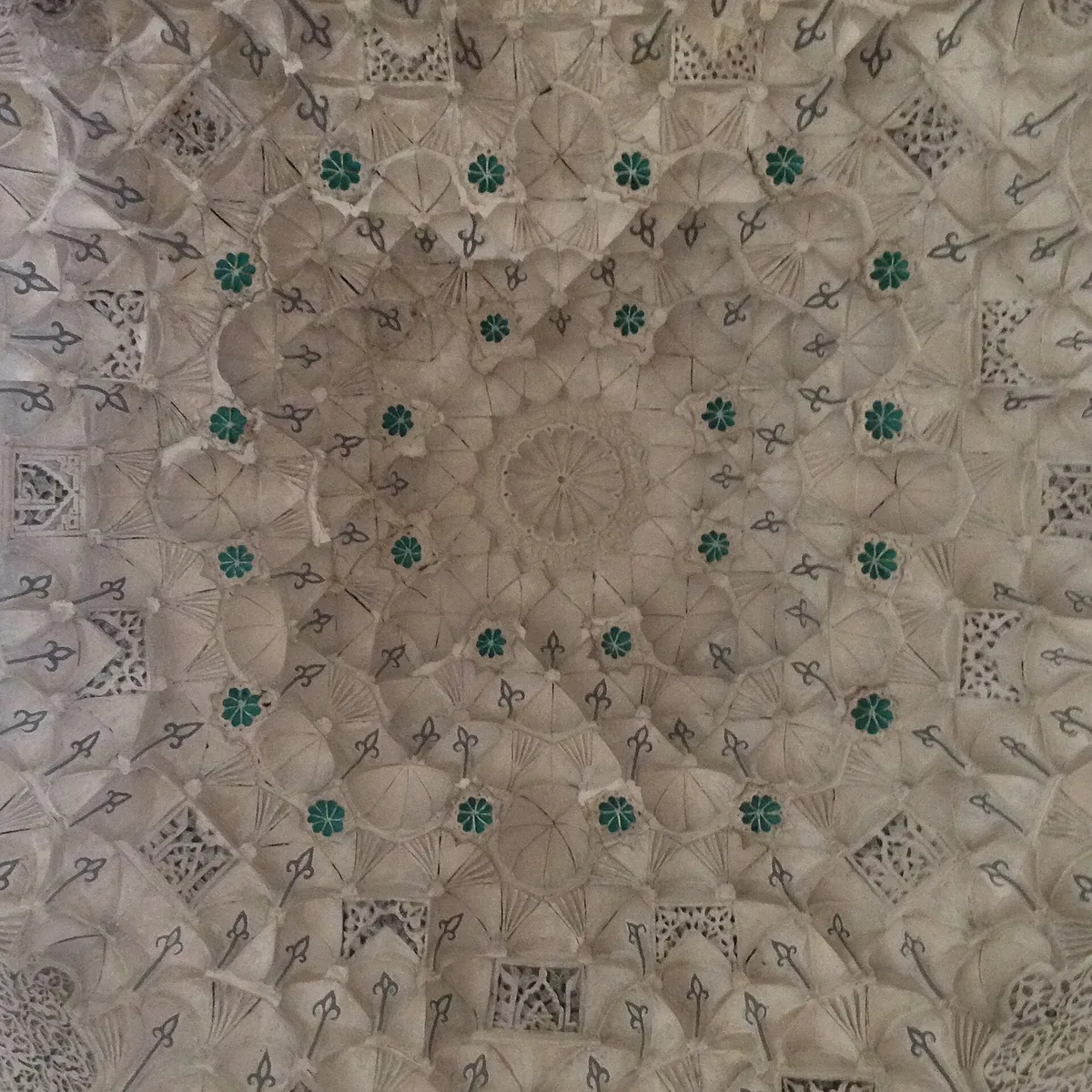
Cross back north – a taxi across the medina’s edge or the long walk through it, both legitimate – to the Ben Youssef quarter, and keep the day’s best interior for its best light. The Ben Youssef Madrasa was a Quranic college, rebuilt in the 1560s under the Saadian sultan Abdallah al-Ghalib beside the mosque of the same name, and it is the single most accomplished building in the medina: a courtyard of almost severe symmetry – ablutions pool, carved stucco, zellige and cedar in balance – ringed by more than a hundred small student cells. The alcove detail in the photograph is the building in miniature: every surface worked, nothing loud. Late afternoon flatters it twice over, softening the courtyard’s glare and emptying it of the midday groups, and a short-trip traveller who sees only one historic interior in Marrakech should make it this one.
The madrasa also teaches the medina’s scale honestly. The students’ cells are tiny, the courtyard is a stage set for communal study, and the whole college sits folded into a quarter of mosques, fondouks and lanes that you would walk past without seeing a door. Around it, the Ben Youssef quarter is the north medina at its most lived-in – come out into its lanes slowly, with the late day cooling, and let the walk back south towards the square be unscripted. This is the hour the medina does its daily exhale, workshops closing, bread moving through the lanes for dinner, and the traveller who has done the day’s monuments in order has earned the drift.
One discipline closes the sightseeing day: be back at Jemaa el-Fnaa before sunset, not after. The square’s transformation is a process with a beginning worth witnessing, and the next section is the evening this whole day has been building towards. If the madrasa runs long, shorten the drift, not the square.
Day 1 Evening – Jemaa el-Fnaa at Dusk, the Square Transformed
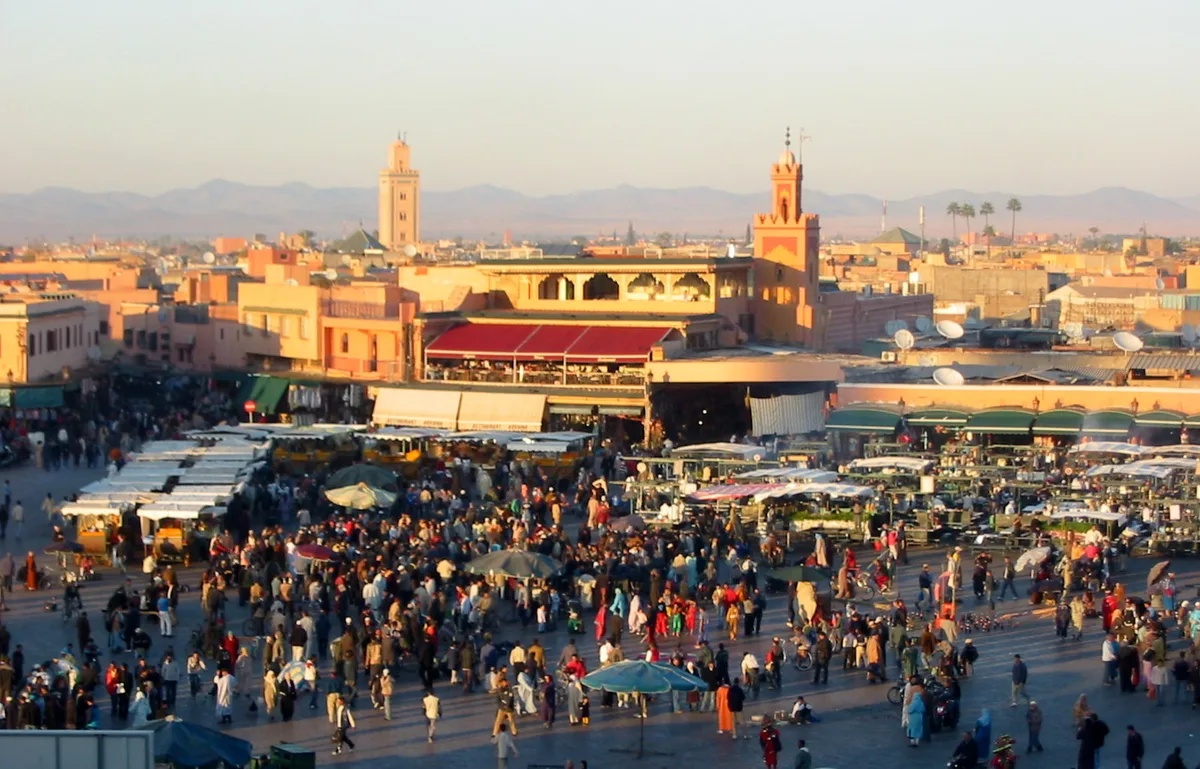
At dusk Jemaa el-Fnaa changes state, and a marrakech itinerary 3 days lives or dies on whether you are standing in it when it does. The day’s performers – storytellers in their halqa circles, musicians, acrobats, the Gnawa troupes – hold the open ground while, along the square’s centre, the night food stalls assemble in rows of numbered grills, each with its benches, its cook and its rising column of smoke. UNESCO recognised the square’s cultural space on its intangible heritage lists, and standing in it at the changeover explains why better than any citation: this is a theatre, a restaurant and a public living room that have shared one piece of ground for centuries, and the evening crowd – Marrakchis in force, not only visitors – is the proof that it still belongs to the city.
Watch the transformation in two acts. First, from a terrace: the café balconies around the square exist for this hour, and one drink buys the panorama – the smoke rising, the minaret catching the last light, the stall rows switching on. Then go down into it. Working the night stalls is a learnable skill and the method is simple: walk a full lap before committing, choose the stall full of Moroccan families with the grill busy and the cook working rather than pitching, sit, and order in rounds – soup or a few skewers first, more if the first round earns it. Agree what things cost before they are cooked; at the established stalls this is a brief, normal conversation, and printed menus are common. Remember your stall’s number – it is how the meal will be identified for years.
Resist two things: the photograph negotiations you did not ask for – a snake or a monkey placed on a shoulder is a transaction, and a firm, smiling refusal ends it – and the urge to document instead of eat. The square at night is the medina day’s reward and the strongest single memory most visitors take from Marrakech. Let dinner run long, let the drums set the tempo, and walk home through the lit lanes with day 1 complete: the city has shown you its public heart, and everything in the next two days is commentary on it.
Day 2 Morning – Jardin Majorelle and the Yves Saint Laurent Museum
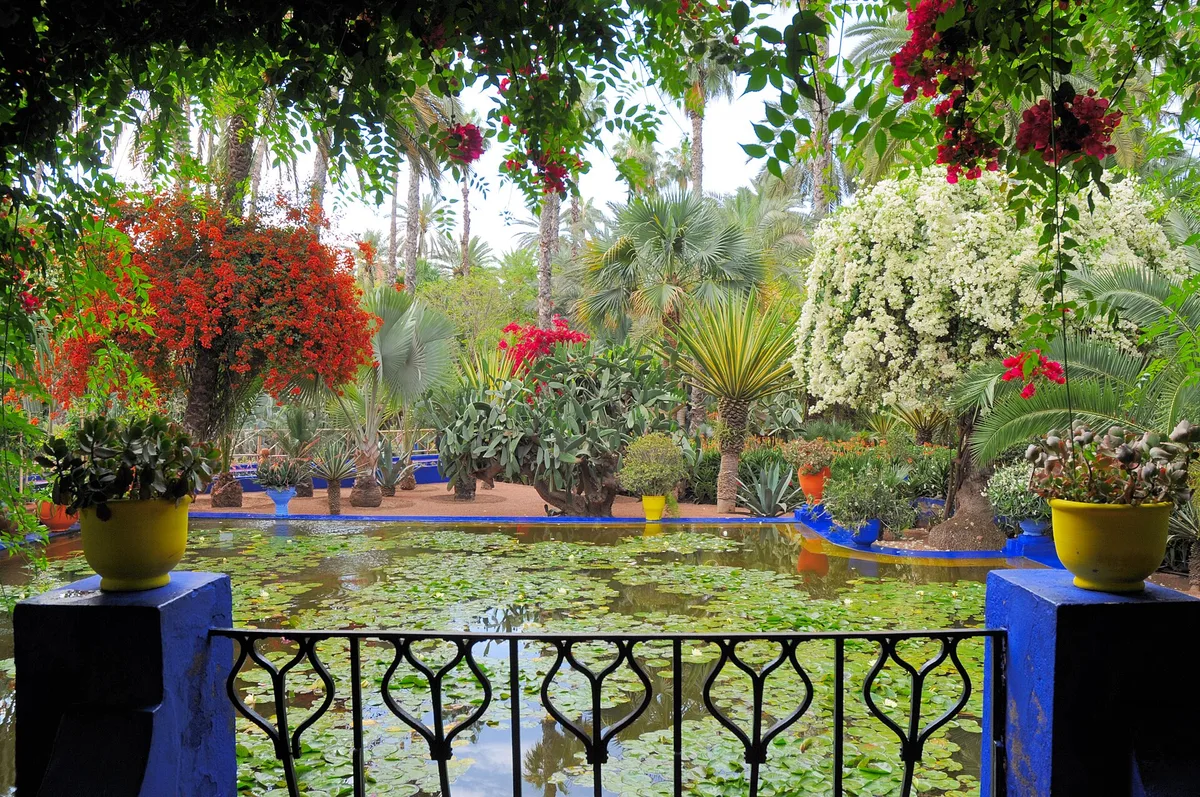
Day 2 leaves the medina for the garden Marrakech is photographed by. The Jardin Majorelle, in the new city’s Majorelle quarter, was created by the French painter Jacques Majorelle, who bought the land in the 1920s and built the garden over some forty years around his Cubist villa – the famous Majorelle Blue studio at its heart. After his death the garden fell towards ruin, until Yves Saint Laurent and Pierre Bergé bought it in 1980 and restored it; the painter’s studio now houses the Pierre Bergé Museum of Berber Arts, and Saint Laurent’s ashes are scattered in the garden. What survives is a painter’s composition in plants: cacti and palms, bougainvillea against blue walls, painted pots in yellow and turquoise, water moving quietly between beds – the pond in the photograph gives the register. It is a small site that crowds quickly, which is why the morning matters more here than anywhere else in this marrakech itinerary 3 days.
The practical facts are few and they genuinely change the day, so here they are from the source. The garden’s official site (jardinmajorelle.com) states that tickets are sold only online, through its own official ticket site, which issues the QR code used for entry – there is no buying your way in at the gate as a walk-up, and the site warns that tickets from unauthorised sellers will not be accepted. Book the earliest slot of your day, on the garden’s official site, before you travel if your dates are fixed. The same source gives the garden’s hours as every day from 8:00 in the morning to 5:30 in the afternoon, last entry at 5:00, and the Berber Arts Museum inside it from 8:30 to 5:00, last entry 4:30. Hours and arrangements can change – recheck the official page when you book – but the online-only rule is the structural fact: a traveller who arrives at the gate without a ticket has not been unlucky, merely unbriefed.
Next door, on Rue Yves Saint Laurent, the Musée Yves Saint Laurent Marrakech – the terracotta-brick museum by Studio KO, opened in 2017 – holds the designer’s work in a building that is itself the exhibit’s equal. Its official site gives its hours as every day except Wednesday, from 10:00 to 6:00, last entry at 5:30 – and that Wednesday closure is the single scheduling fact a three-day visitor most needs: if your day 2 falls on a Wednesday, swap days 1 and 2, or move the gardens to day 3’s morning and take the slow medina day on Wednesday instead. Sequence the two visits as garden first, at its opening, then the Berber Arts Museum inside the garden, then the YSL Museum as its doors open – the order follows the crowds, which build at the garden through the morning and reach the museum later. Fashion devotees will want the museum’s full weight of time; the garden-first order still serves them, because the museum keeps its visitors longer and quieter than the garden does.
Day 2 Afternoon – Menara, Gueliz and a Slower Gear
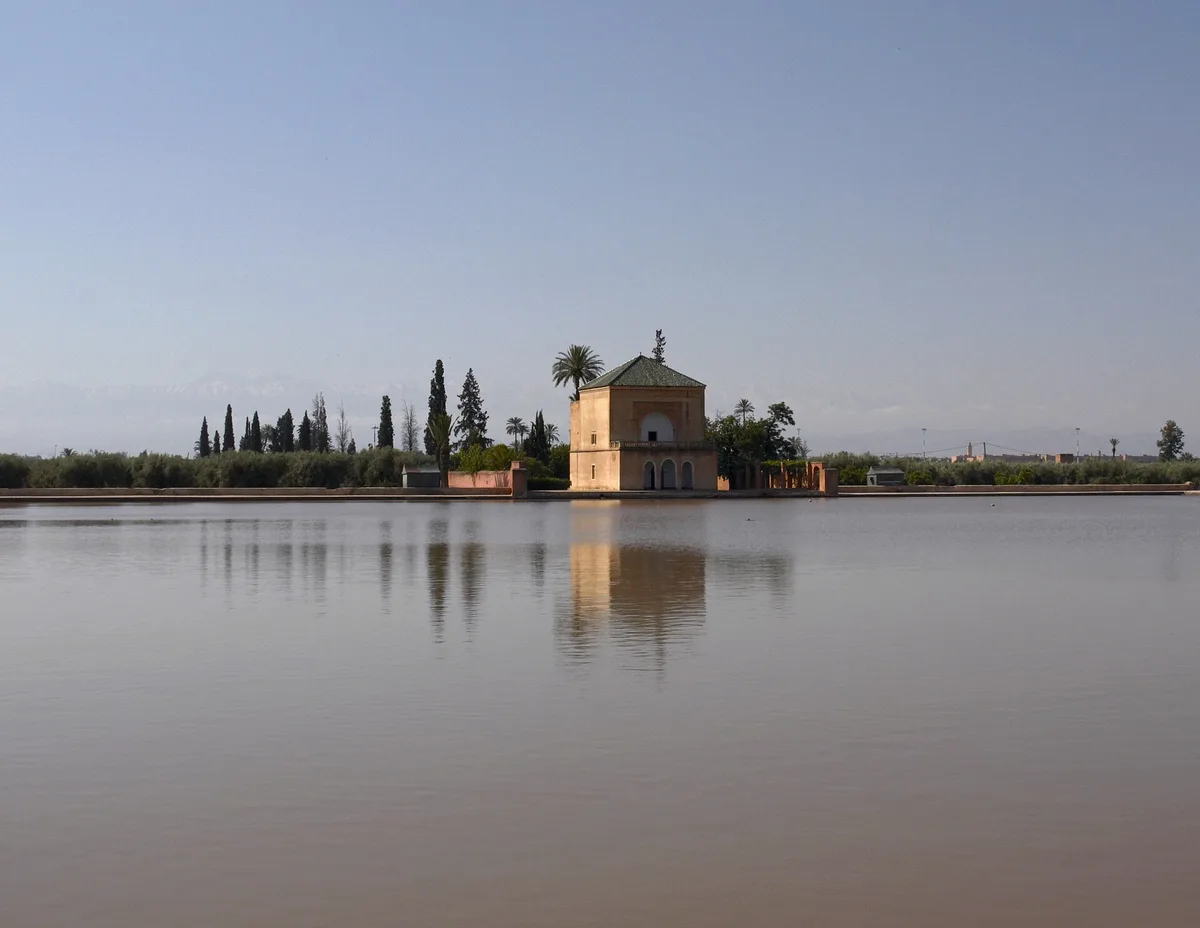
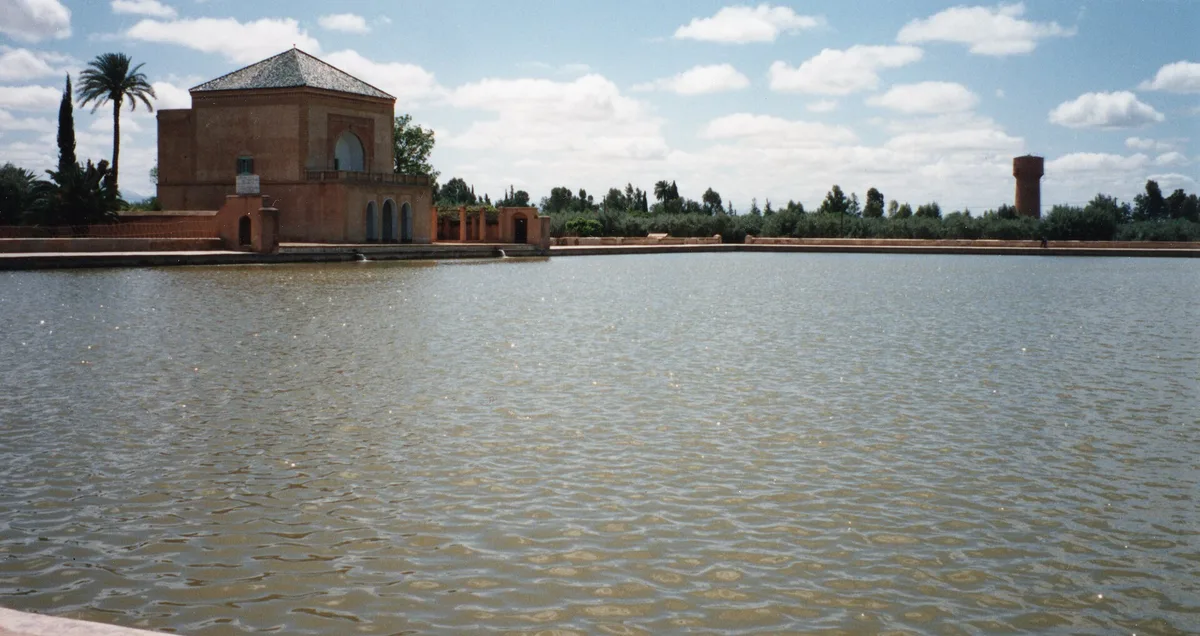
After the Majorelle morning, day 2 deliberately changes gear – this is the rest the plan promised, taken in the open rather than in a hotel room. West of the medina, the Menara gardens are Marrakech’s great water garden: a vast rectangular basin, the pavilion in the photograph reflected in it, and olive groves running out around it, all of Almohad origin in the 12th century with the pavilion rebuilt in later centuries. On a clear day the High Atlas closes the view across the water – the city’s favourite picture of itself, and a genuinely calming place after two days of lanes: no shopping, no negotiation, nothing to interpret, just water, olives and distance. It asks for an hour, not an afternoon, and it gives back more than an hour’s rest.
Gueliz, the new city, fills the afternoon’s other half at the same low pressure. This is Marrakech’s modern face – avenues, cafés, bakeries, design shops and the ordinary city getting on with itself – and for a traveller marooned happily in the medina since arrival, an afternoon here recalibrates: coffee taken slowly on an avenue terrace, the pâtisserie windows, a bookshop, a taxi ride that runs on straight roads. Nothing in Gueliz is a monument, and that is precisely its function in a marrakech itinerary 3 days: it is the proof, needed by day 2, that Marrakech is a living modern city and not a heritage park with your hotel inside it.
Resist upgrading this afternoon. The temptation on a short trip is to fill the gap with another palace, another museum, a shopping expedition with intent – and the cost arrives in the evening and on day 3, when tired legs meet the trip’s longest day or its earliest start. The plan’s wager is explicit: an afternoon at half speed buys a day 3 at full strength, whichever option you choose for it. Have the long lunch. Sit in the Menara shade. Let the city be ordinary for a few hours.
Day 2 Evening – Hammam and an Unhurried Night
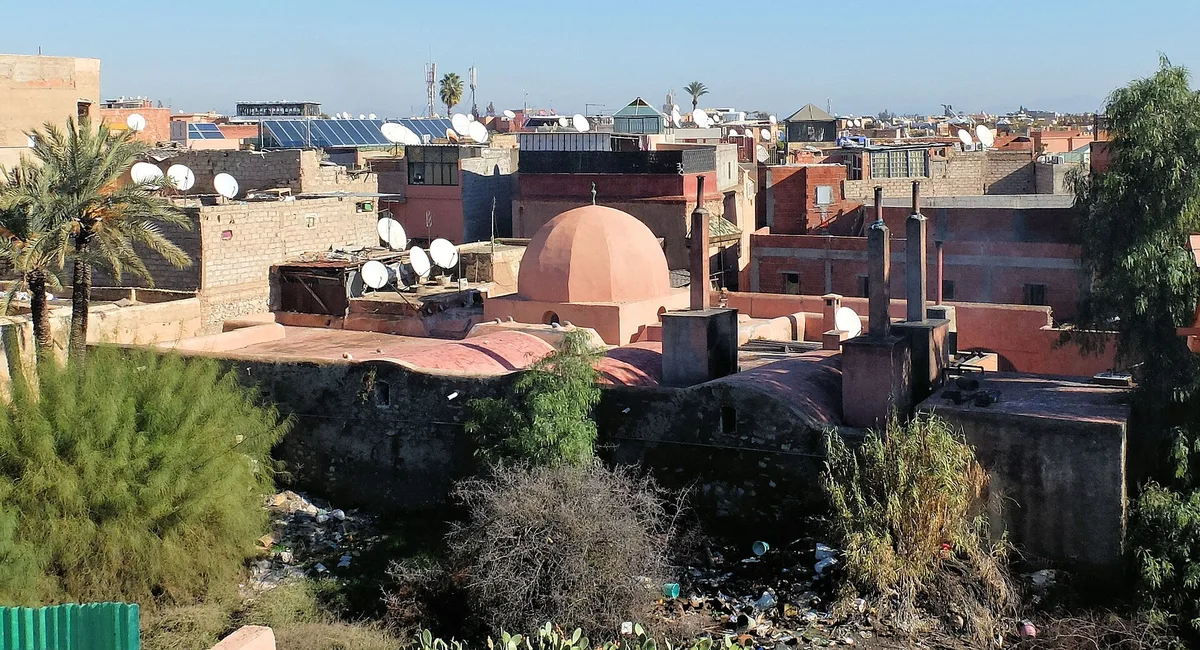
End day 2 the Moroccan way: in hot water. The hammam – the public bathhouse, its dome a fixture of the medina skyline – is a working institution before it is a spa experience, and Marrakech offers both registers. The neighbourhood hammam is the local one: segregated by sex or by hours, functional, steamy, and run on a sequence of hot rooms, buckets, black soap and a vigorous scrub with the kessa glove that leaves travellers pink and astonished at what came off. The medina’s historic bathhouses have served their quarters for centuries – the same furnace logic, in the old arrangement, that slow-cooked the tanjia urns the city’s food is famous for. Riad and hotel hammams, and the city’s private bathhouses, offer the same ritual in gentler packaging: booked slots, attendants, mint tea afterwards, and a massage if you want one. Neither register is the “real” one; choose by your appetite for the unfamiliar, and book the private version ahead, because evening slots on a short trip are not a thing to improvise.
Timing is the hammam’s gift to this itinerary. Taken in the early evening, it closes the sightseeing day physically – two days of lanes and gardens washed off in an hour – and it sets up the night properly: dinner afterwards, late and unhurried, in the medina or in Gueliz, with nothing scheduled behind it. Eat where the day points you – a tanjia, Marrakech’s own slow pot, if the medina has been building your appetite for it; a rooftop above the square if you want day 1’s theatre once more from above; a modern kitchen in Gueliz if the new city won you over in the afternoon. The only wrong evening is a rushed one in a queue for a sight you failed to book.
On any marrakech itinerary 3 days, sleep is an itinerary item too, and day 2’s night is where this plan banks it. Day 3 starts early in both its versions – a mountain departure or a medina morning before the crowds – and the traveller who treats tonight as the trip’s late night will feel it by tomorrow’s second hour. The hammam, the long dinner, an early bed: day 2 ends quietly so that day 3 can begin at full strength.
Day 3 Option A – The High Atlas and the Ourika Valley as a Day Trip
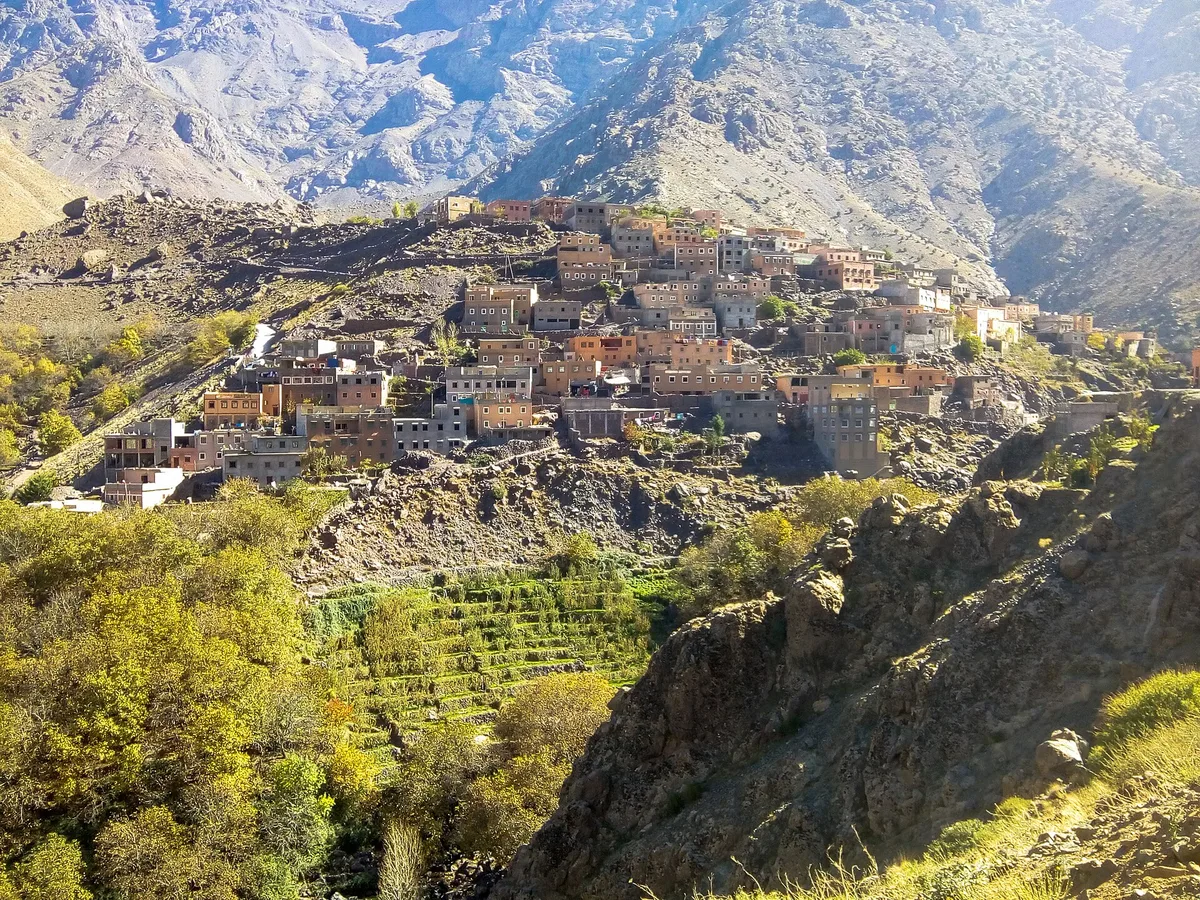
Option A spends day 3 changing the element of this marrakech itinerary 3 days entirely: out of the red city, up into the High Atlas. The mechanics first, because a day trip stands or falls on them. Mountain days from Marrakech run as organised excursions – small-group or private, booked through your riad, a local agency or an online platform – or as a hired car and driver for the day; the public-transport version exists on paper and consumes the day in connections, so on a three-day trip it is honestly not one. Either way the shape is fixed: an early departure from the medina edge, the road south climbing out of the plain, a day in the mountains, and a return by early evening. Book it a day or two ahead, through a channel that tells you plainly what the day includes – vehicle, driver, any guide, any walk – and what it does not; agree the inclusions before the morning, in writing where the channel allows it. This guide prints no prices and names no operators, because both change and the choosing criteria matter more: a small group, a stated itinerary, mountain time measured in hours rather than photo stops.
The geography offers two classic forms, and the choice between them is a taste choice, not a quality one. The Imlil road climbs to the trailhead village in the photograph – stone houses and walnut terraces under Jbel Toubkal, at 4,167 metres North Africa’s highest summit – and the day there is a walk: village to village on mule paths and terraced tracks, with a local mountain guide, lunch in a village house or a kasbah terrace, and the altitude doing noticeable, pleasant work on lungs accustomed to the plain. The Ourika Valley, east of Imlil’s road, runs greener and gentler: a river valley of gardens and roadside villages rising to Setti Fatma, where the valley’s waterfalls are the walk’s objective and the riverside lunch terraces its institution. Imlil is the mountaineer’s day, Ourika the valley day; both deliver the essential thing, which is Amazigh mountain Morocco – terraced agriculture, adobe and stone villages, a working landscape utterly unlike the city you left at breakfast.
Three honesty notes complete the option. First, the day is a full day: roads wind, walks run long, and you will return tired – if your departure is the next morning, that tiredness is well spent; if it is the same evening, take option B instead. Second, the mountains are weather-ruled in a way the city is not – cloud can close the Toubkal view, winter can close roads, and a good operator’s willingness to reshape the day is worth more than a rigid itinerary. Third, you are a guest in villages, not a spectator at them: dress for the mountains and the culture both – covered shoulders and knees for village homes, shoes that can walk a terrace path, and greetings before photographs. Choose option A if the trip needs range – if three days inside one city’s walls sounds like a cage by day 3, the Atlas is the correct door to open.
Day 3 Option B – A Slow Second Medina Day in the Mellah and El Badi
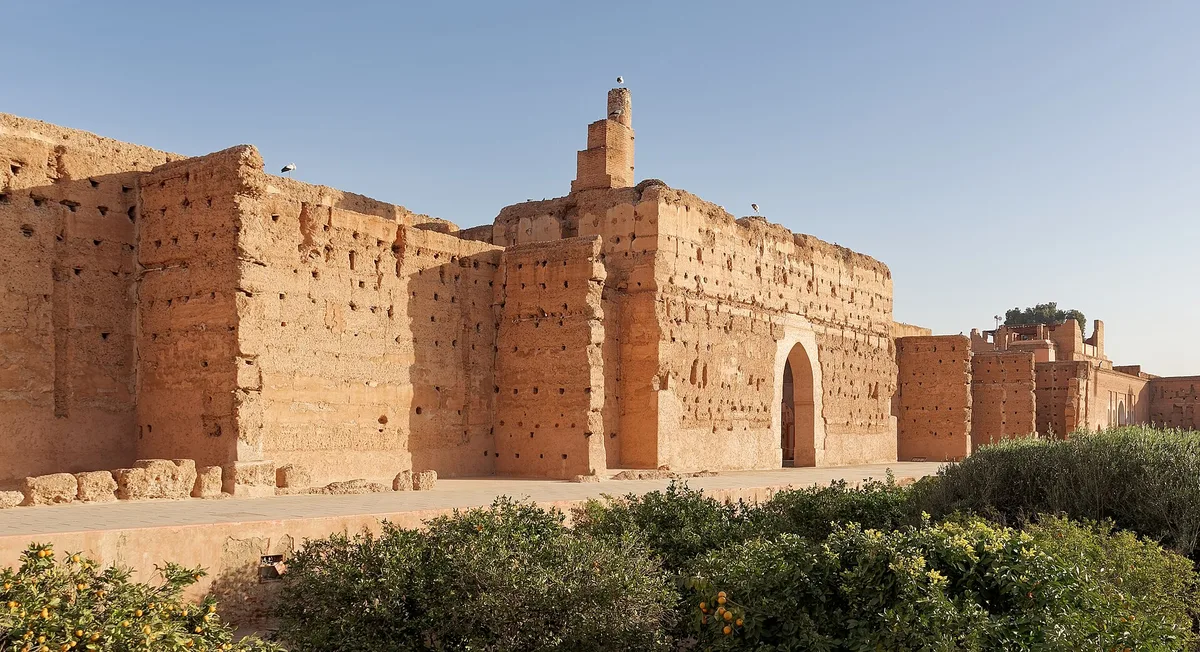
Option B stays – and staying, done properly, is not the lesser choice. Day 1 showed you the medina at sightseeing speed; day 3B walks the quarters it skipped, at the pace the medina itself keeps. Begin in the south, where day 1 ended too quickly: El Badi Palace, the ruin in the photograph, is Ahmad al-Mansur’s other monument – the palace he built from 1578 with the wealth of his sultanate, all marble, gold and onyx in its day, then stripped bare a century later when Sultan Moulay Ismail carried its riches off to build Meknes. What remains is on a scale no intact palace can match: a vast sunken court, a great central pool, orange trees in the dust, and storks nesting on the ramparts. Come in the morning, walk the walls for the view over the Kasbah rooftops, and let one place have a full hour of you – that unhurried ratio of time to sight is the whole argument for this option.
Around El Badi, the Mellah – the historic Jewish quarter, established in the 16th century beside the royal palace as Moroccan mellahs were – repays the slow attention day 1 could not give it: the synagogue that still serves the city’s small Jewish community, the Jewish cemetery at the quarter’s edge, the spice and jewellery streets whose trades carry the quarter’s history in their signage. Then drift north through the palace quarter at market pace: this is the morning to do the shopping deferred in the souks on day 1, here and in the northern souks both, now with a calibrated eye – the ceramics street, the dyers, the one good thing you identified and walked past two days ago. A cooking class fills the afternoon for many who choose this option, and it is well shaped for a trip’s last day: a market walk with the cook to buy the meal’s ingredients, the class itself in a riad kitchen or a dedicated school, and the dinner you made as the day’s centre – booked ahead through your riad or the school directly, with the format (market tour or not, group size, menu) confirmed before you pay. Mechanism, again, is the honest content: classes vary in everything except that the good ones start in the market.
End option B where day 1 ended, by design. A last hour on a rooftop over Jemaa el-Fnaa as the light goes, tea in hand, the square assembling below you for an evening you now know how to read – the trip closes its own loop. Where option A returns you to Marrakech enlarged, option B returns you to it literate: the medina stops being a maze you survived and becomes a city you can describe, quarter by quarter, to someone who has never been. On a three-day trip, that literacy is a serious prize, and travellers who know they will not return to Morocco soon should weigh it against the mountains without assuming the day trip automatically wins.
What Does Not Fit in Three Days – and Why That Is Fine
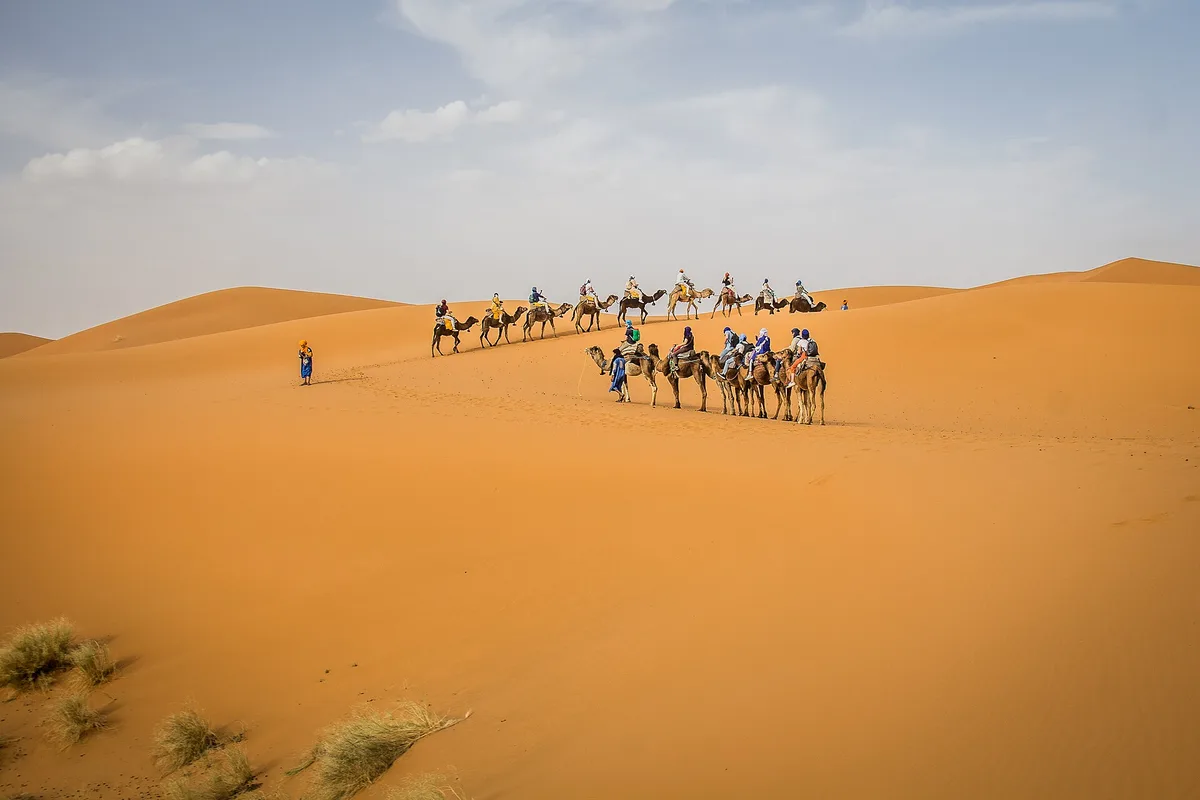
Every marrakech itinerary 3 days is defined as much by its exclusions, so here they are named. The Sahara is the big one: the real dunes – Erg Chebbi at Merzouga, in the photograph – lie a long, full journey east of Marrakech, and the honest version of that trip takes three days on its own, with a night in the dunes at its heart. Sold as a bolt-on to a three-day city trip, it consumes the entire trip in a vehicle and returns a tired traveller who has seen Morocco through a windscreen. The Agafay, the stony desert within day-trip range of the city, is a different offer – an evening among stone hills and camp lights, legitimately enjoyable – but it is not the Sahara, and any version of this trip that needs dunes should extend the trip, not squeeze it.
The same logic rules the other famous day trips. Essaouira, the Atlantic port, is a full day of travel for a town that deserves a night; Ouzoud’s waterfalls are a long day that competes directly with the Atlas option and loses for most first-timers on variety; Ait Benhaddou and the Tizi n’Tichka pass make a superb road day and an exhausting one. Inside the city, the second tier – the Dar Si Said museum, the Maison de la Photographie, the Secret Garden, the Saadian-era Koubba, the Palmeraie – is not rejected, merely ranked: each is a good hour, and none of them outranks the rest this plan protects. If one of them is your personal pilgrimage, swap it in for the Gueliz afternoon and the plan survives; the structure bends, it does not break.
The deeper point is that three days was never the city’s measure. If the trip leaves you wanting the dunes, the coast and the second tier, it has done its work – those are the contents of the return trip, or of the longer route our Morocco itinerary for 7 days lays out, which takes this same Marrakech opening and runs on through the mountains to Fes. An itinerary’s exclusions are not its failures. They are its honesty, and in Marrakech – a city that has been exhausting completists for nine centuries – honesty is the whole game.
Three Days in Marrakech by Season
The skeleton of this marrakech itinerary 3 days holds all year; its flesh changes with the calendar. Spring and autumn are the city’s kindness – warm days, cool evenings, the Atlas usually clear – and the itinerary runs exactly as written, with day 3’s mountain option at its best and the medina’s midday merely pleasant. These are also the busiest seasons: the Majorelle online tickets and any cooking class or private hammam should be booked furthest ahead, and day 1’s sights reward their earliest starts.
Summer rewrites the day around heat. The medina at midday becomes a place to cross, not to linger, so the order inverts: sights at opening, the souks early, lunch long and indoors, the afternoon surrendered to the riad’s courtyard, a pool if you have one, or the air-conditioned museum – and the city taken back at dusk, when Jemaa el-Fnaa runs latest and best and Marrakchis themselves come out. Day 3 in summer argues for the mountains on altitude alone – Imlil and Ourika are measurably kinder than the plain – or for option B run on the inverted clock, El Badi at opening and the cooking class through the hot hours. Nothing in the plan is impossible in summer; all of it moves.
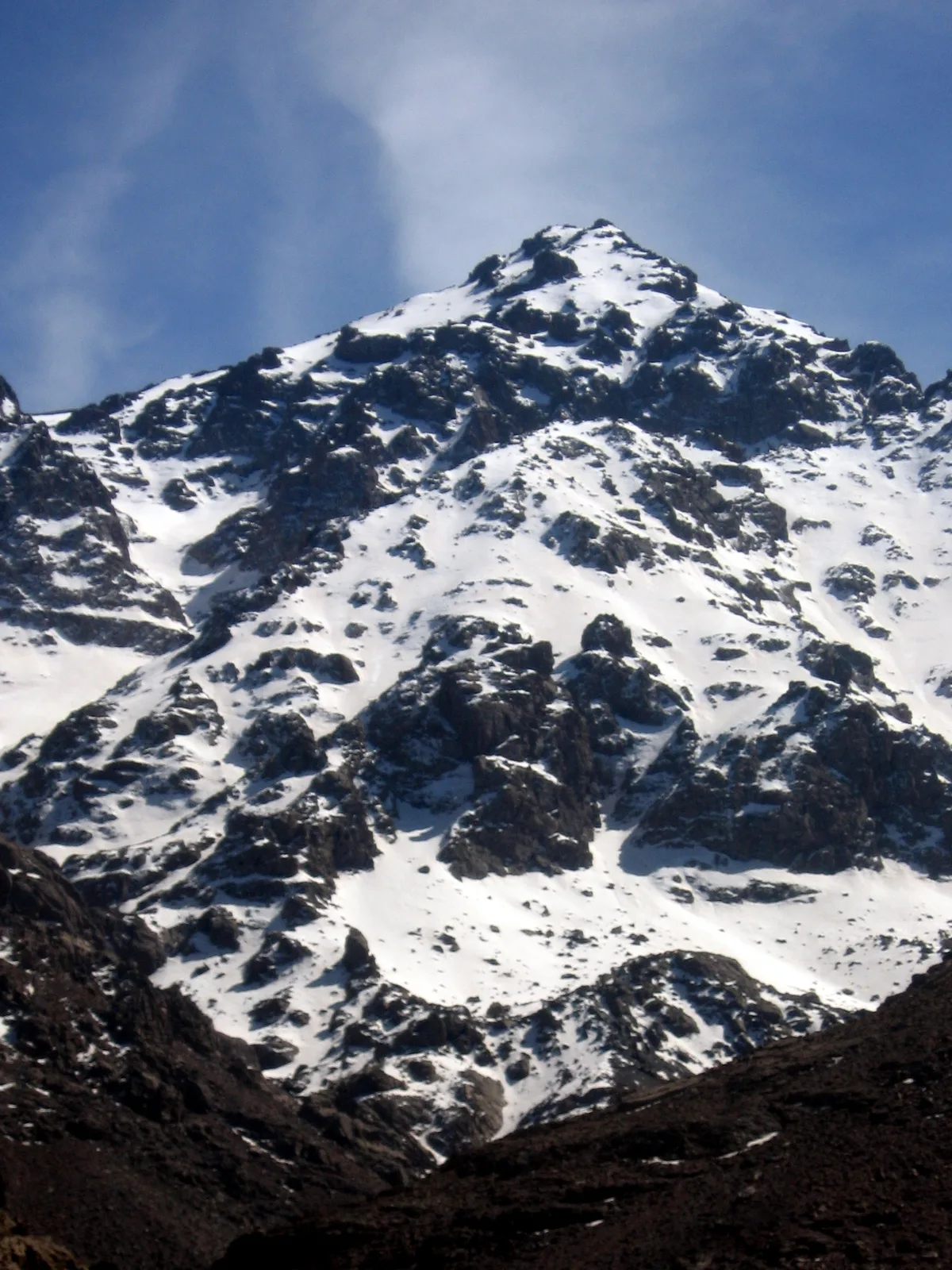
Winter is the connoisseur’s season and the photograph above is its emblem: snow on the High Atlas, the peaks white above the city, while the medina walks in mild sunshine and the crowds thin to their friendliest. Days are short, so the plan tightens – day 1’s sights in sequence without dawdling, the square reached well before an early dusk – and evenings turn cold enough to make the hammam the day’s best idea rather than its second-best. Ramadan, whenever it falls, rearranges the city’s eating day – quieter mornings, many cafés closed until the sunset iftar, then nights of extraordinary liveliness around the square – and a traveller whose three days land inside it should expect monument hours to shift, confirm them at each venue, and treat the evenings, when the fast breaks and the city feasts, as the trip’s unexpected headline.
Marrakech Itinerary 3 Days Questions, Answered
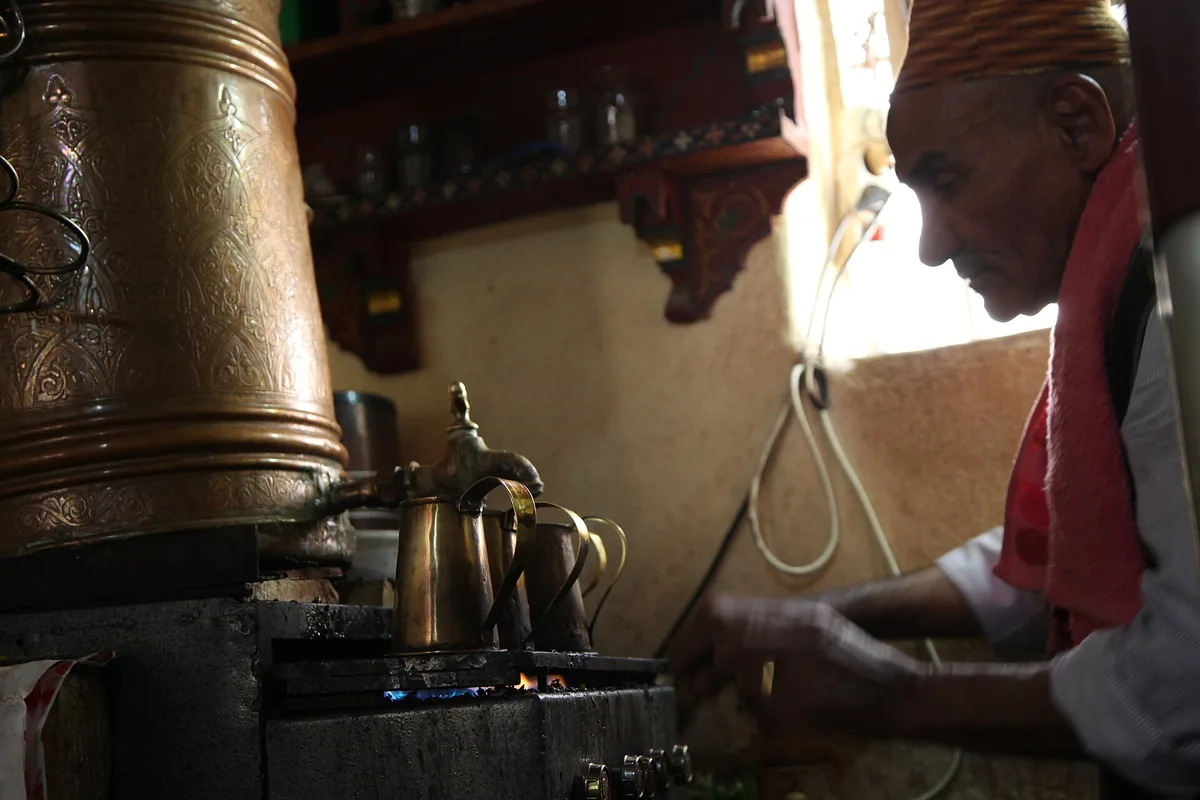
Is three days enough for Marrakech? For the city itself, yes – enough for the medina’s core, the gardens and one great day of your choosing, which is a complete first understanding of the place. It is not enough for Marrakech plus the Sahara, the coast or the south, and an honest marrakech itinerary 3 days says so rather than pretending otherwise. Travellers who fall for the city – many do – are not short-changed by three days; they are given a reason to structure a longer Moroccan trip next time.
Which day should I swap if the YSL Museum is closed? The museum closes on Wednesdays, per its official site, while the Jardin Majorelle next door opens daily. If your garden day falls on a Wednesday, the clean fix is to swap the whole of days 1 and 2. If your arrival makes that impossible, take the garden on Wednesday without the museum, move the medina’s Ben Youssef and Bahia block into the freed afternoon, and let day 3’s option B absorb whatever remains – the plan is built in blocks precisely so that one closure moves a block, not the trip.
Should day 3 be the Atlas or the slow medina day? Choose the Atlas if you want range, altitude and a working mountain landscape, and if your departure the next day is not painfully early. Choose the slow medina day if you prefer depth to range, if the weather closes the mountains, or if day 1 left you feeling the medina was rushed past rather than read. Neither is the correct answer in the abstract – the itinerary is honest that they are different trips wearing the same first two days.
Can I do this itinerary in summer with children, or in Ramadan? Yes to both, with the season section’s adjustments applied rather than ignored: in summer, invert the day around the midday heat and put the mountains on day 3; in Ramadan, confirm each venue’s hours on the day, eat your own lunch without ceremony in the places that serve travellers, and plan to be at the square for iftar, when the city’s evenings become the warmest of the year. Children, in most seasons, vote reliably for the square, the gardens and the mountain day – the plan’s spine is already child-shaped; only its midday discipline needs help.
What is the one booking I must not leave to chance? The Jardin Majorelle ticket. It is sold only online through the garden’s official site, in timed slots, and the garden is the one sight in this itinerary that cannot absorb a walk-up. Everything else here – the hammam’s private version, a cooking class, a mountain day – rewards booking ahead but forgives a day’s notice; the Majorelle slot, in a busy week, forgives nothing.
The Short Version
A marrakech itinerary 3 days, compressed: give day 1 to the medina in a loop – Koutoubia and the quiet square, the souks read rather than raided, Bahia and the Saadian Tombs in the south, Ben Youssef in the late light, and Jemaa el-Fnaa at dusk from a terrace first and a stall bench second. Give day 2 to the city’s pleasures at half speed – Majorelle at opening on a ticket booked online, the YSL Museum after it (never on a Wednesday), the Menara’s water and Gueliz’s avenues in the afternoon, a hammam and a long dinner to close. Give day 3 to a genuine choice – the Atlas, Imlil or Ourika, booked as a proper mountain day; or the slow medina, El Badi, the Mellah, the deferred shopping and a cooking class – and defend the choice against every attempt, including your own, to do both.
And hold the two honest rules of this marrakech itinerary 3 days as you go. No printed price or opening hour in any guide outlives the season it was written in – verify the timed things at the venue’s own door, digital or physical, and let mechanisms carry the rest. And three days is a lens, not a limit: the traveller who leaves Marrakech with the dunes unseen and a list for next time has not failed the city. The city has done to them exactly what it has done to travellers for nine hundred years – it has made them plan a return.