Albania rewards travellers who understand one thing early: getting around albania is not hard, but it does not work the way the rest of Europe has trained you to expect. There is no national rail network to speak of, no single booking app that covers the country, and no central bus station in the capital. In their place stands something older and, once you learn its logic, surprisingly effective – a layered system of minibuses that leave when they fill, coaches on the main corridors, three separate Tirana terminals, overnight ferries to Italy, fast boats to Corfu, a car ferry through a mountain reservoir, and a road network that improves every single year. This guide explains how each layer actually works: where vehicles leave from, how you pay, what to book and what you simply show up for.
It is deliberately a guide to mechanisms, not a fare table. Prices on Albanian transport move with the season, the operator and the lek itself, and any page that prints you a neat timetable for a furgon is inventing it. What does not change is the logic: which terminal serves which direction, why every journey in Albania starts earlier in the day than you planned, why cash in lek is the only payment method that works everywhere, and which legs of a trip genuinely need booking in advance. Learn the logic of getting around albania and the country opens up – the Albanian Alps, the Riviera, the Ottoman towns and Lake Ohrid all sit within reach of a traveller with no car at all. Our Albania travel guide covers where to go and when; this page covers how you physically move between those places.
One promise before the detail. Everything below is written as researched guidance, checked in October 2026 against official sources where official sources exist – the national eTransport platform, the Port of Durrës Authority, Tirana International Airport – and described at the level of how things work wherever the honest answer is that times and prices are set locally and change often. Where a fact moves seasonally, the text says so. Albania’s transport is being reorganised even now, with a new state operator created to take charge of public road transport from September 2026, so treat this page as the map of a system in motion: the geography and the habits are stable, the details reward a final check before you travel.
Getting Around Albania at a Glance
Strip the system down and getting around albania offers eight working tools. Furgons – privately run minibuses – are the default for most intercity journeys and the only public transport to smaller towns. Intercity buses, meaning full-size coaches on licensed lines, cover the trunk routes between the big towns with something closer to a timetable. City buses move you inside Tirana and the larger towns for a small cash fare. Taxis and ride apps handle short urban hops and awkward connections. Ferries do three jobs: overnight crossings to Italy, fast boats to Corfu, and one essential domestic sailing on Lake Koman. Hire cars cover everything the network cannot, on your schedule. The airport bus and official taxis bridge the 17 kilometres between Tirana’s airport and the city. And your feet, plus the occasional bicycle, finish most journeys, because Albanian towns are compact and walkable.
| Mode | How it works | Booking | Payment | Best for |
|---|---|---|---|---|
| Furgon (minibus) | Leaves its gathering point when full | None on most routes – just show up | Cash in lek, to the driver or conductor | Most intercity trips, smaller towns |
| Intercity bus | Licensed line, set departure pattern | At the terminal; some lines online via eTransport | Cash in lek, sometimes card at kiosks | Main corridors between big towns |
| City bus | Numbered lines, frequent on main axes | None | Cash in lek to the conductor | Moving inside Tirana and larger towns |
| Taxi / ride app | Meter, app, or agreed fare | App, phone, or hail | Cash or card depending on operator | Airport runs, evenings, awkward hops |
| Ferry | Fixed sailings, seasonal frequency | Online or at the port; vehicles ahead in summer | Card or cash with the operator | Italy, Corfu, Lake Koman, Butrint |
| Hire car | Your own schedule entirely | Ahead, especially in summer | Card deposit, cash or card rental | Riviera, mountains, multi-stop days |
Two general rules sit underneath the whole table, and underneath the whole business of getting around albania. First, the day starts early: on almost every route in Albania, vehicles are plentiful in the morning, thin after lunch and rare by late afternoon, so the single most valuable transport skill in the country is leaving before nine. Second, cash is the operating system. Cards are spreading through hotels, agencies and ferry companies, but furgons, buses, city transport and most taxis still run on lek in hand – carry small notes, because a driver making change for a large banknote at a busy departure point is a delay everyone on board will feel.
The Furgon – the Minibus Network That Runs the Country
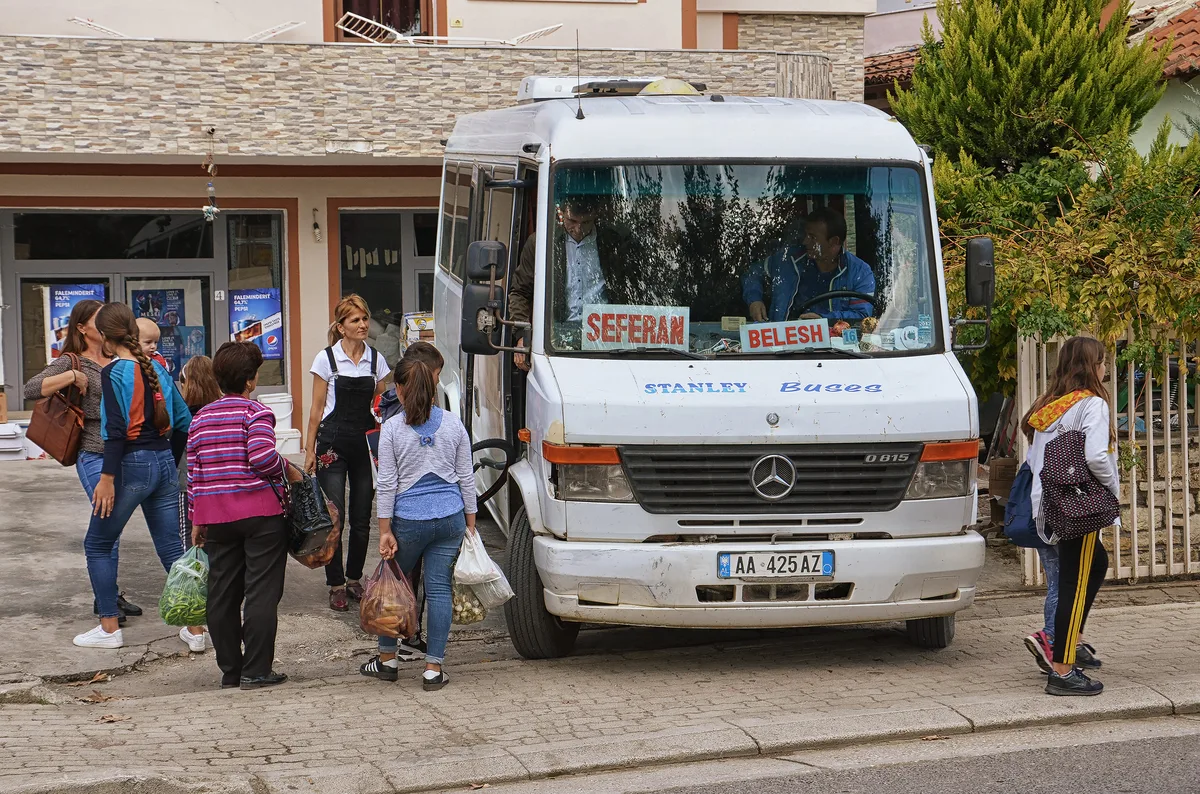
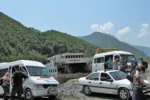
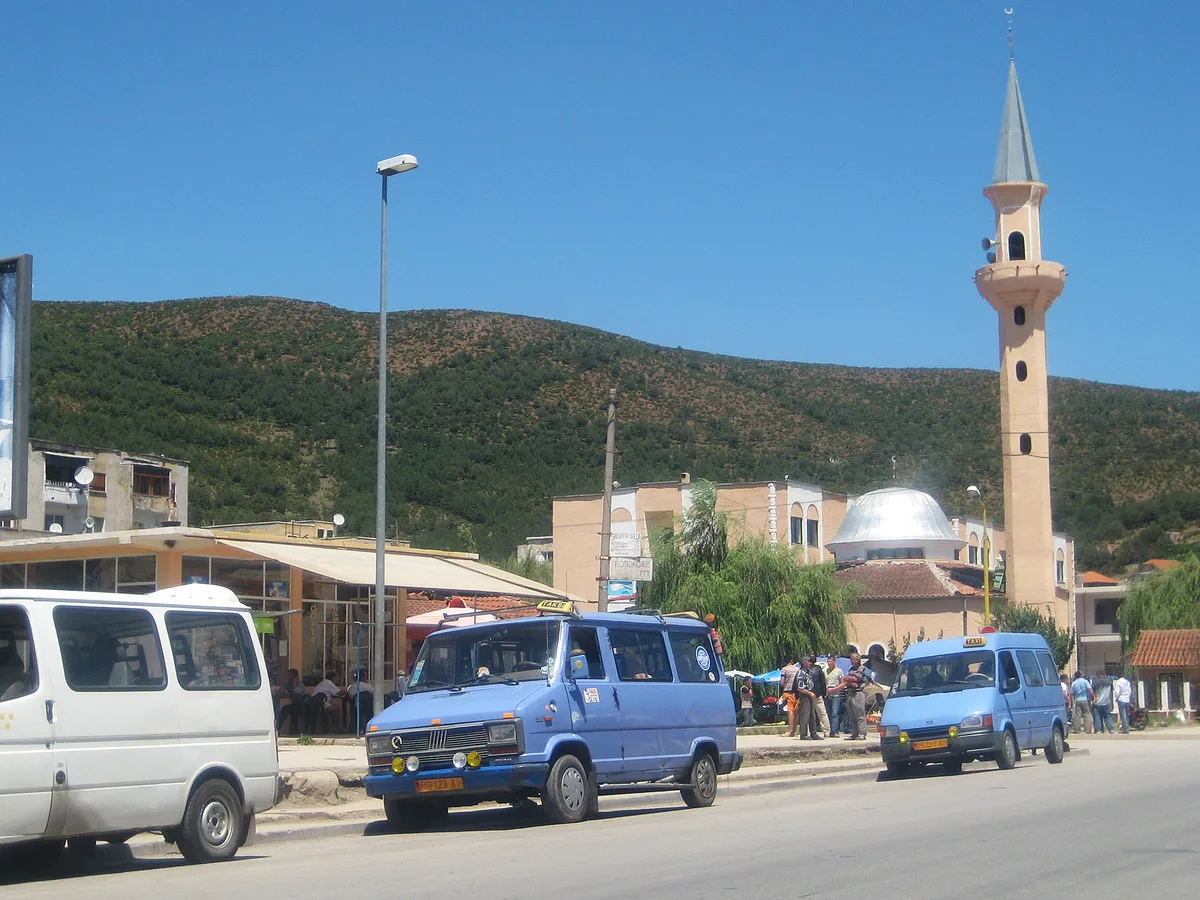
Start with the word, because you will use it daily. Furgon – from the Italian furgone, a van – is the Albanian shared minibus: a privately operated vehicle, anything from an eight-seat van to a twenty-seat minibus, running a fixed route between two towns on no fixed timetable at all. Since the 1990s, when private operators filled the vacuum left by the collapsed state system, the furgon has been the real public transport of Albania – and most visitors find that getting around albania means riding one within their first day. Officially registered intercity vehicles carry yellow number plates, which is the quickest way to tell a working furgon from a private van in a crowded departure yard. The network reaches effectively every town in the country and a great many villages, including places – Theth trailheads, mountain communes, small coastal settlements – that no coach line serves.
The mechanics are simple and completely consistent. Each route has a known gathering point in each town: a corner of the bus terminal, a square, a stretch of road by a landmark café, sometimes just a widening where the vans collect. You arrive, you ask for your destination – drivers and conductors call out town names, and destination cards sit in windscreens – and you take a seat in the right vehicle. Then you wait. A furgon leaves when it is full, or near enough full that the driver judges the run worthwhile. In the morning on a busy route that can mean five minutes; at midday on a thin route it can mean an hour. When the vehicle moves, the fare is collected – by the driver or a conductor who works the aisle – in cash, in lek. The fare is set by the route and is the same for everyone on board; confirm it as you sit down, the way locals do, and you will never be overcharged.
Three habits make the system work for you rather than against you. Travel in the morning, when vehicles fill fast and routes run at their densest; by mid-afternoon many lines have effectively finished for the day, and on Sundays and holidays everything thins further. Keep luggage light and expect it to travel on the roof rack or in a rear compartment – for genuinely oversized bags, ask about any extra charge before boarding rather than after. And use your guesthouse: hosts know exactly where their town’s furgons gather, what time the first useful departure really is, and many will phone a driver to hold a seat or arrange a pickup from the door. That phone call, made in Albanian by someone the driver knows, is worth more than any app.
What a furgon is not matters as much. There is no advance booking on most domestic routes – no seat selection, no e-ticket, no refund policy – because there is nothing to book against; the vehicle simply goes when it fills. The government’s eTransport platform now lists licensed lines, stations and operators, which helps you confirm that a route exists and where it starts, but it does not turn a furgon into a scheduled service. Comfort is honest rather than luxurious: air conditioning is common on newer vehicles and absent on older ones, legroom is what it is, and the ride over a mountain pass will be taken at the pace the road demands. For the traveller, the bargain is fair – the furgon is the cheapest, most frequent and most Albanian way of getting around albania, and the system everyone else in the country is using alongside you.
Intercity Buses – the Scheduled Layer on the Main Corridors
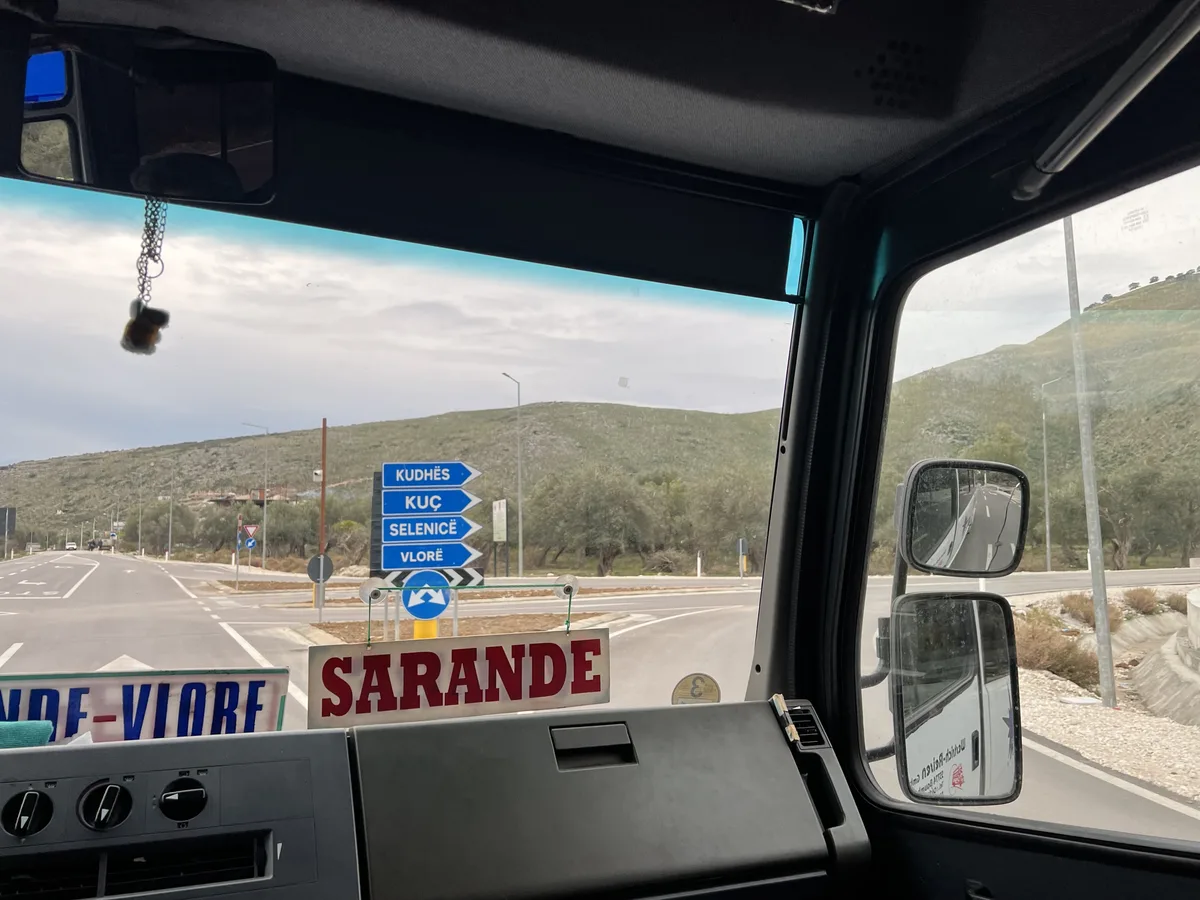
Above the furgon layer sits a more formal one: full-size coaches running licensed intercity lines between the main towns. Tirana to Durrës, Tirana to Shkodër, Tirana down the southern corridor to Vlorë, Gjirokastër and Sarandë, Tirana to Berat, Tirana to Elbasan and Korçë – on these trunk routes you will usually find proper coaches, printed departure times and, increasingly, a presence on the national booking platform. The distinction between a bus and a furgon is blurring as fleets modernise, and on many routes the two run side by side from the same terminal; the practical difference is that a coach line at least aims at a timetable, while a furgon aims at a full load.
The single most useful planning tool is eTransport, the national platform run under the General Directorate of Road Transport Services and the Ministry of Infrastructure and Energy. It lists licensed intercity lines with their stations, departure and arrival times and operator contacts, and it exists precisely because the informal system, for all its reach, was hard for a visitor to read from outside. Use it to establish that your route exists, which station it uses and roughly how the day is shaped – then still arrive early, because a listed departure time in Albania is best understood as the centre of a window, not a railway promise. Some lines can also be booked ahead through the platform or the operator; where that option exists on a summer corridor, take it.
Buying a ticket is deliberately low-tech. At the bigger terminals, operators run kiosks or desks where you pay and are pointed to the right bay; on many services you simply board and pay the conductor, in cash, as on a furgon. International coaches are the formal end of the market: lines to Pristina, Skopje, Podgorica and Athens run from Tirana’s international terminal, are more likely to sell tickets online – Kosovar platform Gjirafa Travel covers many Kosovo and North Macedonia routes – and observe their schedules more strictly, because a border crossing punishes lateness. Even so, allow connection margins you would not need in Germany; the Balkan coach network is reliable in the sense that it runs every day, not in the sense that it runs to the minute.
Judge a bus day by the same clock as a furgon day. First departures on main corridors leave early and run at good intervals through the morning; frequencies stretch at midday and thin again towards evening, and the last useful departure on a secondary route may be in the early afternoon. If your itinerary depends on one specific afternoon bus, verify it the day before – at the terminal, through your guesthouse, or on eTransport – rather than discovering at the kerb that today’s service was the morning one. Travellers who build their route around mornings find the scheduled layer of getting around albania perfectly workable; travellers who plan around evenings find its limits quickly.
Tirana’s Bus Terminals – Three Gateways, Not One Station
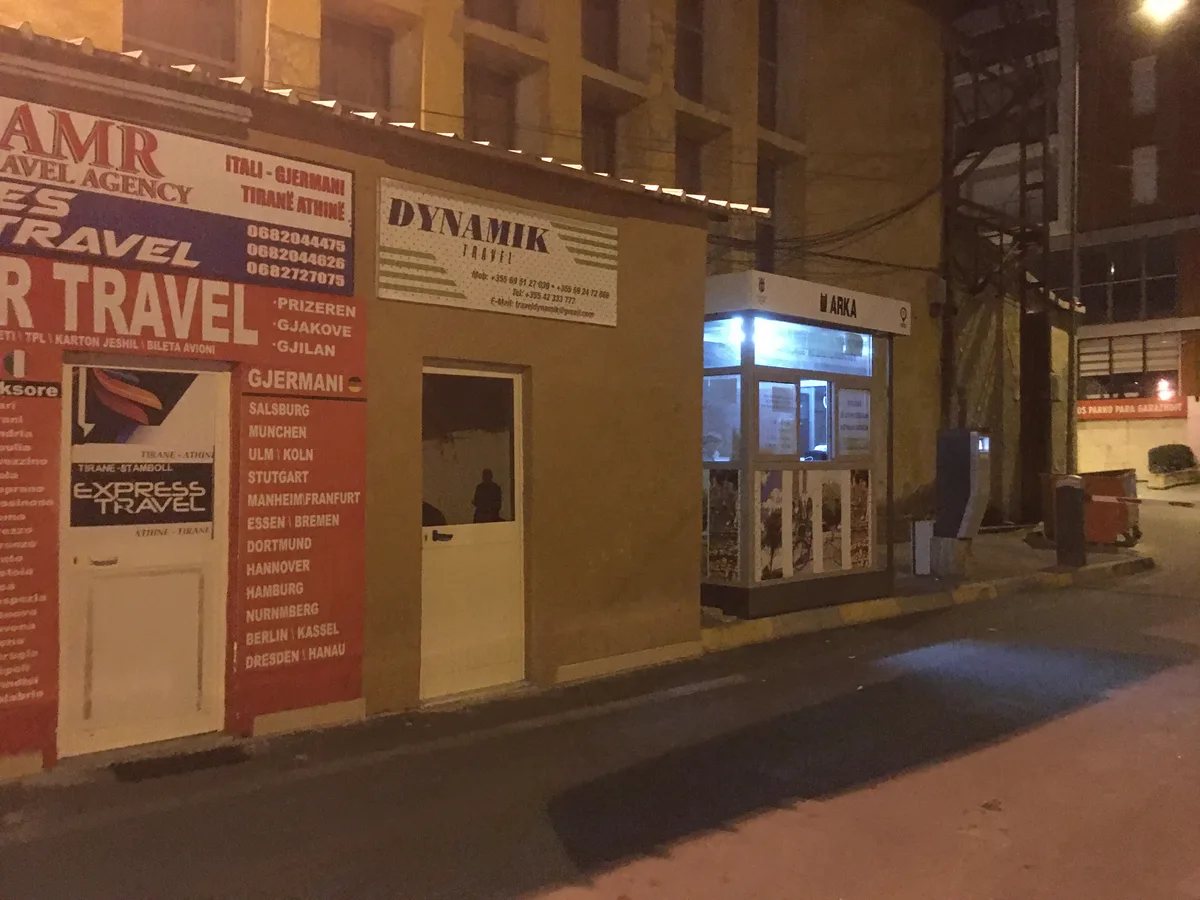
The fact that surprises every first-time visitor: Tirana has no central bus station, and learning that early is the first lesson of getting around albania. What it has, while the long-planned multimodal terminals are built, is a set of separate terminals divided by direction – and knowing which one your route uses is half of travelling well in Albania. Intercity buses and furgons no longer leave from random street corners in the centre; the municipality gathered them into these terminals, and a visitor who goes to the wrong one loses an hour crossing the city to the right one.
The workhorse is the regional terminal at the Kamza overpass – Kthesa e Kamzës – on the western edge of the city, on the site of the future main Tirana terminal. From here leave the northern and southern regional lines: Shkodër and the north, Durrës, and the southbound corridor towards Vlorë, Gjirokastër and Sarandë. If your journey is a classic tourist line in either direction, this is very probably your terminal. The second is the southeastern terminal at Student City – Qyteti Studenti – in the southeast of Tirana, serving the lines across the mountains to Elbasan, Librazhd, Pogradec and Korçë. The third is the international terminal on Dritan Hoxha street, behind the Asllan Rusi sports palace, where the Kosovo, North Macedonia, Montenegro and Greece coaches leave and arrive.
Getting to the terminals is its own small journey. Kamza sits well outside the walkable centre: city buses run out along the main axes towards it, and a taxi or ride app from the centre is the low-stress option when you have luggage and a morning departure – build the transfer into your timing, not on top of it. A second airport bus service has also linked Tirana airport with the regional terminal in recent seasons, which is the connection to know if you are landing and heading straight out of the capital. Because routes have been moved between terminals as the system is reorganised – and a new state transport company, MobAl, was created in 2025 to take over the organisation of public road transport from September 2026, with electronic ticketing among its stated aims – confirm your terminal the day before you travel, on eTransport or through your accommodation. Terminals in Tirana are functional rather than comfortable: expect bays, kiosks, a café if you are lucky, and very little printed information in English. Arrive, ask for your town by name, and let the chorus of drivers sort you out – it works faster than any departure board.
City Buses – Inside Tirana and the Other Towns
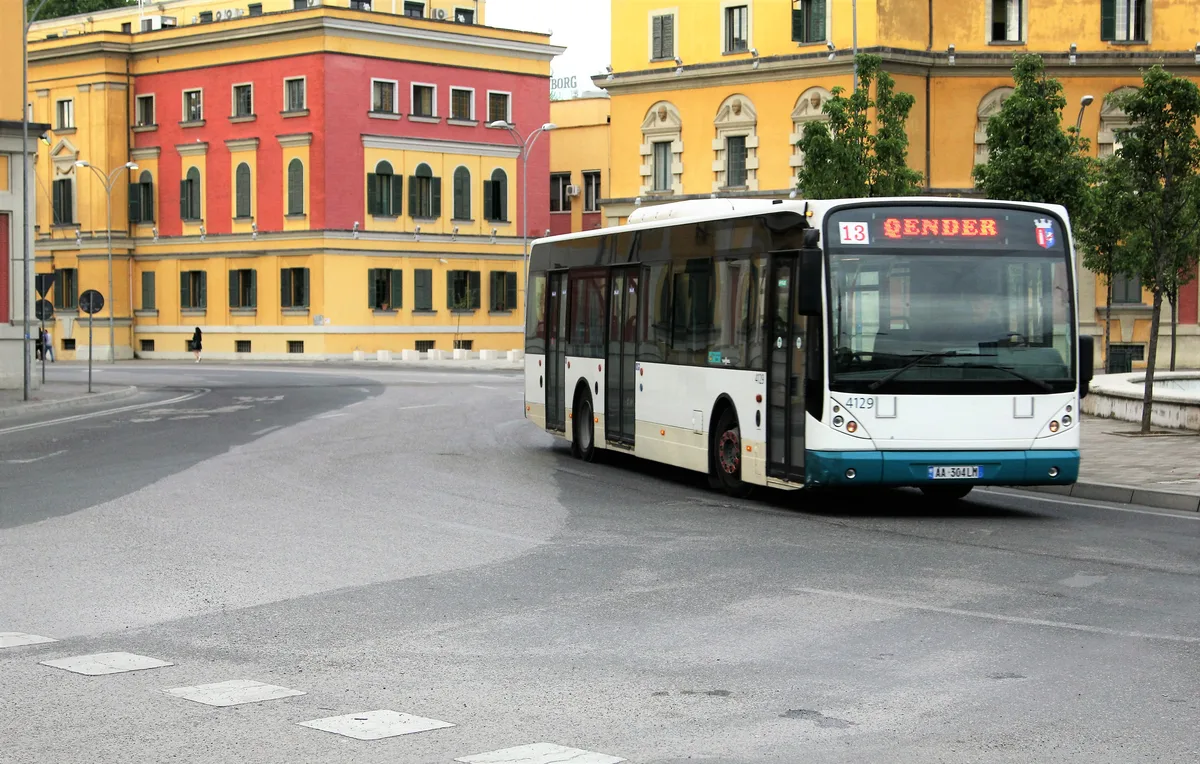
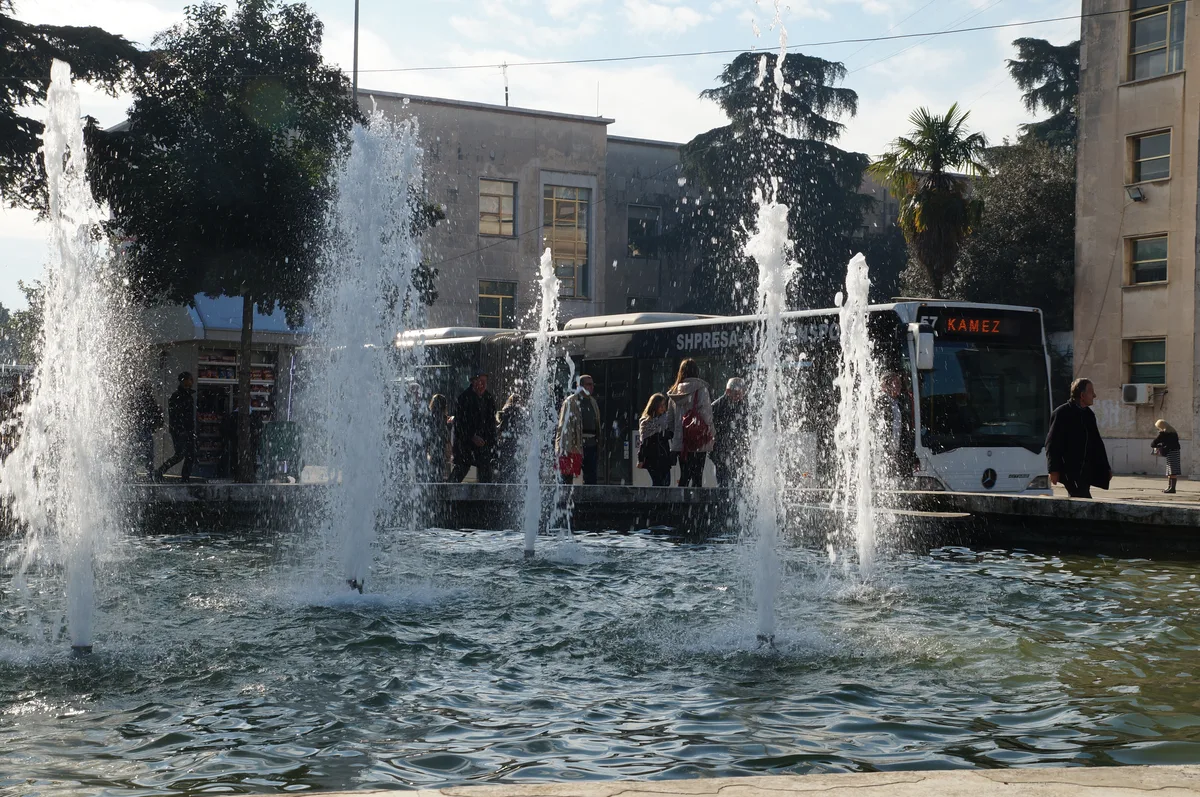
Within Tirana, the city bus network is the cheapest moving thing in the country and the one visitors use least, mostly because it explains itself badly – a shame, because for crossing the capital it beats traffic and parking combined, and it is the layer of getting around albania that locals rely on most. The network is a set of named and numbered lines – the Unaza ring line that circles the centre is the one you will use most – run by concession operators with buses that range from elderly to brand new. Stops are marked, but route information at the stop is minimal; the working method is to check your line and direction before you leave, using a map app or your host’s knowledge, then confirm with the conductor as you board.
Payment is cash and human: you sit or stand first, and a conductor works through the bus collecting a small flat fare in lek and issuing a paper ticket. Have coins or small notes ready – there is, at the time of writing, no card or app ticketing on Tirana’s city buses, though the planned takeover of public transport organisation by the state operator MobAl has electronic ticketing as one of its goals. Services on the main axes run frequently through the day, buses fill hard at peak hours, and the network winds down in the late evening, after which the city’s taxis and apps take over. The same pattern, at smaller scale, repeats in Durrës, Vlorë, Shkodër and Elbasan: a modest town network, cash to the conductor, and a centre compact enough that walking beats waiting for most short hops.
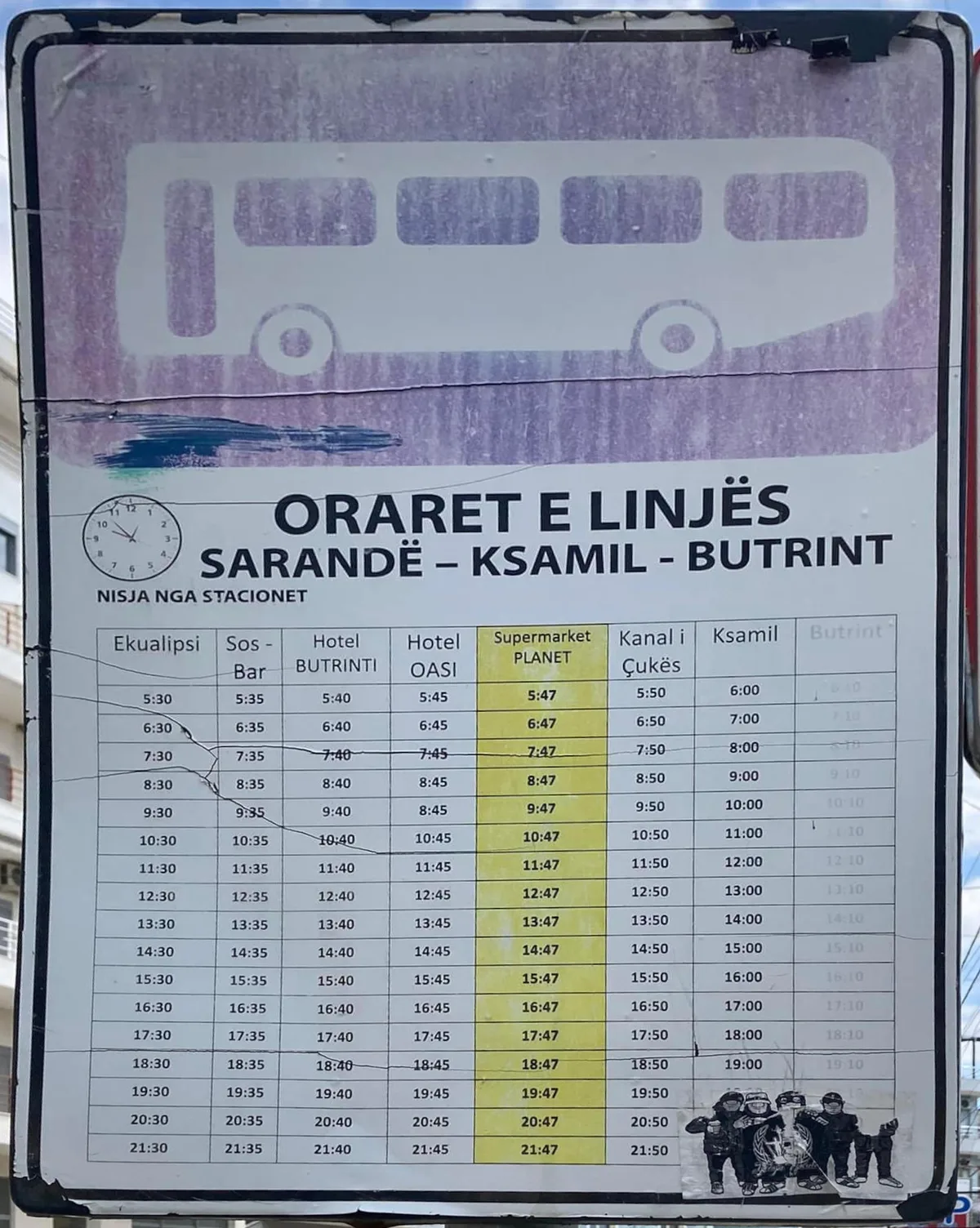
Two local footnotes are worth knowing. Shkodër is Albania’s bicycle city in a way no other town matches – locals of every age cycle everywhere, the centre is flat, and hiring a bike for a day is a genuinely practical way to cover the town and the ride out towards Lake Shkodër. And in summer, some coastal towns run seasonal local services along their beach strips – Sarandë’s town buses towards Butrint and Ksamil are the classic example – which save visitors the taxi negotiation for a beach day. Ask locally; these services exist in the season and vanish out of it, which is the most Albanian transport sentence in this entire guide.
Tirana Airport – the First 17 Kilometres of the Trip
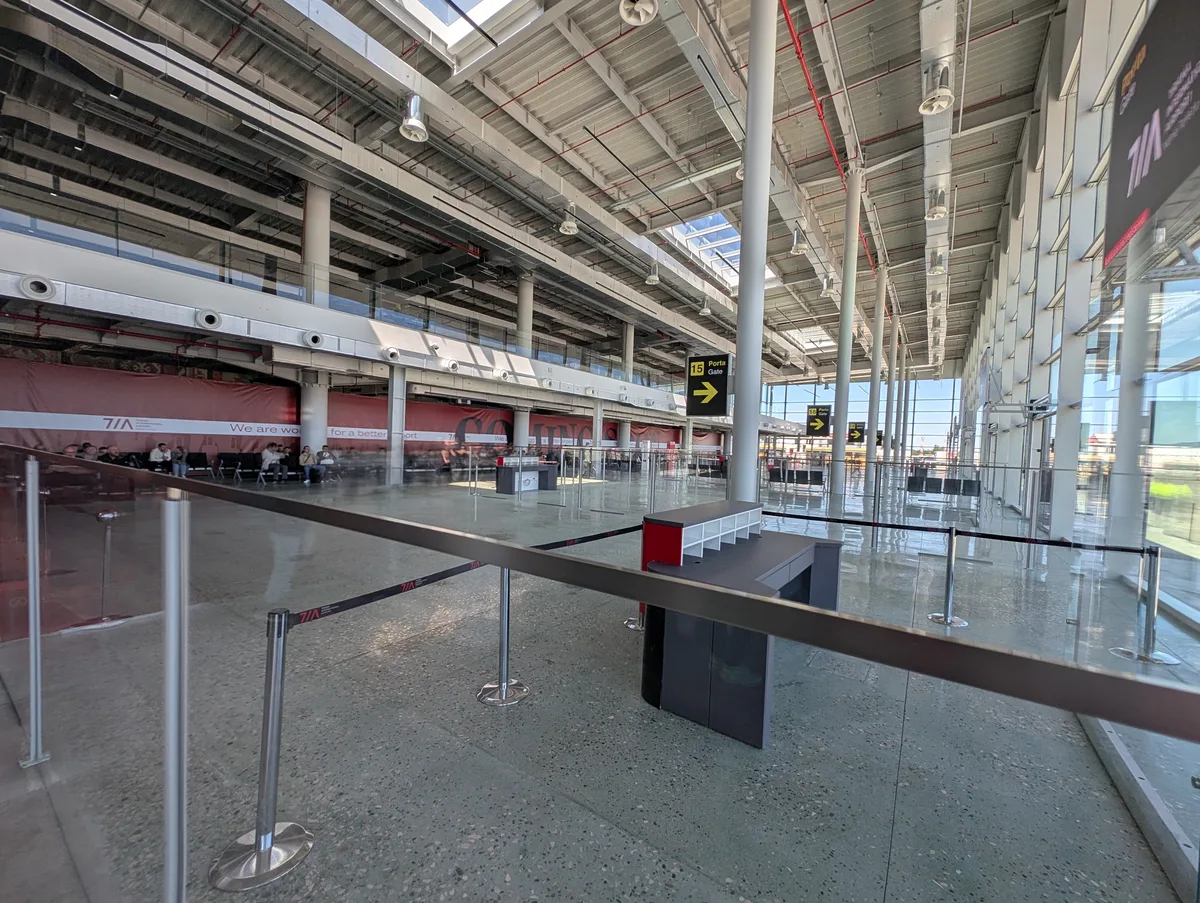
Almost every visitor’s Albania begins at Tirana International Airport Nënë Tereza – TIA, also called Rinas after the village it stands in, roughly 17 kilometres northwest of the city centre. It is the country’s only airport with a full international schedule; the airports at Kukës and Vlorë have been developed for years, but scheduled services there remained limited or unestablished when this guide was checked, and Albania has no domestic flights – the country is small enough that the road always wins. The airport’s own site, tirana-airport.com, lists the ground transport options and is the place to confirm current arrangements before you fly.
The set piece of arriving – and a first taste of getting around albania – is the airport bus. A dedicated coach service – long run by the operator LU-NA and known as the Rinas Express – links the terminal with the city centre, where it stops behind the Palace of Culture on Skanderbeg Square. Departures follow an hourly pattern through the day, and the operator has advertised services running through the night in recent seasons, but the exact hours have shifted over the years, so check the current timetable on the airport site rather than trusting any guide, including this one, on the last departure of the night. You pay on board, in cash; the ride takes roughly half an hour in clear traffic and noticeably longer in the Tirana rush hour. If you are heading straight to another town, ask at the airport about the service connecting the airport with Tirana’s regional bus terminal – it has run in recent seasons and saves the double journey into the centre and out again.
Around the bus stand the other layers wait. The official airport taxi service – the airport’s site links its licensed partner – runs to a published fixed tariff for the city centre, which removes the negotiation entirely; insist on that rank rather than an unofficial offer inside the terminal. Ride apps work at the airport too, with pickup in the car park outside arrivals. The car-hire desks in the terminal are the other strategic choice: collecting a car at Rinas means your first drive is on open road towards Durrës, Shkodër or the south, not through central Tirana traffic, which is why so many road trips begin and end at the airport. Finally, in high season, operators have run direct buses from the airport towards the coast – Durrës, Vlorë and Sarandë among them. They are seasonal and changeable; if one fits your arrival, it is the single easiest start to a trip in Albania, so check eTransport and the airport information desk when you land.
Ferries to Italy – the Overnight Boats From Durrës and Vlorë
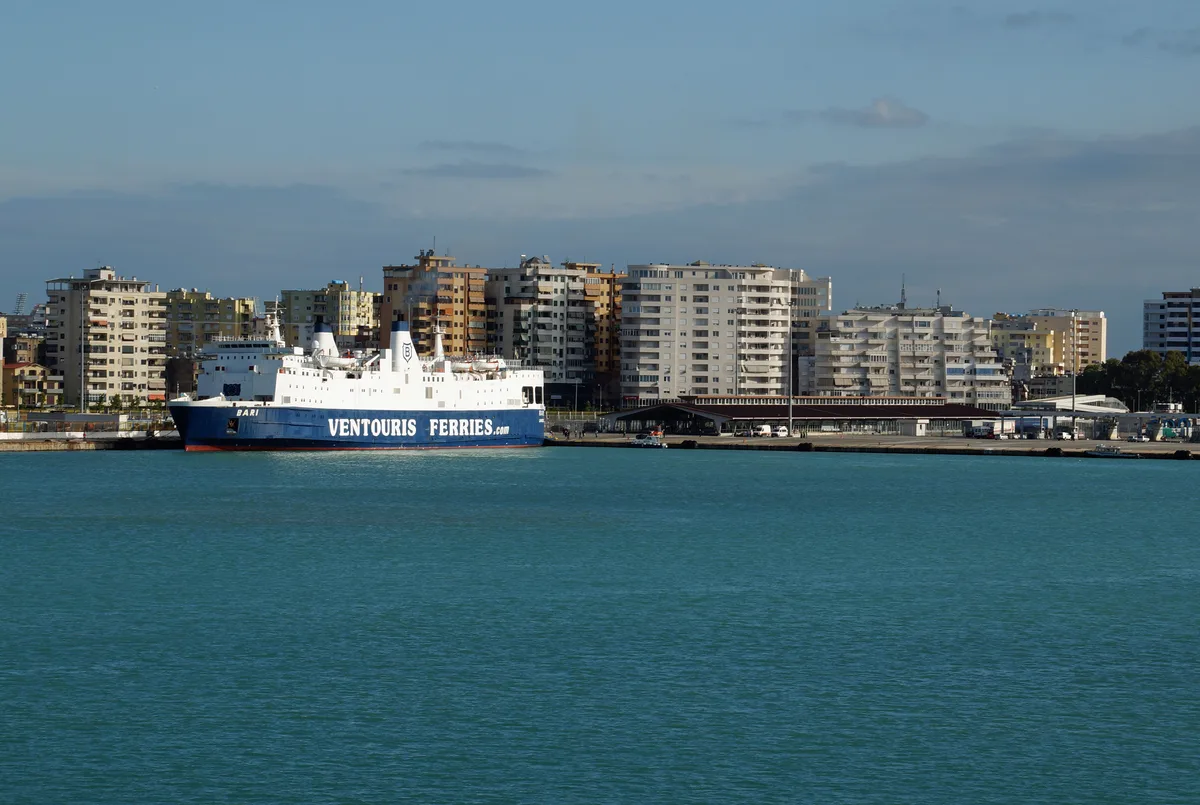
Albania’s oldest international connection is a ship. The Port of Durrës, the country’s main seaport, runs year-round ferry lines across the Adriatic to Italy – above all to Bari and Ancona – and the pattern of these crossings is the classic overnight one: board in the evening, sleep on the ship, clear the morning in Italy, or the reverse. Operators on the Durrës lines in recent seasons have included Adria Ferries, GNV and Ventouris; the Port of Durrës Authority publishes the day’s ferry movements on its own site, which is the authoritative place to confirm that a sailing exists on your date, since frequencies step up sharply in summer – daily or better on the Bari run – and thin out through the winter.
The second Italian gateway is Vlorë, whose ferries have crossed to Brindisi, the shortest Adriatic hop from Albania. The Vlorë line has always been the more seasonal and changeable of the two – in some seasons a regular service, in others reduced or paused – so treat it as a bonus to verify rather than a foundation to build on; Durrës is the reliable port. Sarandë, in the far south, is a passenger port for Greece, not Italy, and Shëngjin in the north handles cargo rather than international passengers.
Mechanically, these are proper international voyages, not big water buses. You book with the ferry company or an agent – online booking is normal – choosing between deck space, seats and cabins, and vehicles are carried on all the main lines. Check-in closes well before departure, foot passengers go through passport control in the terminal, and drivers should arrive earlier still, particularly in July and August when the vehicle decks fill with the diaspora driving home and a booked car is the difference between boarding and watching the ship leave. If you are combining Italy and Albania in one trip, the ferry’s real value is logistical: it moves your car, your luggage and you in one overnight step, and lands you at Durrës, half an hour from Tirana, with the whole country in front of you. It is also the one part of getting around albania where booking ahead is not optional in peak season – reserve summer sailings, and any vehicle space, as early as your plans allow.
Sarandë to Corfu – the Fast Boats Into Greece
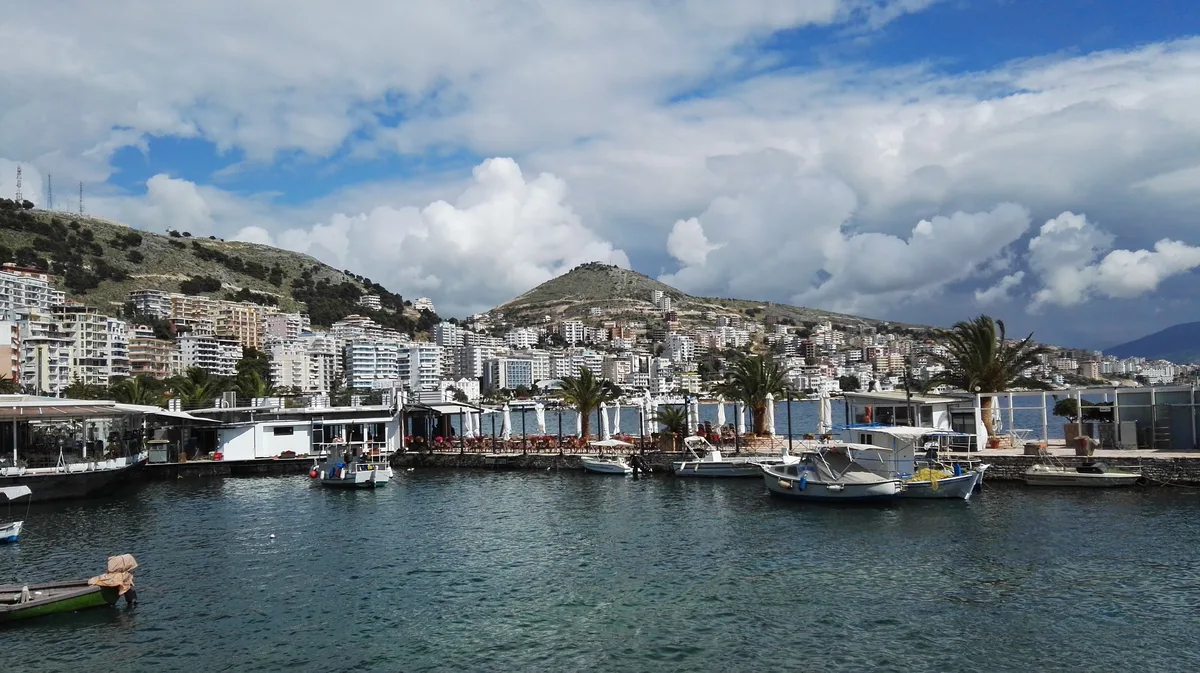
The second international sea link is shorter, faster and busier than it looks on the map. Across the narrow strait from Sarandë, close enough to see, lies Corfu – and a small fleet of fast craft and conventional ferries shuttles between Sarandë’s town-centre port and Corfu’s New Port all day in season. The two established operators are Finikas Lines, based in Sarandë, and Ionian Seaways, with additional craft appearing in the peak weeks. The fastest boats cross in about half an hour; the conventional ferries, which are the ones that carry cars, take roughly an hour to an hour and a quarter. In high summer there are sailings from early morning to late evening – in the deepest winter the service can shrink to a single daily round trip, and rough weather cancels what remains, so the calendar rules this route completely.
Three practical details decide whether the crossing is easy. First, the clock: Greece keeps time one hour ahead of Albania, and every timetable on this route is printed in the local time of the port it leaves from, so a departure that looks impossible next to your arrival is often simply the time difference wearing a disguise. Second, the car question: only the conventional ferries take vehicles, rental agreements and Greek or Albanian insurance frequently stop at the border, and many travellers are better served crossing as foot passengers and hiring separately on each side. Third, the paperwork: this is an international border, with passport control at both ports – arrive with time in hand, especially for the first sailing of the day in summer, when day-trippers from Corfu flood the route in one direction and Albania-bound visitors flood it in the other.
Used well, the Corfu link changes the shape of a whole trip. Corfu’s airport is a second gateway into Albania, often cheaper to reach from northern Europe than Tirana, and the pattern of flying to Corfu, sleeping a night or going straight to the port, and boating into Sarandë puts you on the Albanian Riviera on day one – with Butrint twenty minutes from the dock. Book summer crossings ahead, buy at the port offices or online out of season, and always confirm the current timetable with the operator, because this route’s frequency is the most season-sensitive piece of getting around albania.
The Lake Koman Ferry – a Working Boat Through a Fjord Landscape
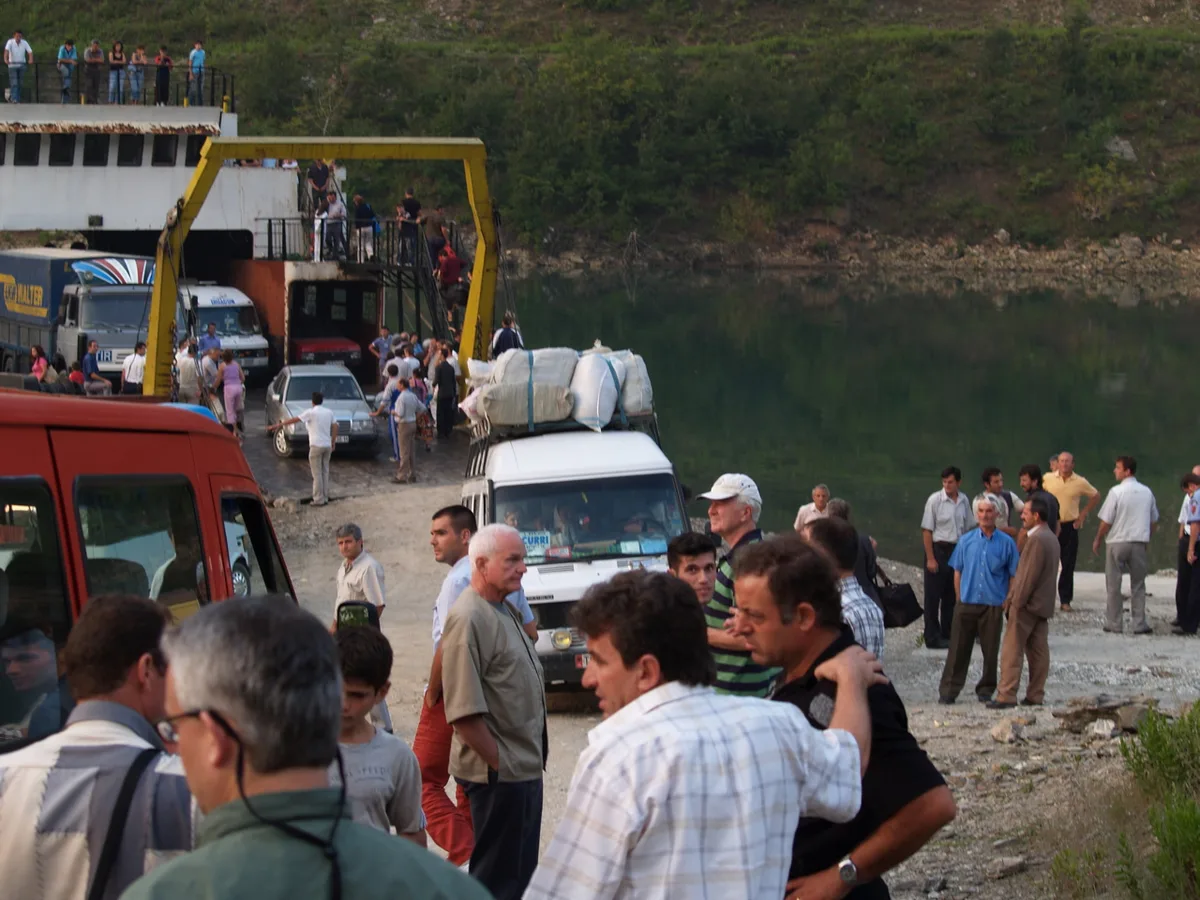
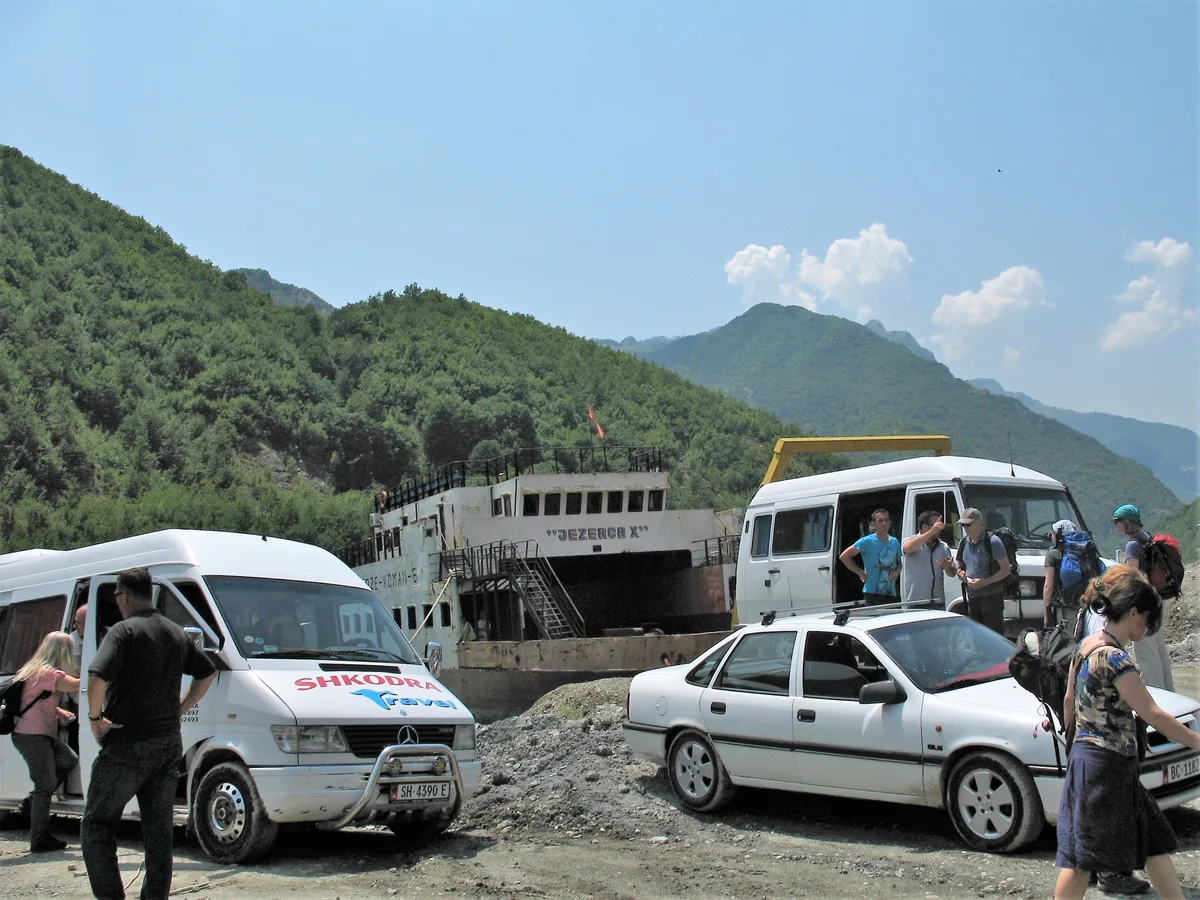
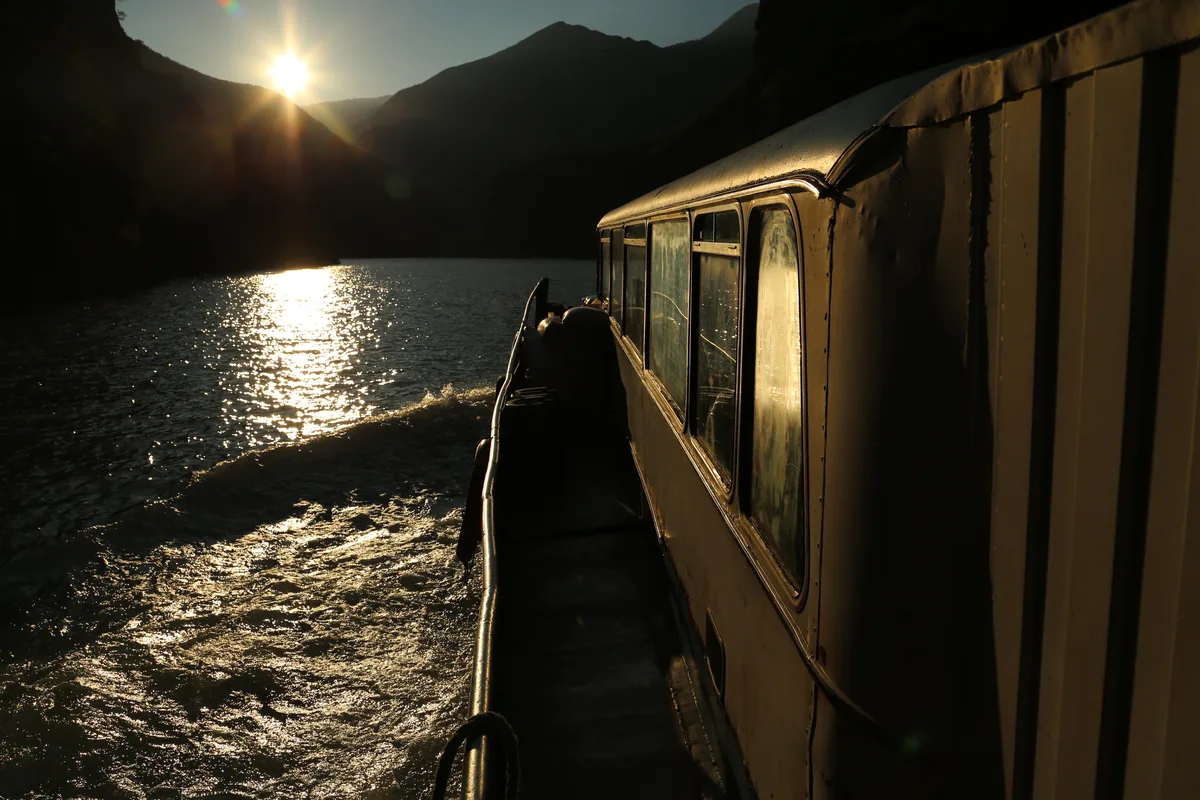
One domestic sailing in Albania is not just transport but a route in its own right – and, for many travellers, the single most memorable act of getting around albania. Lake Koman is a reservoir on the Drin river in the northern mountains, a narrow ribbon of green water walled in by rock, and the car ferry that runs its length – from Koman, at the dam, to Fierzë, at the head of the Valbona valley – is both a lifeline for the villages along the shore and the hinge of the great northern loop. The best-known operator is the Berisha ferry, which sells tickets online through its own site; smaller passenger boats, of which the Dragobia is the long-standing example, work the lake too, stopping at the shore settlements the big ferry passes.
The rhythm is a single daily pulse in season. The main car ferry leaves Koman in the morning and returns from Fierzë in the early afternoon, a crossing of roughly two and a half hours each way, and it runs daily through the main season – broadly from mid-April to the end of October or into early November, with the exact opening and closing dates set by the operator each year. The passenger boats keep a thinner service going through the winter. The vehicle deck is small, and that one fact drives the logistics: foot passengers can usually be absorbed, but a car, a camper or a motorbike must be reserved ahead, especially in July and August, when the ferry is full of hikers and road-trippers. Book through the operator’s site or your guesthouse, and treat the booking as real – this is the one inland service in Albania where showing up unannounced with a vehicle genuinely fails.
The ferry does not stand alone; it is the middle of a three-part chain. From Shkodër, transfer vans – bookable alongside the ferry ticket, and arranged constantly by Shkodër’s guesthouses – run to the Koman dock in the early morning, timed to the sailing; the road is slow and winding, so the early start is not negotiable. At Fierzë, vans wait on the ferry and run up the valley to Valbona, arriving with the afternoon still usable. Walk-on travellers heading for Theth cross Valbona on foot over the Valbona Pass the next day and come down to a road again at Theth, which is why this boat, more than any other single service, decides how the north fits together. Arrive at the dock early, keep your ticket offline – the signal dies in the gorge – and give the crossing the attention it deserves: two and a half hours through the finest scenery any public transport in Albania passes, at the pace of the water.
Small Crossings – the Butrint Cable Ferry and the Coast Boats
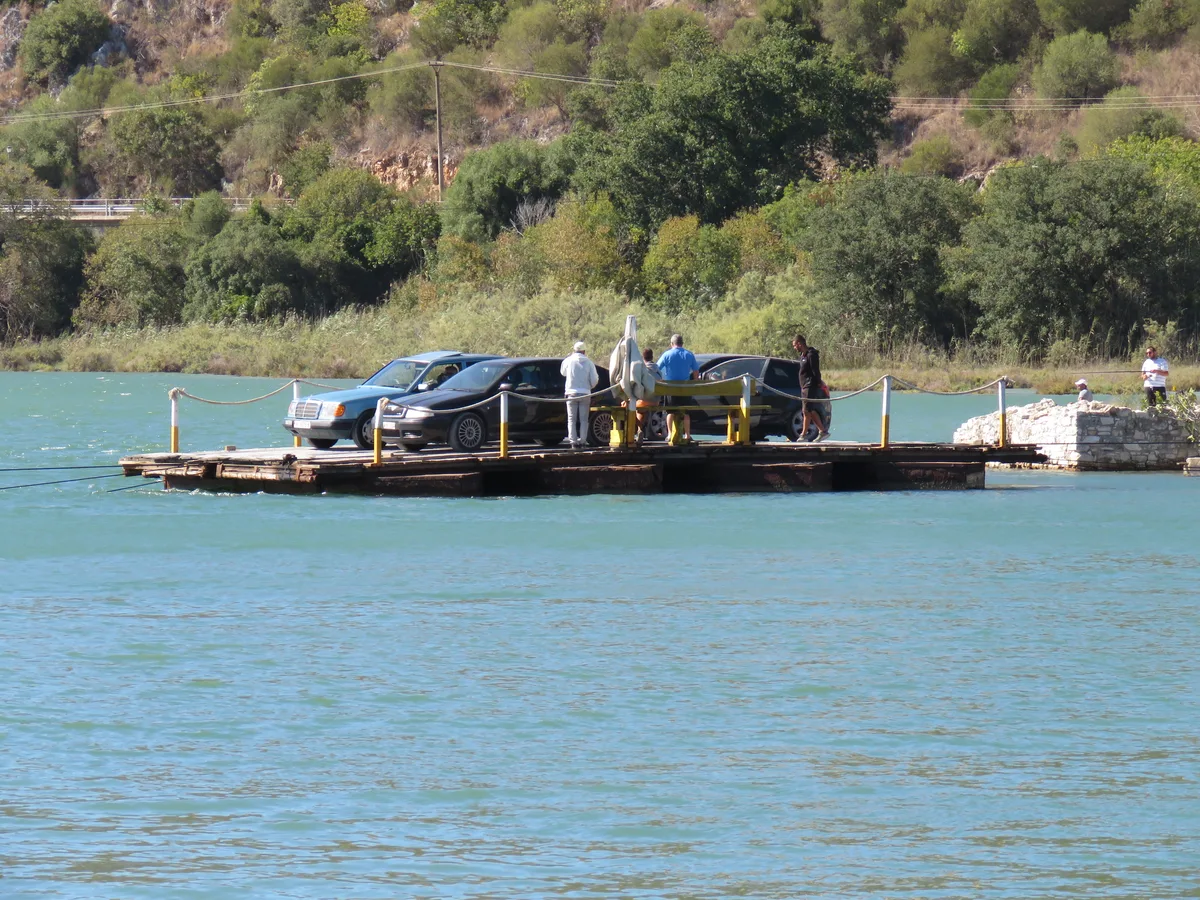
At the other end of the scale sit the crossings measured in metres rather than miles – the smallest working parts of getting around albania. At Butrint, in the far south, the ancient site is cut off by the Vivari Channel, and the link between the two banks is a cable ferry – a flat pontoon, winched along a cable stretched across the channel, that shuttles cars, cyclists and pedestrians the short distance across. It runs back and forth through the day in season, the crossing takes minutes, and the fare is small and paid in cash on the spot. For a driver touring the south it is more than a novelty: the ferry is the hinge between the Sarandë-Butrint road and the quiet route south towards the Greek border, and using it saves the long backtrack around the channel. Like everything at Butrint, it follows the site’s rhythm – verify it is running if you arrive at the very start or end of the season.
Along the Riviera, summer adds a layer of excursion boats that blur into transport. From Vlorë, boats cross to the Karaburun Peninsula and Sazan Island – a seasonal service that has run since 2014 – and in the beach season, small boats work the bays around Himarë and Dhërmi, dropping swimmers at coves like Gjipe that no road reaches. Treat all of these as weather-dependent day services rather than timetabled infrastructure: they run when the sea is calm and the season is alive, they are booked at the harbour or through beach operators the day before, and they are a delightful way to move along the coast for a day – but never build a connection on one. The working rule for the whole coastline is the same as for the mountains: ferries move you between countries and across the lake, boats entertain you along the shore, and the road does everything else.
Taxis and Ride Apps – Meters, Apps and Knowing the Fare First
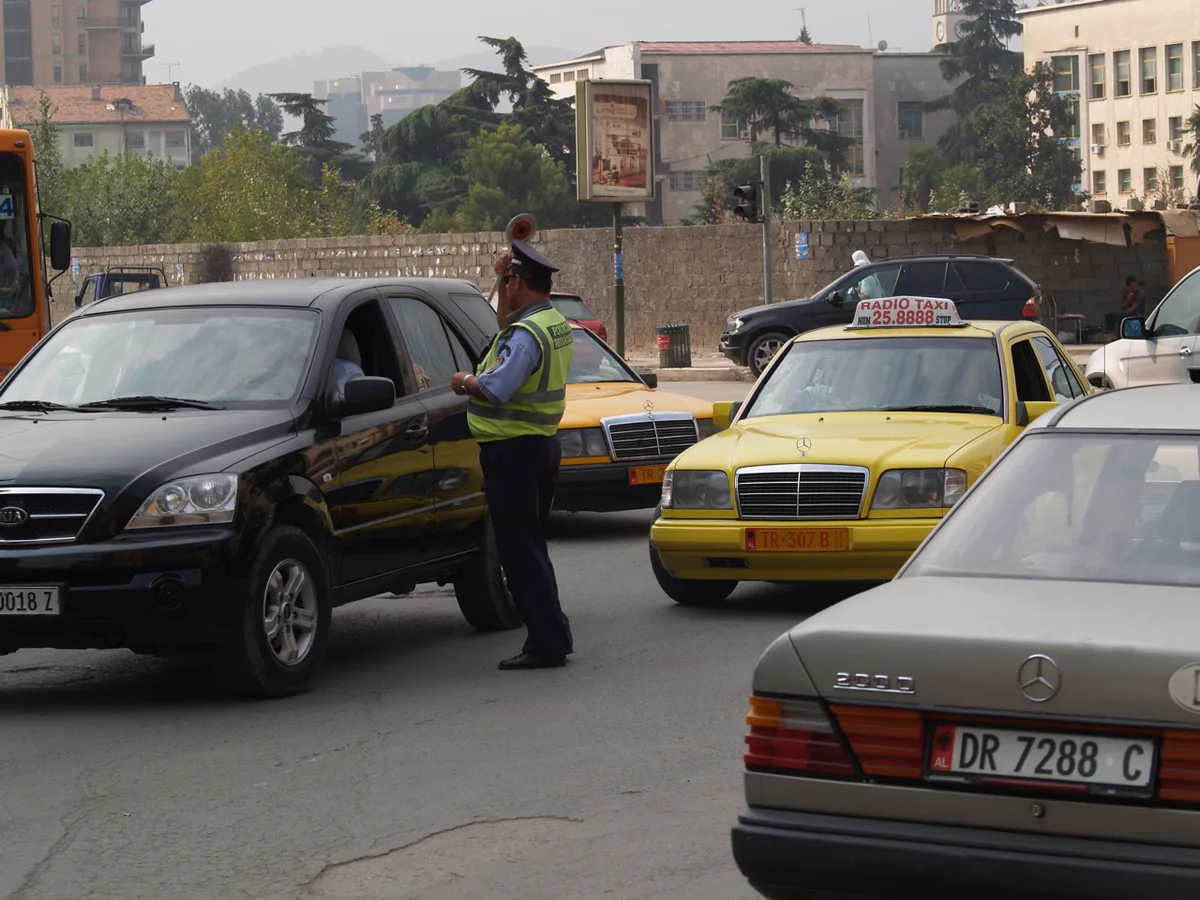
Taxis fill the gaps that getting around albania by public network leaves: the late arrival, the terminal transfer with luggage, the guesthouse up a hill on the far side of a strange town. Albania’s licensed taxis are plentiful in Tirana and every sizeable town, and the market runs on three parallel systems. Formal companies work by phone and app with metered or published fares – in Tirana, app-based services such as Merr Taxi and Speed Taxi have operated for years, and international ride-hailing in the form of Bolt was working in the capital at the time of writing. Then there are the ranks at stations, terminals and the airport, where licensed cars wait in line. And then there is the informal offer – the unmarked car and the confident stranger – which is the one to decline, politely and completely.
The rules that protect you are the same everywhere in the country. In a licensed taxi, the meter should run, or the fare should be agreed before the wheels move; either is acceptable, neither is negotiable once you have arrived. At Tirana airport, use the official rank – the airport publishes its licensed taxi partner and a fixed tariff to the centre, which ends the discussion before it starts. For intercity runs, a taxi stops being a meter ride and becomes a private transfer: guesthouses arrange these constantly – Shkodër to Theth, the airport to Berat, a Riviera day stitched together – and the price is a single agreed figure for the car, settled in advance, often surprisingly reasonable split between three or four passengers. Confirm whether the quote is per car or per person; that one question prevents most transfer disputes in Albania.
Ride apps deserve a word of their own, because they change the visitor’s experience of Tirana more than any single infrastructure project. Ordering through an app gives you a named driver, a plate, a route on a map and a price before you commit – which removes the three classic frictions of an unfamiliar city: explaining an address across a language gap, agreeing a fare, and carrying the right cash. Coverage is a capital-city story, though: apps thin out quickly beyond Tirana, and in the towns the guesthouse phone call remains the superior technology. Use apps where they exist, hosts where they do not, and keep enough small lek in your pocket for the day both fail – because on that day, a licensed taxi with an agreed fare is still only a raised hand away.
Hiring a Car – Where the Freedom Is Real
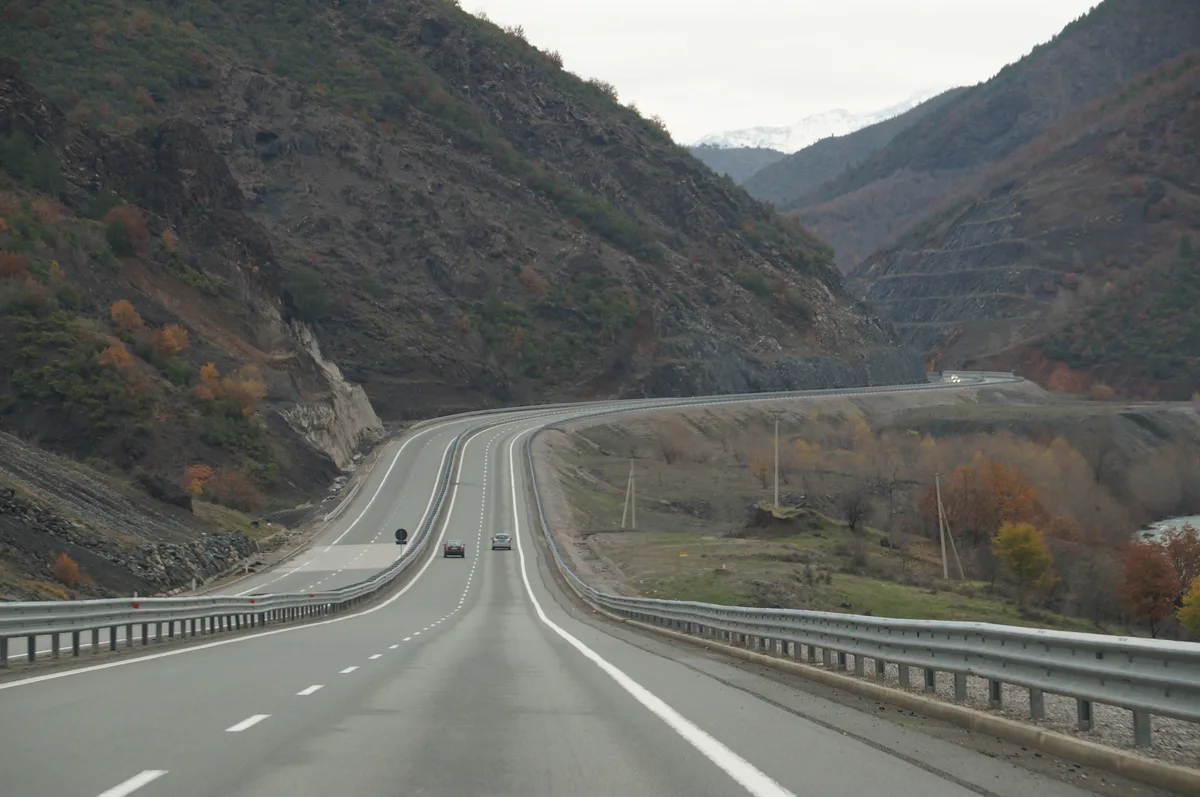
For all the reach of the furgon network, a hire car remains the single biggest upgrade in getting around albania, because the country’s best geography is strung along roads, not concentrated in its towns. The Riviera is a drive. The mountain valleys are drives. The chain of castles, canyons and archaeological parks between the headline stops is a drive. Hiring is straightforward: international brands and a deep bench of local companies compete at Tirana airport and in the city, alongside a lively market of local owners renting their own cars through rental platforms, which is often cheaper and always worth reading the terms of twice.
Where you collect matters more than what you collect. Picking up at the airport puts you straight onto open road in every direction and skips Tirana’s traffic entirely; picking up in the city saves nothing once the first hour is spent escaping it. On the car itself, the honest advice is unglamorous: a standard compact handles the motorways, the coast road and the newly paved mountain approaches perfectly well, and ground clearance is worth more than power on guesthouse tracks and beach approaches. Check the contract for the three clauses that actually bite in Albania – whether unpaved roads are excluded, whether the insurance and paperwork allow a border crossing (the Green Card question, if you plan to combine countries), and what the deposit and excess really are – because a scenic shortcut on a white road can void the first of those without the road looking any different from the driver’s seat.
Running the car is easy. Fuel stations are frequent on every main route, most take cards, and attendants pump for you. Parking is the tax: Tirana’s centre is congested and its paid zones worth paying, old towns like Berat and Gjirokastër are best parked below and walked into, and Riviera beach roads in August turn parking into a competitive sport. Build the car’s cost honestly when comparing it with public transport – rental, fuel, tolls and parking against a handful of furgon fares – and you will find the car wins on freedom long before it wins on price. But freedom, in a country where the famous pass, the hidden cove and the family-run winery are all twenty minutes off the corridor, is precisely the product. Hire for the days it transforms, not for the days you would have spent on a Tirana pavement café anyway.
Driving in Albania – an Honest Assessment of the Roads
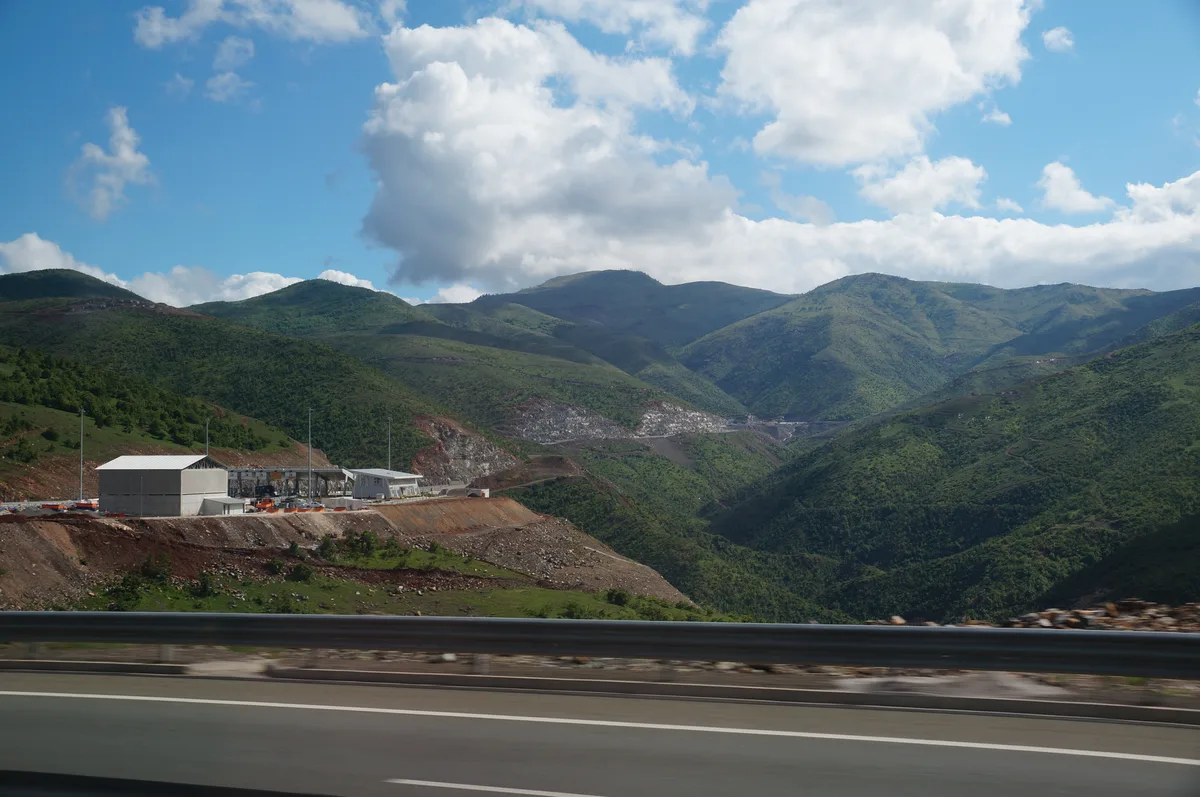
Driving in Albania has a reputation assembled from old photographs, and the truth now sits in two halves. The infrastructure half has been transformed: three motorways – the A1 north-east to Kosovo, the A2 from Fier to Vlorë, the A3 from Tirana to Elbasan – plus modern expressways on the main axes, rebuilt coastal roads and marquee projects like the Llogara Tunnel, opened in July 2024 under the pass on the road to the Riviera. The behaviour half improves more slowly. Expect assertive overtaking, creative interpretations of priority, vehicles stopped on fast roads, and, in the countryside, livestock, carts and unlit bicycles sharing your lane. Neither half cancels the other. Albania is driveable, enjoyably so, by a confident driver who slows down a gear mentally as well as literally – and the crash statistics that still trail Western Europe are the reason this guide will not pretend otherwise.
The formal rules are clear and worth stating plainly, because they are stricter than many visitors assume. Albania drives on the right. The general speed limits set by the Albanian Road Code are 40 km/h in built-up areas, 80 km/h outside them, 90 km/h on expressways and 110 km/h on motorways, with lower limits signed locally – and the limit that surprises visitors most is the 40 in towns, which is real and enforced unevenly but genuinely. The drink-drive limit is among the lowest in Europe, effectively a no-drinking rule for anyone driving, and seatbelts and daytime lights outside built-up areas belong to the same code. There is no motorway vignette; instead, tolls are charged at specific points – the A1 at the Kalimash tunnel, on the road to Kosovo, and the Llogara Tunnel are the two a tourist is most likely to meet – so keep lek and a card handy and do not be surprised when a barrier appears on an otherwise free network.
Technique matters more than rules. Drive defensively, expect the unexpected at village edges and blind bends, and treat every overtaking decision by the car behind you as your problem too. Keep speeds honest on rural roads where surfaces change mid-corner, potholes survive between repairs, and a heroically engineered new stretch can end at a junction designed by optimism. In cities, and above all in Tirana, traffic is slow, dense and improvisational; the horn is a signalling device, not an insult. Navigation is the easy part – phone maps know Albania well, signage on main roads has improved enormously, and offline maps cover the mountain dead zones. Do those things, and driving becomes what it should be here: the most enjoyable layer of getting around albania, through some of the finest road scenery in Europe.
Mountain Roads – the Llogara Pass, the Road to Theth and the Winter Line
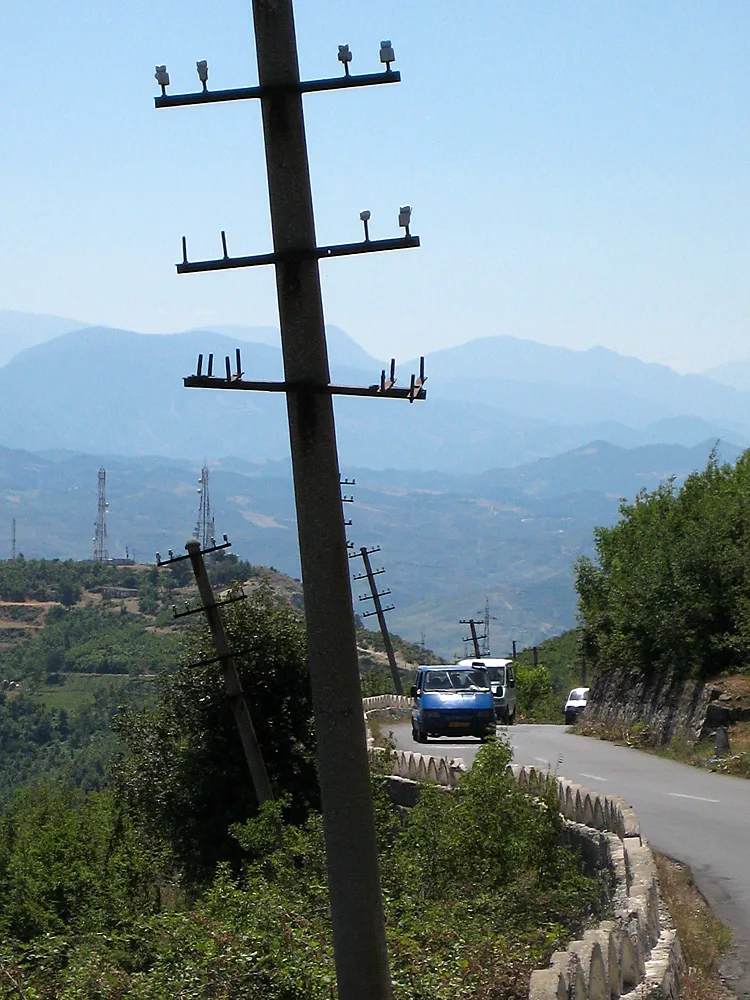
Every Albanian road trip eventually meets a mountain, and the mountains keep their own rules – this is where getting around albania stops being a system and becomes a judgement call. The famous case is Llogara, where the SH8 coast road climbs from the Vlorë plain over a pass above 1,000 metres and falls in switchbacks to the Ionian at Dhërmi. Since July 2024 there have been two Llogaras: the new tunnel, roughly six kilometres long, which carries through traffic under the pass between Dukat and Palasë for a toll, and the old pass road itself, which remains open and remains one of the great drives of the Mediterranean – paragliders overhead, the sea a vertical kilometre below, and not one metre of it to be rushed. Take the tunnel when the day is long or the weather is closing in; take the pass when the drive is the point. Confusing the two is impossible – the tunnel is signed well in advance – but choosing between them is the defining small decision of every Riviera road trip.
The northern classic is the road to Theth, the SH21, which leaves Shkodër, climbs through Bogë and crosses the Qafë e Thorës pass at about 1,630 metres before dropping into the valley. Older guides describe a 4×4 expedition; that road was paved in the early 2020s, and in summer conditions an ordinary car now makes the journey in around two hours – but paved is not the same as tame. The pass is steep, narrow and exposed, with hairpins, drops and weather that changes by the hour; drive it in daylight, in a car whose brakes you trust, and understand that what the paving removed was the need for a 4×4, not the need for respect. Minibuses from Shkodër run the same road in season for those who would rather watch the scenery than the hairpins. And note the geography that catches people out: there is no road at all between Theth and Valbona. The link between the two valleys is the Valbona Pass, a full day’s walk over a high footpath – the two roadheads face each other across a mountain that only feet can cross.
Winter draws the line under both stories. Snow closes the Theth road for long stretches, avalanche risk shuts the Qafë e Thorës when it chooses, passes across the northern and eastern ranges demand winter tyres and sometimes chains – the road authority issues exactly these warnings in cold spells – and even the Llogara can ice at its portals. The Koman ferry keeps its thinner winter pattern, mountain furgons run when the road allows, and itineraries built for July collapse if transplanted whole into January. The mountain rule is therefore seasonal, not technical: in summer, Albania’s high roads are open to any careful driver; in winter, they belong to those who check the forecast, the road reports and the ferry’s season dates before they commit – and who hold a plan B that stays in the valleys.
Route Logic – Stringing the Classic Loops Together
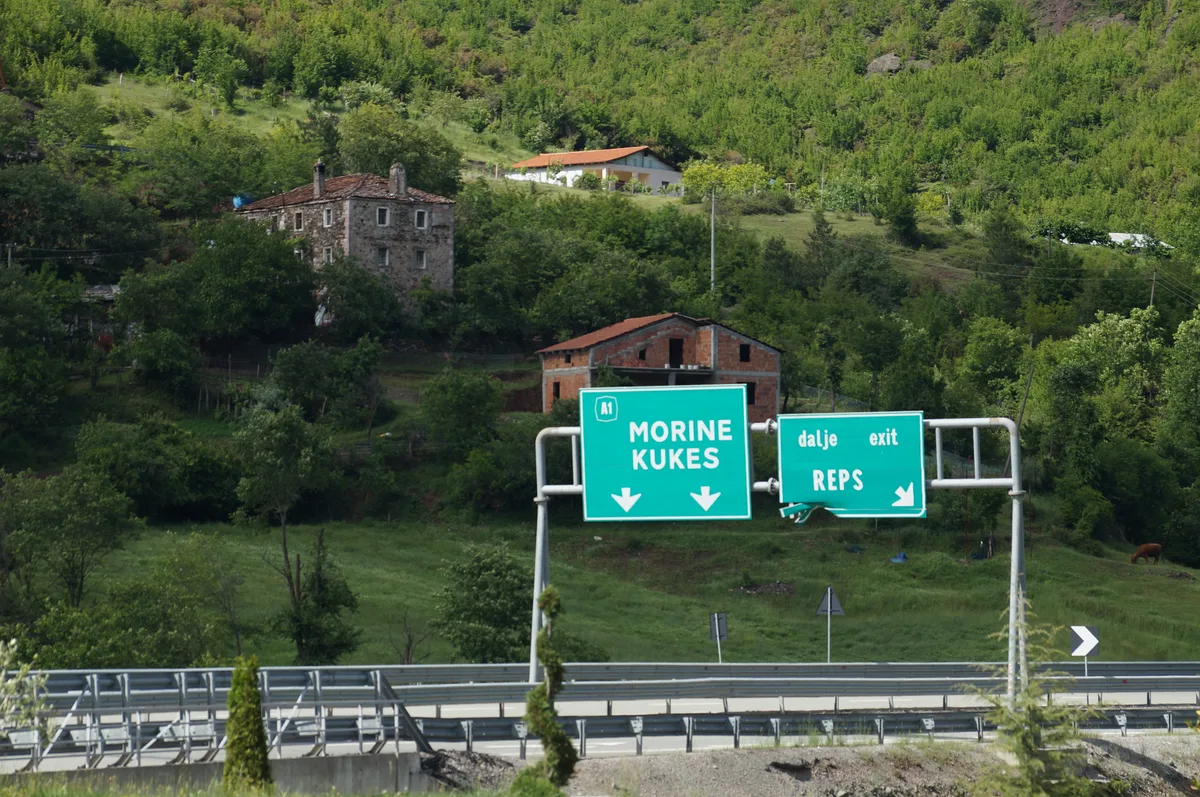
Modes are only half the craft; the other half is sequence, because Albania’s geography rewards travellers who run its loops in the right direction and punishes those who fight it. The southern loop is the country’s signature: Tirana to Berat, Berat down the SH4 corridor to Gjirokastër, on to Sarandë and Ksamil, then north up the Riviera through Himarë and Dhërmi to Vlorë, and back to Tirana. Run it in this direction and the trip keeps dealing new scenery without a repeated mile: the coastal leg is saved for the second half, the Llogara decision – tunnel or pass – comes as the finale rather than the overture, and every leg is served by buses and furgons in the morning pattern. The stops are the ones in our guide to the best places to visit in Albania, and the day-by-day version of this exact loop is set out in our Albania itinerary for 7 days – what matters here is that the transport supports it, leg by leg, without a car, provided each day starts early.
The northern loop runs on different machinery. Shkodër is the base; the Koman ferry and the Fierzë vans carry you to Valbona; your feet carry you over the Valbona Pass to Theth; and the paved SH21 carries you back down to Shkodër, closing a triangle that has a boat, a hike and a mountain road as its three sides. It only works in the ferry’s season and the pass’s snow-free months, it needs the ferry and the Shkodër transfer booked as one chain, and it has one absolute rule: never plan to drive between Theth and Valbona, because no road exists. A hire car does the north differently – out to Theth and back the same road, or out to Valbona and back – and the ferry becomes a pleasure trip rather than a connector.
The third pattern is the eastern arc: Tirana over the A3 to Elbasan, on to Pogradec and Lake Ohrid, down to Korçë – and, with time, west through the mountains to Përmet and Gjirokastër, joining the southern loop from behind. Buses cover every leg; a car makes the Korçë to Gjirokastër mountain link realistic in a day. Two cross-cutting rules govern all three patterns. Favour through-routes over out-and-backs: Albania’s hubs – Tirana, Shkodër, Sarandë, Korçë – are arranged so that almost any two stops connect without retracing, if you accept a change of vehicle. And respect the last-mile asymmetry: corridors are easy and trailheads, beaches and border villages are the friction, so place your one taxi or transfer budget at exactly those joints, and let the cheap, frequent network carry the long middle. That is the whole art of getting around albania – morning departures, through-routes, and help hired precisely where the network ends.
Getting Around Albania When It Goes Wrong – Gaps, Sundays and Bad Weather
Even a well-run journey of getting around albania meets the system’s edges, and the edges are predictable enough to plan around. The commonest failure is the missed last vehicle: a thin route whose final furgon left at two, an afternoon bus that ran in the morning, a traveller standing at a gathering point as the day quietly ends. The defence is boring and total – travel in the morning, verify the day’s last departure the night before, and never schedule a flight, a ferry or a border crossing hard against an Albanian domestic leg. Build the buffer in, and the system almost never beats you.
The second edge is the calendar. Sundays thin everything: fewer furgons, longer waits, some town services reduced to a skeleton. Public holidays behave like Sundays with better weather. Winter is the third edge – the Corfu boats shrink and cancel in rough seas, the Koman ferry drops to its low-season pattern, snow closes high roads, and a mountain itinerary needs reshaping around the valleys. None of this is hidden; all of it is knowable the day before, from the operator, the road authority’s updates or your host. Which is the fourth and most useful truth: in Albania, information flows through people. A guesthouse owner will phone the driver, the driver will wait three minutes, the kiosk will know which bay, and the café at the gathering point has watched the route run for twenty years. The traveller who asks, early and politely, travels in a different country from the one who trusts a screenshot. Keep a cash reserve for the taxi that rescues a broken plan, keep your host’s number in your phone, and treat every disruption as a fare negotiation rather than a catastrophe – in Albania, there is almost always a way, and it usually involves a person, a phone call and a vehicle you had not considered.
Frequently Asked Questions
What is a furgon?
A furgon is a privately run shared minibus – the backbone of public transport in Albania. Furgons run fixed routes between towns but keep no fixed timetable: each vehicle waits at its gathering point, usually at or near the town’s bus terminal, and leaves when it is full. You pay the driver or conductor in cash, in lek, at the route’s set fare, once you are on board or under way. They are the cheapest and most frequent way of getting around albania, and the only public transport to many smaller towns and villages.
Can you travel around Albania without a car?
Yes – getting around albania without a car is comfortable, provided you plan around mornings. Buses and furgons link every town, ferries cover Italy, Corfu and Lake Koman, and taxis fill the last miles. What you give up is spontaneity in the middle of the day and easy access to trailheads, coves and scattered rural sights; what you gain is a much cheaper trip and a far more local one. Most travellers mix the two: public transport for the corridors, a hire car or a private transfer for the two or three days where the network genuinely runs out.
Is there a train service in Albania?
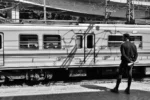
Effectively, no – and no itinerary should be built on one. Albania’s railways decayed after the 1990s and regular passenger services have long been suspended; the Tirana to Durrës line, the one route that matters, has been under reconstruction with European funding, and until it demonstrably reopens with a published timetable, trains are a subject for transport enthusiasts, not a way to travel. Buses and furgons cover the same ground today, faster and far more often.
How do I get from Tirana Airport into the city?
Three working options cover the 17 kilometres from Rinas to the centre. The airport bus – the Rinas Express – runs to a stop behind the Palace of Culture at Skanderbeg Square on an hourly pattern through the day, paid in cash on board; check the airport’s website for the current hours, which have changed over the years. The official airport taxi rank works to a published fixed tariff for the centre. And ride apps and pre-booked transfers pick up outside arrivals. If you are leaving Tirana immediately, ask about the airport’s bus connection to the regional bus terminal before defaulting to the city centre.
Can I pay for buses and furgons by card?
Plan on cash. Furgons, intercity buses, city buses and most taxis run on lek paid to a human being, and the furgon driver is not going to produce a card terminal at a village crossroads. Cards work where the system is formal – ferry companies, some online booking, larger agencies, many hotels – so the working pattern is a float of lek in small notes for transport, renewed at ATMs in the towns, and cards kept for beds and bookings. The national eTransport platform and the planned state operator may digitise more of this in time; at the time of writing, cash remains the native language of getting around albania.
How do I get to Theth?
From Shkodër, two ways. By road, minibuses and shared transfers climb the paved SH21 over the Qafë e Thorës pass in around two hours in season – book through a Shkodër guesthouse, which will also tell you the current departure point and time. Or fold Theth into the northern loop: Koman ferry to Fierzë, van to Valbona, and the full-day hike over the Valbona Pass down into Theth, then out by road. There is no road between Theth and Valbona, and in winter the road to Theth closes under snow – the valley is a late-spring-to-autumn destination for anyone without serious winter capability.
Is driving in Albania safe?
It is manageable, and it is not Western Europe. The main roads are modern and improving yearly, but local driving is assertive, rural roads carry hazards from livestock to unmarked works, and accident rates remain above EU levels. The defences are ordinary ones: moderate speed, full attention, no night driving on unfamiliar mountain roads, no alcohol at all, and a refusal to be hurried by the car behind. Drivers who hold those lines generally find Albania a pleasure to drive – the scenery sees to that. Drivers who import motorway habits wholesale are the ones who come home with stories.
What time is the last bus in Albania?
There is no national answer, and any source that gives you one is guessing. On the dense corridors – Tirana to Durrës above all – services run into the evening. On the routes travellers actually depend on, the pattern is a morning-heavy day that can be effectively over by mid-afternoon, earlier on Sundays and in winter. The only reliable method is to fix the last departure for your specific route the day before: at the terminal, on eTransport, or through your accommodation. Treat every Albanian journey as a morning appointment and the question mostly stops mattering.
The Short Version
Getting around albania runs on a simple bargain: the country gives you a cheap, frequent, human network, and asks in return that you travel early, carry cash and confirm things with people rather than screens. Ride furgons and buses for the corridors, from the right Tirana terminal. Take the overnight ferry from Durrës if Italy is in the plan, the fast boat from Sarandë if Corfu is, and the Koman ferry because nothing else in Europe’s public transport looks like it. Hire a car for the Riviera and the mountains, respect the Llogara and the road to Theth, and let your guesthouse’s phone calls hold the whole thing together. Do that, and Albania’s transport stops being the obstacle in the trip and becomes, quietly, one of the best parts of it – with the routes and seasons in our Albania travel guide and the costs of every option laid out in the companion cost guide, when it publishes.