Ask what a trip to Albania costs and the internet answers with a shrug dressed up as a number. One guide promises a day for the price of a London lunch. Another, updated more recently and rather more honestly, puts a comfortable day at three times that. Both describe the same country in the same year, and both can be defended, because an albania travel cost figure is meaningless until you know what it contains: which bed, in which town, in which month, reached how, converted at which rate. Albania is still one of Europe’s cheaper countries to travel in. It is not the country the oldest guides describe, and the gap between those two sentences is what this page exists to explain.
This guide therefore does the work in the open. It starts with the number that quietly moved every other — the exchange rate, taken from the Bank of Albania’s own official rate rather than a converter site. It then walks the five buckets every trip spends into — sleep, food, movement, entries, and the small leaks no headline budget mentions — and only then builds three daily budgets as worked examples with the components visible, so you can see which assumption does the damage and swap in your own. Official figures are named with source and check date, planning estimates are labelled as estimates, and nothing here is a quote: prices move fast enough that the method matters more than any single number.
The short version is this. Sleep is the largest line in almost every albania travel cost calculation, the season is the largest multiplier, and the lek itself is the largest trap, because a strong currency has been silently re-pricing the country for foreign earners for years. A traveller sleeping in dorms and mountain guesthouses, eating where Albanians eat and riding furgons can still travel slowly and well on a modest daily sum. A traveller who wants a Riviera hotel in August, a hire car and seafood dinners is taking a genuinely European holiday at a European price — lower than Italy or Greece, but the same species of bill. If the trip is still taking shape, our Albania travel guide covers routes and seasons; this page is only about the money.
Albania Travel Cost at a Glance
Albania’s money is the lek, written ALL or L, and almost every price you meet on the ground — a market stall’s label, a furgon driver’s fare, a castle ticket — is set in lek first and converted second, if it is converted at all. At the Bank of Albania’s official exchange rate on 30 October 2026, one euro bought 90.90 lek and one US dollar bought 81.16 lek, so a traveller can treat 100 lek as a little over one euro, or about one dollar and a quarter. Every estimate that follows is built in lek and converted at that rate. Check the current figure on the Bank of Albania’s official exchange rate page before you travel, because the lek floats and has been strengthening for years — the next section explains why that trend matters more than any single price rise.
The table below is the whole article in one screen: three daily budgets, per person, per day, on the ground, excluding international travel — planning estimates assembled from the component ranges below, not quotes and not guarantees.
| Travel style | Daily budget in lek | Roughly in euros | What it describes |
|---|---|---|---|
| Backpacker | 3,500 – 5,500 lek | about 40 – 60 euros | Dorm beds and simple guesthouse rooms, bakery food and local grills, furgons and buses, one paid sight on most days |
| Mid-range | 6,500 – 12,000 lek | about 70 – 130 euros | A comfortable private room shared by two, restaurant lunches and dinners, a mix of furgons, buses and some hire-car days |
| Comfort | from 14,000 lek | from about 150 euros | Good hotels or boutique stays, seafood and wine with dinner, a hire car or driver throughout, guided days and beach clubs |
Three forces move a real trip between and beyond those bands: geography (Tirana, the Riviera and the mountains are three different price countries sharing one currency), the calendar (the same Riviera room can cost a multiple of its June price in August), and the exchange rate, which re-prices the whole country for foreign earners without a single Albanian price tag changing.
Why Albania Feels Less Cheap Than the Old Guides Say
The commonest complaint in recent traveller accounts is not that prices are high, but that they are higher than the article the traveller read said they would be — and the article is usually a few years old. Part of that gap is ordinary inflation, which Albania has had like everywhere else. But the larger part is the currency. The lek has strengthened substantially over the past decade under the Bank of Albania’s free-floating regime, which means each euro, pound or dollar now converts into fewer lek than a few years ago, while the lek price on the café blackboard may barely have moved. A cost that looks unchanged to an Albanian has risen sharply to the person paying in converted money, and no individual business has done anything to cause it.
This is why the honest version of the albania travel cost story is a story about two inflations. There is the inflation in the price tags, real but modest in much of the country. And there is the inflation in the conversion, which has been steep, and which hits every line of a foreign visitor’s budget at once — the room, the meal, the furgon, the ticket — because all of them are bought with converted money. Guides written when the exchange rate was far more generous describe a country that, in conversion terms, no longer exists. Every conversion here uses that rate — 90.90 lek to the euro, read on the Bank’s site on 31 October 2026 — because a budget converted at a stale rate fails quietly, a few percent at a time, all trip long.
The second force is demand, visible in the official figures rather than in anecdotes. Visitor numbers have climbed steeply year after year — official entry counts and the central bank’s travel receipts both set records in 2025 — and that demand lands unevenly. It lands on the Riviera in July and August, on Ksamil’s small stock of rooms, on the airport’s hire-car fleet in the weeks everyone else wants one. It does not land on Shkodër in October or Tirana’s café scene, which is built for residents. The result is two price climates: a small, hot, genuinely expensive one on the peak-season coast, and a large, mild, still-cheap one almost everywhere else. Most disappointment comes from budgeting for the second and travelling in the first.
The third force is simpler and more hopeful: Albania’s cheap things have mostly stayed cheap. Bread, byrek, market produce, coffee and local grills are priced for Albanian wages, and a visitor eating alongside residents pays resident prices. Castles and museums are state-run and priced as public culture. What has risen fastest is the layer built for visitors — coastal rooms in season, beach furniture, guided days, hire cars — the layer a comfort traveller buys most. That split is the key to the whole question: the style of the trip, far more than the country, decides whether Albania feels cheap or dear.
The Five Buckets of an Albania Travel Cost
Every Albania budget, whatever its total, falls into the same five buckets, and naming them is more useful than any total because the buckets behave differently. Sleep is the first and usually the largest, with the widest internal range of all: the gap between a dorm bed and a boutique Riviera double is not a percentage, it is a multiple, and it is chosen fresh every night of the trip. Food is the second bucket and the kindest, because Albania’s everyday food culture — bakeries, grills, markets, taverns — is priced for the people who live there, and a traveller who eats inside that culture eats well for little. The jump in food spending comes only when a trip leaves that culture for waterfront restaurants and imported menus.
Transport is the third bucket, and the one where style changes the total most violently: furgons and buses are cheap but run on their own clocks, while taxis, hire cars and drivers cost several times more per day and buy back hours and certainty. Entries and activities form the fourth bucket, strangely shaped: most state sites charge a few hundred lek, the best scenery charges nothing, and the expensive days are the commercial ones — boat trips, beach clubs, guided excursions. The fifth bucket is everything else — cash-machine fees, a local SIM, laundry, water, loungers, small mistakes — minor on most days, quietly decisive across a trip, and given its own section near the end of this guide.
Two habits follow. Budget by bucket rather than by day, because a day in Albania is not a standard unit — a furgon-and-castle day and a walking-and-cafés day cost different amounts, and averaging them describes neither. And notice which bucket your own style loads most heavily: a hiker’s albania travel cost is transport and guesthouse dinners, a beach traveller’s is the room and the lounger, a culture traveller’s is the cheapest bucket of the five. The best places to visit in Albania sit across all three price regions, so choosing between them is a budget decision too.
Where You Sleep – the Biggest Line in Any Albania Travel Cost
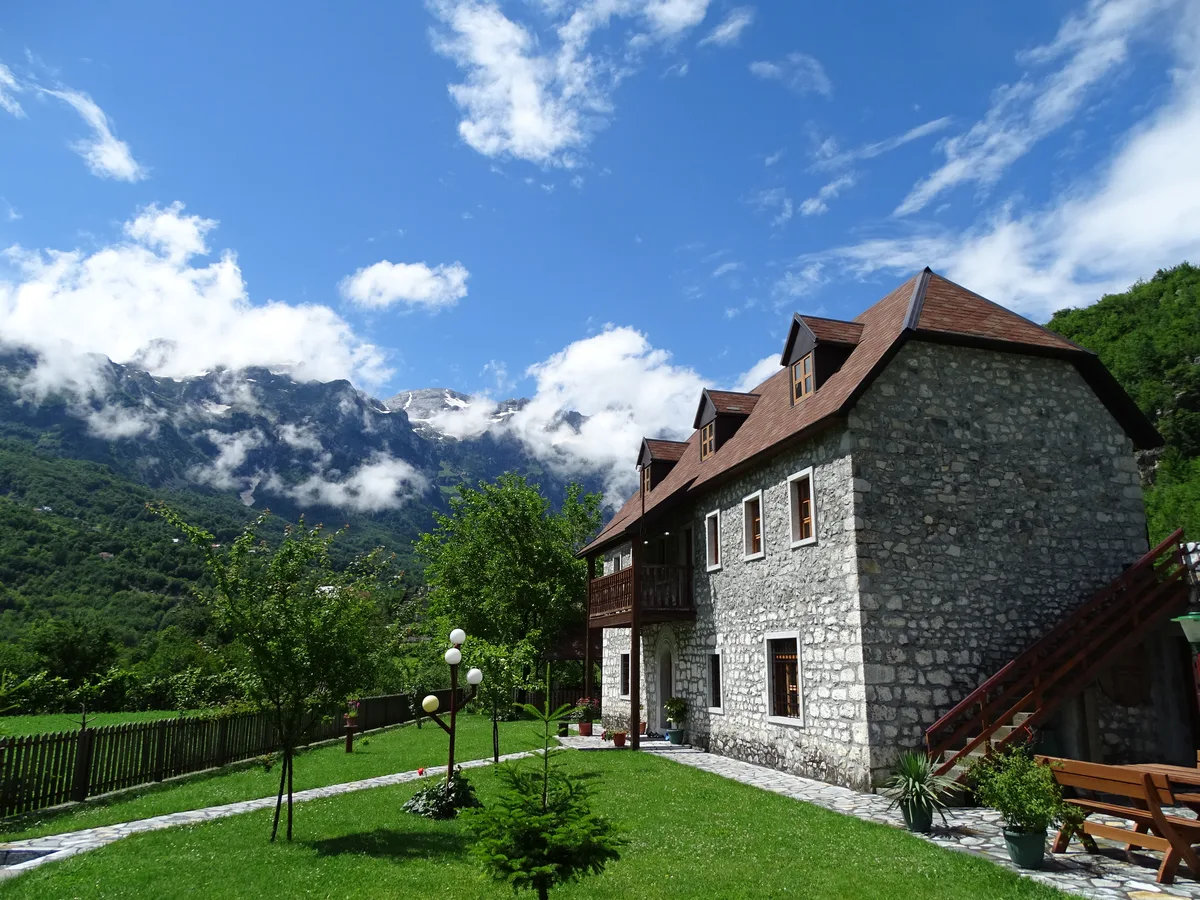
Sleep is where an Albania trip is won or lost financially, and it rewards being thought about by place rather than by night, because Albania has four distinct sleep markets. Tirana has the full modern range — hostels with dorms, a deep bench of apartments and mid-range hotels, international-standard properties at the top — competing for a year-round city market, which keeps its prices honest in every month. The historic towns — Berat, Gjirokastër, Shkodër, Korçë — run on family hotels and guesthouses in converted houses, where the product is a private room, a serious breakfast and an owner who treats the stay as hospitality, and prices stay moderate even in summer. The mountains run on guesthouses of another kind, in Theth, Valbona and the southern highlands, where the nightly rate commonly bundles dinner and breakfast because there is nowhere else to eat — a structure that makes a mountain night look expensive until you notice it has paid for two of the day’s three meals.
The Riviera is the fourth market, and it plays by different rules. Its season is short, its room stock in the famous spots — Ksamil above all, with Sarandë, Himarë and Dhërmi — is limited, and its demand arrives from half of Europe at once. In July and August its prices detach from the rest of the country entirely, and a room that is unremarkable in June can carry a peak price that would buy the best room in Berat. This is why no single nightly figure can be quoted for “Albania” with a straight face, and why this guide gives sleep as a range per style: a dorm bed or basic guesthouse room in the low thousands of lek, a comfortable private double shared by two in the mid thousands per person, a good coastal room in season well beyond that — ranges checked against current listings in autumn 2026, though the pattern matters more than any range: place and month move the price more than quality does.
Two practical rules fall out of the sleep market’s shape. Spend deliberately on the nights that do double duty: the guesthouse night that includes dinner, the well-placed room that lets you walk everywhere and spend nothing on taxis, the beachfront room in June that replaces a daily commute to the water. The nights that are only a bed — an airport stopover, a transit town you leave at dawn — are the ones to keep at the bottom of the range, and every town has clean, cheap beds for exactly those nights. The second rule concerns how rooms are sold: much of the guesthouse stock is booked through the big platforms at platform prices, but smaller places also deal directly, in cash, and the direct price for several nights is often the better one — ask politely and treat any saving as a found note rather than a right. This guide prints no nightly rate for a named property: rates expire faster than articles, and a budget built on ranges outlives one built on quotes.
Food and Drink – Where Albania Is Still Genuinely Cheap
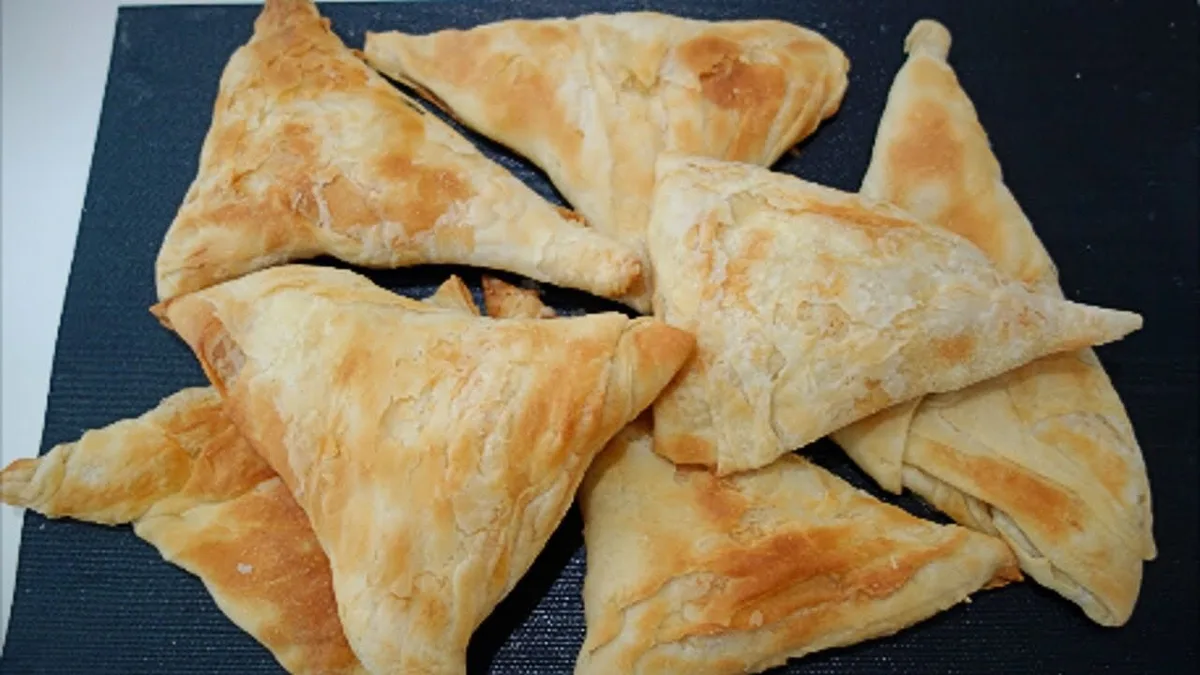
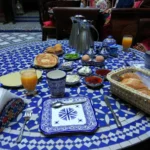
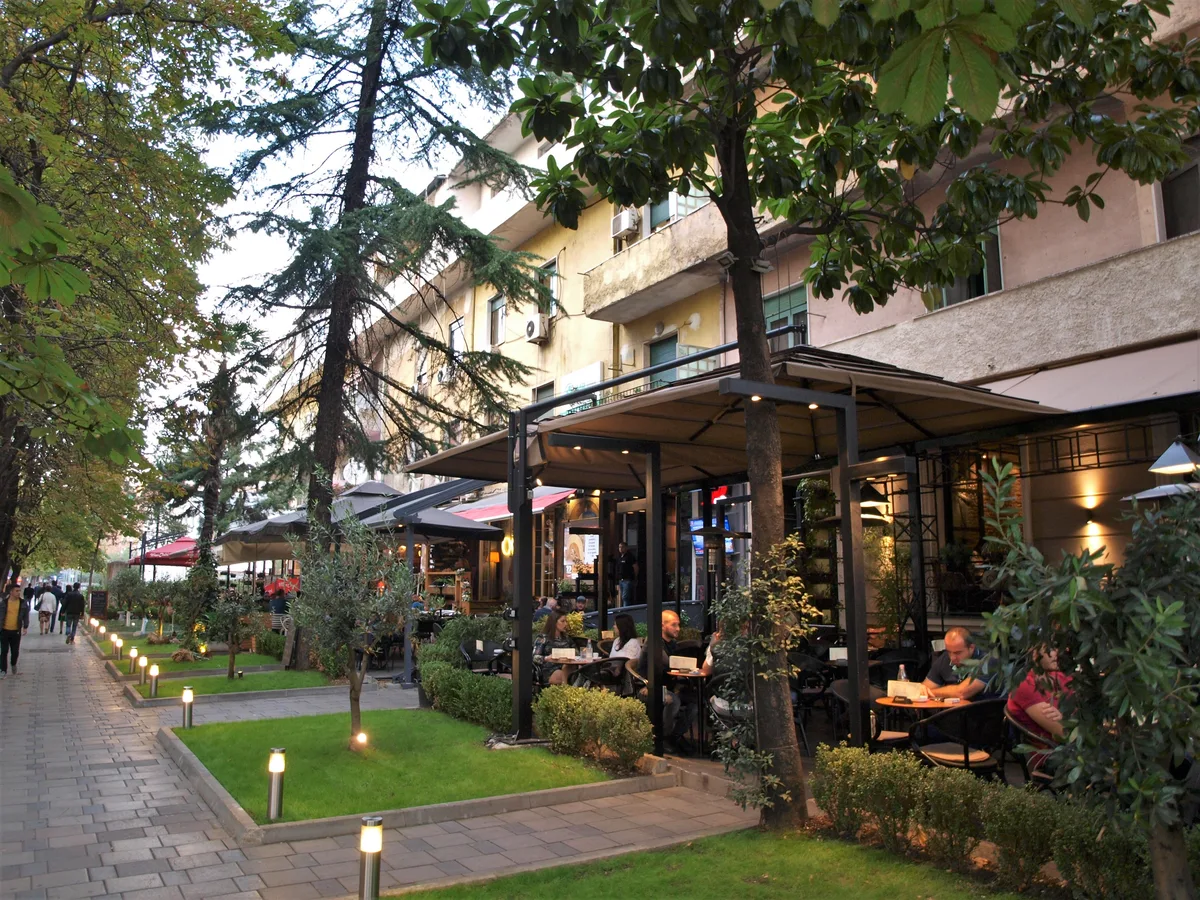
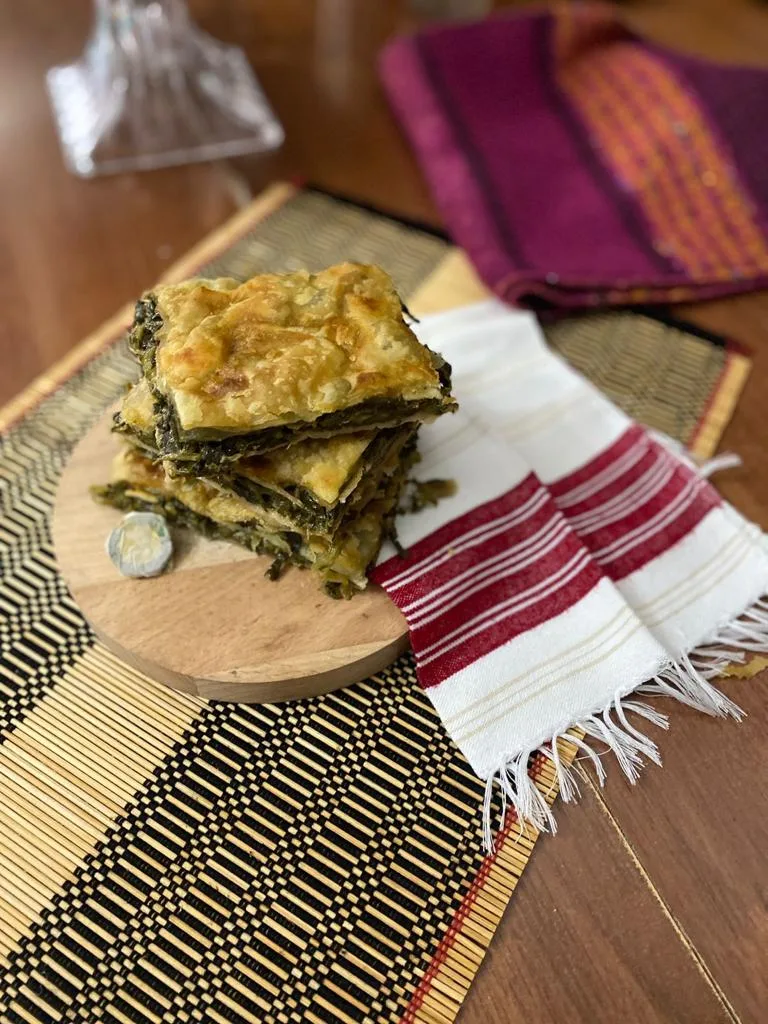
Food is the bucket where Albania’s old reputation survives almost intact, and it survives because of who the food is for. The byrek shop, the grill house, the market stall and the neighbourhood tavern feed Albanians on Albanian incomes, and their prices are set by that arithmetic rather than by tourism. A byrek — filo pastry folded around cheese, spinach, meat or potato, baked in big trays and sold by the piece — is a working breakfast, priced like one, in the kind of small lek figure that converts to loose change in euros. A grill lunch of qofte or chicken with salad and bread sits in the same economy. Coffee, which Albania drinks with a seriousness rivalling Italy’s, is priced as a daily ritual rather than a treat: an espresso at a neighbourhood café is one of Europe’s cheapest small pleasures, and even Blloku’s terraces charge café prices, not cocktail prices.
The tavern layer above that is where a mid-range traveller lives, and it is still kind. A traditional tavern meal — tavë kosi, lamb baked in yoghurt, or fërgesë, a pepper and cheese bake, with salads, bread and house wine — costs a fraction of its equivalent in Italy or Greece, and less inland than on the coast. Seafood is the exception: on the Riviera, a fish dinner priced by the weight of the catch is a genuinely European expense, and in August, at a waterfront table in Sarandë or Ksamil, the food bucket can briefly become the day’s largest line. The same coast, two streets back from the promenade and one month earlier, sells grilled fish at local prices. As with sleep, place and month move the bill more than appetite does.
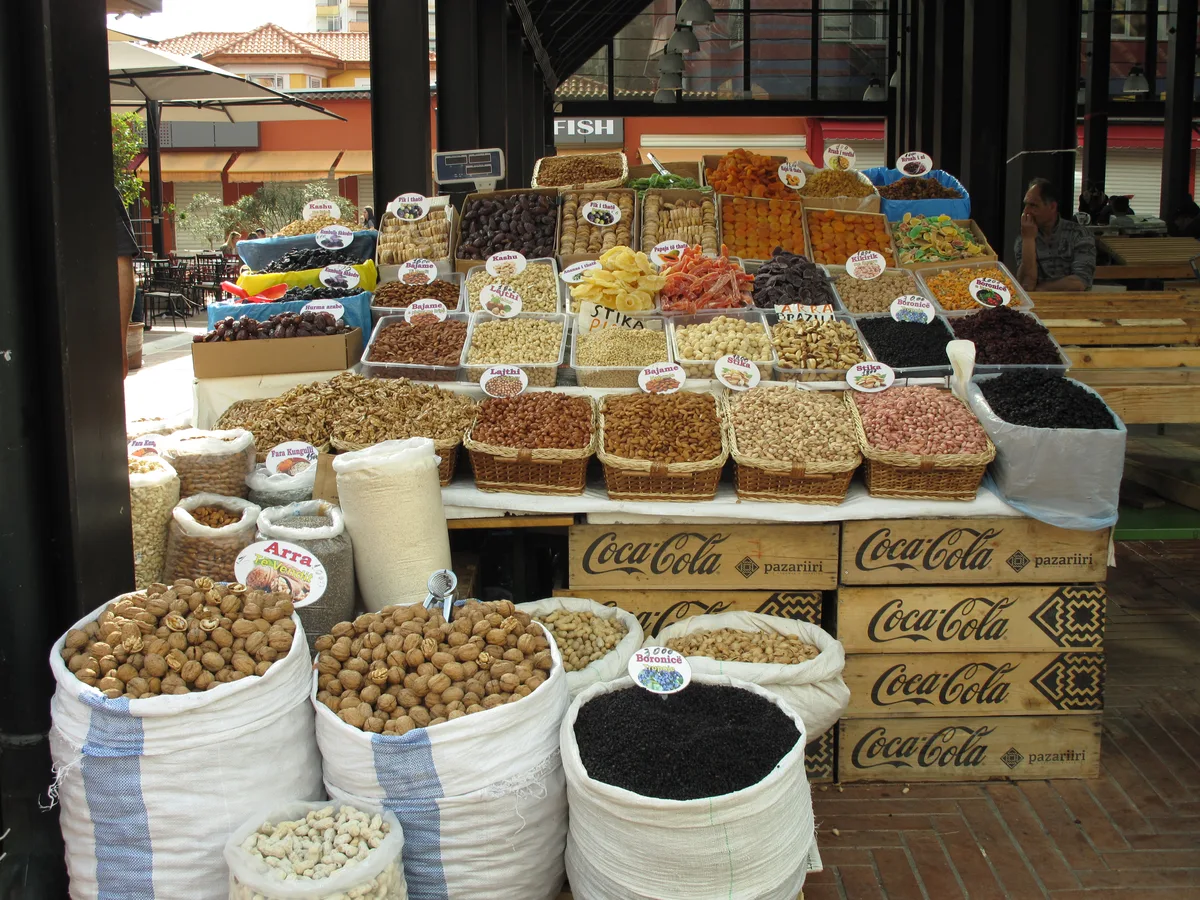
For budgeting, treat food as two buckets wearing one name. The local bucket — bakeries, markets, grills, taverns, cafés — can carry a backpacker through a day on a planning estimate in the low thousands of lek, and a mid-range traveller in the low-to-mid thousands more. The visitor bucket — waterfront seafood, beach-club lunches, imported menus, cocktails — has no Albanian ceiling at all, being priced for the international market like its equivalents everywhere. Self-catering sits between the two: markets are excellent and cheap, and a traveller with a kitchenette who cooks one meal a day cuts the food bucket hard. A trip’s food total is a choice renewed three times a day — which is why, in any albania travel cost, it is the easiest bucket to pull back when the trip needs to cost less.
Getting Around – Furgons, Buses and How the Fares Actually Work
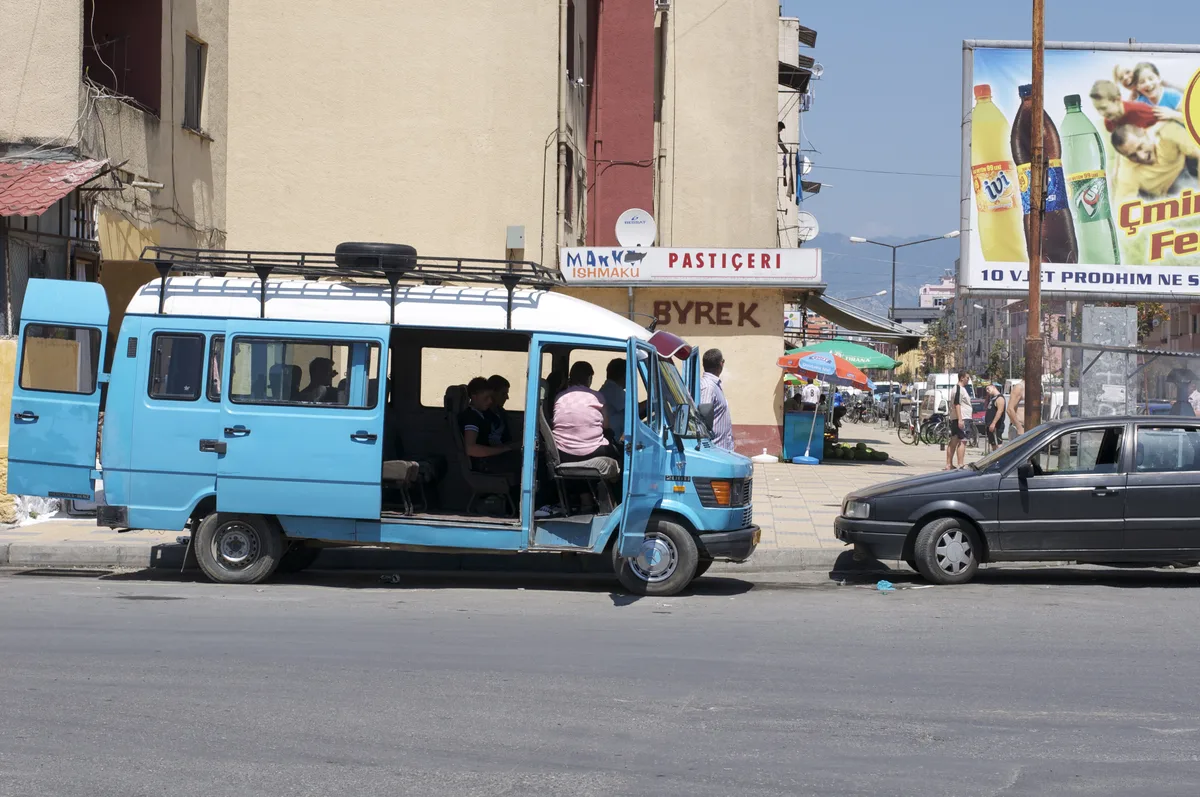
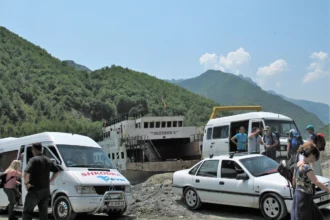
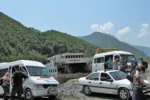
Albania has no passenger railway worth planning around, which makes the road the whole transport story, and the road runs on the furgon. A furgon is a shared minibus, usually a Mercedes Sprinter or similar, running a fixed route between towns on an approximately fixed intention. The mechanism matters more than any fare, so here it is plainly. For most routes there is no advance booking: you go to where the furgons gather — a terminal in the big cities, a known corner in smaller towns — find the vehicle with your destination on a card in its windscreen, or ask the drivers, and take a seat. The vehicle leaves when it is full, or near enough that the driver judges the trip worth making, which on busy routes means a short wait and on quiet ones can mean a long one. You pay the driver or a conductor in cash, in lek, during or at the end of the ride. The fare is fixed by the route, not negotiated, and set at local levels: furgon travel is one of the cheapest lines in any albania travel cost, with even the longest domestic routes modest by European standards. This guide deliberately prints no fare table — fares are adjusted route by route, the figures online are a mixture of years, and a wrong fare in print is worse than a mechanism you can rely on. Ask at your guesthouse what the route currently costs, and carry small notes.
Buses proper run the main corridors, larger and closer to a timetable, and Tirana’s city buses are simpler still: board, and pay the conductor who comes to you, in cash. Taxis are the flexible layer above both. In Tirana they are plentiful, metered or app-booked, and short hops are a reasonable purchase rather than a splurge; between towns, a taxi becomes a private transfer, priced by negotiation and agreed before the wheels move. The honest transport question is never the price of a single ride — every ride is cheap — but the pattern across a trip. A route built on furgons costs little money and real time — waits, detours, the occasional full vehicle — while one built on taxis and transfers costs several times more and runs to the traveller’s clock. Most trips mix the two — furgons for the long legs, taxis for the awkward last miles — and the daily budgets below assume exactly that for mid-range, and furgons almost alone for the backpacker.
One more mechanism matters: geography makes some short distances slow. Tirana to the southern Riviera looks unremarkable on the map, but the road crosses the Llogara Pass, and mountain routes trade kilometres for hours. A transport budget is therefore also a time budget: under-budget time and you spend money — on the taxi that rescues a missed connection, on the extra night in the wrong town. Build in slack, and the cheap system works as cheaply as it promises. Our Albania itinerary for 7 days is routed on furgon logic for this reason: it strings the southern towns in the order the roads themselves suggest, so the transport slice of the albania travel cost stays small without the days feeling rushed.
Hire Cars and Drivers – Freedom at a European Price
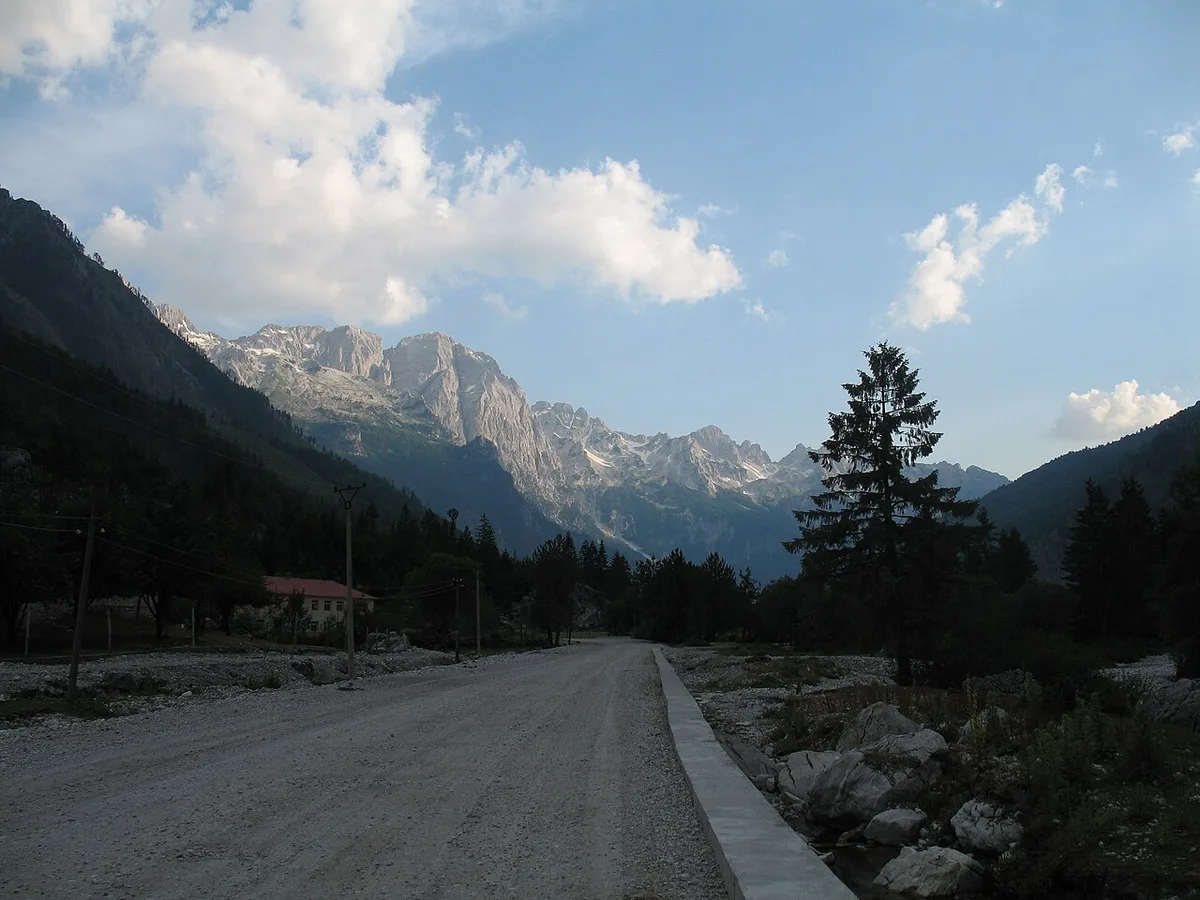
The hire car is where an Albania budget stops being Albanian and becomes European, and it is worth understanding exactly what the money buys. What it buys is the country’s weak point removed: the furgon network serves towns, not trailheads, beaches down side roads or castles at the end of lanes, and on its own schedule. A car collapses all of that into the traveller’s own timetable, and for the Alps, the smaller Riviera bays and any multi-stop day, it can be the difference between a route existing and not existing. The daily rate for a small car from a local agency is, as a planning estimate, the kind of sum that rivals a mid-range room for the night — cheaper from local firms than from the airport desks of international brands, more in August than in any other month, and quoted in euros by many agencies even though the trip it powers is spent in lek. On top of the rate sit the usual furniture, where the real cost hides: a deposit, insurance whose excess is worth reading before signing rather than after, fuel that is no bargain — pump prices sit closer to Western European levels than to café prices, a genuine surprise in the albania travel cost structure — and the occasional unpaved final kilometre the small print has opinions about.
A private driver is the same purchase with the driving outsourced, and on some routes the smarter buy: the mountain roads are demanding, the Llogara descent is serious driving, and a driver who knows which junction the Theth road leaves from sells knowledge as much as transport. Driver days are agreed as a day rate for car and route, and for a group of three or four the per-person cost can land close to the furgon pattern it replaces. For a couple, the arithmetic is tighter, and the honest advice is to hire by the day and by the need, not by the trip: take the car for the Alps loop or the Riviera hop where it transforms the route, and hand it back for the town days where it would only sit outside the guesthouse, charging you for the privilege. A car kept for a fortnight out of habit is the most common way an albania travel cost quietly doubles, and unlike the August room, it is entirely within the traveller’s control.
Sites, Museums and Castles – Small Tickets and One Big One
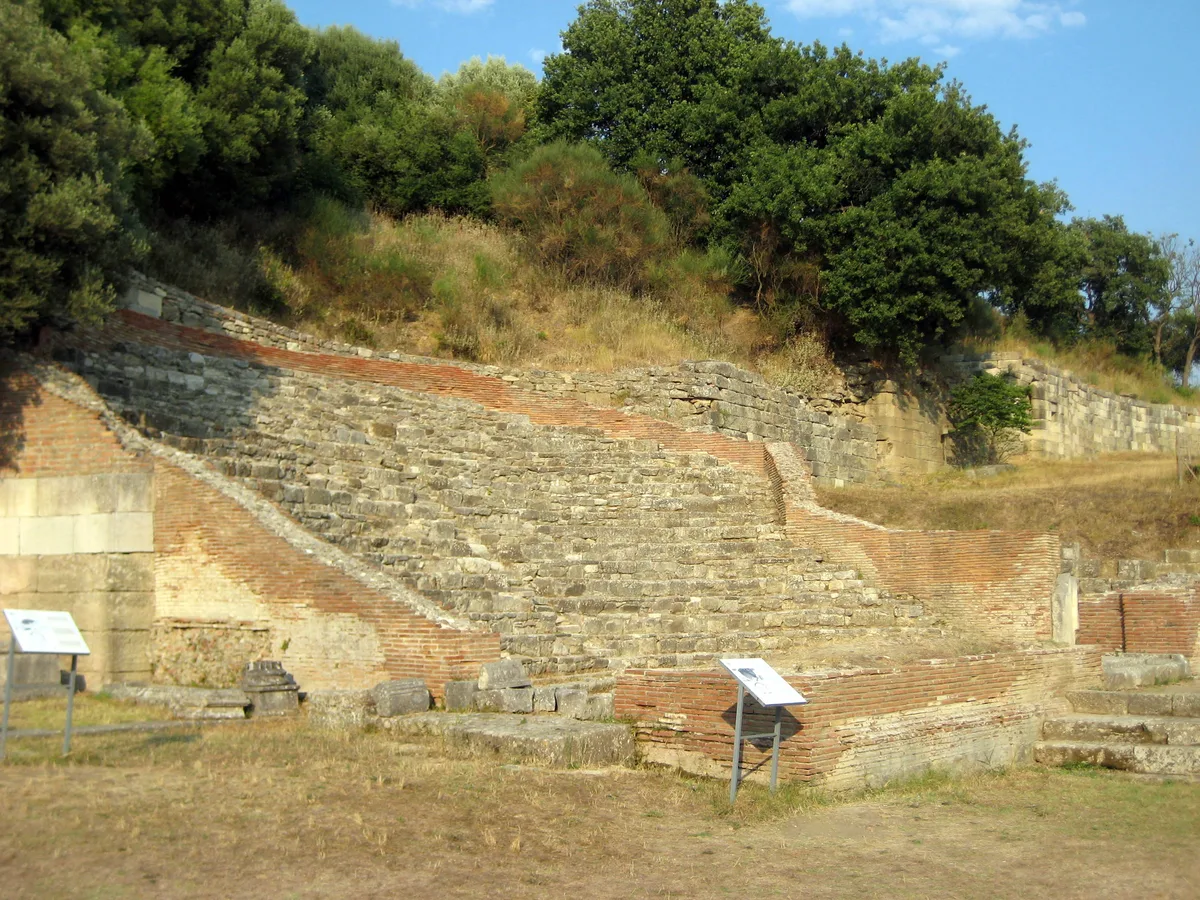
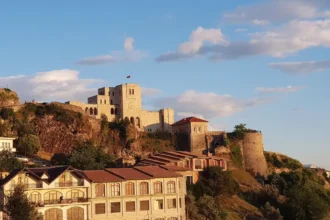
Entries are the bucket where an albania travel cost most plainly refuses to behave like a mature tourist economy, because its cultural sites are state-run and priced as public culture. The pattern, verified against official listings in October 2026, is a standard ticket measured in hundreds of lek rather than thousands. The Marubi National Museum of Photography in Shkodër, a flagship museum, lists adult admission at 700 lek; most castles and archaeological parks sit in the same band. And then there is the one big one: Butrint, the UNESCO-listed ancient city near Sarandë, whose standard individual ticket is listed at 1,000 lek on the official cultural-sites ticketing platform — with a group rate below it — when checked in October 2026. Even the flagship is an eleven-euro day out. A castle, a museum and an archaeological park in one day cost less than a single major site in much of Western Europe — which is why the culture traveller’s Albania is the cheapest version there is.
Set against the tickets is the list of glories that charge nothing — not a consolation list but the headline act. The scenery of Theth and Valbona, the Llogara viewpoints, the old towns of Berat and Gjirokastër as places to wander, the beaches where you bring your own towel: Albania’s famous experiences are mostly landscapes, and landscapes do not have ticket desks. Even in Tirana, one of the most interesting museums costs nothing: the Museum of the Bank of Albania, inside the central bank’s headquarters on Skanderbeg Square, is free of charge according to the Bank’s own museum FAQ page — visits run on Tuesdays, Wednesdays and Thursdays, are booked online, and ask for an identity document at the door. A budget built around walking, looking and the occasional few-hundred-lek ticket has an entries line that nearly vanishes; the daily budgets below assume exactly that pattern.
Two habits protect this bucket from surprises. The first is cash: state sites are exactly the places where card payment is least reliable, and the ticket desk at a castle or park may be a cash desk in practice whatever the theory says, so the few hundred lek for the day’s entries should be in your pocket in notes before you set out. The second is to check the current ticket on the official listing before a big day rather than trusting any guide’s figure, this one included: the ticketing platform publishes current tariffs. What this bucket will never do, at any plausible revision, is break a trip — in the whole albania travel cost picture, entries are the one line a traveller can stop worrying about.
Activities and the Big Days – Where a Daily Budget Gets Spent in an Hour
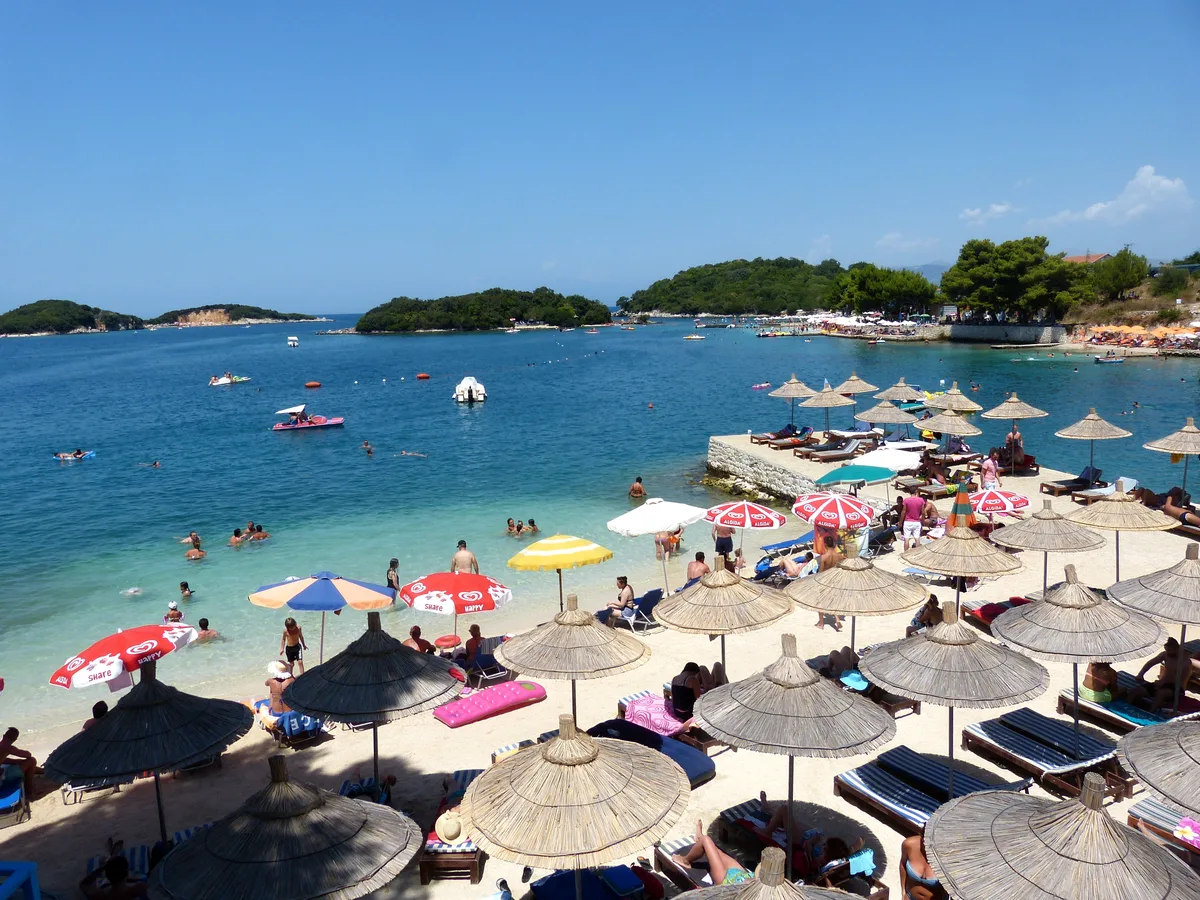
If entries are the cheapest bucket, activities are the one with no floor and no ceiling, because activities are the commercial layer of Albanian tourism — built for visitors and priced against what visitors from richer countries will pay. The pattern repeats everywhere the water is famous. The sea itself is free, and a towel on the sand costs nothing from Ksamil to Dhërmi. The organised version of the same afternoon — loungers and an umbrella on a managed stretch, a pedalo, a boat trip to an island or sea cave, a jet ski’s loud quarter-hour — is sold by the day and hour at prices set by the beach economy, answering in August to half of Europe. None of this is a rip-off; it is a market working. But a beach day can cost zero lek or a sum rivalling the night’s room, depending on which version of the beach the traveller buys, and no daily average survives contact with that spread.
The same shape appears inland. The famous hike from Theth to Valbona costs nothing to walk — it is a mountain path — while the guided, luggage-transferred version is a product with a per-person price that tour companies set and revise. Boat trips on Lake Koman, rafting in the Osum canyon, paragliding off the Llogara road, diving at the coast: each is a free country’s commercial garnish, priced by operators in an international market, often quoted in euros. A planning estimate for any headline activity lands in the range of a night’s accommodation rather than a museum ticket, and a day stacking two of them belongs to the comfort column whatever the bed costs. The rule follows simply: count activity days separately, the way this guide counts the whole albania travel cost bucket by bucket, and never let an average day smuggle in a boat trip it does not contain.
Almost none of this spending is obligatory. Albania is unusual in how completely its free layer covers its famous layer: the pass can be walked without the guide, the bay swum without the lounger, the canyon looked into without the raft, and the Ionian sunset from the Llogara road has never had a ticket desk. The commercial versions add comfort, company, safety margins and local knowledge, and on some days — a first hike in serious mountains, a boat in unfamiliar water — they are worth every lek. But they are purchases, not entrance fees to the country itself, and a traveller who treats them as optional keeps the activities slice of their albania travel cost exactly as large as they choose to make it.
Three Price Countries – Tirana, the Riviera and the Mountains
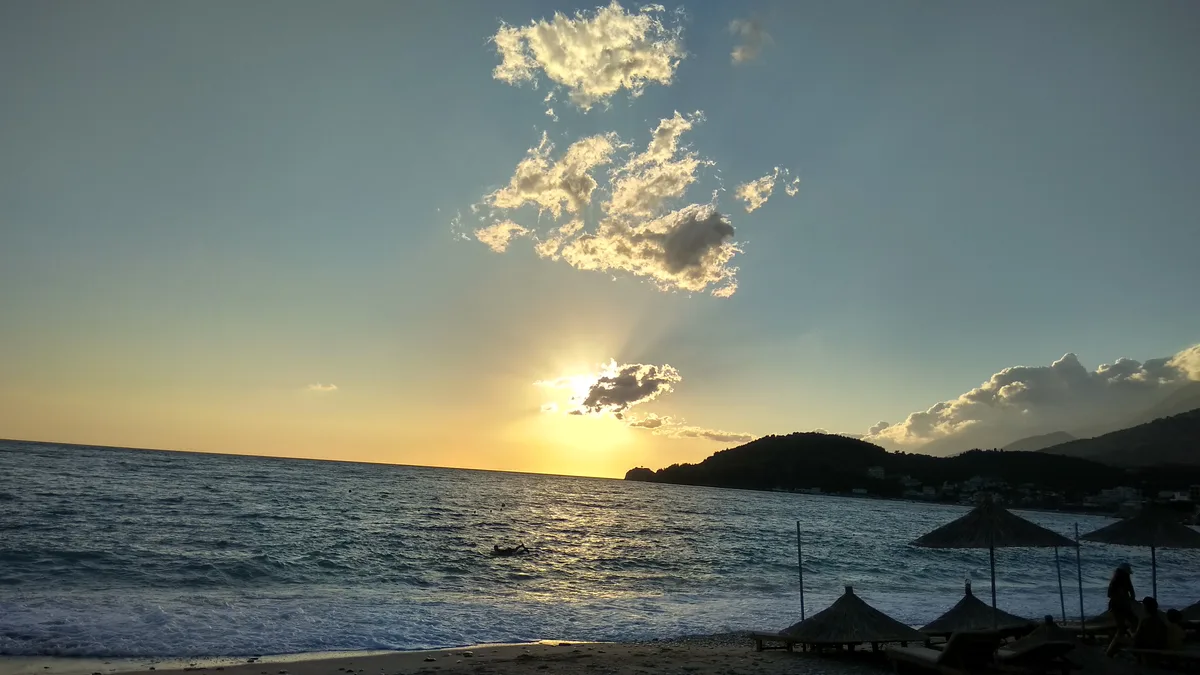
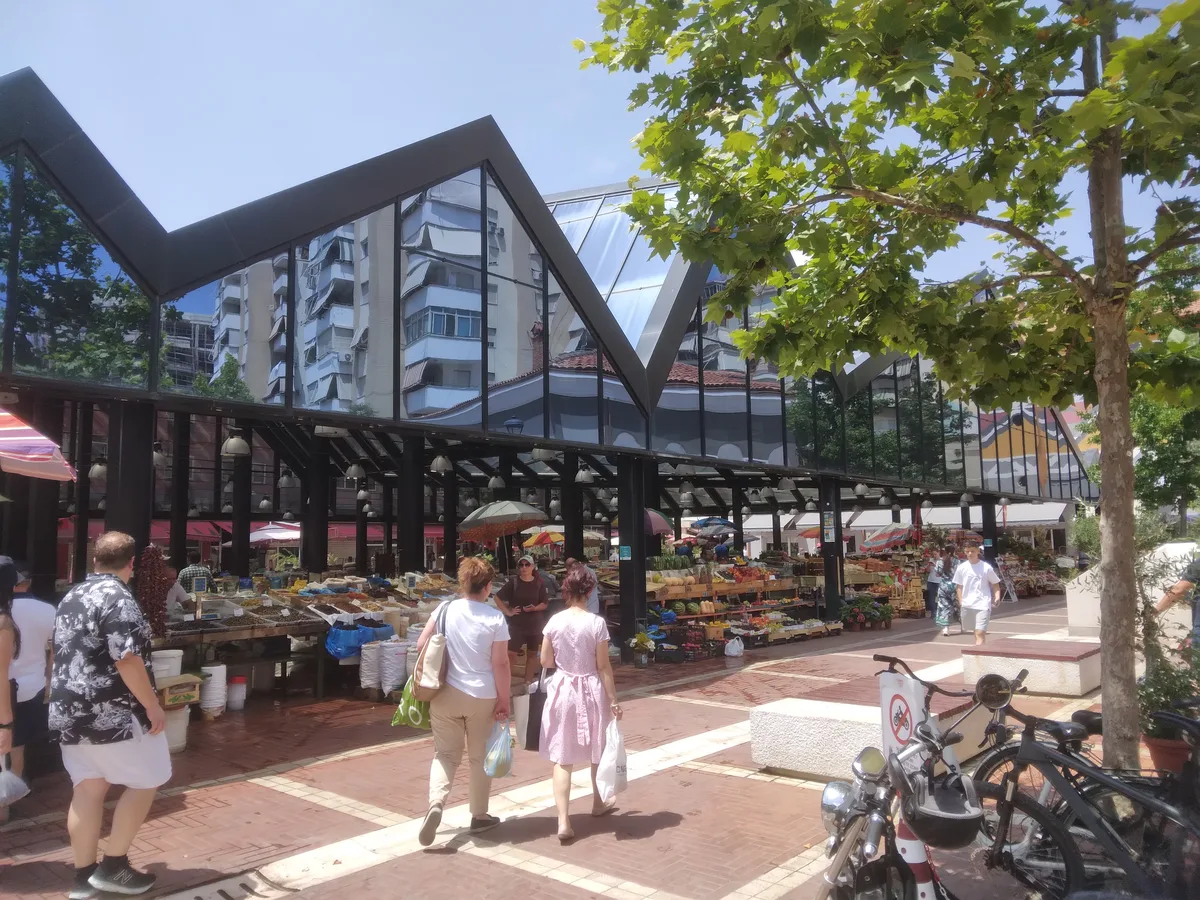
Albania’s single currency disguises three separate price countries, and routing between them is the most powerful budget decision a traveller makes. Tirana is the first, and it behaves like what it is: a capital city of close to a million people with a resident economy. Its cafés, markets, bakeries and restaurants are priced for daily local use, its accommodation market is deep and competitive in every month, and its luxuries top out at moderate levels by Western European standards. A mid-range day in Tirana is this guide’s benchmark: comfortable, interesting and inexpensive.
The Riviera is the second price country, and in season it leaves the first one behind. The mechanism is arithmetic, not greed: a short season, a constrained stock of rooms in the famous names, and demand arriving from countries where these prices would be unremarkable. In July and August, rooms, loungers, seafood and boat trips along the Sarandë–Ksamil–Himarë–Dhërmi corridor price themselves against that demand, and the corridor’s bills stop resembling the country’s. The rest of the year the same corridor empties and reprices, and the traveller who meets it in June or September finds a coast that belongs to the first price country again. Timing a Riviera stay is therefore worth more than any negotiation within it: the identical room, beach and dinner, moved by six weeks, can halve that leg of the albania travel cost, and no other single decision in this article saves as much.
The mountains are the third price country, and the gentlest. In the Albanian Alps and the southern highlands, the guesthouse economy runs on family labour, home-grown food and a season that, while growing, has not yet produced coastal pressure. Nights there bundle meals, days there spend on paths rather than products, and the largest single cost of a mountain leg is usually getting to it — the furgon, the hired 4×4 for the rough final stretch into Theth, the Lake Koman ferry day that begins the Valbona route. A trip weighted towards the mountains averages far below one weighted towards the August coast, at the same nominal style. When you build your own version, weight your albania travel cost by your own map: count the Riviera days at the top of your band in season, the mountain and town days at the bottom, and the average will look after itself.
The Season Problem – Peak August Against the Shoulder Months
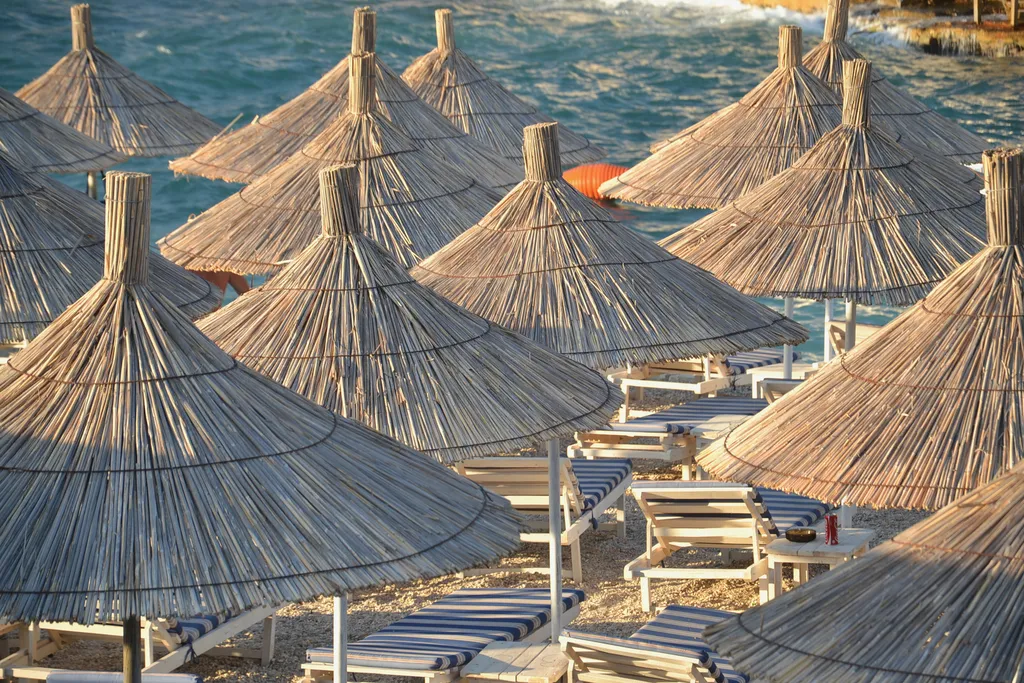
Every cost in this article has a date attached to it whether the price list admits it or not, because Albania’s tourist economy compresses itself into about ten weeks: the sea is warmest and the weather most reliable from late June to early September, and the whole of Europe holidays in the same weeks. Into that window pour not only foreign tourists but the Albanian diaspora coming home, filling the coast faster than hotels are built. Prices respond the way prices do: coastal rooms carry multiples of their shoulder rates, hire cars book out, beach furniture and boat trips charge what the queue will bear, and even the furgons strain on the fashionable routes.
The shoulder months are the mirror image, and for a cost-focused traveller they are the single best purchase in Albanian travel. May, June, September and early October keep most of the summer’s substance — a swimmable sea for most of that span, open guesthouses, working transport — while the demand that triples prices has gone home. The same room, lounger and fish dinner reprice downwards, the sites empty, the mountain paths are at their best, and the albania travel cost of a given itinerary falls by a quarter or more without the traveller giving up anything they came for. Winter is a third case: the coast largely closes, but Tirana and the inland towns run their resident economies undisturbed, and a quiet-months city trip is among Europe’s cheapest.
The season problem also has a booking dimension. In the peak weeks, the affordable rooms in the famous places are finite and go first, so a late booker is not choosing between the cheap room and the dear one — they are choosing between the dear one and a different town. Booking the coastal nights early, even before the rest of the route is fixed, is the peak-season equivalent of travelling in June. In the shoulder months the pressure reverses, and the walk-in traveller with cash negotiates from strength. In Albania the calendar is a price — and the traveller who can move their dates owns the largest discount the country offers.
Daily Budgets by Travel Style – the Worked Examples
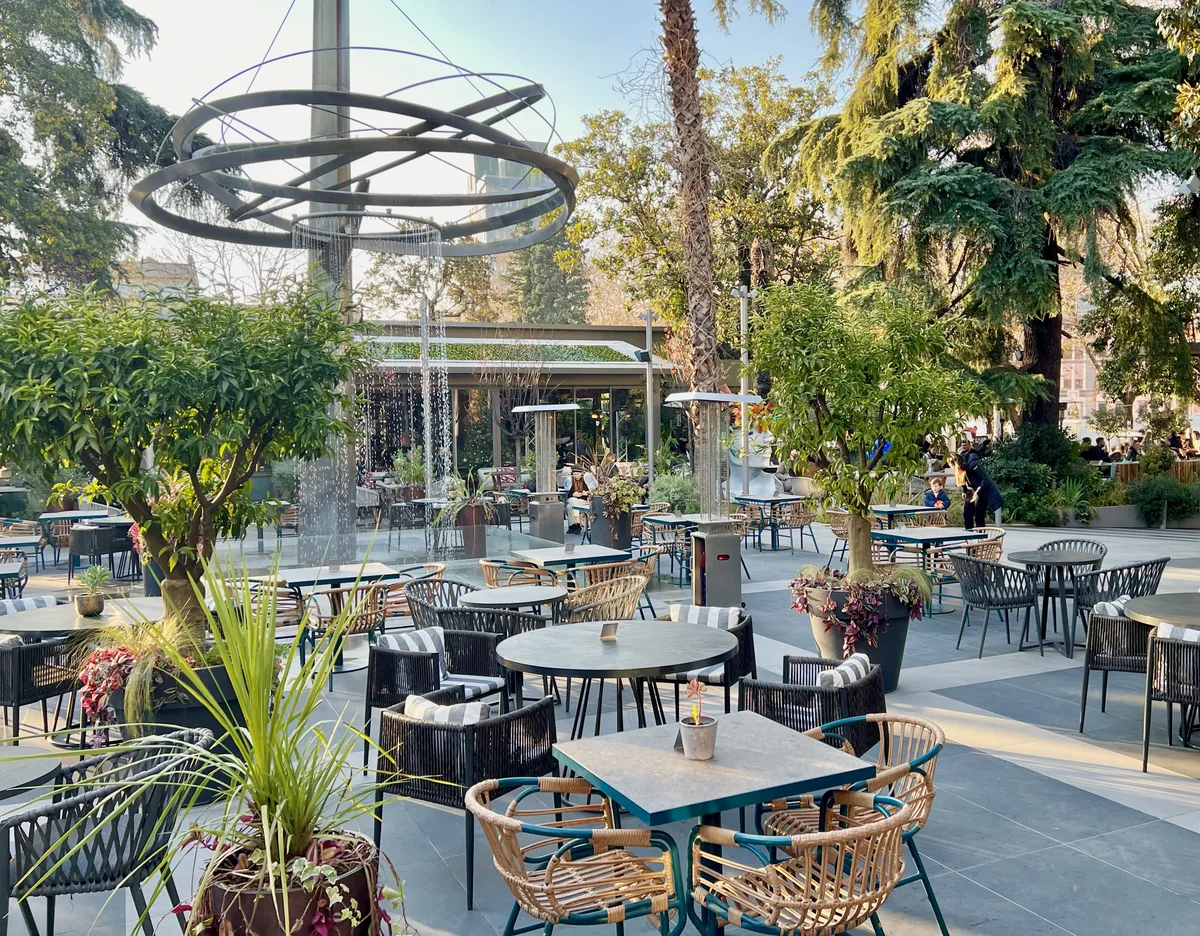
Here is the method in the open, so the numbers can be argued with. Each style below is a bundle of choices for one version of the albania travel cost, priced bucket by bucket as planning estimates in lek, checked as ranges against current autumn-2026 listings and guides where official prices do not exist, and anchored where officials do publish — the exchange rate at the Bank of Albania’s official 90.90 lek to the euro, the state-site tickets in the few-hundred-lek band with Butrint at 1,000. The estimates assume a traveller moving around the country, one paid site on most days, and the shoulder-season or inland sleep market; read a peak-August Riviera version of any row at or above the top of its range.
The backpacker, at a planning estimate of roughly 3,500 to 5,500 lek a day — about 40 to 60 euros — sleeps in hostel dorms in the cities and simple guesthouse rooms elsewhere for the low thousands of lek, and in the mountains takes the guesthouse night whose price quietly includes dinner and breakfast. Food is bakeries, markets and grills, in the low thousands. Movement is furgons, buses and walking, averaged at a few hundred lek a day. Entries are the cheap bucket working as designed — a few hundred lek on site days, nothing on walking days — and the remainder is water, coffee and laundry. What this style buys is time: its real cost is measured in waits and early starts rather than lek, and its breaking point is the August coast, where the cheap bed is the first thing the season deletes.
The mid-range traveller, at roughly 6,500 to 12,000 lek a day — about 70 to 130 euros — is where most visitors actually land. The bed is a comfortable private room or small hotel, and because two people share it, the per-person share lands in the mid thousands of lek; solo, the same room pushes the day towards the top of the band, which is the single most common reason a real mid-range albania travel cost outruns its plan. Food is a tavern lunch and a proper dinner, seafood when the route is coastal. Movement mixes furgons, taxis for the awkward legs and perhaps a hire car for a few days, averaged across the journey. Entries and the occasional activity sit in the low thousands on the days they happen. This is the most elastic budget of the three — nearly every line has a cheaper twin one decision away — and the traveller who watches the room and the car will land inside the band.
The comfort traveller, from about 14,000 lek a day — from roughly 150 euros, with no natural ceiling — sleeps in the best rooms the route offers, eats seafood and wine with dinner, keeps a car or driver for the whole route, and buys the guided, arranged version of the big experiences. Two honest observations belong with this band. Albania rewards it generously: the same comfort an hour across the Adriatic, or down the coast in Greece, costs substantially more. But the band is open at the top, because its components — August Ksamil, private boats, the best tables — are priced by an international market. Set a comfort budget as a ceiling you are content with, not a prediction: the commercial layer will happily spend whatever ceiling it is given.
| Bucket (per person, per day) | Backpacker estimate | Mid-range estimate | Comfort estimate |
|---|---|---|---|
| Sleep | low thousands of lek – dorm or simple room | mid thousands of lek – share of a private double | top thousands and beyond – best rooms, Riviera in season |
| Food and drink | low thousands of lek – bakeries, markets, grills | low-to-mid thousands – tavern lunch, restaurant dinner | mid thousands and up – seafood, wine, waterfront tables |
| Transport | a few hundred lek averaged – furgons and feet | low thousands averaged – furgons, taxis, some car days | several thousand – car or driver throughout |
| Entries and activities | a few hundred lek – state tickets, free scenery | a few hundred to low thousands – sites plus an occasional activity | low thousands and up – guided days, boats, beach clubs |
| Everything else | a few hundred lek | several hundred lek | low thousands of lek |
| Daily total | 3,500 – 5,500 lek (about 40 – 60 euros) | 6,500 – 12,000 lek (about 70 – 130 euros) | from 14,000 lek (from about 150 euros) |
What a Week Actually Adds Up To
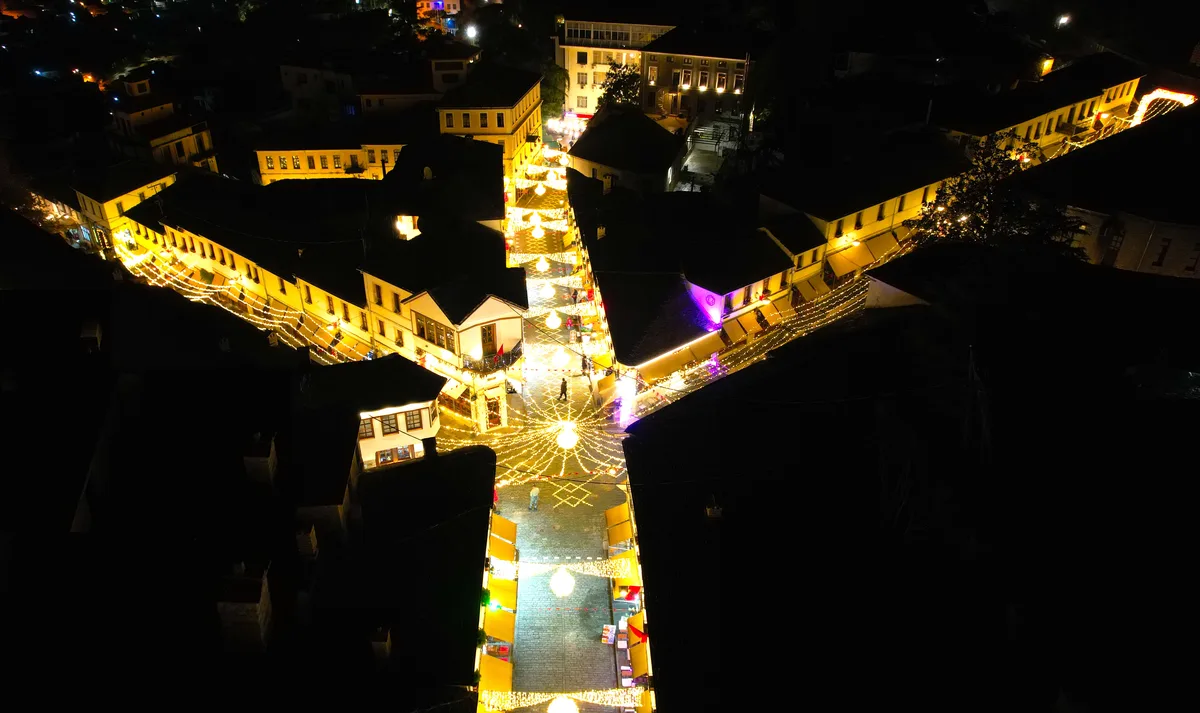
Daily numbers only become real when they are multiplied, so here is the southern loop — Tirana, Berat, Gjirokastër, the coast at Sarandë or Himarë, Butrint — taken over seven days at each style, using the middle of the bands above and the official exchange rate. A backpacker week lands around 31,500 lek, roughly 345 euros. A mid-range week for one person in a shared double lands around 63,000 lek, roughly 690 euros. A comfort week lands around 140,000 lek, roughly 1,540 euros — and each excludes getting to Albania: a flight or ferry, priced by a different market, can exceed the whole ground budget of the cheaper styles. None is a promise; each shows its arithmetic, so you can challenge the assumption that matters — the month, the room-sharing, the car — and rebuild it in a minute.
It is worth saying how these totals compare. A mid-range week on the ground, at roughly 700 euros, buys a standard of eating, sleeping and sightseeing that would cost far more in the countries Albania is compared with. The central bank’s own figures confirm most visitors spend less: its balance-of-payments travel data put the average foreign visitor’s whole-trip spending in the hundreds of euros, because the typical visitor is a regional or diaspora traveller staying with family. Averages describe populations, not trips — yours will be described by your buckets, your map and your month.
One adjustment deserves its own paragraph, because it catches more travellers than any other: the solo penalty. The bands are per person, but two of the heaviest lines — the double room and the hire car — are priced per unit, not per head. A couple splitting both travels at the middle of the band; a solo traveller buying the same room and car alone travels at its top, while eating and entering at the couple’s prices. Solo travellers should take the sleep and transport lines at full unit price, halving nothing, and treat the dorm-and-guesthouse pattern not as a hardship but as the mechanism that makes a solo albania travel cost manageable. Groups run the same arithmetic in reverse: four people with a driver can bend the per-person transport line back towards the furgon pattern.
Money Mechanics – Lek, Cash, Cards and ATMs
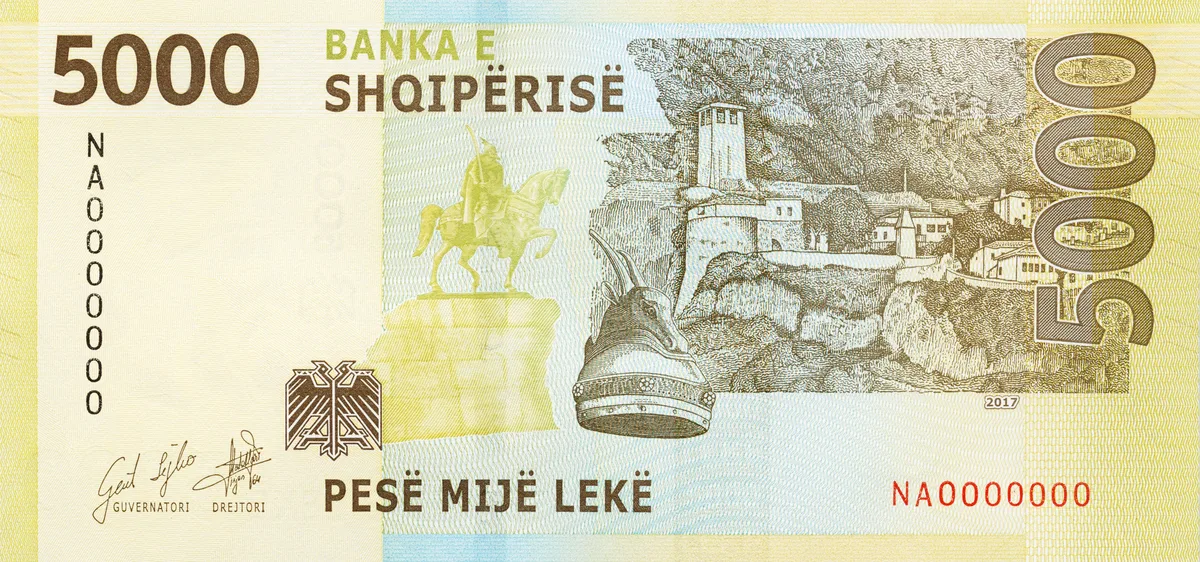
Albania’s money has a personality, and understanding it trims an albania travel cost quietly all trip long. Banknotes run up to the 5,000 lek note, and the economy a visitor moves through is still substantially a cash economy at exactly the layer where visitors spend most of their days. Furgon drivers, market stalls, small guesthouses, small-town cafés, ticket desks, beach vendors: cash in lek is not merely accepted in these places, it is the system, and the traveller carrying a float of mixed notes and coins never holds up a queue with a card and an apology. Cards work where the modern economy works — hotels, larger restaurants, supermarkets, petrol stations — but a card-only traveller’s trip is quietly confined to the most expensive layer of every town.
Euros circulate as a shadow currency, and the mechanics deserve honesty. Many hotels and agencies accept euros, and in the far south, Ksamil especially, euro prices are sometimes quoted first. Accepting the offer is usually a small, silent donation: the rate applied at a till or a reception desk is the house’s rate, not the Bank of Albania’s, and the difference, repeated across a trip, costs more than any single ATM fee. The clean pattern is to hold lek for spending and treat euro acceptance as an emergency facility. Exchange offices are everywhere in the towns, display their rates and compete closely around the official rate; banks do the same job in banking hours. The Bank of Albania’s official exchange rate — 90.90 lek to the euro and 81.16 to the dollar on 30 October 2026 — is the benchmark to glance at before changing money, so that a bad rate is recognisable as one.
ATMs are plentiful in the towns and at the airport, and their cost has two layers, only one visible in Albania. The visible layer is the local withdrawal fee: Albanian ATMs commonly charge foreign cardholders a fee per withdrawal in the mid hundreds of lek, set by the machine’s bank and shown on screen before you confirm — which makes several small withdrawals the most expensive way to run a trip, and one considered withdrawal the cheapest. The invisible layer is at home: your own bank’s foreign charges, and the machine’s offer to convert the withdrawal itself. That machine rate, accepted worldwide by tired travellers, is reliably the worse one; decline it, be charged in lek, and let your own bank do the arithmetic. Two or three large withdrawals across a week, cash at the cash layer, cards at the card layer, no conversions at tills or machines: that pattern keeps the money-mechanics share of an albania travel cost at rounding-error level.
Where the Money Leaks – the Costs Nobody Budgets For
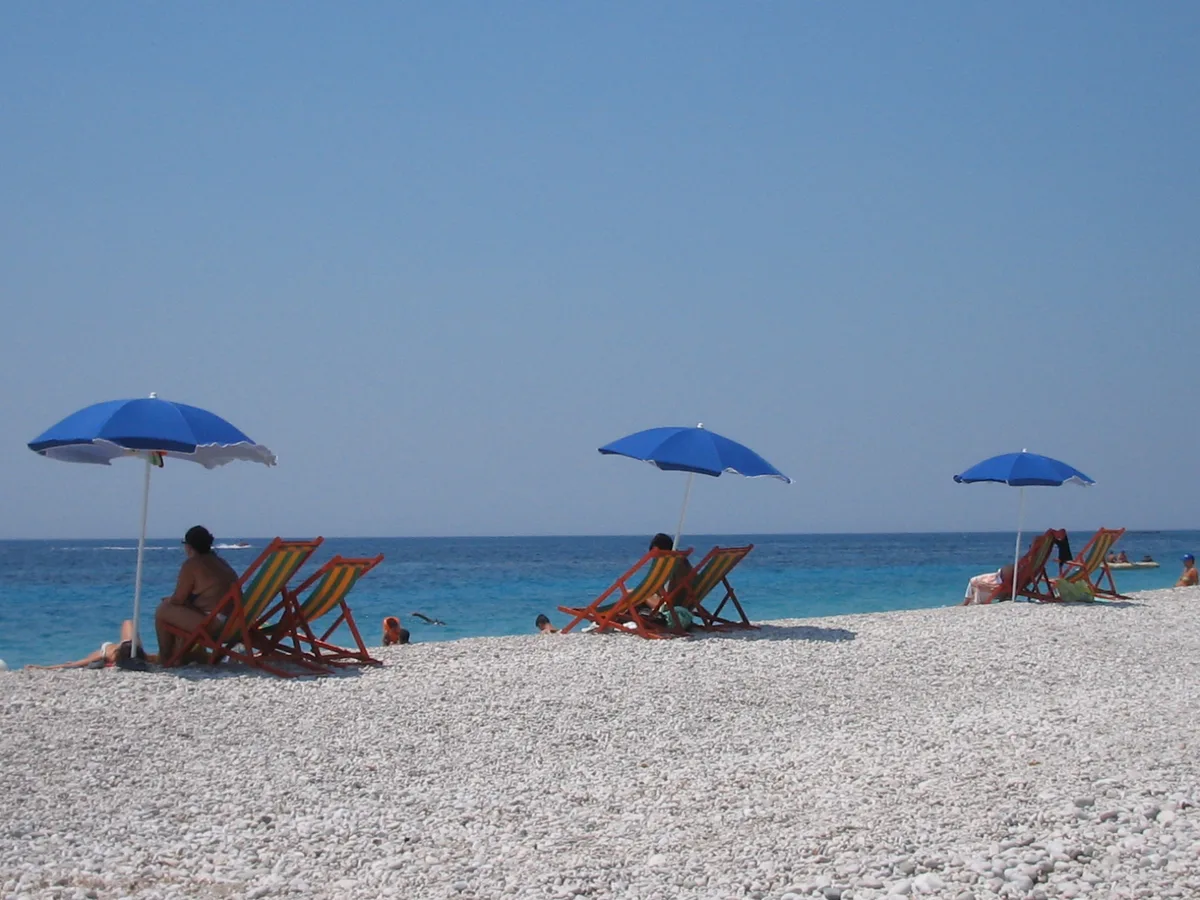
Every albania travel cost has a shadow — a budget of small, unplanned spending that no daily band quite captures — and in this country the shadow has a recognisable shape. The first leak is the beach itself: the sea is free, but the furnished beach is a daily rental business, and loungers with an umbrella, hired without thinking each morning of a coastal week, accumulate into a sum the traveller would have negotiated hard as a single bill — above all where Ksamil and Dhërmi price their front rows for August. The second leak is connectivity: Albania sits outside the EU’s roam-like-at-home zone, so a home SIM left to roam can generate charges that dwarf every saving in this article. A local SIM or eSIM bought on arrival, for a modest sum, is among the highest-return purchases of the trip.
The third leak is movement at the margins: the taxi taken because a furgon departure point was unclear, the transfer booked because a bus time was misread, the extra night in the wrong town because a route was planned too tight for mountain roads. Each is small; together they are the price of treating Albania’s transport as a railway network, best prevented by the slack described earlier rather than paid for afterwards. The fourth leak is water and the small print of the road — bottled water at attraction prices, hire-car extras that were in the contract all along, fuel a mountain route drinks beyond the estimate. None is a scandal; they are listed because a budget that names its leaks survives them. Add a modest daily allowance for “everything else”, as the tables here do, and the total lands close to the plan — the only test a budget has to pass.
How to Spend Less in Albania Without Travelling Worse
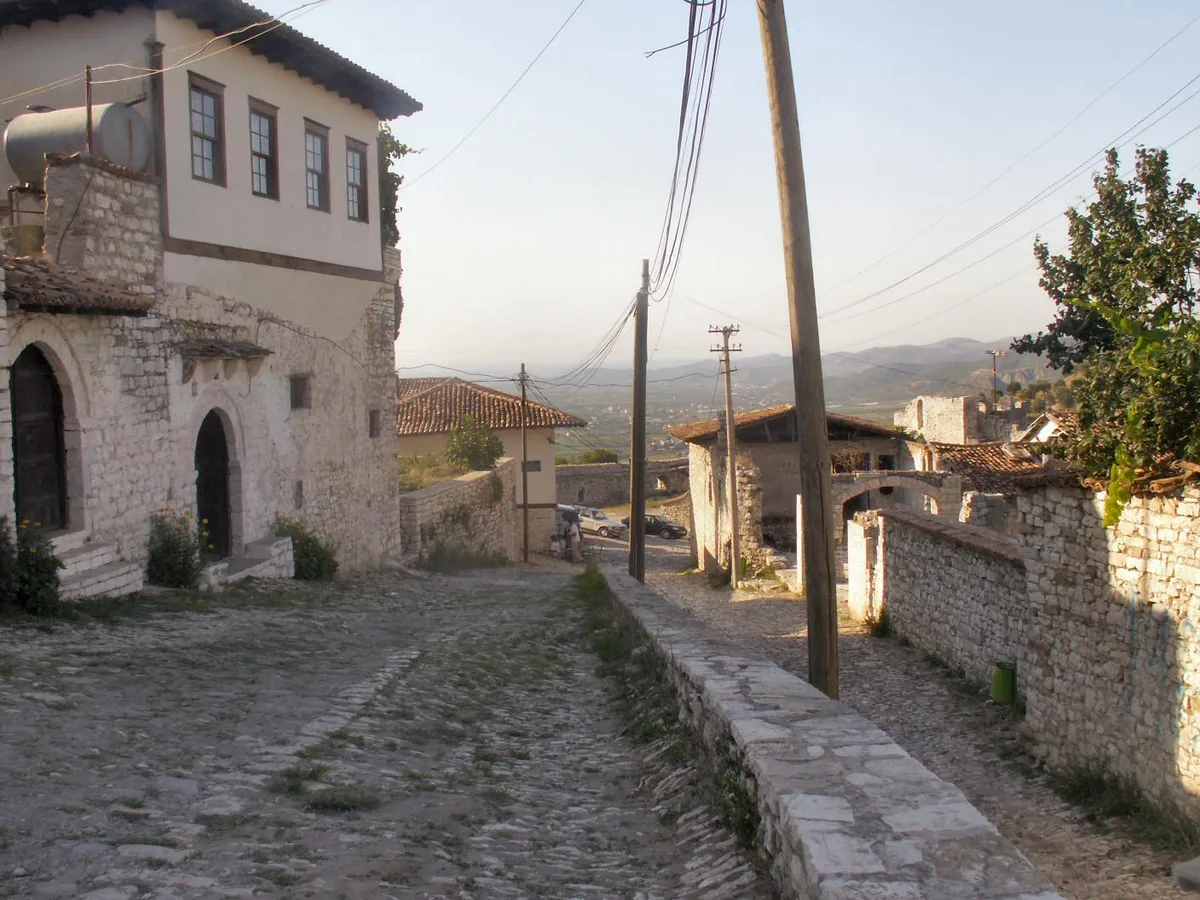
The strategies that cut an albania travel cost share a pleasant property: most of them improve the trip while they cheapen it. Moving the dates is the largest, as the season section argued — the shoulder months cut the coastal lines by a quarter or more while keeping the sea, the light and the open doors. Eating inside the local economy is the second, and it is a pure upgrade disguised as an economy: the byrek shop, the market and the neighbourhood tavern are not the cheap substitutes for Albania’s food, they are Albania’s food, and the traveller who eats there spends less and remembers more. Sleeping in family guesthouses inland works the same way — the money goes to a household, the breakfast beats the hotel’s, and the host’s knowledge of furgon times is a budget instrument no platform sells.
The transport savings are about pattern, not sacrifice: furgons for the long legs, feet for the compact historic towns, and a hire car taken for the days it transforms rather than kept for the trip out of inertia. The sightseeing savings are easiest of all, because the free layer and the famous layer are the same layer: walk the castle quarters, swim from the towel most days and rent the lounger on one, take the free mountain paths, and use the free and few-hundred-lek state sights — the Bank of Albania’s museum among them — as the spine of the culture days. A traveller who does all of this is not having the budget version of Albania. They are having the version Albanians themselves would recognise, at a total the comfort traveller will read with disbelief.
Two warnings belong with the advice, because saving money in Albania has its own failure modes. The first is false economy at the cash layer: the traveller who saves the ATM fee by accepting euro conversions at tills, or saves the local SIM’s cost and roams, or saves the guesthouse’s price by booking the one property whose location costs two taxis a day, has optimised the visible number and lost the real one. The second is letting the budget eat the trip’s purpose. The commercial layer — the boat to the empty bay, the guided pass crossing, the seafood dinner on the one perfect evening — exists because those things are genuinely good; a budget is a tool for choosing them deliberately, not for refusing them all. Spend where Albania is unique, save where it is ordinary: the country makes that easy, because its unique things are mostly free and its ordinary things mostly cheap.
Frequently Asked Questions
Is Albania cheap to travel in?
By European standards, yes — with the qualifications this whole article exists to state. Everyday Albania — bakeries, markets, furgons, cafés, state museums — is priced for Albanian incomes and remains one of Europe’s cheapest travel economies. The visitor layer in peak season — Riviera rooms in August, beach furniture, hire cars, guided activities — is priced internationally and can feel entirely un-cheap. Which Albania a traveller meets is decided mostly by their map and their month. The other qualification is the exchange rate: the lek has strengthened for years, so an albania travel cost copied from an older guide understates today’s expense in euros or dollars even where lek prices have barely moved.
How much does a trip to Albania cost per day?
As planning estimates, built bucket by bucket here and converted at the Bank of Albania’s official rate of 90.90 lek to the euro (checked 31 October 2026), a backpacker should allow roughly 3,500 to 5,500 lek a day (about 40 to 60 euros), a mid-range traveller roughly 6,500 to 12,000 lek (about 70 to 130 euros), and a comfort traveller from about 14,000 lek (from roughly 150 euros) with no fixed ceiling. The per-person figures assume a shared double room where relevant; solo travellers should take the sleep and transport lines at full unit price. International travel to reach Albania is excluded, and a peak-August Riviera trip should be read at or above the top of any band.
Should I budget in lek or in euros?
Budget in lek, because lek is what prices are set in, and convert your total once, at the current official rate, to see it in your home currency. Euros are widely accepted by hotels and agencies, but euro payment at a till is converted at the house’s rate rather than the Bank of Albania’s, and the difference accumulates. The practical pattern is a float of lek in mixed notes for the cash layer — furgons, markets, small guesthouses, site tickets — and a card for hotels and larger restaurants.
How much cash should I carry in Albania?
Enough for the cash layer of two or three days at a time — furgon fares, markets, site tickets, café money and a margin for the guesthouse that turns out to be cash-only — rather than a whole trip’s worth at once. ATMs are plentiful in the towns, but because Albanian machines commonly charge foreign cards a fee per withdrawal in the mid hundreds of lek, fewer and larger withdrawals cost less than daily small ones. Decline the machine’s offer to convert the withdrawal into your home currency, and be charged in lek.
What is the most expensive part of a trip to Albania?
For most travellers, the bed — specifically its postcode and month. A Riviera room in July or August is the single purchase most capable of doubling an albania travel cost; a full-trip hire car is the runner-up, and the one most within the traveller’s control. Entries and food almost never lead the bill — state sites charge a few hundred lek, Butrint 1,000 lek when checked in October 2026, local food is priced for residents. Review the room and the car, and you have reviewed the budget where it matters.
When is Albania cheapest to visit?
The shoulder months — May, June, September and early October — combine open doors, working transport and a swimmable sea with coastal prices a quarter or more below the peak. Winter is cheaper still for a Tirana-and-towns trip, but the coast largely closes. A route weighted inland, where prices hold steadier, is itself a form of off-season travel.
The Short Version
Albania’s cost story is three stories. The first is a currency that has strengthened for years until, at the Bank of Albania’s official rate in late October 2026, a euro bought 90.90 lek — so the country feels dearer than its old reputation even where its own price tags have barely moved. The second is a split economy: an everyday Albania of byrek, markets, furgons, café terraces and few-hundred-lek castle tickets that remains genuinely cheap, and a visitor layer of August Riviera rooms, loungers, hire cars and guided days that is priced like anywhere else in the Mediterranean. The third is a map with three price countries — a resident-priced capital, a season-priced coast and a gentle mountain economy — so the route and the month decide the bill more than any single purchase does.
Build the budget by bucket, not by borrowed totals: sleep first and by place, food inside the local economy, furgons for the long legs and a car only for the days it transforms, entries as the small change they honestly are, and a named allowance for the leaks. As planning estimates, that produces a backpacker day at 3,500 to 5,500 lek, a mid-range day at 6,500 to 12,000 lek, and a comfort day from 14,000 lek, all converted at the official rate quoted above and all rebuilt in this article from components you can challenge and swap. Carry lek, decline machine conversions, travel in the shoulder if you can, and let the Albania travel guide handle the route while this page handles the money. Albania is not the giveaway destination of a decade ago; planned with open eyes, it remains the best-value serious trip in the Mediterranean.