Most lists of Albanian places read like a raffle: a beach, a castle, a mountain village and a capital city pulled out of a hat in random order. That is not how a trip works. Albania’s best places sit on geography — a southern loop of historic towns and Ionian beaches, a centre built around Tirana, and a mountain north that runs on its own calendar — and the order you visit them in decides whether the trip flows or fights you.
So this list of the best places to visit in albania is arranged the way a first trip actually moves: start in Tirana, loop south through Berat and Gjirokaster to Sarande, Ksamil and Butrint, climb back up the Riviera through Vlore, and finish in the north at Shkoder and the Albanian Alps. Each stop gets the same honest treatment — why it earns its place, how long to give it, and the caveat nobody puts in the brochure. For routes, transport and the full planning picture, this list sits inside our Albania travel guide; here, the focus is the places themselves.
What makes the sequencing worth this much care is the country itself. Albania compresses an unusual amount of Europe into a small map: a classical and Byzantine south, Ottoman towns that grew rich on the trade routes between the Adriatic and the interior, a capital reinvented several times within a single century, and a north where the mountains set the terms and customary law, not the state, ran daily life within living memory. None of that is visible from one beach or one castle wall — it appears when the places are read in order, each one explaining the next. That is the real argument for the route below: not efficiency, but comprehension.
At a Glance
Short on time? Here is the whole list on one screen — the ten stops in the order the route reaches them, what each one is best for, and the honest minimum time each needs to be more than a photograph. The sections below supply the reasoning, the detail and the caveats behind every line of it.
| # | Place | Best for | Time to give it |
|---|---|---|---|
| 1 | Tirana | Context: history, museums, cafe culture | 1 full day, split across arrival and departure |
| 2 | Berat | The gentlest UNESCO old town | 1 night |
| 3 | Gjirokaster | Stone architecture and mountain views | 1 night |
| 4 | Sarande | Base for the far south | 2–3 nights |
| 5 | Ksamil | The famous beach, done properly | Half to a full day, from Sarande |
| 6 | Butrint | Albania’s great archaeological site | Half a day, from Sarande |
| 7 | The Riviera (Dhermi & Himara) | Slower beaches, coastal road | 1–2 nights |
| 8 | Vlore & the Llogara Pass | The gateway and the great drive | Half a day, or 1 night |
| 9 | Shkoder | Lake, castle and northern character | 1 night |
| 10 | Theth & the Albanian Alps | The hike: Valbona to Theth | 3 days minimum |
Two patterns in that table are worth noticing before you set out. First, the nights cluster in the south — Berat, Gjirokaster and the Sarande base carry the middle of the trip, because that is where Albania’s density of sights sits. Second, only one stop, the Alps, has a hard season attached to it. Everything else on the list can be rearranged around weather, mood and energy; the Valbona-to-Theth crossing cannot, and that single constraint quietly shapes the whole route.
The 10 Places, in Route Order
A word on how to read the list. Every stop gets the same three-part treatment: why it earns its place on a first trip, how long to give it, and the honest caveat — the steep cobbles, the August crowds, the season that slams shut — that the brochures leave out. The time budgets are minimums for experiencing a place rather than photographing it, and they assume ordinary travel friction: a slow breakfast, a wrong turn, a swim that runs long. Treat them as floors, not targets.
If a stop’s budget does not fit the days you have, the fix is to drop a stop, not to shave every stop down until none of them works. Albania punishes the half-day version of itself — Berat in three hours is a postcard, Gjirokaster as a photo stop is a car park with a castle — and rewards the traveller who sees fewer places properly. The budgets also assume you sleep where the day ends: the nights are part of each stop, not an afterthought bolted onto it. Where a stop is most often rushed — Butrint and Gjirokaster above all — the entry below says so in terms.
The order is the route a first trip actually travels, and it follows the country’s own logic: south from Tirana on the main roads to the UNESCO towns, the coast from Sarande, back north up the Riviera to Vlore, and only then the separate northern leg to Shkoder and the Alps. The north comes last not because it matters least — the hike may be the finest single day in the country — but because it runs on its own season and its own connections, and a trip is sturdier when its most weather-dependent days are not the first thing that can go wrong.
1. Tirana
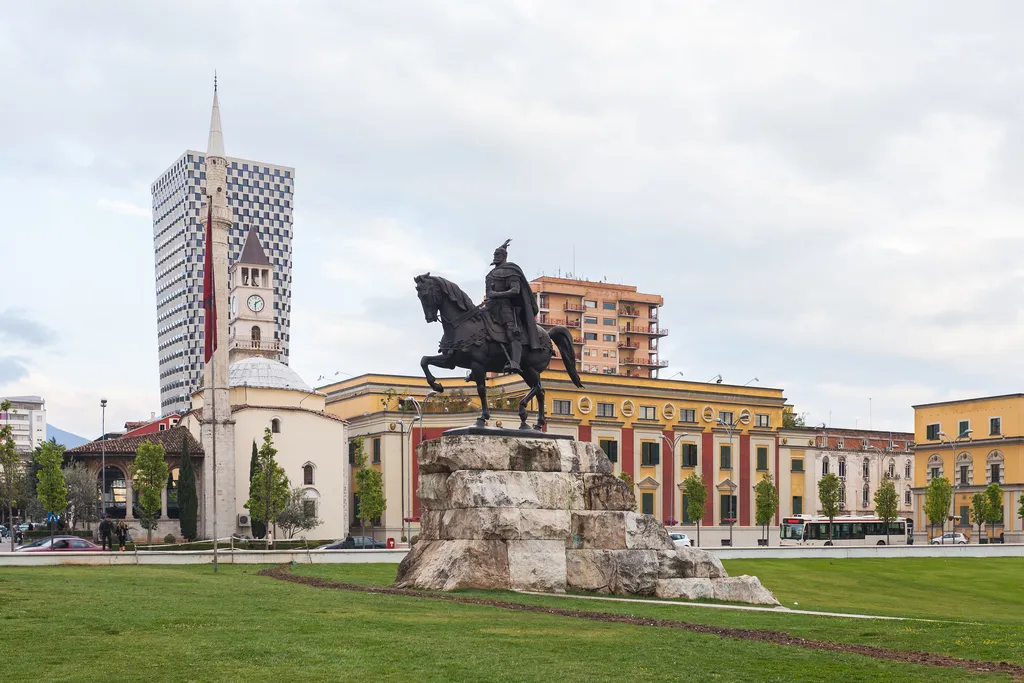
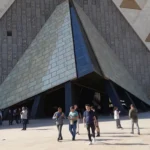
Every Albanian trip starts here, and Tirana rewards being treated as more than an airport with hotels attached. Skanderbeg Square, the Et’hem Bey Mosque, the Pyramid and the Blloku district — the quarter once reserved for the communist elite, now full of cafes — give the capital a character unlike anywhere else on this list. Its museums cover the Ottoman, independence and communist periods, and an hour in them makes every old town that follows easier to read.
Read the city as three layers and it stops being a blur. The Ottoman layer is the oldest: the Et’hem Bey Mosque, treasured for frescoes of trees, waterfalls and bridges, and the Clock Tower standing beside it. The early twentieth century left the wide boulevards and ministry buildings. And the communist decades left the strangest sights of all — the Pyramid, built as a museum to the dictator Enver Hoxha and since reinvented as a youth and technology centre, and the bunker museums, Bunk’Art and the House of Leaves, which document the surveillance state from inside its own buildings. Over the square, the National History Museum’s vast mosaic, The Albanians, faces the traffic — worth reading from outside, whatever the museum’s current status. If the weather is kind, the cable car up Mount Dajti gives the view back over the whole basin.
Give it: one full day, ideally split between your arrival and departure days so the city bookends the trip.
The honest caveat: Tirana is the context, not the headline — travellers who give it three days usually short-change somewhere better. And check before you plan around the National History Museum: reporting suggests it may be closed for an extended renovation, so verify its status rather than building a day on it.
2. Berat
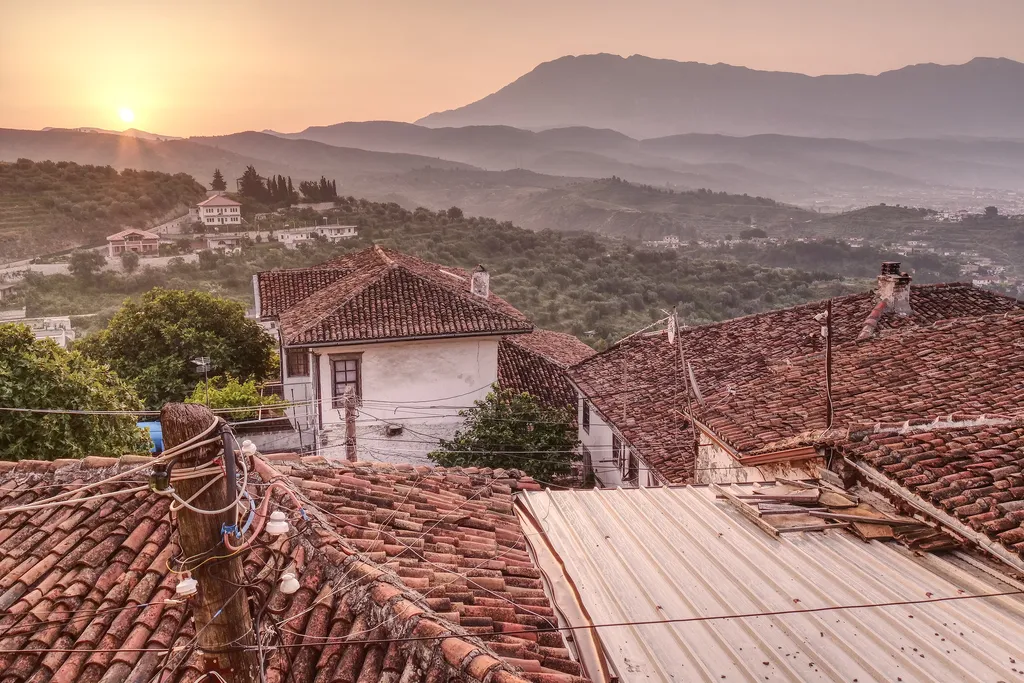
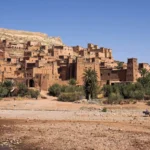
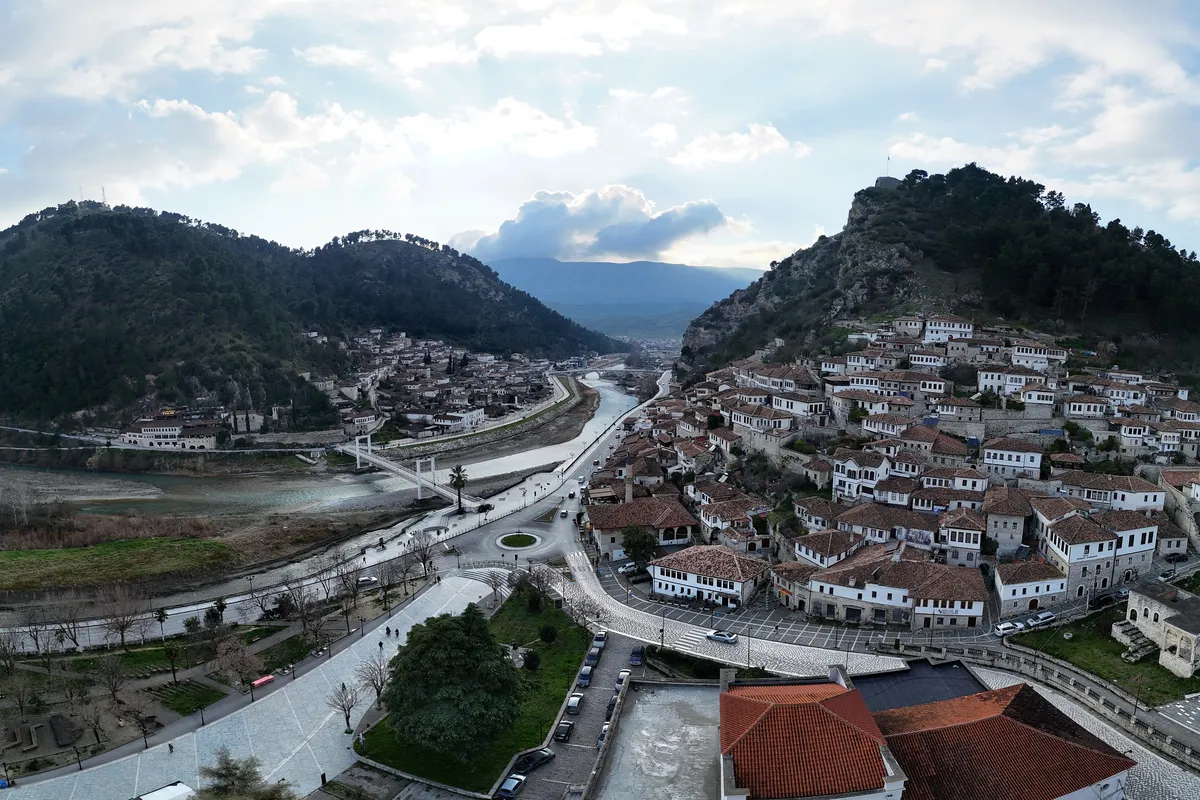
Berat is the soft landing of Albanian travel: a UNESCO-listed old town of white Ottoman houses — the “city of a thousand windows” — climbing towards a castle quarter that is still lived in, with the Mangalem and Gorica quarters facing each other across the Osum River below. A morning inside the castle, an afternoon in the lanes, and the evening xhiro, the whole town’s unhurried promenade along the boulevard, is a complete and satisfying day.
The castle deserves a slow half-day rather than a photo stop on the way up. Inside its walls the quarter is still a working village — families live among Byzantine churches and ruined mosques — and the Onufri Museum, inside the Church of the Dormition, holds the red-and-gold icons of Onufri, the sixteenth-century painter whose name is attached to a shade of red said to be found nowhere else. Come down through Mangalem’s stacked houses, cross the Osum to Gorica, and look back: the famous thousand windows are Mangalem’s facades staring across the river at you. The hills around town are vineyard country, too, and a glass of the local white at dinner is part of the ritual. Below the castle, the Ethnographic Museum — set in a grand Ottoman-era house — fills the gaps between the sights, showing how these famous houses were actually lived in, room by room.
Give it: one night. Berat is close enough to Tirana to open the southern loop, and different enough to feel like the trip has properly begun.
The honest caveat: the castle quarter is a steep, exposed climb, punishing in midday summer heat — go up early or late. Berat is gentle, not skippable-but-small; rushing it to reach the coast wastes its point.
3. Gjirokaster
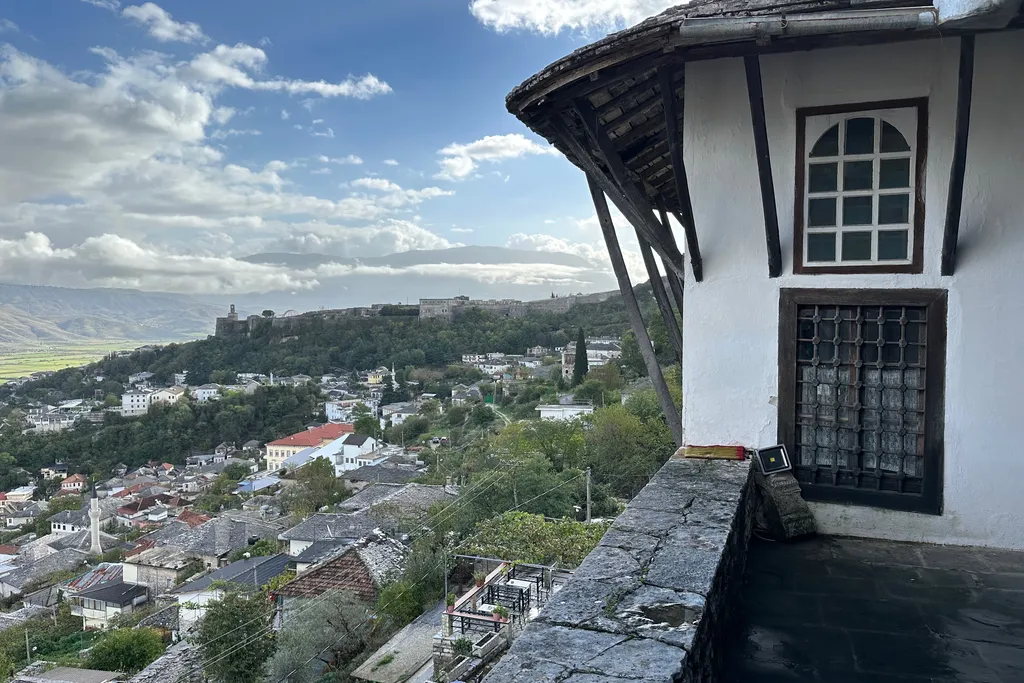
If Berat is soft, Gjirokaster is stern — and the contrast is exactly why both are on this list. Also UNESCO-listed, it is a town of steep cobbled lanes and grey stone-roofed houses stacked under one of the largest castles in the Balkans, with views down the Drino valley. The old bazaar quarter and the traditional houses opened as museums show a wealthier, harder Ottoman world than Berat’s, and the town’s food has its own signature — look for qifqi, herbed rice balls found almost nowhere else.
The town also carries two famous names. It is the birthplace of Ismail Kadare, Albania’s best-known writer, whose novel Chronicle in Stone is quite literally this place — its stone houses, its castle, its wartime years — and his childhood home is now a museum. It is also the birthplace of Enver Hoxha, the dictator who ruled Albania for four decades, and the contrast between the writer’s house and the dictator’s is the town in miniature: beautiful, literary, and shadowed. Above both, the castle holds a military museum, the festival stage used for the National Folklore Festival, and an American military plane that came down in Albania in the 1950s and has been displayed as a Cold War trophy ever since — guides tell its story in several competing versions, all of them entertaining.
Give it: one night. It deserves more than the rushed day-trip stop it often gets, and it breaks the drive south naturally.
The honest caveat: those cobbles are genuinely steep and slippery when wet; this is not a flip-flops town. Gjirokaster also pairs with the Blue Eye spring (Syri i Kalter) on the road to Sarande — but note there are two famous Blue Eyes in Albania, and the other one is up north near Theth (see stop 10). They are hours apart; check which one any map pin means.
4. Sarande
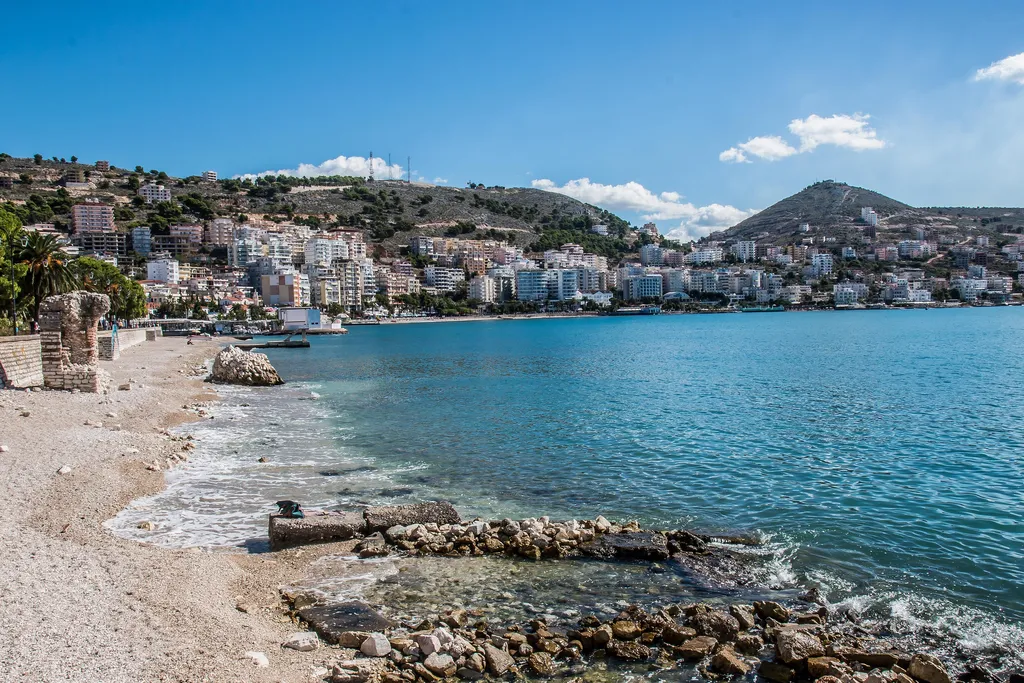
Sarande is not the prettiest town on this list, and it may be the most useful. A working seaside city with a long promenade, ferries to Corfu, and the widest choice of places to stay and eat in the far south, it is the base that makes stops 5 and 6 effortless: Ksamil is twenty minutes away, Butrint barely further. Judge Sarande as a hub rather than a sight and it never disappoints.
Sarande’s name holds its history: it comes from Agioi Saranda, the Forty Saints, after an early Byzantine monastery whose ruins stand on the hill above town — the same ridge crowned by Lekuresi Castle, a short drive up and the place to be at sunset, when the light runs across the bay to Corfu, close enough across the strait to feel like the next town rather than the next country. Down at sea level, the town works hard rather than charms hard: a promenade of cafes and fish restaurants, town beaches that do their job, and the ferry port tying the far south to Corfu as much as to the rest of Greece. Treat Sarande as the south’s logistics — the beds, the dinners, the onward connections — and it performs all three without fuss.
Give it: two to three nights as a base — your own beach time can happen on its town beaches, but the real plan is day trips out and dinners back.
The honest caveat: Sarande’s own waterfront is a developed resort strip, busy and built-up in high summer. If your idea of the Riviera is a quiet bay under cliffs, Sarande is where you sleep and eat — the quiet bays are stops 5 and 7.
5. Ksamil
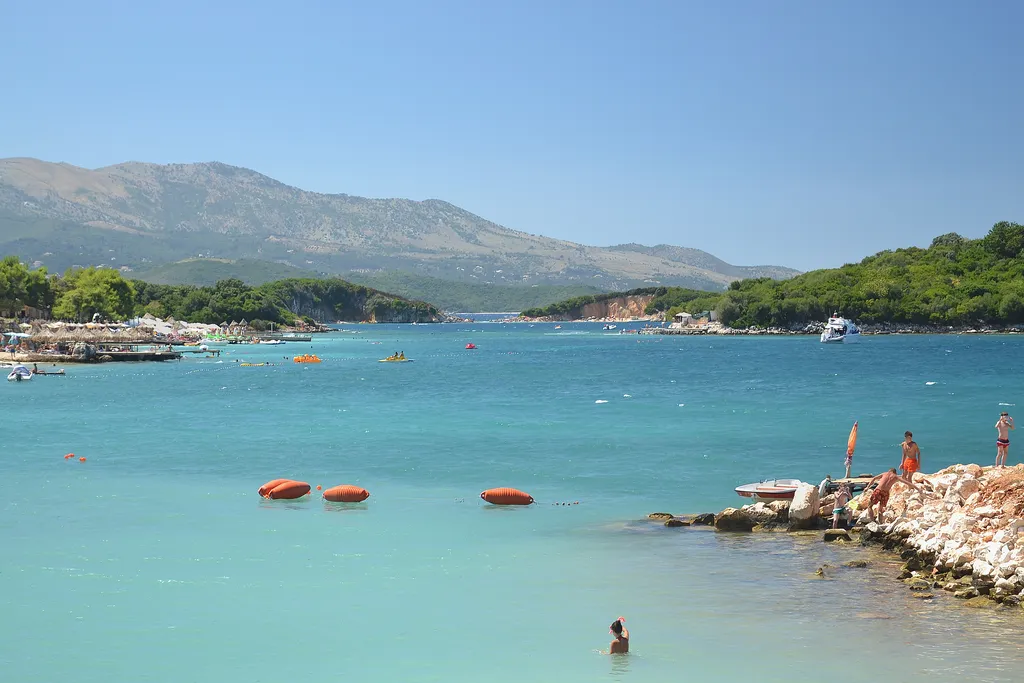
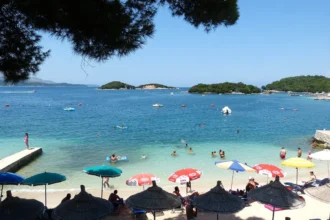
Ksamil is the beach on Albania’s posters: a cluster of small, pale-sand bays facing tiny offshore islands, in water that earns every photograph. It is genuinely beautiful, and on a first trip it would be perverse to skip it — the swim out towards the islands, with Butrint’s hills behind you, is one of the set-piece moments of the south.
The geography explains the fame. Ksamil sits on a narrow waist of land between the Ionian Sea and Lake Butrint, and four small islands lie just offshore — the nearer ones an easy swim, the farther ones reached by the little boats that tout gently along the beach. The water over the pale sand holds the clear, graded blue-green the photographs promise, and the headlands carry the same thyme-and-pine scrub as the protected land at Butrint next door, because this coast is effectively the beach edge of one of Albania’s most guarded landscapes. Out of season the beach clubs vanish and Ksamil reverts to what it was for centuries: a quiet village between a lake and a sea. The lake behind the village is working water, too: its mussel beds are the source of the mussels that appear on menus all along this coast, one more sign that Ksamil’s beauty sits inside a lived-in landscape rather than a resort bubble.
Give it: half to a full day, as a trip from Sarande rather than a base — arrive early, claim your stretch of bay, and leave before the day peaks.
The honest caveat: in July and especially August, Ksamil is crowded and heavily commercialised, its bays lined with beach-club loungers. That is the trade the fame brings. In May, June or September it is a different, calmer place; in August, go early, go on a weekday, and keep a quieter Riviera beach (stop 7) in the same trip for balance.
6. Butrint
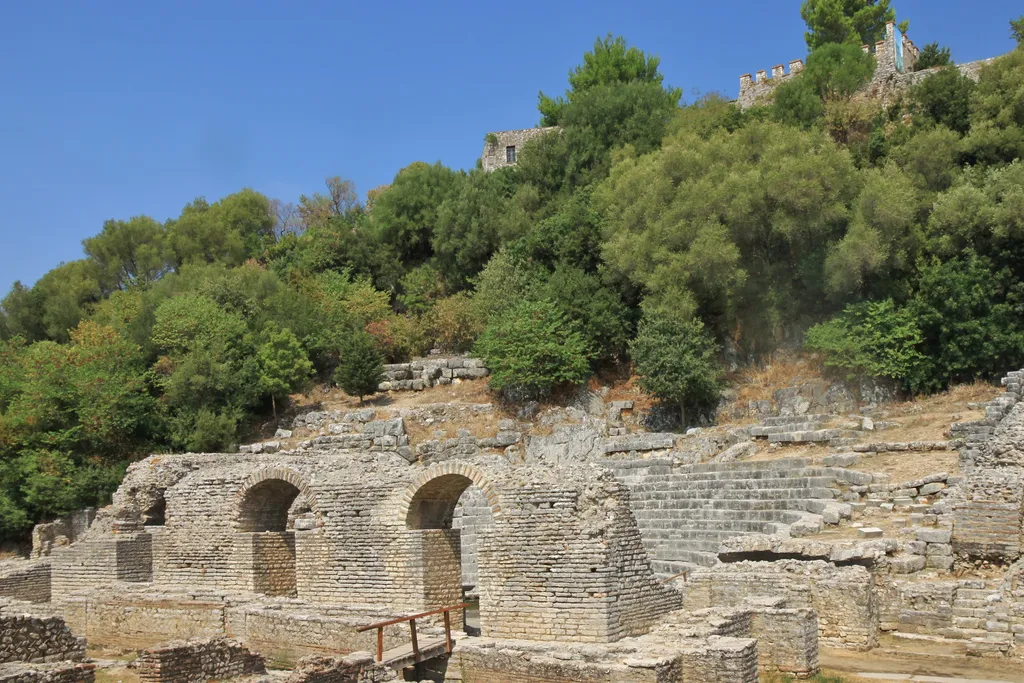
Butrint is the heavyweight: a UNESCO-listed archaeological park in a wooded, lagoon-side setting south of Sarande, where Greek, Roman, Byzantine and Venetian remains layer over each other — a theatre, a baptistery with a mosaic floor, basilicas, city walls — inside what feels as much nature reserve as ruin. It is the one archaeological site in Albania that belongs on every first trip, whatever your usual interest in old stones.
The layers span nearly three thousand years, and the site wears them casually. A Greek sanctuary and theatre came first; Rome rebuilt the city as a colony — Virgil has Aeneas stop at Buthrotum in the Aeneid and call it a little Troy — and a great baptistery and basilicas followed in the Byzantine centuries, before Venice fortified the mouth of the Vivari Channel and the city slowly surrendered to the marsh. One expectation to temper: the baptistery’s famous mosaics spend most of the year protected under sand and are fully uncovered only rarely. What is always on show is the setting — ruins in dappled shade, the channel sliding past, the lake beyond — and the small, good museum in the Venetian castle on the acropolis hill.
Give it: half a day, ideally first thing in the morning, combined with Ksamil in the afternoon — the classic Sarande day, and one of the best single days in the country.
The honest caveat: the site is large, shaded in parts but hot and exposed in others, and it rewards arriving before the day-trip groups rather than alongside them. It is the essential excursion from Sarande; Apollonia, the other great site often suggested, is a fine addition near Fier but does not displace Butrint on a first trip.
7. The Riviera: Dhermi and Himara
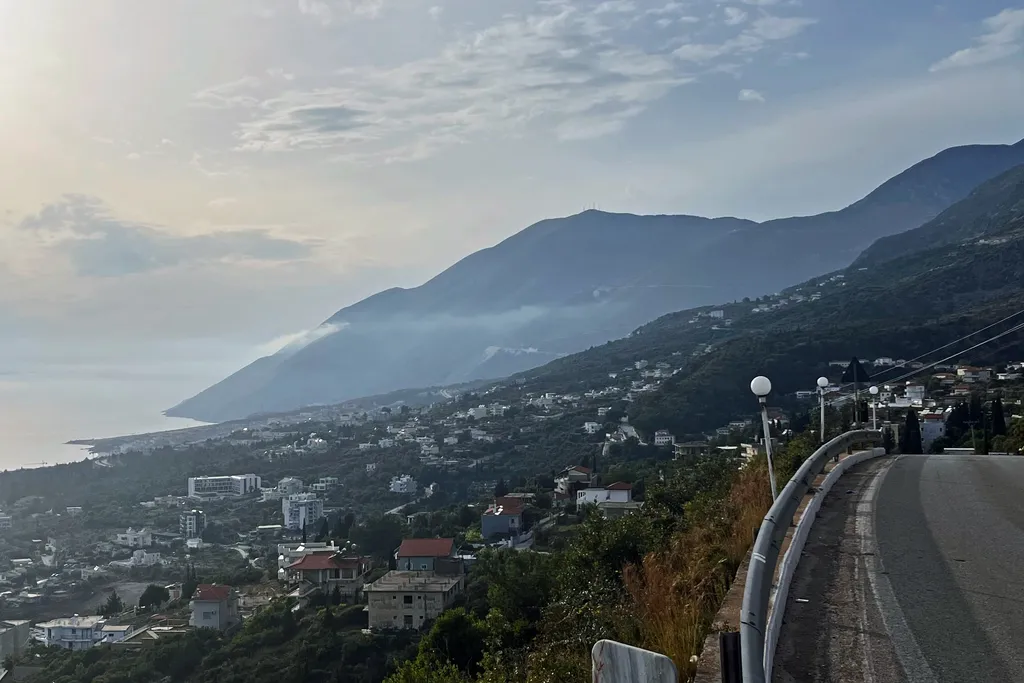
North of Sarande, the coastal road threads through the villages of the Albanian Riviera, and this is where the south slows down. Dhermi spreads below the road in white lanes above a long bay; Himara, further north, is a small working town with its own castle hill and a string of beaches either side. The bays here — many of them pebble and shingle rather than sand — sit between headlands instead of forming one continuous resort strip, which is precisely their appeal.
Learn the string of names and the coast reads like a sentence, south to north: Borsh first, its beach running for kilometres under a castle hill; then Qeparo; then Himara; then Vuno on its ridge and little Ilias; then Dhermi; and Palasa last, under the pass. Between them sit the two stops drivers talk about most — Porto Palermo, where Ali Pasha’s small, perfect fortress stands on its own peninsula in the bay, and Gjipe, a beach at the mouth of a canyon that the road never reaches, so the last stretch is walked down the gorge. None of it needs booking or planning beyond stopping where the water looks best, which is rather the point: the Riviera rewards improvisation more than any other stretch of the route.
Give it: one or two nights on the way north. Splitting the Sarande-to-Vlore drive with a Riviera night turns a transfer day into a beach day.
The honest caveat: “Riviera beach” here means clear water and a beautiful bay, not Ksamil’s soft sand and services — facilities are thinner, and some of the best coves are reached on foot. And the coastal road itself is slow and winding by design; drive it in daylight and treat the journey as part of the stop.
8. Vlore and the Llogara Pass
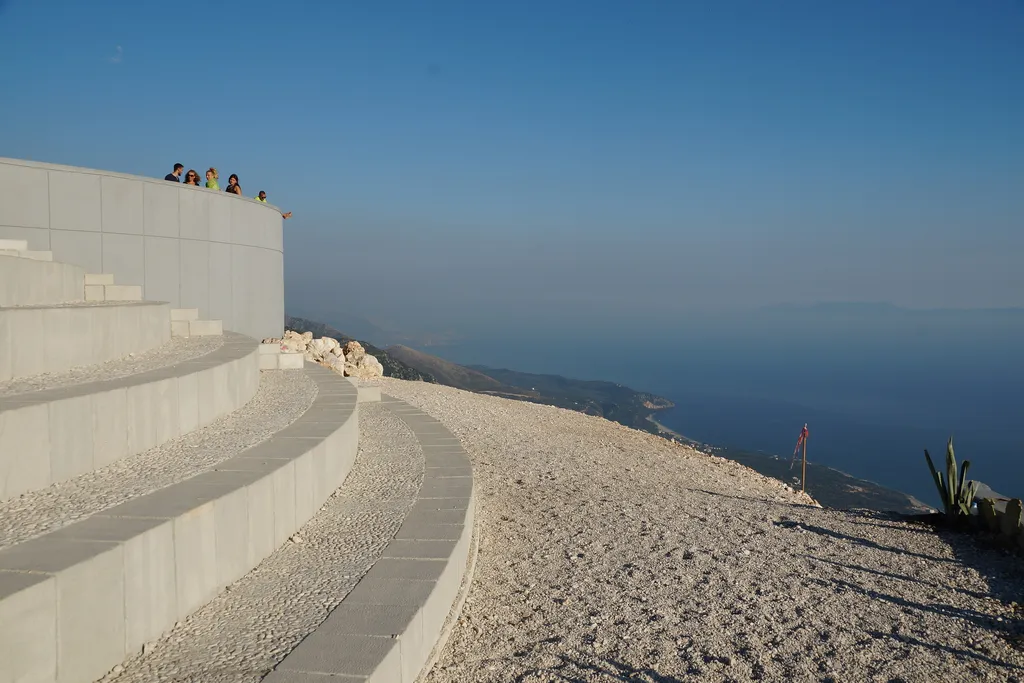
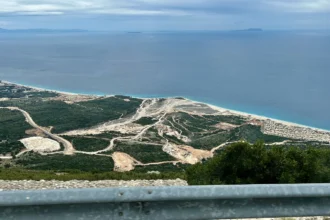
Every southern loop crosses one great piece of road: the climb from the Riviera up over the Llogara Pass, where the coast falls away below and Vlore’s bay opens ahead — the point where the Adriatic becomes the Ionian. Vlore itself is the practical gateway at the top of the Riviera: a long bay, a growing promenade, and an easier drive back to Tirana than anywhere further south, which makes it the natural first or last coastal night of the loop.
Give the pass its geography and it becomes a stop rather than a photo. Llogara tops out a little over a thousand metres up, inside a national park of wind-bent pines — one famous specimen, the Flag Pine, has grown sideways into the shape the wind dictates — and the paragliders who launch from the pass on summer thermals are riding the same updraft that lifts the view. Below, Vlore carries real history lightly: this is where Albania declared its independence in 1912, marked by a monument and museum in the centre, and where the country’s coast turns the corner from Adriatic to Ionian. Add the Narta Lagoon just north of town, a bird-rich wetland where flamingos are regular visitors, and a gateway stop quietly assembles a day of its own.
Give it: half a day for the pass and a pause in Vlore, or a full night if the loop’s timing suits — with a spare day, boat trips to Sazan Island and the Karaburun Peninsula add a wilder coast.
The honest caveat: Llogara is a viewpoint and a drive, not a destination to linger in, and its drama is weather-dependent — in low cloud it is simply a mountain road. Vlore, similarly, earns its place as a gateway and an overnight, not as a rival to the towns above it on this list.
9. Shkoder
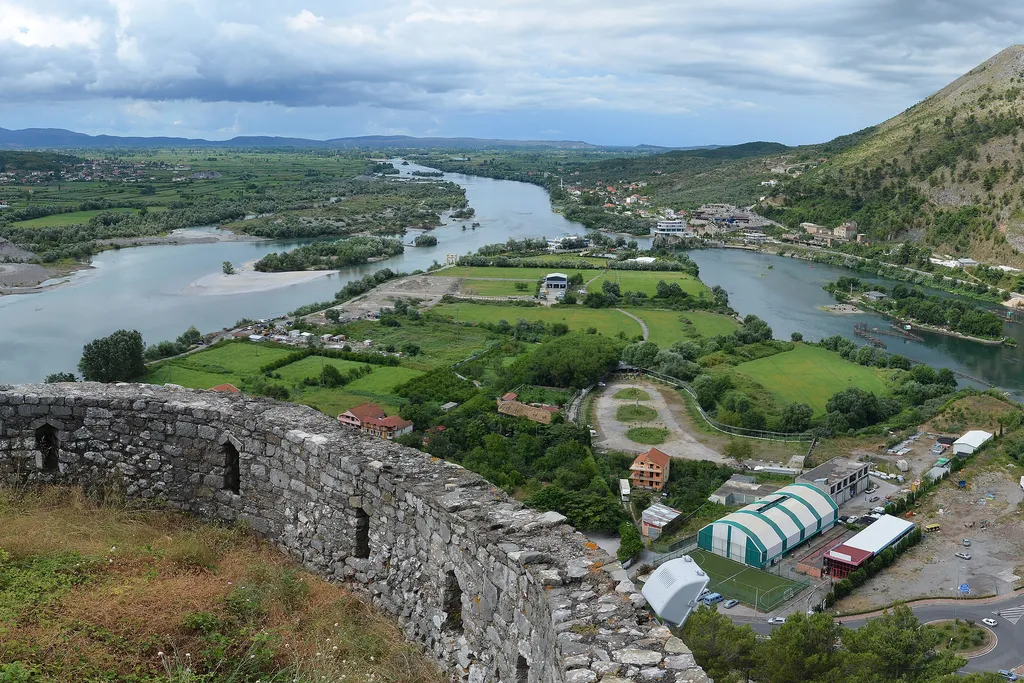
The north has a different temper, and Shkoder is its front door: a relaxed, likeable city beside its lake, watched over by Rozafa Castle on its hill, with an old centre built for cycling and slow evenings. Most travellers meet Shkoder as the staging post for the Alps — but it earns its own night on character alone, and it supplies the practical base (supplies, onward transport, the Koman Lake ferry connection) that the mountain days depend on.
Shkoder rewards the unhurried hour. The lake at its shoulder is the largest in the Balkans, shared with Montenegro and edged with reed beds and fishing villages, and the Buna river runs out of it past the castle hill. That castle, Rozafa, carries the country’s best-known foundation legend — a young wife walled into its stones, in the telling, so that the walls would finally stand — and whether or not you credit a word of it, the view from the ramparts over lake, rivers and plain is the finest in the north. Down in town, seek out the Marubi photography museum, built on a nineteenth-century studio archive that documented this region when cameras were rarer than cars, and the Ottoman Mes Bridge a short drive out, still spanning its gorge. Then let the old centre do the rest: bicycles, cafes, and no agenda.
Give it: one night in its own right, plus whatever nights the Alps route adds at either end.
The honest caveat: Shkoder will not overwhelm you, and it is not trying to. Travellers who arrive expecting a second Berat find a modest regional city instead — its pleasures are the castle at golden hour, the lake plain, and the feeling of a trip changing gear before the mountains.
10. Theth and the Albanian Alps
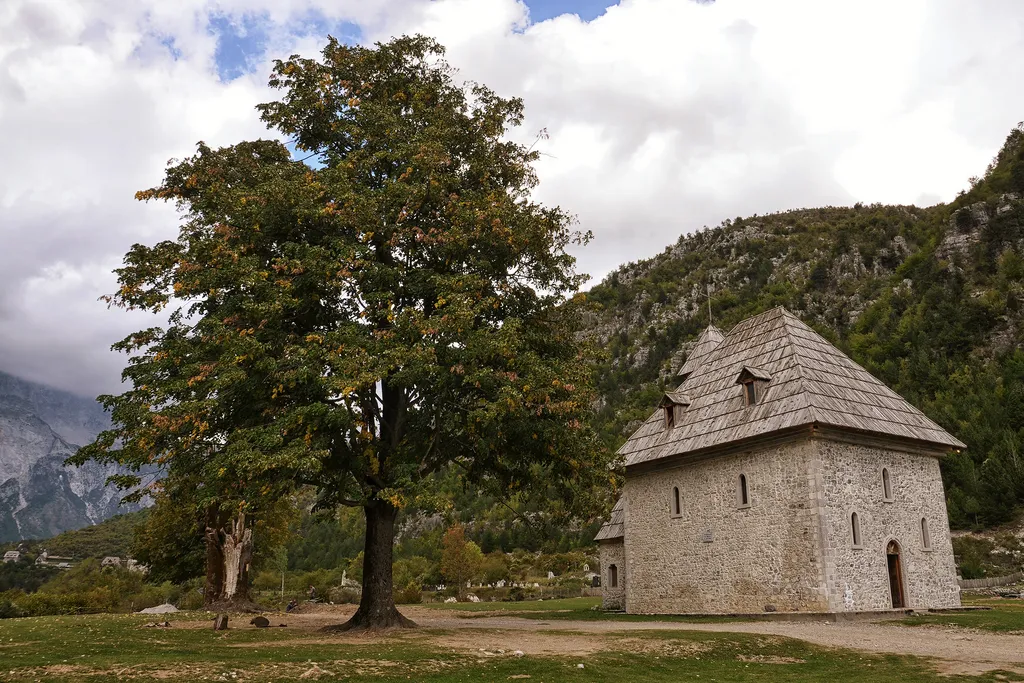
The north’s main event is a walk. From Valbona, a trail crosses a high pass to the village of Theth — sources give roughly 14–18 km and about 6–9 hours, so treat any single figure with caution — through the kind of limestone mountain scenery that fills the rest of Europe’s brochures and empties its trails. Theth itself, a stone village of guesthouses under the peaks, has its own church, lock-in tower and waterfall walks, and the guesthouses at both ends of the hike are a highlight of Albanian travel in their own right.
The village repays the days around the hike as much as the hike itself. Theth’s small stone church is the Alps’ most photographed building, and a short walk away stands the Kulla e Ngujimit, the lock-in tower where men once sheltered from blood feuds under the Kanun — the customary law code that governed these mountains for centuries, and whose reverence for the guest still runs every guesthouse here: in these valleys a visitor is close to sacred. The Grunas waterfall is an easy walk from the village, and the path up the valley towards the northern Blue Eye fills another half-day without trying. Nights are the other half of the experience — long dinners, big skies, and a silence the lowlands never offer.
Give it: three days minimum for the classic line — Shkoder to the Koman Lake ferry, a night in Valbona, the pass hike, a night in Theth, and back to Shkoder.
The honest caveat, and it is absolute: this stop is seasonal — broadly mid-June to late September — and the hike should never be attempted in snow or bad weather; outside the season the pass closes and many guesthouses shut. Also mind the geography trap one last time: the Blue Eye of Theth, near Kaprre village, is a different spring from the Blue Eye near Sarande at stop 3. Confusing them has ruined more than one itinerary.
How to Combine These 10 Stops
The list is already a route. In seven days, the southern loop takes stops 1 to 8: Tirana, Berat, Gjirokaster, a Sarande base for Ksamil and Butrint, then north up the Riviera and over Llogara to Vlore and back to Tirana. It is a full week — roughly 600–650 km of driving — not a lazy one, and it is the trip most first-timers should take.
The pacing rule inside that week matters as much as the route. Sarande is the only multi-night base in the south, deliberately: three or four bases in seven nights is a trip, while six one-night stands is a relay race. Keep Berat and Gjirokaster to a night each — their pleasures are compact and complete at that length — and treat the Riviera night as optional rather than structural, because the day over Llogara to Vlore works with or without it. If the week has to shrink to five days, the loop’s skeleton still survives two edits: make Gjirokaster a long stop rather than a night, and pass through Vlore instead of sleeping there.
Stops 9 and 10 are the honest addition, not a bolt-on: add the north and the whole trip becomes 11–12 days, because the Alps deserve their own days and the transfer to Shkoder is a day in itself. The full day-by-day versions of both routes — the 7-day southern loop and the 10-day outline that grows into the real 11–12 — are set out in our Albania travel guide, along with the transport detail for each leg.
One seasonal truth governs the whole list: the south peaks in late spring and September, the Alps only open from mid-June to late September. September is the one month the complete list of ten works at full strength — warm sea, thinner crowds, and the pass still open.
What We Left Off — and What to Add With More Time
A list of ten is a set of choices, and these are the near-misses. Durres, the main port, has the largest Roman amphitheatre in the Balkans but a sprawling resort waterfront; it is a half-day from Tirana, not a first-trip overnight. Apollonia, near Fier, is a genuinely fine archaeological park that pairs with the drive back to Tirana on day seven rather than displacing Butrint. Korce and Lake Ohrid anchor Albania’s east — a handsome bazaar town and one of Europe’s oldest lakes — but they face away from both routes above and belong to a second trip, as does slow, green Permet in the south.
Permet deserves more than a tail-end mention: a slow, handsome town on the Vjosa — one of Europe’s last free-flowing great rivers, now protected as a wild-river national park — with thermal springs at Benja nearby and a strong claim to the best eating in the south. Korce similarly anchors a whole eastern circuit: a cafe-filled bazaar town under the Morava mountains, with Pogradec on the Albanian shore of Lake Ohrid beyond it. But the east faces Macedonia and the lake, not the Ionian, and grafting it onto either route above turns a loop into a zigzag — which is a planning flaw, not a reflection on the place.
With extra days rather than a second trip, add Kruja: a castle town and bazaar half a day from Tirana, and the easiest way to give the centre of the country a stop of its own. Kruja was Skanderbeg’s stronghold, and its castle, its museum and its old bazaar of wooden shops make it the most complete half-day the centre of Albania offers. None of these near-misses is a consolation prize: each is a genuine reason to come back, and a first trip that tried to hold everything would end up holding nothing properly.
Frequently Asked Questions
Five questions account for most first-trip planning, and the short answers are below. Each is argued in full in the sections above — the seasonality answer, in particular, is the thread that runs through the whole list.
Where an answer gives a figure, treat it as a range rather than a promise. Albanian roads, seasons and ferry timetables all reward travellers who regard suspicious precision about this country as a warning sign rather than a service.
How many of these 10 places can I see in one week?
Eight of them — the full southern loop from Tirana to Vlore. Shkoder and the Alps push the trip to 11–12 days. Anyone promising all ten in seven days is selling you transfers, not travel. Within those eight, the week only works because Sarande is used as a base rather than a one-night stop: Ksamil and Butrint are day trips from it, not separate overnights, and that single decision is what keeps the loop a holiday instead of a commute.
The arithmetic is nights, not sights. The southern eight fit a week because the route is a loop with one multi-night base; you sleep in five places at most, and no single drive dominates a day. Shkoder and the Alps break the pattern — the transfer north takes the better part of a day by itself, and the hike needs its own three days around it — so they cannot be folded into the same week without hollowing out the south to pay for them.
A ten-day trip is the awkward middle: long enough to feel spacious, too short for all ten done properly. The best use of days eight to ten is depth rather than breadth — a second night on the Riviera, a slower Berat, the Tirana day split properly across arrival and departure. The full ten-place version asks for eleven days at the very least, and twelve is kinder. If your week is fixed and the mountains are the priority, invert the trip entirely: Tirana, Shkoder and the Alps in five or six days, the south left for a return visit. Both halves stand alone; neither survives being halved.
Which is the single best place in Albania?
There isn’t one — it depends on the trip. For history, Berat and Gjirokaster are the pair travellers describe years later; for a beach, Ksamil out of season or a Riviera bay in it; for walking, the Valbona-to-Theth crossing. If a long weekend forces one choice, make it Tirana plus Berat — a capital for context and one perfect old town an easy drive apart, with no season that ruins either of them.
Season bends the answer as much as taste does. Berat works in almost any month; Ksamil’s claim collapses in August and peaks in June and September; the Alps simply do not exist as an option outside their summer window. A traveller choosing one place for a winter weekend is really choosing between Tirana’s museums and Gjirokaster’s empty stone lanes — both good answers, neither of them the postcard one.
If the choice is a single night rather than a single place, spend it in Gjirokaster or on the Riviera — the two stops whose atmosphere peaks after the day visitors leave, when the lanes empty and the light does the work. Berat at dusk runs them close. Which is why this list refuses to crown a winner: the best place in Albania is the one whose season and character match the trip you actually have. Notice, too, that the answer shifts with timing: asked before a trip, most people name the beach; asked afterwards, they name the hike or Gjirokaster’s lanes as often as the sea.
Is the Albanian Alps stop worth it on a first trip?
Yes, if your trip is 10 days or longer and falls between mid-June and late September — the hike is the single most memorable day most visitors have in Albania, and the scenery every other mountain view in the country gets compared to afterwards. On a 7-day trip, no: the south done properly beats the whole country done in a hurry.
Understand what the stop commits you to. The classic line is a chain — Shkoder, the Koman Lake ferry, a night in Valbona, the pass, a night in Theth, the journey back — and every link has to hold: the ferry day, the weather window, the guesthouses that fill in season. That chain is exactly why the Alps cannot be sampled in a spare afternoon, and why travellers who force them into a short trip end up remembering the logistics instead of the mountains. The Alps are also the most book-ahead stop on this list: the guesthouses at both ends of the hike are small, family-run and finite, and in season they fill. Built properly into a longer journey, the balance reverses completely: the hike becomes the day the rest of the trip is measured against.
A middle option exists for the mountain-curious on a shorter trip. Base in Shkoder, ride the Koman ferry as a day trip through the fjord-like lake, and walk a valley day at the Valbona or Theth end without making the crossing. It is a taster, honestly labelled — and a good way to learn whether the full hike has earned a return trip.
When is the best time to visit all 10 places?
September, with mid-June to early July as the alternative. The Alps season (mid-June to late September) and the Riviera’s best weeks overlap only in those windows — the two spans when every stop on the list is simultaneously open, warm and reachable — and September adds warm sea water and thinner crowds at Ksamil.
The trade-offs inside those windows are worth knowing. Mid-June gives the longest days and a sea still warming up; early July adds heat and the first real crowds; September trades a little daylight for the warmest water of the year and old towns you can actually move in. May is the near-miss month: the south is glorious and empty, but the high pass can still hold snow, so a May trip should plan the south only and treat any Alps day as a bonus the weather grants, not a fixture in the plan.
Read the list by season and it sorts itself. The Riviera and Ksamil peak from late May to September, the old towns are at their best in spring and autumn, Tirana works year-round, and the Alps sit inside mid-June to late September. The overlap of all four patterns is the answer above — everything else is a negotiation with one stop or another. Winter, for the record, is not a write-off for a different kind of trip — Tirana, Berat and Gjirokaster in the quiet months make a fine five days — but it cannot deliver this list of ten, and no honest version of the list pretends otherwise.
Do I need a car to visit these places?
Not strictly — buses and furgon minibuses connect the towns, on routes built for locals, which means they run where this route runs — but a rental car makes the Riviera stops, Butrint’s timing and the southern loop’s pacing far easier. The Alps are reached by a combination of ferry, local transport and your own feet regardless.
Where the car earns its money is specific: the Riviera, where the best bays sit between bus stops; Butrint and Ksamil, where arriving before the crowds is a driver’s privilege; and the southern loop generally, where one-way pacing beats retracing legs by minibus. Where it earns nothing is the Alps chain, where ferry and foot take over anyway, and inside Tirana, where a rental is a parking problem with seats. Many travellers split the difference — public transport at the Tirana end, a car collected for the southern loop alone.
If you do drive, two habits pay. Stock up in the towns, because the mountain and coastal stretches have long gaps between services, and keep the Llogara crossing and the coast road for daylight — not because they are dangerous, but because the views are the reason you came. Local driving is assertive rather than chaotic; assume a goat, a cart or a wedding convoy around the next bend and you will rarely be surprised. And build slack into every driving day: the loop’s distances look short on a map, but the coast road and the mountain legs set their own pace — which, as the budgets above keep insisting, is the whole theme of travelling in this country.
The Short Version
Pick the trip your days honestly allow: the southern eight in a week, all ten in eleven or twelve days, and September if you want the whole list at its best. The route itself is simple — south from Tirana through the UNESCO towns to a Sarande base, back up the Riviera and over the Llogara Pass, then, with the days in hand, north to Shkoder and the Alps. Then plan the legs between the places as carefully as the places themselves — in Albania, the route is half the experience. The Albania travel guide has the routes, seasons and transport in full.
Two decisions matter more than everything else combined. The first is the season: September if you want all ten, late spring if the south alone is the trip, and never the Alps outside their summer window. The second is honesty about days — a week is a southern trip, twelve days is a whole-country trip, and pretending otherwise is how good places get wasted on windscreen time. Everything else — which beach, which guesthouse, what order inside a town — can safely be settled on the day.
Beyond that, the trip is forgiving. Albania is compact, the route is a loop rather than a maze, and almost every stop can absorb a changed plan, a slow morning or a longer lunch without the week unravelling. Build that slack in deliberately — the unplanned swim, the extra night where the light is good, the castle climbed twice — and the country will do the rest.