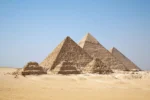
Seven days is exactly enough for Morocco’s classic line — and exactly short enough to ruin it by adding one stop too many. This route resists that. It runs one way, west to east and then north: two days in Marrakech, a full day crossing the High Atlas to the Dades valley, a morning in the Todra Gorges and an evening walking into the Erg Chebbi dunes, one long honest drive north to Fes, and two days in the medina there. Then you leave from Fes. That last decision — flying out of a different city from the one you landed in — is what makes the week work, because the alternative is spending your final day re-crossing the entire country to reach a Marrakech flight, watching the Atlas you already crossed slide past the window in reverse.
The shape matters more than any single sight on it. Every leg moves you forward; no night is spent backtracking; the two road days are placed where the scenery justifies them, and the one genuinely long transfer — desert to Fes — is named as such below rather than disguised as a sightseeing day. What follows is the day-by-day version: what each day actually contains, where you sleep, how you move, and what has to be booked before you land.
At a Glance
| Day | Route | Sleep |
|---|---|---|
| Days 1–2 | Marrakech — medina, palaces, Jemaa el-Fna at dusk | Marrakech |
| Day 3 | Marrakech → High Atlas (Tizi n’Tichka) → Aït-Ben-Haddou → Dades valley | Dades valley / Tinghir area |
| Day 4 | Todra Gorges → east to Merzouga → camel into Erg Chebbi | Desert camp (or Merzouga) |
| Day 5 | Sunrise in the dunes → Ziz Valley → Middle Atlas → Fes | Fes |
| Days 6–7 | Fes el-Bali, guided and slow; depart from Fes | Fes (Day 6) |
| Question | Short answer |
|---|---|
| The one rule | Open jaw: arrive Marrakech, leave Fes. Never backtrack |
| Hardest day | Day 5 — a transfer day, sunrise to evening. Plan nothing else for it |
| Transport | Road (tour, driver or hire car) for Days 3–5; trains only help before/after the loop |
| Trains, honestly | ONCF links Marrakech and Fes, but Al Boraq high-speed serves neither — it runs Tangier–Rabat–Casablanca only |
| Desert, honestly | Erg Chebbi is a true dune sea. Agafay, sold on short Marrakech trips, is stony ground — not the Sahara |
| Book first | Open-jaw flights, the desert leg, first-night riad, Fes guide |
| Visa | Check your nationality on one site only: official Accès Maroc |
Days 1–2: Marrakech
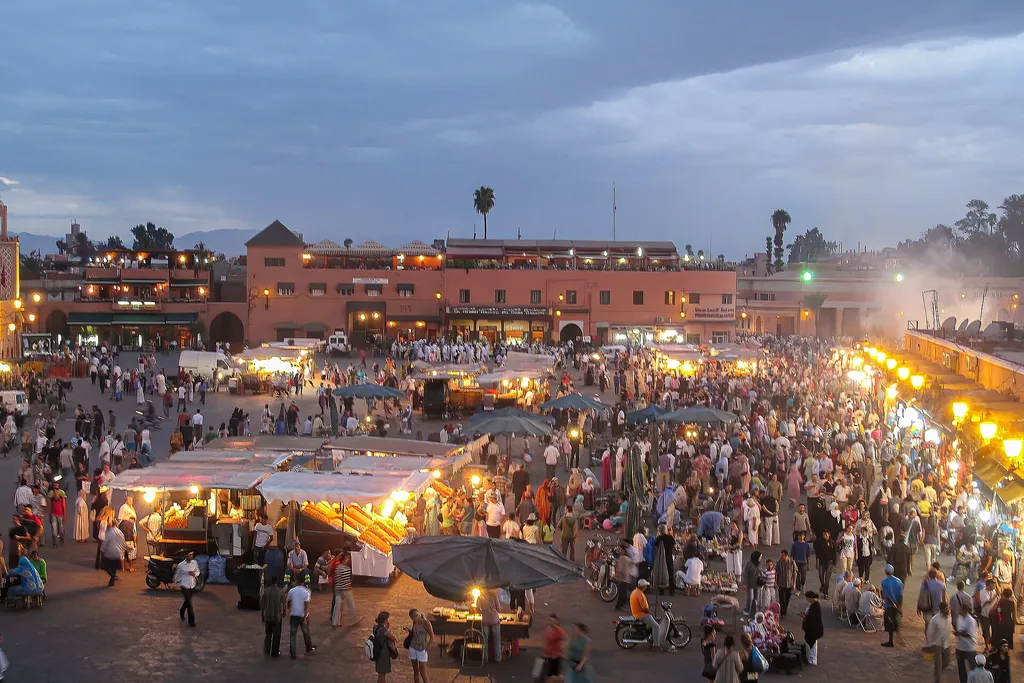
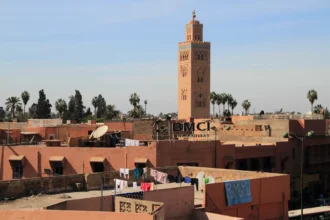
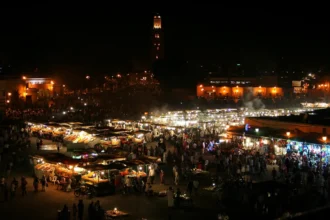
Land, settle, and resist the urge to sprint. Day 1 is for the medina’s greatest hits at walking pace: the Koutoubia gardens (the mosque itself is for worshippers, as almost every mosque in Morocco is), the Bahia Palace, the Saadian Tombs, and El Badi’s ruined walls with their storks. Keep the first evening deliberately under-planned. Jemaa el-Fna — the square at the heart of the medina, UNESCO-listed as part of that medina since 1985 — is ordinary at noon and completely possessed by dusk: drum circles, grill smoke, a thousand dinners cooking in the open. Sit above it with a mint tea and let the noise reorganise itself into a place. Eat at the stalls or don’t; watching is the point.
Day 2 goes deeper rather than wider. The Ben Youssef Madrasa in the morning, the souks in the middle of the day with no shopping target more specific than getting pleasurably lost, and one garden: the Jardin Majorelle, whose tickets are sold online only, through the garden’s own site — book them before you travel, because the queue of people learning that at the gate is a daily sight. If a hammam appeals, this is the evening for it; tomorrow the road starts early and does not stop.
Sleep: a medina riad for both nights — a blank door in a lane, then a courtyard open to the sky. Ask exactly how far it is from the nearest point a taxi can reach, and whether someone will meet you on arrival. First-night findability matters more than thread count.
Day 3: Marrakech → Dades, Over the Atlas
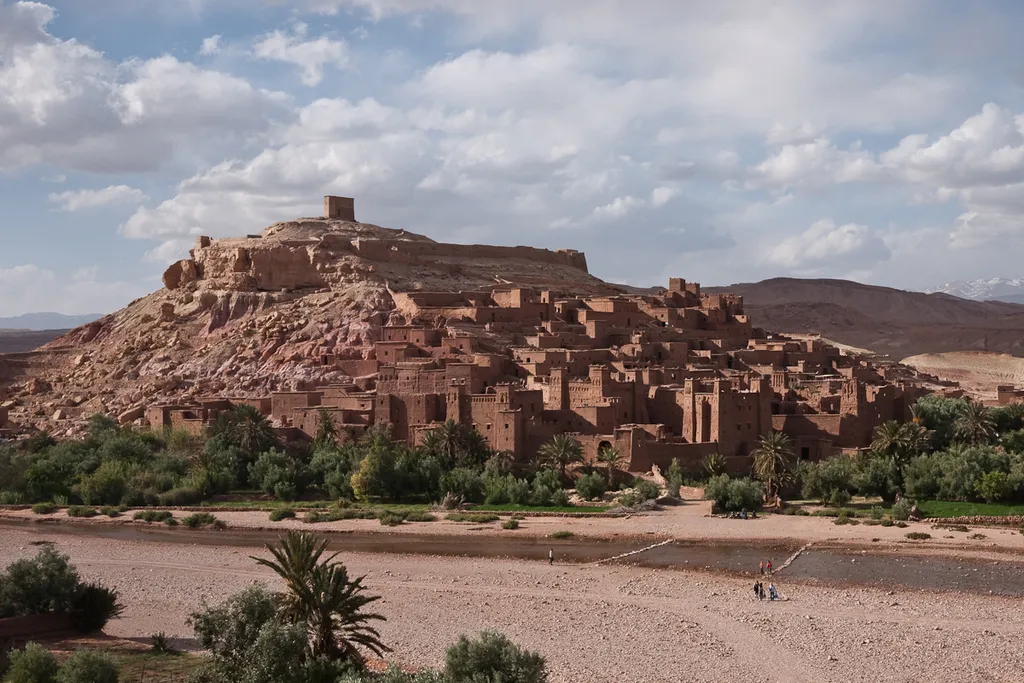
This is a full road day, and a good one — provided you accept it as a road day and add nothing to it. The road climbs out of Marrakech and up the Tizi n’Tichka pass in long switchbacks, the High Atlas doing the work of separating the city from everything after it. On the far side the land dries out in stages and the kasbahs begin.
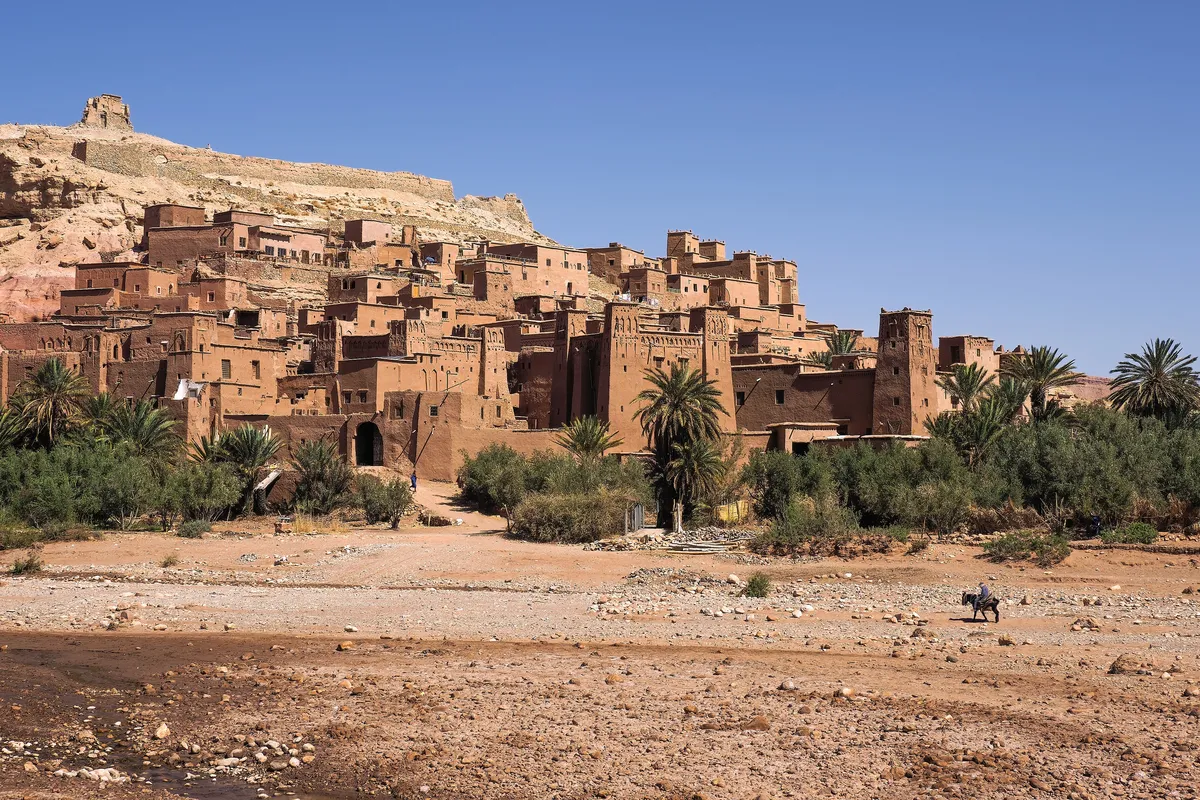
The stop that earns the crossing is Aït-Ben-Haddou (UNESCO, 1987): a fortified earthen ksar stacked against a hill above the Ounila riverbed, all mud-brick towers and lanes climbing to a granary at the top. Go up through it slowly. In the middle of the day the day-trip buses peak; early or late, the light is better and the lanes are emptier. Then the road runs on past Ouarzazate — a service town, fine for fuel and lunch, not a night’s stop on a seven-day route — and into the Dades valley.
Sleep: in the Dades valley or around Tinghir, in a kasbah-style hotel. Sleeping here rather than pushing on is what buys you the Todra Gorges at first light tomorrow, and it breaks the desert run into two civilised halves instead of one punishing one.
Day 4: Todra Gorges, Then East to the Dunes
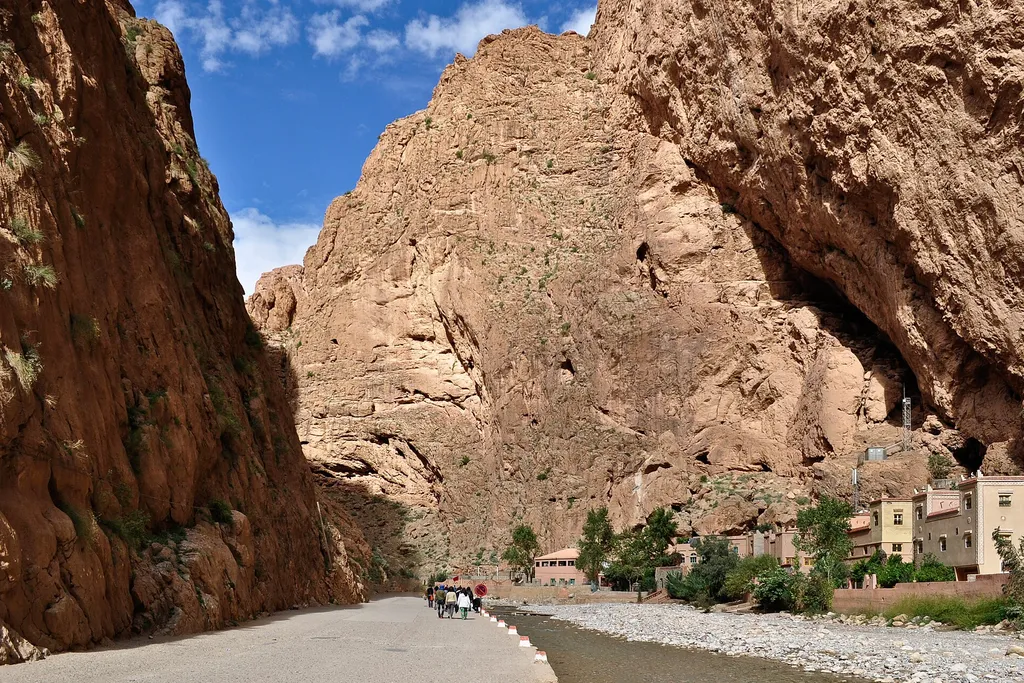
Start in the Todra Gorges, close to Tinghir: a slot of sheer rock walls with the river and the road running through it, cool and shadowed in the morning. An hour’s walk in and back is the right dose on this route — far enough that the walls close in properly, not so far that the day east suffers for it. Climbers dangle on the walls; everyone else just stands there feeling correctly small.
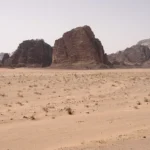
Then the road turns east and the country empties: palm valleys, hamada, long straight runs through Erfoud and Rissani country, until at Merzouga the road gives up and Erg Chebbi begins — a real sand sea, rising straight off flat stony ground. This is the desert the route has been aiming at since Marrakech. The rhythm of the evening is fixed because it works: arrive in the late afternoon, leave the bags, and enter the dunes by camel or on foot as the light drops; eat in camp; sleep; and be awake in the dark tomorrow for the light arriving. Before you pay anyone for this night, ask where exactly the camp sits — “desert camp” can mean a tent out in the Erg or one behind a hotel car park, and only one of those is the night you drove all this way for.
Sleep: in the dunes, in camp — anything from a shared tent to an en-suite pavilion. A Merzouga guesthouse on the dune edge is the fallback for anyone who’d rather have a door that locks; it is a compromise, and an honest one.
Day 5: Merzouga → Fes — the Long One
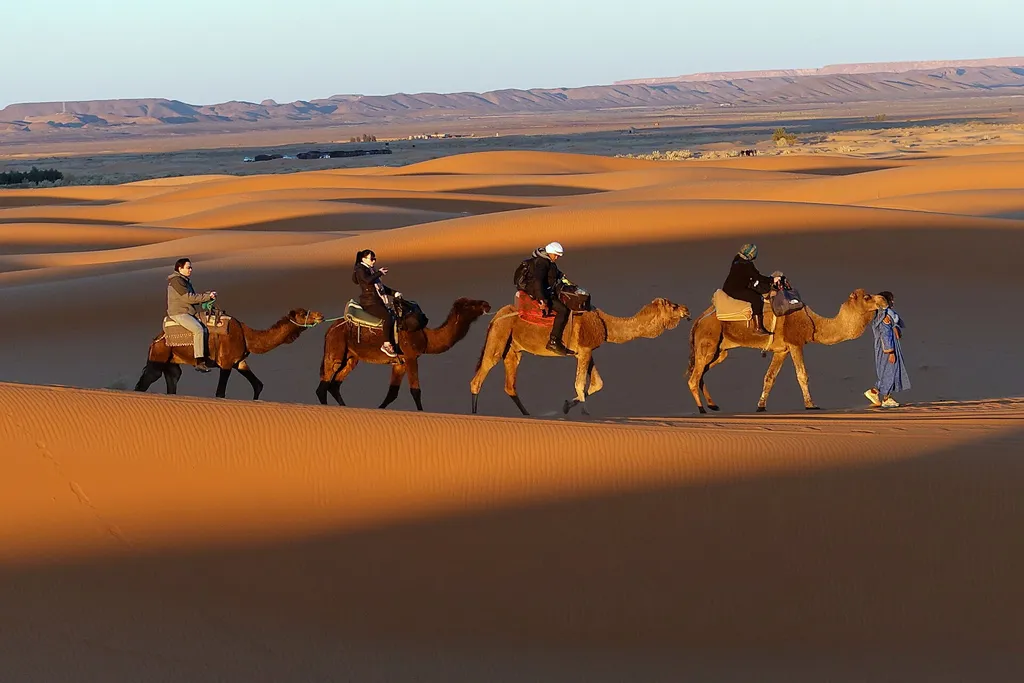
Wake in the dunes for sunrise — it is half the reason for sleeping in them — and then accept what this day is. The drive from Merzouga to Fes is the longest of the week by a distance: down off the sand, up the Ziz Valley with its palm groves strung along the river, through Midelt country where the usual lunch stop happens, and over the Middle Atlas through the cedar country around Azrou and Ifrane before the road drops to Fes by evening. It is a genuinely beautiful transfer. It is still a transfer.
So plan it as one. Early start, no stops that pretend to be sightseeing, a book or a podcast for the flat stretches, and nothing — nothing — scheduled in Fes that evening beyond finding your riad, eating, and sleeping. Every itinerary that goes wrong in Morocco goes wrong by treating this day as a bonus day. It is the price of the desert, and it is worth paying exactly once, in this direction, rather than in both directions inside a round trip.
Sleep: Fes, for the first of two nights.
Days 6–7: Fes
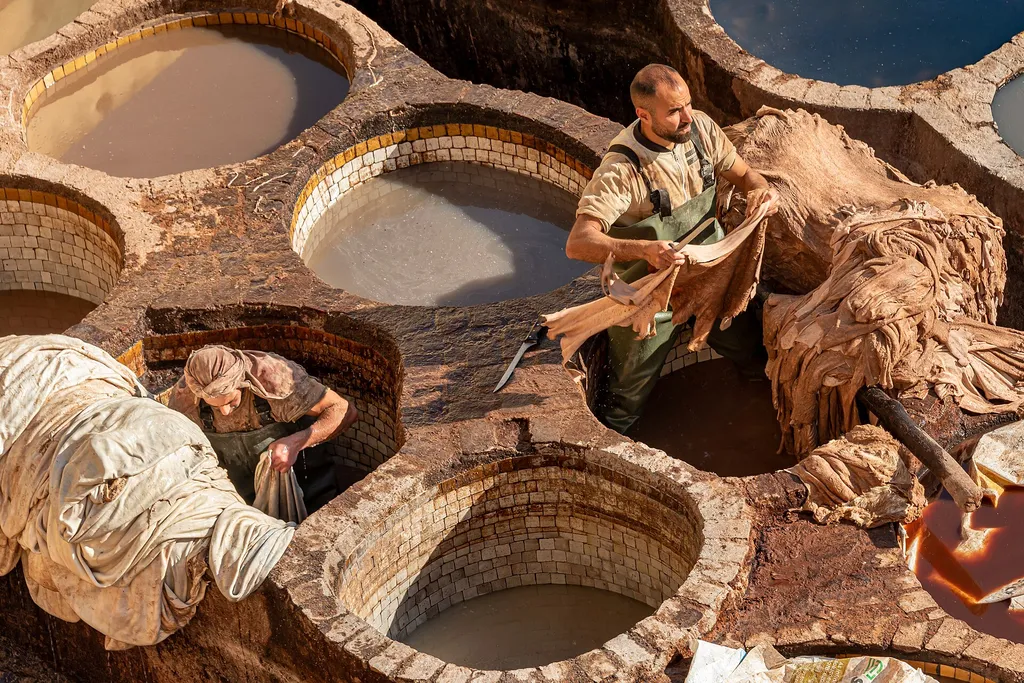
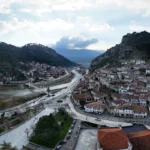
Fes el-Bali (UNESCO, 1981) is a car-free medieval medina of some nine thousand alleys, where loads move by donkey and the cry of “balak!” — watch out — is the traffic system. It is older, denser and harder work than Marrakech, and it is the city travellers talk about longest afterwards. Give Day 6 to it properly: hire an official guide for at least half the day. In Fes, a map is a work of fiction, and a good guide turns a confusing maze into a legible city — the Bou Inania Madrasa, the Nejjarine Museum, Al-Qarawiyyin (founded in the 9th century; non-Muslim visitors see it from its doorways), and the Chouara Tanneries from a shop terrace, early, before the heat gets into the dye pits.
Day 7 bends around your flight. Leave from Fes and the route’s logic completes itself. If your departure is late, you have two decent options rather than one frantic one: a slow final morning — the Merenid Tombs viewpoint above the medina, a last breakfast, the souks for anything you deliberately didn’t buy on Day 6 — or a day trip out to Meknes (UNESCO, 1996) with Roman Volubilis (UNESCO, 1997) nearby, back in time for an evening departure. What Day 7 is not for is a dash to Chefchaouen and back. The blue town is a proper detour into the Rif that connects to almost nothing on this line; bolting it onto the end is how a good week gets a frazzled final page.
Sleep: your Fes riad again on Day 6 — inside or just outside the medina walls, with the same findability rule as Marrakech, sharpened: arriving lost at night in Fes el-Bali is a story you will tell, just not fondly.
Transport, Leg by Leg
Arrival and departure. Fly into Marrakech and out of Fes — the open jaw is the whole design. If your flights force a Casablanca connection on the way home, Fes is on the rail network, which is where trains finally earn their place on this route (below).
Days 3–5 are road days; there is no railway to the desert. Three ways to cover them. A multi-day desert tour bundles vehicle, driver, the Dades night, the camel ride and the camp — the default for most visitors, and the bundles vary where it matters: cheap ones buy their price with longer driving days and camps nearer the road, so compare hours behind the wheel and the camp’s exact location, not the headline cost. A private driver for the same three days costs more and stops where you say. A hire car gives the most control and the most work — mountain roads, assertive local driving, and no navigating-by-committee in the medina approaches; take it only if that sounds like a holiday rather than a job. Buses (CTM, Supratours) serve the towns on this line but do not string the desert days together in any way that preserves the itinerary — they are a fallback, not a plan.
Trains, before and after the loop. Morocco’s railways are better than you’ll expect — and useless for the desert half of this route. ONCF runs conventional intercity trains linking Marrakech, Casablanca, Rabat and Fes, so a train is a sane way to reach the start or leave the finish if your flights route through Casablanca or Tangier. What the train is not is high-speed on this route: Al Boraq, the high-speed service, runs Tangier–Kenitra–Rabat–Casablanca and nowhere else. Marrakech and Fes are ordinary, perfectly good trains — just not fast ones, whatever a breathless blog told you. Check times and book on ONCF’s official site, oncf.ma, and be wary of third-party resellers adding fees for the same seat.
Where You Sleep, Night by Night
- Nights 1–2 — Marrakech. Medina riad. Courtyard calm, lane-noise gone, breakfast on the roof if you’re lucky.
- Night 3 — Dades valley / Tinghir. Kasbah-style hotel. Chosen for position, not luxury: it puts Todra at first light within reach.
- Night 4 — Erg Chebbi. Desert camp in the dunes, booked with its exact location confirmed in writing. (Fallback: Merzouga guesthouse on the dune edge.)
- Nights 5–6 — Fes. Riad in or beside Fes el-Bali. Stay put for both nights; the medina rewards a base, and moving hotels inside Fes wastes the very time you came for.
What to Book Ahead
- The open-jaw flights. In through Marrakech, out through Fes. This is booked first because everything else hangs off it.
- The desert leg (Days 3–5). Tour, driver or car — in the spring and autumn peaks, book well ahead, and whenever you care about camp location and group size, which you should, because those decide the experience. Get the camp’s location, the daily driving shape and what’s included in writing.
- Jardin Majorelle tickets. Online only, through the garden’s own site. Not available at the gate in any way you should rely on.
- The first night’s riad in each city. Book Marrakech and Fes ahead; confirm the meeting point for arrival, especially in Fes.
- The Fes guide. Half a day minimum, official, arranged through your riad or a tourist office — not accepted from a stranger in the street, however friendly.
- Your visa position. Check it before booking anything non-refundable, on one site only: Accès Maroc, the official Ministry of Foreign Affairs portal. Search results for a Morocco visa are thick with look-alike commercial sites; if the address is not acces-maroc.ma, it is not the source. This article prints no exemption list and no fee, because both change and both are yours to check for your own passport.
Variations
Run it in reverse. Fes first, Marrakech last, works just as well — the same legs, mirrored. Two things change. The long transfer becomes Fes → Merzouga, and it’s still a transfer: same rule, nothing planned at the other end. And the desert lands in the middle of the week instead of at its hinge, with Marrakech’s intensity as the finale rather than the overture. Choose the direction your flights price better; the route doesn’t mind.
Add a day — spend it on the route, not beside it. With eight days, the honest additions are: a second night at Merzouga, for a full day around the dunes instead of a sunset and a sunrise; a second full day in Fes, which the medina easily absorbs; or a slower Day 3, sleeping after Aït-Ben-Haddou instead of pressing on, and giving Todra a morning that isn’t watching the clock. What not to add is Chefchaouen or Essaouira. Both are good trips. Neither is on this line, and each costs a day of driving to reach and another to recover the route — at eight days they are the start of a different itinerary, not an upgrade to this one.
Short on days? Don’t compress this route — choose a smaller one. Five days does Marrakech plus a 3-day desert loop and back, accepting the backtrack, or Marrakech and the coast. Chopping Day 2 and a Fes day out of this itinerary to “fit” it into five days produces the worst version of both trips.
Common Mistakes
Flying in and out of Marrakech. The single most common error, and the most expensive in time: it converts Day 7 into a full re-crossing of Morocco to catch a flight, purely to stand where you started. Open jaw, always.
Treating Day 5 as a sightseeing day. It is a transfer with good views. Scheduling a Fes medina tour for that evening is scheduling a disappointment.
Booking the desert by headline price. The difference between a cheap bundle and a fair one is paid in driving hours, camp location and food. A camp behind a car park is not a night in the Sahara, and a sunset-only dash to Agafay is not the desert at all — Agafay is stony ground an hour from Marrakech, handsome in its own way, with no dunes. This route goes to Erg Chebbi because Erg Chebbi is the real thing.
Believing the high-speed train reaches this route. Al Boraq serves neither Marrakech nor Fes. Any plan that assumes it does collapses on contact with a timetable.
Adding Chefchaouen “since we’re up north anyway.” You are not up north. Fes is the centre; Chefchaouen is a Rif detour that connects to almost nothing, and a there-and-back day trip from Fes is mostly a day in a car.
Packing for one Morocco. This week crosses a mountain pass and sleeps in a desert: even in the kind months, a winter night at Merzouga is properly cold and the Atlas can be shut by snow for hours or days in winter. One genuinely warm layer is not optional luggage.
FAQs
Is 7 days enough for this route, or is it rushed?
It is full but not rushed — provided the open jaw holds. Two days in each city, one night in the Dades, one in the dunes, and one day honestly surrendered to the road. What makes seven days feel rushed is never this route; it’s this route plus Chefchaouen, or plus Essaouira, or plus a same-city return.
Can I do this itinerary by train and bus instead of a tour?
Only the ends of it. Trains serve Marrakech and Fes well, and that’s where they stop helping: there is no rail line to Aït-Ben-Haddou, the Dades or Merzouga. The desert legs are road legs. A tour or driver is not an upsell on this route — it’s the transport.
Which desert camp should I book — standard or luxury?
Book by location first and fittings second. A simple camp properly out in the Erg beats a marble bathroom behind a hotel car park. Ask where the camp sits, how you reach it, and whether the price includes the camel ride in and out; “luxury” in a listing is not evidence, while a photo of the bathroom is closer to it.
What if the Tizi n’Tichka pass is closed by weather?
In winter it happens — snow can shut the pass for hours or occasionally days. Build the week so Day 3 can slide: keep Marrakech’s second day loosely planned in winter, travel in the kind months (spring and autumn suit this route best) if you can choose, and let your driver or tour operator reroute rather than forcing a schedule. This is another argument for booking the desert leg with an operator who owns the problem.
Do I need a visa sorted before I book the flights?
You need to know your position before you book anything non-refundable. Whether that means an exemption, an eVisa or an electronic travel authorisation depends entirely on your nationality and passport — check your exact case on the official Accès Maroc portal, and ignore look-alike sites charging to “process” what starts there.
Can I swap the Dades night for Ouarzazate?
You can, and the route survives — but you lose the thing the Dades night is for: Todra Gorges at first light, before the day buses, with the day east still ahead of you. Ouarzazate is a practical town; the Dades valley is a place. On a seven-day route, sleep in places.
Run it in this order: flights first (open jaw), desert leg second, riads third, garden tickets and guide last. Then let the week breathe. More routes, city guides and country planning live on the Traveling Advisior homepage — this is the one to start with.