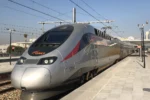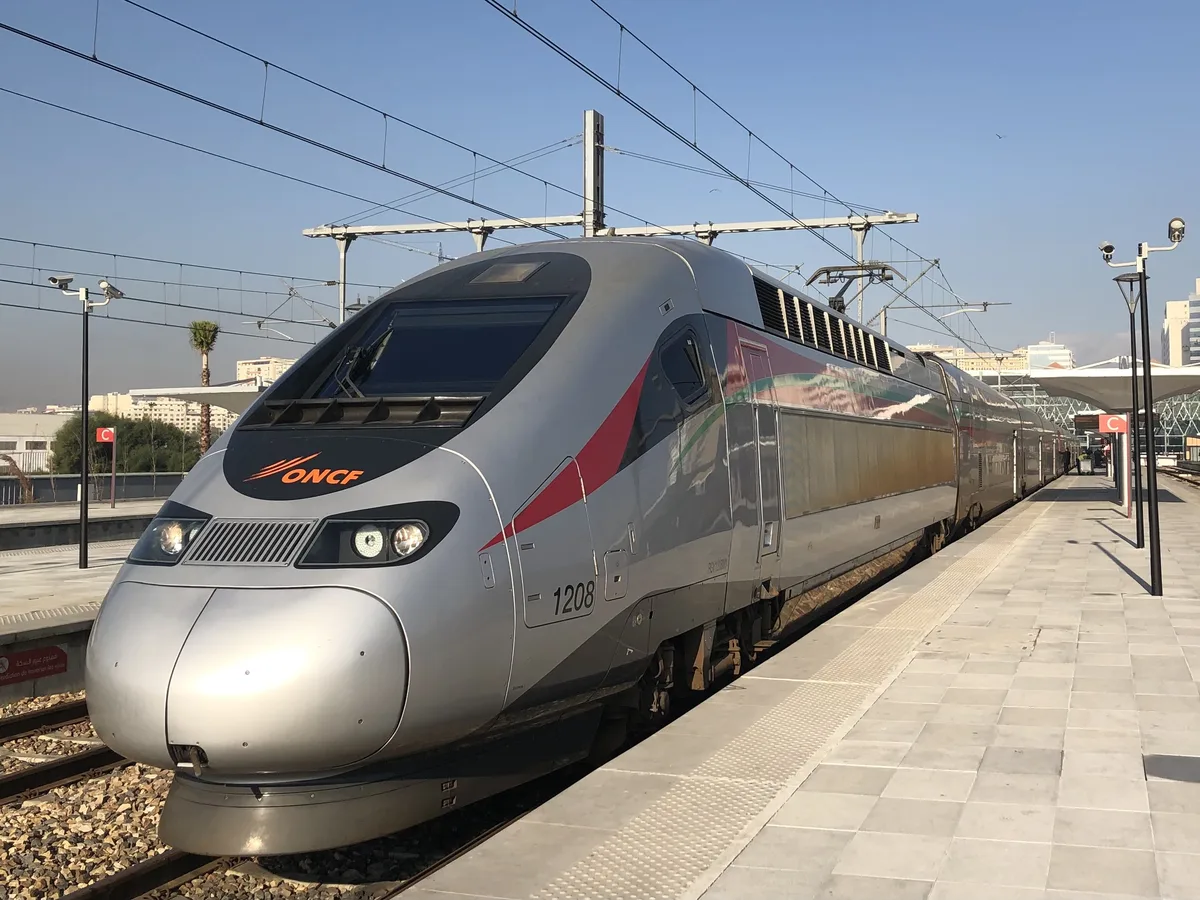
Every country has one machine that quietly rearranges how visitors plan their trip, and in Morocco that machine is the Al Boraq train. Before it opened in November 2018, the journey between Tangier and Casablanca was a half-day commitment on a classic train, the kind of leg you built a night stop around. The Al Boraq train cut that journey to just over two hours, at speeds no other African railway had ever carried passengers, and in doing so it turned Morocco’s northern corridor into something closer to a metro line between cities than a expedition between them. Tangier, Kenitra, Rabat and Casablanca now sit on a single high-speed spine, and almost every sensible northern Morocco itinerary is built around it.
This guide explains how the service actually works, in the order a traveller meets it. It covers the route and its four stations, the odd two-part structure of the line that explains where the famous 320 km/h really happens, the double-deck trains themselves, the difference between first and second class, and the booking system ONCF runs — a system of numbered seats, named trains and prices that move as departure approaches. It is deliberately honest about the two things most guides fake. There is no fare table here, because Al Boraq fares are dynamic and any printed figure is a small lie waiting to age. And there is no timetable, because the only timetable worth trusting is the one ONCF shows you for your actual date. What this guide gives you instead is the mechanism — how to read that timetable, how the fares are built, and how to fold the train into a Morocco trip, which is the part that does not expire. For the wider planning picture, start with our Morocco travel guide, which sets this corridor inside the country as a whole.
The Short Version
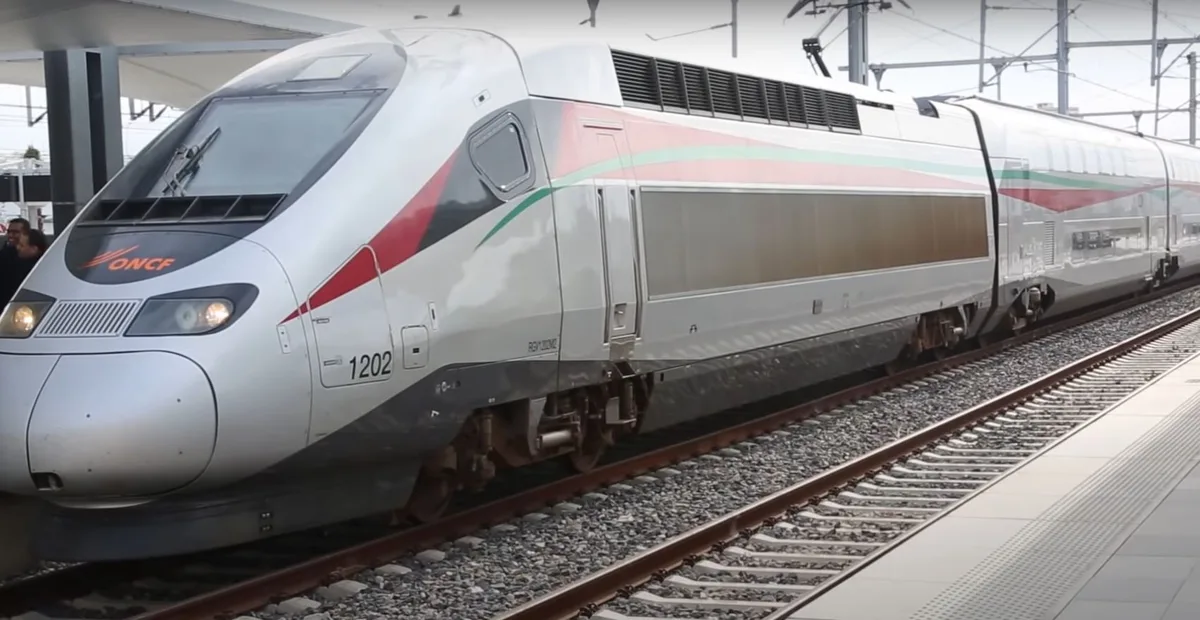
If you read nothing else, read this. The Al Boraq train is a high-speed service run by ONCF, Morocco’s national railway, between Tanger Ville station in Tangier and Casa Voyageurs station in Casablanca. It calls at exactly two stations in between — Kenitra and Rabat Agdal — and the full journey takes about two hours and ten minutes, against four hours and forty-five minutes on the classic train it replaced. Every seat on every departure is reserved in advance, in first or second class, and your ticket is valid only for the specific train named on it. There are no walk-up open tickets of the old kind, and turning up for a different departure with the wrong train number makes you, in ONCF’s paperwork, a passenger travelling irregularly.
The structure of the line matters more than the headline speed. Only the northern half of the route, from Tangier to Kenitra, is a purpose-built high-speed line where the trains run at up to 320 km/h. South of Kenitra the same trains continue over the upgraded classic line through Rabat to Casablanca at conventional speeds, which is why the end-to-end average is fast rather than spectacular. The practical consequences are threefold. First, the Tangier to Kenitra leg is astonishingly quick — under an hour. Second, Rabat is reached from Tangier in roughly an hour and twenty minutes, which makes the capital a realistic day trip from the north. Third, Casablanca is the end of the high-speed story. Everything south and east of Casa Voyageurs — Marrakech, Fes, the airport, the desert gateways — belongs to ONCF’s classic network and its coach arm, and is planned differently.
| Question | Short answer |
|---|---|
| Where does it run? | Tanger Ville (Tangier) to Casa Voyageurs (Casablanca), via Kenitra and Rabat Agdal |
| How long is the full trip? | About 2 hours 10 minutes, down from 4 hours 45 minutes before 2018 |
| How fast? | Up to 320 km/h on the Tangier to Kenitra high-speed line, conventional speeds south of Kenitra |
| Which classes? | First and second, every seat reserved and numbered |
| Where do I book? | ONCF station counters, station ticket machines, the oncf-voyages.ma website and the ONCF Voyages app |
| Where do fares live? | Only on ONCF’s own channels — they are dynamic and this guide prints none |
| Does it reach Marrakech? | No — south of Casablanca is classic rail, for now |
What the Al Boraq Train Is – Africa’s First High-Speed Service
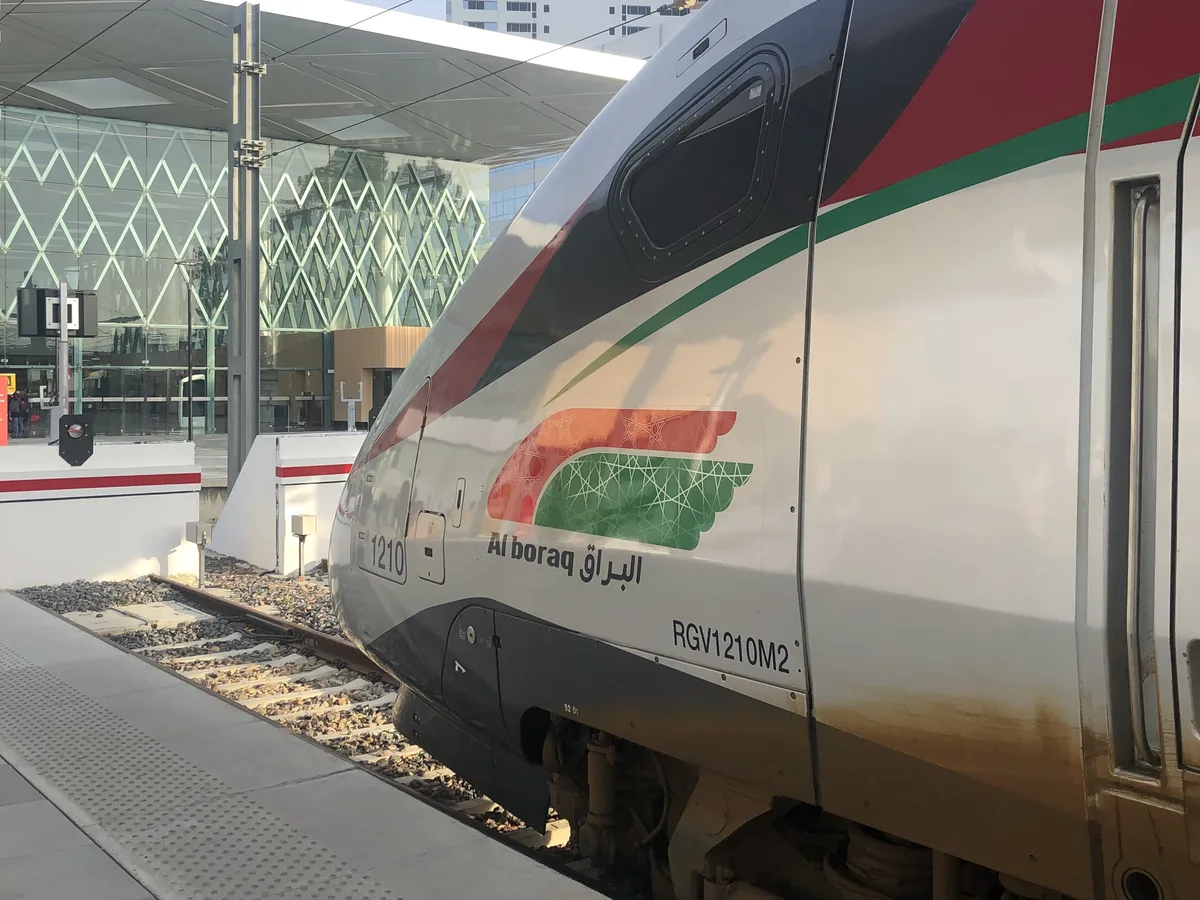
The Al Boraq train is the passenger service that runs on Morocco’s Tangier to Kenitra high-speed line and onwards to Casablanca, and its opening was a genuine continental first. When the service was inaugurated on 15 November 2018 — at a ceremony in Tangier, followed by a special train to Rabat — no African country had ever operated a high-speed railway. Egypt’s high-speed network was still on drawing boards, and South Africa’s Gautrain, though modern, runs at conventional speeds. Morocco, a country many visitors still picture in terms of medinas and mountain passes, had quietly built the fastest railway on the continent, with trains tested at 357 km/h during the trial programme, an African rail speed record at the time.
The name carries the ambition. King Mohammed VI named the service Al Boraq, after al-Buraq, the winged steed of Islamic tradition said to have carried the Prophet Muhammad on the night journey from Mecca to Jerusalem. It is a name about covering an impossible distance in a single night, shrunk to Moroccan scale — the strait-facing port city of Tangier and the commercial capital Casablanca, once separated by most of a travelling day, joined in a morning. The winged logo on the power cars, swept in the red and green of the Moroccan flag, repeats the idea every time a set slides into a platform.
The service is run by ONCF, the Office National des Chemins de Fer, Morocco’s state railway, and it is best understood as the flagship of that network rather than a separate company. The same operator runs the classic Al Atlas long-distance trains, the fast shuttle trains around Casablanca and Rabat, and Supratours, the coach arm that extends the rail map to towns the tracks never reached. An Al Boraq ticket, a classic ticket and a Supratours coach ticket all come out of the same booking system, which is why understanding this one service unlocks most of Moroccan public transport. The high-speed line itself is described by ONCF and the Moroccan government as the first phase of a planned national high-speed network of some 1,500 kilometres — a plan whose later phases are discussed again at the end of this guide, because they explain both the train’s importance and its current limits.
The Route – Four Stations Between Tangier and Casablanca
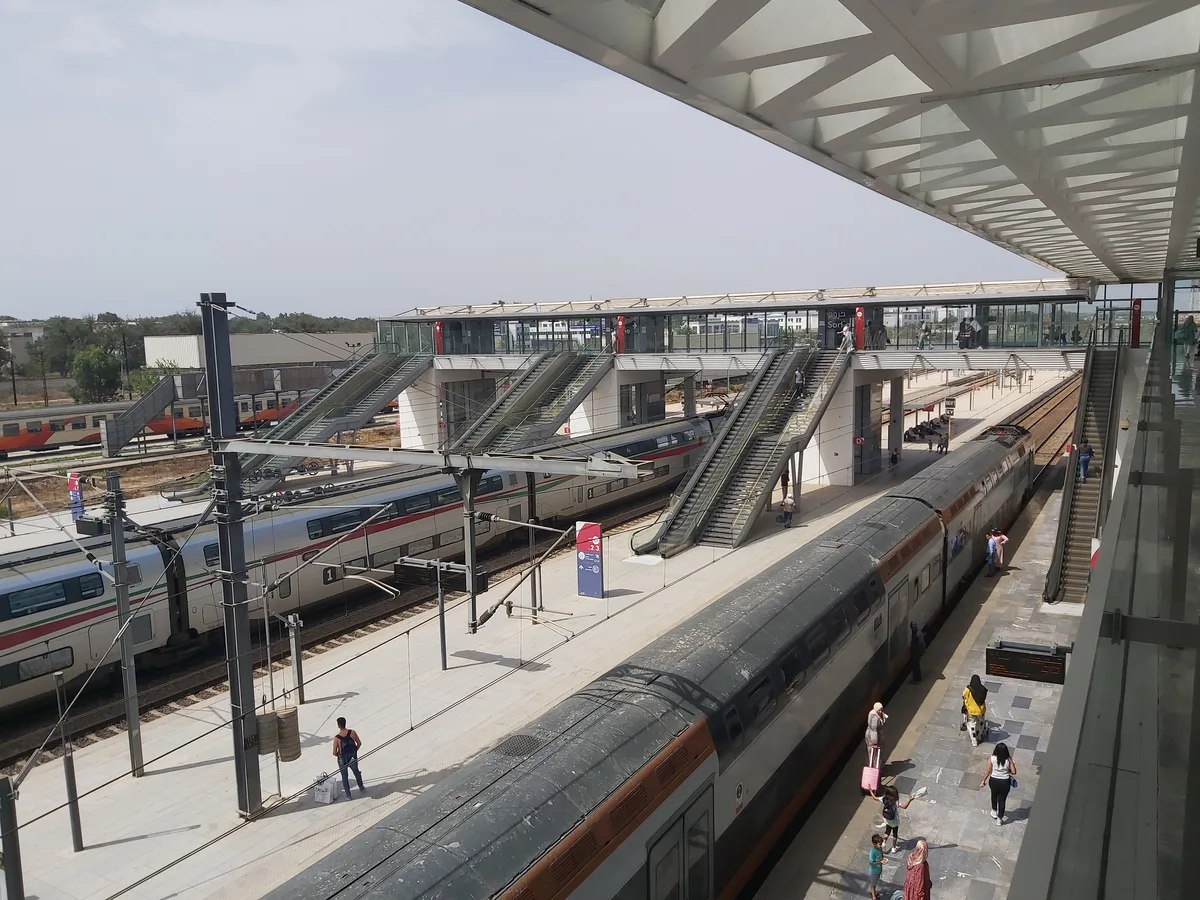
The Al Boraq train serves a line of four stations, and learning them in order is the single most useful thing a first-time rider can do. North to south, they are Tanger Ville in Tangier, Kenitra, Rabat Agdal in the capital, and Casa Voyageurs in Casablanca. The full route covers about 323 kilometres. Not every detail of that geography matters, but the station names do, because three of the four cities involved have more than one station, and in two of them the Al Boraq station is not the one a visitor would guess. Tangier’s main station is Tanger Ville — not the port complex at Tanger Med, which is a different place far to the east. Rabat’s Al Boraq station is Rabat Agdal — not the more central Rabat Ville. Casablanca’s is Casa Voyageurs — not Casa Port. Each of those traps gets its own treatment in the station sections below.
Southbound, the journey unfolds in three acts. The first, Tangier to Kenitra, is the high-speed act — roughly fifty minutes on the new line, much of it at or near 320 km/h, through the flat farmland and eucalyptus of the Gharb plain. The second, Kenitra to Rabat Agdal, is a short hop of around half an hour on the classic line, crossing the Sebou river country and running into the capital’s modern Agdal district. The third, Rabat to Casablanca, is the busiest commuter corridor in Morocco, about an hour on a line shared with shuttle and classic trains, ending under the clock tower of Casa Voyageurs. Northbound the same acts run in reverse, and the psychological effect reverses too — Casablanca to Tangier feels like escaping the metropolis at gathering speed, the train getting faster the further north it goes.
One more structural point is worth fixing in mind before the station detail. Al Boraq trains do not continue beyond either terminus. There is no through high-speed train from Tangier to Marrakech, and no Al Boraq service from Casablanca to Fes, whatever a careless itinerary graphic might suggest. At both ends, and at Kenitra in the middle, the high-speed service hands over to the classic network, and the handover is a change of train on the same station, usually the same platform complex. Planning a journey that mixes the two is easy — but it is a change, with a connection time to respect, and the sections on onward travel below explain how those connections are built.
Two Railways in One Journey – Where the Speed Actually Happens
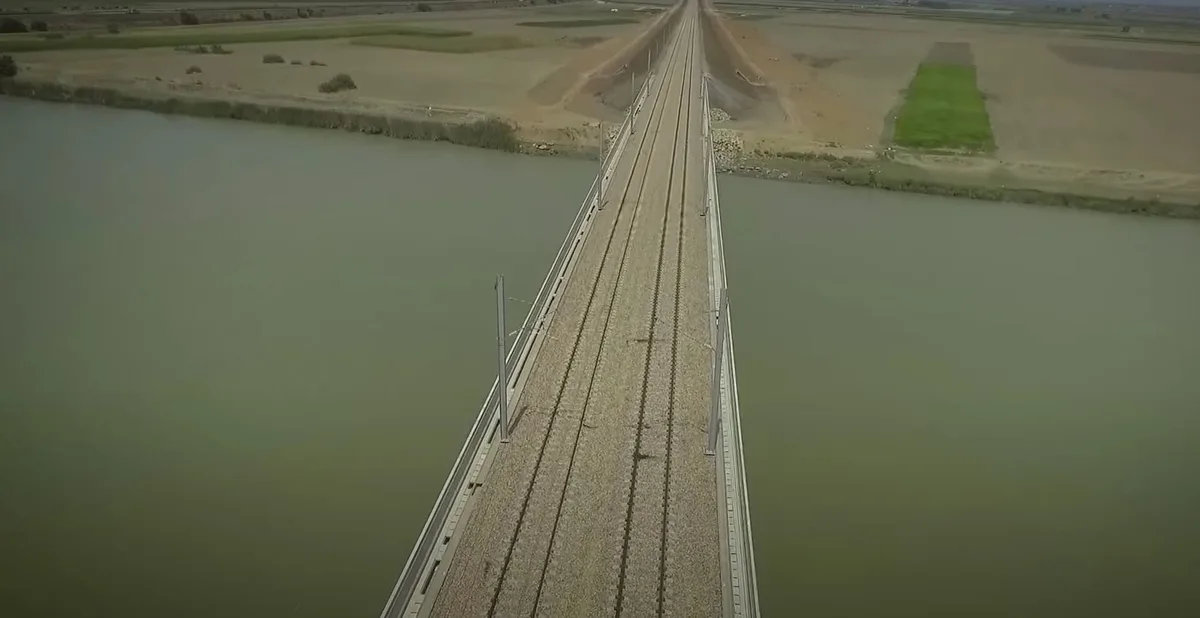
Here is the fact that unlocks every honest account of this train — an Al Boraq journey is really two different railways stitched together at Kenitra. The northern railway is a brand-new, purpose-built high-speed line, 186 kilometres from Tangier to Kenitra, engineered for 320 km/h operation with the gentle curves, fenced corridor and modern signalling that speed requires. On this section the double-deck sets run at up to 320 km/h, and the Tangier to Kenitra leg that once took the better part of two hours on the old alignment is despatched in about fifty minutes. This is the railway that set the African speed record in testing and the one that earned the service its name.
The southern railway is older and humbler. From Kenitra, Al Boraq trains leave the high-speed line and join the classic coastal main line — upgraded, electrified and capacity-expanded for the launch, but a conventional railway shared with classic expresses, shuttle trains and freight, where speeds run at up to about 160 km/h. The remaining 137 kilometres through Rabat to Casablanca are covered at that pace. This is why the end-to-end time is about two hours and ten minutes rather than the one hour a pure high-speed line would allow, and why the Tangier to Rabat time — about an hour and twenty minutes — is proportionally so much better than Tangier to Casablanca. Most of the saving is banked in the north.
None of this diminishes the achievement; it explains it. At the service’s launch in 2018, the Tangier to Casablanca journey fell from four hours and forty-five minutes to two hours and ten, a cut of well over half, achieved by building the expensive new line only where the old one was slowest and most winding. Moroccan and French reporting on the project has long described the same logic applying in reverse for the future — dedicated high-speed track extended south from Kenitra towards Casablanca, and eventually Marrakech, would cut the end-to-end time again, towards an hour and a half. Until that track exists, the two-railways structure is the truth of the service, and it is also the reason a Kenitra change of trains, explained later, can sometimes beat a through journey for reaching the classic network’s eastern destinations.
Tanger Ville – The Northern Terminus and the Ferry Connection
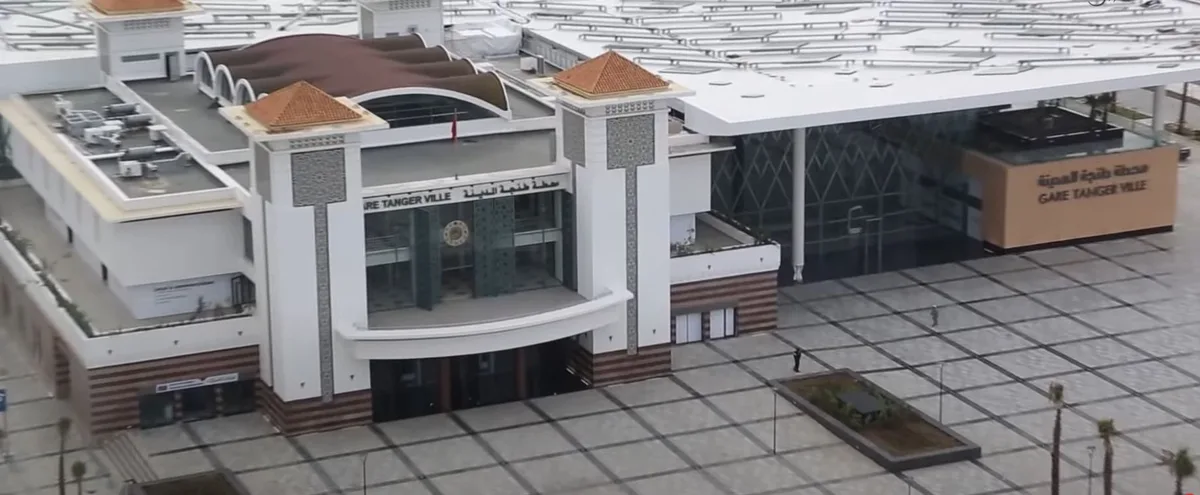
Tanger Ville is where the high-speed line begins, and it is a station designed to make a statement — a large modern terminal rebuilt for the Al Boraq launch, with a sweeping roof, glass lattice screens and a position on Tangier’s bay-front avenue a short walk from the city beach and the old town’s edge. For many travellers it is their first building in Morocco, and it sets the tone of the whole corridor — this is a railway that presents itself the way other countries present airports. Inside, the layout follows the pattern repeated at all four corridor stations — a main hall with ticket counters and machines, departure boards, waiting areas divided by class, and gated access down to the platforms, where signs split the platform into zones so passengers wait beside the spot where their carriage will stop.
The station’s geography matters beyond architecture, because of the ferries. Tangier has two ferry ports, and only one of them belongs with this station. The fast ferries from Tarifa in Spain dock at the city port, Tangier Ville port, a short distance from Tanger Ville station — close enough that arriving by sea in the morning and leaving on a late-morning Al Boraq train is a normal, workable plan, with a taxi or a brisk walk between the port gate and the station doors. The ferries from Algeciras, by contrast, use Tanger Med, a vast port complex far east along the coast, which has no rail station of its own; passengers from Tanger Med reach the railway by road transfer into Tangier first. Travellers who mix the two ports up have missed trains in both directions, and the names are similar enough that the mistake is easy. Book the Tarifa route if the train is the point of the day.
Tanger Ville is also a classic-network station, which gives the terminus a double life. Classic trains still leave here for destinations the high-speed line does not serve, including the long-established services across to Fes via Sidi Kacem and the overnight train south towards Marrakech that ONCF has traditionally operated from Tangier. For the visitor, the practical meaning is simple — Tangier is the one city where a trip can begin on a morning ferry, cross the country at 320 km/h by lunch, and the station handles both the old Morocco and the new one under a single roof.
Kenitra – The Hinge Between High Speed and the Classic Network
Kenitra is the least famous of the four stations and, operationally, the most interesting. It is the point where the high-speed line ends and the classic network takes over — every Al Boraq train changes its nature here, dropping from the new line onto the old coastal railway for the run south. It is also the corridor’s quiet interchange. The classic line through Kenitra is the same line that continues inland from the coast towards Sidi Kacem, Meknes and Fes, which means a traveller from Tangier bound for Fes can leave the Al Boraq train at Kenitra and join a classic service eastwards, rather than riding south to Casablanca and doubling back. On the right timetable that change saves hours, and it is the single cleverest move the corridor offers an itinerary planner.
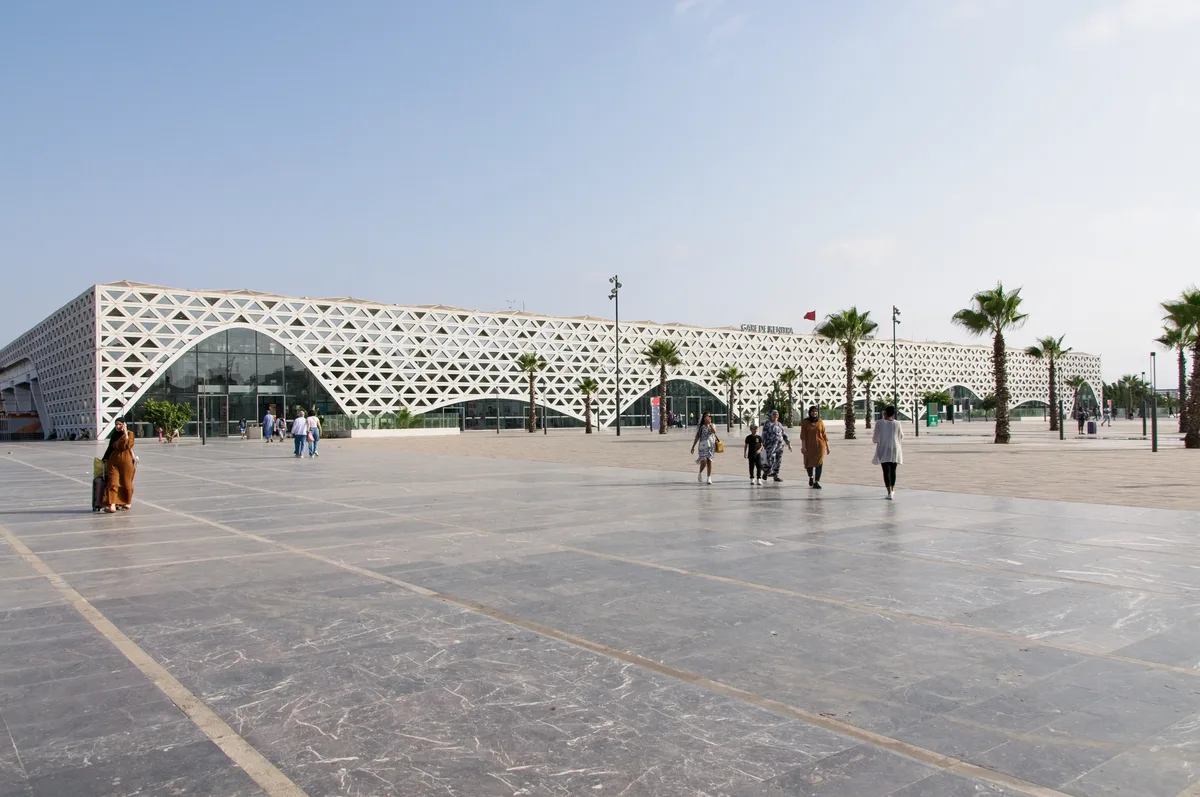
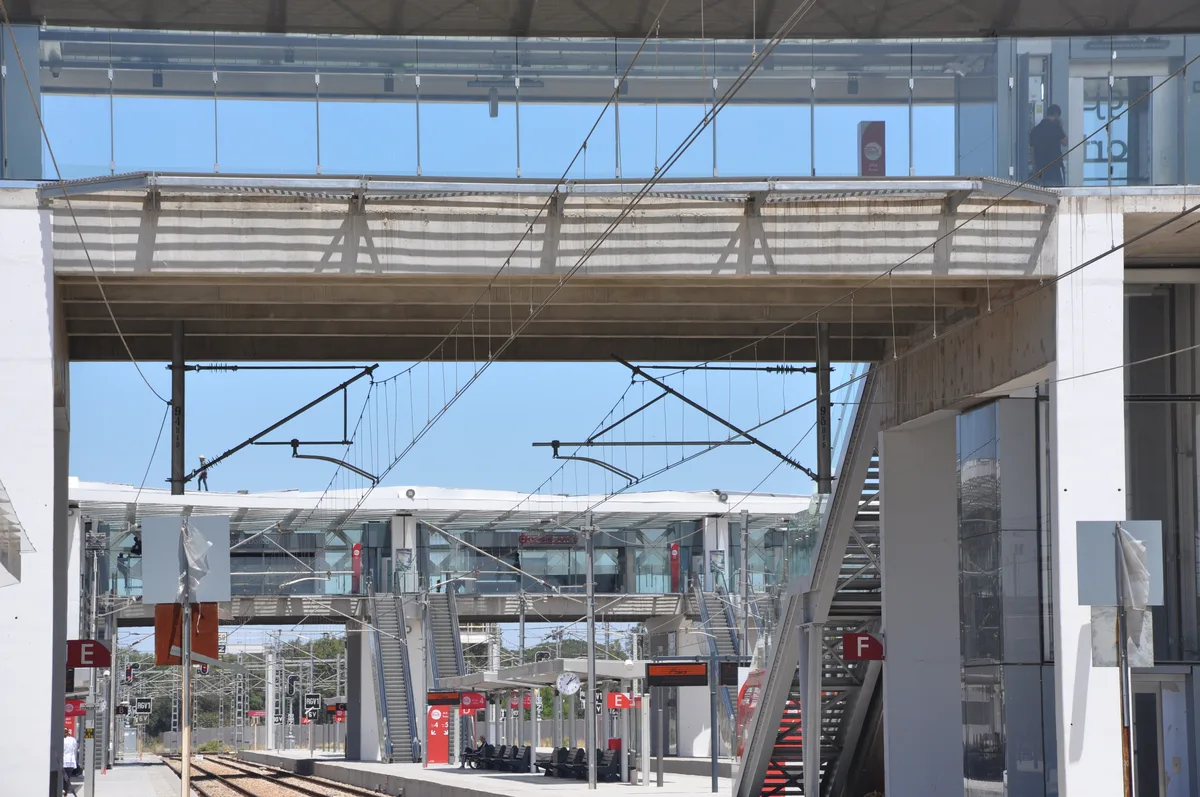
The station itself rewards the stop. Kenitra’s rebuilt station is a long white building wrapped in a geometric lattice screen, part sunshade and part landmark, fronted by a broad stone forecourt — a design that won an international architecture prize, the Prix Versailles, shortly after the line opened. Inside, the suspended walkways and escalators that cross above the platforms are part of the same design language as Rabat Agdal and Tanger Ville, a family resemblance ONCF deliberately built into the corridor’s stations. Even passengers who never leave the train feel the hinge — the acceleration out of Tangier softens, the set slows through Kenitra’s platforms, and the second, gentler railway begins.
For most tourists Kenitra is a pass-through rather than a destination, and this guide will not pretend otherwise. But treat it as infrastructure rather than scenery and it becomes valuable — the place where eastern Morocco connects to the high-speed line, where a Fes-bound journey can be shortened, and the exact point, fifty minutes out of Tangier, where Africa’s fastest railway hands its passengers back to one of its oldest.
Rabat Agdal – and Why Rabat Ville Is the Wrong Station
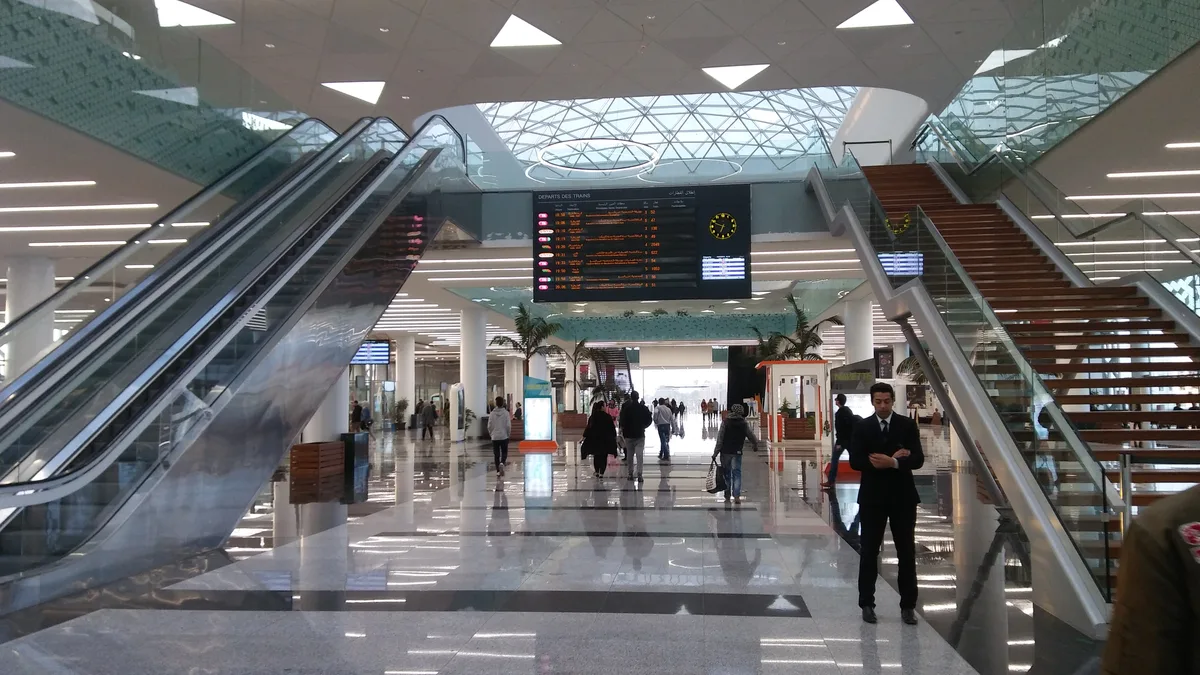
More Al Boraq journeys go wrong at Rabat than anywhere else on the line, and they go wrong for one reason — the capital has two stations, and the high-speed trains use the one most visitors have never heard of. Rabat Ville is the historic station in the city centre, the one beside the medina and the parliament avenue, the one hotel directions and older guidebooks name. Rabat Agdal is a large modern station in the Agdal district, southwest of the centre, rebuilt and vastly expanded for the high-speed launch. The Al Boraq train calls at Rabat Agdal only. A traveller who goes to Rabat Ville for a high-speed departure will watch classic and shuttle trains come and go, and no Al Boraq will ever appear.
The two stations are not interchangeable, but they are easily linked, which softens the trap. Rabat’s tramway connects the Agdal district with the city centre and passes within reach of both stations’ neighbourhoods, petit taxis cover the gap in minutes, and the classic shuttle trains between Rabat Ville and Rabat Agdal are frequent — many travellers ride one stop of the corridor on a shuttle and the rest on Al Boraq. The rule for tickets is the only part that must be exact — your Al Boraq ticket names Rabat Agdal, and that is the platform you must be standing on, in the right zone, before the platform gates close. Build the cross-town hop into your timing, especially in the capital’s rush hours.
Agdal itself is no hardship as an arrival point. It is Rabat’s modern, café-lined district, with the station’s own halls offering the corridor’s usual facilities, including the first-class lounge provision ONCF maintains at its Al Boraq stations. Arriving passengers bound for the medina, the Kasbah of the Udayas or the government quarter simply continue by tram or taxi, and the transfer is measured in minutes rather than the hour the old intercity pattern used to consume. The capital, in other words, has traded a single central station for a faster railway and a short hop — a good bargain, provided you know it exists before your departure morning rather than during it.
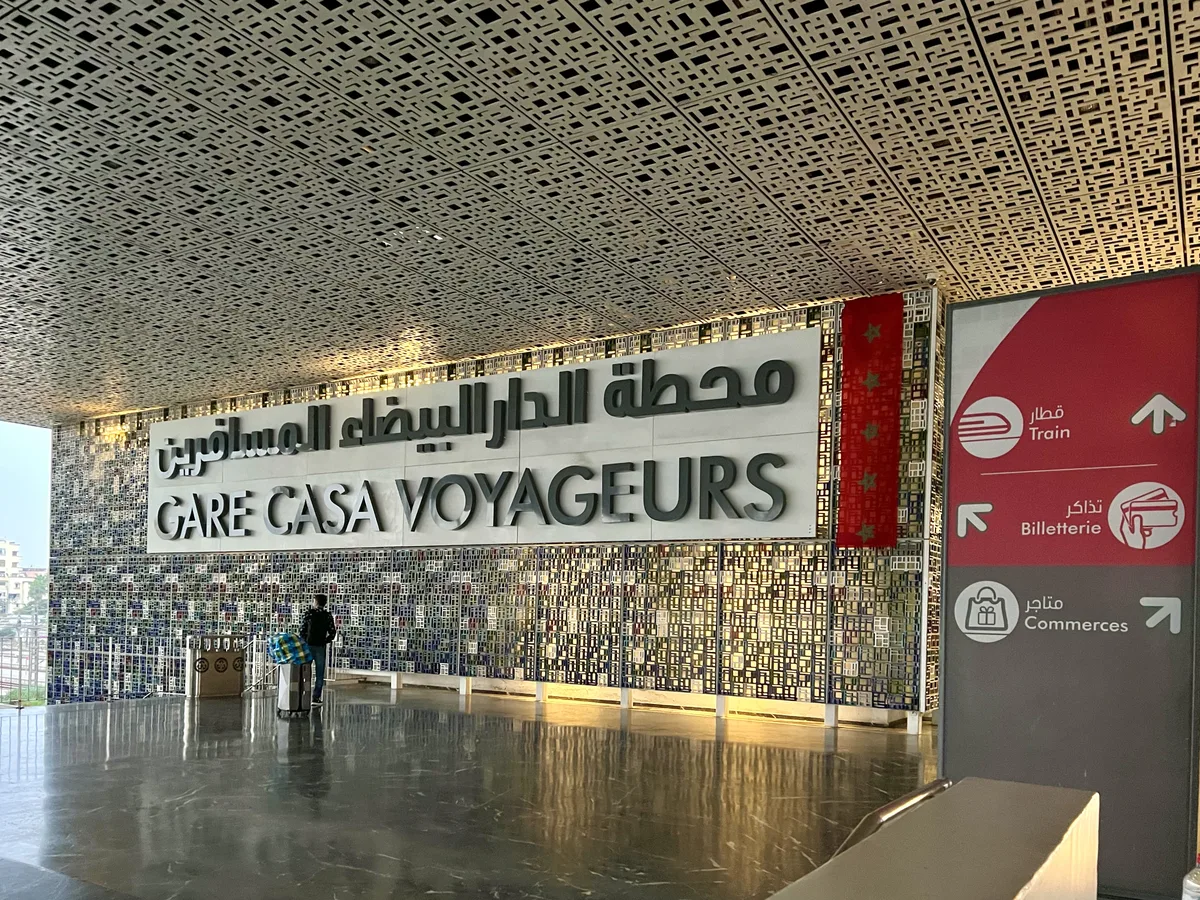
Casa Voyageurs – The Southern Terminus
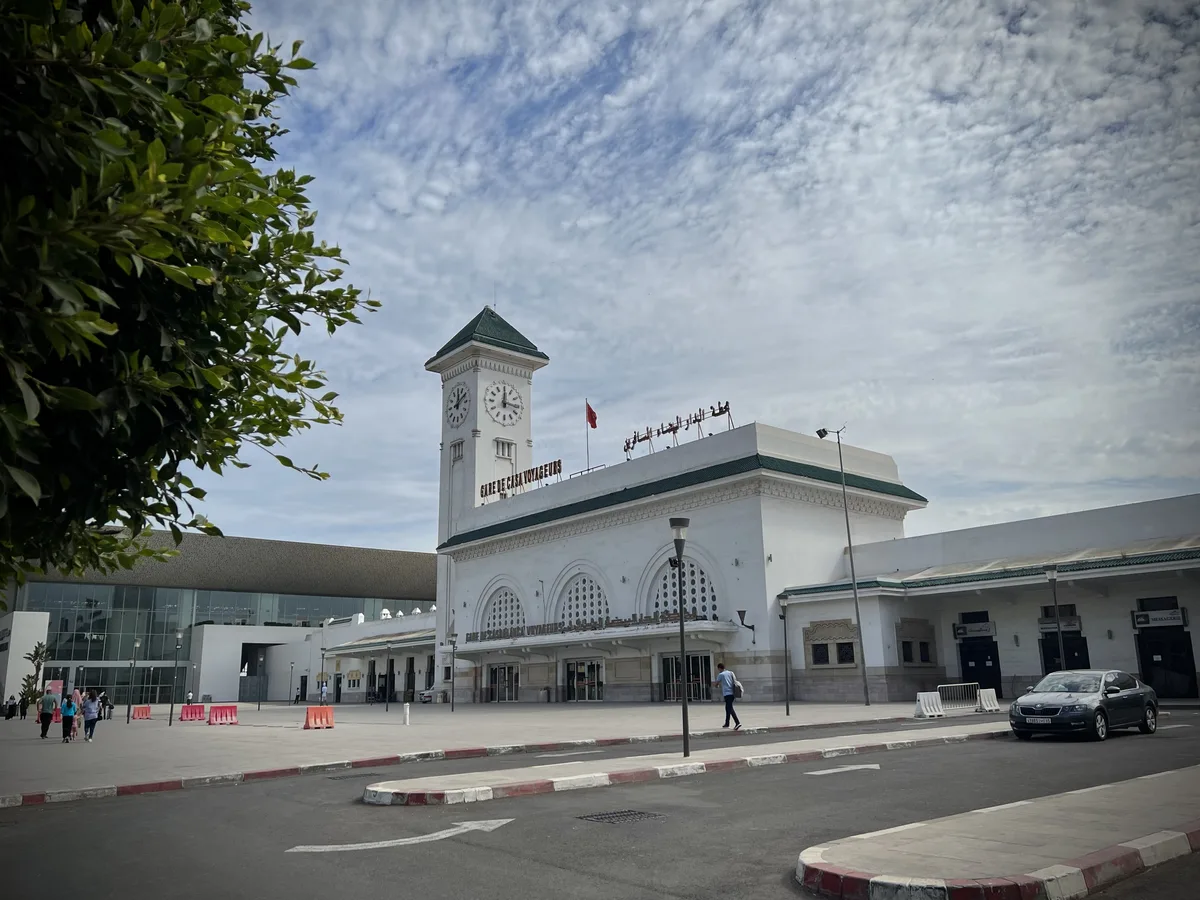
Casa Voyageurs is the end of the high-speed line and the beginning of almost everything else in Moroccan rail. It is Casablanca’s main long-distance station — a white, clock-towered building whose original 1920s fabric now fronts a greatly expanded modern station — and it is the crossroads where the Al Boraq corridor meets the classic network in full. From its platforms, classic Al Atlas trains leave south for Marrakech, east and north for Meknes and Fes, and the shuttle trains run to the airport and across the city. An arriving Al Boraq passenger with an onward journey usually does not leave the station at all; the connection is a walk between platforms inside the same complex.
The Casablanca station trap mirrors Rabat’s. The city also has Casa Port station, closer to the port and the old medina, served by shuttle and regional trains — but no Al Boraq train has ever called there. Tickets for the high-speed service name Casa Voyageurs, and the distinction matters on departure day, when a taxi driver offered the single word “station” may guess wrong. Name the station in full, allow for Casablanca’s traffic, which is the heaviest in Morocco, and remember that the platform rules described later in this guide do not bend for passengers stuck on the ring road. The tramway stops outside Casa Voyageurs as well, which makes the station a genuine city interchange rather than a rail-only island.
Inside, the rebuilt station carries the full range of corridor facilities at their largest scale — ticket halls with counters and machines, departure boards, shops and cafés, waiting areas and the first-class lounge. It is also the natural place to feel the railway’s hierarchy. The Al Boraq sets at the northern platforms are the newest machines in the building; the classic trains at the others are the network that carries the rest of the country. Most Morocco rail itineraries, including the seven-day route this site maps in its Morocco itinerary, pass through this hall at least once, changing between the two Moroccos the building contains.
The Trains – Double-Deck Euroduplex Sets
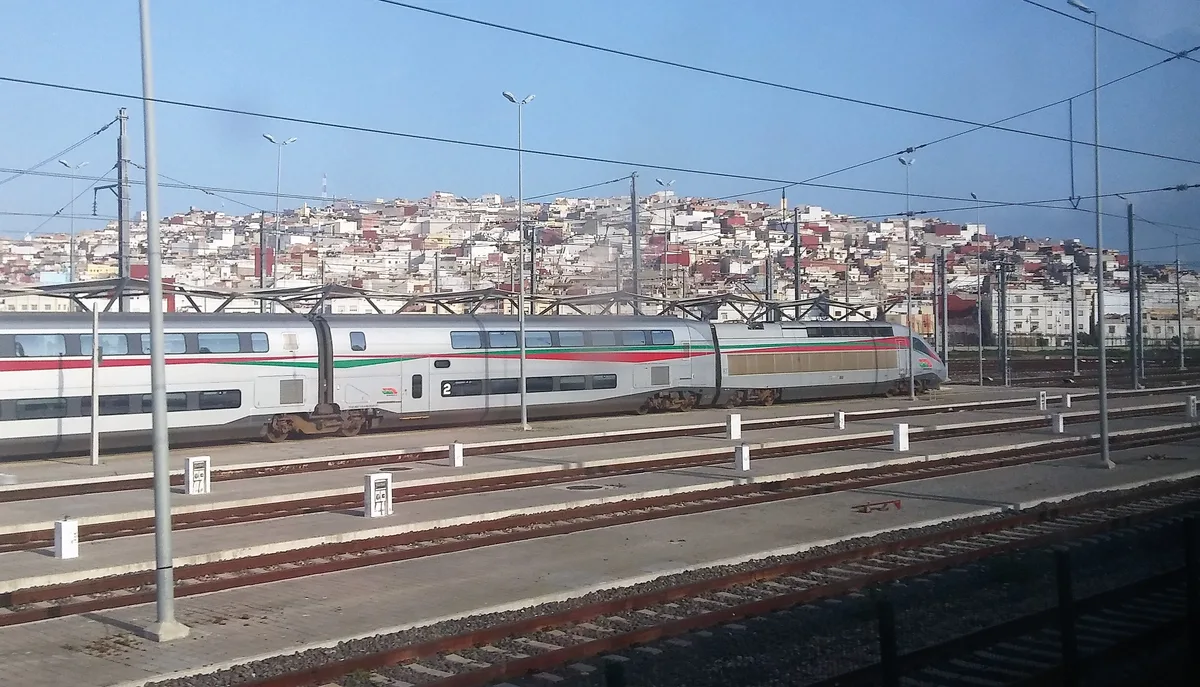
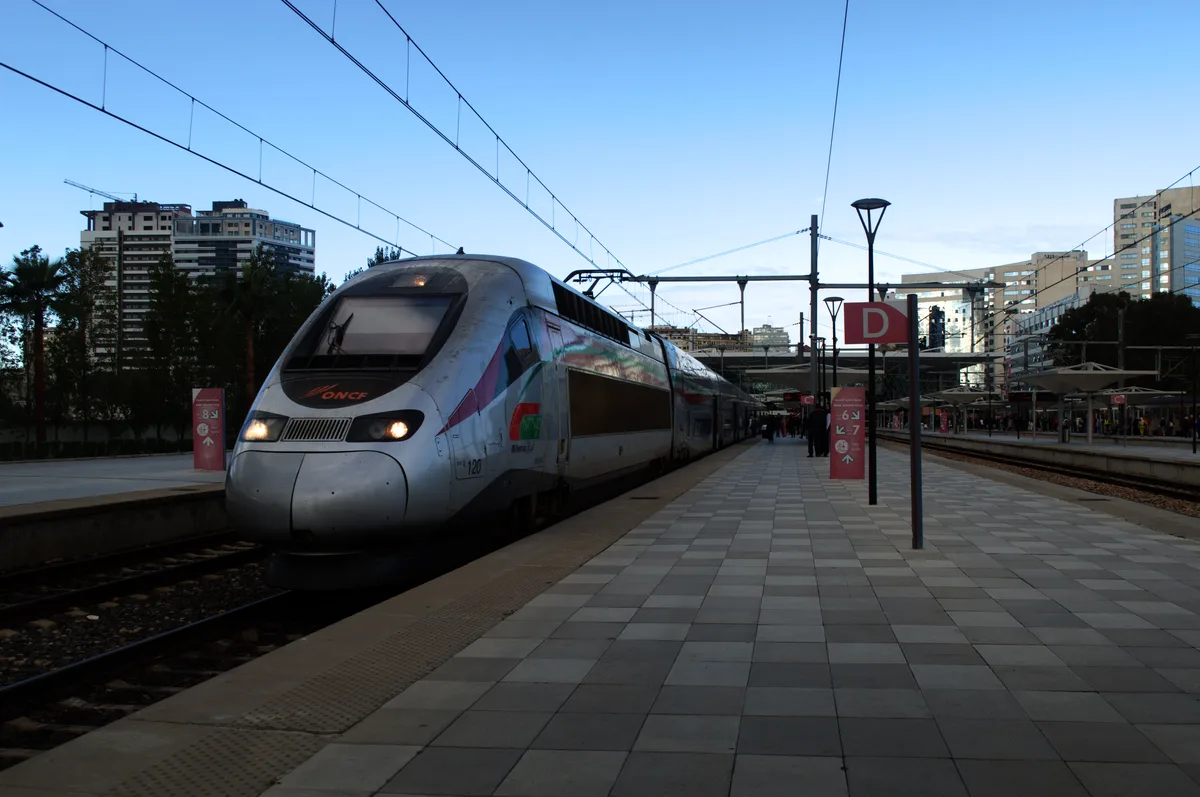
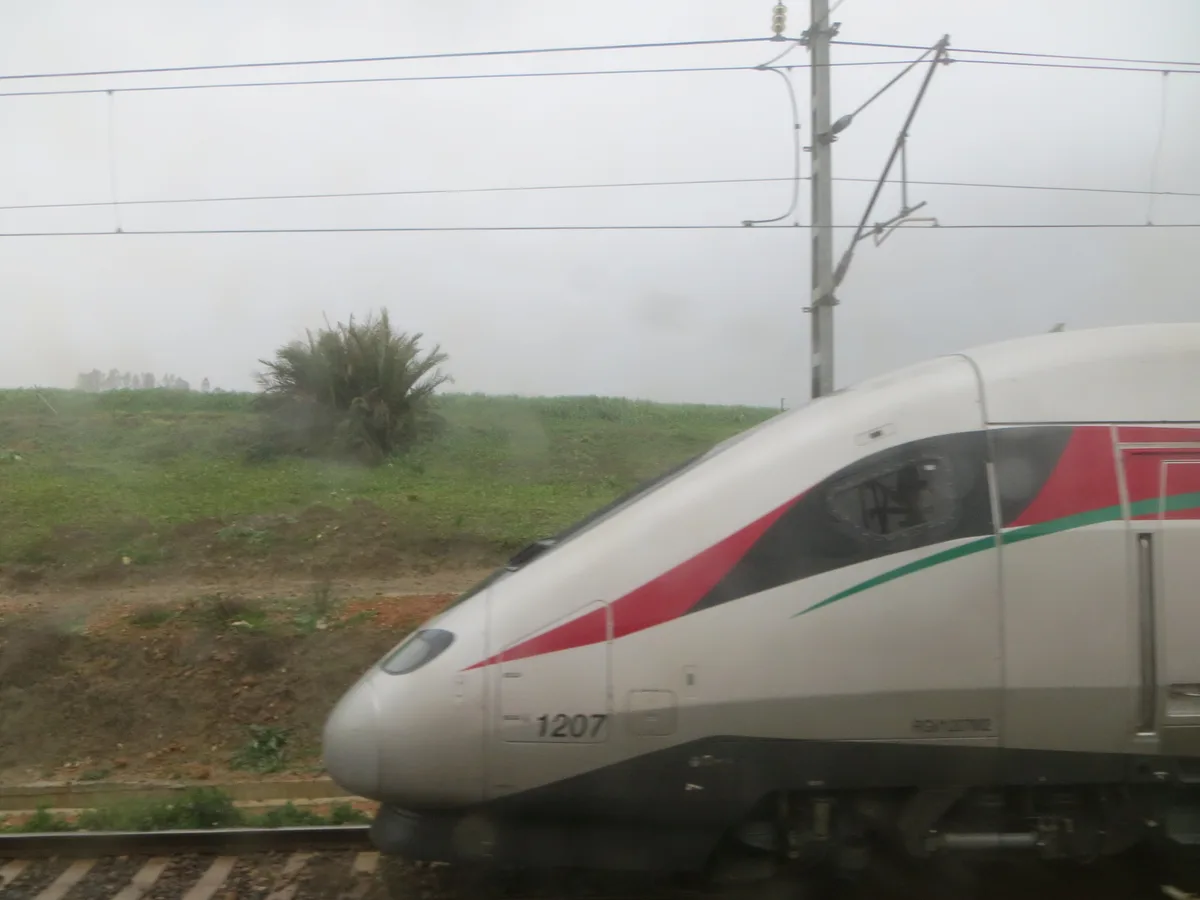
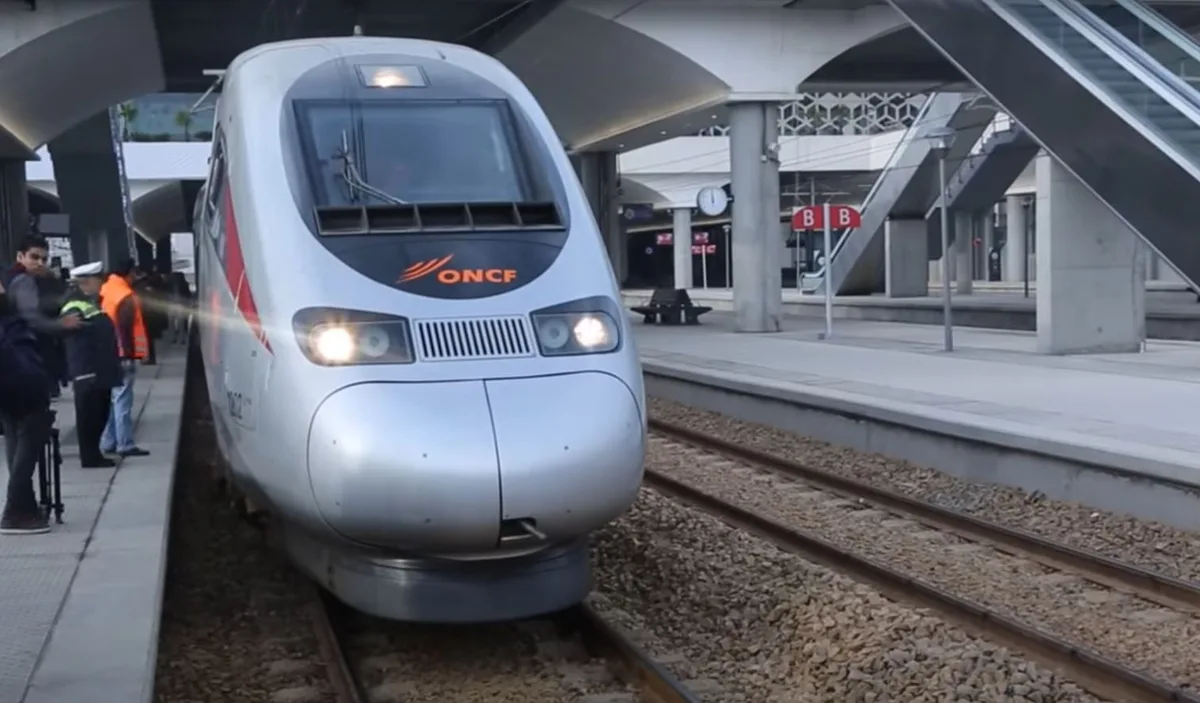
The machines themselves are French at heart. The Al Boraq train fleet consists of Alstom Euroduplex trainsets — the double-deck design Alstom builds for high-speed services in France, adapted for Morocco and designated RGV2N2 in ONCF service. Twelve sets were delivered for the launch. Each set is a fixed formation — two power cars, one at each end, and eight passenger trailers between them. Of those eight, two are first class, five are second class and one is a buffet car, giving each train a capacity of 533 passengers. Because the formation is fixed and every seat is numbered, the train you book is a known object — ONCF can tell you your carriage and your seat at the moment you buy, and both are printed on the ticket.
The double-deck layout is what a passenger notices first. Boarding stairs split at the carriage ends, with seating on an upper and a lower level, and the long windows of the upper deck give the high-speed section its drama — at 320 km/h the Gharb plain arrives as a smooth green film, villages and eucalyptus lines flicking past at the edge of vision. The sets run on two electrical systems, drawing 25 kV power on the new line and the classic line’s 3 kV supply south of Kenitra, a technical duality that mirrors the two-railways structure of the route itself. In testing before the launch, a set reached 357 km/h on the new line, which remains the benchmark the service’s publicity returns to — the service speed of 320 km/h is the figure passengers actually travel at.
For the traveller, the design facts that matter are practical. The trains are air-conditioned throughout, with luggage racks at the carriage ends and above the seats, power sockets at seats (most reliably in first class), and a buffet car in every formation selling drinks and snacks, supplemented by a trolley service. Ride quality on the high-speed line is TGV-smooth; on the classic section south of Kenitra the same set rides like a good conventional train, which is to say well, but with the sway and sound of an ordinary railway returning. A new generation of Alstom high-speed sets, the Avelia Horizon, has been ordered for the network’s expansion — eighteen trains, announced by Alstom in March 2025 — but the Euroduplex fleet is the Al Boraq of today, and the one this guide describes.
First Class or Second Class on the Al Boraq Train
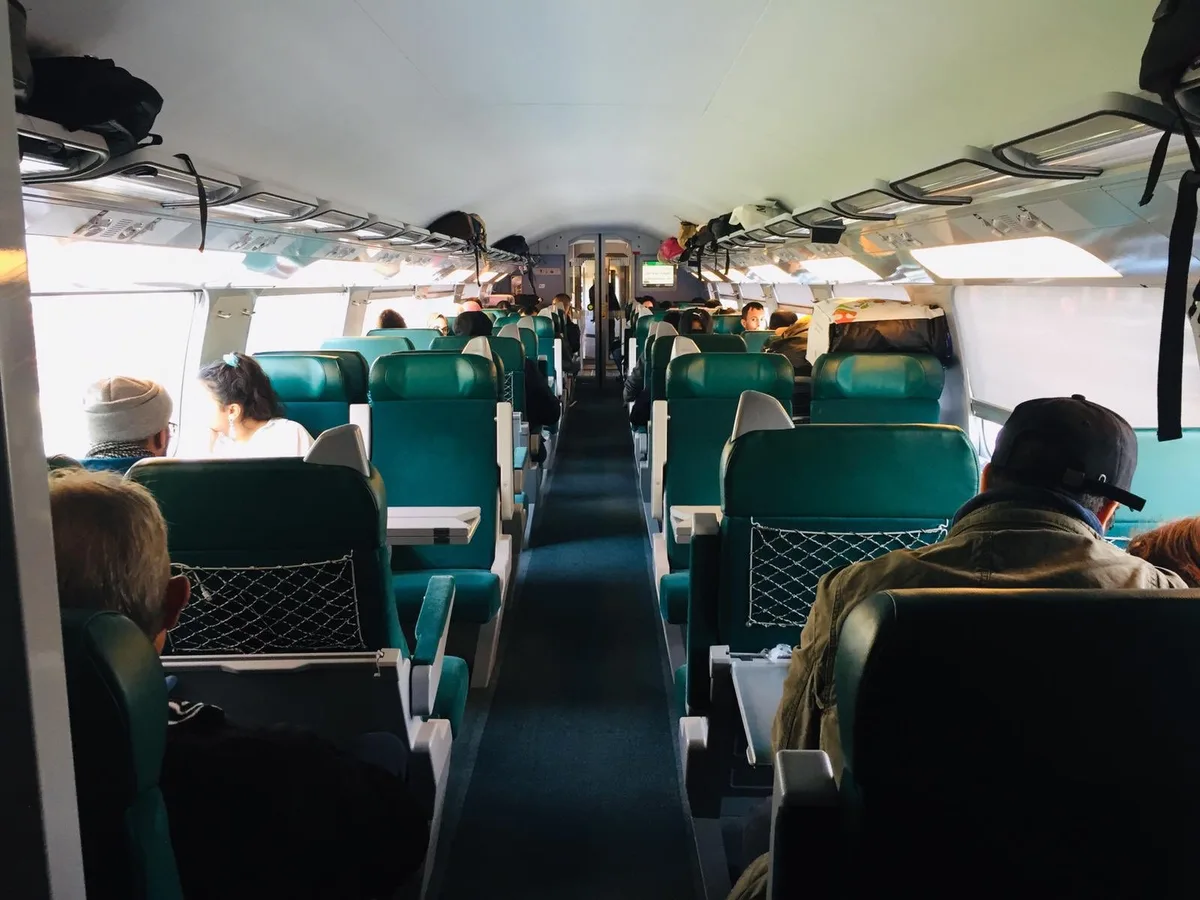
Every Al Boraq train carries the same two classes, and the choice between them is simpler than the fare system makes it look. Second class occupies five of the eight passenger cars — comfortable airline-style seating in a two-plus-two layout, in teal-trimmed cabins, with fold-down tables, overhead racks and carriage-end luggage stacks. It is not a punishment class. The seats are modern, the ride identical, the arrival time the same, and for a journey whose longest leg is two hours and ten minutes, a large share of Moroccan passengers — including most of the business travellers who fill these trains on weekday mornings — ride second without a second thought.
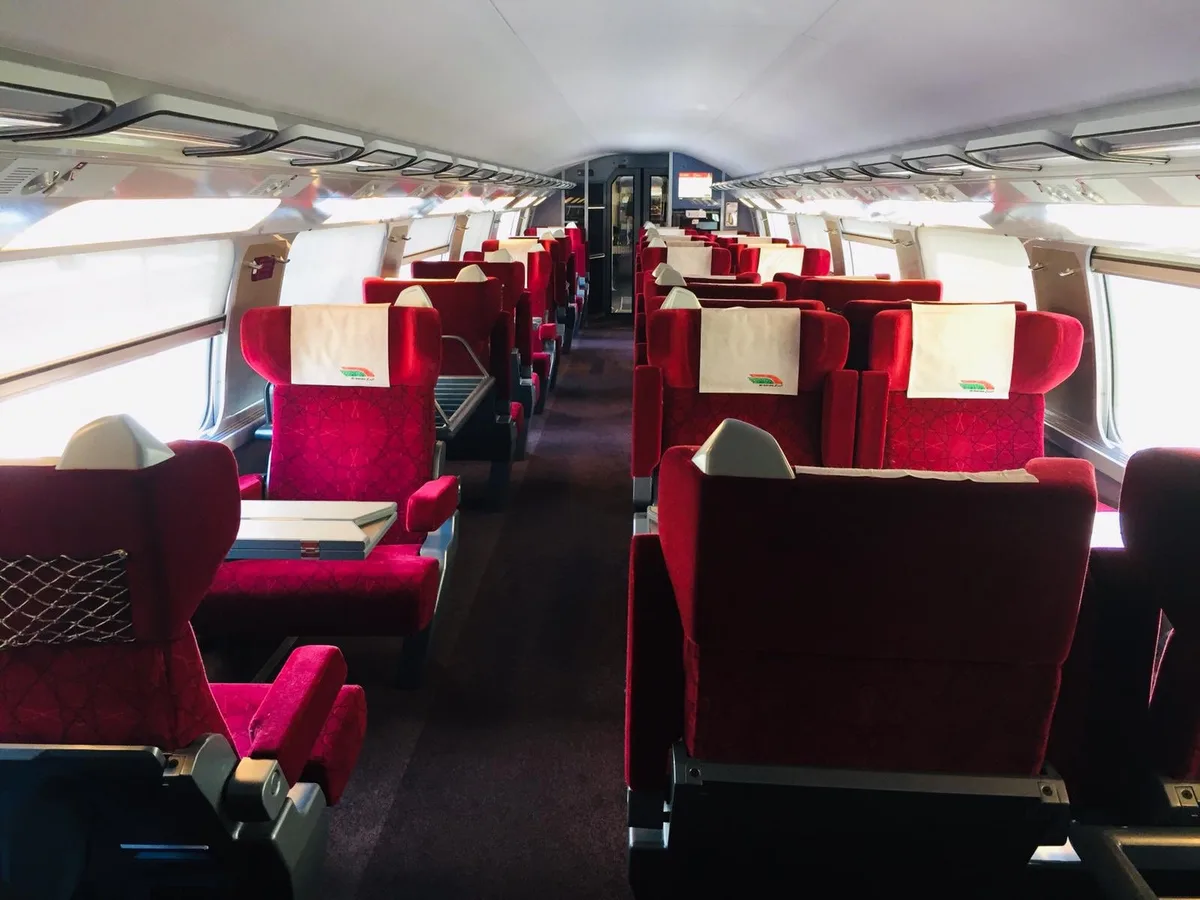
First class occupies two cars and buys space and quiet rather than speed. Seats are wider, arranged two-plus-one, upholstered in red with more legroom and more reliable access to power sockets, and the cabins are calmer simply because there are fewer people in them. The clearest first-class privilege, though, is on the ground — ONCF provides Al Boraq lounges for first-class ticket holders at the corridor stations, airport-style rooms with seating and refreshments that turn a forty-minute early arrival from a chore into a pause. On a short railway, that lounge access plus the emptier carriage is the honest content of the upgrade; there is no dining car, no at-seat meal service, and no speed difference to buy.
The deciding factors, then, are load and luggage rather than luxury. At peak times — Friday and Sunday evenings, holiday eves, the morning peak towards Casablanca — second class fills completely, and a full double-deck carriage with every rack taken is a different experience from the same carriage half empty. First class sells out less often and carries its passengers with more air around them. Travellers with large bags, travellers working on a laptop for the full two hours, and anyone whose connection at the far end is tight enough that a calm exit matters will find the premium easier to justify. Everyone else can book second with a clear conscience — and should spend the saving on arriving early enough to use the station properly, which is worth more than the wider seat.
On Board – Buffet Car, Seat Numbers and Luggage Racks
Life on board is organised around one rule — your ticket is for a specific seat, and the seat is findable if you read the ticket the way ONCF’s own booking guide, published at oncf.ma, tells you to. The ticket shows your train number, your carriage number and your seat number. Carriage numbers encode the class — on ONCF’s reservation trains, first-class carriages are numbered in the teens and second-class carriages in the twenties and thirties, the first digit always telling you the class — and the seat number pairs a compartment or section number with the seat within it, marked again on the plates above the seats themselves. Conductors check tickets on board, and sitting in a different class from the one you paid for is treated as travelling irregularly, not as a harmless upgrade attempt.
Food and drink are the buffet car’s job. Every set includes one, positioned mid-train, selling coffee, tea, cold drinks and snacks, and a trolley service works through the carriages as well. Nobody should plan a memorable meal around it — it is a railway buffet, priced and stocked accordingly — but for a two-hour journey it covers the need. The fuller Moroccan answer is to eat before boarding; all four corridor stations have cafés, and the cities at both ends do the rest. Treat onboard catering as a top-up, and bring water for the classic-line connections afterwards, where provision is thinner.
Luggage is carry-your-own, in the European high-speed manner. There is no checked baggage system on the Al Boraq train; what you bring, you lift, into the racks at the carriage ends or the overhead shelves above the seats. That arrangement rewards the traveller with one manageable case and punishes the two-suitcase expedition, especially on the upper deck, where everything travels up a narrow stair. Nothing in ONCF’s system weighs or measures your bags at the gate, but the physical reality of the train does the regulating — if you cannot lift it over your head or stack it at the carriage end, it does not belong on this service. Passengers with heavy luggage for a long Moroccan trip are often better served by first class’s emptier racks, or by the classic trains, whose ground-level boarding is kinder to big cases.
Booking Tickets – Counters, Machines, Website and App
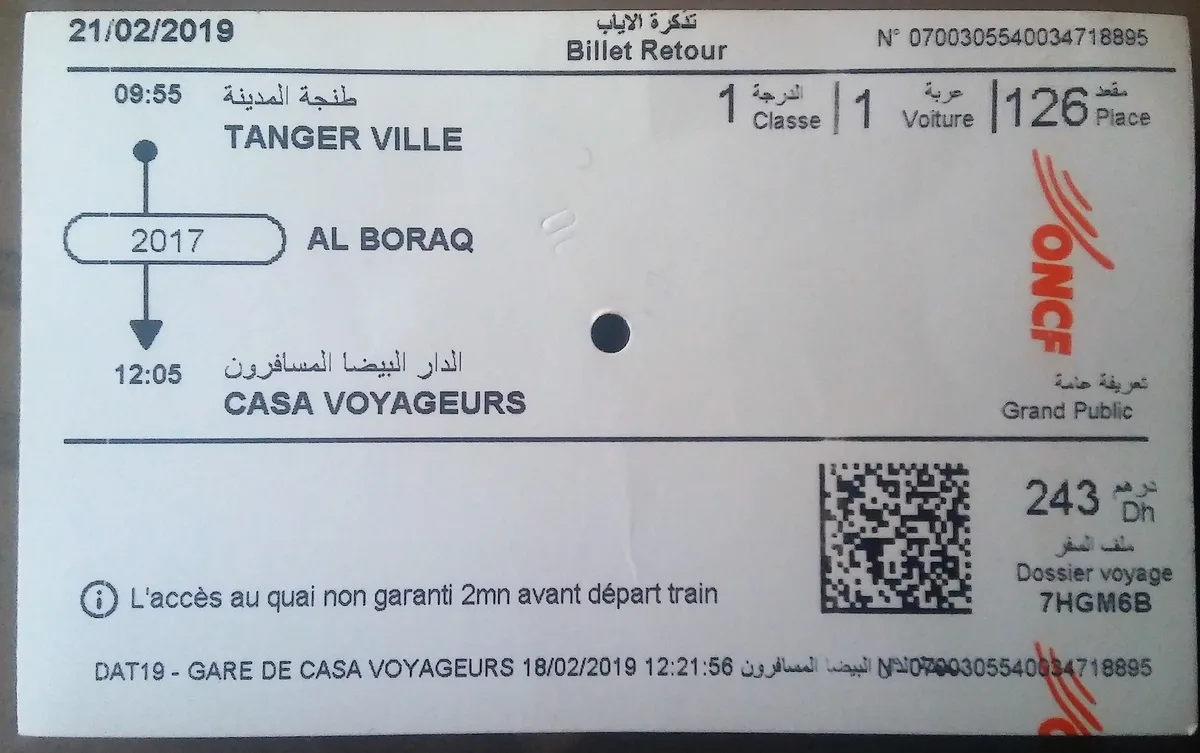
Booking an Al Boraq ticket is a reservation, not a purchase of permission to travel sometime that day. Seat reservation is compulsory in both classes, and the ticket you receive names one train, on one date, at one time, with one carriage and one seat. That single fact shapes everything about how the service is used — you choose a departure the way you choose a flight, and the railway treats a passenger on the wrong train the way an airline treats a passenger on the wrong plane. ONCF’s booking guide is blunt about the consequence: boarding a train other than the one on your ticket is an irregular situation, settled by paying the on-board fare or a fine, with no guarantee of a seat even then.
The ticket itself can be bought through four channels, all drawing on the same inventory. Station ticket counters sell them, with staff who can untangle a complicated onward journey involving classic trains or Supratours coaches. Ticket vending machines in the stations sell them faster for simple trips. The oncf-voyages.ma website sells them online, and the ONCF Voyages mobile app mirrors it — useful for booking the return leg from a café in Rabat rather than a queue in Casablanca. Sales close three minutes before a train’s departure, a cut-off that is real; a ticket cannot be bought for a train that is effectively leaving, however empty it might be.
Two practical consequences follow. First, booking ahead is not a formality on this line — ONCF itself warns that in high-traffic periods trains can fill for the whole day, and a sold-out Al Boraq is not a queue you can stand in; there is no standing ticket, no overflow carriage, no driver’s discretion. Second, the foreign-card problem deserves a honest sentence. Travellers’ reports over the years have been mixed about international cards on ONCF’s online channels — many succeed, some are refused — and the station channels accept cash and cards without that lottery. If the website declines your card, the trip is not lost; buy at the station, but buy early in the day rather than at departure minus ten minutes, and the problem reduces to an errand instead of an emergency.
How the Fares Work – Dynamic Pricing Without a Printed Price List
This guide prints no Al Boraq fares, and the omission is a feature. ONCF prices the Al Boraq train the way airlines price seats — dynamically, by train, date, class and moment of purchase — so any figure printed here would be wrong for somebody’s journey within weeks, and quietly wrong in a way that looks authoritative. Rival guides print fare tables anyway; the tables disagree with each other by wide margins, which is what happens to numbers copied from other numbers. The fare for your train exists in exactly one honest place — ONCF’s booking channels, at the moment you search — and the useful knowledge is not the figure but the system that produces it. That system, described in ONCF’s own booking guide, works as follows.
Prices rise as departure approaches. The earliest buyers pay the least for any given train, and the fare climbs in steps as the train fills and the date nears — off-peak trains bought well ahead are the railway’s cheapest seats, and peak trains bought on the day are its dearest. Layered over the base price are two flexibility families. Semi-Flex fares are the cheaper, stiffer option — exchangeable once, and refundable only in part. Flex fares cost more — ONCF sets them above the available fare — and buy real freedom: multiple exchanges and a full refund up to the day before travel, with a charge applying only to same-day refunds. A traveller with fixed plans should take Semi-Flex and pocket the difference; a traveller chaining a ferry, a flight or a desert tour at the far end should price the Flex version as insurance, because the events that wreck Moroccan itineraries rarely announce themselves a day ahead.
Around those families sit ONCF’s standing discounts, published in the same booking guide — reductions for students holding the student rail card, for travellers under thirty, for seniors over sixty, and for groups, each with its own conditions. Children are the corridor’s special case — on Al Boraq services ONCF applies a single fixed child fare in each class whatever the journey, rather than a percentage of the adult price, which makes family arithmetic on this line unusually simple; the current amounts live in the same ONCF channels as every other figure. The through-line of the whole system is that the price of an Al Boraq seat is a decision, not a datum — choose the train, the class, the flexibility and the purchase moment, and the system prices your choices. Do those four things deliberately and the train is good value by any European comparison; do them carelessly at a holiday peak and it will feel expensive, in dirhams, for reasons that were visible in advance.
Reading the Timetable – Train Numbers, Stops and Service Patterns
Since no printed timetable in a guide can be trusted for long, the skill that matters is reading ONCF’s live one well. A search on the booking site or the app, for a station pair and a date, returns the day’s Al Boraq departures with the things you actually need — departure and arrival times, the train number, the journey time, the classes still available and the current fare in each. The train number is the anchor of the whole system; it is printed on your ticket, shown on the station departure boards, and announced in the halls, and matching it is how you know the train at the platform is yours. Journey times between the same pair of stations vary slightly by departure, because not every service keeps identical timings — the end-to-end figure of about two hours and ten minutes is the pattern, not a promise attached to every train number.
The service pattern itself is built for day-return travel. Departures run from early morning to evening in both directions, at regular-interval spacing through the day, thickening around the peaks when commuters and business travellers move between the capital and Casablanca. Rather than printing a frequency that will drift, this guide states the pattern that matters for planning — the first trains of the day are early enough to cross the corridor for a morning meeting or a same-day connection, and the last trains of the evening are late enough to return after a full day, but the exact first and last departures are seasonal and belong to ONCF’s current timetable, not to this page. Check them for your date, screenshot the result, and plan the station arrival from it, not from memory.
Intermediate stops deserve one careful look. Every Al Boraq train calls at Kenitra and Rabat Agdal between the termini — the stopping pattern is uniform along the corridor — but travellers combining Al Boraq with classic services will see those trains stopping at additional stations such as Salé and Mohammedia on the southern section, and at Rabat Ville rather than Agdal. When a journey planner offers a routing, read its station names literally. In this corridor, the difference between a good connection and a stranded hour is rarely the train; it is a station name skimmed too fast — Agdal for Ville, Voyageurs for Port, Ville for Med.
At the Station – Boarding Ritual, Platform Zones and Timing
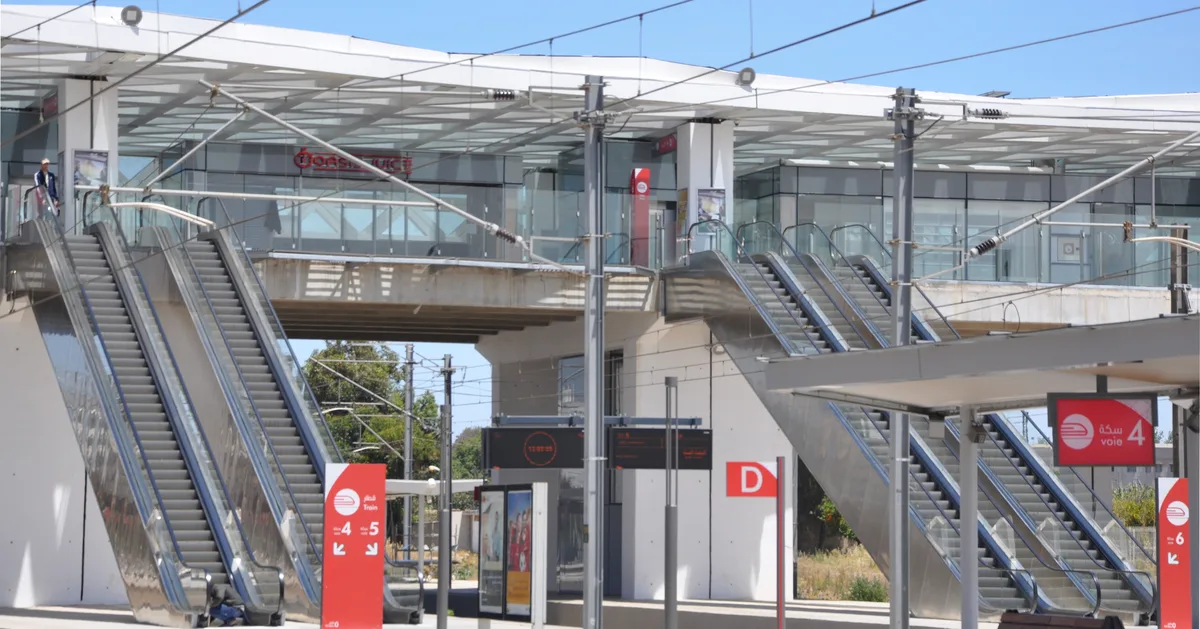
Boarding an Al Boraq train follows a ritual borrowed from airports, and ONCF’s booking guide states its timings precisely. Platform access opens forty minutes before departure. A passenger holding a ticket should be at the station at least fifteen minutes before the train leaves, positioned on the platform in the correct zone. And platform access closes two minutes before departure — after which, in ONCF’s words and in the warning printed on the ticket itself, access is not guaranteed even if the train is still standing in front of you. These are not decorative numbers. The gates do close, the staff do enforce them, and the two-minute rule is the most common cause of missed Al Boraq departures among visitors who assumed a railway would behave like a bus stop.
The zones are the system’s kindness. Because every seat is reserved and every train is the same formation, the station can tell you in advance where your carriage will stop — platforms are divided into lettered zones, the departure displays and a train diagram show which zone serves which carriage numbers, and you simply wait in your zone with your bag at your feet. When the set glides in, your carriage door arrives in front of you, the carriage number is shown beside the door, and boarding takes a minute rather than a scramble. First-class carriages sit in the teens, second-class in the twenties and thirties, so the carriage number on the ticket and the zone signs together route you without staff help. Travellers used to European platforms will find the whole thing familiar; travellers used to classic Moroccan stations will find it startlingly calm.
The honest advice built on these rules is to arrive earlier than the minimum. Fifteen minutes is ONCF’s floor for a ticket-holder who knows the station; a first-timer at Casa Voyageurs at the evening peak, or at Tanger Ville straight off a ferry, should think in terms of half an hour. Buy any onward classic or coach tickets in the same visit if the day’s plan depends on them, use the lounge if your class provides one, and be standing in your zone when the train arrives rather than crossing the footbridge as it does. The Al Boraq train keeps airline discipline because it sells airline-style reservations; treat the departure with the same respect and it is the easiest boarding in Moroccan transport.
Onward from the Corridor – Marrakech, Fes, the Airport and the Coach Network
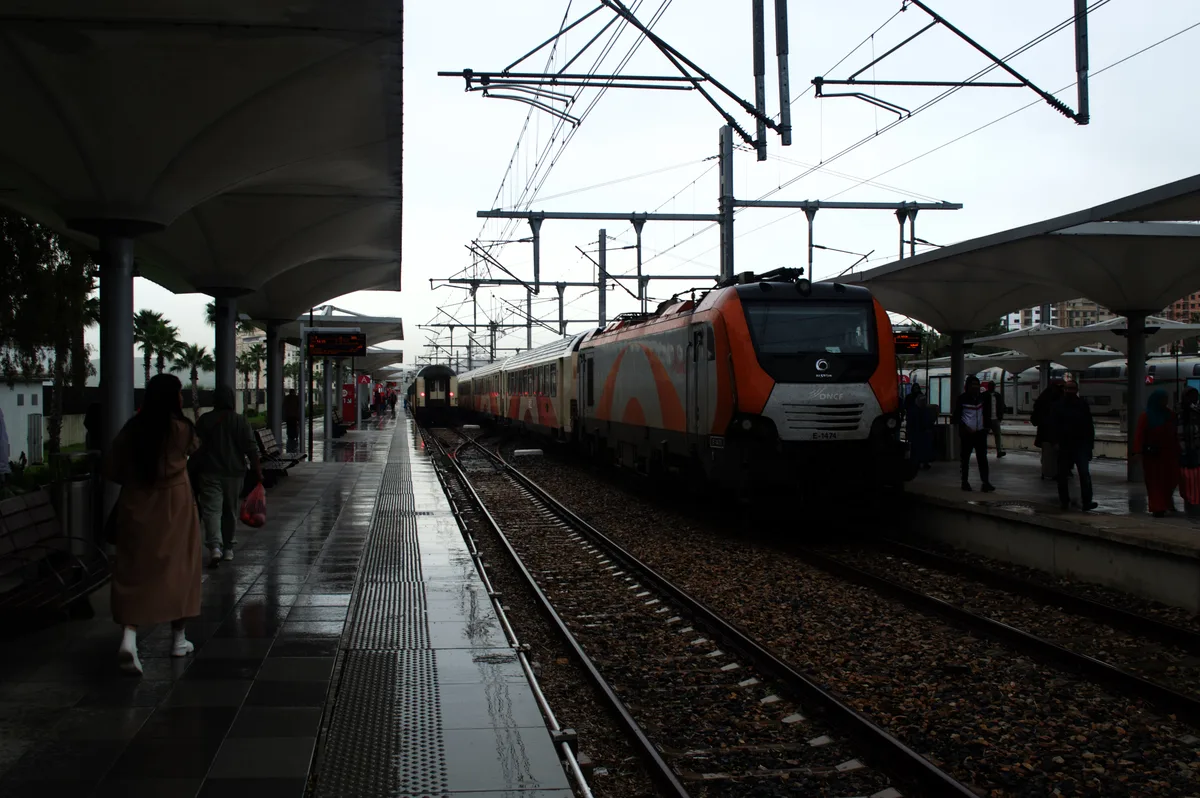
The Al Boraq corridor is a spine, not a whole skeleton, and most Moroccan journeys of any length combine it with the classic network. The combinations happen at three stations. At Casa Voyageurs, the great majority of onward travel begins — classic Al Atlas trains run south to Marrakech in roughly three hours, and north-east through Rabat and Kenitra towards Meknes and Fes, while the fast shuttle trains link the station to Mohammed V Airport, Casablanca’s international gateway, making a same-day chain of flight, shuttle and high-speed train a realistic way to enter or leave the country. At Kenitra, as described earlier, the eastern classic line offers the shortcut towards Fes for Tangier arrivals. At Tanger Ville, classic services still cover the routes the high-speed line ignores, including the traditional overnight train towards Marrakech — confirm its current operation in ONCF’s timetable before planning around it, as classic services change more quietly than the flagship.
Where the rails end entirely, ONCF’s own coach arm begins. Supratours coaches are sold through the same booking channels as the trains and leave from rail stations or adjoining terminals in towns the tracks never reached — the classic pattern is the train to Marrakech and the Supratours coach onwards to Essaouira or Agadir, on a through ticket bought in one transaction. Chefchaouen, the blue town every itinerary wants, has no station at all and is reached by coach or grand taxi from Tangier or Tetouan. The traveller’s mental model should be a single national system with three speeds — high-speed rail in the north, classic rail through the middle, coaches where the mountains and the coast defeat the engineers — rather than three unrelated companies.
One discipline governs all of it — connection time. A same-station change between an Al Boraq arrival and a classic departure is a platform walk, but timetables are written by optimists and classic trains run on a railway shared with freight. Thirty minutes is the minimum sensible buffer at Casa Voyageurs for a connection that matters, and an hour is wiser when the onward leg is the day’s last train or a coach with one departure. The booking system will sell tighter connections than a cautious traveller should accept; the choice of buffer, like the choice of fare family, is one of the decisions the system leaves to you.
How Al Boraq Changes a Morocco Itinerary
Speed is only interesting for what it does to the days around it, and the Al Boraq train quietly rewrites the standard Morocco itinerary in four ways. First, it makes Tangier a front door instead of a detour. A traveller can land in Spain, cross the strait on a morning ferry from Tarifa, step off the boat at Tangier’s city port, and be in Rabat for lunch or Casablanca by mid-afternoon — no night stop in Tangier required unless Tangier itself is the pleasure, which it often is. The north of Morocco stops being a region you pass through on the way south and becomes a region connected, city by city, to everything below it.
Second, it makes day trips of journeys that used to be relocations. Rabat from Tangier at about an hour and twenty minutes, or from Casablanca at about an hour, is a returnable distance — the capital’s museums, kasbah and medina can be a day out from a base at either end of the line, with an evening train home. Casablanca and Rabat can even share a trip’s sleeping arrangements, the traveller sleeping in one and sightseeing in the other. Third, it changes bases. A classic seven-day Morocco itinerary runs Marrakech to Fes through the middle of the country; the high-speed line adds a northern variant in which Tangier, Rabat and Casablanca are covered in quick succession at the start or end, banking the long classic legs — Marrakech, Fes, the desert road — for the days the fast train cannot help with.
Fourth, and least obviously, it changes how delays and choices feel. Because departures are frequent, reserved and quick, a missed morning train is an inconvenience rather than a lost day — the day-return pattern absorbs mistakes that the old twice-a-day railway punished. The planning style the line rewards is a loose grip on the corridor days and a firm grip on everything beyond it — book the desert, the mountains and the classic legs carefully, and let Tangier, Kenitra, Rabat and Casablanca flow at the speed the railway offers. That is the real legacy of the service for visitors; the 320 km/h is the mechanism, but the itinerary freedom is the product.
The Honest Limits – What This Train Does Not Do
A guide that only praises a railway is an advertisement, so here is the other side of the ledger. The Al Boraq train serves four stations in one corner of one country. South of Casablanca there is no high-speed rail, and there is none towards Fes, the Middle Atlas, the desert or the south — journeys there remain classic-rail journeys of three to seven hours, or road journeys, exactly as they were before 2018. The two-part structure of the line means the southern half of every through journey runs at classic speeds. And the reservation system that makes the service orderly also makes it rigid — no ticket, no travel; wrong train, irregular passenger; sold out, wait for the next departure or for tomorrow.
The future is officially ambitious but must be described as plans, not facts. Morocco’s stated programme extends high-speed track southwards — first completing dedicated line towards Casablanca, then reaching Marrakech — in the framework of the 2030 World Cup that Morocco will co-host, and ONCF has ordered eighteen next-generation Alstom Avelia Horizon trainsets, announced in March 2025, to serve the enlarged network. Construction programmes of this size move at their own pace, dates in press releases are aspirations, and no traveller planning a trip for next season should assume a single kilometre of new high-speed line. Plan on the corridor that exists — Tangier, Kenitra, Rabat Agdal, Casa Voyageurs — and treat anything beyond it as a bonus that a future edition of this guide will describe when the trains actually run.
Finally, the small print of daily operation. The timetable changes between seasons and around holidays, and the heaviest demand of the year falls on the religious festivals and the summer peak, when Moroccans themselves travel in millions and the corridor’s trains fill days ahead. Onboard Wi-Fi has been advertised at various times but should be treated as a bonus if it appears, never as infrastructure to plan work around. And the fares, as established, belong to ONCF’s system alone. None of these limits is hidden by the operator; they are simply the parts of the story that do not fit on a poster. The Al Boraq train remains, within them, the best way to move through northern Morocco ever built — it just moves through northern Morocco only, and knowing exactly where its world ends is part of using it well.
Frequently Asked Questions
Does the Al Boraq train go to Marrakech?
No. The service runs between Tangier and Casablanca only, calling at Kenitra and Rabat Agdal. Marrakech is reached from Casa Voyageurs by classic Al Atlas train in roughly three hours, or from Tangier by the classic network — high-speed track towards Marrakech is part of Morocco’s announced expansion programme, not a service you can book today.
How long does the Al Boraq train take from Tangier to Casablanca?
About two hours and ten minutes for the full journey, against four hours and forty-five minutes before the service opened in 2018. Tangier to Kenitra takes roughly fifty minutes and Tangier to Rabat Agdal about an hour and twenty. Exact times vary slightly by departure, so treat these as the pattern and read your train’s times in ONCF’s booking channels.
Do I need to book Al Boraq tickets in advance?
You need a reservation for a specific train — every seat is numbered and tickets are valid only for the train named on them. You can buy at the station on the day if seats remain, up to three minutes before departure, but ONCF warns that in busy periods trains can sell out for the whole day. Booking ahead through the website, the app, a station counter or a ticket machine is the safe habit, and it is also cheaper, because fares rise as departure approaches.
Which Rabat station does the Al Boraq train use?
Rabat Agdal, in the modern Agdal district — not Rabat Ville in the city centre. The two are linked by tram, taxi and frequent classic shuttle trains, but your Al Boraq ticket is valid from Agdal only, so build the hop into your timing.
Which Casablanca station does it use?
Casa Voyageurs, the main long-distance station with the clock tower — not Casa Port. Onward classic trains to Marrakech and Fes and the airport shuttle trains all use Casa Voyageurs too, so most connections are a walk within the same station.
Can I travel from the Tangier ferry ports to the station easily?
From the city port, where the Tarifa ferries dock, yes — Tanger Ville station is a short taxi ride or walk away, and a morning ferry to an Al Boraq departure is a standard connection. From Tanger Med port, used by the Algeciras ferries, you first need a road transfer into Tangier, as that port has no station.
Is first class worth it on the Al Boraq train?
It buys wider seats in a two-plus-one layout, a quieter carriage, more reliable power sockets and access to ONCF’s first-class lounges at the corridor stations — not more speed. On a two-hour journey it is a comfort decision; at peak times, when second class fills completely, it is also a space decision.
Why does this guide not list Al Boraq fares?
Because ONCF prices seats dynamically by train, date, class and moment of purchase, so any printed figure would be wrong for somebody’s journey within weeks. The fare for your train exists in exactly one honest place — ONCF’s own booking channels at the moment you search; this guide explains the system that produces the number instead of copying numbers that will not survive the season.