Most first trips to Morocco go wrong in the same quiet way. Not a scam, not a disaster — a map problem. Someone pins Marrakech, Fes, Chefchaouen, the Sahara and the beach onto one week, joins the pins with straight lines, and spends the holiday watching the country slide past a minibus window. Morocco looks small. It isn’t, not once mountains get involved.
Plan by geography and it falls into place: a medina or two, one mountain crossing, a night in real dunes, then the coast or the north if days allow. That is the line this morocco travel guide follows. And because prices, fares and visa fees go stale fast here — half the web copies them from the other half — where a number can change, this guide names the official source that settles it and leaves the number there.
At a Glance
| Question | Short answer |
|---|---|
| How long? | 7 days for the classic line; 10 to add the coast or the north |
| The classic line | Marrakech → High Atlas → Aït Benhaddou → Dades/Todra → Merzouga (Erg Chebbi) → Fes |
| Best all-round months | March–May, September–November; desert kindest roughly October–April |
| Currency | Moroccan dirham (MAD); cash runs medinas, taxis, small shops |
| Trains | ONCF. Al Boraq high-speed covers Tangier–Rabat–Casablanca only — never Marrakech, never Fes |
| Desert, honestly | Erg Chebbi and Erg Chigaga are true dune seas. Agafay is stony desert — fine, but not the Sahara |
| Visa | Check your nationality on one site only: official Accès Maroc |
| Heritage | 9 UNESCO properties, all cultural — the Fes and Marrakech medinas among them |
First, the Shape of the Country
Morocco fills Africa’s north-western corner, close enough to Spain for the two coasts to face each other across the Strait of Gibraltar — and inside it sit four bands of country a first trip has to negotiate between. North and centre hold the cities: Tangier and Chefchaouen in the Rif, Fes and Meknes inland, Rabat and Casablanca on the Atlantic side. Across the middle runs the Atlas, the High Atlas being the wall that counts; south and east the land dries in stages — gorges, palm valleys, then sand sea; along the west edge, the Atlantic. So every classic route is a mountain crossing with a desert attached, drive times stretch past what the kilometres promise, and there is no single “Morocco weather”. Keep those facts in view and everything below is detail.
Where to Go
Marrakech: Start Here, Slowly
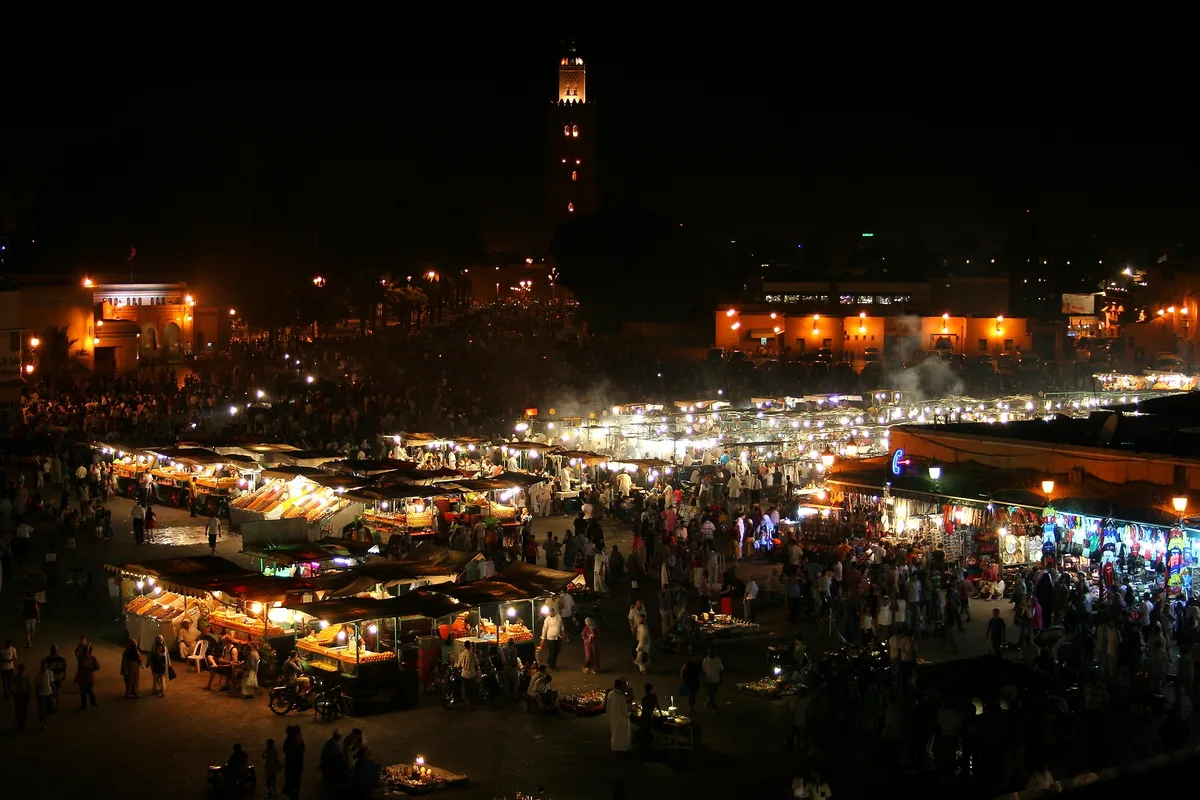
The medina (UNESCO, 1985) turns around Jemaa el-Fna, ordinary at noon and completely possessed by dusk — drum circles, grill smoke, a thousand dinners cooking in the open. The Koutoubia minaret watches over it; the mosque itself, like almost every mosque in Morocco, is for worshippers, so admire it from the gardens. Then Bahia Palace, the Saadian Tombs, ruined El Badi with its resident storks, the Ben Youssef Madrasa. Two full days; three with the Jardin Majorelle, whose tickets are sold online only, through the garden’s own site — the queue of people learning that at the gate is a daily sight. Waste your first evening on purpose: sit above the square with a mint tea and watch the noise reorganise itself into a place.
Fes: The One That Stays With You
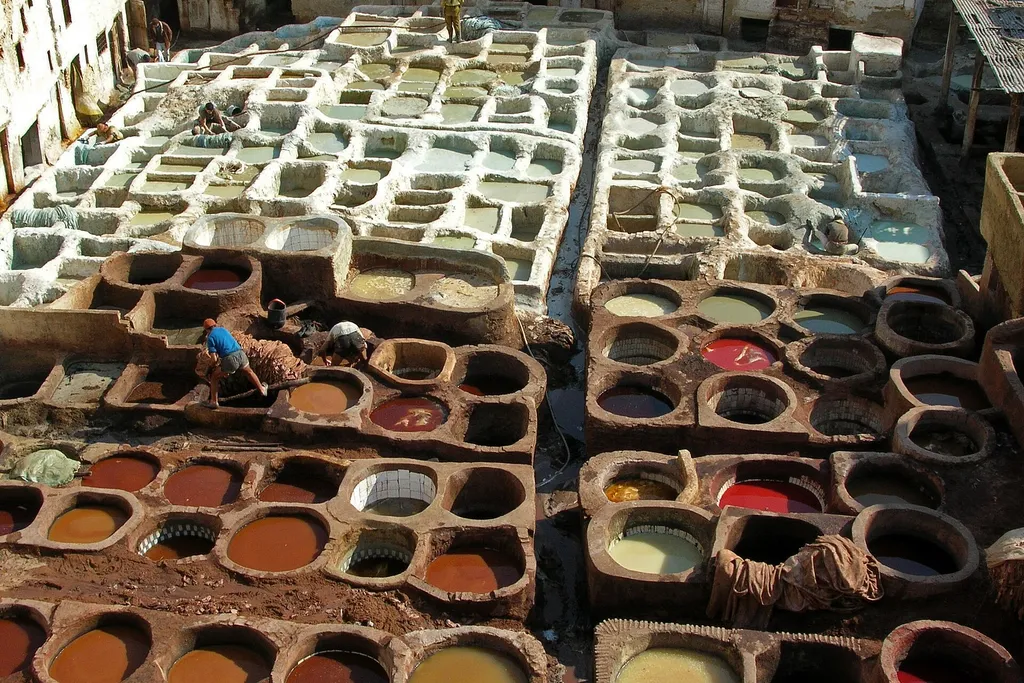
Older, denser, harder work than Marrakech — and the city travellers talk about longest afterwards. Fes el-Bali (UNESCO, 1981) is a car-free medieval medina of some nine thousand alleys, where loads move by donkey and the cry of “balak!” — watch out — is the traffic system. Bou Inania Madrasa, the Nejjarine Museum, Al-Qarawiyyin (founded in the 9th century, seen from its doorways by non-Muslim visitors), the Chouara Tanneries from a shop terrace, early, before the heat gets into the dye pits. Hire an official guide for half a day at least; in Fes a map is a work of fiction. Two days minimum — and Fes is where the desert route ends, saving the joyless haul back across the country.
Chefchaouen and the North: A Detour, Not a Stop
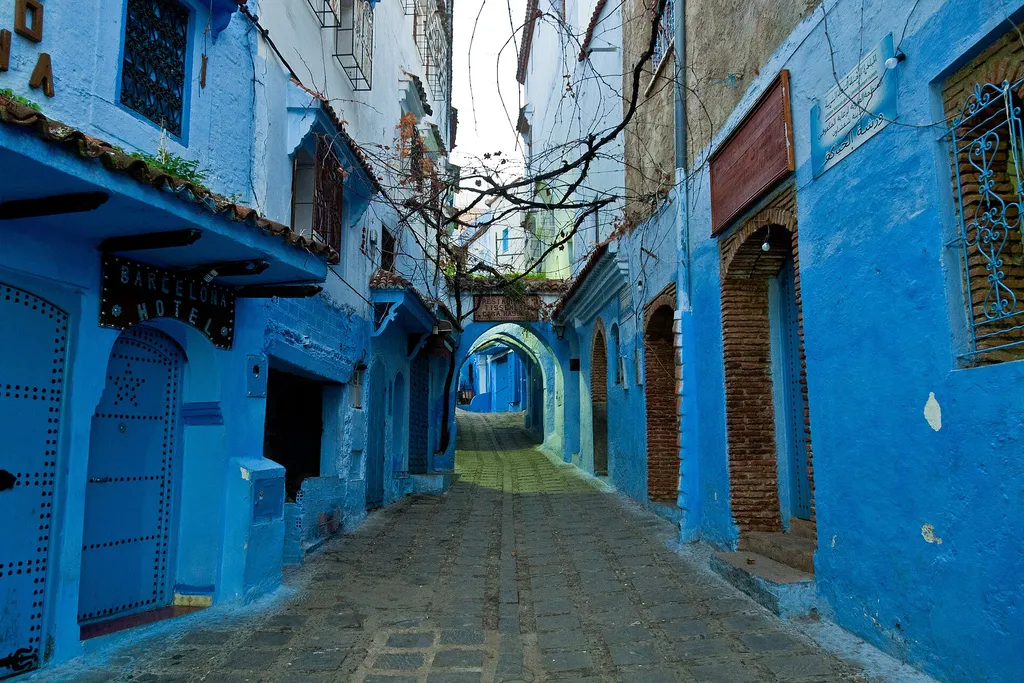
Chefchaouen’s blue lanes connect to almost nothing. The town is a proper detour into the Rif, so stop pretending it’s on the way and build a northern loop instead: Tangier, Tetouan, Chefchaouen, two nights in the blue town itself. Tangier pulls its weight — kasbah, medina, and one useful trick: it tops the Al Boraq line, so arriving or leaving via Tangier is genuinely efficient. Seven days forces a choice: desert line or northern loop. Bolting both onto one week is the classic Morocco mistake, and plenty of tour companies will sell it to you anyway.
The Atlas and the Kasbah Road
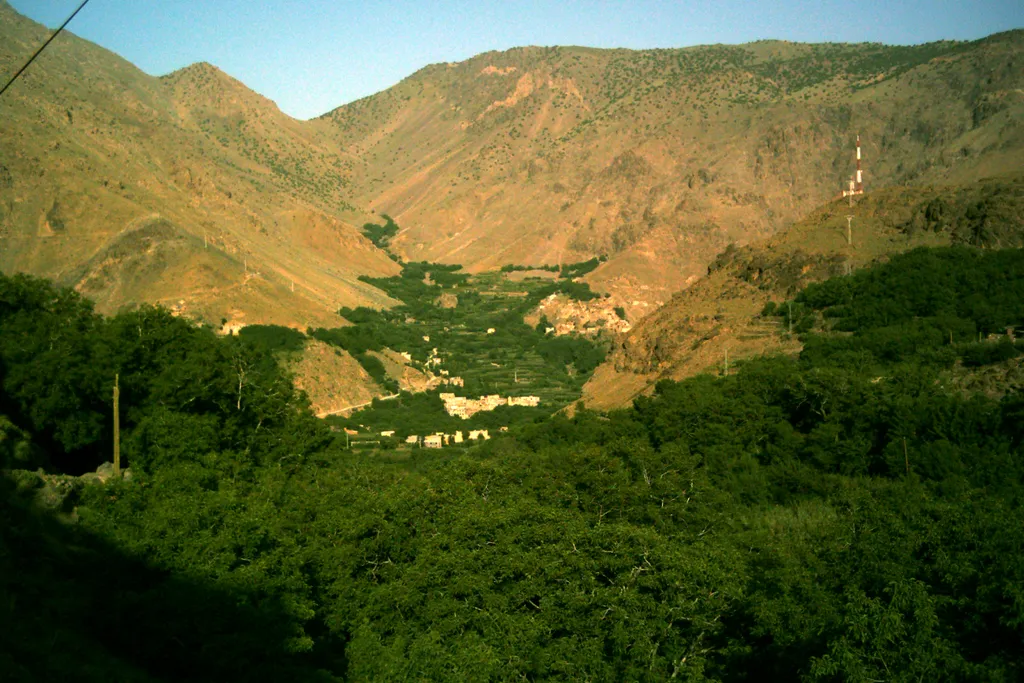
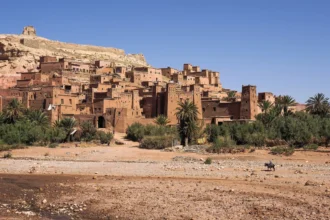
Between Marrakech and the dunes the road climbs Tizi n’Tichka in long switchbacks and drops into kasbah country. Everyone stops at Aït-Ben-Haddou (UNESCO, 1987), a fortified earthen ksar stacked against a hill — go early or late, when the day buses thin and the mud-brick turns the colour of burnt honey. Sleep in the Dades valley or near Tinghir rather than service-town Ouarzazate, walk an hour inside the Todra Gorges at first light, and this “transfer day” becomes one of the best days of the trip.
The Sahara: Merzouga and Erg Chebbi
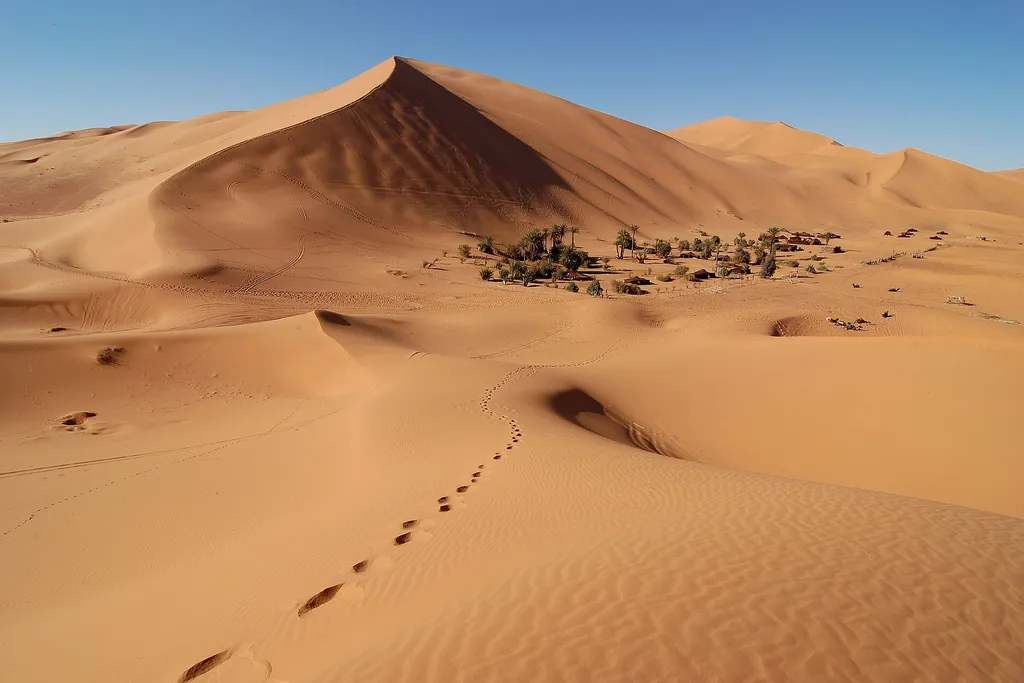
At Merzouga the road gives up and Erg Chebbi begins — real sand sea, rising straight off flat hamada. The rhythm is fixed because it works: arrive late afternoon, enter the dunes by camel or on foot, eat, sleep in camp, wake in the dark for the light arriving. Erg Chigaga, reached from M’Hamid, is the wilder cousin — bigger, emptier, a long off-road approach — and belongs on a longer trip. Before paying anyone, ask where exactly the camp sits; “desert camp” can mean a tent inside the Erg or one behind a hotel car park. Agafay, an hour from Marrakech, gets sold as Sahara too: a handsome stony wasteland with no dunes at all. Know which one you’re buying.
The Coast: Essaouira, Agadir, Casablanca
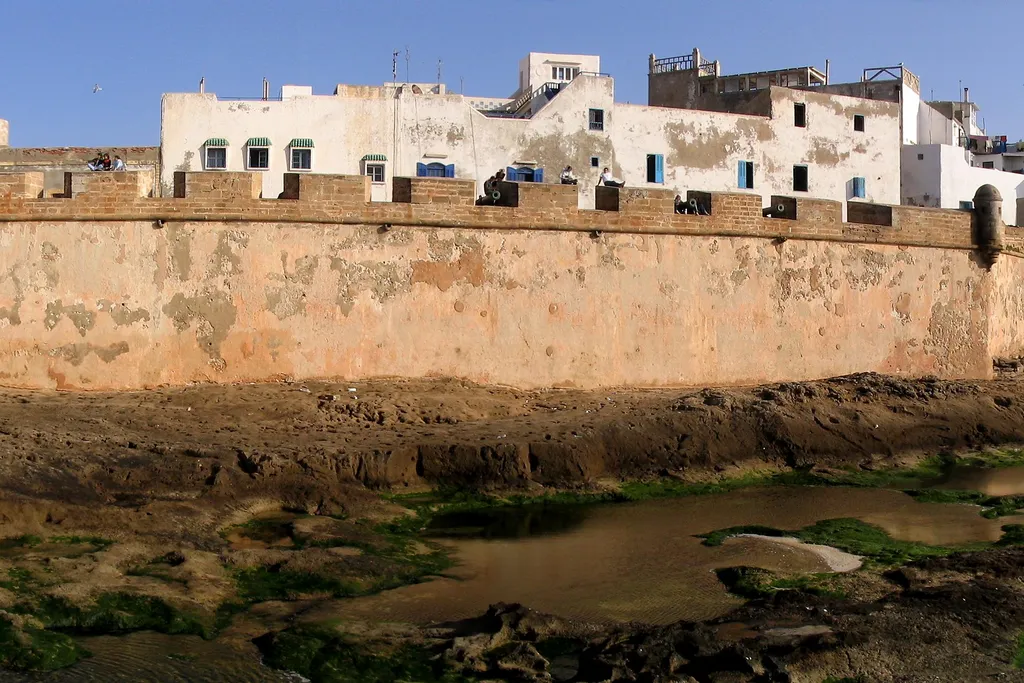
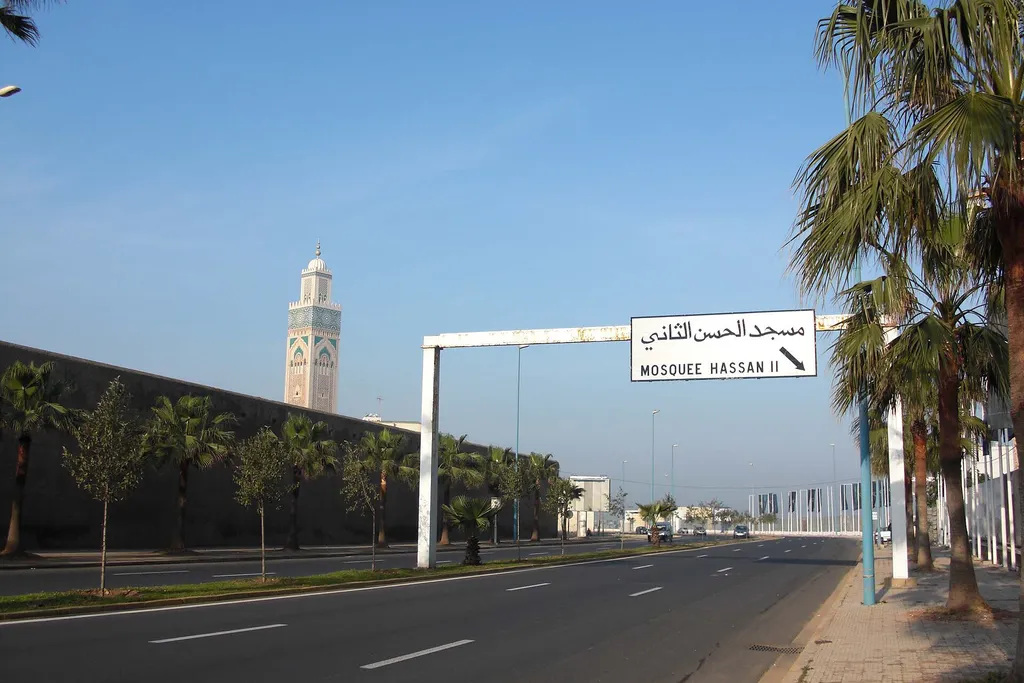
Essaouira (UNESCO, 2001, under its old name Mogador) is the exhale: white ramparts, blue fishing boats, fish grills, and a trade wind that keeps it cool — and powers serious windsurfing — while Marrakech cooks. Agadir, rebuilt after the 1960 earthquake, is a beach resort chosen for winter sun, not sightseeing. Casablanca most people transit; stop for one building, the Hassan II Mosque on its Atlantic rocks, among the very few mosques in Morocco non-Muslims may enter, on official guided tours. One coast stop is plenty first time. Default to Essaouira.
Best Time to Visit
The consensus first: spring (March–May) and autumn (September–November) suit the most places at once — warm cities, open passes, a bearable desert. Then argue with it by region. The desert is best roughly October to April; summer down there is not “hot”, it is schedule-destroying, and even in the good months a winter night at Merzouga is properly cold, so pack a real warm layer. The Atlas treks best in spring and autumn; winter snow can shut Tizi n’Tichka for hours or days. The coast runs milder in both directions, and the surf crowd comes in the cooler months. Ramadan needs a diary check, not a guess: it moves every year, daytime eating options shrink, hours shift, and the evenings become the highlight — wonderful if expected, miserable if not.
Suggested Routes
7 Days: Marrakech, Atlas, Sahara, Fes
The route that tops every search result, because its geography is sound: one way, never backtracking.
- Days 1–2, Marrakech. Medina, palaces, one garden, Jemaa el-Fna at dusk.
- Day 3, Marrakech → Dades. Tizi n’Tichka, Aït-Ben-Haddou, past Ouarzazate. A full road day — add nothing.
- Day 4, Dades → Merzouga. Todra Gorges in the morning, then east. Sunset in Erg Chebbi, camp that night.
- Day 5, Merzouga → Fes. Sunrise, then the long one: Ziz Valley, Middle Atlas, Fes by evening. A transport day — let it be one.
- Days 6–7, Fes. A guided half-day in el-Bali, then a slow day — tanneries, museum, the Merenid Tombs view. Leave from Fes, or ride the train onward.
That open jaw — in through Marrakech, out through Fes — is the entire trick. Fly home from Marrakech and you’ll spend a day re-crossing Morocco to see motorway you’ve already seen.
10 Days: One Addition, Chosen Properly
Not the same route slower, though a second night near the dunes earns its keep. One addition. The coast: two nights in Essaouira after Fes, home via Marrakech or Casablanca — the trip ends at walking pace, smelling of grilled sardines. Or the north: Fes to Chefchaouen for two nights, out through Tangier — with calm Rabat (UNESCO, 2012) and imperial Meknes, near Roman Volubilis, slotting naturally into the train line. Pick one. Morocco keeps; the other half makes a better second trip than an exhausted first one.
Getting Around
Trains first, because they’re better than you’ll expect. ONCF links Tangier, Kenitra, Rabat, Casablanca, Marrakech and Fes; intercity first class is the comfortable, obvious choice on those legs. Al Boraq, opened in 2018 as Africa’s first high-speed railway, runs Tangier–Kenitra–Rabat–Casablanca and nowhere else; Marrakech and Fes are conventional trains, perfectly good, just not high-speed, whatever a breathless blog told you. Fares and timetables: ONCF’s own site, checked when you travel.
There is no railway to the desert. The south is road travel: hire car, private driver, or the multi-day desert tour most visitors take — vehicle, driver, roadside hotels, camel ride and camp, bundled. Bundles vary where it matters: cheap ones buy their price with longer driving days and camps nearer the road, so compare hours behind the wheel, not headline cost. Buses (CTM, Supratours) cover what rails don’t, Essaouira and Chefchaouen included; petit taxis run the in-town hops — meter on, or the fare agreed before the wheels move.
Where to Stay
Stay in a riad at least once. A blank door in a medina wall, then a courtyard open to the sky — orange trees, tile, birdsong, the street noise simply gone. Medina riads put you inside the story of Marrakech and Fes, at the price of a walk (sometimes a long, luggage-hostile one) from the nearest car point, so ask exactly how far, and whether someone will meet you. Marrakech’s modern alternative is Guéliz and Hivernage — bigger hotels, pools, easy taxis, less atmosphere — and Fes splits the same way. In the south you take what’s there: kasbah-style hotels around Dades and Tinghir, guesthouses in Merzouga, then the camp, from a shared tent to en-suite pavilions; “luxury” in a listing is not evidence, a photo of the bathroom is closer to it. Ask about stairs if mobility matters, and book your first night somewhere easy to find — arriving lost, at night, in Fes el-Bali is a story you will tell, just not fondly.
What to Eat
Moroccan food is several cuisines arguing pleasantly. Tagine is a method, not a flavour — a slow braise; chicken with preserved lemon and olives is the benchmark. Couscous, steamed in stages the way shortcuts never replicate, is traditionally Friday’s centrepiece. Pastilla, sweet-savoury pigeon (now usually chicken) pie dusted with cinnamon, should not work and absolutely does. In Marrakech, tanjia — beef sealed in an urn and cooked in hammam ashes — is the local boast, and Jemaa el-Fna’s night stalls feed you skewers, snail soup and sheep’s head in ascending order of courage. On the coast it’s whatever came off the boats; sardines above all. Eat where the menu is short and the room is full of Moroccans, and say “without meat” clearly if you need it — a little lamb has a way of appearing uninvited in vegetable dishes.
Money and Costs, Without the Fairy Tales
This guide will not print a daily budget in dirhams and pretend it survives contact with reality. Costs swing with season, city and bargaining stamina, and the web is littered with per-day tables copied from each other until nobody knows which year they’re from. What holds true: Morocco costs noticeably less than Western Europe for most visitors; Marrakech and Agadir charge more than Fes, the north and the south; and the two expenses that decide a trip’s total are the desert tour and your standard of riad — not food, not taxis. Cash is infrastructure here: medina shops, petit taxis, guides and most small restaurants run on it; cards belong to hotels and bigger businesses, and a small desert town’s ATM may be empty or theoretical. Keep small notes — everyone in Morocco is permanently unable to change a large bill for a small fare, and sometimes that’s even true. Bargain as the sport it is: cheerfully, in stages, walking away only if you’d genuinely leave. Small tips for guides, drivers and café waiters are part of daily life; budget them as a cost, not a surprise.
Visa and Practical Essentials
Start in one place only: Accès Maroc, the Moroccan Ministry of Foreign Affairs portal, is the official route for checking whether your nationality is visa-exempt, needs an eVisa, needs an AEVM electronic travel authorisation, or must go through a consulate. Run your own nationality, residence and passport type through it before booking anything non-refundable. The emphasis is deliberate: search results for a Morocco visa are thick with look-alike commercial sites — official-looking design, a mark-up layered onto a process that starts on the government portal. If the address is not acces-maroc.ma, it is not the source. Exemption lists change, which is why no responsible guide freezes a list of lucky nationalities into an article; consulat.ma is the companion official check. Two more bookmarks: the national tourist office, Visit Morocco, and UNESCO’s Morocco country page.
The rest, quickly: confirm your passport-validity requirement on those same portals, not here; plugs are European-style (C and E); and download offline maps, because medina GPS will fail you regardless.
Culture and Etiquette
Morocco is a Muslim-majority country with deep Amazigh roots, a Jewish history written into its mellahs, and a French layer visible in everything from café culture to road signs. Friday is the week’s hinge: midday prayer, couscous at lunch, some businesses slow or shut. Greetings take time — hand on heart, salaam alaikum, questions after family — and hurrying past them reads as cold, because it is. Give, receive and eat in company with your right hand. Ask before photographing people; take no as a complete answer. A souk shopkeeper’s mint tea usually leads, eventually, to selling — but the tea is real, and so is the conversation; enjoy the ritual while keeping your wallet’s participation cheerfully optional. Haggling is expected where prices aren’t tagged, pointless where they are. During Ramadan, eat and drink discreetly in public by day, and accept an iftar invitation if one comes — it’s an honour, not a transaction.
Safety, Stated Plainly
Millions visit Morocco yearly without incident; the realistic risks are unglamorous — petty theft in crowds, traffic, heat, tiredness on mountain roads, and the medina hustle, real but almost never dangerous. Unofficial guides attach themselves; directions end at a cousin’s shop; the tannery is “closing in five minutes, quick, follow me”. A smile, a firm la shukran — no, thank you — and continued walking settle nearly all of it; paying one man to escape another starts a market you don’t want. Keep valuables zipped in Jemaa el-Fna, hire guides through your riad or a tourist office, treat any tour promising impossible daily distances as a safety problem, and don’t drive unfamiliar mountain roads at night. Women travelling solo will draw attention, mostly verbal; dressing conservatively outside resort areas measurably reduces it. For current regional warnings, read your own government’s Morocco advice in the week you travel, and insure medical care and, if trekking, evacuation.
FAQs
How many days do you need for Morocco?
Seven is the working minimum for the classic line — Marrakech, the Atlas crossing, a desert night at Merzouga, Fes. Ten adds Essaouira or the northern loop. Under five, pick one base — Marrakech — and do it properly.
Is Morocco safe for tourists?
On this guide’s ordinary itinerary, yes — with normal big-city precautions and a firm, friendly way of declining unwanted guiding. The realistic hazards are scams, traffic and heat rather than violence. Read your government’s current Morocco advice before travelling.
Do I need a visa for Morocco?
It depends entirely on your nationality, residence and any visas you already hold — which is why a blog post shouldn’t answer it for you. Check your exact case on Accès Maroc, be wary of commercial sites imitating it, and check before booking anything you can’t cancel.
Can you visit the Sahara on a short trip?
A 3-day tour from Marrakech reaches Erg Chebbi, but much of it is driving and your dune time shrinks to a sunset and a sunrise. Worth it if it’s your only chance. Given the choice, the 7-day line above — same dunes, kasbah country in between — is the version people rave about.
Should I book a desert tour before I arrive?
In the spring and autumn peaks, yes — and whenever you care about group size and camp standard, which you should, because those decide the experience. Get written answers on camp location, daily driving hours and what’s included, and distrust a price dramatically below the market: the difference is paid for in hours, food, or distance from the dunes.
Plan in this order: dates first, route second, desert tour third, riads last. Then let Morocco rearrange it a little. It will anyway.