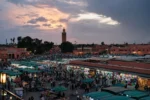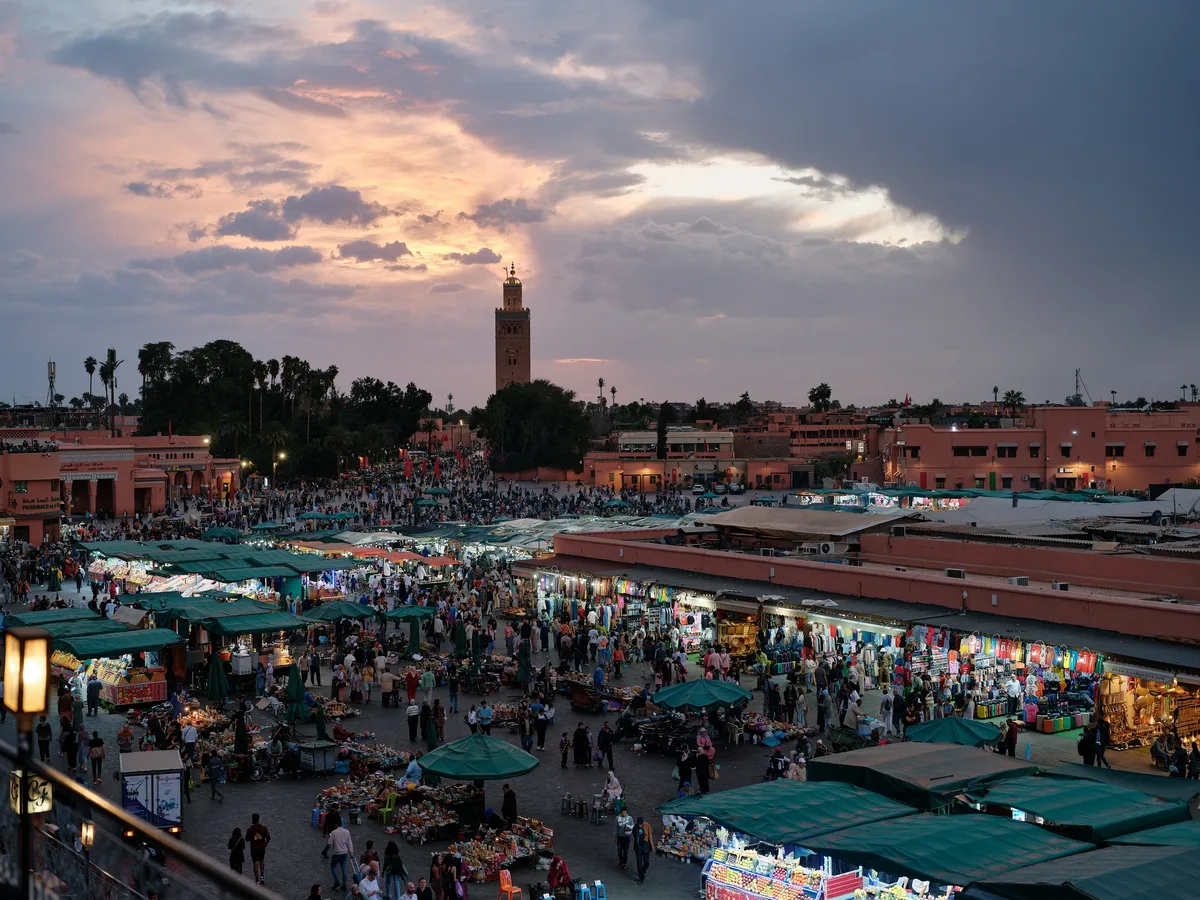
Ask ten websites what a trip to Morocco costs and you will get ten different answers, and in Morocco that disagreement is not sloppiness, it is the country itself. Stand in Jemaa el-Fnaa at dusk and you are standing inside the reason. Around the edge of the square are cafés where a mint tea buys you an hour on a terrace above the crowd. In the middle are food stalls where dinner is grilled in front of you and priced by negotiation, appetite and nerve. A few streets into the medina, the same tagine is cooked for the neighbourhood at neighbourhood prices; a few streets the other way, in the ville nouvelle, a hotel restaurant prints a menu with fixed prices and charges like southern Europe. One square, at least three price worlds, and a traveller can eat in any of them on the same evening. A single daily total that averages those worlds describes nobody’s actual trip.
That is why this guide refuses to answer the morocco travel costs question the way most rival pages do, by printing a tidy table of daily figures and calling it answered. A large part of the economy you will meet in Morocco — souks, taxis, guides, desert tours, medina restaurants without menus — prices by negotiation, by season and by customer, so any figure printed here would be wrong for someone by the following month, and wrong for you in a different way. What does not change is the machinery underneath the prices, and the machinery is what this guide explains: how haggling actually works, why the same bed costs different amounts in different months, what a train class really buys, where the commission system quietly taxes the unwary, and which two or three decisions decide almost the whole cost of a trip.
One more honest warning before the machinery, because it runs through everything below. Local guides and residents widely report that prices across Morocco, above all in Marrakech and the other big tourist cities, have climbed noticeably since 2024, with demand building towards the 2030 football World Cup, which Morocco will co-host. Whether your trip feels cheap or dear against the standards in older posts will depend on when those posts were written as much as where their authors travelled. Plan with the mechanisms in this guide rather than with any total, and the country will hold few expensive surprises. Our wider Morocco travel guide covers the planning shape of a first trip; this page is its money companion.
At a glance – the three styles in one paragraph each. The backpacker style sleeps in dorms and simple guesthouses, eats at stalls and neighbourhood restaurants, moves by train, coach and shared grand taxi, wanders the medinas for free, and treats the shared desert tour as the one deliberate splurge. The mid-range style sleeps in a riad with breakfast on the roof, mixes local lunches with medina rooftop dinners, takes first-class trains, books the desert in a small group or privately, and pays openly for a guide on the day a guide is worth it. The comfort style sleeps in boutique riads and palace hotels, travels by private driver, eats in hotel restaurants, takes the premium desert camp, and discovers that at this level Morocco stops being a bargain and starts being southern Europe with better light. The rest of this guide is the working-out behind those three sentences.
Morocco Travel Costs Explained – Haggling, Seasons and Two Price Worlds
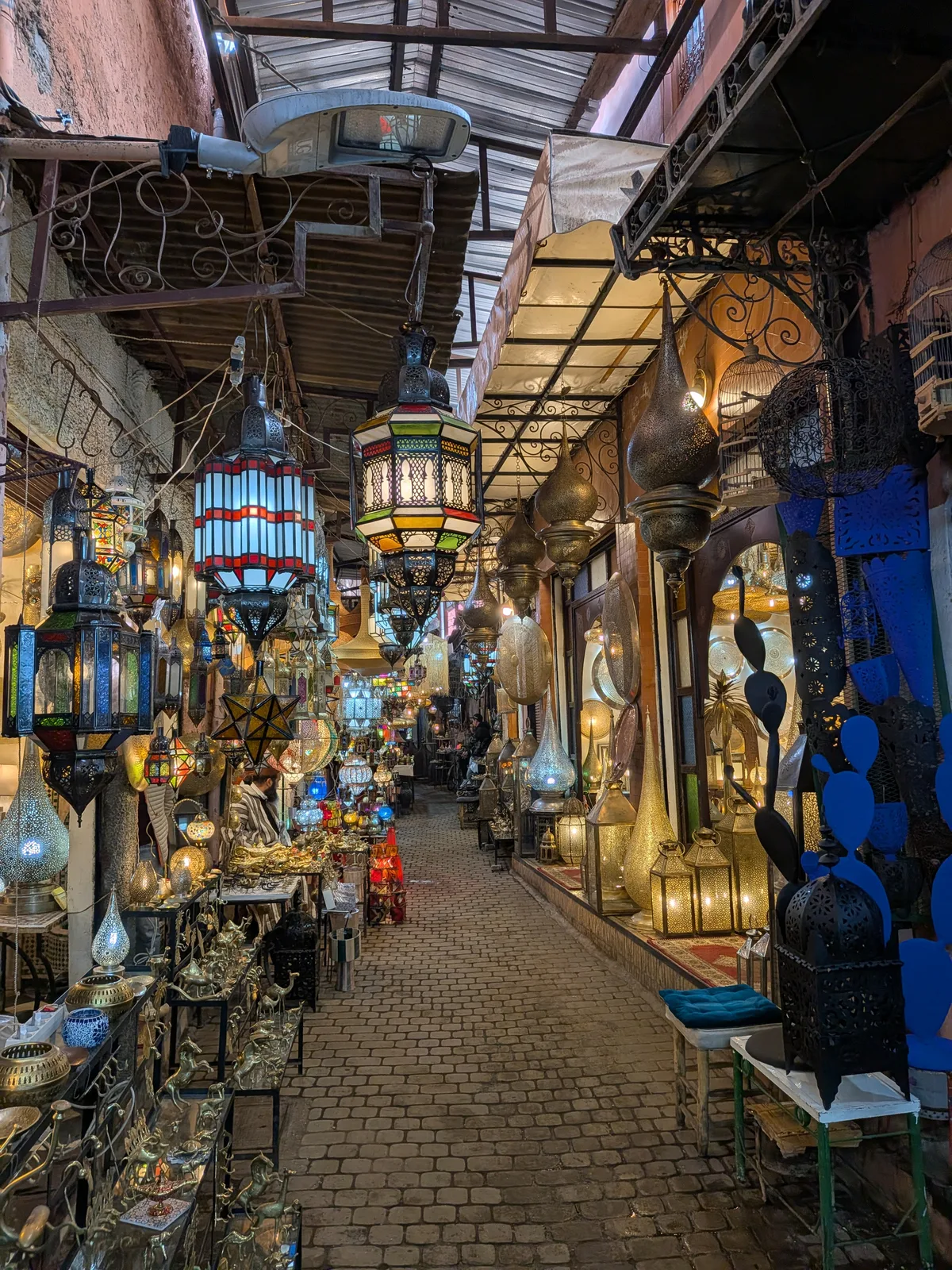
The first mechanism to understand is that in much of Morocco, a price is an opening position, not a label. In the souks, in an unmetered taxi, across the carpet-shop floor, the first figure you are given is the start of a conversation the seller fully expects to have, and it is set with that conversation in mind. This is not a scam and it is not personal; it is how the market has worked for centuries, and locals negotiate inside it every day. What it means for a visitor is that there is rarely one true price for a medina purchase. There is the price for the buyer who pays the first ask, the price for the buyer who bargains cheerfully for two minutes, and the price for the buyer who bargains well, walks away once, and comes back — and the gaps between those three can be wide enough that two travellers can buy the same lamp on the same morning and both honestly report a completely different cost of travelling in Morocco.
The second mechanism is geography, and it operates at two scales. Between cities, Marrakech is the premium market: it has the most visitors, the most famous medina and the most developed luxury end, and its prices for beds, guides and rooftop dinners sit above the rest of the country, while Fes runs a step behind it, the coast and the small towns run cheaper, and places travellers pass through quickly can feel like a different, gentler economy altogether. Within a city, the medina and the ville nouvelle are two economies sharing a postcode. The medina sells atmosphere, craft and negotiation; the new town sells fixed prices, supermarkets, chains and calm. Neither is the real Morocco and the other fake, but a budget built entirely in one of them will not survive contact with the other.
The third mechanism is the calendar. Morocco’s prices breathe with its seasons in ways a flat daily average cannot capture. European holiday peaks — the Christmas and New Year window, Easter, the October and February school breaks — fill the famous riads and push their rates up, and the desert is at its most demanded in the mild months of spring and autumn. August turns the pattern inside out: the interior bakes, Marrakech empties of foreigners, and the coast fills instead with Moroccan families on their own holidays, so Essaouira and Agadir peak while the medina cities soften. Ramadan moves the whole rhythm rather than simply raising or lowering prices: days slow down, some cafés keep shorter hours, the night comes alive after the fast breaks, and a traveller who understands the month travels with it rather than against it.
Where You Sleep – Riads, Hotels, Hostels and Apartments
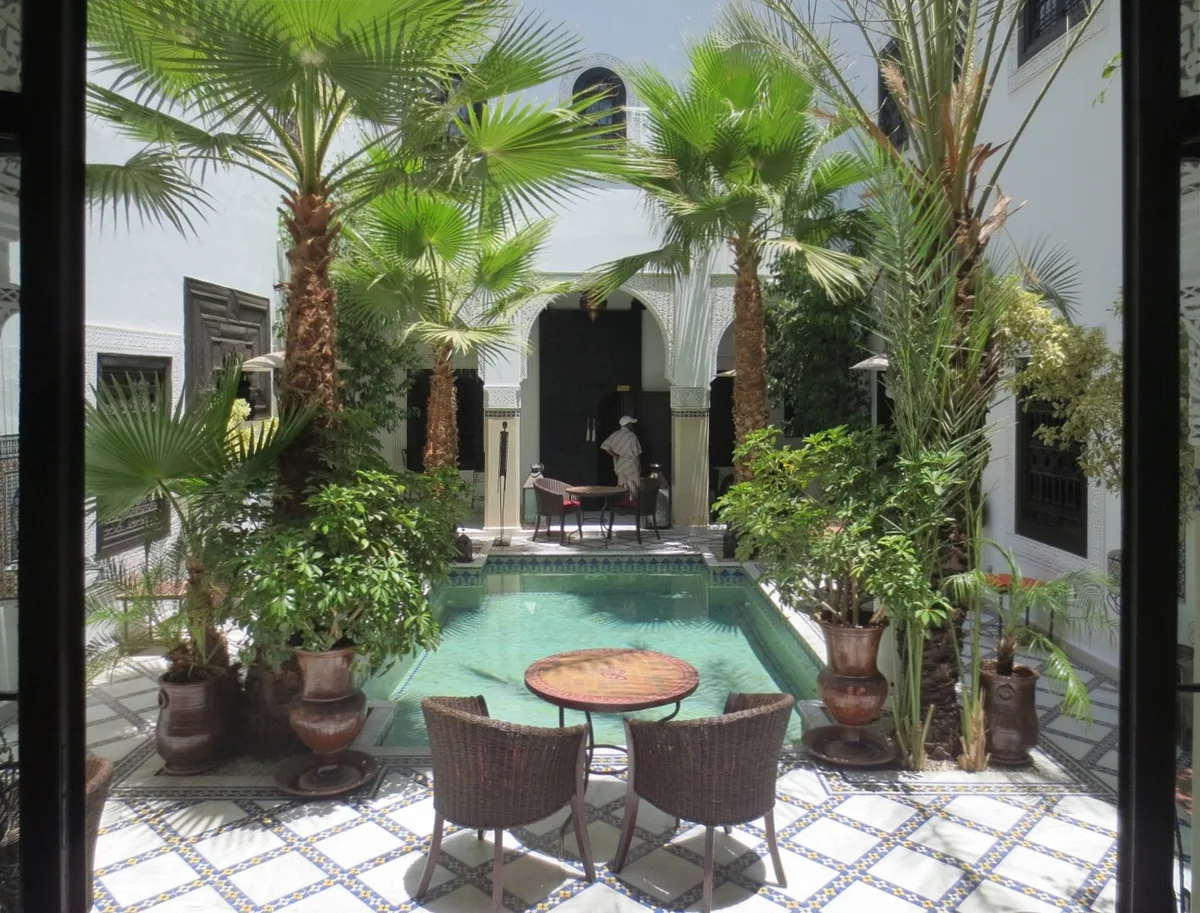
Sleep is the largest bucket in almost every Morocco budget, and it is also the bucket with the widest internal range, because the country’s signature product — the riad — is not one product at all. A riad is a traditional house built inward around a courtyard, and the word now covers a spectrum that runs from a simple family guesthouse with a handful of rooms and breakfast on the roof, to a restored palace with a plunge pool, a hammam, a spa therapist and staff who remember your tea order. Both are sold as riads, both photograph beautifully, and the difference between them is most of your accommodation budget. What moves the price inside the category is rarely the room itself; it is the courtyard, the pool, the depth of the medina the porter has to carry your bag through, and whether the building sits in the famous quarter of a famous city or two neighbourhoods away from it.
Outside the medina walls, the ville nouvelle hotels sell the opposite bargain: predictable rooms, lifts, printed rates, card machines that work, and a price level that feels closer to Portugal or Spain than to the medina outside. International chains and big resort hotels in Marrakech, Agadir and Casablanca price for a European market and largely get it, and the traveller who sleeps in them is buying certainty rather than atmosphere. Neither choice is wrong, but they are different trips at different prices sharing one city, which is why a nightly average for “Marrakech accommodation” from any website, this one included, would be a fiction built out of two incompatible numbers.
The budget end is real but thinner than in some backpacker countries. The big medina cities and the surf coast have proper hostels with dorm beds — Marrakech, Fes, Chefchaouen, Essaouira and Taghazout are the strongholds — and simple guesthouses and family hotels fill the gap everywhere else. Apartments and short-stay rentals have spread through the new towns and the coast, and they suit longer stays and families, with the practical caveat that you lose the riad’s invisible services: the staff who will book your desert tour honestly, walk you to the taxi rank, and tell you what the thing you are about to buy should actually cost. That advice, in Morocco, has a cash value of its own.
The practical rules that fall out of all this are three. First, budget sleep by city, not by night: a Marrakech riad night, a Chefchaouen guesthouse night and a desert camp night are three different products, and multiplying any one of them by your trip length produces a total that matches nothing. Second, notice which nights do double duty — a camp night in the desert replaces a hotel night and includes dinner, breakfast and the camel ride to reach it, and a riad night with a good breakfast quietly deletes a café bill from the next morning. Third, remember that the medina’s cheapest beds come with a hidden transport budget of porters, hand-carts and petits taxis at the gate, because no vehicle reaches a medina lane. Sleep still moves the budget more than anything else in Morocco. It just moves it through the courtyard, the season and the carry, rather than through the room rate alone.
Food and Drink – Stalls, Local Restaurants and Rooftops
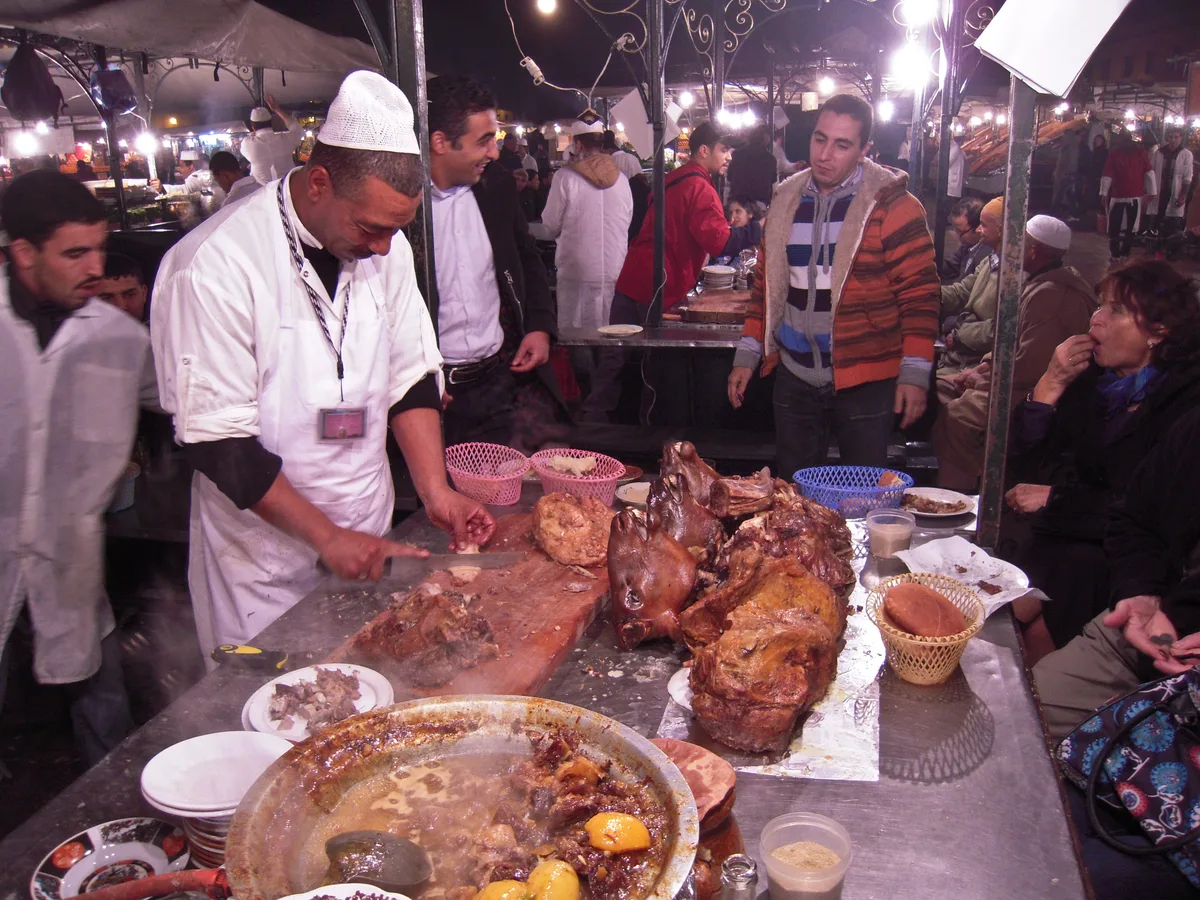
Food is the kindest bucket in a Morocco budget and the one where the cheap version is most often the best version, because Morocco’s cheap food is not a tourist substitute for its real food — it is its real food. The country eats in three worlds, and a traveller can move between all three in a single day. The first world is the street and the market: msemen flatbreads folded on a griddle, bowls of harira and bissara, snail soup from a cart, brochettes and kefta grilling over charcoal, sandwiches built to order, and juice stalls blending whatever the season has made cheap. The second world is the local restaurant — the neighbourhood tagine and couscous kitchen, the rotisserie with chickens turning in the window, the workers’ canteen with a short menu and a room full of Moroccans — where a sit-down meal costs a small multiple of the street version and is usually the best food of the trip. The third world is the tourist medina restaurant and the rooftop terrace, where the same dishes arrive with a view, a menu in three languages and a bill that reflects the view more than the kitchen.
Jemaa el-Fnaa’s night stalls deserve their own honest paragraph, because they are the most famous eating experience in the country and the one where first-timers most often feel the price move under their feet. The stalls are theatre as much as dinner — the smoke, the drummers, the waiters competing in six languages to seat you — and the food at the good stalls is genuinely good. The mechanism to understand is that the bill is assembled from what reaches your table: the bread, the olives, the sauces and the small dishes that appear unasked are part of the meal and part of the charge, and a crowded stall full of Moroccan families is a safer bet than an empty one with an energetic tout. Go once for the spectacle, eat where the locals are eating inside it, and the square is worth every dirham. Go carelessly and it is the one dinner in Morocco that can cost like Europe while tasting like a queue.
Drink follows the same three-world pattern. Mint tea is the social currency of the whole country — poured in cafés, offered in shops, served in riads — and a café tea buys you something travellers consistently undervalue, which is time: a seat, a view of the street, and no hurry whatsoever, because Moroccan cafés sell lingering as much as liquid. Alcohol is the exception that proves the rule. It exists — Moroccan wine and beer are real industries, licensed bars and hotel restaurants serve it, supermarkets in the new towns stock it — but it is taxed, restricted and absent from medina life, so it is priced as a luxury everywhere it appears, and a traveller who drinks wine with dinner every night will find the food bucket quietly doubling while a traveller who drinks mint tea will not.
The eating strategy that works at every tier mirrors the country itself: let the street and the neighbourhood feed you by day, and choose your restaurant meals deliberately rather than by exhaustion. Friday is couscous day across Morocco, when kitchens that serve nothing else all week roll the semolina properly, and a traveller who times a local lunch to it eats the national dish in its natural habitat for canteen money. The strategy that fails is the mirror image — a hotel breakfast eaten because it was there, a rooftop lunch eaten because it was near the sight, a hotel dinner eaten because the medina felt complicated after dark — which assembles the most expensive version of every meal in the country where the cheapest version is usually better. Morocco does not punish the cheap eater. It rewards him, three times a day.
Getting Between Cities – Trains, Coaches and Grand Taxis
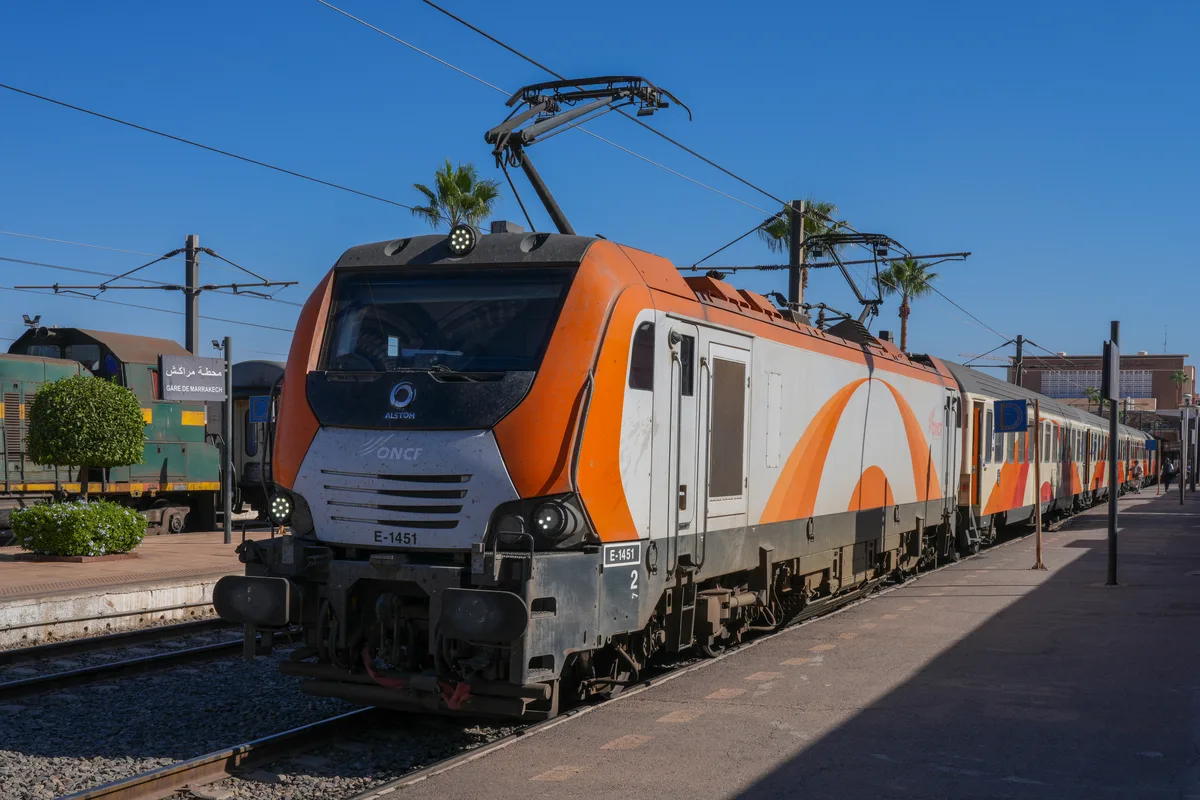
Intercity transport is where Morocco’s two price worlds meet most clearly, because the country runs a modern, fixed-price network alongside an older, negotiated one, and the traveller chooses between them route by route. The fixed-price world is the railway. ONCF trains link the imperial spine — Tangier, Rabat, Casablanca, Marrakech — with Fes, Meknes and the east, and the Al Boraq high-speed line between Tangier and Casablanca is a genuinely European-grade service, the first of its kind in Africa. Fares are set, published and the same for everyone, which makes the train the one Moroccan journey whose cost you can know exactly in advance: check the current timetable and fares on the official ONCF site before you travel, because those are the only figures worth trusting, and they change on the railway’s schedule rather than on a blogger’s.
Inside the train, the class decision is the whole cost decision, and it is a smaller one than travellers fear. Second class on the main lines is a perfectly civilised way to cross the country, and its real prices are crowding and uncertainty rather than discomfort: at peak times, on holiday weekends and on the Friday-afternoon flows, second class fills, seats are not guaranteed in the way first class reserves them, and the air conditioning works as hard as it can. First class costs a clear step up and buys a reserved seat, more space and a calmer carriage — on a short hop it is a luxury, on the long Marrakech-to-Fes day it can be the difference between arriving rested and arriving wrung out. The honest rule is to spend the class money on the longest leg of the trip, if you spend it anywhere, and to let the short hops ride second.
Where the rails never reached, the coaches rule, and here too the prices are fixed and printed. CTM and Supratours — the latter is the railway’s own coach arm — between them cover the map the trains miss: Essaouira from Marrakech, Chefchaouen down from the north, the Atlas crossings, and the long desert run towards Merzouga that delivers most independent travellers to the dunes. The coaches are modern, the fares are set, and the quirks are small and knowable: checked luggage traditionally attracts a small hold charge paid at the station, busy routes sell out a day ahead in season, and the coach station itself, not the medina, is where the journey starts, so the petit taxi to the station belongs in the same line of the budget. A traveller could cross almost all of tourist Morocco on trains and these two coach networks without negotiating a single fare, and many do.
The negotiated world, between cities, is the grand taxi: the big shared Mercedes sedans that have carried Morocco between its towns for generations. A grand taxi sells its seats individually and leaves when full, so the cost mechanism is patience as much as money — a seat is cheap, the whole car is a multiple of the seat, and leaving now rather than when the last passenger arrives is a purchase you make consciously. On fixed town-to-town routes the per-seat price is set by custom and everyone in the car knows it; off the routes, on a chartered run to a gorge or a trailhead, the price is a negotiation like any other in the medina. Add a rental car, which puts fuel, tolls and medina-edge parking into the bucket, and a private driver, who removes every decision in this section at a price, and the intercity picture is complete. Our 7-day Morocco itinerary shows the classic Marrakech-to-Fes route these choices operate on; whichever way you travel it, the transport bucket is decided by how many of its days you spend moving, because the moving days are the expensive ones and the still days are cheap.
Getting Around Inside Cities – Petit Taxis, Buses and Walking
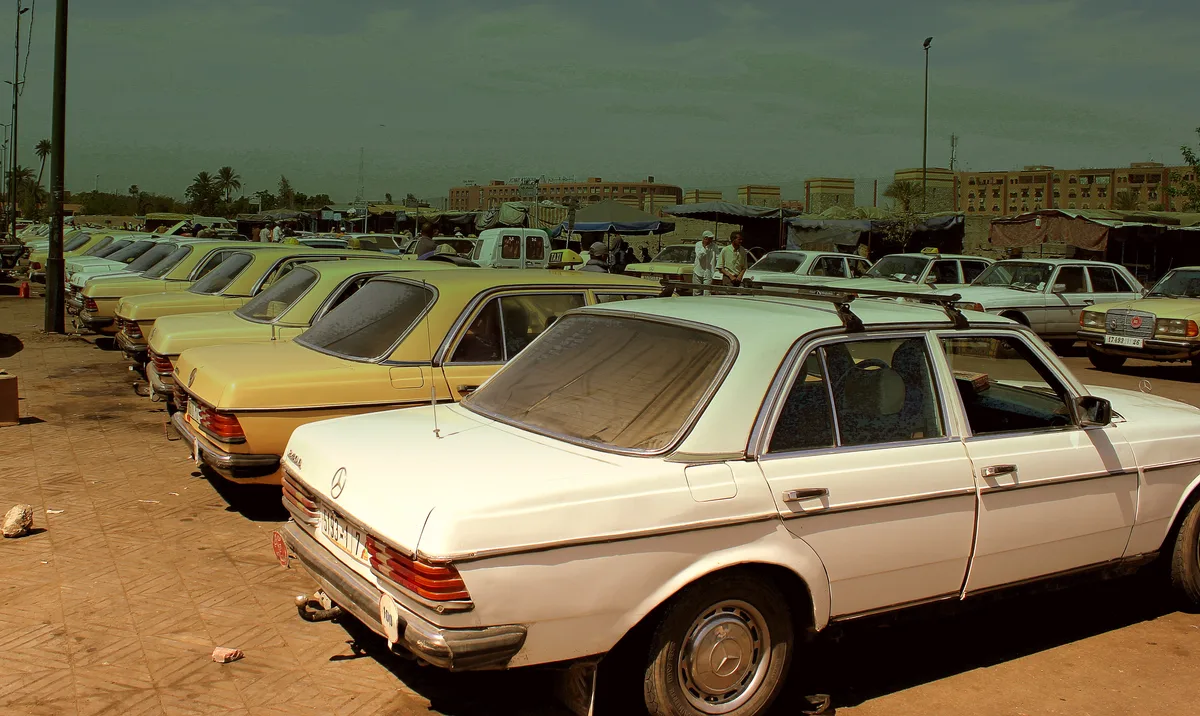
Inside the cities, the money is small and the mechanisms are everything. The vehicle of urban Morocco is the petit taxi, the little city cab — beige in Marrakech, red in Casablanca, blue in Rabat, a different colour in every city — licensed to carry a few passengers within the city boundary and fitted, by law, with a meter. The meter is the whole story of the petit taxi’s price. A running meter makes a city ride one of the great bargains of world travel, a short hop across town for the price of a coffee. A meter that is mysteriously broken, forgotten or reserved for locals converts the same ride into a negotiation held at a medina gate, at night, with your luggage at your feet — the least favourable bargaining position in the entire country. The mechanism to learn is simple: ask for the meter before the car moves, be ready to take the next taxi if the answer is theatre, and understand that at ranks serving famous sights and stations, the negotiation is the system, so agree the fare before you sit down or walk one street away and hail a moving cab instead.
Below the taxis, the fixed-price world reasserts itself. Casablanca and Rabat run modern tramways at set fares, city buses everywhere are cheaper still and priced for the people who use them daily, and ride-hailing apps operate in the big cities for travellers who would rather let an algorithm hold the negotiation. None of these will make a story. All of them will move you across a Moroccan city for less than the price of the argument at the taxi rank, and the traveller who mixes them in — tram across the new town, feet inside the medina — spends the in-city transport bucket at local rates without ever feeling deprived.
Because the medinas themselves are the final mechanism, and they charge in a currency of effort rather than money. The old cities are pedestrian worlds, closed to cars by their own geometry, so the last stretch to any medina riad is walked, and luggage moves on porters and hand-carts whose small fees are part of the real price of a medina bed. In Fes el Bali, a city of thousands of lanes on a hillside, that carry can be a genuine service worth paying for gladly rather than a scam to resent. Marrakech adds one more option, the horse-drawn calèche, whose price is pure negotiation theatre — agreed in advance, with the route and the duration named, it is a pleasure; left vague, it is an argument with a horse. The pattern across the whole section is the pattern of the whole guide: in Morocco, the traveller who agrees the price before the journey pays the local price, and the traveller who agrees it afterwards pays the lesson.
Tours, Guides and the Desert – the One Big One-Off
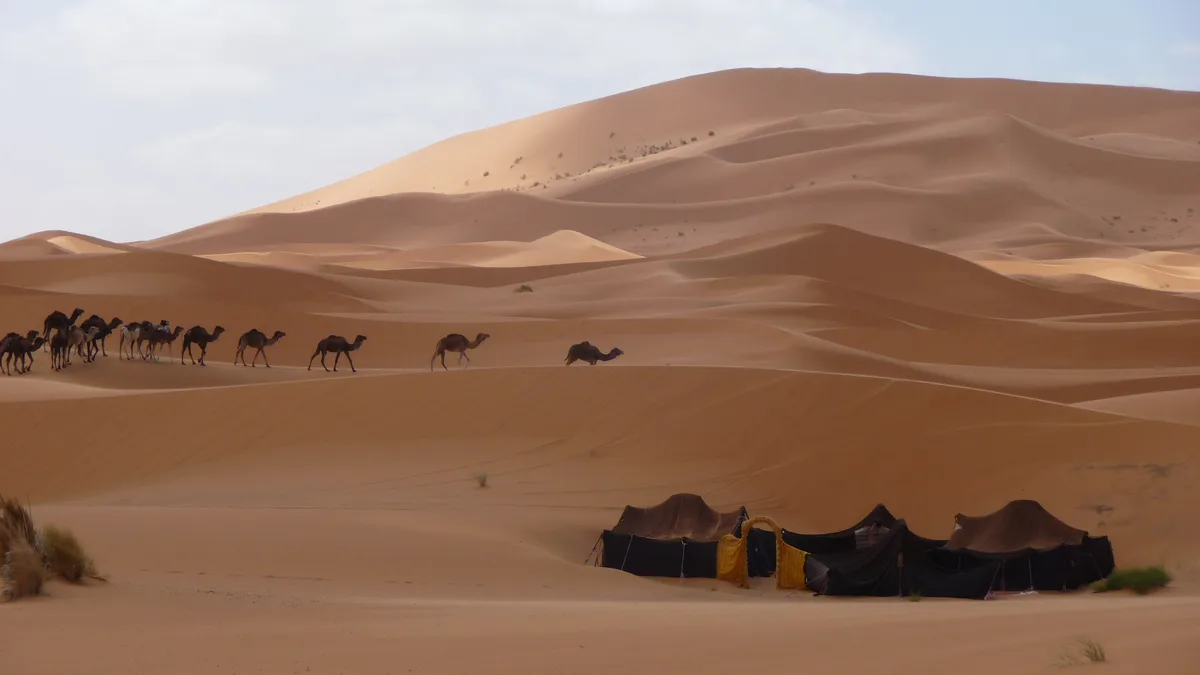
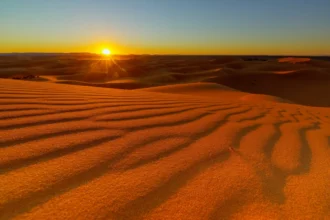
Every Morocco budget has one line that behaves differently from all the others, and it is the desert. Sleep, food and transport spread themselves across the days in manageable amounts; the Sahara trip arrives as a single lump, usually the largest single purchase of the holiday, and it deserves to be budgeted the way this guide budgets Petra-like days elsewhere — separately, consciously, and without letting it leak into a daily average where it makes ordinary days look extravagant. The good news is that the lump buys a genuinely singular thing, a night among dunes that rise like a sea frozen mid-swell. The honest news is that the word “desert tour” covers at least three different products at three very different prices, and the cheapest version is not a discounted form of the most expensive one. It is a different trip.
The first choice is the dunes themselves, and distance is what you are really paying for. Erg Chebbi, at Merzouga, is the classic image — tall, clean, orange dune ridges, a long day’s travel from Marrakech or Fes — and it is where most tours go. Erg Chigaga, beyond M’Hamid, is wilder, more remote and more expensive to reach, because the journey includes rough piste driving and simply more of everything: more hours, more fuel, more logistics inside the price. Zagora, sold on many a two-day tour, is closer and cheaper for a reason the brochures soften: its nearby dunes are small, the desert there is largely rocky plain, and the trip is a taster rather than the sea of sand on the poster. None of this makes Zagora a fraud — it makes it a different product — but a traveller who buys the cheapest desert and expects Erg Chebbi has been sold a misunderstanding, and it is the single most common money disappointment in Moroccan travel.
The second choice is the company you keep. A shared group tour, the minibus classic, spreads the cost of the vehicle, the driver and the camp across a dozen strangers and is the budget traveller’s honest route to the dunes: you trade privacy and pace for a price no private arrangement can approach. A private tour buys back everything the group surrenders — your own vehicle, your own schedule, stops where you want them, a camp chosen rather than assigned — at a multiple of the group price, and for couples and families that multiple divides by the number of seats filled. Inside both, the camp itself runs the same spectrum as the riads: a standard bivouac of tents around a shared fire, dinner and drumming included, and the so-called luxury camp of ensuite canvas suites with real beds and hot showers, priced less like camping and more like the boutique hotel it is quietly imitating. What is bundled matters more than the label: camel trek at sunset, dinner, breakfast, sandboarding and the drive itself are the usual inclusions, and a tour that seems cheap because it quietly excludes the camp dinner or the camel ride is not cheap at all.
Guides follow the same commission logic, and it is worth understanding before you judge it. An official guide, booked openly at an agreed price, sells you knowledge and navigation — in Fes especially, where the medina defeats maps on principle, a half-day with a good guide converts a maze into a city and is money rationally spent. An unofficial guide who attaches himself for free is not free; he is paid by the shops he steers you into, on commission, which is why the tour bends so reliably towards carpet emporiums and why the tea in the shop is both hospitality and sales floor. Neither system is wicked, but only one of them works for you, and the difference is whether you agreed the price before the walking started. The same rule prices the day trips — the Atlas valleys, the waterfalls, the coastal run to Essaouira — and experiences like cooking classes and hammams, where a neighbourhood bathhouse and a spa ritual in a palace hotel share a name and almost nothing else.
Sights, Palaces and Gardens – What Entry Fees Actually Buy
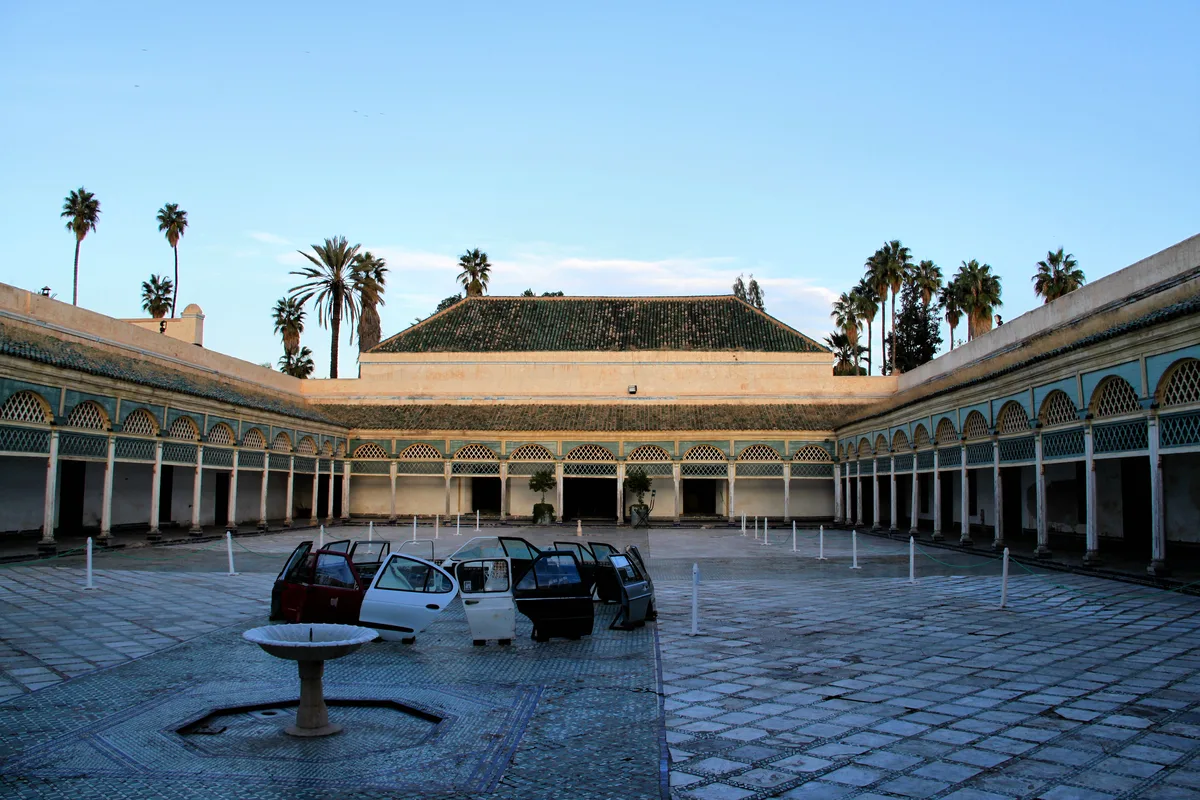
After the desert, the entry-fee bucket comes as a relief, because it is the smallest and most predictable part of a Morocco budget. The great state monuments — the palaces, madrasas, tombs and kasbahs that fill the itineraries — charge a set fee at the gate, the same for every visitor, posted on the official notice at the entrance and revised from time to time by the authorities who run them. This guide deliberately prints none of those fees, not because they are secret but because they are the fastest-rotting numbers in travel writing: several have been revised in recent years, rival pages currently disagree about the basics, and the only figure worth trusting is the one on the gate when you arrive. What can be said honestly is the shape of the bucket: a full day of monuments in Marrakech or Fes costs less than the transport mistakes a careless traveller can make getting between them, and sightseeing is simply not where a Morocco budget goes to die.
Two structural facts shape the bucket further. The first is that the medinas themselves are free. The greatest sights in Morocco — Fes el Bali entire, the Marrakech medina, the blue lanes of Chefchaouen, the ramparts of Essaouira — are living cities you walk into without a ticket, and a traveller can fill days with world-class wandering whose entry cost is zero, paying only for the specific palaces, museums and gardens inside them. The second is that Morocco’s mosques are generally closed to non-Muslim visitors, with the great exception of the Hassan II Mosque in Casablanca, which admits visitors on guided tours at set times. The practical effect is budgetary as much as cultural: the minarets that dominate every skyline are sights you admire from outside, for free, and the one mosque you can enter is a single, plannable, ticketed visit.
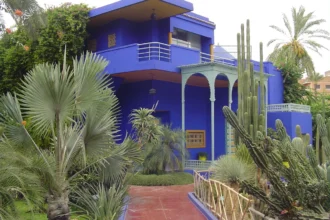
Inside the paid sights, the exceptions explain the rule. The Bahia and El Badi palaces and the Saadian Tombs in Marrakech, the Bou Inania Madrasa and the Nejjarine in Fes, the kasbah museums of the coast — these run on the state pattern, modest fixed fees funding the upkeep of buildings that are genuinely fragile, built of carved plaster, painted cedar and zellige tile that weather and crowds erode together. The famous outlier is the Majorelle Garden in Marrakech, a privately run garden that rivals habitually describe as carrying the steepest standard ticket in the city, several times the state-monument pattern — travellers who balk at it are really balking at the exception, since the same morning’s palaces together may cost no more. Treat entry fees as the bucket you plan by count rather than by amount: decide which interiors earn their gate on each day, check the current notice when you arrive because hours and closure days vary, and let the bucket stay what it is in Morocco — small change next to sleep, movement and the desert.
Money Practicalities – Cash, Cards, ATMs and Tipping
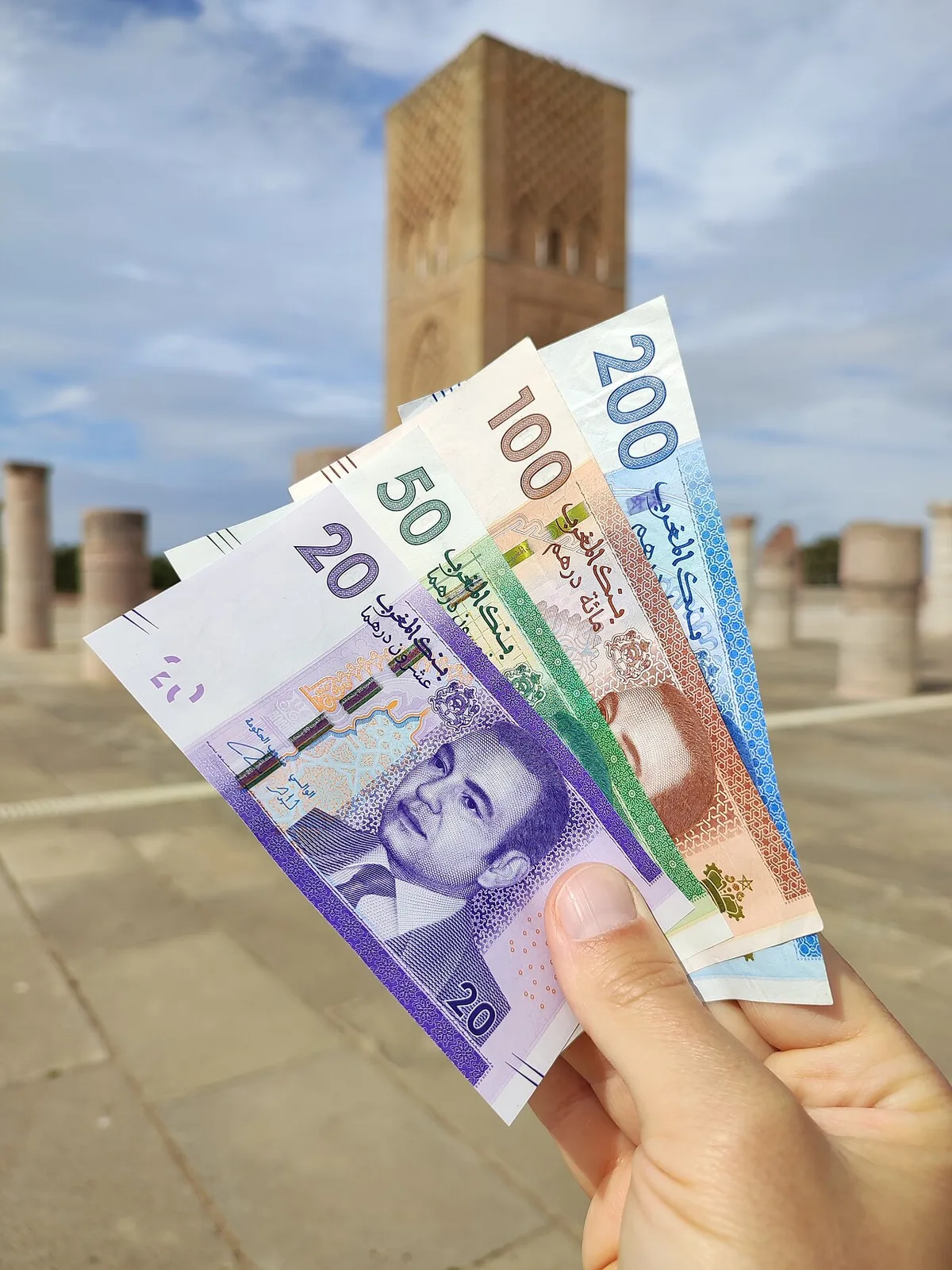
Morocco’s money has one rule that shapes everything else: the dirham is a closed currency. You cannot meaningfully buy it before you arrive and you are not meant to carry it away when you leave, so the trip’s cash is a closed loop that begins at an exchange desk or ATM after landing and ends with the last notes spent or reconverted at the airport — keeping the exchange receipts, as the official advice runs, makes that final reconversion straightforward. Exchange rates are set within a managed band and do not vary wildly between banks and licensed bureaux de change, which removes one whole category of airport anxiety; the rate printed by any website, this one included, would be stale before the season turned, so check a live source in the week you travel and treat the conversion as arithmetic to do once, at home, rather than as a number to memorise from a blog.
Inside the country, cash is not a preference, it is the operating system. Cards are accepted where the fixed-price world runs — hotels, larger restaurants, supermarkets, the railway’s online booking — and they fail precisely where Morocco is most itself: the souk, the petit taxi, the stall, the porter, the tip. ATMs stand in every town of size and dispense dirhams against foreign cards, with the practical caveats that per-withdrawal limits vary by bank, that fees are set by machines and home banks in combination, and that the machine’s offer to convert the withdrawal into your home currency for you is the one button to decline — take the dirham amount and let your own bank do the converting. The deeper practicality is denominations. Small notes and coins are the fuel of daily Morocco — taxis, tips, markets, bread, tea — and a wallet full of large notes in the medina is a wallet that will be told, truthfully or not, that there is no change. Break big notes at hotels, cafés and supermarkets deliberately, the way you would charge a phone.
Tipping is the last mechanism, and it is best understood not as generosity but as part of the price system itself. In a country where service wages are low and much of the tourist economy runs on small services — the café waiter, the riad porter, the hammam attendant, the guide, the driver — small, frequent tips are how the true cost of those services is settled, and a traveller who budgets nothing for them has not finished building the budget. The amounts are small by any visitor standard and this guide will not print a tariff, because the honest description is a practice rather than a table: something for the person, scaled to the service, given often and without ceremony. Travellers who tip in this rhythm find doors opening all over Morocco, not because they have bought anyone, but because they have understood the system they are inside: a low-price economy that completes its prices by hand, at the end, in small notes.
Three Ways to Travel Morocco – Backpacker, Mid-Range and Comfort
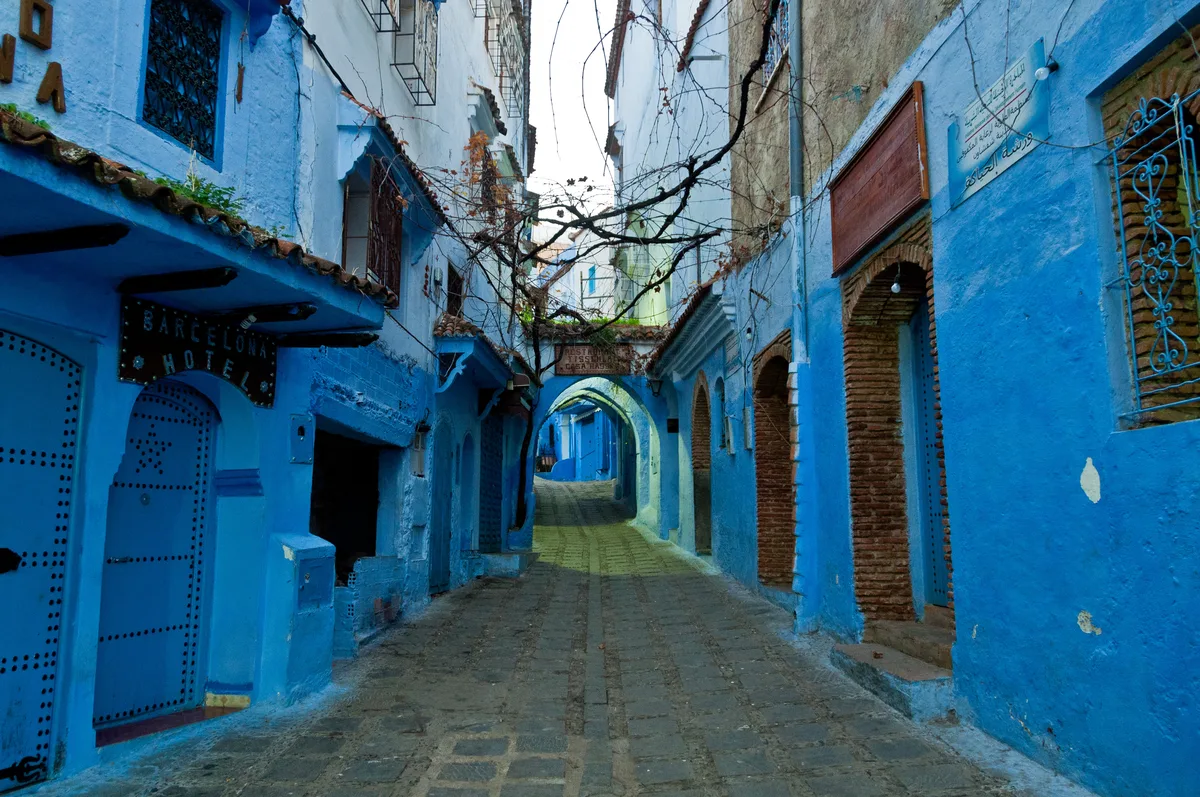
Everything above resolves into three recognisable trips, and it is worth describing them as styles rather than as totals, because in Morocco the style is the budget. The same medina lane contains all three travellers at once: one sleeping in the dorm above the café, one in the riad behind the green door, one in the palace at the lane’s end with a driver waiting outside the gate. They will see the same sights and eat recognisably the same food. What they are buying differently is privacy, certainty and time — and understanding that is worth more than any figure, because it lets you choose, line by line, which of the three travellers you want to be for each part of your own trip.
The Backpacker Way
The backpacker trip is built on Morocco’s fixed-price skeleton and its cheapest beds. Sleep means hostel dorms in the cities that have them and simple guesthouses everywhere else, usually with a roof terrace standing in for a lounge and a breakfast that is mostly bread, jam and tea — which is, not coincidentally, a Moroccan breakfast anyway. Food means the street and the neighbourhood: stall breakfasts, market lunches, local-restaurant dinners, with the Jemaa el-Fnaa spectacle taken once, knowingly. Movement means second-class trains, CTM and Supratours coaches and shared grand-taxi seats, all fixed or customary prices, and sightseeing means the free medinas first and the paid interiors chosen one or two to a city. The desert, on this trip, is the group minibus and the standard camp, taken once and taken properly, because the backpacker who skips the dunes to protect the average has saved the money and missed the point. What this style gives up is privacy, quiet, and control over departure times. What it keeps is almost everything else.
The Mid-Range Way
The mid-range trip is where most visitors actually land, and its shape is a series of deliberate upgrades at the points of most friction. Sleep means a proper riad with a courtyard, a real breakfast and staff who function as an informal concierge — the upgrade travellers consistently rate the best money of the trip. Food mixes the worlds: local lunches, and dinners divided between neighbourhood restaurants and the medina rooftops, where the view is knowingly part of the bill. Movement buys the comforts that matter on the long legs — first class on the longest train day, the good coach elsewhere, a petit taxi without an argument because the fare was agreed — and sightseeing adds a paid guide for the Fes day. The desert, on this trip, is a small group or a private car, with the camp chosen rather than assigned. This style feels like neither economy nor luxury; it feels like a traveller who read the sections above and spent each upgrade exactly where the machinery of Morocco rewards it.
The Comfort Way
The comfort trip buys out of the negotiation economy almost entirely, and its defining discovery is that at the top end, Morocco is not cheap. Sleep means boutique riads with pools and spas or palace hotels of genuine international standard, priced in the range their counterparts command in southern Europe. Movement means a private driver from airport to airport, converting the whole transport question into a single arrangement. Food means hotel restaurants and the medina’s fine-dining rooms, wine lists included, and the desert means a premium camp of ensuite tents where the dunes are admired from a real bed. What the money buys is real: time, silence, certainty, and staff. What it cannot buy is a different Morocco — the sights are the same sights, the medina is the same medina — and the comfort traveller who never leaves the arrangement discovers the one thing in this guide more expensive than any riad, which is paying comfort prices for a trip a mid-range budget, honestly built, would have delivered almost whole.
The three styles are a menu, not a ladder, and the smartest Morocco budgets mix them without apology: backpacker food under a mid-range bed, a comfort splurge on the single desert night, local transport everywhere except the one long day when the driver earns his fee. Build the trip that way — by section, by mechanism, by choice — and the total that falls out of it will be the only Morocco travel cost figure worth trusting, because it will be yours.
Where Travellers Overspend – the First-Day Effect and the Commission Chain
Most overspending in Morocco is not random, and it is not really about dishonesty. It follows two patterns so reliably that a traveller who can recognise them is armoured against most of the damage. The first is the first-day effect: almost every expensive mistake in Morocco is available within hours of arrival, to a traveller who is tired, disoriented and has not yet calibrated a single price. The airport taxi taken at the first figure named. The first souk purchase, made at the first asking price, of something whose twin sells two lanes away for a fraction. The SIM card, the exchange, the tour, bought at the point of maximum tiredness from the person who happened to be standing there. Nothing about these transactions is different on day five except the buyer, which is the whole lesson: in Morocco, the cheapest purchase you will ever make is calibration, and the most expensive day of the trip is the one where you did your learning with your wallet open.
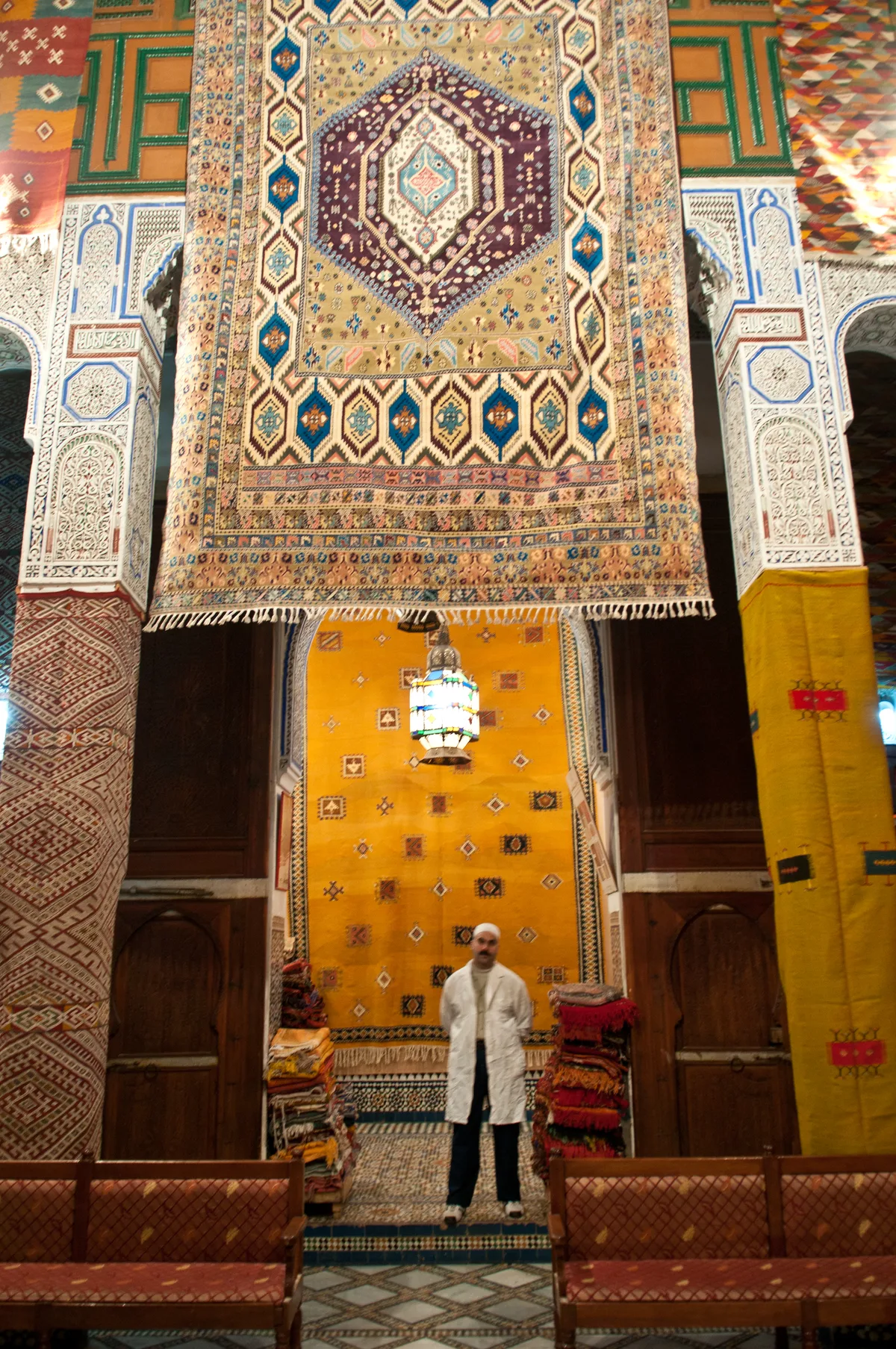
The second pattern is the commission chain, and understanding it converts a dozen small irritations into one clear system. When a stranger offers to show you his uncle’s shop, when a self-appointed guide materialises at a medina gate, when a restaurant or a tannery appears at the end of a helpful walk, a percentage of whatever you spend there is already spoken for — it belongs to the chain that delivered you, and the price you are quoted has been built to contain it. The carpet shop is the chain’s cathedral and deserves neither fear nor contempt: the tea is real hospitality and real salesmanship at once, the unrolling of twenty rugs is theatre you are allowed to enjoy, and the final price, after proper negotiation, can be perfectly fair for a rug you love. The failure mode is only ever the same one — buying the story instead of the object, at a price justified by investment talk rather than by how the rug would look on your floor.
The third theatre of overspending is the famous square itself. Jemaa el-Fnaa runs on spontaneous performance, and the performance has a price discovery problem: the photograph with the snake charmer, the henna design drawn before the price is mentioned, the drummers who materialise around your table, the stall extras that land before you have ordered — each is a small transaction whose price is named after the value has been delivered, the one order of events guaranteed to produce a bad bargain. The defence is not suspicion, which would ruin the square; it is sequence. Agree the price before the photograph, before the henna, before the extra plate — four seconds that convert every one of these ambushes back into the honest street theatre it mostly is. Travellers do not overspend in Morocco because Morocco is expensive. They overspend in the first day, inside the commission chain, and in transactions whose price was agreed last — and all three are habits, not fate.
How to Keep Costs Down Without Missing Morocco
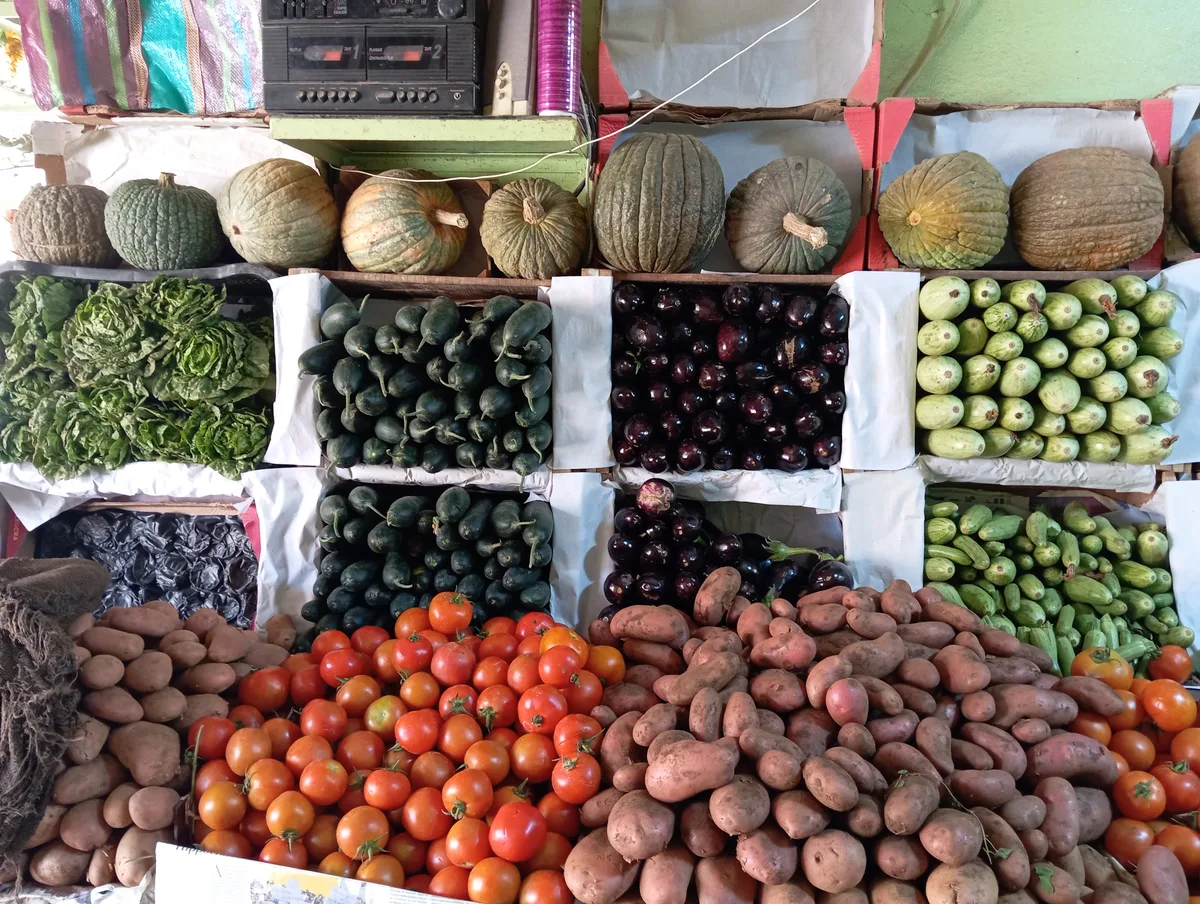
Keeping costs down in Morocco is not a diet; it is a set of alignments, small decisions that place you on the local side of the country’s two price worlds without surrendering a single experience that matters. The first alignment is to eat and shop where prices are set for residents. The neighbourhood market, the bakery queue, the canteen with no menu in any language you read — these places are not hidden, and they are not a secret locals are keeping; they are simply one street further than the tourist flow bothers to walk. A traveller who buys fruit where the quarter buys fruit, eats lunch where the workers eat lunch and drinks tea where the street drinks tea has not adopted a hardship regime. He has adopted the country’s own price list, and the food, more often than not, improves as the price falls.
The second alignment is to calibrate before you spend, using the prices that cannot be negotiated. Some numbers in Morocco are fixed and public — a loaf of bread at the bakery, a tram fare, a train ticket — and they anchor your sense of the dirham’s real weight in a way no exchange-rate calculation can. Feed those anchors into the negotiated economy and your bargaining changes character: you stop guessing what a taxi ride or a lamp might be worth in pounds or euros, and start knowing what it is worth in Morocco, which is the only comparison the seller respects. The government craft centres, the Ensemble Artisanal in the big cities, sell at fixed marked prices and serve the same purpose for souvenirs — browse there first, learn what the craft honestly costs at retail, and then go into the souk and bargain below it with a clear target.
The third alignment is with time. Intercity days are the expensive days in Morocco — the transport, the station taxis, the meals in transit — while still days in one place are astonishingly cheap once the bed is paid. A trip of fewer bases and longer stays therefore costs less than the same trip scattered, and it sees more: the second day in Fes, when you know the lanes and the café and the man at the bread stall knows you, is the day Morocco stops charging you the stranger’s rate. Bargain slowly in the same spirit — unhurried, friendly, visibly willing to walk away and equally willing to return — because the walk-away is not rudeness in this system, it is punctuation, and the seller who calls you back is continuing a conversation both of you understand.
And the fourth alignment is to choose your splurges instead of drifting into them. One riad with the pool and the courtyard, on the night it will be enjoyed. One private desert night, or the small-group version, bought knowingly as the trip’s big line. One great meal, ordered properly, in the rooftop or the palace dining room of your choosing. A Morocco budget built as cheap bones and chosen luxuries spends less than a budget of uniform mid-range, and it remembers better — because the traveller’s memory does not keep averages either. Morocco rewards the deliberate at every price level, and punishes only the unexamined dirham.
Frequently Asked Questions
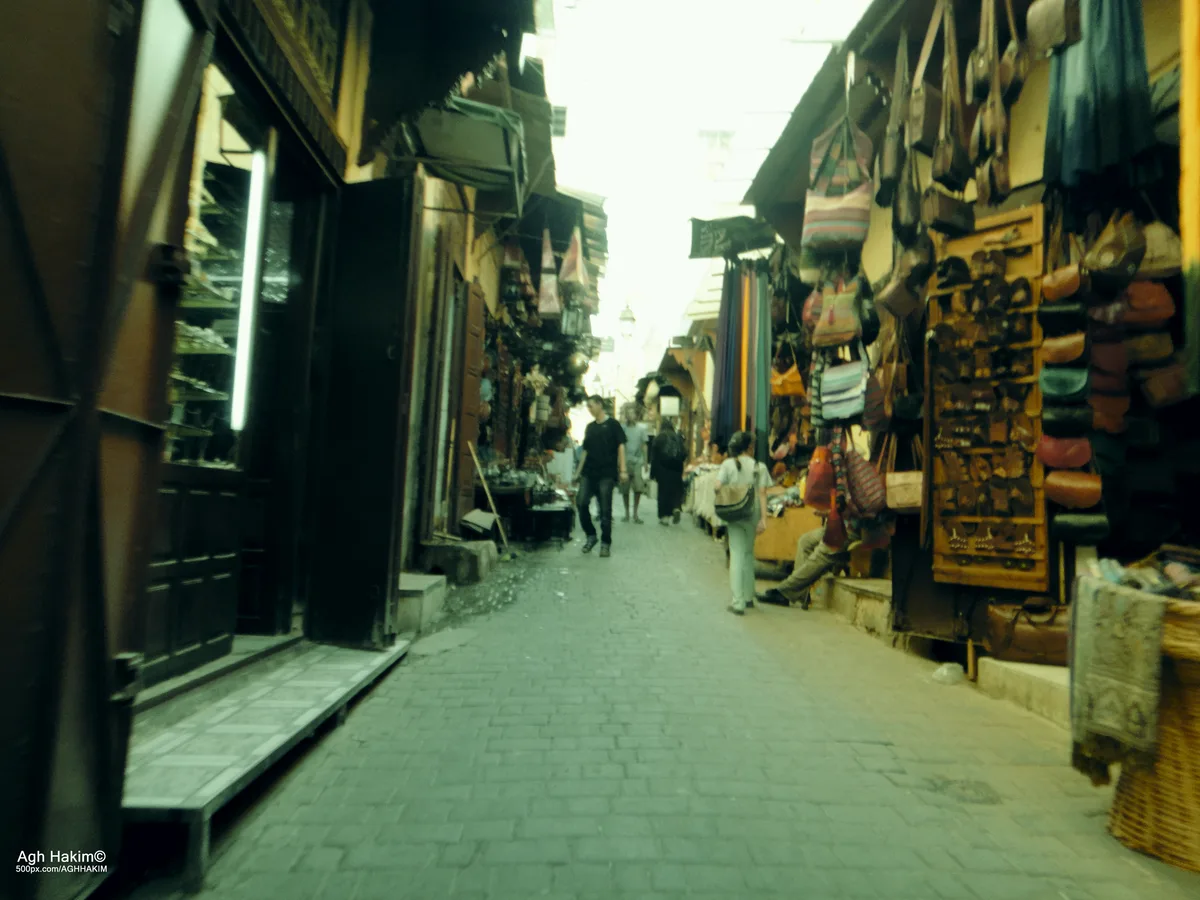
Is Morocco expensive to visit? By the standards of the countries most of its visitors fly in from, no — Morocco is genuinely inexpensive at the local end of its economy, with food and local transport costing a fraction of their European equivalents. But the honest answer is that Morocco is two destinations sharing a flag, and the tourist-facing one — famous riads in high season, private drivers, premium desert camps, rooftop dining — is priced at a level that would surprise nobody in southern Europe. Whether Morocco is expensive for you depends almost entirely on which economy your trip is built in, and most travellers build, knowingly or not, a mixture of both.
How much should I budget per day in Morocco? This guide deliberately gives no single figure, because the rival figures for the same travel style currently disagree with each other by a factor of two or more, and choosing one would be pretending that disagreement away. The disagreement comes from what each total includes: whether the desert tour sits inside the average or outside it, whether sleep means a dorm or a riad, whether transport means a shared taxi seat or a private driver, and whether the trip is a slow month or a fast week. Build your budget by the buckets in this guide — sleep by city, food by world, movement by day, the desert as one separate line, entries by count, tips as a practice — and the daily figure that falls out will be the only one built from your trip rather than from somebody else’s.
Is haggling really expected, and how does it work? In the souks, in unmetered taxis and in much of medina commerce, yes — the first price assumes negotiation, and paying it without a word marks you as either very hurried or very new, both of which the price had already banked on. The working method is unhurried and friendly: show interest without hunger, counter well below the ask, expect to meet somewhere in the middle distance, and be genuinely willing to walk away, because the credible walk-away is the only leverage a buyer has in the system. Just as important is the boundary: do not bargain over things you do not actually want, do not reopen a deal once hands are shaken, and leave the fixed-price world — shops with marked prices, pharmacies, supermarkets, ticket counters — entirely out of it.
Can I rely on cards and ATMs, or do I need cash? You need cash, and the cards are a supplement rather than a substitute. Hotels, larger restaurants, supermarkets and the railway take cards happily, but the Morocco of souks, stalls, petit taxis, porters and tips runs on notes and coins alone, and that Morocco is most of the trip. ATMs in every town will keep you supplied; the disciplines are to decline the machine’s own currency conversion, to carry small denominations deliberately, and to remember that the dirham is a closed currency — arrive without it, leave without it, and keep your exchange receipts for the final reconversion.
What is the single most expensive part of a Morocco trip? For most travellers it is a tie between two lines. The desert journey is the largest single purchase — vehicle, distance, camp and camel economy bundled into one payment — and peak-season sleep in Marrakech is the largest accumulated one, a famous riad in a famous week quietly outspending everything else put together. Both are visible in advance and worth their money when bought knowingly. The most expensive part of a careless trip is different: the commission chain and the first-day mistakes, which buy nothing at all.
Should I book a desert tour before I travel, or arrange it in Morocco? Both routes work, and the choice is a trade rather than a test. Booking ahead buys certainty — the camp, the vehicle class, the inclusions, the reviews of strangers — at a price that includes whoever sold it to you. Arranging it in Morocco, through your riad or a local agency once you can see the operation, usually costs less and lets you judge what you are buying, at the price of flexibility: in high season the good camps fill, and a traveller with fixed dates has less room to improvise. Whichever route you choose, the protection is the same — inclusions agreed plainly before money moves: which dunes, which camp, what is bundled, and what happens if the weather turns.
The Short Version
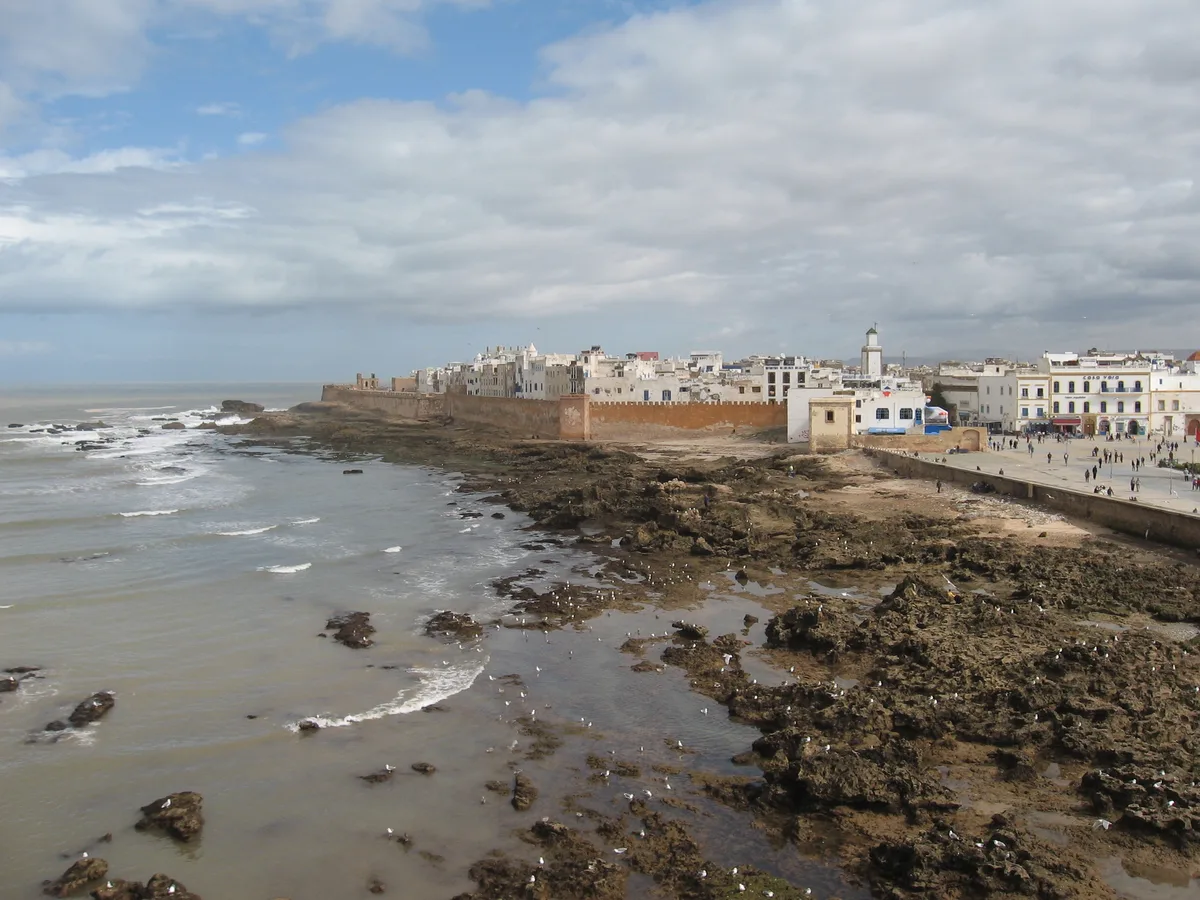
The short version. Morocco does not have one travel cost; it has a pricing system, and the traveller who can see the system stops being surprised by its prices. Two economies share every city — the negotiated medina and the fixed-price new town — and your budget is decided by how you mix them, by the season you travel in, by the courtyard you sleep behind, and by one large, deliberate desert-shaped line that should never be hidden inside a daily average. Sleep by city rather than by night, eat where the country eats and save the rooftops for chosen evenings, ride the fixed-price trains and coaches and agree every negotiated fare before the wheels move, pay guides openly and treat anything free as a price not yet shown, carry small notes, tip as part of the system rather than as an afterthought, and spend your splurges on purpose — one great riad, one proper desert night, one meal you will remember. The rival daily totals disagree because they describe different trips priced in different worlds, and the only total worth trusting is the one assembled from your own route, your own season and your own style. For current train times and fares, the official ONCF site is the source that outranks every page on the internet, this one included — and the rest, as the sections above argue, is mostly a matter of agreeing the price before the journey, in every sense Morocco offers.
None of that requires travelling cheaply, and this guide has never argued that you should. It requires travelling consciously — knowing which world each dirham is being spent in, and choosing that world on purpose. Do that, and Morocco stops being the destination whose costs nobody can agree on, and becomes what it has been all along: one of the best-value journeys in the world for the traveller who can see how it prices itself.