Most Albania lists hand you a ranking of places and call it a plan. This one is built differently, because a trip is not made of places — it is made of things you actually do: an hour swimming out to an island, a day walking over a mountain pass, a slow evening in a castle village where people still live inside the walls. So the 15 entries below are verbs, not postcards. Each one tells you what the experience involves, where it fits in a route, and when in the year it works — and each one is honest about effort, because the gap between Albania’s easiest pleasure and its hardest is probably the widest in Europe for a country this small.
The things to do in albania are best grouped the way Albania itself is arranged: the Riviera and the far south, where the days are measured in swims; the mountains of the north, where they are measured in passes and ferry crossings; the historic cities and old towns of the centre and south; and the lakes, canyons and long lunches that fill the gaps between them. If you are still shaping the trip itself, our Albania travel guide covers the planning; if you want the places ranked rather than the experiences explained, our best places to visit in Albania list is the companion to this page. This page is for the days themselves.
One promise before the list starts. You will find no prices, no opening hours and no ferry timetables below — not because they do not matter, but because in Albania they change with the season, the year and sometimes the weather, and a figure printed with false confidence is worse than none. Where a detail like that decides an experience, this guide tells you what the arrangement is and where to confirm the current version. What it does give you in full is the part that does not change: what each of these days actually feels like, and what it asks of you.
At a Glance – the 15 Experiences on One Screen
Here is the whole list before it is argued for. Read it by columns rather than rows: the region tells you what a day can be chained with, the season tells you when the experience is truly on, and the effort column is the one most Albania lists leave out — the difference between a swim you can do in an hour from the beach towel and a mountain crossing that needs the right month, the right boots and a guesthouse booked at both ends.
| Experience | Where | Best months | Effort |
|---|---|---|---|
| Swim and beach-hop the Riviera | Ksamil, Himara, Dhermi | May to October, best June and September | Low |
| Walk the ruins at Butrint | South of Saranda | Year-round, best in spring and autumn | Low |
| Stand over the Blue Eye spring | Near Saranda | Year-round | Low |
| Drive the Llogara Pass | Between Vlore and the Riviera | Year-round in clear weather | Low |
| Hike Theth to Valbona | Albanian Alps | Mid-June to mid-September | High |
| Ride the Koman Lake ferry | The north, on the way to Valbona | Late spring to early autumn | Low |
| Climb Rozafa Castle, slow down in Shkoder | Shkoder | Year-round | Low to medium |
| Give Tirana a full day | The capital | Year-round | Low |
| Wander Berat’s castle and quarters | Berat | Year-round, best in spring and autumn | Medium |
| Explore Gjirokaster’s castle and old bazaar | Gjirokaster | Year-round | Medium |
| Browse Kruja’s bazaar, walk its castle | Kruja | Year-round | Low to medium |
| Walk the ruins of Apollonia | Near Fier | Year-round, best in spring and autumn | Low |
| Raft or rim-walk the Osum Canyon | Near Corovode | Rafting in spring; rim walks most of the year | Medium |
| Linger on Lake Ohrid at Lin and Pogradec | The east | May to October | Low |
| Eat the country – farm lunches and byrek | Everywhere | Year-round | None worth mentioning |
Two patterns in the table are worth holding onto. The first is that Albania’s south is a summer engine and its mountains are a short-season one: the Alps crossing is honestly available for about a quarter of the year, while everything on the Riviera and in the historic towns runs far longer. The second is how much of the list costs nothing but attention — castle lanes, bazaars, viewpoints, a spring in the woods, a lake shore. The sections below take the experiences in the table’s order, region by region.
The Riviera and the South – Days Measured in Swims
Albania’s south is where most trips begin, and its experiences share a rhythm: mornings in the water, shade in the middle of the day, and the interesting ruins and viewpoints kept for when the light comes back. The four experiences in this section all sit within the same southern loop, which is why they chain so well — a beach base, an ancient city, a mountain spring and a famous road, close enough together that none of them needs its own expedition.
The practical shape of the south is a base and spokes. Saranda and Ksamil hold the bottom of the loop, with Butrint and the Blue Eye as their day trips; Himara and Dhermi slow the journey down halfway up the coast; and Vlore, at the top, is where the region meets the rest of the country. Travellers who try to sleep in a different town every night see the road; travellers who pick two bases see the south.
Swim and Beach-Hop the Riviera – Ksamil, Himara and Dhermi
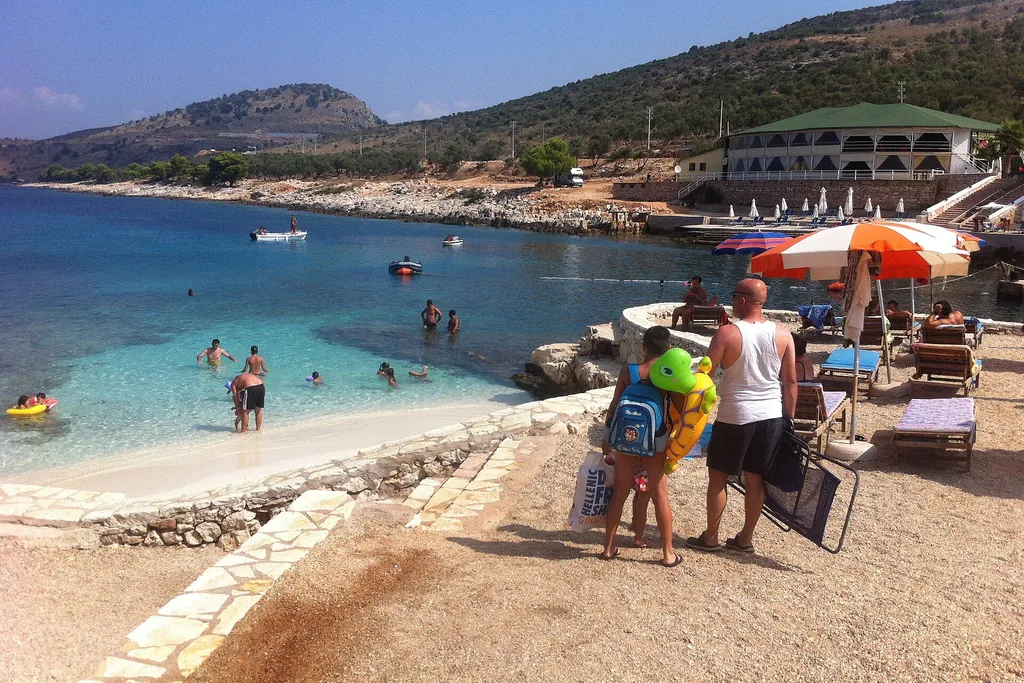
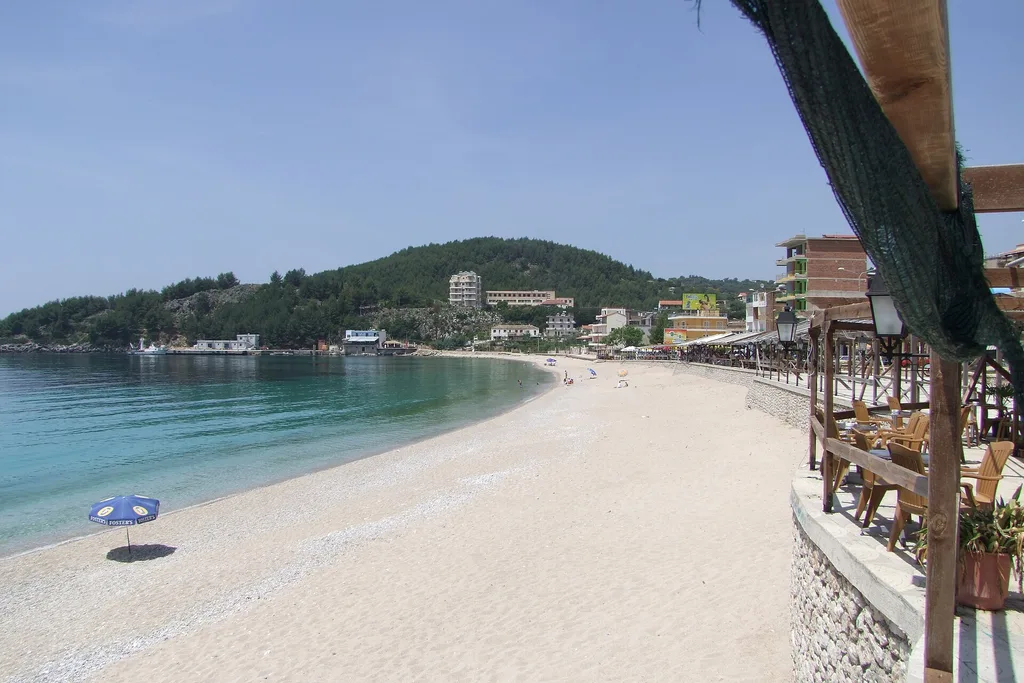
The signature Albanian experience is not a single beach; it is the hop between them. The Riviera runs down the Ionian coast from the Llogara Pass to Saranda, and its beaches change character every few kilometres — long pebbly sweeps at Dhermi and Drymades, the town beach and castle cove at Himara, small serviced bays around Saranda, and at Ksamil, the postcard end of the coast, a cluster of little offshore islands close enough to swim to or reach by boat. The doing of it is simple and specific: pick a base, swim before breakfast when the water is glass, move one bay along for the middle of the day, and let the late swim run into the evening. The water is the point — clear, warm through the summer, and over the pale pebble-and-sand bottoms of the south, a colour that still surprises people who thought only Greece made it.
Honesty about the calendar matters here. In July and August the famous bays, Ksamil above all, fill to European-holiday density, and the experience changes from spacious to sociable; in June and September the same water comes with room in it, and May and October swims are entirely possible in a mild year. The hop also rewards a small discipline: the beaches face west, so afternoons are the long golden session, and the coves that are quiet are usually the ones a short walk or a short boat ride from the serviced ones. Treat the Riviera as a sequence of swims rather than a single resort, and it is the experience the whole country’s reputation is built on.
Walk the Ruins at Butrint – a City You Read by Walking
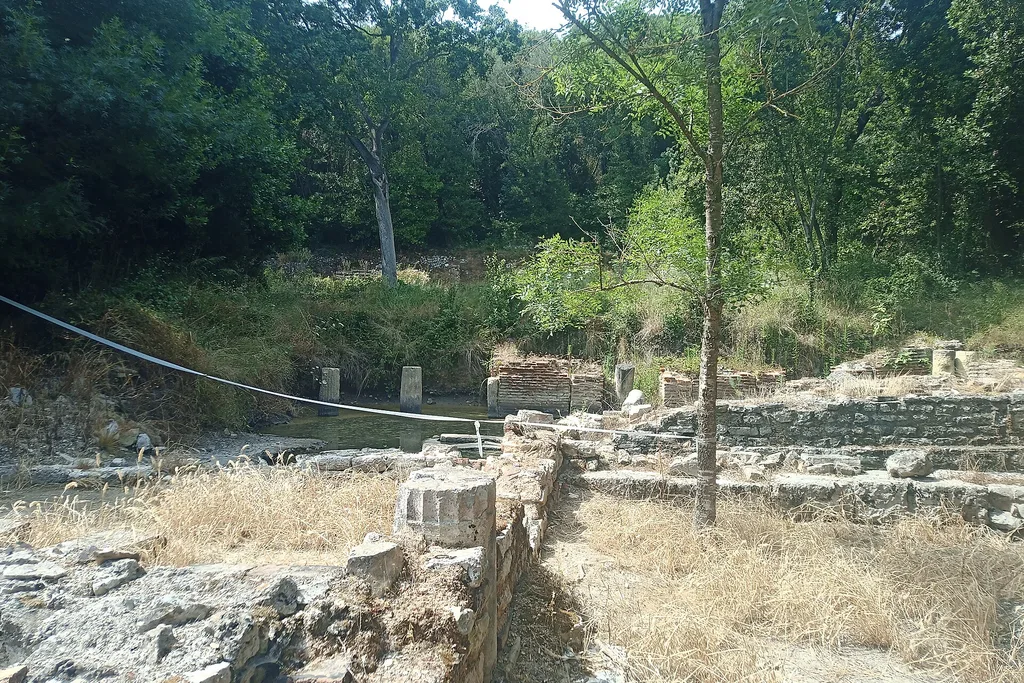
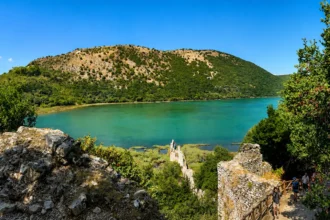
Some ruins are looked at; Butrint is walked, and the walking is the experience. The ancient city occupies a wooded peninsula between a lake and a channel south of Saranda, and the visit unfolds as a circuit in the trees: a Greek theatre that often holds a sheet of water in its orchestra, the remains of the Roman forum and baths, a sixth-century baptistery whose famous mosaic floor is protected under cover for most of the year — go expecting the building’s beautiful ring of columns, and treat a glimpse of the floor as luck — a great basilica rebuilt in the Byzantine centuries, and a small castle at the top, now the site museum, where the whole geography suddenly assembles itself in one view. UNESCO inscribed Butrint in 1992 under criterion (iii) alone, as evidence of the ancient and medieval civilisations of this coast, and the listing’s logic is exactly what you feel on the ground: not one monument but a Mediterranean city, layer on layer, preserved because its own lagoon rose and emptied it.
As an experience it asks little and gives a lot: a half day, mostly in shade, at a walking pace, with the effort concentrated in one climb to the castle. It pairs naturally with a Ksamil swim on the same day — ruins in the cool of the morning, water in the afternoon — and it is the south’s essential counterweight to the beach, the thing that turns a Riviera holiday into a trip. Go early in summer, carry drinking water, and take the circuit in order rather than making for the famous stops; Butrint explains itself in sequence.
Stand Over the Blue Eye – the Spring in the Woods
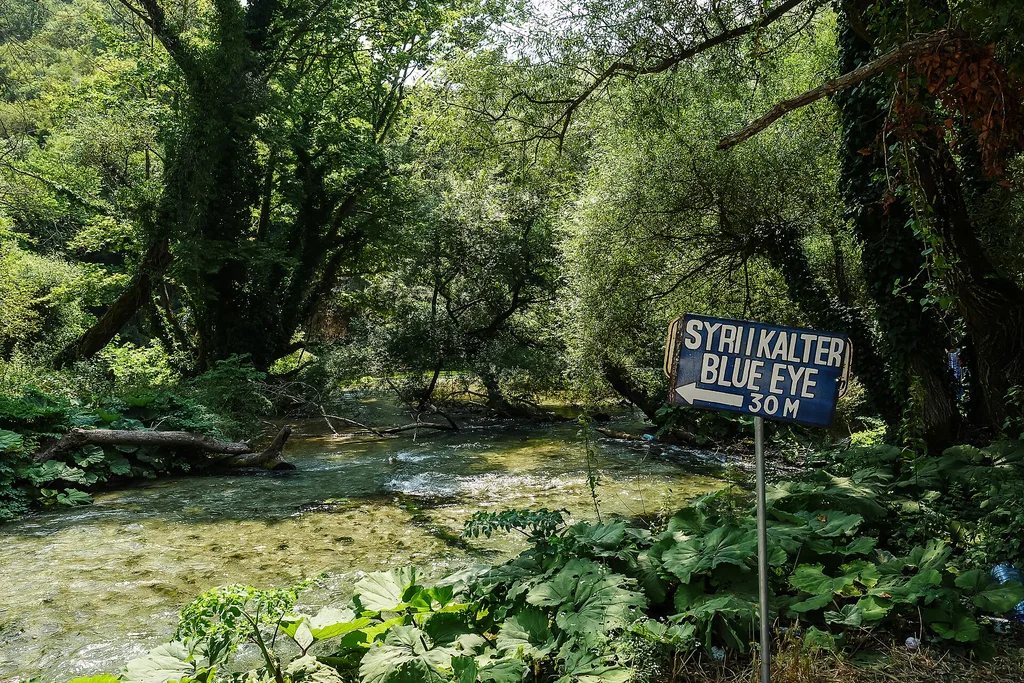
Near the road between Saranda and Gjirokaster, a short walk through oak woods brings you to a spring that behaves like a magic trick. The Blue Eye — Syri i Kalter — is where the Bistrica river comes out of the ground in a single upwelling: a pool of intense, dark blue at the centre where the water rises from depth, ringed by bright green shallows, and startlingly cold all year. Divers have gone down more than fifty metres without finding the bottom, and the spring’s full depth is genuinely unknown, which gives the place its charge: you are looking down a blue shaft into the mountain. The experience itself is brief — a walk in, time on the viewing edge, the cold coming off the water even in August — but it is one of the most repeated detours in Albania precisely because it takes so little time and stays in the memory so long.
Two honest notes keep the visit right. First, this is the southern Blue Eye near Saranda, not the Blue Eye of Theth in the northern mountains — Albania has two famous springs with the same name, and itineraries that blur them produce very confused days. Second, the Blue Eye is a stop, not a day: it slots into the drive between the coast and Gjirokaster or Berat, or into a Saranda-based morning, and it is at its best early, before the day’s visitors arrive and while the woods are still quiet. Swimming has been restricted at various times to protect the spring — check the arrangement on the day rather than trusting any photograph of people in the water.
Drive the Llogara Pass – the Road That Drops to the Sea
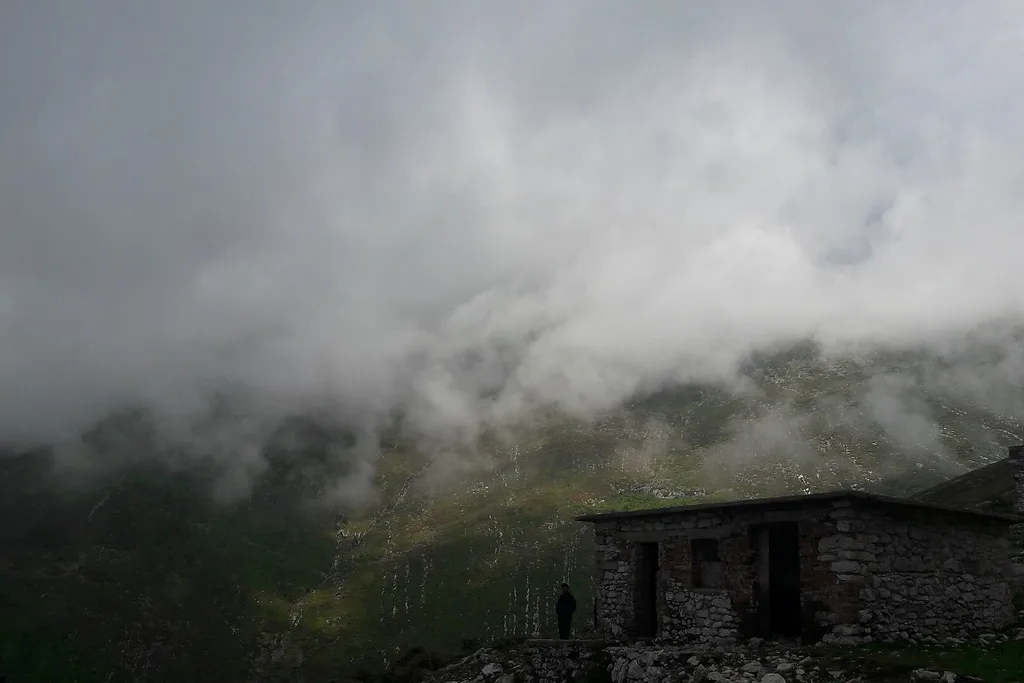
Every coast has one road that is itself the attraction, and Albania’s is the SH8 over the Llogara Pass. The experience is the crossing: a climb from the Vlore side through the pine forest of the Llogara National Park to a pass at roughly a thousand metres, a famous viewpoint where the land simply stops, and then the long, switchbacking descent with the Ionian filling the windscreen and the Riviera unspooling below — Dhermi first, then bay after bay running south. Paragliders launch from the slopes near the pass in season, and on the right day the descent is done in their company. It is a drive to be taken slowly, at viewpoint pace, and ideally in clear weather, when the Greek island of Corfu and the Karaburun Peninsula sit in the same frame.
The pass also does practical work in a trip: it is the hinge between the centre of the country and the south, and crossing it marks the moment a journey changes key from cities and plains to the sea. Drivers should treat it with the respect any mountain road earns — it is well-surfaced and heavily travelled, but it is a real pass, with real weather; the photograph above, of cloud moving across the summit, is its other mood, and in that mood the right move is patience rather than schedule. Either way, do not rush it: this is the rare transfer that belongs in the experiences list on its own merits.
The Mountains and the North – Passes, Ferries and Stone Villages
The north plays by a different calendar and a different tempo. Its three great experiences — the pass hike, the lake ferry, the castle above Shkoder — are really one journey in three acts, and most travellers who do them do all three: up into the Albanian Alps, over the pass on foot, and out by water. The season is short and the logistics are part of the pleasure, and everything in this section rewards being planned as a single arc rather than three separate days.
The arc has a natural direction. Shkoder, the north’s capital in all but name, is where it starts and ends: the roads into the mountains leave from its edge, and the ferry that carries you out of them is reached from its streets. Build the north as a loop out of Shkoder — up one valley, over the pass, out by the lake — and the logistics, which look complicated on a map, resolve into a single flowing journey.
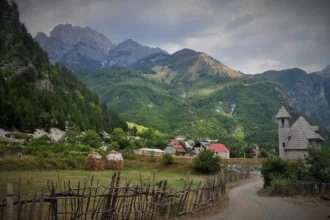
Hike From Theth to Valbona – the Great Pass Crossing
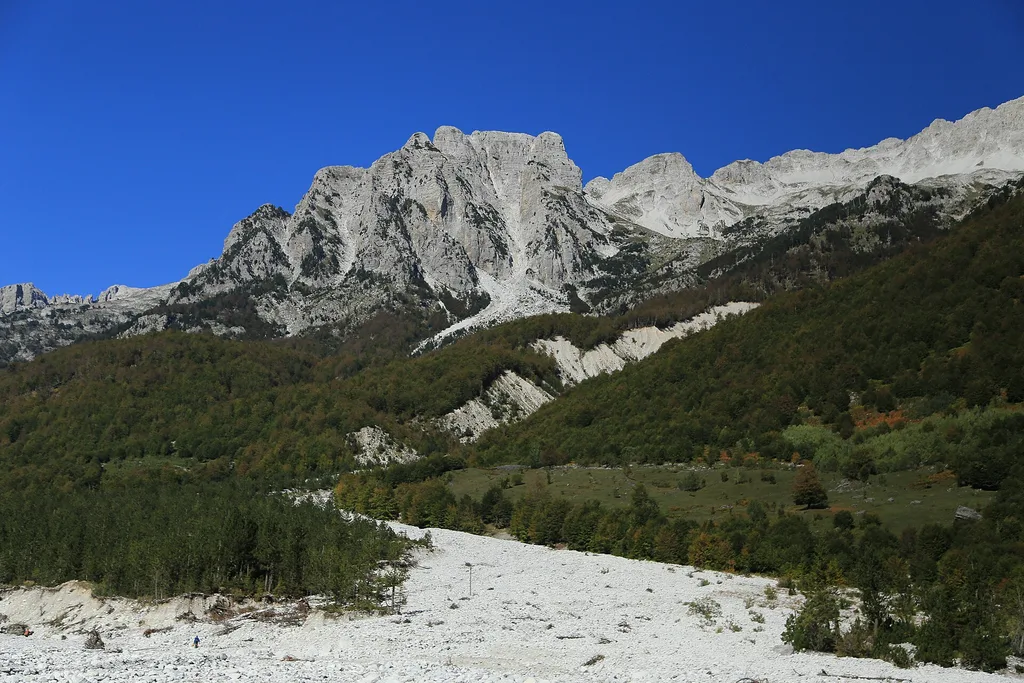
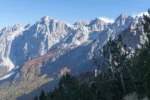
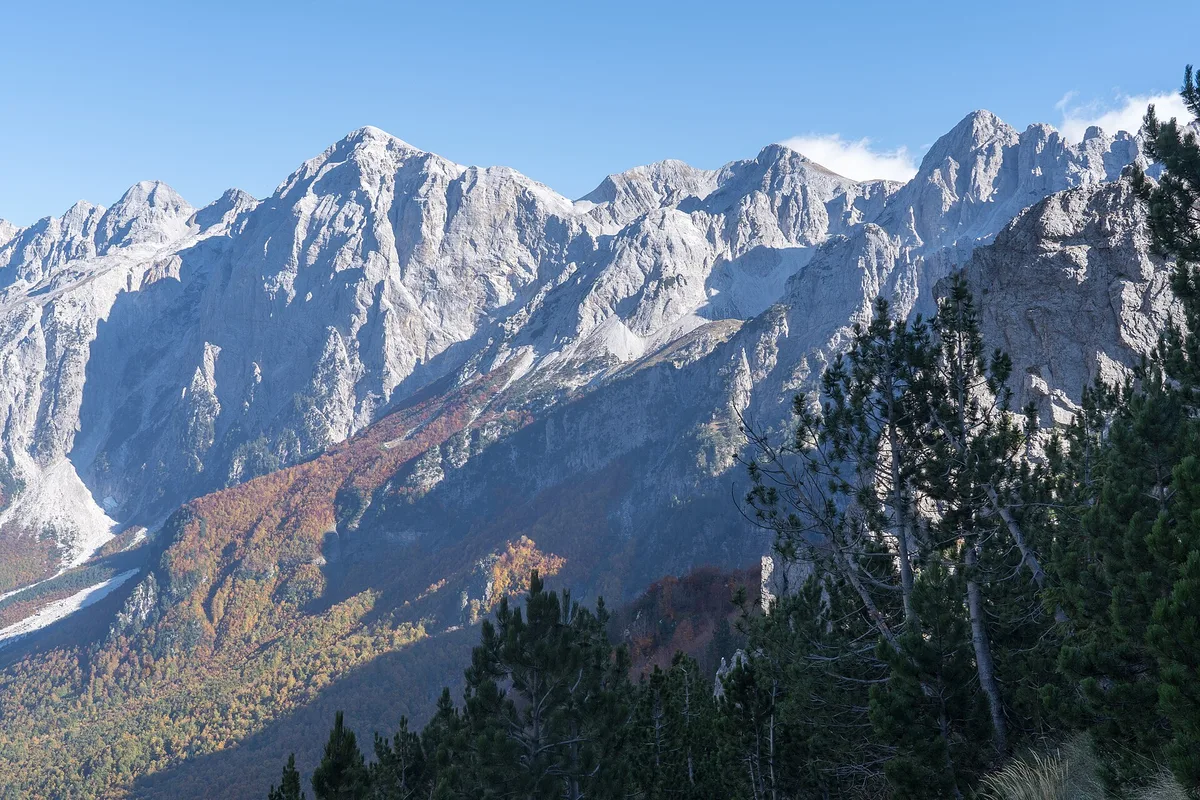
If one experience defines adventure in Albania, it is this walk: from the stone village of Theth, up through beech forest and open mountainside to the Valbona Pass, and down the far side into the Valbona Valley — two of Europe’s great mountain valleys joined by a single footpath. The figures are honestly a range, because sources and route variants differ: roughly 14 to 18 kilometres and six to nine hours of walking, with the day’s effort concentrated in the climb to the pass and the reward — both valleys laid out at once, in opposite directions — concentrated at the top. The villages at each end are half the experience: Theth, with its stone church, its lock-in tower and its guesthouses under the peaks, and Valbona, a long green valley of farms and family-run stays along the river. Since January 2022 both valleys have sat inside a single protected area, the Albanian Alps National Park, formed by merging the older Theth and Valbona Valley national parks.
The season is the fact to build around. The reliable window is mid-June to mid-September, with late spring and early autumn possible in kind years and dangerous in unkind ones, because the pass holds snow and the descent on the Valbona side can stay serious after the valleys have turned green. Most walkers sleep in guesthouses at both ends, send heavy bags around by road or horse, and walk it one-way as part of the northern arc rather than as a there-and-back. It is a genuinely demanding day and a genuinely manageable one — a fit walker with an early start, water and respect for the weather will remember it as the best day of the trip. Outside the season, do not improvise it: the mountains keep this experience, and they lend it out only in summer.
Ride the Koman Lake Ferry – the Fjord That Isn’t
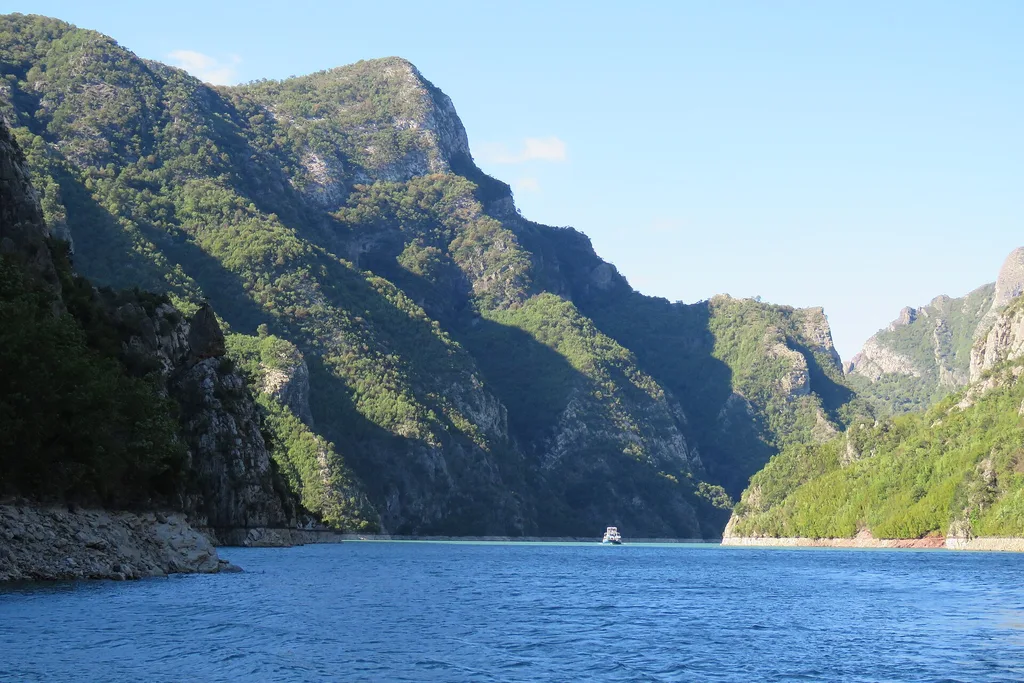
Koman Lake is not a lake in the gentle sense; it is the Drin River drowned behind the Koman hydroelectric dam, and the reservoir runs through a steep, narrow gorge system that looks, from the deck of the ferry, uncannily like a Norwegian fjord transplanted to the Balkans — green water, rock walls, tiny shore settlements reachable only by boat. The experience is the crossing itself, a couple of unhurried hours aboard one of the ferries that link Koman with Fierza, carrying locals, travellers, cars and motorbikes, and it does double duty in an Albanian trip: it is transport, the classic link between Shkoder and the Valbona side of the Alps, and it is simultaneously one of the finest journeys in the country, worth the day on its own.
Because it is working transport, the ferry runs to its operators’ schedules rather than to a printed timetable you should trust from afar — seasons shift the pattern, and the sensible traveller confirms the current arrangement a day or two ahead, through their guesthouse or the operator, and builds slack around it. Taken at the end of the Theth-to-Valbona crossing, the ferry completes the northern arc in the right order: walk out of the mountains, then float out of them. Go up on deck, stay there, and let the gorge do the work. It is the slowest experience on this list and, for many travellers, the one they describe first when they get home.
Climb Rozafa Castle and Slow Down in Shkoder
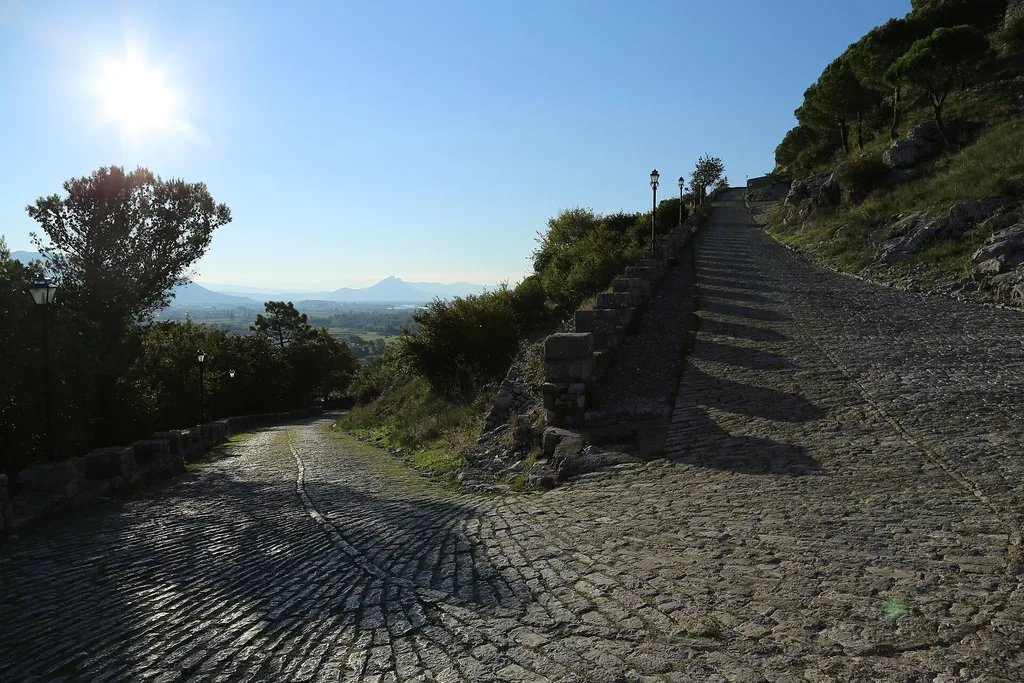
Shkoder, the north’s easygoing city of bicycles and cafe streets, is guarded by one of the great castle experiences of the Balkans. Rozafa Castle stands on a rocky hill where three rivers meet, and the climb — up the cobbled ramp, through gates layered from Venetian and Ottoman centuries on older foundations — ends in a spread of walls and a museum, with the real exhibit outside them: Lake Shkoder on one side, the largest lake on the Balkan Peninsula, the rivers braiding across the plain below, and the Albanian Alps standing at the back of everything. The castle carries the country’s most famous building legend, of Rozafa, the young mother walled into the foundations so the walls would finally stand — told as legend, as it should be, and retold on the spot by everyone in Shkoder.
The experience works best at the day’s ends, when the light is on the lake and the heat is off the stones, and it pairs with the slower Shkoder that surrounds it: a morning coffee that becomes two, the pedestrian streets of the old centre, the lake shore at Shiroke a short ride away for fish restaurants and swims. Shkoder is also the practical gateway to everything else in this section — the Alps roads leave from here, and the Koman ferry is reached from here — so give it the castle evening rather than treating it as a pass-through. The north’s journeys all begin and end in this city; the castle is where you see why.
Cities, Castles and Old Towns – History You Walk Through
Albania’s historic towns are not museum pieces, and that is what makes spending time in them an experience rather than a sightseeing chore. People live inside Berat’s castle walls, shop in Gjirokaster’s bazaar and drink coffee under Kruja’s; Tirana, meanwhile, has turned its own difficult twentieth century into the country’s most distinctive museums. The five experiences in this section are the cultural core of a trip — all of them work in any season, and most of them reward slowness more than coverage.
They also divide neatly by commitment. Kruja is a half-day from the capital; Tirana deserves a full day of its own; Berat and Gjirokaster each repay an overnight, because both towns change character when the day visitors leave; and Apollonia is the gentle half-day that fits almost anywhere in a route. Taken together they are the proof that Albania’s heritage is not a detour from the trip — on most itineraries, it is the trip’s spine.
Give Tirana a Full Day – the Square, the Bunkers and the Cable Car
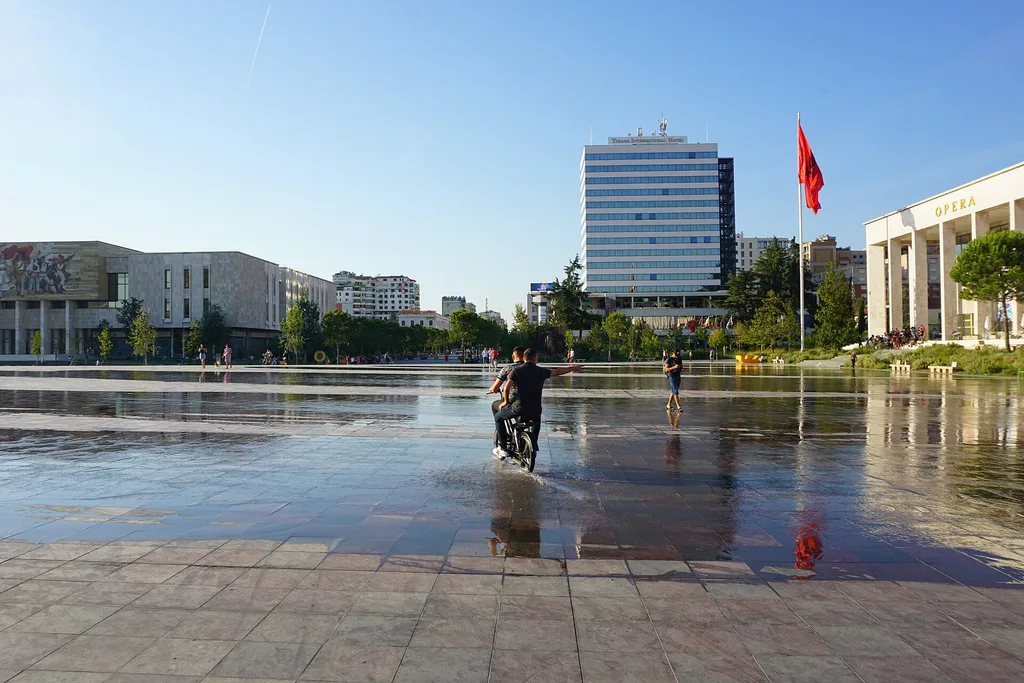
Tirana is routinely treated as an arrival and departure formality, and that undersells the most interesting day in urban Albania. Start in Skanderbeg Square, the vast pedestrianised heart of the city, where the national hero’s statue, the Ottoman-era Et’hem Bey Mosque — small, beautiful, frescoed inside — and the National History Museum with its huge mosaic front face each other across the paving. From the square, the day’s theme assembles itself, because Tirana’s real subject is its own past: this was the capital of one of Europe’s most closed communist states, and the city has converted that era’s machinery into museums. Bunk’Art, installed in a vast Cold War bunker built for the political leadership, and Bunk’Art 2, in the former interior ministry’s shelter near the centre, mix the regime’s history with art; the House of Leaves, the old surveillance headquarters, tells the story of the watching state in the rooms where it happened. Individually they are good museums; done in sequence, they are an experience no other European capital offers in quite this form.
Balance the bunkers with the city’s present tense. The Blloku district, once reserved for the party elite and closed to ordinary Albanians, is now the cafe-and-bars quarter — an irony Tirana wears cheerfully — and the Pyramid, built as a museum to the dictator Enver Hoxha, has been remade as a climbable public landmark. Then leave the streets entirely: the Dajti Ekspres cable car climbs from the city’s edge to Mount Dajti, the green wall behind the capital, where the experience is the ride itself — the city shrinking to a grid below — and an hour of pine forest and viewpoints at the top. A full Tirana day, square to bunker to cable car, explains modern Albania better than any single sight in the country.
Wander Berat’s Castle and Its Thousand Windows
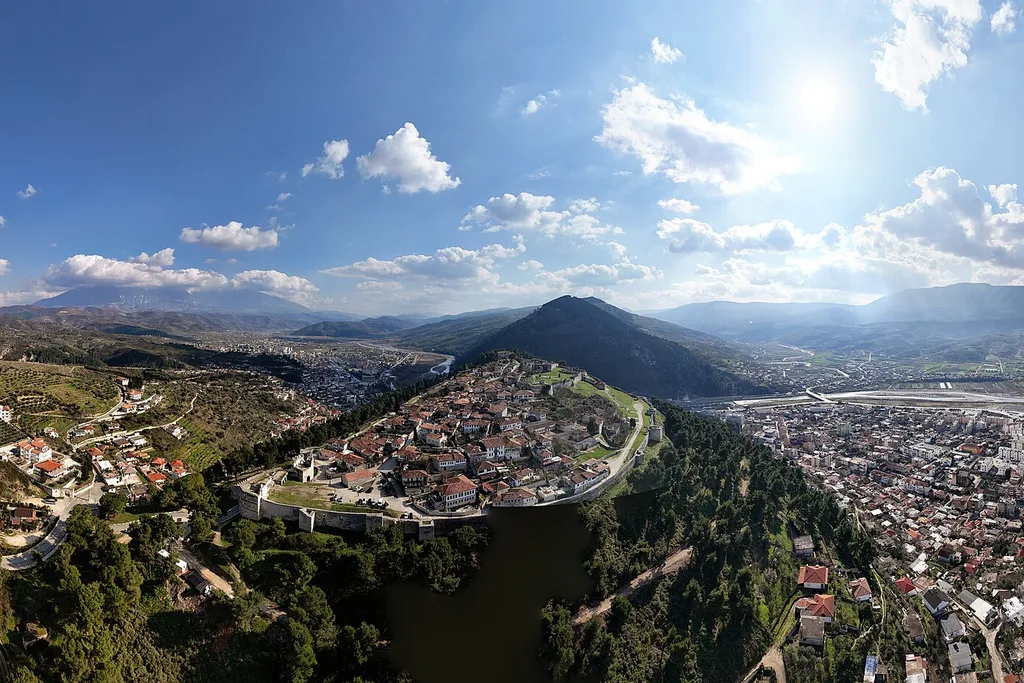
Berat’s experience begins with a view and then turns it inside out. From across the Osum river, the Mangalem quarter climbs its hill in stacked white Ottoman houses, window after window — the “city of a thousand windows” of the postcards. But the doing of Berat is to climb into the picture: up the cobbled lane to the castle, through its gate, and into a citadel that is not a ruin but a lived-in village, with families in the stone houses, small churches among the lanes, and the Onufri Museum, holding the vivid icons of Albania’s great sixteenth-century painter, inside the Church of the Dormition. The castle’s largely thirteenth-century walls enclose one of the most atmospheric strolls in the Balkans — ramparts at the edge with the river plain below, cats on warm stone, somebody’s washing over a Byzantine wall.
Berat is half of a joint UNESCO inscription, the Historic Centres of Berat and Gjirokastra: Gjirokastra was listed in 2005 and Berat added in 2008, both for their Ottoman-era fabric. Below the castle, cross the Gorica Bridge to the Gorica quarter for the classic view back, and give the ethnographic museum’s grand Ottoman house its half hour. Effort is honest here: the castle climb is steep cobbles, and the whole experience is best taken slowly, in the cooler halves of the day. Of all Albania’s old towns, Berat is the one to stay overnight in — the windows light up, the day visitors leave, and the castle village becomes itself again.
Climb Gjirokaster’s Castle and Get Lost in the Old Bazaar
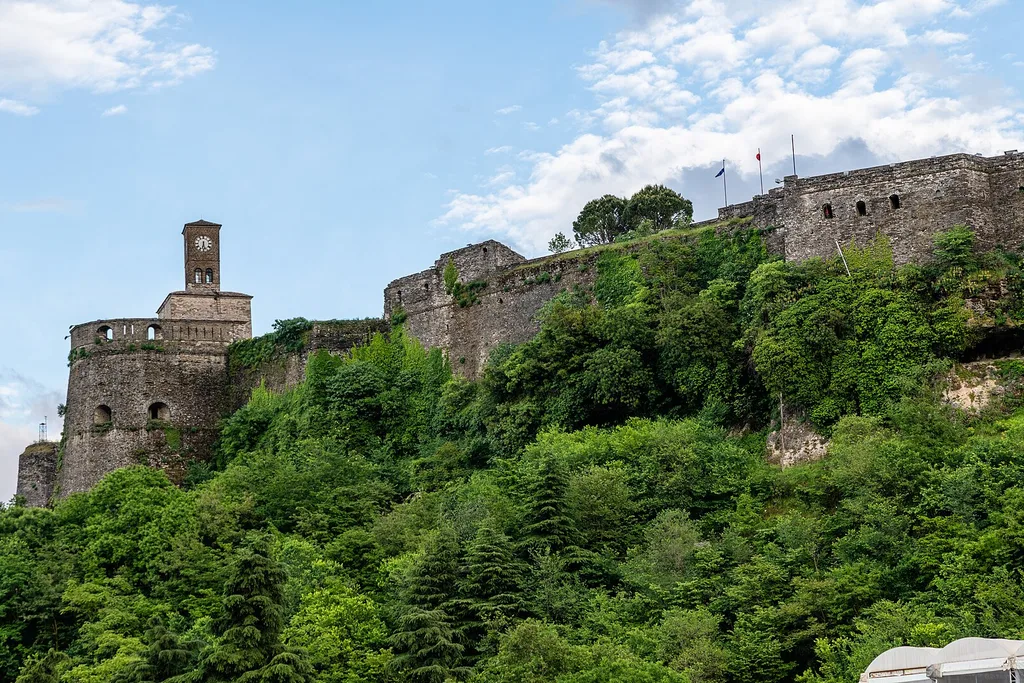
Gjirokaster does everything at a slope. The old town climbs its hill in cobbled lanes between tall stone houses roofed in grey slate, and above everything sits the castle — one of the largest in the Balkans — a long fortress of walls, arched galleries and a clock tower, holding a military museum and, famously, the wreck-age presence of a US Air Force jet that came down in the 1950s and has been displayed there ever since, wrapped in competing stories about how it arrived. The climb to it, up through the old bazaar’s lanes of workshops and souvenir stalls, is the experience’s spine: this is a town you explore vertically, and every rest stop comes with a view over the slate roofs to the Drino valley.
Gjirokastra was inscribed by UNESCO in 2005 as a rare, well-preserved Ottoman town, and the doing of it goes beyond the castle. The great tower houses are the other half: the Zekate House, a grand early nineteenth-century residence of galleries and carved ceilings, shows how the town’s wealthy families lived above their defensive ground floors, and the ethnographic museum, in the house where the dictator Enver Hoxha was born, layers traditional life and uncomfortable history in one visit. Plan the town as a half day of climbing and descending — bazaar, castle, tower house, coffee — and let the lanes get you lost at least once. They will, and it is the correct way to see the place.
Browse Kruja’s Bazaar and Walk Skanderbeg’s Castle
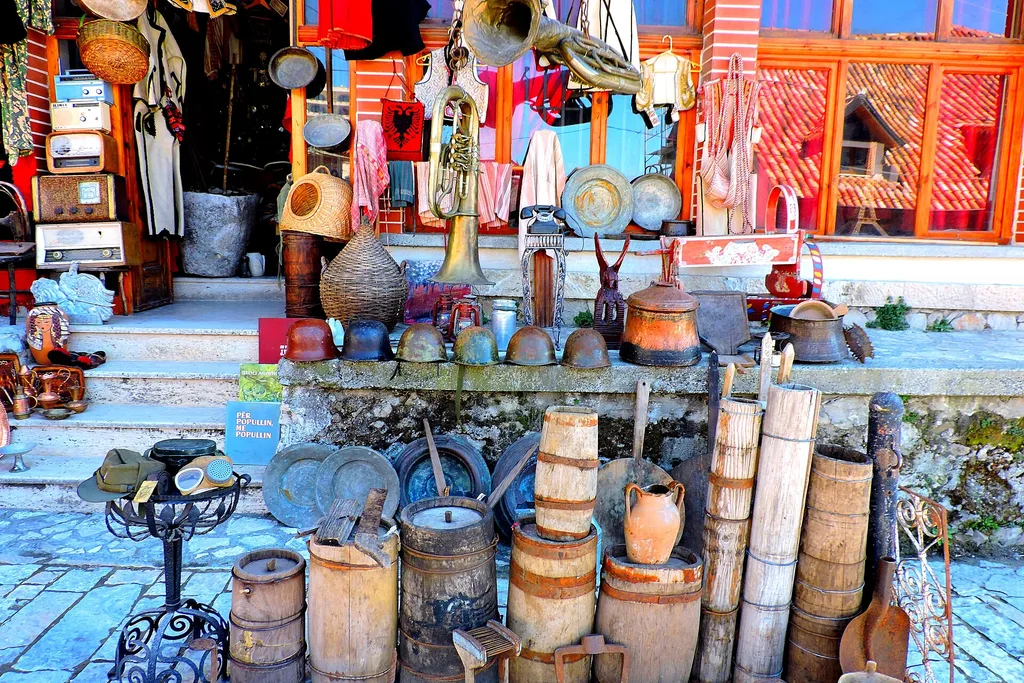
Thirty minutes of mountain road from Tirana, Kruja packs Albania’s national story into one small town. The experience starts in the Old Bazaar, a single restored cobbled street of wooden-fronted shops under the castle rock, selling the country’s best concentration of traditional craft — kilims and carpets, copper work, wood carving, felt caps, antiques of varying honesty — in a lane that has been a market since the Ottoman centuries. It is tourist-facing and knows it, and it is still the most enjoyable shopping street in Albania; haggle gently, look at the workshops behind the stalls, and let the lane deliver you to the castle gate at its top.
The castle above held out against the Ottoman Empire for a generation. Kruja was the stronghold of Gjergj Kastrioti — Skanderbeg — whose resistance from 1443 until his death in 1468 made him Albania’s national hero, and the fortress that crowns the rock now houses the Skanderbeg Museum, telling that story in the rooms of the citadel itself, with the Ethnographic Museum in a fine Ottoman house below it. The combination is what makes Kruja an experience rather than a viewpoint: bazaar below, resistance above, and between them the whole arc of how Albanians tell their own history. It is the classic half-day from the capital, and one of the few that fully earns the status.
Walk the Ruins of Apollonia – a Greek City in the Hills
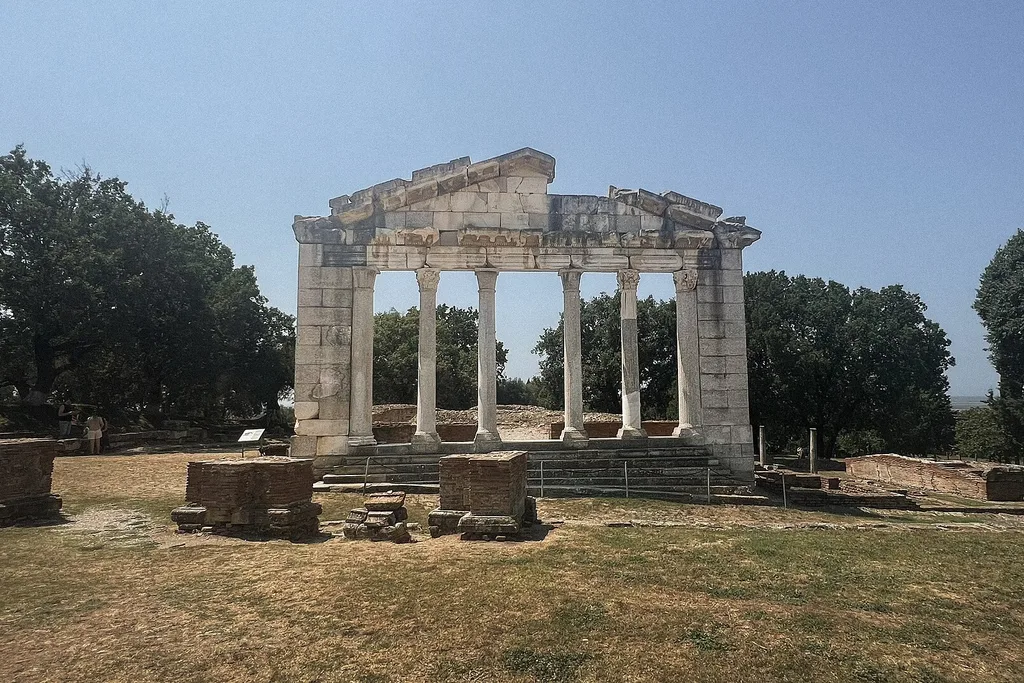
An hour from the Riviera’s northern end, in low green hills near Fier, stands the quietest great ruin in Albania. Apollonia was founded in 588 BC by Greek settlers from Corinth and Corcyra and grew into one of the Adriatic’s significant cities — a place wealthy enough that the young Octavian, the future emperor Augustus, was studying here in 44 BC when news came of Julius Caesar’s murder. The experience today is a walk in parkland among the city’s bones: the elegant facade of the Bouleuterion, where the council met; the Odeon and the library; the long line of the Great Stoa; and, at the site’s heart, the thirteenth-century monastery of St Mary, whose church and refectory now hold the archaeological museum. Between the monuments there is grass, shade and very often nobody else at all.
Apollonia is the connoisseur’s counterpoint to Butrint: less complete, less visited, and all the more evocative for it — a city you have to assemble in your imagination from facades and foundations, in a landscape that has gone back to farmland and quiet. As an experience it asks for an unhurried half day and repays walkers who take the whole circuit rather than the famous facade alone. It also slots neatly into the country’s geography, an easy stop on the road between Tirana and the south, or paired with the lagoon town of Vlore. Go in spring if you can, when the hills are green and the site is at its most beautiful.
Lakes, Canyons and Slow Days – the Country at Walking Pace
Not every Albanian experience faces the sea or climbs a pass. The east holds one of Europe’s great lakes, the centre-south hides a canyon that rivals the famous ones further north, and everywhere the country’s farm table is quietly becoming an attraction in its own right. These three experiences are the trip’s breathing spaces — the days that cost the least effort and, in memory, often weigh the most.
They are also the great attachables. The Osum Canyon bolts onto Berat; the farm lunch bolts onto everything; and Lake Ohrid is the natural pause on any route that crosses the country east to west, or the gentle finale to a trip that has done its climbing. Plan them deliberately rather than hopefully — a slow day scheduled is a slow day taken, and in Albania the slow days have a way of becoming the stories.
Raft or Rim-Walk the Osum Canyon
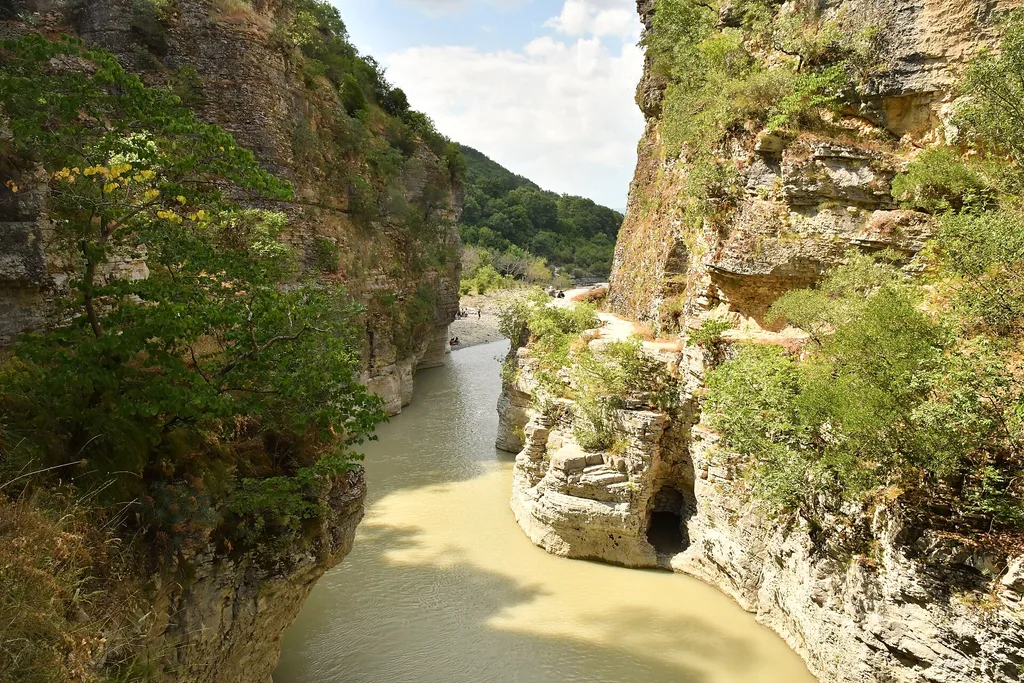
Near the small town of Corovode, in the Skrapar hills south of Berat, the Osum river has cut a gorge that surprises everyone who assumes Albania’s canyon country is all in the north: kilometres of limestone walls, in places sheer, with the river running milky-green between them and waterfalls spilling in from side streams after rain. The headline experience is the rafting — a spring season pursuit, when snowmelt and rain raise the river and outfitters run the gentler, scenic stretches of the canyon with rafts and kayaks — and it is worth being precise about the character: this is a float through spectacular scenery with lively sections, not a white-water ordeal, which is exactly why it suits travellers who want the gorge more than the adrenaline.
Out of rafting season the canyon still works, from above. Viewpoints and rough paths along the rim give the gorge’s scale — the walls, the river’s ribbon, the villages of Skrapar on the plateau — and the surrounding district is its own quiet pleasure: raki country, by local repute the proudest in Albania, of plum orchards, honey and slow lunches in Corovode and the canyon villages. Pair the canyon with Berat, an hour or so away by road, and the two together make the centre-south’s best non-beach day: castle in the morning, canyon by afternoon. As with everything run by local operators, the current season and arrangements are theirs to confirm on the day.
Linger on Lake Ohrid at Lin and Pogradec
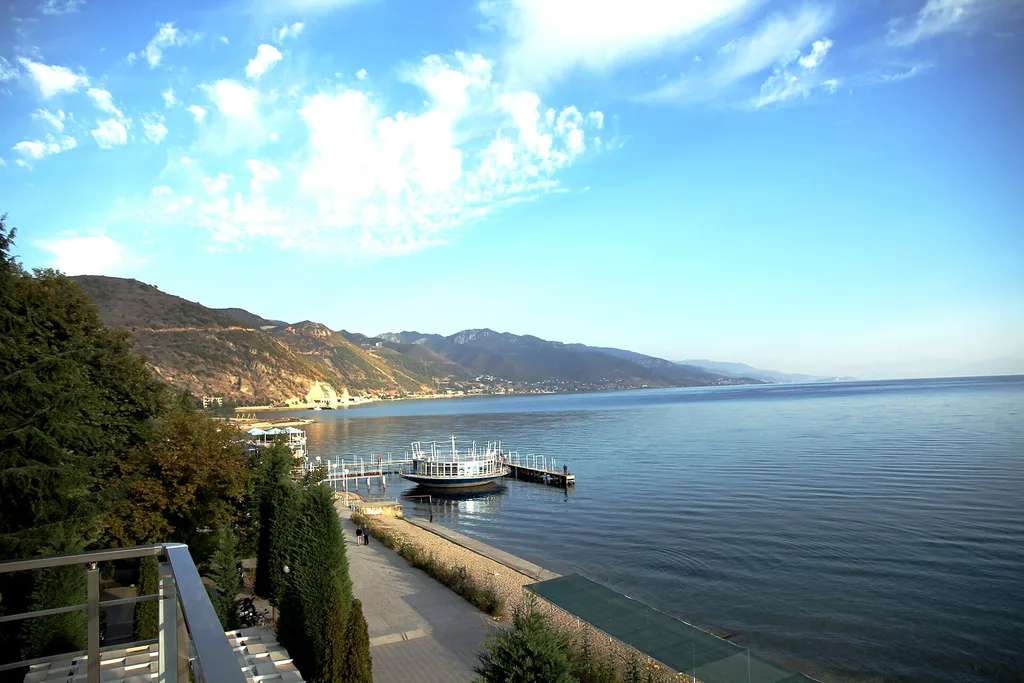
On Albania’s eastern border lies one of Europe’s oldest and deepest lakes, and its Albanian shore is the quiet side. Lake Ohrid’s great age — measured in millions of years — has made it a refuge for species found nowhere else, and the region’s World Heritage listing, first inscribed for the North Macedonian shore, was extended in 2019 to take in the Albanian part of the lake. The experiences here are gentle ones. At Pogradec, the easy-going lakeside town, the day is a promenade, a swim off the town beaches in summer, grilled fish — the lake’s koran, a trout found only here, is the local delicacy — and a long look across water that behaves like a small sea. A few kilometres north, the village of Lin sits on a small rocky peninsula, all lanes and lake views, with the mosaic floor of an early Christian basilica on the hill above it; it is the sort of place where an afternoon disappears.
The lake rewards travellers who slow down precisely because its pleasures are old-fashioned: shade, water, fish, a bicycle along the shore road, a boat out on water that has been fished and crossed for millennia. It is also the natural hinge between Albania and North Macedonia, and the shore road north from Pogradec towards the border is one of the country’s calmest drives. Come in late spring or early autumn for the lake at its clearest and quietest, and treat it as the counterweight day to the Alps or the Riviera — the experience is not doing Ohrid, it is lingering by it.
Eat the Country – Farm Lunches, Byrek and Raki
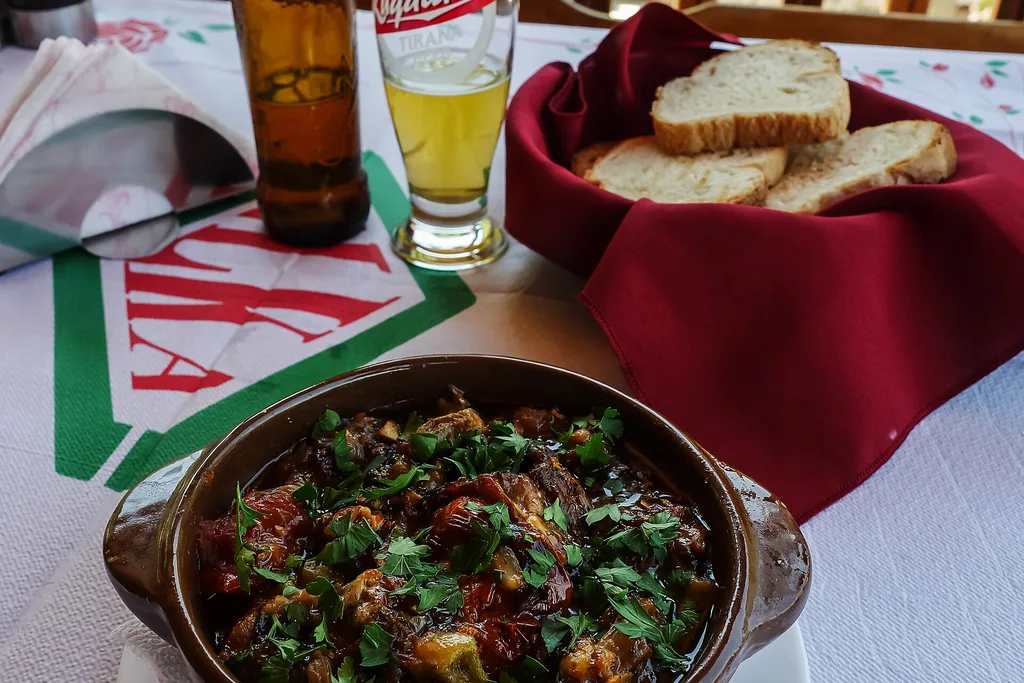
The most repeatable experience on this list is lunch. Albanian cooking is a farm cuisine that never fully industrialised — vegetables from the plot behind the house, cheese from the village, meat grilled simply, olive oil from the family’s trees — and the traveller eats inside that system rather than above it. Learn the canon as you go: byrek, the flaky filo pie sold everywhere by the slice, filled with cheese, spinach or meat; tavë kosi, lamb baked in yoghurt and egg, the dish most often called the national one; fërgesë, peppers and tomatoes baked with curd cheese, in the photograph above; qofte, the grilled meatballs that anchor a thousand grills; and everywhere, bread, salad and whatever the season is doing. The drink with its own ceremony is raki, the grape or plum spirit poured small and often, offered as hospitality before it is offered as alcohol — accept the first glass in the spirit it is poured.
The fullest form of the experience is the farm lunch. Across the country, working farms and agritourism restaurants — the best known near Lezhe, others scattered from the Korca plateau to the southern hills — serve long set lunches of their own produce at shaded tables: cheeses, pies, slow-cooked meats, garden vegetables, homemade wine, in a sequence that cannot be hurried and should not be. Build at least one into any trip, in place of a sightseeing slot; it explains Albania’s countryside, its hospitality customs and its economy more warmly than any museum. And keep eating in the small places the rest of the time — the byrek shop, the grill house, the market hall — because in Albania the national cuisine is not a restaurant genre. It is just what lunch is.
How to Choose Your Things to do in Albania – Matching These 15 Experiences to a Real Trip
Fifteen experiences, four regions and one short-season mountain range: the choosing is the skill. The logic that works is to treat the Alps as the fixed point. If the Theth-to-Valbona crossing is on your list, the season decides the trip — mid-June to mid-September is the window that matters — and everything else is fitted around it, because the Riviera and the old towns will forgive almost any month while the pass will not. Our 7-day Albania itinerary shows the southern loop assembled day by day; think of this page as the menu it and its northern extension are assembled from.
Within that frame, chain by geography rather than by fame. The southern loop — Llogara, Riviera swims, Butrint, the Blue Eye, Gjirokaster, Berat — is a single flowing journey of a week or so, with Apollonia on the way back north. The northern arc — Shkoder and Rozafa, the pass hike, the Koman ferry out — is a second, shorter journey with a harder season. Tirana deserves its day wherever it falls, and the slow days — Ohrid, the Osum Canyon, the farm lunch — belong wherever the trip needs to breathe, which is usually the day after the hardest one. Travellers with a single week should pick one arc and do it properly; the country’s most common planning error is trying to hold both in the same seven days and spending the trip in a car.
Season, finally, sorts the list into its honest shapes. Late spring and early autumn are Albania’s golden windows, when the swims, the towns and the lowland walks all work at once and only the high pass is uncertain. High summer belongs to the water — the Riviera, the lakes, the ferry — with the old towns taken early and late. Winter is the towns’ and the capital’s season: Berat, Gjirokaster, Kruja and Tirana in the cold are quiet, atmospheric and crowd-free, and the experiences that close — the pass, the high summer beach scene — are simply saved for the next trip. There will, very probably, be a next trip.
That, in the end, is the list’s real shape: not a ranking to be completed but a set of days to be chosen well. Albania is small enough that none of these experiences is ever very far away, and varied enough that no two of them feel alike. Choose the ones that fit your season, do them at the pace they ask for, and leave the rest standing as the reason to come back.
Frequently Asked Questions
What is the single best thing to do in Albania? It depends on the season, and the honest answer splits three ways. In summer, the Theth-to-Valbona hike is the country’s defining experience — the one travellers describe years later. For a first trip in spring or autumn, the combination of Butrint and the Riviera makes the strongest few days. And for pure character per hour, an evening inside Berat’s castle village is hard to beat. What the list on this page is for is matching the best experience to the trip you actually have.
How many of these experiences can I fit into one week? Comfortably, about half of them — one regional arc done properly. A southern week holds the Llogara drive, several Riviera beach days, Butrint, the Blue Eye, Gjirokaster and Berat, with Tirana at one end. A northern week holds Shkoder and Rozafa, the pass hike and the Koman ferry, again with the capital. Trying for all fifteen in seven days turns the list into a drive; the experiences are the point, not the count.
What is the best month for these experiences overall? September, by a nose, over June. The sea is at its warmest and the beach crowds have gone, the Alps crossing is still in season for its first half, the old towns are out of the worst heat, and the farm table is at harvest. June runs it very close, with greener mountains and longer days. July and August are superb for the water and the hardest work for everything else.
Do I need a car for these experiences? Not for most of them, but a car makes the list easier. Tirana, the southern towns and the Saranda-Ksamil-Butrint cluster are all workable by bus and taxi; the Alps are reached by the region’s established minibus-and-ferry links; and Apollonia, the Osum Canyon and Lin are the three experiences where your own wheels save the most time and negotiation. Many travellers compromise: public transport for the arcs, a rental for the two or three scattered days.
Are these experiences suitable outside the summer season? Most of them, yes. Eleven of the fifteen work year-round in some form — the towns, castles, ruins, the capital, the food, the lake — and the exceptions are honestly seasonal: the pass hike is a summer experience, rafting the Osum is a spring one, and Riviera swimming is at its best from May to October, though the coast is worth driving in any month. The sections above flag the season for each experience rather than pretending the list is seasonless.
Is Albania safe for this kind of independent travelling? By the standards travellers actually apply, yes — Albania is a country where the standard precautions of any European trip apply and where the notable social fact is hospitality, including to strangers in remote places. The real risks on this list are the ordinary mountain and water ones: weather on the pass, heat on exposed ruins, and confidence in the sea. Take those seriously, use local advice for the mountains, and the country itself will look after the rest.
The Short Version
The best things to do in Albania are a swim between Riviera bays, an ancient city walked in the shade, a spring the colour of deep water, a mountain pass crossed on foot, a fjord-like lake crossed by ferry, three castle towns still lived in, a Greek ruin in empty hills, a canyon floated in spring, a great lake lingered beside, and a farm lunch that becomes the afternoon. Fifteen experiences, four regions, one rule: pick the arc that fits your season, chain the days by geography, and let the country — which has been perfecting hospitality for rather longer than it has had tourists — do the rest.
If you take only three, take the ones your season argues for loudest: the pass in summer, the southern loop in the shoulder months, the castle towns whenever you come. The rest will keep. Albania’s experiences have waited this long; they are very good at being found the second time.