Most visitors meet Jordan through its monuments – Petra’s facades, Jerash’s columns, the Dead Sea’s shore – and drive straight past the country’s wildest landscape without knowing it was there. This dana biosphere reserve guide is about the place those drives pass: a protected wilderness of some 292 square kilometres (the figure the Royal Society for the Conservation of Nature, the RSCN, gives for it) where a single canyon system falls from a juniper-covered plateau at around 1,500 metres to desert plains below sea level, and where one day’s walk can take you from oak woodland to palm-fringed desert springs. Dana is Jordan’s largest nature reserve and, since 1998, its first UNESCO biosphere reserve – and it remains, by the standards of Jordan’s famous sites, almost empty.
What makes Dana worth a guide of its own is that it is not one landscape but four, stacked on top of each other by altitude. UNESCO counts four biogeographical zones inside the reserve – Mediterranean, Irano-Turanian, Saharo-Arabian and Sudanian penetration – the only place in Jordan where all four meet. That compression explains everything else in this guide: the 890-plus plant species the RSCN has recorded here, the ibex on the cliffs and the finches in the high woodland, the Ottoman stone village on the rim and the candle-lit ecolodge on the canyon floor, and a trail network that runs from a one-hour stroll around a campsite to a four-day trek south to Petra.
A word about how to use what follows, because Dana rewards planning and punishes improvisation. The reserve has two separate road gateways that do not connect by car – Dana village on the eastern rim, reached from the King’s Highway, and Feynan at the western foot of the canyon, reached from the Wadi Araba road – and its signature walk runs one-way between them. Trails are seasonal, some are guided-only, and the canyon closes when winter rain threatens flash floods. Read the sections in order and the logistics will make sense; read only one and you may still end up at the wrong end of a 14-kilometre canyon at dusk, which is the one Dana experience this guide exists to prevent.
Dana Biosphere Reserve Guide at a Glance
| Question | Short answer |
|---|---|
| What is it? | Jordan’s largest nature reserve and first UNESCO biosphere reserve (1998), managed by the RSCN – a canyon system falling from the eastern plateau to Wadi Araba |
| Where? | Tafilah Governorate, south-central Jordan, off the King’s Highway between Tafila and Shobak; Dana village sits on the reserve’s eastern rim, about 200 km south-west of Amman |
| How big? | About 292 km² on the RSCN’s figure (UNESCO rounds it to 300 km²), from around 1,500 m on the plateau to below sea level in Wadi Araba |
| The signature walk | The Wadi Dana Trail – about 14 km from Dana village down the canyon to Feynan Ecolodge; the RSCN’s trail descriptions allow six to seven hours |
| Other trails | Short unguided loops at Rummana campsite (mid-March to October), guided canyon trails at Shaq al Reesh and Wadi Ghuweir, and the multi-day Dana to Petra trek |
| Where do I sleep? | Dana Guest House at the village (open all year), Rummana campsite (seasonal), village hotels, and Feynan Ecolodge at the canyon’s foot |
| What does it cost? | A reserve entrance fee, plus guided-trail fees where a guide is required; the RSCN’s published rates fold entrance into guided trail prices – confirm the current figure when you book, as published third-party figures disagree |
| Best months | March to May and September to November; the canyon trails close in winter because of flash-flood risk |
Read the table and you have the skeleton. The meat of Dana is the descent itself: no other walk in Jordan changes its world so completely between breakfast and dinner. You start among juniper and wild pistachio on a plateau that can be cold enough for a fleece, pass cliffs of white and red sandstone patterned like poured wax, and end on a desert floor where acacia trees stand in black copper slag older than the pyramids’ builders’ grandfathers – because the canyon’s far end, Feynan, is one of the oldest industrial landscapes on earth. Any dana biosphere reserve guide that treated this as a simple beauty spot would undersell it twice over: Dana is simultaneously Jordan’s richest nature reserve and one of its deepest human stories.
One more glance-level truth before the detail: Dana is a working conservation project, not a national park with turnstiles. The RSCN built the reserve in 1989 as an experiment in protecting nature by employing its neighbours, and the village guest house, the local guides and the lodge at Feynan are all parts of that experiment. Visitors are not an afterthought here, but they are not the point either – the point is the ibex, the serin colony and the cypress stand. Travellers who arrive understanding that tend to have the best of Dana, because almost everything they will enjoy flows from it.
Four Zones in One Reserve – the Landscape That Makes Dana Different
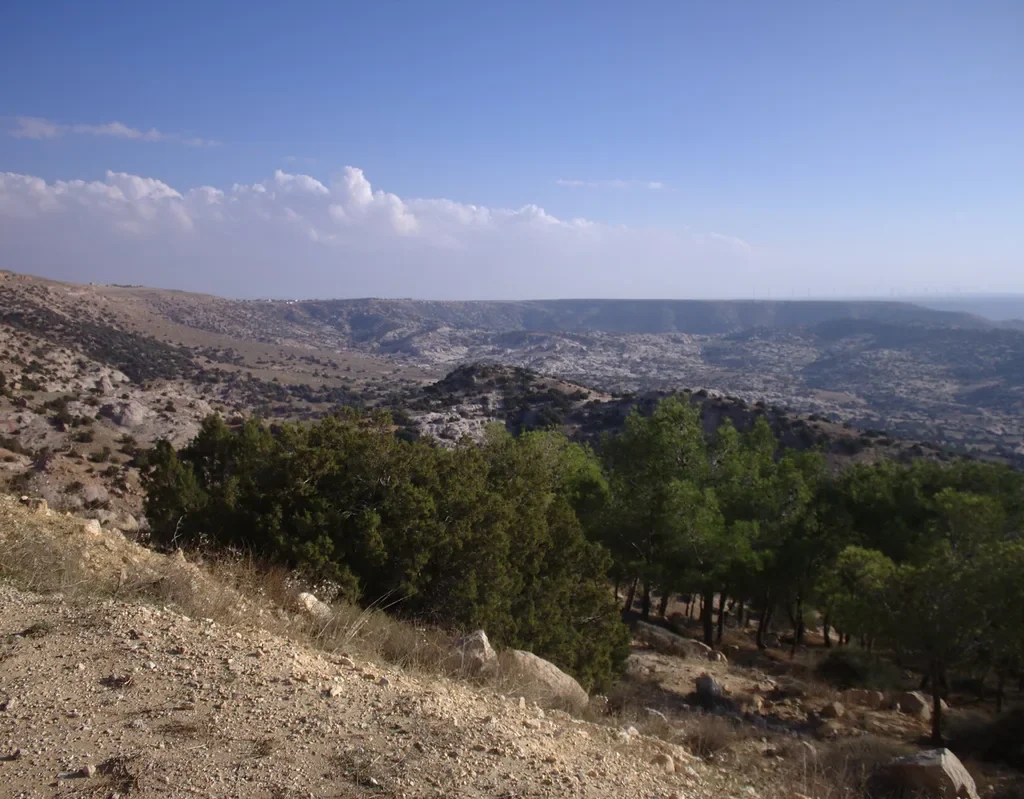
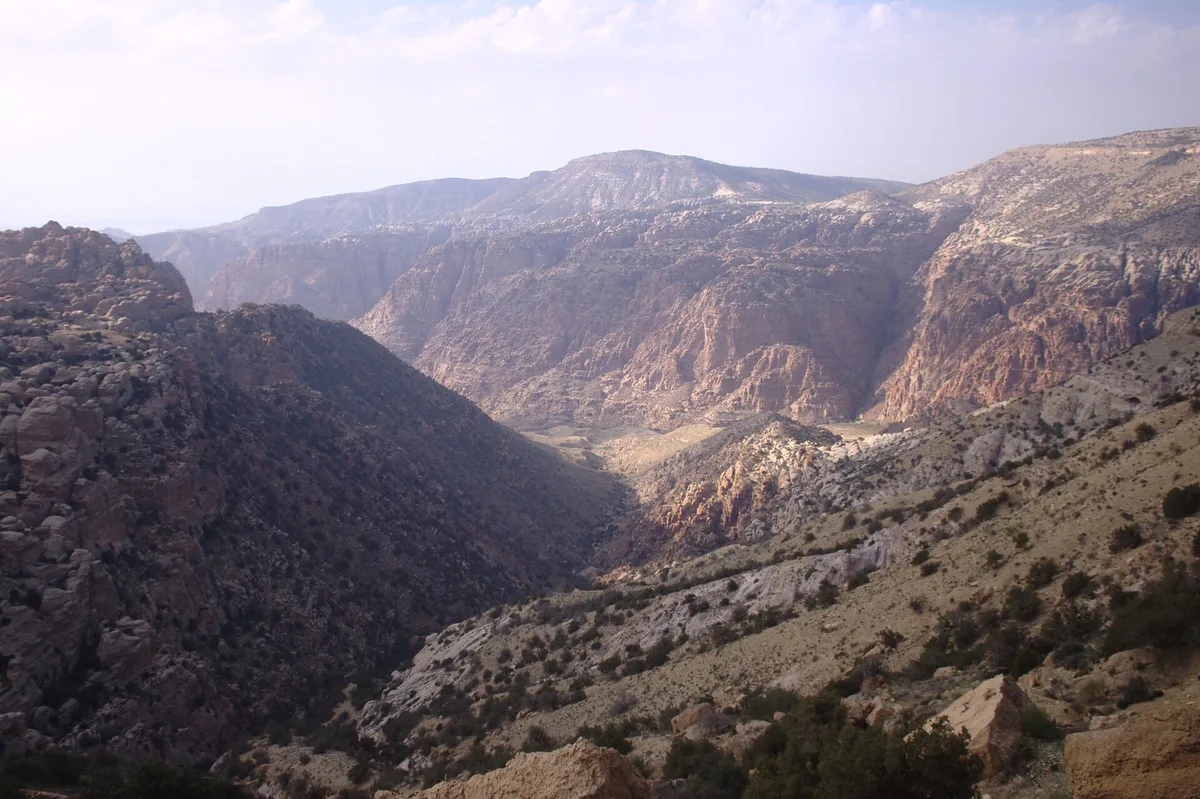
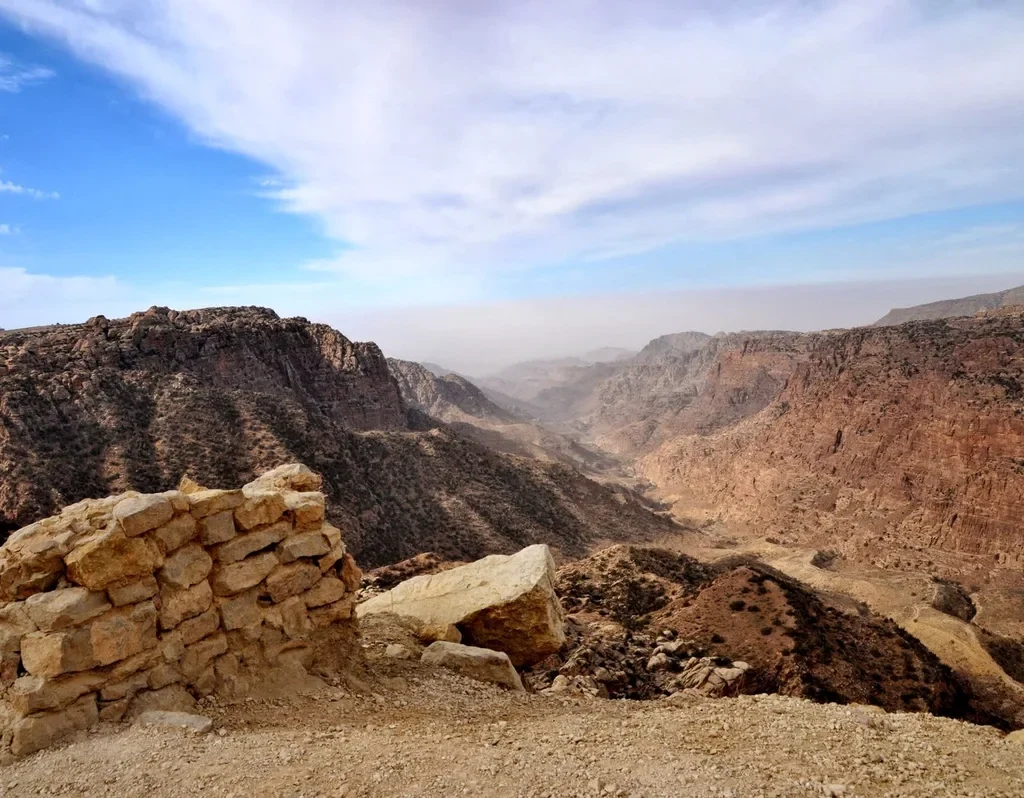
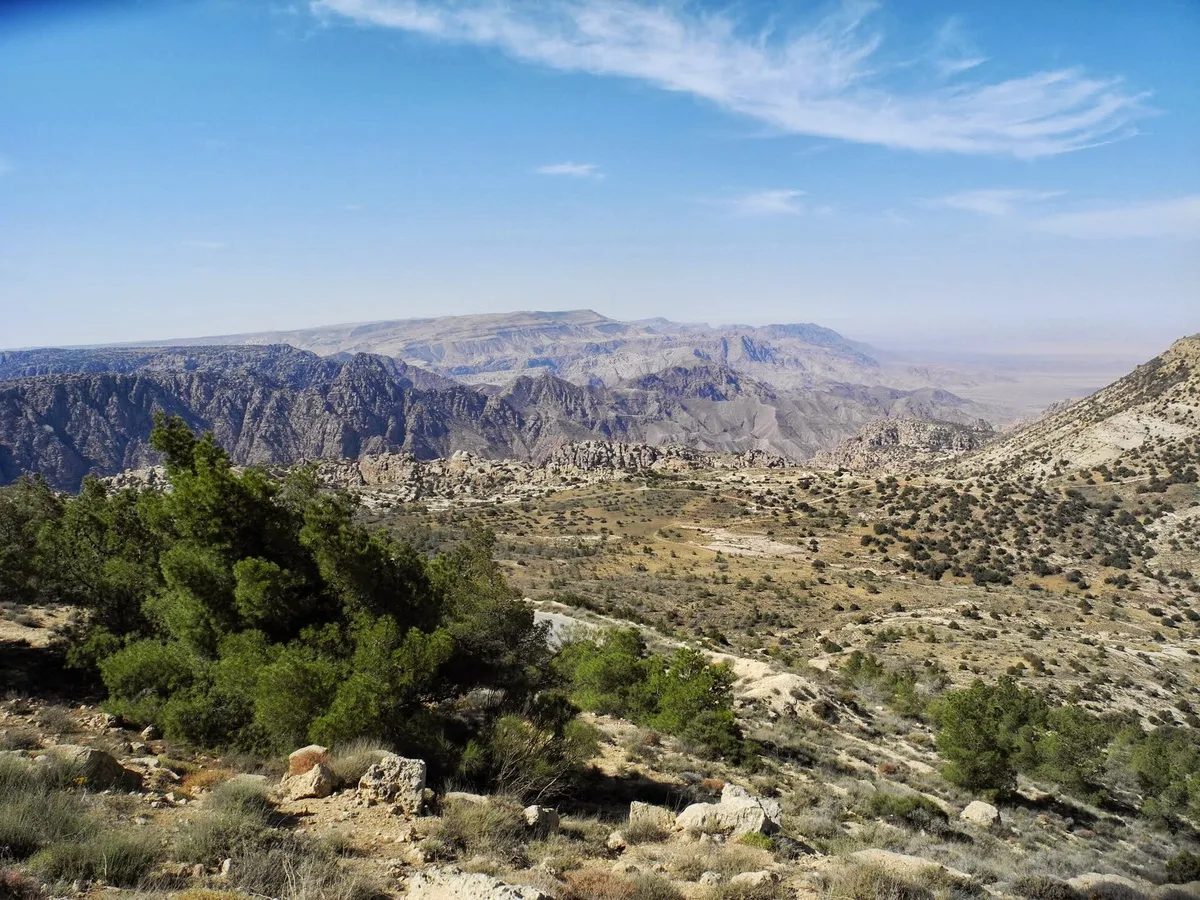
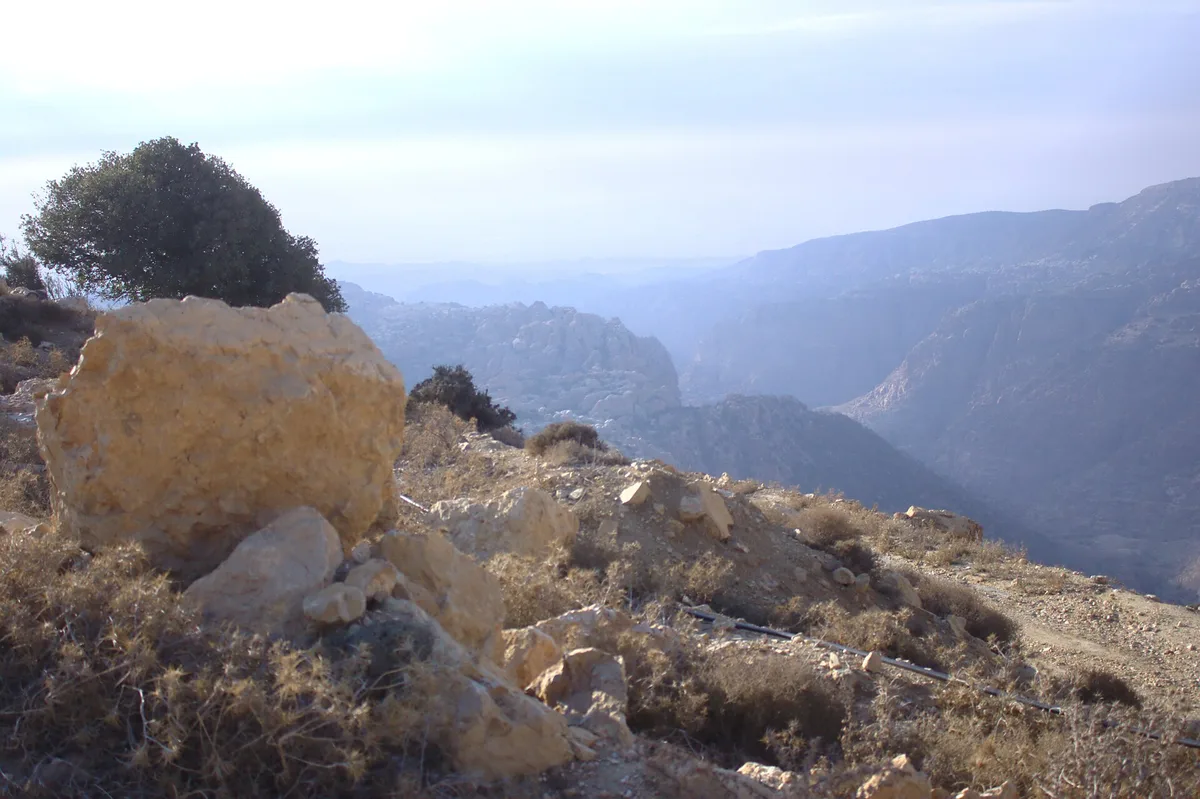
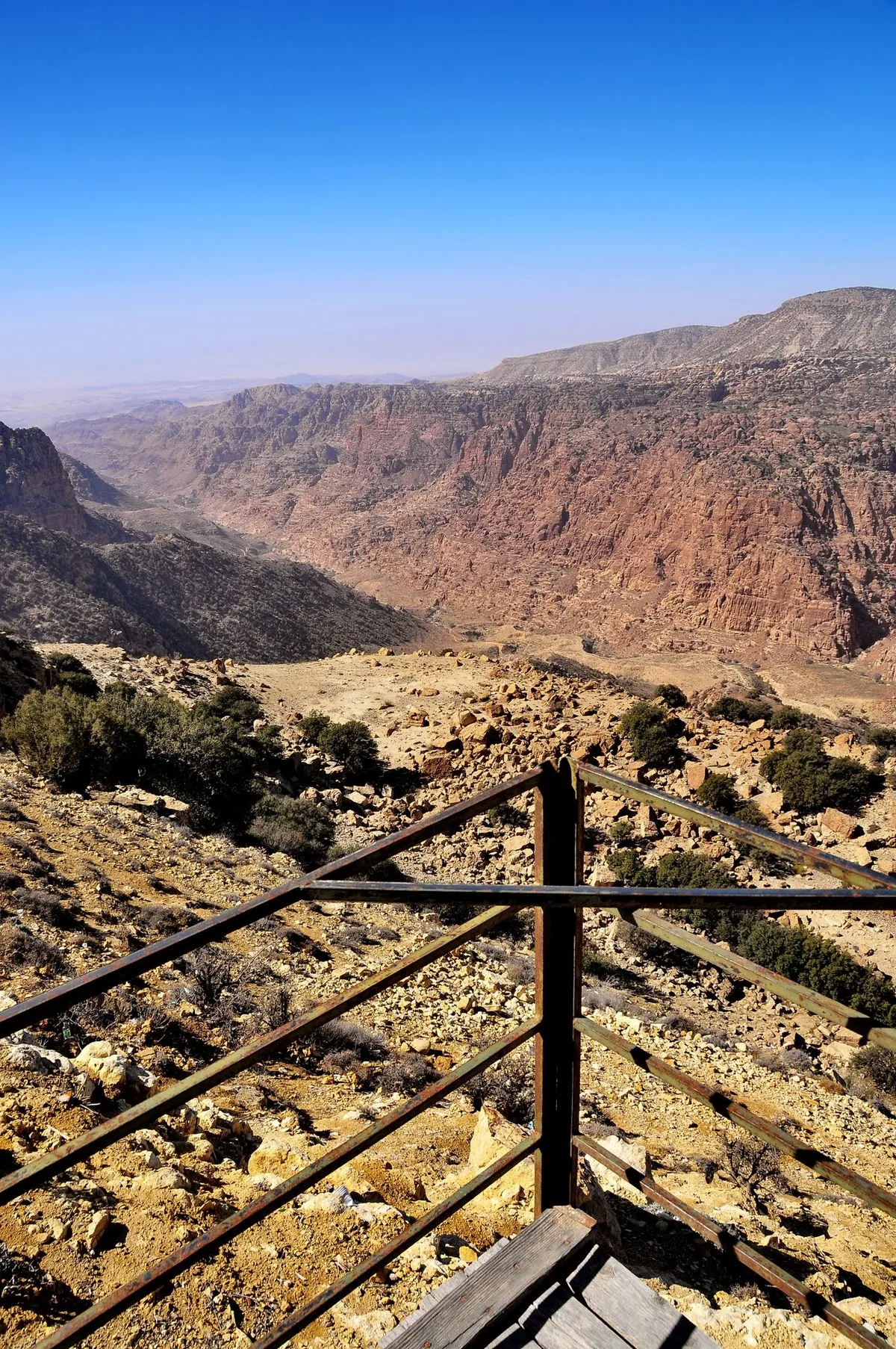
Begin with the altitude, because Dana is best understood as a staircase. At the top, around the village of Qadisiyya and Dana itself, the plateau stands at roughly 1,500 metres – high enough for winter frost and the occasional rumour of snow. From that rim, a series of mountain ridges and steep-sided wadis falls westwards in steps, through cliff bands of limestone, then sandstone, then ancient granite near the bottom, until the ground runs out entirely on the sand plains of Wadi Araba, below sea level. UNESCO puts the reserve’s altitudinal range at from 100 metres below sea level to 1,500 metres above it, a vertical kilometre and a half inside one protected area. The geology is as layered as the heights – the RSCN describes rock that switches from limestone to sandstone to granite as you descend – and every band grows a different world.
UNESCO’s account of the reserve (its Dana page in the Man and the Biosphere Programme) names the four biogeographical zones that this staircase stacks together. At the top is the Mediterranean zone: evergreen oak, juniper and wild pistachio woodland, the greenest country in Jordan outside the northern hills. Below and around it lies the Irano-Turanian steppe, a drier world of shrubs and open slopes. The canyon floor and the western approaches belong to the Saharo-Arabian desert zone of acacia and sand, and threaded through the warmest, lowest ground is the fourth element, a Sudanian penetration – species whose real home is the tropics of Africa and Arabia, pushing north up the Rift Valley’s warmth and surviving around springs and in sheltered gorges. Four floras and faunas that elsewhere are separated by hundreds of kilometres here occupy one walkable slope.
The numbers that follow from that compression are the ones every dana biosphere reserve guide quotes, because they are genuinely startling for so dry a country. The RSCN has recorded more than 890 plant species in Dana – close to a third of Jordan’s entire flora – including three species new to science that carry the name “Dana”, and the reserve protects what the RSCN describes as the oldest and largest natural stand of cypress left in Jordan. Its animal lists run to some 250 bird species (about half of Jordan’s recorded birds), 39 mammals and 44 reptiles. UNESCO singles out the reserve’s globally threatened refugees: the Syrian serin, the lesser kestrel, Blandford’s fox and the Nubian ibex. Section nine of this guide takes the wildlife in detail; the point here is simpler. Dana is not a scenic detour with animals attached. It is the single most biodiverse piece of ground in the kingdom, and the canyon is simply the most beautiful way into it.
There is a management shape beneath the ecology, and it matters to how a visit feels. In 1994 the RSCN drew up Jordan’s first integrated conservation management plan for Dana, dividing the reserve into zones – some for grazing, some under strict protection, some opened to tourism – an attempt to keep the landscape working for the herders who had always used it while ending the hunting and woodcutting that were emptying it. That zoning is why the trails go where they go and why some corners of the reserve are simply not on the visitor map. The wilderness you walk through at Dana is curated wilderness, and knowing that the ibex cliffs and the serin’s woodland are deliberate refuges, not accidents, sharpens the pleasure of seeing them.
Dana Village – the Stone Village on the Canyon Rim
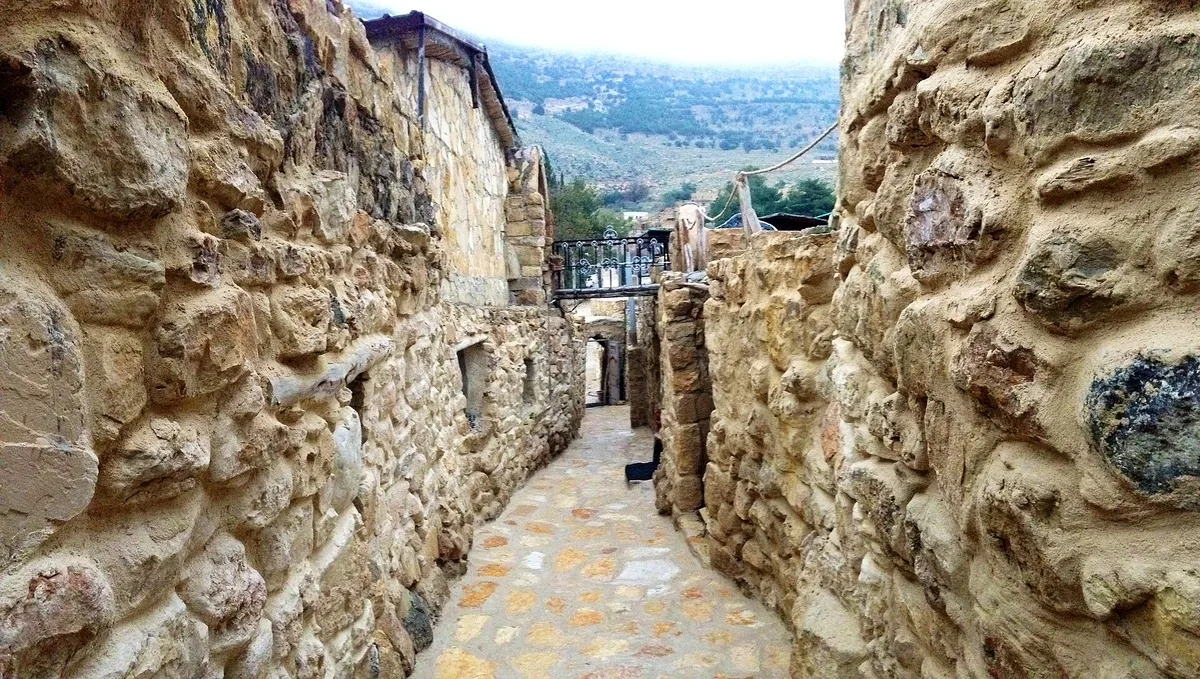
Every Dana visit from the east begins in the same place: a small stone village clinging to the rim of the canyon at about 1,400 metres, arranged along a single ridge with the ground falling away in front of its houses into one of the great views of Jordan. Dana village is an Ottoman-period settlement, built of the same honey-coloured stone as the plateau it stands on, with flat roofs, arched doorways and lanes just wide enough for a donkey. Terraced gardens step down the slopes below the houses – olives, figs, pomegranates and vines, watered from the village spring – and at the village’s edge the RSCN’s Guest House terraces hang over the canyon, positioned so that breakfast comes with a view down the entire length of Wadi Dana.
The village’s modern story is the reserve’s story in miniature. Through the middle decades of the twentieth century, Dana’s families drifted away – to the government-built housing and easier services of Qadisiyya nearby, to jobs in the towns – and by the 1980s the old village was half-ruined, its houses roofless, its lanes filling with rubble. What reversed the decline was the reserve itself. From the 1990s, the RSCN and local partners restored the cottages in phases (the most recent major restoration ran in 2011-14), the Guest House opened in 1996, and the village acquired a second economy alongside its gardens: guiding, cooking, crafts and rooms. Families returned; some houses are homes again, others small hotels and cafes. The Dana Cooperative’s hotel and a handful of family-run places now share the village with the Guest House, and the mix of lived-in, restored and still-ruined stone is exactly what makes Dana village feel real rather than reconstructed.
Give the village an hour of your visit in its own right, ideally at the day’s edges. Walk the main lane from end to end, look at the older houses’ carved lintels and the little mosque, and step out to the viewpoints above the gardens where the whole canyon system opens below you. In the morning, before the day’s walkers leave, the village is at work – bread, animals, school runs. In the evening, when the day visitors have gone and the light turns the canyon walls copper, it belongs to its residents and the few dozen guests staying over, and the terraces of the Guest House become one of the best seats in Jordan. This is also the practical hub of everything in this dana biosphere reserve guide: trailheads, guides, tickets, dinners and beds are all arranged here, at the top of the canyon, before the walking starts.
A note on expectations, because village tourism cuts both ways. Dana is small – a few hundred people – and it is a community, not a theme set. Dress and behave as a guest in someone’s home village, ask before photographing people, and understand that the quiet many visitors praise is somebody else’s ordinary life. The RSCN’s whole model depends on tourism income reaching the village rather than bypassing it, which is why this guide keeps steering you to its guest house, its guides and its tables: money spent in Dana village is the mechanism that keeps the reserve protected, a point the RSCN section below develops.
The Wadi Dana Trail – the Great Descent to Feynan
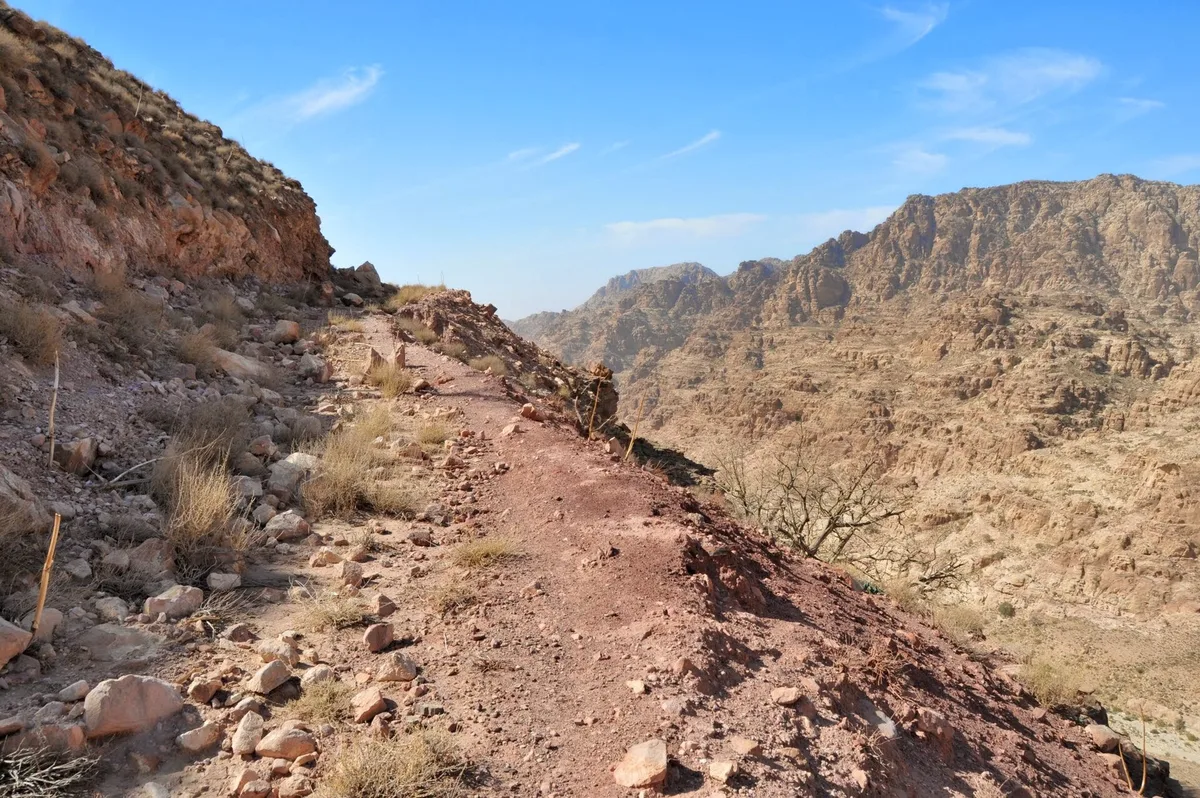
This is the walk Dana is famous for, and it deserves its reputation. The Wadi Dana Trail runs from Dana village down the length of the canyon to Feynan Ecolodge at its foot – about 14 kilometres in the RSCN’s trail descriptions, which allow six to seven hours for it – falling most of the reserve’s 1,500 metres along the way. It is a one-way walk (nobody sensible walks back up the same day), it can be done with a local guide or independently, and it compresses the entire argument of this dana biosphere reserve guide into a single day: you begin in Mediterranean woodland and you end in desert, and every hour between rearranges the world a little more.
The upper canyon is the green surprise. Below the village, the trail drops past the terraced gardens into a wadi lined with oleander, reeds and fig trees where springs surface, and the walking is shaded and bird-noisy – this is the stretch where the reserve’s bird list feels plausible. Then the trees thin, the walls rise and change character, and the middle canyon becomes a gallery of sandstone: cliffs banded white, pink and rust, carved by wind and flood into domes, fins and slot-like narrows. Ibex are seen on these cliffs by walkers who stop and scan rather than march. The lower canyon widens again into granite country, darker and older rock, with acacia trees appearing and the heat thickening, until the wadi finally spills out onto the Wadi Araba plain and the white buildings of Feynan appear ahead – the end of the trail, and the beginning of the copper story told in section eleven.
Now the honesty this guide owes you, because the descent’s “downhill” label misleads people. Fourteen kilometres is fourteen kilometres, much of it on rough, stony ground with no shade in the middle and lower sections, no water available anywhere on the route, and no mobile coverage for long stretches. The RSCN’s own guidance in its trail descriptions and the experience of everyone who walks it agree on the practical rules: start early – at dawn in the warmer months – carry all the water you will need (most walkers carry at least three litres in spring and autumn, more in heat), wear real walking shoes, and arrange your onward transport from Feynan before you set off, because Feynan is not a place you flag down a taxi. Your luggage can be sent round by road to meet you. Walked in the wrong direction, in midday summer heat, or with a litre of water and trainers, the Wadi Dana Trail would be a miserable and potentially dangerous day. Walked properly, in season, it is the finest day walk in Jordan.
Seasonality is absolute on this trail. The canyon is a flood channel: when winter rain falls on the plateau, Wadi Dana can run with dangerous flash floods, and the RSCN closes the trail through the winter months rather than gamble on forecasts. The walking season in practice runs from spring into late autumn, with the Rummana side of the reserve working to a published season of mid-March to the end of October. If your Jordan trip falls in deep winter, plan Dana for its rim, its village and its viewpoints, and accept that the great descent may simply not be on – that is not a failure of the trip but the canyon being itself, and any guide that promised otherwise would be lying to you.
Rummana – the Campsite Trails Above the Canyon
Not every Dana walk is an expedition. On a shoulder of mountain inside the reserve, a short drive from the village over a rough track, sits the Rummana campsite – the RSCN’s seasonal base of large tents, barbecue terraces and canyon-edge views, open from 15 March to 31 October – and around it runs a family of short trails that give day visitors and campers the reserve in miniature. For travellers without the legs, the time or the inclination for the full descent, Rummana is the answer this dana biosphere reserve guide reaches for first: half a day here delivers the canyon views, the birdlife and the sandstone country without the one-way logistics of the big trail.
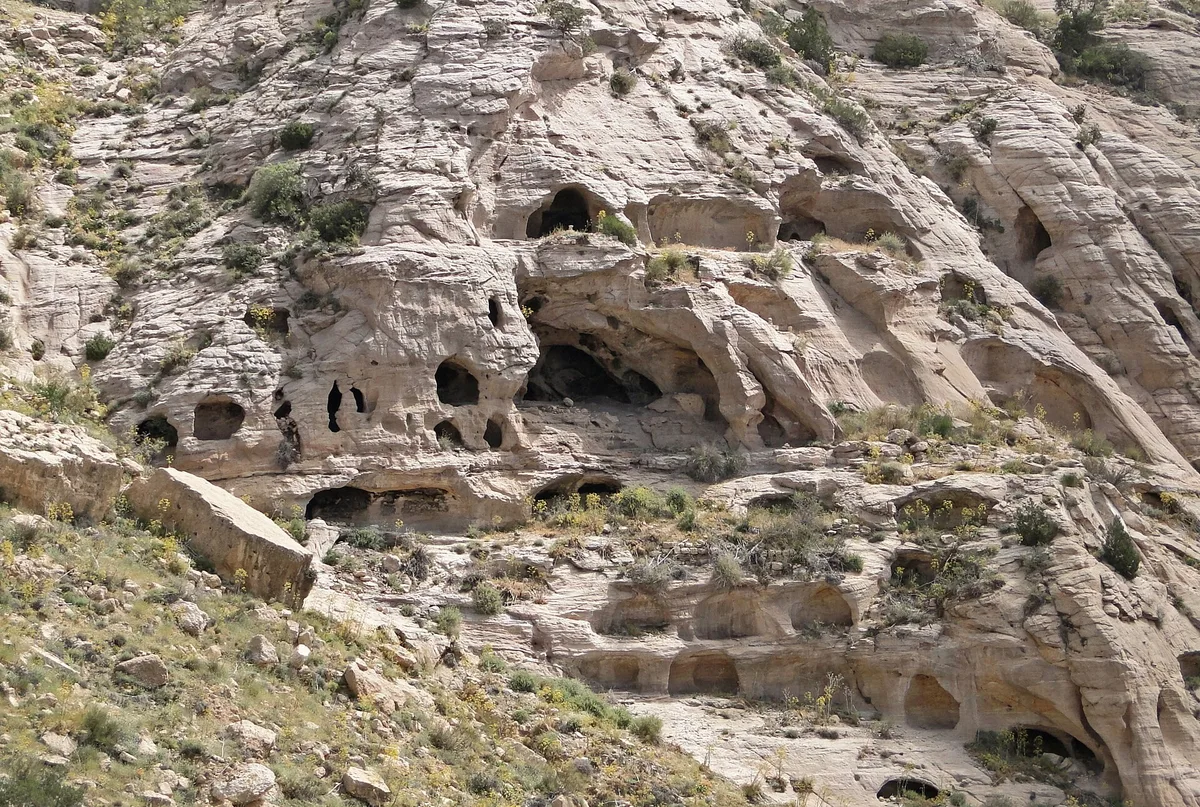
The RSCN’s trail descriptions give three unguided walks from the campsite, all within the same mid-March to end-of-October season and daytime hours. The Campsite Trail is the gentlest – about 1.5 kilometres and an hour – circling the campsite’s viewpoints over the Dana mountains, and it is at its best in the migration seasons, when the raptor passage over the Rift Valley fills the sky. The Caves Trail, a rougher 1.5 kilometres allowed an hour and a half, leads to a cliff of small caves cut into the sandstone – dozens of them, used in Nabataean times and by animals and herders since – with views back to old Dana village across the canyon. The Rummana Mountain Trail is the climb: about 2.5 kilometres and two hours to the summit of Rummana Mountain, where the panorama takes in Wadi Araba, the full canyon system and the cliffs opposite. None of the three needs a guide; all three need shoes, water and respect for the midday sun.
A fourth trail ties this side of the reserve together. The Dana Village Trail – about 8 kilometres, three to four hours in the RSCN’s descriptions, and guided – contours the great escarpments between the Rummana campsite and Dana village, passing the village’s terraced gardens, and can be walked in either direction. It is the connoisseur’s option in this part of the dana biosphere reserve guide: quieter than the famous descent, high the whole way, and a natural choice for a second day based in the village, or as the walk-in for a night at the campsite. Campers should know the campsite’s character before booking – this is a simple, beautiful, bring-your-evening-with-you kind of place: tents with mattresses and blankets rather than a hotel in canvas, shared facilities, meals by arrangement, and a sky at night that explains why people put up with the track in.
Honesty about access belongs in this section. The Rummana track is unpaved and rough; ordinary hire cars do it slowly and carefully in dry weather, and the campsite or Guest House can advise on the day’s conditions and on local 4×4 transfers. In winter the campsite and its trails close entirely, and the plateau weather that makes a Rummana evening in April perfect makes it bleak in January. Plan Rummana as a spring-to-autumn pleasure and it will not disappoint; plan it in February and this guide cannot help you, because the reserve itself has closed the gate.
Shaq al Reesh and the White Dome – Canyons of the Al-Barrah
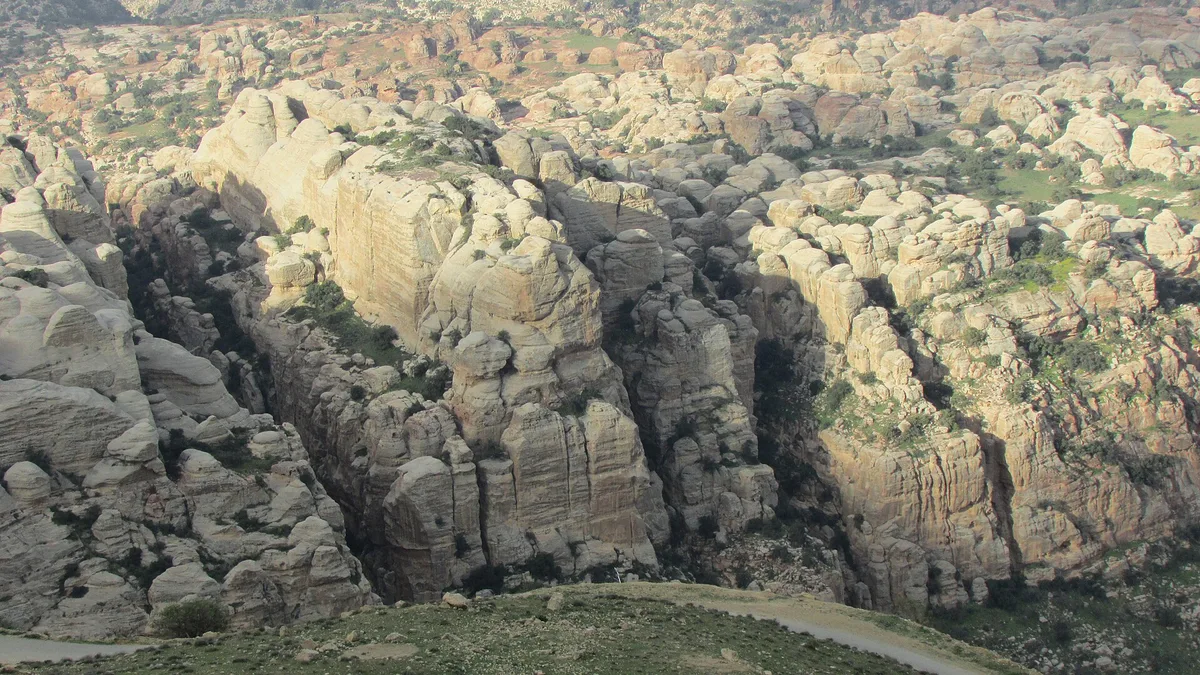
West of the village, in the broken sandstone country of Al-Barrah, Dana keeps its most sculptural walking. The name to know is Shaq al Reesh – the Feathers Canyon – a guided trail of two to three hours in the RSCN’s rate information that threads a narrow, twisting gorge through white and pink sandstone, where the rock has weathered into fins, feathers and freestanding blades and the canyon floor alternates between sandy washes and smooth water-worn stone. It is a scrambling walk rather than a stroll: there are narrows to squeeze, boulders to clamber and corners where a guide’s knowledge of the line is worth every dinar of the guiding fee. Walkers who loved the siq-like sections of the Wadi Dana descent will recognise the family resemblance, intensified – this is the canyon as architecture, at close range.
Paired with it in the same Al-Barrah country is the White Dome Trail, which links the Rummana side of the reserve with Dana village along the escarpments, passing great pale sandstone domes and limestone cliffs with the canyon opening and closing beside the path. Where Shaq al Reesh is enclosed and intricate, the White Dome is exposure and view; walked together across a long morning – guided, and arranged through the Guest House or the campsite – they make the most varied half-day in the reserve for walkers who are fit but not trekking to Feynan. This dana biosphere reserve guide flags them as a pair deliberately, because most visitors never hear of either, and they are the strongest answer to the common Dana problem of having one day, good legs and no desire to spend it entirely on the famous trail.
The practicalities are the RSCN’s standard ones for its guided canyon trails, and they are not optional colour. These routes run with reserve guides, booked in advance – through the Guest House, the campsite or Wild Jordan (the RSCN’s commercial arm, whose role the conservation section below explains) – and the published trail prices include the reserve entrance. Season and weather rule them as firmly as the big descent: heavy rain anywhere upstream closes narrow canyons first, and the summer floor of a white sandstone gorge at midday is a furnace that reflects heat from every wall. Early starts are not a preference on these trails; they are the design.
A word on grading, since the internet’s trail grades for Dana vary wildly. This guide’s honest summary: Shaq al Reesh is moderate with scrambles – within reach of any walker who is steady on rough ground and untroubled by confined rocky passages – and the White Dome is a moderate ridge walk whose length, not its difficulty, is the commitment. Neither is a via ferrata and neither is a promenade. If you are choosing between them with limited time, choose the Feathers Canyon for the rock and the White Dome for the views, and know that you have chosen between the reserve’s two best-kept secrets with no wrong answer.
Wadi Ghuweir – the Hanging-Gardens Canyon
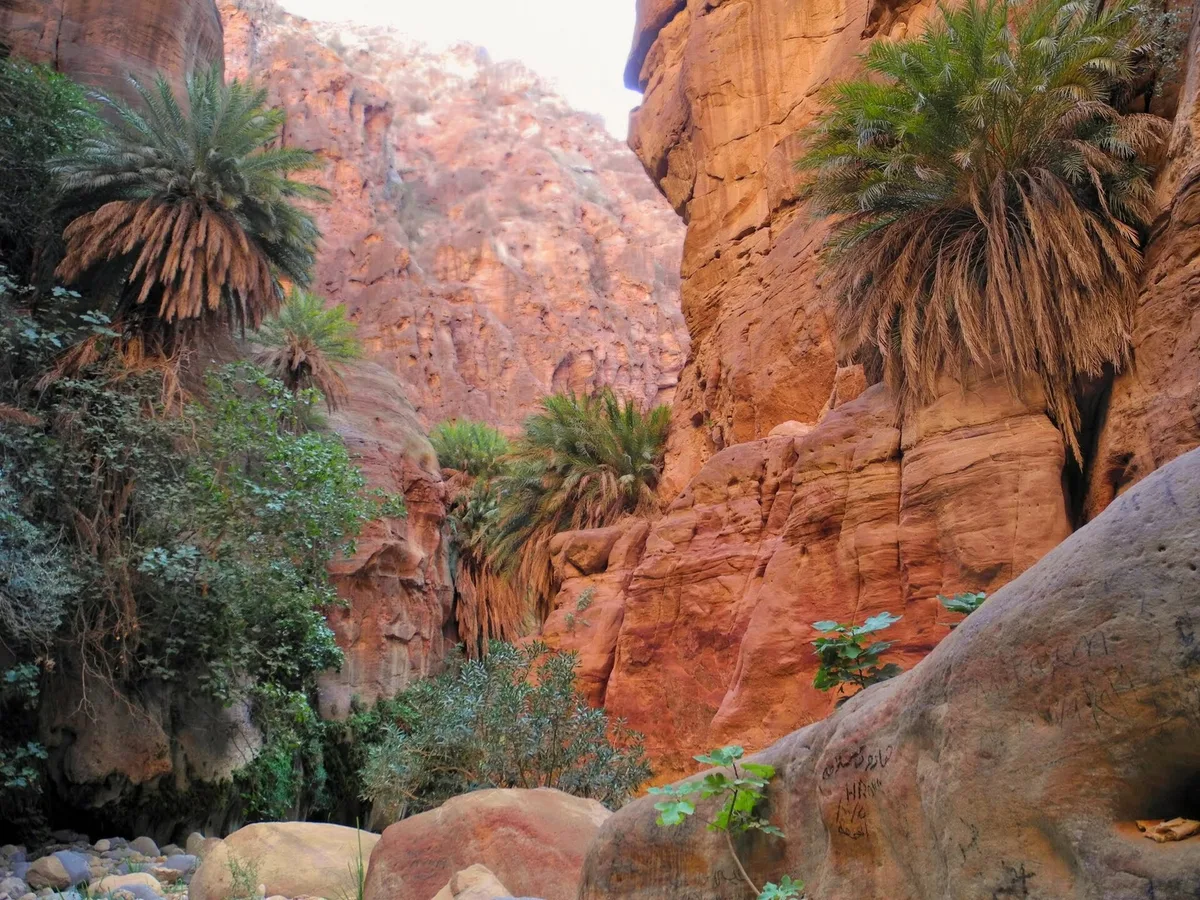
South of Dana village, entered from the Shobak side of the plateau, Wadi Ghuweir is the canyon that Dana regulars argue about most – usually while insisting it is better than the famous one. The Ghuweir trail descends a long, water-bearing gorge from the plateau edge near Shobak all the way down towards Feynan, and its middle section holds the spectacle that gives this part of the dana biosphere reserve guide its title for the canyon: a true hanging-gardens oasis, where springs feed palms, oleanders and ferns that spill from the canyon walls and the stream runs clear over red rock. In a country as dry as Jordan, a canyon with running water, pools and palm shade is not a small thing; it is the kind of place that recalibrates what visitors thought the word “desert” meant.
Understand what kind of walk this is before you fall for the photographs. Wadi Ghuweir is a canyoning-style trek, not a path: the route follows the stream, which means wet feet from the first hour, scrambling over boulders and chokestones, sliding down water-polished chutes in the siq-like narrows, and wading pools that can be waist-deep after wet weather. The RSCN treats it as a guided trail and a long one – its rate information allows around eight hours for the full descent – and it is run with reserve guides, arranged in advance, with the transport logic of all one-way canyon walks: a vehicle meets you at the Feynan end. Fitness matters here more than anywhere else in this guide. There is no bailing out halfway down a gorge; the canyon commits you at the rim.
Season decides Ghuweir even more strictly than the other trails. The same water that makes it magical makes it lethal in flood, and the trail closes when rain threatens – sometimes at short notice, which is a disappointment travellers should budget for emotionally if they visit in the shoulder months. Summer brings the opposite problem in its lower reaches, where the exit across open ground to Feynan is fully exposed. Spring, when the stream runs kind and the canyon flowers are out, is the connoisseur’s window; autumn, after the heat breaks, is the other. This guide’s awareness note, stated plainly: Wadi Ghuweir is a connoisseur’s trail that many Dana visitors will rightly skip in favour of the Wadi Dana descent – but if you have two walking days at Dana, the pairing of the two canyons, one dry and one wet, is the deepest experience the reserve offers.
Logistically, Ghuweir also teaches the general Dana lesson in its sharpest form. You cannot improvise this walk: guide booked, start point reached (the trailhead lies below the Shobak plateau, not at Dana village), pick-up arranged at the bottom, water strategy agreed, weather checked the same morning. The Guest House and Wild Jordan exist precisely to assemble such days, and the cost of the guided trail – which, per the RSCN’s published rates, includes the reserve entrance – is the price of having all of that done properly. Section fourteen gathers the booking mechanics in one place.
The Dana to Petra Trek – Four Days South
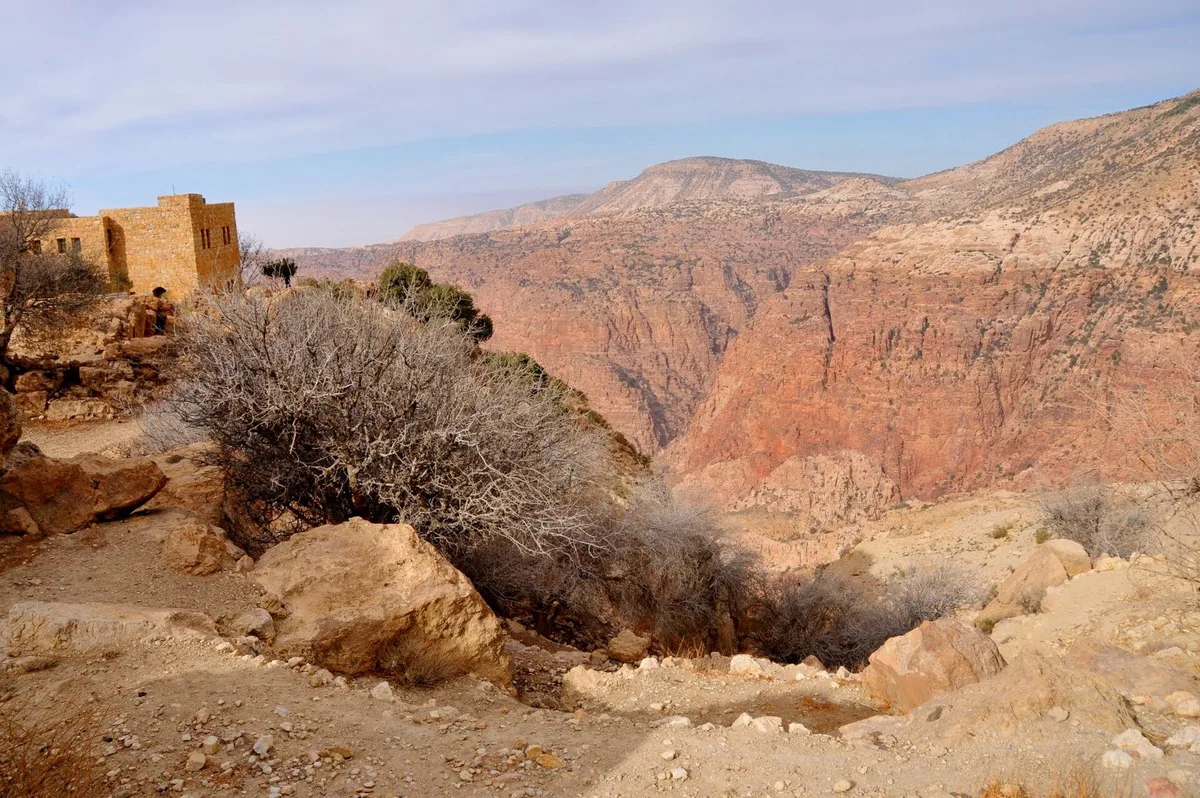
Dana is also a beginning. From the village, a multi-day trekking route runs south through some of the most dramatic walking country in the Middle East to end at Petra – the Dana to Petra trek, the flagship section of the Jordan Trail, the long-distance route that crosses the whole kingdom. The RSCN’s own rate information measures the Dana/Feynan section at 72.6 kilometres; walkers generally take four to five days over it, sleeping in wild camps and small lodges, with the canyon descent to Feynan as the first day and the mountains of the Petra region – Little Petra, then the Monastery route into Petra itself by the back door – as the last. Travel magazines have repeatedly ranked it among the world’s great treks, and for once the ranking undersells the variety: no other four days in Jordan combine canyon, desert, mountain and Nabataean city in one continuous walk.
This dana biosphere reserve guide treats the trek as context rather than as a route description, and it is worth being clear about why. A 72-kilometre multi-day trek through waterless mountains is not an undertaking to assemble from a webpage – it needs a trekking company or the Jordan Trail’s own support structure, with camps, cooks, water drops and luggage transfers arranged, and walkers should book it as the organised expedition it is. What a Dana guide can usefully do is place it: the trek is the reason the village trailheads hum with trekking groups in March and October, the reason “Dana to Petra” appears on itineraries alongside this reserve’s name, and the natural extension for any walker who finishes the Wadi Dana Trail wanting more. Our Petra travel guide takes up the story at the trek’s southern end, including the back-door Monastery route by which the trek arrives.
Direction and season deserve one paragraph each in your planning. The trek is walked in both directions, but Dana-to-Petra is the classic line: it starts with Dana’s descent, builds through the Feynan and Ghuweir country, and saves Petra for the finale, which is how a story should be ordered. Northbound walkers reverse the pleasure and finish with the canyon. Season is the Jordan Trail’s usual discipline – spring and autumn are the trekking windows, summer’s low sections are dangerous in heat, and winter brings cold nights on the high ground and flood risk in the wadis. Book months ahead for the prime weeks; the trek’s fame is real and its camp capacity is not elastic.
For most readers of this guide, though, the trek’s practical importance is different: it explains Dana’s place in a Jordan itinerary. A night in Dana village is not a detour from the King’s Highway route between Amman and Petra but one of its natural chapters, and the travellers who stop – even those who only walk the rim trails – consistently rate it among their Jordan highlights. Whether or not you ever walk the 72 kilometres, Dana deserves the overnight that the trek’s existence argues for.
Wildlife and Birdlife – Ibex, Caracal and the Syrian Serin
Set expectations correctly first, because Dana is not a safari. Its wildlife is real, wild and mostly shy, and the pleasure it offers is the birder’s and the patient walker’s pleasure – a cliff scanned until the ibex resolve out of the rock, a woodland alive with birdsong at dawn – rather than the game-drive guarantee of animals arranged for viewing. What the reserve protects, on the RSCN’s recording, is exceptional for the region: some 250 bird species, 39 mammal species and 44 reptiles, within a total of roughly 555 recorded animal species. The dana biosphere reserve guide approach to all of it is the naturalist’s: know what lives here, know where and when to look, and treat every sighting as earned.
The flagship mammal is the Nubian ibex, the great cliff goat of the Rift Valley escarpments, whose curved horns and impossible footing make it the emblem of Jordan’s canyon reserves. Dana’s cliffs hold an important population, and the middle canyon of the Wadi Dana Trail is the classic place to look – early and late in the day, on the sunlit walls, standing still and glassing the ledges. Around the ibex, the RSCN’s mammal list carries the reserve’s full cast of large wild things: caracal, the tufted-eared desert cat of the rocky slopes; Blandford’s fox, one of the UNESCO list of Dana’s globally threatened species; striped hyena; mountain gazelle; sand cat and wolf in the RSCN’s recording; and rock hyrax in the boulders, whistling their alarms at passing walkers. Nearly all of these are nocturnal, crepuscular or simply wild-shy – a hyena’s prints in the wadi sand or a fox’s dawn silhouette is a more realistic ambition than a portrait – and any operator promising guaranteed sightings of Dana’s cats is promising what the reserve cannot.
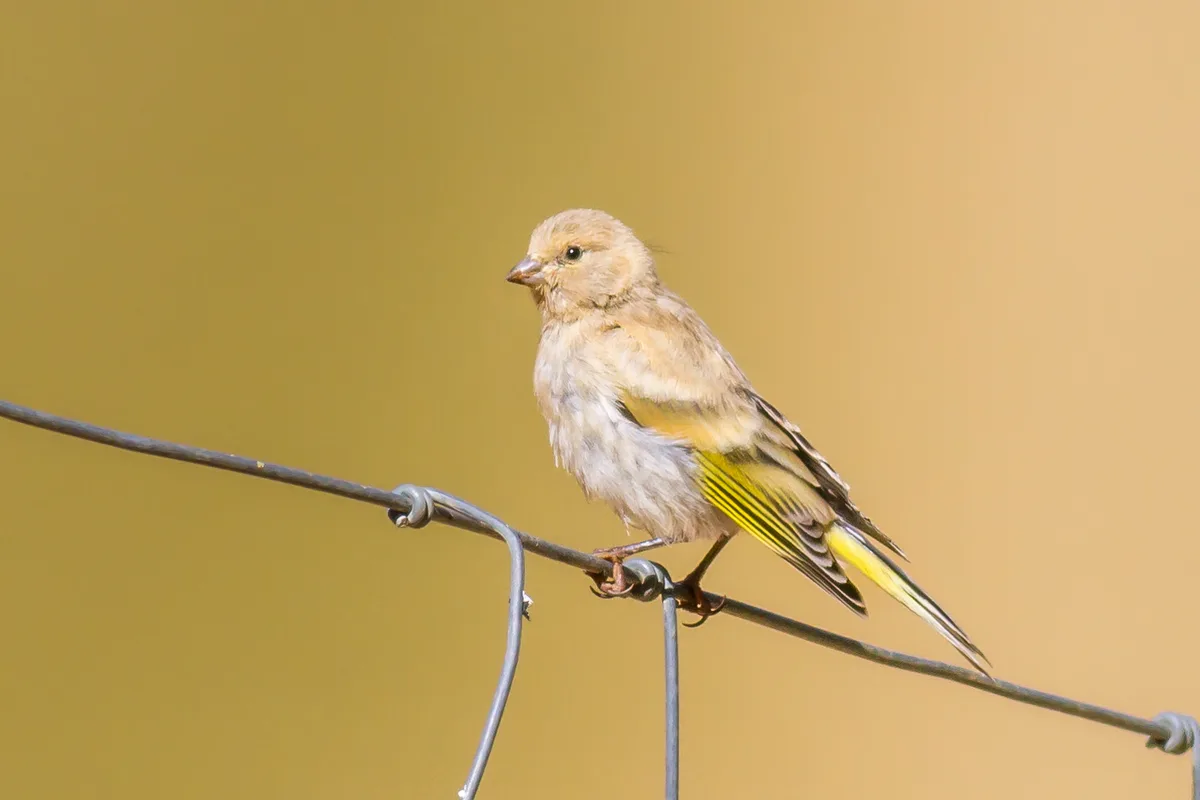
The birdlife is the reliable glory. Dana’s position – four zones, a Rift Valley migration flyway, high woodland beside deep canyon – concentrates birds the way the altitude concentrates habitats. UNESCO and the RSCN both anchor the story on one small finch: the Syrian serin, a globally vulnerable species for which, on the RSCN’s recording, Dana holds the world’s largest breeding colony, nesting in the high oak and juniper woodland. Birders come for it the way others come for the canyon, along with the reserve’s other specialities – Sinai rosefinch in the canyon country, Tristram’s starling around the cliffs and village, lesser kestrel (another of UNESCO’s threatened list), griffon vultures and eagles over the ridges, and the spring and autumn migration passage that turns the Rummana viewpoints into raptor-watching stations. The practical rules are the birding rules everywhere: dawn starts, quiet walking, binoculars genuinely worth carrying here, and local guides whose ears know the woodland better than any app.
Underneath the charismatic list runs the flora that powers it all, and this guide will not skip it, because at Dana the plants are half the spectacle. The RSCN’s 890-plus recorded plant species run from the plateau’s juniper and evergreen oak – including those last great natural cypress stands – through wild pistachio and the canyon’s oleander and reeds, to the acacia and palm of the desert floor, with a spring wildflower season that carpets the steppe in March and April. Three of those species were new to science when found here and carry Dana’s name. Walk the descent in April and the four zones stop being a list and become a procession: the canyon hands you a new flora every hour, which is, when all is said, the whole point of a biosphere reserve.
Feynan Ecolodge – the Lodge at the Bottom of the Canyon
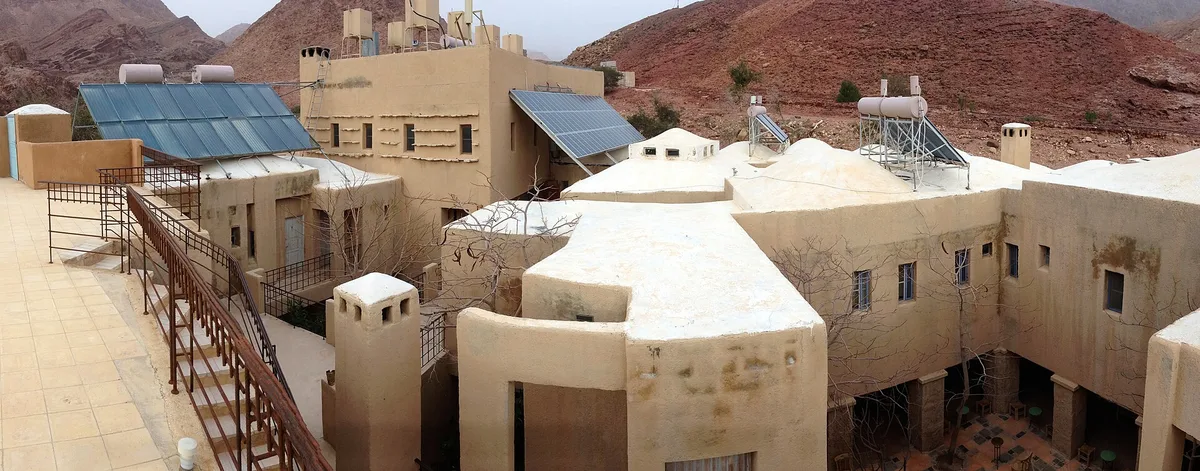
At the end of the Wadi Dana Trail, where the canyon opens onto the Wadi Araba plain, stands the building that completes this dana biosphere reserve guide’s geography: Feynan Ecolodge, 26 rooms of sand-coloured stone and mud-rendered walls in the style of a desert caravanserai, built by the RSCN in 2005 to a design by the Jordanian architect Ammar Khammash and run since 2009 by EcoHotels. There is no grid electricity. Solar panels power what little electricity the lodge uses by day; by night it is lit by candles, made on site, hundreds of them, and the silence that visitors write home about is partly the sound of a building with almost nothing humming in it. National Geographic Traveler counted it among the world’s best 25 ecolodges, and its staff are drawn almost entirely from the Bedouin families of Wadi Feynan – the lodge was conceived, explicitly, as the economic alternative that would give the valley’s people more from protecting this landscape than from mining it.
The lodge is also a walking base in its own right, and a different Dana unfolds from its door. Feynan’s own programme of guided walks explores the lower valley – sunset walks to the dunes and viewpoints, plant walks with Bedouin guides who read the desert pharmacopoeia fluently, canyon walks up Wadi Ghwayr from below, and visits to the copper sites and the valley’s astonishing depth of archaeology, from Neolithic villages to Byzantine churches. Its kitchen is vegetarian, cooked from local produce; its evenings run to stargazing from the roof terrace under some of the darkest skies in Jordan, the Milky Way unspooling over Wadi Araba. Walkers finishing the Wadi Dana Trail arrive to all of this on foot, which is exactly the arrival the place was designed for, and this dana biosphere reserve guide can think of no better single night in Jordan than the one that follows the descent.
The access truth about Feynan must be stated as plainly as the lodge deserves, because it confuses more travellers than any other fact in this guide. Feynan is NOT reached through Dana village or the reserve’s eastern side by road. Its road access is from the west – off the Dead Sea to Aqaba highway in Wadi Araba, near the village of Greigra (Qurayqira), from where the lodge collects guests at a reception point for the final off-road leg. The only connection between Feynan and Dana village is the one in section four: 14 kilometres of canyon, on foot. Plan your Jordan route around that fact – Dana village pairs with the King’s Highway and Petra; Feynan pairs with the Dead Sea road – and the famous hike-through, sleeping at Feynan and being collected by road the next day, becomes the elegant solution it was designed to be.
Six Thousand Years of Copper – Feynan’s Other Story
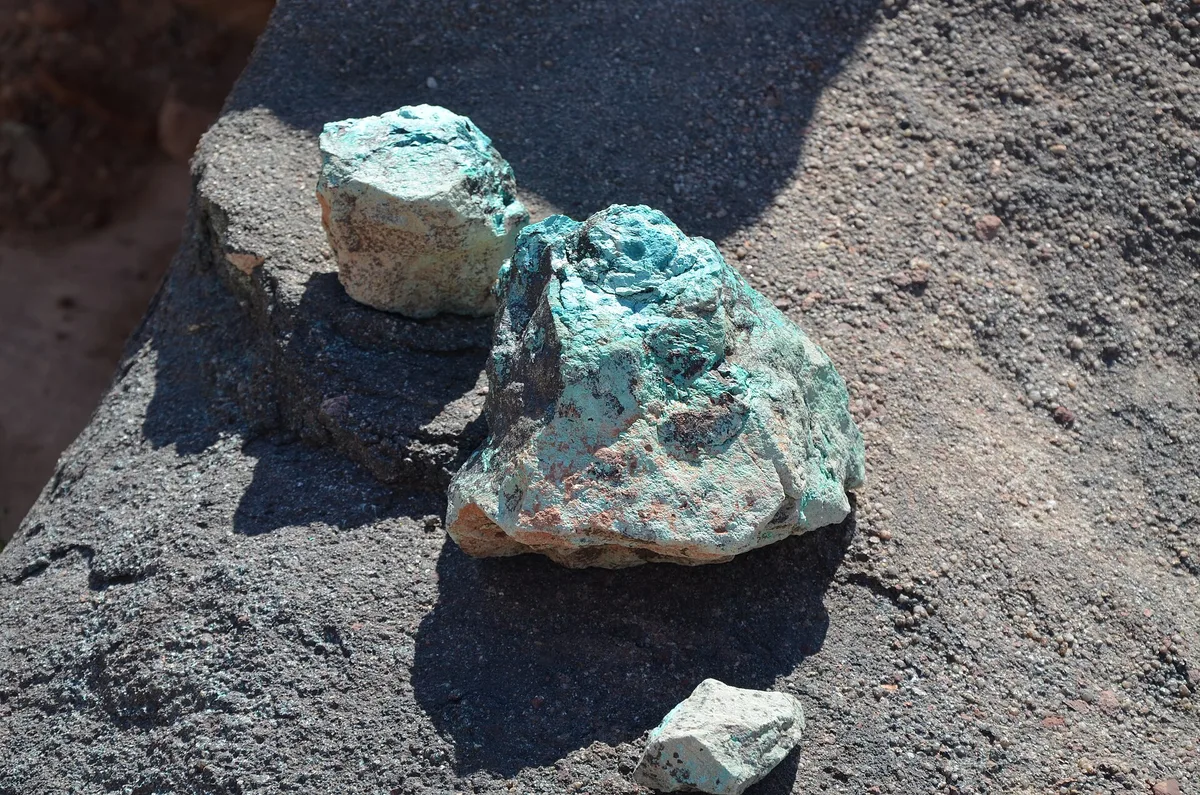
The black hills at the canyon’s foot are not natural. They are slag – the waste of copper smelting on an industrial scale – and Wadi Feynan preserves one of the oldest and best-studied mining landscapes in the world. Copper was being smelted here in the Chalcolithic period, more than 6,000 years ago, among the earliest metal production anywhere; the great mound of Khirbat en-Nahas, its name meaning “ruins of copper”, records production in the Iron Age, in the 10th to 9th centuries BC, on a scale that made Faynan a significant industrial centre of the biblical-era world; and under Rome the mines of Phaino, as the Greeks and Romans called Feynan, were worked as a major imperial mining district. Dams held water for the smelting, mineshafts and galleries honeycomb the hills – the Um el-Amad mine among them – and the whole valley is an open-air archive of how humanity learned metal.
For the walker, this history is not a museum detour but the ground under the final hour of the Wadi Dana Trail and the setting of Feynan Ecolodge, whose guided walks visit the mines and smelting sites with the story told where it happened. It also gives this dana biosphere reserve guide its favourite Dana irony: the valley that human beings industrialised first is now protected as wilderness, and the ecolodge that anchors its conservation was built substantially to prove that the copper could stay in the ground. The argument is not historical. In 2021 a proposal to redraw the reserve’s boundaries to allow copper exploration at Dana’s edge provoked a national controversy in Jordan; the RSCN has stated its position that no land would be excised from the reserve and no open-pit mining permitted. When you walk past green-stained ore in black slag at Feynan, you are walking through both ends of a 6,000-year argument about what this valley is for – and the reserve is the current answer.
A practical note for the historically minded: Feynan’s archaeology rewards a guide and punishes the uninformed glance, because slag looks like slag until someone shows you the furnace lines, the mine adits and the Roman-Byzantine town beneath the lodge’s hills. Build the lodge’s archaeology walk into a Feynan stay rather than expecting the landscape to explain itself, and give the copper section of your Dana visit the same respect as its canyon: this is, in the judgement of this dana biosphere reserve guide, the most underrated half of the reserve.
The RSCN Model – Conservation That Employs Its Neighbours
Dana cannot be understood without its manager. The Royal Society for the Conservation of Nature – the RSCN, founded in 1966 – is the non-governmental organisation to which Jordan has entrusted its protected areas, and Dana, established in 1989, became its flagship experiment: proof, attempted for the first time in Jordan, that a reserve could pay for itself by making its neighbours prosperous. The 1994 integrated management plan zoned the reserve for grazing, protection and tourism in negotiation with the people who lived in and around it. The Guest House, the restored village, the local guide roster, the handicraft and food enterprises and eventually Feynan Ecolodge are all expressions of the same bet – that a villager earning from the reserve becomes its guard, and that conservation which ignores poverty fails. Dana’s shelves of international awards for poverty reduction and biodiversity are the bet, substantially, coming in.
The commercial machinery has a name worth knowing when you book. Wild Jordan is the RSCN’s business arm, created to run exactly these income-generating programmes across Jordan’s reserves – the booking channel for reserve accommodation and guided trails, the brand on the reserve’s crafts and cafes. When this dana biosphere reserve guide tells you to book a guided trail “through the Guest House or Wild Jordan”, it is pointing at one system: the RSCN manages the land, Wild Jordan sells the visit, and the money is designed to flow back into conservation and the villages. It is not a flawless machine – service at the reserves can be slow to answer emails, and Dana’s popularity in peak weeks strains its small bases – but it is an honest one, and understanding it sets the right expectations: book ahead, confirm by phone where you can, and treat flexibility as part of the price of a visit whose profits guard ibex.
What does the model ask of the visitor? Three things, all cheap. Stay in the reserve’s own places or the village’s, so the money lands where the zoning assumed it would. Hire the local guides the system trained – on the guided trails you have no choice, and on the unguided ones a Dana guide still transforms the day. And keep to the reserve’s disciplines: no off-trail wandering into the protection zones, no picking, no drones without permission, fires only where the campsite allows them. The wilderness at Dana is a negotiated achievement between conservation and community; the visitor’s part of the negotiation is simply to be the kind of guest the system was built to reward.
When to Go – Seasons, Weather and Honest Difficulty
Dana has two best seasons and they are the ones every dana biosphere reserve guide names: spring, March to May, when the plateau flowers, the canyon runs green at its edges and walking temperatures are kind at every altitude; and autumn, September to November, when the heat has broken, the light is at its longest and clearest, and the migration passage refills the skies. These are also the crowded weeks by Dana’s modest standards – the Guest House and Feynan fill, and the Dana to Petra groups are on the trail – so the standing advice of this guide is to book the prime months early and walk the shoulder weeks if you can. Late February and late November can be superb, with the caveat that winter’s machinery is already stirring.
Summer splits the reserve in two. On the plateau, Dana village at 1,400 metres is one of the most pleasant addresses in Jordan in July – cool evenings, dry air, the canyon glowing below. On the canyon floor, the same July day is a serious proposition: the lower Wadi Dana and the Feynan plain are among the hottest environments in the country, and the full descent becomes a dawn-start discipline for fit walkers carrying serious water, or simply a walk to decline in favour of the rim trails and a Rummana evening. Winter inverts the problem: the village can be bitter, fogged and occasionally snow-dusted, the short days shrink the walking, and the canyon trails close against flash floods – the Rummana base shuts entirely from November to mid-March, and the Wadi Dana Trail’s season ends with the rains. A December Dana is a village-and-viewpoints Dana, atmospheric and quiet, but it is not the reserve of the photographs.
Difficulty, stated once and plainly for the whole dana biosphere reserve guide: the short Rummana loops are easy to moderate walks for anyone comfortable on rough paths; the Dana Village Trail and White Dome are moderate ridge walks; Shaq al Reesh adds scrambling in a confined canyon; the Wadi Dana Trail is a long, committing, mostly downhill trek whose 14 kilometres and total descent test knees and heat tolerance more than lungs; Wadi Ghuweir is the hardest day in the reserve, a guided canyoning trek with wet rock and no exit; and the Dana to Petra trek is a multi-day expedition to be booked, not improvised. Choose by that ladder, not by the photographs, and Dana will give you the day you were actually fit for – which is the day you will remember fondly.
Getting There and How a Visit Works
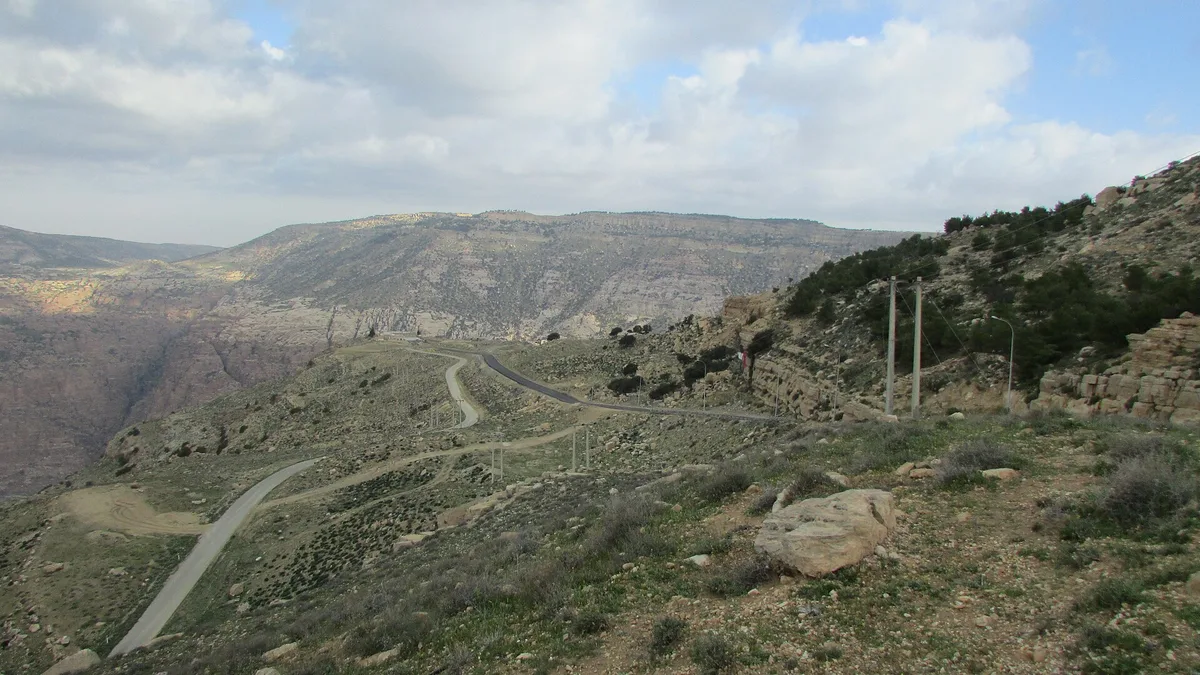
Dana village, the eastern gateway used by almost every reader of this dana biosphere reserve guide, stands off the King’s Highway in Tafilah Governorate, between Tafila and Shobak, about 200 kilometres south-west of Amman – roughly three hours by road on the usual Amman-to-Petra driving day, which is why Dana slots so naturally into the King’s Highway chapter of a Jordan itinerary, alongside Karak and Shobak castles. From Petra’s town, Wadi Musa, the village is a straightforward drive north on the same highway. Public transport toward Dana is thin – buses run the highway towns, with local taxis covering the last stretch to the village – and most visitors arrive by hire car, private driver or organised tour; if you are relying on buses, build generous margins and confirm the last leg locally. Our Jordan itinerary for 7 days shows where a Dana night sits inside the classic week.
The visit itself is arranged at the base you are using, and the mechanics differ by base – the single most useful planning fact in this dana biosphere reserve guide is that Dana has no single gate. Arriving in the village, you deal with the Guest House and the village trailheads: unguided trails begin from the village and campsite, guided trails are booked through the Guest House or Wild Jordan’s booking channels, and the reserve’s entrance fee is paid as part of the arrangement – on the RSCN’s published rates, guided trail prices include the entrance, so the walk you book is the whole transaction. At Rummana, the campsite office runs its own trails within its mid-March to October season. At Feynan, everything runs through the lodge. What there is not, anywhere, is a turnstile where you buy a ticket and wander at will: even the unguided trails start from staffed bases, and checking in – telling the reserve where you are walking – is part of the system’s safety logic in country with no canyon mobile coverage.
Money, handled the way this site handles it everywhere. Dana charges a reserve entrance fee, with guided trails priced on top or inclusively as described above, and the RSCN revises its rates periodically; third-party websites currently quote conflicting entrance figures, so this guide prints none and instructs you instead to confirm the current rate when you book with the Guest House or Wild Jordan – the figure you are quoted there is the figure that is true. Dana’s fees are the RSCN’s, separate from Jordan’s antiquities ticketing, so budget the reserve as its own line rather than assuming a sightseeing pass covers it. Cards are accepted at the main bases, but carry Jordanian dinars in cash for the village, the trailheads and the small purchases – tea, crafts, tips for guides – that oil a Dana day.
Last, the checklist this guide would pin to the Guest House door. Book beds and guided trails ahead in spring and autumn. Start every canyon walk early. Carry more water than the map suggests, all of it, from the trailhead – there is none on the routes. Download offline maps; the canyon has no signal. Tell your base your plan and your return time. Arrange the Feynan pick-up, or the luggage transfer, before you descend, not after. And leave one evening unscheduled on a Dana terrace doing nothing at all: the reserve at dusk, ibex cliffs turning rose and the village settling around you, is the experience the whole apparatus exists to protect, and it costs nothing but the decision to be there.
Dana Biosphere Reserve Guide – Questions, Answered
How many days do I need at Dana?
One full day is the minimum this dana biosphere reserve guide can defend – enough for the Wadi Dana Trail or a Rummana-and-village day, but not both. Two nights, one at the village and one at Feynan or the campsite, is the ideal Dana stay: a descent day, a canyon or copper day, and evenings at both ends of the reserve. Day-trippers from the King’s Highway get the viewpoints and a short trail, and leave having seen the poster rather than the reserve.
Do I need a guide for the Wadi Dana Trail?
No – it is the reserve’s famous unguided walk, and the RSCN’s trail descriptions present it as walkable independently, with a guide available and genuinely valuable for the wildlife, the geology and the stories. The guided canyon trails – Shaq al Reesh, the White Dome, Wadi Ghuweir and the Dana Village Trail – are guided-only in the RSCN’s system, and the Dana to Petra trek should be booked as an organised trek. If in doubt, this dana biosphere reserve guide’s rule is simple: the canyon you can walk alone is the one with the lodge at the end of it.
When is Dana closed, and can I visit in winter?
The reserve’s village side works all year – the Guest House is open year-round and the rim, village and viewpoints are a winter pleasure in clear weather. The canyon system is seasonal: Rummana campsite and its trails run 15 March to 31 October, and the Wadi Dana Trail closes through the winter because Wadi Dana is a flood channel. Winter visitors should plan a rim-based visit and treat any open trail as a bonus confirmed on the day.
What will it cost me?
The honest answer of this dana biosphere reserve guide is a mechanism, not a number: an entrance fee to the reserve, guided-trail prices that on the RSCN’s published rates include that entrance, accommodation at the base you choose, and transport at both ends of a one-way walk. Published third-party entrance figures currently disagree, so confirm the current rates with the Guest House or Wild Jordan when you book – that quote is the true one – and carry cash in dinars for the village economy around the official charges.
Can I visit Dana as a day trip from Petra or Amman?
You can, and many do – Dana village is roughly three hours from Amman and a much shorter hop north from Wadi Musa on the King’s Highway. But the judgement of this dana biosphere reserve guide is that a day trip is the weakest way to meet the reserve: the signature walk is one-way and a full day in itself, the light and the wildlife belong to the early and late hours, and the Dana evening is half the experience. Sleep one night in the village if your itinerary allows any flexibility at all.
Is Dana suitable for children and non-hikers?
Yes, in its rim form. Dana village, its viewpoints, the Guest House terraces and the short Campsite Trail at Rummana make a gentle, rewarding visit for families and non-walkers, and the village itself is the attraction for anyone more interested in community and craft than in canyons. The full descent, Shaq al Reesh and Wadi Ghuweir are not children’s walks; grade your party by the difficulty ladder in the seasons section and Dana will fit every level honestly.
What should I pack that I might not think of?
More water capacity than feels reasonable, and a warm layer in every month – the 1,500-metre plateau is cold at dawn even when the canyon promises heat. Add broken-in walking shoes with grip for polished rock, a hat and sun protection for shadeless trails, a headtorch for Feynan’s candle-lit evenings and campsite nights, cash in small dinars, and offline maps for a canyon without signal. Binoculars, often an afterthought in Jordan, earn their place in the bag here more than anywhere else in the country.
Dana or Wadi Mujib – which canyon should I choose?
They are different instruments. Mujib is a single spectacular water canyon by the Dead Sea, walked in a few hours in season; Dana is a whole reserve – four zones, a village, a lodge, trails from an hour to four days – that happens to contain canyons. If you have one spare half-day near the Dead Sea, Mujib. If you can give southern Jordan a night and a walking day, this dana biosphere reserve guide chooses Dana without hesitation, and notes that the two combine naturally in a longer trip rather than competing.