Istanbul does not have a museum problem of scarcity; it has a problem of administration. The best museums in istanbul answer to at least five different keepers – the Ministry of Culture and Tourism, the city municipality, the National Palaces directorate, the Turkish Navy, and a row of private foundations – and each keeper runs its own tickets, its own closing day and its own idea of what a visitor is. That is why the city’s museum scene confuses people out of proportion to its size, and why a single pass, a single ticket desk or a single “museum quarter” never quite materialises. Understand who runs what, and the whole map suddenly makes sense.
This guide chooses thirteen. Not the thirteen most famous, and certainly not every museum in the city – Istanbul has dozens, from a museum of innocence built around a novel to galleries inside working barracks that few visitors ever find. These thirteen are the ones a traveller can build a trip around: the first-timer’s non-negotiable core on the Sultanahmet hill, the two Byzantine interiors that justify the journey on their own, a serious trio for art, a pair made for families, and the one tower everybody climbs. They are grouped below by neighbourhood, because in Istanbul the right question is rarely “which museum?” – it is “which museums stand near each other, on the day I have?”
Three honesty rules govern everything that follows, the same rules this site keeps everywhere. We print almost no prices, because Istanbul’s ticket prices are revised too often for a printed figure to survive the season; the single exception is the Museum Pass, whose price the Ministry publishes on its own sales page, and which we quote from there with its check date. Opening hours are given as patterns – a closing day, a prayer-shaped gap – rather than clock times that rot. And the two most searched-for “museums” in the city, Hagia Sophia and the Chora, are described as what they actually are in 2026: working mosques with managed visitor routes, not museums at all. The city’s day-by-day shape is covered in our Istanbul travel guide; this page is about the collections themselves, and how to choose among them.
Best Museums in Istanbul at a Glance
| Museum | Best for | Neighbourhood |
|---|---|---|
| Topkapi Palace Museum | Ottoman power, treasure and the sultan’s household | Sultanahmet |
| Hagia Sophia (visitor gallery) | The building itself – Byzantine genius, now a working mosque | Sultanahmet |
| Istanbul Archaeology Museums | Ancient civilisations on an imperial scale | Gülhane, Sultanahmet |
| Museum of Turkish and Islamic Arts | Carpets, calligraphy and thirteen centuries of Islamic art | Sultanahmet, on the Hippodrome |
| Basilica Cistern | Pure atmosphere – a cathedral of columns underground | Sultanahmet |
| Chora (Kariye) | The finest late Byzantine mosaics and frescoes anywhere | Edirnekapı, by the Land Walls |
| Istanbul Modern | Modern and contemporary Turkish art | Karaköy |
| Pera Museum | Orientalist painting – small, dense, perfect | Beyoğlu |
| Sakıp Sabancı Museum | Ottoman calligraphy and big international loan shows | Emirgan, on the Bosphorus |
| Rahmi M. Koç Museum | Transport, industry and hands-on family exploring | Hasköy, on the Golden Horn |
| Istanbul Naval Museum | Imperial caïques and six centuries of sea power | Beşiktaş |
| Galata Tower | The view – with a small museum wrapped around the climb | Galata, Beyoğlu |
| Miniatürk | The whole country in miniature, best with children | Sütlüce, on the Golden Horn |
Read the table geographically and the city’s museum logic appears. Five of the thirteen stand within a few minutes’ walk of each other on the Sultanahmet hill, close enough that the honest limit is your stamina rather than the map. Three more – Istanbul Modern, the Pera Museum and the Galata Tower – form a second, smaller cluster across the Golden Horn in Beyoğlu, reachable on one tram ride and a funicular. The rest string out along the water: the Naval Museum and the Sabancı mansion up the Bosphorus shore, the Koç Museum and Miniatürk facing each other across the upper Golden Horn, and the Chora standing alone by the western land walls, which is exactly why it stays quieter than everything else on this list.
The table also hides the distinction that decides your budget. Nine of the thirteen belong to the state in one form or another; four are private foundations. The Museum Pass section near the end of this guide explains which are which, because the pass covers some of the best museums in istanbul, none of the private ones, and – the catch that surprises everyone – neither of the two sights first-timers ask about most. Read it a third way, by appetite, and it becomes a choosing tool rather than a ranking. The history-first traveller’s trip is the hill – palace, archaeology, Islamic arts, cistern – and can be walked in two days without a single tram. The art traveller’s trip is Beyoğlu and the Bosphorus shore. The family trip is the Golden Horn. Almost nobody needs all thirteen, and the visitors who enjoy Istanbul’s museums most are the ones who picked five and gave them time. If your own shortlist differs from the table’s order, trust it: the best museums in istanbul for you are the ones that match the interest you actually arrived with, and every section below is written to be usable on its own, in any order, on the day you choose it. First, though, the museums themselves, starting where every first visit starts.
Topkapi Palace Museum – a City of Courtyards, Not a Palace
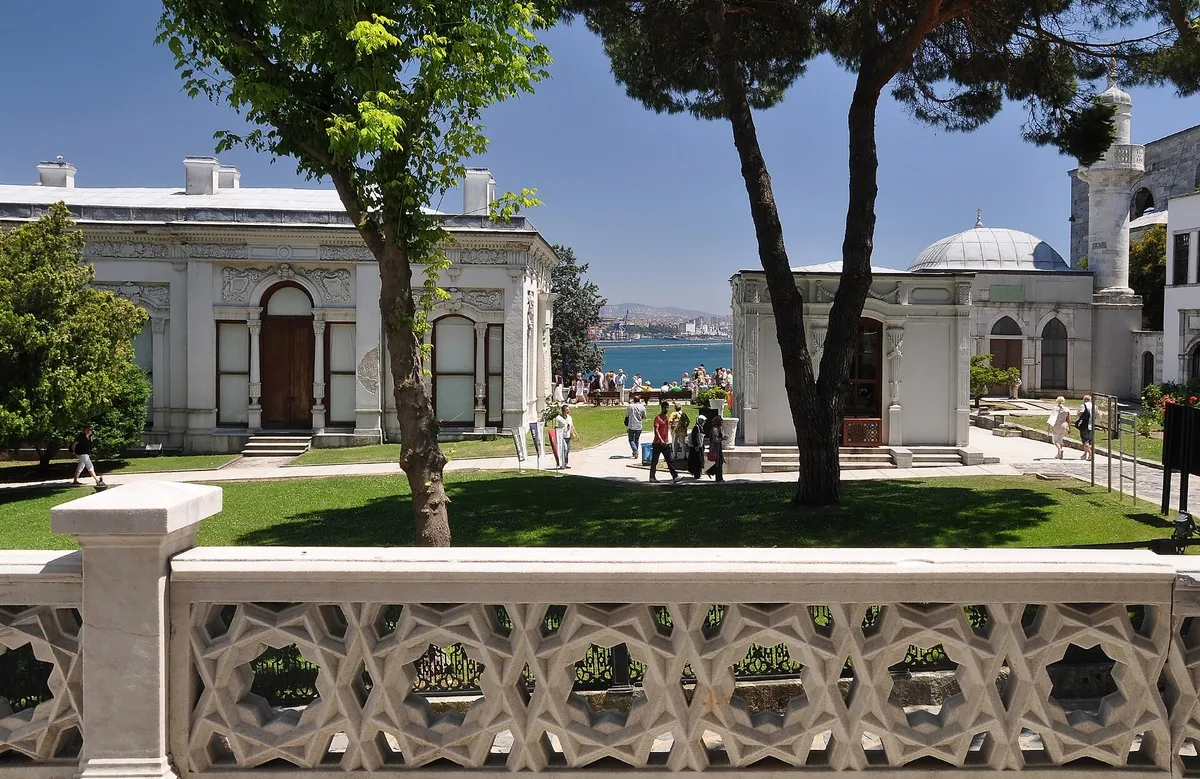
Topkapi is the museum Istanbul trips are built around, and the first thing to understand about it is that “palace” undersells it. From the 1470s, when Mehmed the Conqueror laid it out on the point where the Golden Horn meets the Bosphorus, until the court moved down the hill to Dolmabahçe in the 1850s, this was less a residence than a walled small town: four courtyards stepping downhill, kitchens that fed thousands, a council chamber, a treasury, stables, mosques, pavilions, and housing for a court population in the thousands. It opened as a museum in 1924, within a year of the Republic’s founding, and it remains the single best place in the city to understand how the Ottoman Empire actually worked – not as a story of battles, but as an administration with a kitchen, a wardrobe and a filing system.
The visit follows the courtyards in order, and the order is the meaning. The first courtyard is almost a public park, holding Hagia Irene – one of the oldest churches in the city, older than Hagia Sophia itself, never converted to a mosque, and visited as part of the palace complex. The second courtyard is government: the Imperial Council chamber where viziers governed an empire, and the vast palace kitchens, whose collection of Chinese porcelain is among the most important in the world. The third is the sultan’s private world – audience chamber, library, and the Treasury, where the famous emerald-studded Topkapi Dagger and the 86-carat Spoonmaker’s Diamond sit in cases that draw the day’s densest crowds. The fourth is pure pleasure ground: kiosks and terraces at the point’s edge, with the finest free view in the old city, across the water to Asia.
Two practical facts shape every Topkapi day. The first is the Harem: the dynasty’s private residential quarter, a warren of tiled rooms and courtyards that is a separately organised section of the visit. Single tickets treat it as an add-on, so check what your ticket actually includes before you queue; the official Museum Pass includes it, which is one of that card’s genuine advantages. The second is the weekly closing day – in current arrangements Topkapi closes on Tuesdays, so never anchor a Tuesday to it, and confirm the pattern on muze.gov.tr when you fix your dates. Give the palace half a day at minimum, arrive near opening, and take the courtyards in sequence while the tour groups are still at breakfast. Our Topkapi Palace guide on this site walks the whole complex courtyard by courtyard; in this roundup it stands, unchallenged, as first among the best museums in istanbul for a first visit.
Hagia Sophia – the Masterpiece That Is a Mosque Again
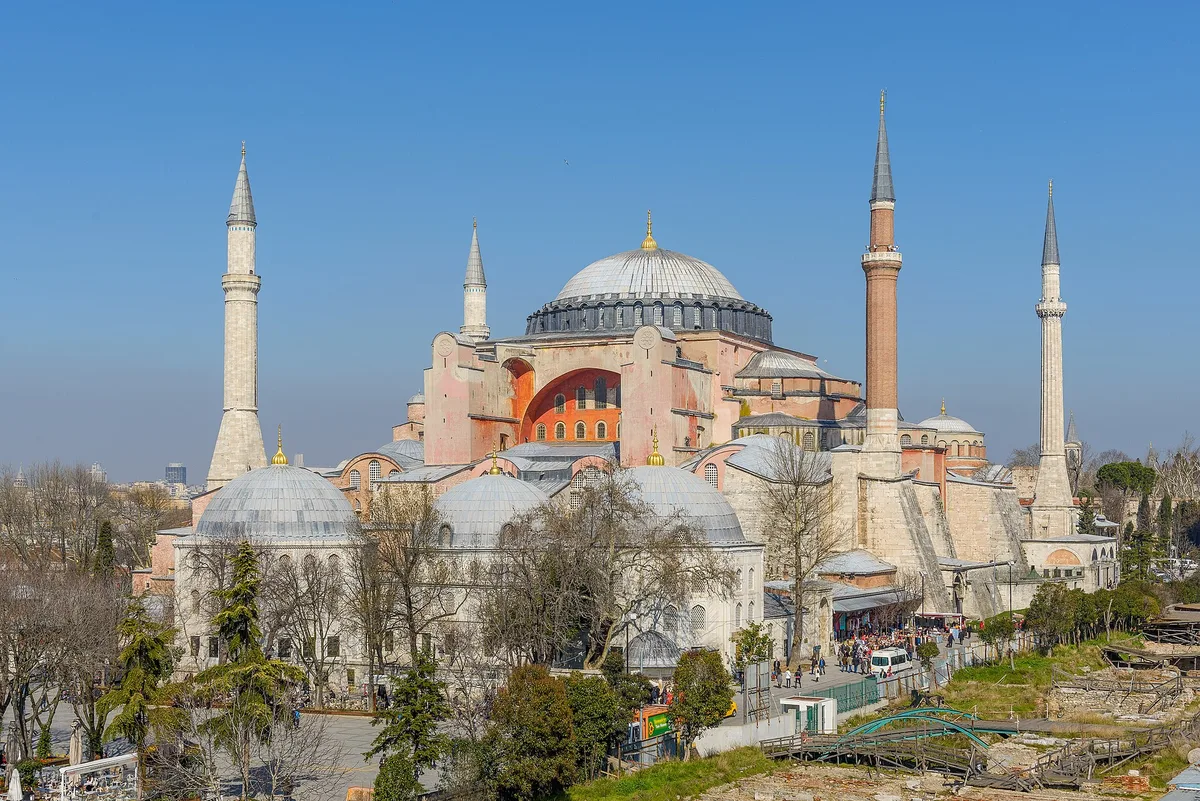
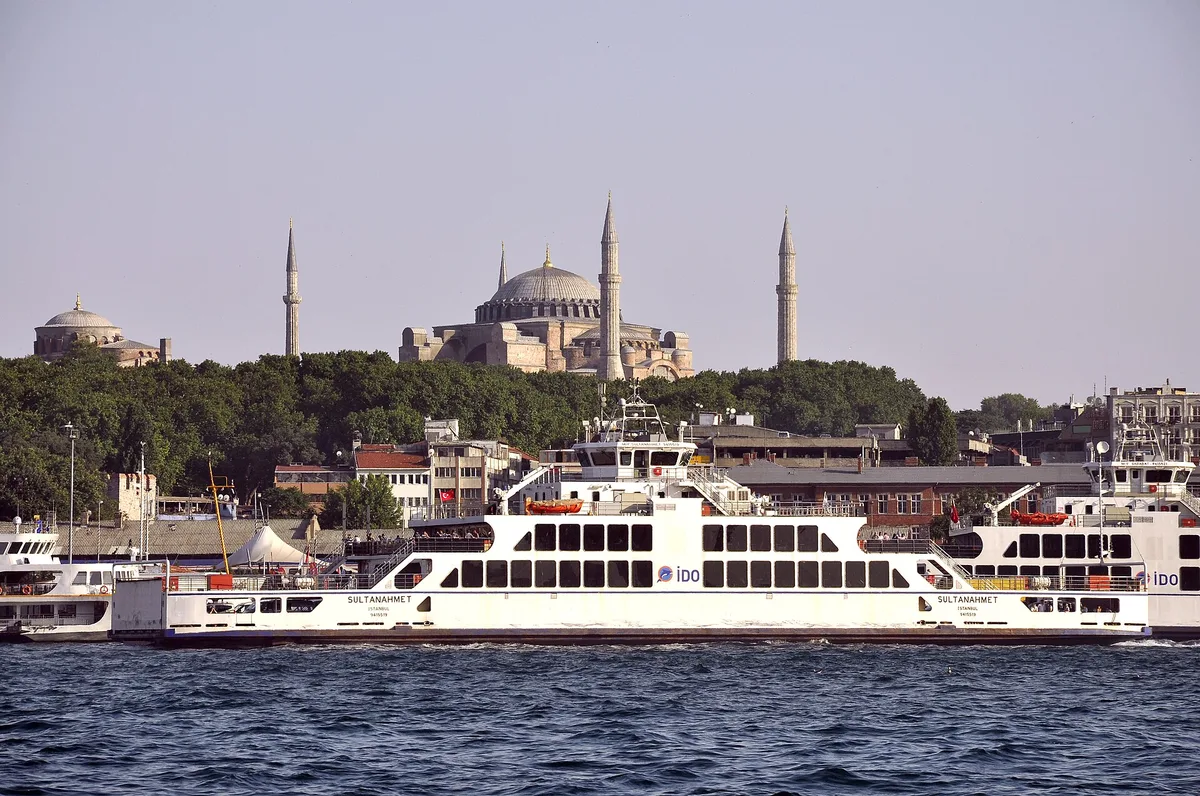
Every list of the best museums in istanbul has to begin its Hagia Sophia entry with a correction: since July 2020, Hagia Sophia is not a museum. It is a working mosque – the Hagia Sophia Grand Mosque – and it has been one before. Raised in just five years under the emperor Justinian and dedicated in 537, designed by Anthemius of Tralles and Isidore of Miletus, it was the largest cathedral in the world for nearly a thousand years, its dome of a little over 31 metres floating on a ring of forty windows. It became a mosque in 1453 and remained one for almost five centuries, opened as a museum in 1935, and returned to worship in 2020 after the Council of State annulled the museum decree. Almost everything written about visiting it before 2020 describes a visit that no longer exists.
The current arrangement, in place since January 2024, separates sightseeing from worship entirely. Worshippers use the ground floor, free, as at any mosque. Sightseeing visitors use a separate entrance on the Topkapi side of the building, buy a separate ticket that no museum pass covers, and follow a one-way route through the upper gallery. That sounds like a demotion and is not: the gallery is where the building keeps its greatest surviving art. The Deësis mosaic of 1261, Christ flanked by the Virgin and John the Baptist, faces worn soft by centuries of touch; the imperial portrait panels show emperors and empresses offering gifts to Christ and the Virgin; and the view down from the gallery rail into the vast domed space, chandeliers hanging at eye level, is the most architectural view in the building. What you no longer do is stand on the famous floor – that is a prayer carpet now, and the apse mosaic of the Virgin and Child, dedicated in 867, may be screened from some sightlines during worship.
The practical consequences are three. The visitor route runs on the mosque’s timetable, closing around the five daily prayers and for a longer stretch at Friday midday, so the day’s prayer schedule decides your slot; early morning and late afternoon are the reliable windows. Dress is mosque dress – covered shoulders and knees, a headscarf for women – and you should bring your own rather than rely on anything being lent. And restoration is a permanent condition of the building: some part of the interior is likely to be scaffolded or screened whenever you go. None of this diminishes it. Hagia Sophia remains the one sight in Istanbul that justifies the airfare on its own – it is simply a mosque visit now, not a museum visit, and our Hagia Sophia guide explains the gallery route and its rules in full.
Istanbul Archaeology Museums – a Million Objects Deep
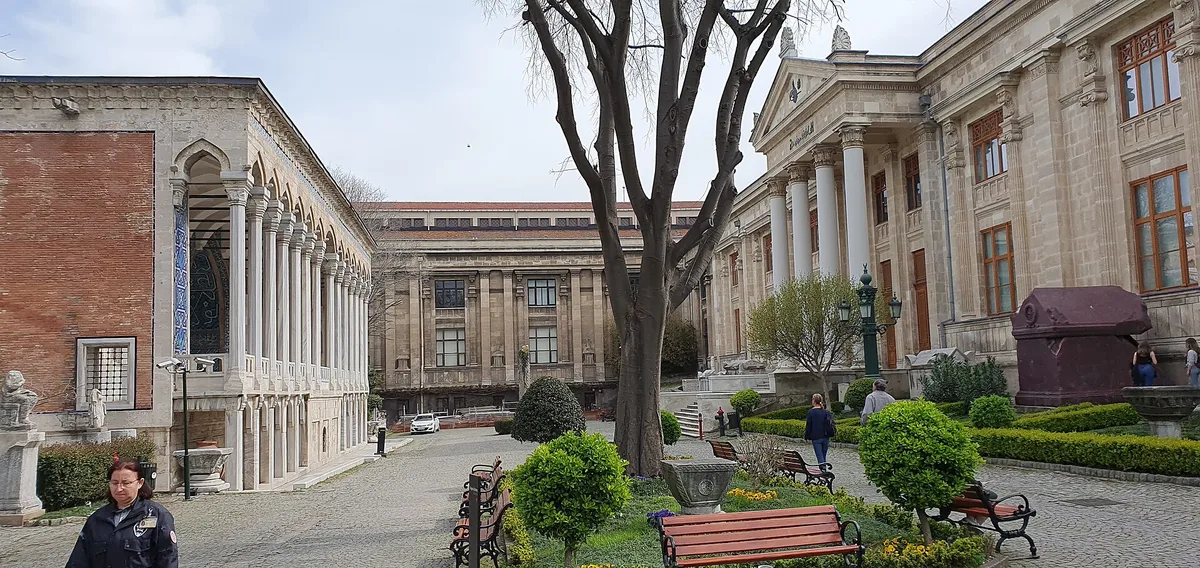
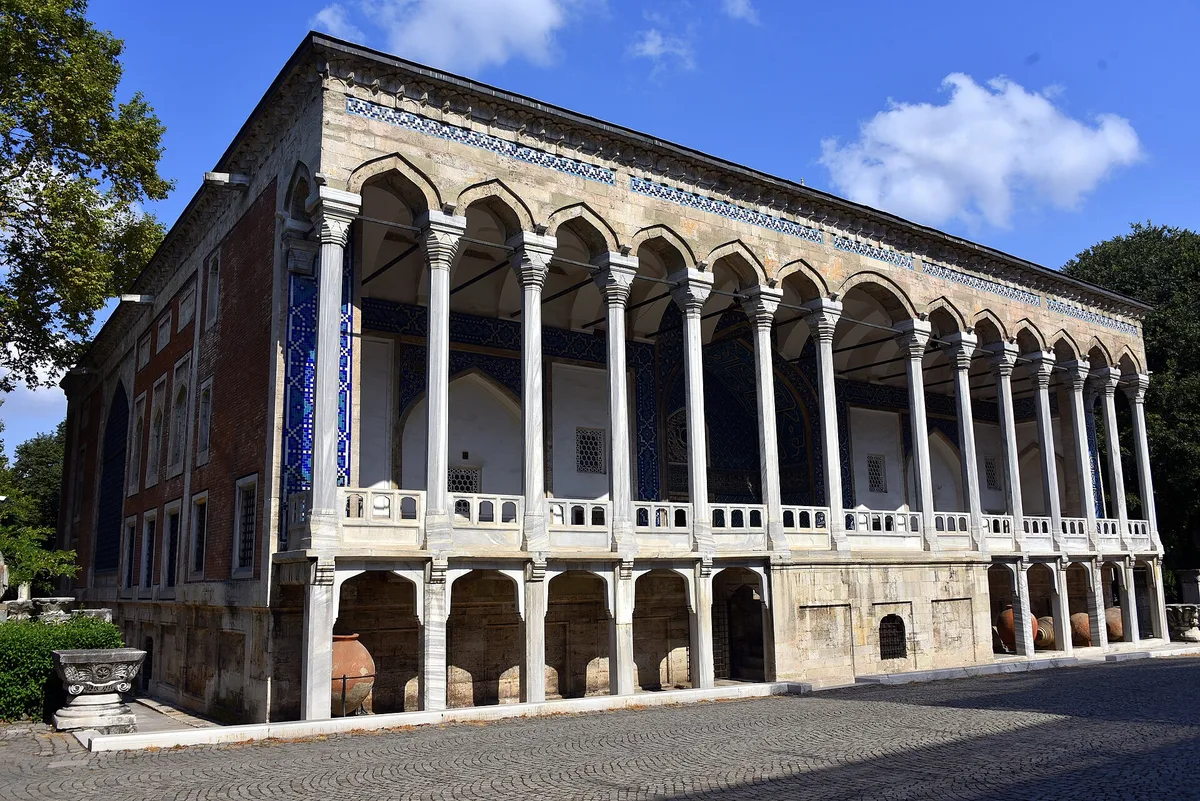
In the outer grounds of Topkapi, down the slope towards Gülhane Park, stands the museum that serious travellers consistently rank as the city’s best-kept secret: actually three museums in one complex. The Archaeology Museum, the Museum of the Ancient Orient and the Tiled Kiosk together hold a collection generally reckoned at around a million objects, gathered from every corner of the Ottoman Empire in the decades when Istanbul was the capital of half the ancient world. It was the empire’s own project – founded under the painter-archaeologist Osman Hamdi Bey, its main neoclassical building opened in 1891 – and it has the confidence of a museum built when its city owned the antiquities outright.
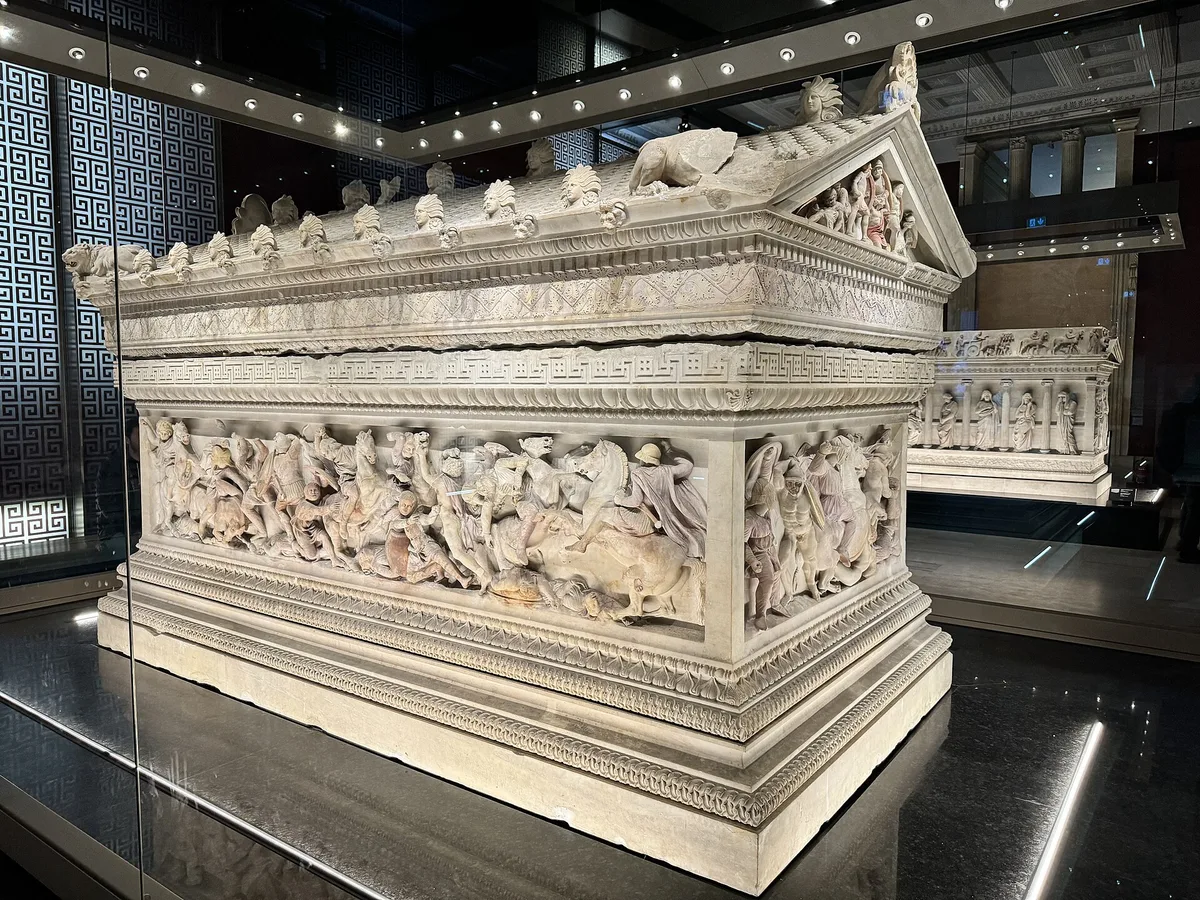
The signature piece is the Alexander Sarcophagus, and it earns the fame. Carved in the late fourth century BC for Abdalonymus, king of Sidon in modern Lebanon, and excavated from the Sidon royal necropolis in 1887, it is named not for its owner but for its decoration: battle and hunt scenes in which Alexander the Great charges through the melee, the marble still holding traces of its original paint. It anchors a sarcophagus hall of genuine world rank. Around it, the main building runs through the civilisations of Anatolia and the classical world – Greek and Roman statuary, the finds from Troy’s layers, Byzantine sculpture and coin cabinets that numismatists plan trips around.
The other two buildings reward the visitors who bother. The Museum of the Ancient Orient holds the older Middle East: Egyptian and Mesopotamian pieces, and a clay tablet recording the Treaty of Kadesh between Egypt and the Hittites – among the earliest surviving international peace treaties, and an object that tends to stop school groups and historians alike in their tracks. The Tiled Kiosk, a pavilion of 1472 in the Persian style and the oldest building in the complex, displays Turkish ceramics and tiles in rooms that are themselves the exhibit. The whole complex is a Ministry museum, covered by the Museum Pass, and its one flaw is success’s opposite: restoration has kept parts of it closed in rotation for years, so check which buildings are open on the official portal before you build a morning around it. Clustered with Topkapi next door, this is the second half of the finest museum morning in the city – and among the best museums in istanbul, the one most visitors most regret skipping. It is also, not coincidentally, the quietest of the great names: the tour groups are next door in the palace, and the sarcophagus halls often hold more masterpieces than people. Travellers who rank museums by collection alone – who would rather stand in front of the Sidon sarcophagi than in a courtyard queue – regularly put this complex first on the entire list, and on a weekday morning, with the galleries empty, it is very hard to argue with them.
Museum of Turkish and Islamic Arts – the Palace on the Hippodrome
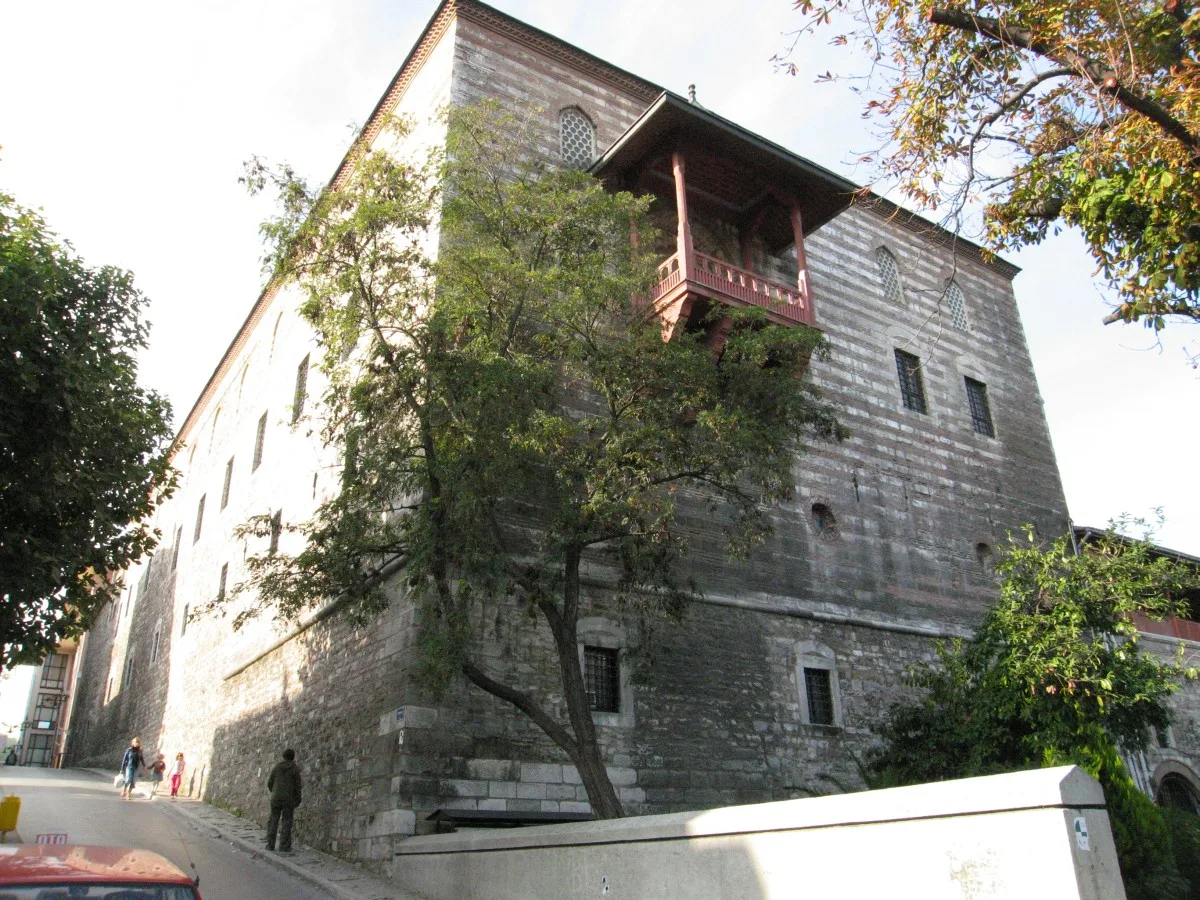
The Museum of Turkish and Islamic Arts has an advantage no label can confer: its building. The museum occupies the Ibrahim Pasha Palace, the grandest private palace to survive from the Ottoman centuries, raised for Süleyman the Magnificent’s grand vizier on the edge of the Hippodrome – its long facade still overlooks the square where Byzantine chariots raced, a few steps from the Blue Mosque. The collection arrived here in 1983, after a wandering history that began in 1914 in the Süleymaniye complex, and the fit is perfect: a palace of the empire’s greatest century, filled with the art of thirteen centuries of Islam.
What the museum does better than any other in the city is textiles and the written word. Its carpet collection is one of the world’s great ones – Seljuk carpets from Anatolia’s first Turkish centuries, among the oldest surviving anywhere, and Ottoman court carpets of a scale that requires hangar-sized walls. The calligraphy galleries run from monumental Qur’an folios to the delicate albums of the court scribes; around them sit woodwork, metalwork, glass, ceramics and stone carving arranged by dynasty and region, so that the Seljuk, Mamluk, Timurid, Safavid and Ottoman rooms read as a comparative history of a civilisation told through its objects. An ethnography section of reconstructed Anatolian rooms – a nomad tent, a village interior – divides opinion: some find it a relief after the vitrines, others a diorama too far. Either way, it is the only room in the museum children reliably enjoy.
Practically, this is the easiest prestige museum in Sultanahmet. It is a Ministry museum, on the Museum Pass; it is smaller than Topkapi or the Archaeology complex, so ninety unhurried minutes does it justice; and its terrace cafe overlooks the Hippodrome and the Blue Mosque’s domes, which makes it the natural second act of a Sultanahmet morning rather than a destination needing its own half-day. Visitors building a list of the best museums in istanbul by depth rather than fame often put it second only to the Archaeology Museums. After the palaces and the archaeology, it is the museum that explains what the civilisation in question actually made and valued – which is why it belongs in the first-timer’s core, not the second-trip overflow. One more thing it does quietly well: it teaches looking. A Seljuk carpet read slowly – its border, its prayer-niche geometry, its worn red – rearranges how you see every carpet shop in the Grand Bazaar uphill, and the calligraphy rooms do the same for every inscription you pass afterwards. Few museums send you back into the city with better eyes than you brought in.
Basilica Cistern – the Cathedral Under the Street
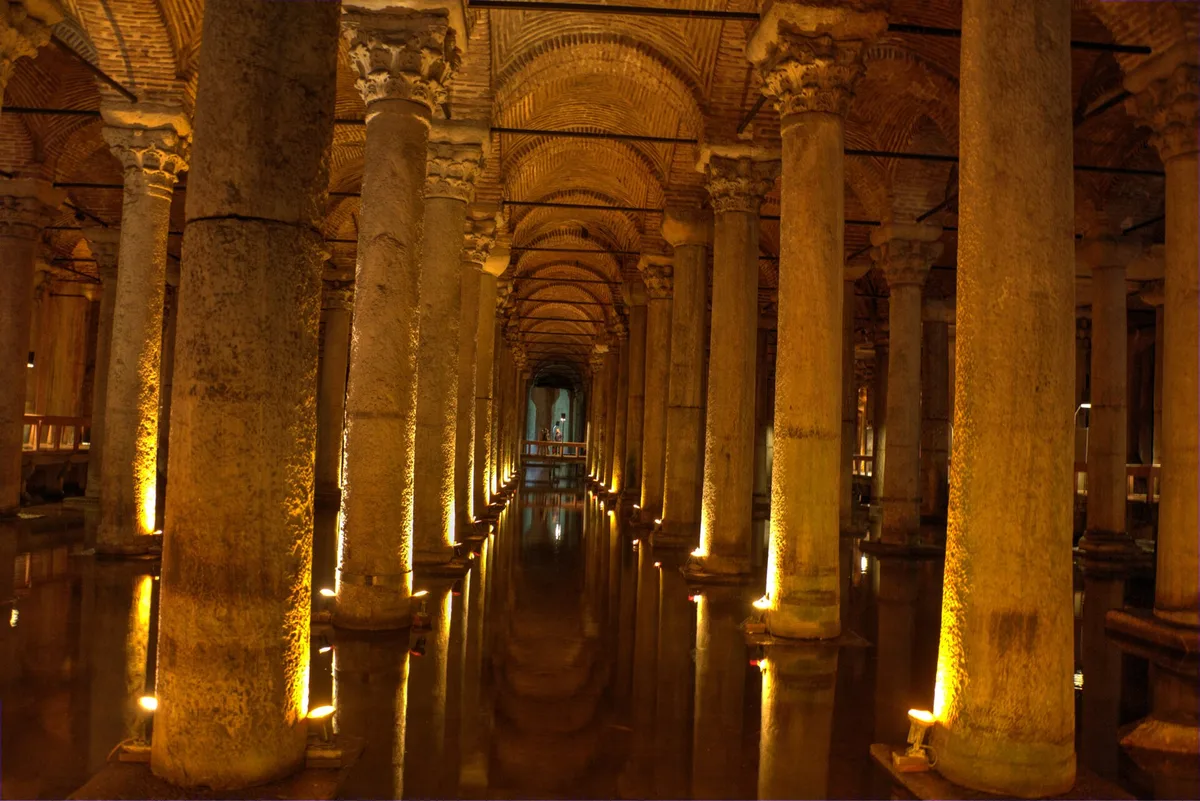
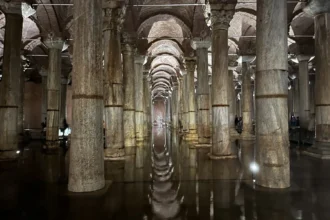
Purists will object that the Basilica Cistern is not a museum, and they are right: it has no collection, no labels to speak of, and a visit that runs well under an hour. It is here anyway, because a guide to the best museums in istanbul that omitted the city’s most atmospheric interior would be technically correct and practically useless. A few steps from Hagia Sophia, a staircase descends into the largest surviving Byzantine cistern in Istanbul: a vaulted underground hall built in the sixth century under Justinian, carried on 336 columns standing in shallow water, fed in its working life by aqueducts from the Belgrade Forest far outside the walls. Later generations forgot it so completely that Ottoman householders drew water – and occasionally fish – through holes in their floors above it.
The two famous details wait at the far end. Two column bases are carved Medusa heads, recycled Roman stonework set sideways and upside down – whether to neutralise the Gorgon’s gaze, to fit the block to the column, or for reasons no one recorded, the heads have stared out of the water for fifteen centuries and now anchor a permanent knot of cameras. Elsewhere a column carved with tears or peacock eyes is tied by guides to the slaves who built the place, a story told with more feeling than evidence. The modern layer is the 2022 reopening after a long restoration: raised walkways, the water kept shallow and glass-clear, and a lighting design that alternates the hall between gold, red and green washes, with contemporary artworks installed between the columns. Whether the colour shows enhance the place or theme-park it is the argument every visitor has on the stairs up.
The ticketing fact that matters: the cistern is run by the Istanbul Metropolitan Municipality, not the Ministry of Culture, so it is separately ticketed and the Museum Pass does not cover it – the single most common misunderstanding at any ticket desk in Sultanahmet. Evening sessions are sometimes run under separate arrangements, and the queue, though it moves, is the price of a short visit everyone wants at the same hour. Go early or late, treat it as the palate cleanser between heavyweight museums, and read our Basilica Cistern guide for the Medusa heads’ full story. It is the shortest visit in this roundup, and for many visitors the one they describe first when they get home.
Chora (Kariye) – Gold Mosaics by the Land Walls
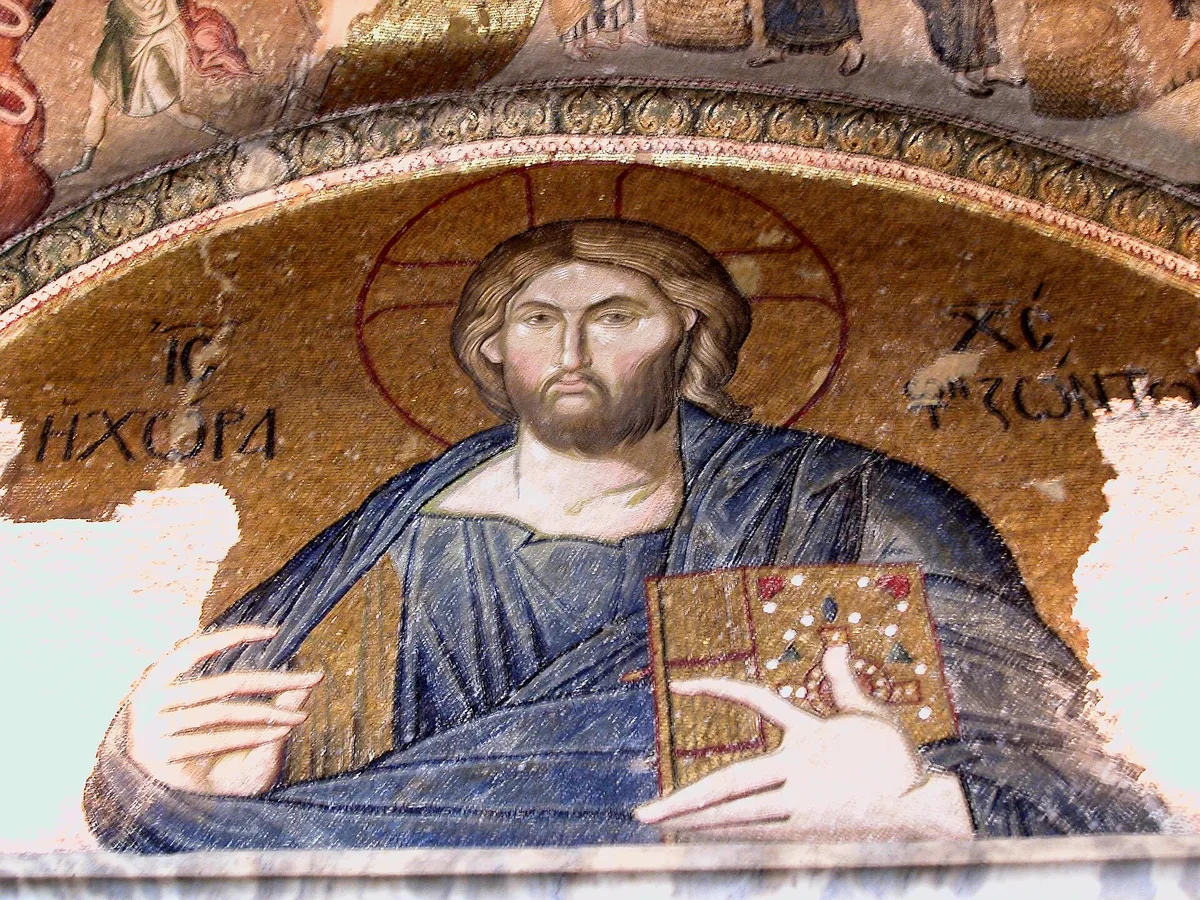
The Chora is the connoisseur’s Istanbul: a small late Byzantine church-monastery in Edirnekapı, hard against the Theodosian land walls, holding what are widely judged the finest Byzantine mosaics and frescoes to survive anywhere. The church of the Holy Saviour in Chora – “in the country”, beyond the early city walls – was rebuilt and lavishly decorated between about 1315 and 1321 under Theodore Metochites, logothete, scholar and the richest patron of the empire’s final flowering. What he bought was a pictorial programme of extraordinary narrative energy: mosaic cycles of the lives of the Virgin and of Christ filling two entrance halls, a monumental Deësis of Christ, the Virgin and John the Baptist, Metochites’ own donor portrait offering the church to Christ – and, in the side chapel, frescoes rather than mosaics, centred on the Anastasis, Christ hauling Adam and Eve from their tombs with a force that feels closer to the Renaissance being born across the Adriatic than to anything “medieval”.
Its modern story mirrors Hagia Sophia’s, smaller and later. Converted to a mosque in the early sixteenth century, its images plastered over, it became a museum in 1945, and the uncovering and restoration of its mosaics in the twentieth century was one of Byzantine studies’ great campaigns. In 2020 a decree returned it to mosque status, and after a long restoration it reopened on 6 May 2024 as the Kariye Mosque, administered by the Directorate General of Foundations. The visitor arrangement resembles its bigger sister’s: worship continues in the prayer hall, where some figurative images near it are kept discreetly covered, while sightseeing visitors follow a managed route through the narthexes and the side chapel, where the great cycles are visible. Foreign visitors pay a separate ticket – it is not a Museum Pass site – visits pause around prayer times, and Friday, given to worship, is the day to avoid; the pattern changes, so confirm the current arrangement on the official portal before crossing the city for it.
That crossing is the one practical warning. The Chora stands alone in the west of the old city, twenty minutes from Sultanahmet by tram and a walk, and it rewards pairing with the land walls it leans against or with the Greek quarter of Fener and Balat on the Golden Horn below. Give it an hour inside – it is compact, and the mosaics want slow reading, ideally with the stories in hand. Of all the best museums in istanbul covered here, this is the one that most changes how visitors see the city: proof that the empire Byzantium became, at the end, small, poor and capable of art like this.
Istanbul Modern – the New Art Museum on the Water
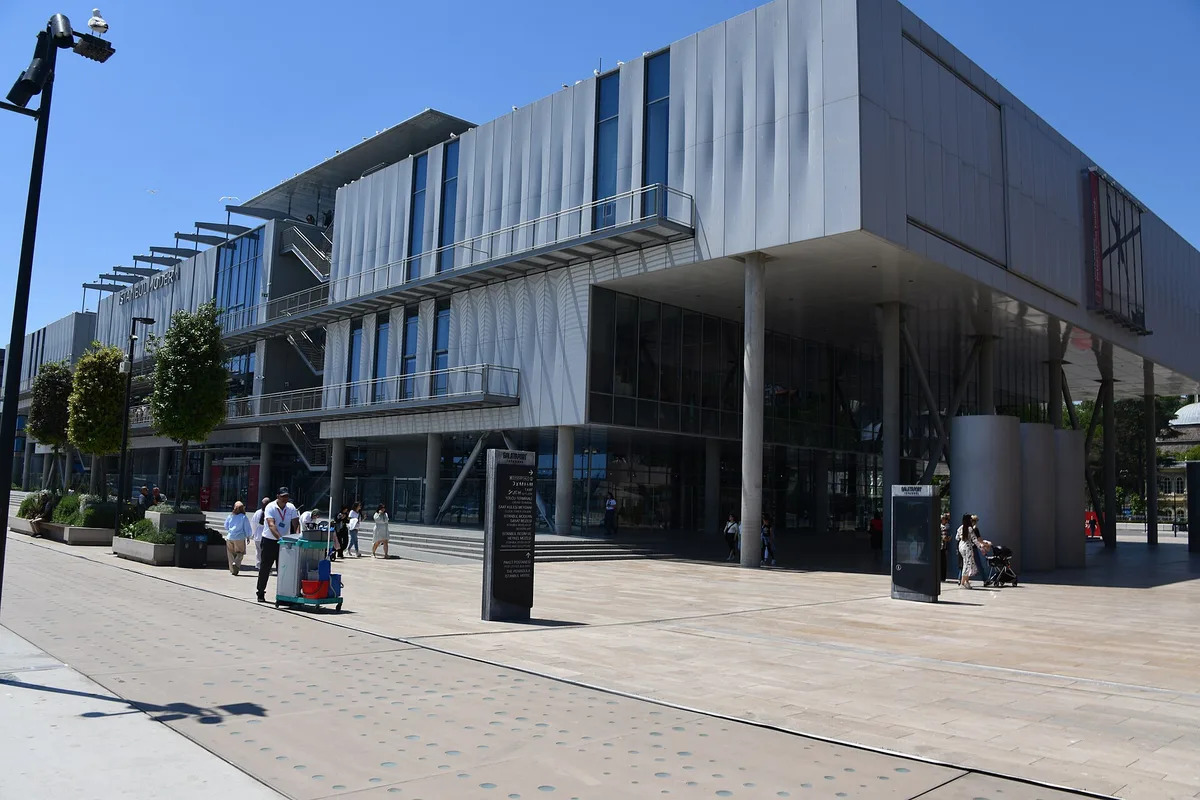
After a morning among the Byzantines, Istanbul Modern is the cold water this list needs: Türkiye’s museum of modern and contemporary art, founded in 2004 in a converted warehouse and reborn in 2023 in a new building by Renzo Piano on the Karaköy waterfront, part of the Galataport development. The building is itself an argument – a low, luminous, aluminium-skinned block that keeps its roofscape open to the Bosphorus, with the museum’s terrace reading the old-city skyline across the Golden Horn like a label for the view. Inside, the permanent collection tells the story the rest of this guide cannot: how Turkish art moved from the Ottoman court painters through the Republic’s modernists to a contemporary scene that now shows in every biennial on earth.
The shape of the visit suits a half-day’s second act. Collection galleries on the upper floors give the chronological spine – painting, sculpture, photography and video by Turkish artists from the early twentieth century onward – while the ground floors carry the temporary exhibitions, which are the museum’s real draw and change through the year: major international names, photography surveys, and shows built from the collection’s depths. A cinema programme, a library and a serious education department make it the most institutionally complete of the best museums in istanbul for art, and the cafe terrace is the one museum cafe in the city where the view competes with the art rather than merely accompanying it.
Practical notes are simple. Istanbul Modern is a private museum, founded by the Istanbul Foundation for Culture and Arts’ sister organisation and supported by the Eczacıbaşı group – so no state pass covers it, and it keeps a private museum’s habits, including a weekly closing day that in its established pattern has been Monday; confirm the current pattern and the exhibition programme on the museum’s own site before you go, because the temporary show, not the collection, will decide whether your visit sings. Pair it with Karaköy’s cafe streets below and the Galata Tower above, and you have the Beyoğlu day that the choosing section below lays out. For art lovers it is not optional: it is the only place in the city where the story of Turkish creativity is continued into the present tense, and in any honest ranking of the best museums in istanbul for art it stands first for everything after 1900 – the Pera and the Sabancı, below, divide the earlier centuries between them.
Pera Museum – Paintings, Weights and a Famous Tortoise
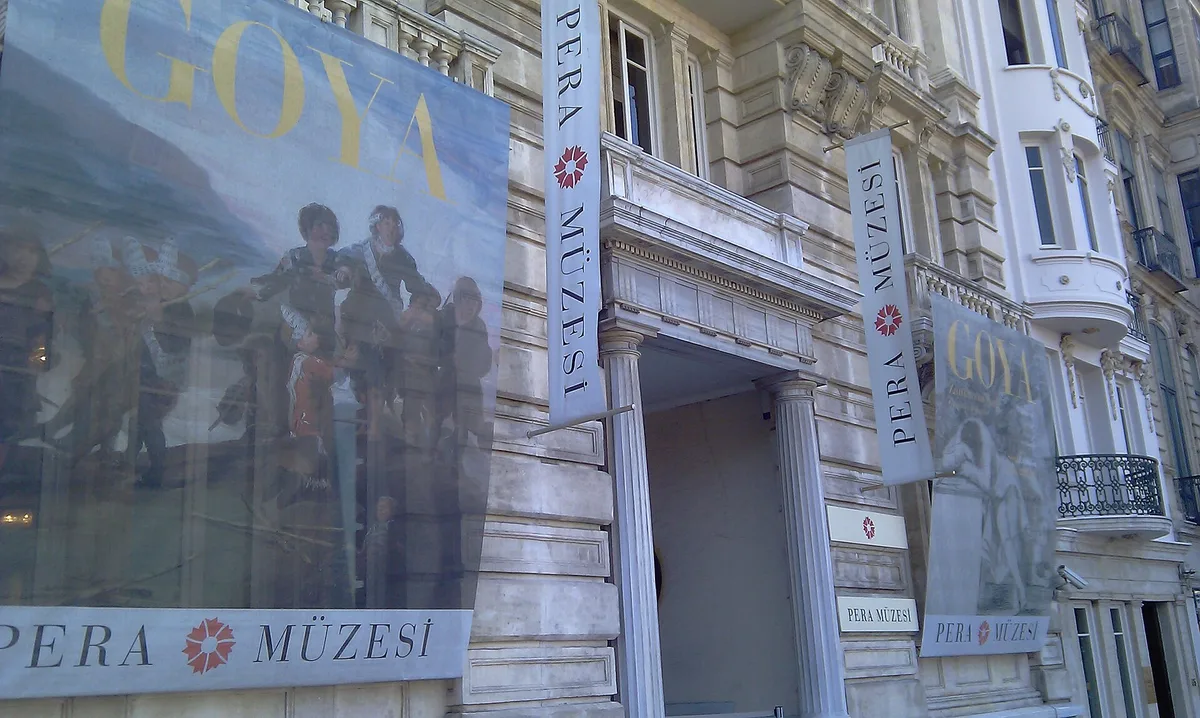
Two streets behind İstiklal Avenue, in the former Bristol Hotel’s grand nineteenth-century shell on Meşrutiyet Avenue, the Pera Museum is the small museum done perfectly. Opened in 2005 by the Suna and İnan Kıraç Foundation, it holds three permanent collections of very different flavours. The Orientalist painting galleries are the headline: European artists’ views of the Ottoman world alongside Ottoman painters’ views of their own, arranged so the two gazes argue with each other across the frames. The collection’s single most famous object is Osman Hamdi Bey’s The Tortoise Trainer of 1906 – a dervish-like figure playing a flute to five unhurried tortoises – which has become, through reproduction on everything from textbooks to tea towels, the most recognisable painting in Türkiye.
The quieter collections reward the unhurried. The Anatolian Weights and Measures gallery – thousands of scales, steelyards, coin weights and measures from antiquity to the twentieth century – sounds like a specialist’s penance and turns out to be one of the most oddly absorbing displays in the city, a whole economy told through the tools that kept it honest. The Kütahya Tiles and Ceramics collection follows the second great centre of Ottoman pottery, distinct from İznik’s court wares: coffee cups, ewers and tiles in a more domestic, more colourful register. Above the permanent floors, temporary exhibitions of international photography and modern art rotate through, consistently well chosen, and the museum’s film programme and cafe make it a working Beyoğlu institution rather than a cabinet of relics.
Everything about the Pera suits a short, dense visit: ninety minutes covers the permanent collections with attention to spare, and it pairs in one Beyoğlu afternoon with the Galata Tower a walk downhill or the Museum of Innocence in Çukurcuma, Orhan Pamuk’s object-by-object recreation of his own novel, which just misses this list only because thirteen is a ruthless number. The Pera is a foundation museum – private, separately ticketed, in no state pass – and it has traditionally closed on Mondays, so check the pattern and the current exhibition before you climb Meşrutiyet Avenue. Among the best museums in istanbul it is the connoisseur’s art pick: no blockbuster scale, nothing wasted.
Sakıp Sabancı Museum – Calligraphy in a Bosphorus Mansion
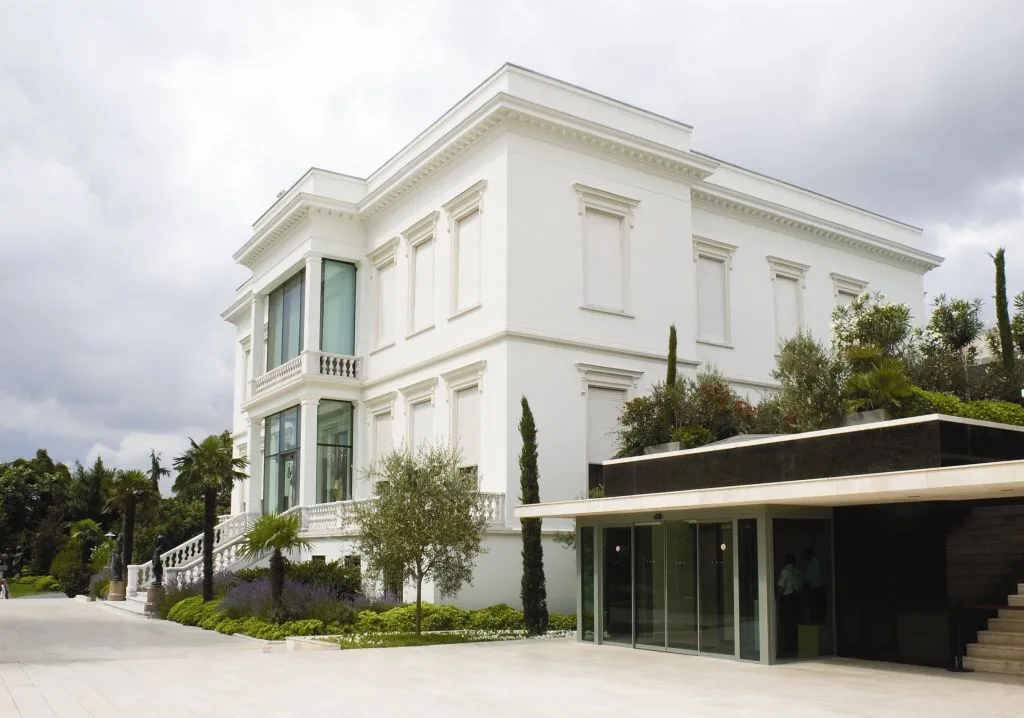
Up the European shore of the Bosphorus at Emirgan, where the strait narrows and the traffic of tankers slides past the garden wall, the Sakıp Sabancı Museum occupies Atlı Köşk – the “House with the Horse”, named for the bronze horse in its garden – the mansion the industrialist Sakıp Sabancı lived in and filled with his collection before it opened as a museum in 2002 under Sabancı University. The setting does half the seducing: terraced gardens above the water, the mansion’s rooms keeping their furnished, lived-in scale, and exhibition wings behind that have made this, improbably, the city’s most reliable address for international loan exhibitions – the kind of big borrowed shows, from Picasso to Monet to Anish Kapoor over the years, that Istanbul’s state museums rarely mount.
The permanent heart is calligraphy. Sabancı’s collection of Ottoman calligraphy – Qur’ans, albums, panels and imperial decrees by the great master scribes – is one of the finest in private hands, and it is displayed as what it is: the empire’s supreme visual art, in which the written word carried the beauty that other traditions gave to painting. Around it sit the mansion’s paintings of the late Ottoman and early Republican periods, its furniture and porcelain, and, in the garden, Roman, Byzantine and Ottoman stonework laid out along the paths – a small open-air lapidarium that most visitors only discover on the way to the terrace cafe.
The costs of the Sabancı are geography and independence: it is a private university museum, in no pass, and it sits a bus or taxi ride up the Bosphorus from anywhere else on this list, with a weekly closing day in its established pattern on Mondays – confirm before travelling. The compensating move is to build the Bosphorus day around it: the Naval Museum at Beşiktaş on the way up or down the shore, Emirgan Park’s tulip slopes next door in spring, and the ferry home if the timetable smiles. Travellers who rank the best museums in istanbul by the pleasure of the whole visit – building, garden, water, art – put this one higher than its distance suggests. It is the list’s grand day out.
Rahmi M. Koç Museum – Submarines, Steam and the Golden Horn
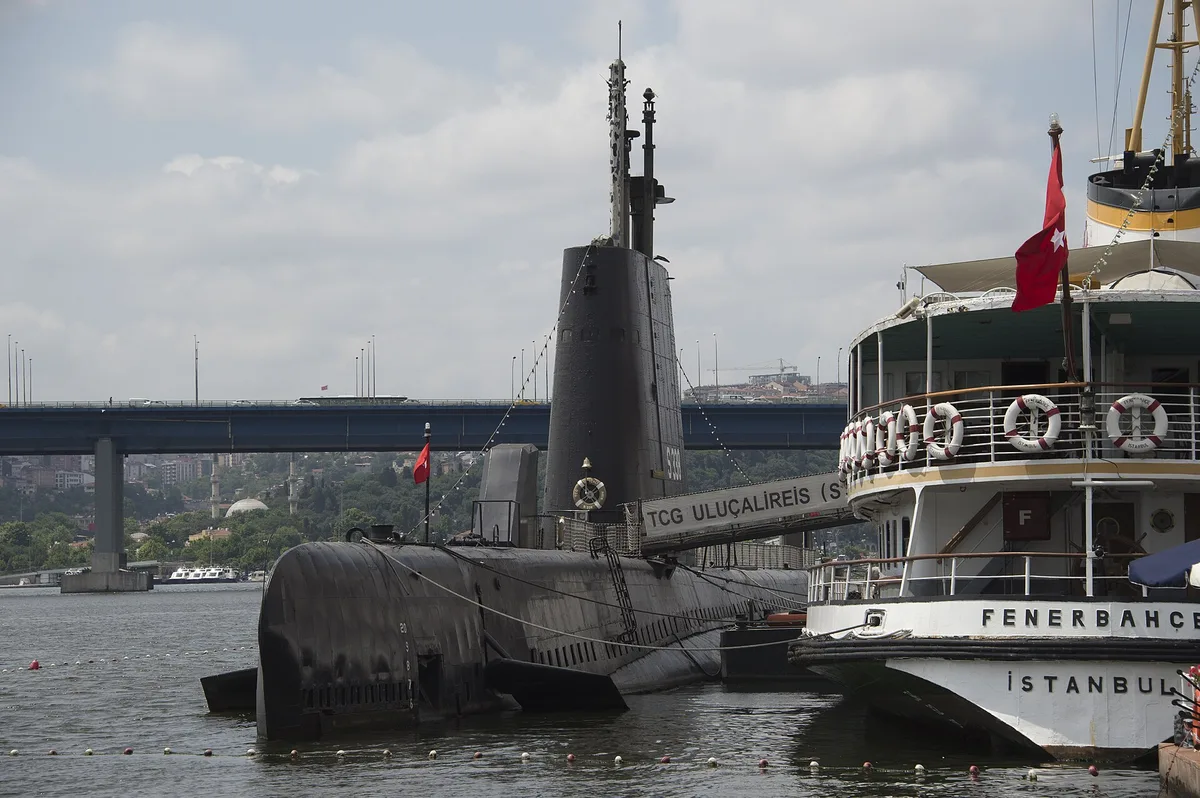
On the northern shore of the Golden Horn at Hasköy, the Rahmi M. Koç Museum does for machines what Topkapi does for sultans: it is the definitive Istanbul collection of its kind, and its kind is transport, industry and communication. Founded by the industrialist Rahmi Koç and opened in 1994, it spreads through two handsome industrial buildings – the Ottoman-era Lengerhane, where anchors were once cast, and a former shipyard across the road – and onto the quayside between them, where the big exhibits live outdoors: a retired Turkish Navy submarine, the TCG Uluçalireis, which visitors tour through its torpedo tubes and periscope; the Fenerbahçe, one of the city’s beloved old Bosphorus ferries, preserved at her berth; steam locomotives, trams, aircraft, classic cars by the hall-full, and a working carousel of industrial machinery, printing presses, engines and scientific instruments in between.
This is, by a distance, the most family-proof museum in the city. Where the Archaeology Museums ask children to read a civilisation in fragments, the Koç lets them climb, crank, board and peer – a cockpit here, a cutaway engine there, a nostalgic street of recreated shops, and a planetarium and discovery sphere for the youngest. Adults with any feeling for the mechanical age fare no better at resisting: the collection’s depth in maritime and railway material is genuinely scholarly, and the submarine tour alone justifies the trip up the Golden Horn for most visitors over the age of eight. Weekends, inevitably, are its peak; a weekday morning is the connoisseur’s slot.
The buildings themselves are exhibits of a kind: the Lengerhane, where the Ottoman navy cast its anchors, is a heavy stone hall raised over Byzantine foundations, and standing in it you are inside the Golden Horn’s working history before you have read a single label. The Koç is a foundation museum, privately run and separately ticketed – the Museum Pass does not cover it – and it has traditionally kept Monday as its closing day, so check the pattern, and the submarine’s separate tour arrangements, before setting out. Pair it across the water with Miniatürk, five minutes along the same shore, and the Golden Horn gives families the fullest single museum day in Istanbul. In a list of the best museums in istanbul dominated by empires and their art, the Koç is the necessary counterweight: the museum of how the modern city actually moves, floats, flies and prints.
Istanbul Naval Museum – Six Centuries of Sea Power
Istanbul was a sea empire’s capital for the better part of a millennium, and the Istanbul Naval Museum at Beşiktaş is where that fact is kept. Founded in 1897 – one of the country’s oldest museums – and rehoused in a large modern building on the Bosphorus shore in 2013, it is administered by the Turkish Naval Forces, which tells you two things at once: the collection is magnificent, and it marches to a military institution’s rules rather than a ministry’s, the state Museum Pass included. What the Navy has gathered is the material memory of Ottoman sea power, from the arsenal galleys that ruled the eastern Mediterranean to the foundered empire’s last dreadnought age.
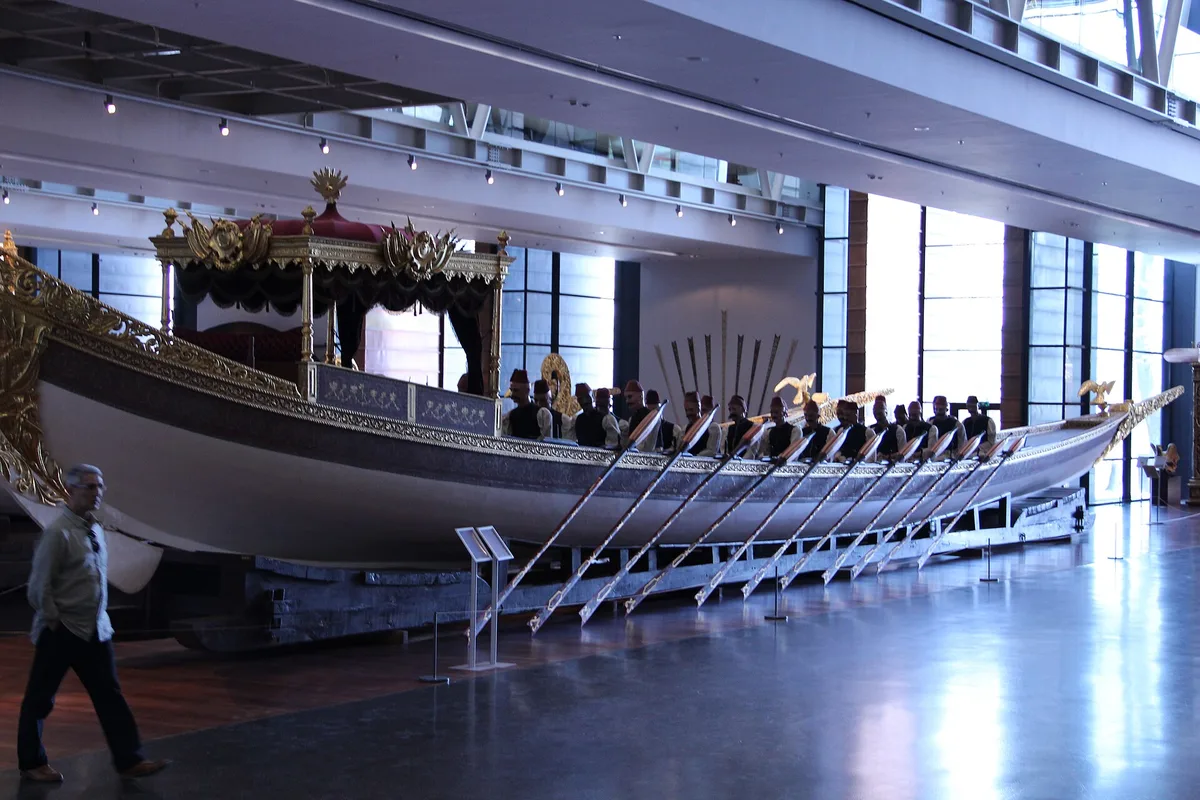
The heart of the museum is the hall of imperial caïques: the long, gilded rowing barges in which sultans were ferried across the Golden Horn in state, their sterns carved and canopied, their oars shipped – the largest collection of its kind anywhere, and one of the great unheralded sights of Istanbul. Among them sits the Tarihi Kadırga, a seventeenth-century sultan’s galley generally described as the only surviving original Ottoman galley in the world, her hull the museum’s single most important object. Around the hall run the supporting galleries: ship models in profusion, naval paintings and charts, weapons, uniforms, diving and salvage gear, the personal effects of admirals, and a sombre, thorough treatment of the Çanakkale (Gallipoli) naval campaign, where the museum’s institutional memory is at its most direct.
The setting deepens it. The museum stands in Beşiktaş, the old naval quarter: the tomb of Barbaros Hayreddin Pasha, the sixteenth-century admiral whose fleet made the Mediterranean an Ottoman lake, stands in its small Sinan-built mausoleum a short walk away, with the admiral’s statue keeping watch over the shore – the museum’s story continued out of doors, in the district that crewed the empire’s ships. A visit runs a comfortable hour and a half, and the building’s shore position makes it the natural hinge of a Bosphorus day: Dolmabahçe Palace – the National Palaces’ late Ottoman palace, in no museum pass and not in this list only because it is a palace visit rather than a museum one – stands a few minutes’ walk south, and the Sabancı Museum lies up the same shore. The Naval Museum rarely appears in the first draft of an Istanbul itinerary, which is precisely its charm: among the best museums in istanbul it is the specialist’s pick, the one whose central hall delivers a single, concentrated wonder the famous names cannot match.
Galata Tower – the Museum You Climb
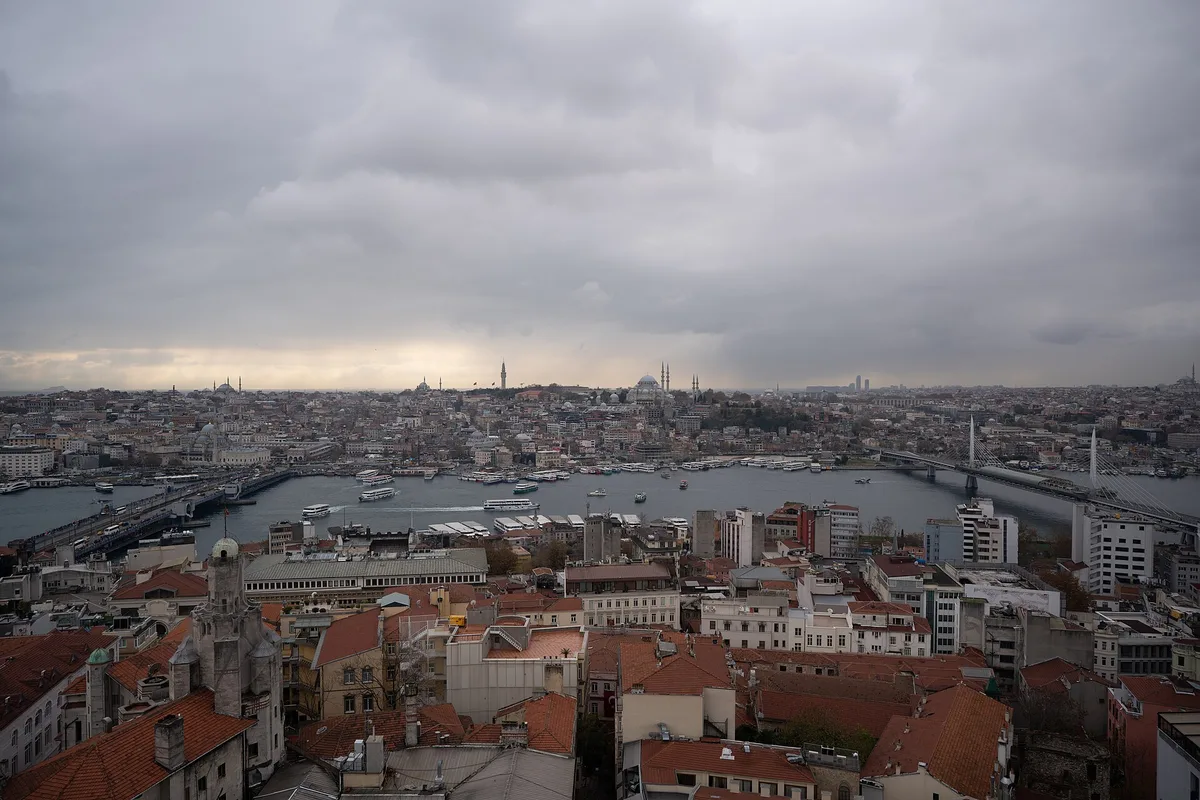
The Galata Tower is in this list under mild protest from the part of the brain that files towers separately from museums, because the Ministry of Culture runs it as one: a museum with a small exhibition wrapped around the shaft and a viewing gallery at the top of the most recognisable silhouette in Beyoğlu. The tower is Genoese work of 1348, the Christea Turris that crowned the colony of Galata’s walls, rebuilt and repurposed by the Ottomans as watchtower, prison and fire lookout. Its legend is Istanbul’s favourite: Hezarfen Ahmed Çelebi, who in the seventeenth century is said to have flown from its top across the Bosphorus to Üsküdar on artificial wings – a story told by the traveller Evliya Çelebi, repeated by every guide since, and believed in exact proportion to how much the teller enjoys it.
The museum content is honest but slight – the tower’s own story, the city’s models and panels – because nobody climbs Galata for the vitrines. The product is the gallery: a full circuit of the old city from some sixty metres up, the Golden Horn and its bridges below, the Sultanahmet skyline across the water, the Bosphorus opening to the east. It is the single best orientation device in Istanbul, and the correct use of it is early in a trip, when the map in your head is still blank. The cost is the queue: the lift is the bottleneck, lines build from mid-morning, and sunset, predictably, is the crush. The tower is a Ministry museum on the Museum Pass, but pass holders should know its terms from the official pass page itself: with a MuseumPass, entry to the Galata Tower must be made by 18:14, and the pass is not valid for the evening night-museum sessions, which are ticketed separately.
Go at opening, or accept the late light and the line as the price of it; either way, pair the tower with its own quarter. The Galata Mevlevi House, the whirling dervishes’ lodge a few streets up, is itself a small Ministry museum on the pass; the Pera Museum stands ten minutes beyond it; and the funicular down to Karaköy lands you at Istanbul Modern’s door. Even its detractors concede the point: as a way of learning the city’s geography in one slow turn, the tower earns its place among the best museums in istanbul – the museum whose collection is Istanbul itself.
Miniatürk – the Whole Country at 1/25 Scale
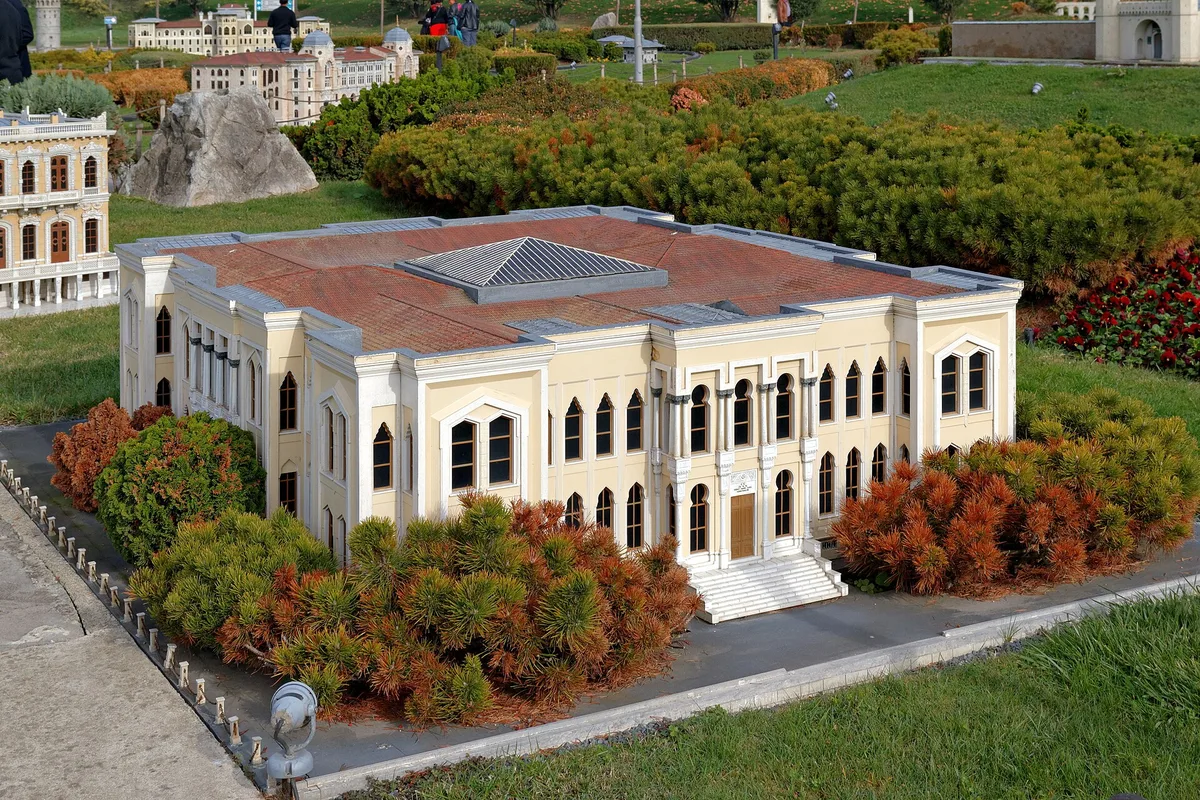
On the upper Golden Horn at Sütlüce, Miniatürk lays out the whole of Türkiye in an afternoon’s walk: well over a hundred models at 1/25 scale, set in landscaped grounds – the monuments of Istanbul first, then the landmarks of Anatolia and the former Ottoman lands, from Hagia Sophia and Selimiye to Mount Nemrut’s heads, Safranbolu’s houses and the fairy chimneys of Cappadocia, each rendered with a craftsman’s patience and explained in several languages at the touch of your ticket. Opened in 2003 and run by the Istanbul municipality’s culture company, it is an open-air museum in the most literal sense, and it understands its audience precisely: this is the one entry among the best museums in istanbul designed from the ground up for children, travellers with one day and a country to grasp, and anyone whose trip continues beyond the city.
Its secret usefulness is as a planning device. A family that walks Miniatürk on day one spends the rest of the trip playing recognition – there is the aqueduct, there is the tower, there is the mosque we saw small – and adults continuing on to Cappadocia, Ephesus or the southeast get a three-dimensional table of contents for the journey. The Istanbul section doubles as a skyline lesson: the city’s monuments stand in their real relative positions often enough that the park teaches geography while it charms. There are the expected park furnishings – a miniature railway children ride, playgrounds, a cafe – and the equally expected caveat: in rain or in the midday summer glare the grounds offer little mercy, so time it for a fair morning or a softening afternoon.
Miniatürk is a municipality attraction, separately ticketed and in no state pass, and it pairs by geography into the city’s best family day: the Rahmi M. Koç Museum lies just along the same northern shore of the Golden Horn, and the two together – machines in the morning, the country in miniature after lunch – cover more ground with less complaint than any other pairing on this list. It will never top a connoisseur’s ranking, and it does not try to. It is the friendliest square metreage in Istanbul’s museum world, and the visit children are most likely to describe, unprompted, a year later.
The Museum Pass Istanbul – How It Actually Works
Everything about Istanbul’s museums gets simpler once the pass is understood, so here is the official product, described as the Ministry of Culture and Tourism itself describes it on its own sales portal. The MuseumPass İstanbul is the state’s multi-museum card for visitors. The Ministry’s MuseumPass İstanbul E-Card page on muze.gov.tr states the core mechanics plainly: the pass covers 13 museums belonging to the Ministry of Culture and Tourism; it is valid for 5 days starting from your first museum visit; each museum can be entered once; and it costs €105. That price is quoted from the official page as checked for this guide on 1 November 2026 – the Ministry revises its prices, and the page, not this article, is the authority on the day you buy.
The fine print on the same official page matters as much as the headline. The pass is not valid for night museums after 19:00, and MuseumPass products are expressly not valid for the Night Museology evening sessions several sites now run. Two last-entry rules are printed for pass holders: entry to the Galata Tower with the pass must be made no later than 18:14, and entry to the Istanbul Archaeological Museums and the Museum of Turkish and Islamic Arts no later than 18:45. The page also tells you to check the status of each museum – restoration, open, closed – on the website before relying on it, which is officialdom’s way of admitting the covered list breathes. Buy the E-Card version online through muze.gov.tr and it is delivered digitally; physical cards are sold at the pass’s listed sales points, which include the covered museums’ own desks. The pass skips the ticket-buying line; it does not skip security checks, which no ticket on earth avoids in Istanbul.
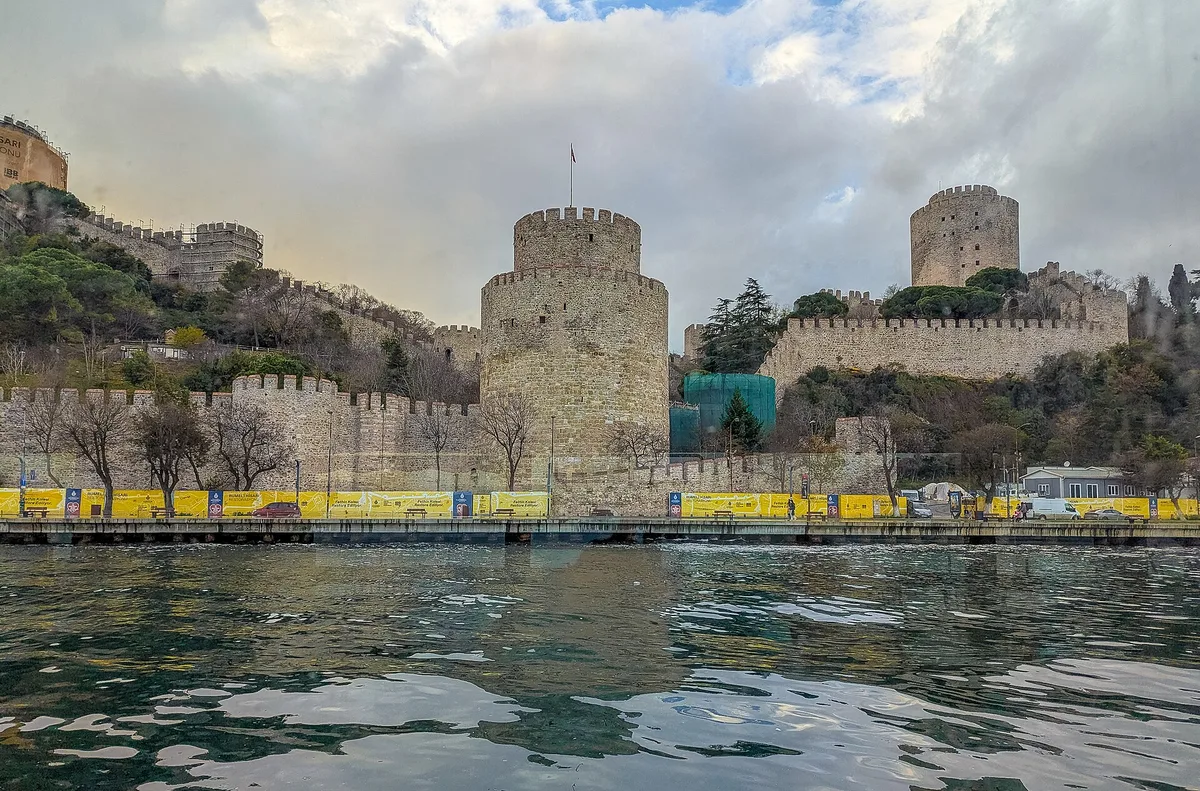
What it covers, among the thirteen in this guide: the pass is strongest exactly where the best museums in istanbul cluster thickest, in the Ministry’s own Sultanahmet heavyweights – Topkapi Palace including the Harem and Hagia Irene, the Istanbul Archaeology Museums, the Museum of Turkish and Islamic Arts and the Galata Tower are the core of it, joined on the official map by the likes of Rumeli Fortress and the Maiden’s Tower. What it does not cover is the list that breaks hearts at ticket desks: not Hagia Sophia’s visitor gallery (a working mosque, separately ticketed); not the Basilica Cistern (the municipality’s); not Dolmabahçe or the other National Palaces; not the Naval Museum (the Navy’s); and not one of the private museums – Istanbul Modern, Pera, Sabancı and the Rahmi M. Koç all sell their own tickets. It is also a different product from the commercial city cards sold online under similar names, which bundle cruises and tours at commercial prices; those are businesses, this is the state’s card. The arithmetic follows from your list, not from any headline: if your five days hold Topkapi with the Harem plus three or four more covered state museums, the pass usually earns its keep and its queue-skipping comfort. If your trip is two days built around Hagia Sophia and the Cistern, the pass does almost nothing for you – buy single tickets and spend the difference on dinner.
Choosing Your Museum Days – Clusters, Closing Days and Crowds
The thirteen sort themselves into days almost without being asked, and the days are the real unit of planning. Day one belongs to the hill: Topkapi from opening, because it is the biggest single visit among the best museums in istanbul and the one crowds degrade most, then the Archaeology Museums next door after lunch, with the Basilica Cistern slotted wherever a forty-minute gap appears. Day two crosses the water: Istanbul Modern in Karaköy, up through the Galata Tower while the light is still kind, and the Pera Museum in the afternoon – three collections, one tram ride, one funicular, no backtracking. Day three is the Golden Horn family pairing of the Koç Museum and Miniatürk, with the Chora swapped in for travellers without children, reached by the same shore. Day four, if you have it, runs up the Bosphorus: the Naval Museum at Beşiktaş and the Sakıp Sabancı at Emirgan, with the Museum of Turkish and Islamic Arts held back as the flexible piece that fills whichever Sultanahmet morning has room.
Two disciplines keep the plan honest. The first is the closing-day jigsaw: Topkapi shuts on Tuesdays in current arrangements, several of the private museums have traditionally shut on Mondays, and the mosque-visits – Hagia Sophia’s gallery route and the Chora – bend around prayer times and shrink on Fridays. Lay the week out with those fixed points first and let the flexible museums flow around them, and confirm every closing pattern on the official pages in the week you travel: patterns genuinely change, and a museum’s own site outranks any guide, including this one. The second discipline is restraint. Two substantial museums in a day is a full day; three is a stunt that converts masterpieces into corridors. Istanbul’s collections are dense, its hills are real, and the cafe between museums is not wasted time – it is where the previous museum settles into memory. Choose by the interest that brought you – empire, Byzantium, art, machines, the sea – and let two or three of the best museums in istanbul carry the trip properly rather than skimming all thirteen.
Season bends the plan too, in ways the brochures underplay. The state museums keep broadly the same rhythm across the year, but the experience around them changes: summer brings the cruise-ship surge to Sultanahmet and the longest security lines of the year, while the winter months hand you the same galleries nearly empty, at the price of short, grey days that argue for starting at opening. The open-air visits – Miniatürk above all, and the Koç Museum’s quayside – are fair-weather instruments, best in spring and autumn; the underground Cistern, indifferent to weather, is the wet day’s natural filler. And one last honest note on energy: museum fatigue in Istanbul is physical before it is mental, because the city is steep and its flagstones are honest. The travellers who remember the best museums in istanbul best are not the ones who saw the most – they are the ones who stopped for tea while the previous palace was still vivid.
Best Museums in Istanbul – Practical Questions, Answered
If I can only visit one museum in Istanbul, which should it be? Topkapi Palace. No other single visit gives you so much of the city at once – the Ottoman state’s working machinery, its treasury and kitchens, the Harem, Hagia Irene in its first courtyard, and the finest terrace view in the old city. Allow half a day, go at opening, and remember its weekly closing day falls on Tuesday in current arrangements. If your one free slot is an hour rather than a morning, the answer changes: spend it inside the Chora’s mosaics or under the Basilica Cistern’s columns.
Is Hagia Sophia a museum? No – not since July 2020. Hagia Sophia is a working mosque, the Hagia Sophia Grand Mosque. Sightseeing visitors are still welcome, but since January 2024 they use a separate entrance and ticket and follow a route through the upper gallery, while the ground floor is reserved for worship. No museum pass covers the ticket, the route pauses around prayer times, and mosque dress applies. It remains unmissable; it is simply no longer a museum visit, and it is listed in this guide on those honest terms.
How much does the Museum Pass Istanbul cost, and is it worth it? The Ministry’s official MuseumPass İstanbul page on muze.gov.tr listed the pass at €105 when checked for this guide on 1 November 2026, valid for 5 days from your first museum visit, one entry each at 13 Ministry of Culture and Tourism museums. It is worth it if your days include Topkapi with the Harem plus several other covered state museums; it is not worth it for a short trip centred on Hagia Sophia and the Basilica Cistern, neither of which it covers. Prices are revised, so confirm the figure on the official page before you travel.
Does the Museum Pass cover the Basilica Cistern, Dolmabahçe Palace or the art museums? No to all three, and the reason is administrative, not commercial. The Cistern belongs to the Istanbul Metropolitan Municipality, Dolmabahçe to the National Palaces directorate, and Istanbul Modern, the Pera Museum, the Sakıp Sabancı Museum and the Rahmi M. Koç Museum are private foundation museums. Each sells its own ticket. The pass covers only museums of the Ministry of Culture and Tourism – Topkapi, the Archaeology Museums, the Museum of Turkish and Islamic Arts and the Galata Tower among them.
Which are the best museums in Istanbul for children? The Rahmi M. Koç Museum first, by a wide margin – a submarine to tour, a ferry to board, locomotives, aircraft and hands-on machinery in a Golden Horn complex built for exploring. Miniatürk second, for the whole country in miniature in open air. After those, the Basilica Cistern’s floodlit columns work on almost every child, the Naval Museum’s hall of sultans’ caïques is a genuine wonder, and the Archaeology Museums’ sarcophagi land well with children old enough for treasure and mummies. The art museums and the Turkish and Islamic Arts galleries are adult pleasures; bring children to them in short, targeted doses.
Which museum should art lovers choose first? It depends on the century you love. For modern and contemporary art, Istanbul Modern – the national collection of Turkish modernism and a strong temporary programme, in Renzo Piano’s waterfront building at Karaköy. For painting of the Ottoman centuries, the Pera Museum’s Orientalist galleries and Osman Hamdi Bey’s Tortoise Trainer, with the Sabancı Museum’s calligraphy collection as the essential complement – calligraphy was the empire’s supreme art, and the Sabancı holds one of its finest collections. For applied art – carpets, manuscripts, ceramics – the Museum of Turkish and Islamic Arts stands alone.
How many museums can I realistically do in one day? Two substantial ones, or one substantial one plus a short visit. Topkapi alone honestly takes half a day; the Archaeology Museums can take the other half and no more. The workable rhythm used through this guide is a heavyweight in the morning at opening time, a short atmospheric visit – the Cistern, the Galata Tower – fitted around lunch, and at most one medium museum in the afternoon. Build in the closing days first: Topkapi’s Tuesday, the private museums’ traditional Mondays, and the prayer-shaped hours of the two mosque-visits.
Are Istanbul’s museums open every day? No, and the patterns differ because the keepers differ. State museums generally keep one weekly closing day each, which for Topkapi currently falls on Tuesday; several private museums have traditionally closed on Mondays; the Basilica Cistern, as a municipality attraction, runs its own schedule including, at times, separately ticketed evening sessions; and the visitor routes at Hagia Sophia and the Chora pause for prayers and contract on Fridays. Treat every pattern printed here, including ours, as a draft: the museum’s own page and the official portal muze.gov.tr, checked in the week you travel, are the final word.