Istanbul is too big to “do”, and most short trips fail by pretending otherwise. This is a city of some sixteen million people spread across two continents, and a three-day visit that tries to treat it as one checklist — palace, mosque, bazaar, tower, islands, both continents — dissolves into tram rides and security queues. The good news is that Istanbul is unusually well organised for the visitor who plans by district. The famous sights stand in one walkable cluster. The ferries turn transport into sightseeing. And the city’s working rhythm — prayer times, market days, one weekly closing day at the palace — rewards anyone who builds the days around it instead of against it.
This istanbul travel guide is built on that idea. Three days covers the core properly; a fourth buys the water and the Asian side. Everything below is sequenced so that each day stays in one part of the city, and where a price or an hour can change — and in Istanbul, several important ones have changed recently — we say what the arrangement is and point you to the official source that settles it, rather than printing a figure that may be wrong by the time you land.
At a Glance
| Question | Short answer |
|---|---|
| How long do I need? | 3 full days for the Sultanahmet core plus one district; 4 to add a Bosphorus day and the Asian side |
| What is the shape of a trip? | Day 1 Sultanahmet, day 2 bazaars + Beyoğlu, day 3 the water and Kadıköy; day 4 the islands or the slack |
| Which airport? | Istanbul Airport (IST) on the European side, or Sabiha Gökçen (SAW) on the Asian side — both have metro lines into the city |
| How do I get around? | Istanbulkart on tram, metro and ferries; the T1 tram is the visitor spine through the old city |
| What needs checking before I go? | Hagia Sophia’s current visitor arrangements and the Museum Pass inclusion list — both on muze.gov.tr |
| What is the one planning rule? | One district per day — Istanbul’s distances punish zig-zagging |
Two Continents, Three Base Camps
Istanbul stands on both sides of the Bosphorus, the strait that separates Europe from Asia, and the Golden Horn — the inlet cutting into the European shore — divides the European side again. Those three pieces of water give the city its three natural bases, and choosing between them is the first real decision of the trip.
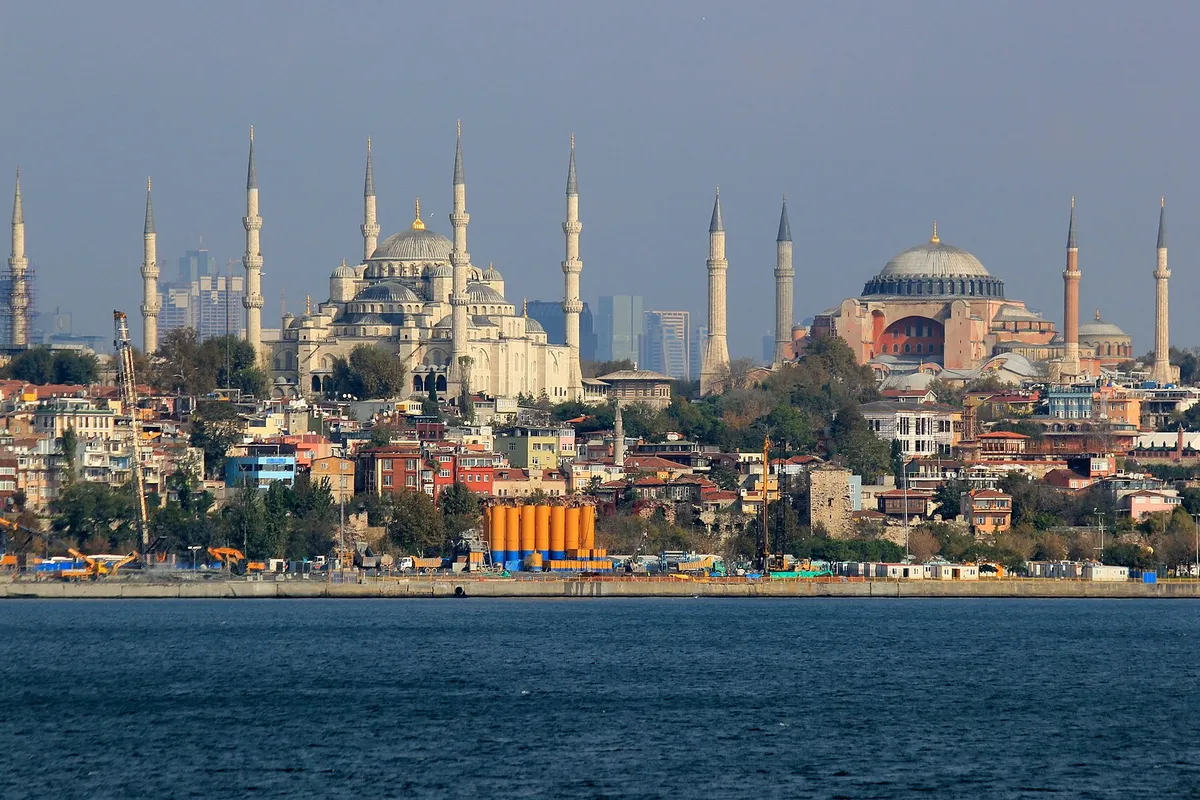
Sultanahmet and the Historic Peninsula are the museum district: Hagia Sophia, the Blue Mosque, Topkapı Palace, the Basilica Cistern and the Grand Bazaar all stand within about fifteen minutes’ walk of each other on the old city’s first hill. Stay here and your sightseeing starts at the hotel door; accept that evenings are quiet and much of the restaurant scene is aimed at visitors.
Beyoğlu, across the Golden Horn, is the nineteenth-century city: the Galata Tower, İstiklal Avenue’s long pedestrian run to Taksim, the cafés and bars of Karaköy at the bridge’s foot. It is livelier after dark, better for eating, and one tram or funicular ride from the old city — the base for travellers who want the monuments by day and a living city by night.
The Asian side — Üsküdar and Kadıköy — is where Istanbul mostly lives. Fewer famous sights, more real city: markets, tea gardens, neighbourhood restaurants, and the ferry commute that shows you the skyline twice a day. It suits repeat visitors and anyone who prefers a local base and does not mind crossing the water to sightsee.
The mistake is trying to sleep in one, sightsee in another and eat in the third, daily. Pick the base that matches your trip’s centre of gravity and visit the other two as day districts.
The Sultanahmet Core
Everything in this section stands on or near Sultanahmet Square, the old Hippodrome’s ground, inside the Historic Areas of Istanbul that UNESCO listed in 1985. It is one of the densest square kilometres of sightseeing anywhere — which is exactly why it needs ordering rather than enthusiasm.
Hagia Sophia: Read This Section Carefully
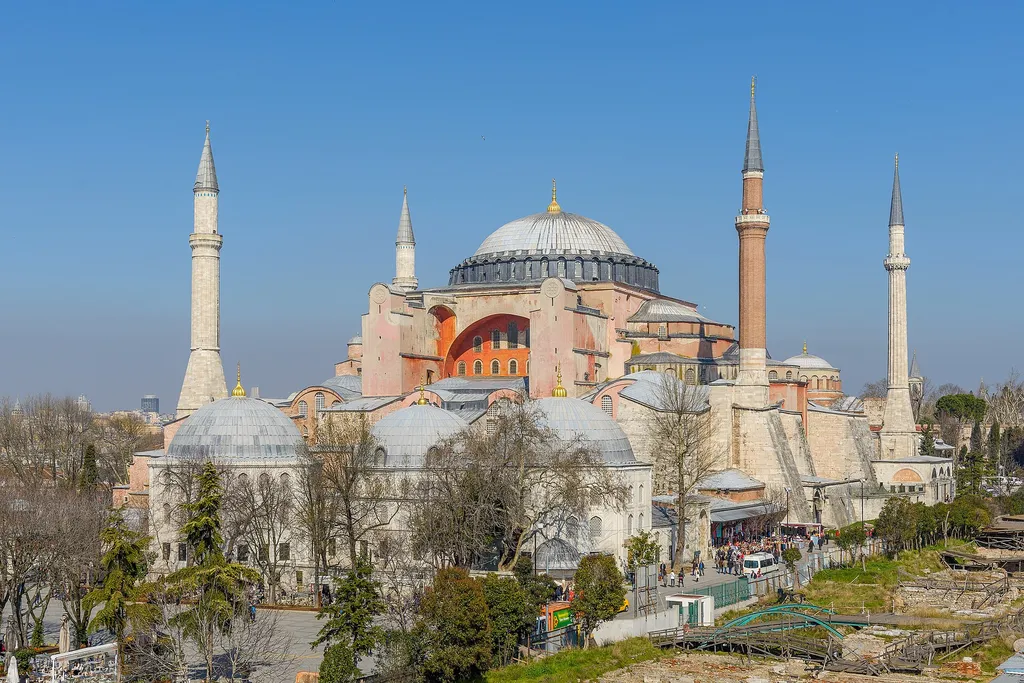
Built in 537 under the emperor Justinian I, Hagia Sophia was the largest cathedral in the world for nearly a thousand years, became a mosque after 1453, spent most of the twentieth century as a museum, and has been a working mosque again since 2020. Almost everything a search result from before 2020 tells you about visiting it is now out of date.
The current arrangement, in place since January 2024, separates visitors from worship. Foreign visitors do not enter through the prayer hall. They use a separate visitors’ entrance on the Topkapı side of the building, near the Fountain of Ahmed III, buy a ticket there or through the official channel, and follow a one-way route through the upper gallery — which is, not coincidentally, where the great Byzantine mosaics are: the Deësis, the imperial portraits, and the view down into the vast main space from above. The ground floor is reserved for worshippers. The Museum Pass does not cover this ticket (see the pass section below), and anyone outside the entrance selling you a faster way in is not the official channel.
Three practical consequences. First, the visitor route closes during the five daily prayer times and for a longer stretch around the Friday midday prayer, so the day’s prayer schedule shapes your slot — early morning and late afternoon are the reliable windows, and Friday morning is the slot to avoid. Second, it is a mosque: shoulders and knees covered, a headscarf for women, and no guarantee that wraps will be lent, so bring your own. Third, long-running restoration work means parts of the interior may be screened or scaffolded at any given time. None of this makes the visit lesser — the gallery route is arguably the better vantage on the building — but all of it makes the current fee, hours and closure pattern worth a check on the official museum portal, muze.gov.tr, in the week you travel. We deliberately print no price here: it is set in euros, it has moved before, and the official portal is the only figure worth trusting.
The Blue Mosque
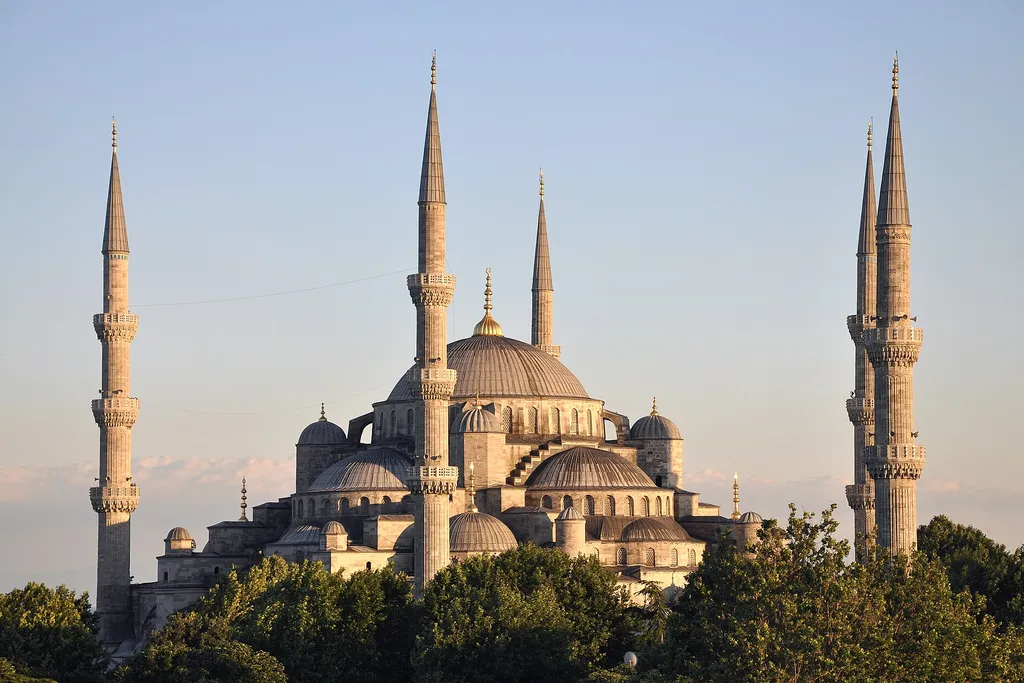
Directly across the square stands Hagia Sophia’s Ottoman answer: the Sultan Ahmed Mosque, built between 1609 and 1616 for the young Sultan Ahmed I and known to every visitor as the Blue Mosque for the İznik tiles lining its interior. Six minarets, a cascade of domes, and a courtyard nearly as large as the prayer hall itself.
The visiting logic is the mirror image of its neighbour’s. The Blue Mosque is a working mosque with free visitor entry — no ticket, no pass involved — but visitors enter only between prayer times, through a designated entrance, and the building closes to sightseeing during each prayer, and on Friday mornings until after the midday prayer. The same dress code applies. Pair the two buildings in one morning by checking the prayer times once and ordering around them: whichever is open first, first. Late-afternoon light on the tiles, after the day groups thin, is the visit most people remember.
Topkapı Palace
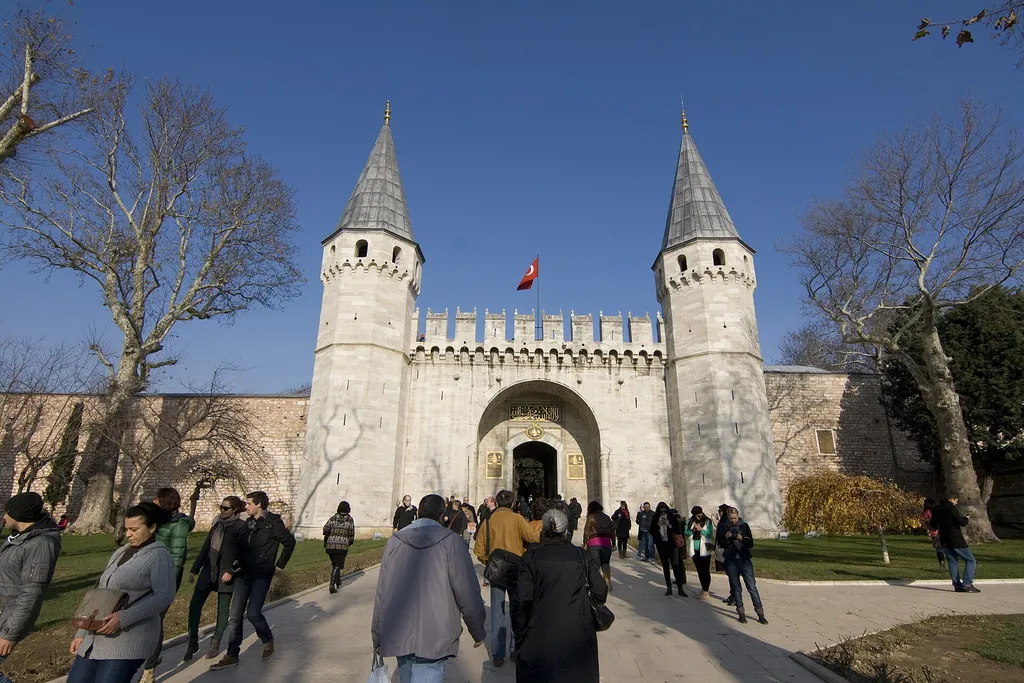
Behind Hagia Sophia, on the point where the Golden Horn meets the Bosphorus, Topkapı was the seat of the Ottoman sultans from the 1470s until the court moved to Dolmabahçe in the 1850s — less a single palace than a walled small town of four courtyards, kitchens, treasuries and pavilions, and a museum since 1924. It is the one Sultanahmet sight that cannot be hurried: the Treasury and the imperial collections take time, the Harem is a separate section within the complex, and the fourth courtyard’s terraces hold the best free view in the old city, across to Asia.
Two planning facts decide your day. Topkapı keeps a weekly closing day — Tuesdays in current arrangements — so never anchor a Tuesday to it; confirm the current closing day on muze.gov.tr when you fix your dates. And it rewards an early start more than any other sight here: enter near opening, take the courtyards in order, and let the crowds arrive behind you. Give it half a day, not the leftover hour after Hagia Sophia.
The Basilica Cistern
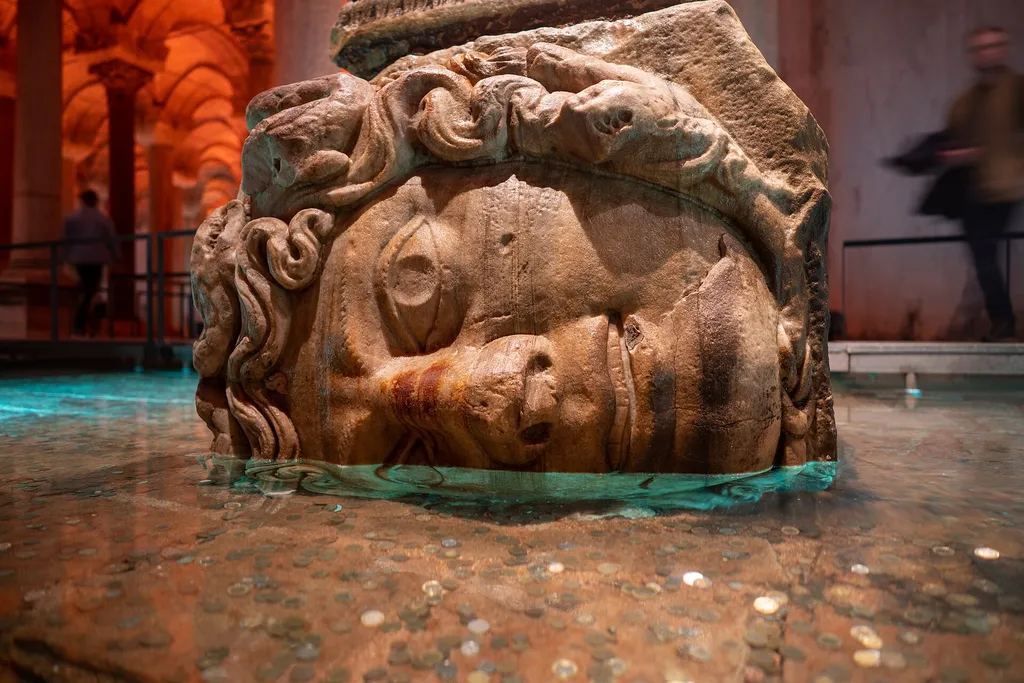
A few minutes from Hagia Sophia, steps lead down into the city’s largest surviving Byzantine cistern, built in the sixth century under Justinian I: a vaulted underground hall carried on 336 columns, two of them standing on carved Medusa heads recycled from older Roman stonework — one sideways, one upside down, for reasons nobody recorded. It is atmospheric, photogenic and short: most visits run well under an hour, which makes it the perfect filler between bigger sights rather than a headline of its own.
One ticketing fact matters: the cistern is run by the Istanbul Metropolitan Municipality, not the Ministry of Culture, so it is separately ticketed and not in the Museum Pass — a small print point that catches out pass holders at its door every day. Evening and night openings are sometimes offered under separate sessions; check the cistern’s own channels if an after-dark visit appeals.
The Grand Bazaar
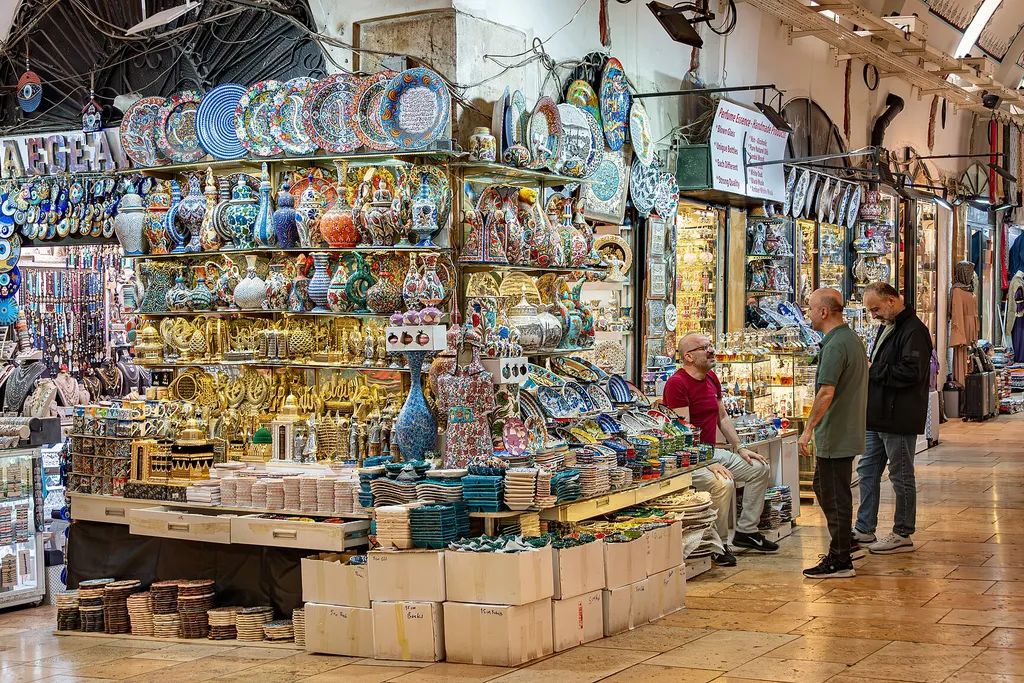
Uphill to the west, the Grand Bazaar began in the mid-1400s under Mehmed II and grew into one of the world’s oldest and largest covered markets — dozens of vaulted streets and thousands of shops, organised by trade in a geography older than the goods: gold in one run, carpets in another, ceramics, leather and luggage between. Go with a purpose or go happily without one, but go understanding its rhythm: it is a working market that also receives tourists, the first price is an opening bid where prices are untagged, and tea offered in a shop is part of the ritual, not an obligation to buy.
Practical points: the bazaar is closed on Sundays in current practice, so schedule it on a weekday or Saturday; the tram stops at Beyazıt and Çemberlitaş put you at its gates; and the walk downhill afterwards, through the market streets to Eminönü and the Spice Bazaar, is one of the great free walks in the city — allow it an hour and your full attention.
A Bosphorus Ferry Day
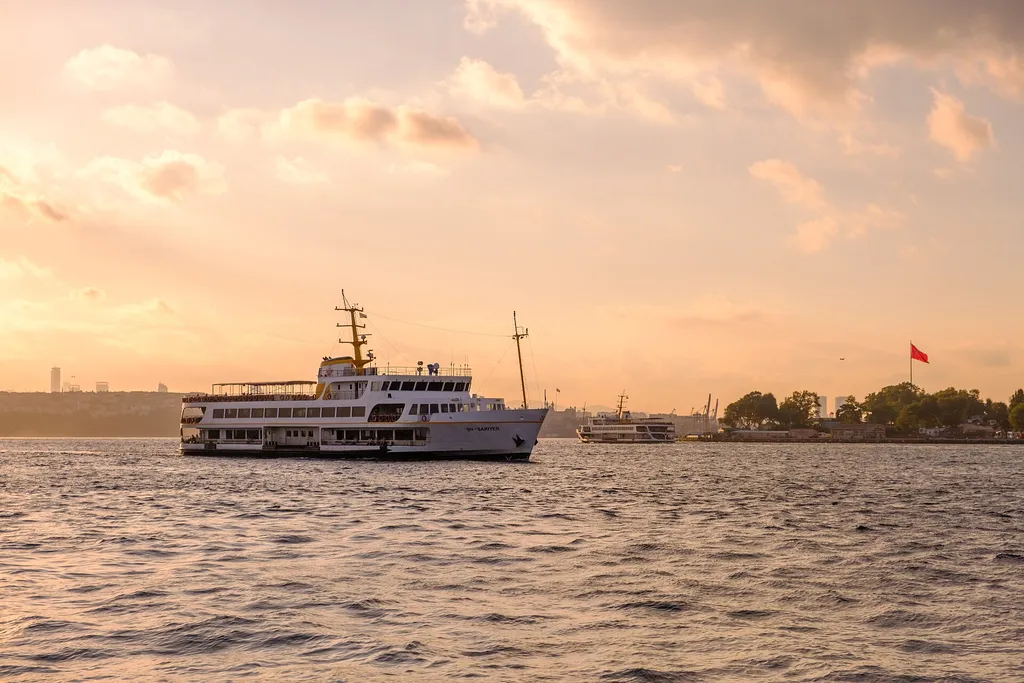
Every Istanbul plan should contain one day organised by water, because the Bosphorus is not the gap between the sights — it is one of them. The city operator, Şehir Hatları, runs the classic Bosphorus tour from Eminönü up the strait towards the Black Sea, finishing at Anadolu Kavağı, a fishing village under a ruined castle on the Asian shore. Taken in full, with the stop for lunch, it is most of a day; a shorter loop version turns back partway. Both pass the same opening act — waterfront palaces, the fortresses of Rumeli and Anadolu Hisarı, mansions standing in the water’s edge light — and both cost a ferry fare on your Istanbulkart rather than a cruise ticket from a tout.
The alternative is to let the commuter network do the work. The crossings between Eminönü or Karaköy and Üsküdar or Kadıköy take about twenty minutes, run constantly, and deliver the full skyline — domes, minarets, the Galata Tower, gulls working the wake — for the price of getting somewhere you wanted to go anyway. Time one crossing for the late afternoon and the light does the rest. Private sunset and dinner cruises fill the same water at many times the price; they have their place for an occasion, but nobody should buy one believing the view is exclusive.
Sequence the day simply: a late start, the long ferry or a crossed pair of commuter rides, lunch on the far shore, and one shore district explored properly on foot. Water days fail when they are bolted onto a museum morning — give the strait its own day, or at least its own half.
Neighbourhoods Beyond the Core
Galata and Karaköy
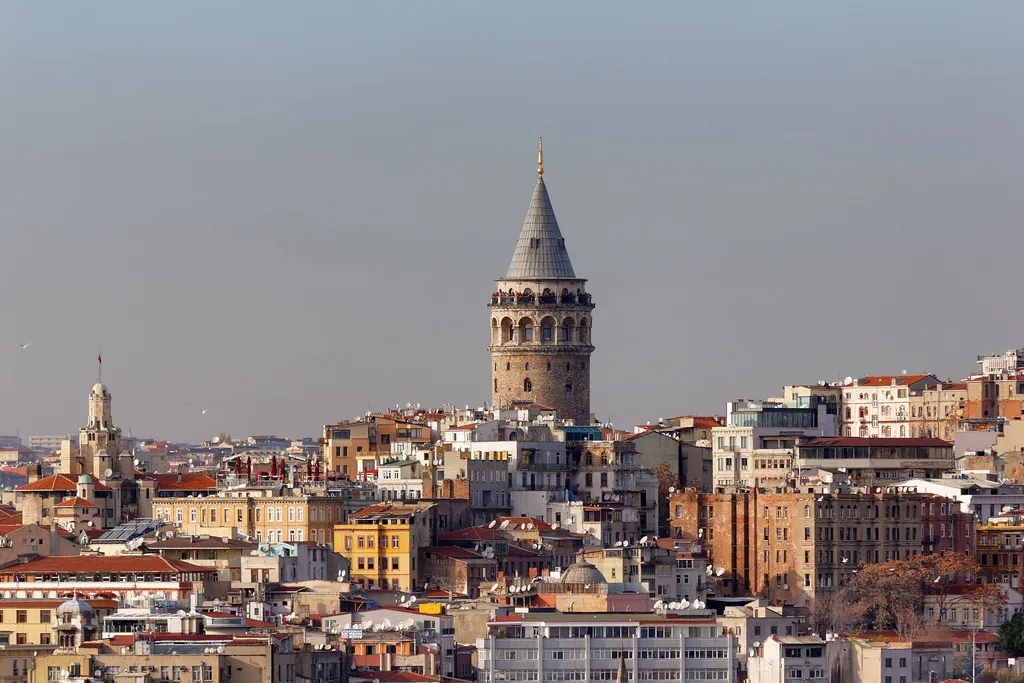
Cross the Galata Bridge — fishermen along its rails, ferries sliding underneath — and you are in Beyoğlu. Karaköy, at the bridge’s foot, has converted its hardware-store streets into the city’s café and gallery quarter without sanding off the edges. Above it climbs the Galata Tower, the Genoese landmark of 1348, now a museum with a viewing gallery at the top of the old city skyline: go early or late, because the queue and the lift are the visit’s bottleneck. From the tower, İstiklal Avenue runs up to Taksim through the nineteenth-century arcades — an evening street, best after the shops light up. This whole district pairs naturally with a bazaar morning: bazaar first, bridge on foot, Karaköy for lunch, tower and İstiklal as the light fades.
Kadıköy and the Asian Shore
Take the ferry from Karaköy or Eminönü to Kadıköy and the tempo drops. Kadıköy’s market streets — fishmongers, pickle shops, bakeries, spice stalls — serve the neighbourhood rather than the visitor, which is precisely their charm, and the eating here, from workers’ canteens to long-established meyhane, is among the best value in the city. Walk south to Moda for the tea gardens on the headland, or north by tram and bus to Üsküdar, the conservative, handsome shore town facing the old city, where the Maiden’s Tower stands on its islet and the sunset hits the Sultanahmet skyline straight on. An Asian-side half day is the strongest argument for the fourth day: it is the visit that turns Istanbul from a monument list into a city.
The Princes’ Islands
When Istanbul wants a weekend, it takes the ferry to the Princes’ Islands — nine islands in the Sea of Marmara, of which Büyükada, the largest, takes most visitors. Motor traffic is restricted to service vehicles, so the islands run at walking and cycling pace: grand wooden houses, pine woods, monastery hills, swimming coves in summer. Ferries run from Kabataş, Eminönü, Kadıköy and Bostancı, and the crossing alone takes well over an hour from the European side — which is the honest maths of the trip. The islands are a full day, best in warm months, and trying to combine them with anything else on the same day is how both halves get ruined. On a three-day trip, skip them without regret; on a four-day trip in spring or summer, they are the day people talk about afterwards.
The 3-Day Plan
Day 1 — Sultanahmet, ordered by prayer times. Start at Hagia Sophia near opening, on its gallery route, before the queues build. Cross the square to the Blue Mosque in its first visitor window — the prayer schedule decides which of the two goes first, so check the day’s times the night before. Hippodrome and a slow lunch, then the Basilica Cistern as the afternoon’s short, cool interlude. Evening in Sultanahmet is quiet; take the tram to dinner rather than expecting the district to provide it.
Day 2 — The palace and the bazaar. Topkapı Palace from opening (never its closing day — see above), courtyards in order, Harem if your interest runs that way, and the fourth-courtyard terraces last. Lunch in the market streets, then the Grand Bazaar for the afternoon — a weekday or Saturday, never Sunday — and walk down through the Spice Bazaar to Eminönü as the stalls close.
Day 3 — Beyoğlu and the water. Cross the Galata Bridge on foot in the morning, Karaköy’s cafés, the Galata Tower before its queue peaks, then İstiklal Avenue. In the afternoon, take the ferry to Kadıköy for the market and an early dinner, and cross back at dusk — the skyline return is the trip’s proper final scene.
Three honest days. Nothing rushed, nothing essential dropped except the islands — deliberately.
The 4-Day Plan
Keep days one to three and spend day four on the water properly. Take the long Bosphorus ferry from Eminönü to Anadolu Kavağı, lunch on grilled fish under the castle, and ride back in the afternoon light — or, in summer, swap in the Princes’ Islands instead, and keep the Bosphorus to the commuter crossings already built into day three. A fourth day also repairs weather: if one of the first three days is lost to rain or a closure you did not foresee, day four absorbs the Sultanahmet core at a civilised pace. What not to do with it is add a second palace, a second bazaar and a hammam in a different district — the day works because it is slower than the others, not busier.
Getting Around
Buy an Istanbulkart on arrival and treat it as the key to the city: the one card works across the metro, the tram, city buses, the metrobus, the funiculars and the Şehir Hatları ferries, bought and topped up at station machines. Fares change with the city’s pricing rounds, so we print none — the card, not the tariff, is the decision that matters.
Within the visitor’s city, the T1 tram is the spine: Kabataş to Bağcılar via Karaköy, Eminönü, Sultanahmet and Beyazıt, which between them serve the bazaar, the old city and the Beyoğlu funiculars. The metro and the Marmaray rail line — which crosses under the Bosphorus — handle the longer hauls and the Asian side. Ferries are transport first and sightseeing second, which is why they beat every tour boat on value.
Both airports have rail links in current arrangements: Istanbul Airport (IST), on the European side, is served by the M11 metro, and Sabiha Gökçen (SAW), on the Asian side, by the M4 — with airport buses as the alternative where the metro’s end of the line does not suit your base. Taxis fill the gaps; insist on the meter, calmly, before the car moves, and at rush hour expect the tram to beat any car across the old city. Istanbul’s traffic is the one opponent no itinerary outsmarts — it can only be routed around, on rails and water.
Where to Stay
Match the base to the plan, using the three districts above. Sultanahmet suits the three-day first-timer above all: sights on foot from the door, early starts without transport, quiet evenings as the trade-off, and a stock of small hotels converted from Ottoman-era houses. Beyoğlu — Karaköy, Galata, Taksim — suits anyone staying four days or more, or travelling for the city’s food and nightlife as much as its monuments: the old city is one tram ride away, and the evenings happen outside your door. Kadıköy, on the Asian side, suits repeat visitors and slow travellers: real neighbourhood, better-value rooms and eating, and a ferry commute to the sights that most people end up counting as a pleasure rather than a cost. Wherever you land, a room near a T1 tram stop or a ferry pier is worth more than a room one category fancier without one.
What to Eat
Eat the city’s working food before its famous food. Breakfast — kahvaltı — is a spread, not a dish: eggs, cheeses, olives, tomatoes, honey and cream, bread still warm, tea refilled without asking; give it a slow morning at least once. By the Galata Bridge, balık ekmek — grilled fish in bread, sold at Eminönü’s shore — is the classic street lunch. In Kadıköy’s market, eat where the menu is short and the room is full. Across the city: kebabs in their regional varieties, meze before them, simit from a cart when the ferry is boarding, baklava in small quantities and often, and Turkish coffee taken slowly, because it is a pause as much as a drink. Vegetarians are well served — lentil soup, stuffed vegetables, gözleme and the whole meze repertoire — and the bazaar districts feed every budget the city has.
The Museum Pass: Read the Small Print
The Museum Pass Istanbul, sold by the Ministry of Culture and Tourism through muze.gov.tr, is a genuinely useful product wrapped in a genuinely misleading assumption. The assumption is that “museum pass” means the famous sights. It means the Ministry’s sights — in current arrangements a multi-day pass, valid from your first entry, covering many state museums: Topkapı Palace, the Istanbul Archaeological Museums and Galata Tower among the headliners, with the full inclusion list published on the portal.
Now the small print, because Istanbul’s three most-visited interiors sit outside it for three different administrative reasons. Hagia Sophia’s visitor gallery is separately ticketed — the pass does not open it. The Basilica Cistern belongs to the city municipality, not the Ministry, and is separately ticketed. Dolmabahçe Palace belongs to the National Palaces administration, and is separately ticketed. A visitor who buys the pass expecting it to carry the whole Sultanahmet day will pay twice at two of the three doors.
So do the arithmetic the way the Turkey-wide guidance suggests: list the Ministry sites genuinely on your route — Topkapı above all, plus the Archaeological Museums if you are giving them their due — and buy the pass only if that list, inside its validity window, beats the single tickets. On this guide’s three-day plan, Topkapı is the one big Ministry ticket, and the pass usually needs the Archaeological Museums and Galata Tower added to the trip before it earns its price. Travellers building a museum-heavy four or five days will reach the opposite answer, correctly. And keep the official pass distinct from the commercial “city passes” sold by private companies, which bundle cruises and tours at higher prices under similar names — a different product, judged by different maths.
Mistakes to Avoid
- Visiting Hagia Sophia on pre-2020 information. The prayer hall is not the visitor route, there is a ticket to buy, and the entrance is not where older guides send you. This is the single most common Istanbul planning error right now.
- Ignoring prayer times. They close both great mosques to visitors several times a day and reshape Friday entirely. Check the day’s times; build the Sultanahmet morning around them.
- Anchoring a Tuesday to Topkapı, or a Sunday to the Grand Bazaar. One weekly closing day each, both entirely avoidable with a glance at the calendar before you fix the plan.
- Assuming the Museum Pass covers the famous three. Hagia Sophia’s gallery, the cistern and Dolmabahçe are all outside it — see the pass section before you buy.
- Zig-zagging the city. Sultanahmet in the morning, the islands after lunch, Kadıköy for dinner sounds efficient on a map and spends the day in transit. One district per day is not caution; it is how the city is shaped.
- Buying “skip-the-line” from street sellers outside the sights. The official booths and the official portal are the channel; security queues, which no ticket removes, are the queue that actually moves slowly.
- Defaulting to taxis. At the hours that matter, the tram and the ferry are faster than any car — and the ferry is the better journey by any measure.
Frequently Asked Questions
How many days do I need in Istanbul?
Three full days is the working minimum: one for the Sultanahmet core, one for Topkapı and the bazaars, one for Beyoğlu and a crossing to the Asian side. A fourth day adds the Bosphorus properly — the long ferry, or the Princes’ Islands in season — and gives the plan room to absorb bad weather. Two days forces a choice between the old city and everything else; make it deliberately if you must.
Is 3 days enough for a first trip?
Yes, if the days are sequenced by district and built around prayer times and closing days, as in the plan above. Three days is not enough to add the Princes’ Islands or a full Bosphorus day without dropping something else — that is what the fourth day is for.
Which airport should I fly into?
Whichever your flights serve better — both work. Istanbul Airport (IST), on the European side, is the larger hub and sits closer to Sultanahmet and Beyoğlu; Sabiha Gökçen (SAW), on the Asian side, suits a Kadıköy base and often the budget carriers. Both have metro lines and airport buses into the city in current arrangements; choose by flight price and timing, then by which side you are sleeping on.
Is the Istanbul Museum Pass worth it?
Only when your route contains enough Ministry museums inside its validity window — Topkapı plus the Archaeological Museums and Galata Tower is roughly the break-even shape on a short trip. It does not cover Hagia Sophia’s visitor gallery, the Basilica Cistern or Dolmabahçe Palace, so a Sultanahmet-only plan usually pays less with single tickets. Check the current price and inclusion list on muze.gov.tr and price your own list before deciding.
When is the best time to visit Istanbul?
Spring (April–May) and autumn (September–October) are the consensus months: mild walking weather, the ferries at their best, and the sights busy without being overwhelmed. Summer is hot, humid and at peak crowd levels; winter is grey and wet but brings the museums at their quietest and the city at its cheapest. Any month works if the plan is district-based; the seasons change the light more than the logic.
Can I manage Istanbul without speaking Turkish?
In the visitor districts, yes — English is widely used in hotels, sights and restaurants, and the transport network is signed in both languages. A handful of Turkish words still does disproportionate work: merhaba (hello), teşekkür ederim (thank you), lütfen (please). Beyond the centre, a translation app earns its keep.
Plan Your Next Step
Fix the dates first, and let the calendar veto the mistakes: no Topkapı on its closing day, no bazaar on a Sunday, no Hagia Sophia against the Friday prayer. Then book the base that matches the plan, and check Hagia Sophia’s current arrangements and the Museum Pass list on muze.gov.tr in the week before you travel — the two facts in this guide most likely to have moved. For the wider country picture, Go Türkiye is the official starting point. And if the trip runs onward to Cappadocia, the flight lands at Kayseri — a Seljuk city worth more than an airport transfer, as our guide to things to do in Kayseri sets out.