UNESCO Sites in Turkey – All 22 World Heritage Sites, Explained for Travellers
Twenty-two places in Turkey have been judged, by UNESCO’s World Heritage Committee, to matter not just to Turkey but to everyone. The list runs from a Neolithic hilltop where people raised carved stone pillars before farming existed, through Hittite, Phrygian, Greek, Roman and Byzantine capitals, to the great Ottoman mosques and a town of timber-framed caravan houses preserved almost intact. No other list gives you the country’s whole story in one frame, and that is the honest reason to travel with it: the unesco sites in turkey are not a checklist of famous ruins, they are the chapters of Anatolia’s past, each one still standing somewhere you can walk into.
A word on how the list works, because it explains the shape of what follows. A site reaches the World Heritage List only after the country nominates it, experts evaluate it, and the Committee agrees it has what UNESCO calls outstanding universal value — significance so large it crosses national boundaries. Turkey accepted the Convention in 1983 and won its first three inscriptions in 1985. Of its 22 sites today, twenty are cultural and two — Cappadocia and Pamukkale — are mixed, listed for their human history and their natural formations together. Turkey has no purely natural site, which surprises many visitors; even its most famous landscapes made the list because of what people built in them.
It also helps to know what kind of value UNESCO is judging, because the criteria explain why a wooden mosque and a Neolithic mound can sit on the same list. Sites are inscribed under ten criteria: six cultural, covering masterpieces of human creativity, exchanges of influence, testimony to civilisations living or vanished, outstanding examples of building types and landscapes, and associations with ideas and traditions of universal significance; and four natural, covering superlative landscapes, earth history, ecosystems and biodiversity. A site needs only one criterion, but most of Turkey’s carry several — Istanbul, for instance, is listed under four. When this guide says a place was inscribed for a reason, that is the machinery behind it: a committee persuaded that this specific place, and no substitute, carries a piece of the world’s story.
This guide covers all 22, in the order a traveller can use: the complete table first, then the sites grouped by region and by the trips they belong to, with what each place actually is, why UNESCO listed it, and what you see when you stand there. One honesty note before the table: Turkey also keeps a long Tentative List — 80 entries at the time of writing — of places it may nominate one day. Tentative is not inscribed. Konya, Sümela Monastery and Alanya are Tentative List places, not World Heritage Sites, whatever some websites claim, and they are flagged as such in the questions at the end rather than padded into the main list.
All 22 UNESCO Sites in Turkey at a Glance
Here is the complete official list, in the order the sites were inscribed, with the year and the region each one belongs to. Read it once for the spread — nine separate centuries of inscriptions, sites scattered from Edirne in the far north-west to Ani on the Armenian border — and then use the regional sections below, because no sensible trip follows this table’s order. The geography, not the chronology, is what decides an itinerary.
| Site | Inscribed | Region |
|---|---|---|
| Historic Areas of Istanbul | 1985 | Istanbul |
| Great Mosque and Hospital of Divriği | 1985 | Sivas, central Anatolia |
| Göreme National Park and the Rock Sites of Cappadocia | 1985 | Nevşehir, Cappadocia |
| Hattusha – the Hittite Capital | 1986 | Çorum, central Anatolia |
| Nemrut Dağ | 1987 | Adıyaman, the south-east |
| Hierapolis-Pamukkale | 1988 | Denizli, the Aegean |
| Xanthos-Letoon | 1988 | Antalya and Muğla, the Mediterranean coast |
| City of Safranbolu | 1994 | Karabük, the Black Sea |
| Archaeological Site of Troy | 1998 | Çanakkale, the north Aegean |
| Selimiye Mosque and its Social Complex | 2011 | Edirne, Thrace |
| Neolithic Site of Çatalhöyük | 2012 | Konya, central Anatolia |
| Bursa and Cumalıkızık – the Birth of the Ottoman Empire | 2014 | Bursa, the Marmara region |
| Pergamon and its Multi-Layered Cultural Landscape | 2014 | İzmir, the Aegean |
| Diyarbakır Fortress and Hevsel Gardens Cultural Landscape | 2015 | Diyarbakır, the south-east |
| Ephesus | 2015 | İzmir, the Aegean |
| Archaeological Site of Ani | 2016 | Kars, the far east |
| Aphrodisias | 2017 | Aydın, the Aegean |
| Göbekli Tepe | 2018 | Şanlıurfa, the south-east |
| Arslantepe Mound | 2021 | Malatya, the east |
| Gordion | 2023 | Ankara, central Anatolia |
| Wooden Hypostyle Mosques of Medieval Anatolia | 2023 | Five mosques across Anatolia |
| Sardis and the Lydian Tumuli of Bin Tepe | 2025 | Manisa, the Aegean |
Two patterns in the table are worth noticing. The first is how front-loaded the story is with capitals: Istanbul, Hattusa, Gordion, Sardis, Pergamon, Ephesus and Ani were all seats of power, and the list reads like a relay race of empires handing Anatolia to one another. The second is how recent much of it is — nine of the 22 inscriptions date from 2011 onwards, including Sardis in 2025, which is why so many published lists are quietly out of date. If a page you find counts 19, 20 or 21 sites, it was written before the newest additions and should be read with that in mind.
Counted by region, the list breaks down as six sites in the Aegean west, six in the Anatolian centre, five in the east and south-east, four Ottoman and Byzantine sites around Istanbul, Thrace and the Black Sea, and one — Xanthos-Letoon — alone on the Mediterranean coast. That spread is the single most useful planning fact in this article: the sites were not placed for the traveller’s convenience, they are where history happened, and the regions, not the rankings, are what a real journey has to respect.
Istanbul and the Ottoman Capitals
Four of the 22 sites belong to one civilisation’s arc: the Ottoman centuries, from the frontier beylik’s first capital at Bursa to the empire’s crowning mosque at Edirne, with Istanbul — Byzantine before it was Ottoman — holding the deepest layers of all. Grouped together, these four make the most natural short trip on the whole list: Istanbul as the base, Edirne and Bursa as substantial excursions in opposite directions, and Safranbolu as the slower overnight that rewards anyone with a day to spare. They also show the range of what UNESCO inscribes, from a single mosque complex to an entire preserved town.
Historic Areas of Istanbul (1985)
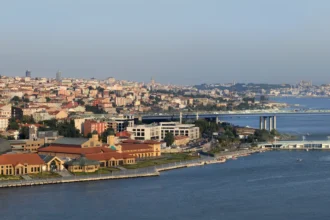
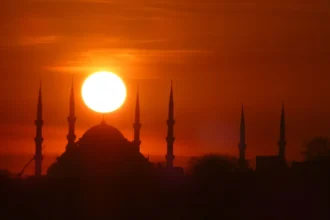
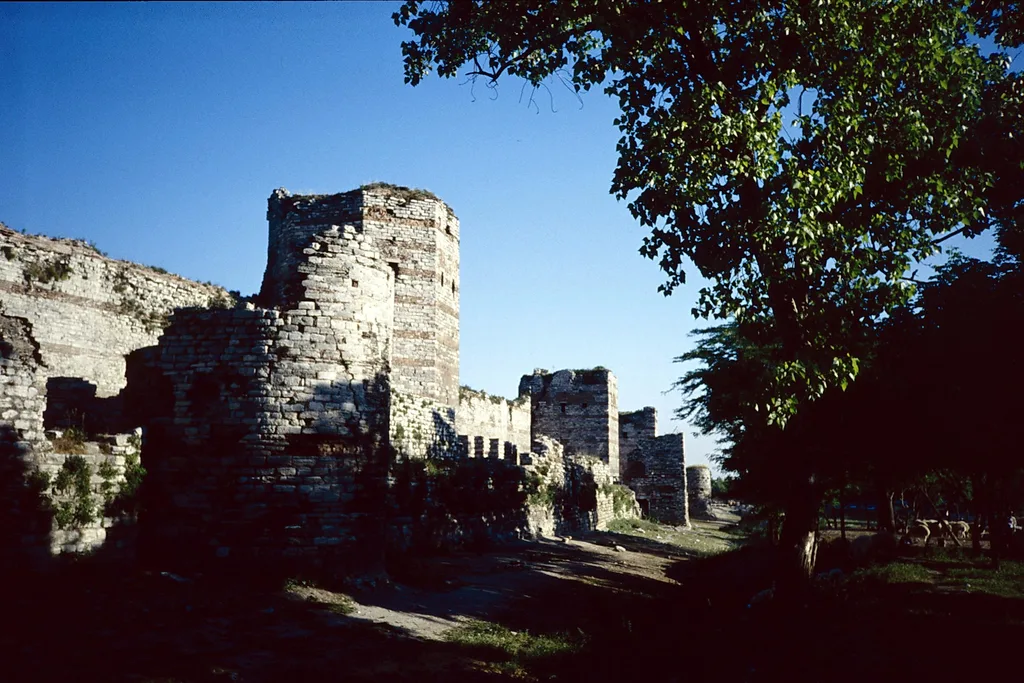
Istanbul’s inscription is not one monument but four protected zones of the old city: the Sultanahmet area with Hagia Sophia, the Blue Mosque, the Hippodrome and Topkapı Palace; the Süleymaniye quarter around Sinan’s great mosque; the Zeyrek quarter with its Byzantine church turned mosque; and the Theodosian land walls, the fifth-century fortifications that defended Constantinople for a thousand years. UNESCO listed the city as the meeting point of two empires’ masterpieces — Byzantine architecture like Hagia Sophia and Chora on one side, Ottoman architecture like the Süleymaniye on the other, in a single urban fabric.
For the traveller, this is the one site on the list that cannot be hurried and cannot really be finished. The walls alone, walked along their surviving stretches, give a better sense of the Byzantine city than any single church, and they are the part of the inscription most visitors never see. Our Istanbul travel guide plans the old city in walking order; treat the UNESCO zones as its skeleton — Sultanahmet for the famous monuments, Süleymaniye and Zeyrek for the quieter quarters where the city’s layering is easiest to feel, and the walls for the scale of the place that two empires called their capital.
Selimiye Mosque and its Social Complex (2011)
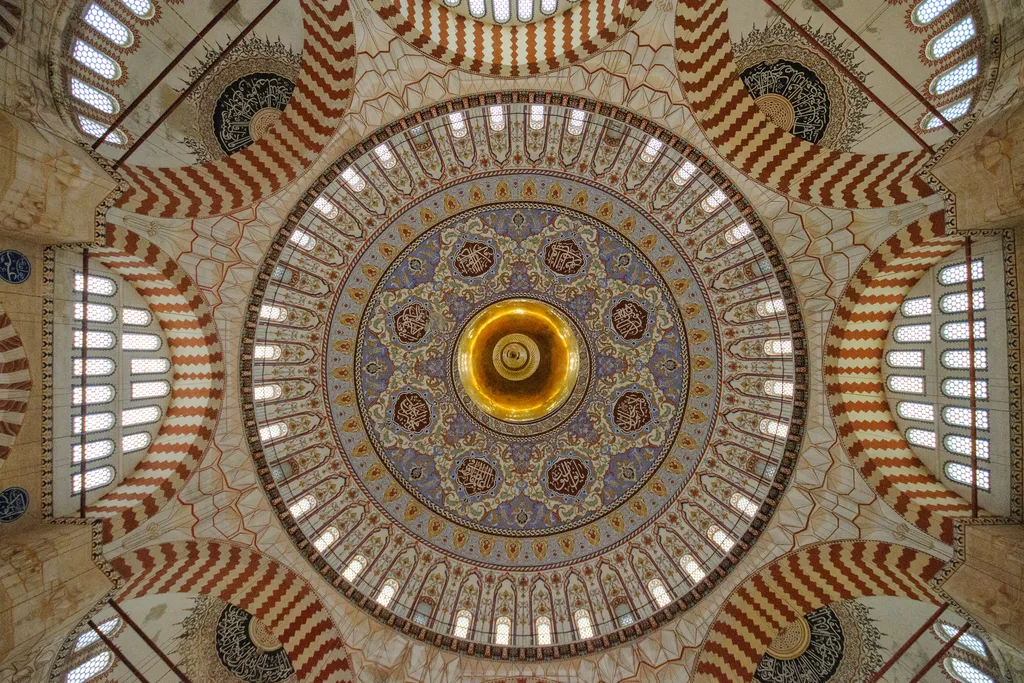
At the other end of the Ottoman story stands a single building, and many architects would call it the finest on this entire list. The Selimiye in Edirne, completed in the 1570s, was the masterpiece of Sinan, the Ottoman court architect, who considered it the peak of his own long career. Its dome — carried on eight piers, so that the prayer hall below feels like one unbroken, weightless space — was the widest span Ottoman building ever achieved, and the four needle-thin minarets at its corners are visible across the Thracian plain long before you reach the city. The inscription includes the mosque’s whole social complex, the schools, library, hospital and market buildings that made it a working institution rather than a monument alone.
Edirne was the Ottoman capital before Istanbul, and it keeps an older, calmer atmosphere than its successor — a border city of mosques, covered bazaars and bridges, close enough to Istanbul to visit as a long day trip and rewarding enough to deserve a night. Stand in the centre of the prayer hall and look up: the Selimiye is the rare masterpiece that explains itself, no guidebook required, and it is the strongest single argument on this list for travelling beyond Istanbul.
Bursa and Cumalıkızık – the Birth of the Ottoman Empire (2014)
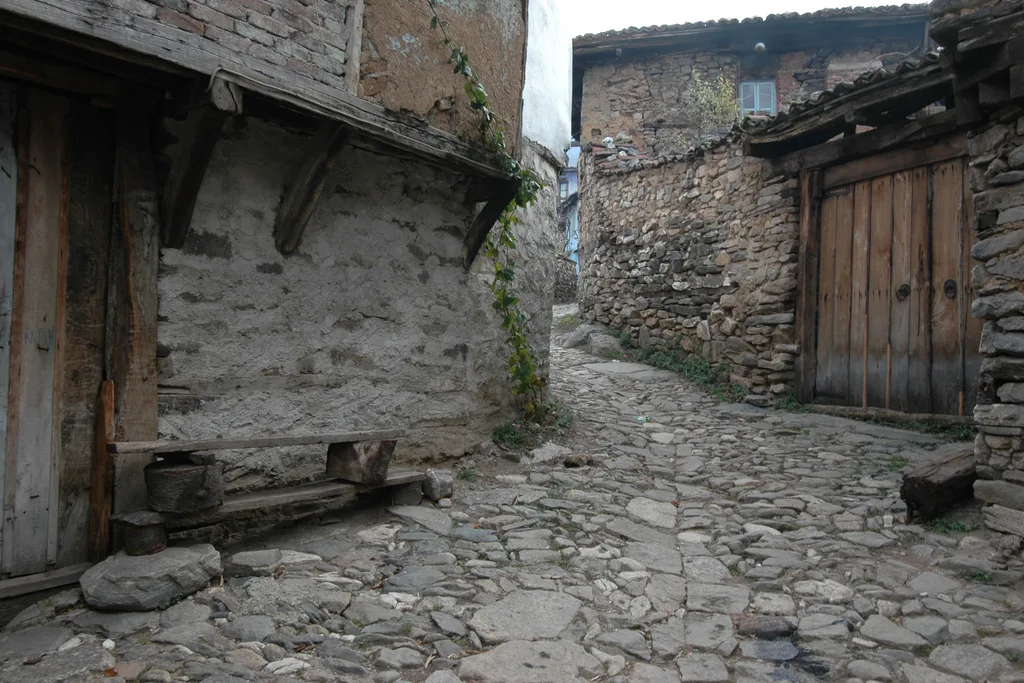
Before Edirne and Istanbul, there was Bursa. The Ottomans took the city in 1326 and made it their first real capital, and the inscription gathers the evidence of that founding moment: the early sultans’ tombs, the Grand Mosque, the hans and markets of the commercial quarter, and the mosque complexes — each a small planned neighbourhood of prayer, teaching, charity and trade — that show how an Ottoman city was deliberately assembled. Paired with the city is Cumalıkızık, a village at the foot of Mount Uludağ that survives as the best-preserved example of the rural settlements that fed and supplied the new capital.
The pairing is the point. In Bursa you see the empire being designed; in Cumalıkızık, a short drive away, you walk cobbled lanes between timber-and-stone village houses that have carried the same pattern of life for centuries. Bursa is a large, working modern city, and the inscribed monuments sit inside its bustle rather than in a museum quarter — allow the Grand Mosque and the tomb complexes unhurried time, then take the village slowly, ideally early, before the day visitors arrive. Together they are the most human-scale of the Ottoman inscriptions.
City of Safranbolu (1994)
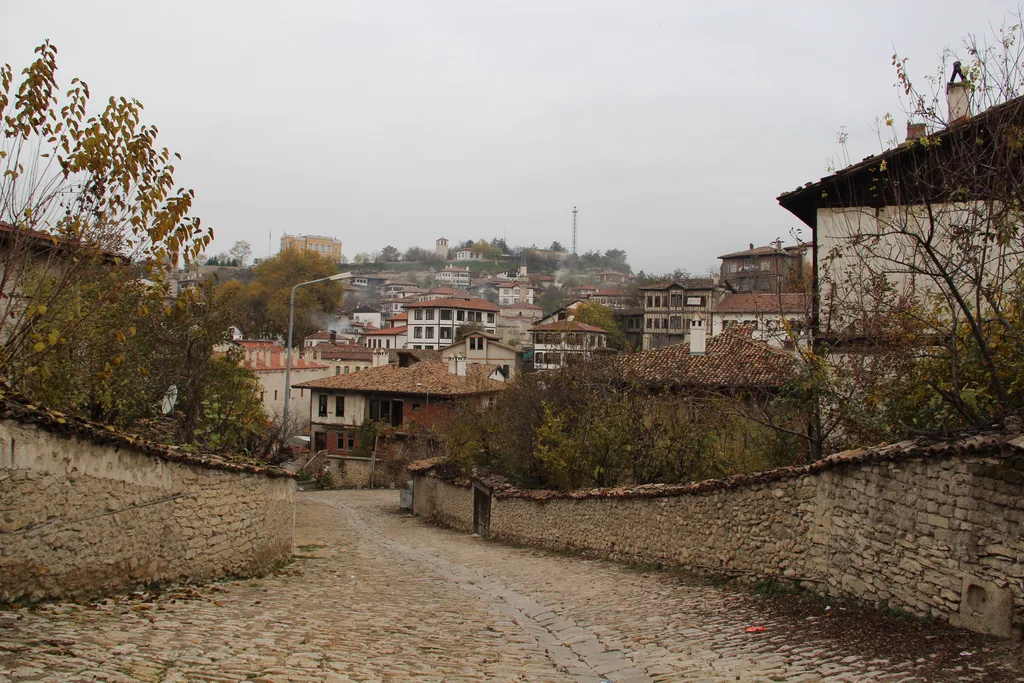
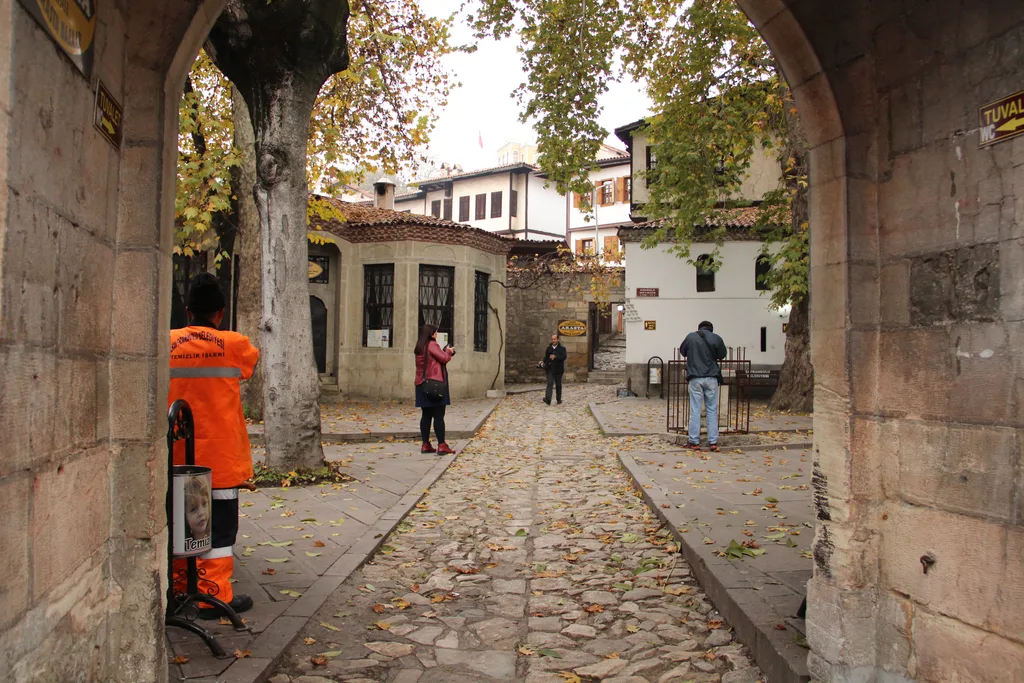
Safranbolu grew rich on the caravan trade between the Black Sea and Istanbul, and its merchants built themselves a town of handsome timber-framed houses — white-walled, many-windowed, stacked up a hillside above the gorge. When the trade routes shifted, the town simply stopped changing, and UNESCO listed it as an exceptionally complete surviving Ottoman caravan city: not one monument but hundreds of protected houses, mosques, baths, a caravanserai and a covered market, still inhabited and still a town rather than a stage set.
It is the gentlest site on this list to visit. There is no single must-see; the pleasure is the whole — lanes that climb and dip, a smiths’ bazaar where metalwork is still hammered, lokum shops trading on the town’s saffron name, and evenings when the day coaches leave and the old town belongs to its residents and the few who stayed. Safranbolu pairs naturally with a Black Sea journey or as a slow overnight between Istanbul and Ankara, and of all 22 sites it is the one that most rewards doing nothing in particular, attentively.
The Aegean and the Classical West
Turkey’s Aegean hinterland holds the densest cluster on the list: six sites within one region, five of them classical cities and one a Lycian sanctuary, close enough together that a single unhurried week based between İzmir, Selçuk and the south can touch all of them. This was the richest corner of Roman Asia, and it shows — these are not scraps of ruin but whole urban landscapes of theatres, temples, streets and stadiums. Take them in the order below, north to south and inland, and the cluster becomes a proper road trip rather than a set of separate excursions.
Ephesus (2015)
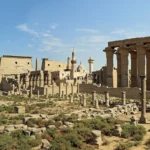
Ephesus is the site most travellers already know, and it earns its fame honestly. A Greek city refounded under Rome, it became one of the largest cities of the Roman world, and its surviving monuments are the ones in every photograph: the Library of Celsus with its restored two-storey facade, the great theatre cut into the hillside, the marble Curetes Street climbing between temples and fountains, and the Terrace Houses, where wall paintings and mosaics preserve the interiors of wealthy Roman homes. The inscription also reaches beyond the main street — to the scant remains of the Temple of Artemis, once one of the Seven Wonders of the Ancient World and now a single standing column, and to the Basilica of St John and the fortress hill above modern Selçuk.
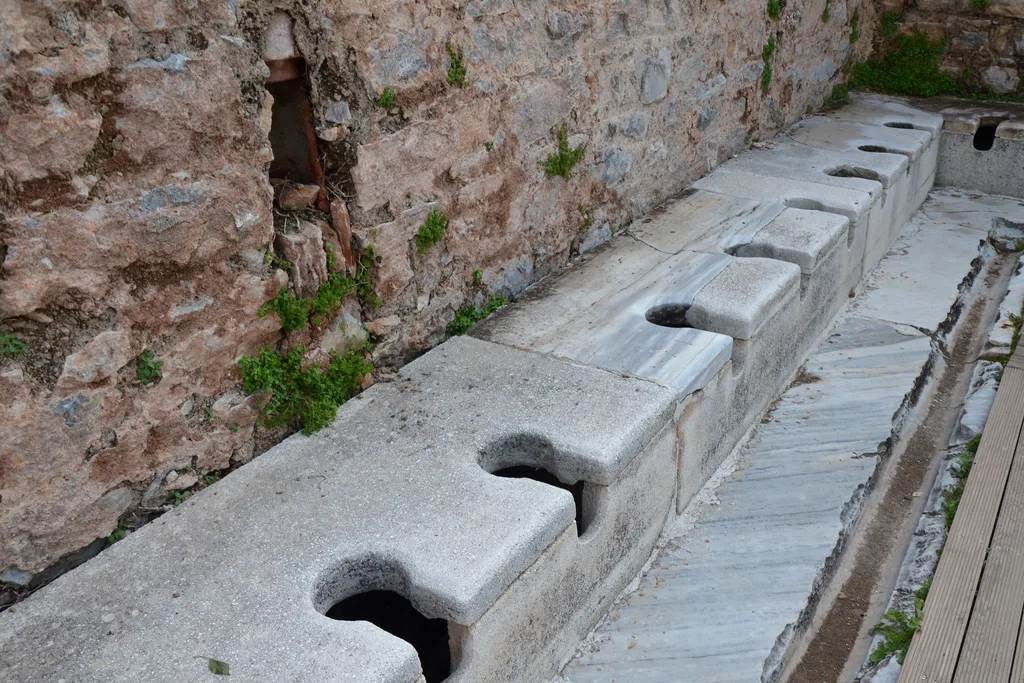
The honest traveller’s notes are these. Ephesus is big, exposed and deservedly busy; the site rewards an early start and a route that goes beyond the Celsus photograph — the latrines, of all things, are among its most eloquent remains, a marble-seated public convenience that says more about Roman daily life than another temple podium. And the Artemis temple, a short walk from the main gate, is the essential counterweight: the wonder of the world reduced to one column in a marshy field, a reminder that this list is as much about loss as survival.
Hierapolis-Pamukkale (1988)
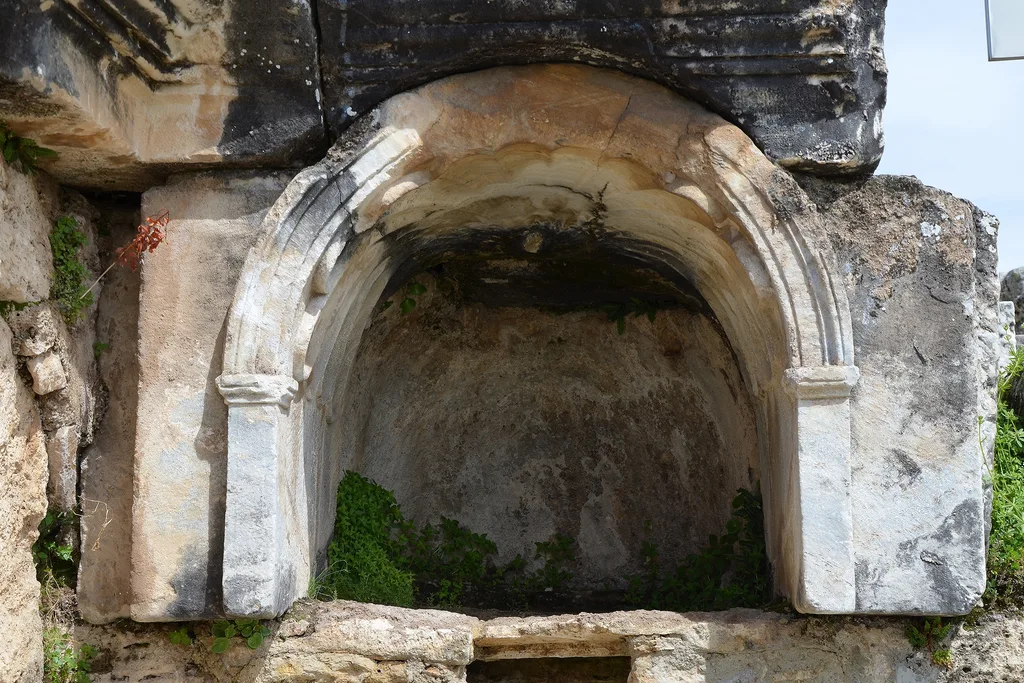
The second of Turkey’s two mixed sites pairs a natural wonder with a Roman spa city, and the two halves explain each other. The natural half is the famous one: a hillside of brilliant white travertine terraces, built up over millennia by hot, mineral-laden water cooling as it spills from pool to pool — Pamukkale, “cotton castle” in Turkish, visible from far down the valley. The cultural half stands on the plateau above the terraces: Hierapolis, a Greco-Roman spa city founded around its sacred hot springs, with a theatre of exceptional preservation, one of the largest ancient necropolises in the country stretching beyond its gates, colonnaded streets, baths, and the Plutonium, a small sanctuary over a cave whose poisonous vapours the ancients took for the breath of Pluto, god of the underworld.
The honest way to visit is to treat the two halves as one long walk rather than two attractions. The terraces are walked barefoot, in the water, and they are only the beginning; the city above takes hours if you let it, from the theatre to the far end of the necropolis where Roman tombs line the road like a suburb of the dead. Travellers who come only for the white pools photograph the least of it. Hierapolis-Pamukkale also sits at the crossroads of the Aegean loop — Ephesus and Sardis to the west, Aphrodisias close by — which is why it appears in almost every western itinerary, and why it earns its place here as the cluster’s hinge.
Pergamon and its Multi-Layered Cultural Landscape (2014)
North of Ephesus, Pergamon was the capital of a Hellenistic kingdom that rivalled Alexandria for learning — its library was famous enough that legend credits the rivalry with the invention of parchment. The acropolis climbs a steep hill above the modern town of Bergama: a theatre cut so sharply into the slope that looking down its seats is an experience in itself, temple platforms, the foundations of the great altar whose sculpted frieze now fills a museum in Berlin, and views across the whole layered landscape that UNESCO’s “multi-layered” title points to — Hellenistic citadel, Roman lower city, Byzantine and Ottoman Bergama below.
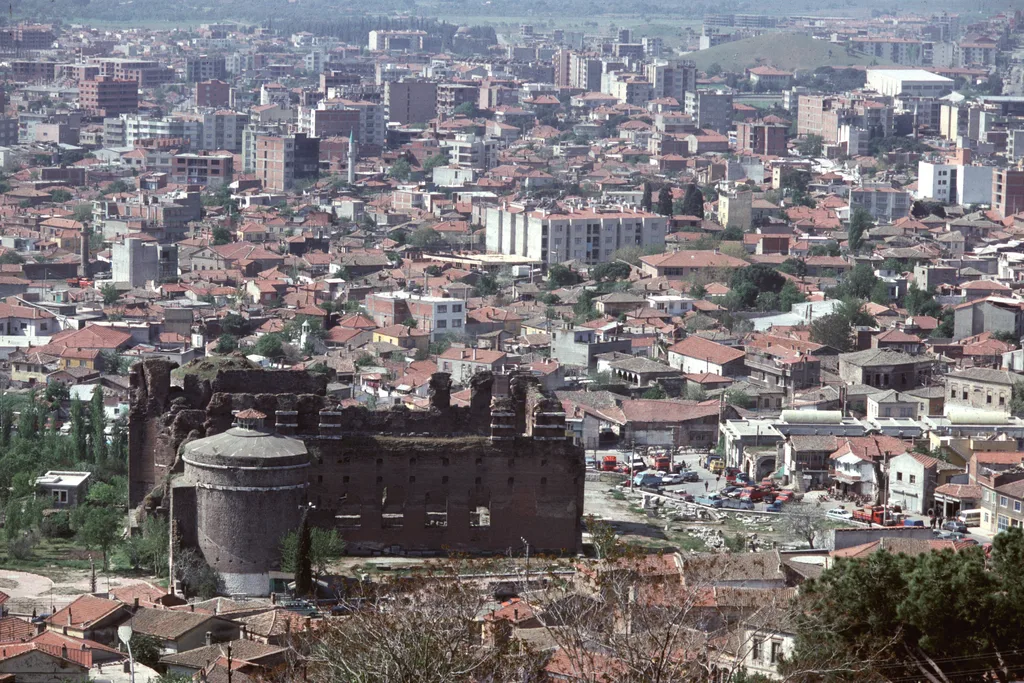
Down in the town, the Red Basilica, an enormous Roman temple of red brick later converted into a church, dominates its quarter, and outside the centre lies the Asclepion, Pergamon’s healing sanctuary, where patients were treated with water, theatre and interpreted dreams. Pergamon is quieter than Ephesus and steeper; give it the acropolis first, while your legs are fresh, and the town sites after. It makes the natural first or last stop of the Aegean loop, on the road between the Dardanelles and İzmir.
Aphrodisias (2017)
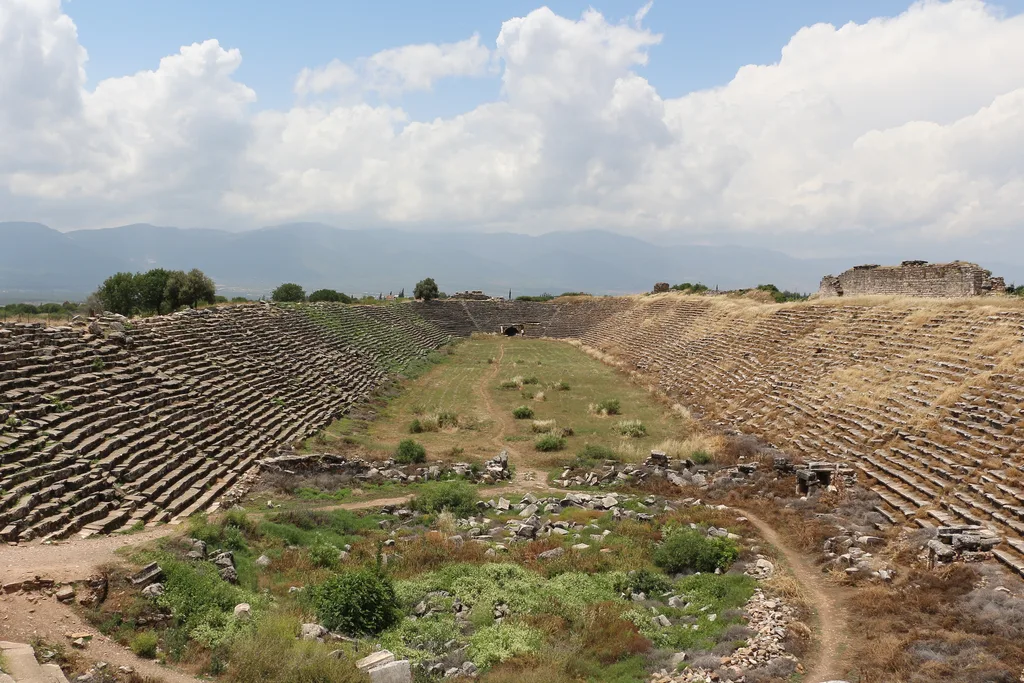
Inland from the coast, in the hills of Aydın province, Aphrodisias was a city devoted to Aphrodite and built on marble. Quarries beside the city fed a school of sculptors whose work travelled across the Roman world, and the prosperity shows in the remains: a great temple of Aphrodite later converted into a cathedral, a theatre, an ornate monumental gateway, and — the sight nobody forgets — a stadium some 270 metres long, one of the largest and certainly among the best preserved of antiquity, its thirty rows of seating still ringing the full circuit of the track.
Aphrodisias is the connoisseur’s site of the Aegean cluster, less visited than Ephesus because it sits off the coastal highway, and more rewarding for it. The museum on site holds the sculpture the city was famous for — portrait busts, reliefs and the cult statue tradition that made its name — and the whole place has a pastoral calm, poplar trees and farmland pressing against the ruins. Travellers looping between Pamukkale and the coast pass close by; those who stop consistently rate it among the finest ancient cities in the country.
Sardis and the Lydian Tumuli of Bin Tepe (2025)
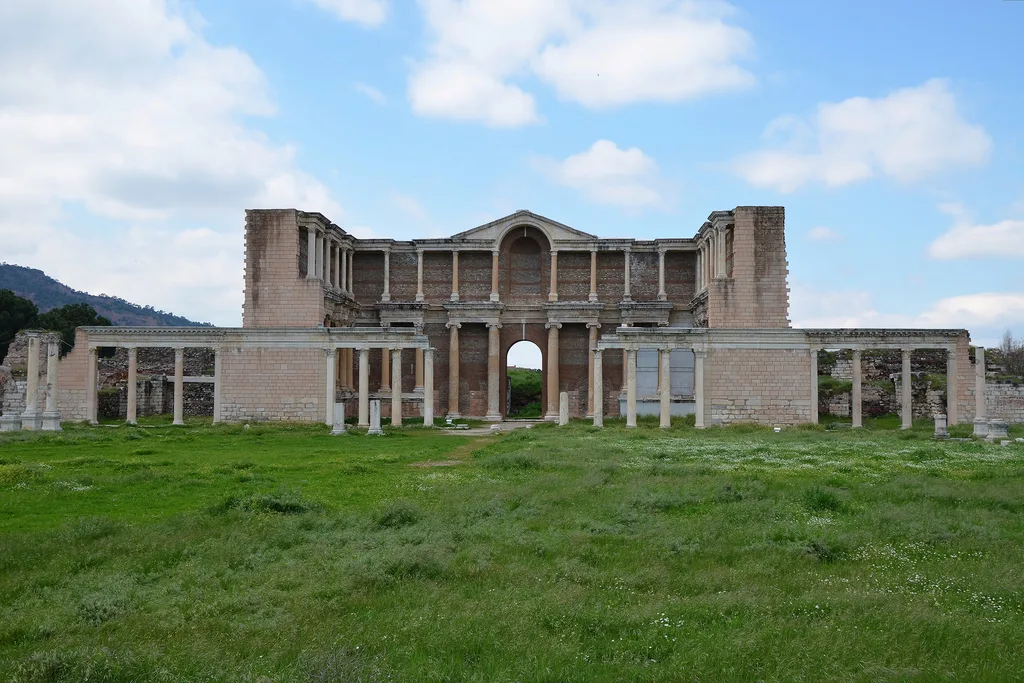
The newest name on the list, inscribed in 2025, is one of its oldest stories. Sardis was the capital of Lydia, the kingdom of Croesus, whose wealth became a byword; the Lydians are widely credited with minting the first standardised coinage, and the gold of the river Pactolus ran, in legend and partly in fact, through their treasury. The visible city is largely Roman — a vast bath-gymnasium complex whose Marble Court has been reassembled column by column, an enormous synagogue that testifies to the city’s later Jewish community, and the great Temple of Artemis standing in a fold of the hills — while the second half of the inscription lies across the plain at Bin Tepe, a royal cemetery of more than a hundred burial mounds, including the tumulus of King Alyattes, among the largest of the ancient world.
Sardis is the Aegean site most likely to be new even to repeat visitors, precisely because its inscription is so recent. It combines easily with a journey between İzmir and Pamukkale, and it deserves more than the quick stop it usually gets: the gymnasium court alone, all restored marble and inscription, explains Roman Sardis better than any panel, and the silent field of mounds at Bin Tepe is the Lydian half of the story, best read in low evening light.
Archaeological Site of Troy (1998)
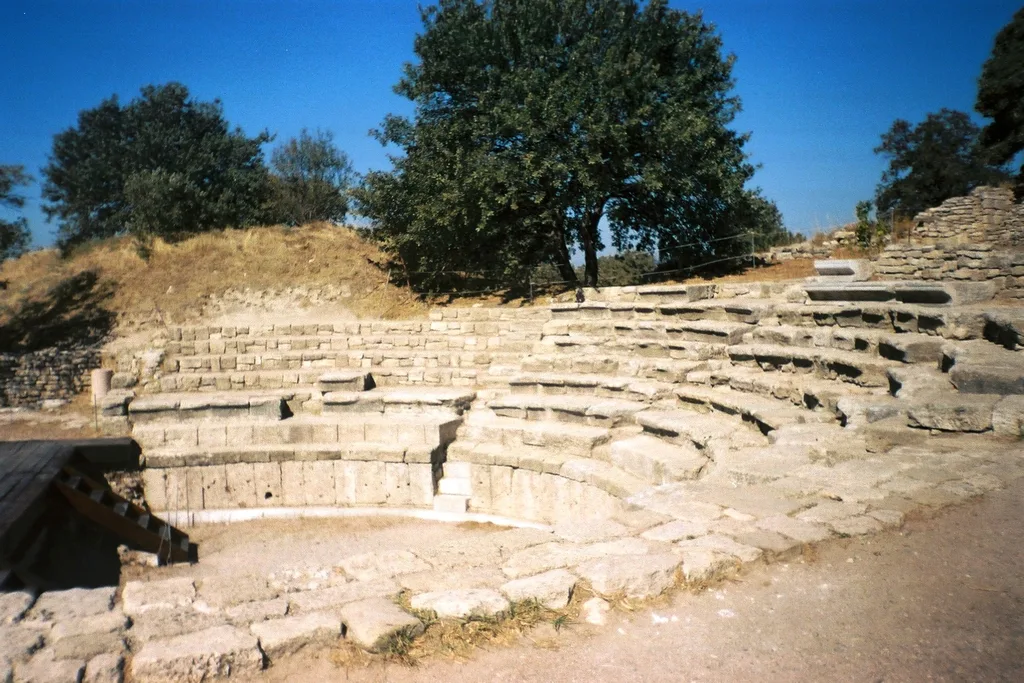
Troy is the one site on the list that everyone arrives at with a story already in their head, and the first service a guide can do is to separate the two things the mound offers. The archaeology is real and remarkable: a fortified settlement rebuilt again and again on the same windy hill at the mouth of the Dardanelles, its nine main layers running from the early Bronze Age to the Roman city of Ilium, whose odeon, sanctuary and walls are the most legible remains today. The poem is another matter — the Iliad is a work of literature woven around this place, very likely preserving memories of its Bronze Age importance, but no excavated layer can be labelled the Trojan War with certainty, and honest accounts say so.
Visited that way, Troy is moving rather than disappointing: a modest, windswept mound where you walk through a trench that cuts the whole sequence of cities, past Bronze Age ramparts and a Roman theatre, with the plain and the strait beyond. It pairs naturally with the Gallipoli peninsula across the water and with Pergamon on the road south — the northern anchor of the Aegean loop, and the proof that a site’s fame and its physical scale are sometimes inversely related.
Xanthos-Letoon (1988)
The southernmost of the classical sites is really two places, inscribed together in 1988: Xanthos, capital of ancient Lycia, and Letoon, its federal sanctuary, a few kilometres apart in the hills behind the Mediterranean coast near modern Kalkan and Kaş. Xanthos holds a Roman theatre, a paved agora and the famous Lycian tombs — tall pillar tombs and rock-cut facades in a style found nowhere else — while Letoon preserves three temples side by side, to Leto and her children Apollo and Artemis, beside a nymphaeum sunk in reeds and water. A trilingual inscription found here, in Greek, Aramaic and Lycian, was a key to deciphering the Lycian language.
The two sites are quiet, green and little visited compared with the northern cities, and they suit the slow southern coast: combine them with the ruins and long beach at Patara, or with a day walking a stretch of the Lycian Way, and they become part of the gentlest few days on this whole list. Xanthos-Letoon is the reminder that not every World Heritage Site is a crowd-puller — some are simply beautiful, learned places that most itineraries still pass by.
One more layer belongs to the Lycian entries, because it recurs all down this coast: the Lycians buried their dead in ways designed to be seen — pillar tombs rising like stone towers, house-shaped sarcophagi, facades cut into cliffs and painted in antiquity. At Xanthos the great pillar tombs stand over the theatre in a skyline unlike anything else in this article, and the famous Nereid Monument that once crowned the city now stands reconstructed in the British Museum, a fact the site presents without bitterness and the traveller should register honestly: for several of these 22 places, part of the story is told in museums abroad, and part of the reason the list exists is to keep what remains in the ground where it belongs.
Cappadocia and the Anatolian Centre
The centre of the country holds six of the 22 — the densest cluster after the Aegean — and they span the deepest time on the list, from a Neolithic town of 9,000 years ago to mosques built of wood in the fourteenth century. This is plateau country: Ankara as the hub, with Gordion beside it, Hattusa to the north-east, Çatalhöyük and the wooden mosques to the south, Divriği away to the east and Cappadocia presiding over the middle. A traveller who gives the centre a week sees a Turkey that coastal itineraries never touch, and the chronological whiplash — Neolithic village in the morning, Byzantine cave church the next day — is the region’s peculiar pleasure.
Göreme National Park and the Rock Sites of Cappadocia (1985)
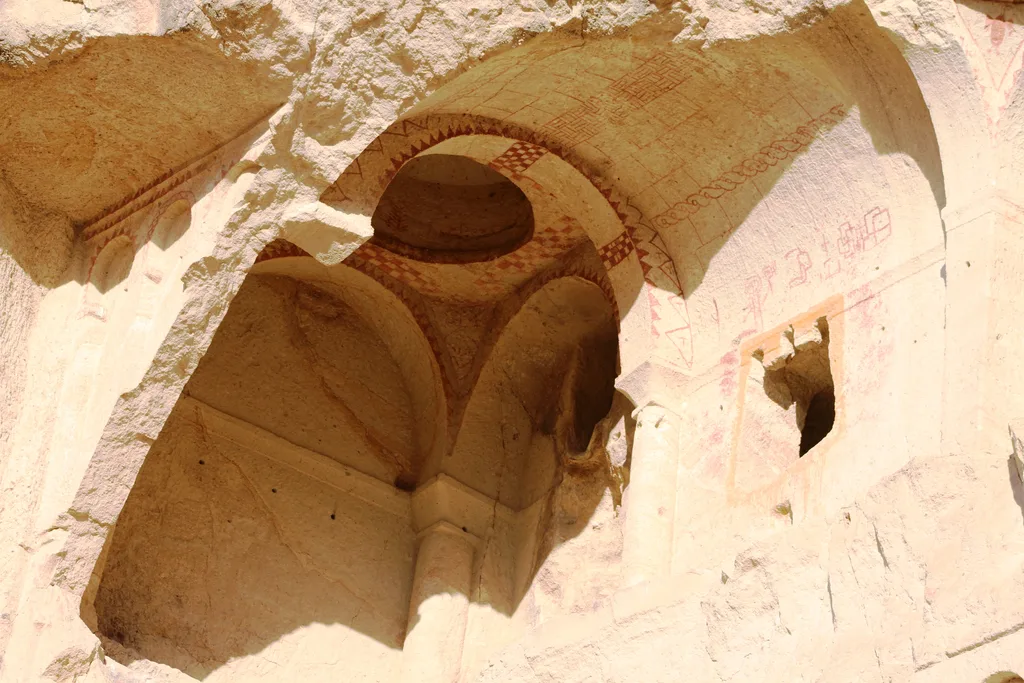
Cappadocia is one of the two mixed sites, inscribed for both culture and nature, and the pairing is exact: the fairy chimneys and sculpted valleys are the natural half, and the human answer to that landscape — whole monasteries, churches and underground cities cut into the soft volcanic stone — is the cultural half. The Göreme Open Air Museum gathers the finest of the rock churches, their Byzantine frescoes still vivid in the dark interiors, and around it spread the valleys of carved cones, the multi-storey underground refuges of Derinkuyu and Kaymaklı, and villages like Uçhisar built into and under the rock.
It is also, frankly, the most visited landscape on this list, balloons and all, and the traveller’s skill lies in ranging wider than the famous valley viewpoints: walk the quieter valleys on foot, go down into an underground city early, and let the churches be the centre of a day rather than a photo stop. Our Cappadocia travel guide covers the valleys and villages in the order they reward; the UNESCO view is simpler — nowhere else on the list does the boundary between geology and architecture dissolve so completely.
Hattusha – the Hittite Capital (1986)
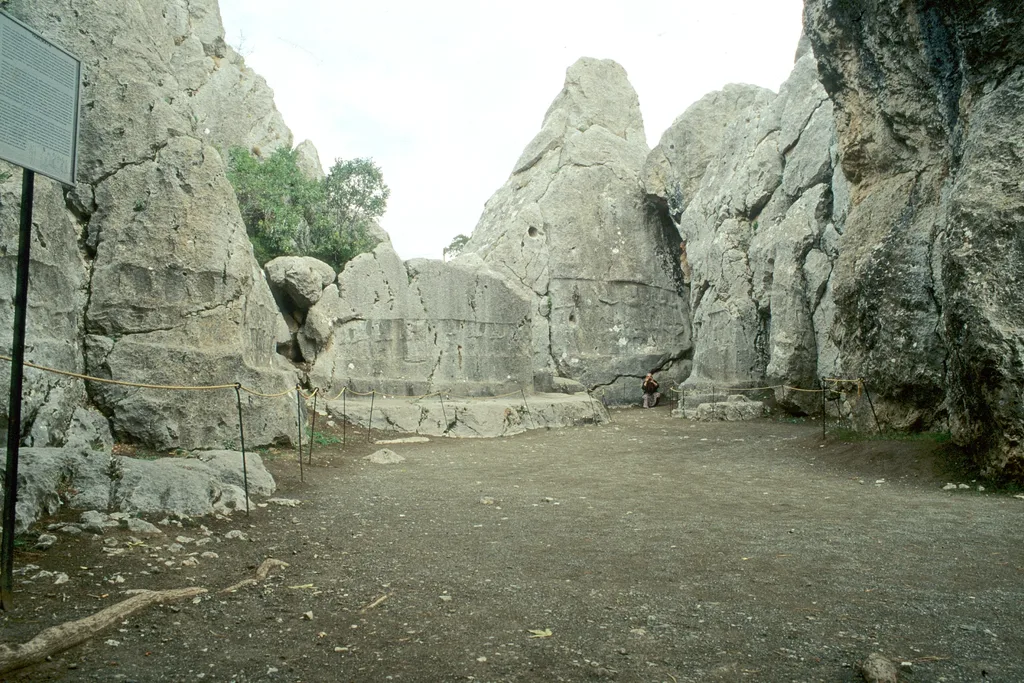
North-east of Ankara, on a high plateau near the village of Boğazkale, lie the ruins of the first great Anatolian empire’s capital. Hattusa was the seat of the Hittites, who from around 1650 to 1200 BCE ruled a state that treated with Egypt as an equal, and its remains are measured in kilometres of city wall rather than individual monuments: gates guarded by carved lions and a sphinx, a citadel rock, temple foundations in the lower city, and a famous sloping stone rampart that still climbs the hillside. A short distance away, the open-air sanctuary of Yazılıkaya hides in a rock outcrop, its chambers carved with processions of the Hittite gods — the single most atmospheric survival of that civilisation.
Hattusa asks something of the visitor: the stones are lower, older and less restored than the Roman cities of the coast, and the reward is proportionate to the imagination you bring. Go to Yazılıkaya first or last, when the light is raking, walk a stretch of the walls between gates, and let the sheer size of the circuit make the point — an empire was run from this plateau three thousand years before Ankara existed. It is an easy excursion from the capital and combines with Gordion into a two-day lesson in Anatolia before Greece and Rome.
Gordion (2023)
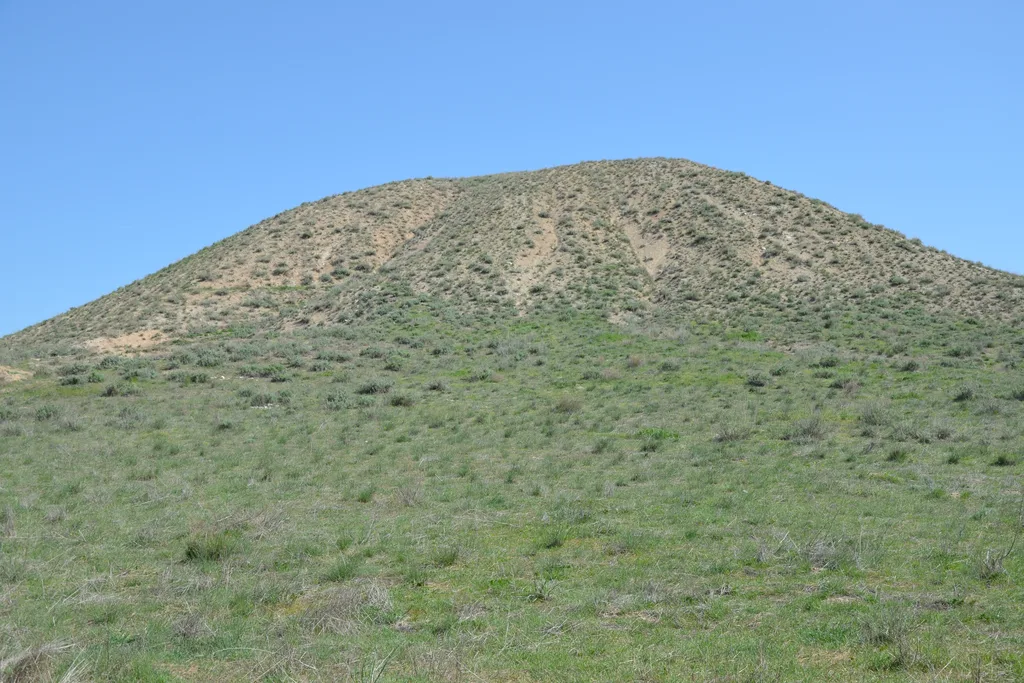
Gordion, inscribed only in 2023, was the capital of Phrygia, the kingdom of the real King Midas — a historical ruler behind the golden-touch legend, though the legend is not evidence and the site is better than the myth. The citadel mound preserves an early Phrygian gate and paved courts destroyed by fire around 800 BCE, an event that accidentally baked and preserved the layer for archaeology, while across the plain stand the royal tumuli, more than a hundred burial mounds including the Great Tumulus, among the largest of its kind, whose timber burial chamber is traditionally linked to Midas’s father, Gordias. The Gordian knot legend belongs here too — the wagon whose knot Alexander famously cut stood in this citadel’s tradition.
Gordion sits near Polatlı, south-west of Ankara, and it is the easiest of the central sites to add to a capital stay: a compact museum, the great mound rising over flat farmland, and a citadel walk that takes an unhurried morning. Its late inscription surprises people — a capital this important, unlisted until 2023 — and it is one of several reminders in the table above that the World Heritage List is still being written, not merely inherited.
Do not skip the small museum at the site entrance: the finds from the tumuli — bronze vessels, furniture inlaid in patterns that gave the world its image of Phrygian craft, and the contents of lesser mounds — are what turn the big grass hill across the road from a landscape feature into a tomb. Museum first, then the mound, then the citadel: the order works at almost every archaeological entry on this list, and Gordion is where the habit is best learned.
Neolithic Site of Çatalhöyük (2012)
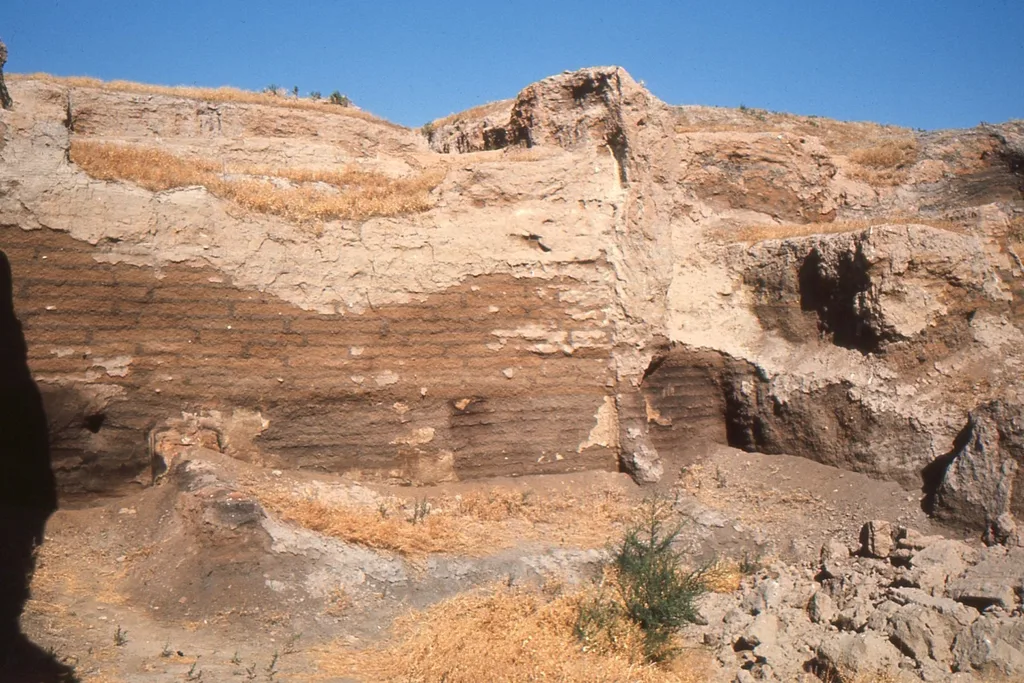
On the Konya plain stands the oldest settlement on the list: a town of mudbrick houses lived in for well over a thousand years from around 7100 BCE, entered through holes in the roof, its rooms decorated with wall paintings, plastered bulls’ heads and burials beneath the floors. Çatalhöyük is one of the most important Neolithic sites anywhere, because it shows the experiment of settled life at full scale — thousands of people living without streets, palaces or, as far as the evidence shows, kings — and its excavations, protected under great shelters, are a working archaeological dig as much as a monument.
The visit is about layers of dried mud and what they mean, so it rewards the museum-first approach: the reconstructions and finds give the trenches their meaning, and then the real mound, house stacked on house in section, lands with proper force. Çatalhöyük pairs with Konya itself — the Seljuk capital and Rumi’s city, a Tentative List place rather than an inscribed one, but the natural base for the south-central sites, with the Eşrefoğlu Mosque at Beyşehir an easy addition in the same direction.
Great Mosque and Hospital of Divriği (1985)
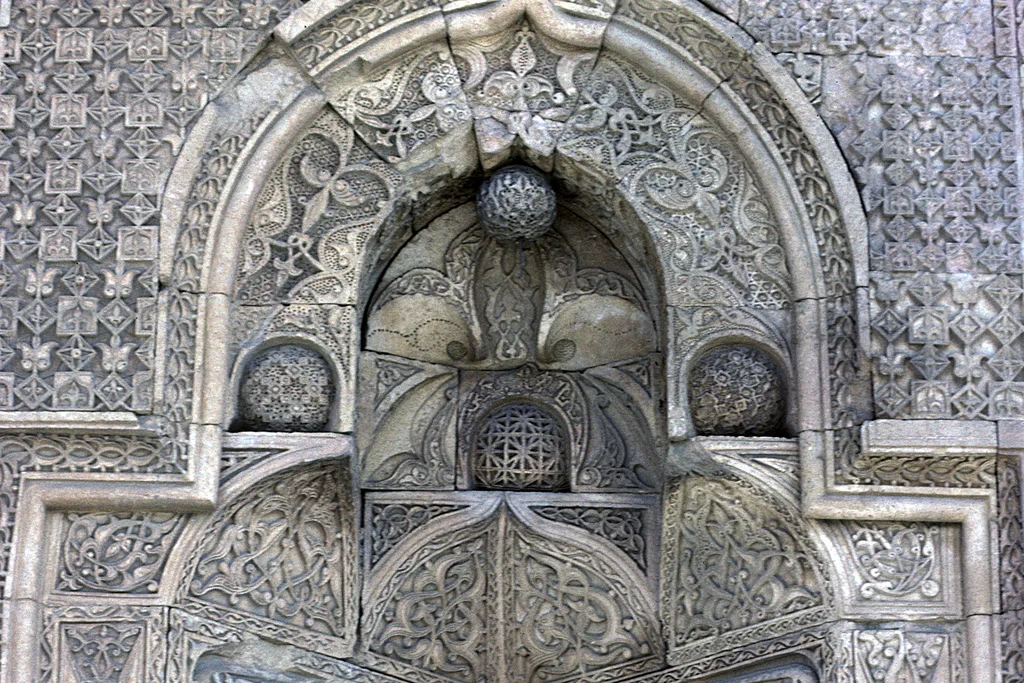
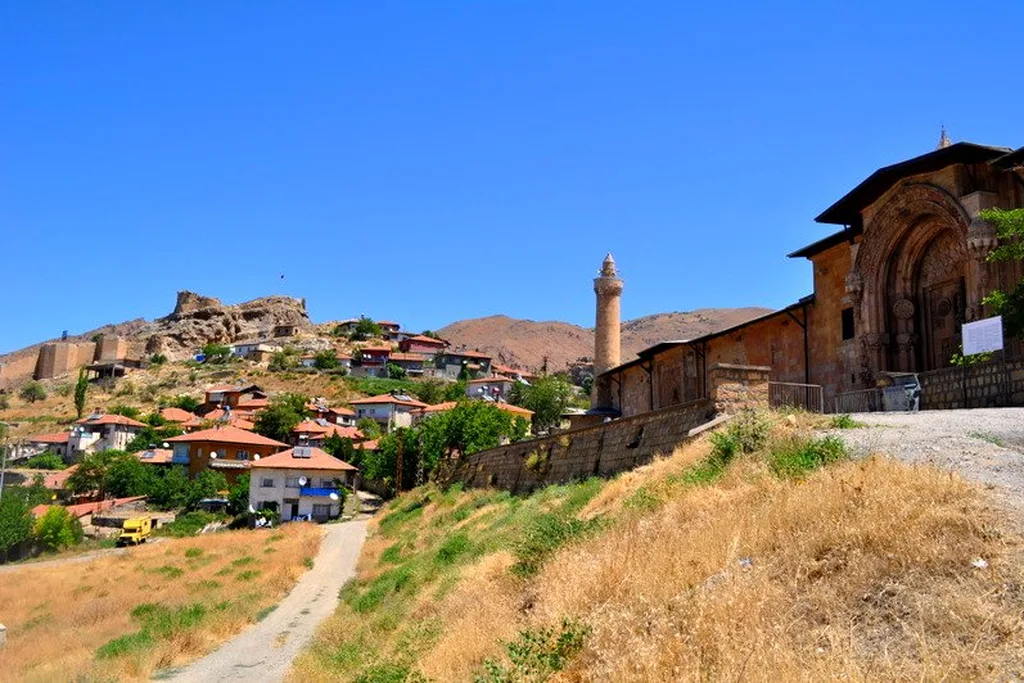
One of the first three Turkish inscriptions, in 1985, was this remote masterpiece in the hills of Sivas province: a mosque and attached hospital built together in the 1220s under the local Mengücek rulers, and covered — there is no other word — in carved stone. Its portals are among the most elaborate in all Islamic art, deep frames of interlacing geometric and vegetal carving that seem to change with the light, the work of named craftsmen whose signatures survive. The hospital beside the prayer hall, with its vaulted courtyard, was built to heal with music, water and quiet as much as medicine, and the whole complex stands above the small town of Divriği in a landscape that still feels far from everywhere.
That remoteness is the traveller’s fact: Divriği is the site on this list that takes the most deliberate journey, whether by the slow railway that threads the Euphrates gorges to reach it or by road across the plateau, and it is precisely the sites like this that separate a real survey of the list from a greatest-hits tour. Everyone who makes the effort says the same thing — the carving justifies the miles. Plan it as the eastern anchor of the central cluster, or as a staging post on the long road towards Malatya and the east.
Wooden Hypostyle Mosques of Medieval Anatolia (2023)
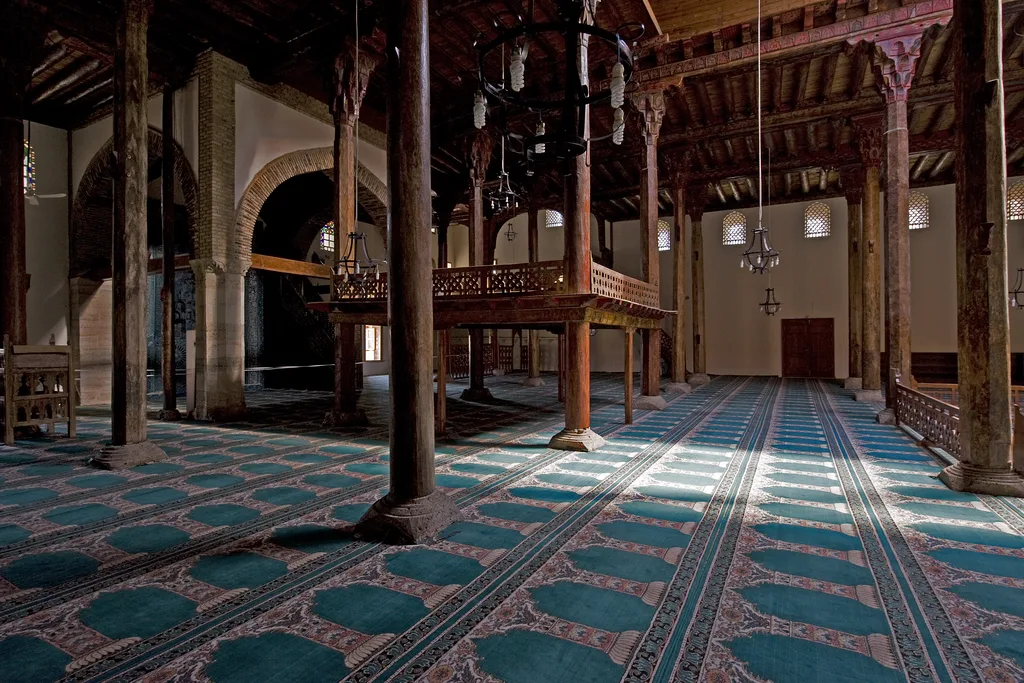
The list’s most unusual Turkish entry is not a place but a set of five: the wooden hypostyle mosques of the thirteenth and fourteenth centuries, prayer halls carried on forests of carved wooden columns, built in Anatolia’s Turkish beylik era and surviving against all probability in a land of earthquakes and fires. The five are the Eşrefoğlu Mosque at Beyşehir — the largest, with its tiled minbar, carved ceiling and a snow pit built into the hall to cool and preserve it — the Mahmut Bey Mosque in the village of Kasaba near Kastamonu, the Great Mosques of Sivrihisar and Afyonkarahisar, and the Aslanhane Mosque in Ankara’s old town below the citadel.
Because the inscription is serial, the traveller meets it in pieces: Aslanhane during an Ankara stay, Eşrefoğlu on the Konya circuit, Mahmut Bey on a Black Sea journey combined with Safranbolu. The interiors share a warmth no stone mosque has — wood overhead, wood underfoot in the galleries, painted decoration surviving in fragments — and they correct the idea that Anatolia’s medieval heritage is all caravanserais and stone. Of the 22 entries, this is the one most visitors complete without ever knowing they have begun it, passing through Ankara’s old town unaware that the modest mosque by the citadel is a World Heritage Site.
The East – Göbekli Tepe, Nemrut and the Frontier Sites
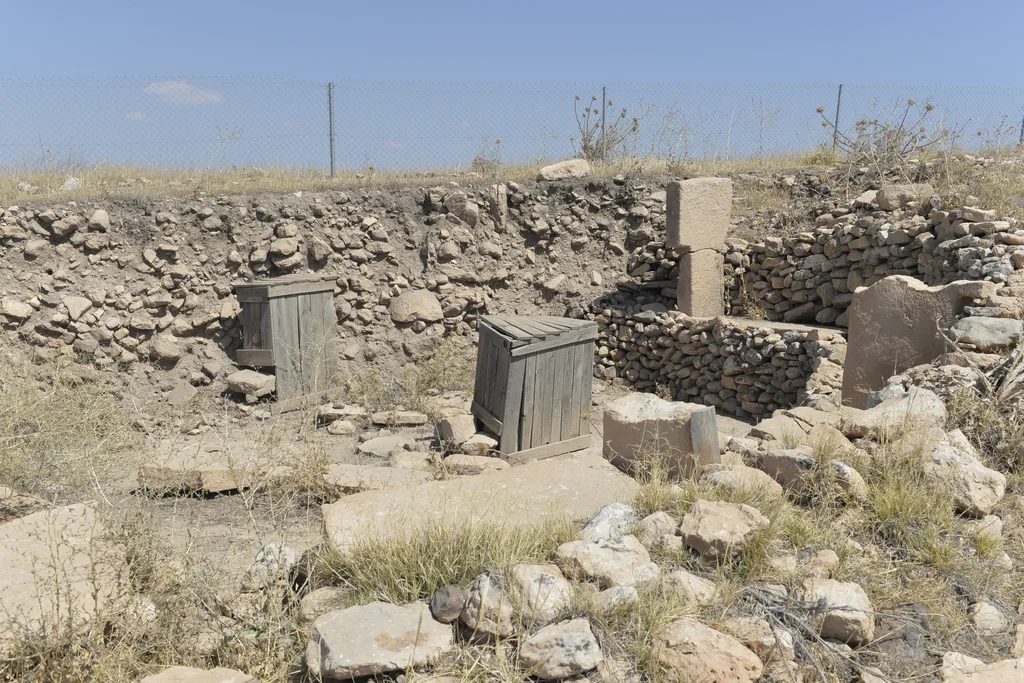
The five eastern sites are the list’s expedition country: a Neolithic sanctuary older than agriculture, a king’s tomb on a 2,000-metre summit, an empty medieval city on a closed border, a fortress above the Tigris and a mound where some of the world’s earliest states were formed. They are spread across a region the size of a small country, joined by long roads and by the Euphrates, and they reward being treated as one committed journey rather than five separate ones. Travellers who make the eastward effort consistently describe it as the finest part of the whole list — the sites are emptier, the landscapes bigger, and the hospitality of the region’s cities is a subject in itself.
There is a logic to the order below. Start in the south with the oldest thing on the entire list, climb to the region’s great summit tomb, then run north and east through a fortress city and a palace mound to the empty border capital — the journey reads, without forcing it, as a single arc from the first monuments humans ever built to a medieval city that was abandoned within sight of modernity. Few stretches of road anywhere carry that much time in that order.
Göbekli Tepe (2018)
On a limestone ridge above the Şanlıurfa plain stands the site that rewrote the beginning of this article’s story — and of everyone’s story. From around 9600 BCE, thousands of years before farming villages, people raised circular enclosures of enormous T-shaped stone pillars, carved with foxes, boars, cranes and abstract signs, then deliberately buried them and built anew. Göbekli Tepe’s purpose is still honestly debated — temple, gathering place, something with a domestic element the first reports missed — but its sequence is not: monumental building came first here, before pottery, before villages, before kings. UNESCO’s inscription recognised it as among the earliest evidence of monumental ritual architecture anywhere.
The visit is sheltered and well organised, a walkway circuit under great canopies above the enclosures, with Şanlıurfa itself — a pilgrim city of bazaars, sacred pools and one of Turkey’s finest regional museums, where the pillars’ carved companions are displayed — as the essential second half of the day. Göbekli Tepe is the deepest root of the 22, and starting the eastern journey here sets the scale for everything after: twelve thousand years, in one fenced hilltop.
Nemrut Dağ (1987)
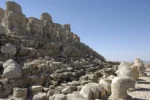
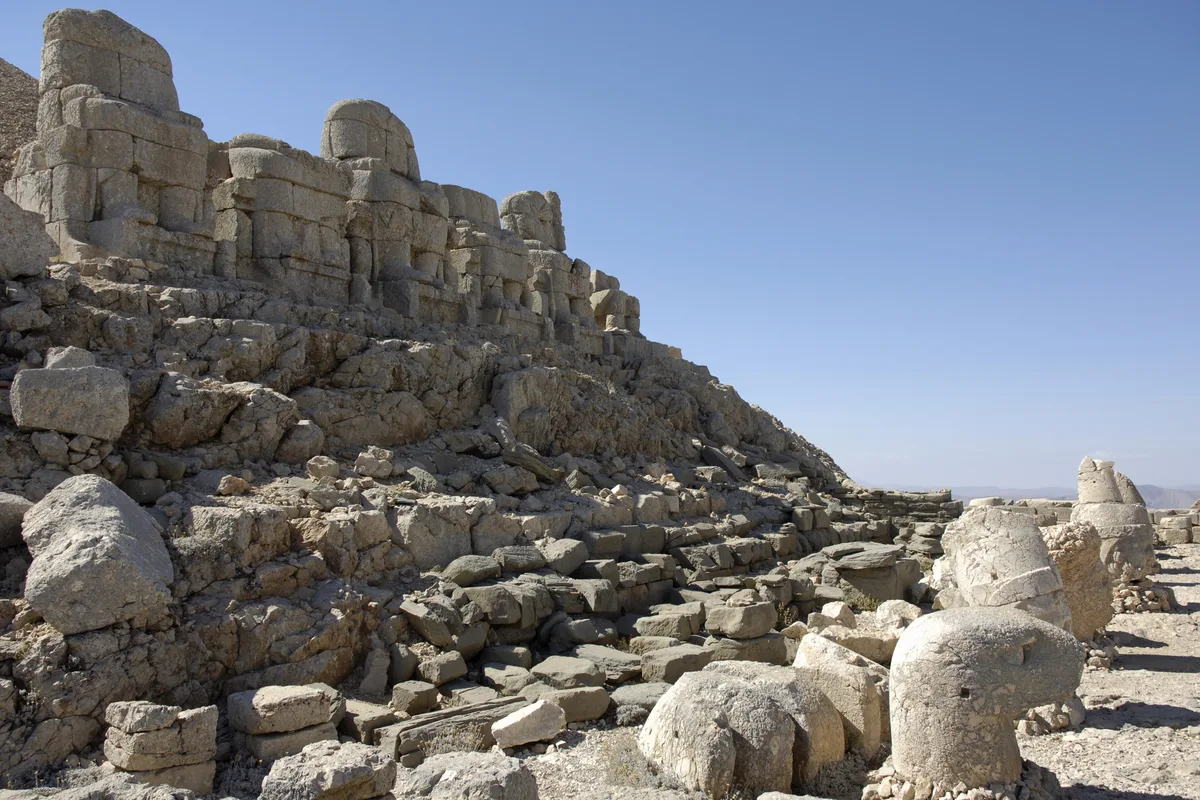
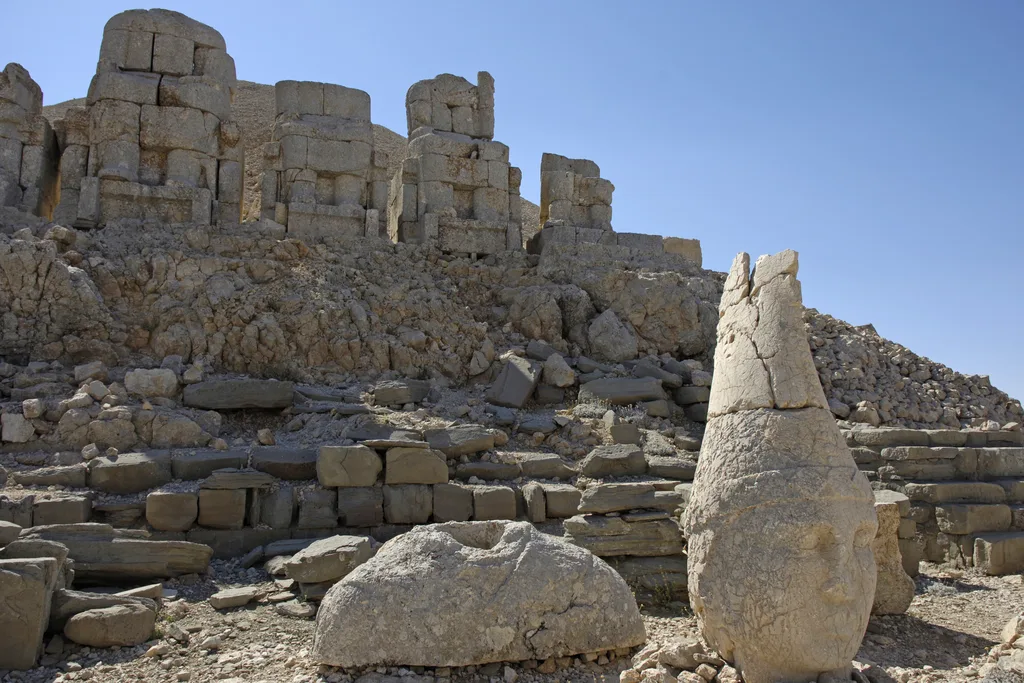
High in the mountains of Adıyaman province, a king of the small Hellenistic kingdom of Commagene built himself a tomb that doubled as a throne among the gods. Antiochus I, ruling in the first century BCE between Rome and Parthia, raised a great cone of crushed stone on the summit and flanked it with terraces of colossal seated statues — gods, ancestors and himself among them, in a deliberate blend of Greek and Persian tradition. Earthquakes have toppled the statues’ heads, which now sit in a row before their bodies, and the result, at over two thousand metres, is one of the most haunting sights in the country.
Nemrut is a journey with a shape: a mountain road, a final climb on foot, and terraces that face the sunrise and the sunset, so that the classic visits are at the day’s two ends, in hard golden light and serious cold at almost any season. It is seasonal country — snow closes the summit for part of the year — and it combines on the road with Arslantepe at Malatya and, further on, Diyarbakır. Of all the list’s royal ego trips, this is the one where the ego and the landscape are perfectly matched.
Archaeological Site of Ani (2016)
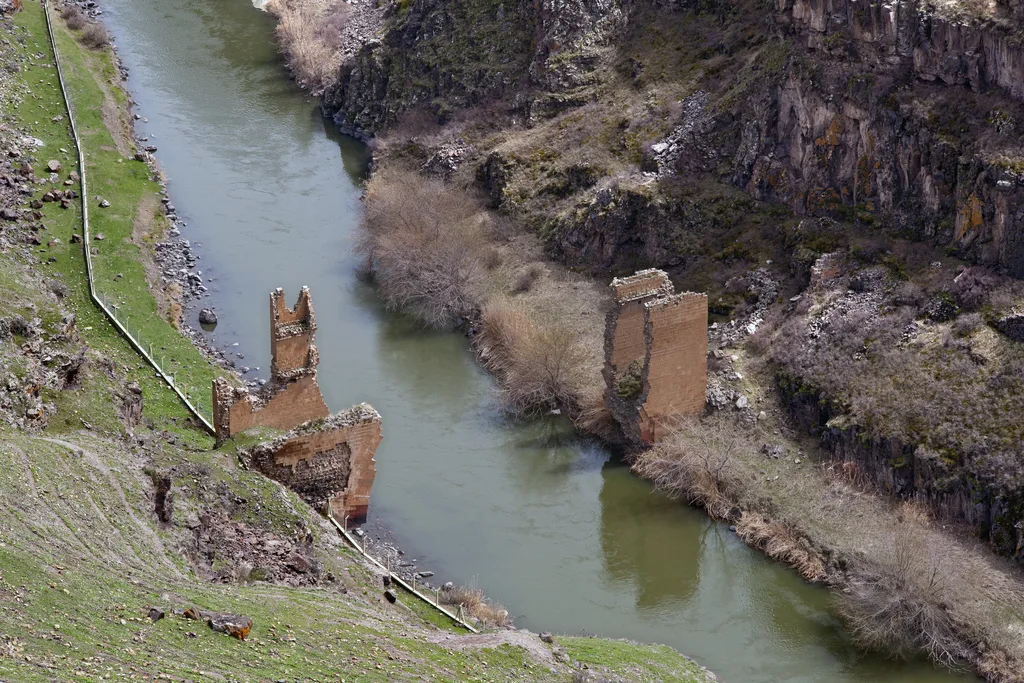
At the far eastern edge of the country, on a plateau cut off by the Akhurian river gorge that forms the border with Armenia, stands an empty city. Ani was the capital of Bagratid Armenia in the tenth and eleventh centuries, a Silk Road metropolis of churches, palaces and walls that later centuries — Byzantine, Seljuk, Mongol, earthquake and abandonment — emptied without ever quite erasing. What remains is unforgettable: a ruined cathedral whose dome fell in an earthquake, churches with frescoes and carved stonework standing alone in grassland, the great double walls across the landward side, a mosque among the earliest in Anatolia, and a broken bridge in the gorge below, going nowhere, to a border that is closed.
Ani asks for time and weather; there is little shelter and no shortcut, and the city reveals itself by walking, from the walls to the gorge edge, in a silence broken mostly by wind. It is reached from Kars, the frontier city that is the usual base for the far east, and almost every traveller who stands in Ani’s cathedral at the end of the day calls it the single most affecting ruin in Turkey. It is also the list’s clearest proof that heritage ignores borders — a capital of Armenia, inscribed by Turkey, mourned and studied by both.
Diyarbakır Fortress and Hevsel Gardens Cultural Landscape (2015)
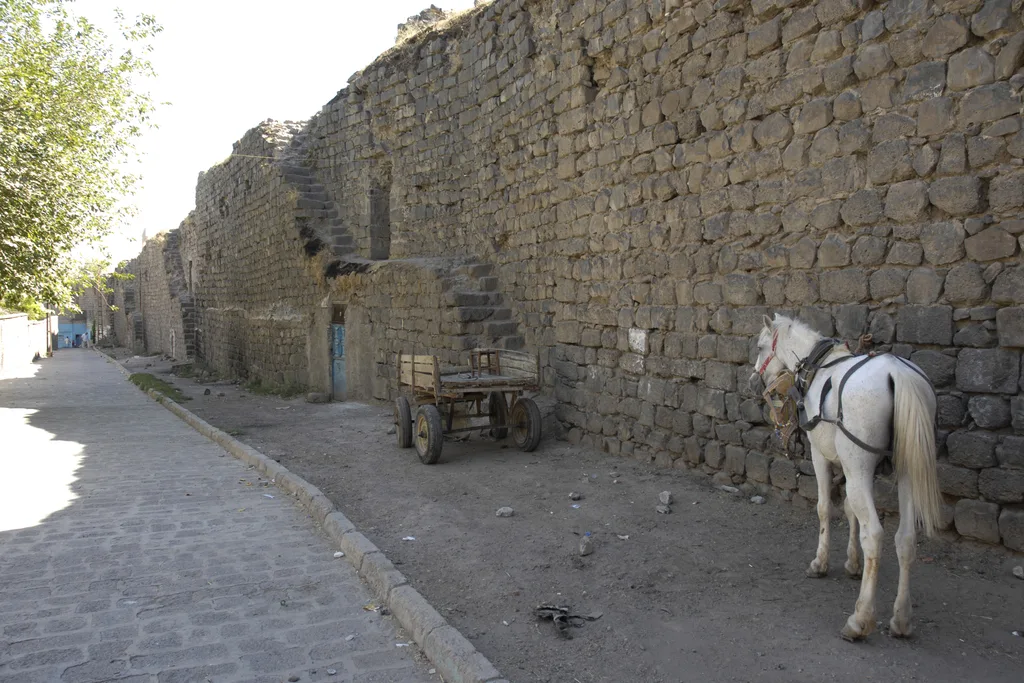
Diyarbakır’s inscription is a landscape, not a monument: a circuit of black basalt walls several kilometres long, among the most extensive city fortifications anywhere, rebuilt across Roman, Byzantine, Arab, Seljuk and Ottoman centuries and studded with towers carrying inscriptions and carved reliefs from each age — and, falling away below the walls to the Tigris, the Hevsel Gardens, a green belt of orchards and market gardens said to have been farmed continuously for millennia, feeding the city inside the fortress from the land between wall and river.
The pairing is the meaning: wall and garden, defence and dinner, the two halves of a frontier city’s survival, read in a single view from the walls above the river. Diyarbakır is also a living city with a dense old town of mosques, churches and courtyard houses inside the circuit, and the traveller who only photographs the walls misses half the inscription. Give it a full day, walk the walls in the cool of the morning, and spend the afternoon in the gardens’ shade — this is the southeast’s great urban site and the natural hinge between the Şanlıurfa sites and the road north.
Arslantepe Mound (2021)
Outside Malatya, Arslantepe looks at first like the humblest site on the list — a grassy mound beside a village — and it is one of the most important. In the fourth millennium BCE this was a place where power itself was being invented: a mudbrick palace complex of temples, storerooms and audience halls, decorated with wall paintings and mass-produced bowls for rationed workers, where an elite administered one of the earliest state systems known, contemporary with the first cities of Mesopotamia. Metal swords found here are among the earliest yet known anywhere, and after the palace’s fall the mound went on through Hittite, Neo-Hittite and later lives, its carved gate lions now famous in the museum in Malatya and in Ankara.
The mound rewards the same discipline as Çatalhöyük: museum and site together, imagination switched on. It is the quiet achiever of the east, an easy stop on the Malatya road between Nemrut and Divriği, and it completes the region’s argument — that the east is not the list’s margin but its beginning, the place where both farming and the state were first tried.
The mound’s setting helps rather than hurts: the village of Orduzu spreads below it, apricot orchards run towards Malatya, and the palace walls stand under a protective shelter much like Çatalhöyük’s, so that the two sites — the Neolithic town in the centre and the proto-state palace in the east — form a pair across this whole article, the before and after of humanity learning to live in large groups. Read together, they are the deepest argument the Turkish list makes.
Planning a UNESCO Trip in Turkey – Which Sites Combine
Twenty-two sites, one country, and a map that spans roughly the distance from London to Rome: nobody sees all of Turkey’s World Heritage in a single ordinary holiday, and pretending otherwise helps no one. What works is to travel by cluster. The sites were grouped by region in the sections above precisely because those groupings are the trips — each one a coherent journey of three days to a week, in which the sites explain each other and the driving stays part of the pleasure rather than a tax on it.
The classic first trip is the west: Istanbul’s four zones as the overture, then the road south through Troy and Pergamon to Ephesus, with Sardis, Aphrodisias and Pamukkale completing an Aegean loop that takes in seven sites without a single wasted day. The second trip is the centre: Ankara for Gordion and the Aslanhane Mosque, Hattusa to the north-east, then south to Çatalhöyük and Konya with Beyşehir’s wooden mosque, and Cappadocia as the grand stay in the middle — six more, at plateau pace. The third is the east, and it should be taken whole and unhurried: Şanlıurfa and Göbekli Tepe, Nemrut’s summit, Arslantepe, Diyarbakır’s walls, with Divriği reached on the way in or out and Ani as the far, unforgettable terminus from Kars. Edirne, Bursa and Safranbolu fold into Istanbul-based weeks as overnight excursions rather than journeys of their own, and Xanthos-Letoon belongs to a slow Mediterranean coast trip. Season shapes all of it, honestly: the Aegean and Istanbul shine in spring and autumn, the plateau summers are kind, and the high east — Nemrut above all — is a late-spring-to-autumn proposition, with snow a real factor outside those months. Choose one cluster per trip, walk the sites rather than collecting them, and the list will do what it was made to do.
Two practical rules protect the whole enterprise. The first is one major site per day, two at most when they genuinely adjoin — Istanbul’s zones, Bursa with Cumalıkızık, Xanthos with Letoon. These are large, exposed, information-dense places, and the traveller who schedules Ephesus, Pamukkale and Aphrodisias as a single day’s checklist will remember the car park of each and the meaning of none. The second rule is to check the official word before you travel: sites on this list are living institutions, and entrances move, sections close for conservation and mountain roads answer to the weather. UNESCO’s own pages and the Turkish museums’ official channels carry the current position; this guide deliberately prints no opening hours or prices, because the fastest way for a page like this to become wrong is to pretend those things stand still.
Questions Travellers Ask About the List
How many UNESCO World Heritage Sites does Turkey have? Twenty-two, verified against UNESCO’s official list on 31 October 2026: twenty cultural sites and two mixed sites — Göreme in Cappadocia and Hierapolis-Pamukkale, inscribed for natural as well as cultural value. Turkey has no purely natural inscription. The newest addition is Sardis and the Lydian Tumuli of Bin Tepe, added in 2025, which is why older articles and videos often say 19, 20 or 21.
Which Turkish sites are the oldest and the newest on the list? By inscription, the first were the class of 1985 — the Historic Areas of Istanbul, the Great Mosque and Hospital of Divriği, and Göreme and the Rock Sites of Cappadocia — and the newest is Sardis in 2025, with Gordion and the Wooden Hypostyle Mosques added in 2023. By the age of the places themselves, nothing else on the list approaches Göbekli Tepe and Çatalhöyük, which between them reach back some twelve thousand years.
Are Konya, Sümela Monastery and Alanya UNESCO World Heritage Sites? No — and this is the most common confusion on the whole subject. They are on Turkey’s Tentative List, which held 80 entries at the time of writing: an inventory of places Turkey may nominate in the future, not places that have been inscribed. Some websites blur the two lists, and at least one travel page ranks for this subject while counting Tentative entries as World Heritage Sites and arriving at a total in the seventies. The inscribed list is 22. Tentative sites are often wonderful — Sümela and Konya emphatically so — but they are candidates, not members.
Which sites are easiest to reach from Istanbul? Istanbul’s own inscribed zones come first, obviously, but three more are realistic excursions: Edirne’s Selimiye Mosque as a long day trip or overnight, Bursa and Cumalıkızık across the Sea of Marmara, and Safranbolu as a slow overnight on the road towards Ankara. Troy is the next ring out, usually combined with Gallipoli. Everything else on the list belongs to its own regional journey rather than to an Istanbul stay.
If I can only add one lesser-known site to a standard trip, which should it be? The honest answer depends on your route, but two candidates stand out. On an Aegean loop, Aphrodisias: a marble city with the finest stadium of the ancient world, close to the Pamukkale road and inexplicably uncrowded. On any trip through the centre, Divriği, if the miles allow — the most richly carved mosque in Anatolia, in the town that proves the best of this list is not always the nearest. And if your standard trip is Istanbul only, walk the Theodosian Walls: the greatest sight in the city that most visitors never see, and it has been on the list since 1985.
How long would it honestly take to see all 22? Longer than any single holiday, and the arithmetic is worth doing openly. Istanbul’s zones alone repay three or four days. The Aegean loop, done at the one-site-a-day pace this guide recommends, is a week; the centre is another; the east, with its long roads and one summit that answers to the weather, is a third. A traveller who did nothing else could complete the list in about three weeks of well-routed travel — but the list is better used as a lifetime’s framework than a sprint, because several of its sites, Cappadocia and Ani above all, change completely with the season and the hour, and deserve to be met twice.
The Short Version
Turkey’s 22 World Heritage Sites are its whole history, pinned to a map: a Neolithic hilltop and a Neolithic town, Hittite, Phrygian, Lydian, Greek, Roman, Byzantine, Seljuk and Ottoman capitals and sanctuaries, carved cave churches, wooden mosques, a fortress and its gardens, and an empty city on a closed border. No list on the internet that counts fewer than 22 is current, and none that counts more is honest. Travel them by region — the Aegean west, the Anatolian centre, the expedition east, with Istanbul holding four of the finest — and each cluster will teach you the next. The list is still growing; the story, twelve thousand years in, is not finished.