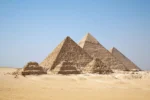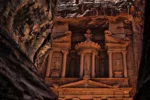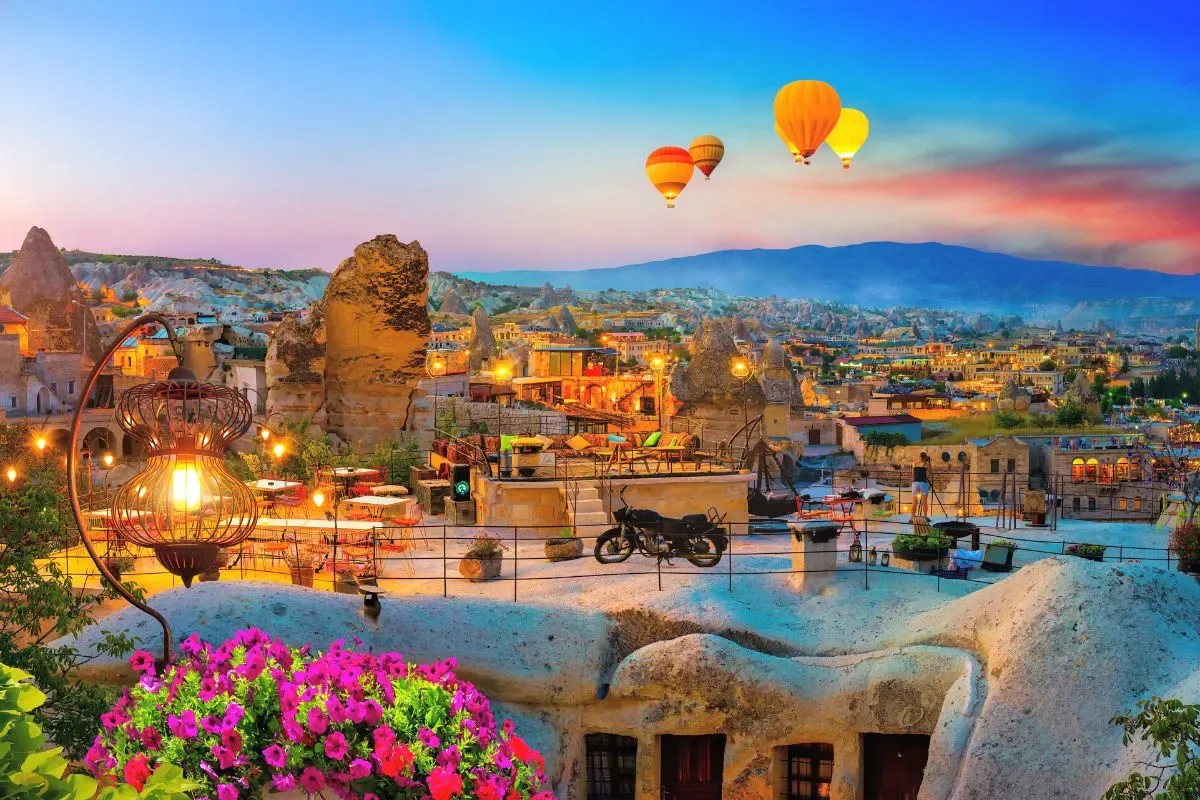
Turkey rewards travellers who plan by geography, not by wish list. The famous sights are not clustered: Istanbul sits in the north-west between two continents, Cappadocia is a high central plateau, Ephesus an ancient city on the Aegean coast, Pamukkale’s white terraces inland from it. Skip the route planning and a first trip becomes a series of airports and bus stations. Plan it — and accept what you are leaving for a second visit — and the same days hold a Byzantine and Ottoman capital, cave churches and fairy chimneys, a marble Roman city, and terraces that have drawn visitors for two thousand years.
This guide is editorial, not a sales page. Nothing here is bundled into a tour. It covers how the classic route fits together, when each region peaks, how to move between bases without burning days, and the two traps that catch the most first-timers: unofficial visa websites, and a museum pass that does not cover everything its name suggests.
At a Glance
| Question | Short answer |
|---|---|
| How long do I need? | 7 days for the classic route at a brisk pace; 10–14 days to do it comfortably and add the coast |
| What is the classic route? | Istanbul → Cappadocia → Ephesus → Pamukkale, with Antalya as an optional coastal finish |
| When should I go? | April–May and September–October for most regions; see the zone-by-zone table below |
| How do I travel between bases? | Flights for the long legs; buses and selected trains regionally |
| Do I need a visa? | Nationality-dependent — many visitors are exempt, others need an e-Visa from the official portal only |
| What is the one planning rule? | Fewer bases, more nights in each — two nights minimum anywhere you want to actually see |
Turkey in Brief: Why the Route Matters
Turkey — officially Türkiye — bridges Europe and Asia, and its history is layered the same way: Greek and Roman cities on the Aegean, Byzantine Constantinople, Seljuk Anatolia, and the Ottoman capital that became Istanbul. UNESCO lists 22 World Heritage properties here — 20 cultural, two mixed — and the classic route takes in several of the greatest: the Historic Areas of Istanbul, Göreme National Park, Hierapolis-Pamukkale, and Ephesus.
That density is the opportunity and the problem. Istanbul alone justifies three or four days. Cappadocia needs two full days, and its balloons depend on that morning’s weather, not your booking confirmation. Ephesus deserves a day’s cool ends, not a photo stop. Respect those minimums and the trip feels rich, not rushed — and still leaves the coast, the Black Sea and the east for next time.
Where to Go on a First Trip
Istanbul: Give It Three to Four Days
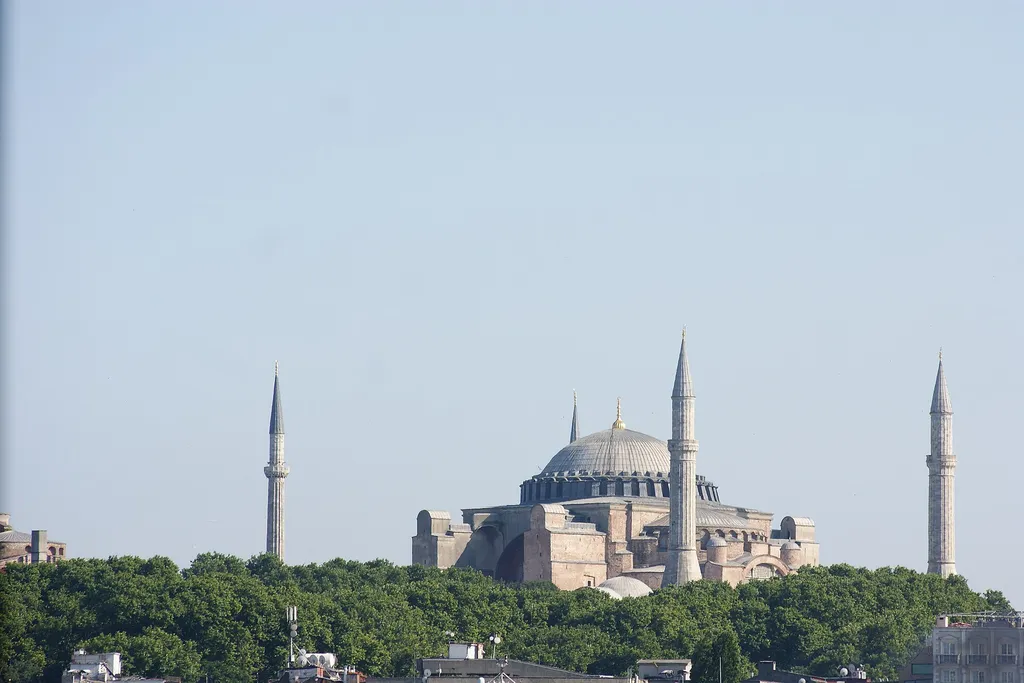
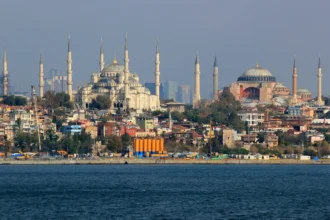
Hagia Sophia, Istanbul. Photo: CherryX, via Wikimedia Commons (CC BY-SA).
Start in Istanbul: it is the usual gateway, and nothing else prepares you for it. Sultanahmet concentrates the famous sights — Hagia Sophia, the Blue Mosque, Topkapı Palace, the Basilica Cistern and the Grand Bazaar, all walkable from each other. Three full days is the minimum: one for that core, one for the bazaars and a Bosphorus ferry, one for a neighbourhood — Karaköy, Galata, or Kadıköy across the water. A fourth day buys the Princes’ Islands, or simply slack, which Istanbul rewards.
Order your days around prayer times at active religious sites, and check Hagia Sophia’s current visitor arrangements before you go — its access and ticketing have changed in recent years. Where any fact in this guide can change, we point you to where to verify it instead of printing a figure that may mislead you by spring.
Cappadocia: Two Days Minimum, Three Is Better
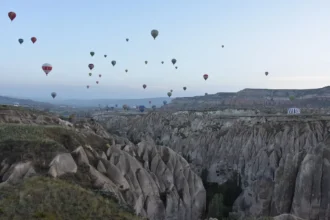
Cappadocia, a central Anatolian plateau at roughly 1,000 metres, is eroded volcanic rock: fairy chimneys, cave dwellings and churches cut into stone, protected as Göreme National Park, a UNESCO site since 1985. Base in Göreme without a car — tours, restaurants and the Open-Air Museum are close — or in quieter, higher Üçhisar beneath its rock castle.
Two full days covers the core: the Open-Air Museum and a valley walk, then one underground city — Derinkuyu or Kaymaklı — with a second valley. Want the balloon? Put it on your first morning, not your last: flights cancel in poor weather, and a first attempt leaves a second chance. No seat is ever guaranteed, whatever a seller says.
Fly to Kayseri (ASR, more flights) or Nevşehir (NAV, closer). Transfers take roughly 40 to 75 minutes — pre-book one before you land.
Ephesus: A Full Day, Based in Selçuk or Kuşadası
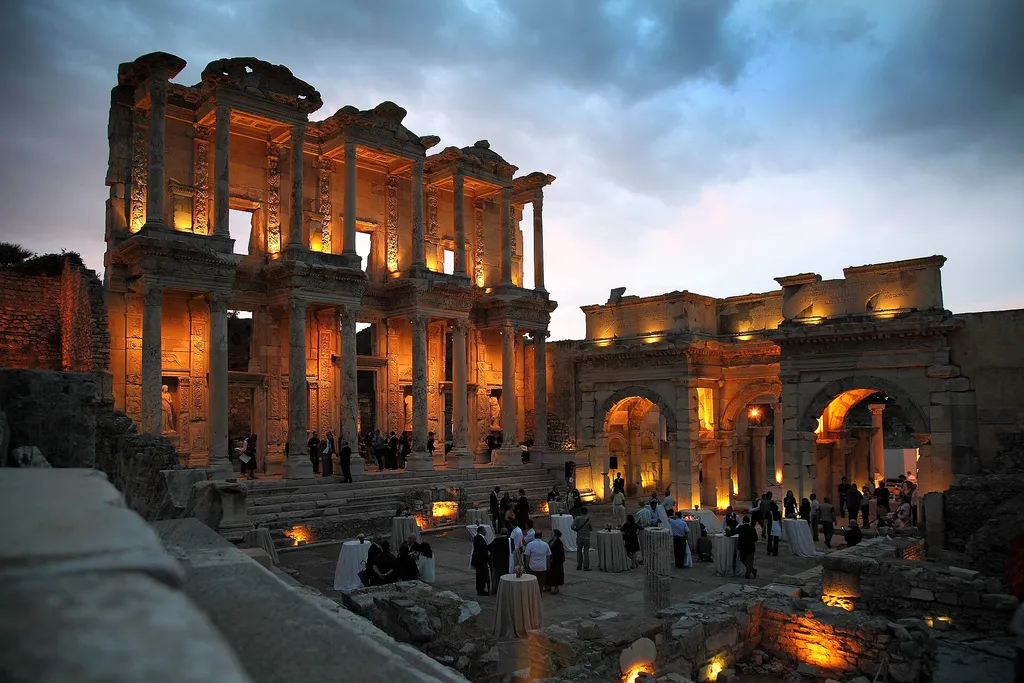
Ephesus, near Selçuk on the Aegean coast and a UNESCO site since 2015, is among the best-preserved classical cities in the Mediterranean: the Library of Celsus, the Great Theatre, marble streets, and terraced houses showing how wealthy Romans actually lived. Give it a full day. Arrive early or stay late to dodge the heat and the thickest crowds, and stop at the Ephesus Museum in Selçuk for the objects taken from the site itself.
Sleep in Selçuk to walk to the ruins from a small Turkish town, or in Kuşadası for a beach and more evening choice. What does not work is basing far away and spending your Ephesus day in transit.
Pamukkale and Hierapolis: One Night Is Enough for Most
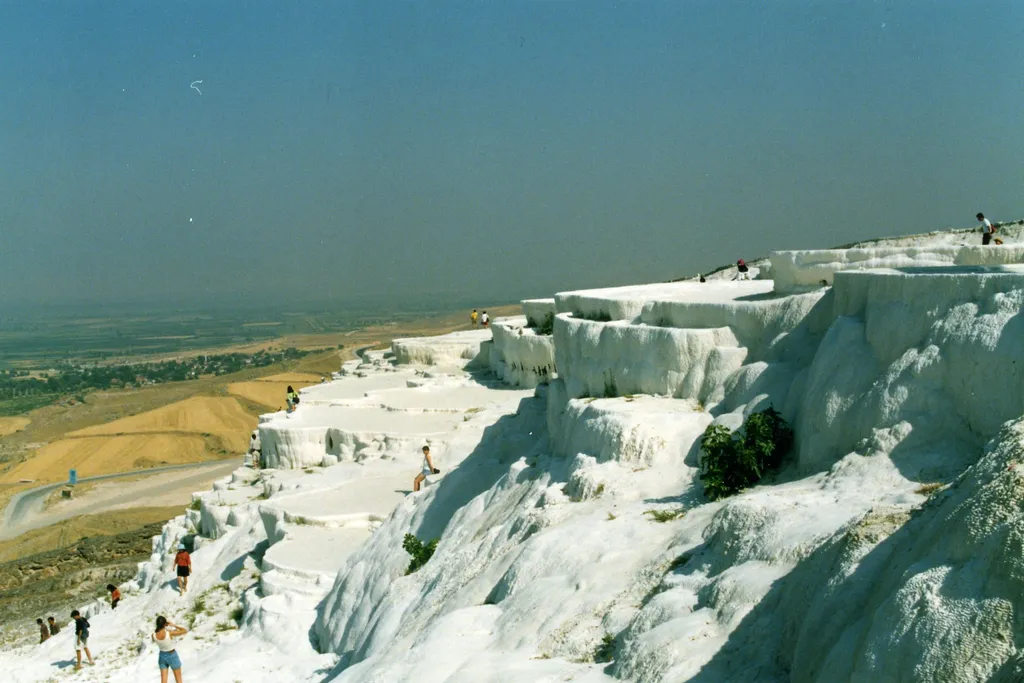
Pamukkale’s travertine terraces. Photo: Traroth, via Wikimedia Commons (CC BY-SA 3.0).
Pamukkale’s white travertine terraces sit below Hierapolis, the ancient spa city — together a UNESCO site since 1988. One night in the village or nearby Denizli is enough for most: the terraces in early morning or late afternoon light, plus Hierapolis’s theatre, necropolis and museum. Ephesus is a few hours away by road or rail, which is why the two pair so neatly at the end of the route.
Antalya: The Optional Coastal Finish
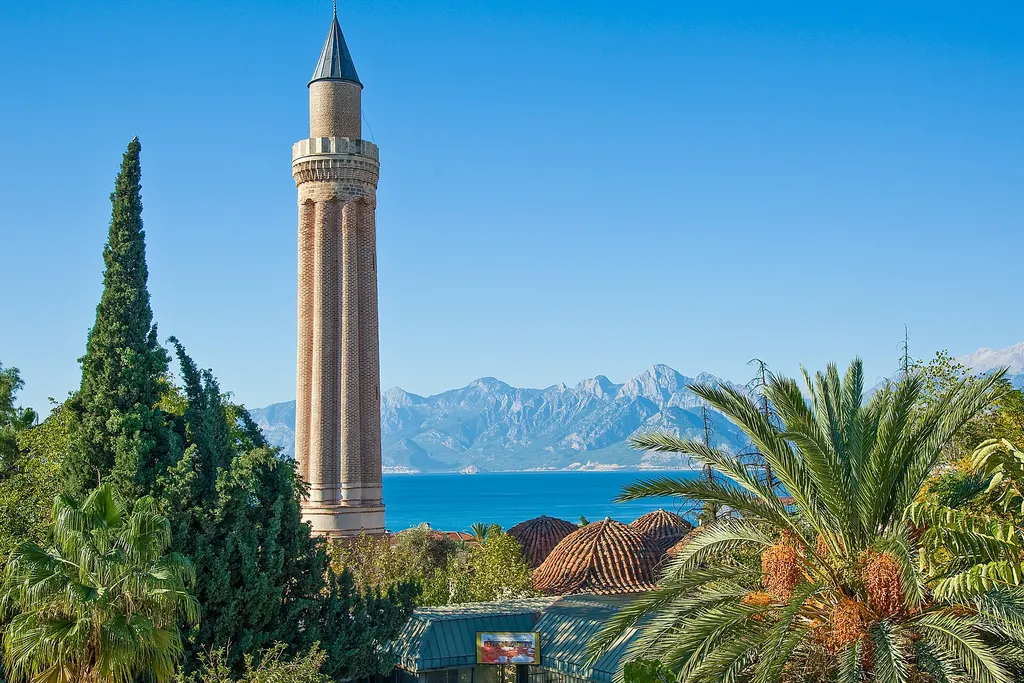
The Yivli Minaret in Kaleiçi, Antalya. Photo: Saffron Blaze, via Wikimedia Commons (CC BY).
With ten days or more, Antalya is the natural extension — Kaleiçi old town, Roman remains at nearby Perge and Aspendos, Riviera beaches, and an airport that saves backtracking to Istanbul. With only seven days, be honest: adding it usually means stealing a night from somewhere that needed it more.
Best Time to Visit: Three Climate Zones, Not One
The commonest planning mistake is asking for a single “best month”. Turkey has three climate zones for a first-timer, peaking at different times: coastal, changeable Istanbul; Cappadocia’s continental plateau, cold in winter, warm and dry in summer; and the Aegean and Mediterranean coasts, hot in summer, mild in winter. April to May and September to October suit the widest range of trips. Treat the table as a frame, and check forecasts before you travel rather than trusting any guide’s averages.
| Period | Istanbul | Cappadocia | Aegean & Mediterranean coasts |
|---|---|---|---|
| March–May | Mild, improving; good sightseeing weather | Cool to mild; good walking and ballooning season | Warming up; sea still cool early in the period |
| June–August | Warm to hot, busy | Hot and dry; start activities early | Peak beach season, hottest months |
| September–October | Mild, often the best city weeks of the year | Mild; harvest season, good ballooning conditions | Warm sea, easing crowds — excellent coastal weeks |
| November–February | Cold, grey, cheapest and quietest | Cold, possible snow; balloon cancellations more likely | Mild but wetter; many beach services reduced |
Two timing notes. Ramadan and the Bayram holidays shift by the lunar calendar each year and affect domestic travel demand and opening arrangements — check your travel year’s dates before fixing an itinerary. And winter is no write-off: Istanbul’s museums are quieter and cheaper, Cappadocia under snow is striking. Just trade those gains knowingly against short days and unreliable balloons.
Two Routes That Actually Work
The 7-Day Route: Three Bases, No Heroics
Fly into Istanbul and stay put for three nights. Day one runs slower than you expect — jet lag, new currency, a tram system to work out — so keep it to Sultanahmet on foot. Day two: the bazaars, then a Bosphorus ferry. The ferry is not a tour; it is how the city commutes, and the skyline from the water explains Istanbul better than any viewing platform. Day three is flexible: Topkapı in the morning, then a neighbourhood, not another monument queue.
On day four, fly to Cappadocia — Kayseri if the times suit, Nevşehir if they don’t — and put the balloon attempt on your first morning, day five. That single decision rescues more trips than any other in this guide.
Days six and seven belong to the Aegean. Base in Selçuk, walk Ephesus early on day six while the marble is still cool, and take Pamukkale on day seven as a long day trip or a final overnight before flying out via İzmir. A full week, not a relaxing one — but nothing important is dropped, and you change hotels only twice.
The 10–14 Day Route: Same Spine, Breathing Room
With ten days, add back the nights you stole: a fourth in Istanbul, a third in Cappadocia, and two closing nights in Antalya — Kaleiçi’s lanes at dusk, a swim next morning, a flight out with no backtracking. With two weeks, the coast opens properly: Bodrum or Fethiye for sailing, or a slow inland loop. What not to do with extra days is add a base a night. Turkey punishes that. Every transfer costs half a day, whatever the map says.
Getting Around
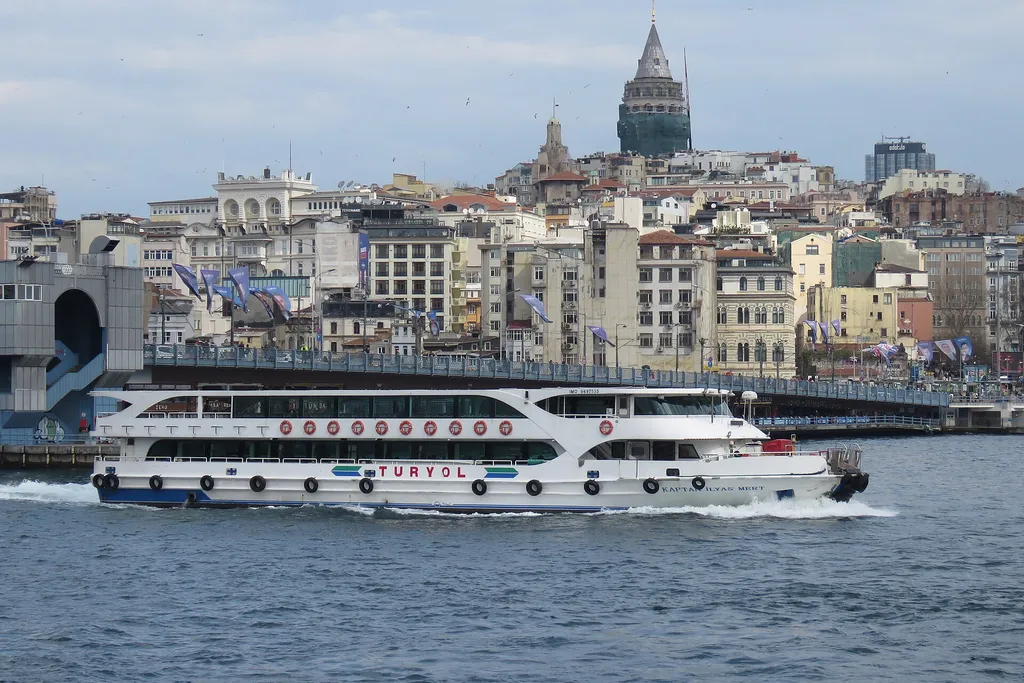
A ferry on the Golden Horn, Istanbul. Photo: Calistemon, via Wikimedia Commons (CC BY-SA 4.0).
Domestic flights are the backbone: Istanbul–Kayseri, Istanbul–İzmir, Antalya–Istanbul are long by road, short by air, and flying buys sightseeing days. Book the onward transfer in the same sitting — Cappadocia and Pamukkale are poor places to improvise a midnight arrival.
Regionally, the picture flips. Intercity buses are genuinely good, and Ephesus to Pamukkale by bus often beats flying once airport time is counted. Trains earn their place too: TCDD high-speed services on corridors such as Istanbul–Ankara and Istanbul–Konya, and a slow regional line from Selçuk to Denizli, near Pamukkale. Check TCDD Taşımacılık timetables before building a day around a departure — one missed connection unravels a tight route.
Inside Istanbul, get an Istanbulkart and use trams, metro and ferries as locals do. Sultanahmet is walkable; almost nothing else quite is. Taxis are fine with the meter on — insist, calmly, before the car moves.
Where to Stay
Stay for the mornings, not the lobby. In Istanbul, Sultanahmet suits first-timers who want the big sights on foot and early nights; Beyoğlu, around Galata and Karaköy, suits anyone who wants the later city at the door. Kadıköy, on the Asian side, is where Istanbulites actually live — livelier in a local way, and a ferry ride from the monuments, which some travellers love and some quietly resent by day four. Be honest about which you are.
In Cappadocia, cave hotels are cut into the rock you came to see; a cave room stays cool and dark — blissful, unless you are a light sleeper who likes waking with the dawn. In Selçuk, small family pensions are the norm, and often the pleasure. On the coast, decide between a resort you never leave and a town you can wander. Both are legitimate holidays. They are not the same one.
What to Eat
Breakfast is the meal Turkey refuses to rush: eggs, cheeses, olives, tomatoes, honey, warm bread, and tea that keeps arriving. Give it a slow morning, twice at least. Then eat regionally. Istanbul is a fish city as much as a kebab city — a balık ekmek, grilled fish in bread by the Galata Bridge, tastes of the place. Cappadocia’s signature is testi kebabı, meat slow-cooked in a clay pot cracked open at your table. On the Aegean, olive oil runs the kitchen: stuffed vegetables, wild greens, artichokes. In between: simit from a street cart, tea in a tulip glass, baklava in small quantities, often. It is richer than it looks.
Vegetarians eat well here — lentil soup (mercimek çorbası), imam bayıldı, gözleme and meze spreads carry many travellers through a fortnight. For dietary needs beyond preference, learn the Turkish phrase before you go; in a small-town restaurant it will do more work than any app.
Costs: What Shapes the Bill
We do not print a daily budget figure, deliberately: prices move, exchange rates move faster, and any number from a guide would mislead you by spring. The shape of the spending stays true. Istanbul is the expensive base, especially near Sultanahmet. A balloon is likely the largest single activity cost, and cave hotels charge for the view. Entrances add up on a monument-dense route — where the Museum Pass becomes real money, not admin. Food is the forgiving line: away from the touristed streets, eating well is still comparatively affordable. Cut costs with shoulder months, regional buses, two bases instead of four. Splurge on location in Istanbul, a terrace in Cappadocia, and time — an extra night always beats an extra sight.
The Museum Pass: Read the Small Print
The Museum Pass, sold through the Ministry of Culture and Tourism’s portal, muze.gov.tr, sounds like a simple answer and isn’t. In current arrangements the passes cover Ministry-run museums; several sights first-timers assume are included sit under separate ticketing — Hagia Sophia’s main visit, the Basilica Cistern, and National Palaces properties such as Dolmabahçe among them. Coverage changes, so treat any list — this one included — as a prompt to check muze.gov.tr, not the final word. Do the arithmetic first: list the Ministry sites genuinely on your route, compare their entry cost with the pass, then decide. Travellers combining Ephesus, Göreme and several Ministry museums in a short window often come out ahead. Travellers whose Istanbul days are mosques, bazaars and ferries often don’t.
Visa and Practical Essentials
Start here, and only here: the official e-Visa portal is evisa.gov.tr, run by Türkiye’s Ministry of Foreign Affairs. Search results are crowded with lookalike sites charging extra for the same application — some rank above the real one. If the address is not evisa.gov.tr, close the tab.
Whether you need it at all depends on your nationality. Many — including, in current arrangements, visitors from the UK, the USA, Canada and much of Europe — are exempt for short tourist stays. Others need an e-Visa before travel, and a subset qualifies only for a conditional e-Visa, typically requiring a valid visa or residence permit from a Schengen country, the USA, the UK or Ireland. Rules change by passport, so do not plan from this paragraph: enter your nationality on evisa.gov.tr well before departure and follow what it tells you. There is no reliable “sort it at the airport” fallback.
Two points survive rule changes. Your passport must stay valid well beyond your stay — the Ministry recommends six months — so renew early rather than argue at a border. And take out travel insurance: big-city medical care is good, but it is not free for visitors.
Culture, Etiquette and Small Things That Help
Turkey is famously hospitable, and the etiquette asked in return is modest. In mosques, cover shoulders and legs — women cover their hair — remove shoes where indicated, and keep visits brief and quiet at prayer times. Haggling belongs in the bazaars, where it is enjoyed; not in a neighbourhood bakery. A few words open doors: merhaba (hello), teşekkür ederim (thank you), lütfen (please). Tea will be offered constantly. Accepting the first glass is rarely a mistake.
Beyond the Classic Route
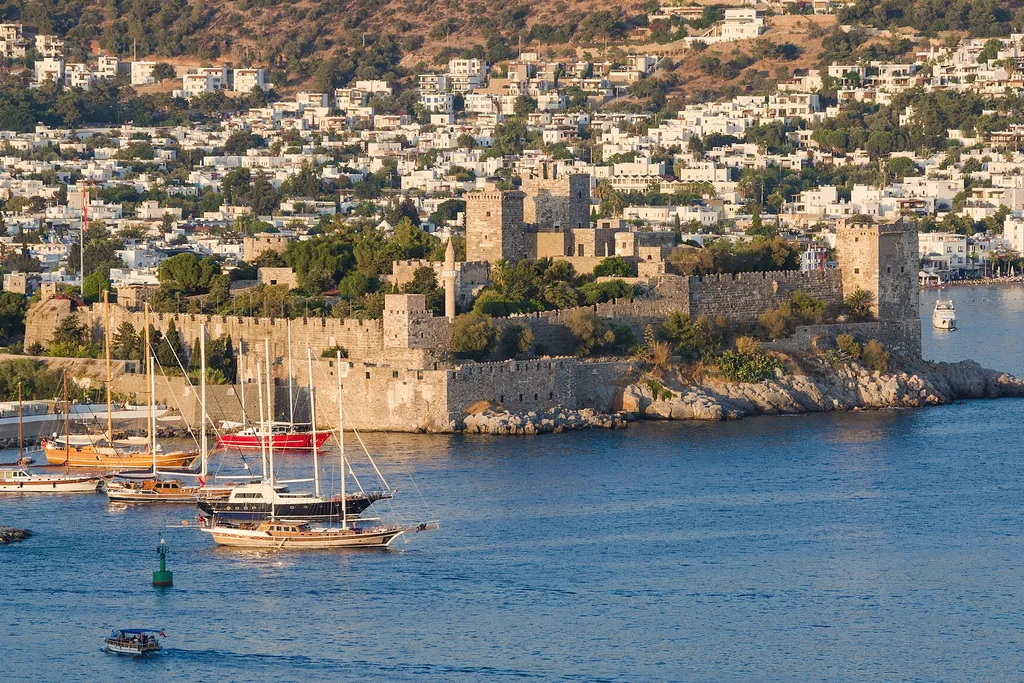
Bodrum Castle above the harbour. Photo: Serhio Magpie, via Wikimedia Commons (CC BY 4.0).
Already done Istanbul, or building a second trip? Two guides already live on this site from beyond the classic map. Kayseri — Cappadocia’s gateway, with Seljuk monuments and a serious food culture of its own — is covered in our guide to things to do in Kayseri. Further south, Mersin and nearby Tarsus make an unhurried Mediterranean detour; start with the top places to visit in Mersin. Neither belongs on a seven-day first trip. Both are exactly right for a longer one.
Frequently Asked Questions
How many days do I need for Turkey?
Seven days is the working minimum for the classic route, and ten to fourteen is better. Fewer usually means dropping Cappadocia or the Aegean — a reasonable choice if you make it deliberately, not at the airport.
Is Turkey safe for tourists?
The classic route runs through established tourist regions. Check your government’s current travel advice before departure, keep valuables sensible in crowded bazaars and on trams, and settle taxi terms — meter on — before moving. Advice changes; official advisories, not articles, are the source to trust.
Should I book a Cappadocia balloon in advance?
Book early — seats sell out in season — but know what you bought: a place on the first morning the weather allows, not a guarantee. Attempt it on your first morning so a cancellation leaves a second chance.
Do I need cash, or do cards work?
Cards work widely in cities, hotels and larger restaurants. Carry lira for markets, small cafés, taxis, tips and rural stops, and exchange in cities rather than at airports.
Can I drink the tap water?
Most visitors drink bottled water — cheap, everywhere — and use tap water for brushing teeth in the main cities. Sensitive stomach? Bottled throughout, simple as that.
What should I pack for a trip across all three zones?
Layers, and one genuinely warm one. Cappadocia cools at night even in summer, and a dawn balloon launch is cold; Istanbul can swing from t-shirt weather to rain in a day. Comfortable closed shoes beat smart ones — marble, cobbles and dusty valley paths, all in one week.
Plan Your Next Step
Decide dates against the climate table, fix the route before the hotels, and check your visa position on the official portal today. To go deeper, use Go Türkiye and the UNESCO listing for Türkiye, which records all 22 World Heritage properties.