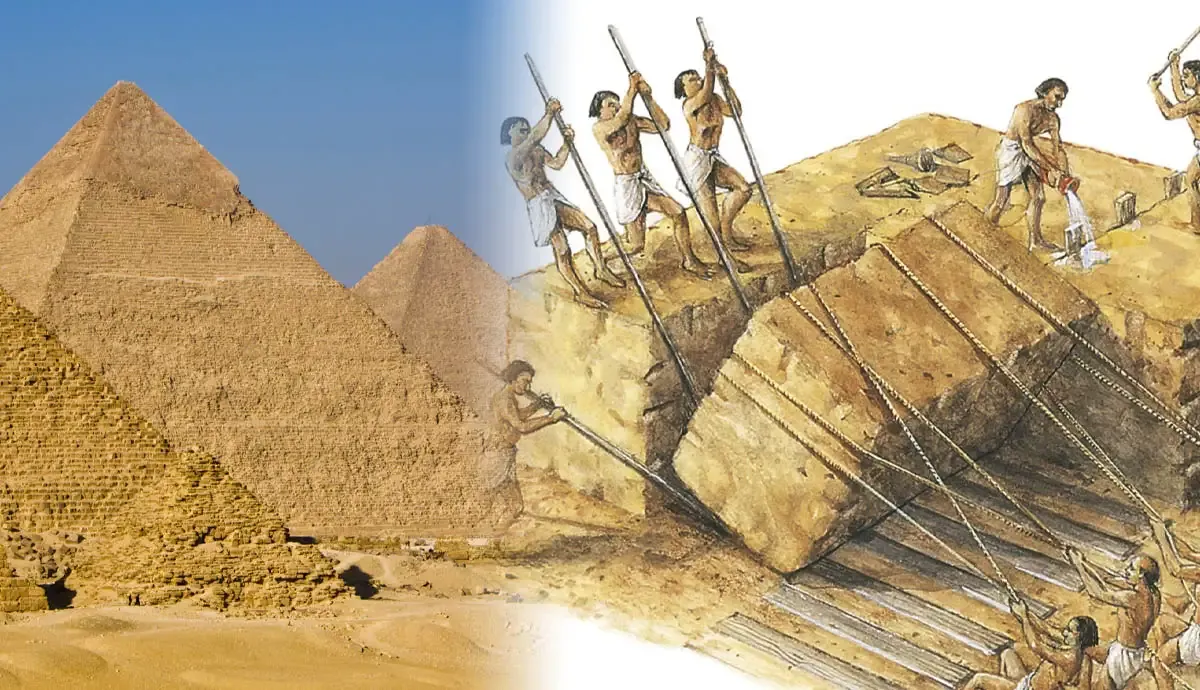
Egypt’s pyramids are fascinating not because they are all the same, but because they show an invention in progress. At Saqqara, builders stacked stone for the first time. At Dahshur, they corrected a dangerous angle. At Giza, they built at a scale never repeated. Visiting those three sites in order turns a famous photo stop into a clear story.
This guide covers twelve pyramids and pyramid sites worth knowing, grouped by what each one teaches you. Dates below are approximate, as Egyptologists give ranges for Old Kingdom reigns. Check the official site before visiting for current access, because some interiors close for conservation.
At a Glance
| Site | Period | Why it matters |
|---|---|---|
| Step Pyramid, Saqqara | Third Dynasty, c. 2670 BC | Oldest stone pyramid in Egypt |
| Bent Pyramid, Dahshur | Fourth Dynasty, c. 2600 BC | Angle corrected mid-build |
| Red Pyramid, Dahshur | Fourth Dynasty, c. 2590 BC | First successful true pyramid |
| Great Pyramid, Giza | Fourth Dynasty, c. 2560 BC | Largest pyramid ever built |
| Pyramid of Khafre, Giza | Fourth Dynasty | Second largest, with Sphinx complex |
| Pyramid of Menkaure, Giza | Fourth Dynasty | Smallest of the three main Giza pyramids |
How the Pyramid Was Invented
Early Egyptian royal tombs were mastabas: flat-topped, rectangular structures. At Saqqara, builders stacked mastabas into steps, creating the Step Pyramid. Later, Sneferu’s builders at Dahshur tried smooth sides, met structural problems, corrected them, and finally succeeded. Only then could Khufu’s builders attempt Giza at full scale. That sequence — invention, failure, correction, perfection — is the real fascination of the pyramids.
1. Step Pyramid of Djoser, Saqqara
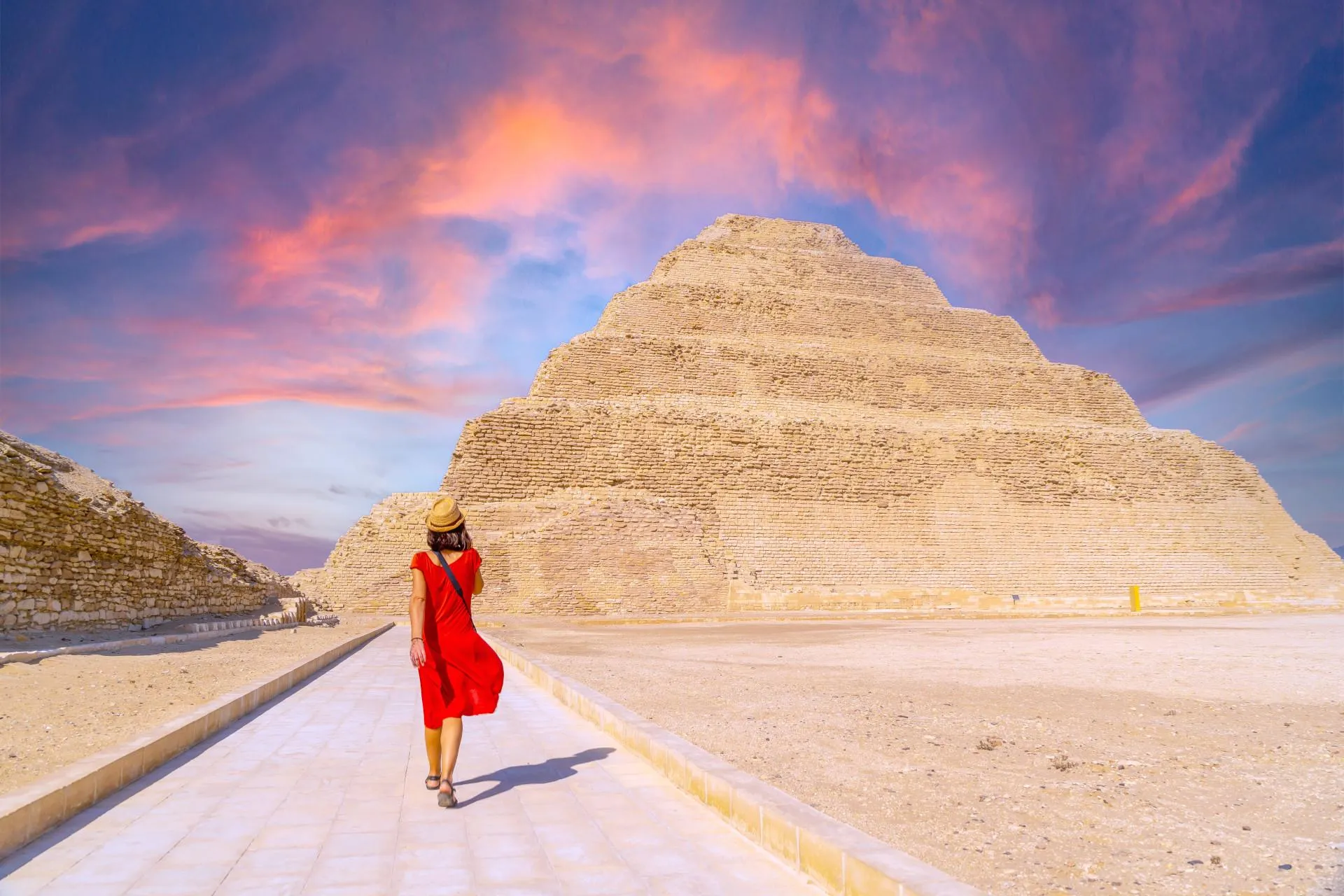
Built for Pharaoh Djoser around 2670 BC, the Step Pyramid is the oldest stone pyramid in Egypt and the centre of a large funerary complex at Saqqara, about 30 km south of Cairo. Its six steps mark the move from mastaba tombs to pyramids, and the surrounding courtyards, colonnades and chapels show how a royal burial became a whole sacred landscape.
2. Pyramid of Unas, Saqqara
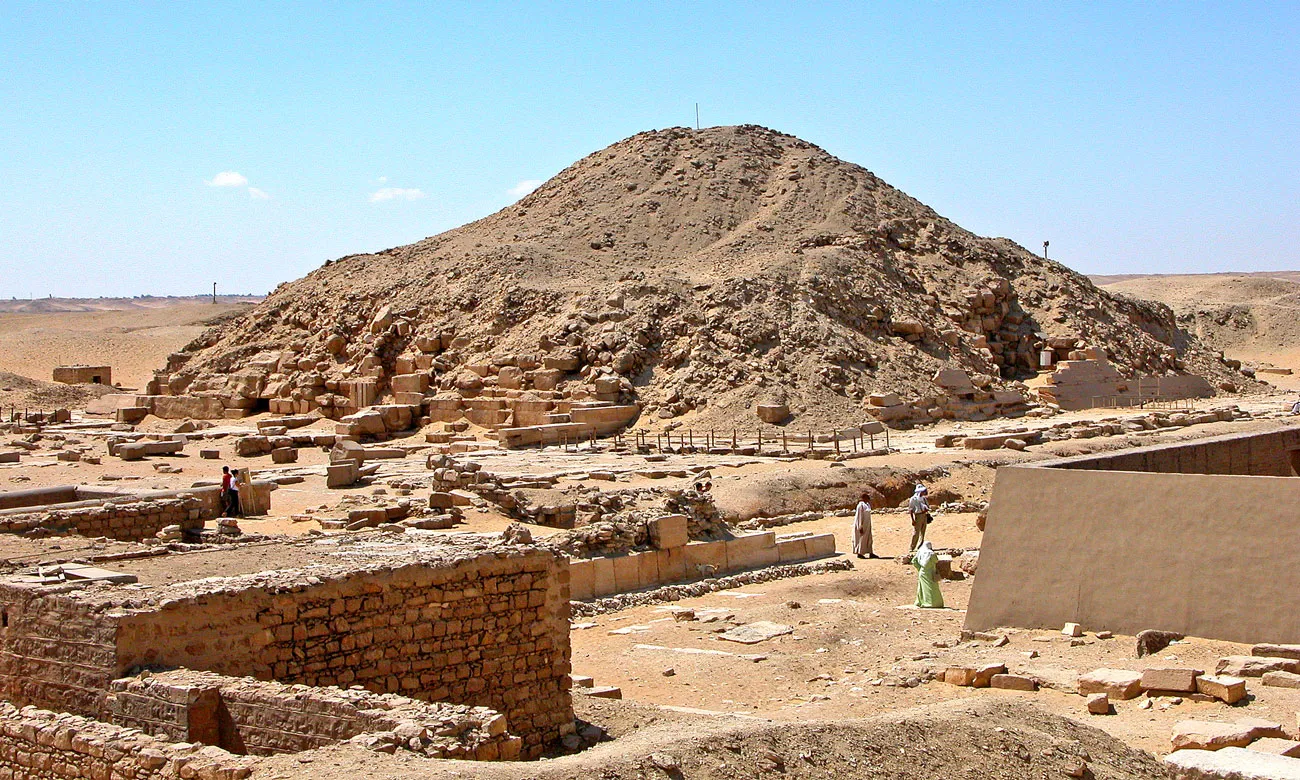
Unas, a Fifth Dynasty king, built a smaller pyramid at Saqqara, but its interior is famous for the Pyramid Texts — early religious inscriptions that later influenced Egyptian funerary literature. It is a reminder that pyramids were not empty monuments; their chambers carried texts meant to guide the king in the afterlife.
3. Meidum Pyramid
Meidum, about 100 km south of Cairo, shows the risk in Sneferu’s early experiment. Its outer casing partly collapsed, leaving a tower-like core. It is less visited than Giza or Saqqara, but it explains why Dahshur’s builders changed their approach.
4. Bent Pyramid, Dahshur
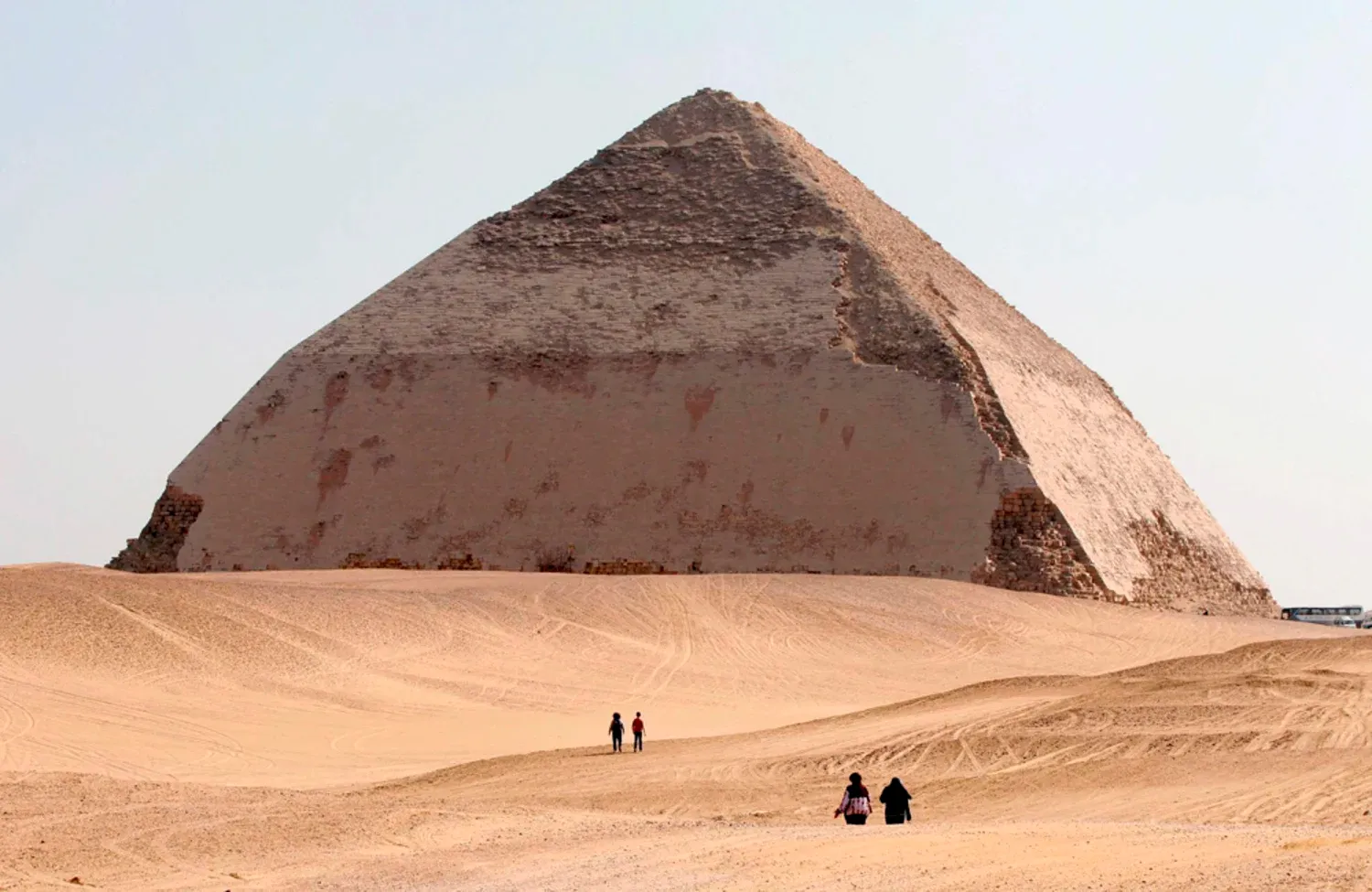
Sneferu’s Bent Pyramid, around 2600 BC, changes slope about halfway up, from a steeper lower angle to a shallower upper angle. Builders encountered structural stress and an unstable foundation, so they reduced the angle to finish safely. The bend is not a design choice made at the start; it is evidence of a mid-build correction.
5. Red Pyramid, Dahshur
Also built by Sneferu, the Red Pyramid is the first successful true, smooth-sided pyramid. Its reddish limestone gives it its name, and its interior chambers are among the most accessible pyramid interiors in Egypt. Dahshur is quieter than Giza, which makes it a good second stop for visitors who want space to look closely.
6. Great Pyramid of Khufu, Giza
Khufu’s pyramid, built around 2560 BC, is the largest Egyptian pyramid and the only surviving Wonder of the Ancient World. It originally stood about 146.5 metres tall and contains roughly 2.3 million stone blocks. It was the tallest human-made structure for nearly 4,000 years. Inside, the passage is narrow and steep, and entry needs a separate ticket.
7. Pyramid of Khafre, Giza

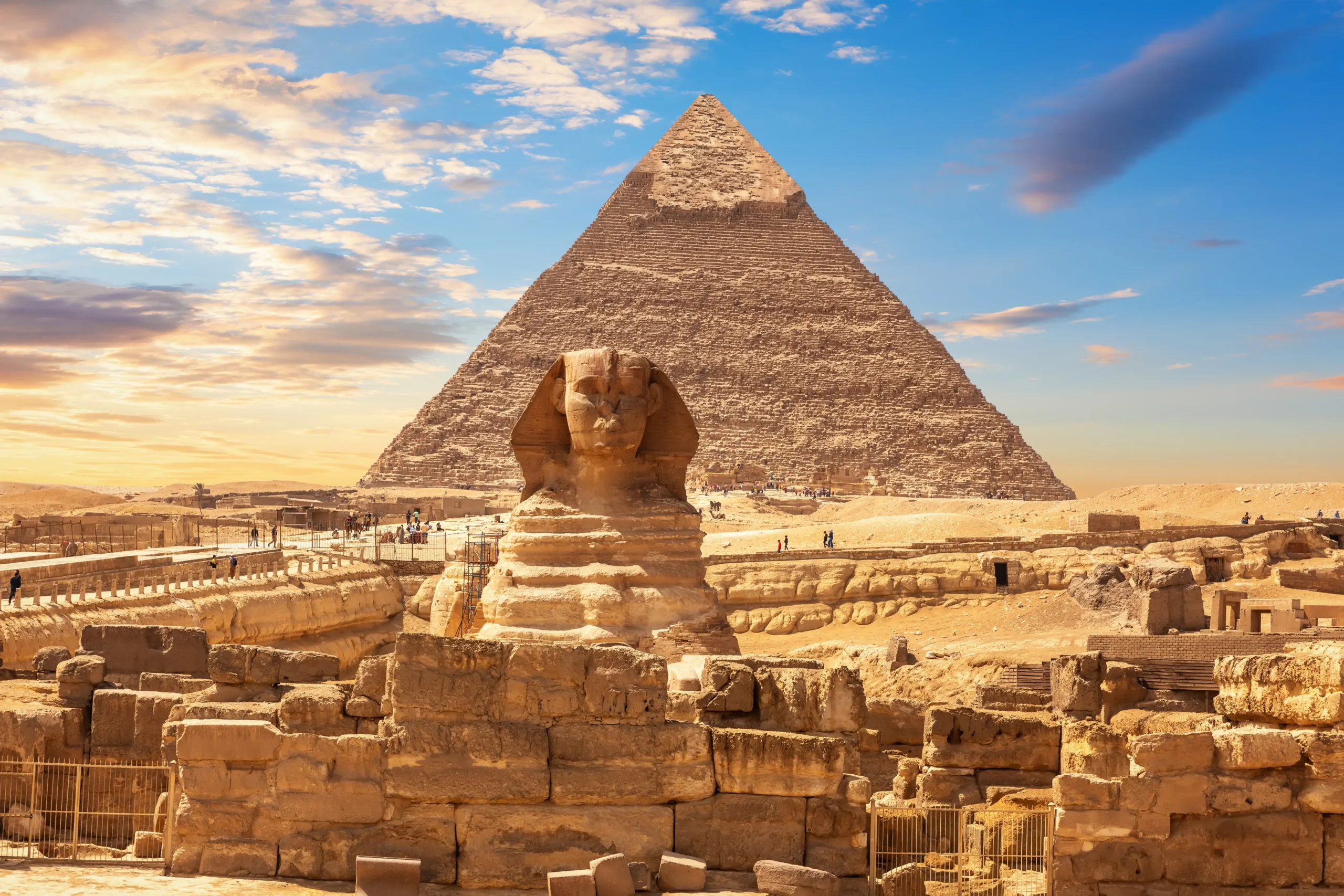
Khafre’s pyramid looks taller than Khufu’s from some angles because it stands on higher ground, but it is slightly smaller. Its complex includes the Great Sphinx and the Valley Temple, where the best Sphinx photographs are taken. The Sphinx, carved from bedrock, remains one of Egypt’s most debated monuments.
8. Pyramid of Menkaure, Giza
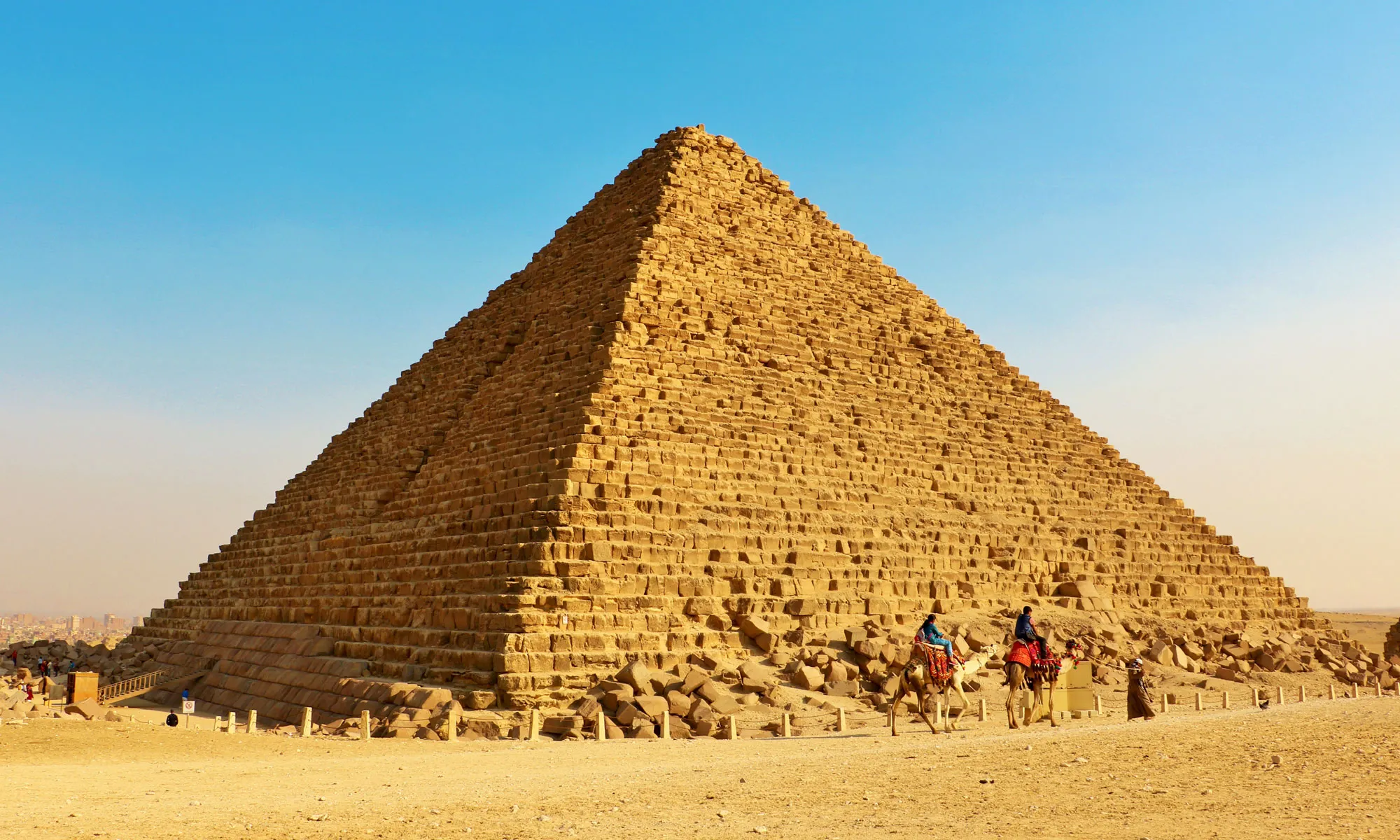
Menkaure’s pyramid is the smallest of Giza’s three main pyramids, but its complex includes three smaller queens’ pyramids and a valley temple. Its size shows a shift in Fourth Dynasty priorities, as later kings built smaller pyramids with more elaborate temples.
9. Pyramids of Abusir: Sahure, Neferirkare and Niuserre
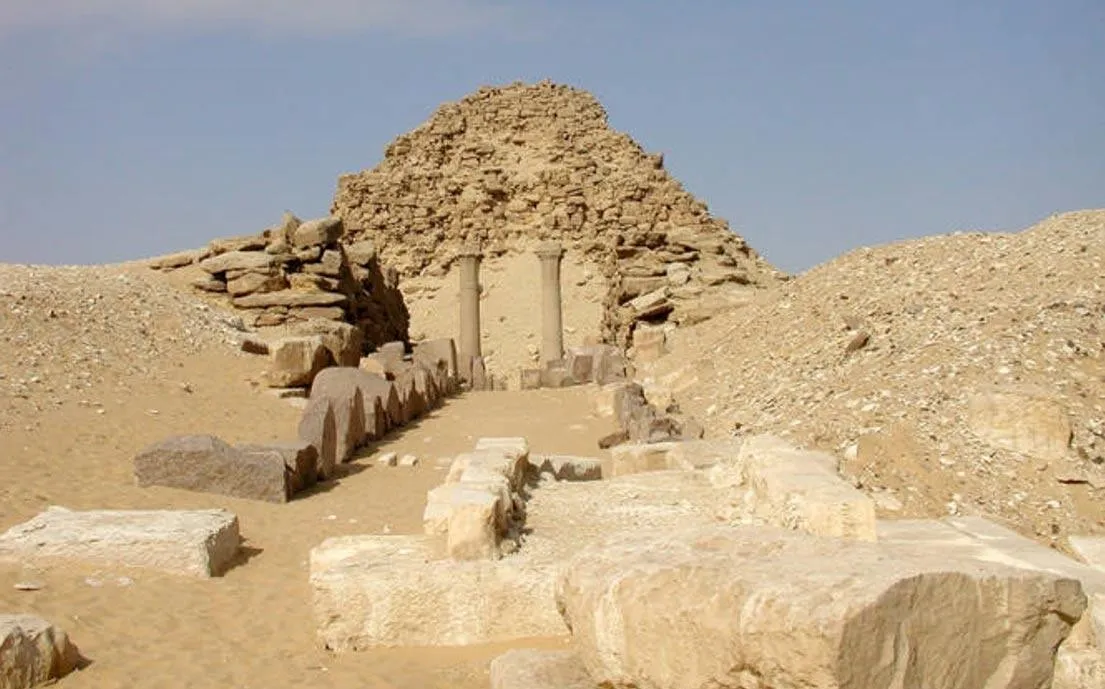
Between Giza and Saqqara, Abusir holds Fifth Dynasty pyramids, including those of Sahure, Neferirkare and Niuserre, from roughly 2500–2350 BC. They are less complete than Giza’s, but they are quieter and show how pyramid building continued after the Fourth Dynasty peak, alongside sun temples.
10. Pyramid of Userkaf and Later Saqqara Pyramids
Saqqara remained in use for centuries, with Fifth and Sixth Dynasty pyramids and rich mastaba tombs around them. Walking Saqqara after Giza helps you see the necropolis as a long-used cemetery, not a single building project.
11. Lahun Pyramid of Senusret II
In the Fayoum region, the Middle Kingdom pyramid of Senusret II at Lahun, from around 1850 BC, uses mud-brick construction rather than Giza’s stone blocks. It shows how pyramid building changed over a thousand years, as materials, scale and royal priorities shifted.
12. Hawara Pyramid of Amenemhat III
Also Middle Kingdom, Amenemhat III’s pyramid at Hawara is known for its mortuary temple, called the Labyrinth by ancient writers for its many rooms. It is a useful final stop for visitors who want the full timeline, from Djoser’s steps to the later, more complex temple-pyramid combinations.
Practical Plan: Giza, Saqqara and Dahshur
| Day | Plan |
|---|---|
| Day 1 | Giza Plateau in the morning, Grand Egyptian Museum in the afternoon |
| Day 2 | Saqqara in the morning, Dahshur in the afternoon — the invention-to-perfection sequence |
Note on myths: archaeological evidence points to an organised workforce of Egyptian citizens, not slaves, and to human engineering with Bronze Age technology, not any non-human explanation. Worker settlements, food rations and burials support that picture.
Conclusion
The most fascinating pyramids are not only the biggest ones. Djoser’s steps, Sneferu’s bent and red experiments, and Khufu’s vast scale together tell a complete story of trial, correction and ambition. See them in that order, and Giza stops being just a photograph — it becomes the end of a 500-year learning curve.
FAQs
Which pyramid is the oldest in Egypt?
The Step Pyramid of Djoser at Saqqara, from around 2670 BC, is the oldest stone pyramid in Egypt.
Which pyramid is the largest?
The Great Pyramid of Khufu at Giza, originally about 146.5 metres tall, is the largest Egyptian pyramid.
Why is the Bent Pyramid bent?
Builders changed the slope partway up because of structural stress and foundation problems, giving it its distinctive bent shape.
Can you enter the Red Pyramid?
Access varies by conservation and season. Check the official site before visiting for current interior access.
Were pyramids built by slaves?
Archaeological evidence points to an organised, paid workforce of Egyptian citizens, with worker settlements, medical care and burials.
Is Giza part of a UNESCO site?
Yes. Giza forms part of the Memphis and its Necropolis UNESCO World Heritage Site, inscribed in 1979, which also includes Saqqara and Dahshur.
Related guides: Things to Do in Cairo, Best Places in Cairo, Best Cities to Visit in Egypt, Oldest Temples in Egypt. Further reading: Egyptian Pyramids Guide, Giza Pyramid Complex.