10 Best Cities to Visit in Egypt: Cairo, Luxor & Aswan Guide
The best city in Egypt depends on what you want from the trip, and that is why a ranked list of cities is more useful than a single “best” answer. Cairo gives you pyramids and museums on a scale no other Egyptian city can match, Luxor gives you temples and tombs packed into one compact area, Aswan gives you the Nile at its calmest and most scenic, Alexandria gives you a Mediterranean city with a different history and a different feel, and the Red Sea cities give you diving, snorkelling and beaches that belong to a completely different kind of holiday. This guide compares ten cities side by side — Cairo, Luxor, Aswan, Alexandria, Sharm El Sheikh, Hurghada, Dahab, the Abu Simbel area, Siwa Oasis and Port Said — so you can build a first trip that does not try to cover everything in a week, and so you can see honestly where each city shines and where it does not. Each city is treated in its own right below: its character, its highlights, who it suits best, and the practical visiting context that helps you decide how long to stay. The guide does not try to replace the deeper guides for individual places; where a city has its own detailed guide on this site, it links to it naturally, so the detail of temples, activities or hotels belongs there, while this guide keeps its focus on comparison and choice. That comparison matters, because Egypt rewards travellers who choose a few bases well and travel slowly between them, rather than travellers who rush through many cities and remember mostly the journeys. That choice also shapes the rest of your planning, because the city you start in determines your transport, your first hotel and the pace of your first days, so choosing deliberately matters more than simply following a list in order.
For a classic first trip, most travellers combine Cairo, Luxor and Aswan, often by Nile cruise between Luxor and Aswan, and that combination works because it follows the Nile and the main arc of ancient Egyptian history in a logical order. Cairo introduces the pyramids and the museums, Luxor deepens the story with temples and royal tombs, and Aswan slows the pace with Nile scenery, Nubian culture and the Philae Temple reached by boat. Add Alexandria or a Red Sea stay only if you have extra days, because each addition changes the character of the trip: Alexandria adds Mediterranean history and a coastal break, while Sharm El Sheikh, Hurghada or Dahab add diving and beach days that are best enjoyed at the end of a cultural itinerary rather than squeezed into its middle. A seven to ten day trip that links Cairo, Luxor and Aswan gives the classic story, and everything else is a well-chosen extension, not a replacement for that core. Check the official site before visiting for current tickets and hours, because prices and opening rules change, and confirm prices before booking hotels, cruises or guided visits, since seasonal rates and inclusions vary. The practical plan at the end of this guide sets out a classic route in days, so you can see how the three core cities fit together before you add an extension. That route also leaves room for the unplanned, because a classic itinerary should include an extra morning in Cairo for a market or a museum, an extra evening in Luxor for a floodlit temple, and an unhurried felucca afternoon in Aswan, rather than filling every hour in advance. That unplanned time is often what travellers remember most fondly afterwards.
At a Glance
| City | Best for | Suggested time |
|---|---|---|
| Cairo | Pyramids, museums, Islamic and Coptic Cairo | 3 days |
| Luxor | Temples, tombs, open-air museum | 2–3 days |
| Aswan | Nile scenery, Nubian culture, Philae | 2–3 days |
| Alexandria | Mediterranean history, seafood, libraries | 1–2 days |
| Sharm El Sheikh | Diving, Ras Mohammed, resorts | 3–5 days |
| Hurghada | Beaches, snorkelling, family resorts | 2–4 days |
| Dahab | Relaxed diving town, Blue Hole | 2–3 days |
| Abu Simbel area | Ramesses II temples, Lake Nasser | Day trip from Aswan |
| Siwa Oasis | Desert, salt lakes, Oracle Temple | 2–3 days |
| Port Said / Suez Canal towns | Quieter coastal stop, canal history | 1 day, if passing |
How Egypt’s Cities Fit Together
Egypt’s tourist map follows the Nile and the coasts, and understanding that geography is the quickest way to plan a sensible route. The Nile Valley — Cairo in the north, Luxor in the middle, Aswan in the south — holds most of the ancient sites, because the river was the country’s lifeline and its cities grew where water, farmland and transport met. The Mediterranean coast, led by Alexandria, holds Greco-Roman history and a different climate and culture, shaped by sea trade and by the city’s founding as a Hellenistic capital. The Red Sea coast holds coral reefs, dive sites and resort towns, from Sharm El Sheikh and Dahab in Sinai to Hurghada on the mainland coast, and those towns belong to a water-based holiday rather than a temple-based one. The Western Desert holds oases such as Siwa, reached by long desert roads and offering salt lakes, palm groves and a quieter, more remote Egypt. That geography explains why a Nile cruise works so well: it links Luxor and Aswan without repeated packing, letting you wake in a new place while the river does the travelling, while Cairo and Alexandria are better reached by road or rail, and while Siwa and the Red Sea towns each need their own dedicated journey rather than a quick detour. That river-and-coast pattern also explains why Egypt feels like several countries in one trip, because the green Nile Valley, the sea-facing Mediterranean coast, the coral Red Sea and the empty Western Desert each have their own climate, food, architecture and daily rhythm, and a good itinerary respects those differences instead of treating every city as interchangeable. That preparation also saves money and stress, because the right clothing and the right expectations for each leg avoid last-minute purchases.
The practical consequence of that geography is that you should group your cities, not scatter them. A Nile Valley group — Cairo, Luxor, Aswan, with Abu Simbel as a day trip from Aswan — makes one coherent journey, whether you travel by train, by road or by cruise between Luxor and Aswan. A Mediterranean group — Cairo plus Alexandria — makes another, because Alexandria is a straightforward addition after Cairo and gives a coastal break from temple-heavy days. A Red Sea group — Sharm El Sheikh, Dahab or Hurghada — makes a third, best placed at the end of a cultural trip as a relaxing final stop, because diving and beach days reward a slower pace after days of early starts at temples and tombs. Siwa and Port Said do not fit neatly into any of those groups, which is why this guide treats them as extensions: Siwa suits a return trip or a longer itinerary, because reaching it takes time, while Port Said suits a route that is already passing that way, rather than a detour that cuts days from Luxor or Aswan. For the wider geographic order, see our places to visit in Egypt guide, which covers the country as a route from Cairo to Aswan and beyond, while this guide keeps its focus on choosing between cities rather than repeating that route in full. That grouping also helps with transport and packing, because a Nile Valley leg needs comfortable walking shoes and sun protection for temples, a Red Sea leg needs swimwear and reef-safe habits, and a desert leg needs layers for cool evenings, so travelling in groups means you are prepared for each leg rather than carrying everything everywhere.
1. Cairo — Where Every Trip Begins
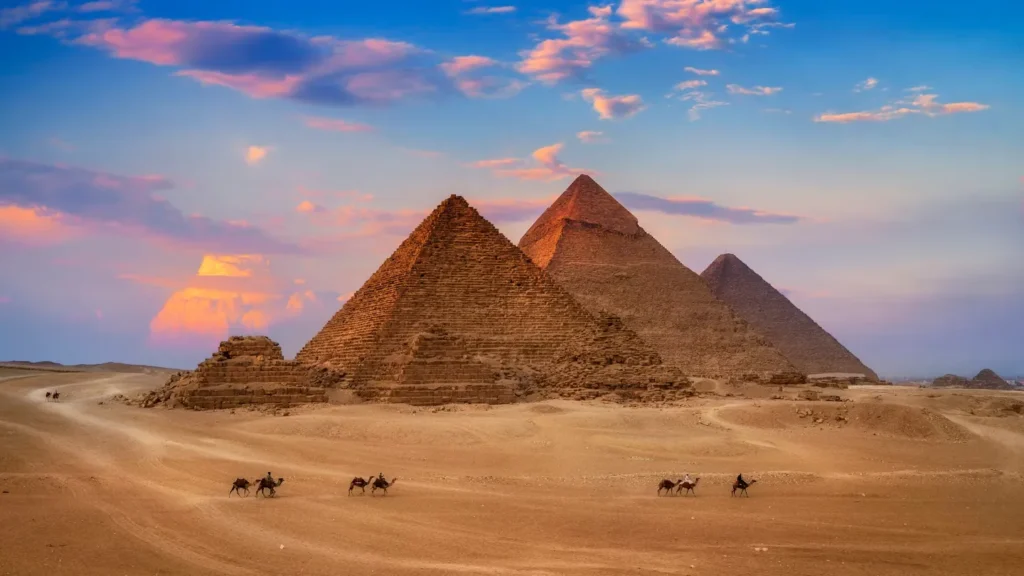
Cairo is chaotic, vast and essential, and no first trip to Egypt is complete without it, because the city holds the widest range of history in the shortest distance. The Pyramids of Giza and the Sphinx sit on the edge of the modern city, the Grand Egyptian Museum gathers the country’s greatest treasures under one roof, Islamic Cairo offers the Citadel and the lanes and markets of Khan el-Khalili, and Coptic Cairo offers churches that carry the story of Egypt’s Christian community. Give it at least two full days, and three if you want Saqqara as well, because Cairo rewards a slower pace: a pyramid morning, a museum afternoon and an old-city evening are three different experiences, and trying to compress them into a single day leaves you with photographs rather than memories. Cairo is the best starting point not only because it holds the famous sights, but because it sets the context for everything that follows: the Old Kingdom pyramids at Giza, the treasures in the museum, and the layered old city all explain why later cities such as Luxor and Aswan matter, and a traveller who starts in Cairo arrives in Luxor already able to read temples and tombs with more understanding. The city is also the country’s transport hub, with the widest choice of onward trains, flights and tours, which makes it the natural base from which to plan the rest of the trip. That context also matters for how you experience Giza itself, because arriving at the pyramids after a museum visit, or after walking Islamic Cairo, gives you a sense of the long sweep of Egyptian history, from the Old Kingdom through Islamic and Coptic periods, rather than a single isolated monument seen without any background.
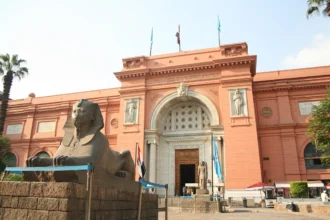
Planning Cairo well means accepting its scale and choosing your days deliberately, rather than trying to see everything at once. A sensible pattern is Giza and Saqqara on one day, the Grand Egyptian Museum and the Egyptian Museum area on another, and Islamic and Coptic Cairo on a third, with evenings for the Citadel area, Khan el-Khalili and Nile-side walks. For activity-by-activity detail, see our things to do in Cairo guide and our best places in Cairo guide, which cover the city’s sights in ranked order without duplicating the comparison work of this guide. For the pyramids themselves, see our fascinating Egyptian pyramids guide, which covers the wider pyramid field from Giza to Dahshur. Cairo suits first-timers, families who want the headline sights, and history lovers who want museums as well as monuments, but it is less suited to travellers who want a quiet holiday: traffic, crowds and heat are part of the experience, especially in summer, so early starts, water, sun protection and comfortable shoes matter, and checking the official site before visiting for current tickets and hours is essential, because museum and site arrangements change. Book accommodation near the sights you plan to visit most, confirm prices before booking, and allow a buffer day if you can, because Cairo has a habit of rewarding an unplanned extra morning. That buffer day also protects you against the practical realities of a large city, because traffic, queues and heat can all slow a Cairo day, and a traveller with a spare morning can return to a favourite museum or market, while a traveller on a rigid schedule must simply miss it and move on. That extra morning can also be used for a return to a favourite cafe or market street.
2. Luxor — The World’s Greatest Open-Air Museum
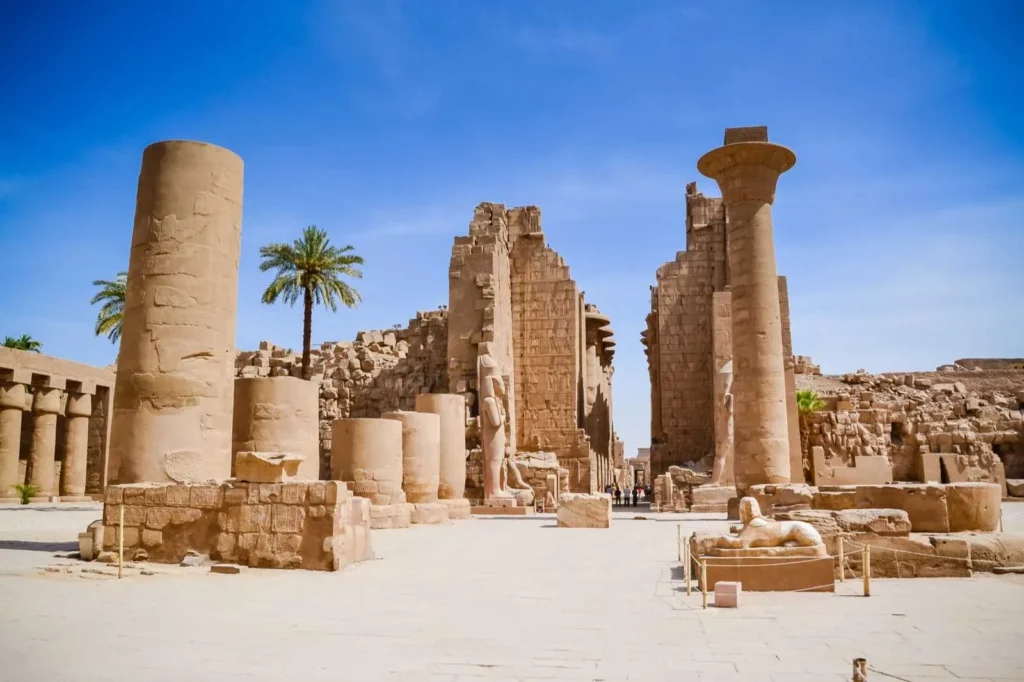
Luxor, ancient Thebes, is the densest temple city in Egypt, and it is often described as the world’s greatest open-air museum because its monuments are not confined to a single site but spread across both banks of the Nile. On the East Bank, Karnak Temple and Luxor Temple dominate, with Karnak built over about two thousand years and recognised as the largest ancient religious complex in the world, whose Hypostyle Hall alone justifies a morning of slow looking. On the West Bank, the Valley of the Kings, the Mortuary Temple of Hatshepsut and the Colossi of Memnon stand in desert cliffs, and the contrast between the two banks is part of Luxor’s character: the East Bank was the city of the living, with its great temples, while the West Bank was the city of the dead, with its tombs and mortuary temples. A sunrise hot-air balloon over the West Bank is Luxor’s most memorable extra, because it shows the whole pattern — green fields, desert cliffs, temples and tombs — in a single view, though it is an optional extra rather than a necessity, and a ground-level West Bank day is just as rewarding. Luxor suits history lovers above all, because no other city lets you walk from a great temple to a royal tomb to a mortuary temple in a single day, and it rewards travellers who enjoy reading carvings, following a processional route and understanding how a temple worked. That density also means Luxor rewards a slower, more attentive style of visiting, because the difference between a rushed temple visit and a slow one is the difference between seeing columns and understanding them, and Luxor’s temples, with their processional routes and carved stories, were designed to be walked slowly and read in sequence.
Luxor needs two to three days if it is to be enjoyed rather than rushed, with one day for the East Bank and one or two for the West Bank, plus time for the city’s museums and Nile-side walks. For the temple itself, see our Luxor Temple guide, which covers its courts, colonnade and evening visit in detail, and for the city as a whole, see our Luxor city guide, which covers Karnak, the Valley of the Kings, Hatshepsut Temple and the Nile in city order. For where to base yourself, see our where to stay in Luxor guide, which compares the East Bank and the West Bank as bases without repeating the temple detail here. In practical terms, the East Bank is the busier, more central base, close to Karnak and Luxor Temple and to the Corniche, while the West Bank is quieter and closer to the tombs, and the choice between them shapes the feel of your stay. Check the official site before visiting for current tickets and hours, confirm prices before booking guides, balloons or cruises, and favour October to April for comfortable heat, with early morning or evening visits in summer. Luxor is the city most first-timers remember best, not because it is the easiest, but because it concentrates Egypt’s ancient story into a walkable, riverside area. That choice of bank also affects your evenings, because an East Bank stay puts you near the Corniche, its restaurants and its evening temple visits, while a West Bank stay puts you near quieter guesthouses, desert sunsets and early starts for tombs, so the base you choose shapes the whole feel of your Luxor days. That evening contrast is one of Luxor’s quiet pleasures, and it rewards travellers who stay overnight rather than passing through.
3. Aswan — The Nile at Its Most Peaceful
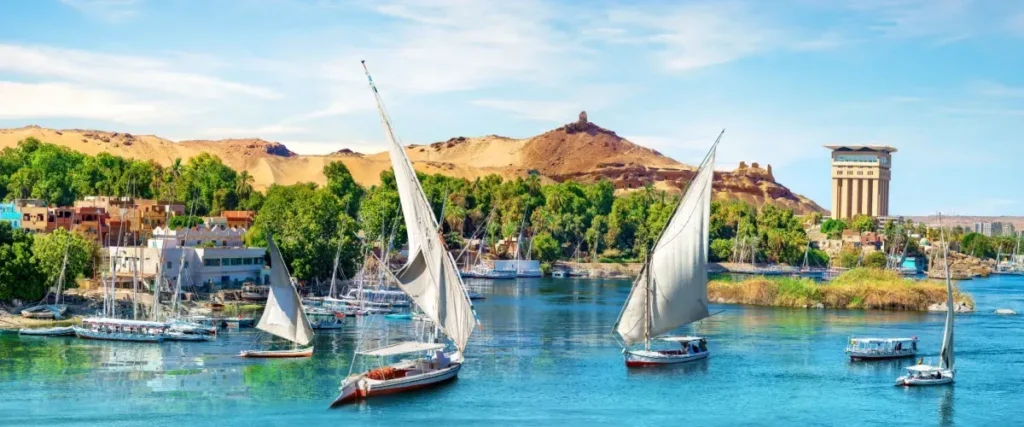
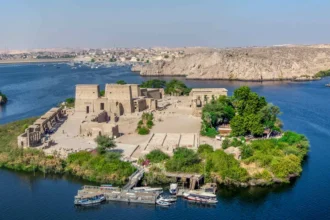
Aswan is slower than Cairo and Luxor, and that is its appeal, because it offers the Nile at its most peaceful, with granite islands, palm groves and a riverside pace that invites you to linger rather than rush. Philae Temple, dedicated to Isis and relocated to save it from Nile flooding, is reached by boat, and that short boat journey is part of the experience, setting the temple on its island in a way that no road approach could. Nubian villages add a living cultural layer, with colourful houses, Nubian food and a community whose history is tied to the river and to the Nubian homeland, and a visit to a Nubian village, arranged respectfully, gives a different picture of Egypt from the temple cities. Felucca sailing is Aswan’s signature pleasure: a quiet, wind-powered sail on the Nile, best in late afternoon when the light softens, and it suits travellers who want to experience the river without the scale and schedule of a large cruise ship. The Aswan High Dam completes the picture, not as a beauty spot but as the engineering work that reshaped modern Egypt, controlling floods, creating Lake Nasser and making possible the rescue of temples such as Philae and Abu Simbel. Aswan suits travellers who want calm after Cairo and Luxor, couples and families who want a gentler pace, and anyone who values river scenery as much as monuments. That slower pace also changes how you see the ancient sites themselves, because Philae seen from a boat, with water all around it, feels like a sanctuary in a way that a temple seen from a car park does not, and Aswan’s calm lets you appreciate that setting instead of hurrying on to the next monument.
From Aswan, Abu Simbel is the classic day trip, and it is covered in its own section below, but Aswan itself deserves two to three days, not a single overnight stop. A sensible pattern is Philae Temple and a felucca sail on one day, Nubian villages and the High Dam on another, and Abu Simbel as a separate early-start day, with evenings for the Corniche and the markets. Aswan also works as the southern end of a Nile cruise from Luxor, which is why many travellers arrive by river and leave by road or air, and that cruise arrival gives a fitting sense of the Nile as a journey rather than a backdrop. Check the official site before visiting for current tickets and hours, confirm prices before booking feluccas, guides or the Abu Simbel trip, and dress for river sun even in winter, because the Nile reflects light and the days are bright. For the wider route that includes Aswan, see our places to visit in Egypt guide, which places Aswan in geographic order between Luxor and the Red Sea, while this guide keeps its focus on Aswan’s character as a city: slower, greener, more Nubian and more riverside than any other city on this list. Travellers who skip Aswan often regret it, because it is the city that lets Egypt’s ancient story breathe, and because its calm is the contrast that makes the busier cities memorable. That calm also makes Aswan the best place to recover from the busier cities, because after Cairo’s traffic and Luxor’s early starts, a felucca afternoon, a Corniche evening and a market morning give you time to absorb what you have seen, and travellers who arrive in Aswan tired often leave it refreshed and ready for the Red Sea or the journey home.
4. Alexandria — Mediterranean Egypt
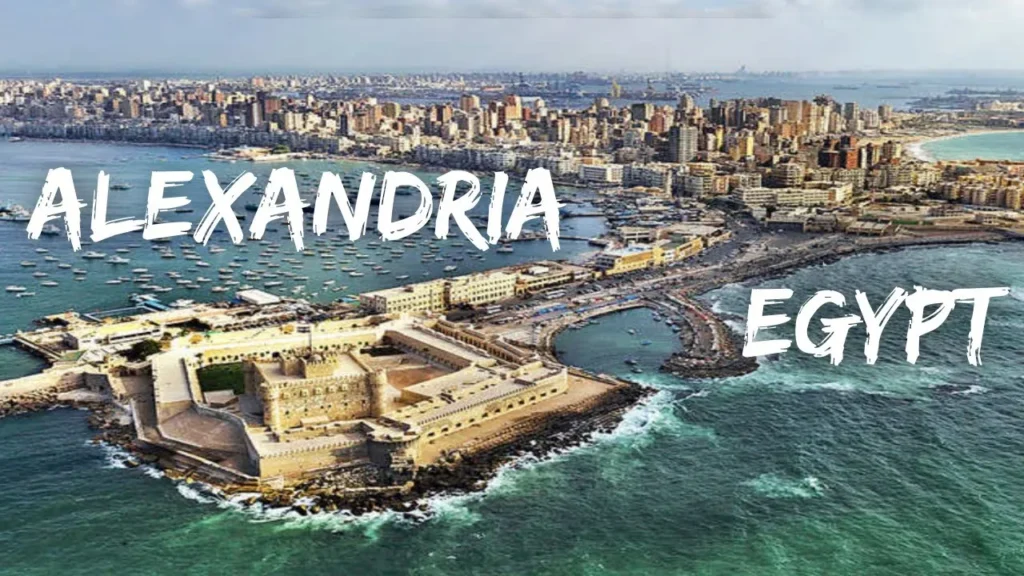
Alexandria feels different from the Nile Valley, and that difference is precisely why it is worth one or two days after Cairo. Sea air, corniche walks, seafood restaurants and Greco-Roman layers give the city a Mediterranean character that the Nile cities do not have, and a traveller who has spent days among pharaonic temples will find Alexandria’s Hellenistic and Roman story a refreshing change. The Bibliotheca Alexandrina, the modern library that recalls the ancient Great Library, is the city’s cultural centre, with exhibitions, museums and a striking modern building on the harbour. The Citadel of Qaitbay, built on the site of the ancient Pharos lighthouse, stands on the harbour and offers sea views and a sense of Alexandria’s maritime history. The Catacombs of Kom el Shoqafa, an underground burial complex blending Egyptian, Greek and Roman styles, show how Alexandria’s cultures mixed in death as they did in life. Together, those three sights give a compact, walkable introduction to a city that was once one of the ancient world’s great centres of learning and trade, and they can be enjoyed in a single well-planned day, with a second day for the corniche, the markets and the seafood restaurants that give Alexandria its everyday character. That compact trio also makes Alexandria an easy city to enjoy without a detailed plan, because the library, the citadel and the catacombs are all within reach of the corniche, and the spaces between them — harbour walks, cafes and seafood restaurants — are as much a part of the visit as the sights themselves, giving you a Mediterranean day rather than a checklist. That harbour setting also gives Alexandria its best free pleasure, a long corniche walk at sunset.
Alexandria is a good one to two day addition after Cairo, especially if you want a coastal break from temple-heavy days, and it is best reached by road or rail from Cairo rather than as a detour from Luxor or Aswan. It suits travellers who enjoy Mediterranean cities, libraries and museums, seafood, and a slower, sea-facing pace, and it suits return visitors who have already seen the Nile Valley and want a different Egypt. It is less suited to travellers who want only pharaonic sites, because its story is Greco-Roman and modern rather than Old Kingdom or New Kingdom, and a traveller who expects pyramids in Alexandria will be disappointed. In practical terms, the corniche is the city’s spine, and staying near it makes walking, dining and harbour views easy, while summer brings Egyptian holiday crowds to the beaches, so a spring or autumn visit often feels calmer. Check the official site before visiting for current tickets and hours for the library, citadel and catacombs, confirm prices before booking transport or guides, and allow for sea wind and cooler evenings than in the Nile Valley, even in summer. Alexandria does not compete with Cairo or Luxor for headline ancient sites, but it completes the picture of Egypt as a country of many histories, not only one, and that is why it earns its place on this list. That sea-facing character also makes Alexandria a good place to end a cultural trip, because after days of desert heat and temple interiors, sea air, a corniche walk and a seafood dinner offer a different kind of pleasure, and a traveller who ends in Alexandria often remembers Egypt as a country of coasts as well as deserts and temples.
5. Sharm El Sheikh — Diving Capital
Sharm El Sheikh, on the Sinai coast, is built for diving and resort stays, and it is the Red Sea city most travellers choose when diving is the priority. Ras Mohammed National Park, at the tip of Sinai, offers coral reefs and clear water that draw divers from around the world, with reef walls, coral gardens and marine life that make it one of the most celebrated dive areas in the Red Sea. The city’s resorts, dive centres and beaches are organised around that diving, with boat trips to reef sites, shore diving for beginners, and snorkelling trips for non-divers who still want to see the coral. Sharm El Sheikh pairs well with a cultural trip as a relaxing final stop, rather than as a substitute for Cairo or Luxor, because its strength is water and rest, not temples and tombs, and a traveller who spends a whole trip in Sharm El Sheikh will miss the ancient story that makes Egypt distinctive. Three to five days is a sensible stay, allowing time for several dives or snorkelling trips, a day at Ras Mohammed, and a rest day, without the rushed feeling of a single diving day squeezed between flights. The city also offers desert trips into Sinai, including trips towards the mountains and Bedouin camps, though those are extras rather than the main reason to choose Sharm El Sheikh. That reef focus also means Sharm El Sheikh is best judged by its water, not by its streets, because a traveller who chooses a dive centre, a boat trip and a day at Ras Mohammed will remember coral, clear water and marine life, while a traveller who expects an old town will find only resorts, marinas and modern streets, and that expectation gap is the main cause of disappointment here.
Sharm El Sheikh suits divers, snorkellers, families who want resort facilities and easy water activities, and travellers who want a beach ending to a cultural itinerary. It is less suited to travellers who want a walkable old town or a historic city, because Sharm El Sheikh is a modern resort city, built for tourism, and its character is that of resorts, marinas and dive centres rather than old streets. In practical terms, choose a resort or dive centre based on the diving you actually plan to do, rather than on the largest pool or the most advertised beach, and confirm prices before booking dives, boat trips or resort packages, since inclusions vary widely. Check the official site before visiting for current access and safety guidance for Ras Mohammed and other protected areas, and follow dive centre guidance on experience levels, because Red Sea currents and depths demand respect even for confident swimmers. For a more relaxed Sinai alternative, see the Dahab section below, which covers a smaller, more walkable diving town, and for the wider Red Sea choice, see our places to visit in Egypt guide, which places Sharm El Sheikh in the country’s coastal order. Sharm El Sheikh’s place on this list is clear: it is Egypt’s diving capital, and for divers it is the city to choose. That practical choice also matters for families, because a resort with a safe beach, a good dive centre and clear inclusions will make a Sharm El Sheikh stay relaxing, while a resort chosen only on price may leave you paying extra for every boat trip and dive, so reading inclusions carefully before booking is as important as choosing the city itself.
6. Hurghada — Beaches for Families
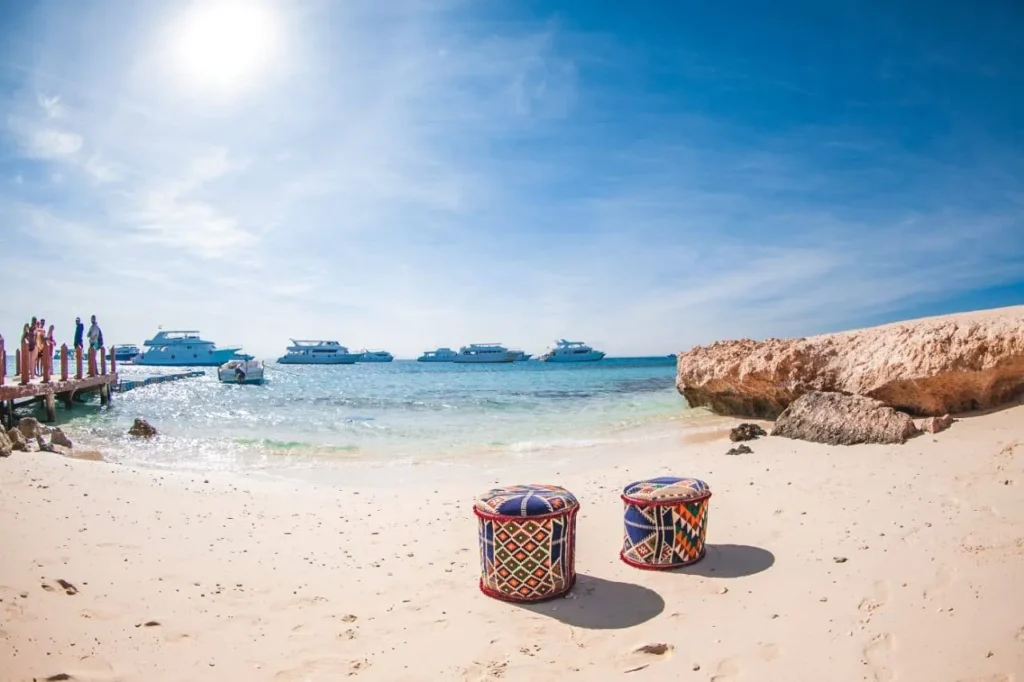
Hurghada is the Red Sea’s family-friendly base, with long beaches, snorkelling trips, dive centres and large resorts, and it is the most practical Red Sea choice if you want easy water activities, especially with children. Unlike Sharm El Sheikh, which is built around diving at Ras Mohammed, Hurghada is built around beach and resort life, with a wide choice of hotels, family facilities and boat trips to nearby reefs and islands. Snorkelling trips from Hurghada give non-divers a straightforward way to see coral and fish, while dive centres cater to both beginners and experienced divers, and the city’s beaches are long and accessible, making it easier to spend a full day by the water without needing a boat. Hurghada is less historic than Luxor or Aswan, and it does not pretend otherwise: its appeal is practical, comfortable and family-oriented, rather than cultural, and that honesty is part of its usefulness. It links well with a Luxor extension, because the road between Luxor and Hurghada makes a combined temple-and-beach trip feasible, with Luxor for history and Hurghada for rest, and that combination suits families who want both in a single holiday. Two to four days is a sensible stay, allowing beach days, a snorkelling or diving trip, and a rest day, without the feeling that you are merely passing through a resort. That practical, family-oriented character also makes Hurghada a good choice for a first Red Sea stay, because the city does not demand diving experience or a taste for bohemian towns, and a family can enjoy beaches, snorkelling and boat trips at its own pace, with resort facilities close at hand if children need a rest day. That first-visit ease also makes Hurghada a safe choice for travellers who are new to the Red Sea.
Hurghada suits families, first-time snorkellers, and travellers who want resort comfort and easy water access without the diving focus of Sharm El Sheikh or the bohemian scale of Dahab. It is less suited to travellers who want a walkable historic town, a quiet diving village, or a cultural city, because Hurghada is a modern resort city and its old town and marina areas, while pleasant, are not the reason to choose it. In practical terms, choose a resort based on beach access and family facilities if you are travelling with children, and based on dive centre quality if diving is your priority, and confirm prices before booking resort packages, boat trips or dive courses, since inclusions and standards vary. Check the official site before visiting for current access guidance for reef trips and protected areas, and follow boat and dive guidance on safety, because Red Sea conditions demand respect even on calm days. Hurghada’s place on this list is as the family beach base: it does not offer Luxor’s temples or Alexandria’s history, but it offers the easiest, most comfortable Red Sea holiday, and for families that is often exactly what is needed after days of temple visits. A Luxor-plus-Hurghada trip, in particular, gives a balanced Egypt holiday in a way that a single-city trip cannot. That balanced combination also explains why Hurghada works well after Luxor, because the contrast between temple days and beach days makes both more enjoyable, and a family that spends three days in Luxor followed by three days in Hurghada will remember both the temples and the sea, rather than feeling that one half of the trip was merely a break from the other. That balance is exactly what many families are looking for in a single holiday.
7. Dahab — The Relaxed Diving Town
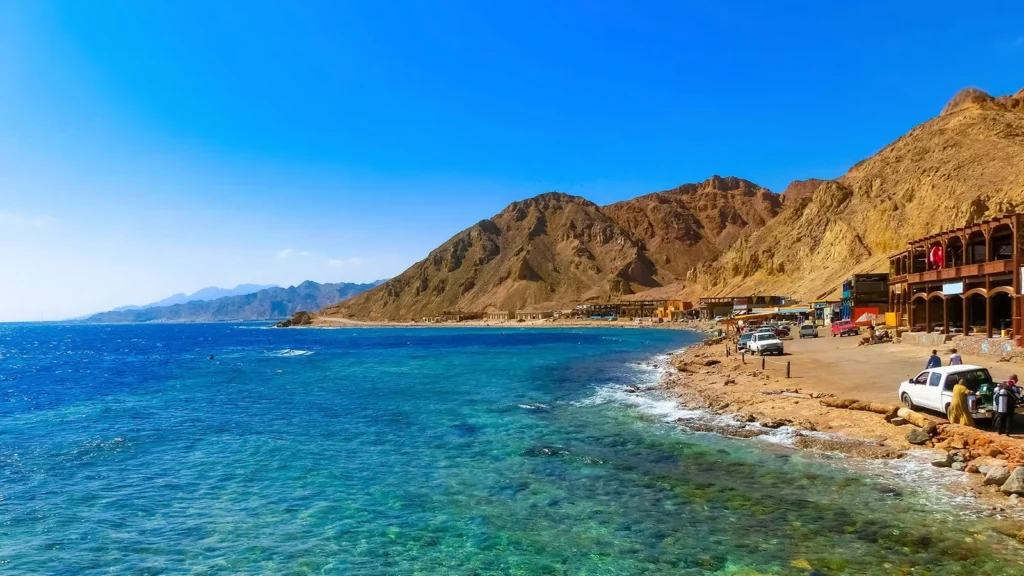
Dahab is smaller and more laid-back than Sharm El Sheikh, with a promenade, dive shops and the famous Blue Hole nearby, and it is the Red Sea town most travellers choose when they prefer a walkable, bohemian town to a large resort. The promenade, with its cafes, dive shops and small hotels, is the town’s centre, and its scale makes Dahab feel like a place to live for a few days rather than a place to stay in a resort. Diving and snorkelling are the main activities, with shore dives, reef trips and the Blue Hole — a deep sinkhole near the shore that is famous among divers and that demands respect, with strong guidance about experience levels and safe diving practice. Desert trips into the Sinai mountains, including trips to canyons and Bedouin camps, add a land-based layer to a diving stay, and the town’s relaxed pace makes it easy to combine a morning dive with an afternoon cafe, a promenade walk and a desert sunset. Travellers who prefer a bohemian, walkable town to a large resort often choose Dahab for two or three days of diving, snorkelling and desert trips, and that preference is the key to choosing between Dahab and Sharm El Sheikh: Sharm El Sheikh offers scale and resort facilities, Dahab offers intimacy and a town you can walk. That walkable scale also changes the social feel of a diving holiday, because in Dahab you will meet the same dive guides, cafe owners and fellow travellers over several days, and that familiarity, combined with the promenade and the shore, gives Dahab a community feeling that larger resort cities, with their bigger hotels and busier marinas, rarely offer.
Dahab suits divers and snorkellers who want a smaller town, independent travellers, and anyone who values a promenade, cafes and a relaxed pace over large resorts. It is less suited to families who want large resort facilities, or to travellers who want a historic city, because Dahab is a diving town, not a cultural capital, and its charm lies in its small scale. In practical terms, two to three days is a sensible stay, allowing diving or snorkelling, a desert trip and a rest day, and the town’s walkability means you can base yourself on or near the promenade and reach dive shops, cafes and the shore on foot. For activity detail, see our things to do in Dahab guide and our tourist attractions in Dahab guide, and for the town as a route, see our places to visit in Dahab guide; for where to stay, see our where to stay in Dahab guide. Those guides carry the detail of dives, sights and hotels, while this guide keeps its focus on Dahab’s place among Egypt’s cities as the relaxed alternative to Sharm El Sheikh. Confirm prices before booking dives, trips or accommodation, check the official site before visiting for current guidance, and follow dive centre advice on the Blue Hole in particular, because its fame should never override safe diving practice. That small scale also makes Dahab a good place to learn, because beginners can take a shore dive, a snorkelling trip and a desert excursion without the pressure of a large resort schedule, and the town’s relaxed pace means a diving day can be followed by a quiet cafe afternoon, rather than by another organised activity.
8. Abu Simbel — A Day Trip Worth the Early Start
Abu Simbel’s two temples, with four colossal statues of Ramesses II at the Great Temple entrance, are among Egypt’s most dramatic sights, and they earn their place on this list even though Abu Simbel is not a city base in the usual sense. The Great Temple, dedicated to Ramesses II, and the smaller temple, dedicated to Queen Nefertari, were built in the thirteenth century BCE on the banks of the Nile in Nubia, and their lakeside setting on Lake Nasser gives them a grandeur that inland temples cannot match. The story of their rescue is part of the experience: in the 1960s, as Lake Nasser rose behind the Aswan High Dam, the temples were cut into blocks and moved to higher ground, a feat of engineering and international cooperation that saved them from flooding. That relocation story, told on site and in the visitor experience, turns a visit into more than a photograph of colossi: it is a lesson in how modern Egypt chose to save its ancient heritage, and why Abu Simbel matters beyond its size. The early start from Aswan is long, with a road journey through desert to the lakeside, but the lakeside setting, the scale of the colossi and the story of the move make it worthwhile, and most travellers who make the trip rate it among the highlights of an Egypt visit. Treat it as a day trip, not a separate city base, because Abu Simbel’s appeal is the temples themselves, not a town to stay in. That engineering story also gives Abu Simbel a modern resonance that other temples lack, because the relocation was a global effort, and a visitor who understands it will see the temples not only as ancient monuments but as proof that modern Egypt and the wider world chose to save them, at great cost and effort, rather than let them disappear under a lake.
Abu Simbel suits history lovers, photographers, and any traveller who has already seen Luxor and Aswan and wants the most dramatic temple site in the south. It is less suited to travellers on a very short trip who would have to cut a Luxor or Aswan day to fit it in, because the journey is long and the day is tiring, and a rushed Abu Simbel trip that leaves you exhausted for the next day is worse than a well-paced Aswan stay. In practical terms, the day trip is usually arranged from Aswan, with an early departure, a lakeside visit of a few hours, and a return to Aswan the same day, though flight options also exist for travellers who want to shorten the journey. Confirm prices before booking the trip, whether by road or by air, check the official site before visiting for current tickets and hours, and bring sun protection, water and comfortable shoes, because the lakeside site is exposed and the desert light is strong. For the wider southern route, see our places to visit in Egypt guide, which places Abu Simbel at the southern end of the Nile journey, while this guide keeps its focus on the practical choice: Abu Simbel is a day trip worth the early start, but it is a day trip, not a base, and planning it that way makes it enjoyable rather than exhausting. If you have only one extra day in the south, Abu Simbel is the best use of it. That planning choice also matters for the rest of your southern itinerary, because a well-paced Abu Simbel day, with an early start and a return to Aswan for a restful evening, leaves you ready for the next day, while a trip squeezed into an already full Aswan schedule can leave you too tired to enjoy Philae or a felucca sail the following day.
9. Siwa Oasis — Desert Egypt
Siwa, near the Libyan border, is remote, and that remoteness is both its challenge and its reward. Salt lakes, palm groves, the Oracle Temple of Amun and the Great Sand Sea give Siwa a desert character unlike any other city on this list, and a traveller who reaches it will find an Egypt of oases, springs and desert silence rather than temples and beaches. The Oracle Temple of Amun, where Alexander the Great is said to have consulted the oracle, is Siwa’s most famous historic site, and its story links the oasis to the wider ancient world in a way that surprises first-time visitors. Salt lakes, where visitors can float in highly saline water, and palm groves, which shade the oasis and sustain its agriculture, give Siwa a natural character that is best enjoyed slowly, with walks, swims and desert views rather than a packed sightseeing schedule. The Great Sand Sea, stretching towards Libya, offers desert trips that show the scale of the Western Desert, and those trips are the reason many travellers make the long journey to Siwa in the first place. Siwa suits a return trip or a longer itinerary, because reaching it takes time, with a long road journey from the Nile Valley or from the Mediterranean coast, and a traveller who tries to fit Siwa into a short first trip will spend more time travelling than enjoying the oasis. If you want Egypt beyond temples and beaches, Siwa is the clearest choice, but it is a choice that demands time. That slow, natural character also makes Siwa a place to experience rather than to tick off, because the salt lakes, the palm groves and the desert views reward unhurried time, and a traveller who spends an afternoon floating in a salt lake, walking among palms and watching the desert light change will understand Siwa better than a traveller who rushes between sights.
Siwa suits desert lovers, return visitors, photographers, and travellers who want a quiet, remote Egypt and who are willing to travel for it. It is less suited to first-timers on a seven to ten day trip, families who want easy facilities, or travellers who dislike long road journeys, because Siwa’s remoteness is real and its facilities are smaller and simpler than those of the Nile cities or the Red Sea resorts. In practical terms, two to three days in Siwa is a sensible stay, allowing the Oracle Temple, salt lakes, palm groves and a desert trip, with a day for the journey in each direction, and that time commitment is why this guide places Siwa as an extension rather than a core city. Check the official site before visiting for current access and guidance, confirm prices before booking transport, guides or desert trips, and bring sun protection, water and a layer for cool desert evenings, because the oasis climate swings between hot days and cool nights. Siwa’s place on this list is as desert Egypt: it does not offer the temples of Luxor or the diving of Sharm El Sheikh, but it offers a different Egypt entirely, one of oases and sand seas, and for travellers who have already seen the Nile Valley, that difference is its greatest strength. Plan it as a dedicated oasis trip, not as a detour, and Siwa will reward the journey. That time commitment also means Siwa should be planned as a journey in itself, with the road journey treated as part of the experience, because the long drive through the Western Desert, with its changing landscape and its sense of remoteness, prepares you for an oasis that feels genuinely separate from the Nile Valley and its cities.
10. Port Said — A Quieter Canal Stop
Port Said, at the Mediterranean end of the Suez Canal, is not a headline city, but it offers a quieter coastal stop, canal views and a different, working-port side of Egypt that the tourist cities do not show. The city grew with the canal, and its history is tied to shipping, trade and the canal’s opening, giving it a maritime, commercial character rather than a pharaonic or resort character. Canal views, with ships passing through one of the world’s most important waterways, are Port Said’s most distinctive sight, and watching a large ship enter or leave the canal gives a sense of global trade that is absent from temple and beach cities. The city’s streets, markets and waterfront offer a quieter, more everyday Egypt, with fewer tourists and a more local pace, and that quietness appeals to travellers who enjoy seeing a working city rather than a curated tourist destination. Port Said suits travellers whose route already passes that way, or who want a coastal stop on a Mediterranean journey, rather than travellers who are choosing a single Egyptian city for a short trip. Include it only if your route passes that way; do not cut Luxor or Aswan days to fit it in, because the headline ancient sites matter more on a first trip than a canal stop, however pleasant. That everyday character also makes Port Said interesting for travellers who enjoy ports and trade, because watching ships, walking the waterfront and visiting local markets gives a picture of modern Egypt at work, and that picture complements the ancient and resort Egypts seen elsewhere, even if it does not replace them on a first trip, for a quieter, slower day.
Port Said’s practical role on an Egypt itinerary is therefore as an extension, not a core city, and planning it that way avoids disappointment. One day is enough for a canal-side visit, a waterfront walk and a sense of the city’s working-port character, and that day is best placed on a Mediterranean leg that already includes Alexandria or Cairo, rather than as a separate journey from Luxor or Aswan. It suits return visitors, canal enthusiasts, and travellers who enjoy quieter coastal cities, and it is less suited to first-timers who want pyramids, temples or diving, because Port Said offers none of those as headline attractions. Check the official site before visiting for current guidance, confirm prices before booking transport or accommodation, and allow for a working port’s practical character: the city is best enjoyed as a walk, a waterfront view and a market visit, rather than as a list of major sights to tick off. For the wider Mediterranean order, see our places to visit in Egypt guide, which places Port Said in the country’s coastal geography, while this guide keeps its focus on the honest ranking: Port Said is tenth on this list because it is a quieter canal stop, not because it is uninteresting, but because on a first trip, Cairo, Luxor and Aswan matter more. That honesty is the point of a ranked cities guide, and Port Said’s place at the end of the list is a guide to priority, not a judgement on the city itself. That priority judgement also helps with the wider Mediterranean leg, because a traveller who visits Alexandria for its history and Port Said for its canal character will get a fuller Mediterranean Egypt than a traveller who visits only one of them, provided the canal stop does not take days away from Cairo, Luxor or Aswan.
Practical Plan: 7–10 Day Classic Route
| Days | Route |
|---|---|
| Days 1–3 | Cairo and Giza, plus Saqqara if time allows |
| Days 4–6 | Luxor: East Bank temples, then West Bank tombs and temples |
| Days 7–9 | Nile cruise or road to Aswan, Philae, felucca, Abu Simbel day trip |
| Days 10+ | Alexandria, or Red Sea diving in Sharm El Sheikh, Hurghada or Dahab |
Conclusion
Do not judge Egypt’s cities by a single list, because the ranking in this guide is a guide to choice, not a verdict on worth. Cairo is best for first-timers, because it offers pyramids, museums and onward connections in one city. Luxor is best for history lovers, because it offers Karnak, Luxor Temple, the Valley of the Kings and the Mortuary Temple of Hatshepsut in one compact area. Aswan is best for calm Nile scenery, because it offers Philae, Nubian culture and felucca sailing at a slower pace than Luxor. Alexandria is best for Mediterranean culture, because it offers the Bibliotheca Alexandrina, Qaitbay Citadel and seafood after the Nile Valley. The Red Sea cities are best for diving and beaches, with Sharm El Sheikh for diving, Hurghada for families, and Dahab for a relaxed diving town. Abu Simbel is best as a day trip, Siwa is best as a desert extension, and Port Said is best as a quieter canal stop. A seven to ten day trip that links Cairo, Luxor and Aswan gives the classic story, and everything else is a well-chosen extension, not a replacement for that core. That core works because it follows the Nile, because it follows the arc of ancient history, and because it balances busy cities with calmer ones, so that by the end of the trip you have seen Egypt’s greatest sites without feeling that you have merely travelled between them. That balance also matters for how you remember the trip, because a journey that ends with a calm Nile evening in Aswan, or a Red Sea day after temple days, will feel complete in a way that a journey that ends in transit does not, and the classic core, with its Nile order and its balance of busy and calm cities, is designed to give you that feeling.
Use this guide by choosing your core first, then your extension, and then your pace, because those three choices shape the trip more than any single sight. Choose Cairo, Luxor and Aswan as your core if this is a first trip, and add Alexandria for Mediterranean history or a Red Sea city for diving and beaches only if you have extra days. Choose Siwa or Port Said only if your route or your interests already point that way, and do not cut core days to fit them in. Check the official site before visiting for current tickets and hours, confirm prices before booking hotels, cruises, guides or dives, and allow buffer time between cities, because Egypt rewards unhurried travel, early starts and evenings by the Nile or the sea. For deeper detail on individual cities, follow the natural links in this guide to the Cairo guides, the Luxor guides, the Dahab guides and the wider Egypt guides, rather than trying to carry every detail in a single comparison. Done that way, a trip through Egypt’s best cities is not a race through a list, but a journey through different Egypts — pharaonic, Greco-Roman, Nubian, Mediterranean, Red Sea and desert — each with its own character, and each best enjoyed in its own city, at its own pace. That variety is Egypt’s greatest strength, and it is why a ranked cities guide, used as a tool for choice, is more useful than a single “best city” answer. That variety also means the best Egypt trip is rarely the one that tries to see everything, because a traveller who chooses three cities well, travels slowly between them and leaves room for markets, meals and unplanned mornings will remember Egypt more vividly than a traveller who rushes through ten cities and remembers mostly the journeys between them.
FAQs
What is the best city to visit in Egypt for first-time travellers?
Cairo, because it offers the Pyramids of Giza, major museums and easy onward connections to Luxor and Aswan.
Which city is best for history lovers?
Luxor, for Karnak, Luxor Temple, the Valley of the Kings and the Mortuary Temple of Hatshepsut in one compact area.
How many cities should I visit on a first trip?
Two to three cities in seven nights is the sweet spot. Four or more in under ten days means more time in transit than sightseeing.
Is Aswan worth visiting after Luxor?
Yes. Aswan adds Philae Temple, Nubian culture, felucca sailing and the Abu Simbel day trip, at a slower pace than Luxor.
Where should I go in Egypt for beaches?
Sharm El Sheikh and Hurghada for resorts and diving, Dahab for a smaller, relaxed diving town.
Is Alexandria worth a detour?
Yes, for 1–2 days, if you want Mediterranean history, the Bibliotheca Alexandrina and seafood after the Nile Valley.
Related guides: Things to Do in Cairo, Best Places in Cairo, Fascinating Egyptian Pyramids, Oldest Temples in Egypt. Further reading: Best Cities to Visit in Egypt, Top Places to Visit in Egypt.