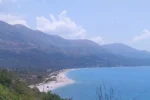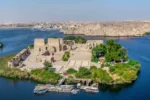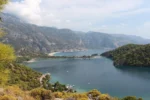
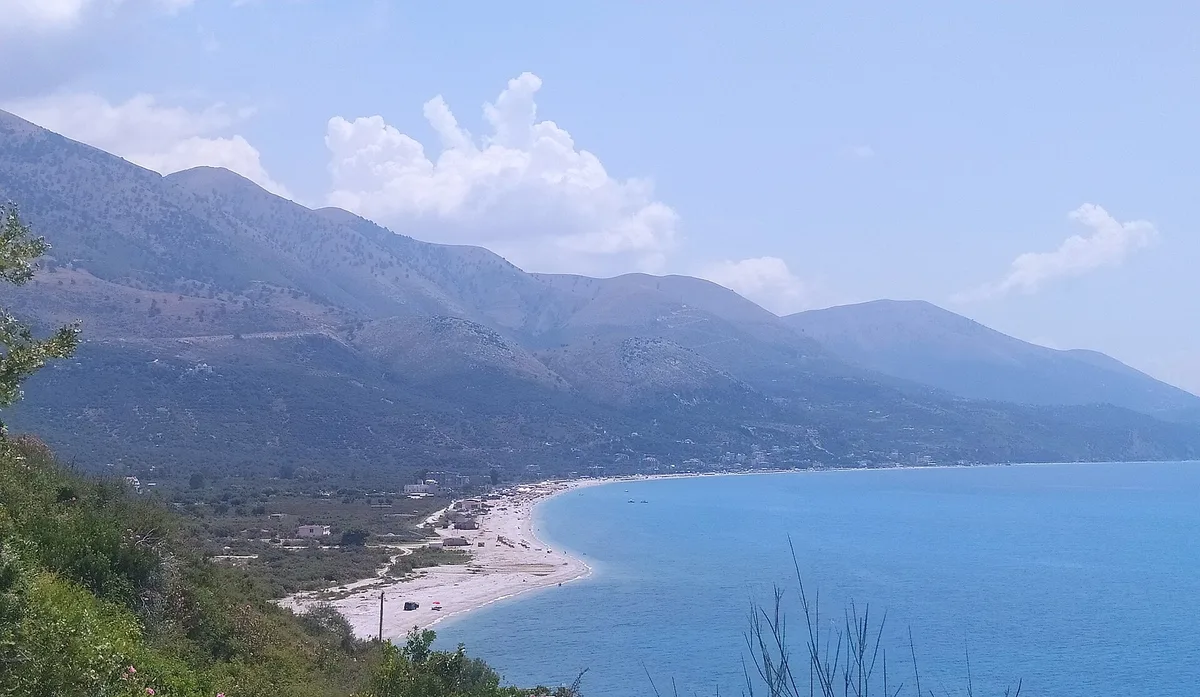
Albania has two completely different beach holidays hiding inside one small country, and most visitors only ever hear about one of them. The famous one is the Ionian Riviera in the south, where mountains fall straight into clear, deep, blue-green water and the beaches are white pebble. The other one runs up the Adriatic centre and north, where the coast flattens out into long, wide, shallow sand – less dramatic, much easier with small children, and where Albanians themselves have always gone on holiday. Any honest list of the best beaches in albania has to cover both, because the right beach for a couple with a hire car and the right beach for a family with a toddler are rarely the same strip of shore.
This roundup works through 20 named beaches from Ksamil in the far south to Velipoja in the far north, in the order you would meet them driving the coast. Every beach gets the same treatment – what it is actually like, who it suits, and what will annoy you about it, because the best beaches in albania all have a catch somewhere, whether that is August crowds, a cliff path, a beach club that has annexed the best sand, or a resort rising behind the dunes. There are no prices in this article, deliberately. What a lounger costs changes by the month and by the mood of the season, so costs are described as mechanisms – what you pay for, and when the bill spikes – rather than as figures that would be out of date before the ink dried.
If you are planning the wider trip around the swimming, start with the country pillar, our Albania travel guide, which covers the mountains and the inland cities as well as the coast. Here, it is beaches only – compared properly, with the marketing stripped out.
| Beach | Coast | Surface | Best for | Watch out for |
|---|---|---|---|---|
| Ksamil | Ionian | Pale sand and fine pebble | The famous turquoise shallows and island views | The most crowded coves in the country in August |
| Sarande | Ionian | Narrow pebble town strips | A swim between boat trips, not a beach base | The beaches are the town’s weakest feature |
| Lukove | Ionian | White pebble | A quiet cove day off the main circuit | Few facilities, and the detour eats time |
| Borsh | Ionian | White and grey pebble | Space – seven kilometres of it | Almost no shade and a long walk to the far ends |
| Qeparo | Ionian | Pebble | A slow village beach with an old town above | Small, and the new seafront divides opinion |
| Himara | Ionian | Pebble and coarse sand | A real town with several beaches to rotate | The town beaches fill fast in season |
| Porto Palermo | Ionian | Sand and pebble at the isthmus | History with a swim attached | The beach itself is small |
| Livadhi | Ionian | Grey pebble | A long, calm bay without a party scene | Limited dining and a quiet nightlife |
| Jale | Ionian | Fine pebble and sand | A small bay with a big social scene | Tiny – arrive late and there is no room |
| Dhermi | Ionian | White pebble | The Riviera postcard, and the best all-round bay | August crowds and August behaviour |
| Drymades | Ionian | Pebble and coarse sand | Dhermi’s water with more elbow room | The beach clubs set the tone at the centre |
| Palase | Ionian | White pebble | The first swim after the Llogara descent | A large resort is reshaping the bay |
| Gjipe | Ionian | Pale pebble and sand | The walk-in cove at the canyon mouth | No road, no shade at midday, carry everything |
| Grama Bay | Karaburun | White pebble | A boat-only bay inside the marine park | No facilities at all – what you bring is what you have |
| Vlora Lungomare | Adriatic | Wide grey sand | A city beach with a promenade life | The water is the Adriatic, not the Ionian |
| Durres | Adriatic | Sand | The classic domestic resort holiday | The busiest, most built-up beach in Albania |
| Golem | Adriatic | Sand | An easier, cheaper-feeling version of Durres | One long strip of similar hotels |
| Spille | Adriatic | Sand with a pine forest behind | Shade, space and a local crowd | Few frills and a rural feel |
| Shengjin | Adriatic | Grey sand | The north’s own resort town | Apartment blocks and a port-town edge |
| Velipoja | Adriatic | Dark sand, very wide | Room to breathe at the end of the coast | River-mouth currents need respect |
Two Coasts, Two Different Seas
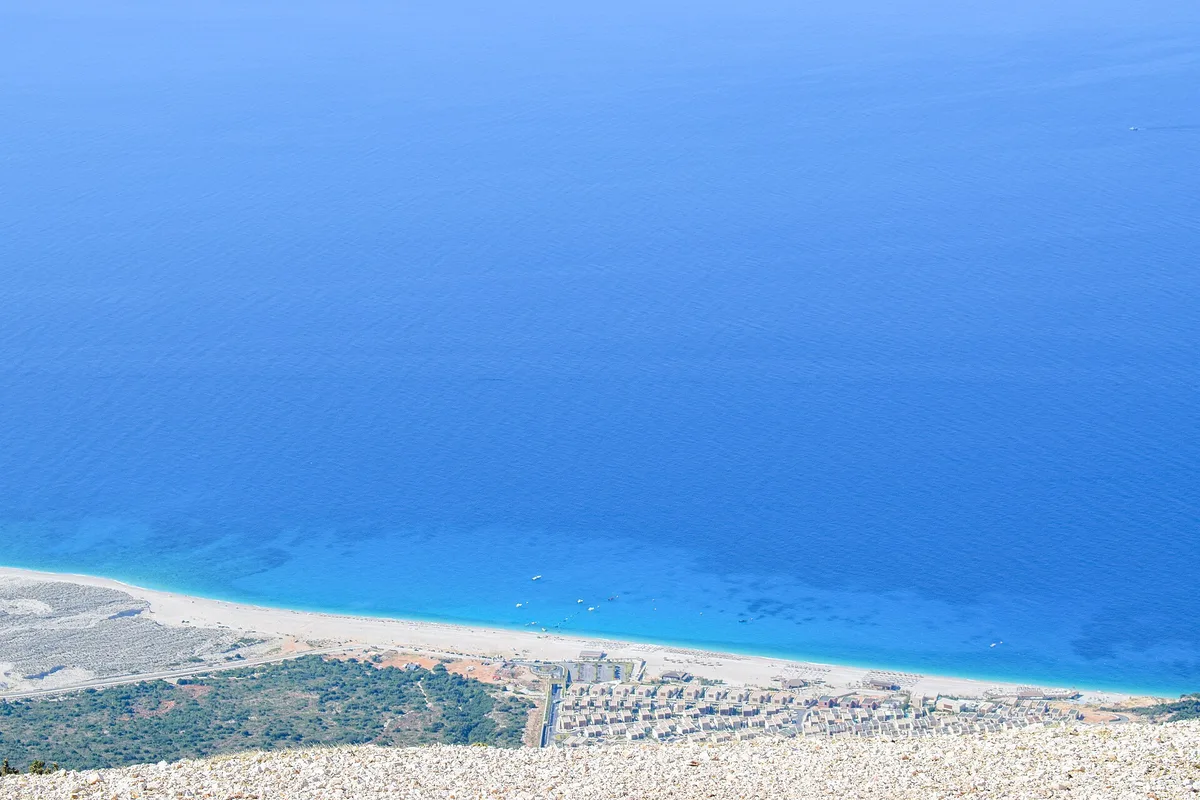
The line between Albania’s two seas is drawn at the Karaburun peninsula, the rocky arm that guards the bay of Vlora. South of it, the Ionian coast is mountain country – the Ceraunian range runs down to the water, the shore is mostly pebble, coves are small and separated by headlands, and the seabed drops away quickly, which is exactly why the water is so clear and so blue. Swimming here feels like swimming off Greece, which geographically it nearly is – Corfu sits just across the channel from Sarande. The price of that drama is effort. Beaches are reached down winding roads, some only on foot or by boat, and flat space is so scarce that every usable cove gets used hard in summer.
North of Karaburun the country exhales. The Adriatic coast is a lowland shore of river deltas and lagoons, and the beaches turn to sand – wide, gently shelving, silty in places, and warm-feeling in a way the Ionian is not. You can walk out a long way before the water reaches your waist, which is why Albanian families have always favoured this coast for children. The trade-off is clarity and scenery. The Adriatic here is a working, river-fed sea, greener and murkier than the Ionian, and after wind or rain it can carry silt and weed. Neither coast is better; they are different products. The single most useful decision in planning an Albanian beach trip – and the one that decides whether the best beaches in albania lists actually help you – is picking which sea you want before you pick which beach.
The practical consequence is about bases. The Riviera rewards a car and a willingness to beach-hop between headlands; the Adriatic rewards picking one good strip and settling in. Distances deceive, too. The Riviera’s coast road, the SH8, is beautiful and slow, so three beaches that look adjacent on a map can eat a whole day. On the Adriatic, everything is strung along flat, fast roads and the hopping is easy – there is just less reason to hop.
Ksamil and Its Islands
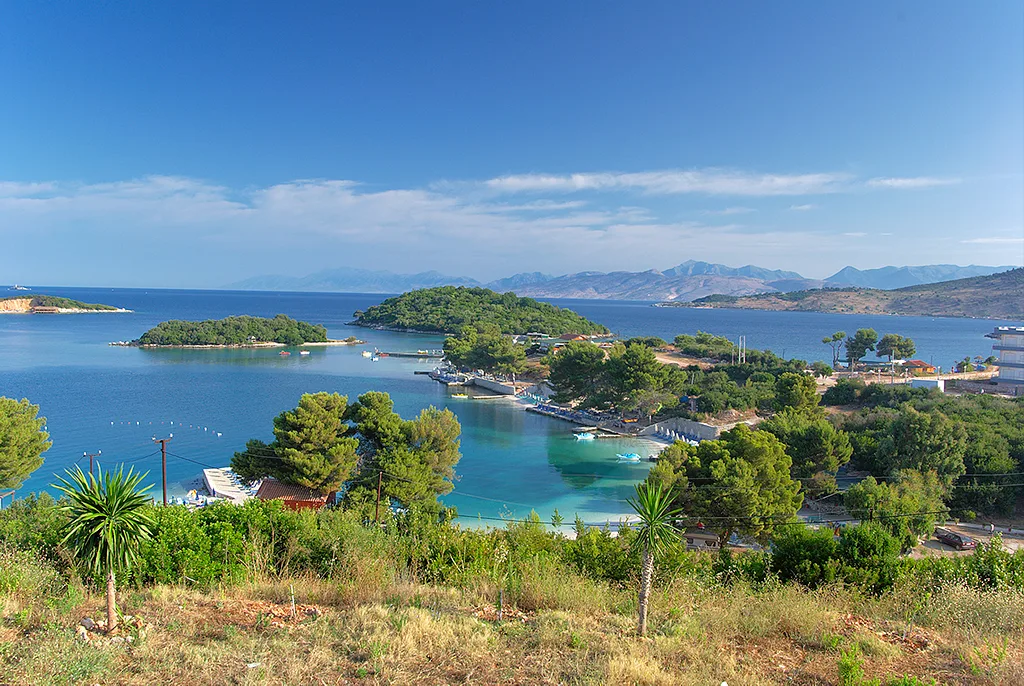
Ksamil is the beach that sold Albania to the world – a village at the very bottom of the country whose bay holds four small wooded islands, the nearest pair close enough to swim or paddle to, joined by a strip of sand. The water in the coves is the palest turquoise in the country, shallow and calm, and photographs of it are why half the Riviera’s visitors are here at all. As a piece of natural design it deserves the fame. The islands are protected as a nature reserve inside Butrint National Park, and the lagoon behind the village, Lake Butrint, is a working mussel-farming lake – Ksamil was a fishing and farming village long before it was a resort, and that older life still runs underneath the tourism.
Now the honest part. Ksamil’s beaches are not one long beach but a chain of small coves, and in season nearly every cove is run by a beach bar whose loungers and umbrellas cover the usable sand from the waterline back. You are not really choosing a spot; you are choosing an operator. In August the village is one of the most crowded places in Albania, the coves fill by mid-morning, music carries across the water, and the gap between the Instagram photograph and the Tuesday-in-August reality is wider here than anywhere else in the country. None of that makes Ksamil bad – the water colour is real, and a June or September morning in those coves is genuinely lovely – but it makes Ksamil a place to time carefully rather than a place to base yourself blindly.
The best way to do Ksamil is early or late in the season, or early in the day, and to treat the islands as the main event – swim or take a small boat out to the far pair, where the crowds thin because getting there takes effort. Combine it with the archaeology on the doorstep. The ancient city of Butrint, a UNESCO World Heritage site, lies just north of the village, and going there in the cool of the morning before a late swim is the single best day out in the far south. Of all the best beaches in albania for pure water colour, Ksamil still wins; for peace, it finishes near the bottom, and both facts belong in the same sentence.
Sarande as a Base, Not a Beach Holiday
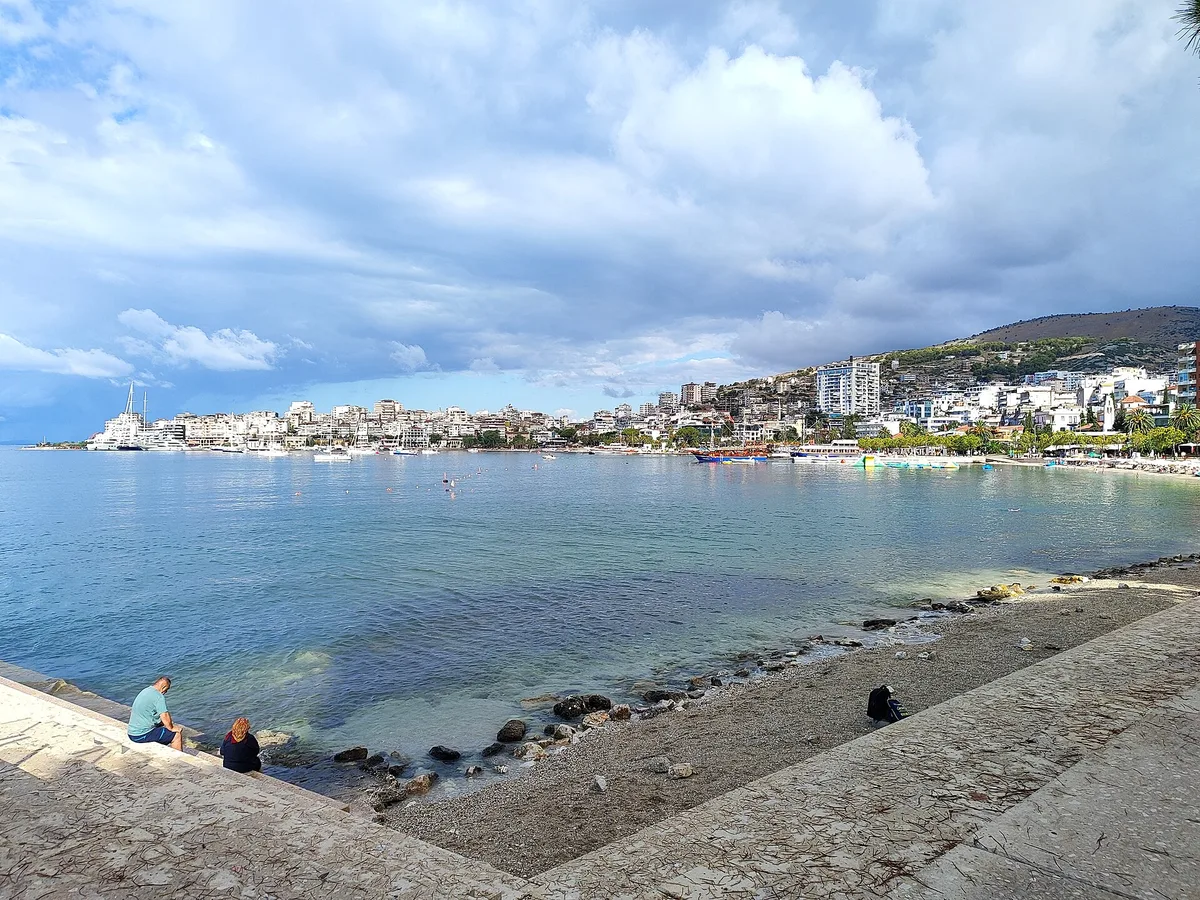
Sarande is the Riviera’s main town, the ferry port for Corfu and the base most visitors sleep in – and its own beaches are the weakest part of the package, which is worth knowing before you book a “beach holiday” here. The town wraps around a handsome bay, but the shore is a series of narrow pebble strips below the promenade, some of them small managed sections in front of cafes, with the harbour and boat traffic at one end. The water is clean enough and the sunset across to Corfu is lovely; it is simply not a beach you would cross a country for. People swim here the way city people swim anywhere – briefly, at the start or end of a day spent doing other things.
Treat Sarande as a logistics hub and it becomes excellent. From the town you can reach Ksamil and Butrint to the south, the Blue Eye spring inland, and the whole southern Riviera by road or by the excursion boats that run up the coast in season. The Corfu ferries dock here too, which makes the town the natural start or finish of a trip that pairs Albania with the Greek islands – and the view works in reverse, because from the water on the crossing, Sarande’s white amphitheatre of apartment blocks above the bay is the coast’s most urban sight. If you do swim in town, the strips towards the southern end of the bay and the small coves on the road out towards Ksamil are the better water; the central harbour end is for promenading, not bathing.
The promenade in the evening, when the town comes out to walk, is one of the pleasures of the south. Sleep here, eat here, organise here – then drive or sail to your actual beach. Judged as a base, Sarande is one of the most useful towns on the coast; judged purely as one of the best beaches in albania, it is a footnote, and the roundups that list it as a top beach without that caveat are not being straight with you.
Lukove, the Cove Most Road Trips Skip
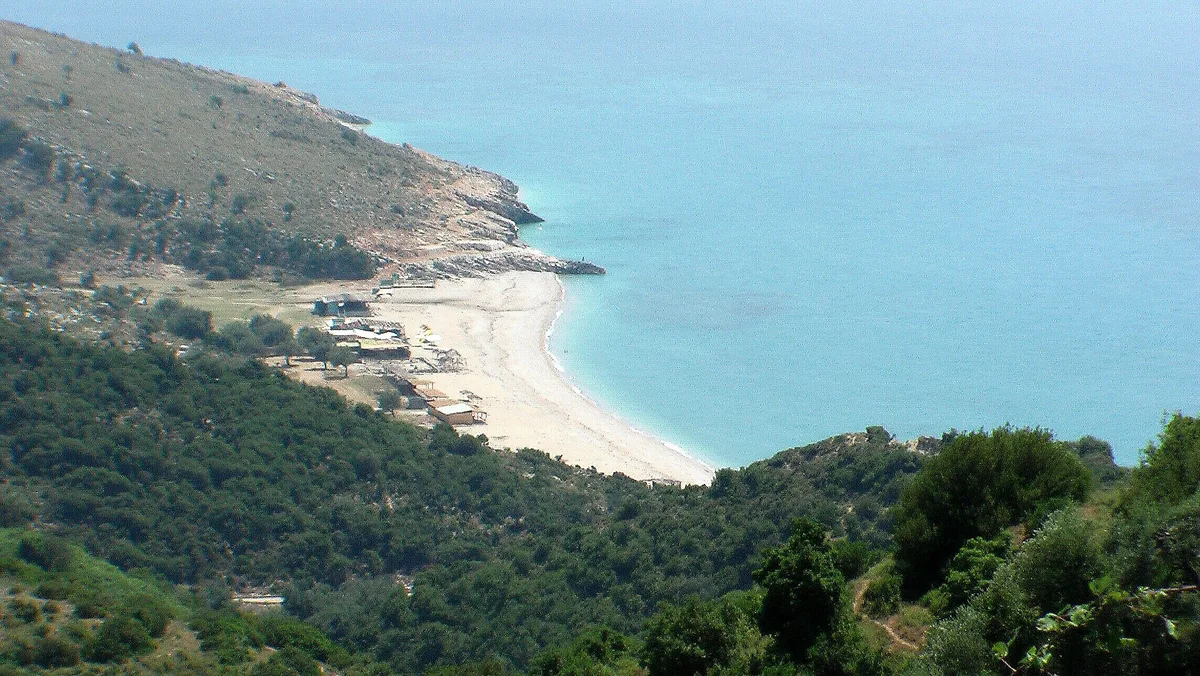
North of Sarande the SH8 climbs through olive country, and most traffic presses on towards Borsh and Himara without stopping at Lukove, the village whose beach sits in a white-pebble cove below the hill. That is precisely its value. Lukove beach – the main cove is often called Shpella – is a modest, pretty arc of pale pebbles with a few seasonal beach structures, clear Ionian water and, even in summer, a fraction of the crowd found an hour in either direction. There is no scene here, no line of clubs, and not much of anything to do except swim, eat simply and swim again, which is either the whole point or a dealbreaker, depending on you.
The downsides are practical rather than fatal. The detour down from the main road and the climb back cost time on a road-trip day, facilities are thin and seasonal – outside the summer weeks you may find the cove almost unserviced, so bring water and shade – and the beach is small enough that a single large group can change its character. Lukove also sits in the shadow of the coast’s habit of overselling every cove equally; it is not a hidden paradise, just a genuinely quieter version of the standard Riviera cove. Of the best beaches in albania for an unhurried day with a book, it is one of the easiest recommendations on the whole Ionian side – provided a quiet day is what you actually want.
Two extras reward anyone who does stop. The village above the beach is a proper old settlement of stone houses and olive terraces, worth the wander once the heat drops, and the next bay north, Kakome, is wilder still – a shore that spent the communist decades as a closed military area and is still reached only by boat or a rough track, so most days it belongs to the boats that anchor in it. Lukove is the version of that wildness you can simply drive to, which is rather the point of it.
Borsh, Seven Kilometres of White Pebble
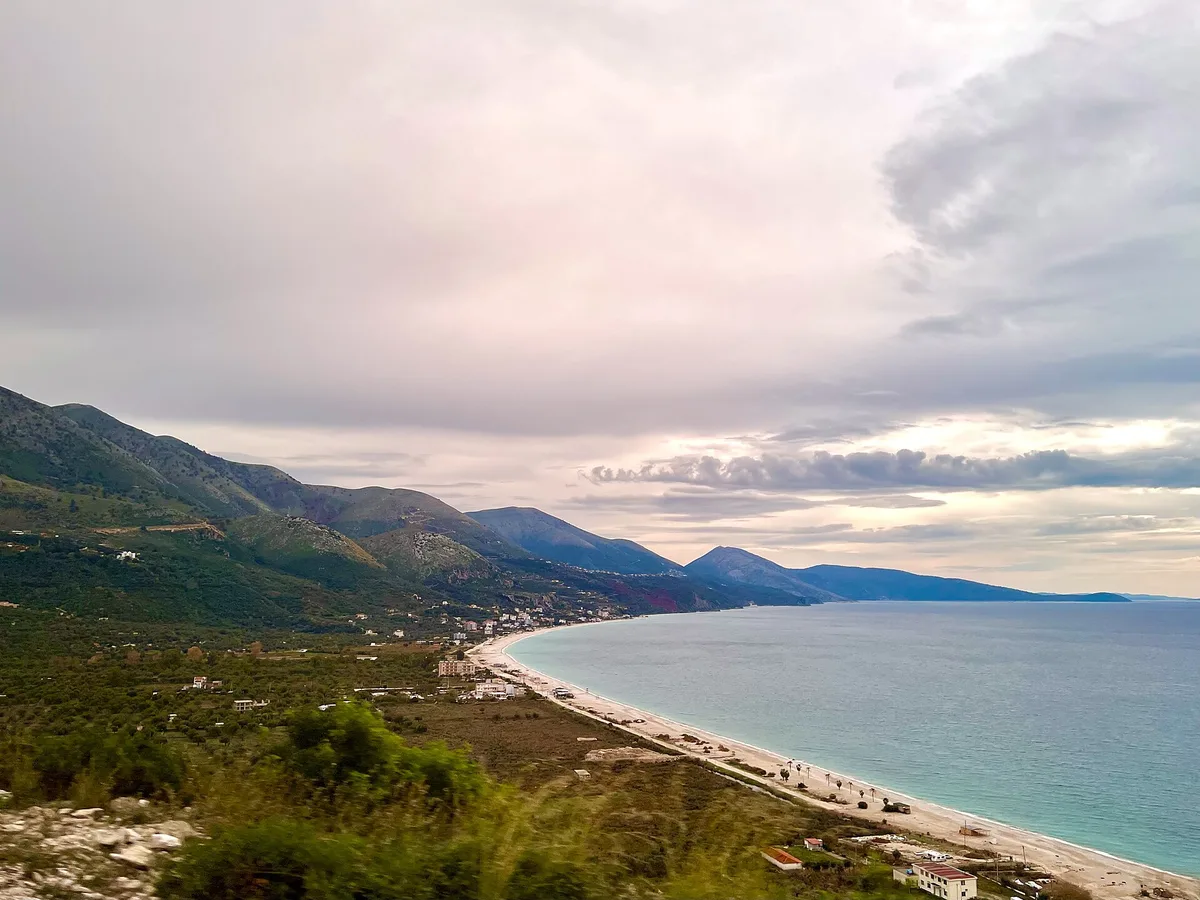
Borsh is the Riviera’s answer to overcrowding, because it is simply too big to fill. The beach runs for about seven kilometres – it is described by Albania’s own tourism authorities as the longest beach on the country’s Ionian coast – in one long, gentle curve of white and grey pebbles, backed by a flat plain of olive groves with a ruined castle on the hill above the village. Even in August, walk ten minutes from the busiest access point and the density drops away; walk twenty and you can have a handsome stretch of shore almost to yourself. The water is the same clear Ionian blue as everywhere on this coast, shelving over pebbles, and the scale of the place – mountains behind, sea in front, olives in between – gives it a calm the smaller coves cannot match.
The trade-offs come with the scale. There is very little natural shade, the pebbles are hot and hard underfoot by midday (swim shoes earn their place here), and the beach’s facilities are scattered in clusters near the access roads rather than spread evenly, so the quiet ends are quiet partly because there is nothing there – no bar, no shower, sometimes no other people, which is either idyllic or inconvenient. The village of Borsh itself sits slightly inland and uphill, so staying “at” Borsh beach means the newer strip along the shore road rather than the old village. Borsh rarely tops the beauty lists, because a long straight beach photographs less dramatically than a cove. For an actual full day of swimming with room to breathe, it is one of the best beaches in albania, and the regulars who return to the Riviera tend to be the ones who figured that out.
Qeparo and Himara, the Village and the Town
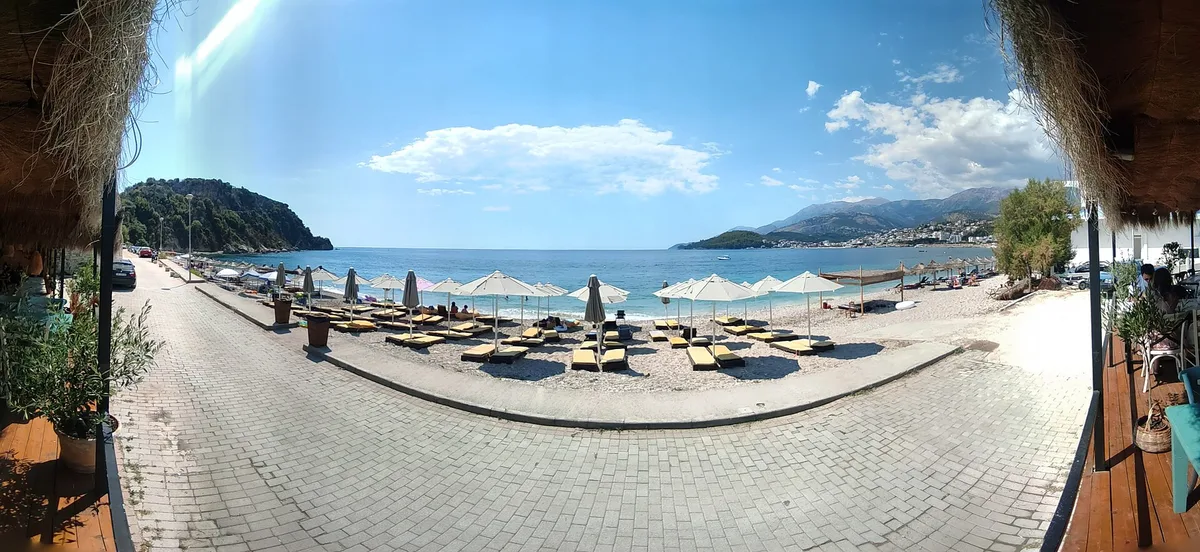
Qeparo and Himara, a few kilometres apart in the middle of the Riviera, make a natural pair – one a village that has kept its pace, the other the coast’s most liveable small town. Qeparo’s beach is a calm pebble shore below the lower village, with a rebuilt seafront promenade, a handful of places to eat and the old village of Qeparo sitting in the hills above, all stone and views, for an evening walk. The beach itself is gentle rather than spectacular – clear water, modest size, local families – and that is its charm. Development along this stretch has been argued about locally, and the new seafront will not be to every taste, but as a place to stay somewhere that still feels like a village, Qeparo is one of the Riviera’s better answers.
Himara is the bigger proposition – a real working town with a Greek-speaking heritage, a castle hill of its own, and not one beach but a string of them. The town beach curves along the bay in front of the promenade; Potami, just south, is the locals’ strip, with lounger rows and beach bars; and smaller coves continue in both directions. Having several beaches in walking distance is a genuine advantage no other Riviera base quite matches, because you can rotate with the wind, the crowd and your mood, and eat in a different place each night without touching a car. The honest downsides are that Himara’s town beaches are not the coast’s prettiest – the setting is handsome, the sand-and-pebble strips are ordinary – and in high season the town fills and the main bay gets busy and noisy in the way of all proper resort towns. Choose Himara as a base for a week and explore from it, rather than expecting one of the best beaches in albania to be sitting directly in front of your hotel, and it will serve you very well.
Porto Palermo, a Fortress With a Beach Attached
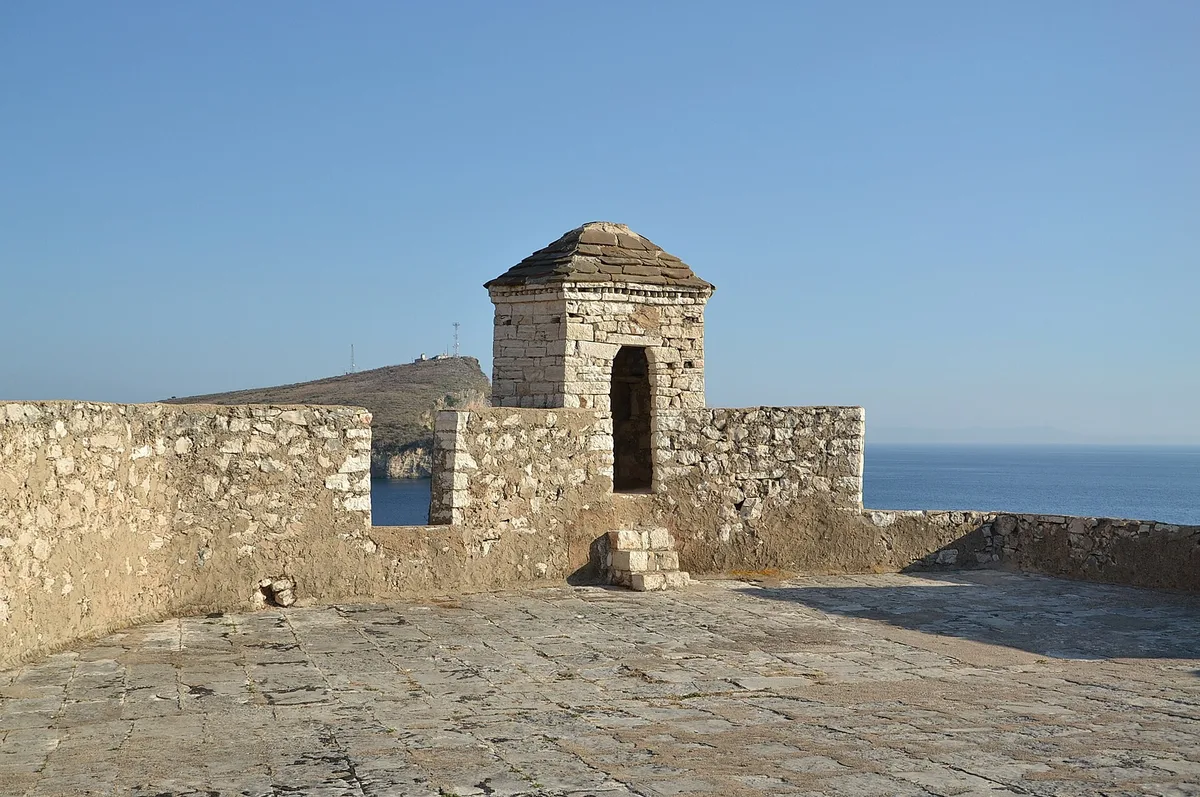
Between Qeparo and Himara the road rounds a deep bay, and on a small peninsula in the middle of it stands the most atmospheric sight on the Riviera – the triangular fortress of Porto Palermo, built by Ali Pasha of Yanina in the early nineteenth century (an inscription over the entrance dates it to 1804), with three round bastions and walls that drop to the water. The bay later served naval purposes through the communist decades, which is why this stretch stayed unbuilt while others filled with hotels, and the result is a beach stop unlike any other in Albania. You swim at the sandy isthmus that ties the peninsula to the mainland, in clear sheltered water, with a two-hundred-year-old fortress as your backdrop, then walk up and wander its cool vaulted interior.
As a beach, be clear-eyed. The isthmus strip is small – a modest patch of sand and pebble rather than a day-long lounging beach – and facilities are limited to what the season provides near the car park. You come here for the combination, history plus a swim, ideally as a stop between Himara and Borsh, and on that basis it is close to unmissable. Look across the bay while you are there – cut into its northern shore is a Cold War submarine tunnel, a vast dark doorway in the rock that is the other half of this bay’s story. Between Ali Pasha’s fortress and the communists’ submarine pen, Porto Palermo compresses two centuries of Albanian history into one swim, and no other beach in the country can offer anything like that double bill. People who arrive expecting one of the best beaches in albania in the lounging sense sometimes leave puzzled; people who arrive expecting a fortress they can swim under leave delighted. The bay’s shelter also makes it one of the more reliable swims on a breezy day, when the exposed west-facing beaches are chopping up.
Livadhi, the Long Bay North of Himara
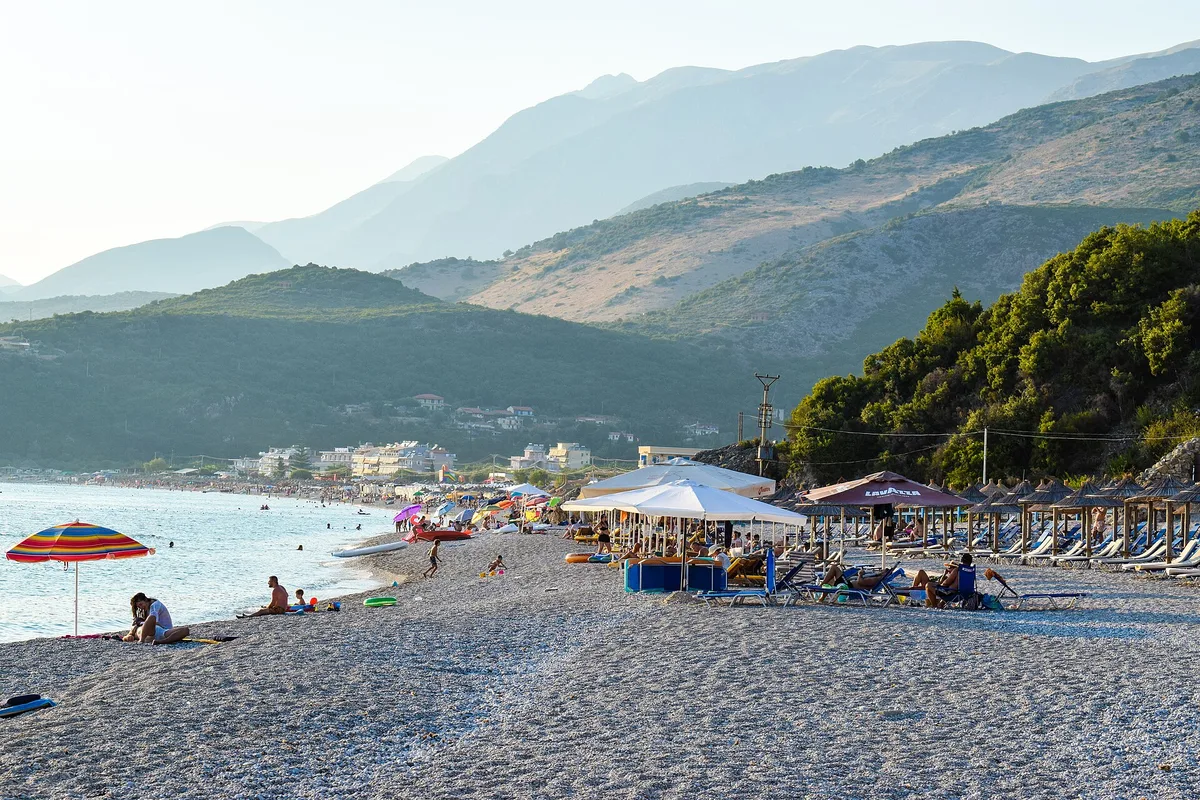
Just north of Himara the coast opens into Livadhi, a long, wide arc of grey pebbles that does something rare on the Riviera – it gives you a big beach without a big atmosphere attached. There are lounger rows and beach bars along the middle, campsites and simple places to stay behind the shore, and a road that runs the length of the bay, but the scale keeps everything diluted. The water is clear, the seabed shelves gently by Riviera standards, and the hills behind make the evening light last. Families who find Himara town beach cramped and Dhermi too pleased with itself often end up here and stay.
The compromises are the flip side of the calm. Livadhi’s dining and nightlife are limited compared with Himara, the pebbles are coarse enough that you will want something between your feet and the beach, and the bay’s openness means a windy afternoon has nowhere to hide. It is also, frankly, less beautiful than the famous coves – a working beach rather than a jewel. But as a base for three or four settled days, with Himara’s restaurants a short drive away and the northern Riviera within reach, Livadhi is one of the most sensible choices on the coast, and one of the best beaches in albania for travellers who measure a beach by how relaxed they feel at the end of the day rather than by how it photographs at noon.
Jale, the Small Bay With a Big Reputation
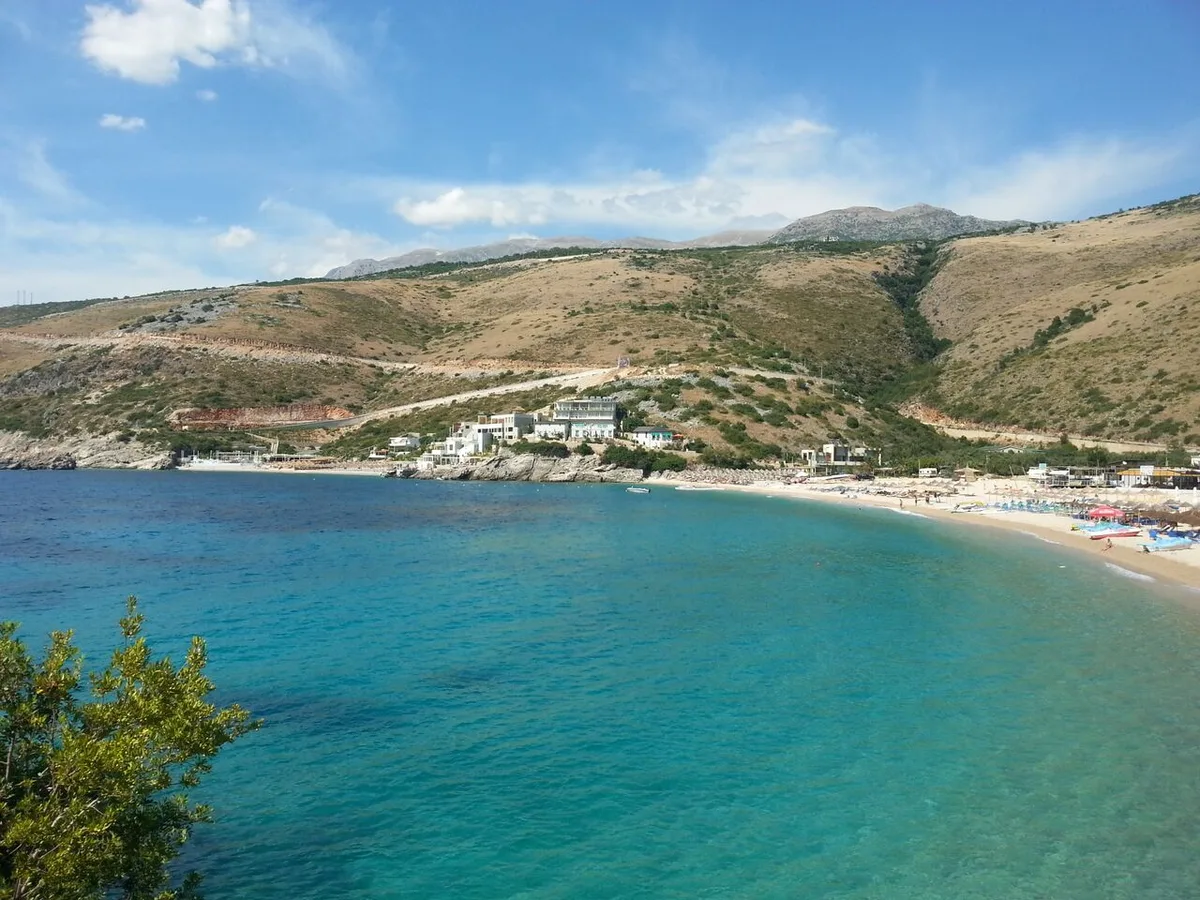
Jale is a single small bay below the village of Vuno, and for years it has carried a reputation out of proportion to its size – first as a backpacker and camping beach, now as one of the Riviera’s social addresses, with beach clubs and summer events drawing a young crowd from Tirana and abroad. The physical beach deserves the attention – a neat curve of fine pebble and sand under dry hills, with water of the intense blue-green that this middle stretch of the Riviera does best, and headlands at both ends for scrambling and jumping. On a June weekday, Jale is close to perfect.
The problem is arithmetic. The bay is small, the road down is a single winding lane, and in high season the loungers, the clubs and the day-trippers all compete for the same few hundred metres. Arrive late on an August morning and you may find there is effectively no beach left to have. The party reputation also cuts both ways – brilliant if that is your holiday, wearing if you wanted the quiet cove the photographs promised. Jale rewards timing more than any other beach on this list. Come in the shoulder months, or come early and leave when the crowd peaks, and you will understand the reputation; come at the wrong hour in the wrong month and you will wonder what the fuss was about.
There are two pressure valves when the main bay is full. Above the beach sits Vuno, one of the Riviera’s handsome old stone villages, all lanes and churches and views back down to the water – a fine place to wait out the midday crush. And a scramble north along the rocks brings you to a tiny cove the locals call the Aquarium, where the water over the rocks is so clear the name explains itself; it takes effort, holds a handful of people, and is everything the main beach is not. Neither valve changes what Jale is. They just mean a Jale day rarely has to be a write-off.
Dhermi, the Riviera’s Postcard Beach
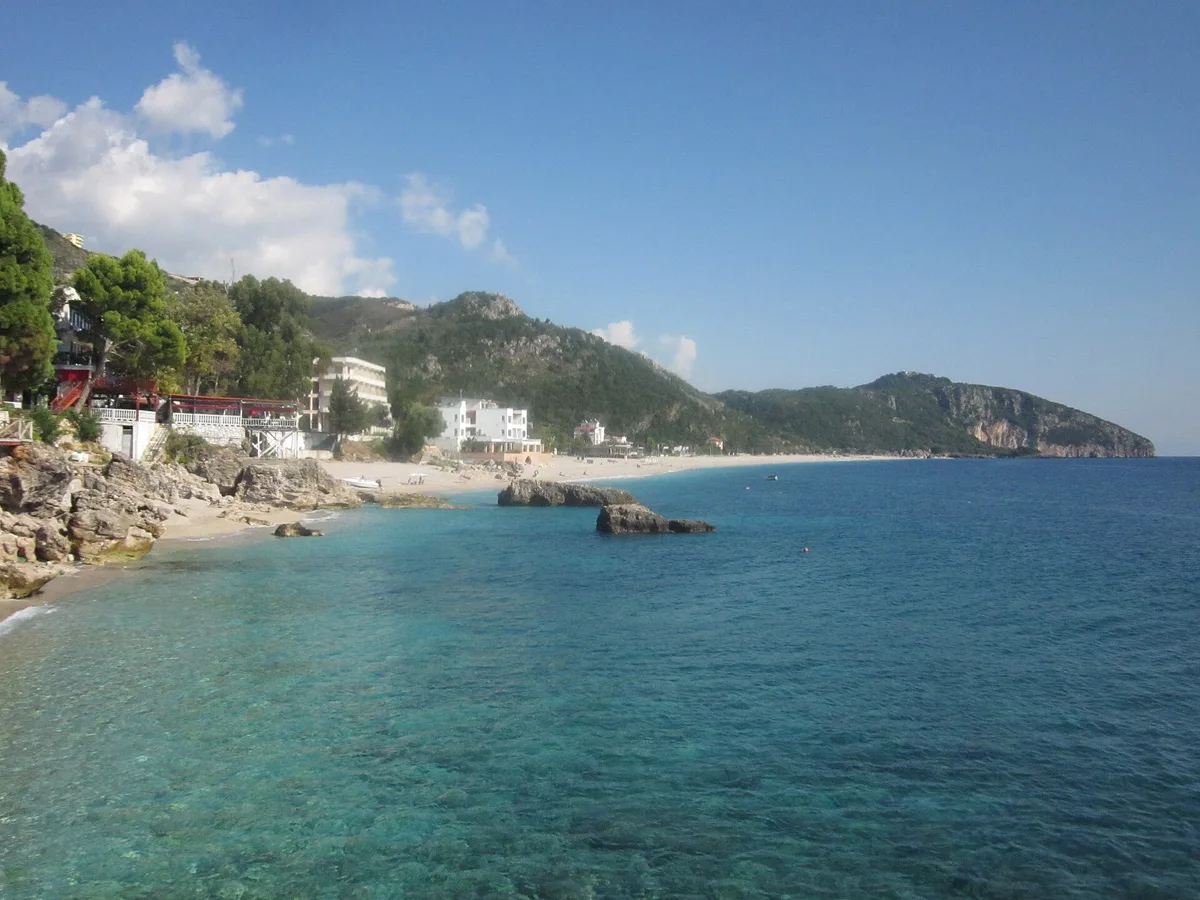
Dhermi is the beach the Riviera is marketed with, and unusually, the marketing undersells the setting. A long curve of white pebbles runs below the village that climbs the hill behind, the water shifts from pale turquoise at the shore to deep blue at the headland, and the whole bay has a brightness to it – white stone, white pebbles, hard Mediterranean light – that no photograph quite reproduces. The southern end is rocky and good for snorkelling, the middle is the social beach of clubs and loungers, and the northern end runs on towards Drymades. Of the best beaches in albania, Dhermi is the most complete package – scenery, water, places to stay, places to eat, a village with churches and old stone lanes above it – and it is the beach we would send a first-time visitor to if they could only see one.
Which is exactly why everyone else is there too. In high season Dhermi is the Riviera’s social capital, and the centre of the beach is a managed strip where the clubs set the terms; prices across the village rise to meet the demand in August in a way that surprises people who arrived expecting bargain Albania. The village above is steep – the walk back up in the heat is a real consideration, whatever your fitness – and parking near the shore is a daily negotiation. None of this cancels the recommendation. It just means Dhermi, like Ksamil, is a beach whose quality depends heavily on the calendar. In June and September it is close to unbeatable; in mid-August it is a very beautiful crowd.
Drymades, Dhermi’s Looser Other Half
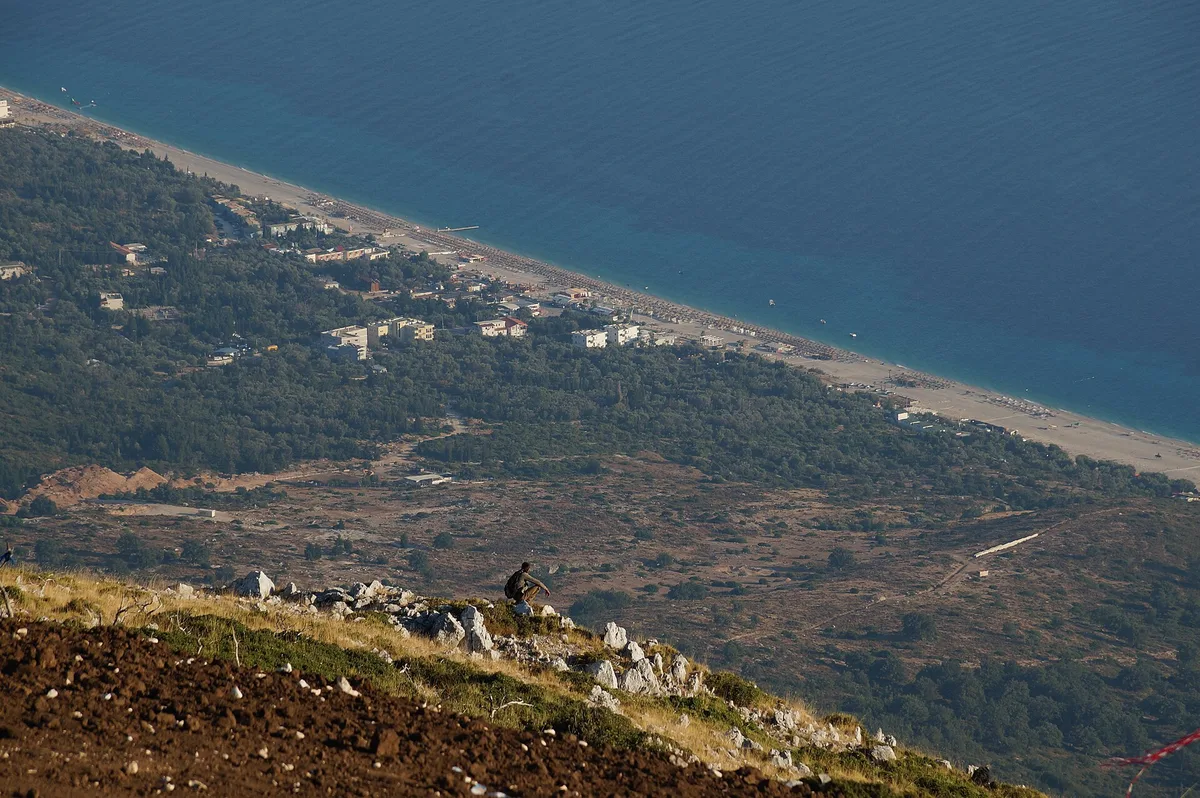
Walk north from Dhermi, around or over the rocks at the end of the bay, and the same shoreline continues as Drymades – a longer, straighter, looser strip of pebble and coarse sand backed by olive groves and a scattering of hotels, campsites and beach bars. Drymades has historically been the younger, cheaper-feeling, more improvised shore – the place of campsites and long evenings – while Dhermi did the polish. The water is the same, the sunset is the same, and the crowd is spread over more metres of beach, so the August pressure that can overwhelm Dhermi’s centre is noticeably easier to escape here. Head away from the central cluster of bars in either direction and the beach empties out.
Access is part of the appeal. A road winds down from the SH8 and from Dhermi village to the shore, so Drymades works as a base in its own right, not just a walk from its neighbour – you can sleep behind the beach, in anything from a campsite pitch under the olives to a full hotel, and never move the car for days. That self-sufficiency is exactly why the strip has grown so fast: it is one of the few Riviera beaches where a whole holiday can happen in one place without the daily negotiation of the coast road.
The honesty box for Drymades is about tone rather than quality. The centre of the strip is now lined with substantial beach clubs whose music and lounger grids define that section completely; development behind the shore has been rapid and not always beautiful; and the beach’s loose, campfire-era character survives mostly at its ends and out of season. It remains one of the best beaches in albania for groups and for anyone who wants Dhermi’s water with a bit more space and a bit less ceremony – just walk a few minutes from the middle before you judge it.
Palase and the Llogara Descent
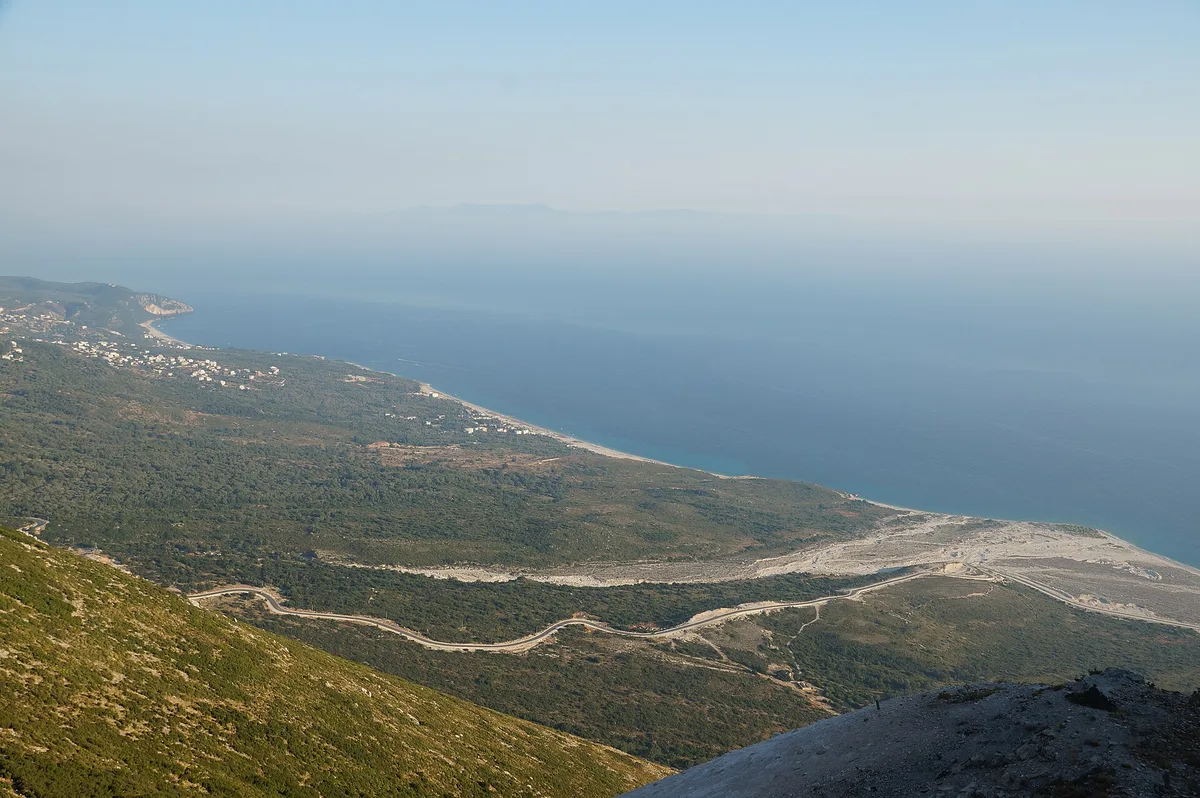
Every Riviera trip has a hinge, and it is the Llogara Pass – the SH8 climbs from the bay of Vlora through the national park (established in 1966, all pines and eagles) to a summit at 1,027 metres, then tips over and begins the famous descent, hairpin after hairpin, with the Ionian suddenly spread out below and the beaches of Palase and Drymades at the bottom of the view. Palase, the first beach the road reaches, is a wide fan of white pebbles where a mountain stream meets the sea, long enough to have distinct neighbourhoods – paragliders who launch from the pass land here, and their canopies drifting down are part of the beach’s theatre. The water is superb and the sense of arrival, after that descent, is unmatched anywhere on the coast.
Two honest qualifications belong with Palase now. The first is construction. A large resort development has been reshaping the back of the bay in recent years, and the photograph above – Palase in the foreground, Drymades beyond – also shows a shoreline in transition; the quiet, empty Palase of older guidebooks is not the whole story any more. The second is logistics. Since 2024 a road tunnel of about six kilometres has burrowed under the pass – opened that July, then run continuously since May 2025 – so through traffic can now bypass the summit entirely. That is good news for journey times and it leaves the old pass road to the sightseers, but it means the descent is a choice rather than a necessity. Make the choice. The pass, the paragliders and the first sight of Palase from above are the Riviera’s front door, and arriving through the tunnel is like entering a house through the garage. For route planning across the whole coast, our Albania itinerary for seven days builds Palase and the pass into a workable week.
Gjipe, the Beach You Earn on Foot
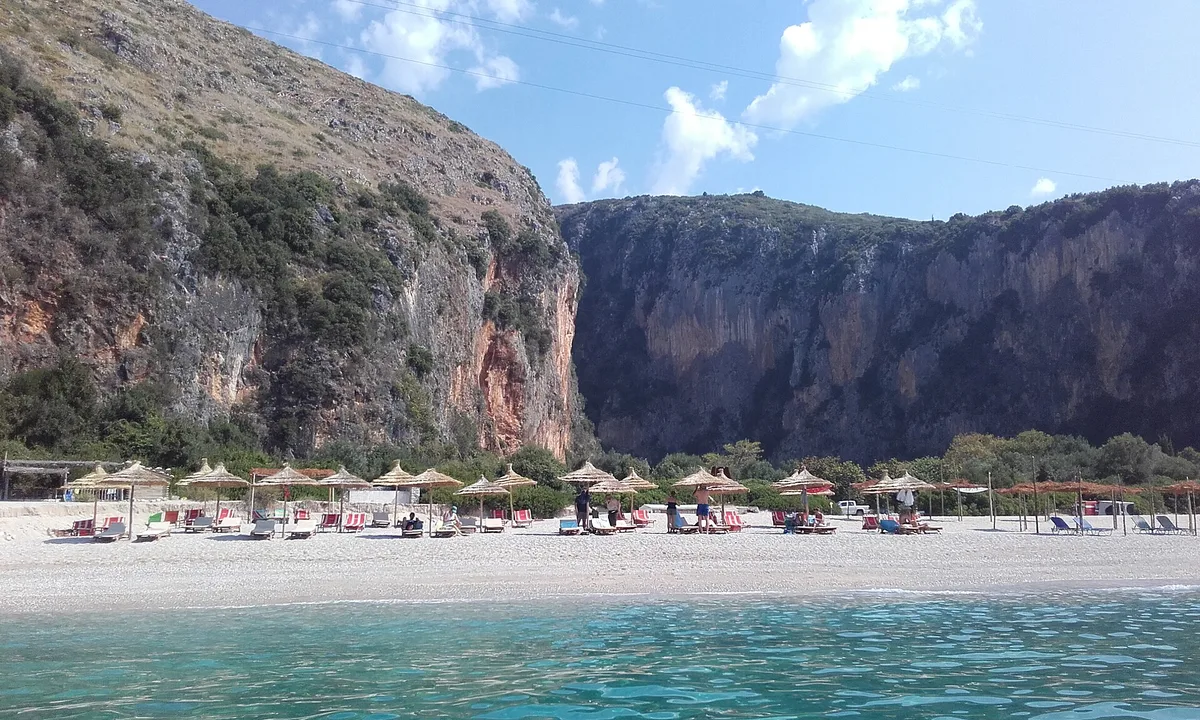
Gjipe is the beach this list would protect if it could protect only one. It sits at the mouth of Gjipe Canyon, a gorge roughly a kilometre long cut into the cliffs between Dhermi and Himara, and there is no road to it – none. You park on the clifftop, or get dropped at the trailhead, and walk down a rocky path for somewhere between twenty and forty-five minutes depending on your pace and the heat; or you come by boat or water taxi from Himara or Dhermi and step off into the shallows. The beach at the bottom is a pale crescent of pebble and sand between cliff walls, with the green slot of the canyon behind it, a seasonal hut or two in summer, and water as clear as any in Albania. The walk is the filter. It keeps the numbers down, keeps the development at zero, and keeps Gjipe feeling like a discovery even though everyone has heard of it.
Earning it means accepting the terms. There is no shade worth mentioning at midday until the cliffs take the sun, everything you need – water above all – has to be carried down and the rubbish carried back up, the path is rough enough that beach trolleys and wobbly knees will struggle, and in August even Gjipe now fills its central stretch by lunchtime, because the secret is thoroughly out. Go early, walk to the ends of the crescent, and walk up into the canyon itself for its shaded narrows if the heat allows. Of the best beaches in albania, Gjipe is the one that still asks something of you – and pays you back at the highest rate.
The Karaburun Boat Beaches
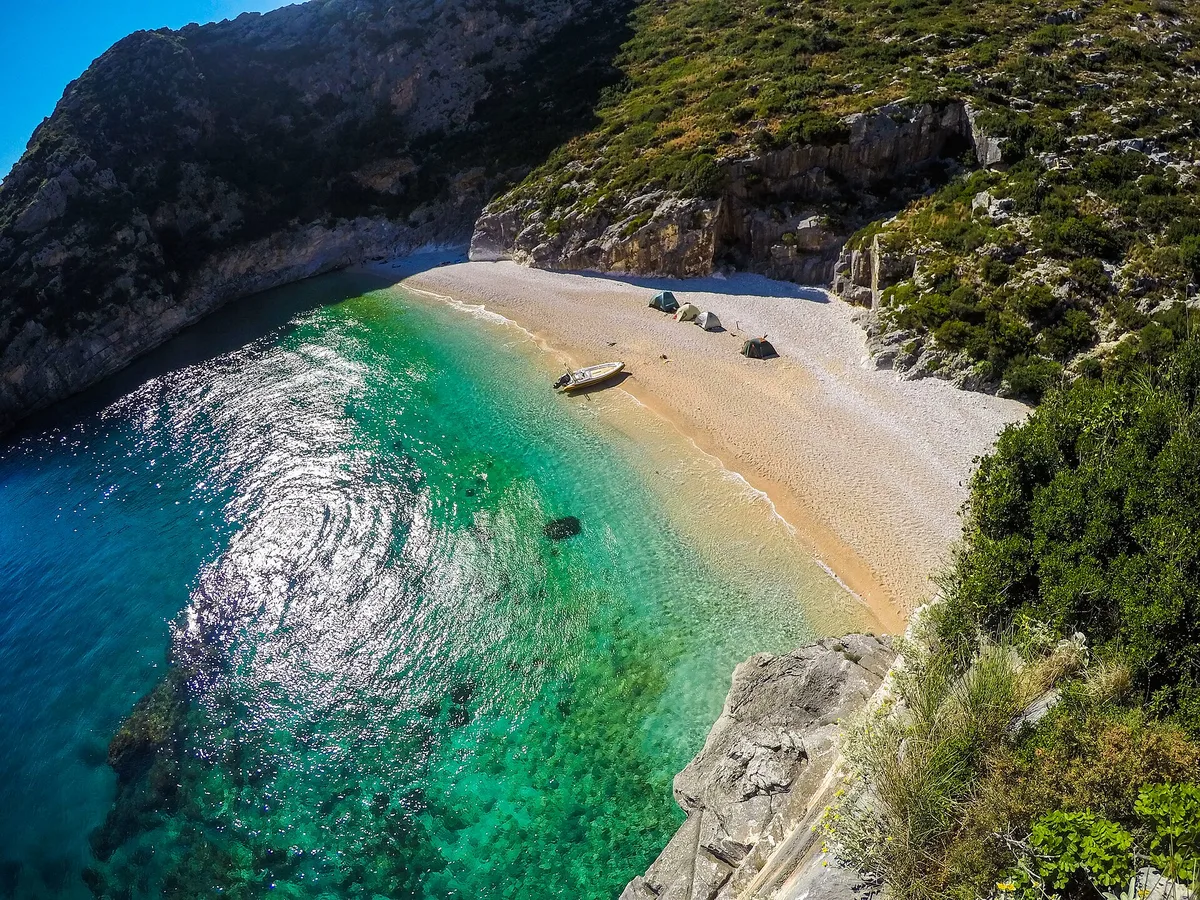
West of Vlora, the Karaburun peninsula runs out into the sea as a long, dry, uninhabited ridge – and its western shore is the wildest coastline in Albania. Together with Sazan Island it forms the Karaburun-Sazan Marine National Park, proclaimed in 2010 and covering some 12,570 hectares, the country’s first and only marine park. There is no road along that western shore at all. The beaches – a string of white-pebble coves cut into the cliffs – exist only for people who arrive by water, on the boat trips that run out of Vlora in season, or with their own boat and their own supplies. Grama Bay is the famous one, an ancient harbour whose cliff walls carry inscriptions left by passing sailors from Greek and Roman times onwards; Dafina and Bristan are among the other bays the boats work, and most tours also nose into the Haxhi Ali Cave, a sea cave big enough to take a boat inside.
Understand the mechanism before you romanticise it. A Karaburun beach day is a boat product – a group tour with set stops and set swimming times, or a private hire at private-hire prices, in the qualitative sense that it costs like one. The coves themselves have nothing – no bar, no shade structure, no jetty in most cases, nowhere to buy water – and if the wind picks up, boats do not run and the whole coast closes for the day. Within those terms, though, this is the clearest water and the emptiest shoreline in the country, and the one part of the coast where “untouched” is a description rather than a slogan. Of the best beaches in albania, these are the only ones that cannot be reached by the August crowds at all – the sea itself is the gatekeeper.
Vlora and the Lungomare
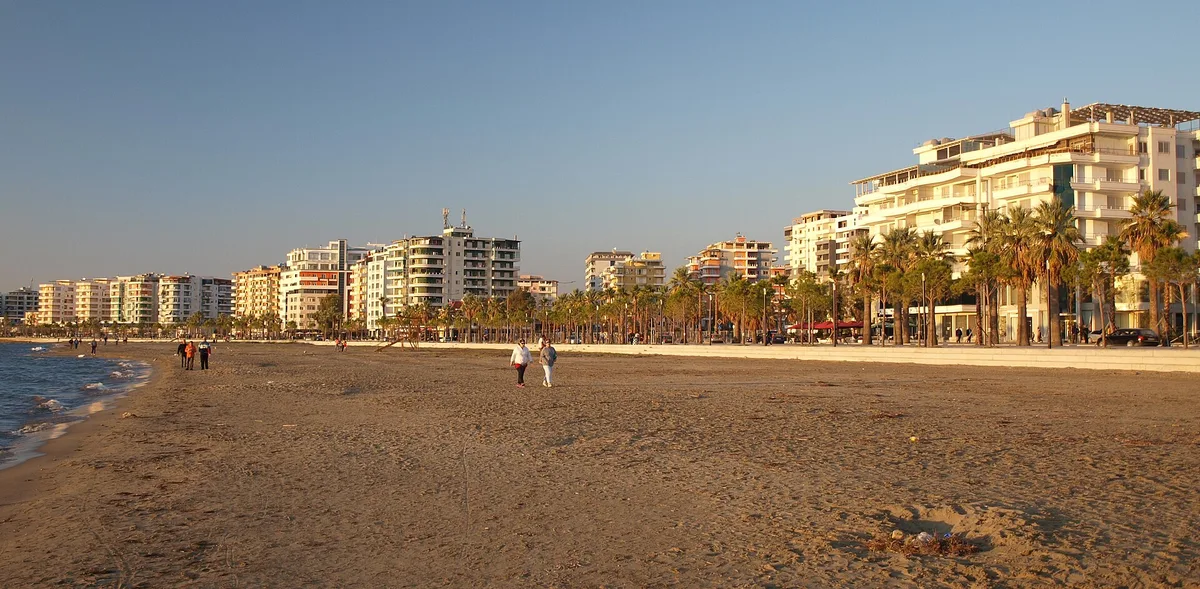
Vlora is where Albania’s two seas meet and where the country’s modern history started – the independence city of 1912 – and its beach is a city beach in the full sense. Along the Lungomare, the rebuilt seafront promenade, a wide strip of grey sand runs for kilometres south of the centre, backed by palms, cafes and apartment blocks. Locals use it the way city people use a front room – the evening walk (the xhiro) is the main event, the swim is fitted around it – and as a visitor you will either enjoy slotting into that rhythm or find the whole thing too urban to count as a beach holiday. The water is the southern Adriatic – sandier, shallower and less limpid than the Ionian an hour south – and the bay can carry the murk of a working port city after rough weather.
Vlora’s real beach value is as a hinge. It is the gateway to the Karaburun boats, the start of the Llogara climb, the easiest overnight between the Riviera and the centre, and it has other shores of its own – the older beach quarter and the coves towards the tunnel road and Zvernec lagoon. Judge the Lungomare as a promenade with swimming attached and it is one of the pleasantest urban seafronts in the country; judge it against the best beaches in albania purely as a beach and it is a respectable also-ran. Both judgements are true, and knowing which one you are making is the whole trick of Vlora.
Durres, the People’s Resort Beach
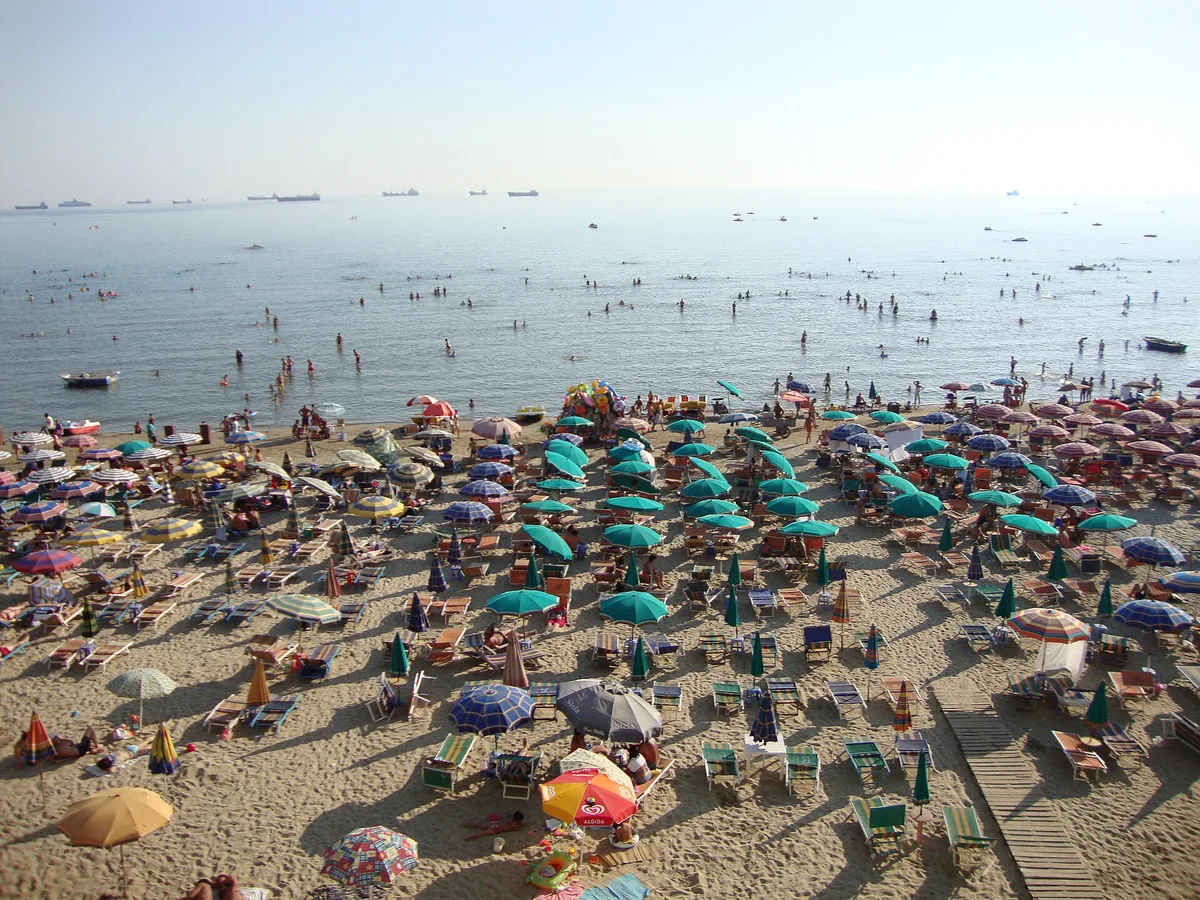
Durres is the beach Albanians actually go to, in numbers no Riviera cove will ever see, and a roundup that skips it for not being pretty enough is not describing the country. The city is Albania’s main port and the closest sea to Tirana, and south of the centre the sandy shore runs for more than ten kilometres in one effectively continuous resort strip – Durres beach (Plazh), then Golem, then on towards Kavaja – lined with hotels, apartment blocks, umbrella concessions and every fairground pleasure of a popular seaside. The sand is real sand, the water is shallow and warm-feeling, shelving so gently that children can play far from shore, and the whole apparatus – the vendors, the music, the evening crowds – is the authentic Albanian beach holiday, the one the diaspora flies home for every August.
The honest debits are equally real. This is the busiest and most built-up coast in the country; the water is the silty Adriatic, at its least clear near the port; the architecture along much of the strip is undistinguished; and in high season the umbrella grid leaves little unclaimed sand. Visitors chasing the Ionian’s clarity will be disappointed, and should not come here expecting it. But Durres has things the Riviera cannot offer – a proper ancient city behind the beach, with a Roman amphitheatre a short walk from the shore, the easiest access in the country, and a resort economy priced for domestic families rather than for foreigners, in the sense that everything here is pitched at the local market first. If your list of the best beaches in albania means “best for an easy family week near the capital”, Durres has an argument no pebble cove can answer.
Golem and Spille, the Centre Learns to Share
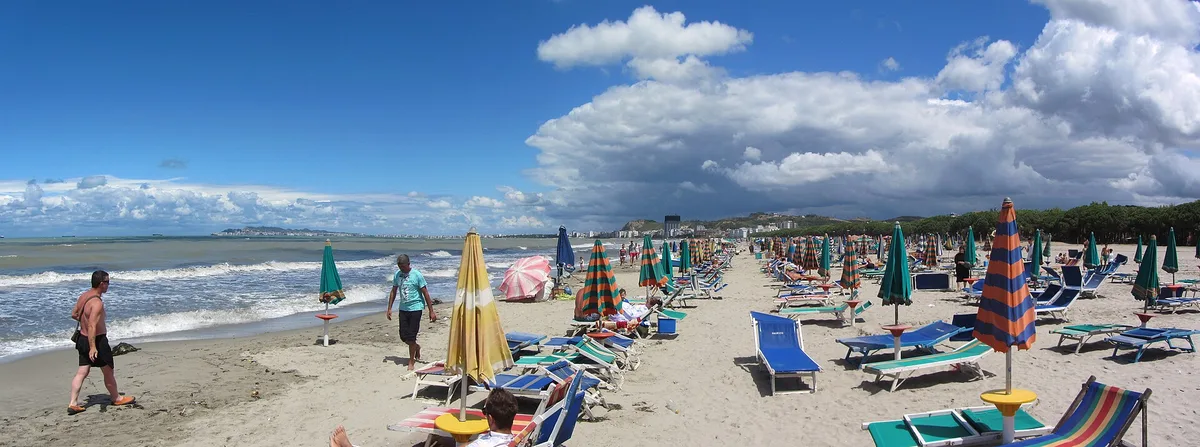
Golem, about ten kilometres south of Durres along the same bay, is the resort strip with the pressure turned down a notch – the same wide sand and gentle shallows, a long line of hotels and umbrella concessions, but a slightly slower, more residential feel, popular with families from Tirana and Kosovo who rent apartments for weeks rather than days. Everything said about the Durres shore applies here in a milder dose – the same silty-green water on a windy day, the same concession grid, the same glorious evening promenade energy – and the honest summary is that Golem is not a different beach from Durres so much as the same beach in a lower gear. For our wider ranking of the country’s highlights beyond the shore, see Best Places to Visit in Albania, where the coast meets the mountains and the old towns.
South of the Kavaja rock, Spille is where the centre’s coast changes character. The beach is broad, soft sand again, but behind it stands a pine forest, and the combination – shade a few steps from the water, a rural edge, a mostly local crowd – makes Spille feel like a different country from the hotel strip twenty minutes north. It is the centre’s beach for people who find Durres too much – campers, families with their own kit, anyone who wants to put a towel under trees at midday. The debits are the absence of frills (limited accommodation and dining, and you will want a car), water that shares the Adriatic’s limits, and a beach that can feel almost empty out of season to the point of melancholy. In season, though, Spille is one of the easiest recommendations in this entire list – the Adriatic’s best answer to the charge that its coast has no quiet left.
Shengjin, the North’s Own Resort
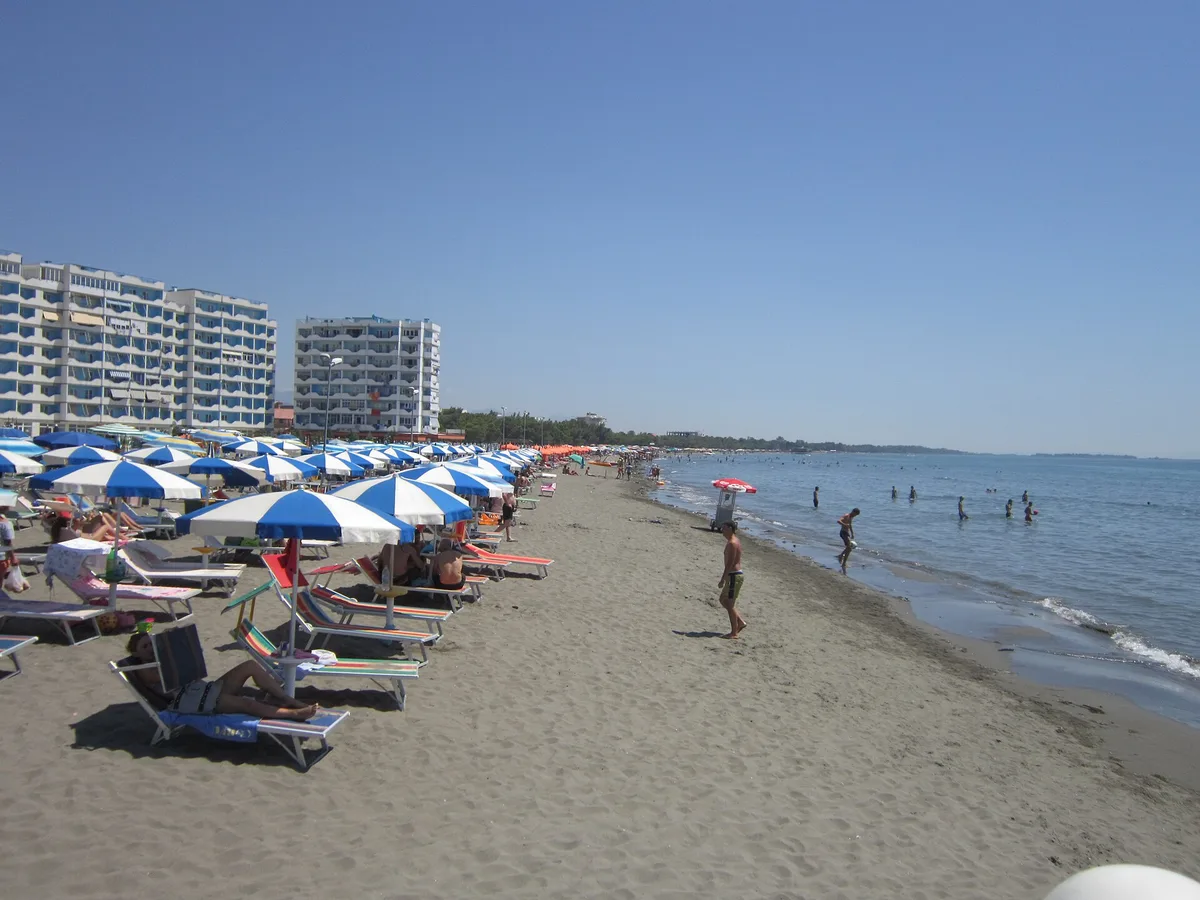
Shengjin, the small port town about seven kilometres from Lezhe, is where the northern third of Albania goes to the sea. It is the country’s northernmost seaport, and its town beach is a long strip of grey sand fronted by apartment hotels and umbrella rows, shallow Adriatic water, and a crowd that in summer is heavily Kosovan as well as local – the north’s holiday, run on northern terms. The beach is perfectly serviceable rather than beautiful, the town has a working-port edge alongside the resort strip, and nobody would fly across Europe for Shengjin alone. That is not the test. The test is what it anchors – the base for the far north’s coast, with the Kunë-Vain-Tale lagoon and wetlands just south of town for birdlife and empty shores.
Head the other way, south of the town, and the shore changes mood completely. The Kune-Vain-Tale lagoon system spreads behind a long, low sand spit – reeds, shallow channels, birdlife, and stretches of beach that see fishermen and families with their own umbrellas rather than concessions. It will not suit anyone who wants their beach serviced, and the lagoon mouths deserve the same current-awareness as any river shore, but as an antidote to the apartment strip it is minutes away and genuinely wild in feel. A Shengjin stay that only sees the town beach has read half the leaflet.
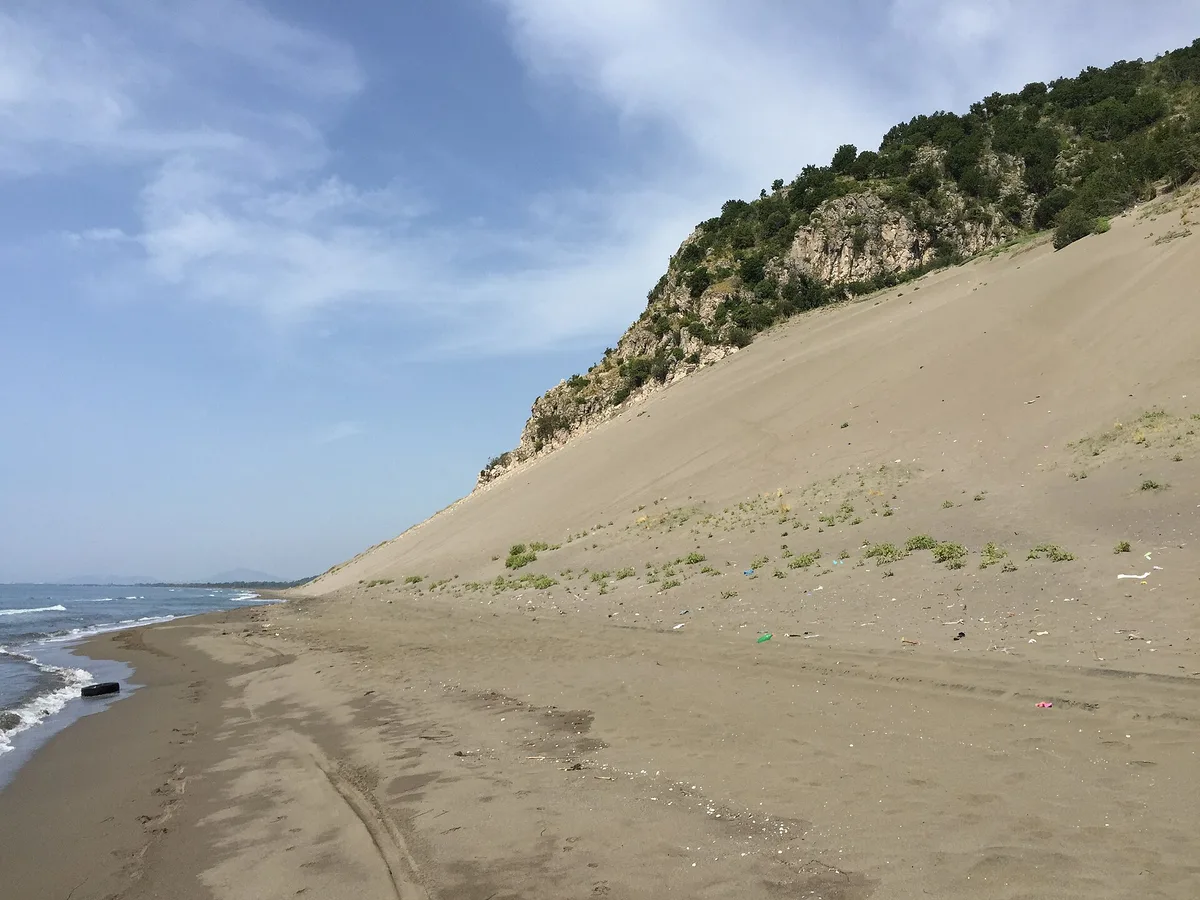
Shengjin also holds the north’s strangest beach sight. A few kilometres north of the town beach stands Rana e Hedhun – the name means “thrown sand” – a huge dune that the wind has piled against the hillside, a slope of bare sand pouring down towards the shore that people climb and slide and photograph against the sea. It is the kind of feature no brochure invented, and on a Shengjin stay it is the excursion everyone remembers. Of the best beaches in albania, Shengjin’s town strip is a supporting act – but as the gateway to a north that most visitors never reach, it earns its place on the list.
Velipoja, the Last of the Big Sand
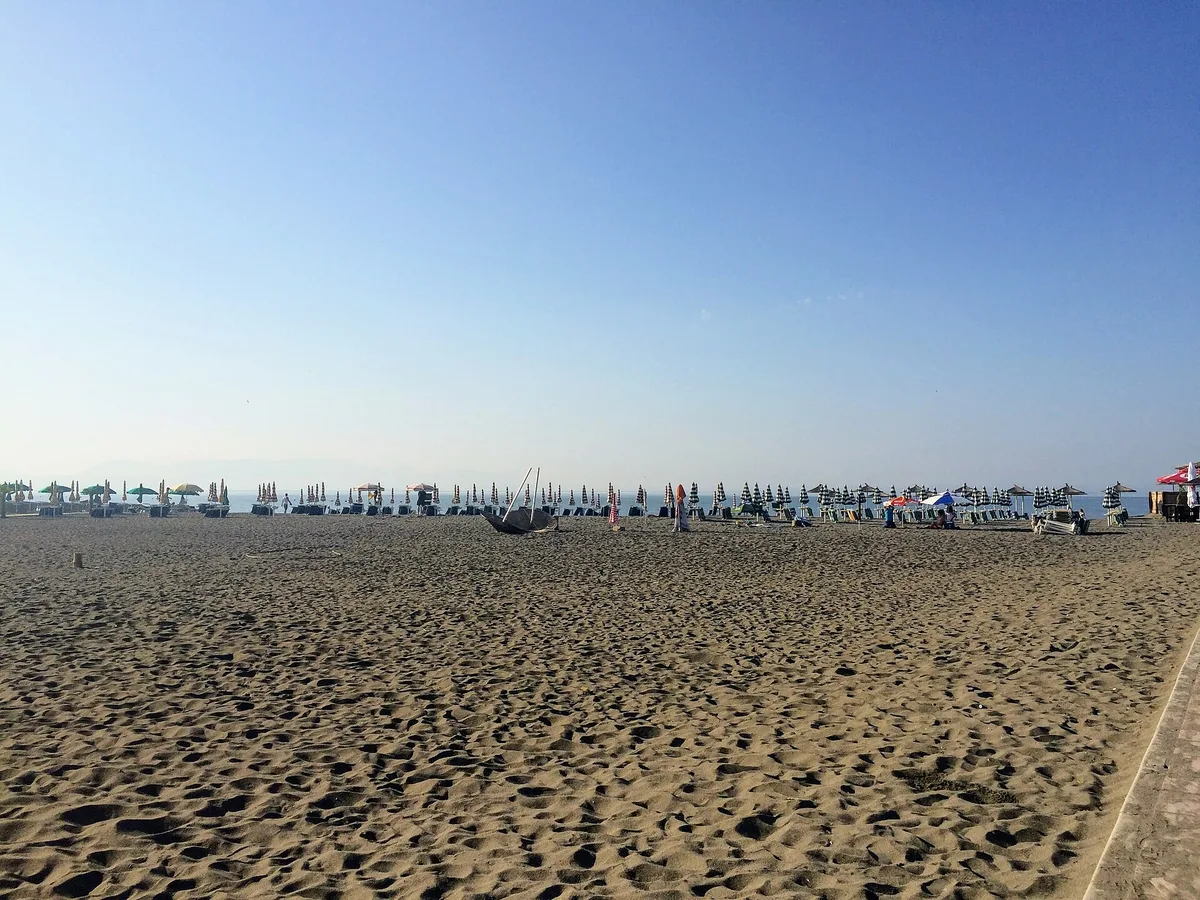
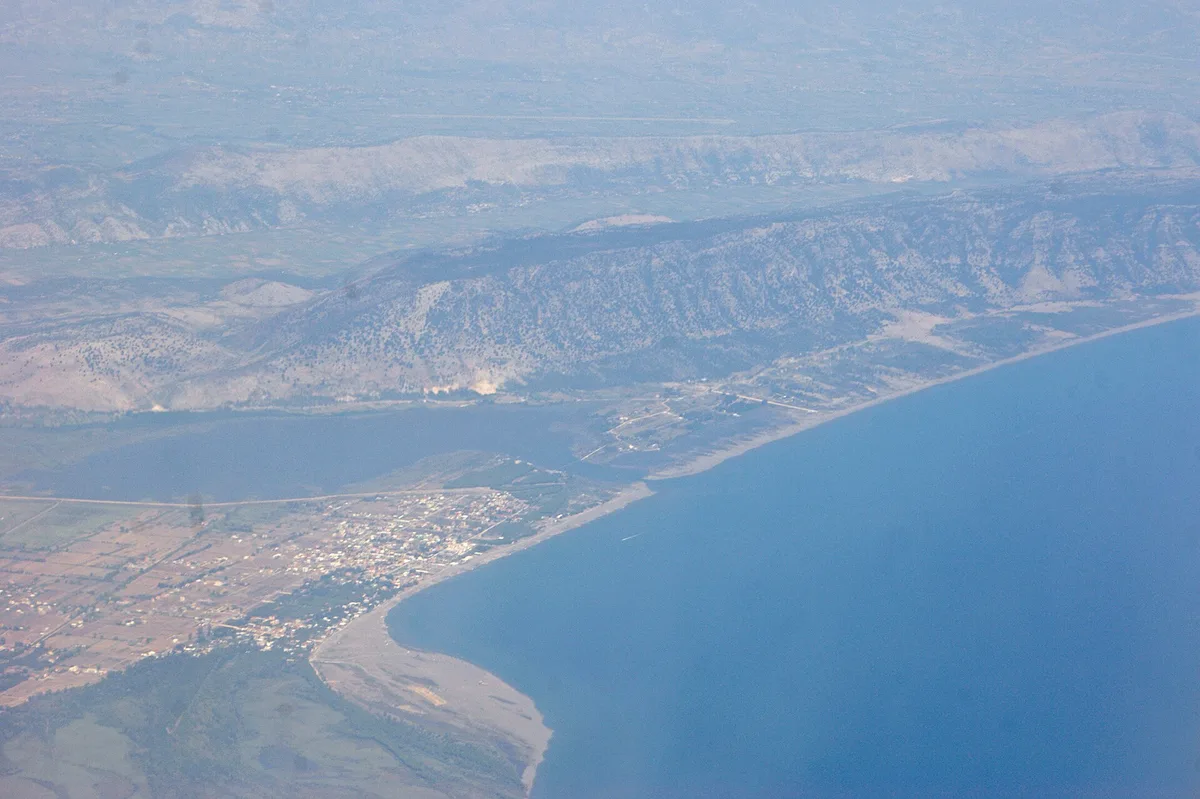
The coast ends, in the north, at Velipoja – a village southwest of Shkoder beside the Buna river delta and the Viluni lagoon, inside a protected landscape of water and reedbeds. Albania’s national tourism agency calls it one of the largest sandy beaches in the country, and official descriptions put the wider Velipoja coast at some fourteen kilometres long and up to two hundred metres wide at its broadest – figures that, even allowing for brochure generosity, describe something you feel the moment you arrive. The main developed strip is a few kilometres of hotels and beach bars; beyond it, in both directions, the sand just keeps going. The sand itself is darker than the south’s – fine, grey-brown, rich in the minerals that local tradition credits with curative powers, a claim repeated in the village with complete sincerity and best enjoyed as tradition rather than medicine.
Velipoja’s appeal is space and shallows – warm, gently shelving water, room for children to range, and a beach that can absorb its August crowd the way Borsh does, by sheer size. Its debits are real, though. The Buna’s mouth is a working river delta, and currents near the river mouth and the lagoon channels deserve proper respect – swim in the guarded central areas, not at the wild ends near moving water. The resort strip itself is modest and local in character, nightlife is thin, and the water shares the Adriatic’s silt. What Velipoja offers instead is the end of the road – a big, unpretentious, family beach at the top of the country, with Montenegro just beyond the river. As a final entry in the best beaches in albania, it is the counterweight to Ksamil – proof that the country’s beach story was never only about the famous south.
Choosing Your Beach, and Your Month
Choose by traveller type first and by month second, and the best beaches in albania sort themselves out quickly. Families with small children belong on the Adriatic – Durres and Golem for the full resort apparatus near Tirana, Spille for the same shallows with pines and quiet, Velipoja for the biggest space of all – because the Ionian’s pebbles and quick drop-offs are genuinely harder work with a toddler. Couples with a car belong on the Riviera, based in Himara or Dhermi, beach-hopping by day – Borsh for space, Gjipe for the adventure, Porto Palermo for the story. Travellers without a car should think in boat trips and bases – Sarande for the south’s excursion network, Vlora for Karaburun. Party people get Jale and Dhermi in season; solitude people get Lukove, the far ends of Borsh and Drymades, and a Karaburun boat on a weekday. Snorkellers and strong swimmers belong in the Ionian’s clear water, full stop.
The month matters as much as the map. The swimming season runs roughly from late May to October, with the sea at its most inviting from June to September. June and September are the connoisseur’s months on the Riviera – the water is warm, the coves are open for business, and the crowds are a fraction of August’s. July is busy but manageable almost everywhere. August is the national holiday month for Albania and for its diaspora, and for Italy across the water – every beach in this article is at its fullest, its loudest and its most expensive-feeling then, and the famous coves are at their least recognisable. May and October are for walkers and optimists – the Ionian can be glorious and empty, but many beach businesses are shut and the sea is a bracing choice rather than a given. If your dates are fixed in August, weight this list towards the big beaches – Borsh, Drymades, Velipoja, Spille – where size absorbs the crowd, and do the famous small coves as early-morning raids.
The Honest Downsides of an Albanian Beach Summer
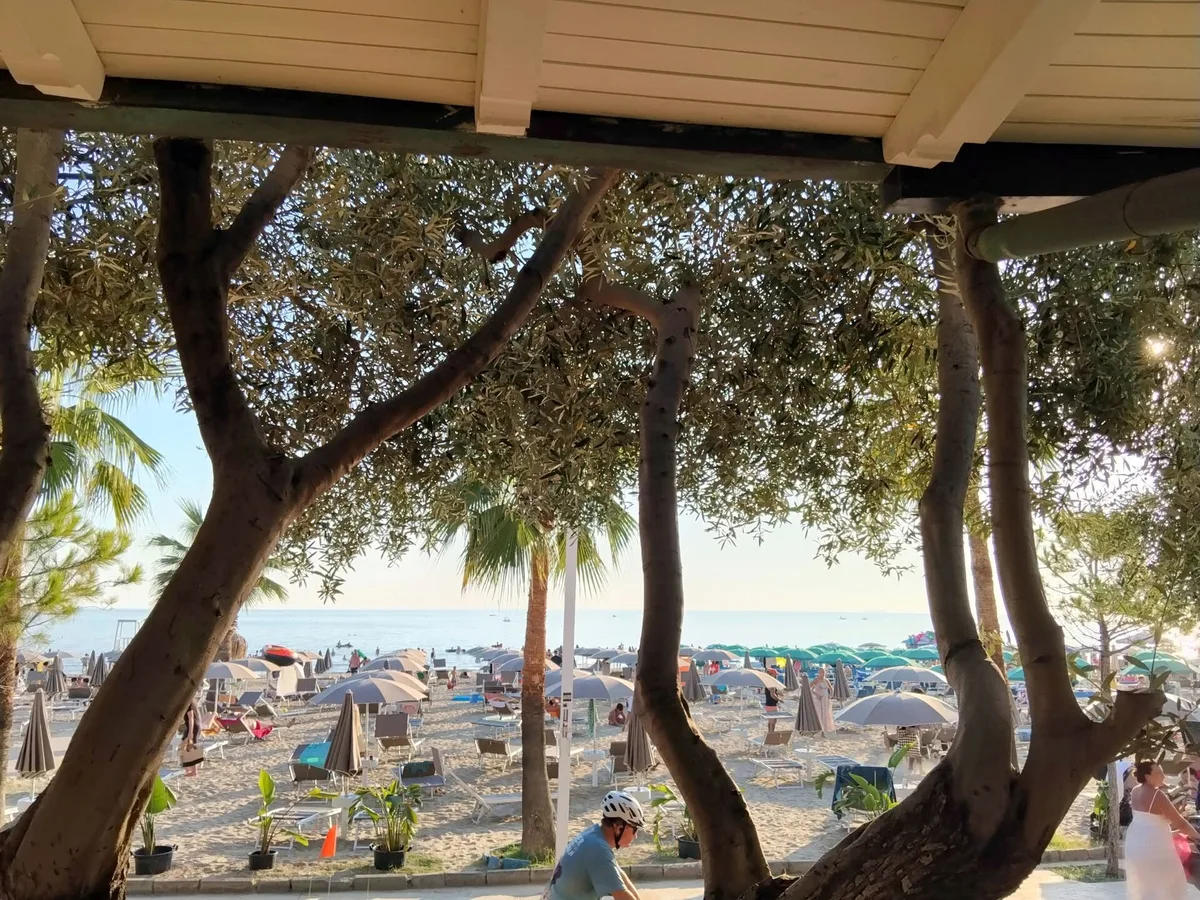
Four honest warnings apply to almost every beach in this article, and a guide that omits them is selling you something. The first is the lounger economy. On most managed beaches, the usable strip in season is laid out as concession rows – an umbrella and two loungers as a single rented unit – and the genuinely free space is what remains at the edges, the ends and the less fashionable stretches. Albanian beaches are public in principle and you may put your own towel down, but in the famous coves the free remainder can be small and stony. Budget and plan for the lounger model in July and August, and treat the ends of long beaches as your free territory.
The second is August itself – traffic, noise, prices that climb in the famous villages, and beaches that fill by mid-morning; it is not a reason to avoid Albania, but it is a reason to pick big beaches or small months. The third is development. The coast is being built on at speed – most visibly at Palase, but in apartment blocks and beach clubs the length of both shores – and some of what is rising is excellent and some of it is not, often on adjacent plots. The fourth is the Riviera road. The SH8 is paved and safe by mountain-road standards, but it is narrow, winding and slow, clogged in summer by exactly the traffic its scenery attracts; journeys take longer than the map promises, passengers prone to car sickness should sit in front, and nobody should plan a Riviera day around three distant beaches. None of these downsides cancels the coast’s appeal. All four are simply the difference between the brochure and the place – and the place, honestly described, is still one of the Mediterranean’s great bargains in the broadest sense.
Frequently Asked Questions About Albania’s Beaches
What is the nicest beach in Albania?
It depends what “nice” is doing in the sentence. For scenery and water in one frame, Dhermi; for a beach that feels like an expedition, Gjipe; for the famous turquoise shallows, Ksamil outside August; for a family with small children, the answer is not on the Riviera at all but at Spille or Velipoja. Anyone who gives you a single name without asking about your trip is guessing.
Are the best beaches in albania sandy or pebbly?
Both, divided by geography. The Ionian Riviera in the south is overwhelmingly pebble – white pebble at Ksamil, Borsh and Dhermi, coarser grey pebble at Livadhi and Drymades – with the reward of exceptionally clear water. The Adriatic centre and north are sand, from Vlora’s Lungomare through Durres and Golem to Shengjin and Velipoja, shallower and murkier. Swim shoes are the Riviera’s essential purchase.
When is the best month for an Albanian beach holiday?
June and September, for the combination of warm sea, open businesses and bearable crowds. July is fine almost everywhere. August is the peak of everything, including prices and tempers. The season’s shoulders – late May and early October – suit walkers and the crowd-averse, with the caveat that many beach operations are closed.
Do you have to pay to use the beaches in Albania?
The beaches are public; the furniture is not. In season, most of the prime strip on managed beaches is a grid of rented umbrella-and-lounger units run by the beach bar or hotel behind it, and that rental is the real cost of a beach day in the famous places. Free space exists at the ends of long beaches, on unmanaged stretches and out of season – the further you walk, the freer it gets.
Can you swim to the Ksamil islands?
The nearest pair of islets sits just offshore – close enough that strong swimmers do swim out and many more paddle or take a pedalo or small boat – and the two nearest are joined by a sand strip. The islands are a protected nature reserve within Butrint National Park, so treat them as look-and-swim rather than a place to settle for the day, and never attempt the farther crossings on a whim; boat traffic and distance make those a boat trip.
Where is still quiet in August?
The big beaches absorb people – the far ends of Borsh, Drymades away from its centre, Spille under its pines, Velipoja beyond its strip. The Karaburun coves stay empty because boats control the numbers, and Lukove stays calm because the road trip skips it. And the north has its own odd wonder – Rana e Hedhun, pictured above, the giant wind-built dune near Shengjin, which almost nobody on the Riviera circuit ever sees.
The Short Version of the Best Beaches in Albania
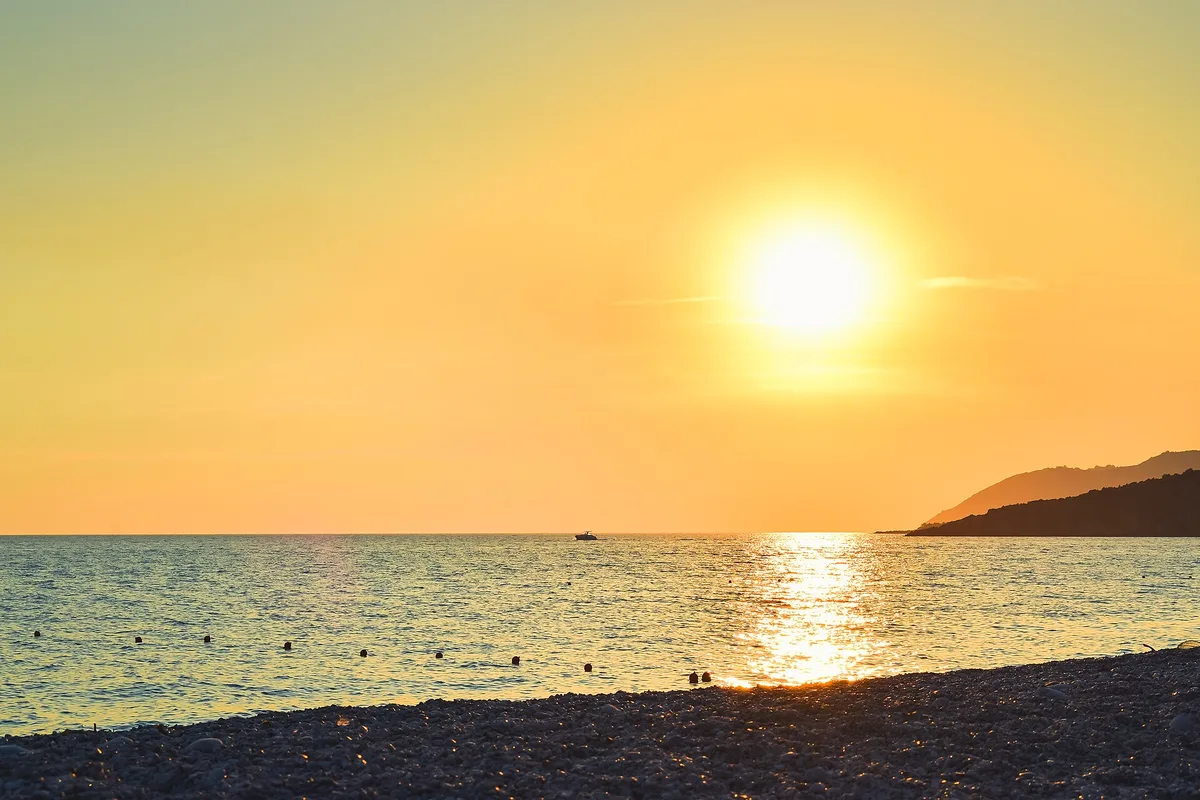
If you read nothing else, read this. The best beaches in albania come in two families – the clear, pebbly, mountain-backed Ionian Riviera in the south, and the wide, shallow, sandy Adriatic in the centre and north – and picking the right family matters more than picking the right beach. In the south, Dhermi is the complete package, Gjipe is the adventure, Borsh is the space, Himara is the base, Ksamil is the postcard to time carefully, and the Karaburun coves are the boat-only wilderness. In the centre and north, Durres is the people’s resort, Spille is its quiet pine-backed answer, Shengjin is the north’s own strip with a giant dune attached, and Velipoja is the biggest sand in the country at the end of the road.
Go in June or September if you possibly can; in August, choose size over fame. Rent the lounger in the famous coves and walk to the free ends of the long beaches. Carry swim shoes for the Riviera and patience for its road. And build one non-beach day into any southern trip – Butrint’s ruins in the morning and a late swim afterwards is the best single day the coast offers. Albania’s beaches are not a secret any more, and the honest problems – crowds, clubs, construction – travel with the fame. But twenty beaches in, this coast still gives you more variety per kilometre than almost anywhere else in the Mediterranean, and on the right beach in the right month, it still feels like a discovery.