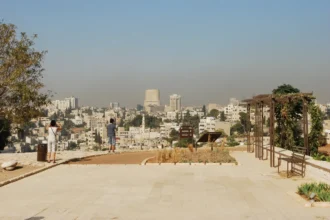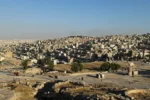
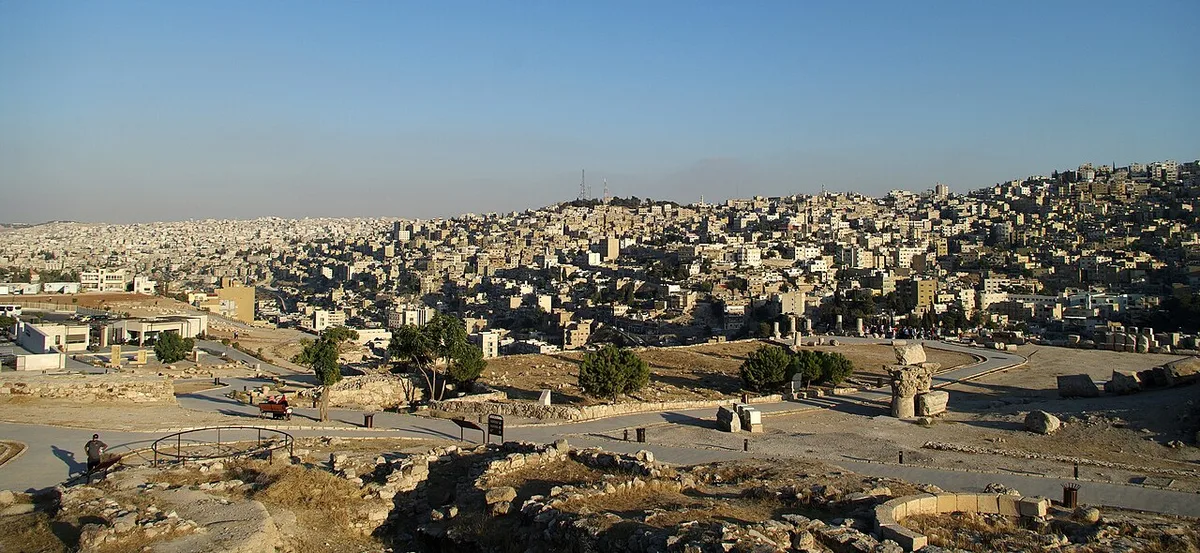
Amman confuses first-time visitors for one simple reason – it is not one city arranged around a centre, but a string of hilltop neighbourhoods that grew together, and where to stay in Amman means choosing a hill before it means choosing a hotel. The old city sits in the valleys and on the slopes of the east: the Balad’s souks, the Roman Theatre, the Citadel on its summit. The newer city climbs west through a chain of roundabouts – the famous Circles – into districts of glass towers, malls and embassy streets. Between the two lie the characterful middle hills, Jabal Amman and Jabal al-Weibdeh, where most of the capital’s cafes, galleries and stone houses are found. Two travellers can both sleep “in Amman” and have almost nothing in common: one wakes above a market street to the smell of bread and coffee, the other in a tower district that could be anywhere in the world.
So this guide is organised the way the decision actually works – by area, not by property. It names no rates, prints no prices and recommends no specific hotels, because where to stay in Amman is first a question of geography: which side of the east-west divide, how steep your street, how far from the sights you will actually visit, and what your evenings are supposed to look like. Each district below gets the same treatment – what it feels like, who it suits, who should skip it, and the honest catch that booking photographs leave out. If you are still deciding how Amman fits into a wider Jordan route, read this alongside our Jordan travel guide, which sets the capital in the shape of the whole trip.
One piece of orientation before the districts. Amman’s hills are not a metaphor. Streets tilt, staircases substitute for roads, and a hotel that looks two hundred metres from a sight on the map may be a twenty-minute climb in practice – or a five-minute taxi ride around a one-way system. The second is that the city’s social geography runs downhill in price and uphill in polish: the Balad is the cheapest and most intense place to sleep, the western districts the smoothest and most expensive in structure, and the middle hills the compromise most first-time visitors end up happiest with. Keep those two facts in mind and the sections below assemble themselves.
A word on what this guide deliberately leaves out, because it shapes how to use it. Where to stay in Amman changes less from year to year than the properties themselves do – hotels rebrand, guesthouses open in restored houses, a new tower joins the western skyline – but the hills do not move, and neither do the souks, the Circles or the airport road. District advice ages slowly and property advice ages fast, so this page invests in the layer that lasts: once the area is right, the booking platforms’ recent reviews are a better guide to the individual building than any article, this one included, can honestly be.
Where to Stay in Amman at a Glance
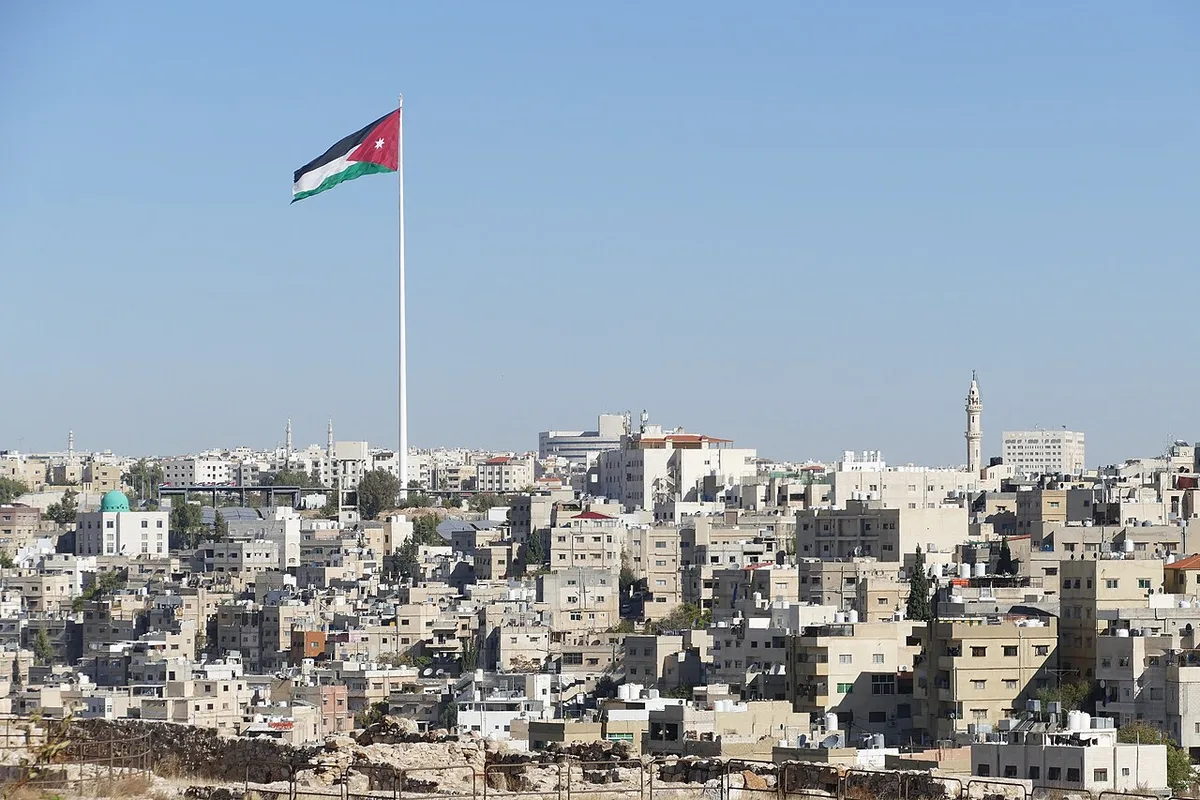
Read the table as a map before it is a ranking. Where to stay in Amman divides into three bands: the old east (the Balad and its hills), the characterful centre (Jabal Amman, Weibdeh), and the modern west (Abdali, Sweifieh, Abdoun and the Circles). Almost every mistake travellers make here is a band mistake – booking the west for atmosphere, or the Balad for quiet.
| Area | Best for | The honest catch |
|---|---|---|
| Downtown and the Balad | Sightseeing on foot, markets, the lowest-cost beds in the city | Noise, traffic and steep lanes; evenings are cafes, not nightlife |
| Jabal Amman and Rainbow Street | Cafes, character, walkable evenings, mid-range comfort | Sloping streets; parking is a contest; lively on weekend nights |
| Jabal al-Weibdeh | Quiet, galleries, a local residential feel | Fewer places to stay; a climb or taxi ride to almost everything else |
| Abdali | Modern hotels, the Boulevard, business trips | New and polished but short on old-city atmosphere |
| Sweifieh and Baraka | Shopping, restaurants, longer stays | A district of streets and malls, not sights; you taxi to the old city |
| Abdoun and the Circles | Space, quiet, embassies, premium comfort | Residential and spread out; nothing is a stroll away |
| The airport side | Dawn flights, one-night stopovers | Not a base for seeing Amman at all |
Two patterns are worth seeing before the detail. First, Amman rewards choosing for your evenings, not your mornings: the sights are scattered across all three bands anyway, so you will taxi or climb to them wherever you sleep, but the street outside your door at eight in the evening is yours alone. Second, the hills flatten every distance estimate. Build your choice around the walk you will do twice a day – back up to your bed, usually uphill, often with shopping or tired children in tow – and the right district usually names itself.
First, Understand the Hills – How Amman’s Shape Decides Your Stay
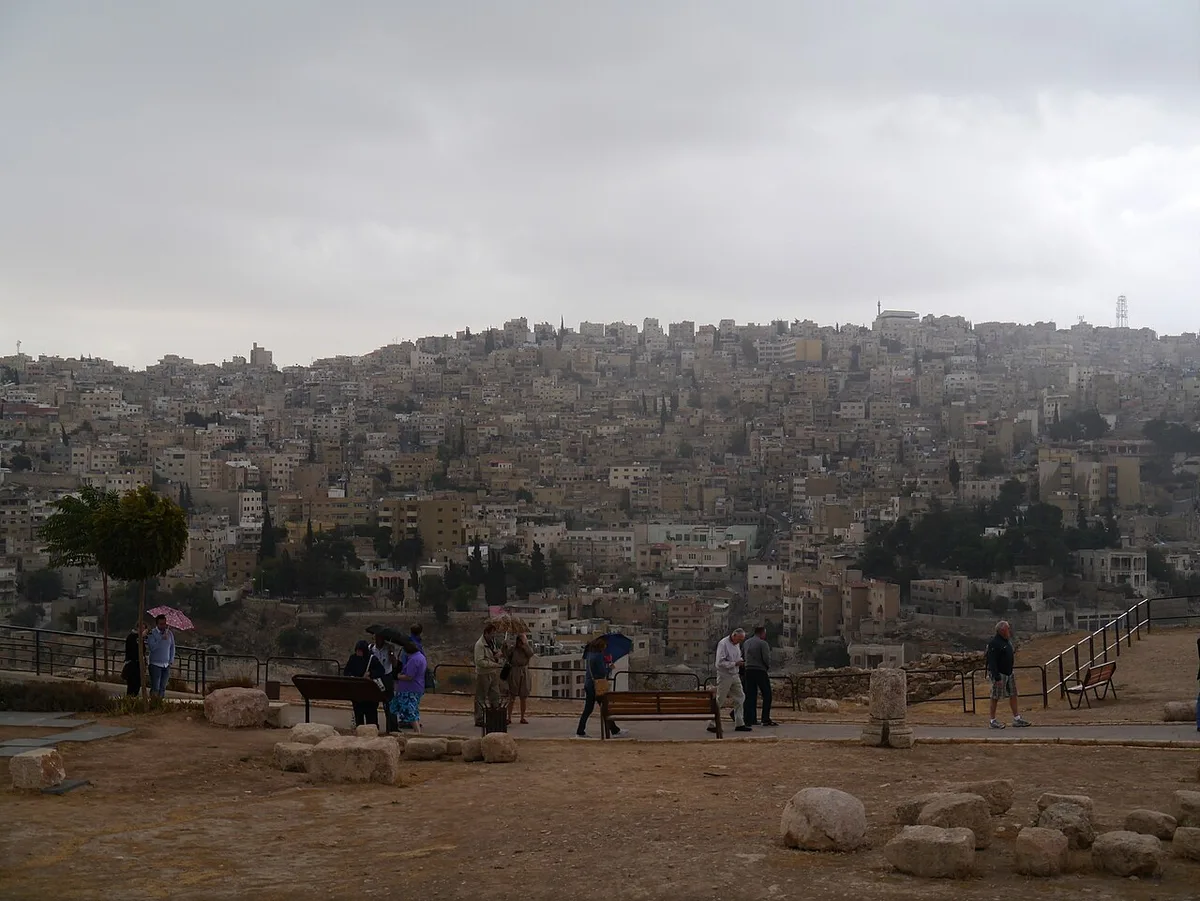
Amman began as a valley town. The Balad – the downtown of markets and mosques – sits in the wadi bottoms, and the original city climbed the hills around it: Jabal Amman to the west, Jabal al-Qala’a (the Citadel hill) above it, Jabal al-Weibdeh across the valley, and a ring of further jabals beyond. As the twentieth century stretched the city westward, the new districts were laid out along a ridge road organised by roundabouts, First Circle through Eighth Circle, and that ridge became the spine of the modern, wealthier half of the capital. Where to stay in Amman is, in large part, a choice between the valley city’s grain and the ridge city’s order.
The practical consequences are threefold. The first is vertical: any itinerary in the east and centre involves climbs – between the Balad and Jabal Amman, between Weibdeh and downtown – and the city has answered with hundreds of public staircases, some of them streets in all but name. Travellers with limited mobility, heavy luggage or a pushchair should treat the slope of a specific street as a real selection criterion, not a footnote. The second is that taxis and ride-hailing cars are the city’s true public transport for visitors, cheap in structure and everywhere, and a district that looks remote on foot may be entirely practical by car. The third is traffic: Amman’s rush hours are genuine, the valley roads clog, and a cross-town journey at the wrong hour takes a multiple of the same journey at midday.
There is also a social map layered over the physical one, and knowing it prevents the commonest disappointment. East Amman is older, denser, more conservative in dress and custom, and where the historic sights and the souks are. West Amman is newer, wealthier and more westernised, where the malls, the international hotels and most expatriate life are. Neither is “the real Amman” – the city is precisely the conversation between the two – but they offer different holidays, and the traveller who books the west expecting the east’s atmosphere, or the east expecting the west’s ease, has made the one error this guide exists to prevent.
Learn the Circles early, because Ammanis navigate by them and so will you. Addresses, directions and taxi instructions across the western half of the city are given as circle numbers and the streets between them – a hotel is “between Fifth and Sixth”, a restaurant “just past Third” – and a property’s circle is a shorthand for its whole character: the inner circles are older, denser and closer to the old hills; the outer ones newer, wider and more suburban. When you compare places to stay, translating each address into its circle and its jabal, where it has one, tells you more about the stay than the photographs do. Where to stay in Amman is written in that shorthand all over the city; this guide translates it district by district.
Downtown and the Balad – the Old City at Your Feet
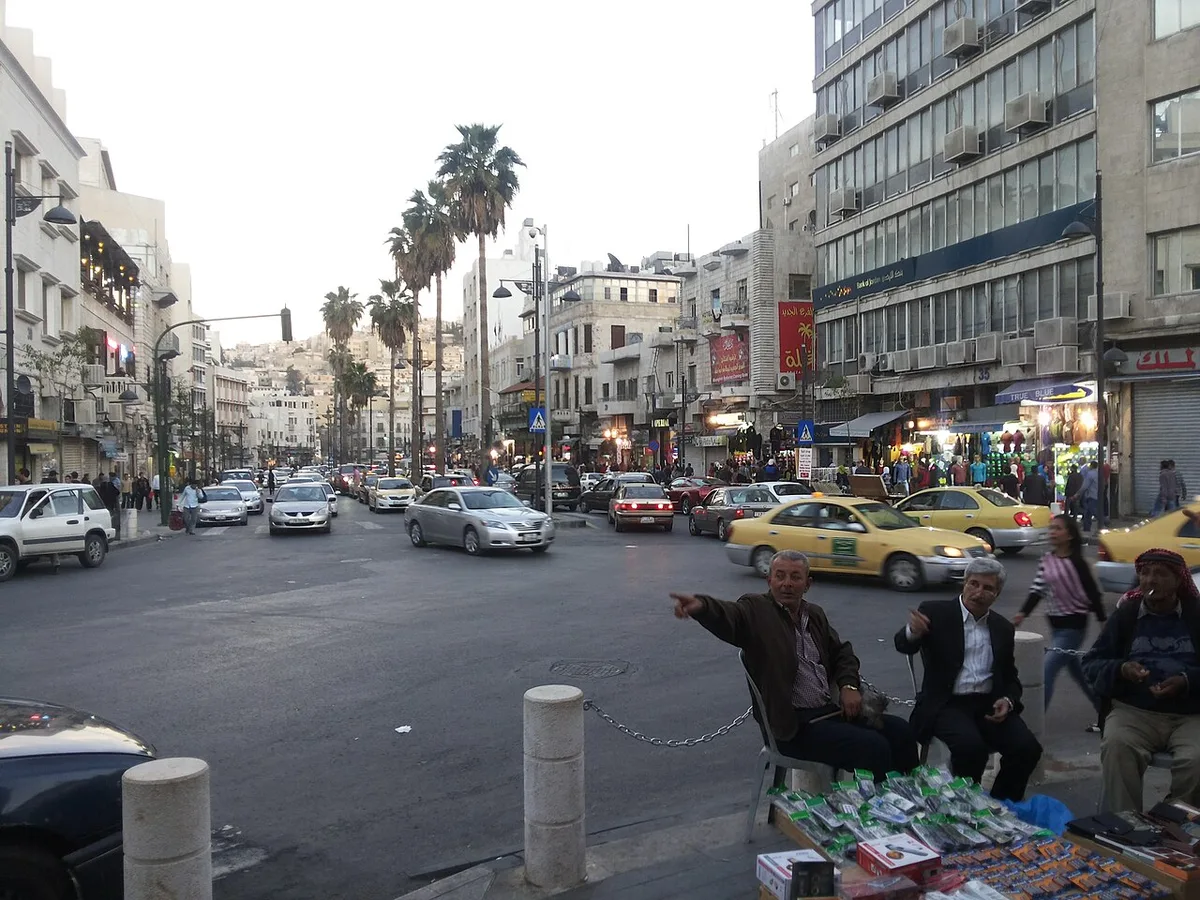
The Balad is where Amman started and, for sightseeing, still where it centres. Sleep here and the Roman Theatre and Hashemite Plaza are a walk away, the Citadel a climb above you, the Nymphaeum and the Grand Husseini Mosque in the middle of your errands, and the souks – gold, produce, spices, household goods in their separate market streets – are simply the neighbourhood. Our Amman travel guide walks the district sight by sight; the point here is what it is like to be based inside it. The Balad’s stock of places to stay is the city’s oldest and cheapest in structure: small independent hotels, family-run places above shops, and the cluster of hostels that serves backpackers crossing the region. What they sell is location and price, not quiet or polish.
The character is intensity, in the good sense and the literal one. A Balad morning starts early, with shutters rattling up and the produce market loading in; the streets carry a full working city, not a tourist enclave, and your breakfast options run to falafel stands, bakeries and old coffee houses rather than hotel buffets. For travellers who measure a base by how much of the place they absorb without trying, nowhere else in the capital competes. It is also the most practical base in the city for the classic sights: most visitors’ first two days – Citadel, theatre, museums at the valley’s edge, a wander through the markets – happen within a rough square mile of a Balad bed, and the best places to visit in Amman are disproportionately down in this basin or on the hills immediately around it.
The honest catch is threefold. Noise is the first: traffic, commerce and mosque loudspeakers are the district’s soundscape, and light sleepers should ask for a room away from the street in any Balad property. The second is the hills at the edges – the Balad floor is flat, but anywhere you walk to dinner in Jabal Amman is up a staircase or a sloping lane. The third is evenings: downtown empties of its daytime crowds after dark and its pleasures are coffee, sweets and people-watching rather than bars or a late scene. Choose the Balad if your trip is sights-first and your budget matters; skip it if you need quiet, parking, or a drink with dinner.
Within the district, the micro-choice matters as much as the district itself. The valley floor along the main streets is the loudest and most convenient; a few lanes up the skirts of Jabal Amman or toward the Citadel hill, the same money buys a noticeably quieter room at the cost of a climb. This is the one part of the city where walk-in availability still genuinely exists outside the peak weeks – the Balad’s small hotels and hostels serve a flow of regional travellers as well as tourists – but the better small properties fill like anywhere else in spring and autumn, and arriving without a booking in those seasons means taking what the street offers. For travellers deciding where to stay in Amman on the tightest budgets, this is the district the search starts in; for everyone else, it is the district to weigh against Jabal Amman’s calm before deciding.
Jabal Amman and Rainbow Street – the Cafe Hill
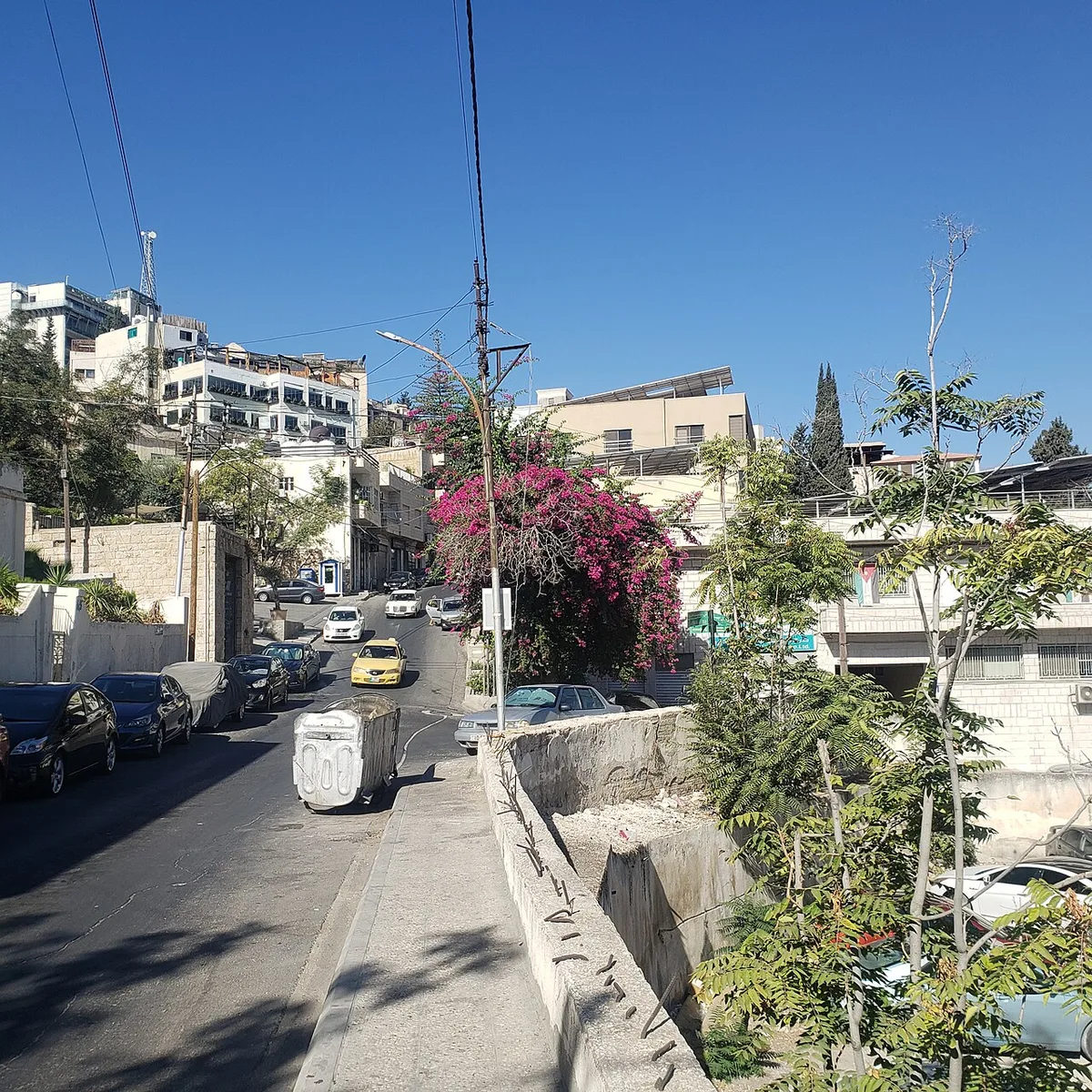
If the Balad is the city’s engine room, Jabal Amman is its front parlour. The hill rises directly west of downtown – a climb of stairs or a short taxi hop – and along its crest runs Rainbow Street, the capital’s best-known evening street: cafes with valley views, small restaurants, bookshops, ice-cream places and, in the warmer months, a Friday market off its side streets. The district around it, between First and Third Circles, is one of Amman’s oldest residential quarters, built in limestone by the merchants and officials of the early twentieth century, and its places to stay follow the architecture: boutique hotels and guesthouses in converted stone houses, small independents on side streets, and a share of the city’s serviced apartments.
For a first-time visitor, this is the district that asks the fewest compromises, and it is where to stay in Amman if you want to walk out of your door into your evening. The Balad’s sights are below you and reachable on foot downhill (with a taxi back up, which everyone does without shame); the Citadel is across the valley; Weibdeh is the next hill north. The streets are lively without being overwhelming, the cafe culture is the city’s best, and the housing stock means character is available at several levels of comfort. Our list of the best things to do in Amman leans heavily on this hill and the one beside it for a reason – falafel breakfasts, gallery afternoons and Rainbow Street evenings stack naturally here.
The honest catch is the slope and the weekend. Rainbow Street tilts, its side streets tilt harder, and a guesthouse two lanes down from the crest can mean a real climb home every night. Parking, if you have a rental car, is the district’s standing frustration – narrow streets, full kerbs. And on Thursday and Friday evenings the street’s popularity arrives in force: cafe terraces fill, traffic slows to a shuffle, and the quiet side-street room you booked is worth more than the Rainbow-facing one. None of this is a reason to stay away; all of it is a reason to choose the specific street, not just the district.
The hill also has two ends, and they are not interchangeable. The First Circle end, nearest the Balad below, is the oldest and most atmospheric – the original merchant houses, the famous falafel institutions, the lanes dropping toward downtown. Toward Second and Third Circles the streets widen, the apartment buildings grow, and the district shades gradually into the residential west. Travellers who picture where to stay in Amman as a stone guesthouse with a terrace over the valley are picturing the First Circle end; travellers who want a modern apartment with the cafe street still walkable should look a circle or two further out. Both are Jabal Amman, but they are different stays wearing one name, and the booking pages will not tell you which you are getting – the map will.
Jabal al-Weibdeh – the Quiet, Arty Hill
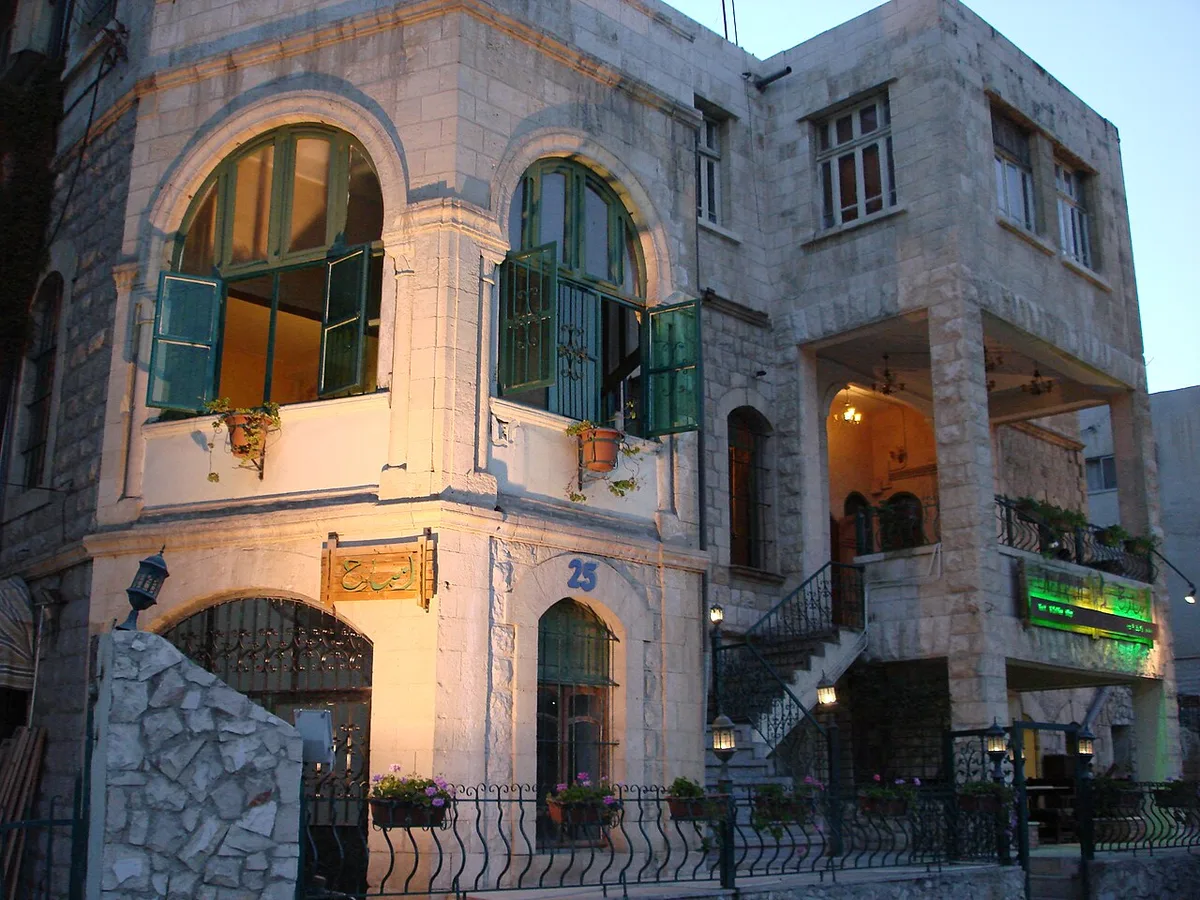
North of Jabal Amman across a shallow valley sits Jabal al-Weibdeh, and the change of pace is immediate. Weibdeh is a residential hill of stone houses, embassies’ quieter cousins and small cultural institutions – the Jordan National Gallery of Fine Arts at one end, the Darat al Funun art foundation in its cluster of old houses above the Balad, Paris Square’s tree-lined roundabout at its heart. Its cafes are the kind with bookshelves; its streets are the kind where neighbours know the cafe owners. Places to stay are correspondingly small-scale: a handful of boutique properties, guesthouses and apartment rentals in converted houses rather than a hotel strip, and travellers who find them tend to be the ones who write afterwards that they stayed in “the real Amman”.
Weibdeh suits a particular trip shape. If your days are structured – out sightseeing in the morning, back for a quiet afternoon, dinner in a neighbourhood restaurant – it gives you the capital’s most liveable base, with downtown a downhill walk or five-minute ride and Jabal Amman’s louder evenings one hill away rather than outside your window. Writers, gallery-goers, Arabic students and returning visitors disproportionately choose it, and for longer stays its apartment stock and ordinary street life make it easier to settle into than any hotel district. It is also, not incidentally, one of the most comfortable districts in the city for travellers who prefer a conservative, residential atmosphere without giving up cafes and culture.
An ordinary Weibdeh day has a rhythm the other districts cannot copy. Mornings are residential-quiet, the cafes fill with people working on laptops and novels, the National Gallery and the small private galleries open their doors to near-empty rooms, and Paris Square’s trees shade a roundabout that functions as the hill’s village green. It is the district where Amman most resembles a Mediterranean hill town, and the one where a traveller staying a week stops feeling like a tourist fastest – the baker learns your order, the same cats supervise the same corners, and the walk to Darat al Funun’s gardens becomes a habit rather than an excursion. Travellers choosing where to stay in Amman for the city itself, rather than for its sights, disproportionately end up on this hill.
The honest catch is scarcity and the climb. Because the stock is small, Weibdeh fills earlier than the big districts in the spring and autumn peaks, and the traveller who wants a choice here books ahead rather than on arrival. And the hill keeps its own toll: the walk down to the Balad is pleasant, the walk back up at the end of a long sightseeing day is a staircase workout, and most residents simply budget for taxis. Weibdeh is not where to stay in Amman for a first whirlwind weekend of sights; it is where to stay when the city itself is part of the point.
Abdali – the New Downtown of Glass and Boulevards
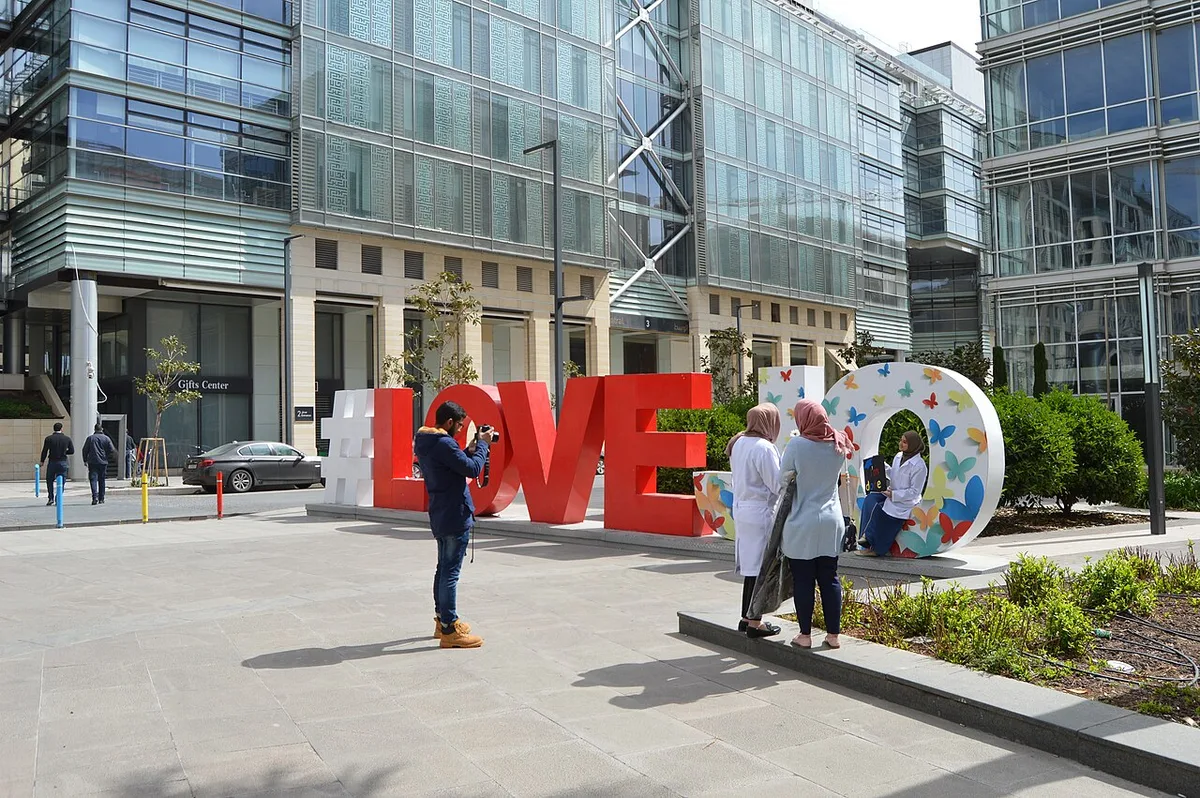
Abdali is Amman’s deliberate second downtown: a large redevelopment on the plateau between the old city and Shmeisani, built around a pedestrian Boulevard of cafes and shops, a major mall, office towers and a cluster of the city’s newest hotels. If Jabal Amman is early-twentieth-century limestone, Abdali is twenty-first-century glass, and the contrast is the district’s identity. Stay here and your immediate environment is polished and legible – wide pavements, signposted everything, coffee chains beside local names – and the older Amman is a short ride away in two directions: the Balad below to the east, the Circles and west Amman beyond.
The district’s practical strengths are real. It is one of the easiest places in the city to arrive at and operate from: taxis know it, the roads around it are major arteries, and it sits close to the governmental and business quarter of Shmeisani, which makes it the default for business travellers and conference trips. The hotel stock is the city’s most modern, skewed to the upper categories, with the serviced-apartment supply that long work stays need. Families also use it as a compromise base – mall and Boulevard for the evenings, old city by taxi for the days – and for travellers who found the Balad’s intensity too much on a previous trip, Abdali is the usual answer.
The honest catch is atmosphere, or rather its distribution. Abdali itself can feel like a well-run district in any modern city; the Amman of souks and stone hills is something you visit from here rather than wake up inside. It is also, by Amman’s geography, neither properly east nor west – the traveller who wants the old city daily will ride down to it, and the traveller whose evenings are Rainbow Street will ride across. Where to stay in Amman is often a choice of which taxi rides you accept; Abdali’s bargain is that you accept short ones in every direction in exchange for ease in all of them.
One distinction inside the district is worth making, because booking maps blur it. The Boulevard plateau itself – the redevelopment core – is the polished, pedestrian part, and the streets immediately around it carry the newest and largest properties. A few blocks north and east, the district shades into older Shmeisani, the established business quarter of banks, offices and mid-century apartment blocks, where the hotels are older, the streets more ordinary and the atmosphere more working-city. Neither is better; they are different products at different points of the structure, and travellers who understand which side of the line their booking sits on are rarely disappointed by either. Where to stay in Amman for a conference or a first business trip usually resolves to one of these two, chosen by how new you need the building to be.
Sweifieh and Baraka – Shopping Streets and Expat Ordinary
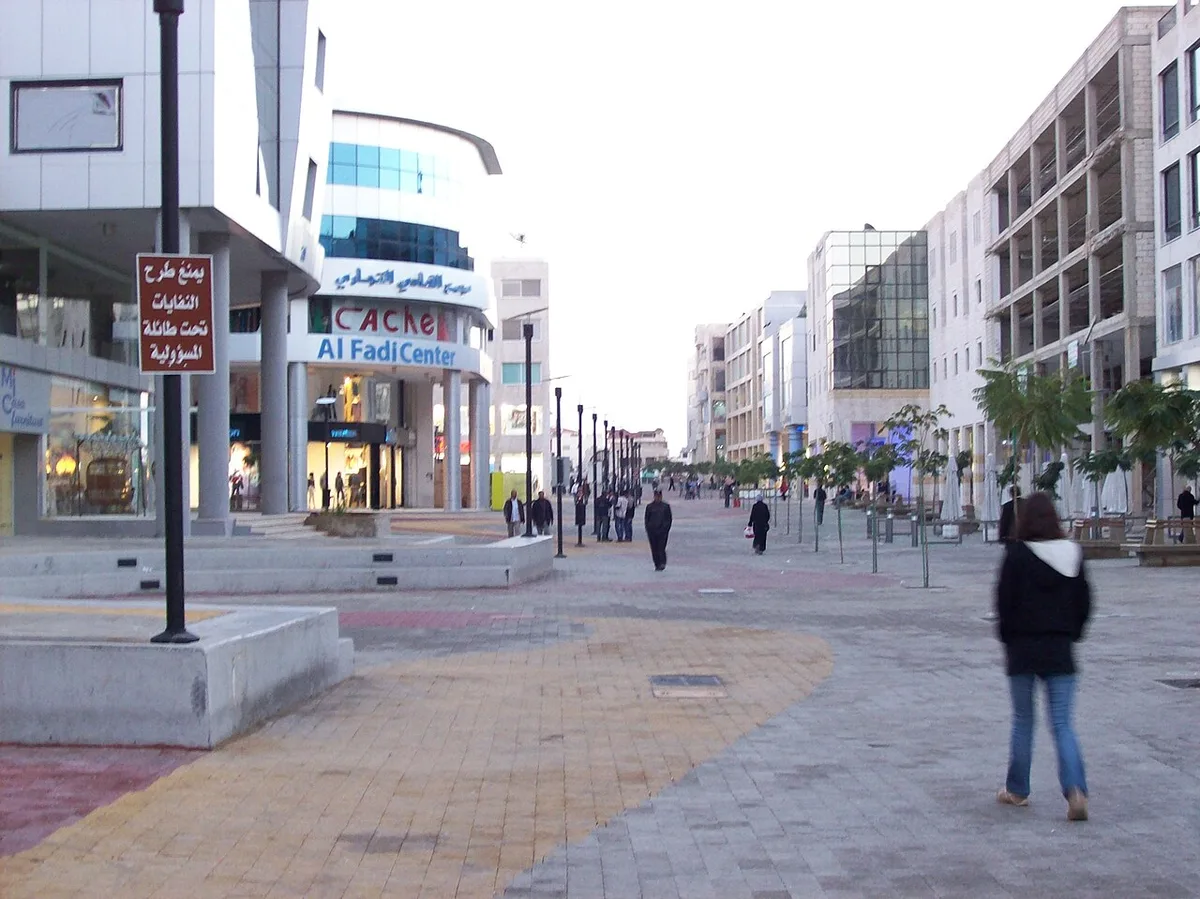
South-west of the Circles, Sweifieh is the district Ammanis themselves use for an evening out shopping: Wakalat Street, a pedestrianised strip of international brand stores and coffee shops; Baraka Mall and the streets around it; and a dense spread of restaurants, shisha cafes and cinemas across the blocks between Sixth Circle and the district’s edges. It is one of the most expatriate and affluent ordinary neighbourhoods in the capital – not a sight in itself, but a fully functioning piece of the modern city, with the supermarkets, gyms and services that longer stays run on. Its places to stay are mostly apartment hotels and serviced residences, with hotels of the business category scattered through it.
Sweifieh suits travellers whose Amman is partly a base for living rather than purely sightseeing: families on multi-week stays, people visiting relatives or working in the west of the city, and anyone who wants the modern city’s conveniences in walking distance and is content to taxi to the old one. It also works for the shopper – this is where the capital’s retail concentrates, and an evening on Wakalat Street is a genuinely local pleasure, Amman’s families doing exactly what you are doing. The residential streets behind the commercial spine are quiet at night in a way the Balad never is, which light sleepers relocating from downtown quickly learn to value.
The honest catch is that Sweifieh has no sights and no plans to acquire any. Everything on the classic itinerary – Citadel, theatre, souks, Weibdeh’s galleries – is a taxi ride east, and at rush hour not a short one. It is where to stay in Amman when the city is your errand rather than your destination, or when your trip mixes business, family and living with sightseeing days bolted on. Booked as a sightseeing base by a first-timer expecting to stroll to the Roman Theatre, it disappoints; booked with open eyes, it is one of the most comfortable districts in the city.
Inside Sweifieh, the choice is between the commercial spine and the residential depth behind it. The streets around Wakalat and Baraka carry the apartment hotels and the evening crowds; two or three blocks back, the district becomes purely residential – villas, small apartment buildings, corner shops – and the rentals there are where visiting families and longer-stay professionals quietly live. The spine is the right answer for a few nights of shopping and restaurants; the depth is the right answer for a month. Either way, the district’s services are the point: a traveller who needs a pharmacy, a phone repair, a supermarket and a gym within one walkable grid will find Sweifieh easier to live in than anywhere else in this guide, and for stays measured in weeks that ordinariness is a feature no sight can match.
Abdoun and the Circles – Leafy, Wealthy, Residential
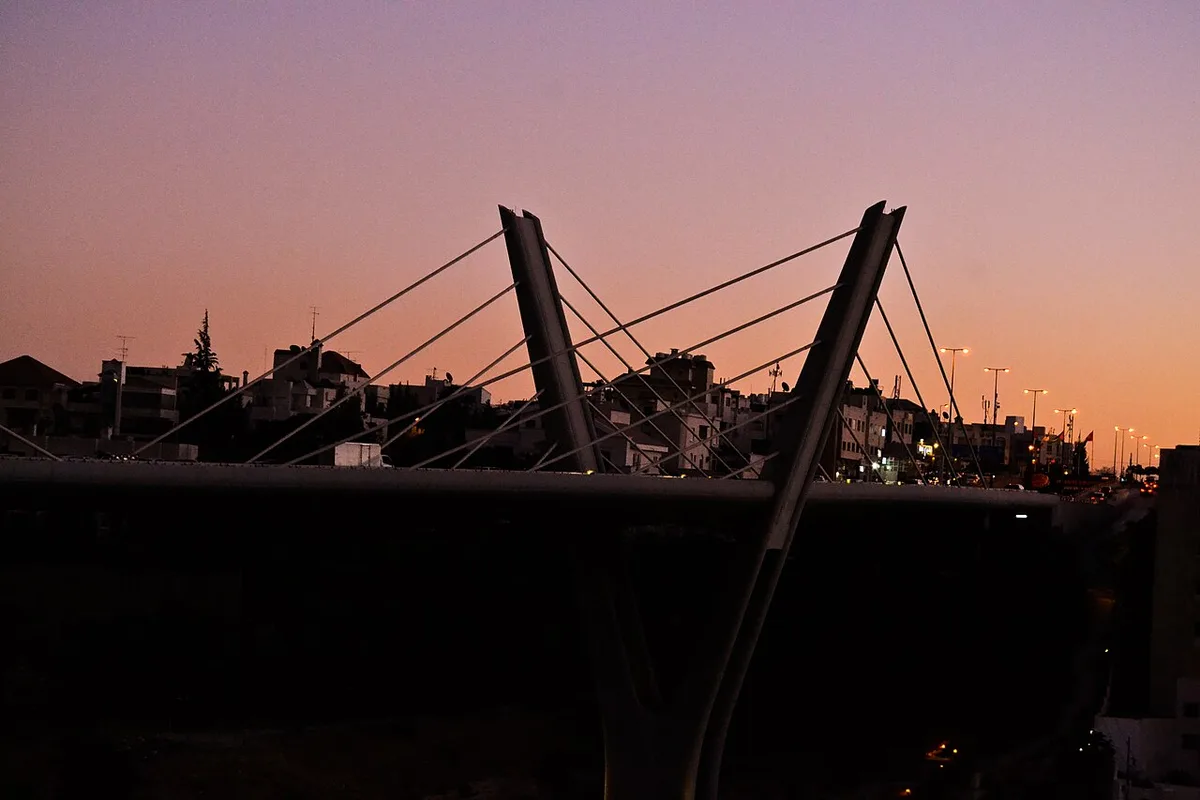
The western ridge of Circles ends in Abdoun, the capital’s most prestigious residential district: broad streets, villas behind walls, embassies, a scattering of upmarket cafes and restaurants, and the Wadi Abdoun Bridge – the city’s landmark cable-stayed crossing – tying it to the rest of the west. The Circles themselves, Fourth through Eighth as you move outward, form a gradient: each successive roundabout a little newer, a little more spacious, a little further from the old city, with the international hotel towers clustering around the middle circles and the residential calm deepening toward the edge. Places to stay here are the city’s premium hotels, apartment residences aimed at long stays, and very little at the budget end of the structure.
Abdoun and the outer Circles suit a specific set of trips: business at the premium end, diplomatic and NGO work, families who value space, quiet and a pool over proximity, and travellers returning to Amman who have already done the old city and now want the comfortable west. The driving is easier here, the pavements wider, the air a fraction cooler on the ridge, and a car – for once in this guide – is a genuine asset rather than a parking problem. For the visitor whose Jordan itinerary is mostly elsewhere and who uses Amman as a smooth first and last night, the Circles’ hotel row does that job with the least friction in the city.
The honest catch is that you are staying in a suburb, however gilded. Nothing of the classic Amman itinerary is walkable, the district’s evenings are restaurants and cafes rather than streets to wander, and travellers who book here by default – because the famous names are here – sometimes discover they have purchased comfort at the price of contact with the city they came to see. Where to stay in Amman at the premium end is a real choice between Abdoun’s calm and the centre’s character; make it deliberately, not by brand recognition.
There is one more practical difference out here, and it runs in the traveller’s favour: this is the easiest part of Amman to leave. The western districts sit closest to the airport road’s city end and to the highways running west toward the Dead Sea and the King Hussein Bridge, so a traveller using the capital as a first and last night around a self-drive loop spends the least time in urban traffic from an Abdoun or outer-Circle base. Set against that, the same traveller pays the longest ride to the Balad on the one evening they want the old city. The arithmetic is trip-specific, which is precisely why the honest answer out here is a question back: what will you do more often – leave the city, or descend into it?
The Airport Side – One-Night Logic South of the City
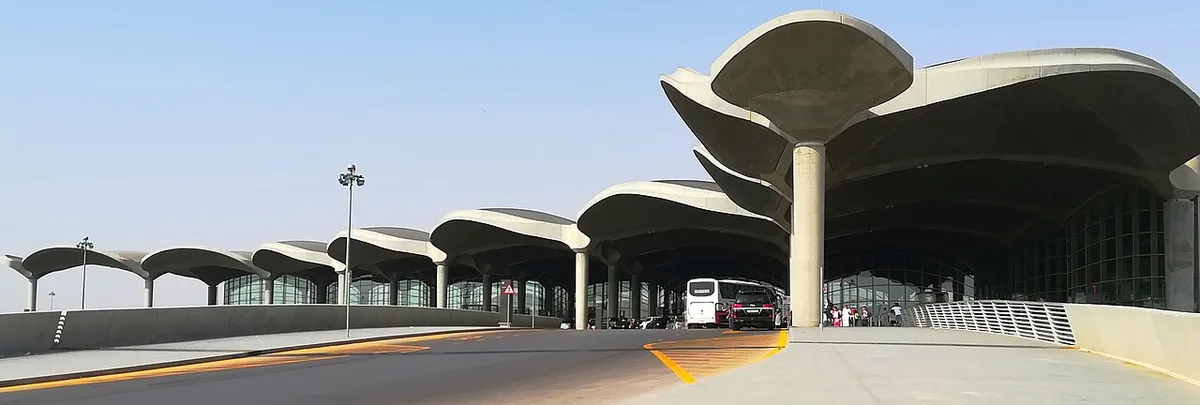
Queen Alia International Airport sits well south of Amman, down the desert highway, and around it and along the airport road has grown the city’s most purely functional sleeping district: airport hotels, transit properties and the places travellers use for the nights that flight times dictate. This is not a neighbourhood to explore, and it does not pretend to be. Its entire purpose is arithmetic – the conversion of a 2 a.m. arrival or a dawn departure from an ordeal into a non-event.
The logic deserves a section because it decides so many real itineraries. Jordan’s long-haul flights disproportionately arrive late at night and leave early in the morning, and the drive between the airport and a central Amman hotel, while entirely routine, is the last thing a traveller needs at the end of a travel day or the first thing before a dawn flight. Sleeping the first or last night on the airport side and moving into the city – or out of it – at a civilised hour is one of the most quietly effective decisions in Jordan trip planning, and our countrywide guide to where to stay in Jordan builds whole itineraries around exactly that hinge, pairing the airport side with nearby Madaba for travellers who want a real town attached to the same idea.
The honest catch is total: there is nothing else here. No sights, no evening, no district life – a bed, a shuttle or a short taxi ride, a breakfast timed to a departure board. Used for one night at either end of a trip, that is a bargain. Used as a base for seeing Amman, it is the single worst choice in this guide, a daily commute down a highway to a city you are supposedly visiting. Treat the airport side as a tool, keep it to the nights the timetable forces, and it will earn its place in almost every Jordan itinerary.
The mechanism is worth stating plainly so the choice is easy under travel fatigue. Airport-side properties exist to absorb irregular hours: desks staffed through the night, transfers measured in minutes, breakfasts that start before dawn or boxes for those who cannot wait for them. A central hotel can imitate some of this, but not the geography – the drive into the city at the end of a long flight is motorway all the way, and it is exactly as long at midnight as it is at noon, which is the whole argument. The one refinement experienced Jordan travellers add is direction: the airport night works best at the end of the trip, when the holiday is complete and only the flight remains, while the first night is usually worth spending in the city if the arrival hour allows it – waking up already inside Amman starts the trip a half-day ahead.
Where to Stay in Amman by Traveller – First-Timers, Families, Business and Backpackers
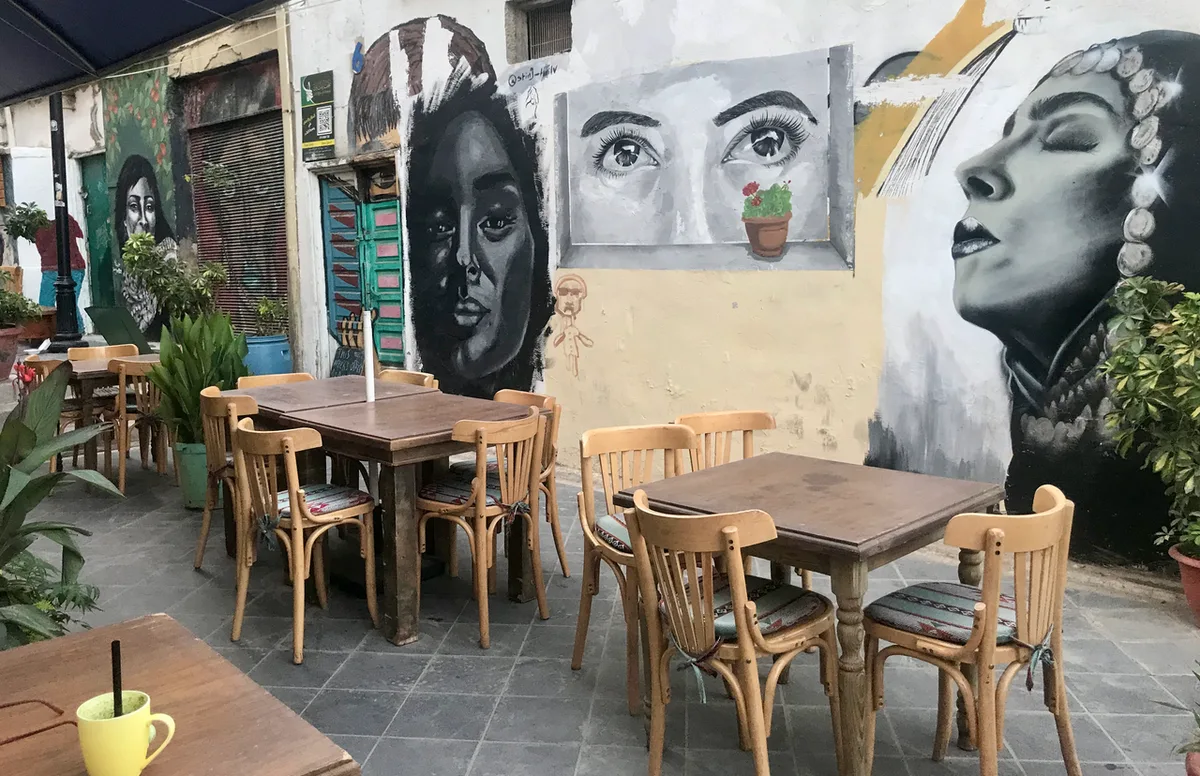
Districts are geography; trips are people. The same city answers differently depending on who is asking, and most wrong choices happen when a traveller books the district that suited somebody else’s trip. First-time visitors with two or three nights and the classic sights in mind are the easiest to place: Jabal Amman for the balance of character, evenings and access, or the Balad if budget rules and intensity appeals. The first-timer’s scarcest resource is not money but orientation, and waking on the cafe hill with the old city visible below you teaches the city’s shape faster than any map.
Families sort by space and logistics. Young children push toward the apartment stock and the smoother west – Abdali for its modern family-sized supply and mall evenings, Sweifieh for serviced residences among ordinary city services – while families with older children often do better in Jabal Amman or Weibdeh, where the sights and the street life entertain without a plan. Business travellers follow their meetings: Shmeisani and Abdali for the office districts, the Circles’ hotel row for the western institutions, and the airport side for the brutal one-night in-and-out. Backpackers and long-haul overlanders have the simplest map in the city – the Balad and lower Jabal Amman, where the hostels, cheap independents and fellow-traveller information economy have concentrated for decades, and where a bed still costs a fraction of the western districts in structure even before any numbers are mentioned.
Two less obvious cases deserve a sentence each. Travellers with limited mobility should weight the west and Abdali heavily – newer buildings, lifts, flatter plots – and interrogate any charming stone-house guesthouse about its stairs before booking, because on the old hills the charm and the staircase are usually the same feature. And travellers keeping a conservative style of trip – families from the region, visitors who prefer a quieter social register – often find Weibdeh and the residential west more comfortable than Rainbow Street’s cafe scene, a matter of taste the city is large enough to satisfy in every direction.
Solo travellers deserve their own line, because their calculus is different again: for them the evening street matters most, since it is where the city becomes social rather than merely scenic. Jabal Amman and the Balad answer best – cafe terraces where a table for one is unremarkable, hostel common rooms downtown where routes and drivers get compared, and streets busy late enough that the walk home is company rather than solitude. The western districts, comfortable as they are, can feel sealed and private to a traveller alone. It is a small example of the general rule behind every answer to where to stay in Amman: the right district is the one whose ordinary hours match the hours you will actually live there.
One Night or Five – Matching the District to Your Trip Shape
Trip length changes the answer as much as traveller type does. The one-night stopover – a flight in, a flight out, a day to fill – splits two ways: the airport side if the hours are cruel, or the Balad if the day is yours, since the old city’s whole classic itinerary can be walked between breakfast and dinner from a downtown bed. Two or three nights, the commonest Amman dose inside a Jordan loop, belongs to the centre: Jabal Amman or Weibdeh, close enough to everything that no day needs planning around transport. The traveller passing twice – Amman on arrival and again before departure, which Jordan’s geography encourages – can profitably split the difference, taking the old city first and the west or airport side last, and seeing both Ammans in one trip.
Longer stays rewrite the rules entirely. At a week and beyond, the hotel question becomes an apartment question – serviced residences and rentals in Weibdeh, Jabal Amman, Sweifieh or Abdoun depending on your orbit – and the deciding factors become the unglamorous ones: a kitchen, a washing machine, a supermarket on the street, a neighbourhood that is pleasant on the seventh ordinary morning, not just the first exciting one. This is also where the city’s day-trip geometry matters: a base that reaches Jerash, Madaba and the Dead Sea road without crossing the whole city at rush hour saves hours across a week, which is a real argument for the western districts on long stays even for travellers whose hearts are in the east.
The through-line is that where to stay in Amman is not a fixed ranking but a matching exercise, and the match is between the district’s daily texture and your trip’s daily shape. Decide your days first – how many, how full, how early, how social – and the district follows. Travellers who reverse the order, booking the bed and then discovering the trip it implies, are the ones writing the disappointed reviews of perfectly good districts.
The split-stay deserves one more word, because Amman rewards it more than most capitals. Jordan itineraries naturally bookend the capital – in from the airport at the start, out to the airport at the end, with Petra, the Dead Sea and the north in between – and there is no rule that both Amman stays must be the same stay. Taking the Balad or Jabal Amman first, when your sightseeing energy is highest, and the west or the airport side last, when what you want is a pool, a quiet room and a short final drive, is not indecision; it is the city’s geography used properly. Where to stay in Amman can have two correct answers on a single trip, and for many visitors it should.
How Booking Works in Amman – Hotels, Apartments and Guesthouses
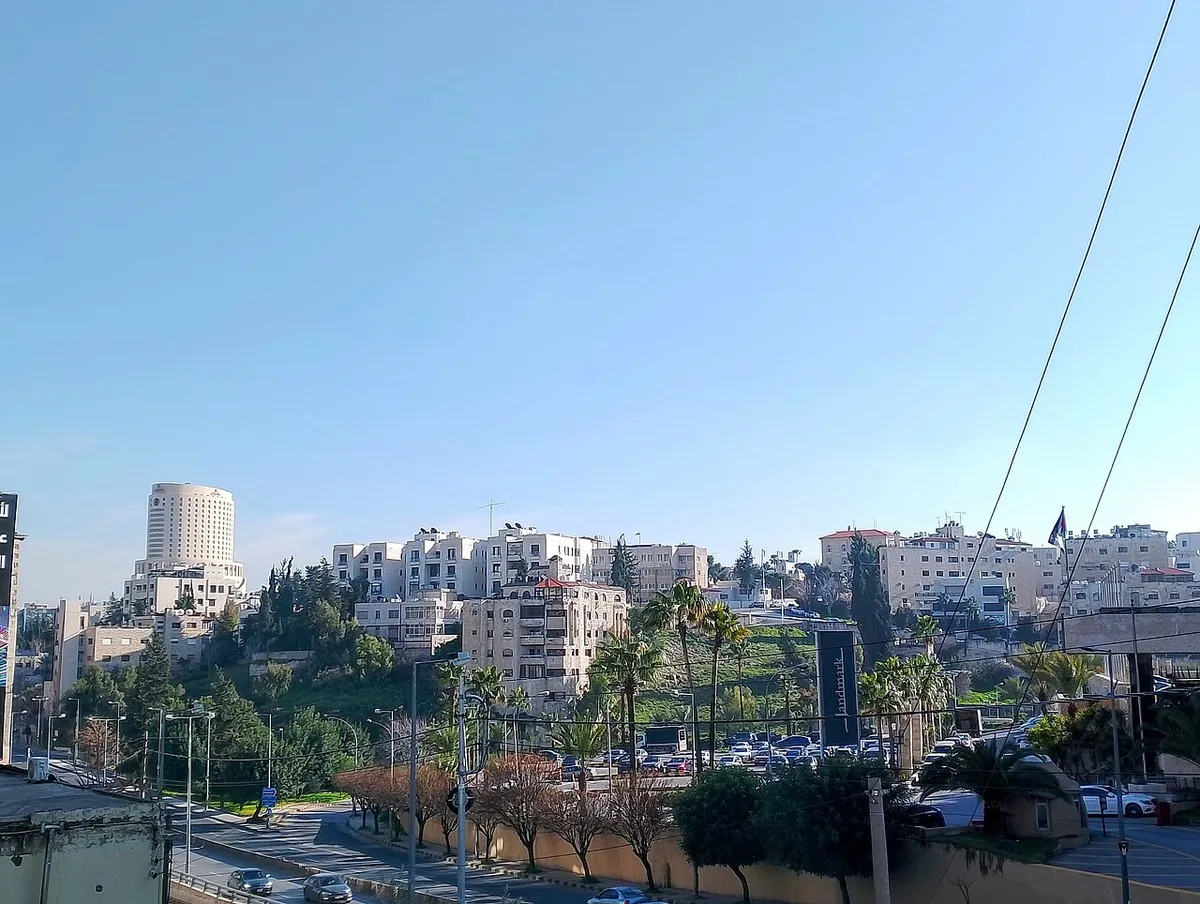
Amman’s sleeping stock sorts into four mechanisms, and knowing which you are booking matters more than the star labels attached to it. The first is the international and large local hotels: towers and big properties concentrated in the west – the Circles, Shmeisani, Abdali – booked through the usual global platforms, with the full apparatus of pools, gyms, business centres and buffet breakfasts. The second is the independent city hotels: smaller, family-run or locally managed properties, densest in the Balad and on the central hills, booked through the same platforms or directly, and varying from excellent to tired in a way that recent reviews describe better than any category label. The third is the boutique and guesthouse layer – converted stone houses in Jabal Amman and Weibdeh, a handful of rooms, a host who doubles as your best local information, breakfast on a terrace. The fourth is the apartment layer: serviced residences and private rentals, thickest in Sweifieh, Abdoun and the west generally, which is how most long stays and family stays actually work.
Each mechanism has its own booking rhythm. The big hotels and platforms behave as they do everywhere: flexible, cancellable, priced by algorithm. The small properties reward direct contact – a message or a call often produces the better room, the honest description of the stairs, the arrangement of an airport pickup at the hour platforms handle badly. The desert-and-lodges lesson from the rest of Jordan applies in miniature here: in the peak seasons of spring and autumn, and around the major holidays, the characterful small stock in the central hills goes first, while the big western properties are the last to fill. Travellers set on a particular guesthouse in Weibdeh book it when they book their flights; travellers content with a good western hotel can afford to wait.
Two procedural notes save trouble. Addresses in Amman are more art than science – districts, circles and landmarks navigate better than street numbers, and any property’s directions should be read as “near X, off Y circle” rather than a precise point; save your driver’s landmark, not just the map pin. And arrival logistics deserve one question at booking time wherever you stay: what happens at 1 a.m. Small properties may not staff a desk all night; the good ones ask your flight time because they have solved this before. It is the kind of mechanism question – unglamorous, decisive – that this guide exists to surface.
Cancellation and change patterns follow the same split. Platform bookings in the large properties behave like platform bookings everywhere – flexible until a deadline, changeable in an app. The small central-hill properties are often more flexible in practice, because you are dealing with a person, but the terms are theirs rather than a system’s, and a traveller whose flights are wobbly should ask the question directly at booking rather than assuming. Where to stay in Amman is partly a question of which kind of flexibility your itinerary needs – the contractual kind or the human kind – and Jordan’s flight schedules make that a live question more often than most destinations do.
The Honest Practicalities – Hills, Steps, Noise and Early Mornings
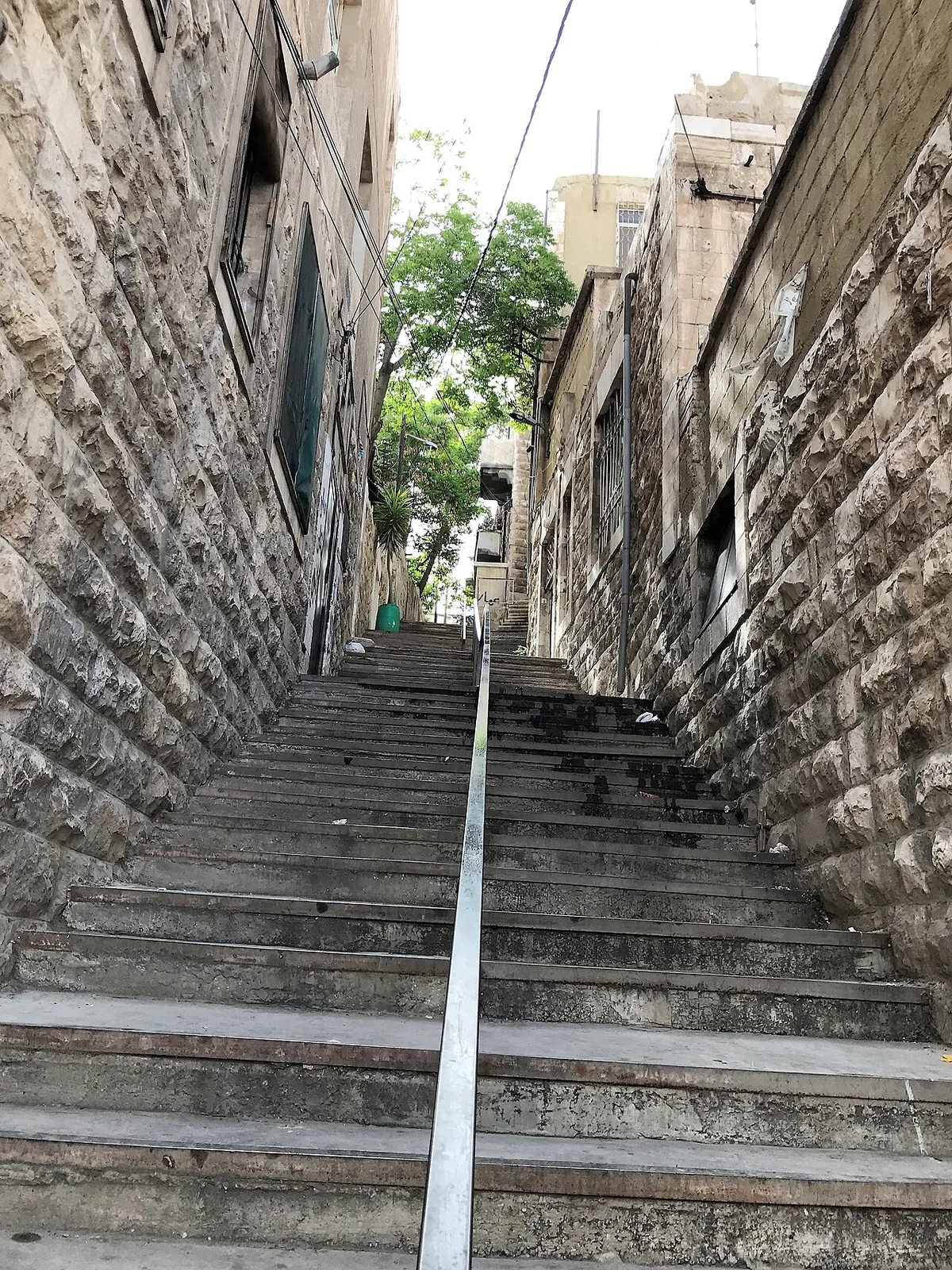
Every district section above has carried a catch; this one collects the citywide ones, because they apply wherever you sleep and are better priced into the decision now. The hills first: Amman’s central and eastern districts are steep in a way that surprises even travellers who read the warnings. Staircases are infrastructure here – long public flights between streets, some of them effectively the neighbourhood’s main pedestrian roads – and a day of sightseeing from a Balad or Jabal Amman base includes more climbing than most European city breaks contain in a week. Pack shoes for it, and treat any “five minutes from downtown” claim as a downhill measurement until proven otherwise.
Noise is the second universal. Amman is a loud, living city: traffic and horns in the valleys, commerce in the commercial districts, and the call to prayer – beginning before dawn – everywhere, since mosques are woven through every district in this guide. Proximity to a mosque is normal and, for most visitors, part of the atmosphere; light sleepers should simply know that the dawn call is the city’s alarm clock and choose room position (away from the street, higher floor, interior side) with that in mind rather than expecting any district to be exempt. Weekend rhythm is the third: Jordan’s weekend is Friday and Saturday, Friday mornings are quiet and late-starting, and Thursday and Friday evenings are when Rainbow Street, Wakalat Street and the malls fill with the city’s own crowds – lively if you join in, a consideration if your one free evening needs a quiet table.
Winter is the practicality nobody warns about, because Amman sells itself in spring sunshine. The capital sits high, its winters are genuinely cold, and the rain, when it comes, arrives on the hills as wind-driven weather that makes the staircases slippery and the valley roads slow. Heating is the variable that matters and it differs by stock: the large western hotels are uniformly warm; older buildings and small guesthouses vary, and a January traveller should treat “heating” as a question to ask, not an assumption to make. It is one more way the choice of where to stay in Amman is a choice of building type as much as of district – the same stone walls that keep a Weibdeh house cool and lovely in May need a real heating system to be kind in January.
Finally, the micro-geography that decides daily happiness: the specific street. Two properties in the same district can differ completely – one on the flat crest, one halfway down a stair-lane; one on the cafe street itself, one a lane behind it. Reviews, read for street position rather than thread counts, are the tool here, and the question worth asking any small property is the Amman question: “Are you at the top or the bottom of the hill?” Where to stay in Amman resolves, in the end, to that level of detail – and it is resolvable, which is the good news this whole guide is built on.
Where to Stay in Amman – Questions Travellers Ask
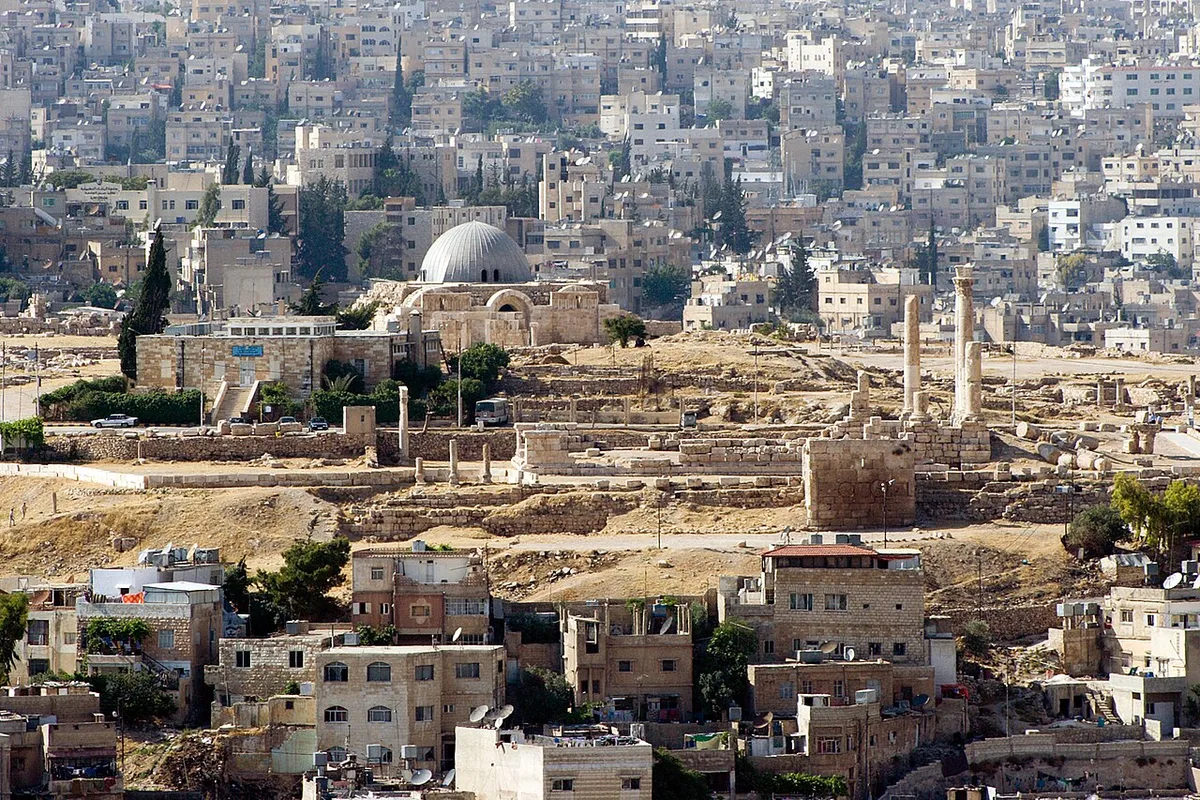
What is the best area to stay in Amman for a first-time visitor? Jabal Amman, for most people, most trips: it sits between the old city below and the modern west, carries the capital’s best cafe streets for the evenings, and holds the widest spread of characterful places to stay. The Balad runs it close if budget leads the decision, and beats it for pure sightseeing density; Abdali beats both for modern ease. The honest answer is that “best” here is a ranking of your own priorities, and the table at the top of this guide is the tool for it.
Is it better to stay in east or west Amman? This is the oldest form of the where to stay in Amman question, and the short answer is: east for the historic city – souks, sights, atmosphere, lower costs in structure – and west for comfort, space, modern hotels and quiet. Most first trips touch both: sleep in the centre or east for the sightseeing days and you will still spend an evening in the west; sleep in the west and you will still spend your days in the east. The mistake is not choosing either; it is choosing one while expecting the other.
How many nights should I spend in Amman? Two as a working minimum – one for the city itself, one for the Jerash day trip or a slower second look – inside a week-long Jordan loop, and more if you are using the capital as a hub for Madaba, the Dead Sea or the northern sights. One night reduces Amman to a transit point, which undersells the most lived-in city in the country; our Jordan travel guide shows how the nights divide across a full trip.
Is downtown Amman a good place to stay, or is it too hectic? It is hectic, and for the right traveller that is the recommendation rather than the warning. The Balad puts the Roman Theatre, the Citadel and the souks in walking range and the city’s cheapest beds under you; in exchange you accept noise, traffic and early mornings. Travellers who want the city at full strength choose it happily; travellers who want to retreat from the city at night choose the hills above it.
Should I stay near the airport on my first night? If your flight lands late at night, yes – the airport side exists for exactly this, and reaching a central hotel at 2 a.m. buys you nothing but a shorter night’s sleep. Arrive in daylight or the early evening and the calculus flips: go straight into the city, wake up in Amman proper, and save the airport-side night for a dawn departure at the trip’s end if you need one.
Can I walk between the districts, or will I need taxis every day? Both, in a pattern: the central hills and the Balad walk to each other in fifteen to thirty steep minutes, and Ammanis and visitors alike mix walking downhill with taxis back up. The western districts are taxi or car territory for sightseeing purposes. Budget the rides as part of the city’s system rather than a failure of planning – they are how Amman is designed to be used.
Are there areas of Amman visitors should avoid staying in? No district in this guide carries a safety reason to avoid it; the choices are about fit, noise, slope and convenience, not security. The outer suburbs and industrial edges simply have no visitor infrastructure and nothing to walk to, which is the practical form “avoid” takes here – stay where the city’s life is, in any of the bands described above, and the question does not arise.
The Short Version
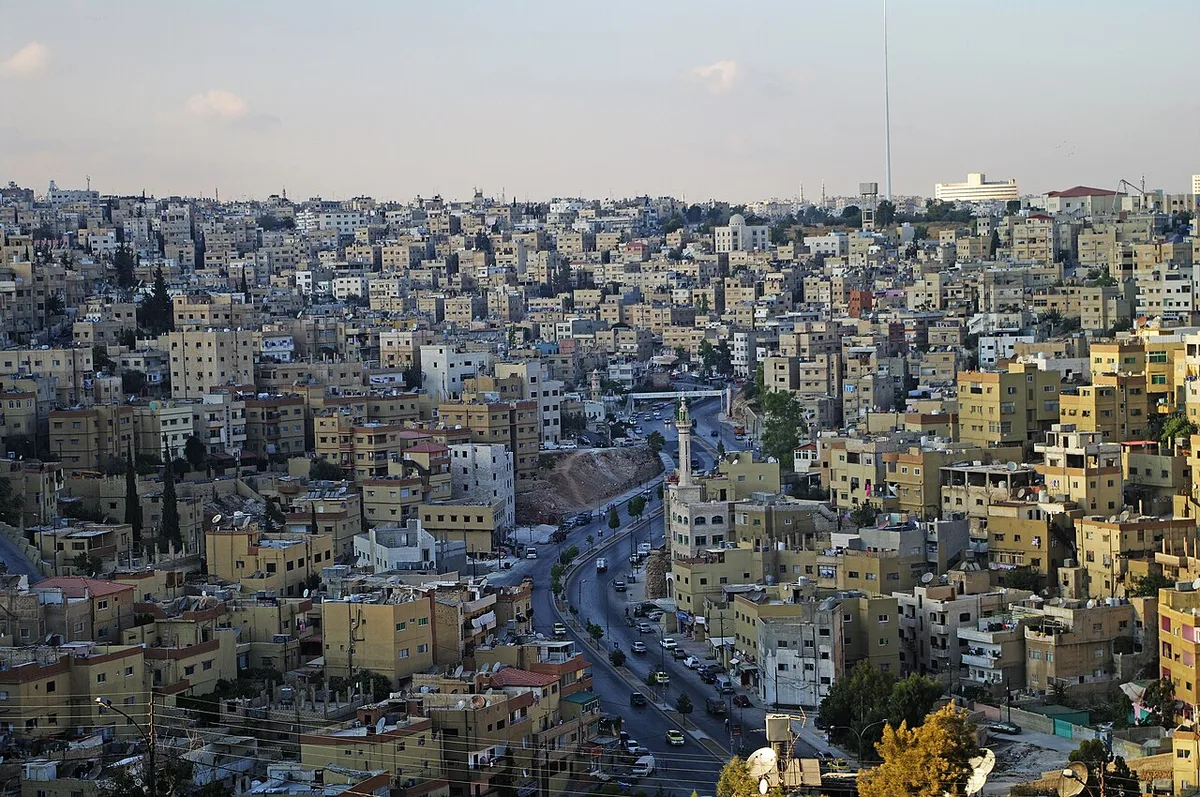
If you read nothing else, read this. Where to stay in Amman is a hill choice before it is a hotel choice: the Balad for sights, markets and the lowest-cost beds under your feet; Jabal Amman and Rainbow Street for the balanced first trip of cafes, character and walkable evenings; Weibdeh for quiet, galleries and a residential pace; Abdali for modern ease; Sweifieh for shopping streets and longer, ordinary stays; Abdoun and the Circles for space, calm and premium comfort; and the airport side strictly for the nights your flight times impose. Choose by your evenings and your trip’s shape, check the specific street for slope and noise, and book the small characterful places early in the peak seasons.
Get the hill right and the property almost chooses itself, because in Amman the district is the amenity: the souk outside the door, the cafe street at dusk, the staircase home, the valley view at breakfast. Sleep on the right slope of the right hill, and the capital – steep, loud, hospitable, layered – works the way it is supposed to.