Jordan does not have one great walk. It has a whole shelf of them, stacked on top of each other in a country you can cross in a day by car and take six weeks to cross on foot, and the honest answer to the question behind the best hiking in jordan is that the right walk depends less on your fitness than on what kind of ground you want under your boots. Some visitors want a river up to their waist in a sandstone canyon. Some want a week of desert silence with a Bedouin camp at the end of each day. Some want a morning in oak forest that feels nothing like the Jordan on the postcards. All three exist here, within a few hours of each other, and this guide sorts them by what they actually ask of you, not by how photogenic they are.
That sorting matters more for the best hiking in jordan than in most hiking countries, because the country mixes three different kinds of walking and rarely labels them clearly. There are open trails you can simply walk, like the day routes in Dana and the paths through Petra. There are reserve trails that run only through a visitor centre, with a ticket, a season and sometimes a compulsory guide, like the wet canyons of Wadi Mujib. And there are long desert stages where the path is a line on a GPS file and the water, the camp and the local knowledge all come from the people who live along it, like much of the Jordan Trail south of Petra. Treating those three as if they were the same thing is how walkers end up at a closed canyon gate in January, or on a waterless desert stage with a daypack, or paying for a guide they did not need. The sections below keep them apart, and they say so every time the distinction changes the plan.
The other thing to know before you lace up for the best hiking in jordan is that Jordan rewards the walker who plans around water and heat rather than distance. A fifteen-kilometre day in the Dana canyon in March is a pleasure; the same distance across open sand in August is a different proposition entirely, and the guides that quote distances without seasons are doing you no favours. This guide therefore gives you seasons first and kilometres second, prints distances only where an official or widely corroborated source states them, and flags every place where the sources disagree. Where a figure is withheld, it is withheld because it could not be verified, not because it was forgotten. That is the deal this guide makes with you, and it holds for every trail that follows.
Best Hiking in Jordan – the Short Version
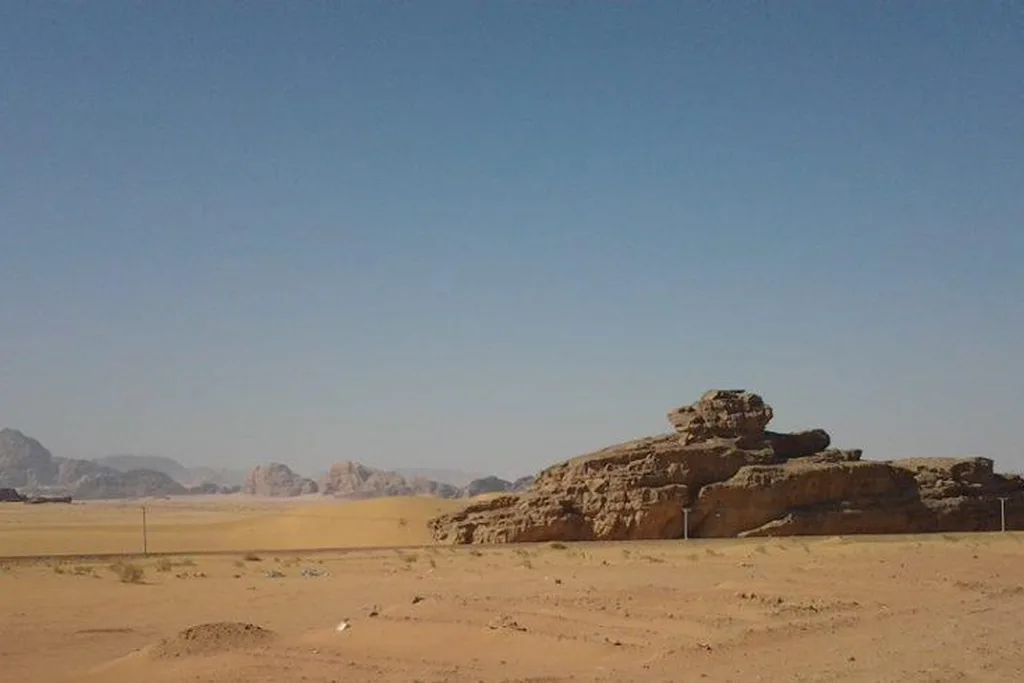
If you have two minutes, here is the whole guide in one table. Every walk below gets its own section later, with the difficulty, the season and the catch stated in full, but this is the shape of the country for walkers, and it is enough to choose between the big options before you read on.
| Walk | Best for | Honest difficulty | Best season | The catch |
|---|---|---|---|---|
| Dana to Petra, Jordan Trail | The one classic trek | Demanding multi-day | Spring or autumn | Desert stages need a guide or a supported plan |
| Dana day walks | A first taste of canyon country | Easy to moderate | Spring or autumn | The big descent is one-way unless you climb back |
| Petra on foot | Walking inside a wonder | Moderate, with one hard climb | Spring or autumn | The site is vast; a single day only samples it |
| Wadi Rum on foot | Desert walking with a camp at night | Easy to demanding, by route | Autumn to spring | Real desert navigation; do not freelance the far valleys |
| Wadi Mujib Siq Trail | A river walk like nothing else | Moderate, wet and physical | April to October only | Seasonal, centre-run, life jacket issued at the gate |
| Mujib dry trails | Rim views without the river | Moderate, guide-led | Winter months | The wet trails are closed; the dry ones need a guide |
| Aqaba shore walks | Gentle walking at the sea | Easy | Almost year-round | Heat in high summer; the reef is for swimming, not walking |
| Ajloun forest walks | Green shade and villages | Easy to moderate | Spring or autumn | The least dramatic ground – and that is the point |
Read the table twice and notice what it does not promise. It does not promise that the best hiking in jordan is a single trail you can tick off, because it is not. It promises a set of walks that fit different trips, and the rest of this guide is about matching your trip to the right row, then giving you the detail that row actually needs. If you are here for one walk only, skip to the Dana to Petra section and the Wadi Rum section, and read the seasons section before you book anything. If you are building a whole Jordan trip around walking, read straight through, because the sections are arranged in the order a real trip tends to take them, north to south, with the practical rules gathered at the end where you will need them twice.
The Jordan Trail in One Map – Umm Qais to Aqaba
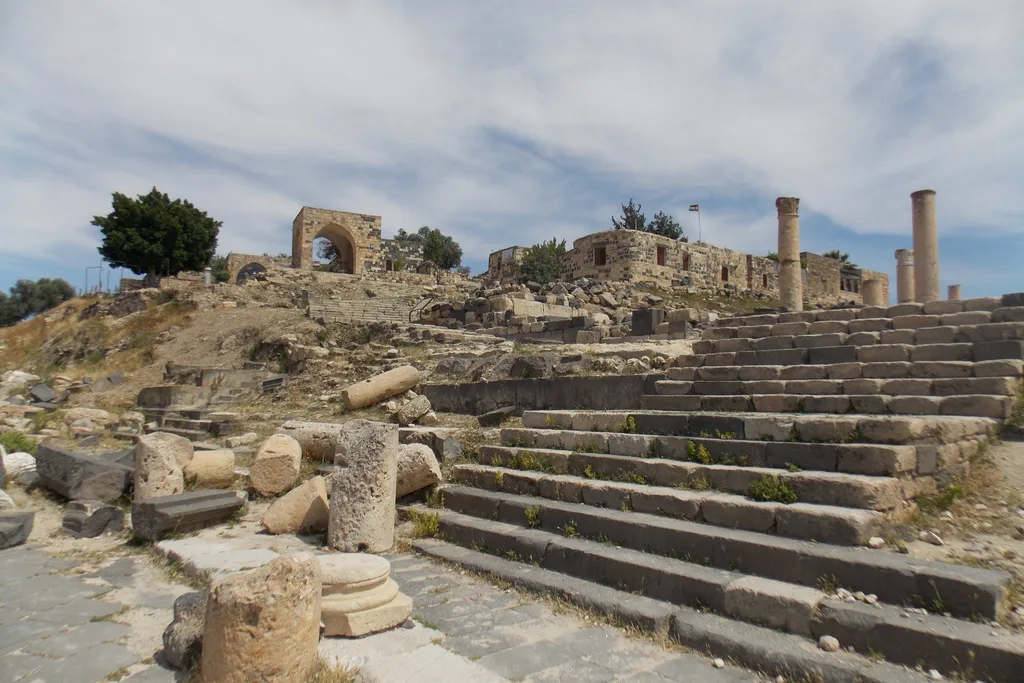
Everything else in this guide to the best hiking in jordan hangs off one line on the map, so it is worth understanding that line before anything else. The Jordan Trail is a long-distance walking route that runs the length of the country, from Umm Qais in the far north to Aqaba on the Red Sea in the south. Visit Jordan, the country’s official tourism site, describes it as offering 40 days of hiking over more than 650 kilometres, travelling through 52 villages and towns, and that framing is the right one: this is not a national park trail with a single ranger station and a single rulebook, but a stitched-together route through farmland, forest, canyon, desert and city edge, held together by a trail association, by GPS files, by village homestays and by the local guides who know each stage the way a bus driver knows a route. Walk it whole and you have walked Jordan. Walk one section and you have still walked Jordan, just the part that suited you, and most visitors sensibly do the second thing.
The trail’s geography explains its character, because Jordan changes completely as you walk south, and the trail is designed to make you feel every change. In the north, around Umm Qais and Ajloun, the ground is green, wooded and farmed, with Roman ruins on hilltops and oak forest in the valleys, and the walking is the closest Jordan comes to European hill walking. Through the middle, the trail drops into the great wadis of the Dead Sea escarpment, crosses the King’s Highway country around Karak, and reaches Dana, where the landscape turns to canyon and desert in a single afternoon. South of Petra the country opens out into the empty desert of Wadi Rum and the granite mountains above Aqaba, where the walking becomes a matter of water, shade and local knowledge in a way the northern stages never are. A walker who has done the whole trail has therefore not done one kind of walking forty times; they have done eight or nine kinds of walking, joined end to end, and that variety is the trail’s real claim to fame.
That variety is also why the practical advice for the best hiking in jordan on the Jordan Trail is different from the advice for a single national park. The trail is divided into sections, usually walked in stages of a day each, and the official section lengths published by Visit Jordan give you the shape of the commitment: the northern Umm Qais to Ajloun section is listed at 80 kilometres over 6 hiking days, Ajloun to Iraq al-Ameer at 74.3 kilometres over 5 days, and the southern sections run longer and emptier, with Petra to Wadi Rum listed at 125.4 kilometres over 6 days and Wadi Rum to Aqaba at 75.9 kilometres over 5 days. Those are official figures, quoted here because they come from the tourism authority’s own trail page, and they are useful as a scale check even if you never walk a full section. They tell you, at a glance, that this is a serious undertaking measured in weeks, not a weekend route, and that the southern desert stages are the longest waterless stretches on the whole line.
For most visitors, the sensible relationship with the Jordan Trail is to walk a section, not the trail. The Dana to Petra section, covered next, is the section the world knows, and it is the right first section for a first Jordan trip. The Wadi Rum to Aqaba section is the right second section for walkers who fall in love with the desert and want to finish at the sea. The northern sections suit walkers who want green country, villages and ruins without desert logistics, and they pair naturally with Jerash and Ajloun Castle as sightseeing days. What you should not do is treat the trail as a waymarked path you can follow with a paper map and optimism alone. The trail association’s GPS files exist for a reason, the waymarking varies by section, and on the desert stages a local guide is not a luxury but the difference between a walk and a wander into country where water is a plan, not a hope. The permits and guides section near the end of this guide takes that distinction apart, stage by stage, and it is worth reading before you choose a section, because it changes which sections are realistic for an independent walker.
Dana to Petra – the Walk That Made Jordan Famous
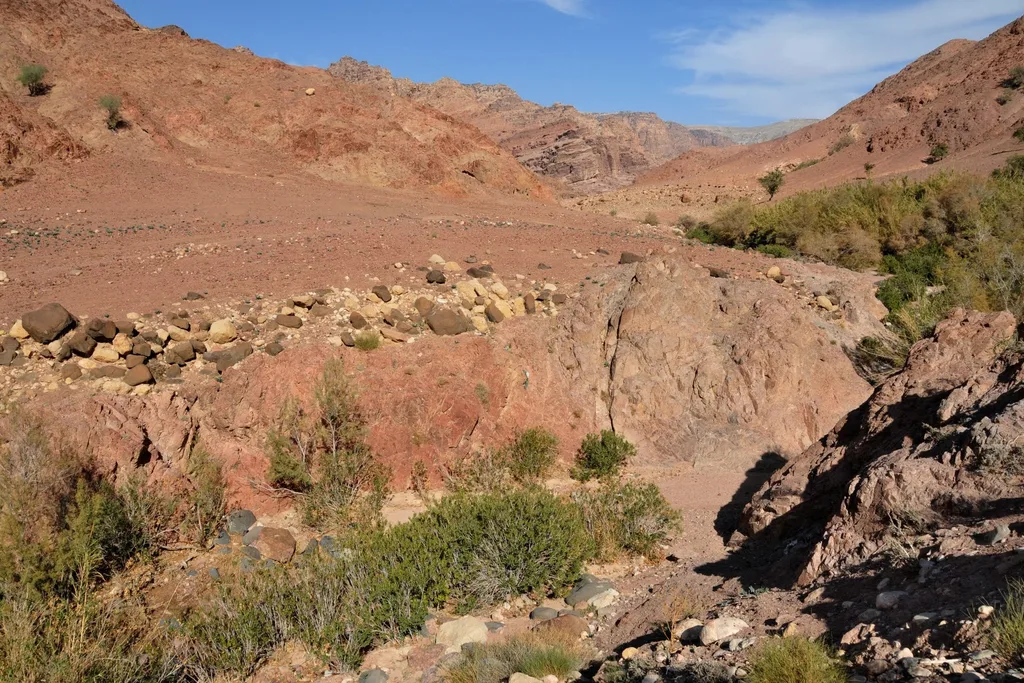
Ask a hundred walkers which single trek justifies a trip to Jordan and most of them will name this one, and for once the consensus is right. The Dana to Petra section of the Jordan Trail runs from the stone village of Dana, perched on the rim of its great canyon, south through a sequence of landscapes that seem to belong to different countries, and finishes by entering Petra through the back door, past Little Petra, so that the ancient city arrives as the end of a journey rather than the start of a sightseeing day. Visit Jordan describes this section as named by National Geographic as one of the 15 best hikes in the world, and whether or not you weight magazine lists, the walk earns its reputation the ordinary way, by being beautiful on every single day and different on every single day, which is rarer than it sounds.
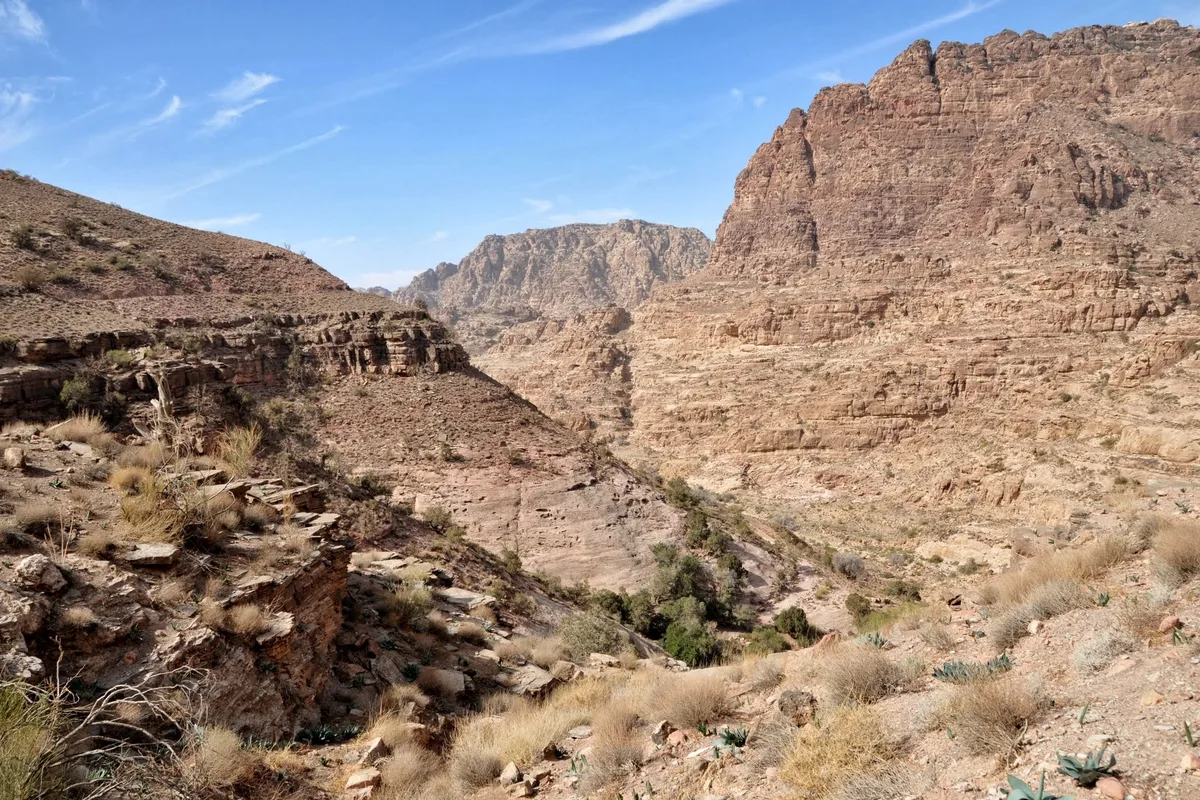
The walk begins with a descent, and the descent sets the tone. From Dana village you drop into Wadi Dana, the canyon that gives the reserve its shape, and the ground falls away from juniper woodland on the plateau into sandstone gorge country, with the colours changing under your feet from green to red to gold as the altitude drops. The first day ends low, in the Feynan area, where the ancient copper-mining landscape around Wadi Faynan adds a layer of human history that most desert walks do not have: people have worked this ground for thousands of years, and the slag heaps and ruins are not scenery but evidence. From there the route climbs and falls through a sequence of wadis and plateaus, crosses the kind of open desert that makes you understand why the Bedouin guides walk the way they do, unhurried and certain, and reaches Little Petra, the smaller Nabataean site that served as a suburb and caravan station for the great city. The final approach into Petra from Little Petra is the walk’s famous payoff, and it is worth protecting: walkers who arrive this way enter through a narrow canyon of their own, away from the main visitor centre crowds, and reach the Monastery, Ad Deir, from above, which reverses the usual Petra experience entirely.
Now the honest difficulty, because this is where rival guides to the best hiking in jordan fail their readers. This is a multi-day desert trek, not a long day walk, and it needs to be planned as one. Here the sources disagree, and this guide prints the disagreement rather than picking a winner: Visit Jordan lists the Dana to Petra section at 72.6 kilometres over 4 hiking days, while widely used walking itineraries quote roughly 80 to 85 kilometres over 5 days, with the difference coming down to where each source starts and stops counting and whether the Petra arrival day is counted as a walking day. Either way, you are looking at four or five days of walking, with daily distances in the mid-teens of kilometres, with real climbs and descents, with nights in camps or small lodges rather than hotels, and with water and food carried or supplied by arrangement, not bought at a shop on the route. A fit walker who walks regularly will find the days demanding but manageable. A walker whose longest recent walk is a city afternoon will find them punishing, and should build up first or choose the Dana day walks in the next section instead.
The other honest point is the guide question, and it is not a small one. The Dana to Petra route crosses remote country where the path is not always obvious, where water sources are known locally rather than signed, and where the camps are arranged through local operators. Independent walking with a GPS file is possible for experienced desert walkers, and some do it, but for most visitors the right arrangement is a local guide or a supported trek through a Jordanian operator, with the guide’s local knowledge doing the work that a waymark would do elsewhere. That is not a sales pitch; it is the same advice the trail’s own community gives, and it is the reason the walk works as well as it does. The money stays in the villages the trail passes through, the walker gets water where water exists, and the route’s fragile desert surfaces get walked by people who know where the path actually is. If the cost or the commitment of a guided multi-day trek puts you off, that is useful information, not a failure: the Dana day walks and the Petra day walks below give you most of the same landscape in a single day, without the logistics.
One practical warning belongs in this section because it catches walkers every year. The Dana to Petra trek ends at Petra, and entering Petra requires a ticket, bought at the main visitor centre, which the back-door route does not pass. Walkers on the trek must therefore hold a valid Petra ticket before the final day, arranged in advance through their operator or bought earlier in the trip, or the famous finish becomes an argument at a gate. Check this with your operator before you leave Dana, not on the last morning. And if you are building a wider trip around the trek, our Petra travel guide covers the city itself in full, while our Jordan itinerary 7 days shows how a trek week fits into a first Jordan trip without rushing the days around it.
Dana Reserve Day Walks – Wadi Dana, Rummana and Wadi Ghuweir
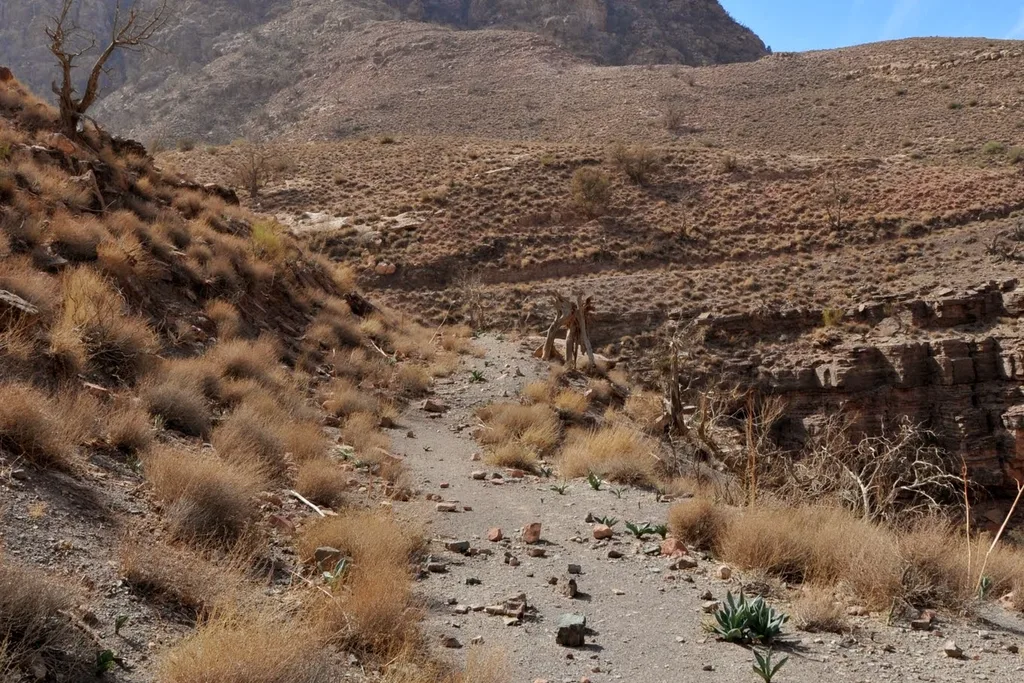
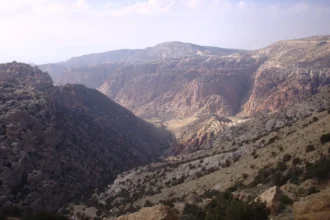
If the multi-day trek is too much, Dana still gives you some of the best hiking in jordan in a single day, and it does so without asking you to commit to anything more than a morning. The Dana Biosphere Reserve is Jordan’s largest and oldest nature reserve, a slab of country where four different ecological zones are stacked on top of each other, from Mediterranean woodland on the high plateau down through sandstone canyon to the hot, dry world of Wadi Araba below, and the reserve’s day trails are designed to let you sample that stacking without walking the whole staircase. The reserve is run by the Royal Society for the Conservation of Nature, the RSCN, which also runs the guesthouse in Dana village and the campsite at Rummana, and the practical consequence is that Dana is the best-organised walking base in the country: there is a visitor centre, there are named trails, there are staff who know the day’s conditions, and there is somewhere to sleep at the top of the canyon when you finish.
The classic day walk is the Wadi Dana Trail, which drops from Dana village down the canyon towards Feynan. It is a long descent, and that is the whole point and the whole problem in one sentence: the walking is downhill, the scenery opens out with every hundred metres of height lost, the sandstone colours deepen, and then you are at the bottom, a long way below your bed, with the climb back up in front of you unless you have arranged a vehicle at the Feynan end. Many walkers therefore walk it one-way, with a transfer arranged through the reserve or their guesthouse, and that arrangement is worth making the day before, not assuming on the morning. The trail itself is a proper mountain path, rocky underfoot, exposed in places, and best walked in the cool of the morning, with water carried for the whole descent, because there is no shop at the bottom of a canyon and the sun in the canyon works differently from the sun on the plateau: it bounces off the rock and finds you twice.
For walkers who want Dana without the big descent, the Rummana trails are the answer. The Rummana area, above the canyon on the reserve’s high ground, holds a campsite and a set of shorter trails through woodland and along the canyon rim, including a caves trail that threads past sandstone caves in the cliffs. These are the walks to choose if you are travelling with children, if your knees dislike descents, or if you simply want a morning among juniper and oak with canyon views thrown in, rather than a full day committed to a single valley. The walking here is gentler, the shade is real, and the birdlife is the reserve’s quiet boast: Dana is known for its birds, and the high woodland holds species that birdwatchers travel specifically to see, so bring binoculars if you have them and walk slowly in the early morning, when the reserve is at its most alive.
The third Dana day walk worth naming is Wadi Ghuweir, the hanging-gardens canyon, which runs as a separate valley system from the main Dana canyon and offers something neither of the other two does: water, palms and shade in a narrow gorge, with springs feeding a green corridor through otherwise dry rock. It is a canyon walk in the gentler sense, a walk through a living oasis rather than a scramble through a dry gorge, and it is the Dana walk to choose on a hot day, because the water and the shade change the whole experience. It is also, like all canyon walks, a walk to check conditions for before you go: a canyon with water in it is a canyon that can flood, and the reserve staff are the people who know whether the day’s walk is a good idea. Ask them. That sentence, repeated for every canyon in this guide, is not filler. It is the single most useful habit a Jordan walker can acquire.
Between them, these three Dana walks cover the whole range of what the best hiking in jordan can mean in a single reserve: a big descent, a gentle rim walk, and a green canyon. Walk all three across two or three days based in Dana village and you will have seen the reserve properly, slept in the village that guards it, eaten in the guesthouse that funds it, and understood why Dana sits at the centre of every serious Jordan walking itinerary. Walk one of them as a day trip and you will still have had a better day than most visitors to Jordan manage in a week. Dana is not a detour from the walking itinerary. It is the walking itinerary, in miniature, and the rest of this guide is, in a sense, the same idea played out across the whole country.
Petra on Foot – the Siq, the Monastery and the Back-Door Trail
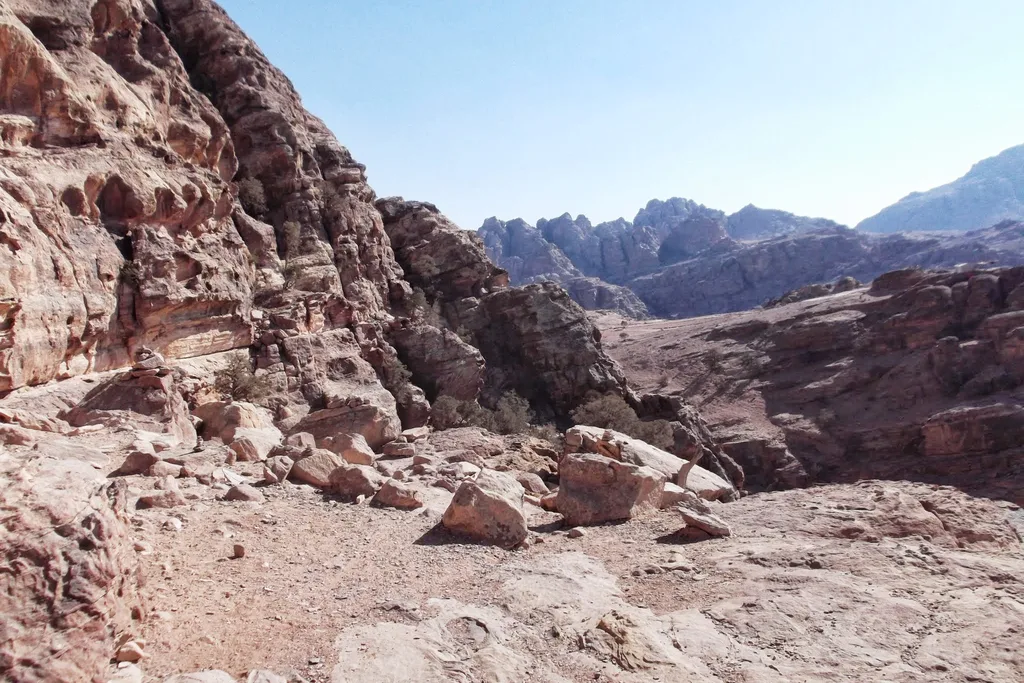
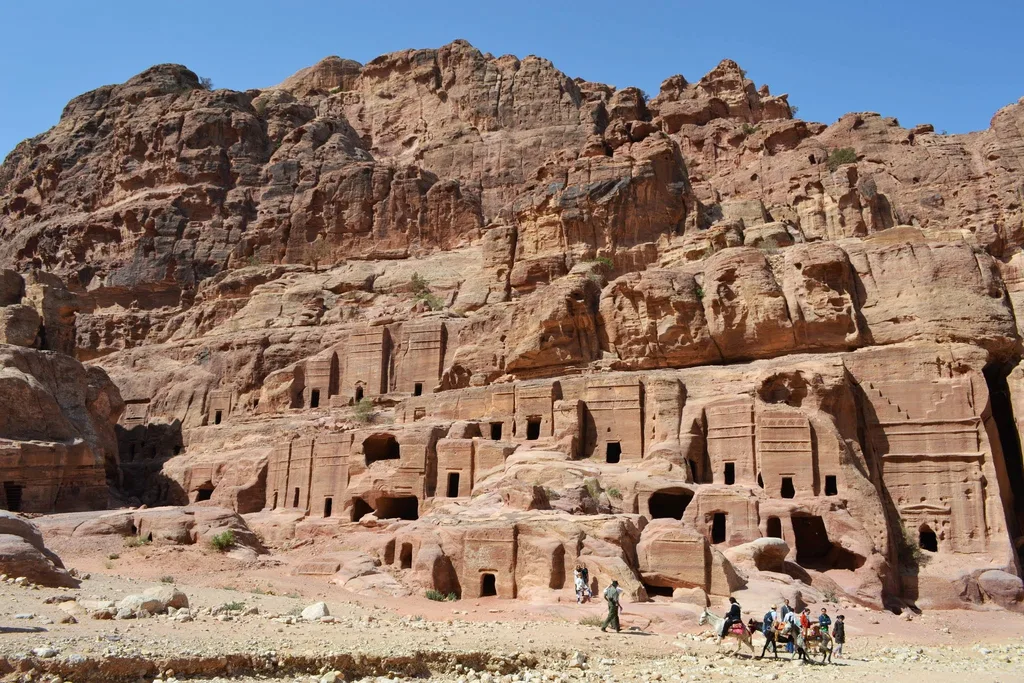
Petra is usually sold as a sightseeing day, and it is a wonderful sightseeing day, but for walkers seeking the best hiking in jordan it is something better: a whole walking landscape disguised as an archaeological site. The city sprawls across a basin and up into the mountains around it, and the distances inside it are walking distances, not viewing distances. The main trail from the visitor centre through the Siq to the Treasury and on to the heart of the city is itself a walk of several kilometres each way, and the side trails that climb out of the basin to viewpoints and to the Monastery are proper mountain walks, with steps, exposure and altitude gain that surprise visitors who arrived expecting a flat museum. Treat Petra as a walk and it rewards you. Treat it as a photo stop and it punishes you with tired legs and a sense that you missed the point.
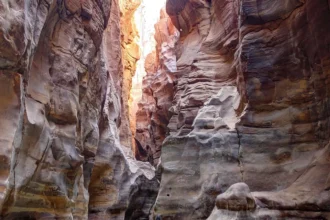
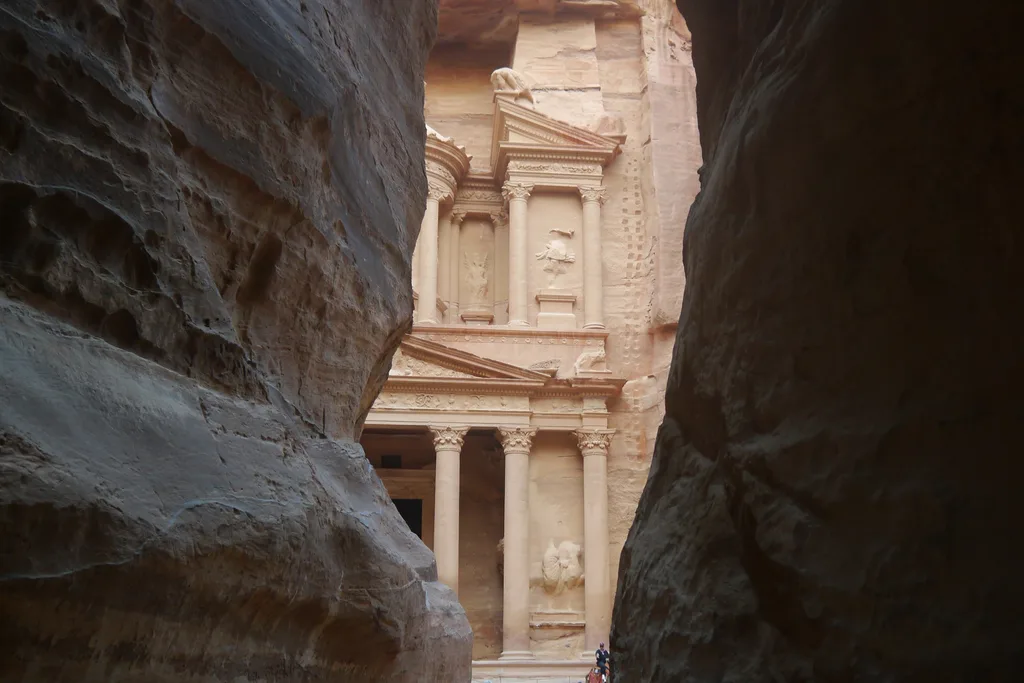
Start with the Siq, because everyone walks it and almost nobody walks it well. The Siq is the narrow canyon that forms Petra’s main entrance, a corridor of towering sandstone walls that runs for well over a kilometre before it releases you, suddenly, in front of the Treasury. Walked slowly, in the early morning before the crowds thicken, it is one of the great walks in the world in its own right: the walls change colour as the sun moves, the water channel cut into the rock floor reminds you that this was engineered as well as eroded, and the anticipation builds with every bend because the canyon refuses to show you what is coming. Walked at midday in a crowd, it is a shuffle. The difference is entirely a matter of timing, and the walkers’ rule for Petra is the same as the walkers’ rule everywhere in Jordan: go early, carry water, and let the crowds have the middle of the day while you are up on a trail they have not found.
The Monastery Trail is the walk that sorts the walkers from the sightseers. From the heart of the city, the trail climbs, on hundreds of rock-cut steps, up to Ad Deir, the Monastery, a facade as large as the Treasury’s standing in a high, open landscape of its own, with viewpoints beyond it that look out over the desert to the west. The climb is the hardest sustained walking in Petra, and it is honest about it: there is no shortcut, the steps are uneven, the sun is on you for much of the way, and the altitude gain is real. But the reward is equally honest. The Monastery sees a fraction of the Treasury’s crowds, the plateau beyond it feels like a different site entirely, and the walk back down, with the city spread below you, is the moment most walkers remember from their whole Jordan trip. Allow half a day for the Monastery as a walk, not an hour as a detour, and take the viewpoint trail beyond the facade if your legs still have anything in them, because the view from the end of the world, as the guides call it, is the best panorama in Petra and it costs nothing but the climb.
The third Petra walk is the back-door trail from Little Petra, which is also the final day of the Dana to Petra trek described above, and it deserves a mention here for walkers who are not doing the trek. Little Petra, the smaller Nabataean site a short drive from the main city, connects to Petra by a trail that climbs over the ridge and drops into the city from the north, arriving at the Monastery from the opposite direction to the usual climb. Walked as a day walk, with a vehicle arranged at one end, it is one of the finest half-days in Jordan: quiet, wild, and arriving at the great facade from a direction that makes it feel discovered rather than visited. It is also a walk that needs arranging, because it is not signed like the main trails and it crosses open country where a local guide earns their fee. Do not attempt it on a guess. Arrange it through your hotel or a Petra guide, carry water for the whole crossing, and start early enough that the descent into Petra happens in daylight with time to spare.
A word on Petra’s scale, because it is the commonest planning error in Jordan. Visitors routinely underestimate how much walking a Petra day involves, and then discover, halfway to the Monastery, that they have already walked further than they planned and have further still to walk back. The honest way to plan Petra as a walker is to allow two days: one for the main city, the Siq, the Treasury, the street of facades and the royal tombs, and one for the Monastery and the high trails, or for the back-door walk. One day gives you the highlights and sore feet. Two days gives you Petra as a walking landscape, which is what it actually is, and the second day is the one that stays with you. If your itinerary only allows one Petra day, spend it on the main trail and the Monastery climb, skip the viewpoints you cannot reach comfortably, and save the back door for a return trip. Petra rewards the walker who comes back. It always has.
Wadi Rum on Foot – Dunes, Canyons and the High Peaks
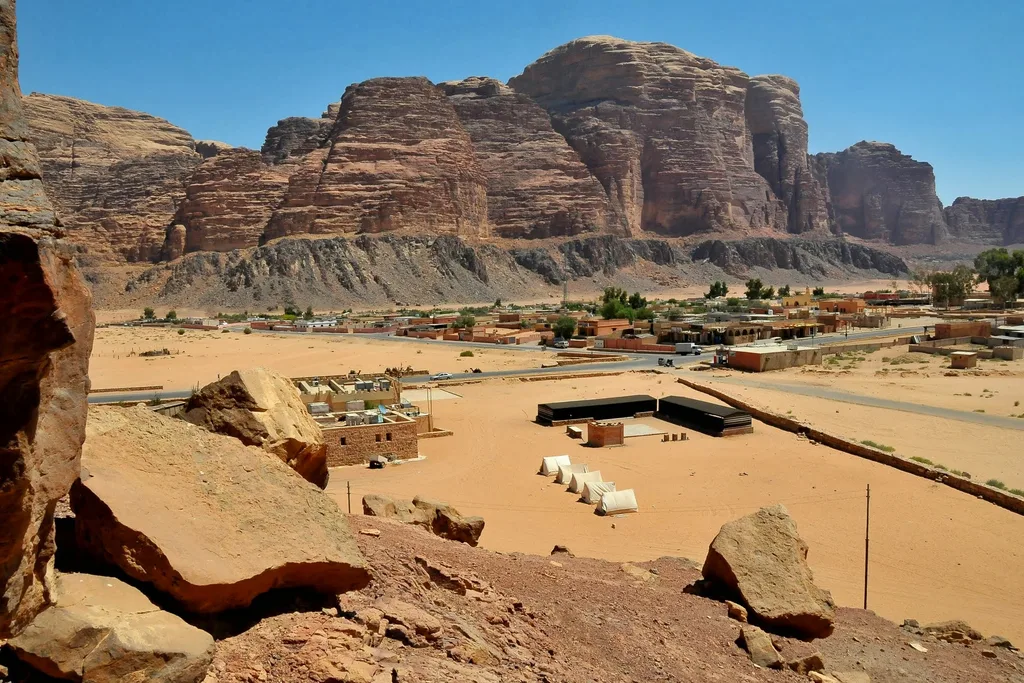
Wadi Rum is the walk in the best hiking in jordan that looks easiest and is most often underestimated, because the desert flatters the eye. From the village, the great sandstone massifs rise out of open sand in a landscape so clean and so vast that distances collapse: a mountain that looks an hour away is three hours away, a dune that looks small has a slope that will take the breath out of you, and the shade that looks plentiful belongs to cliffs that are further off than they seem. Walking in Wadi Rum is therefore a different skill from walking in Dana or Petra. It is desert walking, and desert walking is about water, navigation and local knowledge before it is about fitness. The fit walker who arrives without those three things is in more trouble than the unfit walker who arrives with a good guide, and every section of this guide that mentions Wadi Rum should be read with that sentence in mind.
The gentlest Wadi Rum walking is the valley-floor walking around the village and the main massifs, and it is genuinely gentle, which is why it suits almost everyone. Short walks from the village lead to Lawrence’s Spring, a trickling spring in a gully below the cliffs, to Khazali Canyon, a narrow slot canyon with ancient inscriptions hidden in its shade, and to the great red dune banked against the cliffs, which is less a dune than a small mountain of sand that rewards the climb with a view across the whole valley system. These are half-day walks at most, they can be combined with a jeep tour or a camel ride without any sense of cheating, because in Wadi Rum the jeep is the honest way to cover the distances between the walks, and they give you the desert’s scale without asking you to commit to it. For a first visit, this is the right Wadi Rum: a morning’s walk, a jeep afternoon, a camp night under stars that need no description because every visitor describes them the same way.
The serious Wadi Rum walking starts where the valley-floor walks stop. The Burdah Rock Bridge, one of the tallest natural arches in the world, is reached by a steep scramble up Jebel Burdah that involves real rock scrambling, exposure and route-finding, and it is not a walk to attempt without a guide who knows the route, because the way up is not obvious and the way down is less obvious still. Jebel Umm ad Dami, Jordan’s highest peak, is a full-day expedition from the far south of the protected area, involving a long drive, a long climb and a descent in the same day, and it is the peak-bagger’s prize in Jordan, with a summit view across into Saudi Arabia that justifies the effort for those who want it. Both of these are genuine mountaineering days in desert conditions, and both belong in the category this guide keeps separate: guide-led, arranged in advance, and not to be improvised from the village on the morning. The desert does not forgive improvisation the way a forest path does.
Between those extremes sits the walking that most experienced hikers actually enjoy most in Wadi Rum: multi-day treks through the protected area, sleeping in Bedouin camps, walking from massif to massif with a guide and a support vehicle, covering ground that no day visitor ever sees. These treks are the desert equivalent of the Dana to Petra walk, and they share its logic: the guide knows the water, the camp knows the food, and the walker gets to walk. They also share its cost and its commitment, and they should be booked through a Wadi Rum operator, ideally one based in the village itself, because the money then stays with the community whose desert it is, and the guide you get is the guide who grew up walking that ground. A Wadi Rum trek is not a cheaper version of a Dana trek. It is a different country, walked at desert pace, and walkers who love one often love the other for exactly opposite reasons: Dana for its vertical drama, Wadi Rum for its horizontal emptiness.
One more Wadi Rum truth, because it matters for planning. The protected area is a UNESCO World Heritage site, and its rules are real: stay on established routes, do not climb on the inscriptions, do not camp where you have not arranged to camp, and treat the desert’s archaeology, which is written on the rock faces in thousands of inscriptions, as the museum it is. The Bedouin guides enforce these rules not because they are bureaucrats but because the desert is their home and their livelihood, and a walker who respects that gets a better walk, not a more restricted one. The guides know where the inscriptions are, where the shade falls at midday, and where the water is, and that knowledge is the difference between a walk and a wander. In Wadi Rum, the guide is not an optional extra. The guide is the map.
Wadi Mujib and the Siq Trail – a River Walk With Rules
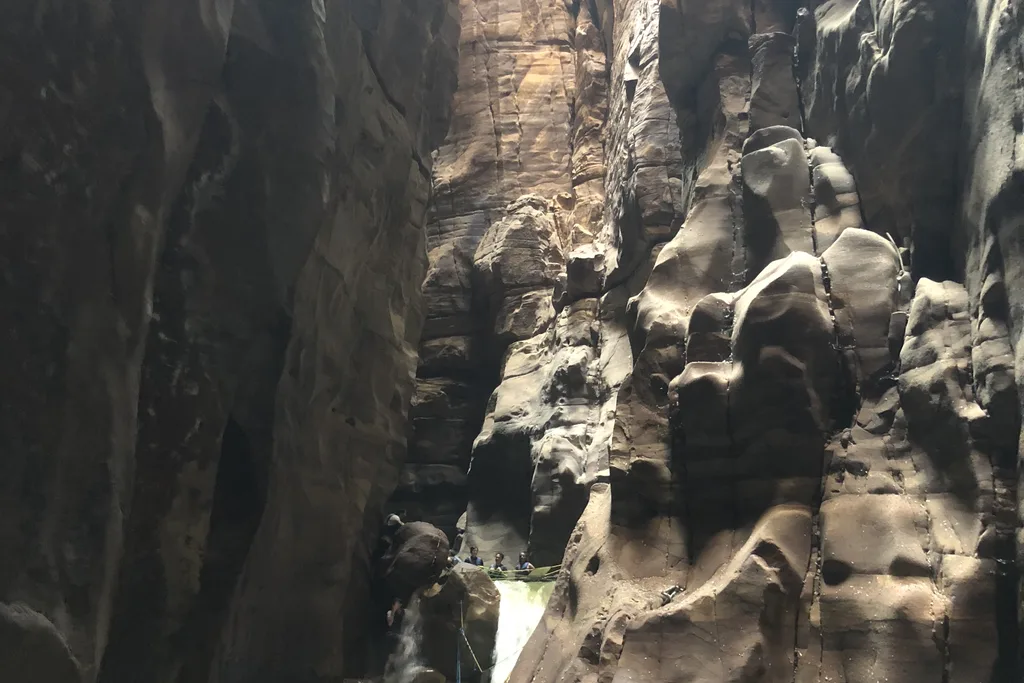
Every other walk in this guide to the best hiking in jordan is a walk on land. This one is a walk in a river, and that single difference changes everything about it, which is why it gets its own section and its own rules. The Wadi Mujib Siq Trail runs through the lowest nature reserve on earth, a gorge cut by the Mujib river through sandstone on its way to the Dead Sea, and the trail is the river: you wade it, you swim parts of it, you scramble up waterfalls with ropes fixed to the rock, and you finish at a waterfall in a narrow canyon that feels like the end of the world in the best possible way. There is nothing else in Jordan like it, and there is very little like it anywhere. It is also the walk in this guide with the most rules attached to it, and those rules are not bureaucracy. They are the reason the walk exists at all, because a river canyon is a dangerous place to be casual in, and the reserve knows it.
The first rule is the season, and it is absolute. The wet trails of Wadi Mujib, including the Siq Trail, operate only in the warmer months, generally from April to October, and are closed through the winter, when the river runs high and the flash-flood risk makes the gorge unsafe for walkers. This is not a soft recommendation that you can negotiate around with enthusiasm. The reserve closes the wet trails in winter, and a walker who plans a Mujib visit for December or January will find the gate shut and the river doing exactly what the closure is designed to protect them from. Plan Mujib for the warm months, and if your Jordan trip falls in winter, read the next section instead, because the reserve still offers walking in winter, just not in the river. The season also means Mujib pairs naturally with a spring or autumn Jordan trip, when the Dana and Petra walks are at their best too, and a single trip can therefore combine the country’s two great canyon experiences in one journey.
The second rule is the centre. Every Mujib trail starts at the Mujib Adventure Centre, on the Dead Sea Highway at the mouth of the gorge, and every walker goes through it. At the centre you are issued a life jacket, which is not optional on the wet trails, and you are briefed on the day’s conditions, which is not a formality either: the river’s level changes with rain far upstream, and the centre staff are the people who know whether the day’s water is a wade or a swim. The Siq Trail itself is the one Mujib trail that can be walked without a guide, which is part of its appeal: it is a self-guided canyon walk, with the route obvious because the canyon only goes one way, and with staff stationed along it. That self-guided status is sometimes misread as meaning the trail is casual. It is not casual. It is physical, it is wet from the first minutes, it involves swimming through pools where the current runs, scrambling over boulders, and climbing waterfalls with the help of fixed ropes, and it takes a few hours of sustained effort. Walkers who cannot swim, walkers with a fear of deep water, and small children should not be on it, and the reserve’s own requirements reflect that plainly.
The third rule is the kit, and it is dictated by the river. You will get wet, completely, within minutes, and everything you carry will get wet too unless it is in a dry bag. Wear shoes that grip on wet rock and that you do not mind soaking, because trainers with smooth soles are a liability on the boulders and open sandals are worse. Carry water in something that survives a swim, leave anything you cannot afford to lose at the centre, and wear swimwear under light, quick-drying clothes rather than the hiking kit you would wear in Dana. The walk is not long in kilometres, a few kilometres there and back along the same canyon, but it is long in effort, because wading against a current and climbing wet rock uses muscles that dry walking does not, and the return journey, against the same current, is the part that surprises people. Allow half a day, go early to avoid the centre’s busiest hours, and finish with dry clothes waiting at the centre, because the drive back along the Dead Sea Highway in wet clothes is a miserable end to a magnificent walk.
A note on prices, because this guide’s honesty rule requires it. This article prints no Mujib prices, not because prices do not exist but because this writer did not read the RSCN rate sheet in-session, and the figures circulating online for the Siq Trail differ by category and change with the season. The sibling guide to the reserve on this site prints the rate-sheet figures it verified; this guide deliberately does not repeat figures it has not itself verified, and sends you instead to the Mujib Adventure Centre and the RSCN, whose current terms are the deciding source in the week you travel. That is less convenient than a printed number and more honest than a stale one, and in a reserve where the price includes the life jacket, the briefing and the staff along the canyon, the number matters less than the arrangement it buys you.
The Dry Side of Mujib – Ibex, the Rim and the Winter Trails
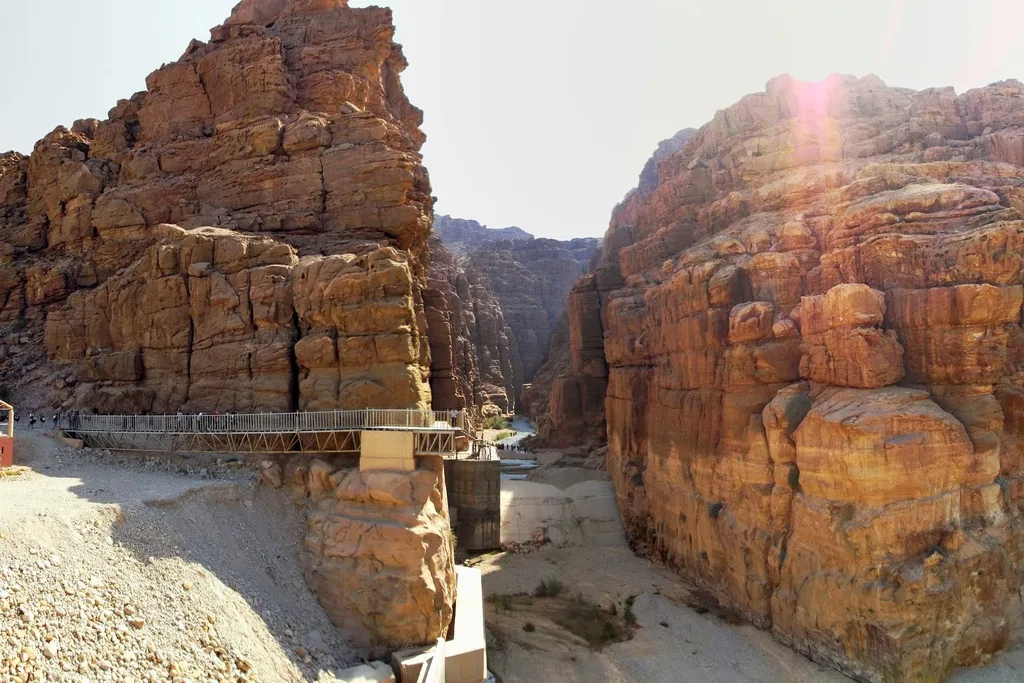
Wadi Mujib in winter is a different reserve, and walkers who only know the Siq Trail miss it entirely, which is a pity, because the dry trails are the reserve’s answer to the question of what to do when the river is closed. The reserve’s dry trails run through the winter months, when the wet trails are shut, and they offer a completely different experience: rim walks with views down into the gorge, dry wadi walking, and the chance to see the reserve’s wildlife, above all the Nubian ibex, the mountain goat whose recovery in this reserve is one of Jordan’s genuine conservation successes. These trails are guide-led, which is the key difference from the Siq: you do not walk them alone, you walk them with an RSCN guide, booked through the centre, and the guide’s knowledge of the ibex, the plants and the gorge’s geology is a large part of what you are paying for.
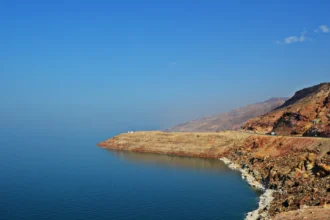
The best-known dry trail is the Ibex Trail, a guided walk along the canyon rim and through dry side country, named for the animal it gives you the best chance of seeing. Ibex are shy, they favour the steep ground, and a guide who knows where they water and where they rest is the difference between a walk with ibex in it and a walk where you hear about ibex afterwards. The trail is moderate walking, dry underfoot, and it suits walkers who want the Mujib landscape without the river, or who are visiting in the winter months when the Siq is closed and still want the gorge. It also suits walkers who love the Siq but do not want to get wet twice: the rim gives you the gorge’s scale, the colours of the sandstone, and the Dead Sea glittering to the west, without the swimming. Pair it with a Dead Sea day, as most visitors do, and you have a full day that combines the lowest place on earth with a proper walk above it.
Beyond the Ibex Trail, the reserve’s other trails divide into the guided wet canyoning routes, the Canyon Trail and the Malaqi Trail, which descend waterfalls with ropes under a guide’s supervision and which are emphatically not for independent walkers, and the longer guided routes that combine canyon walking with swimming through successive pools. These are adventure activities as much as walks, and they belong in a different category from the hiking in the rest of this guide: they need booking in advance, they need a minimum level of fitness and swimming ability, and they are weather-dependent in a way that a Dana ridge walk is not, because a canyon with a waterfall in it is a place where yesterday’s rain upstream is today’s water level. This guide names them so you know they exist and so you do not mistake them for freely walkable trails. They are not. They are guided canyoning, booked through the reserve, and the distinction matters, because walkers who arrive expecting to walk the Canyon Trail alone will be turned back at the centre, and rightly so.
The practical point of this section of the best hiking in jordan is simple: Mujib is not a one-season reserve. In summer it is a river. In winter it is a rim and a wildlife reserve. Both versions are worth a day, both start at the same Adventure Centre, and both are run by the same RSCN staff, who are the people to ask which version the day belongs to. A Jordan trip that includes Mujib in either season should therefore plan the Mujib day around the centre’s current advice, not around a blog post’s memory of a previous season, and should treat the centre’s word on the day as final. Canyons do not negotiate, and the reserve’s staff know that better than any guidebook writer, including this one.
Aqaba and the Reef-Side Walks – Where the Trail Meets the Sea
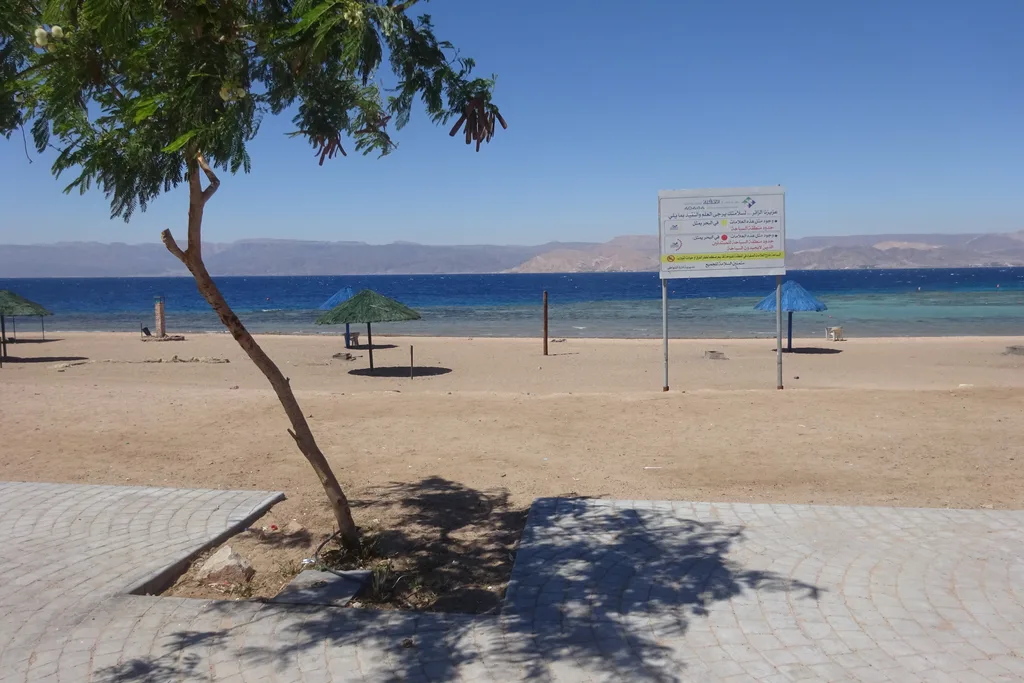
At the end of the Jordan Trail, the walking changes again, and Aqaba is where the best hiking in jordan changes into something gentler, which is exactly what a walker wants after desert stages. Aqaba is Jordan’s Red Sea port, a small, warm city at the head of the Gulf of Aqaba, and the walking here is shore walking: flat, easy, and best done in the early morning or the late afternoon, when the heat softens and the light turns the mountains across the gulf gold. The Jordan Trail’s final section, Wadi Rum to Aqaba, ends here, and walkers who have completed it arrive at the sea the way long-distance walkers always arrive at the sea, tired, sunburned and unwilling to stop walking just because the trail has ended. Aqaba gives them somewhere to keep walking without any more desert logistics, and that is a gift.
The shore walks themselves are simple and should be kept simple. The South Beach area, south of the city, offers a long, flat shoreline where you can walk for an hour or more with the reef just offshore, and the city corniche offers an urban version of the same walk, with cafes and shade at intervals. Neither is a wilderness walk, and neither pretends to be. Their virtue is exactly their ease: after days of canyon and desert, an easy shore walk is not a lesser walk but a different kind of restoration, and Aqaba’s warmth means it can be walked comfortably in months when the rest of Jordan’s walking is at its hardest. In winter, when Dana is cold and Mujib’s wet trails are closed, Aqaba is still warm enough for a morning walk in a t-shirt, and that seasonal complement is worth building into a winter Jordan trip.
The honest framing for Aqaba is that the reef is for swimming and snorkelling, not for walking, and the best Aqaba days combine the two honestly: a morning walk along the shore, a swim over the reef in the middle of the day, and an evening walk back along the water as the city lights come on. The coral reefs off Aqaba are a protected marine environment, and the shore walks give you the access points, the beaches and the viewpoints, while the water gives you the reef itself. Walkers who try to turn a reef day into a hiking day will be disappointed, and swimmers who try to turn a shore walk into a snorkelling trip without getting in the water will miss the point. Aqaba rewards the walker who accepts it for what it is: the gentle end of a hard trail, a place to walk slowly, swim well, and let the desert dust wash off before the flight home.
For walkers building a full Jordan walking trip, Aqaba also serves a logistical purpose that is easy to overlook. It is the southern transport hub, with an airport, with road connections back to Wadi Rum and Petra, and with a range of accommodation that suits a rest day better than a desert camp does. A walking itinerary that ends in Aqaba therefore ends well: the last walking day can be short, the last night can be comfortable, and the journey home starts from a city rather than a trailhead. If your trip instead starts in Aqaba and walks north, the same logic works in reverse, with the shore walks as a warm-up before the desert stages. Either way, do not skip Aqaba’s walking because it is easy. Easy, at the end of a hard trip, is a feature, not a flaw.
Ajloun and the Green North – Forests, Villages and the Other Jordan
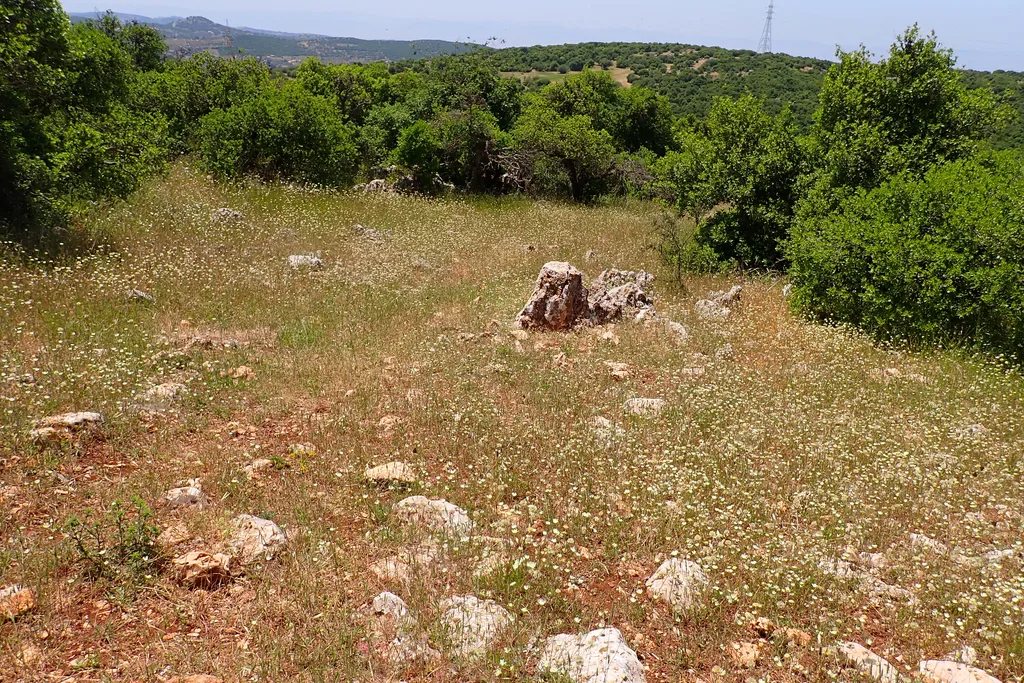
Most visitors’ image of Jordan is desert, and the north exists to correct that image of the best hiking in jordan, gently and completely. The Ajloun highlands, north of Amman, are green in a way the rest of the country is not: oak and pine forest, terraced farmland, stone villages, springs and a castle on a hilltop, all within a landscape that feels Mediterranean rather than Arabian. The Ajloun Forest Reserve, another RSCN reserve, is the centre of the walking here, and its trails are the closest Jordan comes to the kind of forest walking that visitors from Europe or North America recognise instantly: shaded paths, birdsong, wildflowers in spring, and villages that appear around bends in the path rather than at the end of a long desert stage. For walkers who love forests, Ajloun is not a consolation prize. It is a destination in its own right, and it is the part of Jordan that surprises people most.
The reserve’s trails are moderate, well-suited to a day’s walking, and they combine forest with culture in a way the desert trails cannot. A typical Ajloun walk threads through oak woodland, crosses terraces and olive groves, passes a village where a homestay or a small restaurant offers lunch, and climbs to a viewpoint over the Jordan Valley, with the hills of the far side visible on a clear day. The walking is not technically difficult, the navigation is straightforward by Jordanian standards, and the reserve’s staff and the local guesthouses can advise on the day’s best route, which changes with the season and with farming activity in the terraces. Spring is the glory season here, when the wildflowers are out and the forest floor is green, but autumn is nearly as good, with cooler air and clearer views, and even winter walking in Ajloun has a quiet charm, provided you dress for rain and mud rather than desert sun.
Ajloun also pairs naturally with the northern Jordan Trail sections, and walkers who want a longer northern experience can combine the reserve’s day walks with the trail stages between Umm Qais and Ajloun, walking from village to village through the green north. That combination is the best answer to the walker who asks whether Jordan has anything beyond desert: a week in the north, based in Ajloun and the villages around it, walking forest trails by day and sleeping in village guesthouses by night, gives you a Jordan that most desert-focused itineraries never show, and it does so without any of the desert’s logistics. The water is in the villages, the shade is in the forest, and the walking is the walking itself, not a test of endurance. For older walkers, for families, and for anyone who prefers trees to sand, the green north is not the alternative to the best hiking in jordan. It is a full member of it, and this guide insists on that point because so many rival guides treat the north as a footnote.
A final northern note, because it affects planning. Ajloun Castle, the twelfth-century hilltop fortress above the reserve, is worth combining with a forest walk on the same day, and the combination of castle in the morning and forest in the afternoon is one of the most satisfying day pairings in Jordan. The castle gives you the history and the panorama, the forest gives you the walking and the shade, and together they explain why this corner of Jordan was worth fortifying in the first place: it is fertile, it is watered, and it commands the valley below. Walk the forest first if the day is hot, castle first if the morning is clear, and either way, finish in a village restaurant, because northern Jordanian food, eaten after a forest walk, is one of the trip’s quiet pleasures, and this guide is not too proud to say so.
When to Walk – Seasons, Heat and Flash-Flood Sense
If there is one section of this guide to the best hiking in jordan to read before booking anything, it is this one, because Jordan’s walking seasons are not a matter of preference but of safety and sense. The country’s walking year divides, broadly, into three periods. Spring, from March to May, and autumn, from September to November, are the consensus best seasons for almost every walk in this guide: temperatures are walkable, the desert is neither freezing at night nor punishing by day, Dana’s canyons are at their most comfortable, and Petra’s trails can be walked in the middle of the day without suffering. Spring has the additional gift of wildflowers in the north and in Dana’s high country, and autumn has the gift of settled weather after the summer heat breaks. If you can choose, choose these months, and build your trip around them.
Summer, from June to August, is the season that separates the prepared from the optimistic. The desert walks, Wadi Rum above all, become a matter of dawn starts, shade discipline and water arithmetic, and the midday hours are not walking hours at all but resting hours, spent in shade or in a camp, waiting for the evening. Petra’s climbs in summer are a serious undertaking, and the Monastery steps at midday in July are a test of judgement as much as fitness. Mujib, by contrast, is at its best in summer, because the river walk is a cooling walk, and the wet canyon is a refuge from the heat rather than an exposure to it. A summer Jordan walking trip is therefore possible, and even enjoyable, provided it is built around Mujib, early starts, and short walks, rather than around long desert stages. Walkers who insist on a multi-day desert trek in August should be talked out of it, kindly but firmly, by their operator, and if their operator does not talk them out of it, they should find another operator.
Winter, from December to February, inverts the whole picture. The desert nights are cold, sometimes bitterly so, and a Wadi Rum camp night in January is a cold-weather expedition, not a stargazing idyll, unless you are properly equipped. Dana’s high country can be cold and wet, and the canyon trails need checking for rain. Mujib’s wet trails are closed, as the previous sections explain. But winter also has its gifts: Petra without crowds, Aqaba warm enough for shore walking, Ajloun quiet and green, and the desert in its clearest light. A winter walking trip built around Petra, Aqaba and the green north, with Dana day walks on good days and Mujib’s dry trails as the canyon option, is a fine trip, and it is often a cheaper and quieter one. The mistake is not walking in winter. The mistake is walking the summer itinerary in winter, or the winter itinerary in summer, and expecting the country to accommodate the error.
Underneath all three seasons sits the one safety rule that governs Jordanian canyon walking all year round: flash floods. Jordan’s wadis are dry for most of the year and then, after rain far upstream, they run with terrifying speed, and the canyons that are a pleasure in the morning can be a trap by the afternoon. The rule is simple and non-negotiable: never enter a narrow canyon when rain is forecast anywhere in its catchment, never ignore a guide’s or a reserve’s closure, and never assume that sunshine where you stand means safety where the water comes from. The reserve staff, the guides and the weather forecasts are all part of the same safety system, and the walker who respects all three will never need to test the alternative. This is not a paragraph to skim. It is the paragraph that keeps canyon walkers alive, in Jordan as in every desert canyon country, and it applies to Mujib, to Wadi Ghuweir, to the Siq at Petra, and to every dry wadi you are tempted to explore on your own.
Permits, Guides and the Rules That Are Not Optional
The rules for the best hiking in jordan are not complicated, but they are scattered across different authorities, and this section gathers them in one place so you do not have to piece them together from a dozen websites. The first distinction is between places that need a ticket and places that do not. Petra needs a ticket, bought at the visitor centre, and the ticket is checked. The RSCN reserves, Dana and Mujib and Ajloun, operate through their visitor centres, with reserve arrangements that cover entry, guiding and, in Mujib’s case, the life jacket and the trail system. Wadi Rum’s protected area operates through the village visitor centre and the local operators, with the jeep and guide system that organises almost every visit. The Jordan Trail itself, as a long route, does not have a single ticket, but its stages pass through all of these systems, so a multi-day trek accumulates tickets, guides and arrangements as it goes. Budget for that, and arrange it through your operator rather than discovering it stage by stage.
The second distinction is between walks that need a guide and walks that do not, and it is the distinction this guide has stressed throughout because it is the one that most often causes trouble. You do not need a guide for Dana’s day trails, for Petra’s main trails, for Ajloun’s forest walks, or for the Mujib Siq Trail, which is self-guided within the reserve’s system. You do need a guide, in practice and in most cases in rule, for the Mujib Canyon and Malaqi trails and the other guided canyoning routes, for the Burdah Rock Bridge scramble, for the far Wadi Rum valleys and the high peaks, and for the remote Jordan Trail stages where water and navigation are local knowledge. The test is not whether you are experienced. The test is whether the route’s safety depends on knowledge that is not on the map, and in Jordan that test fails, honestly, on a large number of the most attractive routes. Hiring a guide in those cases is not an admission of weakness. It is the correct reading of the ground, and the guides, who are mostly local Bedouin or village men and women whose families have walked these routes for generations, are among the best in the world at what they do.
The third distinction is between the Jordan Pass and everything else, because the Pass confuses walkers more than any other Jordan document. The Jordan Pass is a tourist pass that bundles a visa-fee waiver with entry to many sites, including Petra, and it is relevant to walkers because a Petra ticket bought separately is a significant cost and the Pass changes the arithmetic of a whole trip. Whether the Pass saves you money depends on how many covered sites you visit and how long you stay, and the terms, including the minimum-stay condition for the visa waiver, are stated in the Pass’s own terms and change from time to time. This guide does not quote Pass prices, for the same reason it does not quote Mujib prices: the figures change, and a stale figure in a guide is worse than a direction to the official terms. Read the current terms on the official Pass site in the week you travel, count the sites on your actual itinerary, and decide on arithmetic, not on enthusiasm. Walkers doing the Dana to Petra trek should settle the Petra ticket question, Pass or separate ticket, before the final day, as the trek section warns, because the back-door arrival does not pass a ticket office.
Finally, a word on behaviour, because Jordan’s walking country is also people’s home, farmland and sacred ground, and the rules of good behaviour are part of the permit system in the widest sense. Stay on paths in the reserves, do not climb on inscriptions or carve anything anywhere, do not camp outside arranged campsites, take all litter out, and ask before photographing people, especially in villages and camps. Dress modestly in villages and at religious sites, which in practice means covering shoulders and knees when you are not on a trail, and remember that the hospitality you will be offered in villages and camps is genuine and generous, and that accepting it graciously, with thanks, is part of the walk. The best hiking in jordan is not just a matter of routes. It is a matter of relationships, with guides, with villages, with reserves, and with a landscape that has been walked, farmed and fought over for thousands of years. Walk it as a guest and it opens further than any map suggests.
Kit, Water and Navigation – What the Desert Punishes
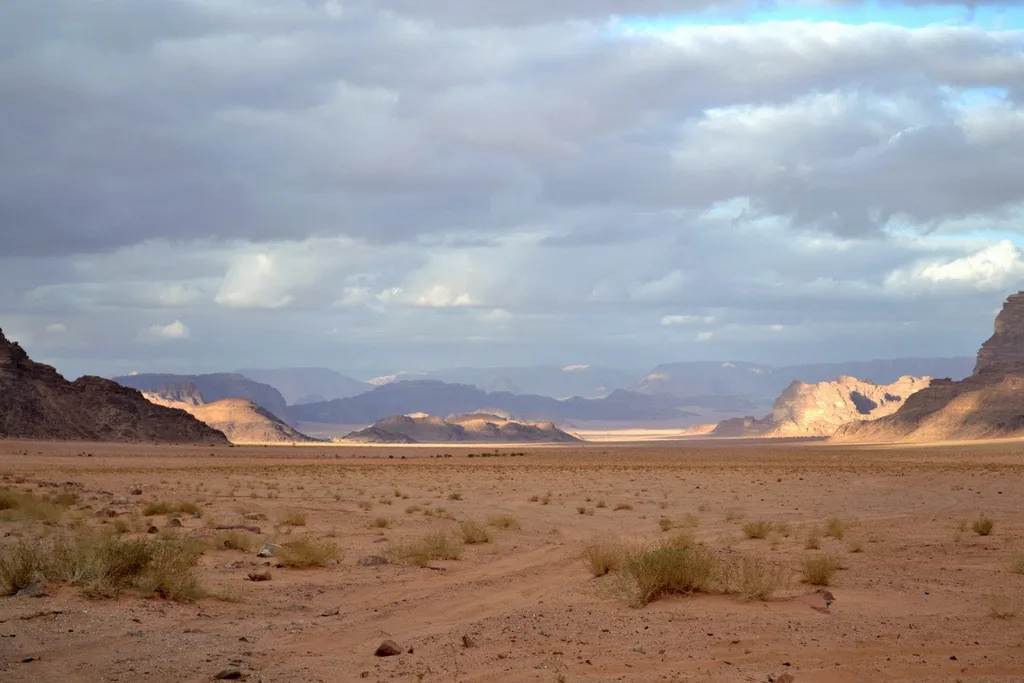
Desert walking on the best hiking in jordan punishes a specific set of mistakes, and they are almost never the mistakes a fit walker expects. The desert does not punish lack of fitness first. It punishes lack of water, lack of shade discipline, and lack of navigation, in that order, and it punishes them quietly, by degrees, until the walker realises too late that the situation has changed. The kit list for Jordan walking is therefore shorter than most walkers pack and more specific than most walkers expect, and this section gives you the short version that actually matters, rather than a generic list copied from a temperate-country guide.
Water comes first, and the rule is to carry more than you think you need, and to know where the next water is before you leave the last water. In Dana and Petra, water can be bought or refilled at the start of the day and at intervals along the main trails, but on the desert stages and in Wadi Rum, water is carried or supplied by arrangement, and there is no shop at the halfway point. A walker should start every desert day with several litres, drink on a schedule rather than waiting for thirst, which lags behind need in dry air, and carry electrolytes or salty food, because water without salt in a desert is only half the answer. The commonest desert walking error is not running out of water dramatically. It is running gradually low, rationing too late, and arriving at camp with a headache that could have been avoided by carrying one more litre. Carry the litre. It weighs little compared with the alternative.
Sun and shade come second, and the discipline is about timing as much as kit. A wide-brimmed hat, sunscreen, sunglasses and light, long-sleeved clothing are not optional extras in Jordan; they are the walking kit, and the walkers who wear them walk further and feel better than the walkers who rely on sunscreen alone. But the larger discipline is the day’s shape: start early, rest in the middle of the day in summer, walk the long stages in the cool hours, and treat shade as a resource to be planned, not found. In the canyons, shade is plentiful and the problem is the opposite, cold water and slippery rock. In the open desert, shade is a cliff’s shadow at a certain hour, and a guide who knows where it falls is worth more than any hat. Plan the day around the sun’s path the way a sailor plans around the tide, and the desert becomes manageable. Ignore the sun’s path and the desert becomes the story you tell afterwards about the day you underestimated it.
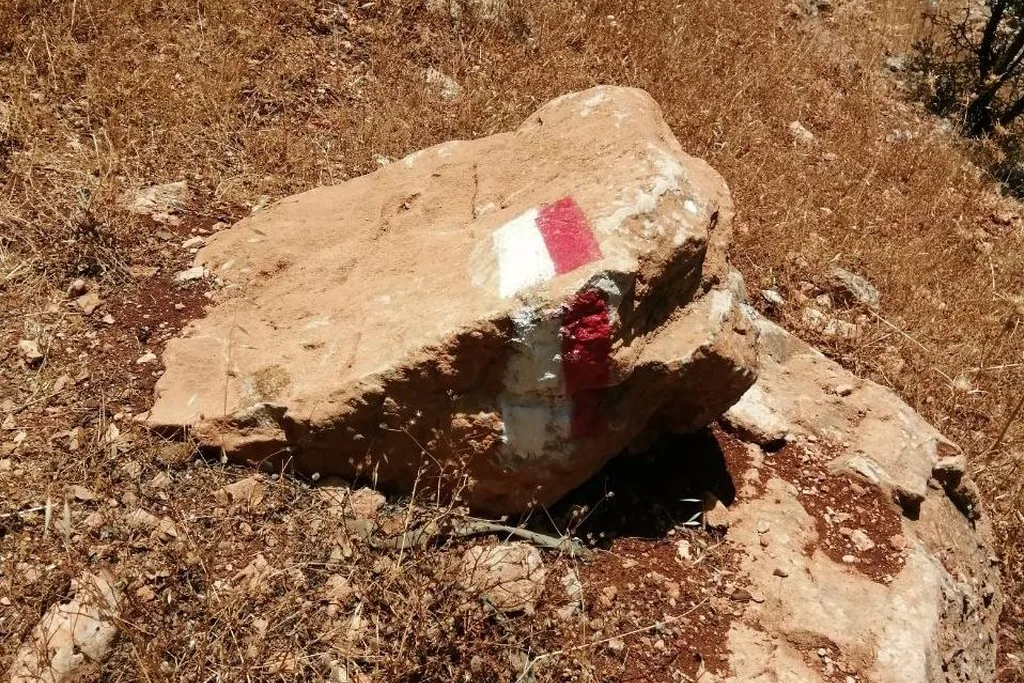
Navigation comes third, and in Jordan it is a modern skill with an old-fashioned backup. The Jordan Trail’s GPS files, loaded on a phone with offline maps, are the standard navigation tool for the long route, and they should be downloaded before you leave home, not at the trailhead, because signal in the desert is unreliable and, in places near borders, deliberately restricted. But a phone is not a navigation system on its own: carry a charged power bank, carry the route on paper or on a second device if you are walking remote stages, and, above all, walk with a guide on the stages where the route is not obvious, as the previous section explains. The waymarks exist, painted red and white on rocks along the trail, and they are a joy to follow when you find them, but they are not continuous, they fade, and they are no substitute for knowing where you are. A walker who can read a GPS file, read a waymark, and read the ground, in that order of preference, is a walker who will not get lost in Jordan. A walker who can only do one of the three should walk with someone who can do the other two.
The rest of the kit is ordinary, and that is the point. Sturdy, broken-in walking boots for the rocky trails, with ankle support for the canyon and desert stages; a smaller, lighter shoe for the Mujib river, where boots are a liability; a daypack that carries water, food, sun protection, a first-aid kit and a headlamp, because desert days end quickly and a headlamp turns a late finish into an inconvenience rather than an emergency; and layers for the desert night, which is cold even after a hot day, and for Dana’s plateau, which is cool even when the canyon below is warm. Pack light, but pack for water, sun and navigation first, and let everything else fit around those three. The desert punishes the walker who packs for comfort and forgets water. It rewards the walker who packs for water and finds comfort follows.
Best Hiking in Jordan – Questions, Answered
What is the single best hike in Jordan if I only have time for one? The Dana to Petra trek, if you have four or five days, and the Wadi Dana day walk or the Petra Monastery climb, if you have one day. The trek is the country’s classic for a reason, but a single day in Dana or a full day in Petra gives you the same landscape’s essence without the multi-day commitment, and this guide’s honest advice is to choose the walk that fits your time rather than squeezing the trek into days it does not fit.
Do I need a guide for the best hiking in jordan? Sometimes, and the distinction is the point of this guide. You do not need a guide for Dana’s day trails, Petra’s main trails, Ajloun’s forest walks, or the Mujib Siq Trail, which is self-guided within the reserve’s system. You do need a guide, in practice, for the Mujib Canyon and Malaqi trails, for the Burdah scramble, for Wadi Rum’s far valleys and high peaks, and for the remote Jordan Trail stages. When in doubt, ask the reserve or your operator, and treat their answer as final.
When is the best time for the best hiking in jordan? Spring, from March to May, and autumn, from September to November, for almost every walk in this guide. Summer suits Mujib’s river walk and early-morning short walks, but not long desert stages. Winter suits Petra, Aqaba and the green north, but not Mujib’s wet trails, which are closed. Choose the season for the walk, not the walk for the season you happen to have, and read the seasons section before booking.
Is the Wadi Mujib Siq Trail suitable for children or non-swimmers? No, not as a casual family walk. The Siq Trail involves wading and swimming through pools, scrambling over wet rock, and climbing waterfalls with ropes, and it requires confidence in water and a reasonable level of fitness. The reserve issues life jackets and stations staff along the canyon, but the trail is a physical canyon walk, not a riverside stroll, and walkers who cannot swim should not be on it. The Mujib dry trails and the Dana day walks are the better family options.
How long does the Dana to Petra trek actually take? The sources disagree, and this guide prints both figures. Visit Jordan lists the section at 72.6 kilometres over 4 hiking days, while widely used itineraries quote roughly 80 to 85 kilometres over 5 days. The difference comes down to start and end points and whether the Petra arrival day counts as a walking day. Plan for four to five walking days, with daily distances in the mid-teens of kilometres, and confirm the day count with your operator before you commit.
Can I walk the whole Jordan Trail? Yes, if you have about 40 days and the experience or the support to walk remote desert stages, and Visit Jordan’s own framing gives that scale: more than 650 kilometres through 52 villages and towns, from Umm Qais to Aqaba. Most visitors walk a section instead, and that is not a lesser achievement. The trail is designed to be walked in sections, and the Dana to Petra, Petra to Wadi Rum and Wadi Rum to Aqaba sections are the ones most walkers choose.
Is Wadi Rum safe for independent walkers? The valley-floor walks around the village are safe for independent walkers who carry water and start early. The far valleys, the high peaks and the multi-day treks are not independent walks, and they should be done with a local guide. The desert’s dangers are not dramatic. They are distance, heat, water and navigation, and a guide solves all four at once. Do not freelance the far desert on a daypack and a phone.
What should I do if it rains before a canyon walk? Do not enter the canyon. Check with the reserve or your guide, accept a closure without argument, and choose a rim or forest walk instead. Flash floods in Jordan’s wadis are fast, powerful and indifferent to your plans, and the rain that causes them may fall far upstream, where you cannot see it. This rule applies to Mujib, to Wadi Ghuweir, to the Siq at Petra, and to every narrow canyon in this guide, without exception.
Choosing Your First Walk – a Closing Word
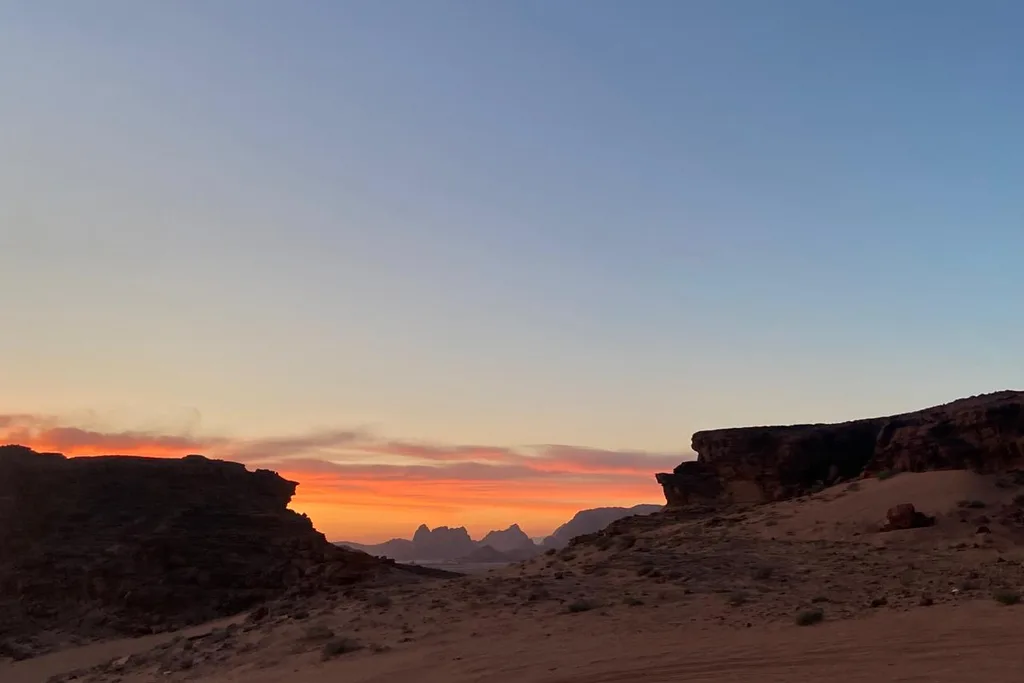
So where do you start on the best hiking in jordan? If you have one day, start in Dana, walk down into the canyon in the morning, and be back in the village for sunset, because that single day contains the whole argument of this guide in miniature: canyon, colour, altitude, and a village that exists because of the reserve it guards. If you have three days, add Petra, and walk the Monastery climb on the second day, because Petra as a walk is a different place from Petra as a photograph, and the climb is what reveals it. If you have a week, add Wadi Rum, and let a guide take you into the desert for a night or two, because the desert at night, after a day’s walking, is the part of Jordan that no photograph prepares you for and no description quite captures.
And if you have longer, walk the Dana to Petra trek, properly, with a guide, with water, with time, and arrive at Petra through the back door, tired and sunburned and certain that you have earned the city in a way that no bus arrival earns it. That walk is the reason this guide exists, and it is the reason Jordan’s walking reputation is what it is. It is not the easiest walk in this guide, and it is not the shortest, but it is the one that changes how you think about walking, about desert, and about a country that fits a whole world of ground into a few hundred kilometres of map.
Whatever you choose from the best hiking in jordan, choose it for the season, check it with the people who run it, carry more water than you think you need, and walk it as a guest. Jordan’s trails are not theme-park routes. They are working landscapes, farmed, grazed, guarded and loved by the people who live along them, and the walker who treats them that way gets more than a walk. They get an introduction to a country, made at walking pace, which is the pace at which countries are best understood. The trails will still be there when you come back, and Jordan is a country that rewards coming back, because the second walk is always better than the first: you know the ground, you know the light, and you know, now, which walk is yours.
For the wider trip around your walks, our Petra travel guide covers the ancient city in full, and our Jordan itinerary 7 days shows how a walking week fits into a first Jordan trip. For the trail itself, the official starting point is Visit Jordan’s Jordan Trail page, verified loading on 1 Nov 2026, and for the reserves, the RSCN activities page, also verified loading on 1 Nov 2026, is the place to check current reserve arrangements before you travel. Walk well, walk early, and leave every canyon, every forest and every desert exactly as you found it.