Jordan Travel Guide – Petra, Wadi Rum, the Dead Sea and Everything to Plan
Jordan is small enough to cross in a day and dense enough to fill a fortnight, and that combination is exactly what trips people up. Most first trips are planned as a list — Petra, Wadi Rum, the Dead Sea, done — and then the list starts fighting back, because the country is not arranged as a list. It is arranged as a spine running north to south, with a desert to the east, a valley dropping to the lowest land on Earth to the west, and a string of very different places hanging off that spine at very different altitudes and temperatures. Plan the spine and the trip holds together. Plan only the sights and you spend the week in transit between them, wondering why a small country feels so large.
This jordan travel guide is the frame the rest of our Jordan writing hangs on. It does not try to replace the dedicated guides — Petra, the seven-day itinerary and the Jordan Pass each get their own full treatment — but it answers the questions that have to be answered before any of those guides make sense. Which parts of the country belong together, and in what order. When the same route is a pleasure and when it is a punishment. How entry and the Jordan Pass actually work, according to the official sources rather than a blog’s memory of them. How to move, how to budget without trusting a table of figures that expired last year, and how to travel well in a country whose hospitality is genuine and whose customs deserve respect. For the places themselves in detail, start with our best places to visit in Jordan alongside this guide, and use the two together — this page for the shape of the trip, that page for the stops inside it.
One promise first, because it governs everything below. Where this guide gives a fact that changes — a fee, a condition, a timetable — it sends you to the official site to confirm it, and says so. Prices and rules in Jordan travel writing age faster than anywhere else in this region, because the Jordan Pass and the Petra ticket structure are living systems, not fixed ones. A guide that prints a confident table and never revisits it is doing you no favour. What does not change is the geography, the seasons in their broad shape, the order the country is best travelled in, and the character of the places. Those are what this pillar is built on, and they are what will still be true when you land.
Jordan in One Map – Regions, Not Just Sights
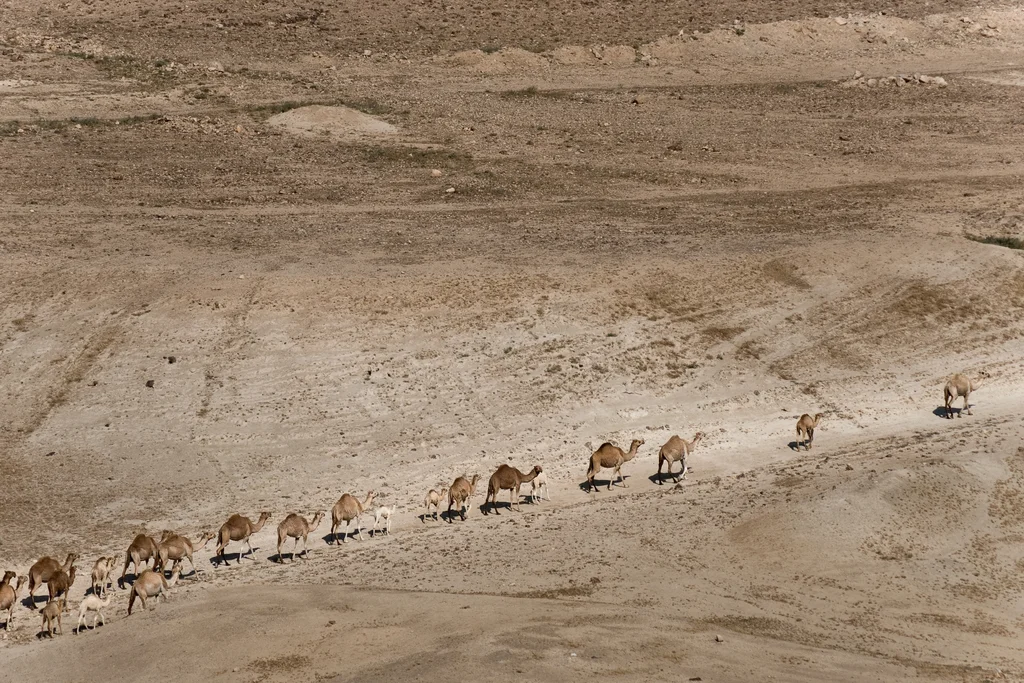
Think of Jordan as four strips running roughly north to south, and the whole trip suddenly makes sense. In the west, the Jordan Valley drops steeply from the highlands to the Dead Sea, the lowest land point on Earth, and the air there is warm when the hills above are cold. On the highlands themselves sit the cities and the farmland — Amman, Jerash, Madaba, Karak — cooler, greener and more lived-in than the postcards suggest. South of the highlands, the land breaks into the great sandstone country of Petra and then the open desert of Wadi Rum, and east of everything lies the flat, empty desert that most travellers only cross on the highway to Aqaba or the border. Every classic Jordan trip is a journey down the highland spine and back up the valley, or the reverse, and the order you travel it in decides your weather, your light and your energy at each stop.
That north-to-south spine is also the story of the country. The north holds the Roman cities and the biblical landscapes, the centre holds the capital and the mosaic towns, and the south holds the Nabataean and desert worlds that most visitors come for. Travelling south, the history gets older and stranger as the landscape gets emptier — from Roman colonnades at Jerash to Byzantine mosaics at Madaba to the rock-carved city at Petra to a desert that has been inhabited by nomadic peoples for far longer than any city has stood. It is a satisfying direction of travel, and it is why most routes in this guide run Amman to Aqaba rather than the reverse. Run it the other way and you start with the climax and spend the rest of the trip winding down, which is a fine way to end a holiday but a poor way to build one.
The practical consequence is that Jordan rewards a linear trip, not a hub-and-spoke one. Amman works as an arrival base for the north and centre, but Petra, Wadi Rum and Aqaba are not day trips from anywhere — they are overnight stops on a line, and the line only works if you sleep along it. Travellers who try to see Petra from Amman in a day come home with a memory of a highway and a rushed canyon, not of the city. The routes at the end of this guide are all built on that single rule, and if you remember nothing else from this section, remember it — sleep on the spine, in order, and let the country unfold southwards.
Petra – The Anchor That Sets the Pace of the Trip
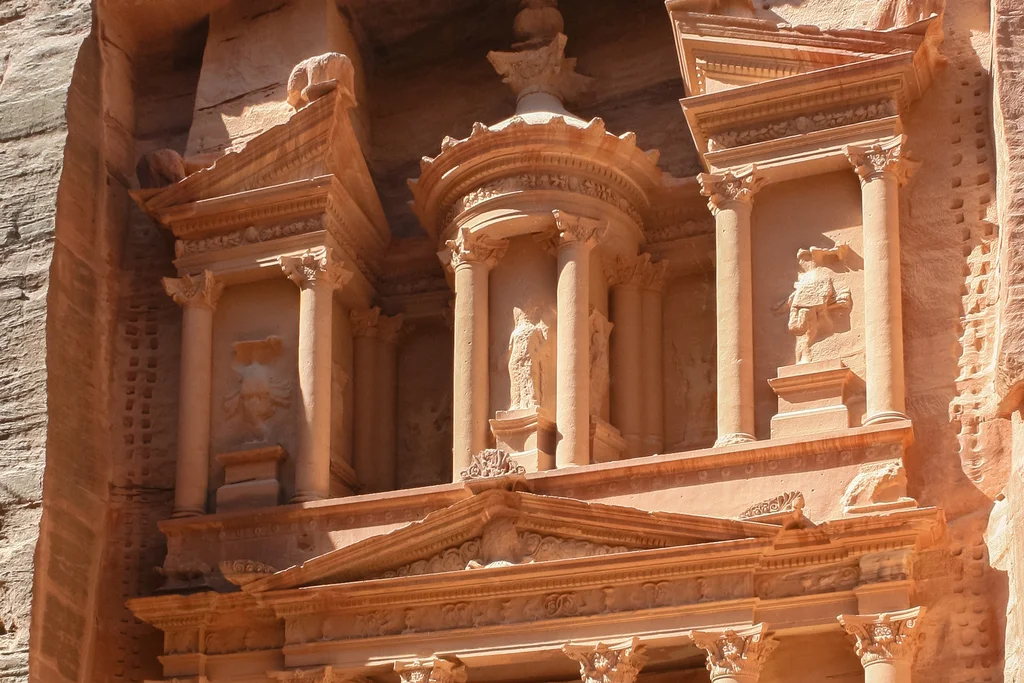
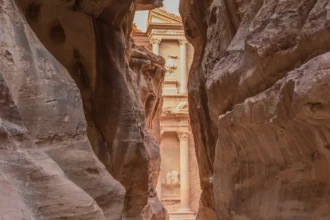
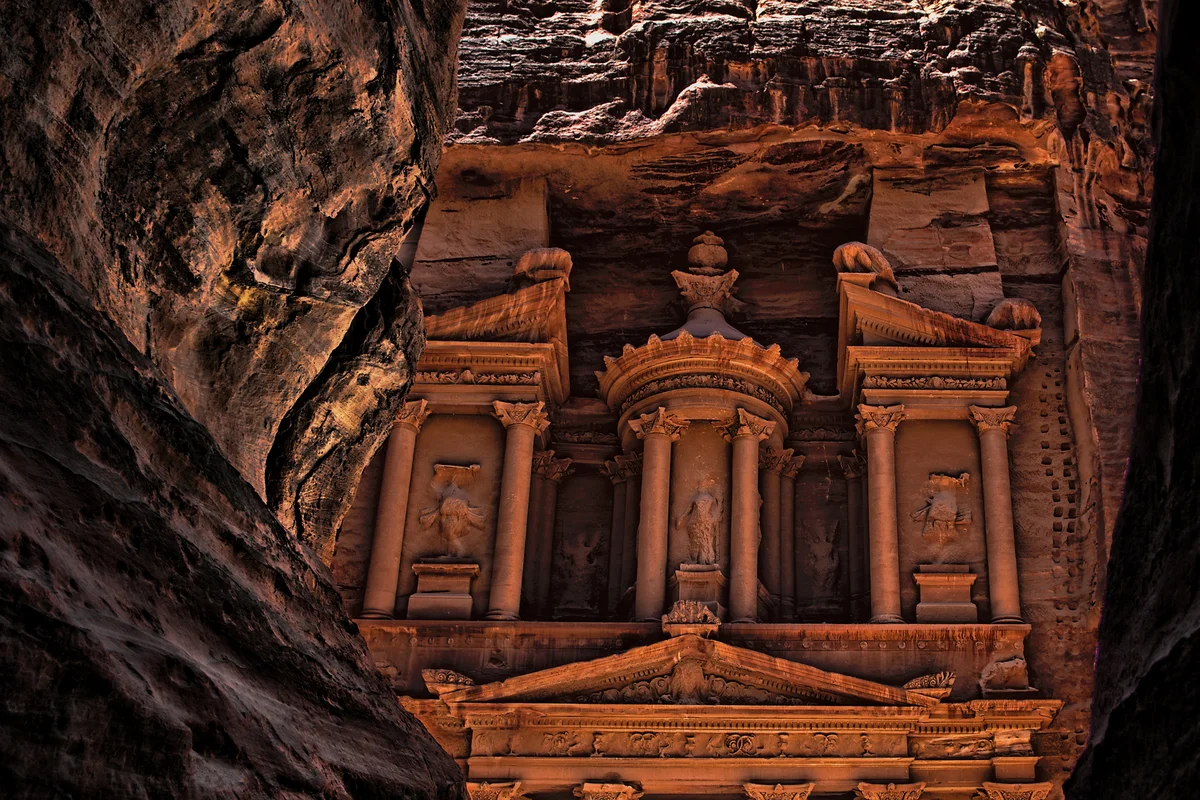
Petra is the reason most people come to Jordan, and it is also the place most trips get wrong, because it is treated as a sight when it is really a full day’s walk through a city. The famous view — the Treasury framed by the narrow gorge of the Siq — is only the entrance. Beyond it lies a whole rock-carved city: a colonnaded street, a theatre cut into the hillside, royal tombs high in the cliffs, and, at the far end of a long and strenuous climb, the Monastery, a facade as large as the Treasury’s and far quieter. Anyone who budgets Petra as a morning has budgeted for the Treasury photograph and nothing else, and will leave feeling cheated by a place that never cheated them — it simply needed the day it has always needed.
The honest way to plan Petra is to give it two nights in its gateway town, Wadi Musa, and a full day inside the site, with the second day as either a slower return to the parts you missed or a gentler day that takes in Little Petra, the smaller carved site nearby. That shape matters for more than comfort. Petra is a walking city in a desert canyon, and the heat, the climbs and the sheer scale of it punish the rushed visitor in a way that a museum never does. Early starts are not a tip here, they are the trip — the Siq in the cool morning light, before the day’s heat builds in the canyon, is a different experience from the same walk at midday, and the Monastery climb is a different undertaking in the afternoon than in the morning. The dedicated Petra guide on this site walks the route in order, with the ticket structure and the back-door trail explained in full, and it is the page to read once this pillar has fixed Petra’s place in your week. For how Petra sits among the country’s other great stops, see our best places to visit in Jordan.
There is also a safety note that belongs in a pillar rather than buried in a site guide. Petra’s canyons are subject to flash flooding when desert rain falls, and the site’s managers take that risk seriously — the Siq can be closed when conditions turn. That is not a reason to avoid Petra, it is a reason to respect the place and its staff: if a canyon is closed, it is closed for a reason, and no photograph is worth arguing with a wadi in flood. Check conditions on the day, carry water, wear footwear you can walk a long and uneven day in, and treat the site as the large, wild, partly unroofed city it is rather than as a theme park with a roof. Planned with that respect, Petra repays everything asked of it, and it will still be the day you describe first when you get home.
Wadi Rum – A Night in the Desert, Done Properly
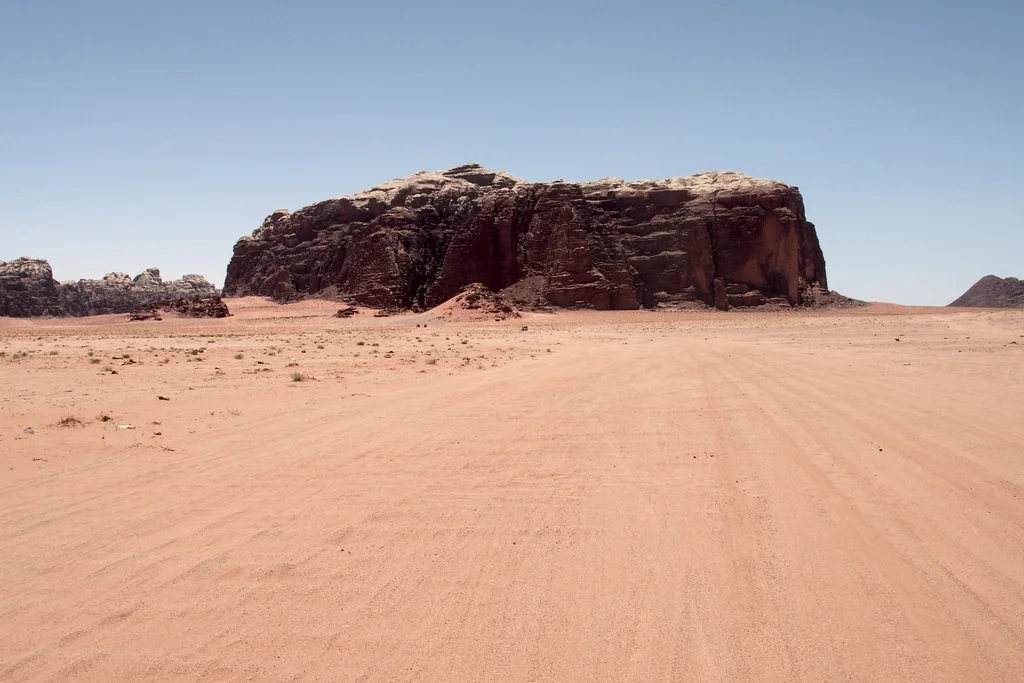
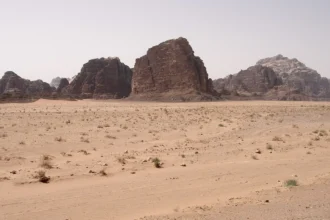
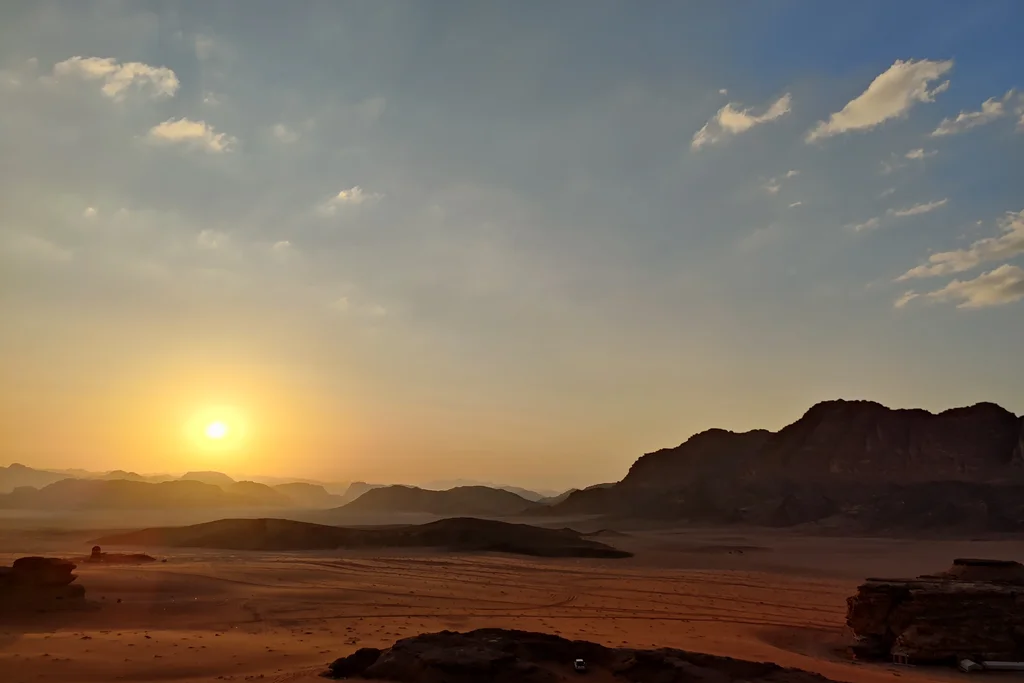
If Petra is Jordan’s great city, Wadi Rum is its great emptiness, and the two belong together because they are opposites that explain each other. Wadi Rum is a protected desert of sandstone mountains rising out of red sand, inhabited by Bedouin communities whose knowledge of the place is the difference between a desert drive and a desert experience. The classic visit is not a look at the desert from a road — it is a day moving through it by four-wheel-drive vehicle or by camel, with a guide from the local community, and a night in a desert camp under a sky that has very little light pollution to compete with. That night is the point. Travellers who pass through Wadi Rum in an afternoon and sleep elsewhere have seen the scenery and missed the experience, in the same way that a morning in Petra misses the city.
Planning a Wadi Rum night well is mostly about expectations. The desert is not a hotel with sand outside it, and the best camps are deliberately simple — a bed, a meal cooked in the desert manner, a fire, and a silence that city dwellers are no longer used to. Temperatures swing hard between day and night, especially outside summer, so layers matter more than any single warm garment, and the night sky rewards travellers who simply step outside and look up rather than trying to photograph it through a phone. The desert’s famous film connections are real, and guides will point out the landscapes that stood in for other planets, but the deeper pleasure is older than any film — the sense of a landscape that has been home to nomadic life for thousands of years, and that still is, in the camps and the herds and the tracks that cross it.
One practical matter deserves emphasis because it is so often handled badly. Wadi Rum is best visited with local guides and through the protected area’s own arrangements, not improvised in a rental car. The desert has no signposted routes in the way a national park elsewhere might, the sand and the rock country punish the wrong vehicle and the wrong turn, and the guiding tradition here is part of the place’s living culture rather than an add-on sold at the gate. Book the camp and the touring together, confirm what is included before you arrive, and arrive with enough of the day left to actually enter the desert rather than reaching the camp at dusk. A night in Wadi Rum is the cheapest luxury in Jordan in the sense that matters — it costs a night, and it gives back a memory that outlasts every other stop on the trip.
The Dead Sea and the Jordan Valley – Slow Water at the Bottom of the World
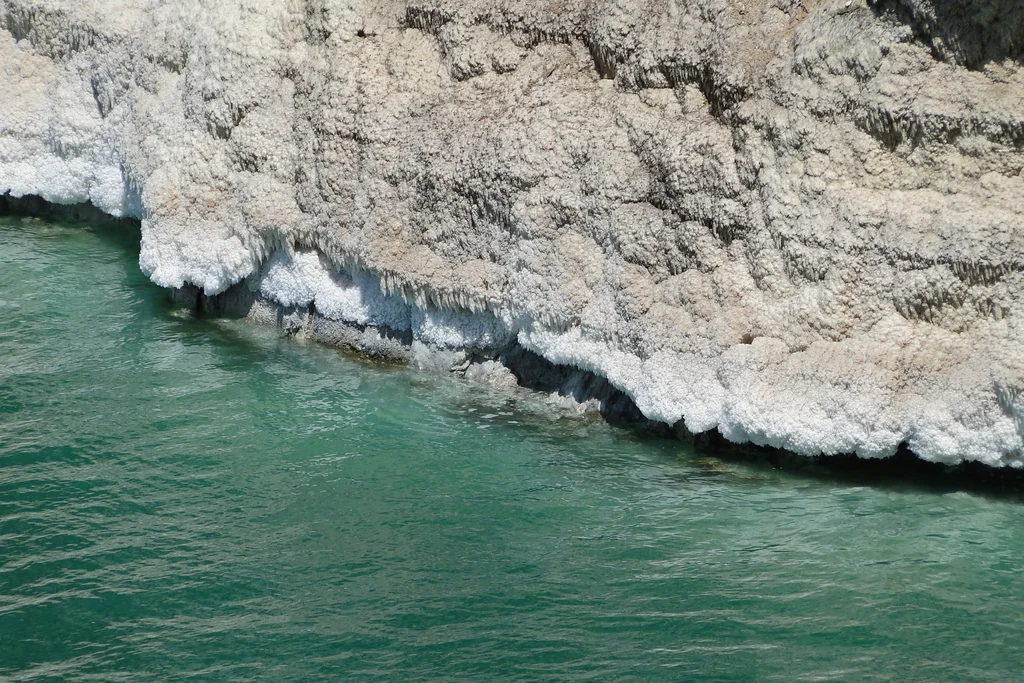
The Dead Sea is the strangest swim in the world and the easiest to misunderstand. Its water is so salty that floating takes no effort at all, and the mud and minerals along its shores have drawn visitors for centuries, but it is not a beach in the ordinary sense. The shore is a place for a slow hour or two — a float, a wash, a rest in the shade — rather than a day of swimming, and the sun here is stronger than it feels, because the air at this depth is warm and still and the water gives no cooling breeze. Treat it as a pause between the exertions of Petra and Wadi Rum and it is perfect. Treat it as a resort day and it will feel oddly thin, because the Dead Sea’s pleasures are quiet ones, and they are best taken slowly.
The valley around it is worth more attention than it usually gets. The road down from the highlands to the Dead Sea is one of the great descents in the region — from cool hill towns to a deep, warm rift in a single drive — and the Jordan Valley itself is a green, farmed strip that confounds every expectation of desert. The Baptism Site on the river, a place of pilgrimage for many visitors, sits in this same valley landscape, and the contrast between the river’s narrow green line and the desert hills behind it is one of the country’s most quietly moving sights. Travellers who rush the valley to reach a Dead Sea resort miss the geography lesson that makes the float meaningful — this is the lowest land on Earth because a whole rift valley dropped here, and the water, the heat and the salt are all consequences of that single fact.
Where to place the Dead Sea in a trip depends on direction. Travelling south from Amman, it makes a natural first or second stop before the highland route to Petra, a gentle opening that lets jet lag and heat acclimatisation happen somewhere restful. Travelling back north at the end, it makes an equally good closing stop — a slow day after the desert, before the flight home, when the body is tired and the water does the work. Either way, keep it short and unambitious. A night at the Dead Sea is a rest, not an attraction to be maximised, and the travellers who enjoy it most are the ones who arrive with no plan beyond floating, resting and watching the light change over the water towards the hills on the far shore.
Amman and the North – The Capital and the Roman Country
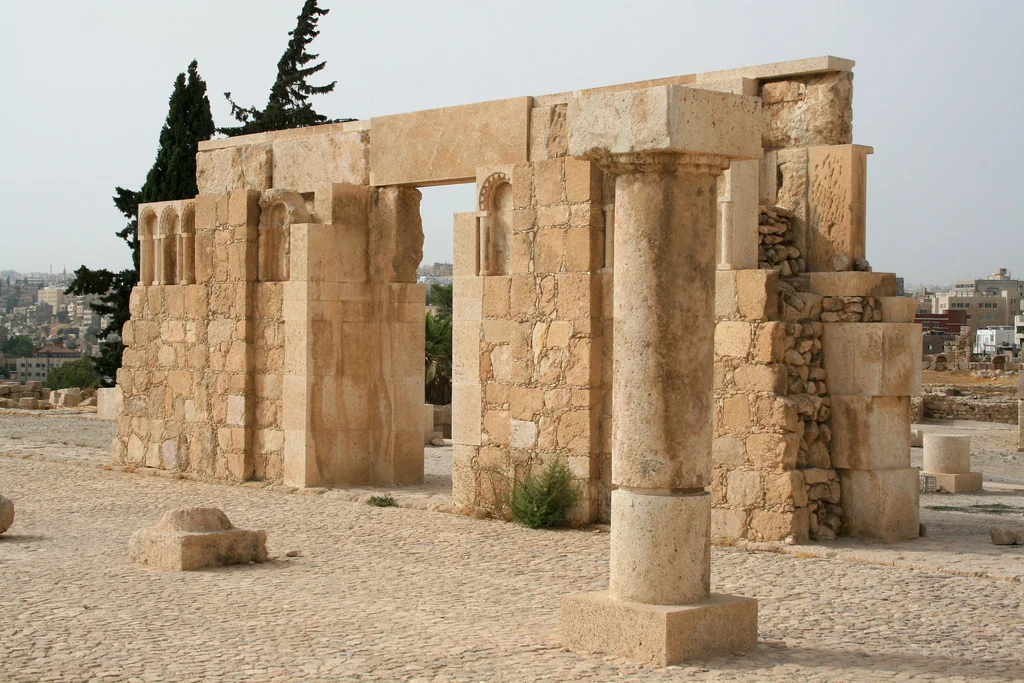
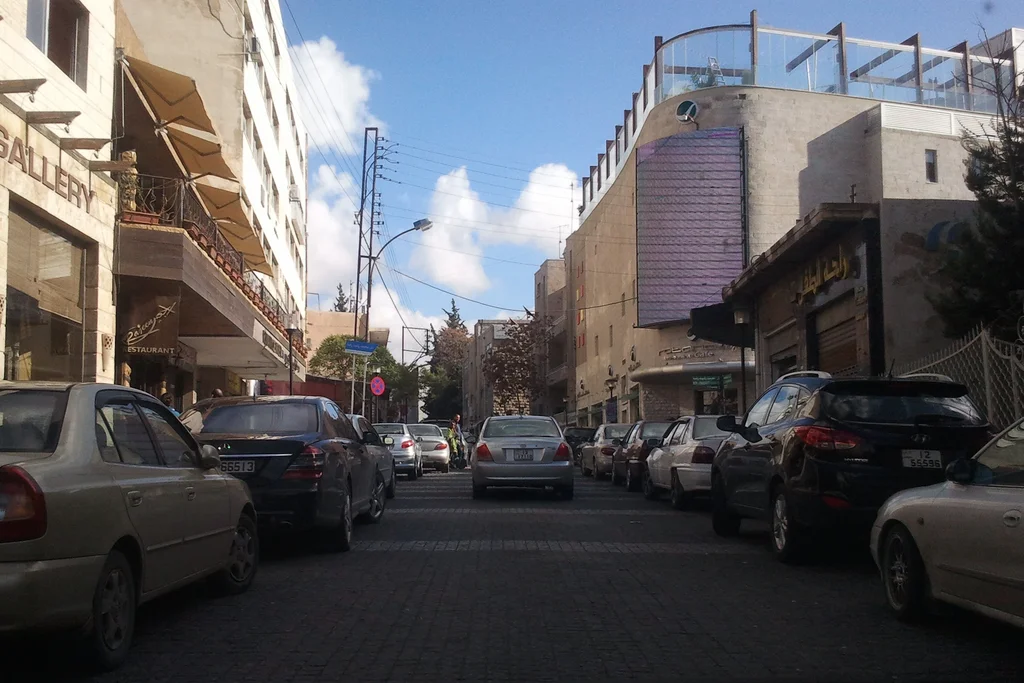
Amman surprises first-time visitors, because it is not the staging post its reputation suggests. It is a large, hilly, lived-in capital built over and around its own ancient layers — a Citadel hill carrying the remains of temples and palaces above a downtown of markets, stairways and old houses, and a Roman theatre still sitting in the heart of the modern city. The pleasure of Amman is not a single sight but the layering itself: breakfast in a downtown cafe, a morning among ruins that predate the city around them by millennia, an afternoon in the galleries and food streets of the newer hillside districts, and an evening when the call to prayer moves across the valleys between the hills. Give Amman a full day at the start of a trip and the rest of the country reads more clearly, because the capital is where Jordan’s ancient and modern stories are most visibly in conversation.
North of the capital, the country changes character again. Jerash is the great Roman city of the north, a remarkably preserved colonnaded city of theatres, temples and a great oval forum, and it rewards a slow half-day rather than a rushed stop — the site is large, the colonnades photograph best in angled light, and the scale of the place only becomes clear on foot. Further north still, the green hills towards the Syrian border hold castles and nature reserves that most first trips never reach, and that is fine — the north is the part of Jordan to return to, not the part to cram. What matters on a first trip is that Jerash is not treated as an optional extra to Amman. It is the north’s Petra in miniature, a whole Roman city rather than a ruin, and a trip that skips it has skipped one of the three great ancient experiences in the country.
The practical shape of the north is simple. Base in Amman, make Jerash a day trip or an overnight’s detour on the way south, and keep the capital’s evenings for food and walking rather than for packing. Amman’s food scene deserves a word of its own — the city eats well at every level, from downtown falafel counters to hillside restaurants, and the national dish, mansaf, is worth seeking out in a place that serves it properly rather than as a tourist performance. Jordanian hospitality is not a slogan here; it is a daily practice, and the traveller who accepts a offered tea or coffee graciously, and who lingers rather than hurries, will find Amman opening up in a way that no itinerary can schedule.
The King’s Highway – Madaba, Mount Nebo, Karak and Dana
Between Amman and Petra runs the old road that most guides mention and few travellers actually drive — the King’s Highway, an ancient north-to-south route that threads through the highland towns rather than bypassing them on the fast desert road. Driving it is slower, and that is the point. The fast road gets you to Petra efficiently and teaches you nothing. The King’s Highway teaches you the country, stop by stop, and it turns the transfer day between Amman and Petra from dead time into one of the best days of the trip. If your itinerary has a spare day, spend it here rather than adding another sight to an already full week.
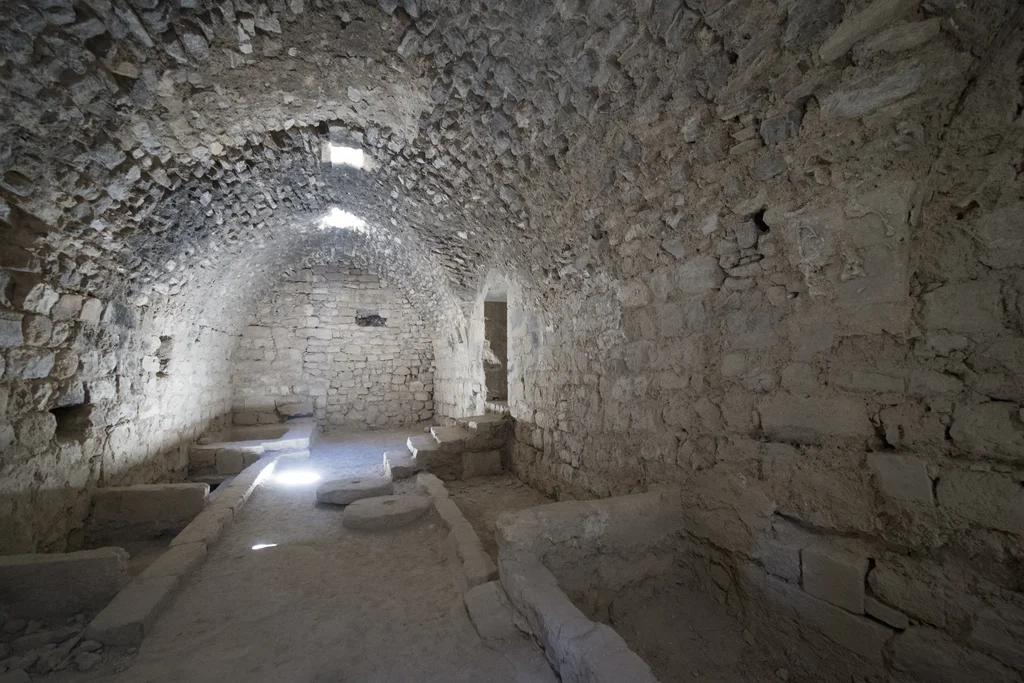
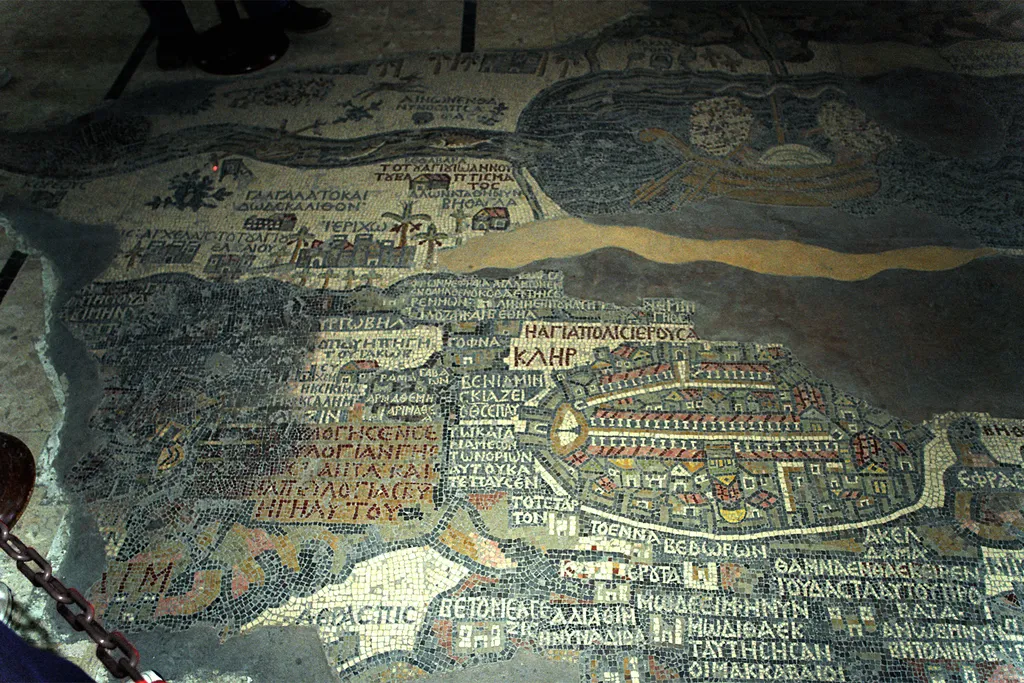
The stops along it each carry a different century. Madaba is the mosaic town, famous for the ancient mosaic map in its Church of St George — a map of the Holy Land made of stone, and a reminder that this region has been mapped, measured and argued over for far longer than modern borders suggest. Nearby Mount Nebo is the viewpoint of the tradition in which Moses looked over the Promised Land, and on a clear day the view across the valley is genuinely biblical in scope, whether or not the tradition moves you. Further south, Karak is a great Crusader castle town, its fortress honeycombed with passages and halls above the modern town, and a place that rewards an unhurried wander through stone corridors rather than a photograph from the road. Each of these stops is a half-day at most, and together they fill a day that feels like travelling rather than transferring.
South of Karak, the road reaches Dana, where the highlands break into a great reserve of valleys and cliffs that runs down towards the lowlands. Dana is the country’s largest nature reserve, and it is the place in this guide where walking becomes the main event rather than the way between sights — a village perched on a cliff edge, trails dropping through changing landscapes, and guesthouses that have made the reserve a model for community-based tourism. Not every trip can fit Dana properly, and a drive-by does it no justice, but even knowing it is there changes how the King’s Highway reads — this is not a road of ruins alone, but a road through living landscapes, farmed valleys and protected wild country. The highway ends, eventually, at Petra, and arriving there after a day on this road feels like an arrival in a way that arriving by the fast road never quite does.
Aqaba and the Red Sea – The Easy Ending
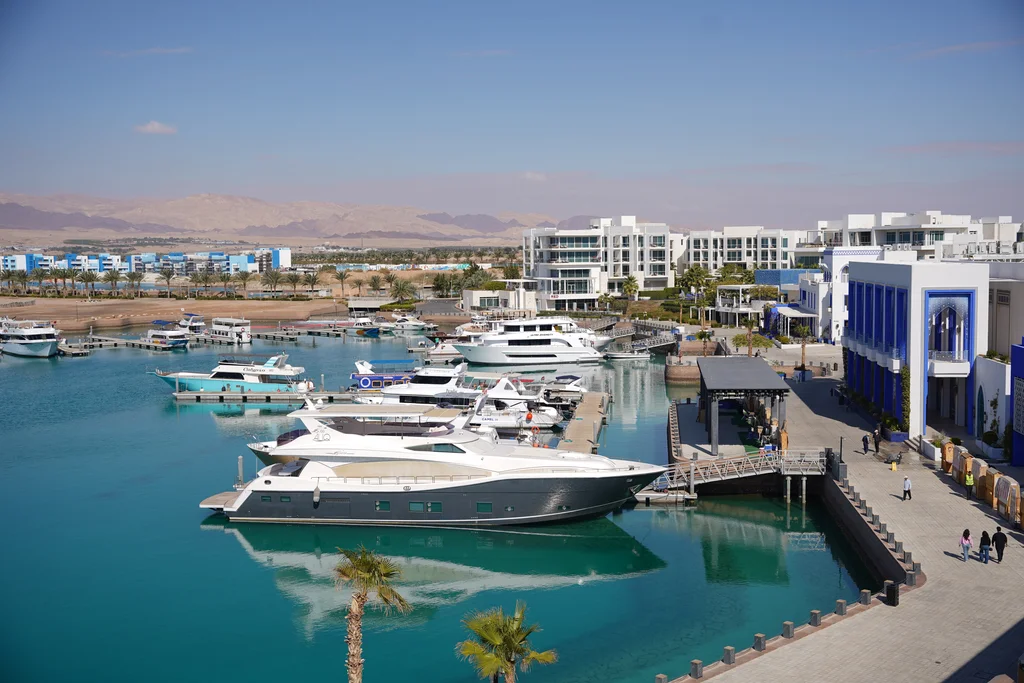
Aqaba is Jordan’s only seaport and its easy ending — a Red Sea town of beaches, coral reefs and unhurried evenings that sits at the southern tip of the country, close to Wadi Rum and within reach of Petra by road. After the walking of Petra and the desert night of Wadi Rum, Aqaba is where the trip exhales. The pleasures here are simple and should be kept simple: snorkelling or diving over coral, a boat trip, long seafood lunches, and evenings along the corniche when the heat of the day has passed. Travellers who arrive in Aqaba expecting another great sight will be disappointed, and travellers who arrive expecting a rest will be delighted, which tells you everything about how to plan it.
Aqaba also matters practically, because it is the southern anchor of the whole spine. It is the alternative gateway for travellers who fly in or out through the south, the natural place to end a north-to-south trip before flying home, and the base from which the desert and the sea can be combined without another long transfer. Its character is different from the rest of the country — a port town with a beach culture, a more resort-like feel, and a pace set by the sea rather than by history — and that difference is useful. A trip that ends in Aqaba ends gently, with a day that asks nothing of you, and that gentleness is worth protecting. Do not schedule Aqaba as a single night squeezed between Wadi Rum and a flight. Give it two nights, let the second day be unplanned, and let the trip finish the way a good trip should, with time to spare rather than time to make up.
There is one more reason to respect Aqaba’s position, and it is about borders. The town sits where Jordan meets its neighbours at the head of a narrow gulf, and the region’s geography is close and visible here in a way it is not further north. That closeness is part of the town’s interest, but it is also a reminder to keep the trip’s logistics clean — know which border crossings and onward routes you are actually using, confirm them before you travel, and do not improvise a cross-border day on a rumour. Aqaba rewards the traveller who plans the ending as carefully as the beginning, and who treats the last two nights as part of the trip rather than as an afterthought before the flight home.
When to Go – Seasons That Change the Country
Jordan does not have one best season, it has a set of trade-offs, and the honest answer depends on which Jordan you are coming for. Spring and autumn are the broad consensus for a first trip, and the consensus is right — the walking at Petra is comfortable, the desert nights are bearable, and the whole spine from Amman to Aqaba is open and pleasant. But spring and autumn are not the same trip. Spring brings green hills in the north, wildflowers in the highlands, and a desert that is still cool at night, while autumn brings a warmer sea at Aqaba, a settled desert after the summer heat, and old towns that have emptied of the summer crowds. Choose spring if the north and the walking matter most to you, and autumn if the desert and the sea matter most, and either way you will have chosen well.
Summer changes the calculation in ways that surprise first-timers. The desert heat is the obvious part — Wadi Rum and Petra in high summer are undertakings that need early starts, shade planning and a realistic sense of what a day’s walking costs in heat — but the subtler part is altitude. Petra and the highlands sit high enough that their nights cool down even when their days are hot, while the Dead Sea valley and Aqaba stay hot long after dark. A summer trip is entirely possible, and the sites are quieter for it, but it has to be planned as a summer trip — short walking days, water carried always, desert nights chosen with the heat in mind — rather than as a spring trip attempted in July. Winter inverts the pattern again. The high country can be genuinely cold, with cold nights in Petra and Wadi Rum and occasional difficult weather in the north, while the valley and Aqaba stay mild and pleasant. A winter trip that leans south — the valley, the desert in its gentler season, Aqaba — can be lovely, but a winter trip that tries to walk Petra’s high trails in bad weather will not be.
The seasonal rule that ties all of this together is simple, and it is the one most guides bury. Plan the trip around the walking, not around the calendar’s cheapest flights. Petra’s long walks, the Monastery climb and the desert touring are the physical heart of a Jordan trip, and they are the parts most affected by heat and cold. If your dates are fixed in high summer or deep winter, shape the route to them — shorter walks, earlier starts, more nights in the places that suit the season — rather than forcing a spring-shaped itinerary into the wrong months. And whatever the season, check the forecast for the specific places, not for Jordan in general, because a country that spans the lowest land on Earth and high desert plateaus does not have one weather, and a single national forecast is close to useless for planning a day at Petra.
Visas and the Jordan Pass – The Paperwork, From Official Sources
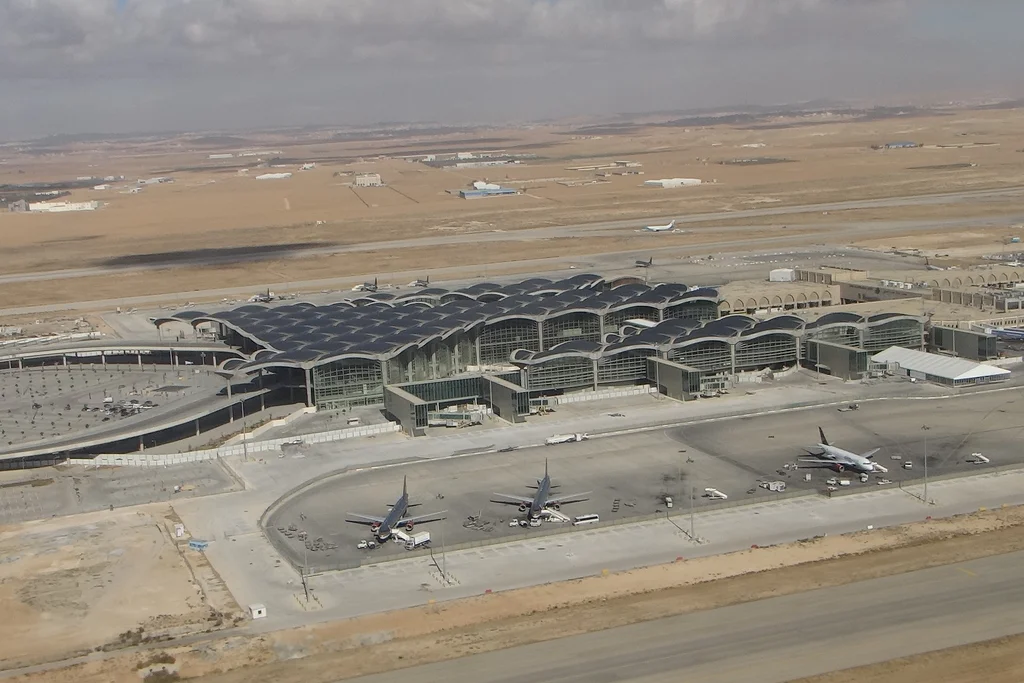
Entry paperwork is the part of Jordan planning where blogs do the most damage, because they print rules and prices that were true once and then never update them. So this section does something deliberately boring and deliberately useful — it tells you where to check, and what the official source actually says, and it refuses to quote a figure that will be wrong by the time you travel. Start with the official channels for your own nationality: the Ministry of Interior eVisa portal for entry rules, and the Jordan Tourism Board’s Visit Jordan site for the broad official picture. Rules differ by nationality, they change, and no guide — including this one — is a substitute for the official answer for your passport.
The Jordan Pass is the second thing to understand, and here the official source is unusually clear. The pass’s own official site, jordanpass.jo, states that the pass bundles entry to over forty tourist attractions in Jordan, including Petra, Jerash and Wadi Rum, and that the cost of the tourist entry visa is included in the pass. That is the verified position as checked on 29 Oct 2026, and it is the right starting point for deciding whether the pass suits you. The pass comes in tiers that differ in how many consecutive days of Petra entry they include, and whether it saves you money depends entirely on your itinerary — how many included sites you will actually visit, and how your stay is patterned. Do not buy it on a blog’s arithmetic. Open jordanpass.jo itself, read the current tiers and conditions for your trip pattern, and confirm the current figure there before you pay, because the figure is the part that changes and the structure is the part that does not.
Two practical habits follow from that. First, settle the pass question before you settle the itinerary, not after, because the pass rewards a trip that visits several included sites and a stay shaped the way its conditions assume — and a trip built without it in mind may find the pass worth little, through no fault of the pass. Second, keep your entry documents and your pass confirmation accessible but separate from your passport in the way you would any travel document, and carry a note of the official helplines rather than relying on memory. The dedicated Jordan Pass guide on this site will walk through the tiers and the worked logic in full once it publishes, and until then the official site is the authority. Anything a guide tells you about a fee, treat as a rumour until the official site confirms it — that single habit will save more Jordan trips than any other piece of paperwork advice.
Getting Around – Drivers, Buses and the Two Roads South
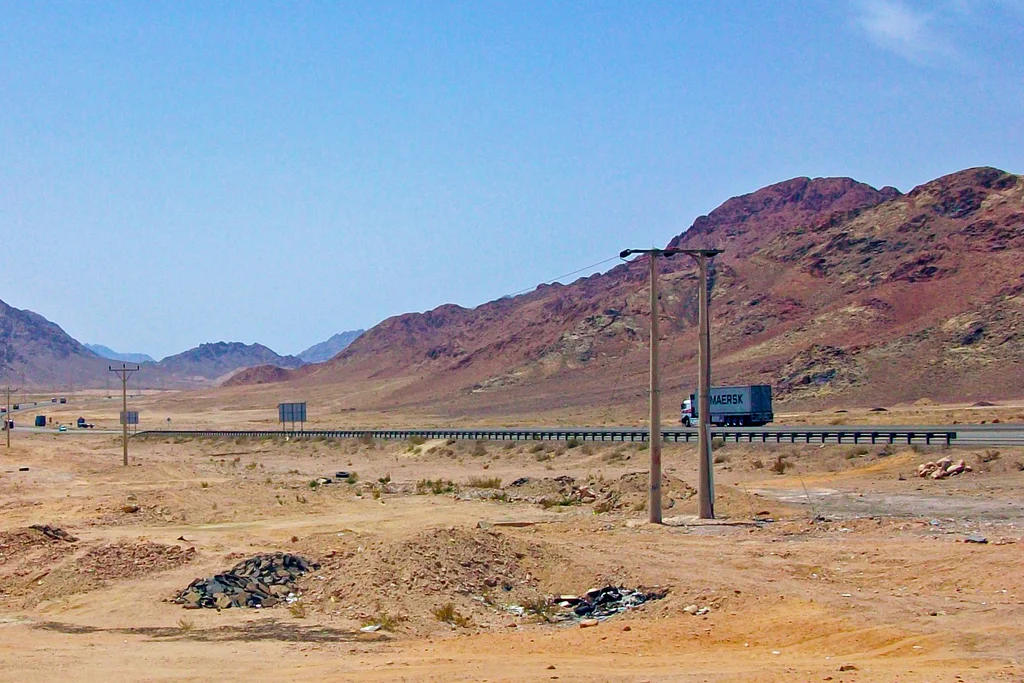
Jordan’s transport question has no single right answer, because the country offers three good ways to move and each suits a different trip. The most common choice for first-timers is a private driver, and its popularity is easy to understand — a driver solves the navigation, the parking and the long desert legs in one arrangement, and it turns the transfer days into guided days, because a good driver is also a source of local knowledge. The second choice is a rental car, which suits confident drivers who want the freedom of the King’s Highway at their own pace, with stops that no schedule allows. The third is public transport — buses and shared minibuses that connect the towns on routes built for residents, which means they run where Jordanians run, not necessarily where tourists want to go, and they reward flexibility and patience.
The choice between those three should be made by route, not by budget alone, because the cheapest option on paper can become the most expensive in time. A driver earns its keep on the long southern legs — Amman to Petra, Petra to Wadi Rum, Wadi Rum to Aqaba — where the distances are long, the landscape is empty, and a wrong turn costs a day. A rental car earns its keep on the King’s Highway, where the pleasure is stopping — at Madaba, at a viewpoint, at a castle that was not on the plan — and where a schedule would ruin the day. Public transport earns its keep in the north and between the main towns, where the routes are frequent and the towns are close, and it earns nothing on the desert legs, where the connections thin out and the timing stops suiting a visitor’s day. Many good trips mix all three — public transport at the Amman end, a car for the King’s Highway, a driver for the desert south — and that mix is usually wiser than a single mode imposed on the whole country.
Two roads south deserve to be understood as choices, not just as routes. The Desert Highway is the fast, straight road down the eastern desert — efficient, unlovely, and the right choice when the day’s purpose is to arrive. The King’s Highway is the old highland road through the towns — slower, richer, and the right choice when the day’s purpose is to travel. A trip that uses the Desert Highway in both directions has saved time and missed the country, while a trip that uses the King’s Highway in at least one direction has understood it. Whichever road you take, build slack into every driving day. Jordan’s distances look short on a map, but the highland road winds, the desert road tempts you to stop for photographs, and the best days in this country are the ones with an unplanned hour in them.
Money, Safety and Good Manners – The Practical Spine
Money in Jordan is straightforward once you stop trusting tables and start thinking in structure. The currency is the Jordanian dinar, cards are widely accepted in cities and at major sites, and cash still matters for small purchases, markets, rural stops and tipping, where card machines may be absent or unwelcome. The useful budgeting question is not what a day costs in a table — that figure depends on your hotels, your transport choice and your appetite for guided days, and any table that pretends otherwise is fiction — but what shape your spending takes. The big costs in a Jordan trip are transport and the Petra days, the daily costs are food and stays, and the costs that surprise people are the guided desert day and the entry fees across a multi-site week, which is exactly why the Jordan Pass question belongs in the planning stage rather than at the gate. Budget by category, keep a cash reserve for the places cards do not reach, and let the official pass site, not a blog’s table, settle the entry arithmetic.
Safety, stated plainly and without statistics that no guide can keep current, is one of Jordan’s strengths as a destination. The country is widely considered one of the region’s safer places to travel, its tourist areas are accustomed to visitors, and its people are famously hospitable — but that reputation is a reason to travel well, not a reason to travel carelessly. The standard habits apply and they are worth stating because they are so often skipped in the excitement of a desert trip: check your own government’s travel advice before departure and again before you travel, keep valuables unobtrusive, agree taxi and driver arrangements before the journey starts, and treat the desert and the canyons with the respect they deserve — water, sun protection, footwear for real walking, and attention to local guidance on flash-flood risk at Petra and on conditions in Wadi Rum. A safe trip in Jordan is mostly a well-planned trip, and the planning in this guide is the safety advice, not an extra chapter bolted onto it.
Good manners are the third part of the practical spine, and in Jordan they matter more than in many destinations because hospitality here is a genuine social value rather than a service industry. Jordan is a predominantly Muslim country, and respectful behaviour is appreciated everywhere and expected at religious sites — dress modestly, particularly outside the resort areas and at mosques and holy places, and accept offered tea or coffee graciously, because refusing hospitality without good reason can feel like a rebuff in a way it would not elsewhere. Arabic is the official language, and English is widely spoken in tourist areas, but a few words of Arabic — a greeting, a thank you — are received with a warmth out of all proportion to the effort, and they change the texture of a trip. Photograph people only with permission, ask before photographing in villages and camps, and remember that the desert communities and the old towns are homes before they are sights. Travel like a guest, in other words, and Jordan will treat you like one, which is the whole secret of the place.
Routes That Work – Seven, Ten and Fourteen Days
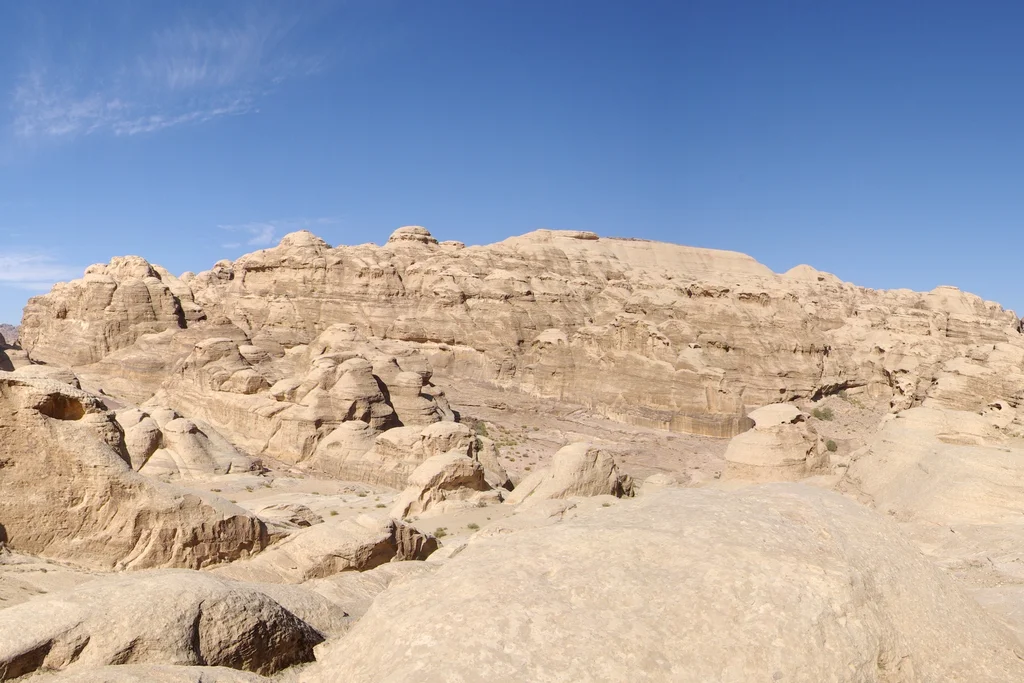
Routes are where all the advice above either comes together or falls apart, so here are three that work, built on the single rule of sleeping along the spine in order. The seven-day trip is the classic first visit, and it runs Amman, with a day for the capital and a day trip to Jerash, then south on the King’s Highway through Madaba and Karak to Petra, where two nights give the site its full day, then to Wadi Rum for a desert night, and finally to Aqaba for a restful ending before flying home, with the Dead Sea taken as a stop on the way out of Amman or on the way back. It is a full week, not a lazy one, and it works because no single day is asked to do two jobs — the driving days are driving days, the Petra day is a Petra day, and the desert night is a desert night. For the day-by-day version of this shape, with the places in detail, see our best places to visit in Jordan alongside the dedicated itinerary guide when it publishes.
The ten-day trip is the seven-day trip with breathing room, and breathing room is worth more than extra sights. Add a night in the north for Jerash done slowly rather than as a day trip, a night on the King’s Highway so that Madaba, Mount Nebo and Karak each get their unhurried half-day, and a second night at the Dead Sea or in Dana, and the trip stops feeling like a route and starts feeling like a holiday. The fourteen-day trip is the one for travellers who want the whole country rather than the classic spine — the north in depth, including the green hills and castles beyond Jerash, the King’s Highway with Dana walked properly, Petra with a second full day for the far trails and Little Petra, Wadi Rum with two nights so that the desert can be toured at leisure rather than in a single sweep, and Aqaba with time for the reef as well as the rest. Fourteen days is not a longer version of the same trip, it is a different trip, and it is the version to choose if Jordan is the whole holiday rather than one country among several.
The mistake to avoid in all three versions is the same, and it is worth naming because it is so tempting. Do not add a day trip to a place that deserves a night, and do not cut a night from a place to add a stop elsewhere. Petra from Amman in a day, Wadi Rum as an afternoon, the King’s Highway as a drive-through — each of these saves a night and costs the experience, and a trip built on such savings ends up with a list of places visited and no place actually known. The routes above are built the other way round, from nights rather than from sights, and that is why they work. Count the nights first, assign them to the spine in order, and let the sights fill the days between the nights, and Jordan will do the rest.
Questions Travellers Actually Ask – The Answers That Shape a Trip
How many days does Jordan really need? Seven days for the classic spine, ten for the same trip done comfortably, fourteen for the whole country in depth — and the honest minimum for a trip that includes Petra properly is a week, because Petra alone asks for two nights and a full day, Wadi Rum asks for a night, and the spine between them asks for the days that connect them. Shorter trips are possible, and they are often sold, but they achieve their brevity by cutting exactly the nights this guide argues for, and they should be recognised for what they are — a highlights tour, not a Jordan trip. If your days are fewer than seven, the wiser choice is a smaller Jordan — Amman, Jerash and the Dead Sea, say, or Petra and Wadi Rum alone — done properly, rather than the whole country done thinly.
Is Jordan safe for a first trip to the region? For most travellers, yes, and the country’s reputation on this point is well earned — but a reputation is not a plan, and the right way to use it is to check your government’s current travel advice, travel with the ordinary care you would use anywhere, and respect the specific local risks that do exist, which are natural rather than criminal — desert heat, canyon flooding, and the sheer physical scale of Petra’s walking. Travellers who do that, and who treat local guidance as authoritative when conditions change, will find Jordan one of the easiest countries in the region to travel in. Travellers who treat a safe reputation as permission to improvise in a desert canyon will find the desert unimpressed by reputations.
Do I need the Jordan Pass? It depends on your itinerary, and that is the whole answer. If you will visit several included sites, including Petra for more than a day, and your stay is patterned the way the pass’s conditions assume, the pass is likely to suit you well. If your trip is short, or Petra-light, or shaped around a single region, it may not. The way to decide is not to trust a table in any guide, but to open the official pass site, read the current tiers and conditions, and do the arithmetic for your own trip — and to do it before you finalise the itinerary, because the pass rewards a trip planned with it in mind. The dedicated Jordan Pass guide on this site will set out the worked logic in full, and until it publishes, the official site is the authority.
Can I travel Jordan without a car? Yes, with the right expectations. A private driver is the most comfortable way to cover the southern spine, public transport serves the towns and the north well, and a rental car suits the King’s Highway best of all — and many good trips mix all three, as the transport section above explains. What does not work well is assuming that every leg behaves like every other leg. The desert legs and the King’s Highway are the places where transport choice matters most, and they are the places to spend the transport budget, while the town-to-town legs are the places where public transport serves perfectly well. Choose by leg, not by habit, and the transport question solves itself.
When should I simply not go? There is no month in which Jordan closes, but there are months in which a particular trip stops making sense — a high-summer trip built around long desert walks, or a deep-winter trip built around high-country walking in bad weather. If your dates fall in those windows, reshape the trip to the season rather than cancelling it. Lean south in winter, shorten the walking days in summer, and let the season choose the route rather than fighting it. Jordan in the wrong shape for the season is a frustrating trip. Jordan shaped to its season, in any month, is a good one.
The short version of this whole guide is a single sentence, and it is worth carrying with you. Travel south along the spine, sleep in order, give Petra its day and Wadi Rum its night, check the official sources for anything that changes, and let the country set the pace rather than the list. Do that, and the trip that this jordan travel guide has been describing will largely plan itself — Amman for context, the King’s Highway for the journey, Petra for the wonder, the desert for the silence, the Dead Sea for the rest, and Aqaba for the easy ending. The dedicated guides on this site will fill in the detail, place by place, but the shape is here, and the shape is what makes a Jordan trip work.