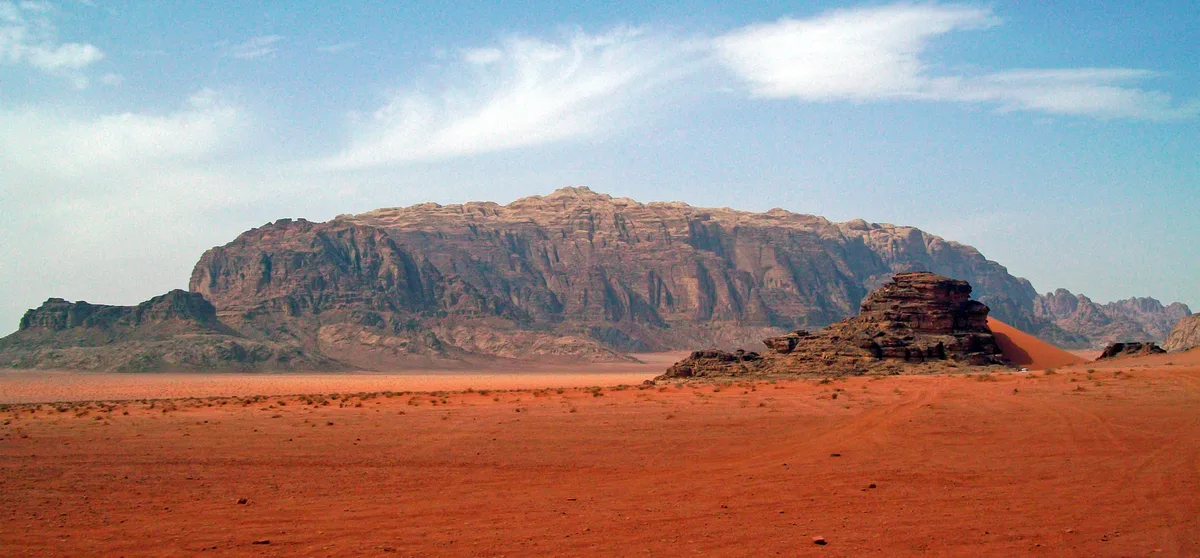
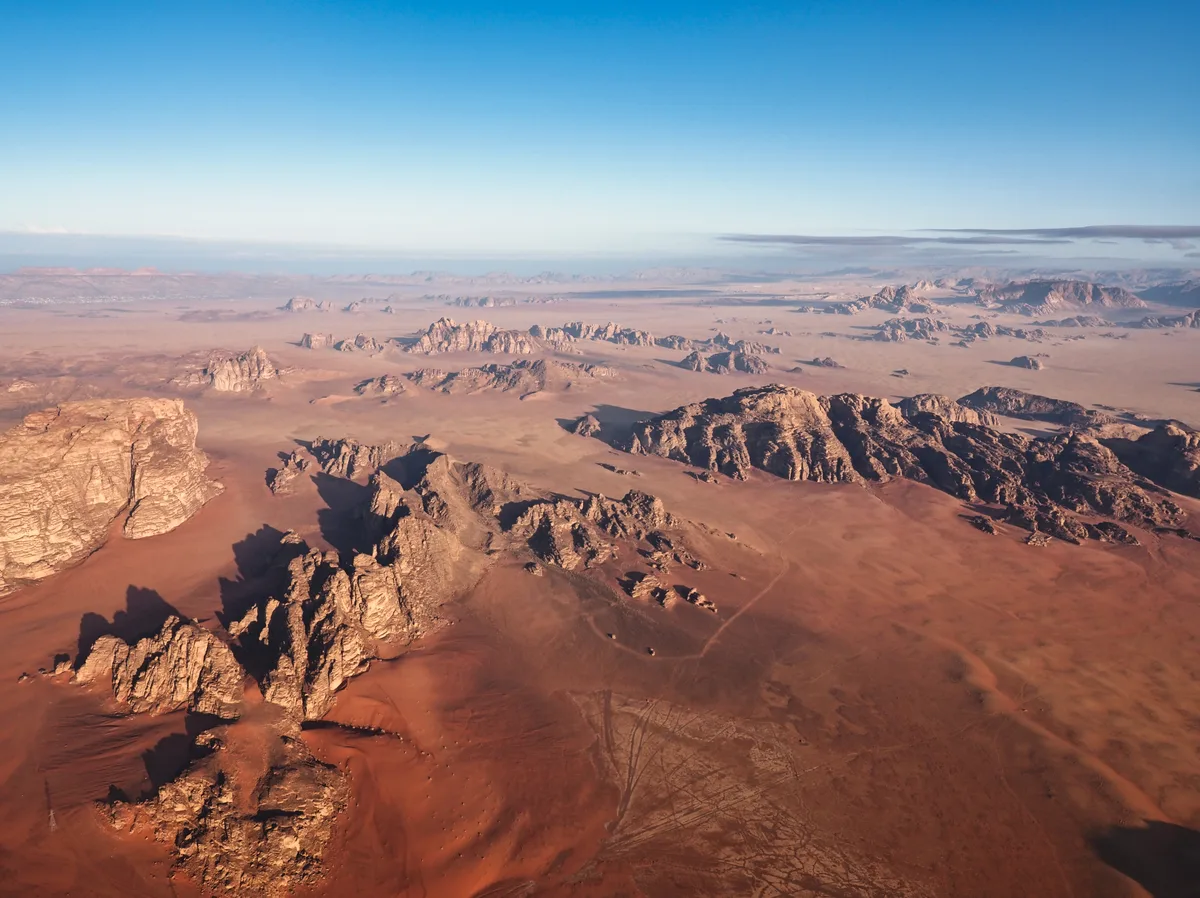
Most deserts are something you cross. Wadi Rum is something you enter – a valley system of red sand plains and towering stone massifs in Jordan’s far south, protected since the 1990s and inscribed by UNESCO in 2011 as a World Heritage Site for both its landscape and its culture. Any honest wadi rum travel guide starts with the scale, because the scale runs everything else. The protected area covers some 74,200 hectares. Its mountains are not dunes with delusions – Jebel Rum rises to roughly 1,750 metres beside the village, and Jebel Umm ad Dami, near the Saudi border, is Jordan’s highest ground. Between those walls runs a working desert, home to Bedouin families who have grazed, guided and traded here for centuries and now run almost everything a visitor touches.
That is the second thing to understand before the sights. Wadi Rum is not a national park in the Western sense; it is a managed tribal landscape. You arrive at a Visitor Centre, pay or scan your way in, and hand yourself over to a local system – a Bedouin driver and his pickup, a camp in the sand, a pot of tea at every stop – refined over forty years of tourism. Fight that system and you will have a thin time of it; understand it, and you may call it the best day of your Jordan trip.
This guide follows the shape of a visit – landscape, entry mechanics, tours and sights, walking, camels, camps and domes, then the night sky, the seasons, and pairing Rum with Petra and Aqaba. No prices are printed for tours or camps; the mechanism is explained instead, because there is no honest single figure to print.
Wadi Rum Travel Guide – The Short Version
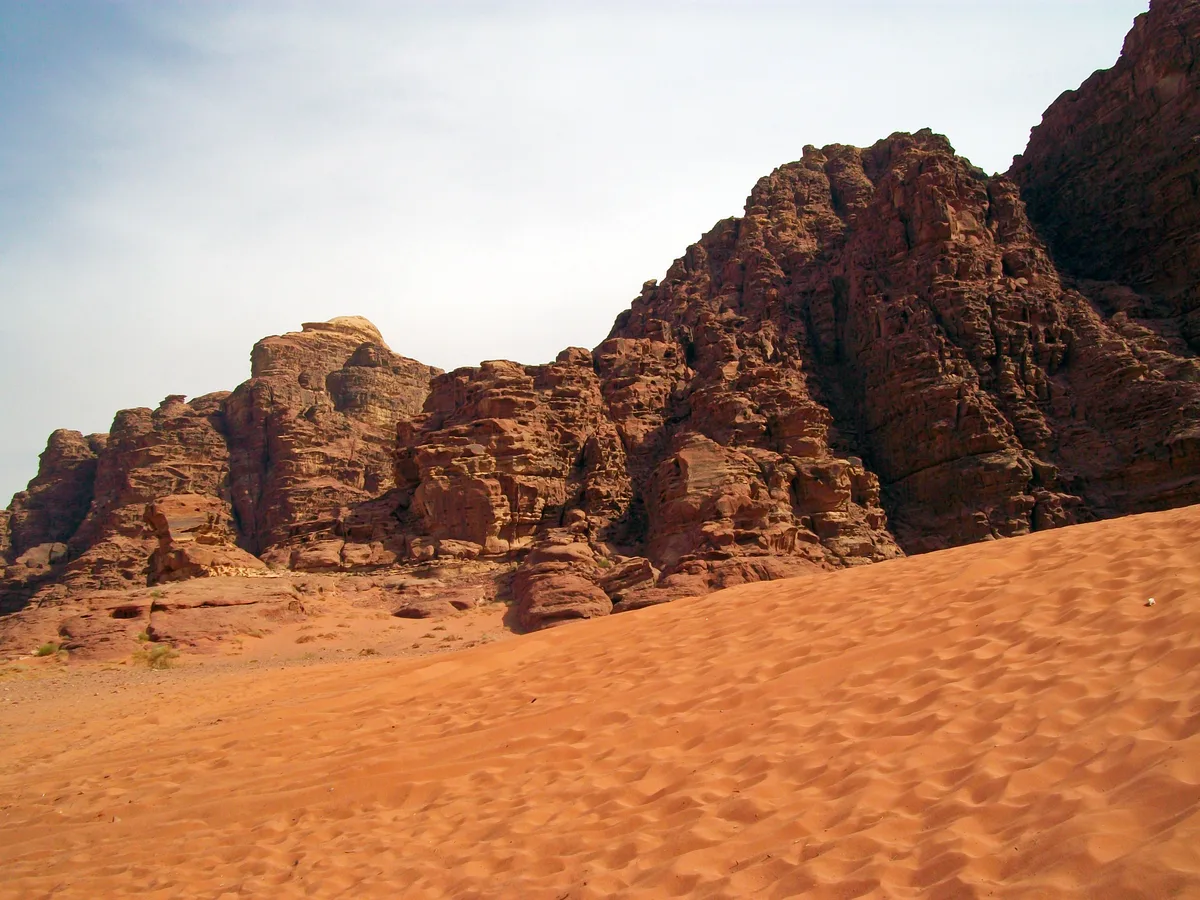
If you read nothing else, read this. Wadi Rum rewards one full day of touring and one night in the desert, and it punishes the rushed half-day drive-through more than almost any sight in Jordan – its best hours are the first and last ones, and a midday sprint misses both. Arrive through the Visitor Centre, tour by local 4×4 with stops agreed in advance, sleep in a camp inside the protected area, and let the dark do its work. Everything else in this wadi rum travel guide is the detail behind those four decisions.
| Question | Short answer |
|---|---|
| Where is it? | Southern Jordan, roughly 60 km north-east of Aqaba, east of the Desert Highway |
| What is it? | A 74,200-hectare protected valley system – UNESCO World Heritage Site since 2011, for nature and culture together |
| How do you enter? | Only through the Wadi Rum Visitor Centre – pay the per-person entry fee, or have it covered by the Jordan Pass |
| How do you explore? | Local Bedouin 4×4 tours, camels and walking – private cars go no further than Rum Village |
| How long do you need? | A full day plus a night is the honest unit; two hours is a trailer, not the film |
| When is best? | March to May and September to November; winter nights are properly cold, summer days properly hot |
| Where do you sleep? | Bedouin-run camps inside the protected area, from goat-hair tents to glass domes |
| What does it pair with? | Petra, about an hour and a half to two hours north, and Aqaba, about an hour south |
The table hides one warning worth surfacing now. Everything in this guide happens inside the protected area, entered through its one official gate. Desert is also sold – cheaper, and hard to distinguish in a listing – from villages outside the boundary, above all Disah to the north, whose tours run in a different, unprotected stretch of sand. It looks similar in a photograph; it is not the same desert, it carries none of the protected area’s sights, and your entry fee never reaches the people who manage Rum itself. Book through the Visitor Centre system, and the question never arises.
How the Landscape Was Made – Sandstone, Granite and Time
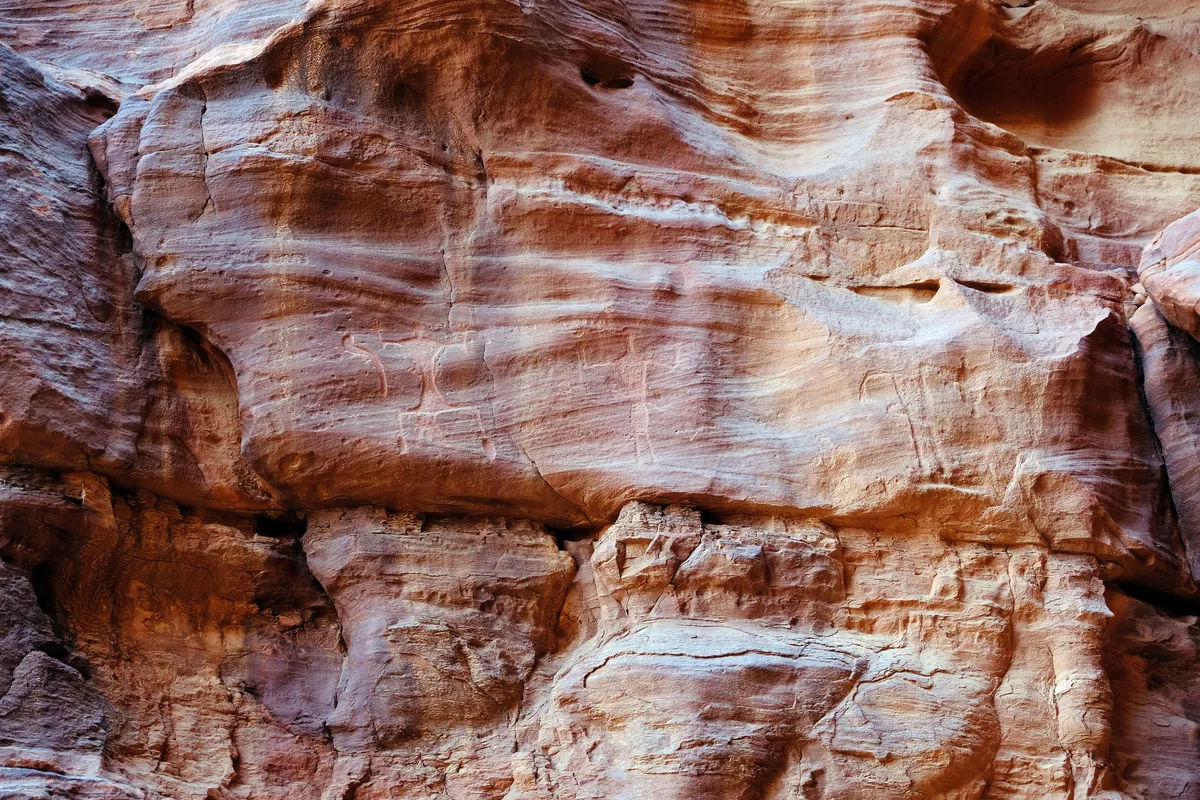
Stand in the main valley and you are standing on a layer cake with the bottom slice exposed. The oldest rock in Wadi Rum is granite, part of the ancient basement of Arabia, forming the dark, rough cores of the great mountains – Jebel Rum itself is granite shouldering up through everything younger. Above and around it lie the sandstones, laid down as sand seas and river plains hundreds of millions of years ago and now lifted, tilted and split into the sheer-sided massifs – the jebels – that give Rum its architecture. The valleys between them, floored with red sand ground down from the cliffs above, are the corridors every tour drives and every trek walks.
The colours are chemistry. Iron oxide rusts the sandstone through a palette of reds, oranges and purples, while paler bands – some almost white – mark layers with less iron in them. Weathering does the sculpture: salt crystals growing in the rock’s pores prise grains loose flake by flake, producing the lace-like honeycomb on shaded walls; wind undercuts the cliff bases; rare cloudbursts send water down the wadis with force enough to move boulders. UNESCO’s listing singles out exactly this – the arches, gorges and honeycomb walls – as a landscape of global importance.
Hold the geology in mind because it explains the visit. The sandstone is soft enough to carve – which is why twenty thousand inscriptions survive – and fractured enough to hide springs where the water table meets a fault, which is why there is a Lawrence’s Spring at all. The valleys run in connected corridors, so a jeep day is a chain of linked plains rather than a single bowl, and the mountains make their own weather of shade. Wadi Rum looks empty from a distance. Up close it is all structure.
How a Visit Actually Works – the Visitor Centre, Your Entry Ticket and the Village
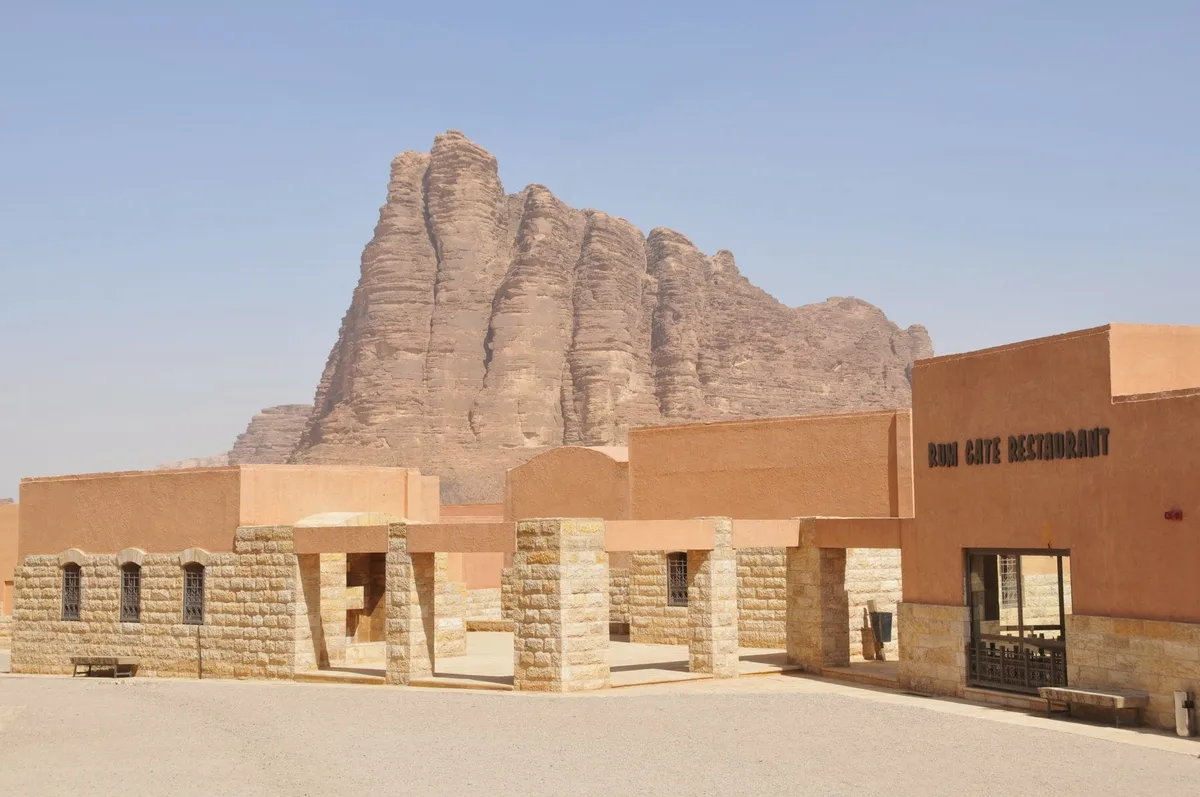
Every visit begins at the same place – the Wadi Rum Visitor Centre, a low complex on the Rum road a few kilometres before Rum Village, sitting in the stare of the Seven Pillars of Wisdom massif. This is the only entrance. Inside are the ticket windows, information desks, toilets and a small shop; outside, a car park where the day’s choreography plays out – drivers meeting guests, camps collecting arrivals, jeeps loading cool boxes. If you booked in advance, your driver waits here or in the village. If you booked nothing, this is also where you fix that – local drivers work a shared system, and a tour can be assembled on the spot, though in busy seasons you may wait for it.
The entry itself is simple. There is a per-person entrance fee, payable at the Visitor Centre windows, and it is the mechanism – not any one figure – that you should plan around. Published figures for the fee currently disagree, older guides quoting one amount and newer listings another, and the responsible authority publishes no tariff on a page we could verify, so this wadi rum travel guide prints neither rather than printing the wrong one. The shape of the transaction does not change: a modest per-person fee, paid once at the gate, cash in dinars the safest way to pay it. If you hold a Jordan Pass, show it at the same window – the pass’s official site lists Wadi Rum among the forty-plus attractions it covers, alongside Petra and Jerash, so pass holders are scanned through rather than charged again. Keep the ticket or the scan receipt with you; checks inside the reserve do happen.
From the Visitor Centre the road runs on a few kilometres to Rum Village, the protected area’s only settlement – concrete houses, small shops, the rest house and the mosque, home to the Zalabieh Bedouin whose desert this is. Your own car goes no further: beyond the village there are no roads, only tracks, and movement inside the reserve is by local 4×4, camel or on foot – a rule that is partly conservation and partly livelihood, and not negotiable at the gate. Park in the village, transfer to your driver’s pickup, and feel the trip change gear. The desert starts where the tarmac ends, abruptly.
Getting to Wadi Rum From Aqaba, Petra and Amman
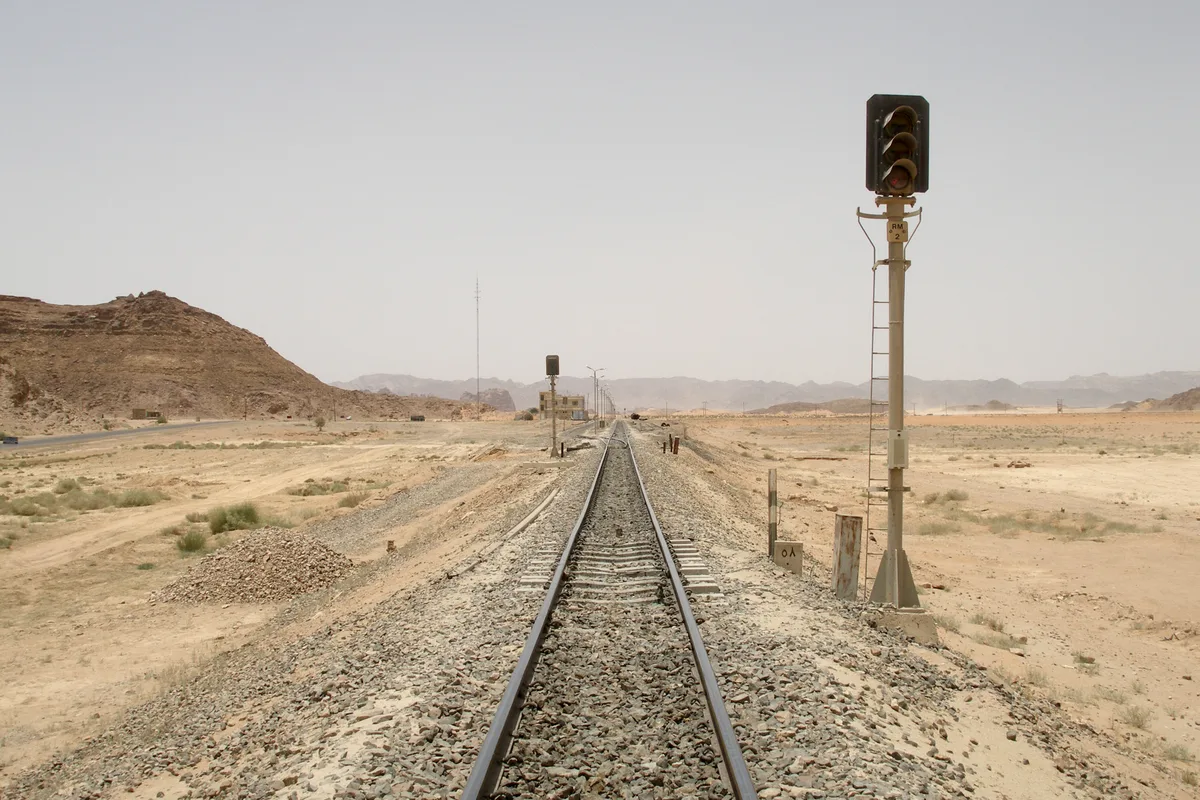
Wadi Rum sits off the Desert Highway in Jordan’s deep south, and almost every arrival is a variation on three drives. From Aqaba, the nearest city and airport, the run north takes about an hour. From Petra’s town, Wadi Musa, allow roughly an hour and a half to two hours south, a road that makes Rum and Petra natural consecutive stops. From Amman the drive is the long one, around four hours – doable as a day trip only in the sense that the hours exist, and a waste of both the desert and the driver; come from the capital to stay, not to glance. All three drives are on good paved roads to the Visitor Centre itself; nobody needs a 4×4 to reach the gate, only to go beyond it.
The transfers themselves are usually arranged by whoever is hosting you in the desert. Camps routinely collect guests from the Visitor Centre or the village as part of a stay, and many quote a full transfer from Aqaba or Wadi Musa as an add-on – agree whether it is included before comparing camp prices, because a cheap room with an unpriced transfer at each end is not cheap. Taxis wait in Aqaba and Wadi Musa for exactly this run, and the rule with taxis is the rule everywhere in Jordan – the fare is the conversation you have before the door closes. Public buses reach Rum Village from Aqaba on a limited pattern, but timings shift and you still arrange a tour on arrival; treat the bus as a start, not a plan.
However you arrive, build the timing around the desert’s day, not the road’s: a morning arrival buys the full touring day and the sunset, an afternoon arrival a short tour and the night. And consider what the railway photograph above is telling you – this corridor has been the road into Arabia for a century, which is precisely why a British officer and his raiders were fighting over it in 1917. His story gets its own section below.
Jeep Tours – Choosing Two Hours, Four Hours or the Whole Day
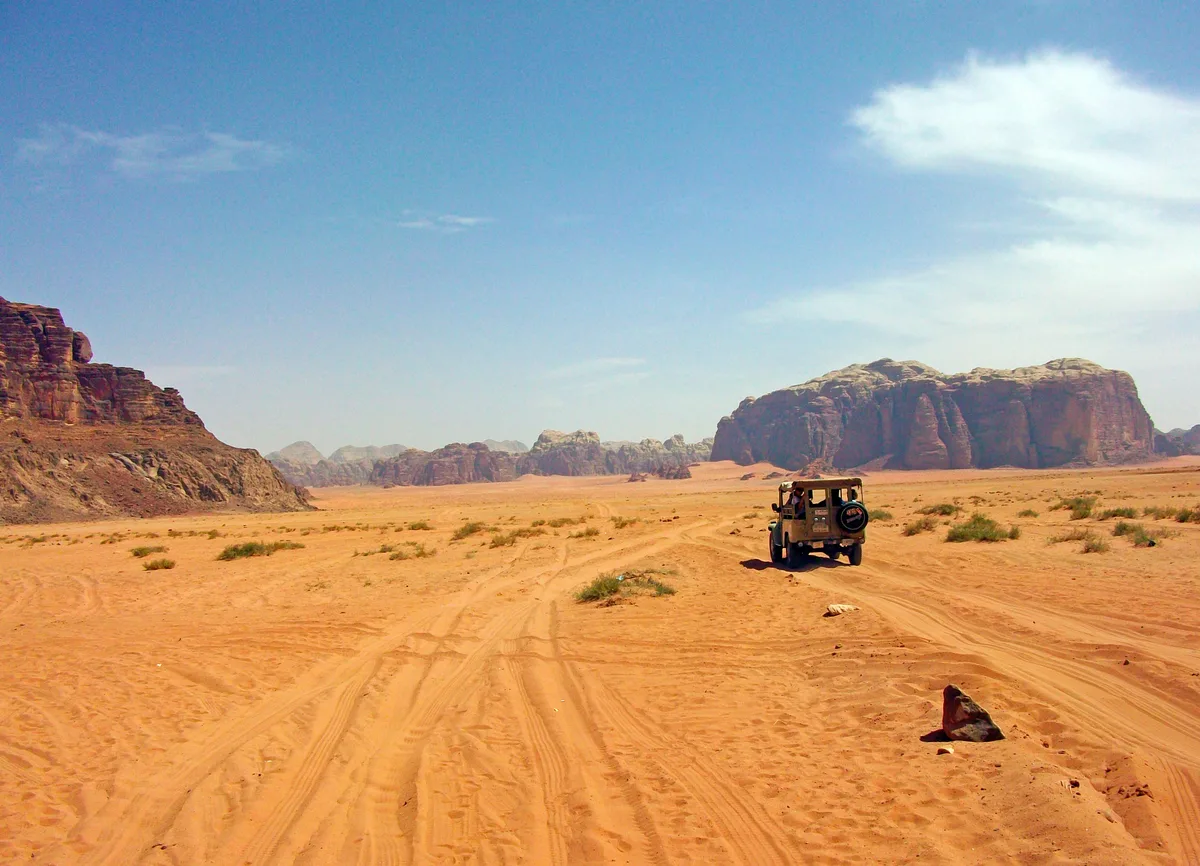
The jeep tour is the unit of currency in Wadi Rum, and choosing its length is the single most consequential decision of your visit. The vehicle is almost always a converted pickup – bench seats in an open or canopied back, a Bedouin driver who owns both the truck and the knowledge – and the pricing mechanism matters more than any number. Tours are sold per jeep, not per person, with a vehicle carrying up to about six passengers. That one fact inverts the usual maths: a solo traveller pays the whole vehicle’s price and should consider joining others at a camp, while a group of five splits the same figure five ways. Prices vary by season, driver and what is bundled, are agreed in advance rather than metered, and are not printed here for the same reason hotel rates are not – they would be wrong by the time you act on them. What you can control is the specification. Before money is discussed, fix the stops, the hours, whether lunch and water are included, and where you will be for sunset. A cheap tour that skips the sunset stop is the expensive one.
Duration maps honestly onto geography. A two-hour tour is a taster of the entrance valley – Lawrence’s Spring, the great red dune, a look into Khazali Canyon – and it suits the traveller transiting between Petra and Aqaba with a genuine hole in the day and no night to give. Know it for what it is: the trailer rather than the film. Three to four hours reaches the second ring – the Anfaishiyya inscriptions, Lawrence’s House, the Um Fruth rock bridge – the minimum at which Rum stops feeling like a photo circuit and starts feeling like a place. A full day goes deep – south to the Burdah area and the quiet valleys, tea stops in the shade of cliffs, lunch in the desert, and a sunset position chosen for light rather than convenience. If you are sleeping in the desert anyway, the full day is the tour this wadi rum travel guide would steer you to, with the shorter formats reserved for honest timetable emergencies.
Two refinements separate a good day from a standard one. The first is the jeep-and-walk combination, offered by many camps, in which the vehicle drops you at a canyon or scramble and collects you on the far side – it restores the silence the engine edits out. The second is the sunset arrangement – where exactly you will be when the light turns, a famous dune with thirty other jeeps or a quiet shoulder your driver prefers. Ask. Drivers here are men driving their own home ground, with opinions about light and crowd that no platform listing will give you. And do not stack two short tours from two sellers in one day – you will pay twice for the entrance valley and see the deep desert from neither.
Lawrence’s Spring and the Entrance Valley
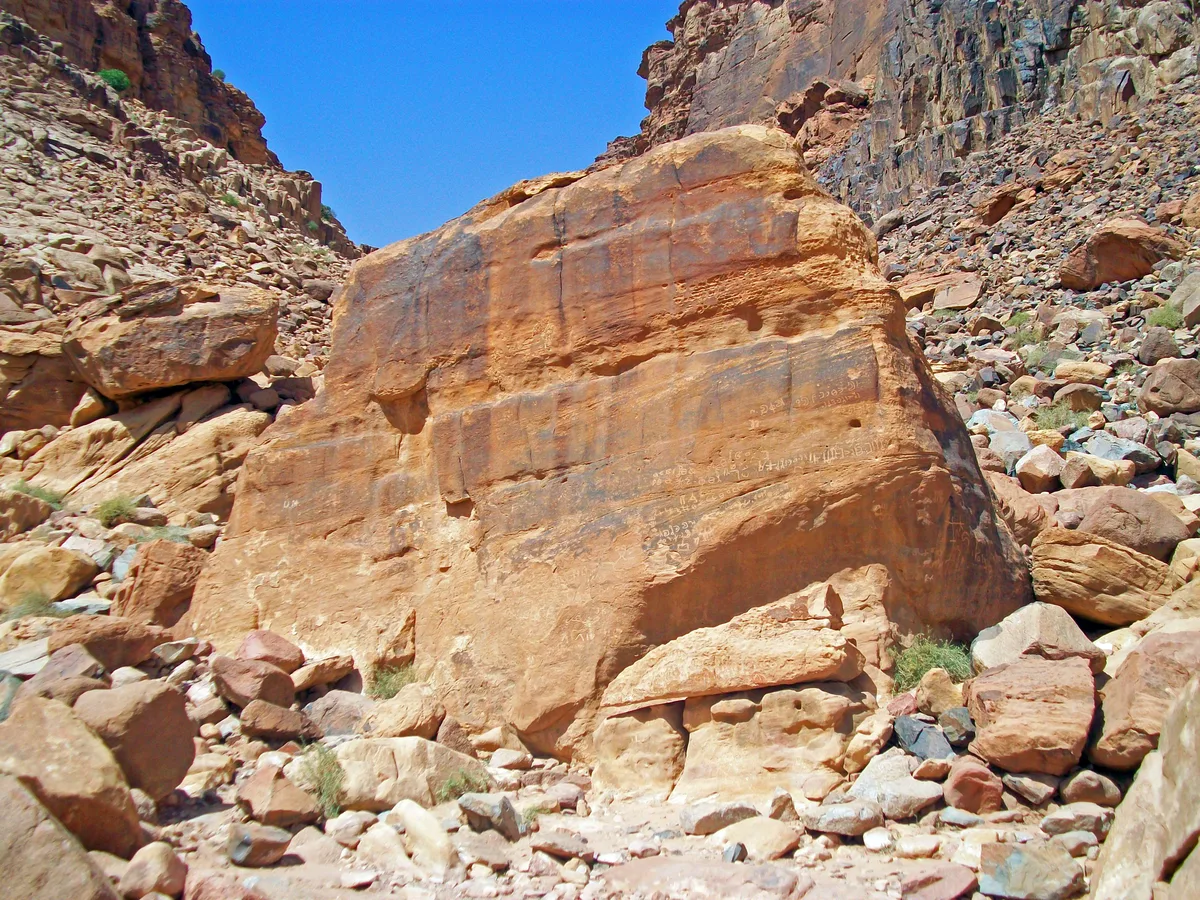
The first sight on almost every tour best teaches you how to read this desert’s names. Lawrence’s Spring – Ain Shellaleh – is a modest seep of water in a rocky gully on the slopes of Jebel Rum, a short drive and a short scramble from Rum Village. Water gathers in a stone trough beneath fig trees, in a defile of fallen boulders the size of houses, and on a slab nearby a Nabataean inscription records the spring’s older life as a watering place on a caravan route – it mattered for two thousand years before it had an Englishman attached to it. Tours pause here for ten or fifteen minutes; the scramble up to the source is steep, loose and optional, and the view back down the gully is worth more than the trickle at the top.
The name is tradition rather than paperwork, and this guide keeps it labelled that way. Lawrence passed through Wadi Rum in 1917 during the Arab Revolt and wrote about the valley’s springs in Seven Pillars of Wisdom with a poet’s attention – his description of the view from a spring-side vantage, down a corridor of cliffs he compared to a processional road, is still the most famous paragraph ever written about this landscape. Whether this exact spring is the one he drank from is a question the evidence cannot fully close; the association is old, local and plausible, and the spring is a genuine ancient water source regardless. Enjoy the place for what is verifiable – water, shade, an inscription, and the first proof that this valley has been a lived-in corridor, not a wilderness, for millennia.
The entrance valley around the spring holds the pattern for the whole tour system. Stops are close together here – a viewpoint, an inscription, the ruined structure called Lawrence’s House a little further on, whose neat stone walls are almost certainly a much older storehouse or caravanserai post and whose link to Lawrence is legend of the same vintage as the spring’s. None of these stops is individually a wonder. Together they are an overture – twenty minutes that teach the valley’s scale, its colours and its habit of hiding history in plain sight – which is why nearly every itinerary begins exactly here.
Written on the Rock – the Inscriptions and Petroglyphs
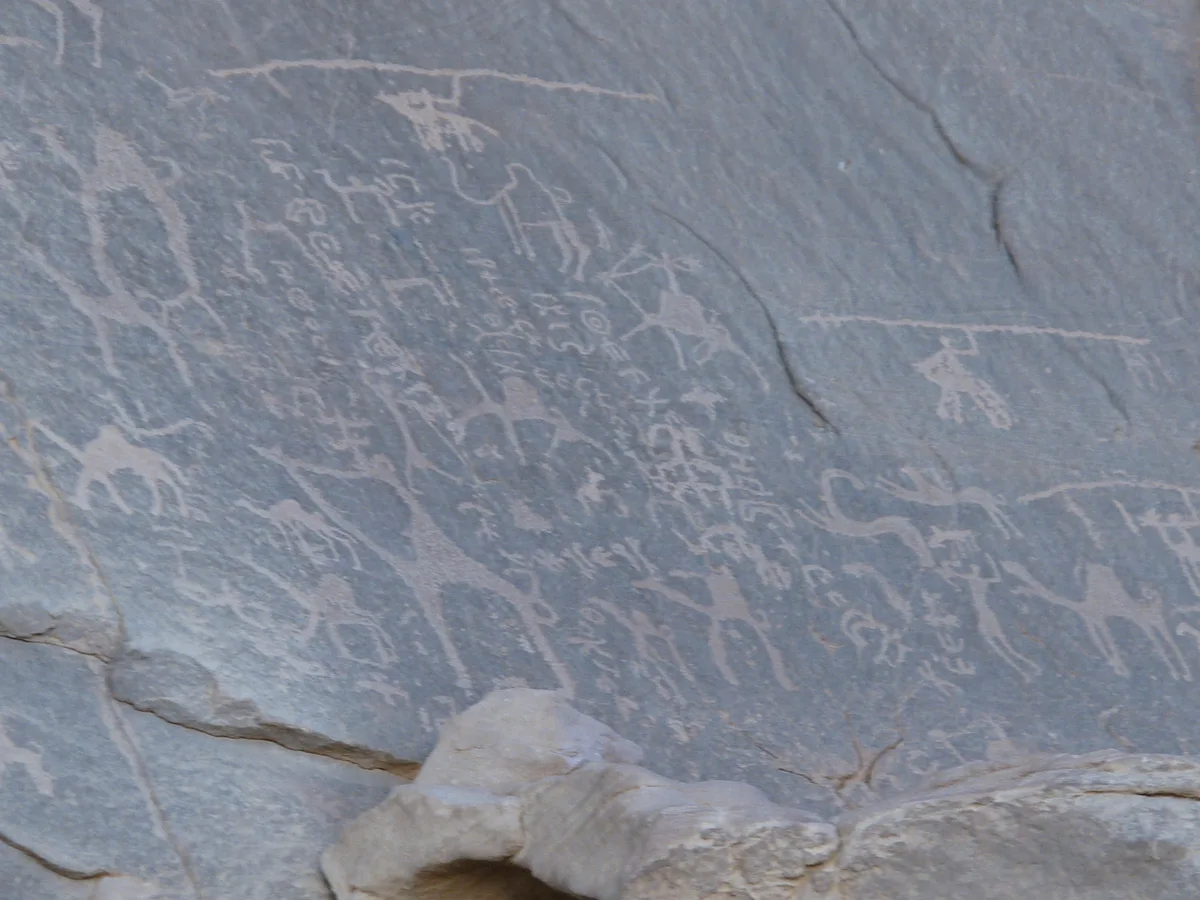
UNESCO counts them, and the numbers deserve a pause – some 25,000 petroglyphs and 20,000 inscriptions documented across the protected area, at over 150 archaeological sites, spanning roughly twelve thousand years of human presence. Hunters of the deep past pecked ibex, ostriches and oryx into the varnished rock faces. Thamudic-speaking herders left dense thickets of short inscriptions – names, prayers, claims, griefs – in scripts that predate Arabic. Nabataean travellers carved their angular letters beside the springs their caravans depended on, and Arabic inscriptions continue the habit into the Islamic centuries. Wadi Rum is not a desert with some rock art in it. It is one of the great open-air archives of Arabia, and the literacy of its wandering herdsmen – shepherds who could write – is one of the things UNESCO inscribed it for.
You will not see twenty thousand of anything, and you do not need to. The tours thread the archive’s highlights. The Anfaishiyya panel, reached on the longer formats, is a cliff face upholstered with inscriptions and animal figures, dense enough that guides read it like a page – here a camel caravan, there a hunting scene, everywhere the short signatures of men marking a watering stop. Khazali Canyon, next section, hides its own carved walls in the shade. The honest way to look at all of it is slowly and close – the carvings are shallow, the light has to rake across them, and the photograph taken in a hurry at noon will show you a blank rock. Morning and late afternoon, when the sun comes in sideways, are when the archive opens.
A word of conduct belongs in any wadi rum travel guide that sends readers to twelve-thousand-year-old writing. The carvings survive because the desert is dry and few hands reached them. Modern graffiti already scars some panels – UNESCO’s own assessment names it as a threat – and the line between looking and adding is the whole ethics of the place. Photograph, read, wonder, and carve nothing, chalk nothing, trace nothing.
Khazali Canyon – the Narrow Gorge
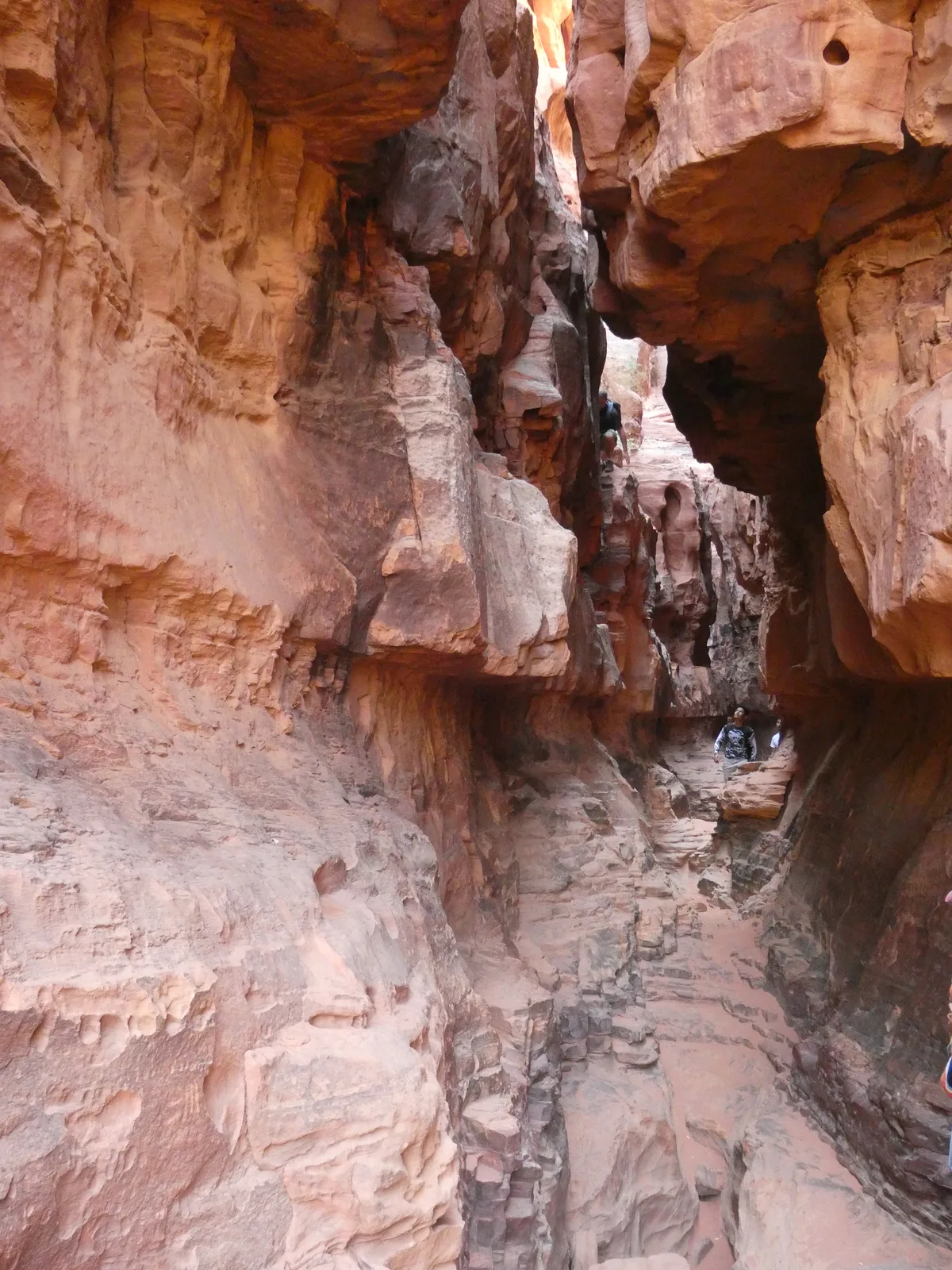
Jebel Khazali, a fissured massif south-east of the village, is split by a crack the tour system treats as its inner sanctum. Khazali Canyon runs into the mountain as a narrow slot – in places barely wider than your shoulders, its walls polished by floodwater, its floor a chain of smooth rock basins that hold pools long after rain. You enter on foot from the jeep track, and the temperature drops as the walls rise; this is one of the desert’s natural cool rooms, and in a summer day’s middle the relief is physical. The walkable section is a few hundred metres of scrambling over boulders and around the basins before the canyon pinches too tight – an out-and-back of half an hour or so.
The walls are the point. In the shade of the slot, where the sun’s erasing hand falls weakest, petroglyphs and inscriptions crowd the rock – human figures, animals, and lines of early script, among the most celebrated carvings in the protected area. They reward the same slow looking as the Anfaishiyya panel, with an added pleasure the open sites cannot offer – discovery. Figures emerge as your eyes adjust and the angle changes, and a good driver-guide will point out the two or three you were about to walk past. Take the hint and let them. This is one of the stops where the local knowledge you are paying for visibly outperforms the guidebook, this one included.
Khazali also teaches the desert’s one real hazard. A slot canyon is a flood’s corridor, and after rare heavy rain the pools deepen, the polished rock turns treacherous and the canyon is no place to be while water is moving – the local system knows this and simply does not run the canyon in those conditions. If your driver waves Khazali off on a wet winter day, he is not short-changing you; he is reading the mountain correctly. And the pools that make it beautiful make it fragile – no swimming, however tempting the green water looks, because what lives in a desert rock basin has nowhere else to live.
The Red Sand Dune and the Central Circuit
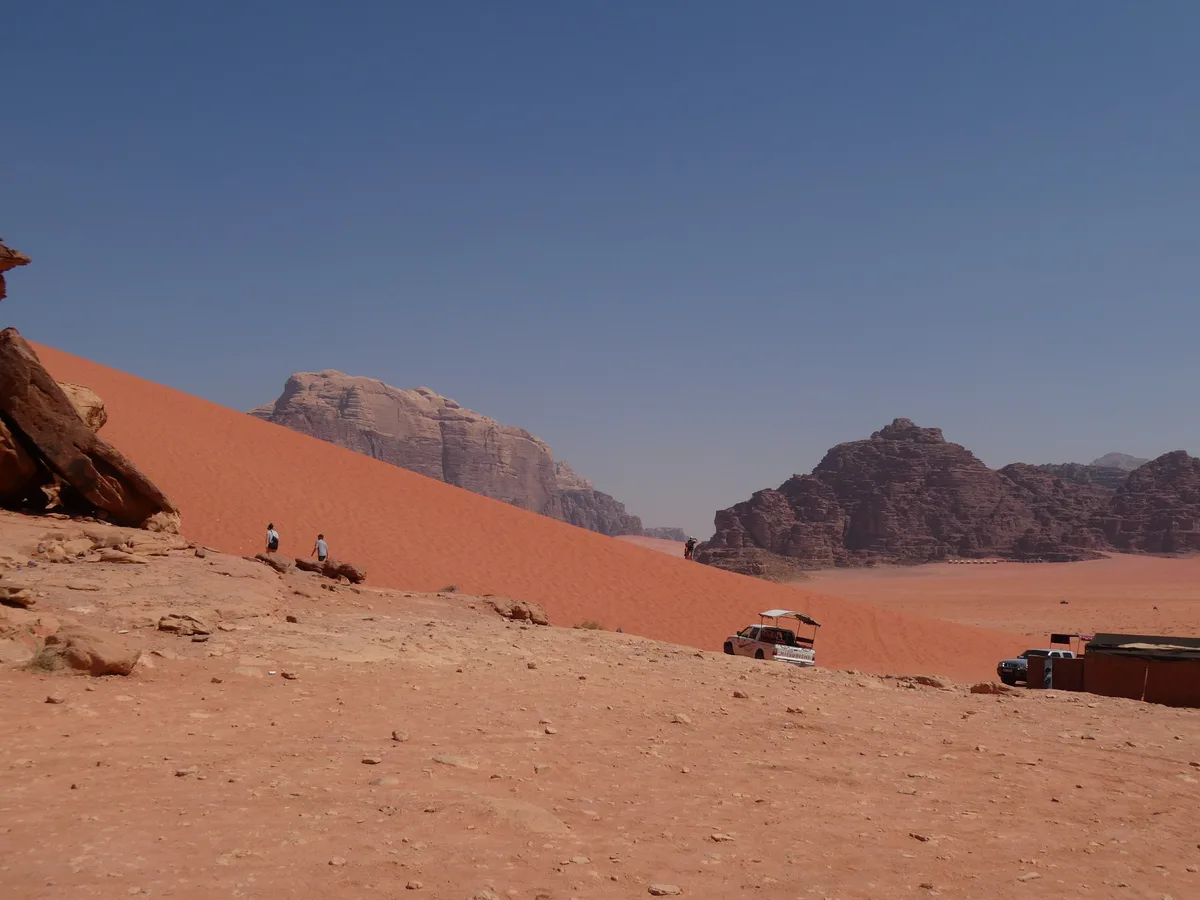
Every tour, whatever its length, stops at the dune. The Red Sand Dune is a wall of soft red sand banked high against the flank of Jebel Um Ishrin, ground out of the cliffs over millennia and piled by the wind into a single climbable slope – and the ritual is fixed. You take off your shoes, or wish you had, and climb it in the zigzag, sliding half a step back for every step up, while the valley assembles itself below you; then you run, jump or sandboard down in a spray of red. It is unsophisticated, exhausting and completely joyful, and the drivers time it kindly, because a dune climbed at noon in August is a medical event rather than a pleasure. Give it the morning or the late afternoon and it earns its place on every itinerary.
Around the dune, the central circuit gathers the tour’s middle order. There is the Mushroom Rock, next section’s subject in detail; viewpoints over the Barrah Canyon country to the east, where the valley system narrows into a corridor of cliffs that climbers prize; and the small arch called the Little Rock Bridge, which you can walk across without a rope or a head for heights – a taster for its giant cousins further south. Tea appears at intervals, brewed on a fire in the lee of a boulder – sweet, dark, and offered with a regularity that is not salesmanship but the desert’s social operating system. Accept it. The tour runs on tea the way the jeep runs on diesel.
This is also the place to say what the middle of a Rum day feels like, because brochures skip it. Between the named stops there are long, silent crossings of open sand, ten or twenty minutes at a time, in which nothing is being shown to you at all – and those crossings are the experience. The massifs change their faces as you circle them, the light reorganises the colours by the hour, and the valley’s scale lands in your body rather than your camera. If your tour feels at any point like a taxi ride through scenery, it is not failing. It is working.
The Rock Bridges – Burdah, Um Fruth and the Little Bridge
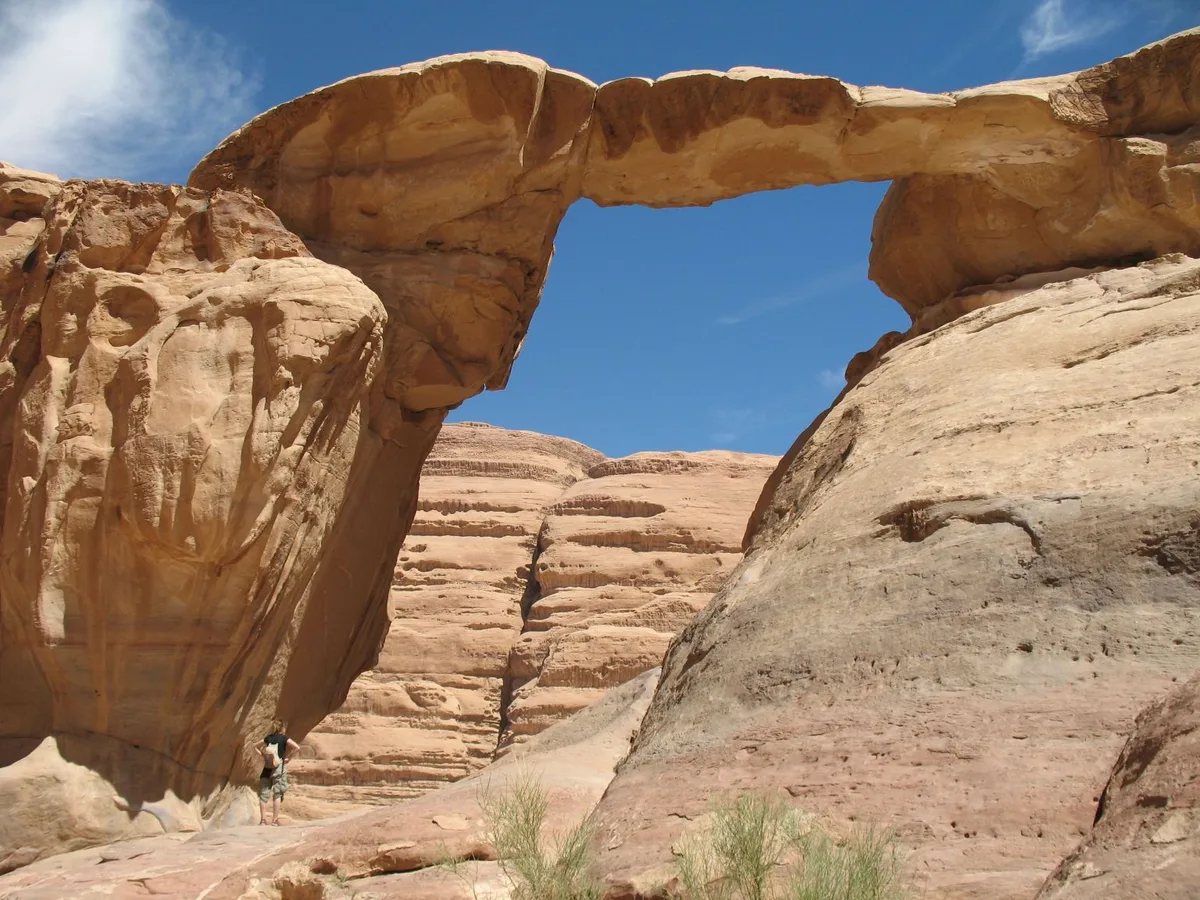
Weathering builds cathedrals here and then, occasionally, it builds a bridge – a slab of sandstone left spanning a gap as the softer rock beneath it was eaten away. Wadi Rum has several, and they form a ladder of ambition that structures the longer tours. At the bottom rung is the Little Rock Bridge on the central circuit, low, broad and walkable, a minute’s scramble from the track. In the middle stands Um Fruth, an elegant arch of roughly fifteen metres on the standard longer routes – a short, steep scramble, hands needed, to stand on top of it. And at the top, literally, is Burdah.
The Burdah Rock Bridge sits high on Jebel Burdah in the southern desert and is counted among the tallest natural arches in the world – the span arcs some thirty-five metres above the wadi floor below it, a figure best verified by the vertigo rather than the tape measure. Reaching it is not a jeep stop but a mountain outing – a guided scramble of a few hours up the jebel’s fractured slabs and chimneys, rated as hiking rather than climbing but with exposed moments, the bridge itself crossed on foot with the desert dropping away on both sides. Jeep tours show you Burdah from the valley, a white eyebrow on the cliff; the traveller who wants to stand on it earns it in the morning cool with a guide who knows the line. Tours that list “Burdah Bridge” as a drive-by photo stop are describing the view, not the visit, and the distinction is worth one question at booking time.
What the bridges teach, up close, is the desert’s direction of travel. Stand under Um Fruth and look at the honeycombed, salt-pitted underside; the arch is a ruin in slow motion, magnificent precisely because it is temporary on a geological clock – the same processes still working on it, grain by grain, as you watch. The tour patter treats the bridges as landmarks, fixed as cathedrals; the rock itself disagrees, politely, over millennia. The traveller who understands that the arch is an event, not an object, has understood Wadi Rum better than the one with the better camera.
Mushroom Rock, Sunset Rocks and the Quiet Valleys
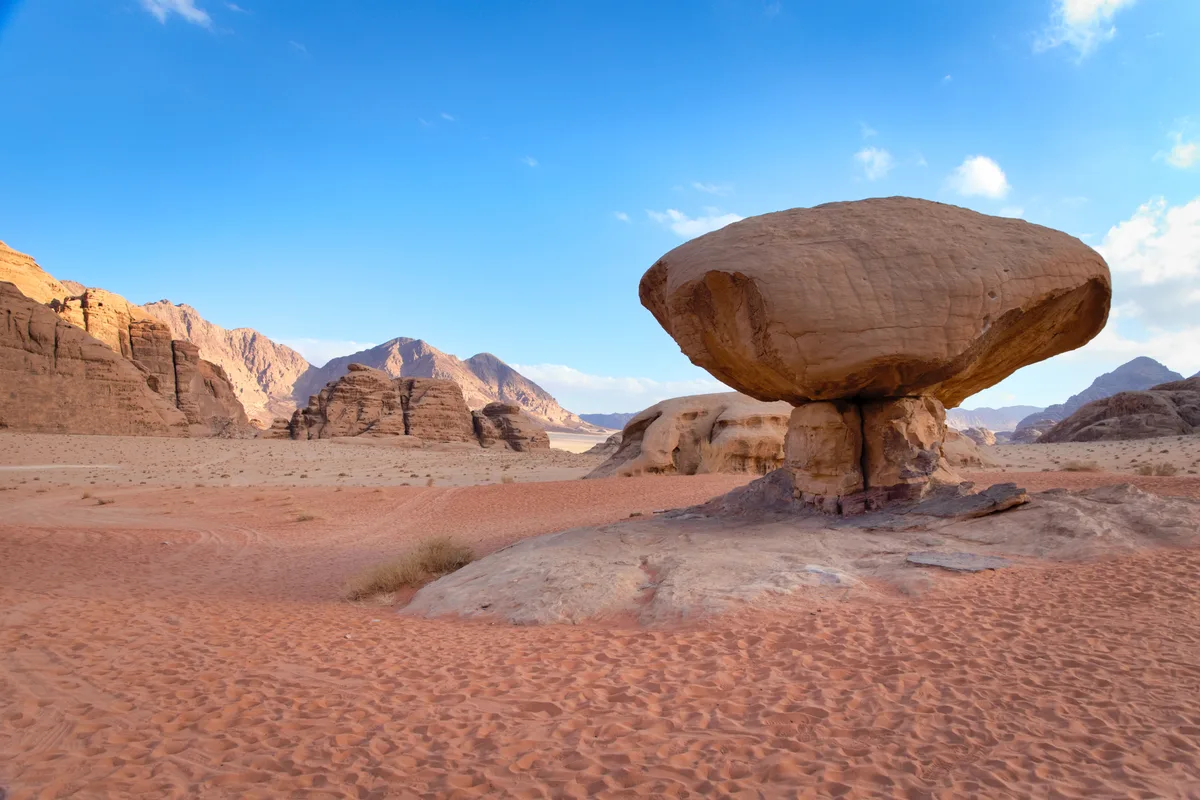
Some sights in Wadi Rum are stops; others are weathervanes for the day’s end, and this section gathers both. The Mushroom Rock stands in the open desert on the central routes – a great capstone balanced on a narrowing stem, carved by the same wind-blown sand that undercuts the cliff bases, the hard layer surviving while the soft one is scoured away at ankle height where the sandblast is strongest. It is photographed in two minutes and understood in one, and it survives the conveyor belt better than most curiosities because the joke is geological – a cliff’s biography written in a single boulder, hardness and softness trading places over time.
Less famous, and in this guide’s judgement more valuable, are the places the tours use to end the day. Every driver has a sunset position – a shoulder of rock, a dune crest, a gap between massifs where the light performs – and the named favourite, the flat-topped hill called Um Sabatah, draws its evening jeeps because the view west is unobstructed and the rock is warm to sit on. The honest trade: the famous spots are famous because they work, and they are shared; a quieter shoulder two valleys away costs you the perfect angle and buys you the desert’s silence, which is rarer. Tell your driver which currency you prefer before the afternoon, not during it.
Beyond the circuit, the valley system keeps quieter rooms for those with a second day or a full-day tour’s southern reach – the long corridor of Barrah Canyon, where climbers camp under walls that take the sun late; side wadis where the jeeps thin out; open flats where, after rain, the desert briefly and astonishingly greens. None of these is a named sight you can demand on a two-hour ticket, and that is rather the point of them. Wadi Rum’s centre is a circuit because the world visits it; its edges are the desert the circuit was built to sample. A traveller with time should always be negotiating gently toward the edges.
The Seven Pillars of Wisdom and Rum Village
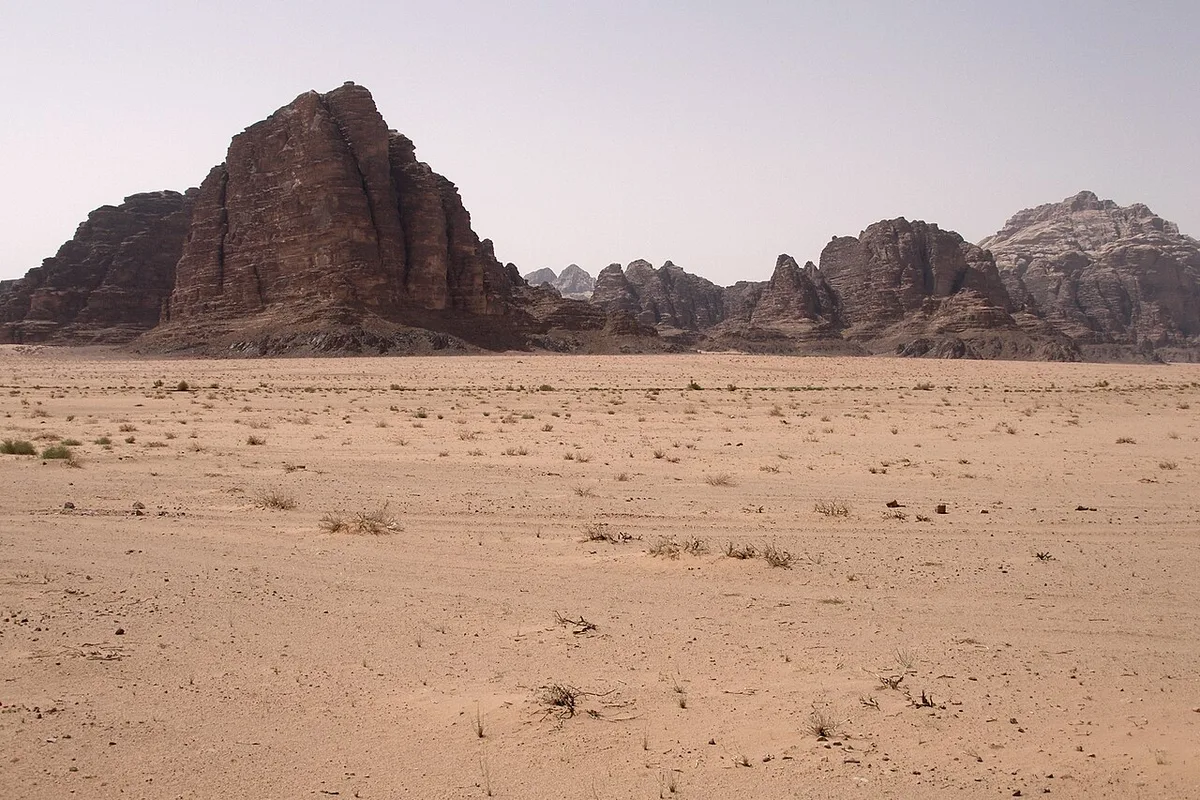
The mountain that watches the Visitor Centre has the most literary name in Jordan. The great fluted rock wall across the valley from the ticket windows is known to every visitor as the Seven Pillars of Wisdom, a name it did not have until the twentieth century gave it one. It comes from Lawrence’s memoir, whose title he borrowed from the Book of Proverbs – “Wisdom hath builded her house, she hath hewn out her seven pillars” – and the name was fixed to this mountain in the decades after the book made it famous, by common consent of guides and mapmakers rather than by local tradition. The desert, unimpressed by bibliography, provides the punchline: count the pillars along the ridge and there are five summits, not seven. The name stays anyway – too good a story for accuracy to evict.
Beneath the mountain, Rum Village is the desert’s engine room and repays an unhurried look most visitors, transferring straight from car park to jeep, never give it. This is a working Bedouin village of the Zalabieh tribe – a few thousand people, concrete houses along sandy streets, a school, a mosque, camels resting between jobs, and the rest house that was the village’s original travellers’ anchor. On the village’s edge stand the low remains of its oldest building, a Nabataean temple of roughly the first century BC, built when Rum was a watering stop on the incense roads; a few minutes among its platform and column drums recalibrates the village from service station to settlement with a two-thousand-year head start on its guests.
Practical life runs through the village in ways worth knowing. This is where drivers live, where jeeps are repaired with the resourcefulness deserts teach, and where the tour system’s famous informality is actually administered. If your arrangements were made loosely – a driver to find, a camp to confirm – the village is where loose ends get tied, usually over tea, usually faster than any app. Give it the respect due to a home rather than a hub: dress as you would in any conservative Jordanian town, and ask before photographing people.
Lawrence of Arabia – the Man, the Book and the Films
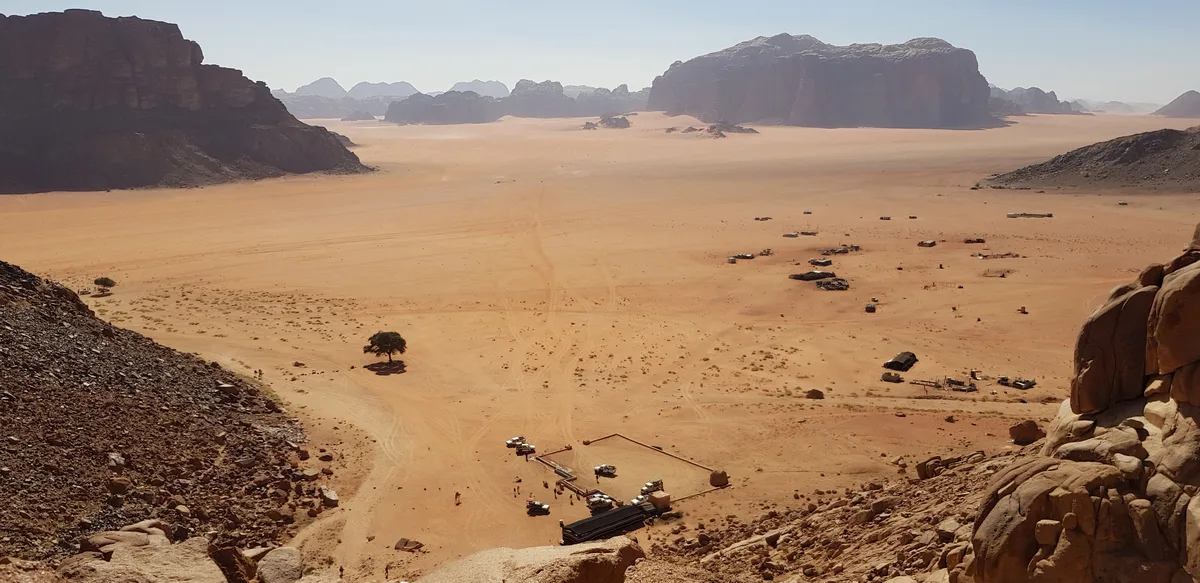
No honest wadi rum travel guide can dodge him, so let us do him properly. Thomas Edward Lawrence was a British archaeologist turned intelligence officer who, in 1917, attached himself to the Arab Revolt against the Ottoman Empire and passed through Wadi Rum during the campaign that took Aqaba – the revolt’s turning point, achieved by crossing desert the Ottomans believed impassable and attacking the port from the landward side. Rum appears in his memoir, Seven Pillars of Wisdom, in passages of genuine rapture; his first sight of the valley produced the famous judgment that it was “vast, echoing and God-like”. He was a real participant in a real revolt, fighting alongside the ancestors of the men who now drive the jeeps – and also a self-mythologiser whose memoir embroiders, compresses and occasionally invents. Both sentences are true, and a grown-up visit holds them together: the springs and passes he names exist, and the Lawrence of the single-handed legend is a literary character built, largely by Lawrence himself, on top of them.
The film then built a second legend on the first. David Lean shot much of Lawrence of Arabia (1962) on location in this valley, and its desert sequences fixed Wadi Rum in the world’s imagination as the desert, the one against which all others are measured – Jordan’s tourism industry effectively starts with that film. Ridley Scott put Matt Damon on these flats as the surface of Mars in The Martian, filming exteriors here in 2015; Denis Villeneuve used Rum’s massifs for Arrakis in Dune and Dune Part Two; the valley played the moon Jedha in Rogue One and the planet Pasaana in The Rise of Skywalker; and Jordan’s own Theeb, shot mostly here, carried the desert’s voice rather than its backdrop. When your driver points at a dune and names a film, he is usually right – film crews are part of the local economy’s memory.
The mature way to hold all of this is to let the layers be layers. The valley was an archive of inscriptions for twelve thousand years before it was a film set, and a Bedouin homeland before it was a British officer’s epiphany. Enjoy the Lawrence story – the memoir, read on the camp bed the night before, will double the desert’s resonance. Then notice, as the light fails and the jeeps head in, that the valley is doing the thing it did for the Thamudic herdsman and the Nabataean caravaneer long before the cameras: being a corridor home. The films are the footnote. A very good footnote, but the text is older.
Hiking and Scrambling – Burdah on Foot, Jebel Rum and the Long Trails
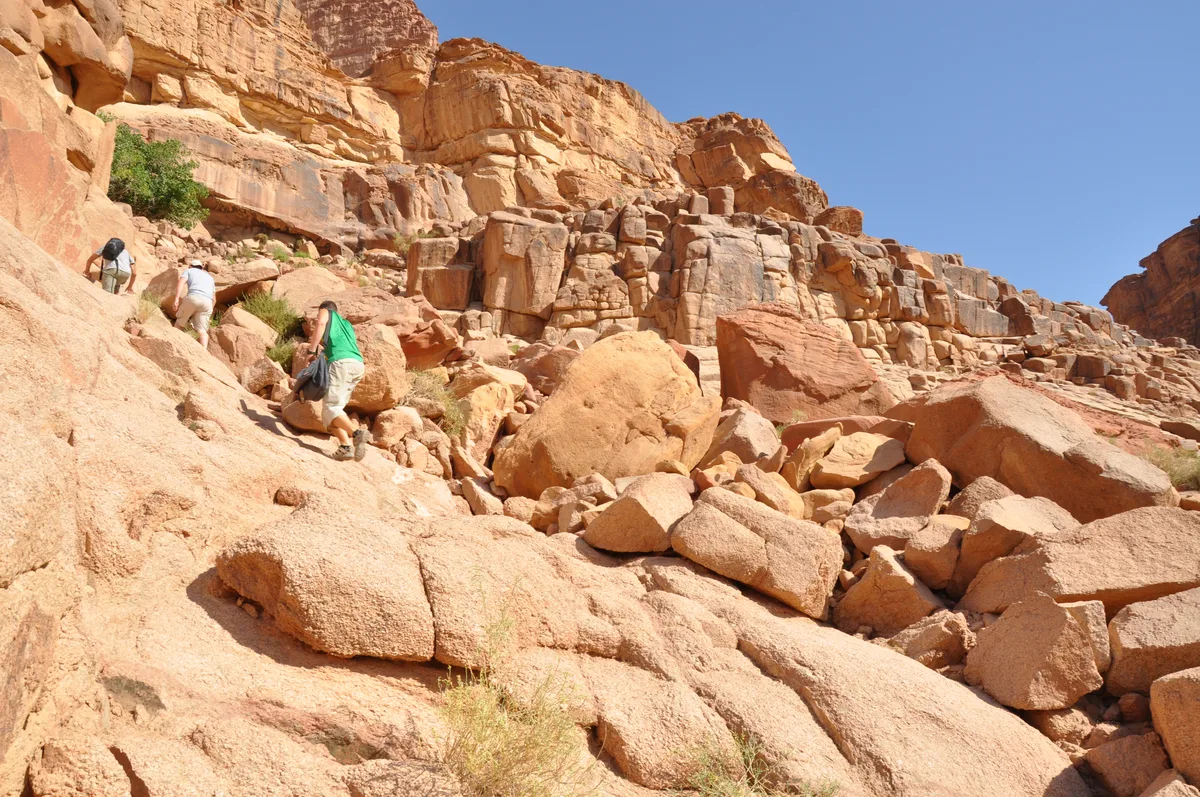
The jeep shows you Wadi Rum; walking changes your relationship with it. The mountains are a mountaineer’s landscape in miniature – not altitude, but fracture – a world of slabs, chimneys, ledges and hidden descents where routes exist as local knowledge rather than as waymarked paths. That fact sets the terms for everything here: beyond the valley-floor strolls at the tour stops, walking in Rum means walking with a Bedouin guide, not because of a regulation you could argue with but because the routes genuinely cannot be followed from a description. The classic objective is the Burdah Rock Bridge, a guided scramble of a few hours up Jebel Burdah – steep in places, exposed in a few, honest work in the morning cool – ending on the arch itself with the southern desert arranged below. It is the finest half-day in Rum for anyone with a head for heights, and its details live in the rock-bridges section above.
Above Burdah in commitment stands Jebel Rum itself, the great massif over the village – a full-day scramble by its known routes, with sustained exposure and a summit view down the valley system, and a route for which a guide is not a recommendation but the mechanism by which the mountain is climbed at all. Between the two sit the connoisseur’s half-days – the Rakabat Canyon traverse through Jebel Um Ishrin, which threads a mountain rather than climbing it, entering by one wadi and leaving by another past springs improbable in the stone; and the canyon walks of the Barrah country. Most camps can place you with a mountain guide; make explicit the route, the hours, the water – carried in quantity, because the dry air steals it silently – and the turnaround time, agreed while everyone is still cheerful.
For the walker with a week, Wadi Rum is also a node on Jordan’s great long-distance path. The Jordan Trail passes through on two celebrated southern stages – Petra to Wadi Rum, roughly 125 kilometres over about six days of wilderness walking, and Wadi Rum to Aqaba, roughly 76 kilometres over about five, finishing at the sea. Those figures come from the Jordan Tourism Board’s own trail descriptions, and they frame the desert correctly – Rum is not an excursion from the trail but one of its destinations. Very few visitors will walk in. But knowing the corridor you are driving in an afternoon is a six-day walk from Petra recalibrates the windscreen view considerably.
Camel Treks – the Slow Way In
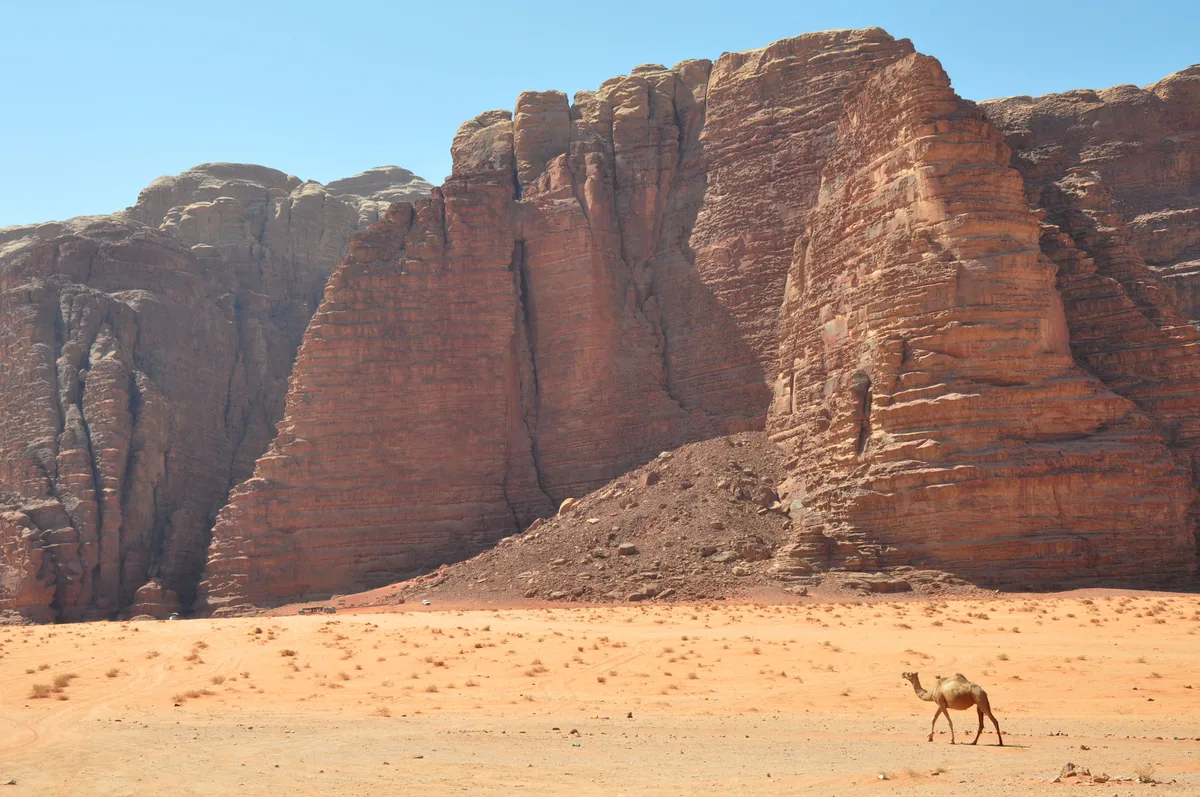
The camel is not a photo opportunity that happens to move; it is the transport this valley was organised around for millennia, and an hour or a day on one rewires your sense of Rum’s scale more thoroughly than any jeep day. The formats are simple. Short rides run from the village or from tour stops – half an hour to an hour, often a taster between the Visitor Centre formalities and the jeep, or a sunset out-and-back. Full treks are the serious article – a day or several travelling between camps at the camel’s three-to-four-kilometre-an-hour amble, a cameleer walking at the head, the valley revealing itself at the pace at which its inscriptions were carved. Many camps build hybrid days – jeep between the distant sights, camel for the connecting valleys – which is, for most visitors, the intelligent compromise between coverage and experience.
The practicalities are quickly told. A camel saddle is a padded frame, not an armchair; the mount and dismount, as the animal rises in two alarming stages, are the day’s adrenaline peak for most riders; and an hour is most beginners’ honest limit before the novelty’s cost is itemised by their legs. Wear long trousers, keep the sun off, tie the hat down, and hold the front handle without embarrassment – everyone does. Prices follow the same mechanism as the jeeps – agreed in advance, varying with duration and season – and this wadi rum travel guide gives the same advice: fix the route, the hours and the destination before you mount, because renegotiating from two metres up a camel is a weak bargaining position.
Choose the trek for what it uniquely buys. From a jeep, the massifs are a sequence of views; from a camel, they are weather – you watch a single cliff change its face over an hour as you draw level with it, and the desert’s silence, which the engine has been editing all day, arrives unabridged. The travellers who rate their camel hours above their jeep day are the ones who wanted the valley to stop being a sight and start being a journey, and at walking pace, with the reins loose and the cameleer singing quietly to nobody, it obliges.
Sleeping in the Desert – Camps, Caves and the Zarb
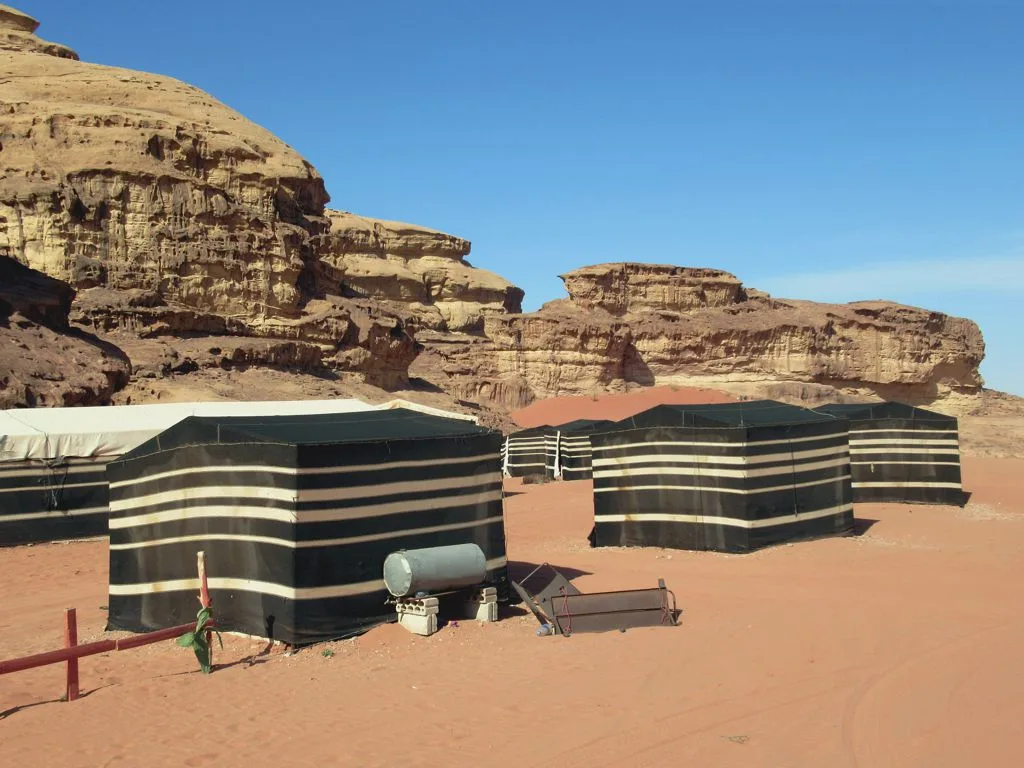
Staying the night is the decision that separates the Wadi Rum visit from the Wadi Rum experience. The standard article is the family camp – a crescent of tents in the lee of a cliff inside the protected area, run by a Zalabieh family whose men drive the jeeps by day and host by night. At its traditional best the tent is woven goat-hair, black and white, with real beds and heavy blankets; the bathroom block is shared and solar-lit; and dinner is the camp’s ceremony – chicken and vegetables cooked as zarb, sealed in an underground sand oven for hours and unearthed before the guests with the ceremony of a safe-cracking, eaten communally, followed by tea and music. Electricity is limited and solar, phone signal fades with distance from the village, and the water is trucked in – a camp is a small act of logistics performed nightly in a waterless desert, and judging it by hotel plumbing misses the achievement entirely.
Above the family camps, the market stratifies. Mid-range camps add en-suite tents and bigger communal halls; luxury camps add architecture – permanent chalets, panoramic windows, occasionally a pool improbable in the sand. And at the simplest end sits the option connoisseurs argue for over all of them: the bivouac, sleeping out on mats around a fire, or in one of the shallow caves the cliffs provide, with dinner cooked on the spot and no tent between you and the meteorology. Offered by many camps as the “cave” or “under the stars” night, it costs less than the domes that photograph better, and on a warm, moonless night it is the single finest sleeping arrangement in Jordan. Choose by season – a bivouac in January is a character-building exercise – and by honesty about your own comfort floor.
Two checks matter more than any star rating when choosing. The first is location, returning to this guide’s opening warning: a licensed camp inside the protected area is a different product from a camp near Disah outside the boundary, whatever the listing’s photographs imply. Ask plainly where the camp is and whether your tour enters through the Visitor Centre. The second is the night itself – what the sleeping unit actually is, how the cold is handled in your month, and what happens about dinner if you arrive late. A camp that answers those questions precisely runs itself well. The desert is not selling luxury or simplicity; it is selling a night sky with a bed under it, and the best camps are the ones that get out of the sky’s way.
The Martian Domes – an Honest Assessment
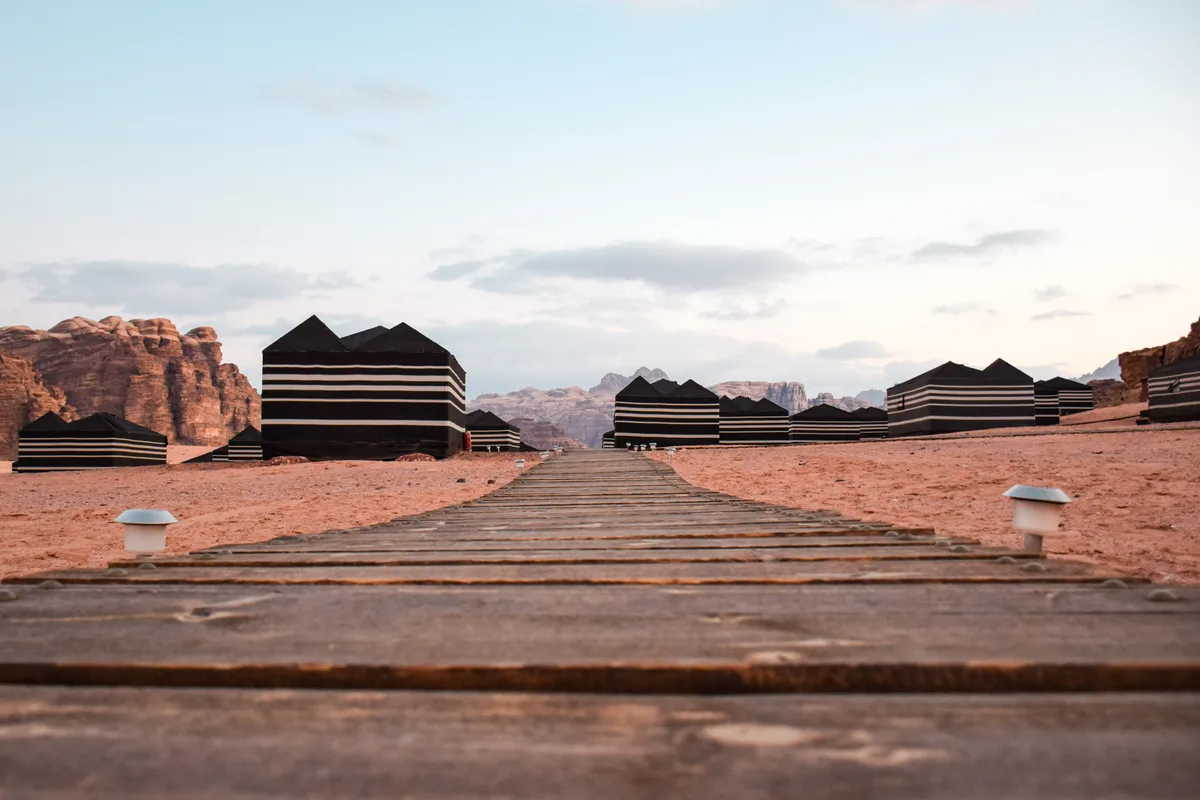
You have seen the photographs – a row of white geodesic bubbles on the red sand, a bed inside each facing a transparent panel, and through the plastic the whole starry architecture of the Milky Way. The “Martian domes” – bubble tents, in the trade’s plainer language – are Wadi Rum’s most successful export image of the past decade, riding the valley’s Mars associations from The Martian into the accommodation market. This guide’s job is not to sneer at them or to sell them, so here is the honest ledger. The credit side is real: the desert sky is the finest ceiling in Jordan, and a clear, moonless night watched from a warm bed is a genuinely memorable way to meet it. For travellers who would never bivouac and might never otherwise stay out for the stars at all, the dome is the gateway, and a gateway is worth something.
The debit side is physics. A transparent plastic bubble in a desert is a greenhouse by day and a refrigerator by clear night, and camps fight that physics with air-conditioning, heaters and fans whose noise and light are themselves small subtractions from the wildness outside. Condensation clouds the panel in the cold hours when the sky is best. Camp lighting spills across the view the dome exists to frame, and the Milky Way over a lit camp is a rumour of the one visible from a dark bivouac two valleys away. And the premium is real: a dome night commonly costs a multiple of the family camp beside it, buying, at bottom, a window – while the zarb, the guiding and the desert outside remain the same products sold at both prices.
So the verdict is conditional, and the conditions are knowable before you book. Take the dome for one night, not three; take it in the mild months, when its thermal vices are forgiven; take it at a camp dark enough that the sky survives the property’s own lighting; and take it with the moon’s phase checked, because a full moon through a panoramic panel is just a bright ceiling. Spend the saved nights in the traditional camp or out under the stars, where the same sky costs less and shows more. The domes are not a fraud – they are a compromise wearing a spacesuit, and travellers who book them as a compromise, one sparkling night inside a longer, earthier stay, tend to leave delighted. Travellers who book them as the desert itself leave having slept in the desert’s photograph.
Stargazing in the Valley of the Moon
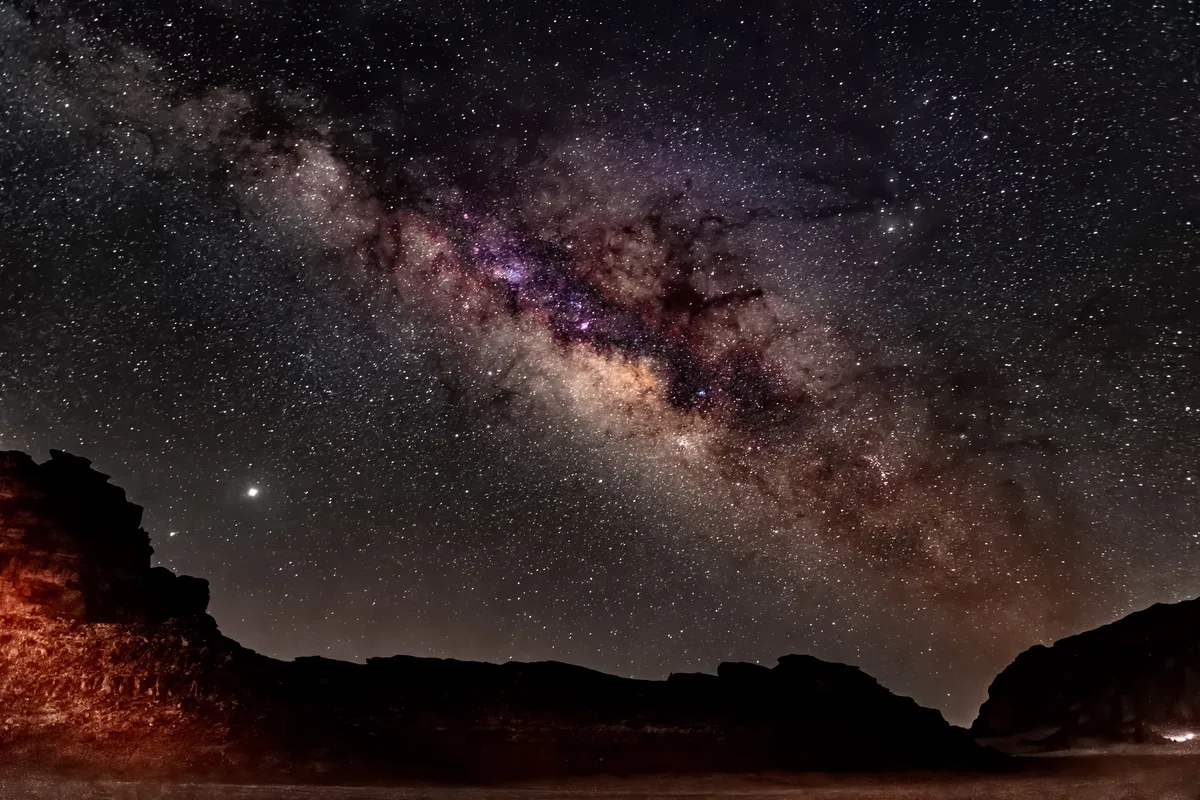
Every account of Wadi Rum eventually runs out of day and arrives here. The protected area sits at around a thousand metres of elevation, in air dried by a continent’s worth of desert, far enough from Aqaba’s glow and Amman’s that the darkness is not a metaphor. On a moonless night the Milky Way does not appear in the sky so much as take it over – a lit band from horizon to horizon, with the desert’s silence underneath it doing the work of a cathedral’s acoustics. No photograph, the one above included, is the thing itself; photographs show you the stars, but not the scale at which your own eyes, twenty minutes dark-adapted, begin to pick out structure in the galactic core. Give the sky that twenty minutes. It is the admission price, and it is non-negotiable.
Timing is a knowable craft rather than luck. The moon is the first variable – plan the desert night, where your itinerary allows it, in the two weeks the moon is young or absent, and treat a full-moon Rum night as a different, silvered pleasure rather than a failed dark one. The season is the second: the galactic core rides highest in summer, when nights are warm enough for long watching, while winter offers earlier darkness and crystalline air at the price of serious cold – the answer in both seasons is layers, a mat outside the tent, and the discipline to stay out past the first gasp. Check the moon before you book anything; this wadi rum travel guide ranks that five-minute task above any item on the packing list. Several camps run telescope sessions, and an astronomy outfit in the valley offers dedicated stargazing evenings bookable through camps; either can add structure to the wonder, though neither is required for it. What is required is small and human – turn the phone off, keep the torch red or off entirely, and let the camp’s generator hours end.
One modern caveat belongs in an honest guide. The darkness is a resource the valley’s growth spends: every new camp and lit dome row raises the local glow a notch, and the sky from Rum Village’s edge is already poorer than the sky an hour into the reserve. That is another argument for sleeping deep inside the protected area, in a camp that takes its lighting seriously. The herdsmen who carved their names here navigated and prayed by this sky; it is the oldest exhibit in the museum, and the only one that still performs nightly.
When to Go – Heat, Cold and the Shape of the Year
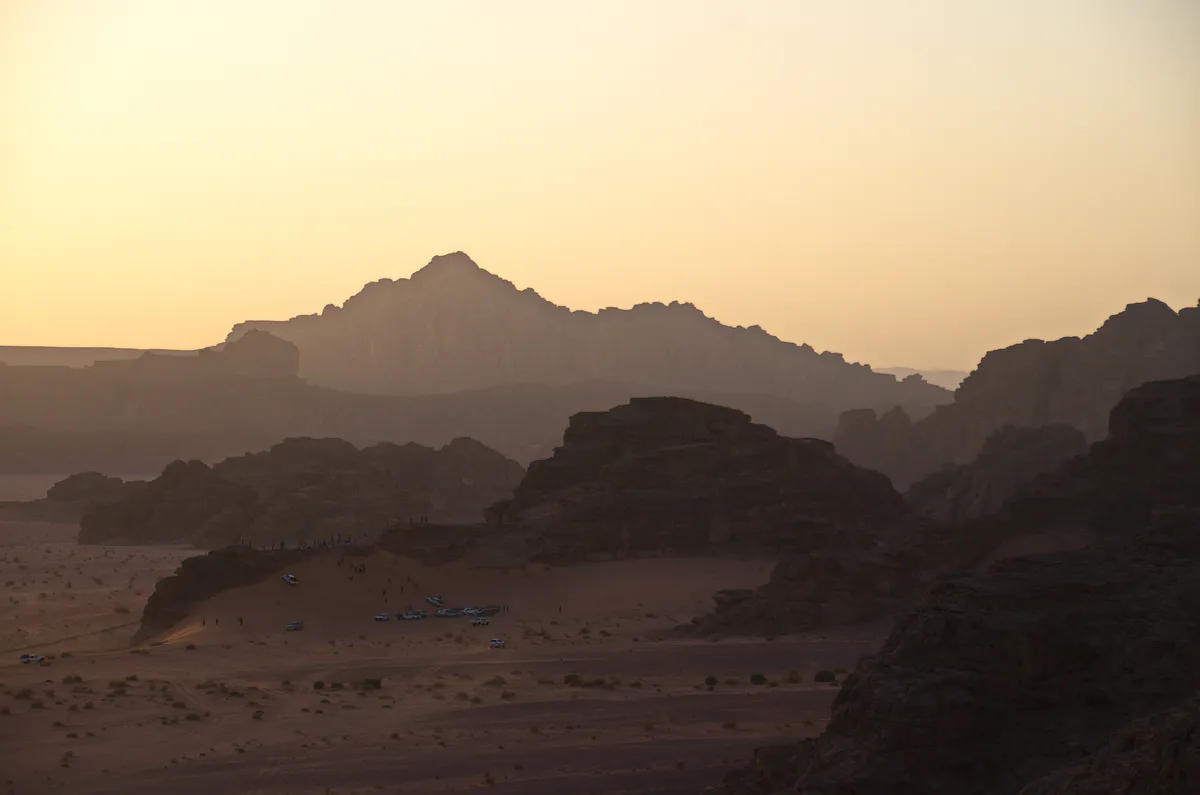
Wadi Rum is visitable in every month, which is not the same as being the same place in every month, and the calendar is the last piece of mechanism this wadi rum travel guide owes you. Spring, March to May, is the valley’s argument for itself – warm days for touring and walking, nights cool rather than cold, the desert occasionally greening after winter rain. Autumn, September to November, matches it almost exactly, with a warm-season sea waiting at Aqaba at the end of the road. These are the peak months, and the peak is honest – book camps and the better drivers ahead, and expect the famous stops to be shared.
Summer rewrites the day rather than cancelling it. June to August brings heat that organises everything – days well into the high thirties, the sand punishing at noon – and the desert’s answer is its ancient timetable: tour at dawn, rest in shade through the furnace hours as the Bedouin do, tour again into the long evening, and take the night, mild and star-crowded, as the main event. A summer visit built on that rhythm is a real visit; one run on a northern-European sightseeing clock is an endurance test with photographs. Winter inverts the warning. December to February gives bright, cool touring days that walkers love and the emptiest famous stops of the year – and nights close to freezing on the valley floor, with wind that finds every gap in a tent. The camps answer with blankets and stoves, but pack for a mountain night, not a beach one, and the bivouac, summer’s glory, becomes a specialist’s choice.
Two weather notes complete the picture. Wind is the desert’s wildcard in any season – spring can bring the hot, dust-laden khamsin, and a windy night tests every tent in the valley. And rain, though rare, is the one force that closes things: after heavy winter rain the canyon walks and scramble routes are called off and the tracks turn treacherous for a day, decisions the local system makes quickly and without apology. Build a spare half-day into any tight itinerary that includes Rum, and let the desert have the final say on yours.
Wadi Rum With Petra and Aqaba – Building the Southern Triangle
Almost nobody comes to Jordan for Wadi Rum alone, and the desert’s place in the country’s geography is the last thing to get right. Rum is the southern triangle’s middle point: Aqaba and the Red Sea about an hour south, Petra about an hour and a half to two hours north, the three together forming the classic finale of a Jordan itinerary – stone city, desert, sea. The order matters more than the transport. Our Jordan itinerary for 7 days builds the week as a one-way line south for a reason: Petra’s two big walking days first, while the legs are fresh; then Rum; then Aqaba’s water as the week’s earned rest. Run in that order, the triangle feels composed. Run as a series of returns to one base, it feels like commuting, and Jordan is too good to commute through.
Within that shape, the choices are about nights. Petra deserves two days and Rum deserves a night, and the traveller who gives both a day trip from Aqaba will see the Treasury at a sprint and the desert at noon – the two worst versions of Jordan’s two best places. Our Petra travel guide makes the two-day case for the city in full; this guide’s matching claim is simpler: plenty who skipped the Rum night describe the desert as the trip’s great might-have-been, while nobody who gave it the night calls it a mistake. The day-trip version – out from Aqaba in the morning, a four-hour jeep tour, back by dinner – is respectable as far as it goes, and it goes exactly as far as sunset, which is where it stops. The night is the point. Arrange the triangle so the night survives.
Practical stitching is mercifully simple. The drives are all on paved roads; camps and hotels at each end arrange transfers daily, and the Aqaba end offers the airport most southern itineraries fly out of – one more argument for the north-to-south direction: you finish at the sea, near the runway, with the desert behind you. If a dawn balloon flight appeals, it is booked through camps and operators for the Disi side of the reserve and flies only in calm early air – a fair-weather crown for the Rum night rather than a plan to build on. Stitch it once, in one direction, and let each of the three places be itself at full length. The triangle punishes only the hurried.
Frequently Asked Questions
How many days do you need in Wadi Rum? One full day of touring plus one night in a camp is the unit this wadi rum travel guide recommends. A half-day tour covers the entrance valley honestly but no more; two days add a mountain scramble or a full camel trek. More than three is for trekkers and the happily desert-struck.
How much is the entrance fee to Wadi Rum? There is a per-person fee at the Visitor Centre, but published figures currently disagree – older sources and newer listings quote different amounts, and the authority publishes no verifiable tariff we could check – so this guide describes the mechanism rather than risk printing a wrong number. Carry cash in dinars. Jordan Pass holders are covered: the pass’s official site lists Wadi Rum among its forty-plus included attractions.
Can you drive yourself in Wadi Rum? Only as far as Rum Village. Beyond it there are no roads, and exploration is by local Bedouin 4×4, camel or on foot – a rule enforced by geography as much as by anyone, since the tracks are unmarked.
Is Wadi Rum safe? The risks are the desert’s ordinary ones – heat, cold, sun, distance and the occasional scramble – managed by a local guiding system with decades of practice. Follow your driver’s judgment on weather and routes, carry water and layers, and the day’s real dangers remain the highway drives at either end.
What is the difference between booking through a camp and booking at Disah? Disah is a village outside the protected area to the north, and tours sold there run in a different, unprotected desert that does not contain the UNESCO-listed sights – Lawrence’s Spring, Khazali Canyon and the rest are inside the boundary, entered through the Visitor Centre. A Disah tour can look similar in photographs and cost less. It is not the same place, and your money does not reach the community that manages Rum.
Are the Martian domes worth it? For one mild, moonless night, at a camp dark enough for the sky to survive it, yes – with the domes section above as the fine print. As a multi-night base, the premium buys a window rather than a better desert, and most travellers get more from splitting nights between a dome and a goat-hair tent or a bivouac.
When can you see the Milky Way in Wadi Rum? On any clear, moonless night it is prominent, and the galactic core rides highest through the summer months. The real variables are the moon’s phase and your camp’s lighting – choose the dark half of the lunar month and a camp deep inside the reserve, give your eyes twenty minutes, and the sky does the rest.