Most guides to this city hand you a list of monuments and a warning about the hills. Both halves are true, and both miss the point. The best things to do in amman are mostly verbs, not nouns – eating, bargaining, soaking, climbing, sipping, wandering – because Amman is a working capital that rewards participation far more than it rewards looking. Its famous sights are real, and this site lists them properly elsewhere. But the hours travellers talk about afterwards are rarely the hours spent in front of a ruin. They are the breakfast eaten standing up in a downtown alley, the afternoon lost in the souks with no plan beyond the next smell, the scrub-down in a marble hot room, and the evening the whole city seemed to pour onto one sloping street above the Balad to watch the lights come on.
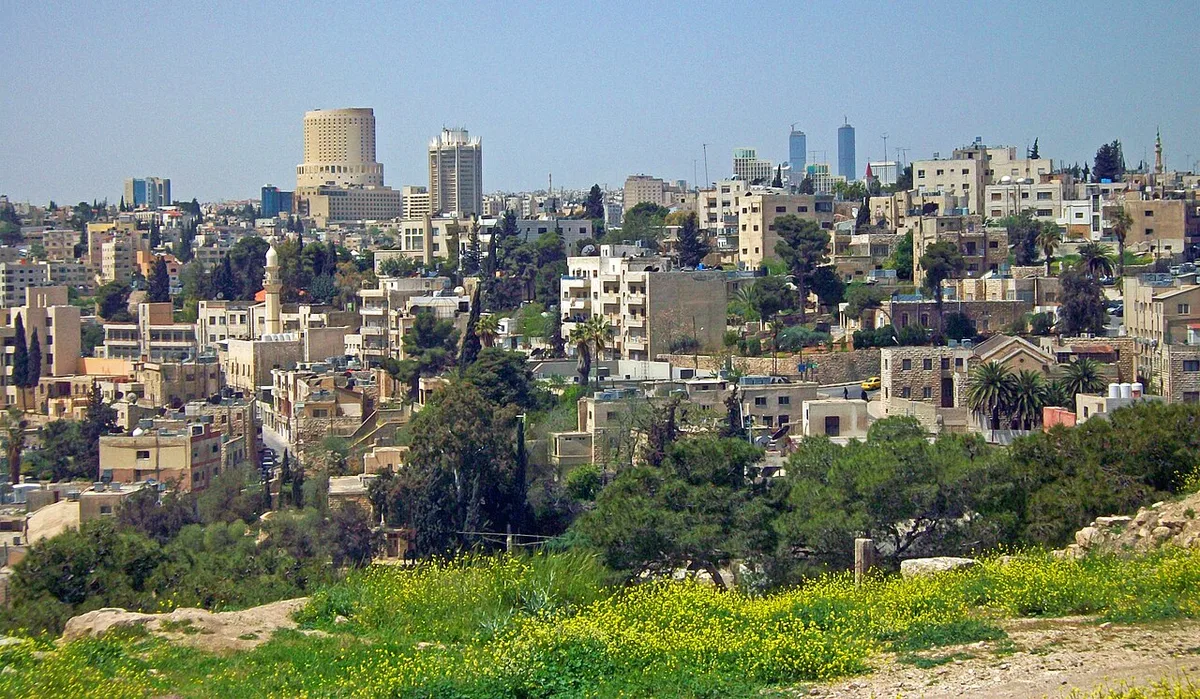
So this guide is organised by experience rather than by sight. Some of the experiences happen at famous addresses – the Citadel at golden hour, the Roman Theatre on a concert night – and some happen nowhere in particular: a staircase, a coffee glass, a market stall selling something you cannot name. They also have a geography, because Amman always has a geography. The doing divides into three territories: the Balad, the downtown valley where the old city eats, shops and bathes; the western hills of Jabal Amman and Jabal al-Weibdeh, where the cafés, galleries and evening streets are; and the day-trip arc beyond the city, where Jerash and Madaba turn into activities rather than excursions if you approach them on foot and hungry.
One piece of logistics shapes everything below. Amman’s weekend is Friday and Saturday, and Friday morning in particular runs quiet – souks half-asleep, offices shut, families at lunch – before the city reopens into its busiest evening of the week. Build your doing around that rhythm rather than against it: markets and the Citadel early in the week, the hammam on a slow afternoon, Rainbow Street and Souk Jara when Friday finally wakes up. And keep one eye on the week as a whole. Travellers folding the capital into a full Jordan route will find the days before and after Amman already sequenced in our Jordan itinerary 7 days – this page stays inside the city, and spends it.
The Best Things to Do in Amman at a Glance
| Experience | Where | Give it |
|---|---|---|
| Walk the Balad with your senses | Downtown souks | Half a day, unscripted |
| A falafel breakfast, standing up | Downtown | One hungry morning |
| A Jordanian cooking class | A home or teaching kitchen | Half a day, booked ahead |
| The kunafa queue | Downtown sweetshops | 30 minutes, any day |
| The hammam ritual | Downtown and hotel bathhouses | 2 unhurried hours |
| The Citadel at golden hour | Jabal al-Qala’a | The last hour of daylight |
| The Roman Theatre, working | Hashemite Plaza | A concert or festival night |
| Climb the staircases | Between the Balad and the hills | An hour, and your calves |
| An evening on Rainbow Street | Jabal Amman | Dusk onwards |
| Galleries and murals | Jabal al-Weibdeh | Half a day |
| Coffee and people-watching | Everywhere | Daily, repeatedly |
| Souk-hunting for one good object | The Balad | A slow morning |
| Souk Jara on a Friday | Off Rainbow Street | Friday, in season |
| A calligraphy workshop | Weibdeh’s cultural spaces | A booked session |
| Jerash, walked end to end | An hour north | A full morning |
| Madaba’s mosaic floor | South-west of the city | Half a day |
Read the table as a rhythm rather than a checklist. The Balad experiences stack into one long downtown day – souks in the morning, kunafa when you flag, the hammam when your feet give out. The hill experiences stack into another: staircases up, galleries and coffee through the afternoon, Rainbow Street at dusk. The two day trips are half-day engines that start early and hand you back to the city by lunch or mid-afternoon, which is exactly when the city starts being good again. Nothing on the list needs a ticket window, a guide with a flag, or a reservation made weeks out – the two exceptions, the cooking class and the calligraphy workshop, are flagged where they appear.
Walk the Balad With All Five Senses
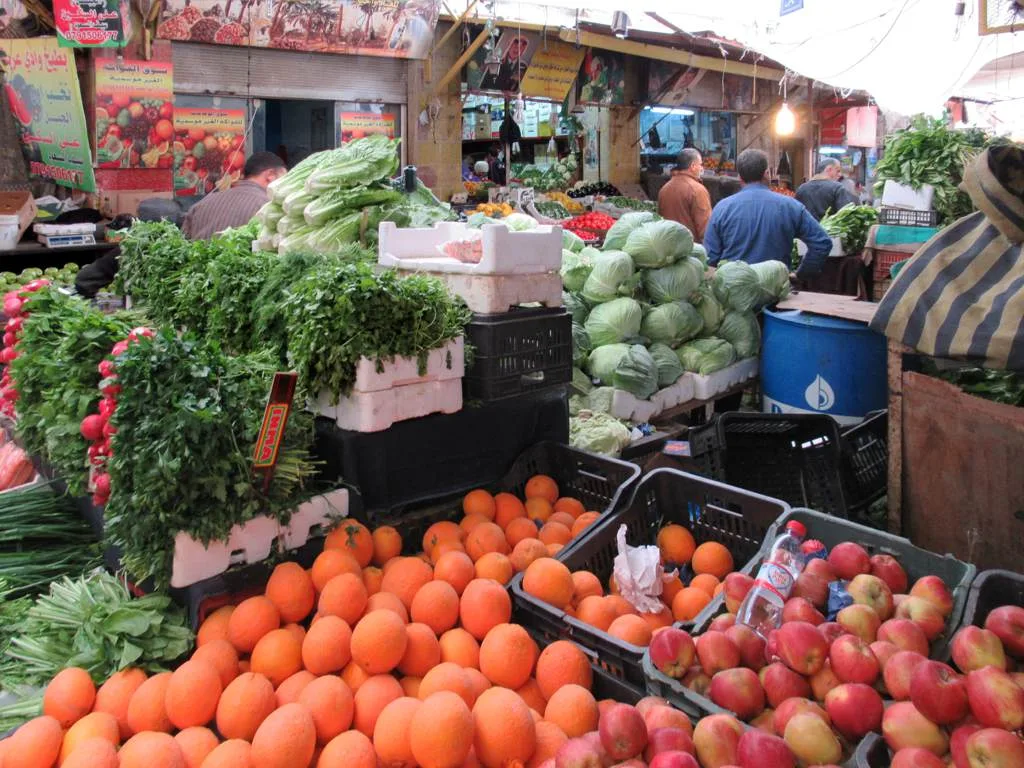
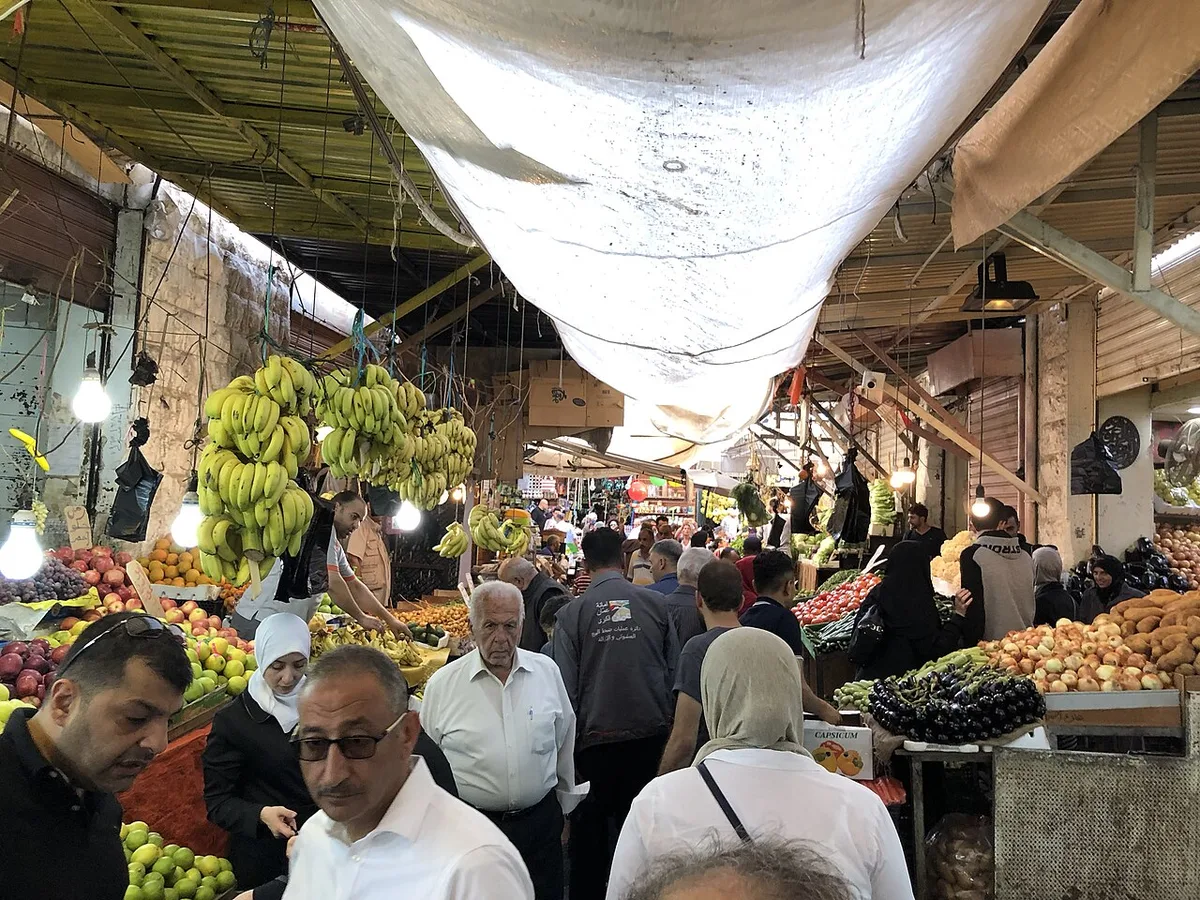
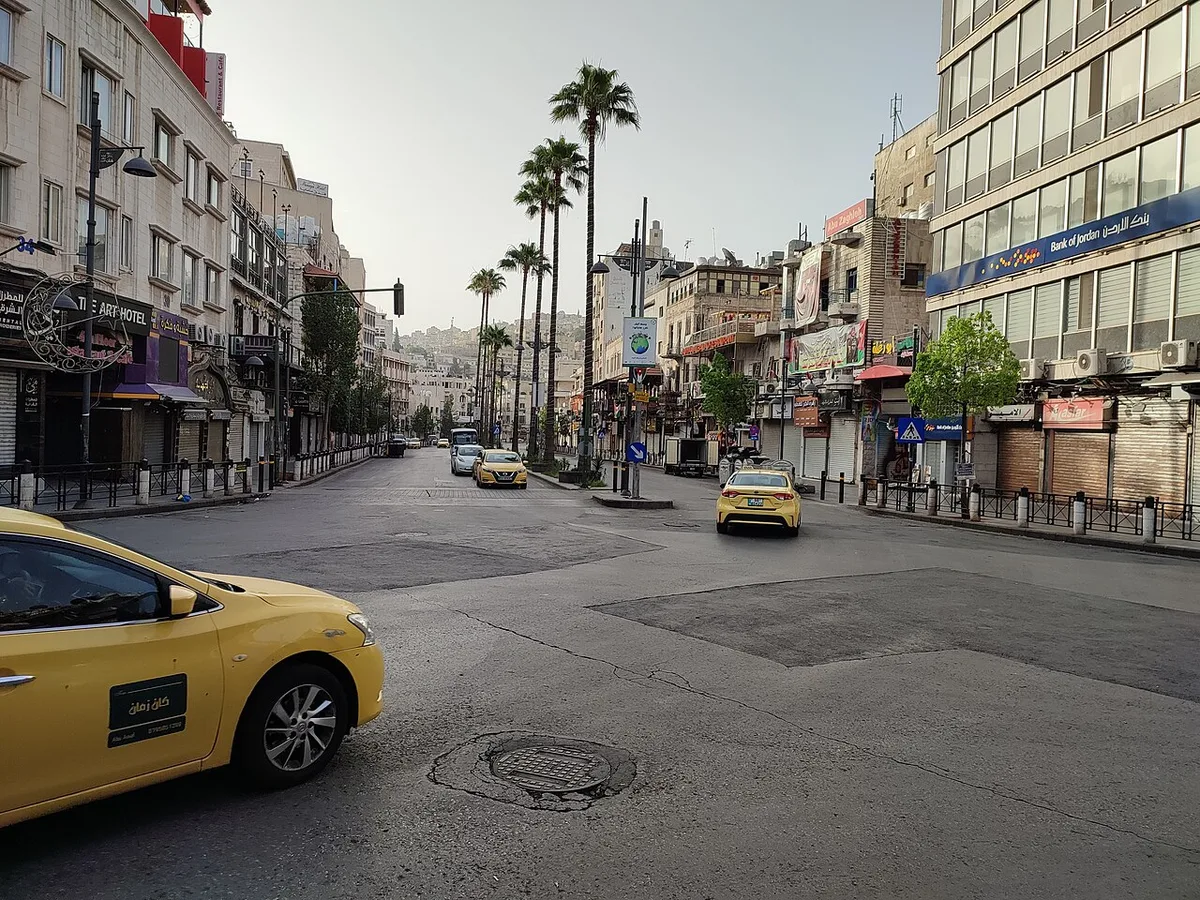
The Balad – Wasat al-Balad, the downtown valley between the hills – is the oldest commercial ground in Amman, and the correct way to experience it is to treat the whole district as one market that happens to have streets running through it. Come down in the morning, when the shutters are rattling up and the produce is still being stacked, and give the visit no itinerary beyond appetite and curiosity. The souks organise themselves by trade, as markets here have always done: a covered vegetable market where the stalls run to green – herbs in bundles, olives in barrels, oranges and apples stacked in ziggurats – a gold souk glittering behind glass, spice and attarine shops selling herbs, incense and remedies by the scoop, cloth merchants, sweetshops, and lanes of everything else.
Walk it as a sequence of small transactions, because that is how the Balad teaches itself. Buy a handful of whatever the fruit stalls are pushing and eat it walking. Take the glass of mint tea or the thimble of cardamom coffee that appears when you linger anywhere longer than two minutes – refusing is possible, accepting is better, and the ritual is the city’s true social network in miniature. Smell the spice shops properly rather than photographing them; the attarine tradition blends perfume, pharmacy and pantry in a way no other shop on earth quite does. Around the Grand Husseini Mosque, the 1924 landmark at the district’s heart, the lanes tighten into bookstalls and tailors and the oldest layer of the city’s shopping, and the call to prayer rolling over the rooftops at midday is the Balad’s own clock announcing itself.
Two pieces of practical craft make the walk better. First, haggle where haggling is the custom – small stalls, unpriced goods, antiques and crafts – with good humour and a willingness to walk away smiling; in the fixed-price shops and on food, simply pay. Second, let yourself get mildly lost. The Balad’s grid bends, its lanes dead-end into courtyards, and every wrong turn delivers a workshop, a shrine or a man roasting coffee in a drum that you would never have found on purpose. The district is compact enough that disorientation is a pleasure rather than a problem: downhill is always the valley floor, and the valley floor always leads back to King Faisal Street and a taxi. This is not sightseeing with shopping attached. It is the city’s central activity, practised by Ammanis every day of their lives, and joining it for a morning teaches more about Jordan than any museum label.
Start the Day With a Falafel Breakfast, Standing Up
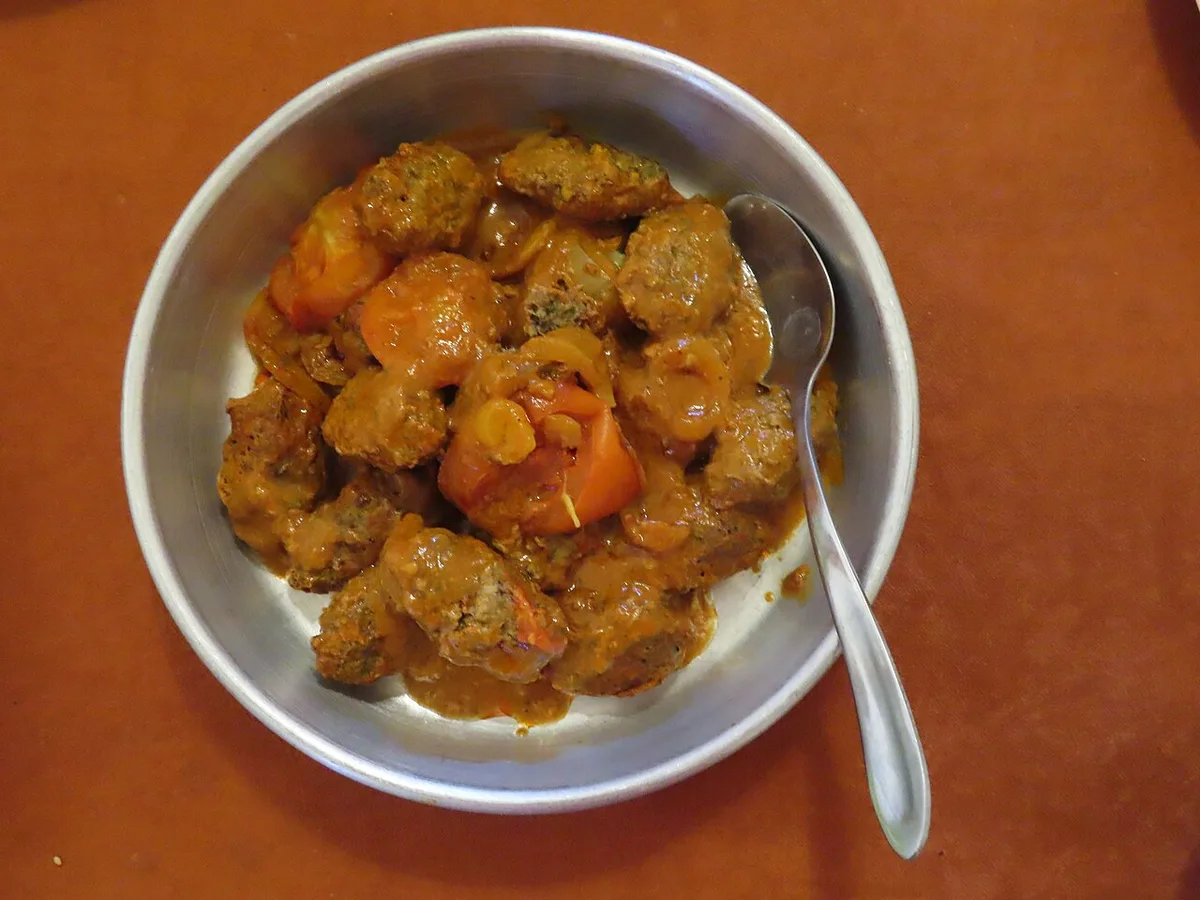
Breakfast is the meal Amman does best, and the downtown version of it is a performance you join rather than a table you book. The classic order is a holy trinity of the Levantine morning: falafel, fried to order from a cauldron of oil that never seems to cool; hummus, whipped smooth and pooled with olive oil; and fuul, fava beans mashed and dressed with lemon, garlic and more oil – all of it scooped with hot flatbread straight from the oven it shares the pavement with. Add a plate of chopped tomato and onion, a pickled chilli or three, and sweet mint tea in a glass, and you have eaten the breakfast that fuels the Balad’s working day, at roughly the speed the Balad eats it.
The experience has a choreography worth learning. At the famous old downtown counters – institutions that have been frying in the same few lanes for decades and are known to every taxi driver in the city – you order, you pay, you receive a paper cone or a tray, and you eat standing at a counter or perched at a formica table among taxi drivers, office workers and grandmothers doing the same. Nobody lingers and nobody minds. The falafel here is the green kind, bright with herbs inside, crisp enough to hear; Jordan argues with its neighbours about whose is best with the seriousness the subject deserves. If a sandwich is more your format, the falafel wrap – rolled in flatbread with tomato, mint, pickles and tahini or yoghurt sauce – is the city’s true handheld food, eaten walking between errands.
Do not let breakfast end at the savoury course, because downtown it rarely does. The same lanes hold the juice stalls, where oranges and pomegranates are pressed to order in season and sugar-cane juice foams into glasses, and the bakeries sending out ka’ak – sesame-crusted bread rings – and trays of pastries. The honest method is grazing: falafel standing up, juice walking, bread under the arm for later. Travellers who sit down to a hotel buffet on their one Amman morning have not eaten badly, exactly. They have simply missed the city’s first and friendliest piece of theatre, the one where the audience eats the props.
Learn to Build a Mansaf at a Jordanian Cooking Class

Of all the experiences in this guide, the cooking class is the one that changes what you notice afterwards – because Jordanian food is a system of hospitality as much as a cuisine, and you only understand the system with your hands in it. Classes run in the city in a few formats: a home kitchen with a host who cooks the way her family cooks, a small teaching studio in one of the older neighbourhoods, or a hotel-arranged session. All of them follow the same satisfying arc – shop or survey the ingredients, cook together for two or three hours, then sit down and eat the lesson. What varies is only the address. Ask at your hotel, look through the cultural listings for Weibdeh and Jabal Amman, and book a day or two ahead; these are small rooms with small numbers, not walk-in attractions.
The dish at the centre is almost always mansaf, and rightly, because mansaf is Jordan’s national dish and its ceremony in edible form. You will learn its grammar properly: lamb simmered until it surrenders; jameed, the fermented, dried yoghurt that gives the sauce its distinctive tang, rehydrated and blended smooth; rice cooked to carry the sauce rather than compete with it; and the whole assembly built on a great round tray over a sheet of shrak, the thin saj-griddled bread that lines the platter and soaks up the best of the juices. Toasted almonds and pine nuts go over the top, chopped parsley after them, and the remaining sauce is poured on at the table like a blessing.
The etiquette is half the lesson. Mansaf was built for a crowd standing or sitting around the tray, traditionally eaten with the right hand alone – a ball of rice and meat formed with the fingers, one-handed, without squeezing – while the left hand stays behind the back as a mark of discipline and respect. Your teacher will demonstrate, will laugh kindly at your first attempts, and will explain the dish’s Bedouin logic: a food designed to honour guests at scale, where the host’s generosity is measured by the mountain of rice and the guest’s respect by eating well. Most classes round out the menu with the supporting cast – a chopped salad, stuffed vegetables, lentil soup, perhaps maqluba, the upside-down rice pot flipped at the table to applause – so you leave with a repertoire rather than a single party trick. You also leave, almost without noticing, having spent four hours in a Jordanian kitchen talking about family, weddings and the price of lamb, which is rather the point.
Queue for Kunafa and Call It Research
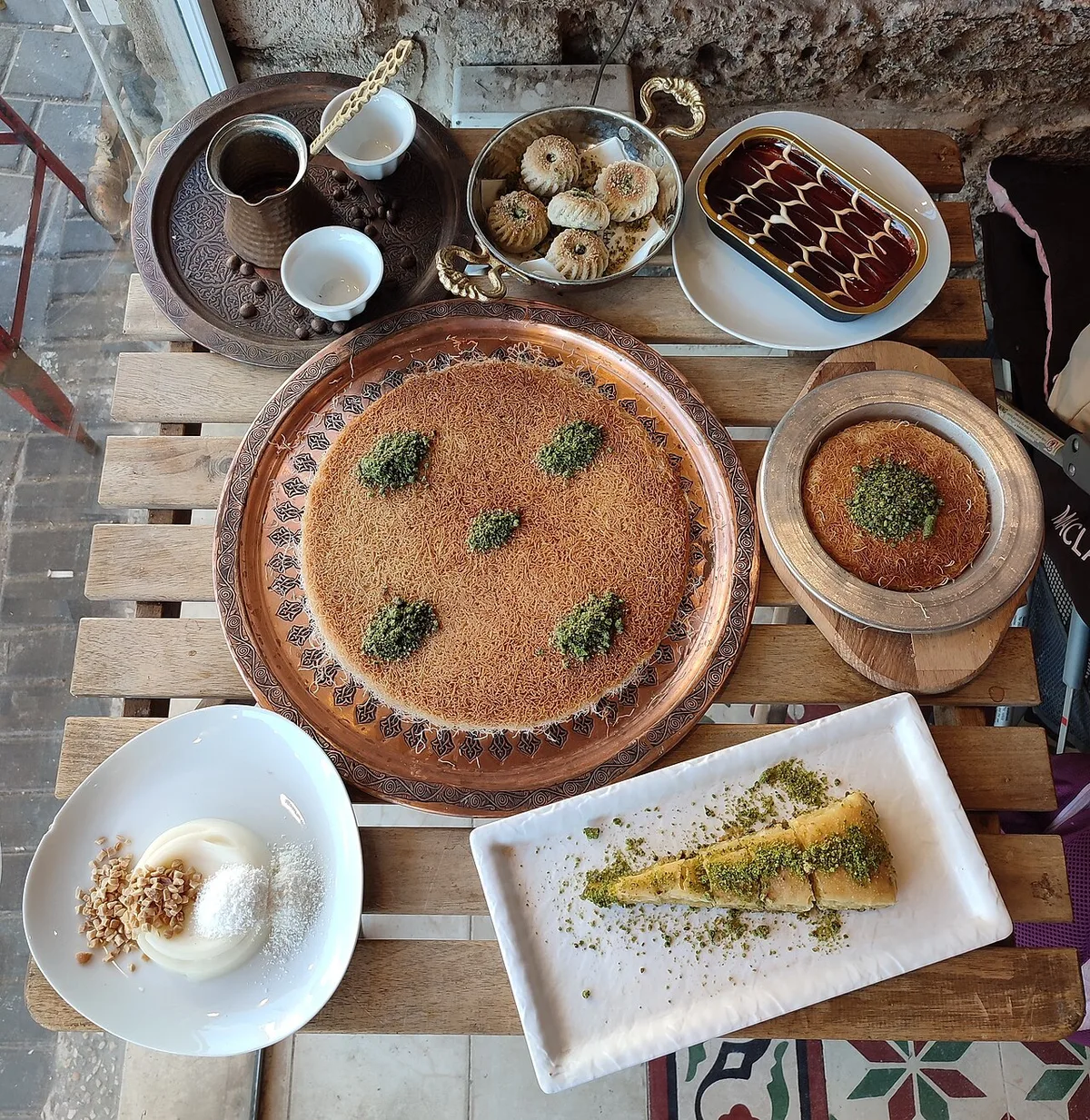
Every city has one food queue that functions as a civic institution, and Amman’s is for kunafa. The dish itself is simple to describe and difficult to forget: shredded or semolina pastry over a layer of soft white cheese, baked in great round trays, drenched in syrup, dusted green with pistachio and cut into squares that stretch as they are lifted. The two classic forms divide the city into loyalists – khishneh, with its crisp shredded top, and na’imeh, smooth and fine under its crumbs – and the correct visitor strategy is to try both and join an argument that has run for generations.
The experience, though, is the queue and the counter. Downtown’s most famous kunafa house has been serving from the same quarter since the 1940s and operates as a masterclass in beautiful efficiency: trays arriving from the ovens in rotation, portions weighed and plated in seconds, customers eating standing at the counter or carrying paper plates into the street to eat among the crowd doing exactly the same. There is no seating theatre, no menu deliberation, and almost no waiting beyond the line itself, which moves like something engineered. Join it, order a portion of each style if your conscience allows, eat the first square while the cheese still pulls, and understand that you are participating in the single most democratic pleasure in Amman – the queue contains everybody, and the kunafa is the same for all of them.
Work the wider sweetshop culture while you are in the lanes, because the Balad’s sweetshops are a category of their own: baklava in trays like tiled roofs, warbat with clotted cream, halawet el-jibn rolled sweet and pale, and boxes being wrapped and ribboned for visits, weddings and hospital calls, because in Jordan sweets are a social language. Buy a small mixed box for later with the seriousness of a person selecting jewellery. And if your trip continues south, keep the comparison honest in your head: our Petra travel guide will feed you well at the end of the road, but nothing at the end of the road is kunafa at the downtown counter with the queue breathing down your neck.
Take the Hammam Ritual Seriously
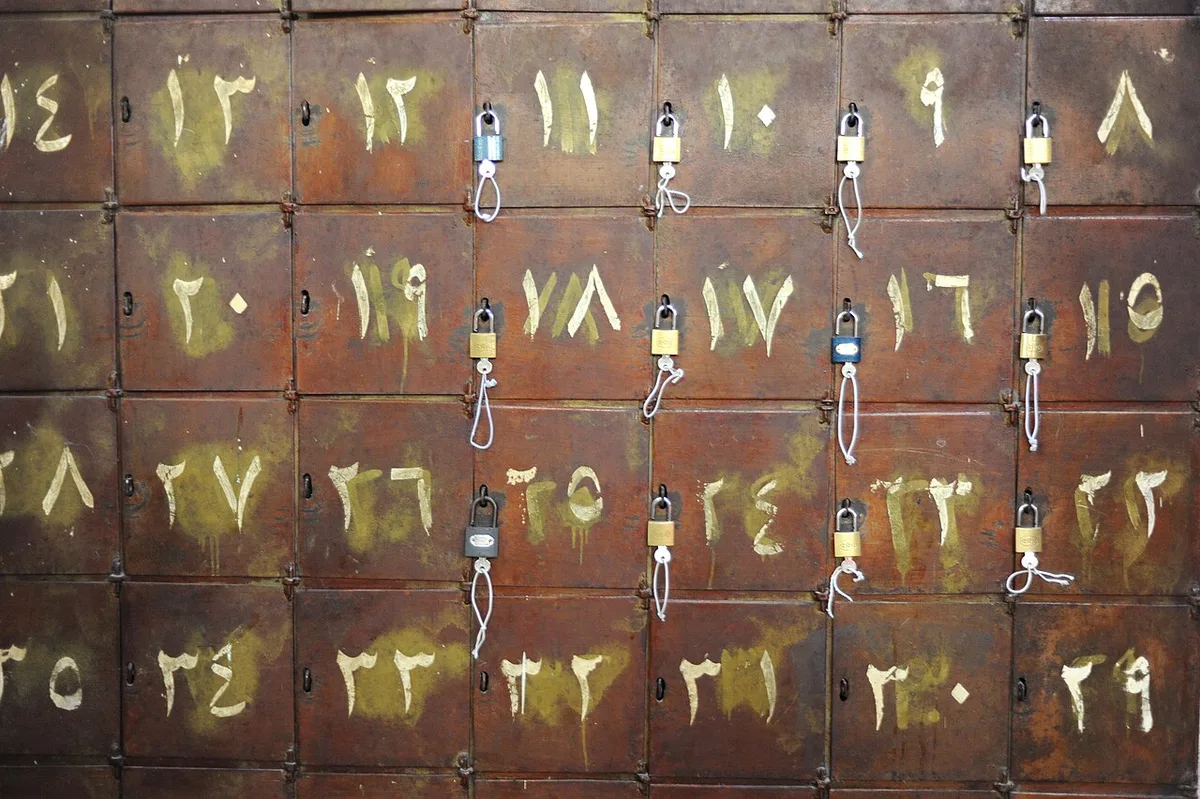
The hammam is the Levant’s oldest wellness technology, and Amman still runs it in both its forms: old-style bathhouses downtown where the ritual has barely changed in a century, and polished spa-hammams inside the larger hotels where the same sequence arrives with softer lighting. Either way, the experience is a sequence, not a soak, and knowing the running order in advance turns confusion into pleasure. You undress in a changing area – numbered lockers, a wrap provided – and move through rooms of rising warmth: a warm room where your body adjusts and your pores begin to think about opening, then the hot room, marble underfoot and steam in the air, where you lie on the heated stone and let the heat do its slow work.
Then comes the part visitors remember. An attendant scrubs you down with a kese, a coarse mitt that rolls away what feels like a second skin, in long firm strokes that leave you pink, incredulous and smoother than you have been since childhood. A soap massage follows in the traditional form – mountains of olive-oil soap foam worked over you like weather – then a sluicing with bowls of water, hot and then cooler, poured over head and shoulders in a rhythm that is half baptism, half percussion. It is vigorous, impersonal and deeply kind, and the correct response is total surrender: this is not a spa treatment to supervise. Afterwards you are wrapped, deposited in the cool room, and given tea, and the city outside the door will seem, for about an hour, to be moving at an unreasonable speed.
The practical craft is simple but worth stating. Hammams run single-sex – either separate establishments, separate spaces or separate hours for men and women – so check the arrangement when you book rather than at the door; women’s sessions at the traditional houses are social occasions in their own right, historically the week’s great gathering. Bring nothing precious, expect to be unclothed among your own sex without ceremony, and do not schedule anything energetic for the hour after: the hammam’s final stage is lassitude, and fighting it is a rookie error. On a week of hills and staircases, place the hammam late – after the Citadel day, before the evening you intend to spend on Rainbow Street – and it will reset your legs and your temper in one admission.
Climb to the Citadel for the Golden Hour

You can visit the Citadel at ten in the morning and see a fine archaeological hill. Visit it in the last hour of daylight and you understand why this outcrop has been sacred, fortified and fought over for three thousand years. The activity here is timing itself: climb Jabal al-Qala’a – taxi up, walk if your calves are feeling heroic – with enough of the afternoon left to walk the plateau’s layers unhurried, then position yourself as the light turns and the whole city performs. The Temple of Hercules columns go amber, then rose, then silhouette; the Umayyad palace dome catches the last of it; and below you the Balad begins to sparkle street by street while the call to prayer rises from a dozen minarets across the valleys in overlapping waves.
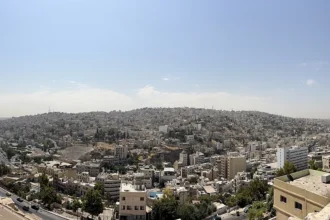
The golden hour also fixes the Citadel’s one daytime weakness, which is exposure: the plateau has little shade and a white glare at noon that flattens both the ruins and the views. Late in the day the same openness becomes the point – a 360-degree observatory over a city of hills, each jabal taking the light in turn, with the giant flag on Raghadan hill standing over the royal quarter and the Roman Theatre in shadow far below. Take the panorama slowly and read the week off it: the downtown valley you ate in, the western hills you will climb tomorrow, the suburbs dissolving into dusk in every direction. First-time visitors should do this on their first evening if the weather allows, because no map orients you like this view at this hour.
Practical notes are few and honest. The site keeps its own hours and the gates close when they close, so arrive with margin rather than at the wire, and confirm the current closing pattern on the day rather than trusting any printed time – including, in spirit, this one. Bring the layer you will want when the sun drops; a hilltop at 800-odd metres cools quickly once the light goes, even in summer. And walk down afterwards if your knees permit: the descent into a Balad lighting up for the evening, past houses and stair-lanes and the smell of a hundred dinners starting, is the golden hour’s natural second act, and it delivers you to exactly the streets where the evening should continue.
Hear the Roman Theatre Working, Not Just Standing

Most visitors meet the Roman Theatre as a daytime monument: six thousand stone seats in three steep tiers, photographed from the plaza and ticked off by lunch. The better experience is to be in those seats when the building does the thing it was built for. The theatre never entirely retired – it hosts concerts, festival performances and national celebrations in the warmer months, part of a cultural calendar that puts music and ceremony back into Roman stone across the country – and a performance night here is one of Amman’s great occasions. The tiers fill with families, the stage lights come up against the scaenae frons, and the acoustics the Romans engineered carry a singer to the top row the way they carried actors when the city was Philadelphia.
Even without a ticketed event, the plaza below gives the theatre a second life after dark. Hashemite Plaza, the broad square at its feet, is downtown’s front lawn in the evening: floodlit stone, children on rented cycles, tea sellers circulating, families promenading in the cool of the night, and the theatre glowing above it all like a piece of stage scenery the city forgot to take down. Come down after dinner, buy a tea or a bag of roasted nuts from a cart, and sit on the plaza’s edge for the simple pleasure of watching Amman enjoy itself in the presence of its oldest building. It costs nothing, it runs every fine evening, and it explains the city’s character faster than any monument tour.
Two honest qualifications belong in this section. The performance calendar is seasonal and episodic – there may be nothing staged in the theatre during your exact week, and no guide can honestly promise otherwise; ask at your hotel and watch the posters around the plaza. And the daytime visit still matters: the folklore and popular-traditions collections in the theatre’s vaulted wings and the climb to the top tier for the view over downtown belong to the daylight hours. Treat the two as separate experiences and do both – the building as museum by day, the building as venue, or at worst as backdrop, by night.
Climb the Staircases Between the Hills
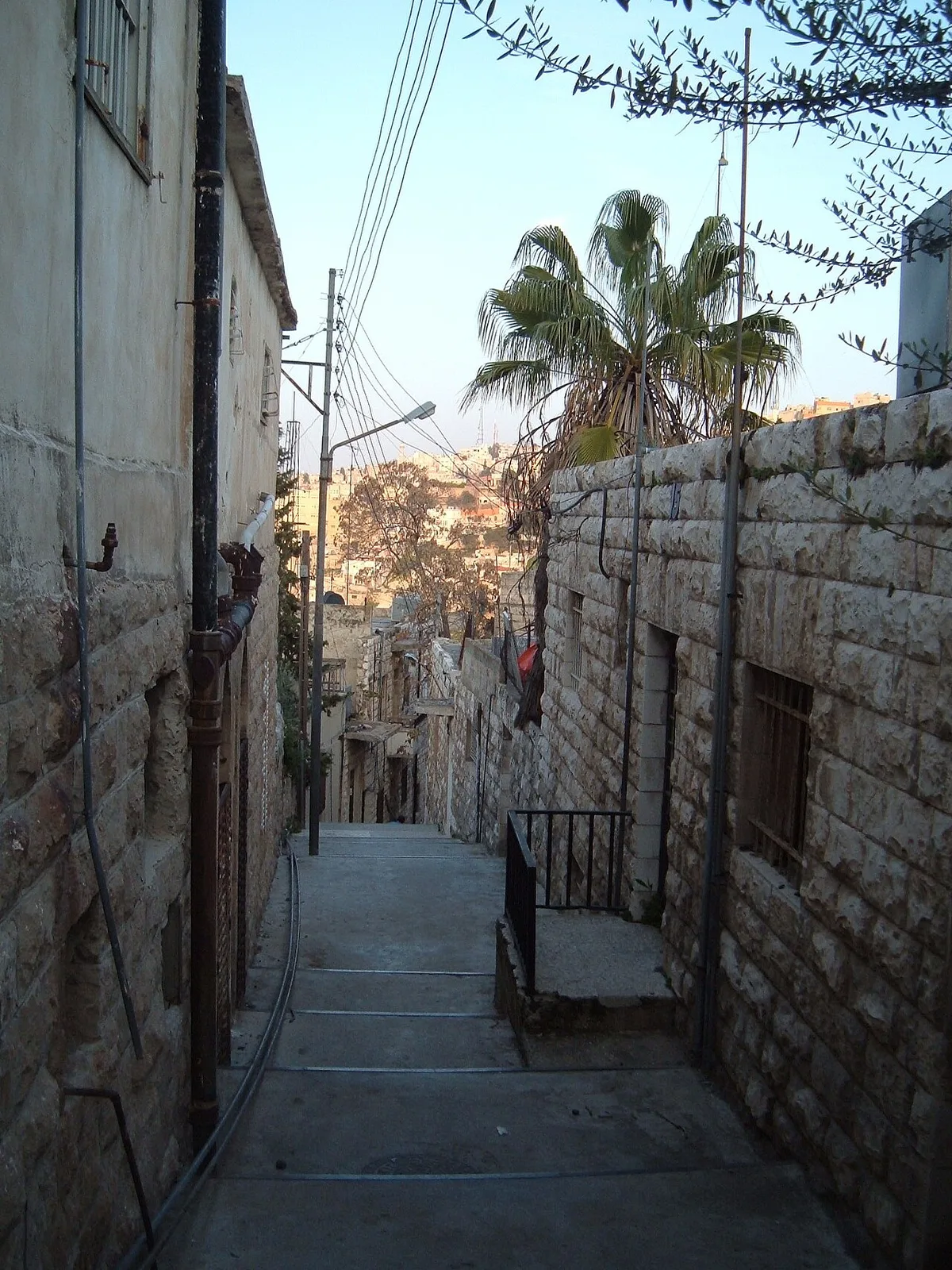
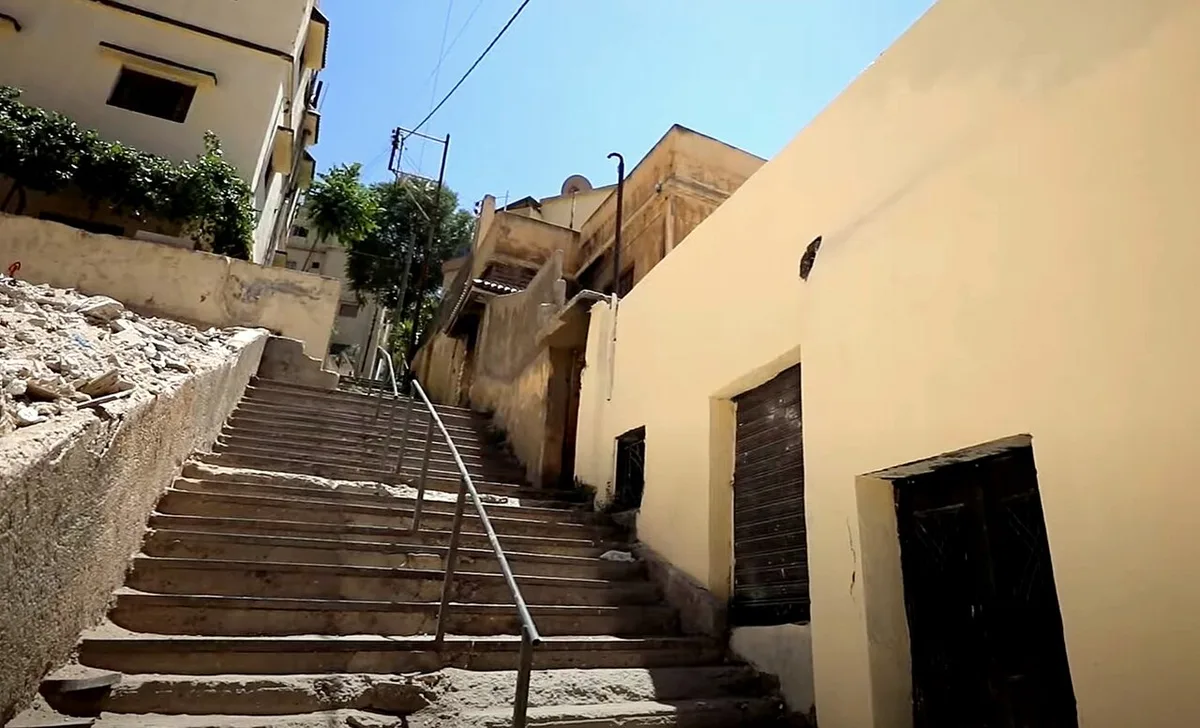
Amman’s open secret is that it has a second street network, made of stairs. The city began on seven hills and has spilled over dozens since, and between the valley floors and the hilltop quarters run hundreds of public staircases – daraj – flights of stone and concrete steps, some a dozen long, some a thigh-burning hundred, threading between houses, under washing lines and past front doors. For the visitor they are the single best way to convert Amman’s punishing geography from obstacle into experience: climb the stairs and you travel the city the way its residents do, at walking pace, through its residential grain, earning every view.
Build a small expedition of it. Start on the Balad floor and climb towards Jabal Amman or Jabal al-Weibdeh, the two hills that face each other across the downtown valley. The famous flights have names and local reputations – some are painted, tiled or planted by the neighbours who live on them, turning a municipal staircase into a street-long artwork; others are pure function, all shade and cats and grandmothers carrying shopping up at a pace that will shame you. Rest at the landings without embarrassment, because the landings are where the city shows itself: a sudden framed view of the Citadel across the valley, a coffee seller who has colonised the turn, a workshop door open on a man making something by hand. You will arrive at the top with the particular satisfaction that no taxi can sell – the hilltop quarter feels different when your legs paid for it.
The honest warnings are the obvious ones. The stairs are steep, uneven in places and unlit in others, so climb them in daylight, in shoes with grip, and treat them as exercise rather than as a shortcut – anyone with unhappy knees should take the taxi up and save the stairs for the descent, which has its own pleasures and most of the same views. In the heat of a summer midday, postpone the whole idea to the morning or the hour before sunset. But do not skip the network altogether: travellers who only ever move between Amman’s hills by car see a city of destinations, while travellers who climb see a city – connected, vertical and alive at every landing.
Spend the Evening on Rainbow Street

Every city has one street where the evening happens, and in Amman it is Rainbow Street, the sloping, stone-house-lined length of Jabal Amman that runs from the First Circle down towards the valley. By day it is handsome and quiet – old mansions, embassies’ neighbours, small shops, a famous old cinema name above a doorway. At dusk it changes state. The cafés fill, the ice-cream and juice counters open their queues, the falafel institution near its top end starts doing the trade of a small factory, and the whole street becomes a slow promenade of families, couples, teenagers and visitors, all performing the essential Ammani evening rite of being out, together, in the cooling air.
The correct technique is no technique: walk it slowly in both directions, eat something small every few hundred metres, and let the street set the menu. A falafel sandwich from the counter everyone queues at. A coffee or a lemon-with-mint – the blended, frothing green lemonade that is Jordan’s gift to hot evenings – on a terrace with a view down the valley. An ice cream eaten walking. The street’s pleasures are deliberately modest and entirely social, and its viewpoint moments – where the slope opens and the Balad’s lights and the Citadel hill appear below – arrive as punctuation rather than purpose. On Friday evenings, after the day’s long family lunch has digested, the promenade reaches its weekly peak and parking becomes a blood sport; come on foot and it is all charm.
Rainbow Street also works as the hinge of an Amman evening, because of what stands around it. Behind the street, the lanes of old Jabal Amman hold some of the city’s oldest houses and quietest corners; below it, a staircase or a short taxi drops you to the Balad’s night markets and the floodlit theatre; and just off its lower reaches, in season, sits the Friday market covered in its own section below. Plan the evening loosely – start at the top at dusk, drift down, and let appetite and noise decide the rest – and you will have done the thing Ammanis themselves do with their favourite street, which is the highest compliment this guide can pay any experience in it.
Gallery-Hop and Mural-Hunt on Jabal al-Weibdeh
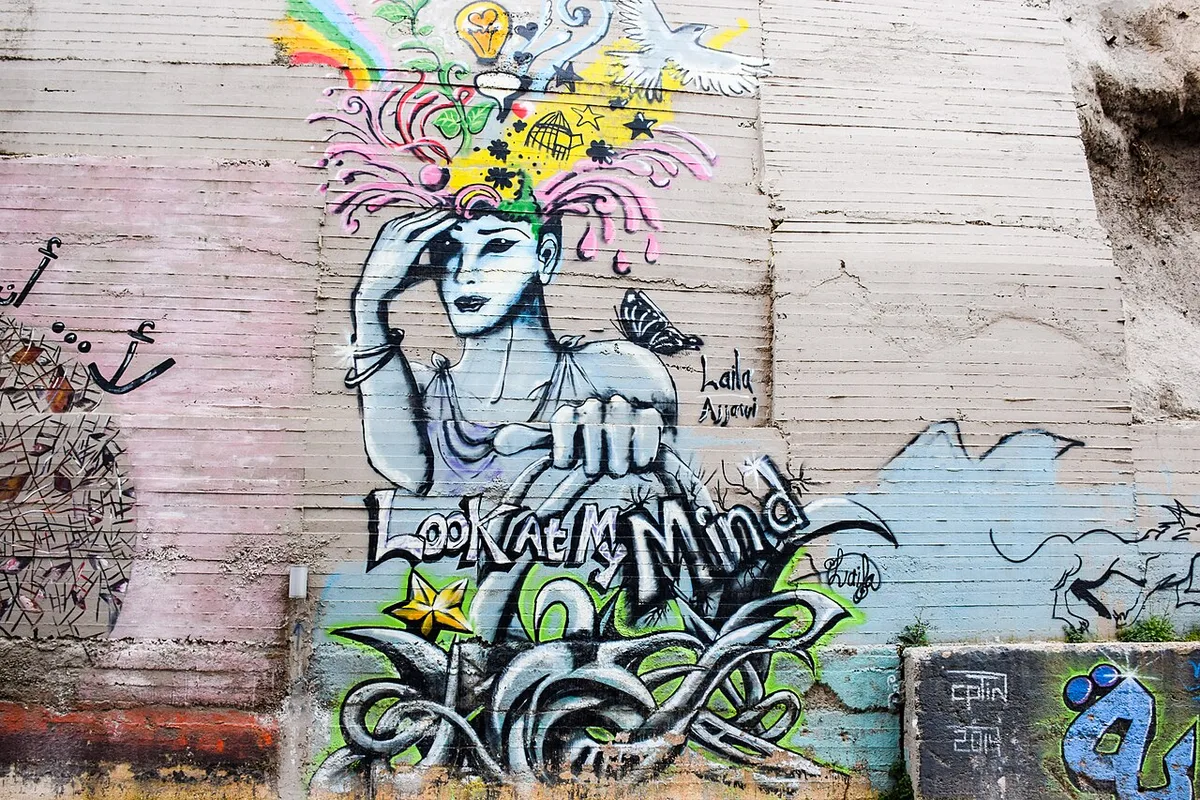
Jabal al-Weibdeh is the hill Amman keeps for its artists, and a half-day spent drifting through it is the city’s best indoor-outdoor experience. The quarter’s bones are 1920s stone houses on quiet, tree-planted lanes around Paris Square, and its institutions are the galleries: the terraced villas of Darat al Funun, where contemporary Arab art fills a complex of old houses above the Balad; the Jordan National Gallery of Fine Arts, the national collection in its pair of buildings with a sculpture garden between; and a scatter of small private galleries, studios and design shops that open, close and move with the energy of a real art scene rather than a museum district. Gallery-hop it the way the quarter invites – no fixed route, a coffee between rooms, and time given to whatever is actually on rather than to a list.
Then take the exhibition outdoors, because Weibdeh and the slopes below it carry Amman’s other gallery: its walls. The city has grown a serious street-art culture over the past decade, and the hunt for murals is a legitimate half-day activity in itself – giant pieces on the gable ends and retaining walls around Ras al-Ain at the hill’s foot, painted staircases, commissioned walls and small sharp pieces in the lanes, made by Jordanian and visiting artists and changing often enough that any printed map is a starting point rather than a promise. Ask in the galleries where the newest work is; the art world here is small, proud of its walls, and happy to direct you. Photograph generously – the walls are public by intention – and treat the hunt as the connective tissue of the afternoon, the thing that turns three gallery visits into one long walk through a neighbourhood thinking out loud about itself.
Weibdeh also rewards the unplanned hour better than any other quarter. Its lanes hold bookshops, a famous old music shop culture, small bakeries and the kind of cafés where an afternoon disappears politely. If the weather turns or energy dips, the quarter simply absorbs you into a garden terrace until you are ready to go on. That absorptive quality is why this section sits in the middle of the guide: the Weibdeh half-day is the rest day’s answer to the Balad’s beautiful assault, and most good Amman itineraries alternate the two – downtown, hill, downtown, hill – until the city starts to feel less like a list and more like a life.
Sit Down for Coffee and Watch the City Go Past

Amman runs on coffee, and sitting down for it – properly, repeatedly, with nowhere to be – is an activity this guide lists without irony. The city’s coffee culture has two registers. The first is qahwa, Arabic coffee, cardamom-scented and bitter, poured from a dallah in small measures into small cups: the coffee of welcome, of business, of condolence and celebration, offered when you arrive anywhere and rude to rush. Learn its one piece of theatre – when you have had enough, shake the empty cup gently from side to side as you hand it back, or the pouring will continue, because in this tradition the host’s honour is in the refilling and the guest’s mercy is in the signal.
The second register is the café itself, and Amman has been a café city for a century. Downtown keeps the old school: venerable coffeehouses around the Balad’s squares where men have played backgammon and argued politics over coffee and tea since the city was young, the dice clicking like a second clock. The hills keep the new: garden cafés in Weibdeh’s villas, terrace cafés on Jabal Amman with the valley spread below, and a growing specialty-coffee scene roasting and pouring with modern seriousness. Tea belongs in the same section and the same afternoon – glasses of it sweet and dark, or green with mint, or fragrant with sage – and the coffee-shop shisha culture, whatever your own habits, is part of the scenery of an Amman evening rather than an obligation of it.
The doing here is deliberately minimal, which is why it needs a section: travellers skim Amman when they treat cafés as refuelling. Treat one instead as the day’s observation post. Take the terrace table at the hour when the light drops, order slowly, and watch the city’s real show – the traffic choreographing itself below, the hills changing colour, the promenade assembling. An hour of skilled idleness in an Amman café will teach you the city’s tempo better than a day of monuments, and it restores the legs for everything else in this guide. Build it in daily, without guilt, the way the city itself does.
Hunt the Souks for One Good Thing to Take Home
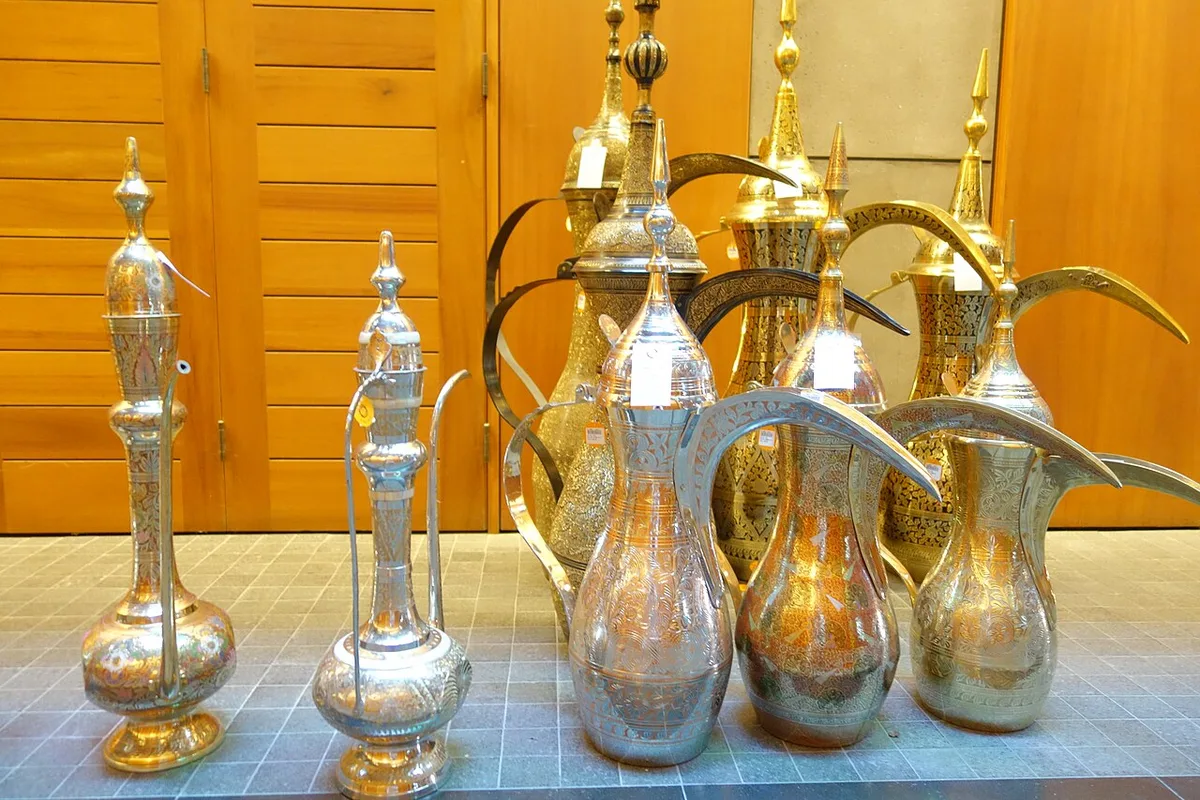
Set yourself a mission in the Balad’s shops, because a mission transforms browsing into one of the downtown’s best hours: find one good thing – one, chosen properly – to take home. The hunting grounds are rich. The gold souk, where the windows run with bridal gold sold by weight and workmanship, teaches you more about Jordanian family economics in ten minutes than a guidebook chapter. The spice and attarine shops will build you a bag of za’atar, sumac and dried limes that will improve your cooking for a year. The antique and craft lanes hold the serious game: old dallah coffee pots in brass and silver, Bedouin jewellery and woven rugs, olive-wood and mother-of-pearl from the region’s workshops, embroidered textiles, and Dead Sea salts and muds at prices that make the airport’s versions a comedy.
Haggle as the custom expects – courteously, at perhaps the pace of a chess game rather than an auction – and remember the rule that keeps it pleasant: never begin for something you do not actually want, because the negotiation is a social contract, not a sport. The shopkeepers of the Balad are among the city’s great talkers, and a serious purchase properly conducted includes tea, opinions about your country, and a short history of the object you are buying, some of which may even be true. That theatre is not overhead on the experience. It is the experience, and the object on your shelf afterwards is merely its souvenir.
Two cautions keep the hunt honest. Antiquities are the hard line: genuinely old archaeological material cannot legally leave Jordan and should not be bought, whatever the story attached – stick to crafts, textiles, jewellery of the decorative kind and food, and you are in the clear and in the tradition. And give the hunt its time in the morning, when the lanes are cool and the shopkeepers fresh, rather than in the evening crush. One good thing, found slowly, with a story you watched being told: that is the Balad’s best souvenir and this guide’s standing instruction.
Browse Souk Jara on a Friday

If your Amman days include a Friday in the warmer half of the year, the calendar hands you one of the city’s most likeable institutions: Souk Jara, the open-air Friday market that sets up under the trees on a side street just off Rainbow Street on Jabal Amman. It is run by the neighbourhood’s residents’ association – Jara is the Jabal Amman Residents Association – and it has the feel of a community that opened its garden gate: rows of stalls selling Jordanian and regional crafts, jewellery, art, books, antiques and home-made food, with café tables, street food and sometimes live music woven between them. The crowd is the point as much as the merchandise – Amman families on their day off, the city’s young creatives selling and buying, visitors being absorbed into both.
Understand what Souk Jara is and is not. It is not a souk in the Balad sense – nothing here is a necessity, nobody is buying the week’s vegetables – and it is all the better for its honesty about being a pleasure market: the place to find the embroidered jacket, the print, the pot of preserves and the painting that the downtown’s wholesale lanes do not sell. Arrive hungry, because the food stalls and the surrounding cafés make a grazing lunch of it, and arrive with the Friday rhythm in mind: the Jordanian weekend means the morning starts late and the market’s energy builds towards the afternoon rather than peaking at dawn. Combine it with Rainbow Street, which is two minutes away and reaches its own Friday best towards evening, and you have the city’s definitive Friday: market, promenade, dinner, lights.
Now the honest flags, because this section needs them. Souk Jara is seasonal – it belongs to the warm months, roughly the late spring to early autumn pattern of outdoor Amman – and it does not run in winter; if your trip falls outside the season, this section is a promise to keep for a return visit rather than a plan. Seasons and arrangements also shift year to year, so confirm it is running on your actual Friday before building the day around it: ask at your hotel, or check the residents’ association’s current announcements when you arrive. Amman rewards the check – half the experiences in this guide are weather, season and Friday-shaped – and a Souk Jara Friday that comes off is the kind of afternoon that ends up representing the whole city in travellers’ stories home.
Try Your Hand at Arabic Calligraphy
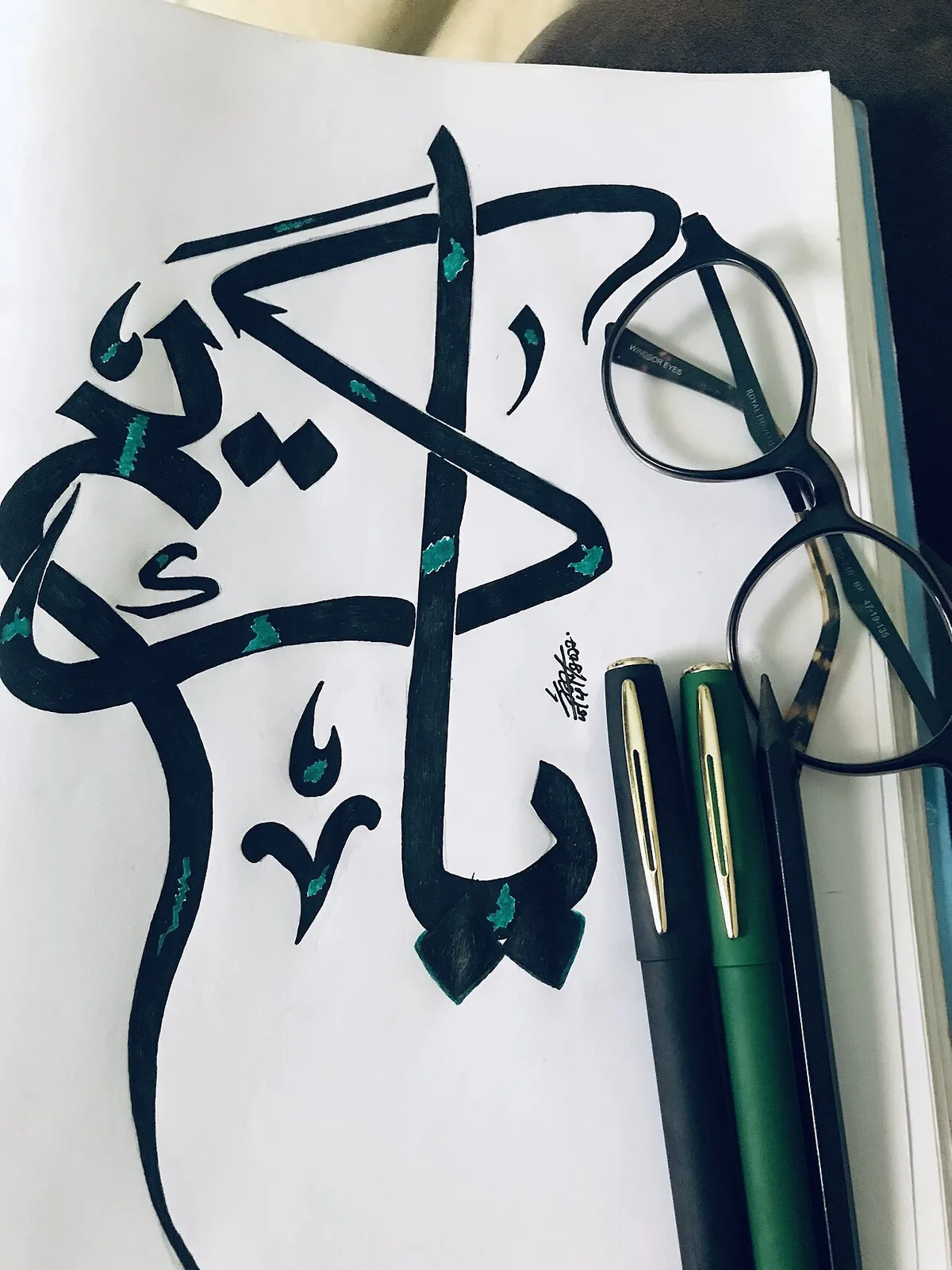
The last of the hands-on experiences is the quietest, and for travellers who like their souvenirs self-made it may be the best: a session learning Arabic calligraphy, the art form that turns the written word itself into the culture’s supreme visual art. Amman’s cultural centres, galleries and art spaces in and around Jabal al-Weibdeh periodically run workshops for beginners – sometimes as one-off sessions advertised through the galleries, sometimes as short courses – and a hotel concierge or a morning spent asking in Weibdeh’s art spaces is the way to find one running during your stay. This guide names no specific school, deliberately: schedules change too fast for print, and the discovery is part of the pleasure.
What you will learn in a first session is how deep the water is. The instrument is a qalam, a reed pen cut at an angle, and the ink, the posture and the breathing all have rules older than most countries. Letters in the classical styles are built on a geometry of dots and measured strokes; a single alif is a study, a full word an architecture. Your teacher will set you the traditional exercise – the mashq, line after line of repeated letters and joins – and within the hour two things will happen: your hand will ache in muscles you did not know it had, and the calligraphy you have been seeing all week will unlock. The carved inscriptions on the Citadel’s stones, the flowing bands on mosque walls, the shop signs and tombstones and book covers of the whole trip will stop being decoration and become text, written by hands trained exactly as yours is being trained.
Set expectations honestly. You will not leave as a calligrapher; you will leave with a practice sheet covered in increasingly confident letters, a name – yours – written properly by the teacher’s hand as the session’s souvenir, and an eye permanently retrained. Prices, schedules and languages of instruction vary by provider and season, and this guide prints none of them for the same reason it prints no exhibition dates: they would expire. Book through your hotel or the Weibdeh galleries a few days ahead, treat the session as you would the cooking class – small, personal, arranged rather than walked into – and count it among the experiences that change the traveller rather than merely filling the day.
Take the Day Trip to Jerash and Walk It End to End
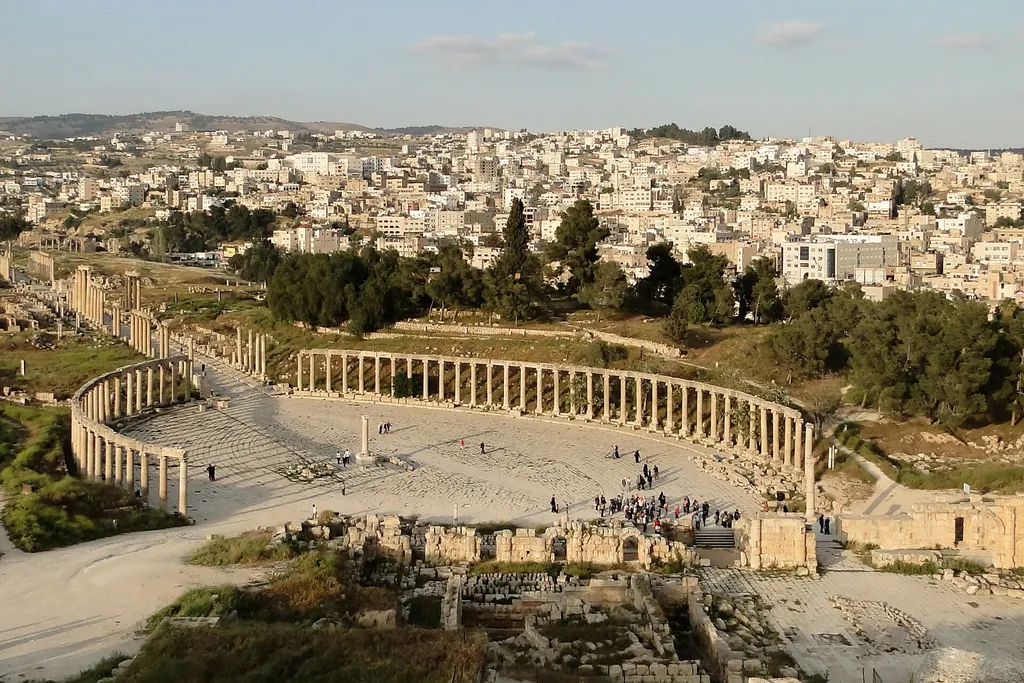
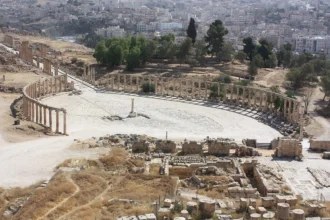
Two of the best things to do from Amman are not in Amman, and they earn their places in this guide only when they are treated as activities rather than as excursions. The first is Jerash, the Roman city an hour north, and the activity is walking it – the whole of it, at ground level, as its citizens did. Gerasa was a Decapolis city of the Roman east, and it survives at a completeness that lets you do something rarely possible at a ruin: enter by the monumental arch, pass the hippodrome, and then walk the Cardo, the colonnaded main street, from the Oval Plaza’s ring of columns to the north gate, reading the city off its paving as you go – chariot ruts in the stone, drains and shopfronts under the colonnades, the nymphaeum’s carved fountain front, temples rising on their podiums at the street’s high points.
Walk it in the morning, because Jerash is an exposed hillside of pale stone and the afternoon punishes it; two to three hours is the honest measure of the full street walked properly, with the theatres climbed and the Temple of Artemis given its pause. Go early and the city is cool, quiet and almost private; by midday the groups arrive in convoy and the spell thins. The mechanics are simple – service taxis, buses and drivers all run the road north, and travellers folding the trip into the national route will find Jerash already placed as a morning in our Jordan itinerary 7 days – but the discipline is in the timing and the completeness. Half of Jerash is the commonest day trip in Jordan. All of Jerash, on foot, before the heat, is one of its best experiences, and it is back in Amman by lunch with the whole afternoon of this list still available.
Take the Day Trip to Madaba and Read the Floor
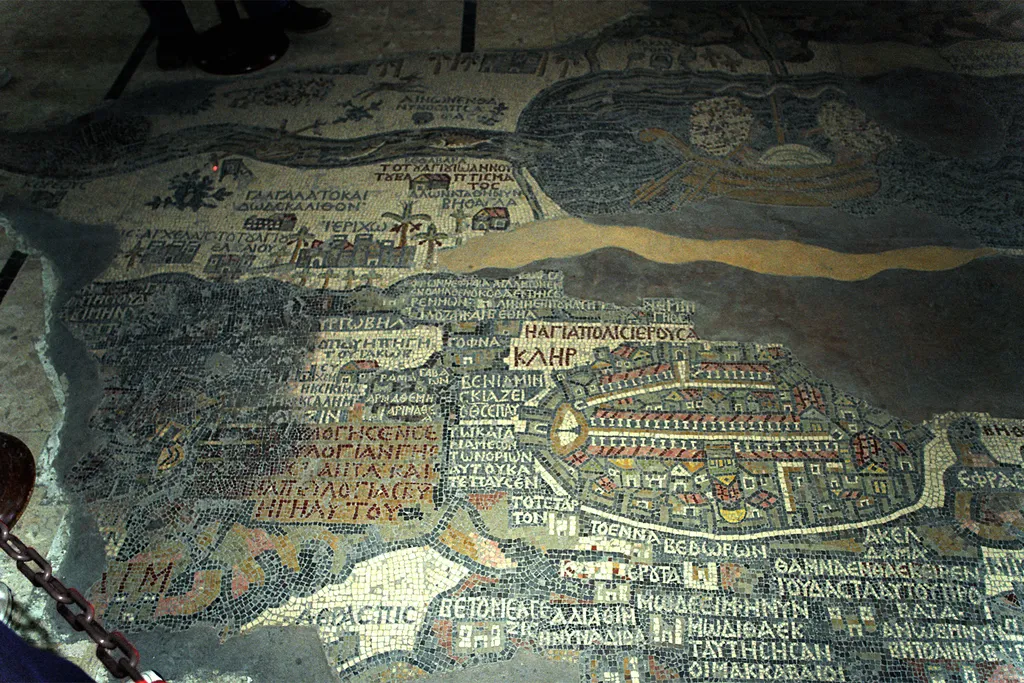
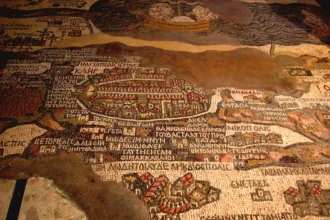
The second day trip is closer and quieter: Madaba, the market town south-west of the capital, where the activity is reading. In the floor of St George’s Church lies the Madaba Map, a sixth-century mosaic that is the oldest surviving map of the Holy Land – Jerusalem at its centre with its walls and colonnaded street drawn in tiny cubes of stone, the Dead Sea with its fish turning away from the Jordan’s fresh water, towns and villages lettered in Greek across a floor you stand on to study. It was made by craftsmen who had walked the land it pictures, and the right way to visit is slowly, in a circle, finding places you have been and places you are going: the map turns the rest of your Jordan trip into a treasure hunt laid in stone fourteen centuries before you arrived.
Madaba then extends the experience in its own direction, because this is a mosaic town still practising the trade. Church floors across the town carry Byzantine and Umayyad mosaics of the first rank, and workshops in Madaba still cut and set stone the ancient way – visitors can watch pieces being made and, in the workshops that offer it, sit down and set a small mosaic of their own under instruction, which is the day trip’s version of the cooking class: an hour with your hands inside the local craft, and a small heavy souvenir that survives the flight home. Give the pair – church and town – a half-day, morning for preference, and note the combination the geography offers: Mount Nebo, with its own mosaics and its valley view, stands ten minutes beyond the town, and the three together make the classic half-day arc south-west of the capital. Return to Amman by mid-afternoon, when the Balad is waking into its evening, and the day has spent itself exactly right.
The Honest Downsides
Amman rewards doing, but it taxes it, and the taxes should be stated plainly. The first is the city’s body itself: the hills that make the views make every walking plan a negotiation, distances lie on the map, and an itinerary of experiences built without respect for the gradients will be abandoned by its second afternoon. Cluster by territory, taxi between clusters, and climb deliberately rather than constantly. The second tax is traffic: Amman’s roads seize at the predictable hours, the downtown can gridlock on a Thursday evening or a Friday afternoon, and any plan with a fixed clock on it – a class, a workshop, a departure – needs margin built around the jam rather than hope.
Then the honest small print of the experiences themselves. The hammam’s pleasures are single-sex and unhurried by design, which takes arrangement and cannot be squeezed. The cooking class and calligraphy workshop are small-room experiences that run when they are booked, not when you wander past. Souk Jara is a warm-season Friday gift and simply does not exist for a winter trip. The Roman Theatre’s stage may be dark for your whole week. The Balad on a Friday morning is a shadow of itself, and in high summer the downtown at noon is an endurance event that even the souks’ shade only partially redeems. None of this is a reason to skip the city or the list. It is the reason the list is organised by rhythm rather than by ranking: do each thing at the hour and in the season the city built for it, keep one taxi app and a little patience in reserve for the hours when the city simply stops moving, and Amman’s taxes become the price of a place that has not been smoothed into a theme park – which is, in the end, why its experiences are worth having.
Frequently Asked Questions
How many days do the best things to do in amman need? Two full days cover the list’s core honestly – one downtown day of souks, breakfast, kunafa and the hammam, one hill day of staircases, galleries, coffee and Rainbow Street – and a third day takes one of the two day trips. Add the second day trip and the Citadel evening and four days pass without a spare hour. Amman also works as the bookends of a Jordan route, a day at each end, if the experiences are clustered tightly.
What is the single food experience not to miss? The kunafa queue, for the theatre and the taste together – with the falafel breakfast a close second and the mansaf class the best deep version. If you eat only one sweet thing and one fried thing in the capital, make it those two, downtown, standing up, among the crowd doing the same.
Can visitors use a traditional hammam? Yes – the bathhouses welcome visitors, and the ritual is the same for everyone. The arrangements to check are the single-sex ones: separate houses, spaces or hours for men and women, confirmed when you book. Expect undressing among your own sex, a wrap provided, and a scrub that does not negotiate. Hotel spa-hammams run the same sequence with softer edges if the traditional house sounds daunting.
Is Amman walkable for these experiences? Inside each cluster, yes and gloriously – the Balad is a walking district and Weibdeh a walking quarter. Between clusters, the hills vote no: use the staircases when you want the climb as an experience, and taxis for everything else, without guilt. The city was built in layers, and travelling between its layers by car is what its own residents do.
When does Souk Jara run, and what if it is not on? On Fridays, in the warm season – roughly late spring to early autumn, with the year’s exact run confirmed only close to the time, so check on arrival. Outside the season, give the Friday to its other shape: a slow morning, a long family-hour lunch in the Balad or on Jabal Amman, and Rainbow Street at dusk, when the promenade carries the day on its own.
Do the cooking classes and workshops need booking ahead? In practice, yes – they are small, personal and arranged rather than continuous. A day or two ahead through your hotel, a tour desk or the Weibdeh galleries is normally enough, and the same enquiry will confirm what is running in your week. Treat them like the hammam’s women’s hours: simple to arrange, impossible to improvise at the door.
The Short Version

If the best things to do in amman have to fit in one breath, they are these. Give the Balad a morning and your senses free rein in it; eat falafel standing up and kunafa in the queue; learn mansaf from someone’s grandmother’s tradition and the hammam’s scrub from an attendant who means it; climb a staircase, a gallery hill and finally the Citadel as the light turns; and let Rainbow Street take the evening. Take Jerash on foot in the morning and Madaba’s floor-map at a reader’s pace, and you have spent Amman the way Amman spends itself – actively, hungrily and uphill. For the road after the capital, the rose-red city waits at the end of our Petra travel guide, and it rewards exactly the same approach: arrive early, walk everything, and eat what the place itself eats.