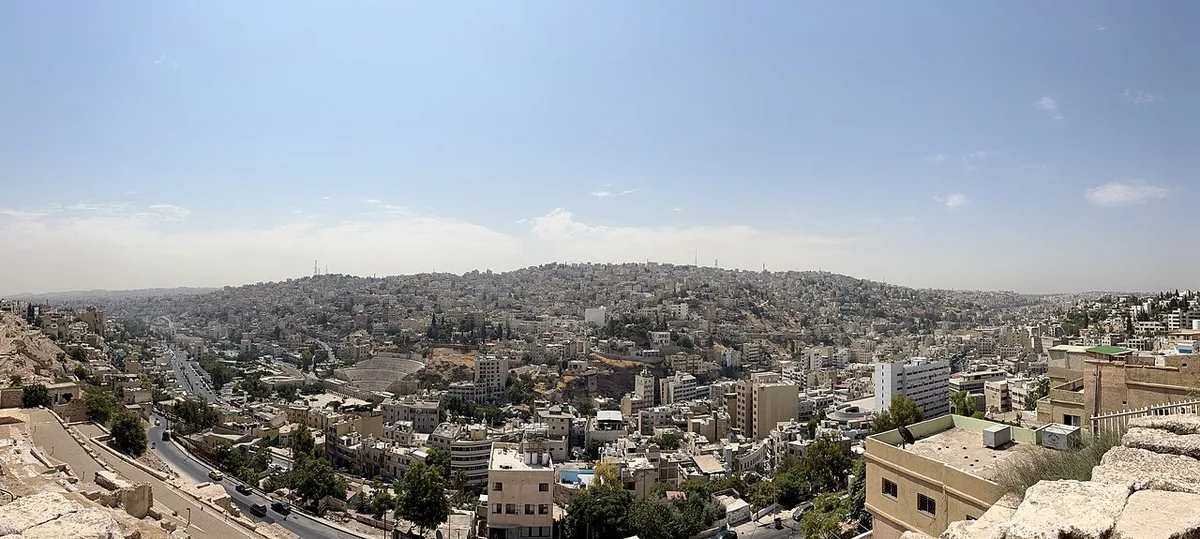
Most capital cities hand you their sights in a neat row. Amman hands you a workout. The best places to visit in amman are spread across a city of hills – a Roman hilltop fortress above the downtown valley, a 6,000-seat theatre cut into the slope below it, markets that have run for a century in the flat streets between, and then, up and out in every direction, blue-domed mosques, 1920s art villas, a royal garage full of classic cars and a cave at the city’s edge that two religions claim. There is no single Amman day that walks them all, and any list that pretends otherwise is lying about the geography. This one is organised the way the city actually works – in clusters you can walk, joined by short taxi hops you should not feel guilty about.
Start with the honest shape of the list. Sixteen places follow, and they are not equal. Two of them – the Citadel and the Roman Theatre – are the Amman that has existed for two thousand years, and they come first because everything else is commentary on them. A second group is the living city rather than the ancient one: the Balad’s souks, Rainbow Street, the art hill of Jabal al-Weibdeh. A third is the museums, which in Amman means one world-class archaeological collection, one royal car museum that is better than it has any right to be, and one small museum on the Citadel hill. And a fourth group is the edges – a checkered mosque on the highest hill, a brand-new boulevard of glass, and a cave ten kilometres out that belongs on the list because it tests whether your interest in this city runs deeper than its postcards.
A word on how this list was built. Every place here is a named, findable, visitable sight – not a neighbourhood mood or a restaurant with a view. Where a famous name is weaker than its reputation, the entry says so; where a place is usually skipped and should not be, that is said too, and a closing section collects the trade-offs – the climbs, the closures, the sights that photograph better than they visit. Travellers building a full Jordan route will find the capital’s opening day already laid out in our Jordan itinerary 7 days, and most readers will end that route where almost everyone ends it, at the rose-red city covered in our Petra travel guide. This page stays inside the capital. Sixteen places, in the order the hills suggest.
The Best Places to Visit in Amman at a Glance
| Place | What it is | Time it deserves |
|---|---|---|
| Amman Citadel | The hilltop acropolis – Roman temple, Umayyad palace, Byzantine church, the city’s best panorama | Half a day |
| Roman Theatre | A 6,000-seat 2nd-century theatre cut into the hillside, still used for performances | 1 to 2 hours |
| The Odeon | The theatre’s small neighbour – a 2nd-century hall for music and readings | 30 minutes, with the theatre |
| The Nymphaeum | The great Roman public fountain of Philadelphia, in the downtown streets | 30 minutes |
| The Jordan Museum | The national collection – Dead Sea Scrolls material and the Ain Ghazal statues | Half a day |
| The Balad Souks | Downtown’s working markets – sugar, gold, spices, vegetables – around the Grand Husseini Mosque | Half a day of wandering |
| The Duke’s Diwan | A 1924 stone house on King Faisal Street, Amman’s unofficial front room | 1 hour |
| Rainbow Street | Jabal Amman’s cafe street – views, mansions and the city’s evening promenade | An evening |
| Darat al Funun | Contemporary Arab art in three 1920s villas above the Balad | 2 hours |
| Jabal al-Weibdeh | The gallery hill – Paris Square, small galleries, quiet cafes | Half a day, with Darat al Funun |
| Jordan National Gallery of Fine Arts | The kingdom’s fine-art collection, in two buildings on the Weibdeh edge | 1 to 2 hours |
| King Abdullah I Mosque | The blue-domed mosque of 1989, the one that welcomes visitors inside | 1 hour |
| Abu Darwish Mosque | The black-and-white checkered mosque on Amman’s highest hill | 30 minutes, exterior and view |
| Royal Automobile Museum | The late King Hussein’s cars and motorcycles, in King Hussein Park | 2 hours |
| The Boulevard at Abdali | The new downtown – a pedestrian boulevard of towers, cafes and malls | An evening |
| Cave of the Seven Sleepers | The cave of the Quranic and Christian legend, at al-Raqim south-east of the city | Half a day with the drive |
Two clustering rules make the list usable. Downtown is one walk – Citadel above, theatre, Odeon, Nymphaeum, souks and the Duke’s Diwan all stand within about a square kilometre, and a fit visitor can thread them in a single long day. The art hills are the second walk – Darat al Funun, Weibdeh and the National Gallery on or beside one hill, Rainbow Street a short hop across the valley. Everything else is a deliberate excursion, best taken one or two to a half-day rather than bolted onto the downtown marathon. The sections below follow that order, so the article and the city stay in step.
It is also worth saying what did not make the list, because Amman lists usually pad. The Raghadan Flagpole is a landmark you see rather than a place you visit. The western-suburb malls are fine malls, and interchangeable with malls anywhere. And the Roman ruins at Iraq al-Amir sit far enough west to belong to a day-trip article. What follows is the city’s real hand – sixteen places that each answer the only question a list like this has to answer: why this place, in this city, is worth your limited hours.
Amman Citadel – The Hill Where Every Empire Left a Building
The Citadel is where Amman began, and standing on it is the fastest education the city offers. The hill – Jabal al-Qal’a – has been settled continuously since the Bronze Age, and the Department of Antiquities’ own summary of the site reads like a table of contents for the region’s history: an Ammonite capital called Rabbath Ammon in the Iron Age, a Hellenistic city renamed Philadelphia, a Decapolis city under Rome, a Byzantine town with churches, and then an Umayyad seat of government, all stacked on one L-shaped plateau above the downtown. Most archaeological sites give you one civilisation done well. The Citadel gives you six in a single walk, at the price of some assembly required from your imagination.
That assembly is the honest caveat to put up front. The Citadel is a plateau of ruins in varying states – standing columns here, foundation lines there, a restored dome, a giant cistern – spread across open ground with limited shade and interpretation that rewards visitors who read as they walk. It is not Petra, and travellers expecting a single overwhelming monument sometimes leave underwhelmed by the scatter. They have it backwards. The Citadel’s subject is not any one building; it is the layering itself, and the view. From the plateau’s edges the whole modern city lies below in every direction – the theatre in its valley, the flagpole, the hills of houses running to the horizon – and that panorama is the single best orientation lesson in Jordan. Come here first, before the downtown, and the city below stops being a maze.
Give the site the time its size asks for. The plateau is bigger than it looks from below, the walking is on open, sometimes rough ground, and the three great set-pieces – the Temple of Hercules, the Umayyad Palace and the Byzantine church – stand in different corners of it. The small archaeological museum on the hill holds finds from across Jordan, though the national collection’s centre of gravity has moved downhill to the Jordan Museum. A half day is the right allowance: an hour for the temple and the views, an hour for the palace complex and church, and time for the museum and the long look back over the city before you descend.
The Temple of Hercules and the Hand of a Giant
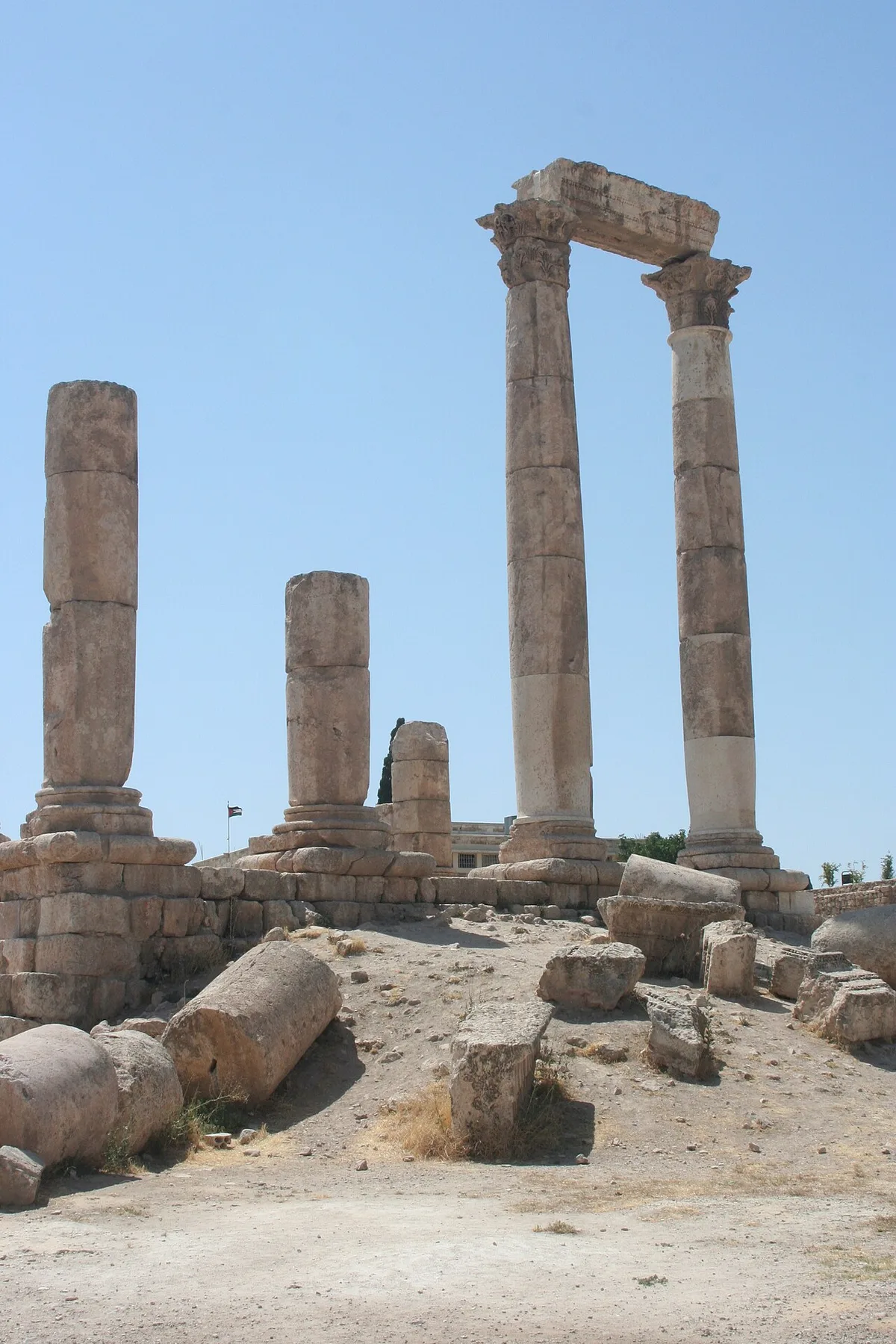
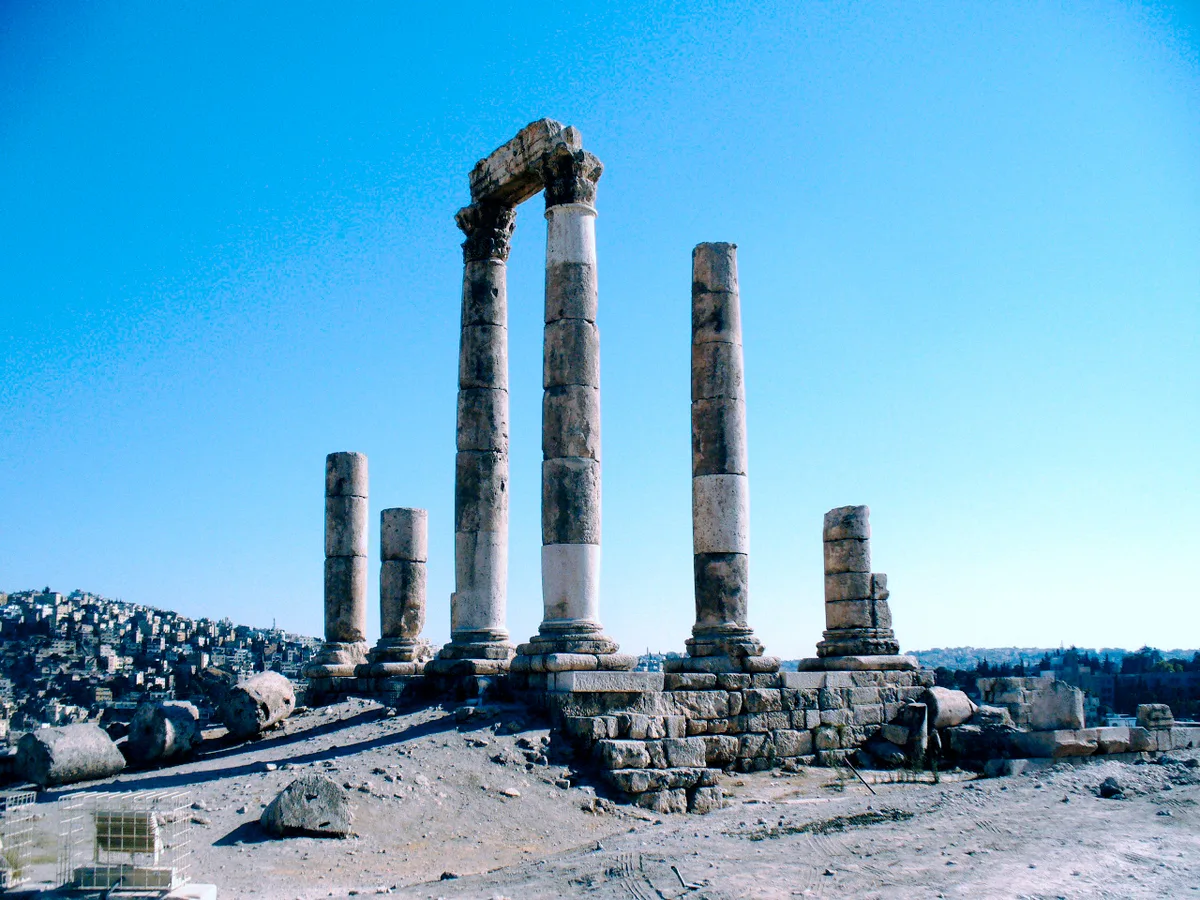
The Temple of Hercules is the Citadel’s postcard and its oldest great statement in stone. An inscription dates its building to AD 162-166, in the governorship of Geminius Marcianus, when Philadelphia was a prosperous Roman city and its acropolis temple was meant to be seen from every street below. What survives is a podium, a scatter of fallen drums, and a small group of re-erected columns that carry the eye exactly as the builders intended – the temple is unfinished in places and ruined in others, and yet its silhouette still organises the whole hill. The columns are the first thing you see from downtown and the last thing the light leaves on the plateau, which is more or less the effect a Roman acropolis was for.
The temple’s strangest survival lies in the grass nearby – three enormous fingers and an elbow, the remains of a colossal statue, most likely of Hercules himself, that once stood at the temple. The fragments give the building a scale no column can: the statue is estimated to have stood around twelve metres tall, which would have made its hand alone larger than a person. Stand beside the fingers and the temple stops being an elegant ruin and becomes what it was – a piece of imperial theatre in stone, pitched at a size meant to be read from the valley floor. It is the single most photographed detail on the hill, and unusually for such things, the photograph understates it.
There is a small discipline to enjoying the temple well. It stands near the plateau’s southern edge, and the ground around it gives the classic layered view – temple in the foreground, the Roman Theatre in its valley below, the houses of Jabal al-Joufah beyond. That view is better in the morning, when the light comes from behind the Citadel and the downtown is clear, and better still in the last hour of the day. Midday flattens everything and cooks the plateau. The temple has survived worse than a timetable, but your visit does not have to.
The Umayyad Palace, the Byzantine Church and the Museum on the Hill
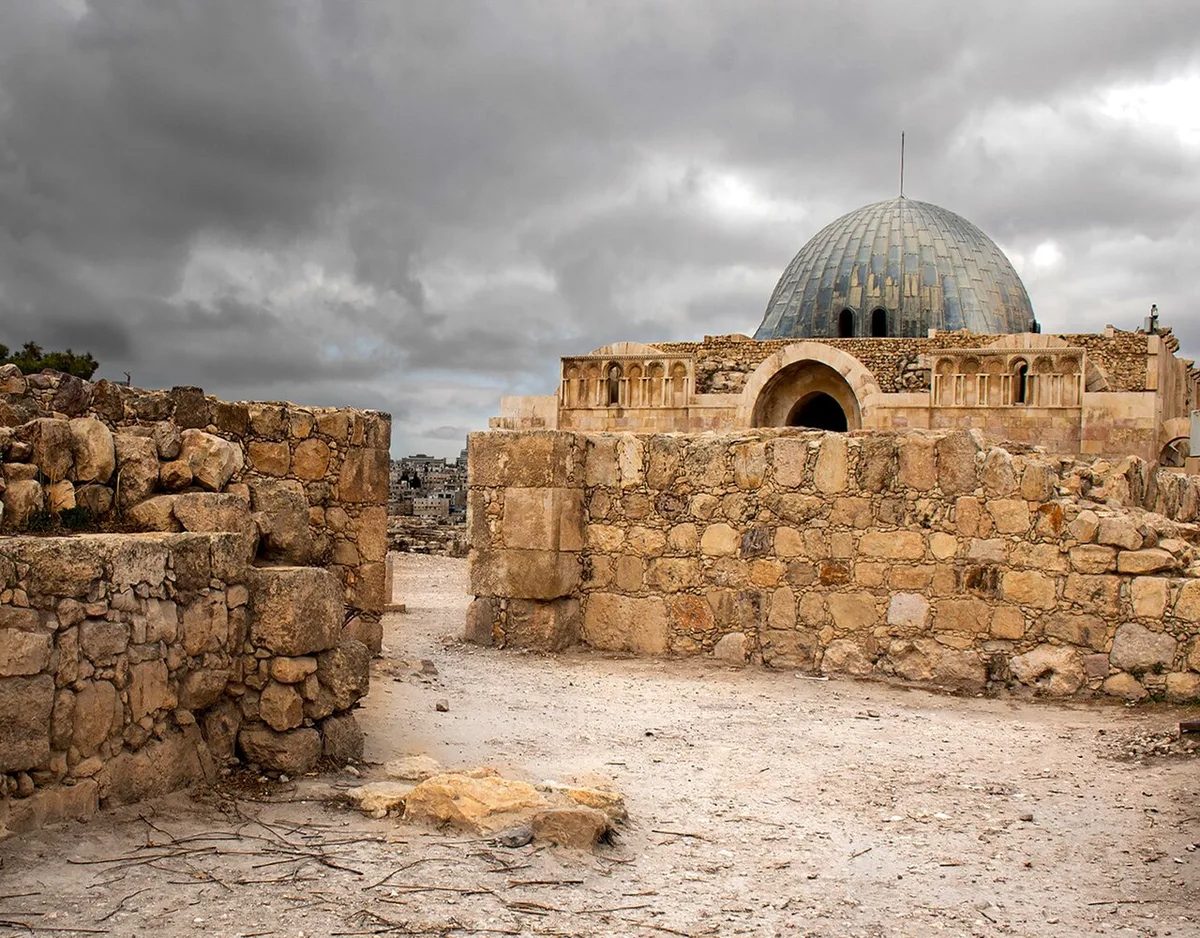
Walk north across the plateau and the centuries change under your feet. The northern end of the Citadel holds the Umayyad complex, built when Amman was a governor’s seat in the eighth century: a colonnaded street, a market area, residential quarters, a mosque, a monumental cistern you can descend into the imagination of – a vast rock-cut reservoir that supplied the palace – and at its heart the palace itself, whose domed audience hall is the most intact building on the hill. The hall’s plan is a cross inside a square, adapted from Byzantine practice, and its restored dome gives the whole complex a roofline to organise itself around. An earthquake in AD 749 ended the palace’s short career; what you walk through is a government quarter that had perhaps a generation of life, preserved by the brevity of its own history.
Nearby stands the Byzantine church, a basilica of the sixth or seventh century with Corinthian columns re-erected along its nave and fragments of mosaic at its edges – modest beside the temple and the palace, and all the more valuable for it, because the church is the layer visitors most often skip in their heads. Between Rome’s temple and Islam’s palace, this city was Christian for centuries, and the church – one of three the Department of Antiquities records on the hill – is the standing proof. Read the three buildings as a sequence and the Citadel explains the whole religious history of the Levant in about four hundred metres of walking.
The Jordan Archaeological Museum, built on the hill in 1951, completes the site. It is, honestly, an old-fashioned museum – cases, labels, a chronological march of finds from across the country, from prehistoric tools to Islamic pottery – and some of its former stars have moved to the Jordan Museum downhill. What remains is still worth the half hour: the building holds material excavated on this very hill and across Jordan over a century of archaeology, and its modest scale makes it a digestible primer before or after the plateau. Do not plan your museum time in Amman around it – that honour belongs to Ras al-Ain – but do not walk past it either. On a hill where every empire left a building, the museum is the twentieth century’s contribution, and it wears its age openly.
Roman Theatre – Six Thousand Seats Cut Into the Hill
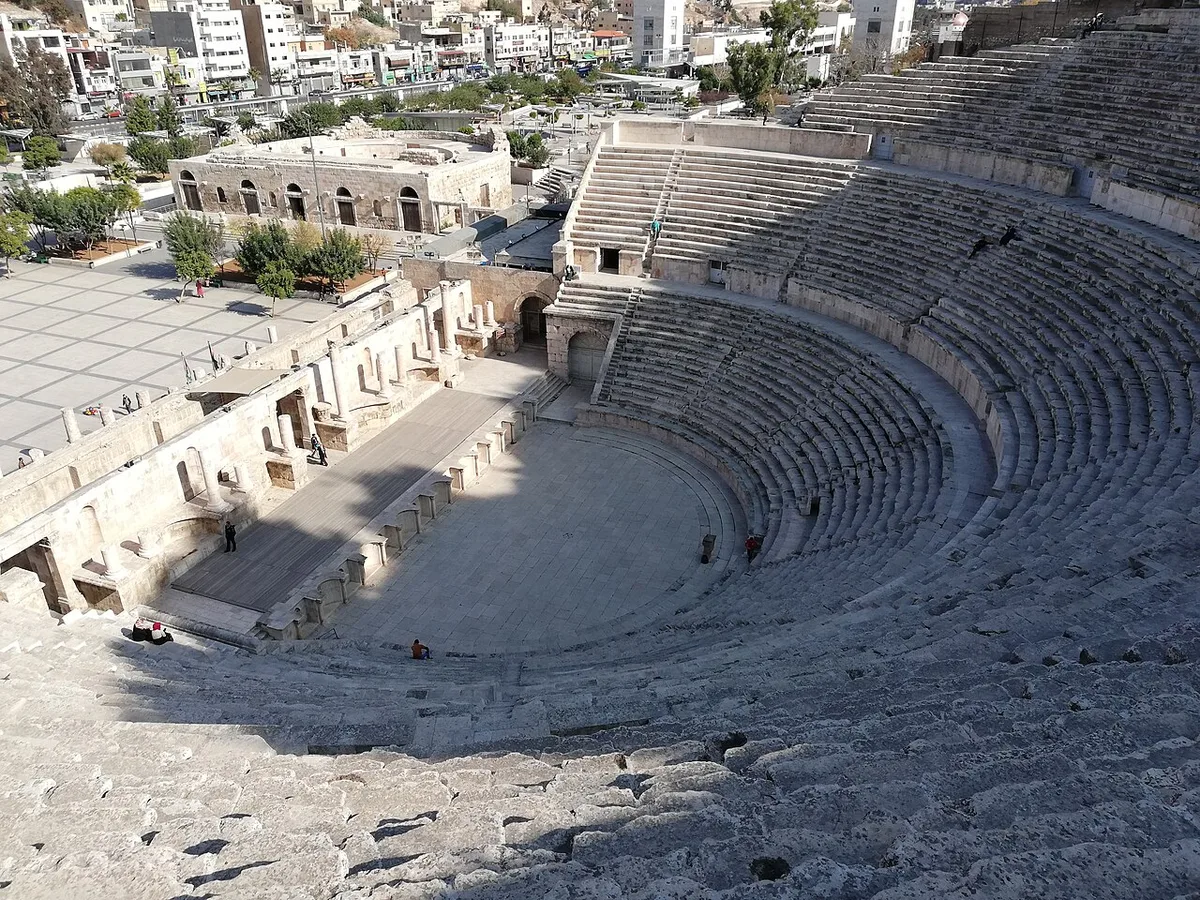
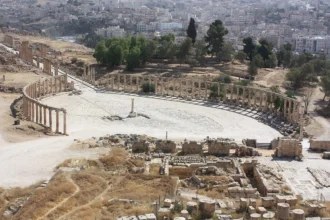
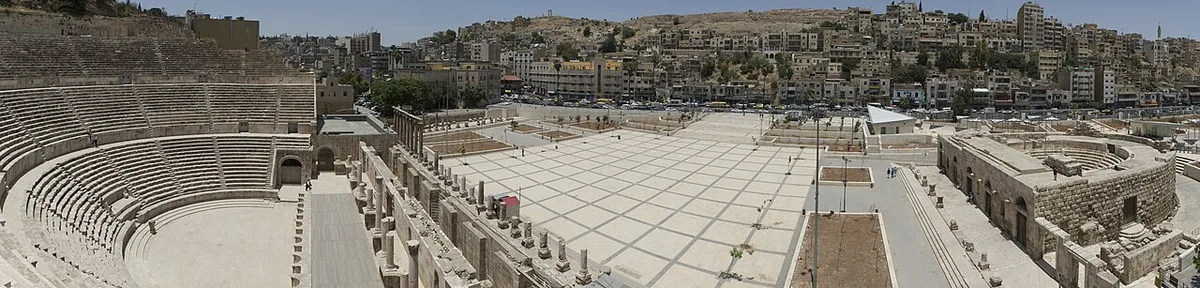
Below the Citadel, cut into the northern slope of Jabal al-Joufah, the Roman Theatre is the best-preserved big building of ancient Philadelphia and the single most satisfying ruin in the capital. It was built in the second century AD, in the reign of the emperor Antoninus Pius – an inscription on the site names him – when Philadelphia was a city of the Decapolis investing its wealth in the standard furniture of Roman civic pride. The theatre held around 6,000 spectators in three steep tiers divided by class, senators below, citizens in the middle, and the poor, foreigners and women at the top, in the Department of Antiquities’ own blunt summary of the seating plan. It faces north, deliberately, so the sun stayed off the audience – a piece of climate thinking modern stadiums could study.
What makes the theatre special among Roman survivals is that it never entirely died. Restored from 1957, it returned to use as a working venue, and it still hosts concerts, festivals and public events in the middle of a modern capital – not as a reconstruction, but as the same bowl of stone the Antonine city built. On an ordinary visiting day you will share it with school groups, wedding photographers using the stage as a backdrop, and local teenagers treating the upper tiers as a grandstand over their own city. That living quality is the theatre’s distinction. Many Roman theatres are better preserved; very few are still load-bearing parts of a city’s daily life.
The visit itself is straightforward and steep. Enter from Hashemite Plaza, cross the orchestra, and climb – the tiers are tall, the stone is worn, and the reward scales with the altitude: from the top rows the whole downtown composition assembles itself, theatre below, plaza and forum columns in front, the Citadel on its hill behind you, and the Nymphaeum a short walk west. Two small museums live in the vaulted rooms flanking the stage – the Folklore Museum in the eastern basement and the Museum of Popular Traditions in the western, in the Department’s arrangement – holding costumes, jewellery and everyday objects of Jordanian and Palestinian life. They are small, cool, and included in the rhythm of a theatre visit; give them twenty minutes each rather than a separate trip, and treat them as the theatre’s footnote rather than a headline.
The honest note on the theatre is about timing, not quality. By late morning the bowl fills with tour groups, the stone radiates heat, and the climb becomes a chore; in the first hour after opening, or in the late afternoon, it is one of the great urban ruins of the region. It also asks a favour of the visitor – the seating is genuinely steep, with no handrails in the upper tiers, and anyone unsteady on steps should enjoy it from the orchestra and the lower rows, which lose surprisingly little. The view from the top is fine; the theatre from the stage, looking up at six thousand seats, is better.
The Odeon – The Small Theatre Next Door
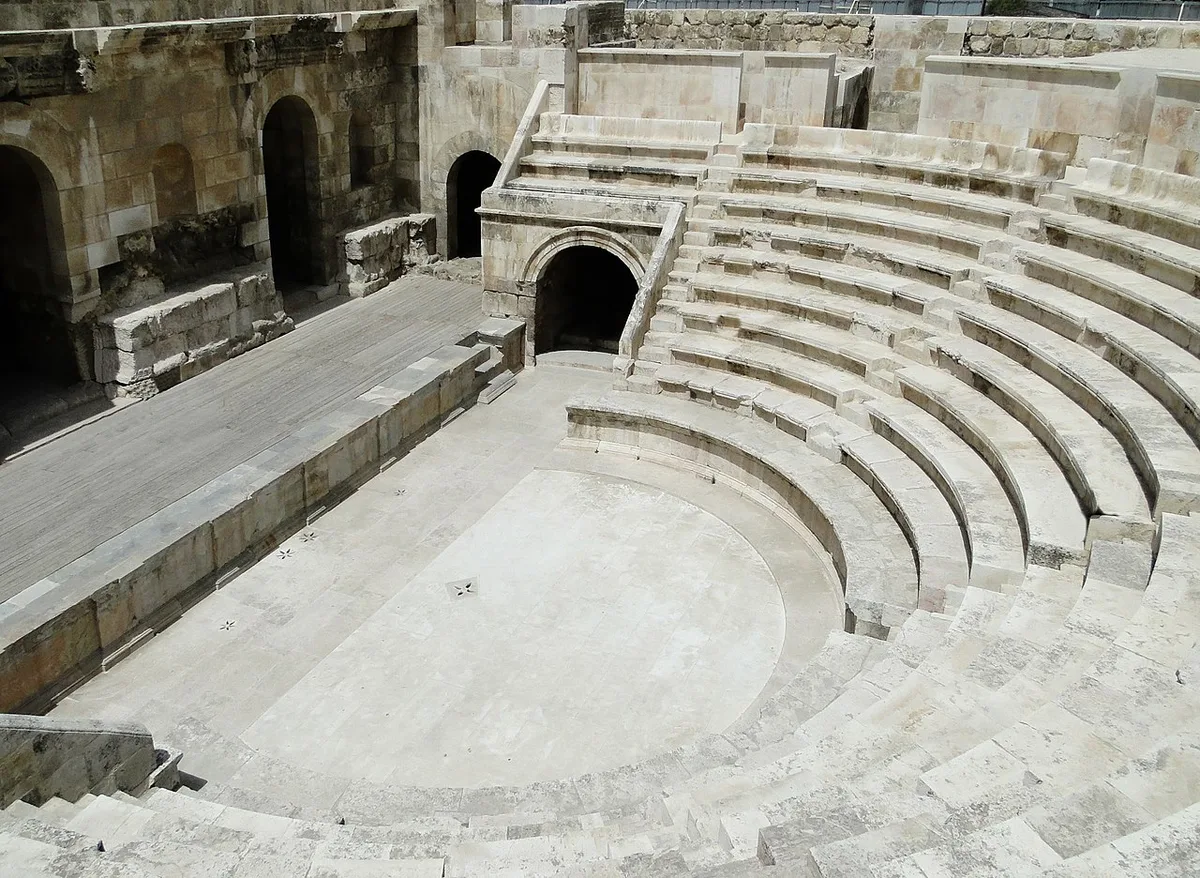
Every great theatre in the Roman world had a smaller, smarter sibling, and in Philadelphia it stands fifty metres from the big bowl. The Odeon, on the eastern side of what is now Hashemite Plaza, was built in the second century – the Department of Antiquities dates its construction from AD 130 and its completion around the time the great theatre rose beside it – as a roofed hall for musical performances, poetry readings and lectures, the indoor programme to the big theatre’s outdoor spectacle. It held around 400 spectators in two tiers of stone seats, and it was restored in 1986, though only its lower seating survives entire – the upper part was already gone past recovery when the restorers arrived.
The Odeon is on this list partly for its own sake and partly as a lesson in how to read a Roman city. The pairing is the point: spectacle in the open bowl, art in the roofed hall, the forum between them as the city’s living room – Philadelphia’s civic centre was a designed composition, and standing in the plaza you can still read all three elements at once. Visitors who see only the big theatre get the headline; the Odeon gives the paragraph underneath it. It is also, practically, the quieter ruin – most groups photograph it from the plaza and move on, so its seats are often nearly empty while the big theatre hums.
Give it half an hour, folded into the theatre visit, and spend the time on detail: the carved seat-ends, the stage building’s remains, the way the little hall tucks against the plaza’s edge. The honest assessment is that the Odeon is a connoisseur’s sight – if your day is short, it is the most skippable entry in the downtown cluster, and no one will think worse of a trip that misses it. But if Roman cities interest you as systems rather than monuments, the small roofed hall where Philadelphia listened to music is worth more than several grander ruins elsewhere in the region. It completes the sentence the big theatre starts.
The Nymphaeum – Rome’s Grand Fountain in a Working Street
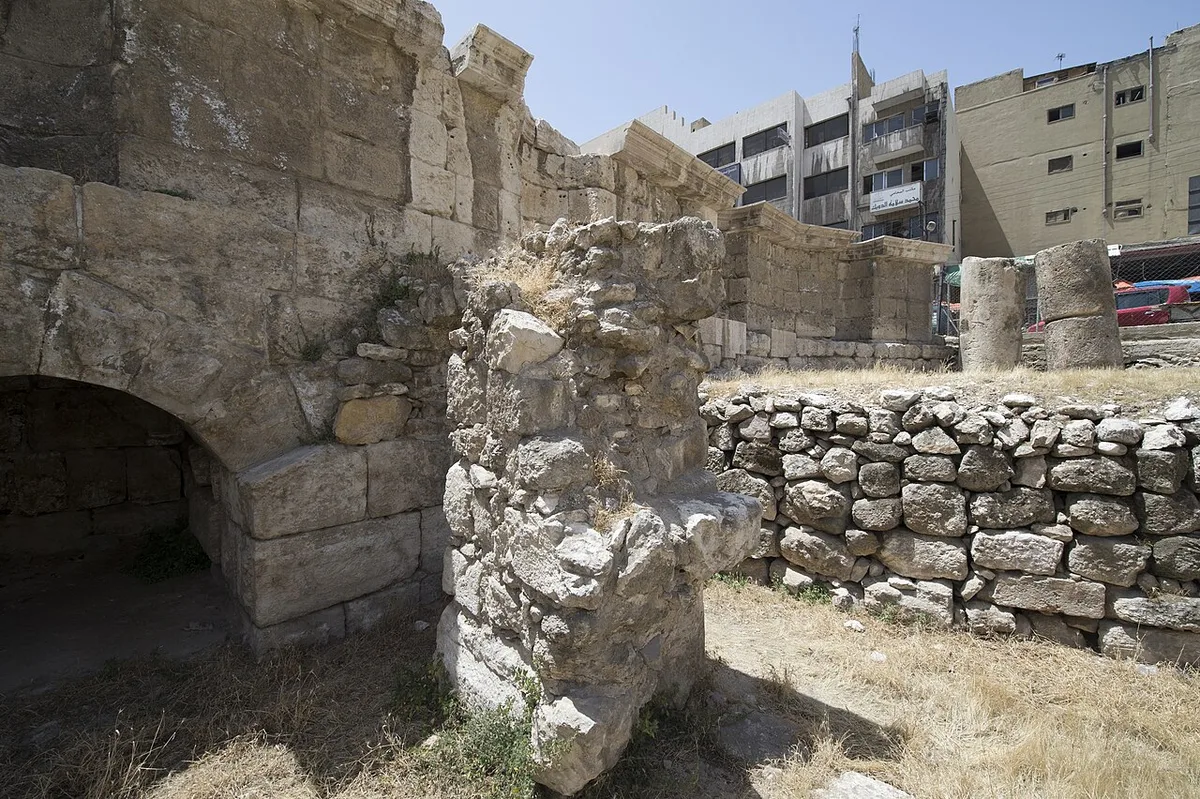
Six hundred metres west of the theatre, where the two main streets of Roman Philadelphia crossed, stands the ruin most visitors to Amman never find – the Nymphaeum, the city’s monumental public fountain. It was built in the second century AD over the Amman stream itself, resting on great barrel vaults, and fed by a channel that brought water from Ras al-Ain, the spring at the valley’s head. The building was semi-octagonal, its facade some sixty-five metres long, arranged in two storeys of niches that once held marble statues, with pools and rooms at ground level. A nymphaeum was not plumbing decoration; it was a civic monument to water itself, the place citizens came daily to draw supplies and to linger, in a city where water was wealth made visible.
What survives is partial – essentially the great rear wall and its niches, with the front courtyard long since built over by the modern downtown – and the Nymphaeum asks more imagination than any other downtown sight. That is precisely its appeal for the right visitor. The theatre and Citadel are managed archaeological sites with ticket gates; the Nymphaeum stands in a working street, fenced but woven into the commercial downtown, its carved stone carrying reliefs of animals and plants a few metres from the traffic. It is the clearest place in Amman to feel the ancient city not as a site but as a layer – Roman Philadelphia continuing underneath and occasionally through the modern Balad.
Pair it with the souks, which surround it, and give it half an hour: walk its length, read the niches, find the carving. The honest verdict is that the Nymphaeum is the weakest of the downtown four as a spectacle and the most rewarding as an idea – travellers who love it tend to be those who come back downtown for the texture. If your Amman time is a single day, see it in passing on the souk walk and spend your ruin-hours on the hill and the theatre. If you have two days, it becomes what it should be – the quiet fourth movement of the downtown symphony.
The Jordan Museum – The National Story in One Building
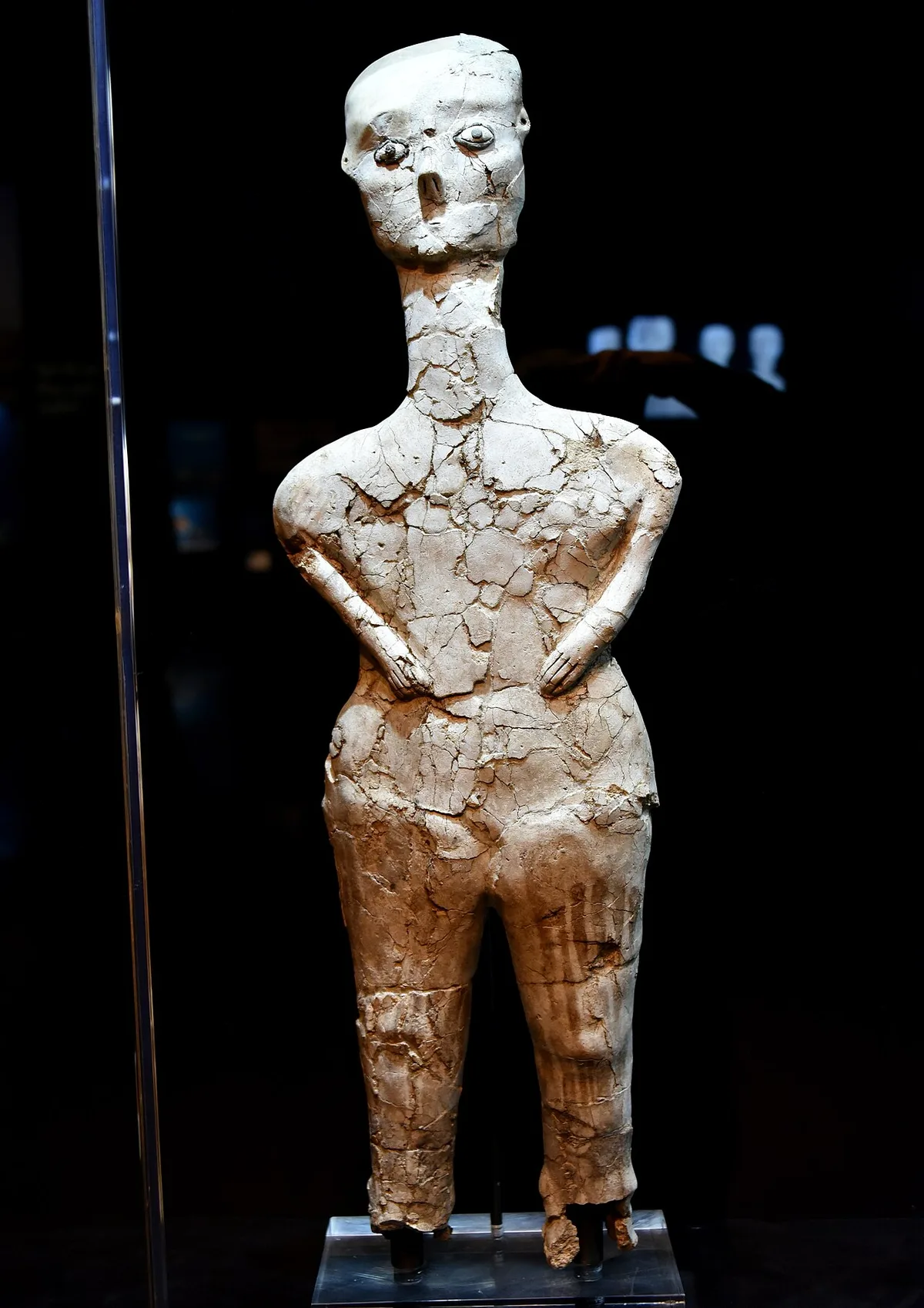
Down at Ras al-Ain, where the valley runs west out of downtown toward the spring that fed the Nymphaeum, stands the building that changed what a museum visit in Jordan means. The Jordan Museum, opened in 2014 beside the Greater Amman Municipality headquarters, is the largest museum in the country and the home of its two most important archaeological treasures. The first is its Dead Sea Scrolls material, centred on the Copper Scroll – the inventory of a hidden treasure, engraved on metal, found near Qumran, and unlike any other scroll in the corpus: not scripture but a treasure map in Mishnaic Hebrew, listing caches of gold and silver that have never been found. The second is stranger and older: the statues of Ain Ghazal, lime-plaster figures some 9,000 years old, among the oldest large human statues ever made, excavated at a Neolithic village site within modern Amman itself.
That second fact deserves a pause, because it completes the city’s deepest claim. Amman does not merely have a long history; one of the largest farming villages of the Neolithic world stood here, and its people modelled human figures at near life size when most of humanity still hunted. The museum builds its whole narrative on that depth – a chronological and thematic march through a million and a half years of human presence in this landscape, from stone tools to the Islamic centuries, with a copy of the Mesha Stele (the original is in the Louvre) carrying the Ammonite story that the Citadel’s hill begins. It is designed, modern, and – rare compliment for a national museum – honest about being an argument: that Jordan’s past is one continuous story and this building is where it is told whole.
Practically, the museum rewards the half day its scale asks for and punishes the rushed hour. Its galleries are dense, its masterpieces are specific – come for the Scrolls gallery and the Ain Ghazal statues, then let the chronological floor carry you – and its position at Ras al-Ain makes it a natural start or end to the downtown day, a short taxi ride from the theatre cluster. If you visit one museum in Jordan, this is it, and it is the strongest single reason the best places to visit in amman should be planned across two days rather than squeezed into one.
The Balad Souks – Downtown’s Working Markets
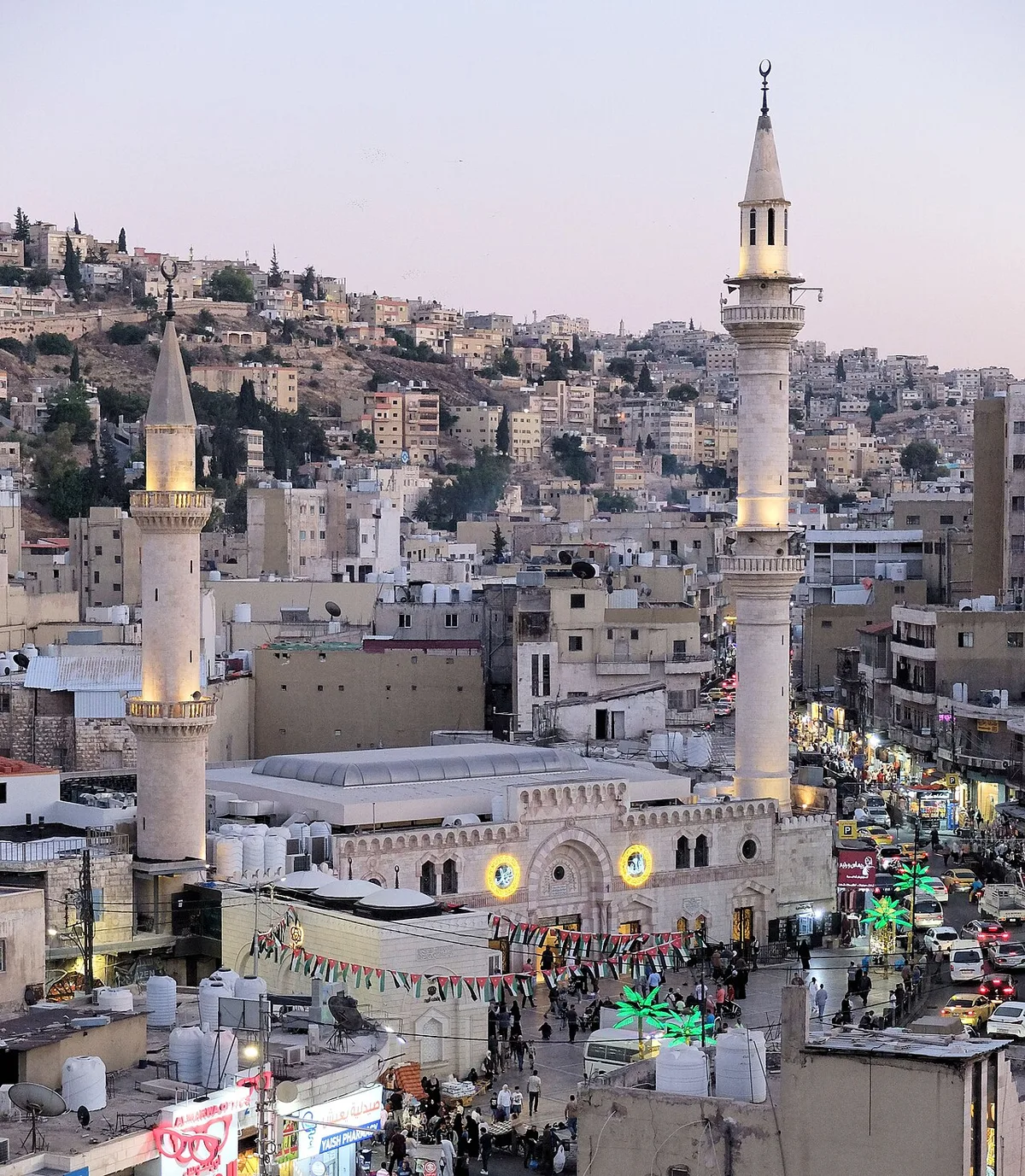
Below the Citadel, in the flat valley streets that Roman Philadelphia’s forum once occupied, the Balad does the opposite of everything a museum does: nothing here is behind glass, nothing is labelled, and almost nothing is aimed at you. Downtown’s souks are working markets organised by trade, as Levantine markets have always been – Souk Sukkar, the sugar market, now a tangle of food and household stalls near the Grand Husseini Mosque; the gold souk, where Amman’s jewellers cluster and wedding parties buy by weight; the vegetable and produce markets exhaling spice and green herbs; cloth and clothing lanes running between them. At the centre stands the Grand Husseini Mosque, the downtown’s spiritual anchor, built in 1924 by King Abdullah I on the site of a mosque tradition reaching back to the first Islamic century, its pink-and-white stone facade and twin minarets the Balad’s best-known face. The mosque is a working place of worship rather than a visitor attraction – admire it from the square, dress and behave accordingly, and let the markets be the visit.
The souks earn their place at the centre of this list because they are the one sight in Amman that is entirely alive. The Citadel is eight acres of past; the Balad is the present tense, a commercial organism that has run continuously through the whole modern history of the city – the place where Ammanis from every hill actually mix, where prices are quoted in a murmur and negotiated in a performance, where the falafel institutions and kunafa shops that fuel the city’s food reputation stand a street apart. Travellers who skip the souks for a second museum have misread the city: Amman’s antiquities explain where it came from, but the Balad is what it is.
Wander it without a route, but with two anchors: start at the Husseini Mosque square and let the covered lanes pull you east and west from there. Go in the morning when the produce markets are at full voice, or in the early evening when the whole downtown lights and fills. The honest downsides are real and are covered again in the trade-offs section – crowds, noise, persistent shopkeepers at the tourist edges – but they are the ordinary frictions of a real market, not a staged one. Of all the best places to visit in amman, this is the one that will still be doing exactly the same thing in fifty years, and that continuity is the sight.
The Duke’s Diwan – A 1924 House That Became the City’s Front Room
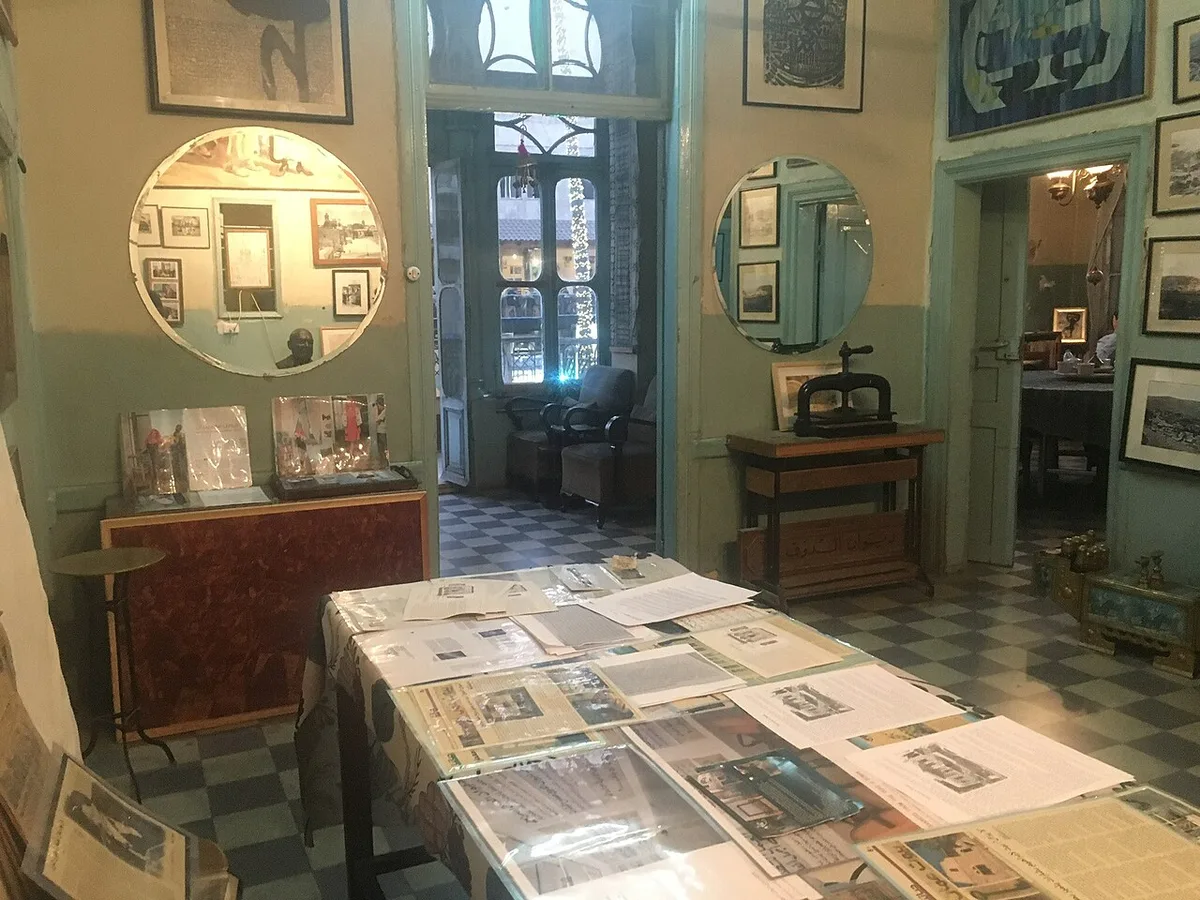
On King Faisal Street, the Balad’s grandest old commercial avenue, a heavy stone townhouse holds the most characterful interior in downtown Amman. The Duke’s Diwan was built in 1924 by Abdul Rahman Madi, and its CV summarises the young capital: it served as Amman’s first post office, then as the Ministry of Finance, then as a hotel, before Mamdouh Bisharat – the Duke of Mukhaybeh, one of Jordan’s great collector-preservers – took it on, restored it, and opened its rooms to the public as a diwan: a salon, in the old Levantine sense, where the city’s artists, writers, musicians and wanderers are received as guests. The doors and windows are the originals of the 1920s; the tiled floors, the high ceilings and the balconies over King Faisal Street are the real fabric of early Amman, preserved by use rather than by a heritage plaque.
The Diwan is the smallest major sight on this list and the one visitors most consistently describe with the word lovely. There is no collection to march through; you climb the stone stairs, you are offered coffee or tea, you look at the photographs and the furniture and the art on the walls, and you sit on the balcony watching the Balad move below you. It functions as the downtown’s resting place – the pause between the souks’ noise and the theatre’s stone – and as a living argument that heritage in Amman is not only Roman. The city had a first modern generation, of merchants and officials and hoteliers in stone houses with French windows, and the Diwan is its best surviving room.
Give it an hour, ideally in the middle of the downtown day when a sit-down is earned. The honest caveats are small ones: it is a house, not a monument, and visitors expecting exhibits will find atmosphere instead; and its charm depends on the welcome, which is personal rather than institutional – go in the spirit of a guest, because that is the entire concept. Travellers frequently rank it among their favourite hours in Amman out of all proportion to its size, and the disproportion is the point: after a morning of empires, the Diwan is where the city becomes a person offering you coffee.
Rainbow Street – The Cafe Street Above the Balad
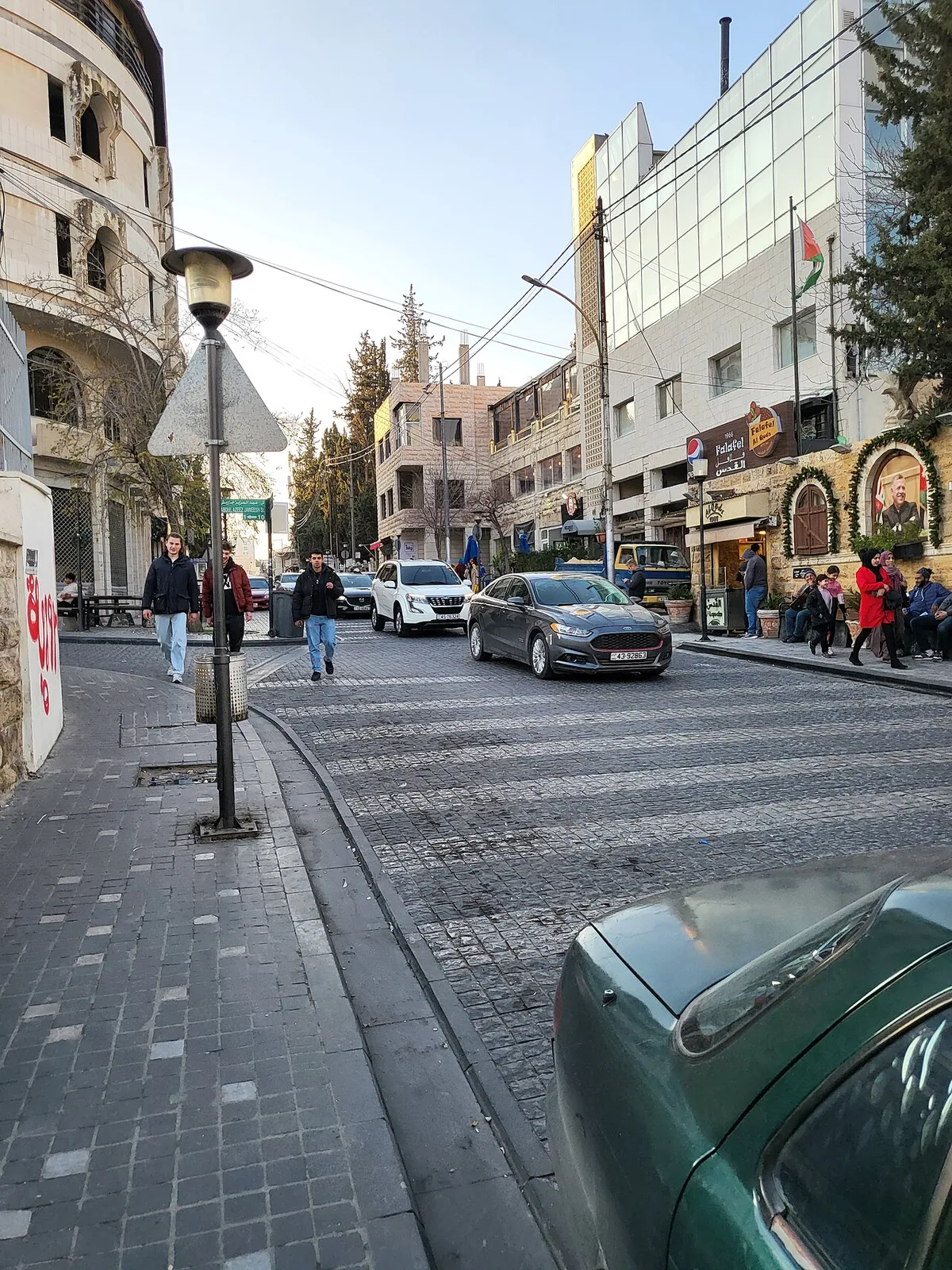
Climb from the Balad to First Circle and the city changes key. Rainbow Street – officially Abu Bakr al-Siddiq Street, running along the crest of Jabal Amman toward Mango Street – is the capital’s promenade: a street of early twentieth-century stone mansions, embassies’ old neighbours, bookshops, galleries, ice-cream institutions and cafe terraces, with the downtown spread out below its balustrades. This was the hill of Amman’s first modern elite, and the architecture still shows it – villa after villa in the Levantine stone style, several now cultural centres and restaurants. Where the Balad is the city’s engine room, Rainbow Street is its drawing room, and the two together, an hour apart on foot and a world apart in mood, are the essential pair of any Amman visit.
The street’s pleasures are specific. The view from its eastern end, looking down over the Balad to the Citadel, is the classic postcard of modern Amman and the place to understand the city’s topography with a coffee in hand. The side streets carry the interest deeper – old houses with painted ceilings, small exhibition spaces, the Friday Souk Jara in season, a summer open-air market of crafts and food that turns the neighbourhood into a fair. And the street is the natural evening of the downtown day: you climb out of the souks’ heat into the hill air, eat well, and watch the city light up hill by hill, which is a show Amman performs nightly and charges nothing for.
Honesty requires two notes. Rainbow Street is the most tourist-facing street in the capital, and its prices, its menus and some of its shops know it – the defence is that Ammanis use it too, heavily, which keeps it a real street rather than a theme. And it is a street, not a sight: visitors who arrive expecting an attraction with a climax sometimes feel underwhelmed, because the climax is the accumulation – a view, a coffee, a bookshop, a mansion, the light going. Treat it as the city’s evening room rather than its museum and it will not disappoint. Of the best places to visit in amman after dark, it is the first name, and the Wild Jordan Centre at its end – the Royal Society for the Conservation of Nature’s cafe and shop, with the best terrace view in the city – is its natural finishing point.
Darat al Funun – Contemporary Art in Three 1920s Villas
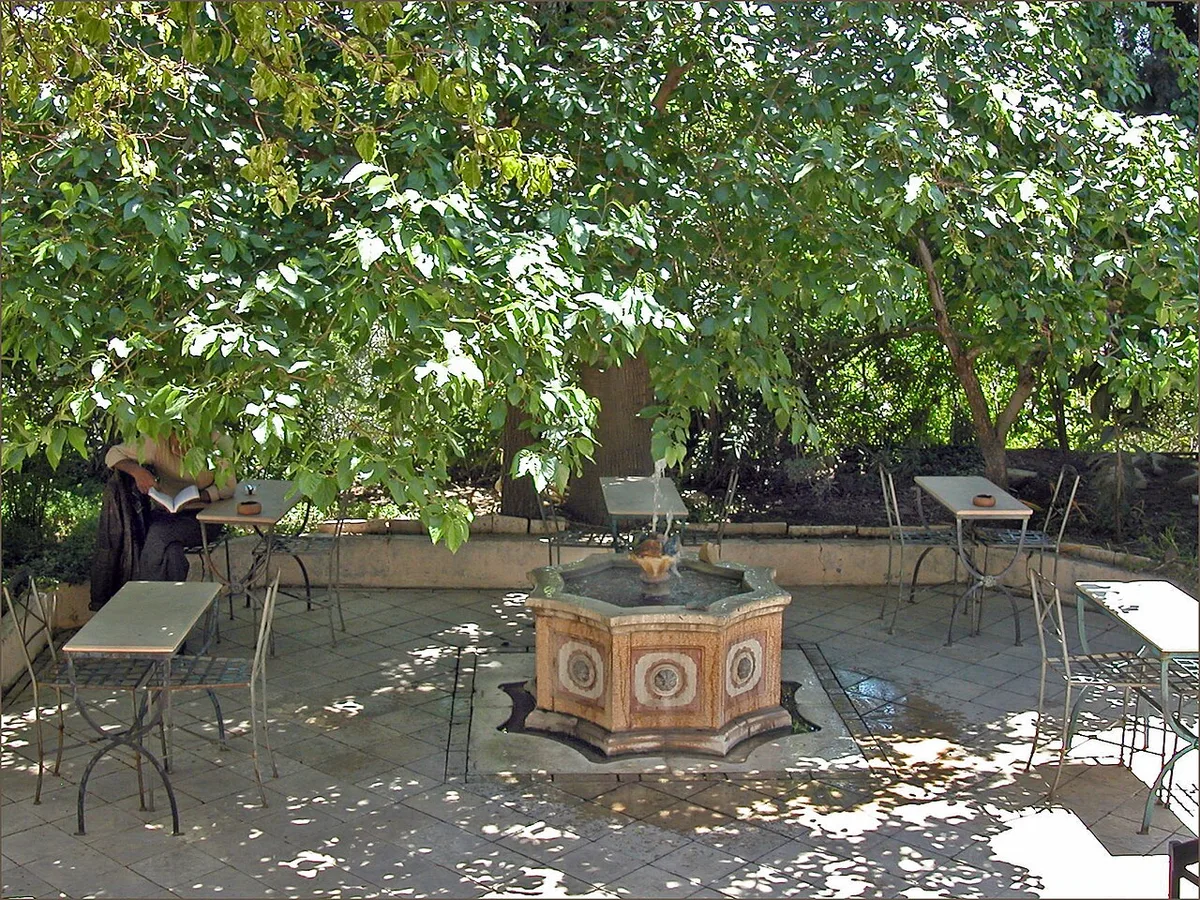
On the eastern slope of Jabal al-Weibdeh, where the hill falls toward the Balad in terraces, stands the most beautiful cultural institution in Jordan. Darat al Funun – the name means the houses of art – is the Khalid Shoman Foundation’s home for contemporary Arab art, launched as a gallery initiative in 1988 and formally established in 1993 in a complex of historic houses from the 1920s, restored between 1992 and 1995 under the architect Ammar Khammash. The main house, begun in 1918 by the mayor of Salt in the Venetian-inflected Mediterranean style of the period, passed through lives as a prime minister’s office and a British officers’ club before its rescue; the Blue House and Dar Khalid, once the home of the poet Fouad al-Khateeb, complete the trio of villas, joined by an art library, workshops, a cafe and terraced gardens that step down the hillside.
And then, in the garden, the detail that makes the place pure Amman: the remains of a sixth-century Byzantine church, built over a Roman temple – column drums reset, a Corinthian capital in place, mosaic fragments underfoot. Contemporary Arab art in 1920s Levantine villas above a Byzantine church above a Roman temple, with the Citadel visible across the valley: the whole argument of this city, layer on layer, in one garden. (The Jordan Times’ history of Darat al Funun tells the houses’ stories in the detail they deserve.) The exhibitions themselves rotate through the Arab world’s contemporary practice, drawn partly from the Khalid Shoman private collection, one of the region’s significant holdings of modern Arab art, and the standard is consistently the highest in the country.
Give Darat al Funun two unhurried hours and treat it as a garden visit with galleries attached rather than the reverse – the terraces, the cafe and the view are half the institution. Entry has historically been free, which makes it the best-value cultural hour in Amman, but check the foundation’s current programme before you climb, because the houses keep exhibition hours rather than monument hours and the site can close between shows. The honest caveat is only that one: this is a working art foundation, not a museum with a permanent hang, and its rewards vary with what’s on. At its ordinary best it is the single most civilised place in the capital, and the art stop against which every other gallery in this list is measured.
Jabal al-Weibdeh – The Gallery Hill
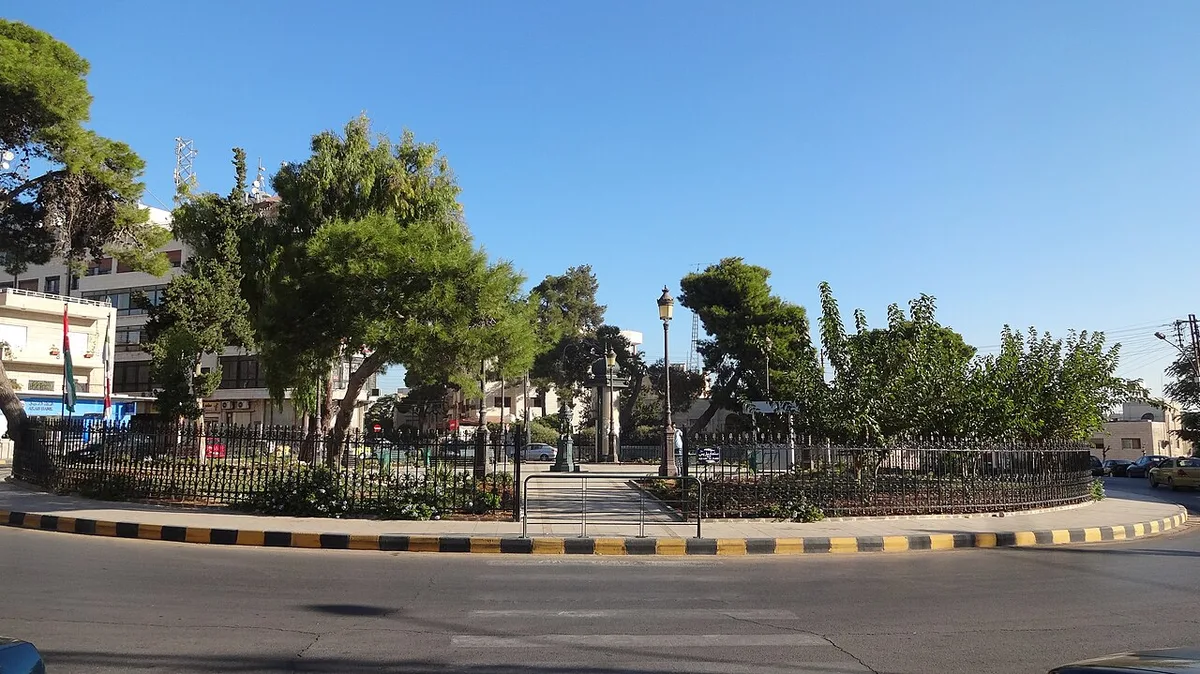
Darat al Funun’s hill deserves its own entry, because Weibdeh is not a sight but a weave of them – the closest thing Amman has to an arts quarter, and the neighbourhood Ammanis themselves name when asked where the city is most itself. Jabal al-Weibdeh, one of the original hills west of the Balad, settled into its character across the twentieth century: churches and old stone houses, embassies tucked into lanes, and then, from the 1990s, the galleries, studios, cultural centres and small cafes that colonised its quiet streets. Paris Square, the small roundabout at the hill’s centre, is its heart – a circle of cafes and bookshops from which the gallery streets radiate.
The way to do Weibdeh is a drift with anchors. Darat al Funun anchors the eastern slope. The lanes around Paris Square hold a changing cast of small commercial galleries and design shops – Dar Al-Anda, in two grand 1930s villas, is the grandest of them – plus the cafes where the neighbourhood’s artists, journalists and students actually sit. The churches matter too: Weibdeh is one of the city’s historically Christian quarters, and its church spires among the minarets are part of the skyline’s honesty about what Amman is. Everything here is at walking scale, shaded, and pitched at the pace of an afternoon rather than a morning’s march.
The honest note is that Weibdeh’s charms are perishable and low-key: galleries open and close, the cafe of the season changes, and a visitor hunting for spectacle will find only a pleasant hill of stone lanes. That is the attraction. After the downtown’s noise and the Citadel’s centuries, Weibdeh is where you go to watch modern Jordan think – in exhibitions, in bookshops, over long coffees – and for travellers whose interest in a city includes its present tense, an afternoon here teaches more than another ruin. Pair it with Darat al Funun and the National Gallery, which stands on the hill’s shoulder, and the three make one of the two great half-days of the Amman list.
Jordan National Gallery of Fine Arts – The Kingdom’s Collection
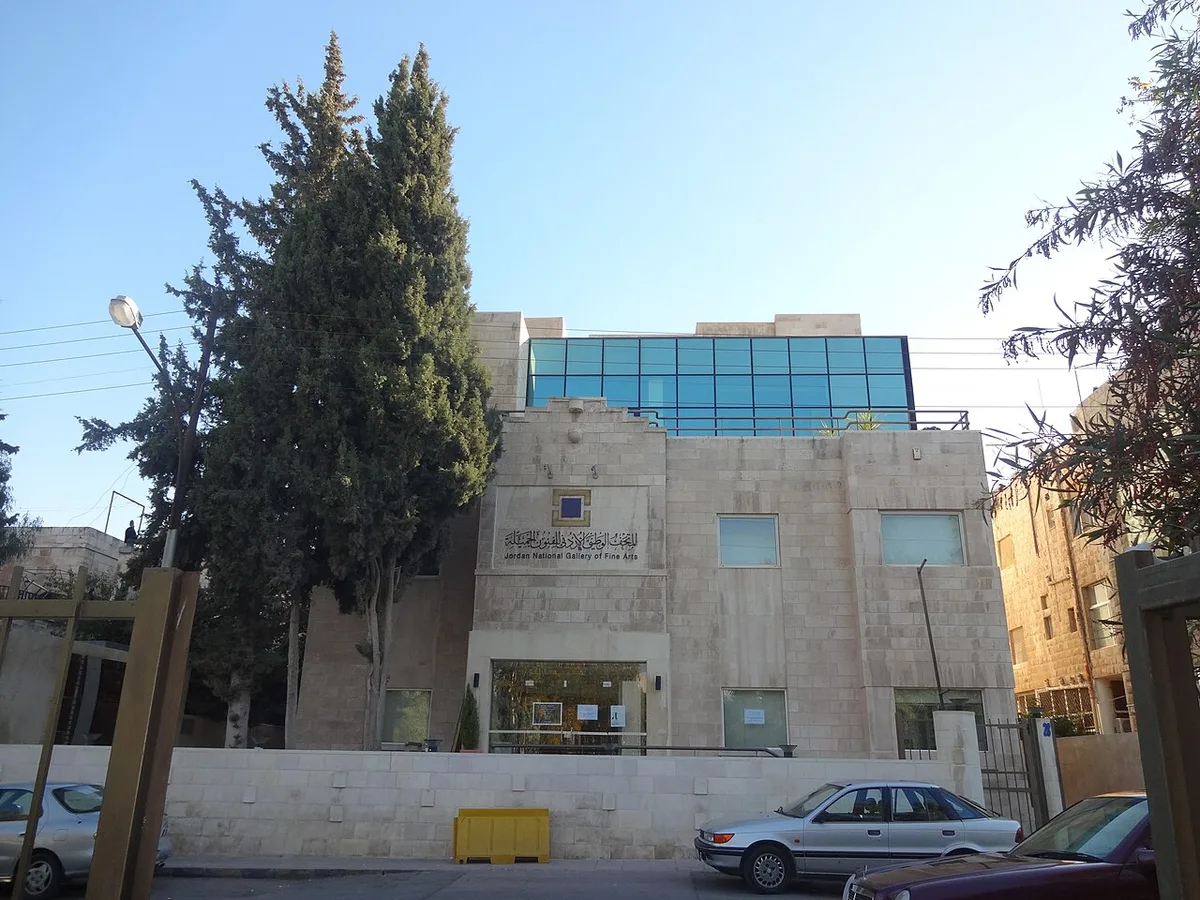
A short walk from Paris Square stands the institution that gives Weibdeh its official anchor: the Jordan National Gallery of Fine Arts, founded in 1980 by the Royal Society of Fine Arts and housed in two buildings across a small sculpture park on the hill. The gallery holds the kingdom’s principal collection of modern and contemporary art – paintings, sculpture, ceramics and works on paper by artists from Jordan, the Arab world and the wider Muslim and developing worlds, a collection built over four decades into one of the largest of its kind in the region. Where Darat al Funun is a foundation with a point of view, the National Gallery is the survey: the place to see the whole arc of Jordanian and regional art laid out as a national story.
The two-building arrangement is part of the pleasure – a permanent-collection hang in one, temporary exhibitions in the other, and the park between them dotted with sculpture and used by the neighbourhood as a garden. The gallery also runs the kind of programming that keeps a national collection alive: talks, workshops, a library, a cafe. For the list’s purposes its importance is structural: between the National Gallery, Darat al Funun and the commercial galleries, Weibdeh holds a density of art institutions unmatched anywhere else in Jordan, and a visitor can spend a full day on one hill moving between the national survey, the foundation’s exhibitions and the dealers’ current shows.
The honest assessment is that the National Gallery rewards the already-interested more than the curious passer-by: permanent hangs of regional modernism are a specialist pleasure, the presentation is quieter than Darat al Funun’s beautiful houses, and if only one art stop fits your day, Darat’s villas and garden make the stronger hour. But for anyone who wants to understand what Jordanian art actually is – rather than merely that Jordan has art – this is the collection, and its park is one of the pleasantest free green corners in the city. It is the museum the art hill is named around, and it completes Weibdeh’s claim to be the cultural half-day of the capital.
King Abdullah I Mosque – The Blue Dome of 1989
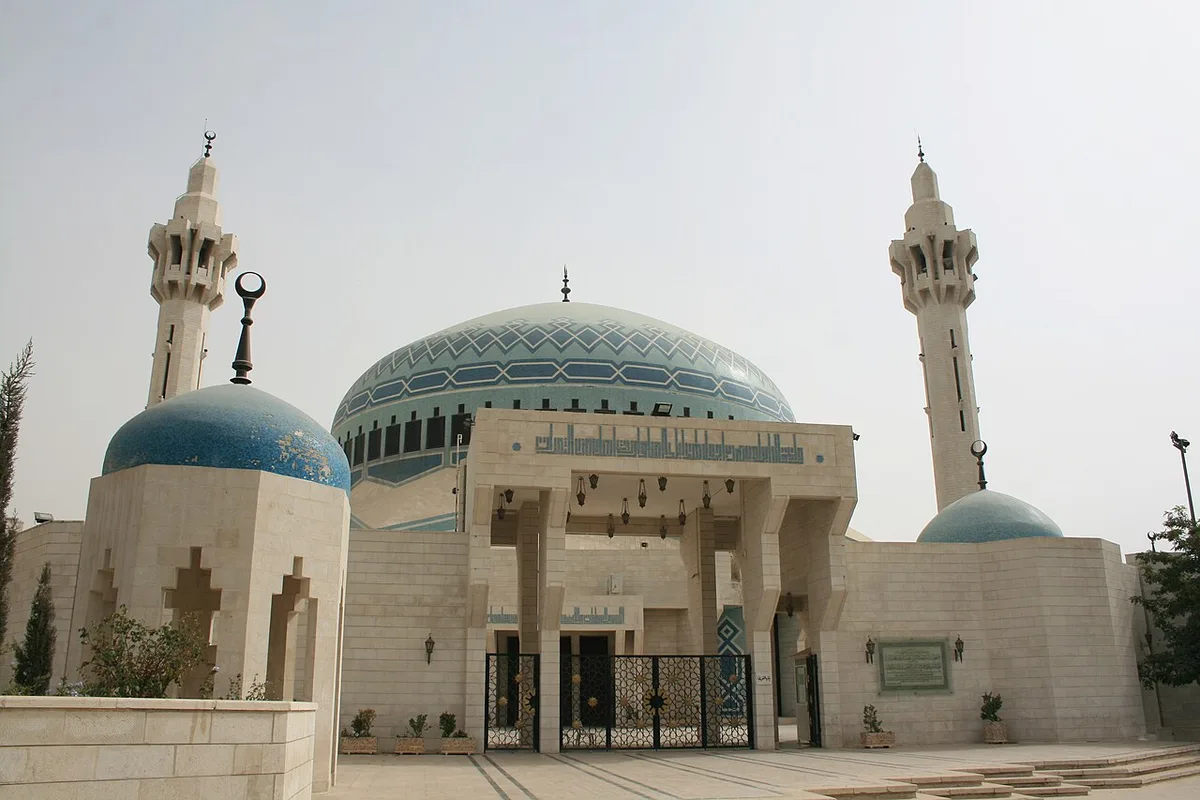
Every direction you look in central Amman, one modern building reads as the city’s logo: the great blue mosaic dome of the King Abdullah I Mosque, in the Abdali district on the shoulder between the old city and the new west. The mosque was built between 1982 and 1989, commissioned by the late King Hussein in memory of his grandfather, King Abdullah I, the founder of the kingdom, and it served as Jordan’s national mosque until that role passed to the King Hussein Mosque in 2006. Its prayer hall is a vast octagon holding some 3,000 worshippers beneath a dome thirty-five metres across, carried without internal pillars – the engineering as much as the mosaic is the statement – and the complex as a whole, courtyard included, can hold many thousands more. Two minarets frame the dome, and the whole composition, blue against Amman’s universal limestone white, is the one piece of contemporary religious architecture in the capital that every visitor should see deliberately rather than from a taxi window.
What puts the mosque on a traveller’s list, beyond the silhouette, is its policy: it is the one mosque in Amman that openly welcomes non-Muslim visitors outside prayer times, with the modest dress the visit asks for available at the door, and a small Islamic museum and a collection of the founder-king’s photographs and effects inside. That welcome is a deliberate piece of Jordanian statecraft as much as hospitality – the mosque was conceived as an Islamic cultural centre, with library, conference halls and the Quran House attached – and it makes this the place where a visitor can actually enter a great modern mosque of the Arab world rather than photograph one. Go outside prayer times, allow an hour, and let the scale of the hall do the work: the dome’s interior, inscribed with Quranic calligraphy, is contemporary Islamic art at monumental size.
The honest notes are practical. The mosque stands in the government quarter of Abdali, amid parliament and courts, and the visit is an excursion from either the downtown or the Weibdeh cluster rather than a walk-by – pair it with the National Gallery, which stands nearby across the district boundary, or with Abdali’s new boulevard below. And it is a working national mosque, not a museum that resembles one: Friday midday is for worshippers, tour groups arrive in pulses, and the visitor experience is at its best in the quieter middle of a weekday morning. It remains, dome for dome, the finest modern building on this list.
Abu Darwish Mosque – The Checkered Mosque on the Highest Hill
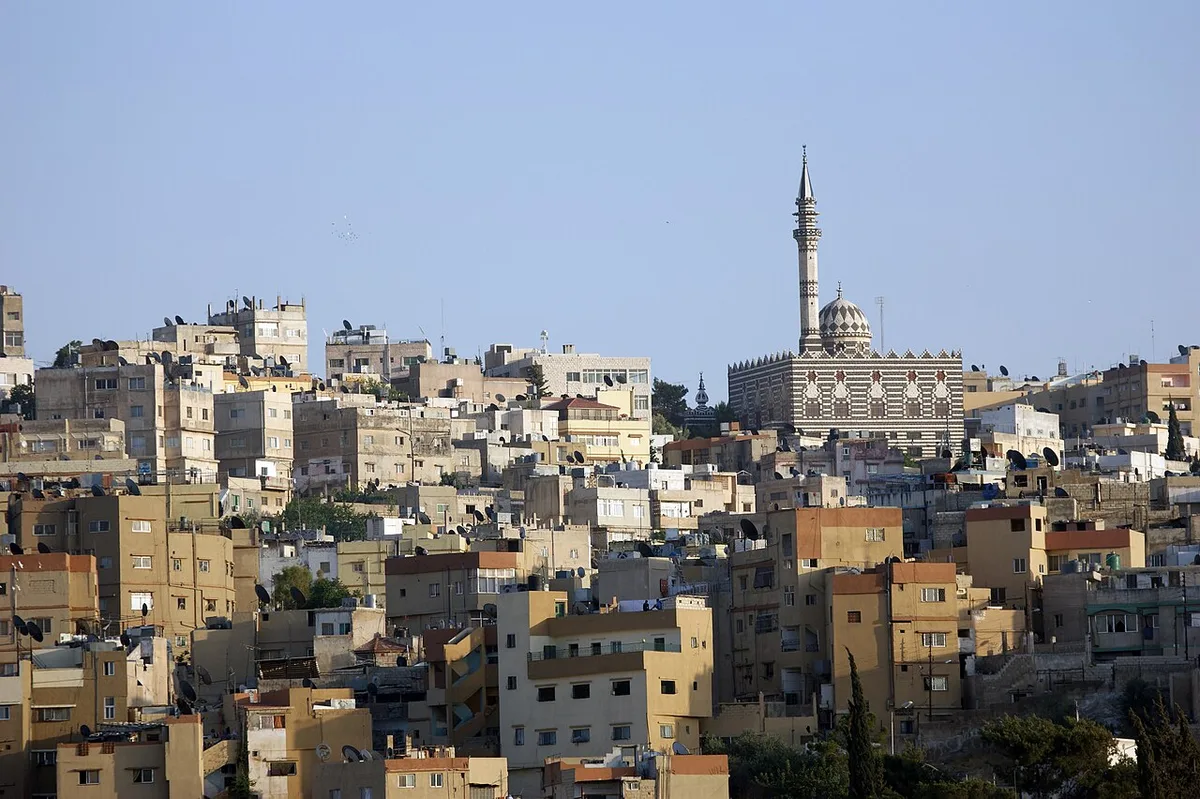
Drive east and up, to the top of Jabal Ashrafieh – by local tradition the highest of Amman’s hills – and the city shows you its most eccentric landmark: a mosque built entirely in alternating courses of black and white stone, stripes running around its walls, its dome and its minaret like a building in a chess player’s dream. The Abu Darwish Mosque was built in 1961, funded and designed by Mustafa Hassan, a Circassian carpenter and landowner known as Abu Darwish, who gave his own land on the hill and imported the idea – and by some accounts the stone – from the Levantine ablaq tradition of Syria, where black-and-white masonry has centuries of history. Palestinian craftsmen from Ein Karem built it; a small library and school followed; and from 1974 to 1984 the mosque served as the broadcast point for Amman’s unified call to prayer, its voice quite literally the city’s voice.
The visit here is honest about its limits, and the entry follows suit: the mosque is a place of worship whose interior is generally not open to non-Muslim visitors, so the sight is the exterior, the hilltop, and the panorama – and on those terms it still earns its place, because the building is genuinely extraordinary to look at and the view from Ashrafieh across the eastern hills is one Amman visitors rarely see. East Amman is the city’s older, denser, less-visited half, and the drive up through its neighbourhoods is itself the corrective to a Rainbow Street version of the capital. Pair the mosque with nothing; give it its own half hour at the start or end of a day, ideally in the late light when the black and white courses read sharpest.
Travellers sometimes rank Abu Darwish as a photograph rather than a place, and the ranking is half fair. But photographs are how this building works: it was designed to be seen from across the city, a striped exclamation on the highest hill, and it has been doing that work for sixty years. Among the best places to visit in amman, it is the connoisseur’s choice – the sight the second-day visitor seeks out after the first day’s essentials, and the one that proves the list runs deeper than the downtown valley.
Royal Automobile Museum – The King’s Cars in King Hussein Park
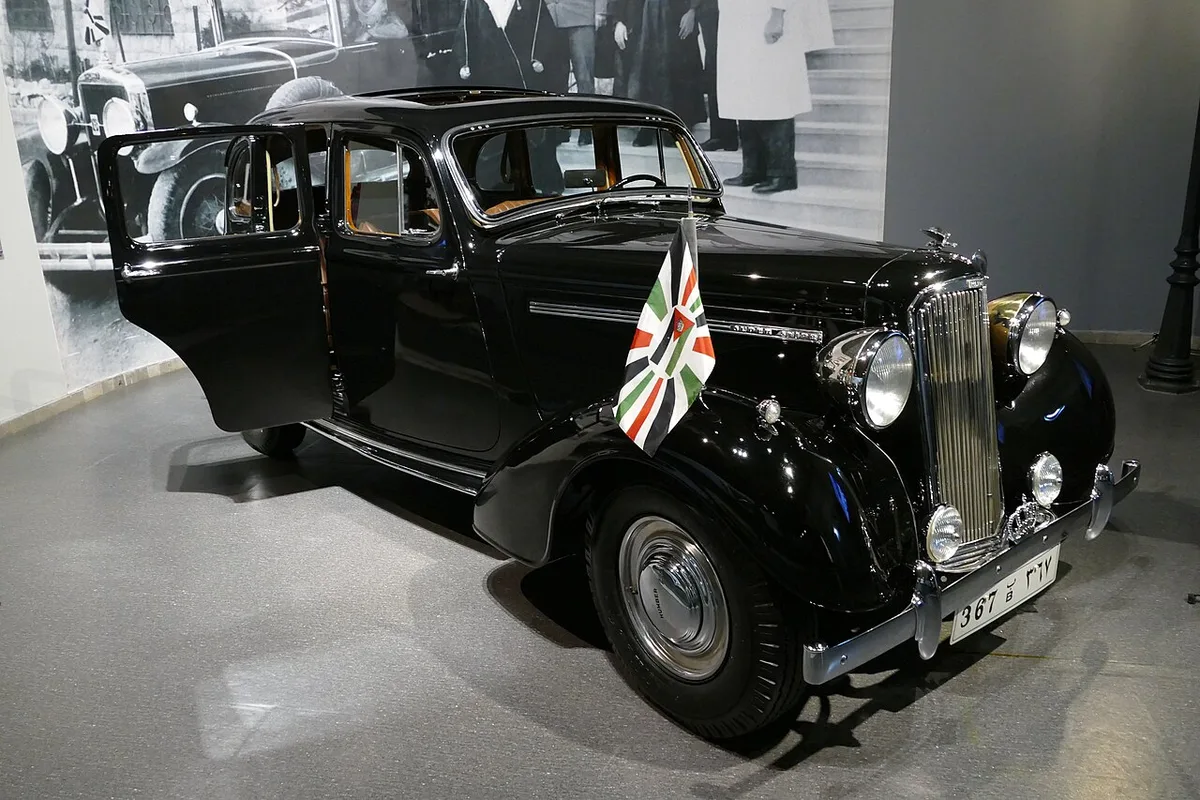
Out in the western suburbs, inside King Hussein Park – the capital’s great public park, in the medical district of Dabouq – a low modern building holds the most unexpectedly enjoyable museum in Amman. The Royal Automobile Museum was established in 2003, at the wish of King Abdullah II, to preserve and display the collection of his father, the late King Hussein: more than seventy cars and motorcycles that between them narrate the kingdom’s whole modern century. The line runs from the cars of Sharif Hussein bin Ali, who arrived in the region in the era of the Great Arab Revolt of 1916, through the state cars of Kings Abdullah I and Talal, to King Hussein’s own famous fleet – the rally cars, the sports cars, the ceremonial Mercedes, the motorcycles of a king who genuinely loved machines and drove them hard.
The museum’s trick, and it is a good one, is to arrange metal as history. Each vehicle stands with the film, photographs and story of its moment – a car beside the footage of the treaty signing it carried a king to, a motorcycle beside the desert it crossed – so the visitor walks the political history of Jordan at bumper height. The collection includes rarities that would headline a specialist museum anywhere: royal Rolls-Royces, a Stirling Moss-associated racer among the competition cars, and the vehicles of state occasions that older Jordanians remember from the street. For a country whose modern story is usually told in palaces and battlefields, telling it in cars turns out to be both lighter and more intimate – this was a king the public watched drive, and the museum knows it.
Give it two hours and pair it with the park itself, whose gardens, and the King Hussein Mosque at its edge – the kingdom’s largest mosque, opened in 2005, all white stone and four minarets on the hill above the park – make the excursion a half day. The Children’s Museum Jordan stands in the same park, which makes this Amman’s best family excursion by a distance. The honest caveat is location: the museum is a deliberate drive west, useless to bolt onto a downtown day, and visitors indifferent to cars will find the history framing carries them only so far. But judged as what it is – a royal collection, beautifully kept, telling a national story through machines – it is one of the best places to visit in amman, and the museum non-car people consistently enjoy against their expectations.
The Boulevard at Abdali – The New Downtown
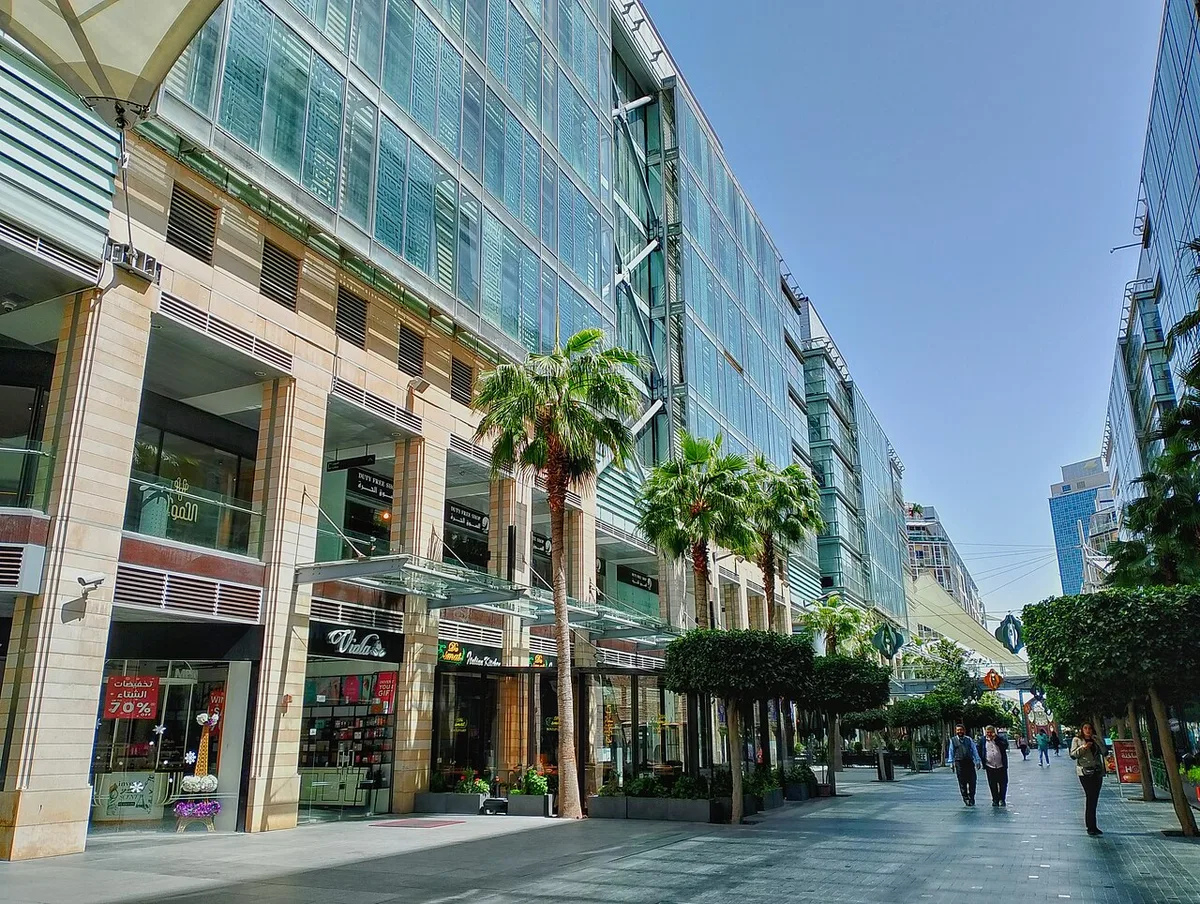
Every list of Amman’s places needs one entry for the city Amman is becoming, and it stands a few hundred metres from the King Abdullah Mosque: Abdali, the new downtown, a vast redevelopment on the former military and government lands between the old city and the west. Its spine is the Boulevard, a pedestrian street of cafes, restaurants and shops running between glass towers – hotels, offices, residences – with the Abdali Mall at one end and the district’s public spaces at the other. Ammanis have adopted it the way cities adopt a new square: as the evening promenade of the prosperous city, the place for the weekend crowd, the fountain photographs, the seen-and-be-seen coffee. To understand modern Jordan, the prosperous, outward-looking, mall-and-espresso Jordan, this is the fieldwork.
The honest traveller’s assessment has to hold two truths. The Boulevard is, by design, placeless – the same brands, the same glass, the same menu grammar as a new district in any capital from Dubai to Baku – and a visitor with one evening in Amman should spend it on Rainbow Street, full stop. But as a second evening, or as the other half of the King Abdullah Mosque excursion, Abdali earns its entry: it is immaculately kept, genuinely popular with the city’s own families, and its towers give the skyline the downtown photographs now require. The contrast is itself the sight – stand on the Boulevard and look east, and the old hills of limestone houses run to the horizon; turn around, and the future is glass. A list that shows only the old city tells half the story.
Practical notes are brief: the district is at its best after dark, when the heat is off and the promenade fills; the mall is a mall, good for an air-conditioned hour and the cinema; and the whole area pairs with the mosque and the National Gallery into a north-Amman half day that balances old art, new faith and new money in about a square mile. File Abdali under context rather than wonder – and go anyway, because the context is the country now.
Cave of the Seven Sleepers – The Legend at the City’s Edge
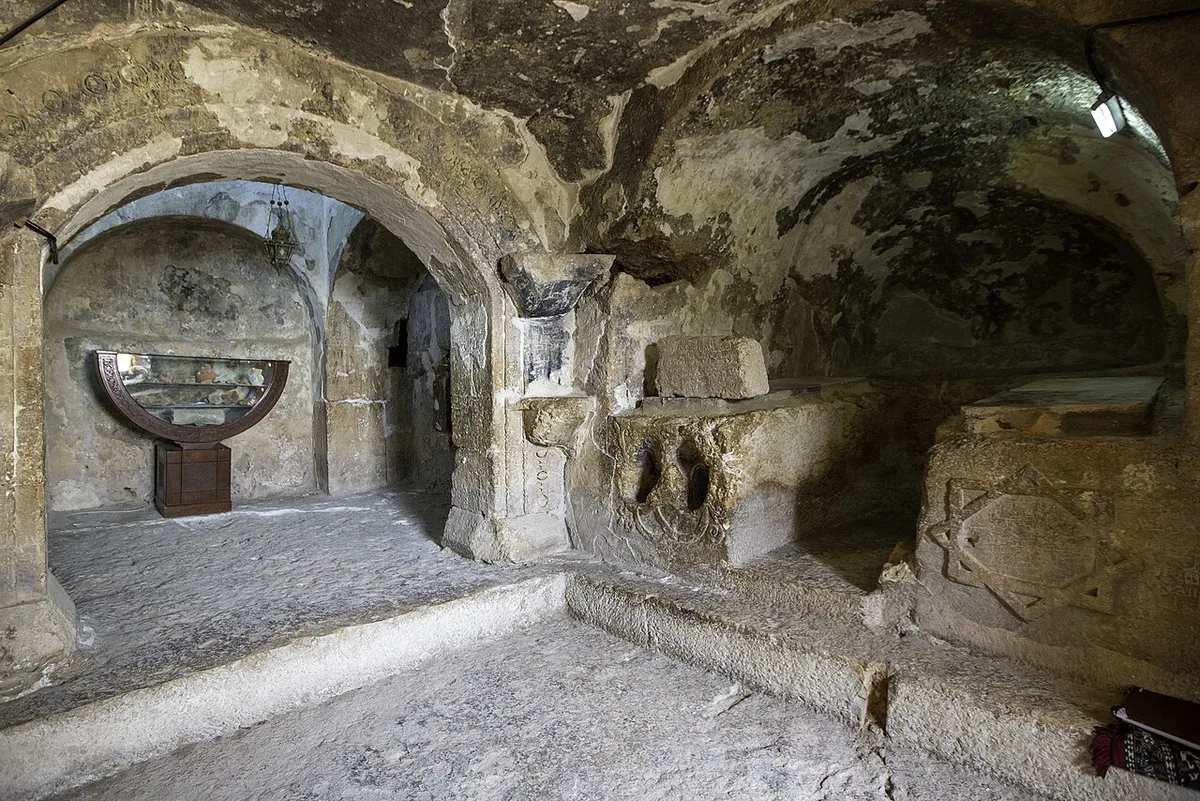
The last entry on this list is the one that tests the traveller, because it asks for a drive, a hill village, and a story instead of a spectacle. At al-Raqim, in the village of al-Rajib some ten kilometres south-east of the downtown, a rock-cut cave complex is venerated as the cave of the Seven Sleepers – the youths of the legend told in Christian tradition and in the Quran’s Surah Al-Kahf, who fled persecution, slept in a cave for centuries, and woke into a changed world. The site was excavated from 1963: a cave of rock-cut tombs and sarcophagi – in one, bones are visible through a small opening – with the ruins of a Byzantine church converted into a mosque standing above it, its mihrab still in the wall, and mosques of later centuries completing a complex that both faiths have tended. The identification is tradition rather than proof – Ephesus in Turkey makes the same claim, more famously – and the site wears the uncertainty honestly: what is certain is that people have prayed at this cave for a very long time, and the layers of church and mosque over the tombs are the physical record of the story’s double life.
The visit is quiet. This is a pilgrimage site before it is a tourist sight, kept by the Ministry of Awqaf, with a modern mosque beside the ancient complex and worshippers among the visitors; dress modestly, carry a scarf for women visitors, and expect a custodian’s welcome rather than a ticket gate’s machinery. The cave itself is small – the visit is measured in tens of minutes, not hours – and its power is in the compression: tombs in the rock, the little mosque over them fitted exactly as the Quran’s description is read by believers, the cemetery around. Set against the Citadel’s empires and the Jordan Museum’s millennia, the cave offers a different register entirely: a place where the exhibit is a belief.
Honesty about the excursion: it is the most skippable entry on this list for a two-day visitor, and the least skippable for anyone whose Jordan trip is substantially about the Quranic and biblical landscape – for those travellers it may outrank half the downtown. The drive out through the south-eastern suburbs is ordinary; the site is small; the facilities are basic. What it adds to the list is depth of a kind no other entry offers, and a reminder that Amman’s story is not only in its hills – it is also in the villages at its edge, where a cave in the limestone has been answering the same story for fourteen centuries of telling.
How the List Fits Together – Pairings and Priorities
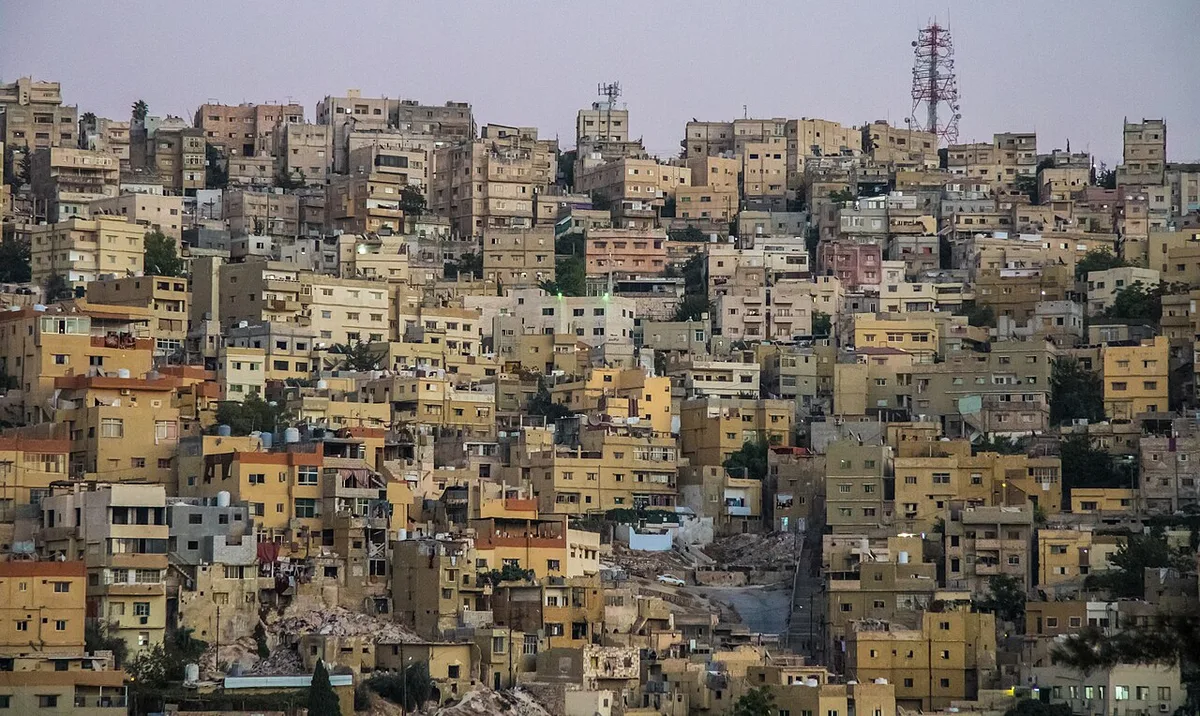
Sixteen places is a menu, not an instruction, and this section is the ordering system. The downtown cluster – Citadel, Roman Theatre, Odeon, Nymphaeum, Balad souks and the Duke’s Diwan – is one long day: hill first in the cool, theatre before the groups, markets at midday, the Diwan’s balcony last. The art cluster – Darat al Funun, Weibdeh and the National Gallery, with Rainbow Street for the evening – is the second day, slower by design. The mosque pair divides naturally: the King Abdullah I Mosque belongs with the National Gallery and Abdali in the north of the city, while Abu Darwish stands alone in the east and pairs with nothing except the drive and the view. The Royal Automobile Museum and the Cave of the Seven Sleepers are the two excursions, each a half day, each in a different direction – west to the park, south-east to the cave.
Priorities, if time is short, are honestly stated. With one day, take the downtown cluster and Rainbow Street in the evening, and let the rest go without guilt – that day contains the essential Amman. With two days, add the art cluster and the Jordan Museum, which is the strongest single interior in the country. With three, the list opens out: the Royal Automobile Museum, Abu Darwish, Abdali. The cave is the connoisseur’s fourth day or the pilgrim’s first. And the list will not pretend the rankings are neutral: the Citadel and the Jordan Museum are the two places whose absence would make a visit to Amman incomplete.
One mechanical note: Amman’s sights keep institutional hours, hills punish midday walking, and Friday reshapes the week – mosques are for worshippers at midday, some galleries and the Diwan keep shorter Friday hours, and the souks run regardless. Mornings on the hills, interiors at noon, a taxi between clusters – and the best places to visit in amman stop being a list and become a city you have actually been to.
The Honest Downsides – What This List Asks of You
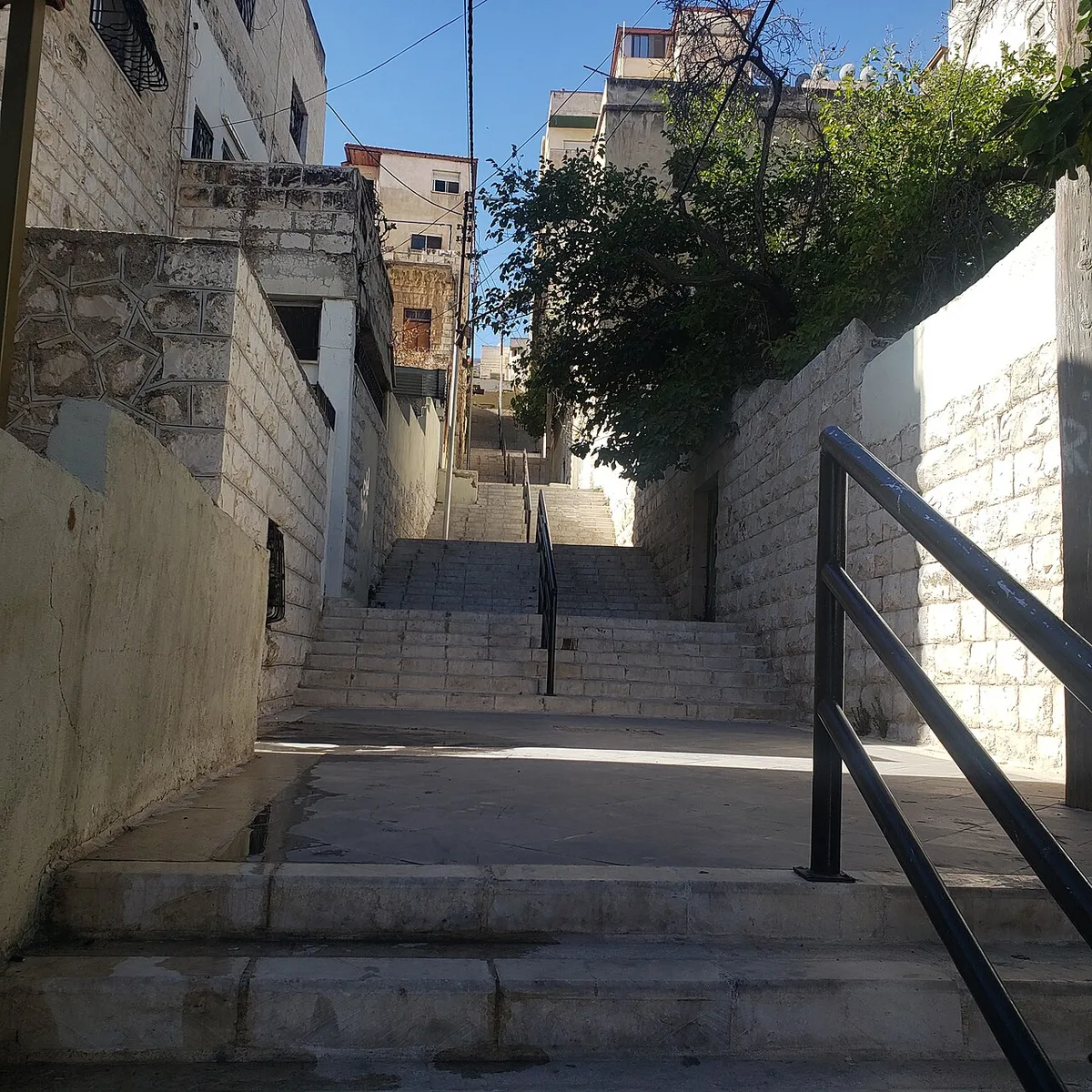
An honest list ends with its costs, and Amman’s are specific. The first is vertical. Almost every place here involves a climb – the Citadel’s plateau, the theatre’s tiers, Weibdeh’s lanes, staircases between streets that the map shows as neighbours – and the city in summer adds heat to altitude. The defence is pacing and taxis, which are cheap and everywhere, but travellers with limited mobility should plan Amman as a driven city with walking highlights, not the reverse, and should know that several of these sites – the Citadel plateau, the upper theatre – are genuinely hard work. The second cost is spread: the list spans a capital of millions, the excursions are real drives, and traffic between clusters at the wrong hour can eat the time a museum deserved. Cluster, as the section above insists, or the city will tax you for ignoring its shape.
The third cost is unevenness, and it is better admitted than discovered. Amman’s great sights sit beside modest ones – the Nymphaeum is a wall in a street, the Odeon a footnote with seats, the cave a small rock chamber – and the city’s interpretation, outside the Jordan Museum and the Royal Automobile Museum, is often thin: panels are few, context is assumed, and a guide or a well-read companion transforms several of these places. None of that is a reason to skip the list; it is a reason to read it as it was written, with the strong entries strong and the quiet entries quiet. A city of this age and survival does not owe any visitor a theme park, and Amman’s refusal to be one is, in the end, most of its charm. Go in with the strong entries strong in your mind and the quiet ones as texture, and the city will meet you more than halfway.
Frequently Asked Questions
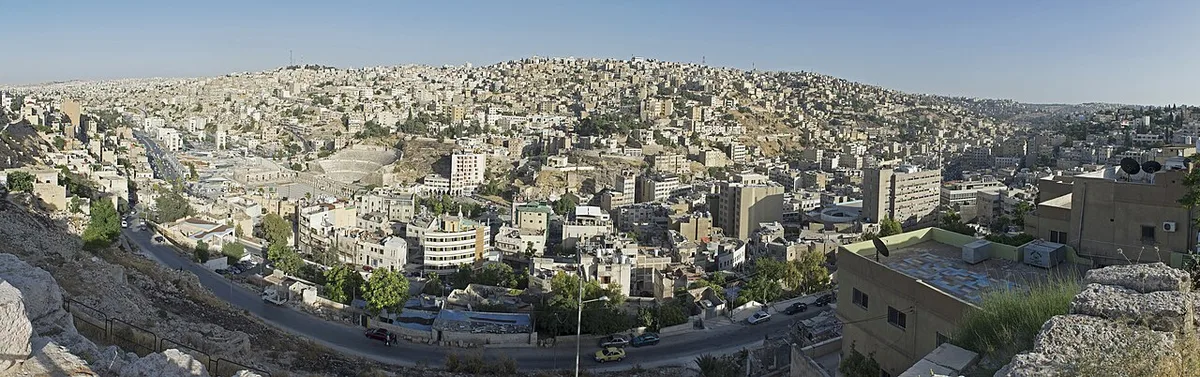
How many days do you need to see the best places in Amman? Two full days cover the heart of this list – the downtown cluster on the first, the art hills and the Jordan Museum on the second. A third day adds the excursions: the Royal Automobile Museum, Abu Darwish Mosque and Abdali. The Cave of the Seven Sleepers deserves its own half day and is the natural fourth element, not a squeeze-in.
What is the single best place to visit in Amman? The Citadel, if you can only choose one – it holds the city’s whole layered history on one hill and its panorama orients everything else. The Jordan Museum runs it close as the best interior, and the Roman Theatre is the best single building. Between the three of them, the argument is a pleasure rather than a problem.
Are the Citadel and the Roman Theatre covered by the Jordan Pass? The mechanism matters more than the price list: both are Department of Antiquities sites of the kind the Jordan Pass is built around, and pass holders traditionally enter through the pass while other visitors buy a ticket at each gate. Check the pass’s current site list on the day, because inclusions change – and note that the Jordan Museum has historically stood outside the pass, charging its own entry.
Can non-Muslims visit Amman’s mosques? In one case, yes, by design: the King Abdullah I Mosque openly welcomes visitors outside prayer times, with modest dress available at the door. The Grand Husseini Mosque and Abu Darwish Mosque are working mosques whose interiors are generally for worshippers – admire them from outside, which for Abu Darwish, a building designed to be seen across the city, loses little. The Cave of the Seven Sleepers is a tended pilgrimage site that receives visitors of all faiths, with modest dress expected.
What should you skip if time is short? The honest order of sacrifice: Abdali first, as context rather than wonder; the Odeon and Nymphaeum next, as footnotes to the theatre and the souks; the cave next, unless faith brings you. Protect the Citadel, the theatre, the souks, the Jordan Museum and one of the art hills to the last hour – those five are the city.
Is the list walkable? In clusters, yes; as a whole, no – and no honest list would claim otherwise. Downtown is a walk, Weibdeh is a walk, and everything between clusters is a short taxi ride. Amman’s hills make heroes of nobody; take the car between the clusters and walk inside them.
The Short Version – The Best Places to Visit in Amman in One Page
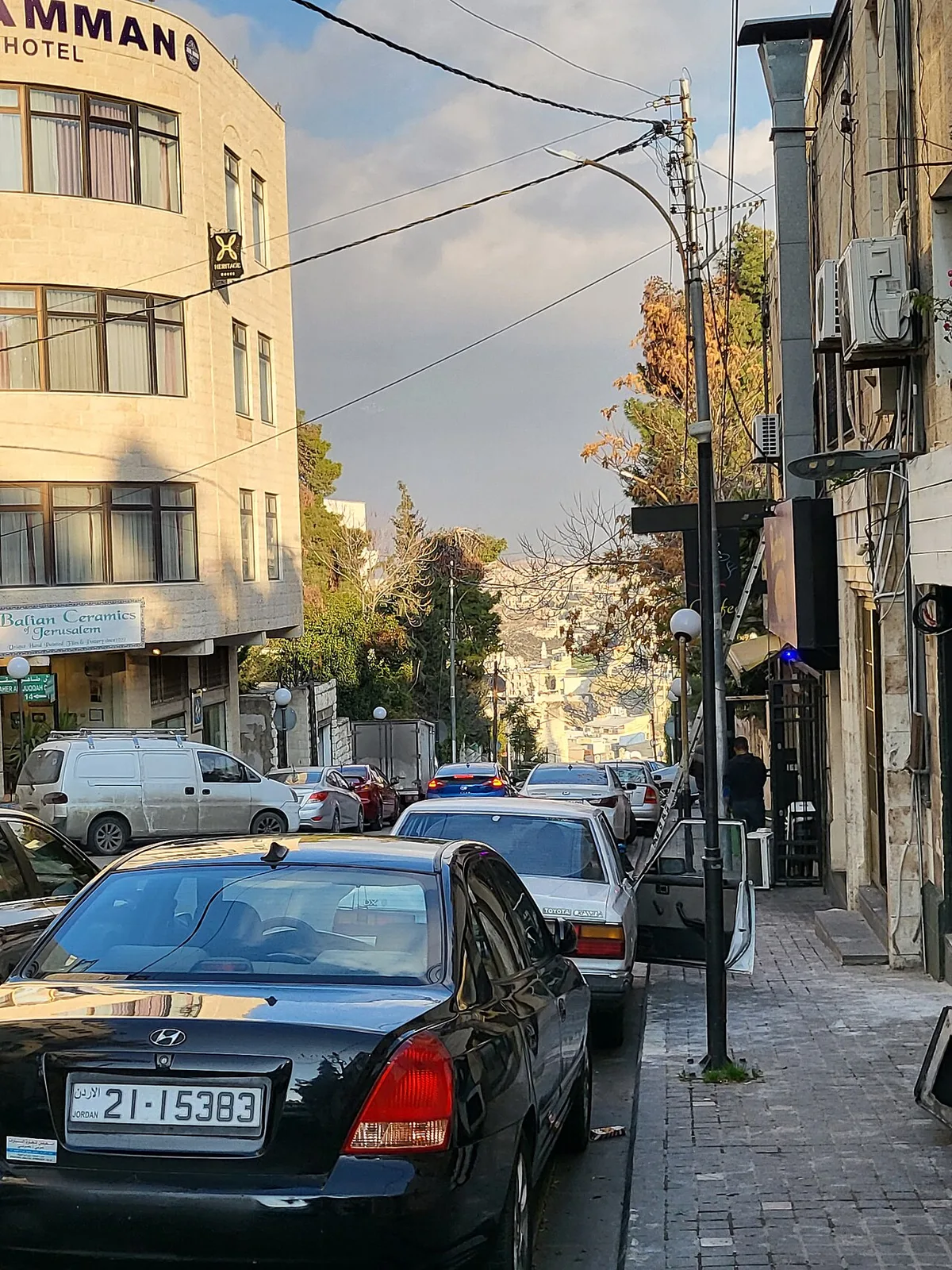
If this list shrinks to an itinerary, it is this. Morning one: the Citadel, early, temple and palace and the long view, then down to the Roman Theatre before the groups, the Odeon in passing, and the Nymphaeum on your way into the souks; lunch in the Balad and coffee on the Duke’s balcony above King Faisal Street. Evening: Rainbow Street, the view from its end, dinner above the lights. Day two: the Jordan Museum in the morning, when its galleries are quiet, then up to Weibdeh – Darat al Funun’s villas and garden church, the lanes of Paris Square, the National Gallery – and let the art hill take the whole afternoon at its own pace. Two days, honestly paced, beat four rushed ones: Amman’s hills tax every shortcut.
After that, the list becomes a choice of excursions. The Royal Automobile Museum for the modern kingdom in chrome; the King Abdullah Mosque’s blue dome and Abu Darwish’s stripes for the city’s two faces of faith; Abdali for the glass future; and the Cave of the Seven Sleepers for the oldest story of all. Each is a half day with the drive, and none bolts honestly onto the two core days – give the one that matches your curiosity its own morning. However the days divide, the shape holds: the best places to visit in amman are a hill of empires, a theatre that never closed, markets that never stopped, and a city still building on top of all three – and two days inside that shape will teach you more about Jordan than a week of passing through.