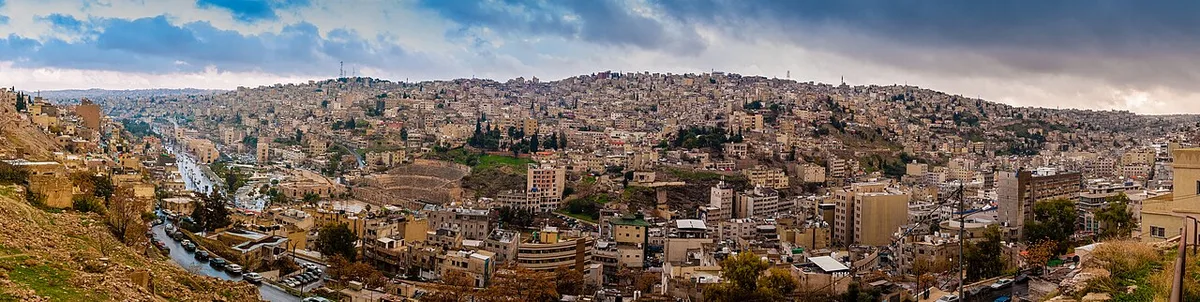
Most travellers meet Amman through a car window. They land at Queen Alia Airport, ride north into a sprawl of limestone hills, sleep one night, and leave at dawn for Petra – and this amman travel guide exists because that pattern wastes the most interesting city in Jordan. Amman is not a hub with a hotel attached. It is a capital of more than four million people layered over one of the oldest continuously inhabited spots on earth, a city where a Roman theatre still anchors the downtown, where the souks run on the same commercial logic they have run on for a century, and where the day trips most people fly in for – Jerash, the Dead Sea, Mount Nebo – are all easier from a pavement cafe in the Balad than from anywhere else in the country.
The mistake is understandable, because Amman does not hand itself over the way Petra does. There is no single ticket, no one reveal. The city’s pleasures are cumulative and geographic: the view from the Citadel at the hour the light turns, falafel eaten standing up in an alley that has sold it for decades, a gallery quarter built into 1920s villas, a brand-new downtown of glass towers rising over a wadi fifteen minutes from the Roman stones. You have to read the hills before the city makes sense, and reading the hills is most of what this guide does.
So treat what follows as the capital planned properly, in the order a visitor actually needs it. First the shape of the place – the hills, the circles, the old east and the new west – then the sights hill by hill, the museums, and the day trips that make Amman the best base in Jordan. After that, the machinery: getting in from the airport, getting around a city built vertically, the seasons, where to sleep, what to eat, and an honest account of the downsides, because Amman has real ones and every other guide pretends otherwise.
If you are planning the country as a whole, our Jordan travel guide sets the capital against Petra, Wadi Rum and Aqaba; and if your Amman nights bookend a southern run, our Petra travel guide covers the rose-red city in the depth it deserves. This page is for the city itself – give it two days at the very least, three if the day trips are calling, and it will stop being the place you passed through and become the part of the trip you describe first.
Reading the City – Hills, Circles and Two Ammans
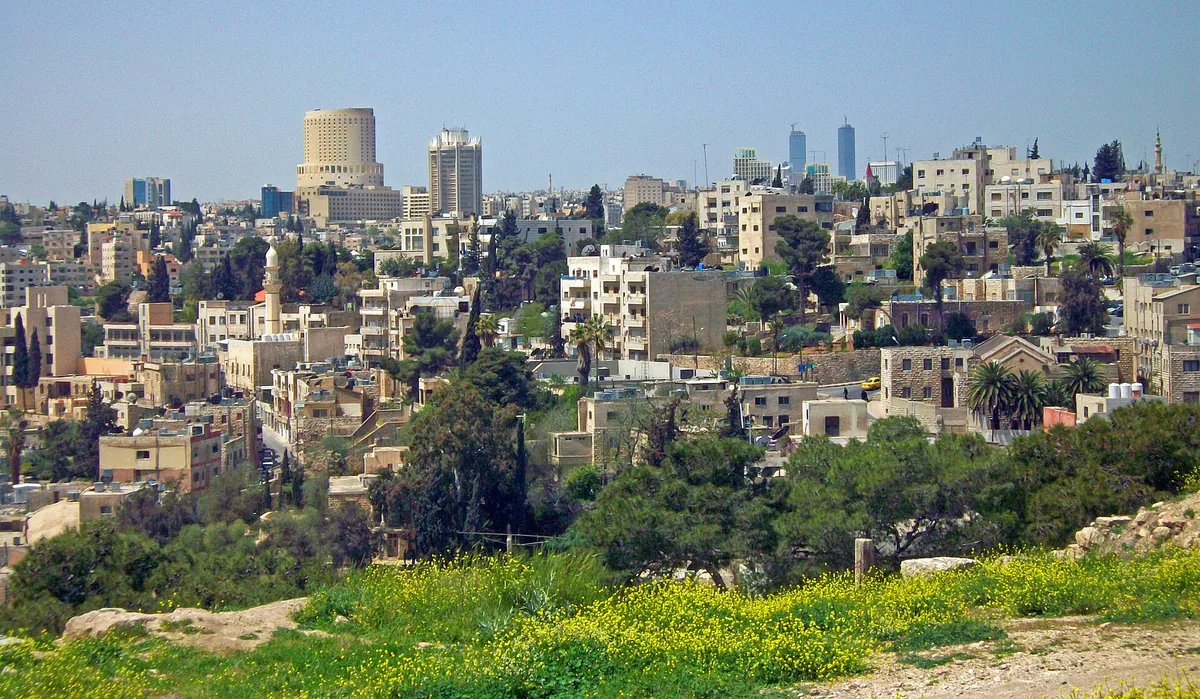
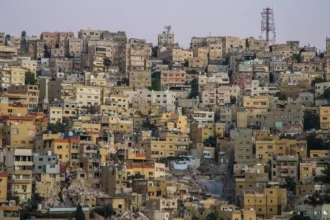
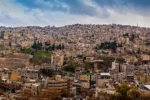
Everything in Amman is explained by its topography, so learn the topography first. The old city was built on seven hills – jabals, in Arabic – arranged around the valley of the Balad, and although Amman has long since spilled across far more high ground than that (the count of hills is now well into double figures), the original seven still organise everything a visitor does. Jabal al-Qal’a, Citadel Hill, holds the ruins. Jabal Amman holds Rainbow Street and the old diplomatic quarter. Jabal al-Weibdeh holds the galleries. The Balad – downtown – fills the valley floor between them, which is why downtown is the one flat, walkable, grid-like part of the city and everything else is a climb.
West Amman is the second city inside the first. As the capital grew rich and grew outward, its centre of gravity slid west along a chain of traffic circles – First Circle on Jabal Amman out to Eighth Circle at the city’s edge – and the neighbourhoods strung along that axis, Abdoun, Sweifieh, Shmeisani and the rebuilt Abdali district, are glass-and-limestone modern: malls, five-star hotels, embassies, office towers, cafes with valet parking. East Amman, the older half, is denser, poorer, more conservative and considerably more interesting to wander. The two halves share a city government and a football rivalry and not much else, and a good visit samples both deliberately rather than drifting into whichever one your hotel happens to sit in.
The circles deserve a sentence of their own, because they are how Ammanis actually navigate. Addresses in this city are given by circle and landmark – “just past Third Circle, behind the hospital” – and taxi and ride-hailing drivers think the same way. Learn the sequence along the main westward road, Zahran Street, and the city’s map reorganises itself in your head: First Circle for Jabal Amman and Rainbow Street, Second and Third for the older west-side hotels and embassies, Fourth for the prime ministerial quarter, Fifth and Sixth for Abdoun and the big malls, and so on out to the airport road.
Finally, the honest framing every amman travel guide owes you: Amman is a working Arab capital, not a resort and not a museum town. Its sights are real but scattered, its charm is in its texture rather than its monuments, and it rewards travellers who like cities for their own sake – markets, food, neighbourhoods, views – over travellers collecting wonders. Go in with that expectation set correctly and Amman overdelivers; go in expecting a warm-up act for Petra and you will leave before the city has had a chance.
The Citadel – One Hill, Every Empire
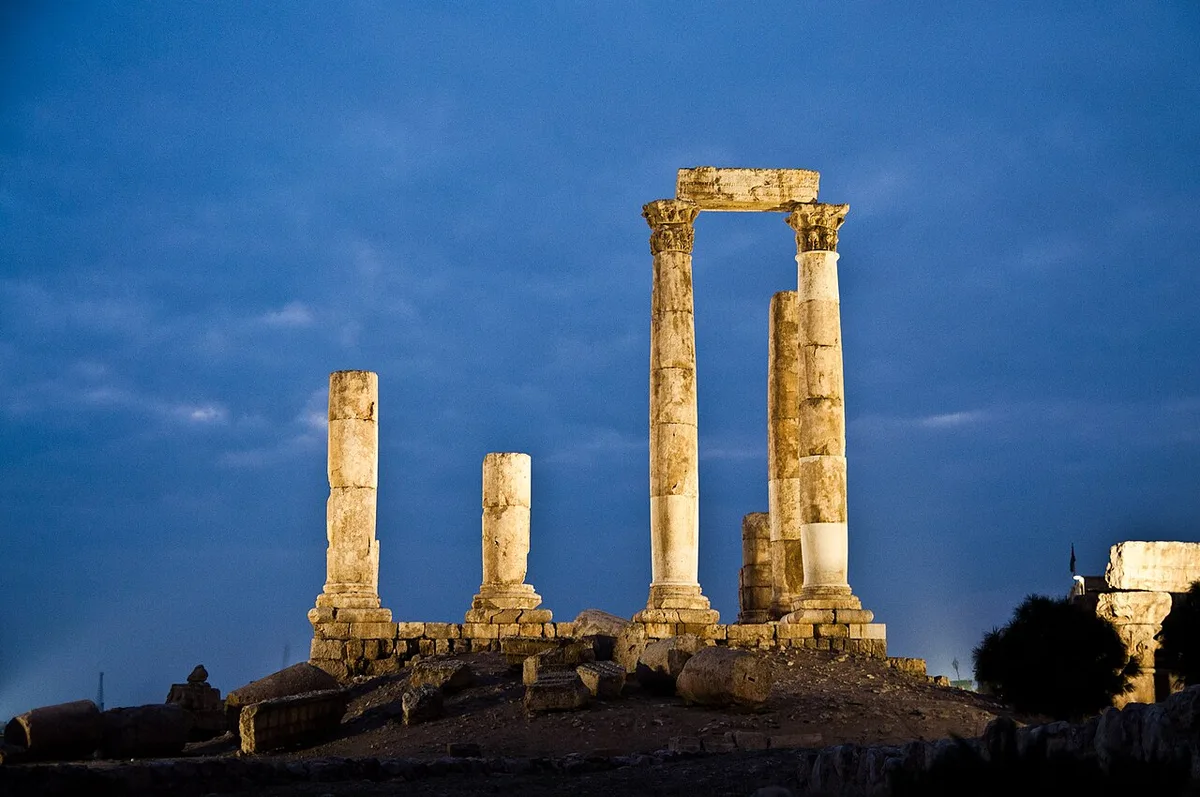
If you see one sight in Amman, make it this one, and time it for late afternoon. The Citadel – Jabal al-Qal’a – is the flat-topped hill at the city’s heart, and it has been fortified, worshipped on and lived on for so long that its archaeology reads like a table of contents for the whole region: Bronze Age walls, an Iron Age capital (this was Rabbath-Ammon, chief city of the Ammonites), a Roman temple, a Byzantine church and an Umayyad palace, stacked within a few hundred metres of each other inside one circuit of walls.
The Roman layer is the photogenic one. The Temple of Hercules, built in the 160s AD when Amman was Philadelphia of the Decapolis, survives as a podium, a row of enormous re-erected columns and, lying in the dust nearby, the fragments of a colossal hand and elbow – all that remains of a statue of Hercules estimated to have stood over twelve metres tall, which would have made it one of the largest marble statues of the ancient world. The scale is the point: Roman Philadelphia was rich, and it built accordingly.
Walk the short path north and the centuries jump. The Umayyad Palace complex, from the early Islamic period when Amman was a district capital of the caliphate, is anchored by a reception hall whose dome – a modern reconstruction on the original carved wooden pattern – tops the most complete early Islamic palace building in Jordan. Between the two stand the remains of a Byzantine church with its mosaic-floored apse, and around everything run the hill’s fortification walls, rebuilt by every regime that held the city.
Two practical notes that matter more than any description. First, the Jordan Archaeological Museum sits inside the Citadel grounds – a small, old-fashioned museum whose cases hold an outsized share of the country’s finds, including Dead Sea Scrolls fragments, Neolithic plaster figures from Ain Ghazal and the inscribed Amman Citadel Stone; it is the natural companion to the national museum down in Ras Al-Ayn, covered in the museums section below. Second, the Citadel’s gift is its edge: the whole hill is a viewing platform, and the classic Amman photograph – the Roman Theatre in its bowl of hills, the Raghadan Flagpole above the palace district, the downtown rooftops running east – is taken from its southern rim. Come an hour before sunset, do the ruins first, and be at the rim when the light goes amber and the evening call to prayer rolls up from a dozen minarets at once.
The Roman Theatre, the Odeon and the Nymphaeum
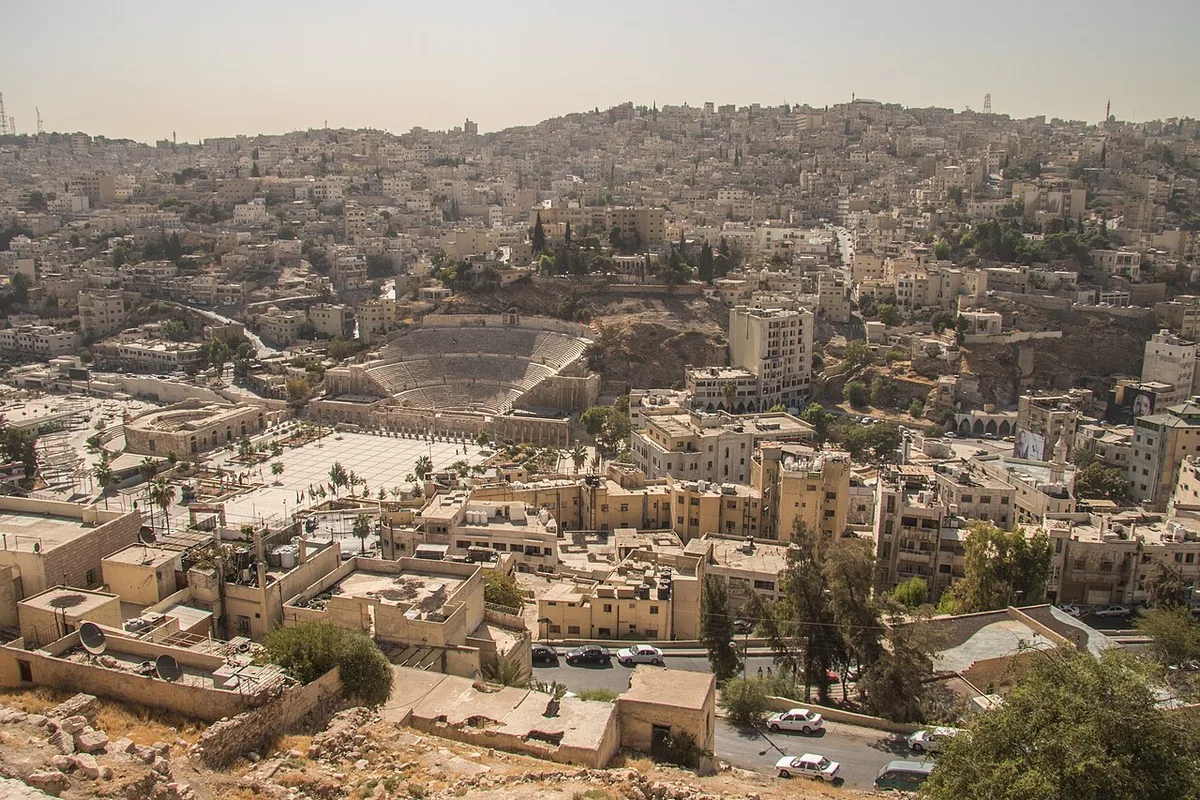
From the Citadel’s rim you look straight down on the second of Amman’s great ancient sights, and the pairing is the city’s essential photograph: palace hill above, theatre below, eight thousand years of city in one frame. The Roman Theatre was cut into the northern slope of the Balad’s valley in the second century AD, during the reign of Antoninus Pius, and it is built the way Roman theatres were meant to be built – into the hill, facing away from the afternoon sun, with seating for around six thousand people in three tiers divided, then as now, by price and status.
It is not a ruin in the melancholy sense. The theatre was restored in the twentieth century and returned to work: concerts, festivals and national celebrations still fill it, and on an ordinary day its steps fill with school groups, couples and off-duty soldiers eating sandwiches, which is its own kind of continuity. Climb to the top row – everyone does, the steps are steep and the thigh-burn is part of the ritual – for the view back up to the Citadel you have just come from. Built into the theatre’s wings are two small museums, the Jordan Folklore Museum and the Museum of Popular Traditions, whose cases of costume, jewellery, weapons and everyday objects from Jordan and Palestine are worth twenty unhurried minutes and are usually empty while the crowds photograph the seats outside.
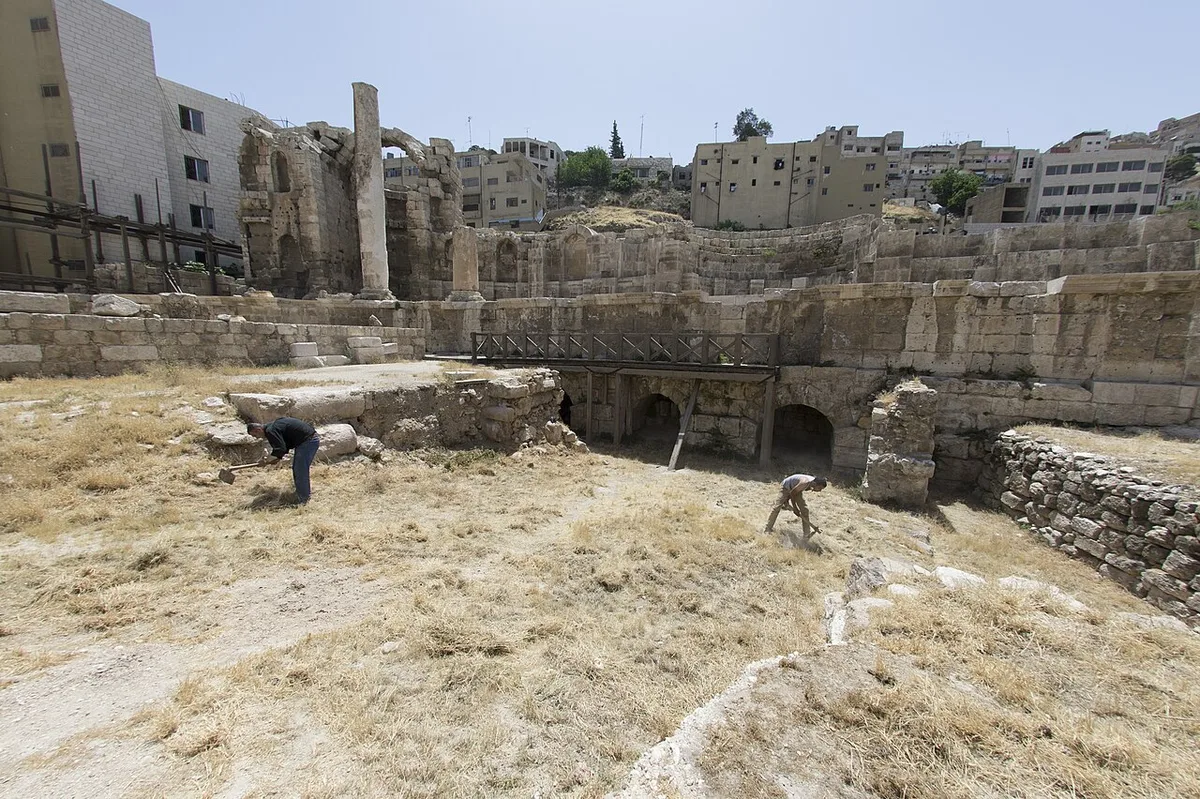
The theatre’s square, the Hashemite Plaza, spreads in front of it – a broad modern plaza of fountains and flags that functions as downtown’s front room. On its eastern side stands the Odeon, the theatre’s little sibling: a small roofed performance hall of around five hundred seats, built in the same period for music and poetry rather than spectacle. And a few streets west, hemmed in by the Balad’s traffic, stands the third piece of Roman Philadelphia’s civic core – the Nymphaeum, a vast ornamental public fountain completed around 191 AD, its carved facade excavated, restored and now standing as the city’s most surprising ancient fragment, the kind of monument Ammanis drive past daily without a glance.
See the three together and you have Roman Amman in one walk: entertainment, water and empire, all within a flat ten minutes of each other on the valley floor – the easiest sightseeing circuit in the city, and the natural prelude to the Balad around it.
Downtown – The Balad, Its Souks and Its Landmarks
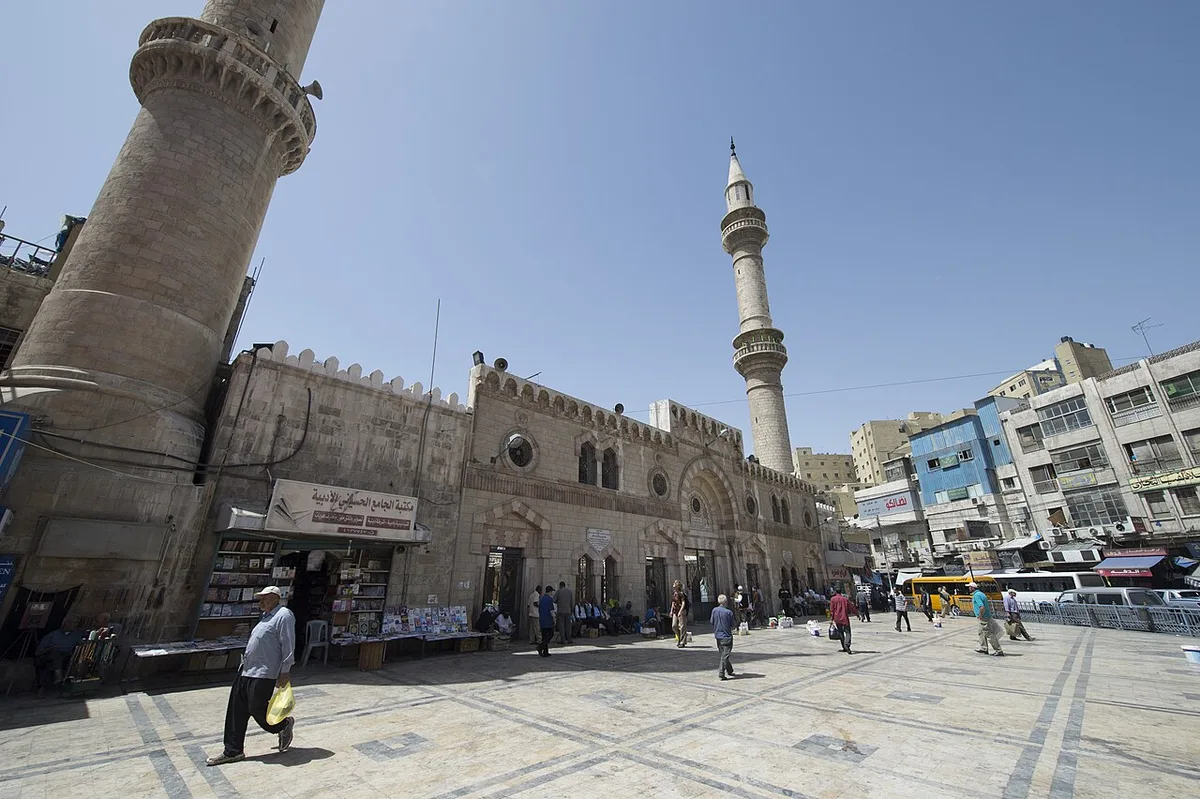
The Balad is where Amman began and where, for a visitor, it still centres. This is the valley floor between Citadel Hill and Jabal Amman: a dense, loud, low-rise commercial city of market streets, coffee stands, gold shopfronts and nineteen-fifties concrete, built over Roman Philadelphia’s street plan and trading, in one form or another, ever since. Nobody goes to the Balad for a single sight. You go for the density – the sense of a whole old economy still running at full speed in public.
Anchor yourself on the Grand Husseini Mosque, the Balad’s fixed point, rebuilt in the 1920s in pink-and-white stone on the site of a much older mosque and fronted by a paved plaza where the bookstalls set up. Visitors treat it as an exterior landmark – it is a working congregational mosque, not a museum – but its plaza is the natural place to get your bearings, with the souks beginning at its edges and King Faisal Street, the Balad’s ceremonial spine of banks and old hotels, running north.
The souks organise themselves by trade in the old way, and wandering them works best by category rather than by map. There is a gold souk, where the windows blaze with bridal jewellery sold by weight; a spice and perfume souk – al-Attarine – where the sacks run to dried limes, sumac, incense and rosebuds; a sugar souk; fabric streets; a vegetable market at full roar; and lanes of tailors, cobblers, hardware and housewares, each trade clustered as trades have clustered in Levantine cities for centuries. Prices for fixed-price goods are often marked; for everything else, the negotiation is the transaction, conducted with more humour than pressure. This is the one part of Amman where an amman travel guide’s advice is simply – walk slowly, drink the coffee you are offered, and let the morning go.
Threaded through the commerce are the Balad’s institutions, most of them edible, and they get their own section below. For now, note the pattern: downtown is where Amman eats its breakfast, buys its gold, prints its books and catches its buses, and it does all of it before the malls in the west have opened their doors. Spend at least one full morning here, ideally starting at the theatre when it opens and letting the souks take the rest.
Rainbow Street and Jabal Amman – The Cafe Hill
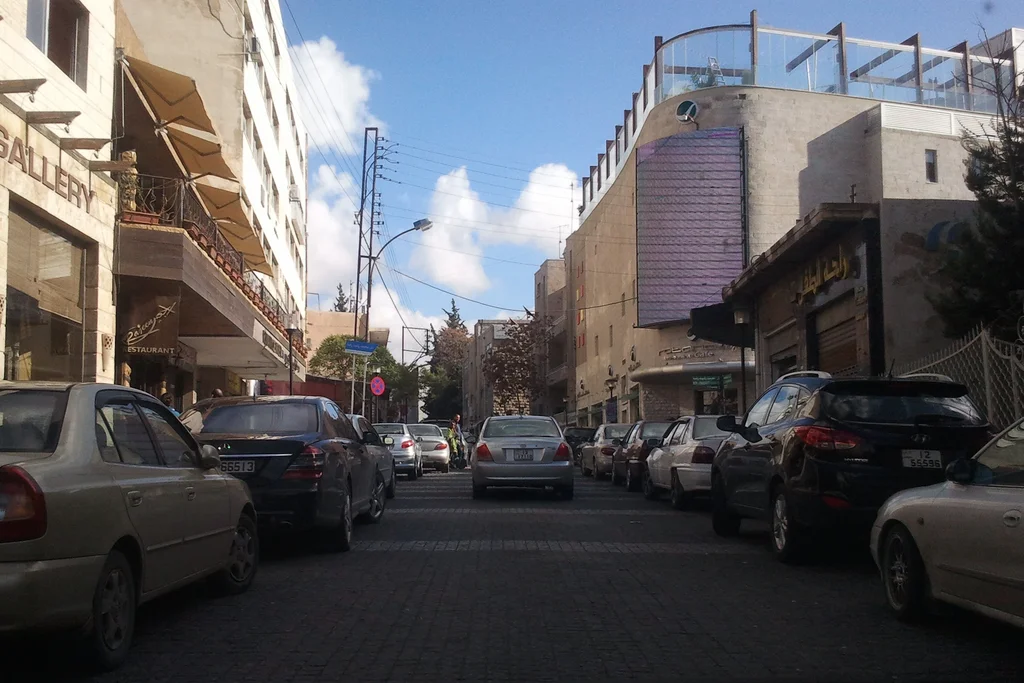
Climb from the Balad up the staircases to Jabal Amman and the city changes register. This was the hill of the new capital in the 1920s and thirties, when Amman grew from a Circassian village and rail town into a seat of government, and its streets are lined with the era’s limestone villas – deep balconies, tall shutters, gardens behind walls – built by merchants and officials from across the Levant. It is the most handsome residential architecture in the city, and its main street, Rainbow Street, has become the capital’s cafe-and-evening promenade.
Rainbow Street – named for a long-gone cinema – runs along the hill’s shoulder from First Circle, and its formula is simple and reliable: cafes with terraces over the downtown view, bookshops, craft and design stores, ice-cream parlours, restaurants in converted villas, and a pavement crowd that peaks on warm evenings and Friday afternoons. In the summer months the side street of Souk Jara adds a Friday flea and craft market to the mix. At the street’s far end, the Wild Jordan Centre – run by the Royal Society for the Conservation of Nature – pairs the best terrace view in the city with a shop selling the products of Jordan’s nature reserves, so your coffee money goes somewhere genuinely useful.
Jabal Amman rewards the same treatment as the Balad: no tick-list, just walking. Explore the side streets for the villas, the old hotels and the occasional gallery, use the staircases down to downtown as your shortcuts (they are steep, shaded and full of cats), and come back up at dusk, when the hill’s west-facing terraces catch the last of the light and the Citadel across the valley turns the colour of honey. If the Balad is Amman’s engine room, Jabal Amman is its front parlour, and the two belong in the same day.
Jabal al-Weibdeh – The Arts Quarter
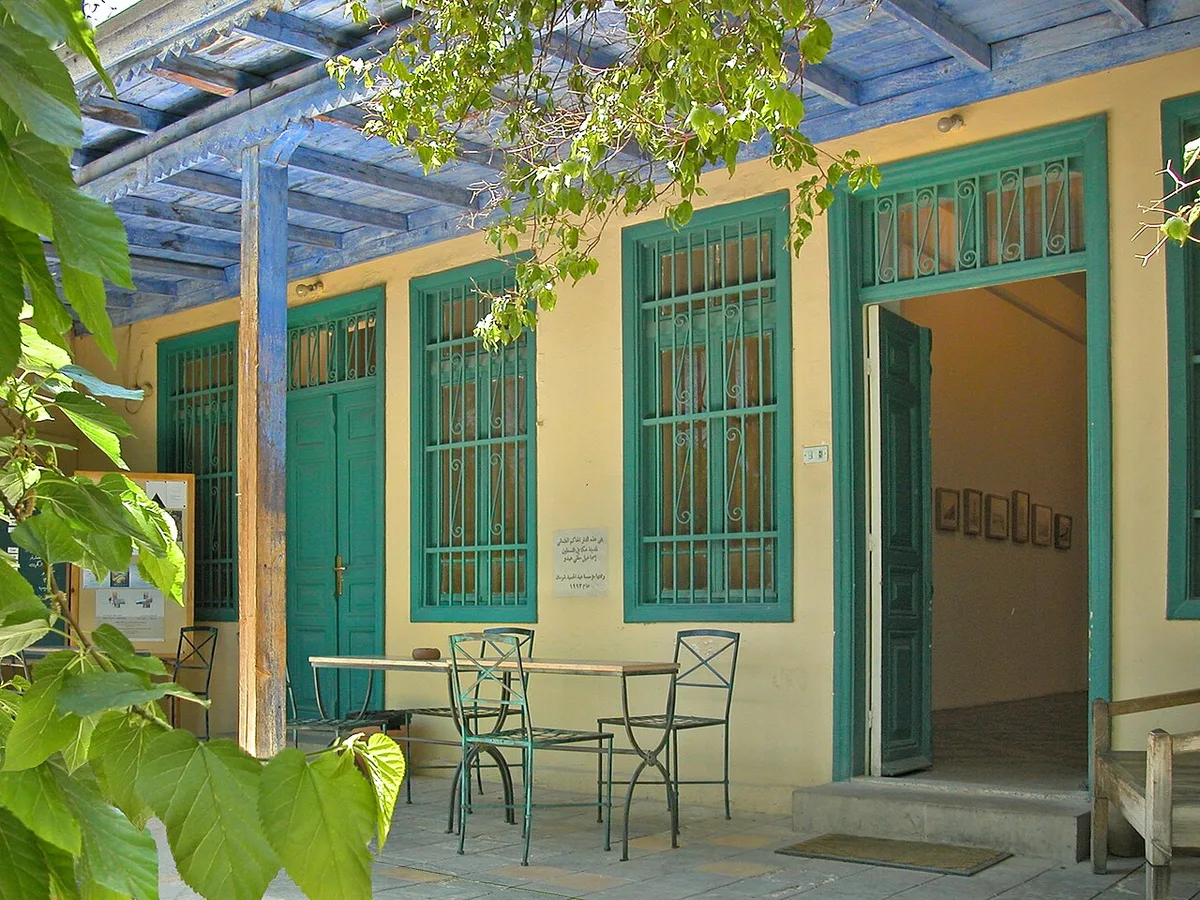
Across the valley from Jabal Amman, quieter and more residential, Jabal al-Weibdeh is the hill artists and writers colonised, and it is the neighbourhood to choose when Amman’s noise starts to wear. Its centre is Paris Square – a leafy roundabout of cafes and bakeries that everyone still calls by its old name, al-Haouz – and its streets run with small galleries, studios, cultural centres, secondhand bookshops and some of the city’s best small restaurants, nearly all of it housed in the same 1920s-and-after limestone stock as Jabal Amman but gentler, greener and slower.
The quarter’s anchor is Darat al Funun, the Khalid Shoman Foundation’s arts centre, spread through a complex of historic houses and gardens on the hill’s southern slope. It mounts serious exhibitions of Arab art, keeps a library and a cafe-terrace with one of the great downtown views, and its grounds hold a small extra that tells the city’s story in miniature: the excavated remains of a Byzantine church, sitting in a garden below the galleries. Entry to the exhibitions is the quarter’s essential hour; check what is showing when you arrive, because Darat al Funun’s programme is the closest thing Amman has to a cultural calendar made visible.
Weibdeh’s other pillar, at its northern edge, is the Jordan National Gallery of Fine Arts, whose permanent collection of modern art from Jordan and the wider region occupies two buildings around a small sculpture park – the measured, museum-scale counterweight to Darat al Funun’s house-party charm. And watching over the quarter from the next hill is the blue dome of the King Abdullah I Mosque, the mosque visitors most often enter in Amman, its visiting arrangements posted at the gate and its courtyard giving yet another cross-city view. Taken together, Weibdeh is the case for Amman as a living city rather than a sightseeing stop: come for a gallery morning, a long lunch and a square-side coffee, and you have understood something about the capital that no ruin can teach.
Amman’s Museums – Scrolls, Statues and the King’s Cars
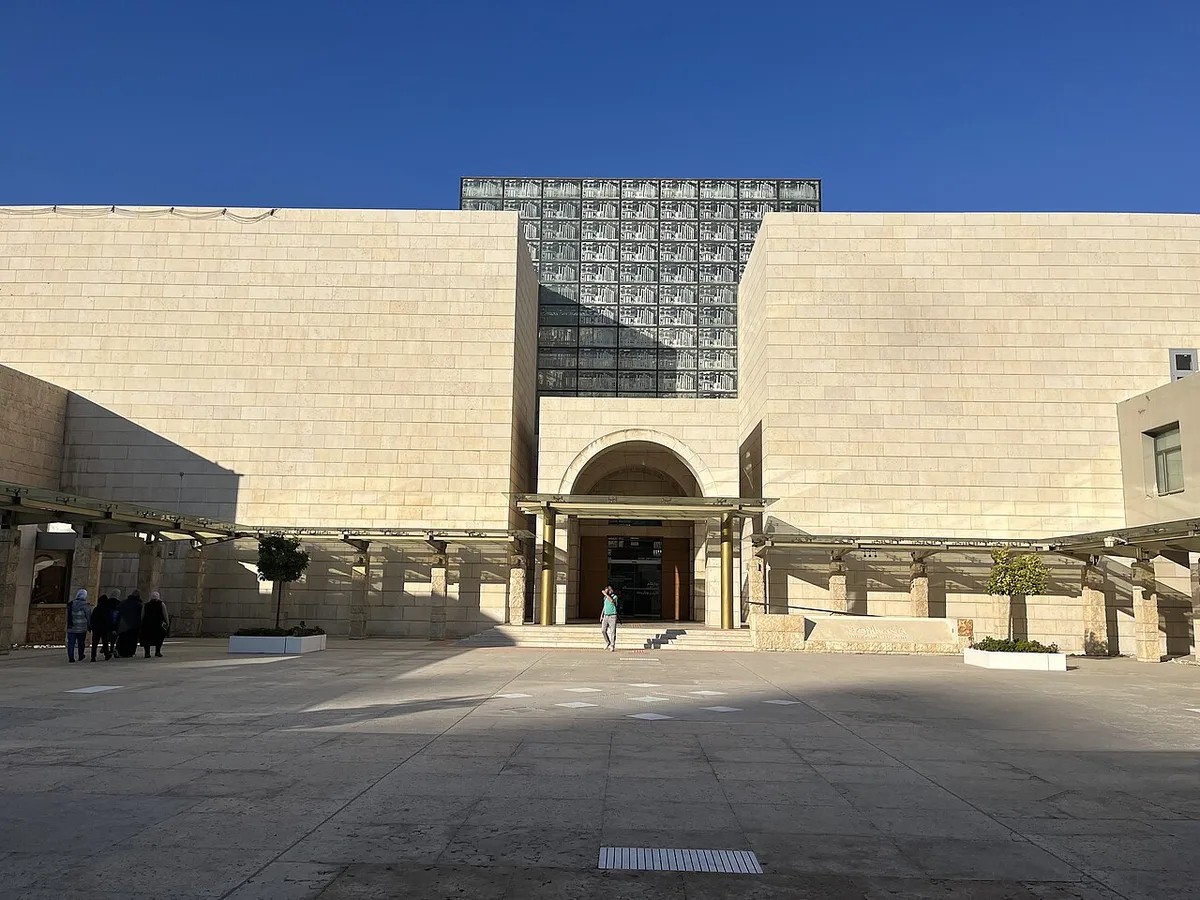
Amman’s museums divide neatly by temperament, and a good amman travel guide should send you to at least two kinds. The national collection is the Jordan Museum, in Ras Al-Ayn at the foot of the Citadel hill: Jordan’s largest museum, purpose-built and opened in the last decade, and the one place where the country’s whole story is laid out in sequence – from the Neolithic settlement of Ain Ghazal, whose plaster statues, among the oldest large-scale human figures ever made, are the museum’s signature exhibits, through the Bronze and Iron Age kingdoms to the Roman cities and the Islamic centuries. Its Dead Sea Scrolls material and the Copper Scroll’s story give the ancient texts a Jordanian address, and its galleries are the single best preparation for everything else you will see in the country. Give it half a day if history is your reason for coming; two hours at a minimum.
The second kind is already familiar from this guide: the small site museums that reward attention out of all proportion to their size. The Jordan Archaeological Museum up on the Citadel, the folklore and popular-traditions museums in the Roman Theatre’s wings – these are old-school cases-and-labels museums, and their charm is exactly that. Together they make a tidy system: the Jordan Museum for the narrative, the small museums for the objects in their home settings.
The third kind is the west side’s specialist pair, out in King Hussein Park, and they earn their space in any family itinerary. The Royal Automobile Museum displays the car and motorcycle collection of the late King Hussein – a genuine enthusiast’s assembly line of a royal century, from armoured state cars to rally machines, presented as national history in chrome. Beside the same park, the Children’s Museum Jordan, the country’s first interactive children’s museum, does for under-twelves what the Jordan Museum does for adults, with hands-on exhibits that can absorb a full morning. Neither is on the standard tourist circuit, and that is rather the point: they are where Ammani families go, and an afternoon among them is a useful corrective to the ruins-and-souks version of the city.
The New West – Abdali, Abdoun and the Mall City
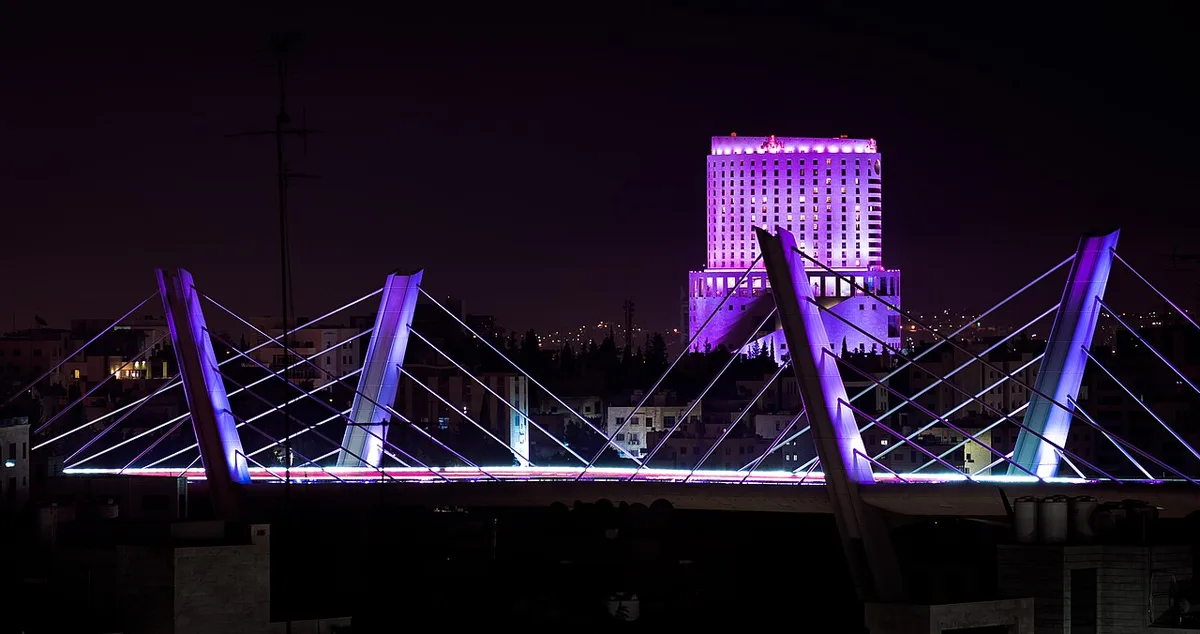
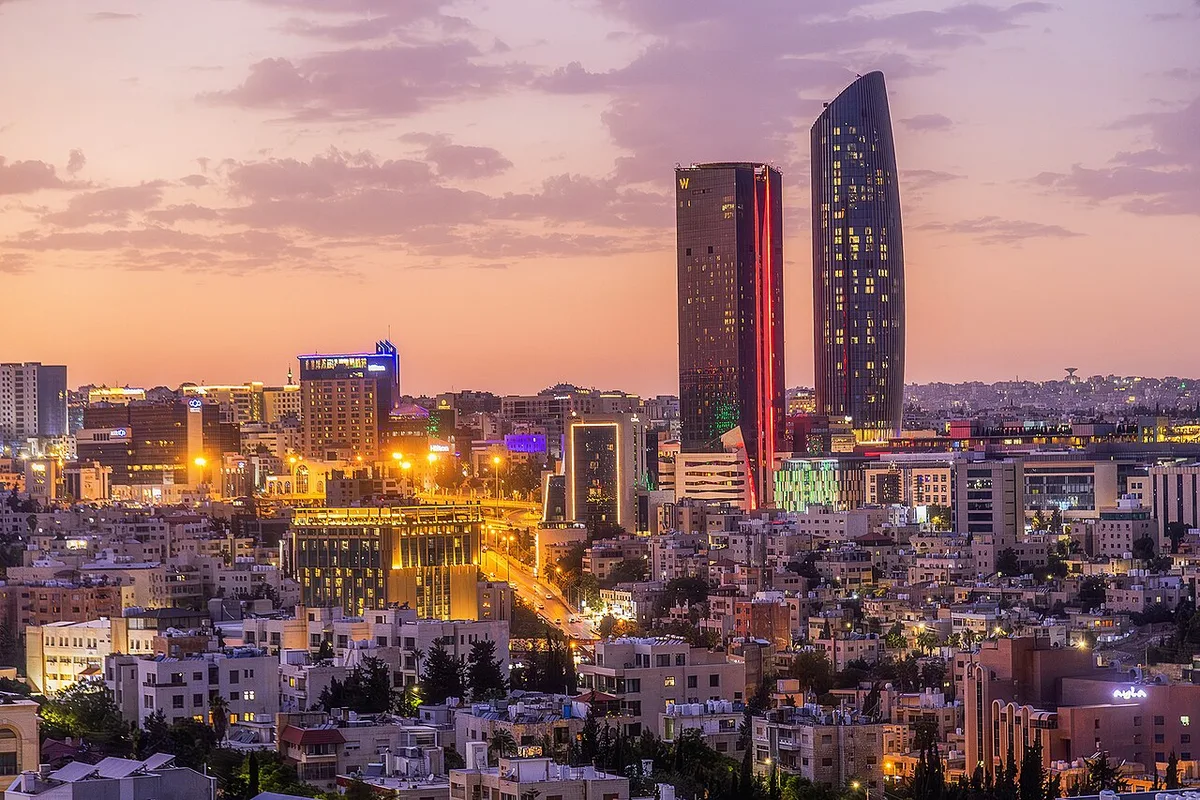
West Amman is the capital’s other proposition, and it should be visited as deliberately as the Citadel – not for sights, but for the sight of how Ammanis with money actually live now. Its centrepiece is Abdali, the rebuilt downtown: a whole new city quarter raised on the site of the old army headquarters, all glass towers, a pedestrian Boulevard of cafes and restaurants, a large mall, and the two hotel towers – the W and the Rotana – that now dominate the skyline in every sunset photograph. It is polished, international and faintly placeless, and it is where the capital’s business life, and much of its evening life, has moved.
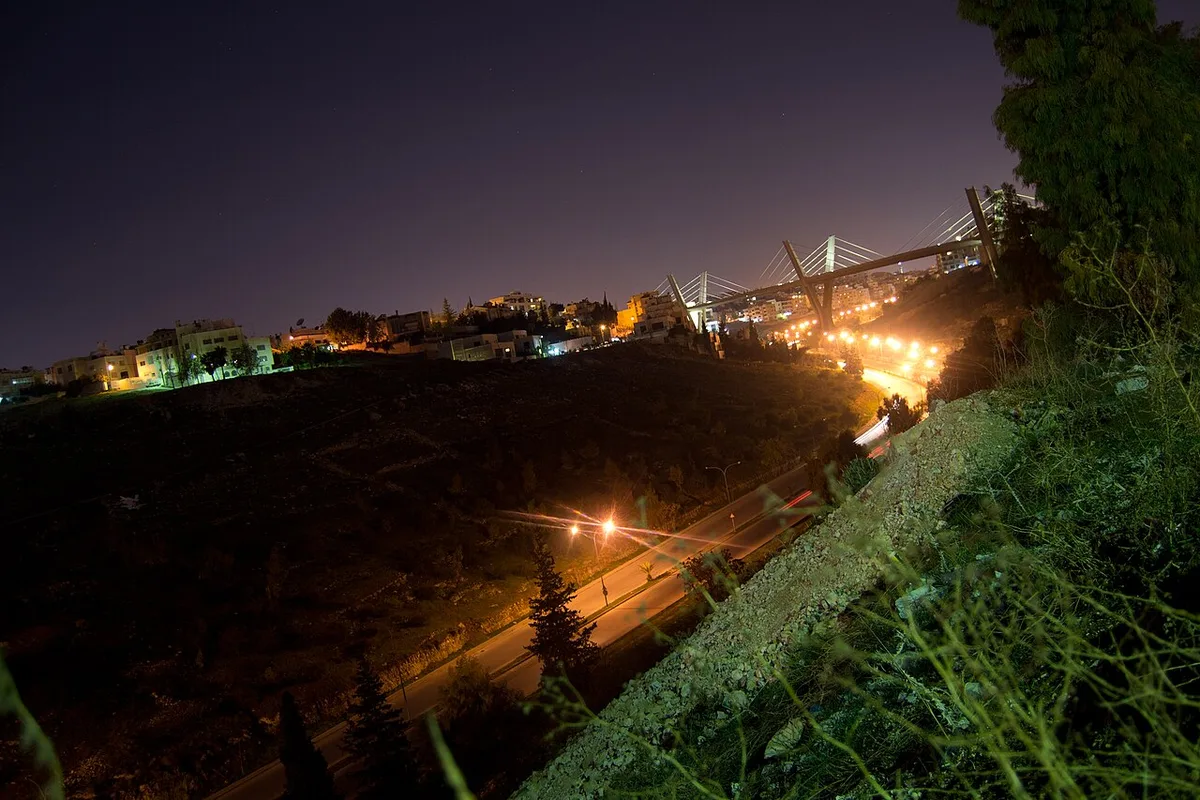
South of Abdali the west runs through the embassy-and-hotel districts of Shmeisani and into Abdoun, the city’s most affluent residential quarter, whose landmark is engineering: the Wadi Abdoun Bridge, a cable-stayed sweep across the valley that links the west’s halves and lights up at night like a harp. Around it, Abdoun’s cafes and restaurants serve the diplomatic crowd; further out, Sweifieh’s Wakalat Street and the big malls – City Mall, Mecca Mall, Taj Mall – run the retail economy of a city that shops seriously and late.
Why should a visitor care? Three reasons. First, contrast: an hour in Abdali after a morning in the Balad is the fastest education in modern Jordan available anywhere. Second, logistics: the west holds most of the city’s international hotels, its best-equipped restaurants and its nightlife, and for some travellers that balance matters more than charm. Third, honesty: this is half the city, and an amman travel guide that only shows you limestone and ruins is showing you a postcard. See both Ammans, and choose your base between them with open eyes – which is exactly the decision the where-to-stay section below takes apart.
Day Trip North – Jerash, Rome’s City an Hour Away
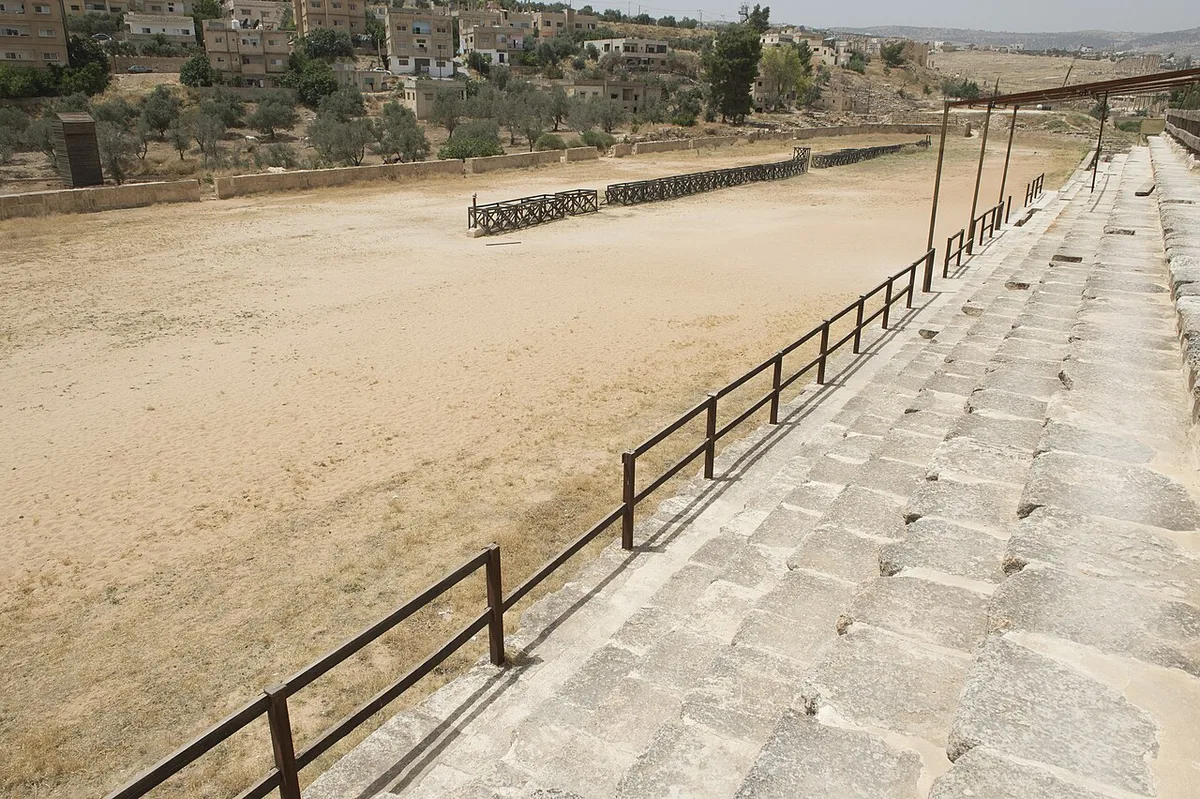
Every guide to this capital eventually says the same true thing: the greatest Roman city in the Middle East sits less than an hour north of it, and basing yourself in Amman is what makes it easy. Jerash – ancient Gerasa, a Decapolis city like Amman itself – was buried by earthquake and landslide for a thousand years and dug out astonishingly whole: not a picturesque fragment but a working city plan you can walk end to end, from Hadrian’s Arch and the hippodrome in the south, through the Oval Plaza’s forest of columns, up the Cardo’s rutted paving to the Temple of Artemis and the two theatres.
The reason Jerash belongs in an amman travel guide, rather than only in a ruins guide, is the base logic. From a northern Amman hotel the drive runs out of the city against the morning flow, the site opens early and rewards the first cool hours, and you can be back on a Rainbow Street terrace for a late lunch with the whole afternoon left – a shape no other base in Jordan improves on. Give it the morning it deserves rather than the two-hour bus-tour version: walk the full Cardo, climb to the Artemis temple’s terrace, sit in the South Theatre while it is empty, and let the hippodrome’s scale land. In summer the city also hosts the Jerash Festival, weeks of concerts and performances in the ancient theatres, which flips the logic entirely – go north at dusk instead, and hear music where the Romans heard it.
The official framing backs the superlatives. Jerash sits on UNESCO’s Tentative List for Jordan as the “Ancient Meeting Place of East and West”, the step that precedes full World Heritage inscription, and its file there reads like this section in bureaucratic form: a provincial Roman city preserved to a degree matched almost nowhere. Practically, it combines with our Jordan itinerary for 7 days, which pairs it with a Dead Sea afternoon on the classic first full day; from Amman you can copy that shape exactly, or keep Jerash pure and give the Dead Sea its own slower trip, as the next section does.
Day Trips West – Madaba, Mount Nebo and the Dead Sea
West of Amman the land falls away toward the Jordan Valley, and the day trips stack into one of the easiest good days in Jordanian travel. First stop, about forty minutes out, is Madaba: a market town of mosaic workshops and church floors, famous for one pavement above all – the sixth-century mosaic map in St George’s Church, the oldest surviving cartographic picture of the Holy Land, Jerusalem at its centre, made when maps were sermons. The town repays an hour beyond the map itself: more mosaic floors in the archaeological park and the churches, and workshops where the craft is still the family trade.
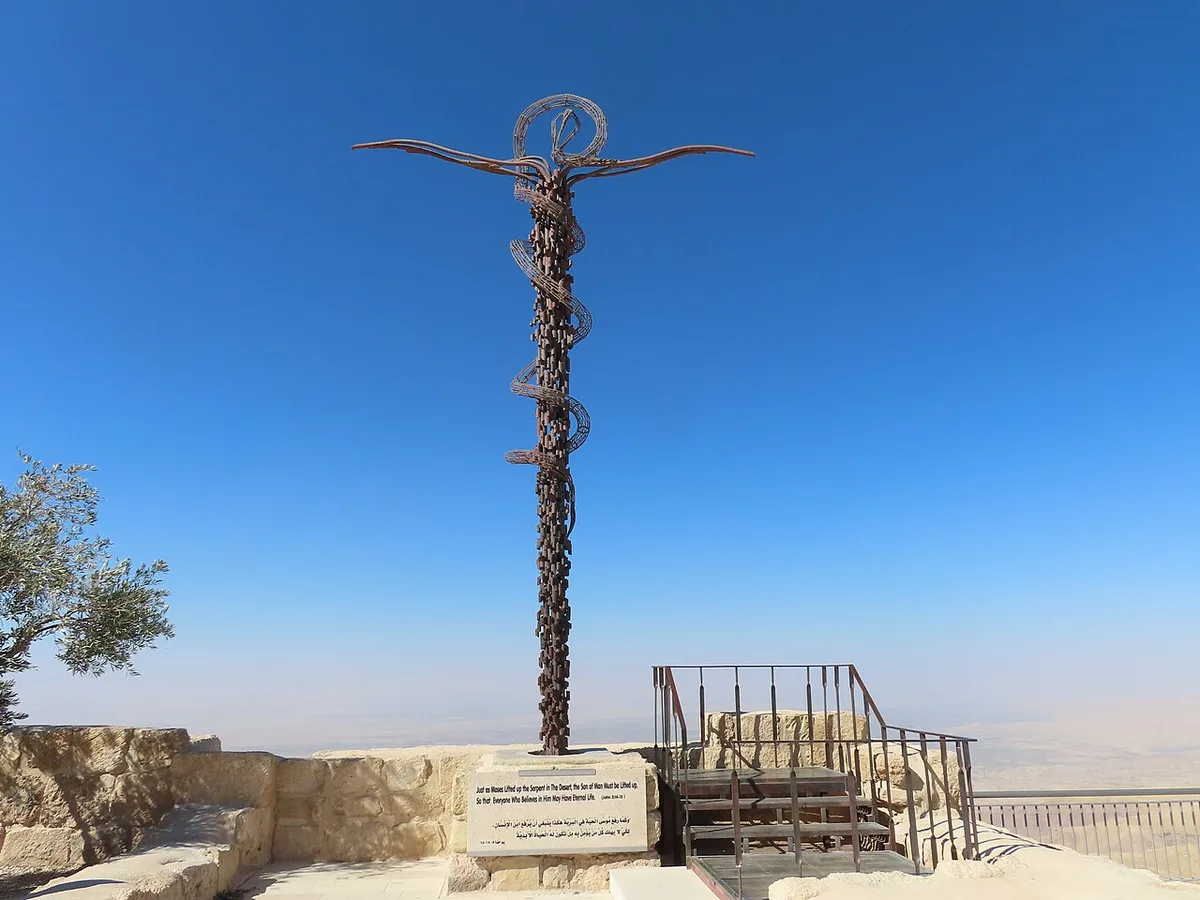
Ten minutes beyond Madaba, the road climbs Mount Nebo, the ridge from which, in the biblical account, Moses looked over the Promised Land he would not enter. The Franciscan Memorial Church at the summit guards early Byzantine mosaics of the first quality, and outside, the Italian artist Gian Paolo Fantoni’s Brazen Serpent – a serpent wound around a cross, rearing over the valley – has become the mountain’s emblem. On a clear morning the view earns its scripture: the Dead Sea glittering below, the Jordan Valley running north, and the hills of the West Bank on the horizon. Go early; by midday the heat haze usually takes the view, and the tour buses take the church.
Then descend, properly descend: the road winds down through a moonscape of marl and badlands to the Dead Sea shore, more than four hundred metres below sea level, the lowest land on earth. The float is the famous part – the water is so salt-dense that sitting in it is the natural position – and the discipline around it is the part this guide insists on: no diving, no water in the eyes, short immersions, a freshwater shower after, and respect for a shoreline that is genuinely wild outside the resort beaches and day-use clubs. Many Ammanis treat the shore as their beach, and the mechanism for visitors is the same as theirs: the resort hotels and beach clubs sell day access to their pools, showers and tended sand, which converts a roadside novelty into a proper afternoon. Madaba, Nebo and the shore combine into one loop of a day from the capital, and it is the day trip this amman travel guide would keep if it could keep only two.
Salt – The Capital Before Amman
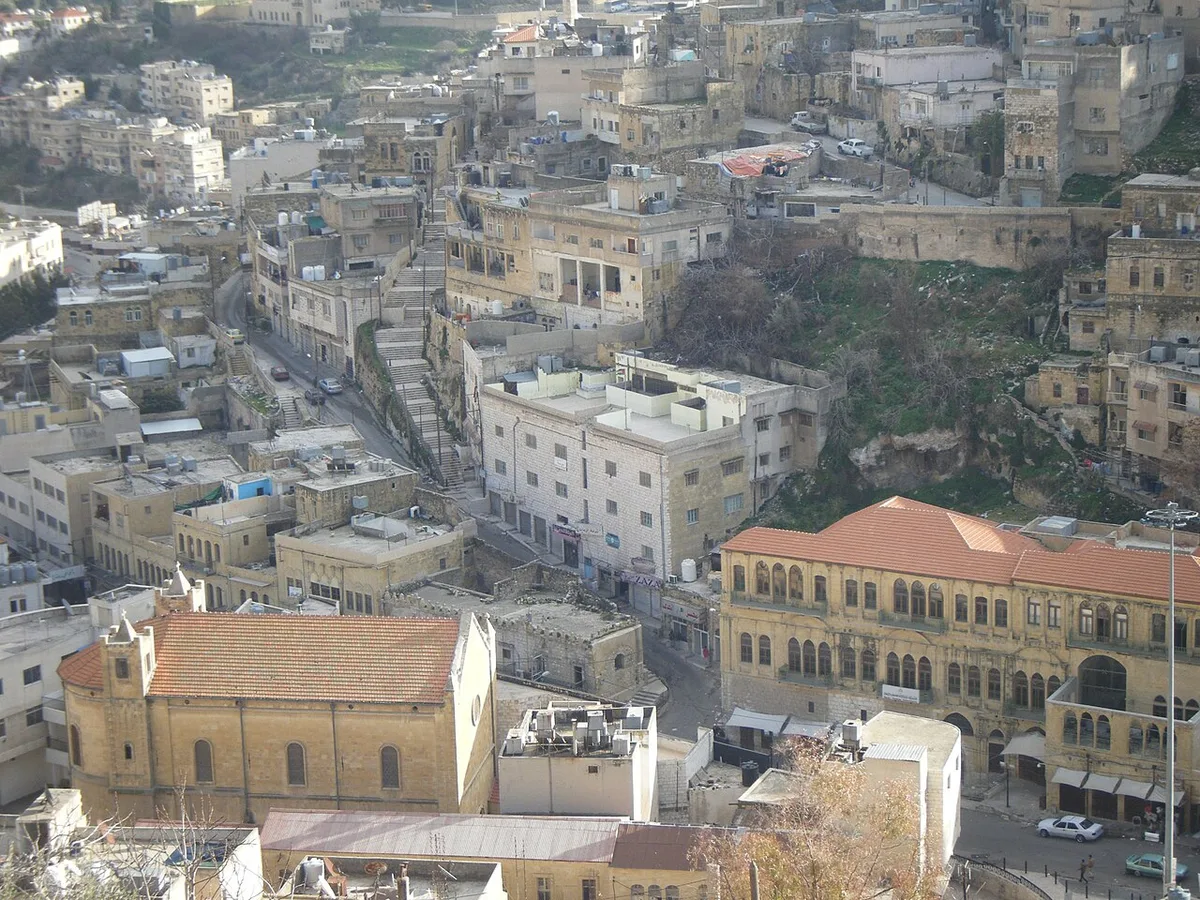
The third direction out of Amman is the connoisseur’s: northwest, half an hour into the Balqa hills, to Salt – the town that was Jordan’s capital before Amman was. In the late Ottoman decades Salt was the region’s trading hub, rich on grain and the merchants of Nablus, Damascus and Beirut who built its golden-stone mansions; it served as the first capital of Transjordan until the seat of government moved to Amman in the early 1920s, and it kept the architecture, the schools and the self-regard of a capital long after losing the title.
That golden age is exactly what the world has now recognised. In 2021 Salt was inscribed on the UNESCO World Heritage List as “As-Salt – The Place of Tolerance and Urban Hospitality”, cited under criteria (ii) and (iii) for a historic centre of, in UNESCO’s count, some 650 significant buildings in the local yellow stone – and for something rarer than buildings: a documented civic culture of Muslim-Christian coexistence and organised hospitality, the guesthouse system of the madafas, that the inscription treats as heritage in its own right. It is the first Jordanian city, as opposed to archaeological site, on the List.
For the visitor, Salt is a half-day of steep lanes, heritage houses and small museums – the Abu Jaber house, the grandest of the merchant mansions, now the Historic Old Salt Museum, is the essential interior – in a town that still feels like a working place rather than an exhibit. It pairs beautifully with nothing else and needs nothing else: go in the morning, climb the lanes to the viewpoints, eat lunch in the old town, and be back in Amman by mid-afternoon, having seen the answer to the question every capital raises – what was here before?
Getting to Amman – Queen Alia Airport and the Roads In
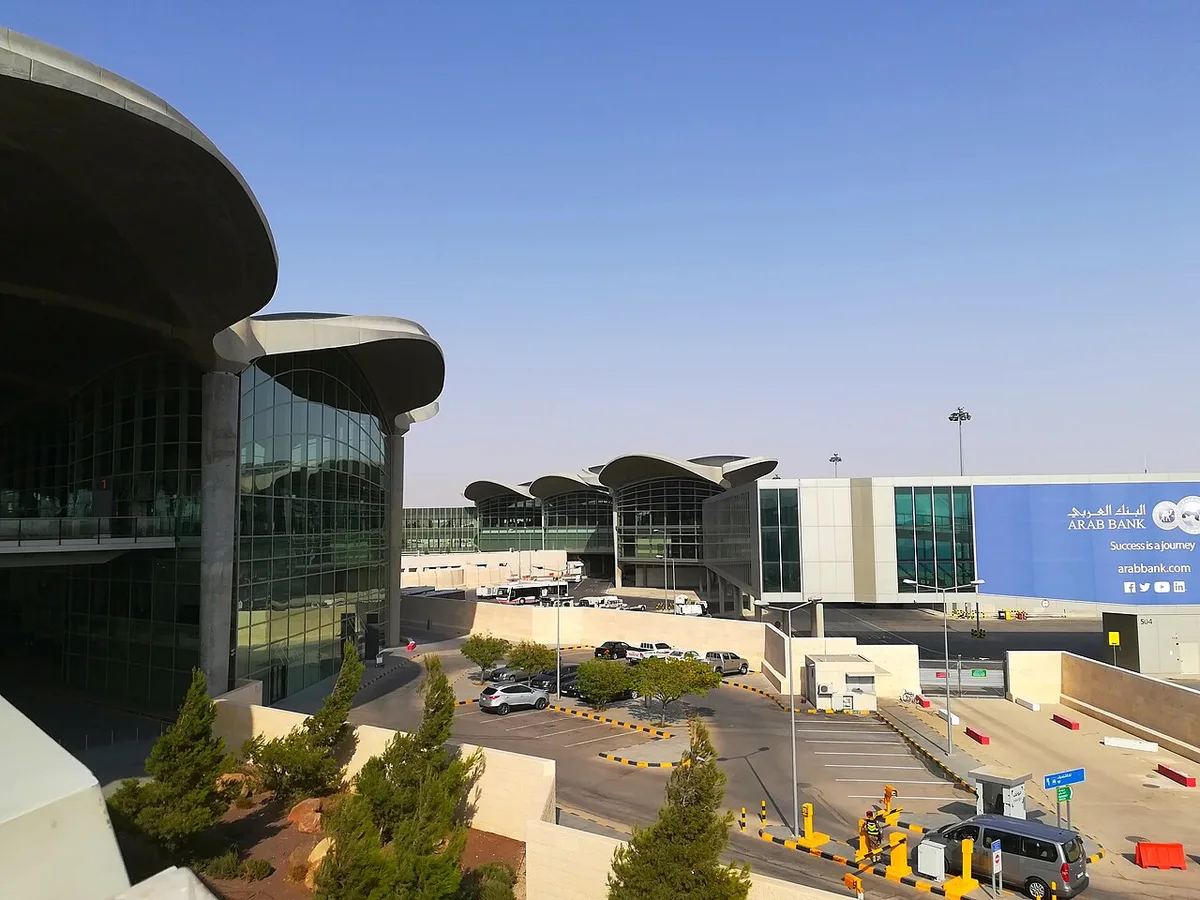
Almost every visitor arrives the same way, through Queen Alia International Airport, some thirty kilometres south of the city – a genuinely distinguished piece of architecture, its Foster + Partners terminal roofed by a concrete canopy split into shallow domes like desert petals, and named for the late Queen Alia. It is the country’s main international gateway and Royal Jordanian’s hub, and it runs with a calm that bigger regional hubs might envy. (Amman’s older airport at Marka, inside the city, now handles only a fringe of regional and charter traffic; if your ticket says Amman, it almost certainly means Queen Alia.)
The transfer into the city offers four mechanisms, and choosing between them is a small lesson in how Amman works. The airport taxi system is the official default: a staffed desk in arrivals assigns cars at a posted fixed tariff by destination zone, so the price is settled before you meet the driver – keep the ticket until you arrive. The airport express bus is the budget mechanism: coaches run between the terminal and the city, ending at Abdali, on a regular headway through the day and evening, and it is how plenty of Jordanians travel. Ride-hailing apps – Careem and Uber both operate in Amman – pick up from the terminal and price the trip on screen before you commit. And most mid-range and upscale hotels will send a car, the most expensive mechanism and, after a long flight, sometimes the one worth it.
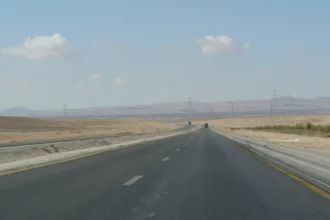
The road journey itself takes from around forty minutes to well over an hour depending entirely on traffic, and it gives a free preview of the city’s logic: desert, then sprawl, then the hills closing in. Land borders and intercity coaches are the minority arrivals – JETT and local buses connect Amman with Aqaba, Petra and the north, and the country guide covers those routes; for the capital itself, the airport road is the front door, and it is worth arriving down it in daylight once, to watch the white city assemble itself on its hills.
Getting Around Amman – BRT, Taxis, Apps and Staircases
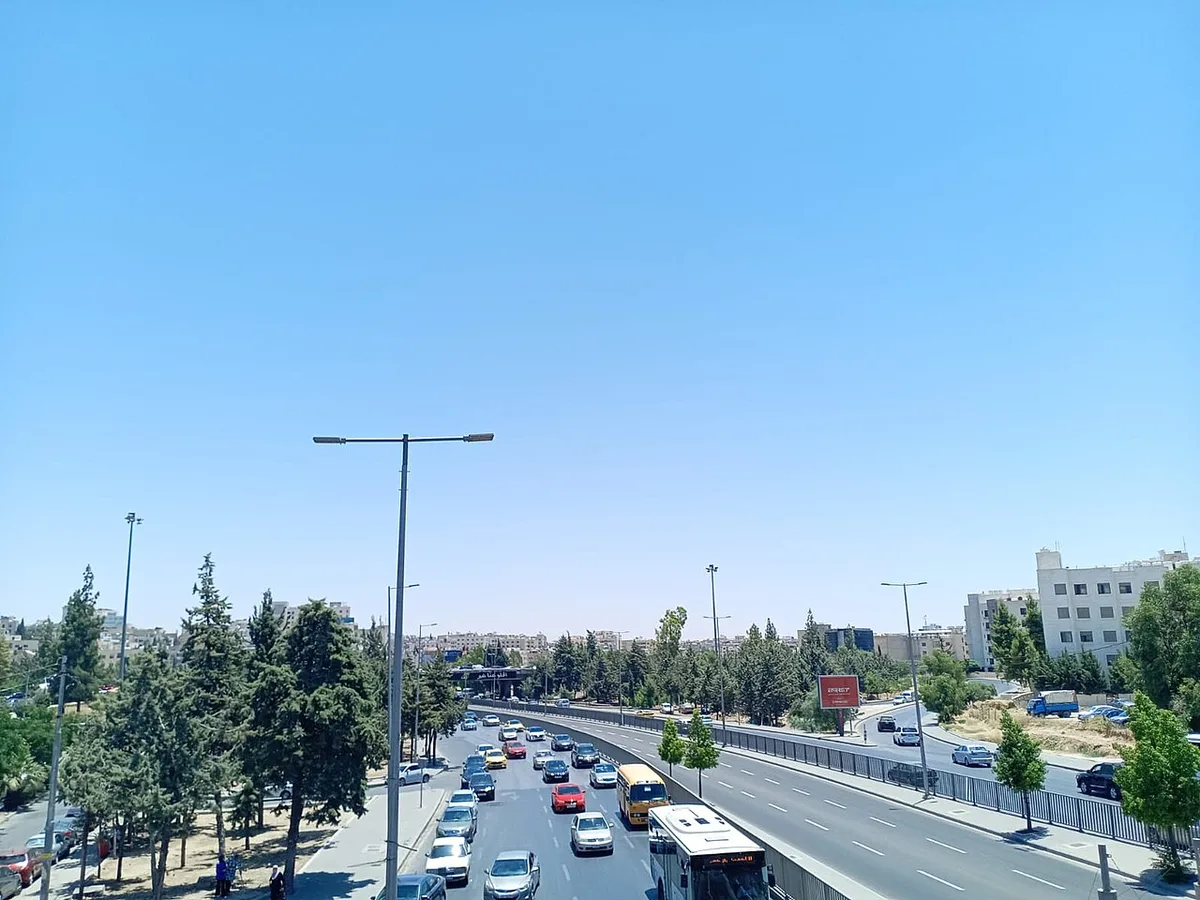
Amman’s transport is a set of layers, and the visitor’s skill is knowing which layer fits which journey. The newest layer is the bus network: the city has rebuilt its buses around a modern fleet (branded Amman Bus) and a bus rapid transit system whose first lines began carrying passengers at the start of this decade, running in segregated lanes along the big arterial roads with station stops, joined by the Amman-Zarqa BRT on the corridor northeast. Payment is by rechargeable card or app rather than cash to the driver, routes are published and mappable – a quiet revolution in a city where buses once ran on local knowledge alone. For a visitor, the BRT and city buses suit long, straight, single-corridor journeys – out University Street, say – and reward travellers who like systems.
The layer everyone actually uses is the taxi-and-apps layer. Yellow taxis are everywhere and run, in principle, on the meter; in practice the working method for visitors is the ride-hailing apps – Careem, founded in the region and ubiquitous here, and Uber – which set the fare on screen, find you by GPS and remove the two classic frictions (explaining an address across a language gap, and negotiating a price) at a stroke. White service taxis – shared cars running fixed routes for a fixed fare, hailed from the kerb – are the locals’ third system, and the bravest visitors use them for the standard cross-town runs once they know the routes.
Then there is the layer no app can replace: your feet, and Amman’s vertical fine print. Within a neighbourhood, walking is the best transport the city offers – Jabal Amman, Weibdeh and the Balad are each genuinely walkable, and the public staircases that stitch the hills together are shortcuts full of life. Between neighbourhoods, the hill logic turns savage: two points four hundred metres apart on the map can be separated by a valley, a motorway and a hundred metres of altitude, and the honest rule of any amman travel guide is to walk inside districts and ride between them. Add the traffic – Amman’s rush hours are real, and a cross-town car journey can triple between midday and five o’clock – and the transport plan writes itself: sights on foot in clusters, apps for the hops, the airport and day trips by arranged car, and the circles in your head as the map that ties it together.
When to Go – Amman’s Seasons on the Hills

Amman sits high – its hills run from around 750 metres to over 1,000 – and altitude writes its weather. The city is noticeably cooler than the Jordan Valley below it and cooler than Aqaba’s coast, which makes its seasons pronounced and, at the two ends of the year, genuinely dramatic. Spring, roughly March to May, is the consensus best answer: warm days, cool evenings, green hillsides after the winter rains, wildflowers on the waste ground, and the light that makes limestone glow. Autumn, September to November, runs it close – the heat is draining out of the city, the sky clears, and the day-trip country is at its most comfortable.
Summer surprises people who expect a desert furnace. June to September is hot at midday and dry, but the altitude takes the edge off, evenings cool down properly, and Ammanis treat the season socially – the cafe terraces, the Jerash Festival, the late shopping hours all belong to summer nights. Spring can also bring brief khamsin episodes – hot, dusty winds off the desert that haze the sky and close the views for a day or two before clearing as suddenly as they came. Winter is the honest trade: December to February is cold, wet and windy, the stone houses hold the chill, and every few years the city stops entirely for a day or two of snow – beautiful, chaotic and best watched from a cafe window. The country-level picture, including what the seasons do to Petra, Wadi Rum and the Dead Sea, is laid out in our best time to visit Jordan guide on this site; for the capital alone, pick spring or autumn if you can, summer if you like your cities at night, and winter only with warm clothes and flexible plans.
Where to Stay – Choosing Your Hill
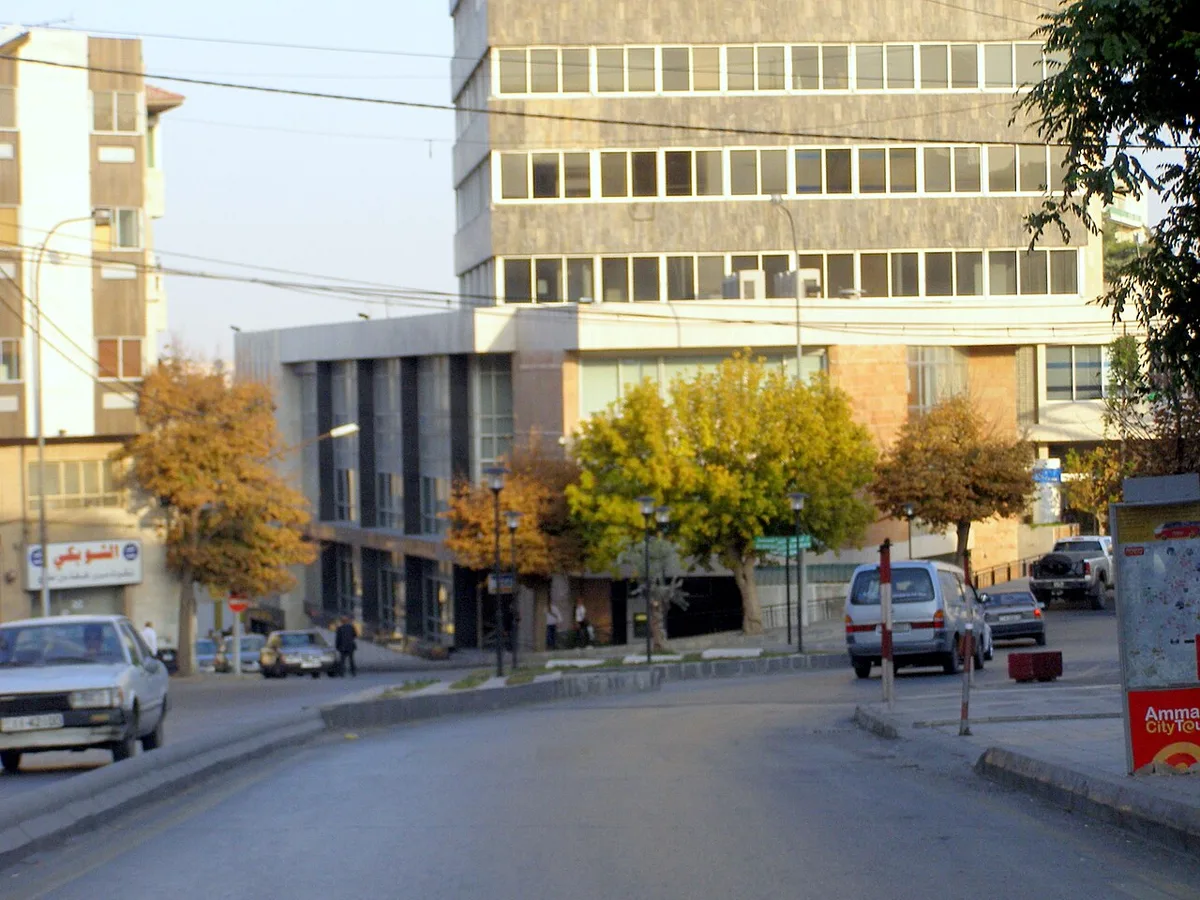
In Amman the where-to-stay question is not about hotels; it is about which version of the city you want outside your door, and the districts answer it cleanly. Downtown, the Balad, is the budget and atmosphere play: small hotels and hostels in the old streets, the souks and the theatre at walking distance, falafel for breakfast – and the city’s noise, traffic and early mornings as the price. It suits backpackers, short stays and anyone whose Amman is the old city.
Jabal Amman is the classic visitor’s base and the one this amman travel guide recommends most often: boutique hotels and guesthouses in converted villas around Rainbow Street, cafes for the evenings, downtown a staircase away, and the best balance of character and calm in the city. Jabal al-Weibdeh, across the valley, is its quieter sibling – small hotels and apartment rentals in the arts quarter, for travellers who want galleries, bakeries and residential peace, and do not mind a taxi to dinner elsewhere. The new west – Abdali, Shmeisani, Abdoun and the mall districts – holds the international chains and the big business hotels: pools, gyms, valet parking, executive polish, and a car ride between you and everything old. Choose it for business, for family logistics, or for a soft landing, and sightsee east by day. Two mechanisms govern all four choices: the hills mean “close on the map” is not the same as “walkable”, so check your base against the sights you care about; and Amman’s prices sit a step above the region’s budget capitals, because the dinar is a strong, dollar-pegged currency – a fact our Jordan travel costs guide unpacks for the whole country. One more pattern worth knowing: alongside the hotels, both cafe hills carry a deep stock of short-stay apartments and family-run guesthouses in the same limestone buildings, which is how longer stays and repeat visitors usually house themselves.
Eating in Amman – Mansaf, Falafel Institutions and Kunafa
Amman eats well at every level, and its food geography follows the hills. Start at the summit of the national cuisine: mansaf, Jordan’s national dish, is lamb cooked in jameed – a fermented, dried yogurt that gives the sauce its distinctive tang – served over rice on a bed of thin markook bread, traditionally on a shared platter, traditionally eaten with the right hand, and traditionally the centrepiece of the Friday family lunch and of weddings and funerals alike. In Amman it is served everywhere from grand old mansaf houses to family restaurants; order it once, properly, in company if you can, and you have eaten the dish Jordanians use to define hospitality itself.
At the other end of the scale, downtown runs on institutions. Hashem, in an alley off the Balad’s main streets, is the name every account of Amman food eventually reaches: a pavement falafel-and-hummus house of decades’ standing whose fame – it has served kings, officials and generations of backpackers from the same few tables – rests on doing a very short menu very well at very long hours. Around it the Balad layers the rest of the classic Levantine repertoire: ful and hummus houses for breakfast, shawarma stands, grills, juice stalls squeezing pomegranate and sugar cane, and bakeries turning out ka’ak and manoushe to queues. None of this needs booking, reviewing or dressing for; it needs a morning and an appetite.
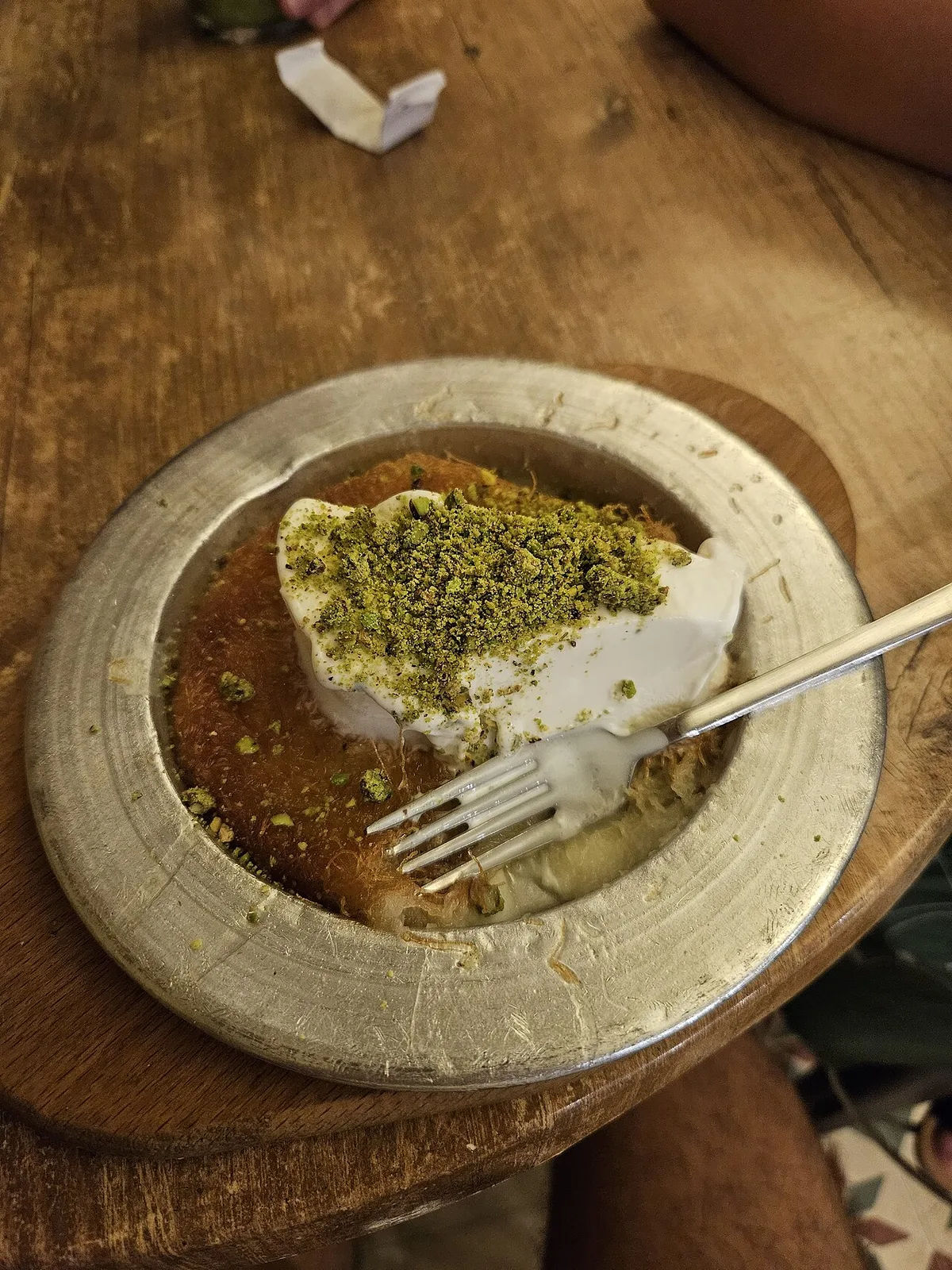
And then there is the sweet. Kunafa – shredded or semolina pastry over molten cheese, soaked in syrup and buried in pistachio – is the Levant’s great dessert and Amman’s downtown sweet shops, Habibah above all, are its temples, with branches where the queue is the review and the correct procedure is to eat your plate standing at the counter like everyone else. Up the hills, the cafe quarters add the modern layer – specialty coffee in Weibdeh, villa restaurants on Jabal Amman, the Boulevard’s international kitchens in Abdali – but the food memory most visitors carry home is downtown’s: falafel at a shared table, kunafa at a crowded counter, and mint tea watching the Balad do its shopping.
Is Amman Safe – The Short Answer and Where to Read More
One short section, by design. Amman’s everyday picture for a visitor is the ordinary big-city one – a busy, socially conservative capital where the cautions that matter are the unglamorous ones rehearsed through this guide: crowds in the souks, traffic, the hills after rain, care with valuables in the crush around the theatre plaza. The fuller Jordan-wide question – what the current official travel advice says, which parts of the country it names and how that maps onto a real itinerary – changes faster than a city guide can responsibly track, so this site answers it in a dedicated article, Is Jordan Safe to Visit, built directly on the current UK and US official pages. Read that, and your own government’s current advice, before you book – and treat this paragraph, deliberately, as a pointer rather than a verdict.
The habits that go with the pointer are the standard ones, and they are habits rather than headlines: run the decision against the advice written for your own passport, because that is the wording your insurer will use; keep the bookings as flexible as the fares allow; and re-check the official pages in the week you travel rather than the month you booked, because the regional layer around Jordan can move faster than any guide’s print cycle. Inside the city itself, nothing in the official picture changes how you use this guide – the sights, souks and day trips above are planned exactly as you would plan them in any large, orderly capital.
The Honest Downsides – Hills, Traffic and a City That Sprawls
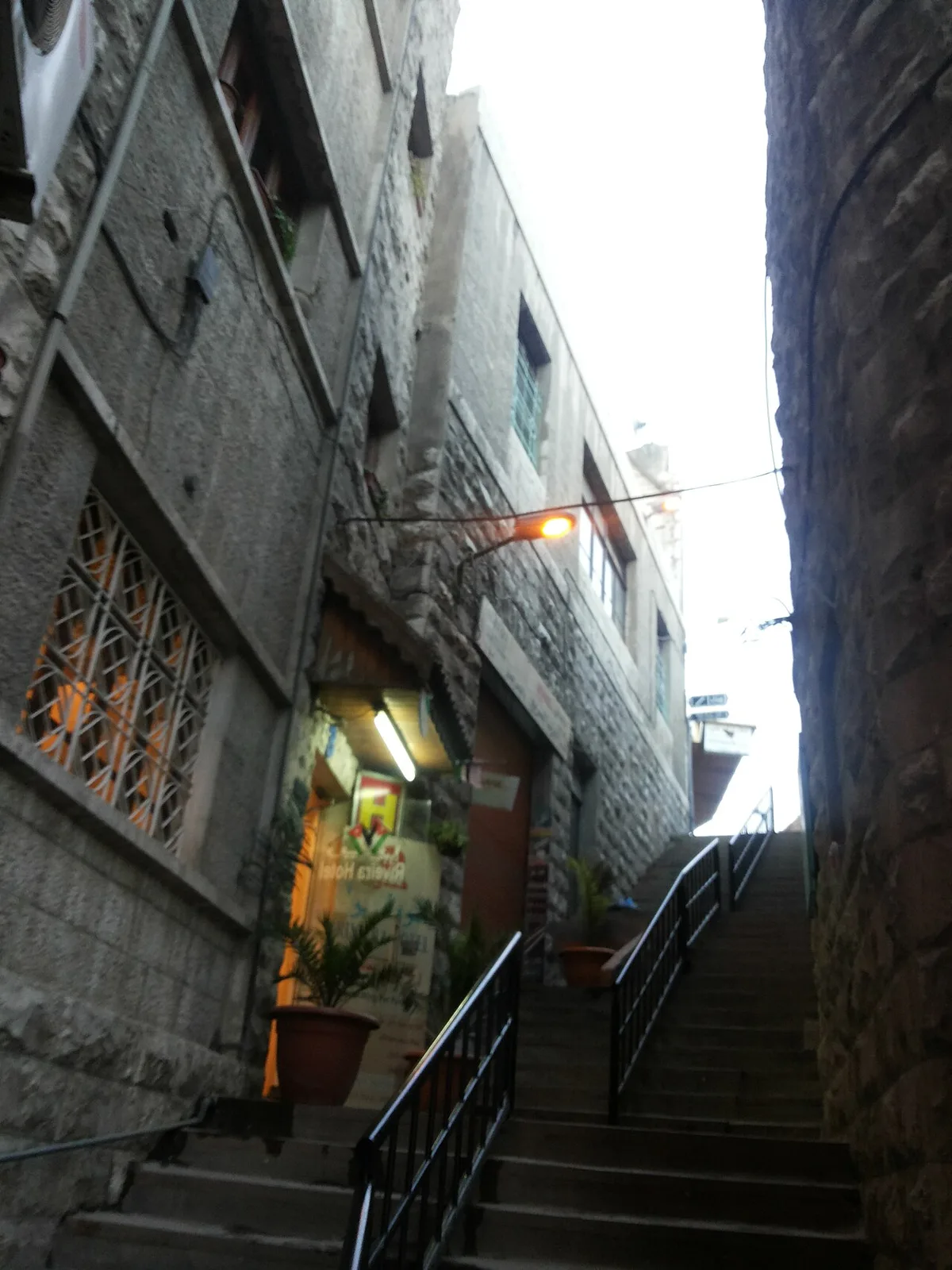
This amman travel guide has praised the hills for pages, so here is the invoice. Those hills mean the city is a workout: the staircases are steep, the pavements outside the centre are an afterthought, distances that look trivial on a map involve descents and climbs, and visitors with limited mobility will find Amman genuinely hard work in a way flatter capitals are not. Plan routes by altitude as much as by distance, and let cars do the vertical work.
Traffic is the second tax. Amman is a car city with more cars than its street pattern was built for, driving is assertive, lane discipline is advisory, and the rush-hour jams around the circles can turn a twenty-minute hop into an hour. It is manageable – the apps, the BRT and walking-in-districts strategy above exists precisely because of it – but nobody should rent a car for inside-Amman use on a first visit, and nobody should schedule the airport run tightly. Third, the sprawl: Amman has no single centre to “be in”, its sights are scattered across a dozen hills and its pleasures are distributed, so it punishes the two-night, checklist style of travel harder than almost any capital in the region. Finally, the cost of things: between the strong dinar, the business-hotel west and the day-trip economy, Amman is not the bargain its neighbours sometimes are – mechanisms our Jordan travel costs guide itemises. Add the small daily frictions – addresses given by landmark rather than street name, signage that assumes local knowledge, a city that keeps business hours in the Balad and party hours in the west and never quite synchronises the two – and the picture completes itself. None of this is a reason not to come. It is the reason to come properly – three days, the right hill, and your expectations set to “great, demanding city” rather than “easy resort stop”.
Frequently Asked Questions
How many days do I need in Amman? Two full days cover the city itself – one for the Citadel, theatre and Balad, one divided between the museums, Rainbow Street and Weibdeh. Three to four days is the better answer if you use Amman as a base, because the Jerash day and the Madaba-Nebo-Dead Sea day are the trips that turn a stopover into a stay. This amman travel guide is written for the three-day version.
Is Amman worth visiting, or just a gateway to Petra? It is worth visiting on its own terms, which are city terms – old souks, a great Roman theatre, a serious national museum, two cafe-and-gallery hills and the best food in the country – rather than wonder-of-the-world terms. Travellers who give it only a night usually describe it as forgettable; travellers who give it three days usually rank it with the highlights. Both are describing the same city at different lengths of stay.
What is the best area to stay in Amman? Jabal Amman, around Rainbow Street, for most first-time visitors – character, cafes, the Citadel and downtown in reach. The Balad for budget and atmosphere, Weibdeh for quiet and galleries, and the Abdali-Shmeisani-Abdoun west for international hotels and business logistics. The where-to-stay section above weighs each against the hills it sits on.
Can I visit Jerash and the Dead Sea in one day from Amman? Yes – it is the classic combination, Jerash in the cool of the morning when the site opens, then south and down to the Dead Sea for the afternoon float, and our 7-day Jordan itinerary builds exactly that shape. It makes for a full day, so the alternative this guide prefers on a four-day stay is Jerash alone in the morning and the Madaba-Mount Nebo-Dead Sea loop on its own day.
How do I get from Queen Alia Airport to the city? Four mechanisms, detailed in the getting-to-Amman section above: the official fixed-tariff airport taxis sold at the arrivals desk, the airport express bus to Abdali, ride-hailing apps (Careem and Uber both serve the terminal), or a hotel car. What this amman travel guide cannot do is print the fare – tariffs and prices change, so check the desk, the app or the bus board on the day and treat any figure in any guide, including this one, as history.
Is Amman walkable? Inside its districts, yes and rewardingly – the Balad is flat, Jabal Amman and Weibdeh are made for strolling. Between districts, the hills rewrite the map, and the working pattern is to walk within neighbourhoods and take apps, taxis or the BRT between them. Bring shoes that can handle staircases; the city is paved in limestone and climbs in every direction.
When is the best time to visit Amman? Spring (March to May) and autumn (September to November) for the balance of warmth, light and comfortable day-trip weather. Summer is hot but dry with fine evenings; winter is cold, wet and occasionally snowy. The seasons section above has the honest version, and our best time to visit Jordan guide places Amman’s seasons inside Jordan’s as a whole.
The Short Version – This Amman Travel Guide in One Breath
Amman is a capital built on hills and best read from them: start at the Citadel, where every empire that held this crossroads left a layer, drop to the Roman Theatre and the Balad’s souks for the old city’s working heart, then climb to Rainbow Street and Weibdeh for the cafes and galleries that make the modern city hum. Give the Jordan Museum half a day, take one evening in the glass-and-Boulevard west for contrast, and use the base for the two day trips that justify the whole stay – Jerash to the north, and Madaba, Mount Nebo and the Dead Sea to the west – with Salt as the connoisseur’s half-day. Move on foot inside neighbourhoods and by app between them, eat mansaf once and falafel and kunafa in the Balad as often as possible, and follow the route in our Jordan itinerary for 7 days if you want the week drawn for you.
Do that – two days for the city, three or four with the day trips, spring or autumn if you can choose – and Amman stops being the airport you landed at and becomes what it actually is: the most complete city in Jordan, and the one your trip will be quietly organised around.