Ask a search engine how many unesco sites in albania has, and you will be told four, five and three by three different pages, sometimes on the same results screen. The correct answer is four — but four needs a footnote, because the unesco sites in albania are four World Heritage properties, and a property is not the same thing as a place. One of the four is two towns sharing a single inscription. One is a lake shared with another country. One is a forest that exists in Albania only as two protected fragments of a property spread across eighteen countries. Only one of the four — Butrint — is a single site in a single place that belongs to Albania alone.
That is not pedantry. It decides what a trip actually looks like. A traveller who reads “four sites” and imagines four ticket gates will plan the wrong week: the two old towns are a pair and reward being seen together, the lake’s Albanian shore is a separate eastern journey from the southern heritage loop, and the beech forests are not a sight you visit at all in the usual sense — they are wilderness you walk into, protected precisely by being left alone. This page is built to be the accurate version: every property with its real inscription year, its real criteria, and its real shape on the map, all taken from UNESCO’s own property pages rather than from other people’s summaries.
It also covers the list behind the list. Albania has four more places on UNESCO’s Tentative List — the official waiting room of candidacies, some of them waiting since 1996 — and rival pages keep quietly promoting at least one of them, Apollonia, into the inscribed list. It is not inscribed, and this page will not pretend otherwise. The candidates get their own section below, labelled for exactly what they are.
A word on where the authority comes from, because Albania joined the World Heritage Convention on 10 July 1989, in the last months of the communist period, and its first inscription followed just three years later. Everything in the four property sections is traceable to the official listing for that property — the year, the criteria, the reasoning — and each section links to that listing so you can check it yourself. For the wider trip that strings these places together, our Albania travel guide is the planning companion; this page is the record, kept straight.
UNESCO Sites in Albania at a Glance – Four Properties, Two of Them Shared
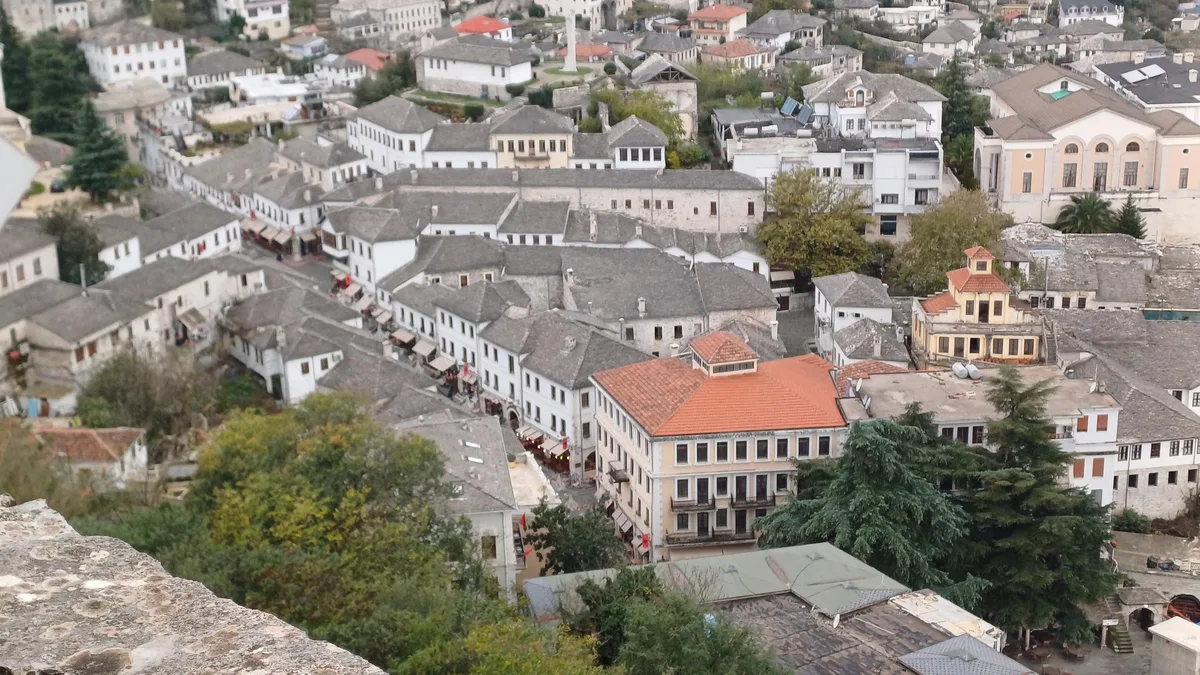
Here are the unesco sites in albania on one screen, in the order UNESCO inscribed them, before each one is taken properly in turn. Two are cultural properties, one is natural, and one — the lake — is mixed, inscribed for both its nature and its culture. Read the “where” column carefully, because it is where the counting games of rival pages fall apart: four properties cover six Albanian places, in four corners of the country.
| Property | Inscribed | Criteria | Where it is |
|---|---|---|---|
| Butrint | 1992, extended 1999 | (iii) | The wooded ancient city near Ksamil, in the far south |
| Historic Centres of Berat and Gjirokastra | 2005, extended 2008 | (iii), (iv) | Two Ottoman old towns in the centre-south – ONE property |
| Natural and Cultural Heritage of the Ohrid region | 1979 and 1980, extended to Albania 2019 | (i), (iii), (iv), (vii) | Lake Ohrid, shared with North Macedonia – the Albanian shore is the 2019 extension |
| Ancient and Primeval Beech Forests of the Carpathians and Other Regions of Europe | 2007, Albanian components added 2017 | (ix) | Two Albanian fragments – the Gashi River in Tropoje and Rrajca in Shebenik-Jabllanice – of an 18-country property |
Two reading notes before the detail. First, the years in brackets on UNESCO’s own Albania page come in pairs for a reason: these properties grew. Butrint was inscribed in 1992 and its boundaries extended in 1999. Gjirokaster was inscribed alone in 2005, and Berat was added to the same property in 2008 — which is why any page that lists “Berat (2005)” and “Gjirokaster (2008)” as separate sites has the story backwards. The Ohrid property is older than Albania’s membership itself: the lake was inscribed for North Macedonia in 1979 and 1980, and Albania’s shore joined only in 2019. The beech forests began in the Carpathians in 2007 and reached Albania in the 2017 extension.
Second, the criteria. The Roman numerals are UNESCO’s ten tests of “outstanding universal value”, and they are worth reading literally because they tell you what kind of thing you are looking at. Criterion (iii) means a property bears exceptional testimony to a civilisation or tradition. Criterion (iv) means an outstanding example of a type of building or landscape. Criteria (i) and (vii) are about masterpieces and superlative natural beauty, and criterion (ix) — the beech forests’ sole test — is about ecosystems in action. When a property carries only one criterion, as Butrint and the forests do, that is not a weakness; it means its case rests entirely on one argument, made completely.
A third note, for readers who like their records exact: each property carries a reference number in UNESCO’s system — Butrint is 570, Berat and Gjirokastra 569, the Ohrid region 99, and the beech forests 1133 — and UNESCO’s country page files them as two cultural properties, one natural and one mixed. That little classification matters more than it looks. It means Albania’s heritage, as the world body counts it, is not a string of pretty towns: it is two urban civilisations, one ancient lake ecosystem with a culture grown around it, and one continent-wide forest process. The sections that follow take them in inscription order.
Butrint – The Ancient City in the Woods by the Vivari Channel
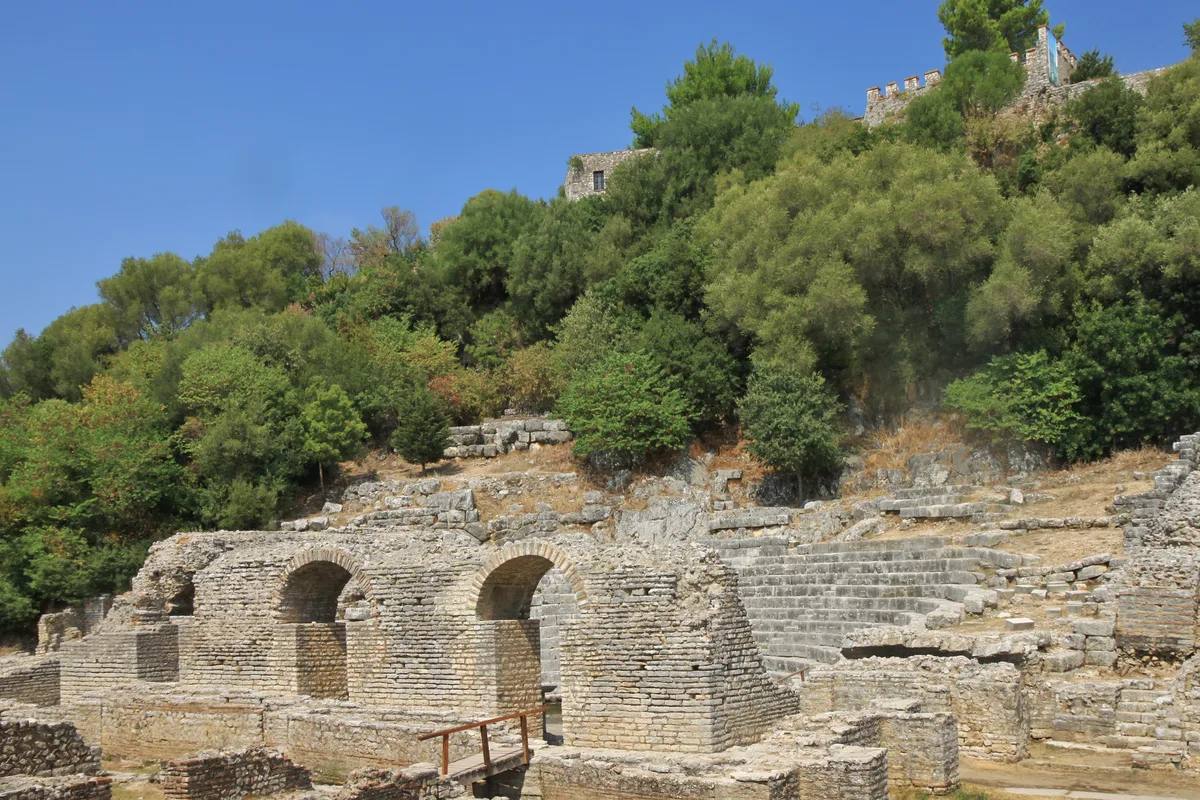
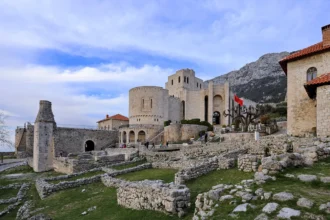
Butrint is where the unesco sites in albania begin — the country’s first inscription, in 1992, and still the one that behaves most like the classic image of a World Heritage site: a single, bounded, extraordinary place. UNESCO’s own summary gives it a span few European sites can match, with evidence of occupation running from 50,000 BC to the 19th century AD on one small hill between Lake Butrint and the Vivari Channel, about 20 kilometres from Saranda. The listing was extended in 1999 to take in more of the landscape around the walls, and the inscribed property covers 200 hectares, with Butrint National Park around it as a buffer.
The inscription rests on criterion (iii) alone, and the official wording explains why: the changing natural environment eventually forced the city’s abandonment at the end of the Middle Ages, which preserved it — so Butrint offers unusually complete evidence of the ancient and medieval civilisations of this coast, layer on layer, in one walkable wood. The layers are the point. A Greek-influenced city of the Chaonian tribes from around 800 BC; a Roman colony from 44 BC that expanded across reclaimed marshland on the far side of the channel; an episcopal centre in the 5th century with substantial early Christian building; a Byzantine rebuilding in the 9th century; Angevin and then Venetian control from the 14th; and at the very end, in the early 19th century, a new fortress at the channel mouth built by Ali Pasha, after which the city was finally abandoned to the water and the trees.
UNESCO’s assessors single out three monuments, and they are the right three. The theatre is described as the most interesting ancient Greek monument on the site, fairly well preserved under the acropolis slope. The baptistery — a Roman building adapted for Christian use — carries a mosaic floor the listing calls beautiful, though a visitor should know the floor is protected under sand for most of the year and is only occasionally uncovered; the separate Butrint guide on this site covers the visit itself. The paleo-Christian basilica, rebuilt in the 9th century with three naves and a polygonal apse, completes the set. Read the full official text on UNESCO’s Butrint page — it is the standard this section is summarised from.
Around those three, the listing’s synthesis makes a larger claim that the walk bears out: Butrint’s fortifications alone record the whole sequence, from Greek colony walls through Roman and Byzantine rebuilding to the medieval Venetian defences, and the site as a whole is called a microcosm of Mediterranean history — a place where the layers were never cleared away for the next civilisation’s convenience because the water rose and the city was left. UNESCO also rates the conservation work done since the first excavations of 1924 as high, carried out to the standards of the 1964 Venice Charter. That long, careful archaeological tradition is part of why the buried city reads so clearly today, and why the site’s abandonment reads as preservation rather than neglect.
Butrint also carries the most dramatic modern chapter of any property on this page, and it belongs in any honest account. Inscribed in 1992, it was placed on UNESCO’s List of World Heritage in Danger in 1997, after the civil unrest of that year brought looting and a collapse of protection, management and conservation — the UN’s own news report of the removal uses exactly those words. A national park administration was built around the site from 2000, the wetlands around it gained Ramsar recognition in 2002, and in July 2005 the World Heritage Committee formally removed Butrint from the Danger List by Decision 29 COM 7A.27, one of three sites withdrawn that week. The park itself was declared a National Park under Albania’s protected-areas law in 2005, covering 86 square kilometres around the 200-hectare property.
The story is not a closed one, and UNESCO does not pretend otherwise. The current listing text names the site’s vulnerabilities plainly: rising seasonal water levels — the same water that preserved Butrint is still rising through its theatre — vegetation growth, structural instability in some monuments, and development pressure from roads and urban expansion around the property. Butrint is the strongest argument on this page that inscription is a beginning, not a medal.
Berat and Gjirokaster – One Inscription, Two Ottoman Old Towns
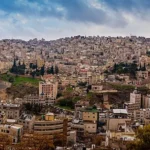
The second of the unesco sites in albania is the one rival pages most often get wrong, so let it be said plainly: Berat and Gjirokaster are one property. UNESCO inscribed Gjirokaster alone in 2005, under the name Museum-City of Gjirokastra, and extended the property in 2008 to add Berat, creating the single listing now called the Historic Centres of Berat and Gjirokastra — note that UNESCO spells the second town Gjirokastra. Any list that counts the two towns as two sites is counting five Albanian properties and is simply wrong.
The property carries criteria (iii) and (iv). Under (iii), the two towns together bear outstanding testimony to the diversity of urban societies in the Balkans and to ways of life that have now almost vanished. Under (iv), they are an outstanding record of the monuments and vernacular housing of the classical Ottoman period, in continuity with the medieval cultures before it — and, a detail UNESCO insists on, in peaceful coexistence with a large Christian minority, particularly at Berat. The two towns were chosen as a pair because they show two different answers to the same Ottoman centuries: Gjirokaster, the citadel town built by great landowners whose fortunes were tied to central power, and Berat, the more independent town of craftsmen and merchants.
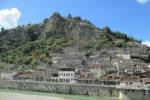
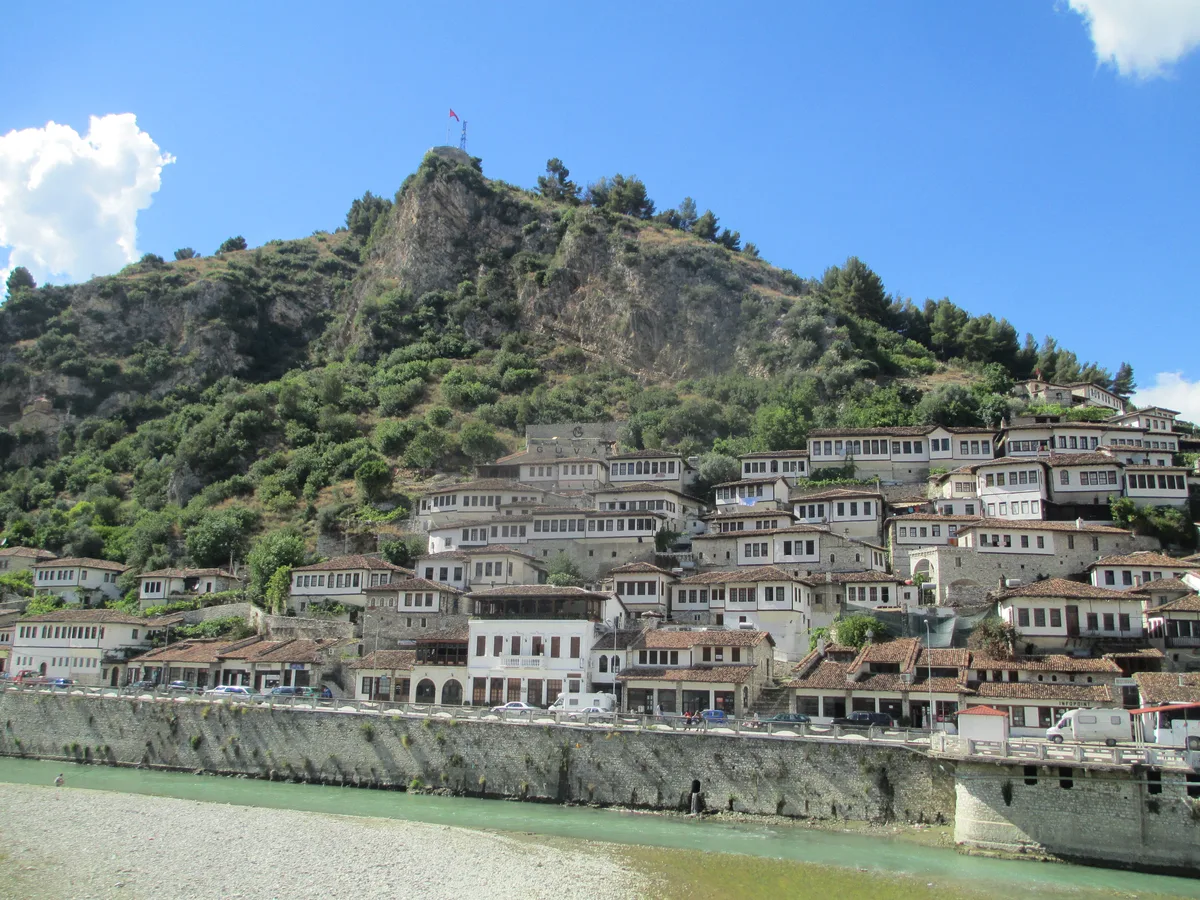
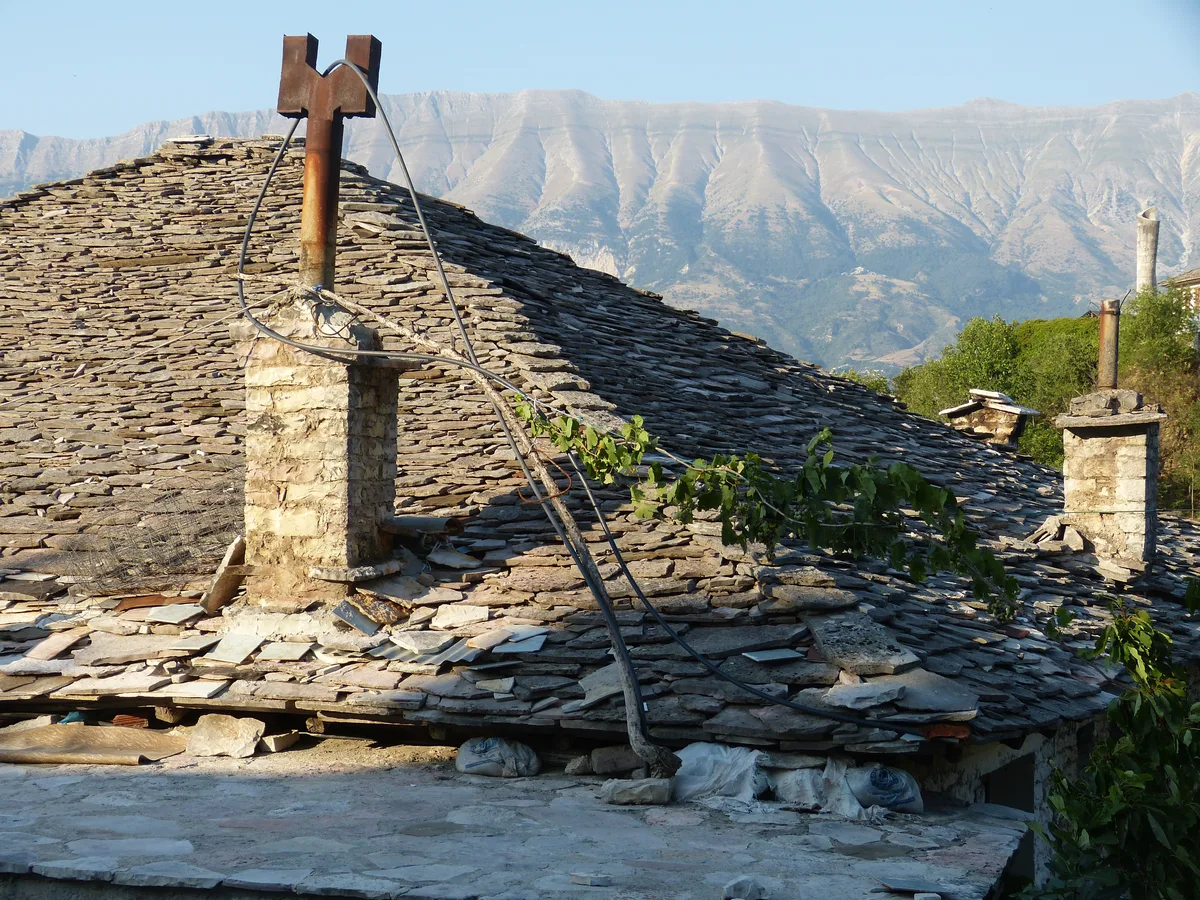
Gjirokaster grew around its 13th-century citadel, and its signature buildings are the tower houses — the Turkish kule — raised by those landowning families. UNESCO dates the characteristic examples from the 17th century, with more elaborate houses from the early 19th, all of them roofed in the famous grey stone slate that gives the town its colour and its nickname of the city of stone. Berat’s answer stands across the Osum river from its castle hill: a town that was fortified yet open, whose urban centre preserves the Balkan vernacular tradition in tiered houses climbing the slopes — mainly late 18th and 19th century — laid out horizontally and built, in the listing’s lovely phrase, to make abundant use of the entering daylight. Those stacked white facades are what travellers call the city of a thousand windows.
What the pairing really protects is a way of life, not just a skyline. UNESCO’s text stresses that both towns have been continuously inhabited from ancient times to the present, and that their fabric records a Balkan life shaped over centuries by Islam in the Ottoman period while absorbing older influences — with Orthodox tradition continuing alongside it, visibly at Berat, whose castle quarter holds its churches and the icons of the Onufri school inside a largely Muslim town. That coexistence is part of the inscribed value, not local colour added afterwards.
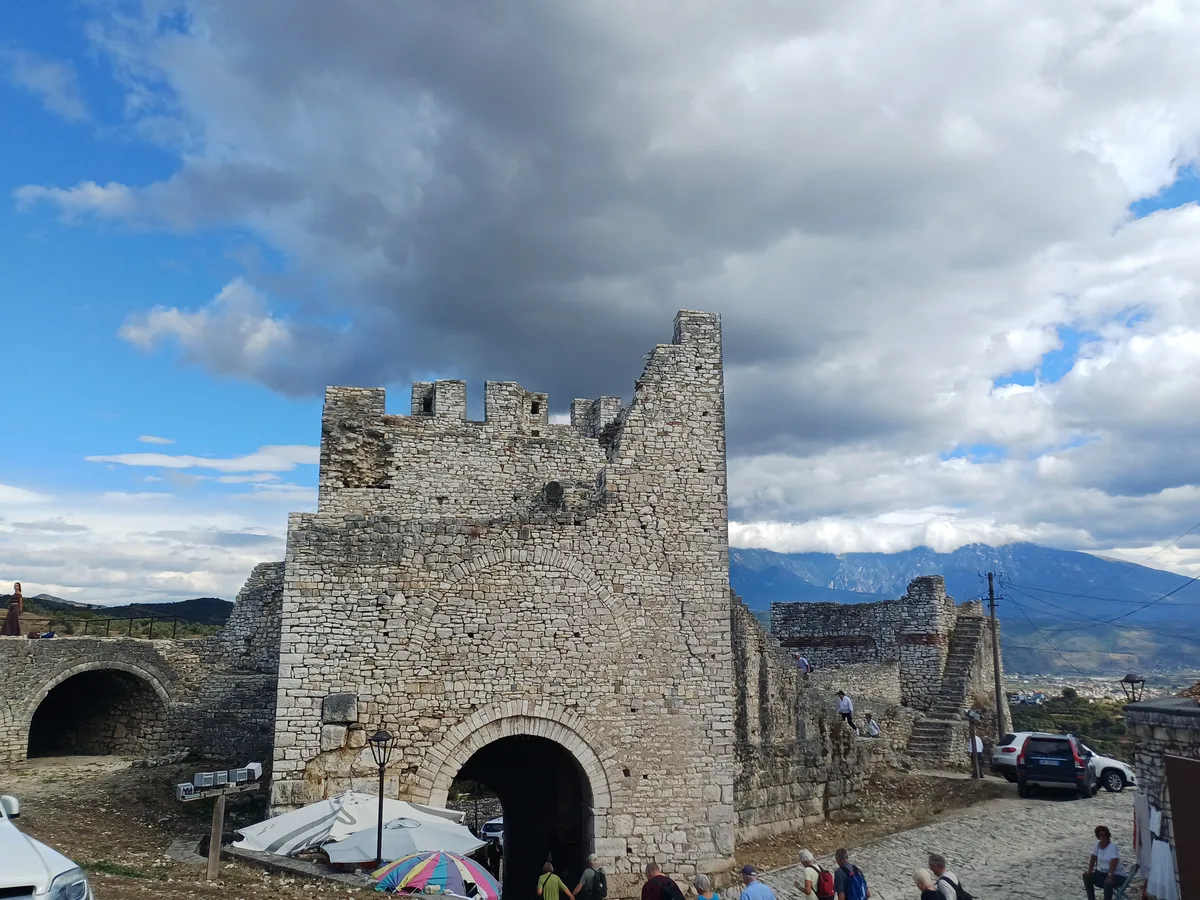
The honest footnote is in the listing too, and this page will not trim it. UNESCO records that the integrity of both towns was adversely affected by illegal construction in the late 1990s — the same chaotic decade that put Butrint in danger — and that authenticity, while satisfactory, depends on preservation management being stepped up and properly enforced, above all over new building inside the old towns. The slate roof in the photograph above is that sentence made visible: the vernacular fabric is magnificent, heavy, and ruinously labour-intensive to maintain, and the inscription’s future is decided roof by roof and permit by permit.
Lake Ohrid – The Shared Lake That Brought Albania Its Mixed Property
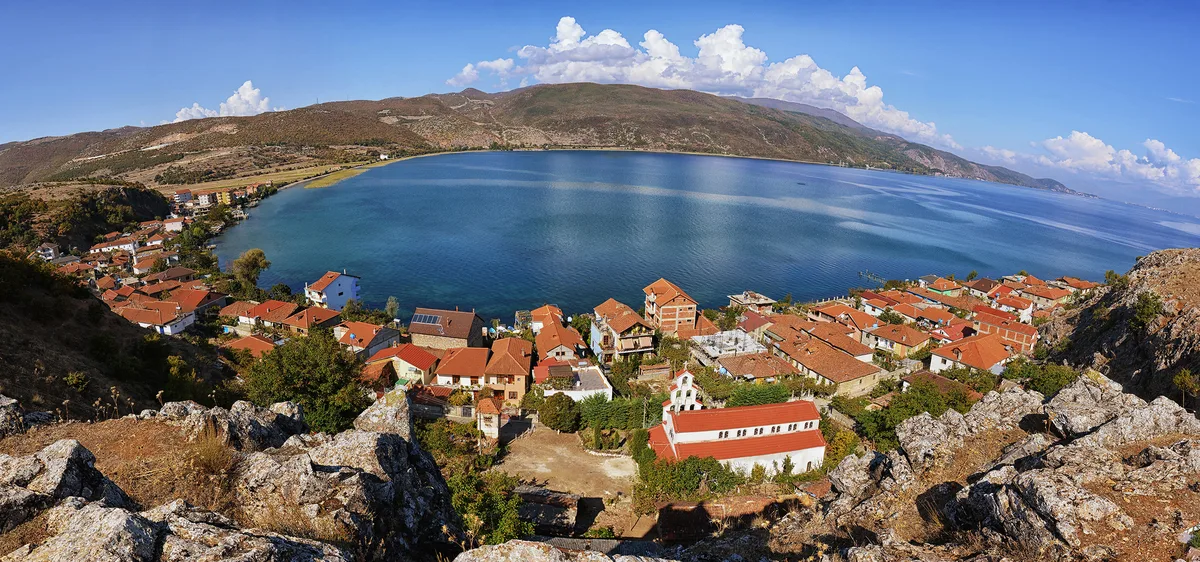
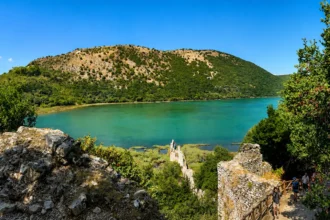
The third of the unesco sites in albania is not Albania’s alone, and it is not new. The Natural and Cultural Heritage of the Ohrid region was first inscribed in 1979 for its nature and extended to its cultural values in 1980 — a decade before Albania even joined the Convention — for the part of Lake Ohrid that lies in North Macedonia. Only in 2019 was the property extended across the border to take in the rest of the lake, which is when the Albanian shore, centred on Pogradec, became part of it. The full property covers some 94,729 hectares and is one of the relatively rare mixed properties, listed for culture and nature together under four criteria: (i), (iii), (iv) and (vii).
The natural case comes first, because the lake itself is the senior partner. Lake Ohrid is a deep tectonic lake that has existed continuously for roughly two to three million years — one of the world’s genuinely ancient lakes — and its clear, nutrient-poor waters shelter over 200 species of plants and animals found nowhere else, including 17 endemic fish, among them two trout, and a rich birdlife. That is the substance of criterion (vii): a superlative natural phenomenon, a refuge where evolution has been running undisturbed since before the ice ages. The fish Albanians prize as koran is part of that living archive, which is worth remembering when it arrives on a plate in Pogradec.
The cultural criteria were earned mostly on the Macedonian shore — the town of Ohrid, among Europe’s oldest settlements, with its early Slav monastery of St Pantelejmon, its hundreds of Byzantine icons and its basilicas — but the Albanian shore is not a passenger in this property. UNESCO’s text names the Lin Peninsula, on the western shore just north of Pogradec, where an early Christian church founded in the mid-6th century carries floor mosaics closely related to the basilicas of Ohrid town itself, evidence that the lake’s shores shared one Christian culture. It also records prehistoric pile-dwelling sites along the lake’s western margins — the Albanian side — settlements built on stilts over the shallows long before either modern state existed.
On the ground, the Albanian part of the property is protected through the Pogradec Terrestrial and Aquatic Protected Landscape, established in 1999 and covering the property and its buffer zone on this side of the border, and the two states manage the lake jointly on paper through agreements including the 2003 law on transboundary lakes. The traveller’s translation is simple: Pogradec is the base, Lin is the essential stop, and the shore between them is a protected landscape, not just a beach strip — which is precisely why the development pressure in the Honest Notes section below matters.
The management paperwork tells its own story about where the Albanian shore stands. UNESCO’s listing notes that a high-quality management plan exists for the Pogradec protected landscape, later strengthened by a dedicated World Heritage Supplement running 2017–2027 that sets out systems for strengthening protection of the extended property — and then, in the same breath, records deficiencies in how planning rules are actually implemented on both sides of the border, and that integrated cross-border management, though set up on paper, needs to become actively operational. It also notes, pointedly, that there is currently no specific national protection for cultural sites located in Albania, in contrast to the nature side. The lake’s Albanian third is inside the world’s system now, with its obligations spelled out; the system’s own verdict is that the follow-through is the unfinished part.
For UNESCO is unusually blunt about this property’s threats, and its listing text reads like a warning addressed to both shores: uncoordinated urban development, a growing population, inadequate treatment of wastewater and solid waste, and tourism pressure, with nutrient levels rising in a lake whose entire value rests on staying nutrient-poor. The 2019 extension gave Albania a share of one of Europe’s great heritage lakes. The same text makes clear the share comes with the bill attached.
The Primeval Beech Forests – Lumi i Gashit and Rrajca
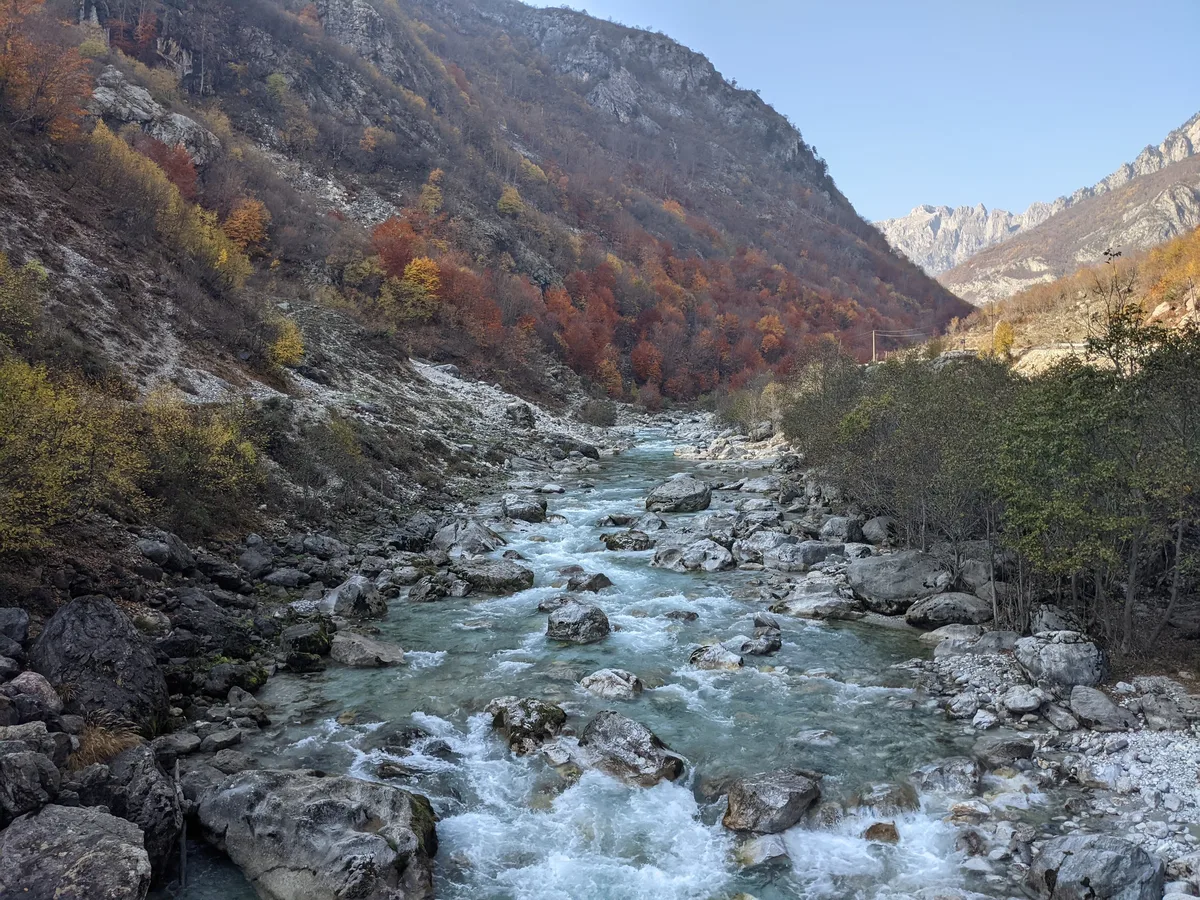
The fourth of the unesco sites in albania is the one almost every rival list mangles, so here is the precise version. The Ancient and Primeval Beech Forests of the Carpathians and Other Regions of Europe is a single transnational property made of 93 component parts across 18 countries, inscribed under criterion (ix) alone. It began in 2007 with the primeval beech forests of the Carpathians in Slovakia and Ukraine, grew into Germany in 2011, and in the 2017 extension — decided at the World Heritage Committee’s session in Krakow — it reached Albania, adding two Albanian components. A further extension in 2021 took the property to its present 18 countries. Albania’s share is exactly two forests: Lumi i Gashit, the Gashi River, and Rrajca.
What the property protects is a process, not a view. When the last Ice Age ended around 11,000 years ago, the European beech — which had survived the glaciations in scattered southern refuges — began expanding north and west across a warming continent, and that expansion is still going on. The inscribed forests are the best surviving undisturbed examples of that story: pure and mixed beech stands across nearly every environment beech occupies, holding old trees and a genetic reservoir that cannot be replanted once lost. Criterion (ix), the ecosystems test, fits it exactly. UNESCO’s management rule for the whole property follows from the logic: strict non-intervention. These forests are protected by being left alone.
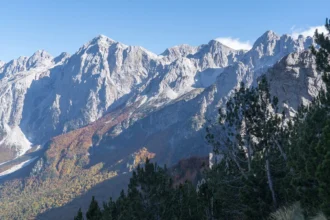
Lumi i Gashit is the flagship of the two. In the far north-east, in Tropoje in the Albanian Alps near the borders with Kosovo and Montenegro, the component covers 1,261.52 hectares inside the Gashi River Strict Nature Reserve, with a buffer of almost 9,000 hectares, at altitudes running from about 700 to 1,900 metres. The European beech-forest network describes it as the largest primary beech forest in the Albanian Alps — a steep river valley where the beech clothes the slopes above a wild, turquoise river, and where the “attraction” is precisely that almost nothing has ever been done to it.
Rrajca, the second component, lies far to the south-east: 2,129.45 hectares of ancient beech inside Shebenik-Jabllanice National Park, in the Perrenjas country east of Elbasan. It is the quieter and less visited of the two — high forest on the Shebenik massif, protected first as national park and since 2017 as part of a property that runs from Spain to Ukraine. Between them, the two components make Albania a small but real shareholder in the largest natural property on the European list.
Two honest clarifications close the section. First, the location error that circulates online: the beech forests are sometimes labelled “Valbona”, because the Gashi valley sits in the same Albanian Alps region as the famous Valbona valley — but Valbona is not an inscribed component, and the inscribed one is the neighbouring Gashi. Second, what a visit means: there is no monument, no gate and no viewpoint, and the non-intervention rule means there is not supposed to be. You experience these properties by walking in the protected landscapes around and through them — the Gashi valley path, the Shebenik trails — with the understanding that the forest’s value is that your visit changes nothing about it.
There is a final irony worth understanding, because it explains why Albania holds beech forest of world rank at all. The property’s science says beech survived the ice ages precisely in southern refuges like the Balkan mountains, then spread north from them as the climate warmed. Albania is not a late recipient of the beech story; it is one of its source landscapes, close to the refuges where the genus waited out the ice. The Gashi and Rrajca forests are, in that sense, the parent stock of half the beech woods in Europe — which is why a small country with two modest components belongs in a property alongside the great Carpathian reserves, and why logging pressure near them, the threat UNESCO names first for the whole series, is treated so seriously.
The Tentative List – Four Candidates Still Waiting for Inscription
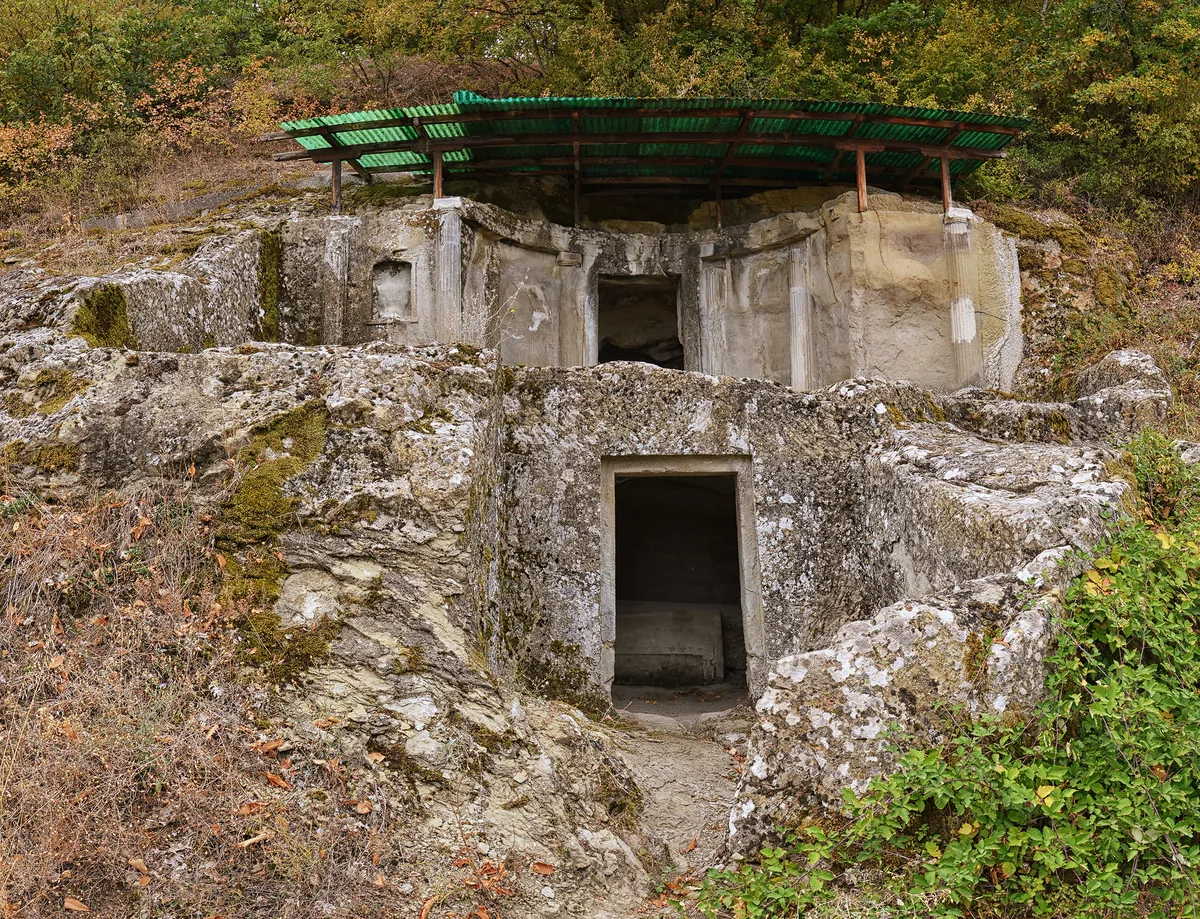
Every inscribed property starts on a Tentative List — the official inventory of places a country intends to nominate, and the only route onto the World Heritage List. Albania’s Tentative List, as it stands on UNESCO’s Albania page, holds exactly four entries. They are candidates, not sites, and the distinction is the whole point of this section: two of them have been waiting since 1996, and there is no timetable, no queue position and no promise attached to any of them.
The oldest candidacies are a matched pair from 1996. The Royal Tombs of Selca e Poshtme — UNESCO lists them under their French name, Les tombes de la Basse Selca — are a group of monumental Illyrian royal tombs cut directly into a rock terrace above the Shkumbin valley, near the ancient city that stood at Selca; photographed above, they are arguably the most impressive archaeological sight in Albania that carries no World Heritage status. Beside them on the 1996 list sits the Amphitheatre of Durres — again listed in French, L’amphithéâtre de Durres. Note what the candidacy actually is: the great Roman amphitheatre of Durres, one of the largest in the Balkans, buried for centuries and excavated from beneath the modern city’s houses. It is the amphitheatre that is the candidate, not some wider “ancient city of Dyrrachium” property, whatever loosely written pages imply.
The third candidate is the one that causes the confusion this page exists to fix. The Ancient City of Apollonia was added to the Tentative List in 2014 — the beautiful Greek and Roman colony near Fier, with its odeon, its library facade and its monastery hill. Apollonia is genuinely one of Albania’s great ancient sites, and it may well be inscribed one day. But as of this writing it is a candidate only, and every tour page advertising it as one of the unesco sites in albania is wrong. When it matters — for what a traveller is actually seeing, and for what protection the place legally has — the difference between “inscribed” and “tentative” is the difference between fact and hope.
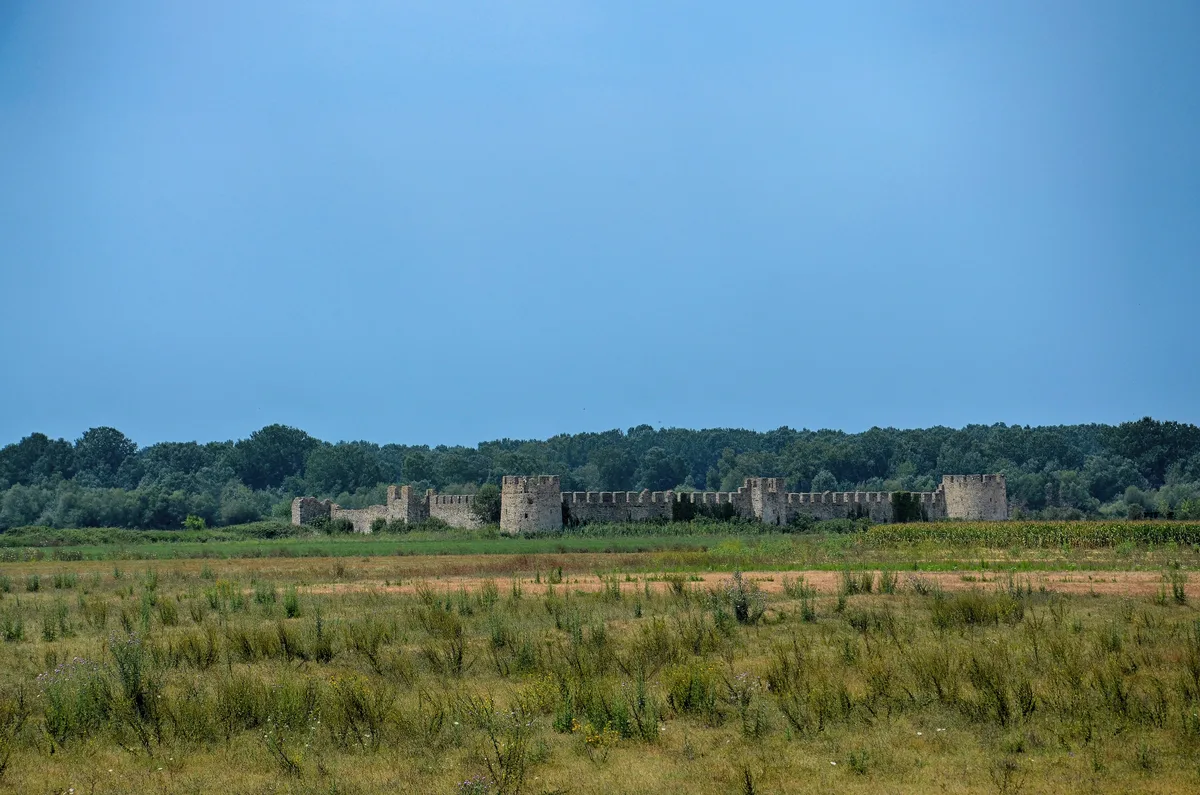
The newest candidate, added in 2017, is the Castle of Bashtova: a low, square, Venetian-built fortress standing alone in the fields near the mouth of the Shkumbin, guarding what was once a river port. It is the easiest of the four to add to a trip — it sits in the flat country between Durres and the south — and in some ways the most touching, a serious medieval fortress that most travellers drive straight past. Its photograph is in the FAQ section below, where it belongs: it is the answer to the question everyone asks next.
Read the four candidates together and a pattern emerges: Albania’s waiting list is heavy with antiquity — Illyrian tombs, a Roman amphitheatre, a Greek colony — plus one Venetian fortress, and light on everything after the 15th century. Whether any of them advances depends on nomination dossiers, comparative studies and committee politics that move in decades, not seasons. Travellers should enjoy all four places now, on their merits — and describe them accurately while doing it.
It is also worth knowing what candidacy does and does not do, because the Tentative List is widely misunderstood. Being listed there makes a place eligible for nomination and signals national intent — UNESCO’s own description calls the list an inventory of properties each country intends to consider for nomination — and it brings a place into the orbit of advisory attention. It does not bring World Heritage status, funding rights or the monitoring machinery that follows inscription; for scale, UNESCO’s Albania page already logs 47 state-of-conservation reports on the country’s four inscribed properties, a paper trail none of the candidates yet has. A tentative entry is a country’s homework assignment to itself. Albania set two of those assignments in 1996 and has not yet handed them in — which says less about the places than about how slowly the full machinery turns.
How to Fit the UNESCO Sites in Albania Into One Trip
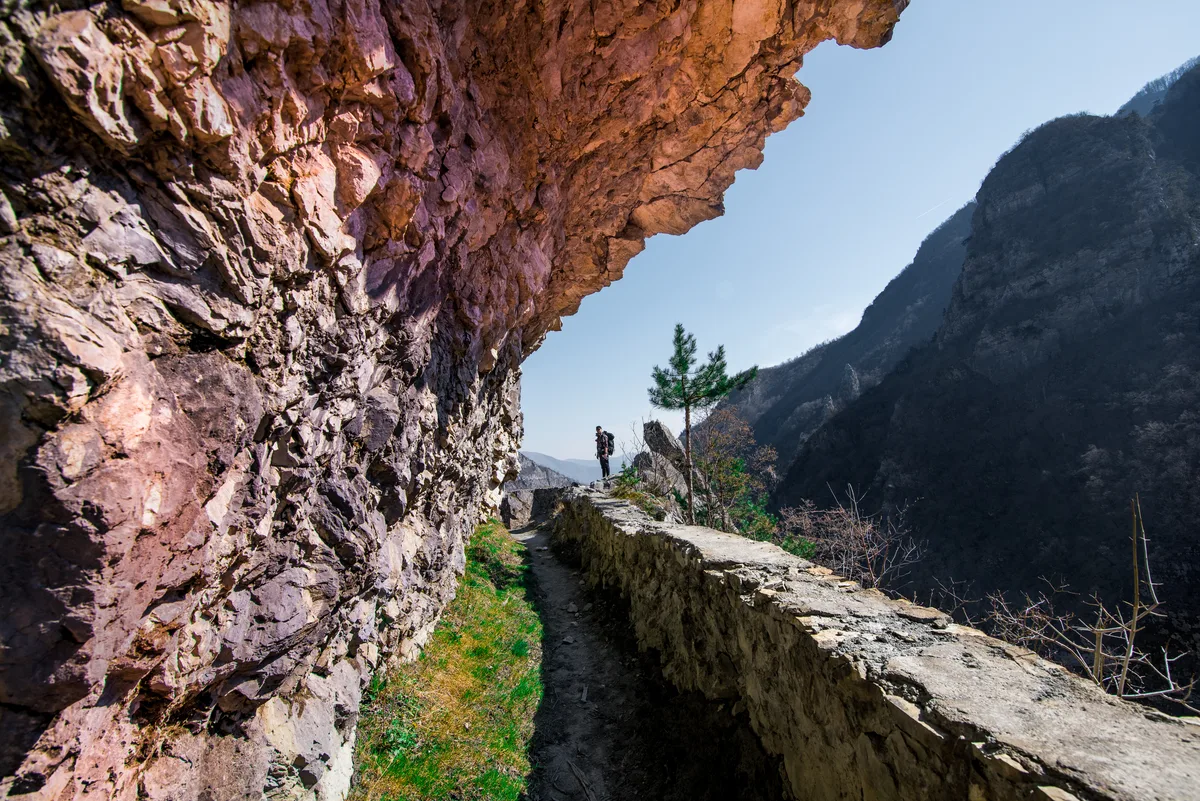
The unesco sites in albania look like a tidy list and behave like a geography exam. Four properties, six places, and a country where the heritage sits in three different corners — the far south, the centre-south and the east — with the fourth property split between the far north-east and the east-central mountains. Planned well, they make the spine of a great Albanian trip. Planned as four equal “sites”, they make a rushed one.
The natural grouping is the southern loop. Butrint belongs with the Saranda and Ksamil coast — it is the ancient counterweight to the beach days, and it takes the better part of a day to do properly rather than as a photo stop. Gjirokaster and Berat belong together twice over: they are one UNESCO property, and they sit on the same southern circuit, so the traveller reads the pair the way the inscription intends — the landowners’ citadel town of stone, then the merchants’ town of windows, each explaining the other. Our Albania itinerary for 7 days builds exactly that loop day by day, and our Best Places to Visit in Albania guide puts the heritage stops in route order against the coast and the mountains.
Lake Ohrid is a separate decision, not a southern-loop add-on. The Albanian shore is an eastern journey — Tirana towards Pogradec, with Lin as the stop that matters and Korce, the southeast’s cultural capital, as its natural partner. Trying to bolt Pogradec onto the end of a southern loop turns both into driving. Give the lake its own leg and its own slow day: the property’s cultural heart on this shore is a village peninsula and a 6th-century basilica’s mosaics, and both reward arriving unhurried.
The beech forests need the most honesty of all. Lumi i Gashit is in Tropoje, deep in the Albanian Alps, and reaching its valley is a walk into a strict nature reserve — a hiking day in serious mountain country, usually combined with the Valbona-Theth region rather than with any other UNESCO property. Rrajca is more accessible, inside Shebenik-Jabllanice National Park on the road east, and pairs more naturally with the Ohrid leg than with the Alps. Neither is a detour you make on a whim between other stops; both are the day’s whole purpose when you go. That is not a flaw in the trip. It is what a natural property protected by non-intervention is supposed to feel like.
The candidates, finally, are the trip’s easy wins. Apollonia sits close to the standard route south and asks only for the hours it deserves. Durres and its amphitheatre are on the coast by the capital. Bashtova stands in open country most southbound travellers pass within sight of. Selca e Poshtme is the connoisseur’s detour, up the Shkumbin valley on the way east. None of them needs the UNESCO label to justify the stop — which is fortunate, since none of them has it yet.
Timing ties the whole list together, and the properties quietly prefer the shoulder seasons. The old towns are walking towns — steep lanes, castle climbs, slate and stone underfoot — and they are at their best outside the high-summer heat, when their museums and houses can be taken slowly. Butrint is the forgiving exception: its circuit runs through woodland shade, which is why it survives being paired with a July beach week better than any open ruin field would. The Ohrid shore is a summer place by instinct, but its heritage stops — Lin’s peninsula and mosaics above all — are uncrowded in a way Pogradec’s beaches in August are not. And the beech forests make their own argument for autumn, when the slopes above the Gashi turn the colours the property’s photographs promise, and the strict-reserve valleys empty of what few visitors they get. Spread across a spring or an autumn, the four properties stop competing with each other and start sequencing themselves.
The Honest Notes – Water, Roofs, Wastewater and Illegal Building
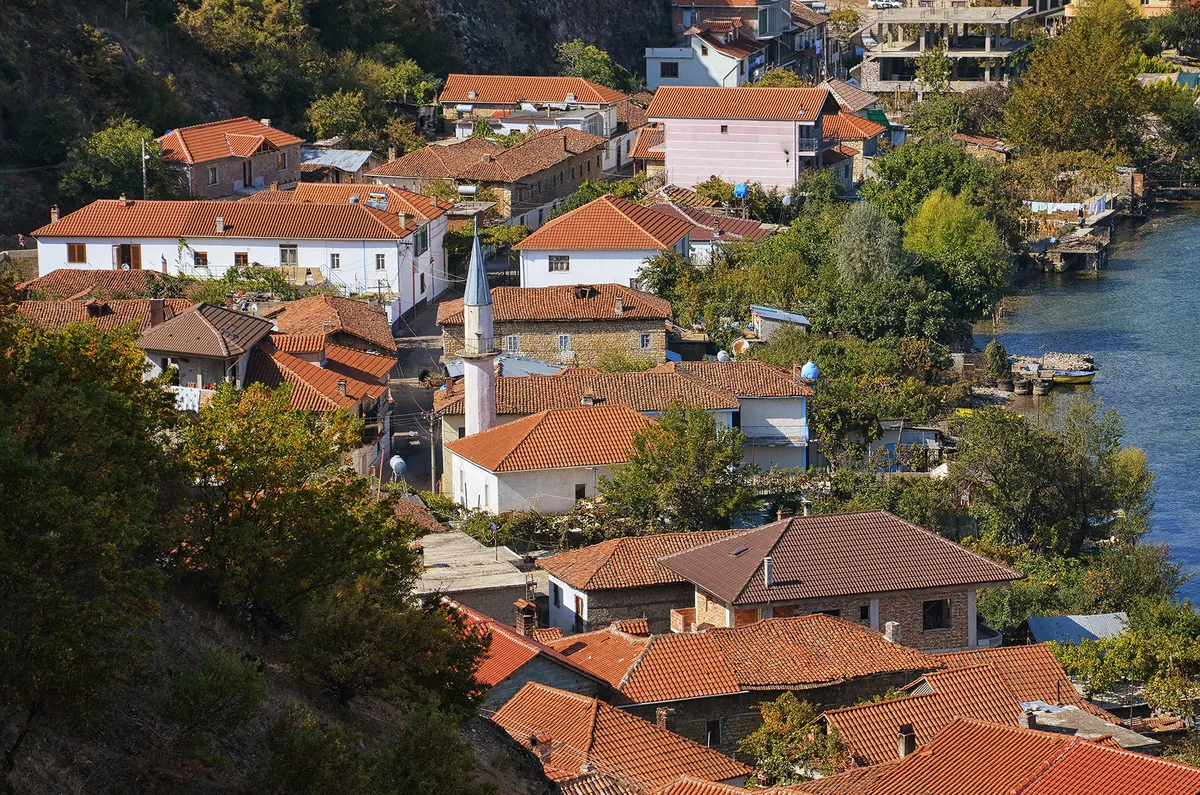
A list like this one invites brochure language, so here is the other side, drawn from UNESCO’s own listing texts rather than from opinion. None of the four properties is currently on the List of World Heritage in Danger — but one of them has been, and the official assessments name live threats at three of the four, which is more candour than most countries’ pages ever quote.
Butrint’s danger years were real: 1997 to 2005, when looting and the collapse of management in Albania’s pyramid-scheme crisis left the site effectively unprotected, and recovery took an international rescue effort and a new national park. Its listed threats today are quieter but structural — the seasonal water level still rises through the lower city, vegetation and unstable masonry need constant work, and development presses on the park’s edges. The lesson the site itself teaches is that inscription did not save Butrint; the management built after 2000 did, and it has to keep being done.
At Berat and Gjirokaster the threat is the towns’ own success and their own residents’ needs. UNESCO’s text records the illegal construction of the late 1990s plainly, and the physics of the place has not changed: a stone-slate roof is a beautiful, enormously heavy, craftsman-hungry thing to maintain, a tower house is an awkward modern home, and every satellite dish, extension and concrete frame is a small negotiation between a living town and a frozen one. The inscription protects a way of life, and ways of life push back.
At Lake Ohrid the official threat list is the longest of the four: uncoordinated urban development, wastewater and solid waste, tourism pressure, and rising nutrients in a lake whose entire outstanding value depends on remaining nutrient-poor. The photograph above is Lin, the property’s own flagship village on the Albanian shore — old houses, new houses, and an unfinished concrete frame, all in one frame. Nothing in it is scandalous; everything in it is the point. The 2019 extension was partly intended to bring this shore under stronger discipline, and whether it has is a question the next decade answers.
The beech forests face the threats UNESCO names for the whole serial property — logging near component boundaries and habitat fragmentation — in a country where mountain forests have historically been cut faster than they were protected. Their defence is the strictness of the regime: strict nature reserve at the Gashi, national park at Rrajca, and a management doctrine of non-intervention that treats a chainsaw, not a visitor, as the danger. Of the four properties, they are currently the least threatened by tourism, for the simple reason that almost nobody goes. Long may that particular problem persist.
Frequently Asked Questions About UNESCO Sites in Albania
How many UNESCO sites does Albania have? Four. Albania has four inscribed World Heritage properties: Butrint; the Historic Centres of Berat and Gjirokastra, which are a single shared property; the Natural and Cultural Heritage of the Ohrid region, shared with North Macedonia; and the Ancient and Primeval Beech Forests, shared with 17 other countries. Anyone who answers five is counting Berat and Gjirokaster separately, and anyone who answers six has promoted a Tentative List candidate.
Is Apollonia a UNESCO World Heritage site? No. Apollonia has been on Albania’s Tentative List since 2014, which makes it an official candidate for future nomination — a real status, but not an inscription. Tour pages that list it among the unesco sites in albania are mistaken, however good the site itself is.
Which was the first UNESCO site in Albania? Butrint, inscribed in 1992 — three years after Albania ratified the World Heritage Convention on 10 July 1989. The Ohrid region property is older on paper (1979), but Albania’s part of it only joined in 2019.
What do the criteria numbers actually mean? They are UNESCO’s tests of outstanding universal value. Among the unesco sites in albania, criterion (iii) — testimony to a civilisation or tradition — covers Butrint and the two old towns; (iv), an outstanding example of a building type or landscape, covers the towns and Ohrid; (i) and (vii) cover Ohrid’s masterpieces and natural phenomena; and (ix), ecosystems and biological processes, is the beech forests’ sole criterion.
Can you visit all four properties in one trip? Yes, but not in a weekend, and not as four equal stops. Butrint, Gjirokaster and Berat form one southern loop; the Ohrid shore is a separate eastern leg; and the beech forests are dedicated hiking days — the Gashi valley in the far north-east, Rrajca in the Shebenik mountains. Treat the properties as the skeleton of a full Albanian journey rather than a checklist and the geography works with you.
Are any of the sites in danger? None is currently on the List of World Heritage in Danger. Butrint was, from 1997 to 2005, after looting and management collapse during Albania’s civil unrest; it was removed in July 2005 following the creation of its national park administration. UNESCO’s current texts still name active threats — water and development at Butrint, illegal building pressures in the old towns, wastewater and nutrient rise at Lake Ohrid — without placing any property on the danger list.
What might be inscribed next? Nobody can honestly say — inscription requires a full nomination dossier and a committee vote, and Albania’s Tentative List has had two entries waiting since 1996. The four candidates are the Royal Tombs of Selca e Poshtme (1996), the Amphitheatre of Durres (1996), the Ancient City of Apollonia (2014) and the Castle of Bashtova (2017), pictured above. Candidacy is a statement of intent, not a queue with numbers.
UNESCO Sites in Albania – The Short Version
Four properties, counted properly. Butrint, the wooded ancient city in the far south, inscribed in 1992 under criterion (iii), put in danger in 1997 and rescued by 2005. Berat and Gjirokaster, one shared inscription of 2005 and 2008 under criteria (iii) and (iv), two Ottoman towns that answer each other across the centre-south. Lake Ohrid, a mixed property of 1979 and 1980 that Albania’s shore joined only in 2019, under criteria (i), (iii), (iv) and (vii). And the primeval beech forests, criterion (ix), an 18-country property that reached Albania in 2017 in exactly two places — the Gashi River and Rrajca.
Behind them, four candidates wait on the Tentative List, two of them since 1996, and at least one of them — Apollonia — is routinely mis-sold as already inscribed. Do not let any page talk you out of the arithmetic: the unesco sites in albania are four properties covering six places, and every one of them repays the journey on its own terms. See Butrint with the coast, the two towns as the pair they are, the lake on its own eastern leg, and the forests on foot and in no hurry. That is the complete list, kept straight and ready to travel with.