Ephesus Travel Guide – Library of Celsus, the Great Theatre and the Terrace Houses
Ephesus is the rare ancient site that still reads as a city. Many famous ruins are a temple, a stadium or a scatter of columns with a fence around them, and the visitor’s job is to admire the one thing and leave. Ephesus asks something different of you. It has a street plan you can walk, a harbour street that runs down to a harbour that no longer reaches the sea, a theatre cut into a hillside, houses with their wall paintings still on the walls, and a library facade that has become the portrait of Roman Türkiye. The city explains itself as you move through it, provided you walk it in the right direction and give it more than a hurried hour between two other stops.
This ephesus travel guide is organised around how the ground actually lies. The site is a long, sloping strip between two gates, and almost everything a first visit needs falls along one downhill line — the government quarter at the top, Curetes Street dropping past the Terrace Houses and the Temple of Hadrian, the Library of Celsus at the corner, then Marble Street and the Great Theatre at the bottom, with the harbour street running on into fields that were once the port. Understand that slope and the visit organises itself. What sits outside the fence matters too, and this guide treats it properly — the single column of the Temple of Artemis in its waterlogged field, the Basilica of St John on Ayasuluk hill, and the Ephesus Museum in Selçuk, where the finds from all of it are kept.
At a Glance
| Sight | Why it matters | Where on site |
|---|---|---|
| Library of Celsus | The city’s emblem — a library that is also a monumental tomb, its facade rebuilt from its own fallen stones | Lower city, at the corner of Curetes Street and Marble Street |
| Great Theatre | Among the largest theatres of the Roman world, cut into the slope of Mount Pion | Lower city, at the foot of Harbour Street |
| Terrace Houses | Wealthy homes under a protective roof, with mosaics and wall paintings in place | On Curetes Street, opposite the Temple of Hadrian |
| Curetes Street | The processional marble street between the upper and lower city | The sloping middle of the site |
| Temple of Hadrian | A small, richly carved temple front on Curetes Street, among the finest relief work on site | Curetes Street |
| Odeon and State Agora | The small council theatre and the government square of the Roman city | Upper city, near the upper gate |
| Temple of Artemis site | One of the Seven Wonders of the ancient world, now a single re-erected column in a marshy field | Outside the fence, between the site and Selçuk |
| Basilica of St John | Justinian’s great church over the believed tomb of John the Apostle | Ayasuluk hill, Selçuk |
| Ephesus Museum | The Artemis statues and the portable finds from the excavations | Selçuk town centre |
Two planning facts follow from the table. First, the famous sights are not evenly spread — the lower city holds the Library and the Theatre a few minutes apart, while the upper city is quieter, more fragmentary and skipped by many tours, which is exactly why it repays the walk. Second, a complete Ephesus day has two halves in two places — the fenced ancient city, and Selçuk town with its museum, basilica and the Artemis field. Plan for both halves from the start and the day stops feeling like a ruin with add-ons and starts feeling like what it is, which is a city and the town that inherited it.
A Short Honest History
Ephesus was a Greek city on the coast of Ionia, grown wealthy on the harbour at the mouth of the Kaystros river and on the sanctuary of Artemis just outside its walls. That temple — the Artemision — was among the largest buildings of the classical world and counted as one of the Seven Wonders of it, rebuilt in marble after a fame-seeking arsonist burned its predecessor on, legend insists, the night Alexander the Great was born. Under Rome the city became the capital of the province of Asia and one of the largest cities of the empire, and the Ephesus you walk today is overwhelmingly that Roman Imperial city of the 1st and 2nd centuries CE — marble streets, grand public buildings and rich private houses laid over the Hellenistic grid beneath.
The same river that made Ephesus also unmade it. The Kaystros carried silt down to the harbour faster than dredging could clear it, the shoreline retreated westward century by century, and the city was repeatedly refounded and shifted to keep pace with its own port — UNESCO’s listing describes exactly this, a succession of Hellenistic and Roman settlements following a retreating coastline. By the early medieval period the harbour was marsh, the population had gathered around the Basilica of St John on Ayasuluk hill, and the marble city below was left to the stone robbers and the silt. The pilgrimage outlasted the city, as UNESCO also notes — travellers kept coming for St John and later for the House of the Virgin Mary on the hill above, long after the streets below were farmland.
Excavation began in the 19th century, much of it driven by the search for the Temple of Artemis, and Austrian-led teams have worked at Ephesus for well over a century since. What you see is therefore a curated city as much as a found one. Fallen buildings have been re-erected from their own stones — the Library facade and the Temple of Hadrian among them — in the process archaeologists call anastylosis, and fragile quarters like the Terrace Houses have been roofed over to survive at all. UNESCO inscribed Ephesus on the World Heritage List in 2015 under criteria (iii), (iv) and (vi), for its testimony to Hellenistic, Roman and early Christian culture, for the harbour-city landscape the shifting shoreline created, and for a religious story that runs from the cult of Artemis to two councils of the early Church held in this city. Read the official listing at whc.unesco.org before you go and the site reads at twice the depth.
The Lower City – Library of Celsus and the Great Theatre
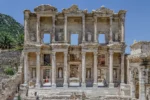
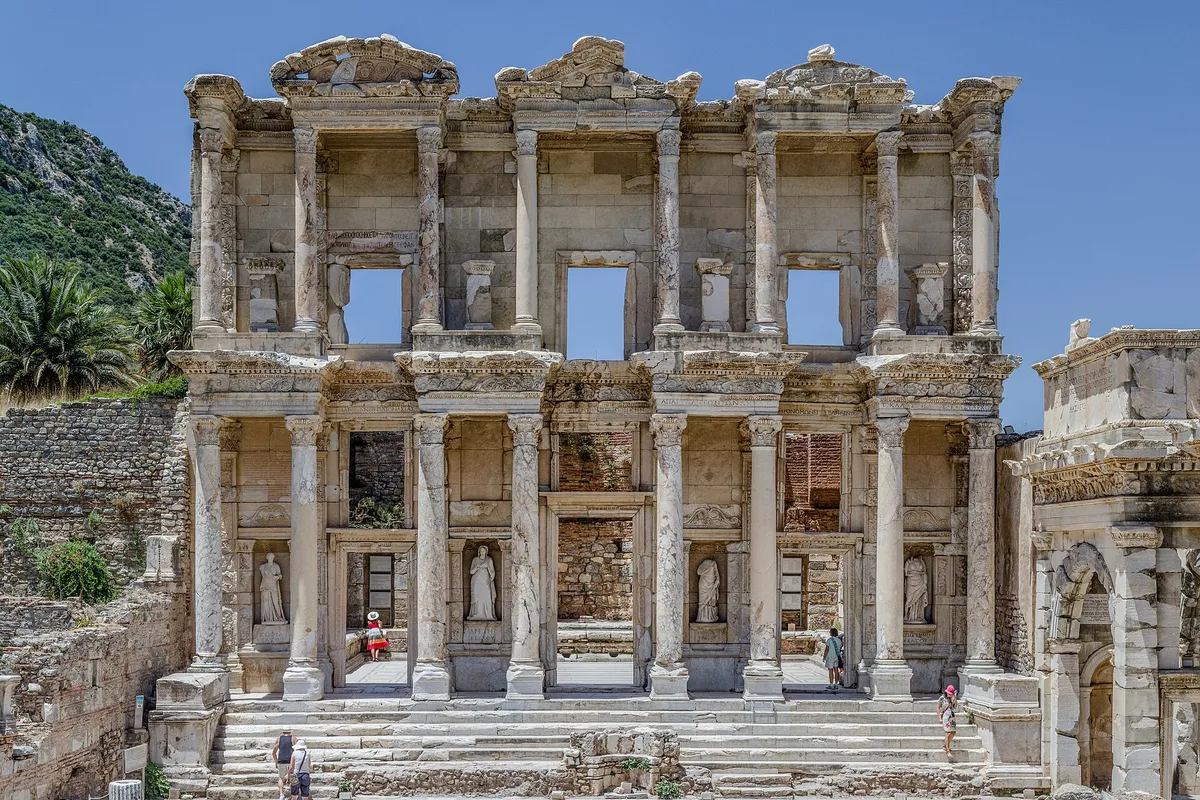
The lower city is where most visits begin or end, and it holds the two buildings Ephesus is famous for within a few minutes of each other. The Library of Celsus stands at the corner where Curetes Street meets Marble Street, and its two-storey facade — columns, carved window frames, and statues in niches representing the virtues of the man it honours — is the most photographed front in Türkiye. It was built in the early 2nd century CE by a son in memory of his father, Tiberius Julius Celsus, a senator and governor of Asia whose sarcophagus still sits in a small chamber beneath the building. The library was therefore always two things at once, a public reading room holding thousands of scrolls in cupboards set into its thick walls, and a monumental tomb wearing the costume of culture. The facade itself is a reconstruction, reassembled from its own excavated fragments in the 1970s with Austrian and Turkish funding — which takes nothing away from it, but is worth knowing when you are deciding how old the thing in your photograph actually is.
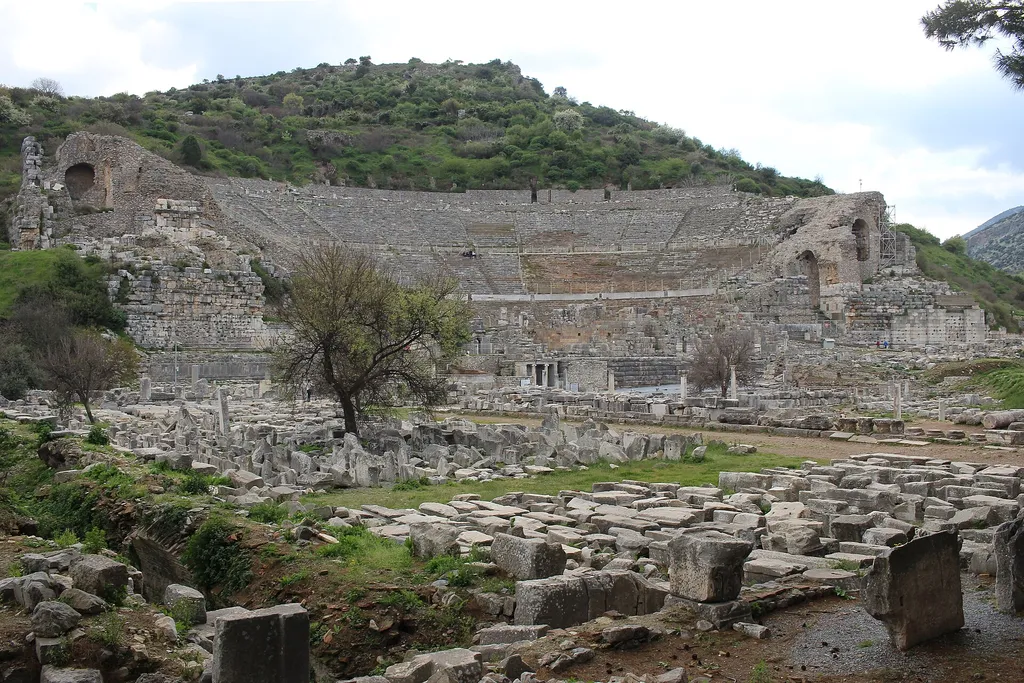
Below the library, Marble Street runs to the Great Theatre, and the scale changes abruptly. The theatre is cut into the western slope of Mount Pion and faced the harbour, so that a arriving traveller by sea saw the city’s entertainment palace before anything else. Ancient and modern sources put its capacity in the region of twenty-four to twenty-five thousand spectators, and you should treat that figure the way this guide treats all such numbers — as a well-supported approximation from the size of the cavea, not a counted fact. It was begun in the Hellenistic period and enlarged under Rome into the form you see, and it served for drama, for public assembly and in later centuries for less gentle spectacles. This is also the theatre of the Acts of the Apostles riot, when the silversmith Demetrius, whose trade in Artemis shrines was threatened by Paul’s preaching, filled it with a crowd chanting for the goddess — the one moment when the building steps out of archaeology and into a text half the world has read.
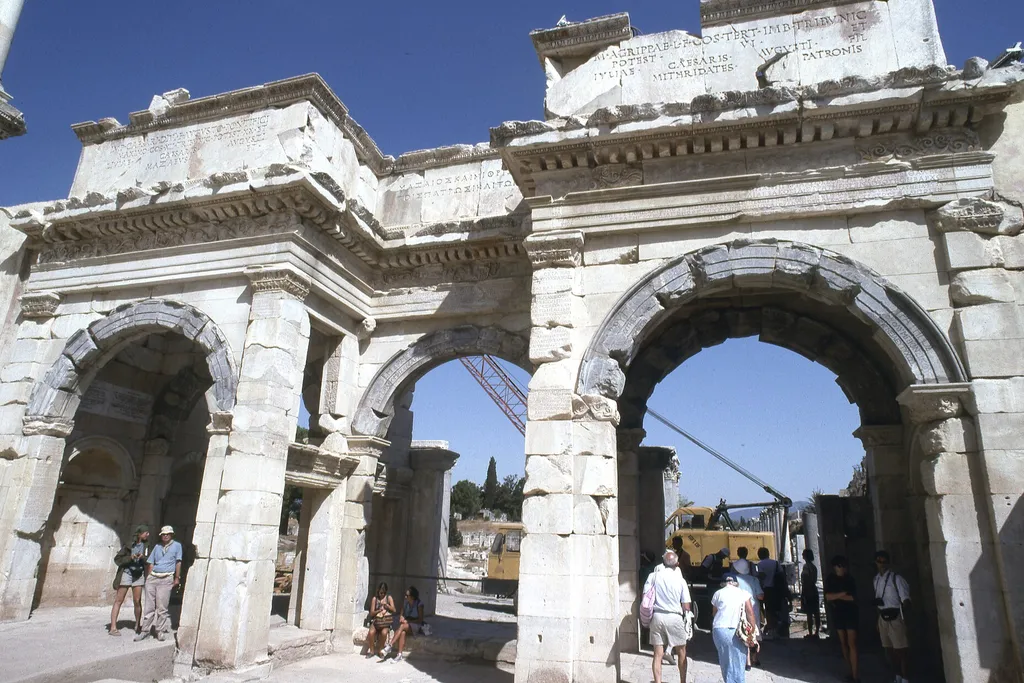
Walk the lower city slowly, because its smaller pieces reward attention and are walked past constantly. The Gate of Mazaeus and Mithridates, the richly lettered triumphal gate beside the library, was paid for by two freedmen of Augustus and named for them — private money buying public glory, in marble. The commercial agora spreads behind it, largely foundations now, and the brothel, the public latrines and the footprint mosaic that tour patter loves all sit in this quarter too. Take the patter with salt and the stones seriously. The lower city was the working waterfront end of Ephesus, dense and commercial, and its ruins are honest about that in a way the postcard corner is not.
Curetes Street and the Terrace Houses
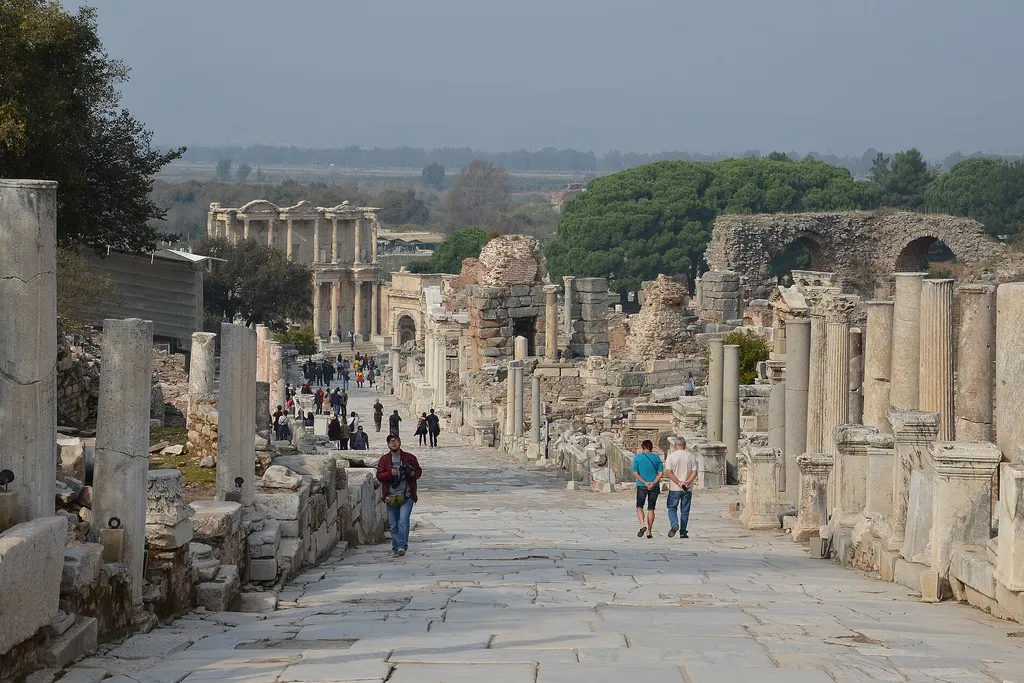
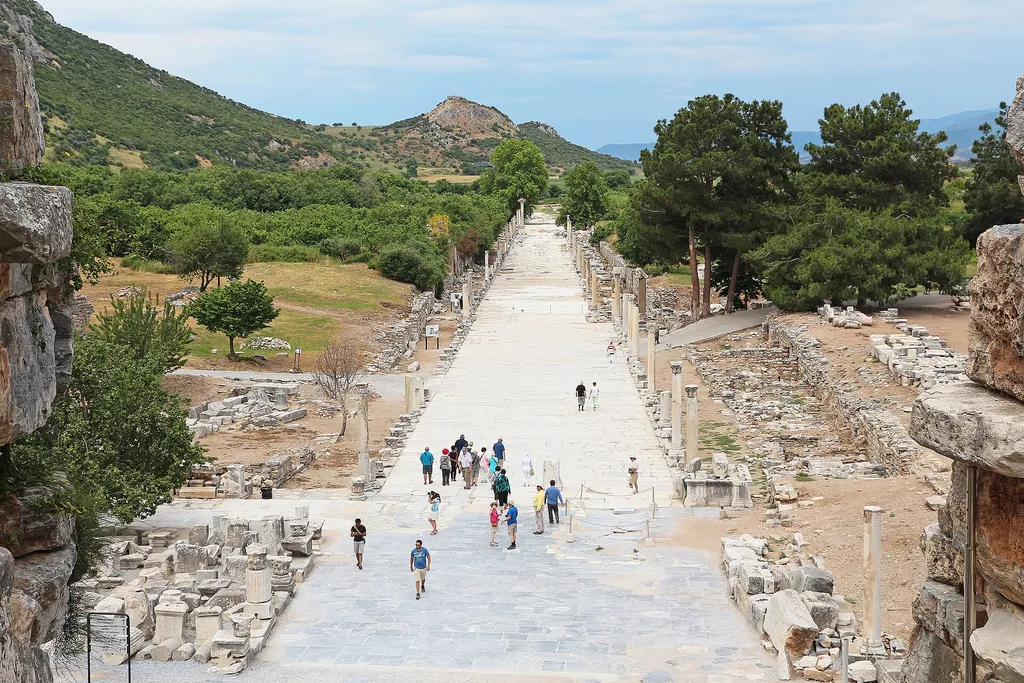
Curetes Street is the spine of the visit, a marble-paved processional street that climbs from the Library up to the upper city, named for the Curetes, priests of Artemis whose names are carved on its columns. It is a street that tells you how a Roman city wanted to be seen — colonnades for shade, statues on inscribed bases, fountains, a monumental gate partway up, and the facades of public generosity on both sides. The paving is original in long stretches and polished by two thousand years of feet into something genuinely treacherous when wet, a practical fact worth more than any aesthetic one. Walk on the rougher edges, look down as much as up, and let the slope set your pace, because everyone who ever mattered in Ephesus walked this same gradient on the same stones.
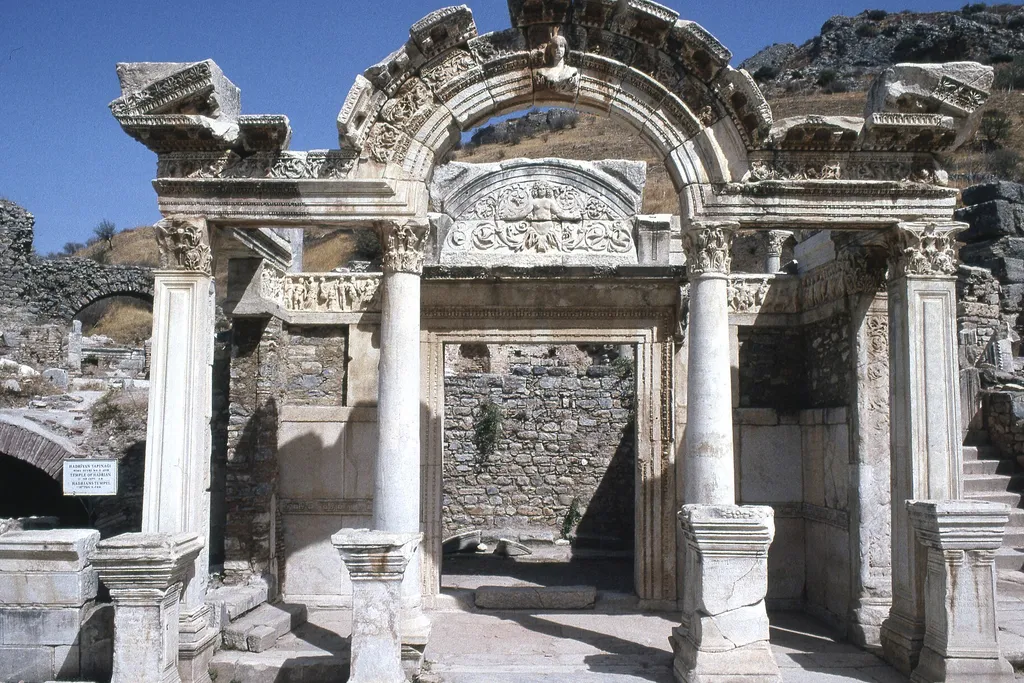
Partway up, the Temple of Hadrian makes the street’s best small argument. It is a modest building by Ephesian standards — a porch, a carved architrave, a relief panel whose original is now in the museum in Selçuk with a copy in its place — but its carving is among the finest on the site, and its scale is human in a city of monuments. Opposite it, and easy to walk past because its modern roof reads as a warehouse from the street, sits the quarter that most changes how visitors think about the Roman world. Give both the time their size seems to argue against. On Curetes Street, small and roofed-over beat large and famous more often than anywhere else at Ephesus.
The Terrace Houses – Ephesus Indoors
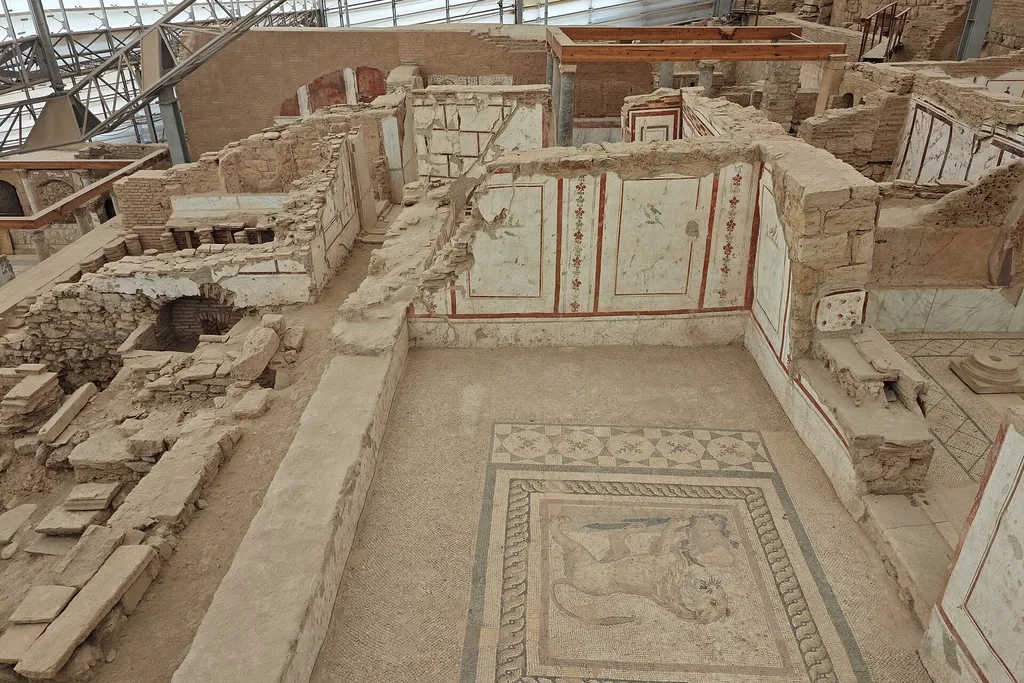
The Terrace Houses are a slope of wealthy homes built against the hill across from the Temple of Hadrian, excavated house by house and now protected under a great modern roof that keeps the weather off what two millennia of burial preserved. Inside, on walkways that thread above and between the rooms, you see the Roman world at domestic scale — courtyards open to the sky, marble-panelled reception rooms, mosaic floors still in their patterns, and wall paintings room after room deep, including the famous painted panels of Terrace House 2 that UNESCO’s listing singles out by name. These were not palaces. They were the houses of the city’s prosperous class, lived in, redecorated and subdivided across centuries, with shops at street level and fountains in the courts, and they are the single best place at Ephesus to understand that the marble city was inhabited by people with taste, money and plumbing.
Practical honesty matters here, because this is the part of the visit most often mishandled. The Terrace Houses are ticketed separately from the main site in current arrangements — a second charge at their own door, on top of site entry — and the arrangement of what any pass covers is exactly the kind of detail that changes, so check the current position on muze.gov.tr, the Ministry of Culture and Tourism’s museum portal, before you build a budget on it. This guide prints no figure for either ticket, deliberately, for the same reason it prints no opening hours. Whatever the charge is in the week you travel, the calculation most visitors get wrong is time rather than money — the houses deserve the better part of an hour, they are the one part of Ephesus that rewards slowness indoors, and the groups that sweep through in ten minutes leave having seen the roof. Come here when the street outside is at its hottest and busiest and the houses give you their other gift, which is shade.
The Upper City and the State Agora Side
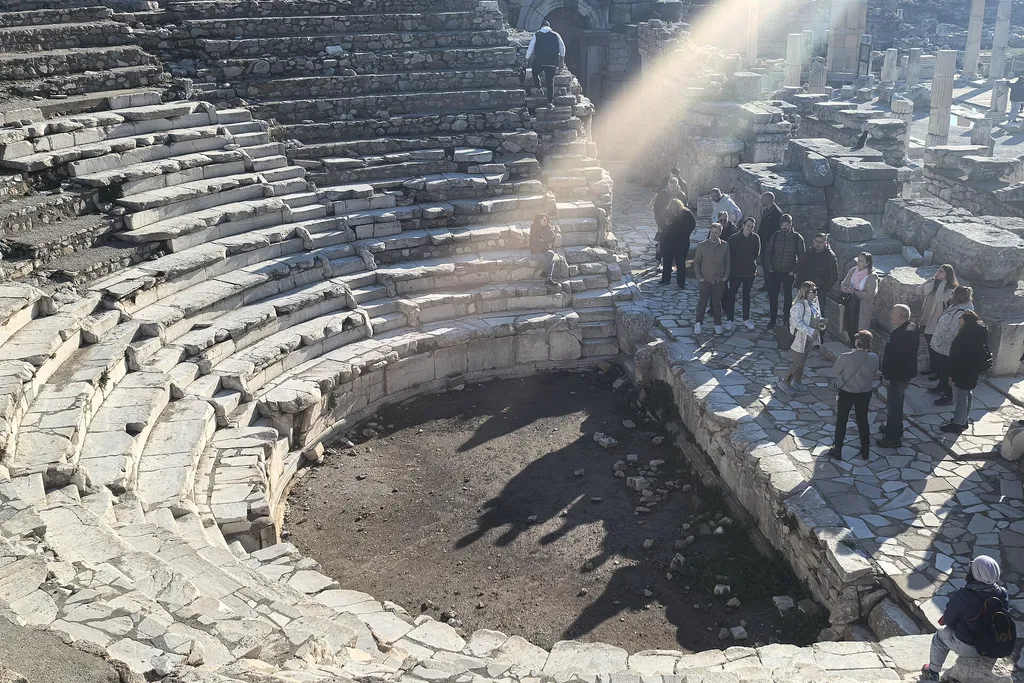
The top of Curetes Street opens into a different Ephesus, and visitors who enter at the lower gate and run out of energy before climbing to it never see the city’s other half. This was the government quarter. The State Agora spreads out as a great open square of foundations and column drums, the administrative heart where the province of Asia was actually run, with the Basilica — in the Roman civic sense, a long colonnaded law and business hall — along its northern side. Just above it sits the Odeon, a small, elegant roofed theatre of perhaps fifteen hundred seats that served as the city’s council chamber, the bouleuterion, as much as a concert hall. Stand in it and the politics of Ephesus become imaginable in a way the Great Theatre’s vastness never allows — this is a room where a few hundred councillors could argue, and be heard.
Around the square stand the working buildings of a capital. The Prytaneion was the city’s ceremonial town hall, where the sacred flame was kept and honoured guests were fed at public expense, and it was here, in its ruins, that the famous statues of Artemis now in the Selçuk museum were found, buried where they had been stored. The Temple of Domitian, on its high artificial terrace at the street’s end, was among the first temples in the empire dedicated to a living emperor’s cult by a city competing for the honour — Ephesus guarded that imperial-cult status jealously, and the temple’s sheer terrace is propaganda in masonry. Much up here is foundations and fragments rather than standing facades, and that is the honest character of the quarter. The upper city asks you to read a plan rather than admire a photograph.
Give this end of the site its due for one more reason, which is peace. The tour groups that fill Curetes Street thin out sharply above the Hercules Gate, where the street narrows — the gate itself, carved with a relief of Heracles, marks the point where wheeled traffic once stopped and the street became a pedestrian way. In the upper city you can often stand in the Odeon or on the State Agora with a handful of people instead of a procession, in the same morning, in the same site. On a busy day that difference is worth as much as any single monument, and it is the strongest practical argument for the route this guide recommends in the How to Visit section below — start at the top, and walk down into the crowds rather than up against them.
The Temple of Artemis and Selçuk
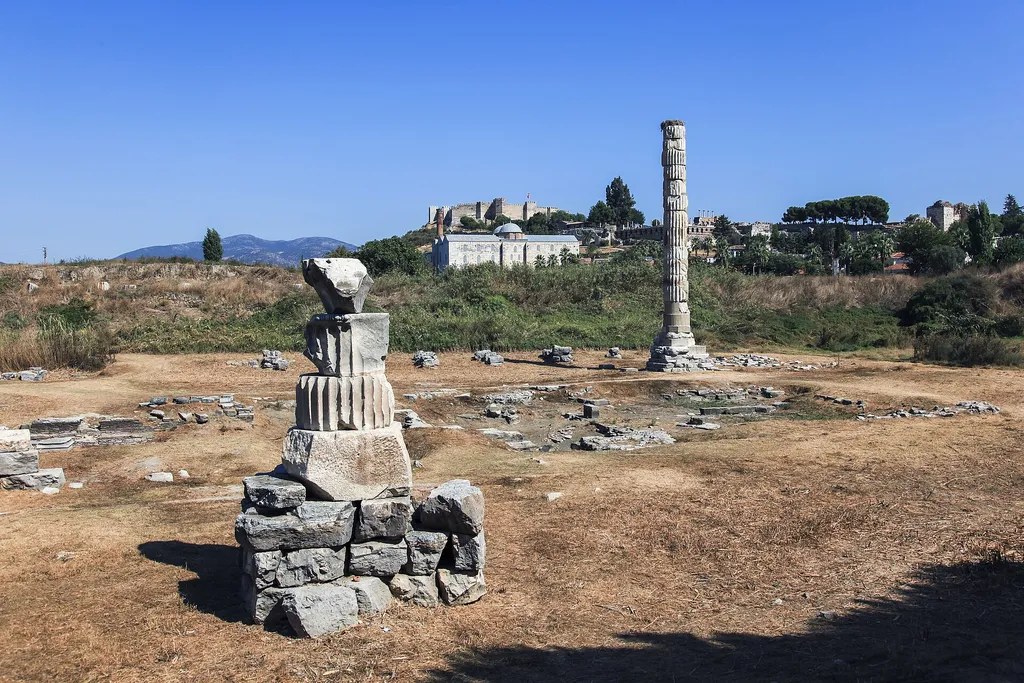
Between the ancient city and modern Selçuk lies the field where the greatest building of Ephesus stood, and managing your expectations for it is this guide’s plain duty. The Temple of Artemis was one of the Seven Wonders of the ancient world, a marble giant roughly four times the footprint of the Parthenon, funded in its final form partly by Alexander the Great’s successors and visited by pilgrims from across the Mediterranean. What stands there today is one column, re-erected from excavated drums, rising out of a waterlogged hollow where storks nest, with foundations and scattered blocks in the wet grass below it. Everything portable was carried off across the centuries — columns from this temple are traditionally said to stand in Hagia Sophia in Istanbul — and the site is free, unfenced in feel, and over in five minutes unless you stand still and do the imagining deliberately.
Do the imagining, because the field completes the story the marble city starts. Ephesus existed because of Artemis — the goddess drew the pilgrims, the pilgrims filled the harbour, the harbour paid for the streets you have just walked. The silversmiths who rioted in the Great Theatre were defending this temple’s economy. Stand by the column, look back at Ayasuluk hill above it and across to the castle and the basilica, and you can see the whole thousand-year argument of the place in one view — pagan sanctuary in the field, Christian basilica on the hill, Seljuk mosque and Ottoman castle layered above both. Few single viewpoints in Türkiye stack that much history into one turn of the head, and it costs nothing but the short walk from the lower gate road. Most tours skip it entirely. That is their loss and, on a quiet morning, entirely your gain.
The Basilica of St John and the Museum in Town
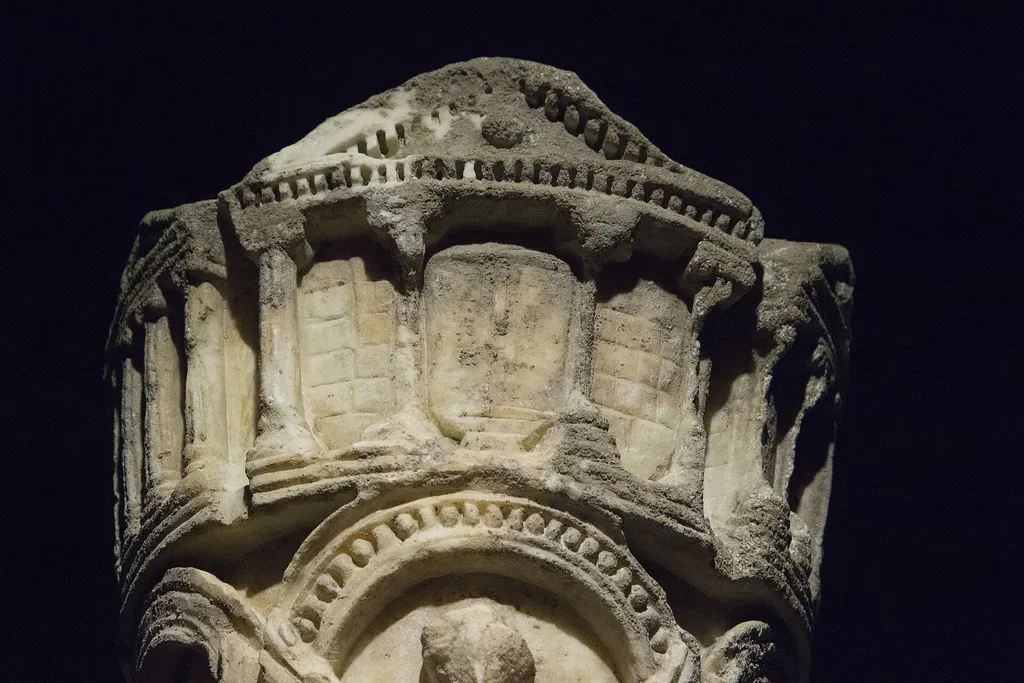
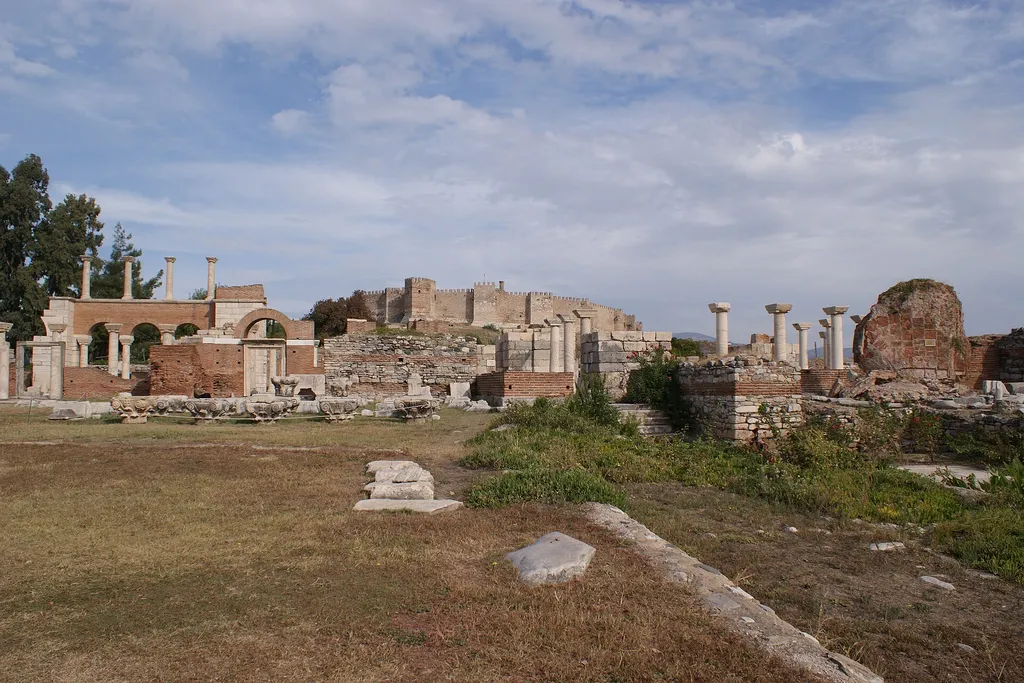
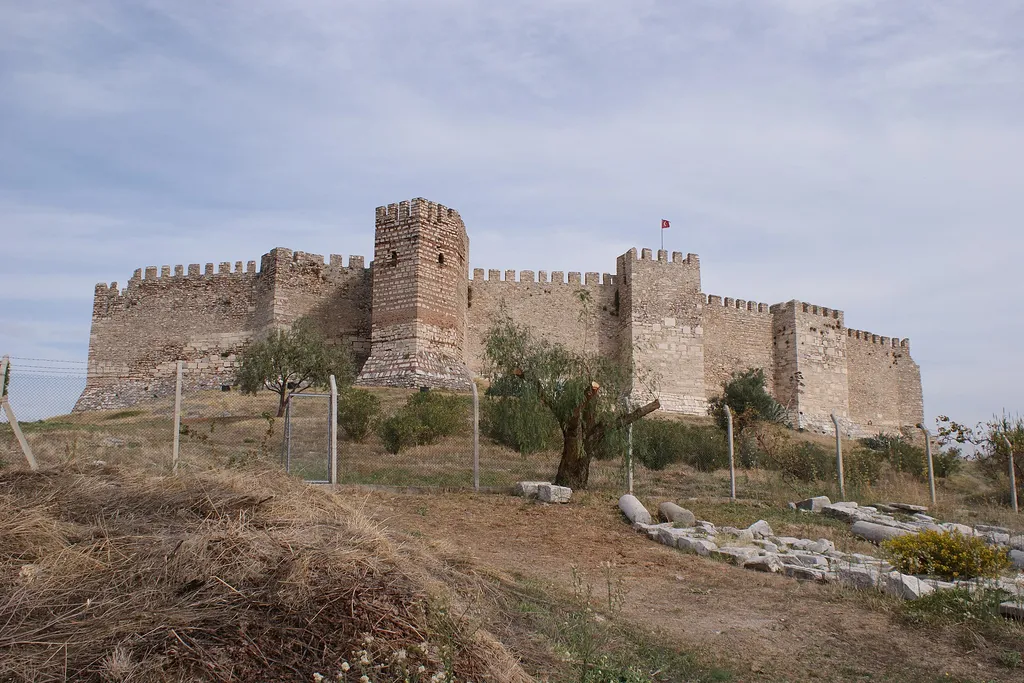
Above the Artemis field, Ayasuluk hill carries the second half of the Selçuk visit. The Basilica of St John was built by the emperor Justinian in the 6th century over the believed burial place of John the Apostle, and in its day it ranked among the largest churches of the Byzantine world — a cruciform, multi-domed pilgrimage church whose ruined arcades and apse still convey its scale. The tomb itself sits at its heart, marked and visited still. Around the basilica spread the fortifications of Ayasuluk, walls and a castle rebuilt across Byzantine, Seljuk and Ottoman centuries, and below it the İsa Bey Mosque of the 14th century, one of the early masterpieces of Anatolian Turkish architecture, built with columns and capitals borrowed, as builders here always borrowed, from the classical ruins at hand. The hill is a half-day in miniature if you let it be, and its views back over the Artemis field to the ancient city tie the whole landscape together.
Finish in the Ephesus Museum in Selçuk town, because this is where Ephesus keeps what the weather would have destroyed. The museum holds the finds from the excavations — and its centrepieces are the two great statues of Ephesian Artemis, a goddess rendered in a style found nowhere else in the Greek world, her torso covered in rows of carved ornaments that scholars still argue about. Around them sit the Terrace Houses’ finest portable pieces, the original Hadrian temple relief whose copy you saw on Curetes Street, coins, jewellery, and the small change of two thousand years of daily life. An hour here, after the site, retroactively explains half of what you walked through. The museum, the basilica and the ancient site are separately administered stops in current arrangements, each with its own entry — again, the deciding source for coverage and whether any Museum Pass arrangement applies is muze.gov.tr in the week you travel, and this guide prints no figures that will quietly rot. Sequence the day as site first, museum after, and the objects will arrive with their buildings still in your legs and your memory.
How to Visit – Gates, Route Direction and Shade
Ephesus has two entrances, an upper gate on the hill side and a lower gate near the Great Theatre and the old harbour, and the single most useful decision of the day is to enter at the upper gate and walk downhill. The reasons compound. You walk with the slope instead of against it on polished marble. You meet the city’s logic in the right order — government quarter, Curetes Street, library, theatre, harbour. And you walk against the flow of the large groups, who enter from the lower gate near the coach parks and climb. The downhill route has one logistical consequence you must plan around, which is that you finish at the opposite end of the site from where you started — so arrange the return before you enter, whether that is a taxi waiting at the lower gate, a minibus back to Selçuk, or a companion moving a hire car. Visitors who ignore this end their Ephesus day with a long, hot walk back up the road outside the fence, and it sours more visits than any queue inside it.
Water and shade obey the same downhill logic, and they are the visit’s real constraints. Inside the fence there is very little of either — the ancient city is an exposed marble bowl, the pines on Curetes Street and the roof of the Terrace Houses are the main shade on the route, and in the warm half of the year the stone reflects heat up at you as the sun climbs. Carry more water than feels reasonable at the gate, wear a hat you would not wear for a photograph, and time the open stretches for early or late in the day, saving the Terrace Houses and, in town, the museum for the fierce middle hours. The marble itself is the third constraint — it is polished slick in the worn stretches, genuinely hazardous when wet and merely demanding when dry, so shoes with grip are not a tip at Ephesus but a requirement. None of this is hidden. It is simply missing from most guides, which prefer to sell you the facade and skip the physics of standing in front of it at noon in August.
On tickets, this guide’s policy is the one the Cappadocia guide on this site also follows — no figures, because figures rot. Ephesus is administered by the Ministry of Culture and Tourism; the main site, the Terrace Houses and the town stops are charged in arrangements that change; and Türkiye’s Museum Pass products, sold through the official portal, cover a changing list of Ministry sites for a set number of days. What you should actually do is simple. In the week you travel, open muze.gov.tr and check three things — the current entry arrangement for the archaeological site, whether the Terrace Houses sit inside or outside any pass you are considering, and what the Museum Pass Türkiye or a regional equivalent currently covers, given how many Ministry sites your wider trip includes. If your route strings Ephesus together with several other Ministry sites in a short window, a pass often earns its keep. If Ephesus is your one paid ruin, it will not. Decide from your own itinerary and the portal’s current terms, not from any article’s printed price — including, had we printed one, ours.
Where to Base Yourself – Selçuk, Kuşadası or İzmir
Where you sleep changes what your Ephesus day feels like, and the three real options serve three different trips. Selçuk is the town that grew out of Ephesus itself — a small, working Aegean town wrapped around Ayasuluk hill, a few minutes by road from the ancient city’s gates and within walking distance of the museum, the basilica and the Artemis field. Its hotels are mostly small and family-run, its restaurants feed locals as well as visitors, and its great practical virtue is time — based in Selçuk you can be at the upper gate before the first coaches and back in a cafe while they are still queuing. For a traveller whose purpose is the site, Selçuk is not the compromise option. It is the correct one, and the evening stroll past the aqueduct’s stork nests in the main square is a better night than it has any right to be.
Kuşadası, the resort and cruise port a short drive west, is the base the package industry chose, and it serves a different traveller honestly. It has the large beach hotels, the marina, the nightlife and the cruise terminal whose passengers fill Ephesus in the middle of the day — and if your trip is a beach holiday with Ephesus as its great day out, basing there is rational and the excursion machinery is built for exactly you. Just understand the trade you are making. You will travel to Ephesus with everyone else, in the same hours, and the town itself has little of Selçuk’s quiet or history. İzmir, the great Aegean city to the north, is the third answer — a real metropolis with a major airport on its edge, an ancient agora of its own, and a rail line running south to Selçuk. Base in İzmir if you want a city break that includes Ephesus as a rail day trip, or if flights strand you there anyway. Base anywhere else and you are adding road time to a day that already rewards an early start. The pattern repeats across this coast — city, resort or the town the ruin actually belongs to — and Ephesus is where choosing the ruin’s own town pays back the most.
Frequently Asked Questions
How long do I need at Ephesus?
Allow half a day for the fenced site alone if you walk it downhill at a reading pace, and a full day for the complete visit this guide describes — site, Terrace Houses, the Artemis field, the Basilica of St John and an hour in the museum. Two rushed hours cover the Library and the Theatre and miss the Terrace Houses and the upper city, which is to say, miss half the argument. If you have only one morning, spend it on the site and the Terrace Houses, and let the town wait.
Which gate should I enter?
The upper gate, whenever your transport allows it, so that you walk downhill through the city in the order it was meant to be read and against the group flow. Arrange your return from the lower gate before you enter — taxi, minibus or a moved car — because the site is a one-way strip and the two gates are a long road-walk apart. Visitors based in Selçuk have the easiest version of this, since town is close to both ends.
Are the Terrace Houses worth the separate ticket?
For most visitors, yes — they are the best-preserved domestic interiors of the Roman world on this scale, and they change a visit from public monuments to lived life in a way nothing else at Ephesus does. The charge is separate in current arrangements and the figures change, so confirm the current position on muze.gov.tr rather than trusting any printed price. If your interest in Ephesus is purely the postcard buildings, skip them. If you came for the city, they are the city at home.
What is the best time of day and year to visit?
Early in the day, in every season — the light is kind, the marble is cool and the cruise groups have not arrived. Spring and autumn offer the kindest walking weather on this coast, summer demands an early start and a shade strategy, and winter brings emptiness at the price of slick marble and short days. Within the site, save the Terrace Houses for the busy middle hours, when their roof is worth as much as their paintings.
Is there anything left of the Temple of Artemis?
Almost nothing above ground — one re-erected column, foundations and scattered blocks in a marshy field between the site and Selçuk. What survives of the temple is mostly elsewhere, in the carved drums and sculptures removed to museums in the 19th century, and in the Artemis statues in the Selçuk museum, which come from the Prytaneion rather than the temple itself. Go to the field for the idea of the place and the view across to Ayasuluk, not for a building. Judged as a ruin it disappoints. Judged as the reason the city exists, it completes the day.
Plan Your Next Step
Fix the shape of the day before its details. Base in Selçuk unless your trip gives you a real reason to do otherwise, enter at the upper gate with your return from the lower gate already arranged, walk downhill through the government quarter and Curetes Street, give the Terrace Houses the hot middle of your visit, and keep the museum for after the site, when its objects can find their buildings again in your memory. Check the three moving parts — site entry, Terrace Houses ticketing, and Museum Pass coverage — on muze.gov.tr in the week you travel, and read UNESCO’s own account of why this ground matters at whc.unesco.org. If Ephesus is one stop on a longer Turkish route, our istanbul travel guide plans the city most travellers pair with the Aegean coast. Ephesus rewards exactly one quality above all others, and it is not expertise. It is slowness — the willingness to walk a dead city’s street at the pace of the people who built it, and to let the place be a city again for a day.