Egypt Itinerary 7 Days – Cairo, the Nile, Luxor and Aswan in One Week
Seven days in Egypt sounds like a lot until you put the country’s geography next to it. The places a first trip exists for — the pyramids at Giza, the temples and tombs of Luxor, the island temple of Philae at Aswan — are strung along a single river valley, hundreds of miles of it, and the week is won or lost on how you move along that line, not on how much you can cram into each day. This egypt itinerary 7 days plan is built on one decision that everything else follows from: travel in one direction. Start in Cairo, work south to Luxor, finish in Aswan, and leave from the far end or hop back by air at the very end. Never zigzag, never return to a city you have already done, and the week that looked tight becomes a week with room in it.
The split is two days for Cairo and Giza, two for Luxor, two for Aswan, and one day that belongs to the road and the river between them. That is not the only way to divide a week, but it is the division that respects what each place actually contains. Cairo needs a day for Giza and a day for everything else it is. Luxor is really two sites wearing one name — the temple city on the east bank and the burial valley on the west — and short-changing either half is the most common mistake on this route. Aswan runs slower and deserves to: it is where the Nile is at its most beautiful and where the week’s pace can finally drop. The full planning picture, transport and all, sits inside our Egypt travel guide; this page is the day-by-day shape that hangs on it.
What this itinerary deliberately leaves out matters as much as what it keeps. Alexandria, the Red Sea and the desert oases are all real Egypts, and none of them belongs in this week. Each one costs a day of travel to reach and a day to deserve, and adding any of them turns a good week into a rushed one — the operator pages that promise all of it in seven days are selling the transfers as much as the sights. A week done properly along the valley gives you the whole arc of ancient Egypt in order, from the first pyramids to the last great temples, and leaves the coast and the Mediterranean city for the second trip they deserve.
At a Glance
Here is the whole week on one screen. Three bases, no backtracking, and each day built around one main idea rather than a checklist — because the days that fail on this route are the ones that try to hold two headline sights and a transfer at once.
| Day | Base | Focus |
|---|---|---|
| 1 | Cairo | Arrive, settle, the Nile and the old city in the evening |
| 2 | Cairo | Giza plateau – the pyramids, the Sphinx and the Grand Egyptian Museum |
| 3 | Cairo, then south | Saqqara or historic Cairo in the morning, travel to Luxor |
| 4 | Luxor | East Bank – Karnak and Luxor Temple |
| 5 | Luxor | West Bank – Valley of the Kings, Hatshepsut’s temple, the Colossi |
| 6 | Aswan | South to Aswan, Philae by boat, the river at its calmest |
| 7 | Aswan | Abu Simbel as the big final option, or a slow morning – then depart |
Two things in that table do quiet work. The first is that the transfer south sits inside Day 3 rather than eating a day of its own — a morning of sightseeing in Cairo, a journey in the afternoon or evening, and you wake up in Luxor ready for a full day. The second is that Day 7 is a genuine fork rather than a fixed plan: Abu Simbel is one of the great sights of the country and it is reachable from Aswan, but it costs an early start and most of a day, and a traveller who has been rising before dawn all week may honestly prefer the slow version. Both endings are respectable. The sections below argue each day in full.
How This Week Fits Together
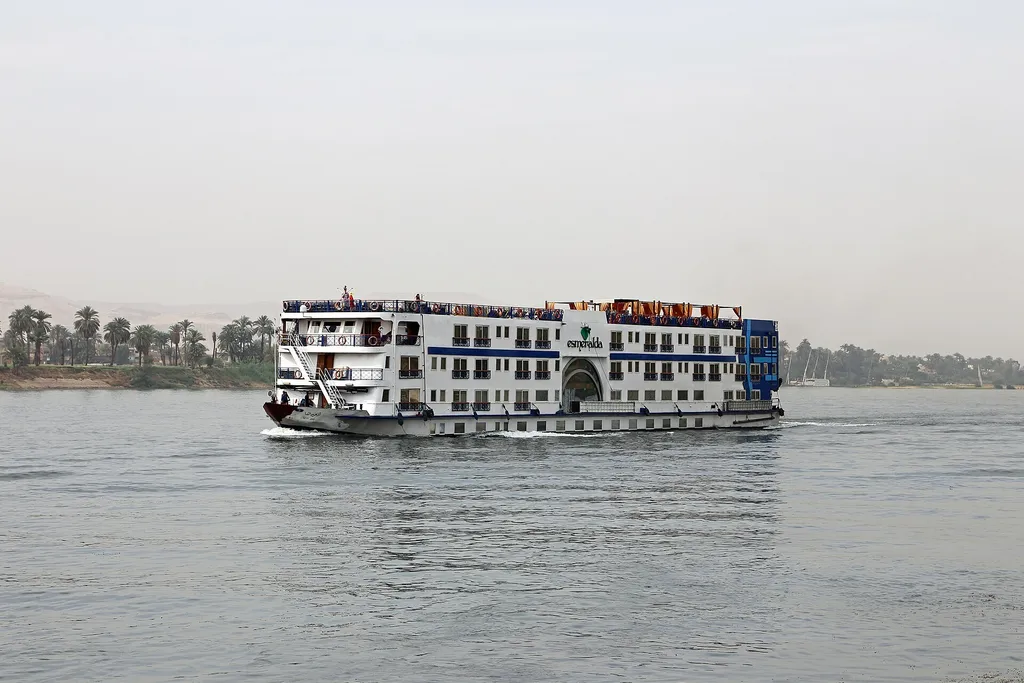
The route is a line, not a loop, and every transport choice in the week is really a choice about how to travel that line. Cairo to Luxor is the long leg, and it has three honest ways of being done. A domestic flight does it in a single hop and gives Day 3 its sightseeing morning. The overnight sleeper train does it while you sleep, which travellers tend to find either romantic or merely practical, and it arrives early enough to start the East Bank the same morning. Going by road in one stretch is the option this guide would not choose — the leg is long, the day is gone, and nothing is seen along the way that the train window does not also show you. Whichever you pick, book the shape that lands you in Luxor rested, because Days 4 and 5 are the fullest days of the week.
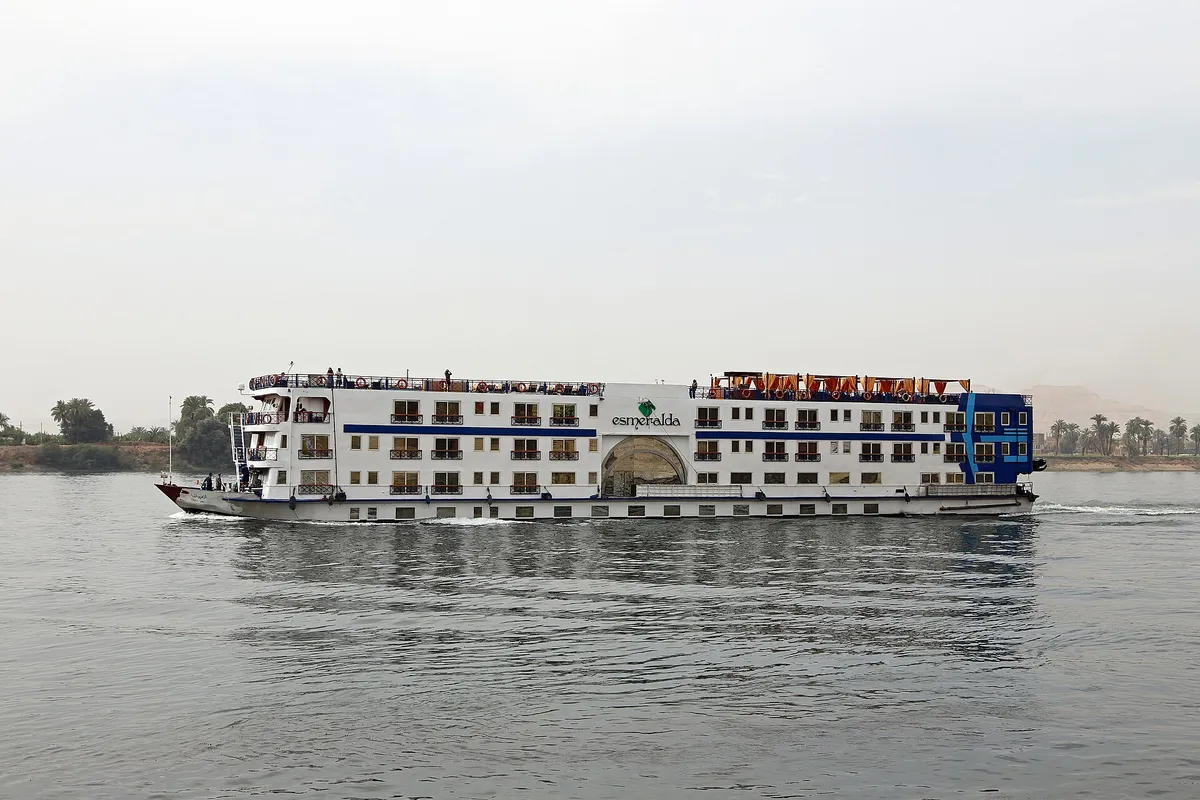
Luxor to Aswan is the leg where the famous choice appears, because this is the stretch the Nile cruises sail. A cruise of a few nights between the two cities is a genuinely lovely way to travel it — the temples of Edfu and Kom Ombo sit on the riverbank precisely because the river was the road, and arriving at them by boat is the historically correct way to arrive. But in a seven-day frame the cruise has to be weighed honestly: it consumes the days that this itinerary spends based in Luxor and Aswan, and it works best when the sailing days replace hotel days rather than being added to them. The land alternative — travelling south by road or rail with stops at Edfu and Kom Ombo on the way — covers the same ground in a single day and leaves the nights where the sights are. Neither is the wrong answer. The cruise is the answer when the river itself is half the point of the trip; the land route is the answer when the temples are.
The last piece of logic is the departure, and it is the piece most itineraries get wrong by defaulting to a circle. Ending in Aswan and flying back to Cairo only to leave feels like backtracking because it is — but it is a short hop at the end of the trip rather than a day of it, and many travellers will find their onward or home flights connect through the capital anyway. Where connections allow, leaving the country from the south via Cairo on the same day, with a generous gap between the two flights, closes the week without a wasted night. What the plan must never do is end in Aswan and then travel overland back north for a departure: that single decision burns the day the whole one-way structure was built to save. Our places to visit in Egypt guide covers the wider map for travellers extending the week in either direction.
Days 1 and 2 – Cairo and Giza
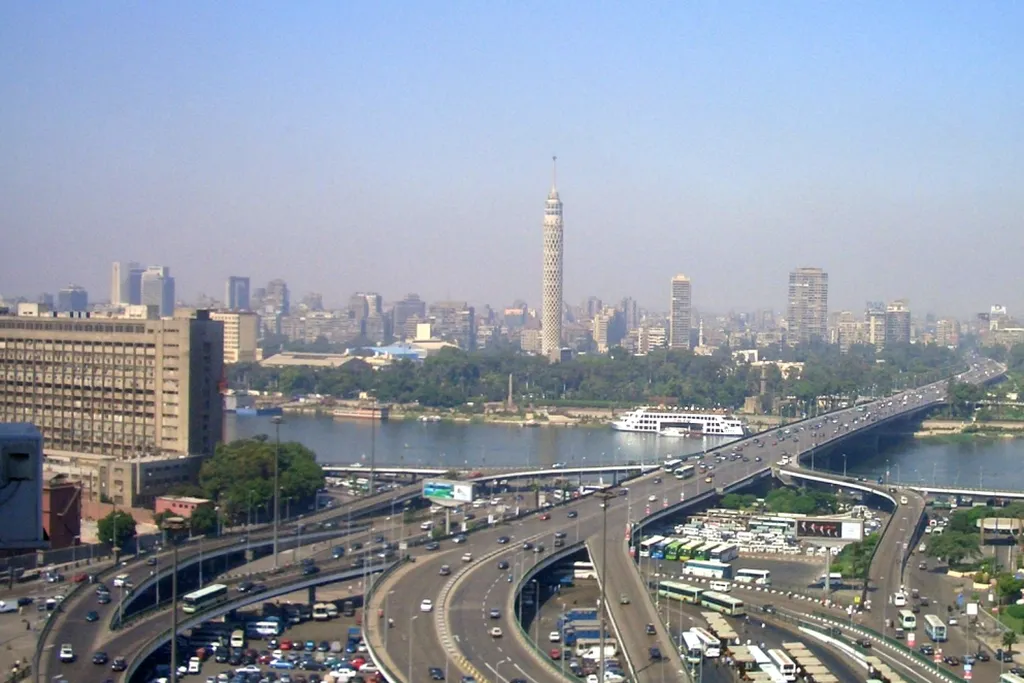
Day 1 is an arrival day, and the kindest thing an itinerary can do is admit it. Flights into Cairo land at all hours, the city is large and loud and wonderful, and a first afternoon spent fighting it with a monument list is a poor trade against an unhurried evening — a walk along the Nile, a first sight of the old city’s minarets at dusk, an early night. Cairo rewards the rested. If the arrival is an early one and energy is genuinely there, the historic centre is the right scale for a half day: the medieval lanes and mosques of the UNESCO-listed Historic Cairo are atmosphere rather than exertion, and they set up everything the week will show you about the Egypt that came after the pharaohs.
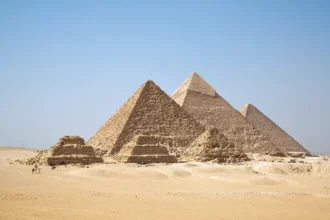
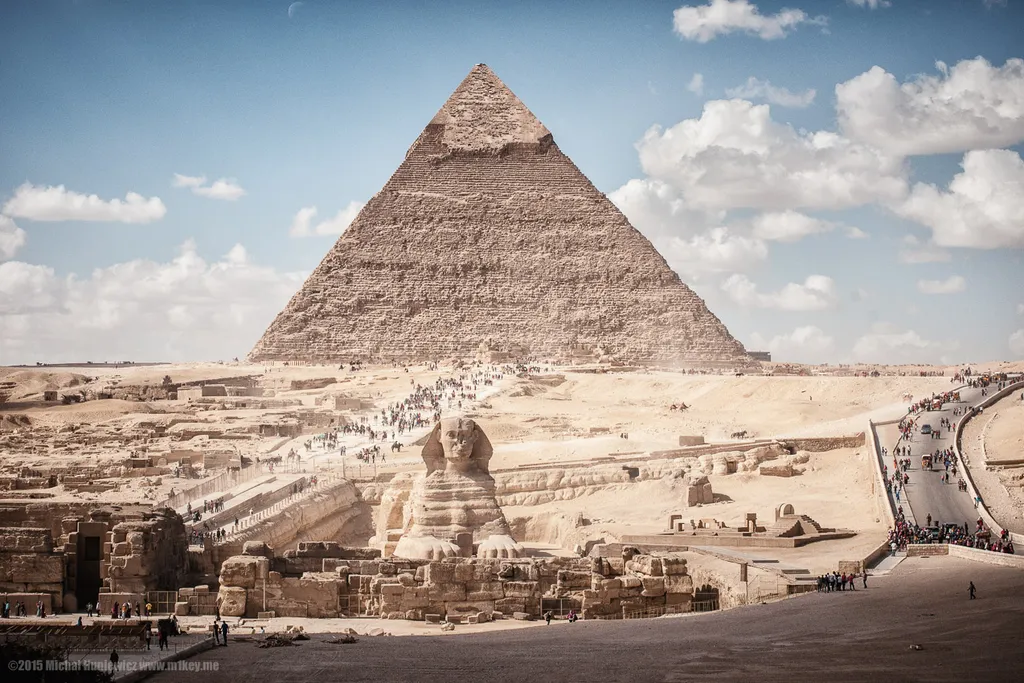
Day 2 belongs to Giza, and it should be given the whole day rather than the half that packaged tours allow it. The plateau holds the three pyramids of Khufu, Khafre and Menkaure, the Great Sphinx, the valley temples and the causeways between them, and it reads as one landscape rather than a set of separate attractions — the walk from the Sphinx up to the panorama point is the story of the place told in the right order. Start early, while the light is low and the stone is at its most legible, and let the plateau take the morning it deserves. Going inside a pyramid is a separate decision with its own ticket and its own claustrophobia, and it is honestly optional: the pyramids make their argument from outside, at scale, and the traveller who skips the interior has not skipped the experience.
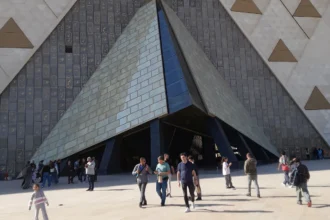
The afternoon of Day 2 has changed in recent years, because the plateau now has its museum. The Grand Egyptian Museum, on the edge of Giza within sight of the pyramids, gathers the collection that the old Tahrir Square museum could never properly display — the full Tutankhamun holdings among it — and pairing it with the plateau on the same day closes the loop beautifully: the tombs in the morning, the treasure in the afternoon. Our Grand Egyptian Museum guide covers its halls and highlights in the detail they need. What Day 2 should not try to do is add the old museum or the Citadel on top — Cairo’s riches are the reason Day 3 has a morning in it, and a week is a budget of energy as much as of days.
Day 3 – Saqqara and the Old City, Then South
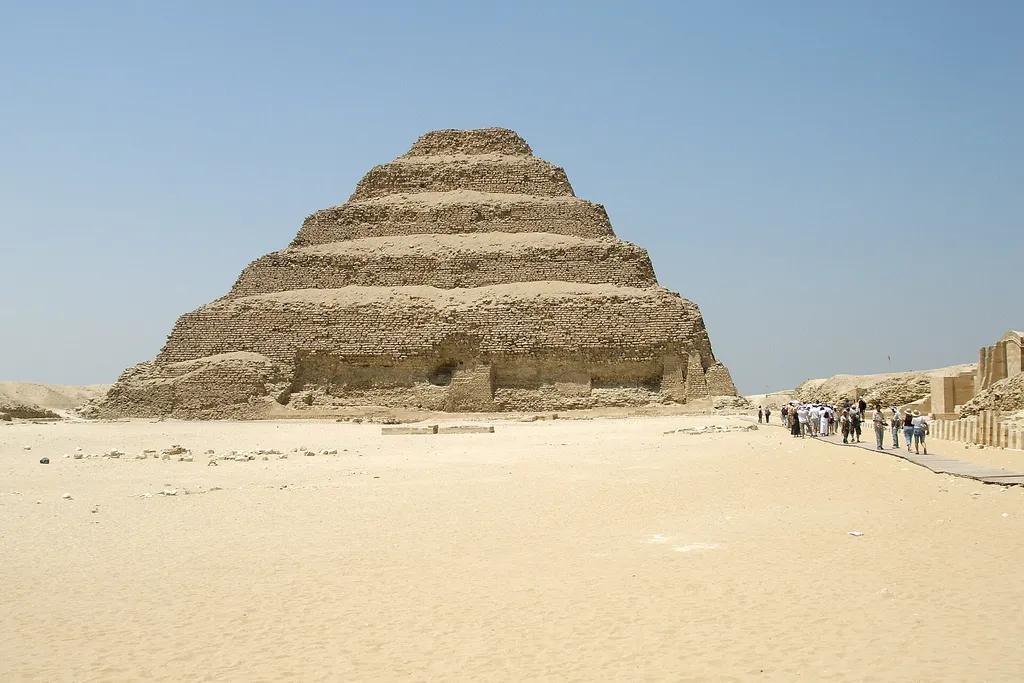
Day 3 is the hinge of the week — a Cairo morning with a journey attached to its end — and it offers the traveller a real choice. The first option is Saqqara, the necropolis of ancient Memphis and the place where the pyramid story actually starts. Djoser’s Step Pyramid is older than Giza’s smooth-sided giants and stranger than them, a staircase of stone that shows Egyptian architecture inventing itself, and the tombs around it carry some of the finest carved and painted scenes of daily life to survive from the Old Kingdom. After two days of the famous skyline, Saqqara is the connoisseur’s morning: quieter, older, and the single best place in Egypt to understand that the pyramids were an idea developed over centuries, not a single burst of genius. Memphis and its necropolis are UNESCO-listed for exactly this reason.
The second option spends the morning in the city instead — the Cairo of the Citadel and the mosque madrasas, or of Coptic Cairo’s hanging church and synagogue, or simply of the Khan el-Khalili lanes before they fill. It is the right choice for travellers who feel the week has been all antiquity and no city, and it has one structural advantage: it keeps the day unhurried, with no excursion out of town before a journey. Either way, the afternoon or evening is for going south — the flight or the sleeper train chosen back in the planning — and the discipline of Day 3 is to protect that departure. A morning that runs long in Cairo is paid for in Luxor, in a late arrival and a tired Day 4, and the East Bank deserves better than to be seen through arrival fatigue.
There is a temptation, visible all over the operator SERP, to squeeze a third thing into this day or to route the journey via a stop that belongs to another trip entirely. Resist it in both directions. The hinge day works because it is simple: one good morning, one clean transfer, one new base by nightfall. Travellers who have chosen the cruise version of the week will board in Luxor or Aswan around this point instead, and their Day 3 is the same shape wearing different clothes — a Cairo morning, a journey south, and the river taking over from the road. However the leg is travelled, the traveller who reaches Luxor on Day 3’s evening has the whole of Thebes ahead of them and two full days to do it in, which is exactly where this itinerary wants them.
Day 4 – Luxor and the East Bank
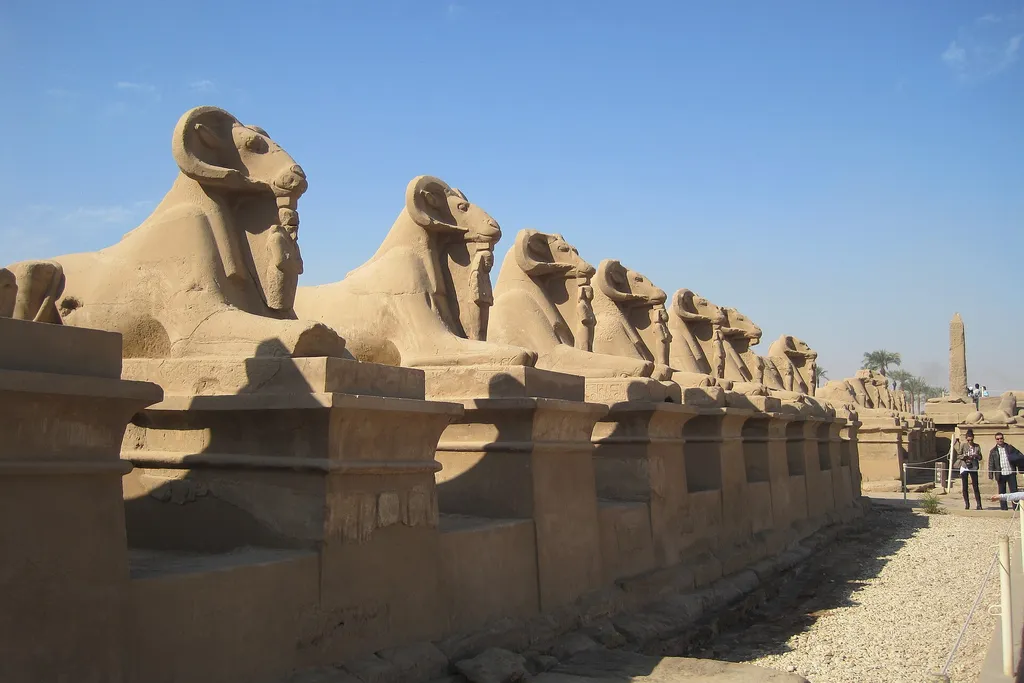
Luxor is ancient Thebes, the religious capital of the New Kingdom, and the river splits it into the two cities it has always been: the east bank of the living, where the temples of the gods stand among the modern streets, and the west bank of the dead, where the tombs are cut into the hills. Day 4 takes the east. Karnak comes first, while the day is young, and it needs the time more than any other single site in Egypt. Karnak is not one temple but a precinct built and enlarged by pharaoh after pharaoh over some two thousand years — pylons behind pylons, courts behind courts, the great hypostyle hall’s forest of carved columns at its heart — and it cannot be hurried without becoming a blur of big stone. Give it the morning, walk it from the Avenue of Sphinxes inward, and let its scale accumulate the way its builders intended.
Luxor Temple, down the corniche in the centre of the modern city, is the afternoon’s counterweight, and it is a different kind of pleasure. Where Karnak is overwhelming, Luxor Temple is legible: a single, elegant New Kingdom temple, built mainly under Amenhotep III and Ramesses II, used and reused by Alexander’s Greeks, Rome, the Copts and the mosques of Islamic Luxor, with a working mosque still standing inside its courts. The sphinx avenue that once joined it to Karnak has been excavated and restored along its ancient line through the city, so the two temples can be understood as the ends of one processional road — and Luxor Temple in the late light, when the stone warms and the floodlights begin, is the case for timing a temple visit to the end of the day rather than the start. Our Luxor Temple guide walks the building court by court.
The evening of Day 4 is part of the itinerary too, because Luxor’s corniche is one of the great Nile promenades — feluccas on the water, the west bank hills turning colour across the river, the temple lit behind you. Eat late, walk the river, and look across at the Theban hills in the last light knowing that tomorrow is spent inside them. Day 4’s balance is the model for the whole Luxor stay: one enormous thing done properly in the morning, one beautiful thing done slowly in the afternoon, and the river in the evening joining the two banks that the next day will separate.
Day 5 – Luxor and the West Bank
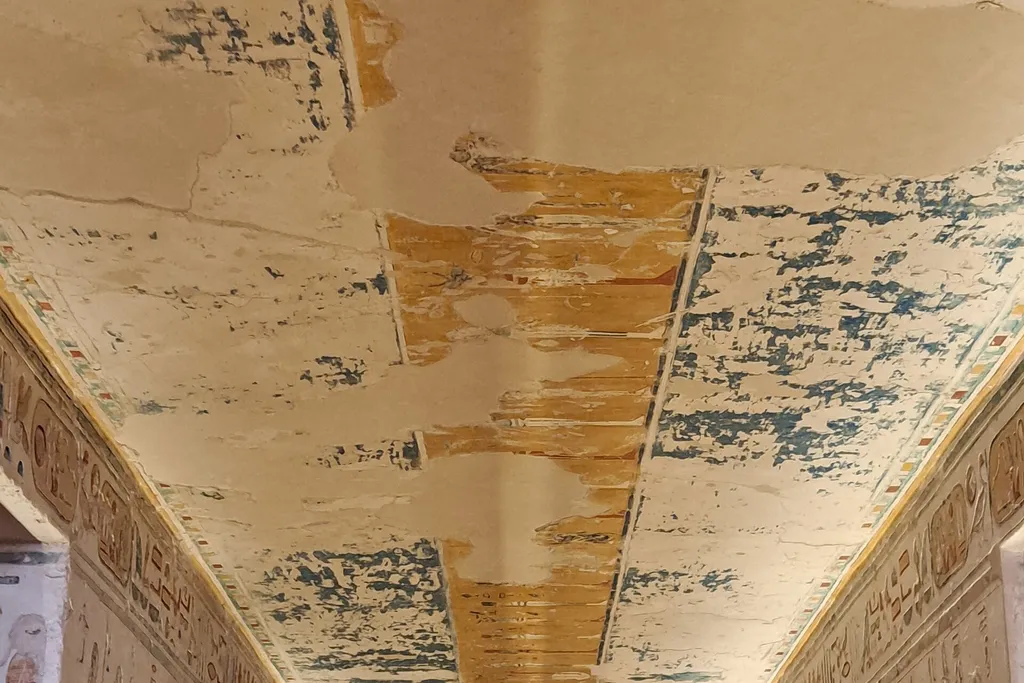
Day 5 crosses the river early, and early is not a courtesy suggestion on the west bank — it is the strategy. The Valley of the Kings is a wadi in the Theban hills where the New Kingdom pharaohs hid their tombs, more than sixty of them cut into the rock, and the famous ones fill as the day warms and the groups arrive. A general ticket typically covers entry to a selection of the tombs open in rotation, with the most celebrated — Tutankhamun’s small, dense, world-famous burial among them — handled separately; which tombs are open changes as conservation rotates them, so the honest plan is to choose on the day from what is open rather than to fix a list at home. What does not change is the experience itself: descending a painted corridor into the mountain, the colours still on the walls after three thousand years, is the single most concentrated encounter with ancient Egypt the week contains.
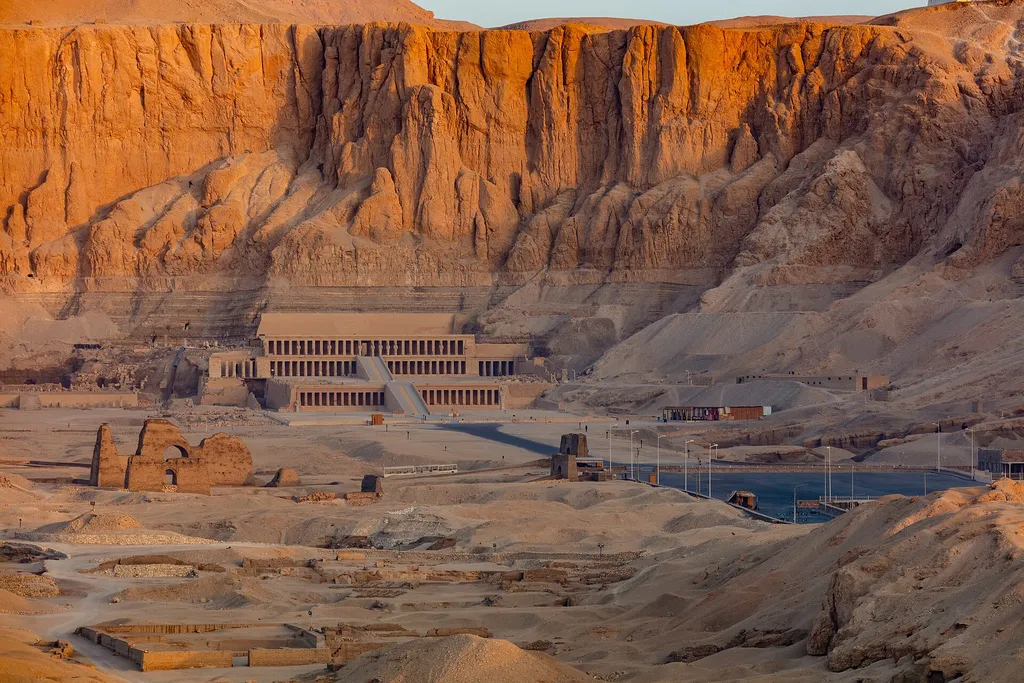
From the valley the day moves to Deir el-Bahari, where Hatshepsut’s mortuary temple rises in terraces against the cliff — the most architecturally striking building of the ancient world in Egypt, all clean horizontal lines against the vertical rock, and the monument of a woman who ruled as pharaoh and built like one. Its reliefs tell her story in her own commissioned version, including the famous expedition to Punt. The Colossi of Memnon, two enormous seated statues of Amenhotep III standing alone in the fields where his vanished temple once stood, make the natural last stop on the way back to the river: five minutes is genuinely enough for them, and their battered scale, alone in the farmland with the hills behind, is a photograph the week should not leave without.
The west bank holds more than a day can carry — the Valley of the Queens, the Ramesseum, Medinet Habu, the nobles’ tombs with their scenes of vineyards and workshops and daily life — and choosing among them is where a second west bank morning would go if the week had one. In this week it does not, and the itinerary says so plainly rather than pretending otherwise: the Kings, Hatshepsut and the Colossi are the day, done in the cool hours and at a human pace, with the afternoon given back to Luxor — its museum, its markets, or simply its riverbank. Our Luxor city guide covers the modern town that holds all of this together. Tomorrow the route turns south again, and the pace changes with it.
Day 6 – Aswan and Philae
Day 6 travels the last leg south, and how it travels depends on the choice made back at the planning stage. The cruise traveller arrives at Aswan on the river, having stopped at Edfu and Kom Ombo on the way. The land traveller covers the same ground in a day’s drive or train ride, ideally breaking the journey at those same two riverbank temples — Edfu, the best-preserved temple in Egypt, its walls a complete textbook of the cult, and Kom Ombo, the double temple shared by two gods on a bend of the Nile. Either way the arrival is the point: Aswan is where Egypt softens. The river here runs clear around granite islands, feluccas outnumber everything, and the Nubian culture of the south gives the city a character unlike anywhere else in the week — slower, warmer in every sense, and the natural place for the itinerary to exhale.
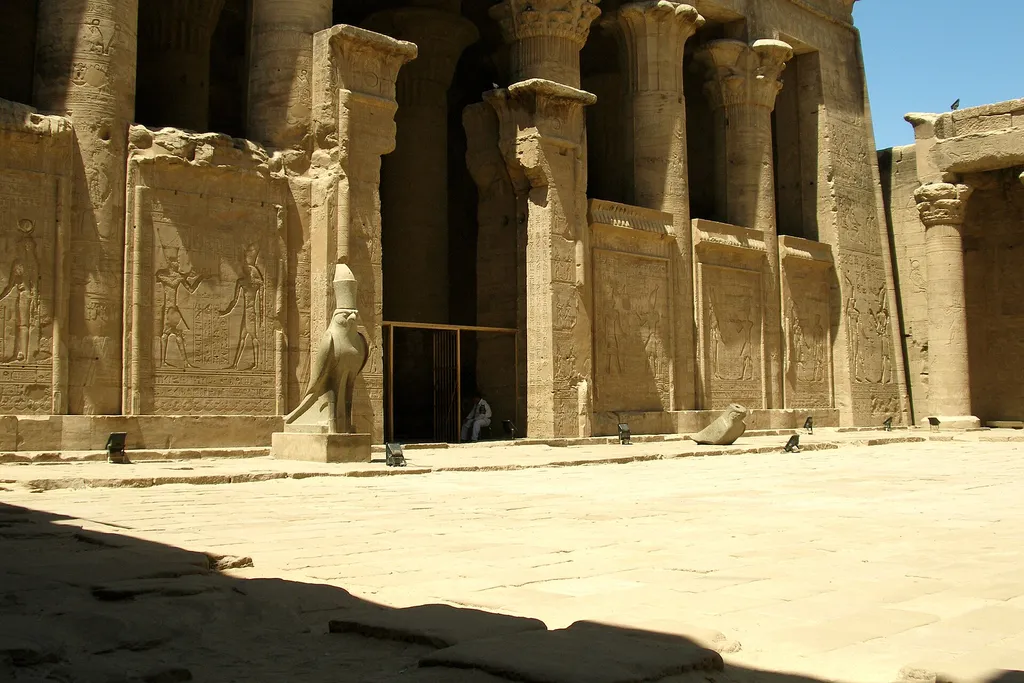
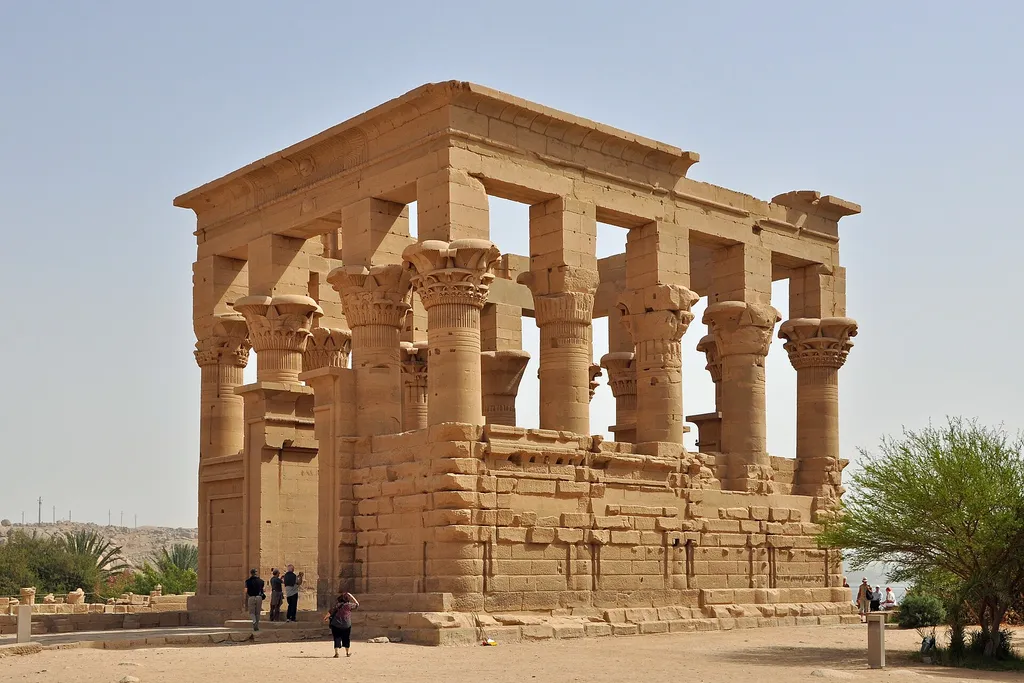
Philae is the day’s one essential sight, and it should be taken unhurried, in the afternoon if the arrival allows. The temple of Isis stood on Philae Island until the Aswan dams changed the river, when UNESCO’s great rescue campaign moved it stone by stone to Agilkia Island nearby — the same campaign that saved Abu Simbel, and the reason both sites share one World Heritage listing as the Nubian Monuments. The rescue gave Philae an accidental gift: it is reached by small boat across open water, exactly as its ancient visitors reached it, and the approach across the reservoir to the pylons rising from the island is half the experience. Inside, it is the gentlest of the great temples — late, graceful, covered in some of the last hieroglyphs ever carved — and it closes the week’s temple story at the point where the old religion made its final stand.
What remains of Day 6 belongs to Aswan itself. A felucca sail around Elephantine Island in the late afternoon is the cheapest-looking and best-value hour of the week, though this guide quotes no prices — some things are simply known. The Nubian Museum, one of the finest in the country, gives the south its own voice and its own history rather than treating it as the valley’s quiet end. And the evening is for the corniche and the market, and for an early decision about tomorrow, because Day 7’s fork — the dawn expedition or the slow morning — has to be chosen the night before.
Day 7 – Abu Simbel, or a Slow Last Morning
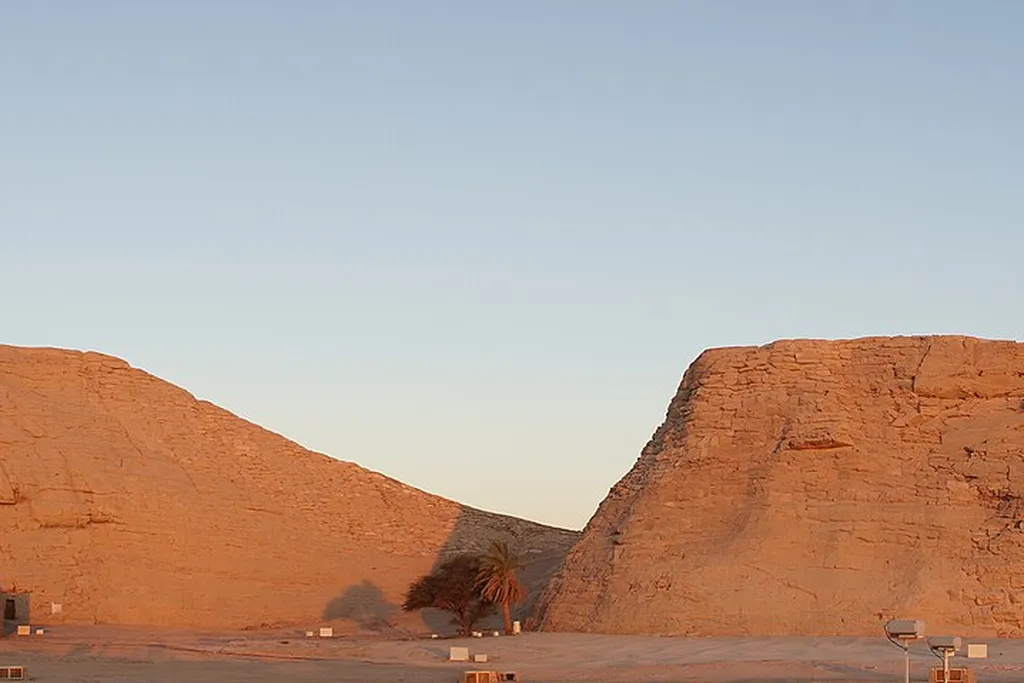
The big option first. Abu Simbel, far south of Aswan near the Sudanese border, holds the two rock-cut temples of Ramesses II and his queen Nefertari — the facade of four colossal seated kings is one of the most recognised images in Egypt, and the temples’ modern history is as remarkable as their ancient one, since the entire complex was cut apart and reassembled on higher ground in the 1960s to save it from Lake Nasser’s rising water. From Aswan it is a long road journey each way, conventionally started very early, and that is the honest cost to set against the sight: most of your last day, and its earliest start of the week, in exchange for the grandest single facade in the country. For many travellers the exchange is obviously worth it. The twice-yearly alignment that sends the sunrise down the temple’s axis to its inner sanctuary is the famous detail, but no trip needs to be built around those dates — the temples justify the road on any morning of the year.
The slow option deserves its dignity too, because it is not the consolation prize. A last morning in Aswan at the city’s own pace — the Nubian villages on the west bank and Elephantine, the gardens of Kitchener’s Island, a long breakfast above the river, the market for the spices and crafts that the rushed version of this week never has an hour for — sends the traveller home with Aswan as a place rather than a platform. There is a version of travel wisdom, rarely printed on operator pages, that says the final day of a one-week trip is worth more unspent: the week has been dense with the greatest hits of three thousand years, and a quiet morning is what turns the accumulation into a memory instead of a list.
Departure logic closes the day either way. Most travellers will fly Aswan to Cairo and connect onward the same day — leave a generous margin between the flights, because a tight connection spends the calm the itinerary was built to protect — or take a final night in the capital if the home flight is an early one. What the week should not end with is a long overland return north or a last-day dash at a sight that needed a day of its own. Seven days, three bases, one direction: the traveller leaving Aswan has seen the pyramids where they began, the tombs where the empire buried its kings, and the temples where the story ended, in the order the river wrote them — and that order, more than any single sight, is what this itinerary exists to give.
What to Book Ahead
A week this shape has a short list of things that genuinely need arranging early, and a longer list of things that do not — and knowing which is which is worth more than any single booking. Book ahead, as soon as the dates are fixed: the domestic flights or sleeper train berths that carry the Cairo to Luxor leg, because the whole structure hangs on that one journey; the Nile cruise, if the cruise version of the week is chosen, because cabins on the sailing that fits your dates are a finite thing; and accommodation in the three bases, not because Egypt runs out of rooms but because the well-placed ones — walking distance from the river in Luxor and Aswan, a pyramid view or a calm street in Cairo — are the difference between an itinerary that flows and one that commutes. In the peak winter weeks all of this firms up earlier, and the famous weeks of the year reward the traveller who treats “as soon as dates are fixed” literally.
The second tier is sights and services where a small amount of advance thought pays. Licensed guides for Karnak and the Valley of the Kings are worth arranging rather than improvising at the gate, because those two sites in particular are illegible without the stories — a good guide turns a field of columns into a building with a purpose. The Abu Simbel excursion, if it is on, is a seat on a shared early departure or a private car, and either way it is a Day 6 decision at the latest, not a Day 7 improvisation. Entry tickets themselves are mostly a matter of the day, though the pattern across Egypt’s major sites is toward online sale through the official Egymonuments portal, and checking the current arrangement for your headline sights before you travel is a ten-minute job that saves gate-side confusion.
What does not need booking ahead is everything else, and the itinerary is healthier for admitting it. Felucca sails at Aswan are arranged on the corniche on the day. Restaurants, markets, the evening promenades — none of them want a reservation culture. The week’s structure is deliberately loose at its edges so that weather, energy and the mood of a place can still make decisions, and a traveller who has booked the spine — transport, beds, cruise if any, two guides — and left the rest open has done this section exactly right. Book the bones early. Leave the flesh to the week itself.
When to Run This Itinerary

This route is season-sensitive in a way a city break is not, because so much of it happens outdoors in stone courtyards with no shade, and the honest headline is the one every Egypt guide gives: the classic window runs from October to April, when the valley’s days are warm rather than fierce and a full day at Karnak is a pleasure instead of an endurance test. Within that window the shoulder months — October and November in the autumn, February and March in the spring — are where this particular itinerary runs best, because they pair the kind weather with crowds that have not reached the Christmas and New Year peak, and the early starts this plan asks for on the west bank and the Abu Simbel road are met by mild dawns rather than cold ones. The dawn balloon flights over Luxor, the week’s most optional and most magical extra, belong to those calm clear months too.
Summer does not cancel the route, but it rewrites its daily shape, and a traveller whose only week falls between May and September should run the same seven days with a different clock: the temple days start at opening time and retreat from the midday sun, the siesta becomes a structural part of the afternoon rather than a nap, and Aswan’s river breezes earn their keep. What summer gives back is quiet — the great sites at their emptiest, the valley at its most golden in the early light — and travellers built for early rising can have a superb week. What no season changes is the route itself: the one-way line, the two-two-two split and the hinge at Day 3 work in every month, and the season only sets the hours inside the days. Ramadan, which moves through the year, changes the rhythm of the cities more than the sights — quieter days, livelier evenings — and a week that falls inside it needs its sightseeing planned around the fast rather than against it.
The practical conclusion is short. If the dates are free, place the week in the shoulders of the classic season and book the spine early. If the dates are fixed in summer, keep the route and change the clock. If the dates are fixed in the peak holiday weeks, keep the route and change the expectations — the same itinerary, with the famous sites taken at opening time and the patience the season asks of everyone. A route this well-shaped does not need the perfect month. It needs the traveller to know which version of the year they are running it in.
Frequently Asked Questions
Five questions decide most versions of this week. The short answers are below, and each is argued in full in the sections above.
Is 7 days enough for Egypt?
For the classic valley route, yes — with nothing to spare and nothing essential missing. Seven days covers Cairo and Giza, both banks of Luxor, Aswan and Philae, with Abu Simbel as a final-day option, and that is the complete arc of a first trip. What seven days is not enough for is Egypt entire: the Red Sea, Alexandria and the desert each need days of their own, and adding any of them to this week breaks it.
The honest test is what gets dropped when something is added. A Red Sea day inside this frame costs a Luxor day, and Luxor’s two banks are the week’s centre of gravity. Travellers with ten days can add the coast or a longer cruise without breaking the shape; travellers with seven should protect the line and leave the rest for a return trip.
Should I take a Nile cruise or travel by land?
Both are right, for different trips. The cruise turns the Luxor to Aswan leg into the experience itself — sailing between the riverbank temples of Edfu and Kom Ombo, life organised around the river — and in a seven-day frame it works when its nights replace the hotel nights in Luxor and Aswan rather than sitting on top of them.
The land version covers the same temples as stops on a single travelling day, keeps its evenings in the cities, and usually leaves more hours inside the sights themselves. If the river is half the reason for the trip, cruise. If the temples are, travel by land and sail a felucca at Aswan instead.
Which direction should the route run?
South, as written — Cairo first, Aswan last. Cairo is where almost every arrival lands and where the story chronologically starts, with the oldest monuments; Aswan is the calmest city on the route and the right temperature for a final day. Running it in reverse is possible and occasionally suits flight patterns, but it spends the week’s freshest energy on its quietest city.
The one arrangement to avoid is any version that returns overland to a base already used. Every backtrack on this route costs most of a day, and in a seven-day frame a lost day is a lost city.
Can I add Alexandria or the Red Sea to this week?
Technically, by cutting something; sensibly, no. Alexandria is a journey north from Cairo against the direction of the whole route, and the Red Sea is a journey east from the valley — either one consumes the travel day and one sightseeing day that this itinerary spends on Luxor and Aswan. The operator packages that include them in seven days do it by halving the time in the places the week exists for.
Both are excellent second trips, and Alexandria pairs naturally with Cairo while the Red Sea pairs with Luxor. The week that tries to hold everything ends up holding the transfers instead.
When is the best time of year for this itinerary?
The classic season, October to April, with the shoulder months — October, November, February and March — the sweet spot of kind weather without peak crowds. Summer is workable with dawn starts and a midday retreat, and brings the quietest temples of the year as its reward. The full month-by-month argument, region by region, is in the timing guide listed with this article’s planned links.
One Week, Well Spent
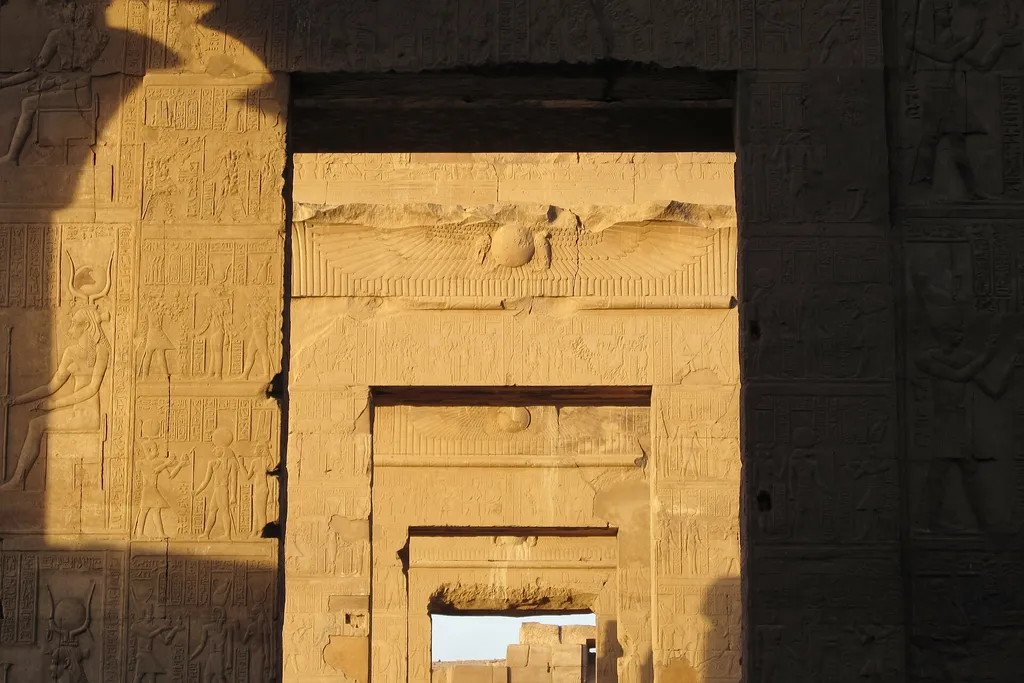
A good itinerary is mostly a set of things it refuses to do, and this one can be summarised by its refusals: no backtracking, no second headline sight crammed into a transfer day, no Alexandria, no Red Sea, no pretending the west bank fits in an afternoon. What those refusals buy is the thing a first week in Egypt is actually for — the story told in order, at a pace the places can be absorbed at. Giza’s pyramids are the beginning of it, the near-impossibly old experiment that worked. Saqqara shows the working-out. Luxor is the empire at full stretch, its gods housed at Karnak and its kings hidden in the hills. Aswan and Philae are the long ending, the faith outlasting the empire by a thousand years, on an island reached by boat. Read in that order, from a boat or a train window between the chapters, the week is not a greatest-hits compilation. It is a narrative, and it lands like one.
The traveller who runs it will still come home with a list of things unseen — the nobles’ tombs, Medinet Habu, the museums given an hour that deserved three — and that is not the itinerary failing. That is the itinerary working. Egypt is not a country that a week finishes; it is a country a week begins properly, and the measure of the seven days is whether they leave the traveller oriented, unhurried in the memory, and already composing the second trip. For the full planning picture behind this route — getting there, getting around, the wider map — our Egypt travel guide is the companion piece, and the seasonal and visa guides queued alongside this one complete the set. One week, three bases, one river, travelled in the direction it flows. It is enough.