Tirana Travel Guide – Squares, Bunkers and a Capital That Reinvented Itself
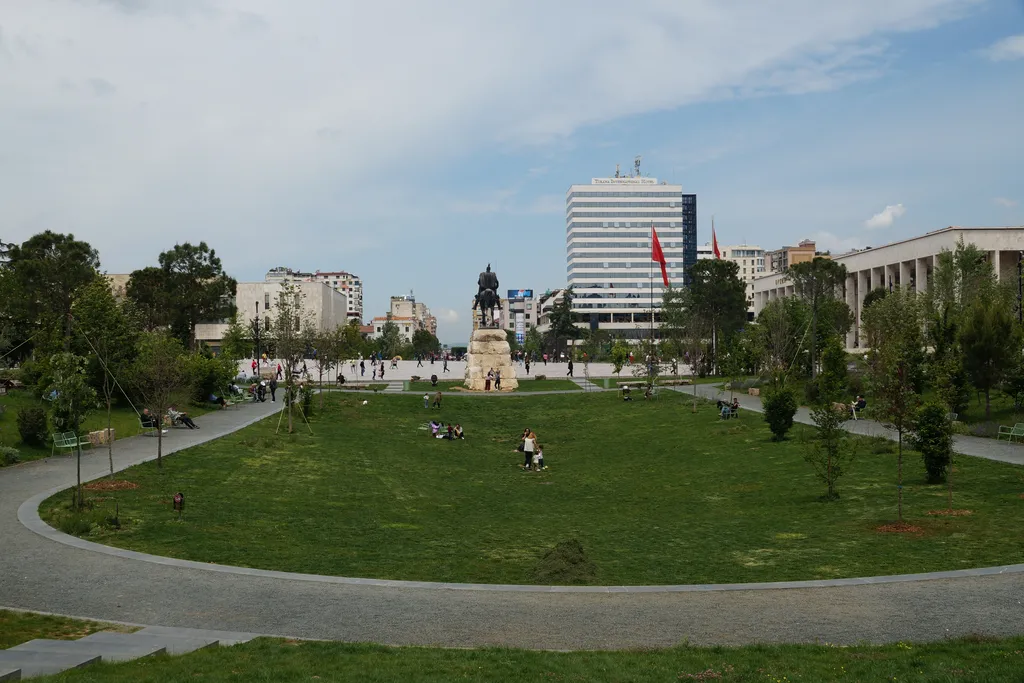
Most capitals introduce themselves with their oldest monument. Tirana introduces itself with an argument. Stand in Skanderbeg Square and turn slowly: an Ottoman mosque, a clock tower, an Italian-era boulevard of ministries, a museum facade covered by a marching mosaic, and behind the trees the glass of a city rebuilding itself at speed. Every century Albania has lived through is standing in that one view, and none of them has been tidied away to make room for the next. That is what makes Tirana worth more than the single night most itineraries grant it. It is not the prettiest capital in Europe, and it does not try to be. It is the most legible one — the place where the whole country’s story is written largest, in buildings you can walk between in a single morning.
The basics frame the visit. Tirana has been Albania’s capital since 1920, a young capital by European standards, chosen in the aftermath of the First World War and grown ever since from a modest market town into a city of boulevards, painted apartment blocks and cafe tables that colonise every pavement wide enough to hold them. The centre is compact — the square, the main museums, the market and the Blloku district all sit within an easy walk of one another — and the city’s two great green escapes, Mount Dajti behind it and the Grand Park below it, are close enough to belong to the same day. Almost every trip to Albania begins or ends here, because the country’s main airport is Tirana’s; the mistake is treating that as a reason to leave quickly.
This guide is organised the way the city itself is best read: start at the square and work outward through the layers — the communist past in its bunkers and surveillance rooms, the elite quarter that became the cafe district, the mountain and the park that give the city air, and the market quarter where its older, Ottoman self survives in fragments. For the country beyond the capital — the routes, regions and seasons that a Tirana stay usually opens or closes — our wider Albania travel guide carries the full picture; this page stays inside the city and reads it properly.
At a Glance
Short on time? Here is the city on one screen — the sights and areas that matter, why each earns its place, and the character of the time each one asks for. Tirana rewards a simple shape: one day for the centre and its museums, split by the square; a second day, if you have it, for the mountain, the park and the market at an unhurried pace. Nothing in the table below needs booking ahead, and nothing in this guide prints a price or an opening hour — for a city changing this fast, treat any figure you find elsewhere as a claim to re-check, not a fact to plan on.
| Sight or area | Why it earns its place | Time character |
|---|---|---|
| Skanderbeg Square and the centre | The whole city in one turning circle — mosque, clock tower, mosaic, boulevards | Half a day, unhurried, best split morning and evening |
| Bunk’Art 1 and 2 and the House of Leaves | The communist past told from inside its own bunkers and listening rooms | Half a day for one museum done properly, a full day for two |
| Blloku and the Pyramid | The elite-only quarter turned cafe district, and the dictator’s museum turned climbable landmark | An afternoon drifting into evening |
| Mount Dajti and the Dajti Ekspres | The city’s mountain — a long cable-car climb to views over the whole plain | Half a day, in clear weather |
| The Grand Park and the artificial lake | Tirana’s green south — woods, water and the local evening walk | A slow half day or an evening |
| Pazari i Ri and the old town traces | The market quarter — produce stalls, the glass hall and fragments of Ottoman Tirana | A morning, ending in lunch |
Two judgements sit behind that table and are worth stating plainly. First, the museums of the communist period are not a niche interest here; they are the centre of gravity of any Tirana visit, and choosing one of them well matters more than collecting all three thinly. Second, Tirana is a bookend city: its sights divide naturally between an arrival day and a departure day, which is exactly how our round-up of the best places to visit in Albania budgets it — one full day of city, split across the ends of the trip, with the country’s loop in between.
Skanderbeg Square and the Centre
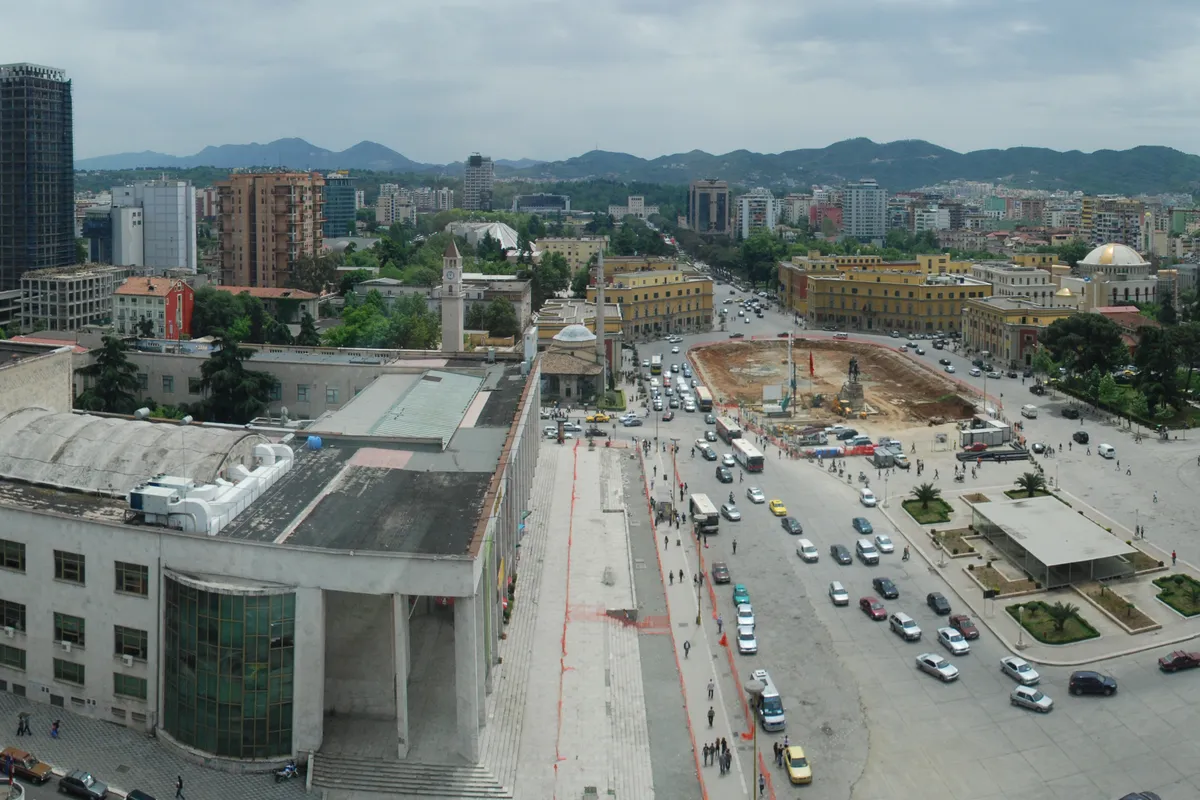
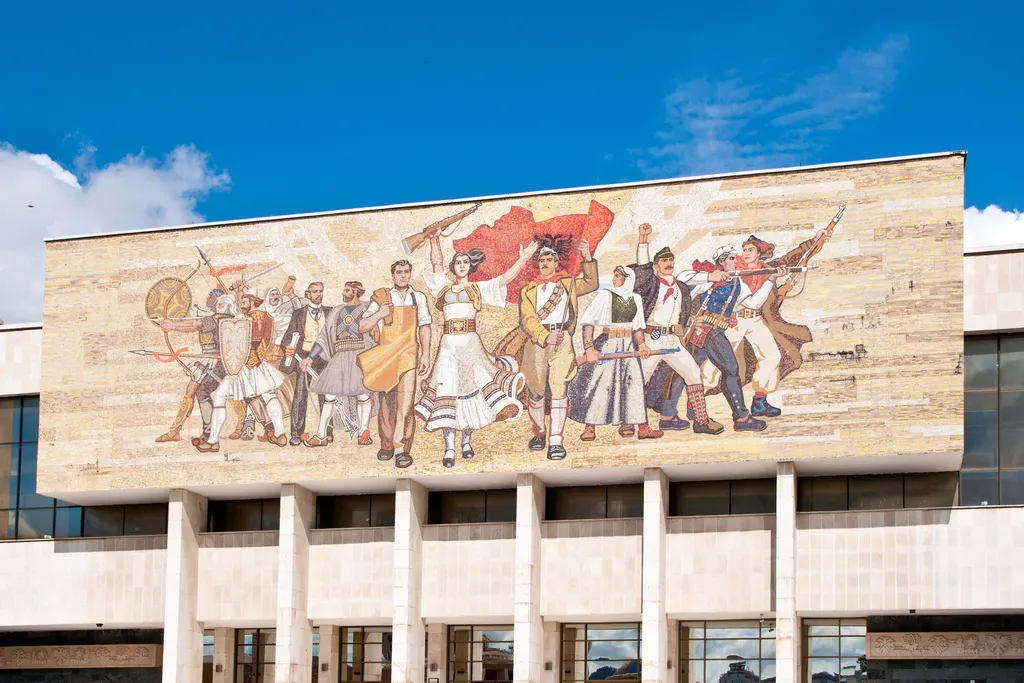
Begin where the city begins, in the wide pedestrian space of Skanderbeg Square. The equestrian statue at its centre is Gjergj Kastrioti — Skanderbeg, the fifteenth-century lord who held the Ottomans at bay for a quarter of a century and became, in the process, the founding hero of the Albanian national story. Around him the square performs its turning-circle trick. The Palace of Culture, a vast communist-era block, occupies the side where an Ottoman bazaar and a historic mosque once stood. The ministries along the boulevard speak the formal Italianate language of the interwar years. And across the square’s northern edge, the National History Museum carries the single most reproduced image in Albania: the mosaic known as The Albanians, a marching column of figures from across the country’s history, Illyrian warriors to partisans, spread across the whole facade like a frieze that refused to stay indoors.
The museum behind that mosaic needs an honest note. Reporting in recent years has suggested it is closed for an extended renovation, and travellers regularly arrive to find the doors shut. Admire the mosaic from the square — it loses nothing from outside — and verify the museum’s current status before building any plan around walking in. Nothing else in this section depends on it, which is the correct way to hold a Tirana day: the centre offers its best material outdoors and in the small buildings at the square’s corner, and those are reliably there.
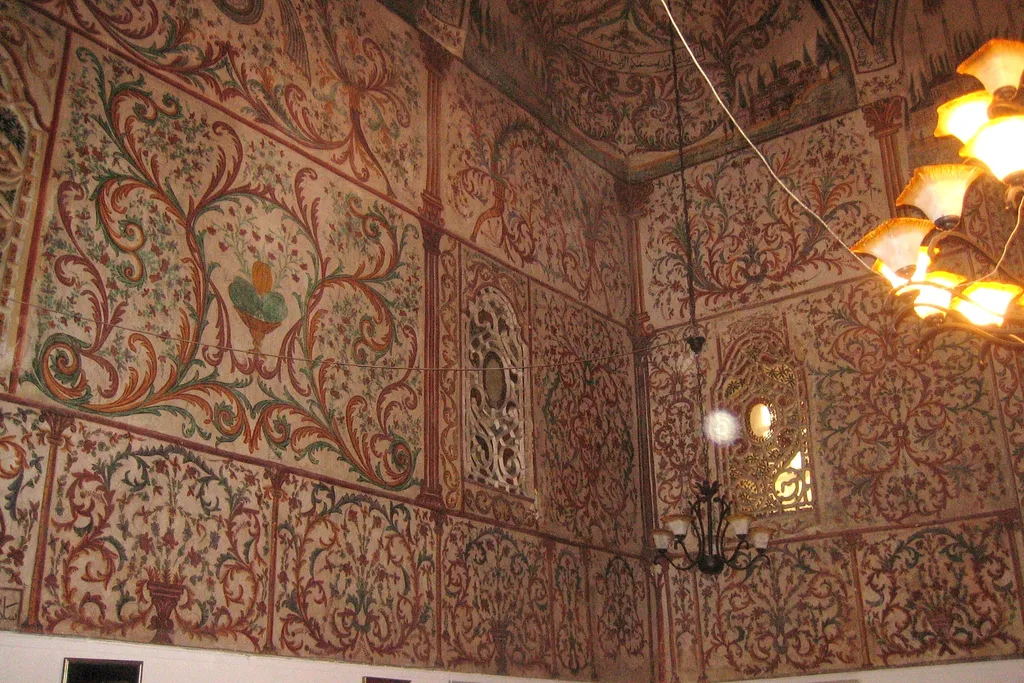
That corner holds the square’s two oldest survivors, side by side. The Et’hem Bey Mosque — begun in the late 1700s and finished a generation later by the founder’s son, whose name it keeps — is a small, exquisite Ottoman mosque treasured for something unusual in Islamic art: its frescoes. The portico and prayer hall are painted with trees, waterfalls and bridges, landscapes rendered with a delight that makes the building feel less like a monument and more like a garden that learned to be a mosque. It survived the communist decades, when Albania declared itself an atheist state and closed or demolished religious buildings across the country, and its reopening at the start of the 1990s became one of the emblematic moments of the regime’s fall. Beside it rises the Clock Tower, built in the 1820s and for generations the tallest thing in the city; the climb up its narrow stair, when it is open, repays with the square laid out below like a model of itself. Between mosque, tower, mosaic and boulevards, one unhurried circuit of this square teaches more Albanian history than many museums — which is fortunate, given the museum’s doors.
The Communist Past – Bunk’Art and the House of Leaves
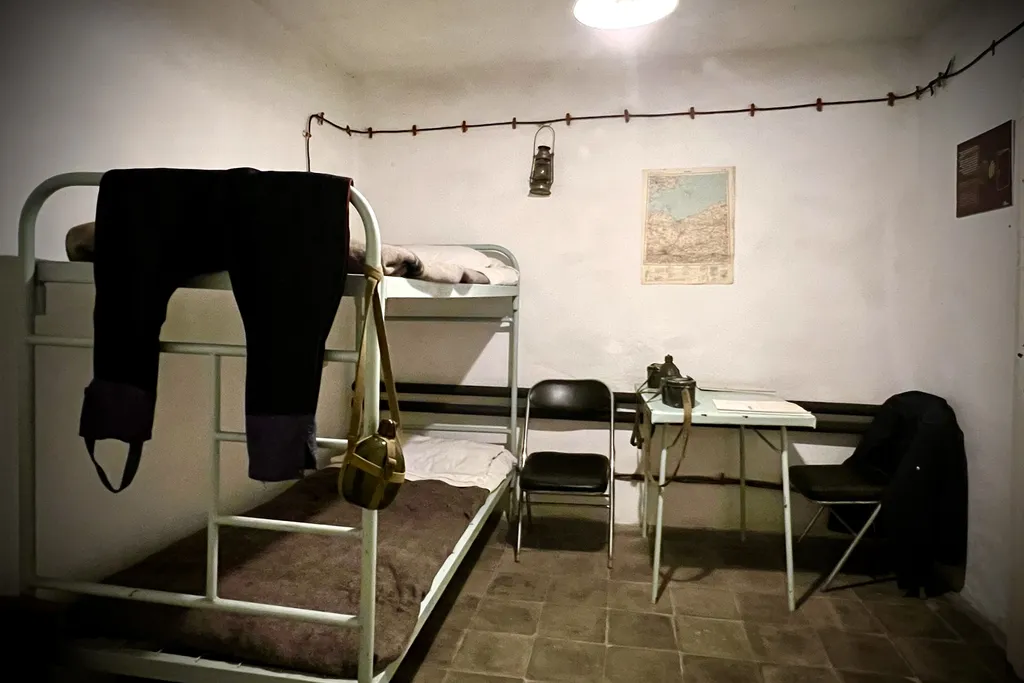
Albania under Enver Hoxha was one of the most sealed societies in Europe: four decades of dictatorship, broken relations with East and West alike, and a state that answered its own insecurity by building bunkers — in fields, on beaches, along borders, in numbers that turned a military programme into a national landscape. Tirana holds the two most extraordinary survivals of that era, both converted into museums, and they are different enough that choosing between them is a real decision rather than a formality. Together with the House of Leaves, they form a triangle of memory within a short walk of the square, and at least one of them belongs in every Tirana visit, whatever your usual appetite for museums.
Bunk’Art 1 is the monumental one: a vast anti-nuclear bunker driven into the foothills on the city’s north-eastern edge, near the road up towards Mount Dajti, built to shelter the political and military leadership through an attack its builders genuinely expected. Its corridors and chambers now hold an exhibition that moves between the bunker itself — the assembly rooms, the accommodation built for Hoxha and his circle — and the history of the regime that dug it. Bunk’Art 2, its smaller sibling, sits in the centre near the square, in a bunker raised for the interior ministry, and its subject is narrower and darker: the Sigurimi, the secret police, and the machinery of persecution — the files, the informers, the prisons and camps whose victims the rooms commemorate. If you do one, do it by temperament: Bunk’Art 1 for scale and strangeness, Bunk’Art 2 for the human record.
The House of Leaves completes the triangle, and many visitors find it the most affecting of the three precisely because it is the quietest. The building is an ordinary-looking villa near the centre that served for decades as a headquarters of the surveillance state — a listening centre, from which the conversations of embassies, hotels and private homes were monitored and transcribed. As a museum it shows the apparatus plainly: the switchboards and recorders, the bugs planted in furniture and walls, the files kept on citizens whose crime was a sentence overheard. There is little theatre in it, and that restraint is its power. Come out of any of these three buildings and the cheerful cafe city around you reads differently — which is, of course, the point of going in.
Blloku and the Pyramid
A ten-minute walk south-west of the square, across the Lana stream, the streets change their temper. The blocks grow leafier, the cafes denser, the pavements fuller — this is Blloku, and for four decades almost nobody reading this page could have walked into it. Blloku was the residential quarter reserved for the communist leadership: a guarded enclave of villas and apartment blocks where the Politburo lived apart, where Hoxha’s own residence stood, and where ordinary Albanians were simply not permitted to go. The cordon came down with the regime, and the quarter performed the most complete reinvention in the city — within a few years the forbidden streets had become Tirana’s cafe, restaurant and nightlife heart, and they remain so today. Knowing the past does not spoil the present here; it seasons it. Every crowded terrace is sitting, knowingly or not, in the leadership’s garden suburb.
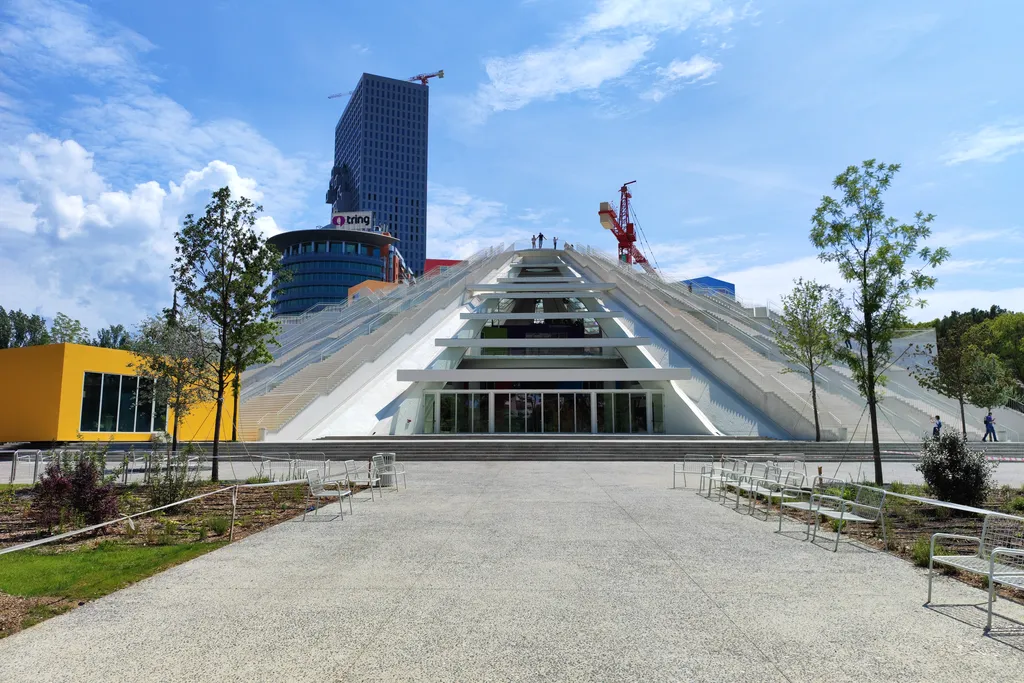
The Pyramid, a short walk east of Blloku, is the same story told by a single building. It opened in 1988 as a museum dedicated to Enver Hoxha — co-designed, in one of history’s stranger footnotes, by a team that included the dictator’s own daughter — and at the time it was the most expensive building Albania had ever raised. After 1991 it served a string of second lives, as conference centre, broadcaster’s base and general landmark-in-search-of-a-purpose, sliding slowly into a graffitied dereliction that teenagers climbed for the view and the dare. Its latest reinvention is the most fitting: renovated and reopened as a youth and technology centre, its steep slopes rebuilt as broad steps that visitors now climb openly, in daylight, for exactly the view that was once taken as a trespass. Stand on it at dusk and Blloku’s lights come on below you — the enclave and the mausoleum, both repurposed by the same cheerful city.
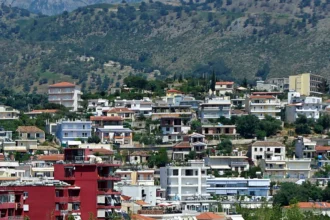
One more layer belongs to this part of town, because it is the one visitors photograph most and understand least. The bright apartment blocks — painted in oranges, greens and patterns across the centre — date largely from the years when Edi Rama, later prime minister, was the city’s mayor at the start of the 2000s, and had the drab facades of the communist housing stock repainted in saturated colour. The repainting is widely credited with changing how the city felt about itself, and whatever the truth of that, the effect is real and still legible: ride any street out of the centre and the colour is the first argument that Tirana, uniquely among post-communist capitals, decided to answer its grey decades in paint.
Mount Dajti and the Grand Park – The Green Escapes
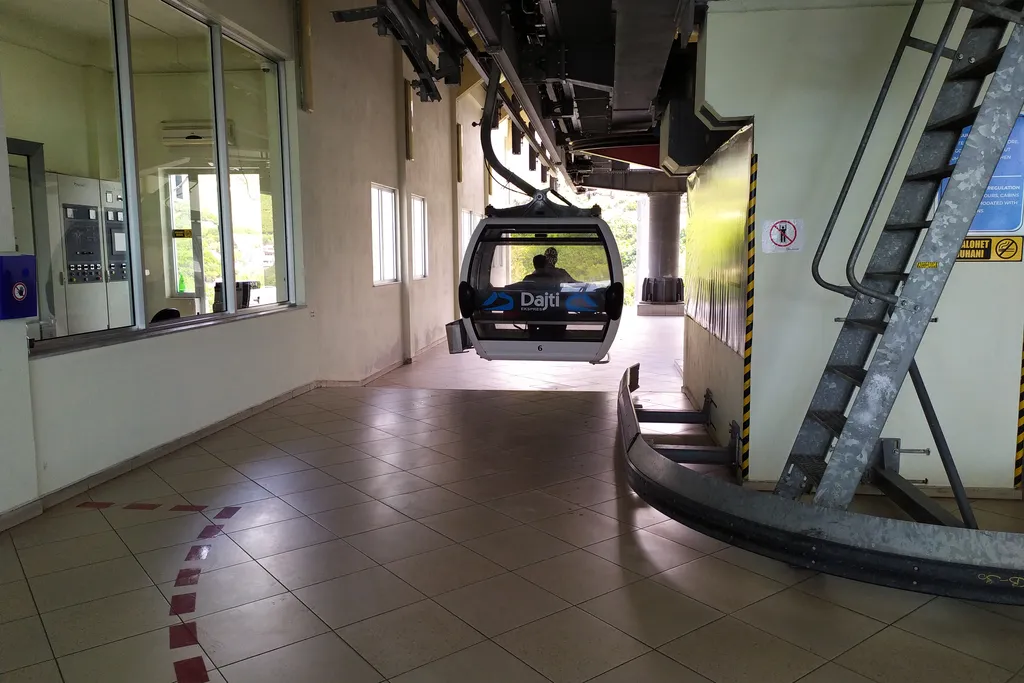
Every Tirana day benefits from leaving the ground, and the city offers the choice in two directions: up, or south. Up is Mount Dajti, the long ridge that walls the city to the east and gives Tirana its backdrop in every panorama. The Dajti Ekspres cable car climbs it from a lower station on the city’s edge — a long, slow gondola ride that carries you out of the traffic noise and up over scrub and pine until the whole Tirana plain is laid out below, the city shrinking into its grid of boulevards and painted roofs. At the top, inside the national park that protects the mountain, the register changes completely: beech and pine forest, walking paths, viewpoints and the simple pleasure of cool air a few degrees kinder than the streets below. This is not a thrill ride and should not be sold as one; it is the city’s balcony, and its correct use is an unhurried half day in clear weather, when the view can run west towards the Adriatic.
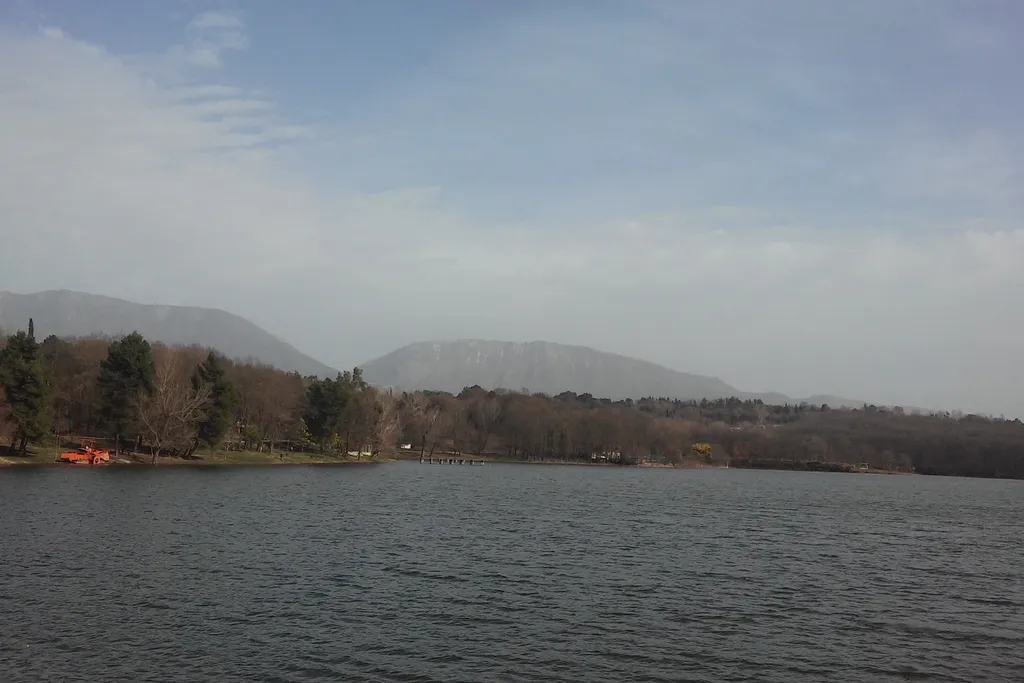
South is the Grand Park — Parku i Madh — the capital’s other lung, wrapped around the artificial lake that was created here in the 1950s. Where Dajti is the escape you ascend to, the park is the one Tirana uses daily: a broad, wooded landscape of paths and lawns on the lake’s shore, with the Presidential Palace at its edge and the university quarter nearby, busy from morning with runners and dog-walkers and fullest in the evening, when half the city seems to come out for the lakeside version of the xhiro, the national evening stroll. Cafes sit back from the water, boats and benches do their quiet work, and the whole place runs at a pace the centre never attempts.
Taken together, the two green escapes explain something essential about how to schedule this city. Tirana’s sights are dense but small; its pleasure is cumulative rather than monumental. A morning in the centre, the cable car after lunch and the park at dusk is not a compromise day — it is the city used the way its own residents use it, work and monuments in the morning, air and water when the light improves. Travellers who skip both escapes tend to report that Tirana was interesting but tiring. Travellers who take one of them tend to report that they could have stayed.
Pazari i Ri and the Old Town Traces
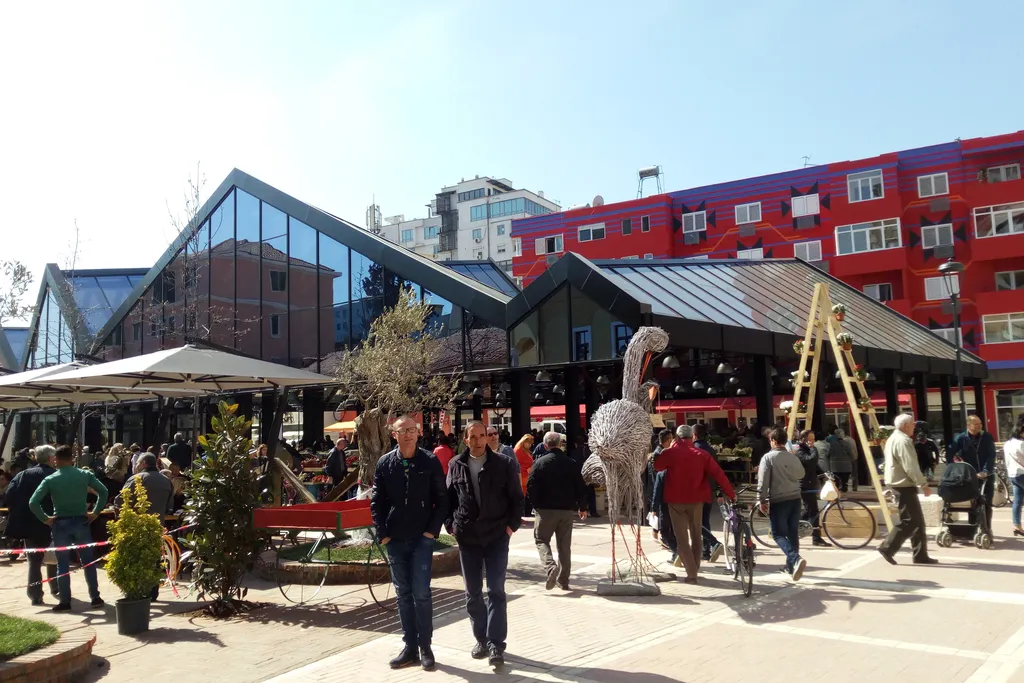
East of the square, a few minutes’ walk, the city’s oldest commercial quarter carries a name that confuses every first-time visitor: Pazari i Ri, the New Bazaar — new because it replaced the old one, in a city whose original Ottoman bazaar, the trade heart of the small market town Tirana once was, stood in this same quarter until the communist decades swept most of it away. What stands here now is a working market given a handsome modern rebuild: a glass-roofed hall at its centre, produce stalls and small shops around it, and a square of restaurant and cafe terraces that has made the quarter one of the best places in the centre to eat — not at any single famous table, but in the general Albanian way, wherever the room is full, the menu is short and the produce on display outside is the same produce that arrives on the plate.
Come in the morning, when the market is doing its real work. The stalls carry the country’s geography in miniature: mountain cheese and olives, raki in unlabelled bottles, dried figs, tobacco, honey, and whatever the season is currently proud of, weighed and argued over at a pace no supermarket has ever managed. The fish and meat halls sit at the quarter’s edge, the bakeries send out byrek — the flaky, filled pastry that is Albania’s portable breakfast — and the cafes around the square fill with the particular Tirana mixture of shoppers, office workers and grandfathers conducting the day’s first inspection of the world. It is the most ordinary part of the centre, and for exactly that reason one of the most rewarding: the square shows you the Albania that governs itself, but Pazari i Ri shows you the one that feeds itself.
The old town proper survives only in traces, and it is more honest to say so than to dress the quarter up as an intact historic district. What remains is worth the short walk: the stone lanes around the market, the old Toptani family quarter, and Tirana Castle — Kalaja e Tiranes — where fragments of fortress wall, their origins reaching back through Ottoman repairs to a much older stronghold, now enclose a pedestrian lane of cafes and small shops along the Murat Toptani street. It is a gentle, commercial survival rather than a solemn one, and that suits this city. Tirana does not preserve its past behind ropes; it builds cafes inside it and carries on.
Where to Stay in Tirana
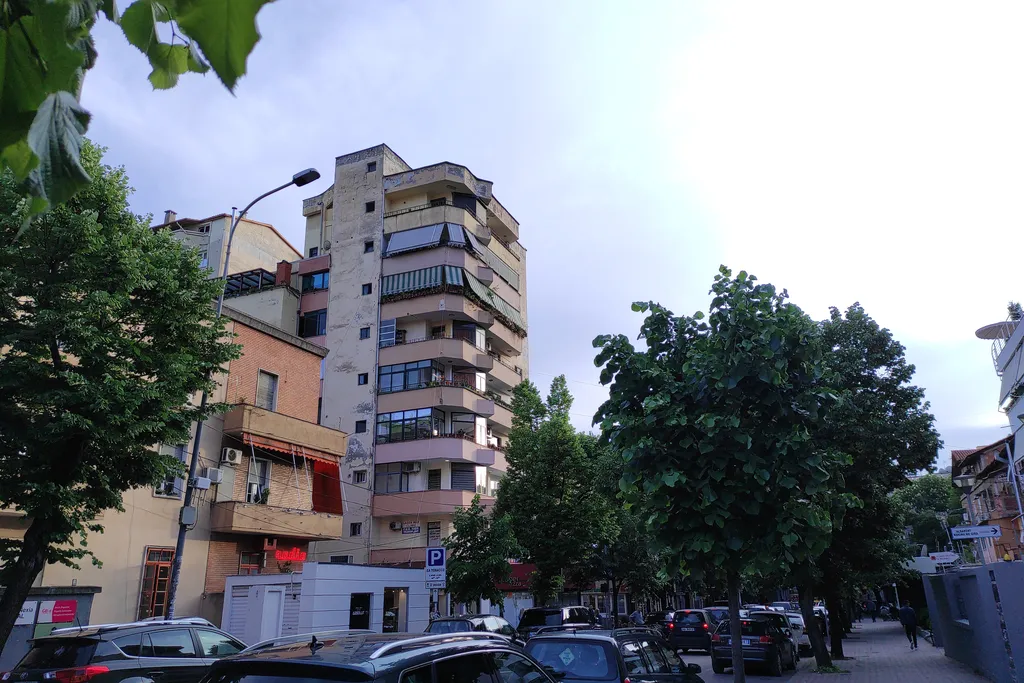
Tirana’s centre is small enough that where you stay is a question of character, not logistics — every area below walks to the square in minutes, and the differences that matter are about evenings, noise and the version of the city waiting outside your door in the morning. Choose by the day you want to have, not by a list of properties: this guide names areas, not hotels, because in a city developing this fast, the quarter outlasts any individual recommendation.
Around Skanderbeg Square and the boulevards is the convenience choice, and for a one-night bookend stay it is usually the right one. The sights of the centre — the mosque, the tower, the mosaic, Pazari i Ri — are on your doorstep, the government quarter’s wide streets are calm at night, and arriving and departing feel simple. What you trade away is atmosphere after dark: the boulevards empty early, and the city’s evening life is a walk away rather than outside the window. Blloku is the opposite bargain. Stay here and the evening is yours — the cafes, restaurants and bars of the old elite quarter are the city’s best, and the streets stay alive later than anywhere else in Tirana. The price is exactly that liveliness: a room over a popular terrace is a room in the middle of the city’s night, and light sleepers should choose their street within the quarter with care.
The southern boulevard and the streets towards the Grand Park are the quiet professional’s option: a more residential Tirana of painted blocks, bakeries and local cafes, with the lake and the park as your morning walk and the centre a pleasant stroll or a short ride north. It suits a second visit, a longer stay, or anyone whose Tirana plan leans on Dajti and the park rather than the museums. Whichever area you choose, two small habits pay. On a bookend stay, keep both nights in the same place if the trip allows — Tirana at the start and the end of an Albanian journey reads as two different cities, and the same street underlines the change. And wherever you land, walk the xhiro on your first evening: one slow circuit of your quarter at dusk will teach you its cafes, its bakery and its temper faster than any review.
Getting Around and Arriving
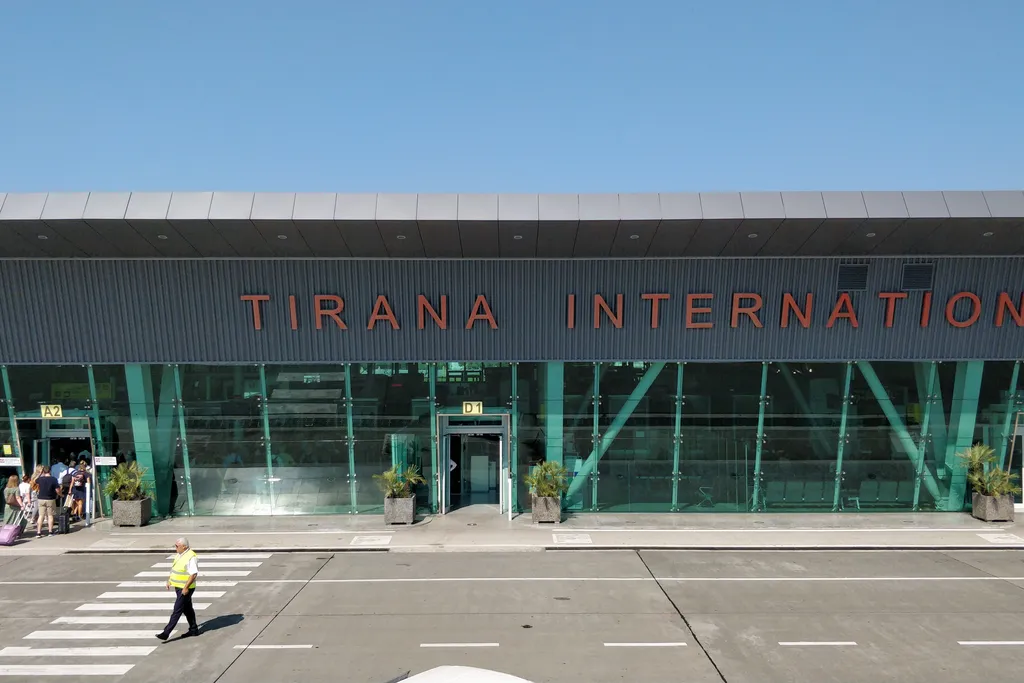
Almost every arrival in Albania is an arrival in Tirana. The country’s main international gateway is Tirana International Airport Nënë Tereza, out at Rinas north-west of the city, and for most travellers it is the front door of the whole trip — the loop routes out of the capital and the journeys home both begin here. Airport buses and taxis connect it with the centre as a matter of routine; this guide states the connection, not the fares or the timetable, because those change and are best confirmed for your own dates. Intercity travel runs on the same principle: buses and the shared minibuses Albanians call furgons link Tirana with every city on a wider itinerary, leaving from bus terminals on the city’s edges whose exact departure points and habits are best confirmed locally, with your accommodation host, on the day before you travel.
Inside the city, the honest headline is that your feet do most of the work. The centre is compact and largely flat, and the full cast of this guide — square, mosques and museums, Blloku, the Pyramid, Pazari i Ri — sits inside a walking web that rarely asks more than fifteen unhurried minutes between stops. City buses cover the wider sprawl and are how Tirana itself commutes; taxis handle the two journeys walking cannot — out to the Dajti Ekspres lower station and Bunk’Art 1 on the north-eastern edge, and across to the bus terminals — and are best arranged through your hotel or a driver your host recommends, with the fare agreed before the ride rather than debated after it.
Two habits keep Tirana simple. First, schedule by geography, not by list: the centre and its museums are one cluster, Blloku and the Pyramid a second, Dajti a half-day of its own, and the park an evening — travellers who criss-cross the city chasing an order copied from the internet spend their day in traffic on the ring of boulevards, watching the city through a windscreen. Second, leave margin at the Tirana end of any journey. The airport run and the intercity terminals are straightforward but not instant, the city is building itself at a pace that regularly rearranges a road, and the capital rewards the traveller who arrives at its departures unhurried — ideally with one last coffee already taken care of in Blloku.
Frequently Asked Questions
Five questions decide most Tirana stays, and they are answered here the way the sections above argue them — briefly, and with the city’s character rather than a timetable. The thread running through all five is that Tirana is a compact, walkable, museum-rich capital that most itineraries under-budget: the fixes are almost always about giving it time and choosing between its museums well, not about adding more sights to the list.
How long do I need in Tirana? One full day is the honest minimum — the square and centre in the morning, one communist-history museum done properly, Blloku and the Pyramid as the light fades. Two days is the comfortable version, adding the Dajti cable car, the Grand Park and a Pazari i Ri morning without hurrying any of them. Three days is more than the sights require, but travellers who use Tirana as a base rather than a bookend — or who simply like the cafe pace — rarely regret the third day; they spend it the way the city spends its own time.
Can I see Tirana in one day between flights? Yes, if you choose rather than collect. The centre cluster — Skanderbeg Square, the Et’hem Bey Mosque, the mosaic, the Clock Tower — takes an unhurried morning. Then pick exactly one of Bunk’Art 2, the House of Leaves or Bunk’Art 1, because two surveillance museums in an afternoon blur into one another and do justice to neither. Eat at Pazari i Ri, end in Blloku, and you have had a real Tirana day: not the whole city, but its argument, complete. What one day cannot hold is the mountain and the park as well — leave those to the two-day version rather than compressing everything into a route march.
When is the best time of year for Tirana? The city works in every season, with spring and autumn kindest: mild streets, full cafe terraces and the mountain clear. Summer is hot, and the correct summer Tirana day is a museum morning, a long shaded lunch and the park or Blloku after the heat breaks. Winter is the quiet version — the museums empty, the boulevards grey, the painted blocks doing their cheerful best against the weather — and for a museums-and-cafes trip it has a genuine case. Dajti is the one weather-dependent sight in this guide: whatever the month, save the cable car for a clear day, because its whole value is the view.
Is Tirana walkable? The centre, emphatically yes — flat, compact and arranged around a pedestrian square, with the main sights minutes apart and the Lana stream as the only real seam, crossed by bridges on every street that matters. What walking cannot conveniently reach is the city’s edge: the Dajti Ekspres lower station, Bunk’Art 1 and the intercity bus terminals are taxi-or-bus journeys, and planning them as such, rather than discovering it on foot, is the difference between a smooth day and a long roadside. Inside the walking web, comfortable shoes matter more than any route: the centre’s pavements are good, its distances are kind, and the xhiro will add its evening mile whether you plan it or not.
Is Tirana worth it, or just a gateway? It is the gateway — the airport, the bus terminals, the start of every loop — and it is also the context without which the rest of Albania reads at half depth. The old towns explain the Ottoman centuries and Butrint the classical ones, but only Tirana explains the twentieth century: the bunkers, the listening rooms, the forbidden quarter and the painted blocks are the country’s modern story told in one walkable city. Travellers who give it a day almost always say the same thing afterwards — that Albania made more sense for the rest of the trip. That is the opposite of a stopover, and it is why this guide exists.
The Short Version
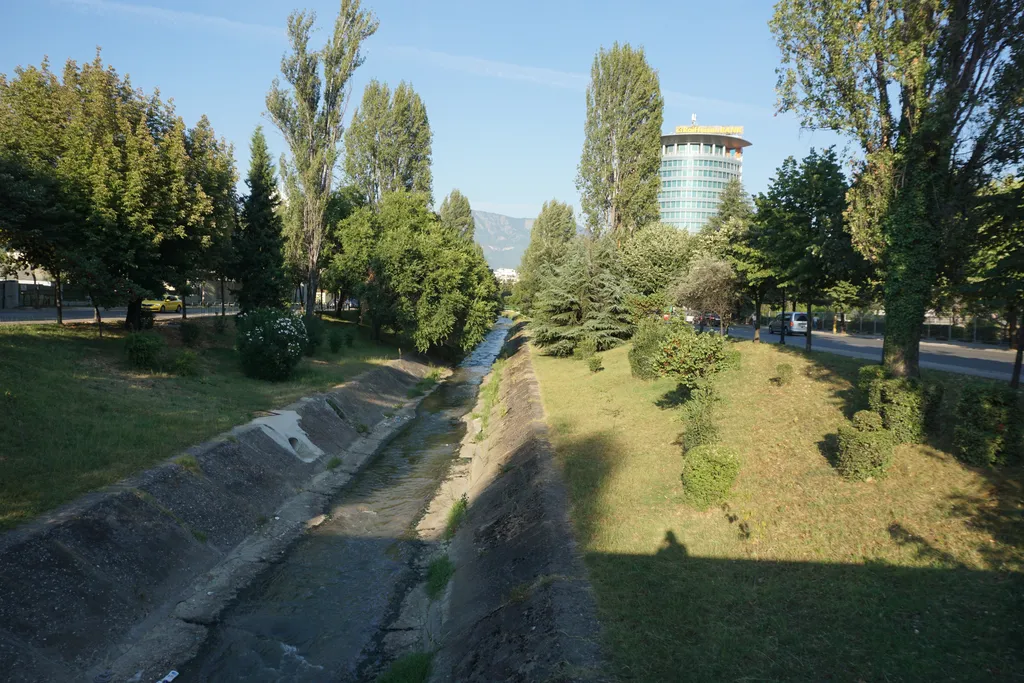
Give Tirana a day, give it two if you can, and read it in layers. Start in Skanderbeg Square, turning slowly between the mosque, the clock tower and the great mosaic. Choose one museum of the communist past and do it properly — Bunk’Art 1 for the bunker, Bunk’Art 2 or the House of Leaves for the surveillance state it served. Eat at Pazari i Ri, drift into Blloku as the light changes, and climb the Pyramid of the dictator who once owned the quarter’s streets, now rebuilt as public steps. If the second day is yours, ride the cable car up Mount Dajti in the morning and walk the Grand Park lake at dusk, when the city comes out to do the same. Then take the city with you: the routes, regions and seasons of the country it governs are laid out in our Albania travel guide, and Tirana is the chapter that makes all the others legible.
What to leave behind is the stopover habit. Tirana is where almost every Albanian trip begins, and it is the rare gateway that is also a destination — a capital that was a market town within living memory, a dictatorship’s stage set within a generation, and is now a painted, cafe-filled city arguing cheerfully with its own past on every street. Arrive curious, walk everywhere, and let the evening xhiro set the pace. The rest of Albania will still be there tomorrow, and you will understand it better for the day you spent here.