Turkey Visa Guide – Who Needs One, the Official e-Visa and the 90 in 180 Day Rule
Türkiye’s visa system is not hard, but it is badly explained almost everywhere it is explained at all. Search for a turkey visa and the first page of results is a crowd of agencies, lookalike websites and one outright imitation of the official portal — while the rules sit on two government pages almost nobody links to. Travellers routinely buy things they do not need (an “e-Visa” for a passport that enters free), trust things that do not exist (one-hour “super-rush” processing), and miss the one rule that actually ends trips early, the 90-in-180 day limit.
This guide is built the other way round. Everything in it was checked on 30 October 2026 against the only two sources that make the rules: the official e-Visa portal, evisa.gov.tr, and the Ministry of Foreign Affairs’ published visa regime at mfa.gov.tr. It will not quote you a fee — the honest fee for your passport is the one the official system shows you when you apply — and it will not print a two-hundred-country table, because that table changes (China’s status changed on 2 January 2026 alone) and a stale row is worse than no row. Instead it sorts every visitor into the four categories the Turkish system actually has, explains each route properly, and sends you to run your own nationality through the official check before booking anything non-refundable. Once the paperwork is settled, plan the trip itself with our Istanbul travel guide.
At a Glance
| Question | Short answer |
|---|---|
| Do I need a visa for Türkiye? | It depends entirely on your passport. Travellers fall into four categories — visa-free, e-Visa, conditional e-Visa, and consular visa only |
| What is the official e-Visa website? | evisa.gov.tr — the only one. Every similar address is a business or a scam |
| What is an e-Visa valid for? | Tourism or commerce (business visits) only. Work and study always go through an embassy or consulate |
| How long can I stay? | Never more than 90 days within any 180-day period, under any route — and many passports get less |
| How much does it cost? | This guide prints no figure on purpose. The fee depends on nationality and is shown inside the official application before you pay |
| What passport validity do I need? | The MFA advises 6 months from arrival; the legal floor is a passport expiring at least 60 days after your permitted stay ends |
| Can I get a visa at the airport instead? | For almost everyone, no — a few listed nationalities still can. Do not build a trip on it |
| Can I extend my stay? | Not the visa. Staying beyond 90 days means applying for a short-term residence permit inside Türkiye before your time runs out |
One discipline runs through everything below: your category is a fact about your passport, not a choice. The agencies that rank for this topic blur the categories together because a blurred reader is a paying reader. Türkiye’s own system does the opposite — select your travel document on evisa.gov.tr and it tells you which door, if any, is open to you.
Which Category Are You? The Four Doors Into Türkiye

The Ministry of Foreign Affairs describes the structure in one sentence: some visitors are exempt from visas for touristic and business travel, others can obtain an e-Visa, and all other applicants need a visa through Turkish representations abroad. Read carefully, that sentence holds four distinct positions, because the e-Visa group splits in two — and the split is where most expensive mistakes happen.
Door one: visa-free entry. Your passport is on the exemption list, so you travel with no visa at all and are stamped in at the border for a set number of days. This is now the position of most of Türkiye’s biggest visitor groups — Americans, Britons, Canadians, Australians and most Europeans among them — but the allowance is not uniform: most get 90 days in any 180, some get 60 or 30, a few get 30 days per entry with a ceiling on top.Door two: the straightforward e-Visa. Your passport is not exempt, but it is on the e-Visa list without extra conditions: apply online before you fly and receive an electronic visa — three months and multiple entry for some nationalities, a single month and single entry for others.Door three: the conditional e-Visa. Your passport qualifies for the online system only if you already hold something else — a valid visa or residence permit from a Schengen state, the USA, the UK or Ireland. Meet the condition and the door opens, for a one-month single-entry visa; miss it and the online door is shut, however official the website offering to open it looks.Door four: the consular visa. No exemption, no e-Visa route: your visa is a sticker placed in your passport by a Turkish embassy or consulate before you travel, arranged through the official pre-application system.
Two warnings belong here rather than buried later. First, the category lines are drawn around ordinary passports and touristic travel; official and service passports often sit in a different category, and some travellers are sorted by age rather than nationality alone — the MFA list gives Algerian, Iraqi and Libyan visitors age windows in which they are exempt, and windows in which they need the conditional e-Visa. Second, a travel document is not a passport: holders of travel documents must obtain their visa from a Turkish mission beforehand, whatever regime applies to citizens of their country. If either is you, your research starts at a consulate, not on this page.
Visa-Free Entry – and Why the Days Differ

If your passport is exempt, Türkiye asks nothing of you before you travel: you board, you land, an officer checks and stamps your passport, and your permitted stay runs from that stamp. As checked on the MFA’s country list on 30 October 2026, ordinary passport holders of the United States, the United Kingdom (British citizen passports), Canada and Australia are exempt for up to 90 days in any 180-day period, as are most EU passports — Germany’s entry on the list reads simply “up to 90 days”, and Austria, Belgium, the Netherlands, Poland, Portugal, Spain and Ireland all carry the 90-in-180 formula. Saudi Arabia and the United Arab Emirates sit in the same group, and China joined it on 2 January 2026 — a useful reminder that this list is alive, and that an article printed last year may describe a Türkiye that no longer exists.
Below that top tier, the allowances step down, and this is where “visa-free” stops meaning “the same”. Russian ordinary passports are exempt for up to 60 days. Thailand and Mongolia get 30 days. Indonesia gets 30 days per entry, capped at 90 days in any 180. Belarus gets 30 days at a time and no more than 90 days in a whole year. Some passports carry quirks that defeat any summary: British National Overseas, British Subject and British Protected Person passports — which many holders reasonably assume behave like a British citizen passport — are not exempt at all, and their holders can obtain a visa only from Turkish missions. Australian official passports, unlike ordinary ones, require a visa. The lesson is not that the system is arbitrary; it is that the unit of the system is the exact document in your hand.
Visa-free also does not mean unconditional. The exemption covers touristic and business visits; it does not authorise work or study, it does not suspend the passport-validity rule below, and it does not stretch: the 90-in-180 ceiling binds exempt travellers exactly as it binds visa holders. A small number of nationalities — citizens of several European states on the MFA list, Bulgaria and Romania among them — may enter on a national identity card instead of a passport under the European Agreement on the movement of persons. If that is you, the card replaces the passport for entry; it does not change your days.
The 90 in 180 Day Rule – How the Counting Actually Works
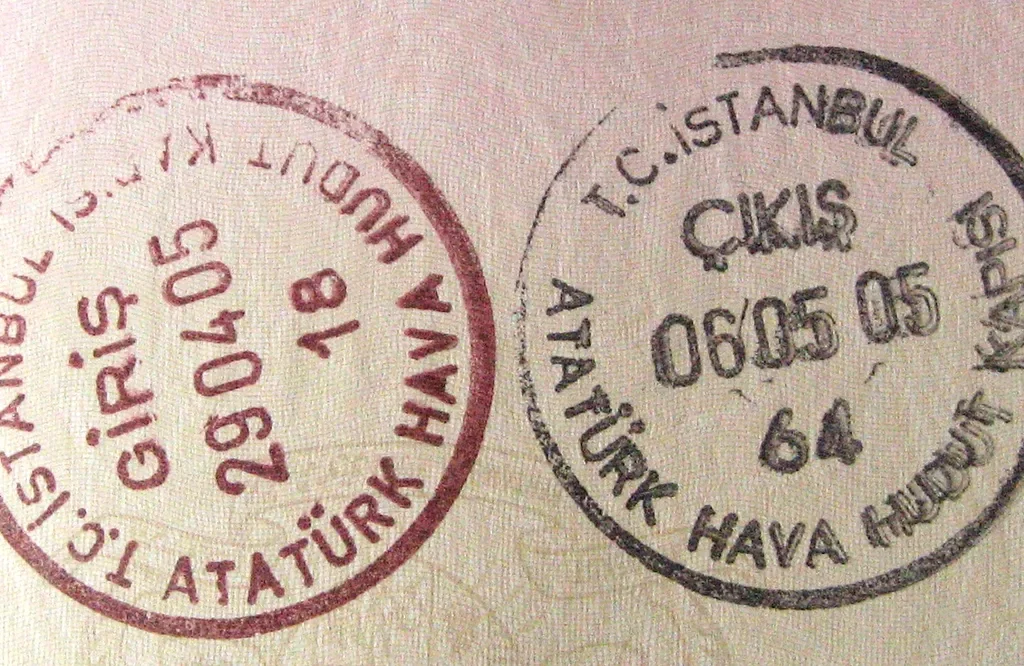
Every route into Türkiye — exemption, e-Visa, consular visa — sits under the same ceiling, stated on the MFA’s general information page: the stay granted by a visa or a visa exemption cannot exceed 90 days within each 180 days, the rule is expressed as 90 days of stay within the last 180 days, and it is binding on all foreigners. Three consequences of that wording matter more than anything else in this article.
First, the window rolls. There is no fixed 180-day block that resets on a date; the count looks backwards. Standing at the border on any given day, the officer’s question is how many of the previous 180 days you have already spent inside Türkiye. A traveller who used 90 days in spring cannot simply wait for a calendar boundary — days fall out of the window one by one, exactly 180 days after each was spent, and new room opens at exactly that pace. Second, the count is of days present, and both the arrival day and the departure day are days inside Türkiye. Short trips accumulate: five trips of 18 days are the same 90 as one stay of 90, and the frequent short-trip traveller — the Istanbul weekend regular, the Aegean sailor crossing back and forth — is precisely who the rolling count catches out. Third, the rule is per person, not per passport: the MFA states explicitly that it is not possible to stay 90 days on each of two different passports. Dual nationals do not hold 180 days between their two documents.
The practical method is unglamorous and reliable. Before booking a return trip, lay your last 180 days on a calendar, mark every day spent in Türkiye and count them; what remains under 90 is the room you have, and the new trip must fit inside it at every point — including its final day, the day travellers miscount most, because a trip that fits on entry can breach the ceiling before departure if older days have not yet fallen out of the window. If your passport’s own allowance is shorter — 60 days, 30 days, a one-month single-entry visa — that lower limit governs the trip, and the 90-in-180 ceiling governs your year. Exceeding either is an overstay.
The e-Visa – What It Is, and What It Is Not

The e-Visa is Türkiye’s electronic visa system, run by the Ministry of Foreign Affairs since 17 April 2013 at exactly one address: evisa.gov.tr. The MFA’s own description is short: applicants fill in their identity, passport and travel-date information, pay the visa fee online — the system accepts Visa and MasterCard and other commonly used cards — and receive their visa electronically, from anywhere with an internet connection, at any hour. Tour operators can also obtain e-Visas for groups. That is the whole mechanism — no appointment, no interview, no document-upload queue — and it replaced, for eligible nationalities, the old stickers once sold at airport booths on arrival. Just as important is what the e-Visa is not. The MFA states that an e-Visa is only valid when the purpose of travel is tourism or commerce— a holiday, or a business trip of the meetings-and-negotiations kind. It is not a work visa and not a study visa, and no version of it, however sold, becomes one: working or studying in Türkiye requires a visa from a Turkish embassy or consulate. Nor is it a residence document: it authorises visits within its stated validity and stay limits, under the same 90-in-180 ceiling as everyone else. And it is not issued by any company. Agencies may fill in the same form for you — for a mark-up — but the visa is granted by the Turkish state through its own system, and the only fee the state charges is the one inside it.
Who can use it is decided passport by passport. As read on the MFA list today, the unconditional e-Visa group includes ordinary passport holders of Armenia; Mexico, whose e-Visa is a 30-day single entry; the Bahamas, Barbados, Jamaica, the Maldives, St Lucia and St Vincent and the Grenadines, whose e-Visas run three months with multiple entry; Mauritius (one month, multiple entry); South Africa (one month, single entry, via the site); Vietnam (single entry, stays of up to 30 days); and Namibia, able to obtain e-Visas since 5 May 2025. Read that list as proof of method, not a map of the world: your nationality may sit in this group, the exempt group, the conditional group or none of them — and the difference is a ten-minute form versus a consulate appointment. The official system resolves it in under a minute, which is why this guide keeps sending you there.
Applying for the e-Visa, Step by Step
The application itself is brief, and its brevity is a safety feature: a process demanding scans, photographs and interviews is, by definition, not this one. Work through it in this order, on the real site, and it takes minutes.
Step one — start at the right address. Type evisa.gov.tr into the browser yourself, or follow the link from the MFA’s site; never arrive via an advertisement or a link in an email. Check the address bar before typing anything personal: the official portal lives on the .gov.tr domain. Step two — declare your document. The system first asks for your country and travel document type. This is the eligibility test: exempt passports are told they need no visa, conditional passports are told the conditions, ineligible passports are told to apply through a mission. Do not route around an answer you dislike by choosing a different document type — the visa is matched against the passport at the border, and a visa issued against wrong declarations is a refused entry waiting to happen. Step three — give your dates. Enter your arrival date within the window the system offers; the visa’s validity runs from the date you state, so apply with real travel dates, and apply before you travel — the system is built for advance application, not the departure lounge. Step four — enter your details exactly as printed. Identity, passport number and dates go in character for character as they appear in the document; the e-Visa is linked to that passport number, and a transposed digit is this system’s classic self-inflicted wound. Step five — pay inside the system and keep the result. Payment is by card, on the site, at the fee the site displays for your nationality — the only fee figure attached to your application you should believe. Save and print the issued e-Visa; airlines may ask to see it at check-in, and paper backup costs nothing at home and everything at a gate.
Two disciplines complete the process. Apply early enough that a mistake is an inconvenience, not a crisis — days ahead, not hours. And verify what you received: names, passport number and validity on the issued document against the passport in your hand, while you are still at your desk. An e-Visa with an error in it is not a visa for the person the passport describes.
The Conditional e-Visa – When Another Visa Opens the Door

The third door is the one the agency pages mangle worst, because it cannot be sold honestly in one line. For a defined group of nationalities, Türkiye offers the e-Visa only on conditions — and the core condition is that you already hold a valid visa or a valid residence permit from a Schengen member state, the United States, the United Kingdom or Ireland. The logic is borrowed trust: Türkiye lets another rigorous visa system do part of the vetting. What you receive, when you qualify, is narrower than the unconditional product — on the MFA’s list, country after country in this group carries the same formula: a single-entry e-Visa valid for one month (30 days) obtained via evisa.gov.tr, subject to fulfilling the conditions the system itself lists when you apply.
As read on the official list on 30 October 2026, the conditional group includes ordinary passport holders of Afghanistan, Bangladesh, India, Pakistan, Nepal, the Philippines, Palestine, Yemen, Senegal, Sri Lanka and Cape Verde. Three further countries appear with age windows instead of a plain condition: Algeria (applicants aged 15–18 and 35–50), Iraq (ages 15–50) and Libya (ages 16–45) — with exemption at the edges of those windows instead: Algerians under 15 and over 50, Iraqis under 15 and over 50, and Libyans under 16 and over 45 are visa-exempt for touristic travel. Check your exact age band on the official source rather than trusting any summary, this one included.
The operational points follow from the design. Your supporting visa or permit must be valid — a used, expired or single-entry-exhausted document is not a key, and the border officer can ask to see it alongside your e-Visa, so travel with it (a supporting document in an old passport means carrying both passports). The one-month single-entry limit is real: a conditional e-Visa is built for a trip, not a season — re-entering on it after a weekend in Greece is impossible, and the second entry needs a second visa or a different route. And if you hold no supporting document, your door is the fourth one, the consular visa. Never pay a website to “handle the conditions” for you: they are checked by the Turkish state, at application and at the border, and an intermediary cannot waive them — only invoice you.
The Sticker Visa – When Your Route Is the Consulate
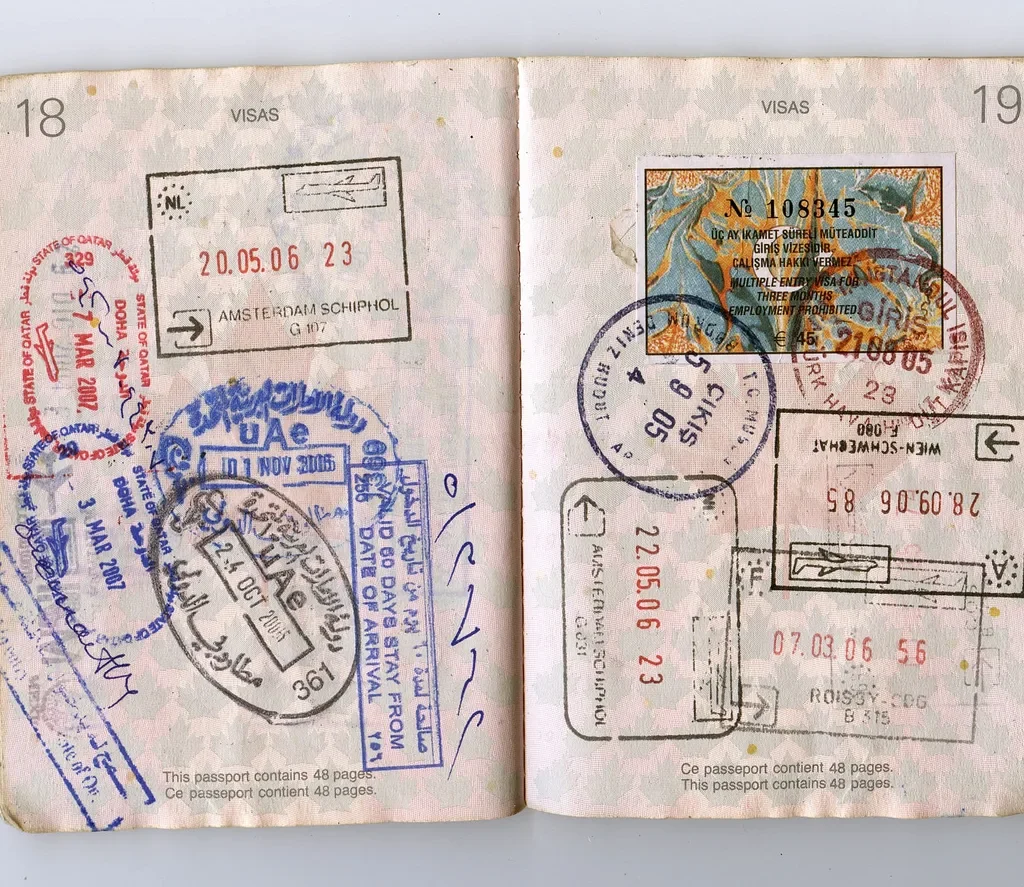
Some travellers have no online door at all, and some journeys are consular by nature. Ordinary passport holders of countries such as Nigeria and Kenya — as the MFA list stands today — are visa-required with no e-Visa route; so are holders of travel documents of any nationality; so is everyone whose purpose is work or study; and so are the holders of those easily-overlooked British statuses (National Overseas, Subject, Protected Person) whose visas can be obtained, in the MFA’s words, only at Turkish missions. For all of them, the visa is the traditional sticker, granted by an embassy or consulate before travel.
The process, as the MFA’s general information page describes it, begins online but does not end there. Applications and appointment bookings run through the Pre-Application System for Turkish Sticker Visa at visa.gov.tr — note the address: visa.gov.tr for the consular pre-application, evisa.gov.tr for the e-Visa; the one-letter difference is official, and exactly the kind the copycats exploit. One of the system’s quiet functions is triage: an applicant who starts at visa.gov.tr and turns out to qualify for an e-Visa is redirected there, so nobody loses by starting at the consular door when unsure. The MFA’s practical warnings for this route are plain: apply at least one month in advance, because consular queues cannot be shortened by the internet; the visa fee is not refunded if the application is rejected; the applicant must hold medical insurance valid during their stay; and a visa does not guarantee entry — the final decision belongs to the border officer. Applicants under 18 face a further requirement: official written approvals from both parents, with exceptions where custody or a parent’s death is officially certified.
A consular visa can grant a stay of up to 90 days, still inside the 90-in-180 ceiling. Because yours is the slowest route, your timeline should drive the booking: flights and hotels become sensible purchases after the sticker is in the passport — not before, and never on the strength of an agency’s assurance that “it always comes through”.
Passport Validity – the 60-Day Rule Behind the Six-Month Advice
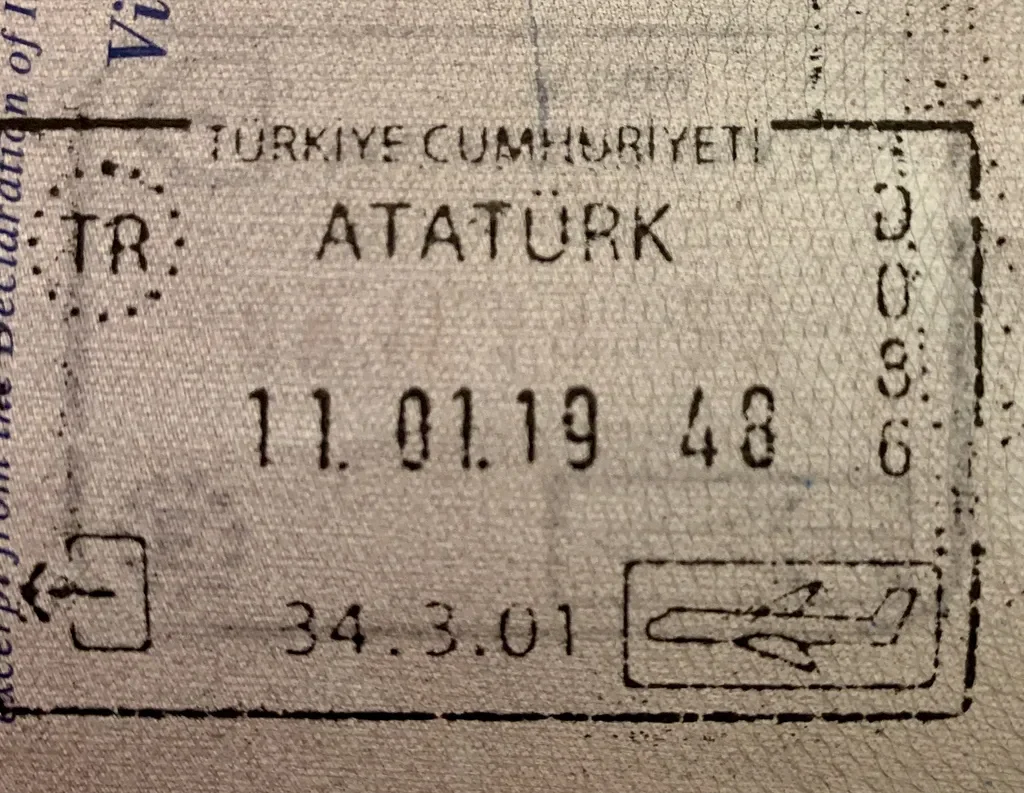
Two numbers circulate for Turkish passport validity, and both are official — they simply answer different questions. The MFA’s advice to travellers is to hold a passport valid for at least six months from the date of arrival in Türkiye. The legal requirement beneath that advice, from article 7.1b of the Law on Foreigners and International Protection (No. 6458), is a formula rather than a fixed period: your passport must not expire until at least 60 days after the end of the “duration of stay” your visa, e-Visa, exemption or residence permit allows. The MFA works the examples itself: a traveller entering on a 90-day stay must hold a passport valid for 150 days at the moment of entry (90 plus 60), and a traveller on a 30-day stay needs 90 days (30 plus 60).
The distinction matters at both ends. A traveller with seven months of validity has nothing to think about under either rule. A traveller with five months, planning a two-week holiday, fails the six-month advice but satisfies the law comfortably — 14 days of stay plus 60 means 74 days required — and is likely to be carried and admitted; equally, a traveller with five months planning to use a full 90-day exemption satisfies neither, and no airline agent or border officer can round the number up for them. The MFA also lists who the 60-day rule does not bind: citizens of the countries admitted on national identity cards, and holders of diplomatic, special and service passports from countries exempted from the requirement for their ordinary passports. Everyone else should treat the legal formula as a floor and the six-month advice as the comfortable target — and should treat one sentence on the MFA’s page as the last word on the subject: foreigners who arrive at border gates without the required validity are not admitted to Türkiye. Check your expiry date before you check anything else in this article; it is the cheapest check in travel, and the only one whose failure cannot be fixed online.
Arriving in Türkiye – What the Officer Is Actually Checking
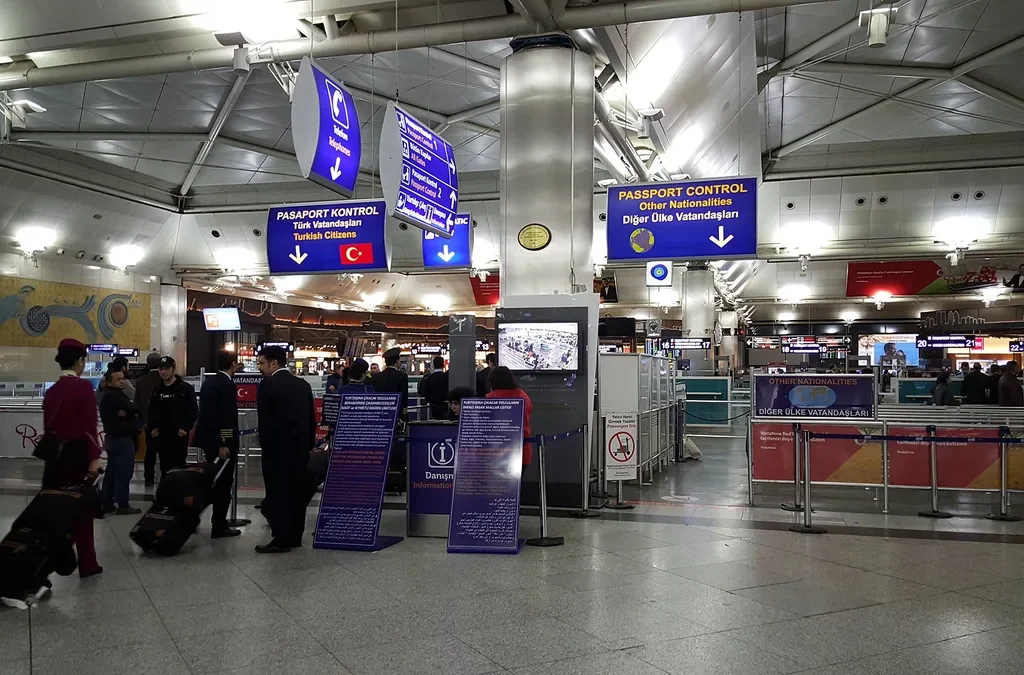
Everything before this section is preparation; this is the moment it is examined. At passport control — Istanbul Airport, Antalya, a land gate or a seaport — the officer is, in effect, re-running this guide’s checks against the physical documents in front of them. Your passport is read for validity against the 60-day rule. Your status is read against your nationality: exempt, and the stamp goes in with the permitted days; e-Visa holder, and the electronic record is matched to the passport number you present — which is why the visa must have been issued against this passport, and why a traveller who renewed their passport after applying needs the old document or a new visa, not optimism. Conditional e-Visa holders may be asked for the supporting Schengen, US, UK or Irish document that opened their door. Sticker holders present the label itself. A cruise passenger on a port permit presents the permit form, surrendered again on departure.
Two truths are worth absorbing before you are standing in that queue. First, a visa — of any kind — does not guarantee entry: the MFA says so in terms, and it is the universal logic of borders, not a Turkish eccentricity. The visa establishes that you were admissible on paper; the officer decides admission on the day. Second, the check usually starts before the flight: airlines verify documents at check-in because carrying an inadmissible passenger costs them money, so a traveller whose e-Visa is wrong, whose supporting document is missing or whose validity is short will most likely be stopped at a check-in desk at home rather than a booth in Istanbul. Treat check-in as the real border, arrive with every document you relied on at application, and the booth at the far end becomes the formality it is meant to be.
Entering by Land and by Sea – Including the 72-Hour Cruise Rule
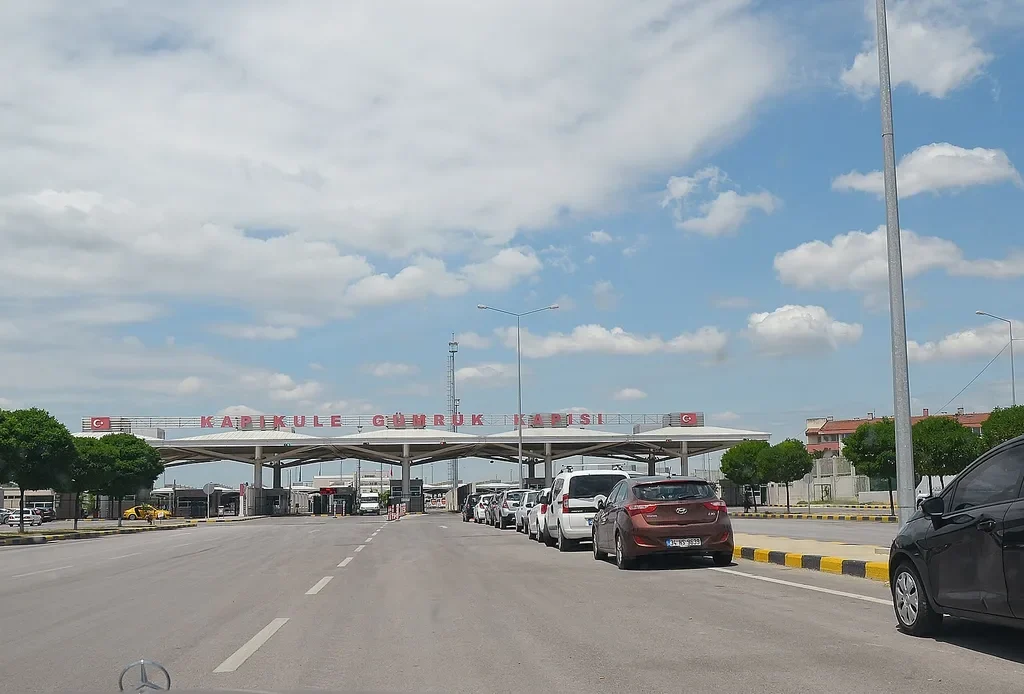
Nothing about your category changes with your mode of arrival. The same exemption lists, e-Visa, 90-in-180 count and passport-validity formula apply at the Kapıkule and İpsala gates on the Bulgarian and Greek borders, at the crossings from Georgia and Iran, and at every seaport — an e-Visa obtained for a flight works at a land gate, and days in Türkiye count identically however you entered. Overland travellers add one wrinkle: at a road border the document checks include the vehicle, and summer queues at the big European gates are measured in hours — but the visa side of the encounter is the same thirty seconds as at an airport.
The sea has one genuine special case, and it is officially described. For cruise passengers and other foreigners entering through naval ports for touristic purposes, the MFA explains that local governorates may issue visa-free entry permits lasting a maximum of 72 hours, valid only for sightseeing in the vicinity of the port of entry. The mechanics are gentle: passports are not retained, the visitor is given a document called a Harbor City Entry Permit, and it must be handed back when leaving by the same port. The MFA is careful about what the permit is and is not — it facilitates entry for visitors who would otherwise require a visa, and does not itself entitle the holder to one. Read practically: for exempt or e-Visa-eligible visitors it is a convenience a cruise line may use for a port call; for a nationality that normally needs a consular visa, it is the only reason a day ashore is possible at all — a day-visit facility, not a back door into the country. It expires at 72 hours, is fenced to the port’s vicinity, and flying home from Istanbul on the strength of it is not a thing.
A footnote, because the old internet never dies: a few nationalities on the MFA list — Antigua-Barbuda and St Vincent appear there — are still shown as able to obtain a visa at ports of entry, and the MFA notes the e-Visa fee is lower than the fee for visas obtained on arrival at Turkish airports. Unless your exact passport is one of those named cases, verified by you on the current official list, plan as if airport visas do not exist. For the overwhelming majority of travellers, they don’t.
Transit Through Türkiye – When a Connection Is Not an Entry
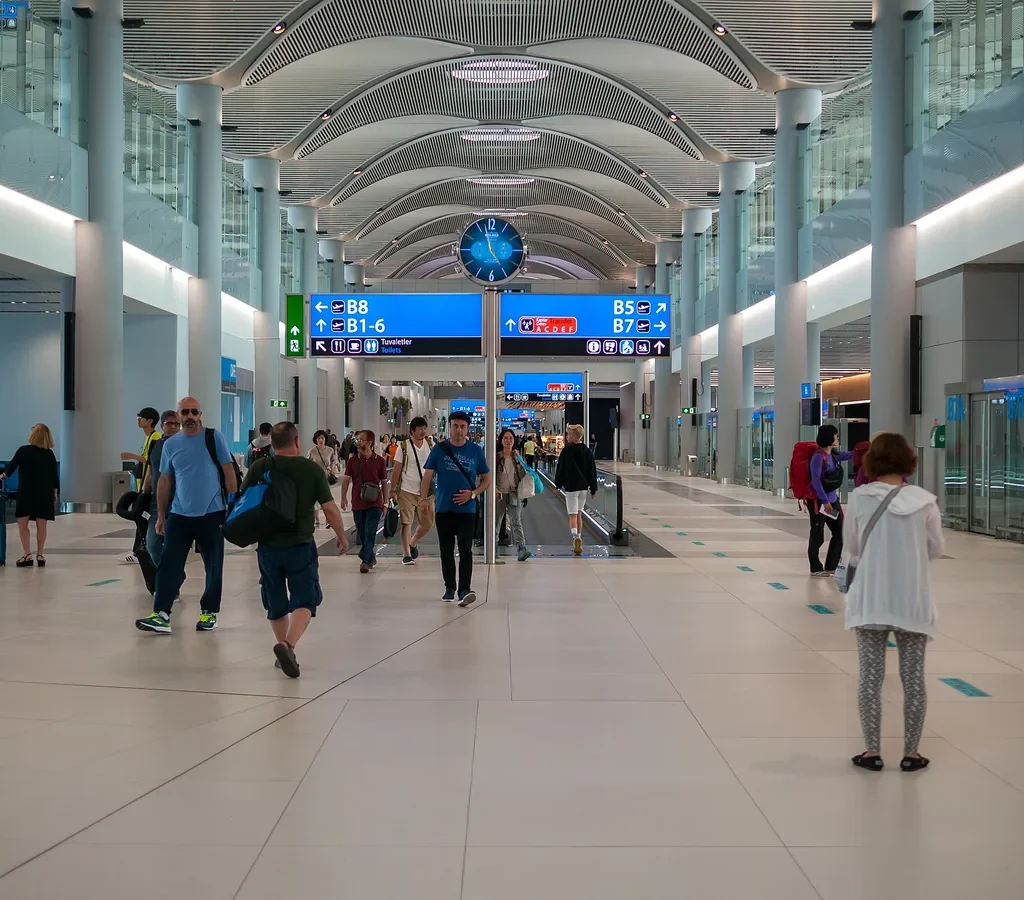
Istanbul is one of the world’s great connecting hubs, which makes its transit rules some of the most searched — and most garbled — in this whole topic. The foundation is the distinction between the transit area and the country. Turkish consular guidance states the general rule plainly: passengers who will not leave the transit lounge are not required to have a transit visa. A single-ticket connection through Istanbul Airport or Sabiha Gökçen, bags checked through, spent entirely airside, is for most nationalities exactly as simple as it sounds — you never meet a Turkish border officer, because you never ask to enter Türkiye.
Three traps turn a connection into an entry, and each is common. A domestic onward flight — Istanbul to Antalya, say — means entering Türkiye at Istanbul: the domestic leg leaves from the far side of passport control, so the full entry rules for your passport apply. Separate tickets usually mean the same: if your bags are not checked through, collecting them landside and re-checking them is an entry. Changing airports in Istanbul — landing at Istanbul Airport and departing from Sabiha Gökçen, or the reverse — is unambiguously an entry, with a cross-city journey in between. In all three cases, plan exactly as if Istanbul were your destination.
The newest layer sits on top of that foundation. Since 15 April 2024, Türkiye has required an Electronic Airport Transit Visa (e-ATV) for a specific combination: nationals of ten countries — Turkish missions’ announcements name India and Nepal among them — travelling through Istanbul Airport en route to Colombia, Mexico, Panama or Venezuela. The e-ATV is free of charge and is applied for through the e-Visa system; it documents a particular set of routes rather than taxing connections generally. If you are not a national of a listed country, or not travelling to one of those four destinations, it does not concern you. If you might be both, check the requirement on the official e-Visa site or with your nearest Turkish mission before booking — a small rule with the power to deny boarding. The MFA’s visa-type list also still includes single and double transit visas among consular visas, for travellers whose itineraries genuinely require entering on a transit basis; those are mission visas, arranged like the sticker route above.
Travelling With Children – the Entry Basics
Children are not an extension of a parent’s passport status; they are travellers with documents of their own, and Türkiye’s system treats them that way. Each child needs their own travel document, and the category that applies is the one attached to the child’s nationality and document — a visa-exempt parent does not transmit exemption to a child travelling on a different passport, and an e-Visa is issued per person, against a specific passport number, for a child exactly as for an adult. Families travelling on mixed passports should therefore run the official check once per document, not once per family.
The mechanics follow from that design. Because the e-Visa is a record tied to one passport number, a family that needs e-Visas holds one per traveller — a parent cannot fold a child into their own application, and a child entered on a parent’s details holds nothing at all. The same per-person logic runs through the consular route, where each child’s file stands on its own paperwork. The family’s homework is therefore per passport: four travellers, four checks, four results, before anyone books.
The one child-specific rule the MFA publishes belongs to the consular side of the system: any applicant under the age of 18 must submit official written approvals from both parents when applying for a visa, with exceptions where custody rights or a parent’s death are established by official certification. A family facing a consular application should build that paperwork into the timeline early — it cannot be improvised at an appointment. Beyond that, the official pages say little else specific about minors, and this guide will not invent specifics to fill the space: for anything beyond the basics above, the Turkish mission in your country is the source.
Overstays, Extensions and Staying Longer
Start with the distinction the whole section hangs on: visas and exemptions admit you; they do not stretch. An e-Visa cannot be extended from inside Türkiye, an exemption cannot be renewed by leaving for a weekend — the rolling 180-day window makes the “visa run” fail arithmetically — and the 90-day ceiling binds every category alike. The traveller who wants to stay longer has exactly one lawful instrument, and the MFA names it: anyone wishing to stay longer than 90 days must apply for a Short Term Residence Permit at the Provincial Directorate of Migration Administration, from inside the country, while their current stay is still legal. A valid visa, the MFA adds, removes the need for a residence permit for up to 90 days; day 91 is what the permit exists for. Plan the application as part of the trip, not as an emergency measure in its final week.
Overstaying, by contrast, is a violation — Turkish law treats it as a breach of the right of legal stay. Under Law No. 6458, overstayers face administrative fines, and under the law’s Article 9 the authorities can impose an entry ban, with the Presidency of Migration Management’s published framework scaling the ban to the length of the violation — from a month up to five years. The same published practice is more forgiving at the shallow end: foreigners who leave voluntarily and pay the fine for an overstay of up to three months are generally not banned. Two details decide futures: the fine is assessed and paid on departure, and an unpaid fine blocks re-entry even after any ban has expired — the debt outlives the punishment. This guide prints no fine amounts: they are set administratively and change over time. The strategy is simpler anyway — count your days, respect the lower of your two limits, and if life genuinely changes mid-trip, go to the migration directorate before the law has to come to you.
Fake e-Visa Websites – How to Spot Them Before They Bill You
No section of this guide will save more readers more money than this one. The official e-Visa portal is a Turkish government system on a government domain: evisa.gov.tr. Everything else that offers you a turkey visa online is either charging you to fill in the government’s form, or charging you for nothing at all. At the time of writing, the search results for this very topic include a site on a “govn.tr”domain dressed as the official portal — read the letters again: g-o-v-n — and a polished operation on a “.it.com” domain selling “super-rush” processing in one hour. These are not edge cases; they are what ranks.
The tells are consistent enough to check in seconds. The address: the official system lives on evisa.gov.tr, the consular pre-application on visa.gov.tr, information on mfa.gov.tr — all .gov.tr. Any other domain, however official its flag graphics, is a business. The fee behaviour: the official system shows one state-set fee for your nationality, at the payment step, inside the form. A site listing menu pricing — standard, rush, super-rush — is selling queue-jumping for a queue that does not exist. The requirements: the official application asks for form fields — identity, passport, dates. A site demanding passport scans and photographs “for your e-Visa” is collecting your money or your data. The category claims: a page telling Americans, Britons and Germans to buy an e-Visa describes a Türkiye that ended years ago; a page promising Indian or Pakistani travellers an unconditional 90-day e-Visa invents one that never existed. Both are telling you their business model is your confusion. And the pressure: countdowns and “only a few visas left” belong to sales, not to a ministry that answers around the clock.
The protective habit costs nothing: navigate to the site yourself, by typing the address or via the MFA’s pages — never through an advert or a forwarded link. If you have already paid a third party, the visa itself — if one was genuinely obtained for you — is valid or invalid at the border regardless of what you paid for it; check its details against your passport, and treat the mark-up as tuition.
Frequently Asked Questions
Do US, UK, Canadian and Australian citizens need a visa for Turkey?
No — ordinary passport holders of all four are visa-exempt for tourist visits of up to 90 days within any 180-day period, as verified on the MFA’s country list on 30 October 2026. Two cautions: the exemption covers the British citizen passport — National Overseas, Subject and Protected Person passports are not exempt and their visas come only from Turkish missions — and Australian official passports require a visa even though ordinary ones do not.
What is the official Turkey e-Visa website?
evisa.gov.tr — the electronic visa system of the Republic of Türkiye, run by the Ministry of Foreign Affairs since 2013. Consular pre-applications sit at visa.gov.tr, official information at mfa.gov.tr. Any other domain offering a Turkish e-Visa is a commercial intermediary or a copycat, including addresses engineered to look governmental.
How does the 90 in 180 day rule work in practice?
Stand on any day and count backwards: across the previous 180 days you may have spent at most 90 of them in Türkiye, and the stay granted by any visa or exemption cannot exceed that. The window rolls daily, days fall out exactly 180 days after they were spent, arrival and departure days both count, separate trips accumulate, and the allowance belongs to you rather than to each of your passports.
How much does a Turkey e-Visa cost?
This guide deliberately prints no figure. The state fee depends on your nationality and is displayed inside the official application at evisa.gov.tr before you pay; the amounts on agency websites describe their own invoices as often as the state’s fee, and go stale without notice. Budget for the official fee plus nothing — anything above it is a mark-up.
Can I get a visa on arrival at Istanbul Airport?
For almost everyone, no — the airport sticker era ended for most nationalities when the e-Visa replaced it, and the MFA list now shows only a handful of nationalities (such as Antigua-Barbuda and St Vincent) still able to obtain a visa at ports of entry. Unless your passport is one of those named cases on the current official list, travelling without the right status means refused boarding or refused entry. Arrange your category before you fly.
What happens if I overstay in Turkey?
Overstaying breaches your legal stay under Law No. 6458. On departure you face an administrative fine, and entry bans under Article 9 scale with the length of the violation — the migration authority’s published framework runs from a month up to five years, while travellers who leave voluntarily and pay the fine for an overstay of up to three months are generally not banned. An unpaid fine blocks re-entry even after a ban expires. No honest source prints a tariff; the amounts are set administratively and change.
The Short Version
Türkiye’s system has four doors, and your passport has already chosen yours. If you are exempt — as Americans, Britons, Canadians, Australians, most Europeans and a lengthening list of others now are — travel on your passport, respect your day limit, and buy nothing from anyone. If you are e-Visa eligible, use evisa.gov.tr and nothing else: tourism or commerce only, details keyed exactly, fee paid inside the official form. If your e-Visa is conditional, the supporting Schengen, US, UK or Irish document is the key — valid, carried, and matched by a visa that runs one month and one entry. If you are consular-only, or travelling to work or study, start at visa.gov.tr a month or more ahead and treat the appointment as the start of the trip. Under all four doors the same two laws run: no more than 90 days inside any rolling 180, and a passport that outlives your stay by at least 60 days — six months to be safe. Run your own nationality through the official check today, on the real sites, and Türkiye becomes what it should be — a stamp, a queue that moves, and a trip, starting with the Istanbul guide, that the paperwork never gets in the way of again.