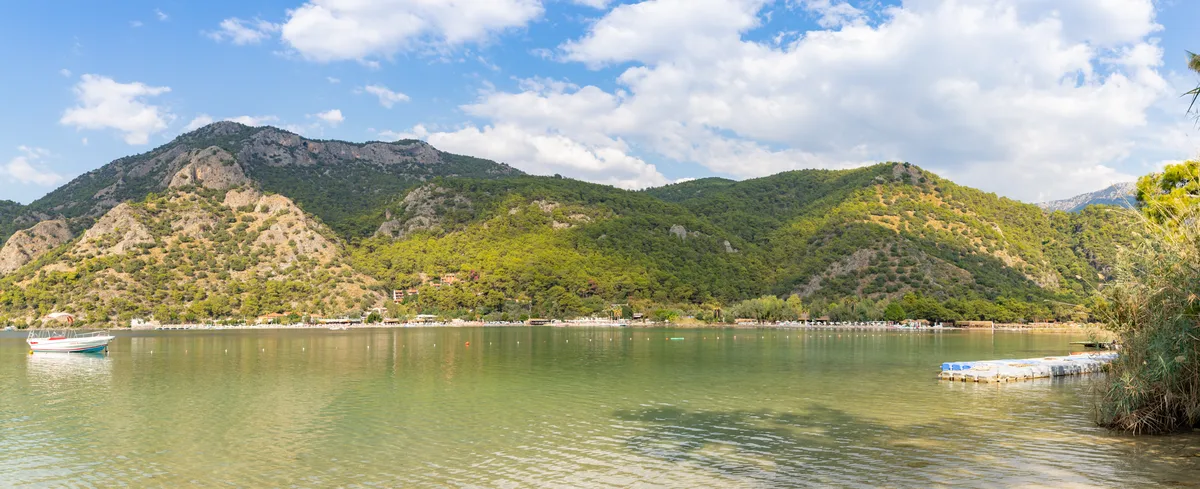
The Turkish Riviera is a marketing phrase before it is a place, and the first job of any honest turkish riviera guide is to say what the phrase actually covers. Properly used, it means the Turquoise Coast of southwestern Turkey – the Mediterranean shore of Antalya province running west into the Muğla coast as far as Fethiye, Ölüdeniz and the Göcek-Dalyan edge. Loosely used, it stretches much further, up the Aegean past Bodrum and Marmaris and even towards İzmir, and you will see hotel copy that calls almost any Turkish beach a Riviera beach. This turkish riviera guide keeps the tighter, more useful definition: the coast where the Taurus mountains fall into a genuinely turquoise sea, where pine forest reaches the water, and where a Lycian tomb is as common a sight as a beach bar. That coast runs, roughly, from Antalya city in the east to the Dalyan river in the west, and everything in this guide lives on it.
Within that line, the coast is not one holiday repeated. It is a sequence of very different bases strung along one winding shore road. Antalya is a working city of well over a million people with an old town inside Roman walls and two city beaches of opposite character. Kemer is a purpose-built resort town under the pines. Çıralı is a protected village shore where the loudest planning decision ever taken was to keep the lights off for the turtles. Kaş is a small harbour town that divers and walkers have adopted as their own. Kalkan is a steep, whitewashed old town that has become the coast’s villa-and-rooftop-dinner capital. Fethiye is a real harbour town with a lagoon, a ghost village and a paragliding mountain attached. And at the far western edge, Göcek and Dalyan trade beach scale for marinas, rivers and reeds. Choosing among them is the whole decision of a Turquoise Coast trip, and it is a decision about character, not about water colour – the water is turquoise at every one of them.
Three honest warnings before the bases. First, this coast is longer than it looks on a map. The shore road bends around every bay and headland, the mountains keep pushing it inland, and a journey that looks like a short hop can take the better part of a morning; the getting-along section of this turkish riviera guide treats distances as the planning fact they are. Second, the Riviera’s two ends are served by two different airports and two different travel rhythms – Antalya’s airport feeds the east, Dalaman’s feeds the west – and trying to work both ends from one base is the classic Turquoise Coast mistake. Third, almost every shore here comes with an ancient city attached, and the ruins are not an optional garnish on the beach holiday. They are half of what this coast is. If you are planning the wider first trip, read this alongside our Turkey travel guide, which sets the coast inside the country as a whole; this guide stays on the shore and sorts it.
Turkish Riviera Guide at a Glance – Eight Bases, Eight Different Holidays
| Base | Shore type | Go for | The honest catch |
|---|---|---|---|
| Antalya city and Kaleiçi | City beaches either side of an old town | A real city with history, food and a beach attached | The beaches are a tram or bus ride from the old town, not at its feet |
| Lara and Konyaaltı | Resort sand east, city shingle west | The easy, serviced, fly-and-flop end of the coast | Resort scale and shingle respectively; neither is a village |
| Kemer and Phaselis | Pine-backed resort shore, bays inside an ancient city | A serviced base with a serious ruin-and-swim day next door | Kemer itself is a built resort strip; the charm is at Phaselis, not in town |
| Çıralı and Olympos | Protected pebble shore, ruins in the trees | Quiet, darkness, turtles, the Yanartaş flames | Pebbles underfoot; evenings end with dinner |
| Kaş | Rocky coves and platforms, boat beaches | Diving, boat days, a small town with a real centre | There is barely a town beach; the swimming is by boat or platform |
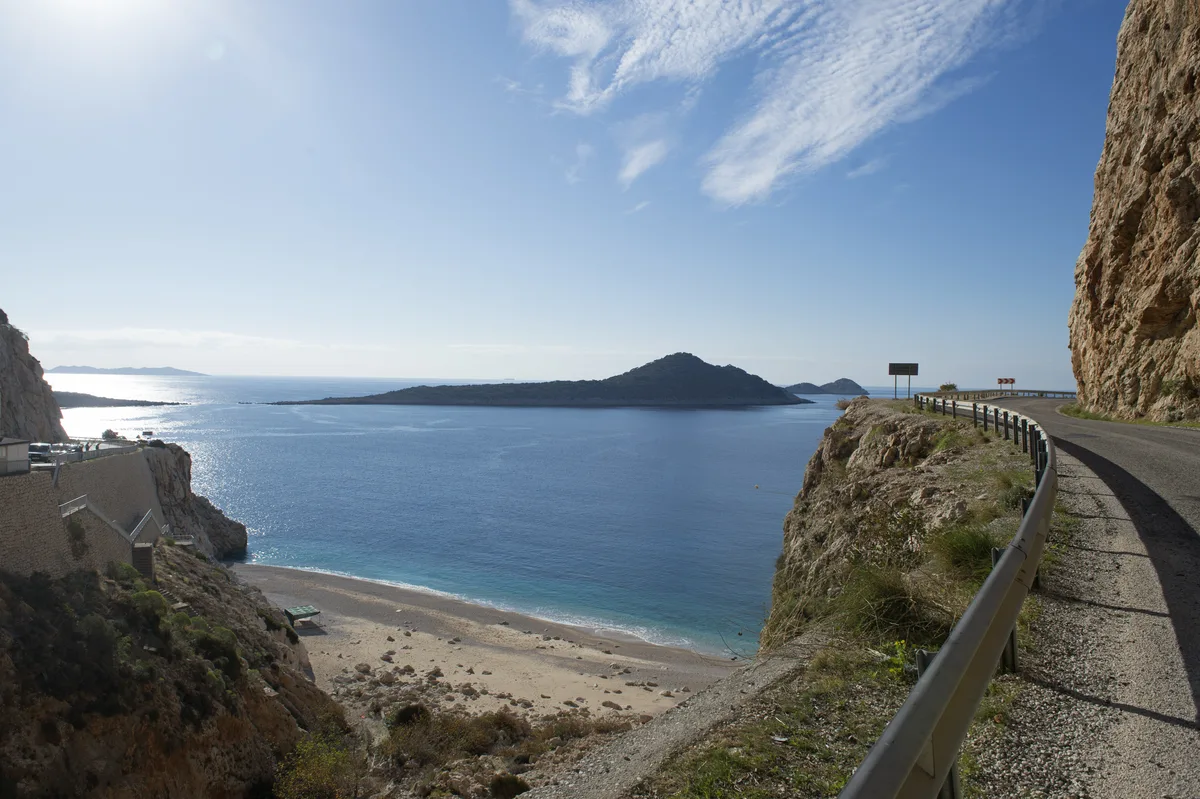
| Kalkan | Steep old town, beach clubs on rock, Patara nearby | Villa weeks, rooftop dinners, Patara and Kaputaş day trips | Steep lanes, high-season prices in kind, a town beach that is small and pebbly |
| Fethiye and Ölüdeniz | Harbour town plus lagoon and beach resort | The most complete base – town, lagoon, boats, walks, a mountain to fall off | Ölüdeniz in high season is the coast’s busiest shore |
| Göcek and Dalyan | Marina bays, a river delta and a protected sand spit | Boats, reeds, rock tombs and a slower register | Göcek has almost no beach of its own; Dalyan’s beach is a boat or bus ride away |
Read the table as the whole argument of this turkish riviera guide in miniature. Every base on this coast can produce a good week. What none of them can do is produce every kind of week, and the mismatches are what disappoint people: the family that books Kaş expecting a sandy town beach, the quiet-seeker who books Ölüdeniz in August, the beach purist who books Çıralı without water shoes. The sections that follow take each base in turn, west to east in the order the road meets them from Antalya – what the place is actually like, who it suits, who should give it a miss, and the catch that the brochures leave out. Where a base already has a full guide on this site, this article keeps its treatment shorter and points there rather than repeating it.
One more piece of geography earns its place here, because it explains the coast’s character better than any hotel list. This is ancient Lycia. For several centuries before Rome, a league of Lycian cities held this shore, and they buried their dead in tombs cut into cliffs, carved onto pillars and built like stone houses – tombs you still pass on harbour streets, climb past on walking trails and find standing in the sea. The Lycian Way, the waymarked long-distance trail that runs the length of this coast between Fethiye and Antalya, strings the ruins and the bases together into a single walkable line, and even if you never walk a stage of it, its waymarks will keep appearing at the edge of your holiday. A turkish riviera guide that treated this coast as just beaches would be missing the thing that makes it different from every other warm shore in the Mediterranean.
Antalya City and Kaleiçi – The Riviera’s Capital and Its Old Town
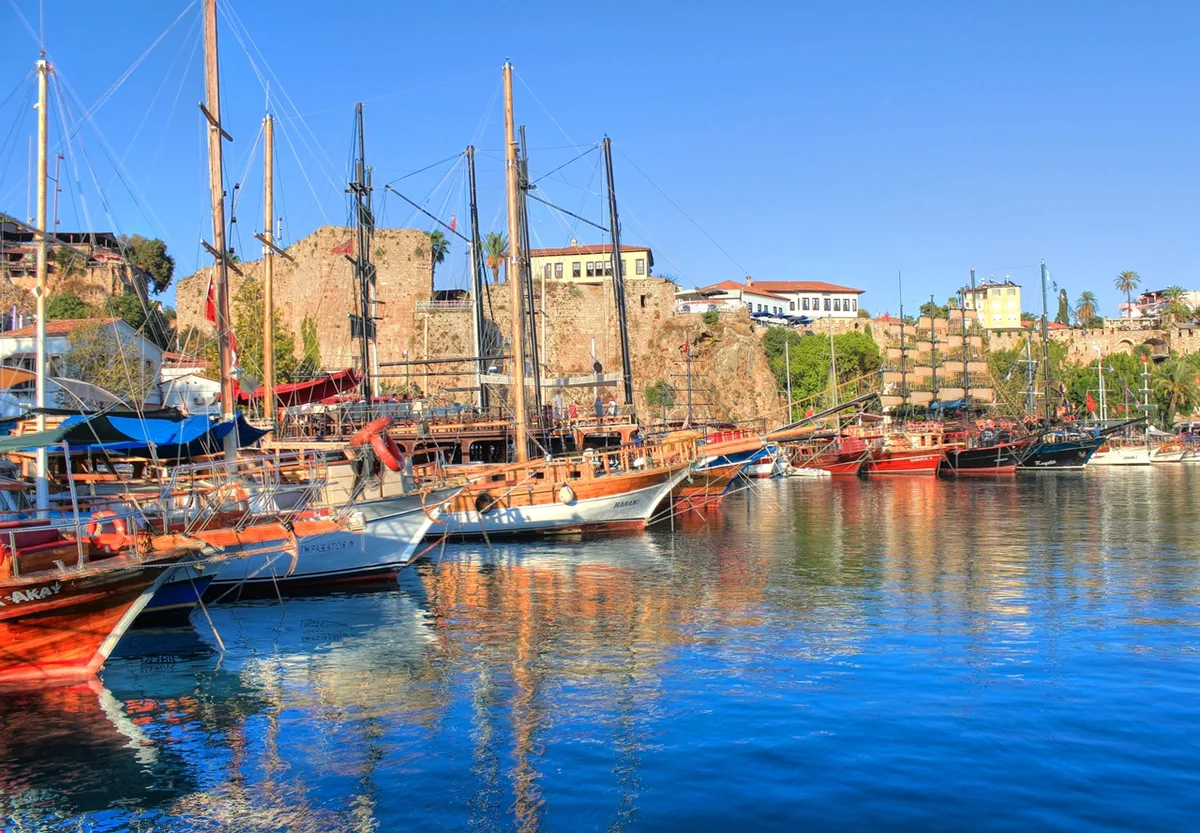
Antalya is where most Riviera trips begin, because it is where the biggest airport is, and it deserves better than the transfer-hub treatment most visitors give it. This is a substantial, living city wrapped around a Roman harbour, and its old town, Kaleiçi, is the single most atmospheric place to sleep on the whole coast: a knot of lanes inside ancient walls, Ottoman houses converted into small hotels and restaurants, Hadrian’s Gate standing where the Roman emperor’s visit was honoured, a fluted minaret that has become the city’s symbol, and a little harbour below the cliffs where the tour boats and gulets moor in rows. GoTürkiye’s own description of the city – sea, sun, history and nature held together – is for once not brochure inflation. The city genuinely contains all four, and a turkish riviera guide can say plainly that two or three nights here at the start of a trip is time well spent, not a delay before the real holiday.
The old town’s pleasures are specific. The lanes reward wandering without a plan – carved wooden doors, bougainvillea over stone walls, small museums in restored houses, the harbour lift and the cliff-top parks for the view back along the coast. The Roman harbour itself, in the photograph above, is now a marina of excursion boats, and the boat days sold from its quays are the easiest way for a city-based visitor to see the cliffs, waterfalls and coves east and west without changing base. Eating inside Kaleiçi runs from simple meyhane tables to serious restaurants, and because the city around the old town is a real provincial capital, the food is aimed at locals as much as at visitors, which is the surest sign of quality this coast offers. Our Antalya travel guide covers the city in full – its quarters, its museums and its day trips – and this guide deliberately keeps the city entry at the depth a coast-sorting exercise needs.
The catch is the beach, or rather the distance to it. Kaleiçi sits on cliffs above its harbour, and there is no real swimming beach at the old town’s feet; the city’s two genuine beaches lie either side of the centre, Konyaaltı to the west and Lara to the east, each a tram or bus ride away, and they are covered in the next section. A traveller who books a Kaleiçi hotel imagining a morning swim from the door will be disappointed, and a traveller who books a Lara resort imagining old-town evenings on foot will be equally stuck. The city works as a base for sleepers who want history, food and urban texture with beach days taken as excursions; it works less well as a beach base pure and simple. Who should skip Antalya as a base? Beach-first families who will resent the daily ride to the sand, and anyone whose week is short and western – Kaş, Kalkan and Fethiye are far enough west that starting them from Antalya costs a long transfer at both ends. For everyone else, the capital of this turkish riviera guide’s coast is a genuine destination, not a gateway to be hurried through.
Lara and Konyaaltı – The Two City Beaches, Briefly and Honestly
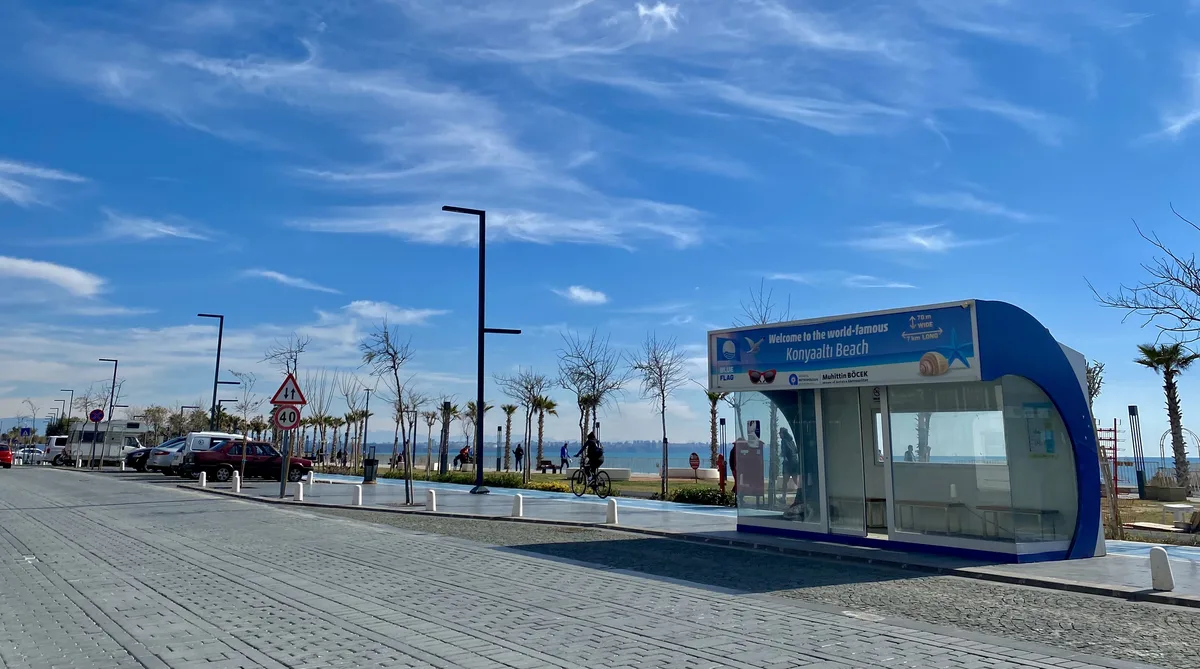
Antalya’s two beaches are a study in opposites, and this turkish riviera guide deals with them briefly because they already have a full treatment in our guide to the best beaches in Antalya. West of the old town runs Konyaaltı, a long shore of shingle and coarse pebble under a promenade and a landscaped beach park, with the Beydağları mountains filling the view and the city’s own population filling the serviced and free stretches alike. The shingle keeps the water clear and deepens it fairly quickly; the setting, a great mountain wall behind a city beach, is grander than most resort shores on this coast. East of the centre, past the cliffs where the Lower Düden waterfall pours into the sea, lies Lara: real sand, a long broad shore, and one of the densest large-resort strips in Turkey standing behind it, with the public stretches and beach park running between and beyond the hotels.
Between them, these two shores are the Riviera’s fly-and-flop end: the shortest transfers on the coast, the fullest service economy, the easiest week for a family that wants the beach to be simple. Konyaaltı suits the traveller who wants a city attached to the swimming – stay in the city, tram to the shore, eat in real restaurants. Lara suits the traveller who wants the resort to be the holiday – sand at the door, everything inside the fence, the old town kept for one excursion day. Who should skip both? Anyone whose picture of the Turquoise Coast is a village shore under pines, because neither beach can pretend to be that, and the coast west of the city does it far better. The catches are symmetrical and worth stating plainly: Konyaaltı is pebble, not sand, however the photographs angle it; Lara is a resort strip, not a town, however the brochures crop it. Both are honest products. They are just not the products the western half of this coast is selling.
Kemer and Phaselis – Resort Town, Then the Ruins in the Pines
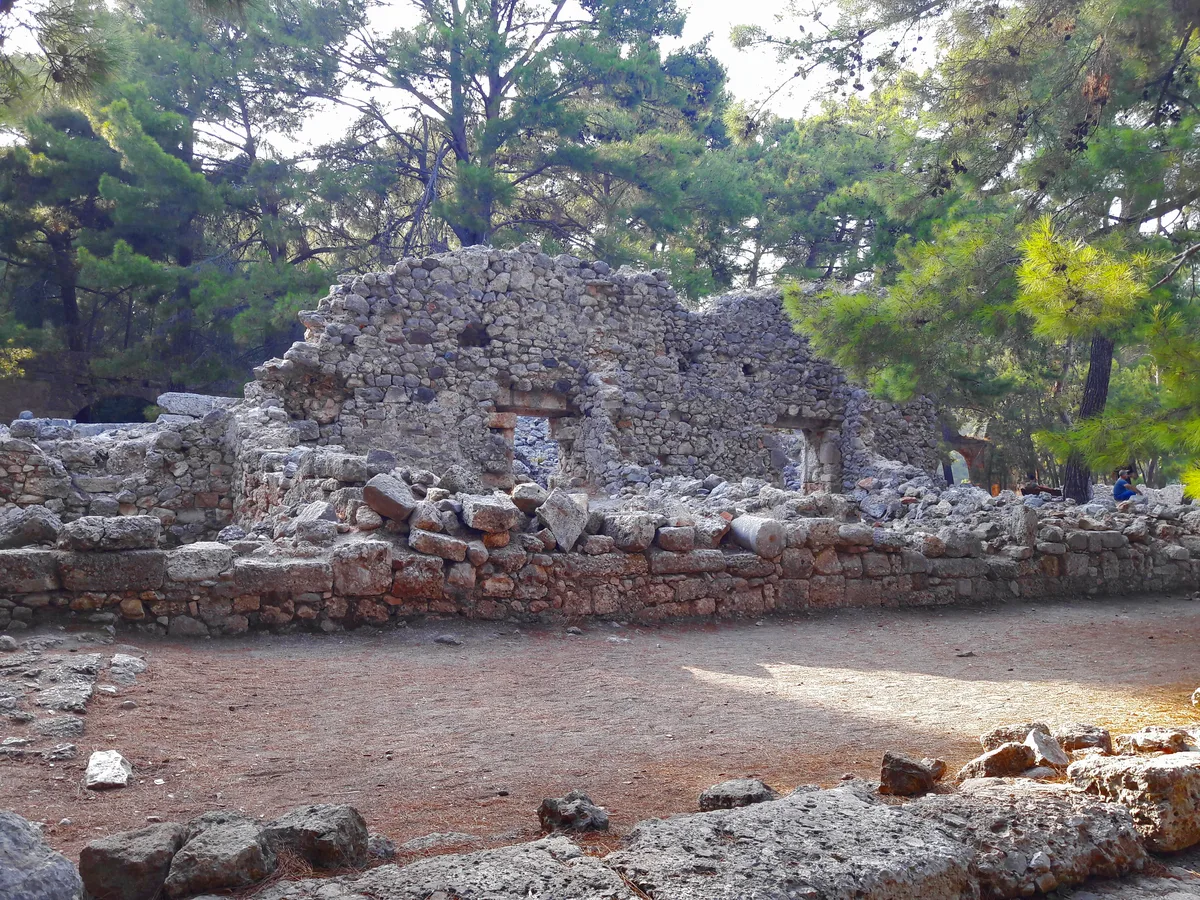
West of Antalya the Taurus range comes down to the sea in earnest, and the first substantial base the road meets is Kemer. Kemer is a purpose-built resort town – a marina, a promenade, a grid of hotels large and small, a serviced town beach of sand and pebble – set against one of the finest backdrops on the coast, the pine-clad slopes of the Beydağları and the Olympos coastal national park. It was built for exactly the holiday it delivers: a serviced, family-scale resort week with boat trips from the marina, a cable car up Tahtalı mountain for the view, and the national park’s forest at its back. Nothing about Kemer pretends to be old, and travellers who need their base to have a historic centre should register that now rather than on arrival. What Kemer has instead is position: of all the resort towns on this coast, it sits closest to the single best ruin-and-swim day the Riviera offers.
That day is Phaselis, a short run south along the coast. Phaselis was a Lycian and Roman port city built around three small harbours on a pine-covered peninsula, and its remains – a broad main street, an aqueduct, theatre, baths and agoras – stand in the forest exactly where the city stood, entered on the archaeological site’s ticket mechanism. The beaches are the harbours themselves: sheltered coves of pebble and coarse sand where you swim over the ancient harbour floors with the ruins in the trees behind you. It is the coast’s most efficient combination of a serious ruin and a serious swim in a single unhurried day, and coming from Kemer it barely counts as an excursion. The catches are the site’s own logic: the day ends when the site day ends, there is no beach-club economy on the sand, and weekends and holidays fill it with local families doing exactly what you are doing, because Phaselis is beloved on its own coast and not just on the tourist circuit.
Who does the Kemer base suit? Families who want a serviced resort at a smaller scale than Lara, travellers who like their ruins ten minutes away rather than two hours, and anyone splitting the difference between the Antalya city days and the quieter coast further west. Who should skip it? Old-town romantics, for whom Kaleiçi or Kalkan exist, and quiet-seekers, for whom Çıralı – the very next base along the road and a different world – was invented. In the sorting this turkish riviera guide exists to do, Kemer is the compromise candidate: not the most characterful base on the coast, but possibly the most convenient, and Phaselis on its doorstep is a stronger argument than many more famous names can make.
Çıralı and Olympos – The Protected Shore Where the Lights Stay Off
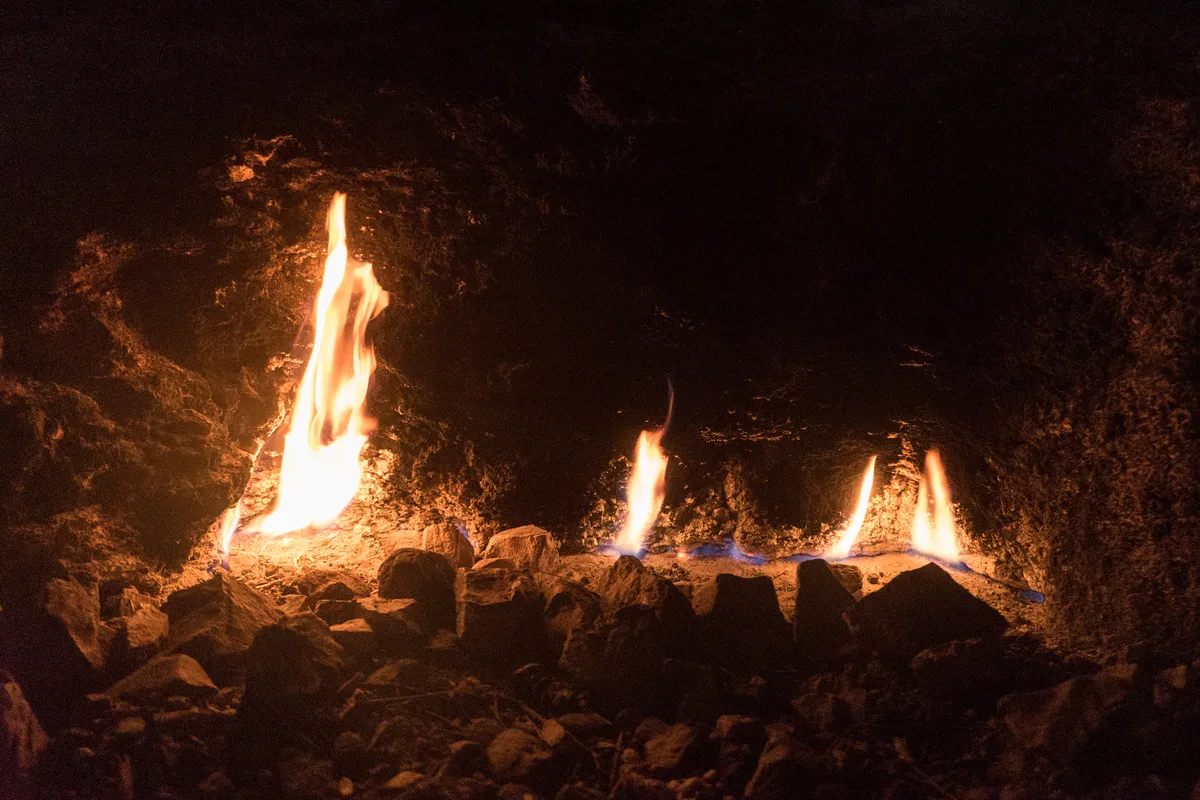
South of Kemer the road climbs over a headland and the Riviera changes register completely. Çıralı is a village, not a resort: small pensions, campsites and family restaurants set among orange groves behind a long, curving shore of coarse sand and pebble, the whole bay held low and dark by its place inside the protected coastal national park. At the southern end of the same beach, reached on foot along the sand, the ruined Lycian and Roman city of Olympos stands in dense trees where a river runs through it to the sea – sarcophagi in the undergrowth, a theatre in the green gloom, the most atmospheric ruin walk on this coast. The shore is a loggerhead turtle nesting beach, and in the nesting season the sand closes at night so the turtles can come ashore in darkness. Çıralı’s quiet is not an accident of fashion. It is a planning outcome, defended for decades, and it is why this village has a loyal following that returns year after year.
Above the village, on the hillside, burn the flames of Yanartaş – the ancient Chimaera. Natural gas vents in the bare rock have burned here for as long as anyone has recorded, dozens of small fires flickering straight out of the stone, and the walk up after dark, when the flames show against the night and the myth of the fire-breathing monster stops feeling like a metaphor, is one of the signature evenings of the whole Turquoise Coast. Between the dark beach, the ruined city in the trees and the fires on the hill, Çıralı offers a version of this coast that has almost nothing to do with the resort Riviera an hour east – and it is precisely this contrast that a turkish riviera guide exists to make visible before you book, not after you arrive.
The honest catches are real and should not be softened. The shore is pebble and coarse sand: beautiful, water-clearing, and hard on bare feet, so water shoes are the difference between a good Çıralı week and a sore one. The village’s evening is dinner and a dark sky; there is no scene to find, and travellers who go looking for one will find the looking itself is the disappointment. The Olympos end of the beach is entered on the site’s ticket mechanism, and the ruins reward walkers rather than strollers. Who should skip Çıralı? Sandcastle families with toddlers, nightlife seekers, and anyone whose beach day requires a serviced row of beds and a bar within reach. Who should put it first? Couples, readers, walkers, turtle-season travellers, and anyone who suspects that the best version of this coast might be the one with the fewest lights on it. It is also the natural overnight pairing with Phaselis and Kemer: an hour’s contrast, two completely different coasts.
The Lycian Thread – Rock Tombs, Pillar Tombs and a League of Cities
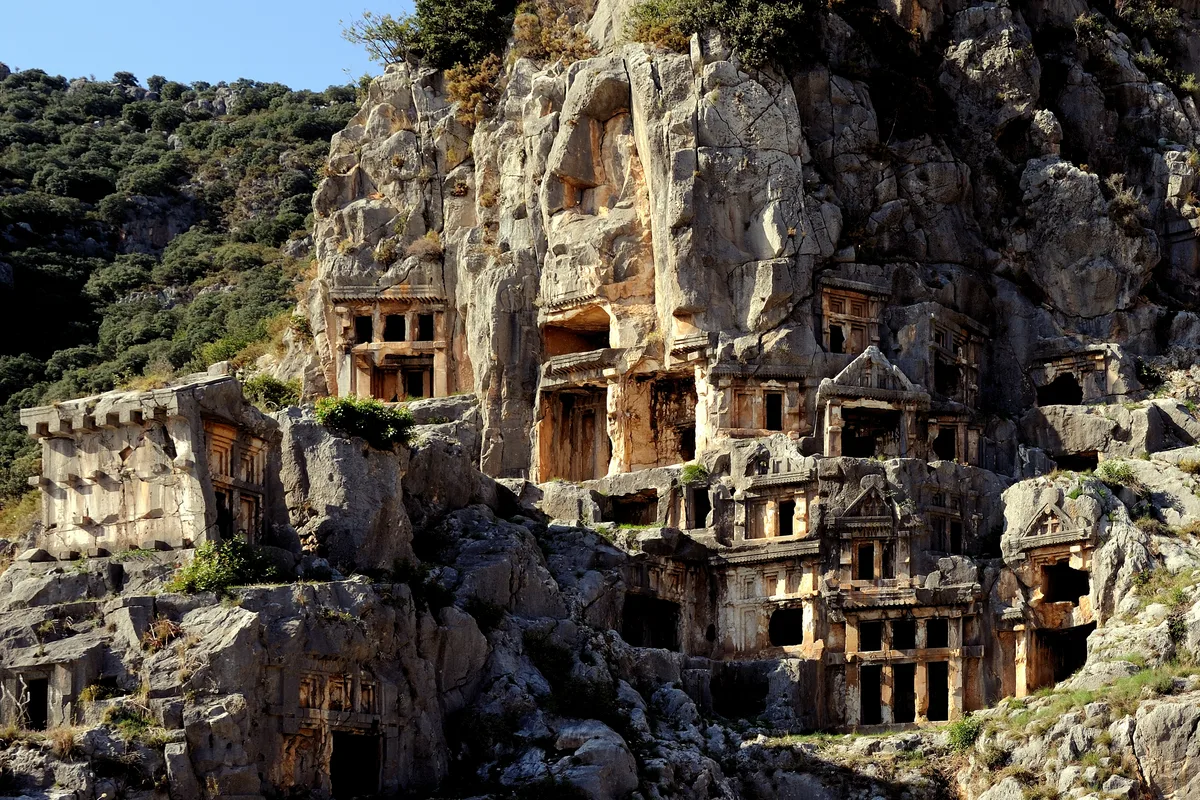
Between Çıralı and Kaş the road passes Demre, and Demre is where this turkish riviera guide stops to make the history point properly, because the Lycian thread is the difference between this coast and a generic warm shore. Lycia was a land of city-states that banded together in a league famous in the ancient world for its fairness, and its people buried their dead in a style found nowhere else: tombs cut into cliff faces with house-shaped fronts, sarcophagi mounted on tall pillars, and freestanding tomb houses carved to imitate the wooden architecture of the living. At Myra, above modern Demre, the cliff tombs in the photograph stack across the rock face beside a large Roman theatre, and the town below holds a second fame of a very different kind – it is the city of Saint Nicholas, the fourth-century bishop whose church here made Demre a pilgrimage place long before it was a beach-coast stop. A traveller can stand in a Lycian tomb necropolis in the morning and in a Byzantine pilgrimage church after lunch, in a working agricultural town that grows tomatoes under glass for half of Europe. That layering is the Lycian coast in one day.
The league’s capital and its sanctuary carry the coast’s highest formal honour. Xanthos, the Lycian capital, and Letoon, the federal sanctuary where the league’s religious and political decisions were proclaimed, are inscribed together on UNESCO’s World Heritage List, recognised – in UNESCO’s own summary – as the most remarkable surviving example of Lycian civilisation, with funerary architecture so influential that the Mausoleum at Halicarnassus, one of the Seven Wonders of the ancient world, was directly shaped by Xanthos’s Nereid Monument. The longest and most important texts in the Lycian language were found between the two sites, including a famous trilingual inscription of 337 BC. Both sites sit inland from the Kaş-Kalkan stretch of coast, an easy excursion from either base, and both are quieter than their importance deserves – you may walk the pillar tombs of Xanthos with a handful of other visitors, which is not an experience the ancient world usually offers at this quality.
The practical point for the sorting traveller is this: history on this coast is not a separate holiday from the beach holiday. Patara pairs one of the longest beaches in Turkey with a Lycian capital’s ruins behind the dunes. Phaselis puts the swim inside the ancient harbours. Olympos puts the ruin walk at the end of the beach. Kaş keeps its ancient theatre a short stroll from its cafe tables, and Fethiye’s rock tombs look down on the harbour. The traveller who wants ruins with their swimming should weight the western half of the coast heavily; the traveller who finds archaeology a duty rather than a pleasure should know that on this coast it is unavoidable anyway, and might as well be enjoyed in its best forms – early in the morning, combined with a swim, and finished before the heat and the day-trip hours.
Kaş – The Divers’ Town at the End of the Winding Road
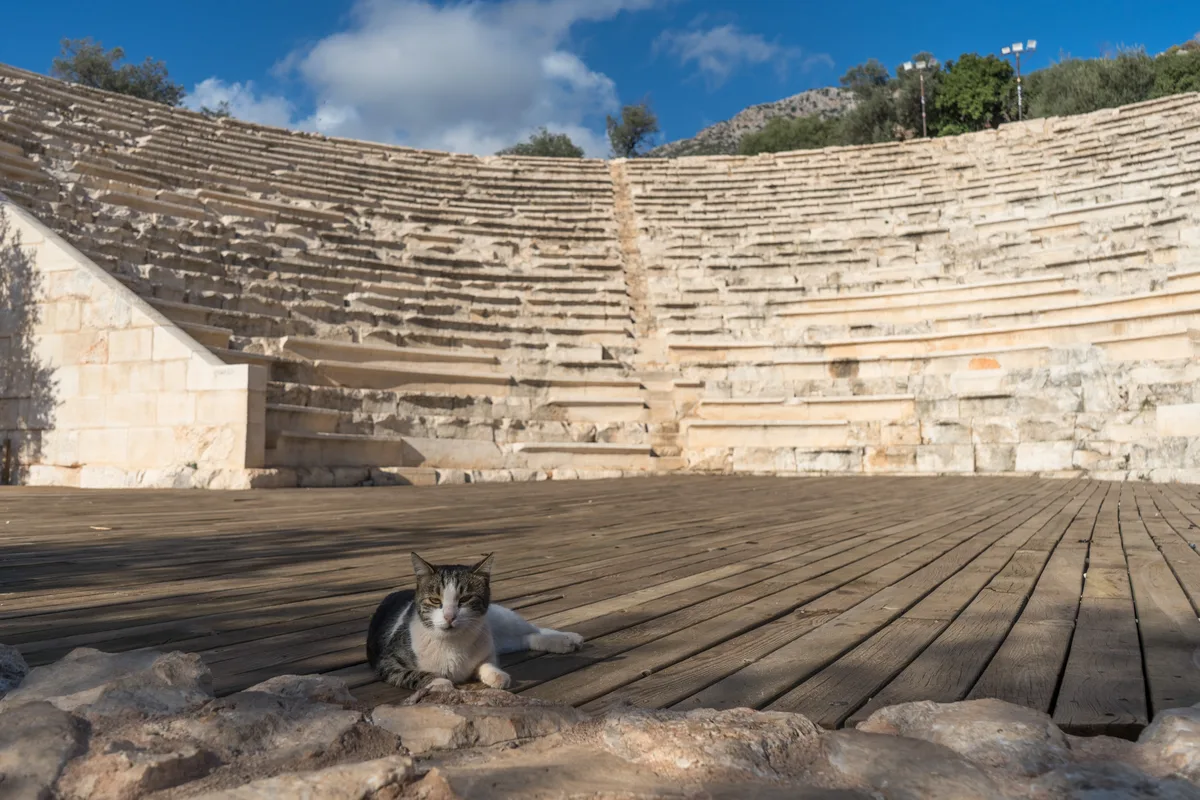
West of Demre the shore road becomes the coast road of the postcards, bending around headlands above a sea that earns the turquoise name, and at the end of one of its longest winding stretches sits Kaş. Kaş is built on ancient Antiphellos, and it still feels like a town that belongs to itself: a compact old centre of whitewashed houses and bougainvillea lanes around a small harbour, a Lycian sarcophagus standing in the middle of a shopping street, the little Hellenistic theatre in the photograph a short walk west of the centre with its seats facing the sea and the Greek island of Meis – Kastellorizo – lying close offshore, near enough to feel like part of the town’s view. The surrounding mountains keep Kaş small; there is no room and no appetite here for resort sprawl, and the town’s hotels are mostly small, family-run and threaded through the old streets or scattered along the green Çukurbağ peninsula.
What Kaş is for, above everything, is the water – entered actively rather than from a towel. This is one of Turkey’s diving capitals, with a diving economy of boats, schools and guided dives on reefs, walls and wrecks offshore, and clear water that keeps visibility high. Swimmers use the rocky coves and bathing platforms around the town and the peninsula, or take the boat days that run from the harbour – across to Meis on the ferry mechanism for a Greek-island day, or along the coast to Kekova, where a protected sunken Lycian city lies in the shallows of a sound dotted with sarcophagi, swimming allowed from boats in permitted coves and never over the ruins themselves. Walkers use Kaş as a Lycian Way base for the spectacular coastal stages east and west. In this turkish riviera guide’s sorting, Kaş is the activity base: the place for travellers whose holiday is a sequence of things done on, under or beside the sea.
The honest catch is the beach, again – or its absence in the form most people expect. Kaş has no real sandy town beach; the swimming is from rock platforms, pebble coves and boats, and the nearest famous sand-and-cove shores, Kaputaş among them, are a drive west along the road. Families with small children who need a gentle sandy entry at the door should weigh that carefully, and travellers who dislike a working harbour town’s evening sociability – the meyhane tables, the music drifting from the square – may find Kaş livelier than its size suggests, though its noise is conversation rather than clubs. Who should skip Kaş? Fly-and-flop travellers and toddler families. Who should build the whole trip around it? Divers first of all, then boat people, walkers on the Lycian stages, and anyone who wants a real town at the centre of the western coast and is happy to swim the way the locals do – off the rocks, into very clear water.
Kalkan – The Steep Old Town of Rooftop Dinners and Villa Weeks
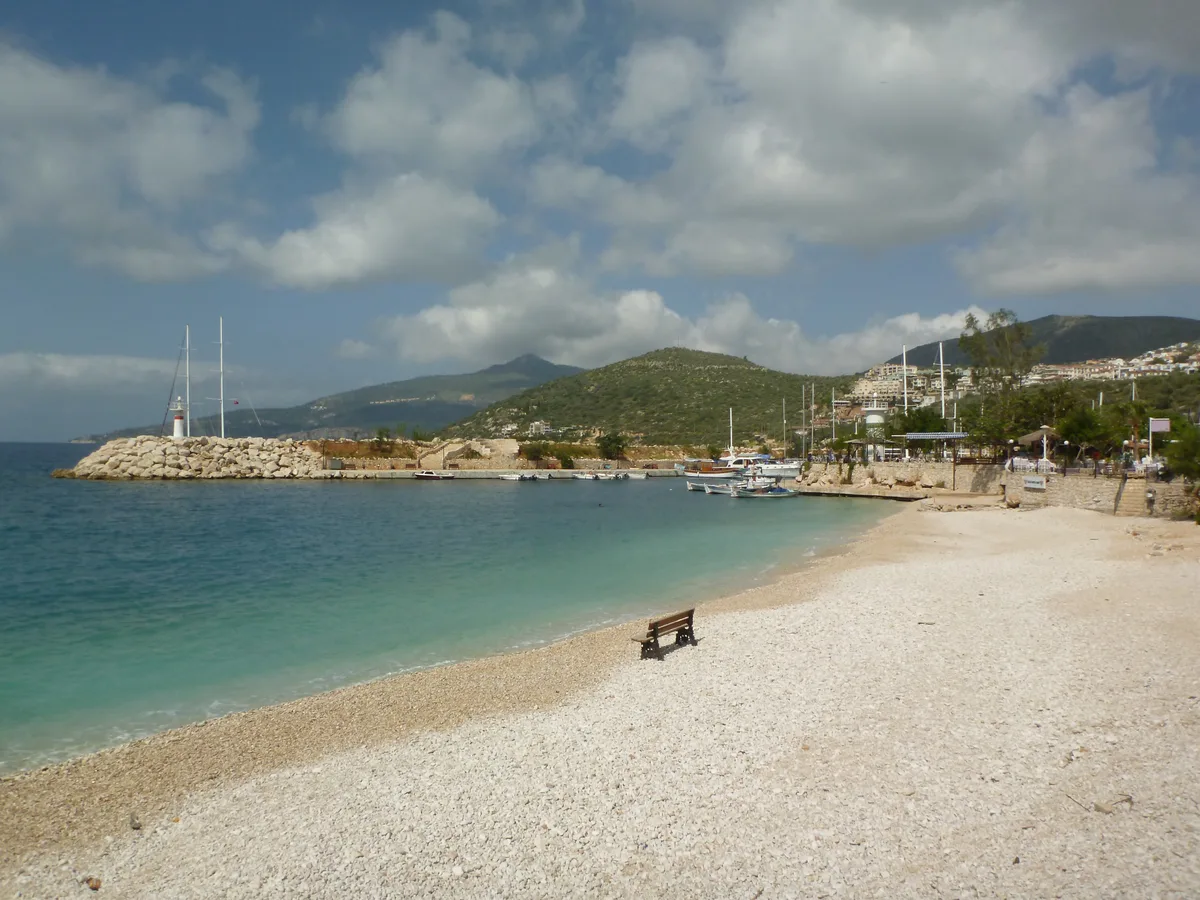
A short run west of Kaş, the road drops to Kalkan, and Kalkan is Kaş’s polished neighbour with a different social contract. The old town stacks steeply above a small harbour in whitewashed lanes of boutiques, jewellers and restaurants, and its signature evening is dinner on a rooftop terrace as the light goes, with the bay below and the islands darkening offshore. Around and above the old town spreads one of the densest villa districts on the Turkish coast – hundreds of rental houses with pools terraced into the hill – and Kalkan’s week, for most of its visitors, is the villa week: mornings at the pool or a beach club, afternoons slow, evenings in the old town. It is a genuinely handsome place, carefully kept, and its long popularity with British visitors in particular has given it a restaurant scene out of proportion to its size.
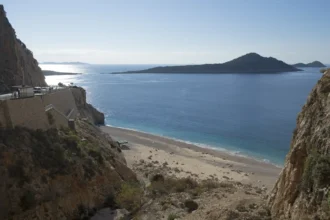
Kalkan’s swimming has the same structure as Kaş’s, one degree more serviced. The town beach, in the photograph, is a small crescent of pale pebble beside the harbour – pleasant for a quick swim, honest about its scale. The real beach days run outward: west to Kaputaş, the famous cliff cove, close enough to time for the morning before the steps fill; further west to Patara, where one of Turkey’s longest sandy beaches runs behind its dunes with the Lycian capital’s ruins at its back; and out to the beach clubs built on rock platforms around the bay, which sell the serviced version of the rock-swimming the locals do free. Kalkan is also a practical base for the Xanthos and Letoon excursion described in the Lycian section above. In the economy of this turkish riviera guide, Kalkan is the comfort base of the western coast – the place where the holiday’s centre of gravity is the house, the view and the table.
The catches follow. The old town is steep in the literal sense, a hillside of lanes that will test anyone with mobility difficulties and most people with pushchairs. The villa-and-rooftop economy prices accordingly, and in high season Kalkan is among the most expensive small towns on this coast in kind if not in any figure this guide will print. And the town beach will not carry a beach holiday by itself; a Kalkan week is built from day trips, beach clubs and the pool. Who should skip Kalkan? Budget travellers, the mobility-limited, and sand purists who will spend the week driving to Patara anyway and might as well stay nearer it. Who should choose it? Groups and families in villas, couples who eat seriously, and travellers who want the western coast’s ruins and coves with the most polished small-town base from which to reach them.
Fethiye and Ölüdeniz – The Harbour Town With a Lagoon Attached
West of Kalkan the coast crosses into Muğla province, and the road arrives at the base this turkish riviera guide rates the most complete on the Riviera: Fethiye. Fethiye is a working harbour town built on ancient Telmessos, with a long waterfront promenade, a marina full of gulets, a covered fish market where you choose your fish and the restaurant next door cooks it, an old town of lanes behind the harbour, and the rock tombs of the Lycian kings cut into the cliff above the town – the great Tomb of Amyntas facing the bay it has watched for well over two thousand years. It has the scale to absorb its visitors without being defined by them, the boat traffic of a real sailing harbour, and a hinterland of excursions deep enough to fill a fortnight. Our Fethiye travel guide covers the town and its whole bay in detail; this section does the coast-level sorting.
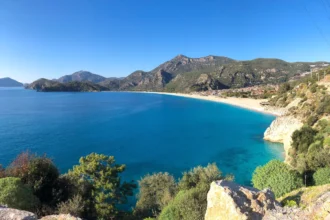
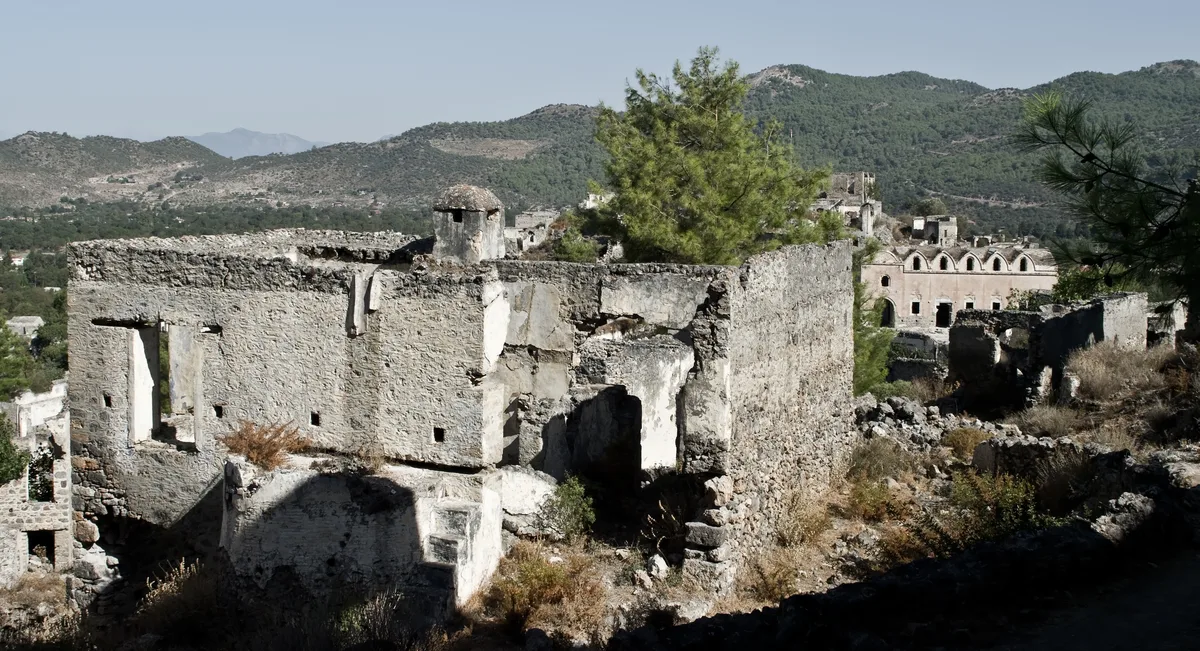
The famous appendage is Ölüdeniz, a short drive over the hill south of town: the Blue Lagoon, a sheltered spit of sand and shingle enclosing water of an almost artificial calm and colour, with the long open-sea beach of Belcekız in front of the resort village and the great wall of Babadağ mountain behind it, off which the paragliders spiral down all day in season. The lagoon is a protected area entered on its own mechanism, the swimming inside it is the gentlest on this coast, and as a piece of scenery it justifies every postcard. Around it the excursion web spreads: Kayaköy, in the photograph, the stone ghost village emptied in the population exchange of the 1920s, a hillside of roofless houses and churches an easy trip from town; Butterfly Valley and Kabak in their coves to the south, reached by boat or steep path; Saklıkent gorge inland, where the walk is through cold water between cliff walls; and the day boats to the islands and bays of the gulf. Our Ölüdeniz beach guide treats the lagoon and its beaches at full length.
Now the catch, because Fethiye’s completeness has a price and this guide prints prices of character if not of currency. Ölüdeniz in high season is the busiest shore on the Riviera – the lagoon’s serviced rows fill, the paragliders queue, the village runs at full volume – and the traveller who books it for August expecting the postcard’s emptiness will meet the crowd that emptiness attracts. Fethiye town itself has no great beach at its centre; its own shore is the promenade and the marina, with the swimming beaches a drive or dolmuş ride away at Çalış, Ölüdeniz or the peninsula coves. Who should skip the Fethiye base? Only the traveller committed to a single small place – the Kaş and Çıralı loyalists will find Fethiye big, busy and excursion-shaped. Who should choose it? First-timers to the coast who want everything within reach, sailors, families who need variety to survive a fortnight, and walkers starting or finishing the Lycian Way at its western trailhead. It is the base that makes the fewest mistakes possible.
Göcek and the Dalyan Edge – Marinas, Reeds and the End of the Line
Northwest of Fethiye the coast bends around the gulf, and the character thins from resort to riverine. Göcek is a small town on a wide, island-sheltered bay whose real population is floating: marina after marina of yachts and gulets, a low waterfront of cafes and chandlers, and a hinterland of pine-covered islands and coves that are the first movement of almost every Blue Voyage on this coast. Göcek barely has a beach of its own – its shore is pontoons – and that is the point of it. It is the coast’s boating drawing-room, the place to start a sailing week, take a twelve-islands day boat around the gulf’s anchorages, or simply sit where the masts are. Travellers who need sand at the door should not book it; travellers who measure a coast in anchorages already have.
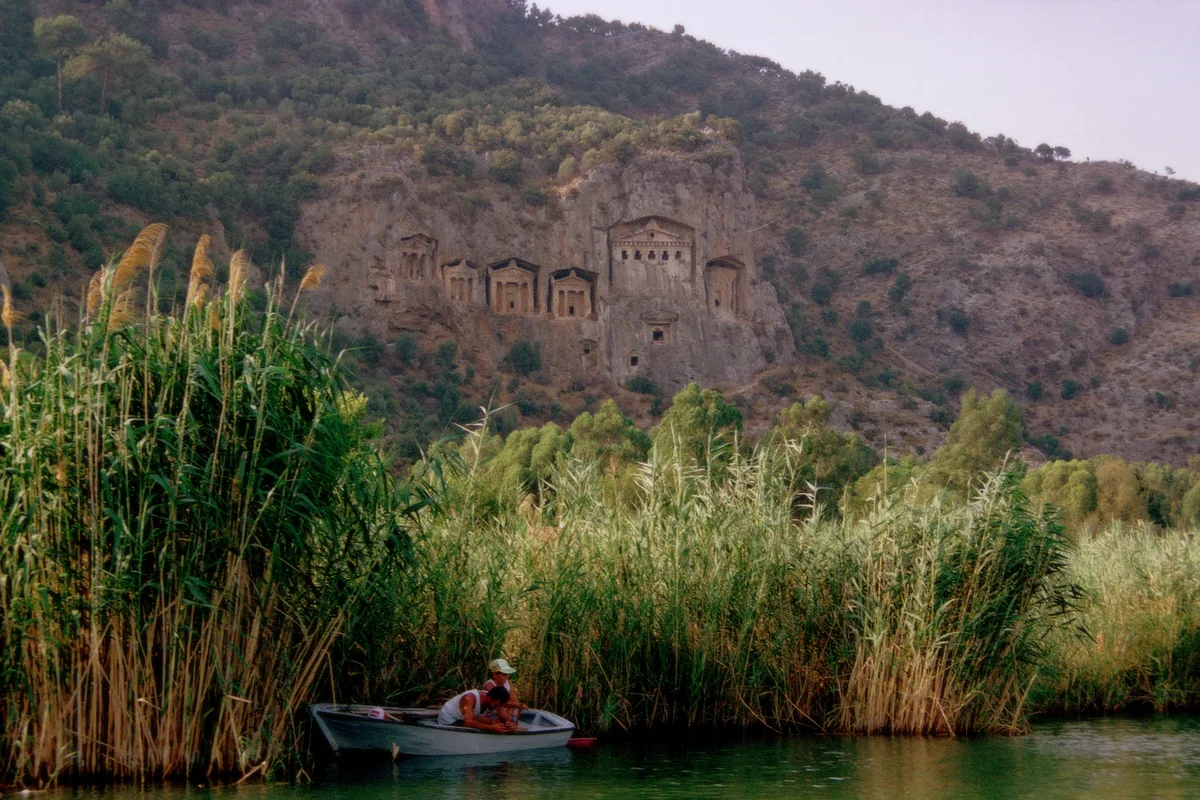
Beyond Göcek, past the airport’s town of Dalaman, the road reaches Dalyan, and Dalyan is where this turkish riviera guide honestly stops. Dalyan is a small town on a winding river of reeds and kingfishers, and across the water, cut into the cliff in the photograph, stand the temple-fronted rock tombs of Kaunos, the ancient city whose ruins spread on the far bank. The river runs down to İztuzu, a long spit of sand between the delta and the sea that is one of the Mediterranean’s important loggerhead nesting beaches, reached from town by river boat or by road, and protected with a seriousness that keeps its nights dark and its sand mostly empty of furniture. Dalyan’s register is slow, green and faintly eccentric, and it pairs naturally with Göcek at the western end of a coast trip.
Why stop here, when the Muğla coast continues to Marmaris and Bodrum? Because the sea changes. West and north of the Dalyan-Dalaman line, the coast turns from the Mediterranean to the Aegean – different light, different wind, a different archipelago logic – and Bodrum and Marmaris belong to that Aegean story rather than to the Lycian shore this guide covers. They are covered properly in our Bodrum travel guide, and a traveller whose trip is really about the Bodrum peninsula should read that and treat this coast as its neighbour, not its suburb. Within this guide’s line, Göcek and Dalyan suit sailors, birdwatchers, river people and anyone finishing a western itinerary slowly. They suit beach-first travellers least of all the bases here, and this guide says so in their section rather than in a footnote.
Sailing the Coast – The Blue Voyage and the Gulet Week
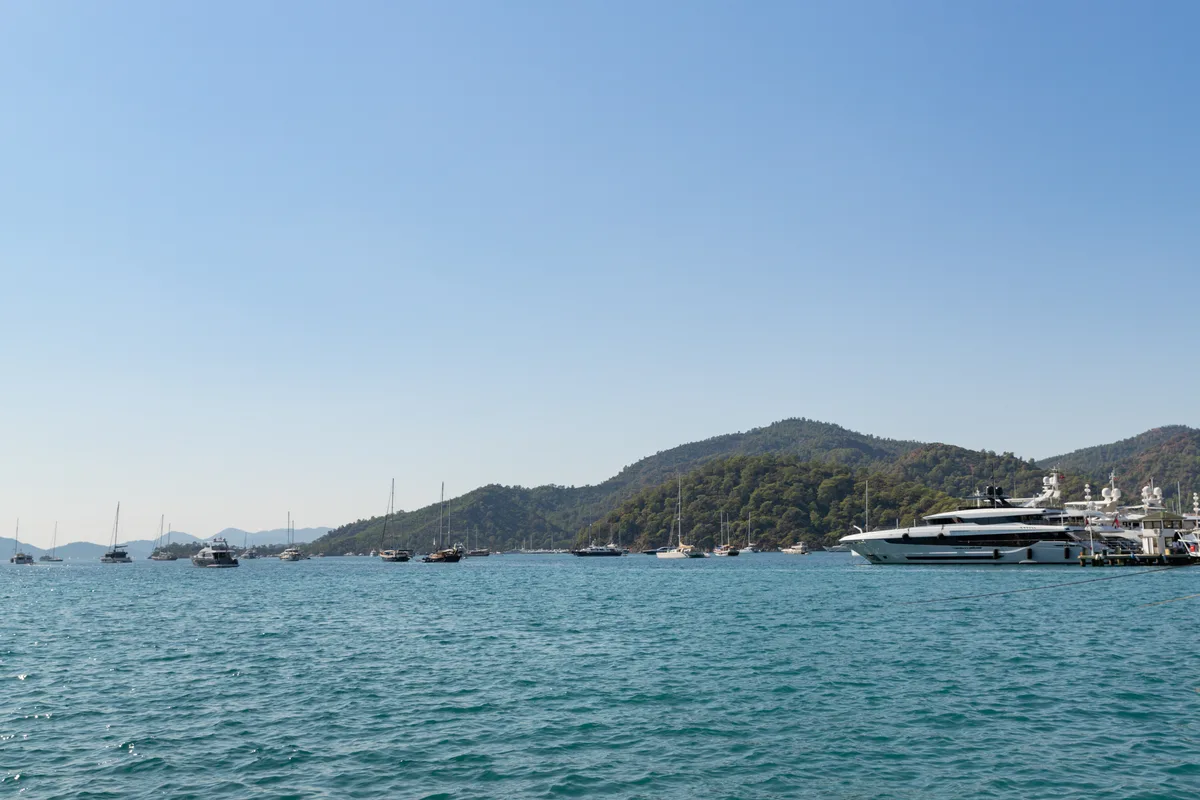
No turkish riviera guide is complete without the boats, because this coast invented a way of holidaying on them. The Blue Voyage – the week-long gulet cruise along the Turquoise Coast – began on these shores in the middle of the last century, when writers and sailors out of Bodrum and Marmaris started taking the long wooden motor-sailers of the sponge and cargo trade and running them as floating house parties among the ruins and coves. The form has industrialised since, but its grammar is unchanged: a wooden gulet, a captain and small crew, a route of bays and small harbours, swimming stops in water reachable no other way, dinners on deck, and the ancient sites – Kekova’s sunken city, Gemiler island’s Byzantine shore, a dozen Lycian tombs standing in coves – arriving by sea, as their builders expected visitors to arrive. The classic grounds are the two ends of this guide’s coast: the Fethiye-Göcek gulf with its islands in the west, and the Kaş-Kekova run in the east.
The mechanism, for a traveller weighing it, divides into three forms. A private charter takes the whole boat – the villa week translated to water, priced and provisioned as a package. A cabin charter books a berth on a scheduled route, the sociable form, sharing the boat with strangers who become the week’s company. And the day boats that leave every harbour on this coast each morning – the twelve-islands trips from Fethiye and Göcek, the Kekova boats from Kaş and Üçağız, the sunset and swimming cruises from Antalya’s Roman harbour – are the Blue Voyage in miniature, a single day of the same grammar at a day-trip commitment. This guide prints no tariffs for any of them, because they are negotiated, seasonal and boat-specific; what can be said honestly is structural: the boat week suits travellers who swim more than they shop, who sleep well in small cabins, and who want the coast’s coves without the coast road. It suits badly anyone who needs space, silence about the engine hours, or a firm bed in a large room.
For the base-sorter, the sailing fact that matters is simpler. Even if you never take a gulet week, take the day boats. On a coast where half the famous shores are reached by water – Kekova, Gemiler, Butterfly Valley, the Göcek islands – the boat days are not an extra activity bolted onto a beach holiday. They are the transport system of the western Riviera, and the traveller who skips them has seen this coast from only one of its two natural angles.
Getting Along the Coast – Road, Dolmuş, Boat and Your Own Wheel
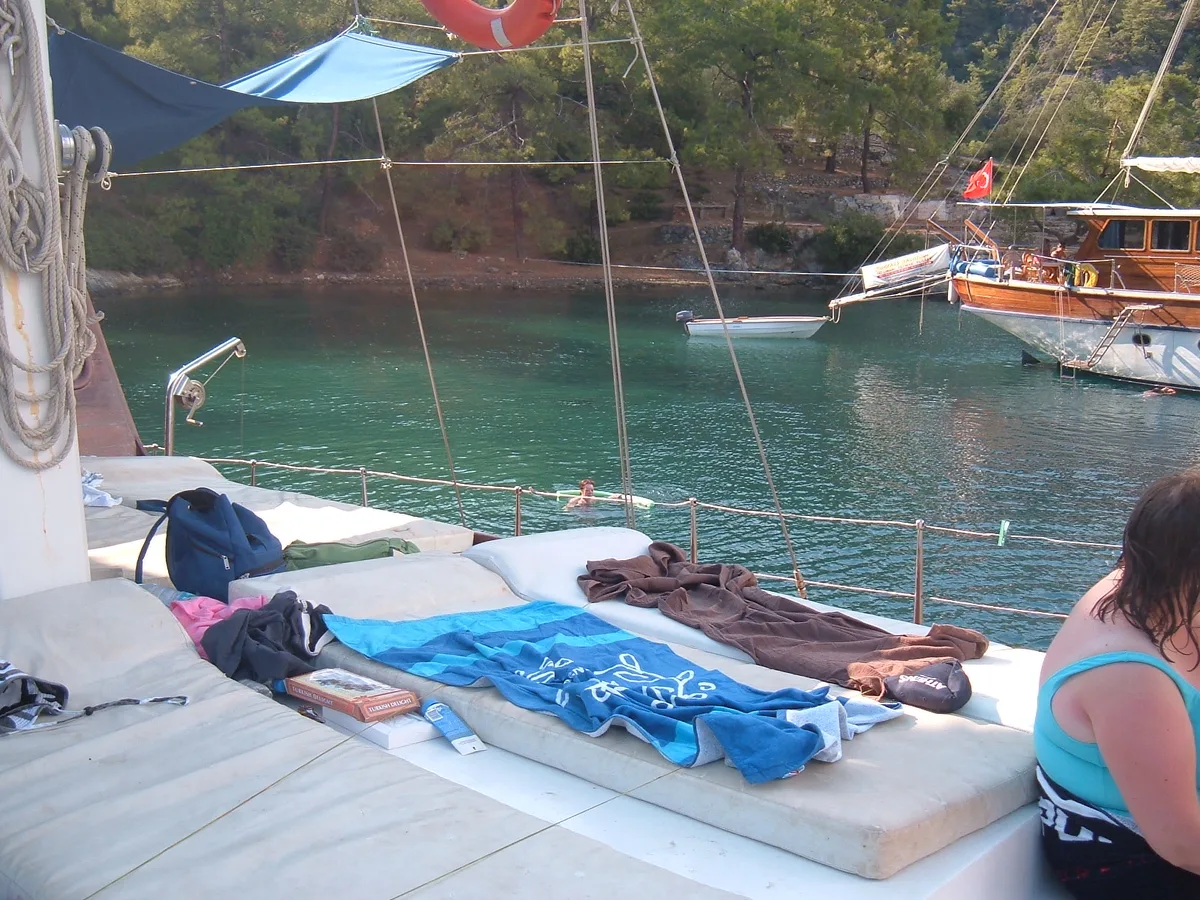
The whole of this coast is threaded by one road, the D400, which runs from Antalya westward through every base in this turkish riviera guide and beyond, and understanding its character is understanding the coast’s logistics. It is a good road and a slow one: dual carriageway on the straighter eastern stretches, then increasingly a corniche that bends around every cove and climbs over every headland as the mountains crowd the sea west of Kemer. The full run from Antalya to Fethiye is a journey of the better part of a day once stops, bends and town traffic have had their say, and the honest planning unit on this coast is not the kilometre but the hour. Travellers who treat the map’s distances as the truth will mis-plan every transfer; travellers who treat the western towns as a chain of short hops – Antalya to Kemer, Kemer to Çıralı, then Demre, Kaş, Kalkan, Fethiye – will find the road becomes part of the holiday rather than a tax on it.
The mechanisms layered on that road are the standard Turkish set, and they work well. Intercity coaches connect the main towns from Antalya’s otogar and Fethiye’s, comfortable and inexpensive in kind, booked at the station or online through the operators. Dolmuş minibuses run the local web – from Fethiye out to Ölüdeniz and Kayaköy, from Antalya to its beaches, from the resort towns to their ruin sites – frequent in season, thinner out of it, paid in cash on board. Taxis fill the gaps at taxi economics. Two airports bracket the coast, Antalya serving the east and Dalaman the west, with airport transfer coaches, shuttles and taxis running from each into its half of the shore; a traveller flying into Antalya for a Kaş or Fethiye week has accepted a long road transfer at both ends, and the open-jaw pattern – into one airport, out of the other, travelling the coast one way – is the single smartest structural decision available on this route. Rental cars are widely available at both airports and in the towns, and a car transforms the ruin-and-cove geography of the western half, where the best places sit a few kilometres off the road down signed lanes; against that, the coast road in August carries the whole nation’s holiday traffic, and the old towns were not built for parking.
What this turkish riviera guide will not do is print the fares, timetables and schedules for any of it. They change by season and operator, a printed figure would be wrong by the time it mattered, and the mechanisms above are the durable truth: one road, coaches between the towns, dolmuş to the beaches and sites, boats along the shore, two airports at the two ends. Plan the structure from this guide; take the numbers from the operator on the week you travel.
When to Go – A Long Season With the Same Sharp Peak
The Turquoise Coast has the longest swimming season in Turkey, and its shape matters more than its length – this turkish riviera guide gives the same advice here as our guide to the best beaches in Turkey, because the coast does not change its calendar between articles. The core season runs from May into October, the sea warming through late spring and holding its heat deep into the autumn, so the western coves are still swimmable in weeks when other coasts have closed. July and August are the sharp peak inside it: the warmest water, the fiercest heat on the sand and the trails, the fullest beaches, the heaviest traffic on the D400 and the highest pressure on every famous shore in this guide – Ölüdeniz, Kaputaş and the Lara strip above all. Fixed to those months, the tactics are the ones this coast always rewards: swim early, take the famous coves at the start of the day, walk ruins at opening time, and let the middle of the day go to shade, lunch and the boat.
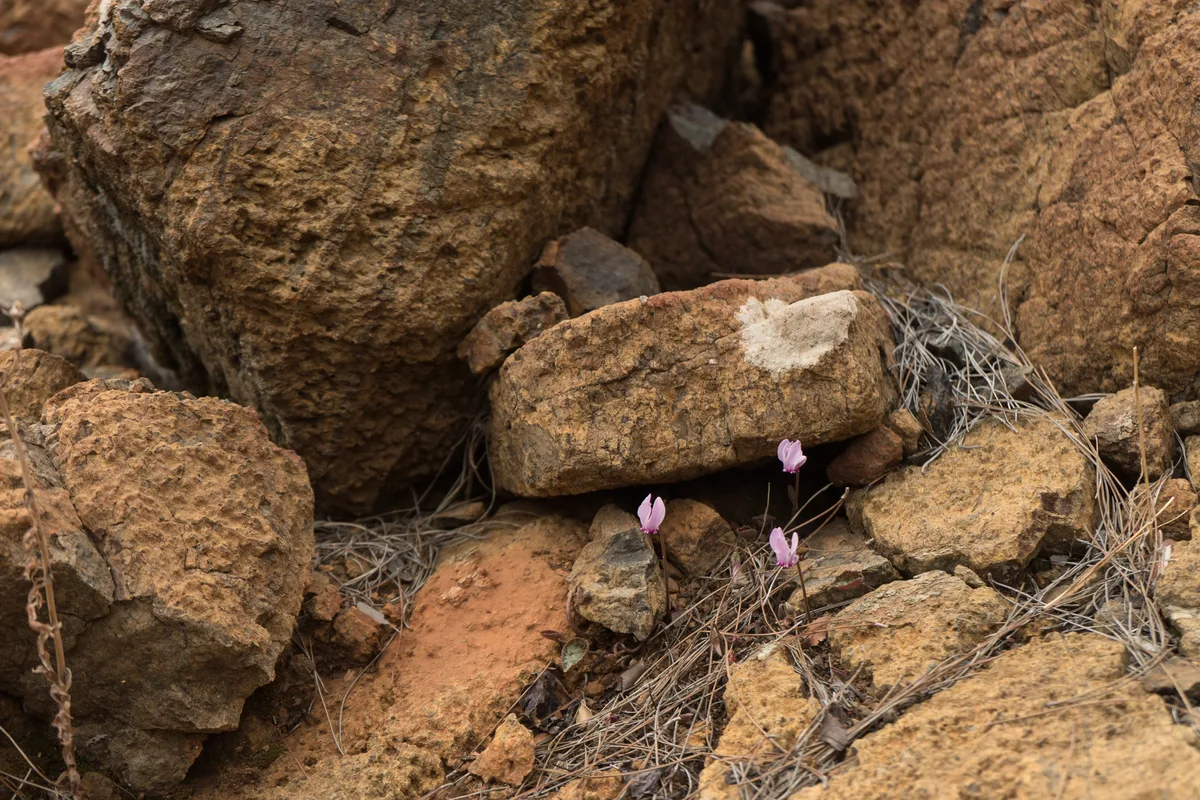
The connoisseur’s months are the shoulders. May and June bring long days, a fully awake coast, green hillsides and crowds not yet peaked; September and October are the coast at its best – the sea at its warmest after the summer’s heating, the light going golden, the famous places emptying week by week, and the Lycian Way coming back into its own as the walking heat breaks. The walking calendar is nearly the mirror of the swimming one: the trail’s serious seasons are spring and autumn, high summer on the exposed coastal stages is a punishment of heat, and winter walking is real but weather-dependent, a matter of watching the forecasts and accepting the storms’ days indoors. The photograph above – cyclamens in flower on the trail in late November – is the quiet season’s honest advertisement: mild, empty and green, with the sea kept for looking at as often as for swimming in.
Winter, from November to April, closes much of the resort coast – the big Lara hotels thin to their year-round core, the beach clubs come down, the day boats stop – while the working towns, Antalya, Fethiye and Kaş included, simply continue at local pace. A winter week based in a real town, walking the coast paths between storms and eating where the locals eat, is a legitimate and underrated version of this coast; a winter week booked into a resort village expecting the summer product is a misunderstanding of what was bought. Match the month to the mission, and this coast will meet you at the version of itself you actually came for.
Choosing Your Base – The Sorting This Guide Exists to Do
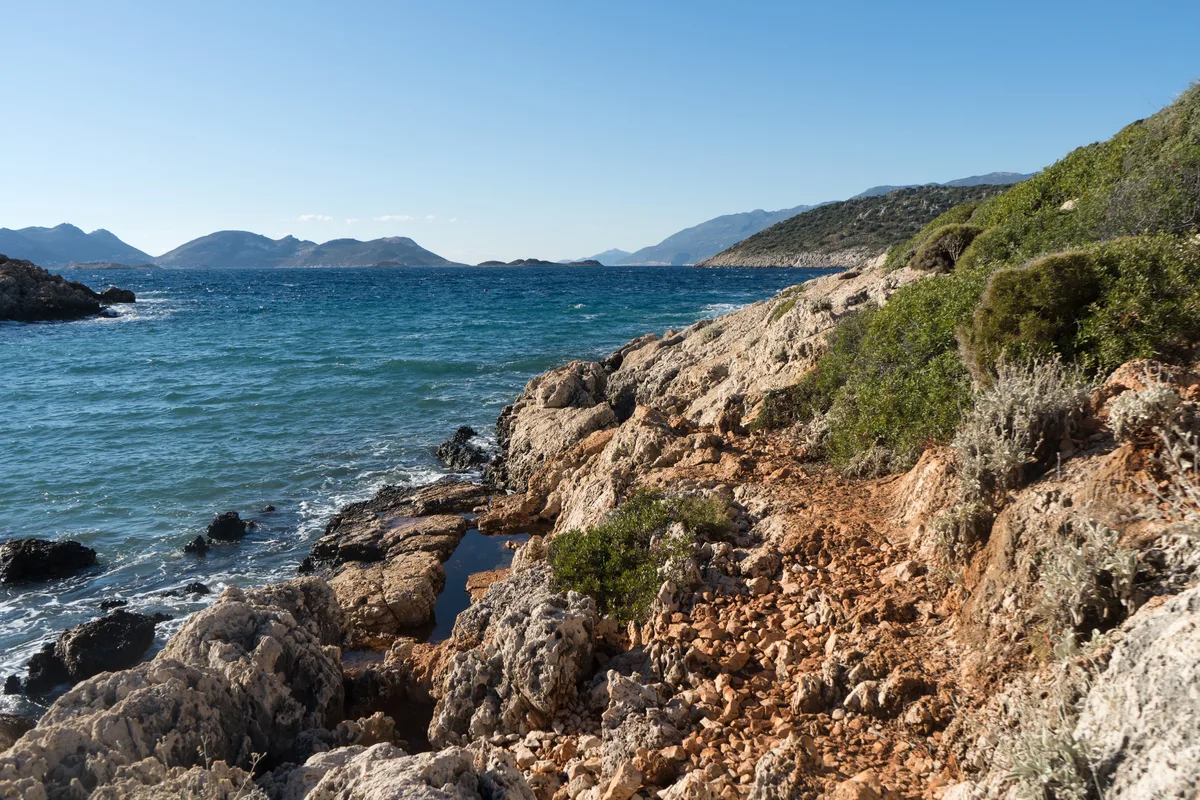
If the sections above are the evidence, this one is the verdict, and it follows the rule every turkish riviera guide should end with: choose the base before the beach. Families divide by the age of the children. For toddlers and young children, the shortlist is Lara for sand and resort machinery at the door, Ölüdeniz for the lagoon’s gentle sheltered water with Fethiye’s variety behind it, and Kemer for a serviced family resort at humane scale; the places to avoid with the very young are Kaş and Kalkan, whose swimming is rocks and boats, and Çıralı, whose pebbles punish small bare feet. For older children who swim confidently, the list widens to Konyaaltı’s clear deep water with water shoes on, Kaş’s boat days and diving taster sessions, and the whole Fethiye excursion web. Quiet-seekers should read the coast from its still centre outward: Çıralı first, the protected shore where the night is genuinely dark; then Dalyan’s reeds and Göcek’s marina calm; then Kaş outside the high-season weeks. The pattern is the one this coast always shows – quiet is bought with pebbles, with distance, or with a river instead of a beach.
History-first travellers have the richest choice and should weight the west: Phaselis and Olympos put the ruin inside the beach day; Xanthos, Letoon, Myra and Patara form the densest cluster of serious Lycian sites in the world, all reachable from Kaş, Kalkan and Fethiye bases; and Kaleiçi gives the urban version, Roman walls around the hotel. Sailing travellers start from Göcek or Fethiye and may not need a land base at all beyond a night at each end. Divers build around Kaş. Villa groups build around Kalkan. Fly-and-flop travellers, honestly served rather than patronised, should take Lara or Kemer and spend their excursion money on one good boat day and Phaselis. And everyone should observe the coast’s one unforgiving rule: one base per half. Antalya serves the east to Kemer and Çıralı; Kaş and Kalkan serve the centre-west; Fethiye serves the west. A base in one third and a heart set on another third’s beach means the holiday happens on the D400, and the D400, however beautiful, is not a beach.
A last word on trip shape, because it decides more Riviera holidays than any ranking. The coast rewards the travelling week over the static one at every level above the resort strip: three nights in the Antalya-Kemer-Çıralı east, two or three in Kaş or Kalkan, two or three in Fethiye, travelling one way along the road or the water, produces a holiday that uses the coast’s variety instead of sampling one base and day-tripping desperately. The static week is right for villas, for boats and for the very young. Everything in this turkish riviera guide has been arranged to make that choice with open eyes – the bases honestly described, the catches printed in their own sections, and the distances treated as facts rather than fine print.
Turkish Riviera Guide – Questions Travellers Actually Ask
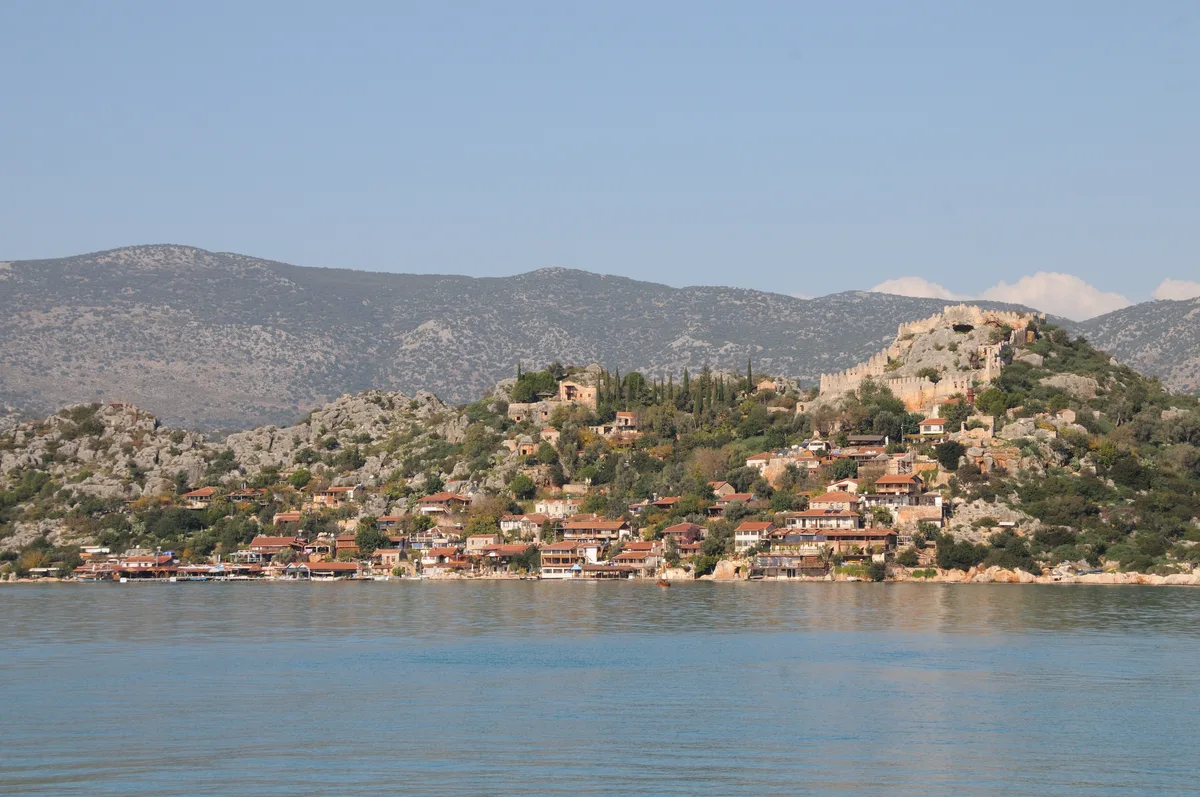
Where does the Turkish Riviera actually start and end? In its honest, useful sense, it is the Turquoise Coast of Antalya and Muğla provinces – roughly Antalya city in the east to Fethiye, Göcek and Dalyan in the west. The label is sometimes stretched up the Aegean to Bodrum, Marmaris and beyond, and those places have their own guides on this site; this turkish riviera guide covers the Mediterranean-facing Lycian shore, which is the coast the name was invented for.
Which airport should I use? The one at your end of the coast. Antalya airport serves the eastern bases – the city, Lara, Kemer and Çıralı. Dalaman airport serves the western ones – Fethiye, Göcek and Dalyan, with Kaş and Kalkan between the two and reachable from either at the price of a longer road transfer. Flying into one and out of the other, travelling the coast in one direction, is the strongest structure for a touring week.
How many bases should I stay in? Two or three for a week to ten days, working one way along the coast, is the pattern this turkish riviera guide recommends – for example Antalya or Kemer, then Kaş or Kalkan, then Fethiye. One base is right for a villa week, a sailing week or very young children; four or more turns the trip into the transfers.
Is Kaş or Kalkan better? They answer different questions. Kaş is a real small town with a diving and walking culture, swimming from rocks and boats, and prices and evenings pitched at travellers who do things. Kalkan is the polished villa-and-restaurant base, steeper, pricier in kind, and better for groups whose holiday centres on the house and the table. Both reach Kaputaş, Patara and Kekova; neither has a proper sandy town beach.
When is the best month for the Turkish Riviera? September, on this guide’s evidence, with May and June close behind: the warmest sea of the year with the crowds draining away in September, long green days in the late spring. July and August bring the full machine at full volume. The walking seasons are the mirror image – spring and autumn on the Lycian Way, not high summer.
Do I need a car on the Turquoise Coast? Not for the bases themselves – coaches link the towns, dolmuş minibuses link the towns to their beaches and sites, and boats cover the water side. A car earns its cost in the western half, where the ruins, coves and trailheads sit down lanes off the D400, and for travellers stringing several small places together. In August, weigh it against the coast road’s traffic and the old towns’ parking.
Can I swim everywhere on this coast? Almost – with the protected exceptions kept. Inside the Kekova protected area you swim from boats in permitted coves, never over the sunken city. Turtle-nesting shores such as Patara, Çıralı and İztuzu close at night in the nesting season. Ancient-site beaches such as Phaselis and Olympos run on the sites’ own entry and hours. Everywhere else, the coast’s default is yes.
The Short Version of This Turkish Riviera Guide
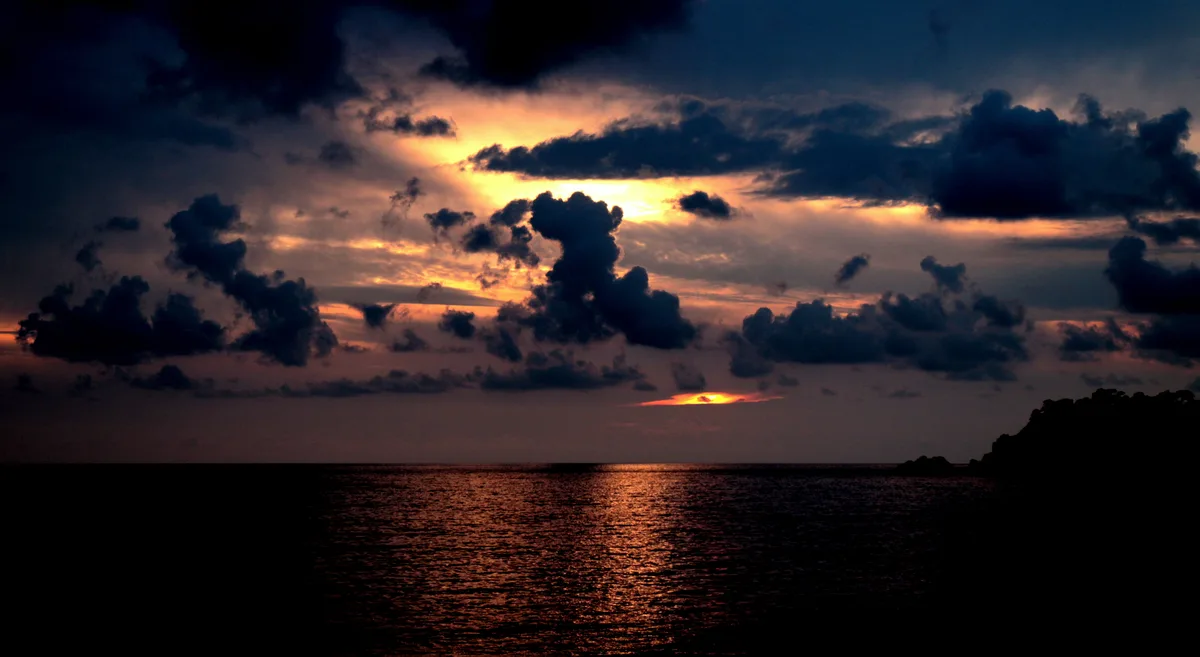
The Turquoise Coast sorts by base, not by beach. For a city with a past, Antalya and Kaleiçi. For the serviced easy week, Lara’s sand or Konyaaltı’s shingle under the mountains. For a resort with a great ruin attached, Kemer for Phaselis. For quiet, darkness and turtles, Çıralı. For diving, boats and a real town, Kaş. For villas and rooftop dinners, Kalkan. For everything within reach, Fethiye and its lagoon. For masts and reeds, Göcek and Dalyan – and for the Aegean story beyond them, Bodrum has its own guide and its own sea. Threaded under all of it runs the Lycian thread of rock tombs and league cities, and threaded along all of it runs one slow, beautiful road and a fleet of wooden boats. That is the whole argument of this turkish riviera guide in one paragraph; every section above it exists to give the evidence for one of its sentences.
So choose the half before the hotel, the base before the beach, and the month before the flights. Travel the coast one way if you can. Swim early at the famous coves, walk the ruins before the heat, take the day boats even if you never take the gulet week, and pack water shoes next to the sandals – half this coast is pebble and proud of it. Do that, and the Riviera will give you the version of itself the brochures promise, because on this shore, unusually, the promise and the place are the same thing; they just have to be matched to the right traveller, at the right base, in the right month.