Choosing among the best museums in cairo used to be a one-line answer. For most of the twentieth century it was simply the Egyptian Museum in Tahrir Square, the pink palace downtown where Tutankhamun’s gold filled two rooms and everything else in Egyptology lined up behind it. That answer expired in November 2025, when the Grand Egyptian Museum opened its doors in full beside the Giza pyramids and Cairo became, almost overnight, a city where the museum question is a genuine planning problem. There are now three major pharaonic collections, two great museums of the faiths that followed, and a trio of palaces and houses that reward anyone with a spare half-day. Picking the best museums in cairo is no longer about finding the famous one. It is about matching the right buildings to the days you actually have.
The complication nobody warns you about is that the objects moved. The royal mummies your guidebook places in Tahrir were driven across the city to Fustat in 2021. Tutankhamun’s treasures, the reason half the world walked into the old museum, completed their own move to Giza in 2025, and the halls they emptied have been refilled with a different treasure most visitors have never heard of. Even the great cedar ship that stood beside Khufu’s pyramid for decades now floats in a hall of its own at the new museum. Any ranking of the best museums in cairo that ignores this shuffle will send you to the wrong building for the thing you came to see, so this guide is organised around where everything actually is now, in late 2026.
Eight museums earn a place here. Three are the pharaonic giants – the Grand Egyptian Museum, the Egyptian Museum in Tahrir and the National Museum of Egyptian Civilization, known to everyone as NMEC. Two are world-class collections of Coptic and Islamic art, each the largest of its kind. The last three are smaller and stranger: a working presidential palace with museum floors, a prince’s private palace on an island in the Nile, and a pair of Ottoman-era houses stuffed with one English collector’s lifetime of beautiful things. For each one, this guide covers what it holds, who it suits, who should honestly skip it, and how it fits into a Cairo itinerary alongside the wider Egypt travel guide. Prices are given only where Egypt’s Ministry of Tourism and Antiquities publishes them, attributed and dated, because museum ticket prices in Egypt change too often for anything else to be honest.
Best Museums in Cairo at a Glance – the Eight Compared
Start with the shape of the choice. The best museums in cairo divide by era and by temperament. If your Egypt is pyramids and pharaohs, your shortlist is the three big archaeological museums, and the real decision is which two of the three your schedule can hold. If you are staying longer, or your interests run to art, craft and the thousand years after the pharaohs, the Coptic Museum and the Museum of Islamic Art are not consolation prizes – both are the largest collections of their kind in the world, and many repeat visitors rate them above the giants. The three small museums work differently again: none needs more than ninety minutes, each is as much a building as a collection, and they turn a spare afternoon into the part of the trip people describe at home.
The table below compresses the comparison. Ticket figures are the foreign-visitor adult prices on the Ministry of Tourism and Antiquities’ published price list, checked on 1 November 2026, and the practical section near the end of this guide explains how each museum actually sells them. Two museums are missing a figure in the table, for opposite reasons: the Grand Egyptian Museum sells timed tickets through its own official booking site at prices it sets and adjusts itself, and Abdeen Palace is not on the Ministry list at all. Both are explained in their sections.
| Museum | What it is | Give it | Foreign adult ticket |
|---|---|---|---|
| Grand Egyptian Museum | The new national showcase at Giza – 100,000+ artefacts, the complete Tutankhamun collection | Half a day to a full day | Timed online booking – check the official site |
| Egyptian Museum, Tahrir | The 1902 original – the largest Pharaonic collection on earth, now starring Tanis | 2 to 4 hours | EGP 550 |
| NMEC, Fustat | The whole story of Egypt in one walk, plus the Royal Mummies Hall | 2 to 3 hours | EGP 550 |
| Coptic Museum | The world’s largest Coptic collection inside the Babylon Fortress quarter | 1.5 to 2 hours | EGP 280 |
| Museum of Islamic Art | The world’s largest Islamic art museum – woodwork, glass, ceramics, Qur’ans | 2 to 3 hours | EGP 340 |
| Abdeen Palace Museum | Museum floors inside a working presidential palace – silver, arms, royal gifts | 1 to 1.5 hours | Not on the Ministry list – check at the palace |
| Manial Palace | A prince’s palace and gardens on Rhoda Island, an anthology of Islamic styles | 1.5 to 2 hours | EGP 220 |
| Gayer-Anderson Museum | Two Ottoman houses by the Ibn Tulun Mosque, kept as a collector’s home | About 1 hour | EGP 100 |
One pattern is worth noticing before the detail begins. The three cheapest tickets on that list belong to the three smallest museums, and they sit in the city’s historic quarters rather than beside its headline sights. A traveller who only buys the two EGP 550 tickets will see Egypt’s greatest objects. A traveller who adds the EGP 100 and EGP 220 ones will understand how Cairo actually lived. The best museums in cairo reward both instincts, which is why the sections that follow treat the small houses with the same seriousness as the giants.
Grand Egyptian Museum – the New Centre of Gravity
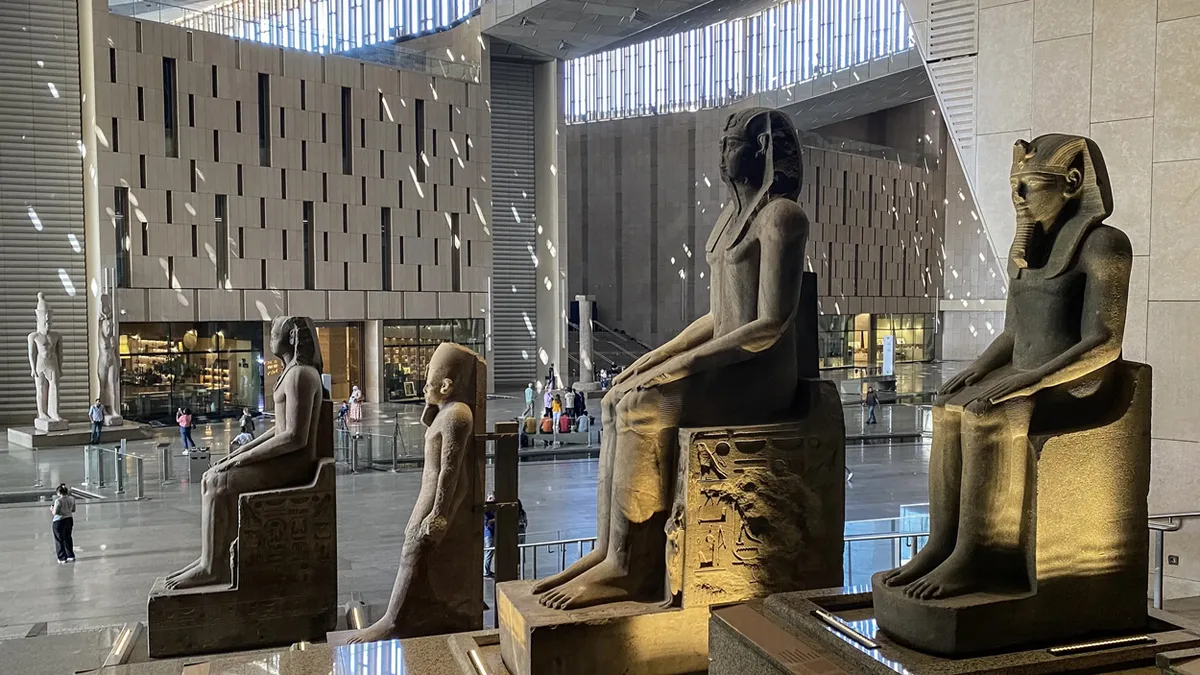
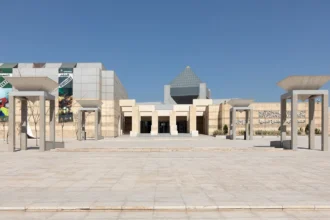
Everything in Cairo’s museum world now orbits this building. The Grand Egyptian Museum was inaugurated on 1 November 2025 and opened to the public on 4 November 2025, ending a construction story that had run for two decades, and it stands on the Giza plateau a short drive from the pyramids it faces. The Ministry of Tourism and Antiquities bills it as the largest archaeological museum complex in the world dedicated to a single civilisation, and the numbers behind the billing are not shy: a site of around 500,000 square metres, more than 100,000 artefacts, and twelve main galleries arranged to carry you from prehistory through the Pharaonic eras to the Greek and Roman centuries. It is less a museum you visit than a small city you check into, and planning it like one – timed entry, a route, rest stops – is the difference between a great day and an exhausting one.
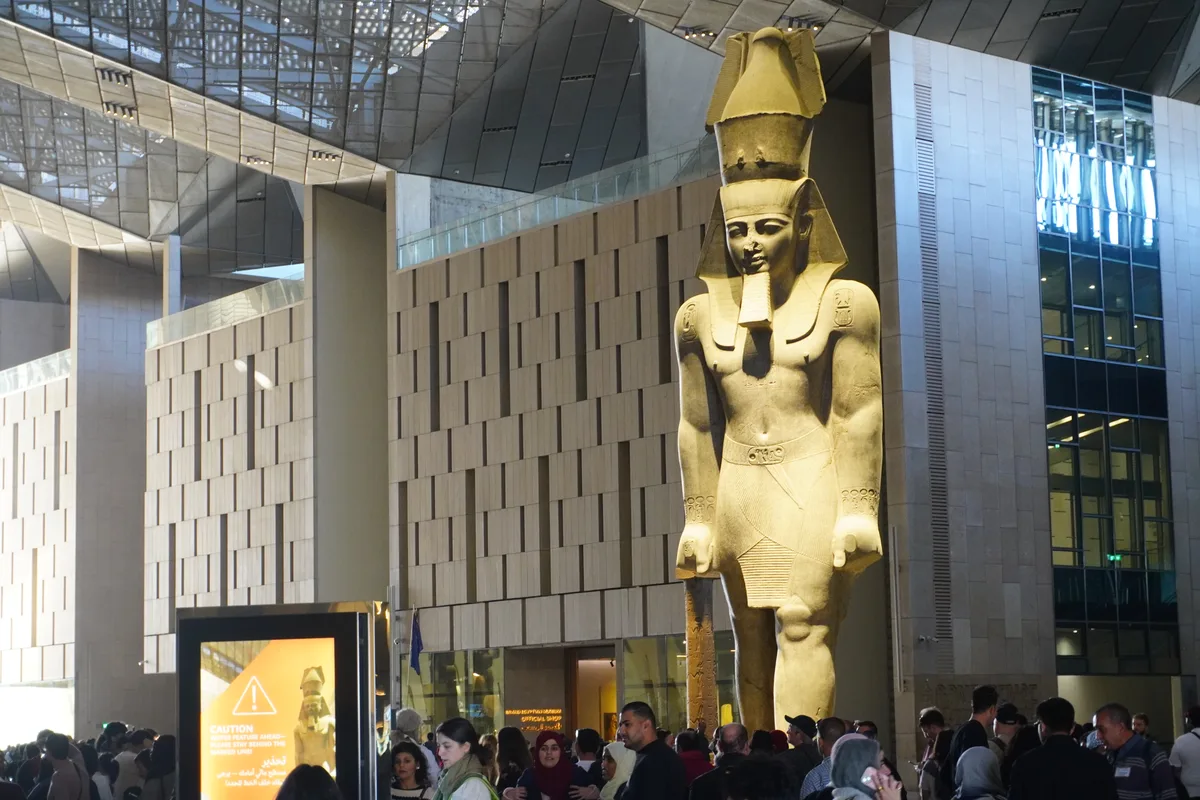
The arrival sequence is designed to humble you in stages. An open plaza leads to the atrium, where the colossal statue of Ramesses II, eleven metres of red granite that once stood in a Cairo railway square, rises over the entrance hall. Behind it climbs the Grand Staircase, a broad ceremonial flight lined with colossal statues – seated kings, gods, offering bearers – that works as both a gallery and a piece of theatre, delivering you to the main exhibition floors with the pyramids visible through the glass at the top. From there the twelve galleries unfold in chronological order, and the display standard is the one Egyptian museums were always promised: space around the objects, light that flatters stone, and labels written for readers rather than for other Egyptologists.
The building itself deserves a moment before the objects do. Its geometry is a long argument with the pyramids across the plateau: the plan is cut on triangular grids aligned toward the three pyramid summits, the facades are faced in translucent alabaster panels that glow after sunset, and an obelisk of Ramesses II hangs suspended in its frame at the entrance plaza, so that visitors walk beneath a pharaoh’s monument before they reach the door. Inside, the scale keeps recalibrating your expectations – ceilings tall enough for temple pylons, sightlines that run the length of a gallery to a single statue, and behind the public floors a conservation centre of laboratories and stores that now receives fragile antiquities from digs across Egypt. Even the circulation is part of the display, since the Grand Staircase delivers you upward through three thousand years of royal sculpture before the first gallery proper begins.
The headline, of course, is Tutankhamun. For the first time since Howard Carter opened the tomb in 1922, the boy king’s complete collection – 5,398 pieces, in the figure Egypt’s state news agency published at the opening – is displayed together in one place: the gold mask, the throne, the chariots, the beds, the jewellery, the everyday objects of a royal burial that the old museum could only ever show in part. Around it, the museum spreads wider than any single reign: Khufu’s cedar ship, reassembled beside his pyramid in the 1950s and moved here in 2021, floats in a dedicated hall; there is a Children’s Museum for younger visitors; and the conservation centre behind the scenes is among the largest in the region. Our dedicated Grand Egyptian Museum guide walks the galleries in detail; the job of this page is the comparison, and the comparison is simple. For spectacle, completeness and the single most famous collection in Egyptology, nothing else in the city is close.
The honest catches are logistical. The museum is at Giza, not in central Cairo, so it consumes a day the way the pyramids do – indeed it pairs with them, as the Giza travel guide explains – and a half-day is the honest minimum once you are inside. Entry runs on timed, dated tickets booked through the museum’s official site, and the museum’s own terms are strict: tickets are personal and non-transferable, valid only for the slot booked, with no re-entry once you leave. Prices and daily hours are set on that official booking channel and have already moved since opening, so this guide deliberately prints neither; check them there when you book. Personal photography is allowed under the museum’s terms, with the usual prohibitions on flash, tripods and selfie sticks, and large bags go to the cloakroom. Who should skip it? Only the traveller whose Cairo is a single day already promised to Tahrir and downtown – and even they should know they are postponing, not replacing, the main event. For everyone else, this is the first name on any list of the best museums in cairo, and the museum around which the rest of the itinerary should be built.
Egyptian Museum in Tahrir Square – the Original Treasury, Reinvented
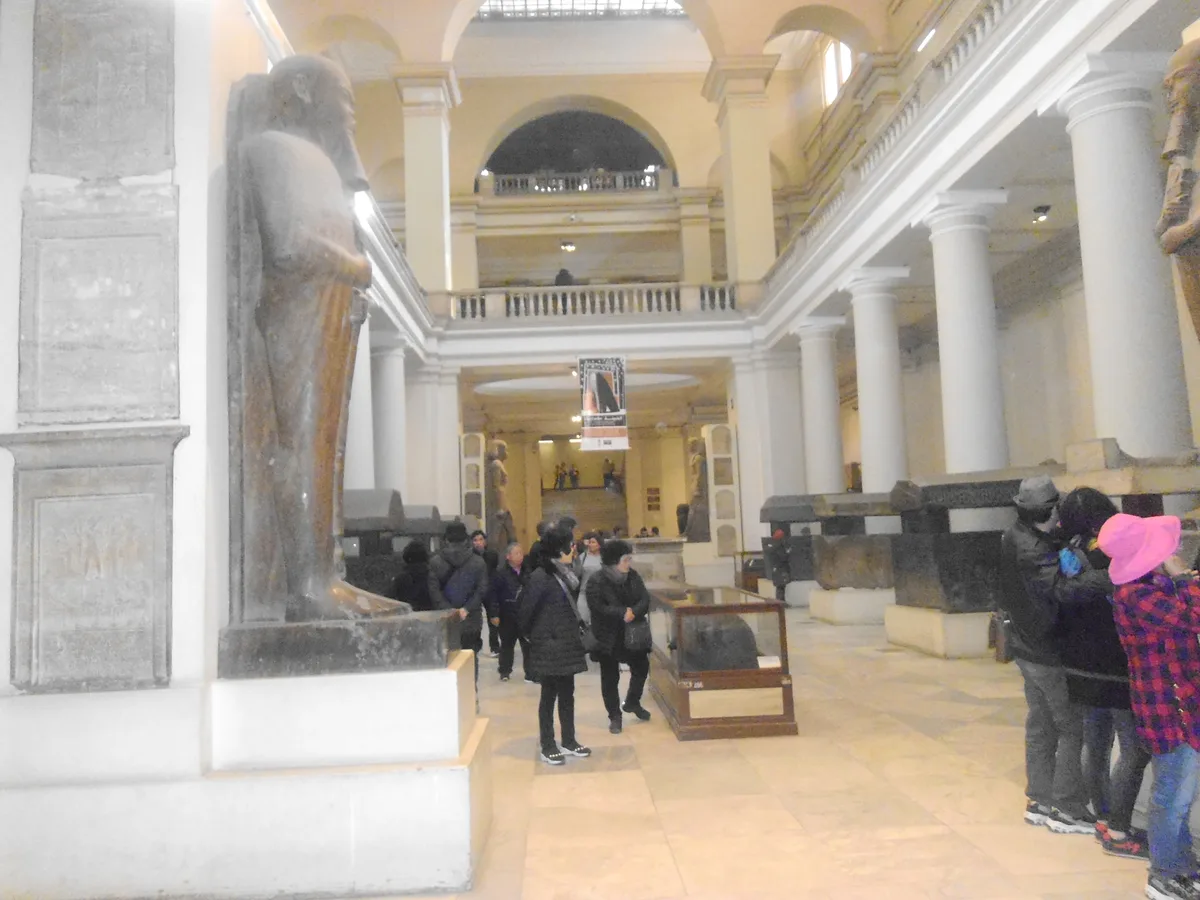
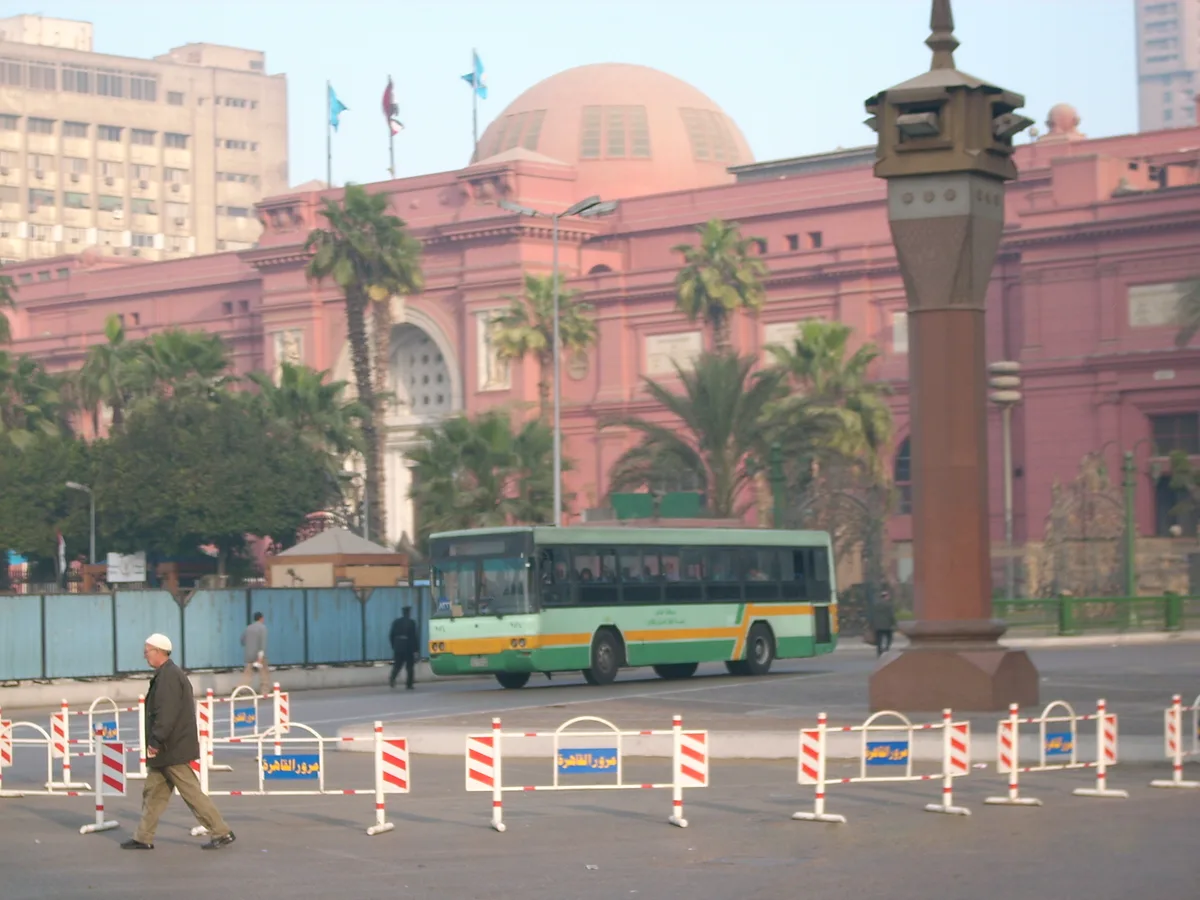
The Egyptian Museum is the building that invented the Egyptian museum. Inaugurated in 1902 by Khedive Abbas Helmy II, to a design by the French architect Marcel Dourgnon, who won an international competition for it in 1895, it is described by the Ministry of Tourism and Antiquities as the oldest archaeological museum in the Middle East and the home of the largest collection of Pharaonic antiquities in the world. The register behind that claim runs to roughly 170,000 artefacts with around 50,000 on display, figures the museum’s own director has given in interviews. It stands on the north side of Tahrir Square under its rose-pink dome, recognisable from a kilometre away, and for 120 years it was not merely one of the best museums in cairo – it was the museum, the place where Egyptology kept its crown jewels and its heart.
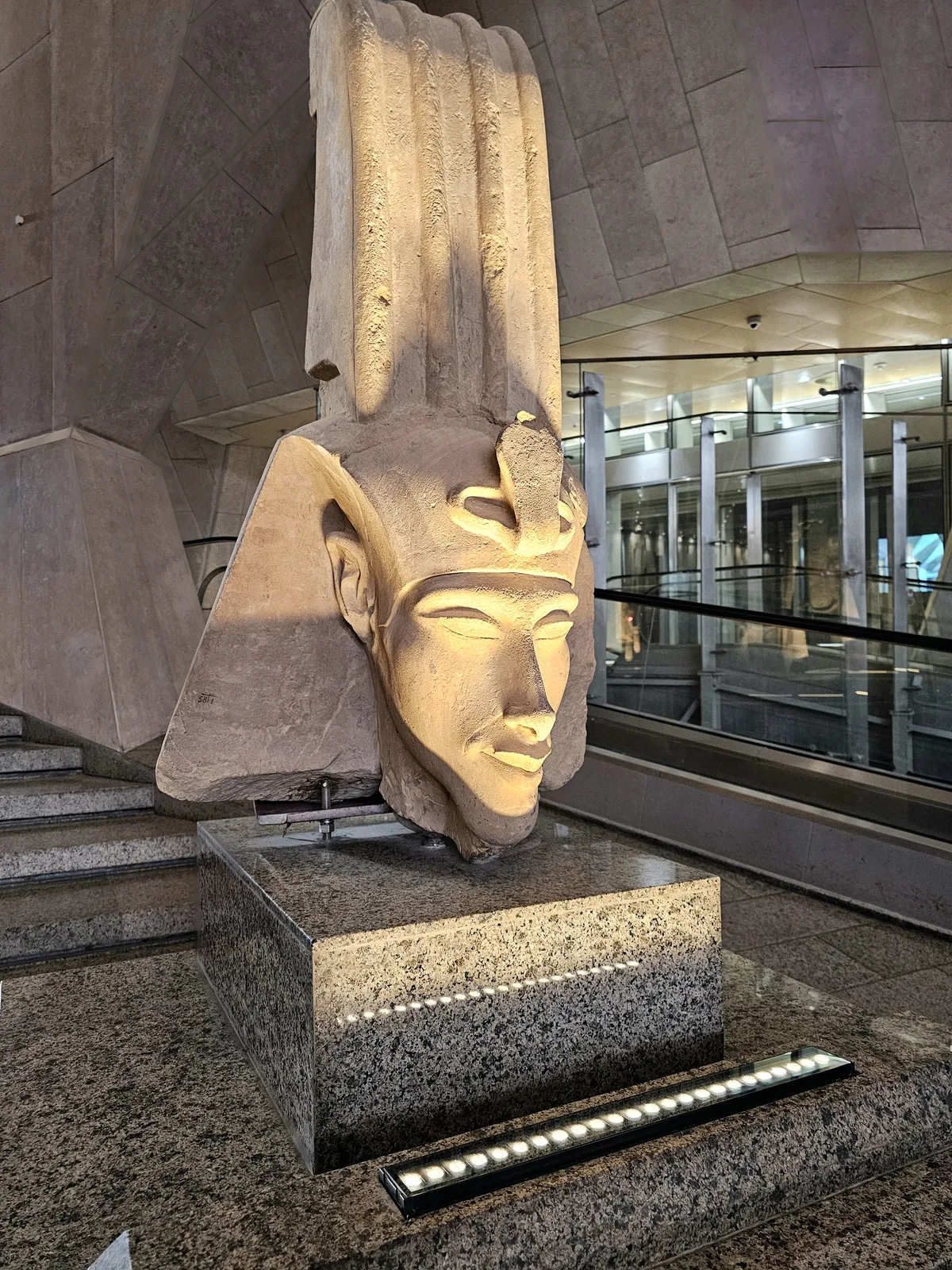
What it holds today requires a clear head, because the two most famous collections have left. Tutankhamun’s treasures are at the Grand Egyptian Museum, and the royal mummies are at NMEC; a visitor who arrives expecting either will feel cheated, and no honest guide should let that happen. What replaced them is the surprise of the current Cairo museum scene. The treasures of Tanis – the gold of the 21st and 22nd Dynasty kings excavated from the Delta in 1939 and long overshadowed – have moved into the vacated halls, including the solid silver coffin and gold mask of Psusennes I, objects that would headline any other museum on earth. Around them the old strengths endure: the Narmer Palette, the founding document of the Egyptian state; the statues of Khufu, Khafre and Menkaure, the pyramid builders in person; the complete burials of Yuya and Thuya, Tutankhamun’s great-grandparents, whose gilded furniture survived intact. Our Egyptian Museum in Cairo guide takes the halls room by room.
Upstairs, the scale shrinks to the human and the museum changes character. The ground floor is a parade of stone – kings, gods and sarcophagi at monumental size – but the upper galleries hold the intimate Egypt: jewellery fine enough to wear today, painted coffins, writing palettes and papyri, board games, cosmetics, the tools of scribes and the toys of children. This is where the museum rewards slowness, because the small cases were assembled by generations of curators working object by object, and many hold things no other museum possesses in such depth. Visitors who only march the ground-floor colossi miss the better half of the building.
The atmosphere is the argument. Where the GEM is a airport-bright showcase, Tahrir is a Victorian treasury that never quite modernised: colossal statues crowd the ground floor in rough chronological order, wooden cabinets line the upper galleries, and some labels still carry the handwriting of another century. Egyptologists adore it precisely because it feels like the discipline’s attic, and first-time visitors divide sharply – some find the density intoxicating, others find it dusty and under-explained beside the new museum’s polish. Both reactions are fair. The building is also simply a joy to be in, domed and colonnaded, with a garden of statues outside and the whole of downtown Cairo at its gates.
Practicalities are refreshingly simple. On the Ministry’s published price list, checked 1 November 2026, foreign entry is EGP 550 with hours of 9am to 5pm, and the museum sits directly on Tahrir Square with the Sadat metro station beneath it – the easiest of all the best museums in cairo to reach. Give it two hours at a sprint, three or four if the Old and Middle Kingdom sculpture gets its hooks into you, and go in the morning before the tour groups thicken. Who should skip it? Anyone whose single museum day is already committed to the GEM and the pyramids, and anyone who needs labels to do the storytelling – hire a guide here, or accept a degree of beautiful confusion. Who should prioritise it? Repeat visitors, students of the subject, and romantics. It is the museum Cairo’s other museums were built to relieve, and it has responded by becoming the connoisseur’s favourite.
National Museum of Egyptian Civilization – the Whole Story in One Walk
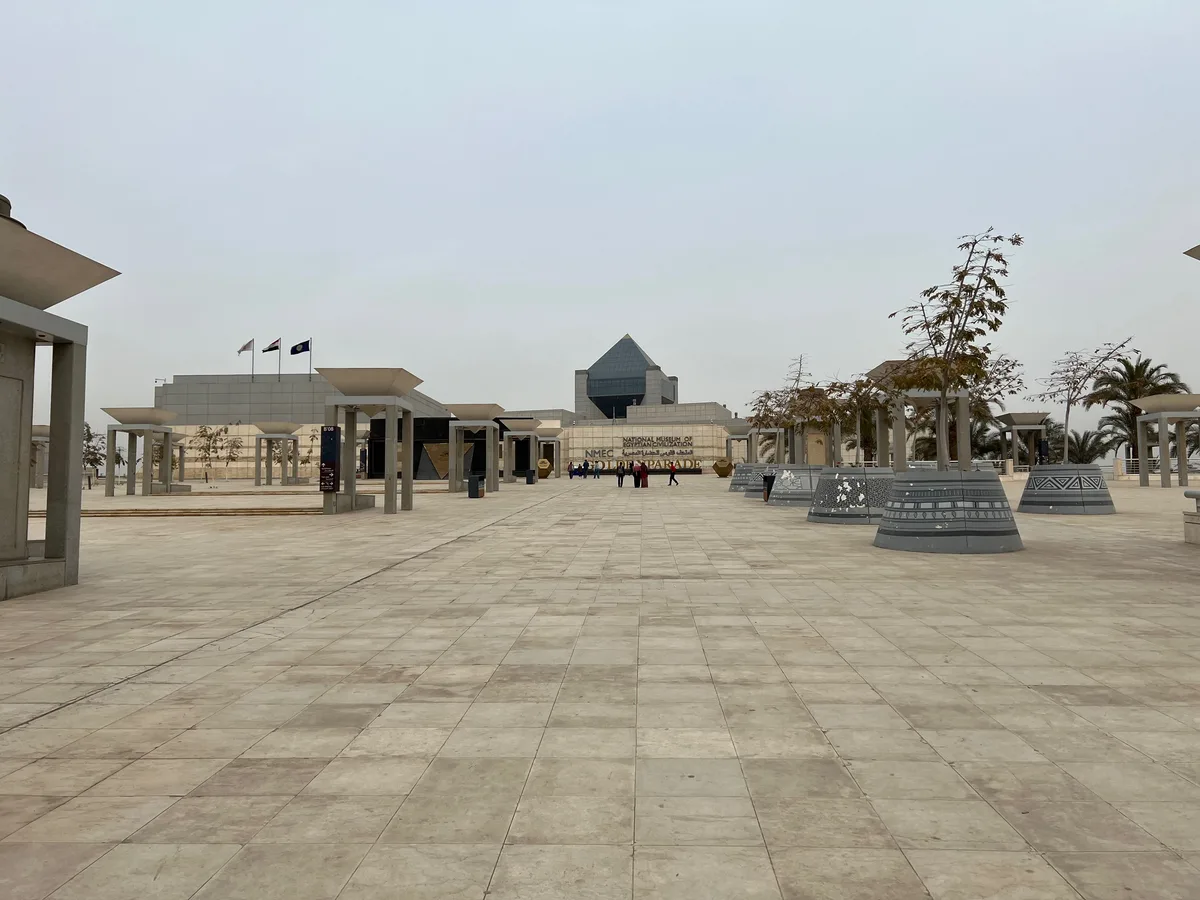
NMEC was built to answer a different question. Not “what are Egypt’s greatest objects?” but “what is Egypt?” – and it answers with a single chronological walk from the prehistoric Nile to the modern city, through Pharaonic, Greek, Roman, Coptic, Islamic and contemporary Egypt in sequence. It stands in Fustat, the first Islamic capital of Egypt, on the shore of Lake Ain el-Sira in the south of the city, in a low, pyramid-capped complex of plazas and gardens that feels more like a cultural campus than a treasure house. For travellers who find the pharaonic giants overwhelming, this is routinely the museum they enjoy most: the story is legible, the building is calm, and you leave understanding how the pieces of Egyptian history join up rather than merely having admired them separately.
The walk divides in two. Upstairs, the Main Exhibition Hall runs the long chronological spine, mixing masterpieces with the evidence of ordinary life – tools, textiles, jewellery, manuscripts – so that a Roman-era sandal and a pharaonic loom weight end up explaining each other. Downstairs, in deliberate contrast, lies the Royal Mummies Hall: a dim, tomb-quiet sequence of individual bays holding twenty-two royal mummies, eighteen kings and four queens among them Hatshepsut, Thutmose III and Ramesses II himself. They arrived in April 2021 in the Pharaohs’ Golden Parade, the televised night procession that carried them across Cairo from Tahrir, and the hall has been designed to keep something of that ceremony’s hush – photography is not permitted inside it, and the attendants enforce the quiet. Beside the main displays, a dedicated textile hall draws on one of the finest cloth collections in the country, a thread that runs from pharaonic linen to Coptic tunics to Islamic embroidery.
The setting earns its share of the credit. The museum stands on the shore of Ain el-Sira, a natural spring-fed lake that was a pleasure ground in Fatimid times, and its plazas, gardens and outdoor terraces look across the water rather than into traffic – a rarity among Cairo museums, and a large part of why families linger here. There is a theatre, cafes and open lawns, and the surrounding Fustat district, where Egyptian pottery workshops still operate, makes the approach feel like a destination in itself rather than a corridor. Egyptian school groups pour through on weekday mornings, which gives the main hall a lived-in energy the hushed mummy level below deliberately answers.
As a piece of trip design, NMEC is the most flexible of the big three. On the Ministry’s published price list, checked 1 November 2026, foreign entry is EGP 550 and standard hours are 9am to 5pm, with an additional Friday evening session listed on the museum’s page on the official egymonuments platform – currently the only one of the best museums in cairo to open into the evening, which makes it a gift for arrival days and tight itineraries. Two to three hours covers it honestly. It pairs naturally with Old Cairo, a short hop north, and our full National Museum of Egyptian Civilization guide covers the halls, the lake and the Fustat setting in depth.
Who should skip it? The Tutankhamun pilgrim with one museum day – the boy king is at Giza, and no amount of narrative elegance substitutes for the gold mask if that is what you crossed the world for. Visitors expecting GEM-scale spectacle may also find NMEC deliberately understated. But for the traveller who wants to understand Egypt rather than simply gape at it, for families who need a story children can follow, and for anyone whose favourite museum moments are the quiet ones, NMEC earns its place in the top rank of the best museums in cairo – and for the mummies alone, which no other building on earth can offer in this company, it is unmissable on any second visit.
Coptic Museum – the Quiet Masterpiece in Old Cairo
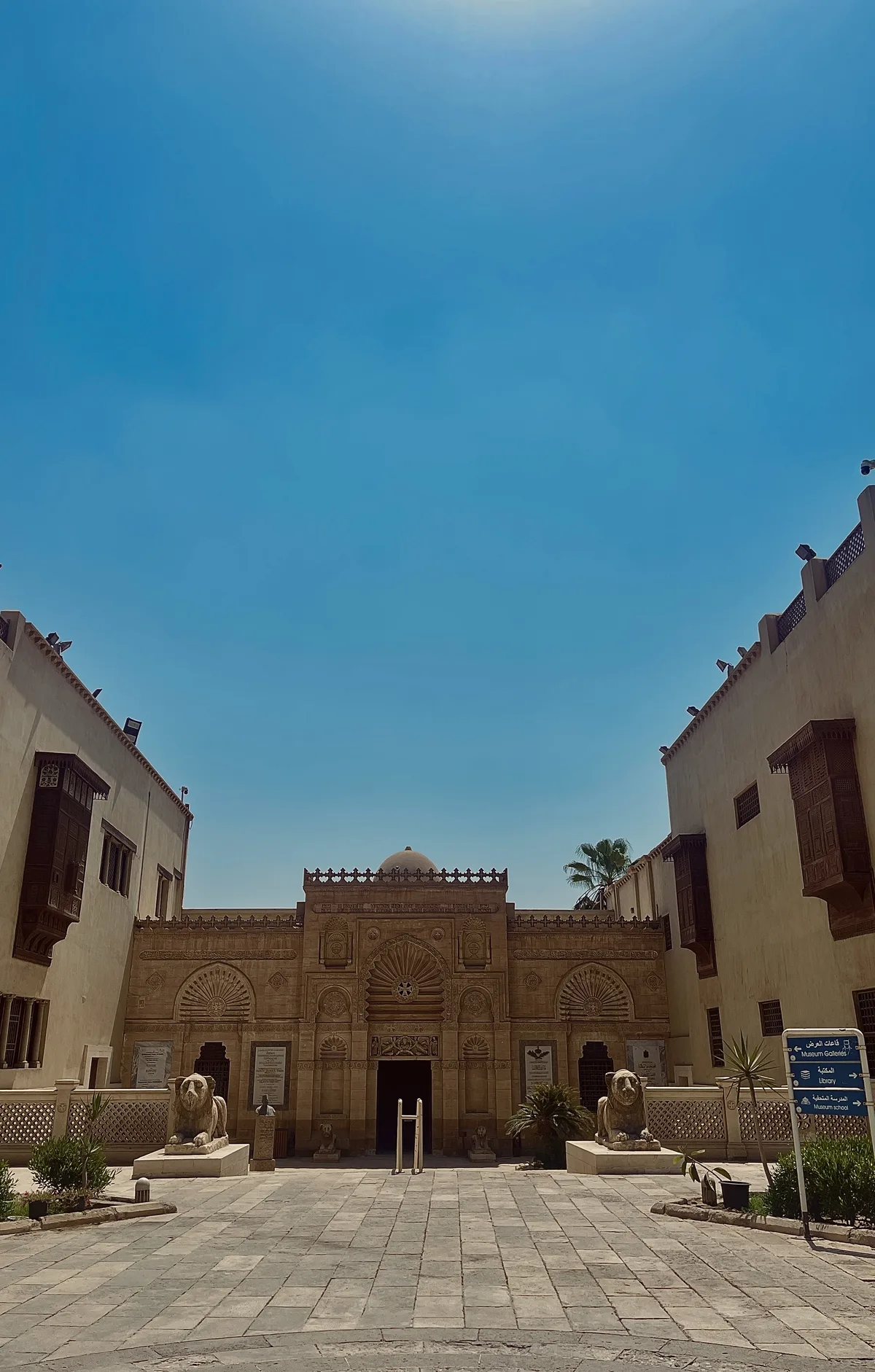
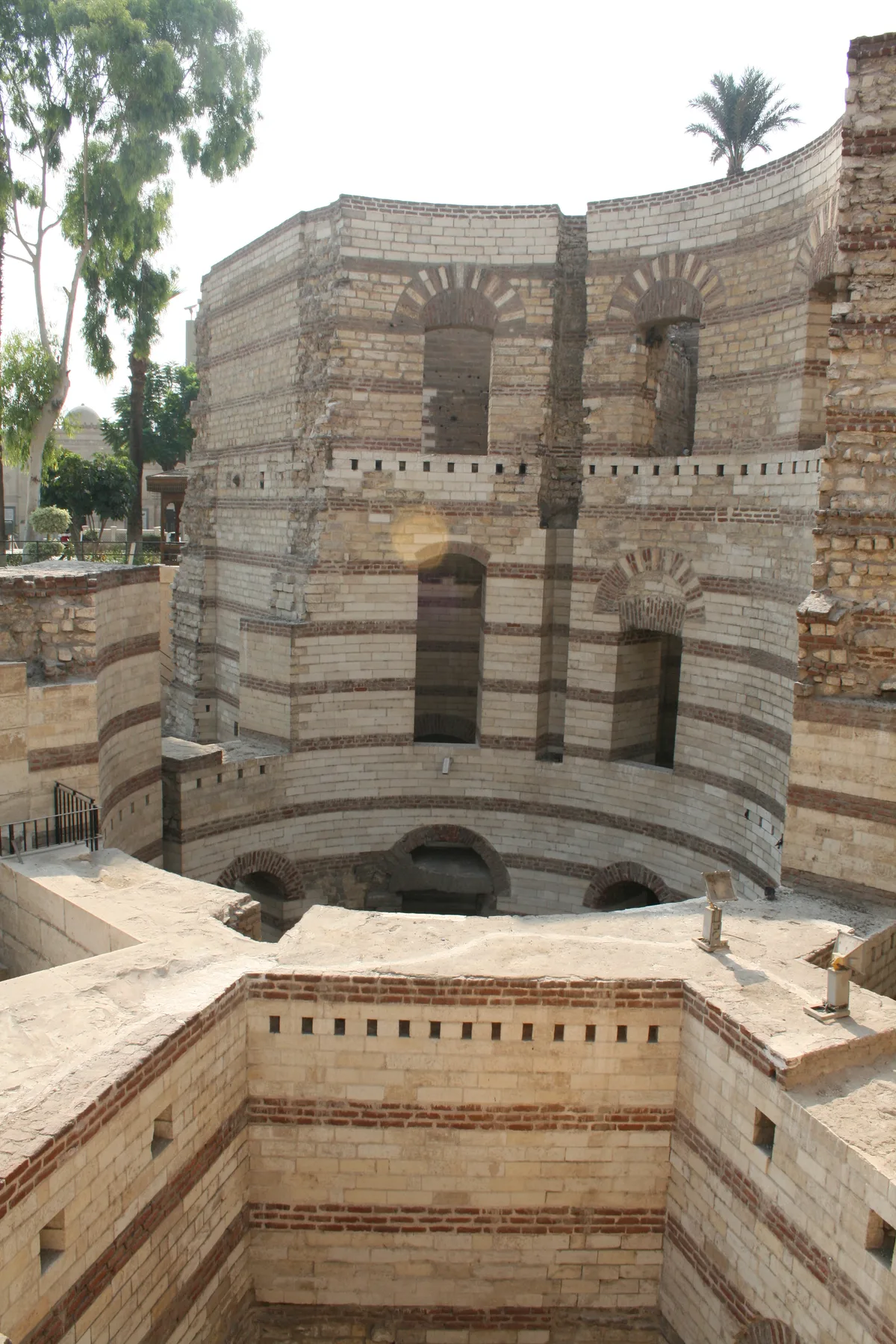
Every Cairo itinerary eventually descends into Old Cairo, the walled quarter around the Roman Babylon Fortress where the Hanging Church, the Ben Ezra Synagogue and some of Egypt’s oldest mosques stand within a few lanes of each other. Anchoring the quarter is the Coptic Museum, and it may be the most pleasant surprise among the best museums in cairo. It was founded by Marcus Simaika Pasha, a Coptic notable who persuaded his church to give the land, and inaugurated on 14 March 1910 on some 8,000 square metres inside the fortress walls, endowed by Pope Cyril V himself. Simaika modelled the museum’s carved stone facade on the Fatimid al-Aqmar Mosque – a Christian museum wearing a mosque’s face, which tells you a good deal about the Egypt it documents. The museum passed to the Egyptian state in 1931 and has grown ever since into the largest collection of Coptic art and artefacts in the world.
Inside, around 16,000 objects are arranged chronologically across twelve sections, and the range is the revelation. Coptic art is where pharaonic Egypt, the Greco-Roman world and early Christianity visibly fuse, and the museum shows the fusion object by object: stone carvings where vine scrolls turn into crosses, icons in a dozen styles, frescoes lifted from desert monasteries, and textiles of a fineness that stops textile people mid-stride. Among the most affecting holdings are the painted niches rescued from the monastery of Apa Apollo at Bawit in Middle Egypt, whole wall-paintings of Christ and the saints carried into the museum when their desert homes crumbled – images made for monks’ prayer cells, at exactly the intimate scale they were painted for. Nothing in Cairo’s pharaonic museums prepares you for how personal this art feels. The wooden ceilings and mashrabiya screens built into the galleries came from old Coptic houses and palaces, so the building itself is part of the collection. In a library wing, open to specialist researchers rather than general visitors, the museum guards the Nag Hammadi manuscripts, the Gnostic library discovered in Upper Egypt in 1945 – you will not see them on a normal visit, and it is worth knowing they are here anyway, a measure of the institution’s scholarly weight.
The setting does half the work. Galleries open onto garden courtyards with fountains and carved stone, the lanes of the quarter murmur beyond the walls, and the crowds that thicken Tahrir and Giza never quite materialise – this is a museum you often share with school groups and quiet couples rather than tour battalions. On the Ministry’s published price list, checked 1 November 2026, foreign entry is EGP 280 and hours are 9am to 5pm; the Mar Girgis metro station on Line 1 stands practically at the gate, making the Coptic Museum the easiest of the best museums in cairo to combine with something else. Ninety minutes is a fair visit, two hours a generous one, and the churches of the quarter fill the rest of the half-day naturally.
Who should skip it? The traveller on a strict pharaohs-only programme with a single day – something has to give, and this is the usual casualty. Who should protect time for it? Anyone spending a second day in Cairo, anyone interested in art as a living craft tradition rather than a royal one, and anyone who has started to feel that the giants blur together. The Coptic Museum is where Cairo’s story stops being about kings and becomes about the people who prayed, wove, carved and painted their way through fifteen centuries – and it tells that story better than any building in the city.
Museum of Islamic Art – Fourteen Centuries in Twenty-Five Halls
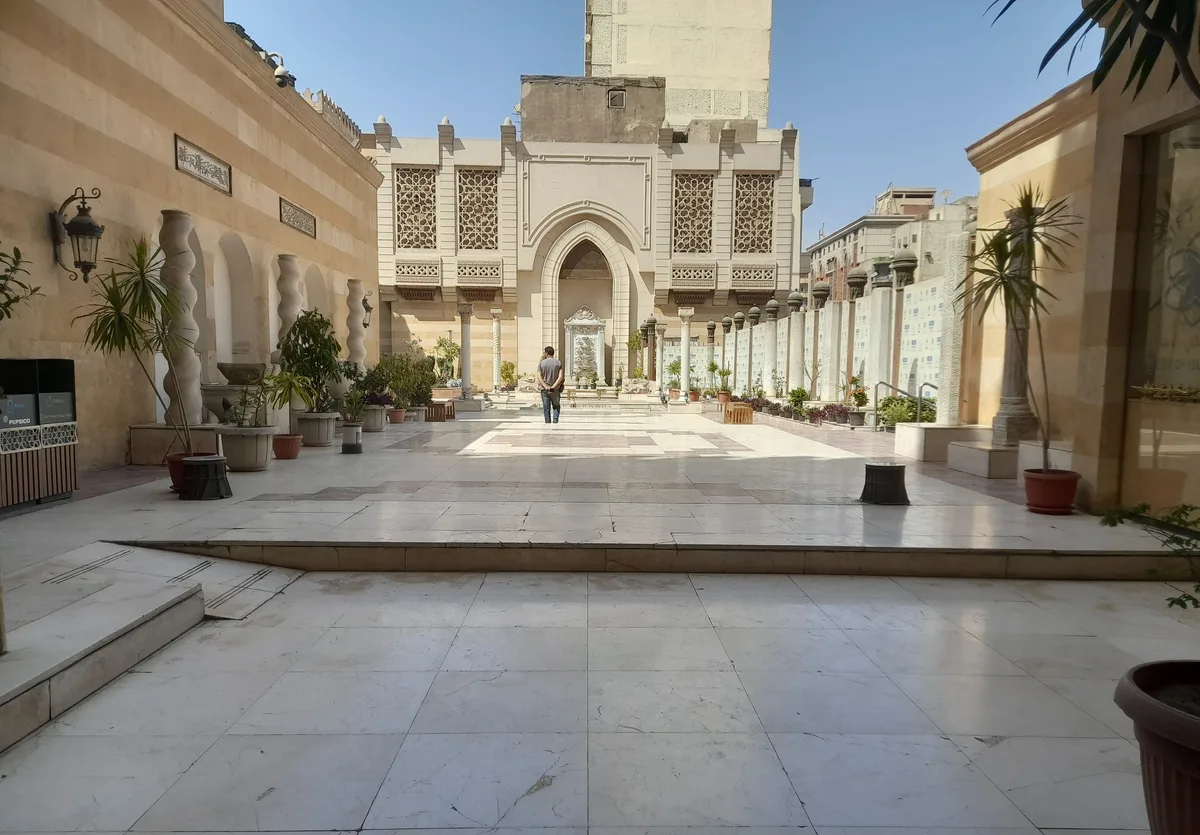
If the Coptic Museum is a surprise, the Museum of Islamic Art is a rebuke – to every traveller who thinks of Cairo’s heritage as ending with the pharaohs and the early church. Standing in Bab el-Khalq, at the edge of the historic Islamic city, it is billed by Egypt’s State Information Service as the largest Islamic art museum in the world, holding more than 100,000 artefacts gathered from across the Islamic world, from carved Fatimid woodwork to Mamluk glass, Persian ceramics, Ottoman textiles and some of the most beautiful Qur’ans ever copied. The collection began in 1880 under Franz Pasha, who started gathering Islamic antiquities in the ruins of the al-Hakim Mosque; the purpose-built museum opened on 28 December 1903, and it has carried its present name since 1952. A car bomb aimed at the security directorate across the street badly damaged the building and its facade in January 2014; after a long restoration it reopened in January 2017, and the scar tissue is part of its modern story.
The twenty-five halls are organised to reward browsing rather than marching. Wood comes first in most visitors’ memories – minbars, doors and screens carved to lace-like delicacy – then the glass: enamelled Mamluk mosque lamps that glow even unlit. Ceramics run from the lustreware of Fatimid Fustat to Iznik tiles; the metalwork rooms mix astrolabes, candlesticks and ewers inlaid with silver calligraphy; and the manuscript galleries hold Qur’ans whose calligraphy alone justifies the ticket. A calm courtyard with a fountain sits at the building’s heart, one of the great free breathers in Cairo sightseeing. Sources disagree on how many of the 100,000-plus objects are on display at any one time – estimates range widely – so this guide prints no display figure; what matters is that the selection is deep in every medium and the quality bar rarely dips.
Practically, this is the connoisseur’s anchor for an Islamic Cairo day. It stands a short walk from Bab Zuweila and the tentmakers’ street, within the dense monument zone our Islamic Cairo guide maps street by street, and the whole quarter forms part of the UNESCO World Heritage listing for Historic Cairo. On the Ministry’s published price list, checked 1 November 2026, foreign entry is EGP 340 and hours are 9am to 5pm – mid-priced among the best museums in cairo, and for anyone interested in design, craft or calligraphy, arguably the best value of the eight. Two hours is a reasonable visit; three disappears easily.
The honest catch is temperament. This is a museum of objects rather than stories – no mummies, no gold mask, no single thunderbolt exhibit – and a visitor who needs spectacle will drift. Its labelling rewards those who already know a little about Islamic art, though the sheer beauty of the pieces carries most people further than they expect. Skip it if your Cairo is a one-day pharaonic sprint. Protect it if you are spending time in the Islamic city anyway, if you work with your hands or your eyes, or if you want the museum that Cairenes themselves most often name with pride. On the evidence of the rooms, they are right to.
Abdeen Palace Museum – Royal Cairo Behind a Working Palace’s Doors
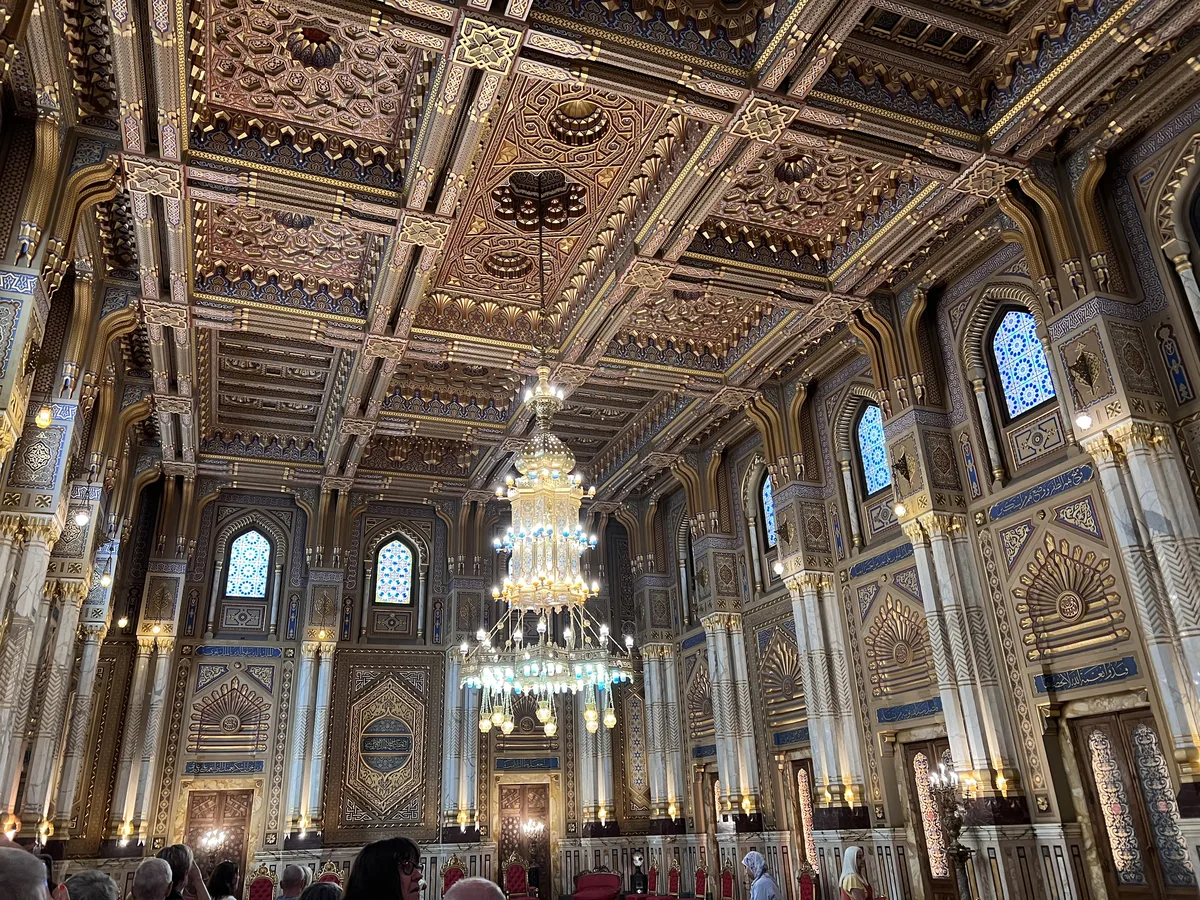
Abdeen is the odd one out among the best museums in cairo: a museum that happens to be inside the presidency. Khedive Ismail commissioned the palace in 1863 as the centrepiece of his new, European-facing Cairo, it officially opened in 1874, and it replaced the Citadel as the seat of Egypt’s rulers, remaining the royal residence and seat of government until the monarchy fell in 1952. It never stopped being a workplace – the President of Egypt still works here, and the upper floors receive visiting heads of state – but the lower floors have been opened as a museum complex, which means your visit threads through a living palace rather than a preserved ruin. That double life is the attraction: gilded, chandeliered reception halls in full ceremonial order, a short walk from Tahrir Square and an easy pairing with the Egyptian Museum on a downtown day.
The complex is really five small museums wearing one ticket. The Silver Museum shows the royal family’s table silver and ceremonial plate; the Arms Museum displays weapons from medieval blades to the personal firearms of kings; the Royal Family Museum covers the Muhammad Ali dynasty in portraits, orders and personal effects; the Presidential Gifts Museum exhibits the often startling objects foreign states have presented to Egyptian presidents; and the Historical Documents Museum, opened in January 2005, shows treaties, firmans and maps from the state archives. None of these needs long, and together they sketch a Cairo the antiquities museums ignore – the nineteenth- and twentieth-century city of khedives, kings and republics that built the downtown streets you are standing in.
Because Abdeen answers to the presidency rather than to the antiquities ministry, it does not appear on the Ministry of Tourism and Antiquities’ published price list, and this guide prints no ticket price or opening hours for it: secondary sources disagree about both, palace functions can alter the day, and the only honest advice is that entry is by a separate palace ticket sold at the palace itself, that the visiting day is shorter than at the state museums, and that you should confirm the day’s arrangements locally or through your hotel before setting out. Mohamed Naguib metro station is a few minutes’ walk away, and the whole visit takes an hour to ninety minutes. Who should skip it? Antiquities purists and anyone rationing a single day. Who should go? Travellers basing themselves downtown, royal-history enthusiasts, and anyone who enjoys the frisson of a museum where the state still does its business upstairs. It is the most Cairo of the best museums in cairo – half collection, half working institution, entirely of its city.
Manial Palace – a Prince’s Anthology of Islamic Style
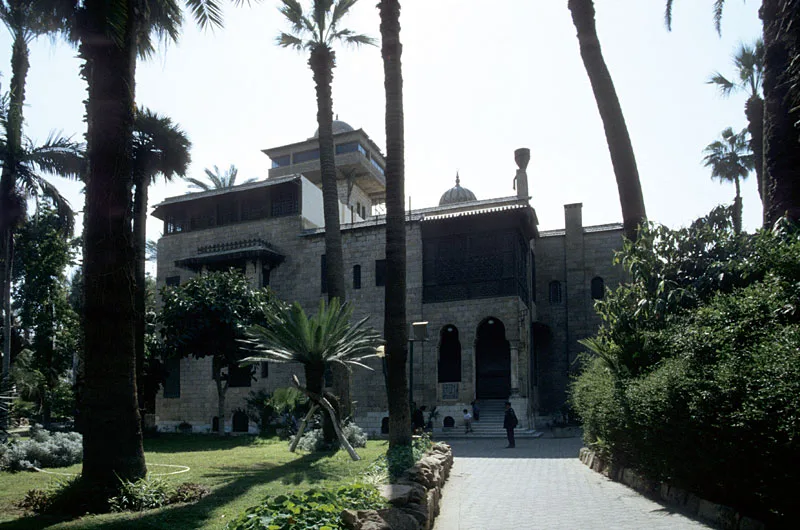
On Rhoda Island, where the Nile splits around gardens in the middle of the city, stands the palace that Prince Muhammad Ali Tawfiq built as an argument in architecture. The prince – son of Khedive Tawfiq, uncle of King Farouk, twice heir to a throne he never took – spent the years from 1899 to 1929 creating a residence that would also be a museum of Islamic architectural styles, and the result is a small estate where every building speaks a different dialect: the residence and reception halls mix Art Nouveau and Rococo with Ottoman, Moorish, Persian, Mamluk, Fatimid and Syrian elements, often in a single room, and somehow make the mixture cohere. He gave the palace and its collections to the Egyptian state in 1955, the year of his death, and it survives as the most personal of the best museums in cairo – one collector-prince’s taste, preserved whole.
The estate divides into pleasures rather than galleries. Six structures stand in the grounds: the residence palace where the prince lived, the reception palace for his guests, a throne hall, a private museum holding his own collections of manuscripts, carpets, textiles, silver and crystal, a mosque with a minaret in the Moroccan manner, and a clock tower modelled on those of Andalusia and the Maghreb. A hunting museum, added in 1963, displays King Farouk’s hunting collection – more than a thousand trophies, mounts and objects that tell their own story about the last years of the monarchy. Between the buildings run the gardens, planted with rare trees and palms the prince collected on his travels, shaded and quiet in a way central Cairo rarely manages. It is entirely possible to enjoy Manial as a garden with a palace attached, and many visitors do.
The practical shape is gentle. On the Ministry’s published price list, checked 1 November 2026, foreign entry is EGP 220 and hours are 9am to 5pm. Manial sits south of the centre, reached by taxi or by metro to Sayyida Zeinab and a walk or short ride onward, and it combines well with a slow morning before an afternoon elsewhere – or with NMEC, which lies further south on the same side of the city. Ninety minutes covers the buildings; two hours lets the gardens do their work. Who should skip it? The one-day visitor, for whom it will always lose the argument against Giza and Tahrir. Who should go? Gardeners, architecture lovers, photographers, and anyone whose favourite travel hours are the unhurried ones. Among the best museums in cairo, Manial is the connoisseur’s afternoon: no single object is world-famous, and the whole is unforgettable.
Gayer-Anderson Museum – the House That Became the Exhibit
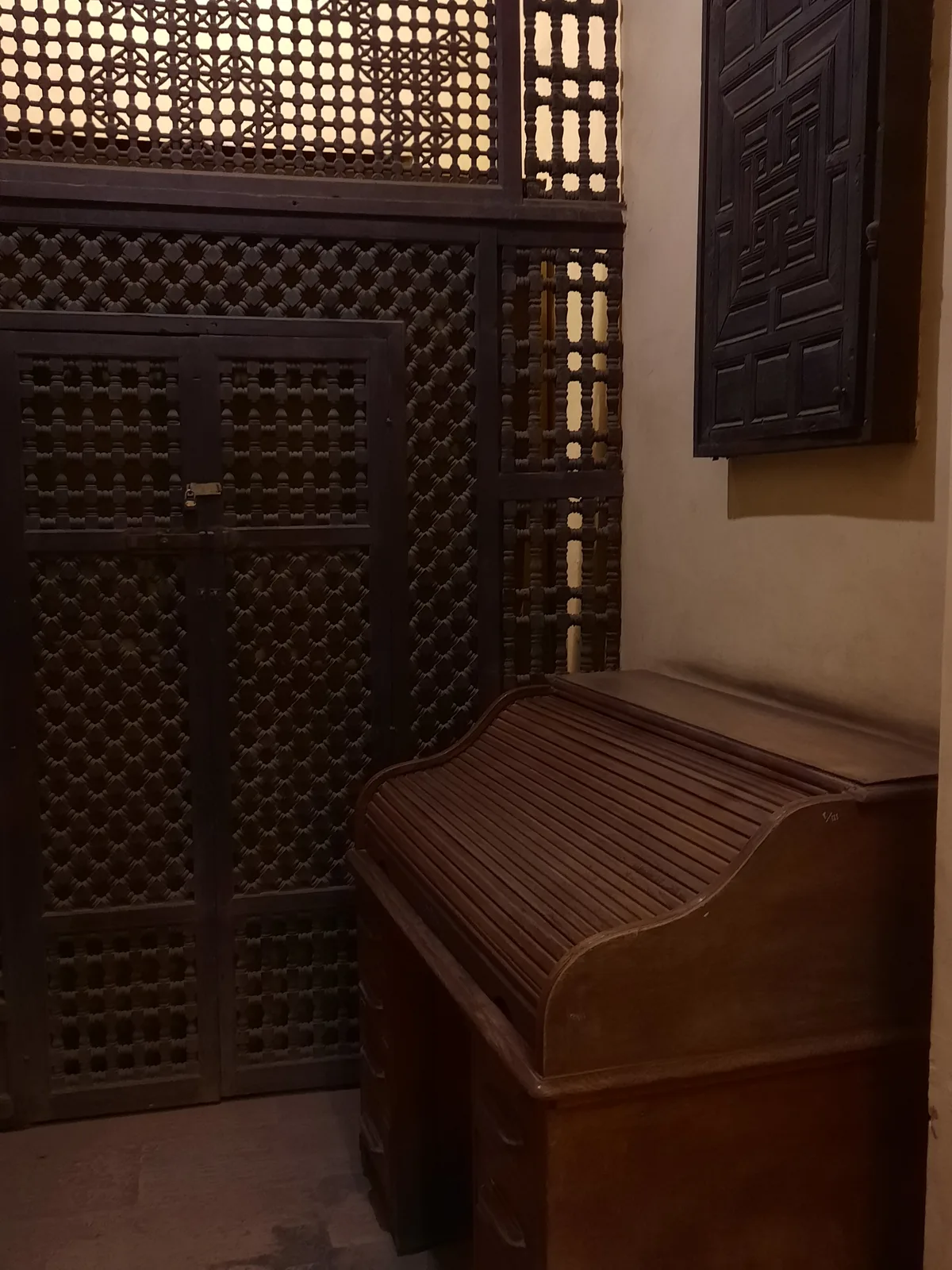
The smallest entry on this list may be the most atmospheric building in Cairo. Against the eastern wall of the great Ibn Tulun Mosque in the Sayyida Zeinab quarter stand two old houses joined by a bridge at the upper level: Beit el-Kritliya, built in 1632 by Hajj Muhammad ibn al-Hajj Salim and later owned by a wealthy woman from Crete – the Cretan house, as the name says – and Beit Amna bint Salim, built in 1540 by Abdel-Qader al-Haddad. Into this pair of Mamluk- and Ottoman-era homes stepped Major R. G. Gayer-Anderson, a British army doctor and passionate collector, who was granted permission to live in them from 1935 to 1942. He restored both houses, filled them with his collection – furniture, carpets, glass, ceramics, pharaonic, Coptic and Islamic pieces gathered across the region – and on leaving Egypt in 1942 donated the whole assemblage to the Egyptian state. The museum that bears his name is therefore not a display about a house. It is the house, kept as its collector arranged it.
That is its magic. You move through reception halls and private rooms that still feel inhabited: the Damascus Room, panelled in Syrian woodwork; a Queen Anne Room in European taste; a Persian Room; carved ceilings, inlaid chests, and mashrabiya screens that turn the daylight into latticework – the screens behind which, in the house’s legend-laden telling, the women of the household watched the street unseen. A roof terrace looks across to the minaret of Ibn Tulun, whose spiral silhouette is one of the great views in Islamic Cairo, and the well in the courtyard carries its own folk tale of bats and treasure. An hour is the standard visit, and it is an hour that changes how visitors read every other interior in the city: after Gayer-Anderson, the empty halls of the big museums feel like what they are – buildings whose people have left.
Reaching it takes a small effort, which keeps it quiet. The museum stands beside the Ibn Tulun Mosque, a taxi ride from Sayyida Zeinab metro station, and it pairs naturally with the mosque itself and with the Sultan Hassan and al-Rifai mosques at the Citadel end of the same morning. On the Ministry’s published price list, checked 1 November 2026, foreign entry is EGP 100 – the cheapest ticket among the best museums in cairo – and hours are 9am to 5pm. Who should skip it? Visitors who measure museums by collection size, and anyone with mobility difficulties, since the houses are all stairs and thresholds. Who should go? House-museum lovers, readers of old Cairo, photographers of interiors, and anyone building an Islamic Cairo day. It is the proof, small and perfect, that the best museums in cairo are not always the biggest ones.
What Moved Where – Reading Cairo’s Great Museum Shuffle
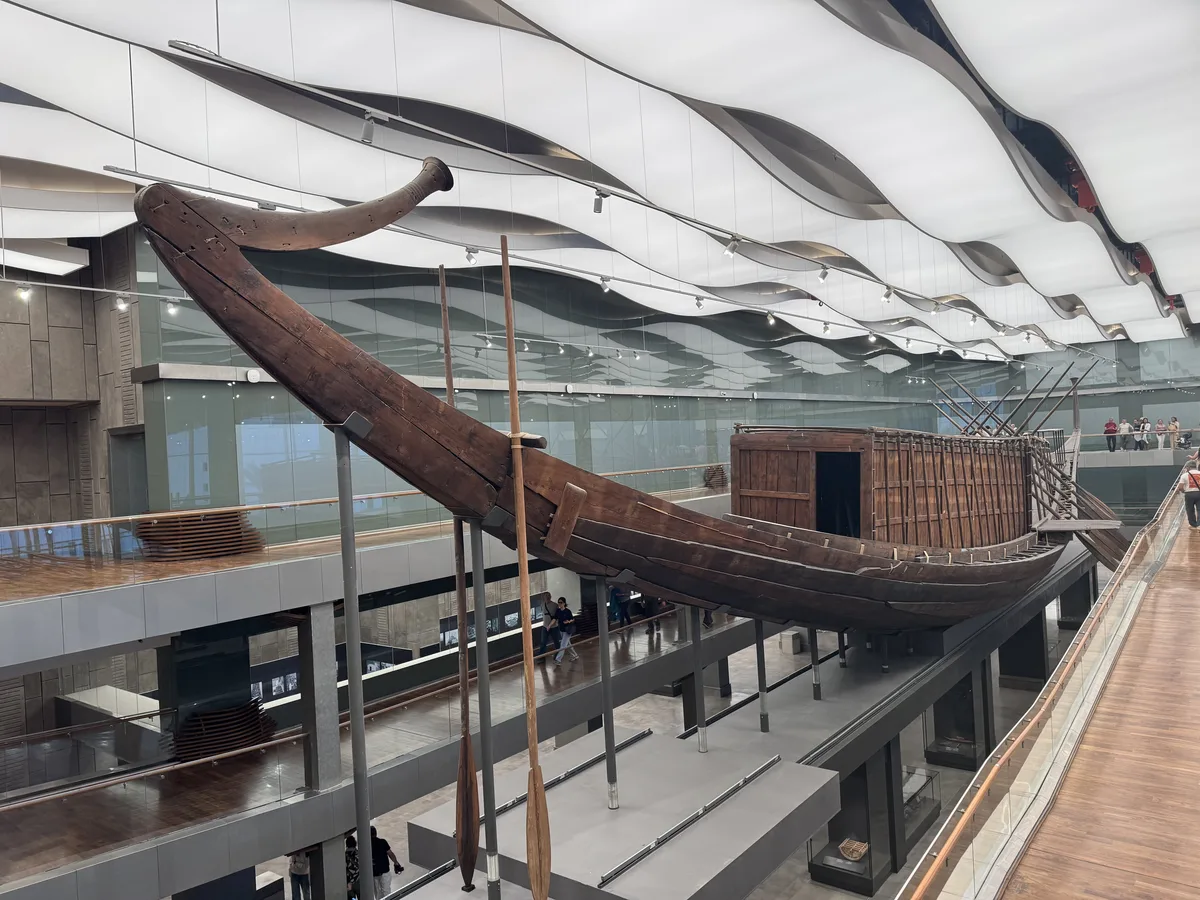
Because so much confusion follows travellers into Cairo, the moves deserve one plain summary. In April 2021, the twenty-two royal mummies travelled from the Egyptian Museum in Tahrir to NMEC in the Pharaohs’ Golden Parade, and they remain in the Royal Mummies Hall there. The same year, Khufu’s ship – the 4,600-year-old cedar vessel found dismantled beside the Great Pyramid in 1954 and reassembled in a museum at Giza – was transferred to the Grand Egyptian Museum, where it now has a dedicated hall. In 2025, the complete Tutankhamun collection made the same journey from Tahrir to Giza, displayed together for the first time at the GEM. And the space those departures freed in Tahrir has been given largely to the treasures of Tanis, excavated in the Delta in 1939 and 1940 and for decades the most under-shown great collection in Egypt.
The practical moral is short. Anything written about Cairo’s museums before late 2025 – printed guidebooks, older web pages, well-meaning advice from friends who visited in 2019 – may confidently tell you the wrong building for Tutankhamun, the mummies or the ship. Check the date on whatever you read, including, in fairness, this page: it reflects the arrangement as it stood when checked on 1 November 2026, and the sections above are organised so that the “where is it now” answer is never more than a paragraph away. The shuffle also explains the new personalities of the best museums in cairo. The GEM is the encyclopaedia and the blockbuster in one; Tahrir, relieved of its two star tenants, has become the deep cut; NMEC, built around the mummies’ arrival, is the storyteller. Cairo did not just gain a museum. It rebalanced three.
How the Museums Fit Together – Clusters, Days and Honest Sequencing
Cairo’s museums make sense as four clusters, and planning by cluster rather than by ranking is what separates a good museum trip from a punishing one. The Giza cluster is a single building: the Grand Egyptian Museum, paired with the pyramids and the Sphinx on the same plateau, fills a day by itself and brooks no additions. The downtown cluster is the walkable pair – the Egyptian Museum on Tahrir Square and Abdeen Palace a short distance east – which between them carry the pharaonic treasury and the royal city, and can share one unhurried day with the Nile corniche and the downtown cafes between them. Our Cairo travel guide shows how these days fit the city’s wider geography.
The southern cluster is the storyteller’s route. Start at the Coptic Museum in Old Cairo, where the Babylon Fortress walls and the old churches surround you, then continue south to NMEC in Fustat for the long chronological walk and the mummies; the two sit on the same side of the city, on the same metro line’s orbit, and together they trace Egypt’s passage from the pharaohs to the early church to everything after. The fourth cluster is Islamic Cairo: the Museum of Islamic Art at Bab el-Khalq and the Gayer-Anderson Museum beside Ibn Tulun, with the mosques, gates and markets of the historic city between and around them. Both quarters fall within the area UNESCO inscribed as Historic Cairo, a World Heritage listing that has covered this urban fabric since 1979 – the museums here are not isolated stops but rooms inside a single vast monument. Manial Palace floats between clusters, a garden interlude that attaches most easily to the southern day or to a free morning of its own.
Timing inside the day matters as much as the grouping. The pharaonic giants reward early starts – doors at nine, the famous rooms to yourself for the first hour, tour groups thickening by eleven – while the small houses are at their best in the softer light of mid-afternoon, when their courtyards and gardens empty and the attendants have time to talk. A pattern that works well across a Cairo stay is one giant per day, anchored early, with at most one smaller museum trailing it later and in the same district; the day feels full without ever becoming a march, and each building gets the version of you that is still curious.
Sequencing follows from the clusters. With one museum day, spend it at Giza: the GEM plus the plateau is the essential Cairo museum experience of this decade. With two days, add the downtown pair, Tahrir in the morning and Abdeen after, because the old museum rewards freshness and the palace is light work for the afternoon. With three, the southern day – Coptic Museum, Old Cairo’s churches, then NMEC – earns its place, and the Islamic Cairo pair becomes the obvious fourth. The mistake to avoid is compression greed: the GEM and NMEC on the same day leaves you too tired to feel either, and three museums in a day converts the best museums in cairo into a list you have merely survived. Two substantial museums a day, in the same cluster, with a long lunch between them, is the ceiling for anyone who wants to remember what they saw.
Tickets, Hours and Getting Between the Museums
Money first, with the attribution this subject demands. The figures used throughout this guide are the foreign-visitor prices on the official ticket list published by Egypt’s Ministry of Tourism and Antiquities, checked on 1 November 2026: Egyptian Museum EGP 550, NMEC EGP 550, Museum of Islamic Art EGP 340, Coptic Museum EGP 280, Manial Palace EGP 220 and Gayer-Anderson Museum EGP 100, with student prices at roughly half and Egyptian citizens paying far less. The same list gives opening hours of 9am to 5pm for all six, and the museums’ own platform pages add one refinement – NMEC’s extra Friday evening session, running into the evening after the daytime hours. These figures genuinely change; treat them as the checked position on that date, not as a promise, and confirm on the official egymonuments platform when you plan. The Grand Egyptian Museum sits outside this list entirely: its timed tickets are sold through its own official booking site, where its prices and hours are the only ones that count, and its terms – named tickets, booked slot only, no re-entry – are stated there in full. Abdeen, as its section explains, is the other exception, ticketing itself at the palace door.
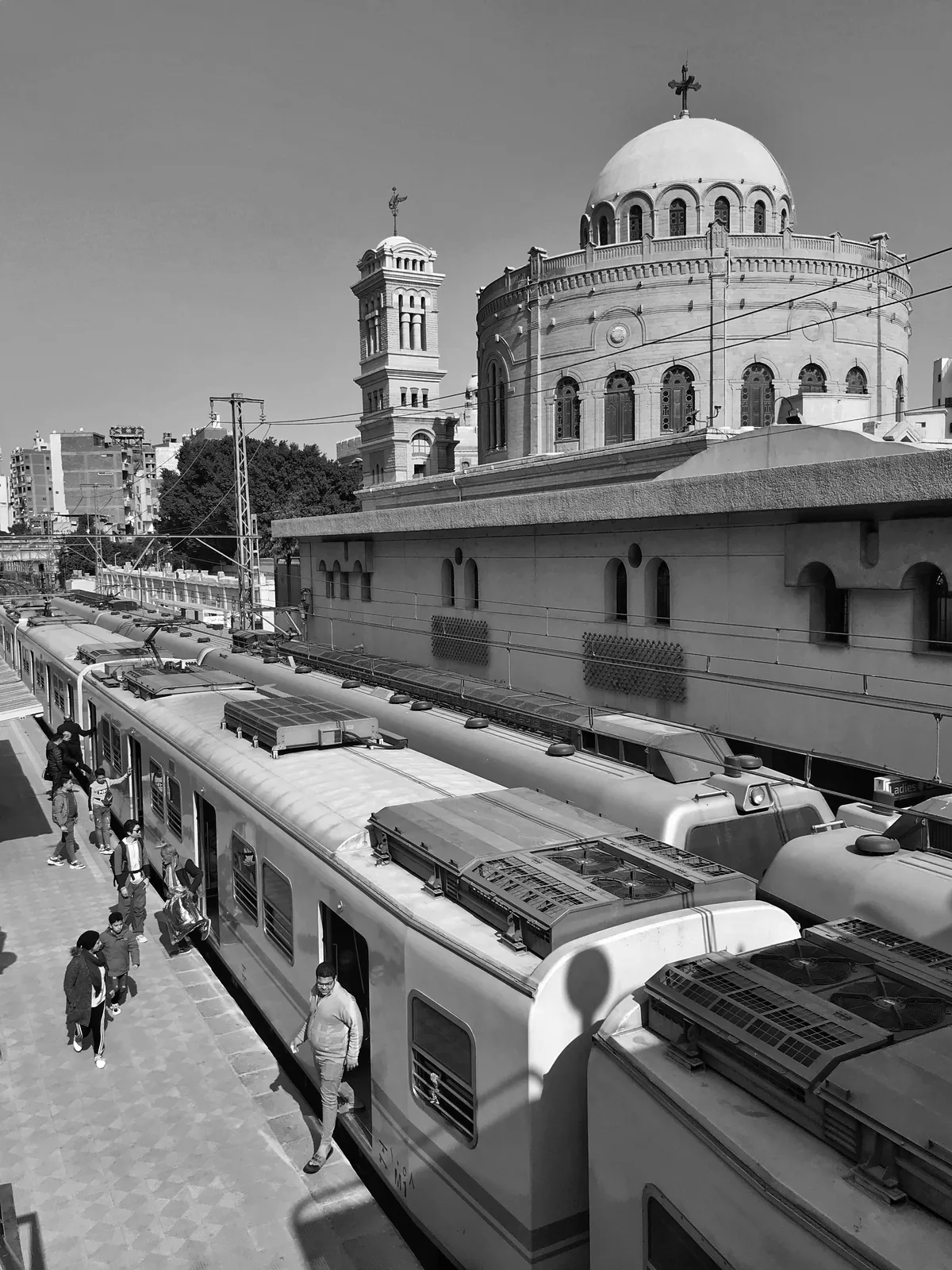
Getting between the museums is easier than Cairo’s traffic suggests, because the metro quietly links most of them. Line 1’s Mar Girgis station stands at the Coptic Museum’s gate and puts NMEC a short onward ride or taxi hop away; Sadat station, the interchange under Tahrir Square, serves the Egyptian Museum directly and Abdeen by a short walk or one stop to Mohamed Naguib. The Museum of Islamic Art sits between the Attaba and Bab el-Shaaria stations; Gayer-Anderson and Manial both take a taxi for their final leg, from Sayyida Zeinab station or direct. Only the GEM lies beyond the metro’s easy reach, out at Giza, where a taxi or ride-hailing car from the centre is the standard approach and the journey wants a generous allowance in traffic. Friday is the local weekend’s first day: expect the big museums to be busiest with Egyptian families from late morning, which is a pleasure to witness and a reason to start early. Arriving at any of the best museums in cairo near its 9am opening, on any day, remains the single most reliable crowd-avoidance tactic there is.
Best Museums in Cairo – Questions Travellers Ask
If I can only visit one of the best museums in cairo, which should it be? For almost everyone, the Grand Egyptian Museum: it holds the complete Tutankhamun collection, the Khufu ship and the broadest pharaonic survey in the country, all in the most legible modern displays in Egypt, and a half-day there answers the most first-trip questions at once. The exceptions are real, though – a traveller who has already done Giza on a previous trip will get more from NMEC’s storytelling or Tahrir’s deep collection, and anyone whose day is anchored downtown may honestly prefer the Egyptian Museum’s two-to-four hours to a cross-city expedition.
Is the Egyptian Museum in Tahrir still worth visiting now that the Grand Egyptian Museum is open? Yes, and the reason surprises people: the departures of Tutankhamun and the mummies pushed the museum to show the treasures of Tanis – including the gold mask and silver coffin of Psusennes I – in the vacated halls, alongside its permanent giants like the Narmer Palette and the complete burial of Yuya and Thuya. It remains the largest Pharaonic collection in the world on the Ministry’s own description. What it no longer offers is the boy king or the mummies, so go for the collection’s depth and the 1902 building’s atmosphere, not for the two famous absences.
Where can I actually see Tutankhamun’s treasures and the royal mummies now? Tutankhamun’s complete collection – all 5,398 pieces of it, on the figure published at the opening – is at the Grand Egyptian Museum in Giza, displayed together for the first time since the tomb was opened. The twenty-two royal mummies, including Hatshepsut and Ramesses II, rest in the Royal Mummies Hall at NMEC in Fustat, where they were carried in the Pharaohs’ Golden Parade of April 2021. Neither is in Tahrir any more, whatever older guides and hotel leaflets still claim, and building a day around the wrong building is the most common museum mistake in Cairo at the moment.
How many of the best museums in cairo can I realistically see in one day? Two, if they share a cluster: the Egyptian Museum with Abdeen downtown, the Coptic Museum with NMEC in the south, or the Museum of Islamic Art with Gayer-Anderson across the Islamic city. The Grand Egyptian Museum counts as a whole day on its own, especially paired with the Giza plateau. Three substantial museums in a day is technically purchasable and practically wasted – by the third building the statues blur, and these collections deserve better than a checklist.
Do I need to book museum tickets in advance? For the Grand Egyptian Museum, yes in practice: entry is by timed, dated ticket through the museum’s official booking site, tickets are personal to the named visitor, and popular slots on weekends and holidays go first. The Ministry museums sell at their doors and through the official egymonuments platform, and for the Coptic Museum, Manial and Gayer-Anderson a walk-up ticket is the normal experience outside peak holiday periods. Abdeen, run by the presidency rather than the ministry, sells its own ticket at the palace. Wherever you buy, carry the passport the ticket was booked against if you book online, and keep small notes handy at the smaller doors.
What are the photography rules? They vary by building and by room, and the signs at each door outrank any guide. The Grand Egyptian Museum’s official terms allow personal photography while prohibiting flash, tripods, selfie sticks and drones, and large bags over 40 by 40 centimetres go to its cloakroom. NMEC’s Royal Mummies Hall is the famous strict case – no photography at all, enforced – and several of the smaller museums restrict flash or charge rules change by exhibition. The reliable habit is simple: camera out where others are shooting openly, pocketed the moment a guard or a sign says otherwise, and never a flash near textiles, manuscripts or painted wood, at any of the best museums in cairo.
Are the three small museums – Abdeen, Manial and Gayer-Anderson – really worth time on a short trip? On a two-day trip, no: the giants and one cluster day will fill you. On three days or more, emphatically yes, and they are cheap – EGP 100 to 220 on the Ministry list where they appear, an hour or so each. They show the Cairo of palaces, gardens and furnished rooms that the antiquities museums cannot, they are rarely crowded, and travellers consistently report them as the visits they describe most vividly at home. If forced to pick one, take Gayer-Anderson for atmosphere, Manial for gardens, and Abdeen for the working-palace novelty.
The Short Version – Best Museums in Cairo Ranked for Busy Travellers
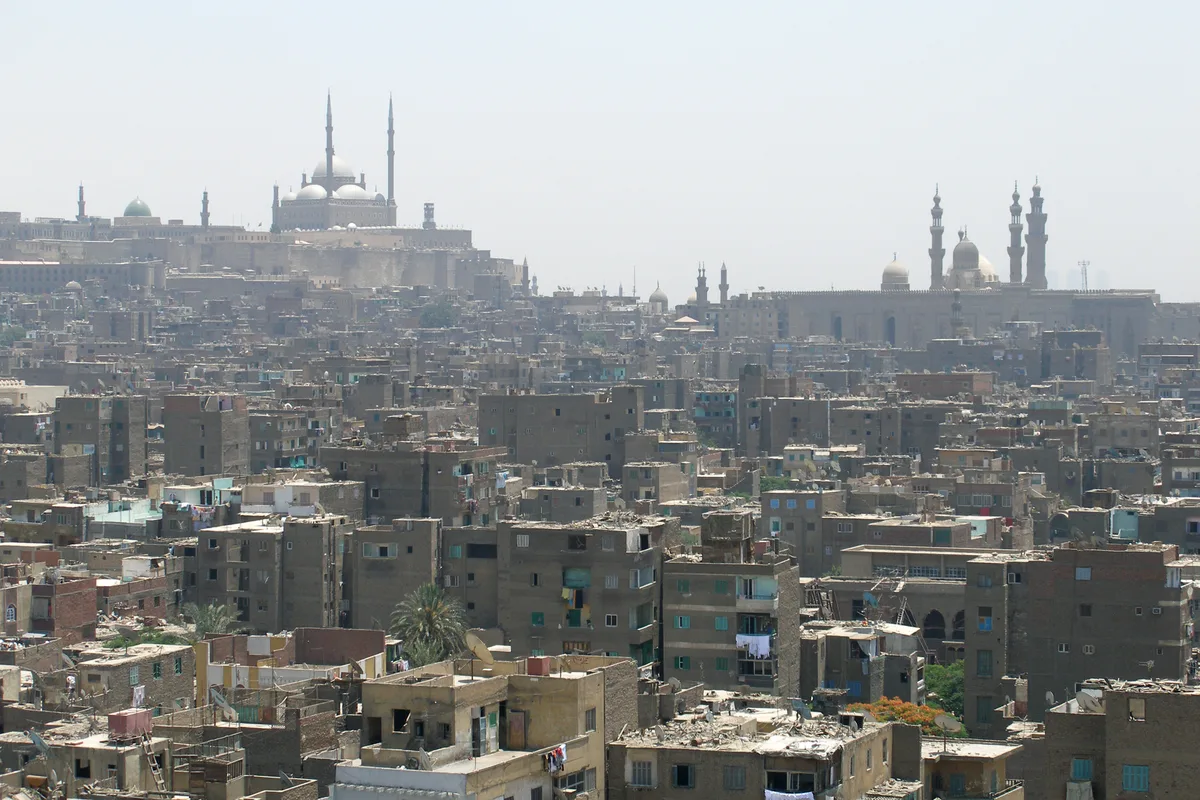
If the whole guide had to fit on an index card, it would read like this. The Grand Egyptian Museum is the essential visit of the decade – Tutankhamun complete, the Khufu ship, a hundred thousand artefacts beside the pyramids – and it takes the better part of a day. The Egyptian Museum in Tahrir is the beloved original, relieved of its two star collections and reborn around the gold of Tanis; go for depth, atmosphere and the building itself. NMEC is the storyteller, the whole of Egyptian history in one calm walk, with the twenty-two royal mummies in the quiet hall below. The Coptic Museum and the Museum of Islamic Art are the world’s largest collections of their kinds, calm, beautiful and chronically under-visited. And the small three – Abdeen’s working palace, the Manial prince’s garden estate, Gayer-Anderson’s furnished Ottoman houses – are where the best museums in cairo stop being about antiquity and start being about the city itself.
The deeper pattern is worth one last sentence. Cairo’s museums used to be a hierarchy, with one palace of wonders at the top and everything else as footnotes. The openings and the great shuffle of 2021 to 2025 turned them into a conversation instead – three pharaonic museums with distinct personalities, two faith collections of world rank, and three houses that explain how the city lived between the monuments. The best museums in cairo are no longer a list to complete. They are an itinerary to compose, and the composing, done by cluster and by appetite rather than by fame, is most of the pleasure.