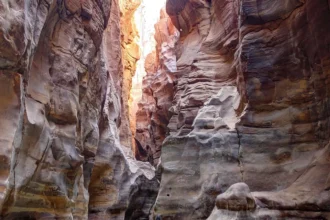
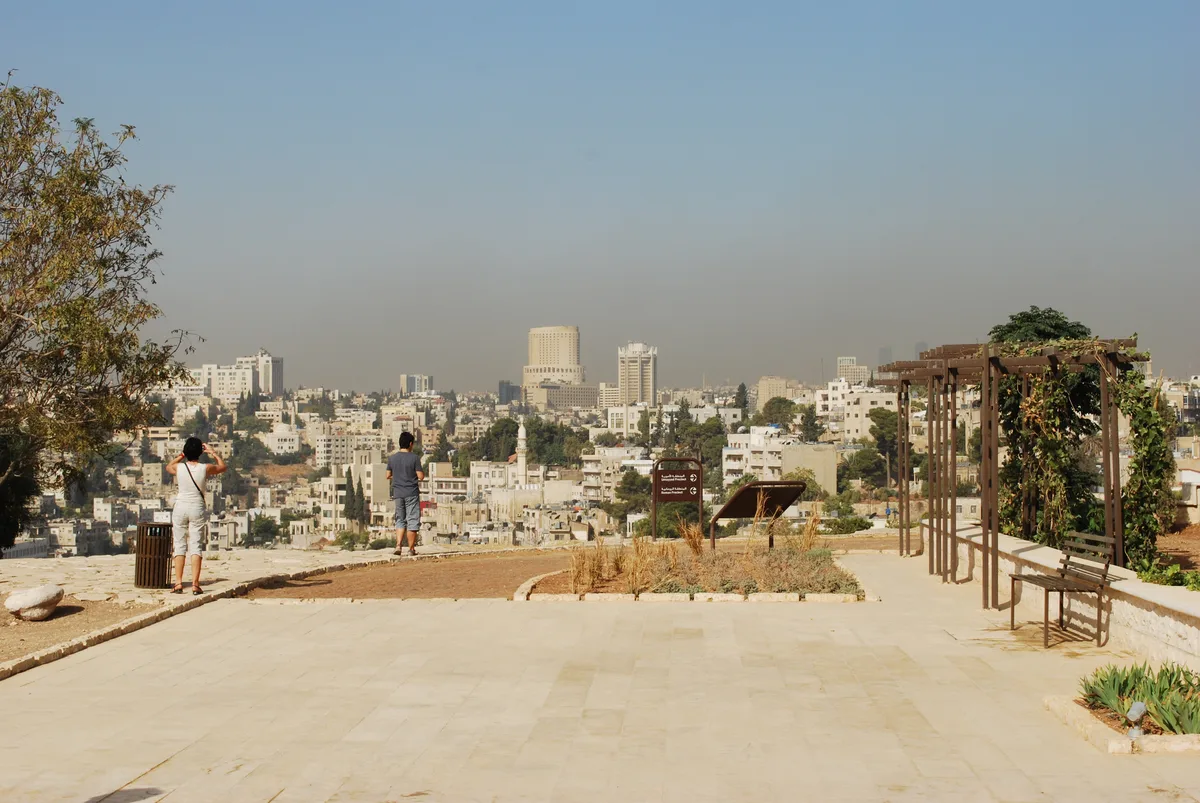
Jordan is a small country with a lopsided map, and that is why the question of where to stay in jordan matters more here than in most destinations. Almost everything a first-time visitor comes for runs down one western spine – Amman at the top, Petra and Wadi Rum in the deep south, the Dead Sea in between – while the airport, the borders and the one coastal town sit at the edges of that spine. Sleep in the wrong node and you do not ruin the trip, but you tax it: an extra hour of highway at dawn, a second dawn start at Petra because the first one began too far from the gate, a desert night spent in a village outside the protected area when the whole point was to wake up inside it.
So this guide is organised by area, not by property. It names no hotel rates, prints no prices and recommends no specific hotels, because where to stay in jordan is a decision about bases – which town, which side of which town, which side of a park boundary – and only once the base is right does the choice of a particular building become easy. Each area below gets the same treatment: what it actually feels like, who it suits, who should skip it, and the honest catch that the booking photographs leave out.
One structural fact shapes everything that follows. Jordan’s sights are far apart and its public transport between them is thin, so most visitors move by rental car, private driver or tour, and the sleeping map has grown around that reality: a capital with distinct districts that behave like separate small cities, a one-purpose town built for a single archaeological park, a row of desert camps you cannot simply drive to, and a resort strip on a shore with no town attached to it at all. Read the areas in order and the pattern assembles itself; the routing section near the end then turns the pattern into nights.
A second warning, because it decides more trips than any other: in Jordan, distance on the map and distance in the day are different things. The Dead Sea looks like an excursion from Amman and works better as a night of its own. Wadi Musa looks like a suburb of Petra and is, but its hillside means two hotels on the same street can be twenty minutes apart on foot. Wadi Rum’s camps look interchangeable on a booking map and are not – some sit deep inside a UNESCO-listed protected area of 74,200 hectares, and some sit outside it, in or beyond the village that guards its gate. Where to stay in jordan is, in the end, a set of small geographic decisions with outsized consequences.
There is also a question of sequence hidden inside the geography. Jordan’s route logic runs downhill in both directions: the King’s Highway winds south through Madaba, Karak and Dana at the pace of the sights along it, while the Desert Highway runs back north at motorway speed. Which road you take decides which of these areas are nights and which are merely stops viewed through a windscreen, and the same hotel bed can be a base on one version of the trip and a transit halt on the other. That is why this guide treats where to stay in jordan and how to route Jordan as a single decision wearing two hats – the sections come first, the assembly instructions after them, and neither half makes complete sense without the other.
Where to Stay in Jordan at a Glance
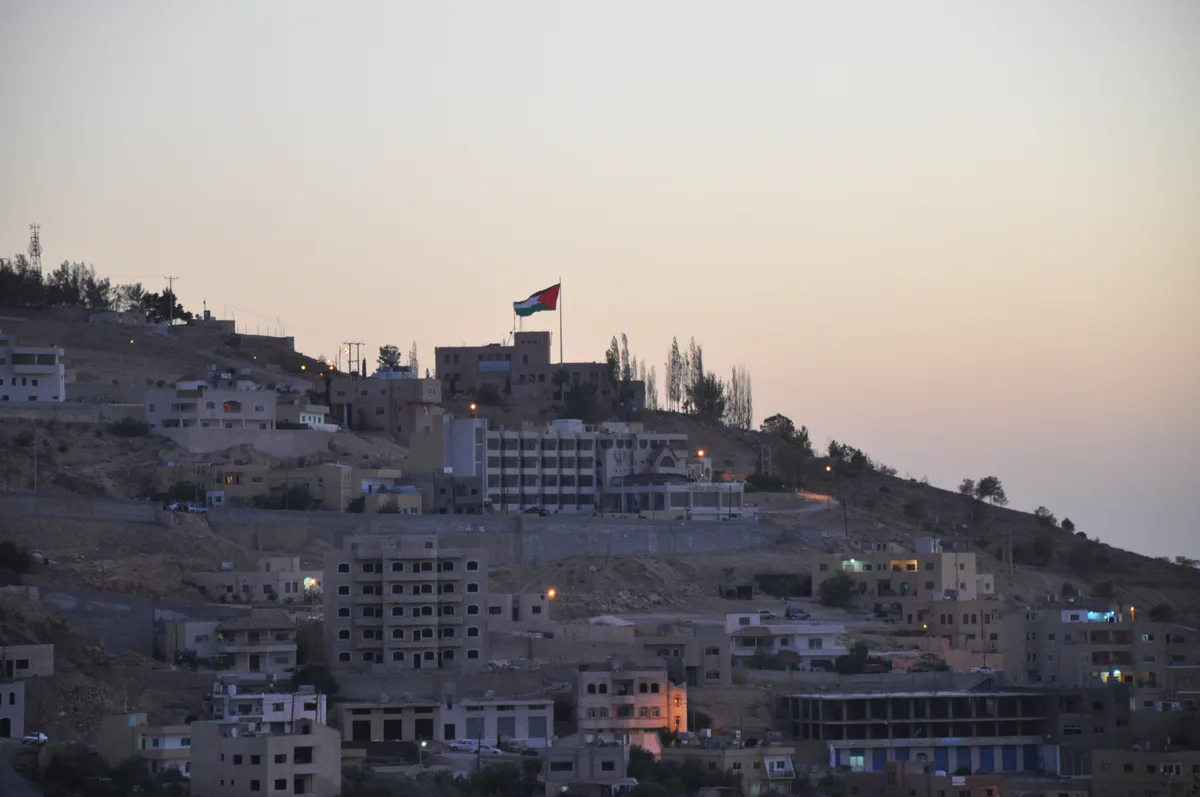
| Area | Best for | The honest catch |
|---|---|---|
| Downtown Amman (the Balad) | Budget beds, markets, the old city on foot | Noise, traffic and hills; nightlife is a shisha cafe, not a bar strip |
| Jabal Amman and Rainbow Street | Cafes, character, mid-range comfort | Steep lanes; parking and taxis take patience |
| Abdali and west Amman | Modern hotels, malls, business trips | Feels like any new district anywhere; short on old-city atmosphere |
| Airport side | One-night stopovers and early flights | Nothing to walk to; a corridor, not a neighbourhood |
| Wadi Musa (Petra) | Walking to the Petra gate at opening time | A steep, one-purpose town; gate-adjacent and upper town are different worlds |
| Aqaba city centre | Eating out, diving logistics, local life | The town beaches are the weakest on this coast |
| Tala Bay and South Beach, Aqaba | Resort ease and house reefs | A taxi ride from town for every dinner out |
| Wadi Rum camps (inside the protected area) | The real desert night – silence, stars, Bedouin hosts | No independent access; your camp is your whole world after dark |
| Rum village | Cheaper, simpler nights at the desert’s edge | Outside the protected area; the desert is a view, not your address |
| Dead Sea shore | Floating, spa downtime, a reset day | A resort strip with no town; you eat where you sleep |
| Madaba | A gentle small-town base near the airport | Quiet evenings; a base, not a destination after dark |
| Jerash and Ajloun | A green northern night on a longer trip | Most visitors day-trip; services thin out at night |
| Dana and Feynan | Walkers, eco-lodges, total quiet | Reached by arrangement; no passing trade, no choices on arrival |
The table is a filter, not a ranking. Where to stay in jordan depends on the shape of your route – a seven-night first trip sleeps in four or five of these areas, a long weekend in two – and the sections below give each one its evidence before the routing section spends it.
Amman – Downtown and the Balad
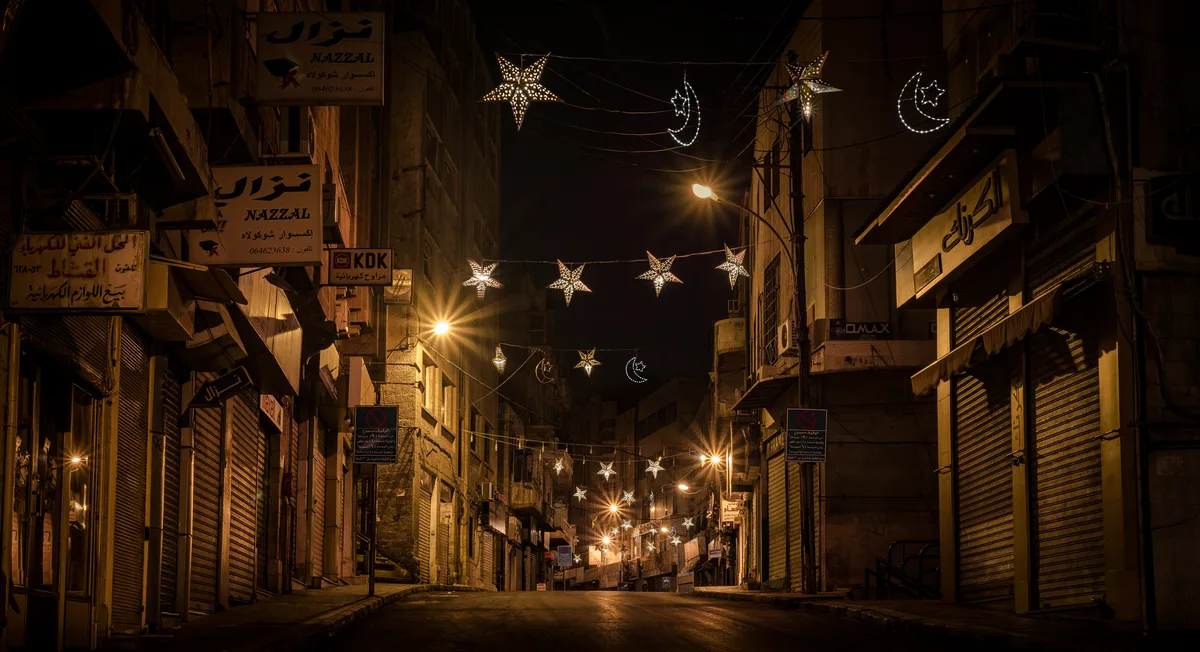
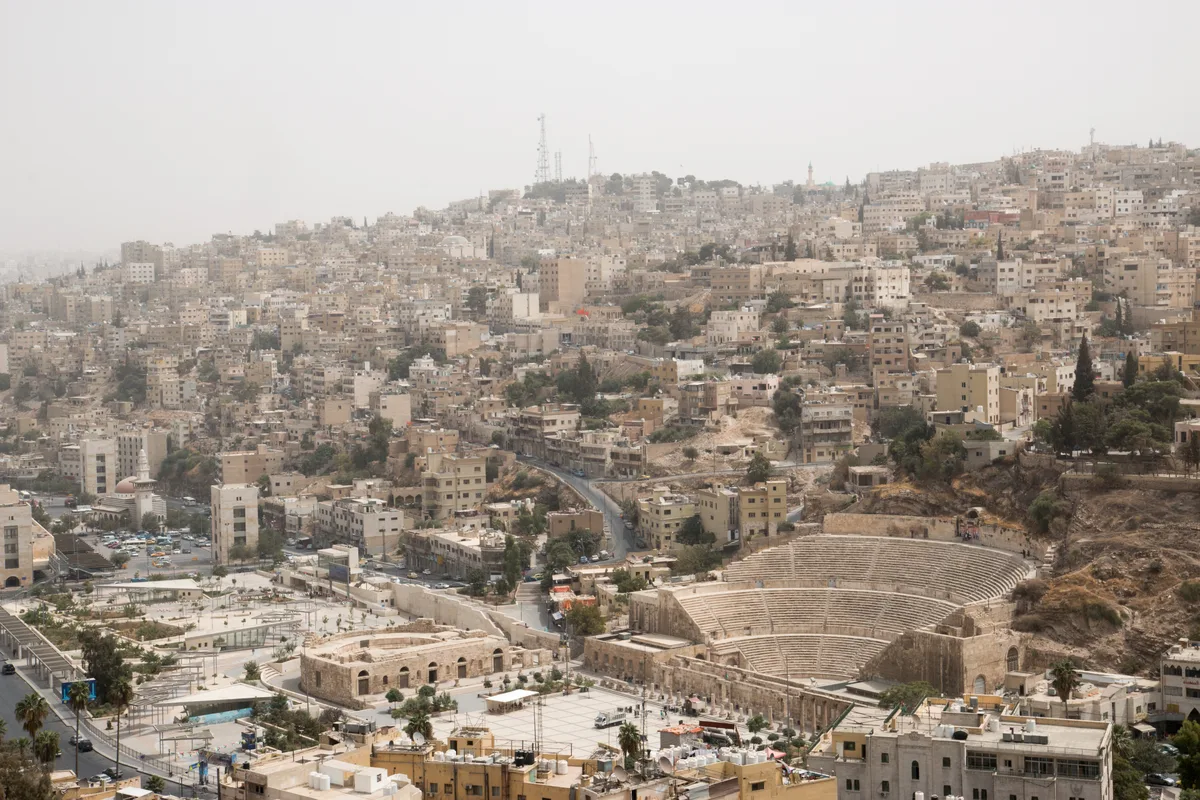
Downtown Amman – the Balad – is the old commercial heart of the capital, folded into the valley floor between the hills the rest of the city climbs. This is where the markets are: gold souks and spice stalls, fabric shops and falafel counters, the grand Husseini Mosque on its busy square, and the Roman theatre sitting at the foot of the Citadel hill as it has since the second century. The hotels here are the city’s oldest stock – small, family-run places above shops, budget hostels in side lanes, a few venerable mid-range buildings that have hosted travellers for decades – and the streets outside them run from dawn to late night with the noise of a working Arab city centre.
Who it suits: travellers who want to walk. From a Balad base, the Citadel, the Roman theatre, the Jordan Museum and the markets are all on foot, and the famous old eateries of the centre – the falafel and hummus institutions Ammanis argue about – are your local restaurants. It also suits the budget end of where to stay in jordan better than anywhere else in the capital: the concentration of small hotels and hostels here is the deepest in the city, and the competition keeps the whole district honest in a way the newer districts are not.
The catches are real and should be priced in. The Balad is loud – traffic funnels through the valley, horns are a language, and a light sleeper in a street-facing room will know it. The district is also built on slopes: “downtown” sounds flat and is not, and the walk up to the Citadel or to Jabal Amman at the end of a day is a climb, not a stroll. Evenings belong to the cafes and the juice stands rather than to any nightlife strip, and travellers who want a drink with dinner will find the district’s options thin compared with the west of the city. None of this makes the Balad a bad base; it makes it a specific one – the right answer for walkers, market-lovers and budgets, the wrong one for silence-seekers.
The Balad also rewards a particular kind of day structure. Because the district holds the sights as well as the beds, a downtown stay front-loads the trip: arrive, drop the bags, and the Citadel and the theatre are that afternoon’s walk rather than tomorrow’s expedition. Travellers who sleep here on night one often find they have “done” old Amman before their first breakfast is cold, which quietly buys a free day later in the trip. It is the only district in the capital where the sightseeing and the sleeping occupy the same streets, and for a two-night capital stay split between arrival energy and departure logistics, that compression is worth more than any single facility a hotel could offer.
Amman – Jabal Amman and Rainbow Street
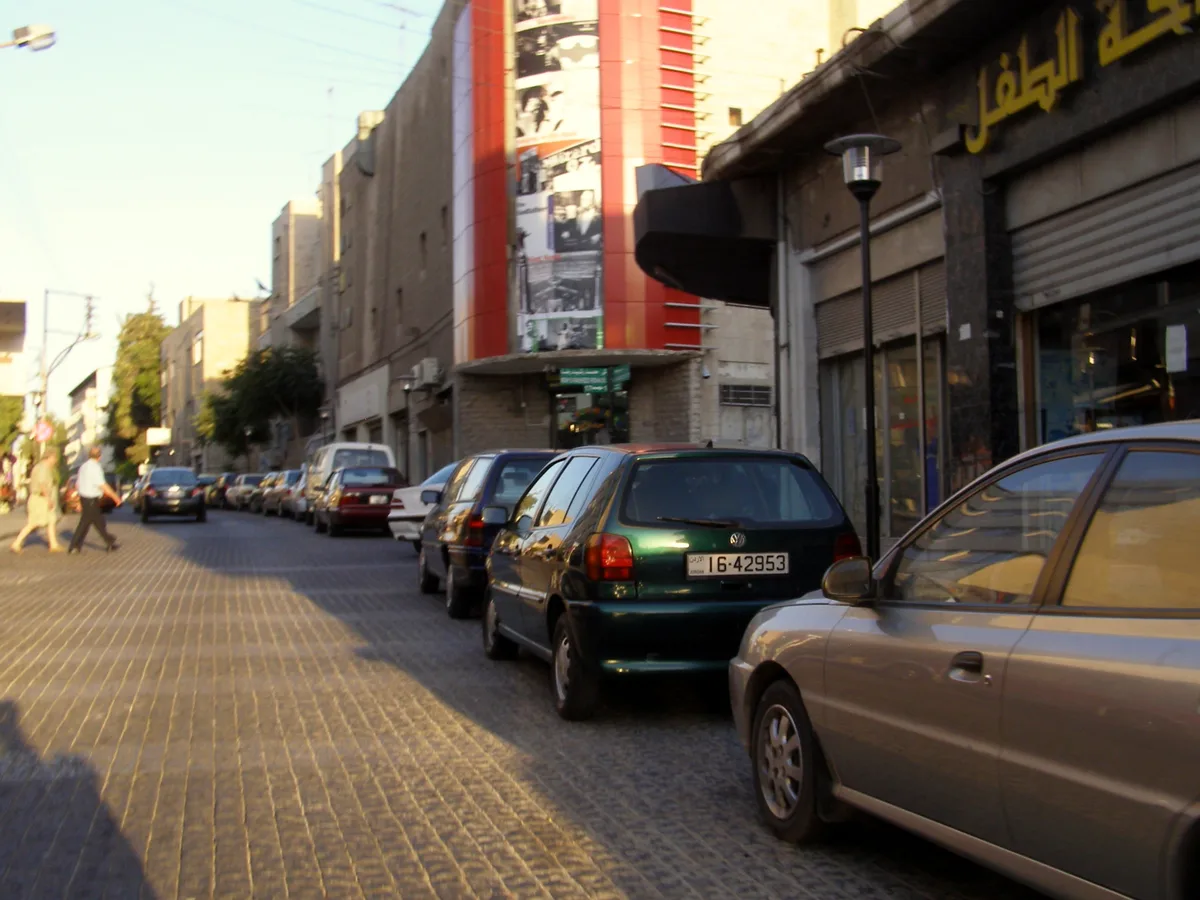
Immediately west of the Balad, the First Circle end of Jabal Amman is the capital’s cafe quarter, and Rainbow Street is its spine – a sloping street of stone houses, bookshops, ice-cream parlours, rooftop cafes and small galleries, with the side lanes of old Jabal Amman and neighbouring Jabal al-Weibdeh carrying the same atmosphere downhill. The accommodation matches the streets: small boutique hotels in converted stone villas, family guesthouses, well-kept mid-range hotels on the circle, and apartments that suit longer stays. Of all the answers to where to stay in jordan’s capital, this is the one most visitors picture when they imagine the trip going well.
The appeal is the evening. Amman is a city that comes out after dark, and from a Jabal Amman base the evening is a walk, not a taxi ride – dinner on a terrace, a wander down Rainbow Street, a coffee in Weibdeh. The district also sits at the practical centre of the tourist’s Amman: the Balad is a short taxi downhill, the Citadel is walkable for the fit, and the newer districts are minutes by car. Families do well here too, because the streets feel residential and calm once you are two lanes away from the main street, and the guesthouse end of the market is strong on space and breakfast.
Who should skip it? Drivers, mostly. Jabal Amman’s lanes are narrow, its parking is a contact sport, and a rental car based here spends the trip being squeezed into gaps; travellers touring by car often prefer the wider streets further west and visit Rainbow Street by taxi. The district’s hills are also unrelenting – every outing ends with an uphill return, which matters to travellers with limited mobility. And in high season the best small properties on and near Rainbow Street are the first in the city to fill, so the traveller who books late will find the choice narrower here than in the bigger-hotel districts. Character, in Amman, is the thing that sells out.
Amman – Abdali, West Amman and the Airport Side
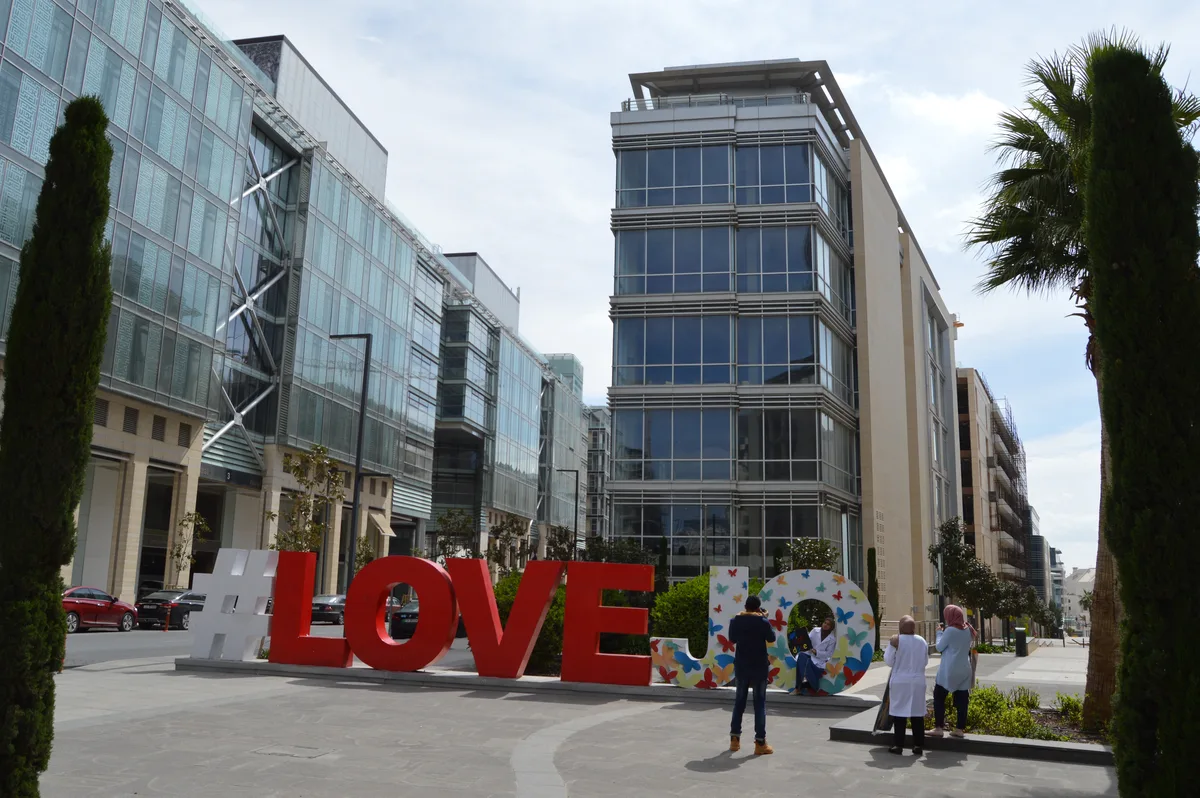
West and north of the old hills, modern Amman spreads out in districts built for cars: Abdali, the new downtown project of boulevards, towers and the city’s largest mall; Abdoun and Sweifieh, the affluent residential quarters of embassies and cafes; and the hotel rows along the main arteries, where the international chains and the big local hotels stand. This is where most business travel sleeps, where the largest rooms and the most predictable international-standard hotels are, and where a traveller who wants a gym, a pool and a soundproofed window will find them without research. As an answer to where to stay in jordan, it is the comfortable default – and the least distinctive one.
The honest catch is sameness. Abdali’s boulevard could be in any ambitious city in the region, and a trip based entirely in west Amman can end feeling oddly placeless – efficient, comfortable, and short on the stone lanes and market noise that make the capital memorable. The districts also assume wheels: distances are real, walking between sights is rarely the plan, and the taxi or ride-hailing app becomes part of the daily budget of time. Travellers split on this fairly cleanly. Those who tour hard all day and want the hotel to be a quiet machine choose the west and are right; those who want the city itself to be part of the experience choose the older hills and are also right.
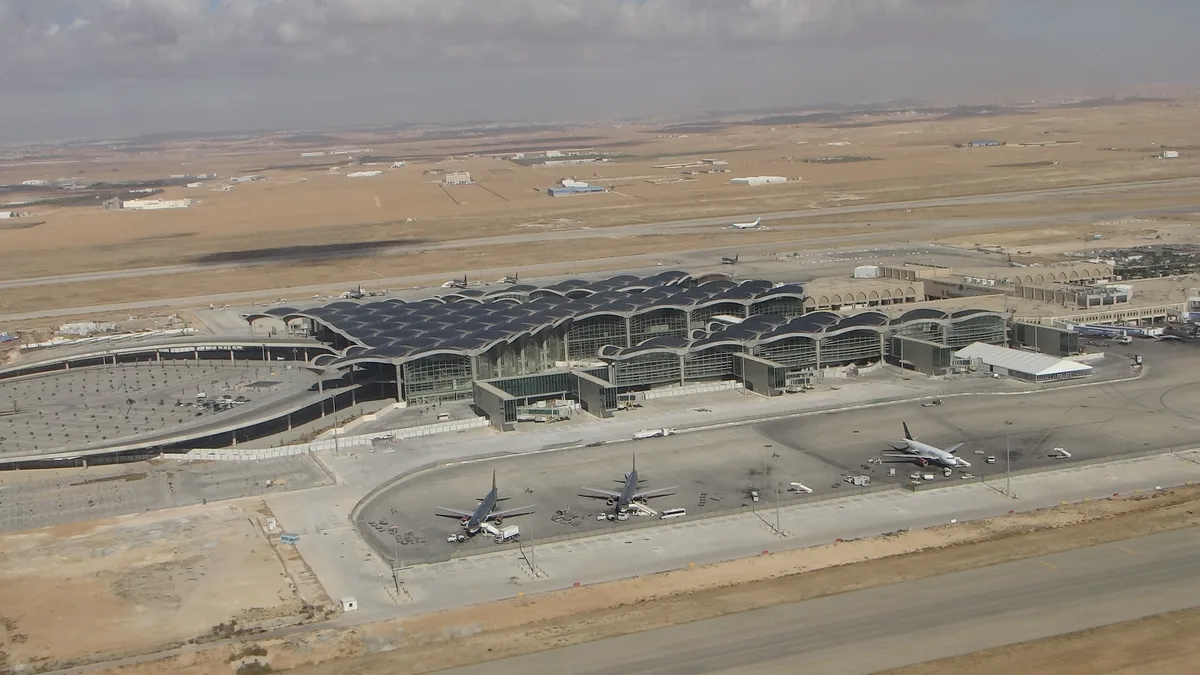
South of the city, the airport side deserves its own short paragraph, because it answers a different question. Queen Alia International Airport sits in open country well outside Amman, and the small cluster of airport hotels near it exists for one purpose: the stopover, the late arrival, the dawn departure. Used for exactly one night at the start or end of a trip, an airport hotel is a sensible tool. Used as a base for sightseeing, it strands you in a corridor with nothing to walk to, paying in transfers what you saved in convenience. Where to stay in jordan on night one depends on when your flight lands – after midnight, the airport side has a real case; at noon, go into the city and start the trip properly.
Two companion guides go deeper on the capital itself: our best places to visit in Amman for the sights, and our best things to do in Amman for how the days and evenings actually run.
Wadi Musa – Sleeping Beside Petra
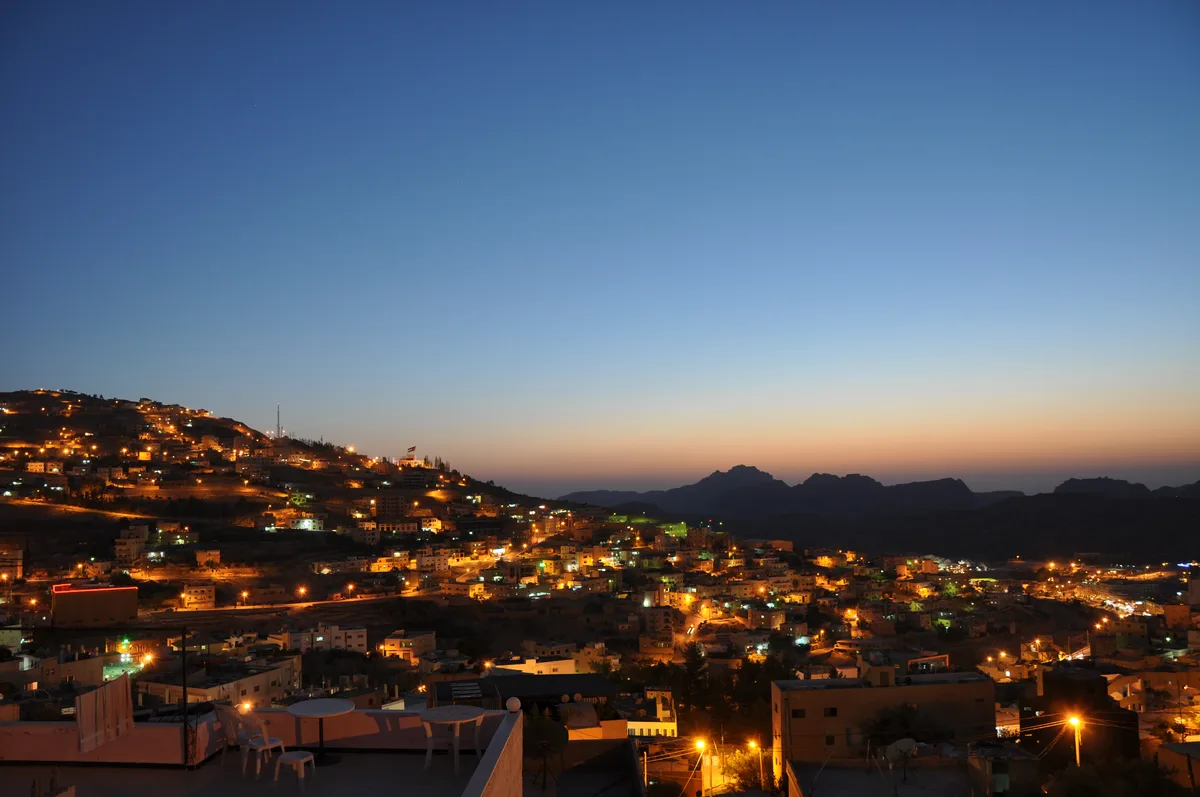
Every visitor to Petra sleeps in Wadi Musa, the town that has grown up east of the archaeological park – there is no accommodation inside the site itself, and the town exists, in its modern form, because the park does. The park’s visitor centre and the Siq beyond it form the eastern entrance to a city the Nabataeans carved into the rock, inscribed by UNESCO in 1985, and the geography that decides your stay is brutally simple: Wadi Musa is built on a steep hillside, the gate is at the bottom of it, and the town’s hotels string out along the road that climbs away from the gate through the town centre and up towards the King’s Highway. Where on that slope you sleep is the whole decision.
At the bottom, the gate-adjacent strip puts you on foot: hotels within a few minutes’ walk of the visitor centre, which is what a serious Petra day wants – through the gate at opening, ahead of the tour groups, in the Siq while it is still quiet, and back at the hotel for a late breakfast or a rest before an afternoon return. The catch is that you pay for the position in character: the gate area is a service strip of hotels, ticket touts and souvenir shops, and the town’s own life – its bakeries, its local restaurants, its evening streets – is up the hill, not around you. Our Petra travel guide covers what those gate-first mornings are actually for.
In the town centre and on the upper slopes, the balance reverses. The hotels thin into smaller family properties and guesthouses, the views open out across the hills towards the park’s mountains, the streets are the town’s own, and dinner is where Wadi Musa eats rather than where it feeds visitors. The price is the hill itself, twice a day: down to the gate in the morning, ideally by the hotel’s shuttle or a taxi rather than on foot, and back up after eight or ten kilometres of walking inside the park, when the climb feels longest. Neither choice is wrong; they are answers for different travellers. Walkers doing two full Petra days should weight the gate heavily. Travellers doing one long day, with evenings that matter, should weight the town. Where to stay in jordan rarely reduces to a single street – in Wadi Musa, it does.
One more mechanism belongs here, because it surprises people: a small number of stays market themselves on the Little Petra side, around the village of Bayda and the park’s quieter northern entrance – the so-called back door towards the Monastery. These are a different product: rural, quiet, sometimes camp-style or eco-lodge in form, and genuinely lovely for a second night or a walking-focused trip. But they are a drive from the main gate, and for a first visit built around the Siq and the Treasury they solve a problem most visitors do not have. Treat them as a deliberate choice, not a default.
A second Petra mechanism deserves stating, because it catches out even experienced travellers: the park is big enough that where in Wadi Musa you sleep decides what your second day looks like. A gate-side base makes the Monastery-before-the-crowds plan realistic – in at opening, up the steps while they are still in shadow – while a town base quietly pushes the same plan towards a taxi negotiation at dawn. Neither is impossible from the other end of town; both are simply easier from one. First-time visitors consistently underestimate how much of Petra is walking, and the traveller choosing between the two ends of Wadi Musa is really choosing which tiredness they prefer: the hill at the end of the day, or the transfer at the start of it.
Aqaba – the City Centre
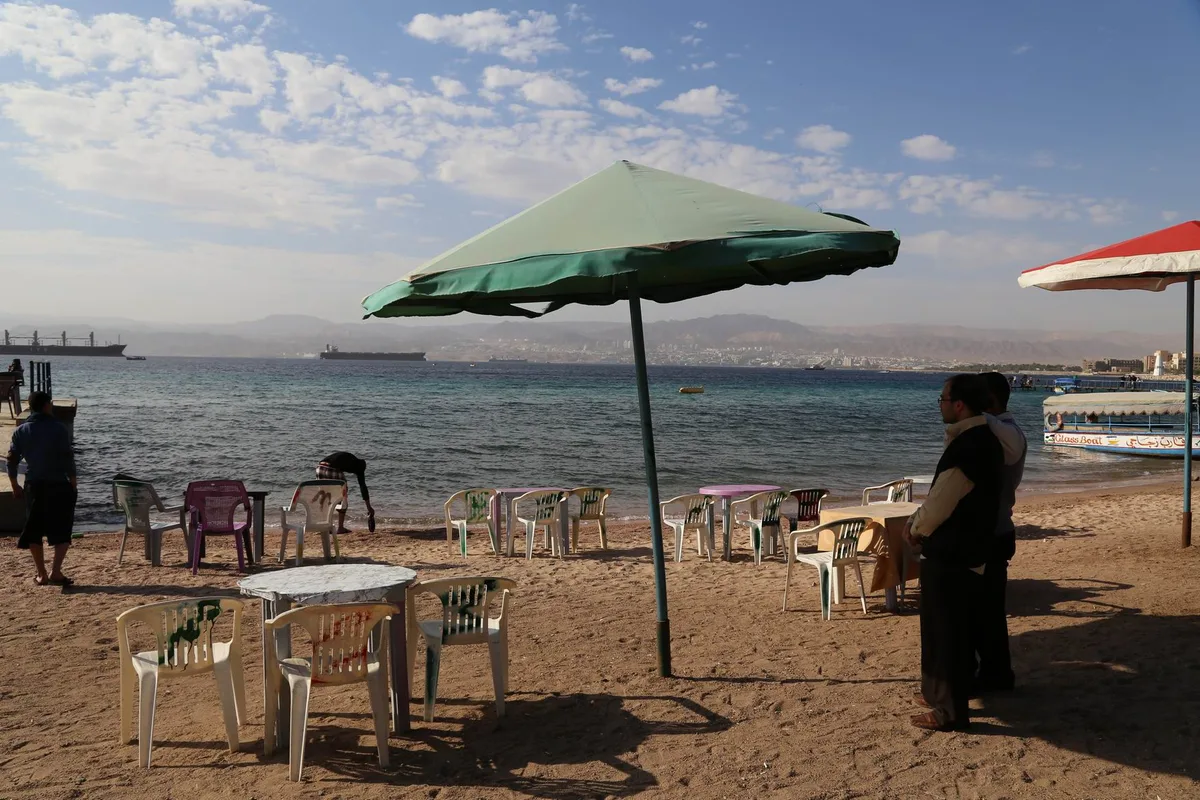
Aqaba is Jordan’s only window on the sea, a small port city at the head of the Red Sea gulf that shares its water with Eilat across the border fence, and its centre is a real town in a way the resort zones are not: a corniche, a castle, the big flagpole over the Arab Revolt plaza, fish restaurants and shisha cafes, dive shops along the main streets, and hotels of every age and size stacked between the waterfront and the market streets behind it. Sleeping in the centre means the town is your evening – dinner where Aqaba eats, a walk along the shore, a dive boat in the morning leaving from the town marinas.
The case for the centre is logistics and life. Divers, in particular, belong here: the dive centres cluster in and around town, the boats leave from the Royal Yacht Club and town jetties, and the whole apparatus of tanks, briefings and post-dive lunches runs through the centre. Our Aqaba travel guide covers the city’s sights, and our Aqaba beaches guide sorts its shores honestly – which is where the centre’s catch appears. The town beaches, the public stretches along the corniche, are the weakest swimming in Aqaba: busy, stony in places, and shared with the whole town. A traveller whose Aqaba is about the water itself will spend the days travelling south to the reefs anyway, which is the argument the next section makes.
Who should skip the centre? Travellers who want to walk out of breakfast into the sea, and anyone for whom Aqaba is a two-day decompression at the end of the Jordan route rather than a town to explore. Who should choose it? Everyone else – it is the only base in Aqaba where the non-beach hours have somewhere to go, and where to stay in jordan’s one coastal city is, at heart, a choice between a town with a shore and a shore with a taxi bill.
The centre has one more rhythm worth knowing: it is a working port and a regional holiday town at once, and it fills on Jordanian and Gulf weekends with families doing exactly what you are doing – eating fish, walking the corniche, taking boats out. A weekday Aqaba and a Friday Aqaba are noticeably different towns, the latter louder, later and more fun, the former easier for dive-boat logistics and quiet sleeps. None of this changes which base to choose, but it changes what the base will feel like, and travellers who arrive expecting a hushed resort enclave will find the centre’s energy either the best thing about it or the reason to look south – which is why, in Aqaba, where to stay in jordan is also a question of which day of the week you will be there.
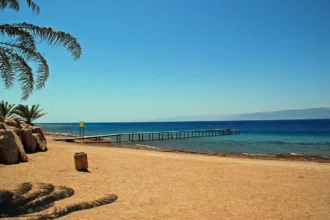
Aqaba – Tala Bay and the South Beach
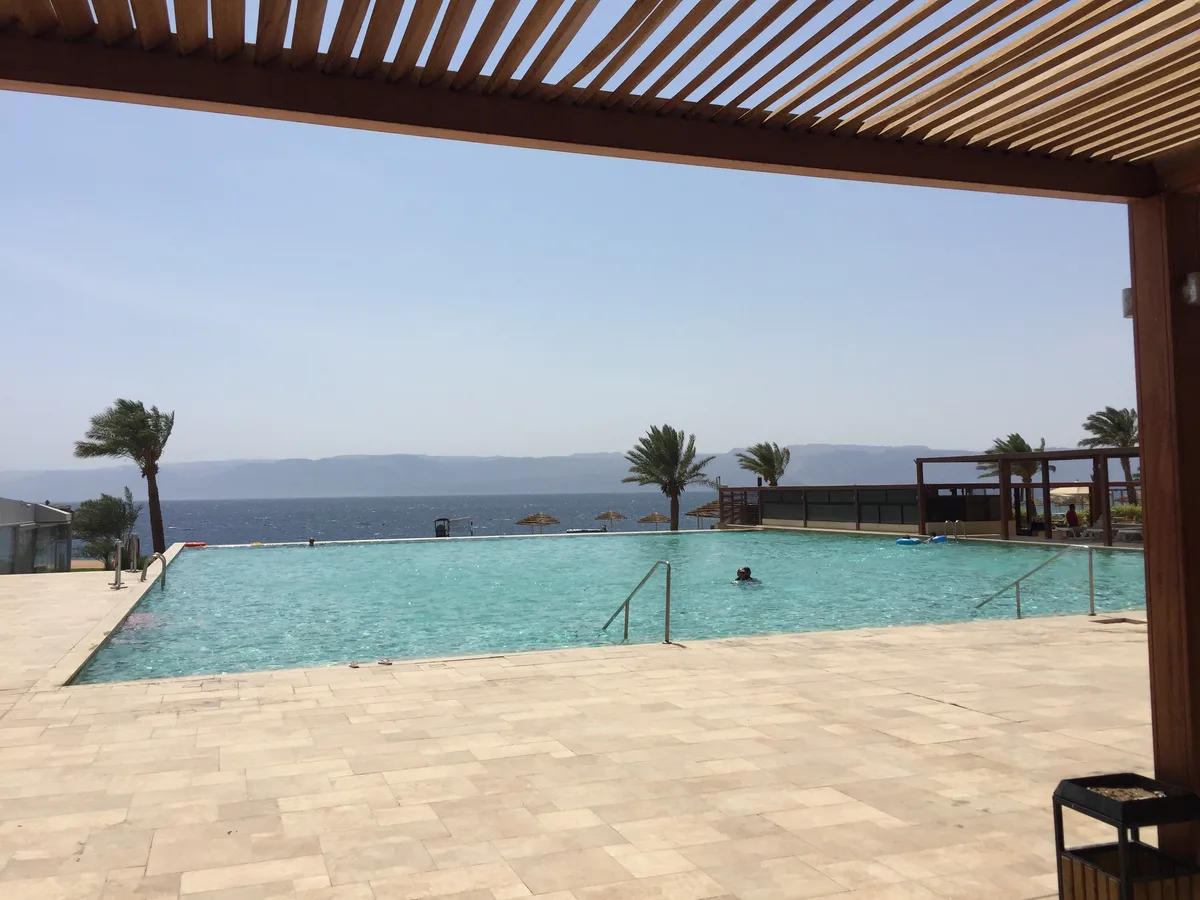
South of the city, the coast road runs past the port and the public South Beach towards the Saudi border, and the shore changes character completely: first the South Beach strip of local beach clubs and dive centres strung along the reef edge, then, near the end of the road, Tala Bay – a purpose-built resort community of big hotels around a marina, with groomed sand, pools in sequence, and the house reef a fin-kick from the jetty. This is where the resort version of Aqaba lives, and for a traveller whose plan is two or three days of sun, snorkelling and doing very little, it is a well-made answer.
The mechanism to understand is self-containment. A Tala Bay resort is designed so that you never need to leave: meals, beach, pools, spa and dive desk are all inside the fence, and the reef offshore – part of the same protected marine park system that runs down this coast – delivers the snorkelling that the town beaches cannot. The South Beach properties and beach clubs between town and Tala Bay split the difference: simpler, more local in feel, aimed at divers and at Jordanian and regional weekenders as much as at international tours, with the reef directly offshore and the town a short drive north.
The catch is the mirror of the centre’s. Everything outside the resort – Aqaba’s restaurants, its market, its castle and corniche, an evening that is not the hotel’s entertainment programme – is a taxi ride away, and the rides add up in time as much as in fares across a three-day stay. Divers should also note the geography honestly: the famous wreck and reef sites are spread along this whole southern coast, so a southern base is convenient for them, but the dive centres’ boats and buses collect from both zones. Choose Tala Bay or the South Beach when the water is the holiday; choose the centre when Aqaba the town is. Confusing the two is the most common Aqaba mistake in the whole question of where to stay in jordan.
Wadi Rum – the Camps Inside, and the Village Outside
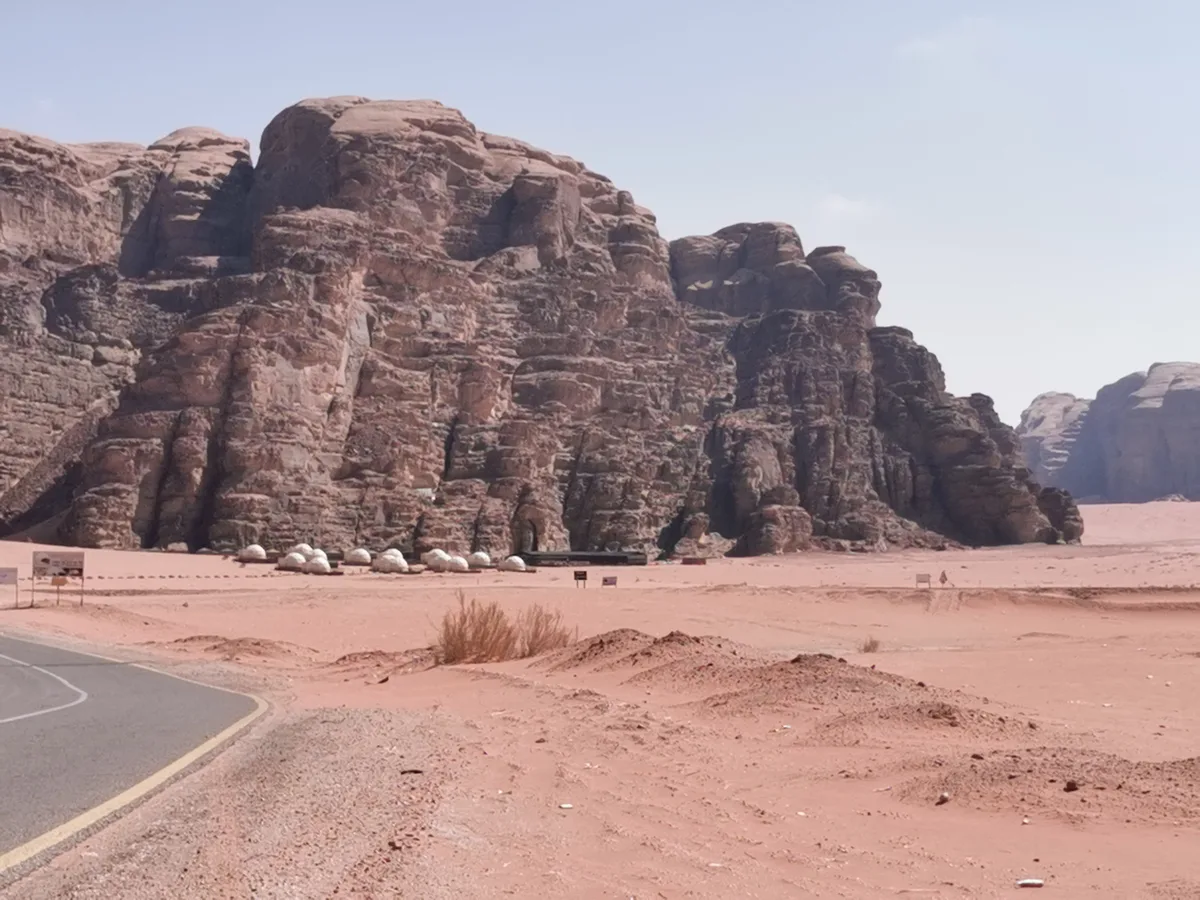
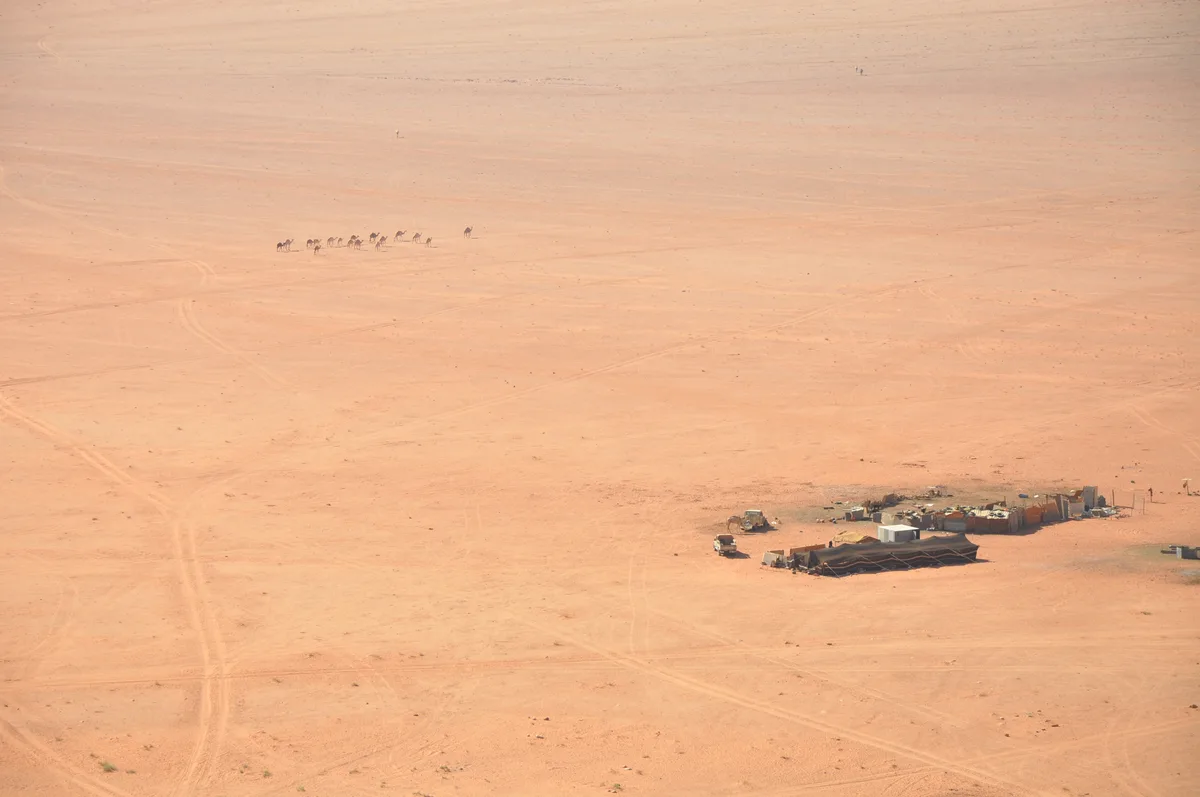
Wadi Rum is the one place in Jordan where the accommodation question is not about districts at all – it is about a boundary. The protected area, a UNESCO World Heritage property of 74,200 hectares administered under the Aqaba Special Economic Zone Authority, has exactly one entrance for visitors: the visitor centre on the road from the Desert Highway, where entry is registered and where the local Bedouin operators – the people of Rum village and the surrounding tribes, who run the jeeps, the guiding and the camps – take over. Beyond that gate there are no roads a visitor may drive, no signage economy, no passing trade. There are only the camps, scattered through the valleys at the feet of the massifs, each one a small settlement of tents or cabins around a communal fire and dining tent, reached by your operator’s jeep and left the same way.
A camp night inside the protected area is a package, and understanding that is the whole mechanism. What you book is not a room; it is a bed plus dinner cooked by your hosts – often a zarb, meat and vegetables slow-cooked in a pit in the sand – plus breakfast, plus the jeep time that got you there and will tour you around, plus the thing no hotel sells: a sky with no light in it, silence of a completeness that first-timers describe physically, and a sunrise that turns the cliffs from grey to red while the tea comes round. Camps divide, honestly, into two families. The traditional Bedouin camps are simple – goat-hair or canvas tents, shared or basic private washing facilities, solar power and early nights. The newer luxury camps add en-suite bathrooms, sealed dome or glass-fronted units aimed at the stars, and a level of furnishing that belongs to a boutique hotel. Neither family is the “real” one; they are different products at different weights of comfort, and our Wadi Rum travel guide walks the valleys they sit in.
The village alternative is exactly what it sounds like. Rum village, sitting in the buffer zone just outside the protected area’s core, has small guesthouses and simple hotels, and staying there is cheaper in structure and simpler in logistics – you can arrive by car or bus, eat in the village, and treat the desert as a day tour through the visitor centre like any day visitor. What you give up is the point of the exercise: the night. A village bed means the stars are a trip you take and return from, the sunset ends with a drive back out, and the desert at dawn – the best hour – belongs to the people who slept inside it. The honest rule for where to stay in jordan’s desert is therefore short. One Rum night, sleep inside, in a camp, at whatever comfort level suits you. The village is for travellers passing through on a schedule that gives Rum only a day – and they should know that is the compromise they are making.
The Dead Sea – a Resort Strip With No Town
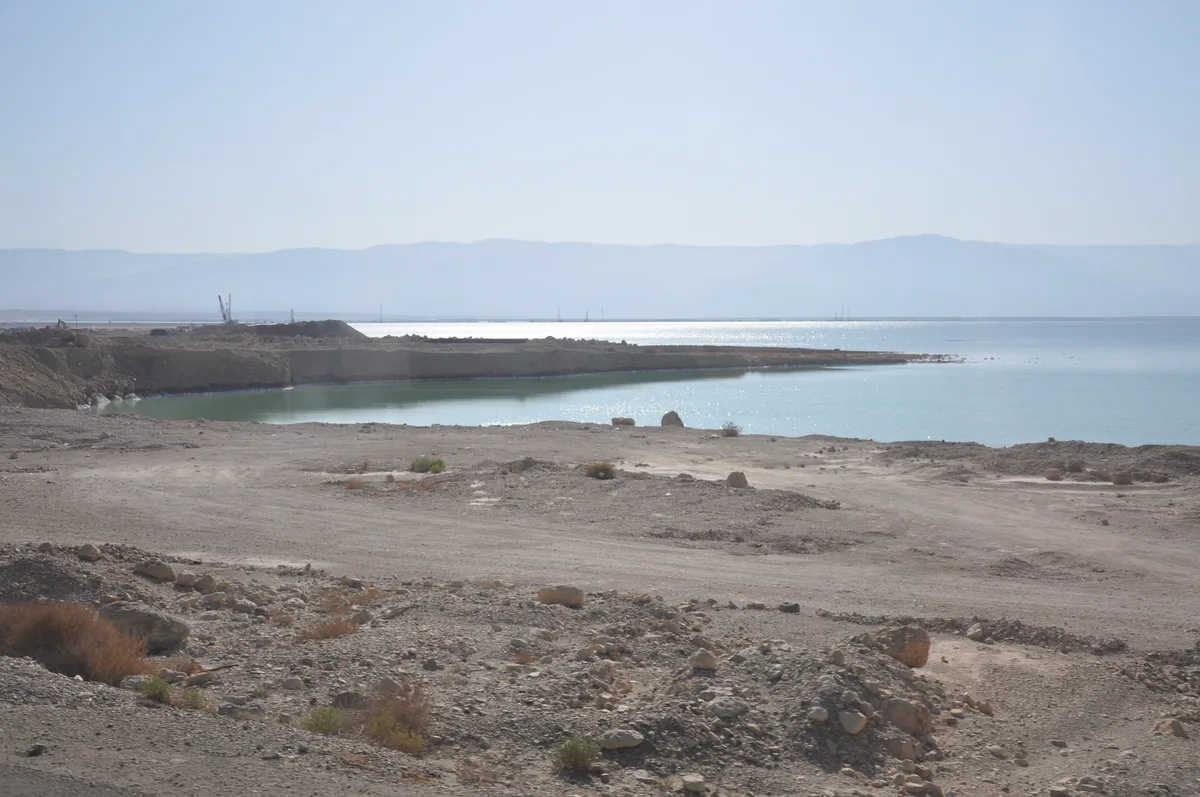
The Jordanian shore of the Dead Sea is the strangest sleeping proposition in the country: a line of large resort hotels strung along the northeastern shore, at the lowest land elevation on earth, with – and this is the fact to absorb before booking – no town attached to them at all. There is no village to stroll to, no local restaurant row, no evening economy outside the hotels’ own. Each resort is a self-contained world of pools, spa buildings, private beach steps down to the water and buffet halls, and the shore between them is a highway verge. Our Dead Sea Jordan guide covers the floating, the mud and the shore’s sights in full; the sleeping question is simpler, and it is about what a night here is actually for.
It is for the water and the reset. A Dead Sea night works as a deliberate pause in the route – arrive in the afternoon, float at sunset when the light turns the far hills pink, take the spa and the mud seriously, sleep in the thick, low air, and float once more in the morning before the road. It also works for travellers mixing the shore with its neighbours: the baptism site at Bethany, Mount Nebo and Madaba are all within easy driving, and Wadi Mujib’s canyon adventures sit down the shore road. What a Dead Sea night is not is a base for touring Jordan. Every excursion starts with the climb back up to the plateau, and a second night here earns most travellers less than the same night spent in Madaba or Amman.
The catches follow. You eat where you sleep, on resort terms, with nowhere else to go – the captive-dining reality of any strip without a town. The beach itself is a managed facility, not a public shore: access to the water runs through the hotels and the one public beach complex, because the shore is steep, the salt formations are fragile and the water demands supervision for reasons our guide explains. And the strip’s isolation, sold as serenity, is real isolation after dark. None of this argues against the night – it argues for exactly one, deliberately placed, which is how nearly every well-built Jordan itinerary uses it.
The Dead Sea also pairs with the calendar in a way the other bases do not. The shore sits hundreds of metres below the plateau, and its winter is the mildest in the country – a Dead Sea night in January is a different season from the same night in Amman, which is why the strip fills with Jordanians escaping the capital’s cold as much as with international tours. In high summer the logic inverts: the heat down at the shore is the most extreme on the route, and the float becomes a dawn and dusk activity with the middle of the day surrendered to shade and water indoors. Place the night with the season in mind and the strip gives you its best day; place it carelessly and you have booked the country’s most sheltered microclimate at the one moment it was working against you.
Madaba – the Small-Town Base
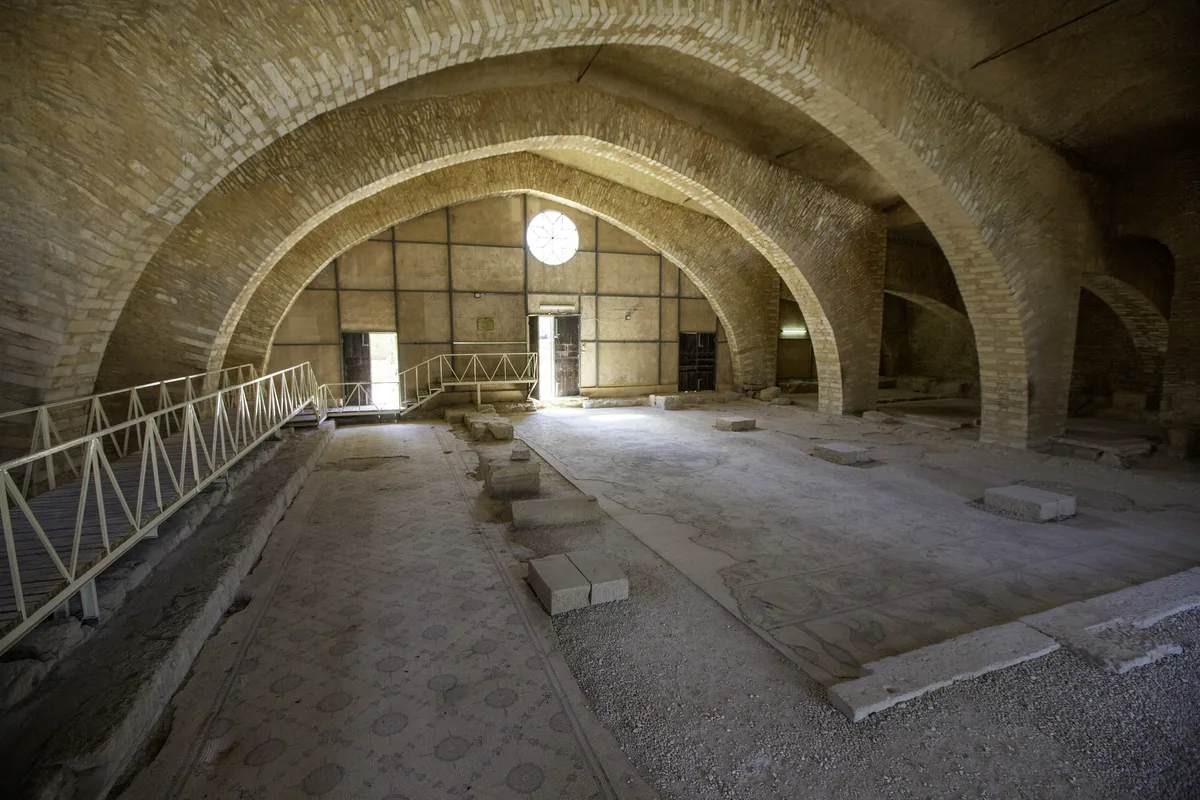
Madaba is the quiet overachiever of Jordanian bases: a small, mostly Christian town on the plateau south of Amman, famous for the Byzantine mosaic map in the floor of St George’s Church and for a cluster of mosaic-filled churches and archaeological parks that fill a satisfying half-day. Its hotels are correspondingly modest – small family hotels and guesthouses on and around the central streets, an apartment or two, nothing with a flag on it – and that modesty is precisely the product. Madaba is where to stay in jordan when the trip wants a town that goes to sleep at a normal hour, where the owner is at breakfast, and where the evening plan is a walk, a local restaurant and an early night before a big day.
The geography argues for it more often than travellers expect. Madaba sits close to the airport – closer, in road terms, than Amman itself – which makes it a genuinely good first night for a late arrival that wants to start the King’s Highway the next morning without backtracking through the capital, and a good last night before a flight for the same reason. Mount Nebo is on its doorstep, the Dead Sea is a half-hour descent away, and the King’s Highway south begins here in everything but name. Travellers driving the slow road to Petra can sleep in Madaba, see the mosaics and Nebo in the morning, and be in Karak by lunch without a single motorway mile. Our Madaba travel guide covers the town’s sights properly.
The catch is scale. Madaba’s hotel stock is small, so in the busiest weeks the town can simply fill, and its evenings, while pleasant, offer a short menu – a handful of restaurants, the craft shops around the church quarter, and then quiet. Travellers who need the capital’s choice of dining and drinking will find Madaba a suburb too far. But as a one-night hinge in a route – first night, last night, or the night before the King’s Highway – it is one of the most useful answers to where to stay in jordan, and the travellers who use it that way tend to name it among their favourite stops precisely because it never tried to be more.
The North – Jerash, Ajloun and a Green Night
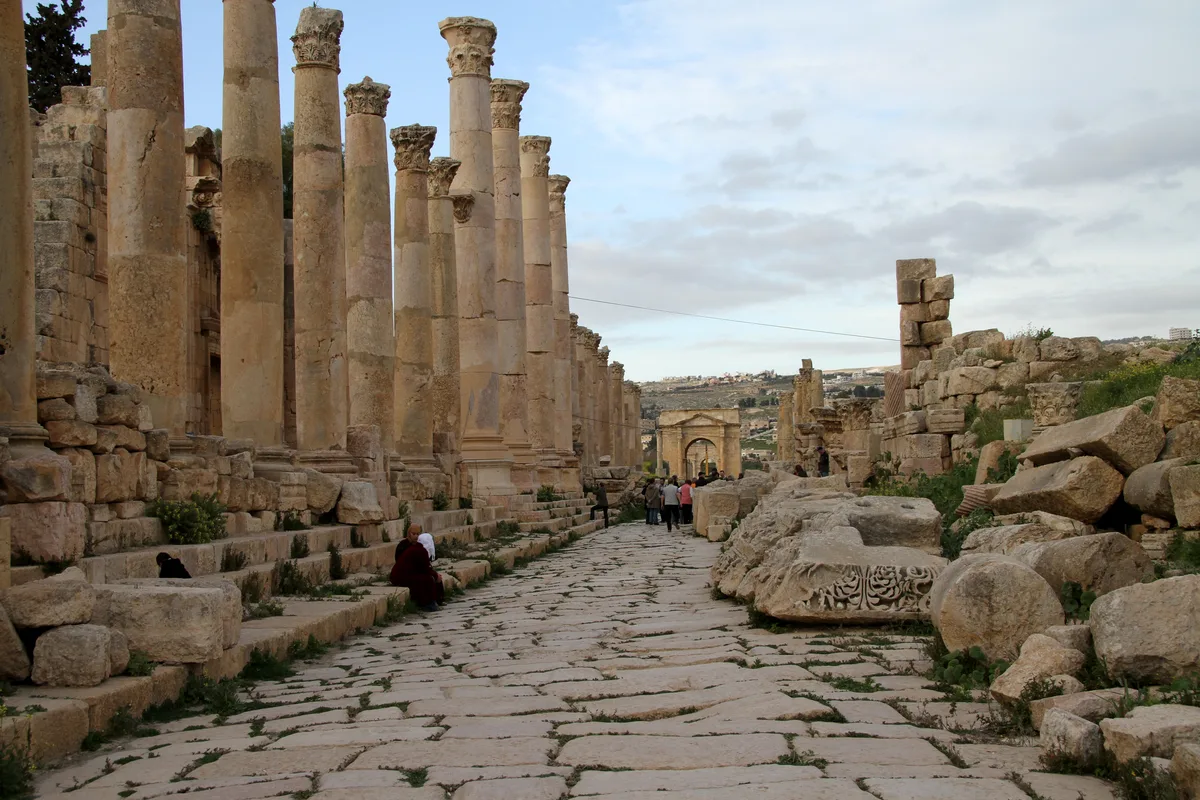
North of Amman the country changes colour. The hills around Jerash and Ajloun are the greenest in Jordan – olive groves, oak woods in the Ajloun forest reserve, and villages that feel Mediterranean rather than desert – and the sights match: Jerash, one of the best-preserved Roman cities anywhere, its colonnaded streets and theatres an hour from the capital; Ajloun’s twelfth-century castle on its hilltop; the reserve’s walking trails above them both. Almost every first-time visitor does this as a day trip from Amman, and for most, honestly, that is the right call – the north is close, the roads are good, and the day is complete by dinner.
The case for a northern night is narrower and real. A small number of guesthouses and simple hotels serve Jerash town, and the Ajloun area adds eco-cabins and reserve lodges in and around the forest – places built for walkers, birders and travellers on a longer, slower Jordan who want a morning on the trails before the heat and the day buses. Staying also changes Jerash itself: the ruins at opening time, empty and golden, are a different experience from the same stones at noon in a group. If your trip has eight nights or more and a walking bent, a night up here earns its place in the where to stay in jordan calculation.
The catches are the thinness of everything after dark. Jerash town’s services are workaday, Ajloun’s smaller still, and the north has no answer to a traveller who wants a choice of restaurants in walking distance – you eat where you sleep or drive to it. Winter also bites up here in a way the south does not: these are Jordan’s cold, wet hills, and a January night in Ajloun is a different packing problem from a January night in Aqaba. Treat the north as a deliberate green interlude for longer trips – not as a base, and not as a first-timer’s night.
Dana, Feynan and Karak – the Quiet South
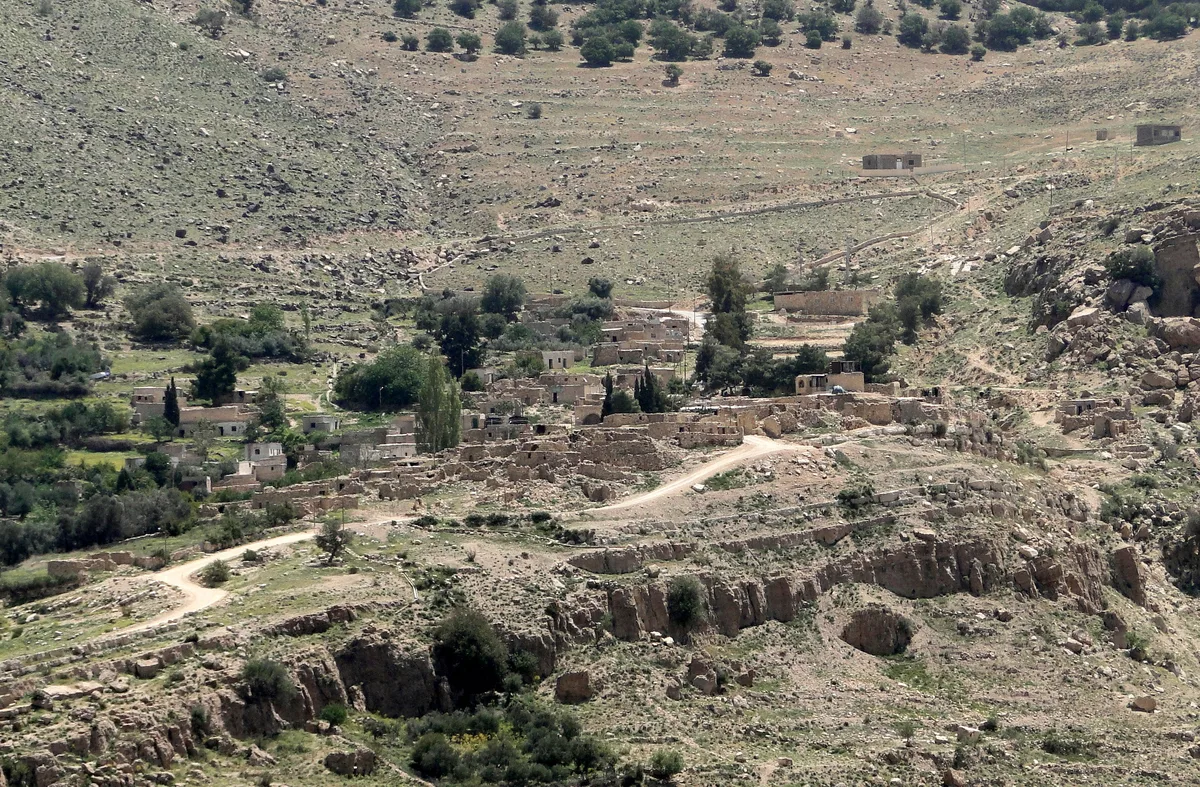
Between the King’s Highway and the Rift Valley floor, the Dana Biosphere Reserve protects a sweep of mountain, canyon and desert-steppe that drops more than a thousand metres through four bio-geographical zones, and its sleeping arrangements are the most distinctive in the country. At the top sits Dana village, a small Ottoman-era stone village on the reserve’s rim, where a handful of small hotels and guesthouses – including the reserve’s own guesthouse tradition – sleep the walkers who come for the trails. At the bottom, reached only on foot down the great Wadi Dana trail or by arrangement on rough tracks, sits the Feynan area, home to Jordan’s best-known eco-lodge model: off-grid, candlelit by design, run on solar power and local employment, and discussed across the travel world as the template for what an eco-lodge is supposed to be. Our Dana Biosphere Reserve guide covers the reserve and its trails in full.
The mechanism here is arrangement. There is no passing trade at Feynan and very little at Dana village; beds are booked ahead, meals come with the bed because there is nowhere else to eat, transfers are part of the conversation when you book, and the whole experience – the guided walks, the Bedouin tea, the silence, the stars – is a single woven product rather than a room with services attached. Walkers use Dana-to-Feynan as a through-route, sleeping at one end and walking to the other, which is the finest single day’s hiking in the country and the reason this remote corner appears in an accommodation guide at all.
East on the King’s Highway, Karak offers the plainer version of the southern night: a working town under its great Crusader castle, with a small stock of simple hotels that exist mainly for travellers breaking the highway journey. A Karak night makes sense as logistics – the castle at opening time, an early start for Dana or Petra – and the town is honest Jordan, unbothered by tourism. But its hotels are few and functional, and most travellers will prefer to push on to Dana’s rim or back to Madaba. File both under the same rule that governs this whole southern tier of where to stay in jordan: these are nights you choose for the walking and the quiet, booked deliberately, knowing that choice – not comfort, and not nightlife – is what you are buying.
How Many Nights Where – Routing a First Trip
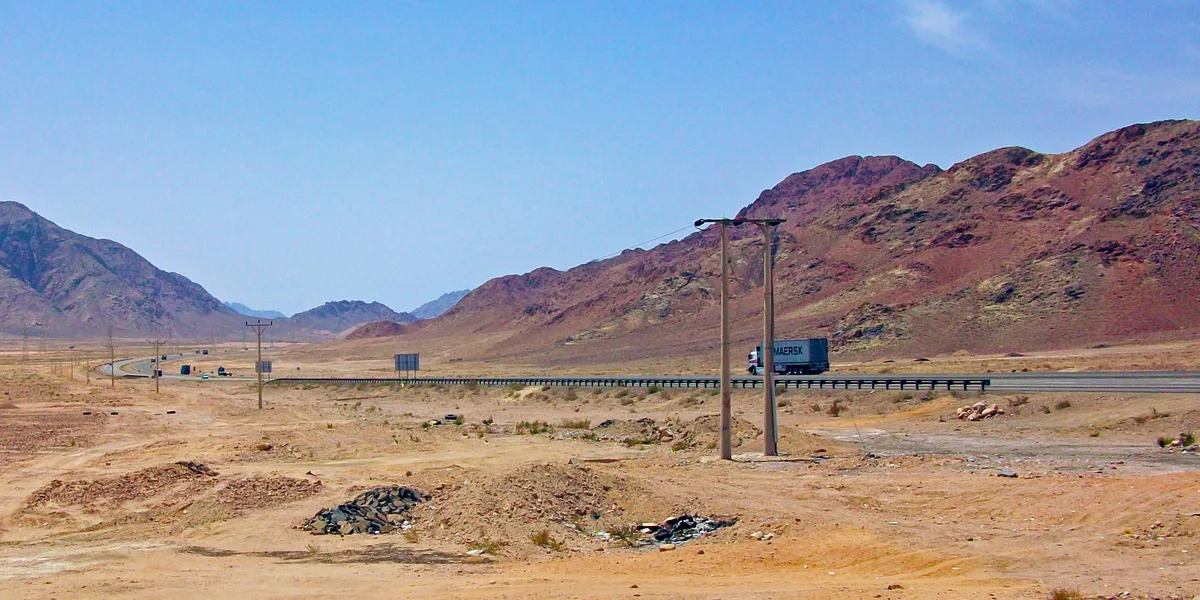
The areas above assemble into routes more easily than most countries allow, because nearly every first trip runs the same spine: south from Amman down one road and back up the other, or the same loop in reverse. What follows is the standard seven-to-eight-night first trip, costed in nights rather than money, with the reasoning attached – adjust the counts to your pace, but steal the structure. Our Jordan travel guide sets out the whole journey; this is its sleeping skeleton.
Amman, two nights (or one at each end). The capital wants a full day – Citadel, theatre, Balad, an evening on Rainbow Street – and repays a second if Jerash is run from it as a day trip, which for most first trips it should be. Splitting the capital nights around the loop, one on arrival and one before departure, softens both ends of the trip and is the pattern drivers on the full loop usually land on. Base choice inside Amman matters less than the count; pick the district that fits your evenings from the sections above.
Madaba or the Dead Sea, one night. If the King’s Highway is your road south, sleep the first night out of the capital in Madaba and take Nebo and the mosaics with the morning. If the fast Desert Highway is the plan, give the night to the Dead Sea instead and float at sunset. Either way this hinge night is what stops day two from becoming a transit blur – and it is the night travellers most often cut and most often regret cutting when they describe the trip afterwards.
Wadi Musa, two nights. Petra is the reason for the trip and it is a two-day site at any honest pace: the Siq, the Treasury and the Royal Tombs on day one, the Monastery and the high places on day two, with Petra by Night slotted into one of the evenings if it falls on a running night. Two nights also buys resilience – a sandstorm, a sore knee or a slow morning does not cost you the site. One night in Wadi Musa is the single most common routing error in where to stay in jordan; it turns the country’s greatest sight into a checklist sprinted between two drives.
Wadi Rum, one night (inside). Non-negotiable in structure even if the comfort level flexes: arrive by early afternoon, jeep into the valleys, sleep in the camp, and let the desert have its night and its dawn. Day-tripping Rum between Petra and Aqaba is possible on paper and a waste in practice – the place is an overnight experience that happens to have scenery attached.
Aqaba, one or two nights. One night ends the loop with a swim and a fish dinner; two makes it a proper Red Sea pause, with a dive or a snorkel day on the southern reefs. Travellers flying out of Aqaba’s own airport can end here; everyone else faces the long highway back north, which is exactly why the split-Amman pattern exists – or why a final Dead Sea or Madaba night, breaking the drive, so often sneaks back into the plan. Shorter trips compress by cutting Aqaba to one night and Amman to one, never by cutting Petra’s second night or Rum’s only one.
The five-night version, and the ten-night version. Compressed to five nights, the loop keeps its bones and loses its pauses: Amman one, Wadi Musa two, Wadi Rum one, and the fifth night split by direction – Aqaba if the sea matters, the Dead Sea if it does not. What the five-night trip cannot have is the hinge night, and it should know it is travelling without one. Stretched to ten nights, the route gains rather than pads: a night in the north for Jerash at opening time, a night at Dana for the walk down to Feynan, a second Aqaba night for the reef – the three additions this guide’s area sections keep pointing at. The pattern to notice is that extra nights in Jordan are almost never spent doubling a base you already have; they open a new area entirely. That, more than any hotel feature, is what the where to stay in jordan decision is really allocating – not comfort, but geography.
How Booking Actually Works – Camps, Lodges and Guesthouses
Jordan’s beds divide into three systems, and knowing which system you are in explains most of what confuses first-time bookers. The first system is the ordinary hotel world – Amman, Aqaba, Wadi Musa, the Dead Sea resorts – where the international platforms list nearly everything, star ratings are the local official classification rather than a global promise, and the mechanics will feel familiar: book ahead in the spring and autumn peaks, expect the big properties to run like big properties anywhere, and expect the small ones to be family operations where the person at the desk is the person who matters.
The second system is the camp and operator world, and it runs on arrangement rather than inventory. A Wadi Rum camp night is normally booked as part of a package with the operator who will also drive your jeep and cook your dinner – through the camp’s own channels, through the visitor-centre network of local operators, or bundled by whichever driver or agency is moving you around the south. The details that matter are agreed in messages, not in a booking engine’s tick-boxes: where you will be met, what the jeep tour covers, what dinner is, whether the bathroom is shared or your own. This is normal, not informal-by-accident – the whole protected-area economy is built on it – and the traveller who asks those questions plainly, in advance, gets exactly the night they expected.
The third system is the small-place world: the eco-lodges of Dana and Feynan, the reserve lodges of the north, the guesthouses of Madaba, Dana village and the Little Petra side. Here the stock is tiny, the season is short, and the booking rule is simply early – the best-known eco-lodge in the country has a couple of dozen rooms and a global reputation, and Jordan’s handful of comparable places share its arithmetic. Meals at this level are usually part of the stay because there is nowhere else to eat, dietary needs are a booking-time conversation, and payment and cancellation run on the house’s own terms rather than a platform’s. Across all three systems, one habit serves everywhere in where to stay in jordan: in the peak months of March to May and September to November, book the small and the famous first, and let the big city hotels – the deepest stock in the country – be the flexible part of the plan.
Where to Stay in Jordan – Questions Travellers Ask
How many nights do I need in Amman? Two for a first trip: one for the city itself – the Citadel, the Roman theatre, the Balad and an evening in Jabal Amman – and one as the base for the Jerash day trip. Travellers on a tight loop often split them, sleeping in Amman on arrival and again before departure, which works just as well. Fewer than that and the capital becomes a corridor between the airport and the highway, which undersells the most lived-in city on the route.
Can I stay inside Petra or inside Wadi Rum itself? Inside Petra, no – there is no accommodation within the archaeological park, and every visitor sleeps in Wadi Musa, the town at its eastern entrance; the only choice is how far up the town’s hill. Inside Wadi Rum, yes – that is precisely what the camps are: licensed Bedouin-run camps scattered inside the protected area, reached by your operator’s jeep from the visitor centre, and entirely different from sleeping in Rum village outside the boundary.
Is it better to stay in Aqaba town or at Tala Bay? It depends on what your Aqaba days are for. The town centre suits divers, eaters-out and anyone who wants an evening with somewhere to go; Tala Bay and the South Beach suit travellers whose plan is the resort itself – beach, pool and house reef without a taxi in between. The commonest mistake is booking the resort and expecting the town, or the town and expecting the beach; the sections above separate the two honestly.
Should I stay overnight at the Dead Sea or day-trip it? Stay the night if your route allows exactly one – the float at sunset and again in the early morning is the experience, and the resorts are built for that single unhurried cycle. But do not base yourself there for touring: the strip has no town, you eat where you sleep, and every excursion begins with the climb back to the plateau. One night, deliberately placed between Amman or Madaba and the south, is the sweet spot.
Where should I stay the night before an early flight? Work backwards from the airport, which sits well south of Amman. For a dawn departure, the airport-side hotels exist precisely for this and cost you nothing in sleep; Madaba is the characterful alternative at a similar road distance, with a real town attached to the evening. Staying in central Amman for a very early flight means a pre-dawn drive the length of the city and beyond – possible, and done daily, but it is the option that spends the most sleep for the least reason.
Do I need to book Wadi Rum and the eco-lodges in advance? Yes – in a way that Amman hotels do not demand. A Rum camp night is a package arranged with an operator (bed, meals and jeep time together), and the protected area has no walk-in economy; the Dana and Feynan lodges are smaller still, with a handful of rooms and a short season. In the spring and autumn peaks, arrange the desert and eco-lodge nights first and fit the flexible city hotels around them.
Is Madaba worth a night, or just a stop? A night, if your route runs the King’s Highway or your flight times are awkward – and a stop, if it does not. Madaba’s mosaics and Mount Nebo fill a half-day beautifully from Amman, but sleeping there puts you on the highway at breakfast, close to the airport at either end of the trip, in a small town whose quiet evenings many travellers end up remembering fondly. It is a hinge, used well or not at all.
The Short Version of Where to Stay in Jordan
If you read nothing else, read this. Where to stay in jordan is a route with beds attached: two nights in Amman – the Balad for walkers and budgets, Jabal Amman for evenings, the west for comfort – a hinge night in Madaba or at the Dead Sea, two nights in Wadi Musa within your chosen distance of Petra’s gate, one night inside Wadi Rum in a Bedouin camp rather than outside it in the village, and one or two in Aqaba chosen honestly between the town and its resorts. The north and Dana are the nights longer trips add, and the airport side is a tool for flight times, never a base.
Get those placements right and the properties almost choose themselves, because in Jordan the geography is the luxury: the gate at dawn, the camp inside the boundary, the float at sunset, the town that still feeds you after the sights close. Book the small, the famous and the desert first; let the big city stock flex around them; and wherever the map offers you a choice between near and far, remember that in this country the hill, the boundary and the highway always collect their toll in time. Sleep on the right side of them, and the trip runs itself.