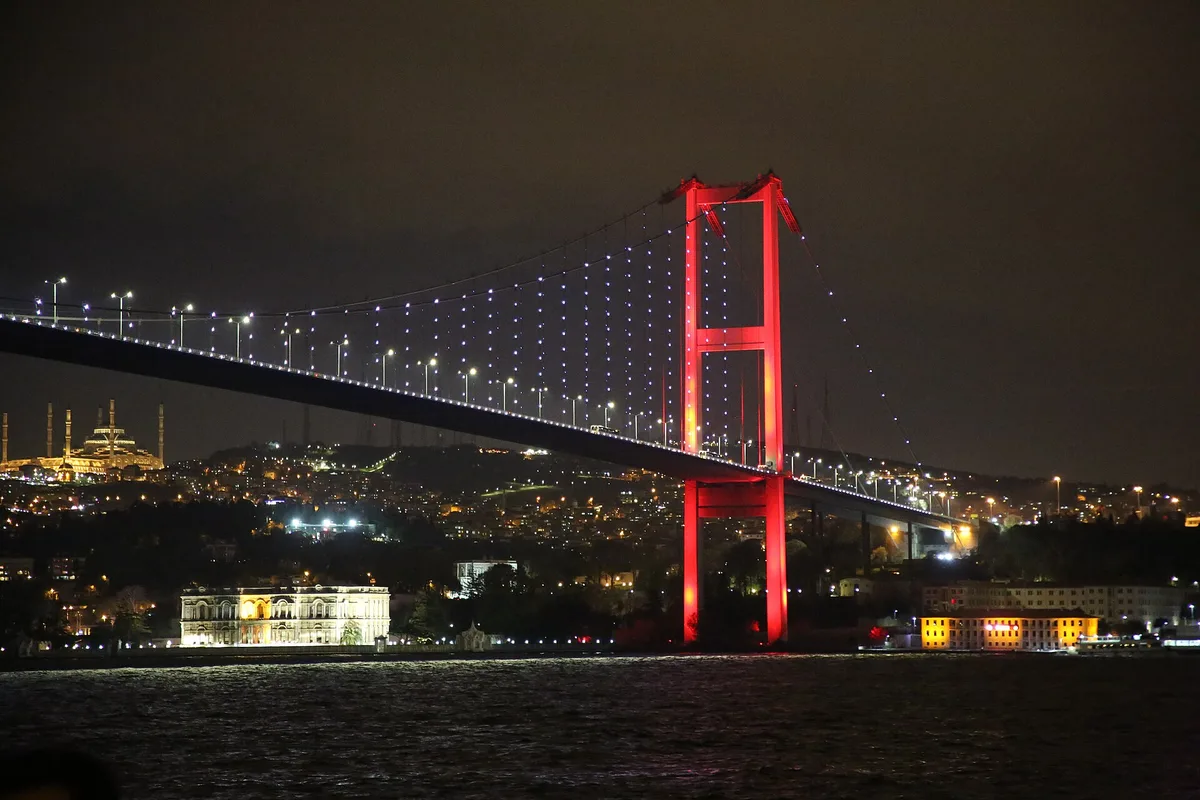
Best Places to Visit in Turkey – Istanbul, Cappadocia, Ephesus and the Coast Beyond
Every list of the best places to visit in Turkey makes the same quiet mistake — it treats the country as one trip. Turkey is not one trip. It is at least four, laid side by side across a landmass bigger than most visitors expect — an imperial capital in the north-west, a volcanic plateau of cave churches in the centre, a marble Roman coastline in the west, and in the east a high, empty landscape of mountaintop kings, ruined medieval cities and the oldest monumental temples on earth. A traveller who loves one of those Turkeys may be honestly bored by another, and the real question a list like this should answer is not “what is famous” but “which of these places is famous for someone like you”.
So this guide works differently. Sixteen places are covered, more than the standard ten, because Turkey’s depth is precisely what the ten-place lists cut away. Each entry gives the place its own hearing — what it actually feels like, what it asks of you in time and effort, and who should skip it without regret. The pairings matter as much as the places, so a route section at the end shows which of them combine into a coherent trip and which combinations only look good on a map. Nothing here is sold, nothing is bundled, and no entry pretends to be all things to all travellers.
One measure of the country’s depth is official. UNESCO’s Türkiye country page lists 22 inscribed World Heritage properties — 20 cultural and two mixed — and ten of the sixteen places below are on that list or share in a property that is. Several more sit on UNESCO’s Tentative List, which this guide names as exactly that, because the difference between inscribed and nominated is a fact, not a detail. Read the entries, mark the ones that pull at you, and build the trip around those — not around the full sixteen, which no single holiday can hold and no honest guide should pretend it can.
At a Glance
| Place | Region | Best for |
|---|---|---|
| Istanbul | Marmara, north-west | First trips, history in layers, food and city life |
| Cappadocia | Central Anatolia | Landscapes, cave churches, one-of-one scenery |
| Ephesus | Aegean coast | Roman history at full city scale |
| Pamukkale | Aegean inland | Natural wonder paired with a Roman spa city |
| Pergamon | Northern Aegean | Serious antiquity without the crowds |
| Gallipoli | Dardanelles | First World War history and remembrance |
| Bodrum | Aegean coast | Sailing, nightlife and a crusader castle |
| Fethiye and Ölüdeniz | Turquoise Coast | Lagoons, paragliding and boat days |
| Kaş and Kekova | Turquoise Coast | Small-town coast, diving and Lycian ruins |
| Antalya | Mediterranean coast | Resort ease with a real old town and Roman day trips |
| Safranbolu | Black Sea inland | Ottoman houses and slow small-town Turkey |
| Sümela Monastery and Trabzon | Black Sea coast | Cliff monasteries, green mountains, a different climate |
| Mount Nemrut | South-east | Sunrise among fallen stone heads |
| Göbekli Tepe | South-east | The oldest monumental temples known |
| Ani | Far east, Kars | A ruined medieval capital in huge silence |
| Lake Van and Akdamar | Far east | Island churches, vast water and the deep east |
Istanbul
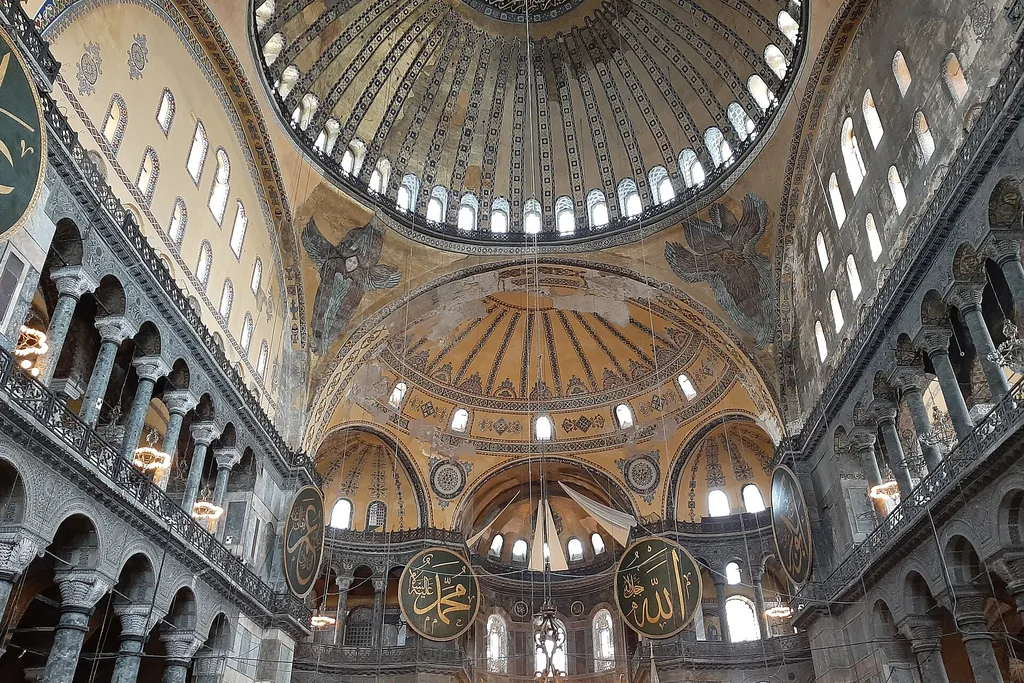
Istanbul is the one place on this list that is not really optional. Whatever else your trip becomes — coast, east, or a slow Black Sea loop — it will almost certainly begin here, and the city earns that position on merit rather than logistics. It was a great capital for two empires in succession, Byzantine Constantinople and then Ottoman Istanbul, and unusually it never stopped being a living city between or after them. The result is not a museum quarter with a city attached, but the opposite — a working metropolis of bazaars, ferries, fishing bridges and cafe arguments, in which a 6th-century church-mosque, a sultan’s palace and a covered market of the 15th century are simply part of the furniture of an ordinary Tuesday.
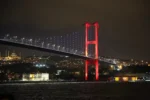
The old city carries the headline sights, and they deserve their fame. Hagia Sophia, completed in 537 CE, has been cathedral, mosque, museum and mosque again, and its dome still produces the same intake of breath it produced for medieval visitors. The Sultan Ahmed Mosque faces it across a garden, Topkapi Palace holds the Ottoman court in its courtyards behind, and the Basilica Cistern waits under the street between them, cool and strange. The Historic Areas of Istanbul were inscribed by UNESCO in 1985, and the inscription covers neighbourhoods, not just monuments — cross the Golden Horn to the Galata Tower, ride a ferry to the Asian shore, spend an evening in a district where nobody is selling you anything, and you are still inside the same story. Our Istanbul travel guide plans the city in full, district by district.
Who should skip Istanbul — Nobody skips it entirely, but be honest about duration. Travellers whose trip is purely a beach week sometimes resent two city days at the front of it; the answer is to give Istanbul either a real three days or a single unapologetic day at the end, not a grudging half-day between flights. What the city asks is walking and patience with crowds in Sultanahmet; what it repays is the sense, available nowhere else in Turkey, of watching fifteen centuries share one street.
Cappadocia
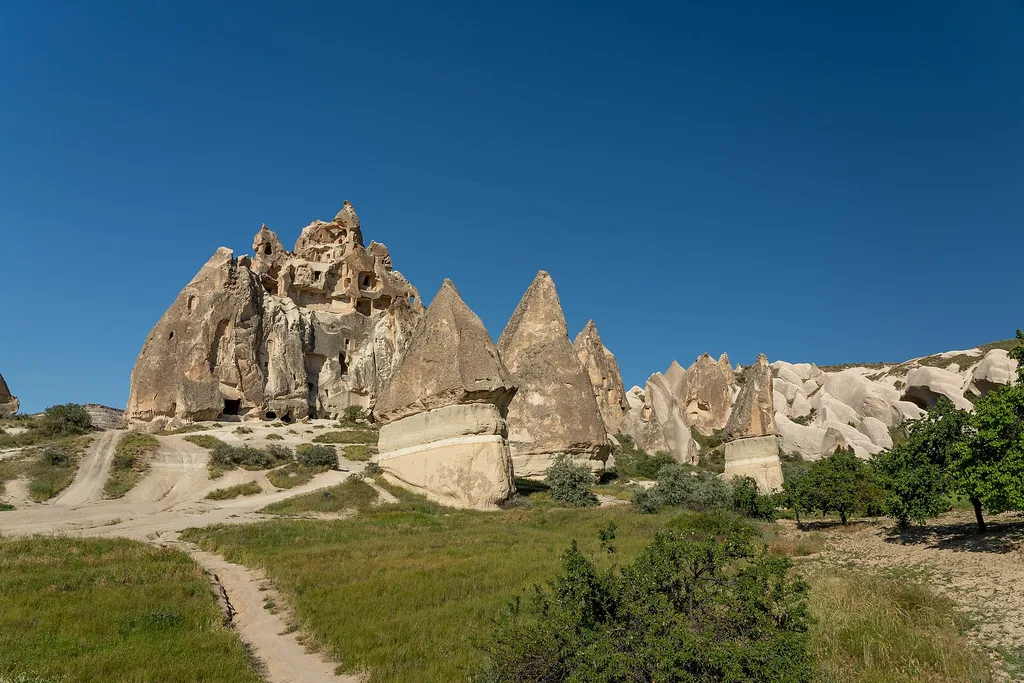
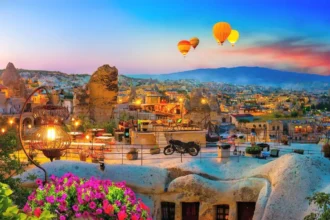
Cappadocia is the landscape people picture when they have never been to Turkey, and the strange thing is that the pictures undersell it. The geology came first — ash from ancient volcanic eruptions laid down soft tuff, capped in places by harder stone, and weather and water spent millions of years carving the difference into valleys of cones, spires and rippled cliffs. People came second and found the soft rock could be dug as easily as it eroded, so for centuries they carved it into houses, stables, monasteries and entire churches, painting the interiors with Byzantine frescoes that survive because the rock kept them dry and dark. Göreme National Park and the Rock Sites of Cappadocia were inscribed by UNESCO in 1985 as a mixed property, natural and cultural at once, which is exactly the point — here the scenery and the civilisation are the same thing.
The working base is Göreme and its neighbouring villages, a compact area in which the Göreme Open Air Museum, several walkable valleys and the region’s cave hotels sit within a small radius. Below ground, the region inverts itself — Derinkuyu and its fellow underground cities descend level after level, built as refuges and still barely believable at the bottom of their ventilation shafts. Above ground, the dawn balloon flights have become the region’s signature image; they are weather-dependent on the morning itself, booked by hopeful travellers and cancelled by wind without apology, so build Cappadocia days that are full and satisfying with the balloons as a possible grace note rather than the load-bearing wall of the trip. Two full days is the floor; three is the comfort.
Who should skip Cappadocia — Travellers with serious claustrophobia or limited mobility should know the underground cities and some cave churches are low, narrow and stepped, though the valleys and viewpoints still justify the trip on their own. And if your idea of Turkey is entirely sea and sand, Cappadocia will feel like a beautiful detour into somewhere landlocked and dusty. For everyone else, it is the single most unrepeatable landscape in the country — nothing else on earth looks like this, and no photograph, including the thousands of balloon shots, quite prepares you for standing in it.
Ephesus
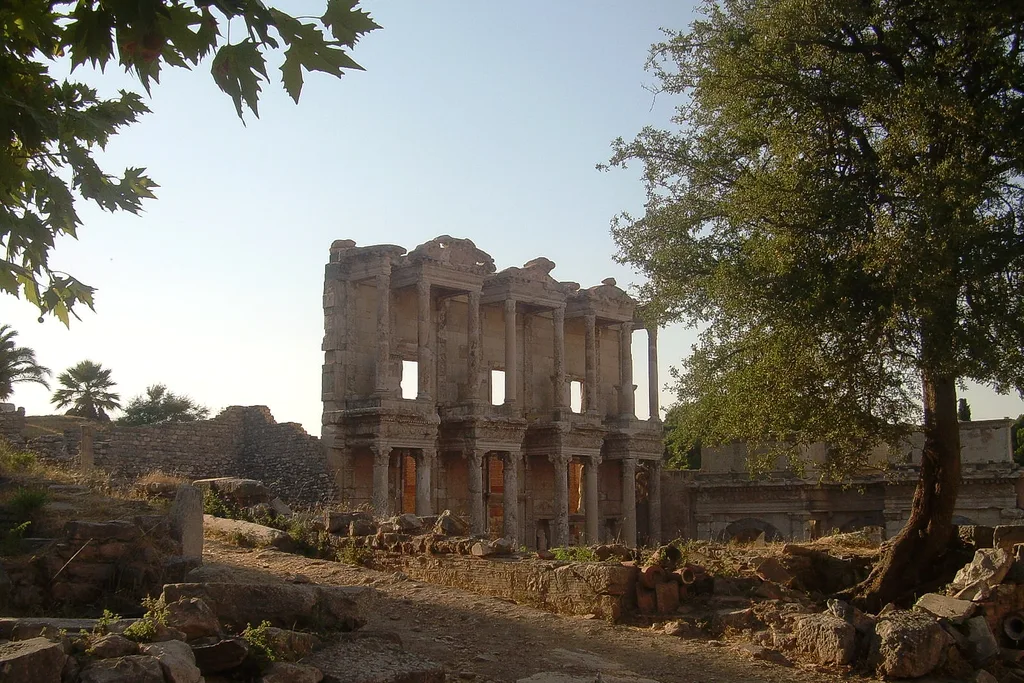
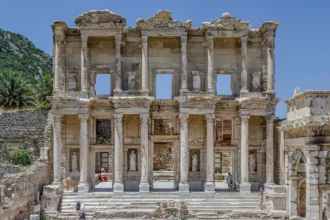
Ephesus is where Roman history stops being a ruin and becomes a city again. Many celebrated ancient sites are a single building in a field; Ephesus is streets — a harbour street running down to a harbour the river has silted away, a marble processional way climbing past fountains and a temple front, public latrines, a brothel’s footprint sign, houses with their wall paintings still in the rooms. At the corner of it all stands the Library of Celsus, built in the early 2nd century CE as both public library and monumental tomb, its rebuilt facade the most recognisable Roman front in Turkey. Above it, cut into the hillside, the Great Theatre held tens of thousands and still carries the acoustics of assembly and riot — this is the theatre of the silversmiths’ uproar in the Acts of the Apostles.
The site was inscribed by UNESCO in 2015, later than its fame would suggest, and the listing takes in the wider landscape too — the field outside the fence where the Temple of Artemis, one of the Seven Wonders of the ancient world, survives as a single re-erected column in marshy grass, and the Basilica of St John and the museum in nearby Selçuk, where the finds live. Walk the city downhill, upper gate to lower, in the order the ground suggests, and give it the better part of a day with Selçuk’s museum rather than the two-hour tour-bus version. The Terrace Houses, roofed and separately ticketed, are the part visitors most often skip and most often should not — domestic Roman life at full, painted scale.
Who should skip Ephesus — If you are seeing Pergamon and one or two smaller Aegean sites on a slow road trip, Ephesus will still be the grander city, but travellers genuinely indifferent to antiquity should not feel bullied into it by its fame; one hot, crowded circuit of marble streets will not convert anyone. It is also the busiest site in western Turkey when the cruise ships are in, and crowd-averse visitors should come at the day’s ends, in the first or last hours, when the stone is cooler and the city briefly empties back into being a place rather than an event.
Pamukkale
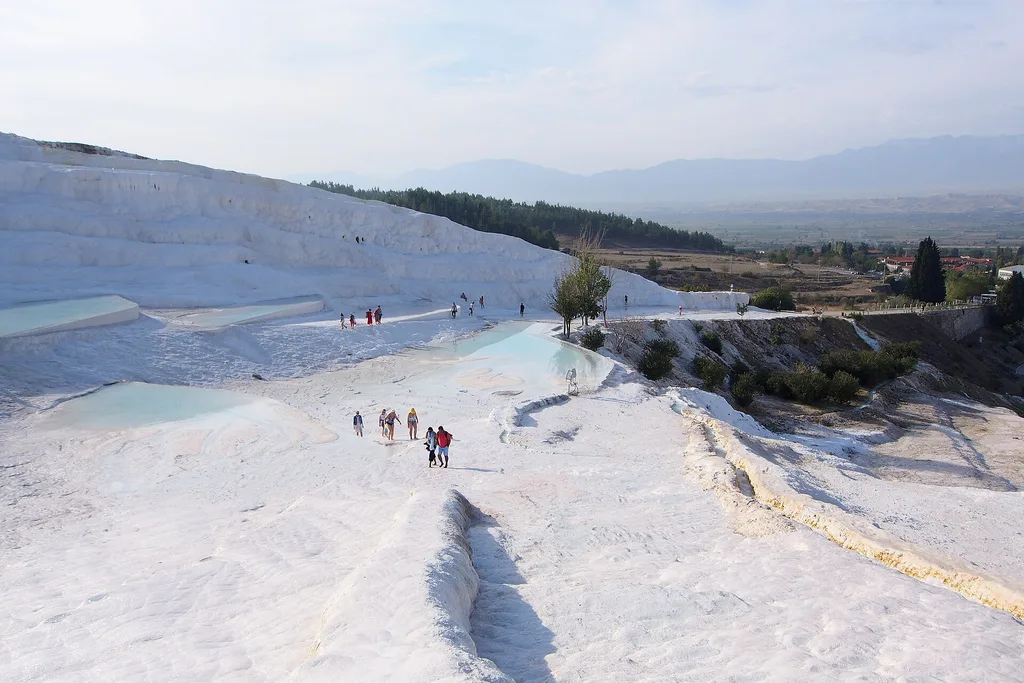
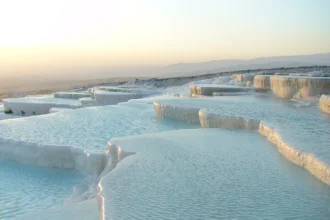
Pamukkale is the list’s double act — a natural wonder and an ancient city sharing one hillside, each explaining the other. The wonder is the one in the photographs: a slope of blinding white travertine terraces, built up grain by grain as calcium-rich thermal water spilled down the hill and hardened, holding shallow milky-blue pools in their curves. The name means cotton castle, and from the plain below the hillside does look like something spun rather than grown. The thermal water was the point long before it was a photograph. The Romans built Hierapolis at the top of the slope as a spa city, and its remains — a grand theatre, a vast necropolis, colonnaded streets and the Antique Pool where fallen columns lie in warm, effervescent water — are not an add-on to the terraces but their reason for existing.
UNESCO saw the pairing clearly and inscribed Hierapolis-Pamukkale in 1988 as a mixed property, natural and cultural together. The honest way to visit is in that same spirit: walk the travertine path barefoot, as the site’s rules require, in the cooler ends of the day when the white stone is kind and the tour groups have not yet arrived or have already left, then give Hierapolis its own unhurried hours rather than treating it as the walk back to the car park. The terraces photograph at their bluest in bright sun and at their most beautiful in low light, and the difference between a ninety-minute photo stop and a full day here is the difference between seeing Pamukkale and understanding it.
Who should skip Pamukkale — Travellers building a trip purely around the deep east or the Black Sea, because it pairs geographically with Ephesus and the Aegean, not with Nemrut or Trabzon, and forcing it into an eastern route costs a day of travel for a day of looking. Visitors expecting to swim their way down a staircase of natural pools should also recalibrate: access to the terraces is a managed walking route, the water in most pools is shallow, and the swimming belongs to the Antique Pool at the top. What Pamukkale gives instead is stranger and better — a spa day designed by geology and the Roman world together.
Pergamon
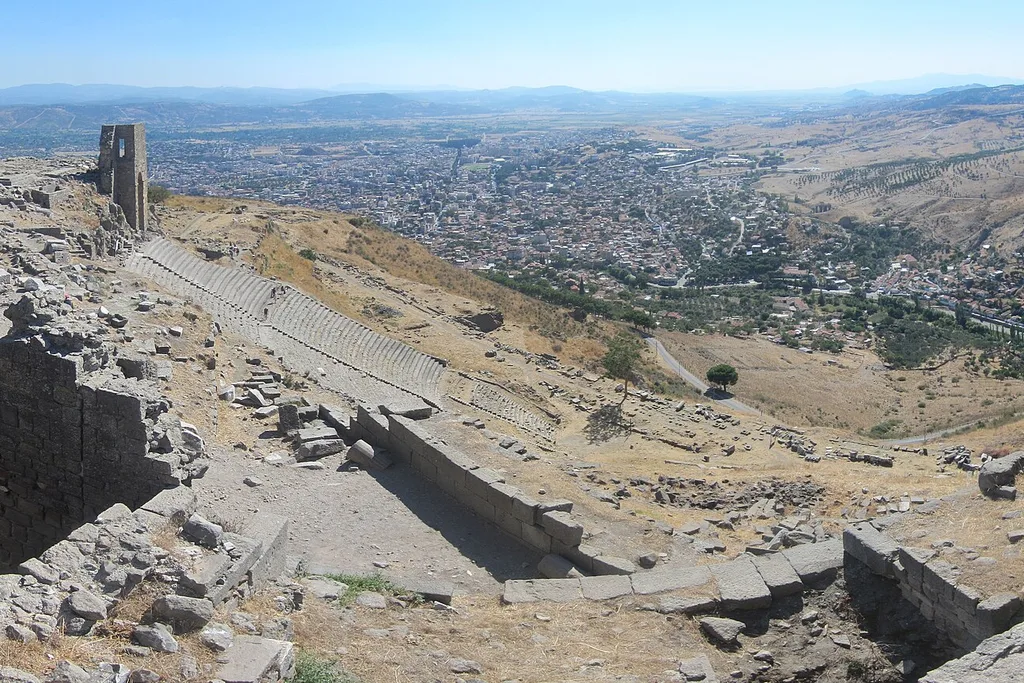
Pergamon is the connoisseur’s answer to Ephesus, and the two make the most instructive pairing in western Turkey. Where Ephesus is a Roman city at street level, Pergamon is a Hellenistic royal capital on a citadel hill — the seat of the Attalid kings, a city of libraries, temples and ambition stacked up a steep acropolis above the modern town of Bergama. Its theatre is the signature image: the steepest surviving theatre of the ancient world, a fan of stone rows plunging down the hillside so dramatically that sitting in it feels like perching on the roof of the plain. The Traianeum’s marble terraces crown the summit, temples and palaces run along the ridge, and below the hill the Red Basilica sprawls in brick, while the Asclepieion, one of the ancient world’s famous healing sanctuaries, spreads through the olive trees on the flat — a medical centre where treatment mixed medicine, theatre, dreams and spa water in proportions modern wellness would recognise.
The property was inscribed by UNESCO in 2014 as Pergamon and its Multi-Layered Cultural Landscape, and multi-layered is the honest word — Greek, Roman, Byzantine and Ottoman Bergama all occupy the same ground. The famous Pergamon Altar itself is not here; it stands reconstructed in Berlin, which sets some visitors’ expectations wrongly before they arrive. What is here is arguably better for understanding the city: the hill, the theatre, the sanctuaries and the daily town beneath, without the single overwhelming masterpiece that would shrink everything else into its forecourt. Numbers stay gentle compared with Ephesus, and the acropolis rewards a slow morning.
Who should skip Pergamon — Anyone allocating exactly one ancient-city day in the west and choosing between the two should usually choose Ephesus, whose completeness is unmatched. Pergamon is for the second site, the return trip, the traveller who has done the famous marble streets and wants the Hellenistic world in its own terrain rather than Rome’s. It also asks more of the legs — the acropolis is a real hill, reached by cable car or a climb, and its drama is vertical. Take it on those terms and it is one of the most satisfying sites in Turkey; take it expecting a second Ephesus and you will misjudge both.
Gallipoli
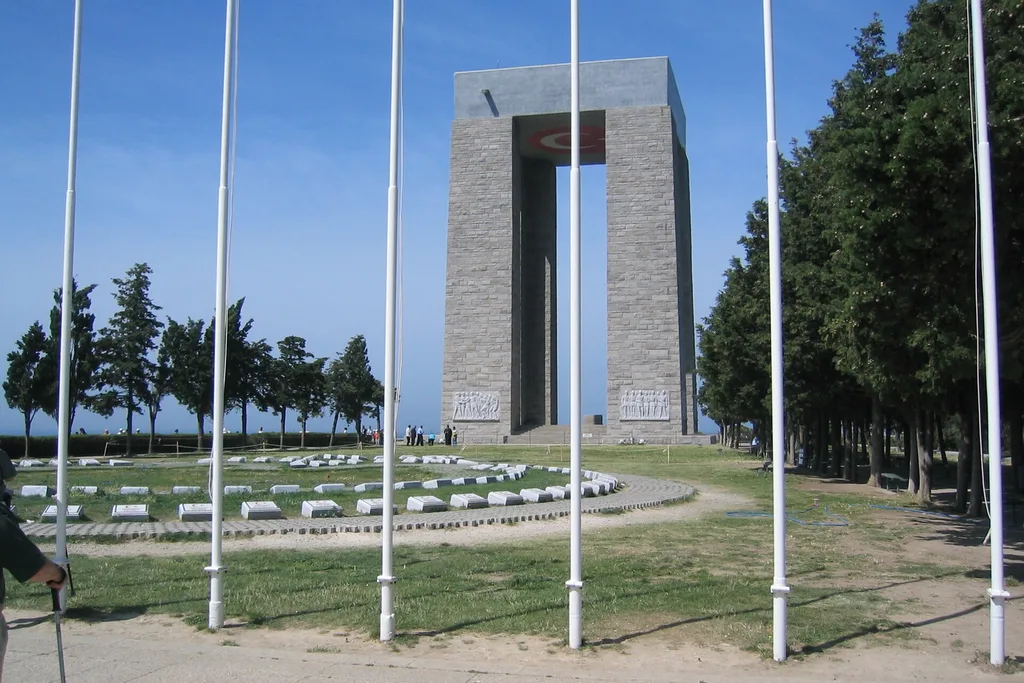
Gallipoli is on this list for a different reason from every other entry. Nothing here is beautiful in the way Pamukkale is beautiful, and nothing is ancient in the way Ephesus is ancient. The peninsula at the mouth of the Dardanelles is a landscape of memory: the beaches, ridges and gullies where, in 1915, Ottoman forces defended the straits against an Allied campaign that brought soldiers from Britain, France, Australia, New Zealand, India and elsewhere to some of the hardest fighting of the First World War. The ground itself is the exhibit — Anzac Cove, improbably small beneath its cliffs; Lone Pine and Chunuk Bair on the ridge line; the Nek and the tangled valleys between — and a visit is a walk through cemeteries and memorials in pine-scented quiet, reading names.
The Turkish memorial landscape matches the Allied one in scale and feeling: the great Çanakkale Martyrs’ Memorial rises at the peninsula’s tip, and the battle is remembered in Turkey as a defining defence of the homeland, the campaign that made Mustafa Kemal’s name. Both remembrances occupy the same hills without cancelling each other, which is part of what makes Gallipoli moving rather than merely sombre. The Çanakkale and Gelibolu battle zones were placed on UNESCO’s Tentative List in 2014, a status this guide states as it stands — nominated and recognised as significant, not yet inscribed. Most visitors base in Çanakkale or Eceabat, cross or follow the straits, and give the peninsula a full day rather than the half the tour schedules allow; Troy, inscribed in 1998, lies across the water for those pairing the two.
Who should skip Gallipoli — Travellers with no connection to or curiosity about the First World War will find a quiet, pine-covered peninsula of cemeteries, and should not be shamed into performing an emotion they do not feel; the Aegean coast nearby will serve them better. It is also, frankly, a heavy day, and families mid-way through a light summer holiday sometimes find the weight of it lands harder than expected. For anyone with an ancestral thread to 1915, or an interest in how nations remember, it is not skippable at all — it is the entry on this list most likely to be the one a traveller talks about for the rest of their life.
Bodrum
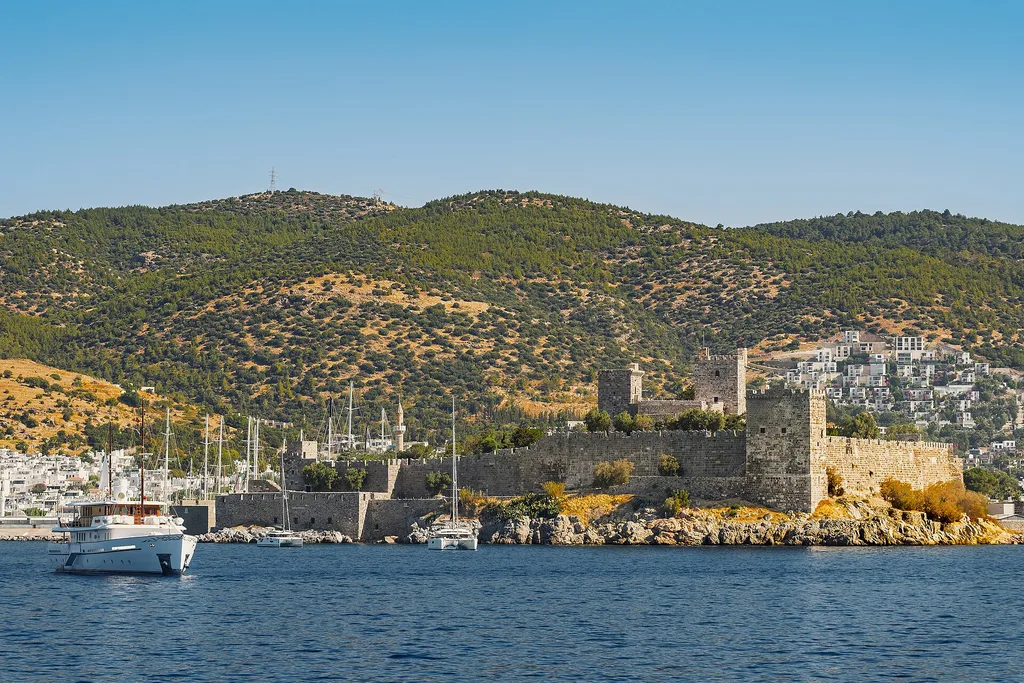
Bodrum asks to be judged as two places wearing one name, and loving it means choosing which one you came for. The first is ancient Halicarnassus: the city of Mausolus, whose monumental tomb — the Mausoleum — was counted among the Seven Wonders of the ancient world and gave every later mausoleum its name. The tomb itself survives as excavated foundations and sculpture fragments, many of the finest now in the British Museum, and its stones had a second career: the great castle that still dominates the harbour was built by the Knights Hospitaller in the crusading centuries largely from the ancient city’s ruins, Mausoleum blocks included. The Castle of St Peter now holds a museum of underwater archaeology, displaying shipwrecks raised from these waters — the castle was added to UNESCO’s Tentative List in 2016 — and standing on its towers at closing time, with the marina lights coming on, is Bodrum at its best.
The second Bodrum is the modern one: Turkey’s most polished sailing and nightlife town, whitewashed lanes, a marina of serious yachts, beach clubs around the peninsula and a summer social season that draws Istanbul to the sea. The peninsula, not just the town, is the destination — village bays, gullet cruises into the Gulf of Gökova, and water so clear the boats seem to float on air in the photographs, which for once are accurate. Treat the two Bodrums as a pair and the place coheres: history in the morning, harbour in the afternoon, sea at every hour.
Who should skip Bodrum — Purists after untouched Turkey will find Bodrum the most internationalised town on the Aegean, with prices and polish to match, and the quieter traveller is often happier in Kaş. Antiquity-first visitors should also calibrate: the Mausoleum site is an archaeologist’s pleasure rather than a standing wonder, and the castle and museum carry the historical weight here. But as the coast’s combination of a real fortress, real sailing and a real night out, Bodrum has no equal in the country — skip it for taste, never for quality.
Fethiye and Ölüdeniz
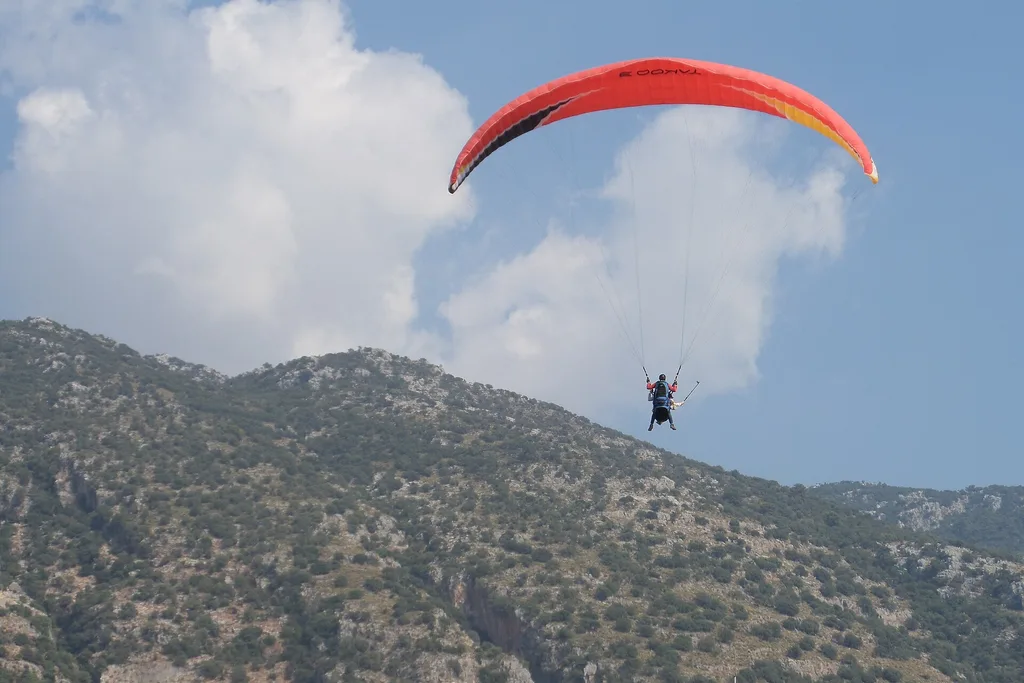
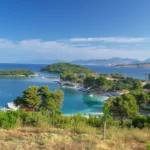
Fethiye is the working town, Ölüdeniz the famous view, and the pair together form the Turquoise Coast’s adventure capital. The view first, because everyone arrives for it: a lagoon of improbable blue, fenced from the open sea by a spit of pale sand and backed by the wall of Babadağ, the mountain from which paragliders pour on every flyable morning to spiral down over the water. The lagoon is a protected nature reserve, calm where the open beach beside it has real waves, and the aerial photograph of it — blue on blue, mountain behind — is one of the two or three images that sell Turkey worldwide. Seeing it from a paraglider’s harness is the region’s signature experience, and seeing it from the beach with your feet in it is nearly as good and considerably cheaper in every currency that matters, including courage.
Fethiye town, a short ride inland up the hill, supplies the substance: a harbour of excursion boats heading out to the Twelve Islands, a market, rock tombs cut into the cliff behind the town by the Lycians, and the ordinary life of a place that works for its living in every season. Around the pair sit the supporting cast that stretches a stay: the abandoned stone village of Kayaköy, emptied in the population exchange of the 1920s and now walked in silence; Butterfly Valley, reached by boat or a steep path; and the first steps of the Lycian Way, the long-distance trail that starts here and follows this coast east. A Fethiye base handles all of it without repacking.
Who should skip Fethiye and Ölüdeniz — Anyone whose coast trip is built on quiet. In high summer Ölüdeniz is one of the most popular holiday landscapes in Turkey and feels it, and travellers seeking the small, local end of the Turquoise Coast should base in Kaş instead and day-trip if curiosity insists. The paragliding, like Cappadocia’s balloons, is weather’s decision, not the booking’s. But for active days — flying, boating, swimming, walking a ghost village before lunch — no other stretch of this coast packs so much into so small a map.
Kaş and Kekova
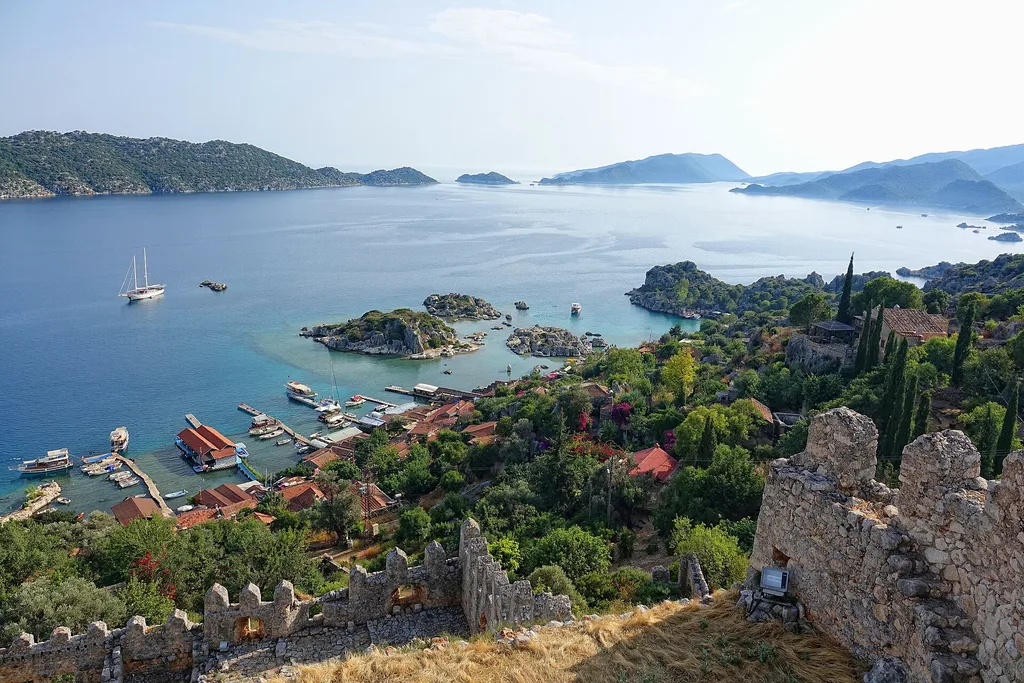
Kaş is what travellers who found Fethiye too much and Bodrum too polished were looking for. It is a small harbour town on the Lycian coast, white houses and bougainvillea over a crescent of very clear water, with a Greek island close enough offshore to feel like a neighbour. Its history is worn casually: Lycian sarcophagi stand in its streets and one famous tomb rises straight from the harbour square’s end, treated by locals as furniture. Days here run on the water — diving on reefs and wrecks for which Kaş is one of Turkey’s recognised centres, swimming from rock platforms and small pebble coves, and evenings in a harbour that still feels like a town’s front room rather than a resort’s stage.
The boat trip east to Kekova is the essential excursion, and one of the genuinely unique journeys in Turkish travel. Along the island’s northern shore, the ruins of an ancient settlement — houses, staircases, a church apse — slide into the sea, submerged when an earthquake dropped the coastline in antiquity and now viewed glass-clear from the boat, in water where swimming near the ruins is restricted precisely because they are ruins. Kekova was placed on UNESCO’s Tentative List in 2000. Across the channel, Kaleköy village clusters under a small castle on its hill, reachable only by boat or on foot, with sarcophagi standing in the shallows and the Lycian necropolis on the slope. The whole day has the quality of a beautiful rumour confirmed.
Who should skip Kaş and Kekova — Travellers who need a sandy beach at the hotel door; Kaş swims from rock and pebble, and its pleasures are for people happy in deep, clear water. It is also the coast stop that asks the most road of you — the scenic coast road that makes it feel remote is the same road that makes it a commitment to reach. Those two honest warnings given, Kaş is the entry on this list that returning travellers most often name as their favourite place in Turkey, and the one the first-time lists most often leave out entirely. That gap is the whole reason this guide runs to sixteen.
Antalya
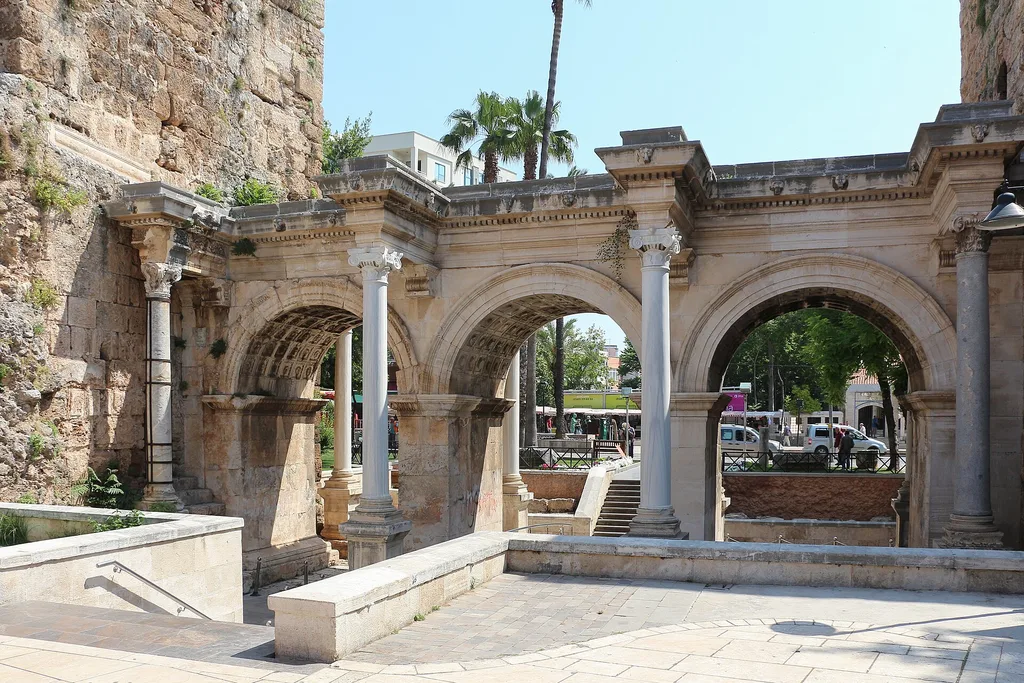
Antalya is usually described as a resort city, and the description is both true and a disservice. Yes, this is the capital of the Turkish Riviera: great arcs of managed beach run east and west of it, resort districts handle summer at industrial scale, and the airport receives the coast’s traffic. But inside the resort city sits a real one. Kaleiçi, the old town, folds Ottoman houses, Roman walls and a working harbour into a maze of lanes above the water, entered most memorably through Hadrian’s Gate — a marble triple arch raised for the Emperor Hadrian’s visit in about 130 CE, still doing duty as a doorway nearly nineteen centuries later. The Yivli Minare, a fluted Seljuk minaret, marks the skyline; the harbour below the cliffs was the city’s reason for existing from its founding as Attaleia.
What raises Antalya from beach base to best-place status is its hinterland of antiquity, the richest day-trip field on the Mediterranean coast. Aspendos, east of the city, preserves one of the finest Roman theatres anywhere — its stage building standing almost complete; the theatre and aqueducts of Aspendos were added to UNESCO’s Tentative List in 2015. Perge spreads a stadium, colonnaded streets and baths across its plain, and Termessos, for those who make the climb, holds a theatre in the mountains that feels discovered rather than visited. The city’s own museum gathers what these sites produced and ranks among Turkey’s best. A traveller can beach in the morning and stand in a Roman stadium by afternoon without any sense of strain.
Who should skip Antalya — Travellers whose taste runs to small towns and empty coves will find Antalya’s scale and summer heat both a lot, and the resort districts in particular are a product, not a place. It is also a base rather than a jewel: nobody’s single favourite street in Turkey is here, and its old town, though lovely, is a quarter, not a Safranbolu. Choose Antalya for range and ease — swimmable sea, serious ruins, a real city’s restaurants and an airport at the door — and it may be the most efficient week on this entire list.
Safranbolu
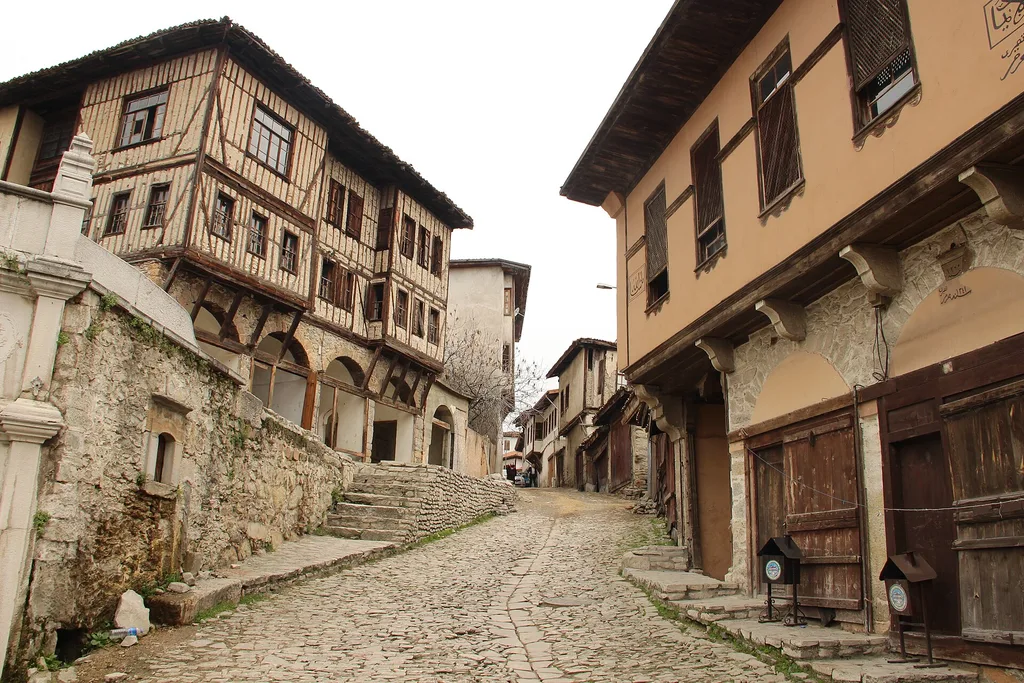
Safranbolu is the gentlest entry on this list, and in its way one of the most complete. The town, in the hills inland from the Black Sea, grew rich on the caravan trade and spent the money on houses: hundreds of Ottoman konaks, timber-framed and whitewashed, with overhanging upper rooms, carved ceilings and courtyards arranged for a life of family privacy and merchant hospitality. In 1994 the City of Safranbolu was inscribed by UNESCO, and the protection has kept the old town’s fabric unusually whole — not one restored showpiece street but a working small town whose çarşı of metalworkers, confectioners and lokum shops still operates inside the historic shell. The town’s name carries saffron, the spice was traded and grown here, and the deep yellow still colours its sweets and its story.
Nothing at Safranbolu shouts. There is no single monument to queue for, no facade on a banknote. The experience is cumulative — a morning coffee in a caravanserai courtyard, the view from the old government hill across a sea of tiled roofs, an afternoon in the bazaar lanes, a night in a konak where the cupboards are rooms and the rooms open like cabinets. It pairs naturally with the road east or west across northern Anatolia, and with the Black Sea port of Amasra beyond the hills, making it the natural hinge between Istanbul and the north. Travellers consistently report it as the place that felt most like the Turkey Turks themselves holiday in, because it is.
Who should skip Safranbolu — Anyone on a first, short, greatest-hits trip; its pleasures are quiet and architectural, and it will not out-shout Cappadocia or Ephesus for a place in a seven-day route. It also sits apart from every other entry here — north where the rest are south, east and west — so it must be chosen deliberately, as the heart of a northern loop or an overnight of atmosphere on the road to the Black Sea. Choose it so, and it delivers something none of the famous places can: the feeling of an Ottoman town still simply being itself.
Sümela Monastery and Trabzon
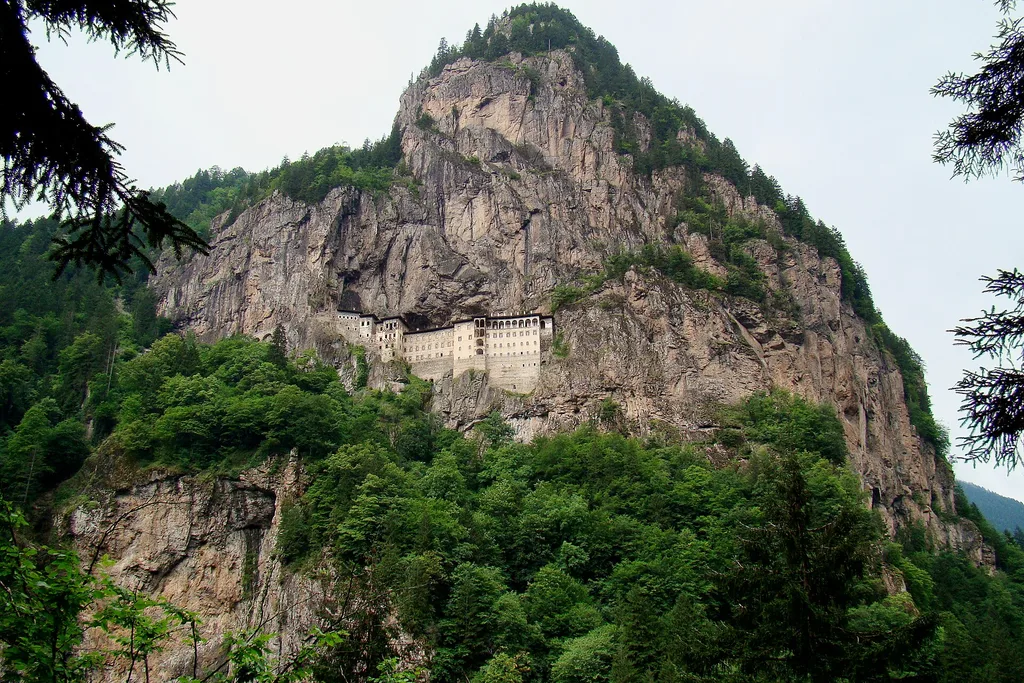
The Black Sea coast is Turkey’s other country — green where the south is dry, wet where the plateau is parched, tea gardens climbing hillsides that would be brown anywhere else in the nation. Its emblem is Sümela Monastery, which performs the neatest trick of any building on this list: it is built not on its cliff but into it, a facade of cells and chapels plastered across a rock face high in the Altındere valley, in forested mountains behind the port of Trabzon. Founded in the Byzantine centuries and enlarged under the empire of Trebizond and the Ottomans, frescoed inside, abandoned in the population exchange of the 1920s, it has been restored over long years and stands open again, reached by a road up through the national park and a climb of steps through the trees. Sümela was placed on UNESCO’s Tentative List in 2000, and its setting alone would justify the journey even if the monastery were half what it is.
Trabzon, the base, carries its own weight — a Byzantine and trading city with its own Hagia Sophia, smaller than Istanbul’s and frescoed like a jewel box, and a working Black Sea port’s unpolished energy. Around both stretches the region that Turks romanticise and foreigners rarely reach: the Pontic mountains, summer pastures, and the tea country running east towards Rize. The climate writes the trip here — this is the coast where mist and green are the scenery, where the sea is grey-blue and dramatic rather than turquoise, and where a week can feel like a different nation from the one that contains Antalya.
Who should skip Sümela and Trabzon — Sun-seekers, plainly; the Black Sea does not sell the Mediterranean bargain, and its beaches and weather are not the point. It is also a genuine journey from every other entry here, a flight or a long northern road, and in a first trip of standard length it competes with the whole Aegean for days it usually should not win. But for the second trip, or the traveller who has done the classic route and wants the Turkey that remains — this is where it is, hanging on a cliff in the rain-green mountains.
Mount Nemrut
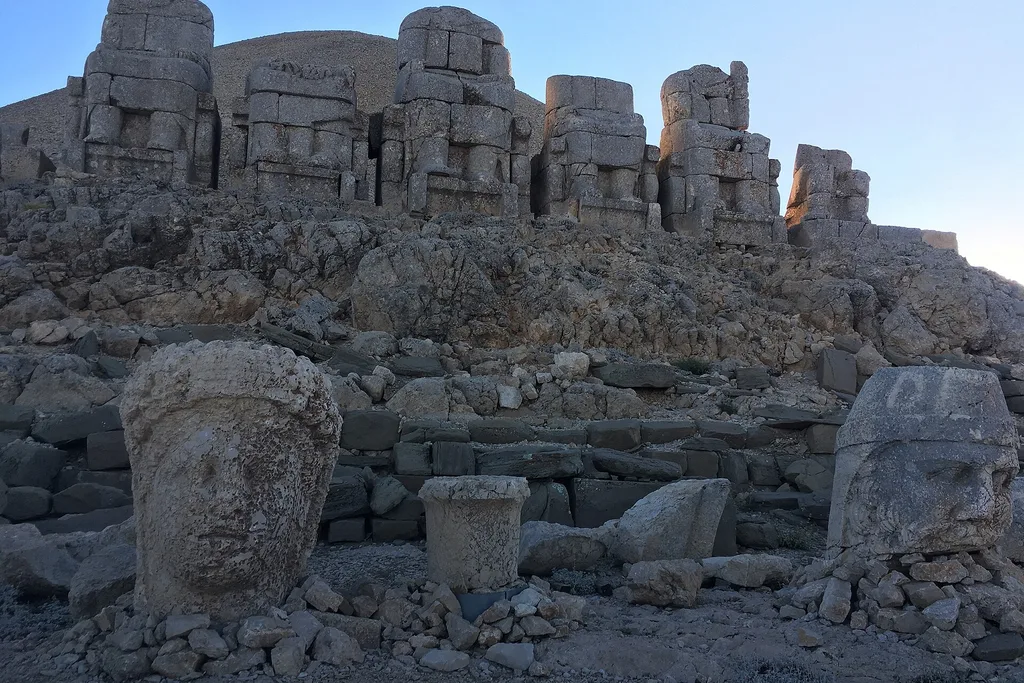
Mount Nemrut is the purest pilgrimage on this list: a high, bare summit in the south-east, visited at the day’s edges, in cold wind, for one overwhelming sight. In the 1st century BCE, Antiochus I of Commagene — a small kingdom balanced between the Roman and Parthian worlds — built himself a funerary sanctuary on the mountaintop: a great cone of crushed rock raised as his tumulus, flanked by terraces where colossal statues of gods and of Antiochus among them sat in a row, part Greek, part Persian, entirely his own invention. Earthquakes and time have done their work; the bodies still sit, and their heads, each the height of a person and more, lie toppled on the terraces before them, gazing out over the Euphrates country with an expression that two thousand years of weather have somehow improved.
UNESCO inscribed Nemrut Dağ in 1987. The ritual of visiting is fixed by the mountain: most travellers come for sunrise or sunset, when the stone takes colour and the shadows model the faces, staying in the villages on the slopes or making the long pre-dawn drive from a regional base. Between those hours the summit belongs to wind and a handful of walkers. There is nothing else up there — no town, no second sight, no cafe strip — and that singleness is the experience. You climb, in thin air at over two thousand metres, to a king’s conversation with eternity, and the conversation has outlasted his kingdom by two millennia.
Who should skip Mount Nemrut — Anyone for whom a single dawn at altitude cannot repay a long mountain journey; Nemrut is a detour measured in hours from anywhere, and it gives back exactly one thing, however mighty. Travellers uncomfortable with cold, wind, altitude or pre-dawn starts should take the sunset sitting or think carefully. It pairs with Göbekli Tepe and Şanlıurfa into the south-east’s great double, which is how most serious itineraries justify it. Taken together, they are worth the whole journey east. Taken alone, Nemrut asks a lot — and, at sunrise, with the heads lighting up one by one, pays it back in full.
Göbekli Tepe
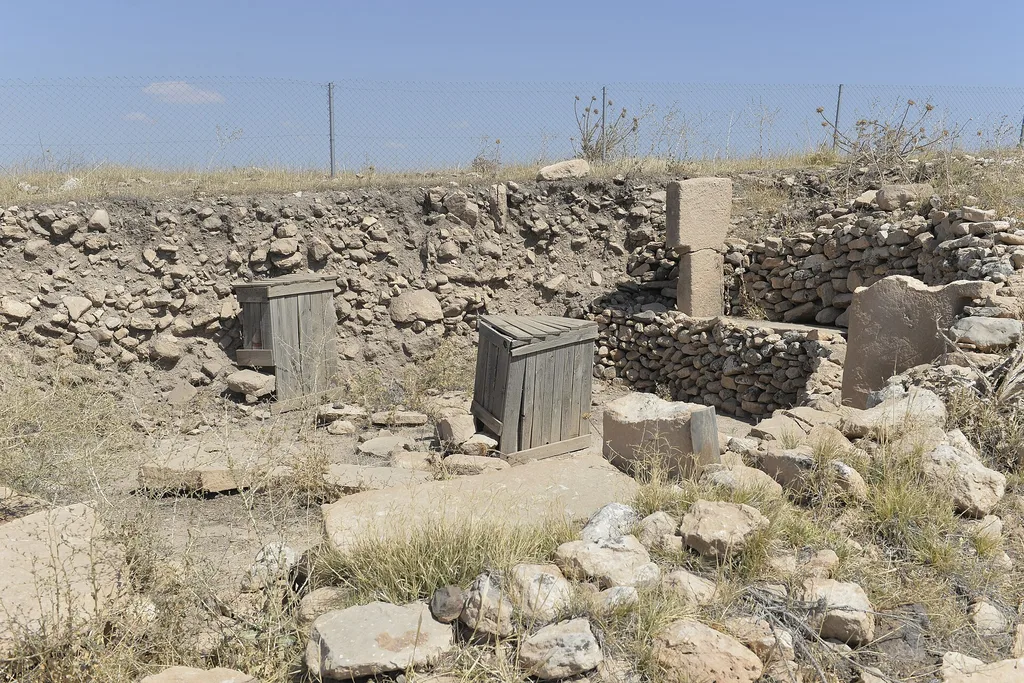
Göbekli Tepe rewrites the story every other place on this list belongs to. On a hilltop outside Şanlıurfa in the south-east, excavations have uncovered circles of enormous T-shaped stone pillars, carved with foxes, boars, cranes and abstract signs, arranged in monumental enclosures — and the dates are the shock. This was built around eleven and a half thousand years ago, by hunter-gatherers, before farming, before pottery, before the wheel, at a time when the textbooks said nobody could organise labour on this scale. The temples came first here; settled life, the evidence increasingly suggests, may have followed the building, not the other way round. Almost everything else in Turkey, from Ephesus to Hagia Sophia, is a footnote to the discovery that this is where monumental building begins.
UNESCO inscribed Göbekli Tepe in 2018, and the site is presented with the protection its fragility demands: walkways and a great sheltering roof over the main enclosures, where the two central pillars of Enclosure D stand like figures presiding over the ring. The carving repays slowness — a leopard here, a vulture there, belts and hands worked into the stone that turn pillars into persons. The finds, including the pillars removed for safety and study, are carried further at Şanlıurfa’s museum, which serious visitors treat as the second half of the site; the city itself, one of Turkey’s great food cities and a pilgrimage centre in its own right, makes the south-east’s best base.
Who should skip Göbekli Tepe — Visitors expecting a standing city will find instead an excavation: rings in a hillside, mostly roofless summers of careful digging made visitable. Its wonder is intellectual before it is visual, growing on you as the implications land, and younger children or travellers who need their history in marble may feel the distance between expectation and a hill of pillars. But anyone whose imagination is caught by beginnings — by the first time humans built big on purpose — will find that this quiet hilltop rearranges their sense of the past more completely than any palace. Nothing else on this list, or in most countries’ lists, can say that.
Ani
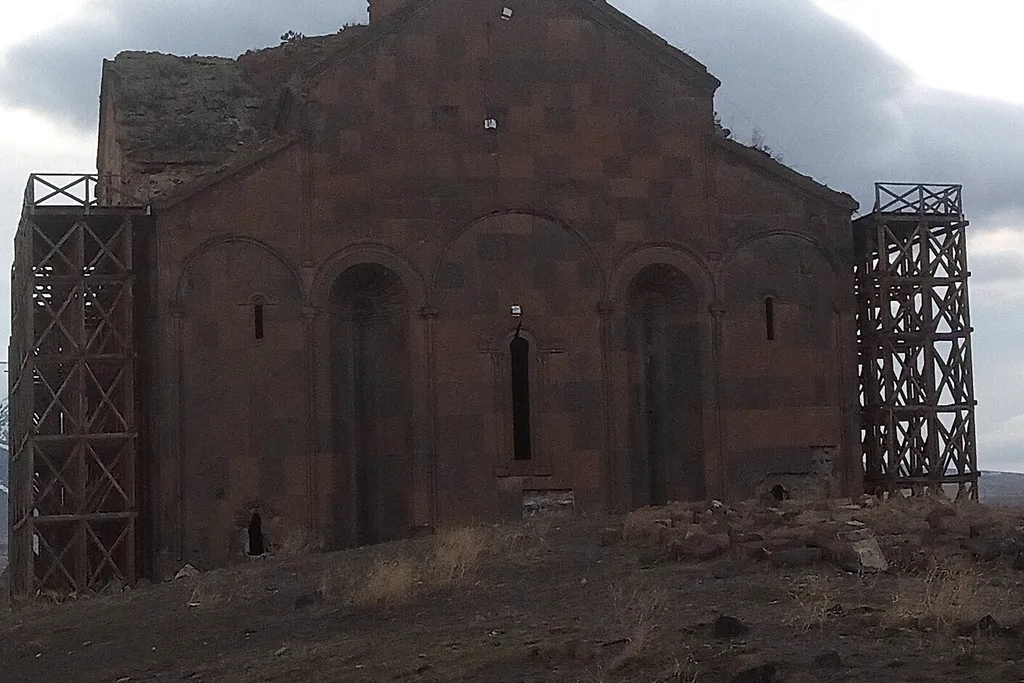
Ani is the list’s great silence. On a plateau above a gorge in the far east, near Kars, stands what was once a capital: the seat of the Bagratid Armenian kings, a walled city on the Silk Road whose population and churches were the boast of the medieval world — tradition remembers it as the city of 1,001 churches. Its Cathedral, completed around the turn of the 11th century by Trdat, the architect who also repaired Hagia Sophia’s dome, still stands roofless in red stone, an early essay in the pointed forms Gothic Europe would later claim. Around it the plateau is strewn with the city’s remains — churches with frescoes fading in the light, a mosque, a citadel, cave dwellings in the gorge walls — inside a great circuit of walls, above the river that now forms the closed border with Armenia, whose land Ani’s churches gaze across at.
The Archaeological Site of Ani was inscribed by UNESCO in 2016. What defines a visit is not any single building but the emptiness: a capital city with no successor town inside its walls, where the wind does most of the talking and the ruins are spread at walking scale across open grassland. In winter the plateau is snowbound and savage; in summer the light is enormous and the distances between churches become the experience. Kars, the base town, has its own Russian-era grid streets and serious winters, and the whole region is the least visited corner of Turkey that contains a World Heritage Site.
Who should skip Ani — Most people, on most trips, and the guide says so without flinching: it is a full journey to the far east for a site that gives atmosphere and melancholy rather than spectacle, and a first trip should not sacrifice Cappadocia or the coast for it. Visitors who need their ruins complete will find Ani testing — the cathedral’s scaffolded stones and the roofless churches are honest ruins, not reconstructions. But for travellers who have done the famous Turkey and wondered what lies beyond it, Ani is the answer that justifies the question: a city that was once a byword for splendour, standing in grass and silence at the edge of the map.
Lake Van and Akdamar
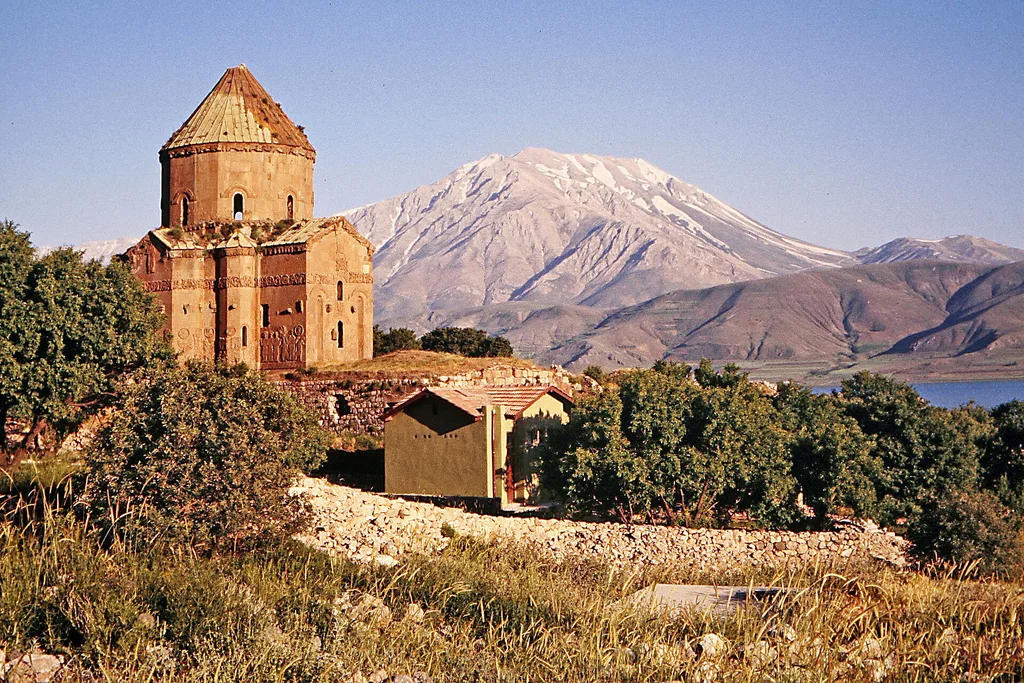
Lake Van ends this list because it ends the country: Turkey’s largest lake, a vast inland sea of alkaline blue in the far east, ringed by volcanic peaks and so wide that its far shores vanish. On an island near its southern shore stands the trip’s jewel — the Church of the Holy Cross on Akdamar, built in the early 10th century for King Gagik I of Vaspurakan and covered, outside as much as in, with carved reliefs: biblical scenes, kings, animals and vines worked into its red stone walls like a manuscript wrapped around a building. It is one of the masterpieces of medieval Armenian art, and it stands alone on its island with a mountain backdrop across the water, reached by a short boat ride that is part of the pleasure. Akdamar Church was placed on UNESCO’s Tentative List in 2015.
The city of Van anchors the lake’s eastern shore and runs on a different rhythm from the western resorts: famous across Turkey for its elaborate breakfasts, home to Van Fortress on its rock above the drowned old city — itself a Tentative List entry of 2016, paired with the old town mound — and to a celebrated local cat with two-coloured eyes. Around the lake, the east shows its deep history in Urartian stones and its present in Kurdish and Turkish towns that see few foreign visitors. Everything here is on a grander, emptier scale: the drives are long, the light is high-altitude clear, and the water is a blue that has to be argued with to be believed.
Who should skip Lake Van and Akdamar — Anyone short on days, because this is the far east at its farthest and pairs with Ani and Kars into an eastern expedition of the better part of a week, not an afterthought. Travellers who need infrastructure, nightlife or a beach scene will find a beautiful austerity instead. But as the final entry it carries the guide’s argument to its end: the best places to visit in Turkey are not exhausted by the famous west. At the far edge of the country floats a carved church on an island in an inland sea — and the travellers who make it there tend to describe it the way people describe places they cannot quite believe are real.
How to Combine Them Into a Trip
Sixteen places, one holiday: the arithmetic does not work, and it is not meant to. What works is choosing a region-shaped subset and letting geography, not fame, draw the route. The combinations below are the ones that respect distance. Turkey’s domestic flights make Istanbul a hub for almost everything, but a trip built entirely of flights and one-night stands collects airports; the good routes mix one flight with stretches of road where the places line up in a row.
The classic first trip strings the four great names together — Istanbul, then a flight to Cappadocia, then west to Ephesus and Pamukkale, which sit close enough to share a base or a single transfer day, and back to Istanbul or out through the Aegean. That route takes seven days at a brisk honesty and ten in comfort, and nothing in this guide will talk a first-timer out of it: it remains the finest single arc of places in the country. Add one thing only — Pergamon on the road north from Ephesus, or Gallipoli on the road back to Istanbul — and resist all other additions. The second trip writes itself from what the first one missed.
The coast trip runs west to east along the water: Bodrum, then Fethiye, then Kaş, then Antalya, following the Turquoise Coast in the order the road does, with Kekova’s boat day and Aspendos folded in. A week does it justice, ten days make it lazy in the right way. The east trip is its own expedition and should not be grafted onto anything else — Şanlıurfa for Göbekli Tepe, up to Nemrut for a dawn, then Kars for Ani and down to Lake Van, five to seven days in the country’s big empty quarter, with distances that are part of the experience. The north pairs Safranbolu with the road to Sümela and Trabzon, Istanbul’s other bookend, and suits travellers collecting the green Turkey. What never works is the grand slam — west, coast, east and north in one fortnight — which is how travellers end up with sixteen photographs and no places at all. Choose a Turkey. There will be others, and they keep.
Frequently Asked Questions
How many days do I need to see the best places in Turkey?
For the classic arc — Istanbul, Cappadocia, Ephesus and Pamukkale — seven days is the honest minimum and ten is the comfortable version, with at least three nights in Istanbul and two in Cappadocia. A coast trip from Bodrum to Antalya needs a similar week. The east — Göbekli Tepe, Nemrut, Ani and Lake Van — is a separate five-to-seven-day expedition. Trying to merge all three into one holiday is the most common planning error this guide exists to prevent.
What is the single best place to visit in Turkey?
If a trip can hold only one place beyond the inevitable Istanbul start, make it Cappadocia — it is the landscape that exists nowhere else, and its cave churches, valleys and underground cities fill days even when the balloons stay grounded. If the traveller’s heart is historical rather than scenic, the answer changes to Ephesus, the most complete ancient city in the country. The honest version of this question is not which place is best, but which place is best for you — which is the judgement every entry above is built to help you make.
When is the best time of year for these places?
Spring and autumn — broadly April to May and September to October — suit the greatest number of them at once: Istanbul walkable, the Aegean sites out of their fierce heat, Cappadocia mild, the coast still swimmable at autumn’s start. Summer belongs to the coast and punishes the open marble of Ephesus and the plateau of Ani at midday; winter belongs to Istanbul, empties Cappadocia into beauty under snow, and closes the far east into serious cold that suits only deliberate winter travellers. Mount Nemrut’s season is the shortest — its summit is a summer and shoulder-season visit, not a winter one.
Can I visit the eastern places — Nemrut, Göbekli Tepe, Ani and Lake Van — on a first trip?
You can, and travellers whose interests run to deep history sometimes should, but understand what you are trading: an eastern expedition replaces the classic arc rather than extending it, because the distances are measured in long driving days and internal flights through Istanbul. The east rewards the deliberate — readers of archaeology, lovers of empty landscapes, second-time visitors. A first trip that tries to hold both Turkeys usually ends up honouring neither, which is why this guide presents the east as its own journey, not as extra stops.
How do I choose between Ephesus and Pergamon, or between Bodrum, Fethiye and Kaş?
Ephesus first, Pergamon second — completeness before connoisseurship. On the coast, choose by temperament: Bodrum for sailing, polish and nightlife; Fethiye and Ölüdeniz for the lagoon, the flying and the active days; Kaş for the small, clear and quiet end of the coast. All three are good — the choice is not between quality and its absence but between three different ideas of what a coast holiday is for.
The Short Version
The best places to visit in Turkey are a capital that ruled two empires, a landscape of carved volcanic rock, a Roman city that still reads as a city and terraces a spa was built on — and then, beyond the famous four, a second Turkey of steep theatres and battlefield ridges, of sunken cities and Ottoman streets, of a monastery in a cliff and a king’s heads on a mountain, of the world’s oldest temples and a carved church on an island in an inland sea. No list can tour it for you, and no trip can hold it all. What a list can do is match the places to the traveller honestly — saying who each one is for, and who it is not for — and let the choosing be the pleasure it should be. Pick your Turkey, give it the days it asks for, and leave the rest with a clear conscience. It will still be there, which is more than can be said for anywhere else quite like it.