Valley of the Kings Guide – Royal Tombs, Tutankhamun and How the West Bank Works
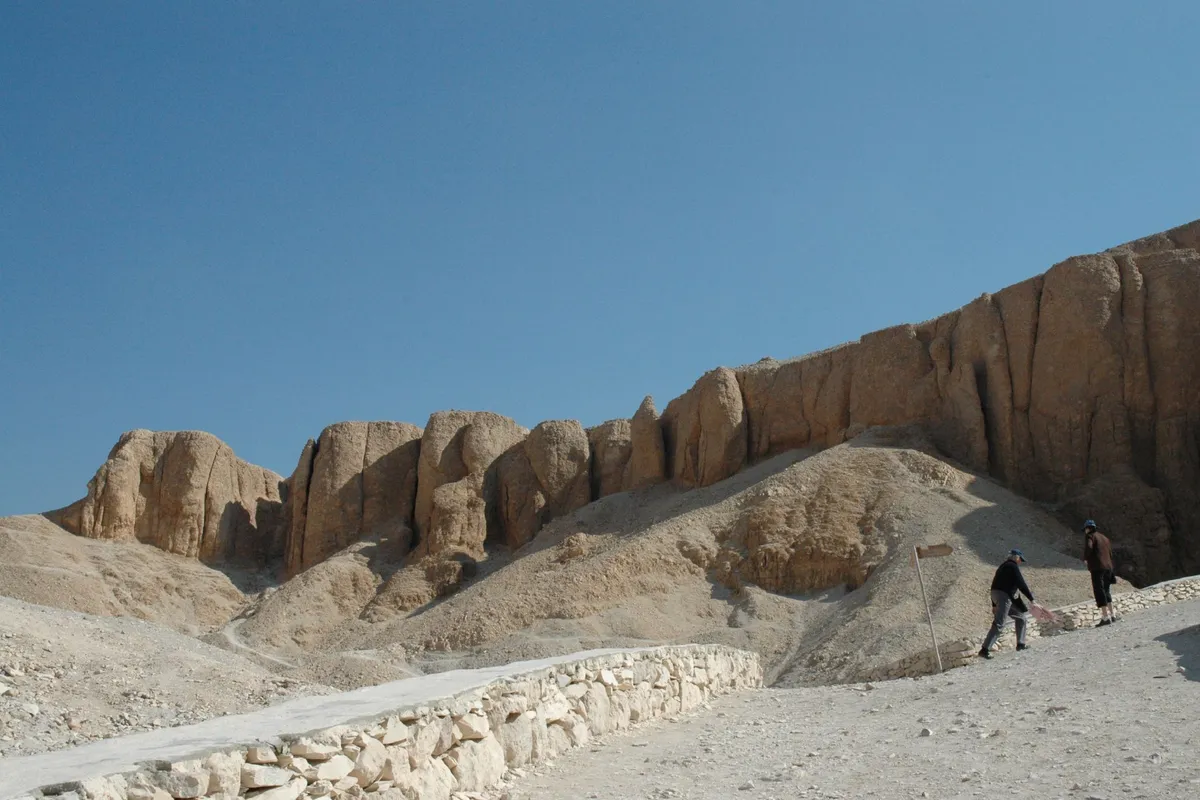
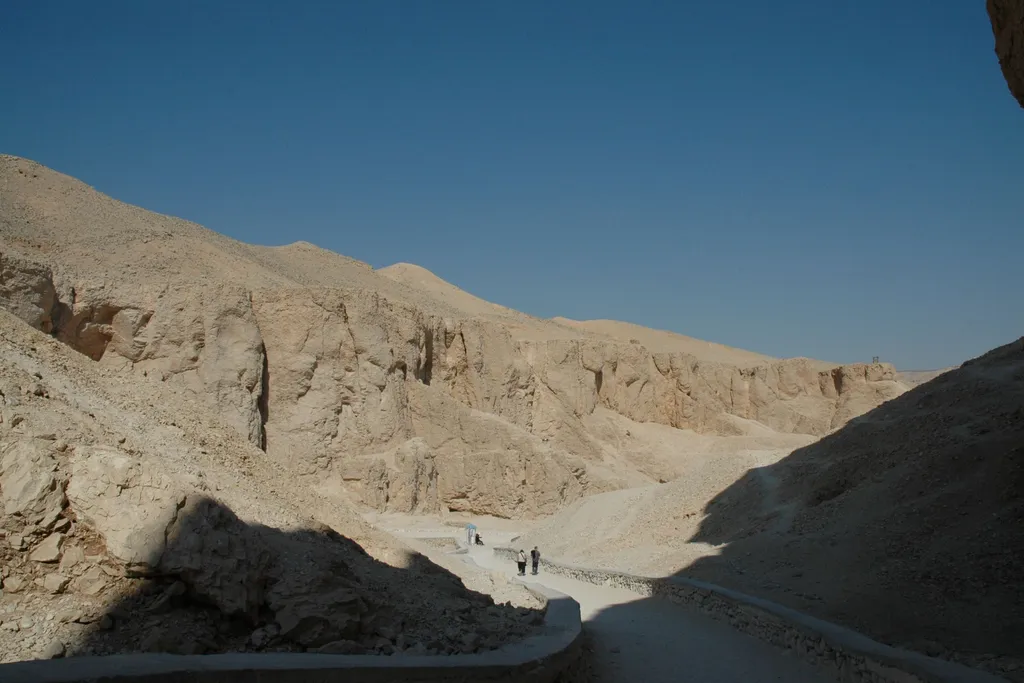
The Valley of the Kings is the one great Egyptian site that hides everything it has. Giza announces itself from the highway and Karnak stacks its pylons against the sky, but the valley, seen from its floor, is almost nothing — a dry wadi of pale limestone on Luxor’s west bank, a handful of paths and low modern doorways, and heat coming off the rock in every direction. Everything that matters is underneath. Cut into these hills are more than sixty tombs, numbered KV1 to KV63 in the order they were found, and for nearly five hundred years — from about 1539 to 1075 BCE, across the 18th, 19th and 20th dynasties — this hidden valley was where the pharaohs of the New Kingdom went to be buried, along with a scattering of queens, princes and favoured nobles in the smaller shafts around them.
That invisibility shapes the whole visit, and it is why this guide is organised around a decision rather than a list. You cannot see the valley’s tombs the way you see a temple, by walking until you have covered it. The general ticket admits you to three tombs from a rotating open list, the most famous names are ticketed separately on top of that, and the open list changes as the authorities rest tombs to protect them. A valley of the kings visit is therefore a small act of strategy — which three, which extras, in what order, at what hour — taken inside one of the strangest and most beautiful burial grounds on earth. Get the strategy right and the bare hillside stops being a disappointment and becomes what it always was, a treasure house with the doors mostly shut. For the wider shape of the country this valley anchors, start with our full Egypt travel guide; this page stays on the west bank and goes underground.
At a Glance
Short on time? Here is the valley on one screen — the tombs and pairings that matter, why each earns its place in a limited visit, and how it stands in the day’s ticket logic. The detail behind every row is in the sections that follow, and nothing in this guide prints a price or an opening hour — for a site whose open list rotates and whose fees are revised without ceremony, any figure you find printed anywhere should be treated as a claim to re-check on the official Egymonuments portal, not as a fact to plan on.
| Tomb or pairing | Why it earns its place | Ticket logic |
|---|---|---|
| Seti I – KV17 | The finest tomb in the valley — the deepest cutting, the best reliefs, colour like nowhere else | Separately ticketed whenever open |
| Ramesses V and VI – KV9 | The great painted corridor and the astronomical ceiling of the burial chamber | Separately ticketed in recent seasons |
| Ramesses III – KV11 | The most complete of the regular tombs, with rare everyday-life scenes in its side chambers | Usually on the general ticket |
| Merenptah – KV8 | The sheer scale of the descent, ending at a granite sarcophagus in a sunken chamber | Usually on the general ticket |
| Tutankhamun – KV62 | The most famous find in archaeology — and one of the smallest tombs in the valley | Separately ticketed |
| The rotating cast – KV2, KV6, KV14 and friends | Shorter, quieter tombs that reward whoever takes the open list seriously | On the general ticket when open |
| Hatshepsut’s temple and the Colossi | The valley’s other half — the mortuary temples on the plain below the cliffs | Separate nearby sites, same west bank day |
Two judgements sit behind that table and are worth stating before any detail. First, the valley rewards choosing by contrast rather than by fame — one tomb for carving, one for painting, one for scale gives you the place; three corridors of the same kind blur into one another by the walk back. Second, the valley is a morning site inside a longer west bank day. The tombs are the appointment you plan around, and Hatshepsut’s terraced temple, the Colossi of Memnon and the workers’ village at Deir el-Medina are what turn a ticket with three holes punched in it into an understanding of how this whole necropolis worked.
A Short History – Why the Kings Moved Underground
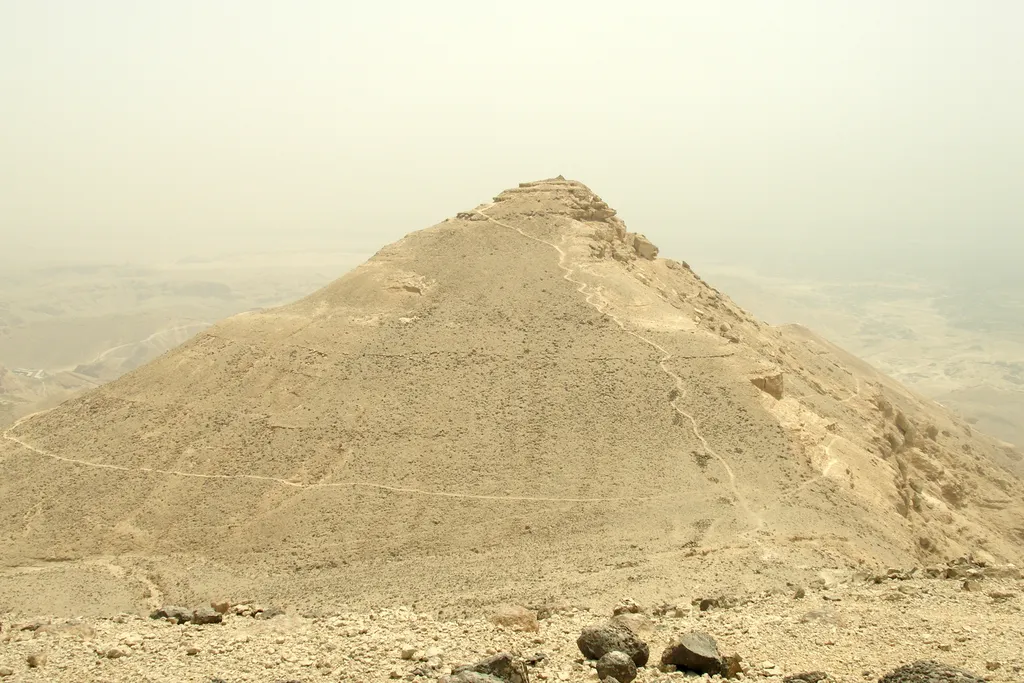
The valley exists because the pyramids failed. The Old Kingdom’s royal tombs had been advertisements — mountains of stone announcing exactly where a king’s treasure lay — and tomb robbers read the advertisements. By the start of the New Kingdom, around 1539 BCE, Egypt’s rulers changed strategy completely. The public part of a royal funeral, the mortuary temple where the king’s cult was served, would stay out on the cultivation’s edge where everyone could see it. The burial itself would go somewhere hidden, into a desolate valley in the western hills behind Thebes, guarded by a small garrison and watched over by the cobra goddess Meretseger, She Who Loves Silence. Above the valley rises al-Qurn, a natural peak shaped so like a pyramid that it reads as the old symbol kept on as a roof — the kings stopped building pyramids and moved in under one instead.
Thutmose I is generally taken to be the first pharaoh buried here, in the years around 1500 BCE, and for the next five centuries his successors followed — Hatshepsut, Thutmose III, Amenhotep III out in the Western Valley, then the Ramesside kings whose names fill the tomb numbers visitors queue for. The cutting was done by a hereditary workforce housed at Deir el-Medina, a walled village in a side valley whose inhabitants called themselves the Servants in the Place of Truth and whose surviving letters, sketches and wage records make them the best-documented workmen of the ancient world. Secrecy failed anyway, slowly. By the end of the 20th dynasty, under economic strain and with tomb robbery effectively organised crime, priests of Amun quietly gathered the royal mummies from their plundered tombs and re-hid them in caches — one in a cliff tomb above Deir el-Bahari, found by officials in 1881 with dozens of royal dead inside, Seti I and Ramesses II among them; another inside the tomb of Amenhotep II, KV35, opened in 1898.
The modern story runs from rediscovery to one November morning. Giovanni Belzoni, the strongman turned excavator, located the tomb of Seti I in 1817 and hauled its alabaster sarcophagus off to London. Through the 19th century the valley was progressively mapped and emptied, until by the 1910s the professional consensus was that nothing of consequence remained. Howard Carter disagreed, and in November 1922, working for Lord Carnarvon in the last season his patron would fund, his team cleared a rubble-strewn corner below the entrance of Ramesses VI’s tomb and found a staircase. What lay at the bottom of it — the near-intact tomb of Tutankhamun — reset the world’s idea of what archaeology could find, and it is the reason most visitors come. In 1979 UNESCO inscribed the valley as part of Ancient Thebes with its Necropolis, and the official listing at whc.unesco.org remains the sober summary of why this wadi matters. Excavation and conservation have never actually stopped; the valley is a working archaeological landscape that admits tourists, not a finished museum.
How the Visit Works – Tickets, Rotation and the Three-Tomb Choice
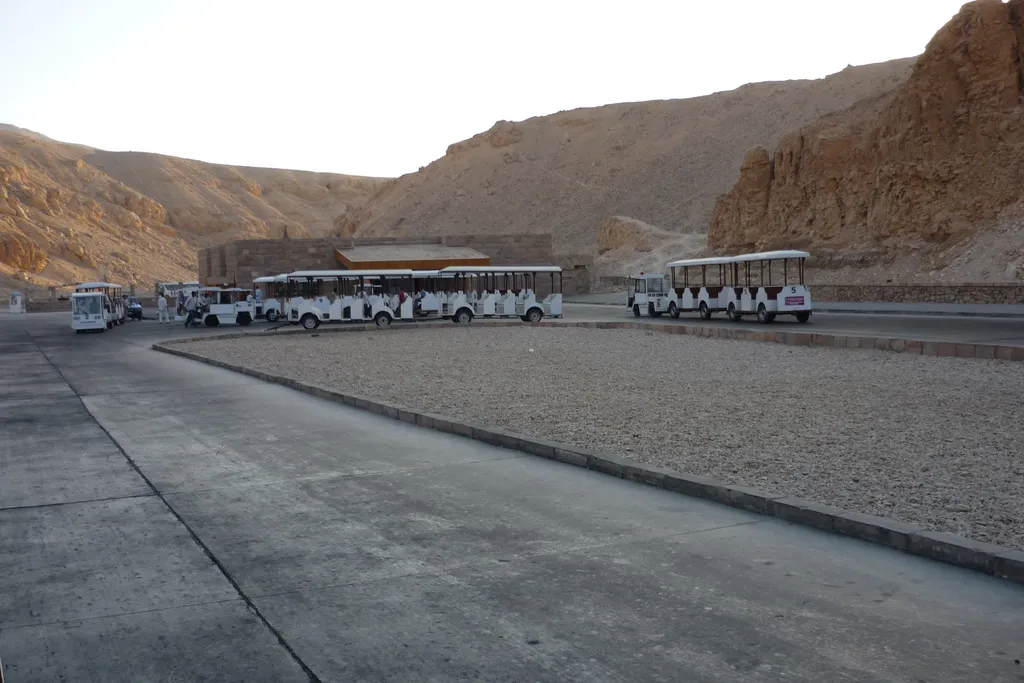
The mechanics of a visit have been stable in shape for years, whatever the prices have done, and they are worth understanding before you arrive because the one decision that matters has to be taken early. You enter through a visitor centre below the valley, buy your tickets there or in advance through the official portal at egymonuments.com, and ride a small electric shuttle train up the wadi to where the tomb entrances cluster. From the shuttle stop the valley is a walking site — paths and ramps between doorways cut into the slopes, attendants at each open tomb, and your ticket checked, punched or scanned at every entrance until its allowance is used.
The general ticket covers entry to the valley and to three tombs from the list open that day. Read that sentence again, because everything in this guide hangs on it. There are more than sixty tombs in the valley and only a rotating selection — commonly somewhere around a dozen — is open at any one time. The rotation is not bureaucratic whimsy. Every visitor breathes out moisture and carbon dioxide into sealed chambers painted three thousand years ago, and the damage is cumulative and measurable, so the authorities rest tombs the way farmers rest fields, closing some for months or years while others carry the traffic. Which specific tombs are open on your morning is a fact that exists only on the day, on the board at the site and on the official portal — and any article, including the ones this one competes with, that prints you a guaranteed open list and a price for it is selling you last season’s information as this season’s fact. This guide prints neither. Check egymonuments.com in the days before you go and again at the ticket hall, and build your three choices from what is actually open.
Layered on top of the general ticket is the second decision. The valley’s most celebrated tombs have, in recent seasons, been kept outside the general allowance and sold on separate tickets of their own — Seti I’s KV17 and Tutankhamun’s KV62 consistently, and Ramesses V and VI’s KV9 alongside them. Treat that pattern as the shape of things rather than a promise, confirm which tombs are extra on the day, and decide about them at the visitor centre, before you board the shuttle, because walking back down to buy a second ticket in the midday heat is the valley’s most common self-inflicted wound. One more mechanic shapes the visit and surprises people weekly: licensed guides are not permitted to lecture inside the tombs. Your guide briefs you at the entrance — ideally with exactly the kind of tomb-by-tomb preparation the next section offers — and then waits outside while you descend alone. Nobody will walk you through the paintings room by room, so the ten minutes of reading before each doorway are the difference between a decorated corridor and a legible one.
The Tombs to Choose From
Since the open list moves, choose by type rather than by a frozen shortlist. The valley’s tombs do four different jobs. Some are galleries of carved relief, some are painted books of the underworld, some are feats of engineering whose power is their sheer depth, and a few are famous for events rather than fabric. One of your three choices should ideally come from a different family than the other two — the carved tomb teaches you what relief could do, the painted tomb teaches you what the Egyptians believed the night was for, and the deep tomb teaches you the scale on which kings were serious about eternity. The four tombs below, plus the rotating cast after them, cover those jobs between them, and they are described in the order most visitors weigh them.
Seti I – KV17, the Benchmark
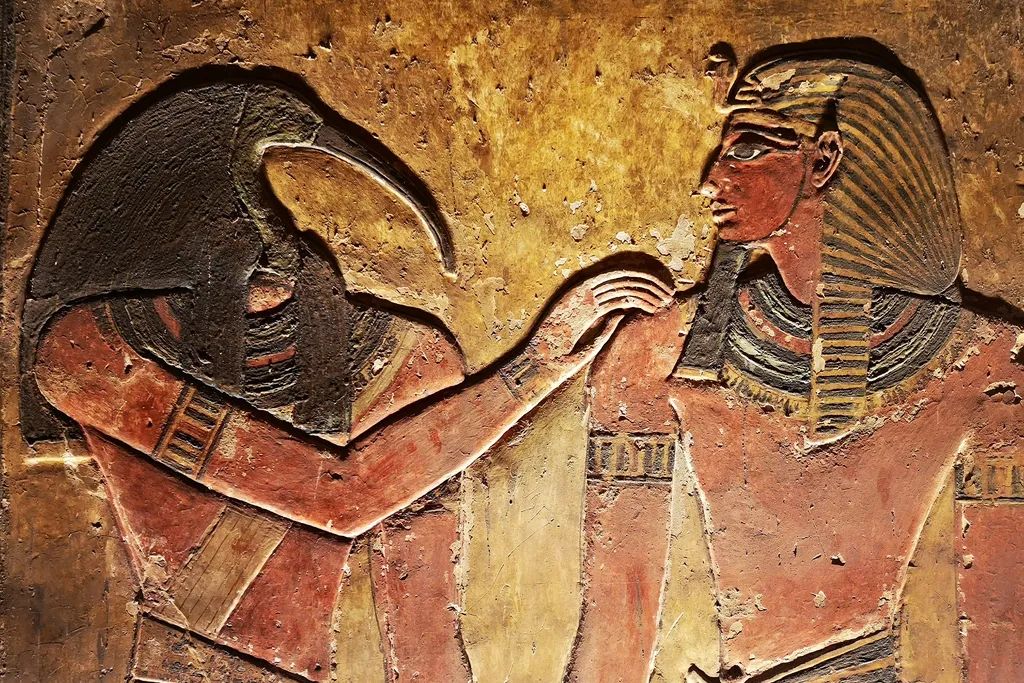
If the valley has a masterpiece, this is it. KV17 runs about 137 metres into the hill, the longest and among the deepest of the royal tombs, and every metre of it was finished to a standard the other tombs gesture at. The relief is the thing — carved so finely that the king’s face before the gods reads almost as portraiture, and painted in colours that survived because Belzoni’s 1817 opening came late and the tomb’s long closure in the modern era came early. Room after room carries the full library of the underworld books, and the burial chamber’s vaulted ceiling holds an astronomical scheme, the constellations of the northern sky laid out over the king’s resting place. Nothing else in the valley combines length, carving and colour at this level, and no description quite prepares you for the drop in temperature and noise as the corridor goes down.
The honesty owed about KV17 is practical rather than artistic. It is the valley’s premium ticket, sold separately whenever the tomb is open at all, and in some seasons it is simply closed, resting like everything else here only more so. Visitor flow inside is managed tightly, which is right — this is the tomb the rotation system exists to protect. The correct approach is to check its status before the trip hardens, treat it as the one extra worth organising a morning around if it is open, and refuse to let its closure spoil the visit if it is not. The valley without Seti I is still the valley. It is merely missing its best room. KV17 is also, not coincidentally, the tomb that taught the modern valley its conservation manners: Belzoni’s team took wax squeezes from its walls that lifted paint away with them, the tomb spent long stretches of the twentieth century closed to recover from its own fame, and the strict, rested, separately priced way it is handled now is the template the whole rotation system grew from.
Ramesses V and VI – KV9, the Painted Corridor
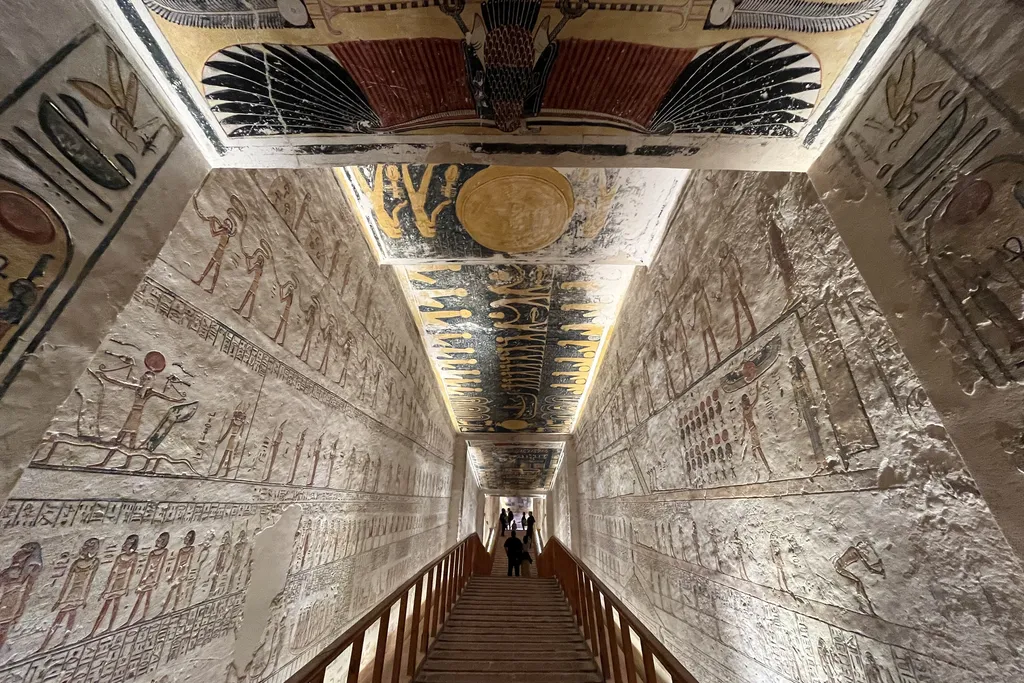
Some tombs are entered for a chamber and KV9 is entered for a journey. Begun for Ramesses V and extended by Ramesses VI, who usurped it for his own burial, the tomb runs a long, straight descending corridor whose walls and ceilings carry the underworld books in dense, vivid sequence — gates, gods, solar boats and the hours of the night unspooling above your head as you walk down. The corridor delivers you to a burial hall whose ceiling is the valley’s great astronomical painting, the sky goddess Nut stretched across it swallowing the sun at evening and giving it birth at dawn, the Book of the Day and the Book of the Night wrapped around her. Of Ramesses VI’s granite sarcophagus only a smashed shell remains, broken up in antiquity, and the walls carry a second, unintended archive in the Greek and Roman graffiti scratched by tourists who came two thousand years before you.
In the burial hall, look beyond the ceiling for the Book of the Earth on the walls, its strange, sparse figures among the most unsettling images in the valley — a reminder that these books were not decoration but equipment, the operating instructions for a journey the king was expected to survive. KV9 has sat on a separate ticket in recent seasons, and of the extras it is usually the easiest decision of the three — the corridor alone justifies it, and it pairs with almost anything on the general list because its strength, continuous painted narrative, is different in kind from Seti’s carved relief or Merenptah’s scale. It is also, incidentally, the tomb whose entrance rubble hid the staircase of KV62, so the most famous discovery in archaeology happened literally in its shadow. If you buy one extra beyond the general ticket and Seti I is closed or beyond the budget, this is the one the regulars take.
Ramesses III – KV11, the Complete Regular
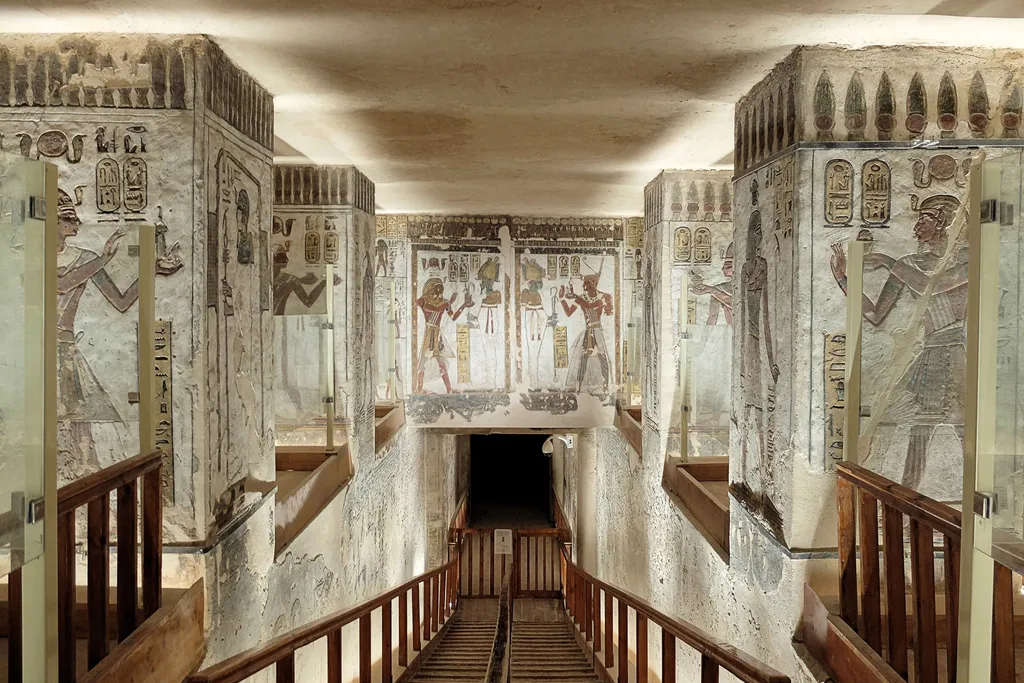
KV11 is the connoisseur’s standard-ticket answer, and its story starts with a mistake. The tomb was begun by Setnakhte, founder of the 20th dynasty, whose workmen cut down through the ceiling of an earlier tomb, KV10, and abandoned the site as unlucky. His son Ramesses III restarted the work on a shifted axis and finished one of the largest and most fully decorated of the later royal tombs — a long corridor, a pillared hall, and a suite of small side chambers that are the reason to come. Where other tombs repeat the underworld liturgy wall after wall, KV11’s side rooms show the world the liturgy was protecting: food stores and bakeries, musicians and harpists — two blind harpers in one chamber gave the tomb its old nickname, the tomb of the harpists — and the produce of an ordered kingdom stacked in painted rows.
At some 188 metres of corridor and chamber it is also one of the longest tombs in the valley, which matters practically — it absorbs its visitors better than the short tombs do, and its pillared hall rarely feels as crowded as its popularity deserves. Because KV11 so often sits on the general ticket, it is the natural anchor of a three-tomb choice: the complete tomb against which a shorter or stranger second choice can be measured. Ramesses III was the last great pharaoh of the New Kingdom, the king who beat back the Sea Peoples and then died amid a harem conspiracy his own court records preserved, and his mortuary temple at Medinet Habu across the plain is the valley’s partner piece. Read together — the temple he built for his cult, the tomb he built for his body — KV11 gives you the full Ramesside system more clearly than any other pairing on the west bank.
Merenptah – KV8, the Long Way Down
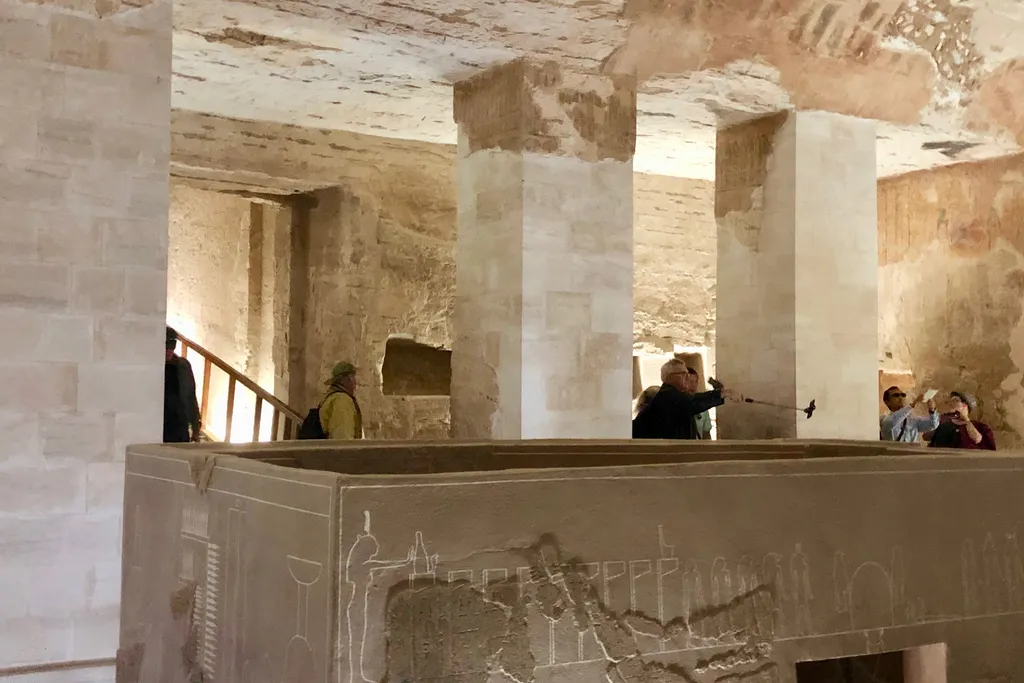
KV8 earns its place on a shortlist by doing one thing overwhelmingly: descending. Merenptah, thirteenth son and eventual successor of Ramesses II, was buried in one of the largest tombs in the valley, a corridor system running on and down through gate after gate until the scale of the enterprise stops being architectural and becomes geological. The decoration that survives is good rather than supreme, and stretches of the tomb carry the scars of the flash floods that have periodically poured down the wadi and into open doorways across the centuries. What you come for is the end of the descent — a burial chamber where the king’s nested sarcophagi were stacked, box inside box, their enormous granite lid still in place in the sunken centre of the room, too heavy for robbers or early excavators to be worth the moving.
There is a human story under the scale, too. Merenptah was Ramesses II’s thirteenth son, and he came to the throne only because twelve elder brothers had died across his father’s sixty-six-year reign; by most reckonings he was already an old man when he finally ordered this enormous tomb cut, and he raced it to completion the way old men do, knowing the timetable was not his to set. Merenptah himself did not stay here. His mummy was among those the priests rescued and re-hid in the KV35 cache, where it was found in 1898 — the king of the famous victory stele that names Israel, ending his afterlife as a refugee in another king’s tomb. That double story is KV8’s real content: the confidence of the cutting against the futility of the hiding. On the general ticket it is the scale choice, the tomb to take alongside a decorated one, and its long downward walk in cool air is, on a hot morning, not the least of its recommendations.
The Rotating Cast – KV2, KV6, KV14 and the Rest
Beyond the famous names, the general ticket’s open list is filled by tombs that most itineraries skip and that repay being taken seriously — partly because they are good, and partly because on any given morning the choice is not between the famous and the obscure but between the open and the shut. KV2, the tomb of Ramesses IV, sits close to the entrance and is the valley’s efficient marvel: short, steep, and vivid, its corridors crowded with texts and its burial chamber ceiling carrying a fine figure of the sky goddess, with a huge granite sarcophagus below. KV6, Ramesses IX’s tomb, runs a long straight corridor whose decoration was still being finished as the dynasty faded, and it has the elegiac quality of the last fully worked royal tomb. KV14 began as the burial of Queen Tausert and was extended by Setnakhte into one of the valley’s largest double tombs, two burial chambers deep — a history lesson in usurpation you can walk through.
The correct spirit in which to meet this cast is opportunism. Read the open list at the ticket hall as a menu written that morning, match what is on it against the four jobs described above — carving, painting, scale, story — and spend your three admissions across the categories rather than down a ranking copied from the internet. A morning that runs KV11 for completeness, KV2 for colour and whichever deep tomb the rotation offers for scale is a better valley education than a morning spent mourning a closed door. The tombs have been resting and rotating for decades; the system is not an obstacle to the visit, it is the reason there will still be paint on these walls for the next century of visitors.
Tutankhamun – KV62 and the Honest Version
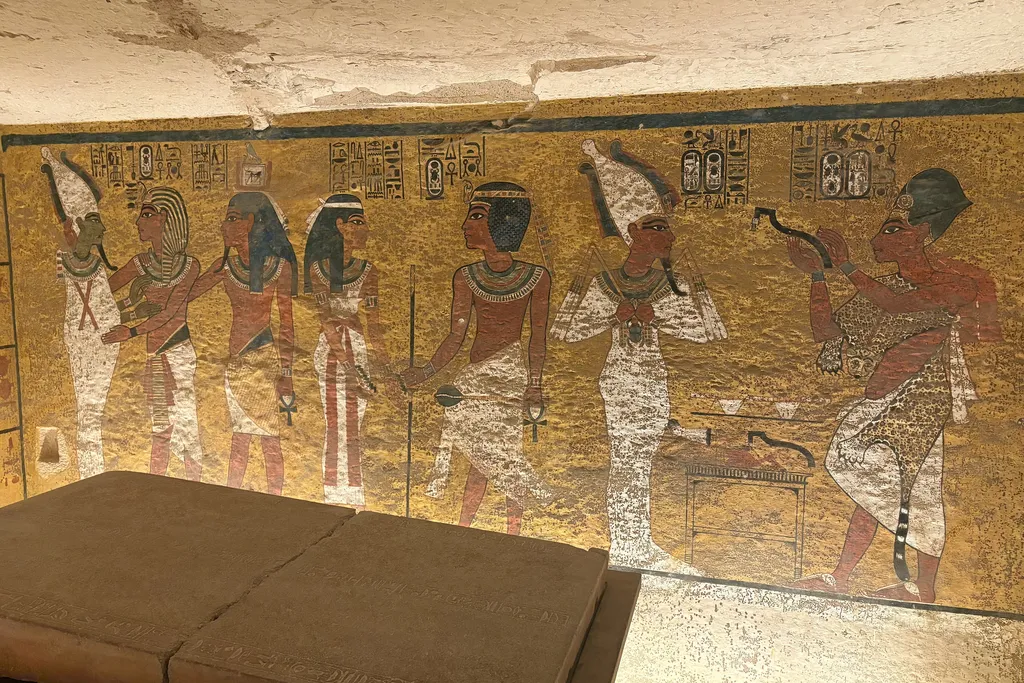
Everything about KV62 is inverted. It is the most famous tomb in the valley and one of the smallest — four rooms, cut in a hurry and quite possibly intended for a courtier rather than a king, pressed into royal service when Tutankhamun died young and unplanned-for in about 1323 BCE. Its decoration is confined to the burial chamber alone. Its corridors hold none of the underworld books that fill KV9 or KV17. By the standards this guide has just applied to its neighbours, it is a minor tomb, and an honest guide has to say so plainly before saying the rest. What happened inside it in 1922 is not a standard, though. It is the most consequential event in the history of archaeology, and the tomb is the scene of it.
What Carter found, clearing the last rubble from that staircase in November 1922, was the only royal burial of the New Kingdom to come down to the modern world substantially intact — more than five thousand objects, from chariots and beds to the nested shrines, coffins and the gold mask that became the face of ancient Egypt itself. The treasure is not here any more. It is displayed complete, for the first time in one place, in the Tutankhamun galleries of the Grand Egyptian Museum outside Cairo — our Grand Egyptian Museum guide covers what is on show and how that visit works — and managing that expectation is the single most useful thing this section can do. Visitors who descend into KV62 expecting the gold leave disappointed by four plain rooms. Visitors who descend knowing what the rooms mean — that this cramped space held all of it, stacked to the ceiling — tend to go quiet.
What remains in the tomb is not nothing. The burial chamber’s painted north wall, showing the king’s successor Ay performing the opening of the mouth ceremony, survives in place. The great quartzite sarcophagus still stands where it was left, and Tutankhamun himself is still here — his mummy rests in the tomb in a climate-controlled case, the one pharaoh of the valley whose body was never carried off to a cache or a museum. The separate ticket for KV62 has been a fixture of the site for years and is priced as what it is: not a charge for decoration but for standing in the room. Go early if you go, because the small chambers crowd fast. And if the story matters more to you than the doorway, the full-scale facsimile of the tomb built beside Carter’s house on the west bank shows the burial chamber as found, without a queue and without adding your breath to the original’s problems. Decide with open eyes and KV62 cannot disappoint you; it can only be what it is, which is enough.
Light, Heat and Photography – the Practical Layer
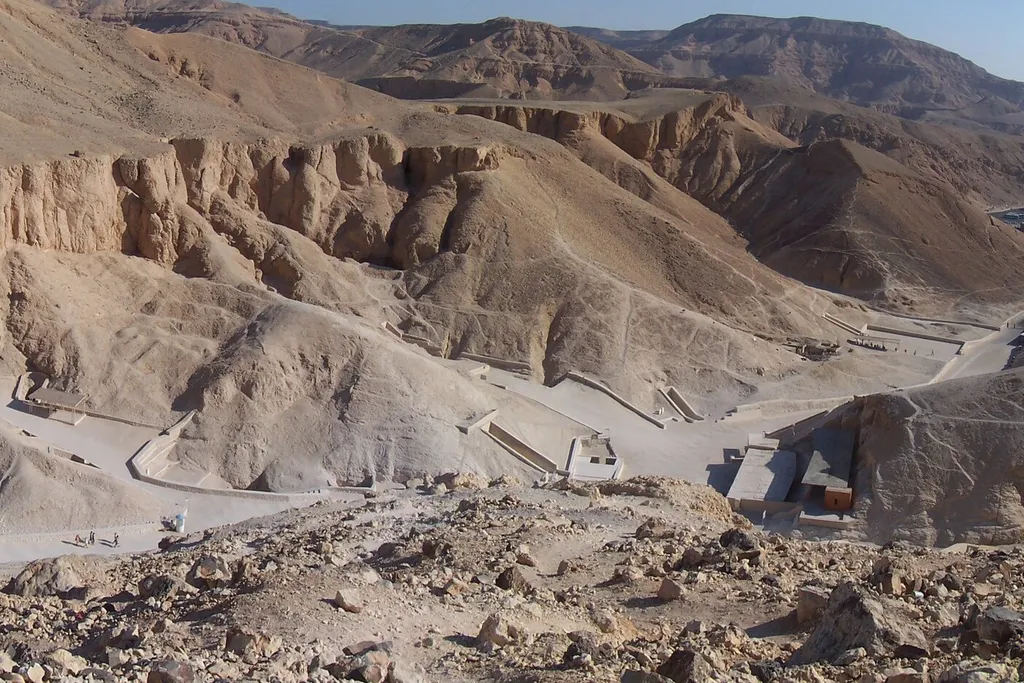
The valley’s practical logic all flows from one fact: it is a sun trap with no shade worth the name. The tombs themselves are cool — descending into still, dense air is one of the pleasures of the place — but the visit is mostly not spent in tombs. It is spent walking between doorways across pale, reflective rock, and in the warm months that walking is the physical event of the day. The strategy that follows from it is the same one every west bank guide and driver will give you, because it is correct: be inside the valley early, when the light is raking across the cliffs and the temperature is still negotiable, and be out of it before the middle of the day. Winter mornings invert the problem pleasantly — cold shade, warm sun, the best walking of the year — but the early habit costs nothing in any season, since the tour groups that fill the corridors from mid-morning are the other crowd-shaped fact of the site.
Carry the obvious things and one less obvious one. Water, in quantity, bought before the valley rather than at valley prices of convenience; a hat, because the sun here comes from above and off the ground at once; and shoes chosen for ramps, gravel and worn stone steps rather than for the hotel. The less obvious item is a small torch or a charged phone: tomb lighting is good in the burial chambers and thinner in the corridors, and the detail you came for — the small print of the underworld, literally — sits in the dimmer stretches. Dust is the seasonless companion; it gets into camera gear, lungs and tempers, and a scarf or buff that seems theatrical in the hotel earns its place by the second tomb.
Photography rules at the valley have changed more than once in recent years — dedicated camera tickets have existed, been folded into entry and been argued about in between — and the honest instruction is the boring one: the current position is whatever the ticket hall and the official Egymonuments portal say on the day you go, so check rather than inherit a rule from an article of any age, this one included. Two elements have stayed constant through the changes and can be stated safely: flash and tripods are not welcome inside the tombs, ever, and the attendants enforce the rules at the doorway rather than at the ticket office, so a misunderstanding surfaces at the worst possible moment. Decide what you want to photograph before you descend, shoot it deliberately, and then put the camera away — the tombs repay looking more than they repay documenting, and the corridor behind you is always filling.
The West Bank Around the Valley
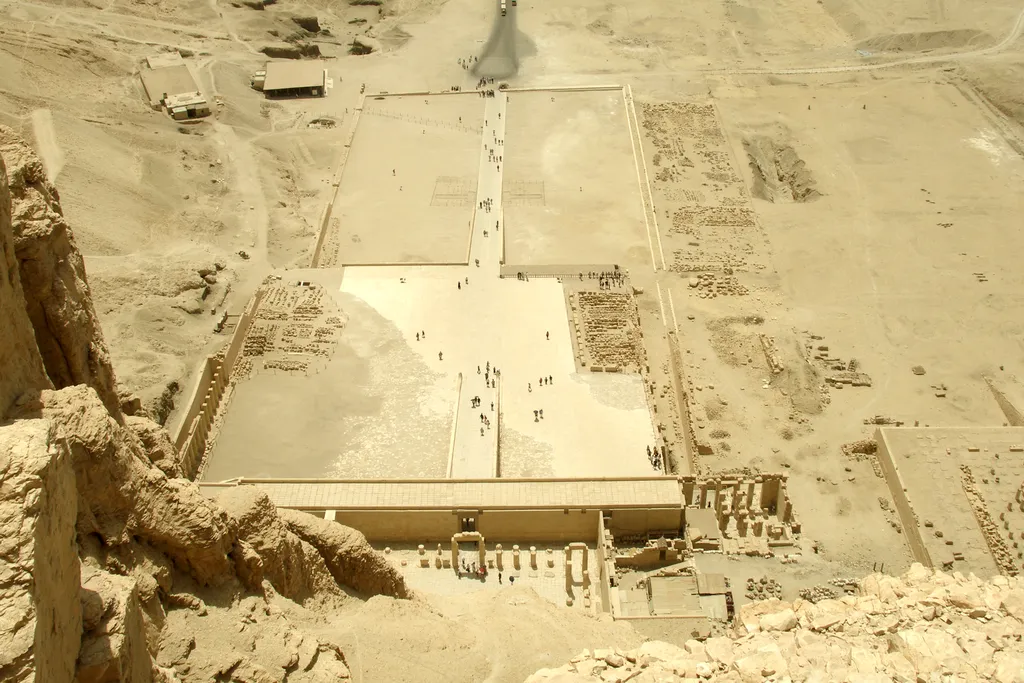
The valley makes full sense only as one part of the machine the Egyptians built on this bank. The west was the side of the setting sun and so of the dead, and across the plain and foothills opposite Luxor they laid out a complete funerary city: mortuary temples on the cultivation’s edge where each king’s cult was fed in public, tomb valleys hidden behind the cliffs, and the villages and workshops that serviced both. A west bank day that takes in the valley alone is like reading the last chapter of that system. The good news is that the rest of the chapters are minutes away, cheap in time if not always in tickets, and almost always quieter than the valley itself.
The pairing every itinerary makes, rightly, is the mortuary temple of Hatshepsut at Deir el-Bahari, tucked into a bay of the same cliffs a short drive — or, for the fit and early, a hill path — from the valley. Hatshepsut’s architect Senenmut terraced her temple up the cliff face in a design that still looks modern, all ramps and colonnades, and the pairing is structural, not just convenient: the temple was the public face of a burial hidden in the valley system behind the ridge, front of house and vault in one landscape. Below on the plain, the road back crosses the Colossi of Memnon — two enormous seated statues of Amenhotep III, all that stands above ground of the largest mortuary temple of them all, a roadside stop of ten minutes that costs nothing and gives the scale of what the floodplain has swallowed. One of the pair famously sang at dawn in the Roman era, after earthquake damage, and emperors travelled to hear it; the sound stopped when a later emperor had the statue repaired, which is the most Egyptian ending any story on this bank gets.
Hold time, if the day allows, for the two stops the standard circuit skips. Medinet Habu, the mortuary temple of Ramesses III, is the best-preserved temple on the west bank, its pylons and courts carrying the painted relief of his wars, including the defeat of the Sea Peoples — the public monument of the same king whose KV11 you may have just walked, and the two together make the day’s most complete ancient biography. And across the foothills lies the Valley of the Queens, smaller, softer in its light, and managed on the same rotating, separately-ticketed logic for its star tomb, Nefertari’s QV66 — check its status on the official portal before building a day around it, as its opening arrangements are as changeable as Seti I’s. The west bank rewards being treated as a landscape rather than a checklist; these are its paragraphs, and the valley is only the longest of them.
Frequently Asked Questions
Six questions decide most visits to the valley, and they are answered here the way the sections above argue them — briefly, and without printing any figure that the site itself may have changed since. The thread running through all six is the same one that runs through the whole visit: the valley is not a place you simply enter, it is a small set of decisions taken well. Get those right and the bare hillside does the rest.
How many tombs can I see in one visit?
Three on the general ticket, chosen from whatever is open that day, plus any of the separately ticketed tombs you add — in recent seasons those extras have meant Seti I, Tutankhamun and Ramesses V and VI. There is no ticket that opens the whole valley, and no day long enough to use one if there were. Plan for three well-chosen tombs and one or two extras and you will leave having read the place rather than merely queued through it.
Which three tombs should I choose?
Choose by contrast, not by ranking: one tomb for carving or painting at its finest, one for scale, one for character. In practice, when the rotation allows, Ramesses III’s KV11 anchors a general ticket well — it is complete, varied and usually available — and the remaining two admissions are best spent on the deepest open tomb and the most vividly painted one on that day’s list. Ask at the ticket hall what is open before you commit; the list is the menu, and it was written that morning.
Is Tutankhamun’s tomb worth its extra ticket?
Worth it for the history, not for the fabric — and it is important to arrive knowing which of those you are paying for. KV62 is small, sparsely decorated and emptied of everything that made it famous; the treasure is in the Grand Egyptian Museum in Cairo. What the ticket buys is the room itself, the painted burial chamber, the sarcophagus in place and the king’s mummy still in his tomb. For a visitor who cares about 1922, that is plenty. For a visitor whose interest is the art of the tombs, the same money and hour are better spent on Seti I or Ramesses V and VI.
How long does a visit to the valley take?
Two to three hours covers the valley itself properly — the shuttle up, three tombs without rushing them, an extra tomb or two, and the walk back down the wadi. The valley inside a west bank day usually sits in a half-day block with Hatshepsut’s temple and the Colossi, and a full day takes in Medinet Habu or the Valley of the Queens as well without turning any of them into a sprint.
Can I take photographs inside the tombs?
The rules have changed repeatedly in recent years, from separate camera tickets to periods of inclusion, and they are set by the site rather than by any guidebook — check the current position at the ticket hall or on the Egymonuments portal on the day. What does not change is that flash and tripods are not permitted inside the tombs. Phone photography has generally been the tolerated baseline in recent seasons, but treat even that as a thing to confirm, not a right to assume.
Where did the men who built the tombs live?
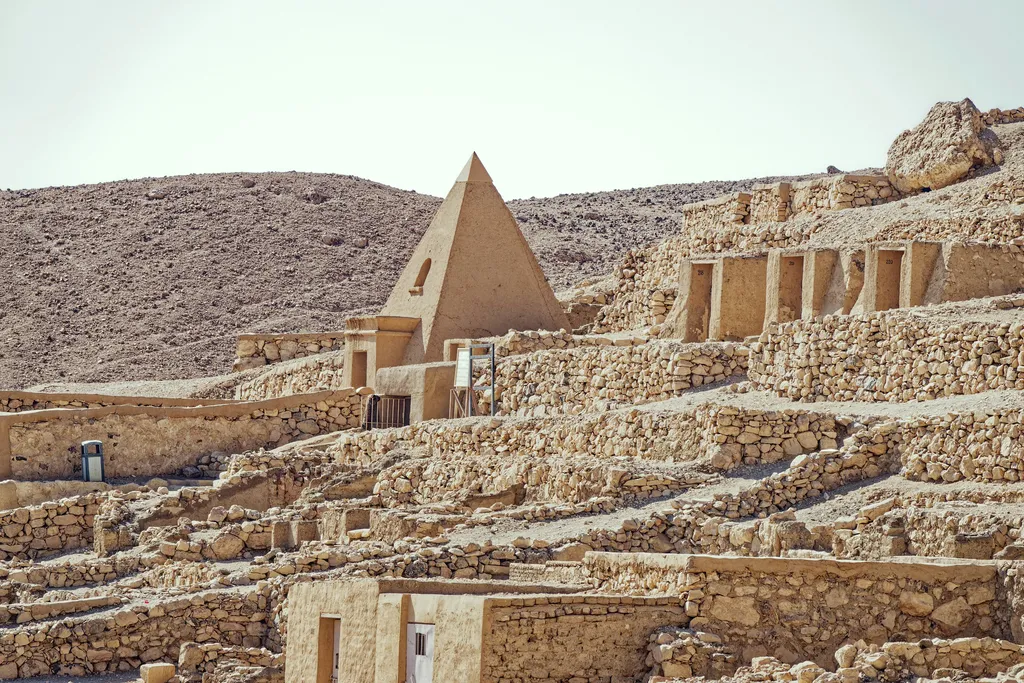
In Deir el-Medina, the walled village in the next side valley, a short drive from the tomb entrances and visitable on the same west bank ticket circuit. Its ruined stone houses, its little pyramid-capped chapels and its own small tombs — some painted as finely as anything the craftsmen made for kings, since they decorated their own burials with the same hands — are the human counterweight to the valley above. The same workforce, incidentally, staged what is often called the first recorded strike in history, downing tools under Ramesses III when the rations failed to arrive. The village is the quietest stop on the west bank and, for many visitors, the one that stays with them.
Plan Your West Bank Day
The shape of the day writes itself once the valley’s logic is accepted. Cross to the west bank early — the dawn balloon flights drifting over the foothills are the valley’s unofficial opening ceremony — and give the tombs the cool of the morning, choosing your three from the day’s list and adding whichever separately ticketed tombs you decided on at the visitor centre, before the heat and the groups arrive together. Take Hatshepsut’s temple next, while the drive is short and the cliffs still hold some shadow, stop at the Colossi on the road back down, and let the afternoon choose between Medinet Habu’s painted courts and the quiet of Deir el-Medina rather than trying to force both into the light that is left. Save the east bank’s great temples for the end of the day and the following one; the two banks of Luxor keep different hours, and the west bank’s are earlier.
Where you sleep shapes the arithmetic more than any other choice — west bank stays put the valley fifteen minutes from breakfast and the last ferry home after dark, while east bank hotels trade that for Luxor’s evening life; our where to stay in Luxor guide walks through the trade street by street. For the valley’s place in the country’s wider geography — how a Luxor block combines with Aswan, the Nile cruise between them and the long road south to Abu Simbel — the roundup of the best places to visit in Egypt holds the map. But the valley itself asks for something simpler than planning, in the end. Stand on its floor at opening time, in the brief cool before the shuttle trains start their loops, and look at a hillside that shows you nothing at all — and know that under it, in the dark, lie five hundred years of kings. Few places on earth make their point by hiding it. This one has been making it for three and a half thousand years.