Where to stay in Luxor depends less on finding the single “best” hotel and more on choosing the right side of the Nile for how you travel, because the river is not a minor detail of the city but the line that organises everything about a visit, from the sights you can reach on foot to the light you will watch at sunset. First-time visitors who want restaurants, easy transport and evening walks usually suit the East Bank, where the modern city, the Corniche promenade and the two great East Bank temples all sit within a compact, walkable area, and where a hotel room is only ever a short walk from dinner, a felucca or a taxi. Travellers who want quiet mornings near the tombs, village lanes and balloon views overhead usually suit the West Bank, where guesthouses sit among fields and farming villages, where the necropolis hills rise behind the houses, and where dawn brings hot-air balloons drifting over the Valley of the Kings rather than traffic on a city street. A Nile cruise suits people who want Luxor as one stop on a moving itinerary rather than a base to linger in, because a cabin that sails south to Aswan trades depth in one city for the pleasure of waking somewhere new each morning. This guide compares those choices honestly, so you can match area, hotel type and pace before you book, and so that the hotel you choose supports the trip you actually want rather than quietly working against it. The question to hold in mind throughout is not which hotel has the best photographs, but which side of the river puts your mornings where you want them, because mornings, in Luxor, are when the tombs open, the light is kindest and the heat is lowest.
One practical warning first, and it applies to every hotel name and facility mentioned in this guide: hotel names, room categories and facilities change, and the historic Winter Palace has been reported closed for renovation until 2027 in recent competitor guides, so nothing in this article should be treated as a live availability or opening announcement. Check the official site before visiting or booking, especially for opening status, prices and timings, rather than relying on any single article, and confirm directly with the property whether the room category, the Nile view, the breakfast, the airport transfer and the West Bank transport are included in the rate you are quoted, because headline rates in Luxor often exclude one or more of those items. That caution is not a formality; it is the single most useful habit a Luxor booker can develop, because a hotel that looks cheap before transfers, breakfast and a private driver are added can cost more than a hotel that looked dearer at first glance, and because a West Bank stay that sounds idyllic can become frustrating if the ferry times, the evening return and the early tomb departure were never confirmed. The rest of this guide keeps its focus deliberately on staying, not on sightseeing: for the full city story, see our Luxor city guide, and for the temple itself, see our Luxor Temple guide, while the wider Egypt route is covered in our Egypt travel guide. Those companion guides carry the place detail, so this one can spend its space on the decision that shapes every other day: which bank, which hotel type, and whether to stay put or sail south on the river.
At a Glance
| Base | Best for | Trade-off |
|---|---|---|
| East Bank — Corniche and town centre | First-timers, couples, short stays | Busier streets; West Bank days need a river crossing |
| East Bank — north, near Karnak | Resort-style stays, families wanting pools and space | Further from Luxor Temple and central restaurants |
| West Bank — riverfront and villages | Repeat visitors, archaeology lovers, quiet stays | Fewer restaurants; plan transport to the East Bank each evening |
| Nile cruise, Luxor to Aswan | First-timers covering several Nile sites in one trip | Fixed schedule and smaller cabins; less time to linger in Luxor itself |
| Split stay: hotel plus cruise nights | Travellers who want both flexibility and river travel | More packing and check-ins |
Hotel names, room categories and facilities change. Check the official site before visiting or booking, especially for opening status, prices and timings.
How Luxor Is Divided — and Why It Matters for Sleep
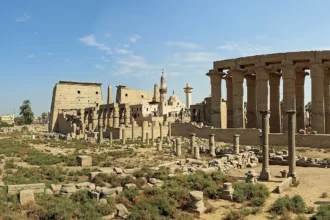
The Nile is not just scenery in Luxor; it organises the whole trip, and it organises sleep more than any other single factor, because where you sleep decides which sights are a walk away and which require a crossing. The East Bank holds the modern city, most hotels, Luxor Temple and Karnak Temple, together with the Corniche promenade, the railway station, the airport road and the concentration of restaurants, cafés, shops and travel agencies that makes a first visit easy. The West Bank holds the Valley of the Kings, the Valley of the Queens, the mortuary temples of Hatshepsut, Ramesses III and others, and the farming villages whose fields, irrigation channels and mud-brick houses still shape daily life beside the necropolis, together with the balloon launch fields that fill the dawn sky. In ancient belief the east, where the sun rises, belonged to the living and the west, where it sets, to the dead — and that old division still describes the practical difference today, because the East Bank is where you eat, walk, shop and watch a temple floodlit at night, while the West Bank is where you rise early, walk into painted tombs and return, by afternoon, to a quieter, greener, more rural world. Stay east for city life and temple evenings; stay west for tomb mornings and countryside calm. That sentence, simple as it sounds, is the whole guide in miniature, and every later section is really an elaboration of it, because the bank you choose will decide your mornings, your evenings, your transport and your budget, long before the star rating of any single hotel does. For the full city story, see our Luxor city guide, and for the temple itself, see our Luxor Temple guide.
The practical consequence of that division is a river crossing, and the crossing deserves more thought than most bookers give it, because it is not a single, uniform thing. East Bank guests cross to the West Bank for tomb days by bridge, by road and bridge to the north, or by local ferry from the Corniche, and the choice between those crossings changes with time of day, with luggage, with group size and with whether a private driver is waiting on the far side. West Bank guests, in the other direction, cross back to the East Bank for restaurants, for the floodlit Luxor Temple, for the museum and for onward transport, and that evening crossing, in particular, needs planning, because a West Bank evening that ends with no confirmed return is a poor end to a good tomb day. The crossing also has a seasonal and daily rhythm: early mornings are busy with tomb-bound visitors, midday crossings are quieter but hotter, and evenings are busiest around sunset, when the Corniche fills and the temple lights come on. A hotel that arranges its own transfers removes most of that friction, which is why the practical advice in this guide keeps returning to one point: confirm ferry times, taxi arrangements and return crossings with your hotel in advance, whatever bank you choose, and check the official site before visiting for current arrangements. The bank decision, in other words, is not only about scenery or atmosphere; it is about how many crossings you are willing to make, at what hours, and with what help, and a traveller who answers that honestly will choose well, while a traveller who chooses on photographs alone may find the river, beautiful as it is, becoming a daily chore.
East Bank: Corniche and Town Centre

This is the default choice for most first visits, and for good reason, because the Corniche and town centre remove friction at every point of the day. Hotels along the Corniche put you within walking distance of Luxor Temple, the riverside promenade, felucca boarding points, cafés and shops, and that walkability is worth more in Luxor than a larger room elsewhere, because the East Bank’s pleasures are precisely the pleasures of walking: a morning coffee on the promenade, a late-afternoon stroll to Luxor Temple, an evening felucca ride from a nearby jetty, and dinner at a restaurant you found on foot rather than by taxi. The Sonesta St. George and Iberotel Luxor are classic examples of this central, riverfront style: large hotels with pools, Nile-view rooms and a short walk or drive to the main East Bank sights, and with the kind of facilities, multiple restaurants, a pool and a riverside terrace, that suit a first-timer who wants everything handled in one place. The Steigenberger Nile Palace, also on the East Bank, suits families and groups who want a larger resort-style property with several pools beside the river, and it shows how the Corniche zone stretches from city hotel to resort hotel without ever leaving the East Bank’s convenience. Expect livelier evenings here than on the West Bank, with promenade crowds, restaurant lights and the illuminated temple across the water, and expect to cross the river, by bridge or local ferry, for tomb days, because the West Bank’s tombs are not a walk away from any East Bank hotel. If you want one base and minimal logistics, start here, because a Corniche hotel lets you begin each day already where the city is, rather than spending the first hour of it getting there.
The trade-offs of the Corniche zone are real, but they are the trade-offs of a city centre, and they should be weighed rather than feared. Streets are busier, especially in the evening, when the promenade fills with strollers, vendors and felucca touts, and a light sleeper should ask for a room away from the road, on an upper floor or facing the river rather than the street, because a Nile-view room is not only a view but also, often, a quieter room. Prices in the centre also reflect convenience, and a Corniche hotel that looks dearer than a West Bank guesthouse may still be better value once taxi fares, ferry costs and the time saved on every crossing are counted, while a cheaper centre hotel with no pool, no terrace and a side-street room may disappoint a traveller who imagined a riverside stay. Room choice matters here more than hotel brand: prioritise a Nile-view or upper-floor room if sunset matters to you, ask whether the view is a full river view or a partial one, and ask whether breakfast, airport pickup and West Bank transfers are included before comparing headline rates, because those inclusions change the comparison completely. Confirm prices before booking, and check the official site before visiting for current facilities and opening status, because a pool, a restaurant or a terrace that was open last season may be under renovation this season, and because the historic Winter Palace, the Corniche’s most famous hotel, has been reported closed for renovation until 2027 in recent competitor guides. A Corniche stay, chosen with those checks made, gives a first-timer the easiest possible Luxor, and that ease, on a first visit, is worth paying for.
East Bank: North of Town, Near Karnak
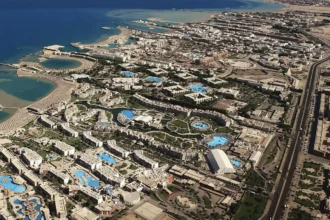
North of the centre, toward Karnak, the feel changes from city hotel to resort, and that change of feel is the whole point of this zone. The Hilton Luxor Resort and Spa is the best-known example, with extensive pools, spa facilities and many Nile-facing rooms, but a car ride back to Luxor Temple and central restaurants, and it illustrates the northern zone’s bargain with unusual clarity: space, water and quiet in exchange for distance from the evening promenade. The northern East Bank suits a traveller whose day is built around temple mornings and pool afternoons, rather than around evening walks, because a resort here gives children a pool to swim in while adults rest, gives couples a spa and a riverside terrace to return to, and gives a family the room, in both senses, that a compact Corniche hotel cannot. The grounds are larger, the pools are more numerous, the rooms are often more generously sized, and the atmosphere, especially in the evening, is that of a resort rather than a city, with dinner in the hotel, a drink on a terrace and an early night before another early temple start. For a two- or three-night stay that alternates a hard temple morning with a soft resort afternoon, that rhythm works beautifully, and it is why many families and many return visitors, who have already done the Corniche evenings on a first trip, choose the north on a second. The key is to choose this zone for what it is, a resort base, rather than for what it is not, a walkable city centre, and to plan each day around that honest distinction, rather than discovering it night by night.
Do not choose the northern zone if you plan to walk everywhere in the evening, because you will be taking taxis instead, and that single fact, repeated every evening, can quietly sour a stay that looked perfect on paper. A dinner in town becomes a taxi ride there and a taxi ride back, with fares to agree, with waiting time, and with a return journey in the dark that needs planning rather than improvisation. A traveller who loves promenade evenings, who likes to choose a different restaurant each night on foot, or who wants to see Luxor Temple floodlit and then walk home, will be happier on the Corniche, even in a smaller room, than in a northern resort, however beautiful its pools. The northern zone still works well as a base for a two- or three-night stay, provided you budget for transport, and provided you plan evenings in the hotel or as a single, pre-arranged outing rather than as a nightly wander. Ask the hotel about its shuttle, if any, about taxi fares to the Corniche and to Karnak, and about whether its restaurants stay open late enough for a return from an evening temple visit, because those three answers will shape your evenings more than any photograph of a pool. Confirm prices before booking, and check the official site before visiting for current facilities, because a spa, a pool or a restaurant that was a deciding factor may be under maintenance on your dates. Chosen knowingly, the northern East Bank is a superb resort base, with space and water that the centre cannot match; chosen for walkability it does not offer, it is a daily taxi bill, every single evening.
West Bank: Riverfront, Villages and the Necropolis Edge
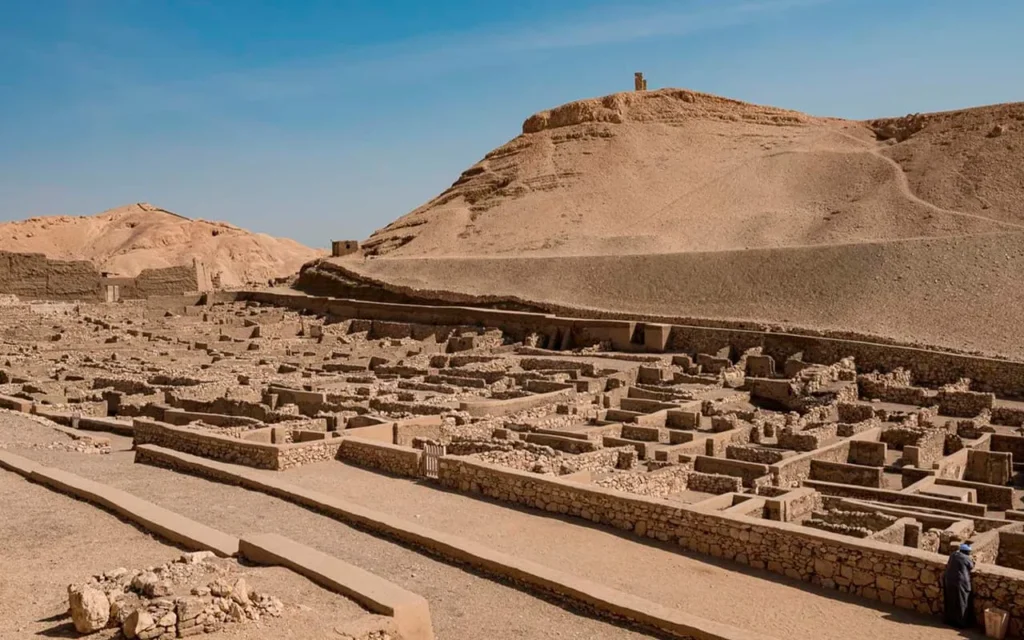
The West Bank rewards a different kind of traveller, and it rewards that traveller in a way no East Bank hotel can quite match, because it puts you where the tombs are, among the fields and villages that have grown up beside them. Guesthouses and small hotels here sit among fields, village houses and the low hills of the Theban necropolis, and the morning routine is different from the first day: instead of crossing the river to reach the tombs, you are already there, with the Valley of the Kings a short drive away, with balloons overhead at dawn, and with the hills themselves visible from your breakfast table. El Mesala Hotel, on the West Bank riverfront near the ferry landing, is a good illustration of the riverfront end of the scale: Nile views across to the illuminated East Bank, a pool and rooftop dining, and a short boat ride back to town, combining West Bank mornings with an easy East Bank evening. Further inland, the Marsam Hotel, a modest mud-brick house built in the 1920s for archaeologists beside the Temple of Amenhotep III excavations, suits budget travellers who care more about location among the sites than about luxury, and whose ideal is to wake among the excavations themselves, with archaeologists, photographers and repeat visitors as neighbours. At the other end of the scale, Al Moudira, a boutique property in West Bank countryside, suits quiet luxury, gardens and food lovers, with courtyards, shaded terraces and a restaurant that is itself a reason to stay. The common West Bank advantage is the same across that range: you wake near the Valley of the Kings, you see balloons overhead at dawn, and evenings are quieter, with village sounds replacing city traffic.
The common cost of the West Bank is transport, and it should be planned rather than improvised, because the West Bank’s quiet is bought with distance from the East Bank’s restaurants, museums and onward connections. Fewer restaurants means that dinner, in particular, needs a decision: eat at the guesthouse, where home-style meals are often a strength, or cross to the East Bank, with a ferry time, a taxi and a return to arrange, and a traveller who has not decided before dark will spend the evening negotiating rather than eating. Early tomb visits, the West Bank’s great advantage, also need transport confirmed the night before, because a dawn departure for the Valley of the Kings, for a balloon flight or for a mortuary temple at opening, cannot be arranged at dawn itself. Confirm ferry times, taxi arrangements and return crossings with your hotel in advance, and check the official site before visiting for current arrangements, because ferry schedules, bridge routes and driver availability change, and because a guesthouse that arranges its own drivers removes most of that friction. The West Bank suits repeat visitors, archaeology lovers, photographers and travellers who prefer family-run hospitality and home-style meals, and it suits a second Luxor visit especially well, because a traveller who already knows the East Bank’s temples can spend a whole West Bank stay on tombs, temples and villages without feeling that anything essential has been missed. For a first visit, the West Bank is best as part of a split stay, with East Bank nights first and West Bank nights second, rather than as the only base, unless quiet mornings matter more to you than evening convenience, and unless you have already enjoyed the East Bank on a previous trip.
Luxor Hotel Types at a Glance
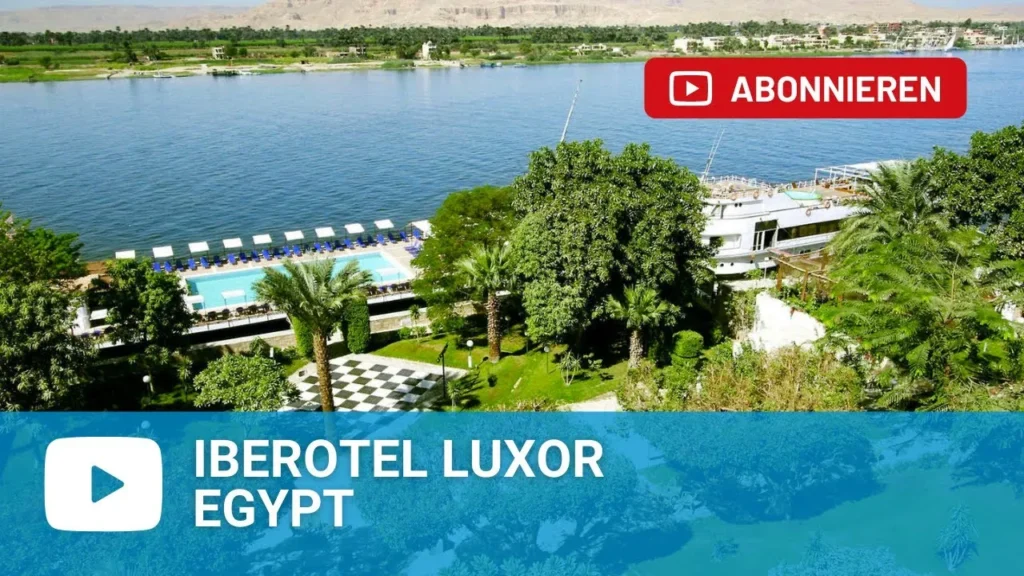
Five-star riverfront hotels suit honeymoons, first-timers and anyone who wants pools, spas, multiple restaurants and a Nile-view room without leaving the East Bank, and their advantage is completeness: a honeymoon couple can spend a whole day within the property, with a pool, a spa, a riverside terrace and several restaurants, without arranging transport or searching for services, and a first-timer can rely on the hotel’s tour desk, its drivers and its restaurant for every practical need. That completeness comes at a price, both in money and in a certain sameness, because a five-star riverfront hotel in Luxor resembles a five-star riverfront hotel elsewhere, and a traveller who wants Luxor itself, with its villages, its fields and its family guesthouses, may find a large hotel insulating rather than immersing. Mid-range Corniche hotels suit most travellers, and they are the category this guide would point most first-timers toward, because they are central, comfortable and easier on the budget, with the floating pool at Iberotel Luxor a much-mentioned example of a small feature that makes a stay memorable, and because a mid-range Corniche hotel gives you the promenade, the temple and the ferry without the five-star price. West Bank guesthouses suit repeat visitors, photographers, archaeology enthusiasts and travellers who prefer family-run hospitality and home-style meals, because a guesthouse host knows the tomb guards, the drivers and the balloon operators by name, and because a home-style dinner, eaten in a courtyard under the necropolis hills, often tells you more about contemporary Luxor than a hotel buffet does, and that difference is felt every evening rather than once, and lingers longer in memory than any single facility, however polished or well photographed, and whatever the brochure promised.
Budget hotels near Luxor Temple suit solo travellers and short stays where the room is mainly a place to sleep between early starts, and their advantage is location at a price that leaves money for guides, drivers and day trips, while their limitation is exactly what the price suggests: smaller rooms, fewer facilities, and a stay built around early departures rather than hotel leisure. Whatever the category, three checks matter more than star ratings, and they should be made before booking rather than on arrival. First, prioritise a Nile-view or upper-floor room if sunset matters to you, and ask specifically whether the room faces the river, because not every room in a riverfront hotel faces the river, and a side-facing or courtyard room in a Nile hotel is a common disappointment. Second, ask whether airport pickup, breakfast and West Bank transfers are included before comparing headline rates, because a rate that includes those three items can be cheaper, all-in, than a lower rate that excludes them. Third, ask about the hotel’s own transport arrangements for West Bank days, for balloon mornings and for evening returns, because a hotel that arranges reliable drivers is worth more, in Luxor, than a hotel with a larger pool. Confirm prices before booking, and check the official site before visiting for current facilities, because room categories, restaurant hours and pool availability change, and because a facility that decided your booking may be under renovation on your dates. Choose the type that matches your trip’s shape, not the type with the best photographs, and the hotel will support the trip rather than complicate it, day after day, from the first early start to the last evening return.
Nile Cruise vs Hotel in Luxor
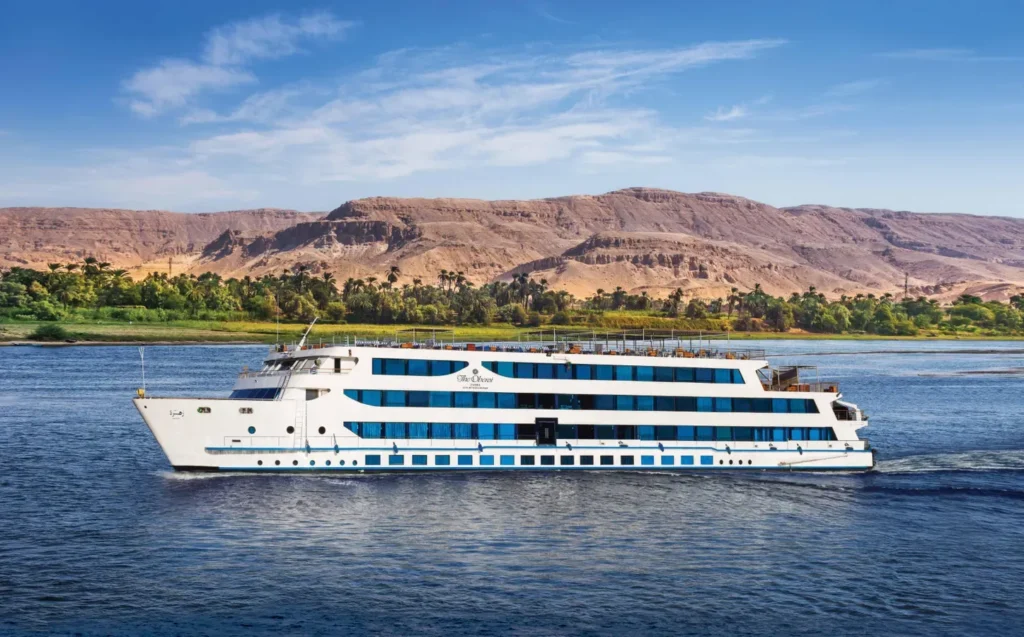
A Nile cruise and a Luxor hotel stay are not two versions of the same holiday; they are different itineraries that happen to share a city, and the choice between them should be made on itinerary, not on room size alone. A cruise between Luxor and Aswan typically runs for several nights, bundles meals, guided excursions and transport, and lets you wake somewhere new without repacking, which is ideal if Luxor is one chapter in a Cairo-to-Aswan trip and you do not want to organise each leg yourself. The cruise’s pleasures are real: the river itself becomes the journey, with mornings beginning at a temple, afternoons passing on deck watching palm groves, villages and water buffalo slide by, and evenings ending with the sun setting over water, and for travellers who find logistics stressful, or who are travelling with older relatives or children, the cruise removes a whole layer of decision-making that would otherwise fall on the traveller every day. A hotel stay gives you the opposite, and its pleasures are equally real: you choose your start times, you can return to Luxor Temple in the evening, you can spend a full unhurried day on the West Bank, and you can add a balloon flight or a museum morning without a sailing schedule, because the hotel does not sail away. The compromises of a cruise are a fixed timetable, smaller cabins than a hotel room, and limited free evenings in Luxor itself, because cruise itineraries typically allow only a day or so in the city before departing south, and because group excursions, set meal times and a fixed daily pattern suit some travellers and exhaust others, and that pattern, repeated over several nights, is the real cost of a cruise in Luxor.
Many experienced travellers split the difference, with two or three hotel nights in Luxor followed by a cruise south, which gives both depth in Luxor and the river journey, and that split is the recommendation this guide would make to most first-timers who can afford the extra packing, because it avoids the worst compromise of either choice alone. A split stay lets you see Karnak in its first hour, Luxor Temple floodlit in the evening, and the West Bank at your own pace, without a sailing schedule, and then board a cruise for the temples of Edfu and Kom Ombo and the slow river days to Aswan, with the river journey as a second chapter rather than as the whole trip. The cost of a split stay is more packing and more check-ins, and that cost should be weighed honestly, especially for travellers with heavy luggage, with mobility needs, or with children, for whom every check-in is a chore. If you are deciding, ask one question, and let it decide for you: do you want Luxor in depth, or the Nile in motion? If the answer is Luxor in depth, choose a hotel, on the bank that matches your mornings. If the answer is the Nile in motion, choose a cruise, and accept that Luxor itself will be a chapter rather than a base. If the answer is both, and your time and budget allow it, split the stay. Whatever you choose, confirm what is included before booking, since cruise meals, temple entry and guide services vary widely between operators, and check the official site before visiting for cruise, sailing and temple conditions, because water levels, schedules and safety rules change with the season.
Practical Itinerary, How to Reach and Best Time

| Question | Practical answer |
|---|---|
| How many nights? | Two nights for the headline East and West Bank sights; three nights if you want a balloon morning, museums and a slower West Bank day |
| How to reach Luxor | Flight from Cairo, overnight train from Cairo, or Nile cruise from Aswan — check the official site before visiting for current schedules |
| Getting around | Taxi or private car for West Bank days; local ferry and bridge for river crossings; walking works best on the East Bank Corniche |
| Best time | October to April is generally the most comfortable season; summer is hotter and quieter, so plan early starts and shade breaks |
| Booking tip | Book early in high season, confirm what is included, and confirm ferry and transfer arrangements for West Bank stays |
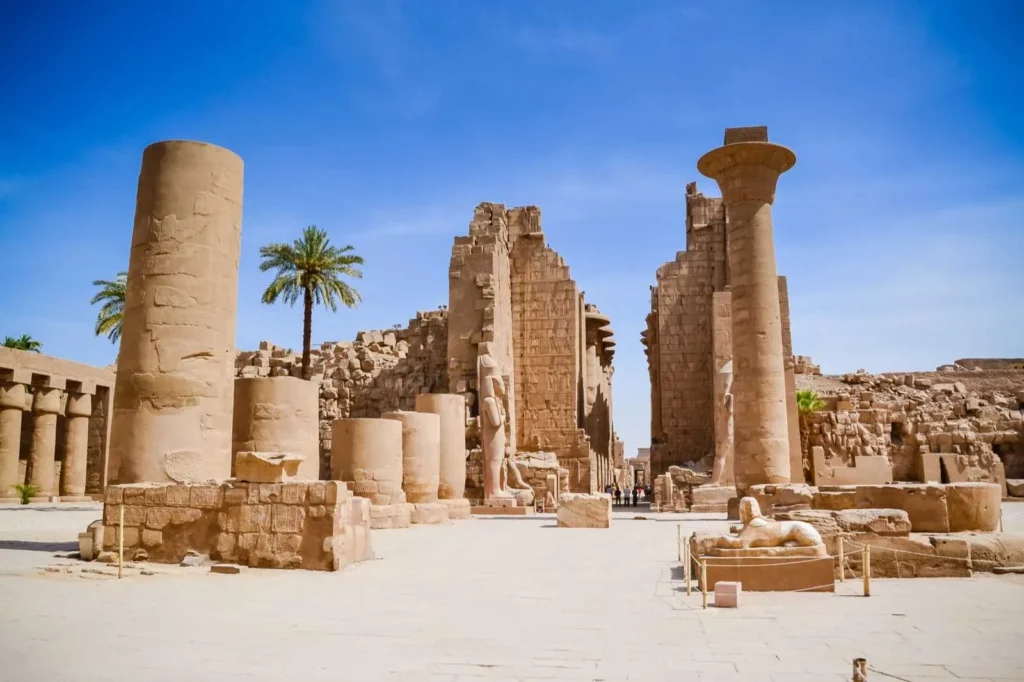
A workable hotel-based plan is: day one, Karnak in the morning and Luxor Temple floodlit in the evening; day two, Valley of the Kings, Hatshepsut Temple and the Colossi of Memnon on the West Bank; day three, Luxor Museum, the Mummification Museum and a felucca ride or balloon flight, depending on your base. That shape works because it gives each bank its own day, in the order the ancient city itself suggests, with the East Bank’s temples of the living on day one and the West Bank’s tombs of the dead on day two, and because it leaves the third day, the museum and river day, as a slower, more reflective close, rather than as another hard temple morning. Day one should start at Karnak in its first hour, before the tour groups arrive and before the heat builds, when the low light slants between the columns of the Great Hypostyle Hall and the scale of the place is felt rather than merely photographed, and it should end at Luxor Temple in the evening, when its stone warms in low light and it is lit against the night sky, with the Avenue of Sphinxes linking the two temples as a walk in itself. Day two, on the West Bank, should start at the Valley of the Kings at opening, because the painted tombs are best seen early, before crowds and heat, and because the tombs open to visitors rotate for conservation, so check the official site before visiting for which tombs are open on your dates. Hatshepsut’s terraced temple, rising against limestone cliffs, and the Colossi of Memnon, two seated giants standing alone in the fields, complete the West Bank day, and a West Bank base makes that day easier, while an East Bank base makes it a crossing day, which is the practical difference the bank choice makes, day after day.
How to reach Luxor, and when to go, shape the stay as much as the hotel itself, and both deserve a plain statement. Most visitors arrive by flight from Cairo, by overnight train from Cairo, or by Nile cruise from Aswan, and each arrival suits a different trip: a flight saves the most site time but loses time to airport transfers, an overnight sleeper train saves a hotel night and arrives in the morning, which suits travellers who sleep well on trains, and a cruise arrival makes Luxor a chapter in a longer river journey rather than a destination in itself. Check the official site before visiting for current schedules, because train times, flight frequencies and cruise sailings change, and because a plan built on last season’s timetable may not survive this season’s gate. Best time is October to April, when temple walking is comfortable and the cruise season peaks, with cool mornings, warm afternoons and comfortable evenings, while summer, from May to September, is hotter and quieter, so plan early starts, shade breaks and long midday rests, and accept that a summer temple day must be built around dawn rather than around midday. Book early in high season, from October to April, because the best rooms, especially Nile-view rooms on the Corniche and the better West Bank guesthouses, fill first, and confirm what is included, including breakfast, airport pickup, West Bank transfers and ferry arrangements, before comparing rates. Getting around follows the bank logic throughout: walking works best on the East Bank Corniche, a taxi or private car is the standard for West Bank days, and the local ferry and bridge are the river crossings, with fares agreed before setting off and return crossings confirmed before dark, especially for West Bank stays.
Conclusion
There is no single best place to stay in Luxor — there is a best base for your trip, and that sentence, repeated throughout this guide, is worth returning to at the end because it is the decision that determines everything else. Choose the East Bank Corniche for convenience and first-visit ease, where the promenade, the temple and the ferry are all within walking distance and where a first-timer can enjoy Luxor without ever worrying about transport. Choose the northern East Bank for resort comfort, where pools, spas and space suit families and travellers who want a resort afternoon between temple mornings, provided evenings in town are planned rather than wandered. Choose the West Bank for quiet, archaeology-led mornings, where the tombs are close, the balloons pass overhead at dawn and the evenings are rural and calm, provided transport, especially the evening return, is confirmed in advance. Choose a cruise when the river journey matters as much as the city, when waking somewhere new each morning is itself the holiday, and accept that Luxor itself will then be a chapter rather than a base. If you are torn, a split stay solves the dilemma better than a compromise hotel on either side, because two or three hotel nights followed by a cruise, or East Bank nights followed by West Bank nights, give you both sides of the river without forcing either side to be something it is not. That split, with its extra packing, is a small price for a trip that actually fits, rather than a trip that almost fits and frustrates every evening with the wrong bank, the wrong room or the wrong timetable, and the wrong mornings.
Book the side that matches how you actually want to spend your mornings, and Luxor will feel easy rather than rushed, because mornings are the test of any Luxor base: a base that puts you at Karnak in its first hour, or at the Valley of the Kings at opening, without a long crossing, a negotiation or a wait, is a base that works, while a base that puts a river, a taxi queue or a ferry timetable between you and that first hour will cost you the best light and the quietest tombs, day after day. Confirm prices before booking, check the official site before visiting for opening status, facilities and schedules, especially for the Winter Palace’s reported renovation closure until 2027, and ask every hotel, whatever its star rating, whether the Nile view, the breakfast, the airport pickup and the West Bank transfers are included in the rate. Leave one buffer in the plan, because a delayed train, a windy balloon morning or a closed tomb section can otherwise unravel a tight schedule, and a spare half-day lets you revisit the place you liked most, which is often the best half-day of the whole trip. Done that way, with the bank chosen for your mornings, with transport confirmed, and with a split stay where a single base cannot do everything, Luxor stops being a logistical puzzle and becomes what it has always been: a city on two banks of a river, with temples on one side and tombs on the other, and a stay that, chosen well, lets you enjoy both, at the right hour, without rushing either. For place detail, see our places to visit in Egypt and tourist attractions in Egypt guides, and for the wider route, our Egypt travel guide.
FAQs
Is the East Bank or West Bank better for first-time visitors?
For most first-timers, the East Bank is easier: more hotels, restaurants and transport, plus walking access to Luxor Temple and Karnak. The West Bank is better on a second visit or for a quieter, site-focused stay.
Is it safe to stay on the West Bank?
Competitor guides describe the West Bank as a residential farming community with a long tradition of hosting visitors. Use normal travel common sense, agree taxi fares in advance, and confirm return transport with your hotel.
Can I see Luxor Temple at night from my hotel?
Many East Bank Corniche rooms and West Bank riverfront rooms face the illuminated temple across the Nile. Ask specifically for a Nile-view room when booking, as not every room in a riverfront hotel faces the river.
Should I choose a Nile cruise instead of a hotel?
Choose a cruise if you want a bundled Luxor-to-Aswan itinerary with meals and excursions handled. Choose a hotel if you want flexible days, evening temple visits and extra time on the West Bank.
How long should I stay in Luxor?
Two full days cover the headline sights, one bank per day. Three days allow a balloon flight, museums and lesser-visited West Bank sites without rushing.
Do I need to book West Bank transport in advance?
It helps, especially for early tomb visits and evening returns. Your hotel can usually arrange a driver, and cruise passengers normally join organised excursions.
External reading: Delta Tours Egypt — where to stay in Luxor and Egypt Tours by Locals — where to stay in Luxor. For a contrasting independent take, see The Discoveries Of — where to stay in Luxor.