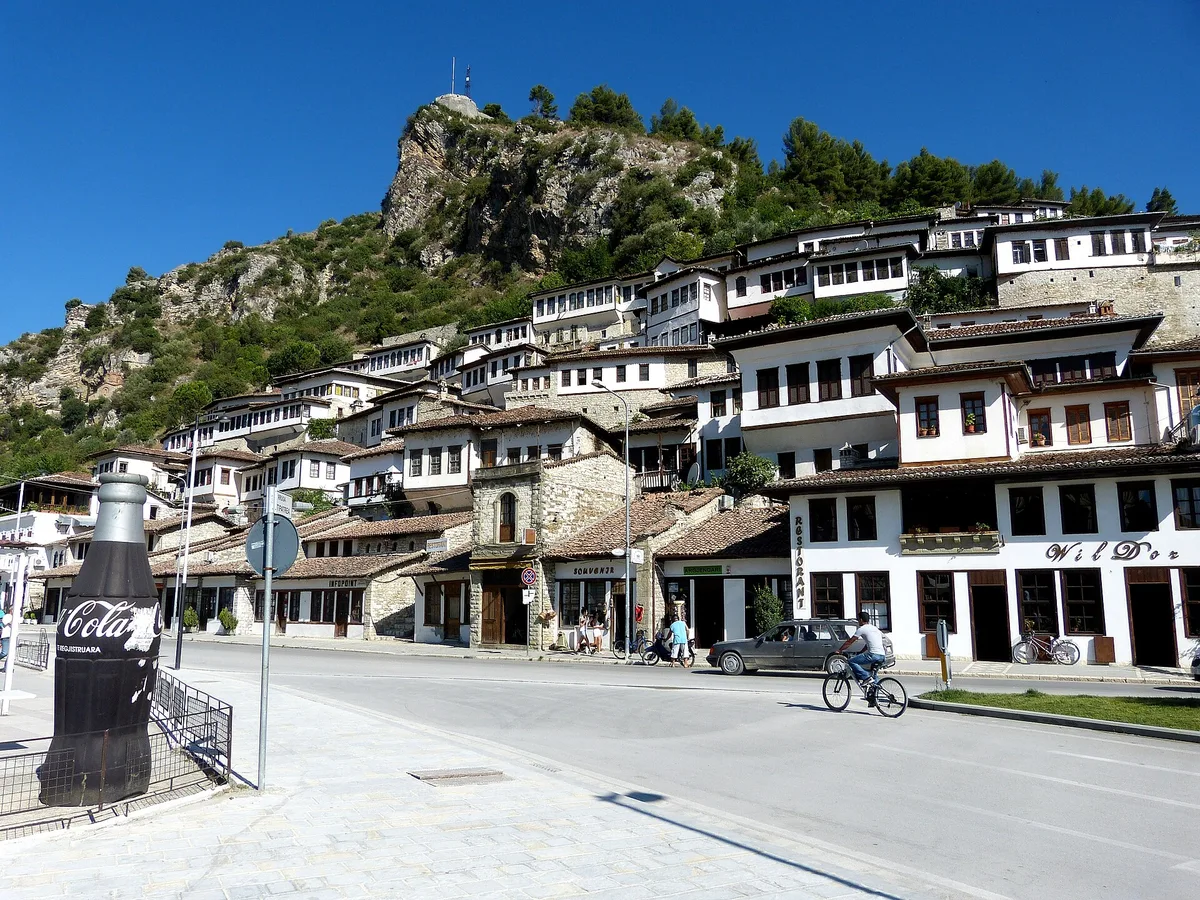
Albania’s sights do not behave like the sights of its neighbours. There is no single marquee monument that organises the country the way the Acropolis organises Athens or Dubrovnik’s walls organise the Croatian coast. Instead, the albania tourist attractions are spread across every layer of Balkan history at once – a Greek and Roman city asleep in a lagoon, two Ottoman old towns preserved almost intact, an amphitheatre dug out from under a modern port city, castles that were still being fought over in living memory, and a communist era that left behind bunkers, surveillance headquarters and a dictator’s escape tunnel, all of it wrapped around mountains and water that would justify the trip on their own. This page is the inventory of those sights, one by one: what each attraction actually is, what condition it is in, and – just as usefully – who should bother with it and who can honestly skip it.
That honesty matters more in Albania than in most countries, because the attractions vary wildly in weight. Butrint is one of the great archaeological sites of the Mediterranean. Byllis, an hour or so from the main roads, is a superb ruin that almost nobody visits. Lëkurësi Castle, above Sarandë, is a modest Ottoman fort whose real attraction is the sunset view from its terrace. Treating all three as equal bullet points on a list of albania tourist attractions does the traveller no favours, so this guide grades as it goes: the essential, the worthwhile, and the pleasant-if-you-are-passing. It also separates the sights from the trip planning. Our Albania travel guide covers how the country fits together, and our list of the best places to visit in Albania arranges the stops into a route. This page does neither. It is the reference you dip into when a name keeps appearing – Butrint, Rozafa, the Blue Eye – and you want to know what the name actually stands for.
A few patterns are worth knowing before the sights themselves. Albania has four UNESCO World Heritage inscriptions: Butrint, the joint listing of Berat and Gjirokastër, the Albanian shore of Lake Ohrid, and a component of the transnational ancient beech forests in the north-east. The castles, meanwhile, form their own unofficial circuit, because Albania was contested ground for two thousand years and nearly every hill town grew a fortress. And almost every attraction in the country is cheaper, quieter and less mediated than its equivalent in Greece or Croatia – you will walk on Roman paving at Apollonia with nobody else in sight, and stand in a Byzantine chapel inside an amphitheatre with the custodian as your only company. That rawness is the charm of the albania tourist attractions, and occasionally their frustration: signage can be thin, opening arrangements informal, and a famous name can hide a very small place. The entries below say which is which.
Albania Tourist Attractions at a Glance
| Attraction | Type | Where | UNESCO? |
|---|---|---|---|
| Butrint | Archaeological park | Far south, near Ksamil | Yes – inscribed 1992 |
| Berat Castle and old town | Fortified old town | Central Albania | Yes – inscribed 2008 |
| Gjirokastër Castle and old town | Fortified old town | South, Drino valley | Yes – inscribed 2005 |
| Apollonia | Archaeological park | Near Fier, central coast | No |
| Byllis | Archaeological park | Hills near Mallakastër | No |
| Durrës Amphitheatre | Roman monument | Durrës, central coast | No – Tentative List |
| Kruja Castle and Skanderbeg Museum | Castle and museum | Above Krujë, near Tirana | No |
| Rozafa Castle | Castle | Shkodër, north | No |
| Bunk’Art and House of Leaves | Communist-era museums | Tirana | No |
| Mount Dajti | Mountain and cable car | Above Tirana | No |
| The Blue Eye (Syri i Kaltër) | Natural spring | Near Sarandë, south | No |
| Lëkurësi Castle | Castle | Above Sarandë, south | No |
| Ksamil and the Riviera | Coast and islands | Ionian coast, south | No |
| Lake Ohrid and Pogradec | Lake | East, North Macedonia border | Yes – extended 2019 |
| Theth and Valbona | Mountain villages | Albanian Alps, north | No |
Read the table as a map of Albania’s layers rather than a ranking. The classical world is in the west and south – Butrint, Apollonia, Byllis, Durrës. The Ottoman world survives most completely in Berat and Gjirokastër. The national story concentrates in Kruja and Shkodër, the communist story in Tirana, and the natural sights – the spring, the lake, the Alps, the Ionian coast – frame all of it. A traveller who understands which layer they are looking at will get more from any single one of these albania tourist attractions than a traveller who simply collects them.
Butrint – the Ancient City in the Lagoon
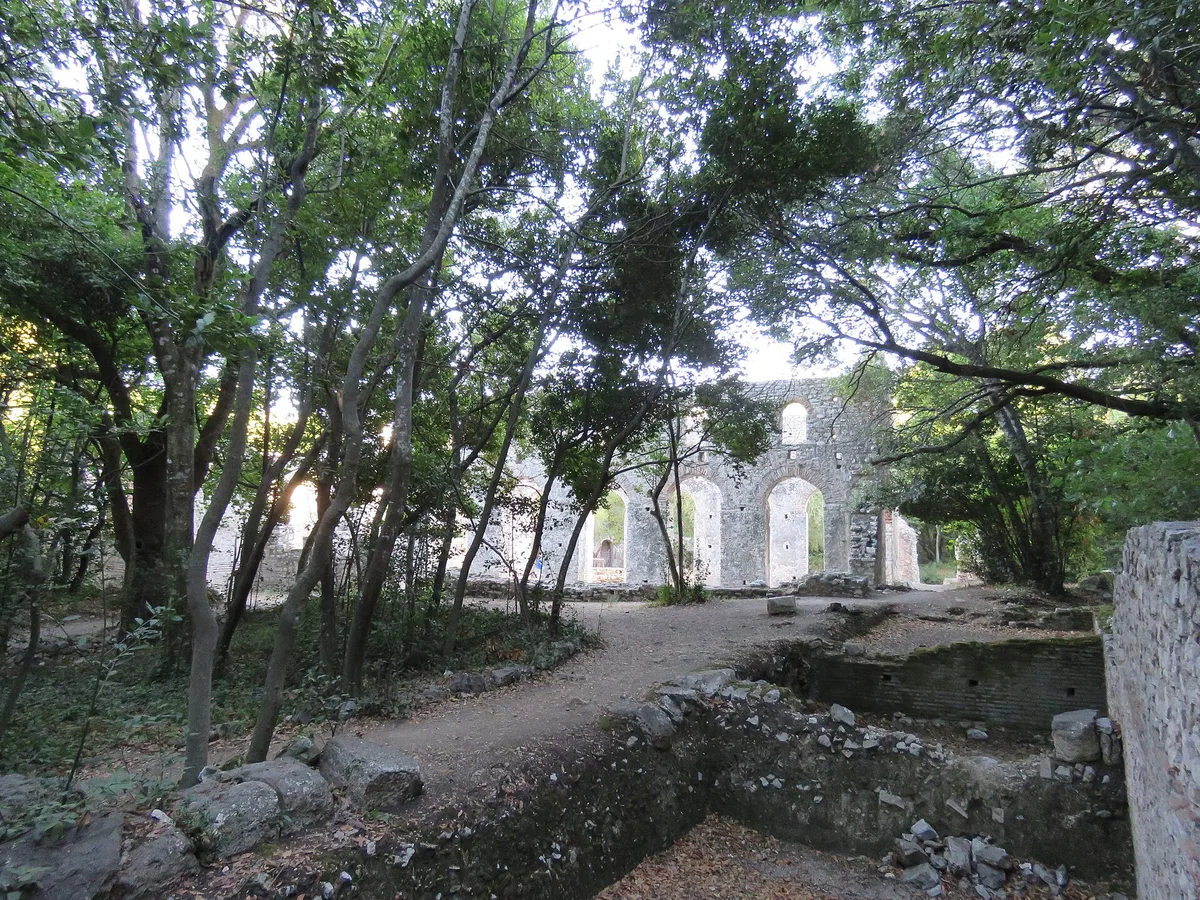
Butrint is the one attraction in Albania that belongs on a European shortlist, not just a national one. Spread across a low, wooded hill between Lake Butrint and the Vivari Channel, a short drive south of Sarandë, it is a whole ancient city preserved inside what is now a national park – and, in UNESCO’s own description, an exceptional cultural landscape that escaped the aggressive development which reduced most historic landscapes around the Mediterranean. UNESCO inscribed Butrint in 1992, Albania’s first World Heritage listing, and the property covers some 200 hectares of ruins, water and woodland.
The layers are the point. Human occupation here reaches back into prehistory, and from the eighth century BC the site was a Greek-influenced Chaonian settlement that grew into a polis with a sanctuary and a theatre. In 44 BC it became a Roman colony and expanded across reclaimed marshland south of the channel, complete with an aqueduct. In the fifth century AD it was an episcopal centre, fortified, with substantial early Christian building – above all the great circular baptistery, whose mosaic floor is among the finest late-antique monuments in the Balkans. Abandoned, rebuilt under the Byzantines in the ninth century, contested by Angevins, Venetians, the despots of Epirus and the Ottomans, it was finally abandoned after Ali Pasha added a fortress at the channel’s mouth in the early nineteenth century. Almost every period left something standing: the theatre, the Lion Gate with its archaic relief pressed into later defences, the Triconch Palace, the great basilica, the Venetian castle on the acropolis that now holds the site museum.
A word about the baptistery, because it sets expectations for the whole site. Its famous mosaic floor – a full late-antique pavement of animals, birds and geometric patterning around the central font – spends most of the year protected beneath a layer of sand, and is fully uncovered only rarely, for conservation. Travellers who arrive expecting to stand over the mosaics may be disappointed; the columns of the circular baptistery, the theatre’s inscribed seats, the basilica’s transept and the view from the Venetian castle museum are the permanent exhibits, and they are more than enough. The museum itself, small and good, holds the finds that tie the layers together – sculpture, inscriptions and the famous portrait head known as the Goddess of Butrint, a work that alone would anchor a provincial museum anywhere in Europe.
Practically, Butrint rewards slowness. The circuit of the main monuments takes a half day at a comfortable pace, and the shade, the water on three sides and the birdsong make it feel as much like a nature reserve as a ruin – the wider national park, declared in 2005 and covering 86 square kilometres, protects wetlands recognised by the Ramsar Convention. The approach is part of the visit: the road from Ksamil runs along the channel, and a small cable ferry still crosses the Vivari Channel at the park’s edge, linking the site to the Ali Pasha fortress on the far shore for travellers who want the full defensive picture. Go early in the day in summer, both for the light and because the excavated stone holds the heat by afternoon. Who should bother: everyone with any interest in the ancient world, without exception. Who can skip it: only the traveller for whom ruins are ruins – and even they usually concede that the setting alone justifies the trip from Sarandë. Of all the albania tourist attractions, this is the one to build a day around rather than fit into one.
Berat – the Castle and the Thousand Windows
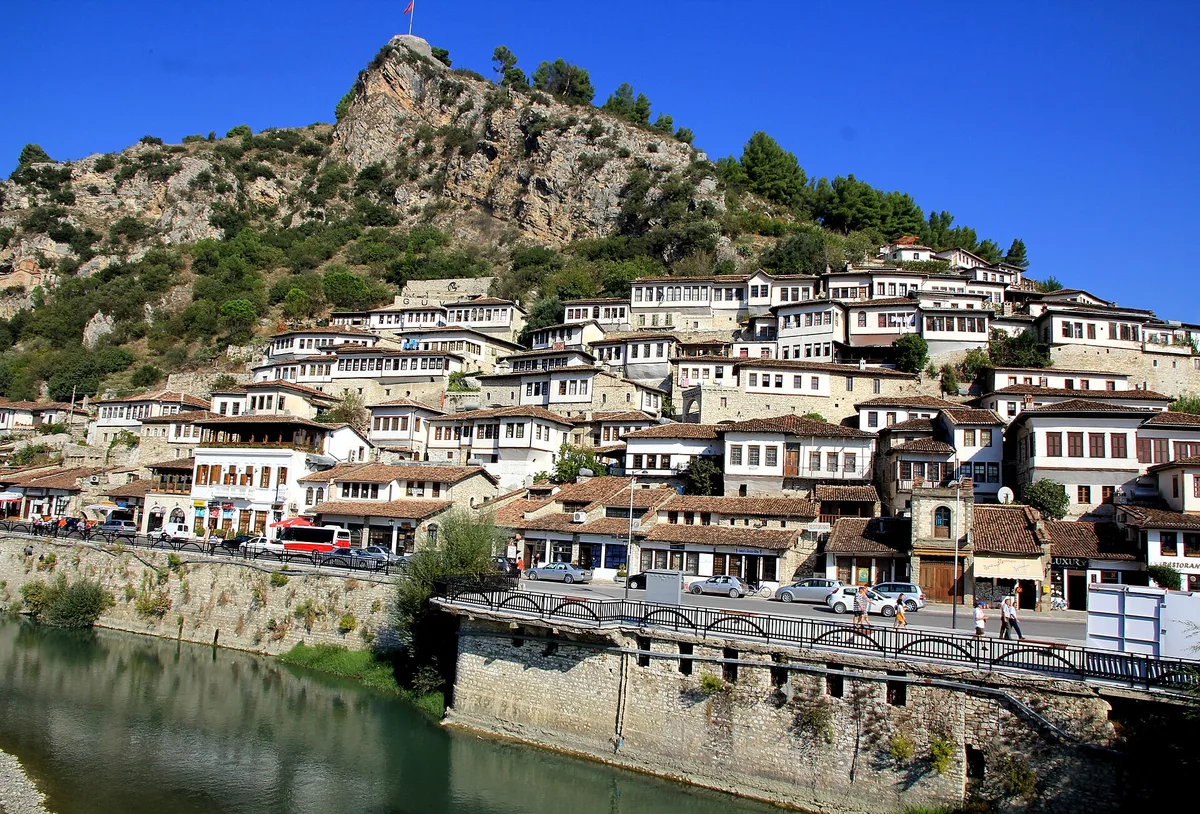
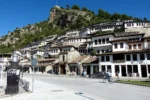
Berat is the gentler of Albania’s two UNESCO old towns, and the easier to love at first sight. The inscription – Berat joined the joint listing with Gjirokastër in 2008 – protects a fortified town that has been continuously inhabited since ancient times: a castle hill, and below it the Mangalem and Gorica quarters facing each other across the Osum River, their tiered Ottoman houses stacked up the slope. Those houses, with their rows of tall windows catching the light, gave Berat its famous description as the city of a thousand windows, and the view of Mangalem from across the river is the single most reproduced image in Albania.
The castle is the attraction inside the attraction. Berat’s citadel was largely built in the thirteenth century, on origins that reach back to the fourth century BC, and unlike most castles it never emptied: families still live inside the walls, among Byzantine churches – many of them thirteenth-century – and the remains of mosques from the fifteenth century onward. The quarter has the feel of a hilltop village that happens to be ringed by medieval fortifications, with lanes, small cafes and laundry strung across courtyards. Its treasure is the Onufri Museum, housed in the castle’s Church of the Dormition, which holds the icons of Onufri, the sixteenth-century master whose intense red pigment became so famous that the shade is still named after him. For travellers who think icon painting is a niche interest, the Onufri collection is the pleasant surprise of central Albania: vivid, strange and beautifully presented.
Below the castle, the town completes the picture. Mangalem’s houses are best read from the Gorica side, and the walk over the Gorica Bridge – an Ottoman crossing rebuilt in stone in the 1920s – gives you both the postcard view and the quieter Gorica quarter itself. In the lower town, the Ethnographic Museum, set in a grand eighteenth-century house, reconstructs the domestic world of a wealthy Berat family room by room, and the medieval King’s Mosque and the Lead Mosque nearby continue the town’s interleaved religious geography. Berat is also vineyard country – the hills around town produce well-regarded local white wines – and a slow dinner in the old quarters, with the castle floodlit above, is the natural end to the day. UNESCO’s summary stresses what makes Berat distinctive among the albania tourist attractions: a town where Orthodox Christian and Muslim life coexisted for centuries in the same streets, with churches and mosques interleaved through the quarters. Give Berat a night rather than a day trip if you can. The castle climb is steep and exposed, so go up in the morning or late afternoon, and stay for the evening xhiro along the boulevard, when the whole town comes out to walk and the windows light up in tiers. Who can skip it: nobody on a first trip with two days to spare – Berat is the most accessible piece of old Albania in the country.
Gjirokastër – the Stone City Under Its Castle
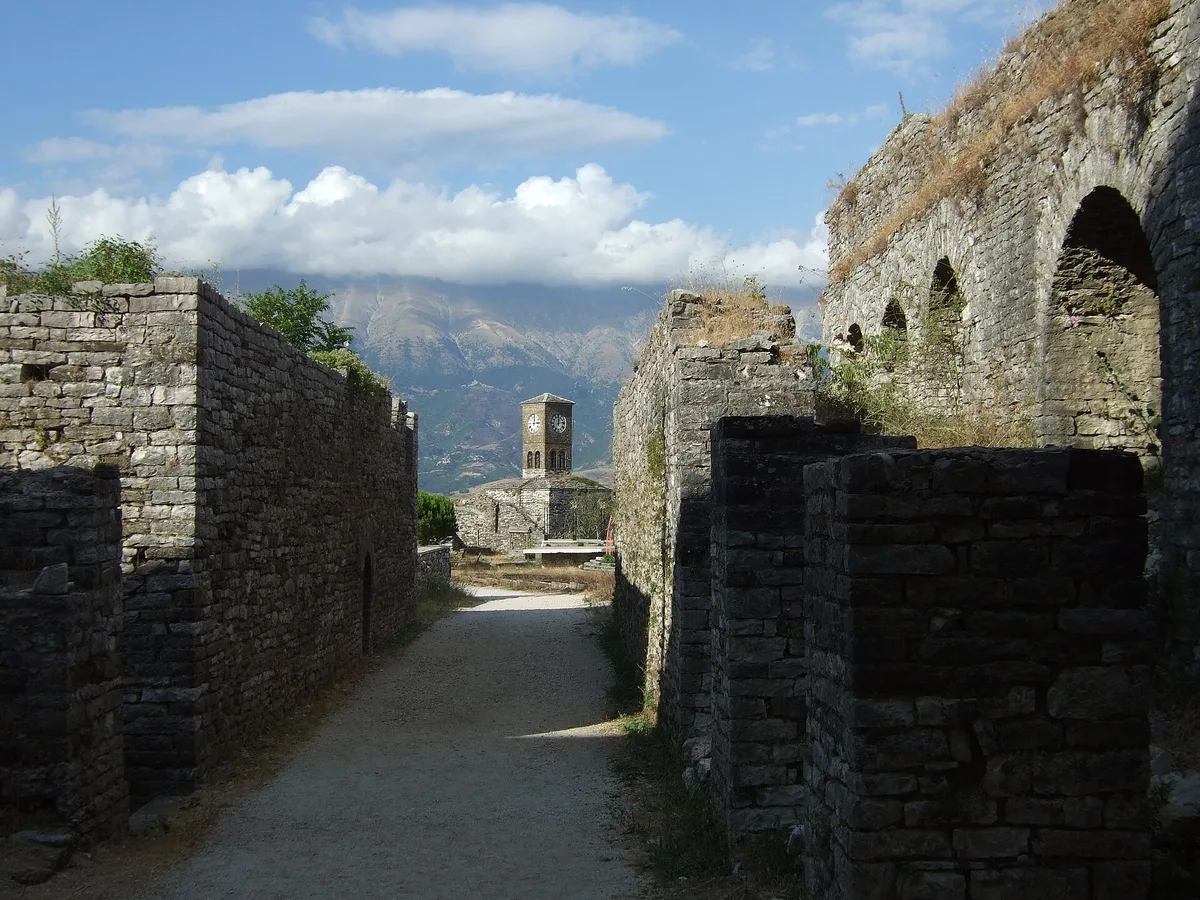
If Berat is soft, Gjirokastër is stern – and UNESCO protects the pair precisely because they show two different faces of the Ottoman Balkan town. Gjirokastër was inscribed first, in 2005, as a rare, well-preserved example of a citadel town built by major landowners. Around its thirteenth-century citadel, the town’s wealthy households raised the tower houses known as kule, with characteristic turrets and, in the grandest examples from the early nineteenth century, whole fortified residences in stone. The material defines everything: stone walls, stone roofs of heavy grey slate, cobbled lanes pitched at angles that punish the unfit and the unwary. This is the “city of stone” of Ismail Kadare’s Chronicle in Stone – Kadare was born here, and his childhood home is now a museum.
The castle dominates, physically and otherwise. It is among the largest fortresses in the Balkans, a long ridge of walls and vaulted galleries above the old town, holding a military museum, the stage used for the National Folklore Festival, and the town’s strangest exhibit: an American military aircraft that came down in Albania during the Cold War and has been displayed on the castle grounds ever since, its story told in several competing versions by local guides. The views from the walls down the Drino valley are the finest from any Albanian fortress. Below, the old bazaar quarter is the town’s social centre – a knot of cobbled lanes, craft shops and cafes at the castle’s foot – and the great houses are the essential visits: the Zekate House above all, a three-storey tower house of carved ceilings and reception rooms that shows exactly how the landowning class lived, and the Ethnographic Museum, installed in the house built on the site of Enver Hoxha’s birthplace, which reconstructs that domestic world room by room.
Honest framing: Gjirokastër demands more of the visitor than Berat. The lanes are steep, the stone is slippery when wet, and the town’s beauty is austere rather than picturesque. In exchange it offers the most complete Ottoman urban fabric in Albania and the castle with the best views. Among the albania tourist attractions it is the connoisseur’s old town – the one travellers argue about, and the one that tends to grow on people after they leave. One night is the minimum; the town also pairs naturally with the Blue Eye spring and Sarandë on the road south, which the combination section below covers.
Apollonia – the Quiet Classical Park
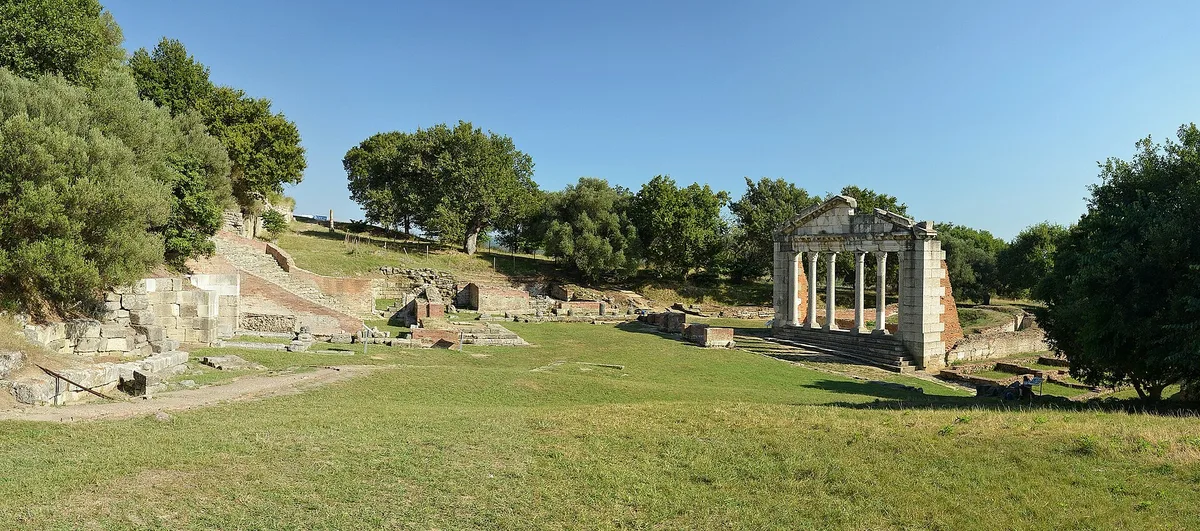
Apollonia is the other great classical site of Albania, and in almost every respect it is Butrint’s opposite: inland rather than lagoon-side, open grassland rather than woodland shade, and quiet to a degree that can feel surreal. Founded by Greek colonists from Corinth and Corcyra in the late seventh or early sixth century BC on the territory of the Illyrian Taulantii, near the modern city of Fier, Apollonia grew rich on trade and its position near the start of the Via Egnatia’s southern branch. It was a serious city of the Roman world – the young Octavian, the future emperor Augustus, was studying here in 44 BC when news came of Julius Caesar’s assassination – and its remains sit on and below a low hill above the coastal plain.
What survives is a dignified skeleton rather than a dense city. The emblem is the Bouleuterion, the council house whose reconstructed colonnaded facade stands alone on the grass and has become the site’s postcard. Around it, a long stoa, an odeon, the remains of the library, temples and the Roman centre are laid out across a large, walkable park, and the hilltop above holds the medieval monastery of Saint Mary, whose church – built with classical blocks and capitals recycled into its walls – now houses the site’s archaeological museum. The museum matters: Apollonia’s finds, from painted pottery to funerary sculpture, give the stones their context. Between the monuments you may have whole avenues to yourself, with swallows over the grass and the Adriatic haze on the horizon.
Who should bother: anyone who liked Butrint and wants the companion piece, and anyone travelling the central coast between Durrës, Vlorë and Berat, for whom Apollonia is an easy and rewarding detour. Who can skip it: the traveller on a tight southern itinerary who must choose one classical park – Butrint is richer and better shaded. Apollonia’s appeal among the albania tourist attractions is precisely its understatement: no crowds, no commercial fringe, just a serious Greek and Roman city dissolving peacefully into farmland, with a museum good enough to reward the journey on its own.
Byllis – the Ruin Nobody Visits
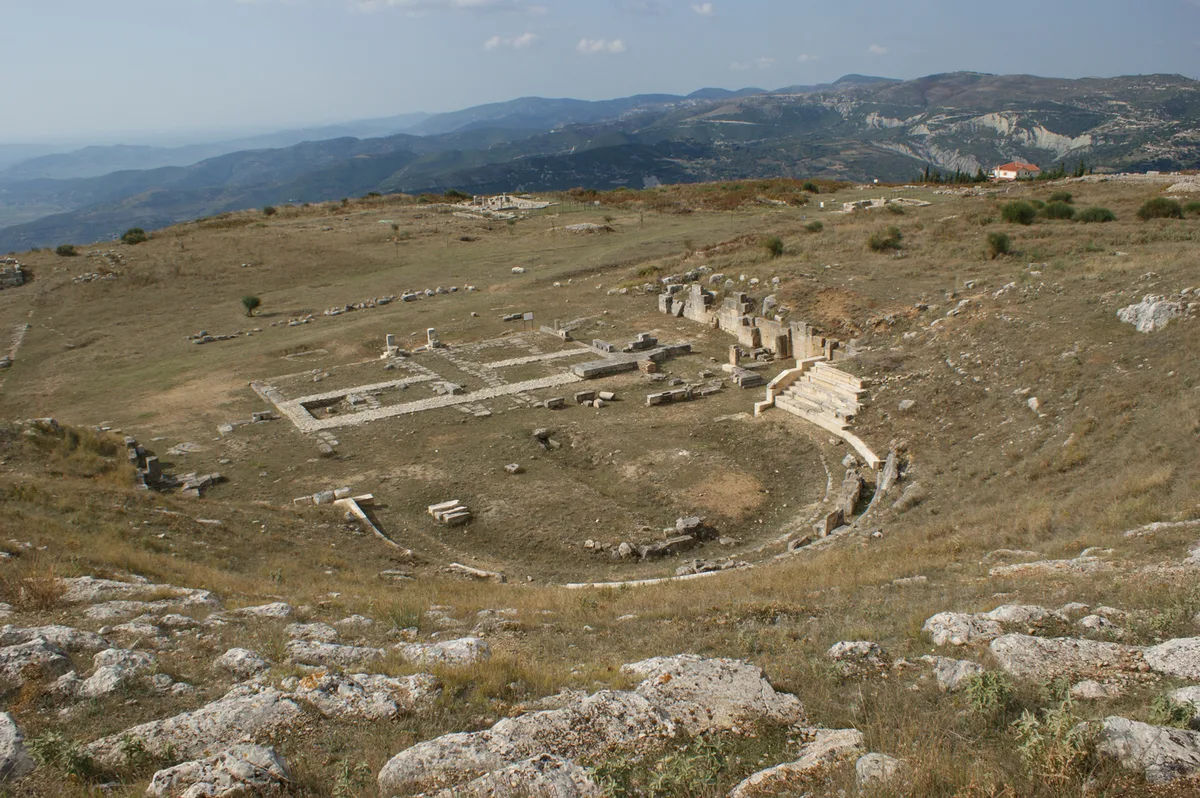
Byllis is the entry on this list for travellers who suspect, usually correctly, that the best ruins are the ones without a car park full of coaches. High on a hill plateau above the Vjosa valley, near the village of Hekal in the Mallakastër hills, Byllis was one of the principal cities of the Illyrians – a walled hill city of the Koinon of the Bylliones, heavily fortified with a circuit of massive walls built in the third century BC, and later a Roman and early Byzantine centre. Its position alone justifies the journey: from the walls the land falls away in every direction, over one of the great empty landscapes of southern Albania.
The remains reward the effort of getting there. The theatre, cut into the slope, the stoa, the stadium area and the Roman-era arsenal are all legible, but Byllis’s late-antique layer is its distinction: several early Christian basilicas, one with mosaic floors, built as the city turned into a bishopric in the empire’s last centuries. Then the Slavic invasions of the sixth century ended it, and the hill went back to pasture. What you walk through today is a large, atmospheric archaeological park with minimal signage, grazing animals between the ruins, and – on most days – no other visitors at all. Facilities are basic and shade is scarce; bring water and treat the visit as half archaeology, half hilltop walk.
Honest framing is essential here. Byllis is not on the standard circuit because it cannot be: it needs a car, a detour off the Fier–Berat or Fier–Tepelenë roads, and an interest in ruins for their own sake. A casual sightseer will find Apollonia easier and Butrint richer. But for the traveller who measures the albania tourist attractions by atmosphere rather than amenities, Byllis may be the most memorable of the classical three – the one where the silence, the scale and the loneliness of an abandoned Illyrian capital are still fully intact. Combine it with Apollonia and you have the finest archaeology day in central Albania, as the combination section below explains.
Durrës Amphitheatre – Rome Beneath the Apartment Blocks
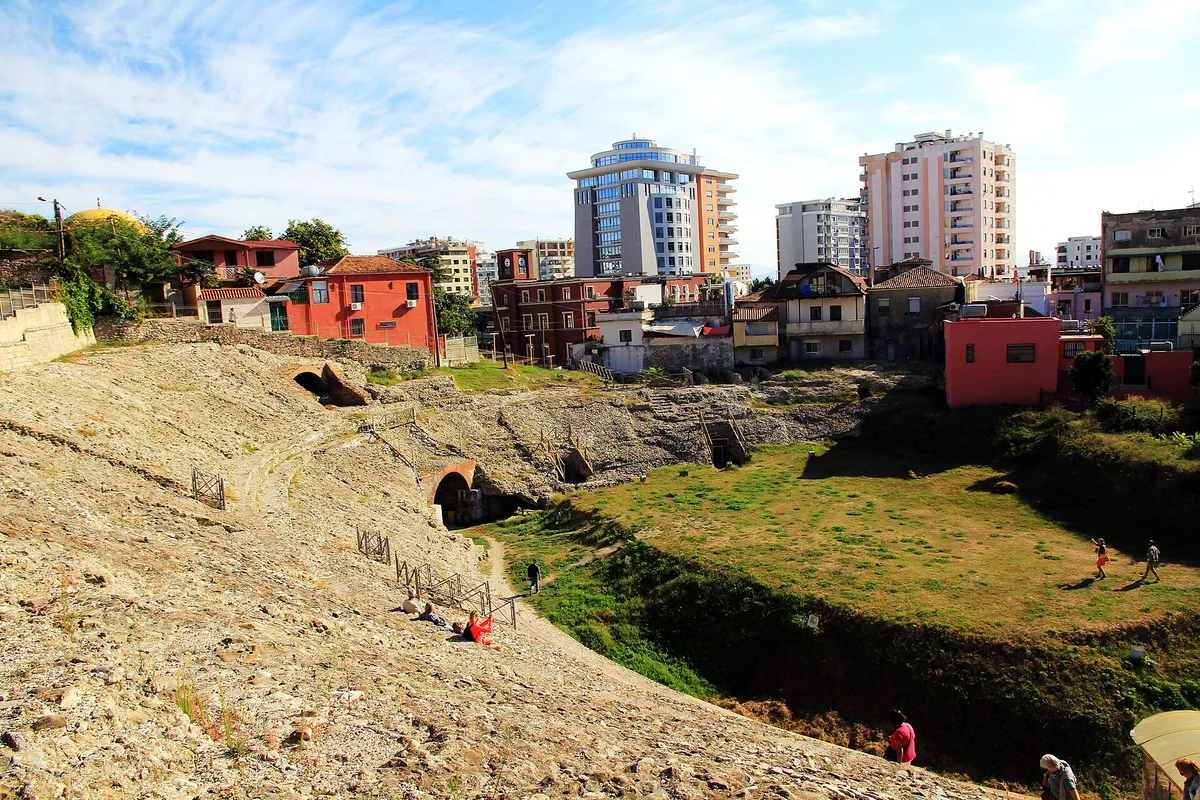
The strangest of the albania tourist attractions is hiding in plain sight in the middle of Albania’s second city. Durrës – Epidamnos to its Greek founders in 627 BC, Dyrrachium to the Romans – was the Adriatic terminus of the Via Egnatia and one of the great ports of the Roman Balkans, and in the second century AD, in the age of Trajan, it built an amphitheatre to match: the largest in the Balkans, with an estimated capacity of between 15,000 and 20,000 spectators. Then the city contracted, earthquakes shook it, houses crept over it, and the arena disappeared beneath the streets for centuries – until 1966, when it was rediscovered and excavation began.
What you visit today is a vast elliptical bowl cut into the hillside in the middle of a residential neighbourhood, its arcades and vaulted galleries emerging between apartment blocks, with a substantial part of the structure still unexcavated beneath the modern city. The amphitheatre alone would rank as a major sight; its afterlife makes it unique. In the Byzantine period a small Christian chapel was built into one of the galleries, decorated with wall mosaics of saints – so that inside a machine built for gladiatorial spectacle you find some of the earliest Christian art in Albania, protected under a shelter and shown by the site custodians. The amphitheatre is on UNESCO’s Tentative List for Albania, and it anchors a small cluster of central Durrës sights: the Byzantine forum’s circular marketplace, stretches of the city walls and Venetian tower, and the Archaeological Museum on the seafront, the largest in the country, which holds the finds from the Roman city under your feet.
Who should bother: anyone passing through Durrës – which, given the port, the airport road and the beach resorts, is most visitors – and any traveller interested in Rome. The visit takes an hour, not a day, and the setting is part of the experience: laundry lines and balconies overlook the arena the way medieval housing once did. Who can skip it: the traveller who treats Durrës purely as a beach; the beach is long and pleasant, but it is not why Durrës matters. As albania tourist attractions go, this is the one that best demonstrates the country’s defining condition – twenty-seven centuries of history stacked in a single city block.
Kruja – Skanderbeg’s Castle and the Bazaar Below
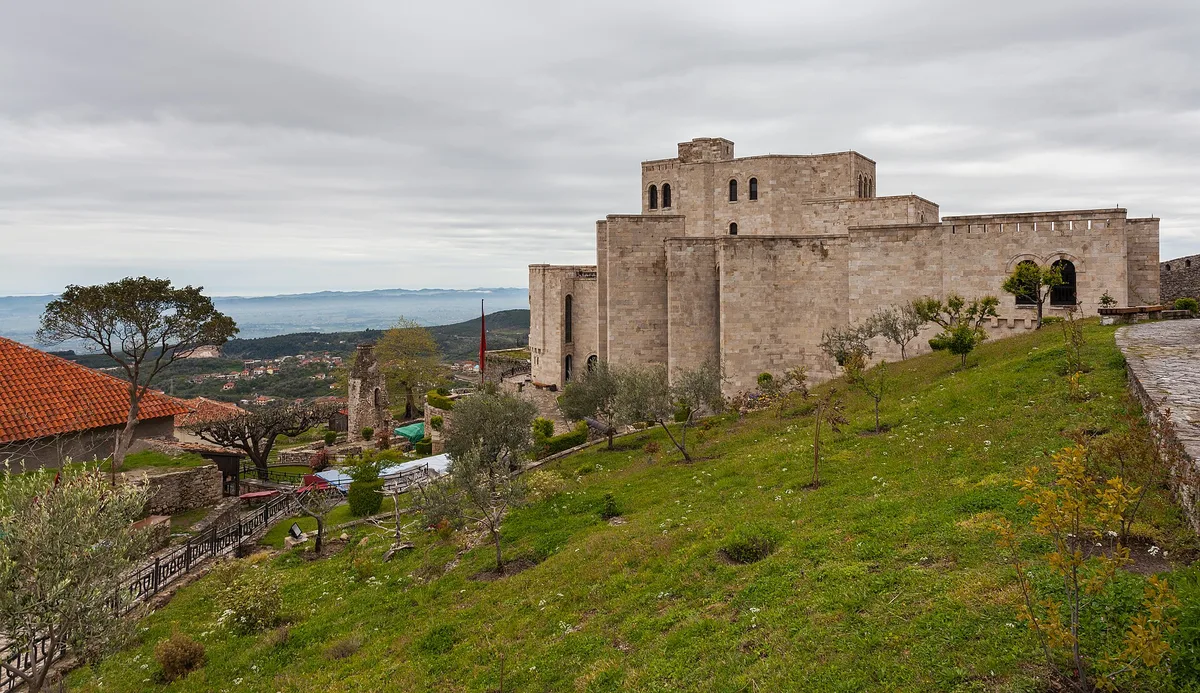
Every country has one place where the national story is told, and in Albania it is Kruja. The castle on its ridge above the town of Krujë, an easy day trip from Tirana, was the stronghold of Gjergj Kastrioti – Skanderbeg – who from 1443 defied the Ottoman Empire for a quarter of a century and became the founding hero of Albanian national identity. His equestrian statue stands in every major square in the country; this is where the story happened, and the broad view from the castle walls across the coastal plain to the Adriatic explains the strategy at a glance: a near-impregnable ridge, watched coasts, and mountain refuge behind.
The castle today is a compact, legible visit. Inside the walls stands the Skanderbeg Museum, opened in 1982 and housed in a monumental building in the castle’s own idiom, which tells the fifteenth-century resistance through weapons, manuscripts, murals and replicas – heavy on pageantry, genuinely informative on the history. Nearby, the Ethnographic Museum occupies the Toptani family’s great Ottoman house and is quietly the better of the two for many visitors: room after room of dress, craft, food production and domestic ceremony in a merchant-landowner’s residence. The castle grounds also hold the Dollma Teqe, a Bektashi shrine, a ruined mosque’s minaret base and a small hamam. Below the gate, the restored old bazaar runs down the hill in a single cobbled street of wooden shops selling kilims, antiques, felt caps and carved wood – commercial, certainly, but housed in the town’s genuine historic market street and the best souvenir hunting in the country.
Honest framing: Kruja is the most visited of the albania tourist attractions on this list relative to its size, and it can feel crowded and merchandised at midday in summer. Go early or late, walk the whole castle rather than only the museum, and do not miss the ethnographic house. Who should bother: first-time visitors above all, for whom Kruja supplies the national narrative that makes the rest of the country’s flags, statues and rhetoric intelligible. Who can skip it: the traveller whose trip is entirely beaches and mountains – but they will leave Albania without meeting its central character.
Rozafa Castle – Shkodër’s Hilltop Fortress
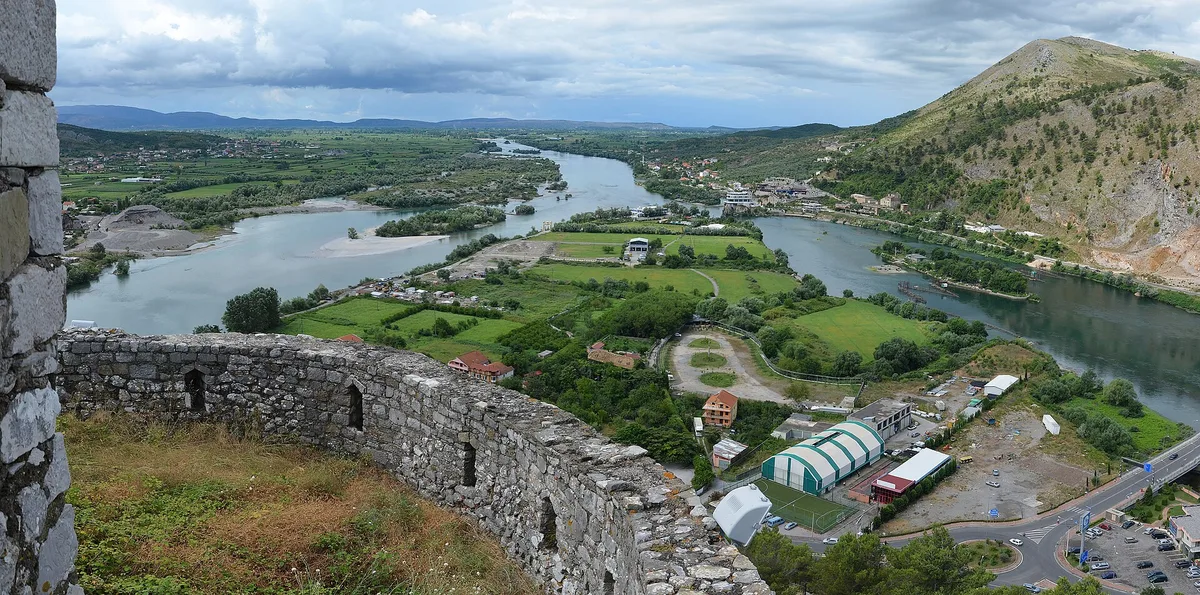
Rozafa Castle guards the meeting of three rivers above Shkodër, the great city of the north, and it is the finest viewpoint among the albania tourist attractions: from its walls the whole geography of northern Albania arranges itself – Lake Shkodër stretching towards Montenegro, the Buna and Drin rivers braiding across the plain, the city below and the Albanian Alps closing the horizon. Fortifications here are ancient – Illyrian walls survive at the core – and the castle was rebuilt and fought over by Romans, Byzantines, Serbs, Venetians and Ottomans; Venetian and Ottoman work forms most of what you walk through today, in three successive courtyards climbing the hill.
The castle is as much a story as a fortress. Its name carries Albania’s most famous legend, told on a plaque at the gate: three brothers built the walls by day and found them fallen each morning, until a prophecy demanded that one of their wives be walled into the foundations – Rozafa, the youngest brother’s wife, who accepted on condition that openings be left so she could still nurse her infant. The tale, collected across the Balkans in variants, is painted and retold everywhere in Shkodër, and whatever you make of it, it sets the tone: this is a place where folklore and fortification are the same subject. Inside the walls, the Church of Saint Stephen – converted to a mosque after the Ottoman conquest, and known ever since as the Church-Mosque – stands roofless in the top courtyard, and a small museum occupies the Venetian-era Captain’s House. Below the hill, Shkodër itself adds supporting sights: the Marubi National Museum of Photography, holder of the archive of the Marubi dynasty who photographed Albania from the 1850s onward, and the Lead Mosque on the plain.
Who should bother: anyone travelling north – Rozafa is the natural first or last hour of a Shkodër stay, and at sunset the finest. Who can skip it: only the traveller passing Shkodër purely as a transit point for the Alps, and even they should know the castle is visible from the road and worth the short climb if an hour exists. Among the albania tourist attractions, Rozafa is the best value in the country measured in view per unit of effort.
The castle also makes the best possible introduction to Shkodër itself, because it explains the city’s existence: a trading place at the meeting of rivers and lake routes, close enough to the mountains to need a fortress and rich enough to be worth besieging. Read the view properly – the lake that fed it, the rivers that carried its trade, the plain that fed its garrisons – and the city below stops being a transit stop and becomes a destination. The climb from the parking area is short and paved; the courtyards are grassy and largely uncommercialised; and on a clear morning the Alps stand so close behind the city that the whole northern half of Albania’s geography, which the clusters section below returns to, is visible from a single wall.
Tirana – Bunk’Art, the House of Leaves and Skanderbeg Square
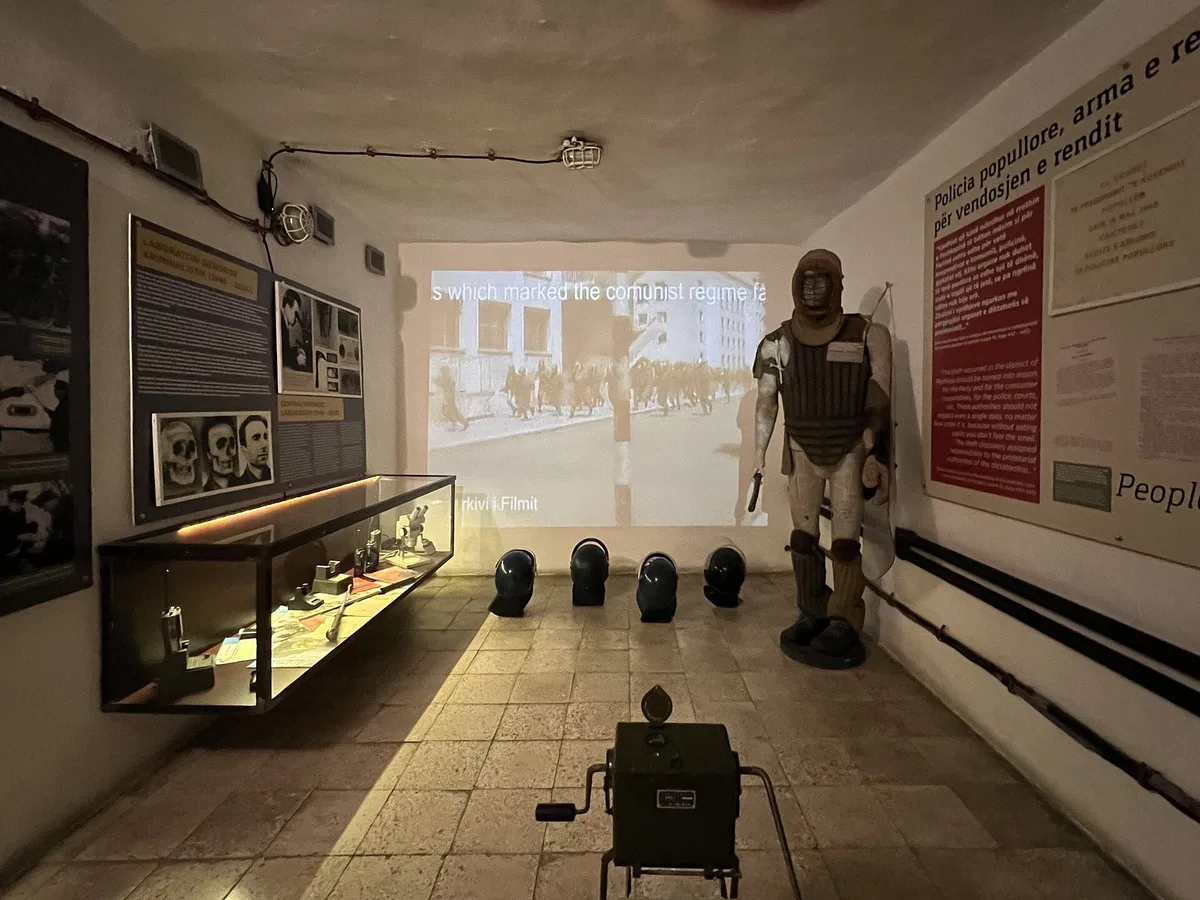
Tirana’s sights are unlike anything else on this page, because the capital’s defining layer is not classical or Ottoman but communist. Between 1944 and 1991 Albania was one of the most closed states on earth, ruled by Enver Hoxha, and Tirana is where that system kept its instruments – which it has now, to its great credit, turned into museums. The essential trio clusters tightly. Skanderbeg Square, the vast ceremonial centre, holds the equestrian statue, the Et’hem Bey Mosque with its frescoes of trees and waterfalls, the Clock Tower, and the National History Museum behind its enormous mosaic facade, The Albanians. A short walk away, the House of Leaves occupies the former headquarters of the Sigurimi’s surveillance directorate: opened as a museum in 2017, it displays the listening devices, bugged objects and interrogation records of the secret police in the very rooms where citizens were monitored, and it is the most quietly chilling museum in the Balkans.
The bunkers are the other half of the story. Hoxha’s regime concreted Albania with military bunkers in the hundreds of thousands by popular account – the true figure is contested – and Tirana turned the two most symbolic into the Bunk’Art museums. Bunk’Art 1, on the city’s north-eastern edge near the Dajti cable car, fills the five-storey anti-atomic shelter built for the leadership in the 1970s with exhibitions on the army, the regime and daily life, its long corridors mixing genuine history with art installations. Bunk’Art 2, in the centre near the ministries, occupies the former Ministry of the Interior’s tunnel bunker and concentrates on the police and persecution apparatus. Between them and the House of Leaves, a visitor can assemble the whole anatomy of the dictatorship in a single day, in its own buildings.
Honest framing: these are heavy sights, and they are also – there is no use pretending otherwise – fascinating in a way that Roman stones are not, because the history is within living memory and the exhibits are the actual instruments. Tirana scatters its other pleasures around them: the Pyramid, built as Hoxha’s mausoleum-museum and reinvented as a climbable youth and technology centre; the Blloku quarter, once sealed for the party elite and now the cafe district; and the Grand Park lake for recovery. Who should bother with the communist museums: everyone – they are among the most distinctive albania tourist attractions of any kind, and they explain the country you are travelling through. If you have time for only one, make it the House of Leaves for seriousness or Bunk’Art 1 for scale. Practical note: the National History Museum has been subject to long renovation closure in recent reporting, so admire the mosaic from the square and check its current status before planning to walk inside.
Mount Dajti – the Capital’s Balcony
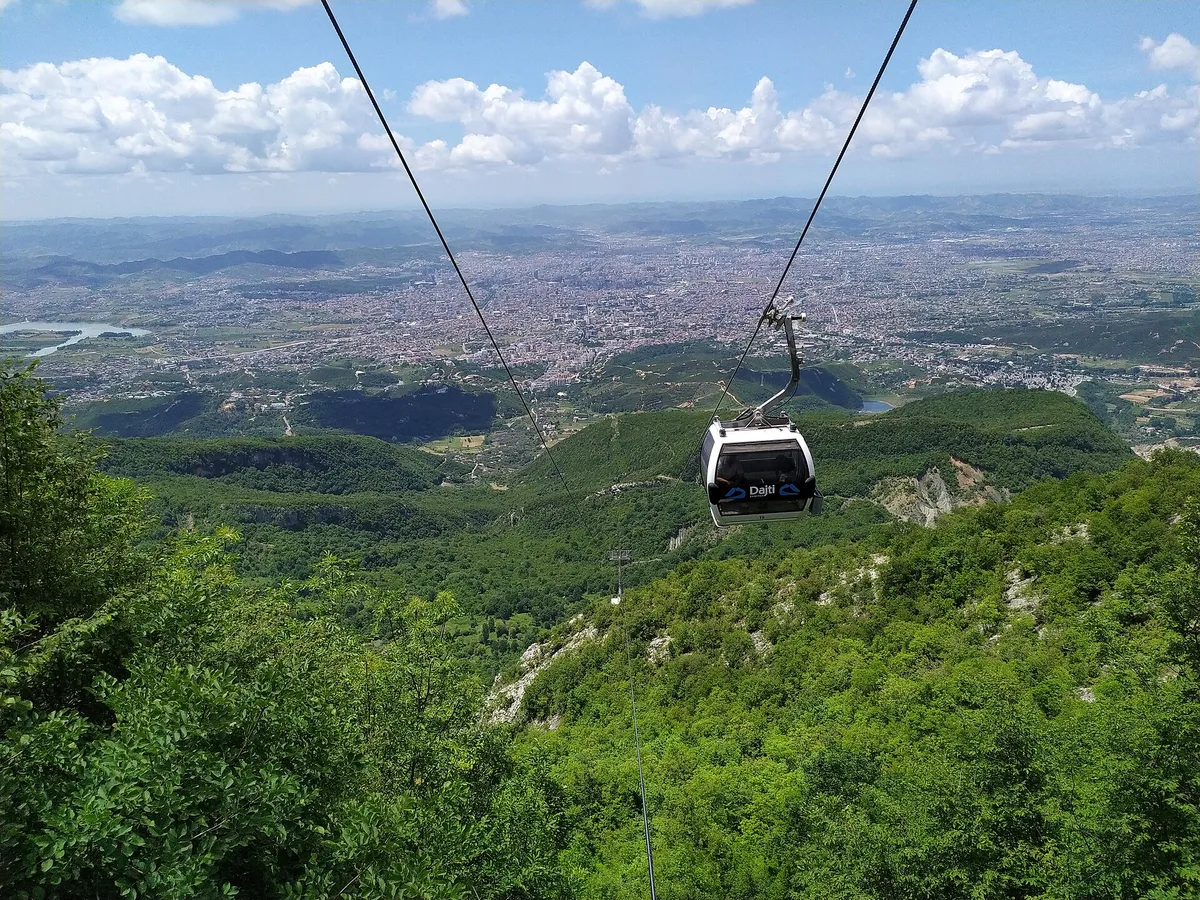
Mount Dajti is Tirana’s escape hatch: a long green ridge rising to 1,613 metres directly east of the capital, protected as a national park, and reached by the Dajti Ekspres cable car – a gondola ride of around fifteen minutes that is among the longest cable-car journeys in the Balkans and worth taking for the ride itself, as the city shrinks below and the plain opens towards the Adriatic. At the top station there are restaurants, viewpoints, a rotating bar, adventure-park activities and paths into beech forest; the summit itself is a military-restricted area, so the attraction is the shoulder of the mountain rather than its peak.
As albania tourist attractions go, Dajti is the honest minor pleasure of the list. It will not detain a traveller for more than a half day, the top-station complex is commercial, and haze can wipe out the view entirely on a still summer afternoon. But as a counterweight to Tirana’s museums it is perfect: go up in the late afternoon of a clear day, walk a forest path, watch the light change over the city grid, and ride down as the lights come on. It is also the one attraction in this guide that locals use exactly as visitors do – Tirana families treat Dajti as their Sunday mountain – which makes it a useful window onto ordinary Albanian life. Who can skip it: travellers heading straight for the Alps or the high Riviera passes, who will get grander mountain views within days. Who should bother: anyone with a spare half day in the capital, and anyone travelling with children, for whom the cable car is often the most-remembered hour of the trip.
The Blue Eye – Syri i Kaltër, the Spring That Swallows Light
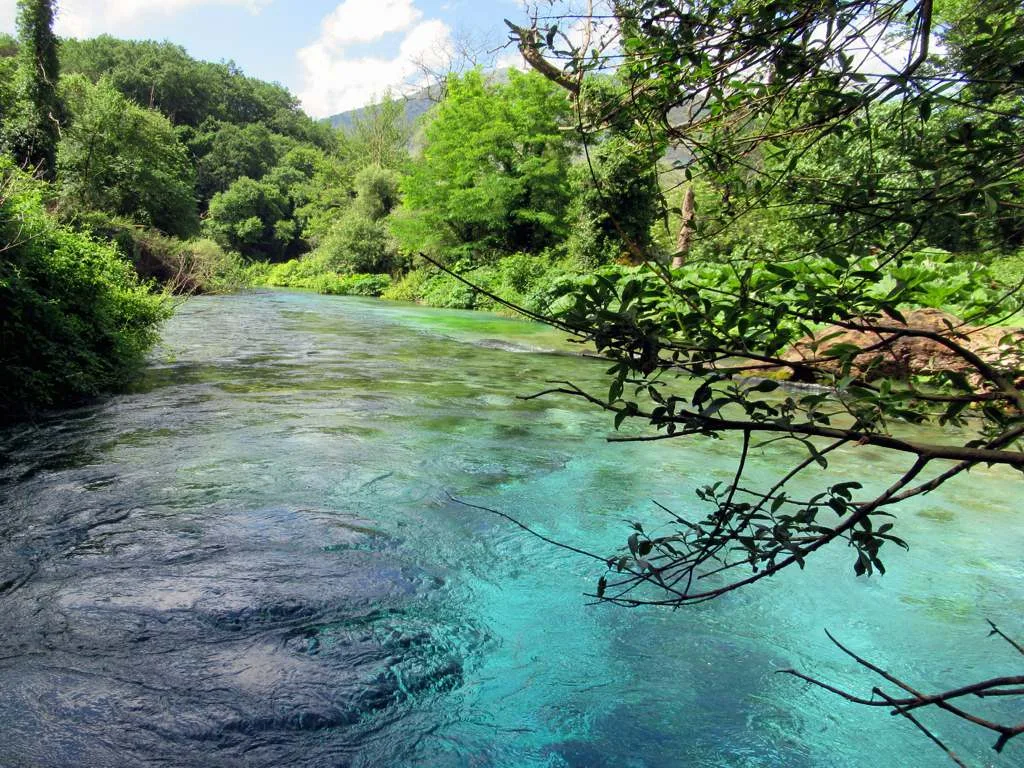
Albania has two famous Blue Eyes, hours apart, and mixing them up is a rite of passage this guide would like to spare you. This section is about the southern one: Syri i Kaltër, near the village of Muzinë on the road between Gjirokastër and Sarandë. It is a karst spring of startling intensity – a near-perfect circle of deep cobalt water at the centre of a green pool, where the river Bistricë is born from underground. The water rises under such pressure that it appears to boil gently upward, and the “eye” effect, dark pupil and turquoise iris, is not a trick of photography: stand on the viewing platform and the spring really does look back at you.
The honest facts are part of the attraction’s mystique. The spring’s discharge is enormous for its size, the water holds a constant cold temperature year-round, and its full depth has never been conclusively measured – divers have descended beyond 50 metres without reaching the bottom of the vent. What reaches the surface is some of the clearest fresh water in Europe, feeding a short, lush valley of plane trees and ferns that feels oddly tropical after the dry hills around it. The site is managed as a monument of nature with an entry gate, a path and a platform; swimming is officially prohibited, whatever older photographs suggest, and the visit itself is short – under an hour for most people, and deliberately so, because there is nothing to do but look, and looking is enough.
Who should bother: anyone travelling between Gjirokastër and the coast, for whom the Blue Eye is a roadside stop of twenty minutes’ detour, and photographers above all. Who can skip it: the traveller whose only route keeps them far north or far west – it is a jewel, but a small one, and not worth a dedicated cross-country journey on its own. Note the disambiguation one more time, because it bends more itineraries than any road in the country: the Blue Eye of Theth, in the Albanian Alps, is a different spring entirely, covered in the Theth section below. Among the natural albania tourist attractions, Syri i Kaltër is the most concentrated – the whole spectacle fits in a single glance, and somehow still exceeds it.
Lëkurësi Castle – the Sunset Ruin Above Sarandë
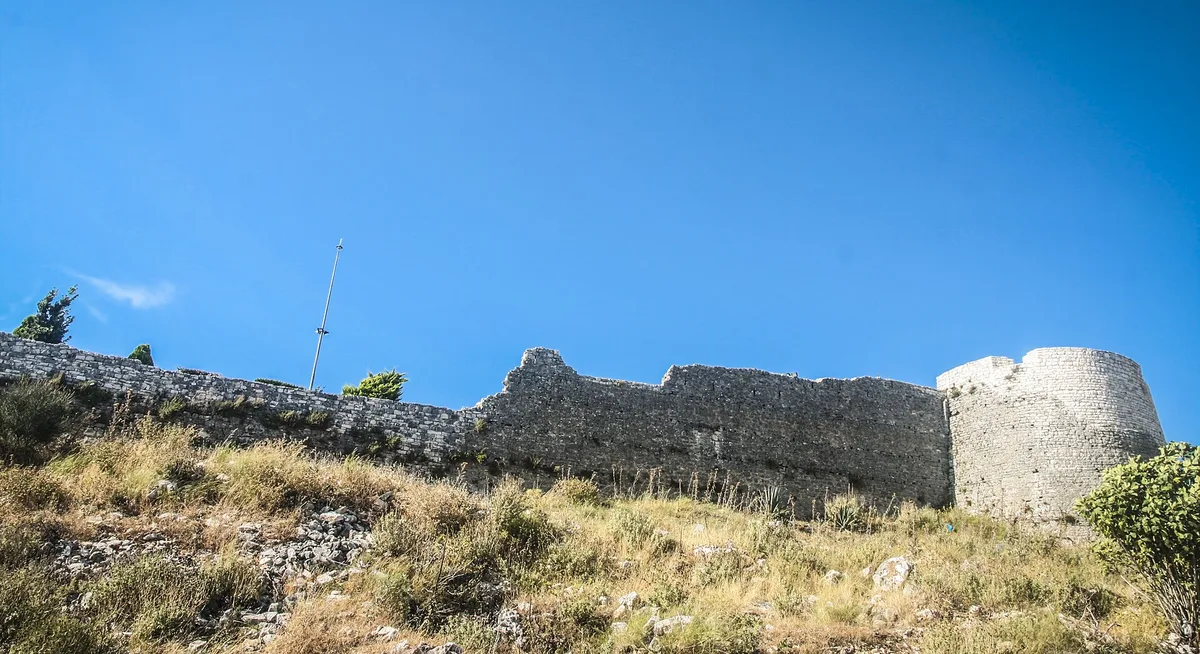
Lëkurësi Castle is the smallest sight in this guide, and it is included because of what it does rather than what it is. The fortress on the hill between Sarandë and Lake Butrint was built in 1537, in the reign of Suleiman the Magnificent, to command the strait and the road to Butrint; what survives is essentially a square Ottoman fort with towers at its corners, its interior now occupied by a restaurant and terrace. As military architecture it is modest – a footnote next to Rozafa or Gjirokastër’s giants – and a dedicated castle enthusiast can legitimately give it twenty minutes.
But the terrace is the point. From Lëkurësi the whole far south performs at once: Sarandë’s bay curving below, Corfu lying across the strait close enough to read as the next town, Lake Butrint behind, Ksamil’s islands to the south and the mountains of the interior at your back. At sunset, with the light running across the water, it is the finest viewpoint in the Sarandë area and the standard evening move of everyone staying in the town. The castle is also a useful landmark for understanding the geography of the albania tourist attractions in the far south: Butrint, Ksamil, the Blue Eye and Gjirokastër all sit within the frame you are looking at, each under an hour away. Who should bother: anyone sleeping in Sarandë, for the sunset alone. Who can skip it: the day-tripper racing between Butrint and a ferry, and anyone who has already had the view from Gjirokastër castle in good light. Lëkurësi earns its place in this inventory as the reminder that an attraction can be 20 percent monument and 80 percent prospect – and still be worth the drive up the hill.
Ksamil and the Riviera – Attractions Made of Water
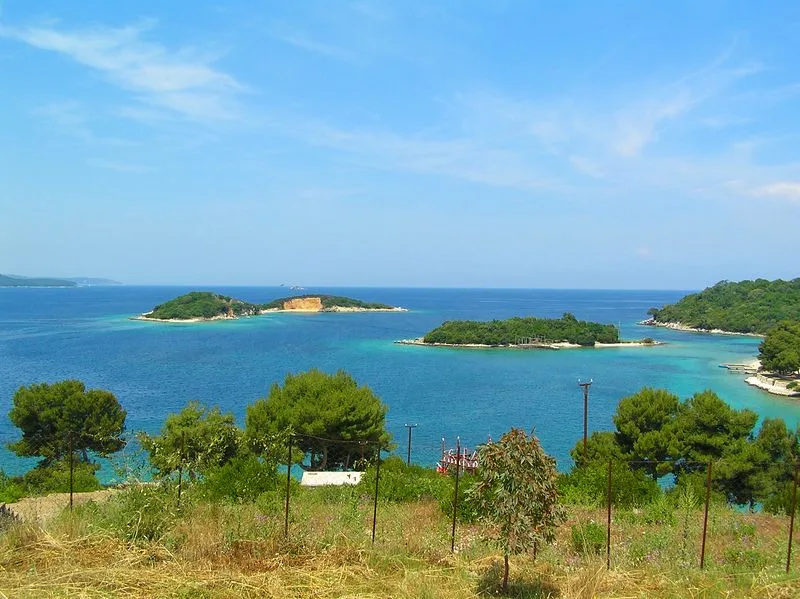
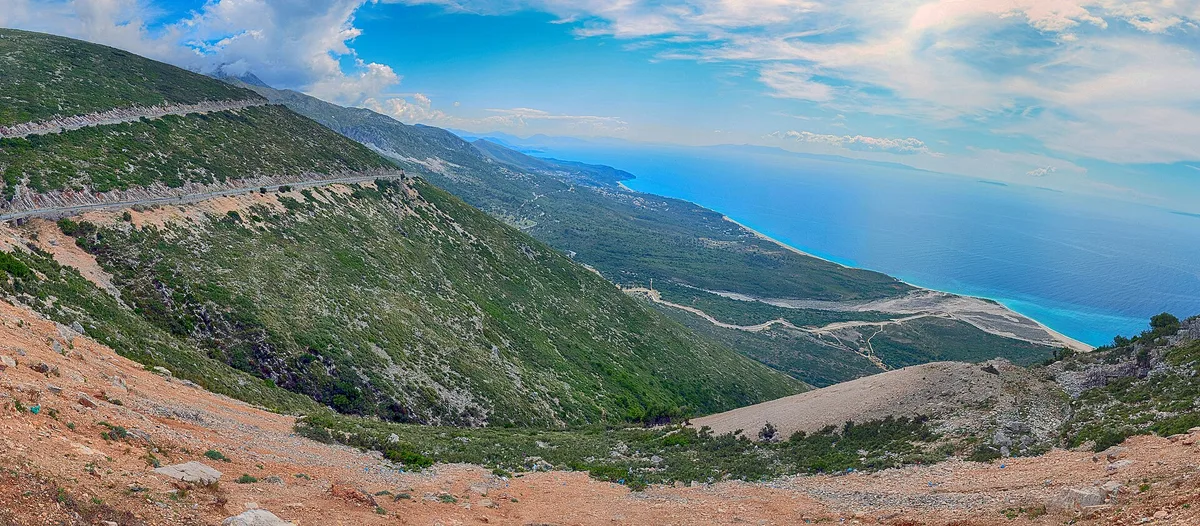
Most of the albania tourist attractions in this guide are things built or dug; the Riviera is the exception, an attraction made entirely of geography. From the Llogara Pass south of Vlorë, the Ionian coast runs for roughly a hundred kilometres of headlands, coves and small beaches down to Sarandë and Ksamil, the water grading from turquoise to deep blue over pale stone and sand. The famous name is Ksamil, at the far southern end: a cluster of small bays facing four low islands, the nearer ones an easy swim from shore, in water so clear and so coloured that it fronts most of the country’s tourism advertising. South of Ksamil the coast ends at Butrint; north of it, the Riviera proper unrolls through Himarë – a working Greek-speaking town with a castle above its bay – and the larger beach villages of Dhërmi and Borsh, each with its own following.
The honest account of Ksamil has two halves. The beauty is real, and out of season – May, June, September – the village is a quiet place between the sea and Lake Butrint whose mussel beds supply half the coast’s restaurants. In July and August the bays are lined with beach-club loungers, the sand disappears under umbrellas, and the experience is closer to a resort at capacity than to a discovery. None of that erases the sight itself, but it decides when you should see it: early in the day, early or late in the season, and with quieter Riviera beaches in the same trip for balance. The Riviera’s other set pieces deserve their share of the frame: the Llogara Pass itself, where the road crosses at over 1,000 metres with paragliders launching above the sea; the castle of Porto Palermo, an Ali Pasha fortress on its own peninsula in the bay south of Himarë; and the canyon beach of Gjipe, reached on foot or by boat, which shows what this coast looked like before the loungers arrived.
Who should bother: beach travellers, obviously – but also anyone who assumes Albania’s case rests on its ruins, because the Riviera is the country’s most internationally competitive sight and the reason many visitors come at all. Our 7-day Albania itinerary runs this coast as its homeward leg, which is the right way to meet it: ruins first, water last. Who can skip it: the August traveller with no tolerance for crowds should skip Ksamil village specifically, not the coast – the coves north of Himarë hold their peace even in high summer.
Lake Ohrid and Pogradec – the Ancient Lake
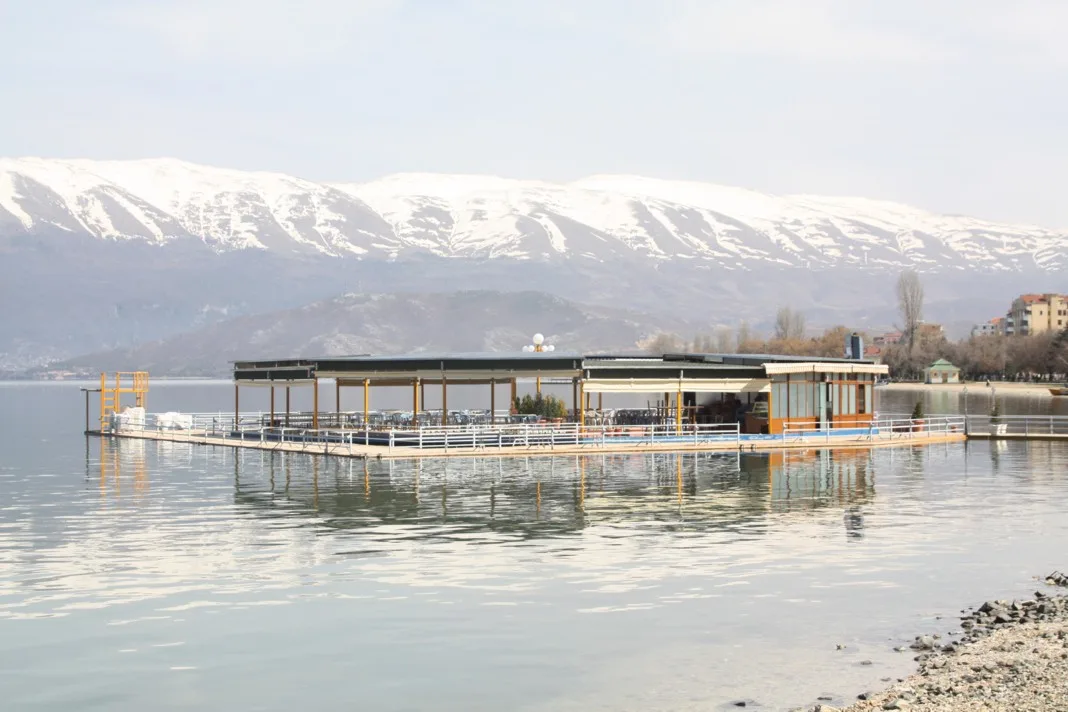
Lake Ohrid is the oldest attraction in this guide by an almost absurd margin: the lake itself has existed continuously for roughly two to three million years, a deep tectonic basin shared between North Macedonia and Albania whose isolated waters hold, in UNESCO’s count, more than 200 endemic species – plants and animals found nowhere else on earth, including 17 endemic fish. UNESCO inscribed the North Macedonian side in 1979 and 1980 and extended the property to the whole lake, including the Albanian shore, in 2019, making the Albanian third of Lake Ohrid one of the country’s four World Heritage listings. The Albanian shore town is Pogradec, a relaxed lakeside place of promenades, poplar shade and fish restaurants, long used by Albanians as a domestic resort and still mercifully off the international circuit.
What is there to do at an ancient lake? The pleasures are slow ones, and that is the point. Swim from the town beaches and the shore villages; eat the lake’s fish, above all the koran, the Ohrid trout, served in Pogradec’s restaurants as the local delicacy – though the honest traveller should know the species is endangered and protected, and that ordering it casually sits uneasily with the lake’s conservation story; belushka, a smaller endemic fish, is the traditional alternative on local tables. Drive or cycle the shore road north to the Lin Peninsula, where a sixth-century early Christian church preserves mosaic floors above the water – part of the same Byzantine world as the basilicas across the lake – and where pile-dwelling traces along the western shore reach back to prehistory. Cross into the hills behind Pogradec and the landscape turns to orchards and villages that feel a century away from the Riviera.
Who should bother: travellers crossing between Albania and North Macedonia, for whom Pogradec is the natural overnight; slow travellers collecting the country’s UNESCO set; and anyone who wants an Albania without crowds, where the evenings are for promenading and the main event is dinner by the water. Who can skip it: the first-time visitor on a seven-day southern loop, for whom the lake is a genuine detour east – it belongs to a second trip or a longer one. Among the albania tourist attractions, Lake Ohrid is the connoisseur’s natural sight: less photographed than the Blue Eye, older than everything, and content to be appreciated quietly.
Theth and Valbona – the Alps as an Attraction
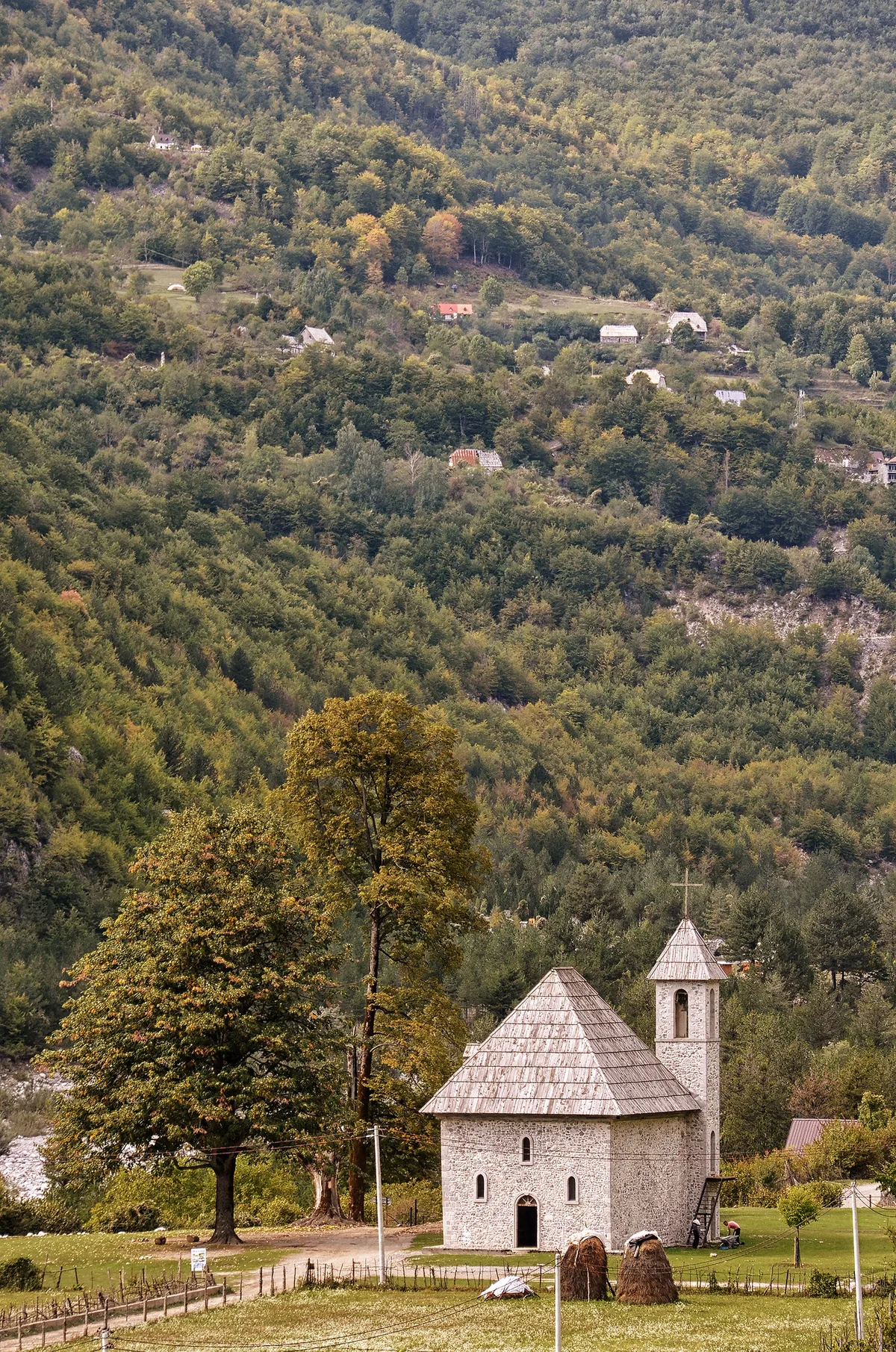
The Albanian Alps – the Bjeshkët e Nemuna, the Accursed Mountains – are the one attraction in this guide that is also an expedition. In the far north, the villages of Theth and Valbona sit in parallel valleys under walls of limestone that rise above 2,500 metres, joined by a single famous footpath over the Valbona Pass. The hike between them, roughly a full day on foot, has become the signature mountain walk of the Balkans: up through beech forest to a pass at about 1,800 metres with the whole range arranged around it, and down into the neighbouring valley for the night. Around the two villages cluster the Alps’ own sub-attractions – in Theth, the stone church of 1892 that fronts every photograph of the valley, the Lock-in Tower where men once sheltered under the blood-feud code of the Kanun, the Grunas waterfall and the Blue Eye of Theth, a cold spring pool near Kaprre village that shares only a name with the southern spring; in Valbona, the milky glacial river, the old mill and a valley floor built for walking.
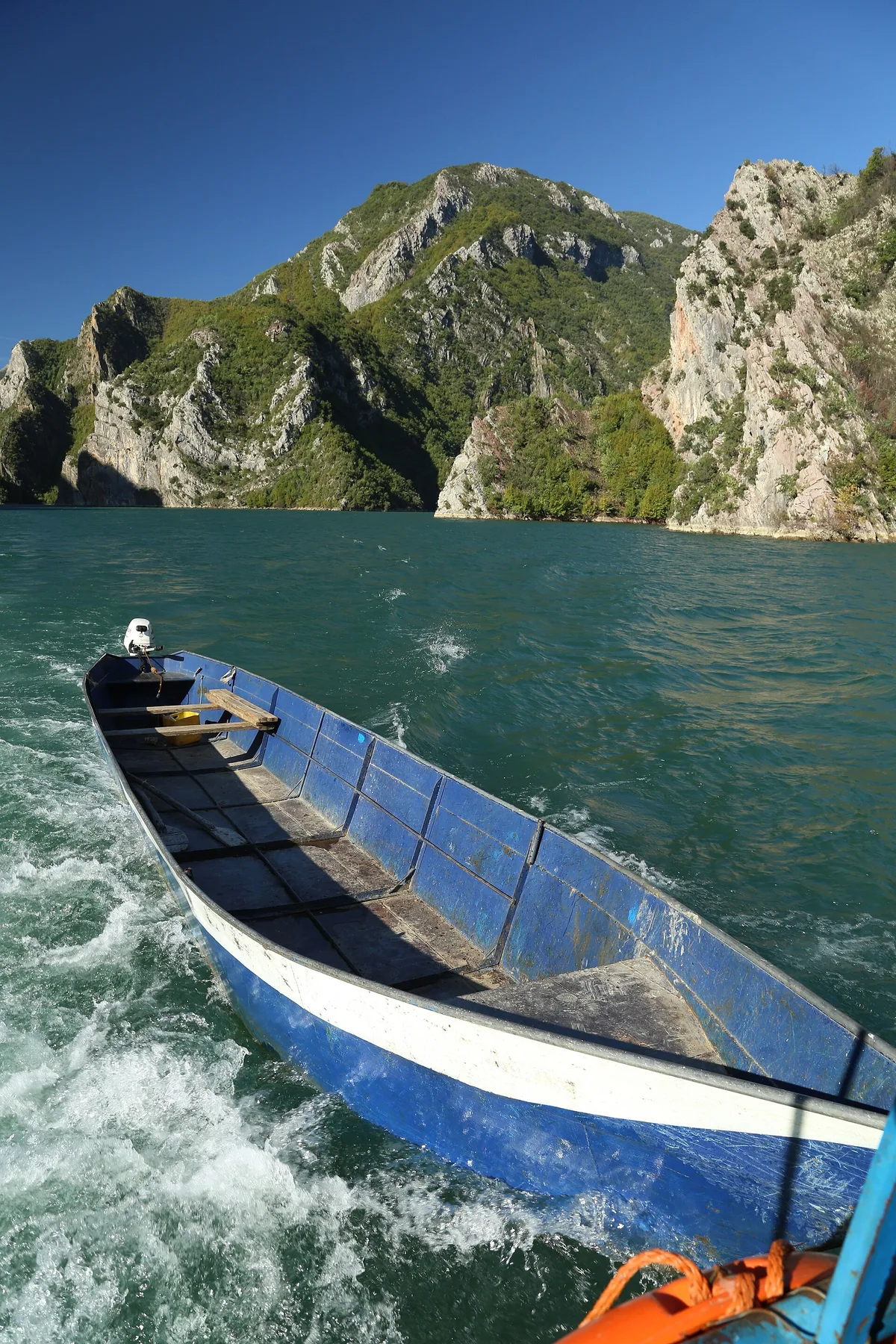
The honest framing matters here more than anywhere. The Alps are seasonal in a way no other sight on this page is: the pass is a summer route, broadly mid-June to late September, and outside it snow closes the crossing and most guesthouses shut. The access is an undertaking – the Lake Koman ferry and mountain roads from Shkodër, or the long road in from Kosovo – and the weather can rewrite any plan. None of this is a defect; it is why the valleys still feel like the edge of the map. But it means Theth and Valbona must be planned as a destination of at least three days, not added as a scenic extra to a beach week. The guesthouses are the experience as much as the peaks: family-run, generous with food, and the living continuation of a mountain hospitality culture that the Kanun codified centuries ago.
Who should bother: hikers, obviously, and anyone for whom mountains are the point of travel – the Alps are the equal of anything in the Balkans and quieter than the ranges further west. Who can skip it: the traveller with a week confined to the south, who should take the Alps’ absence as a reason to return rather than a problem to solve. Of all the albania tourist attractions, these are the ones that ask the most and, by near-unanimous traveller verdict, give the most back.
How the Attractions Combine – Clusters Worth Planning Around
Albania’s sights are not evenly scattered; they fall into clusters tight enough that the traveller who understands the clusters can see most of this page without heroic driving. The far south is the densest: from a base in Sarandë, Butrint, Ksamil, the Blue Eye and Lëkurësi Castle are all inside an hour, and Gjirokastër inside ninety minutes – five of the country’s headline albania tourist attractions from one bed. The centre forms a second cluster: Tirana’s communist museums and Mount Dajti, Kruja as its day trip, and Durrës’s amphitheatre forty minutes west, all combinable without changing hotels. The classical triangle – Apollonia and Byllis from a base around Fier or Berat – is the connoisseur’s pairing, two great parks in a single unhurried day of empty roads and emptier ruins.
The remaining clusters are linear. The north runs Shkodër and Rozafa as a gateway, then forks: the Lake Koman ferry towards Valbona and the pass to Theth, or the lake shore and the city itself for a slower trip. The east stands slightly apart – Pogradec and Lake Ohrid pair naturally with Korçë’s old town and brewery country, and with crossings into North Macedonia – which is why the lake so often belongs to a second journey. And the historic spine of the whole country is the Berat–Gjirokastër road: the two UNESCO towns are a half day apart, and the journey between them, through the Memaliaj hills and the Drino valley, is the classic inland leg of the southern loop.
Two practical conclusions follow. First, Albania rewards bases over motion: the Sarandë base and the Tirana base between them cover nine of the fifteen entries in the table at the top of this page. Second, the sights divide cleanly by season in a way the planning should respect – the Alps close in winter, Ksamil changes character in August, and the inland towns and ruins are at their best in spring and autumn when the coast is quiet. Match the cluster to the month, and the albania tourist attractions stop competing with each other and start composing a trip.
Albania Tourist Attractions – Questions, Answered
What is the number one tourist attraction in Albania? By weight of history and setting, Butrint – the UNESCO-listed ancient city near Sarandë, with layers from the Greek world to the Venetians in a protected lagoon landscape. By visitor numbers in summer, the coast around Ksamil and the Riviera draws the largest crowds. The honest answer is that Albania has no single number one; it has a first rank of four or five – Butrint, Berat, Gjirokastër, the Alps and the Riviera – and the best trip takes in several.
How many UNESCO World Heritage Sites does Albania have? Four inscriptions: Butrint (1992), the Historic Centres of Berat and Gjirokastër (listed jointly, 2005 and 2008), the Natural and Cultural Heritage of the Ohrid region, extended to the Albanian shore in 2019, and the Albanian component of the transnational Ancient and Primeval Beech Forests listing. The Durrës Amphitheatre is among the sites on Albania’s UNESCO Tentative List.
Which attractions can I skip on a short trip? On a week or less, the usual honest cuts are Byllis (superb, but a detour for ruin specialists), Lake Ohrid (a detour east, better on a longer trip) and Mount Dajti (a pleasant half day, not an essential one). Keep Butrint, one of the two UNESCO towns – both if you can – Kruja for the national story, and whichever of the coast or the Alps your season favours.
Are the attractions expensive to enter? Albania’s sights are, by European standards, inexpensive: archaeological parks and museums generally charge modest entry fees, castles are cheaper still, and several sights in this guide – Skanderbeg Square, the Lëkurësi terrace if you are eating there, the Riviera’s beaches away from the clubs – cost nothing at all. Fees change, and this guide does not print figures that would age; check the current price at the gate or on the site’s official page before you go, and carry cash in lek, as card payment at rural sites cannot be assumed.
What is the best month for sightseeing in Albania? May, June and September balance the whole inventory: the old towns and ruins are comfortable, the sea is swimmable, and the Alps season is open by mid-June. July and August are for the coast first and the sights early in the morning. Winter suits Tirana’s museums and the southern towns, but closes the Alps and empties the Riviera.
Is Albania safe to visit for sightseeing? Albania is generally regarded as a safe country for travellers, and its sights are no exception: the practical cautions are the ordinary ones of mountain roads, summer heat on exposed ruins, and steep, worn stone in the castles. Sites are staffed informally by European standards, so carry water, watch your footing on castle walls, and treat opening arrangements as flexible rather than guaranteed.
How many days do I need to see the main attractions? Seven days covers the southern set properly – Tirana, Kruja, Berat, Gjirokastër, the Blue Eye, Butrint and Ksamil, with Apollonia if the driving allows. Add three days for the Alps and one for Lake Ohrid, and ten to twelve days sees essentially everything in this guide without rushing any of it.
Which of the albania tourist attractions suits children best? The ones with space and a story at ground level: Butrint, where the ruins come with woods, water and a ferry; Mount Dajti, where the cable car is the event; Rozafa Castle, which has a legend, grass courtyards and a view rather than a roped-off interior; and Ksamil out of season, where the swim to the islands does the entertaining. The communist-era museums in Tirana reward older children and teenagers more than young ones – the material is serious, and the House of Leaves in particular is a quiet, text-heavy museum that works best for readers.