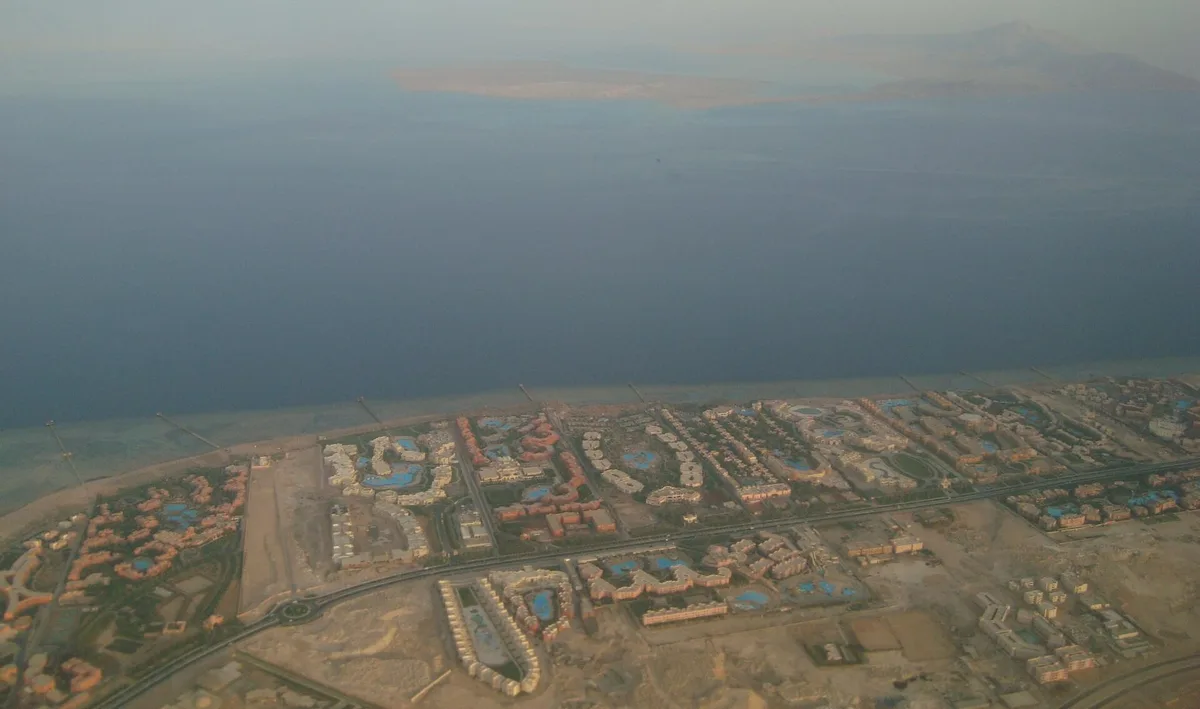
Sharm El Sheikh is the Egypt you fly into at midnight and wake up inside a reef. The famous Egypt — pyramids, temples, royal tombs — is an hour’s flight away across the Gulf of Suez, and for most people who come here it might as well be on another continent. That is where any honest sharm el sheikh travel guide has to start, because Sharm itself belongs to a different Egypt entirely: the southern tip of the Sinai Peninsula, Asian Egypt, where the Red Sea splits around a headland into the Gulf of Suez and the Gulf of Aqaba and the water on both sides is full of coral.
People fly here direct from across Europe and the Gulf, check into a walled resort strung along one of five bays, and spend a week moving between the pool, the buffet and a house reef that starts a few metres off the jetty. That version of Sharm is real, and for a winter-sun holiday built around the sea it works extremely well. But it is not the whole place, and treating it as the whole place is how visitors end up in the wrong bay, on the wrong side of the wind, without understanding why their beach week feels different from the one they booked.
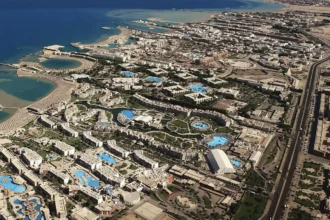
Because Sharm is not one resort. It is a chain of bays running some thirty kilometres up the Gulf of Aqaba coast, each with its own character, its own reef and its own weather. At the south end sits the old harbour town of Sharm El Maya, where the fishing boats still work. At the north end, past the airport, the strip dissolves into the protected mangroves of Nabq. In between lie the party promenade of Naama Bay, the quiet resort crescents of Sharks Bay and the local headland of Ras Um Sid — and confusing any two of them is the easiest mistake in Egyptian resort tourism.
And then there is what sits beyond the bays. Twelve kilometres south-west of the strip, the peninsula ends at Ras Mohammed, Egypt’s first national park, where two gulfs collide over reef walls that drop into water hundreds of metres deep. An hour north is Dahab, the backpacker town Sharm’s visitors day-trip to and quietly prefer. Inland, a night drive away, stands a monastery that has been in continuous use since the sixth century, at the foot of the mountain where Moses is said to have received the Law.
This guide is organised the way the coast is organised. It starts with the strange history — a fishing village and naval base that changed hands twice in a generation before becoming a resort — then maps the five centres bay by bay, gives the sea the space it deserves (Ras Mohammed, the snorkelling, the diving, the Thistlegorm), explains the Sinai visa stamp properly, and finishes with the practical machinery: day trips, getting here and around, seasons, where to stay and the honest downsides.
If you are planning the country as a whole, our Egypt travel guide sets Sharm against Cairo, Luxor and the Nile; this page is for the resort itself and the corner of Sinai around it.
One honest note before the detail, because it shapes everything below. This article prints no prices — no hotel rates, no excursion fees, no taxi fares, no daily budgets. Sharm’s prices are negotiated, seasonal and quoted in three currencies depending on who is asking, and the guides that print confident dollar tables are printing numbers that rot within the season. What this guide gives instead is the mechanism behind every cost: what drives it up, what drives it down, and how to make sure the figure you agree is the figure you pay. That is worth more on the ground than any table.
| Question | Short answer |
|---|---|
| What is it | Egypt’s flagship Red Sea resort city, at the southern tip of the Sinai Peninsula where the Red Sea splits into two gulfs |
| The strip | Five centres strung along one coast road – Sharm El Maya (old town) and Ras Um Sid in the south, Naama Bay in the middle, Sharks Bay and Nabq in the north |
| Why come | Coral reefs that start at the shoreline, Ras Mohammed National Park, the Tiran reefs, winter sun, Dahab and St Catherine’s as day trips |
| Airport | Sharm El Sheikh International (SSH), at the northern end of the strip by Sharks Bay – direct European and Gulf flights plus domestic flights from Cairo |
| Visa | The Sinai arrangement applies – many nationalities arriving by air get a free entry permission stamp for stays under 15 days in the South Sinai resorts only; travel beyond them needs the standard tourist visa |
| Best months | October to November and March to May for warm sea, bearable afternoons and the calmest water |
| How long | Four to six days covers the reefs and one day trip; add a day each for Dahab and St Catherine’s |
From Fishing Village to the City of Peace
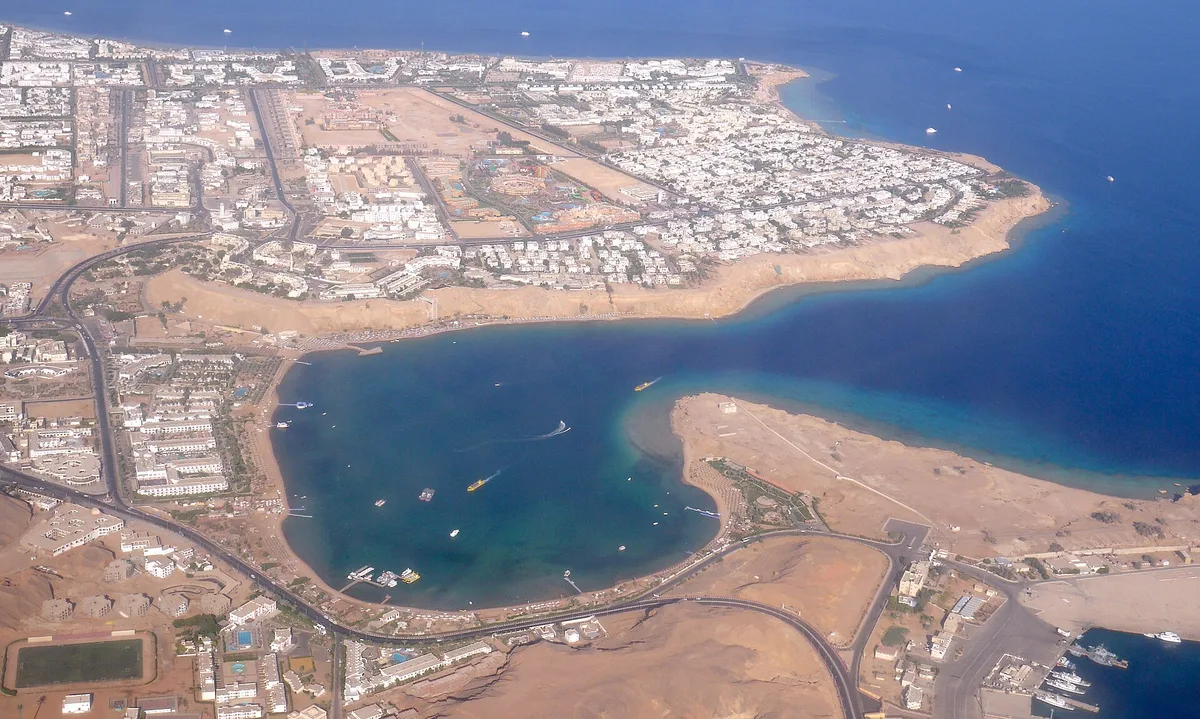
Sharm’s name is its first clue. A sharm is a bay or inlet in Arabic, and the sheikh belongs to local tradition; what matters is that this was never a city site at all, just a well-sheltered anchorage on an empty coast, used by fishermen and, in time, by the Egyptian Navy, which valued exactly what divers value now — the deep, protected water at the meeting of two gulfs.
For most of the twentieth century the place was a military fact rather than a town. Egypt held it as a naval base watching the Straits of Tiran, the narrow shipping lane into the Gulf of Aqaba. Israel took it during the Suez Crisis of 1956 and handed it back the following year; a United Nations force then sat here until 1967, when its withdrawal helped precipitate the Six-Day War and Sharm passed under Israeli control for fifteen years. The settlement built in those years, Ofira, was not demolished when Sinai was returned to Egypt in 1982 under the peace treaty — it was handed over intact, and its streets are part of the town still.
That handover is the resort’s founding moment. In 1982 the Egyptian government designated Sharm the “City of Peace” — a name it has worked to keep, hosting peace summits and, in 2022, the COP27 climate conference — and began encouraging the development that turned a garrison coast into a holiday strip. The count of resorts rose from three in 1982 to more than ninety by the turn of the century, a growth spurt managed, unusually for Egypt, with environmental zoning that still limits building heights so the strip never quite becomes a wall of towers.
The honest history also has harder chapters, and they explain the Sharm a visitor meets today. The resort was bombed in 2005, in attacks aimed at Egypt’s tourist industry, and tourism was knocked sideways again after 2015, when the destruction of a Russian airliner that had taken off from Sharm’s airport led Britain, Russia and others to suspend direct flights — some for years. The flights are back, the airport security regime was rebuilt in the interval, and the checkpoints on the coast road and the visible security presence around the strip are the permanent legacy of those years. A sharm el sheikh travel guide that skipped this would leave you unable to read the place; the security is not a warning sign, it is part of the furniture.
Hold that arc in mind and the modern town makes sense. Sharm is not an old city with a tourist quarter, nor a strip that grew wild. It is a planned resort laid over a military anchorage, inside a protected seascape, on a peninsula Egypt got back within living memory — and the friction between those layers, the walls and the checkpoints and the reef rules, is the honest texture of the place.
The Shape of Sharm – Five Centres Along One Coast
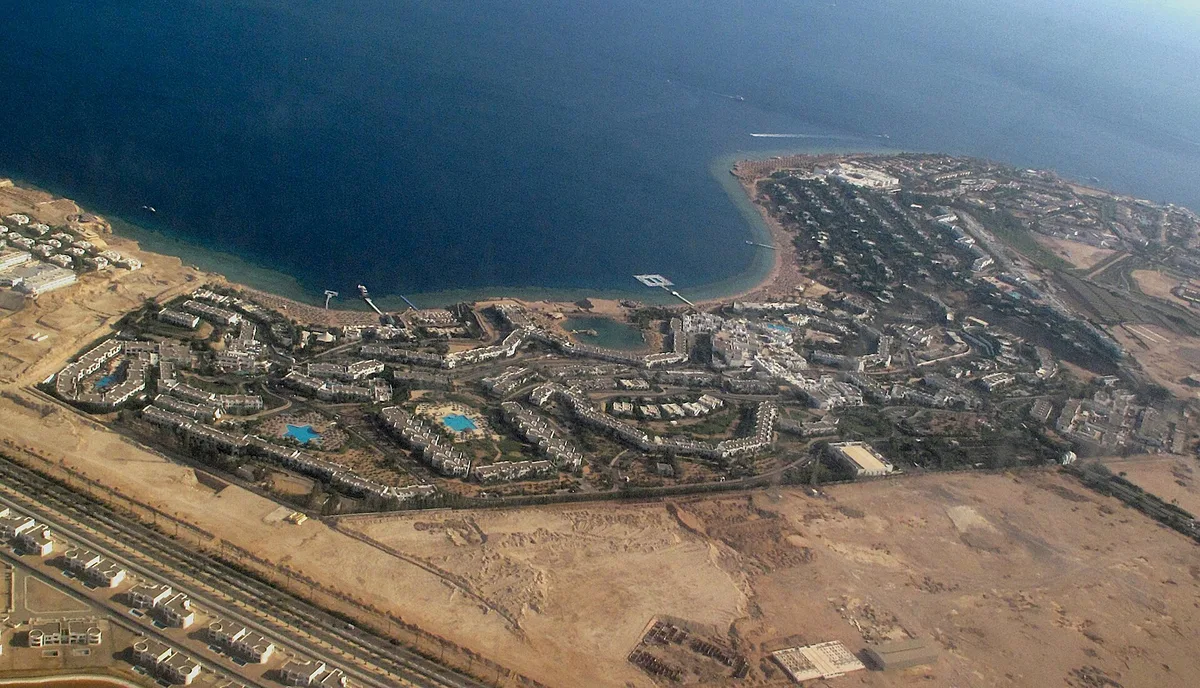
Sharm is a line, not a circle, and the line is longer than most visitors expect. Almost everything in the city hangs off one coast road — Peace Road, El Salaam — running south to north along the Gulf of Aqaba shore, and the single most useful thing a first-time visitor can learn is where along that line they are sleeping, because two hotels both sold as “Sharm El Sheikh” can be half an hour apart and offer entirely different holidays. The city’s own planning divides the strip into five centres, and from south to north they run like this.
At the southern end sits Sharm El Maya, the original settlement: the old harbour, the fishing fleet, the working town behind them and the Old Market. Just north of it, the coast bends around the headland of Ras Um Sid — the local quarter of Hadaba behind it, a lighthouse point, and a reef wall that snorkellers rate among the best shore dives and snorkels in the city. Beyond the headland opens Naama Bay, the original resort bay and still the centre of gravity: the densest concentration of hotels, restaurants and evening life, arranged around a promenade.
North of Naama the strip thins and quietens. Sharks Bay, up by the airport at Ras Nasrani, is a crescent of large, self-contained resorts chosen by people who mostly intend to stay inside them, with the SOHO Square entertainment complex as its evening room. Beyond it, the development finally runs out into Nabq, where the newest resorts face a protected area of mangroves, dunes and reef flats — the wildest shoreline in the city and the most exposed to the wind.
The practical consequences follow from the geography and the wind. The prevailing breeze comes from the north, which means the southern bays — El Maya, Ras Um Sid, Naama — sit in the shelter of the land for much of the year, while Nabq and parts of Sharks Bay take the weather full in the face. On a calm week this hardly matters. On a windy one it decides whether your house reef is swimmable, whether the boats run and whether the beach is a pleasure or an endurance test — and it is the first thing this sharm el sheikh travel guide would have you check before falling for a hotel photograph.
The second consequence is distance. Sharm’s bays are not neighbourhoods you stroll between; they are separate settlements joined by a fast road, and moving between them is a taxi decision, not a walk. Choose the bay for the holiday you actually want — nightlife, quiet, reef, old town — because you will mostly live in the one you pick, and the where-to-stay section near the end of this guide weighs them one by one.
Naama Bay – the Bay That Invented Sharm
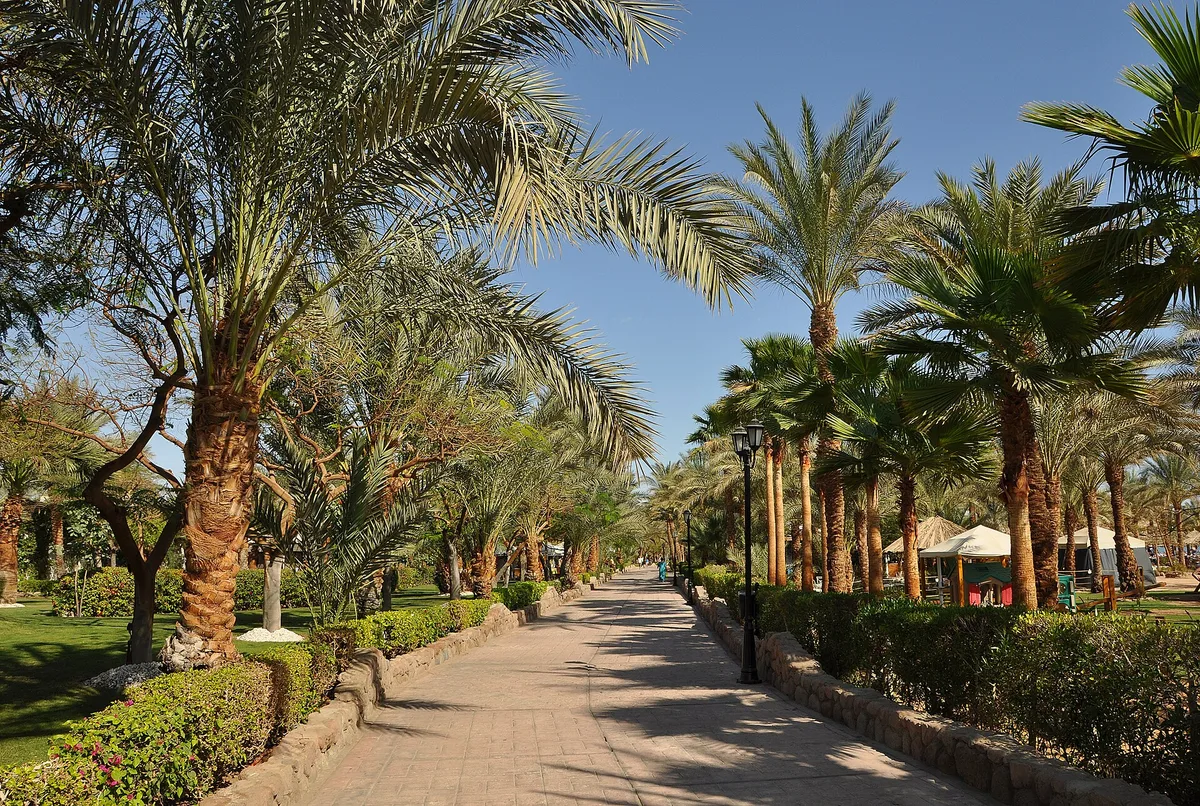
Naama Bay is where the resort began, and it still behaves like the centre of town. The first hotels rose here in the 1980s, on the one stretch of this coast where geography dealt the resort a gift: a natural bay with a genuinely sandy seabed. That matters more than it sounds. Most of Sharm’s shoreline is reef shelf — glorious underwater, awkward to wade into — but at Naama you can walk into the sea off the sand, which is why the bay filled first with families and why its beach, divided into hotel sections, remains the easiest swimming in the city.
Above the beach runs the promenade, and the promenade is Naama’s real product: a pedestrian strip of restaurants, cafes, shisha terraces, dive centres, excursion desks and shops that comes alive after sunset and stays busy late. This is the one part of Sharm where the holiday is not lived inside a hotel gate. You can eat somewhere different every night, book a boat at one desk and compare it with three others, and end the evening with tea on a terrace watching the whole strip promenade past. Travellers who fear the all-inclusive bubble base themselves here for exactly that reason.
The trade-offs are equally clear. Naama is the busiest, loudest and most commercial bay in Sharm, and its house reef is the most heavily used — pleasant, fishy, good for a first snorkel, but not the reef you came to Sinai for; the serious coral is a boat ride or a headland away. The hassle level on the promenade is the city’s highest, a gentle but constant weather system of invitations, and the hotels here skew older, built in the first waves of development, so the room stock varies more than in the newer northern resorts.
Read Naama, then, as Sharm’s town centre rather than its beach resort: the place to stay if evenings matter as much as mornings, if you want the dive boats and the restaurant choice at walking distance, and if a sandy, social, slightly chaotic bay sounds like a holiday rather than a warning.
Sharks Bay and SOHO Square – the Quiet North
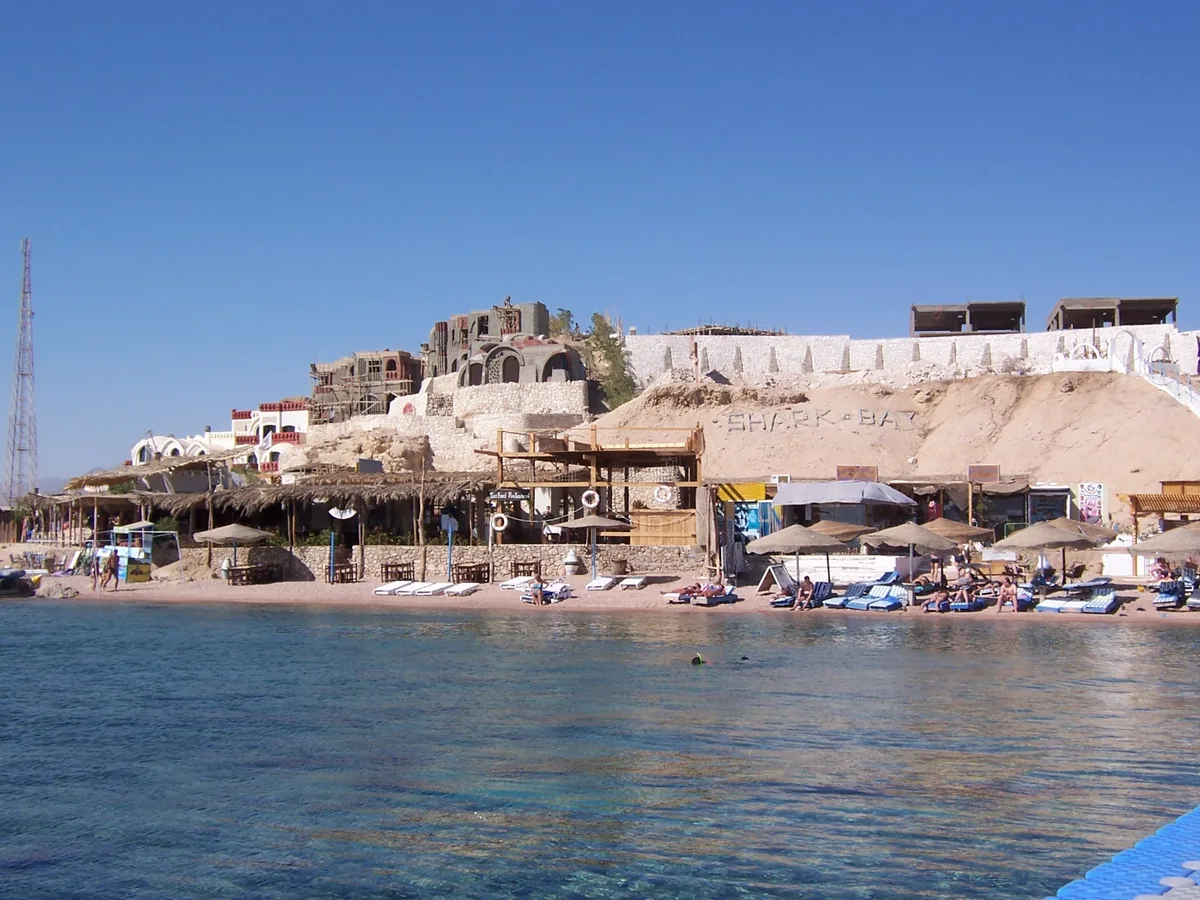
Drive north from Naama, past the airport turn-off, and the city changes register. Sharks Bay — the name is a mangled translation of a local name, and the bay’s sharks are a brochure myth — is a broad crescent of large, modern, self-contained resorts, each with its own beach club, pools and jetty over the reef. The reef here is the point: the fringing coral off Sharks Bay and neighbouring Ras Nasrani is among the best house-reef snorkelling and diving in the city, reached by walking to the end of your own jetty rather than booking a boat.
What Sharks Bay does not have is a town. There is no promenade of independent restaurants, no old quarter, no street life beyond the resort gates; the bay was built for the all-inclusive model and serves it completely. Its one piece of shared evening infrastructure is SOHO Square, an open-air entertainment complex of restaurants, bars, shops and amusements — fountains, an ice rink, a stage — built to give the northern resorts somewhere to go after dinner. It is tidy, family-friendly and unashamedly manufactured, and on a week inside a resort gate it performs its job well.
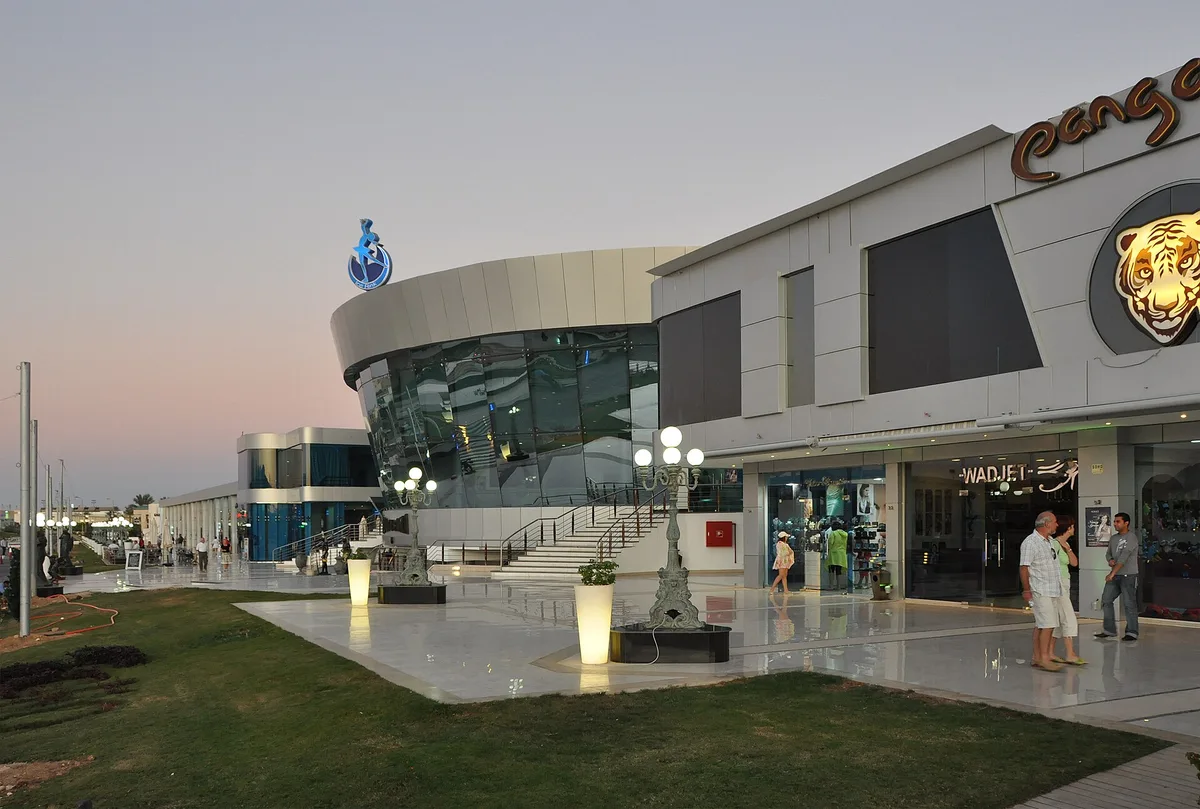
The airport sits minutes away, which cuts transfers to almost nothing and puts the runways’ flight paths over the northern end of the strip — worth knowing if your sleep is light, though in practice the resorts are built and planted to swallow the noise. The wind, as everywhere in the north, is the other consideration: Sharks Bay takes more of the northerly breeze than the sheltered southern bays, and its jetties fly red flags on days when Naama is calm.
Choose Sharks Bay if your holiday is the resort itself — reef off the jetty, pool, buffet, an evening at SOHO — and you have no ambition to explore. It is the most self-sufficient bay in Sharm and, by the same token, the one where Egypt itself is easiest to miss entirely.
Nabq Bay and the Mangroves – Where the Strip Runs Out
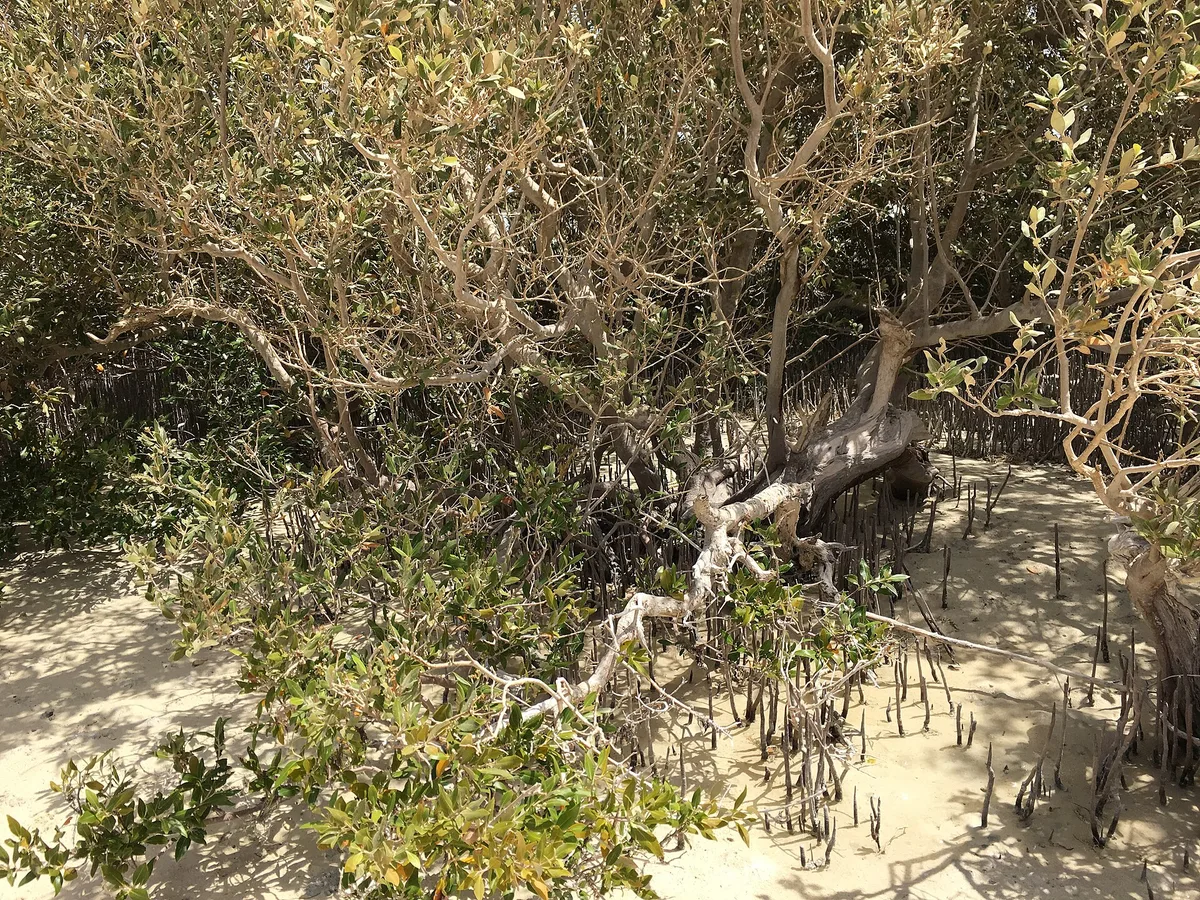
At the northern end of the coast road, the development stops — not because the land ran out, but because the law did. The Nabq Managed Resource Protected Area covers some 600 square kilometres of coast and desert behind the last resorts: a landscape of sand dunes, gravel plains, reef flats and, most remarkably, stands of grey mangrove growing in the shallows — among the northernmost mangroves in the Red Sea, rooted in water at the edge of a desert.
The resorts of Nabq Bay face this protected shoreline, and they sell a particular bargain: space, newness and quiet. The hotels here are among the city’s largest and most recent, the plots are generous, and the crowds of Naama feel a long way away — because they are, a taxi ride of twenty minutes or more. What the brochures underplay is the sea itself. Nabq’s reef flat is broad and shallow, the swim is often a long walk out a jetty to the drop-off, and the bay is the most wind-exposed in Sharm: on breezy days the surface chops, the red flags come out and the boat trips that make the week are the first thing cancelled.
Yet Nabq has a claim none of the other bays can make. Walk out of the resort zone and you are in a protected desert coast — mangrove channels full of juvenile fish and wading birds, empty beaches running north, and a stillness that the rest of the strip has developed away. Birdwatchers and travellers who want the reef-and-desert version of Sharm, and who accept the wind as the price, are genuinely well served here.
Nabq, in short, is the bay to choose with open eyes: the newest resorts and the wildest setting, traded against the longest transfers, the shallowest house reef and the weather. In a calm, settled week it can be the best address in the city. In a windy one it teaches you why the older bays were built where they were.
Hadaba and Ras Um Sid – the Local Headland
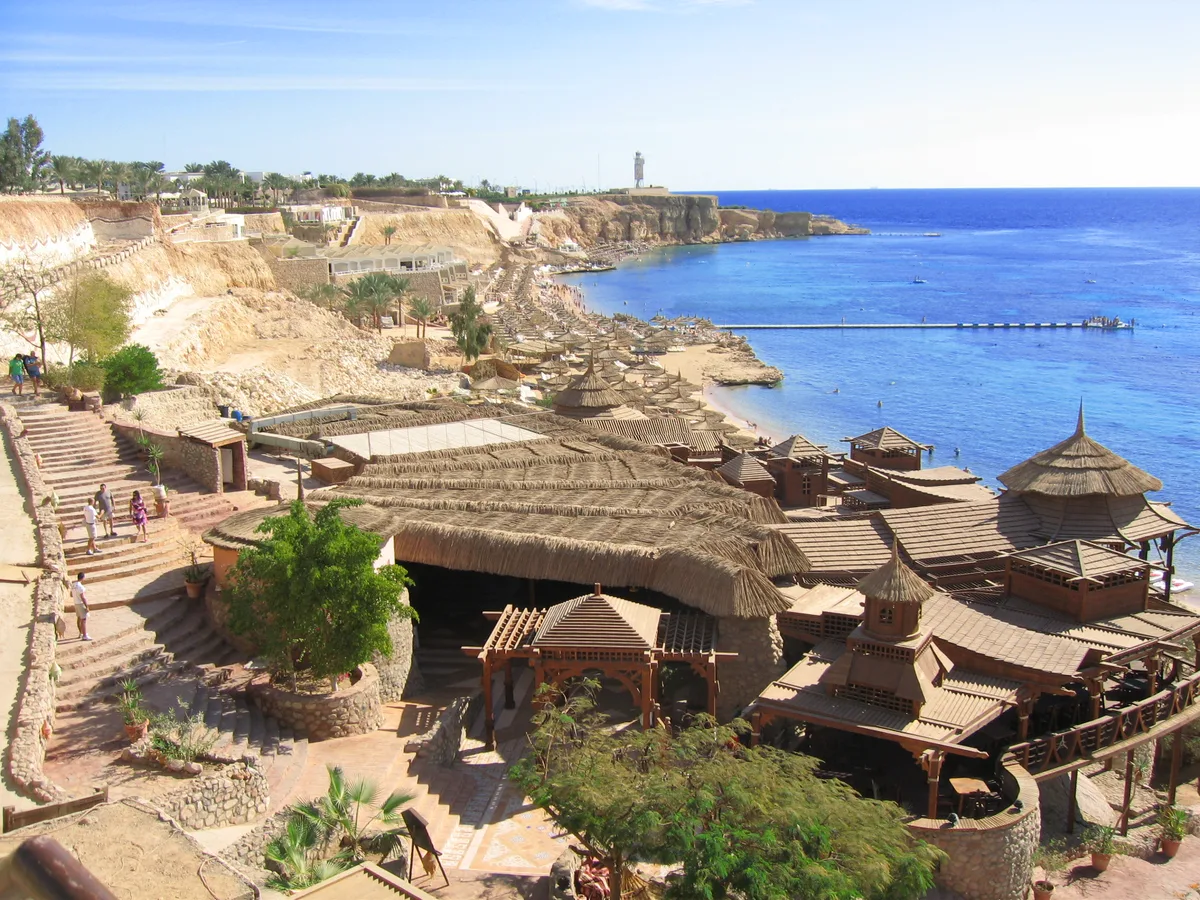
Between the old town and Naama Bay, the coast pushes out into a headland, and the headland is the most Egyptian part of resort Sharm. Behind the cliffs sits Hadaba — Umm Sid — a residential district of apartment blocks, mosques, supermarkets and workshops where a large share of the people who staff the resorts actually live. In front of it, the cliff edge is lined with beach clubs and small hotels terraced down to a reef that locals will tell you, correctly, is one of the best shore reefs in the city.
The point of the headland is marked by the El Fanar lighthouse, and the water below it is the point of the whole district. The reef at Ras Um Sid drops quickly into deep water, holds the kind of coral and fish life that elsewhere requires a boat, and can be snorkelled or dived straight off the jetties and beach-club steps. For travellers who want the reef without the boat-day machinery — and without paying for a big resort to get it — this is the cleverest base in Sharm: smaller hotels, local restaurants a short walk inland, and the sea doing the luxury part for free.
The headland has also produced the city’s most famous cafe. Farsha, built into the cliff above the bay in a joyful clutter of cushions, lanterns and carved wood, is where half of Sharm seems to gather for sunset tea — arrive for the view over the water and the moment the lanterns come on, and forgive the crowds, because everyone else had the same idea for the same reason.
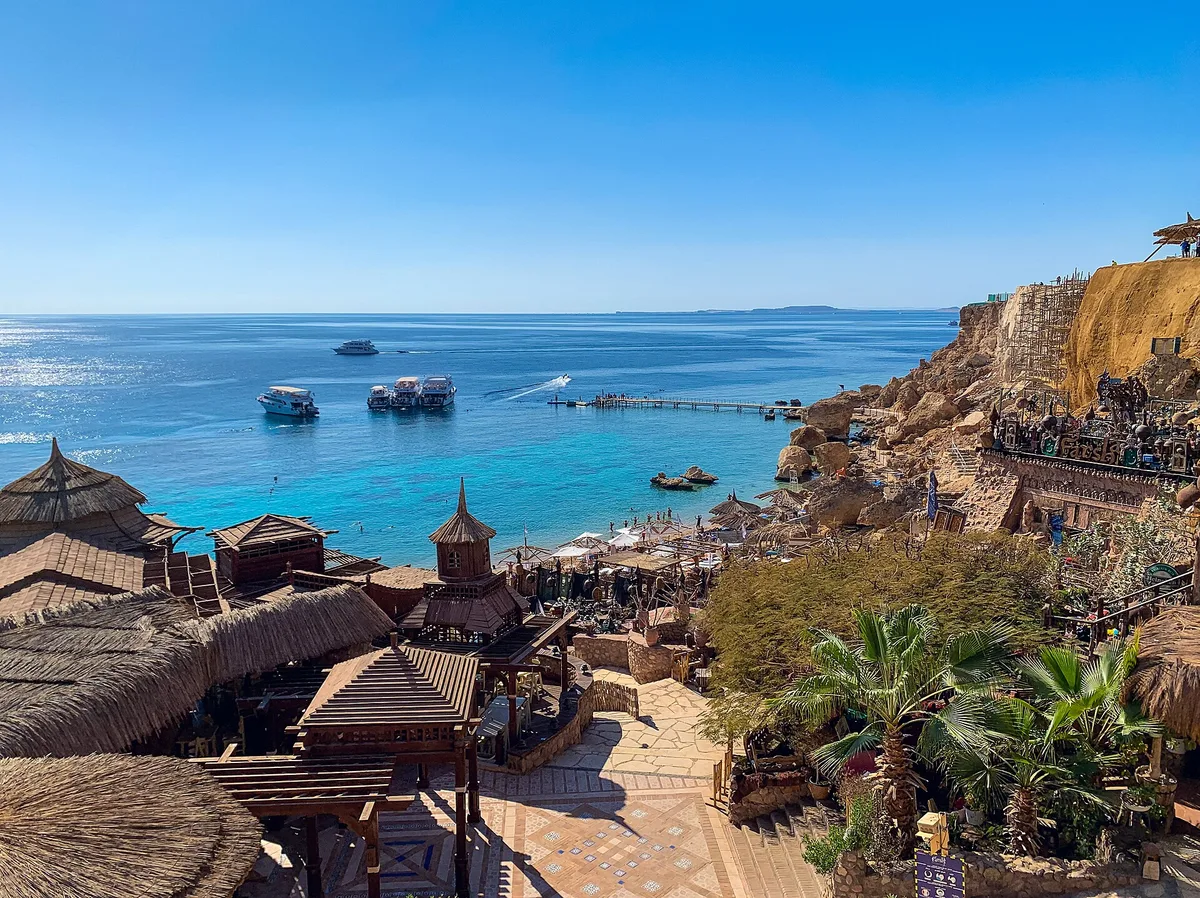
Choose Hadaba and Ras Um Sid if you are a snorkeller or diver on a human budget, if you like eating where the staff eat, and if a neighbourhood matters more to you than a pool complex. The beaches here are cliff terraces rather than sweeping sand — swimmers who need a sandy entry should look to Naama or El Maya — but for the reef-per-pound ratio, nowhere in the city beats it.
Sharm El Maya and the Old Market – the Town Underneath
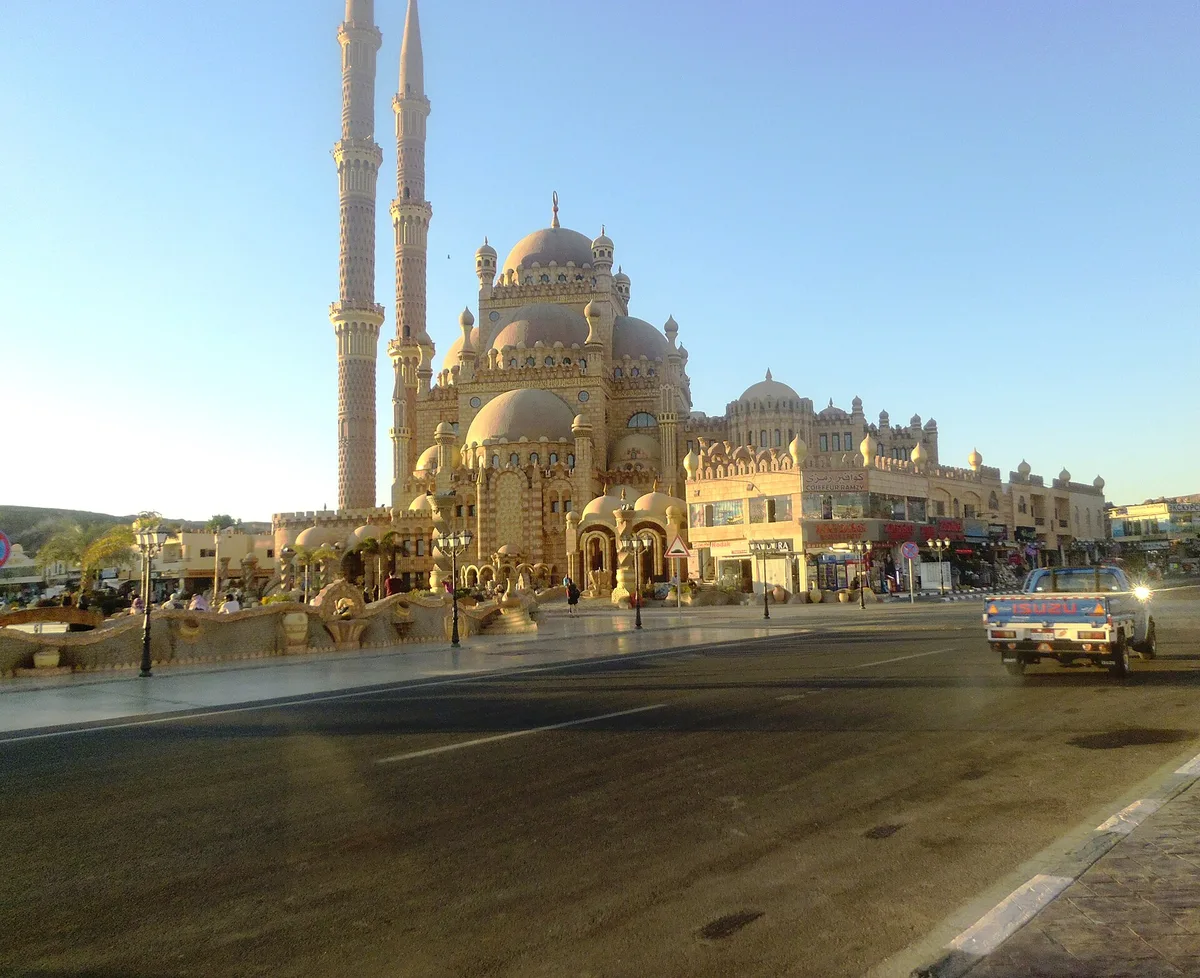
Every resort city has a place the holiday machine grew out of, and in Sharm it is the bay at the very south of the strip. Sharm El Maya is the original anchorage — the natural harbour where the fishing boats and the navy were, long before the first hotel — and it remains the working end of the city: the marina and boat yards, the harbour the Ras Mohammed trips leave from, and behind the bay, the old town.
The old town’s centre is the Old Market, the souk — a grid of lanes given over to spice pyramids, perfumes, lanterns, football shirts and carved everything, with grill restaurants and cafes threaded through it and the whole district overlooked by the Al Sahaba Mosque, a wedding-cake of domes and minarets that is the most photographed building in Sharm. Come in the evening, when the heat is off the stone and the cafes fill; the market is a place to wander, drink tea and buy small things slowly, not a museum.
Be honest with yourself about the transaction style before you go. The Old Market runs on haggling, performed with varying degrees of theatre, and the first price is a speech, not a figure. The mechanism is the same as everywhere in Egypt: decide what the thing is worth to you, offer below it, meet somewhere survivable for both sides, and treat the whole exchange as the entertainment it is meant to be. Walk away politely from anything that stops being fun — there are forty more stalls selling the same lamp.
What El Maya gives a trip, beyond shopping, is ballast. A week of resort Sharm can float free of Egypt entirely; an evening in the old town — the mosque lit up, the grills smoking, Egyptian families doing their own promenading — reconnects the holiday to the country it is happening in. Stay down here, in the smaller hotels around the bay, if that connection matters more to you than a water slide.
Ras Mohammed National Park – Where Two Gulfs Collide
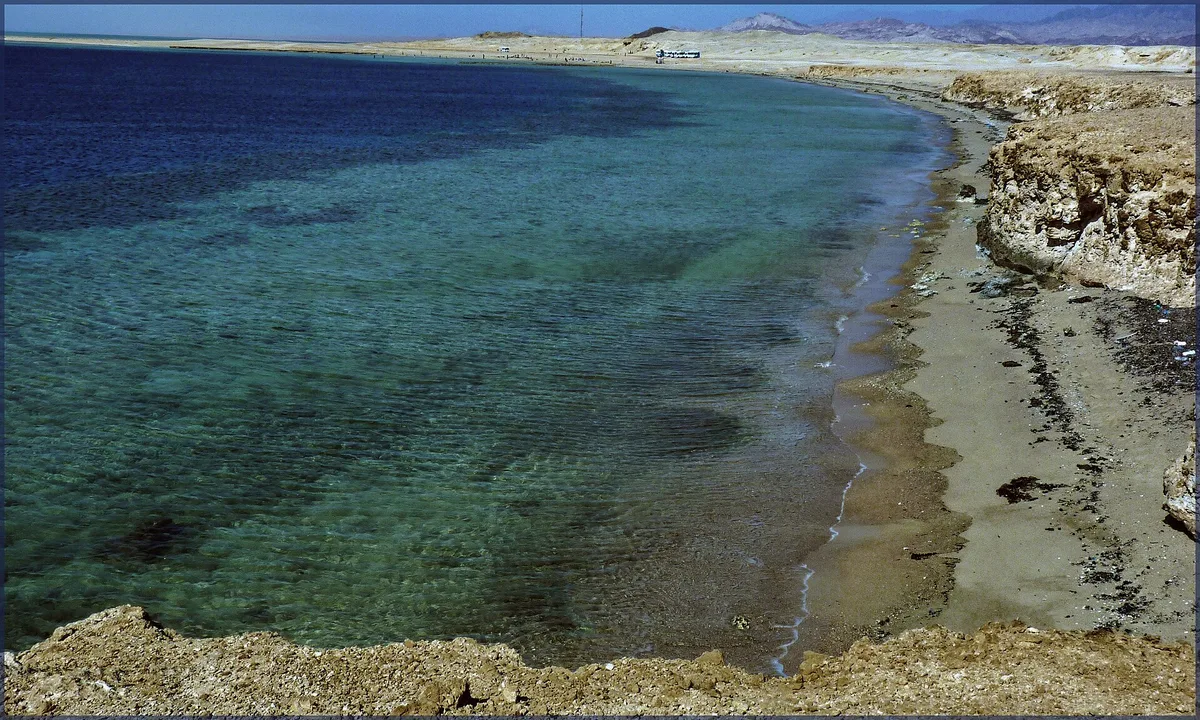
Twelve kilometres south-west of the strip, the peninsula simply ends. Ras Mohammed is the headland where the Red Sea divides — the Gulf of Suez running up one side, the Gulf of Aqaba up the other — and in 1983, with Sinai newly back in Egyptian hands, the government made it the country’s first national park. The motives were written on the reef: dynamite fishing had damaged the coral, the new resort up the coast was sprawling, and the park’s 480 square kilometres — about 135 of land and 345 of sea — were drawn around one of the richest reef systems on earth before either threat could finish the job.
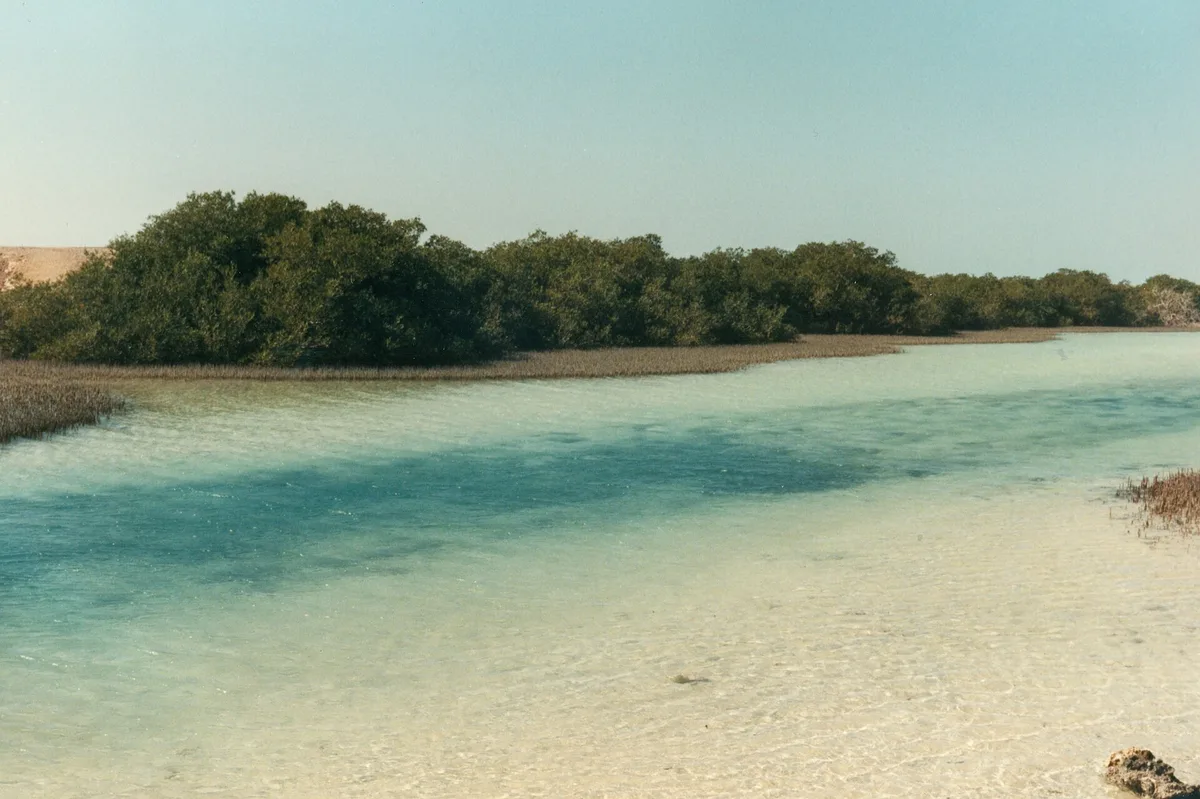
The land half of the park explains the sea half. This is a bare, beautiful, empty coast — fossil reefs lifted out of the water, salt marshes, a saline lake, and at the very tip a channel where mangrove trees stand in the sea, their roots a nursery for the young fish that later stock the reefs. Inland, a crack torn by an earthquake holds still, clear pools. There are no resorts, no cafes to speak of, no shade that was not there a thousand years ago; the park is the anti-Sharm, and it is the single best day of most people’s trips.
Underwater is where the superlatives stop being promotional. More than two hundred coral species and over a thousand fish species are recorded in the park, and the mechanism is the collision offshore: the two gulfs’ currents meet at the tip, stirring nutrients up into sunlit water, and everything that eats plankton — coral first, then everything that eats what coral shelters — gathers where the food is. The named sites cluster at the tip: Shark Reef, a wall that falls away into water hundreds of metres deep; Yolanda Reef beside it, named for a wrecked freighter whose cargo still litters the sand; the Shark Observatory cliff above them both, where the view down through clear water does the site briefing for you.
Visiting splits by transport. By land, a half-day circuit of the beaches, the mangrove channel and the observatory suits snorkellers and non-divers, and the shore entries at places like Marsa Ghozlani and the main beach are gentle. By boat, the day belongs to the tip reefs, and the snorkelling and diving sections below take it from there. Either way, the park charges an entry fee at the gate, takes its rules seriously — no touching, no feeding, nothing removed — and is the strongest argument this sharm el sheikh travel guide can make for the whole destination: nowhere else in Egypt puts a seascape of this rank at the end of a resort strip.
Snorkelling in Sharm – the Reef Is the Resort
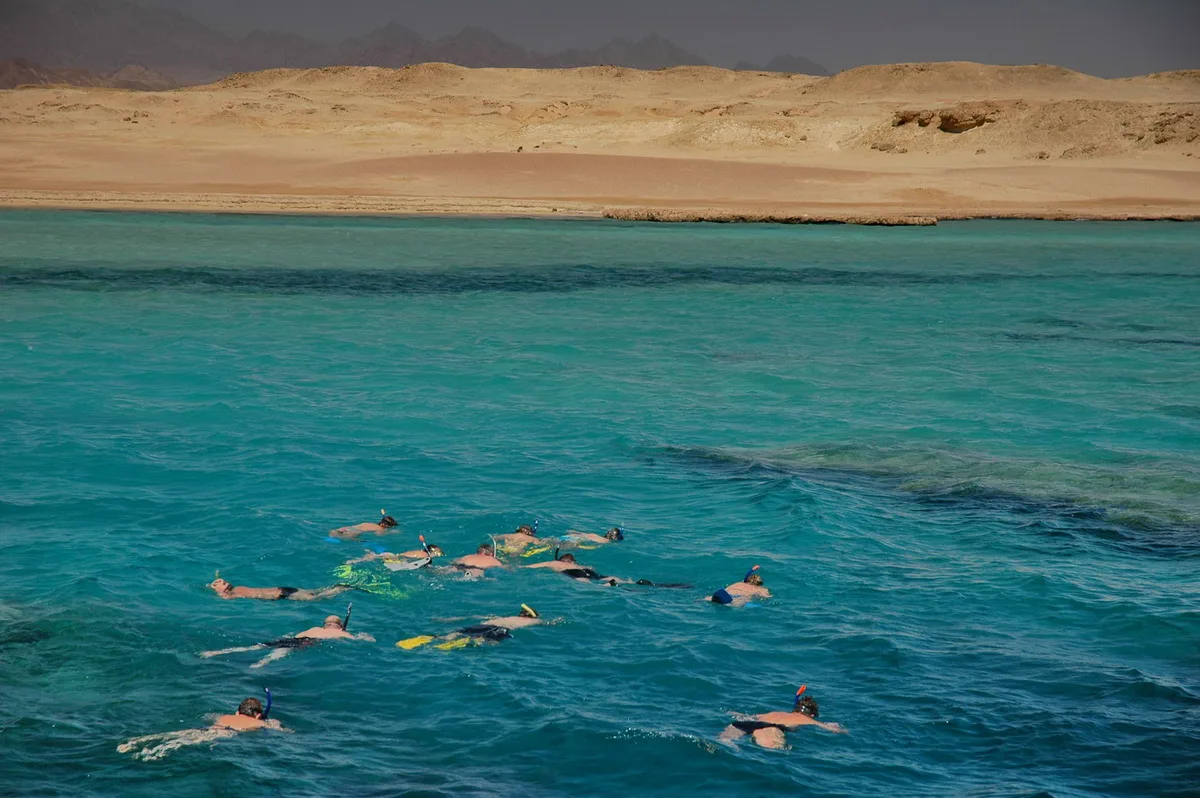
Snorkelling is not an activity in Sharm; it is the water supply. The fringing reef runs the length of the strip a few metres from shore, which means almost every hotel jetty ends above coral, and the difference between a good week and a great one is mostly the difference between reefs. Learn to read the system and the whole coast becomes a menu.
The house reefs divide by bay. Ras Um Sid’s headland reef is the connoisseur’s shore snorkel — deep water close in, big fish traffic, turtles regular. The Sharks Bay and Ras Nasrani reefs are close behind and come with the easiest logistics in the city: breakfast, jetty, reef, lunch. Naama Bay’s shallows are the gentlest introduction for nervous beginners and children, sandy-bottomed and forgiving, with the fish life to match its gentleness. And Nabq’s broad reef flat rewards the patient — the swim out is long, but the shallows hold rays, juvenile everything and, in the seagrass, the occasional grazing turtle.
The boat days raise the ceiling. Ras Mohammed’s tip reefs are the classic: a guided drift along walls where the visibility routinely turns the surface into glass and the drop below you runs out of blue. The Tiran reefs, out at the straits, run the same programme with more current and, in summer, the chance — never a promise — of hammerhead shadows in the deep water off Jackson Reef. On any group boat the pattern is fixed: two or three stops, a guide in the water, the group in a loose line along the reef edge; stay with the line, keep fins off the coral, and let the current do the work.
Two pieces of discipline make the difference between snorkellers and reef-wreckers, and the second is legal, not just polite. First, enter and exit where the jetty or the marked channel says — walking across the reef flat destroys coral and, eventually, feet. Second, stand on nothing: the sandy patches inside the reef are for resting, the coral is not, and the park and hotel reef wardens alike will remove repeat offenders from the water. Sharm’s reef survived a century of fishing and four decades of mass tourism by being protected on paper and in practice; a sharm el sheikh travel guide owes it the honesty of saying the practice part is you.
Diving in Sharm – Walls, Currents and Big Blue Water
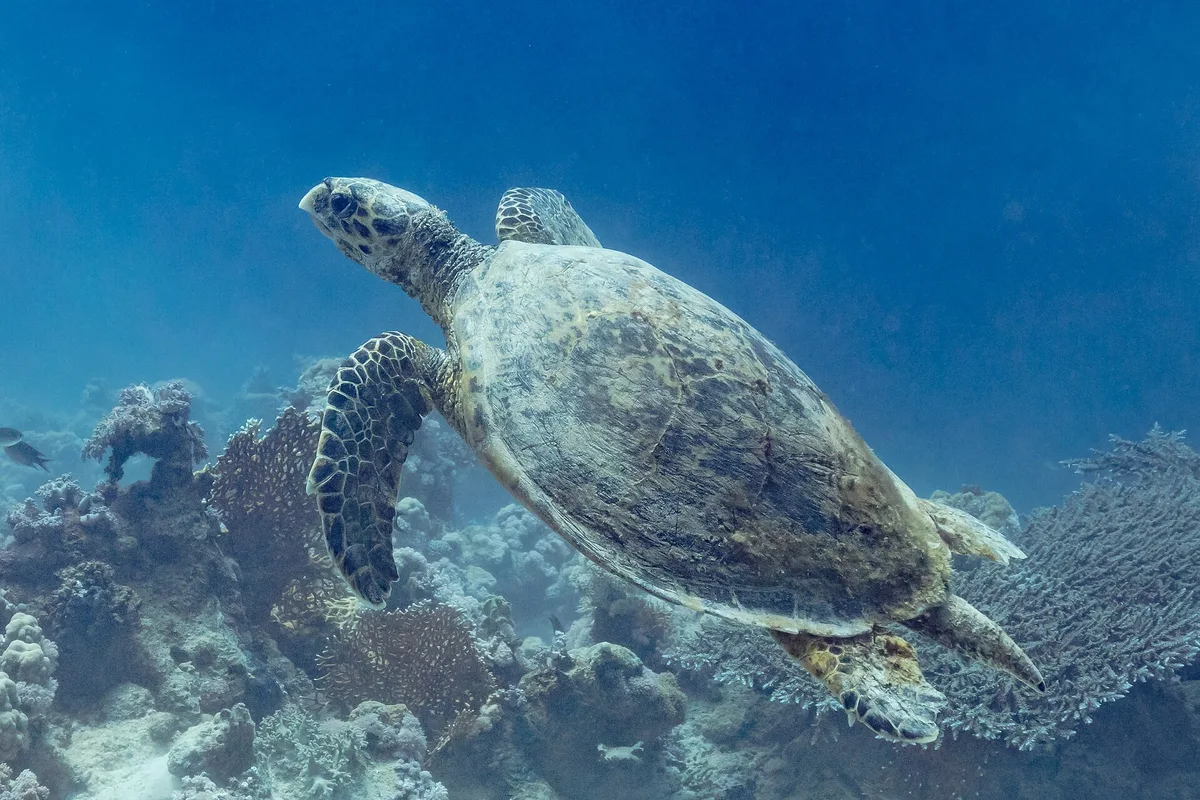
Divers have been flying to Sharm since before there was much of a town to fly to, and the reason is variety inside a small compass. Within day-boat range of the marinas sit three distinct diving worlds, and a week is about enough to sample them honestly: the walls of Ras Mohammed, the current-swept reefs of Tiran, and the shore and local sites — Ras Um Sid, the Gardens reefs off Naama, Temple and Fiddle Garden — that fill the days between the big two.
Ras Mohammed’s tip is the headline. Shark and Yolanda reefs in summer host one of the Red Sea’s great spectacles, when schools of snapper and unicornfish mass in the blue off the wall and everything with teeth comes to look at them; the dive is a drift along a wall that never bottoms out within sight, in water clear enough to make depth feel like flying. Tiran’s four reefs — Gordon, Thomas, Woodhouse and Jackson, named for the British cartographers who charted them — sit in the straits where the current concentrates life; Thomas Canyon’s arches reward the experienced, Jackson’s northern face is the summer place to watch the blue for hammerheads, and all four demand respect for moving water.
The honest cautions belong in the diving chapter of any sharm el sheikh travel guide, so here they are. These are, several of them, advanced dives wearing a holiday brochure’s smile: walls without floors, currents that set the route, blue-water ascents. Certification cards are checked, logbooks are glanced at, and a good centre will steer a fresh open-water diver to the local reefs first and the straits when ready — take the steering; it is the mark of the centres worth paying. Sharm also keeps a hyperbaric medical centre, treating divers since the 1990s, which is the kind of infrastructure you hope never to use and are glad exists.
And the diving has a fourth world, forty-odd kilometres across the Gulf of Suez, big enough to need its own section — a wreck that regularly tops lists of the finest wreck dives on the planet.
The Thistlegorm – the Wreck That Justifies the Alarm Clock
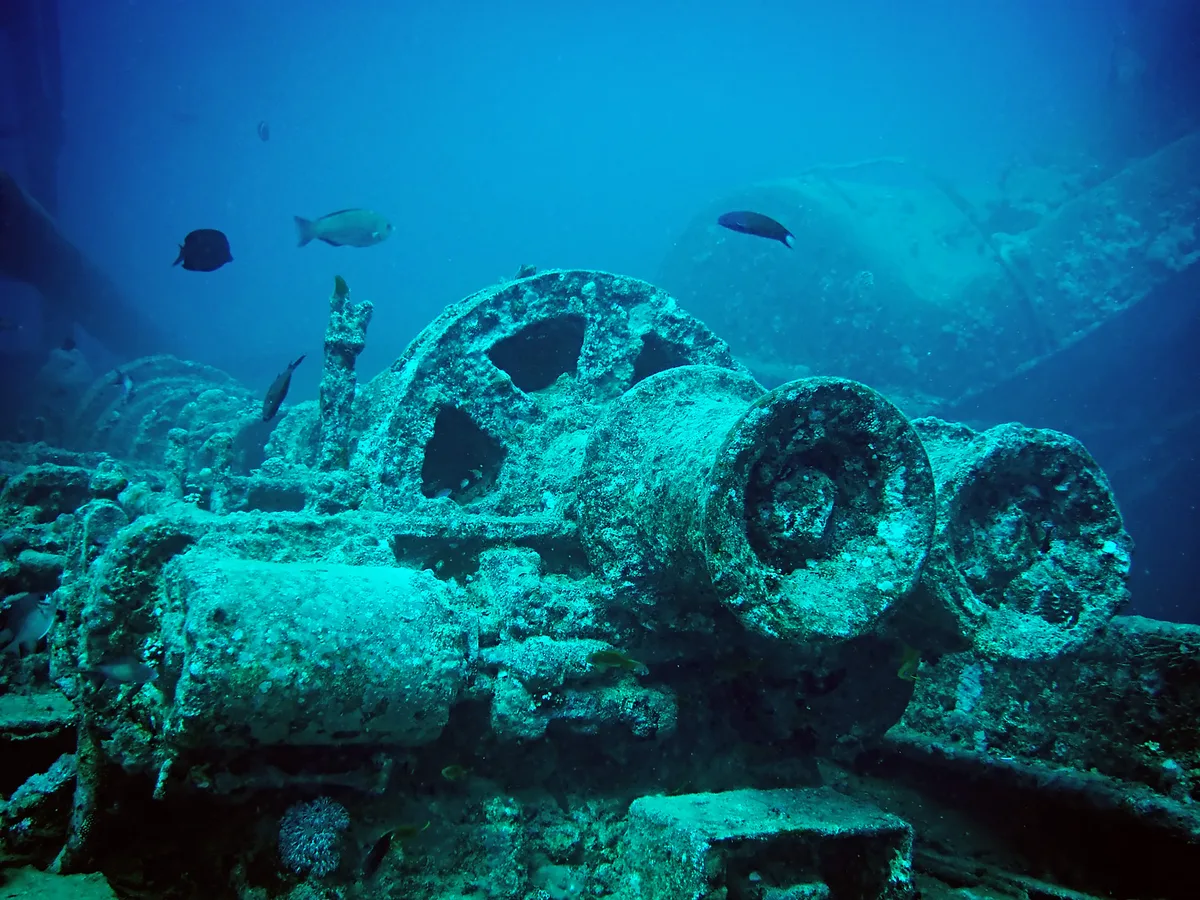
Out in the shipping lane at Sha’ab Ali, on the far side of the Gulf of Suez, lies the SS Thistlegorm — a British supply ship bombed and sunk in 1941 with a cargo that reads like a museum of the desert war: locomotives, trucks, motorcycles, rifles, boots, aeroplane parts and railway wagons, all of it still down there, arranged by the explosion and eighty years of coral into the most absorbing wreck dive in the Red Sea.
The day is built backwards from the wreck’s popularity. Boats leave Sharm before dawn — the crossing takes hours — to reach the site before the day fleet from every resort on two coasts arrives, and the dive plan is usually two descents: one around the outside, along the hull and the anti-aircraft gun and the locomotive that the blast threw clear of the deck, and one through the holds, finning between the trucks and the rows of motorcycles in the green half-light. It is a penetration dive in a current-swept channel at respectable depth, and the centres are right to want experienced divers for it.
What justifies the alarm clock is the intactness. Most famous wrecks are skeletons; the Thistlegorm is a warehouse. You are not imagining the history, you are swimming through its stock list, and the cargo’s ordinariness — wellington boots, bed frames, a train — lands harder than any treasure would. Build the day in the middle of a diving week, sleep on the boat back, and let the rest of Sharm’s diving argue its case another day.
The Sinai Stamp – Sharm’s Visa Arrangement, Explained Properly
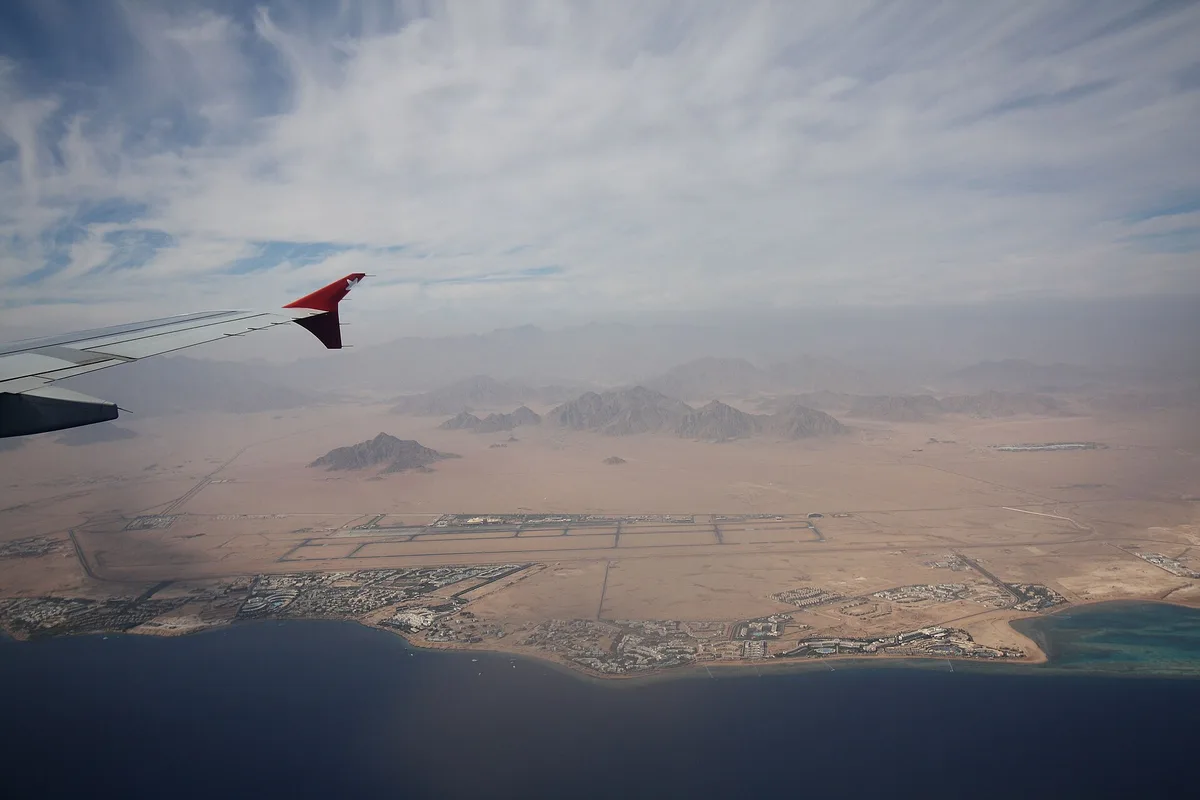
Sharm has a piece of paperwork that confuses more arrivals than everything else in this guide combined, so here is the mechanism, stated once and carefully. Egypt runs a special arrangement for its South Sinai resorts: visitors arriving by air at Sharm El Sheikh who are staying less than fifteen days and remaining within the resort area — Sharm itself, Dahab, Nuweiba and Taba — do not need a visa in advance. On arrival they receive a free entry permission stamp, often called the Sinai resort stamp, which is exactly what it sounds like: permission to be in the resorts, for a short stay, and nothing more. The arrangement is set out on the UK government’s Egypt entry-requirements page — checked for this guide on 31 October 2026 — and the same page states the other half of the rule, which is the half that matters.
The stamp is a fence, not a visa. The moment a trip crosses outside the South Sinai resorts — to Cairo and the pyramids, to Luxor, to anywhere on the Nile or the mainland — or the moment a stay runs past fifteen days, the standard Egyptian tourist visa is required, full stop. This is where the famous trap sits: travellers land on the stamp, get seduced mid-week by a cheap Cairo day trip, and discover at the checkpoint or the internal flight desk that their stamp does not cover the journey. The day trip does not become impossible; it becomes a scramble, because the visa has to be in the passport before the trip, not after the idea.
There is a second, quieter catch, and it concerns the monastery. The famous day trip inland to St Catherine’s is not on the named resort list, and tour desks commonly require the full visa for it — if the monastery is on your list, treat it as outside the fence and paper yourself accordingly. Ras Mohammed, by contrast, sits inside the resort area, and Dahab is named in the arrangement itself; the reef days need nothing but the park or boat fee.
The practical play, therefore, is decided in the arrivals hall, in about ninety seconds. If there is any chance — any chance at all — that the trip will leave the resort strip, buy the visa on arrival at the airport bank kiosks before passport control, using official counters only, or arrange the e-visa in advance through Egypt’s official portal (https://www.visa2egypt.gov.eg); if the week is purely reefs and resort, walk past the visa queues to passport control and take the stamp. Do not let the hall decide for you: arriving passengers are often swept toward the visa desks as a matter of routine, and plenty of people buy a visa they did not need. Know which queue you belong in before you land, and the sharm el sheikh travel guide part of your trip that involves paperwork is finished.
Nationality details move, and this guide deliberately prints no table of them: the arrangement covers many nationalities and excludes some, and the only safe check is your own government’s Egypt entry page and the official e-visa portal, read in the week you travel. Those who do venture beyond the fence will find the museum that now anchors a Cairo add-on covered in our Grand Egyptian Museum guide, and the Nile’s temples sit just as firmly outside it — our Luxor Temple guide covers the finest of them.
Dahab – the Day Trip Everyone Quietly Prefers
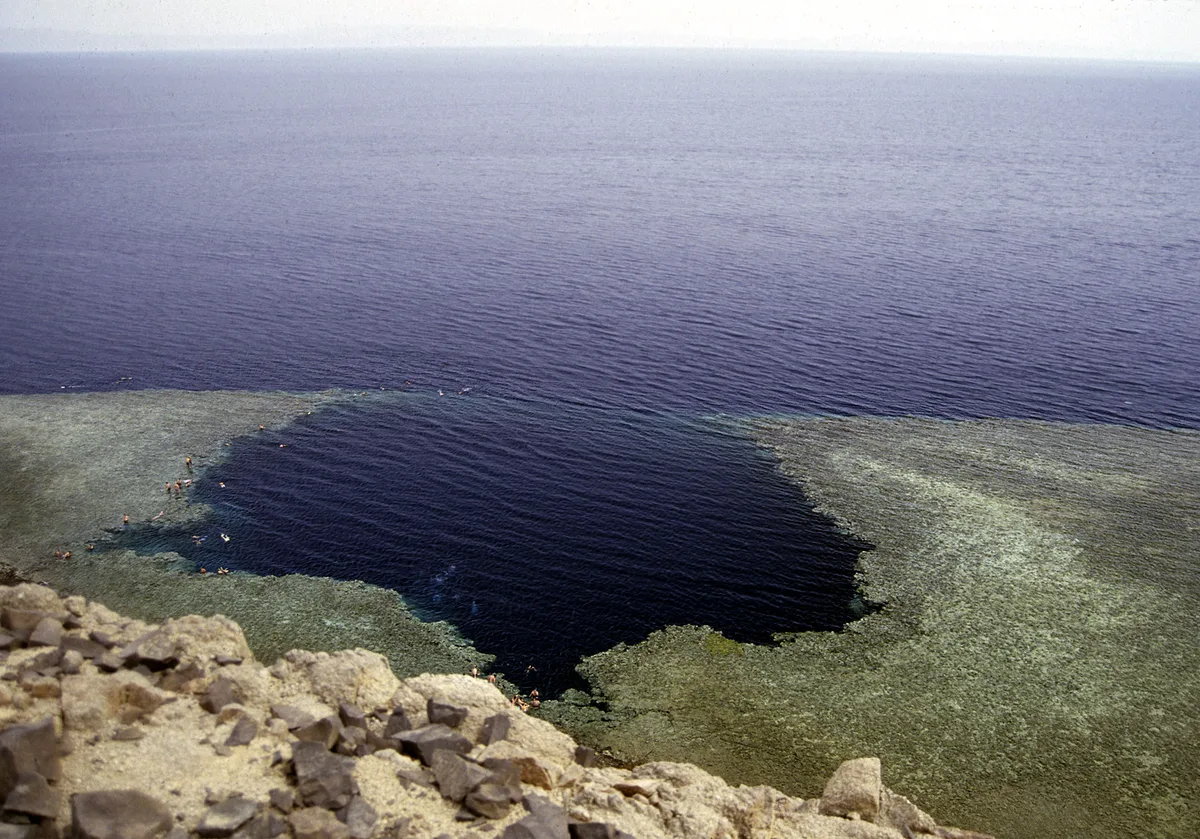
Eighty-odd kilometres up the coast, about an hour and a half by road through the mountains, Sharm’s visitors escape to the town Sharm used to be. Dahab grew from a Bedouin village into a backpacker haven in the decades when Sharm was growing into a resort machine, and it kept the earlier recipe: a waterfront strip of cushion-floored cafes and small hotels at Masbat, diving run from beachside centres, camels and pickups instead of transfer buses, and prices and attitudes a register lower than the strip to the south.
The day trip usually runs on rails: the waterfront for coffee, a snorkel or dive at the Lighthouse reef at the end of the strip, lunch on the cushions, and then the headline — the Blue Hole, a few kilometres north of town. The Hole is a sinkhole in the reef flat, a circle of impossibly dark blue water dropping beyond a hundred metres, connected to the open sea by a submerged arch. Snorkel its rim and you float over the abyss with the wall of coral at your shoulder; it is beautiful, and it is also the most storied dangerous dive site in Egypt, its arch having killed experienced divers who treated it as a challenge. The memorial plaques on the cliff are part of the visit. Look at the Hole, swim its safe edge, read the names, and let that be the relationship.
Dahab earns its place in this guide for a structural reason: it shows the fork in Sinai’s road. Everything Sharm became — the walls, the all-inclusive economics, the managed beach — Dahab mostly declined to become, and spending a day there calibrates the rest of the trip. A traveller who finds Dahab ramshackle will hug Sharm tighter; a traveller who finds it a relief has learned something about which town to book next time, and both are worth the drive.
St Catherine’s Monastery and Mount Sinai – the Night Drive
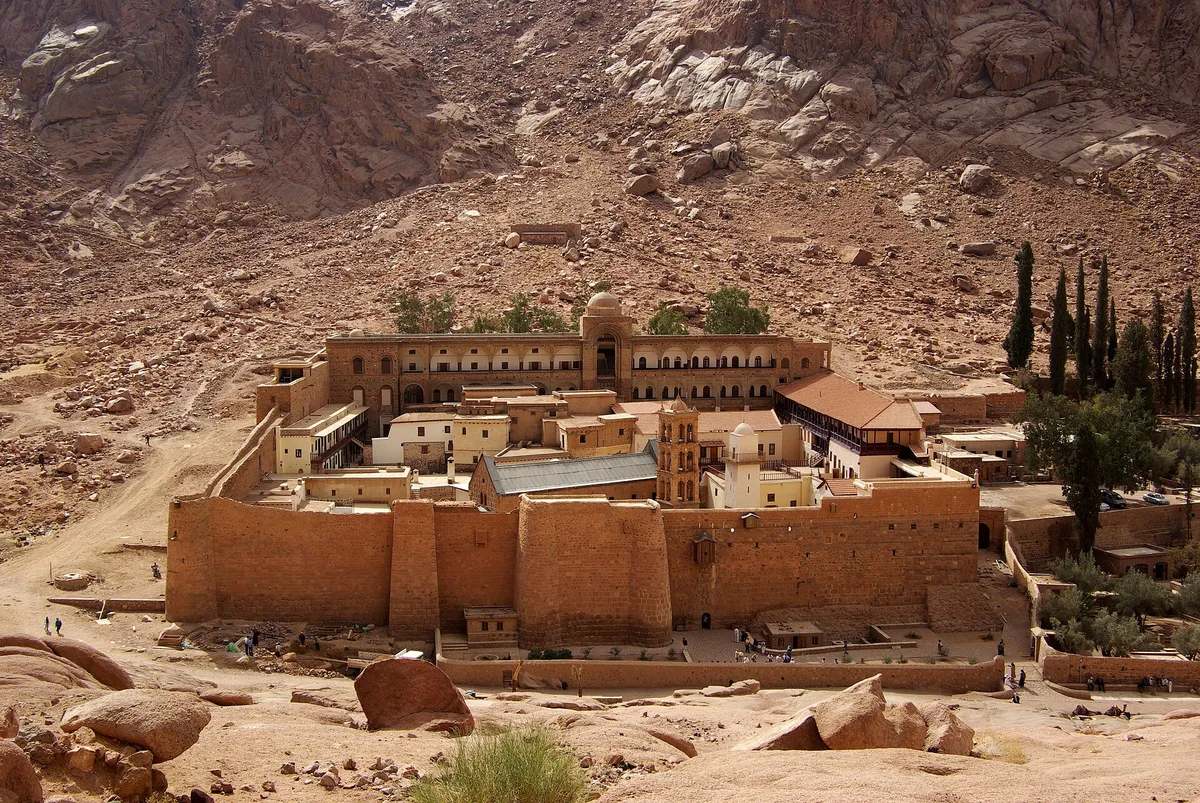
Inland from the coast, a few hours into the high granite desert, stands the building that out-earns every resort in Sinai on significance per square metre. St Catherine’s Monastery, founded in the sixth century at the foot of Mount Sinai — Jebel Musa, the mountain of Moses — is the oldest Christian monastery still in use for its original purpose, a fortress of devotion built around the site of the Burning Bush, holding a library and an icon collection of world rank. The UNESCO listing for the Saint Catherine Area recognises a landscape sacred to Christianity, Islam and Judaism alike, and standing in the courtyard at opening time, with the tour buses still an hour away, the designation feels understated.
The excursion runs on a pattern set by the mountain. Most visitors climb by night — leaving Sharm late in the evening, walking up by torchlight with Bedouin guides, on a path shared with camels and pilgrims — to stand on the summit for sunrise, descend by the Steps of Repentance past the monastery, and tour the basilica, the bush and the ossuary in the morning before the drive back. It is a long, cold, sleepless, magnificent programme, and the sleeping happens in the bus on both ends. The day version — monastery only, no climb — exists for the sensible and the time-poor.
Practical honesty: the summit is high, the night is freezing in every month of the year, and trainers and a beach towel are not equipment. Take layers you would wear in a northern winter, a real torch, water, and the patience the monastery’s modest dress code requires — shoulders and knees covered, in a place that has been receiving guests for fourteen centuries and sets its own terms. And remember the paperwork from the stamp section above: the monastery is an inland trip beyond the named coastal resorts, and desks commonly require the full tourist visa for it, so sort the passport before the mountain, not after.
The Desert Behind the Strip – Quads, Stars and Bedouin Tea
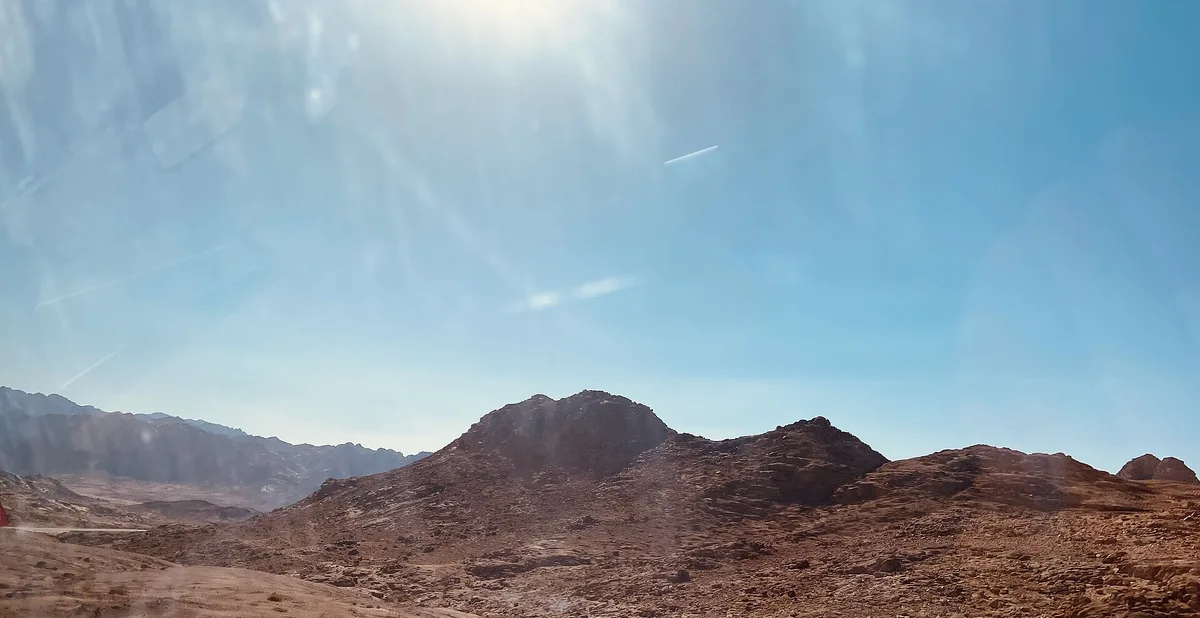
Sharm’s third landscape needs no boat and no visa logic: step off the coast road away from the sea and the Sinai desert starts immediately, a country of gravel plains, granite hills and dry wadis that the resort strip turns its back on. The excursion industry has built its evening economy there — quad bikes and dune buggies at sunset, camel walks to a Bedouin tent, tea and flatbread by a fire, and telescopes pointed at a sky that the unlit desert makes genuinely spectacular.
Judge the genre honestly and it divides in two. The mass-market version is a conveyor: a quad convoy in a dust cloud, goggles and headscarves sold at the gate, a photographed camel, a show. It is harmless, popular and precisely as deep as it sounds. The better version is smaller and slower — a private or small-group evening with a Bedouin guide, dinner cooked in the sand, and the stars given time to work. The desert itself is not the variable; the format is, and the format is chosen at the booking desk, so ask what the group size is before anything else.
One discipline applies to everything in this section: the desert is a real environment wearing a theme park’s clothes. The sun that makes the photographs also ends days — water, a hat and respect for the heat are not optional extras — and the night cold surprises every first-timer who dresses for the afternoon. Take the evening trip, by all means, but take it dressed for both halves of it.
Getting to Sharm and Getting Around It
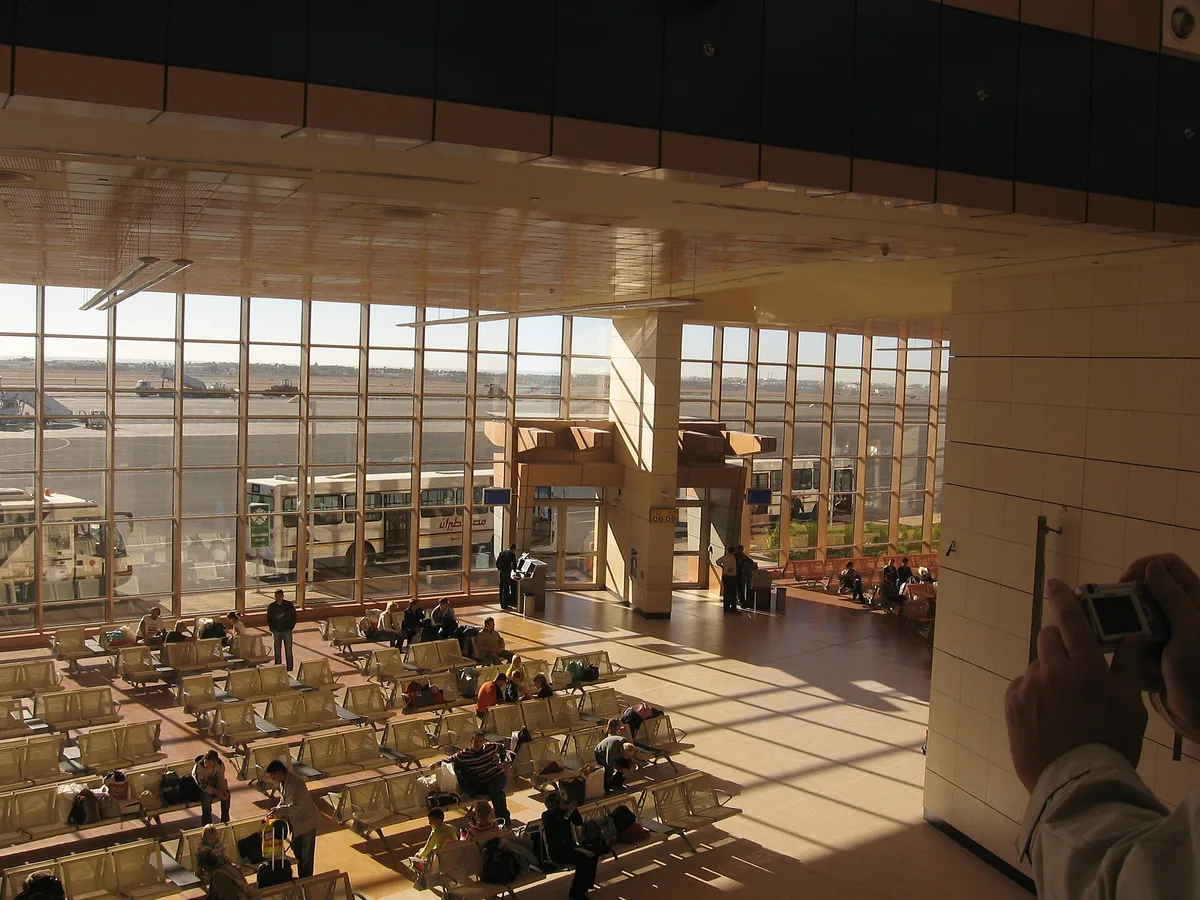
Almost everyone arrives the same way: a direct flight into Sharm El Sheikh International, the airport at Ras Nasrani at the northern end of the strip, grown from a military airbase into Egypt’s third-largest airport. Direct services run from across Europe and the Gulf, densest in winter; from inside Egypt, domestic flights connect Cairo in about an hour of flying. The overland alternative exists — coaches run to Cairo from the Delta Sharm bus station, a journey of most of a day through the tunnel under the Suez Canal — and suits only travellers touring the mainland with time to spend, who will in any case be travelling on the full visa.
The airport’s position creates the city’s transfer map. Sharks Bay hotels are minutes away; Naama Bay is a short drive south; El Maya and the old town are the far end of the strip; and Nabq, past the airport, is close in kilometres and variable in everything else. Pre-booked hotel transfers and operator buses absorb most arrivals, and they are the zero-thought option after a night flight.
Inside the city, movement means taxis, and taxis mean one rule: the fare is agreed before the door closes, in full, for the whole journey — the same mechanism as everywhere in Egypt, and the source of nearly every bad taxi story ever told about Sharm by people who skipped it. Hotel cars and app-summoned rides cost more and argue less; the resorts run shuttle buses to Naama and SOHO on their own timetables; and the distances between bays, on a fast dual carriageway with desert on one side, are nobody’s idea of a walk. Plan the bay as your base and the taxi as an occasional tool, and the geography stops being a cost.
When to Go – Reading the Seasons Like a Sharm El Sheikh Travel Guide
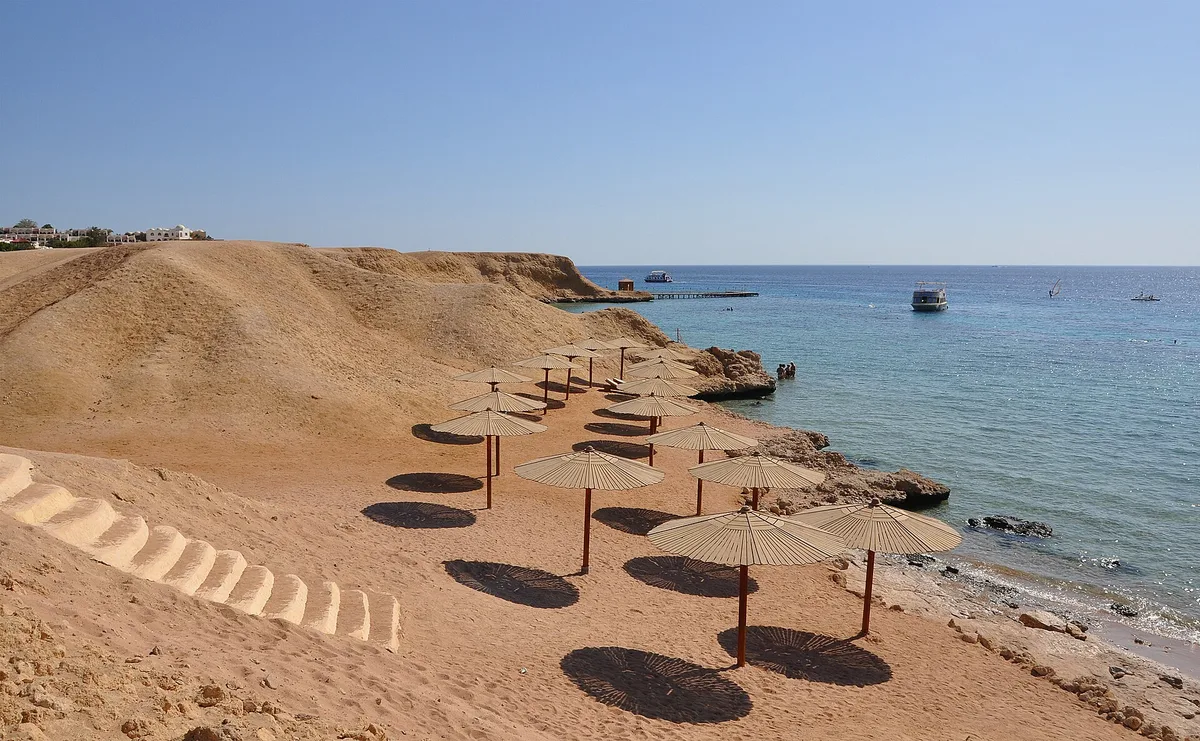
Sharm’s climate is a desert’s with a warm sea attached, and the year divides by two dials: air temperature and wind. The normals tell the temperature story plainly. January afternoons average around twenty-two degrees, August afternoons around thirty-eight, and rain is a rumour — about ten millimetres in an entire year. The sea, meanwhile, barely cools: monthly averages run from roughly twenty-two degrees in late winter to roughly twenty-nine at the end of summer, which is why Sharm sells itself as a winter resort and why the wetsuits get thinner rather than disappearing.
The seasons, honestly read: October to November is the sweet spot — the sea at its warmest after summer, the air back to bearable, the light golden, and the wind at its most cooperative. March to May runs it close, with the water warming through spring and the khamsin — the hot, dusty desert wind — occasionally interrupting for a day or two. December to February is the value season and the wind season: lovely midday temperatures, genuinely cold-feeling evenings, the cheapest rates, and the highest chance of breezy spells that chop the northern bays and cancel boats — pack a layer and choose a sheltered bay, and winter is a bargain rather than a compromise.
Summer, June to September, is for heat-proof travellers and serious divers: the air is fierce, the resorts are at their emptiest and cheapest, the sea is bathwater, and the diving has its summer congregations at Ras Mohammed and the hammerhead chance at Tiran. Time the day like a local — water early, shade at noon, life after sunset — and summer stops being a warning and becomes a trade.
Where to Stay in Sharm – Choosing Your Bay
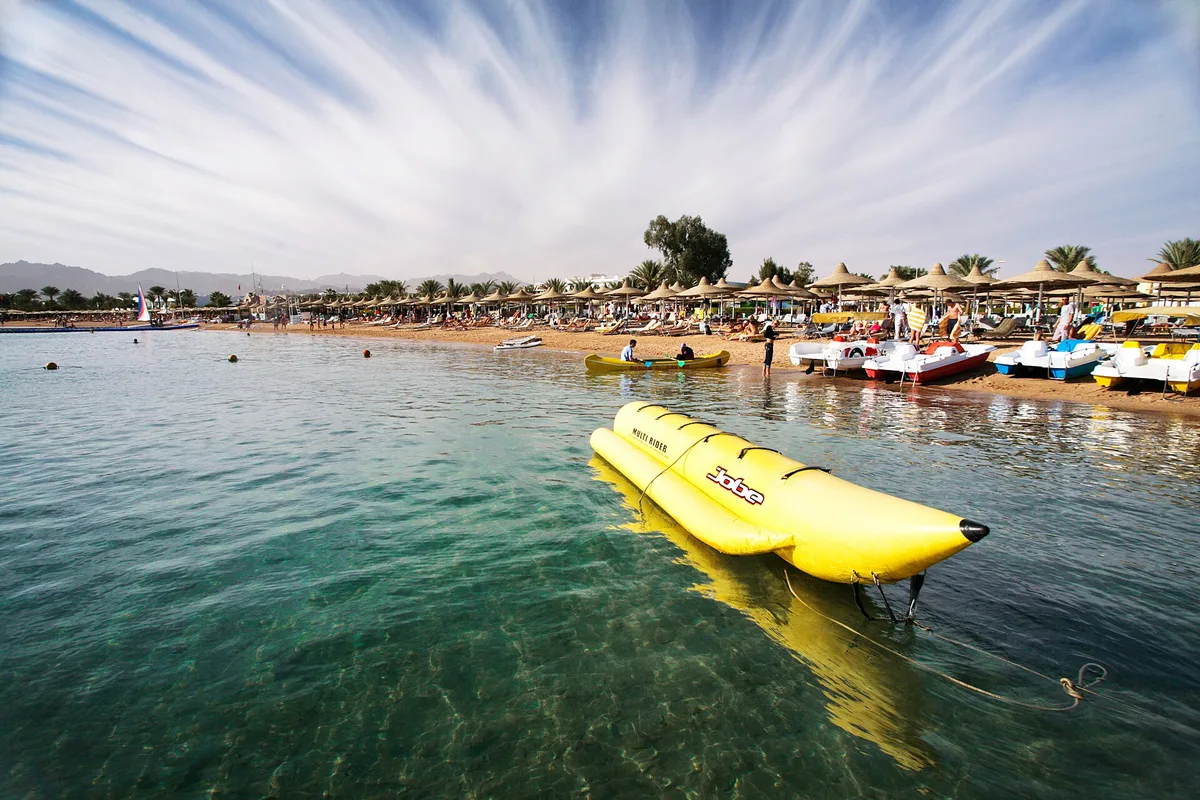
The first thing any sharm el sheikh travel guide should tell you about hotels is that the star rating is the least interesting fact about them. Sharm’s accommodation divides first by bay — the sections above have done that work — and then by model: the walled all-inclusive resort, which is a destination with a beach attached, and the smaller hotel, which is a bed near a town. Neither is the correct answer; they are different holidays sharing a postcode, and most disappointment in Sharm is a booking made in one model by a traveller dreaming of the other.
In the resorts, the due diligence is specific. Ask about the reef before the pool: is there a house reef, how long is the jetty, and does the beach have a sandy entry or is it reef shelf throughout? Ask which bay, precisely, and check it on a map rather than trusting the word “Sharm” in the hotel’s name. And read recent reviews for the wind words — “red flag”, “jetty closed” — in the month you intend to travel; a resort that is paradise in October can be a flag museum in February if it faces the weather.
In the smaller properties, the logic inverts: Hadaba and El Maya put you inside the city’s real life, with local restaurants at local prices and the reef at Ras Um Sid as your beach, at the cost of the resort machinery — no animation team, no aqua park, no three-pool complex. Families with small children usually belong in the resorts and know it. Divers, snorkellers, repeat visitors and the resort-allergic usually end up in the small hotels, and stay there.
One last structural point, because it decides money: Sharm’s all-inclusive rates swing hard with season and source market, and the same room is sold at wildly different figures through different operators. The mechanism to use is not a printed price — there are none in this guide, deliberately — but the calendar: the emptiest weeks (deep summer, the January lull after the holidays) are when the strip negotiates, and a traveller flexible by a fortnight holds most of the cards.
The Honest Downsides – What the Brochures Leave Out
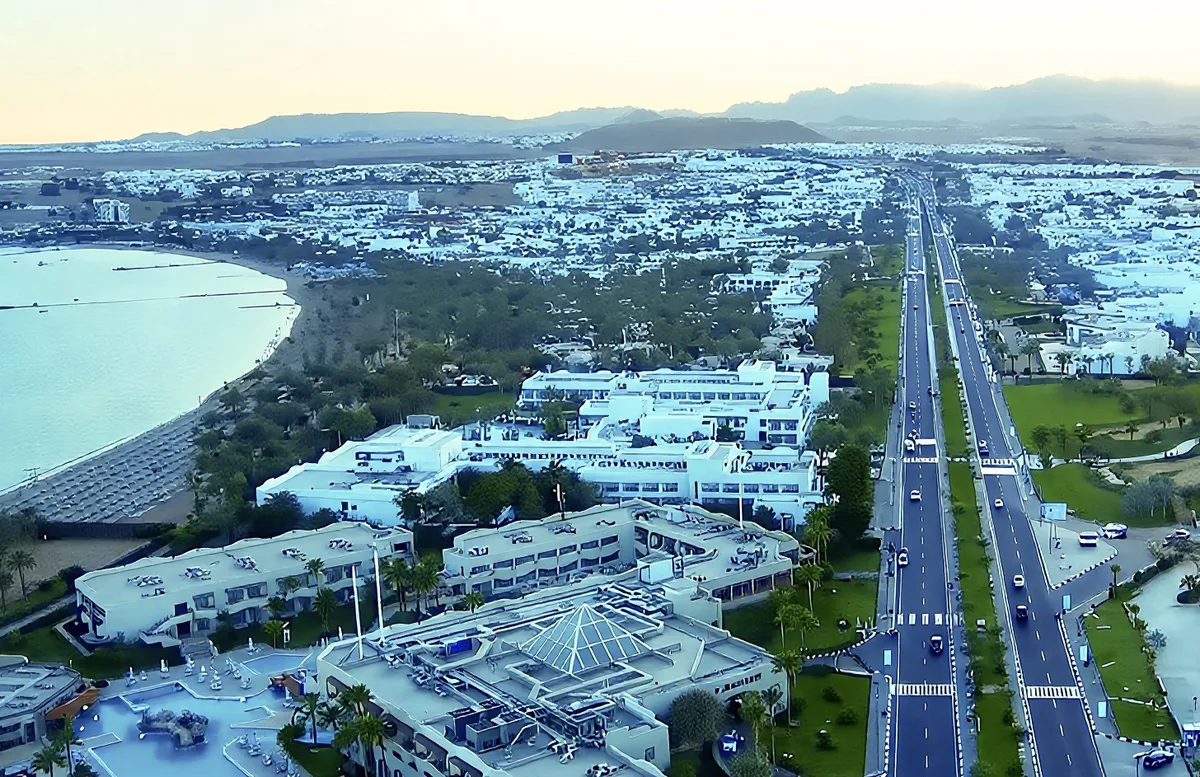
A sharm el sheikh travel guide that only sells the place is a brochure with better grammar, so here is the other ledger, plainly. Sharm’s default product is the walled resort, and the wall cuts both ways: inside it, everything is easy, irrigated and translated; outside it, the city can feel like a service road between other people’s holidays. Travellers who book expecting a town with hotels in it — the Mediterranean pattern — can spend a week feeling that Egypt is happening somewhere just out of reach. The cure exists and this guide has mapped it — Hadaba’s streets, the old town’s evenings, Dahab’s waterfront — but it has to be chosen; it does not happen by default inside the gates.
The wind is the second honest item, and it is not a detail. The strip’s northern half faces the prevailing breeze, and in the breezy weeks the flags on the jetties spend days at red, the boat trips cancel in runs, and a holiday chosen for the sea becomes a holiday around a pool. No brochure photographs a red flag. The sheltered southern bays exist precisely as the countermeasure, which is why this guide has treated geography as destiny throughout — because in Sharm, in the wrong week, it is.
Third, the frictions of a negotiated economy: taxi fares that must be agreed in advance every single time, prices that change with the customer’s accent, excursion desks whose first figure is theatre, and a low, constant weather of commercial invitation in the busy bays. None of it is dangerous and all of it is tiring by day five. Fourth, the sea itself has house rules some visitors find late: reef shoes are near-mandatory, the reef flat is not a footpath, and the sun over water at this latitude burns with a speed northern skin does not believe until the evening.
And finally, the security landscape, stated without drama: the strip runs on visible security — checkpoints on the coast road, screening at hotel gates, a rebuilt airport regime — which is the legacy of attacks in 2005 and 2015 that this guide’s history section records. Most visitors file it under reassurance within a day. It belongs in the honest ledger because a traveller who meets it unbriefed reads it backwards, as a warning about the present rather than what it is: the price of the past, being paid in the open.
Frequently Asked Questions
Do I need a visa for Sharm El Sheikh? Many nationalities do not, provided they arrive by air at Sharm, stay under fifteen days and remain in the South Sinai resorts — they receive a free entry permission stamp on arrival instead. The moment the trip leaves the resorts or runs longer, the standard tourist visa is required; the stamp section above walks through the mechanism, and your own government’s Egypt page, checked in travel week, is the final word for your passport.
Can I visit the pyramids on a day trip from Sharm? Yes, by air — Cairo is about an hour’s flight — but only on the full tourist visa, because the trip leaves the Sinai resort area the stamp covers. Buy the visa on arrival at Sharm airport or as an e-visa before you travel, and the day runs smoothly; discover the rule at the checkpoint, and it does not.
Is Sharm El Sheikh safe? The resort strip operates under heavy, visible security — checkpoints, hotel screening, a rebuilt airport regime — and the South Sinai resorts are treated separately in international travel advice from the north of the peninsula. Read your government’s current advice before travelling, as you would for anywhere, and expect the security to feel routine within a day of arrival.
Sharm El Sheikh or Hurghada – which should I choose? The two resorts sell the same sea by different systems. Sharm is a chain of reef bays under desert mountains, with the stronger shore reefs, the national park and the Sinai stamp; Hurghada is a long sandy coast with island boat days and mainland Egypt — Luxor included — at road distance behind it. Divers and snorkellers arguing from the reef alone usually land on Sharm; families arguing from sandy beaches and Nile access usually land on Hurghada.
How many days do I need in Sharm? Four to six days covers the shape of it: reef time in your own bay, a Ras Mohammed day, an old-town evening. Add a day each for Dahab and for St Catherine’s, and a diving week with the Thistlegorm in it runs to seven or eight without a spare hour feeling wasted.
Can non-divers enjoy Ras Mohammed? Completely — the park is a snorkelling and landscape day as much as a diving one. The shore circuit (beaches, mangrove channel, the observatory cliff) suits anyone who can swim a little, and the boat days take snorkellers to the same famous reefs the divers drop below.
What is the best month to visit Sharm? October and November, if the diary allows: the sea is at its warmest, the air has cooled to kindness and the wind is at its calmest. March to May is the near-equal second; every other month is a trade between price, heat and wind that the seasons section above prices honestly.
Do I need cash in Sharm? Cards work inside the resorts and larger businesses; cash runs everything else — taxis, small cafes, tips, market stalls — and small notes are the local lubricant. Change money at banks and official exchanges rather than informal offers, and keep the taxi rule regardless of currency: agree the whole fare before the door closes.
The Short Version of This Sharm El Sheikh Travel Guide
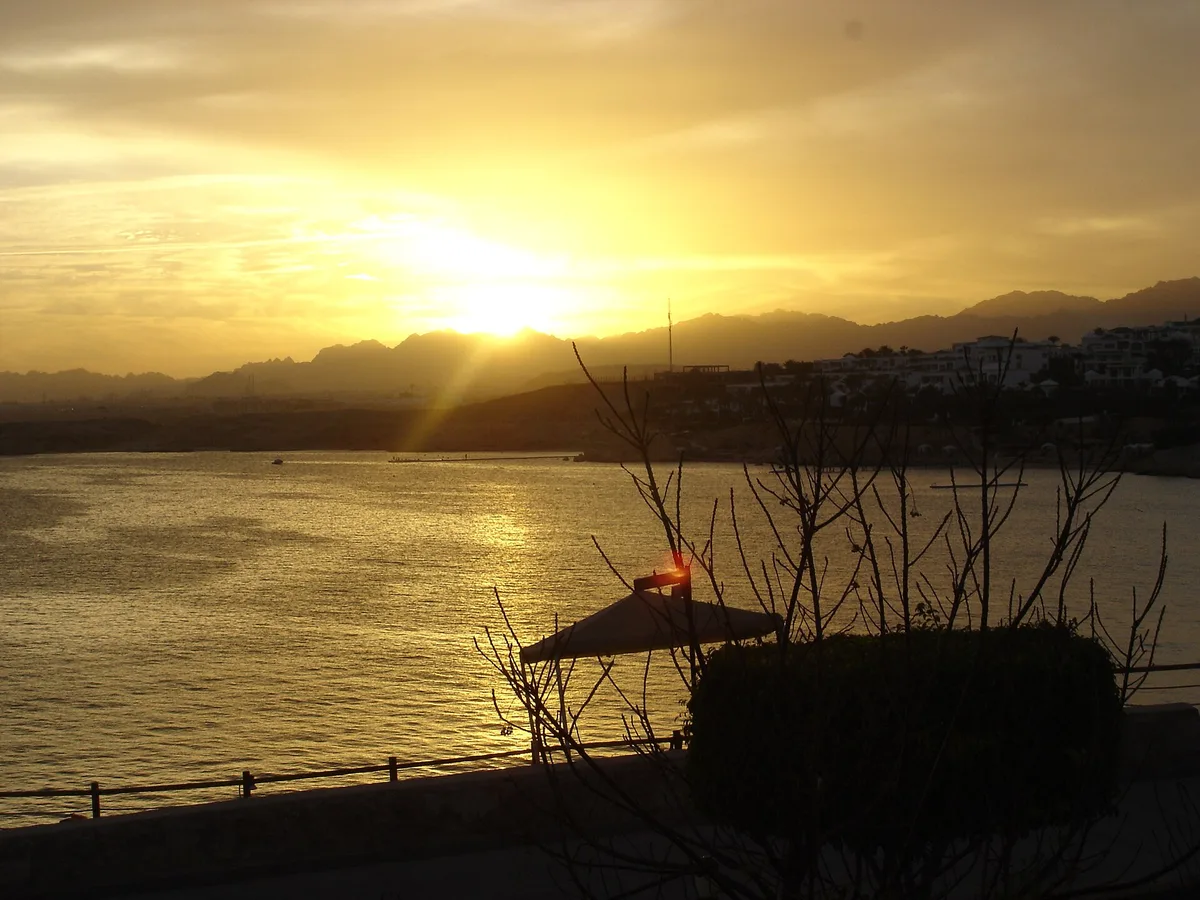
If this page is TL;DR, here is the whole of it in one breath:
- Sharm is not one resort but five bays on one coast road: El Maya and Ras Um Sid in the sheltered south, Naama Bay the lively centre, Sharks Bay the quiet resort crescent, Nabq the windy, wild north. Choose the bay before the hotel.
- The reef is the point: house reefs off the jetties, Ras Mohammed’s walls twelve kilometres away, Tiran’s currents across the straits, and the Thistlegorm for divers who set the alarm.
- The Sinai stamp is free, quick and fenced: under fifteen days inside the resorts needs no visa for many nationalities; Cairo, the Nile and usually St Catherine’s need the full visa, sorted before the trip, not at the checkpoint.
- Dahab is the day trip that recalibrates everything — go for the waterfront and the Blue Hole’s rim; St Catherine’s is the night climb that outlasts every other memory of the trip.
- October and November are the months; the southern bays are the wind insurance; the taxi fare is agreed before the door closes; and no honest sharm el sheikh travel guide — this one included — should be trusted to print you a price table.
Stand on the Ras Um Sid cliff at the hour the Farsha lanterns come on, with the reef going violet below and the mountains of Arabia pink across the straits, and the resort strip explains itself: a thin green line of human comfort, pinned between one of the world’s great deserts and one of its great seas. Get the bay right, get the paperwork right, and spend the week in the water. The rest is commentary.